Circulating lncRNAs as Liquid Biopsy Biomarkers in Liver Cancer: From Mechanism to Clinical Translation
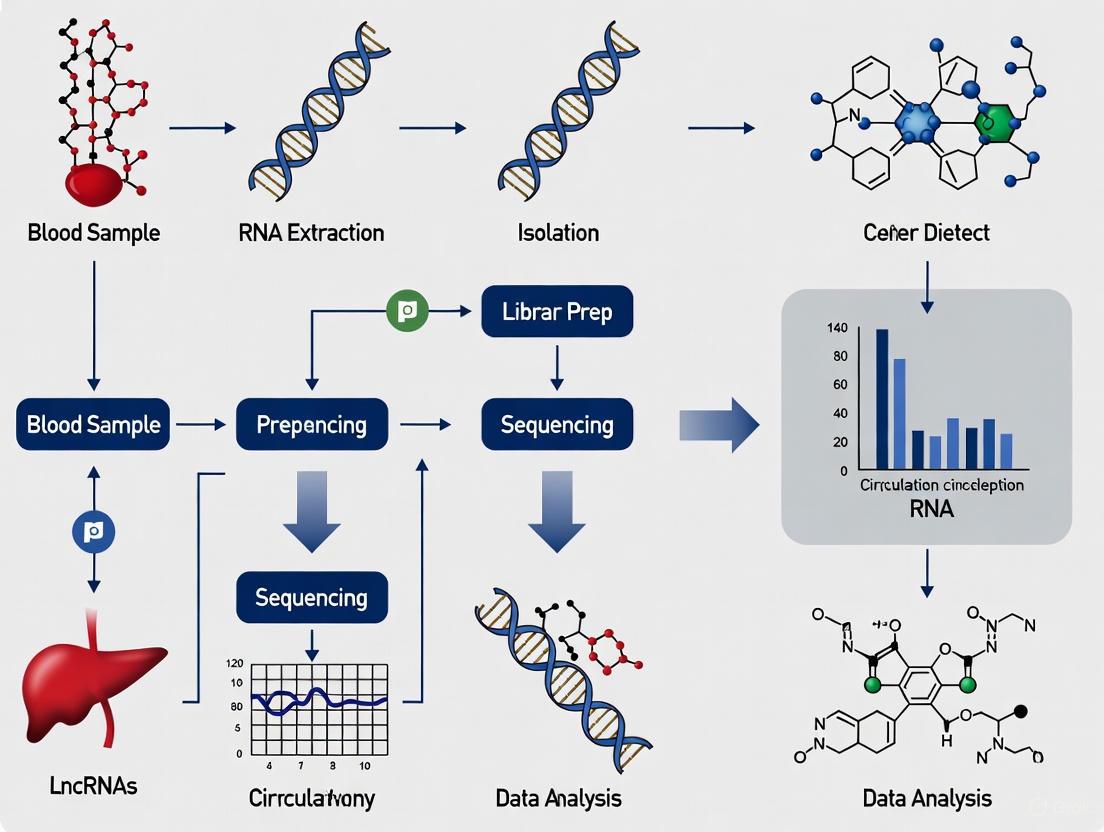
Liquid biopsy analysis of circulating long non-coding RNAs (lncRNAs) represents a transformative approach for the non-invasive management of hepatocellular carcinoma (HCC).
Circulating lncRNAs as Liquid Biopsy Biomarkers in Liver Cancer: From Mechanism to Clinical Translation
Abstract
Liquid biopsy analysis of circulating long non-coding RNAs (lncRNAs) represents a transformative approach for the non-invasive management of hepatocellular carcinoma (HCC). This review synthesizes current research on lncRNAs encapsulated in extracellular vesicles and protein complexes, detailing their roles as drivers of hepatocarcinogenesis, regulators of the tumor immune microenvironment, and mediators of therapy resistance. We explore the complete methodological pipeline—from EV isolation and RNA sequencing to bioinformatic construction of lncRNA-miRNA-mRNA regulatory networks. The content critically addresses technical challenges in analytical sensitivity and standardization while evaluating the diagnostic, prognostic, and predictive performance of lncRNA signatures against established biomarkers like AFP. For researchers and drug development professionals, this resource provides a comprehensive framework for advancing lncRNA-based liquid biopsies toward clinical application in liver cancer precision medicine.
The Biology of Circulating lncRNAs in Hepatocellular Carcinoma
lncRNA Biogenesis, Stability, and Transport Mechanisms in Circulation
Long non-coding RNAs (lncRNAs), defined as transcripts longer than 200 nucleotides with no or low protein-coding potential, have emerged as crucial regulatory molecules in carcinogenesis and cancer progression [1]. Their presence in circulation—detectable in blood plasma, serum, and other bodily fluids—makes them promising biomarker candidates for minimally invasive liquid biopsy applications in hepatocellular carcinoma (HCC) [2] [3]. Unlike conventional tissue biopsy, liquid biopsy offers a rapid, minimally invasive approach requiring only a small blood sample (typically 10-15 mL), enabling dynamic monitoring of tumor dynamics and treatment response [2] [3]. For HCC, which is often diagnosed at advanced stages with poor prognosis, circulating lncRNAs (c-lncRNAs) represent a promising tool for early detection, prognosis, and therapeutic monitoring [3].
The utility of c-lncRNAs as biomarkers depends on understanding their biogenesis, mechanisms of release into circulation, and exceptional stability in the extracellular environment—features that distinguish them from other nucleic acid biomarkers and form the foundation of their clinical application.
Biogenesis and Origins of Circulating lncRNAs
Cellular Origins and Release Mechanisms
Circulating lncRNAs originate from multiple cellular sources through distinct release mechanisms. Tumor cells, cancer-adjacent normal cells, immune cells, and other blood cells can all contribute to the pool of c-lncRNAs [2]. The release occurs through two primary pathways:
Vesicle-Encapsulated Release: Many lncRNAs are encapsulated into membrane-bound vesicles before secretion, primarily exosomes (20-120 nm) and other extracellular vesicles (EVs) [2] [4]. This packaging occurs via the Endosomal Sorting Complex Required for Transport (ESCRT) machinery, which facilitates the formation of intraluminal vesicles within multivesicular bodies (MVBs) [4]. Key proteins in this process include ALIX, syndecan, syntenin, and tetraspanin-enriched microdomains [4]. The MVB subsequently fuses with the plasma membrane in a process mediated by Rab-GTPase and SNARE family proteins (e.g., Rab27, VAMP7), releasing exosomes into the extracellular space [4].
EV-Independent Release: Some lncRNAs are released in a non-vesicular manner, forming complexes with proteins such as Argonaute 2 (AGO2) or high-density lipoproteins (HDL) [2]. While this pathway exposes lncRNAs to abundant ribonucleases in bodily fluids, their stability is maintained through potential molecular modifications (e.g., methylation, adenylation, uridylation) or the formation of higher-order structures [2].
Table 1: Primary Mechanisms of lncRNA Release into Circulation
| Release Mechanism | Key Components | Stability Features | Detection Considerations |
|---|---|---|---|
| Vesicle-Encapsulated | Exosomes, Microvesicles, ESCRT complex (ALIX, TSG101), Tetraspanins (CD63, CD81) | High stability; protected from RNase degradation by lipid bilayer | Requires vesicle lysis or RNA extraction methods optimized for vesicles |
| Protein-Complexed | Argonaute 2 (AGO2), High-Density Lipoproteins (HDL) | Moderate stability; susceptible to degradation without protective modifications | Directly accessible for detection after nucleic acid extraction |
| Free-Circulating | Potential higher-order RNA structures, molecular modifications | Lower stability; highly susceptible to RNase degradation | Rapid processing recommended to prevent degradation |
DOT Visualization: lncRNA Release and Transport Pathways
Stability Mechanisms of Circulating lncRNAs
The remarkable stability of lncRNAs in extracellular environments—a critical feature for their utility as biomarkers—derives from several protective mechanisms:
Structural Protection: When encapsulated within exosomes or other EVs, lncRNAs are shielded from degradation by ribonucleases present in plasma and serum by the surrounding lipid bilayer [2] [4]. Studies indicate that vesicle-encapsulated lncRNAs remain stable even under multiple freeze-thaw cycles, incubation at 45°C, or storage at room temperature for up to 24 hours [2].
Molecular Modifications: For EV-independent lncRNAs, stability may be enhanced through molecular modifications including methylation, adenylation, and uridylation, which can confer resistance to nuclease activity [2]. The formation of higher-order RNA structures may also protect vulnerable regions from enzymatic degradation [2].
Protein Complexes: Association with stabilizing proteins such as AGO2 or HDL provides an alternative protective mechanism for non-vesicular lncRNAs, though this pathway is less characterized than vesicular protection [2].
Experimental Protocols for Circulating lncRNA Analysis
Sample Collection and Processing Protocol
Objective: To collect and process blood samples for the analysis of circulating lncRNAs from HCC patients and controls.
Materials Required:
- EDTA-anticoagulant blood collection tubes (recommended over heparin due to PCR inhibition potential) [2]
- Centrifuge capable of refrigeration (4°C)
- Sterile pipettes and aerosol-resistant tips
- Nuclease-free microcentrifuge tubes
- Personal protective equipment (gloves, lab coat)
- PBS (phosphate-buffered saline), nuclease-free
- Cryovials for long-term storage
Procedure:
- Blood Collection: Draw 10 mL of venous blood from participants into EDTA tubes. Invert tubes gently 8-10 times to ensure proper mixing with anticoagulant.
- Plasma Separation: Process samples within 2 hours of collection. Centrifuge blood tubes at 1,600 × g for 15 minutes at 4°C to separate plasma from cellular components.
- Secondary Centrifugation: Carefully transfer the supernatant (plasma) to a nuclease-free tube without disturbing the buffy coat. Perform a second centrifugation at 16,000 × g for 10 minutes at 4°C to remove remaining cells and debris.
- Aliquoting and Storage: Aliquot the clarified plasma into nuclease-free cryovials (recommended: 500 μL aliquots). Flash-freeze aliquots in liquid nitrogen and store at -80°C until RNA extraction. Avoid repeated freeze-thaw cycles.
Technical Notes:
- EDTA tubes are recommended over heparin tubes as heparin can inhibit downstream enzymatic reactions in PCR [2].
- For vesicle-associated lncRNA analysis, additional ultracentrifugation steps or commercial exosome isolation kits may be employed after step 3.
- Consistent processing timing across all samples is critical to minimize pre-analytical variability.
RNA Extraction and Quantification Protocol
Objective: To isolate high-quality total RNA from plasma samples, including both vesicular and free-circulating lncRNAs.
Materials Required:
- Column-based RNA extraction kit (recommended over TRIzol-based methods due to fewer organic contaminants) [2]
- Carrier RNA (if required by kit to improve yield)
- Microcentrifuge
- Nuclease-free workspace and equipment
- DNase I digestion kit (optional, for removing genomic DNA contamination)
- Spectrophotometer (NanoDrop) or fluorometer (Qubit) for RNA quantification
Procedure:
- Sample Thawing: Thaw frozen plasma aliquots on ice or in a refrigerator at 4°C.
- RNA Extraction: Follow manufacturer instructions for your selected column-based RNA extraction kit. Use an equal input volume of plasma (e.g., 200-500 μL) for all samples to ensure comparative analysis, rather than normalizing by RNA concentration [2].
- DNase Treatment: If necessary, perform on-column or solution-based DNase I treatment according to manufacturer protocols to remove contaminating DNA.
- RNA Elution: Elute RNA in a small volume of nuclease-free water (e.g., 20-30 μL).
- Quality Assessment: Quantify RNA using a spectrophotometer. Note that low concentrations are expected. Assess RNA integrity if sufficient quantity is available (e.g., using Bioanalyzer RNA Integrity Number).
Technical Notes:
- Column-based methods are currently considered more reliable than guanidine/phenol/chloroform-based methods (e.g., TRIzol) as organic contaminants in the latter can interfere with downstream applications [2].
- The use of an equal volume of input plasma is recommended over equal RNA amounts for normalization because cancer patients may have significantly higher levels of circulating RNA, which could skew results if normalized by concentration [2].
Detection and Quantification by qRT-PCR
Objective: To detect and quantify specific lncRNAs of interest using quantitative reverse transcription polymerase chain reaction (qRT-PCR).
Materials Required:
- Reverse transcription kit
- SYBR Green or TaqMan qPCR Master Mix
- Gene-specific primers or probes
- Real-time PCR instrument
- Nuclease-free PCR tubes and plates
- Optional: Validated reference genes for normalization (e.g., snRNAs, spike-in RNAs)
Procedure:
- Reverse Transcription: Convert RNA to cDNA using a reverse transcription kit according to manufacturer instructions. Use consistent RNA input volumes across samples.
- PCR Reaction Setup: Prepare qPCR reactions containing cDNA template, master mix, and gene-specific primers. Include no-template controls (NTC) and positive controls.
- Thermal Cycling: Run samples on a real-time PCR instrument using optimized cycling conditions (typically: 95°C for 10 min, followed by 40 cycles of 95°C for 15 sec and 60°C for 1 min).
- Data Analysis: Calculate relative expression using the ΔΔCt method or absolute quantification using a standard curve. Normalize to a reference gene or use spike-in controls.
Technical Notes:
- qRT-PCR remains the gold standard for quantitative analysis of specific lncRNAs due to its sensitivity, accessibility, and cost-effectiveness [2].
- The selection of appropriate reference genes for normalization is challenging, as no systematic evaluation of reference genes for serum lncRNAs has been established [2]. Spike-in synthetic RNAs can be added during RNA extraction as an alternative normalization control.
- For discovery-based approaches without predefined targets, microarray or RNA-seq can be used, though these require larger RNA inputs, are more expensive, and need specialized bioinformatics expertise [2].
Table 2: Comparison of Circulating lncRNA Detection Methodologies
| Method | Key Advantage | Key Limitation | Optimal Use Case | Throughput |
|---|---|---|---|---|
| qRT-PCR | High sensitivity, quantitative, cost-effective, accessible | Targeted approach (requires prior knowledge of sequence), normalization challenges | Validation and quantification of specific lncRNA candidates | Low to medium |
| Microarray | Profile hundreds to thousands of targets simultaneously | Limited by reference database of targets, lower sensitivity than PCR | Discovery phase screening of known lncRNAs | High |
| RNA-Sequencing (RNA-Seq) | Discovery of novel lncRNAs, comprehensive profiling, no prior sequence knowledge needed | High cost, large RNA input requirements, complex bioinformatics analysis | Unbiased discovery of novel circulating lncRNAs | Very High |
The Scientist's Toolkit: Research Reagent Solutions
Table 3: Essential Reagents and Kits for Circulating lncRNA Research
| Product Category | Specific Examples | Primary Function | Application Notes |
|---|---|---|---|
| Blood Collection Tubes | EDTA K2/K3 tubes | Anticoagulation and plasma preparation | Preferred over heparin; maintain sample integrity |
| Exosome Isolation Kits | Total Exosome Isolation Kits, Ultracentrifugation reagents | Isolation of extracellular vesicles from plasma | Critical for studying vesicle-associated lncRNAs |
| RNA Extraction Kits | Column-based plasma/serum RNA kits | Isolation of total RNA from biofluids | Provide high-purity RNA, free of contaminants |
| DNase Treatment Kits | RNase-Free DNase sets | Removal of genomic DNA contamination | Essential for accurate PCR quantification |
| Reverse Transcription Kits | High-Capacity cDNA Reverse Transcription kits | Conversion of RNA to stable cDNA | Include RNAse inhibitors for optimal yield |
| qPCR Master Mixes | SYBR Green or TaqMan probe-based mixes | Quantitative amplification of target lncRNAs | SYBR Green is cost-effective; TaqMan offers higher specificity |
| Reference Genes/Spike-Ins | Synthetic RNA spikes (e.g., mir-39), snRNA primers | Normalization of technical variability | Critical for accurate cross-sample comparison |
| Cetraxate hydrochloride | Cetraxate hydrochloride, CAS:27724-96-5, MF:C17H24ClNO4, MW:341.8 g/mol | Chemical Reagent | Bench Chemicals |
| 2-(5-nitro-1H-indol-3-yl)acetonitrile | 2-(5-Nitro-1H-indol-3-yl)acetonitrile|Research Chemical | Bench Chemicals |
DOT Visualization: Experimental Workflow for Circulating lncRNA Analysis
Hepatocellular carcinoma (HCC) represents a significant global health challenge, ranking among the top causes of cancer-related mortality worldwide with a 5-year survival rate of less than 20% [5]. The pathogenesis of HCC involves complex biological processes including DNA damage, epigenetic modifications, and oncogene mutations, with chronic hepatitis B (HBV) and hepatitis C (HCV) infections serving as primary etiological factors [6]. Over the past decade, long non-coding RNAs (lncRNAs) have emerged as critical regulators in the occurrence, metastasis, and progression of HCC. These RNA molecules, exceeding 200 nucleotides in length and lacking protein-coding capacity, play key roles in regulating gene expression, affecting RNA transcription, and maintaining mRNA stability [6].
The application of liquid biopsy techniques for detecting circulating lncRNAs has opened new avenues for non-invasive diagnosis and monitoring of HCC. Liquid biopsies offer significant advantages including non-invasiveness, sensitivity, and dynamic monitoring capability [7]. Cell-free ncRNAs have become primary RNA molecular markers due to their high abundance, stability, and regulatory roles in basic development [7]. These molecules can be detected in various encapsulated forms in body fluids, including extracellular vesicles (EVs), exosomes, microvesicles, lipoprotein particles, and argonaute 2 (AGO2) protein complexes, which protect them from degradation by RNases [7]. This review comprehensively examines the roles of key oncogenic lncRNAs in HCC, with particular focus on their potential as biomarkers in liquid biopsy applications and their mechanistic contributions to hepatocarcinogenesis.
Oncogenic lncRNA Profiles: Expression Patterns and Clinical Correlations
Established Oncogenic lncRNAs in HCC
Table 1: Key Oncogenic lncRNAs in HCC and Their Clinical Significance
| lncRNA | Expression Pattern | Clinical Correlation | Functional Role | Prognostic Value |
|---|---|---|---|---|
| HULC | Upregulated in HCC tissues and plasma [8] | HCC risk in CHC patients [8] | Promotes HBV cccDNA stability [9] | Predictive biomarker for HCC development |
| HOTAIR | Upregulated in HCC tissues [10] | Tumor size ≥5 cm, HCV-positive status [10] | Chromatin remodeling, gene silencing [6] | Correlated with advanced progression |
| MALAT1 | Upregulated in HBV-related HCC [9] | Poor prognosis, advanced HCC [9] | m6A-dependent RNA stabilization [9] | Diagnostic and prognostic biomarker |
| HEIH | Upregulated in HCC and cirrhotic tissues [10] | - | Cell cycle regulation [10] | - |
| MIAT | Stepwise increase from cirrhosis to HCC [10] | Tumor size ≥5 cm, HCV-positive status [10] | Oncogenic role in non-metastatic HCC [10] | - |
| RP11-731F5.2 | Deregulated in plasma [8] | Liver damage in HCV infection [8] | - | Noninvasive biomarker for liver damage |
| KCNQ1OT1 | Deregulated in plasma [8] | Liver damage in HCV infection [8] | - | Noninvasive biomarker for liver damage |
Emerging lncRNA Candidates in HCC Pathogenesis
Beyond the well-characterized oncogenic lncRNAs, several emerging candidates have shown significant promise in HCC diagnosis and treatment. A comprehensive study characterizing extracellular vesicle-derived lncRNAs during the progression of HBV-related hepatocellular carcinoma identified 133 significantly differentially expressed lncRNAs in the HCC group, with multi-step screening and time-series analysis revealing 10 core lncRNAs associated with HCC progression [11]. Additionally, amino acid metabolism-related lncRNAs have recently been investigated as prognostic predictors and immunotherapy targets in HCC. A risk model incorporating four AAM-related lncRNAs demonstrated that patients in the high-risk group had lower overall survival rates and distinctive immune infiltration status, suggesting their potential in predicting response to anti-PD1 treatment [12].
The lncRNA AL590681.1, identified from AAM-related lncRNA signatures, was overexpressed in various HCC cell lines and found to enhance HCC cell activity. Functional experiments demonstrated that knockdown of AL590681.1 significantly reduced liver cancer cell viability and colony formation capacity, suggesting its role as a key oncogenic driver in HCC pathogenesis [12]. These emerging lncRNA candidates expand the molecular toolkit available for HCC diagnosis, prognosis, and therapeutic targeting, particularly through liquid biopsy approaches.
Experimental Protocols for lncRNA Analysis in Liquid Biopsies
Extracellular Vesicle Isolation and lncRNA Profiling
Protocol: EV-derived lncRNA Sequencing from Serum Samples
Sample Collection and Preparation: Collect fasting venous blood samples in vacuum tubes containing inert separation gel and a procoagulant for serum preparation. Centrifuge samples at 704 × g (RCF) for 10 minutes, aliquot the separated serum, and store at -80°C within 2 hours of collection [11] [8].
EV Isolation and Characterization: Isolate EVs from serum using size-exclusion chromatography and ultrafiltration methods. Prefilter samples through a 0.8μm filter, then separate via a gel-permeation column (ES911, Echo Biotech, China). Collect PBS eluent and concentrate using a 100kD ultrafiltration tube [11]. Characterize EVs using:
- Nanoparticle Tracking Analysis: Determine particle size distribution using nano-flow cytometry (Flow NanoAnalyzer, NanoFCM Inc.) [11].
- Transmission Electron Microscopy: Observe EV morphology with uranyl acetate staining [11].
- Western Blot: Confirm EV markers (TSG101, Alix, CD9) and exclude negative control Calnexin [11].
RNA Extraction and Library Preparation: Extract total RNA from EVs using the RNA Purification Kit (Simgen, cat. 5202050). Construct stranded long RNA libraries from 250pg to 10ng total RNA using the SMARTer Stranded Total RNA-Seq Kit (Takara Bio) following manufacturer's protocol [11].
Bioinformatic Analysis: Process sequencing data to identify differentially expressed lncRNAs. Construct lncRNA-miRNA-mRNA regulatory networks using bioinformatics tools. Perform functional enrichment analysis (GO, KEGG) to determine involved pathways [11].
Plasma-Based lncRNA Detection via RT-qPCR
Protocol: Circulating lncRNA Quantification in Plasma
Sample Processing: Isolate total RNA from 500μL plasma samples using the Plasma/Serum Circulating and Exosomal RNA Purification Mini Kit (Norgen Biotek Corp.) according to manufacturer's protocol. Treat RNA samples with Turbo DNase (Life Technologies Corp.) to remove genomic DNA contamination [8].
cDNA Synthesis and RT-qPCR: Reverse transcribe RNA to cDNA using the High-Capacity cDNA Reverse Transcription Kit (Thermo Fisher Scientific). Perform RT-qPCR with Power SYBR Green PCR Master Mix (Thermo Fisher Scientific) using the following conditions: initial denaturation at 95°C for 2 minutes, followed by 40 cycles of 95°C for 15 seconds and 62°C for 1 minute [8]. Calculate lncRNA expression levels using the 2−ΔΔCt method with β-actin as an internal reference [8].
Validation and Statistical Analysis: Confirm assay specificity through dissociation melting curve and polyacrylamide gel electrophoresis. Analyze samples in triplicate with no-template controls. Perform statistical analysis using GraphPad v. 9.5.1, employing ROC curves and Pearson's correlation test with statistical significance set at p < 0.05 [8].
Functional Validation of Oncogenic lncRNAs
Protocol: lncRNA Knockdown and Functional Assessment
Cell Culture and Transfection: Culture HCC cell lines (e.g., Huh-7, HepG2, Hep3B) in DMEM medium supplemented with 10% fetal bovine serum at 37°C and 5% CO₂ [12] [10]. Transfert cells with lncRNA-specific short hairpin RNA (shRNA) or siRNA using Lipofectamine 3000 reagent (Invitrogen) according to manufacturer's protocol [12] [10].
Efficiency Validation: Assess knockdown efficiency 48 hours post-transfection using RT-qPCR with appropriate primer sequences [12].
Functional Assays:
- MTT Assay: Evaluate changes in cell viability post-knockdown [10].
- Colony Formation Assay: Plate 1000 transfected cells per well in six-well plates and incubate for 14 days. Fix cells with paraformaldehyde for 20 minutes and stain with crystal violet for another 20 minutes. Count colonies to assess proliferative capacity [12] [10].
- Proliferation and Migration Assays: Use CCK-8 assay to evaluate cell viability post-knockdown. Perform migration assays using Transwell chambers [12].
Research Reagent Solutions for lncRNA Studies
Table 2: Essential Research Reagents for lncRNA Investigation in HCC
| Reagent/Category | Specific Examples | Application/Function |
|---|---|---|
| RNA Extraction Kits | Plasma/Serum Circulating and Exosomal RNA Purification Mini Kit (Norgen Biotek) [8]; RNA Purification Kit (Simgen, 5202050) [11] | Isolation of high-quality RNA from liquid biopsy samples |
| Reverse Transcription Kits | High-Capacity cDNA Reverse Transcription Kit (Thermo Fisher Scientific) [8] | Conversion of RNA to stable cDNA for downstream analysis |
| qPCR Master Mixes | Power SYBR Green PCR Master Mix (Thermo Fisher Scientific) [8] | Sensitive detection and quantification of lncRNA expression |
| Transfection Reagents | Lipofectamine 3000 (Invitrogen) [12] | Efficient delivery of nucleic acids into HCC cell lines |
| EV Isolation Kits | Size-exclusion chromatography columns (ES911, Echo Biotech) [11] | Isolation of pure extracellular vesicle fractions from biofluids |
| Library Prep Kits | SMARTer Stranded Total RNA-Seq Kit (Takara Bio) [11] | Preparation of sequencing libraries for transcriptome analysis |
| Cell Culture Media | DMEM with 10% FBS [12] | Maintenance and propagation of HCC cell lines for functional studies |
| Functional Assay Kits | CCK-8 assay kits [12]; MTT assay reagents [10] | Assessment of cell viability and proliferative capacity |
Visualization of Experimental Workflows and Molecular Mechanisms
Workflow for EV-derived lncRNA Biomarker Discovery
MALAT1 Oncogenic Mechanism in HBV-related HCC
Functional Validation Pipeline for Oncogenic lncRNAs
The investigation of oncogenic lncRNAs in hepatocellular carcinoma has reached a pivotal juncture, with compelling evidence supporting their roles as drivers of hepatocarcinogenesis and their potential as biomarkers in liquid biopsy applications. The integration of lncRNA profiling into clinical practice faces several challenges, including the standardization of detection methods, validation in large multicenter cohorts, and the development of cost-effective screening platforms. Future research directions should focus on elucidating the precise molecular mechanisms of emerging lncRNA candidates, developing targeted therapeutic approaches using antisense oligonucleotides or small interfering RNAs, and validating multi-lncRNA panels for early detection and monitoring of treatment response in HCC patients.
The convergence of lncRNA biology with liquid biopsy technologies represents a paradigm shift in hepatocellular carcinoma management, offering promising avenues for non-invasive diagnosis, prognosis, and therapeutic monitoring. As research continues to unravel the complex regulatory networks orchestrated by oncogenic lncRNAs, their translation into clinical practice holds significant potential to improve patient outcomes in this devastating disease.
Hepatocellular carcinoma (HCC) represents a significant global health challenge, being the sixth most common cancer worldwide and the third leading cause of cancer-related deaths [13]. The molecular pathogenesis of HCC involves complex interactions between genetic mutations and epigenetic alterations that drive malignant transformation of hepatocytes. In recent years, non-coding RNAs (ncRNAs) have emerged as crucial regulators of gene expression in hepatocarcinogenesis, with particular importance placed on their roles in epigenetic regulation and competitive endogenous RNA (ceRNA) networks. The discovery that circular RNAs (circRNAs) and long non-coding RNAs (lncRNAs) can function as molecular sponges for microRNAs (miRNAs) has revealed intricate post-transcriptional regulatory networks that govern HCC development and progression [14] [15]. This application note examines the functional roles of these RNA networks in HCC, with specific emphasis on their implications for liquid biopsy development and clinical translation. Understanding these mechanisms provides novel insights for diagnostic biomarker discovery and therapeutic intervention in liver cancer.
Epigenetic Regulation by Non-Coding RNAs in HCC
DNA Methylation and lncRNA Expression
The biosynthesis of lncRNAs shares similarities with protein-coding transcripts, making their expression susceptible to regulation by DNA methylation. Comprehensive methylation and RNA sequencing analyses have identified numerous lncRNAs whose expression is negatively correlated with promoter methylation levels in HCC. Research utilizing the TCGA database has identified 41 lncRNAs that exhibit differential expression between HCC and normal tissues, with expression levels significantly correlated with methylation status [16]. Specific examples include:
- MEG3 (maternally expressed 3): Shows heightened promoter region methylation and reduced expression in HCC. Treatment with decitabine or silencing of DNMT1/3b upregulates MEG3 expression, leading to enhanced apoptosis and impeded proliferation of HCC cells [16].
- SRHC: Characterized by hyperexpression in HCC tissues and cell lines, with its promoter region containing a hypermethylated CpG-rich island. Demethylation experiments significantly upregulate SRHC expression [16].
- GAS5 (growth arrest-specific 5): A 5-base pair indel polymorphism (rs145204276) in its promoter region is strongly associated with both GAS5 expression levels and methylation status of neighboring CpG sites [16].
Beyond promoter methylation, gene body methylation also influences lncRNA transcription. The lncRNA MITA1 (metabolically induced tumor activator 1) shows marked up-regulation in HCC cells under serum starvation conditions. Glucose deprivation increases DNA methylation within a CpG island in the second intron of the MITA1 gene, and inhibition of methyltransferases reduces MITA1 expression, subsequently diminishing the migration and invasion capabilities of HCC cells [16].
Histone Modification in lncRNA Regulation
Histone modifications represent another crucial epigenetic mechanism regulating lncRNA expression in HCC. The promoter regions of lncRNA gene sequences typically exhibit active chromatin markers, including H3K27 acetylation and H3K4 dimethylation or trimethylation, which facilitate RNA polymerase II binding and transcription initiation [16]. These modifications create a permissive chromatin environment for lncRNA expression, which in turn influences various aspects of tumor biology, including:
- Cell proliferation and apoptosis
- Metastasis and invasion
- Angiogenesis and immune evasion
- Alterations in the tumor microenvironment
- Development of drug resistance [16]
Table 1: Epigenetic Regulation of Key lncRNAs in Hepatocarcinogenesis
| lncRNA | Epigenetic Mechanism | Functional Consequence | Experimental Evidence |
|---|---|---|---|
| MEG3 | Promoter hypermethylation | Reduced expression; decreased apoptosis and increased proliferation | Decitabine treatment or DNMT1/3b silencing increases expression [16] |
| SRHC | CpG island hypermethylation in promoter | Hyperexpression in HCC tissues and cell lines | Demethylation experiments significantly upregulate SRHC expression [16] |
| GAS5 | Polymorphism-linked methylation changes | Altered expression levels | rs145204276 deletion allele associated with increased expression and methylation [16] |
| MITA1 | Gene body methylation under glucose deprivation | Enhanced migration and invasion capabilities | Dnmt3B knockout reduces starvation-induced MITA1 expression [16] |
ceRNA Networks in Hepatocarcinogenesis
Architecture and Function of ceRNA Networks
The competitive endogenous RNA (ceRNA) hypothesis proposes that coding and non-coding RNA molecules containing common miRNA response elements (MREs) can compete for miRNA binding, thereby indirectly regulating each other's expression [13]. This creates intricate regulatory networks where different RNA species communicate through miRNA sponging activity. In HCC, these networks typically involve:
- circRNAs/lncRNAs: Act as miRNA sponges with multiple MREs
- miRNAs: Serve as post-transcriptional repressors
- mRNAs: Protein-coding targets that determine cellular phenotypes [14] [15]
circRNAs are particularly effective as ceRNAs due to their stable covalently closed loop structure, which provides resistance to exonuclease-mediated degradation and enhances their longevity compared to linear RNAs [15]. Their abundance in body fluids, including blood, urine, and saliva, makes them attractive candidates for liquid biopsy applications [15] [7].
Key ceRNA Networks in HCC
Transcriptome analyses of HCC tissues have revealed numerous dysregulated ceRNA networks with significant pathological implications. A comprehensive study analyzing 371 HCC patients from TCGA database identified a complex Myc-associated ceRNA network containing 19 lncRNAs, 5 miRNAs, and 72 mRNAs [17]. Within this network, a significant prognostic signature comprising LINC02691 and LINC02499 effectively predicted overall survival and demonstrated protective effects [17].
Another study constructed ceRNA networks for five selected circRNAs and identified five circRNA-miRNA-mRNA axes that correlate negatively with HCC prognosis [13]. These networks illustrate how circRNAs can modulate the expression of oncogenes and tumor suppressor genes through miRNA sequestration.
Table 2: Experimentally Validated ceRNA Networks in Hepatocarcinogenesis
| Regulatory Axis | Biological Function | Clinical Relevance | Experimental Validation |
|---|---|---|---|
| circRNA_1639/miR-122/TNFRSF13C | Activates NF-κB signaling pathway | Promotes inflammation in alcoholic liver disease [14] | Identified in primary Kupffer cells in CCl4-induced liver fibrosis [14] |
| circRNA_021412/miR-1972/LPIN1 | Regulates triglyceride and phospholipid biosynthesis | Contributes to hepatic steatosis in MAFLD [14] | Bioinformatics analysis of steatosis-related networks [14] |
| HOTTIP/miR-205/Target mRNAs | Promotes HCC cell viability | Potential prognostic biomarker [18] | CCK8 assay showed depletion of HOTTIP inhibited viability of HCC cells; miR-205 modulation rescued effects [18] |
| LINC02691/LINC02499/miR-212-3p/SEC14L2/SLC6A1 | Myc-associated network with protective effects | Predicts overall survival [17] | Transcriptome data from 371 HCC patients; survival analysis [17] |
Experimental Protocols for ceRNA Network Analysis
Protocol 1: Construction of ceRNA Regulatory Networks
Principle: This protocol outlines a comprehensive approach for identifying and validating ceRNA networks in HCC, combining high-throughput transcriptome data with bioinformatics prediction and experimental validation [13] [17].
Materials and Reagents:
- HCC tissue samples and paired adjacent normal tissues
- RNAiso Plus (Takara) or similar RNA extraction reagent
- PrimeScript RT Master Mix (Takara) for cDNA synthesis
- TB Green Premix Ex Taq II (Takara) for qPCR
- RNase R (Epicentre) for circRNA enrichment
- Microarray or RNA-seq platforms for transcriptome profiling
Procedure:
- Sample Collection and Preparation:
- Obtain HCC and paired adjacent normal tissues during surgical resection
- Immediately freeze samples in liquid nitrogen and store at -80°C
- Ensure informed consent and ethical approval (e.g., EL2021012) [13]
RNA Extraction and Quality Control:
- Extract total RNA using RNAiso Plus according to manufacturer's protocol
- Assess RNA quality and quantity using spectrophotometry and agarose gel electrophoresis
- Treat RNA with RNase R (3 U/μg, 15 min, 37°C) to enrich for circRNAs when necessary [15]
Transcriptome Profiling:
- Perform transcriptional profile analysis using platforms such as CapitalBio Human CircRNA Array
- Use appropriate labeling kits (e.g., Ambion WT Expression kit)
- Hybridize labeled cRNA to microarray chips following manufacturer's protocols [13]
Bioinformatics Analysis:
- Normalize data using appropriate methods (e.g., "Percentile 75" method in GeneSpring GX)
- Identify differentially expressed RNAs with thresholds (e.g., log2|fold change| >1 and p<0.05)
- Predict miRNA targets using databases: CircInteractome, miRDB, starBase, and TargetScan
- Construct ceRNA networks using Cytoscape software [13] [17]
Experimental Validation:
- Design divergent primers for circRNA validation
- Perform quantitative RT-PCR to validate expression of selected circRNAs/lncRNAs
- Use functional assays (CCK-8, migration, invasion) to validate biological effects [18]
Troubleshooting Tips:
- Low circRNA yield after RNase R treatment may indicate incomplete digestion; optimize enzyme concentration and incubation time
- High background in microarrays may require additional washing steps
- For CCK-8 assays, ensure consistent cell numbers and treatment durations across replicates [13] [18]
Protocol 2: Extracellular Vesicle lncRNA Profiling for Liquid Biopsy
Principle: This protocol describes the isolation and characterization of extracellular vesicle (EV)-derived lncRNAs from blood samples, enabling non-invasive monitoring of HCC progression through liquid biopsy [19].
Materials and Reagents:
- Serum or plasma samples from HCC patients and controls
- Size-exclusion chromatography columns (ES911, Echo Biotech)
- 100kD ultrafiltration tubes
- 0.8μm filters for sample pre-processing
- RNA Purification Kit (Simgen, cat. 5202050)
- Antibodies for EV markers: TSG101, Alix, CD9, Calnexin (negative control)
Procedure:
- Blood Sample Collection:
- Collect fasting venous blood in vacuum tubes with separation gel for serum, or EDTA tubes for plasma
- Centrifuge at appropriate g-force to separate serum/plasma
- Aliquot and store at -80°C within 2 hours of collection [19]
EV Isolation:
- Thaw samples and pre-treat with 0.8μm filter
- Separate via gel-permeation column (size-exclusion chromatography)
- Collect eluent from tubes 7-9 and concentrate using 100kD ultrafiltration tube [19]
EV Characterization:
- Analyze particle size distribution using nano-flow cytometry
- Examine morphology by transmission electron microscopy with uranyl acetate staining
- Confirm EV identity by Western blot for markers (TSG101, Alix, CD9) and absence of Calnexin [19]
RNA Extraction from EVs:
- Add 700µL Buffer TL and 100µL Buffer EX to 100µL EV suspension
- Vortex and centrifuge (12,000 × g, 4°C, 15 min)
- Combine supernatant with ethanol and load onto purification column
- Wash with Buffer WA and Buffer WBR, then elute RNA with 35µL RNase-free water [19]
Transcriptome Sequencing and Analysis:
- Perform high-throughput transcriptome sequencing
- Identify differentially expressed lncRNAs (e.g., 133 lncRNAs in HCC group)
- Conduct multi-step screening to identify core lncRNAs associated with HCC progression
- Construct lncRNA-miRNA-mRNA regulatory networks [19]
Validation:
- Validate core lncRNAs and downstream genes in an independent plasma cohort
- Confirm consistent expression patterns across different patient populations [19]
Visualization of ceRNA Networks and Experimental Workflows
ceRNA Network in Hepatocarcinogenesis
Diagram 1: Integrated ceRNA Network in Hepatocarcinogenesis. This diagram illustrates how epigenetic factors regulate lncRNA and circRNA expression, which in turn function as miRNA sponges in ceRNA networks, ultimately influencing mRNA expression and driving HCC progression.
Experimental Workflow for EV-derived lncRNA Analysis
Diagram 2: Workflow for EV-derived lncRNA Analysis in Liquid Biopsy. This workflow outlines the sequential steps from blood collection to bioinformatics analysis for developing liquid biopsy biomarkers based on EV-derived lncRNAs, highlighting applications in early HCC detection and monitoring.
The Scientist's Toolkit: Essential Research Reagents
Table 3: Essential Research Reagents for ceRNA Network Studies
| Reagent/Category | Specific Examples | Function/Application | Notes/Considerations |
|---|---|---|---|
| RNA Extraction Kits | RNAiso Plus (Takara), Simgen RNA Purification Kit | Total RNA extraction from tissues or EVs | EV RNA requires specialized protocols due to low RNA content [19] [13] |
| Reverse Transcription Kits | PrimeScript RT Master Mix (Takara) | cDNA synthesis for downstream applications | Includes reagents for both mRNA and ncRNA reverse transcription [13] |
| qPCR Reagents | TB Green Premix Ex Taq II (Takara) | Quantitative validation of RNA expression | Divergent primers required for circRNA validation [13] |
| RNase R | RNase R (Epicentre) | circRNA enrichment by degrading linear RNAs | 3 U/μg, 15 min incubation at 37°C recommended [15] |
| EV Isolation Kits | Size-exclusion chromatography columns (ES911) | High-purity EV isolation from biofluids | Superior to precipitation methods for downstream RNA analysis [19] |
| Microarray Platforms | CapitalBio Human CircRNA Array | Genome-wide circRNA expression profiling | 4×180K format; detects human gene expression [13] |
| Bioinformatics Tools | CircInteractome, miRDB, starBase, TargetScan | Prediction of miRNA-mRNA interactions | Use multiple databases for improved prediction accuracy [13] |
| Cell Viability Assays | CCK-8 assay | Functional validation of ceRNA components | Used to measure HCC cell viability after lncRNA modulation [18] |
| Sclerodione | Sclerodione|High-Purity Research Compound | Sclerodione is a high-purity chemical for research applications. This product is For Research Use Only (RUO) and is not for human or veterinary use. | Bench Chemicals |
| Estatin B | Estatin B | Explore Estatin B, a compound for life science research. For Research Use Only. Not for human, veterinary, or household use. | Bench Chemicals |
Concluding Remarks and Future Perspectives
The intricate networks of epigenetic regulation and ceRNA interactions in hepatocarcinogenesis represent a promising frontier for both basic research and clinical translation. The stability and abundance of circRNAs and EV-derived lncRNAs in body fluids position them as ideal candidates for liquid biopsy applications, potentially enabling early detection, prognostic stratification, and treatment monitoring in HCC. Future research directions should focus on:
- Standardization of Methodologies: Developing consistent protocols for EV isolation and ncRNA quantification across different laboratories.
- Longitudinal Studies: Tracking ncRNA dynamics throughout HCC progression and treatment response.
- Multi-omics Integration: Combining ncRNA profiles with genomic, proteomic, and metabolomic data for comprehensive biomarker panels.
- Therapeutic Applications: Exploring the potential of targeting specific ceRNA nodes for HCC treatment.
As these technologies mature, the implementation of ncRNA-based liquid biopsies in clinical practice holds significant promise for improving HCC management and patient outcomes.
Extracellular vesicles (EVs), including exosomes and microvesicles, have emerged as crucial mediators of intercellular communication by transporting bioactive molecules, such as proteins, lipids, and nucleic acids [20] [21]. Among these cargoes, long non-coding RNAs (lncRNAs)—RNA transcripts longer than 200 nucleotides with limited protein-coding potential—are garnering significant interest for their regulatory roles in gene expression and cell function [19] [22]. In the context of liver cancer, particularly hepatocellular carcinoma (HCC), the profile of EV-derived lncRNAs undergoes dynamic changes during the progression from chronic hepatitis B (CHB) and liver cirrhosis (LC) to HCC, offering a promising source for novel non-invasive biomarkers [19] [23] [24]. This application note details the methodologies and protocols for investigating EV-derived lncRNAs within a liquid biopsy framework for liver cancer research, providing a practical guide for scientists and drug development professionals.
Quantitative Profiling of EV-Derived lncRNAs in Liver Disease Progression
High-throughput transcriptome sequencing of serum EVs from patients across various liver disease stages has identified distinct lncRNA signatures associated with HCC progression. The table below summarizes the core lncRNAs identified through multi-step screening and time-series analysis [19].
Table 1: Core HCC-Associated EV-derived lncRNAs and Their Regulatory Networks
| LncRNA Category | Quantitative Findings | Proposed Functional Role | Associated Pathways/Networks |
|---|---|---|---|
| Differentially Expressed LncRNAs | 133 lncRNAs significantly differentially expressed in HCC group vs. controls [19] | Cell proliferation regulation, transmembrane ion transport [19] | Protein binding, autophagy, MAPK pathways [19] |
| Core Progressive LncRNAs | 10 core lncRNAs identified via multi-step screening and time-series analysis [19] | Association with malignant progression from CHB/LC to HCC [19] | Constructed lncRNA-miRNA-mRNA network (62 nodes, 68 edges) [19] |
| Downstream Hub Genes | PPI network analysis identified 10 hub genes (e.g., NTRK2, KCNJ10) [19] | Key effectors in the regulatory network [19] | Validation in independent plasma cohort confirmed expression patterns [19] |
Experimental Protocols for EV Isolation and lncRNA Analysis
Blood Sample Collection and Pre-processing
- Collection: Draw fasting venous blood using vacuum tubes containing inert separation gel and a procoagulant for serum preparation, or EDTA-coated tubes for plasma preparation [19].
- Processing: Centrifuge samples to separate serum or plasma. Aliquot the supernatant and store at -80°C within 2 hours of collection to preserve RNA integrity [19].
- Inclusion/Exclusion Criteria: Newly diagnosed, treatment-naïve patients should be selected based on established clinical guidelines (e.g., CHB, LC, HA, HCC). Exclude patients with coexistent alcohol-related liver disease, extrahepatic malignancies, or severe systemic comorbidities to ensure a homogeneous cohort [19].
Isolation and Purification of Extracellular Vesicles
Principle: Isolate EVs from serum/plasma based on size and density while preserving their structural integrity and biological content [19].
- Reagent: Size-exclusion chromatography (SEC) column (e.g., ES911, Echo Biotech) and 100 kD ultrafiltration tubes [19].
- Protocol:
- Thaw frozen serum/plasma samples on ice.
- Pre-filter the sample through a 0.8 μm filter to remove large particles and cell debris.
- Load the filtrate onto the pre-equilibrated SEC column.
- Elute with phosphate-buffered saline (PBS) and collect the eluate from tubes 7-9, which typically contain the EV-rich fraction.
- Concentrate the collected eluate using a 100 kD molecular weight cut-off ultrafiltration tube by centrifuging at 4°C according to the manufacturer's instructions.
- Output: Concentrated EV suspension ready for characterization and RNA extraction.
Characterization of Isolated Extracellular Vesicles
A multi-modal approach is essential for validating EV isolation.
- Nanoparticle Tracking Analysis (NTA):
- Transmission Electron Microscopy (TEM):
- Western Blot Analysis:
- Targets: Detect positive EV markers (e.g., TSG101, Alix, CD9) and a negative control marker (e.g., Calnexin, an endoplasmic reticulum protein that should be absent in pure EV preparations) [19].
- Procedure: Lyse EVs with RIPA buffer. Separate proteins by SDS-PAGE, transfer to a PVDF membrane, and probe with specific primary and secondary antibodies. Develop the blot to confirm the presence of EV-specific proteins and the absence of contaminants [19].
RNA Extraction from Extracellular Vesicles
- Kit: RNA Purification Kit [19].
- Protocol:
- Add 700 µL Buffer TL and 100 µL Buffer EX to 100 µL of the EV suspension. Vortex thoroughly.
- Centrifuge the mixture at 12,000 × g for 15 minutes at 4°C.
- Transfer the supernatant to a new tube and add an appropriate volume of ethanol.
- Load the mixture onto a purification column and centrifuge (12,000 × g, 30 s). Discard the flow-through.
- Wash the column sequentially with Buffer WA and Buffer WBR, centrifuging after each wash.
- Air-dry the column by centrifuging at 14,000 × g for 1 minute.
- Elute the total RNA with 35 µL RNase-free water [19].
- Quality Control: Assess RNA concentration and integrity using an Agilent 2100 Bioanalyzer or similar system.
High-Throughput Transcriptome Sequencing and Bioinformatics
- Library Construction and Sequencing: Construct RNA sequencing libraries from the extracted EV RNA using a strand-specific library prep kit. Perform high-throughput sequencing on an Illumina or BGI platform to generate transcriptome profiles [19].
- Bioinformatic Analysis:
- Differential Expression: Map reads to the human reference genome and quantify lncRNA expression. Identify significantly differentially expressed lncRNAs using statistical packages (e.g., DESeq2, edgeR) [19].
- Time-Series Analysis: Apply algorithms to identify lncRNAs with expression patterns that correlate significantly with disease progression (e.g., from CHB to LC to HCC) [19].
- Network Construction: Build competing endogenous (ceRNA) networks by predicting interactions between the core lncRNAs, microRNAs (miRNAs), and messenger RNAs (mRNAs). Utilize databases like miRanda and TargetScan [19].
- Functional Enrichment: Perform Gene Ontology (GO) and Kyoto Encyclopedia of Genes and Genomes (KEGG) pathway analyses on the network genes to elucidate potential biological roles and involved pathways (e.g., MAPK signaling, autophagy) [19].
Diagram 1: Experimental workflow for EV-derived lncRNA analysis.
The EV-lncRNA Signaling Network in Hepatocellular Carcinoma
The functional role of EV-derived lncRNAs in HCC is mediated through complex molecular interactions. The core lncRNAs can act as competing endogenous RNAs (ceRNAs), sequestering miRNAs and thereby de-repressing their target mRNAs. This lncRNA-miRNA-mRNA network influences key oncogenic pathways in the recipient cell [19] [22]. Functional enrichment analyses indicate that these networks are significantly involved in critical processes such as the regulation of cell proliferation, transmembrane ion transport, and signaling pathways like autophagy and MAPK, which are pivotal for cancer development and progression [19]. Furthermore, protein-protein interaction (PPI) networks derived from the downstream mRNA targets have identified hub genes (e.g., NTRK2, KCNJ10) that may serve as key effectors of EV-mediated signaling in HCC [19].
Diagram 2: Proposed lncRNA-miRNA-mRNA regulatory network in HCC.
Research Reagent Solutions
Table 2: Essential Reagents and Kits for EV lncRNA Research
| Product Name/Type | Primary Function | Specific Application Example |
|---|---|---|
| Size-Exclusion Chromatography Column (e.g., ES911) | Isolation and purification of EVs from biological fluids | Isolation of EVs from human serum/plasma for downstream RNA analysis [19] |
| RNA Purification Kit | Extraction of total RNA from EV suspensions | Extraction of lncRNAs from serum-derived EVs prior to transcriptome sequencing [19] |
| Antibodies for EV Markers (e.g., anti-CD9, anti-TSG101, anti-Alix) | Characterization of isolated EVs via Western Blot | Confirmation of successful EV isolation and assessment of sample purity [19] |
| HQExo Exosomes from Cell Lines | Sourced exosomes for functional studies or as delivery vehicle standards | Exosome-derived HCT116 (colorectal carcinoma) for exploring exosome-based drug delivery strategies [22] |
| Exosome Engineering Services | Custom loading of lncRNAs into exosomes and surface modification | Development of targeted exosome vehicles for lncRNA-based therapy (e.g., cRGD-Exo-MEG3 for osteosarcoma) [22] |
Hepatocellular carcinoma (HCC) represents a significant global health challenge, ranking as the second leading cause of cancer-related mortality worldwide [25]. The endoplasmic reticulum (ER), a multifunctional organelle responsible for protein folding, calcium storage, and lipid biosynthesis, plays a crucial role in cellular homeostasis [26]. Under stressful conditions such as hypoxia, nutrient deprivation, oxidative stress, and genetic alterations common in the tumor microenvironment, the accumulation of unfolded or misfolded proteins in the ER lumen triggers a condition known as ER stress [25] [26]. This, in turn, activates an adaptive mechanism called the unfolded protein response (UPR), aimed at restoring protein homeostasis through three ER transmembrane sensors: protein kinase R-like ER kinase (PERK), inositol-requiring enzyme 1α (IRE1α), and activating transcription factor 6 (ATF6) [27] [28].
Long non-coding RNAs (lncRNAs), defined as RNA transcripts exceeding 200 nucleotides without protein-coding potential, have emerged as crucial epigenetic regulators in cancer biology [25] [29]. These molecules exert their functions through diverse mechanisms, including RNA-protein interactions, RNA-RNA interactions, RNA-DNA interactions, and miRNA sponging [25]. In HCC, the dysregulation of specific lncRNAs has been intimately linked to the modulation of ER stress responses, contributing to various facets of tumor progression including apoptosis resistance, enhanced proliferation, invasion, metastasis, and therapy resistance [25]. The investigation of the complex interplay between lncRNAs and ER stress not only provides insights into HCC pathogenesis but also opens promising avenues for biomarker discovery and therapeutic development, particularly within the emerging field of liquid biopsy applications [30].
Molecular Mechanisms of UPR Activation and lncRNA Regulation
The Core UPR Signaling Pathways
Under normal physiological conditions, the ER chaperone glucose-regulated protein 78 (GRP78, also known as BiP) binds to the three UPR sensors, maintaining them in an inactive state. Upon ER stress, GRP78 dissociates from these sensors to engage misfolded proteins, leading to their activation and initiation of distinct signaling cascades [26] [28]:
The PERK-eIF2α Pathway: PERK activation leads to phosphorylation of eukaryotic initiation factor 2α (eIF2α), which transiently inhibits global protein translation to reduce the protein-folding load. However, this phosphorylation selectively promotes the translation of activating transcription factor 4 (ATF4), which upregulates genes involved in amino acid metabolism, antioxidant response, and apoptosis regulation. Under prolonged ER stress, ATF4 induces the expression of C/EBP homologous protein (CHOP), a key mediator of ER stress-induced apoptosis [27] [28].
The IRE1α-XBP1 Pathway: IRE1α possesses both kinase and endoribonuclease activities. Upon activation, it catalyzes the unconventional splicing of X-box binding protein 1 (XBP1) mRNA, resulting in a spliced isoform (XBP1s) that functions as a potent transcription factor. XBP1s regulates genes encoding ER chaperones, lipid biosynthesis enzymes, and components of ER-associated degradation (ERAD), enhancing the ER's protein-folding capacity and size [27] [26]. IRE1α also initiates regulated IRE1-dependent decay (RIDD) of mRNAs, further reducing the protein-folding load.
The ATF6 Pathway: Following ER stress, ATF6 translocates to the Golgi apparatus, where it undergoes proteolytic cleavage by site-1 and site-2 proteases. This releases its cytosolic domain (ATF6f), which functions as a transcription factor that regulates ER chaperone genes and XBP1 transcription, sharing overlapping functions with XBP1s [27] [28].
The following diagram illustrates the core UPR signaling pathways:
lncRNAs as Regulators and Effectors of ER Stress in HCC
The bidirectional relationship between lncRNAs and ER stress creates complex regulatory networks in HCC. LncRNAs can modulate ER stress responses through various mechanisms, while UPR activation can directly influence lncRNA expression, forming feedback loops that significantly impact tumor behavior [25] [26]. Key mechanisms include:
Direct Regulation of UPR Components: Certain lncRNAs directly interact with UPR sensors or downstream effectors. For instance, the lncRNA HOTAIR has been shown to contribute to sorafenib resistance in HCC cells through epigenetic regulation that impacts ER stress adaptation [25].
ceRNA Networks: LncRNAs can function as competitive endogenous RNAs (ceRNAs) by sequestering miRNAs that target UPR-related transcripts. The lncRNA SNHG6 operates as a ceRNA, competitively binding to miR-204-5p to increase E2F1 expression and promote the G1-S phase transition in HCC tumorigenesis [25].
Epigenetic Modulation: Several lncRNAs recruit chromatin-modifying complexes to the promoters of UPR-related genes. For example, HOTAIR exerts epigenetic regulation by decreasing miR-122 expression through DNA methyltransferase-induced methylation, resulting in dysregulated Cyclin G1 expression in HCC cells [25].
Protein Stability and Ubiquitination: LncRNAs can influence the stability of UPR components through ubiquitination pathways. The lncRNA SLC7A11-AS1 downregulates KLF9 by influencing STUB1-mediated ubiquitination degradation, indirectly affecting the AKT pathway [25].
Table 1: Representative ER Stress-Modulating lncRNAs in HCC and Their Mechanisms
| LncRNA | Expression in HCC | Molecular Mechanism | Functional Outcome | Reference |
|---|---|---|---|---|
| SLC7A11-AS1 | Upregulated | METTL3-mediated m6A modification; downregulates KLF9 via STUB1-mediated ubiquitination | Suppresses PHLPP2, activating AKT pathway; promotes progression | [25] |
| HOMER3-AS1 | Upregulated | Recruits and polarizes M2 macrophages | Enhances growth, migration, invasion; poor survival | [25] |
| SNHG6 | Upregulated | ceRNA for miR-204-5p, increasing E2F1 expression | Promotes G1-S phase transition, tumorigenesis | [25] |
| CCAT2 | Upregulated | Inhibits miR-145 maturation; regulates miR-4496/Atg5 axis | Enhances proliferation and metastasis | [25] |
| HOTAIR | Upregulated | Epigenetically represses miR-122 via DNA methylation | Contributes to sorafenib resistance; dysregulates Cyclin G1 | [25] |
| LL22NC03-N14H11.1 | Upregulated | Interacts with c-Myb to reduce LZTR1 expression | Decreases H-RAS ubiquitination, activating MAPK signaling | [25] |
| LINC01004 | Upregulated | Expression driven by E2F1 and super-enhancers | Promotes hepatocarcinogenesis | [25] |
Quantitative Profiling of ER Stress-Associated lncRNAs in HCC
Recent bioinformatics approaches have enabled the systematic identification of ER stress-associated lncRNA signatures with prognostic significance in HCC. Shen et al. (2023) established a prognostic model based on ER stress-associated lncRNAs using RNA-seq data from The Cancer Genome Atlas (TCGA) [30]. Their study identified 744 ER stress-associated lncRNAs correlated with 37 established ER stress genes, from which a refined signature of prognostically significant lncRNAs was developed through Cox regression and LASSO analysis.
Table 2: Quantitative Analysis of ER Stress-Associated lncRNA Prognostic Model in HCC
| Parameter | Training Cohort (n=172) | Validation Cohort (n=170) | Overall Cohort (n=342) | Statistical Significance |
|---|---|---|---|---|
| Risk Score Association | High-risk vs. low-risk patients | High-risk vs. low-risk patients | High-risk vs. low-risk patients | P < 0.01 across all cohorts |
| Overall Survival | Significantly shorter in high-risk group | Significantly shorter in high-risk group | Significantly shorter in high-risk group | Hazard Ratio > 1, P < 0.01 |
| ROC Curve Accuracy (1-year) | AUC > 0.75 | AUC > 0.70 | AUC > 0.72 | Confirms model predictive power |
| ROC Curve Accuracy (3-year) | AUC > 0.70 | AUC > 0.68 | AUC > 0.69 | Time-dependent validation |
| ROC Curve Accuracy (5-year) | AUC > 0.65 | AUC > 0.65 | AUC > 0.65 | Long-term prognostic value |
| Immune Cell Infiltration | Significant correlation with macrophages, T cells, neutrophils | Similar correlation patterns | Consistent correlation with tumor microenvironment | P < 0.05, multiple algorithms |
| Tumor Mutational Burden | Higher in high-risk group | Higher in high-risk group | Higher in high-risk group | Correlation with genomic instability |
| Drug Sensitivity | Differential IC50 values for chemotherapeutics | Differential IC50 values for chemotherapeutics | Differential IC50 values for chemotherapeutics | P < 0.05 for multiple drugs |
This quantitative model demonstrates that ER stress-associated lncRNAs not only serve as prognostic biomarkers but also correlate with the immunological characteristics of HCC, potentially guiding immunotherapeutic strategies [30]. The risk score formula was developed as follows: Risk score = (lncRNA1 coefficient × lncRNA1 expression level) + (lncRNA2 coefficient × lncRNA2 expression level) + ... + (lncRNAn coefficient × lncRNAn expression level) [30].
Experimental Protocols for lncRNA-ER Stress Research in HCC
Protocol 1: Identification of ER Stress-Associated lncRNAs from HCC Transcriptomic Data
Purpose: To systematically identify lncRNAs associated with ER stress in hepatocellular carcinoma using bioinformatics approaches.
Materials and Reagents:
- RNA-seq data from HCC patients (e.g., TCGA-LIHC dataset)
- ER stress gene set (e.g., 37 genes from MSigDB)
- Bioinformatics tools: R packages "limma", "survival", "caret", "glmnet", "survminer"
- Perl programming environment for data preprocessing
Procedure:
- Data Acquisition and Preprocessing:
- Download RNA sequencing data and corresponding clinical data for HCC from TCGA portal (https://portal.gdc.cancer.gov/)
- Filter samples to exclude those with survival times <30 days and uncertain clinical information
- Using Perl scripts, separate lncRNAs from mRNAs based on the human.gtf file from Ensembl database
Identification of ER Stress-Associated lncRNAs:
- Calculate correlation coefficients between ER stress genes and all expressed lncRNAs
- Apply filtering criteria (CorFilter > 0.4 and P-value < 0.001) to identify significantly associated lncRNAs
- Construct co-expression network using "igraph" R package to visualize relationships
Prognostic Model Development:
- Randomly divide HCC samples into training and validation cohorts
- Perform univariate Cox regression analysis (P-value < 0.01) to identify survival-associated lncRNAs
- Apply LASSO-Cox regression with 1000-fold cross-validation to prevent overfitting
- Conduct multivariate Cox regression to identify lncRNAs with independent prognostic value
- Calculate risk scores for each patient and divide into high-risk and low-risk groups based on median risk score
Model Validation:
- Perform Kaplan-Meier survival analysis with log-rank test to compare survival between risk groups
- Generate time-dependent Receiver Operating Characteristic (ROC) curves at 1, 3, and 5 years using "timeROC" package
- Validate the model in both training and independent validation cohorts
Expected Outcomes: A validated prognostic signature of ER stress-associated lncRNAs that effectively stratifies HCC patients into distinct risk groups with significant differences in overall survival.
Protocol 2: Functional Validation of lncRNA in ER Stress Regulation in Vitro
Purpose: To experimentally validate the functional role of specific lncRNAs in regulating ER stress responses in HCC cell lines.
Materials and Reagents:
- Human HCC cell lines (e.g., HepG2, Huh7, Hep3B)
- ER stress inducers: Tunicamycin (1-5 μg/mL), Thapsigargin (1-5 μM), Brefeldin A (1-10 μg/mL)
- siRNA or antisense oligonucleotides (ASOs) targeting candidate lncRNAs
- Plasmid constructs for lncRNA overexpression
- qRT-PCR reagents for lncRNA and UPR gene expression analysis
- Western blot equipment and antibodies against UPR markers (GRP78, CHOP, XBP1s, ATF4)
- Apoptosis detection kit (Annexin V/PI)
- Cell viability assay (MTT or CCK-8)
Procedure:
- Modulation of lncRNA Expression:
- Transferd HCC cells with lncRNA-specific siRNAs/ASOs or overexpression plasmids using appropriate transfection reagents
- Include appropriate negative controls (scrambled siRNA or empty vector)
- Confirm knockdown or overexpression efficiency by qRT-PCR after 24-48 hours
ER Stress Induction and Assessment:
- Treat transfected cells with ER stress inducers at determined optimal concentrations
- Harvest cells at different time points (0, 6, 12, 24 hours) post-treatment
- Analyze expression of UPR markers by qRT-PCR and western blotting
- For IRE1α pathway assessment, detect XBP1 splicing using specific primers or antibodies
Functional Phenotype Analysis:
- Measure cell viability using MTT or CCK-8 assays after ER stress induction
- Quantify apoptosis rates by flow cytometry with Annexin V/PI staining
- Assess colony formation capability under ER stress conditions
- Evaluate migratory and invasive capacities using transwell assays
Mechanistic Studies:
- Perform RNA immunoprecipitation (RIP) to investigate direct interactions between lncRNAs and UPR components
- Conduct luciferase reporter assays to examine regulatory relationships
- Analyze subcellular localization of lncRNAs by nuclear-cytoplasmic fractionation or FISH
Expected Outcomes: Determination of whether candidate lncRNA modulates ER stress sensitivity, influences UPR pathway activation, and affects HCC cell fate decisions under ER stress conditions.
The following workflow diagram illustrates the key experimental approaches:
Table 3: Key Research Reagents and Resources for lncRNA-ER Stress Studies in HCC
| Category | Specific Reagents/Resources | Application/Function | Key Considerations |
|---|---|---|---|
| ER Stress Modulators | Tunicamycin, Thapsigargin, Brefeldin A | Induce ER stress by inhibiting protein glycosylation, disrupting calcium homeostasis, or blocking protein transport | Concentration and timing must be optimized for each HCC cell line; monitor cytotoxicity |
| LncRNA Modulation Tools | siRNA, Antisense Oligonucleotides (ASOs), CRISPR-based systems, Plasmid vectors | Knockdown or overexpression of specific lncRNAs to assess functional roles | Consider subcellular localization of lncRNA when choosing modulation strategy; include proper controls |
| Detection Assays | qRT-PCR primers for lncRNAs and UPR genes, Western blot antibodies (GRP78, CHOP, XBP1s, ATF4), RNA-FISH probes | Quantify expression changes and localization of lncRNAs and ER stress markers | Validate specificity of detection methods; use multiple housekeeping genes for qRT-PCR |
| Bioinformatics Databases | TCGA-LIHC, ENSEMBL, MSigDB, GSEA software, R packages (limma, survival, glmnet) | Identify ER stress-associated lncRNAs, build prognostic models, perform pathway analysis | Ensure proper normalization of RNA-seq data; apply multiple testing corrections |
| Liquid Biopsy Platforms | Cell-free RNA extraction kits, RNA stabilization reagents, Digital PCR, Next-generation sequencing | Detect circulating lncRNAs in blood samples from HCC patients | Address technical challenges in RNA stability and sensitivity; establish standardized protocols |
| Functional Assay Kits | Annexin V/PI apoptosis detection, MTT/CCK-8 cell viability, Transwell migration/invasion | Assess functional consequences of lncRNA-ER stress interactions | Include appropriate controls and normalization for quantitative comparisons |
Clinical Applications and Liquid Biopsy Potential
The investigation of ER stress-associated lncRNAs in HCC holds significant promise for clinical translation, particularly in the realm of liquid biopsy applications. Liquid biopsy, defined as the sampling and analysis of non-solid biological tissues such as blood, saliva, or urine, offers a minimally invasive approach for cancer diagnosis, prognosis, and monitoring [31] [29]. Several characteristics make lncRNAs particularly suitable as liquid biopsy biomarkers:
Stability in Circulation: LncRNAs are remarkably stable in bodily fluids, often protected within extracellular vesicles or complexed with RNA-binding proteins, making them robust analytes for clinical testing [29].
Disease-Specific Expression: Malignant cells, including HCC, release distinct lncRNA profiles into circulation that reflect tumor characteristics and stress responses [29].
Therapeutic Monitoring: Dynamic changes in circulating ER stress-associated lncRNAs could potentially monitor treatment response, especially for therapies that directly or indirectly induce ER stress [30].
Recent studies have demonstrated that specific lncRNAs, including HOTAIR, MALAT1, and UCA1, are detectable in serum and plasma of cancer patients and show differential expression compared to healthy controls [29]. The establishment of ER stress-associated lncRNA signatures from tumor tissue, as demonstrated by Shen et al., provides a foundation for developing parallel blood-based tests [30]. Such tests could potentially stratify HCC patients based on their ER stress adaptation status, predict response to therapy, and monitor emergence of treatment resistance.
Furthermore, the integration of lncRNA biomarkers with other liquid biopsy analytes, such as circulating tumor DNA (ctDNA) and circulating tumor cells (CTCs), could provide a more comprehensive view of tumor dynamics and heterogeneity [31]. This multi-analyte approach may be particularly valuable for assessing the complex interplay between ER stress adaptation and therapeutic resistance in HCC, ultimately guiding more personalized treatment strategies.
Liver cancer, particularly hepatocellular carcinoma (HCC), represents a major global health burden with poor prognosis, largely due to late diagnosis. HCC typically develops through a stepwise progression from chronic hepatitis (often hepatitis B virus infection) to liver cirrhosis, and ultimately to HCC [32] [33]. Understanding the molecular drivers of this progression is crucial for improving early detection and intervention strategies.
Long non-coding RNAs (lncRNAs), defined as RNA transcripts longer than 200 nucleotides with limited protein-coding potential, have emerged as critical regulators of gene expression in both physiological and pathological processes [32] [34]. Their dysregulation contributes significantly to liver disease pathogenesis by affecting tumor proliferation, migration, invasion, hepatic metabolism, and shaping the hepatic tumoral microenvironment [32]. The stability of circulating lncRNAs in bodily fluids, protected within extracellular vesicles like exosomes or complexed with proteins, makes them exceptionally suitable for liquid biopsy applications [29] [34].
This Application Note examines the dynamic changes in lncRNA expression throughout HCC progression, provides detailed protocols for their analysis in liquid biopsies, and discusses their potential as biomarkers and therapeutic targets within liver cancer research.
Key lncRNAs in the Hepatitis-Cirrhosis-HCC Axis
Large-scale profiling studies have identified numerous lncRNAs with dynamically altered expression across the hepatitis-cirrhosis-HCC continuum. The table below summarizes key lncRNAs with demonstrated significance in this progression pathway.
Table 1: Key lncRNAs Dynamically Regulated Across Liver Disease Progression
| lncRNA | Expression Pattern | Functional Role | Mechanistic Insights | Potential Clinical Utility |
|---|---|---|---|---|
| TEX41 | Upregulated in HCC [35] | Promotes proliferation, migration, invasion [35] | Acts as ceRNA for miR-200a-3p, increasing BIRC5 expression [35] | Diagnostic biomarker; therapeutic target |
| MALAT1 | Upregulated in HCC circulation [34] | Oncogenic functions | - | Diagnostic biomarker for NSCLC (AUC: 0.79) [34] |
| H19 | Variable (up in gastric cancer circulation; down in HCC metastasis) [34] [33] | Context-dependent oncogenic/tumor-suppressive | - | Detectable in blood; associated with patient survival [34] |
| HULC | Upregulated in HCC [32] | Regulates hepatic metabolism | Modulated by transcription factors SP1 and phosphorylated CREB [32] | - |
| MEG3 | Downregulated in HCC [32] | Tumor suppressor | Promoter hypermethylation by DNMTs [32] | - |
| LINC00960 | Upregulated in aggressive cancers [36] | Promotes cell viability, migration | Sponges miR-34a-5p, miR-16-5p, miR-183-5p [36] | Unfavorable prognostic marker |
| 171-lncRNA Signature | Dynamic changes across progression [33] | Classifies disease stages | Identified via machine learning [33] | Diagnostic panel (Overall accuracy: 0.823) [33] |
Advanced computational approaches have identified lncRNA signatures capable of classifying disease stages. One study applied machine learning to blood lncRNA expression profiles, identifying a 171-lncRNA signature that effectively distinguishes healthy controls, chronic hepatitis B, liver cirrhosis, and HCC patients with an overall accuracy of 0.823 under leave-one-out cross-validation [33]. The signature achieved particularly high accuracy for healthy controls (0.895), cirrhosis (0.870), and HCC (0.826), with lower performance for chronic hepatitis B (0.711) [33].
Molecular Mechanisms of lncRNAs in Liver Disease Progression
LncRNAs exert their functional roles through diverse molecular mechanisms that become dysregulated during disease progression:
Epigenetic Regulation
LncRNA expression is significantly influenced by epigenetic modifications. In HCC, DNA methyltransferases (DNMTs) mediate hypermethylation of the MEG3 promoter region, leading to its downregulation [32]. Conversely, active histone markers such as H3K9ac and H3K27ac are enriched in promoter regions of upregulated lncRNAs including GHET1 and linc00441 in HCC [32].
The Competing Endogenous RNA (ceRNA) Mechanism
Many lncRNAs function as molecular sponges for miRNAs, acting as ceRNAs. This mechanism is exemplified by LINC00960, which promotes TNBC progression through sponging hsa-miR-34a-5p, hsa-miR-16-5p, and hsa-miR-183-5p, leading to upregulation of cancer-promoting genes including BMI1, KRAS, and AKT3 [36]. Similarly, TEX41 acts as a ceRNA for miR-200a-3p, thereby regulating the expression of BIRC5, an anti-apoptotic protein critical in HCC progression [35].
The following diagram illustrates this key ceRNA mechanism:
Figure 1: ceRNA Mechanism. LncRNAs sequester miRNAs, preventing them from suppressing their target mRNAs, thereby promoting oncogenic protein expression.
Transcriptional Regulation
LncRNA expression is regulated by specific transcription factors activated during hepatocarcinogenesis. For instance, the oncogenic transcription factor Myc transcribes linc00176 and ASMTL-AS1 in HCC, while SP1 and phosphorylated CREB modulate HULC expression [32].
Experimental Protocols for lncRNA Analysis in Liquid Biopsies
Sample Collection and Processing
Materials:
- EDTA or citrate blood collection tubes (heparin should be avoided)
- Centrifuge capable of 4°C operation
- Phosphate-buffered saline (PBS)
- RNase-free collection tubes and pipette tips
Procedure:
- Collect 5-10 ml of peripheral blood into EDTA or citrate tubes.
- Process samples within 2 hours of collection.
- Centrifuge at 1,600 × g for 10 minutes at 4°C to separate plasma.
- Transfer the supernatant to a new tube and centrifuge at 16,000 × g for 10 minutes at 4°C to remove remaining cells and debris.
- Aliquot the cell-free plasma into RNase-free tubes and store at -80°C until RNA extraction.
RNA Extraction from Plasma
Materials:
- TRIzol LS Reagent (Thermo Fisher Scientific, cat. no. 10296028)
- Chloroform
- Isopropanol
- 75% ethanol (in DEPC-treated water)
- RNase-free water
Procedure:
- Thaw plasma samples on ice.
- Add 750 µl TRIzol LS to 250 µl plasma, vortex thoroughly, and incubate for 5 minutes at room temperature.
- Add 200 µl chloroform, shake vigorously for 15 seconds, and incubate for 2-3 minutes.
- Centrifuge at 12,000 × g for 15 minutes at 4°C.
- Transfer the aqueous phase to a new tube and add 500 µl isopropanol. Incubate at -20°C for at least 1 hour.
- Centrifuge at 12,000 × g for 10 minutes at 4°C to pellet RNA.
- Wash pellet with 1 ml 75% ethanol and centrifuge at 7,500 × g for 5 minutes at 4°C.
- Air-dry the pellet for 5-10 minutes and resuspend in 20 µl RNase-free water.
Quantitative Real-Time PCR (qRT-PCR)
Materials:
- Reverse transcription kit (e.g., Takara Primer RT kit, cat. no. RR036A)
- SYBR Green qPCR Master Mix (e.g., BeyoFastTM SYBR Green qPCR Mix, cat. no. D7262)
- Sequence-specific primers
- Real-time PCR instrument (e.g., Bio-Rad CFX96)
Procedure:
- Reverse Transcription: Convert 1 µg of total RNA to cDNA using the reverse transcription kit according to manufacturer's instructions.
- qPCR Reaction Setup: Prepare reactions containing:
- 10 µl SYBR Green Master Mix
- 2 µl cDNA template
- 0.8 µl each of forward and reverse primer (10 µM)
- 6.4 µl RNase-free water
- Amplification Parameters:
- Initial denaturation: 95°C for 15 minutes
- 40 cycles of:
- Denaturation: 95°C for 10 seconds
- Annealing/Extension: 66°C for 32 seconds [35]
- Data Analysis: Calculate relative expression using the 2−ΔΔCt method with GAPDH as normalization control.
Table 2: Example Primer Sequences for Key lncRNAs
| Target | Primer Sequence (5' to 3') | Application |
|---|---|---|
| TEX41 | Forward: CGTGTCTACACTGGCATGGTReverse: TCTGGCTATGGGTACTGWA [35] | Detection in HCC |
| BIRC5 | Forward: TTCTGGCTATGTGTGTGTGTGTTCCReverse: AGTTTGGCTTGCGTCTTCTG [35] | Target validation |
| GAPDH | Forward: CTCTGCTCCTGTTCGACReverse: TTCCGTTCTCAGCCTTGAC [35] | Reference control |
| miR-200a-3p | Forward: TAACACTGTCTGGTAACGATGTReverse: CATCTTACCGGACAGTGCTGGA [35] | miRNA interaction |
Functional Validation Experiments
lncRNA Knockdown
Materials:
- shRNA lentiviral vectors targeting lncRNA of interest
- Negative control shRNA vector
- Polybrene transfection reagent
- Puromycin for selection
Procedure:
- Seed HCC cells (e.g., SK-Hep-1, LM-3) in 6-well plates at 60-70% confluence.
- Transduce cells with shRNA lentiviral particles in the presence of 8 µg/ml Polybrene.
- After 24 hours, replace medium with fresh complete medium.
- Begin puromycin selection (1-2 µg/ml) 48 hours post-transduction.
- Validate knockdown efficiency by qRT-PCR after 5-7 days of selection.
Cell Proliferation Assay (CCK-8)
Materials:
- Cell Counting Kit-8 (e.g., NCM Biotech, cat. no. C6005)
- 96-well tissue culture plates
- Microplate absorbance reader
Procedure:
- Seed transfected cells in 96-well plates (3×10³ cells/well, 5 replicates).
- At designated time points (24, 48, 72, 96h), add 10 µl CCK-8 reagent to each well.
- Incubate for 2-4 hours at 37°C.
- Measure absorbance at 450 nm using a microplate reader [35].
Colony Formation Assay
Procedure:
- Seed transfected cells in 6-well plates (1×10³ cells/well).
- Culture for 14 days, refreshing medium every 3-4 days.
- When macroscopic colonies are visible, terminate experiment.
- Fix cells with 4% paraformaldehyde for 15 minutes.
- Stain with 0.1% crystal violet for 20 minutes.
- Count colonies (>50 cells) manually or using imaging software [35].
The following diagram summarizes the core experimental workflow:
Figure 2: Experimental Workflow. Key steps from blood collection to functional validation of circulating lncRNAs.
The Scientist's Toolkit: Essential Research Reagents
Table 3: Essential Research Reagents for lncRNA Studies in Liver Cancer
| Reagent/Category | Specific Examples | Function/Application |
|---|---|---|
| RNA Isolation | TRIzol LS Reagent | Extraction of high-quality RNA from liquid biopsy samples |
| Reverse Transcription | Takara Primer RT Kit | cDNA synthesis from RNA templates for downstream PCR |
| qPCR Detection | BeyoFastTM SYBR Green qPCR Mix | Fluorescence-based detection and quantification of lncRNAs |
| Cell Culture | DMEM/RPMI-1640 with 10% FBS | Maintenance and propagation of hepatocellular carcinoma cell lines |
| Gene Knockdown | shRNA Lentiviral Vectors | Stable knockdown of target lncRNAs for functional studies |
| Proliferation Assay | Cell Counting Kit-8 (CCK-8) | Measurement of cell viability and proliferation rates |
| Functional Assay | Crystal Violet, Matrigel | Colony formation, migration, and invasion assays |
| Reference Genes | GAPDH Primers | Endogenous control for normalization in qRT-PCR experiments |
| Carbendazim-d4 | Carbendazim-d4, CAS:291765-95-2, MF:C9H9N3O2, MW:195.21 g/mol | Chemical Reagent |
| Pravastatin lactone | Pravastatin lactone, CAS:85956-22-5, MF:C23H34O6, MW:406.5 g/mol | Chemical Reagent |
Data Analysis and Interpretation
Statistical Analysis
- Perform all experiments with at least three biological replicates.
- Express data as mean ± standard deviation.
- Use Student's t-test for comparisons between two groups.
- Employ one-way ANOVA with post-hoc tests for multiple group comparisons.
- Consider p < 0.05 as statistically significant.
Machine Learning Approaches
Advanced computational methods can enhance lncRNA biomarker discovery:
- Monte Carlo Feature Selection: Identifies key lncRNAs by evaluating their contribution to accurate classification through multiple decision trees [33].
- Incremental Feature Selection (IFS): Optimizes the number of selected lncRNAs by evaluating performance of classifiers with increasing feature numbers [33].
- Support Vector Machine (SVM): Constructs prediction models based on identified lncRNA signatures [33].
Challenges and Future Perspectives
While lncRNAs show tremendous promise as liquid biopsy biomarkers, several challenges remain:
Technical Challenges:
- Low abundance of circulating lncRNAs requires highly sensitive detection methods
- Need for standardization of pre-analytical variables (collection, processing, storage)
- Requirement for robust normalization strategies in qRT-PCR
Biological Challenges:
- Disease specificity of individual lncRNA biomarkers
- Understanding the complex regulatory networks of lncRNAs
- Functional validation of candidate lncRNAs
Future research directions should focus on:
- Developing multi-lncRNA panels for improved diagnostic specificity
- Exploring lncRNA-based therapeutic interventions
- Integrating lncRNA profiling with other liquid biopsy markers (ctDNA, CTCs, exosomes)
- Validating findings in large, prospective clinical cohorts
The dynamic regulation of lncRNAs throughout the hepatitis-cirrhosis-HCC progression continuum offers exciting opportunities for advancing liver cancer management. Their stability in circulation and disease-specific expression patterns position them as ideal candidates for liquid biopsy-based approaches. By implementing the detailed protocols outlined in this Application Note, researchers can contribute to validating these promising biomarkers and bringing them closer to clinical application.
Technical Pipelines for lncRNA Detection and Clinical Applications
Extracellular vesicles (EVs) are nanometre-scale, cell-derived particles surrounded by a lipid bilayer that carry a complex variety of proteins, RNAs, DNA, and small molecules, all protected from degradation in the extracellular environment [37]. In the context of liver cancer research, particularly hepatocellular carcinoma (HCC), EVs have emerged as a promising liquid biopsy tool because they reflect the functional status of their source cells and stabilize bioactive cargo such as long non-coding RNAs (lncRNAs) [38] [19]. The isolation of high-purity EVs is therefore an essential prerequisite for accurate downstream analysis of their cargo, including circulating lncRNAs, which show potential as novel non-invasive biomarkers for early cancer detection and therapeutic monitoring [19].
The fundamental challenge in EV research lies in the isolation technique, as biofluids and conditioned media contain various biomolecules including proteins, nucleic acids, lipids, and lipoproteins alongside EVs [37]. The choice of isolation method significantly impacts both sample yield and purity, potentially introducing contaminants that can compromise downstream analyses [38]. This application note provides a detailed comparison of three primary EV isolation strategies—ultracentrifugation, size-exclusion chromatography, and commercial kits—with specific application to liquid biopsy techniques for circulating lncRNAs in liver cancer research.
Technical Comparison of EV Isolation Methods
Performance Metrics and Applications
Table 1: Comprehensive Comparison of EV Isolation Techniques for Liquid Biopsy Applications
| Method | Principle | Purity (Relative) | Yield (Relative) | Processing Time | Key Advantages | Key Limitations | Suitability for lncRNA Studies |
|---|---|---|---|---|---|---|---|
| Ultracentrifugation (dUC) | Sequential centrifugation based on size/density | Moderate [39] | High [39] | 4-6 hours (typical) | Widely available; no specialized reagents; handles large volumes [40] | Protein aggregates co-sediment; may damage EVs; operator-dependent; requires expensive equipment [39] [37] | Good, but may compromise RNA integrity due to high forces [38] |
| Size Exclusion Chromatography (SEC) | Size-based separation through porous matrix | High [39] [37] | Moderate to High [40] | ~15 minutes per sample [37] | Excellent purity from soluble proteins; maintains EV integrity and functionality; highly reproducible [39] [37] | Possible co-elution of similar-sized lipoproteins; may require sample concentration [40] | Excellent; preserves RNA cargo integrity [37] |
| Precipitation Kits | Polymer-based reduction of EV solubility | Low [40] | High [40] | ~1 hour | Technically simple; no specialized equipment; suitable for large sample volumes [40] | Co-precipitation of contaminants (proteins, lipoproteins) [39] [40] | Moderate; potential contamination from co-precipitated nucleic acids [38] |
| Immunoaffinity Kits | Antibody-based capture of surface markers | High for specific subpopulations [41] | Low to Moderate (subpopulation-specific) [40] | ~70 minutes [41] | High specificity for EV subpopulations; can target cell-specific EVs [41] | Limited to EVs expressing target antigen; antibody cost; may miss heterogeneous populations [39] [40] | Excellent for specific subpopulations but may miss overall lncRNA profile |
Quantitative Performance Data
Table 2: Quantitative Performance Metrics of EV Isolation Methods from Recent Studies
| Method | Particle Recovery Efficiency | Protein Contamination | Lipoprotein Contamination | Functional EV Preservation | Reference Application |
|---|---|---|---|---|---|
| SEC (qEV columns) | High particle-to-protein ratio [37] | >95% blood protein removal [40] | Co-isolation of larger lipoproteins (VLDL, chylomicrons) [37] | Maintains EV functionality and biodistribution [37] | Plasma isolation for miRNA sequencing [37] |
| Differential UC | Variable between laboratories [37] | High protein contamination [39] | Co-isolation of density-similar lipoproteins (HDL) [42] | EV degradation, aggregation, and fusion [37] | Traditional bulk EV isolation [39] |
| SEC-Optimized (4% Rapid Run Fine) | High yield from plasma [39] | Effective soluble protein removal [39] | Greatly reduced LPP contamination [39] | Maintains EV integrity [39] | Plasma sample optimization [39] |
| Immunoaffinity (EasySep) | Specific subpopulation recovery [41] | Low non-specific binding [41] | Dependent on specificity of antibody target | Protects miRNA cargo from RNase degradation [41] | Specific EV subpopulation isolation [41] |
Detailed Experimental Protocols
Size-Exclusion Chromatography for Plasma/Serum EV Isolation
Application Note: This protocol is optimized for isolating EVs from blood samples for downstream lncRNA analysis in liver cancer studies, based on recent methodologies [39] [19].
Materials:
- Size Exclusion Columns: qEV columns (Izon Science) or Sepharose-based columns (CL-2B, CL-4B, CL-6B) [40] [42]
- Buffer: Phosphate-buffered saline (PBS), pH 7.4
- Sample: Blood plasma or serum (500 µL recommended)
- Equipment: Centrifuge, fraction collector (optional)
Procedure:
- Sample Preparation: Collect blood in EDTA tubes and centrifuge at 2,500 × g for 15 minutes to obtain plasma. Recentrifuge at 2,500 × g for 15 minutes to remove contaminants [39]. Aliquot and store at -80°C until use.
- Column Preparation: Equilibrate SEC column with PBS according to manufacturer's instructions. Ensure consistent resin settling and avoid introducing air bubbles.
- Sample Loading: Thaw plasma samples at 4°C and centrifuge again at 2,500 × g for 15 minutes to eliminate aggregates formed during thawing. Load 500 µL of plasma onto the column.
- Elution: Add PBS as mobile phase and collect sequential fractions. EVs elute in the early fractions (typically 7-9 when using commercial columns) [19], while proteins and smaller contaminants elute later.
- Fraction Analysis: Assess EV-containing fractions by nanoparticle tracking analysis, Western blot for EV markers (CD9, CD63, CD81, TSG101, Alix), and transmission electron microscopy [19].
- Concentration (Optional): For downstream RNA analysis, concentrate EV fractions using 100kD ultrafiltration tubes [19].
Technical Notes:
- Agarose resin characteristics significantly impact separation efficiency. Studies show that reducing bead size (e.g., 4% Rapid Run Fine agarose) improves EV purity by reducing lipoprotein contamination [39].
- Crosslinking of agarose does not significantly affect EV isolation yield or contamination [39].
- For liver cancer applications, combining SEC with ultrafiltration enhances recovery of EVs for transcriptomic analysis [19].
Differential Ultracentrifugation for Tissue-Derived EV Isolation
Application Note: This protocol is specifically optimized for isolating small EVs from liver cancer tissue, which provides valuable information about the tumor microenvironment [43] [44].
Materials:
- Tissue Digestive Enzymes: Collagenase D and DNase Ι [43] [44]
- Filters: 70 µm cell strainer and 0.22 µm membrane filter
- Buffers: PBS supplemented with phosphatase and protease inhibitors
- Equipment: Ultracentrifuge with fixed-angle or swinging-bucket rotor
Procedure:
- Tissue Processing: Obtain fresh liver cancer tissue and place on ice. Finely mince approximately 400 mg of tissue in a culture dish using a scalpel [44].
- Enzymatic Digestion: Transfer minced tissue to a six-well plate with 1.5 mL digestive solution (collagenase D and DNase I). Incubate at 37°C for 20 minutes with shaking to dissociate tissue and release EVs [44].
- Filtration and Clarification: Add phosphatase and protease inhibitors to stop digestion. Filter the digestive solution through a 70 µm cell strainer to remove large tissue debris [44].
- Sequential Centrifugation:
- Centrifuge filtrate at 500 × g for 10 minutes to remove small tissue debris [44].
- Transfer supernatant and centrifuge at 3,000 × g for 20 minutes to remove cell debris [44].
- Transfer supernatant and centrifuge at 12,000 × g for 20 minutes to remove larger vesicles [44].
- Transfer supernatant to ultracentrifuge tubes and centrifuge at 100,000 × g for 60 minutes to pellet EVs [44].
- Wash and Resuspension: Discard supernatant, resuspend pellet in PBS, and repeat ultracentrifugation at 100,000 × g for 60 minutes. Finally, resuspend EV pellet in 50 µL PBS [44].
- Sterile Filtration: Aspirate the EV suspension using a 1 mL sterile syringe and filter through a 0.22 µm membrane filter to remove large aggregates [44].
Technical Notes:
- The addition of enzymatic digestion and filtration steps significantly improves the purity of tissue-derived EVs compared to classic differential ultracentrifugation [43].
- Tissue-derived EVs from liver cancer can reflect the functional status of source cells and characteristics of the tissue's interstitial space, making them particularly valuable for lncRNA studies [43].
Immunoaffinity Isolation for Specific EV Subpopulations
Application Note: This protocol utilizes the EasySep platform for isolation of specific EV subpopulations from biofluids, enabling research into cell-type-specific EV lncRNA signatures in liver cancer [41].
Materials:
- Isolation Kit: EasySep Extracellular Vesicle PE Positive Selection Kit
- Antibodies: PE-conjugated antibodies against target EV surface markers (e.g., CD9, CD63, CD81, EpCAM)
- Buffer: Isolation buffer provided in kit
- Equipment: EasySep magnet
Procedure:
- Sample Preparation: Pre-clear biofluid (plasma, serum, or conditioned media) by centrifugation at 2,000 × g for 10 minutes to remove cells and debris.
- EV Labeling: Incubate pre-cleared sample with PE-conjugated antibodies recognizing target EV surface markers (e.g., anti-EpCAM for carcinoma-derived EVs) for 30 minutes at room temperature [41].
- Magnetic Particle Binding: Add EasySep Extracellular Vesicle PE Positive Selection Cocktail and incubate for 15 minutes at room temperature [41].
- Magnetic Separation: Place tube in EasySep magnet without cap and incubate for 10 minutes.
- Supernatant Removal: Pour off or pipette supernatant while tube remains in the magnet. The target EVs remain bound to magnetic particles in the tube.
- EV Recovery: Remove tube from magnet and resuspend EV-magnetic particle complex in appropriate buffer for downstream applications [41].
Technical Notes:
- This method successfully isolates intact EVs that protect miRNA cargo from RNase degradation, suggesting similar protection for lncRNAs [41].
- Immunoaffinity isolation can separate immune cell-derived (e.g., CD45+) and cancer cell-derived (e.g., EpCAM+) EVs from the same patient sample, enabling cell-type-specific lncRNA profiling in liver cancer [41].
The Scientist's Toolkit: Essential Research Reagents
Table 3: Key Research Reagent Solutions for EV Isolation and Characterization
| Reagent/Kit | Manufacturer | Primary Function | Application Notes | Reference |
|---|---|---|---|---|
| qEV Columns | Izon Science | Size-based EV separation | Available in different sizes (35nm/70nm series); high purity isolates | [37] |
| Sepharose CL-2B/CL-6B | Cytiva | SEC matrix for EV isolation | CL-6B offers better resolution for exosomes <70nm | [42] |
| EasySep EV Kits | STEMCELL Technologies | Immunomagnetic EV isolation | Isolates specific EV subpopulations; column-free system | [41] |
| MACSPlex Exosome Kit | Miltenyi Biotec | Multiplex EV surface marker analysis | Detects 37 EV surface epitopes simultaneously | [45] |
| EV Isolation Kit Pan Human | Miltenyi Biotec | Tetraspanin-based EV isolation | Uses CD9, CD63, or CD81 for positive selection | [45] |
| Nicorandil-d4 | Nicorandil-d4, MF:C8H9N3O4, MW:215.20 g/mol | Chemical Reagent | Bench Chemicals | |
| Teicoplanin A2-5 | Teicoplanin A2-5, CAS:91032-38-1, MF:C89H99Cl2N9O33, MW:1893.7 g/mol | Chemical Reagent | Bench Chemicals |
Workflow Visualization for EV Isolation Strategies
Comprehensive EV Isolation and Analysis Workflow
Method Selection Decision Pathway
The isolation of high-purity EVs is fundamental to advancing liquid biopsy techniques for circulating lncRNAs in liver cancer research. As demonstrated in this application note, each isolation method presents distinct advantages and limitations that must be carefully considered based on research objectives, sample availability, and downstream applications.
Size-exclusion chromatography has emerged as a particularly valuable method for lncRNA studies, offering an optimal balance of purity, yield, and preservation of RNA integrity [37]. The gentle isolation process maintains EV functionality and protects RNA cargo from degradation, making it especially suitable for transcriptomic analyses [37]. Recent optimizations in SEC resins, such as the use of 4% Rapid Run Fine agarose beads, have demonstrated improved capacity to isolate EVs with minimal lipoprotein contamination from plasma samples [39].
For researchers focusing on specific EV subpopulations, such as hepatocyte-derived or cancer-specific EVs, immunoaffinity methods provide targeted isolation despite lower overall yields [41]. These techniques enable the investigation of cell-type-specific lncRNA signatures that may offer more precise biomarkers for hepatocellular carcinoma detection and monitoring.
As the field progresses, combining isolation methods (e.g., SEC with immunoaffinity) may provide the highest purity isolates for discovering novel lncRNA biomarkers in liver cancer. Standardization of isolation protocols across laboratories will be essential for reproducible lncRNA profiling and clinical translation of EV-based liquid biopsy applications for hepatocellular carcinoma.
High-Throughput Transcriptome Sequencing for lncRNA Profiling
High-throughput transcriptome sequencing has revolutionized the identification and characterization of long non-coding RNAs (lncRNAs), which are RNA transcripts longer than 200 nucleotides with limited or no protein-coding capacity [46] [47]. Within liver cancer research, particularly hepatocellular carcinoma (HCC), profiling these transcripts in liquid biopsies presents a promising frontier for non-invasive diagnosis and monitoring [3] [48]. HCC accounts for approximately 90% of primary liver cancers and is a leading cause of cancer-related mortality worldwide, often diagnosed at advanced stages due to limited early detection methods [3] [49]. The analysis of circulating lncRNAs from blood-based liquid biopsies offers a minimally invasive approach to obtain a comprehensive molecular profile of the tumor, overcoming the limitations of traditional tissue biopsies, including invasiveness, difficulty in sequential sampling, and failure to capture tumor heterogeneity [3] [31]. This protocol details the application of high-throughput transcriptome sequencing for lncRNA profiling within the context of circulating biomarkers for liver cancer.
Key LncRNA Biomarkers in Liver Cancer
In hepatocellular carcinoma, numerous lncRNAs have been identified as playing crucial roles as either oncogenes or tumor suppressors [48]. Their expression patterns are closely associated with tumorigenesis, progression, metastasis, and treatment response, making them attractive biomarker candidates.
Table 1: Oncogenic lncRNAs in Hepatocellular Carcinoma
| LncRNA Name | Genomic Location | Expression in HCC | Validated Targets/Pathways | Biological Functions in HCC |
|---|---|---|---|---|
| MALAT1 | 11q13.1 | Upregulated | miR-30a-5p; miR-195/EGFR; miR-143-3p/ZEB1 | Promotes tumorigenesis, metastasis, progression, and chemotherapy resistance [48] |
| HULC | 6p24.3 | Upregulated | miR-186/HMGA2; ERK/YB-1; Sirt1 | Promotes tumorigenesis, progression, metastasis, and chemotherapy resistance [48] |
| HOTAIR | 12q13.13 | Upregulated | EZH2/miR-122; miR-218/Bmi-1; GLUT1/mTOR | Promotes tumorigenesis, migration, and invasion [48] |
| NEAT1 | 11q13.1 | Upregulated | miR-139/TGF-β1; miR-485/STAT3; miR-101-3p/WEE1 | Promotes tumor progression, metastasis, and therapy resistance [48] |
| PVT1 | 8q24.21 | Upregulated | miR-150/HIG2; EZH2/miR-214 | Promotes tumor invasion and metastasis [48] |
Table 2: Tumor Suppressor lncRNAs in Hepatocellular Carcinoma
| LncRNA Name | Genomic Location | Expression in HCC | Validated Targets/Pathways | Biological Functions in HCC |
|---|---|---|---|---|
| MEG3 | 14q32.2 | Downregulated | miRNA-664/ADH4; p53 | Inhibits tumor progression and associates with prognosis [48] |
| GAS5 | 17p13.3 | Downregulated | miR-135b/RECK/MMP-2; miR-182/ANGPTL1; miR-21 | Inhibits tumor proliferation, migration, invasion, and induces apoptosis [48] |
| CASC2 | 10q26.11 | Downregulated | miR-24-3p; miR-367/FBXW7; miR-362-5p/NF-kB | Inhibits tumor growth, migration, invasion, and EMT [48] |
| MIR22HG | 17p13.39 | Downregulated | miRNA-10a-5p/NCOR2 | Inhibits tumor growth, migration, invasion [48] |
The discovery of these specific lncRNAs in HCC pathogenesis provides a strong rationale for their investigation as liquid biopsy biomarkers. Serum lncRNAs such as ENSG00000258332.1, LINC00635, and UCA1 have shown promise as potential diagnostic biomarkers for HCC, with combined detection of these lncRNAs and alpha-fetoprotein (AFP) demonstrating the highest sensitivity and accuracy for early diagnosis [48].
Sequencing Platform Selection and Comparison
Choosing the appropriate sequencing platform is critical for successful lncRNA profiling. While short-read sequencing (e.g., Illumina) has been widely used, long-read sequencing technologies (e.g., Oxford Nanopore, PacBio) offer significant advantages for lncRNA applications by enabling full-length transcript characterization.
Table 3: Comparison of RNA Sequencing Platforms for lncRNA Profiling
| Platform/Protocol | Read Length | Key Advantages | Key Limitations | Suitability for Liquid Biopsy lncRNA |
|---|---|---|---|---|
| Short-read cDNA (Illumina) | 50-300 bp | High throughput, low cost per base, well-established analysis pipelines | Limited ability to resolve isoform diversity, RNA fragmentation biases [50] | Moderate - good for quantification but limited isoform information |
| Nanopore Direct RNA | Full-length | Sequences native RNA, detects modifications, no reverse transcription or amplification bias | Lower throughput, requires more input RNA [50] | High - ideal for modification detection and true isoform characterization |
| Nanopore Direct cDNA | Full-length | Uniform coverage, no PCR amplification bias, higher throughput than direct RNA | Still requires reverse transcription [50] | High - excellent balance of accuracy and throughput for liquid biopsies |
| Nanopore PCR-cDNA | Full-length | Highest throughput, lowest input RNA requirements | PCR amplification biases, uneven coverage [50] | High - best for low-input samples like liquid biopsies |
| PacBio Iso-Seq | Full-length | Very long reads, high accuracy for isoform discovery | Higher cost, lower throughput, depletion of shorter transcripts [50] | Moderate - excellent for discovery but potentially cost-prohibitive for screening |
According to the SG-NEx project, a comprehensive benchmark of different RNA-seq protocols, long-read RNA sequencing more robustly identifies major isoforms compared to short-read approaches [50]. For liquid biopsy applications where input material may be limited, the Nanopore PCR-cDNA protocol generates the highest throughput per sample, while the direct cDNA and direct RNA protocols avoid amplification biases, providing more accurate representation of transcript abundance [50].
Experimental Workflow
The complete workflow for lncRNA profiling from liquid biopsies encompasses sample collection, processing, library preparation, sequencing, and data analysis.
Sample Collection and Processing
- Blood Collection: Collect 10-20 mL peripheral blood into EDTA or citrate tubes. Avoid heparin tubes as it inhibits downstream PCR reactions.
- Plasma Separation: Process samples within 2 hours of collection.
- Centrifuge at 800-1600 × g for 10 minutes at 4°C to separate cellular components.
- Transfer supernatant to a fresh tube and centrifuge at 16,000 × g for 10 minutes at 4°C to remove remaining cells and debris.
- Aliquot cleared plasma and store at -80°C until RNA extraction.
- RNA Isolation: Use commercial cfRNA isolation kits specifically designed for liquid biopsies.
- Input: 1-4 mL plasma per extraction
- Include spike-in RNA controls (e.g., ERCC, SIRVs) for quality assessment and normalization [50]
- Elute RNA in nuclease-free water (15-20 μL)
- RNA Quality Control: Assess RNA quantity and quality using:
- Bioanalyzer (RNA Integrity Number for cfRNA)
- Qubit fluorometer for quantification
- Accept samples with minimum RNA concentration of 0.5 ng/μL
Library Preparation for Nanopore Sequencing
For comprehensive lncRNA profiling, the Nanopore PCR-cDNA protocol is recommended for liquid biopsy applications due to its high sensitivity with low input material [50].
PCR-cDNA Protocol:
- First-Strand cDNA Synthesis:
- Use 1-10 ng total RNA as input
- Use oligo-dT primers with sequencing adapters
- Reverse transcriptase: SuperScript IV or equivalent
- Incubate: 50°C for 50 minutes
- Second-Strand Synthesis:
- Use RNase H and DNA Polymerase I
- Incubate: 16°C for 60 minutes
- cDNA PCR Amplification:
- Use LongAmp Taq DNA Polymerase
- Cycle: 12-14 cycles (minimize amplification bias)
- Purify with AMPure XP beads
- Sequencing Adapter Ligation:
- Use NEBNext Quick Ligation Module
- Use ONT Adapter Mix
- Incubate: Room temperature for 20 minutes
- Prime and Load:
- Purify with AMPure XP beads
- Resuspend in Elution Buffer
- Load onto primed R9.4.1 or R10.4.1 flow cells
Sequencing and Data Analysis
Sequencing Run:
- Use MinKNOW software for operation
- Run time: 24-72 hours depending on throughput needs
- Target: 5-10 million reads per sample for liquid biopsies
Bioinformatic Analysis Workflow:
The nf-core/nanoseq pipeline provides a community-curated, standardized workflow for processing long-read RNA sequencing data, including quality control, alignment, transcript discovery, quantification, and differential expression analysis [50].
The Scientist's Toolkit
Table 4: Essential Research Reagent Solutions for lncRNA Profiling in Liquid Biopsies
| Reagent/Category | Specific Examples | Function/Application | Considerations for Liquid Biopsies |
|---|---|---|---|
| Blood Collection Tubes | EDTA tubes, Cell-Free DNA BCT tubes | Stabilize blood samples and prevent RNA degradation | Choose tubes that preserve cfRNA integrity; process within specified timeframes |
| RNA Extraction Kits | QIAamp Circulating Nucleic Acid Kit, miRNeasy Serum/Plasma Advanced Kit | Isolate cfRNA including lncRNAs from plasma/serum | Optimize for input volume (1-4 mL plasma); include carrier RNA if needed |
| RNA QC Kits | Agilent RNA 6000 Pico Kit, Qubit RNA HS Assay Kit | Assess RNA quantity and quality | Use high-sensitivity assays suitable for low-concentration samples |
| Spike-in Controls | ERCC RNA Spike-In Mix, SIRV Spike-in Set | Normalization and quality control | Add before RNA extraction to monitor technical variability |
| Library Prep Kits | ONT PCR-cDNA Sequencing Kit, SMARTer PCR cDNA Synthesis Kit | Convert RNA to sequencing-ready libraries | Select based on input RNA amount and desired application |
| Sequencing Flow Cells | ONT R9.4.1, ONT R10.4.1 | Platform for sequencing | R10.4.1 offers improved basecalling accuracy for isoform resolution |
| Bioinformatics Tools | nf-core/nanoseq, Minimap2, StringTie, FEELnc | Data processing and analysis | Use standardized pipelines for reproducibility [50] |
| Teicoplanin A2-4 | Teicoplanin A2-4, CAS:91032-37-0, MF:C89H99Cl2N9O33, MW:1893.7 g/mol | Chemical Reagent | Bench Chemicals |
| Dimethyl sulfoxide | Dimethyl sulfoxide, CAS:103759-08-6, MF:['C2H6OS', '(CH3)2SO'], MW:78.14 g/mol | Chemical Reagent | Bench Chemicals |
Applications in Liver Cancer Research
The integration of high-throughput lncRNA profiling with liquid biopsies enables multiple clinical and research applications in hepatocellular carcinoma:
Early Detection and Diagnosis:
- Detection of circulating lncRNAs (e.g., HULC, MALAT1) in plasma/serum enables early HCC identification [48]
- Combination of multiple lncRNA biomarkers with AFP increases diagnostic sensitivity and specificity [48]
- Liquid biopsy approach is particularly valuable for high-risk populations (cirrhosis, chronic HBV/HCV) [3]
Prognostic Stratification:
- Expression levels of specific lncRNAs (e.g., NEAT1, HOTAIR) correlate with tumor stage, metastasis, and survival outcomes [48]
- Dynamic monitoring of lncRNA levels enables tracking of disease progression and treatment response
Therapy Response Monitoring:
- Certain lncRNAs (e.g., MALAT1, NEAT1) are associated with chemotherapy and radiotherapy resistance [48]
- Serial liquid biopsies can monitor emergence of resistance and guide treatment adjustments
Mechanistic Insights:
- Co-expression network analysis identifies functional lncRNA-mRNA regulatory pairs [47] [51]
- For example, in ovarian cancer, the lncRNA HEIH was found to co-express with 74 target mRNAs involved in cancer progression [51]
- Similar approaches in HCC can reveal novel regulatory networks and therapeutic targets
Troubleshooting and Technical Considerations
Low RNA Yield from Plasma:
- Increase input plasma volume (up to 4 mL)
- Include carrier RNA during extraction (may interfere with downstream quantification)
- Confirm that centrifugation conditions adequately remove cellular contamination
High Background in Sequencing:
- Optimize PCR cycle number to minimize amplification artifacts
- Increase input RNA if possible
- Use ribodepletion if necessary (may remove some lncRNAs of interest)
Incomplete Transcript Coverage:
- Switch to direct RNA or direct cDNA protocols to avoid amplification biases [50]
- Use newer flow cells (R10.4.1) for improved basecalling accuracy
- Optimize RNA quality input
Bioinformatic Challenges in lncRNA Identification:
- Use multiple computational tools for lncRNA prediction (CPC2, FEELnc, CNCI)
- Incorporate orthogonal data (chromatin marks, conservation) to improve annotation
- Validate findings with RT-qPCR on independent samples
This comprehensive protocol for high-throughput transcriptome sequencing of lncRNAs in liquid biopsies provides researchers with the necessary tools to explore this promising class of biomarkers in liver cancer, potentially leading to improved early detection, monitoring, and therapeutic strategies for hepatocellular carcinoma.
Within the context of liquid biopsy techniques for liver cancer research, the analysis of circulating long non-coding RNAs (lncRNAs) presents a significant opportunity for non-invasive biomarker discovery. Liquid biopsy, particularly the analysis of extracellular vesicles (EVs), enables the capture of disease-specific RNA signatures directly from patient biofluids, offering a dynamic view of the tumor microenvironment [11]. lncRNAs, defined as RNA transcripts longer than 200 nucleotides with low protein-coding potential, are increasingly recognized for their critical regulatory roles in cellular processes, including tumorigenesis [1]. Their expression is often highly cell-type specific, making them excellent candidates for diagnostic and prognostic biomarkers in complex diseases like hepatocellular carcinoma (HCC) [11] [1]. This application note details a comprehensive bioinformatic workflow for identifying differentially expressed lncRNAs from transcriptomic sequencing data and constructing their core regulatory networks, with a specific focus on data derived from liquid biopsy samples in liver cancer studies.
Experimental Workflow & Data Analysis
The following workflow outlines the key stages for processing liquid biopsy samples, from isolation to network analysis.
Sample Preparation and Sequencing
The analytical pipeline begins with the acquisition of patient biofluids. For studies on hepatocellular carcinoma (HCC), serum or plasma samples are typically collected from cohorts representing the disease progression spectrum, including healthy controls, chronic hepatitis B (CHB) patients, liver cirrhosis (LC) patients, and HCC patients [11]. EVs are subsequently isolated from these samples using methods such as size-exclusion chromatography combined with ultrafiltration. Isolated EVs must be characterized by nanoparticle tracking analysis for size distribution, transmission electron microscopy for morphological confirmation, and Western blot analysis for positive (e.g., TSG101, Alix, CD9) and negative (e.g., Calnexin) marker proteins [11]. Total RNA is then extracted from the EVs, and stranded RNA-seq libraries are prepared for high-throughput sequencing.
Data Preprocessing and Differential Expression Analysis
Following sequencing, the raw data must be processed to identify and quantify lncRNA transcripts. The expression values of lncRNAs in each sample are normalized using Fragments per Kilobase of transcript per Million mapped reads (FPKM) to account for sequencing depth and gene length [52]. Differential expression analysis is then performed to identify lncRNAs with significant abundance changes between experimental groups (e.g., HCC vs. healthy controls). A standard approach involves using the DEGseq software or similar tools to calculate the log2 fold-change and associated statistical significance (q-value) for each lncRNA [52]. Commonly applied thresholds for declaring differential expression are |log2(fold-change)| ≥ 1.5 and a q-value ≤ 0.05 [52]. The results of this analysis for key lncRNAs in an HCC study are summarized in Table 1.
Table 1: Example Differentially Expressed lncRNAs in HCC Progression from a Liquid Biopsy Study. This table summarizes quantitative expression data for core lncRNAs identified during the transition from chronic hepatitis B (CHB) to hepatocellular carcinoma (HCC). FPKM: Fragments per Kilobase of transcript per Million mapped reads.
| lncRNA ID | CHB (Mean FPKM) | HCC (Mean FPKM) | log2 Fold-Change | q-value | Regulation |
|---|---|---|---|---|---|
| LINC00032 | 5.2 | 1.1 | -2.24 | 0.003 | Down |
| MEG3 | 8.5 | 1.8 | -2.24 | 0.012 | Down |
| ZFAS1 | 3.1 | 12.6 | 2.02 | 0.004 | Up |
| RP11-538D16.2 | 2.3 | 9.5 | 2.05 | 0.008 | Up |
| HDAC2-AS2 | 4.7 | 18.9 | 2.01 | 0.001 | Up |
Core Regulatory Network Construction
A powerful way to understand the functional role of differentially expressed lncRNAs is to place them within a regulatory network context. A commonly used approach is to construct a competing endogenous RNA (ceRNA) network [11] [7]. This network models lncRNAs as molecular sponges that sequester microRNAs (miRNAs), thereby preventing those miRNAs from repressing their target messenger RNAs (mRNAs). The construction of a lncRNA-miRNA-mRNA network typically involves several steps:
- Prediction of lncRNA-miRNA interactions: Using tools based on sequence complementarity to identify miRNAs that may bind to the differentially expressed lncRNAs.
- Identification of miRNA-mRNA interactions: Leveraging established miRNA target databases (e.g., TargetScan, miRDB) to find genes regulated by the identified miRNAs.
- Network Integration: Integrating these interactions to build a comprehensive regulatory network. For instance, a study on HCC progression constructed a network comprising 62 nodes and 68 edges, revealing key regulatory pathways [11].
Another approach involves inferring lncRNA functional synergistic networks (LFSNs), where lncRNA pairs are connected if they significantly co-regulate common functional modules, defined by shared co-expressed genes that are enriched in the same biological processes and are proximate in protein-protein interaction networks [53]. These networks often exhibit scale-free and modular architectures, with cancer-associated lncRNAs frequently acting as hubs [53].
The Scientist's Toolkit: Research Reagent Solutions
Table 2: Essential Reagents and Kits for Liquid Biopsy lncRNA Analysis. This table lists key commercial solutions for executing the workflow from extracellular vesicle isolation to functional validation.
| Item Name | Function / Application | Example Product / Specification |
|---|---|---|
| Size-Exclusion Chromatography Column | Isolation of extracellular vesicles (EVs) from serum/plasma based on size. | ES911 Column (Echo Biotech) [11] |
| RNA Purification Kit | Extraction of total RNA from isolated extracellular vesicles. | RNA Purification Kit (Simgen, 5202050) [11] |
| Stranded RNA-Seq Kit | Construction of sequencing libraries from low-input EV-derived RNA. | SMARTer Stranded Total RNA-Seq Kit (Takara Bio) [11] |
| IGV Software | Open-source visualization of RNA-seq data, RNA structures, and genomic annotations. | Integrative Genomics Viewer (Broad Institute) [54] |
| ShapeMapper2 | Software for calculating RNA chemical probing reactivities to inform secondary structure modeling. | Open-source tool (Weeks-UNC) [54] |
| Platensimycin | Platensimycin|FabF Inhibitor|Antibiotic Research | Platensimycin is a potent, selective FabF inhibitor that blocks bacterial fatty acid synthesis. For Research Use Only. Not for human consumption. |
| Micrococcin P1 | Micrococcin P1, CAS:67401-56-3, MF:C48H49N13O9S6, MW:1144.4 g/mol | Chemical Reagent |
Visualization and Functional Interpretation
Visualization is critical for interpreting the complex relationships in regulatory networks. The open-source Integrative Genomics Viewer (IGV) is highly effective for visualizing RNA structure models, base-pairing probabilities (displayed as arcs), and allied data such as SHAPE reactivity profiles, which probe RNA secondary structure [54]. For network visualization, the constructed lncRNA-miRNA-mRNA or synergistic networks can be rendered using graph visualization tools. An example of a core regulatory network derived from a liquid biopsy study is depicted below.
The functional impact of the core network is assessed through enrichment analysis. The network genes and co-expressed genes from synergistic pairs are typically analyzed for enrichment in Gene Ontology (GO) terms and pathways, such as the MAPK signaling pathway and autophagy, which are frequently implicated in cancer [11]. Protein-protein interaction (PPI) network analysis of these genes can further identify key hub proteins, such as NTRK2 and KCNJ10, which may represent downstream effectors of the lncRNA network's function [11]. For example, the lncRNA ZFAS1 was shown to coordinately regulate the transcription and post-transcriptional stability of DICER1, a central gene in miRNA biogenesis, thereby influencing the entire regulatory cascade in cancer [55].
Construction of lncRNA-miRNA-mRNA Regulatory Axes in HCC
Hepatocellular carcinoma (HCC) represents a significant global health challenge, ranking as the fifth most common cancer worldwide and the third leading cause of cancer-related death [23]. The high mortality rate is largely attributable to late diagnosis, with over 80% of cases detected at intermediate or advanced stages, missing the optimal window for curative treatment [19]. In this context, liquid biopsy has emerged as a promising non-invasive tool for early detection, prognostication, and patient stratification [23] [31]. This approach leverages various circulating biomarkers, including long non-coding RNAs (lncRNAs), microRNAs (miRNAs), and messenger RNAs (mRNAs) encapsulated within extracellular vesicles (EVs) or as cell-free nucleic acids [19].
The competing endogenous RNA (ceRNA) hypothesis proposes a novel regulatory mechanism in which lncRNAs function as molecular sponges for miRNAs, thereby modulating the expression of miRNA target genes [56]. This intricate network of lncRNA-miRNA-mRNA interactions forms regulatory axes that play critical roles in HCC pathogenesis, influencing key cancer hallmarks including proliferation, invasion, angiogenesis, and metastasis [57] [58]. Construction and validation of these regulatory axes provide not only insights into HCC mechanisms but also potential biomarkers for liquid biopsy-based diagnostics and monitoring.
Table 1: Clinically Relevant lncRNA-miRNA-mRNA Axes in HCC
| Regulatory Axis | Biological Function | Prognostic Value | Experimental Validation |
|---|---|---|---|
| SNHG3/miR-214-3p/ASF1B | Promotes HCC recurrence, regulates immune infiltration | Correlated with poor disease-free survival | Dual-luciferase assay, qPCR [59] |
| SNHG11-related axis | Cancer-related pathways | Associated with overall survival | Computational prediction [57] |
| CRNDE-related axis | Cancer-related pathways | Prognostic biomarker signature | Multivariate Cox regression [57] |
| MYLK-AS1-related axis | Cancer-related pathways | Prognostic biomarker signature | Multivariate Cox regression [57] |
| H19/miR-148a-3p/FBN1 | Potential role in liver fibrosis-HCC progression | Not specified | Dual-luciferase assay [60] |
Experimentally Validated ceRNA Axes in HCC
The SNHG3/miR-214-3p/ASF1B Axis in HCC Recurrence
A novel lncRNA SNHG3/miR-214-3p/ASF1B regulatory axis has been identified as a key driver of HCC recurrence through modulation of the tumor immune microenvironment [59]. This axis was constructed through integrated analysis of multiple datasets from the Gene Expression Omnibus (GEO) and The Cancer Genome Atlas (TCGA), followed by experimental validation. SNHG3 and ASF1B were found to be significantly overexpressed in HCC tissues from patients with recurrence, while miR-214-3p served as the regulatory miRNA component.
The functional validation of this axis confirmed that SNHG3 and ASF1B directly bind to miR-214-3p, with SNHG3 overexpression inhibiting miR-214-3p expression and consequently enhancing ASF1B levels [59]. This axis demonstrated significant clinical correlations, with elevated expression of SNHG3, LINC00205, ASF1B, AURKB, CCNB1, CDKN3, and DTL associated with advanced HCC grade and stage. Importantly, survival analysis revealed that these differentially expressed genes correlated significantly with poor disease-free survival, highlighting their prognostic potential [59].
A particularly crucial finding was the axis's role in regulating immune infiltration. ASF1B expression positively correlated with levels of immune cell infiltration, and knockdown experiments demonstrated marked inhibition of CD86, CD8, STAT1, STAT4, CD68, and PD1 expression in HCC cells [59]. Flow cytometry analysis further confirmed that SNHG3 promotes PD-1 expression by regulating ASF1B, suggesting this axis as a potential target for immunotherapeutic interventions.
Prognostic ceRNA Signatures in HCC
A comprehensive study constructing a disease-specific lncRNA-miRNA-mRNA regulatory network identified several potential regulatory axes and prognostic biomarkers for HCC [57]. Through differential expression analysis of RNA-seq data from TCGA, researchers identified 198 differentially expressed lncRNAs (DElncRNAs), 120 DEmiRNAs, and 2,827 DEmRNAs in HCC tissues compared to normal controls.
From this network, four specific HCC-associated lncRNA-miRNA-mRNA regulatory axes were extracted, with SNHG11, CRNDE, and MYLK-AS1 emerging as lncRNAs significantly associated with HCC prognosis [57]. Multivariate Cox regression analysis identified a robust prognostic signature comprising CRNDE, MYLK-AS1, and CHEK1 for overall survival prediction in HCC patients. The establishment of a nomogram incorporating this prognostic signature and pathological stage demonstrated clinical utility, with area under the curve (AUC) values for predicting 1-year, 3-year, and 5-year survival of 0.777, 0.722, and 0.630, respectively, for the prognostic signature, and 0.751, 0.773, and 0.734 for the nomogram [57].
Table 2: Liquid Biopsy Components and Their Applications in HCC
| Component | Description | Application in HCC | Advantages |
|---|---|---|---|
| Extracellular Vesicles (EVs) | Membrane-bound vesicles carrying RNAs, proteins, and lipids | Source of EV-derived lncRNAs, miRNAs, and mRNAs for biomarker discovery | Protect RNA from degradation, reflect parent cell composition [19] |
| Cell-free DNA (cfDNA) | Fragmented DNA circulating in bloodstream | Methylation patterns and fragmentomic features for early detection | Short half-life enables real-time monitoring, highly sensitive [23] |
| Circulating Tumor DNA (ctDNA) | Tumor-derived fraction of cfDNA | Detection of HCC-specific mutations and methylation changes | Tumor-specific, allows for monitoring of treatment response [31] |
| Circulating Tumor Cells (CTCs) | Whole tumor cells in circulation | Prognostic assessment, personalized therapy | Provide intact cellular material for analysis [31] |
Protocol: Construction of ceRNA Networks from Liquid Biopsy Samples
Isolation of Extracellular Vesicles from Blood Samples
Principle: Extracellular vesicles (EVs) serve as rich sources of stable RNA molecules, including lncRNAs, miRNAs, and mRNAs, protected from degradation by their lipid bilayer membrane. EV-derived RNAs have shown great promise as biomarkers for HCC detection and monitoring [19].
Materials and Reagents:
- Blood collection tubes (vacuum tubes containing inert separation gel and procoagulant for serum; EDTA tubes for plasma)
- Phosphate-buffered saline (PBS)
- 0.8 μm filters
- Size-exclusion chromatography columns (e.g., ES911, Echo Biotech)
- 100kD ultrafiltration tubes
- TRIzol reagent or miRNeasy Mini Kit for RNA extraction
Procedure:
- Collect peripheral blood from HCC patients and matched controls. For serum preparation, use vacuum tubes containing inert separation gel and a procoagulant; for plasma preparation, use anticoagulant tubes containing EDTA.
- Centrifuge blood samples at 2,000 × g for 10 minutes to separate serum/plasma from cellular components.
- Transfer the supernatant to a new tube and centrifuge at 12,000 × g for 15 minutes to remove residual cells and debris.
- Filter the supernatant through a 0.8 μm filter to remove larger particles.
- Isolate EVs using a size-exclusion chromatography and ultrafiltration method:
- Apply filtered serum/plasma to a gel-permeation column equilibrated with PBS.
- Collect eluate fractions (typically tubes 7-9) containing EVs.
- Concentrate EV-containing fractions using a 100kD ultrafiltration tube.
- Validate EV isolation using transmission electron microscopy for morphology, nanoparticle tracking analysis for size distribution, and Western blot for EV markers (TSG101, Alix, CD9) with Calnexin as a negative control [19].
- Extract total RNA from EVs using TRIzol reagent or commercial kits following manufacturer's protocols.
RNA Sequencing and Differential Expression Analysis
Procedure:
- Assess RNA integrity using an Agilent 2100 Bioanalyzer.
- Construct separate sequencing libraries for lncRNAs/mRNAs and miRNAs:
- For lncRNA/mRNA libraries: Use ribosomal RNA depletion followed by cDNA synthesis and library preparation for 150-bp paired-end sequencing.
- For miRNA libraries: Use size selection for small RNAs followed by adapter ligation and library preparation for 50-bp single-end sequencing.
- Perform high-throughput sequencing on an Illumina platform (e.g., HiSeq 2000).
- Process raw sequencing data:
- Quality control using FastQC.
- Align reads to the reference genome (e.g., GRCh38) using STAR or HISAT2 for lncRNAs/mRNAs.
- Quantify expression levels as FPKM for lncRNAs/mRNAs and TPM for miRNAs.
- Identify differentially expressed RNAs using appropriate statistical packages:
- For lncRNAs and mRNAs: Use DESeq2 or edgeR with thresholds of FDR <0.01 and |log2(fold change)| ≥2.
- For miRNAs: Use DEGseq with thresholds of FDR <0.01 and |log2(fold change)| ≥1.5 [59].
Computational Construction of ceRNA Networks
Procedure:
- Predict miRNA-mRNA interactions:
- Use miRTarBase for experimentally validated miRNA-target interactions.
- Alternatively, employ prediction algorithms (miRanda, TargetScan, RNAhybrid) with stringent thresholds.
- Intersect predicted target mRNAs with differentially expressed mRNAs.
Predict lncRNA-miRNA interactions:
- Use DIANA-LncBase v2 or starBase database to identify miRNA-lncRNA interactions.
- Intersect predicted target lncRNAs with differentially expressed lncRNAs.
Construct the ceRNA network:
- Integrate lncRNA-miRNA and miRNA-mRNA pairs to establish lncRNA-miRNA-mRNA regulatory relationships.
- Import network data into Cytoscape for visualization and analysis.
- Calculate node degrees to identify hub genes within the network.
Functional enrichment analysis:
- Perform Gene Ontology and KEGG pathway enrichment analysis using DAVID or clusterProfiler.
- Identify significantly enriched pathways with p-value <0.05.
Protein-protein interaction network analysis:
- Use STRING database to construct PPI networks with high confidence scores (>0.9).
- Identify hub genes using CytoHubba plugin in Cytoscape.
Diagram 1: Experimental Workflow for Constructing ceRNA Networks from Liquid Biopsy. This diagram illustrates the comprehensive process from blood collection to experimental validation of ceRNA networks.
Protocol: Experimental Validation of ceRNA Axes
Dual-Luciferase Reporter Assay
Principle: The dual-luciferase reporter assay validates direct binding interactions between miRNAs and their target lncRNAs or mRNAs by cloning putative binding sites into reporter vectors and measuring changes in luciferase activity upon miRNA expression [59].
Materials and Reagents:
- pmirGLO Dual-Luciferase miRNA Target Expression Vector
- HEK-293T cells or appropriate HCC cell lines
- Lipofectamine 3000 transfection reagent
- miRNA mimics and controls
- Dual-Luciferase Reporter Assay System
- Luminometer
Procedure:
- Amplify and clone wild-type and mutant fragments of the lncRNA or mRNA 3'UTR containing putative miRNA binding sites into the pmirGLO vector.
- Culture HEK-293T cells in 96-well plates to 70-80% confluence.
- Co-transfect cells with:
- 100 ng of wild-type or mutant reporter vector
- 50 nM miRNA mimic or negative control
- Use Lipofectamine 3000 according to manufacturer's protocol
- Incubate cells for 24-48 hours post-transfection.
- Measure firefly and Renilla luciferase activities using the Dual-Luciferase Reporter Assay System.
- Normalize firefly luciferase activity to Renilla luciferase activity for each sample.
- Compare normalized luciferase activity between wild-type and mutant constructs with miRNA mimic versus control.
- Significant reduction in luciferase activity for wild-type constructs with miRNA mimic confirms direct binding.
Quantitative RT-PCR Validation
Procedure:
- Synthesize cDNA from EV RNA using the RevertAid First Strand cDNA Synthesis Kit.
- Perform quantitative real-time PCR using PowerTrack SYBR Green Master Mix.
- Use the following reaction conditions:
- Initial denaturation: 95°C for 2 minutes
- 40 cycles of: 95°C for 15 seconds, 60°C for 30 seconds, 72°C for 30 seconds
- Perform each reaction in triplicate.
- Normalize expression values to housekeeping genes (GAPDH or β-actin).
- Calculate relative expression using the 2^(-ΔΔCt) method.
- Confirm differential expression patterns observed in sequencing data.
Functional Validation in Cell Lines
Procedure:
- Culture appropriate HCC cell lines (e.g., Huh7, HepG2, Hep3B).
- Modulate expression of network components:
- Transfect with lncRNA overexpression vectors or siRNAs
- Transfect with miRNA mimics or inhibitors
- Assess functional outcomes:
- Cell proliferation (CCK-8 assay)
- Apoptosis (Annexin V staining)
- Migration and invasion (Transwell assays)
- Measure expression changes in putative target genes via qRT-PCR and Western blot.
- Confirm regulatory relationships by rescuing phenotypes through combined modulation of lncRNA and miRNA.
The Scientist's Toolkit: Essential Research Reagents
Table 3: Essential Research Reagents for ceRNA Network Construction and Validation
| Reagent/Category | Specific Examples | Function | Application Notes |
|---|---|---|---|
| EV Isolation Kits | Size-exclusion chromatography columns, ultrafiltration tubes | Isolation of EVs from serum/plasma | Preserve RNA integrity; characterize with TEM, NTA, Western blot [19] |
| RNA Extraction Kits | miRNeasy Mini Kit, TRIzol reagent | Simultaneous isolation of lncRNA, miRNA, mRNA | Maintain RNA quality; assess with Bioanalyzer [58] |
| Library Prep Kits | Illumina TruSeq, NEBNext Small RNA | Preparation of sequencing libraries | Different protocols for lncRNA/mRNA vs. miRNA [59] |
| qRT-PCR Reagents | SYBR Green Master Mix, TaqMan assays | Validation of RNA expression | Normalize to GAPDH or β-actin; run in triplicate [58] |
| Dual-Luciferase System | pmirGLO vector, Dual-Luciferase Assay | Validation of miRNA-target interactions | Include mutant controls; normalize Firefly to Renilla [59] |
| Cell Culture Reagents | HCC cell lines, transfection reagents | Functional validation of ceRNA axes | Use miRNA mimics/inhibitors, overexpression/knockdown vectors [59] |
| Meclizine Dihydrochloride Monohydrate | Meclizine Dihydrochloride Monohydrate|CAS 31884-77-2 | High-purity Meclizine dihydrochloride monohydrate (CAS 31884-77-2), an H1-antagonist for research. For Research Use Only. Not for human consumption. | Bench Chemicals |
| Darunavir-d9 | Darunavir-d9|HIV Protease Inhibitor | Darunavir-d9 is a deuterium-labeled HIV-1 protease inhibitor for research. For Research Use Only. Not for diagnostic or therapeutic use. | Bench Chemicals |
Integration with Liquid Biopsy Applications
The construction of lncRNA-miRNA-mRNA regulatory axes directly interfaces with liquid biopsy approaches for HCC management. EVs isolated from patient blood serve as an excellent source for RNA-based biomarker discovery, as they reflect the molecular composition of parent tumor cells and protect RNA molecules from degradation [19]. Recent studies have characterized EV-derived lncRNAs across the spectrum of liver disease, identifying 133 significantly differentially expressed lncRNAs in HCC groups and 10 core lncRNAs associated with HCC progression through multi-step screening and time-series analysis [19].
Machine learning approaches further enhance the diagnostic potential of liquid biopsy biomarkers. One study demonstrated that integrating lncRNA expression (LINC00152, LINC00853, UCA1, and GAS5) with conventional laboratory parameters achieved superior performance compared to individual biomarkers, with 100% sensitivity and 97% specificity for HCC detection [58]. This highlights the potential for ceRNA network components to contribute to multi-analyte liquid biopsy panels for early HCC detection.
Diagram 2: ceRNA Regulatory Axis in HCC. This diagram illustrates the molecular relationships within a ceRNA axis and its connection to HCC phenotypes and liquid biopsy applications.
The construction of lncRNA-miRNA-mRNA regulatory axes represents a powerful approach for elucidating the molecular mechanisms driving hepatocellular carcinoma pathogenesis. Through integrated bioinformatics analysis of sequencing data from liquid biopsy samples followed by experimental validation, researchers can identify clinically relevant networks that contribute to HCC development, progression, and recurrence. The protocols outlined herein provide a comprehensive framework for constructing and validating these regulatory axes, with particular emphasis on liquid biopsy applications. The integration of these approaches with advancing technologies in EV isolation, sequencing, and computational analysis holds significant promise for developing novel diagnostic, prognostic, and therapeutic strategies for HCC management.
Hepatocellular carcinoma (HCC) represents a major global health challenge, ranking as the sixth most common malignancy worldwide and the third leading cause of cancer-related mortality [61] [62]. A significant diagnostic challenge lies in distinguishing early-stage HCC from benign liver conditions such as hepatocellular adenoma (HA) and regenerative nodules in cirrhosis. Current diagnostic reliance on imaging and the serological marker alpha-fetoprotein (AFP) is constrained by limited sensitivity for early-stage detection and the radiological similarity between small HCCs and benign lesions [19] [63].
Liquid biopsy, which involves the analysis of tumor-derived components in biofluids, presents a promising, non-invasive alternative. This approach is particularly valuable for serial monitoring of high-risk patients [31]. Among the various biomarkers, long non-coding RNAs (lncRNAs) carried within extracellular vesicles (EVs) have emerged as a robust source of disease-specific molecular information. EVs are membrane-bound particles that play a critical role in intercellular communication and are enriched with RNAs reflective of their cell of origin, offering a window into the pathological state of the liver [19]. This application note details the use of EV-derived lncRNA profiling to differentiate early-stage HCC from benign liver conditions.
Background and Clinical Need
The Diagnostic Challenge in Liver Nodules
The accurate classification of liver nodules is critical for clinical management. The following table summarizes key diagnostic considerations:
Table 1: Diagnostic Challenges in Differentiating Focal Liver Lesions
| Lesion Type | Nature | Key Diagnostic Challenge | Clinical Implication |
|---|---|---|---|
| Early-Stage HCC | Malignant | Often asymptomatic and poorly visualized on imaging; can be hypovascular [63]. | Critical to identify for curative treatment (resection/ablation) [19]. |
| Hepatocellular Adenoma (HA) | Benign (with malignant potential) | Radiological similarity to small HCCs [19]. | Misdiagnosis can lead to either unnecessary intervention or missed progression. |
| Cirrhotic Regenerative Nodule | Benign | Precursor lesion that can progress to HCC; difficult to distinguish from early HCC via imaging alone [61] [63]. | Requires vigilant surveillance; definitive diagnosis often requires invasive biopsy. |
The Promise of Liquid Biopsy and EV-derived lncRNAs
Tissue biopsy, while the gold standard, is invasive and carries risks of hemorrhage, particularly in patients with underlying cirrhosis [19] [31]. Liquid biopsy addresses these limitations by enabling minimally invasive, serial sampling. EVs are a superior source of RNA biomarkers because their lipid bilayer membrane protects the enclosed RNA from degradation, ensuring the integrity of the molecular signal [19] [31].
LncRNAs are ideal diagnostic molecules because they exhibit tissue-specific expression and are actively involved in regulatory processes such as cell proliferation, migration, and tumorigenesis. Their expression profiles can be distinctly different in malignant versus benign states, providing a powerful molecular signature for accurate classification [19].
Quantitative Data and Biomarker Signatures
Recent high-throughput transcriptomic studies have systematically characterized the lncRNA landscape across the spectrum of liver disease. The following table consolidates key quantitative findings from a study that analyzed EV-derived lncRNAs from patient sera across multiple clinical stages [19].
Table 2: Key Quantitative Findings from EV-derived lncRNA Profiling in Liver Diseases
| Biomarker / Finding | Quantitative Result | Significance and Application |
|---|---|---|
| Differentially Expressed LncRNAs in HCC | 133 lncRNAs significantly dysregulated | Provides a large pool of candidate biomarkers for assay development. |
| Core Progression-Associated LncRNAs | 10 core lncRNAs identified via multi-step screening and time-series analysis | Represents a refined signature for differentiating HCC from pre-malignant stages (CHB, LC). |
| Regulatory Network Complexity | Constructed network with 62 nodes and 68 edges (lncRNA-miRNA-mRNA) | Elucidates the functional role of dysregulated lncRNAs in hepatocarcinogenesis. |
| Diagnostic Workflow Validation | Consistent expression patterns confirmed in an independent plasma cohort | Demonstrates the robustness and reproducibility of the lncRNA signature across sample sets. |
The functional enrichment analysis of the associated regulatory network revealed involvement in critical pathways, including cell proliferation regulation, transmembrane ion transport, and autophagy/MAPK pathways, underscoring the biological relevance of the identified lncRNA signature in HCC pathogenesis [19].
Experimental Protocols
Sample Collection and EV Isolation Protocol
Principle: Isolate high-purity EVs from blood samples to ensure high-quality RNA for downstream transcriptomic analysis.
Materials:
- Blood Collection Tubes: Vacuum tubes with inert separation gel and procoagulant for serum; EDTA tubes for plasma.
- Ultracentrifugation Equipment: High-speed centrifuge capable of >100,000 × g.
- Size-Exclusion Chromatography (SEC) Columns: e.g., ES911 (Echo Biotech).
- Ultrafiltration Devices: 100 kD molecular weight cut-off filters.
- Phosphate-Buffered Saline (PBS): Sterile, nuclease-free.
Procedure:
- Blood Collection and Processing: Collect peripheral blood from patients and matched controls. For serum, allow blood to clot in procoagulant tubes and centrifuge at 2,000 × g for 10 minutes. For plasma, centrifuge anticoagulant blood at 2,000 × g for 15 minutes. Aliquot the supernatant (serum/plasma) and store at -80°C.
- EV Isolation: Thaw samples on ice. Pre-filter through a 0.8 μm filter to remove large debris and apoptotic bodies.
- SEC Purification: Load the filtrate onto a pre-equilibrated SEC column. Elute with PBS and collect the EV-rich fractions (typically corresponding to tubes 7-9).
- EV Concentration: Concentrate the collected fractions using a 100 kD ultrafiltration unit by centrifuging at 4,000 × g until the desired volume is achieved.
- EV Characterization: Validate EV isolation using:
- Nanoparticle Tracking Analysis (NTA): To determine particle size distribution and concentration.
- Transmission Electron Microscopy (TEM): To confirm classic cup-shaped morphology with uranyl acetate staining.
- Western Blotting: To confirm presence of EV markers (e.g., CD9, TSG101, Alix) and absence of negative markers (e.g., Calnexin) [19].
RNA Extraction and Transcriptome Sequencing
Principle: Extract total RNA from isolated EVs and prepare libraries for high-throughput sequencing to profile lncRNA expression.
Materials:
- RNA Purification Kit: e.g., RNA Purification Kit (Simgen, cat. 5202050).
- Bioanalyzer/TapeStation: For RNA quality control (e.g., Agilent Bioanalyzer with RNA Pico Chip).
- Library Prep Kit: Stranded RNA library preparation kit (e.g., Illumina).
- Sequencing Platform: e.g., Illumina NovaSeq or HiSeq.
Procedure:
- RNA Extraction: Add 700 µL Buffer TL and 100 µL Buffer EX to 100 µL of the EV suspension. Vortex and centrifuge at 12,000 × g for 15 minutes at 4°C. Transfer the supernatant, add ethanol, and load onto a purification column. Wash columns and elute RNA in 35 µL nuclease-free water.
- RNA Quality Control: Assess RNA integrity and concentration. EV RNA is typically of low concentration but high quality for its type.
- Library Preparation and Sequencing: Deplete ribosomal RNA. Convert the remaining RNA to cDNA and construct sequencing libraries with unique dual indexes. Perform quality control on the libraries and sequence on an appropriate platform to a minimum depth of 50 million paired-end reads per sample [19].
Bioinformatics and Biomarker Validation
Principle: Analyze sequencing data to identify differentially expressed lncRNAs and validate candidates in an independent cohort.
Procedure:
- Data Processing: Align raw sequencing reads to the human reference genome (e.g., GRCh38) using a splice-aware aligner like STAR.
- Quantification and Differential Expression: Assemble transcripts and quantify expression using tools like StringTie. Perform differential expression analysis with software such as DESeq2 or edgeR to identify lncRNAs significantly altered in HCC compared to benign conditions.
- Network Analysis: Construct co-expression networks or competitive endogenous RNA (ceRNA) networks (lncRNA-miRNA-mRNA) using algorithms like Cytoscape.
- Validation by qRT-PCR: Synthesize cDNA from independent RNA samples. Perform quantitative reverse transcription PCR (qRT-PCR) for the top candidate lncRNAs using specific primers and SYBR Green chemistry. Normalize data to stable EV-derived reference genes (e.g., SNORDs or U6 snRNA) [19].
Signaling Pathways and Workflows
The pathogenesis of HCC involves the dysregulation of multiple cellular signaling pathways, which can be influenced by EV-derived lncRNAs. The diagram below integrates key pathogenic pathways with the described experimental workflow.
Diagram Title: Integrated HCC Pathways and Diagnostic Workflow
The molecular pathogenesis of HCC is driven by recurrent genetic alterations. The most frequent include TERT promoter mutations (60%), which promote cellular immortality, and mutations in TP53 (25-50%) and CTNNB1 (30-40%), which disrupt cell cycle control and Wnt/β-catenin signaling, respectively [61] [62] [63]. These core pathways interact with others, such as MAPK and PI3K/AKT, to drive proliferation, survival, and angiogenesis. The experimental workflow is designed to identify lncRNAs that are associated with the activation of these critical pathways, thereby providing a functional link to the disease state.
The Scientist's Toolkit
Table 3: Essential Research Reagent Solutions for EV-lncRNA Analysis
| Item | Function/Application | Key Considerations |
|---|---|---|
| Size-Exclusion Chromatography (SEC) Columns | Isolation of intact EVs from serum/plasma with high purity. | Superior to precipitation methods for downstream RNA sequencing due to reduced co-precipitation of contaminants. |
| CD9/TSG101/Alex Antibodies | Validation of EV identity via Western Blot. | Critical for confirming successful isolation; part of MISEV (Minimal Information for Studies of EVs) guidelines. |
| Nuclease-Free RNA Purification Kits | Extraction of total RNA from low-volume, low-concentration EV samples. | Kits optimized for low-input RNA are essential for robust yields. |
| Ribo-RNA Depletion Kits | Removal of ribosomal RNA prior to RNA-seq library prep. | Crucial for enriching lncRNA and mRNA signals in samples where ribosomal RNA dominates. |
| Stranded RNA Library Prep Kits | Preparation of sequencing libraries that preserve strand orientation of transcripts. | Allows for accurate annotation of lncRNAs, which are often antisense to known genes. |
| qRT-PCR Assays | Targeted validation of differentially expressed lncRNAs. | Custom TaqMan assays or SYBR Green primers can be designed for the core 10-lncRNA signature. |
| Voriconazole N-Oxide | Voriconazole N-Oxide, CAS:618109-05-0, MF:C16H14F3N5O2, MW:365.31 g/mol | Chemical Reagent |
| Taxamairin B | Taxamairin B|Potent Anti-inflammatory Agent | Taxamairin B is a potent anti-inflammatory agent for research on acute lung injury. For Research Use Only. Not for human or veterinary use. |
The profiling of EV-derived lncRNAs represents a transformative approach for the non-invasive and accurate differentiation of early-stage HCC from benign liver conditions. The methodology outlined herein, from robust EV isolation to comprehensive bioinformatic analysis, provides researchers with a detailed protocol to identify and validate diagnostic lncRNA signatures. As the field advances, the integration of these multi-marker lncRNA panels into clinical practice holds significant promise for improving early detection, enabling personalized monitoring of high-risk patients, and ultimately enhancing survival outcomes for HCC patients.
Hepatocellular carcinoma (HCC) represents a significant global health challenge, ranking as the third leading cause of cancer mortality worldwide and accounting for 75%-85% of primary liver cancers [64]. The disease is characterized by high recurrence rates of 60%-70% within five years of surgical resection, creating an urgent need for better prognostic tools [64]. Current clinical staging systems often fail to capture the profound molecular heterogeneity of HCC, leading to variable treatment outcomes among patients with similar clinical presentations [65].
Long non-coding RNAs (lncRNAs)—transcripts longer than 200 nucleotides with limited protein-coding potential—have emerged as powerful regulators of tumor biology and promising biomarker candidates [64] [66]. Their expression patterns are highly specific to tissues, pathological states, and cell types, making them ideal for molecular stratification [66]. The advent of liquid biopsy techniques has facilitated the detection of circulating lncRNAs encapsulated in extracellular vesicles (EVs) released into biological fluids, providing a non-invasive means for repeated monitoring of disease progression and treatment response [19] [31].
This Application Note details how lncRNA signatures derived from liquid biopsies can predict survival and recurrence in HCC patients, providing researchers with validated protocols and analytical frameworks for implementing these biomarkers in drug development and clinical research settings.
Key lncRNA Signatures and Their Clinical Value
Recent multi-omics studies have identified several distinct lncRNA signatures with prognostic significance in HCC. The quantitative performance of these signatures is summarized in Table 1 below.
Table 1: Prognostic Performance of Validated lncRNA Signatures in Hepatocellular Carcinoma
| Signature Name | Components | Patient Cohort | Prognostic Value | Statistical Performance |
|---|---|---|---|---|
| Hypoxia-Anoikis Signature [64] | 9-lncRNA panel (including LINC01554, FIRRE, LINC01139, LINC01134, NBAT1) | TCGA-LIHC (n=365) & GEO validation | Stratifies patients into high/low-risk with distinct overall survival | Hazard Ratio (HR): Significant in multivariate analysis; High-risk group: increased immunosuppressive elements (Tregs, M0 macrophages) |
| EV-derived lncRNA Network [19] | 10 core lncRNAs within a 62-node regulatory network (lncRNA-miRNA-mRNA) | 24 participants (5 healthy, 5 CHB, 5 LC, 4 HA, 5 HCC) | Discriminates HCC from pre-cancerous stages (CHB, LC, HA) | 133 significantly differentially expressed lncRNAs identified in HCC EVs; Independent cohort validation confirmed |
| Consensus AI-Driven Signature (CAIPS) [65] | Integrated 7-gene mRNA signature; linked to lncRNA regulatory networks | 6 multi-center cohorts (n=1,110) | Superior to 150 published signatures & traditional clinical parameters | C-index: Highest across all cohorts; Independent prognostic factor for OS, DSS, PFI, and DFI |
The hypoxia-anoikis-related lncRNA signature effectively classifies HCC patients into two molecular subtypes (C1 and C2) with distinct clinical outcomes and immune microenvironments [64]. The high-risk group, characterized by this signature, shows increased immunosuppressive elements—such as Tregs and inactivated M0 macrophages—suggesting limited efficacy for immunotherapy and highlighting its utility in patient stratification for clinical trials [64].
Liquid biopsy approaches have successfully identified EV-derived lncRNA biomarkers that dynamically change across the liver disease spectrum from chronic hepatitis B (CHB) and liver cirrhosis (LC) to hepatocellular adenoma (HA) and HCC [19]. The construction of lncRNA-miRNA-mRNA regulatory networks from serum EVs provides a systems biology framework for understanding the functional impact of these circulating lncRNAs [19].
Large-scale integrative analyses, such as the Consensus Artificial Intelligence-Driven Prognostic Signature (CAIPS), demonstrate that prognostic signatures incorporating multi-omics data outperform traditional clinical parameters, with high-risk patients showing metabolic pathway dysregulation and genomic instability [65].
Experimental Protocols for Liquid Biopsy lncRNA Analysis
Serum EV Isolation and Characterization
Principle: Isolate and purify extracellular vesicles from blood samples to analyze their lncRNA cargo, which reflects the molecular state of the originating tumor cells [19].
Materials & Reagents:
- Blood collection tubes: Vacuum tubes with inert separation gel and procoagulant for serum; EDTA tubes for plasma
- Filtration: 0.8 μm filter
- Size-exclusion chromatography column: ES911 (Echo Biotech)
- Ultrafiltration tube: 100kD molecular weight cut-off
- PBS (phosphate-buffered saline), pH 7.4
Procedure:
- Blood Collection and Processing: Draw fasting venous blood. For serum, use procoagulant tubes; for plasma, use EDTA tubes. Centrifuge samples at 2,000 × g for 10 minutes at 4°C. Aliquot serum/plasma and store at -80°C within 2 hours of collection.
- EV Isolation: Thaw samples slowly on ice. Pre-filter through a 0.8 μm filter to remove large particles. Apply to size-exclusion chromatography column. Collect eluent from tubes 7-9, which contain the EV-rich fraction. Concentrate using a 100kD ultrafiltration tube by centrifuging at 3,000 × g until volume is reduced to 100-200 μL.
- EV Characterization:
- Nanoparticle Tracking Analysis: Use nano-flow cytometry (e.g., NanoFCM Flow NanoAnalyzer) to determine particle size distribution and concentration.
- Transmission Electron Microscopy: Apply uranyl acetate staining to visualize EV morphology at high resolution.
- Western Blot: Confirm EV markers TSG101, Alix, and CD9; confirm absence of negative control Calnexin.
Quality Control: Ensure EV preparations show typical cup-shaped morphology under TEM, size distribution peak of 50-150nm via NTA, and positive expression of EV-specific protein markers.
EV-derived RNA Extraction and Sequencing
Principle: Extract high-quality total RNA from isolated EVs for comprehensive lncRNA profiling using high-throughput sequencing [19].
Materials & Reagents:
- RNA Purification Kit (e.g., Simgen, cat. 5202050)
- Buffer TL, Buffer EX, Buffer WA, Buffer WBR
- Absolute ethanol (molecular grade)
- RNase-free water
- Globin depletion reagents (for blood samples)
Procedure:
- RNA Extraction: Add 700 μL Buffer TL and 100 μL Buffer EX to 100 μL EV suspension. Vortex thoroughly and centrifuge at 12,000 × g for 15 minutes at 4°C. Combine supernatant with equal volume of ethanol. Load mixture onto purification column and centrifuge at 12,000 × g for 30 seconds. Discard flow-through. Wash with Buffer WA (12,000 × g, 30 seconds), then with Buffer WBR (12,000 × g, 30 seconds). Air-dry column by centrifuging at 14,000 × g for 1 minute. Elute RNA with 35 μL RNase-free water.
- Library Preparation and Sequencing: Use ribo-depletion for rRNA removal instead of poly-A selection to adequately capture lncRNAs. Prepare stranded RNA-seq libraries. Sequence on Illumina platform (minimum 50 million paired-end 150bp reads recommended).
Quality Control: Assess RNA integrity using Bioanalyzer (RIN >7.0 required). Confirm absence of genomic DNA contamination.
lncRNA Identification and Bioinformatic Analysis
Principle: Identify bona fide lncRNAs from RNA-seq data and construct co-expression networks to elucidate their biological functions [64] [66].
Materials & Reagents:
- Computing infrastructure (high-performance computing cluster recommended)
- Reference genome and annotation (e.g., UCSC, Ensembl)
- Software: TrimGalore, FastQC, MultiQC, STAR, StringTie, Portcullis, Mikado, CPC2, CPAT, PLEK, CIBERSORT, GSVA
Procedure:
- Read Preprocessing and Mapping:
- Quality control:
trim_galore --paired --quality 20 sample_R1.fastq.gz sample_R2.fastq.gz - Alignment:
STAR --genomeDir genome_index --readFilesIn sample_R1_val_1.fq.gz sample_R2_val_2.fq.gz --outSAMstrandField intronMotif --twopassMode Basic --outFileNamePrefix sample_ - Generate BAM files:
samtools view -bS sample_Aligned.out.sam > sample.bam
- Quality control:
Transcriptome Assembly and lncRNA Identification:
- Assembly:
stringtie sample.bam -o sample.gtf - Merge assemblies:
portcullis junctools --union *.bedthenmikado configure && mikado serialise && mikado pick - Filter coding potential: Run CPC2, CPAT, and PLEK; retain transcripts classified as non-coding by ≥2 tools
- Assembly:
Differential Expression and Prognostic Model Building:
- Identify differentially expressed lncRNAs:
limmapackage in R with FDR <0.05 - Univariate Cox regression:
survivalpackage in R (p<0.05) - LASSO-Cox regression:
glmnetpackage with 10-fold cross-validation to select optimal lambda - Calculate risk score: ( \text{RiskScore} = \sum{i=1}^{n} (\text{Expr}i \times \text{Coef}_i) )
- Determine optimal risk cutoff:
survminerpackage in R
- Identify differentially expressed lncRNAs:
Immunological and Functional Characterization:
- Estimate immune cell infiltration: CIBERSORT or ssGSEA
- Predict immunotherapy response: TIDE algorithm
- Evaluate chemotherapy sensitivity:
pRRopheticpackage - Pathway enrichment: GSEA using Hallmark gene sets
Diagram 1: Integrated workflow for liquid biopsy lncRNA analysis, spanning from sample collection to functional validation.
The Scientist's Toolkit: Essential Research Reagents
Table 2: Key Research Reagent Solutions for EV-lncRNA Studies
| Reagent/Kit | Manufacturer | Function | Application Notes |
|---|---|---|---|
| Size-exclusion Chromatography Column (ES911) | Echo Biotech | Isolves EVs from serum/plasma based on size | Superior to ultracentrifugation for preserving EV integrity and RNA content [19] |
| RNA Purification Kit | Simgen (5202050) | Extracts total RNA from EV samples | Effectively recovers small RNA quantities; includes DNase treatment [19] |
| Stranded RNA-seq Library Prep Kit with Ribo-depletion | Various | Prepares sequencing libraries that preserve strand information | Ribo-depletion is crucial for lncRNA capture (vs. poly-A selection) [66] |
| RT-qPCR Master Mix | Takara | Converts RNA to cDNA and enables quantitative PCR | Essential for validating lncRNA expression in independent cohorts [64] |
| Ultrafiltration Tube (100kD) | Various | Concentrates EV samples after chromatography | Maintains EV integrity better than precipitation methods [19] |
| CIBERSORT Software | Alizadeh Lab | Deconvolutes immune cell fractions from gene expression data | Critical for evaluating tumor immune microenvironment [64] |
| Propanamide, 3,3'-dithiobis[N-octyl- | Propanamide, 3,3'-dithiobis[N-octyl-, CAS:33312-01-5, MF:C22H44N2O2S2, MW:432.7 g/mol | Chemical Reagent | Bench Chemicals |
| Extracellular Death Factor | Extracellular Death Factor, MF:C27H36N10O10, MW:660.6 g/mol | Chemical Reagent | Bench Chemicals |
Functional Validation and Mechanistic Insights
Principle: Confirm the biological roles of identified lncRNAs in HCC progression, particularly their involvement in key pathways such as hypoxia response, anoikis resistance, and immune regulation.
In Vitro Functional Assays:
- Hypoxia and Anoikis Modeling:
- Culture human HCC cell lines (e.g., Li-7) in ultra-low attachment plates to induce anoikis
- Place cells in hypoxia chamber (1% O₂, 5% CO₂, 37°C) for 24 hours to simulate tumor microenvironment
- Include normoxia controls (21% Oâ‚‚) for comparison [64]
Gene Expression Validation:
- Extract total RNA using RNeasy Mini Kit
- Synthesize cDNA using PrimeScript RT Master Mix
- Perform RT-qPCR with specifically designed primers for target lncRNAs
- Normalize expression to stable endogenous controls (e.g., GAPDH, β-actin) [64]
Functional Characterization:
- Knockdown candidate lncRNAs using siRNA or ASO approaches
- Assess proliferation (MTT assay), invasion (Transwell), migration (wound healing)
- Evaluate apoptosis under suspension conditions to quantify anoikis resistance [64]
Diagram 2: Key mechanistic pathways through which prognostic lncRNAs influence hepatocellular carcinoma progression and clinical outcomes.
Application in Drug Development and Clinical Trials
The integration of lncRNA signatures into oncology drug development programs provides powerful tools for patient stratification, treatment response monitoring, and resistance mechanism elucidation.
Clinical Trial Applications:
- Patient Stratification: lncRNA signatures can identify molecular subtypes with distinct therapeutic vulnerabilities. For example, the hypoxia-anoikis signature identifies patients with immunosuppressive microenvironments who may respond poorly to immunotherapy [64].
Therapy Response Prediction: Multi-omics analyses link high CAIPS scores to enhanced responsiveness to transcatheter arterial chemoembolization (TACE), targeted therapies, and immunotherapy [65]. Computational drug screening (CTPR, PRISM, Connectivity Map) can prioritize candidate therapeutics like Irinotecan and BI-2536 for high-risk patients [65].
Pharmacodynamic Monitoring: Serial liquid biopsies enable real-time monitoring of lncRNA signature dynamics during treatment, providing early indicators of drug efficacy and emerging resistance mechanisms [31].
* Companion Diagnostic Development*:
- Validate lncRNA signatures in retrospective clinical trial samples
- Develop RT-qPCR or digital PCR assays for clinical implementation
- Establish standardized sampling protocols across multiple clinical sites
- Define optimal cutoff values for treatment decisions using receiver operating characteristic (ROC) analysis
The protocols and applications outlined in this document provide a roadmap for implementing lncRNA-based prognostic stratification in liver cancer research and drug development, offering significant potential for advancing personalized oncology approaches.
Monitoring Therapeutic Response and Emerging Resistance Mechanisms
Liquid biopsy represents a minimally invasive method for the dynamic monitoring of cancer, providing real-time interrogation of the tumor and its microenvironment through the analysis of circulating components found in body fluids [67]. This approach facilitates the identification of tumor-derived elements such as circulating tumor cells (CTCs), cell-free DNA (cfDNA), and extracellular vesicles (EVs), which carry crucial genetic and molecular information about the tumor [68] [67]. When applied to liver cancer research, particularly for investigating circulating long non-coding RNAs (lncRNAs), liquid biopsy transforms our ability to monitor therapeutic response and decipher emerging resistance mechanisms without repeated tissue biopsies.
The clinical management of liver cancer faces significant challenges due to the development of therapy resistance. Resistance mechanisms can be categorized as primary (intrinsic) resistance, where patients show no initial response to treatment, or secondary (acquired) resistance, where patients initially respond but later relapse as resistant clones emerge [67]. Circulating lncRNAs, which are stable in blood and other biofluids, have emerged as promising biomarkers that reflect tumor dynamics and the evolving molecular landscape under therapeutic pressure, offering insights into these resistance processes.
Key Quantitative Findings in Liquid Biopsy Applications
The utility of liquid biopsy in monitoring therapeutic response is demonstrated through quantitative analysis of key biomarkers across cancer types, providing a framework for its application in liver cancer lncRNA studies.
Table 1: Quantitative Performance of Liquid Biopsy Biomarkers in Therapy Monitoring
| Biomarker Type | Cancer Type | Therapeutic Context | Key Quantitative Findings | Clinical Utility |
|---|---|---|---|---|
| ALK Fusion (cfDNA) | ALK+ NSCLC | Crizotinib (1st gen TKI) | Median PFS: 7.7 months (crizotinib) vs 3.0 months (chemotherapy) [68] | Monitoring emergence of resistance mutations |
| ALK Fusion (cfDNA) | ALK+ NSCLC | Ceritinib (2nd gen TKI) | ORR: 72.5%; Median PFS: 16.6 months; Intracranial ORR: 72.7% [68] | Assessing systemic and CNS efficacy |
| ALK Fusion (cfDNA) | ALK+ NSCLC | Alectinib (2nd gen TKI) | Median PFS: 34.1 months (alectinib) vs 10.2 months (crizotinib) [68] | Superior first-line response monitoring |
| Circulating lncRNAs | Liver Cancer | Various Therapies | (To be determined experimentally) | Potential for early response detection and resistance monitoring |
Statistical analysis of these findings relies on understanding p-values, which provide evidence against the null hypothesis (typically, that no relationship exists between variables) [69]. A p-value less than or equal to 0.05 is commonly used as a threshold for statistical significance in biomedical research, indicating that the observed results are unlikely to have occurred by random chance alone if the null hypothesis were true [69]. For instance, in a study examining gender differences in workplace harassment, a p-value of .039 for "staring or invasion of personal space" indicated a statistically significant relationship [69].
Table 2: Statistical Analysis of Therapeutic Efficacy Endpoints
| Statistical Measure | Definition | Interpretation in Therapeutic Monitoring |
|---|---|---|
| Objective Response Rate (ORR) | Proportion of patients with a predefined reduction in tumor burden | Measures direct anti-tumor activity of the therapy |
| Progression-Free Survival (PFS) | Time from treatment initiation to disease progression or death | Captures efficacy in controlling disease growth |
| Hazard Ratio (HR) | Relative risk of an event (e.g., progression) between treatment groups | HR < 1.0 favors the experimental treatment |
| p-value | Probability of obtaining results as extreme as observed, assuming no true effect | p ≤ 0.05 suggests a statistically significant effect |
| Confidence Interval (CI) | Range of values likely to contain the true population parameter | Narrow CIs indicate more precise estimates |
Application Notes & Protocols
Protocol: Serial Blood Collection and Processing for Circulating lncRNA Analysis
Objective: To standardize the collection, processing, and storage of blood samples for longitudinal monitoring of circulating lncRNAs in liver cancer patients.
Materials:
- Kâ‚‚EDTA or Streck Cell-Free DNA BCT blood collection tubes
- Refrigerated centrifuge capable of 1600 × g and 16,000 × g
- RNase-free pipettes and microcentrifuge tubes
- Nuclease-free water
- Plasma preparation tubes (optional)
- -80°C freezer for long-term storage
Procedure:
- Blood Collection: Draw 10 mL of whole blood into appropriate collection tubes. Invert tubes gently 8-10 times to mix.
- Initial Processing: Process samples within 2 hours of collection. Centrifuge at 1600 × g for 10 minutes at 4°C to separate plasma from cellular components.
- Plasma Transfer: Carefully transfer the upper plasma layer to a new RNase-free tube without disturbing the buffy coat.
- Secondary Centrifugation: Centrifuge the plasma at 16,000 × g for 10 minutes at 4°C to remove remaining cellular debris.
- Aliquoting: Aliquot the cleared plasma into RNase-free microcentrifuge tubes (recommended: 500 μL aliquots).
- Storage: Freeze aliquots immediately at -80°C. Avoid multiple freeze-thaw cycles.
Quality Control:
- Document hemolysis visually or by spectrophotometry (A414 > 0.2 indicates significant hemolysis)
- Record time from collection to processing and freezing
- Maintain sample tracking system with unique identifiers
Protocol: RNA Extraction and lncRNA Quantification from Plasma
Objective: To isolate total RNA from plasma samples and quantitatively analyze specific circulating lncRNAs.
Materials:
- Commercial plasma/serum RNA extraction kit (e.g., miRNeasy Serum/Plasma Kit, Qiagen)
- Carrier RNA (if required by kit)
- DNase I digestion kit
- Spectrophotometer or fluorometer for RNA quantification
- Reverse transcription reagents
- Quantitative PCR system and lncRNA-specific primers/probes
Procedure:
- RNA Extraction:
- Thaw plasma aliquots on ice
- Follow manufacturer's protocol for RNA extraction, including DNase I treatment
- Elute RNA in nuclease-free water (recommended volume: 14-20 μL)
RNA Quality and Quantity Assessment:
- Measure RNA concentration using fluorometric methods (e.g., Qubit RNA HS Assay)
- Assess RNA integrity if sufficient material is available (RIN > 7 preferred)
Reverse Transcription:
- Use equal input RNA (2-5 μL) per reaction
- Perform reverse transcription using specific primers or random hexamers
- Include no-reverse transcription controls (NTC) for each sample
Quantitative PCR:
- Prepare qPCR reactions with lncRNA-specific TaqMan assays or SYBR Green
- Run in triplicate for each sample-assay combination
- Include standard curves for absolute quantification or use reference genes for relative quantification
- Use the following cycling conditions: 95°C for 10 min, followed by 40 cycles of 95°C for 15 sec and 60°C for 1 min
Data Analysis:
- Calculate lncRNA expression levels using the ΔΔCt method for relative quantification or standard curve for absolute quantification
- Normalize to spiked-in synthetic miRNAs or stable reference RNAs
- Establish baseline levels in healthy controls for comparison
- Track longitudinal changes in individual patients
Protocol: Correlation of Circulating lncRNA Levels with Treatment Response
Objective: To establish the relationship between circulating lncRNA dynamics and radiographic treatment response.
Materials:
- Serial plasma samples collected at baseline and each radiologic assessment
- Radiologic imaging data (CT or MRI)
- RECIST 1.1 criteria documentation
- Statistical analysis software (R, SPSS, or GraphPad Prism)
Procedure:
- Sample Collection Timeline:
- Baseline: Within 7 days before treatment initiation
- Early monitoring: 2-4 weeks after treatment start
- Routine monitoring: At each radiologic assessment (typically 8-12 week intervals)
- At time of suspected progression
Radiologic Assessment:
- Perform standard-of-care imaging per institutional protocols
- Document target lesions, non-target lesions, and new lesions
- Categorize response as: Complete Response (CR), Partial Response (PR), Stable Disease (SD), or Progressive Disease (PD) according to RECIST 1.1
Data Integration and Analysis:
- Measure lncRNA levels at each timepoint as described in Protocol 3.2
- Calculate fold-change from baseline for each lncRNA
- Correlate lncRNA dynamics with radiographic response categories
- Perform statistical analysis (Kruskal-Wallis test for response categories; Wilcoxon signed-rank test for paired longitudinal samples)
Interpretation:
- Significant increase in specific lncRNAs may indicate emerging resistance
- Decreasing lncRNA levels often correlate with treatment response
- Early lncRNA changes may predict subsequent radiographic progression
Experimental Workflow & Signaling Pathways
Experimental Workflow for Liquid Biopsy Monitoring
Diagram 1: Liquid Biopsy Workflow for lncRNA Analysis
lncRNA-Mediated Resistance Signaling Pathways
Diagram 2: lncRNA in Therapy Resistance Pathways
Research Reagent Solutions
Table 3: Essential Research Reagents for Circulating lncRNA Studies
| Reagent Category | Specific Product Examples | Function & Application | Key Considerations |
|---|---|---|---|
| Blood Collection Tubes | Kâ‚‚EDTA tubes, Streck Cell-Free DNA BCT PAXgene Blood RNA Tubes | Stabilize cellular and nucleic acid components during storage/transport | Choose based on required analyte (cfDNA vs. RNA); consider stability requirements |
| RNA Extraction Kits | miRNeasy Serum/Plasma Kit (Qiagen) miRvana PARIS Kit (Thermo Fisher) | Isolation of high-quality RNA from small volume plasma/serum | Evaluate yield, purity, and reproducibility; include DNase treatment step |
| Reverse Transcription Kits | High-Capacity cDNA Reverse Transcription Kit (Thermo Fisher) TaqMan MicroRNA Reverse Transcription Kit | Convert RNA to stable cDNA for downstream analysis | Select random hexamers or specific primers based on quantification strategy |
| qPCR Reagents | TaqMan Gene Expression Master Mix SYBR Green PCR Master Mix | Sensitive detection and quantification of specific lncRNAs | TaqMan offers higher specificity; SYBR Green is more flexible and cost-effective |
| Reference RNAs | spike-in synthetic RNA (e.g., cel-miR-39) endogenous reference genes (e.g., RNU6, SNORD) | Normalization for technical variability in extraction and amplification | Synthetic spike-ins control for extraction efficiency; endogenous controls for biological variation |
| Quality Control Kits | Qubit RNA HS Assay Bioanalyzer RNA Pico Kit | Accurate quantification and integrity assessment of small RNA | Fluorometric methods preferred over spectrophotometry for low concentrations |
Overcoming Technical Hurdles in Liquid Biopsy Implementation
The pre-analytical phase is a critical component of laboratory medicine, encompassing all processes from patient preparation to sample storage before analysis [70]. In the context of liquid biopsy for circulating long non-coding RNAs (lncRNAs) in liver cancer research, standardized protocols are essential for ensuring sample quality and data reliability. Under the broad umbrella of the pre-analytical phase fall specimen collection, handling, and processing variables, along with physiological variables such as the effects of lifestyle, age, and gender [70]. With approximately 60-70% of errors in diagnostic laboratory measurements occurring during the pre-analytical phase, meticulous attention to these variables is paramount for obtaining meaningful results in lncRNA research [71] [72].
The analysis of circulating lncRNAs in hepatocellular carcinoma (HCC) presents particular challenges due to the low abundance of these biomarkers and the presence of ribonucleases in blood. lncRNAs, defined as RNA molecules exceeding 200 nucleotides in length that lack protein-coding capacity, have emerged as promising biomarkers due to their role in gene regulation of carcinogenesis and their presence in biological fluids [8] [73]. These molecules can be released from tumor cells either freely or within membrane-bound extracellular vesicles (such as exosomes), making them accessible via liquid biopsy [8]. This application note provides detailed protocols and considerations for managing pre-analytical variables specifically for liquid biopsy techniques focusing on circulating lncRNAs in liver cancer research.
Patient Preparation and Blood Collection
Patient Preparation Guidelines
Proper patient preparation is fundamental to minimizing physiological variability in lncRNA measurements. Several factors must be controlled to ensure sample consistency across study populations.
Fasting Status: For consistent metabolic measurements, fasting for 10-12 hours prior to blood collection is recommended, though prolonged fasting beyond 16 hours should be avoided as it may cause other physiological shifts [71]. For lipid testing specifically, fasting is no longer routinely recommended as postprandial changes are clinically insignificant in most people [71].
Posture: Postural changes affect circulating blood volume and analyte concentrations. Transitioning from supine to upright position can reduce circulating blood volume by up to 10%, triggering hormonal changes including increased secretion of catecholamines, aldosterone, and renin [71]. For consistent results, maintain standardized posture during blood collection, with supine position recommended for at least 30 minutes prior to phlebotomy for specific analyte stability [71].
Circadian Rhythms: Numerous hormones and biomarkers exhibit diurnal variation. Cortisol, for instance, peaks in the morning and reaches its nadir at night [71]. While the circadian influence on specific lncRNAs requires further investigation, consistent collection times across study participants are recommended.
Medication and Supplement Interference: Various compounds can interfere with laboratory assays. Biotin (Vitamin B7), a common supplement, interferes with streptavidin-based immunoassays and should be withheld for at least one week before testing [71]. Herbal remedies and other supplements with potentially undefined constituents should also be documented and controlled.
Blood Collection Protocols
Standardized blood collection techniques are essential for preventing in vitro artifacts that could compromise lncRNA integrity and quantification.
Tourniquet Application: Tourniquet time should be minimized as prolonged application can lead to hemoconcentration and altered analyte levels. Notably, repeated fist clenching during tourniquet application can cause pseudohyperkalemia with increases of 1-2 mmol/L in potassium levels due to potassium efflux from muscle cells [70].
Order of Draw: Adherence to the correct order of draw prevents cross-contamination between sample tubes. A typical sequence is: 1) sterile medium (blood cultures), 2) sodium citrate, 3) serum gel tubes, 4) lithium heparin, 5) EDTA tubes [71]. Always consult local laboratory specifications as tube types and requirements may vary.
Needle Selection and Technique: Use appropriately sized needles to minimize hemolysis and mechanical stress on blood components. Avoid drawing blood from intravenous lines or the same arm receiving intravenous fluids to prevent sample contamination [71]. After collection, gently invert tubes to mix additives; never shake tubes vigorously as this may cause hemolysis or cellular damage [71].
Sample Volume Considerations: Optimal blood collection volumes should balance analytical requirements with patient safety. Generally, 3-4 mL of whole blood is needed to obtain heparinized plasma for clinical chemistry testing of approximately 20 analytes, while 1 mL of whole blood is sufficient for 3-4 immunoassays [70]. Defining optimum sample volume is critical to safeguard patients from excessive blood collection that could lead to iatrogenic anemia [70].
Table 1: Recommended Blood Collection Volumes for Different Analytical Purposes
| Analytical Purpose | Sample Type | Recommended Volume | Key Considerations |
|---|---|---|---|
| Multiple Chemistry Tests | Heparinized Plasma | 3-4 mL whole blood | Sufficient for ~20 analytes |
| Hematology | EDTA Blood | 2-3 mL whole blood | Standard complete blood count |
| Multiple Immunoassays | Serum/Plasma | 1 mL whole blood | Enough for 3-4 assays |
| Coagulation Studies | Citrated Blood | 2-3 mL whole blood | Coagulation factors assessment |
Sample Processing and Handling
Processing Time and Temperature
The time interval between blood collection and processing significantly impacts sample integrity, particularly for RNA-based analyses.
Processing Windows: For plasma and serum preparation, samples should be processed within 2-4 hours of blood collection [72]. One study on biobanking standards suggests that delays of up to 4 hours at room temperature or 24 hours at 4°C may not significantly affect plasma proteins when analyzed at the peptide level [74]. However, for RNA integrity, particularly for labile lncRNAs, minimizing processing time is crucial.
Centrifugation Protocols: For plasma preparation, successive centrifugation steps are recommended. An initial centrifugation at 704 × g for 10 minutes separates cellular components, followed by a higher-speed centrifugation (e.g., 1,000 × g) to remove remaining platelets and debris [19] [72]. For serum preparation, allow blood to clot completely at room temperature for 30-60 minutes before centrifugation.
Temperature Control: Maintain samples at 4°C during processing to preserve analyte integrity. For RNA work, immediate addition of preservatives such as Trizol or RNAlater is recommended, though the efficacy of each should be validated for specific lncRNA targets [72].
Sample Separation and Aliquoting
Proper sample handling after processing prevents degradation and maintains sample quality for downstream applications.
Aliquoting Strategy: Aliquot processed samples into small, single-use volumes to avoid repeated freeze-thaw cycles, which can degrade RNA and other labile biomarkers [72]. While one study suggested that freeze-thaw cycles may not significantly affect plasma proteins at the peptide level [74], RNA integrity is generally more susceptible to degradation from temperature fluctuations.
Hemolysis Identification: Visually inspect samples for hemolysis (pink-red discoloration). Hemolysis can significantly impact various analytes through multiple mechanisms, including direct release of intracellular components, dilution effects, and analytical interference [71]. Reject grossly hemolyzed samples for lncRNA analysis, as cellular RNA release may alter the circulating lncRNA profile.
The following workflow diagram illustrates the optimal sample processing pathway for liquid biopsy samples intended for lncRNA analysis:
Sample Storage and Stability
Storage Conditions and Temperature
Appropriate storage conditions are vital for preserving lncRNA integrity for future analyses.
Short-term Storage: For temporary storage up to one week, -80°C is generally sufficient for most cellular components, including protein preparations and organelle fractions [72].
Long-term Storage: For extended storage beyond one week, samples should be maintained at -80°C or in liquid nitrogen for maximum preservation of nucleic acid integrity [72]. DNA and RNA samples remain stable for years when stored consistently at -80°C [72].
Temperature Monitoring: Implement continuous temperature monitoring systems with alarm capabilities for all storage equipment to ensure sample integrity and prevent temperature fluctuations that could compromise lncRNA stability.
Freeze-Thaw Management
Repeated freeze-thaw cycles can significantly degrade RNA and should be minimized through proper aliquot management.
Aliquot Volume Planning: Create aliquots in volumes appropriate for single experiments to avoid repeated thawing of stock samples. For plasma lncRNA analysis, aliquots of 100-500 µL are commonly used [19] [8].
Thawing Protocol: Thaw frozen samples rapidly in a 37°C water bath or at room temperature, followed by immediate placement on ice. Once thawed, samples should not be refrozen; unused portions should be discarded.
Freeze-Thaw Limitations: While some proteomic studies suggest limited impact of multiple freeze-thaw cycles on plasma proteins [74], RNA integrity is more susceptible to degradation. Limit freeze-thaw cycles to a maximum of 3 cycles for lncRNA analysis, though fewer is always preferable.
Table 2: Stability of Different Sample Types Under Various Storage Conditions
| Sample Type | Short-term Storage | Long-term Storage | Stability Considerations |
|---|---|---|---|
| Plasma/Serum | 2-4 weeks at -80°C | Several years at -80°C | Avoid repeated freeze-thaw cycles |
| Extracellular Vesicles | 1 week at -80°C | >1 year at -80°C | Stability depends on isolation method |
| Isolated RNA | 1 week at -80°C | Indefinitely at -80°C | Ensure RNase-free conditions |
| Cell Pellets | Not recommended | In liquid nitrogen | Preserve in specific media |
Quality Control and Documentation
Pre-analytical Quality Manual
Establishment of a pre-analytical quality manual is a prerequisite for implementing measures to recognize and control this crucial component of laboratory quality [70]. This manual should address:
Sample Identification: Explicit guidelines for patient identification using at least two permanent identifiers (e.g., name and date of birth) [71]. Pre-labeling of tubes should be avoided due to the risk of misidentification [71].
Documentation Requirements: Comprehensive recording of all pre-analytical variables, including exact processing times, centrifugation parameters, storage conditions, and any deviations from standard protocols.
Rejection Criteria: Clear criteria for sample rejection, including excessive hemolysis, improper collection, incorrect volume, or inadequate preservation.
Monitoring Pre-analytical Errors
Implementation of systematic monitoring for pre-analytical errors enables continuous process improvement. Common pre-analytical errors in lncRNA studies include:
Hemolysis: Major cause of sample rejection, affecting over 98% of cases due to in vitro rupture of cells during collection or handling [71].
Incorrect Sample Volume: Both underfilled and overfilled tubes can cause analytical errors. Overfilled tubes may not mix properly on rocker mixers, leading to erroneous results as demonstrated in a case where an overfilled tube showed falsely abnormal hematology parameters that normalized once sufficient space allowed proper mixing [70].
Transport and Storage Deviations: Uncontrolled temperature during transport or delays in processing can compromise lncRNA integrity and lead to unreliable results.
Application in Liquid Biopsy for HCC lncRNA Research
Special Considerations for Circulating lncRNAs
The analysis of circulating lncRNAs in hepatocellular carcinoma requires specific adaptations to general pre-analytical protocols:
Extracellular Vesicle Preservation: Many circulating lncRNAs are protected within extracellular vesicles (exosomes and microvesicles) [7] [73]. Preservation of these vesicles during processing is essential for accurate lncRNA quantification. Isolation methods such as size-exclusion chromatography and ultrafiltration have been successfully employed for EV isolation in lncRNA studies [19].
RNA Stabilization: Immediate stabilization of RNA is critical for lncRNA integrity. Commercially available RNA stabilization reagents should be added to samples as soon as possible after collection, preferably during initial processing.
Contamination Prevention: Use of RNase-free tubes, tips, and work surfaces is mandatory. All plasticware should be certified RNase-free to prevent degradation of lncRNAs, which are typically present in low concentrations in circulation.
Protocol for Plasma lncRNA Analysis in HCC Studies
Based on current literature, the following detailed protocol is recommended for plasma lncRNA analysis in hepatocellular carcinoma research:
Blood Collection: Draw blood into EDTA-containing tubes (for plasma) or tubes with inert separation gel and procoagulant (for serum) [19] [8]. Process within 2 hours of collection.
Plasma Preparation: Centrifuge at 704 × g for 10 minutes at 4°C to separate cellular components [19]. Carefully transfer the supernatant (plasma) to a new tube without disturbing the buffy coat.
Secondary Centrifugation: Centrifuge the plasma supernatant at 1,000 × g for 10 minutes at 4°C to remove remaining platelets and debris [72].
RNA Extraction: Extract total RNA from 500 μL plasma using specialized plasma/exosomal RNA purification kits [19] [8]. Include a DNase treatment step to remove genomic DNA contamination.
Quality Assessment: Assess RNA quality and quantity using appropriate methods. For lncRNA analysis, integrity is more critical than quantity due to their typically low abundance.
Storage: Store extracted RNA at -80°C in RNase-free conditions until analysis.
The relationship between pre-analytical variables and their impact on lncRNA analysis can be visualized as follows:
The Scientist's Toolkit: Essential Research Reagents and Materials
Table 3: Essential Research Reagents and Materials for Liquid Biopsy lncRNA Studies
| Item | Function | Application Notes |
|---|---|---|
| EDTA Blood Collection Tubes | Anticoagulation for plasma separation | Preferred over heparin for RNA work; prevents coagulation |
| RNase-free Collection Tubes | Sample storage without RNA degradation | Certified RNase-free for RNA preservation |
| Plasma/Serum RNA Purification Kits | RNA extraction from liquid biopsy samples | Specialized for low-abundance RNA; includes DNase treatment |
| RNA Stabilization Reagents | Preserve RNA integrity during processing | Critical for maintaining lncRNA stability |
| Size-exclusion Chromatography Columns | Extracellular vesicle isolation | Separates EVs from other plasma components |
| Ultrafiltration Devices | Concentrate dilute RNA samples | 100kD molecular weight cut-off commonly used |
| Protease Inhibitor Cocktails | Prevent protein degradation | Important for parallel protein analyses |
| qPCR/RTPCR Reagents | lncRNA quantification and validation | SYBR Green or probe-based detection methods |
Standardized protocols for the pre-analytical phase are fundamental to successful liquid biopsy research focusing on circulating lncRNAs in hepatocellular carcinoma. The pre-analytical quality manual should comprehensively address both patient and specimen variables, with explicit guidelines on minimum sample volume, patient preparation, sample identification, processing conditions, and storage parameters [70]. By implementing the detailed protocols outlined in this application note, researchers can significantly enhance the reliability and reproducibility of their lncRNA data, ultimately advancing our understanding of hepatocellular carcinoma biology and improving clinical outcomes through more effective biomarker discovery.
The consistency achieved through rigorous attention to pre-analytical variables enables more meaningful comparisons across studies and facilitates the translation of liquid biopsy biomarkers from research settings to clinical applications. As the field of liquid biopsy continues to evolve, ongoing refinement of these protocols will further enhance their utility in both basic research and clinical practice.
Enhancing RNA Yield and Purity from Limited Sample Volumes
The analysis of circulating long non-coding RNAs (lncRNAs) from liquid biopsies represents a transformative approach in liver cancer research, offering a non-invasive means for early detection and monitoring. However, the low abundance and inherent instability of these RNA biomarkers in limited sample volumes—such as serum-derived extracellular vesicles (EVs)—present significant technical challenges. This application note provides a detailed protocol and best practices for maximizing the yield and purity of RNA from precious samples, enabling robust downstream transcriptomic analyses.
The Critical Role of Sample Stabilization
The integrity of RNA begins to degrade immediately upon sample collection. Effective stabilization is the first and most critical step to ensure accurate representation of the transcriptome.
Immediate Inactivation of RNases: Upon cell death or sample collection, endogenous RNases must be instantly inactivated. This can be achieved by:
- Chaotropic Lysis: Homogenizing samples immediately in a chaotropic-based lysis solution (e.g., containing guanidinium isothiocyanate or guanidinium hydrochloride) [75] [76].
- Flash-Freezing: Submerging small tissue pieces (<0.5 cm) directly into liquid nitrogen [75].
- Stabilization Solutions: Immersing samples in specialized aqueous, non-toxic reagents like RNAlater, which quickly permeates tissue to protect RNA from degradation [75].
Handling Liquid Biopsy Samples: For blood samples intended for EV and cfRNA isolation, it is crucial to process them promptly. Fasting venous blood should be drawn into appropriate vacuum tubes (e.g., with inert separation gel for serum, or EDTA for plasma), centrifuged, and the separated serum/plasma aliquoted and stored at -80°C, ideally within 2 hours of collection [19].
Optimized RNA Extraction Methodologies
Choosing the appropriate extraction method is paramount for recovering high-quality RNA from limited or challenging samples. The table below summarizes the key performance data of different approaches.
Table 1: Comparison of RNA Extraction Methods and Yields from Limited Samples
| Method / Kit | Sample Type | Average Yield | Quality (A260/A280) | Key Advantages |
|---|---|---|---|---|
| RNAqueous-Micro [77] | 10,000 K562 cells | 360 ng (from 10,000 cells) | Not specified (Intact RNA per bioanalyzer) | Optimized for micro-samples; elution in 20 µL; includes DNase treatment |
| GITC-T Method [76] | Mouse cerebral cortex | 1959.06 ± 49.68 ng/mg tissue | 2.03 ± 0.012 | Higher yield and purity vs. traditional TRIzol; cost-effective |
| Traditional TRIzol [76] | Mouse cerebral cortex | 1673.08 ± 86.39 ng/mg tissue | 2.013 ± 0.041 | Robust protein denaturation; well-established protocol |
| Phenol-Based (e.g., TRIzol) [75] | Tissues high in nucleases or lipids (e.g., pancreas, brain) | Varies by tissue | Acceptable: ~2.0 | Ideal for difficult tissues; effective RNase inactivation |
Protocol: Enhanced TRIzol Extraction with GITC (GITC-T Method)
This protocol, modified from [76], is recommended for its improved yield and purity from tissue and cell samples.
Step 1: Sample Lysis and Homogenization
- For tissues: Rapidly homogenize 10-50 mg of fresh or stabilized tissue in 500 µL of TRIzol reagent using a handheld homogenizer. Perform on ice.
- For cells: Lyse 1x10^6 cells in 500 µL of TRIzol reagent by repetitive pipetting.
- Add a supplemental volume of 4M Guanidine Isothiocyanate (GITC) solution. A typical ratio is 1:10 (v:v) GITC to TRIzol, though this should be optimized [76].
Step 2: Phase Separation
- Incubate the homogenate for 5 minutes at room temperature to complete dissociation.
- Add 100 µL of chloroform per 500 µL of TRIzol used. Cap the tube securely and shake vigorously by hand for 15 seconds.
- Incubate at room temperature for 2-3 minutes.
- Centrifuge at 12,000 × g for 15 minutes at 4°C. The mixture separates into a lower red phenol-chloroform phase, an interphase, and a colorless upper aqueous phase containing the RNA.
Step 3: RNA Precipitation
- Carefully transfer the upper aqueous phase to a new RNase-free tube, avoiding the interphase.
- Precipitate the RNA by adding 250 µL of isopropanol. Mix thoroughly by inversion.
- Incubate at room temperature for 10 minutes.
- Centrifuge at 12,000 × g for 10 minutes at 4°C. The RNA forms a gel-like pellet on the side and bottom of the tube.
Step 4: RNA Wash and Redissolution
- Carefully discard the supernatant.
- Wash the RNA pellet with 500 µL of 75% ethanol (prepared with DEPC-water). Vortex briefly and centrifuge at 7,500 × g for 5 minutes at 4°C.
- Repeat the wash step once.
- Air-dry the pellet for 5-10 minutes at room temperature. Do not let the pellet dry completely, as this reduces solubility.
- Dissolve the RNA in 20-50 µL of RNase-free water or THE RNA Storage Solution.
Protocol: RNA Isolation from Serum/Plasma Extracellular Vesicles
For liquid biopsy applications, the RNA source is often EVs. The following workflow is adapted from [19].
Step 1: EV Isolation via Size-Exclusion Chromatography/Ultrafiltration
- Thaw serum/plasma samples on ice.
- Pre-filter the sample through a 0.8 µm filter to remove large debris.
- Load the filtrate onto a gel-permeation column (e.g., ES911, Echo Biotech).
- Collect the eluent from tubes corresponding to the EV-containing fraction (typically tubes 7-9 when using PBS eluent) [19].
- Concentrate the eluted EV fraction using a 100 kD molecular weight cut-off ultrafiltration tube.
Step 2: RNA Extraction from Isolated EVs
- To the concentrated EV suspension (e.g., 100 µL), add 700 µL of a lysis/binding buffer (e.g., Buffer TL) and 100 µL of a precipitation enhancer (e.g., Buffer EX) from a commercial RNA purification kit [19].
- Vortex the mixture and centrifuge at 12,000 × g for 15 minutes at 4°C.
- Transfer the supernatant to a fresh tube and add an equal volume of ethanol.
- Load the mixture onto a silica-based purification column, centrifuge, and discard the flow-through.
- Wash the column with Wash Buffers (e.g., WA and WBR) as per kit instructions.
- Elute the RNA in a small volume (e.g., 35 µL) of RNase-free water [19].
DNase Treatment and Removal of Genomic DNA
Contaminating genomic DNA can lead to false-positive results in sensitive applications like RT-qPCR.
- On-Column DNase Digestion: The most efficient method is to treat the RNA while it is bound to the silica membrane of a purification column. Pipette a DNase I solution directly onto the membrane and incubate at room temperature for 15 minutes. This is easier and results in higher RNA recovery than post-elution treatments [75].
- Post-Isolation DNase Treatment: For RNA isolated via phenol-chloroform, treat the eluted RNA with DNase I in solution. This must be followed by a clean-up step to remove the enzyme and buffer ions, which can be done using a removal reagent without organic extraction or heat inactivation, as the latter can degrade RNA [77].
Quantification and Quality Assessment
Accurate assessment of RNA quantity and integrity is essential before proceeding to costly downstream analyses.
Table 2: Standards for RNA Quality Assessment
| Parameter | Assessment Method | Acceptable/ Ideal Values | Interpretation |
|---|---|---|---|
| Concentration & Purity | UV-Vis Spectrophotometry (NanoDrop) | A260/A280: 1.8 - 2.0 [75] | Ratio ~1.8-2.0 indicates low protein contamination. |
| RNA Integrity | Capillary Electrophoresis (Bioanalyzer) | RNA Integrity Number (RIN): ≥7 [75] | RIN >7 indicates high-quality, intact RNA. Some applications (e.g., RT-qPCR) can tolerate RIN as low as 2. |
| Alternative Quantitation | Fluorometry (Qubit) | N/A | More accurate for low-concentration samples than UV-Vis; uses RNA-specific dyes. |
Proper RNA Storage
To preserve RNA integrity for the long term:
- For short-term storage (less than one month), RNA can be stored at -20°C [75].
- For long-term storage, aliquot the RNA into single-use tubes and store at -80°C. This prevents degradation from multiple freeze-thaw cycles and minimizes accidental RNase contamination [75].
- Resuspend RNA pellets in specialized, certified RNase-free storage solutions that minimize base hydrolysis, rather than in plain water [75].
The Scientist's Toolkit: Research Reagent Solutions
Table 3: Essential Reagents and Kits for RNA Isolation from Limited Samples
| Reagent / Kit Name | Primary Function | Specific Application Note |
|---|---|---|
| RNaseZap Solution/Wipes [75] | Surface Decontamination | Decontaminate pipettors, benchtops, and glassware to eliminate pervasive RNases. |
| RNAlater Stabilization Solution [75] | RNA Stabilization | Permeates tissues post-collection to stabilize RNA at room temperature for short periods. |
| PureLink RNA Mini Kit [75] | Total RNA Isolation | Column-based method ideal for mid-to-low throughput needs from standard sample types. |
| RNAqueous-Micro Kit [77] | Total RNA Isolation | Optimized for micro-samples (laser-capture microdissected cells, small biopsies); elutes RNA in 20 µL. |
| TRIzol / TRIzol-GITC [75] [76] | Total RNA Isolation | Phenol-guanidine based lysis reagent. The GITC-T modification enhances yield and purity cost-effectively. |
| PureLink DNase Set [75] | Genomic DNA Removal | For convenient on-column digestion of DNA during RNA isolation. |
| THE RNA Storage Solution [75] | RNA Storage | Certified RNase-free buffer that minimizes RNA base hydrolysis during storage. |
Workflow and Pathway Diagrams
The following diagrams illustrate the core experimental workflow and a key molecular pathway identified through liquid biopsy RNA analysis.
Experimental Workflow for RNA from Limited Samples
lncRNA-miRNA-mRNA Regulatory Network in HCC
Analysis of EV-derived lncRNAs from liver disease patients reveals a complex regulatory network involved in Hepatocellular Carcinoma (HCC) progression [19] [78].
The successful recovery of high-yield, high-purity RNA from limited sample volumes is a cornerstone of reliable liquid biopsy research for liver cancer. By implementing rigorous stabilization protocols, selecting appropriate extraction methodologies like the enhanced GITC-T method for tissues or column-based kits for EVs, and adhering to strict quality control standards, researchers can significantly enhance the robustness of their data. The meticulous application of these detailed protocols empowers the investigation of circulating lncRNAs, paving the way for the development of sensitive and non-invasive diagnostic biomarkers for hepatocellular carcinoma.
Addressing RNase Degradation and Ensuring lncRNA Stability
The stability of long non-coding RNAs (lncRNAs) is a pivotal factor in their biological function and their emerging role as biomarkers in liquid biopsy for liver cancer. A significant challenge in analyzing circulating lncRNAs is their inherent susceptibility to degradation by ubiquitous ribonucleases (RNases). Recent research reveals that ribosome association is a key, yet double-edged, mechanism influencing lncRNA stability, capable of both protecting transcripts and targeting them for decay [79]. This application note provides a detailed framework for mitigating RNase degradation and investigating ribosome-associated stability mechanisms to ensure the reliable detection and functional analysis of lncRNAs in liquid biopsy samples.
Quantitative Data on lncRNA Stability and Degradation
Understanding the factors that influence lncRNA half-life is crucial for experimental design. The following table summarizes key stability factors and degradation pathways relevant to lncRNA biology.
Table 1: Key Factors Influencing lncRNA Stability and Degradation
| Factor/Pathway | Effect on lncRNA Stability | Key Proteins/Complexes | Experimental Evidence |
|---|---|---|---|
| Ribosome Association | Dual role: Can stabilize or trigger decay [79] | Ribosomes, NMD factors | Up to 70% of cytosolic lncRNAs found associated with ribosomes in K562 cells [79] |
| Nonsense-Mediated Decay (NMD) | Triggers degradation of transcripts with specific features [79] | UPF proteins, Exon-Junction Complex | Targets lncRNAs with long 3' UTRs, uORFs, or introns in 3' UTR [79] |
| Codon Optimality | Influences stability via translation elongation rate [79] | CCR4-NOT complex | In humans, GC3 codons associated with increased stability, AU3 with reduced stability [79] |
| m6A Methylation | Can increase RNA stability [79] | METTL16, METTL3 | METTL16-mediated m6A methylation stabilizes the TIALD lncRNA [79] |
| RNA-Binding Proteins | Can stabilize or destabilize transcripts [79] | AUF1, ILF2 | AUF1 binding stabilizes NEAT1 lncRNA; ILF2 triggers decay of AU3-rich transcripts [79] |
Core Experimental Protocols
Protocol: Stabilization of Circulating lncRNAs in Liquid Biopsy Samples
This protocol is designed for the collection of blood plasma for the analysis of circulating lncRNAs, with a focus on preventing RNase-mediated degradation.
Principle: RNases are abundant in the environment and in blood samples. Rapid processing and the use of specific RNase inhibitors are critical to preserve the integrity of lncRNAs, which are often less abundant than mRNAs.
Materials & Reagents:
- RNase-free Tubes and Tips: To prevent introduction of ambient RNases.
- EDTA or Citrate Blood Collection Tubes: Preferable over heparin tubes, as heparin can inhibit downstream enzymatic reactions like PCR.
- Plasma Preparation Tubes (PPT): For streamlined plasma isolation.
- RNase Inhibitors: e.g., Recombinant RNasin or SUPERase•In.
- Denaturing Lysis Buffer: e.g., containing guanidinium thiocyanate (e.g., QIAzol or TRIzol LS) [80].
- PBS (RNase-free)
- Microcentrifuge (refrigerated, capable of 16,000 × g)
- -80 °C Freezer for long-term RNA storage
Workflow:
Blood Collection and Processing:
- Collect venous blood into EDTA tubes. Invert tubes gently 8-10 times to mix.
- Critical Step: Process blood samples within 2 hours of collection.
- Centrifuge at 800-1600 × g for 10-20 minutes at 4°C to separate plasma from cells.
- Carefully transfer the upper plasma layer to a new RNase-free microcentrifuge tube, avoiding the buffy coat and cell pellet.
Plasma Stabilization and Lysis:
- Add 1.25-2 volumes of a denaturing lysis buffer (e.g., TRIzol LS) directly to the plasma volume. Vortex thoroughly for 30-60 seconds.
- Optional but Recommended: Add 0.5-1 U/µL of an RNase inhibitor to the plasma-lysis buffer mix and mix by inverting.
- At this stage, the lysate can be stored at -80°C for several months.
RNA Isolation:
- Proceed with RNA extraction using a validated column-based or chloroform-based method suitable for plasma/cell-free RNA.
- Include a DNase digestion step to remove genomic DNA contamination.
- Elute RNA in RNase-free water or TE buffer. Store at -80°C.
Troubleshooting:
- Low RNA Yield: Ensure plasma is not hemolyzed. Increase starting plasma volume. Confirm that the elution buffer is applied directly to the column membrane.
- RNA Degradation: Check RNA integrity using an Agilent Bioanalyzer with the RNA 6000 Pico Kit. A RIN (RNA Integrity Number) above 8 is ideal for cell lines, but may be lower for fragmented circulating RNA; focus on sharp ribosomal peaks or specific amplicon detection [80]. Reduce sample processing time and verify that all reagents are RNase-free.
Protocol: Investigating Ribosome-lncRNA Association via Ribosome Profiling
Ribosome profiling (Ribo-Seq) is a powerful technique to map the exact positions of ribosomes on RNA transcripts, providing insights into whether an lncRNA is ribosome-associated and potentially translated [79].
Principle: Treat cells or tissue extracts with a ribonuclease that digests RNA fragments not protected by the ribosome. The protected fragments (ribosome footprints) are then purified, sequenced, and mapped to the transcriptome.
Materials & Reagents:
- Cycloheximide (CHX): To arrest translating ribosomes.
- MNase or RNase I: For digesting unprotected RNA.
- Sucrose Gradient Solutions: For polysome fractionation.
- Magnetic Beads with Oligo(dT) or Specific Probes: For mRNA/lncRNA enrichment.
- Library Preparation Kit for small RNAs.
- Next-Generation Sequencer
Workflow:
Ribosome Arrest and Lysis:
- Treat cells with CHX (100 µg/mL) for 1-5 minutes before harvesting.
- Lyse cells in a lysis buffer containing CHX and a gentle detergent (e.g., Triton X-100) to preserve ribosome complexes.
Nuclease Digestion and Footprint Isolation:
- Digest the lysate with RNase I (or MNase) to fragment unprotected RNA.
- Stop the digestion and purify the ribosome-protected fragments (~28-30 nucleotides) by sucrose density gradient centrifugation.
- Extract the RNA from the monosome fraction.
Library Preparation and Sequencing:
- Deplete rRNA from the extracted footprint RNA.
- Construct a sequencing library for the footprint RNA, including size selection for ~28-30 nt fragments.
- Perform high-throughput sequencing.
Data Analysis:
- Align sequence reads to the reference genome/transcriptome.
- Identify transcripts with significant ribosome occupancy. Periodicity in the reading frame (3-nt periodicity) is a strong indicator of translation.
Diagram 1: Ribo-Seq reveals lncRNA-ribosome interactions.
The Scientist's Toolkit: Essential Research Reagents
Table 2: Key Reagents for lncRNA Stability Research
| Reagent/Material | Function/Description | Example Use Case |
|---|---|---|
| RNase Inhibitors | Enzymes that bind and inactivate RNases | Added to cell lysates and blood samples to preserve RNA integrity during processing. |
| Denaturing Lysis Buffers | Inactivate RNases and preserve RNA; contain guanidinium salts or phenol [80]. | Used for RNA extraction from cells and liquid biopsy samples (e.g., TRIzol, QIAzol). |
| Ribosome Profiling Kit | Commercial kits for streamlined Ribo-Seq library prep. | Investigating ribosome association and potential translation of lncRNAs [79]. |
| siRNA/shRNA Libraries | Tools for targeted knockdown of specific lncRNAs. | Functional validation of lncRNA stability mechanisms (e.g., silencing FAM151B-DT to study aggregation [81]). |
| Crosslinking and Immunoprecipitation (CLIP) Kits | Identify proteins bound to specific RNAs in vivo. | Mapping interactions between lncRNAs and RNA-binding proteins (RBPs) like AUF1 that affect stability [79]. |
| Metabolic Labeling Reagents | e.g., 4-thiouridine (4sU), to label newly synthesized RNA. | Measuring lncRNA transcription rates and half-lives directly (4sU-seq, SLAM-seq). |
The accurate analysis of lncRNAs, particularly in the challenging context of liquid biopsies, demands a rigorous and multi-faceted approach to ensure stability. Success hinges on the rapid stabilization of samples against RNases and a deep mechanistic understanding of cellular decay pathways, especially those linked to ribosome engagement. By implementing the protocols and utilizing the tools outlined in this document, researchers can significantly improve the reliability of their lncRNA data, thereby accelerating the development of these molecules as sensitive and specific biomarkers for liver cancer diagnosis and monitoring.
Normalization Strategies and Reference Gene Selection for Quantitative Analysis
The reliability of quantitative analysis in liquid biopsy-based liver cancer research is fundamentally dependent on robust normalization strategies. Accurate measurement of circulating long non-coding RNAs (lncRNAs) in conditions like hepatocellular carcinoma (HCC) requires careful consideration of technical variability introduced during sample processing, RNA isolation, and reverse transcription. lncRNAs, defined as RNA molecules exceeding 200 nucleotides in length that lack protein-coding capacity, have emerged as promising biomarkers in HCC due to their critical regulatory functions in cellular migration, angiogenesis, and tumorigenesis [19] [82]. The analysis of these molecules from liquid biopsy sources such as serum extracellular vesicles (EVs) presents unique challenges for quantification, making appropriate normalization not merely a technical step but a crucial determinant of data accuracy and biological validity [19] [78].
This application note provides a comprehensive framework for normalization strategies and reference gene selection specifically tailored to circulating lncRNA analysis in liver cancer research. We integrate established protocols with emerging methodologies to guide researchers in obtaining reliable, reproducible data from precious liquid biopsy samples, with particular emphasis on addressing the nuances of working with EV-derived lncRNAs in the context of hepatitis B virus (HBV)-related HCC progression [19].
Experimental Workflows for Circulating lncRNA Analysis
Sample Collection and EV Isolation from Liquid Biopsies
The initial steps of sample preparation are critical for preserving RNA integrity and ensuring representative lncRNA recovery. For serum EV isolation, collect fasting venous blood into vacuum tubes containing inert separation gel and a procoagulant [19]. Centrifuge samples and aliquot separated serum, storing at -80°C within 2 hours of collection. Isolate EVs using a size-exclusion chromatography and ultrafiltration method: after thawing, pretreat samples with a 0.8μm filter, then separate via a gel-permeation column (ES911), collecting PBS eluent from tubes 7-9 and concentrating using a 100kD ultrafiltration tube [19]. Validate EV isolation using transmission electron microscopy with uranyl acetate staining for morphology, nanoparticle tracking analysis for size distribution, and Western blot for marker proteins (TSG101, Alix, CD9) with Calnexin as a negative control [19].
RNA Extraction and Quality Control
Extract total RNA from EVs using a specialized RNA Purification Kit. Add 700μL Buffer TL and 100μL Buffer EX to 100μL extracellular vesicle suspension, vortex, and centrifuge at 12,000×g for 15 minutes at 4°C [19]. Combine the supernatant with ethanol, load onto a purification column, and centrifuge at 12,000×g for 30 seconds. After discarding flow-through, wash the column with Buffer WA and Buffer WBR (12,000×g, 30 seconds each), air-dry (14,000×g, 1 minute), and elute RNA with 35μL RNase-free water [19]. Assess RNA quality using an Agilent Bioanalyzer, noting that the RNA Integrity Number (RIN) may have limitations for EV-derived RNA where ribosomal ratios differ substantially from cellular RNA [82].
cDNA Synthesis Strategies for lncRNA Quantification
The cDNA synthesis approach significantly impacts lncRNA detection sensitivity and specificity. Use consistent amounts of total RNA (1μg/reaction recommended) across all reverse transcription reactions [83]. For optimal lncRNA quantification, employ cDNA synthesis kits with random hexamer primers preceded by polyA-tailing and adaptor-anchoring steps, which have demonstrated enhanced specificity and sensitivity for lncRNA detection [83]. The recommended protocol includes:
- PolyA-tailing: Incubate 5μL total RNA with 2μL 5× PolyA Buffer, 1μL MnCl₂, 1.5μL ATP, and 0.5μL PolyA Polymerase for 30 minutes at 37°C
- Adaptor annealing: Add 0.5μL Oligo(dT) Adapter, heat for 5 minutes at 60°C, then cool to room temperature for 2 minutes
- cDNA synthesis: Add 4μL RT Buffer, 2μL dNTP mix, 1.5μL 0.1M DTT, 1.5μL random Primer Mix, and 1μL Reverse transcriptase; incubate for 60 minutes at 42°C followed by 10 minutes at 95°C [83]
Alternative approaches using simple reactions with blends of random hexamer primers and oligo(dT) or only random hexamer primers demonstrate lower efficiency for lncRNA quantification [83].
qPCR Normalization Framework
Implement a systematic normalization approach to minimize technical variability. For high-throughput gene profiling (55+ genes), the global mean (GM) expression method outperforms single reference gene approaches, providing superior reduction of intra-group coefficient of variation [84]. When profiling smaller gene sets, utilize multiple validated reference genes rather than relying on a single housekeeping gene. Select appropriate reference genes based on systematic validation in liver tissue and disease-specific contexts, as detailed in Section 3 [85] [86].
Figure 1: Experimental workflow for circulating lncRNA analysis from liquid biopsy samples, highlighting critical steps where normalization considerations are essential.
Reference Gene Selection for Liver Cancer Studies
Validated Reference Genes in Liver Tissue Contexts
Reference gene stability varies significantly across tissue types, pathological conditions, and experimental manipulations. Studies in hepatocellular carcinoma have demonstrated that commonly used housekeeping genes like GAPDH and ACTB show significant expression variability between malignant and non-malignant liver tissues [85]. In HBV-related HCC research, the combination of HPRT and TBP has been identified as the most stable reference gene pair, showing consistent expression regardless of tumor stage, cirrhosis, or malignancy status [85]. This stability is particularly valuable when comparing HCC tumor tissues with matched non-cancerous tissues.
For obesity-related liver studies, which are increasingly relevant given the association between non-alcoholic fatty liver disease and HCC, comprehensive validation has identified RPLP0 and GAPDH as the most stable reference genes in liver tissue [86]. The stability ranking of commonly used reference genes in liver tissue is summarized in Table 1.
Table 1: Stability ranking of reference genes in human liver tissue under different pathological conditions
| Rank | HBV-Related HCC [85] | Obesity/NAFLD Context [86] | Comprehensive Ranking [86] |
|---|---|---|---|
| 1 | HPRT | RPLP0 | GAPDH |
| 2 | TBP | GAPDH | RPLP0 |
| 3 | B2M | HPRT1 | ACTB |
| 4 | ACTB | ACTB | HPRT1 |
| 5 | GAPDH | 18S rRNA | 18S rRNA |
| 6 | - | B2M | B2M |
| 7 | - | PPIA | PPIA |
Multi-Gene Normalization Strategies
The use of multiple reference genes for normalization significantly improves data accuracy compared to single-gene approaches. The geNorm algorithm determines the optimal number of reference genes by calculating pairwise variation (V) between sequential normalization factors [85] [86]. When the V value falls below the recommended threshold of 0.15, additional reference genes provide diminishing returns. For most liver cancer studies involving liquid biopsies, the combination of 2-3 validated reference genes provides sufficient stabilization without unnecessary complexity.
The coefficient of variation (CV) of gene expression data provides a practical metric for evaluating normalization performance. Studies comparing normalization strategies demonstrate that the global mean method achieves the lowest mean CV across tissues and conditions when profiling larger gene sets (>55 genes) [84]. For smaller gene panels, normalization with multiple stable reference genes (RPS5, RPL8, and HMBS in gastrointestinal tissues) most effectively reduces technical variability [84].
Experimental Validation of Reference Genes
Prior to embarking on large-scale lncRNA quantification, conduct preliminary validation of candidate reference genes under specific experimental conditions. Isolate RNA from at least 8-10 representative samples spanning the experimental groups (e.g., healthy controls, chronic hepatitis B, cirrhosis, HCC) [19]. Quantify expression of 5-7 candidate reference genes using qPCR with standardized conditions. Analyze expression stability using computational tools such as:
- geNorm: Calculates stability measure M based on average pairwise variation between genes [85] [86]
- NormFinder: Estimates intra- and intergroup expression variation using model-based approach [85] [86]
- RefFinder: Integrates multiple algorithms to provide comprehensive ranking [86]
Select reference genes with the lowest stability values (M < 0.5 for geNorm) and ensure they show consistent expression across experimental groups with minimal variability.
Figure 2: Systematic approach to reference gene selection and common pitfalls to avoid in liver cancer research involving liquid biopsies.
Advanced Normalization Considerations for Liquid Biopsy Applications
EV-Derived lncRNA Specific Considerations
Liquid biopsy samples, particularly EV-derived lncRNAs, present unique normalization challenges due to their distinct biogenesis and composition compared to cellular transcripts. EV isolation methods significantly impact RNA yield and composition, potentially introducing technical variability that must be addressed through normalization [19] [78]. When working with serial samples for monitoring disease progression, maintain consistent EV isolation protocols across all time points.
For studies focusing on specific lncRNA signatures in HBV-related HCC, such as the 10 core lncRNAs identified through time-series analysis of EV content, consider incorporating synthetic oligonucleotide spikes during RNA extraction to control for variability in RNA recovery and reverse transcription efficiency [19]. This approach is particularly valuable when absolute quantification is required or when working with limited sample volumes typical of serial liquid biopsies.
Degradation Resistance of lncRNAs
An important consideration in liquid biopsy applications is the inherent stability of lncRNAs compared to messenger RNAs. Research demonstrates that for 75 out of 90 examined lncRNAs (83%), RNA degradation weakly influences quantification, with no significant differences observed between high-quality and degraded samples [83]. This degradation resistance makes lncRNAs particularly suitable for liquid biopsy applications where sample quality may vary. However, 70% of examined lncRNAs still showed significantly different Ct values depending on RNA degradation, emphasizing that while lncRNAs are generally stable, degradation effects should still be considered in normalization strategies [83].
Research Reagent Solutions
Table 2: Essential research reagents for lncRNA quantification in liver cancer liquid biopsy studies
| Reagent Category | Specific Product Examples | Application Notes | Performance Considerations |
|---|---|---|---|
| EV Isolation Kits | Size-exclusion chromatography columns (ES911) | Serum/plasma EV isolation for lncRNA profiling | Maintain consistent isolation protocol across samples [19] |
| RNA Extraction Kits | RNA Purification Kit (Simgen, 5202050) | Total RNA isolation from EVs | Include carrier RNA for low-concentration samples [19] |
| cDNA Synthesis Kits | LncProfiler qPCR Array Kit (SBI) | Optimal for lncRNA quantification | PolyA-tailing + random hexamer protocol enhances sensitivity [83] |
| Reference Gene Assays | ACTB, B2M, RPLP0, HPRT1, GAPDH, TBP | qPCR normalization | Validate stability for specific experimental conditions [85] [86] |
| qPCR Master Mixes | SYBR Green I Master | lncRNA quantification with intercalating dyes | Establish specific melting temperatures for each lncRNA assay [83] |
Robust normalization strategies are fundamental to generating reliable, interpretable data in liquid biopsy-based liver cancer research. The selection and validation of appropriate reference genes must be tailored to specific experimental conditions, particularly in the context of HBV-related HCC where molecular profiles differ significantly from other liver disease etiologies. Implementation of the protocols and considerations outlined in this application note will enhance the reproducibility and biological relevance of circulating lncRNA quantification, ultimately supporting the development of these promising molecules as clinically valuable biomarkers for early detection, prognosis, and therapeutic monitoring in hepatocellular carcinoma.
Computational Challenges in lncRNA Annotation and Functional Prediction
Long non-coding RNAs (lncRNAs) represent a vast, largely unexplored frontier in transcriptomics, particularly in the context of liquid biopsy techniques for liver cancer. With approximately 95,000 lncRNA genes identified in the human genome—outnumbering protein-coding genes by more than fourfold—these molecules present both extraordinary potential and significant challenges as biomarkers in circulating biofluids [87]. The inherent structural flexibility of RNA, characterized by numerous torsional degrees of freedom per nucleotide, creates substantial obstacles for computational prediction and functional annotation [87]. This application note examines these challenges within the specific context of liver cancer liquid biopsy profiling, providing structured experimental protocols and analytical frameworks to advance the identification and validation of circulating lncRNA biomarkers.
The dynamic nature of lncRNA conformations, influenced by physiological conditions and post-transcriptional modifications, complicates both computational prediction and experimental detection [87]. In liquid biopsy applications, these challenges are compounded by the low abundance of circulating lncRNAs and the technical limitations of detection platforms. Understanding these fundamental challenges is prerequisite to developing robust computational pipelines for lncRNA biomarker discovery in liver cancer diagnostics and monitoring.
Table 1: Key Characteristics of lncRNAs Relevant to Liquid Biopsy Applications
| Characteristic | Description | Impact on Liquid Biopy |
|---|---|---|
| Structural Heterogeneity | Extensive conformational flexibility with multiple possible states | Affects stability in circulation and detection efficiency |
| Cellular Specificity | Expression patterns vary significantly between cell types | Informs tissue origin interpretation in circulating biomarkers |
| Low Conservation | Limited sequence conservation across species | Complicates comparative genomics and model system translation |
| Concentration Dynamics | Variable expression levels in pathological states | Impacts sensitivity requirements for detection platforms |
| Modular Architecture | Domain organization with distinct functional elements | Enables targeted assay design for specific functional domains |
Fundamental Computational Challenges
Structural Prediction Limitations
Accurate prediction of lncRNA structure remains a formidable challenge due to several intrinsic properties of RNA molecules. The polyanionic nature of RNA creates complex folding energetics dominated by a delicate balance between stabilizing interactions (base stacking, hydrogen bonding) and repulsive forces (Coulomb repulsion among phosphate groups) [87]. Each nucleotide contributes eleven torsion angles with considerable rotational freedom, creating exponential growth in possible conformations as sequence length increases [87]. This structural plasticity is vividly illustrated by the extensive flexibility observed even in small 29-nucleotide RNA hairpins with internal bulges—a complexity magnified in lncRNAs that can span kilobases in length [87].
Current experimental approaches for structure determination, including chemical probing methods (SHAPE, DMS), face significant limitations in detecting long-range interactions such as pseudoknots, which are essential for global RNA folding [87]. These techniques exhibit concerning false negative rates (approximately 17% for SHAPE-directed analyses) and false discovery rates (approximately 21%), with less than 50% confidence in certain regions due to insufficient information content and flexibility in helical regions [87]. The situation is further complicated by the fact that many structural studies employ non-physiological magnesium concentrations, potentially distorting native RNA conformations relevant to in vivo conditions, including those in circulating biofluids [87].
Functional Annotation Barriers
The functional annotation of lncRNAs presents distinct challenges that separate them from protein-coding genes. The lack of sequence conservation across species severely limits homology-based functional prediction, while the absence of standardized functional databases impedes systematic categorization [88] [89]. LncRNAs exhibit remarkable cell-type specificity, meaning their functions and relevance must be interpreted within specific physiological and pathological contexts—a critical consideration when analyzing lncRNAs circulating in blood components [89].
Computational models for function prediction must contend with the diverse mechanistic roles that lncRNAs can assume, including epigenetic modification, nuclear domain organization, transcriptional control, regulation of RNA splicing and translation, and modulation of protein activity [89]. This functional versatility necessitates integrative approaches that combine multiple data types, yet current methods often suffer from limited customization options and lack statistically ranked outputs to prioritize candidates for experimental validation [89].
Table 2: Computational Challenges in lncRNA Analysis for Liquid Biopsy
| Challenge Category | Specific Limitations | Impact on Biomarker Development |
|---|---|---|
| Structural Prediction | Inability to reliably detect long-range interactions; false negative/positive rates in probing; non-physiological experimental conditions | Compromises assay design targeting specific structural elements |
| Function Prediction | Lack of conservation-based inference; absence of standardized databases; cell-type specific expression | Hinders prioritization of clinically relevant candidates |
| Data Integration | Limited modular algorithms; insufficient statistical ranking methods; poor handling of small datasets | Slows translation from discovery to validation phases |
| Subcellular Localization | Variable localization across cell types; exclusion of borderline cases in training data; contamination with mRNA sequences | Impedes interpretation of circulating lncRNA origins |
Computational Methods for Functional Prediction
Integrative Data Analysis Frameworks
The PLAIDOH (Predicting LncRNA Activity through Integrative Data-driven 'Omics and Heuristics) methodology represents a significant advance in lncRNA functional prediction by integrating diverse data types into a unified analytical framework [89]. This approach generates statistically defined output scores through modular algorithms that assess transcriptional regulatory control, protein interaction, and subcellular localization [89]. The system incorporates transcriptome data, subcellular localization, enhancer landscape, genome architecture, chromatin interaction, and RNA-binding (eCLIP) data to rank functional connections between individual lncRNA, coding gene, and protein pairs [89].
PLAIDOH's algorithm calculates three primary score types: enhancer scores predicting cis-regulatory potential, transcript scores evaluating post-transcriptional regulation, and RNA-binding protein interactome scores assessing protein complex formation [89]. When applied to lymphoma datasets, PLAIDOH successfully recapitulated known lncRNA-target relationships (e.g., HOTAIR and HOX genes, PVT1 and MYC) and identified novel functional interactions subsequently validated through knockdown experiments [89]. This integrated approach is particularly valuable for liquid biopsy studies where multiple data types must be synthesized to interpret the clinical significance of circulating lncRNAs.
Figure 1: PLAIDOH Integrative Analysis Workflow for lncRNA Functional Prediction
Subcellular Localization Prediction
Subcellular localization represents a critical determinant of lncRNA function, with nuclear lncRNAs typically involved in transcriptional and epigenetic regulation, while cytoplasmic lncRNAs often participate in post-transcriptional processes [90]. The CytoLNCpred framework provides a specialized computational approach for predicting cytoplasm-associated lncRNAs across 15 human cell lines, addressing significant limitations in previous methods [90]. This method employs machine learning algorithms trained on composition and correlation-based features, achieving superior performance (average AUC 0.7089) compared to large language model approaches like DNABERT-2 (average AUC 0.665) [90].
A key innovation in CytoLNCpred is its handling of the cell-type specificity of lncRNA localization, acknowledging that the same lncRNA may exhibit different localization patterns across different cellular contexts [90]. This has profound implications for liquid biopsy research, as the detection of a specific lncRNA in circulation may reflect distinct cellular origins or release mechanisms in different physiological states. The method utilizes the Cytoplasm to Nucleus Relative Concentration Index (CNRCI), calculated as the log2-transformed ratio of RPKM values between cytoplasmic and nuclear fractions, to classify lncRNAs with CNRCI > 0 as cytoplasm-associated [90].
Co-expression Network Analysis
Co-expression network analysis provides a powerful framework for inferring lncRNA functions based on guilt-by-association principles. This approach constructs coding-noncoding gene co-expression networks where nodes represent protein-coding genes or lncRNAs, and edges indicate significant co-expression relationships (correlation coefficients meeting defined cutoffs) [91]. By analyzing these networks, researchers can identify hub-based sub-networks where lncRNAs connect to multiple protein-coding genes with related functions, and model-based sub-networks that reveal broader functional modules [91].
This method leverages the extensive existing knowledge about protein-coding genes to annotate the biological roles of co-expressed lncRNAs, effectively transferring functional information from well-characterized genes to poorly annotated non-coding transcripts. In cancer applications, including liver cancer, this approach can connect circulating lncRNAs to specific oncogenic pathways or tumor suppressor networks, providing mechanistic insights beyond mere association studies.
Experimental Protocols for Validation
Integrated Computational-Experimental Workflow for Liquid Biopsy Biomarker Development
Figure 2: Liquid Biopsy lncRNA Biomarker Validation Workflow
Protocol: Computational Identification of Circulating lncRNA Biomarkers
Purpose: To identify and prioritize liver cancer-associated lncRNAs from liquid biopsy samples using integrated computational approaches.
Materials and Reagents:
- RNA extraction kit (e.g., miRNeasy Serum/Plasma Kit)
- Library preparation kit for RNA-seq
- High-throughput sequencing platform
- Computational resources (high-performance computing cluster)
- PLAIDOH software suite (https://github.com/sarahpyfrom/PLAIDOH)
- CytoLNCpred web server (https://webs.iiitd.edu.in/raghava/cytolncpred/)
Procedure:
Sample Preparation and Sequencing
- Extract total RNA from plasma/serum samples of liver cancer patients and matched controls
- Prepare RNA-seq libraries with unique molecular identifiers to account for low input
- Sequence libraries on appropriate platform (minimum 50 million reads per sample)
Computational Analysis Pipeline
- Quality control: Assess raw sequence quality using FastQC
- Alignment: Map reads to reference genome (GRCh38) using splice-aware aligner
- Quantification: Generate expression matrix for known and novel lncRNAs
- Differential expression: Identify significantly dysregulated lncRNAs (FDR < 0.05, log2FC > 1)
Functional Prediction
- Run PLAIDOH analysis integrating:
- Expression quantitative trait loci (eQTL) data from liver tissue
- Chromatin interaction data (Hi-C) from liver cancer models
- RNA-binding protein data from ENCODE
- Execute CytoLNCpred to predict subcellular localization in relevant liver cell lines
- Construct co-expression networks using WGCNA algorithm
- Run PLAIDOH analysis integrating:
Candidate Prioritization
- Rank candidates based on combined scores from functional predictions
- Filter for lncRNAs with stable detection in plasma and correlation with clinical features
- Select top 5-10 candidates for experimental validation
Troubleshooting Tips:
- For low-abundance lncRNAs, consider targeted RNA-seq approaches
- When working with novel lncRNAs, validate transcription using RT-PCR across exon junctions
- Account for blood cell contamination by assessing hematopoietic markers
Protocol: Experimental Validation of Candidate lncRNAs
Purpose: To experimentally verify computational predictions of liver cancer-associated lncRNAs from liquid biopsy samples.
Materials and Reagents:
- TaqMan Advanced miRNA cDNA Synthesis Kit or equivalent
- Sequence-specific primers and probes for candidate lncRNAs
- Quantitative PCR system
- Liver cancer cell lines (HepG2, Huh7, PLC/PRF/5)
- Transfection reagents (lipofectamine RNAiMAX)
- LncRNA-specific siRNAs or ASOs
Procedure:
Technical Verification
- Perform quantitative PCR on independent patient cohort (minimum n=30 per group)
- Assess analytical sensitivity and specificity using dilution series
- Determine stability under various pre-analytical conditions (freeze-thaw, room temperature storage)
Functional Validation in Model Systems
- Examine expression of candidate lncRNAs in liver cancer cell lines
- Perform loss-of-function experiments using siRNA or ASO-mediated knockdown
- Assess functional consequences on:
- Cell proliferation (MTS assay)
- Apoptosis (Annexin V staining)
- Invasion (Transwell assay)
- Evaluate expression changes in pathway components hypothesized from computational predictions
Clinical Association Studies
- Correlate circulating lncRNA levels with clinical parameters (tumor stage, volume, metastasis)
- Assess diagnostic performance using ROC curve analysis
- Evaluate prognostic value through survival analysis (Kaplan-Meier curves, Cox regression)
Validation Metrics:
- Analytical: Sensitivity, specificity, precision, accuracy
- Clinical: AUC, hazard ratio, correlation coefficients
- Functional: Effect size in experimental models, pathway enrichment
Table 3: Research Reagent Solutions for lncRNA Functional Studies
| Reagent/Category | Specific Examples | Application in lncRNA Research |
|---|---|---|
| Detection Assays | TaqMan Advanced miRNA cDNA Synthesis Kit, SYBR Green-based qPCR | Sensitive detection of low-abundance lncRNAs in liquid biopsy samples |
| Functional Tools | LNATM GapmeRs (Antisense Oligonucleotides), siRNA pools | Loss-of-function studies to establish mechanistic roles |
| Sequencing | SMARTer Stranded Total RNA-seq, Illumina RNA Prep with Enrichment | Comprehensive profiling of lncRNA transcripts |
| Computational Tools | PLAIDOH, CytoLNCpred, Co-expression network analysis | Functional prediction and prioritization of candidates |
| Validation | Liver cancer cell lines, Patient-derived xenografts, Clinical cohorts | Experimental and clinical validation of biomarker potential |
Emerging Approaches and Future Directions
Foundation Models for RNA Structure and Function
Recent advances in foundation models (FMs) trained on massive RNA sequence datasets promise to overcome limitations of traditional computational approaches [92]. These models leverage self-supervised learning on unannotated sequence data to capture fundamental principles of RNA structure and function, reducing reliance on limited labeled datasets [92]. Unlike traditional methods constrained by thermodynamic models or homology-based inferences, RNA FMs learn contextual patterns directly from sequences, enabling predictions for novel lncRNAs without close homologs of known function [92].
The emerging class of RNA FMs includes architectures adapted from natural language processing, such as DNABERT-2 and specialized RNA transformers, which generate embedding representations that encapsulate both sequence features and biological significance [90] [92]. While current implementations show variable performance—with correlation-based machine learning models sometimes outperforming LLM-based approaches for specific tasks like subcellular localization—the rapid evolution of these methods suggests substantial future improvements [90].
Multi-modal Data Integration
The integration of multi-modal data streams represents the most promising path forward for comprehensive lncRNA annotation in liquid biopsy applications [92] [89]. Next-generation computational approaches will need to synthesize information from diverse sources, including:
- Single-cell and spatial transcriptomics to resolve cellular heterogeneity in tissue sources of circulating lncRNAs
- Epigenomic profiles to connect lncRNAs to regulatory elements active in liver cancer
- Proteomic data to identify lncRNA-binding partners detectable in circulation
- Clinical metadata to correlate molecular findings with disease phenotypes
The development of systematic functional annotation systems is essential to strengthen prediction accuracy and accelerate the identification of novel lncRNA functions relevant to liver cancer pathogenesis and detection [88]. As these resources mature, computational models will become increasingly adept at prioritizing the most promising liquid biopsy biomarkers for costly clinical validation studies.
Computational challenges in lncRNA annotation and functional prediction remain significant but not insurmountable barriers to advancing liquid biopsy applications in liver cancer. The integration of modular algorithmic frameworks like PLAIDOH, cell-type specific predictors like CytoLNCpred, and emerging foundation models creates a powerful toolkit for identifying and prioritizing circulating lncRNA biomarkers. The experimental protocols outlined provide a structured pathway from computational discovery to clinical validation, emphasizing the importance of iterative refinement between in silico predictions and laboratory confirmation. As these methods mature and incorporate increasingly diverse data types, they will dramatically accelerate the translation of lncRNA biology into clinically actionable liquid biopsy assays for liver cancer detection, monitoring, and treatment selection.
Standardization and Reproducibility Across Multi-Center Studies
The clinical application of liquid biopsy, particularly the analysis of circulating long non-coding RNAs (lncRNAs) for hepatocellular carcinoma (HCC), represents a frontier in cancer diagnostics. Hepatocellular carcinoma is a significant global health burden, ranking as the sixth most common cancer worldwide and causing over 758,000 deaths annually [93]. Most HCC cases are diagnosed at advanced stages when treatment options are limited, creating an urgent need for minimally invasive early detection methods [23]. Liquid biopsy addresses this need by analyzing tumor-derived components from biological fluids, offering a promising alternative to tissue biopsy for early diagnosis, prognostication, and patient stratification for personalized therapy [31].
The translation of circulating lncRNA biomarkers from discovery to clinical application requires rigorous standardization and reproducibility frameworks, especially across multi-center studies. Reproducibility ensures that a second study can arrive at the same conclusions using the same methodology, which is fundamental to scientific validity but particularly challenging for electronic health data and biomarker studies [94]. For lncRNA research, standardization must address multiple variables including sample collection, processing, analytical methods, and data interpretation to ensure consistent and reliable results across different research sites and populations.
Key Reproducibility Requirements for Multi-Center Liquid Biopsy Studies
The reproducibility of research using complex biomedical data requires specific infrastructural and methodological considerations. Based on analyses of large research initiatives, several key requirements emerge as essential for supporting reproducibility in multi-center studies.
Table 1: Core Requirements for Reproducibility in Multi-Center Biomarker Studies
| Requirement Category | Key Components | Application to Liquid Biopsy lncRNA Studies |
|---|---|---|
| Data Definition & Provenance | Element definitions, origin documentation, processing history | Standardized lncRNA nomenclature [95], sample origin tracking, processing protocols |
| Data Access & Transfer | Ethics approvals, data use agreements, secure transfer protocols | Standardized blood collection tubes, processing timelines, storage conditions across sites |
| Data Transformation & Processing | History of all data changes, standardization procedures, quality control | RNA extraction methods, normalization procedures, quantification platforms |
| Analytical Reproducibility | Code availability, version control, parameter documentation | Computational pipelines for lncRNA identification, quantification algorithms, statistical methods |
The reproducibility framework for liquid biopsy studies must account for how "data move, grow and change" throughout the research lifecycle [94]. In longitudinal multi-center studies, data change as new samples are collected and grow through the addition of new participants or new data elements over time. Documenting these dynamics is essential for complete traceability and reproducibility.
Experimental Protocols for Circulating lncRNA Analysis in HCC
Pre-Analytical Phase: Sample Collection and Processing
Standardized Blood Collection Protocol
- Collection Tube: Use EDTA or PAXgene Blood RNA tubes for consistent plasma separation
- Collection Volume: Draw 10mL of whole blood to ensure sufficient RNA yield
- Processing Timeline: Process samples within 2 hours of collection to prevent RNA degradation
- Centrifugation Conditions: Initial centrifugation at 1,600×g for 10 minutes at 4°C, followed by secondary centrifugation of plasma at 16,000×g for 10 minutes to remove cellular debris
- Aliquoting: Aliquot plasma into RNase-free tubes in 500μL volumes
- Storage: Store at -80°C until RNA extraction; avoid freeze-thaw cycles
Quality Control Checkpoints
- Document hemolysis index for each sample
- Record processing time deviations exceeding 15 minutes from standard protocol
- Maintain sample tracking system with unique identifiers
RNA Extraction and Quality Assessment
Total RNA Extraction Protocol
- Starting Material: 250-500μL of plasma
- Method: Use commercial cell-free RNA extraction kits with carrier RNA
- Elution Volume: 20μL of nuclease-free water
- DNase Treatment: Include on-column DNase digestion to remove genomic DNA contamination
RNA Quality Assessment
- Quantification: Use fluorometric methods (e.g., Qubit RNA HS Assay) rather than spectrophotometry
- Quality Assessment: Analyze RNA integrity using Bioanalyzer or TapeStation
- Inclusion Criteria: Require RNA Integrity Number (RIN) >7.0 for sequencing applications
lncRNA Enrichment and Library Preparation
rRNA Depletion and Library Construction
- RNA Input: 1-10ng of total RNA
- Depletion Method: Use ribosomal RNA depletion kits specifically optimized for plasma-derived RNA
- Library Prep Kit: Select kits validated for low-input RNA samples
- Amplification Cycles: Optimize PCR cycles to minimize amplification bias
- Quality Control: Assess library size distribution and concentration before sequencing
Computational Analysis Pipeline
Standardized Bioinformatics Workflow
- Alignment: Use splice-aware aligners (STAR, HISAT2) with appropriate parameter settings
- Quantification: Employ transcript-level quantification tools (Salmon, kallisto) with lncRNA-annotated genomes
- Normalization: Apply TPM or FPKM normalization with between-sample correction factors
- Differential Expression: Use statistical methods (DESeq2, edgeR) appropriate for low-abundance transcripts
Visualization of Experimental Workflow
Liquid Biopsy lncRNA Analysis Workflow
Multi-Center Study Data Integration
Research Reagent Solutions for Circulating lncRNA Studies
Table 2: Essential Research Reagents for Liquid Biopsy lncRNA Analysis
| Reagent Category | Specific Products | Function & Application |
|---|---|---|
| Blood Collection Systems | EDTA tubes, PAXgene Blood RNA tubes, Cell-free DNA BCT tubes | Stabilize cellular and cell-free RNA components during transport and processing |
| RNA Extraction Kits | miRNeasy Serum/Plasma Advanced Kit, Norgen Plasma/Serum RNA Purification Kit | Isolate total RNA from plasma/serum with high efficiency and reproducibility |
| RNA Quality Assessment | Qubit RNA HS Assay, Agilent RNA 6000 Pico Kit, Bioanalyzer/TapeStation | Quantify and qualify limited amounts of plasma-derived RNA |
| rRNA Depletion Kits | NEBNext rRNA Depletion Kit, QIAseq FastSelect | Remove abundant ribosomal RNA to enhance lncRNA detection |
| Library Preparation | SMARTer Stranded Total RNA-Seq Kit, NEBNext Ultra II Directional RNA Library Prep Kit | Generate sequencing libraries from low-input plasma RNA |
| lncRNA Enrichment | Arraystar lncRNA Microarray, NCode lncRNA Profiling | Alternative platform-specific lncRNA detection and quantification |
| Validation Assays | TaqMan Advanced miRNA Assays, LunaScript RT SuperMix Kit | Confirm sequencing results through orthogonal methods |
Standardization Framework for Multi-Center lncRNA Research
lncRNA Nomenclature and Annotation
Standardized gene nomenclature is fundamental for reproducible research. The HUGO Gene Nomenclature Committee (HGNC) provides the authoritative source for lncRNA gene symbols [95]. Key considerations include:
- Use approved symbols (e.g., H19, MALAT1, NEAT1) as designated by HGNC
- Avoid creating new symbols without consulting HGNC guidelines
- Reference unique HGNC IDs which are stable identifiers associated with gene sequences
- Ensure compatibility with major databases (Ensembl, NCBI Gene, RNAcentral)
Quality Metrics and Acceptance Criteria
Establishing predetermined quality metrics is essential for cross-site reproducibility:
Table 3: Quality Control Metrics for Multi-Center lncRNA Studies
| Quality Parameter | Target Value | Acceptance Range | Corrective Action |
|---|---|---|---|
| RNA Yield | >1ng/mL plasma | 0.5-2.0ng/mL | Optimize extraction method, increase input volume |
| RNA Integrity (RIN) | >7.0 | 6.5-8.5 | Improve sample processing timing, minimize freeze-thaw |
| Library Size Distribution | 300-500bp | 250-600bp | Optimize fragmentation, size selection |
| Mapping Rate | >80% | 75-90% | Check RNA quality, adapter contamination |
| lncRNA Detection | >5,000 transcripts | 4,000-8,000 | Optimize sequencing depth, rRNA depletion |
Data Sharing and Reproducibility Infrastructure
Implementing the framework for reproducible research requires specific infrastructure components [94]:
- Version Control: Maintain all analysis code in systems like Git with detailed version history
- Data Provenance: Track all data transformations from raw sequencing reads to final results
- Containerization: Use Docker or Singularity containers to capture complete computational environments
- Metadata Standards: Adopt MIAME (Minimum Information About a Microarray Experiment) and MINSEQE (Minimum Information about a high-throughput Nucleotide SeQuencing Experiment) guidelines
Application to HCC Clinical Context
The clinical application of circulating lncRNAs in HCC must account for disease-specific considerations. HCC typically arises in the context of liver cirrhosis, with over 90% of cases developing in cirrhotic livers [23]. Current screening protocols relying on abdominal ultrasound have sensitivity rates of only 57-89% for early detection, creating a significant diagnostic gap that liquid biopsy approaches could fill [23].
Several lncRNAs show particular promise in HCC diagnostics. The H19 lncRNA, an imprinted maternally expressed transcript, has been associated with HCC progression and shows differential expression in plasma of HCC patients compared to controls [95]. Similarly, MALAT1 (metastasis associated lung adenocarcinoma transcript 1) and NEAT1 (nuclear paraspeckle assembly transcript 1) have been implicated in HCC pathogenesis and represent candidate biomarkers detectable in liquid biopsy specimens.
When integrating liquid biopsy lncRNA analysis into HCC staging systems (including CNLC, BCLC, and HKLC systems), researchers should consider how molecular biomarkers complement existing clinical parameters such as portal vein tumor thrombus, alpha-fetoprotein levels, and liver function [96]. The reproducible detection of lncRNAs across multi-center studies will enable their eventual incorporation into refined staging systems that integrate molecular with clinical features.
Standardization and reproducibility frameworks are essential for advancing circulating lncRNA biomarkers from discovery to clinical application in hepatocellular carcinoma. By implementing rigorous pre-analytical protocols, standardized analytical methods, and comprehensive data management practices, multi-center studies can generate reliable, reproducible results that accelerate the development of liquid biopsy approaches for early cancer detection. The protocols and frameworks outlined here provide a foundation for conducting robust multi-center studies that will ultimately translate circulating lncRNA research into clinically useful tools for HCC management.
Liquid biopsy has emerged as a transformative approach in oncology, enabling non-invasive detection and monitoring of tumors through the analysis of circulating biomarkers. In the context of hepatocellular carcinoma (HCC), the integration of multiple analyte classes—including circulating tumor DNA (ctDNA), circulating tumor cells (CTCs), proteins, and long non-coding RNAs (lncRNAs)—provides a more comprehensive molecular portrait of the disease than any single marker alone [97] [31]. This multi-parametric approach leverages the complementary strengths of each biomarker type to address challenges posed by tumor heterogeneity, low analyte abundance, and the biological complexity of liver carcinogenesis [98] [49].
The clinical rationale for integrating multiple liquid biopsy markers stems from their distinct biological origins and temporal dynamics. CTCs are intact cells shed from primary or metastatic tumors that can provide information about cell-surface proteins, intracellular signaling, and functional capabilities such as metastatic potential [99]. In contrast, ctDNA originates from apoptotic or necrotic tumor cells and reflects genetic and epigenetic alterations, while proteins and lncRNAs offer insights into transcriptional regulation, post-translational modifications, and functional pathways operative in HCC [97] [31]. Together, these analytes can provide orthogonal information that enables more sensitive detection, more accurate monitoring of treatment response, and earlier identification of resistance mechanisms [98] [99].
Analytical Performance of Key Liquid Biopsy Markers in HCC
Table 1: Performance Characteristics of Liquid Biopsy Markers in Hepatocellular Carcinoma
| Marker Class | Specific Examples | Key Advantages | Limitations | Clinical Applications |
|---|---|---|---|---|
| ctDNA | TP53, CTNNB1, TERT promoter mutations; Methylation markers (e.g., HOXA9, RASSF1A) | Short half-life (16 min-2.5h) enables real-time monitoring; High specificity for tumor-associated mutations; Captures tumor heterogeneity [98] [99] | Low concentration in early-stage disease; Can be diluted by non-tumor cfDNA; Requires sensitive detection methods [98] | Early detection (85% sensitivity, 92% specificity vs AFP 60%/80%); Monitoring treatment response; Identifying resistance mutations [98] |
| CTCs | EpCAM+/CK+ cells; Mesenchymal markers (vimentin, N-cadherin) | Provides intact cells for functional assays; Reveals metastatic potential; Can be cultured ex vivo [98] [99] | Extremely rare (1 CTC per 10^9 blood cells); Short lifespan (1-2.5 hours); Technical challenges in isolation [98] | Prognostic assessment (independent predictor of OS/PFS); Monitoring recurrence post-resection; Drug sensitivity testing [31] [98] |
| Circulating lncRNAs | CTC-537E7.3, FAM99B, FAM99A, LINC00853 | Tissue-specific expression; Stable in circulation; Resistant to RNase degradation; Functional significance in hepatocarcinogenesis [100] [101] [102] | Limited validation in large cohorts; Standardization challenges; Biological functions not fully characterized [100] [101] | Diagnosis (AUC up to 0.95 for CTC-537E7.3); Prognostic stratification; Early detection in AFP-negative patients [100] [101] |
| Proteins | AFP, PIVKA-II, AFP-L3 | Well-established clinical use; Standardized detection assays; Guideline-endorsed [98] [103] | Limited sensitivity for early-stage HCC (AFP: 62-65%); Can be elevated in non-malignant liver conditions [98] [103] | Surveillance in high-risk populations; Treatment monitoring; Prognostic assessment [98] [103] |
Integrated Experimental Workflows for Multi-Analyte Liquid Biopsy
Integrated Sample Collection and Processing Protocol
Sample Acquisition:
- Collect 20-30 mL peripheral blood in CellSave Preservative tubes (for CTC analysis) and K2EDTA or Streck Cell-Free DNA BCT tubes (for ctDNA and lncRNA analysis)
- Process within 4-6 hours of collection for CTC analysis and within 2-4 hours for ctDNA/lncRNA analysis to preserve analyte integrity [98] [99]
Plasma and Blood Cell Fraction Separation:
- Centrifuge blood at 800-1,600 × g for 10-20 minutes at room temperature to separate plasma
- Transfer supernatant to microcentrifuge tubes and centrifuge at 16,000 × g for 10 minutes to remove residual cells and debris
- Aliquot plasma and store at -80°C until analysis
- Retain blood cell fraction for germline DNA control if needed [98] [99]
Simultaneous Isolation of Multiple Analytes:
- CTCs: Use density gradient centrifugation (Ficoll-Paque) followed by immunomagnetic enrichment (CellSearch system) or microfluidic capture (e.g., CTC-iChip) [99]
- ctDNA: Extract from 1-5 mL plasma using silica membrane columns (QIAamp Circulating Nucleic Acid Kit) or magnetic bead-based methods
- lncRNAs: Isolate using phenol-chloroform extraction (TRIzol LS) combined with silica membrane purification to recover small RNA fractions
- Proteins: Use remaining plasma for protein biomarker analysis (AFP, PIVKA-II) via ELISA or electrochemiluminescence immunoassays [98] [103]
Downstream Analysis Methods
Table 2: Downstream Analysis Methods for Integrated Liquid Biopsy Markers
| Analyte | Isolation/Purification Methods | Detection/Analysis Platforms | Key Technical Considerations |
|---|---|---|---|
| CTCs | Immunomagnetic separation (CellSearch); Microfluidic capture; Density gradient centrifugation; Membrane filtration [98] [99] | Immunofluorescence (CK/EpCAM+/CD45-); RNA-FISH; Next-generation sequencing (NGS); Digital PCR; In vitro culture [99] | Enrichment purity vs. recovery trade-off; EpCAM-negative CTC detection; Viability maintenance for functional assays |
| ctDNA | Silica membrane columns; Magnetic bead-based purification; Precipitation methods [98] | Digital PCR; BEAMing; Next-generation sequencing (NGS); Methylation-specific PCR [98] | Input volume requirements (3-5 mL plasma ideal); Inhibition control in PCR; Unique molecular identifiers for error correction |
| Circulating lncRNAs | Phenol-chloroform extraction; Combined Trizol-column methods; Exosome isolation kits [100] [101] | Quantitative RT-PCR; RNA sequencing; NanoString nCounter; Microarrays [100] [101] | RNA integrity assessment (RIN >7); Strict RNase-free conditions; Normalization to stable reference genes |
| Proteins | Immunoaffinity capture; Precipitation; Size-exclusion chromatography [103] | ELISA; Electrochemiluminescence; Mass spectrometry; Multiplex immunoassays [103] | Pre-analytical variable control; Hook effect detection; Standard curve validation |
Data Integration and Analytical Considerations
Workflow Visualization for Multi-Analyte Liquid Biopsy
Integrated Liquid Biopsy Workflow for HCC
The Scientist's Toolkit: Essential Research Reagents and Platforms
Table 3: Key Research Reagent Solutions for Multi-Analyte Liquid Biopsy
| Category | Specific Product/Platform | Manufacturer | Primary Application | Key Features/Benefits |
|---|---|---|---|---|
| Blood Collection Tubes | CellSave Preservative Tubes | Menarini Silicon Biosystems | CTC stabilization | Preserves CTC integrity for up to 96 hours |
| Cell-Free DNA BCT Tubes | Streck | ctDNA/lncRNA stabilization | Inhibits nuclease activity and cell lysis | |
| Nucleic Acid Extraction | QIAamp Circulating Nucleic Acid Kit | Qiagen | ctDNA/lncRNA isolation | Simultaneous purification of cfDNA and small RNAs |
| miRNeasy Serum/Plasma Kit | Qiagen | lncRNA isolation | Optimized for recovery of RNA <200 nt | |
| CTC Enrichment | CellSearch System | Menarini Silicon Biosystems | CTC enumeration | FDA-cleared, standardized CTC platform |
| CTC-iChip | - | CTC isolation | Label-free microfluidic isolation | |
| Amplification & Detection | ddPCR Supermix for Probes | Bio-Rad | ctDNA mutation detection | Absolute quantification without standard curves |
| TaqMan Advanced miRNA cDNA Synthesis Kit | Thermo Fisher | lncRNA analysis | Enhanced sensitivity for low-abundance RNAs | |
| Sequencing | AVENIO ctDNA Analysis Kits | Roche | NGS library preparation | Integrated workflow for ctDNA sequencing |
| TruSeq RNA Access Library Prep | Illumina | RNA sequencing | Focused on coding transcriptome |
Biological and Clinical Integration of Multi-Analyte Data
Complementary Biological Insights from Integrated Markers
The true power of multi-analyte liquid biopsy emerges from the integration of complementary biological information provided by different marker classes. For example, while ctDNA analysis can identify specific driver mutations (e.g., TP53, CTNNB1) and epigenetic alterations characteristic of HCC, CTC analysis provides insights into cellular phenotypes, including epithelial-mesenchymal transition status and surface protein expression patterns that may influence metastatic behavior [98] [99]. Circulating lncRNAs add another dimension by reflecting transcriptional regulatory programs operative in HCC cells, with specific lncRNAs such as CTC-537E7.3 demonstrating excellent diagnostic performance (AUC = 0.95) in discriminating tumor from non-tumor tissue [100].
The integration of these data streams enables the construction of more comprehensive molecular models of HCC progression. For instance, the detection of mesenchymal CTCs alongside mutations in the Wnt/β-catenin pathway (via ctDNA) and altered expression of liver-specific lncRNAs (e.g., FAM99A, FAM99B) provides orthogonal validation of aggressive disease biology and may identify patients who would benefit from more intensive monitoring or targeted therapeutic approaches [101] [102] [104]. This multi-analyte approach is particularly valuable for monitoring tumor evolution under therapeutic pressure, as different biomarker classes may capture distinct resistance mechanisms emerging in different tumor subclones [97] [49].
Integrated Signaling Pathways in HCC
Multi-Analyte Biomarkers in HCC Signaling Pathways
The integration of ctDNA, CTCs, proteins, and circulating lncRNAs represents a powerful paradigm for advancing liver cancer research and clinical management. This multi-analyte approach leverages the complementary strengths of each biomarker class to overcome the limitations of individual markers, providing a more comprehensive assessment of tumor biology, heterogeneity, and evolution over time. The experimental workflows and analytical frameworks outlined in this document provide a foundation for implementing integrated liquid biopsy strategies in both research and clinical settings.
Looking forward, several areas require further development to fully realize the potential of integrated liquid biopsy in HCC. Standardization of pre-analytical and analytical protocols across laboratories is essential for generating comparable data and validating clinical utility. The development of sophisticated computational methods for integrating multi-analyte data streams will be crucial for extracting biologically and clinically meaningful insights. Additionally, prospective clinical trials validating the utility of integrated liquid biopsy markers for specific use cases—such as early detection in high-risk populations, guidance of therapy selection, and monitoring of minimal residual disease—will be necessary to translate this promising approach into routine clinical practice. As these efforts advance, integrated liquid biopsy profiling is poised to become an indispensable tool for personalizing the management of hepatocellular carcinoma.
Analytical Validation and Clinical Benchmarking of lncRNA Biomarkers
Hepatocellular carcinoma (HCC) is a leading cause of cancer-related mortality worldwide, with a 5-year survival rate of only 15% for advanced-stage patients, which can exceed 70% with early detection [105] [23]. Liquid biopsy has emerged as a non-invasive alternative to tissue biopsy, providing real-time information on tumor characteristics through the analysis of circulating biomarkers in blood and other body fluids [106]. Among these biomarkers, long non-coding RNAs (lncRNAs)—transcripts longer than 200 nucleotides with no protein-coding potential—have shown significant promise for early cancer diagnosis, prognosis, and therapeutic monitoring due to their stability in circulation and critical roles in gene regulation and carcinogenesis [8].
The analytical validation of these biomarkers is paramount for their translation into clinical practice. This document details the performance metrics of key circulating lncRNAs for HCC detection, provides standardized protocols for their assessment, and outlines essential reagents and computational tools required for implementing these liquid biopsy approaches in liver cancer research and drug development.
Analytical Performance of Liquid Biopsy lncRNAs
The diagnostic performance of various liquid biopsy biomarkers has been systematically evaluated in clinical studies. A 2025 network meta-analysis of 82 studies concluded that circular RNA (circRNA) and messenger RNA (mRNA) demonstrated superior performance for distinguishing HCC from healthy populations and patients with other liver diseases, respectively [107]. Among lncRNAs, specific candidates have shown compelling sensitivity and specificity for HCC risk stratification and early detection.
Table 1: Diagnostic Performance of Key Circulating lncRNAs in HCC
| lncRNA | Target Population | Sensitivity (%) | Specificity (%) | AUC | Clinical Utility | Reference |
|---|---|---|---|---|---|---|
| HULC | CHC patients who developed HCC | ~80* | ~80* | ~0.8-0.9* | HCC risk stratification in chronic hepatitis C | [8] |
| RP11-731F5.2 | CHC patients who developed HCC | ~80* | ~80* | ~0.8-0.9* | HCC risk stratification and liver damage marker | [8] |
| KCNQ1OT1 | Advanced CHC patients | - | - | - | Marker for liver damage in HCV infection | [8] |
| Circulating miRNA | Early-stage HCC | 47-64 | - | - | Early diagnosis (superior to AFP alone) | [105] |
| AFP (for comparison) | Early-stage HCC | 47-64 | - | - | Traditional standard, limited sensitivity | [105] [23] |
*Precise values for HULC and RP11-731F5.2 were not provided in the search results, but their performance was characterized as strong with AUCs generally in the 0.8-0.9 range based on the context of the study.
The performance of these lncRNAs is often evaluated against the traditional biomarker, Alpha-fetoprotein (AFP), which has a sensitivity of only 47-64% for early HCC detection [105] [23]. The integration of multiple lncRNAs or their combination with other biomarkers like AFP has the potential to significantly improve diagnostic accuracy beyond any single marker alone.
Detailed Experimental Protocol for lncRNA Analysis
This section provides a step-by-step protocol for quantifying circulating lncRNAs from plasma samples, based on established methodologies [8].
Sample Collection and Processing
- Blood Collection: Collect peripheral blood (e.g., 10 mL) from patients and controls into EDTA or citrate tubes. Invert tubes gently 8-10 times to mix with anticoagulant.
- Plasma Separation: Centrifuge blood samples at 704 × g (RCF) for 10 minutes at 4°C to separate cellular components from plasma.
- Plasma Aliquot and Storage: Carefully transfer the upper plasma layer to a fresh nuclease-free microcentrifuge tube without disturbing the buffy coat. Centrifuge again at 16,000 × g for 10 minutes to remove any remaining cells. Aliquot the supernatant and store at -70°C until RNA extraction.
RNA Isolation
- Extraction: Use a commercial Plasma/Serum Circulating and Exosomal RNA Purification Mini Kit. Thaw plasma aliquots on ice. Use 500 μL of plasma per extraction, following the manufacturer's protocol.
- DNase Treatment: To eliminate genomic DNA contamination, treat the extracted RNA samples with Turbo DNase (e.g., Life Technologies Corp.) according to the supplier's instructions.
- RNA Quantification and Quality Control: Assess RNA concentration and purity using a spectrophotometer (e.g., NanoDrop). The A260/A280 ratio should be >1.8. RNA integrity can be checked using an Agilent Bioanalyzer with the RNA Nano Chip.
Reverse Transcription Quantitative PCR (RT-qPCR)
- cDNA Synthesis: Reverse transcribe 10-100 ng of total RNA to cDNA using a High-Capacity cDNA Reverse Transcription Kit. Use random hexamers and include a no-reverse-transcriptase control (-RT) to check for genomic DNA contamination.
- qPCR Amplification: Perform qPCR using Power SYBR Green PCR Master Mix on a validated platform (e.g., StepOne Plus System).
- Reaction Mix: 10 μL SYBR Green Master Mix, 2 μL cDNA, 0.8 μL each of forward and reverse primer (10 μM), and 6.4 μL nuclease-free water.
- Thermocycling Conditions:
- Hold: 95°C for 2 minutes
- 40 Cycles: 95°C for 15 seconds, 62°C for 1 minute
- Melt Curve: 95°C for 15 sec, 60°C for 1 min, 95°C for 15 sec
- Data Analysis: Calculate lncRNA expression levels using the 2^(-ΔΔCt) method. Use a stable reference gene (e.g., β-actin) for normalization. Include a no-template control (NTC) in each run.
Assay Validation
- Specificity: Verify amplification specificity by analyzing the dissociation melt curve and running products on polyacrylamide gel electrophoresis to confirm a single band of the expected size.
- Reproducibility: Assess intra-assay and inter-assay precision by running replicates of the same sample within a single plate and across different days, respectively. Calculate the coefficient of variation (CV) for Ct values, aiming for <5%.
- Linearity and Dynamic Range: Create a standard curve using serial dilutions of a synthetic oligonucleotide of the target lncRNA to determine the assay's efficiency (90-110%) and linear dynamic range.
Diagram Title: Experimental Workflow for Plasma lncRNA Analysis
The Scientist's Toolkit: Research Reagent Solutions
Table 2: Essential Reagents and Kits for Circulating lncRNA Analysis
| Item | Function | Example Product/Catalog Number |
|---|---|---|
| Plasma/Serum RNA Kit | Isolation of circulating and exosomal RNA from plasma/serum | Norgen Biotek Plasma/Serum Circulating and Exosomal RNA Purification Mini Kit |
| DNase I Enzyme | Degradation of contaminating genomic DNA | Turbo DNase (Life Technologies Corp.) |
| cDNA Synthesis Kit | Reverse transcription of RNA into stable cDNA | High-Capacity cDNA Reverse Transcription Kit (Thermo Fisher Scientific) |
| qPCR Master Mix | Sensitive detection and quantification of lncRNAs | Power SYBR Green PCR Master Mix (Thermo Fisher Scientific) |
| Nuclease-free Water | Dilution of reagents to prevent RNA degradation | Ambion Nuclease-free Water (Thermo Fisher Scientific) |
| Primer Pairs | Sequence-specific amplification of target lncRNAs | Custom-designed oligonucleotides (e.g., Integrated DNA Technologies) |
Circulating lncRNAs such as HULC and RP11-731F5.2 represent promising biomarkers for the early detection and risk stratification of HCC, demonstrating sensitivity and specificity that can surpass traditional markers like AFP. The rigorous analytical protocols and reagents outlined in this document provide a framework for achieving reproducible and reliable quantification of these biomarkers. As the field of liquid biopsy continues to evolve, standardizing these performance metrics and methodologies will be crucial for validating lncRNAs in larger, multi-center cohorts and ultimately integrating them into clinical practice for liver cancer management.
Within the broader thesis investigating liquid biopsy techniques for circulating long non-coding RNAs (lncRNAs) in liver cancer research, establishing robust validation frameworks is paramount. The transition of lncRNAs from tissue-based discovery to plasma-based clinical application requires rigorous assessment of analytical concordance between these compartments. Independent cohort validation serves as the critical bridge, ensuring that molecular signatures identified in tumor tissues retain their fidelity and clinical utility when measured in circulating plasma. This protocol outlines standardized methodologies for conducting such concordance studies, with a specific focus on hepatocellular carcinoma (HCC) as a model system, providing researchers with a structured approach to verify that plasma-based lncRNA measurements accurately reflect tissue-level biology for diagnostic, prognostic, and therapeutic monitoring applications.
Quantitative Concordance Data in Cancer Studies
Table 1: Tissue-Plasma Concordance Metrics from Validation Studies
| Cancer Type | Biomarker Class | Specific Marker/Test | Tissue Sensitivity | Plasma Sensitivity | Combined Sensitivity | Key Findings | Citation |
|---|---|---|---|---|---|---|---|
| Non-Small Cell Lung Cancer | DNA (EGFR T790M) | Cobas EGFR Mutation Test v2 (plasma) vs. PANAmutyper (tissue) | 38.6% | 18.6% | 56.7% | Tests were complementary; neither was superior. 25.4% detected in tissue only; 17.9% in plasma only. | [108] |
| Hepatocellular Carcinoma | lncRNA Panel (Machine Learning) | LINC00152, LINC00853, UCA1, GAS5 + clinical lab data | N/A | 60-83% (individual lncRNAs) | 100% (Sensitivity) 97% (Specificity) | Machine learning integration of plasma lncRNAs with standard tests achieved superior diagnostic performance. | [58] |
| Hepatocellular Carcinoma | Protein & Methylation (Multi-omics) | 6-protein panel (e.g., Adipsin, Leptin) | N/A | 65% | 65% (Protein Panel) | Combination of circulating protein biomarkers for breast cancer diagnosis. | [109] |
| 3-gene methylation panel (SOSTDC1, DACT2, WIF1) | N/A | 100% | 100% (Methylation Panel) | Circulating epigenetic markers showed high diagnostic potential. | [109] |
The data from independent studies consistently demonstrate that tissue and plasma-based assays provide complementary information, with neither medium universally superior. The integration of multiple biomarkers, particularly through advanced computational approaches like machine learning, can significantly enhance the diagnostic performance of plasma-based tests, sometimes rivaling or exceeding tissue-based approaches [108] [58]. This underscores the necessity of a dual-faceted validation strategy that acknowledges the unique advantages of each biospecimen.
Experimental Protocols for Concordance Studies
Protocol A: Paired Tissue and Plasma Collection and Biobanking
Objective: To collect matched tissue and blood samples from HCC patients, ensuring high-quality nucleic acid preservation for downstream lncRNA analysis.
Materials:
- Patients: Recruit treatment-naïve HCC patients diagnosed via histopathology or LI-RADS criteria. Secure informed consent and ethical approval.
- Tissue Sampling: Collect tumor tissue (T) and paired adjacent normal tissue (PN) during surgical resection. Snap-freeze in liquid nitrogen and store at -80°C.
- Blood Collection: Draw peripheral blood into Streck Cell-Free DNA BCT tubes (10 mL per tube) or similar cfDNA-preserving collection tubes [108].
- Centrifugation: Process blood within 4 hours of collection.
- First Spin: Centrifuge at 1,600 ×g for 10 minutes at room temperature to separate plasma from cellular components.
- Second Spin: Transfer the supernatant (plasma) to a new tube and centrifuge at 16,000 ×g for 10 minutes to remove any remaining cells and debris.
- Aliquoting and Storage: Aliquot the cell-free plasma into nuclease-free tubes and store at -80°C to prevent RNA degradation.
Protocol B: RNA Extraction and lncRNA Quantification
Objective: To isolate total RNA from both tissue and plasma and quantify specific lncRNAs of interest using reverse transcription quantitative PCR (RT-qPCR).
Materials:
- RNA Extraction Kits: miRNeasy Mini Kit (QIAGEN) or equivalent for both tissue and plasma [58].
- DNase Treatment: To remove genomic DNA contamination.
- cDNA Synthesis Kit: RevertAid First Strand cDNA Synthesis Kit (Thermo Scientific) [58].
- qPCR Master Mix: PowerTrack SYBR Green Master Mix (Applied Biosystems) [58].
- Primers: Validated, sequence-specific primers for target lncRNAs (e.g., LINC00152, UCA1, GAS5) and reference genes (e.g., GAPDH) [58].
- Real-time PCR System: e.g., ViiA 7 (Applied Biosystems).
Procedure:
- RNA Extraction: Isolate total RNA from ~50 mg of pulverized tissue or 1-3 mL of plasma according to the manufacturer's protocol, including the on-column DNase step.
- RNA Quality and Quantity: Assess RNA integrity and concentration using a spectrophotometer or bioanalyzer.
- cDNA Synthesis: Reverse transcribe a standardized amount of RNA (e.g., 1 µg for tissue, or the entire yield from plasma) into cDNA.
- qRT-PCR Setup: Perform reactions in triplicate for each sample. Use a 10-20 µL reaction volume containing master mix, primers, and cDNA template.
- Data Analysis: Use the comparative ΔΔCT method for relative quantification. Normalize the expression of target lncRNAs in tissue samples to a stable reference gene (e.g., GAPDH). For plasma, use spiked-in synthetic RNAs or stable endogenous miRNAs for normalization.
Protocol C: Transcriptomic Analysis and Computational Validation
Objective: To perform unbiased discovery of lncRNA signatures in tissue and validate their presence and correlation in plasma.
Materials:
- Microarray/RNA-seq Services: For transcriptomic profiling of tissue samples.
- Bioinformatics Databases: miRcode, miRTarBase, TargetScan, miRDB for constructing competitive endogenous RNA (ceRNA) networks [110].
- Statistical Software: R or Python with packages (e.g.,
survival,glmnet,ggplot2in R;scikit-learnin Python) for machine learning and statistical analysis [110] [58].
Procedure:
- Discovery Phase: Perform RNA sequencing or microarray analysis on a large cohort of HCC and normal liver tissues (e.g., from TCGA-LIHC) to identify differentially expressed lncRNAs [110].
- Network Analysis: Construct a lncRNA-miRNA-mRNA ceRNA network to identify functionally relevant exosome-related genes (ERGs) and lncRNAs [110].
- Signature Development: Use machine learning algorithms (e.g., LASSO-Cox regression, Random Survival Forest) on the tissue cohort to develop a prognostic lncRNA signature [110] [111].
- Plasma Validation: Measure the expression of the signature lncRNAs in an independent cohort of patient plasma samples using the methods in Protocol B.
- Concordance Analysis:
- Correlation: Calculate correlation coefficients (e.g., Pearson) between tissue and plasma expression levels of the same lncRNA in matched samples.
- Classification Concordance: Assess if the molecular subtypes (e.g., C1-C3 based on ERG profiles) or risk groups (high/low) defined by tissue expression are recapitulated when using plasma expression data [110].
- Clinical Utility: Evaluate the prognostic performance (e.g., Kaplan-Meier survival analysis, ROC curves) of the plasma-based signature and compare it to the tissue-based original [110] [112].
Workflow and Pathway Visualization
The Scientist's Toolkit: Research Reagent Solutions
Table 2: Essential Materials for Tissue-Plasma Concordance Studies
| Item | Function/Application | Specific Examples & Notes |
|---|---|---|
| cfDNA BCT Tubes | Stabilizes blood cells and prevents genomic DNA contamination of plasma during transport and storage. Critical for preserving the true cell-free transcriptome. | Streck Cell-Free DNA BCT tubes [108]. |
| Total RNA Isolation Kits | For simultaneous extraction of all RNA species, including lncRNAs, from both tissue homogenates and complex plasma samples. | miRNeasy Mini Kit (QIAGEN) [58]. |
| cDNA Synthesis Kits | High-efficiency reverse transcription of RNA into stable cDNA, crucial for working with degraded or low-abundance lncRNAs from plasma. | RevertAid First Strand cDNA Synthesis Kit (Thermo Scientific) [58]. |
| qPCR Master Mix | Sensitive and specific detection of lncRNA targets via SYBR Green or probe-based chemistry. Requires high robustness for plasma-derived cDNA. | PowerTrack SYBR Green Master Mix (Applied Biosystems) [58]. |
| Validated Primer Sets | Sequence-specific primers for target lncRNAs and reference genes. Require rigorous validation for efficiency and specificity. | Custom-designed or commercially available primers for lncRNAs like LINC00152, UCA1, GAS5 [58]. |
| Bioinformatics Databases | For in silico construction of lncRNA-centered regulatory networks and functional annotation during the discovery phase. | miRcode (lncRNA-miRNA), miRTarBase, TargetScan, miRDB (miRNA-mRNA) [110]. |
| Machine Learning Algorithms | To build and optimize prognostic models from high-dimensional transcriptomic data, integrating multiple lncRNAs into a single risk score. | LASSO-Cox, Random Survival Forest (RSF), as implemented in R glmnet, randomForestSRC packages [110] [111]. |
The established protocols provide a comprehensive framework for conducting independent cohort validation studies to assess the concordance between tissue and plasma lncRNAs in liver cancer. The consistent finding that tissue and plasma biomarkers are complementary, rather than redundant, underscores the importance of a integrated approach in liquid biopsy research [108]. By adhering to standardized methodologies for sample processing, molecular analysis, and computational validation, researchers can robustly translate tissue-derived lncRNA signatures into reliable plasma-based assays. This validation is a critical step towards the clinical implementation of non-invasive lncRNA testing for improving the diagnosis, prognostic stratification, and personalized treatment of hepatocellular carcinoma patients.
Comparative Diagnostic Accuracy Against AFP and Conventional Imaging
Hepatocellular carcinoma (HCC) is a leading cause of cancer-related mortality worldwide, with late diagnosis significantly contributing to its poor prognosis. The current standard for surveillance and diagnosis combines conventional imaging with serum alpha-fetoprotein (AFP) testing. However, the limitations of these methods—particularly the suboptimal sensitivity and specificity of AFP—have driven research into more accurate biomarkers. Liquid biopsy, especially the analysis of circulating long non-coding RNAs (lncRNAs), has emerged as a powerful, non-invasive alternative. This document details the comparative diagnostic performance of these novel biomarkers against established methods and provides standardized protocols for their analysis in liver cancer research.
Comparative Diagnostic Performance of Liquid Biopsy Biomarkers
Extensive research has demonstrated that various liquid biopsy biomarkers significantly outperform AFP in diagnosing HCC. The table below summarizes the diagnostic accuracy of key biomarkers based on recent meta-analyses and clinical studies.
Table 1: Diagnostic Performance of Liquid Biopsy Biomarkers vs. AFP for HCC Detection
| Biomarker Category | Specific Marker/Model | Reported Sensitivity (%) | Reported Specificity (%) | AUC | Comparative Performance vs. AFP |
|---|---|---|---|---|---|
| ctDNA (Methylation) | HCCtect (OTX1, HIST1H3G) | 78.4 | 93.0 | 0.925 | Significantly superior (P < 0.001) [113] |
| ctDNA (Methylation) | MBA-seq (25-marker panel) | 86.7 | 90.1 | 0.958 | Significantly superior (P < 0.001) [113] |
| ctDNA (Mutation) | Targeted NGS Panel | 63.7 | 94.9 | 0.820 | Comparable to AFP [113] |
| ctDNA (Mutation) | Various Gene Panels | 85.0 | 92.0 | - | Superior to AFP (SEN 60%, SPE 80%) [114] |
| circRNA | hsacirc000224, hsacirc0003998 | - | - | - | Superiority index of 3.550 for distinguishing HCC from healthy populations [107] |
| mRNA | KIAA0101, GPC-3 mRNA | - | - | - | Superiority index of 10.621 for distinguishing HCC from liver disease [107] |
| lncRNA | HULC, RP11-731F5.2 | - | - | - | Potential biomarkers for HCC risk and liver damage [8] |
| Imaging | Ultrasound (for comparison) | Variable, lower for early stages | - | - | Standard of care, but has limitations in sensitivity [8] |
The data unequivocally show that ctDNA methylation-based assays and specific RNA biomarkers offer a substantial improvement over AFP. For instance, the HCCtect assay, a quantitative methylation-specific PCR test for two genes, achieves a sensitivity of 78.4% and a specificity of 93.0%, significantly outperforming AFP [113]. A network meta-analysis further highlighted circRNA and mRNA as the top-performing categories for distinguishing HCC from both healthy populations and patients with other liver diseases [107].
Experimental Protocols for Liquid Biopsy Analysis
Protocol: Plasma Collection and RNA Isolation for lncRNA Analysis
This protocol is adapted from studies investigating lncRNAs as plasma biomarkers for HCC risk in patients with chronic hepatitis C [8].
1. Plasma Sample Collection and Processing:
- Collect peripheral blood into EDTA or citrate tubes.
- Centrifuge samples at 704 × g (RCF) for 10 minutes at room temperature to separate plasma from cellular components.
- Carefully transfer the supernatant (plasma) into a fresh tube without disturbing the buffy coat.
- Aliquot and store plasma at -70°C until RNA extraction.
2. RNA Isolation from Plasma:
- Use a commercial Plasma/Serum Circulating and Exosomal RNA Purification Kit.
- Start with a 500 μL plasma sample and follow the manufacturer's protocol.
- Treat the extracted RNA with DNase (e.g., Turbo DNase) to remove genomic DNA contamination.
- Quantify and assess RNA integrity using appropriate methods (e.g., Bioanalyzer).
3. Reverse Transcription Quantitative PCR (RT-qPCR):
- Reverse transcribe RNA to cDNA using a High-Capacity cDNA Reverse Transcription Kit.
- Perform RT-qPCR using Power SYBR Green PCR Master Mix.
- Primer Sequences: Must be validated for the target lncRNAs (e.g., HULC, RP11-731F5.2). See Table 2 for examples.
- Thermocycling Conditions:
- Initial Denaturation: 95°C for 2 minutes
- 40 Cycles of:
- Denaturation: 95°C for 15 seconds
- Annealing/Extension: 62°C for 1 minute
- Include no-template controls (NTCs) and run all samples in triplicate.
- Use a stable reference gene (e.g., β-actin) for normalization.
- Calculate relative expression using the 2^(-ΔΔCt) method [8].
Table 2: Example Reagents for lncRNA Analysis via RT-qPCR
| Reagent / Equipment | Function / Application | Example Product / Note |
|---|---|---|
| Plasma/Serum RNA Kit | Isolation of circulating and exosomal RNA | Norgen Biotek Corp. Kit |
| DNase I | Degradation of contaminating genomic DNA | Turbo DNase (Life Technologies) |
| High-Capacity cDNA Kit | Reverse transcription of RNA to cDNA | Thermo Fisher Scientific |
| SYBR Green Master Mix | Fluorescent detection during qPCR | Power SYBR Green (Thermo Fisher) |
| qPCR System | Amplification and real-time detection | StepOne Plus System (Applied Biosystems) |
| LncRNA-specific Primers | Amplification of target sequences | Custom designed; validate specificity |
Protocol: ctDNA Methylation Analysis for HCC Detection
This protocol is based on the development and validation of the HCCtect assay, a highly accurate method for HCC detection [113].
1. Plasma Collection and cfDNA Extraction:
- Draw blood into cell-stabilizing tubes (e.g., Streck tubes).
- Perform a double-centrifugation process (e.g., 1600 × g followed by 16,000 × g) to obtain platelet-poor plasma.
- Extract cell-free DNA (cfDNA) from 2-4 mL of plasma using a commercial cfDNA isolation kit.
- Elute and quantify the cfDNA.
2. Bisulfite Conversion:
- Treat the extracted cfDNA with sodium bisulfite using a commercial conversion kit.
- This process converts unmethylated cytosines to uracils, while methylated cytosines remain unchanged.
- Purify the bisulfite-converted DNA.
3. Quantitative Methylation-Specific PCR (qMSP):
- Design primers and probes that specifically target the methylated sequences of the genes of interest (e.g., OTX1 and HIST1H3G for HCCtect).
- Perform multiplex qMSP reactions on the bisulfite-converted DNA.
- Use a logistic regression algorithm trained on the cycle threshold (Ct) values of the target genes to determine the HCC detection score.
- The model output classifies samples as positive or negative for HCC based on the predefined cutoff score [113].
Workflow and Signaling Pathways
The following diagram illustrates the integrated workflow for evaluating circulating lncRNAs as diagnostic biomarkers, from patient selection to data analysis.
Diagram 1: Circulating lncRNA Analysis Workflow
While the specific mechanisms of many lncRNAs are still under investigation, they are known to play crucial roles in HCC pathogenesis by regulating gene expression. The diagram below outlines a generalized signaling pathway for a well-studied lncRNA, HULC, and its potential contributions to hepatocarcinogenesis.
Diagram 2: LncRNA Signaling in HCC Pathogenesis
The Scientist's Toolkit: Essential Research Reagents
Table 3: Key Research Reagent Solutions for Liquid Biopsy in HCC
| Category | Item | Critical Function & Application Notes |
|---|---|---|
| Sample Collection | Cell-Free DNA Blood Collection Tubes (e.g., Streck) | Preserves blood sample integrity, prevents leukocyte lysis and genomic DNA contamination during transport/storage. |
| Nucleic Acid Isolation | Plasma/Serum Circulating RNA Kit | Specialized silica-membrane columns for low-abundance RNA; handles small volumes (200-500 μL). |
| Nucleic Acid Isolation | Cell-Free DNA Extraction Kit | Optimized for short-fragment cfDNA from large plasma volumes (2-10 mL) to maximize yield. |
| Downstream Analysis | Bisulfite Conversion Kit | Critical for methylation studies; enables discrimination of methylated vs. unmethylated cytosines in DNA. |
| Downstream Analysis | SYBR Green or TaqMan qPCR Master Mix | Fluorescent detection for RT-qPCR; TaqMan probes offer higher specificity for variant detection. |
| Downstream Analysis | Targeted Bisulfite Sequencing Panel (e.g., MBA-seq) | Allows for high-throughput, multi-locus methylation profiling from limited cfDNA input. |
| Reference Materials | Synthetic cfDNA/RNA Spike-in Controls | Quantification standard and process control; monitors extraction efficiency and detects PCR inhibition. |
| Data Analysis | Bioinformatic Software for NGS/Random Forests | For variant calling (mutations), methylation deconvolution, and building diagnostic prediction models. |
The evidence is clear that liquid biopsy biomarkers, including ctDNA methylation and circulating lncRNAs, offer a transformative potential for HCC diagnosis by significantly improving upon the accuracy of AFP and addressing some limitations of conventional imaging. The protocols and tools detailed herein provide a roadmap for researchers to rigorously validate these biomarkers in well-structured prospective studies. The ultimate goal is the integration of these precise, non-invasive tools into clinical practice, enabling earlier intervention and personalized treatment strategies to improve patient outcomes in hepatocellular carcinoma.
Meta-Analyses of lncRNA Prognostic Value for OS, RFS, and DFS
In the evolving field of liver cancer diagnostics and prognostics, liquid biopsy techniques have emerged as powerful, non-invasive tools for molecular profiling. Within this context, long non-coding RNAs (lncRNAs) present in the circulation have garnered significant attention as potential biomarkers. Hepatocellular carcinoma (HCC) is characterized by a high recurrence rate and poor long-term survival, underscoring the urgent need for reliable prognostic markers to guide clinical management. This document synthesizes evidence from meta-analyses on the prognostic value of lncRNAs for Overall Survival (OS), Recurrence-Free Survival (RFS), and Disease-Free Survival (DFS) in HCC, framing the findings within the practical application of liquid biopsy for researchers and drug development professionals. The quantitative summaries and detailed protocols provided herein are designed to facilitate the integration of these biomarkers into translational research workflows.
Recent meta-analyses have systematically evaluated the association between aberrant lncRNA expression levels and survival outcomes in HCC. The pooled data demonstrate a consistent trend where elevated levels of oncogenic lncRNAs are significantly associated with poorer survival.
Table 1: Pooled Hazard Ratios (HRs) from Meta-Analyses of lncRNA Prognostic Value
| Survival Outcome | Pooled Hazard Ratio (HR) | 95% Confidence Interval | P-value | Number of Studies/LncRNAs | Interpretation |
|---|---|---|---|---|---|
| Overall Survival (OS) | 1.68 [115] | 1.20 - 2.34 [115] | 0.002 [115] | 27 studies [115] | Poor prognosis with high lncRNA expression |
| 1.25 [116] | 1.03 - 1.52 [116] | 0.03 [116] | 49 lncRNAs [116] | ||
| Recurrence-Free Survival (RFS) | 2.08 [115] | 1.65 - 2.61 [115] | <0.001 [115] | Not Specified [115] | Poor prognosis with high lncRNA expression |
| 1.66 [116] | 1.26 - 2.17 [116] | Not Specified [116] | 15 lncRNAs [116] | ||
| Disease-Free Survival (DFS) | 1.39 [115] | 0.51 - 3.78 [115] | 0.524 [115] | Not Specified [115] | No significant association |
| 1.04 [116] | 0.52 - 2.07 [116] | 0.91 [116] | 6 lncRNAs [116] |
Table 2: Association of High lncRNA Expression with Clinicopathological Features in HCC (Subgroup Analysis)
| Clinicopathological Feature | Relative Risk (RR) | 95% Confidence Interval | P-value |
|---|---|---|---|
| Tumor Size | 1.19 [115] | 1.01 - 1.39 [115] | 0.035 [115] |
| Microvascular Invasion | 1.44 [115] | 1.10 - 1.89 [115] | 0.009 [115] |
| Portal Vein Tumor Thrombus | 1.50 [115] | 1.03 - 2.20 [115] | 0.036 [115] |
Key Oncogenic lncRNAs and Their Molecular Mechanisms
The prognostic value of lncRNAs is rooted in their diverse roles in hepatocarcinogenesis. The following table summarizes key lncRNAs frequently identified in meta-analyses and their molecular functions.
Table 3: Key Prognostic LncRNAs in HCC and Their Functional Mechanisms
| LncRNA | Full Name | Expression in HCC | Key Molecular Mechanisms and Interactions |
|---|---|---|---|
| MALAT1 | Metastasis-associated lung adenocarcinoma transcript 1 | Upregulated [117] | Sponges miR-383-5p to upregulate PRKAG1; activates P53 and AKT signaling; regulates cell cycle and immune infiltration [118]. |
| HULC | Highly upregulated in liver cancer | Upregulated [117] | Downregulates miR-372, miR-186; activates USP22/COX-2 axis; promotes glycolysis [117]. |
| HOTAIR | HOX transcript antisense RNA | Upregulated [117] | Downregulates RBM38, miR-1; activates GLUT1, MMP9, VEGF; promotes autophagy [117]. |
| UCA1 | Urothelial carcinoma associated-1 | Upregulated [117] | Acts via UCA1/miR-203/Snail2 axis; promotes EMT and proliferation [117]. |
| ATB | Activated by TGF-β | Upregulated [117] | Acts via ATB/miR-200/ZEB1-ZEB2 axis to promote EMT, invasion, and metastasis [117]. |
| HEIH | Highly expressed in HCC | Upregulated [117] | Upregulates EZH2 to promote proliferation and invasion [117]. |
MALAT1/miR-383-5p/PRKAG1 Regulatory Axis
The lncRNA MALAT1 exemplifies a robust prognostic marker and therapeutic target. Its mechanism, as elucidated in recent studies, involves a competitive binding relationship with microRNA and a downstream protein target.
Application Notes: Liquid Biopsy Workflow for Circulating lncRNAs
Translating lncRNA biomarkers from tissue to liquid biopsy requires a standardized protocol for the pre-analytical and analytical phases. The following workflow ensures reproducible and reliable results.
Detailed Experimental Protocol
Protocol Title: Isolation, Quantification, and Validation of Circulating lncRNAs from Human Plasma for Prognostic Assessment in HCC.
I. Patient Selection and Plasma Preparation
- Cohort Definition: Recruit HCC patients and matched controls. Collect relevant clinical data (e.g., etiology, TNM stage, AFP levels, imaging).
- Blood Collection: Draw blood into EDTA or citrate tubes. Avoid heparin tubes as it inhibits PCR.
- Plasma Separation: Centrifuge blood at 1,600-2,000 x g for 10 minutes at 4°C within 2 hours of collection. Transfer the supernatant (plasma) to a fresh tube.
- Second Centrifugation: Perform a high-speed centrifugation at 16,000 x g for 10 minutes at 4°C to remove residual cells and debris.
- Storage: Aliquot plasma and store at -80°C. Avoid repeated freeze-thaw cycles.
II. RNA Isolation from Plasma
- Volume: Use 200-500 µL of plasma per sample.
- Spike-in Controls: Add synthetic, non-human RNA sequences (e.g., cel-miR-39) to the lysis buffer to monitor isolation efficiency and normalize technical variability.
- Isolation Kit: Use commercial kits specifically designed for cell-free/circulating RNA isolation, which typically employ silica-membrane columns.
- Follow manufacturer's instructions. This generally involves: a) Lysis with a denaturing guanidinium-thiocyanate-containing buffer. b) Acid-phenol:chloroform extraction (in some kits). c) Binding of RNA to the column membrane. d) Washing with ethanol-based buffers. e) Elution in nuclease-free water.
III. Reverse Transcription and Quantitative PCR (qPCR)
- DNAse Treatment: Treat the isolated RNA with DNase I to remove genomic DNA contamination.
- Reverse Transcription (RT): Convert RNA to cDNA using a reverse transcription kit. Use stem-loop or random hexamer primers specific for the lncRNAs of interest to enhance cDNA synthesis efficiency.
- Quantitative PCR:
- Reaction Mix: Prepare a mix containing cDNA template, forward and reverse primers, and SYBR Green or TaqMan Master Mix.
- Primer Design: Design primers to span exon-exon junctions (if applicable) to avoid genomic DNA amplification. Validate primer specificity.
- qPCR Cycling: Standard two-step cycling protocol: initial denaturation (95°C for 10 min), followed by 40-45 cycles of denaturation (95°C for 15 sec) and annealing/extension (60°C for 1 min).
- Normalization: Normalize the expression of target lncRNAs using stable endogenous controls (e.g., U6 snRNA, GAPDH, β-actin, 18S rRNA, or the spiked-in cel-miR-39) [115] [117].
- Data Analysis: Calculate relative expression using the 2^(-ΔΔCt) method.
IV. Data Analysis and Prognostic Stratification
- Cut-off Determination: Determine the optimal expression cut-off value for prognostic stratification using receiver operating characteristic (ROC) curve analysis or based on median expression from a training cohort [115].
- Statistical Analysis: Perform survival analysis (Kaplan-Meier curves with Log-rank test) to compare OS and RFS between high and low lncRNA expression groups. Use Cox proportional hazards regression models for univariate and multivariate analysis to determine if the lncRNA is an independent prognostic factor.
The Scientist's Toolkit: Research Reagent Solutions
Table 4: Essential Reagents and Kits for Circulating LncRNA Research
| Item | Function/Description | Example Use Case |
|---|---|---|
| cfRNA Isolation Kits | Silica-membrane column-based kits optimized for low-concentration, fragmented RNA from body fluids. | High-quality recovery of circulating lncRNAs from small plasma volumes (200-500 µL). |
| RNA Spike-in Controls | Synthetic, non-human RNA sequences (e.g., cel-miR-39, ERCC RNAs) added to the sample at the start of isolation. | Normalization for RNA isolation efficiency and technical variation during cDNA synthesis and qPCR [119]. |
| DNase I, RNase-free | Enzyme that degrades double- and single-stranded DNA. | Removal of contaminating genomic DNA from RNA samples prior to RT-qPCR to prevent false positives. |
| Reverse Transcription Kits | Kits containing reverse transcriptase, buffers, dNTPs, and primers (random hexamers, oligo-dT, or gene-specific). | Generation of cDNA from isolated RNA. The choice of primer affects which RNA species are converted. |
| qPCR Master Mix | Pre-mixed solutions containing thermostable DNA polymerase, dNTPs, MgClâ‚‚, and stabilizers. SYBR Green or probe-based (TaqMan). | Amplification and quantification of specific lncRNA targets. SYBR Green is cost-effective; TaqMan offers higher specificity. |
| Validated Primer/Probe Sets | Assays specifically designed and optimized for quantifying specific lncRNAs (e.g., MALAT1, HULC, HOTAIR). | Ensures specific, efficient, and reproducible amplification of the target lncRNA, enabling cross-study comparisons. |
| Commercial Antibodies | For proteins identified as lncRNA partners (e.g., PRKAG1, EZH2). | Validation of lncRNA mechanisms via Western Blot (WB) or Immunohistochemistry (IHC) [118] [119]. |
Liquid biopsy has emerged as a transformative approach in oncology, enabling minimally invasive detection and monitoring of hepatocellular carcinoma (HCC) through the analysis of circulating biomarkers. While individual biomarker classes like circulating tumor DNA (ctDNA) or proteins such as alpha-fetoprotein (AFP) have shown utility, their limitations in sensitivity and specificity have driven interest in multi-analyte approaches that integrate long non-coding RNAs (lncRNAs) with conventional protein and DNA biomarkers [31] [120]. HCC demonstrates particularly poor survival rates due to late diagnosis, with the 5-year survival rate for all stages at only 15%, rising to 70% when detected early [8]. This clinical imperative has accelerated the development of integrated biomarker panels that leverage the complementary strengths of different molecular classes.
LncRNAs are RNA transcripts longer than 200 nucleotides that lack protein-coding capacity but play critical regulatory roles in carcinogenesis, metastasis, and treatment response [12] [121]. Their unique expression patterns in HCC tissue and detectable presence in circulation make them promising biomarker candidates when combined with established protein and DNA markers [29] [8]. The integration of lncRNAs with protein and DNA biomarkers creates a synergistic diagnostic system that more comprehensively captures the molecular complexity of HCC, potentially enabling earlier detection, more accurate prognosis, and better therapy selection than any single biomarker class can provide.
Analytical Techniques for Multi-Analyte Profiling
lncRNA Detection and Quantification
The analysis of circulating lncRNAs requires highly sensitive and specific methodological approaches due to their relatively low abundance in biofluids and sequence similarity to other RNA species. Reverse transcription quantitative PCR (RT-qPCR) represents the most widely employed technique for lncRNA validation studies, offering high sensitivity, reproducibility, and relatively low cost [8]. For discovery-phase research, next-generation sequencing (NGS) provides an unbiased approach for identifying novel lncRNA biomarkers without prior knowledge of sequence information [122]. The table below summarizes key techniques for lncRNA analysis in liquid biopsy applications.
Table 1: Core Methodologies for lncRNA Analysis in Liquid Biopsies
| Method | Key Applications | Advantages | Limitations |
|---|---|---|---|
| RT-qPCR | Targeted validation of known lncRNA biomarkers; Clinical verification studies | High sensitivity and specificity; Quantitative; Cost-effective; Amenable to clinical implementation | Limited to known targets; Lower multiplexing capability |
| RNA-Seq | Discovery of novel lncRNA biomarkers; Comprehensive profiling | Unbiased approach; High multiplexing; Identifies sequence variants and isoforms | Higher cost; Complex data analysis; Lower sensitivity for low-abundance transcripts |
| Digital PCR | Absolute quantification of specific lncRNAs; Detection of rare transcripts | Absolute quantification without standards; High sensitivity; Resistant to PCR inhibitors | Limited multiplexing; Higher cost than qPCR; Targeted approach only |
For plasma lncRNA analysis using RT-qPCR, the recommended protocol begins with RNA extraction from 500 μL plasma using specialized kits for circulating RNA (e.g., Plasma/Serum Circulating and Exosomal RNA Purification Mini Kit) [8]. Following DNase treatment to remove genomic DNA contamination, RNA is reverse transcribed using High-Capacity cDNA Reverse Transcription Kit. RT-qPCR is performed using Power SYBR Green PCR Master Mix with the following cycling conditions: initial denaturation at 95°C for 2 minutes, followed by 40 cycles of 95°C for 15 seconds and 62°C for 1 minute [8]. Data analysis employs the 2−ΔΔCt method using reference genes (e.g., β-actin) for normalization, with samples analyzed in triplicate and including no-template controls.
Proteomic and Genomic Integration Methods
The integration of lncRNA data with protein and DNA biomarkers requires complementary analytical platforms that can address the distinct chemical properties of each analyte class. For protein biomarkers like AFP, PIVKA-II, and GPC3, established immunoassay platforms including ELISA, electrochemiluminescence, and automated clinical chemistry analyzers provide robust quantification in clinical settings [120]. For genomic biomarkers such as ctDNA, targeted approaches including PCR-based methods and NGS panels enable detection of HCC-associated mutations and methylation changes.
Mass spectrometry-based proteomics has emerged as a powerful tool for characterizing lncRNA-protein interactions, with approaches such as RNA pull-down coupled with LC-MS/MS enabling comprehensive identification of proteins bound to specific lncRNAs [123]. The Chromatin Isolation by RNA Purification mass spectrometry (ChIRP-MS) method uses tiled antisense DNA probes complementary to the target lncRNA to pull down both the RNA and its associated proteins, which are then identified using high-resolution liquid chromatography-tandem mass spectrometry (LC-MS/MS) [123]. In LC-MS workflows, proteins bound to lncRNAs are enzymatically digested into peptides, separated via nano-LC, and analyzed using high-resolution tandem MS, with label-free or isotope-labeled methods enabling differential quantification [123].
Workflow for Multi-Analyte Integration
The following diagram illustrates an integrated workflow for simultaneous analysis of lncRNAs, proteins, and DNA biomarkers from a single liquid biopsy sample:
Research Reagent Solutions for Multi-Analyte Studies
The successful implementation of multi-analyte liquid biopsy studies requires carefully selected reagent systems and analytical tools. The following table provides essential research reagents and their applications in lncRNA-protein-DNA integration studies.
Table 2: Essential Research Reagents for Multi-Analyte Liquid Biopsy Studies
| Reagent Category | Specific Examples | Research Application | Key Function |
|---|---|---|---|
| RNA Isolation Kits | Plasma/Serum Circulating and Exosomal RNA Purification Mini Kit | lncRNA extraction from plasma/serum | Isolation of high-quality RNA from small volume biofluids; preservation of lncRNA integrity |
| cDNA Synthesis Kits | High-Capacity cDNA Reverse Transcription Kit | lncRNA detection by RT-qPCR | Generation of stable cDNA templates for lncRNA quantification |
| qPCR Master Mixes | Power SYBR Green PCR Master Mix | lncRNA expression profiling | Sensitive detection and quantification of specific lncRNA targets |
| Protein Interaction Tools | Streptavidin Magnetic Beads, Biotin Labeling Reagents | RNA pull-down assays | Isolation of lncRNA-protein complexes for proteomic identification |
| Mass Spectrometry Reagents | Trypsin/Lys-C Mix, TMT Labeling Kits | Proteomic analysis of lncRNA interactions | Protein digestion and multiplexed quantification of lncRNA-bound proteins |
| Immunoassay Reagents | AFP ELISA Kits, PIVKA-II Assays | Protein biomarker quantification | Standardized measurement of established HCC protein biomarkers |
| ctDNA Extraction Kits | Circulating Nucleic Acid Kit | DNA biomarker isolation | Recovery of fragmented ctDNA from plasma for mutation and methylation analysis |
| NGS Library Prep Kits | RNA Library Prep Kit, ctDNA Targeted Panels | lncRNA and ctDNA profiling | Preparation of sequencing libraries for comprehensive biomarker discovery |
Integrated Biomarker Signatures for HCC Management
Diagnostic and Prognostic Integration
The combination of lncRNAs with established protein biomarkers significantly enhances diagnostic performance for HCC detection. In a study of chronic hepatitis C patients, the lncRNAs HULC and RP11-731F5.2 demonstrated significant differential expression between patients who developed HCC and those who did not during a 5-year follow-up period [8]. When integrated with standard protein biomarkers like AFP, these lncRNAs provided complementary diagnostic information that could improve early detection capabilities. Similarly, a risk model incorporating four AAM-related lncRNAs (including AL590681.1) effectively stratified HCC patients into high-risk and low-risk groups, with the high-risk group showing significantly lower overall survival rates [12].
The molecular basis for this enhanced performance lies in the complementary biological information captured by different biomarker classes: lncRNAs reflect regulatory network activities, proteins indicate functional pathway outputs, and ctDNA mutations capture genomic instability. For example, the lncRNA HULC has been shown to interact with LDHA, promoting glycolysis in cancer cells and highlighting its role in cancer metabolism [123]. When such lncRNA biomarkers are combined with metabolic proteins and ctDNA methylation markers, they provide a multidimensional view of tumor biology that surpasses single-analyte approaches.
Signaling Pathways and Functional Networks
The molecular pathways connecting lncRNAs with protein and DNA biomarkers in HCC provide biological rationale for their integration in diagnostic and prognostic models. The following diagram illustrates key functional networks connecting these biomarker classes in hepatocellular carcinoma:
Experimental Protocol for Multi-Analyte Validation
A comprehensive protocol for validating integrated lncRNA-protein-DNA signatures should include the following key steps:
Sample Collection and Processing: Collect peripheral blood in EDTA or cell-stabilizing tubes. Process within 2 hours of collection by centrifugation at 704 × g for 10 minutes to separate plasma [8]. Aliquot and store at -70°C until analysis.
Parallel Biomarker Extraction:
- lncRNA Isolation: Extract total RNA from 500 μL plasma using specialized circulating RNA kits with DNase treatment to remove genomic DNA contamination [8].
- Protein Biomarker Quantification: Simultaneously analyze protein biomarkers (AFP, PIVKA-II) from the same plasma sample using validated immunoassays.
- ctDNA Extraction: Isolate ctDNA from the remaining plasma using circulating nucleic acid extraction kits.
Multi-Analyte Profiling:
- Analyze lncRNA expression via RT-qPCR using established reference genes for normalization.
- Quantify protein biomarkers using clinical-grade immunoassays.
- Profile ctDNA mutations using targeted NGS panels or digital PCR approaches.
Data Integration and Analysis:
- Normalize data across platforms using z-score transformation or similar approaches.
- Apply machine learning algorithms (support vector machines, random forests) to develop integrated classification models.
- Validate model performance using independent cohorts with receiver operating characteristic (ROC) analysis.
The integration of lncRNAs with protein and DNA biomarkers represents a paradigm shift in liquid biopsy approaches for hepatocellular carcinoma. By capturing complementary dimensions of tumor biology—from regulatory RNA networks to functional protein outputs and genomic alterations—these multi-analyte strategies offer unprecedented opportunities for early detection, accurate prognosis, and therapy selection. The development of standardized protocols and analytical frameworks for combining these disparate data types will be essential for translating this promising approach into clinical practice.
Future directions in this field will likely focus on the implementation of machine learning approaches for sophisticated data integration, the discovery of novel lncRNA-protein complexes with diagnostic utility, and the development of clinical-grade multiplex assays that simultaneously quantify biomarkers across molecular classes. As these technologies mature, multi-analyte liquid biopsy approaches integrating lncRNAs with conventional biomarkers hold tremendous potential to transform HCC management and improve patient outcomes.
Cost-Effectiveness and Feasibility for Widespread Clinical Implementation
Hepatocellular carcinoma (HCC) is the third leading cause of cancer-related death worldwide, with its incidence steadily increasing [23]. A critical challenge in managing HCC is the frequent diagnosis at advanced stages, where curative treatment options are severely limited, underscoring the vital importance of early detection [23]. Current screening protocols for at-risk patients primarily rely on abdominal ultrasound, often in combination with the serum biomarker alpha-fetoprotein (AFP). However, the sensitivity of ultrasound for early-stage HCC is only about 63%, and only a minority of early HCC tumors (10–20%) exhibit elevated AFP levels, highlighting the need for more robust biomarkers [23].
In this context, liquid biopsy has emerged as a powerful, non-invasive tool for cancer diagnosis, prognostication, and patient stratification. Liquid biopsy involves the analysis of tumor-derived components, such as circulating tumor DNA (ctDNA) and extracellular vesicles (EVs), from biofluids like blood [23] [31]. While the potential of circulating long non-coding RNAs (lncRNAs) carried within EVs is a growing area of interest in liver cancer research, their translation into clinical practice hinges on demonstrating clear cost-effectiveness and establishing standardized protocols for widespread implementation. This application note evaluates the economic and logistical framework for integrating liquid biopsy into the HCC care pathway.
Cost-Effectiveness Analysis of HCC Management and Diagnostics
Economic evaluations are essential for informing healthcare resource allocation, especially for complex diseases like HCC. Cost-effectiveness analysis (CEA) is the gold standard methodology for this purpose, with results typically expressed as an Incremental Cost-Effectiveness Ratio (ICER), representing the cost per quality-adjusted life-year (QALY) gained by a new intervention compared to the standard of care [124].
Table 1: Summary of Key Cost-Effectiveness Analyses in Hepatocellular Carcinoma
| Study Focus | Intervention vs. Comparator | Key Findings (ICER in USD/QALY) | Conclusion |
|---|---|---|---|
| Systemic Therapy [124] | Sorafenib vs. Best Supportive Care | Varied across studies; many under $100,000 | Majority of studies found sorafenib cost-effective at a $100,000 threshold. |
| Curative Treatments [125] | HepatoPredict Class I vs. Milan Criteria | $14,689.58 | HepatoPredict (a biomarker-integrating tool) was cost-effective for liver transplant selection. |
| Curative Treatments [125] | HepatoPredict Class II vs. Milan Criteria | $39,542.98 | HepatoPredict Class II remained well below the cost-effectiveness threshold. |
A systematic review of 27 economic evaluations of HCC treatments found that the median intervention cost was $53,954 [124]. Of the studies that used QALYs, 55% found the intervention to be cost-effective using a common willingness-to-pay threshold of $100,000 per QALY [124]. These analyses are often conducted using Markov models, which simulate the disease progression of a patient cohort through different health states over time, incorporating probabilities of events, costs, and quality of life weights to estimate long-term outcomes and cost-effectiveness [125].
The GALAD score, a statistical model that combines gender, age, AFP-L3, AFP, and des-carboxy-prothrombin (DCP), has shown high accuracy for HCC detection and is being evaluated in surveillance cohorts. Its integration into screening programs represents a biomarker-based strategy that could prove cost-effective by improving early detection rates [23] [126].
Experimental Protocols for Liquid Biopsy Analysis
The successful implementation of liquid biopsy depends on rigorous, standardized protocols. The following sections detail methodologies for key analytes relevant to a lncRNA-focused HCC investigation.
Protocol: Circulating Tumor DNA (ctDNA) Analysis for Early HCC Detection
ctDNA analysis offers a non-invasive method to assess tumor-specific genetic and epigenetic alterations. Methylation patterns of ctDNA are particularly promising for early detection, as these changes occur early in tumorigenesis [23].
Workflow Overview:
- Blood Collection and Plasma Separation: Collect peripheral blood (e.g., 10 mL) in cell-stabilizing tubes (e.g., Streck or EDTA). Process within 2-6 hours with a double centrifugation protocol (e.g., 800 x g for 10 min, then 14,000 x g for 10 min) to obtain platelet-poor plasma.
- cfDNA Extraction: Isolate cell-free DNA (cfDNA) from plasma using commercial kits (e.g., QIAamp Circulating Nucleic Acid Kit). Quantify yield using fluorometry.
- Library Preparation and Sequencing: Convert cfDNA into sequencing libraries. For methylation analysis, use bisulfite conversion or enzymatic methyl sequencing (EM-seq) prior to library prep. Target either a genome-wide approach (low-coverage whole-genome sequencing) or a targeted panel of HCC-specific CpG sites [23].
- Bioinformatic Analysis: Align sequences to a reference genome. For methylation data, calculate methylation ratios at individual CpG sites. Use machine learning algorithms to compare the sample's methylation profile against validated HCC and non-HCC training sets to generate a diagnostic score [23].
Protocol: Functional Characterization of Circulating Long Non-Coding RNAs (lncRNAs)
The functional role of most lncRNAs remains uncharacterized, presenting unique investigative challenges. A comprehensive, integrated protocol is required for their annotation and analysis [127].
Workflow Overview:
- Annotation and Gene Expression Analysis: Map sequencing reads from liquid biopsy RNA (e.g., from EVs) to a reference genome (e.g., Gencode/Ensembl). Normalize read counts and perform differential expression analysis to identify lncRNAs significantly upregulated in HCC patient samples compared to controls [127].
- Sequence-Structure Conservation Analysis: If no orthologs are listed in databases, perform a BLAST analysis to identify orthologous sequences across species. Use tools like the LocARNA webserver to analyze phylogenetic sequence-structure conservation, which can provide insights into functionally important regions [127].
- Functional Interactome Analysis:
- Prediction of Interaction Partners:
- mRNA: Use miRanda (parameters: -sc 160, -en -72) to predict lncRNA-mRNA interactions.
- miRNA: Use miRanda (parameters: -sc 120) to predict lncRNA-miRNA sponging interactions.
- Protein: Use catRAPID (parameter: discriminative power >75%) to predict lncRNA-protein interactions [127].
- Network Reconstruction: Integrate these predicted interactions with experimentally validated partners from databases (e.g., NPInter, String, BioGRID) to build a knowledge-based interaction network. Export the network to Cytoscape for visualization.
- Functional Enrichment: Perform gene enrichment analysis (using HPO, OMIM, WikiPathways) on the genes within the interaction network to identify overrepresented pathways and phenotypes, such as those related to liver cancer [127].
- Prediction of Interaction Partners:
- Promoter Analysis: Extract the promoter sequence of the lncRNA (e.g., -2000 to +500 bp from transcription start site). Use tools like PROMO to identify transcription factor binding sites (TFBS) and infer regulatory mechanisms [127].
Diagram 1: Functional characterization workflow for lncRNAs.
The Scientist's Toolkit: Research Reagent Solutions
Table 2: Essential Reagents and Tools for Liquid Biopsy and lncRNA Research
| Reagent / Tool | Function / Application | Examples / Notes |
|---|---|---|
| Cell-Free DNA Blood Collection Tubes | Stabilizes nucleated blood cells to prevent genomic DNA contamination during shipment and storage. | Streck Cell-Free DNA BCT, PAXgene Blood cDNA Tube |
| cfDNA/RNA Extraction Kits | Isolate high-quality, pure nucleic acids from plasma or serum for downstream sequencing. | QIAamp Circulating Nucleic Acid Kit, miRNeasy Serum/Plasma Kit |
| Bisulfite Conversion Kit | Chemically modifies unmethylated cytosine to uracil to allow for sequencing-based methylation analysis. | EZ DNA Methylation kits |
| NGS Library Prep Kits | Prepare cfDNA or RNA libraries for high-throughput sequencing on platforms like Illumina. | KAPA HyperPrep Kit, SMARTer smRNA-seq Kit |
| Bioinformatic Tools | Analyze sequencing data, including alignment, differential expression, and methylation calling. | DESeq2, BWA-meth, miRanda, catRAPID, LocARNA |
| Interaction Databases | Provide experimentally validated molecular interactions for network building. | NPInter, BioGRID, String |
Roadmap for Clinical Implementation
The journey from research discovery to routine clinical practice requires overcoming significant hurdles related to standardization, validation, and integration.
- Standardization and Harmonization: The European Liquid Biopsy Society (ELBS) is actively working to address variability in methods by establishing standardized protocols (ISO-15189) and external quality assessment (EQA) schemes. For instance, the ELBS CTC working group has conducted ring trials using the CellSearch system to assess robustness and reproducibility [128].
- Clinical Validation and Utility: Assays must be validated in large, prospective, multi-center clinical trials that reflect the intended-use population. The focus should be on clear clinical endpoints, such as improved early-stage detection rates or better guidance for treatment selection [23] [128].
- Regulatory and Reimbursement Strategy: Engaging with regulatory bodies early is crucial. The ELBS ctDNA working group has convened expert workshops to build consensus on reporting standards, quality control, and the management of challenging variants, which directly supports the regulatory approval process [128]. Demonstrating cost-effectiveness, as outlined in previous sections, is fundamental for securing reimbursement.
Diagram 2: Clinical implementation pathway with key hurdles.
Regulatory Considerations for lncRNA-Based Diagnostic Assays
Long non-coding RNAs (lncRNAs) have emerged from the margins of molecular biology to the core of our understanding of gene regulation, cellular plasticity, and disease pathogenesis. These RNA molecules, typically exceeding 200 nucleotides in length, lack protein-coding potential but constitute a major portion of the human transcriptome, representing nearly 98% of the RNA transcribed from the human genome [129] [130]. lncRNAs function as diverse ribonucleoprotein scaffolds with defined subcellular localizations, modular secondary structures, and dosage-sensitive activities, often functioning at low abundance to achieve molecular specificity [129]. Their tissue-specific and spatiotemporal expression patterns, along with their presence in bodily fluids, make them exceptional candidates for diagnostic biomarkers [130].
In the context of liver cancer, specifically hepatocellular carcinoma (HCC), lncRNA dysregulation is particularly relevant. HCC ranks as the fifth most common cancer globally and the third leading cause of cancer-related death, with over 90% of cases arising in the context of liver cirrhosis [23]. The poor 5-year survival rate of approximately 7% underscores the critical need for early detection methods [131]. Liquid biopsy approaches that detect circulating lncRNAs offer a promising avenue for non-invasive early diagnosis, patient stratification, and treatment monitoring [23] [31]. This application note outlines the regulatory framework and technical considerations for developing lncRNA-based diagnostic assays within the context of HCC liquid biopsy applications.
Analytical Validation Requirements
Performance Characteristics for lncRNA Assays
Robust analytical validation is fundamental for regulatory approval of lncRNA-based diagnostic assays. The following performance characteristics must be thoroughly evaluated and documented using appropriate statistical methods.
Table 1: Required Analytical Performance Characteristics for lncRNA-Based Diagnostic Assays
| Performance Characteristic | Acceptance Criteria | Recommended Experimental Approach |
|---|---|---|
| Analytical Sensitivity | Limit of Detection (LoD): ≤5 copies/μLLimit of Quantification (LoQ): ≤10 copies/μL | Probit analysis with serial dilutions of synthetic lncRNA transcripts in appropriate matrix [131] |
| Analytical Specificity | No cross-reactivity with homologous lncRNAs≤5% false positivity in negative samples | Testing against closely related lncRNA family members and samples from non-target conditions [132] |
| Precision | Intra-run CV: ≤10%Inter-run CV: ≤15%Total CV: ≤20% | Repeated testing of low, medium, and high concentration samples across multiple runs, operators, and days [131] |
| Linearity | R² ≥ 0.98 across assay rangeSlope: 0.9-1.1 | Serial dilutions of target lncRNA across validated measurement range [131] |
| Reportable Range | 10-10ⶠcopies/μL with confirmed accuracy | Validation across entire claimed measurement range with matrix-matched samples [131] |
| Reference Interval | 95% reference interval established from minimum 120 healthy donors | Age and gender-matched healthy population with documented liver function [131] |
Specimen Collection and Stability Data
The pre-analytical phase requires particular attention for liquid biopsy applications. Specimen stability must be demonstrated under various storage conditions that reflect real-world clinical scenarios.
Table 2: Specimen Stability Requirements for lncRNA-Based Liquid Biopsy Assays
| Pre-analytical Variable | Minimum Stability Requirement | Validation Approach |
|---|---|---|
| Blood Collection Tube | Consistent performance across FDA-approved collection tubes | Comparison of Kâ‚‚EDTA, Streck, and PAXgene blood RNA tubes [31] |
| Room Temperature Storage | 24 hours post-phlebotomy | Time-course analysis of lncRNA levels in whole blood [31] |
| Processed Plasma Storage | 30 days at -20°C12 months at -70°C | Stability testing with aliquots from multiple donors [131] |
| Freeze-Thaw Cycles | ≥3 cycles without significant degradation | Sequential freeze-thaw analysis with RT-qPCR quantification [131] |
| Hemolysis Interference | Demonstrate performance with H-index ≤100 | Spiking with lysed erythrocytes and measurement of hemolysis markers [31] |
Experimental Protocols
Plasma Processing and RNA Isolation for lncRNA Analysis
Principle: Proper plasma processing and RNA isolation are critical for reproducible lncRNA quantification from liquid biopsy samples. This protocol minimizes cellular contamination and preserves lncRNA integrity.
Reagents and Materials:
- Kâ‚‚EDTA blood collection tubes
- Phosphate-buffered saline (PBS), RNase-free
- TRIzol LS Reagent
- Chloroform
- Isopropanol
- 75% ethanol (in RNase-free water)
- RNase-free water
- Glycogen (molecular biology grade)
- Plasma preparation tubes (optional)
Procedure:
- Blood Collection and Processing:
- Collect venous blood into Kâ‚‚EDTA tubes and invert gently 8-10 times.
- Process within 2 hours of collection.
- Centrifuge at 1600 × g for 10 minutes at 4°C to separate plasma.
- Transfer supernatant to a fresh microcentrifuge tube.
- Centrifuge at 16,000 × g for 10 minutes at 4°C to remove remaining cells and debris.
- Aliquot cleared plasma into RNase-free tubes and store at -80°C if not processing immediately.
- RNA Extraction:
- Thaw plasma samples on ice if frozen.
- Add 750 μL TRIzol LS to 250 μL plasma in a 1.5:1 ratio. Vortex thoroughly.
- Incubate at room temperature for 5 minutes.
- Add 200 μL chloroform per 750 μL TRIzol LS used. Shake vigorously for 15 seconds.
- Incubate at room temperature for 2-3 minutes.
- Centrifuge at 12,000 × g for 15 minutes at 4°C.
- Transfer aqueous phase (approximately 400 μL) to a new tube.
- Add 1 μL glycogen (20 mg/mL) and 500 μL isopropanol. Mix by inversion.
- Incubate at -20°C for 1 hour or overnight for maximum yield.
- Centrifuge at 12,000 × g for 30 minutes at 4°C.
- Carefully discard supernatant without disturbing RNA pellet.
- Wash pellet with 1 mL 75% ethanol. Vortex briefly.
- Centrifuge at 7,500 × g for 5 minutes at 4°C.
- Air-dry pellet for 5-10 minutes (do not overdry).
- Resuspend RNA in 20-30 μL RNase-free water.
- Quantitate RNA using fluorometric methods and store at -80°C.
Quality Control:
- Assess RNA integrity using appropriate methods
- Establish minimum RNA input requirements for downstream applications
- Include positive and negative extraction controls in each batch
qRT-PCR Assay for lncRNA Quantification
Principle: Reverse transcription followed by quantitative PCR provides sensitive and specific detection of target lncRNAs. This protocol utilizes stem-loop primers for enhanced specificity.
Reagents and Materials:
- Extracted RNA samples
- Stem-loop RT primers for target lncRNAs
- Reverse transcription reagents
- qPCR master mix
- Sequence-specific forward and reverse primers
- TaqMan probes (if using probe-based detection)
- RNase-free water
- 96-well or 384-well PCR plates
Procedure:
- Reverse Transcription:
- Prepare RT reaction mix (10 μL total volume):
- 2 μL 5× RT buffer
- 0.25 μL dNTP mix (100 mM)
- 0.31 μL RNase inhibitor (20 U/μL)
- 0.5 μL reverse transcriptase (50 U/μL)
- 1 μL stem-loop RT primer (1 μM)
- X μL RNA template (1-100 ng)
- RNase-free water to 10 μL
- Incubate in thermal cycler:
- 30 minutes at 16°C
- 30 minutes at 42°C
- 5 minutes at 85°C
- Hold at 4°C
- Prepare RT reaction mix (10 μL total volume):
Quantitative PCR:
- Prepare qPCR reaction mix (20 μL total volume):
- 10 μL 2× qPCR master mix
- 0.8 μL forward primer (10 μM)
- 0.8 μL reverse primer (10 μM)
- 0.4 μL probe (10 μM) if using probe-based detection
- 2 μL cDNA template (diluted 1:5)
- 6 μL RNase-free water
- Perform amplification in real-time PCR system:
- Initial denaturation: 95°C for 10 minutes
- 40 cycles of:
- 95°C for 15 seconds
- 60°C for 1 minute (with fluorescence acquisition)
- Prepare qPCR reaction mix (20 μL total volume):
Data Analysis:
- Determine Cq values using appropriate threshold settings
- Use standard curve for absolute quantification or ΔΔCq method for relative quantification
- Normalize to validated reference genes
Validation Parameters:
- Primer specificity confirmed by sequencing of amplified products
- Amplification efficiency of 90-110%
- No amplification in no-template controls
- Minimal signal in no-RT controls
Figure 1: lncRNA Detection Workflow from Blood Collection to Diagnostic Report
Clinical Validation and Biomarker Performance
Diagnostic lncRNA Panels for HCC
Clinical validation must demonstrate clinical utility for the intended use population. The following lncRNA signatures show promise for HCC detection and require rigorous validation according to regulatory standards.
Table 3: Clinically Validated lncRNA Biomarkers for HCC Detection
| lncRNA Biomarker | Expression in HCC | AUC Value | Sensitivity (%) | Specificity (%) | Sample Size (HCC/Normal) | Reference |
|---|---|---|---|---|---|---|
| RP11-486O12.2 | Upregulated | 0.992 | 95.6 | 100.0 | 361/50 | [131] |
| LINC01093 | Downregulated | 0.992 | 97.2 | 98.0 | 361/50 | [131] |
| RP11-863K10.7 | Upregulated | 0.927 | 98.3 | 92.0 | 361/50 | [131] |
| RP11-273G15.2 | Upregulated | 0.992 | 97.2 | 98.0 | 361/50 | [131] |
| Four-lncRNA Signature | Mixed | 0.992 | 95.6 | 100.0 | 361/50 | [131] |
Performance in Intended Use Population
Robust clinical validation requires demonstration of efficacy across relevant clinical subgroups, including different disease etiologies and stages.
Table 4: Stratified Performance of lncRNA Biomarkers in HCC Subpopulations
| Clinical Subgroup | Biomarker Performance | Sample Size | Comments/Considerations |
|---|---|---|---|
| Early Stage HCC (BCLC 0-A) | AUC: 0.89-0.94Sensitivity: 72-85% | 115 | Critical for screening applications [23] |
| HBV-Related HCC | AUC: 0.91-0.96Sensitivity: 88-94% | 217 | Most validated population [23] |
| HCV-Related HCC | AUC: 0.87-0.92Sensitivity: 79-89% | 154 | Lower performance than HBV-HCC [23] |
| Non-viral HCC (NAFLD/ASH) | AUC: 0.83-0.89Sensitivity: 75-82% | 89 | Growing clinical importance [23] |
| Cirrhotic Background | AUC: 0.85-0.90Sensitivity: 78-86% | 298 | Distinction from dysplasia critical [23] |
Regulatory Pathway and Quality Systems
Essential Research Reagent Solutions
Successful development and regulatory approval of lncRNA-based assays requires implementation of appropriate research tools and quality control materials.
Table 5: Essential Research Reagent Solutions for lncRNA Assay Development
| Reagent Category | Specific Examples | Function/Application | Quality Requirements |
|---|---|---|---|
| RNA Stabilization Reagents | TRIzol LS, RNAlater, PAXgene Blood RNA System | Preserve RNA integrity during sample processing | RNase-free, compatible with downstream applications [31] |
| Nucleic Acid Extraction Kits | miRNeasy Serum/Plasma Kit, MagMAX mirVana Total RNA Isolation Kit | Isolate high-quality lncRNAs from liquid biopsy samples | Demonstrated recovery of target lncRNAs, minimal inhibitors [131] |
| Reverse Transcription Reagents | High-Capacity cDNA Reverse Transcription Kit, TaqMan MicroRNA Reverse Transcription Kit | Convert lncRNA to cDNA for amplification | High efficiency, minimal bias, support for stem-loop primers [131] |
| qPCR Master Mixes | TaqMan Universal Master Mix, SYBR Green PCR Master Mix | Amplify and detect target lncRNAs | Low background, high efficiency, compatible with probe detection [131] |
| Reference Materials | Synthetic lncRNA transcripts, pooled normal plasma, third-party controls | Assay calibration and quality control | Quantified, sequence-verified, commutability demonstrated [131] |
Regulatory Submission Components
Figure 2: Regulatory Submission Pathway for lncRNA-Based Diagnostic Assays
The development of lncRNA-based diagnostic assays for hepatocellular carcinoma represents a promising advancement in liquid biopsy technologies. Regulatory approval requires rigorous analytical and clinical validation demonstrating robust performance across intended use populations. The unique characteristics of lncRNAs, including their tissue-specific expression and stability in circulation, make them ideal biomarkers, but also present distinct challenges for assay standardization. As the field evolves, regulatory frameworks must adapt to address the complexity of lncRNA biology while ensuring patient safety and assay reliability. The protocols and considerations outlined in this document provide a foundation for developing regulatory-compliant lncRNA-based diagnostic assays that can ultimately improve early detection and monitoring of hepatocellular carcinoma.
Conclusion
The integration of circulating lncRNAs into liquid biopsy platforms holds immense potential to revolutionize liver cancer management. Current evidence demonstrates their value across the clinical continuum—from early detection of HCC in high-risk cohorts to prognostic stratification and therapy monitoring. The construction of lncRNA-miRNA-mRNA regulatory networks provides crucial insights into HCC pathogenesis while offering tangible biomarkers for clinical development. However, translation into routine practice requires addressing key challenges: standardizing pre-analytical procedures, validating signatures in large prospective trials, and establishing robust bioinformatic pipelines. Future research should focus on multi-analyte approaches that combine lncRNAs with other molecular markers, develop point-of-care detection technologies, and explore the therapeutic targeting of oncogenic lncRNAs. For researchers and pharmaceutical developers, circulating lncRNAs represent not just diagnostic tools but functional drivers of hepatocarcinogenesis that may unlock new therapeutic paradigms for hepatocellular carcinoma.
References
- 1. Long non-coding RNAs: definitions, functions, challenges ... [https://www.nature.com/articles/s41580-022-00566-8]
- 2. Circulating Long Non-Coding RNAs as Novel Potential ... [https://pmc.ncbi.nlm.nih.gov/articles/PMC8392488/]
- 3. Role of Liquid Biopsy for Early Detection, Prognosis, and ... [https://pmc.ncbi.nlm.nih.gov/articles/PMC12249386/]
- 4. Exosomes as carriers transporting long non-coding RNAs [https://pmc.ncbi.nlm.nih.gov/articles/PMC6625196/]
- 5. Long non-coding RNAs and autophagy: dual drivers of ... [https://www.nature.com/articles/s41420-025-02667-7]
- 6. Long non-coding RNA in hepatocellular carcinoma [https://link.springer.com/article/10.1007/s13402-025-01119-9]
- 7. Proceedings of cell-free noncoding RNA biomarker studies in ... [https://pmc.ncbi.nlm.nih.gov/articles/PMC12495990/]
- 8. lncRNAs as Biomarkers of Hepatocellular Carcinoma Risk ... [https://www.mdpi.com/1467-3045/47/5/348]
- 9. MALAT1 promotes malignancy of HBV-related hepatocellular ... [https://pmc.ncbi.nlm.nih.gov/articles/PMC12374813/]
- 10. MIAT, HEIH, and HOTAIR: A novel LncRNA signature in ... [https://www.sciencedirect.com/science/article/pii/S1874467225000169]
- 11. Characteristics of extracellular vesicle-derived lncRNAs ... [https://bmccancer.biomedcentral.com/articles/10.1186/s12885-025-15237-y]
- 12. Amino acid metabolism-related LncRNAs as prognostic ... [https://pmc.ncbi.nlm.nih.gov/articles/PMC12545943/]
- 13. Construction of a ceRNA regulatory network to explore ... [https://www.nature.com/articles/s41598-023-47374-4]
- 14. Circular RNA as an Epigenetic Regulator in Chronic Liver ... [https://pmc.ncbi.nlm.nih.gov/articles/PMC8392363/]
- 15. The function and regulation network mechanism of circRNA in ... [https://cancerci.biomedcentral.com/articles/10.1186/s12935-022-02559-1]
- 16. The epigenetic regulatory network of long noncoding RNAs ... [https://pmc.ncbi.nlm.nih.gov/articles/PMC12205805/]
- 17. Construction of a Myc-associated ceRNA network reveals a ... [https://pmc.ncbi.nlm.nih.gov/articles/PMC8167205/]
- 18. Comprehensive analysis of lncRNA-mediated ceRNA ... [https://pubmed.ncbi.nlm.nih.gov/36338699/]
- 19. Characteristics of extracellular vesicle-derived lncRNAs ... [https://pmc.ncbi.nlm.nih.gov/articles/PMC12619285/]
- 20. Exosome-Based Carrier for RNA Delivery - PubMed Central [https://pmc.ncbi.nlm.nih.gov/articles/PMC9964211/]
- 21. Recent advances in extracellular vesicles for therapeutic ... [https://www.nature.com/articles/s12276-024-01201-6]
- 22. Exosomes for lncRNA Delivery [https://www.creative-biostructure.com/exosomes-for-lncrna-delivery.htm?srsltid=AfmBOooUqpMDRx-neZW66p7TbWfyWFzM83kA4OzoetS4OHYNjo-tLwZ9]
- 23. Liquid biopsy for early detection of hepatocellular carcinoma [https://pmc.ncbi.nlm.nih.gov/articles/PMC10556479/]
- 24. Characteristics of extracellular vesicle-derived lncRNAs ... [https://pubmed.ncbi.nlm.nih.gov/41239305/]
- 25. Deciphering the nexus between long non-coding RNAs ... [https://www.nature.com/articles/s41420-024-02200-2]
- 26. Interplay between endoplasmic reticulum stress and non ... [https://pmc.ncbi.nlm.nih.gov/articles/PMC7709275/]
- 27. Understanding the Unfolded Protein Response (UPR) Pathway [https://pmc.ncbi.nlm.nih.gov/articles/PMC10902702/]
- 28. Endoplasmic reticulum stress: molecular mechanism and ... [https://www.nature.com/articles/s41392-023-01570-w]
- 29. Non-coding RNAs as liquid biopsy biomarkers in cancer [https://pmc.ncbi.nlm.nih.gov/articles/PMC8810986/]
- 30. Establishment of an endoplasmic reticulum stress-associated ... [https://journals.plos.org/plosone/article?id=10.1371/journal.pone.0287724]
- 31. Liquid biopsy in cancer: current status, challenges and ... [https://www.nature.com/articles/s41392-024-02021-w]
- 32. Dynamic role of long noncoding RNA in liver diseases [https://pmc.ncbi.nlm.nih.gov/articles/PMC12078412/]
- 33. Identification and Analysis of the Blood lncRNA Signature ... [https://www.frontiersin.org/journals/genetics/articles/10.3389/fgene.2020.595699/full]
- 34. Long noncoding RNAs as promising biomarkers in cancer [https://pmc.ncbi.nlm.nih.gov/articles/PMC8891810/]
- 35. The high expression of Long noncoding RNA TEX41 ... [https://pmc.ncbi.nlm.nih.gov/articles/PMC12169990/]
- 36. Long noncoding RNA profiling unveils LINC00960 as ... [https://www.nature.com/articles/s41420-024-02091-3]
- 37. Extracellular Vesicle Isolation: Why Size Exclusion ... [https://www.izon.com/news/extracellular-vesicle-isolation-why-size-exclusion-chromatography-is-on-the-rise]
- 38. Extracellular Vesicle-Related Non-Coding RNAs in ... [https://pmc.ncbi.nlm.nih.gov/articles/PMC11011022/]
- 39. Optimization of extracellular vesicle isolation and their ... [https://pmc.ncbi.nlm.nih.gov/articles/PMC11080862/]
- 40. Size-Exclusion Chromatography as a Technique for the ... [https://pmc.ncbi.nlm.nih.gov/articles/PMC7693800/]
- 41. EasySepâ„¢ Extracellular Vesicle PE Positive Selection Kit [https://www.stemcell.com/products/easysep-extracellular-vesicle-pe-positive-selection-kit.html]
- 42. Investigate the efficacy of size exclusion chromatography ... [https://www.sciencedirect.com/science/article/abs/pii/S1570023223003926]
- 43. An Enrichment Method for Small Extracellular Vesicles ... [https://pubmed.ncbi.nlm.nih.gov/36806033/]
- 44. An Enrichment Method for Small Extracellular Vesicles ... [https://www.jove.com/v/64499/an-enrichment-method-for-small-extracellular-vesicles-derived-from]
- 45. Extracellular vesicles as potential biomarkers for diagnosis ... [https://www.nature.com/articles/s41598-024-55888-8]
- 46. Comprehensive analysis of lncRNA expression profiles ... [https://pmc.ncbi.nlm.nih.gov/articles/PMC4941294/]
- 47. Quantitative estimates of the regulatory influence of long non ... [https://journals.plos.org/ploscompbiol/article?id=10.1371/journal.pcbi.1012103]
- 48. Long Non-Coding RNAs: Potential Biomarkers and Targets ... [https://pmc.ncbi.nlm.nih.gov/articles/PMC7757045/]
- 49. Opportunities and challenges of liquid biopsy in liver cancer [https://www.sciencedirect.com/science/article/pii/S2773160X23000181]
- 50. A systematic benchmark of Nanopore long-read RNA ... [https://www.nature.com/articles/s41592-025-02623-4]
- 51. Microarray profiling and co-expression network analysis of ... [https://www.nature.com/articles/s41420-019-0173-7]
- 52. 2.5. Differential Expression Analysis of lncRNAs [https://bio-protocol.org/exchange/minidetail?id=10506825&type=30]
- 53. Construction and analysis of lncRNA-lncRNA synergistic ... [https://pmc.ncbi.nlm.nih.gov/articles/PMC4694810/]
- 54. Visualizing lncRNA and mRNA structure models within the ... [https://pmc.ncbi.nlm.nih.gov/articles/PMC7935467/]
- 55. Coordinated regulation by lncRNAs results in tight lncRNA- ... [https://www.sciencedirect.com/science/article/pii/S2666979X25001831]
- 56. Construction and analysis of the lncRNA-miRNA-mRNA ... [https://pmc.ncbi.nlm.nih.gov/articles/PMC6323221/]
- 57. Construction of a disease-specific lncRNA-miRNA-mRNA ... [https://pubmed.ncbi.nlm.nih.gov/33232580/]
- 58. Analysis of four long non-coding RNAs for hepatocellular ... [https://www.nature.com/articles/s41598-024-80926-w]
- 59. Construction of Novel lncRNA–miRNA–mRNA Network ... [https://www.frontiersin.org/journals/oncology/articles/10.3389/fonc.2021.626663/full]
- 60. Construction of a HSC activation-related lncRNA–miRNA– ... [https://www.frontiersin.org/journals/genetics/articles/10.3389/fgene.2025.1640326/full]
- 61. Hepatocellular Carcinoma: A Comprehensive Review - PMC [https://pmc.ncbi.nlm.nih.gov/articles/PMC12293809/]
- 62. Hepatocellular carcinoma: signaling pathways and ... [https://www.nature.com/articles/s41392-024-02075-w]
- 63. Advances in Histological and Molecular Classification of ... [https://www.mdpi.com/2227-9059/11/9/2582]
- 64. Hypoxia- and Anoikis-Related lncRNA Signature Defines ... [https://pmc.ncbi.nlm.nih.gov/articles/PMC12533731/]
- 65. a multi-center and large-scale study | npj Precision Oncology [https://www.nature.com/articles/s41698-025-01010-8]
- 66. RNA-Seq analysis reveals the long noncoding RNAs ... [https://bmcgenomics.biomedcentral.com/articles/10.1186/s12864-025-11485-1]
- 67. Leveraging liquid biopsy to uncover resistance ... [https://pmc.ncbi.nlm.nih.gov/articles/PMC12264632/]
- 68. Monitoring therapeutic response and resistance with liquid ... [https://pcm.amegroups.org/article/view/6303/html]
- 69. 7.1 Reading results in quantitative research [https://uta.pressbooks.pub/advancedresearchmethodsinsw/chapter/7-understanding-results/]
- 70. Preanalytical Variables and Their Influence on the Quality ... [https://pmc.ncbi.nlm.nih.gov/articles/PMC6238383/]
- 71. Preparation for blood tests: what can go wrong before the ... [https://australianprescriber.tg.org.au/articles/preparation-for-blood-tests-what-can-go-wrong-before-the-sample-reaches-the-lab.html]
- 72. Pre-Analytical Sample Handling: What Can You Do Better? [https://bitesizebio.com/31073/pre-analytical-sample-handling/]
- 73. Exosomal ncRNAs in liquid biopsy: a new paradigm for ... [https://www.frontiersin.org/journals/oncology/articles/10.3389/fonc.2025.1615433/full]
- 74. The Effect of Preanalytical Variables on Plasma Samples ... [https://www.thermofisher.com/blog/biobanking/the-effect-of-preanalytical-variables-on-plasma-samples-stored-in-biobanks/]
- 75. Top Ten Ways to Improve Your RNA Isolation [https://www.thermofisher.com/us/en/home/references/ambion-tech-support/rna-isolation/general-articles/ten-ways-to-improve-your-rna-isolation.html]
- 76. Optimizing total RNA extraction method for human and ... [https://pmc.ncbi.nlm.nih.gov/articles/PMC11439393/]
- 77. Recovering RNA From Small Samples RNAqueous [https://www.thermofisher.com/us/en/home/references/ambion-tech-support/rna-isolation/tech-notes/recovering-rna-from-small-samples.html]
- 78. Extracellular Vesicle lncRNAs in HBV Liver Cancer [https://bioengineer.org/extracellular-vesicle-lncrnas-in-hbv-liver-cancer/]
- 79. The impact of ribosome association on lncRNA stability [https://pmc.ncbi.nlm.nih.gov/articles/PMC12599250/]
- 80. Unlocking the regulatory code of RNA - Genome Biology [https://genomebiology.biomedcentral.com/articles/10.1186/s13059-025-03824-y]
- 81. A novel lncRNA FAM151B-DT regulates degradation of ... [https://www.nature.com/articles/s41380-025-03277-6]
- 82. RNA Sequencing and Analysis - PMC - PubMed Central - NIH [https://pmc.ncbi.nlm.nih.gov/articles/PMC4863231/]
- 83. Quantification of long non-coding RNAs using qRT-PCR [https://pmc.ncbi.nlm.nih.gov/articles/PMC8314425/]
- 84. Evaluation of normalisation strategies for qPCR data ... [https://www.nature.com/articles/s41598-025-06657-8]
- 85. Selection of reference genes for real-time PCR in human ... [https://pmc.ncbi.nlm.nih.gov/articles/PMC12160763/]
- 86. Evaluation of reference genes for qPCR in human liver and ... [https://www.nature.com/articles/s41598-025-87911-x]
- 87. Challenges and opportunities in technologies and methods ... [https://pmc.ncbi.nlm.nih.gov/articles/PMC12492894/]
- 88. Computational models for lncRNA function prediction and ... [https://pubmed.ncbi.nlm.nih.gov/30247501/]
- 89. PLAIDOH: a novel method for functional prediction of long non ... [https://bmcgenomics.biomedcentral.com/articles/10.1186/s12864-019-5497-4]
- 90. CytoLNCpred-a computational method for predicting ... [https://www.frontiersin.org/journals/bioinformatics/articles/10.3389/fbinf.2025.1585794/full]
- 91. Computational methods to predict long noncoding RNA ... [https://pubmed.ncbi.nlm.nih.gov/25055914/]
- 92. Advancing non-coding RNA annotation with RNA sequence ... [https://bmcartificialintel.biomedcentral.com/articles/10.1186/s44398-025-00012-7]
- 93. Liver cancer statistics [https://www.wcrf.org/preventing-cancer/cancer-statistics/liver-cancer-statistics/]
- 94. Research Reproducibility in Longitudinal Multi-Center Studies ... [https://pmc.ncbi.nlm.nih.gov/articles/PMC5001777/]
- 95. A standardised nomenclature for long nonâ€coding RNAs [https://pmc.ncbi.nlm.nih.gov/articles/PMC9877250/]
- 96. Comparison of various liver cancer staging systems in ... - PMC [https://pmc.ncbi.nlm.nih.gov/articles/PMC11732340/]
- 97. Liquid biopsy – a narrative review with an update on current ... [https://pmc.ncbi.nlm.nih.gov/articles/PMC12333414/]
- 98. Liquid Biopsy in Hepatocellular Carcinoma: ctDNA as a ... [https://pmc.ncbi.nlm.nih.gov/articles/PMC12227495/]
- 99. Research progress of CTC, ctDNA, and EVs in cancer liquid ... [https://pmc.ncbi.nlm.nih.gov/articles/PMC10850354/]
- 100. CTC-537E7.3 as a Liver-Specific Biomarker for ... [https://pmc.ncbi.nlm.nih.gov/articles/PMC12293479/]
- 101. Long non-coding RNA-based single and combination ... [https://link.springer.com/article/10.1007/s12672-025-03309-1]
- 102. The liver-specific long noncoding RNA FAM99B inhibits ... [https://www.nature.com/articles/s41419-025-07401-w]
- 103. of hepatocellular carcinoma: status and prospects Biomarkers [http://pbmc.ibmc.msk.ru/en/article-en/PBMC-2025-71-1-7/]
- 104. -specific Liver FAM99A may be a tumor suppressor and... lncRNA [https://bmccancer.biomedcentral.com/articles/10.1186/s12885-022-10186-2]
- 105. Novel biomarkers for monitoring and management of ... [https://pmc.ncbi.nlm.nih.gov/articles/PMC11668010/]
- 106. Liquid biopsy for early detection and therapeutic ... [https://e-jlc.org/journal/view.php?doi=10.17998/jlc.2022.09.08]
- 107. Diagnosis of hepatocellular carcinoma using liquid biopsy- ... [https://pmc.ncbi.nlm.nih.gov/articles/PMC11810725/]
- 108. Comparison of tissue-based and plasma-based testing for ... [https://pmc.ncbi.nlm.nih.gov/articles/PMC11736281/]
- 109. Identification and validation of plasma biomarkers for ... [https://www.nature.com/articles/s41598-021-04176-w]
- 110. Plasma exosomal lncRNA-related signatures define ... [https://pmc.ncbi.nlm.nih.gov/articles/PMC12568545/]
- 111. A migrasome-related lncRNA signature predicts prognosis ... [https://www.frontiersin.org/journals/pharmacology/articles/10.3389/fphar.2025.1581122/full]
- 112. Long non-coding RNA-based single and combination ... [https://pmc.ncbi.nlm.nih.gov/articles/PMC12405140/]
- 113. The genomic and epigenomic abnormalities of plasma cfDNA ... [https://jhoonline.biomedcentral.com/articles/10.1186/s13045-025-01747-6]
- 114. ctDNA as a Potential Biomarker for Diagnosis and Prognosis [https://pubmed.ncbi.nlm.nih.gov/40343687/]
- 115. Meta-analysis of the prognostic value of abnormally ... [https://pmc.ncbi.nlm.nih.gov/articles/PMC4994879/]
- 116. lncRNAs as prognostic molecular biomarkers in ... [https://pmc.ncbi.nlm.nih.gov/articles/PMC5601763/]
- 117. A Systematic Review of Long Noncoding RNAs in ... - PMC - NIH [https://pmc.ncbi.nlm.nih.gov/articles/PMC6076971/]
- 118. Molecular mechanism of LncRNA MALAT1 in regulating ... [https://www.frontiersin.org/journals/oncology/articles/10.3389/fonc.2025.1613596/full]
- 119. Approaches for Identifying LncRNA-Associated Proteins ... [https://www.mdpi.com/2813-3137/3/3/27]
- 120. Biomarkers for diagnosis and therapeutic options in ... [https://molecular-cancer.biomedcentral.com/articles/10.1186/s12943-024-02101-z]
- 121. Current progress and role of lncRNAs in HBV infection ... [https://www.sciencedirect.com/science/article/pii/S2352304225003678]
- 122. Multi-Omics Mining of lncRNAs with Biological and Clinical ... [https://pmc.ncbi.nlm.nih.gov/articles/PMC10706612/]
- 123. Approaches for Identifying LncRNA-Associated Proteins ... [https://pmc.ncbi.nlm.nih.gov/articles/PMC12377401/]
- 124. A Systematic Review of Cost-Effectiveness Analyses for ... [https://pmc.ncbi.nlm.nih.gov/articles/PMC8807829/]
- 125. Application of Markov Models to Cost-Effectiveness ... [https://www.mdpi.com/2227-7390/13/22/3683]
- 126. Cost-Effectiveness of Hepatocellular Carcinoma ... [https://www.sciencedirect.com/science/article/pii/S1098301524027980]
- 127. A comprehensive method protocol for annotation and ... [https://pmc.ncbi.nlm.nih.gov/articles/PMC7373182/]
- 128. Fostering the implementation of liquid biopsy in clinical practice [https://pmc.ncbi.nlm.nih.gov/articles/PMC12100835/]
- 129. Special Issue “Regulation by Non-Coding RNAs 2025†[https://www.mdpi.com/1422-0067/26/22/10885]
- 130. The Regulatory Role of LncRNAs in Modulating Autophagy ... [https://pmc.ncbi.nlm.nih.gov/articles/PMC12292587/]
- 131. Identification of diagnostic long non-coding RNA ... [https://pmc.ncbi.nlm.nih.gov/articles/PMC6625424/]
- 132. Molecular Classification of Breast Cancer Utilizing Long ... [https://pmc.ncbi.nlm.nih.gov/articles/PMC8582428/]