High-Throughput Screening for Protein-Small Molecule Interactions: Strategies, Technologies, and Validation
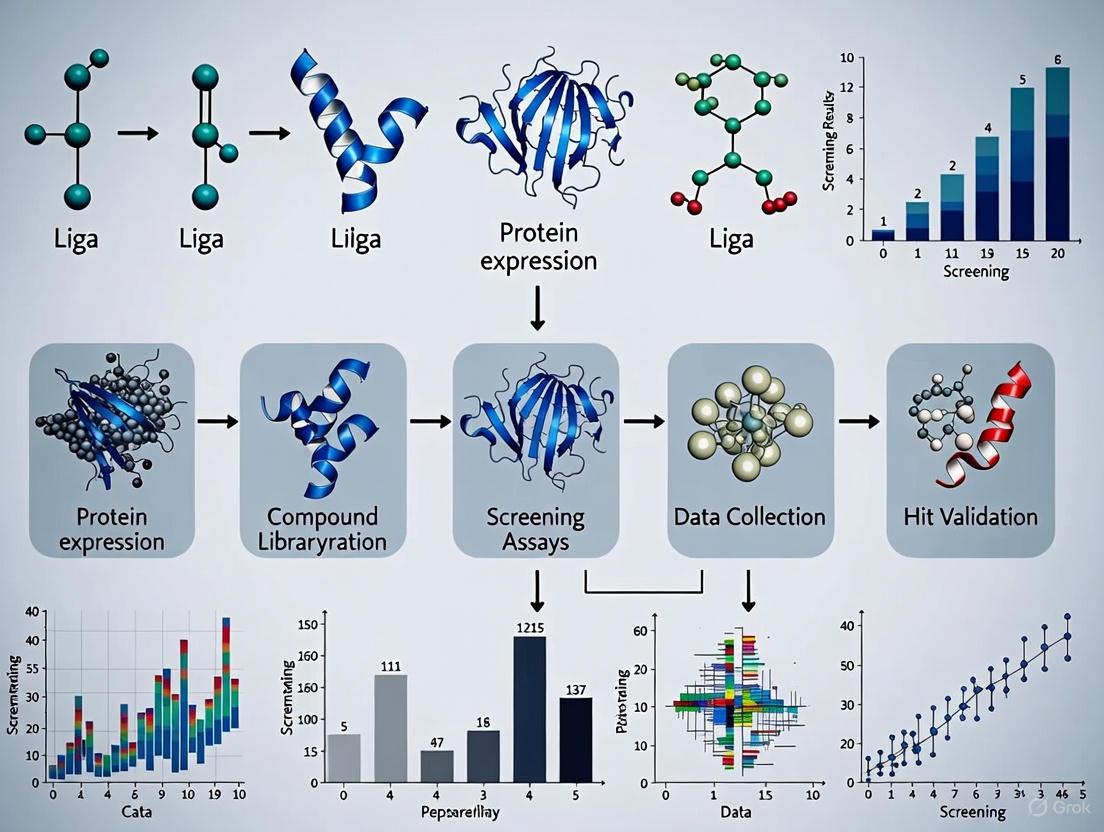
This article provides a comprehensive overview of modern high-throughput screening (HTS) methodologies for identifying protein-small molecule interactors, crucial for chemical probe and drug discovery.
High-Throughput Screening for Protein-Small Molecule Interactions: Strategies, Technologies, and Validation
Abstract
This article provides a comprehensive overview of modern high-throughput screening (HTS) methodologies for identifying protein-small molecule interactors, crucial for chemical probe and drug discovery. It covers foundational principles, diverse screening strategies—including target-based biochemical assays and phenotypic cellular screens—and emerging technologies that enhance throughput and reliability. The content details rigorous statistical approaches for hit selection, addresses common challenges like false positives, and outlines essential validation techniques to confirm binding and biological relevance. Aimed at researchers and drug development professionals, this resource synthesizes current best practices and innovative trends shaping the field.
The Foundation of High-Throughput Screening: Principles and Evolving Landscapes
High-Throughput Screening (HTS) represents a foundational methodology in modern biological research and drug discovery, enabling the rapid experimental testing of thousands to millions of chemical or biological compounds for a specific biological activity [1]. This approach has revolutionized how researchers identify potential drug candidates, molecular probes, and therapeutic targets by allowing massive parallel processing that would be impossible with traditional one-at-a-time methods. The core principle of HTS involves automating assays to quickly conduct vast numbers of tests, thereby accelerating the pace of discovery while reducing costs per sample [2].
The applications of HTS span across both industrial pharmaceutical development and academic basic research. In industrial settings, HTS is indispensable for early-stage drug discovery, allowing pharmaceutical companies to efficiently screen extensive compound libraries against therapeutic targets [3]. In academia, HTS facilitates probe development for pathway analysis and target validation, providing crucial tools for understanding fundamental biological processes and disease mechanisms [4]. The technology has evolved significantly from its origins, with current platforms incorporating advanced automation, miniaturization, and sophisticated data analytics to enhance sensitivity, reliability, and throughput [1].
HTS Market Landscape and Technological Evolution
The HTS market demonstrates robust growth driven by increasing demands for efficient drug discovery processes and technological advancements. Current market valuations are projected to rise from USD 32.0 billion in 2025 to USD 82.9 billion by 2035, representing a compound annual growth rate (CAGR) of 10.0% [3]. This expansion reflects the critical role HTS plays across pharmaceutical, biotechnology, and academic research sectors.
Market Segmentation and Dominant Technologies
Table 1: High-Throughput Screening Market Segmentation (2025)
| Segment Category | Leading Segment | Market Share (%) | Key Growth Drivers |
|---|---|---|---|
| Technology | Cell-Based Assays | 39.4% | Physiologically relevant data, predictive accuracy in early drug discovery [3] |
| Application | Primary Screening | 42.7% | Essential role in identifying active compounds from large chemical libraries [3] |
| Products & Services | Reagents and Kits | 36.5% | Need for reliable, high-quality consumables ensuring reproducibility [3] |
| End User | Pharmaceutical & Biotechnology Firms | Not Specified | Rising R&D investment and need for faster validation cycles [3] |
Emerging Technological Trends
The HTS landscape is witnessing several transformative trends that are reshaping its capabilities and applications. Cell-based assays continue to dominate the technology segment due to their ability to provide physiologically relevant data within living systems, offering more predictive accuracy for in vivo responses compared to biochemical assays [3]. The integration of artificial intelligence and machine learning is revolutionizing data analysis capabilities, enabling more efficient processing of complex biological data and improving hit identification accuracy [1]. There is also a notable shift toward ultra-high-throughput screening (uHTS) technologies, which are anticipated to grow at a CAGR of 12% through 2035, driven by their unprecedented ability to screen millions of compounds rapidly and thoroughly explore chemical space [3].
The adoption of miniaturized assay formats, advanced robotic liquid handling systems, and lab automation tools continues to enhance throughput and cost-effectiveness [3]. These technological advancements are particularly crucial for addressing the increasing complexity of drug pipelines and the need for faster validation cycles in both industrial and academic settings. Furthermore, the growing focus on personalized medicine and targeted therapies is creating new opportunities for HTS applications in genomics, proteomics, and chemical biology [1].
Core HTS Technologies for Protein-Small Molecule Interaction Studies
Understanding protein-small molecule interactions is fundamental to drug discovery and probe development, as these interactions modulate protein activity and impact cellular processes and disease pathways [4]. Several core technologies have been developed to study these interactions, each with distinct advantages and applications.
Immobilized Binder Light-Based Sensors
Immobilized Binder Light-Based Sensors (IBLBS) represent a sophisticated approach for quantifying interactions between proteins and small molecules or nucleic acids. These techniques immobilize one interaction partner (ligand) on a sensor surface while the other partner (analyte) is introduced in solution, allowing real-time measurement of binding events [4].
Bio-Layer Interferometry (BLI)
BLI utilizes white light reflection to measure molecular interactions through specialized biosensor tips. The technique employs constructive and destructive interference patterns generated when white light reflects from the sensor layer, with alterations in these patterns indicating molecular binding events [4]. As molecules bind to the tip surface, the optical thickness changes, resulting in wavelength shifts that are measured in real-time.
Key Advantages: BLI enables label-free detection and provides both kinetic data (association/dissociation rates) and affinity measurements (KD values). It can detect weak interactions with high sensitivity (limit of detection lower than 10 pg/mL) and is compatible with crude samples, including cell-free expression mixtures [4]. A significant benefit over some other techniques is the extended association phase measurement capability (up to 8000 seconds) due to diffusion-based analyte delivery.
Experimental Workflow:
- Functionalize biosensor tip with capture molecule (e.g., streptavidin, Ni-NTA)
- Immobilize ligand (protein or nucleic acid) on the tip
- Measure baseline signal in buffer solution
- Expose tip to analyte solution and monitor association phase
- Transfer tip to buffer solution and monitor dissociation phase
- Analyze binding curves to determine kinetic parameters
Surface Plasmon Resonance (SPR)
SPR measures molecular interactions through changes in the refractive index on a sensor chip surface. When analytes bind to immobilized ligands, the mass and charge changes alter the refractive index, which is detected as shifts in the resonance angle of reflected light [4]. Modern SPR instruments can measure nearly 400 interactions simultaneously, making the technique highly suitable for high-throughput applications in drug candidate characterization [4].
Key Advantages: SPR provides real-time, label-free analysis of binding events with high throughput capabilities. The technology offers robust and reliable reporting of kinetic data, making it particularly valuable for characterizing drug candidates. SPR has been optimized for detecting various biomarkers, including cancer biomarkers, through signal enhancement and dynamic range improvements [4].
Solution-Based Fluorescent Techniques (SBFTs)
Solution-Based Fluorescent Techniques monitor protein-small molecule interactions with both interaction partners free in solution, using labeled dyes or analytes as reporters [4]. These methods include fluorescence polarization (FP), fluorescence resonance energy transfer (FRET), and time-resolved FRET (TR-FRET). SBFTs are particularly valuable for studying interactions in physiologically relevant conditions and for high-throughput applications where solution-phase kinetics more closely mimic cellular environments.
Mass Spectrometry (MS) in HTS
Mass spectrometry techniques can measure interactions between proteins and small molecules by quantifying mass shifts in the native protein spectra [4]. MS-based approaches provide direct measurement of binding events without requiring labeling or immobilization, offering orthogonal validation for other HTS methods. Advanced MS techniques can characterize complex binding stoichiometries and detect post-translational modifications affected by small molecule binding.
Essential Research Reagent Solutions
Successful HTS implementation requires carefully selected reagents and materials that ensure assay robustness, reproducibility, and physiological relevance. The following table outlines key research reagent solutions essential for protein-small molecule interaction studies.
Table 2: Essential Research Reagents for HTS of Protein-Small Molecule Interactions
| Reagent Category | Specific Examples | Function in HTS | Key Considerations |
|---|---|---|---|
| Cell-Based Assay Systems | Engineered cell lines, Primary cells, Stem cells | Provide physiologically relevant environment for compound testing | Ensure relevance to native tissue; consider genetic background; verify expression of target protein [3] |
| Detection Reagents | Fluorescent dyes, Luminescent substrates, Antibodies | Enable quantification of binding events and cellular responses | Optimize for sensitivity and dynamic range; minimize background interference; validate specificity [3] |
| Ligand Immobilization Systems | Ni-NTA tips, Streptavidin biosensors, Protein A/G chips | Facilitate capture of proteins/nucleic acids for binding studies | Confirm immobilization efficiency; minimize nonspecific binding; ensure orientation preserves function [4] |
| Compound Libraries | Small molecule collections, Natural product extracts, Fragment libraries | Source of potential binders/modulators for screening | Ensure chemical diversity; verify compound integrity; consider physicochemical properties [3] |
| Buffer Components | Detergents, Reducing agents, Cofactors, Stabilizers | Maintain protein stability and function during assay | Optimize pH and ionic strength; include necessary cofactors; minimize nonspecific interactions [5] |
Comprehensive HTS Assay Validation Protocols
Rigorous validation is essential for ensuring that HTS assays generate reliable, reproducible data suitable for both industrial drug discovery and academic probe development. The following protocols outline critical validation steps based on established guidelines from the Assay Guidance Manual [5].
Reagent Stability and Storage Validation
Purpose: Determine optimal storage conditions and stability limits for all critical assay components to maintain assay performance over time and across multiple screening sessions.
Procedure:
- Prepare multiple aliquots of each reagent under proposed storage conditions (e.g., -80°C, -20°C, 4°C)
- Subject aliquots to multiple freeze-thaw cycles (0, 1, 3, 5 cycles) with testing after each cycle
- Assess long-term stability by testing reagents stored for different durations (1 week, 1 month, 3 months)
- Evaluate working solution stability by testing reagents held at assay temperature for various times (0, 1, 2, 4, 8 hours)
- For combination reagents, test stability of individual components and mixtures separately
Acceptance Criteria: Reagents should maintain ≥80% activity compared to fresh preparations after specified storage periods and freeze-thaw cycles. Critical reagents should show minimal activity loss (<15%) over the expected duration of a screening campaign.
DMSO Compatibility Testing
Purpose: Establish the tolerance of the assay system to dimethyl sulfoxide (DMSO), the universal solvent for compound libraries in HTS.
Procedure:
- Prepare assay mixtures with DMSO concentrations spanning expected screening conditions (typically 0.1% to 5%, including planned screening concentration)
- Include DMSO-free controls as reference
- Run complete assay protocol with all DMSO concentrations in replicates (n≥8)
- Measure both signal window (Max-Min) and control well responses at each DMSO concentration
- Assess effects on assay kinetics by monitoring reaction progress at different DMSO levels
Acceptance Criteria: The selected DMSO concentration should not significantly affect assay signal window (Z'-factor ≥0.5), control well responses (CV <15%), or assay kinetics compared to DMSO-free conditions.
Plate Uniformity and Signal Variability Assessment
Purpose: Evaluate assay performance across entire microplates and between different plates/runs to identify spatial biases and ensure consistent performance.
Procedure - Interleaved-Signal Format:
- Prepare assay plates with systematic distribution of three signal levels:
- Max Signal: Maximum assay response (e.g., uninhibited enzyme activity, full agonist response)
- Min Signal: Background or minimum response (e.g., fully inhibited enzyme, buffer control)
- Mid Signal: Intermediate response (e.g., EC/IC50 concentration of control compound)
- Utilize standardized plate layouts with alternating signals across columns and rows
- Run minimum of three independent experiments on separate days with freshly prepared reagents
- For cell-based assays, include additional plates to assess edge effects and evaporation
- Analyze data for positional effects, temporal drift, and between-plate variability
Statistical Analysis:
- Calculate Z'-factor = 1 - [3×(σmax + σmin) / |μmax - μmin|]
- Determine signal-to-background ratio (S/B) = μmax / μmin
- Assess coefficient of variation (CV) for each signal type: CV = (σ/μ) × 100%
Acceptance Criteria: For robust HTS assays, Z'-factor should be ≥0.5, S/B ratio ≥5-fold, and CV for control wells <15% [5].
Advanced HTS Applications in Protein-Small Molecule Research
Carbohydrate-Lectin Binding Studies Using BLI
A recent innovative application combined cell-free expression (CFE) systems with BLI to analyze carbohydrate-lectin binding interactions. Researchers used streptavidin-coated BLI tips coated with biotinylated L-rhamnose to isolate rhamnose-binding lectins directly from crude cell-free expression mixtures without purification steps [4]. This approach enabled comprehensive analysis of lectin specificity toward different glycans through competition experiments, determining kinetic parameters (Kon, Koff, Kd) for various interactions. The study demonstrated translational relevance by measuring interactions between lectins and O-antigen, a Shigella serotype targeted in vaccine development [4].
Protein-Liposome Interaction Analysis
BLI was employed to study interactions between recombinant human erythropoietin (rh-Epo) and multilamellar liposomes, determining which liposome compositions interacted most effectively with the therapeutic protein [4]. Streptavidin BLI tips were loaded with biotinylated rh-Epo and exposed to different liposome formulations, with real-time monitoring of association and dissociation phases. Results revealed preferential binding to liposomes with more saturated lipid chains, providing insights for drug formulation development. This application highlighted BLI's advantage for studying weakly associating binding partners through extended association phase measurements (up to 8000 seconds) [4].
High-Throughput Screening for Drug Repurposing
HTS technologies are increasingly applied to drug repurposing initiatives, enabling rapid evaluation of existing drug libraries for new therapeutic applications. This approach significantly reduces development time and costs compared to de novo drug discovery [3]. The successful repurposing of sildenafil from hypertension treatment to erectile dysfunction therapy exemplifies the power of HTS in identifying novel applications for existing compounds. Implementation requires carefully designed assays that can detect unanticipated activities while controlling for false positives through robust validation and counter-screening strategies.
Implementation Considerations for Different Research Settings
Industrial Drug Discovery Implementation
Pharmaceutical HTS operations require robust, reproducible systems capable of processing millions of compounds with strict quality control. Key considerations include:
- Automation Integration: Implement seamless workflows connecting compound management, liquid handling, assay execution, and data processing
- Quality Control: Establish rigorous QC protocols including daily system suitability tests and periodic full validation
- Data Management: Develop infrastructure for storing, processing, and analyzing massive datasets generated by HTS campaigns
- Hit Triage: Create multi-parameter prioritization schemes to identify promising hits from primary screens
Academic Probe Development Implementation
Academic HTS operations often focus on specialized targets with more limited compound libraries, requiring:
- Resource Optimization: Adapt protocols for smaller scale with maintained robustness through careful statistical design
- Collaborative Networks: Leverage core facilities and consortia to access HTS infrastructure and expertise
- Follow-up Capacity: Plan secondary assay cascades early to efficiently validate screening hits
- Probe Criteria: Establish clear chemical and biological criteria for useful chemical probes before screening
The continuous innovation in HTS technologies, combined with rigorous validation and implementation practices, ensures that both industrial and academic researchers can reliably identify and characterize protein-small molecule interactions critical for advancing therapeutic development and biological understanding.
Chemical genetics represents a pivotal approach in modern biological research and drug discovery, employing small molecules to perturb and study complex biological systems with temporal and dose-dependent control [6]. This methodology serves as a critical bridge between phenotypic screening and target-based drug discovery, enabling researchers to deconvolute complex protein-small molecule interactions. The field is fundamentally divided into two complementary paradigms: forward and reverse chemical genetics.
Forward chemical genetics initiates with phenotypic observation of biological systems treated with small molecules, working backward to identify the molecular targets responsible for the observed effects [7] [8]. Conversely, reverse chemical genetics begins with a specific protein target of interest and seeks small molecules that modulate its function, subsequently observing the resulting phenotypic consequences [7] [6]. Both approaches provide powerful strategies to unravel biological pathways, identify novel drug targets, and advance therapeutic development, each with distinct advantages and methodological considerations.
Table: Core Characteristics of Forward and Reverse Chemical Genetics
| Characteristic | Forward Chemical Genetics | Reverse Chemical Genetics |
|---|---|---|
| Starting Point | Phenotypic screening in biological systems [7] | Defined protein target [7] [6] |
| Primary Goal | Identify molecular targets of bioactive compounds [7] [8] | Discover modulators of specific protein function [7] [6] |
| Screening Context | Cells, tissues, or whole organisms [7] | Purified proteins or simplified systems [6] |
| Target Deconvolution | Required; often challenging [7] [8] | Not required; target is known a priori |
| Advantages | Unbiased discovery; identifies novel targets/pathways [7] | Straightforward SAR; rational design [7] |
| Limitations | Target identification can be difficult [8] | May overlook complex system biology [7] |
Core Methodologies and Workflows
Forward Chemical Genetics Screening Protocol
Forward chemical genetic screening follows a systematic, three-stage process to identify novel bioactive compounds and their cellular targets:
Phenotypic Screening:
- Compound Library Preparation: Utilize diverse small molecule collections (typically 10,000-100,000 compounds) in multi-well plate formats [6]. Libraries may include synthetic compounds, natural products, or known bioactive molecules.
- Biological System Treatment: Apply compounds to cells, tissues, or model organisms at appropriate concentrations (typically 1-10 μM) and time points [8].
- Phenotypic Assessment: Monitor for desired phenotypic changes using automated imaging, viability assays, transcriptional reporters, or other relevant readouts [8].
Target Identification:
- Chemical Probe Design: Convert bioactive hit compounds into chemical probes by incorporating affinity tags (biotin) or bio-orthogonal handles (azide/alkyne) while maintaining biological activity [7] [9].
- Target Enrichment: Incubate probes with biological systems, followed by covalent capture using photoaffinity labeling (for reversible binders) or inherent reactivity (for covalent binders) [7] [9].
- Protein Isolation and Identification: Enrich probe-bound proteins using affinity chromatography (streptavidin for biotinylated probes), followed by on-bead digestion and liquid chromatography-mass spectrometry (LC-MS) analysis for protein identification [7] [9].
Target Validation:
- Competition Assays: Confirm binding specificity by demonstrating reduced probe binding in the presence of excess unmodified compound [8].
- Genetic Validation: Use RNAi, CRISPR/Cas9, or overexpression studies to determine if genetic manipulation of the putative target recapitulates the compound-induced phenotype [8].
- Functional Assays: Establish correlation between compound potency in phenotypic assays and binding affinity for the putative target [7].
Reverse Chemical Genetics Screening Protocol
Reverse chemical genetics employs a target-centric approach with the following methodology:
Target Selection and Protein Production:
- Select a purified, functionally active protein target relevant to the biological pathway or disease of interest.
- Ensure protein purity (>90%) and functional integrity through quality control assays.
In Vitro Compound Screening:
- High-Throughput Screening (HTS): Screen compound libraries (typically 100,000-1,000,000 compounds) against the target using biochemical assays measuring binding or functional modulation [10].
- Primary Assay: Implement fluorescence-based, radiometric, or spectrophotometric assays in 384- or 1536-well plate formats with appropriate controls (blanks, positive/negative controls).
- Hit Selection: Identify initial hits based on statistical significance (typically >3 standard deviations from mean) and dose-response relationships.
Cellular Validation:
- Cellular Activity Assessment: Test compounds identified from in vitro screening in cellular models expressing the target protein.
- Selectivity Profiling: Evaluate compound specificity using counter-screens against related protein family members or general cytotoxicity assays.
- Phenotypic Characterization: Observe and document resulting cellular phenotypes following target engagement [6].
Structure-Activity Relationship (SAR) Analysis:
- Systematically modify hit compound structures to establish SAR and improve potency, selectivity, and physicochemical properties.
- Utilize structural biology (X-ray crystallography, NMR) where possible to guide rational compound optimization.
Key Research Reagents and Tools
Table: Essential Research Reagent Solutions for Chemical Genetics
| Reagent/Tool | Function | Examples/Applications |
|---|---|---|
| Chemical Probe | Tool molecule with molecular recognition group, reactive group, and reporter tag [9] | Target identification and validation; must demonstrate high selectivity and potency [7] |
| Compound Libraries | Diverse collections of small molecules for screening [6] | Phenotypic screening (forward) or target-based screening (reverse); NIH library of ~500,000 compounds [6] |
| Photoaffinity Labeling (PAL) Groups | Photoreactive moieties (aryl azide, benzophenone, diazirine) to capture transient interactions [9] | Mapping non-covalent small molecule-protein interactions in live cells [9] |
| Bio-orthogonal Handles | Chemical groups (azide, alkyne) for late-stage conjugation without disrupting biological systems [9] | Copper-catalyzed azide-alkyne cycloaddition (CuAAC) for appending detection tags after target capture [9] |
| Affinity Tags | Molecular handles (biotin) for enrichment and purification [9] | Streptavidin-based pull-down of probe-bound proteins for MS identification [7] [9] |
| Mass Spectrometry | Analytical technique for protein identification and quantification [7] | Liquid chromatography-tandem MS (LC-MS/MS) for chemoproteomic target identification [7] |
Workflow Visualization
Forward vs. Reverse Chemical Genetics Workflows
The diagram above illustrates the fundamental differences between forward (yellow-to-green) and reverse (blue-to-green) chemical genetic approaches. Forward chemical genetics begins with phenotypic screening and progresses to target identification, while reverse chemical genetics initiates with a defined protein target and progresses to phenotypic analysis.
Comparative Analysis and Applications
Strategic Considerations for Approach Selection
The choice between forward and reverse chemical genetics depends heavily on research goals, available resources, and the biological context:
Novel Target Discovery: Forward chemical genetics excels at identifying novel druggable targets and pathways without predefined hypotheses about involved mechanisms [7]. This approach is particularly valuable for complex biological processes where key regulatory proteins remain unknown.
Pathway Elucidation: When studying poorly characterized phenotypic responses, forward approaches can reveal unexpected protein functions and pathway connections through unbiased target identification [10].
Target-Based Therapeutic Development: Reverse chemical genetics provides a direct path for developing modulators of well-validated targets with known disease relevance, enabling structure-based drug design [7].
Tool Compound Development: For investigating specific protein functions, reverse approaches efficiently generate selective chemical probes that complement genetic techniques [7].
Applications in Drug Discovery and Biological Research
Both forward and reverse chemical genetics have contributed significantly to biomedical research and therapeutic development:
Pain Management: The discovery of COX-2 inhibitors emerged from reverse chemical genetics approaches targeting the cyclooxygenase pathway, building upon earlier understanding of aspirin's mechanism [6].
Immunosuppressants: Compounds like cyclosporine A were initially identified through phenotypic screening (forward approach), with subsequent target identification revealing their mechanisms of action [6].
Oncology Target Discovery: Forward screens identifying compounds with desired anti-proliferative or differentiation phenotypes have revealed novel cancer targets and mechanisms [7] [10].
Chemical Probe Development: Both approaches generate valuable chemical tools for studying protein function, with publicly available resources expanding access to these reagents [10].
Advanced Techniques and Emerging Technologies
Chemoproteomic Methods for Target Identification
Recent advancements in chemoproteomics have significantly enhanced target deconvolution capabilities in forward chemical genetics:
Activity-Based Protein Profiling (ABPP): Utilizes electrophilic probes that covalently react with active site nucleophiles of specific enzyme families, enabling monitoring of enzyme activity and ligandability [9].
Photoaffinity Labeling (PAL) Strategies: Incorporates photoreactive groups (diazirines, benzophenones) that form covalent bonds with target proteins upon UV irradiation, capturing transient interactions for identification [9].
Cleavable Enrichment Tags: Implementation of photo-, chemically-, or enzymatically-cleavable linkers between affinity tags and chemical probes enables efficient elution of probe-modified peptides for precise binding site mapping [9].
Integrated Proteomic Workflows: Combination of PAL with isotopically labeled enrichment tags and advanced computational algorithms enables global profiling of small molecule binding sites directly in live cells [9].
Technological Innovations
High-Throughput Screening Automation: Robotic systems enable screening of >100,000 compounds per day in nanoliter-scale volumes, increasing efficiency while reducing reagent costs [10].
Advanced Mass Spectrometry: High-resolution LC-MS systems with improved sensitivity enable identification of low-abundance targets and precise mapping of binding sites [7] [9].
CRISPR Screening Integration: Combination of chemical genetic approaches with CRISPR-based genetic screening validates target engagement and identifies resistance mechanisms [7].
Chemical Bioinformatics: Publicly available databases and computational tools facilitate compound prioritization, target prediction, and mechanism analysis [10].
Forward and reverse chemical genetics represent complementary paradigms that together provide a powerful framework for investigating biological systems and advancing therapeutic discovery. Forward chemical genetics offers an unbiased approach to identify novel drug targets and biological mechanisms by starting with phenotypic observations, while reverse chemical genetics enables rational development of targeted therapeutics through focused modulation of specific proteins. The integration of advanced chemoproteomic methods, particularly photoaffinity labeling and activity-based protein profiling, has dramatically enhanced our ability to deconvolute complex small molecule-protein interactions. As chemical genomic resources continue to expand and technologies evolve, these approaches will remain essential for mapping biological pathways, validating therapeutic targets, and developing precision medicines that address unmet medical needs.
High-Throughput Screening (HTS) represents a fundamental methodology in modern drug discovery and protein-small molecule interaction research, enabling the rapid testing of hundreds of thousands of compounds against biological targets. The operational shift from manual processing to HTS constitutes a fundamental change in the scale and reliability of chemical and biological analyses, dramatically increasing the number of samples processed per unit time [11]. This paradigm shift is essential in modern drug discovery where target validation and compound library exploration require massive parallel experimentation. The scientific principle guiding HTS is the generation of robust, reproducible data sets under standardized conditions to accurately identify potential "hits" from extensive chemical libraries [11].
The capacity of HTS to rapidly identify novel lead compounds for new or established diseases provides significant advantages over rational drug design or structure-based approaches by enabling more rapid delivery of diverse drug leads [12]. However, these advantages come with associated challenges including substantial costs, technical complexity, and the potential for false positives and negative hits [12]. Successfully implementing HTS requires a deep understanding of assay robustness metrics and the seamless integration of specialized instrumentation, data management systems, and validated experimental protocols. The focus of current HTS development has shifted toward creating more practical, integrated systems that combine precision, transparency, and usability, with an emphasis on technologies that save time, connect data systems, and support biology that better reflects human complexity [13].
Core HTS System Components
Automation and Robotic Systems
The integration of sophisticated automation and robotics provides the precise, repetitive, and continuous movement required to realize the full potential of HTS workflows. Robotic systems form the core of any HTS platform, moving microplates between functional modules without human intervention to enable continuous, 24/7 operation that dramatically improves the utilization rate of expensive analytical equipment [11]. The primary types of laboratory robotics include Cartesian and articulated robotic arms for plate movement, and dedicated liquid handling systems for managing complex pipetting routines [11].
Modern HTS automation emphasizes usability and accessibility for scientists. The industry is experiencing a "third wave" of automation focused on empowering scientists to use automation confidently, saving time for analysis and thinking rather than manual tasks like pipetting [13]. This philosophy has led to the development of more ergonomic and user-friendly equipment, such as Eppendorf's Research 3 neo pipette, designed with input from working scientists to feature a lighter frame, shorter travel distance, and larger plunger to distribute pressure [13]. The sector is branching in two distinct directions: simple, accessible benchtop systems on one side, and large, unattended multi-robot workflows on the other [13]. Systems like Tecan's Veya liquid handler represent the first path, offering quick, walk-up automation that any researcher can use, while their FlowPilot software schedules complex workflows where liquid handlers, robots, and instruments operate seamlessly [13].
Table 1: Key Automation Modules in Integrated HTS Workflows
| Module Type | Primary Function | Technical Requirements | Representative Examples |
|---|---|---|---|
| Liquid Handler | Precise fluid dispensing and aspiration | Sub-microliter accuracy; low dead volume | Beckman Echo 655 acoustic dispenser [14]; Agilent Bravo [14] |
| Robotic Plate Mover | Transfer microplates between instruments | High positioning accuracy; compatibility with labware | Cartesian and articulated robotic arms [11] |
| Plate Incubator | Temperature and atmospheric control | Uniform heating across microplates | Cytomat 5 C450 incubator [15] |
| Microplate Reader | Signal detection | High sensitivity and rapid data acquisition | Molecular Devices ImageXpress Micro Confocal [14]; BMG Clariostar Plus [14] |
| Plate Washer | Automated washing cycles | Minimal residual volume and cross-contamination control | Integrated washer-stackers [11] |
Effective system design ensures the smooth flow of materials, preventing bottlenecks at any single point. This engineering approach focuses on maximizing uptime and maintaining a standardized environment crucial for reliable HTS results [11]. The integration software, or scheduler, acts as the central orchestrator, managing the timing and sequencing of all actions, which is particularly critical for time-sensitive kinetic measurements [11]. Companies like SPT Labtech emphasize collaboration and interoperability in their automation platforms, as demonstrated by their firefly+ platform that combines pipetting, dispensing, mixing, and thermocycling within a single compact unit designed to simplify complex genomic workflows [13].
Microplate Technology and Selection
Microplates constitute the fundamental physical platform for HTS experiments, with format selection directly impacting assay performance, reagent consumption, and data quality. The evolution of microplate technology has enabled progressive miniaturization from 96-well to 384-well and 1536-well formats, significantly increasing throughput while reducing reagent volumes and associated costs [16] [12]. This miniaturization demands extreme precision in fluid handling that manual pipetting cannot reliably deliver across thousands of replicates [11].
The initial step in designing any HTS experiment involves selecting the appropriate microplate format based on specific assay requirements, throughput needs, and available instrumentation [16]. Standard plate formats have been optimized for various applications, with 96-well plates typically used for assay development and low-throughput validation, 384-well plates for medium- to high-throughput screening, and 1536-well plates for ultra-high-throughput screening (uHTS) [16]. Each format presents distinct advantages and challenges; for instance, while 1536-well plates enable tremendous throughput, they require specialized, high-precision dispensing equipment and are more susceptible to evaporation and edge effects [16].
Table 2: Microplate Formats and Applications in HTS
| Plate Format | Typical Assay Volume | Primary Application | Key Design Challenge |
|---|---|---|---|
| 96-well | 50-200 µL | Assay Development, Low-Throughput Validation | High reagent consumption |
| 384-well | 5-50 µL | Medium- to High-Throughput Screening | Increased risk of evaporation and edge effects |
| 1536-well | 2-10 µL | Ultra-High Throughput Screening (uHTS) | Requires specialized, high-precision dispensing |
Miniaturization protocols must carefully manage several physical parameters. Decreasing the liquid volume increases the surface-to-volume ratio, which accelerates solvent evaporation [16]. To counteract this, low-profile plates with fitted lids, humidified incubators, and specialized environmental control units are often integrated into the HTS workflow [16]. Furthermore, plate material selection (e.g., polystyrene, polypropylene, cyclic olefin copolymer) and surface chemistry (e.g., tissue culture treated, non-binding, or functionalized) must be rigorously tested to ensure compatibility with assay components and to mitigate non-specific binding of compounds or biological reagents [16]. Companies like Corning have developed specialized microplates with glass-bottom or COC film-bottom options that provide high-optical quality with industry-leading flatness, reducing autofocus time and improving high-content screening assay performance [17].
Detection and Reader Technologies
Detection technologies form the critical endpoint of HTS experiments, transforming biological interactions into quantifiable signals. HTS assays can be generally subdivided into biochemical or cell-based methods, each requiring appropriate detection methodologies [12]. Biochemical targets typically utilize enzymes and employ detection methods including fluorescence, luminescence, nuclear magnetic resonance spectroscopy, mass spectrometry (MS), and differential scanning fluorimetry (DSF) [12]. Fluorescence-based methods remain the most common due to their sensitivity, responsiveness, ease of use, and adaptability to HTS formats [12].
Modern detection systems have evolved to support increasingly complex assay requirements. High-content screening systems, such as the Molecular Devices ImageXpress Micro Confocal High-Content fluorescence microplate imager, combine imaging capabilities with multiparametric analysis, enabling detailed morphological assessment in addition to quantitative measurements [14]. Mass spectrometry-based methods of unlabeled biomolecules are becoming more generally utilized in HTS, permitting the screening of compounds in both biochemical and cellular settings [12]. The recent development of HT-PELSA (High-Throughput Peptide-centric Local Stability Assay) combines limited proteolysis with next-generation mass spectrometry to enable sensitive protein-ligand profiling in crude cell, tissue, and bacterial lysates, substantially extending HTS capabilities to membrane protein targets across diverse biological systems [18].
Detection systems must be carefully matched to assay requirements, considering factors such as sensitivity, dynamic range, compatibility with microplate formats, and speed of acquisition. For cell-based assays, systems capable of maintaining physiological conditions during reading, such as controlled temperature and atmospheric conditions, may be necessary. The trend toward more physiologically relevant 3D cell culture models further complicates detection requirements, often necessitating confocal imaging capabilities to capture signals throughout the depth of the sample [17]. As detection technologies advance, the integration of multiple detection modalities within single platforms provides researchers with greater flexibility in assay design and development.
Experimental Protocols
Protocol 1: High-Throughput Peptide-Centric Local Stability Assay (HT-PELSA) for Protein-Ligand Interaction Screening
Principle and Applications
HT-PELSA represents a significant advancement in proteome-wide mapping of protein-small molecule interactions, enabling the identification of potential binding sites by detecting protein regions stabilized by ligand binding through limited proteolysis [18]. This method substantially extends the capabilities of the original PELSA workflow by enabling sensitive protein-ligand profiling in crude cell, tissue, and bacterial lysates, allowing the identification of membrane protein targets in diverse biological systems [18]. The protocol increases sample processing efficiency by 100-fold while maintaining high sensitivity and reproducibility, making it particularly valuable for system-wide drug screening across a wide range of sample types [18].
Step-by-Step Workflow
Sample Preparation: Prepare cell, tissue, or bacterial lysates in appropriate buffer systems. For membrane protein targets, include compatible detergents to maintain protein solubility and function.
Ligand Incubation: Distribute lysates into 96-well plates and add ligands at desired concentrations. Include vehicle controls for reference samples. The high-throughput format enables testing multiple ligand concentrations in parallel for dose-response studies.
Limited Proteolysis: Add trypsin (or other appropriate protease) to each well and incubate for exactly 4 minutes at room temperature. The standardized digestion time ensures reproducibility across plates.
Digestion Termination: Acidify samples to stop proteolysis, maintaining consistent timing across all wells.
Peptide Separation: Transfer samples to 96-well C18 plates to remove intact, undigested proteins and large protein fragments. This step replaces molecular weight cut-off filters used in the original protocol, increasing throughput and compatibility with crude lysates.
Peptide Elution: Elute peptides using appropriate acetonitrile gradients directly into mass spectrometry-compatible plates.
Mass Spectrometry Analysis: Analyze samples using next-generation mass spectrometry systems such as Orbitrap Astral, which improves throughput threefold and increases the number of identified targets by 22% compared to previous generation instruments [18].
The entire workflow requires under 2 hours for processing up to 96 samples from cell lysis to mass spectrometry-ready peptides, with the possibility to process multiple plates in parallel [18].
Data Analysis and Quality Control
Target Identification: Proteins are considered stabilized by the ligand if they become protected from digestion upon ligand binding. Peptides that show decreased abundance in the treatment-control comparison are classified as stabilized peptides [18].
Binding Affinity Determination: The high-throughput approach facilitates reproducible measurement of protein-ligand interactions across different ligand concentrations, enabling generation of dose-response curves and determination of half-maximum effective concentration (EC50) values for each protein target [18].
Quality Assessment: For kinase-staurosporine interactions, HT-PELSA demonstrates high precision with median coefficient of variation of 2% for pEC50 values across replicates [18].
Protocol 2: Robust Biochemical HTS Assay Development and Validation
Assay Design Principles
Biochemical HTS assays measure direct enzyme or receptor activity in a defined system, providing highly quantitative, interference-resistant readouts for enzyme activity [19]. Successful assay development requires creating systems that are robust, reproducible, and sensitive, with methods appropriate for miniaturization to reduce reagent consumption and suitable for automation [12]. Universal biochemical assays, such as the Transcreener platform capable of testing multiple targets due to their flexible design, provide significant advantages for screening diverse target classes including kinases, ATPases, GTPases, helicases, PARPs, sirtuins, and cGAS [19].
Validation Protocol
Assay Optimization: Determine optimal reagent concentrations, incubation times, and buffer conditions using statistical design of experiments (DoE) approaches. Test compatibility with detection method (fluorescence polarization, TR-FRET, luminescence, etc.).
Miniaturization Validation: Transition assay from initial format (typically 96-well) to target HTS format (384-well or 1536-well). Validate performance at reduced volumes, addressing challenges such as increased surface-to-volume ratio that accelerates solvent evaporation [16].
Robustness Testing:
- Compound Tolerance: Determine if compounds or their solvents (e.g., DMSO) interfere with assay performance [16].
- Plate Drift Analysis: Run control plates over a sustained period to confirm signal window stability, addressing potential issues related to reagent degradation or instrument warm-up [16].
- Edge Effect Mitigation: Identify and correct for systematic signal gradients across the plate caused by uneven heating or differential evaporation through strategic placement of controls or use of specific sealants [16].
Statistical Validation:
- Calculate Z'-factor using positive and negative controls: Z' = 1 - (3σp + 3σn)/|μp - μn|, where σp and σn are standard deviations of positive and negative controls, and μp and μn are their means [11]. A Z'-factor between 0.5 and 1.0 indicates an excellent assay [19].
- Determine signal-to-background ratio (S/B) and signal-to-noise ratio (S/N).
- Calculate coefficient of variation (CV) across wells and plates.
Automation Integration: Transfer validated assay to automated HTS system, verifying liquid handling accuracy, incubation timing, and detection parameters. Implement scheduling to maximize utilization rate of bottleneck instruments, typically the plate reader or most complex liquid handler [11].
Only after an assay demonstrates a consistent, acceptable Z'-factor should it proceed to full screening campaigns [16].
Research Reagent Solutions
The successful implementation of HTS infrastructure requires careful selection of specialized reagents and materials optimized for automated, miniaturized formats. These solutions must provide consistency, reliability, and compatibility with the physical and chemical demands of high-throughput environments. The table below details essential research reagent solutions for protein-small molecule interaction studies.
Table 3: Essential Research Reagent Solutions for HTS
| Reagent Category | Specific Examples | Function in HTS | Selection Considerations |
|---|---|---|---|
| Compound Libraries | Small molecule collections (225,000+ compounds [14]); cDNA libraries (15,000 cDNAs [14]); siRNA libraries (whole genome targeting [14]) | Source of potential modulators for targets | Library diversity, quality, relevance to target class, minimization of PAINS (pan-assay interference compounds) [19] |
| Detection Reagents | Transcreener ADP² Assay [19]; Fluorescence polarization tracers; TR-FRET reagents | Signal generation for quantifying molecular interactions | Compatibility with detection platform, minimal interference, stability in assay buffer, homogenous format ("mix-and-read") |
| Microplates | Corning glass-bottom plates [17]; 384-well PCR plates [17]; 1536-well assay plates | Physical platform for miniaturized reactions | Well geometry, material composition, surface treatment, optical properties, automation compatibility |
| Cell Culture Systems | Corning Elplasia for spheroid formation [17]; 3D cell culture tools; Organoid counting software [17] | Biologically relevant screening environments | Physiological relevance, reproducibility, scalability, compatibility with automation and detection |
| Lysate Preparation | Lysis buffers with protease/phosphatase inhibitors; Membrane protein extraction reagents | Source of native protein targets | Preservation of protein activity and modification states, compatibility with detection method, minimal interference |
Workflow Integration and Data Management
Integrated HTS Workflow
The power of modern HTS emerges from the seamless integration of individual components into a continuous, optimized workflow. A fully integrated HTS system combines liquid handling systems, robotic plate movers, environmental control units, and detection systems into a coordinated platform [11]. Workflow optimization involves establishing a time-motion study for every process step, with the goal of maximizing the utilization rate of the "bottleneck" instrument—typically the reader or the most complex liquid handler—by minimizing plate transfer times and ensuring proper synchronization [16]. Scheduling software manages the timing of each plate movement, preventing traffic jams and ensuring precise kinetic timing for time-sensitive reactions [16].
Data Management and Quality Control
Managing the immense data output from HTS requires robust informatics systems to ensure data integrity and facilitate hit identification. Every microplate processed generates thousands of raw data points, often including intensity values, spectral information, and kinetic curves [11]. Accurately transforming this raw data into scientifically meaningful results requires a comprehensive laboratory information management system (LIMS) or similar data management infrastructure that tracks the source of every compound, registers plate layouts, and applies necessary correction algorithms (e.g., background subtraction, normalization) [11].
The volume and complexity of data generated by high-throughput screening necessitate specialized processing approaches. Raw data from microplate readers often requires normalization to account for systematic plate-to-plate variation [16]. Common normalization techniques include Z-Score normalization (expressing each well's signal in terms of standard deviations away from the mean of all wells on the plate) and Percent Inhibition/Activation (calculating the signal relative to positive controls) [16]. These normalization steps convert raw photometric or fluorescent values into biologically meaningful, comparable metrics, allowing for consistent evaluation of compound activity across the entire screen [16].
Quality control metrics extend beyond the Z'-factor to include the Signal-to-Background Ratio (S/B), which should be sufficiently large to ensure the signal is detectable above background noise, and the Control Coefficient of Variation (CV), which should remain low to indicate good well-to-well reproducibility [16]. Plates that fail to meet pre-defined QC thresholds must be flagged or excluded from analysis to maintain data integrity [16]. The emergence of AI and machine learning approaches is helping to address the fundamental issue of false positive data generation in HTS, with methods based on expert rule-based approaches (e.g., pan-assay interferent substructure filters) or ML models trained on historical HTS data [12]. Successfully managing HTS data ultimately depends on treating the entire system—from compound management to data analysis—as a single, cohesive unit rather than merely a collection of individual instruments [11].
The global High-Throughput Screening (HTS) market is experiencing substantial growth, driven by increasing demand for efficient drug discovery processes and the integration of advanced technologies. The market expansion is quantified across multiple reports as shown below.
Table 1: Global High-Throughput Screening Market Size and Growth Projections
| Market Aspect | 2025 Base Value | 2032/2035 Projection | CAGR (%) | Key Drivers |
|---|---|---|---|---|
| Overall Market Size | USD 26.12-27.14 billion [20] [21] | USD 53.21-75 billion [20] [21] | 10.6-10.7% [22] [20] [21] | Drug discovery demand, automation, chronic disease burden |
| Instrument Segment Share | 49.3% [21] | - | - | Automation precision, liquid handling systems |
| Cell-Based Assays Segment Share | 33.4% [21] | - | - | Physiologically relevant screening models |
| Drug Discovery Application Share | 45.6% [21] | - | - | Rapid candidate identification needs |
| North America Regional Share | 39.3-50% [22] [21] | - | - | Strong biopharma ecosystem, R&D spending |
| Asia Pacific Regional Share | 24.5% [21] | - | - | Expanding pharmaceutical industries, government initiatives |
Table 2: High-Throughput Screening Market Segmentation Analysis
| Segment Type | Leading Segment | Market Share (%) | Growth Drivers |
|---|---|---|---|
| Product & Services | Consumables [20] | Largest segment | Increasing drug discovery needs, advanced HTS trials |
| Technology | Cell-Based Assays [21] | 33.4% [21] | Physiological relevance, functional genomics |
| Application | Target Identification [22] | USD 7.64 billion (2023) [22] | Chronic disease prevalence, regulatory demands |
| End-user | Pharmaceutical & Biotechnology [22] [20] | Largest segment | Widespread use for chronic disease treatments |
Technological Drivers: Automation and AI Integration
The Role of Automation in Overcoming HTS Limitations
Automation addresses critical challenges in traditional HTS workflows, including variability, human error, and data handling complexities [23]. Automated systems enhance reproducibility through standardized protocols and integrated verification features, such as DropDetection technology that confirms liquid dispensing accuracy [23]. The implementation of automated work cells enables screening of thousands of compounds with minimal manual intervention, significantly increasing throughput while reducing operational costs through miniaturization [23] [24].
Key Benefits of Automation in HTS:
- Reproducibility Enhancement: Standardized workflows reduce inter- and intra-user variability, addressing the >70% irreproducibility rate reported by researchers [23]
- Cost Reduction: Miniaturization capabilities reduce reagent consumption and overall costs by up to 90% [23]
- Efficiency Gains: Automated platforms screen thousands of compounds in significantly reduced timeframes, with some systems processing 40 plates in approximately 8 hours [24]
- Data Quality Improvement: Integrated sensors and verification systems ensure reliable data collection and documentation [23]
AI as a Transformative Force in HTS
Artificial intelligence, particularly machine learning (ML) and deep learning (DL), is reshaping HTS by enabling predictive compound selection and data analysis. The AtomNet convolutional neural network has demonstrated the capability to successfully identify novel hits across diverse therapeutic areas and protein classes, achieving an average hit rate of 6.7-7.6% across 318 targets [25]. AI-driven systems can screen synthesis-on-demand libraries comprising trillions of molecules, vastly exceeding the capacity of physical HTS libraries [25].
AI Applications in HTS Workflows:
- Virtual Screening: AI systems can process billions of compound-target interactions, ranking molecules by predicted binding probability without physical screening [25]
- Hit Identification: ML algorithms prioritize compounds with higher likelihood of bioactivity, reducing false positives and negatives [26]
- Multi-parameter Optimization: AI integrates HTS data with multi-omics and clinical data to predict efficacy, toxicity, and mechanism of action [26] [27]
- Novel Target Identification: AI analysis uncovers unrecognized patterns and correlations, leading to discovery of new biological targets [26]
Automated HTS with AI-Enhanced Analysis Workflow
Application Notes: Experimental Protocols for Protein-Small Molecule Interaction Screening
Automated HTS Protocol for Protein-Small Molecule Binding Assays
Objective: To identify small molecule binders to a target protein using an automated, high-throughput fluorescence-based assay.
Materials and Reagents:
- Purified target protein in appropriate buffer
- Compound library (1,280 compounds in 384-well format)
- Assay buffer (optimized for protein stability and binding)
- Fluorescent tracer ligand
- Reference controls (positive/negative)
Table 3: Research Reagent Solutions for Protein-Small Molecule HTS
| Reagent/Equipment | Function | Specifications | Example Vendor/Model |
|---|---|---|---|
| Automated Liquid Handler | Precise nanodispensing of compounds and reagents | 384/1536-well capability, nanoliter precision | Agilent Bravo, Tecan Fluent, Hamilton Vantage [24] |
| Microplate Reader | Detection of binding signals | Multimode (fluorescence, luminescence, absorbance) | PerkinElmer EnVision [20] |
| Cell-Based Assay Systems | Physiologically relevant screening | 3D cell models, organ-on-chip | INDIGO Biosciences Reporter Assays [21] |
| Non-Contact Dispenser | Reagent addition without cross-contamination | DropDetection verification | I.DOT Liquid Handler [23] |
| Automated Incubator | Maintain optimal assay conditions | Temperature, COâ‚‚, humidity control | HighRes ELEMENTS System [24] |
Procedure:
Assay Preparation (Automated Workcell)
- Program liquid handler to transfer 10 nL of each compound (10 mM in DMSO) to black, solid-bottom 384-well assay plates
- Include control wells: positive control (known binder), negative control (DMSO only), and reference compound
- Dilute target protein in assay buffer to 2x final concentration
Protein-Compound Incubation
- Using non-contact dispenser, add 10 μL of protein solution to all wells
- Seal plates and incubate for 30 minutes at room temperature with shaking (300 rpm)
- Add 10 μL of fluorescent tracer ligand (2x Kd concentration) using bulk dispenser
Signal Detection and Analysis
- Incubate plates for additional 60 minutes in the dark
- Read fluorescence polarization/intensity using microplate reader with appropriate filters
- Transfer data to AI analysis platform for hit identification
Validation Parameters:
- Z'-factor >0.5 for robust assay performance [22]
- Signal-to-background ratio >3:1
- Coefficient of variation <10% for control wells
AI-Enhanced Virtual Screening Protocol
Objective: To computationally screen ultra-large chemical libraries for potential binders before synthesis and physical testing.
Materials and Computational Resources:
- Target protein structure (X-ray crystal, cryo-EM, or homology model)
- Synthesis-on-demand chemical library (e.g., 16-billion compound space) [25]
- AtomNet or equivalent convolutional neural network platform [25]
- High-performance computing infrastructure (CPU/GPU clusters)
Procedure:
Structure Preparation
- Prepare protein structure by removing water molecules and adding hydrogen atoms
- Define binding site coordinates based on known ligand interactions or predicted binding pockets
Virtual Library Preparation
- Filter commercial catalog compounds based on drug-likeness (Lipinski's Rule of Five)
- Generate 3D conformers for each compound with rotational isomers
- Remove compounds structurally similar to known binders of the target or homologs
Neural Network Screening
- Score each protein-ligand complex using the AtomNet model, which analyzes 3D coordinates of generated complexes
- Rank compounds by predicted binding probability
- Cluster top-ranked molecules to ensure scaffold diversity
- Algorithmically select highest-scoring exemplars from each cluster without manual cherry-picking
Hit Selection and Validation
- Select 50-100 top-ranking compounds for synthesis and purchasing
- Validate computational predictions using the experimental protocol in section 3.1
- Iteratively refine AI model based on experimental results
AI-Driven Virtual Screening and Validation Workflow
Case Studies and Validation Data
Large-Scale Validation of AI-Driven Screening
In the largest reported virtual HTS campaign comprising 318 individual projects, the AtomNet convolutional neural network successfully identified novel hits across every major therapeutic area and protein class [25]. The system demonstrated particular effectiveness for challenging target classes including protein-protein interactions, allosteric sites, and targets without known binders or high-quality structures.
Key Performance Metrics:
- 91% success rate in identifying single-dose hits that were reconfirmed in dose-response experiments [25]
- Average hit rate of 6.7% for internal projects and 7.6% for academic collaborations [25]
- Successful hit identification using homology models with average sequence identity of only 42% to template proteins [25]
- 26% average hit rate in analog expansion rounds, compared to typical HTS hit rates of 0.001-0.15% [25]
Automation-Enhanced Screening Efficiency
Implementation of integrated automation systems has demonstrated significant improvements in HTS operational efficiency:
Throughput and Cost Metrics:
- Reduction in development timelines by approximately 30%, enabling faster market entry for new drugs [22]
- 90% reduction in manual steps in cell line development through automated screening systems [21]
- 15% reduction in operational costs through automated workflows and miniaturization [22] [23]
- 5-fold improvement in hit identification rates compared to traditional methods [22]
Future Perspectives and Implementation Recommendations
The convergence of automation and AI technologies is positioned to further transform the HTS landscape. Emerging trends include the development of autonomous agentic AI systems that can navigate entire discovery pipelines with minimal human intervention [28], increased integration of 3D cell models and organ-on-chip technologies for more physiologically relevant screening [21], and the growth of AI-driven contract research services offering specialized screening capabilities [26].
Implementation Considerations for Research Organizations:
Workflow Integration: Prioritize flexible automation platforms that can accommodate existing devices while allowing for future technology upgrades [24]
Data Infrastructure: Establish robust data management systems capable of handling multiparametric data generated by AI-enhanced HTS platforms [23] [26]
Talent Development: Address the critical shortage of professionals trained in both experimental biology and computational sciences through specialized training programs [22] [23]
Hybrid Approaches: Implement complementary physical and virtual screening strategies to maximize coverage of chemical space while leveraging the strengths of both methodologies [28] [25]
Advanced HTS Methodologies: From Biochemical Assays to System-Wide Profiling
The discovery and optimization of protein-small molecule interactors is a cornerstone of modern drug discovery and basic biomedical research. High-throughput screening (HTS) campaigns rely on robust, sensitive, and reproducible biochemical binding assays to identify and characterize compounds that modulate therapeutic targets. Among the most powerful tools for investigating these interactions are fluorescence polarization (FP), Förster resonance energy transfer (FRET), time-resolved FRET (TR-FRET), and surface-coated microscale methods (SMMs). These homogeneous assay formats provide solution-based measurements under physiological buffer conditions, enabling the determination of binding affinity, kinetics, and compound potency for structure-activity relationship (SAR) studies. This article details the practical application of these technologies, providing standardized protocols and analytical frameworks to accelerate research in both academic and industrial settings.
Table 1: Comparison of Key Biochemical Binding Assay Technologies
| Technology | Principle | Typical Throughput | Key Advantages | Common Applications |
|---|---|---|---|---|
| Fluorescence Polarization (FP) | Measures change in molecular rotation/tumbling speed of a fluorescent tracer upon binding. | High | Homogeneous, simple setup, low reagent consumption, ideal for small molecule binding. | Fragment screening, competitive binding assays, protein-peptide interactions. |
| Förster Resonance Energy Transfer (FRET) | Energy transfer between a donor and acceptor fluorophore in close proximity (1-10 nm). | Medium to High | Distance-dependent, ratiometric measurement, can be used in live cells. | Protein-protein interactions, protease assays, conformational changes. |
| Time-Resolved FRET (TR-FRET) | FRET combined with long-lifetime lanthanide donors to delay measurement, reducing background fluorescence. | High | Reduced compound autofluorescence interference, robust for HTS, ratiometric. [29] | Nuclear receptor ligand screening, protein-small molecule interactions, post-translational modification studies. [29] [30] |
| Surface-Coated Microscale Methods (SMMs) | Binding interactions measured on a functionalized surface. | Variable (Lower throughput) | Can measure on/off rates, no need for fluorescent labeling of one partner. | Kinetic characterization, interactions where labeling is detrimental. |
Fluorescence Polarization (FP) Assays
Principle and Applications
Fluorescence Polarization measures the change in the rotational diffusion of a small, fluorescently labeled molecule (tracer) when it is bound by a larger protein. A small molecule rotates quickly in solution, leading to low polarization when excited with polarized light. Upon binding to a much larger, slower-tumbling protein, its rotation is hindered, resulting in a significant increase in the emitted polarized light. FP is particularly well-suited for HTS to identify inhibitors of protein-small molecule interactions, as it is a homogeneous, mix-and-read assay that requires no separation steps.
Detailed FP Protocol for Competitive Binding
This protocol is designed to determine the half-maximal inhibitory concentration (IC50) of a test compound against a fluorescent tracer for a target protein.
Research Reagent Solutions
| Reagent/Material | Function/Explanation |
|---|---|
| Assay Buffer | Provides physiological pH and ionic strength. Common components: Tris or HEPES, NaCl, DTT, and a non-ionic detergent like Tween-20. [29] |
| Black, Low-Volume, 384-Well Microplates | Minimizes background fluorescence and signal cross-talk between wells while reducing reagent consumption. [29] |
| Fluorescent Tracer | A known, high-affinity ligand for the target protein, labeled with a bright, photostable fluorophore (e.g., Fluorescein, TAMRA). |
| Purified Target Protein | The protein of interest, purified to homogeneity. Concentration must be optimized to ensure a strong signal window. |
| Test Compounds | Small molecules or libraries to be screened for inhibitory activity. |
| FP-Capable Microplate Reader | Instrument with polarizing filters to excite with polarized light and detect parallel and perpendicular emission intensities. |
Procedure:
- Buffer Preparation: Prepare a suitable assay buffer (e.g., 20 mM Tris pH 7.5, 150 mM NaCl, 0.05% Tween 20, 2 mM DTT). Filter through a 0.22 µm membrane to remove particulates. [29]
- Compound Dilution: Serially dilute test compounds in DMSO or buffer in a 384-well polypropylene source plate. Include a negative control (DMSO or buffer only) and a positive control (a known potent inhibitor if available).
- Reaction Assembly: In the 384-well assay plate, combine the following using a multichannel pipette or liquid dispenser:
- Test compound or control: 1 µL
- Purified target protein: 5 µL in assay buffer (at a concentration pre-determined from optimization, typically near the Kd for the tracer)
- Fluorescent tracer: 4 µL in assay buffer (at a concentration near its Kd)
- Final assay volume: 10 µL [29]
- Incubation: Seal the plate with a clear cover, mix gently on a plate shaker for 1 minute, and centrifuge at 1000 × g for 2 minutes. Allow the plate to incubate in the dark at room temperature for 1-2 hours to reach equilibrium.
- Data Acquisition: Read the plate on an FP-capable microplate reader. The instrument will calculate millipolarization (mP) units based on the parallel (I‖) and perpendicular (I⊥) emission intensities: mP = 1000 * (I‖ - I⊥) / (I‖ + I⊥).
Data Analysis:
- Calculate the percentage inhibition for each compound well: % Inhibition = 100 * [1 - (mPsample - mPmin) / (mPmax - mPmin)], where mPmax is the average mP of the negative control (no inhibitor) and mPmin is the average mP of the positive control (full inhibition).
- Plot % Inhibition versus the logarithm of compound concentration and fit the data with a four-parameter logistic model to determine the IC50 value.
FRET and Time-Resolved FRET (TR-FRET) Assays
Principle and Applications
FRET is a distance-dependent physical process where energy is transferred from an excited donor fluorophore to a proximal acceptor fluorophore. This transfer results in reduced donor emission and increased acceptor emission (sensitized emission). [31] [32] TR-FRET enhances this technology by utilizing lanthanide chelates (e.g., Europium, Eu) as donors, which have long fluorescence lifetimes. By introducing a delay between excitation and measurement, short-lived background fluorescence from compounds or buffer components is eliminated, leading to a vastly improved signal-to-noise ratio. [29] This makes TR-FRET exceptionally robust for HTS and quantitative applications, such as determining protein-protein interaction affinity (KD). [33]
Detailed TR-FRET Protocol for Protein-Small Molecule Interaction
This protocol uses a generalized, "plug-and-play" TR-FRET platform for a histidine-tagged protein and a biotinylated small molecule or peptide tracer. [29]
Research Reagent Solutions
| Reagent/Material | Function/Explanation |
|---|---|
| LANCE Europium (Eu)-Streptavidin | Donor molecule. Binds tightly to the biotinylated tracer. [29] |
| ULight-anti-6x-His Antibody | Acceptor molecule. Binds to the histidine-tagged protein. [29] |
| 6X-His-Tagged Target Protein | The protein of interest, purified with an affinity tag for detection. |
| Biotinylated Tracer Ligand | A high-affinity ligand for the target protein, conjugated to biotin. |
| TR-FRET Compatible Assay Plates | White, low-volume, non-binding surface plates to maximize signal reflection and minimize adhesion. [29] |
| Time-Resolved Fluorescence Plate Reader | Instrument capable of exciting the donor and measuring emission at specific wavelengths after a time delay. |
Procedure:
- Buffer Preparation: Prepare Kme reader buffer (20 mM Tris pH 7.5, 150 mM NaCl, 0.05% Tween 20, 2 mM DTT) or a buffer appropriate for your target. [29]
- Compound and Reagent Dilution: Dilute test compounds in DMSO or buffer. Prepare a master mix containing the His-tagged protein, biotinylated tracer, Eu-streptavidin, and ULight-anti-6x-His antibody in assay buffer. The concentrations of all components must be optimized in advance; a typical final concentration for the tracer and protein is in the low nanomolar range. [29]
- Reaction Assembly: Dispense the master mix into a white, low-volume 384-well plate. Add test compounds or controls.
- Final assay volume: 10 µL [29]
- Incubation: Seal the plate, mix, centrifuge, and incubate in the dark for 1-2 hours to allow the binding reaction and TR-FRET complex to form.
- Data Acquisition: Read the plate on a compatible reader (e.g., EnVision). The instrument will use a time-delayed measurement. The TR-FRET signal is calculated as the ratio of acceptor emission (e.g., 665 nm) to donor emission (e.g., 615 nm). [29]
Data Analysis: The ratiometric nature of the TR-FRET signal (Acceptor Emission / Donor Emission) normalizes for well-to-well volume variations and compound interference. [29] Data can be analyzed as a percentage of control activity, similar to the FP protocol, to generate IC50 values for inhibitors.
TR-FRET Experimental Workflow
Advanced Applications and Quantitative Analysis
Quantitative FRET (qFRET) for KD Determination
A significant advancement in FRET technology is the development of quantitative FRET (qFRET) methods to determine the dissociation constant (KD) of protein-protein interactions directly in a mixture. [33] This approach differentiates the absolute FRET signal (EmFRET) arising from the interactive complex from the direct emissions of the free donor and acceptor fluorophores. The procedure involves measuring fluorescence emissions at specific wavelengths upon donor excitation and using cross-wavelength correlation constants to calculate the pure FRET signal. The concentration of the bound complex derived from EmFRET is then used in a binding isotherm plot to calculate the KD, providing a sensitive and high-throughput alternative to traditional methods like surface plasmon resonance (SPR) or isothermal titration calorimetry (ITC). [33]
Flow Cytometry-Based FRET in Living Cells
To study protein-protein interactions in their physiological context, flow cytometry-based FRET in living cells is a powerful technique. This method uses fluorescent protein pairs (e.g., Clover/mRuby2) and flow cytometry to detect FRET efficiency in large populations of cells. [32] It allows for the analysis of binding intensities and the effect of pharmacological agents on these interactions. For instance, this system has been used to characterize the interaction between the nuclear receptor PPARγ1 and its corepressor N-CoR2, demonstrating that binding persists even upon receptor antagonism. [32] This high-throughput, cell-based approach bridges the gap between in vitro biochemistry and cellular physiology.
FRET Mechanism and Readout
Troubleshooting and Best Practices
Table 2: Troubleshooting Guide for Binding Assays
| Problem | Potential Cause | Suggested Solution |
|---|---|---|
| Poor Signal Window (FP/TR-FRET) | Protein or tracer concentration is suboptimal. | Perform a checkerboard titration to determine optimal concentrations. Ensure protein is active. |
| High Background Signal | Non-specific binding of components. | Include a non-ionic detergent (e.g., Tween-20) in the buffer, optimize blocking agents. |
| Compound Interference (FP) | Inherent fluorescence of test compounds. | Use a red-shifted fluorophore for the tracer or switch to a TR-FRET format. [29] |
| Low FRET Efficiency | Poor spectral overlap or fluorophore orientation. | Select a FRET pair with minimal cross-talk (e.g., CFP/YFP, Clover/mRuby2). [31] [32] |
| High Well-to-Well Variation | Pipetting inaccuracies or plate effects. | Use liquid handling automation, ensure homogeneous mixing after reagent addition. |
A critical best practice is the careful validation of assay performance before initiating a full HTS campaign. Key parameters to establish include the Z'-factor (a measure of assay robustness and suitability for HTS, with values >0.5 being acceptable), signal-to-background ratio, and intra-assay coefficient of variation. Furthermore, hit validation should always include counter-screens and secondary assays in an orthogonal format (e.g., following a TR-FRET screen with an SPR assay) to eliminate false positives arising from compound interference or assay-specific artifacts. [34]
Cell-Based Phenotypic Screening for Functional Outcomes
Phenotypic Drug Discovery (PDD) has re-emerged as a powerful strategy for identifying first-in-class medicines by focusing on the modulation of disease phenotypes rather than predefined molecular targets [35]. Modern PDD leverages physiologically relevant models—including immortalized cell lines, primary cells, and induced pluripotent stem cells (iPSCs)—to screen for compounds that elicit therapeutic effects in realistic disease contexts [35] [36]. This approach has successfully expanded the "druggable target space," uncovering novel mechanisms of action (MoA) and enabling the development of therapies for complex diseases where single-target strategies have faltered [35]. This Application Note details the essential protocols, assays, and analytical frameworks for implementing cell-based phenotypic screens aimed at detecting functional outcomes, providing a practical guide for researchers in high-throughput screening for protein-small molecule interactors.
Key Principles and Assay Selection
Phenotypic screening's value lies in its ability to identify chemical tools that link therapeutic biology to previously unknown signaling pathways and molecular mechanisms [35]. Success depends on a carefully considered screening strategy that balances biological relevance with practical feasibility.
Core Principles for Screen Design
- Biological Relevance vs. Feasibility: The choice of cellular model is critical and should be driven by the biological question. A compromise is often necessary between what can be learned from a simple, screenable system and the complexity of the in vivo biology being modeled [36].
- The "Rule of 3": For robust phenotypic screens, consider employing the "phenotypic screening rule of 3," which emphasizes the importance of using at least three different assay systems or conditions to build confidence in the physiological relevance of the findings [37].
- Embracing Polypharmacology: Unlike target-based approaches that often seek high selectivity, phenotypic screening can identify molecules that engage multiple targets. This polypharmacology can be advantageous for treating complex, polygenic diseases [35].
Model System Selection
The table below summarizes the primary cell model options for phenotypic screening, each with distinct advantages and challenges [36].
Table 1: Comparison of Cellular Models for Phenotypic Screening
| Model System | Key Advantages | Key Challenges | Example Applications |
|---|---|---|---|
| Immortalized Cell Lines | Consistent performance, cost-effective, easy to culture [36] | May lack physiological relevance, genetic drift [36] | Initial high-throughput screens, pathway analysis [38] |
| Primary Cells | Closer to in vivo physiology, maintain some native characteristics [36] | Limited expansion capacity, donor-to-donor variability [36] [38] | Disease-relevant contexts for specific tissues [38] |
| iPSC-Derived Cells | Genetically faithful human disease models, unlimited source [36] | Protocol complexity, potential phenotypic variability, maturation state [36] | Neurological diseases (ALS, Parkinson's), cardiac toxicity, metabolic disorders [36] |
Critical Assays for Functional Outcomes
A cornerstone of phenotypic screening is the quantitative assessment of cell health and function. The table below compares common cell viability assays, which are frequently used as primary or secondary endpoints [39] [40].
Table 2: Quantitative Comparison of Common Cell Viability Assays
| Assay Type | Detection Method | Signal Incubation Time | Key Advantages | Key Limitations |
|---|---|---|---|---|
| ATP Content (CellTiter-Glo) | Bioluminescence | ~10 minutes [40] | High sensitivity, broad linearity, simple "add-measure" protocol [40] | Requires cell lysis (endpoint) [39] |
| Tetrazolium Reduction (MTT) | Absorbance (570 nm) | 1-4 hours [39] | Inexpensive, widely used and cited [39] | Insoluble formazan requires solubilization, long incubation [39] [40] |
| Resazurin Reduction (CellTiter-Blue) | Fluorescence (560Ex/590Em) or Absorbance | 1-4 hours [40] | Inexpensive, more sensitive than MTT [40] | Fluorescent compounds can interfere [40] |
| Live-Cell Protease (CellTiter-Fluor) | Fluorescence (380Ex/505Em) | 0.5-1 hour [40] | Non-lytic, enables multiplexing [40] | Requires active cellular metabolism [40] |
| Real-Time Viability (RealTime-Glo) | Bioluminescence | Kinetic (up to 72 hours) [40] | Kinetic monitoring, non-lytic, uses fewer plates [40] | Requires specialized reagents [40] |
Beyond viability, phenotypic screens measure diverse functional outcomes such as:
- Cell Morphology and Motility: Using high-content imaging to quantify changes in cell shape, size, or migration [36].
- Synaptogenesis and Neurite Outgrowth: For neuroscience applications, measuring changes in synaptic connections and neurite growth in neuronal cultures [36].
- Ion Channel Function: Using fluorescent dyes or electrophysiology to screen for modulators of channel activity [38].
- Protein-Protein Interactions (PPIs): Using techniques like Time-Resolved Fluorescence Resonance Energy Transfer (TR-FRET) to identify inhibitors of specific PPIs in a cellular context [41].
Detailed Experimental Protocols
Protocol: MTT Tetrazolium Reduction Assay for Cell Viability
This protocol is adapted for a 96-well plate format and is suitable for endpoint analysis of viable cell number based on metabolic activity [39].
Reagent Preparation:
- MTT Solution: Dissolve MTT in Dulbecco's Phosphate Buffered Saline (DPBS, pH 7.4) to a final concentration of 5 mg/mL. Filter-sterilize through a 0.2 µm filter into a sterile, light-protected container. Store at 4°C for frequent use or at -20°C for long-term storage [39].
- Solubilization Solution: Prepare 40% (vol/vol) dimethylformamide (DMF) in 2% (vol/vol) glacial acetic acid. Add 16% (wt/vol) sodium dodecyl sulfate (SDS) and dissolve completely. Adjust the pH to 4.7. Store at room temperature to avoid SDS precipitation [39].
Assay Procedure:
- Cell Plating: Plate cells in a 96-well tissue culture-treated plate at an optimal density for 70-90% confluence at the time of assay. Incubate under standard conditions (e.g., 37°C, 5% CO₂) for the desired treatment period [39].
- MTT Addition: Add the prepared MTT solution directly to the culture medium in each well to a final concentration of 0.2 - 0.5 mg/mL. Return the plate to the incubator for 1 to 4 hours [39].
- Solubilization: After the incubation period, carefully remove the medium containing MTT. Add the solubilization solution (e.g., 100 µL per well for a 96-well plate). Gently shake the plate on an orbital shaker to facilitate complete dissolution of the formazan crystals [39].
- Absorbance Measurement: Record the absorbance of each well at 570 nm using a plate-reading spectrophotometer. A reference wavelength of 630 nm can be used but is not always necessary [39].
Protocol: TR-FRET Assay for Protein-Protein Interactions
This protocol outlines a general approach for developing a high-throughput TR-FRET assay to identify inhibitors of specific PPIs, such as the FAK-paxillin interaction [41].
Reagent Preparation:
- Donor and Acceptor Molecules: Label one protein (or a high-affinity peptide mimic) with a lanthanide chelate (e.g., Europium or Terbium) as the donor. Label the binding partner with a suitable acceptor fluorophore (e.g., Alexa Fluor 647 or d2) [41].
- Assay Buffer: Use a buffer that maintains protein stability and interaction, typically containing a detergent (e.g., 0.01% Tween-20) to reduce non-specific binding and BSA (0.1-1%) to prevent surface adsorption [41].
Assay Procedure:
- Reaction Setup: In a low-volume 384-well plate, mix the donor- and acceptor-labeled proteins in assay buffer. The concentrations should be optimized to be near the Kd of the interaction to maximize sensitivity for detecting inhibitors [41].
- Compound Addition: Add test compounds or library samples to the reaction mixture. Include controls for maximum signal (DMSO only) and minimum signal (unlabeled competitor at high concentration) on each plate [41].
- Incubation and Reading: Incubate the plate in the dark for equilibrium (typically 30-120 minutes). Read the plate using a compatible plate reader that can measure time-resolved fluorescence with appropriate excitation and emission filters for the donor and acceptor pair [41].
- Data Analysis: Calculate the TR-FRET ratio as (Acceptor Emission / Donor Emission) * 10,000 (to simplify the numbers). Normalize data using the controls: % Inhibition = (1 - (Ratiosample - Ratiomin) / (Ratiomax - Ratiomin)) * 100 [41].
The Scientist's Toolkit: Research Reagent Solutions
Table 3: Essential Reagents and Kits for Cell-Based Phenotypic Screening
| Reagent/Kits | Primary Function | Key Features |
|---|---|---|
| CellTiter-Glo 2.0 Assay (Promega, Cat.# G9241) | Luminescent ATP detection for viable cell quantification [40] | "Add-measure" simplicity, high sensitivity, suitability for high-throughput workflows [40] |
| RealTime-Glo MT Cell Viability Assay (Promega, Cat.# G9711) | Kinetic, non-lytic monitoring of cell viability [40] | Enables real-time monitoring over 72 hours, multiplexing capability [40] |
| CellTiter 96 AQueous One Solution (Promega, Cat.# G3582) | Tetrazolium reduction (MTS) cell viability assay [40] | Single-step, soluble formazan product, no solubilization required [40] |
| CellTiter-Fluor Cell Viability Assay (Promega, Cat.# G6080) | Fluorogenic protease activity marker for viable cells [40] | Non-lytic, short incubation (30-60 min), compatible with multiplexing [40] |
| MaxCyte ExPERT Instrument Series | Scalable electroporation for transient transfection [38] | High efficiency with diverse cell types (including primary cells), scalable from thousands to billions of cells [38] |
| Nyasicol 1,2-acetonide | Nyasicol 1,2-acetonide, MF:C20H20O6, MW:356.4 g/mol | Chemical Reagent |
| Trichosanatine | Trichosanatine, MF:C27H28N2O4, MW:444.5 g/mol | Chemical Reagent |
Workflow Visualization and Data Analysis
A successful phenotypic screening campaign involves a multi-stage process, from model validation to hit characterization. The workflow below outlines the key stages.
Diagram Title: Phenotypic Screening Workflow
For data analysis, robust statistical methods are essential. The Z'-factor is a key metric for evaluating assay quality in HTS, assessing the separation between positive and negative controls. A Z' > 0.5 is generally considered excellent for a robust screen [38]. High-dimensional data from imaging-based screens require advanced computational tools, including machine learning, to synthesize complex phenotypic information into actionable knowledge [36]. The final and often most challenging stage is target deconvolution—identifying the molecular target(s) responsible for the observed phenotypic effect, which can be addressed using methods like chemical proteomics, functional genomics (e.g., CRISPR screens), and transcriptomic profiling [35] [37].
Cell-based phenotypic screening represents a powerful, unbiased approach for discovering novel therapeutics and biological mechanisms. Its successful implementation relies on the careful selection of disease-relevant models, robust assay technologies for measuring functional outcomes, and a clear strategic framework for translating complex phenotypic data into validated hits. By applying the detailed protocols and principles outlined in this document, researchers can systematically explore biological complexity to identify new protein-small molecule interactions and advance the development of first-in-class medicines.
Application Notes: Technology Platforms for Protein-Small Molecule Interaction Analysis
The identification and characterization of protein-small molecule interactions is a critical foundation of modern drug discovery. The following table summarizes the core principles, key advantages, and ideal applications of three innovative platforms for analyzing these interactions.
Table 1: Technology Platforms for Protein-Small Molecule Interaction Screening
| Platform | Core Principle | Key Advantages | Primary Applications |
|---|---|---|---|
| Fragment-Based Screening (FBDD) [42] [43] | Screens small, low-molecular-weight chemical fragments (<300 Da) against a target protein. | High ligand efficiency; access to cryptic binding pockets; higher hit rates than HTS; novel chemical scaffolds [42] [43]. | Identifying starting points for "undruggable" targets; lead generation for novel therapeutics [44]. |
| HTS by NMR [45] [46] | Uses Nuclear Magnetic Resonance spectroscopy to detect weak binding between a protein and ligands without molecular labeling. | Label-free; detects weak affinities; provides structural insights on binding mode; wide range of molecule types [45] [46]. | Detecting weak protein-ligand interactions; validating hits from other screens; determining binding affinity (KD) [45]. |
| Quantitative High-Throughput Screening (qHTS) [47] [48] | A robotic, automated screening method that tests compound libraries at multiple concentrations simultaneously. | Generates full concentration-response data; reduces false positives/negatives; high reproducibility; high consistency [47] [48]. | Profiling large compound libraries; primary screening for active compounds; generating rich datasets for ML [47] [48]. |
Recent advancements are enhancing the throughput and applicability of these platforms. For FBDD, virtual fragment screening using structure-based docking can evaluate ultralarge libraries of 14 million fragments or more, dramatically expanding the explorable chemical space [49]. For NMR, the ML-boosted 1H LB SHARPER NMR technique significantly reduces data acquisition times, allowing for the determination of binding affinities for up to 144 ligands in a single day [45]. Furthermore, novel assay technologies like the Structural Dynamics Response (SDR) assay provide a universal, label-free platform that can detect binding, including at allosteric sites, across a wide range of proteins without specialized reagents [47].
Detailed Experimental Protocols
Protocol 1: Fragment-Based Drug Discovery (FBDD) Campaign
This protocol outlines a complete FBDD workflow, from library screening to initial lead optimization [43] [49].
Stage 1: Fragment Library Design and Screening
- Objective: To identify initial fragment hits that bind to the target protein.
- Materials:
- Purified target protein.
- Curated fragment library (500-5,000 compounds).
- Biophysical screening instrumentation (SPR, NMR, MST, or DSF/TSA).
- Methodology:
- Library Curation: Select fragments adhering to the "Rule of 3" (MW <300 Da, cLogP ≤3, HBD ≤3, HBA ≤3, rotatable bonds ≤3) and ensure they contain synthetically tractable "growth vectors" [43].
- Primary Screening: Screen the library against the target using a sensitive, label-free biophysical method.
- SPR: Immobilize the protein on a sensor chip and monitor changes in refractive index as fragments flow over the surface. Provides kinetic data (KD, kon, koff) [43].
- Ligand-Observed NMR (e.g., STD NMR): Monitor signal attenuation of fragment protons upon binding to the protein. Useful for screening mixtures [43] [46].
- ML-boosted 1H LB SHARPER NMR: A recent advancement for rapid affinity determination, requiring only two titration points per fragment to rank affinities [45].
- DSF/TSA: Measure the shift in the protein's thermal melting temperature (∆Tm) upon fragment binding. A significant ∆Tm indicates stabilization due to binding [49].
- Hit Validation: Confirm primary hits using a secondary, orthogononal biophysical method (e.g., validate an NMR hit with SPR or MST) to eliminate false positives.
Stage 2: Structural Elucidation and Hit Optimization
- Objective: To determine the atomic-level binding mode of confirmed hits and initiate chemical optimization.
- Materials:
- Co-crystals of target protein with bound fragment hits.
- X-ray crystallography or Cryo-EM facilities.
- Computational resources for molecular modeling and docking.
- Methodology:
- Structural Elucidation:
- Hit to Lead:
- Fragment Growing: Based on the crystal structure, chemically elaborate the fragment core into adjacent unoccupied sub-pockets to improve affinity and selectivity [43].
- Virtual Elaboration Screen: Dock a large virtual library of synthetically accessible analogs of the fragment hit (often available from make-on-demand catalogs) to prioritize which compounds to synthesize and test [49].
- Synthesis & Testing: Synthesize the proposed analogs and test their binding affinity and functional activity in iterative cycles.
The following diagram illustrates the core FBDD workflow.
Protocol 2: Quantitative High-Throughput Screening (qHTS) with Robotic Automation
This protocol describes the setup for a qHTS campaign to profile a large compound library [47] [48].
- Objective: To test a library of compounds against a biological target at multiple concentrations in a single assay to generate concentration-response curves.
- Materials:
- Compound library (e.g., 100,000 - 1,000,000+ compounds).
- Robotic liquid handling systems and multi-channel pipettors.
- Multi-well microtiter plates (e.g., 384 or 1536-well format).
- Reagents for the chosen assay (e.g., biochemical substrates, cell lines).
- Plate reader compatible with the detection method (e.g., fluorescence, luminescence).
- Methodology:
- Assay Development & Miniaturization: Optimize and adapt the biological assay for a low-volume, multi-well plate format. Ensure a robust signal-to-noise ratio and Z'-factor >0.5.
- Compound Reformating & Dilution:
- Use robotic systems to reformat the compound library into assay-ready plates.
- Prepare a series of dilutions for each compound (e.g., 7 concentrations in a 1:5 serial dilution) to be dispensed across the assay plate.
- Automated Assay Execution:
- Robotic systems dispense reagents, cells, and compounds into the assay plates.
- The assay is run under controlled conditions (e.g., incubation time, temperature).
- Data Acquisition & Analysis:
- Read the assay signal using an appropriate plate reader.
- Analyze the data to generate concentration-response curves for every compound.
- Fit curves to classify compounds based on efficacy and potency (e.g., full agonists, partial agonists, antagonists, inactive). This rich dataset is ideal for training machine learning models [48].
Protocol 3: Structural Dynamics Response (SDR) Assay for Label-Free Binding Detection
This protocol details the use of the novel SDR assay, a universal platform for detecting ligand binding [47].
- Objective: To determine if and how strongly a ligand interacts with a target protein without the need for a functional assay or specific substrates.
- Materials:
- Purified target protein.
- The split NanoLuc luciferase (NLuc) system: a small fragment (SmBit) fused to the target protein and the complementary large fragment (LgBit).
- Test compounds (ligands).
- NLuc substrate (e.g., Furimazine).
- A luminescence plate reader.
- Methodology:
- Construct Design: Genetically fuse the SmBit tag to your target protein of interest.
- Assay Assembly: In a well plate, mix the SmBit-tagged protein with the LgBit fragment and the test compound. The NLuc enzyme reforms upon complementation.
- Signal Detection:
- Add the NLuc substrate to generate a luminescent signal.
- Measure the light output. Ligand binding to the target protein alters its structural dynamics, which modulates the efficiency of NLuc complementation and changes the luminescence intensity.
- Data Interpretation: An increase or decrease in luminescence intensity relative to the protein-only control indicates ligand binding. The magnitude of change correlates with binding affinity.
The following diagram illustrates the core mechanism of the SDR assay.
The Scientist's Toolkit: Research Reagent Solutions
Table 2: Essential Materials for Advanced Screening Platforms
| Item | Function | Example Application |
|---|---|---|
| Fragment Library | A curated collection of small molecules (<300 Da) designed for broad coverage of chemical space and high ligand efficiency [43]. | Primary screening in FBDD to identify initial hit compounds [42]. |
| NanoLuc Luciferase (NLuc) | A small, bright enzyme used as a reporter. In the split version, its complementation efficiency is sensitive to conformational changes in a fused protein [47]. | Core sensor component in the SDR assay for detecting ligand-induced structural changes [47]. |
| Make-on-Demand Chemical Libraries | Virtual catalogs of billions of synthesizable compounds, not physically synthesized until ordered [49]. | Virtual screening and analog searching for hit elaboration in FBDD and other screening methods [49]. |
| Cryo-Probe (e.g., QCI Cryoprobe) | An NMR probehead that significantly enhances signal-to-noise ratio, reducing experiment time and enabling the study of smaller sample quantities [45]. | Essential for high-sensitivity NMR screening, such as the ML-boosted SHARPER NMR protocol [45]. |
| Target Protein (SmBit-Tagged) | The protein of interest genetically fused to the small fragment of NanoLuc luciferase [47]. | Essential reagent for configuring the SDR assay for a new target [47]. |
| Otophylloside O | Otophylloside O, MF:C56H84O20, MW:1077.3 g/mol | Chemical Reagent |
| Siraitic acid A | Siraitic acid A, MF:C29H44O5, MW:472.7 g/mol | Chemical Reagent |
The systematic mapping of protein-ligand interactions represents a fundamental challenge in modern molecular biology and drug discovery. Understanding these interactions is essential for deciphering biological processes and therapeutic mechanisms. The Peptide-Centric Local Stability Assay (PELSA) recently emerged as a powerful proteomics tool for detecting protein-ligand interactions and identifying binding sites by monitoring ligand-induced stabilization against proteolytic cleavage [18]. While effective, the original PELSA workflow presented significant limitations in throughput and sample compatibility, processing each sample individually and primarily accommodating cytoplasmic proteins from centrifuged lysates [18].
The recent introduction of HT-PELSA (High-Throughput PELSA) marks a transformative advancement that addresses these limitations through comprehensive workflow re-engineering [18] [50]. This high-throughput adaptation increases sample processing efficiency by 100-fold while maintaining high sensitivity and reproducibility, substantially extending the capabilities of the original method [18]. By enabling sensitive protein-ligand profiling in crude cell, tissue, and bacterial lysates, HT-PELSA allows identification of previously inaccessible targets, including membrane proteins that comprise approximately 60% of all known drug targets [50] [51]. This technological breakthrough promises to accelerate both drug discovery and fundamental biological research by providing an unprecedented platform for system-wide drug screening across diverse biological systems [18].
Technical Foundations and Methodological Advancements
Core Principles of Local Stability Profiling
HT-PELSA operates on the fundamental principle that when a ligand binds to a protein, it induces structural stabilization that makes the binding region less susceptible to proteolytic cleavage [50]. This local stabilization is detected through limited proteolysis with trypsin, followed by quantitative mass spectrometry analysis of the resulting peptide fragments [18]. Regions experiencing decreased proteolytic cleavage in ligand-treated samples compared to controls indicate potential binding sites, with the abundance ratio of peptides between conditions serving as a quantitative measure of stabilization [18].
The method's "peptide-centric" approach provides exceptional spatial resolution, typically identifying stabilized regions within or near functional domains [18]. For example, in kinase-staurosporine interaction studies, 93% of significantly stabilized kinase peptides were localized within or near kinase domains, accurately mapping ligand binding regions [18]. This precise mapping capability represents a significant advantage over methods that provide only protein-level interaction data without structural context.
Key Workflow Innovations in HT-PELSA
HT-PELSA incorporates several transformative innovations that collectively address the throughput and compatibility limitations of the original PELSA method:
Parallelized Processing: All steps are performed in 96-well plates instead of single tubes, enabling simultaneous processing of 96 samples compared to the sequential processing of original PELSA [18]. This innovation alone reduces processing time up to 100-fold depending on sample number.
Streamlined Incubation Conditions: Samples are processed at room temperature instead of requiring precise 37°C incubation, simplifying the workflow and enhancing reproducibility [18].
Novel Separation Methodology: Undigested proteins are removed using 96-well C18 plates, which selectively retain large protein fragments while allowing shorter peptides to elute [18]. This replaces molecular weight cut-off filters that were incompatible with complex lysates and prone to clogging.
Extended Digestion Time: The digestion time is extended to 4 minutes to ensure operational ease without compromising performance, making the method more robust and user-friendly [18].
These innovations collectively reduce sample processing time to under 2 hours for up to 96 samples—from cell lysis to mass spectrometry-ready peptides—while enabling processing of multiple plates in parallel [18]. The streamlined workflow allows a single researcher to process approximately 400 samples per day compared to a maximum of 30 samples with the original method [50] [51].
Table 1: Key Workflow Improvements in HT-PELSA
| Parameter | Original PELSA | HT-PELSA | Impact of Improvement |
|---|---|---|---|
| Throughput | ~30 samples/day | ~400 samples/day [51] | 13-fold increase in daily capacity |
| Processing Format | Individual tubes | 96-well plates [18] | 100-fold time reduction for 96 samples |
| Separation Method | Molecular weight filters | C18 plates [18] | Compatible with crude lysates; no clogging |
| Temperature Control | 37°C incubation | Room temperature [18] | Simplified workflow; better reproducibility |
| Digestion Time | Shorter pulses | 4 minutes [18] | Improved operational consistency |
HT-PELSA Experimental Protocol
Sample Preparation and Processing
The HT-PELSA protocol has been optimized for robust performance across diverse biological samples:
Lysate Preparation: Prepare crude lysates from cell lines, tissues, or bacteria using standard lysis buffers. Unlike original PELSA, no ultracentrifugation is required, preserving membrane proteins and complexes in their native state [18] [51].
Ligand Treatment: Distribute lysates into 96-well plates and treat with ligands of interest across desired concentration ranges. Include vehicle-only controls for reference. The parallel processing ensures uniform ligand incubation time across all samples [18].
Limited Proteolysis: Add trypsin to each well and incubate for exactly 4 minutes at room temperature. The extended digestion time ensures consistency while maintaining sensitivity to ligand-induced stabilization [18].
Peptide Separation: Transfer digestates to C18 plates where undigested proteins and large fragments are retained, while cleaved peptides pass through. This critical innovation replaces molecular weight cut-off filters and enables handling of complex lysates [18].
Mass Spectrometry Analysis: Elute peptides and analyze by liquid chromatography coupled to tandem mass spectrometry. Next-generation instruments like the Orbitrap Astral improve throughput threefold and increase identified targets by 22% compared to previous generations [18].
Data Analysis and Quality Control
The analytical workflow transforms raw mass spectrometry data into quantitative protein-ligand interaction data:
Peptide Identification and Quantification: Process raw MS files using standard proteomics software (MaxQuant, DIA-NN, or Spectronaut) to identify peptides and calculate abundances [18].
Stabilization Calculation: For each peptide, compute the abundance ratio between ligand-treated and control samples. Peptides with significantly decreased abundance in treated samples (protection from digestion) are classified as stabilized [18].
Dose-Response Analysis: For concentration series, fit dose-response curves to calculate half-maximum effective concentration (ECâ‚…â‚€) values for each stabilized protein [18]. HT-PELSA demonstrates exceptional precision in these measurements, with median coefficients of variation of 2% across replicates [18].
Hit Validation: Apply statistical thresholds to identify significant interactions. Stabilized peptides typically show high selectivity for known ligand targets (90% for kinase-staurosporine interactions) [18].
Research Reagent Solutions and Essential Materials
Successful implementation of HT-PELSA requires specific reagents and materials optimized for the high-throughput workflow:
Table 2: Essential Research Reagents for HT-PELSA
| Reagent/Material | Specification | Function in Workflow |
|---|---|---|
| 96-Well Plates | Protein-binding compatible | Platform for parallel sample processing [18] |
| C18 Plates | 96-well format, high binding capacity | Separation of peptides from undigested proteins [18] |
| Sequencing-Grade Trypsin | High purity, activity-tested | Limited proteolysis to probe local stability [18] |
| Lysis Buffer | Compatible with membrane proteins | Extraction of proteins from complex samples [18] [51] |
| Ligand Compounds | Soluble in aqueous or DMSO solutions | Treatment conditions for interaction mapping [18] |
| LC-MS Grade Solvents | Acetonitrile, water, formic acid | Mass spectrometry compatibility and sensitivity [18] |
Application Data and Validation Studies
Small Molecule-Protein Interaction Mapping
HT-PELSA has been rigorously validated through multiple application studies demonstrating its precision and utility:
In a benchmark study with the broad-spectrum kinase inhibitor staurosporine, HT-PELSA identified kinase targets with comparable specificity to the original PELSA protocol while processing 100 times more samples [18]. The method demonstrated exceptional precision in binding affinity measurements, with median coefficient of variation of 2% across replicates for pECâ‚…â‚€ values [18]. Remarkably, the binding affinities of kinases measured by HT-PELSA closely aligned with values obtained from gold-standard kinobead competition assays, validating its accuracy for systematic affinity determination [18].
Beyond stabilized interactions, HT-PELSA also detects ligand-induced destabilization, which may indicate disrupted protein-protein interactions [18]. For example, BTK showed destabilization precisely at SH3 and SH2 domains upon staurosporine binding, suggesting potential allosteric effects on interaction interfaces [18].
Proteome-Wide Metabolite Interaction Screening
The method's exceptional throughput enables comprehensive studies of endogenous metabolite interactions:
In a landmark application, researchers used HT-PELSA to profile ATP-binding affinities across the Escherichia coli proteome, characterizing 301 ATP-binding proteins with 1,426 stabilized peptides [18]. This represents a substantial leap in coverage and specificity compared to previous studies, with 71% of stabilized peptides and 58% of stabilized proteins corresponding to UniProt-annotated ATP binders [18].
At a single concentration of 5 mM ATP, HT-PELSA detected 172 known ATP-binding proteins with 61% specificity, outperforming previous limited proteolysis-mass spectrometry studies that detected only 66 ATP binders (41% specificity) at the same concentration [18]. The comprehensive, dose-dependent measurements enabled precise determination of pECâ‚…â‚€ values across the ATP-binding proteome [18].
Table 3: Performance Metrics in Validation Studies
| Application | Targets Identified | Specificity | Throughput | Reproducibility |
|---|---|---|---|---|
| Staurosporine-Kinase Profiling | Comparable to original PELSA +22% with Orbitrap Astral [18] | 90% kinases among stabilized peptides [18] | 400 samples/day [51] | Median CV = 2% for pEC50 [18] |
| ATP-Binding Proteome (E. coli) | 301 proteins, 1426 peptides [18] | 58% known ATP binders (proteins) [18] | 96 samples in <2 hours [18] | High replicate correlation [18] |
| Membrane Protein Targets | Enabled in crude lysates [18] | Context-dependent | Compatible with tissues/bacteria [18] | Maintained in complex samples [18] |
Implementation Considerations for Research Programs
Integration with Drug Discovery Pipelines
HT-PELSA offers particular value for pharmaceutical research by enabling:
Off-Target Profiling: Identification of unintended drug interactions in physiologically relevant environments, as demonstrated by revealing off-target interactions of a marketed kinase inhibitor in heart tissue [18].
Membrane Protein Screening: Direct analysis of membrane protein drug targets in native-like environments, overcoming a major limitation of previous methods [50] [51].
Affinity-Optimization Cycles: High-precision ECâ‚…â‚€ determination across hundreds of potential targets accelerates structure-activity relationship studies [18].
Mechanistic Studies: Detection of both stabilized and destabilized peptides provides insights into allosteric mechanisms and effects on protein interaction networks [18].
Future Perspectives and Methodological Extensions
The HT-PELSA platform establishes a foundation for numerous methodological extensions:
Protein-Protein Interaction Detection: Preliminary data suggests HT-PELSA can detect changes in protein-protein interactions induced by ligand binding, with potential expansion to direct mapping of these interactions [50].
Protein-Nucleic Acid Interactions: Future adaptations may enable profiling of protein-DNA and protein-RNA interactions, further expanding the method's utility in mapping cellular interaction networks [50].
Dynamic Process Monitoring: The method's high throughput enables time-resolved studies of interaction dynamics during cellular processes or drug treatment.
Multi-Ligand Screening: Combined with advanced sample multiplexing, HT-PELSA could potentially screen hundreds of compounds against entire proteomes in single experiments.
As the accessibility of high-performance mass spectrometry continues to grow, HT-PELSA represents a transformative platform poised to become a cornerstone technology in interaction proteomics, potentially matching the impact of other foundational proteomic methods in both basic research and drug discovery applications.
Pharmacotranscriptomics, the integration of transcriptome profiling with pharmacology, is revolutionizing target identification in complex diseases. By quantifying global gene expression changes induced by chemical compounds or disease states, this approach provides an unbiased mapping of drug mechanisms and cellular responses, moving beyond single-target paradigms to network-level understanding [52]. This is particularly critical for diseases like high-grade serous ovarian cancer (HGSOC) and neurological disorders, where heterogeneity and complex pathophysiology have impeded therapeutic development [52] [53]. Recent technological advances in single-cell RNA sequencing (scRNA-Seq), spatial transcriptomics, and artificial intelligence now enable researchers to decode this complexity with unprecedented resolution, accelerating the discovery of novel therapeutic targets and predictive biomarkers for personalized medicine [54] [52] [55].
Technological Foundations of Modern Pharmacotranscriptomics
Single-Cell and Spatial Transcriptomic Methodologies
The resolution of pharmacotranscriptomic analyses has progressed dramatically from bulk tissue profiling to single-cell and spatial techniques that preserve cellular heterogeneity and tissue architecture.
Table 1: Comparison of Single-Cell and Spatial Transcriptomic Technologies
| Method | Year | Resolution | Probes/Sample | Key Advantage | Primary Limitation |
|---|---|---|---|---|---|
| Sequencing Based Single-Cell Transcriptomics (SBSCT) | 2011 | Single-cell | Whole transcriptome | Unbiased discovery; detects rare mRNAs | Higher cost and bioinformatics requirements [53] |
| Visium Spatial Gene Expression | 2016 | 55 µm | Oligo probes | High throughput; analyze large tissue areas | Lower cellular resolution [54] |
| Slide-seqV2 | 2021 | 10-20 µm | Barcoded probes | High resolution; detects low-abundance transcripts | Complex image analysis [54] |
| MERFISH | 2015 | Single-cell | Error-robust barcodes | High multiplexing capability with error correction | Requires specialized imaging equipment [54] |
| Multiplex scRNA-Seq Pharmacotranscriptomics | 2025 | Single-cell | Antibody-oligonucleotide conjugates | 96-plex drug screening with live-cell barcoding | Variable antibody conjugate efficiency [52] |
Single-cell methodologies excel in resolving cellular heterogeneity, as demonstrated in a study of HGSOC where scRNA-Seq revealed distinct subpopulations with differential drug responses [52]. Sequencing Based Single-Cell Transcriptomics (SBSCT) provides particularly unbiased discovery capability, identifying hundreds of receptors in individual neurons that were previously overlooked when studying pooled cell populations [53]. Spatial transcriptomics complements this by preserving architectural context, with methods ranging from in situ capture (e.g., Visium, Slide-seq) to imaging-based approaches (e.g., MERFISH, FISH) that map gene expression within tissue microenvironments [54].
Analytical Frameworks and Computational Tools
The high-dimensional data generated by these technologies requires sophisticated analytical frameworks. Dimensionality reduction techniques like Uniform Manifold Approximation and Projection (UMAP) enable visualization of transcriptional states across treatment conditions [52] [56]. Gene set variation analysis (GSVA) reveals pathway-level alterations, while machine learning-based feature selection helps identify biologically relevant genes amidst thousands of measurements [52] [56]. For drug discovery, generative models like GGIFragGPT now integrate transcriptomic perturbation profiles with gene interaction networks to design novel compounds aligned with desired phenotypic outcomes [55].
Application Notes: Protocol for Multiplexed Single-Cell Pharmacotranscriptomic Screening
Experimental Workflow for High-Throughput Drug Screening
The following protocol outlines a comprehensive approach for evaluating drug responses across multiple cancer models at single-cell resolution.
Research Reagent Solutions
Table 2: Essential Research Reagents for Pharmacotranscriptomic Screening
| Reagent/Category | Specific Examples | Function | Considerations |
|---|---|---|---|
| Cell Models | JHOS2, Kuramochi, Ovsaho cell lines; Patient-derived cells (PDCs) | Disease modeling; ex vivo drug testing | Use early passage PDCs to maintain phenotypic identity [52] |
| Compound Library | 45 drugs covering 13 MOA classes: PI3K-AKT-mTOR inhibitors, Ras-Raf-MEK-ERK inhibitors, CDK inhibitors, HDAC inhibitors, PARP inhibitors | Pharmacological perturbation | Include DMSO controls; use concentrations above EC50 [52] |
| Barcoding Reagents | Anti-B2M and anti-CD298 antibody-oligonucleotide conjugates (Hashtag oligos/HTOs) | Sample multiplexing; live-cell barcoding | Account for variable CD298 expression across samples [52] |
| Sequencing Kits | 10X Genomics scRNA-Seq reagents | Library preparation; barcode incorporation | Optimize cell number input for targeted recovery [52] |
| Analysis Tools | Seurat, Scanpy, UMAP, GSVA, Leiden clustering | Bioinformatic processing; data visualization | Implement batch correction for technical variability [52] [56] |
Detailed Methodological Steps
Drug Sensitivity and Resistance Testing (DSRT):
- Screen cell models against 45 compounds covering 13 mechanisms of action (MOAs)
- Generate dose-response curves across a 10,000-fold dilution range
- Calculate Drug Sensitivity Scores (DSS) to identify effective compounds
- Set significance threshold at DSS > 12.2 (75th percentile of distribution) [52]
Treatment and Barcoding:
- Treat cells for 24 hours with compounds at concentrations above EC50
- Label cells in each well with unique pairs of anti-B2M and anti-CD298 antibody-oligonucleotide conjugates
- Use 12 column and 8 row barcodes for 96-well plate format
- Pool samples after barcoding for multiplexed processing [52]
Single-Cell RNA Sequencing:
- Process pooled cells using 10X Genomics platform
- Target recovery of >100 cells per treatment condition
- Sequence to appropriate depth for transcript detection
- Expect 40-50% cell retention after double-HTO labeling [52]
Bioinformatic Analysis:
- Demultiplex cells based on HTO signals
- Perform quality control filtering
- Conduct UMAP embedding and Leiden clustering
- Execute Gene Set Variation Analysis (GSVA) for pathway activity assessment
- Identify differentially expressed genes across conditions [52]
Key Findings and Signaling Pathways
PI3K-AKT-mTOR Feedback Loop Mechanism
Analysis of HGSOC models treated with PI3K-AKT-mTOR inhibitors revealed a previously unappreciated resistance mechanism mediated through caveolin-1 (CAV1) upregulation and subsequent EGFR activation.
This feedback mechanism was consistent across HGSOC models and identifies a therapeutically actionable vulnerability through combination therapy targeting both PI3K-AKT-mTOR and EGFR pathways [52].
Transcriptome-Conditioned Molecule Generation
The GGIFragGPT model demonstrates how transcriptomic data can directly inform generative chemistry by combining fragment-based assembly with biological context.
Table 3: Performance Comparison of Transcriptome-Conditioned Generative Models
| Model | Architecture | Validity Score | Novelty Score | Uniqueness Score | Key Feature |
|---|---|---|---|---|---|
| GGIFragGPT | Transformer + Fragment-based | >0.95 | >0.95 | 0.87 | Gene interaction-aware embeddings [55] |
| FAME | VAE + Fragment-based | 0.94 | 0.92 | 0.68 | Focused on chemical validity [55] |
| TransGEM | GAN + SMILES | 0.89 | 0.91 | 0.45 | Utilizes beam search [55] |
| Gx2Mol | VAE + Graph-based | 0.92 | 0.93 | 0.71 | Molecular graph representation [55] |
| GxVAEs | VAE + SMILES | 0.87 | 0.90 | 0.52 | Enhanced variational architecture [55] |
This approach successfully generated candidate inhibitors against cancer targets including CDK7, AKT1, EGFR, and HDAC1 when conditioned on transcriptomic profiles from shRNA knockdown of these genes [55]. Attention mechanisms within the model highlighted biologically relevant genes, with known drug targets (e.g., TOP2A for mitoxantrone, ERBB2 for dacomitinib) appearing among top attention scores [55].
Discussion and Future Perspectives
Pharmacotranscriptomics represents a paradigm shift in target identification, moving beyond static genomic alterations to dynamic transcriptional responses. The integration of single-cell technologies with high-throughput chemical screening enables deconvolution of heterogeneous drug responses, as demonstrated by the identification of PI3K-AKT-mTOR resistance mechanisms in HGSOC [52]. Spatial transcriptomics further enhances this by preserving tissue context, revealing compartment-specific drug effects [54].
Future applications will increasingly leverage artificial intelligence for bidirectional translation between transcriptomic perturbations and molecular design. Models like GGIFragGPT demonstrate the feasibility of generating chemically valid compounds conditioned on transcriptomic profiles [55]. As these technologies mature, they will enable rapid therapeutic hypothesis generation and validation, particularly for complex diseases with extensive heterogeneity.
The main challenges remain data reproducibility, analytical standardization, and integration of multi-omic datasets [56]. Solutions include implementing FAIR data principles, robust normalization methods, and machine learning-based feature selection to distinguish biological signals from technical variability [56]. With these advances, pharmacotranscriptomics will continue to accelerate the identification of novel therapeutic targets and predictive biomarkers across diverse disease contexts.
Optimizing HTS Campaigns: Quality Control, Hit Selection, and Overcoming Pitfalls
In high-throughput screening (HTS) for protein-small molecule interactors, the reliability of individual data points is paramount for successful drug discovery. The massive scale of HTS, which involves testing thousands to hundreds of thousands of compounds, necessitates robust statistical metrics to distinguish true biological effects from experimental noise [57]. Without standardized quality control measures, researchers risk advancing false positives or overlooking genuine hits, compromising entire drug discovery pipelines. Two metrics have emerged as cornerstones for validating HTS assay performance: the Z-factor (Z') and the strictly standardized mean difference (SSMD) [57] [58]. These quantitative tools provide researchers with standardized methods to evaluate assay robustness before undertaking large-scale screens, ensuring that the data generated meets the stringent requirements for therapeutic development.
Fundamental Metrics for Assay Quality
The Z-Factor (Z')
The Z-factor is a dimensionless statistic that reflects both the dynamic range of the assay signal and the data variation associated with both positive and negative control samples [58]. It is calculated using the following formula:
Z' = 1 - [3(σ₊ + σ₋) / |μ₊ - μ₋|]
Where:
- σ₊ = standard deviation of the positive control
- σ₋ = standard deviation of the negative control
- μ₊ = mean of the positive control
- μ₋ = mean of the negative control
The Z-factor provides a quantitative measure of the assay window, taking into account the signal variability and the separation between the positive and negative controls. According to established HTS validation protocols, a Z-factor value of ≥ 0.3 is typically required for a cell-based HTS assay to be considered robust and acceptable for production screening [58]. This threshold ensures sufficient sensitivity and specificity to accurately differentiate between positive "hits" and negative samples in the context of protein-small molecule interaction studies.
Strictly Standardized Mean Difference (SSMD)
The Strictly Standardized Mean Difference is a more recent metric that has gained prominence for assessing assay quality in RNAi screens and other HTS applications. SSMD measures the magnitude of difference between two groups normalized by the variability of that difference, providing a more robust statistical framework for hit selection. While the specific calculation formula was not explicitly detailed in the search results, SSMD has been implemented alongside Z-factor as a key quality control metric in contemporary HTS workflows, with a predefined threshold of ≥3 considered acceptable for ensuring assay robustness [57].
Table 1: Interpretation and Benchmarking of Assay Quality Metrics
| Metric | Calculation Formula | Excellent Assay | Acceptable Threshold | Marginal Assay | Inadequate Assay |
|---|---|---|---|---|---|
| Z-factor (Z') | 1 - [3(σ₊ + σ₋) / |μ₊ - μ₋|] | Z' ≥ 0.7 [58] | Z' ≥ 0.3 [58] | 0 < Z' < 0.3 | Z' < 0 |
| SSMD | Not specified in results | SSMD ≥ 3 [57] | SSMD ≥ 3 [57] | Not specified | Not specified |
Experimental Protocols for Metric Implementation
Protocol for HTS Assay Validation and Metric Calculation
This protocol outlines the standardized procedure for validating a high-throughput screening assay, as implemented at the Target Discovery Institute, University of Oxford [58].
1. Plate Uniformity Assessment
- Purpose: To address systematic errors such as drift (left-right shift across the plate) and edge effects (variations along plate perimeters).
- Procedure: Seed cells or dispense reagents across entire plate without test compounds. Perform all assay steps and measure readout.
- Acceptance Criteria: Drift or edge effects <20% are considered acceptable. For 384-well plates, leave outer rows and columns empty to minimize edge effects.
2. Replicate Experiment and Initial Z' Calculation
- Purpose: To assess inter- and intra-plate variability and perform an initial "dry run" of the assay.
- Procedure:
- Perform a minimum of 2 replicate studies over 2 different days to establish biological reproducibility.
- Seed plates and carry out all assay steps using positive and negative controls only.
- Calculate the Z' factor from the control data to determine if the screen produces data with sufficient sensitivity and specificity.
- Acceptance Criteria: An acceptable Z' (usually ≥0.3 for cell-based HTS) and an inter-assay coefficient of variation (CV) ≤10%.
3. Pilot Screen
- Purpose: To validate the procedure under screening conditions before the production run.
- Procedure: Screen a small number of plates containing compounds of varied pharmacological activity alongside the established controls.
- Analysis: Monitor Z' and SSMD values for each plate to ensure consistent performance.
4. Production Run
- Purpose: To execute the full-scale HTS campaign.
- Procedure: Run the complete HTS assay with the entire compound library.
- Quality Monitoring: Continuously calculate Z' and SSMD for all plate controls throughout the screen to ensure maintained assay robustness.
Protocol for Cell-Based HTS Using ATG9A Localization Assay
This specific protocol is adapted from a published screen for small molecule inhibitors of ATE1, demonstrating the practical application of quality metrics in protein trafficking research [59].
1. Assay Development and Reporter Design
- Objective: Develop a cell-based HTS assay utilizing a fluorescent reporter system based on an ATE1 substrate peptide.
- Design: Fuse the substrate peptide to a fluorescence protein and co-express alongside another fluorescence protein for normalization.
- Readout: Real-time quantification of enzyme activity by monitoring arginylation-dependent protein degradation within intact cells, measured by the ratio of the two fluorescence signals.
2. Assay Miniaturization and Validation
- Plate Format: Validate the assay in both 96-well and 1536-well plate formats to demonstrate scalability.
- Quality Control: Calculate key performance metrics, including Z'-factor and signal-to-background ratio, to establish robustness.
- Benchmarking: Demonstrate symmetrical and approximately normal distributions of signal ratios with robust separation between positive and negative controls.
3. Pilot Screening Implementation
- Library: Screen a Library of Pharmacologically Active Compounds (LOPAC1280) to evaluate the approach.
- Validation: Use the established Z' factor and other quality metrics to identify true hits that reduce the ATG9A ratio by at least 3 standard deviations compared to negative controls, while excluding toxic compounds that reduce cell count.
Figure 1: HTS Assay Development and Quality Control Workflow
The Scientist's Toolkit: Essential Research Reagents and Materials
Table 2: Key Research Reagent Solutions for HTS in Protein-Small Molecule Studies
| Reagent/Material | Function in HTS | Application Example |
|---|---|---|
| Fluorescent Reporter Systems | Enables real-time quantification of protein trafficking or interaction events within intact cells [59]. | ATE1 substrate peptide fused to a fluorescence protein for monitoring arginylation-dependent degradation [59]. |
| Diversity Compound Libraries | Provides chemically diverse small molecules for screening against protein targets to identify initial hit compounds [57]. | Library of 28,864 small molecules screened for modulators of ATG9A trafficking in AP-4-deficient patient fibroblasts [57]. |
| Validated Cell Lines | Provides biologically relevant screening systems; must be healthy, robust, and free of contaminants like mycoplasma [58]. | Patient-derived fibroblasts and iPSC-derived neurons used in AP-4 deficiency screening [57]. |
| Positive/Negative Controls | Essential benchmarks for calculating Z' and SSMD by defining assay dynamic range and variability [58]. | DMSO-only wells as negative control; known inhibitors/activators as positive controls. |
| High-Content Imaging Systems | Allows automated multiparametric analysis of cellular phenotypes, including protein localization changes [57]. | Identification of compounds that restore ATG9A pathology through automated image analysis [57]. |
| 11-Oxomogroside IIIe | 11-Oxomogroside IIIe, MF:C48H80O19, MW:961.1 g/mol | Chemical Reagent |
| Cathayanon H | Cathayanon H, MF:C25H28O6, MW:424.5 g/mol | Chemical Reagent |
Data Analysis and Interpretation Framework
Establishing a Statistical Framework for Hit Identification
In high-throughput screening for protein-small molecule interactions, the application of Z-factor and SSMD extends beyond simple quality control to inform the statistical framework for hit identification. As demonstrated in a screen of 28,864 compounds, researchers employed a multi-step approach to distinguish true hits from false positives [57]:
Primary Hit Selection: Compounds reducing the ATG9A ratio by at least 3 standard deviations compared to negative controls were considered active, identifying 503 compounds (1.7% of library).
Toxicity Filtering: Among active compounds, those reducing cell count by at least 2 standard deviations were excluded, removing 61 compounds (0.2% of library) due to potential cytotoxicity.
Dose-Response Validation: Active compounds were retested using an 11-point dose range (40 nM to 40 µM) in biological duplicates to confirm dose-dependent activity.
This systematic approach demonstrates how quality metrics inform the entire screening pipeline, from initial assay validation to final hit confirmation, ensuring that only the most promising protein-small molecule interactors advance to further development.
Figure 2: Relationship Between Data Distributions and Quality Metrics
Troubleshooting Common Issues in Assay Quality
Even well-designed screens may encounter quality issues that affect metric performance. Common challenges and solutions include:
Low Z-factor Values: Values below 0.3 indicate insufficient separation between controls [58]. This may result from high variability (large σ₊ and/or σ₋) or a small dynamic range (low |μ₊ - μ₋|). Solutions include optimizing assay conditions, increasing incubation times, testing different reagent concentrations, or implementing more precise liquid handling protocols.
Edge Effects: Systematic variations along plate perimeters can significantly impact data quality [58]. Mitigation strategies include leaving outer wells empty, using plate seals to prevent evaporation, or employing statistical normalization methods to correct for spatial biases.
Drift Across Plates: Systematic left-right shifts across the plate body may occur due to temperature gradients or timing differences in reagent additions [58]. Randomizing plate processing order and implementing liquid handling validation protocols can minimize this issue.
Cell Health Variability: In cell-based protein interaction screens, inconsistent cell health or density can introduce unacceptable variability [58]. Rigorous cell culture protocols, mycoplasma testing, and optimization of cell passage number and seeding density are essential countermeasures.
By systematically addressing these common issues and consistently applying Z-factor and SSMD metrics throughout the screening process, researchers can ensure the generation of high-quality, reproducible data in protein-small molecule interaction studies, forming a solid foundation for successful therapeutic development.
Robust Statistical Methods for Hit Selection in Primary and Confirmatory Screens
High-Throughput Screening (HTS) is an industrial-scale process fundamental to modern drug discovery, enabling the evaluation of hundreds of thousands to millions of compounds against selected protein targets [60] [61]. The success of an HTS campaign, particularly within research focused on protein-small molecule interactors, hinges on the rigorous application of robust statistical methods for hit selection. These methods are crucial for distinguishing genuine biological activity from assay noise, controlling false discovery rates, and prioritizing compounds for subsequent confirmatory and validation screens [62]. This application note details the statistical frameworks and experimental protocols essential for effective hit identification and analysis across primary and confirmatory screening phases, ensuring the reliable progression of high-quality leads.
Statistical Methods for Hit Selection
The selection of hits from vast compound libraries requires a multi-faceted statistical approach to manage variability, normalize data, and apply appropriate significance thresholds. The following sections and corresponding tables summarize the core methodologies.
Table 1: Key Statistical Methods for Hit Selection in HTS
| Method Category | Specific Method | Primary Application | Key Formula/Statistic | Interpretation & Advantage | ||
|---|---|---|---|---|---|---|
| Assay Quality Control | Z'-Factor [62] | Primary Screen | ( Z' = 1 - \frac{3(\sigma{p} + \sigma{n})}{ | \mu{p} - \mu{n} | } ) | An assay is generally considered excellent if Z' > 0.5, separating positive (p) and negative (n) controls. |
| Data Normalization | B-Score Normalization [62] | Primary Screen | Complex spatial normalization | Removes systematic row/column biases within microtiter plates, reducing false positives/negatives. | ||
| Hit Identification | Strictly Standardized Mean Difference (SSMD) [62] | Primary & Confirmation | ( \beta = \frac{\mu{1} - \mu{2}}{\sqrt{\sigma{1}^2 + \sigma{2}^2}} ) | Provides a more robust estimate of effect size for hit selection than simple Z-scores; | SSMD > 3 indicates a strong hit. | |
| False Discovery Control | Redundant siRNA Activity (RSA) Analysis [62] | RNAi Confirmation | N/A | Used with pooled samples; ranks genes targeted by multiple RNAi molecules, minimizing false positives from off-target effects. | ||
| False Discovery Control | False Discovery Rate (FDR) Analysis [62] | Primary & Confirmation | N/A | Controls the expected proportion of false positives among the selected hits, crucial for managing large-scale comparisons. |
Advanced Hit Selection and Curve Classification in qHTS
Quantitative HTS (qHTS), which tests compounds across a range of concentrations, generates rich data sets requiring specialized analysis [63]. The core data is the Concentration-Response Curve (CRC), typically modeled using a four-parameter logistic (Hill) equation fit to determine critical parameters: AC50 (potency), Efficacy (S_inf), and Hill Slope (cooperativity) [63]. These parameters allow for the classification of compounds into distinct curve classes (e.g., full agonists, partial agonists, inactive compounds), providing a nuanced basis for hit selection that goes beyond single-point activity measurements [63]. This classification helps establish a nascent structure-activity relationship (SAR) across the entire library early in the screening process.
Experimental Protocols
Protocol 1: Primary Single-Point HTS and Hit Selection
Objective: To identify initial "hit" compounds from a large library exhibiting significant activity above background in a single-concentration screen.
Materials:
- Compound library (e.g., 10^5 - 1.5x10^6 compounds) [62]
- Assay reagents and target protein
- Microtiter plates (e.g., 384 or 1536-well)
- HTS automation and detection systems
Procedure:
- Assay Validation: Prior to the full screen, confirm assay robustness using a Z'-factor > 0.5 [62].
- Screen Execution: Dispense compounds and assay reagents into plates using automated liquid handlers. Incubate under defined conditions and measure the assay signal.
- Data Normalization: Normalize raw data to plate-based positive and negative controls (e.g., 0% and 100% activity). Apply B-score normalization to remove spatial plate effects [62].
- Statistical Hit Selection: Calculate the SSMD or a robust Z-score for each compound. Compounds with an SSMD > 3 or a Z-score exceeding a pre-defined threshold (e.g., corresponding to an FDR of 1-5%) are designated as primary hits [62].
Protocol 2: Confirmatory Screening with Replicates
Objective: To validate primary hits by testing in a dose-response format with replication, confirming activity and eliminating false positives.
Materials:
- Primary hit compounds (e.g., 10^3 - 5x10^4 compounds) [62]
- Source for preparing compound dilution series
Procedure:
- Plate Preparation: Prepare microtiter plates containing primary hit compounds. For confirmation with replicates, each compound is typically tested in 2-4 replicates at a single concentration [62].
- Screen Execution: Run the assay as in Protocol 1, ensuring replicates are distributed across different plates to avoid bias.
- Data Analysis: Calculate the mean activity and standard deviation for each compound's replicates. Apply a statistical test (e.g., t-test) against the negative control population. Compounds showing reproducible and significant activity (e.g., p < 0.05, SSMD > 2) are confirmed.
Protocol 3: Quantitative HTS (qHTS) for Concentration-Response
Objective: To profile compounds across a range of concentrations to generate potency (AC50) and efficacy estimates.
Procedure:
- Compound Titration: Prepare a dilution series for each compound (e.g., 8-12 concentrations, 2-4-fold dilutions) [62].
- Screen Execution: Test the complete titration series in the assay. A qHTS campaign may involve testing 10^3 - 5x10^4 compounds, resulting in 10^4 - 10^6 total wells [62].
- Curve Fitting & Classification: Fit a four-parameter logistic curve to the data for each compound to determine AC50, S_inf, and Hill slope [63]. Classify the quality and type of each concentration-response curve.
- Hit Progression: Prioritize confirmed hits based on a combination of curve class, potency (AC50), and efficacy (S_inf) for progression to validation screening.
Mandatory Visualization
HTS Screening Cascade and Hit Analysis Workflow
The following diagram illustrates the logical workflow and decision gates in a typical HTS campaign, from assay development through to validated hits.
Data Analysis and Visualization Pathway for qHTS
This diagram outlines the specific data processing and visualization steps for analyzing quantitative HTS data, culminating in the generation of a 3D waterfall plot.
The Scientist's Toolkit: Essential Research Reagent Solutions
Table 2: Key Research Reagent Solutions for HTS
| Item | Function in HTS |
|---|---|
| PubChem BioAssay Database [64] | A public repository containing experimental HTS results from various contributors, accessible via Assay ID (AID) for data mining and comparison. |
| PubChem Power User Gateway (PUG) [64] | A programmatic interface (using REST-style URLs) for automated retrieval of large-scale HTS data from PubChem, essential for computational modelers. |
| qHTSWaterfall R Package/Shiny App [63] | A specialized software tool for creating 3-dimensional waterfall plots, enabling the visualization of thousands of concentration-response curves (AC50, Efficacy) and their classification in a single graph. |
| Stat Server HTS Application [60] [61] | A custom-developed software tool that processes HTS data using sophisticated statistical methodology (e.g., S-PLUS) and outputs results in interpretable graphs and tables for biologist-friendly quality control. |
| Focused Screening Libraries [62] | Pre-designed sets of compounds known to be active on particular target classes (e.g., kinases, GPCRs), used for knowledge-based screening approaches. |
| RNAi Libraries (siRNA/shRNA) [62] | Libraries of small RNA molecules for gene silencing screens (loss-of-function), used to identify genes involved in a biological process or phenotype. |
| Bacoside A2 | Bacoside A2, MF:C46H74O17, MW:899.1 g/mol |
Systematic errors are a critical challenge in high-throughput screening (HTS) for protein-small molecule interaction research, with the potential to generate false positives or obscure genuine hits [65]. These errors, including row, column, edge, and cluster effects, arise from technical artifacts such as reagent evaporation, pipetting inconsistencies, or plate reader effects [66] [65]. In the context of drug discovery, where HTS and quantitative HTS (qHTS) serve as foundational technologies, such errors can compromise the identification of true protein-small molecule interactors, leading to wasted resources and missed therapeutic opportunities [67] [68]. The strategic integration of robust plate design and normalization methods is therefore essential to ensure data quality and the reliability of downstream conclusions in protein-small molecule interactor research.
Systematic Errors in HTS: Types, Causes, and Impact
Systematic errors in HTS introduce spatial biases that can critically affect the hit selection process. The table below summarizes the primary types of systematic errors, their common causes, and their impact on data interpretation.
Table 1: Common Systematic Errors in High-Throughput Screening
| Error Type | Description | Common Causes | Impact on Data |
|---|---|---|---|
| Row/Column Effects | Entire rows or columns show uniformly elevated or suppressed signals [66]. | Pipetting inaccuracies, uneven dispensing [65]. | False hit clusters in specific rows/columns. |
| Edge Effects | Wells on the periphery of a plate exhibit aberrant signals [66]. | Evaporation, temperature gradients [69] [65]. | Over-/under-estimation of activity at plate edges. |
| Cluster Effects | Localized groups of wells show biased measurements [66]. | Compound volatilization, signal bleed-between wells [66]. | Spatially correlated false positives/negatives. |
| Time-Dependent Effects | Signal drift occurs across multiple plates processed sequentially. | Reader instability, reagent decay [65]. | Batch effects and non-comparable results between runs. |
The presence of these errors can be visually identified using heat maps of assay plates and statistically assessed using hit distribution surfaces, where an uneven distribution of hits across well locations indicates systematic bias [65]. Statistical tests, such as the Student's t-test applied to hit distributions, can formally confirm the presence of these errors [65].
Strategic Plate Design and Control Placement
Plate design is the first line of defense against systematic errors. The layout of controls is particularly critical for accurate normalization.
- Scattered Control Layout: For assays with expected high hit rates (e.g., >20%), a scattered layout where positive and negative controls are randomly distributed across the plate is highly recommended [69]. This configuration provides a spatially representative sample of plate conditions, preventing localized artifacts from disproportionately skewing control measurements and ensuring more robust normalization.
- Edge Control Layout: While technically simpler to implement, placing controls only in the first or last column makes the normalization process highly susceptible to edge effects, which are common due to evaporation [69]. This layout is generally less robust than a scattered design.
- Control-Plate Design: For screens where a large proportion of features are expected to be active, the use of dedicated control plates—where every well contains a control substance—can provide a well-by-well estimate of systematic error. This estimate can then be subtracted from the experimental treatment plates using methods like Control-Plate Regression (CPR) [70].
The following diagram illustrates the key decision points for selecting an appropriate plate design strategy based on assay characteristics.
Normalization Methods for Error Correction
Normalization aims to remove systematic errors while preserving true biological signals. The choice of method depends on the error structure and hit rate of the screen.
Established Normalization Techniques
- Z-score Normalization: This linear method standardizes data within each plate by subtracting the plate mean (μ) and dividing by the plate standard deviation (σ): ( x̂{ij} = \frac{x{ij} - μ}{σ} ) [65]. It assumes most compounds are inactive and is best for correcting global plate-wide shifts.
- B-score Normalization: This robust method uses a two-way median polish to estimate and remove row (R̂i) and column (Ĉj) effects. The residuals (rij) are then normalized by the median absolute deviation (MAD): ( B-score = \frac{r{ij}}{MAD} ) [69] [65]. Its dependency on the median polish algorithm makes it susceptible to failure when hit rates exceed 20-30%, as it begins to incorrectly remove biological signal [69].
- Loess (LO) Normalization: A nonparametric local regression method that smooths data by averaging neighboring values. It is highly effective for correcting cluster effects and complex spatial biases that are not aligned in simple rows or columns [66]. The span parameter, which determines the fraction of data points influencing each local fit, is critical and can be optimized using criteria like the Akaike Information Criterion (AIC) [66].
Advanced and Combined Approaches
- Linear + Loess (LNLO) Normalization: A powerful combined approach where data is first processed with linear normalization (e.g., Z-score) to address row/column effects, followed by LOESS application to remove any remaining spatial clusters [66]. This hybrid method has been shown to be more effective than either method alone in addressing multiple error types simultaneously [66].
- Control-Plate Regression (CPR): Specifically designed for screens with high hit rates, CPR uses data from dedicated control plates to generate a well-by-well estimate of systematic error, which is then subtracted from the treatment plates via regression [70]. This method does not rely on the assumption that most test compounds are inactive.
Table 2: Comparison of HTS Normalization Methods and Their Applications
| Method | Underlying Principle | Optimal Use Case | Advantages | Limitations |
|---|---|---|---|---|
| Z-score | Standardization to plate mean and SD [65]. | Primary screens with very low hit rate. | Simple, fast computation. | Fails with high hit rates; removes only global shifts. |
| B-score | Robust median polish of row/column effects [65]. | Standard primary screens (hit rate <20%) [69]. | Robust to outliers. | Fails with high hit rates (>20-30%) [69]. |
| Loess (LO) | Local nonparametric regression [66]. | Screens with complex spatial/cluster effects. | Corrects complex local biases. | Requires parameter tuning (span). |
| LNLO | Sequential linear and Loess normalization [66]. | Screens with mixed error types (row/column + cluster). | Comprehensive error reduction. | More complex implementation. |
| CPR | Regression against control-plate measurements [70]. | Screens with high hit rates or dedicated control plates. | Effective for high hit-rate screens. | Requires extra control plates. |
Experimental Protocols for HTS Normalization
Protocol: LNLO Normalization for Agonist Assays
This protocol is adapted for an estrogen receptor agonist assay but can be modified for other targets [66].
I. Materials and Reagents Table 3: Research Reagent Solutions for HTS Normalization
| Reagent/Material | Function in Protocol |
|---|---|
| 1536-well assay plates | Standard platform for qHTS to minimize reagent volumes. |
| Positive control (e.g., 2.3 μM beta-estradiol) | Provides reference for maximum system response [66]. |
| Negative control (e.g., DMSO) | Defines baseline or minimum system response [66]. |
| Cell line with reporter (e.g., BG1 Luciferase) | Biological system for detecting protein-small molecule interaction [66]. |
| Luminescence detection reagent | Quantifies reporter signal as a measure of interaction. |
II. Procedure
- Plate Readout and Data Extraction: Measure luminescence for all wells. Compile raw data into a matrix format suitable for analysis.
- Initial Data Transformation (Percent Activity): Convert raw values (xij) to percent positive control response (zij) using the formula for an agonist assay: ( z{ij} = \frac{x{ij} - μ{c-}}{μ{c+} - μ{c-}} \times 100\% ) where μc- and μ_c+ are the means of the negative and positive controls on plate j, respectively [66].
- Linear Normalization (Standardization): Apply Z-score normalization to each plate: ( x'{ij} = \frac{x{ij} - μ{plate}}{σ{plate}} ) [66].
- Background Subtraction: Calculate a background surface (bi) by averaging the normalized values (x'ij) for each well location (i) across all N plates: ( bi = \frac{1}{N}\sum{j=1}^{N} x'_{ij} ). Subtract this background from each plate [66].
- LOESS Normalization: a. Determine Optimal Span: For each plate, calculate the AIC for span values from 0.02 to 1.00. Select the span that minimizes the AIC [66]. b. Apply LOESS Smoothing: Perform LOESS regression on the linearly normalized data using the optimal span. The normalized values are the residuals from this fit.
- Final Data Representation: The final, normalized percent activity values (z'_{ij}) are obtained by applying the percent activity calculation (Step 2) to the LNLO-corrected data [66].
Protocol: Hit Selection and Quality Control
I. Quality Control Metrics
- Z'-factor: A plate-wise QC metric assessing the separation between positive and negative controls. ( Z' = 1 - \frac{3(δ{c+} + δ{c-})}{|μ{c+} - μ{c-}|} ), where δ denotes standard deviation [69]. A Z'-factor > 0.5 indicates an excellent assay [69].
- Strictly Standardized Mean Difference (SSMD): A more robust metric for quantifying the strength of a signal in a replicate experiment [69].
II. Hit Selection
- After normalization, hits are selected based on a defined threshold, often expressed as a number of standard deviations from the mean (e.g., μ - 3σ for inhibition assays) [65].
- Visually inspect hit distribution surfaces to confirm the absence of spatial patterns, which would indicate successful correction of systematic errors [65].
The integrity of HTS data in protein-small molecule interaction research is heavily dependent on proactively addressing systematic errors. A strategic combination of plate design—such as employing a scattered control layout for biologically active compound libraries—and a matched normalization method—like LNLO for complex spatial biases or CPR for high-hit-rate screens—forms the cornerstone of reliable data generation. As HTS continues to evolve as a cornerstone of drug discovery and chemical biology, the diligent application and continued refinement of these strategies are paramount for accurately identifying and characterizing functional protein-small molecule interactions.
High-Throughput Screening (HTS) serves as a cornerstone in modern drug discovery and the study of protein-small molecule interactions, enabling the rapid testing of thousands to millions of compounds [12]. However, its widespread adoption is hampered by three persistent major challenges: the high frequency of false positives and false negatives, the significant financial burden of establishing and maintaining costly infrastructure, and the difficulties in managing and interpreting massive, complex datasets [71] [12]. This article details advanced protocols and application notes designed to help researchers in academia and industry systematically overcome these hurdles. By implementing quantitative HTS (qHTS) paradigms, robust quality control procedures, and strategic automation, laboratories can enhance the reliability, efficiency, and cost-effectiveness of their screening campaigns for protein-small molecule interactions.
Application Note: A Multi-Faceted Approach to Challenge Mitigation
The challenges of false positives, infrastructure cost, and data overload are interlinked. A strategic approach that addresses them in tandem is crucial for a successful screening operation. The following application note outlines the core strategies, which are elaborated in subsequent sections.
Core Strategy 1: Adoption of Quantitative HTS (qHTS). Traditional HTS tests compounds at a single concentration, which is highly susceptible to false positives and negatives, and provides little pharmacological information [71]. The qHTS paradigm, which screens entire compound libraries across a range of concentrations, generates concentration-response curves for every compound in a single experiment [71]. This directly addresses false positives by providing rich data for hit confirmation and yields potency (AC50) and efficacy estimates early in the process, reducing wasted resources on invalidated leads [71].
Core Strategy 2: Implementation of Rigorous Quality Control (QC). Inconsistent response patterns in qHTS can lead to unreliable potency estimates [72]. Automated QC procedures, such as the Cluster Analysis by Subgroups using ANOVA (CASANOVA) method, are essential for identifying and filtering out compounds with inconsistent response profiles across replicates, ensuring that downstream analysis is based on high-quality, trustworthy data [72].
Core Strategy 3: Strategic Investment in Automation and Miniaturization. The high cost of HTS infrastructure is driven by the need for automation, robotics, and specialized detection technologies [12]. A focus on assay miniaturization (e.g., using 1536-well plates instead of 384-well plates) drastically reduces reagent consumption and compound requirements [71] [12]. While the initial investment is significant, this leads to substantial long-term savings and increases throughput [22].
Core Strategy 4: Application of Advanced Data Analysis and Triage. The volume of data generated by qHTS requires sophisticated data management. Utilizing machine learning and cheminformatic filters for pan-assay interference compounds (PAINS) helps triage results, ranking compounds by their probability of being true positives and flagging promiscuous or problematic chemotypes [12].
Table 1: Summary of Core Challenges and Mitigation Strategies
| Major Challenge | Primary Impact | Proposed Mitigation Strategy | Key Outcome |
|---|---|---|---|
| False Positives/Negatives | Wasted resources on invalid leads; missed opportunities [12] | Quantitative HTS (qHTS) with multi-point concentration response [71] | Reliable hit identification with built-in potency (AC50) and efficacy data [71] |
| Costly Infrastructure | High capital and operational expenditure [22] | Assay miniaturization & automated liquid handling [71] [12] | Reduced reagent/compound consumption; increased screening efficiency [12] |
| Data Overload | Difficulty in hit prioritization and interpretation [12] | Automated QC (e.g., CASANOVA) & machine learning triage [72] [12] | Trustworthy potency estimates; prioritized list of high-quality leads [72] |
Protocol 1: Quantitative HTS (qHTS) to Combat False Positives
Background and Principle
Traditional single-concentration HTS is plagued by false positives and negatives because it fails to capture the fundamental pharmacological principle of concentration-dependent activity [71]. The qHTS protocol transforms screening from a hit-calling exercise into a quantitative profiling of every compound in the library. By testing each compound at multiple concentrations, it generates a concentration-response curve, providing immediate information on the potency, efficacy, and quality of the response, thereby filtering out false signals that do not demonstrate a valid concentration-response relationship [71].
Materials and Reagents
Table 2: Research Reagent Solutions for qHTS
| Item | Function/Description | Example/Specification |
|---|---|---|
| Compound Library | A diverse collection of small molecules for screening. | Prestwick Chemical Library, NCATS Pharmaceutical Collection, etc. [71] |
| Assay Plates | Miniaturized platform for housing the reaction. | 1,536-well plates, clear-bottom, white or black, tissue culture treated [71] |
| Positive Control | A known modulator of the target to validate assay performance. | e.g., Ribose-5-phosphate (PK activator), Luteolin (PK inhibitor) [71] |
| Negative Control | A vehicle-only solution (e.g., DMSO) to establish baseline signal. | DMSO concentration matched to compound wells (typically ≤1%) [71] |
| Detection Reagent | A homogeneous mix to quantify the biochemical or cellular output. | e.g., Coupled Luciferase-based ATP detection system for kinase assays [71] |
| Liquid Handler | Automated robot for precise, nanoliter-volume compound transfer. | Pin tool or acoustic dispenser [71] |
| Multi-mode Microplate Reader | Instrument to detect the assay signal (e.g., luminescence). | Capable of reading 1,536-well plates with high sensitivity [71] |
Step-by-Step Procedure
- Compound Library Preparation: Prepare the compound library as a titration series in separate source plates. A standard is a 7-point, 5-fold serial dilution, creating a concentration range spanning at least four orders of magnitude (e.g., from 3.7 nM to 57 μM final concentration) [71].
- Assay Plate Setup: Using an automated liquid handler, transfer a volume of the assay buffer or cells into all wells of the 1,536-well assay plate.
- Compound Transfer: Transfer compounds from the titration source plates into the assay plates using a pin tool or acoustic dispenser. Include positive and negative control wells on every plate.
- Reaction Initiation and Incubation: Initiate the biochemical or cellular reaction by adding the substrate or stimulus. Incubate the plates for the predetermined optimal time under appropriate conditions (e.g., 37°C, 5% CO₂ for cell-based assays).
- Signal Detection: Add the detection reagent (e.g., luciferase reagent for an ATP detection assay) and read the plates immediately on a compatible microplate reader.
- Data Acquisition: The raw data (e.g., luminescence units) is automatically captured by the plate reader software and exported for analysis.
Data Analysis and Curve Fitting
- Normalization: Normalize the raw data from each well to the median values of the positive (100% activity) and negative (0% activity) control wells on the same plate.
- Curve Fitting: Fit the normalized concentration-response data for each sample to a four-parameter Hill equation model using appropriate software (e.g., an R package like
drcor commercial software). - Curve Classification: Classify the resulting curves based on quality and parameters [71]:
- Class 1: High-quality, complete curve (two asymptotes, good fit, high efficacy).
- Class 2: Incomplete curve (one asymptote).
- Class 3: Activity only at the highest concentration.
- Class 4: Inactive (no significant response).
- Potency Calculation: For Class 1 and 2 curves, calculate the AC50 (concentration at half-maximal activity) from the fitted model. This value is a quantitative measure of compound potency.
Protocol 2: Automated Quality Control for Reliable Potency Estimation
Background and Principle
Even with qHTS, a single compound tested in replicate can yield multiple, distinct concentration-response patterns (clusters) due to experimental artifacts, compound instability, or supplier differences [72]. This leads to highly variable and unreliable potency estimates (AC50) that can mislead downstream research. The CASANOVA (Cluster Analysis by Subgroups using ANOVA) protocol provides an automated, statistical method to identify and flag these problematic compounds, ensuring that only consistent, high-quality data progresses to hit selection and lead optimization [72].
Procedure for Cluster-Based Quality Control
- Data Compilation: For each compound tested in a qHTS assay, compile all replicate concentration-response profiles ("repeats").
- ANOVA Testing: Apply an Analysis of Variance (ANOVA) model to the response values of the compound, testing for statistically significant differences between its replicate curves.
- Cluster Identification: If a significant difference is found (p-value < 0.05), CASANOVA separates the replicate curves into statistically distinct subgroups (clusters).
- Potency Estimation Filtering:
- Single-Cluster Compounds: If all replicates for a compound belong to a single cluster, proceed with calculating a final AC50 value (e.g., via a weighted average of the individual curve fits). These compounds are considered high-quality, trustworthy hits.
- Multi-Cluster Compounds: If a compound's replicates are separated into multiple clusters, the potency estimates from each cluster are often highly variable. Flag these compounds for further review or exclusion from the final hit list, as no single reliable AC50 can be assigned [72].
Table 3: Interpreting CASANOVA QC Results
| QC Outcome | Description | Recommended Action | Impact on Data Reliability |
|---|---|---|---|
| Single Cluster | All replicate curves are statistically similar. | Proceed with confidence. Use the compound's AC50 for SAR and prioritization. | High. Potency estimate is considered reliable [72]. |
| Multiple Clusters | Replicate curves show statistically distinct response patterns. | Flag the compound. Manually inspect or exclude from the hit list. | Low. Potency is unreliable and should not be used for decision-making [72]. |
Protocol 3: Managing Infrastructure and Data via Miniaturization and Triage
Background and Principle
The high cost of HTS infrastructure and the overwhelming nature of HTS data are two sides of the same coin. This protocol addresses both by implementing miniaturized assay formats to reduce physical resource costs and applying computational triage to manage data complexity, thereby maximizing the return on investment.
Miniaturization and Workflow Optimization
- Assay Downsizing: Develop and validate your primary assay in the highest-density microplate format feasible (e.g., 1,536-well format). This reduces consumption of often-expensive reagents, compounds, and cells by 80-90% compared to a 384-well format [71] [12].
- Automated Liquid Handling: Integrate robotic liquid handlers capable of accurately dispensing low-volume (nanoliter) aliquots to ensure precision and reproducibility in miniaturized assays [12].
- Quality Control Metrics: For each assay plate, calculate standard QC metrics like the Z'-factor to statistically monitor assay performance and robustness over the entire screen [71].
Data Triage and Hit Prioritization
- Apply Interference Filters: Use computational filters, such as Pan-Assay Interference Compounds (PAINS) filters, to identify and remove compounds that act through undesirable, non-specific mechanisms [12].
- Implement Machine Learning Models: Train or apply existing ML models on historical HTS data to predict and rank the likelihood of a compound being a true positive based on its structural and assay response features [12].
- Structure-Activity Relationship (SAR) Analysis: As a final step, cluster the remaining high-quality hits (from Protocol 1 and 2) by chemical structure to identify robust SAR trends. Prioritize chemical series that show clear relationships between structure and activity for further lead optimization.
The pursuit of novel protein-small molecule interactors is a cornerstone of modern drug discovery. This application note details integrated methodologies that leverage miniaturization and microfluidics to significantly enhance the efficiency and output of high-throughput screening (HTS) campaigns. We provide specific protocols and quantitative frameworks for implementing miniaturized assay formats and advanced microfluidic systems, including organ-on-a-chip models and single-cell analysis platforms, within the context of interaction discovery. The detailed workflows and reagent solutions outlined herein are designed to equip researchers with the practical tools necessary to accelerate lead identification and optimization.
Quantitative Analysis of Miniaturization Impact
The transition from traditional assay formats to miniaturized ones yields substantial gains in throughput and cost-efficiency while conserving precious reagents. The following table summarizes the key quantitative benefits observed in a typical protein-small molecule binding assay.
Table 1: Comparative Analysis of Assay Miniaturization for a Model Binding Assay
| Parameter | 96-Well Plate (Traditional) | 384-Well Plate | 1536-Well Plate (Miniaturized) |
|---|---|---|---|
| Assay Volume | 100 µL | 25 µL | 5 µL |
| Total Compounds Screened (Per Plate) | 96 | 384 | 1,536 |
| Reagent Consumption (Per Compound) | 100% | 25% | 5% |
| Estimated Cost Per Compound | $1.00 | $0.25 | $0.05 |
| Throughput (Compounds/Day) | 10,000 | 40,000 | 160,000 |
| Data Density (Data Points/µL of reagent) | 1x | 4x | 20x |
Experimental Protocols
Protocol: Miniaturized 1536-Well Fluorescence Polarization (FP) Binding Assay
This protocol is optimized for high-throughput screening of protein-small molecule interactions using Fluorescence Polarization in a 1536-well format.
2.1.1 Research Reagent Solutions
Table 2: Essential Reagents for Miniaturized FP Binding Assay
| Reagent/Solution | Function in the Assay |
|---|---|
| Recombinant Target Protein | The protein of interest, purified and at a defined concentration. |
| Fluorescent Tracer Ligand | A high-affinity ligand for the target protein, conjugated to a fluorophore. |
| Small Molecule Compound Library | The collection of compounds to be screened for disruptive binding. |
| FP Assay Buffer | A physiologically-relevant buffer (e.g., PBS or Tris) containing stabilizing agents like BSA to reduce non-specific binding. |
| Dimethyl Sulfoxide (DMSO) | Universal solvent for compound libraries; final concentration in assay must be controlled (typically <1%). |
2.1.2 Step-by-Step Methodology
Plate Preparation: Using a non-contact dispenser, transfer 50 nL of each compound from the library (in DMSO) into the wells of a black, low-volume, 1536-well microplate. Include control wells with DMSO only (for positive binding control) and a known high-affinity unlabeled ligand (for negative control/100% inhibition).
Protein-Tracer Mixture Preparation: In a reservoir, prepare a master mix containing the recombinant target protein and the fluorescent tracer ligand at optimal concentrations in FP Assay Buffer. The protein concentration should be near its Kd for the tracer, and the tracer concentration should be well below the protein concentration to ensure sensitivity.
Reagent Dispensing: Dispense 5 µL of the protein-tracer master mix into all wells of the 1536-well plate using a bulk dispenser. Centrifuge the plate briefly at 500 x g to ensure all liquid is at the bottom of the wells and to eliminate air bubbles.
Incubation: Seal the plate with an optical adhesive seal to prevent evaporation. Incubate the plate in the dark at room temperature for 1-2 hours to allow the binding reaction to reach equilibrium.
Signal Detection: Read the fluorescence polarization (mP units) on a plate reader equipped with optics for 1536-well plates and the appropriate filters for your fluorophore.
Data Analysis: Calculate the percentage inhibition for each compound using the controls. Compounds showing significant change in mP values relative to controls are identified as hits for subsequent validation.
Protocol: Microfluidic Single-Cell Binding Analysis via Dielectrophoretic Sorting
This protocol utilizes a microfluidic device to isolate single cells based on a binding phenotype and analyze protein-small molecule interactions in a biologically relevant, cellular context.
2.2.1 Research Reagent Solutions
Table 3: Essential Reagents for Microfluidic Single-Cell Analysis
| Reagent/Solution | Function in the Assay |
|---|---|
| Cell Line Expressing Target Protein | A live cell line (e.g., HEK293, HeLa) engineered to express the protein of interest, often with a fluorescent tag. |
| Fluorescently-Labeled Small Molecule | The compound of interest, conjugated to a fluorophore compatible with the cell line's tags. |
| Cell Culture Medium | Appropriate medium (e.g., DMEM) to maintain cell viability during the experiment. |
| Microfluidic Buffer | An isotonic, low-conductivity buffer suitable for dielectrophoresis and maintaining cell health for short durations. |
| Viability Stain (e.g., Propidium Iodide) | To exclude dead cells from the analysis and sorting process. |
2.2.2 Step-by-Step Methodology
Cell Preparation: Harvest and resuspend the cell line expressing the target protein in the microfluidic buffer at a concentration of 1-5 x 10⁶ cells/mL. Pre-incubate an aliquot of cells with the fluorescently-labeled small molecule on ice for 30 minutes.
Device Priming: Place the microfluidic device (featuring integrated electrodes for dielectrophoresis) on the microscope stage. Prime the device and all tubing with the microfluidic buffer to remove air bubbles and ensure smooth flow.
Sample Introduction & Sorting: Load the cell suspension into a syringe and connect it to the device's inlet. Initiate flow using a precision pump. Apply a specific AC voltage to the electrodes to generate a dielectrophoretic field.
- Cells with a strong fluorescent signal (indicating binding of the labeled molecule) will experience a different dielectrophoretic force than non-fluorescent or weakly fluorescent cells.
- This force is used to actively sort cells into different outlet channels based on their binding phenotype.
Collection and Analysis: Collect the sorted cell populations from their respective outlets. The collected cells can be analyzed via flow cytometry to confirm sort purity or by downstream methods like single-cell RNA sequencing to understand transcriptional changes induced by binding.
Workflow and System Visualization
High-Throughput Screening Workflow
The following diagram illustrates the integrated logical workflow from primary screening to hit confirmation, incorporating both miniaturized and microfluidic approaches.
Organ-on-a-Chip for Phenotypic Screening
Microfluidic Organ-on-a-Chip (OOC) models replicate human physiology for more relevant compound testing. This diagram shows a simplified liver-on-a-chip model for assessing compound metabolism and toxicity.
From Hit to Probe: Validation, Affinity Measurement, and Comparative Analysis
Confirmation of direct binding between a small molecule and its intended protein target in a living system, known as target engagement, is a critical step in the pharmacological validation of new chemical probes and drug candidates [73]. This proof of interaction is essential for establishing structure-activity relationships, confirming mechanism of action, and reducing high failure rates in clinical trials [74]. Among the methodologies emerging to address this need, the Cellular Thermal Shift Assay (CETSA) has established itself as a powerful biophysical technique for evaluating drug-target interactions directly in cells and tissues [75] [73].
CETSA operates on the principle of ligand-induced thermodynamic stabilization of proteins [73]. When unbound proteins are exposed to a heat gradient, they begin to unfold or "melt" at a characteristic temperature, leading to irreversible aggregation. However, ligand-bound proteins are stabilized by their interacting partner and require a higher temperature to denature, resulting in a measurable shift in the observed thermal aggregation temperature (Tagg) [73]. This stabilization enables researchers to detect specific binding events by quantifying the remaining soluble protein after a controlled heat challenge, providing a direct readout of intracellular target engagement without requiring protein engineering or tracer generation [73].
Table 1: Key Advantages of CETSA for Target Engagement
| Advantage | Description | Application Context |
|---|---|---|
| Cellular Context | Measures binding in intact cells under physiological conditions | Accounts for cellular permeability, compartmentalization, and metabolism |
| Versatility | Applicable to cell lysates, whole cells, tissues, and bio-specimens | Suitable from early discovery to clinical development stages |
| Label-Free | Does not require engineered proteins or tracers | Broad applicability to native proteins and endogenous expression systems |
| Quantitative Potential | Enables ranking of compound affinities and estimation of occupancy | Supports structure-activity relationship studies and lead optimization |
Principles and Mechanisms of CETSA
Theoretical Foundation
The theoretical foundation of CETSA builds upon traditional thermal shift assays, which have been used extensively to study protein-ligand interactions with purified proteins [75]. However, unlike equilibrium-based melting temperature (Tm) shift assays, CETSA is based on quantification of remaining levels of stabilized protein following irreversible aggregation of thermally unfolded proteins [73]. This distinction is important because the response measured by CETSA is not simply governed by ligand affinity to the target protein; the thermodynamics and kinetics of ligand binding and protein unfolding also contribute to the observed protein stabilization [76] [77].
The fundamental mechanism can be understood through a simple model: when a protein-ligand complex is exposed to elevated temperatures, the binding equilibrium shifts toward dissociation and unfolding. However, if the ligand remains bound during the temperature challenge, it stabilizes the native conformation against thermal denaturation. In CETSA, this translates to more folded protein remaining in solution after heating and subsequent removal of aggregates, providing a quantifiable signal proportional to target engagement [75] [73].
Experimental Formats
CETSA experiments typically evaluate target engagement in two primary formats:
Temperature-Dependent Melting Curves: This format assesses the apparent Tagg curves for a target protein in the presence and absence of ligand when subjected to a temperature gradient. The aim is to characterize the ligand-induced thermal stabilization profile (Figure 2a) [73].
Isothermal Dose-Response Fingerprint (ITDRFCETSA): In this format, the stabilization of the protein is studied as a function of increasing ligand concentration while applying a heat challenge at a single, fixed temperature (Figure 2b) [73]. This approach is particularly valuable for structure-activity relationship studies as it allows efficient ranking of compound affinities [73].
Figure 1: CETSA Experimental Workflow. The diagram outlines the key steps in a cellular thermal shift assay, from sample preparation through data analysis.
CETSA Protocol and Experimental Design
Model System Selection
A critical first step in designing a CETSA experiment is selecting an appropriate cellular model system that expresses the target protein [73]. The method has been validated for a range of different systems of varying complexity and clinical relevance [73]:
- Cell Lysates: Suitable when endogenous protein is difficult to express and purify, or to avoid complications of serum binding and cellular permeability [73].
- Intact Cells: Enable assessment of target engagement in a physiologically relevant context, accounting for factors like cell permeability, drug metabolism, and intracellular compartmentalization [73].
- Tissue Samples and Bio-specimens: Allow evaluation of target engagement in disease-relevant models and potentially in clinical samples [74].
When establishing a new CETSA assay, it is common practice to begin with cell lysates or cells overexpressing a tagged protein to facilitate detection, particularly for novel targets with less mature affinity reagent repertoires [73].
Detection Methodologies
Multiple detection methods can be employed to quantify the remaining soluble protein in CETSA:
- Western Blotting: The original detection method described in the CETSA protocol, requiring only a specific antibody directed toward the protein target [75] [73]. This approach is relatively simple to establish but has limited throughput.
- AlphaScreen: A homogenous, bead-based proximity assay compatible with microplate formats that enables higher throughput screening [75] [73]. This method utilizes two target-directed antibodies that generate a signal when in close proximity upon binding to soluble protein.
- Mass Spectrometry: Enables simultaneous measurement of the entire melting proteome through techniques like thermal proteome profiling (TPP), allowing for apparent selectivity assessment of individual compounds or unbiased target identification [73].
Table 2: Comparison of CETSA Detection Methods
| Detection Method | Throughput | Sensitivity | Requirements | Best Applications |
|---|---|---|---|---|
| Western Blotting | Low | High | Specific antibody, standard lab equipment | Initial assay development, studying few compounds |
| AlphaScreen | High | Moderate-High | Two specific antibodies, plate reader | Screening applications, SAR studies |
| ELISA | Moderate | High | Specific antibody pair, wash steps | Intermediate throughput applications |
| Mass Spectrometry | Low-Moderate | Variable | MS instrumentation, specialized expertise | Proteome-wide profiling, selectivity assessment |
Detailed Step-by-Step Protocol
The following protocol outlines the semi-automated CETSA procedure using Western blot detection, adapted from the RIPK1 inhibitor study [74]:
Sample Preparation and Compound Treatment
- Cell Culture: Grow HT-29 cells (or your chosen cell line) to approximately 80% confluency in appropriate medium under standard culture conditions.
- Compound Treatment: Prepare compound solutions in DMSO with serial dilutions. Treat cells with compounds of interest for a predetermined time (e.g., 30 minutes to 2 hours) in 96-well PCR plates. Include DMSO-only treated wells as negative controls.
- Cell Counting and Aliquot: Harvest cells and adjust concentration to 1-2 × 10^6 cells/mL. Aliquot equal volumes (typically 50-100 μL) into PCR tubes or plates for heating.
Thermal Denaturation
- Heating Setup: Program a thermal cycler with a defined temperature gradient or a single isothermal challenge temperature based on experimental design (Tagg or ITDRFCETSA).
- Heat Challenge: Subject cell aliquots to the predetermined heat challenge (e.g., 47°C for 8 minutes for RIPK1 [74]) in the thermal cycler.
- Cooling: Immediately transfer samples to ice or a cooled block (4°C) for 2-3 minutes to halt further denaturation.
Protein Extraction and Analysis
- Cell Lysis: Perform three freeze-thaw cycles using liquid nitrogen or a dry ice-ethanol bath to ensure complete cell lysis [74].
- Aggregate Removal: Centrifuge samples at 20,000 × g for 20 minutes at 4°C using a high-speed refrigerated centrifuge to pellet denatured and aggregated proteins.
- Supernatant Collection: Carefully transfer the supernatant containing the soluble, stabilized protein to fresh tubes.
- Protein Detection: Detect remaining soluble target protein using Western blotting with target-specific antibodies. Normalize signals to loading controls.
- Quantification and Analysis: Quantify band intensities using densitometry software and calculate percentage of remaining soluble protein relative to controls.
Data Interpretation and Quantitative Analysis
Thermal Aggregation Temperature (Tagg) Curves
In temperature-dependent CETSA experiments, data are typically presented as Tagg curves showing the percentage of soluble protein remaining after heat challenges across a temperature gradient. The Tagg value represents the temperature at which 50% of the protein remains soluble. Ligand-induced stabilization is observed as a rightward shift of this curve, indicating that higher temperatures are required to denature the ligand-bound protein [73].
For example, in a study of RIPK1 inhibitors, Tagg curves analyzed at a series of different temperatures with 3 or 8-minute denaturation at 10 μM fixed dose for three compounds showed substantial shifts in thermal stability [74]. The study also noted that longer denaturation times (8 minutes) resulted in lower apparent Tagg compared to shorter denaturation (3 minutes), highlighting the importance of standardizing heating conditions across experiments [74].
Isothermal Dose-Response Fingerprint (ITDRFCETSA)
ITDRFCETSA experiments generate dose-response curves where the percentage of stabilized protein is plotted against compound concentration. From these curves, half-maximal effective concentration (EC50) values can be derived, providing a quantitative measure of target engagement under the experimental conditions [73].
In the RIPK1 inhibitor study, ITDRFCETSA experiments demonstrated high reproducibility, with compound 25 exhibiting EC50 values of 4.9 nM (95% CI 1.0-24) and 5.0 nM (95% CI 2.8-9.1) in independent experimental runs [74]. Similarly, GSK-compound 27 resulted in EC50 values of 1,100 nM (95% CI 700-1,700), 640 nM (95% CI 350-1,200), and 1,200 nM (95% CI 810-1,700) across replicates [74].
Important Considerations for Data Interpretation
A critical perspective on CETSA literature emphasizes that the response measured is not governed solely by ligand affinity but also by the thermodynamics and kinetics of ligand binding and protein unfolding [76] [77]. Analysis of approximately 270 peer-reviewed papers revealed that the majority do not adequately consider the underlying biophysical basis of CETSA [76] [77]. Therefore, researchers should avoid making direct comparisons of CETSA measurements with functional or phenotypic readouts from cells at 37°C without accounting for these factors [76].
Figure 2: CETSA Data Interpretation Pathway. The diagram outlines the process from raw data to interpretation, highlighting important considerations for accurate analysis.
Advanced Applications and Case Studies
In Vivo Target Engagement Assessment
A significant advancement in CETSA application is the extension to in vivo studies using animal models and various biospecimens. In a landmark study, researchers demonstrated that CETSA could quantitatively verify in vivo target engagement of novel RIPK1 inhibitors in mouse peripheral blood, spleen, and brain tissues [74]. This represented the first report of applying CETSA technology to evaluate TE for reversible inhibitors in animal experiments.
Key methodological considerations for in vivo CETSA include:
- Tissue Excision and Preparation: Rapid tissue excision and careful sample preparation are essential to maintain compound concentrations during processing, especially for reversible compounds that may dissociate from targets when concentrations fall below binding affinity [74].
- Homogenization Optimization: Development of optimized tissue homogenization protocols that preserve ligand-target interactions while enabling accurate protein quantification [74].
- Occupancy Ratio Estimation: Establishment of methods to estimate drug occupancy ratios in peripheral blood mononuclear cells (PBMCs), potentially serving as accessible biomarkers for clinical trials [74].
Selectivity Profiling and Proteome-Wide Applications
The integration of CETSA with mass spectrometry-based detection has enabled thermal proteome profiling (TPP), allowing simultaneous measurement of thermal stability for thousands of proteins [73]. This approach facilitates:
- Apparent Selectivity Assessment: Evaluation of the apparent selectivity of individual compounds across the proteome [73].
- Unbiased Target Identification: Discovery of novel targets for compounds with unknown mechanisms of action in both cell lysates and live cells [73].
- Mechanistic Studies: Investigation of downstream effects of target engagement on signaling pathways and protein complexes [73].
However, careful experimental design is crucial for TPP, as Tagg shift signatures must be considered highly apparent unless they include multiple ligand concentrations and temperatures to account for differences in shift sizes for different binding events [73].
The Scientist's Toolkit: Essential Research Reagents and Materials
Table 3: Key Research Reagent Solutions for CETSA
| Reagent/Material | Function | Examples/Specifications |
|---|---|---|
| Cell Lines | Provide cellular context expressing target protein | HT-29 cells for RIPK1 studies [74]; Primary cells for physiological relevance |
| Specific Antibodies | Detect target protein in soluble fraction | RIPK1 antibodies for Western blot [74]; Antibody pairs for AlphaScreen |
| Thermal Cyclers | Provide controlled heating environment | Takara Dice Gradient PCR [74]; Standard PCR machines with temperature control |
| Cell Lysis Reagents | Release soluble protein while maintaining ligand binding | Freeze-thaw cycles [74]; Detergent-based lysis buffers |
| Detection Systems | Quantify remaining soluble protein | Western blot imaging systems [75]; AlphaScreen compatible plate readers [73] |
| Protein Assay Kits | Normalize protein concentrations | BCA, Bradford, or other colorimetric assays |
| Compound Libraries | Source of small molecule inhibitors | Diverse chemical libraries for screening [73] |
Troubleshooting and Technical Considerations
Common Challenges and Solutions
- Compound-Induced Quenching of Detection: Some compounds may interfere with antibody binding in immunoassays, as observed in RIPK1 studies where compound-induced quenching affected ELISA results [74]. Solution: Utilize Western blotting or alternative detection methods that are less susceptible to this effect.
- Cellular Integrity During Heating: Maintenance of cell membrane integrity during heating is essential for accurate CETSA measurements in intact cells. Solution: Perform trypan blue exclusion tests to verify membrane integrity at chosen heating conditions [75] [74].
- Protein Concentration Effects: The amount of total protein in samples can affect thermal stability measurements. Solution: Normalize samples to consistent protein concentrations and include appropriate controls.
- Irreversible Binding Compounds: CETSA principles assume reversible binding, which may not hold for covalent inhibitors. Solution: Adapt protocols for covalent binders by including appropriate washing steps to remove unbound compound before heating.
Optimization Steps
When establishing CETSA for a new target, key parameters requiring optimization include:
- Heating Time and Temperature: Determine the optimal balance between sufficient denaturation of unbound protein and maintained stability of ligand-bound protein [74].
- Compound Treatment Duration: Establish appropriate incubation times for compounds to reach binding equilibrium within cells [73].
- Cell Lysis Efficiency: Ensure complete lysis while minimizing protein degradation or unintended precipitation [74].
- Detection Linearity: Verify that the detection method provides a linear response across the expected protein concentration range [73].
CETSA has emerged as a versatile and powerful methodology for evaluating target engagement in physiologically relevant contexts, from simple cell lysates to complex in vivo models. When properly implemented with appropriate controls and consideration of its biophysical underpinnings, CETSA provides invaluable orthogonal validation for small molecule-protein interactions in high-throughput screening campaigns. The continuing development of more quantitative interpretation frameworks and miniaturized protocols promises to further enhance its utility throughout the drug discovery pipeline, from initial target validation to clinical development stages.
Determining Binding Affinity and EC50 with Dose-Response Curves
In high-throughput screening (HTS) for protein-small molecule interactions, quantifying the strength and functional consequences of these interactions is paramount for successful drug discovery campaigns. Two fundamental parameters serve as cornerstones for this characterization: the equilibrium dissociation constant (Kd) and the half-maximal effective concentration (EC50). The Kd provides a direct measure of binding affinity, defined as the molar concentration of a ligand at which 50% of the target protein receptors are occupied, forming a receptor-ligand complex [78]. It is a purely biochemical parameter, describing the strength of the physical interaction between the protein and small molecule. In contrast, the EC50 is a functional parameter that represents the molar concentration of a compound required to elicit 50% of its maximal biological response in a functional assay [78] [79]. Understanding the relationship and distinction between these two parameters is critical for interpreting screening data and prioritizing lead compounds.
The relationship between Kd and EC50 is governed by the efficiency of the signal transduction pathway downstream of the target protein. In systems with significant signal amplification, a maximal biological response can be achieved even when only a small fraction of the receptors are occupied, a phenomenon historically termed "receptor reserve" [80]. In such cases, the EC50 value will be lower than the Kd value (EC50 < Kd), meaning a functional response is observed at concentrations lower than those required to saturate the target. The ratio Kd/EC50 for a full agonist can, therefore, be used as a gain parameter (gK) to quantify the degree of signal amplification within the system [80]. For partial agonists, this relationship is more complex due to their reduced ability to activate the receptor upon binding.
Table 1: Key Parameters in Characterizing Protein-Small Molecule Interactions
| Parameter | Description | Interpretation | Typical Units |
|---|---|---|---|
| Kd | Equilibrium dissociation constant; concentration for 50% receptor occupancy. | Measures binding affinity. Lower Kd indicates tighter binding. | Molar (e.g., nM, µM) |
| EC50 | Half-maximal effective concentration; concentration for 50% maximal functional response. | Measures functional potency. Lower EC50 indicates greater potency. | Molar (e.g., nM, µM) |
| IC50 | Half-maximal inhibitory concentration; concentration for 50% inhibition of a response. | Measures inhibitory potency. Lower IC50 indicates greater inhibition. | Molar (e.g., nM, µM) |
| Hill Slope | Coefficient describing the steepness of the dose-response curve. | Values >1 suggest positive cooperativity; <1 suggest negative cooperativity. | Unitless |
Experimental Protocols for Determination
Protocol 1: Determining Binding Affinity (Kd) via Bio-Layer Interferometry (BLI)
Bio-Layer Interferometry is a powerful, label-free technique for measuring real-time biomolecular interactions and determining binding affinity (Kd), and is amenable to medium-throughput screening [4].
Detailed Methodology:
- Ligand Immobilization: Dilute the his-tagged target protein to a working concentration of 5-50 µg/mL in a suitable kinetics buffer. Hydrate the desired number of Ni-NTA biosensor tips for at least 10 minutes in the same buffer. Load the his-tagged protein onto the tips by immersing them in the protein solution for a defined period (e.g., 300 seconds) to achieve an adequate immobilization level.
- Baseline Establishment: After loading, transfer the biosensor tips to a well containing kinetics buffer alone for 60-120 seconds to establish a stable baseline and wash away any loosely associated protein.
- Association Phase: Move the biosensor tips to wells containing a series of concentrations of the small molecule analyte (typically a 2- or 3-fold dilution series, spanning a range above and below the expected Kd). The association phase is monitored for a sufficient time to observe binding kinetics (e.g., 200-600 seconds).
- Dissociation Phase: Transfer the tips back to a well containing only kinetics buffer to monitor the dissociation of the small molecule from the immobilized protein for a time comparable to the association phase.
- Data Analysis: The real-time binding data (wavelength shift vs. time) is processed and fit to a 1:1 binding model using the instrument's software. The software calculates the association rate (kon), dissociation rate (koff), and the equilibrium dissociation constant (Kd = koff/kon).
Protocol 2: Determining Functional Potency (EC50/IC50) via a Cell-Based Dose-Response Assay
This protocol outlines a standard procedure for generating a dose-response curve to determine the EC50 (for an agonist) or IC50 (for an antagonist) of a small molecule in a cellular system, a common endpoint in HTS triage.
Detailed Methodology:
- Cell Plating: Plate cells expressing the target protein of interest at an optimized density in a multi-well plate (e.g., 96- or 384-well). Culture the cells for an appropriate period (typically 24 hours) to allow them to adhere and resume log-phase growth.
- Compound Treatment: Prepare a serial dilution of the small molecule test compound in DMSO or culture medium, ensuring a wide concentration range (e.g., 5-10 concentrations, log-spaced). Add the compound dilutions to the cells, with each concentration tested in replicates (n=3 is common). Include control wells for baseline (vehicle only) and maximum response (a known standard agonist or inhibitor).
- Incubation and Response Measurement: Incubate the plates under standard culture conditions for a predetermined time. Measure the functional response using an appropriate assay, such as a calcium flux assay for GPCRs, a luminescence-based reporter gene assay, or a cell viability assay for cytotoxic compounds.
- Data Analysis and Curve Fitting:
- Normalization: Normalize the raw response data (Y values) to the controls, setting the baseline control to 0% and the maximum response control to 100%.
- Non-linear Regression: Plot the logarithms of the compound concentrations (X values) against the normalized response (Y values). Fit the data to a four-parameter logistic (4PL) model, also known as the Hill equation [79]:
Response = Bottom + (Top - Bottom) / (1 + 10^((LogEC50 - X) * HillSlope)) - Parameter Interpretation: From the fitted curve, the software (e.g., GraphPad Prism) will estimate the four parameters: the Bottom and Top plateaus, the Hill Slope, and the EC50 (or IC50).
Essential Research Reagents and Tools
Successful execution of binding and functional assays requires a suite of reliable reagents and instrumentation.
Table 2: Research Reagent Solutions for Binding and Functional Assays
| Category / Item | Function / Application | Examples / Specifications |
|---|---|---|
| Affinity Capture Systems | Immobilization of proteins for binding assays like BLI. | Ni-NTA biosensor tips (for his-tagged proteins); Streptavidin tips (for biotinylated ligands) [4]. |
| Labeling Reagents | Tagging proteins for detection in binding or conformational assays. | Alexa Fluor NHS esters for covalent labeling; His-tags; Biotinylation kits [81]. |
| Microfluidic Sizing | Measure binding in solution by detecting changes in hydrodynamic radius. | Fluidity One-M system and chips for Microfluidic Diffusional Sizing (MDS) [81]. |
| Cell-Based Assay Kits | Measure functional responses in cellular systems. | Calcium flux kits, cAMP assay kits, Reporter gene assay systems (Luciferase, SEAP). |
| Software for Analysis | Non-linear regression analysis of dose-response and binding data. | GraphPad Prism, R packages (drc, bmd) [82] [79]. |
Data Analysis and Visualization
A critical step following data collection is the robust analysis and correct interpretation of the resulting curves. The dose-response relationship is typically sigmoidal when the logarithm of the concentration is plotted against the response [78]. The Four-Parameter Logistic (4PL) model is the standard for fitting this data, providing estimates for the Bottom (minimum response asymptote), Top (maximum response asymptote), Hill Slope (steepness of the curve), and the EC50/IC50 (potency) [79]. The Hill Slope is particularly informative; a value greater than 1 can suggest positive cooperativity in the system, where the binding of one ligand molecule facilitates the binding of subsequent molecules.
It is crucial to distinguish between relative and absolute IC50/EC50 values, especially in inhibitory assays. The relative IC50 is the point on the curve that is halfway between the Bottom and Top plateaus estimated by the model. The absolute IC50 is the concentration that produces a 50% response relative to the control baseline. The relative IC50 is more commonly reported and is statistically more robust when the curve does not fully extend to the control values [79].
Applications in High-Throughput Screening
Integrating Kd and EC50 determination into HTS workflows provides a powerful multi-parameter filter for identifying high-quality hit compounds. Primary HTS campaigns often identify hundreds to thousands of initial "hits" that modulate a target in a simple assay. The subsequent hit triage process involves profiling these compounds in secondary assays to eliminate false positives and identify promising leads for further optimization. Dose-response curves to determine EC50/IC50 are a cornerstone of this triage, confirming activity and providing an initial measure of potency [83].
Advanced screening applications also leverage these principles to identify molecules with novel mechanisms. For instance, FRET-based HTS assays can be designed to detect small molecules that interact with and stabilize specific conformational states of nascent, ribosome-bound polypeptides, as demonstrated for the cystic fibrosis target CFTR-NBD1 [84]. In such campaigns, the dose-response of compounds in normalizing FRET signals to wild-type levels provides a functional EC50 for a conformational correction effect, a critical parameter for prioritizing compounds that act as pharmacological chaperones.
Molecular docking is a pivotal computational method in structure-based drug discovery (SBDD) used to predict the optimal binding conformation (pose) and affinity of small molecule ligands within a target protein's binding site [85] [86]. In the context of high-throughput screening (HTS) for protein-small molecule interactors, it serves to virtually screen immense chemical libraries—often encompassing billions of compounds—to identify potential hits, thereby significantly accelerating the early drug discovery pipeline [85] [86]. The primary objectives of molecular docking are to predict the binding affinity and conformation of small molecules within a receptor and to identify hits from large chemical databases [86]. The technique is founded on the premise that the correct binding mode typically corresponds to the conformation with the most favorable binding free energy, which is estimated by scoring functions [86].
The process is computationally intensive, and its success hinges on two core components: a conformational search algorithm that explores the possible orientations of the ligand in the binding site, and a scoring function that ranks these orientations based on their predicted binding affinity [86]. With the advent of vast virtual chemical libraries and enhanced computing power, molecular docking has become an indispensable tool for streamlining drug discovery, enabling researchers to rapidly focus experimental efforts on the most promising candidates [85].
Fundamental Principles of Molecular Docking
Key Concepts and Energetics
The fundamental goal of molecular docking is to predict the binding free energy ((\Delta G_{\text{binding}})) of a ligand-receptor complex, which dictates the stability and strength of the interaction. This free energy is governed by the equation:
[\Delta G_{\text{binding}} = \Delta H - T\Delta S]
where (\Delta H) represents the enthalpy change (primarily from intermolecular interactions like hydrogen bonds and van der Waals forces), and (\Delta S) represents the entropy change (associated with changes in freedom of motion for both the ligand and receptor) [86]. Scoring functions in docking programs are designed to approximate this binding thermodynamics, though accurately capturing the entropic component remains a significant challenge [86].
The binding mode is the specific three-dimensional orientation and conformation of the ligand when bound to the protein. Accurately predicting this is crucial, as it determines the types of molecular interactions formed, which in turn influence binding affinity and selectivity. Key interactions include hydrogen bonding, ionic bonds, hydrophobic effects, and van der Waals forces [87].
The Docking Workflow Logic
The following diagram illustrates the logical flow and decision points in a standard molecular docking experiment, from target preparation to result interpretation.
Methodological Approaches in Molecular Docking
Conformational Search Algorithms
The conformational search algorithm is responsible for exploring the vast space of possible ligand orientations and conformations within the binding site. These methods can be broadly categorized into systematic and stochastic approaches, each with distinct advantages and implementations as summarized in Table 1 [86].
Table 1: Conformational Search Methods in Molecular Docking
| Method Type | Specific Algorithm | Key Principle | Representative Docking Programs |
|---|---|---|---|
| Systematic | Systematic Search | Rotates all rotatable bonds by fixed intervals; exhaustive but computationally complex. | Glide [86], FRED [86] |
| Systematic | Incremental Construction | Fragments molecule, docks rigid cores, and builds linkers systematically. | FlexX [86], DOCK [86] |
| Stochastic | Monte Carlo | Makes random changes to bonds; accepts/rejects based on energy and Boltzmann probability. | Glide [86] |
| Stochastic | Genetic Algorithm (GA) | Encodes torsions as "genes"; uses mutation and crossover to evolve optimal poses. | AutoDock [86], GOLD [86] |
Scoring Functions
Scoring functions are mathematical approximations used to predict the binding affinity of a protein-ligand complex. They are critical for ranking docked poses and identifying promising hits. The three main categories are:
- Force Field-Based: Calculate energies based on molecular mechanics terms (van der Waals, electrostatic).
- Empirical: Use weighted sums of interaction terms (e.g., hydrogen bonds, hydrophobic contacts) fitted to experimental data.
- Knowledge-Based: Derive potentials from statistical analyses of atom pair frequencies in known protein-ligand structures [86].
A significant challenge in the field is that no single docking program is universally superior, as their performance can vary depending on the target protein and ligand characteristics [88]. To overcome the limitations of individual scoring functions, consensus docking strategies have been developed. These methods improve virtual screening outcomes by averaging the rank or score of molecules obtained from different docking programs, thereby enhancing predictive power and robustness [88].
Experimental Protocols for Molecular Docking
Comprehensive Docking Protocol
This protocol provides a detailed step-by-step guide for performing a molecular docking experiment, from initial setup to final analysis, ensuring biologically relevant and reproducible results [86].
I. Target Preparation
- Obtain the 3D Structure: Acquire the high-resolution 3D structure of the target protein from the Protein Data Bank (PDB). Structures determined by X-ray crystallography or cryo-EM are preferred.
- Preprocess the Protein: Using a molecular visualization tool (e.g., Maestro, UCSF Chimera):
- Remove all non-essential molecules (water, ions, co-crystallized ligands) except for those suspected to be critical for binding (e.g., structural metal ions).
- Add missing hydrogen atoms, considering the protonation states of histidine, aspartic acid, glutamic acid, and lysine residues at the intended pH (e.g., 7.4) using tools like PROPKA [87].
- Assign partial charges using a suitable force field (e.g., OPLS4, AMBER).
- Define the Binding Site:
- If a native ligand is present, the binding site can be defined by a grid box centered on this ligand.
- For de novo targets, the binding site may be defined based on known mutagenesis data, literature, or by using computational tools to predict binding pockets.
II. Ligand Library Preparation
- Source Compounds: Obtain the 2D structures (SDF or SMILES format) of the ligands to be docked from databases like ZINC20 [85].
- Generate 3D Conformations: Convert 2D structures to 3D. Generate multiple low-energy conformers for each ligand to account for flexibility.
- Optimize and Minimize: Energy-minimize the 3D structures using a molecular mechanics force field to remove steric clashes and ensure realistic geometry.
- Prepare File Format: Ensure ligands are in the required input format for the docking software (e.g., MOL2, PDBQT for AutoDock).
III. Docking Execution
- Select a Docking Program: Choose a program based on the target and project needs (see Table 1).
- Parameter Configuration:
- Set the grid parameters (center, size) to fully encompass the binding site and allow ligand rotation.
- Select the desired search algorithm (e.g., Genetic Algorithm for AutoDock, Monte Carlo for Glide).
- Define the number of runs or iterations per ligand to ensure adequate sampling of the conformational space.
- Run the Docking: Execute the docking simulation. For virtual screening, this may require high-performance computing (HPC) resources.
IV. Post-Docking Analysis
- Pose Clustering and Ranking: Analyze the output files. Cluster similar poses and rank them primarily by the docking score (predicted binding affinity).
- Visual Inspection: Critically inspect the top-ranked poses. Look for key interactions known to be important for binding (e.g., hydrogen bonds with catalytic residues, hydrophobic packing). Tools like MAGPIE can be invaluable for visualizing and analyzing interactions across multiple complexes [89].
- Consensus Scoring: For higher confidence, re-score the top poses using multiple scoring functions or different docking programs to implement a consensus approach [88].
- Validation (Crucial Step):
- If available, re-dock a known co-crystallized ligand (cognate ligand) into its binding site. A successful docking program should be able to reproduce the experimental binding mode with a root-mean-square deviation (RMSD) of less than 2.0 Ã….
- Compare the predicted interactions with known structure-activity relationship (SAR) data, if any.
Advanced and Integrated Workflows
For more challenging targets where receptor flexibility is critical, advanced workflows integrate molecular docking with other computational techniques:
- Molecular Dynamics (MD) Simulations: MD can be used pre-docking to generate an ensemble of receptor conformations for docking, or post-docking to refine the docked poses and account for induced fit effects [86].
- Pharmacophore Modeling: After identifying hits, a pharmacophore model can be derived from the common interaction features of top-scoring docked ligands. This model can be used for further virtual screening to find new chemotypes [87].
- ADMET Prediction: Promising docked hits should be subjected to in silico prediction of Absorption, Distribution, Metabolism, Excretion, and Toxicity (ADMET) properties to prioritize leads with a higher probability of drug-likeness [87].
The following workflow diagram integrates molecular docking with these advanced steps for a comprehensive lead identification and optimization pipeline.
Table 2: Key Computational Tools and Resources for Molecular Docking
| Category | Item/Resource | Description and Function |
|---|---|---|
| Software & Algorithms | AutoDock, GOLD | Docking suites employing stochastic search algorithms like Genetic Algorithm for pose prediction [86]. |
| Glide, FRED | Docking programs utilizing systematic search methods for exhaustive conformational sampling [86]. | |
| MAGPIE | A software package for visualizing and analyzing thousands of interactions between a target and its binders, aiding in post-docking analysis [89]. | |
| Databases | Protein Data Bank (PDB) | Primary repository for 3D structural data of proteins and nucleic acids, essential for obtaining target structures [86]. |
| ZINC20 | A freely available database of commercially available compounds for virtual screening, containing billions of molecules [85]. | |
| StreptomeDB | An example of a natural product database, useful for screening structurally diverse compounds [87]. | |
| Methodologies | Consensus Docking | A strategy that combines results from multiple docking programs to improve the reliability of virtual screening outcomes [88]. |
| Molecular Dynamics (MD) | A simulation technique used to study the physical movements of atoms and molecules over time, often integrated with docking to account for flexibility [86]. | |
| Pharmacophore Modelling | A method to identify the essential structural features responsible for biological activity, used in conjunction with docking for lead optimization [87]. |
Current Advances and Future Outlook
The field of molecular docking is rapidly evolving, driven by advances in computing and artificial intelligence (AI). The recent explosion of protein structural data, fueled by AI-based structure prediction tools like AlphaFold and RoseTTAFold, provides an ever-expanding repertoire of targets for docking campaigns [86].
Machine learning (ML) is now being integrated to address traditional limitations. ML-enhanced scoring functions are being developed to provide more generalizable and accurate predictions of binding affinity by learning from large datasets of known protein-ligand complexes [86]. Furthermore, AI-driven platforms like AI-Bind utilize network science and unsupervised learning to predict binding sites and interactions, potentially mitigating issues of over-fitting associated with limited experimental data [86].
The trend towards screening ultralarge chemical libraries, encompassing billions of molecules, is pushing the boundaries of docking [85]. Success stories now include the discovery of potent inhibitors for targets like GPCRs and kinases from virtual libraries of over 11 billion compounds, with subsequent experimental validation confirming sub-nanomolar activity [85]. These advances, combined with iterative screening approaches and active learning, are poised to further democratize and streamline the drug discovery process, enabling the more rapid identification of diverse, potent, and drug-like ligands [85].
High-throughput screening (HTS) represents a foundational methodology in modern drug discovery and protein-small molecule interaction research, enabling the rapid experimental testing of thousands to millions of chemical compounds against biological targets [12] [90]. The core value of HTS lies in its ability to automate and miniaturize assays, drastically accelerating the identification of initial "hit" compounds and streamlining the subsequent lead optimization process [90]. Within the context of a broader thesis on protein-small molecule interactors, understanding the nuances of different HTS methodologies is critical for selecting the appropriate strategy based on the biological question, target class, and desired information depth. This Application Note provides a comparative analysis of key HTS platforms, detailing their respective strengths, limitations, and ideal use cases to guide researchers in designing robust screening campaigns.
Comparative Analysis of HTS Methodologies
HTS strategies can be broadly categorized into several core technological approaches. The selection of a method involves balancing throughput, information content, biological relevance, and cost. The following sections and comparative tables detail the defining characteristics of each major platform.
Core HTS and Ultra-High-Throughput Screening (uHTS)
Traditional HTS and its more advanced form, uHTS, form the backbone of industrial-scale small-molecule screening. These platforms prioritize speed and scalability, leveraging automation, robotics, and miniaturized assay formats to process vast compound libraries [12] [90].
Key Strengths and Limitations of HTS/uHTS
- Strengths: Unmatched speed for primary screening; ideal for testing massive chemical libraries (100,000 to over 300,000 compounds per day); highly automated and reproducible; reduced reagent consumption due to miniaturization [12] [90].
- Limitations: Lower information content per well (often single-parameter readouts); higher potential for false positives/negatives due to assay interference (e.g., compound autofluorescence, colloidal aggregation); requires significant capital investment and technical expertise [12].
Table 1: Key Characteristics of HTS vs. uHTS
| Attribute | HTS | uHTS |
|---|---|---|
| Throughput (assays/day) | Up to 100,000 | >300,000 (can reach millions) |
| Typical Well Format | 96, 384, 1536 | 1536, 3456, and higher |
| Assay Volume | Low microliter | 1-2 µL |
| Complexity & Cost | High | Significantly greater |
| Data Analysis Demand | High | Very High (often requiring AI/ML) |
| Primary Application | Primary screening of large libraries | Primary screening of ultra-large libraries |
High-Content Screening (HCS)
High-Content Screening (HCS) is an advanced phenotypic screening technique that combines automated microscopy with quantitative image analysis to evaluate the effects of compounds on cells [91]. Unlike traditional HTS, it extracts rich, multiparameter data from thousands of cells simultaneously, providing insights into morphology, protein expression, localization, and more [92] [91].
Key Strengths and Limitations of HCS
- Strengths: Provides deep, multiparameter phenotypic data; can elucidate mechanisms of action and detect subtle cellular changes; ideal for complex disease models (e.g., 3D organoids, primary cells) [92] [91].
- Limitations: Lower throughput compared to HTS/uHTS; generates massive, complex image datasets that require sophisticated AI/ML tools for analysis; higher per-assay cost and longer analysis times [91].
Table 2: High-Content Screening Market and Application Insights (2024-2034)
| Parameter | Detail |
|---|---|
| Market Size (2024) | USD 1.52 Billion [92] |
| Projected Market Size (2034) | USD 3.12 Billion [92] |
| CAGR (2025-2034) | 7.54% [92] |
| Dominant Technology (2024) | 2D Cell Culture-based HCS (42% share) [92] |
| Fastest-Growing Technology | 3D Cell Culture-based HCS [92] |
| Dominant Application (2024) | Toxicity Studies (28% share) [92] |
Biochemical vs. Cell-Based Assays
A fundamental distinction in HTS method selection is the choice between biochemical and cell-based assays, each offering distinct advantages for probing protein-small molecule interactions.
Table 3: Comparison of Biochemical and Cell-Based Assays in HTS
| Characteristic | Biochemical Assays | Cell-Based Assays |
|---|---|---|
| Definition | Tests conducted on purified molecular targets (e.g., enzymes, receptors) in a cell-free system. | Tests conducted within a live cellular environment. |
| Throughput | Very High | High (33.4% market share in 2025) [21] |
| Complexity | Low | High |
| Biological Relevance | Lower (reductionist system) | Higher (physiologically relevant context) |
| Key Strengths | Direct target engagement data; minimal confounding cellular factors; excellent for enzyme inhibition/binding studies. | Reveals functional cellular responses (e.g., viability, signaling); accounts for cell permeability and cytotoxicity. |
| Common Readouts | Fluorescence, luminescence, mass spectrometry, surface plasmon resonance (SPR) [12] [90]. | Reporter gene assays, cell viability, high-content imaging, fluorescence polarization. |
| Primary Applications | Target-based screening, mechanistic studies, hit validation. | Phenotypic screening, toxicology, functional genomics, pathway analysis. |
Experimental Protocols for Key HTS Methodologies
Protocol 1: Biochemical HTS for Enzyme Inhibition
This protocol outlines a fluorescence-based enzymatic assay suitable for HTS in 384-well plate format to identify small-molecule inhibitors.
1. Assay Development and Reagent Preparation:
- Target: Purified recombinant enzyme (e.g., Histone Deacetylase).
- Substrate: Fluorescently tagged peptide substrate with a quenched leaving group. Activation by the enzyme generates a fluorescent signal [12].
- Buffer: Optimize pH, ionic strength, and co-factors for maximal enzyme activity and signal-to-background ratio.
- Compound Library: Prepare compounds in DMSO in source plates. Use an acoustic or precision liquid handler to transfer nanoliter volumes to the assay plate [12].
2. Assay Execution:
- Step 1: Dispense 10 µL of enzyme solution (in assay buffer) into each well of a 384-well microplate using an automated liquid handler.
- Step 2: Transfer 20 nL of compound or DMSO control from the source plate to the assay plate.
- Step 3: Pre-incubate the plate for 15 minutes at room temperature.
- Step 4: Initiate the reaction by adding 10 µL of substrate solution.
- Step 5: Incubate the plate for a predetermined time (e.g., 30-60 minutes) protected from light.
- Step 6: Terminate the reaction if necessary (depending on enzyme kinetics).
- Step 7: Read fluorescence intensity using a multimode plate reader (e.g., PerkinElmer EnVision Nexus) [93] [94].
3. Data Analysis:
- Normalize raw fluorescence data to positive (no enzyme) and negative (no inhibitor) controls.
- Calculate % inhibition for each compound:
[1 - (Compound Signal - Positive Control) / (Negative Control - Positive Control)] * 100. - Apply statistical methods (e.g., Z'-factor > 0.5) to validate assay robustness [12]. Hits are typically defined as compounds showing >50% inhibition at the test concentration.
Protocol 2: Cell-Based HCS for Phenotypic Screening
This protocol describes a high-content imaging assay to screen for compounds that induce a specific phenotypic change, such as apoptosis, using a 3D spheroid model.
1. Cell Culture and Spheroid Formation:
- Cell Line: Use relevant cancer cell lines (e.g., HeLa, HEK293) or patient-derived organoids [91].
- 3D Culture: Seed cells in ultra-low attachment 384-well plates to promote spheroid formation. Culture for 72-96 hours until compact spheroids form.
2. Compound Treatment and Staining:
- Step 1: Treat spheroids with test compounds using an automated liquid handler. Include DMSO as a vehicle control and a known cytotoxic agent as a positive control.
- Step 2: Incubate for 24-72 hours based on the biological endpoint.
- Step 3: Fix cells with 4% paraformaldehyde for 20 minutes.
- Step 4: Permeabilize with 0.1% Triton X-100 and block with 1% BSA.
- Step 5: Stain with fluorescent dyes or antibodies (multiplexing is common):
- Hoechst 33342 for nuclei.
- Phalloidin for F-actin (cytoskeleton).
- Anti-cleaved caspase-3 antibody for apoptosis.
3. Image Acquisition and AI-Driven Analysis:
- Image Acquisition: Use a confocal high-content imager with automated stage to capture multiple z-slices per well.
- AI-Based Image Analysis (using software like CellProfiler or commercial AI tools):
- Segmentation: A convolutional neural network (CNN) identifies and segments individual nuclei and cell boundaries [91].
- Feature Extraction: Extract hundreds of morphological features (size, shape, texture, intensity) for each cell.
- Phenotype Classification: A machine learning model classifies cells based on phenotypic signatures (e.g., caspase-positive apoptotic cells) [91].
- Hit Identification: Compounds are ranked based on the percentage of cells exhibiting the target phenotype.
Workflow and Pathway Visualizations
HTS Campaign Workflow
This diagram outlines the standard workflow for a high-throughput screening campaign, from target identification to lead compound selection.
HCS AI-Analysis Pipeline
This diagram illustrates the integrated role of Artificial Intelligence in the analysis of high-content screening data, from raw images to biological insights.
The Scientist's Toolkit: Essential Research Reagent Solutions
Successful HTS implementation relies on a suite of specialized reagents and instruments. The following table details key solutions essential for running robust screening campaigns.
Table 4: Essential Research Reagent Solutions for HTS
| Item | Function | Key Considerations |
|---|---|---|
| Assay Kits (e.g., Melanocortin Receptor Reporter Assays) | Pre-optimized reagents for specific target classes (GPCRs, kinases, etc.) to accelerate assay development. | Ensure biological relevance and low background signal. Example: INDIGO Biosciences suite [21]. |
| Liquid Handling Systems (e.g., Echo 525) | Automated, non-contact dispensers for precise transfer of nanoliter volumes of compounds and reagents, enabling miniaturization. | Precision, accuracy, and compatibility with high-density microplates [91]. |
| Multimode Plate Readers (e.g., EnVision Nexus) | Instruments that combine multiple detection modes (fluorescence, luminescence, absorbance) in one platform for diverse assay chemistries. | Speed, sensitivity, and integration with automation systems [93] [94]. |
| High-Content Imagers | Automated microscopes for capturing high-resolution cellular images. Often include confocal capability for 3D models. | Resolution, imaging speed, environmental control, and software capabilities [92] [91]. |
| 3D Cell Culture Matrices | Scaffolds and hydrogels that support the growth of cells in three dimensions, providing more physiologically relevant models for screening. | Ability to mimic in vivo tissue environment and compatibility with HTS formats [92]. |
| AI/ML Analysis Software (e.g., Genedata AG) | Platforms for managing and analyzing large, complex HTS and HCS datasets, using machine learning for hit triage and pattern recognition. | Ability to handle multiparametric data, user-friendly interface, and robust statistical tools [21] [91]. |
High-Throughput Screening (HTS) serves as a cornerstone in modern drug discovery, enabling the rapid testing of thousands to millions of chemical compounds for activity against biological targets. The transition from initial HTS hits to validated chemical probes and drug candidates requires robust assay technologies and strategic validation. This application note details two successful case studies where advanced HTS methodologies led to the discovery of valuable protein-small molecule interactors: one focusing on GTPase inhibitor discovery using a Transcreener GDP assay, and another employing high-throughput peptide-centric local stability assay (HT-PELSA) for system-wide ligand profiling. These cases provide frameworks for researchers aiming to implement successful probe discovery campaigns.
Case Study 1: GTPase Inhibitor Discovery Using Transcreener GDP Assay
Background and Challenge
Small GTPases (e.g., Ras, Rho, Rab) regulate critical cellular processes including signal transduction and cytoskeletal dynamics. Their dysregulation is implicated in cancer and neurological disorders. However, GTPases present difficult HTS targets due to low intrinsic GTP hydrolysis turnover, weak assay signals, and frequent interference from compound libraries [95]. Discovering inhibitors requires assays that can detect subtle changes in the GDP/GTP cycle with high sensitivity and reliability.
Experimental Protocol: Transcreener GDP GTPase Assay
Principle: This homogeneous, mix-and-read assay directly measures GDP formation—the product of GTP hydrolysis—using a highly selective antibody that discriminates between GDP and GTP with over 100-fold selectivity [95].
Workflow:
Assay Preparation:
- Prepare GTPase enzyme (intrinsic GTPase, or with GAP/GEF regulators) in appropriate reaction buffer.
- Add test compounds and pre-incubate. Include controls: positive control (known inhibitor), negative control (DMSO vehicle), and blanks (no enzyme).
- Initiate GTP hydrolysis reaction by adding GTP substrate.
Reaction and Detection:
- Allow enzymatic reaction to proceed for a predetermined time at room temperature.
- Stop the reaction and add detection mix containing fluorescently-labeled GDP tracer and anti-GDP antibody.
- Incubate to allow competitive binding between free GDP (from hydrolysis) and the tracer for antibody binding sites.
Signal Measurement and Analysis:
- Measure signal in fluorescence polarization (FP), fluorescence intensity (FI), or time-resolved FRET (TR-FRET) mode, depending on plate reader capability.
- Quantify GDP production by comparing signal to a GDP standard curve (typically 0–200 nM GDP).
- Calculate percentage inhibition for test compounds and determine Z′-factor for assay quality control (typically ≥0.7 [95]).
Key Findings and Probe Discovery
The Transcreener GDP assay was successfully deployed in multiple HTS campaigns [95]:
- Ras Inhibitor Screens: Combined rational design with HTS to identify inhibitors targeting Ras and Ras-like GTPase activity.
- RGS Protein Modulators: Identified regulators of G-protein signaling (RGS) proteins by directly detecting their GAP-accelerated GDP production.
- Profiling GEFs & GAPs: The assay enabled profiling of multiple guanine nucleotide exchange factors (e.g., P-Rex1) and GTPase-activating proteins by measuring nucleotide exchange and hydrolysis.
Table 1: Performance Comparison of GTPase HTS Assay Technologies [95]
| Feature | Transcreener GDP | Bioluminescent (GTPase-Glo) | Malachite Green (Pi Detection) | Fluorescent Analogs | Radiolabeled |
|---|---|---|---|---|---|
| Sensitivity | High (nM GDP) | Moderate | Low | Variable | Excellent |
| Signal Type | Direct GDP | Inverse GTP | Inorganic Phosphate (Pi) | Analog Fluorescence | Radiolabel |
| HTS Suitability | Excellent | Moderate | Limited | Moderate | Poor |
| Artifact Risk | Low | Enzyme/Luciferase Inhibition | Background Pi Interference | Analog Artifacts | Low (optical) |
| Mechanistic Insight | Good (product kinetics) | Limited | Limited | Excellent | Strong |
HTS Workflow and Validation Strategy
A best-practice workflow for GTPase inhibitor discovery integrates primary screening with orthogonal validation [95]:
Case Study 2: System-Wide Ligand Profiling with HT-PELSA
Background and Technological Advancement
Systematic mapping of protein–ligand interactions is essential for understanding drug mechanisms. The original Peptide-centric Local Stability Assay (PELSA) identified ligand-binding sites by detecting protein regions stabilized against proteolysis upon ligand binding. However, its low-throughput, single-sample processing limited broader application [18].
HT-PELSA Innovation: This adapted high-throughput method increases sample processing efficiency by 100-fold through key improvements [18]:
- All steps performed in 96-well plates at room temperature.
- Simultaneous processing of all samples versus sequential.
- Use of C18 plates for removal of undigested proteins, replacing molecular weight cut-off filters.
- Compatibility with crude lysates (cell lines, tissues, bacteria), enabling membrane protein target identification.
Experimental Protocol: HT-PELSA
Principle: HT-PELSA uses limited proteolysis to identify protein peptides stabilized or destabilized by ligand binding. Ligand-bound regions show altered susceptibility to proteolysis, detected via mass spectrometry [18].
Workflow:
Sample Preparation:
- Prepare lysates from biological systems (cell lines, tissues, bacteria). Crude lysates can be used directly.
- Distribute lysates into a 96-well plate. Add ligand (test compound, metabolite, e.g., ATP) at varying concentrations for dose-response; use vehicle for control.
Limited Proteolysis:
- Add trypsin (or other protease) to all wells simultaneously for a brief, controlled digestion (e.g., 4 minutes).
- Stop the proteolysis reaction.
Peptide Separation and Analysis:
- Apply digests to 96-well C18 plates to retain large protein fragments/full-length proteins. Shorter peptides pass through.
- Elute peptides and analyze by next-generation mass spectrometry (e.g., Orbitrap Astral).
- Identify and quantify peptides by comparing abundance between ligand-treated and control samples. Stabilized peptides (protected from digestion) show increased abundance; destabilized peptides show decreased abundance.
Data Analysis:
- Plot dose-response curves for significantly changed peptides to determine half-maximum effective concentration (ECâ‚…â‚€) values.
- Map stabilized/destabilized peptides to protein domains to identify binding regions.
Key Findings and Probe Discovery
HT-PELSA demonstrated high precision and accuracy in multiple applications [18]:
- Staurosporine Profiling: In K562 cell lysates, HT-PELSA identified known kinase targets of staurosporine with high specificity (90% of stabilized peptides were kinase-derived). Dose-response curves yielded precise pECâ‚…â‚€ values (median CV of 2%), which aligned closely with gold-standard kinobead assays.
- ATP Interactome Mapping: In E. coli lysates, the assay characterized ATP-binding affinities for 301 proteins, a substantial leap in coverage and specificity over previous studies. It identified 1,426 stabilized peptides, 71% of which corresponded to known ATP binders.
- Off-target Identification: The technology revealed off-target interactions of a marketed kinase inhibitor in heart tissue, showcasing its utility for system-wide drug safety profiling.
Table 2: HT-PELSA Performance in Profiling Protein-Ligand Interactions [18]
| Application | Biological System | Key Result | Technical Outcome |
|---|---|---|---|
| Kinase Inhibitor Profiling | K562 Cell Lysates | Identified kinase targets of staurosporine; pECâ‚…â‚€ correlated with kinobead data. | High precision (median CV 2%); 90% specificity for kinases. |
| Metabolite Binding Profiling | E. coli Lysates | Mapped ATP-binding affinities for 301 proteins. | 71% of stabilized peptides from known ATP binders; 58% protein specificity. |
| Membrane Protein Targeting | Crude Tissue Lysates | Revealed off-target interactions in heart tissue. | Enabled sensitive profiling in complex, crude lysates. |
HT-PELSA Workflow and Data Analysis
The streamlined HT-PELSA workflow enables comprehensive, dose-dependent interaction mapping:
The Scientist's Toolkit: Essential Research Reagent Solutions
Table 3: Key Reagents and Materials for Featured HTS Assays
| Item | Function/Description | Application Context |
|---|---|---|
| Transcreener GDP Assay Kit | Antibody-based detection of GDP via FP, FI, or TR-FRET. Selective for GDP over GTP. | GTPase inhibitor screening (Primary HTS). |
| Anti-GDP Antibody | Highly selective monoclonal antibody; core component of Transcreener assay. | Detection of GDP product in GTPase assays. |
| 96-, 384-, or 1536-well Plates | Microplates for miniaturized, high-volume assays. | Standard format for HTS in both Transcreener and HT-PELSA. |
| C18 Plates | Solid-phase extraction plates for peptide separation and cleanup. | HT-PELSA: removal of undigested proteins after proteolysis. |
| Trypsin, Sequencing Grade | Protease for limited proteolysis in stability assays. | HT-PELSA: digests ligand-bound/unbound proteins. |
| ATP, Staurosporine | Common ligands and inhibitors for assay validation and control. | Benchmarking and positive controls in both assays. |
| Next-Gen Mass Spectrometer (e.g., Orbitrap Astral) | High-sensitivity, high-throughput LC-MS/MS system for peptide identification. | HT-PELSA: enables deep proteome coverage and high throughput. |
Conclusion
High-throughput screening has evolved into a sophisticated, multi-faceted discipline essential for modern drug discovery and chemical biology. The integration of robust statistical analysis, advanced assay technologies like HT-PELSA, and rigorous validation frameworks has significantly enhanced the reliability and output of screening campaigns. Future directions point toward increasingly physiologically relevant models, such as 3D cell cultures, the pervasive integration of artificial intelligence for data analysis and experimental design, and the pursuit of system-wide profiling in complex biological environments. These advancements will continue to accelerate the identification of high-quality chemical probes and therapeutic candidates, ultimately deepening our understanding of biological systems and improving clinical outcomes.
References
- 1. High Throughput Screening Market Market 2025: Artificial ... [https://www.linkedin.com/pulse/high-throughput-screening-market-2025-artificial-4x9vf/]
- 2. High Throughput Sequencing (HTS): Principle, Steps, Uses ... [https://microbenotes.com/high-throughput-sequencing-hts/]
- 3. High Throughput Screening Market [https://www.futuremarketinsights.com/reports/high-throughput-screening-market]
- 4. Measuring Interactions Between Proteins and Small ... [https://pmc.ncbi.nlm.nih.gov/articles/PMC11335060/]
- 5. HTS Assay Validation - NCBI [https://www.ncbi.nlm.nih.gov/books/NBK83783/]
- 6. | EBSCO Research Starters Chemical genetics [https://www.ebsco.com/research-starters/chemistry/chemical-genetics]
- 7. Chemoproteomics, A Broad Avenue to Target Deconvolution - PMC [https://pmc.ncbi.nlm.nih.gov/articles/PMC10885659/]
- 8. Forward chemical genetic screening [https://pubmed.ncbi.nlm.nih.gov/24057378/]
- 9. Chemical Proteomic Mapping of Reversible Small Molecule ... [https://pmc.ncbi.nlm.nih.gov/articles/PMC12101088/]
- 10. Chemical Genetics: Elucidating Biological Systems with ... [https://www.sciencedirect.com/science/article/pii/S0022202X15334576]
- 11. High-Throughput Screening Platforms and Robotics [https://www.labmanager.com/high-throughput-screening-platforms-and-robotics-34584]
- 12. High-Throughput Screening - Drug Discovery [https://www.technologynetworks.com/drug-discovery/articles/high-throughput-screening-principles-applications-and-advancements-405121]
- 13. Inside ELRIG's Drug Discovery 2025 [https://www.drugtargetreview.com/article/190237/inside-elrigs-drug-discovery-2025/]
- 14. High-Throughput Screening @ The Nucleus at Sarafan ChEM-H [https://med.stanford.edu/htbc.html]
- 15. An automated high-throughput lighting system for ... [https://www.nature.com/articles/s42003-025-07853-y]
- 16. Designing High-Throughput Experiments Using Microplate ... [https://www.labx.com/resources/designing-high-throughput-experiments-using-microplate-technology/5576]
- 17. SLAS 2025 [https://www.corning.com/worldwide/en/products/life-sciences/news-events/events/2025/01/slas-2025.html]
- 18. High-throughput peptide-centric local stability assay ... [https://www.nature.com/articles/s41594-025-01699-y]
- 19. High Throughput Screening Assays for Drug Discovery [https://bellbrooklabs.com/high-throughput-screening-assays-drug-discovery/?srsltid=AfmBOorsH0nBTyf-NOsXT7eww9P_fSw0wPh9hjrD5Anb-Jw8z9vkHu0J]
- 20. High-Throughput Screening Market Size, Share & Forecast ... [https://www.researchnester.com/reports/high-throughput-screening-hts-market/3521]
- 21. High Throughput Screening Market Forecast, 2025-2032 [https://www.coherentmarketinsights.com/industry-reports/high-throughput-screening-market]
- 22. High Throughput Screening (HTS) Market Size 2025-2029 [https://www.technavio.com/report/high-throughput-screening-market-industry-analysis]
- 23. How Automation Overcomes Variability & Limitations in ... [https://dispendix.com/blog/how-automation-overcomes-variability-limitations-in-hts-troubleshooting]
- 24. High Throughput Screening [https://highresbio.com/applications/ready-work-cells/high-throughput-automation]
- 25. AI is a viable alternative to high throughput screening [https://www.nature.com/articles/s41598-024-54655-z]
- 26. AI-Driven High-Throughput Screening Analysis Service [https://ai.creative-biolabs.com/ai-high-throughput-screening-analysis-service.htm]
- 27. Integrating artificial intelligence into small molecule ... [https://www.nature.com/articles/s44386-025-00029-y]
- 28. Artificial Intelligence in Small-Molecule Drug Discovery [https://pmc.ncbi.nlm.nih.gov/articles/PMC12472608/]
- 29. A General TR-FRET Assay Platform for High-Throughput ... [https://pmc.ncbi.nlm.nih.gov/articles/PMC6586500/]
- 30. Development of a high-throughput TR-FRET screening ... [https://www.sciencedirect.com/science/article/pii/S2472555222137135]
- 31. In Vitro FRET- and Fluorescence-Based Assays to Study ... [https://pmc.ncbi.nlm.nih.gov/articles/PMC7189611/]
- 32. Flow cytometry-based FRET identifies binding intensities in ... [https://www.thno.org/v09p5444.htm]
- 33. Quantitative FRET (qFRET) Technology for the Determination ... [https://pmc.ncbi.nlm.nih.gov/articles/PMC8588070/]
- 34. Assay Guidance Manual - NCBI Bookshelf - NIH [https://www.ncbi.nlm.nih.gov/books/NBK53196/]
- 35. Phenotypic Drug Discovery: Recent successes, lessons ... [https://pmc.ncbi.nlm.nih.gov/articles/PMC9708951/]
- 36. Cell-Based Screening: Extracting Meaning from Complex ... [https://pmc.ncbi.nlm.nih.gov/articles/PMC4457442/]
- 37. Opportunities and challenges in phenotypic drug discovery [https://www.nature.com/articles/nrd.2017.111]
- 38. Cell-Based Screening Strategies to Accelerate Drug ... [https://maxcyte.com/webinar/cell-based-screening-accelerating-therapeutic-development/]
- 39. Cell Viability Assays - Assay Guidance Manual - NCBI Bookshelf [https://www.ncbi.nlm.nih.gov/books/NBK144065/]
- 40. The Assay Guidance Manual: A Guide for In Vitro and ... [https://www.promega.com/resources/pubhub/tpub_191-the-assay-guidance-manual/]
- 41. Development of a high-throughput TR-FRET assay to identify ... [https://pubmed.ncbi.nlm.nih.gov/40318755/]
- 42. Review Article Fragment-Based Drug Discovery: Small ... [https://www.sciencedirect.com/science/article/abs/pii/S004520682500077X]
- 43. Fragment-based drug discovery: A unified workflow for ... [https://www.ddw-online.com/fragment-based-drug-discovery-a-unified-workflow-for-efficient-lead-generation-38290-202510/]
- 44. Fragment-Based Drug Discovery: Small Fragments, Big ... [https://pubmed.ncbi.nlm.nih.gov/39879825/]
- 45. Fast and Reliable NMR-Based Fragment Scoring for Drug ... [https://pubmed.ncbi.nlm.nih.gov/41126398/]
- 46. New Screening Method Uses Advanced NMR to Discover ... [https://nationalmaglab.org/user-facilities/nmr-mri-s/research/amris-science-highlights/potential-drug-molecules/]
- 47. New Assay Technology Could Reshape Approach to Drug ... [http://ncats.nih.gov/news-events/news/new-assay-technology-could-reshape-approach-drug-discovery]
- 48. Why Drug Discovery Needs Robots and Artificial Intelligence [https://www.news-medical.net/health/Why-Drug-Discovery-Needs-Robots-and-Artificial-Intelligence.aspx]
- 49. Virtual fragment screening for DNA repair inhibitors in vast ... [https://www.nature.com/articles/s41467-025-56893-9]
- 50. New method offers broader and faster detection of protein- ... [https://www.embl.org/news/science-technology/new-method-offers-broader-and-faster-detection-of-protein-ligand-interactions/]
- 51. Innovative Technique Enables Rapid and Comprehensive ... [https://bioengineer.org/innovative-technique-enables-rapid-and-comprehensive-detection-of-protein-ligand-interactions/]
- 52. A multiplex single-cell RNA-Seq pharmacotranscriptomics ... [https://www.nature.com/articles/s41589-024-01761-8]
- 53. Drug targets: single-cell transcriptomics hastens unbiased ... [https://pmc.ncbi.nlm.nih.gov/articles/PMC3259260/]
- 54. Spatial Transcriptomics: A Powerful Tool in Disease ... [https://pmc.ncbi.nlm.nih.gov/articles/PMC11103497/]
- 55. Transcriptome-conditioned molecule generation via gene ... [https://www.nature.com/articles/s41598-025-17439-7]
- 56. Transcriptomics Data Analysis: Overcoming Challenges ... [https://www.pharmalex.com/thought-leadership/blogs/transcriptomics-data-analysis-overcoming-challenges-and-solutions-in-precision-medicine-studies/]
- 57. High-content screening identifies a small molecule that ... [https://www.nature.com/articles/s41467-023-44264-1]
- 58. Small Compound Screening Overview [https://www.tdi.ox.ac.uk/research/research/cellular-high-throughput-screening-hts/cellular-hts/small-compound-screening-overview]
- 59. Cell based high-throughput screening for small molecule ... [https://pubmed.ncbi.nlm.nih.gov/40816642/]
- 60. Statistical and Graphical Methods for Quality Control ... [https://www.sciencedirect.com/science/article/pii/S2472630322002333]
- 61. Statistical and graphical methods for quality control ... [https://pubmed.ncbi.nlm.nih.gov/14711388/]
- 62. High-Throughput Screening Data Analysis [https://basicmedicalkey.com/high-throughput-screening-data-analysis/]
- 63. qHTSWaterfall: 3-dimensional visualization software for ... [https://jcheminf.biomedcentral.com/articles/10.1186/s13321-023-00717-9]
- 64. Accessing the High Throughput Screening Data Landscape [https://pmc.ncbi.nlm.nih.gov/articles/PMC5613246/]
- 65. Systematic error detection in experimental high-throughput ... [https://bmcbioinformatics.biomedcentral.com/articles/10.1186/1471-2105-12-25]
- 66. Minimizing Systematic Errors in Quantitative High ... [https://pmc.ncbi.nlm.nih.gov/articles/PMC5102623/]
- 67. Quantitative high-throughput screening data analysis [https://pmc.ncbi.nlm.nih.gov/articles/PMC4375054/]
- 68. A review on compound-protein interaction prediction ... [https://www.sciencedirect.com/science/article/pii/S2001037021000763]
- 69. Impact of normalization methods on high-throughput ... [https://pmc.ncbi.nlm.nih.gov/articles/PMC4653387/]
- 70. Control-Plate Regression (CPR) Normalization for High- ... [https://www.sciencedirect.com/science/article/pii/S2472555222073634]
- 71. Quantitative high-throughput screening: A titration-based ... [https://pmc.ncbi.nlm.nih.gov/articles/PMC1518803/]
- 72. Quality Control of Quantitative High Throughput Screening ... [https://pmc.ncbi.nlm.nih.gov/articles/PMC6520559/]
- 73. Screening for Target Engagement using the Cellular Thermal ... [https://www.ncbi.nlm.nih.gov/books/NBK374282/]
- 74. CETSA quantitatively verifies in vivo target engagement of ... [https://www.nature.com/articles/s41598-017-12513-1]
- 75. The cellular thermal shift assay for evaluating drug target ... [https://www.nature.com/articles/nprot.2014.138]
- 76. Perspective on CETSA Literature: Toward More ... [https://pubmed.ncbi.nlm.nih.gov/31665966/]
- 77. Perspective on CETSA Literature: Toward More ... [https://www.sciencedirect.com/science/article/pii/S2472555222065340]
- 78. How to Interpret Dose-Response Curves [https://www.sigmaaldrich.com/US/en/technical-documents/technical-article/protein-biology/interrogation-protein-pathways/how-to-interpret-dose-response-curves?srsltid=AfmBOoppPLopA77mKel8NENgyFoZq9ogYfTMFJTdrqm8NyVeHPvIxf8A]
- 79. How Do I Perform a Dose-Response Experiment? [https://www.graphpad.com/support/faq/how-do-i-perform-a-dose-response-experiment/]
- 80. the K d /EC 50 ratio of full agonists as a gain parameter [https://www.frontiersin.org/journals/pharmacology/articles/10.3389/fphar.2025.1541872/full]
- 81. Protocol to determine antibody affinity and concentration in ... [https://pmc.ncbi.nlm.nih.gov/articles/PMC9925161/]
- 82. 2.1 Dose-Response Modeling - GitHub Pages [https://uncsrp.github.io/Data-Analysis-Training-Modules/dose-response-modeling.html]
- 83. Characterisation of high throughput screening outputs for ... [https://www.sciencedirect.com/science/article/pii/S2472555224000248]
- 84. A small molecule high throughput screening platform to ... [https://www.nature.com/articles/s41598-022-06456-5]
- 85. Computational approaches streamlining drug discovery [https://www.nature.com/articles/s41586-023-05905-z]
- 86. Ten quick tips to perform meaningful and reproducible ... [https://pmc.ncbi.nlm.nih.gov/articles/PMC12064015/]
- 87. - High Virtual Throughput with Screening ... Molecular Docking [https://tjnpr.org/index.php/home/article/view/422]
- 88. Comprehensive Survey of Consensus Docking for High - Throughput ... [https://pubmed.ncbi.nlm.nih.gov/36615367/]
- 89. MAGPIE: An interactive tool for visualizing and analyzing ... [https://pmc.ncbi.nlm.nih.gov/articles/PMC11237554/]
- 90. The High-Throughput Screening Transformation in Modern ... [https://www.pharmasalmanac.com/articles/the-high-throughput-screening-transformation-in-modern-drug-development]
- 91. AI for High-Content Screening in Drug Discovery [https://lifesciences.danaher.com/us/en/library/ai-high-content-screening-drug-discovery]
- 92. High Content Screening Market Forecast 2025 to 2034 ... [https://www.towardshealthcare.com/insights/high-content-screening-market-sizing]
- 93. 2025 High Throughput Screening (HTS) Industry Trends ... [https://www.openpr.com/news/4125058/2025-high-throughput-screening-hts-industry-trends-report]
- 94. High Throughput Screening Market Size, Share Report [https://www.thebusinessresearchcompany.com/report/high-throughput-screening-hts-global-market-report]
- 95. What Is the Best HTS Assay for GTPase Inhibitor Discovery? [https://bellbrooklabs.com/best-hts-assay-gtpase-inhibitor-discovery/?srsltid=AfmBOooMb7uYlALkR-6v1eRKmE-unc3PtN_wgPtGZUkZ-ut41eeH6JEj]