Lipidomics in Focus: Decoding the Pathophysiology of Hyperuricemia Complicating Diabetes
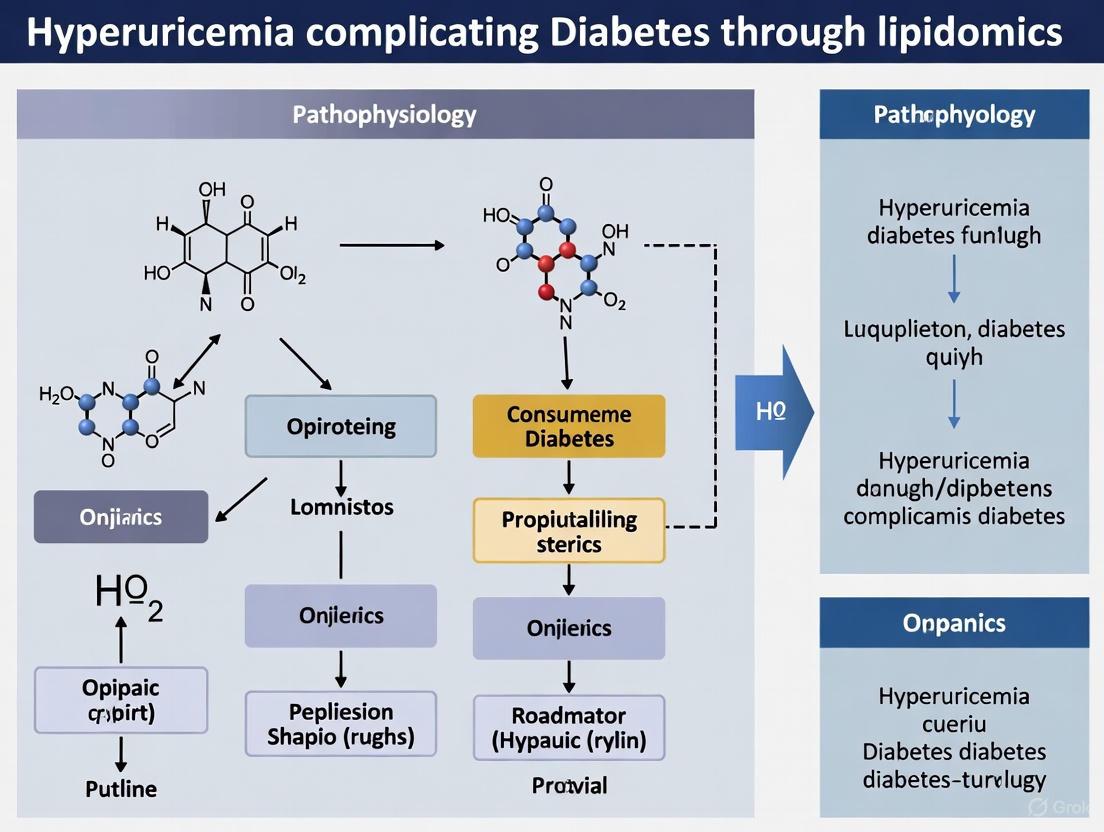
This article synthesizes current lipidomic research to elucidate the complex pathophysiology linking hyperuricemia and diabetes mellitus.
Lipidomics in Focus: Decoding the Pathophysiology of Hyperuricemia Complicating Diabetes
Abstract
This article synthesizes current lipidomic research to elucidate the complex pathophysiology linking hyperuricemia and diabetes mellitus. Through untargeted and targeted mass spectrometry-based approaches, specific lipid signatures—including upregulated triglycerides, phosphatidylethanolamines, and phosphatidylcholines—have been identified in patients with coexisting conditions. These disturbances predominantly implicate glycerophospholipid and glycerolipid metabolism pathways, revealing interconnected mechanisms of inflammation, oxidative stress, and endothelial dysfunction. We explore how these lipidomic insights offer novel biomarkers for early risk stratification, inform the development of targeted therapeutic strategies, and provide a framework for understanding the heightened renal and cardiovascular risks in this patient population, ultimately aiming to guide future drug discovery and clinical management.
The Metabolic Nexus: Unraveling the Core Lipid Pathways Linking Uric Acid and Glucose Dysregulation
The confluence of hyperuricemia (HUA) and diabetes mellitus (DM) represents a significant and growing challenge in metabolic medicine, driven by shared pathophysiological pathways including insulin resistance, chronic inflammation, and dyslipidemia. As both disorders continue to increase globally, understanding their epidemiological relationship provides crucial insights for researchers, clinicians, and drug development professionals focused on metabolic disorders. This whitepaper synthesizes current evidence on the prevalence and co-occurrence of these conditions, framing them within the context of pathophysiological mechanisms and emerging lipidomics research that reveals novel metabolic disruptions at their intersection. The intricate metabolic crosstalk between uric acid homeostasis and glucose regulation creates a complex clinical phenotype that demands sophisticated analytical approaches for effective therapeutic targeting [1]. Recent advances in metabolomics and metagenomics have begun to elucidate the subtle molecular signatures that characterize this high-risk population, offering new avenues for early detection and intervention in the progression of diabetic complications [2] [3].
Global Epidemiological Landscape
Prevalence of Hyperuricemia in Diabetic Populations
Table 1: Documented Prevalence of Hyperuricemia in Type 2 Diabetes Across Global Populations
| Country/Region | Study Year | Sample Size | Prevalence of HUA in DM | Key Associated Factors |
|---|---|---|---|---|
| Senegal [4] | 2025 | 90 | 31.1% | Male sex, reduced renal function, hypertriglyceridemia |
| Tunisia [5] | 2025 | 120 | 34.8% | BMI, diabetes duration, coronary disease, dyslipidemia |
| China (Mainland) [6] | 2024 | - | 21.24% | - |
| North America [6] | 2024 | - | 20.70% | - |
| Italy [6] | 2005-2009 | - | 8.5%-11.9% (General population) | - |
Epidemiological data from multiple global populations consistently demonstrates that hyperuricemia disproportionately affects individuals with diabetes. Recent studies conducted in Senegal and Tunisia revealed remarkably similar prevalence rates of approximately 31-35% among diabetic patients, significantly higher than general population rates [5] [4]. This pattern extends across geographical boundaries, with reported rates of 21.24% in China and 20.70% in North America [6]. The persistent elevation of uric acid levels in diabetic populations underscores the profound metabolic interconnection between purine metabolism and glucose homeostasis. Furthermore, the asymptomatic nature of hyperuricemia in many diabetic patients (22% in the Tunisian study) creates a substantial clinical challenge, as these individuals remain at elevated risk for complications despite the absence of overt gout symptoms [5].
Demographic and Clinical Determinants
Multivariate analyses from recent studies identify consistent independent predictors for hyperuricemia development in diabetic populations. Male sex emerges as a significant risk factor, with Senegalese data showing males had 3.9 times higher odds of developing hyperuricemia [4]. Renal impairment represents another powerful determinant, with reduced glomerular filtration rate (<60 ml/min) associated with 7.7 times increased odds [4]. Additionally, dyslipidemia—particularly hypertriglyceridemia—shows a strong positive correlation with uric acid levels, while an inverse relationship has been observed with magnesium levels [5] [4]. The duration of diabetes also correlates positively with hyperuricemia risk, reflecting the progressive nature of metabolic deterioration in long-standing disease [5]. These demographic and clinical patterns highlight populations that may benefit from targeted screening and early intervention strategies.
Pathophysiological Framework and Lipidomic Insights
Mechanistic Links Between Hyperuricemia and Diabetes
The relationship between hyperuricemia and diabetes involves multidirectional pathophysiological mechanisms that create a self-reinforcing cycle of metabolic dysfunction. Insulin resistance stands as a central pillar in this relationship, with hyperinsulinemia directly reducing renal uric acid excretion by enhancing urate reabsorption in the proximal tubule [7] [8]. Simultaneously, elevated uric acid levels contribute to impaired insulin signaling through multiple pathways including endothelial dysfunction, oxidative stress via NADPH oxidase activation, and chronic inflammation mediated by NLRP3 inflammasome activation [9] [8]. This creates a vicious cycle wherein insulin resistance promotes uric acid accumulation, which in turn exacerbates insulin resistance. The pro-inflammatory state generated by soluble uric acid stimulates the production of interleukin-1β (IL-1β), tumor necrosis factor-α (TNF-α), and interleukin-6 (IL-6), establishing a chronic inflammatory milieu that further disrupts metabolic homeostasis [8]. Additionally, uric acid directly contributes to endothelial dysfunction by reacting with nitric oxide to form 6-aminouracil, thereby depleting this crucial vasodilator and impairing vascular function [8].
Diagram 1: Pathophysiological Crosstalk Between Hyperuricemia and Diabetes. This diagram illustrates the bidirectional relationship and key mechanistic pathways linking hyperuricemia and insulin resistance, incorporating inflammatory, oxidative, and lipid metabolic components.
Lipidomic Alterations in Diabetes with Hyperuricemia
Table 2: Significantly Altered Lipid Metabolites in Diabetes with Hyperuricemia (DH) vs. Diabetes Alone (DM) and Normal Glucose Tolerance (NGT) [2]
| Lipid Class | Direction of Change (DH vs NGT) | Specific Example Molecules | Metabolic Pathways Involved |
|---|---|---|---|
| Triglycerides (TGs) | Significantly upregulated (13 molecules) | TG(16:0/18:1/18:2) | Glycerolipid metabolism |
| Phosphatidylethanolamines (PEs) | Significantly upregulated (10 molecules) | PE(18:0/20:4) | Glycerophospholipid metabolism |
| Phosphatidylcholines (PCs) | Significantly upregulated (7 molecules) | PC(36:1) | Glycerophospholipid metabolism |
| Phosphatidylinositol (PI) | Downregulated (1 molecule) | - | Glycerophospholipid metabolism |
Advanced untargeted lipidomic analysis using UHPLC-MS/MS technology has revealed distinctive lipid signatures in patients with concurrent diabetes and hyperuricemia (DH). A recent study identified 1,361 lipid molecules across 30 subclasses, with multivariate analyses demonstrating clear separation among DH, diabetes alone (DM), and normal glucose tolerance (NGT) groups [2]. Specifically, 31 significantly altered lipid metabolites were pinpointed in the DH group compared to NGT controls, with triglycerides (TGs), phosphatidylethanolamines (PEs), and phosphatidylcholines (PCs) showing predominant upregulation [2]. Pathway analysis established that these differential lipids were predominantly enriched in glycerophospholipid metabolism (impact value: 0.199) and glycerolipid metabolism (impact value: 0.014), identifying these as the most significantly perturbed pathways in DH patients [2]. The consistency of these pathway alterations in both DH versus NGT and DH versus DM comparisons underscores their central role in the pathophysiology of hyperuricemia complicating diabetes, potentially offering novel biomarkers for risk stratification and therapeutic targeting.
Methodological Approaches in Contemporary Research
Lipidomic Profiling Protocol
Experimental Workflow: UHPLC-MS/MS-Based Untargeted Lipidomics [2]
Diagram 2: Experimental Workflow for Lipidomic Profiling in Hyperuricemia-Diabetes Research. This diagram outlines the key methodological steps from sample preparation through data analysis in lipidomic studies of diabetic populations with hyperuricemia.
The technical methodology for comprehensive lipid profiling employs ultra-high performance liquid chromatography-tandem mass spectrometry (UHPLC-MS/MS) to characterize the plasma lipidome. The protocol begins with careful sample collection and preparation, including fasting blood samples centrifuged at 3,000 rpm for 10 minutes at room temperature, followed by protein precipitation using 300 μL of acetonitrile per 100 μL of serum [2]. Lipid extraction utilizes the methyl tert-butyl ether (MTBE) method, with sonication in a low-temperature water bath and phase separation by centrifugation [2]. Chromatographic separation occurs on a Waters ACQUITY UPLC BEH C18 column with a mobile phase consisting of 10 mM ammonium formate in acetonitrile/water and acetonitrile/isopropanol solutions [2]. Data acquisition employs tandem mass spectrometry with data-dependent acquisition, followed by multivariate statistical analysis including principal component analysis (PCA) and orthogonal partial least squares discriminant analysis (OPLS-DA) to identify differentially expressed lipids. This comprehensive approach enables the detection and quantification of hundreds of lipid species across multiple classes, providing a systems-level view of metabolic disruptions.
Research Reagent Solutions
Table 3: Essential Research Materials for Hyperuricemia-Diabetes Lipidomic Studies
| Reagent/Instrument | Specific Example | Function in Research Protocol |
|---|---|---|
| UHPLC System | Waters ACQUITY UPLC | High-resolution chromatographic separation of complex lipid mixtures |
| MS Instrument | Tandem Mass Spectrometer | Accurate mass determination and structural characterization of lipids |
| Chromatography Column | Waters ACQUITY UPLC BEH C18 (2.1×100 mm, 1.7 μm) | Stationary phase for lipid separation based on hydrophobicity |
| Lipid Extraction Solvent | Methyl tert-butyl ether (MTBE) | Efficient liquid-liquid extraction of diverse lipid classes from biological samples |
| Internal Standards | Stable isotope-labeled lipid analogs | Quantification normalization and instrument performance monitoring |
| Data Analysis Software | MetaboAnalyst 5.0 | Statistical analysis, pathway mapping, and biomarker discovery |
Clinical Assessment and Therapeutic Implications
Assessment of Insulin Resistance in Hyperuricemia
The estimated glucose disposal rate (eGDR) has emerged as a valuable clinical tool for assessing insulin resistance in the context of hyperuricemia. Calculated using the formula: eGDR = 21.158 - (0.09 × WC) - (3.407 × HTN) - (0.551 × HbA1c), where WC represents waist circumference in centimeters, HTN indicates hypertension status (1 = yes, 0 = no), and HbA1c refers to glycated hemoglobin (%), this simple index requires only basic clinical parameters [7]. Recent research demonstrates an inverse nonlinear relationship between eGDR and hyperuricemia risk, with a turning point at eGDR 7.96 mg/kg/min [7]. After adjusting for demographic, lifestyle, and clinical factors, each unit increase in eGDR was independently associated with reduced odds of hyperuricemia (OR=0.93, 95%CI: 0.90-0.96, P<0.001) [7]. This relationship was particularly strong in females, highlighting the importance of sex-specific considerations in the metabolic assessment of hyperuricemia risk [7]. The eGDR offers advantages over traditional measures like HOMA-IR by not requiring fasting samples and incorporating clinical parameters readily available in routine practice, making it particularly suitable for large-scale epidemiological studies.
Therapeutic Interplay and Future Directions
Emerging evidence reveals important therapeutic interplay between glucose-lowering agents and uric acid metabolism. Sodium-glucose cotransporter-2 inhibitors (SGLT2i), initially developed for diabetes management, demonstrate significant urate-lowering effects [8]. The proposed mechanism involves increased urinary glucose excretion competitively inhibiting glucose transporter 9 (GLUT9)-mediated uric acid reabsorption in the collecting duct, resulting in enhanced uric acid excretion [8]. This dual metabolic benefit positions SGLT2 inhibitors as particularly attractive therapeutic options for patients with concurrent diabetes and hyperuricemia. Additionally, research into natural compounds such as Zhejiang psyllium polysaccharides (ZPP) reveals alternative pathways for uric acid modulation, potentially through regulation of gut microbiota and metabolic pathways involving purine metabolism, amino acid metabolism, and lipid metabolism [3]. These findings highlight the importance of integrated therapeutic approaches that address the shared metabolic disturbances underlying both conditions, rather than targeting each in isolation. Future drug development should prioritize molecules capable of simultaneously modulating multiple facets of this complex metabolic intersection, with lipidomic profiling offering valuable biomarkers for patient stratification and treatment monitoring.
The epidemiological relationship between hyperuricemia and diabetes is characterized by substantial prevalence rates of approximately 20-35% across diverse global populations, with specific demographic and clinical factors modifying individual risk. The pathophysiological connection between these conditions extends beyond simple association to encompass bidirectional mechanistic pathways involving insulin resistance, inflammation, oxidative stress, and endothelial dysfunction. Contemporary lipidomic research has identified distinct metabolic signatures in patients with concurrent disease, characterized by alterations in glycerophospholipid and glycerolipid metabolism pathways. These advances, coupled with novel assessment tools like eGDR and therapeutic agents with dual metabolic benefits, provide promising approaches for addressing this complex clinical phenotype. Future research should focus on longitudinal studies mapping temporal relationships between lipidomic changes and disease progression, as well as clinical trials evaluating targeted interventions in patient subgroups stratified by their specific metabolic signatures.
The coexistence of hyperuricemia and diabetes mellitus represents a significant clinical challenge, with a global prevalence that is steadily increasing. Hyperuricemia (HUA), defined as a serum uric acid level exceeding 7.0 mg/dL in males or 6.0 mg/dL in females, ranks as the second most prevalent metabolic disorder worldwide, only behind diabetes itself [6] [9]. Recent epidemiological data indicate that approximately 21.24% of diabetic patients in China and 20.70% in North America also have hyperuricemia [6]. This co-occurrence is not coincidental but stems from shared pathophysiological pathways that create a vicious cycle of metabolic deterioration, accelerated vascular complications, and progressive end-organ damage [1] [10].
The intricate relationship between hyperuricemia and diabetes extends beyond mere association to synergistic interaction, where each condition exacerbates the other. A comprehensive scientometric analysis of 1,464 studies published up to September 2024 revealed a consistent yearly increase in research publications connecting HUA and diabetes, reflecting growing recognition of their interconnectedness [6]. Key research clusters identified in this analysis highlight focused investigations into metabolic syndrome, uropathology, chronic kidney disease, and cardiovascular disease – all conditions where inflammation, oxidative stress, and endothelial dysfunction play central roles [6].
This whitepaper provides an in-depth technical analysis of the shared pathophysiological mechanisms linking hyperuricemia and diabetes, with particular emphasis on their convergence in promoting vascular complications through inflammatory signaling, redox imbalance, and endothelial impairment. The integration of lipidomics data further elucidates how these pathways interact to drive disease progression, offering novel insights for targeted therapeutic interventions and biomarker development.
Pathophysiological Framework: The Vicious Cycle of Metabolic Dysregulation
The co-occurrence of hyperuricemia and diabetes establishes a self-amplifying cycle of metabolic dysregulation that accelerates microvascular and macrovascular complications. Uric acid transitions from an antioxidant at physiological levels to a potent pro-oxidant at elevated concentrations, generating reactive oxygen species (ROS) through multiple enzymatic pathways including xanthine oxidase (XO) [9] [11]. This oxidative burden directly impairs insulin signaling pathways, particularly the PI3K-Akt-eNOS axis, while simultaneously activating stress-sensitive signaling cascades such as NF-κB and MAPK that drive inflammatory gene expression [12].
Table 1: Key Epidemiological Data on Hyperuricemia and Diabetes Interrelationship
| Parameter | Findings | Source/Reference |
|---|---|---|
| Global HUA Prevalence | Ranges from 2.6% to 36% across different populations; approximately 21% of U.S. adults | [9] |
| HUA in Diabetic Populations | 21.24% in China; 20.70% in North America | [6] |
| Diabetes Risk with HUA | 17% increased diabetes risk per 1 mg/dL serum uric acid increase | [2] |
| Co-occurrence with Dyslipidemia | 81.6% prevalence of combined dyslipidemia and hyperuricemia in uncontrolled T2DM | [10] |
| Leading Research Institutions | China Medical University, Shanghai Jiao Tong University, Capital Medical University | [6] |
Simultaneously, the hyperglycemic environment in diabetes promotes mitochondrial superoxide overproduction in endothelial cells, which inactivates nitric oxide (NO) through formation of peroxynitrite—a highly reactive nitrogen species that further damages cellular components [12] [11]. The resulting endothelial dysfunction creates a pro-inflammatory, pro-thrombotic state that characterizes diabetic vasculopathy. Uric acid crystals and elevated soluble urate can activate the NLRP3 inflammasome, leading to caspase-1 activation and subsequent maturation of pro-inflammatory cytokines IL-1β and IL-18, which sustain chronic low-grade inflammation [11].
This pathophysiological framework is further complicated by the phenomenon of selective insulin resistance, wherein the metabolic PI3K-Akt pathway becomes impaired while the mitogenic MAPK pathway remains overactive under hyperinsulinemic conditions [12]. This imbalance favors production of endothelin-1 over nitric oxide, promoting vasoconstriction and hypertension while accelerating atherosclerotic processes.
Diagram 1: Integrated Pathophysiological Framework showing how hyperglycemia and hyperuricemia initiate a vicious cycle of oxidative stress, inflammation, and insulin resistance that converges on endothelial dysfunction, with lipidomics providing mechanistic insights into these processes.
Core Mechanism 1: Oxidative Stress and Redox Imbalance
Oxidative stress represents a fundamental mechanism bridging hyperuricemia and diabetic complications, characterized by excessive production of reactive oxygen species (ROS) that overwhelms endogenous antioxidant defenses. Uric acid exhibits a dual role in redox homeostasis: at physiological concentrations (3.5-7.2 mg/dL in males, 2.6-6.0 mg/dL in premenopausal females), it functions as a powerful antioxidant, effectively neutralizing singlet oxygen molecules, oxygen radicals, and peroxynitrite [9]. However, at elevated levels characteristic of hyperuricemia, uric acid undergoes a paradoxical transition to pro-oxidant activity, generating ROS through multiple enzymatic pathways including xanthine oxidase (XO) [9] [11].
Molecular Mechanisms of Oxidative Stress
The xanthine oxidase pathway serves as a critical junction point between hyperuricemia and oxidative stress. Xanthine oxidase catalyzes the conversion of hypoxanthine to xanthine, and xanthine to uric acid, with molecular oxygen serving as electron acceptor and generating superoxide anion (O₂•â») and hydrogen peroxide (Hâ‚‚Oâ‚‚) as byproducts [9]. In diabetic conditions, hyperglycemia further amplifies ROS production through multiple mechanisms:
- Mitochondrial electron transport chain overactivity resulting from increased glucose oxidation [12]
- Advanced glycation end-product (AGE) formation and engagement with their receptors (RAGE) [12]
- Uncoupled endothelial nitric oxide synthase (eNOS) due to tetrahydrobiopterin (BH4) oxidation [11]
The superoxide anion rapidly inactivates nitric oxide (NO) to form peroxynitrite (ONOOâ»), a potent oxidant that induces lipid peroxidation, protein nitration, and DNA damage [12] [11]. Peroxynitrite further oxidizes the essential eNOS cofactor BH4, leading to eNOS uncoupling—a state where the enzyme produces additional superoxide instead of NO, creating a self-perpetuating cycle of oxidative stress and endothelial dysfunction [12].
Antioxidant Defense Impairment
Concurrently, antioxidant defense mechanisms become compromised in both diabetes and hyperuricemia. Critical antioxidant systems including superoxide dismutase (SOD), glutathione peroxidase (GPx), and the thioredoxin/thioredoxin reductase (Trx/TXNRD) pathways demonstrate reduced activity, further tilting the balance toward oxidative injury [11]. The resulting oxidative stress promotes insulin resistance through disruption of insulin signaling pathways, particularly the insulin receptor substrate (IRS)/PI3K/Akt axis, while simultaneously activating stress-sensitive signaling cascades such as NF-κB that drive inflammatory gene expression [12].
Table 2: Key Biomarkers of Oxidative Stress in Hyperuricemia and Diabetes
| Biomarker Category | Specific Markers | Pathophysiological Significance | Measurement Techniques |
|---|---|---|---|
| Reactive Oxygen Species | Superoxide anion (O₂•â»), Hydrogen peroxide (Hâ‚‚Oâ‚‚), Hydroxyl radical (•OH) | Direct indicators of oxidative burden; inactivate NO, damage cellular components | Chemiluminescence, fluorescence probes, EPR spectroscopy |
| Lipid Peroxidation Products | Malondialdehyde (MDA), F2-isoprostanes, Oxidized LDL (ox-LDL) | Markers of oxidative damage to lipids; promote atherosclerosis | ELISA, HPLC, TBARS assay |
| Protein Oxidation Products | Nitrotyrosine, Advanced oxidation protein products (AOPP) | Indicators of protein nitration and oxidation; correlate with endothelial dysfunction | Immunohistochemistry, ELISA, spectrophotometry |
| Antioxidant Enzymes | SOD, GPx, Catalase, Glutathione reductase (GR) | Assess endogenous antioxidant capacity; typically decreased in disease states | Enzyme activity assays, spectrophotometric methods |
| DNA Damage Markers | 8-hydroxy-2'-deoxyguanosine (8-OHdG) | Marker of oxidative DNA damage; associated with disease progression | HPLC-ECD, ELISA |
Core Mechanism 2: Inflammatory Signaling and NLRP3 Inflammasome Activation
Chronic low-grade inflammation represents a cornerstone of the pathophysiological interplay between hyperuricemia and diabetes. The NLRP3 inflammasome serves as a critical molecular platform that integrates diverse danger signals, including uric acid crystals, hyperglycemia, and oxidative stress, into coordinated inflammatory responses [11]. This multiprotein complex, comprising NLRP3, ASC, and pro-caspase-1, becomes activated in response to cellular damage or metabolic perturbations, leading to caspase-1 activation and subsequent maturation of pro-inflammatory cytokines IL-1β and IL-18 [11].
Uric Acid as a Damage-Associated Molecular Pattern
Elevated soluble urate and monosodium urate (MSU) crystals function as damage-associated molecular patterns (DAMPs) that activate innate immune responses through multiple mechanisms. MSU crystals are phagocytosed by macrophages, leading to lysosomal destabilization and cathepsin B release, which in turn triggers NLRP3 inflammasome assembly [9] [11]. Simultaneously, soluble urate promotes priming of the NLRP3 inflammasome by enhancing NF-κB-dependent transcription of pro-IL-1β and NLRP3 itself [9]. The resulting IL-1β production drives systemic inflammation through multiple effector mechanisms:
- Induction of endothelial adhesion molecules (ICAM-1, VCAM-1) that promote leukocyte recruitment [13] [14]
- Stimulation of hepatic acute-phase reactants including C-reactive protein (CRP) [13]
- Promotion of insulin resistance through disruption of insulin signaling pathways [12]
Inflammatory Biomarker Profiles
Clinical studies consistently demonstrate elevated circulating levels of inflammatory mediators in patients with coexisting hyperuricemia and diabetes. Research involving South Indian diabetic populations revealed significantly increased serum concentrations of IL-6, TNF-α, and CRP in patients with diabetic complications, with progressive elevation across control, pre-ulcer, and ulcer groups [13]. Similarly, the African-PREDICT study documented distinct inflammatory profiles associated with cardiovascular risk factors in young adults, with central adiposity showing particularly strong associations with pro-inflammatory markers including IL-6, CRP, and fibrinogen [14].
Diagram 2: NLRP3 Inflammasome Activation Pathway illustrating how MSU crystals, soluble urate, and hyperglycemia converge to activate inflammatory signaling through NLRP3 inflammasome assembly, caspase-1 activation, and maturation of IL-1β and IL-18, ultimately driving endothelial dysfunction.
Core Mechanism 3: Endothelial Dysfunction
Endothelial dysfunction represents the final common pathway through which inflammation and oxidative stress in hyperuricemia and diabetes translate into clinical vascular complications. The healthy endothelium maintains vascular homeostasis through precisely balanced production of vasodilators (primarily nitric oxide) and vasoconstrictors (including endothelin-1), while simultaneously regulating platelet activity, leukocyte adhesion, and vascular smooth muscle cell proliferation [12] [11].
Mechanisms of Endothelial Impairment
In the combined setting of hyperuricemia and diabetes, this delicate balance becomes profoundly disrupted through multiple interconnected mechanisms:
- Reduced nitric oxide bioavailability resulting from oxidative inactivation by superoxide and uncoupled eNOS [12] [11]
- Increased endothelin-1 production driven by selective insulin resistance with impaired PI3K/Akt signaling but preserved MAPK activation [12]
- Upregulation of adhesion molecules (ICAM-1, VCAM-1) that promote monocyte and leukocyte adhesion to the vascular endothelium [13] [14]
- Enhanced endothelial permeability through cytoskeletal alterations and disruption of intercellular junctions [12]
Uric acid directly contributes to endothelial dysfunction by stimulating vascular smooth muscle cell proliferation, promoting oxidative stress via NADPH oxidase activation, and inhibiting NO production through disruption of the PI3K/Akt/eNOS signaling pathway [9] [12]. These effects are particularly pronounced in the context of hyperglycemia, which amplifies uric acid's detrimental vascular impacts.
Clinical Assessment and Biomarkers
Endothelial function can be assessed through both functional measurements and circulating biomarkers. Flow-mediated dilation (FMD) of the brachial artery represents the gold standard for non-invasive assessment of endothelial function, reflecting endothelium-dependent vasodilation capacity [15]. Circulating biomarkers of endothelial dysfunction include asymmetric dimethylarginine (ADMA, an endogenous eNOS inhibitor), soluble adhesion molecules (sICAM-1, sVCAM-1), and components of the renin-angiotensin system [15] [11].
Table 3: Biomarkers of Endothelial Dysfunction in Hyperuricemia and Diabetes
| Biomarker Category | Specific Markers | Pathophysiological Role | Clinical Utility |
|---|---|---|---|
| Vasomotor Regulation | Nitric oxide (NO), Asymmetric dimethylarginine (ADMA), Endothelin-1 (ET-1) | Regulate vascular tone; imbalance promotes vasoconstriction and hypertension | Assessment of endothelial function; prediction of cardiovascular risk |
| Leukocyte Adhesion Molecules | sICAM-1, sVCAM-1, P-selectin, E-selectin | Mediate leukocyte adhesion to endothelium; promote vascular inflammation | Indicators of endothelial activation; correlate with atherosclerosis progression |
| Thrombotic Regulation | von Willebrand factor (vWF), Plasminogen activator inhibitor-1 (PAI-1), Thrombomodulin | Regulate coagulation and fibrinolysis; imbalance promotes thrombosis | Markers of pro-thrombotic state; associated with cardiovascular events |
| Endothelial Microparticles | CD31+/CD42b- microparticles, CD144+ microparticles | Vesicles shed from activated/apoptotic endothelial cells; reflect endothelial damage | Novel markers of endothelial injury; potential therapeutic targets |
| Glycocalyx Components | Syndecan-1, Hyaluronic acid, Heparan sulfate | Maintain endothelial barrier function; degradation increases permeability | Emerging markers of early endothelial dysfunction; measured in plasma |
Advanced Research Domain: Lipidomics in Hyperuricemia Complicating Diabetes
Lipidomics has emerged as a powerful analytical approach for characterizing the comprehensive lipid profiles associated with the co-occurrence of hyperuricemia and diabetes, providing unique insights into the metabolic disturbances underlying their shared pathophysiology. Recent investigations utilizing ultra-high performance liquid chromatography-tandem mass spectrometry (UHPLC-MS/MS) have revealed distinct lipidomic signatures that differentiate patients with diabetes alone from those with combined diabetes and hyperuricemia (DH) [2].
Lipidomic Profiling Methodologies
A rigorous untargeted lipidomic analysis compared plasma samples from 17 patients with diabetes mellitus combined with hyperuricemia (DH), 17 with diabetes mellitus alone (DM), and 17 healthy controls with normal glucose tolerance (NGT) [2]. The experimental workflow encompassed:
- Sample preparation: Plasma lipid extraction using methyl tert-butyl ether (MTBE) methodology with sonication and phase separation [2]
- Chromatographic separation: Waters ACQUITY UPLC BEH C18 column (2.1 × 100 mm, 1.7 μm) with mobile phase consisting of 10 mM ammonium formate in acetonitrile:water and 10 mM ammonium formate in acetonitrile:isopropanol [2]
- Mass spectrometric analysis: UHPLC-MS/MS in both positive and negative ionization modes with data-dependent acquisition [2]
- Data processing: Lipid identification and quantification using specialized software, with statistical analysis including principal component analysis (PCA) and orthogonal partial least squares discriminant analysis (OPLS-DA) [2]
This comprehensive approach identified 1,361 lipid molecules across 30 subclasses, revealing profound alterations in the lipidomic landscape of patients with coexisting hyperuricemia and diabetes [2].
Key Lipidomic Findings
Multivariate analyses demonstrated clear separation among the DH, DM, and NGT groups, confirming distinct lipidomic profiles associated with disease progression [2]. Compared to NGT controls, the DH group exhibited 31 significantly altered lipid metabolites, with the most prominent changes including:
- 13 triglycerides (TGs) significantly upregulated, including TG(16:0/18:1/18:2) [2]
- 10 phosphatidylethanolamines (PEs) significantly upregulated, including PE(18:0/20:4) [2]
- 7 phosphatidylcholines (PCs) significantly upregulated, including PC(36:1) [2]
- 1 phosphatidylinositol (PI) significantly downregulated [2]
Pathway analysis revealed enrichment of these differential lipids in six major metabolic pathways, with glycerophospholipid metabolism (impact value: 0.199) and glycerolipid metabolism (impact value: 0.014) identified as the most significantly perturbed pathways in DH patients [2]. Notably, comparison between DH and DM groups identified 12 differential lipids that were similarly enriched in these core pathways, underscoring their central role in the pathophysiology of hyperuricemia complicating diabetes [2].
Diagram 3: Lipidomics Research Workflow showing the comprehensive approach from sample collection through UHPLC-MS/MS analysis to data processing and pathway analysis, revealing specific lipid alterations and perturbed metabolic pathways in diabetes with hyperuricemia.
The Scientist's Toolkit: Key Research Reagent Solutions
Table 4: Essential Research Reagents and Methodologies for Investigating Shared Pathophysiological Mechanisms
| Research Area | Essential Reagents/Assays | Specific Function | Technical Notes |
|---|---|---|---|
| Oxidative Stress Assessment | DHE (Dihydroethidium) staining, H2DCFDA assay, Amplex Red Hydrogen Peroxide assay, Thiobarbituric acid reactive substances (TBARS) assay | Detection of superoxide production, general ROS measurement, Hâ‚‚Oâ‚‚ quantification, lipid peroxidation assessment | DHE specifically detects superoxide; H2DCFDA measures various ROS; validate with appropriate controls |
| Inflammatory Signaling | ELISA kits for IL-1β, IL-6, TNF-α, CRP; NLRP3 inhibitors (MCC950); NF-κB pathway inhibitors; ASC antibody for inflammasome assembly | Quantify inflammatory mediators; specifically inhibit NLRP3 activation; block NF-κB signaling; visualize inflammasome formation | MCC950 is highly specific for NLRP3; use multiple cytokines for comprehensive profiling |
| Endothelial Function | Matrigel tube formation assay, Electric cell-substrate impedance sensing (ECIS), NO-sensitive fluorescent dyes (DAF-FM), Western blot for eNOS phosphorylation | Assess angiogenic capacity; measure real-time barrier function; quantify NO production; evaluate eNOS activation state | Combine functional assays with signaling analysis for comprehensive assessment |
| Lipidomics | UHPLC-MS/MS systems, MTBE extraction solvent, Synthetic lipid standards, Ammonium formate mobile phase additive | Comprehensive lipid separation and identification; efficient lipid extraction; accurate lipid quantification; enhanced ionization efficiency | Include internal standards for quantification; optimize mobile phase for different lipid classes |
| Genetic & Molecular Tools | siRNA for gene knockdown, CRISPR-Cas9 for gene editing, Western blot antibodies for signaling proteins, qPCR primers for gene expression | Investigate specific gene functions; create knockout cell lines; analyze protein phosphorylation; measure transcript levels | Validate knockdown/knockout efficiency; use phospho-specific antibodies for signaling studies |
| Dapiprazole Hydrochloride | Dapiprazole Hydrochloride, CAS:72822-13-0, MF:C19H28ClN5, MW:361.9 g/mol | Chemical Reagent | Bench Chemicals |
| 4-Dodecylbenzenesulfonic acid | 4-Dodecylbenzenesulfonic acid, CAS:68584-22-5, MF:C18H30O3S, MW:326.5 g/mol | Chemical Reagent | Bench Chemicals |
Experimental Protocols for Key Methodologies
Protocol 1: Comprehensive Lipidomics Analysis Using UHPLC-MS/MS
This protocol details the untargeted lipidomic analysis approach used to characterize lipid perturbations in diabetes with hyperuricemia [2]:
Sample Preparation:
- Collect fasting blood samples in EDTA tubes and centrifuge at 3,000 rpm for 10 minutes at room temperature to obtain plasma
- Aliquot 0.2 mL plasma into 1.5 mL centrifuge tubes and store at -80°C until analysis
- Create quality control samples by pooling equal volumes from all samples
Lipid Extraction:
- Thaw plasma samples on ice and vortex thoroughly
- Transfer 100 μL plasma to 1.5 mL centrifuge tubes
- Add 200 μL of 4°C water and mix thoroughly
- Add 240 μL of pre-cooled methanol and vortex
- Add 800 μL methyl tert-butyl ether (MTBE), sonicate in low-temperature water bath for 20 minutes, and stand at room temperature for 30 minutes
- Centrifuge at 14,000 g for 15 minutes at 10°C
- Collect upper organic phase and dry under nitrogen stream
- Reconstitute in 100 μL isopropanol for analysis
UHPLC-MS/MS Analysis:
- Chromatographic Conditions: Waters ACQUITY UPLC BEH C18 column (2.1 mm × 100 mm, 1.7 μm) maintained at 45°C
- Mobile Phase: A: 10 mM ammonium formate in acetonitrile:water (60:40); B: 10 mM ammonium formate in acetonitrile:isopropanol (10:90)
- Gradient Program: Linear gradient from 30% B to 100% B over 15 minutes
- Mass Spectrometry: Operate in both positive and negative ionization modes with data-dependent acquisition
Data Processing:
- Process raw data using software such as Progenesis QI or MS-DIAL
- Identify lipids by matching m/z values, retention times, and MS/MS spectra to databases
- Perform statistical analysis using Student's t-test and multiple of difference (FC)
- Utilize multivariate analyses including PCA and OPLS-DA
- Conduct pathway analysis using MetaboAnalyst 5.0 platform
Protocol 2: Assessment of Endothelial Dysfunction Biomarkers
This protocol outlines the methodology for evaluating key biomarkers of endothelial dysfunction in clinical populations [13] [14]:
Study Population Classification:
- Recruit participants stratified by diabetes status, hyperuricemia presence, and complication status
- Classify according to standardized guidelines (ADA criteria for diabetes, established cut-offs for hyperuricemia)
- Obtain ethical approval and written informed consent from all participants
Blood Sample Collection and Processing:
- Collect 5 mL venous blood after overnight fast using sterile vacutainers
- Allow samples to clot undisturbed at room temperature for 30 minutes
- Centrifuge at 3,000 rpm for 10 minutes to obtain clear serum
- Aliquot serum into sterile Eppendorf tubes and store at -80°C until analysis
Biomarker Analysis:
- Inflammatory Markers: Quantify IL-6, TNF-α, CRP using high-sensitivity ELISA kits
- Oxidative Stress Markers: Measure malondialdehyde (MDA) using thiobarbituric acid reactive substances (TBARS) assay
- Endothelial Dysfunction Markers: Analyze VEGF, ICAM-1 using quantitative ELISA
- Extracellular Matrix Remodeling: Quantify MMP-9 using ELISA or zymography
Statistical Analysis:
- Perform group comparisons using ANOVA with post-hoc tests
- Conduct correlation analyses between biomarkers and clinical parameters
- Utilize receiver operating characteristic (ROC) analysis to evaluate diagnostic potential
- Employ multivariable regression models adjusted for potential confounders
The intricate interplay between inflammation, oxidative stress, and endothelial dysfunction creates a self-amplifying pathophysiological network that underlies the synergistic relationship between hyperuricemia and diabetes. The integration of lipidomics data has revealed specific alterations in glycerophospholipid and glycerolipid metabolism that provide mechanistic insights into how these conditions converge to accelerate vascular complications. The distinct lipidomic signature of combined diabetes and hyperuricemia—characterized by upregulated triglycerides, phosphatidylethanolamines, and phosphatidylcholines—offers potential biomarkers for early identification of high-risk patients and novel targets for therapeutic intervention.
Future research directions should focus on longitudinal studies to establish temporal relationships between lipidomic alterations and clinical outcomes, randomized controlled trials investigating targeted therapies that simultaneously address multiple pathophysiological mechanisms, and the development of integrated biomarker panels combining traditional clinical parameters with novel oxidative stress, inflammatory, and lipidomic markers. The translation of these mechanistic insights into clinical practice holds promise for improving risk stratification, enabling earlier intervention, and developing more effective therapeutic strategies for patients with coexisting hyperuricemia and diabetes.
The co-occurrence of diabetes mellitus (DM) and hyperuricemia (HUA) represents a significant clinical challenge characterized by complex metabolic dysregulation. Emerging lipidomic research reveals that specific lipid classes—triglycerides (TGs), phosphatidylethanolamines (PEs), and phosphatidylcholines (PCs)—play pivotal roles in the pathophysiology linking these conditions [2]. These lipids are not merely biomarkers but active participants in metabolic pathways that drive disease progression, offering new insights for therapeutic intervention and diagnostic refinement in comorbid diabetes and hyperuricemia.
Quantitative Lipid Alterations in DH Comorbidity
Differential Lipid Signatures
Comprehensive lipidomic profiling using UHPLC-MS/MS technology has identified distinct lipid signatures that differentiate patients with diabetes mellitus combined with hyperuricemia (DH) from those with diabetes alone and healthy controls. The table below summarizes the key lipid alterations observed in DH patients:
Table 1: Significantly Altered Lipid Classes in Diabetes with Hyperuricemia (DH)
| Lipid Class | Representative Molecules | Change in DH | Biological Relevance |
|---|---|---|---|
| Triglycerides (TGs) | TG(16:0/18:1/18:2), TG(53:0) | ↑ Upregulated [2] [16] | Energy storage, lipid accumulation, insulin resistance |
| Phosphatidylethanolamines (PEs) | PE(18:0/20:4) | ↑ Upregulated [2] | Membrane fluidity, mitochondrial function |
| Phosphatidylcholines (PCs) | PC(36:1), PC(16:0/20:5) | ↑ Upregulated [2] [16] | Membrane structure, lipoprotein assembly |
| Lysophosphatidylcholines (LPCs) | LPC(20:2) | ↓ Downregulated [16] | Anti-inflammatory signaling |
| Phosphatidylinositols (PIs) | - | ↓ Downregulated [2] | Cell signaling, insulin action |
A study investigating plasma untargeted lipidomics identified 1,361 lipid molecules across 30 subclasses, with 31 significantly altered lipid metabolites pinpointed in the DH group compared to normoglycemic controls [2]. Among the most relevant individual metabolites, 13 triglycerides, 10 phosphatidylethanolamines, and 7 phosphatidylcholines were significantly upregulated [2].
Mediation Role of Triglycerides
The relationship between hyperuricemia and diabetes appears to be mechanistically linked through triglycerides. A study involving hypertensive diabetic patients revealed that while the direct effect of hyperuricemia on diabetes was not statistically significant (coefficient = -0.61, P=0.10), the indirect effect mediated by triglycerides was substantial (coefficient = 0.87, P=0.04) [17]. This finding positions triglycerides as a key metabolic mediator in the hyperuricemia-diabetes pathway.
Table 2: Clinical Parameters in Diabetic Populations with Hyperuricemia
| Parameter | DH Patients | DM Only Patients | Healthy Controls | Statistical Significance |
|---|---|---|---|---|
| TyG Index | 9.37 ± 0.77 [18] | 9.06 ± 0.75 [18] | - | P<0.001 |
| Hyperuricemia Prevalence | 30.7% [18] | - | - | - |
| Uric Acid (μmol/L) | 457.76 ± 65.90 [18] | 309.47 ± 57.86 [18] | - | P<0.001 |
| BMI (kg/m²) | Higher [18] | Lower [18] | - | P<0.001 |
| TG Levels (mmol/L) | Elevated [17] [18] | Lower [17] [18] | - | P=0.005 |
Pathophysiological Mechanisms and Metabolic Pathways
Dysregulated Lipid Pathways
Multivariate analyses of lipidomic data reveal that glycerophospholipid metabolism (impact value 0.199) and glycerolipid metabolism (impact value 0.014) represent the most significantly perturbed pathways in patients with combined diabetes and hyperuricemia [2]. The disturbance in these interconnected pathways creates a metabolic environment that promotes both insulin resistance and uric acid elevation.
The coordination between these pathways can be visualized as follows:
The TyG Index as a Clinical Indicator
The triglyceride-glucose (TyG) index has emerged as a significant clinical marker linking lipid and glucose metabolism with hyperuricemia in diabetic populations. Calculated as ln[fasting triglycerides (mg/dL) × fasting glucose (mg/dL)/2], this index reflects underlying insulin resistance [18]. In patients with diabetic kidney disease, each unit increase in the TyG index was independently associated with a 36% elevated risk of hyperuricemia (OR=1.36, 95% CI: 1.10-1.68) after multivariable adjustment [18]. Longitudinal data further confirmed that higher TyG levels predict higher incidence of hyperuricemia over a median follow-up of 23.0 months [19].
Mediating Factors: RBP4 and BMI
Mediation analyses reveal that adipokines and body mass index play significant roles in the lipid-hyperuricemia relationship. Retinol-binding protein 4 (RBP4), an adipokine linked with dyslipidemia and insulin resistance, mediates approximately 5-14% of the association between specific lipids and hyperuricemia risk [16]. Similarly, BMI accounts for approximately 20.0% of the relationship between the TyG index and hyperuricemia in diabetic patients [18], suggesting both direct and indirect pathways connect lipid metabolism to uric acid regulation.
Core Methodologies in Lipidomics Research
Standardized Lipid Extraction Protocol
Lipidomic studies in this field typically employ modified methyl tert-butyl ether (MTBE) extraction protocols optimized for comprehensive lipid coverage:
- Sample Preparation: 100 μL of plasma or serum is mixed with 200 μL of 4°C water [2] [20]
- Protein Precipitation: 240 μL of pre-cooled methanol is added and vortexed [2]
- Lipid Extraction: 800 μL of MTBE is added followed by:
- Sample Concentration: The upper organic phase is collected and dried under nitrogen [2]
- Reconstitution: Dried lipids are reconstituted in 200 μL of 90% isopropanol/acetonitrile [20]
Instrumental Analysis Conditions
Table 3: Standard UHPLC-MS/MS Conditions for Lipidomics
| Parameter | Configuration | Purpose |
|---|---|---|
| Chromatography | ||
| Column | Waters ACQUITY UPLC BEH C18 (2.1×100mm, 1.7μm) [2] | Lipid separation |
| Mobile Phase A | 10 mM ammonium formate in acetonitrile/water [2] | Polar solvent |
| Mobile Phase B | 10 mM ammonium formate in acetonitrile/isopropanol [2] | Non-polar solvent |
| Gradient | 30-100% B over 25 minutes [20] | Elution |
| Mass Spectrometry | ||
| Ionization | Electrospray Ionization (ESI) [2] | Ion generation |
| Polarity Switching | Positive/Negative mode [20] | Comprehensive detection |
| Scan Range | 200-1800 m/z [20] | Mass detection |
| Resolution | MS1: 70,000; MS2: 17,500 [20] | Accurate mass |
The typical workflow for lipidomic analysis in hyperuricemia-diabetes research follows this path:
The Scientist's Toolkit: Essential Research Reagents
Table 4: Essential Research Reagents for Lipidomics in Hyperuricemia-Diabetes Studies
| Reagent/Category | Specific Examples | Function/Purpose |
|---|---|---|
| Chromatography | ||
| UHPLC System | Thermo Scientific HPLC System [20] | High-resolution separation |
| LC Columns | Waters ACQUITY UPLC BEH C18 [2] | Lipid separation by hydrophobicity |
| Mobile Phase Additives | Ammonium formate [2] | Enhance ionization efficiency |
| Mass Spectrometry | ||
| MS Instrumentation | SCIEX 5500 QTRAP [16], Q-Exactive Plus [20] | Accurate mass measurement |
| Ionization Source | Electrospray Ionization (ESI) [2] | Gentle ion generation |
| Lipid Standards | ||
| Internal Standards | SPLASH LIPIDOMIX Mass Spec Standard [21] | Quantification normalization |
| Solvents & Reagents | ||
| Extraction Solvents | MTBE, methanol, isopropanol [2] [21] | Lipid extraction and purification |
| Software & Databases | ||
| Data Processing | Analyst 1.6.3 [16] | Raw data acquisition |
| Statistical Analysis | MetaboAnalyst 5.0 [2] | Pathway analysis and visualization |
| Eletriptan Hydrobromide | Eletriptan Hydrobromide | Eletriptan hydrobromide is a selective serotonin receptor agonist for neuroscience research. This product is for Research Use Only and not for human consumption. |
| Glycerol Phenylbutyrate | Glycerol Phenylbutyrate | Glycerol phenylbutyrate is a nitrogen-binding agent for research. This product is For Research Use Only (RUO). Not for human or veterinary use. |
The intricate interplay between triglycerides, phosphatidylethanolamines, and phosphatidylcholines reveals a complex metabolic network underlying the comorbidity of diabetes and hyperuricemia. Lipidomic approaches have identified glycerophospholipid and glycerolipid metabolism as central pathways disrupted in this condition, with specific lipid species serving as both biomarkers and potential therapeutic targets. The standardized methodologies presented here provide a framework for consistent lipidomic investigation in this field, while the identified reagent solutions offer practical guidance for establishing robust analytical pipelines. Future research focusing on targeted modulation of these key lipid classes may yield novel approaches for managing the intertwined pathologies of hyperuricemia and diabetes.
The confluence of hyperuricemia (HUA) and diabetes mellitus (DM) presents a significant challenge in clinical management, driven by a complex pathophysiological interplay. Lipidomics, the large-scale study of lipid pathways and networks, has emerged as a pivotal tool for unraveling the intricate metabolic disruptions underlying this comorbidity. Within this context, glycerophospholipid and glycerolipid metabolism have been consistently identified as central pathways whose dysregulation is a hallmark of hyperuricemia complicating diabetes. This whitepaper synthesizes current lipidomic research to delineate the specific alterations within these pathways, detail the experimental methodologies for their investigation, and discuss their implications for drug development.
Core Lipidomic Disruptions in Hyperuricemia and Diabetes
Advanced lipidomic profiling consistently reveals a distinct signature of lipid dysregulation in patients with coexisting diabetes and hyperuricemia (DH) compared to those with diabetes alone or healthy controls.
Key Lipid Class Alterations
A comparative UHPLC-MS/MS study identified 31 significantly altered lipid metabolites in DH patients versus healthy controls. The most prominent changes included the upregulation of 13 triglycerides (TGs), 10 phosphatidylethanolamines (PEs), and 7 phosphatidylcholines (PCs), while one phosphatidylinositol (PI) was downregulated [2]. Pathway analysis firmly established glycerophospholipid metabolism (impact value: 0.199) and glycerolipid metabolism (impact value: 0.014) as the most significantly perturbed pathways in DH patients [2]. The consistency of this finding is underscored by a large-scale epidemiological study in a middle-aged and elderly Chinese cohort, which found 123 lipids significantly associated with uric acid levels, predominantly from the glycerolipid (GL) and glycerophospholipid (GP) classes [16].
Table 1: Key Lipid Classes Disrupted in Hyperuricemia Complicating Diabetes
| Lipid Class | Abbreviation | Trend in DH | Specific Examples | Research Context |
|---|---|---|---|---|
| Triglycerides | TAGs / TGs | Significantly Upregulated [2] [16] | TAG (53:0) [16], TG (16:0/18:1/18:2) [2] | Associated with HUA risk and diabetic dyslipidemia |
| Phosphatidylcholines | PCs | Upregulated [2] | PC (16:0/20:5) [16], PC (36:1) [2] | Core components of glycerophospholipid metabolism |
| Phosphatidylethanolamines | PEs | Upregulated [2] | PE (18:0/20:4) [2] | Implicated in membrane fluidity and signaling |
| Diacylglycerols | DAGs | Upregulated [16] | DAG (16:0/22:5), DAG (18:1/20:5) [16] | Key intermediates in glycerolipid metabolism |
| Lysophosphatidylcholines | LPCs | Downregulated [16] [21] | LPC (20:2) [16] | Reduction noted in hyperuricemia and gout |
Relationship with Uric Acid and Clinical Markers
The association between uric acid and lipid levels is not always linear. A cross-sectional study with 1,977 participants revealed a J-shaped relationship between the entire uric acid spectrum and lipids: triglycerides were initially negatively correlated with uric acid, then turned positive, while HDL-C showed an inverse pattern [22]. This complex interaction suggests that the dyslipidemia in HUA is multifaceted. Furthermore, these lipidomic changes are intertwined with immune and metabolic markers. A multiomics study found that immune factors including CPT1, TGF-β1, SEP1, IL-6, glucose, and lactic acid were associated with the glycerophospholipid metabolism pathway, suggesting a mechanism through which lipid disruptions may alter metabolic patterns and influence disease progression in hyperuricemia [20].
Experimental Methodologies for Lipidomic Analysis
A detailed and standardized experimental workflow is critical for generating robust, reproducible lipidomic data in the study of metabolic diseases.
Sample Preparation and Lipid Extraction
The foundation of any lipidomic analysis is a reliable sample preparation protocol. The following steps, derived from multiple studies, represent a consensus approach:
- Sample Collection: Fasting venous blood is collected in tubes containing anticoagulants (e.g., sodium heparin or EDTA) [20] [16]. Plasma or serum is obtained by centrifugation (e.g., 3,000 rpm for 10-15 minutes at 4°C) and stored at -80°C until analysis [20] [16].
- Lipid Extraction: A modified methyl tert-butyl ether (MTBE) protocol is widely employed for its high efficiency [16] [23]. Briefly, a small volume of plasma/serum (e.g., 100 μL) is vortexed with methanol and water, followed by the addition of MTBE for sonication and incubation [20] [2]. The mixture is centrifuged, and the upper organic phase containing lipids is collected and dried under a gentle nitrogen stream [20] [2]. The lipid residue is then reconstituted in an appropriate solvent mixture (e.g., isopropanol/acetonitrile) for instrumental analysis [20] [2].
Instrumental Analysis: LC-MS/MS
Liquid chromatography coupled with tandem mass spectrometry (LC-MS/MS) is the cornerstone technology for untargeted and targeted lipidomics.
- Chromatography: Separation is typically achieved using UPLC (Ultra-Performance Liquid Chromatography) systems with a reversed-phase C18 column (e.g., Waters ACQUITY UPLC BEH C18, 1.7 μm) maintained at 45°C [20] [2] [24]. A binary mobile phase is used, often consisting of (A) acetonitrile/water with 10 mM ammonium formate and (B) acetonitrile/isopropanol with 10 mM ammonium formate, under a gradient elution program [20] [25].
- Mass Spectrometry: A Q-TOF (Quadrupole-Time of Flight) or TQ (Triple Quadrupole) mass spectrometer is used. Q-TOF instruments are ideal for untargeted lipidomics due to high mass accuracy, enabling the identification of thousands of lipid species [2] [24]. TQ mass spectrometers, operating in Multiple Reaction Monitoring (MRM) mode, are preferred for targeted, high-precision quantification of a predefined set of lipids [26] [16]. Electrospray ionization (ESI) is applied in both positive and negative ion modes to cover the broadest range of lipid classes [20] [24].
Table 2: Essential Research Reagents and Solutions for Lipidomics
| Category | Item | Specific Example / Specification | Primary Function in Workflow |
|---|---|---|---|
| Chromatography | UPLC System | e.g., Thermo Scientific HPLC, Waters ACQUITY UPLC | High-resolution separation of complex lipid extracts |
| UPLC Column | ACQUITY UPLC CSH C18 (2.1 x 100 mm, 1.7 μm) [20] | Stationary phase for lipid separation based on hydrophobicity | |
| Mobile Phase | Acetonitrile, Isopropanol, Water (HPLC grade) | Liquid solvent for gradient elution of lipids from the column | |
| Additive | 10 mM Ammonium Formate [20] [2] | Enhances ionization efficiency and improves peak shape in MS | |
| Mass Spectrometry | Mass Spectrometer | Q-TOF (e.g., Xevo G2-S) or TQ (e.g., SCIEX 5500 QTRAP) | Accurate mass measurement (Q-TOF) or precise quantification (TQ) |
| Sample Preparation | Lipid Extraction Solvent | Methyl tert-butyl ether (MTBE), Chloroform, Methanol [2] [24] | Liquid-liquid extraction of lipids from biological matrices |
| Internal Standards | SPLASH LIPIDOMIX Mass Spec Standard [21] | Corrects for variability in extraction and ionization | |
| Quality Control | Quality Control Sample | Pooled from all study samples or commercial standard (e.g., NIST SRM 1950) [21] | Monitors instrument stability and performance throughout run |
Pathophysiological Implications and Mechanisms
The disruption of glycerophospholipid and glycerolipid metabolism is not merely a correlative finding but is mechanistically linked to the progression of hyperuricemia and its complications in diabetes.
The dysregulation of key lipid species has several downstream consequences. Elevated diacylglycerols (DAGs) and certain phosphatidylcholines can promote insulin resistance, creating a vicious cycle that exacerbates diabetic control [16]. Furthermore, a lipidomic study on athletes found that responders to a dietary intervention showed lowered uric acid levels alongside elevated plasmalogen phosphatidylcholines and diminished acylcarnitine levels, suggesting a mechanism linking improved phospholipid metabolism to reduced oxidative stress and more efficient mitochondrial fatty acid oxidation [25]. This is supported by cell line studies showing that uric acid itself can induce fat accumulation by stressing the endoplasmic reticulum and activating the lipogenic transcription factor SREBP-1c [21]. Network analyses in large cohorts further confirm a positive association between modules enriched in TAGs, PCs, and DAGs and an increased risk of hyperuricemia [16]. Mediation analyses suggest that these lipid-HUA associations may be partially mediated (5-14%) by retinol-binding protein 4 (RBP4), an adipokine linked to dyslipidemia and insulin resistance [16].
Lipidomics has unequivocally established the central role of glycerophospholipid and glycerolipid metabolism disruptions in the pathophysiology of hyperuricemia complicating diabetes. The consistent upregulation of triglycerides, phosphatidylcholines, and diacylglycerols, along with the downregulation of specific lysophosphatidylcholines and plasmalogens, forms a characteristic lipidomic fingerprint. These alterations are intricately linked to insulin resistance, oxidative stress, and mitochondrial dysfunction, with mediators like RBP4 providing a partial mechanistic explanation. For researchers and drug development professionals, targeting these specific lipid pathways and their regulatory nodes presents a promising strategic avenue. Future work should focus on the longitudinal tracking of these lipid markers to establish causality and the development of therapies designed to correct these specific metabolic imbalances.
The intricate pathophysiological relationship between hyperuricemia and insulin resistance represents a critical intersection in metabolic disease research, particularly within the context of diabetes. Hyperuricemia (HUA), defined as serum uric acid (SUA) exceeding 360 μmol/L in females and 420 μmol/L in males, ranks as the second most prevalent metabolic disorder after diabetes [6]. A robust body of clinical evidence confirms a significant correlation between these conditions; a retrospective case-control study of 2,530 participants demonstrated a statistically significant difference in median uric acid values between insulin-resistant and insulin-sensitive groups (5.5 mg/dL vs. 4.6 mg/dL, P < 0.001) and identified a weak positive correlation between uric acid and HOMA-IR values (R = 0.299; P < 0.001) [27]. This whitepaper delineates the molecular mechanisms underpinning this relationship, with particular emphasis on lipidomic alterations and signaling pathway disruptions that position uric acid as both a biomarker and active participant in the pathogenesis of insulin resistance.
Molecular Mechanisms: Unraveling the Bidirectional Relationship
Renal Mechanisms: Insulin-Mediated Urate Handling
The kidney serves as a primary site of crosstalk between uric acid metabolism and insulin signaling. Insulin resistance promotes hyperuricemia through direct effects on renal tubular urate transport. Experimental models demonstrate that insulin administration decreases urinary urate excretion while concurrently increasing expression of URAT1 (a major urate reabsorption transporter) and decreasing expression of ABCG2 (a major urate secretory transporter) [27]. Additionally, insulin activates GLUT9a, the specialized basolateral outflow pathway for urate reabsorption in the proximal tubule [27]. These molecular events create a physiological scenario where hyperinsulinemia, secondary to insulin resistance, directly reduces renal uric acid excretion, establishing a positive feedback loop that perpetuates both conditions.
Cellular Mechanisms: Uric Acid-Induced Insulin Signaling Disruption
Elevated uric acid levels directly impair cellular insulin sensitivity through multiple interconnected mechanisms:
IRS2-Proteasome Degradation: Experimental studies using urate oxidase knockout (UOX-KO) mouse models demonstrate that hyperuricemia impairs the insulin signaling pathway via IRS2 proteasome degradation. UOX-KO mice (serum UA: 421.9 ± 45.47 μM) showed significantly impaired glucose tolerance and insulin sensitivity compared to wild-type controls (serum UA: 182.3 ± 5.091 μM) [28]. Immunoprecipitation and LC-MS analysis revealed that HUA mediates ubiquitination and proteasomal degradation of IRS2, a critical insulin signaling intermediate [28].
Reactive Oxygen Species (ROS) Generation: Hyperuricemia enhances formation of reactive oxygen species through increased activity of nicotinamide adenine dinucleotide phosphate (NADPH) oxidase and xanthine oxidase [27]. These ROS species reduce NO bioavailability, thereby decreasing NO-cGMP-dependent GLUT4 translocation and peripheral glucose uptake [27].
ENPP1 Overexpression: Uric acid directly interacts with the insulin signaling pathway in endothelial cells through recruitment of ENPP1 (ectonucleotide pyrophosphatase/phosphodiesterase 1), a gene that impedes insulin receptor function and is overexpressed in insulin-resistant individuals [27].
Inflammatory Activation: Hyperuricemia induces a state of chronic low-grade inflammation, characterized by elevated serum chemokine ligand 2 levels, increased monocyte recruitment, and inflammatory macrophage infiltration into metabolic tissues including the liver [28]. This inflammatory milieu further exacerbates cellular insulin resistance.
Table 1: Key Molecular Mechanisms Linking Hyperuricemia to Insulin Resistance
| Mechanism Category | Specific Process | Experimental Evidence | Physiological Consequence |
|---|---|---|---|
| Renal Transport | Insulin-mediated URAT1 upregulation | Rat administration studies [27] | Reduced uric acid excretion |
| Renal Transport | GLUT9a activation | Cell culture models [27] | Enhanced urate reabsorption |
| Signaling Disruption | IRS2 proteasome degradation | UOX-KO mouse models [28] | Impaired insulin signal transduction |
| Oxidative Stress | NADPH oxidase activation | Cellular studies [27] | Reduced NO bioavailability |
| Receptor Function | ENPP1 overexpression | Endothelial cell studies [27] | Impaired insulin receptor signaling |
| Inflammation | Macrophage recruitment | UOX-KO mouse models [28] | Tissue inflammation and IR |
Lipidomic Alterations in Hyperuricemia and Diabetes
Advanced lipidomics approaches have revealed profound alterations in lipid metabolism associated with hyperuricemia complicating diabetes. An untargeted lipidomic analysis using UHPLC-MS/MS identified 1,361 lipid molecules across 30 subclasses in patients with diabetes mellitus combined with hyperuricemia (DH) compared to diabetes mellitus (DM) alone and healthy controls [2].
Differential Lipid Species
Multivariate analyses revealed a significant separation trend among the DH, DM, and NGT groups, confirming distinct lipidomic profiles [2]. The study pinpointed 31 significantly altered lipid metabolites in the DH group compared to NGT controls, with the most relevant individual metabolites including:
- 13 triglycerides (TGs), such as TG (16:0/18:1/18:2)
- 10 phosphatidylethanolamines (PEs), e.g., PE (18:0/20:4)
- 7 phosphatidylcholines (PCs) including PC (36:1)
- 1 phosphatidylinositol (PI) that was significantly downregulated [2]
Perturbed Metabolic Pathways
Pathway analysis of these differential metabolites revealed their enrichment in six major metabolic pathways. Crucially, glycerophospholipid metabolism (impact value: 0.199) and glycerolipid metabolism (impact value: 0.014) were identified as the most significantly perturbed pathways in DH patients [2]. Furthermore, comparison of DH versus DM groups identified 12 differential lipids that were also predominantly enriched in these same core pathways, underscoring their central role in the pathophysiology of hyperuricemia complicating diabetes [2].
Table 2: Significant Lipid Alterations in Diabetes with Hyperuricemia (DH) vs. Controls
| Lipid Class | Number of Significant Lipids | Regulation Direction | Representative Molecules | Potential Pathophysiological Role |
|---|---|---|---|---|
| Triglycerides (TGs) | 13 | Upregulated | TG (16:0/18:1/18:2) | Energy storage, lipid droplet formation |
| Phosphatidylethanolamines (PEs) | 10 | Upregulated | PE (18:0/20:4) | Membrane fluidity, signaling |
| Phosphatidylcholines (PCs) | 7 | Upregulated | PC (36:1) | Membrane structure, lipoprotein assembly |
| Phosphatidylinositol (PI) | 1 | Downregulated | Not specified | Signaling precursor |
Experimental Models and Methodologies
Animal Models: UOX-KO Mouse
The urate oxidase knockout (UOX-KO) mouse model represents a valuable experimental system for studying hyperuricemia-induced insulin resistance:
Animal Generation: UOX-KO C57BL/6J mice were generated using genetic knockout techniques as described previously [28].
Experimental Groups: Wild-type (WT) controls (n=8) versus UOX-KO groups (n=8), with male mice aged 15 weeks [28].
Metabolic Phenotyping:
- Serum Uric Acid Measurement: Assessed using blood glucose and uric acid meter (EA-11, Sinocare) at 10 weeks [28].
- Intraperitoneal Glucose Tolerance Test (IPGTT): Performed in 11-week-old mice fasted overnight with intraperitoneal administration of glucose at 2 g/kg body weight [28].
- Intraperitoneal Insulin Tolerance Test (IPITT): Conducted in 14-week-old mice fasted for 4 hours with intraperitoneal injection of insulin at 0.5 units/kg body weight [28].
- Body Composition Analysis: Evaluated using Promethion Comprehensive High-resolution Behavioral Analysis System [28].
Tissue Analysis: Hepatic macrophages were isolated through hepatic perfusion with Hank's balanced salt solution and collagenase IV (37°C) followed by separation protocols [28].
Human Lipidomic Profiling
Study Population: 17 patients each diagnosed with diabetes mellitus (DM) and diabetes mellitus combined with hyperuricemia (DH) were selected from permanent residents aged 18 years and above in Fuzhou City, China, matched 1:1 by sex and age, with 17 healthy controls [2].
Sample Collection: 5 mL of fasting morning blood was collected and centrifuged at 3,000 rpm for 10 minutes at room temperature [2].
Lipid Extraction:
- 100 μL plasma mixed with 200 μL of 4°C water
- 240 μL of pre-cooled methanol added after mixing
- 800 μL methyl tert-butyl ether (MTBE) added followed by 20 minutes of sonication in low temperature water bath
- 30 minutes standing at room temperature
- Centrifugation at 14,000 g for 15 minutes at 10°C
- Upper organic phase collected and dried under nitrogen [2]
UHPLC-MS/MS Analysis:
- Chromatography: Waters ACQUITY UPLC BEH C18 column (2.1 mm i.d. × 100 mm length, 1.7 μm particle size)
- Mobile Phase: A: 10 mM ammonium formate acetonitrile solution in water; B: 10 mM ammonium formate acetonitrile isopropanol solution [2]
- Data Analysis: Student's t-test and multiple of difference (FC) for initial screening; PCA and OPLS-DA for overall distribution; MetaboAnalyst 5.0 for pathway analysis [2]
Signaling Pathway Visualization
Molecular Crosstalk Between Hyperuricemia and Insulin Resistance
The Scientist's Toolkit: Essential Research Reagents and Materials
Table 3: Key Research Reagents and Experimental Materials
| Reagent/Material | Specific Example | Application/Function | Experimental Context |
|---|---|---|---|
| UOX-KO Mouse Model | C57BL/6J background | In vivo study of hyperuricemia without uricase activity | Mechanistic studies [28] |
| UHPLC-MS/MS System | Waters ACQUITY UPLC BEH C18 column | Untargeted lipidomic analysis | Lipid separation and identification [2] |
| Chromatography Column | BEH C18 (2.1 × 100 mm, 1.7 μm) | Lipid separation | UHPLC separation [2] |
| Lipid Extraction Solvent | Methyl tert-butyl ether (MTBE) | Liquid-liquid extraction of lipids | Lipidomics sample preparation [2] |
| Metabolic Phenotyping System | Promethion Comprehensive Analysis System | Energy homeostasis assessment | Animal metabolic monitoring [28] |
| Insulin Signaling Antibodies | Anti-IRS2, anti-phospho-AKT | Western blot detection | Insulin pathway analysis [28] |
| Glucose Uptake Probe | 2-NBDG kit | Cellular glucose uptake measurement | Insulin sensitivity assay [28] |
| Macrophage Isolation Reagents | Collagenase IV, density gradients | Tissue macrophage separation | Hepatic macrophage studies [28] |
| Fipamezole hydrochloride | Fipamezole hydrochloride, CAS:150586-72-4, MF:C14H16ClFN2, MW:266.74 g/mol | Chemical Reagent | Bench Chemicals |
| Lasofoxifene tartrate | Lasofoxifene tartrate, CAS:190791-29-8, MF:C32H37NO8, MW:563.6 g/mol | Chemical Reagent | Bench Chemicals |
Clinical Implications and Therapeutic Perspectives
The molecular crosstalk between uric acid and insulin resistance has profound clinical implications, particularly for diabetic complications. Recent research demonstrates that elevated serum uric acid levels are independently associated with increased risks of diabetic retinopathy (DR) and chronic kidney disease (CKD) [29]. A cross-sectional analysis of 1,015 diabetic patients revealed SUA levels were higher in individuals with advanced CKD stages (p < 0.001) and vision-threatening diabetic retinopathy (VTDR) (p = 0.019) [29]. In multivariable models adjusted for potential confounders, higher SUA levels were associated with an increased risk of DR (OR: 1.002, 95% CI: 1.001–1.004) and CKD (OR: 1.008, 95% CI: 1.006–1.011) [29].
Notably, SUA levels exceeding 354.0 µmol/L and 361.0 µmol/L were associated with 1.571-fold (95% CI: 1.139–2.099, P = 0.006 for DR) and 1.395-fold (95% CI: 1.033–1.885, P = 0.030 for CKD) increased risks, respectively [29]. These findings position serum uric acid as both a biomarker and potential therapeutic target for preventing microvascular complications in diabetes.
Emerging therapeutic approaches include dietary interventions such as diacylglycerol (DAG) replacement, which has shown potential in modulating uric acid metabolism. Lipidomics and metabolomics investigations revealed that DAG diet intervention in athletes with hyperuricemia resulted in lower levels of xanthine and uric acid in responders, accompanied by elevated plasmalogen phosphatidylcholines and diminished acylcarnitine levels [25]. Additionally, pharmacological agents like SGLT2 inhibitors demonstrate pleiotropic effects on lipid metabolism that may indirectly influence uric acid handling, with empagliflozin shown to induce specific lipidome remodeling characterized by alterations in lysophosphatidylcholines (LPCs) that correlate with improvements in uric acid levels and renal function [30].
The molecular crosstalk between uric acid and insulin resistance involves a complex interplay of renal transport alterations, intracellular signaling disruption, oxidative stress generation, and inflammatory activation. Lipidomic analyses reveal distinct perturbations in glycerophospholipid and glycerolipid metabolism pathways in patients with combined diabetes and hyperuricemia, characterized by upregulated triglycerides, phosphatidylethanolamines, and phosphatidylcholines. The experimental evidence supporting IRS2 proteasome degradation as a mechanism for uric acid-induced insulin signaling impairment provides a mechanistic foundation for understanding this pathophysiological relationship. These insights not only advance our understanding of metabolic disease pathophysiology but also identify potential therapeutic targets for addressing the intersection of hyperuricemia and diabetes, particularly for preventing microvascular complications. Future research should focus on developing targeted interventions that specifically address the lipidomic alterations and signaling disruptions identified in these studies.
Analytical Frontiers: Lipidomic Technologies and Biomarker Discovery for Clinical Stratification
Lipidomics, a branch of metabolomics, has emerged as a powerful analytical approach for comprehensively studying lipid metabolites in biological systems, enabling researchers to characterize specific biological phenotypes and identify disruptions in lipid homeostasis associated with various pathological states [31]. The field has experienced tremendous growth in recent years, largely driven by significant advancements in mass spectrometry instrumentation and computational approaches [31]. In the context of metabolic diseases, lipidomics provides unique insights into the complex interplay between lipid metabolism and disease pathophysiology, particularly for conditions like diabetes mellitus and hyperuricemia which frequently co-occur and amplify renal and cardiovascular risks [10].
The application of lipidomics to study hyperuricemia complicating diabetes represents a particularly promising research area. Recent clinical evidence indicates that the co-occurrence of dyslipidemia and hyperuricemia in uncontrolled type 2 diabetes mellitus is remarkably high, with one study reporting a prevalence of 81.6% [10]. Both conditions share overlapping pathophysiological mechanisms including insulin resistance, chronic low-grade inflammation, oxidative stress, and endothelial dysfunction [10]. Understanding the precise lipid alterations in this comorbid condition requires sophisticated analytical platforms capable of detecting and quantifying hundreds to thousands of lipid species simultaneously, making UHPLC-MS/MS (Ultra-High Performance Liquid Chromatography-Tandem Mass Spectrometry) an indispensable tool in this research domain.
Fundamental Principles of UHPLC-MS/MS in Lipidomics
Technical Advantages of UHPLC-MS/MS Platforms
UHPLC-MS/MS has become the gold standard for lipidomic analysis due to its superior separation efficiency, sensitivity, and capability to analyze complex lipid mixtures from limited biological sample volumes [2] [31]. The integration of ultra-high performance liquid chromatography with tandem mass spectrometry provides two orthogonal separation dimensions: chromatographic separation based on lipid physicochemical properties, and mass spectrometric separation based on mass-to-charge ratio (m/z) and fragmentation patterns [32]. This dual separation power is particularly crucial for resolving the tremendous structural diversity within the lipidome, which encompasses numerous subclasses of sphingolipids, phospholipids, glycerolipids, and sterol lipids [31].
The extremely high diversity of molecular lipid species in biological samples presents a significant analytical challenge due to numerous potential mass spectral overlaps of lipid molecular ions and molecular adduct ions [31]. High-resolution mass spectrometry plays a critical role in addressing this challenge by enabling the separation of isobaric lipids that have different elemental compositions but similar nominal masses [31]. For instance, distinguishing between a highly unsaturated phosphatidylethanolamine species and a saturated phosphatidylcholine species requires a mass resolution of approximately 5,000, while separating protonated and sodiated adducts of the same lipid species may require resolution exceeding 600,000 [31]. Modern high-resolution instruments such as Orbitrap and quadrupole-time-of-flight (Q-TOF) mass spectrometers provide the necessary resolving power to address many of these common isobaric overlaps in lipidomics.
Chromatographic Separation for Lipid Analysis
The chromatographic dimension of UHPLC-MS/MS provides critical separation of lipid isomers and isobars that cannot be distinguished by mass spectrometry alone. reversed-phase chromatography using C18 columns with sub-2μm particles represents the most common approach for lipid separation, effectively resolving lipid species based on their hydrophobicity, which is influenced by acyl chain length, degree of unsaturation, and polar head group characteristics [2]. The typical mobile phase system consists of acetonitrile:water mixtures with ammonium formate or acetate as ionic modifiers for positive ion mode, and methanol:chloroform or isopropanol mixtures for negative ion mode analysis [2].
The retention time of lipid species follows predictable patterns based on their structural attributes, with longer acyl chains and fewer double bonds resulting in increased retention [32]. This predictable chromatographic behavior enables the use of retention time prediction algorithms to support lipid identification [32]. Additionally, the chromatographic separation prior to mass spectrometric analysis significantly reduces ion suppression effects, thereby enhancing sensitivity for low-abundance lipid species that might otherwise be undetectable in direct infusion approaches [32] [33].
Comprehensive UHPLC-MS/MS Experimental Workflow
Sample Preparation Protocols
Table 1: Standardized Plasma Sample Preparation Protocol for Lipidomic Analysis
| Step | Parameter | Specification | Purpose |
|---|---|---|---|
| Collection | Sample Type | Fasting plasma | Standardize metabolic state |
| Volume | 5 mL | Ensure sufficient material | |
| Centrifugation | 3,000 rpm, 10 min, RT | Separate plasma from cellular components | |
| Storage | Temperature | -80°C | Preserve lipid integrity |
| Aliquoting | 0.2 mL portions | Prevent freeze-thaw degradation | |
| Extraction | Method | Modified MTBE method | Comprehensive lipid recovery |
| Solvents | Methanol, MTBE, water | Biphasic separation | |
| Sonication | 20 min, low temperature | Enhance lipid extraction | |
| Centrifugation | 14,000 g, 15 min, 10°C | Phase separation | |
| Preparation | Solvent Exchange | Nitrogen blow-down | Concentrate analytes |
| Reconstitution | Isopropanol | MS compatibility |
The sample preparation workflow begins with careful collection of fasting blood samples, typically 5 mL, followed by centrifugation at 3,000 rpm for 10 minutes at room temperature to separate plasma from cellular components [2]. The plasma supernatant is then aliquoted into 0.2 mL portions in 1.5 mL centrifuge tubes and stored at -80°C to preserve lipid stability until analysis [2]. For lipid extraction, the methyl tert-butyl ether (MTBE) method has emerged as a robust approach for comprehensive lipid recovery. The protocol involves combining 100 μL of plasma with 200 μL of 4°C water, followed by the addition of 240 μL of pre-cooled methanol and 800 μL of MTBE [2]. After vortex mixing, the samples undergo sonication in a low-temperature water bath for 20 minutes and are left to stand at room temperature for 30 minutes to facilitate phase separation [2]. Centrifugation at 14,000 g for 15 minutes at 10°C yields a two-phase system where the upper organic phase containing the extracted lipids is collected and concentrated under a stream of nitrogen gas [2]. The dried lipid extract is then reconstituted in an appropriate solvent such as isopropanol for UHPLC-MS/MS analysis.
Instrumentation and Analytical Conditions
Table 2: UHPLC-MS/MS Instrumental Parameters for Untargeted Lipidomics
| Component | Parameter | Setting | Notes |
|---|---|---|---|
| Chromatography | Column | Waters ACQUITY UPLC BEH C18 (2.1 × 100 mm, 1.7 μm) | Optimal for lipid separation |
| Mobile Phase A | 10 mM ammonium formate in acetonitrile:water | Positive ion mode | |
| Mobile Phase B | 10 mM ammonium formate in acetonitrile:isopropanol | For gradient elution | |
| Temperature | 45-55°C | Column oven | |
| Injection Volume | 1-10 μL | Sample-dependent | |
| Mass Spectrometry | Ionization | Electrospray ionization (ESI) | Positive/Negative switching |
| Resolution | >30,000 (Orbitrap/Q-TOF) | Isobar separation | |
| Mass Accuracy | <5 ppm | With internal calibration | |
| Collision Energy | 20-50 eV ramp | Class-dependent optimization | |
| Data Acquisition | Data-dependent MS/MS | Top N ions per cycle |
The instrumental setup for UHPLC-MS/MS-based lipidomics typically employs a Waters ACQUITY UPLC BEH C18 column (2.1 mm i.d. × 100 mm length, 1.7 μm particle size) maintained at temperatures between 45-55°C [2]. The mobile phase system commonly consists of acetonitrile:water mixtures with 10 mM ammonium formate as mobile phase A and acetonitrile:isopropanol mixtures with 10 mM ammonium formate as mobile phase B [2]. A gradient elution profile is optimized to achieve comprehensive separation of lipid classes ranging from polar phospholipids to non-polar triglycerides and cholesteryl esters.
The mass spectrometric detection employs electrospray ionization (ESI) operated in both positive and negative ion modes to capture the full structural diversity of the lipidome [2] [32]. High-resolution mass analyzers such as Orbitrap or Q-TOF instruments provide the necessary mass accuracy (<5 ppm) and resolving power (>30,000) to distinguish isobaric lipid species [31]. Data-dependent acquisition strategies are typically employed, where the most abundant ions in the full-scan MS spectrum are selectively fragmented using collision-induced dissociation at optimized collision energies ranging from 20-50 eV [32]. This approach generates MS/MS spectra that contain structural information about the lipid molecular species, including characteristic fragment ions of the polar head group and the fatty acyl chains.
Data Processing and Lipid Annotation Strategies
The enormous datasets generated by UHPLC-MS/MS require sophisticated bioinformatics approaches for processing, annotation, and statistical analysis. Raw data processing typically includes peak detection, retention time alignment, and peak integration using software tools such as MzMine 2 [32]. Lipid identification is then performed using a multi-parameter approach that considers accurate precursor mass (typically <5 ppm mass error), isotopic distribution, MS/MS fragmentation pattern, and chromatographic retention time [32].
Molecular networking has emerged as a powerful computational strategy for organizing and visualizing hundreds of lipid molecules based on similarities in their MS/MS spectra, operating under the principle that structurally related molecules display similar product ion spectra [32]. This approach, implemented through platforms such as GNPS (Global Natural Products Social Molecular Networking), enables the annotation of unknown lipids based on their spectral similarity to known lipid standards or previously identified compounds [32]. For phospholipid annotation, the MS/MS spectra must contain product ions corresponding to the polar head group, the fatty acyl side chains, and the precursor ion, while sphingolipid annotation requires fragments corresponding to the sphingoid base moiety and fatty acyl side chain [32].
Application to Hyperuricemia Complicating Diabetes Research
Lipidomic Disturbances in Diabetes with Hyperuricemia
The application of UHPLC-MS/MS lipidomics to study hyperuricemia complicating diabetes has revealed distinct alterations in the plasma lipidome that provide insights into the underlying pathophysiology. A recent comprehensive study identified 1,361 lipid molecules across 30 subclasses in plasma samples from patients with diabetes mellitus (DM), diabetes mellitus combined with hyperuricemia (DH), and healthy controls (NGT) [2]. Multivariate analyses including principal component analysis (PCA) and orthogonal partial least squares discriminant analysis (OPLS-DA) revealed significant separation trends among the three groups, confirming distinct lipidomic profiles associated with each metabolic state [2].
Comparison of the DH group versus NGT controls identified 31 significantly altered lipid metabolites, with 13 triglycerides (TGs), 10 phosphatidylethanolamines (PEs), and 7 phosphatidylcholines (PCs) significantly upregulated, and one phosphatidylinositol (PI) downregulated [2]. Particularly noteworthy individual lipids included TG(16:0/18:1/18:2) and PE(18:0/20:4), which showed marked elevations in the DH group [2]. When comparing DH versus DM groups, 12 differential lipids were identified, which were also predominantly enriched in the same core metabolic pathways [2]. These findings suggest that hyperuricemia complicating diabetes is associated with specific modifications to the lipidome beyond those observed in diabetes alone, potentially reflecting accelerated metabolic dysfunction.
Table 3: Key Lipid Alterations in Diabetes with Hyperuricemia
| Lipid Class | Representative Species | Change vs NGT | Change vs DM | Proposed Biological Significance |
|---|---|---|---|---|
| Triglycerides | TG(16:0/18:1/18:2) | ↑ 1.5-2.5 fold | Variable | Energy storage, insulin resistance |
| Phosphatidylethanolamines | PE(18:0/20:4) | ↑ 1.5-2.0 fold | Variable | Membrane fluidity, inflammation |
| Phosphatidylcholines | PC(36:1) | ↑ 1.5-2.0 fold | Variable | Membrane integrity, signaling |
| Phosphatidylinositols | Various | ↓ 0.5-0.7 fold | Not significant | Cell signaling, insulin action |
Dysregulated Metabolic Pathways
Pathway analysis of the differentially expressed lipids using platforms such as MetaboAnalyst 5.0 has revealed their enrichment in six major metabolic pathways, with glycerophospholipid metabolism (impact value: 0.199) and glycerolipid metabolism (impact value: 0.014) identified as the most significantly perturbed pathways in DH patients [2]. Glycerophospholipids serve as crucial structural components of cellular membranes and play important roles in signal transduction, while glycerolipids are primarily involved in energy storage and mobilization. The disturbance of these fundamental pathways suggests profound alterations in membrane dynamics and cellular energy homeostasis in the context of hyperuricemia complicating diabetes.
The interconnection between lipid metabolism and uric acid production has been further elucidated by mechanistic studies demonstrating that fatty acid oxidation can activate hypoxia-inducible factor-1α (HIF-1α), which subsequently transcriptionally upregulates key enzymes in the uric acid synthesis pathway, including xanthine dehydrogenase (XDH) and cytosolic 5'-nucleotidase II (NT5C2) [34]. This mechanism provides a direct molecular link between lipid metabolism and purine metabolism, explaining the observed association between hyperlipidemia and hyperuricemia in metabolic disease [34].
Analytical Considerations for Disease-Specific Lipidomics
When applying UHPLC-MS/MS platforms to study hyperuricemia complicating diabetes, several methodological considerations require special attention. The extreme complexity of the lipidome necessitates careful optimization of chromatographic conditions to achieve sufficient separation of isomeric and isobaric lipid species that may have distinct biological roles in the disease process [31]. The wide dynamic range of lipid concentrations in biological samples presents another challenge, which can be addressed through techniques such as spectral stitching that measure data as several overlapping mass-to-charge windows subsequently combined to create a complete mass spectrum, thereby increasing dynamic range and detection sensitivity [33].
Quality control procedures are particularly critical for generating reliable lipidomic data in clinical studies. This includes the use of pooled quality control samples that are analyzed at regular intervals throughout the analytical sequence to monitor instrument performance, the inclusion of internal standards to correct for variations in matrix effects and ionization efficiency, and the implementation of standardized sample preparation protocols to minimize pre-analytical variations [2] [33]. Additionally, the integration of lipidomic data with other omics datasets and clinical parameters through multivariate statistical approaches enhances the biological interpretation of findings and facilitates the identification of clinically relevant lipid biomarkers [2] [10].
Research Reagent Solutions for Lipidomics
Table 4: Essential Research Reagents for UHPLC-MS/MS Lipidomics
| Category | Reagent | Specification | Application |
|---|---|---|---|
| Solvents | Methyl tert-butyl ether (MTBE) | HPLC grade | Lipid extraction |
| Methanol | LC-MS grade | Mobile phase, extraction | |
| Chloroform | HPLC grade | Biphasic extraction | |
| Isopropanol | LC-MS grade | Sample reconstitution | |
| Acetonitrile | LC-MS grade | Mobile phase | |
| Additives | Ammonium formate | MS grade | Mobile phase modifier |
| Ammonium acetate | MS grade | Negative ion mode | |
| Standards | SPLASH LipidoMix | Deuterated | Quantification |
| Avanti Polar Lipids | Various classes | Identification | |
| Columns | Waters ACQUITY UPLC BEH C18 | 1.7 μm, 2.1 × 100 mm | Lipid separation |
| C8 columns | 1.7-1.8 μm | Alternative for polar lipids |
The research reagents listed in Table 4 represent the essential toolkit for conducting robust UHPLC-MS/MS lipidomic analyses. High-purity solvents are critical for minimizing background interference and ensuring optimal chromatographic performance and ionization efficiency [2]. Lipid extraction efficiency varies significantly between different solvent systems, with the MTBE method providing comprehensive coverage of both polar and non-polar lipid classes while offering advantages of lower toxicity and higher sample stability compared to traditional chloroform-based methods [2].
The inclusion of appropriate internal standards is absolutely essential for accurate lipid quantification. Deuterated lipid standards covering all major lipid classes should be added at the beginning of the sample preparation process to correct for variations in extraction efficiency, matrix effects, and ionization suppression [33]. Commercially available standard mixtures such as the SPLASH LipidoMix provide a convenient solution for this purpose. For lipid identification, authentic standards from suppliers like Avanti Polar Lipids enable the establishment of fragmentation rules and retention time behavior for each lipid class, which is particularly important for distinguishing isomeric species [32].
UHPLC-MS/MS platforms have established themselves as indispensable tools for advancing our understanding of the complex lipid alterations associated with hyperuricemia complicating diabetes. The methodology provides the sensitivity, resolution, and structural elucidation capabilities necessary to decipher the intricate lipid disturbances characteristic of this comorbid condition. The identification of specific lipid signatures and dysregulated metabolic pathways, particularly in glycerophospholipid and glycerolipid metabolism, offers new insights into the underlying pathophysiology and reveals potential targets for therapeutic intervention.
Future developments in the field will likely focus on enhancing chromatographic resolution through two-dimensional LC approaches, improving lipid identification confidence through advanced computational methods including machine learning, and expanding spatial lipidomics through mass spectrometry imaging to localize lipid disturbances within tissues [35]. The integration of lipidomic data with other omics datasets through systems biology approaches will further advance our understanding of the molecular networks connecting lipid metabolism with uric acid homeostasis. As these technological advancements continue to mature, UHPLC-MS/MS-based lipidomics will play an increasingly prominent role in unraveling the complex pathophysiology of metabolic diseases and developing personalized approaches for their diagnosis and treatment.
The confluence of Diabetes Mellitus (DM) and Hyperuricemia (HUA) represents a significant clinical challenge, accelerating the progression of renal and cardiovascular complications. The pathophysiological interplay between these conditions extends beyond glycemic and purine metabolism to encompass profound lipid metabolism disorders [2] [10]. Traditional biochemical markers provide limited insight into the comprehensive metabolic disruptions occurring in this combined condition. However, the emergence of high-throughput lipidomics, powered by advanced mass spectrometry and sophisticated computational biology, now enables researchers to systematically characterize these alterations at a molecular level [2] [20]. This technical guide explores how multivariate statistical analysis and pathway enrichment methodologies transform raw lipidomic data into biological insight, with specific application to the complex pathophysiology of hyperuricemia complicating diabetes.
The integration of multiple omics datasets represents a paradigm shift in metabolic disease research. Where single-omics approaches offer fragmented perspectives, integrated analysis provides a systems-level understanding of cellular organization in health and disease [36] [37]. For researchers and drug development professionals investigating the diabetes-hyperuricemia axis, these methodologies illuminate previously obscured metabolic pathways and potential therapeutic targets. This whitepaper provides a comprehensive technical framework for implementing these analytical approaches, from experimental design through biological interpretation, with specific application to lipidomic investigations in this complex metabolic context.
Core Analytical Methodologies: A Technical Framework
Multivariate Statistical Analysis for Lipidomic Data
Multivariate statistical techniques are essential for discerning meaningful patterns within high-dimensional lipidomic datasets where the number of variables (lipid species) far exceeds the number of observations (samples). Principal Component Analysis (PCA) serves as an unsupervised initial exploration, reducing data dimensionality while preserving maximum variance and identifying inherent clustering trends or outliers [2] [24]. In diabetic hyperuricemia research, PCA effectively reveals natural separations between patient groups (DH, DM-only, and healthy controls) based on global lipid profiles [2].
For more nuanced group separation, Orthogonal Partial Least Squares-Discriminant Analysis (OPLS-DA) employs a supervised approach that maximizes covariance between lipid measurements and predefined class labels [2] [24]. The model quality is validated using R²Y (goodness-of-fit) and Q² (goodness-of-prediction) parameters, with Q² > 0.5 generally indicating robust predictive ability. OPLS-DA generates Variable Importance in Projection (VIP) scores that rank lipid species by their contribution to group separation, with VIP > 1.0 typically indicating statistical significance [24]. This method proved crucial in identifying 31 significantly altered lipid metabolites in DH patients compared to controls, including 13 triglycerides, 10 phosphatidylethanolamines, and 7 phosphatidylcholines [2].
Table 1: Key Multivariate Statistical Methods in Lipidomics Research
| Method | Type | Primary Function | Application in DH Research |
|---|---|---|---|
| PCA | Unsupervised | Dimensionality reduction, outlier detection | Initial visualization of group separation trends [2] |
| OPLS-DA | Supervised | Maximize group separation, identify biomarkers | Identify 31 significantly altered lipids in DH vs. controls [2] |
| VIP Scoring | -- | Rank features by group separation power | Select lipids with VIP > 1.0 for further validation [24] |
Pathway Enrichment Analysis: From Lists to Biological Meaning
Pathway enrichment analysis transcends individual lipid markers by contextualizing them within established biological pathways. The ActivePathways method provides an integrative framework that combines significance evidence from multiple omics datasets using statistical data fusion techniques [36] [38]. This approach employs Brown's extension of Fisher's combined probability test to aggregate p-values across datasets while accounting for dependencies between evidence types [36]. The method then performs a ranked hypergeometric test to identify pathways significantly overrepresented in the integrated gene list, followed by multiple testing correction to control false discovery rates [36].
For diabetic hyperuricemia research, this integrative approach is particularly valuable. The method can simultaneously analyze lipidomic profiles alongside genomic, transcriptomic, and clinical data to identify pathways that might remain undetected in single-dataset analyses [36]. Implementation resources are available through the ActivePathways R package on CRAN and Bioconductor, enabling researchers to perform these sophisticated analyses within established bioinformatics workflows [38].
Table 2: Pathway Analysis Tools and Databases
| Tool/Database | Primary Function | Application Context |
|---|---|---|
| MetaboAnalyst 5.0 | Pathway analysis and visualization | Identify enriched pathways from lipid metabolites [2] |
| Reactome | Curated pathway database | Molecular pathway reference for enrichment testing [36] |
| Gene Ontology (GO) | Functional annotation system | Biological process classification [36] |
| Lipid Maps | Lipid-specific database | Structural identification of lipid metabolites [24] |
| OncoboxPD | Pathway database with topology | Activation level calculations using pathway topology [37] |
Experimental Protocols: From Sample to Insight
Lipidomics Workflow: Technical Specifications
Sample Preparation Protocol:
- Collection: Collect 5 mL fasting blood in sodium heparin tubes [20]. Centrifuge at 3,000 rpm for 10 minutes at room temperature to separate plasma [2] [20].
- Storage: Aliquot 0.2 mL plasma into 1.5 mL centrifuge tubes; store at -80°C until analysis [2].
- Extraction: Thaw samples on ice. Combine 100 μL plasma with 200 μL 4°C water and 240 μL pre-cooled methanol [2]. Vortex, then add 800 μL methyl tert-butyl ether (MTBE) [2] [20].
- Processing: Sonicate in low-temperature water bath for 20 minutes, stand at room temperature for 30 minutes [2]. Centrifuge at 14,000 g for 15 minutes at 10°C [20]. Collect upper organic phase, dry under nitrogen stream [2].
- Reconstitution: Reconstitute in 100 μL isopropanol for MS analysis [2].
UPLC-MS/MS Analysis Conditions:
- Column: Waters ACQUITY UPLC BEH C18 (2.1 mm × 100 mm, 1.7 μm) or CSH C18 [2] [24].
- Mobile Phase: A: 10 mM ammonium formate in water/acetonitrile; B: 10 mM ammonium formate in acetonitrile/isopropanol [2] [20].
- Gradient: 30% B (0-2 min), 30-100% B (2-25 min), 100% B (25-35 min) [20].
- Flow Rate: 300 μL/min [20].
- Mass Spectrometry: Q-Exactive Plus (Thermo) with electrospray ionization; positive mode (spray voltage 3.0 kV), negative mode (spray voltage 2.5 kV) [20]. Scanning range: m/z 200-1800 [20].
Integrative Analysis Protocol for Multi-Omics Data
The ActivePathways pipeline provides a standardized framework for integrating lipidomic data with complementary omics datasets:
Input Preparation:
- Compile a p-value matrix with genes/proteins in rows and evidence from different omics datasets in columns [36].
- Include lipidomic significance measures alongside genomic, transcriptomic, and epigenomic data [36].
Data Integration:
- Apply Brown's combined probability test to compute integrated significance scores for each gene across multiple datasets [36].
- Filter integrated gene list using lenient threshold (unadjusted p < 0.1) to retain candidates with sub-threshold but consistent evidence [36].
Pathway Enrichment:
- Perform ranked hypergeometric test on integrated gene list against pathway databases (GO, Reactome, KEGG) [36].
- Apply Holm's multiple testing correction to identify significantly enriched pathways (Qpathway < 0.05) [36].
Evidence Attribution:
- Analyze individual datasets separately to determine contributing evidence types for each enriched pathway [36].
- Highlight pathways uniquely identified through integration that remain undetected in individual analyses [36].
Application to Diabetic Hyperuricemia: Key Findings and Pathophysiological Insights
Lipidomic Signatures in Diabetic Hyperuricemia
Application of UHPLC-MS/MS-based lipidomics to plasma samples from DH patients has revealed profound alterations in lipid metabolism. A recent study identified 1,361 lipid molecules across 30 subclasses when comparing DH patients with diabetes-only and healthy controls [2]. Multivariate analyses demonstrated clear separation trends among these groups, confirming distinct lipidomic profiles specific to the combined condition [2].
The most significantly altered lipid metabolites in DH include 13 triglycerides (TGs), 10 phosphatidylethanolamines (PEs), and 7 phosphatidylcholines (PCs) that were significantly upregulated, while one phosphatidylinositol (PI) was downregulated [2]. Specific lipid species such as TG(16:0/18:1/18:2) and PE(18:0/20:4) emerged as particularly relevant individual metabolites distinguishing the DH lipidomic signature [2]. These findings align with separate research on hyperuricemia alone, which identified 33 significantly altered lipid metabolites primarily involved in glycerophospholipid metabolism and glycosylphosphatidylinositol-anchored biosynthesis [20].
Table 3: Significantly Altered Lipid Classes in Diabetic Hyperuricemia
| Lipid Class | Change in DH | Examples | Potential Pathophysiological Role |
|---|---|---|---|
| Triglycerides (TGs) | Upregulated (13 species) | TG(16:0/18:1/18:2) | Energy storage, lipid droplet formation, insulin resistance [2] |
| Phosphatidylethanolamines (PEs) | Upregulated (10 species) | PE(18:0/20:4) | Membrane fluidity, mitochondrial function [2] |
| Phosphatidylcholines (PCs) | Upregulated (7 species) | PC(36:1) | Membrane integrity, lipid signaling [2] |
| Phosphatidylinositol (PI) | Downregulated (1 species) | -- | Cell signaling, insulin signaling pathway modulation [2] |
Dysregulated Metabolic Pathways
Pathway enrichment analysis of differential lipid metabolites in DH patients reveals consistent involvement of specific metabolic pathways. Glycerophospholipid metabolism emerges as the most significantly perturbed pathway (impact value: 0.199), followed by glycerolipid metabolism (impact value: 0.014) [2]. These findings are corroborated by independent studies in hyperuricemic rat models, which also identified disruptions in glycosylphosphatidylinositol (GPI)-anchor biosynthesis [24].
The interconnection between these lipid pathways and immune-inflammatory responses represents a crucial pathophysiological mechanism in DH. Research has demonstrated that immune factors including IL-6, TNF-α, TGF-β1, and metabolic regulators such as CPT1 are associated with glycerophospholipid metabolism alterations [20]. This suggests a mechanism whereby lipid dysregulation promotes inflammation through altered production of lipid mediators, creating a vicious cycle that exacerbates both metabolic and inflammatory components of the disease [20].
The Scientist's Toolkit: Essential Research Reagents and Solutions
Table 4: Essential Research Reagents for Lipidomics in Diabetic Hyperuricemia
| Reagent/Category | Specific Examples | Function in Workflow |
|---|---|---|
| Chromatography Columns | Waters ACQUITY UPLC BEH C18 (1.7 μm); CSH C18 | Lipid separation based on hydrophobicity [2] [24] |
| Mass Spectrometry Instruments | Q-Exactive Plus (Thermo); Xevo G2-S Q-TOF/MS (Waters) | Accurate mass measurement, structural identification [20] [24] |
| Lipid Extraction Solvents | Methyl tert-butyl ether (MTBE); Chloroform/Methanol (3:1) | Liquid-liquid extraction of lipid species [2] [24] |
| Mobile Phase Additives | 10 mM ammonium formate; 0.1% formic acid | Enhance ionization efficiency in MS [2] [20] |
| Internal Standards | Not specified in results but critical practice | Quantification normalization, quality control |
| Pathway Analysis Software | MetaboAnalyst 5.0; ActivePathways R package | Statistical enrichment, pathway visualization [2] [38] |
| Multivariate Statistics Tools | SIMCA-P; R packages (statistical computing) | PCA, OPLS-DA, VIP calculations [24] |
| Levobunolol Hydrochloride | Levobunolol Hydrochloride | β-Adrenoceptor Antagonist | Levobunolol hydrochloride is a non-selective β-adrenoceptor antagonist for ophthalmic research. For Research Use Only. Not for human or veterinary use. |
| Metoclopramide Hydrochloride | Reglan (Metoclopramide) | Reglan (Metoclopramide) is a D2 receptor antagonist and prokinetic agent for research applications. This product is For Research Use Only. Not for human or veterinary diagnostic or therapeutic use. |
The application of multivariate statistical analysis and pathway enrichment methodologies to lipidomic data provides unprecedented insights into the pathophysiology of hyperuricemia complicating diabetes. The consistent identification of glycerophospholipid and glycerolipid metabolism as centrally disrupted pathways across multiple studies [2] [20] [24] highlights potential therapeutic targets for interrupting the vicious cycle of metabolic and inflammatory dysfunction in this condition.
For drug development professionals, these approaches offer a powerful framework for target identification, mechanism of action studies, and patient stratification strategies. The ability to integrate lipidomic profiles with other omics data layers through methods like ActivePathways [36] enables a systems-level understanding of therapeutic response and resistance mechanisms. As these technologies continue to evolve, they promise to accelerate the development of targeted interventions for this complex metabolic comorbidity, potentially addressing the underlying lipid metabolic disruptions rather than merely managing symptomatic manifestations.
The path from raw lipidomic data to biological insight requires careful execution of both experimental and computational protocols, but offers substantial rewards in terms of mechanistic understanding and therapeutic innovation. By implementing the methodologies outlined in this technical guide, researchers can advance our understanding of diabetic hyperuricemia while contributing to the broader landscape of metabolic disease pathophysiology.
Lipidomics research has unveiled specific lipid species as critical early warning signatures in the pathophysiology of hyperuricemia complicating diabetes. This technical guide synthesizes recent lipidomic profiling evidence, identifying distinct perturbations in glycerophospholipid and glycerolipid metabolism pathways. We present quantitative data on 31 significantly altered lipid metabolites, detailed experimental protocols for ultra-high performance liquid chromatography-tandem mass spectrometry (UHPLC-MS/MS) analysis, and visualized metabolic pathways. These findings provide researchers and drug development professionals with validated biomarker candidates and methodological frameworks for early detection and therapeutic targeting of diabetic hyperuricemia.
The co-occurrence of diabetes mellitus (DM) and hyperuricemia (HUA) represents a significant clinical challenge characterized by complex metabolic disturbances. Recent evidence from lipidomic profiling reveals that hyperuricemia complicating diabetes is associated with specific alterations in plasma lipid species that precede clinical manifestations. These lipid abnormalities are not fully captured by conventional clinical biomarkers like BMI, fasting glucose, or HbA1c, necessitating advanced lipidomic approaches for early detection [2].
The global prevalence of diabetes in adults aged 20-71 years is approximately 10.5%, with hyperuricemia affecting 17.7% of study participants in recent Chinese epidemiological research [2]. The pathophysiological intersection of these conditions is marked by insulin resistance, chronic inflammation, and disrupted lipid metabolism, creating a metabolic milieu where elevated serum uric acid (SUA) significantly contributes to dyslipidemia. In patients with type 2 diabetes (T2DM), hyperuricemia is significantly associated with dyslipidaemia (OR=3.72, 95% CI: 2.28, 6.07) and mediates approximately 20.1% of insulin resistance's effect on triglyceride metabolism [39].
Lipidomic Biomarkers: Quantitative Profiles
Significantly Altered Lipid Species
Lipidomic profiling using UHPLC-MS/MS has identified distinct lipid signatures in patients with diabetes mellitus combined with hyperuricemia (DH) compared to diabetic patients and healthy controls. The analysis of 1,361 identified lipid molecules across 30 subclasses revealed 31 significantly altered lipid metabolites in DH patients compared to normal glucose tolerance (NGT) controls [2].
Table 1: Significantly Altered Lipid Metabolites in Diabetic Hyperuricemia
| Lipid Class | Number of Significantly Altered Lipids | Representative Lipid Species | Trend in DH |
|---|---|---|---|
| Triglycerides (TGs) | 13 | TG(16:0/18:1/18:2) | Significantly upregulated |
| Phosphatidylethanolamines (PEs) | 10 | PE(18:0/20:4) | Significantly upregulated |
| Phosphatidylcholines (PCs) | 7 | PC(36:1) | Significantly upregulated |
| Phosphatidylinositol (PI) | 1 | Not specified | Downregulated |
The most significantly altered individual lipids include 13 triglycerides (TGs), 10 phosphatidylethanolamines (PEs), and 7 phosphatidylcholines (PCs), all showing significant upregulation in DH patients compared to controls. One phosphatidylinositol (PI) was significantly downregulated [2]. These specific lipid species represent promising candidate biomarkers for early detection of hyperuricemic progression in diabetic patients.
Remnant Cholesterol as a Predictive Marker
Beyond specific lipid species, remnant cholesterol (RC) has emerged as a significant predictor for hyperuricemia in diabetic patients. A cross-sectional study of 2,956 T2DM patients found RC positively correlated with uric acid levels (Spearman's correlation coefficient = 0.279, P < 0.001) and demonstrated superior predictability for HUA compared to conventional lipid parameters [40].
Table 2: Predictive Performance of Lipid Parameters for Hyperuricemia in T2DM
| Lipid Parameter | Area Under ROC Curve (AUC) | 95% Confidence Interval | Odds Ratio for HUA |
|---|---|---|---|
| Remnant Cholesterol (RC) | 0.658 | 0.635-0.681 | 1.63 (1.40-1.90) |
| Low-Density Lipoprotein Cholesterol (LDL-C) | Not provided | Not provided | Lower than RC |
| Triglyceride (TG) | Not provided | Not provided | Lower than RC |
| High-Density Lipoprotein Cholesterol (HDL-C) | Not provided | Not provided | Lower than RC |
| Total Cholesterol (TC) | Not provided | Not provided | Lower than RC |
Multiple logistic regression analyses confirmed an independent positive correlation between RC and HUA (OR = 1.63, 95% CI = 1.40, 1.90) after adjusting for potential confounders including age, sex, BMI, HbA1c, and renal function [40].
Experimental Methodology: Lipidomic Profiling Protocols
Study Population and Sample Collection
The foundational lipidomic research referenced in this review employed rigorous participant selection and sample processing protocols [2]:
Participant Selection: Permanent residents aged 18 years and above were selected using multi-stage proportional stratified whole-group sampling. The study included 17 patients each with diabetes mellitus (DM) and diabetes mellitus combined with hyperuricemia (DH), matched 1:1 by sex and age, plus 17 healthy controls.
Inclusion Criteria: Participants met American Diabetes Association (2018) and WHO diagnostic criteria for diabetes (fasting blood glucose ≥7.0 mmol/L or random blood glucose >11.0 mmol/L) with hyperuricemia defined as fasting blood uric acid levels >420 μmol/L in men and >360 μmol/L in women.
Exclusion Criteria: Exclusion factors included use of hypoglycemic agents, recent use of drugs affecting uric acid metabolism (diuretics, lipid-lowering drugs, aspirin, benzbromarone, allopurinol), diagnosis of gout, primary kidney disease, renal insufficiency, leukemia, tumors, psychiatric conditions, and pregnancy or lactation.
Sample Collection: Fasting morning blood samples (5 mL) were collected and centrifuged at 3,000 rpm for 10 minutes at room temperature. The upper plasma layer (0.2 mL) was aliquoted, with quality control samples created by mixing equal groups of samples, then stored at -80°C.
Lipid Extraction Protocol
The lipid extraction methodology followed these optimized steps [2]:
- Sample Thawing: Plasma samples were thawed on ice and vortexed.
- Initial Processing: 100 μL plasma was added to a 1.5 mL centrifuge tube with 200 μL of 4°C water.
- Protein Precipitation: 240 μL of pre-cooled methanol was added and mixed.
- Lipid Extraction: 800 μL of methyl tert-butyl ether (MTBE) was added, followed by:
- 20 minutes of sonication in a low-temperature water bath
- 30 minutes standing at room temperature
- Centrifugation at 14,000 g for 15 minutes at 10°C
- Sample Preparation: The upper organic phase was collected and dried under nitrogen.
- Quality Control: The extraction was repeated with 100 μL of isopropanol, with quality control samples randomly inserted into the analysis sequence.
UHPLC-MS/MS Analysis Conditions
The instrumental analysis employed the following optimized conditions [2]:
- Chromatographic System: Ultra-high performance liquid chromatography (UHPLC) system
- Column: Waters ACQUITY UPLC BEH C18 column (2.1 mm i.d. × 100 mm length, 1.7 μm particle size)
- Mobile Phase:
- A: 10 mM ammonium formate acetonitrile solution in water
- B: 10 mM ammonium formate acetonitrile isopropanol solution
- Mass Spectrometry: Tandem mass spectrometry detection with conditions optimized for lipid species separation and identification
- Data Acquisition: Untargeted lipidomic analysis covering 1,361 lipid molecules across 30 subclasses
Data Processing and Statistical Analysis
The analytical workflow incorporated multiple statistical approaches [2]:
- Differential Analysis: Student's t-test and multiple of difference (FC) for initial screening of differential lipid molecules
- Multivariate Analysis: Principal component analysis (PCA) and orthogonal partial least squares discriminant analysis (OPLS-DA) to observe overall distribution patterns between sample groups
- Pathway Analysis: MetaboAnalyst 5.0 platform for differential lipid metabolism pathway analysis
- Validation: Cross-referencing of differential lipids identified in DH vs. NGT and DH vs. DM comparisons
Lipidomics Analysis Workflow
Pathophysiological Mechanisms and Metabolic Pathways
Disrupted Lipid Metabolism Pathways
Integration of differential lipid metabolite analysis revealed enrichment in six major metabolic pathways, with two pathways demonstrating particularly significant perturbation in diabetic hyperuricemia [2]:
Glycerophospholipid Metabolism (Impact value: 0.199): This pathway showed the most significant disruption, characterized by upregulated phosphatidylethanolamines (PEs) and phosphatidylcholines (PCs). These phospholipids are essential components of cellular membranes and play crucial roles in cellular signaling, with their dysregulation contributing to impaired membrane fluidity and signal transduction.
Glycerolipid Metabolism (Impact value: 0.014): Significant upregulation of triglycerides (TGs) within this pathway reflects enhanced lipogenesis and altered energy storage patterns. This metabolic disturbance links closely with insulin resistance and represents a key connection point between hyperuricemia and diabetic dyslipidemia.
The centrality of these pathways was further confirmed through comparison of DH versus DM groups, which identified 12 additional differential lipids predominantly enriched in these same core pathways [2].
Lipid Pathway Interrelationships in Diabetic Hyperuricemia
Mediating Role of Uric Acid in Lipid Metabolism
Evidence suggests serum uric acid plays a mediating role between insulin resistance and triglyceride metabolism in T2DM. Mediation analysis revealed a significant indirect effect of SUA (indirect effect=0.08, p<0.001), accounting for 20.1% of the total relationship between insulin resistance and triglyceride metabolism [39]. This finding positions uric acid not merely as a biomarker but as an active participant in the metabolic disturbance cascade.
Interventional Lipid Modifications
Dietary interventions targeting lipid metabolism have demonstrated potential for ameliorating hyperuricemia in at-risk populations. A study investigating the replacement of triacylglycerol (TAG) with diacylglycerol (DAG) in athletes with HUA revealed several mechanistically significant findings [25]:
- Responders to DAG intervention showed lower levels of xanthine and uric acid, accompanied by elevated plasmalogen phosphatidylcholines and diminished acylcarnitine levels
- The DAG diet intervention reduced triglycerides, influencing DAG absorption and resulting in declined reactive oxygen species (ROS) and uric acid production
- Increased phospholipid levels were associated with reduced p-Cresol metabolism, potentially impacting intestinal excretion of uric acid
- Improved ammonia recycling contributed to decreased serum uric acid levels in responders
These findings suggest that targeted dietary lipid modifications can interrupt the vicious cycle connecting high uric acid, elevated ROS, and impaired mitochondrial metabolism.
Research Reagent Solutions and Methodological Tools
Table 3: Essential Research Reagents and Platforms for Lipidomics Studies
| Category | Specific Tool/Reagent | Function/Application | Key Features |
|---|---|---|---|
| Chromatography | Waters ACQUITY UPLC BEH C18 Column | Lipid separation | 2.1 mm i.d. × 100 mm, 1.7 μm particle size |
| Mobile Phases | 10 mM ammonium formate in acetonitrile/water | Lipid elution in UHPLC | Mobile phase A for hydrophilic interactions |
| 10 mM ammonium formate in acetonitrile/isopropanol | Lipid elution in UHPLC | Mobile phase B for hydrophobic interactions | |
| Extraction Solvents | Methyl tert-butyl ether (MTBE) | Lipid extraction from plasma | Superior recovery of diverse lipid classes |
| Pre-cooled methanol | Protein precipitation | Maintains lipid stability during processing | |
| Mass Spectrometry | UHPLC-MS/MS System | Lipid identification and quantification | High sensitivity and resolution |
| Data Analysis Software | LipidFinder | LC-MS data processing | Distinguishes lipid features from noise |
| LipidMatch | High-resolution MS/MS identification | Rule-based lipid identification | |
| LipidSearch | Automated lipid identification | Optimized for Thermo instruments | |
| Lipid Databases | LIPID MAPS | Lipid structure and pathway reference | >40,000 unique lipid compounds |
| SwissLipids | Lipid annotation and classification | Links structures to biological pathways | |
| Metabolomics Workbench | Public data repository | Hosts experimental lipidomic datasets |
Lipidomic profiling has identified specific lipid species, including triglycerides (TG(16:0/18:1/18:2)), phosphatidylethanolamines (PE(18:0/20:4)), and phosphatidylcholines (PC(36:1)), as significantly upregulated in diabetic hyperuricemia, while phosphatidylinositol shows downregulation. These lipid alterations concentrate in glycerophospholipid and glycerolipid metabolism pathways, offering promising diagnostic biomarkers for early detection of hyperuricemic progression in diabetic patients. The presented experimental protocols for UHPLC-MS/MS analysis, standardized lipid extraction methodologies, and bioinformatics tools provide researchers with comprehensive frameworks for validating these biomarkers and developing targeted interventions to disrupt the pathophysiological cascade linking lipid dysregulation to hyperuricemia in diabetes.
The convergence of type 2 diabetes (T2D), hyperuricemia, and dyslipidemia represents a significant challenge in metabolic disease management, creating a pathophysiological triad that accelerates renal and cardiovascular complications. Hyperuricemia, defined as serum uric acid >7.0 mg/dL in men and >6.0 mg/dL in women, frequently coexists with uncontrolled T2D, with a prevalence of 81.6% for this dangerous combination according to recent studies [10]. This interrelationship is not merely coincidental but stems from shared underlying mechanisms including insulin resistance, chronic inflammation, and endothelial dysfunction [10]. The emerging field of lipidomics—the large-scale study of lipid pathways and networks—has revealed profound alterations in lipid metabolism in patients with combined diabetes and hyperuricemia, including significant upregulation of specific triglycerides and phospholipids [2]. These findings provide a scientific foundation for developing integrated risk assessment tools that combine lipidomic insights with routine clinical parameters.
The Renal-Metabolic Risk Score (RMRS) represents a novel approach that translates these complex biological relationships into practical clinical tools. By integrating inexpensive, routinely available laboratory parameters, the RMRS demonstrates how lipidomic principles can be applied even in resource-limited settings to identify high-risk patients [10] [41]. This technical guide explores the scientific foundation, methodological framework, and practical implementation of composite risk scores that bridge advanced lipidomics with clinical parameters for improved risk stratification in diabetic patients with hyperuricemia.
Pathophysiological Framework: Mechanistic Links Between Lipid Metabolism and Hyperuricemia
Shared Pathways and Molecular Mechanisms
The pathophysiological relationship between dyslipidemia and hyperuricemia in diabetes involves multiple interconnected biological systems. Lipidomic analyses have identified glycerophospholipid metabolism and glycerolipid metabolism as the most significantly perturbed pathways in patients with combined diabetes and hyperuricemia [2]. These alterations manifest as specific lipid profile changes, including upregulation of triglycerides (TGs) such as TG(16:0/18:1/18:2), phosphatidylethanolamines (PEs) including PE(18:0/20:4), and phosphatidylcholines (PCs) such as PC(36:1) [2]. These lipid classes are not merely biomarkers but active participants in metabolic dysregulation, influencing membrane fluidity, signaling pathways, and inflammatory responses.
Uric acid itself plays a paradoxical role in human physiology, functioning as both a powerful antioxidant and a pro-oxidant depending on concentration and microenvironment [9]. At physiological levels, uric acid neutralizes reactive oxygen species; however, at elevated concentrations, it transforms into a pro-inflammatory molecule that exacerbates oxidative stress and promotes endothelial dysfunction [9]. This dual nature explains why hyperuricemia is associated with both metabolic syndrome and diabetic complications. The interaction between uric acid and lipid species creates a vicious cycle: dyslipidemia promotes inflammation and oxidative stress, which in turn impairs uric acid excretion and promotes its crystallization, further driving metabolic deterioration [10] [9].
Renal-Lipid Interconnections in Diabetes
The renal component of this metabolic triad is particularly crucial. Hyperuricemia in diabetic patients often reflects intertwined renal and metabolic dysfunction rather than merely isolated uric acid elevation [42]. The kidneys play a central role in both uric acid clearance and lipid metabolism regulation, with renal impairment leading to parallel disturbances in both systems. Studies have demonstrated that serum urea and the triglyceride-to-LDL cholesterol ratio serve as complementary markers of this renal-metabolic stress, capturing aspects of the pathophysiology that uric acid alone may miss, especially in early stages [42].
The following diagram illustrates the core pathophysiological pathways connecting lipid metabolism dysregulation with hyperuricemia in diabetes:
Figure 1: Core pathophysiological pathways linking lipid metabolism dysregulation and hyperuricemia in diabetes. Red arrows indicate components of a self-reinforcing pathological cycle.
Lipidomic Profiling in Hyperuricemia and Diabetes: Analytical Frameworks
Key Lipidomic Alterations and Signature Patterns
Advanced lipidomic technologies have enabled researchers to move beyond conventional lipid panels to characterize comprehensive lipid signatures associated with diabetes and hyperuricemia. Using ultra-high performance liquid chromatography-tandem mass spectrometry (UHPLC-MS/MS), investigators have identified distinct lipidomic patterns that differentiate patients with diabetes alone from those with combined diabetes and hyperuricemia [2]. These analyses reveal 1,361 lipid molecules across 30 subclasses in patient plasma, providing an unprecedented view of lipid disturbances in these conditions [2].
The most significant lipid alterations observed in patients with combined diabetes and hyperuricemia include:
Table 1: Key Lipidomic Alterations in Diabetes with Hyperuricemia
| Lipid Class | Specific Examples | Direction of Change | Proposed Biological Significance |
|---|---|---|---|
| Triglycerides (TG) | TG(16:0/18:1/18:2) | ↑ Upregulated | Energy storage, lipid droplet formation |
| Phosphatidylethanolamines (PE) | PE(18:0/20:4) | ↑ Upregulated | Membrane fluidity, signaling precursors |
| Phosphatidylcholines (PC) | PC(36:1) | ↑ Upregulated | Membrane structure, lipid transport |
| Plasmalogen PCs | PC(P-16:0/20:4) | ↓ Downregulated | Antioxidant protection, membrane fusion |
| Sphingomyelins (SM) | SM(d18:1/18:0) | ↑ Upregulated | Membrane microdomains, signaling |
| Acylcarnitines | Multiple species | ↑ Upregulated | Mitochondrial fatty acid oxidation |
| Lysophosphatidylcholines (LPC) | LPC(16:0) | ↑ Upregulated | Inflammatory signaling |
These lipid alterations are not random but cluster in specific metabolic pathways. Glycerophospholipid metabolism (impact value: 0.199) and glycerolipid metabolism (impact value: 0.014) emerge as the most significantly perturbed pathways based on topological analysis [2]. This pattern suggests fundamental disruptions in membrane biology and energy storage mechanisms that extend beyond conventional understanding of diabetic dyslipidemia.
Analytical Platforms and Methodologies
The technological foundation of modern lipidomics rests on advanced separation and detection platforms. Ultra-performance liquid chromatography (UPLC) coupled with high-resolution mass spectrometry provides the sensitivity, resolution, and throughput necessary for comprehensive lipid profiling [2] [43] [24]. The typical workflow involves lipid extraction from serum or plasma using organic solvent mixtures (e.g., chloroform:methanol), chromatographic separation, mass spectrometric detection, and sophisticated data analysis using multivariate statistical methods.
For lipid separation, the ACQUITY UPLC BEH C18 column (2.1 × 100 mm, 1.7 μm) has proven effective with mobile phases consisting of acetonitrile/water mixtures with volatile modifiers such as ammonium formate or formic acid [2]. Mass spectrometry is typically performed in both positive and negative ionization modes to capture the full spectrum of lipid classes, with Q-TOF (Quadrupole-Time of Flight) and triple quadrupole instruments providing the necessary mass accuracy and sensitivity for lipid identification and quantification [43] [24].
Data processing pipelines involve both unsupervised methods like principal component analysis (PCA) for quality control and data structure assessment, and supervised methods such as orthogonal partial least squares-discriminant analysis (OPLS-DA) for biomarker discovery. These approaches allow researchers to identify lipid species with the strongest class-discriminating power while minimizing the risk of overfitting [2] [24].
The Renal-Metabolic Risk Score (RMRS): A Case Study in Composite Risk Assessment
Development and Validation Framework
The Renal-Metabolic Risk Score (RMRS) represents a pragmatic approach to translating complex metabolic relationships into clinically applicable tools. Developed through retrospective analysis of 304 patients with uncontrolled T2D (HbA1c ≥7%), the RMRS integrates simple laboratory parameters to identify patients at high risk for combined hyperuricemia and dyslipidemia [10] [41]. The score calculation is based on standardized values of serum urea, TG/HDL ratio, and eGFR, with variable weights derived from logistic regression coefficients, normalized to a 0-100 scale for clinical practicality [10].
The validation process for the RMRS followed rigorous methodological standards. Receiver operating characteristic (ROC) analysis demonstrated an area under the curve (AUC) of 0.78, indicating good discrimination between patients with and without combined hyperuricemia and dyslipidemia [10]. Quartile analysis further validated the score's stratification ability, showing a monotonic gradient in co-occurrence prevalence from 64.5% in Q1 (lowest risk) to 96.1% in Q4 (highest risk) [10]. This demonstrates the score's capacity to effectively rank patient risk using simple parameters.
Component Analysis and Biological Rationale
The RMRS incorporates specific clinical parameters that reflect the core pathophysiological processes linking renal function, lipid metabolism, and uric acid handling:
Table 2: RMRS Components and Their Pathophysiological Significance
| Parameter | Biological Rationale | Technical Considerations |
|---|---|---|
| Serum Urea | Marker of renal function and nitrogen turnover; reflects renal capacity for solute clearance including uric acid | Measured enzymatically; affected by hydration, protein intake, and catabolic state |
| TG/HDL Ratio | Integrated measure of atherogenic dyslipidemia; strongly associated with insulin resistance and metabolic syndrome | Calculated from standard lipid panel; superior to isolated lipid parameters for metabolic assessment |
| eGFR | Gold standard assessment of renal function; primary determinant of uric acid excretion | Calculated using CKD-EPI or MDRD equations; essential for contextualizing urea values |
A simplified version of the RMRS proposed in some studies uses only two parameters: serum urea and the triglyceride-to-LDL cholesterol ratio (TG/LDL). This simplified model still demonstrated significant discriminatory power (AUC = 0.67) while maximizing practicality [42]. The persistence of predictive ability with this reduced parameter set underscores the fundamental connection between renal handling and lipid metabolism in hyperuricemia pathogenesis.
Experimental Protocols: Methodological Details for Lipidomics and Risk Score Validation
Lipidomic Profiling Protocol
Comprehensive lipidomic analysis requires careful attention to pre-analytical variables, extraction efficiency, and chromatographic optimization. The following protocol has been validated across multiple studies for investigating lipidomic patterns in diabetes and hyperuricemia [2] [43]:
Sample Preparation:
- Collect fasting blood samples in EDTA-containing tubes and separate plasma by centrifugation at 3,000 × g for 10 minutes at 4°C.
- Aliquot 100 μL of plasma into 1.5 mL microcentrifuge tubes.
- Add 200 μL of ice-cold water and 240 μL of pre-cooled methanol, vortexing for 30 seconds after each addition.
- Add 800 μL of methyl tert-butyl ether (MTBE), vortex thoroughly, and sonicate in a low-temperature water bath for 20 minutes.
- Incubate at room temperature for 30 minutes, then centrifuge at 14,000 × g for 15 minutes at 10°C.
- Collect the upper organic phase and dry under a gentle nitrogen stream.
- Reconstitute the lipid extract in 100 μL isopropanol/acetonitrile (1:1, v/v) for UHPLC-MS/MS analysis.
UHPLC-MS/MS Conditions:
- Column: ACQUITY UPLC BEH C18 (2.1 × 100 mm, 1.7 μm)
- Mobile Phase: A: 10 mM ammonium formate in water; B: 10 mM ammonium formate in acetonitrile:isopropanol (10:90)
- Gradient: 0-1 min: 40% B; 1-10 min: 40-100% B; 10-13 min: 100% B; 13-15 min: 40% B
- Flow Rate: 0.3 mL/min; Column Temperature: 45°C
- Ionization: ESI positive and negative modes; Capillary Voltage: 3.0 kV
- Source Temperature: 100°C; Desolvation Temperature: 450°C
Risk Score Validation Protocol
Validation of composite risk scores like the RMRS requires rigorous statistical methodology [10] [42]:
Model Development Phase:
- Perform univariate analysis of potential predictors using appropriate statistical tests (t-tests, Mann-Whitney, chi-square).
- Conduct multivariable logistic regression with hyperuricemia/dyslipidemia co-occurrence as the dependent variable.
- Select independent predictors based on statistical significance and clinical relevance.
- Derive variable weights from regression coefficients.
- Normalize the score to a practical scale (e.g., 0-100).
Validation Phase:
- Assess discriminative performance using ROC analysis with calculation of AUC, 95% confidence intervals, and optimal cut-point via Youden's index.
- Evaluate calibration using Hosmer-Lemeshow goodness-of-fit test.
- Perform internal validation via bootstrapping or cross-validation.
- Conduct quartile or tertile analysis to demonstrate risk gradients.
- Assess clinical utility using decision curve analysis.
The following diagram illustrates the comprehensive workflow from lipidomic analysis to clinical risk score development:
Figure 2: Comprehensive workflow integrating lipidomic analysis with clinical risk score development and validation.
Successful implementation of lipidomic studies and risk score validation requires specific reagents, analytical platforms, and bioinformatics tools. The following table details essential components of the methodological toolkit:
Table 3: Essential Research Reagents and Resources for Lipidomics and Risk Score Development
| Category | Specific Items | Function/Application |
|---|---|---|
| Sample Collection | EDTA blood collection tubes, centrifuge capable of 3,000 × g, -80°C freezer | Plasma preparation and storage for lipidomic analysis |
| Lipid Extraction | HPLC-grade chloroform, methanol, methyl tert-butyl ether (MTBE), nitrogen evaporator | Lipid extraction and concentration for downstream analysis |
| UHPLC-MS/MS | ACQUITY UPLC BEH C18 column (1.7 μm), mass spectrometer (Q-TOF or triple quadrupole), ammonium formate | Chromatographic separation and lipid detection/identification |
| Statistical Analysis | SIMCA-P, IBM SPSS, R packages (metabolomics, caret), Python (scikit-learn, pandas) | Multivariate statistics, machine learning, and model validation |
| Pathway Analysis | MetaboAnalyst 5.0, Lipid Maps, HMDB, KEGG | Biological context interpretation and pathway enrichment analysis |
| Clinical Validation | Automated clinical chemistry analyzers, electronic health record systems | Measurement of clinical parameters and outcome assessment |
Specific studies have demonstrated the utility of particular reagent systems. For example, the ACQUITY UPLC CSH C18 Column (2.1 × 100 mm, 1.7 μm) with mobile phases consisting of 0.1% formic acid in water (A) and acetonitrile (B) has shown excellent separation of complex lipid mixtures [24]. For mass spectrometric detection, both Q-TOF instruments (for untargeted discovery) and triple quadrupole instruments (for targeted quantification) have proven valuable, with the choice depending on study objectives [2] [43].
Clinical Applications and Therapeutic Implications
Risk Stratification and Patient Management
The primary clinical application of composite risk scores like the RMRS is identification of high-risk patients who may benefit from more intensive monitoring and earlier intervention. In resource-limited settings where advanced lipidomic profiling is impractical, the RMRS provides a pragmatic alternative using inexpensive, routinely available parameters [10] [41]. The score's ability to stratify patients into distinct risk quartiles enables healthcare systems to allocate resources more efficiently by focusing dietary counseling, pharmacological optimization, and specialist referral on those at highest risk [42].
Beyond hyperuricemia detection, the RMRS and similar composite scores show promise for monitoring therapeutic responses. Studies of interventions such as exenatide (a GLP-1 receptor agonist) have demonstrated that effective treatments produce measurable changes in lipidomic profiles, including reductions in specific sphingomyelins and lysophosphatidylcholines that correlate with improved metabolic parameters [43]. Similarly, dietary interventions such as replacement of triacylglycerol with diacylglycerol have shown potential for modulating uric acid levels through effects on lipid metabolism, particularly in responsive individuals who demonstrate increased plasmalogen phosphatidylcholines and reduced acylcarnitines [25].
Integration with Emerging Therapeutic Approaches
Lipidomic profiling is revealing novel therapeutic targets for addressing the intersection of dyslipidemia and hyperuricemia in diabetes. The glycerophospholipid metabolism pathway, consistently identified as disrupted in hyperuricemic diabetic patients, represents a promising target for pharmacological intervention [2] [24]. Similarly, the manipulation of specific lipid species such as plasmalogens (with their antioxidant properties) and sphingomyelins (involved in membrane microdomain organization and signaling) may offer new avenues for therapeutic development [25] [43].
The integration of lipidomic data with clinical parameters enables a more personalized approach to management. For example, patients with specific lipid signatures (e.g., elevated acylcarnitines suggesting impaired mitochondrial β-oxidation) might respond differently to interventions than those with different patterns. This biochemical stratification complements clinical parameters to create multidimensional patient profiles that can guide therapeutic decisions beyond what is possible with conventional approaches [25].
The integration of lipidomic insights with clinical parameters represents a powerful paradigm for advancing risk assessment in complex metabolic diseases. The development and validation of composite risk scores like the RMRS demonstrate how sophisticated biological understanding can be translated into practical tools for clinical practice and research. The 81.6% co-occurrence rate of dyslipidemia and hyperuricemia in uncontrolled T2D underscores the clinical significance of this metabolic relationship and the importance of tools that can identify at-risk patients [10].
Future developments in this field will likely include the incorporation of additional omics technologies (including genomics and proteomics) to create even more comprehensive risk models, as well as the application of machine learning approaches to handle the complexity of these multidimensional datasets. Additionally, prospective validation in larger and more diverse populations will be essential to establish the generalizability of scores like the RMRS across different ethnic groups and healthcare settings [10] [42].
The convergence of advanced analytical technologies with clinical insight is creating new opportunities to understand and manage the complex interplay between lipid metabolism, uric acid handling, and diabetic complications. As these tools evolve, they promise to enable earlier intervention, more targeted therapies, and improved outcomes for patients with these intersecting metabolic disorders.
The co-occurrence of diabetes mellitus (DM) and hyperuricemia (HUA) represents a significant clinical challenge, amplifying the risk of cardiovascular and renal complications. The pathophysiological mechanisms linking these conditions extend beyond glycemic and purine metabolism to encompass profound alterations in the lipidome. Lipidomic profiling, a branch of metabolomics, provides a powerful tool to characterize these lipid alterations comprehensively. This technical guide explores the application of lipidomic profiling in diabetic cohorts with hyperuricemia, framing the findings within the broader context of the pathophysiology of hyperuricemia complicating diabetes. By summarizing key case studies, detailing experimental protocols, and visualizing metabolic pathways, this review aims to equip researchers and drug development professionals with the knowledge to advance this critical field.
Pathophysiological Context and Lipidomic Rationale
Hyperuricemia is a common comorbidity in diabetic populations, with studies indicating that its incidence is higher in diabetic than in non-diabetic populations [2]. The risk of diabetes increases by 17% for every 1 mg/dL increase in serum uric acid [2]. Both conditions are metabolic diseases often accompanied by lipid abnormalities. Dyslipidemia and hyperuricemia frequently co-exist in uncontrolled type 2 diabetes, with one recent study reporting a co-occurrence prevalence of 81.6% [10]. This interplay is mechanistically linked through shared pathophysiological pathways including insulin resistance, chronic low-grade inflammation, oxidative stress, and endothelial dysfunction [10].
Conventional clinical biomarkers like fasting glucose, HbA1c, and standard lipid panels cannot capture the full spectrum of lipid molecules dysregulated in diabetes complicated by hyperuricemia [2]. Lipidomics addresses this gap by enabling the identification and quantification of hundreds to thousands of individual lipid species, providing a systems-level view of metabolic perturbations. This approach is particularly suited for uncovering early lipid disturbances preceding diabetes onset and for characterizing the specific lipid signatures associated with hyperuricemia complicating diabetes [2] [44].
Case Study 1: UHPLC-MS/MS-Based Plasma Untargeted Lipidomics
Experimental Protocol and Methodology
A recent study (2025) employed ultra-high performance liquid chromatography-tandem mass spectrometry (UHPLC-MS/MS) to characterize the plasma lipidomic profiles of patients with diabetes mellitus combined with hyperuricemia (DH) compared to those with diabetes alone (DM) and healthy controls (normal glucose tolerance, NGT) [2].
Study Population:
- Cohorts: 17 DH patients, 17 DM patients, and 17 NGT controls.
- Matching: Participants were matched 1:1 by sex and age (all permanent residents of Fuzhou City, China, aged ≥18 years).
- Inclusion/Exclusion: Patients meeting American Diabetes Association diagnostic criteria for diabetes; HUA defined as fasting uric acid >420 μmol/L (men) or >360 μmol/L (women). Exclusion criteria included use of hypoglycemic agents, drugs affecting uric acid metabolism, gout, primary kidney disease, and other specified conditions [2].
Sample Preparation and Analysis:
- Blood Collection: Fasting morning blood (5 mL) was collected and centrifuged to isolate plasma.
- Lipid Extraction: A modified liquid-liquid extraction was performed using pre-cooled methanol and methyl tert-butyl ether (MTBE). After sonication, centrifugation, and phase separation, the upper organic phase was collected and dried under nitrogen gas.
- Quality Control: Quality control samples were created by pooling aliquots from all samples and were inserted randomly into the analytical sequence [2].
Chromatography and Mass Spectrometry:
- UHPLC System: Waters ACQUITY UPLC with BEH C18 column (2.1 × 100 mm, 1.7 μm).
- Mobile Phase: (A) 10 mM ammonium formate in acetonitrile:water and (B) 10 mM ammonium formate in acetonitrile:isopropanol.
- MS Analysis: Untargeted lipidomic analysis was performed, identifying 1,361 lipid molecules across 30 subclasses [2].
Data Processing and Statistical Analysis:
- Multivariate Analysis: Principal component analysis (PCA) and orthogonal partial least squares discriminant analysis (OPLS-DA) were used to visualize group separations.
- Differential Lipid Screening: Student's t-test and fold change (FC) analysis identified significantly altered lipids.
- Pathway Analysis: MetaboAnalyst 5.0 platform was used to analyze enriched metabolic pathways based on differential lipids [2].
Multivariate analyses revealed a significant separation trend among the DH, DM, and NGT groups, confirming distinct lipidomic profiles. Comparison of DH versus NGT groups identified 31 significantly altered lipid metabolites [2].
Table 1: Significantly Altered Lipid Classes in DH vs. NGT and DH vs. DM
| Lipid Class | Trend in DH vs. NGT | Number of Significant Lipids | Examples of Altered Lipids | Trend in DH vs. DM |
|---|---|---|---|---|
| Triglycerides (TGs) | Upregulated | 13 | TG(16:0/18:1/18:2) | Similar pattern observed |
| Phosphatidylethanolamines (PEs) | Upregulated | 10 | PE(18:0/20:4) | Similar pattern observed |
| Phosphatidylcholines (PCs) | Upregulated | 7 | PC(36:1) | Similar pattern observed |
| Phosphatidylinositols (PIs) | Downregulated | 1 | Not specified | Not specified |
Pathway analysis of the 31 differential lipids revealed their enrichment in six major metabolic pathways. Glycerophospholipid metabolism (impact value: 0.199) and glycerolipid metabolism (impact value: 0.014) were identified as the most significantly perturbed pathways in DH patients [2]. Furthermore, comparison of DH versus DM groups identified 12 differential lipids, which were also predominantly enriched in these same core pathways, underscoring their central role in the pathophysiology of hyperuricemia complicating diabetes [2].
Case Study 2: Lipidomics of Hyperuricemia and Gout
Experimental Design and Workflow
A comprehensive targeted lipidomic study (2023) analyzed plasma samples from 94 asymptomatic hyperuricemia (HUA) subjects, 196 gout patients, and 53 normouricemic healthy controls (HC). This study specifically investigated early-onset (age ≤40 years) versus late-onset disease and the effects of urate-lowering treatment (ULT) [45].
Methodology Highlights:
- Targeted Lipidomics: A pseudo-targeted approach using liquid chromatography coupled to a QTRAP 6500+ mass spectrometer.
- Lipid Coverage: Semi-quantification of 608 lipids in plasma.
- Sample Preparation: Monophasic extraction with isopropanol containing deuterated internal standards.
- Data Analysis: Univariate and multivariate statistics, including advanced visualization techniques [45].
Key Findings and Implications for Diabetes Complicated by Hyperuricemia
The study found that both HUA and gout patients showed significant alterations in lipid profiles compared to healthy controls. The most prominent changes were the upregulation of phosphatidylethanolamines (PEs) and downregulation of lysophosphatidylcholine plasmalogens/plasmanyls [45]. These findings align with the UHPLC-MS/MS study that also found upregulated PEs in DH patients [2].
Notably, more profound lipid alterations were observed in early-onset HUA and gout patients (age ≤40 years) who were not receiving ULT. Multivariate statistics could differentiate early-onset HUA and gout groups from healthy controls with an overall accuracy of >95% [45]. This suggests that early-onset disease may represent a more severe metabolic phenotype. ULT appeared to partially correct the lipidomic imbalances, indicating a potential metabolic benefit beyond urate lowering [45].
Table 2: Key Lipidomic Findings Across Clinical Studies of Hyperuricemia and Diabetes
| Study / Cohort | Dysregulated Lipid Classes | Most Perturbed Pathways | Key Implications |
|---|---|---|---|
| DH vs. DM & NGT [2] | ↑ TGs, ↑ PEs, ↑ PCs, ↓ PI | Glycerophospholipid metabolism, Glycerolipid metabolism | Distinct lipid signature in comorbid disease |
| HUA & Gout [45] | ↑ PEs, ↓ Lysophosphatidylcholine plasmalogens | Not specified | Lipid dysregulation is most severe in early-onset disease; ULT has corrective effect |
| DAG Diet in Athletes with HUA [25] | ↑ Plasmalogen PCs, ↓ Acylcarnitines | Linked to reduced ROS and uric acid production | Dietary intervention can modulate lipidome and improve HUA |
Experimental Protocols and Methodological Considerations
Core Lipidomics Workflow
The following diagram illustrates the generalized workflow for lipidomic profiling in clinical cohorts, as applied to the cited studies:
The Scientist's Toolkit: Essential Research Reagents and Materials
Table 3: Essential Reagents and Resources for Lipidomics Research in Diabetes and Hyperuricemia
| Category | Specific Items | Function / Application | Examples from Literature |
|---|---|---|---|
| Chromatography | UHPLC System, BEH C18 or C8 Columns | Lipid separation prior to MS detection | Waters ACQUITY UPLC BEH C18 column [2], BEH C8 column [45] |
| Mass Spectrometry | High-Resolution MS (Orbitrap, QTOF), Tandem MS (QTRAP) | Lipid identification and quantification | QTRAP 6500+ [45], High-resolution Orbitrap [46] |
| Lipid Extraction | MTBE, Methanol, Chloroform, Isopropanol | Lipid extraction from biological samples | MTBE/Methanol extraction [2], Isopropanol extraction [45] |
| Internal Standards | Deuterated Lipid Standards (SPLASH LIPIDOMIX) | Quantification and quality control | SPLASH LIPIDOMIX [45], Ceramide (d18:1-d7/15:0) [45] |
| Data Analysis Software | LipidCreator, BioPAN, LINEX, MetaboAnalyst | Assay development, pathway analysis, data visualization | LipidCreator for assay development [47], BioPAN for pathway analysis [48], LINEX for networks [46], MetaboAnalyst [2] |
| Pathway Databases | LIPID MAPS, KEGG | Lipid pathway mapping and interpretation | LIPID MAPS pathways [49] [48] |
| Naratriptan Hydrochloride | Naratriptan Hydrochloride, CAS:143388-64-1, MF:C17H26ClN3O2S, MW:371.9 g/mol | Chemical Reagent | Bench Chemicals |
| Phorbol 12-myristate 13-acetate | Phorbol 12-myristate 13-acetate (PMA)|PKC Activator | Bench Chemicals |
Integrated Pathway Analysis and Visualization
The consistent identification of glycerophospholipid and glycerolipid metabolism as perturbed pathways across multiple studies [2] [45] highlights their central role in the pathophysiology of hyperuricemia complicating diabetes. The following diagram synthesizes the key lipid pathways and their interconnections identified in these studies:
Discussion and Future Perspectives
The case studies presented demonstrate that lipidomic profiling can reveal distinct lipid signatures associated with diabetes complicated by hyperuricemia. The consistent upregulation of specific lipid classes like triglycerides, phosphatidylethanolamines, and certain phosphatidylcholines, along with the downregulation of lysophosphatidylcholine plasmalogens and sphingomyelins, points to specific metabolic nodes that may be targeted for therapeutic intervention.
The integration of lipidomics with other omics technologies (genomics, transcriptomics, proteomics) will provide a more comprehensive understanding of the regulatory networks underlying these lipid alterations. Furthermore, longitudinal studies are needed to determine whether these lipidomic signatures can predict the development of hyperuricemia in diabetic patients or vice versa.
From a therapeutic perspective, the finding that urate-lowering treatment can partially correct the lipidomic imbalances in hyperuricemic patients [45], and that dietary interventions like DAG oil can modulate the lipidome and reduce uric acid levels [25], suggests that lipidomic profiling may serve as a valuable tool for monitoring intervention efficacy and guiding personalized treatment approaches for patients with both diabetes and hyperuricemia.
Lipidomic profiling provides unprecedented insights into the metabolic disturbances characterizing the co-occurrence of diabetes and hyperuricemia. The consistent identification of glycerophospholipid and glycerolipid metabolism as centrally perturbed pathways across multiple studies highlights their fundamental role in the pathophysiology of this disease interaction. The standardized methodologies, computational tools, and pathway analyses detailed in this review provide a framework for researchers to further explore this complex metabolic relationship. As lipidomics technologies continue to evolve and become more accessible, their integration into both clinical research and ultimately routine practice holds promise for improving risk stratification, early diagnosis, and targeted therapies for patients suffering from these interconnected metabolic disorders.
Overcoming Complexity: Strategies for Data Integration, Validation, and Translational Challenges
Lipidomic research aimed at elucidating the pathophysiology of hyperuricemia complicating diabetes faces a fundamental methodological challenge: cohort heterogeneity. The coexistence of multiple metabolic disorders introduces significant confounding factors that can obscure genuine biological signals and compromise the validity of research findings. Hyperuricemia and diabetes mellitus frequently cluster with other metabolic conditions, including obesity, dyslipidemia, and hypertension, creating a complex web of interrelated metabolic disturbances that manifest in the lipidome [2] [10]. This technical guide examines key confounding factors in hyperuricemia-diabetes lipidomics and provides structured methodologies to address them, enabling more robust biomarker discovery and mechanistic insights.
The plasma lipidome comprises >1,000 lipid species across multiple subclasses that dynamically respond to physiological and pathological states [50]. In hyperuricemia complicating diabetes, distinct alterations have been observed in glycerophospholipid and glycerolipid metabolism pathways, with specific perturbations in triglycerides (TGs), phosphatidylethanolamines (PEs), and phosphatidylcholines (PCs) [2]. However, accurately attributing these changes to the condition of interest requires careful consideration of multiple confounding variables that contribute to heterogeneity in lipidomic profiles.
Major Confounding Factors in Hyperuricemia-Diabetes Lipidomics
Pharmacological Confounders
Medications profoundly influence lipid metabolism and represent a critical source of confounding in lipidomic studies. Table 1 summarizes major drug classes with documented effects on the lipidome.
Table 1: Pharmacological Confounders in Hyperuricemia-Diabetes Lipidomics
| Drug Category | Specific Medications | Reported Lipid Effects | Study Considerations |
|---|---|---|---|
| Uric Acid-Lowering | Allopurinol, Benzbromarone | Alters purine metabolism pathways; may indirectly affect lipid species through oxidative stress modulation | Exclusion criterion in some studies [2]; must be documented and controlled statistically |
| Lipid-Lowering | Statins, Fibrates | Directly targets cholesterol and TG metabolism; significantly alters multiple lipid classes | Prevents assessment of "natural" lipid state; may require washout periods or stratified analysis |
| Antihypertensives | Diuretics, β-blockers | Diuretics (e.g., thiazides) increase uric acid; multiple classes affect circulating lipids | Highly prevalent in diabetic populations; must be recorded as covariate [10] |
| Antidiabetics | SGLT2 inhibitors, GLP-1 RAs | Documented effects on lipid species independent of glucose control [10] | Emerging evidence of direct lipid modulation; must be accounted for in multivariate models |
| Immunosuppressants | Cyclosporine | Increases uric acid and alters lipid profiles | Less common but potent confounder; grounds for exclusion |
Comorbidity-Driven Heterogeneity
The clustering of metabolic conditions introduces complex interactions that significantly confound lipidomic signals:
- Renal Function: Estimated glomerular filtration rate (eGFR) and urinary albumin excretion must be quantified and controlled, as declining renal function independently alters circulating lipid species [10]. Studies should employ the CKD-EPI equation for eGFR calculation and document albuminuria status.
- Hypertension Status: Blood pressure regulation mediates approximately 15-20% of the association between specific lipid classes (e.g., very-long-chain saturated fatty acids) and metabolic outcomes [51]. The definition should follow standard thresholds (≥140/90 mmHg or use of antihypertensive medication).
- Body Composition: Obesity independently drives triacylglycerol upregulation and alters membrane lipids [52]. Body mass index (BMI) alone is insufficient; waist circumference and visceral adiposity measures provide superior accounting for adiposity-related confounding.
Dietary and Lifestyle Influences
Nutritional intake introduces substantial variability in lipidomic profiles, particularly for hyperuricemia research:
- Low-Carbohydrate Diets: Animal-based low-carbohydrate diets increase hyperuricemia risk (OR 1.28, Q5vs.Q1), while plant-based patterns show no association [53]. Macronutrient composition and food sources must be documented via 24-hour recall or food frequency questionnaires.
- Purine Intake: Differential effects of animal versus plant purine sources on uric acid levels necessitate recording of specific protein sources [53].
- Alcohol Consumption: Alcohol intake affects both uric acid metabolism and lipid profiles, requiring standardized assessment of type, frequency, and quantity.
Methodological Frameworks for Controlling Confounding
Stratified Recruitment Designs
Purposeful cohort stratification provides an effective design strategy for disentangling complex comorbidities:
Table 2: Stratified Recruitment Framework for Hyperuricemia-Diabetes Lipidomics
| Stratum | Diabetes | Hyperuricemia | Other Inclusions/Exclusions | Target n | Key Comparisons |
|---|---|---|---|---|---|
| Pure DM | Yes (ADA criteria) | No (UA <6/7 mg/dL) | No lipid-lowering drugs; normotensive | 20-30 | Baseline diabetic lipidome |
| Pure HUA | No (FBG <100 mg/dL) | Yes (UA >6/7 mg/dL) | No diuretics; normal renal function | 20-30 | Isolated hyperuricemia signature |
| DH Group | Yes | Yes | Mixed medication use permitted | 25-35 | Interaction effects |
| Healthy Controls | No | No | Matched for age, sex, BMI | 20-30 | Reference lipidome |
This approach enables clear attribution of lipidomic perturbations to specific disease states while controlling for pharmacological and metabolic confounding [2] [54].
Statistical Adjustment Methods
Advanced statistical modeling approaches can account for residual confounding in heterogeneous cohorts:
- Multivariate Regression: Essential covariates include age, sex, BMI, eGFR, HbA1c, uric acid, specific medication classes, and blood pressure parameters [10].
- Standardization of Continuous Predictors: Transform continuous confounders (e.g., urea, TG/HDL ratio, HbA1c) into z-scores to ensure comparability of regression coefficients across different measurement scales [10].
- Mixture Modeling: Employ weighted quantile sum (WQS) regression, Bayesian kernel machine regression (BKMR), and quantile g-computation (Qgcomp) to assess combined effects of multiple confounders [51].
Experimental Protocols for Robust Lipidomic Profiling
Standardized Sample Collection and Preparation
Consistent pre-analytical protocols are critical for minimizing technical variability:
Table 3: Key Research Reagent Solutions for Lipidomics
| Reagent/Category | Specific Examples | Function in Protocol | Technical Considerations |
|---|---|---|---|
| Internal Standards | Deuterated lipid mix (54 compounds) [50] | Quantitative normalization; accounts for extraction efficiency | Should cover major lipid classes; added prior to extraction |
| Extraction Solvents | Methyl tert-butyl ether (MTBE) [2]; Chloroform-methanol [54] | Lipid solubilization and phase separation | MTBE method provides better phase separation; maintain cold chain |
| Chromatography Columns | Waters ACQUITY UPLC BEH C18 (2.1×100mm, 1.7μm) [2] | Lipid separation by hydrophobicity | Column temperature control (40-50°C) enhances reproducibility |
| Mobile Phase Additives | 10mM ammonium formate in acetonitrile/water [2] | Enhances ionization; modifies separation | MS-compatible salts improve signal stability |
| Quality Controls | Pooled plasma QC samples [50] | Monitoring instrumental performance | Run intermittently throughout sequence; CV <20% required |
Protocol: Plasma Lipid Extraction for Hyperuricemia-Diabetes Studies
- Collect fasting blood samples in EDTA tubes and centrifuge at 3,000 rpm for 10 minutes at room temperature
- Aliquot 100-200μL plasma into 1.5mL tubes and store at -80°C until analysis
- Thaw samples on ice and vortex; pipette 100μL into glass extraction tubes
- Add 200μL 4°C water and 240μL pre-cooled methanol; vortex 30 seconds
- Add 800μL MTBE, sonicate in low-temperature water bath for 20 minutes
- Incubate at room temperature for 30 minutes to complete phase separation
- Centrifuge at 14,000g for 15 minutes at 10°C
- Transfer upper organic phase to new tube; dry under nitrogen stream
- Reconstitute in 100μL isopropanol for UHPLC-MS/MS analysis [2]
Instrumental Analysis Conditions
UHPLC-MS/MS Lipidomic Profiling Protocol:
- Chromatography System: Ultra-high performance liquid chromatography (UHPLC) with reversed-phase C18 column
- Mobile Phase: A: 10mM ammonium formate in water/acetonitrile; B: 10mM ammonium formate in acetonitrile/isopropanol [2]
- Gradient Elution: Optimized for comprehensive lipid separation over 15-20 minutes
- Mass Spectrometry: Triple-quadrupole or Q-TOF mass spectrometer with electrospray ionization
- Ionization Modes: Both positive and negative ESI for comprehensive coverage
- Quality Assurance: Include quality control samples every 10-15 injections; monitor retention time stability and signal intensity [50]
Data Processing and Normalization
- Lipid Identification: Use internal standard retention time alignment and MS/MS fragmentation matching
- Quantitative Normalization: Normalize against structurally similar deuterated internal standards [50]
- Batch Correction: Apply quality control-based robust spline correction (e.g., using R package "loess")
- Quality Thresholds: Implement coefficient of variation (CV) filter (<20% in QC samples) and signal-to-noise ratio >5
Visualization of Methodological Approaches
The following diagram illustrates the integrated experimental and statistical workflow for addressing confounding in hyperuricemia-diabetes lipidomics:
Diagram 1: Integrated approach for addressing confounding factors in hyperuricemia-diabetes lipidomics.
Addressing cohort heterogeneity in hyperuricemia-diabetes lipidomics requires integrated methodological rigor spanning study design, sample processing, instrumental analysis, and statistical modeling. By implementing stratified recruitment strategies, standardized protocols, comprehensive covariate tracking, and appropriate statistical adjustments, researchers can disentangle complex metabolic interactions and identify genuine lipidomic signatures of hyperuricemia complicating diabetes. These approaches will advance our understanding of the shared pathophysiological mechanisms underlying these interconnected metabolic disorders and support the development of targeted interventions for this high-risk patient population.
The pathophysiological interplay between hyperuricemia and diabetes mellitus represents a significant clinical challenge, accelerating renal and cardiovascular complications. Lipidomics research has begun to elucidate how these conditions converge on shared metabolic disturbances, particularly through glycerophospholipid and glycerolipid metabolism pathways [2]. However, the transition from discovering preliminary biomarker associations to establishing clinically relevant biomarkers requires rigorous technical validation. This process ensures that identified lipid signatures are not merely statistical artifacts but robust, reproducible indicators of the underlying pathophysiology.
Technical validation bridges the gap between initial discovery and clinical application through a systematic framework that progresses from analytical validation to biological verification. For hyperuricemia complicating diabetes, where lipid metabolic disturbances are increasingly recognized as central to disease progression, establishing validated biomarker panels is paramount for early detection, patient stratification, and monitoring therapeutic interventions. This whitepaper outlines a comprehensive approach to technical validation, from initial discovery sets through independent cohort verification, specifically within the context of diabetic hyperuricemia lipidomics.
Core Principles of Technical Validation
The Validation Cascade
The validation of lipidomic biomarkers follows a structured multi-stage cascade, with each stage serving a distinct purpose in establishing analytical and clinical validity:
- Discovery Phase: Initial untargeted lipidomics to identify differentially abundant lipid species between experimental groups. In hyperuricemia-diabetes research, this typically reveals broad alterations in lipid classes including triglycerides (TGs), phosphatidylethanolamines (PEs), and phosphatidylcholines (PCs) [2].
- Technical Validation: Verification of analytical performance including precision, accuracy, sensitivity, and reproducibility of measurements for candidate biomarkers.
- Biological Validation: Assessment of biological relevance through pathway analysis and confirmation in independent sample sets.
- Independent Cohort Verification: Final confirmation of biomarker performance in completely separate cohorts, often from different clinical sites or populations.
Analytical Performance Metrics
Rigorous technical validation requires demonstration of multiple analytical performance parameters:
- Precision: Both intra-assay (within-run) and inter-assay (between-run) precision should be established, with coefficients of variation typically <15% for lipidomics assays. Platform reliability is often confirmed through median intra-assay and inter-assay coefficients of variation of 9.9% and 22.3%, respectively [55].
- Accuracy: Determination of how close measured values are to true values, often established through spike-recovery experiments using internal standards.
- Sensitivity: Lower limits of detection (LOD) and quantification (LOQ) for each candidate biomarker.
- Linearity: The ability of the assay to provide results proportional to analyte concentration across the clinically relevant range.
- Specificity: Ability to accurately measure the target analyte in the presence of other components in the sample.
Experimental Design for Validation Studies
Cohort Selection and Sizing
Appropriate cohort design is fundamental to successful validation:
Table 1: Cohort Design Considerations for Lipidomic Validation Studies
| Cohort Aspect | Discovery Phase | Validation Phase | Independent Verification |
|---|---|---|---|
| Sample Size | Typically smaller (n=15-20 per group) [2] | Larger than discovery (n=40-60 per group) [56] | Sufficient for statistical power (n=50+ per group) [55] |
| Participant Characteristics | Carefully matched cases and controls | Reflects target population spectrum | Multi-center recruitment to enhance generalizability |
| Inclusion/Exclusion Criteria | Stringent to reduce confounding | Clinically relevant with defined phenotypes | Broad to test robustness across populations |
| Key Considerations | Homogeneous groups to maximize signal detection | Power calculation based on effect sizes from discovery | Representation of clinical and demographic diversity |
For hyperuricemia complicating diabetes, specific inclusion criteria should encompass established diagnostic thresholds: fasting blood glucose ≥7.0 mmol/L for diabetes and uric acid levels >420 μmol/L in men or >360 μmol/L in women for hyperuricemia [2]. Exclusion criteria typically eliminate confounding medications that affect uric acid metabolism (diuretics, lipid-lowering drugs, allopurinol) and comorbid conditions (gout, primary kidney disease, malignancies) [2].
Sample Processing Protocols
Standardized sample processing is critical for reproducible lipidomics:
Plasma Collection and Storage
- Collect fasting blood samples in appropriate anticoagulant tubes (EDTA or heparin)
- Centrifuge at 3,000 rpm for 10 minutes at room temperature to separate plasma [2]
- Aliquot plasma into cryovials and store at -80°C until analysis
- Avoid multiple freeze-thaw cycles (maximum 2-3 cycles recommended)
Lipid Extraction Methodology
- Employ modified MTBE (methyl tert-butyl ether) extraction [2]:
- Combine 100μL plasma with 200μL 4°C water
- Add 240μL pre-cooled methanol followed by 800μL MTBE
- Sonicate in low-temperature water bath for 20 minutes
- Stand at room temperature for 30 minutes
- Centrifuge at 14,000g at 10°C for 15 minutes
- Collect upper organic phase and dry under nitrogen stream
- For comprehensive coverage, repeat extraction with 100μL isopropanol
- Include quality control samples: pool equal aliquots from all samples for process monitoring
Analytical Platforms and Methodologies
Lipidomics Platforms
Ultra-high performance liquid chromatography-tandem mass spectrometry (UHPLC-MS/MS) represents the gold standard for lipidomic validation:
Chromatographic Conditions
- Column: Waters ACQUITY UPLC BEH C18 (2.1 × 100 mm, 1.7μm) [2]
- Mobile Phase:
- Gradient: Optimized for comprehensive lipid separation over 15-30 minute runs
- Temperature: 45-55°C column temperature
- Injection volume: 2-5μL for plasma extracts
Mass Spectrometric Detection
- Electrospray ionization in both positive and negative modes
- Data-independent acquisition (DIA) for untargeted discovery
- Parallel reaction monitoring (PRM) or multiple reaction monitoring (MRM) for targeted validation
- Resolution: High-resolution mass analysis (≥35,000 resolution) for accurate identification
- Mass accuracy: <5ppm for confident lipid identification
Quality Assurance Measures
Implementation of rigorous quality control is essential throughout validation:
- Internal Standards: Deuterated lipid analogs for each lipid class to monitor extraction efficiency and matrix effects
- Quality Control Samples: Pooled quality control samples analyzed throughout sequence to monitor instrument stability
- Blank Samples: Extraction blanks to monitor contamination
- Standard Reference Materials: Commercially available quality control materials when available
Data Analysis and Statistical Framework
Multivariate Statistical Approaches
Multiple statistical methods are employed throughout the validation pipeline:
Discovery Phase
- Principal Component Analysis (PCA): unsupervised method to assess overall data structure and identify outliers [26]
- Orthogonal Partial Least Squares-Discriminant Analysis (OPLS-DA): supervised method to maximize separation between predefined groups [26]
- Model validation: Permutation testing (typically n=200 permutations) to guard against overfitting [26]
Validation Phase
- Univariate statistics: Student's t-test, ANOVA with appropriate multiple testing corrections
- False discovery rate (FDR) control: Benjamini-Hochberg procedure with FDR <0.05 [55]
- Effect size measures: Fold changes with confidence intervals
Independent Verification
- Receiver Operating Characteristic (ROC) analysis: Area Under the Curve (AUC) calculation for diagnostic performance [57] [10]
- Logistic regression: Multivariable models adjusting for clinical covariates
Machine Learning for Biomarker Panels
Advanced machine learning approaches enhance biomarker panel development:
- Random Forests: Ensemble method that handles complex interactions between lipid species [56]
- Feature Selection: LASSO (Least Absolute Shrinkage and Selection Operator) regression to identify most predictive lipids while reducing dimensionality [57] [58]
- Cross-Validation: k-fold cross-validation to estimate model performance on unseen data
- Performance Metrics: Accuracy, precision, recall, F1-score, and AUC with confidence intervals
Figure 1: Lipidomics Data Analysis Workflow for Biomarker Validation
Pathway Analysis and Biological Context
Metabolic Pathway Interpretation
Placing validated lipid alterations in biological context is essential for establishing clinical relevance:
Key Pathways in Diabetic Hyperuricemia
- Glycerophospholipid metabolism (impact value 0.199) [2]
- Glycerolipid metabolism (impact value 0.014) [2]
- Purine metabolism (urate production pathway) [3]
- Amino acid metabolism [3]
- Sphingolipid metabolism
Pathway Analysis Methodologies
- MetaboAnalyst 5.0: Platform for enrichment analysis and pathway visualization [2]
- LipidMaps and KEGG databases: Reference databases for pathway mapping
- Over-representation Analysis (ORA): Statistical assessment of pathway enrichment [56]
- Pathway impact values: Combined measures of statistical significance and topological importance
Integration with Multi-Omics Data
Advanced validation incorporates complementary omics layers:
- Genomics: Assessment of protein quantitative trait loci (pQTLs) to determine genetic influences on lipid levels [55]
- Proteomics: Integration with circulating protein biomarkers for comprehensive pathway mapping [55]
- Metagenomics: Gut microbiome analysis in hyperuricemia for systemic metabolic context [3]
- Mendelian Randomization: Causal inference between lipid alterations and disease outcomes [55]
Independent Cohort Verification
Verification Study Design
Independent verification represents the final stage of technical validation:
Table 2: Independent Verification Strategies for Lipid Biomarkers
| Verification Aspect | Standard Approach | Advanced Considerations |
|---|---|---|
| Cohort Source | Different recruitment site from discovery | Multi-center recruitment with diverse demographics |
| Sample Size | Sufficient statistical power (n≥75 per group) [55] | Power calculation based on discovery effect sizes |
| Blinding | Analysts blinded to clinical groupings | Full blinding from sample processing to data analysis |
| Timing | Prospective collection when feasible | Longitudinal samples for progression assessment |
| Performance Metrics | AUC >0.75 considered acceptable [10] | AUC >0.80 with tight confidence intervals preferred |
| Clinical Parameters | Adjustment for age, sex, BMI | Comprehensive adjustment for relevant comorbidities |
Performance Standards
Established benchmarks for verification success:
- Discriminatory Performance: AUC ≥0.75 for distinguishing disease states, with optimal biomarkers achieving AUC >0.85 [10] [59]
- Calibration: Hosmer-Lemeshow test p>0.05 indicating good model fit [57]
- Clinical Utility: Decision curve analysis demonstrating net benefit over standard approaches [57]
- Reproducibility: Intra-class correlation coefficient >0.8 for measurement reliability
The Scientist's Toolkit: Essential Research Reagents
Table 3: Essential Research Reagents for Hyperuricemia-Diabetes Lipidomics
| Reagent Category | Specific Examples | Function and Application |
|---|---|---|
| Chromatography | Waters ACQUITY UPLC BEH C18 Column (1.7μm) [2] | High-resolution lipid separation |
| Mass Spec Standards | Deuterated lipid internal standards (d5-TG, d31-PC, d9-SM) | Quantification and quality control |
| Extraction Solvents | Methyl tert-butyl ether (MTBE), methanol, isopropanol [2] | Lipid extraction from plasma samples |
| Mobile Phase Additives | Ammonium formate, ammonium acetate | Enhanced ionization efficiency |
| Quality Control Materials | NIST SRM 1950 (Metabolites in Human Plasma) | Inter-laboratory comparison |
| Protein Depletion | High-Select Top14 Abundant Protein Depletion Resin [56] | Proteomic interference reduction |
| Propyl pyrazole triol | Propyl pyrazole triol, CAS:263717-53-9, MF:C24H22N2O3, MW:386.4 g/mol | Chemical Reagent |
| Talaglumetad Hydrochloride | Talaglumetad Hydrochloride | Talaglumetad hydrochloride is an mGluR2/3 receptor agonist for neuroscience research. This product is for Research Use Only (RUO). Not for human use. |
Case Study: Lipidomic Validation in Diabetic Hyperuricemia
A recent investigation exemplifies the complete validation workflow for lipid biomarkers in diabetes with hyperuricemia complication [2]:
Discovery Phase
- Platform: UHPLC-MS/MS-based untargeted lipidomics
- Cohort: 17 patients each with diabetes mellitus (DM), diabetes with hyperuricemia (DH), and healthy controls
- Results: 1,361 lipid molecules identified across 30 subclasses; 31 significantly altered lipids in DH vs controls
Technical Validation
- Multivariate analysis: PCA and OPLS-DA confirmed distinct lipidomic profiles
- Lipid alterations: 13 triglycerides, 10 phosphatidylethanolamines, and 7 phosphatidylcholines significantly upregulated
- Pathway enrichment: Glycerophospholipid and glycerolipid metabolism most significantly perturbed
Biological Validation
- Cross-group comparison: DH vs DM groups identified 12 differential lipids
- Pathway consistency: Same metabolic pathways enriched across comparisons
- Biological plausibility: Findings consistent with known metabolic disturbances in insulin resistance
Figure 2: Validation Workflow for Diabetic Hyperuricemia Lipidomics
Technical validation from discovery sets to independent cohort verification represents a methodologically rigorous process that transforms observational lipid associations into clinically actionable biomarkers. For hyperuricemia complicating diabetes, where lipid metabolic disturbances are increasingly recognized as central to pathophysiology, validated lipidomic signatures offer promise for improved patient stratification and personalized treatment approaches.
The future of lipid biomarker validation will likely embrace several advancing technologies:
- Quality-by-Design approaches for analytical method development
- Artificial intelligence-driven quality control processes
- Fully automated platforms to minimize technical variability
- Multi-omics integration for comprehensive biological context
- Standardized reporting frameworks to enhance reproducibility across laboratories
As these methodologies continue to evolve, the validation pipeline for lipid biomarkers will become increasingly robust, accelerating the translation of lipidomic discoveries into clinical tools that can improve outcomes for patients with diabetes and hyperuricemia.
Hyperuricemia, characterized by serum uric acid (SUA) levels exceeding 6.8 mg/dL, represents a significant public health issue, ranking second only to diabetes in prevalence [6] [60]. The condition is diagnosed when SUA concentrations exceed 7.0 mg/dL in males or 6.0 mg/dL in females [9]. Epidemiologically, hyperuricemia demonstrates a global prevalence rate ranging from 2.6% to 36% across different populations, with approximately 21% of U.S. adults affected [9]. The pathophysiological interplay between hyperuricemia and diabetes mellitus creates a complex clinical syndrome characterized by insulin resistance, chronic inflammation, and metabolic dysregulation. Uric acid possesses a dual nature in human physiology, functioning as a powerful antioxidant at normal levels while transforming into a pro-oxidant and pro-inflammatory molecule at elevated concentrations [9]. This paradoxical behavior contributes to the disruption of multiple metabolic pathways, creating an ideal scenario for multi-omics investigation.
The integration of lipidomics with proteomic and genomic datasets provides unprecedented opportunities to decipher the molecular networks underlying hyperuricemia-complicated diabetes. Lipidomics, a specialized subset of metabolomics, aims to identify and quantify thousands of lipid species, reflecting functional networks of downstream changes from the genome and proteome [61] [62]. This approach bridges the phenotype-genotype gap due to lipids' close association with cellular processes [62]. Similarly, proteomic analyses enable the detection of different proteins in biological fluids, offering insights into inflammatory pathways and complement system activation frequently associated with metabolic disorders [61]. When combined with genomic data, these technologies create a comprehensive framework for understanding the pathophysiological mechanisms connecting uric acid metabolism and diabetic complications.
Pathophysiological Framework: Linking Hyperuricemia and Diabetes
Molecular Mechanisms and Clinical Consequences
The relationship between hyperuricemia and diabetes extends beyond mere association to encompass shared pathological mechanisms. Elevated uric acid levels contribute to insulin resistance through multiple pathways, including inflammation induction, oxidative stress generation, and impairment of glucose uptake in insulin-sensitive tissues [6]. At the cellular level, uric acid enters cells via urate transporters such as GLUT9, where it activates intracellular signaling cascades that disrupt insulin receptor substrate function [6]. This process creates a vicious cycle wherein insulin resistance further exacerbates hyperuricemia through reduced renal urate excretion, as insulin itself influences uric acid handling in the renal tubules [60].
The inflammatory cascade activated by hyperuricemia involves the NALP3 inflammasome complex, which results in interleukin-1β (IL-1β) production and instigates a robust inflammatory response [60]. This chronic inflammatory state contributes to both pancreatic β-cell dysfunction and peripheral insulin resistance. Additionally, uric acid-mediated endothelial dysfunction impairs blood flow and nutrient delivery to insulin-sensitive tissues, further compounding metabolic disturbances. The resulting oxidative stress promotes the formation of advanced glycation end products (AGEs), which play a significant role in diabetic complications [63].
Systemic Implications and Comorbidity Networks
The hyperuricemia-diabetes axis extends its pathophysiological reach to multiple organ systems, with particular significance for renal and cardiovascular outcomes. Epidemiological studies have linked hyperuricemia to the development of various conditions, including chronic kidney disease, fatty liver, metabolic syndrome, hypertension, and cardiovascular disorders [9]. In diabetic patients, hyperuricemia increases the risk of diabetic nephropathy and accelerates its progression [6]. The prevalence of hyperuricemia among diabetic patients has been reported at 21.24% in China and 20.70% in North America, highlighting the clinical significance of this comorbidity [6].
Table 1: Key Epidemiological Data on Hyperuricemia and Diabetes
| Parameter | Value | Reference |
|---|---|---|
| Global hyperuricemia prevalence range | 2.6% - 36% | [9] |
| Hyperuricemia prevalence in U.S. adults | ~21% (43 million individuals) | [9] |
| Diagnostic threshold (male) | >7.0 mg/dL (416.0 μmol/L) | [9] [6] |
| Diagnostic threshold (female) | >6.0 mg/dL (357.0 μmol/L) | [9] [6] |
| Hyperuricemia prevalence in diabetic patients (China) | 21.24% | [6] |
| Hyperuricemia prevalence in diabetic patients (North America) | 20.70% | [6] |
| Projected global dementia patients (2050) | 115.4 million | [61] |
Multi-Omics Methodologies: Experimental Workflows and Integration Strategies
Sample Collection and Pre-analytical Considerations
Robust multi-omics research requires meticulous attention to pre-analytical steps to ensure that measurements accurately reflect endogenous levels of lipids, proteins, and metabolites. Standardized operating procedures (SOPs) must be established and consistently followed to minimize variability in sample handling and ensure reproducibility [64]. Key considerations include controlling factors such as sample collection timing, fasting status, collection tubes, centrifugation steps before freezing, freeze-thaw cycles, and storage conditions [64]. For human metabolomics studies, participant selection must account for variables that affect molecular levels, including age, sex, body mass index, ethnicity, current medications, and dietary supplement intake [64].
Blood collection for multi-omics analysis typically involves drawing samples into tubes coated with anticoagulants such as sodium ethylenediaminetetraacetic acid, with centrifugation at 2000-3000 g for 10 minutes under 4°C to separate plasma, which is then stored at -80°C [62]. All samples should be processed within approximately 2 hours after collection to preserve molecular integrity [62]. For tissue-specific investigations, meticulous anatomical selection is paramount, and for postmortem samples, the interval between death and specimen collection must be considered [64].
Lipidomics Profiling Techniques
Lipidomics leverages advanced analytical technologies, primarily mass spectrometry (MS), to characterize and quantify lipid species. The workflow typically involves lipid extraction from biological matrices using organic solvents such as chloroform-methanol mixtures, followed by separation using ultra-performance liquid chromatography (UPLC) and detection via high-resolution mass spectrometry [64] [62]. The Waters ACQUITY UPLC system coupled with XEVO QTOF mass spectrometry represents a commonly employed platform, capable of measuring thousands of lipid features [62]. Both untargeted and targeted approaches are employed, with untargeted lipidomics enabling hypothesis generation and targeted methods providing precise quantification of specific lipid classes.
Key analytical considerations include the use of chromatographic separation to reduce ion suppression and isobaric interferences, with reversed-phase columns effectively separating lipid species by hydrophobicity [64]. Ion mobility spectrometry can provide an additional separation dimension based on lipid shape and size. Data processing involves peak detection, alignment, and identification using specialized software, with lipid identification confidence levels ranging from level 1 (identified by exact mass and retention time compared to authentic standard) to level 4 (unambiguous molecular formula based on elemental composition) [64].
Proteomic Analysis Platforms
Proteomic profiling in multi-omics studies employs either affinity-based platforms or mass spectrometry-based approaches. The SOMAscan (SomaLogic, Inc.) platform utilizes Slow Off-rate Modified Aptamers (SOMAmers) to measure protein abundances across a wide dynamic range, enabling simultaneous quantification of over 1000 proteins [62]. Alternative technologies include Olink proximity extension assays and conventional mass spectrometry-based proteomics [65]. MS-based proteomics typically involves protein digestion into peptides, liquid chromatographic separation, and tandem mass spectrometry analysis, with data-dependent or data-independent acquisition modes.
For quantitative proteomics, isobaric tagging methods such as TMT (tandem mass tag) or iTRAQ (isobaric tags for relative and absolute quantitation) enable multiplexed analysis of multiple samples, while label-free quantification provides an alternative approach without chemical labeling. Recent advances in sensitivity and specificity of MS have led to the development of sophisticated analytical tools that can precisely measure an ever-increasing number of proteins in biological samples [64].
Genomic and Transcriptomic Methodologies
Genomic analyses in multi-omics studies typically employ genotyping arrays or next-generation sequencing approaches. Genome-wide association studies (GWAS) evaluate genetic variants, generally single nucleotide polymorphisms (SNPs), across the genome to identify associations with diseases or molecular traits [66]. Whole exome sequencing focuses on protein-coding regions, while whole genome sequencing provides comprehensive coverage of coding and non-coding regions. For transcriptomic profiling, RNA sequencing quantifies gene expression levels, while microRNA sequencing captures small non-coding RNA molecules involved in post-transcriptional regulation [65].
Epigenomic analyses include DNA methylation profiling using arrays such as the Illumina Infinium MethylationEPIC BeadChip, which measures methylation status at over 850,000 CpG sites [65]. Chromatin accessibility assays and histone modification profiling provide additional layers of epigenetic information. Integration of these diverse genomic data types enables construction of comprehensive molecular networks underlying disease pathophysiology.
Figure 1: Comprehensive Multi-Omics Experimental Workflow from Sample Collection to Data Integration
Data Integration and Analytical Approaches
Network Analysis and Computational Integration
Weighted Gene Co-expression Network Analysis (WGCNA) represents a powerful systems biology approach for identifying clusters (modules) of highly correlated lipids, proteins, or genes [62]. This method constructs correlation networks where nodes represent molecular features and edges represent connection strengths determined by pairwise correlations between features. The analysis involves several key steps: (1) construction of a similarity matrix using correlation coefficients between all pairs of features; (2) transformation of the similarity matrix into an adjacency matrix using a power function to emphasize strong correlations; (3) calculation of the topological overlap matrix to measure network interconnectedness; (4) hierarchical clustering to identify modules of co-expressed features; and (5) extraction of module eigengenes (first principal components) representing overall expression patterns [62].
For multi-omics integration, additional approaches include regularized canonical correlation analysis to identify relationships between two omics datasets, multi-block partial least squares regression for modeling relationships between multiple data types, and integrative clustering methods to identify patient subgroups based on patterns across omics layers. These computational strategies enable researchers to move beyond single-molecule associations toward network-level understanding of biological systems.
Correlation with Clinical Phenotypes
A critical step in multi-omics studies involves correlating molecular modules with clinical phenotypes. In the context of hyperuricemia and diabetes, relevant phenotypes include serum uric acid levels, glycemic control indicators (HbA1c, fasting glucose), insulin resistance indices (HOMA-IR), renal function parameters, and specific diabetic complications [62]. Statistical approaches range from simple Pearson correlations between module eigengenes and clinical variables to multivariate regression models adjusting for covariates such as age, sex, body mass index, and medication use.
Longitudinal study designs enable investigation of temporal relationships between molecular changes and disease progression. For example, calculating rates of cognitive decline in Alzheimer's studies or tracking diabetic kidney disease progression over time provides opportunities to identify molecular predictors of disease course [62]. Such analyses can reveal whether specific lipid or protein modules are associated with more aggressive disease forms, potentially informing prognostic stratification and targeted interventions.
Table 2: Key Analytical Techniques in Multi-Omics Studies
| Analytical Approach | Key Features | Applications in Hyperuricemia-Diabetes Research |
|---|---|---|
| Weighted Gene Co-expression Network Analysis (WGCNA) | Identifies modules of highly correlated molecules; uses topological overlap matrix | Identifying lipid and protein modules associated with uric acid levels and insulin resistance [62] |
| Discovery Metabolomics/Lipidomics | Untargeted approach to measure thousands of metabolites/lipids without prior hypothesis | Generating novel hypotheses about metabolic pathways in hyperuricemia-complicated diabetes [64] |
| Genome-Wide Association Study (GWAS) | Tests genetic variants across genome for disease association | Identifying genetic loci influencing both uric acid metabolism and diabetes risk [66] |
| Regularized Canonical Correlation Analysis | Identifies relationships between two omics datasets with high-dimensional data | Finding correlations between lipid species and protein biomarkers in hyperuricemia [65] |
| Multi-Block Partial Least Squares Regression | Models relationships between multiple data types and clinical outcomes | Integrating genomic, proteomic, and lipidomic data to predict diabetic nephropathy risk [65] |
Applications in Hyperuricemia and Diabetes Research
Biomarker Discovery and Patient Stratification
Multi-omics approaches have revealed distinct molecular subtypes of type 2 diabetes, with potential applications to hyperuricemia-complicated diabetes. A recent comprehensive study employing 18 different omics technologies analyzed blood, urine, and saliva samples from a multi-ethnic cohort of diabetes patients, identifying five distinct subgroups categorized based on disease progression and complications [65]. This stratification provides a framework for developing personalized treatment strategies tailored to specific molecular profiles. The study uncovered previously unreported associations, such as the link between leptin and CXC motif chemokine ligand 5 (CXCL5) and their role in metabolic disorders, suggesting potential roles in white adipose tissue remodeling [65].
Lipidomic studies have consistently identified specific lipid classes as potentially altered in metabolic disorders, including phosphatidylcholines (PCs), cholesteryl esters (ChEs), and triglycerides (TGs) [61] [62]. These lipid species demonstrate significant correlations with clinical phenotypes, offering potential as diagnostic or prognostic biomarkers. For example, specific ceramide panels are commercially available for predicting adverse cardiovascular events in patients with coronary artery disease, demonstrating the clinical translation potential of lipidomic biomarkers [64].
Pathway Analysis and Mechanistic Insights
Integrated multi-omics analyses have highlighted the involvement of specific biological pathways in hyperuricemia and diabetes pathophysiology. Network analyses of lipidomics and proteomics data from Alzheimer's studies, which share metabolic dysregulation features with diabetes, revealed modules comprising phospholipids, triglycerides, sphingolipids, and cholesterol esters that correlated with disease risk loci involved in immune response and lipid metabolism [62]. Similarly, protein modules involved in positive regulation of cytokine production, neutrophil-mediated immunity, and humoral immune responses were associated with disease risk loci involved in immune and complement systems [62].
In diabetes research, multi-omics approaches have elucidated pathways related to oxidative stress, with key mediators including advanced glycation end products (AGEs), protein kinase C (PKC), and nuclear factor kappa-light-chain-enhancer of activated B cells (NF-κB) representing potential targets for intervention [63]. The integration of genomics with other omics layers has helped bridge the gap between genetic associations and functional mechanisms, moving beyond mere statistical associations toward mechanistic understanding.
Figure 2: Multi-Omics Data Integration and Analysis Pathway from Raw Data to Research Applications
The Scientist's Toolkit: Essential Research Reagents and Platforms
Table 3: Essential Research Reagents and Platforms for Multi-Omics Studies
| Tool Category | Specific Technologies/Reagents | Key Function | Application Notes |
|---|---|---|---|
| Sample Collection & Storage | EDTA blood collection tubes, -80°C freezers, cryovials | Preservation of molecular integrity | Process samples within 2h of collection; avoid multiple freeze-thaw cycles [62] |
| Lipidomics Platforms | Waters ACQUITY UPLC, XEVO QTOF MS, chloroform-methanol extraction | Separation, identification, and quantification of lipid species | Measures 2000+ lipid features; enables structural characterization [62] |
| Proteomics Platforms | SOMAscan, OLINK, tandem mass spectrometry | High-throughput protein quantification | SOMAscan measures >1000 proteins; OLINK provides high-specificity immunoassays [62] [65] |
| Genomics Platforms | Illumina GWAS arrays, RNA sequencing, methylation arrays | Genetic variant detection, gene expression, epigenetic profiling | Identifies disease-associated loci and expression quantitative trait loci [66] [65] |
| Metabolomics Platforms | NMR spectroscopy, LC-MS, GC-MS | Comprehensive metabolite profiling | NMR provides quantitative data; LC-MS offers higher sensitivity [64] |
| Data Integration Tools | WGCNA R package, CiteSpace, VOSviewer | Network analysis and visualization | Identifies co-expression modules; creates molecular interaction networks [6] [62] |
| Thiazesim Hydrochloride | Thiazesim Hydrochloride, CAS:3122-01-8, MF:C19H23ClN2OS, MW:362.9 g/mol | Chemical Reagent | Bench Chemicals |
| Tetrahydropyranyldiethyleneglycol | Tetrahydropyranyldiethyleneglycol, CAS:2163-11-3, MF:C9H18O4, MW:190.24 g/mol | Chemical Reagent | Bench Chemicals |
Future Directions and Clinical Translation
The field of multi-omics research continues to evolve with emerging technologies and analytical approaches. Single-cell multi-omics technologies enable investigation of cellular heterogeneity in metabolic tissues, potentially revealing rare cell populations contributing to hyperuricemia and diabetes pathophysiology. Spatial omics methods add geographical context to molecular measurements, preserving tissue architecture while mapping biomolecule distributions. Longitudinal sampling designs coupled with dynamic modeling approaches will capture temporal relationships between molecular changes and disease progression.
For clinical translation, multi-omics signatures show promise for personalized treatment selection and disease monitoring. Interactive tools like "Comics" developed in recent studies enable researchers to visualize relationships between molecular traits and explore associations with clinical variables [65]. Such resources facilitate hypothesis generation and collaboration across the research community. As multi-omics technologies become more accessible and standardized, their implementation in clinical trials may identify predictive biomarkers of treatment response, enabling precision medicine approaches for hyperuricemia-complicated diabetes.
The integration of lipidomics with proteomic and genomic data represents a paradigm shift in biomedical research, moving beyond reductionist approaches toward systems-level understanding of disease. For hyperuricemia-complicated diabetes, this integrated perspective reveals the intricate connections between purine metabolism, lipid handling, inflammatory processes, and insulin signaling. As these technologies continue to mature, they hold tremendous potential for revolutionizing diagnosis, treatment, and prevention of complex metabolic disorders.
The co-occurrence of diabetes mellitus (DM) and hyperuricemia (HUA) represents a significant clinical challenge, driven by shared pathophysiological pathways including insulin resistance and systemic metabolic dysregulation [9] [67]. Hyperuricemia, characterized by serum uric acid (SUA) levels >420 μmol/L in men and >360 μmol/L in women, affects approximately 17.7% of the Chinese population and demonstrates a particularly high prevalence of 19% among patients with type 2 diabetes mellitus (T2DM) [2] [67]. This combination, designated as DH (Diabetes Mellitus with Hyperuricemia), is not merely coincidental but reflects a synergistic pathophysiological relationship. Lipidomics, a specialized branch of metabolomics, has emerged as a powerful tool to elucidate the complex lipid alterations underlying this relationship, offering unprecedented opportunities to identify novel biomarkers and therapeutic targets [2]. This technical guide explores the pathway for translating these lipidomic discoveries into clinically actionable tools, specifically within the context of hyperuricemia complicating diabetes.
Lipidomic Alterations in Diabetes and Hyperuricemia
Distinct Lipidomic Profiles in DH
Untargeted lipidomic analysis using UHPLC-MS/MS has revealed significant alterations in the plasma lipidome of patients with DH compared to those with diabetes alone (DM) and healthy controls (NGT) [2]. A study analyzing 1,361 lipid molecules across 30 subclasses demonstrated a clear separation trend among these groups through multivariate analyses like PCA and OPLS-DA [2]. The comparative lipid profile is detailed below.
Table 1: Significantly Altered Lipid Metabolites in DH vs. Healthy Controls (NGT)
| Lipid Category | Number of Significantly Altered Lipids | Representative Lipid Molecules | Regulation Trend in DH |
|---|---|---|---|
| Triglycerides (TGs) | 13 | TG (16:0/18:1/18:2) | Significantly Upregulated |
| Phosphatidylethanolamines (PEs) | 10 | PE (18:0/20:4) | Significantly Upregulated |
| Phosphatidylcholines (PCs) | 7 | PC (36:1) | Significantly Upregulated |
| Phosphatidylinositol (PI) | 1 | Not Specified | Downregulated |
When comparing DH directly with the DM group, 12 additional differential lipids were identified, which were also predominantly enriched in the same core metabolic pathways [2]. This indicates that the additional metabolic burden of hyperuricemia on a diabetic background results in a specific and quantifiable lipidomic signature.
Perturbed Metabolic Pathways
The collective analysis of the 31 significantly altered lipid metabolites in DH revealed their enrichment in six major metabolic pathways. Among these, two pathways were identified as the most significantly perturbed [2]:
- Glycerophospholipid metabolism (Impact value: 0.199)
- Glycerolipid metabolism (Impact value: 0.014)
These pathways are central to membrane integrity, cell signaling, and energy storage. Their disturbance in DH provides a mechanistic link between the observed lipidomic profile and the underlying pathophysiology of the condition.
Pathophysiological Mechanisms and Clinical Correlations
Uric Acid: A Dual Role in Physiology and Pathology
Uric acid (UA) plays a complex "double-edged sword" role in human physiology [9]. In a physiological state, UA acts as a powerful antioxidant, effectively neutralizing free radicals and reactive oxygen species (ROS) [9] [68]. However, when levels become elevated, UA transforms into a pro-oxidant and pro-inflammatory molecule [9]. This pathological shift can trigger several deleterious processes:
- Endothelial Dysfunction: Pro-oxidative UA promotes endothelial injury, contributing to hypertension and cardiovascular disorders [9] [68].
- Insulin Resistance: UA disrupts the oxidative balance within adipose tissue, exacerbating insulin resistance—a core defect in T2DM [9] [67].
- Renal Damage: Elevated UA leads to decreased nitric oxide levels and increased local vasoconstriction in the kidneys, potentially leading to renal ischemia [68].
The TyG Index as a Clinical Bridge
The Triglyceride-Glucose (TyG) index, calculated as Ln[fasting triglycerides (mg/dL) × fasting blood glucose (mg/dL)/2], serves as a validated surrogate marker for insulin resistance and systemic metabolic dysregulation [67]. Its utility in the context of DH is particularly noteworthy:
- Nonlinear Association with HUA Risk: A cross-sectional study of 996 T2DM patients found a nonlinear relationship between the TyG index and the risk of hyperuricemia. Patients in the highest TyG index quartile had a 4.23-fold increased risk of HUA compared to those in the lowest quartile [67].
- Mechanistic Link: The TyG index, reflective of insulin resistance, connects to HUA pathogenesis by promoting hepatic purine metabolism (increasing UA production) and inhibiting renal tubular uric acid excretion [67].
Table 2: Key Clinical and Analytical Metrics in DH Pathophysiology
| Parameter | Significance/Value | Clinical/Research Utility |
|---|---|---|
| HUA Prevalence in T2DM | 19% [67] | Highlights clinical significance and comorbidity burden. |
| TyG Index Formula | Ln[TG (mg/dL) × FBG (mg/dL)/2] [67] |
Simple, calculable surrogate marker of insulin resistance. |
| HUA Diagnostic Threshold | >420 μmol/L (men), >360 μmol/L (women) [2] | Standardized diagnostic criterion for patient stratification. |
| Top Perturbed Pathway | Glycerophospholipid metabolism (Impact: 0.199) [2] | Identifies a prime target for mechanistic research and intervention. |
Methodologies for Lipidomic Discovery and Validation
Core Experimental Protocol: Untargeted Lipidomics
The following detailed methodology is adapted from a foundational study on DH, providing a reproducible protocol for lipidomic discovery [2].
1. Sample Collection and Pre-processing:
- Collect 5 mL of fasting morning blood in appropriate tubes.
- Centrifuge at 3,000 rpm for 10 minutes at room temperature to separate plasma.
- Aliquot 0.2 mL of the upper plasma layer into cryovials.
- Create quality control (QC) samples by pooling equal volumes from all sample groups.
- Store all samples at -80°C until analysis.
2. Lipid Extraction:
- Thaw plasma samples on ice.
- Transfer 100 μL of plasma to a 1.5 mL centrifuge tube.
- Add 200 μL of 4°C water and vortex to mix.
- Add 240 μL of pre-cooled methanol and mix thoroughly.
- Add 800 μL of methyl tert-butyl ether (MTBE) and sonicate in a low-temperature water bath for 20 minutes.
- Let the mixture stand at room temperature for 30 minutes.
- Centrifuge at 14,000 g for 15 minutes at 10°C.
- Collect the upper organic phase and dry under a stream of nitrogen gas.
- Reconstitute the dried lipid extract for analysis.
3. UHPLC-MS/MS Analysis:
- Chromatography:
- Column: Waters ACQUITY UPLC BEH C18 (2.1 mm × 100 mm, 1.7 μm particle size).
- Mobile Phase A: 10 mM ammonium formate in acetonitrile/water.
- Mobile Phase B: 10 mM ammonium formate in acetonitrile/isopropanol.
- Utilize a gradient elution program for optimal lipid separation.
- Mass Spectrometry:
- Operate the mass spectrometer in both positive and negative electrospray ionization (ESI) modes.
- Use data-dependent acquisition (DDA) or data-independent acquisition (DIA) to obtain MS/MS spectra for lipid identification.
4. Data Processing and Statistical Analysis:
- Process raw data using software (e.g., LipidDataAnalyzer, MS-Dial, XCMS) for peak picking, alignment, and lipid identification against standard databases.
- Perform univariate statistical analysis (Student's t-test, fold-change) to preliminarily screen for differential lipid molecules.
- Apply multivariate analyses, including Principal Component Analysis (PCA) and Orthogonal Partial Least Squares-Discriminant Analysis (OPLS-DA), to observe group distribution trends and validate the robustness of the model.
- Conduct pathway analysis using platforms like MetaboAnalyst 5.0 or BioPAN to identify enriched metabolic pathways.
The Scientist's Toolkit: Essential Research Reagents and Materials
Table 3: Key Research Reagent Solutions for Lipidomics Studies
| Item/Category | Function/Application | Specific Example/Note |
|---|---|---|
| UHPLC-MS/MS System | High-resolution separation and detection of thousands of lipid species. | The core platform for untargeted lipidomics. |
| C18 UHPLC Column | Chromatographic separation of complex lipid extracts. | Waters ACQUITY UPLC BEH C18 [2]. |
| Methyl tert-butyl ether (MTBE) | Key solvent for liquid-liquid extraction of lipids from plasma. | Used in the MTBE/methanol/water extraction method [2]. |
| Ammonium Formate | Mobile phase additive to improve ionization efficiency in MS. | Used at 10 mM concentration in acetonitrile/water and acetonitrile/isopropanol [2]. |
| BioPAN | Web-based tool for visualizing lipidomics data in the context of known biosynthetic pathways. | Predicts modulated lipid-transforming genes; requires data in .csv format [48]. |
| Sparse Group LASSO | Advanced statistical modeling for identifying robust lipid signatures from complex datasets. | Used in clinical trials to identify predictive lipid subsets like LPCs [69]. |
Visualization of the Diagnostic and Therapeutic Pipeline
The following diagram illustrates the integrated workflow from lipidomic discovery to clinical application, highlighting key decision points and potential outputs.
The Translational Pathway: From Biomarkers to Clinical Tools
Analytical and Clinical Validation
The transition from a research-based lipid signature to a clinically actionable tool requires rigorous validation. The initial discovery, which identified 31 significantly altered lipid molecules in DH, must undergo a multi-stage process [2]:
- Analytical Validation: The UHPLC-MS/MS method must be rigorously assessed for its precision, accuracy, sensitivity, and reproducibility when measuring the specific lipid panel (e.g., TGs, PCs, PEs) in a clinical laboratory setting.
- Clinical Validation: The diagnostic or prognostic performance of the lipid signature must be confirmed in large, independent, and diverse cohorts of patients. This establishes the clinical sensitivity and specificity of the test.
Development of High-Throughput Clinical Assays
While discovery-phase lipidomics relies on sophisticated UHPLC-MS/MS, translation to clinical practice may require the development of more targeted, high-throughput, and cost-effective assays. Techniques such as targeted multiple reaction monitoring (MRM) on triple quadrupole mass spectrometers can be developed to quantify a refined panel of the most predictive lipid species in a high-throughput clinical lab environment.
Integration with Clinical Parameters and Pharmacodynamics
A powerful approach to enhancing clinical utility is the integration of lipidomic data with established clinical metrics. For instance, the EmDia clinical trial demonstrated that empagliflozin (an SGLT2 inhibitor) induced specific changes in the plasma lipidome, most notably in lysophosphatidylcholines (LPCs) [69]. These lipidomic shifts correlated with improvements in clinical parameters such as estimated glomerular filtration rate (eGFR), uric acid levels, and blood pressure [69]. This positions specific lipids as potential pharmacodynamic biomarkers that can report on a drug's biological effect and patient response long before traditional clinical endpoints are observed.
The path from lipidomic discovery to clinical application in diabetes and hyperuricemia is complex but increasingly tractable. The identification of distinct lipid profiles and perturbed pathways in DH provides a solid foundation for translation. By employing rigorous experimental protocols, robust computational tools, and a structured validation pipeline, researchers can transform these findings into tangible clinical tools. These tools—whether for improved risk stratification, early diagnosis, or monitoring therapeutic efficacy—hold the promise of personalizing management and improving outcomes for patients grappling with the intertwined challenges of diabetes and hyperuricemia.
Lipidomics has emerged as a powerful technological platform for uncovering the complex metabolic disturbances underlying multifactorial diseases, particularly the intersection of hyperuricemia and diabetes mellitus. The pathophysiological relationship between these conditions involves shared metabolic pathways including insulin resistance, oxidative stress, and chronic inflammation [10]. Recent research utilizing advanced lipidomic approaches has revealed that disturbed lipid metabolism serves as a critical connecting thread between hyperuricemia and diabetic complications [2] [16].
The coexistence of diabetes and hyperuricemia presents a distinct lipidomic signature that differs from either condition alone. Multivariate analyses have demonstrated a significant separation trend in lipidomic profiles between patients with diabetes mellitus combined with hyperuricemia (DH), diabetes mellitus alone (DM), and healthy controls (NGT) [2]. These distinct profiles provide opportunities for biomarker discovery and mechanistic insights, but realizing this potential requires rigorous standardization and quality control throughout the analytical workflow.
Analytical Foundations: Core Lipidomics Methodologies
Chromatographic Separation Systems
Robust chromatographic separation forms the foundation of reliable lipidomic analysis. The methodologies employed in recent hyperuricemia-diabetes research utilize ultra-high performance liquid chromatography (UHPLC) systems with standardized conditions:
- Column Technology: Waters ACQUITY UPLC BEH C18 column (2.1 mm × 100 mm, 1.7 μm particle size) for optimal lipid separation [2]
- Mobile Phase Composition: Binary solvent system with:
- Gradient Elution: Progressive increase from 30% to 100% mobile phase B over 25 minutes for comprehensive lipid separation [70]
- Temperature Control: Consistent column temperature maintenance at 45°C and autosampler at 10°C [70]
Mass Spectrometry Detection Platforms
Advanced mass spectrometry provides the specificity and sensitivity required for comprehensive lipid profiling:
- Instrumentation: Triple quadrupole and Q-Exactive Plus mass spectrometers with electrospray ionization sources [2] [70]
- Ionization Parameters:
- Scanning Ranges: MS1 scanning from 200-1800 m/z with resolution of 70,000 [70]
- Fragmentation: Data-dependent acquisition of MS2 spectra with HCD fragmentation [70]
Table 1: Core Instrumentation Platforms in Lipidomics Research
| Component | Specifications | Performance Metrics |
|---|---|---|
| UPLC System | Binary pump, thermostated autosampler, column oven | Retention time stability: RSD < 2% |
| Mass Spectrometer | Q-Exactive Plus, Resolution: 70,000-140,000 | Mass accuracy: < 5 ppm |
| Chromatography Column | C18, 1.7-1.8 μm particle size, 100-150 mm length | Peak capacity: > 300 |
| Ion Source | Electrospray ionization, heated probe | Ionization stability: RSD < 15% |
Standardization Frameworks for Lipidomic Analysis
Pre-analytical Standardization: Sample Collection and Preparation
Standardized sample handling protocols are critical for maintaining lipid integrity and generating reproducible data:
- Blood Collection: Fasting venous blood (5 mL) collected in EDTA or heparin tubes [2] [16]
- Plasma Separation: Centrifugation at 3,000 rpm for 10-15 minutes at 4°C [2] [16]
- Storage Conditions: Immediate freezing at -80°C in cryovials [2] [70] [16]
- Lipid Extraction: Modified methyl tert-butyl ether (MTBE) protocol:
- 100 μL plasma mixed with 200 μL ice-cold water [2] [70]
- Protein precipitation with 240 μL pre-cooled methanol [2] [70]
- Lipid extraction with 800 μL MTBE [2] [70]
- Low-temperature sonication (20 min) and room temperature incubation (30 min) [2] [70]
- Centrifugation at 14,000 g for 15 minutes at 10°C [2] [70]
- Organic phase collection and nitrogen drying [2] [70] 130 Sample Reconstitution: Dry extracts reconstituted in 90% isopropanol/acetonitrile [70]
Quality Control Measures Throughout the Analytical Workflow
Implementing systematic quality control procedures ensures data reliability and analytical robustness:
- Quality Control Samples: Pooled equal volumes from all samples for process monitoring [2] [70] [16]
- Instrument Qualification: Regular performance verification using standard reference materials
- Sample Randomization: Analysis in random order to minimize batch effects [70] [16]
- Blank Injections: Solvent blanks to monitor carryover and background contamination
- Reference Standards: Internal standards for retention time alignment and quantification
Diagram 1: Comprehensive lipidomics workflow from sample collection to data analysis
Lipidomic Applications in Hyperuricemia-Diabetes Research
Disease-Specific Lipid Alterations
Targeted lipidomic analysis has revealed specific lipid disturbances in the context of hyperuricemia complicating diabetes:
- DH vs. NGT Comparison: 31 significantly altered lipid metabolites identified, including 13 triglycerides (TGs), 10 phosphatidylethanolamines (PEs), and 7 phosphatidylcholines (PCs) significantly upregulated [2]
- Pathway Analysis: Glycerophospholipid metabolism (impact value: 0.199) and glycerolipid metabolism (impact value: 0.014) identified as most significantly perturbed pathways [2]
- DH vs. DM Profile: 12 differential lipids identified, predominantly enriched in the same core pathways [2]
- Population Findings: In middle-aged and elderly Chinese, 123 lipids significantly associated with uric acid levels, predominantly glycerolipids and glycerophospholipids [16]
Table 2: Key Lipid Classes Implicated in Hyperuricemia-Diabetes Pathophysiology
| Lipid Class | Specific Molecules | Direction of Change | Biological Significance |
|---|---|---|---|
| Triglycerides (TGs) | TG(16:0/18:1/18:2), TAG(53:0) | Upregulated | Energy storage, insulin resistance marker |
| Phosphatidylcholines (PCs) | PC(36:1), PC(16:0/20:5) | Upregulated | Membrane integrity, signaling precursors |
| Phosphatidylethanolamines (PEs) | PE(18:0/20:4) | Upregulated | Mitochondrial function, autophagy |
| Diacylglycerols (DAGs) | DAG(16:0/22:5), DAG(16:0/22:6) | Upregulated | Insulin resistance, protein kinase C activation |
| Lysophosphatidylcholines (LPCs) | LPC(20:2) | Downregulated | Anti-inflammatory signaling |
Integration with Immune and Metabolic Parameters
Lipidomic disturbances in hyperuricemia and diabetes intersect with inflammatory and metabolic pathways:
- Immune Correlations: IL-10, CPT1, IL-6, SEP1, TGF-β1, Glu, TNF-α, and LD associated with glycerophospholipid metabolism [70]
- Mediation Effects: Lipid-hyperuricemia associations partially mediated by retinol-binding protein 4 (RBP4, mediation proportion 5-14%) [16]
- Dietary Influences: Aquatic product intake correlated with elevated hyperuricemia risk and associated lipids; dairy consumption correlated with lower HUA-associated lipids [16]
Diagram 2: Metabolic pathways connecting hyperuricemia, diabetes, and lipid disturbances
The Scientist's Toolkit: Essential Research Reagents and Materials
Table 3: Research Reagent Solutions for Lipidomics Studies
| Reagent/Material | Specifications | Function in Workflow |
|---|---|---|
| Methyl tert-butyl ether (MTBE) | HPLC grade, low water content | Primary lipid extraction solvent |
| Ammonium formate | MS-grade, ≥99% purity | Mobile phase additive for improved ionization |
| Chromatography columns | Waters ACQUITY UPLC BEH C18 (1.7μm) | Stationary phase for lipid separation |
| Internal standards | SPLASH LIPIDOMIX Mass Spec Standard | Quantification and retention time alignment |
| Protein precipitation solvents | Pre-cooled methanol, acetonitrile | Protein removal and lipid stabilization |
| Sample vials | Certified glass, pre-slit caps | Sample integrity during analysis |
| Quality control materials | NIST SRM 1950 Metabolites in Human Plasma | Inter-laboratory comparison and validation |
The integration of robust standardization and quality control protocols in lipidomics is fundamentally advancing our understanding of the pathophysiological connections between hyperuricemia and diabetes. Through rigorous methodological frameworks that encompass pre-analytical sample handling, chromatographic separation, mass spectrometric detection, and data processing, researchers can now reliably identify disease-specific lipid signatures and perturbed metabolic pathways.
The consistent identification of glycerophospholipid and glycerolipid metabolism as central pathways in hyperuricemia complicating diabetes across multiple studies [2] [70] [16] highlights the power of standardized lipidomic approaches. These advances provide not only insights into disease mechanisms but also opportunities for biomarker development and targeted therapeutic interventions.
As lipidomic technologies continue to evolve, maintaining emphasis on standardization protocols and quality assurance measures will ensure that the field generates reproducible, translatable findings that ultimately benefit patients suffering from these interconnected metabolic disorders.
Comparative Pathophysiology and Clinical Validation: Distinguishing Unique Lipidomic Fingerprints
The co-occurrence of diabetes mellitus (DM) and hyperuricemia (HUA) represents a significant clinical challenge, amplifying renal and cardiovascular risks. This in-depth technical guide explores how differential lipidomics elucidates the pathophysiological mechanisms underpinning this comorbidity. By comparing lipidomic profiles across DM, HUA, and co-morbid conditions (DH), we detail distinct lipid disturbances and their associated metabolic pathways. This whitepaper provides drug development professionals and researchers with structured lipidomic data, detailed experimental protocols for lipid profiling, and visualizations of disrupted pathways, offering a foundation for novel biomarker discovery and targeted therapeutic strategies.
Diabetes and hyperuricemia are prevalent metabolic disorders that frequently co-exist, with studies indicating that hyperuricemia increases the risk of type 2 diabetes by 1.6 to 2.5 times [71]. Both conditions are independently associated with dyslipidemia, but their confluence—diabetes mellitus combined with hyperuricemia (DH)—creates a unique and amplified pathophysiological state. Conventional lipid panels are insufficient to characterize the full spectrum of metabolic dysregulation in these patients. Lipidomics, a branch of metabolomics, provides a powerful tool for the comprehensive identification and quantification of lipid species, enabling the discovery of specific lipid signatures and disturbed pathways that precede and accompany clinical disease manifestations [72].
The integration of lipidomic data is crucial for advancing our understanding of the pathophysiology of hyperuricemia complicating diabetes. This guide synthesizes current lipidomic research to compare profiles, present standardized methodologies, and highlight the most significantly perturbed lipid pathways, providing a technical resource for scientists engaged in metabolic disease research and drug development.
Core Lipidomic Findings in Disease States
Comparative Lipidomic Profiles
Table 1: Significantly Altered Lipid Classes and Species in DM, HUA, and DH
| Lipid Class / Species | Diabetes Mellitus (DM) | Hyperuricemia (HUA) | DH (Co-morbidity) |
|---|---|---|---|
| Triglycerides (TGs) | Associated with T2DM in various populations [2] | TG (53:0) positively associated with HUA risk [16] | 13 TGs (e.g., TG (16:0/18:1/18:2)) significantly upregulated [2] |
| Diacylglycerols (DAGs) | Associated with T2DM [2] | DAG(16:0/22:5), (16:0/22:6), (18:1/20:5), (18:1/22:6) positively associated with HUA risk [16] | Part of the TG/PCs/DAGs network positively associated with HUA risk in diabetics [16] |
| Phosphatidylcholines (PCs) | Alterations in PC associated with T2DM [2] | PC (16:0/20:5) positively associated with HUA risk [16] | 7 PCs (e.g., PC (36:1)) significantly upregulated [2] |
| Phosphatidylethanolamines (PEs) | Alterations in PE associated with T2DM [2] | Information not specified in search results | 10 PEs (e.g., PE (18:0/20:4)) significantly upregulated [2] |
| Lysophosphatidylcholines (LPCs) | Information not specified in search results | LPC (20:2) inversely associated with HUA risk [16] | Information not specified in search results |
| Phosphatidylinositols (PIs) | Information not specified in search results | Information not specified in search results | One PI was downregulated [2] |
| Key Metabolic Pathways | Information not specified in search results | Arachidonic acid, Linoleic acid, α-Linolenic acid metabolism [70] | Glycerophospholipid and Glycerolipid metabolism most significantly perturbed [2] |
Pathophysiological Context of Lipidomic Changes
The lipidomic shifts detailed in Table 1 are not merely correlative but play active roles in disease pathogenesis. The consistent upregulation of triglycerides (TGs), diacylglycerols (DAGs), and specific glycerophospholipids (PCs, PEs) in both HUA and DH points to a shared metabolic insult, often amplified in the co-morbid state.
The upregulation of DAGs is of particular interest as they are known signaling molecules that can promote insulin resistance through interference with the insulin signaling cascade [71]. Furthermore, the distinct lipid profile in DH patients suggests that hyperuricemia complicating diabetes induces specific metabolic alterations. A key study comparing DH to healthy controls identified 31 significantly altered lipid metabolites and found the glycerophospholipid metabolism pathway (impact value 0.199) and glycerolipid metabolism pathway (impact value 0.014) to be the most significantly disturbed [2]. This same research found that the comparison of DH versus DM alone identified 12 differential lipids, which were also predominantly enriched in these same core pathways, underscoring their central role in the pathophysiology [2].
These lipid disturbances are intertwined with systemic inflammation and immune response. A multi-omics study on HUA patients found that specific lipid metabolites were involved in arachidonic acid and glycerophospholipid metabolism, and that immune factors including IL-6, TGF-β1, and TNF-α were associated with these lipid metabolic pathways [70].
Experimental Protocols for Lipidomic Profiling
Sample Collection and Pre-processing
The following protocol is synthesized from detailed methodologies in the search results [2] [70].
- Sample Collection: Collect fasting venous blood (e.g., 5 mL) into tubes containing anticoagulants like EDTA or sodium heparin.
- Plasma Separation: Centrifuge blood at 3,000 rpm for 10-15 minutes at room temperature or 4°C to separate plasma.
- Aliquoting and Storage: Aliquot the upper plasma layer (e.g., 0.2 mL) into cryovials and immediately store at -80°C.
- Lipid Extraction (MTBE Method): a. Thaw plasma samples on ice. b. Pipette 100 μL of plasma into a 1.5 mL microcentrifuge tube. c. Add 200 μL of ice-cold water and vortex. d. Add 240 μL of pre-cooled methanol and vortex. e. Add 800 μL of methyl tert-butyl ether (MTBE) and vortex vigorously. f. Sonicate the mixture in a low-temperature water bath for 20 minutes. g. Let the sample stand at room temperature for 30 minutes. h. Centrifuge at 14,000 g for 15 minutes at 10°C to achieve phase separation. i. Collect the upper organic phase and dry under a gentle stream of nitrogen gas. j. Reconstitute the dried lipid extract in 200 μL of 90% isopropanol/acetonitrile for mass spectrometry analysis.
- Quality Control (QC): Create a pooled QC sample by combining equal volumes of all sample extracts. Insert QC samples randomly throughout the analytical sequence to monitor instrument stability and data quality.
Instrumental Analysis: UHPLC-MS/MS
The core of untargeted lipidomics is the UHPLC-MS/MS platform [2] [26].
Chromatographic Conditions:
- Column: Waters ACQUITY UPLC BEH C18 column (2.1 mm × 100 mm, 1.7 μm particle size).
- Mobile Phase A: 10 mM ammonium formate in acetonitrile/water (e.g., 60:40 v/v).
- Mobile Phase B: 10 mM ammonium formate in acetonitrile/isopropanol (e.g., 10:90 v/v).
- Gradient: Begin at 30% B, increase to 100% B over 25 minutes, hold, and then re-equilibrate to initial conditions.
- Flow Rate: 300 μL/min.
- Column Temperature: 45°C.
- Injection Volume: 3 μL.
Mass Spectrometric Conditions:
- Instrument: Triple quadrupole or Q-Exactive series mass spectrometer with electrospray ionization (ESI).
- Ionization Mode: Both positive and negative ion modes.
- Source Parameters (example):
- Sheath Gas Flow: 45 arb
- Auxiliary Gas Flow: 15 arb
- Spray Voltage: 3.0 kV (positive) / 2.5 kV (negative)
- Capillary Temperature: 350°C
- Heater Temperature: 300°C
- Scanning:
- MS1 (Full Scan): Resolution 70,000, scan range m/z 200-1800.
- MS2 (Data-Dependent Acquisition - DDA): Top 10 most intense ions, resolution 17,500, HCD fragmentation.
Data Processing and Statistical Analysis
- Peak Picking and Alignment: Use software (e.g., Progenesis QI, XCMS, MS-DIAL) for peak detection, alignment, and deconvolution.
- Lipid Identification: Annotate lipids by matching m/z and MS/MS spectra against databases (e.g., LIPID MAPS, HMDB).
- Multivariate Statistical Analysis:
- Principal Component Analysis (PCA): An unsupervised method to observe natural clustering and outliers.
- Orthogonal Partial Least Squares-Discriminant Analysis (OPLS-DA): A supervised method to maximize separation between pre-defined groups (e.g., DH vs. DM) and identify lipid species responsible for the discrimination. Validate the model with permutation testing (e.g., n=200) to prevent overfitting [26].
- Differential Analysis: Combine OPLS-DA variable importance in projection (VIP) scores with univariate statistics (Student's t-test) and fold change (FC) to identify significantly altered lipids. Common thresholds are VIP >1.0, p-value < 0.05, and FC > 2 or < 0.5 [26].
- Pathway Analysis: Input significantly altered lipids into pathway analysis tools (e.g., MetaboAnalyst 5.0) to identify enriched metabolic pathways such as glycerophospholipid metabolism [2].
Visualizing Lipid Metabolism in Hyperuricemia and Diabetes
Disrupted Lipid Metabolism Pathways
This diagram illustrates the two major lipid metabolism pathways found to be significantly perturbed in diabetes complicated by hyperuricemia (DH). The Glycerolipid Metabolism pathway (red) shows the synthesis of Diacylglycerols (DAGs) and Triacylglycerols (TAGs), which are consistently upregulated in DH and contribute to insulin resistance [2] [16] [71]. The Glycerophospholipid Metabolism pathway (blue) leads to Phosphatidylcholines (PCs) and Phosphatidylethanolamines (PEs), also significantly elevated in DH [2]. Furthermore, these phospholipids serve as a source for Arachidonic Acid (AA), linking lipid dysregulation to the production of pro-inflammatory mediators, a key feature in the pathogenesis of both hyperuricemia and diabetes [70].
Experimental Workflow for Differential Lipidomics
This workflow outlines the key steps in a differential lipidomics study, from sample collection to biological insight. Critical steps include standardized lipid extraction (e.g., MTBE method) [2] [70], high-resolution LC-MS/MS analysis for lipid separation and identification [2] [26], and multivariate statistical analysis (PCA, OPLS-DA) to pinpoint differential lipids that distinguish disease states [2] [26]. These lipids are then mapped onto metabolic pathways to reveal biologically relevant disruptions, ultimately leading to the identification of candidate biomarkers and therapeutic targets [2] [72].
The Scientist's Toolkit: Essential Research Reagents and Materials
Table 2: Key Reagent Solutions for Lipidomics Workflow
| Item | Function / Application | Example Specifications / Notes |
|---|---|---|
| Methyl tert-butyl ether (MTBE) | Lipid extraction solvent; superior for phase separation in MTBE/methanol/water method. | HPLC or MS grade. Primary solvent for liquid-liquid extraction [2] [70]. |
| Ammonium Formate | Mobile phase additive for LC-MS. Improves ionization efficiency and chromatographic resolution. | 10 mM concentration in water and organic phases [2]. |
| UPLC BEH C18 Column | Reverse-phase chromatography for separating complex lipid mixtures. | Waters ACQUITY UPLC BEH C18, 2.1x100mm, 1.7μm [2]. |
| Mass Spectrometry Quality Control | Instrument performance monitoring and data quality assurance. | Pooled sample from all subjects; analyzed repeatedly throughout batch [2] [16]. |
| Lipid Standard Mixtures | Retention time alignment, peak identification, and quantification. | Commercially available SPLASH LIPIDOMIX or similar [16]. |
| ELISA Kits (CPT1, IL-6, TGF-β1, etc.) | Validation of lipidomics findings via analysis of related inflammatory and metabolic markers. | Used to connect lipid disturbances to immune and metabolic dysregulation [70]. |
Differential lipidomics provides an unparalleled lens through which to view the intricate pathophysiological interplay between diabetes and hyperuricemia. The consistent identification of specific lipid signatures—notably elevated TGs, DAGs, PCs, and PEs—and the repeated implication of glycerophospholipid and glycerolipid metabolism pathways in the co-morbid condition (DH) offer compelling targets for future research. The standardized protocols and visualizations presented in this whitepaper provide a roadmap for scientists to validate these findings, explore the causal mechanisms linking lipid dysregulation to insulin resistance and inflammation, and ultimately develop novel diagnostic biomarkers and targeted therapies to mitigate the significant renal and cardiovascular risks associated with these intertwined metabolic diseases.
In the evolving landscape of metabolic disease research, the pathophysiological interplay between hyperuricemia and diabetes presents a complex challenge, necessitating advanced diagnostic strategies. Lipidomics, the large-scale study of lipid pathways and networks, has emerged as a powerful tool for discovering novel biomarkers that capture the intricate metabolic disruptions characteristic of this comorbidity [72]. The diagnostic and prognostic performance of these lipid biomarker panels must be rigorously evaluated using Receiver Operating Characteristic (ROC) analysis, a fundamental statistical method for assessing classifier performance in biomedical applications. This technical guide examines the integral role of ROC analysis in validating lipidomic biomarkers within the specific context of hyperuricemia complicating diabetes, providing researchers with methodologies and frameworks to advance diagnostic development in this emerging field.
Pathophysiological Context: Lipid Metabolism in Hyperuricemia and Diabetes
The co-occurrence of hyperuricemia and diabetes creates a unique pathophysiological milieu characterized by distinct alterations in lipid metabolism. Recent lipidomic studies reveal that patients with combined diabetes and hyperuricemia exhibit significantly altered lipid profiles compared to those with diabetes alone or healthy controls [2]. A study employing ultra-high performance liquid chromatography-tandem mass spectrometry identified 1,361 lipid molecules across 30 subclasses, with 31 significantly altered lipid metabolites in patients with comorbid diabetes and hyperuricemia [2].
The most prominent alterations include significant upregulation of 13 triglycerides, 10 phosphatidylethanolamines, and 7 phosphatidylcholines, while one phosphatidylinositol was notably downregulated [2]. These differential lipids are predominantly enriched in glycerophospholipid metabolism and glycerolipid metabolism pathways, underscoring their central role in the pathophysiology of hyperuricemia complicating diabetes [2]. Similar findings were reported in a study of Xinjiang patients with hyperuricemia, which identified 33 differential lipid metabolites involved in arachidonic acid metabolism, glycerophospholipid metabolism, and linoleic acid metabolism pathways [20].
The molecular mechanisms linking hyperuricemia to lipid metabolic dysfunction involve multiple interconnected pathways. Elevated uric acid levels promote oxidative stress and chronic inflammation, which in turn disrupt normal lipid homeostasis [71]. Uric acid has been shown to induce fat accumulation in hepatic cells by triggering endoplasmic reticulum stress and activating sterol regulatory element-binding protein-1c, a master regulator of lipogenesis [21]. Additionally, alterations in lysophosphatidylcholine metabolism during hyperuricemia may result from upregulation of lysophosphatidylcholine acyltransferase 3 enzyme [21].
Table 1: Key Lipid Classes Altered in Hyperuricemia Complicating Diabetes
| Lipid Class | Direction of Change | Biological Significance | Associated Pathways |
|---|---|---|---|
| Triglycerides (TG) | Significantly upregulated | Energy storage lipids; marker of lipid overload | Glycerolipid metabolism |
| Phosphatidylethanolamines (PE) | Significantly upregulated | Membrane lipids; involved in cellular signaling | Glycerophospholipid metabolism |
| Phosphatidylcholines (PC) | Significantly upregulated | Major membrane components; precursors for signaling molecules | Glycerophospholipid metabolism |
| Lysophosphatidylcholine plasmalogens/plasmanyls | Significantly downregulated | Specialized phospholipids with antioxidant properties | Ether lipid metabolism |
| Phosphatidylinositol (PI) | Downregulated | Membrane lipids; precursors for signaling molecules | Inositol phosphate metabolism |
ROC Analysis Fundamentals for Lipid Biomarker Validation
Core Principles and Calculations
ROC analysis provides a comprehensive framework for evaluating the diagnostic performance of lipid biomarkers by visualizing the relationship between sensitivity (true positive rate) and 1-specificity (false positive rate) across all possible classification thresholds. The Area Under the Curve serves as a single numeric summary of diagnostic performance, with values ranging from 0.5 (no discriminative power) to 1.0 (perfect discrimination) [73] [74].
The mathematical foundation of ROC analysis involves calculating sensitivity and specificity using the following relationships:
- Sensitivity = True Positives / (True Positives + False Negatives)
- Specificity = True Negatives / (True Negatives + False Positives)
- 1 - Specificity = False Positives / (True Negatives + False Positives)
The AUC is calculated using statistical methods such as the trapezoidal rule or Mann-Whitney U statistic, which corresponds to the probability that a randomly chosen positive case will be ranked higher than a randomly chosen negative case.
Advanced ROC Applications in Lipidomics
Beyond basic AUC calculations, several advanced ROC applications are particularly relevant to lipid biomarker validation:
Multivariate ROC Analysis: For lipid panels comprising multiple biomarkers, multivariate classification models such as Linear Discriminant Analysis or Support Vector Machines generate composite scores that can be evaluated using ROC methodology [21]. These approaches account for correlations between biomarkers and typically outperform single-marker analyses.
Threshold Optimization: The Youden Index maximizes (sensitivity + specificity - 1) to identify optimal cutoff points for clinical decision-making [75]. Alternatively, cost-benefit analysis incorporates clinical consequences of false positives and negatives to establish thresholds aligned with therapeutic goals.
Comparative ROC Analysis: DeLong's test provides a method for comparing AUCs of different biomarkers or panels using an estimated covariance matrix, enabling researchers to determine if performance differences are statistically significant [74].
Experimental Design and Methodologies for Lipid Biomarker Studies
Sample Preparation and Lipid Extraction
Robust sample preparation is fundamental to reliable lipidomic profiling. The following protocol, adapted from studies on hyperuricemia and diabetes, ensures comprehensive lipid extraction while maintaining analytical reproducibility [2] [20]:
Sample Collection: Collect fasting venous blood in appropriate anticoagulant tubes (e.g., sodium heparin). Process samples within 2 hours by centrifugation at 3,000 rpm for 10 minutes at room temperature. Aliquot plasma/serum and store at -80°C until analysis.
Lipid Extraction: Employ a modified methyl tert-butyl ether extraction method:
- Thaw samples on ice and vortex thoroughly
- Combine 100 μL plasma with 200 μL 4°C water
- Add 240 μL pre-cooled methanol and mix vigorously
- Add 800 μL MTBE and sonicate in a low-temperature water bath for 20 minutes
- Incubate at room temperature for 30 minutes
- Centrifuge at 14,000 g for 15 minutes at 10°C
- Collect upper organic phase and dry under nitrogen stream
- Reconstitute in 200 μL of 90% isopropanol/acetonitrile for analysis
Quality Control: Prepare pooled quality control samples by combining equal volumes from all samples. Analyze QC samples throughout the analytical sequence to monitor instrument stability and data quality.
Lipidomic Profiling Using LC-MS
Liquid chromatography-mass spectrometry has become the gold standard for comprehensive lipidomic analysis due to its sensitivity, resolution, and capacity to characterize hundreds of lipid species simultaneously [2] [21] [72].
Chromatographic Conditions:
- Column: Waters ACQUITY UPLC BEH C18 (2.1 × 100 mm, 1.7 μm)
- Mobile Phase A: 10 mM ammonium formate in acetonitrile:water (60:40, v/v)
- Mobile Phase B: 10 mM ammonium formate in acetonitrile:isopropanol (10:90, v/v)
- Gradient Program:
- 0-2 min: 30% B
- 2-25 min: 30-100% B (linear gradient)
- 25-35 min: 100% B
- 35-40 min: 30% B (re-equilibration)
- Flow Rate: 300 μL/min
- Column Temperature: 45°C
- Injection Volume: 3 μL
Mass Spectrometry Parameters:
- Ionization: Electrospray ionization in positive and negative modes
- Sheath Gas Flow Rate: 45 arb
- Auxiliary Gas Flow Rate: 15 arb
- Spray Voltage: 3.0 kV (positive), 2.5 kV (negative)
- Capillary Temperature: 350°C
- Scan Range: m/z 200-1800
- Resolution: 70,000 (MS1), 17,500 (MS2)
Data Processing and Statistical Analysis
Raw LC-MS data processing typically involves:
- Peak Detection and Alignment using software such as MS-DIAL or Progenesis QI
- Lipid Identification against databases such as LIPID MAPS using exact mass and fragmentation patterns
- Normalization using internal standards (e.g., SPLASH LIPIDOMIX Mass Spec Standard)
- Multivariate Statistical Analysis including PCA and OPLS-DA to identify differentially abundant lipids
- ROC Analysis to evaluate diagnostic performance of candidate biomarkers
Performance of Lipid Biomarker Panels in Hyperuricemia-Diabetes Context
Established Biomarker Panels and Their Diagnostic Performance
Lipidomic studies in hyperuricemia and diabetes have identified several promising biomarker panels with robust diagnostic performance. A study comparing diabetic patients with and without hyperuricemia found that a panel comprising 13 triglycerides, 10 phosphatidylethanolamines, and 7 phosphatidylcholines effectively distinguished between the groups, with multivariate models achieving >95% accuracy in classifying early-onset hyperuricemia [2] [21].
The Uric Acid to HDL Cholesterol Ratio has emerged as a particularly informative integrated biomarker. In a study of 17,227 participants from the NHANES database, UHR demonstrated significant predictive power for diabetic nephropathy with an AUC of 0.617 [73]. Each unit increase in UHR was associated with a 44% increased risk of diabetic nephropathy, with UHR levels exceeding 5.44 indicating a 14% increase in likelihood [73]. Similarly, in NAFLD patients—a condition frequently comorbid with hyperuricemia and diabetes—UHR exhibited an AUC of 0.670, outperforming uric acid or HDL-C alone [74].
Table 2: Diagnostic Performance of Lipid Biomarkers in Hyperuricemia and Diabetes
| Biomarker/Panel | Study Population | AUC | Sensitivity | Specificity | Clinical Context |
|---|---|---|---|---|---|
| UHR | 17,227 NHANES participants | 0.617 | NR | NR | Diabetic nephropathy prediction |
| UHR | 1,592 Chinese adults | 0.670 | NR | NR | NAFLD detection |
| Lipid Panel (TG+PE+PC) | 17 DH vs 17 DM vs 17 controls | >0.95 | NR | NR | DH vs DM discrimination |
| 33 Lipid Metabolites | 60 HUA vs 60 controls | NR | NR | NR | Hyperuricemia detection |
| Renal-Metabolic Risk Score | 304 uncontrolled T2DM | 0.78 | NR | NR | Combined hyperuricemia & dyslipidemia |
NR = Not Reported; DH = Diabetes with Hyperuricemia; DM = Diabetes Mellitus; HUA = Hyperuricemia
Factors Influencing Biomarker Performance
Several factors significantly impact the performance of lipid biomarker panels in the context of hyperuricemia complicating diabetes:
Age and Disease Onset: Lipidomic alterations are more pronounced in early-onset hyperuricemia (detected ≤40 years) and early-onset gout, with these groups showing more substantial glycerophospholipid dysregulation [21]. This suggests that lipid biomarkers may have enhanced diagnostic performance in younger patient populations.
Urate-Lowering Therapy: Treatment with allopurinol or febuxostat appears to partially correct the lipidomic disturbances in hyperuricemia, potentially attenuating the diagnostic performance of certain lipid biomarkers [21]. This treatment effect must be considered when interpreting biomarker results.
Diabetes Status: The association between UHR and NAFLD is significantly modified by diabetes status, with UHR predicting NAFLD in non-diabetics but not in diabetic individuals [74]. This effect modification highlights the importance of stratifying by diabetes status in biomarker studies.
Ethnicity and Population Factors: Lipidomic signatures may vary across ethnic groups, as demonstrated in studies of Han and Uyghur populations with hyperuricemia [20]. This variability necessitates validation of biomarker panels in diverse populations before broad clinical implementation.
The Scientist's Toolkit: Essential Research Reagents and Materials
Successful lipidomic biomarker discovery and validation requires carefully selected reagents and analytical resources. The following table details essential materials for conducting lipid biomarker studies in hyperuricemia and diabetes research.
Table 3: Essential Research Reagents for Lipid Biomarker Studies
| Category | Specific Items | Function/Purpose | Examples/Specifications |
|---|---|---|---|
| Sample Collection | Sodium heparin blood collection tubes | Anticoagulant for plasma separation | Prevents lipid degradation during processing |
| Cryogenic vials | Long-term sample storage | Maintain sample integrity at -80°C | |
| Lipid Extraction | Methyl tert-butyl ether (MTBE) | Primary extraction solvent | LC-MS grade for high purity |
| Methanol, Isopropanol | Solvents for lipid extraction & reconstitution | LC-MS grade with low background | |
| Ammonium formate | Mobile phase additive | Enhances ionization efficiency in MS | |
| Analytical Standards | SPLASH LIPIDOMIX Mass Spec Standard | Quantitative internal standards | Covers multiple lipid classes |
| Ceramide (d18:1-d7/15:0) | Internal standard for sphingolipids | Stable isotope-labeled | |
| NIST SRM 1950 | Reference material for method validation | Standardized human plasma | |
| Chromatography | UPLC BEH C18 Column | Lipid separation | Waters ACQUITY (2.1×100mm, 1.7μm) |
| Guard columns | Column protection | Extends analytical column lifetime | |
| Mass Spectrometry | Q-Exactive Plus MS | High-resolution lipid detection | Thermo Scientific instrument |
| Electrospray ionization source | Ion generation for MS analysis | Positive/negative mode switching |
Methodological Challenges and Validation Considerations
Preanalytical and Analytical Considerations
Lipidomic biomarker studies face several methodological challenges that can impact ROC analysis results and clinical translation:
Biological Variability: Lipids exhibit significant diurnal variation, dietary influences, and individual variability, necessitating careful study design with standardized fasting conditions and sample collection protocols [72].
Sample Stability: Many lipid species are susceptible to oxidation and enzymatic degradation during sample processing. Implementing standardized SOPs with antioxidant additives and rapid processing is essential for reproducible results [20].
Lipid Extraction Efficiency: Different lipid classes exhibit varying extraction efficiencies in different solvent systems. The MTBE/methanol/water system provides broad coverage, but specialized protocols may be needed for certain lipid classes [2] [20].
Instrumental Variability: Batch effects and instrument drift can introduce technical variability. Incorporating randomized sample analysis orders and regular QC samples is crucial for data quality [72].
Statistical and Validation Challenges
Multiple Testing: Lipidomic studies measure hundreds to thousands of lipid species, creating a substantial multiple testing burden. False discovery rate correction methods such as the Benjamini-Hochberg procedure should be applied to maintain appropriate type I error rates [73].
Overfitting: Multivariate models with many biomarkers risk overfitting, especially with limited sample sizes. Internal validation using bootstrapping or cross-validation, followed by external validation in independent cohorts, is essential [21] [75].
Reproducibility: Agreement rates between different lipidomics platforms can be as low as 14-36%, highlighting the need for standardized methodologies and reporting standards [72].
The field of lipid biomarker research in hyperuricemia complicating diabetes is rapidly evolving, with several promising directions emerging. Artificial intelligence and machine learning approaches are demonstrating impressive accuracy (up to 97.4%) in predicting lipid subclasses and optimizing biomarker panels [72]. Integration of lipidomics with other omics technologies (genomics, proteomics) will provide more comprehensive insights into the pathophysiological networks underlying these conditions [72].
Standardization remains a critical challenge, with ongoing efforts to develop reference materials, standardized protocols, and reporting standards to improve reproducibility across laboratories [72]. The translational potential of lipid biomarkers is substantial, with applications in diagnosis, prognostication, treatment selection, and monitoring of therapeutic responses [72].
ROC analysis serves as an indispensable tool for rigorously evaluating the diagnostic performance of lipid biomarker panels in the context of hyperuricemia complicating diabetes. By applying robust experimental designs, standardized methodologies, and appropriate statistical validation, researchers can advance these biomarkers toward clinical implementation, ultimately improving risk stratification and personalized management for patients with these interconnected metabolic disorders.
In the complex landscape of metabolic disorders, the intricate interplay between hyperuricemia, diabetes, and lipid metabolism represents a critical frontier in pathophysiology research. The coexistence of these conditions creates a perfect storm of metabolic dysregulation, significantly amplifying cardiovascular and renal risks [10]. Emerging evidence from lipidomics—the large-scale study of cellular lipid pathways and networks—reveals that these associations are not merely coincidental but rooted in profound alterations at the molecular level.
Hyperuricemia, defined by elevated serum uric acid levels (>7 mg/dL in males, >6 mg/dL in females), frequently complicates type 2 diabetes mellitus (T2DM), with a reported prevalence of 21.24% in China and 20.70% in North America among diabetic patients [6]. This co-occurrence is not benign; it signifies a more advanced stage of metabolic dysregulation that accelerates end-organ damage through interconnected pathways involving oxidative stress, insulin resistance, and chronic inflammation [10]. The pathophysiological triad of hyperuricemia, diabetes, and lipid metabolism disturbances creates a self-perpetuating cycle that demands a nuanced therapeutic approach targeting all three components simultaneously.
This technical review synthesizes current evidence on how urate-lowering treatments (ULT) and novel anti-diabetic therapies modulate the plasma lipidome, thereby potentially disrupting this vicious cycle. We examine specific lipid classes affected by these interventions, delineate underlying molecular mechanisms, and provide methodological frameworks for lipidomic analysis in metabolic disease research, offering drug development professionals a comprehensive resource for understanding and leveraging these metabolic interactions.
Lipidomic Alterations in Hyperuricemia and Diabetes
Distinct Lipidomic Signatures of Comorbid Disease States
Comprehensive lipidomic profiling reveals distinctive signatures that characterize the progression from normouricemia to hyperuricemia and diabetes comorbidity. A targeted lipidomic analysis of 608 plasma lipids demonstrated that both hyperuricemia (HUA) and gout patients exhibit significant alterations in lipid profiles, marked by pronounced upregulation of phosphatidylethanolamines (PEs) and downregulation of lysophosphatidylcholine plasmalogens/plasmanyls (LPC O-/LPC P-) [45]. These changes are substantially more pronounced in early-onset disease (age ≤40 years), suggesting a more aggressive metabolic disturbance in younger patients.
The most compelling evidence for a shared lipidomic basis between hyperuricemia and diabetes comes from an untargeted lipidomic study comparing patients with diabetes mellitus (DM), diabetes with hyperuricemia (DH), and normal glucose tolerance (NGT) controls [2]. This research identified 1,361 lipid molecules across 30 subclasses, with multivariate analyses revealing clear separation trends among all three groups. Specifically, 31 significantly altered lipid metabolites were pinpointed in the DH group compared to NGT controls, with 13 triglycerides (TGs), 10 phosphatidylethanolamines (PEs), and 7 phosphatidylcholines (PCs) significantly upregulated, while one phosphatidylinositol (PI) was downregulated [2].
Table 1: Significantly Altered Lipid Classes in Diabetes with Hyperuricemia (DH) Versus Controls
| Lipid Class | Direction of Change | Examples of Altered Species | Proposed Pathophysiological Role |
|---|---|---|---|
| Triglycerides (TGs) | Significant upregulation | TG(16:0/18:1/18:2), TG(16:0/18:1/20:4) | Enhanced lipid storage, energy metabolism dysregulation |
| Phosphatidylethanolamines (PEs) | Significant upregulation | PE(18:0/20:4), PE(16:0/18:2) | Membrane fluidity alterations, inflammatory signaling |
| Phosphatidylcholines (PCs) | Significant upregulation | PC(36:1), PC(34:2) | Choline metabolism disruption, structural membrane changes |
| Lysophosphatidylcholines (LPCs) | Downregulation | LPC(16:0), LPC(18:2) | Reduced anti-inflammatory mediators, impaired signaling |
| Phosphatidylinositols (PIs) | Downregulation | PI(18:0/20:4) | Disturbed intracellular signaling pathways |
Pathway analysis revealed that these differential lipids were predominantly enriched in glycerophospholipid metabolism (impact value: 0.199) and glycerolipid metabolism (impact value: 0.014), establishing these as the core perturbed pathways in the hyperuricemia-diabetes comorbidity [2]. This metabolic rewiring represents more than an epiphenomenon; experimental models indicate that uric acid itself induces fat accumulation by stressing the endoplasmic reticulum and activating sterol regulatory element-binding protein-1c (SREBP-1c), a master regulator of lipogenesis [45].
Triglycerides as a Mechanistic Mediator
Beyond mere association, triglycerides appear to play a functional mediating role in the hyperuricemia-diabetes relationship. A specialized investigation in a hypertensive Chinese population applied generalized structural equation modeling (GSEM) to dissect this relationship [76]. The analysis revealed that while the direct effect of hyperuricemia on diabetes was not statistically significant (coefficient = -0.61, P=0.10), the indirect effect mediated by triglycerides was substantial and significant (coefficient = 0.87, P=0.04) [76].
This mediating pathway operates through hyperuricemia's positive association with elevated triglyceride levels (coefficient = 0.67, P=0.01), which in turn significantly increases diabetes risk (coefficient = 1.29, P<0.001) [76]. The findings position triglycerides not just as biomarkers but as active players in the metabolic cascade linking uric acid metabolism to glucose dysregulation, particularly in high-risk populations such as hypertensive individuals.
Figure 1: Triglyceride-Mediated Pathway from Hyperuricemia to Type 2 Diabetes. Path coefficients from generalized structural equation modeling (GSEM) show triglycerides significantly mediate the relationship between hyperuricemia and type 2 diabetes, while the direct effect is non-significant (NS). ** denotes statistical significance (p<0.001).*
Impact of Anti-Diabetic Therapies on the Lipidome
SGLT2 Inhibitors: Pleiotropic Lipid Modulation
Sodium-glucose cotransporter 2 (SGLT2) inhibitors represent a promising class of anti-diabetic medications with unexpected lipid-modifying properties. The EmDia study, a randomized, double-blind trial, employed 4D-LC-TIMS/IMS lipidomics to characterize plasma lipidome changes following Empagliflozin treatment in heart failure patients with T2DM [77]. This comprehensive analysis revealed that Empagliflozin induces complex lipidomic shifts that extend far beyond its glucosuric effects.
After one week of Empagliflozin treatment, a signature of 37 lipids from classes including lysophosphatidylcholine (LPC), phosphatidylcholine (PC), phosphatidylethanolamine (PE), sphingomyelin (SM), and triacylglycerol (TG) was identified [77]. By twelve weeks, the signature evolved to comprise 24 lipids from the same five lipid groups, with the addition of ceramides (Cer)—notably potentially harmful species implicated in lipotoxicity and cardiovascular risk [77]. Interestingly, three of the five lipids altered at both time points showed consistent directional trends, suggesting stable reprogramming of specific metabolic pathways.
Table 2: Empagliflozin-Induced Lipid Changes in the EmDia Trial
| Time Point | Lipid Classes Affected | Number of Lipids | Key Findings |
|---|---|---|---|
| 1 week | LPC, PC, PE, SM, TG | 37 lipids | Initial adaptive lipidome response to SGLT2 inhibition |
| 12 weeks | LPC, PC, PE, SM, TG, Cer | 24 lipids | Established pattern with ceramide emergence |
| Overlapping (both time points) | 5 lipids from above classes | 5 lipids (3 consistent direction) | Stable metabolic reprogramming |
The paradoxical observation that Empagliflozin increases both beneficial lipids (such as LPCs) and potentially harmful species (ceramides) underscores the complexity of its metabolic effects. These findings suggest that the cardioprotective benefits of SGLT2 inhibitors may be partially mediated through lipid modulation, though challenges remain in establishing direct associations between individual lipid species and clinical outcomes [77].
Novel Therapeutic Approaches and Future Directions
Beyond SGLT2 inhibitors, the therapeutic landscape for diabetes management is rapidly expanding with several novel mechanisms that may indirectly influence lipid metabolism. Dual incretin receptor agonists (e.g., tirzepatide) combining GLP-1 and GIP receptor agonism result in significant weight loss and improved insulin sensitivity, both of which can secondarily improve lipid profiles [78]. Similarly, dual SGLT1/2 inhibitors (e.g., sotagliflozin) show promise for more significant blood glucose reduction and weight loss by targeting glucose regulation in both the gut and kidneys [78].
Other emerging approaches include glucagon receptor antagonists, GPR119 agonists, and FGF21 analogs, which strive to enhance insulin sensitivity and improve glucose metabolism through innovative pathways [78]. While comprehensive lipidomic data for these newer agents is still evolving, their mechanisms of action suggest potential synergistic benefits for managing the intertwined dysregulation of glucose, uric acid, and lipid metabolism.
Impact of Urate-Lowering Therapies on the Lipidome
Lipid Normalization with Urate Reduction
Urate-lowering therapies (ULT) demonstrate a significant capacity to remodel the pathological lipidome associated with hyperuricemia. A comprehensive targeted lipidomic analysis of 608 plasma lipids revealed that ULT partially corrects the dysregulated lipid profiles in both hyperuricemia and gout patients, with the most pronounced effects observed in early-onset disease (age ≤40 years) [45].
The most significant glycerophospholipid dysregulation was found in HUA≤40 and Gout≤40 patients without ULT, together with a substantial correction of this imbalance following ULT initiation [45]. Multivariate statistics powerfully differentiated HUA≤40 and Gout≤40 groups from healthy controls with >95% accuracy, highlighting the robustness of lipidomic discrimination [79]. This corrective effect of ULT on the lipidome provides a plausible mechanistic explanation for emerging observations that ULT may have benefits beyond gout management, potentially extending to cardiovascular and metabolic parameters.
Notably, these lipid alterations cannot be fully explained by traditional markers of metabolic syndrome such as BMI or by genetic variations in ABCG2, a high-capacity urate exporter [45]. This suggests that elevated uric acid levels directly contribute to lipid metabolic rewiring through molecular mechanisms that are at least partially independent of conventional metabolic syndrome pathways.
Molecular Mechanisms Linking Uric Acid to Lipid Metabolism
The molecular basis for ULT-induced lipid normalization appears to involve multiple interconnected pathways. Experimental evidence indicates that uric acid induces fat accumulation in hepatocytes by stressing the endoplasmic reticulum and activating sterol regulatory element-binding protein-1c (SREBP-1c), a master transcription factor regulating lipogenesis [45]. Additionally, alteration in lysophosphatidylcholine metabolism during hyperuricemia might be driven by upregulation of lysophosphatidylcholine acyltransferase 3 enzyme (LPCAT3) [45].
ULT appears to reverse these processes, potentially through reduced endoplasmic reticulum stress and subsequent downregulation of SREBP-1c activation. This mechanistic understanding positions ULT not merely as a symptomatic treatment for gout but as a potential modifier of underlying metabolic dysfunction in hyperuricemic patients, particularly those with comorbid diabetes.
Integrated Pathophysiological Framework and Clinical Implications
Unifying Model of Metabolic Cross-Talk
The interplay between urate-lowering and anti-diabetic therapies on lipid metabolism can be conceptualized within a unified pathophysiological framework centered on substrate competition and energy sensing pathways. Both hyperuricemia and diabetes create a state of metabolic inflexibility characterized by impaired switching between fuel sources and disrupted energy homeostasis.
In this model, elevated uric acid levels contribute to mitochondrial oxidative stress, which in turn promotes insulin resistance and alters substrate utilization patterns [10]. This creates a permissive environment for lipid accumulation, particularly in the form of triglycerides and specific phospholipid species. Simultaneously, hyperglycemia and glucotoxicity further exacerbate lipid dysregulation through increased de novo lipogenesis and impaired fatty acid oxidation.
Figure 2: Integrated Pathophysiological Framework of Metabolic Cross-Talk. Hyperuricemia and hyperglycemia converge on mitochondrial dysfunction and ER stress, driving lipidome perturbations through SREBP-1c activation and altered substrate utilization. Urate-lowering and anti-diabetic therapies (blue) intervene at different points in this network.
Therapeutically, both ULT and anti-diabetic agents like SGLT2 inhibitors appear to target different nodes within this interconnected network. ULT primarily addresses the uric acid-driven component of metabolic dysfunction, while SGLT2 inhibitors fundamentally alter energy substrate availability by promoting urinary glucose excretion and shifting metabolism toward lipid utilization.
Clinical Translation and Biomarker Development
The translation of these lipidomic insights into clinical practice is already underway through the development of integrated biomarkers and risk stratification tools. The Renal–Metabolic Risk Score (RMRS), derived from routinely available parameters including urea, TG/HDL ratio, and eGFR, demonstrates moderate discriminative performance (AUC: 0.78) in identifying patients with uncontrolled T2DM at risk for combined hyperuricemia and dyslipidemia [10].
Similarly, the uric acid to high-density lipoprotein cholesterol ratio (UHR) has emerged as a novel composite biomarker that captures aspects of both oxidative stress and metabolic dysfunction [80]. Cross-sectional analyses reveal that a one-unit rise in log2-transformed UHR leads to a 0.53 increase in abdominal aortic calcification (AAC) scores and a 43% higher risk of AAC, with diabetes mediating approximately 7.5-14% of this association [80].
These integrated biomarkers represent a pragmatic approach to implementing lipidomic insights in routine clinical practice, particularly in resource-limited settings where advanced lipidomic profiling may not be feasible.
Methodological Approaches in Lipidomics Research
Advanced Analytical Techniques
Comprehensive lipidomic analysis relies on sophisticated separation and detection platforms. The predominant methodology combines liquid chromatography with mass spectrometry, with specific variations optimized for different analytical needs:
- 4D-LC-TIMS/IMS Lipidomics: Employed in the EmDia study, this advanced platform couples two-dimensional liquid chromatography with trapped ion mobility separation and mass spectrometry, providing superior separation capacity and structural characterization [77].
- UHPLC-MS/MS: Used in the diabetes-hyperuricemia comorbidity study, this approach offers high sensitivity and resolution for untargeted lipidomic profiling, enabling detection of 1,361 lipid molecules across 30 subclasses [2].
- Targeted Lipidomic Analysis: The hyperuricemia-gout study implemented a targeted approach focusing on 608 predefined lipids, allowing for semi-quantification with internal deuterated standards [45].
Table 3: Core Methodological Approaches in Lipidomics Studies
| Methodological Component | Specific Techniques | Key Applications | Advantages |
|---|---|---|---|
| Sample Preparation | Monophasic extraction with isopropanol containing internal deuterated standards [45] | Lipid extraction from plasma/serum | High recovery of diverse lipid classes |
| Chromatographic Separation | Reversed-phase UHPLC (e.g., BEH C8 or C18 columns) [2] | Separation of complex lipid mixtures | Excellent resolution of lipid species |
| Mass Spectrometry | QTRAP 6500+ [45] or TIMS-TOF systems [77] | Lipid identification and quantification | High mass accuracy, structural information |
| Quality Control | Serial dilutions of calibration mixtures, phospholipid standard mixtures [77] | Ensuring analytical reproducibility | Monitoring instrumental performance |
| Data Processing | Automated peak alignment, identification, and quantification | Converting raw data to biological insights | High-throughput analysis |
The Scientist's Toolkit: Essential Research Reagents and Platforms
Successful lipidomic investigation requires carefully selected reagents and platforms specifically suited to metabolic disease research:
- SPLASH LIPIDOMIX Mass Spec Standard: A quantitative mixture of stable isotope-labeled lipid standards spanning multiple lipid classes essential for semi-quantitative analysis [45].
- Deuterated Internal Standards: Specific compounds including ceramide (d18:1-d7/15:0) and oleic acid-d9 (FA 18:1-d9) enable precise quantification through internal referencing [45].
- NIST SRM 1950: Standard Reference Material of metabolites in frozen human plasma provides a benchmark for inter-laboratory comparison and method validation [45].
- Quality Control Materials: Pooled plasma samples inserted throughout analytical batches monitor instrument performance and reproducibility across acquisition sequences [2].
- 4D-LC-TIMS/MS Platform: The cutting-edge Bruker timsTOF platform with dual trapped ion mobility separation provides an additional dimension of separation, particularly valuable for complex biological samples [77].
Figure 3: Standard Lipidomics Workflow for Metabolic Disease Research. From sample collection to pathway analysis, depicting the major steps in lipidomic investigations of hyperuricemia and diabetes.
The intricate modulation of the lipidome by both urate-lowering and anti-diabetic therapies reveals a complex metabolic cross-talk that extends far beyond their primary mechanisms of action. Through advanced lipidomic technologies, we can now visualize how these interventions induce specific remodeling of glycerophospholipid, glycerolipid, and sphingolipid metabolism, potentially disrupting the vicious cycle linking hyperuricemia, diabetes, and cardiovascular risk.
The emerging paradigm suggests that optimal management of patients with metabolic comorbidities requires simultaneous attention to uric acid, glucose, and lipid metabolism. Future research should focus on longitudinal intervention studies with serial lipidomic profiling to establish causal relationships and identify predictive biomarkers of treatment response. Furthermore, the integration of lipidomics with other omics technologies will provide a more comprehensive understanding of the network-wide effects of these therapies, ultimately paving the way for truly personalized approaches to metabolic disease management.
For drug development professionals, these insights offer new opportunities for therapeutic innovation targeting multiple nodes within this interconnected metabolic network. Either through combination therapies or novel multi-target agents, simultaneously addressing hyperuricemia, dyslipidemia, and hyperglycemia may yield superior outcomes compared to single-target approaches, potentially revolutionizing the management of metabolic syndrome and its complications.
Within the pathophysiology of hyperuricemia complicating diabetes, lipidomics research has revealed profound insights into the systemic metabolic disruptions that characterize this clinical intersection. Hyperuricemia, defined by elevated serum uric acid levels, and type 2 diabetes mellitus (T2DM) frequently co-occur, creating a synergistic effect that amplifies renal and cardiovascular risk [10] [75]. The investigation of lipidomic signatures—the comprehensive molecular profiles of lipids in biological systems—provides a powerful lens through which to examine both universal pathological mechanisms and ethnically specific manifestations of this complex metabolic relationship. This technical guide examines the current landscape of lipidomics research in this field, focusing on cross-ethnic comparisons, analytical methodologies, and the translational potential of lipid signatures for personalized medicine approaches.
The fundamental connection between dyslipidemia and hyperuricemia in diabetic populations is well-established, with studies reporting a co-occurrence prevalence of 81.6% in patients with uncontrolled T2DM [10] [75]. However, conventional lipid measurements (triglycerides, HDL-C, LDL-C) fail to capture the full complexity of lipid metabolic disturbances, necessitating advanced lipidomic approaches that can characterize hundreds to thousands of individual lipid species across multiple classes [81] [82]. These detailed molecular profiles reveal distinct patterns associated with disease progression, therapeutic response, and ethnic-specific risk factors that remain obscured in traditional clinical chemistry.
Universal Lipid Signatures in Hyperuricemia and Diabetes
Across diverse populations, consistent alterations in specific lipid classes emerge in the context of hyperuricemia complicating diabetes. These universal signatures reflect core pathophysiological processes that transcend ethnic boundaries and represent fundamental aspects of the disease process.
Conserved Lipidomic Perturbations
Table 1: Universal Lipid Signatures in Hyperuricemia Complicating Diabetes
| Lipid Class | Direction of Change | Specific Examples | Proposed Pathophysiological Role |
|---|---|---|---|
| Triglycerides (TG) | Significantly Upregulated | TG(16:0/18:1/18:2), TG(53:0) | Hepatic lipogenesis, insulin resistance marker [83] [84] |
| Diacylglycerols (DG) | Significantly Upregulated | DG(16:0/22:5), DG(16:0/22:6), DG(18:1/20:5), DG(18:1/22:6) | Insulin resistance pathogenesis, protein kinase C activation [82] [84] |
| Phosphatidylcholines (PC) | Upregulated (Specific Species) | PC(16:0/20:5), PC(36:1) | Membrane integrity disruption, inflammatory signaling [83] [84] |
| Phosphatidylethanolamines (PE) | Upregulated | PE(18:0/20:4) | Mitochondrial membrane dysfunction, oxidative stress [83] |
| Lysophosphatidylcholines (LPC) | Downregulated (Specific Species) | LPC(20:2) | Impaired phospholipid remodeling, inflammatory modulation [84] |
Research across diverse cohorts consistently identifies glycerolipids (particularly triglycerides and diacylglycerols) and glycerophospholipids (including phosphatidylcholines and phosphatidylethanolamines) as the most significantly altered lipid categories in patients with combined diabetic and hyperuricemic conditions [83] [84]. A study of Chinese patients with diabetes mellitus combined with hyperuricemia (DH) identified 31 significantly altered lipid metabolites compared to healthy controls, with 13 triglycerides, 10 phosphatidylethanolamines, and 7 phosphatidylcholines significantly upregulated [83]. These disturbances predominantly converge on glycerophospholipid metabolism (impact value: 0.199) and glycerolipid metabolism (impact value: 0.014) as the most significantly perturbed pathways, suggesting conserved mechanistic underpinnings across populations [83].
The association between specific lipid species and uric acid levels further reinforces these universal patterns. In a community-based Chinese cohort of 2,247 middle-aged and elderly participants, multiple diacylglycerol species showed strong positive associations with hyperuricemia risk after multivariable adjustment, including DAG(16:0/22:5), DAG(16:0/22:6), DAG(18:1/20:5), and DAG(18:1/22:6) [84]. Network analysis in the same population confirmed a positive association between triacylglycerol/phosphatidylcholine/diacylglycerol-enriched modules and hyperuricemia risk, highlighting the coordinated disturbance across these lipid classes [84].
Remnant Cholesterol as a Universal Biomarker
Beyond complex lipidomic profiles, remnant cholesterol (RC) has emerged as a significant universal marker in diabetic hyperuricemia. In a cross-sectional study of 2,956 patients with T2DM, RC demonstrated an independent positive correlation with hyperuricemia (OR = 1.63, 95% CI = 1.40-1.90) after comprehensive adjustment for confounders [40]. Notably, RC showed superior predictability for hyperuricemia (AUC = 0.658, 95% CI = 0.635-0.681) compared to conventional lipid parameters including LDL-C, TG, HDL-C, and total cholesterol [40]. The correlation between RC and uric acid followed a non-linear pattern, with Spearman's correlation coefficient of 0.279 (P < 0.001), suggesting complex underlying physiological relationships that may be consistent across ethnic boundaries [40].
Ethnic and Demographic Specificity in Lipid Signatures
Despite these universal patterns, substantial evidence reveals significant ethnic and demographic variations in lipidomic profiles, reflecting genetic, environmental, and lifestyle factors that modulate disease expression.
Ethnic Disparities in Lipid Metabolism
Table 2: Ethnic-Specific Lipidomic Patterns in T2DM and Hyperuricemia
| Ethnic Group | Distinct Lipid Features | Clinical Correlations | Comparative Context |
|---|---|---|---|
| South Asians | ↑ DAGs (particularly polyunsaturated species); ↑ certain TGs | Strong association with glycemic control (HbA1c) and renal function (eGFR) [82] | More pronounced lipid disturbances at lower BMI; earlier onset of T2DM complications [82] |
| East Asians | ↑ Specific PC and PE species; ↑ TGs containing 16:1n-7 fatty acids | Association with de novo lipogenesis; correlation with aquatic product consumption [84] | Higher diabetes prevalence at lower BMI compared to Caucasians; distinct dietary influences [81] [84] |
| Caucasians | Different DG and TG profiles compared to South Asians; moderate PC changes | Milder correlations with renal function parameters [82] | Later onset of diabetic complications; different body composition patterns [82] |
| US Adolescents | Varying hyperuricemia prevalence by race/ethnicity | Stronger obesity-hyperuricemia correlation in Non-Hispanic Blacks (PR=3.40) vs. other groups [85] | Differential metabolic syndrome expression across ethnicities in youth [85] |
Comparative lipidomic profiling between Dutch South Asian (DSA) and Dutch white Caucasian (DwC) populations with T2DM has revealed profound ethnic distinctions in lipid metabolism. Healthy South Asian controls already exhibit a lipid profile predisposed to T2DM development, suggesting an inherent metabolic susceptibility [82]. In DSA-T2DM patients, specific lipid changes—particularly diacylglycerols—show significant associations with clinical features including glycemic control and renal function, patterns not observed in their Caucasian counterparts [82]. This ethnic disparity in lipid modules influencing clinical outcomes suggests fundamentally different metabolic manifestations of T2DM and its complications, including hyperuricemia.
The observed ethnic variations extend to hyperuricemia prevalence and its relationship with lipid parameters. Among US adolescents, significant racial disparities exist, with non-Hispanic Asian adolescents showing a 26% higher prevalence of hyperuricemia compared to non-Hispanic Whites (PR = 1.26, 95% CI = 1.04-1.53) [85]. The correlation between obesity and hyperuricemia is notably stronger in females (PR = 4.77, 95% CI = 3.08-7.39) than males (PR = 2.06, 95% CI = 1.82-2.34), and non-Hispanic Black adolescents with obesity exhibit higher prevalence ratios for hyperuricemia (PR = 3.40, 95% CI = 2.54-4.55) compared to other ethnic groups [85]. These demographic differentiations highlight the complex interplay between ethnicity, sex, adiposity, and lipid-uric acid metabolism.
Mediating Factors in Ethnic-Specific Lipid Signatures
The ethnic variations in lipid signatures are modulated by multiple factors, including dietary patterns, genetic predispositions, and adipose tissue distribution. Reduced rank regression analysis has identified that increased aquatic product consumption correlates with both elevated hyperuricemia risk and higher levels of HUA-associated lipids, while high dairy consumption correlates with lower levels of HUA-associated lipids [84]. These dietary influences may partially explain ethnic variations, particularly between Eastern and Western populations.
Mediation analyses further suggest that the relationship between specific lipid species and hyperuricemia is partially mediated by retinol-binding protein 4 (RBP4), an adipokine linked with dyslipidemia and insulin resistance, with mediation proportions ranging from 5-14% [84]. Given ethnic differences in adipose tissue distribution and adipokine secretion, this pathway may contribute to the observed ethnic specificity in lipid-uric acid relationships.
Methodological Approaches in Lipidomics Research
The advancement of cross-ethnic lipidomic comparisons depends on robust, standardized methodological approaches that enable valid comparisons across diverse populations.
Analytical Platforms and Workflows
Figure 1: Lipidomics Experimental Workflow
Current lipidomics research predominantly employs liquid chromatography coupled to tandem mass spectrometry (LC-MS/MS) platforms, with specific methodological variations tailored to different research questions. The hyperinsulinemic-euglycemic clamp (HIEC) procedure, considered the gold standard for insulin sensitivity assessment, has been integrated with serial lipidomic profiling to capture dynamic lipid responses to insulin stimulation [81]. This approach has revealed marked temporal changes in acylcarnitine, nonesterified fatty acid, lysophospholipid, sphingosine-1-phosphate, and phosphatidylserine lipid classes during the clamp procedure, providing insights into the dynamic nature of lipid metabolism in insulin-resistant states [81].
For comprehensive lipid coverage, the Shotgun Lipidomics Assistant (SLA) platform incorporating differential mobility spectroscopy (DMS) has enabled monitoring of over 1,000 lipids across 17 classes, providing the breadth necessary for cross-ethnic comparisons [82]. Alternatively, ultra-high performance liquid chromatography (UHPLC) systems with C18 columns and gradient elution using ammonium formate in acetonitrile/isopropanol/water mobile phases provide high chromatographic resolution for complex lipid separations [81] [83].
Standardization and Quality Control
Robust lipidomic comparisons across ethnic groups require stringent quality control measures. This includes the use of class-specific internal standards for quantification, randomized sample analysis sequences, and insertion of quality control samples at regular intervals (typically every 10 samples) to monitor instrumental performance [81] [84]. Batch effect correction using quality control-based LOESS regression (locally polynomial regression fitting) is essential for multi-batch studies, with lipid species typically excluded if their coefficient of variation in quality control samples exceeds 20% [81]. These standardization approaches ensure that observed differences reflect true biological variation rather than technical artifacts.
The Scientist's Toolkit: Essential Research Reagents and Platforms
Table 3: Key Research Reagent Solutions for Lipidomics Studies
| Category | Specific Products/Platforms | Function & Application |
|---|---|---|
| Chromatography Systems | Agilent 1290 Infinity II UHPLC; Thermo Scientific HPLC; Waters ACQUITY UPLC | High-resolution separation of complex lipid mixtures prior to MS analysis [81] [83] [70] |
| Mass Spectrometers | SCIEX QTRAP 5500 with SelexION; Agilent 6495 QQQ; Thermo Q-Exactive Plus | Sensitive detection and quantification of lipid species; structural characterization [81] [82] [70] |
| Chromatography Columns | Waters ACQUITY UPLC BEH C18 (2.1×100mm, 1.7μm); ZORBAX RRHD C18 | Lipid separation based on hydrophobicity; specific column chemistry affects lipid coverage [81] [83] |
| Lipid Extraction Solvents | Methyl tert-butyl ether (MTBE); Methanol; Butanol; Isopropanol | Efficient lipid extraction from biological matrices; different selectivity for lipid classes [81] [83] [70] |
| Internal Standards | Class-specific IS (commercially available); Stable isotope-labeled lipids | Quantification accuracy; correction for extraction efficiency and matrix effects [81] |
| Data Analysis Software | MassHunter Quantitative; SIMCA; MetaboAnalyst 5.0; SLA Software v1.3 | Peak integration, multivariate statistics, pathway analysis, and biomarker discovery [81] [83] [82] |
Pathophysiological Mechanisms and Pathways
The identified lipid signatures map onto specific pathological processes that link hyperuricemia with diabetic complications, revealing both universal and ethnic-specific mechanistic pathways.
Conserved Metabolic Pathways
Figure 2: Core Pathophysiological Pathways in Diabetic Hyperuricemia
Multi-omics studies integrating lipidomics with immune and metabolic parameters have elucidated how lipid metabolism disorders affect the immune system in hyperuricemia. In patients with hyperuricemia, 33 significantly upregulated lipid metabolites participate in arachidonic acid metabolism, glycerophospholipid metabolism, linoleic acid metabolism, GPI-anchor biosynthesis, and alpha-linolenic acid metabolism pathways [70]. These lipid disturbances are linked with altered levels of immune factors including IL-10, CPT1, IL-6, SEP1, TGF-β1, Glu, TNF-α, and LD, with particular connections to glycerophospholipid metabolism [70].
The glycerophospholipid metabolism pathway appears particularly central to the pathophysiology, potentially influencing disease progression through multiple mechanisms including increased fatty acid oxidation, altered mitochondrial oxidative phosphorylation, and reduced glycolysis rates [70]. These metabolic shifts create a pro-inflammatory environment that further exacerbates both insulin resistance and uric acid metabolism dysregulation.
Ethnicity-Specific Pathophysiological Nuances
The mediation of lipid-hyperuricemia relationships by retinol-binding protein 4 (RBP4) highlights an important pathway that may vary in significance across ethnic groups [84]. Similarly, the stronger association between specific diacylglycerol species and renal function in South Asian populations suggests ethnicity-specific patterns of lipid-related organ damage [82]. These differences may reflect genetic variations in lipid handling, inflammatory responses, or uric acid transport mechanisms that modify the fundamental pathophysiological processes.
Implications for Drug Development and Therapeutic Strategies
The identification of both universal and ethnicity-specific lipid signatures opens new avenues for therapeutic development and personalized treatment approaches.
Universal Therapeutic Targets
The consistent involvement of glycerophospholipid and glycerolipid metabolism pathways across diverse populations suggests these as promising universal targets for therapeutic intervention. The central role of diacylglycerols in insulin resistance pathogenesis across ethnicities positions them as particularly attractive targets, with potential for small molecule inhibitors targeting diacylglycerol acyltransferases or protein kinase C isoforms [82] [84]. Similarly, the conserved upregulation of specific triglyceride species suggests value in targeting triglyceride synthesis or clearance pathways, potentially through enhanced lipoprotein lipase activity or apolipoprotein C-III inhibition.
The mediating role of RBP4 in the lipid-hyperuricemia relationship (5-14% mediation proportion) suggests this adipokine as another potential universal target, with possibilities for antibody-based therapies or small molecule modulators that could simultaneously impact lipid metabolism and uric acid levels [84].
Ethnicity-Tailored Therapeutic Approaches
The distinct lipidomic patterns observed in different ethnic groups support the development of ethnicity-tailored treatment strategies. The pronounced disturbances in polyunsaturated diacylglycerol species in South Asian populations, along with their stronger correlation with renal dysfunction, suggests that this subgroup might derive particular benefit from therapies targeting diacylglycerol metabolism [82]. Similarly, the association between specific lipid species and de novo lipogenesis in East Asian populations indicates potential for dietary interventions or pharmacological approaches targeting fatty acid synthesis in this group [84].
The development of ethnicity-specific reference ranges for key lipid species could enhance clinical trial design by enabling better patient stratification and more sensitive monitoring of treatment responses. Additionally, the inclusion of lipidomic profiling as a pharmacodynamic biomarker in early-phase clinical trials could accelerate the identification of promising compounds for specific ethnic subgroups.
The field of lipidomics in hyperuricemia complicating diabetes is rapidly evolving, with several critical areas requiring further investigation to advance both scientific understanding and clinical application.
Research Gaps and Opportunities
Significant knowledge gaps persist in understanding the longitudinal dynamics of lipidomic changes during disease progression, the genetic and epigenetic determinants of ethnicity-specific lipid patterns, and the interaction between gut microbiota-derived lipids and host lipid metabolism in different ethnic groups. Future studies should prioritize prospective, multi-ethnic cohorts with serial lipidomic profiling to capture temporal relationships between lipid changes and disease progression. Additionally, the integration of genomic, transcriptomic, and proteomic data with lipidomic profiles will provide more comprehensive insights into the regulatory networks underlying observed ethnic variations.
From a methodological perspective, standardization of lipidomic protocols across research centers is essential for valid cross-ethnic comparisons. This includes harmonization of pre-analytical procedures, analytical platforms, data processing algorithms, and statistical approaches. The development of ethnicity-specific reference lipidomes would provide valuable benchmarks for clinical interpretation and drug development.
Lipidomic research in hyperuricemia complicating diabetes reveals a complex landscape of both universal and ethnicity-specific signatures. Conserved disturbances in glycerolipid and glycerophospholipid metabolism pathways reflect fundamental pathological processes across populations, while ethnic variations in specific lipid classes and their clinical correlations highlight the importance of personalized approaches. Advanced mass spectrometry platforms, coupled with robust analytical workflows, now enable detailed characterization of these patterns, providing unprecedented insights for drug development.
The translational potential of these findings lies in their ability to inform both universal therapeutic targets and ethnicity-tailored intervention strategies. As the field advances, the integration of lipidomic profiling into clinical trial design and therapeutic development holds promise for more effective, personalized approaches to managing the complex interplay between dyslipidemia, hyperuricemia, and diabetes across diverse global populations.
Lipidomic Shifts from Early to Advanced Complications
The progression from uncomplicated diabetes to advanced stages complicated by conditions such as hyperuricemia involves specific and measurable alterations in the lipidome. This whitepaper synthesizes current lipidomics research to delineate the lipid profiles associated with the pathogenesis of hyperuricemia complicating diabetes mellitus. Through untargeted and targeted mass spectrometry-based approaches, studies consistently identify disruptions in glycerophospholipid and glycerolipid metabolism as central to this pathological progression. We present structured quantitative data, detailed experimental methodologies, and visualized pathways to serve as a technical resource for researchers and drug development professionals working in metabolic disease pathophysiology. The lipidomic shifts detailed herein provide a foundation for novel biomarker discovery and therapeutic targeting.
Diabetes mellitus (DM) is a group of chronic metabolic diseases characterized by hyperglycemia, affecting approximately 10.5% of the global adult population [2]. Its progression is often complicated by comorbidities, among which hyperuricemia (HUA)—elevated serum uric acid—is prevalent, occurring in nearly 20% of diabetic individuals [10]. The co-occurrence of diabetes and hyperuricemia (DH) signifies a more advanced disease state, associated with an elevated risk of renal, cardiovascular, and other metabolic complications [2] [9]. The pathophysiological interplay between these conditions is complex, with lipid metabolism serving as a critical nexus.
Lipidomics, a branch of metabolomics, provides a powerful tool for system-wide profiling of lipid molecules, enabling the characterization of specific lipid species and pathways involved in disease progression [2]. Unlike conventional lipid panels, lipidomic analyses can identify hundreds of unique lipid species, offering unprecedented resolution into metabolic dysregulation [86]. This technical guide synthesizes findings from recent lipidomic studies to map the shifts in lipid profiles from early diabetes to advanced stages complicated by hyperuricemia and related organ damage, framing these findings within the broader pathophysiology of these interconnected metabolic diseases.
Lipidomic Signatures Across the Disease Spectrum
Progression from Diabetes to Diabetes with Hyperuricemia
The development of hyperuricemia in a diabetic patient represents a significant shift in metabolic status, which is reflected in the plasma lipidome. A UHPLC-MS/MS-based study comparing patients with diabetes mellitus (DM), diabetes mellitus combined with hyperuricemia (DH), and healthy controls (NGT) identified 1,361 lipid molecules across 30 subclasses, revealing a distinct separation between these groups [2].
Table 1: Key Differential Lipids in Diabetes with Hyperuricemia (DH) vs. Healthy Controls (NGT)
| Lipid Class | Specific Lipid Examples | Trend in DH | Statistical Significance |
|---|---|---|---|
| Triglycerides (TGs) | TG(16:0/18:1/18:2) | Significantly Upregulated | p < 0.05 |
| Phosphatidylethanolamines (PEs) | PE(18:0/20:4) | Significantly Upregulated | p < 0.05 |
| Phosphatidylcholines (PCs) | PC(36:1) | Significantly Upregulated | p < 0.05 |
| Phosphatidylinositol (PI) | Not Specified | Downregulated | p < 0.05 |
Multivariate analyses confirmed a significant separation trend among the DH, DM, and NGT groups. When comparing DH to DM groups, 12 differential lipids were identified, which were enriched in the same core pathways—glycerophospholipid and glycerolipid metabolism—underscoring their central role in the pathophysiology of hyperuricemia complicating diabetes [2]. This suggests that the lipidomic shift associated with this progression is not a random event but a focused dysregulation of specific metabolic axes.
Progression to Diabetic Kidney Disease (DKD)
Diabetic kidney disease (DKD) affects over 30% of diabetes patients and is a leading cause of end-stage renal disease [87]. Lipidomic profiling of serum from patients with DM, early-stage DKD (DKD-E), and advanced-stage DKD (DKD-A) has revealed a dynamic lipid landscape throughout disease progression.
Table 2: Lipidomic Shifts in the Progression of Diabetic Kidney Disease
| Disease Stage Transition | Lipid Classes That Increase | Lipid Classes with Variable Changes |
|---|---|---|
| DM → DKD (Onset) | Lysophosphatidylethanolamines (LPEs), Phosphatidylethanolamines (PEs), Ceramides (Cers), Diacylglycerols (DAGs) | - |
| DKD-E → DKD-A (Progression) | Most LPEs, Lysophosphatidylcholines (LPCs), Monoacylglycerols (MAGs), Triacylglycerols (TAGs) | Some lipid species continue to rise from DKD-E to DKD-A |
Logistic regression models indicate positive associations between LPCs, LPEs, PEs, and DAGs with DKD risk. Notably, most LPEs show a strong positive correlation with the urinary albumin-to-creatinine ratio (UACR) and an inverse correlation with estimated glomerular filtration rate (eGFR), two key clinical indicators of renal function [87]. A machine-learning-derived biomarker panel, Lipid9, consisting of nine specific lipids (e.g., LPC(18:2), LPE(16:0), PE(34:1)), accurately distinguished DKD from DM (AUC: 0.78). When combined with clinical indices (serum creatinine and blood urea nitrogen) into a Lipid9-SCB model, the diagnostic accuracy improved further (AUC: 0.83), particularly for early-stage detection (AUC: 0.79 for DKD-E) [87].
Progression to Diabetic Retinopathy (DR)
Lipidomic alterations are also evident in the progression to diabetic retinopathy (DR). A targeted lipidomics study comparing patients with no diabetic retinopathy (NDR) to those with non-proliferative diabetic retinopathy (NPDR) identified 102 specifically expressed lipids in the NPDR group [88]. From this profile, a combination of four lipid metabolites, including TAG58:2-FA18:1, was established as a diagnostic model that effectively distinguished NDR from NPDR patients in both discovery and validation cohorts [88]. This highlights the potential of lipid panels for early screening of microvascular complications before sight-threatening proliferative DR develops.
Core Disrupted Metabolic Pathways
Pathway analysis of differential lipids across multiple studies consistently highlights several metabolic pathways that are central to the progression of diabetic complications.
- Glycerophospholipid Metabolism: This pathway is repeatedly identified as the most significantly perturbed in diabetes with hyperuricemia [2] [89] [90]. It plays a fundamental role in maintaining cell membrane integrity and generating signaling molecules. Its disruption impacts a wide array of cellular functions.
- Glycerolipid Metabolism: Closely linked to glycerophospholipid metabolism, this pathway, especially involving triglycerides and diacylglycerols, is also profoundly disturbed in DH and DKD [2] [87]. It is central to energy storage and lipid signaling.
- Sphingolipid Metabolism: This pathway is notably relevant in the context of diabetes with dyslipidemia. Specific ceramides and sphingomyelins, such as Cer(d18:1/24:0) and SM(d18:1/24:0), have been identified as potential biomarkers strongly correlated with clinical parameters of glucose and lipid metabolism [89]. Sphingolipids are deeply involved in cell stress response, apoptosis, and insulin resistance.
The diagram below illustrates the interrelationship between these core disrupted pathways and the progression of diabetic complications.
Detailed Experimental Workflow for Lipidomic Analysis
The reproducibility of lipidomic findings hinges on rigorous and standardized experimental protocols. The following section outlines a typical workflow for UHPLC-MS/MS-based lipidomics, as employed in the cited studies.
Sample Collection and Pre-processing
For human plasma or serum studies, fasting blood samples are collected, typically in vacuum tubes containing appropriate anticoagulants for plasma. The standard protocol involves [2] [87]:
- Centrifugation: Blood samples are centrifuged at 3,000 rpm for 10 minutes at room temperature to separate plasma/serum.
- Aliquoting and Storage: The supernatant (plasma/serum) is aliquoted into cryotubes and immediately stored at -80°C until analysis to prevent lipid degradation.
- Thawing: For analysis, samples are thawed on ice to maintain stability.
Lipid Extraction
The modified Bligh and Dyer or MTBE-based methods are commonly used for comprehensive lipid extraction [2] [91]. A generalized protocol is:
- Sample Aliquoting: A measured volume of serum/plasma (e.g., 100-400 μL) is transferred to a glass or high-quality plastic tube.
- Protein Precipitation and Extraction: A mixture of pre-cooled methanol and methyl tert-butyl ether (MTBE) is added (e.g., 240 μL methanol and 800 μL MTBE to 100 μL sample diluted with water). The mixture is vortexed thoroughly.
- Sonication and Incubation: The sample is sonicated in a low-temperature water bath for 20 minutes and then left to stand at room temperature for 30 minutes to facilitate phase separation.
- Phase Separation: To induce biphasic separation, a calculated volume of water is added. The mixture is then centrifuged (e.g., 14,000 g, 15 min, 10°C).
- Collection and Drying: The upper organic phase, which contains the extracted lipids, is carefully collected. The solvent is evaporated to dryness under a gentle stream of nitrogen gas.
- Reconstitution: The dried lipid extract is reconstituted in a suitable solvent for MS analysis, such as isopropanol/acetonitrile, vortexed, and centrifuged before injection.
Internal standards are added at the beginning of extraction to correct for variability and quantify lipid species.
UHPLC-MS/MS Analysis
Lipid separation and detection are performed using ultra-high-performance liquid chromatography coupled to tandem mass spectrometry.
Chromatographic Conditions:
- Column: Waters ACQUITY UPLC BEH C18 column (2.1 mm x 100 mm, 1.7 μm particle size) or equivalent CSH column is standard [2] [87].
- Mobile Phase: Typically consists of (A) 10 mM ammonium formate in acetonitrile/water and (B) 10 mM ammonium formate in acetonitrile/isopropanol [2].
- Gradient: A non-linear gradient elution is used, for example, from 30% B to 100% B over a 20-30 minute run time.
Mass Spectrometric Conditions:
- Ionization: Electrospray ionization (ESI) is operated in both positive and negative ion modes to capture a broad range of lipid classes.
- Mass Analyzer: Quadrupole time-of-flight (Q-TOF) for untargeted high-resolution discovery [2] [90] or triple quadrupole (QqQ) for targeted, high-sensitivity quantification [88] [86].
- Data Acquisition: In untargeted mode, data-independent acquisition (MSE) or data-dependent acquisition (DDA) is used. In targeted mode, multiple reaction monitoring (MRM) is employed for specific lipid species [91].
The following workflow diagram summarizes the key stages of a lipidomics experiment.
The Scientist's Toolkit: Essential Reagents and Materials
Table 3: Key Research Reagent Solutions for Lipidomics Studies
| Item Category | Specific Examples | Critical Function in Workflow |
|---|---|---|
| Chromatography Columns | Waters ACQUITY UPLC BEH C18; Kinetex C18 | High-resolution separation of complex lipid mixtures prior to MS injection. |
| Mass Spectrometry Instruments | AB SCIEX TripleTOF; QTRAP; Waters Q-TOF | High-sensitivity detection, identification, and quantification of lipid species. |
| Internal Standard Kits | SPLASH LIPIDOMIX; Lipidyzer Internal Standard Mix | Correction for extraction/ionization variability and absolute quantification. |
| Lipid Extraction Solvents | LC-MS Grade Methyl tert-butyl ether (MTBE), Methanol, Chloroform, Isopropanol | Efficient and reproducible lipid extraction from biological matrices with minimal interference. |
| Data Analysis Software | Progenesis QI; MarkerView; SIMCA; SCIEX OS | Peak picking, alignment, normalization, and multivariate statistical analysis (PCA, OPLS-DA). |
The progression from uncomplicated diabetes to advanced stages involving hyperuricemia and specific organ damage is characterized by reproducible and significant shifts in the lipidome. The consistent identification of glycerophospholipid and glycerolipid metabolism as central disrupted pathways, along with the emergence of specific lipid classes like LPEs, PEs, and ceramides as correlated biomarkers, provides a compelling map of the underlying pathophysiology. The standardized experimental workflows and analytical tools detailed in this whitepaper provide a robust framework for researchers to further investigate these metabolic perturbations. The continued application and refinement of lipidomics will undoubtedly yield novel clinical biomarkers for early detection and risk stratification, as well as illuminate new molecular targets for therapeutic intervention in the complex interplay between diabetes, hyperuricemia, and their complications.
Conclusion
Lipidomics provides a powerful, high-resolution lens through which the intricate pathophysiology of hyperuricemia complicating diabetes is being decoded. The consistent identification of specific lipid species and the recurrent disruption of glycerophospholipid and glycerolipid metabolism pathways underscore a core metabolic axis in this comorbidity. The validation of lipid biomarkers and their integration into clinical risk scores hold significant promise for early identification of at-risk patients, moving beyond traditional clinical parameters. Future research must focus on longitudinal studies to establish causality, further elucidate the mechanistic role of specific lipids in disease progression, and explore the therapeutic potential of modulating these identified pathways. The ultimate goal is to translate these lipidomic discoveries into targeted interventions that can disrupt the pathological crosstalk, thereby improving outcomes for patients navigating the complex interplay of diabetes and hyperuricemia.
References
- 1. Metabolic crosstalk and therapeutic interplay between ... [https://www.sciencedirect.com/science/article/pii/S0168822725002189]
- 2. UHPLC-MS/MS-based plasma untargeted lipidomic ... [https://www.frontiersin.org/journals/molecular-biosciences/articles/10.3389/fmolb.2025.1656458/full]
- 3. Metabolomics combined with metagenomics analysis ... [https://www.nature.com/articles/s41598-025-09048-1]
- 4. [Prevalence and associated factors of hyperuricemia in ... [https://pubmed.ncbi.nlm.nih.gov/40860859/]
- 5. Asymptomatic hyperuricemia: prevalence and risks [https://www.endocrine-abstracts.org/ea/0110/ea0110ep467]
- 6. The link between hyperuricemia and diabetes: insights from a ... [https://pmc.ncbi.nlm.nih.gov/articles/PMC11842261/]
- 7. The risk of hyperuricemia assessed by estimated glucose ... [https://www.frontiersin.org/journals/endocrinology/articles/10.3389/fendo.2025.1567789/full]
- 8. The Mechanism of Sodium-Glucose Cotransporter-2 ... [https://pmc.ncbi.nlm.nih.gov/articles/PMC9938669/]
- 9. Hyperuricemia and its related diseases: mechanisms and ... [https://www.nature.com/articles/s41392-024-01916-y]
- 10. Interrelationship Between Dyslipidemia and Hyperuricemia ... [https://pmc.ncbi.nlm.nih.gov/articles/PMC12562356/]
- 11. Endothelial Dysfunction: Redox Imbalance, NLRP3 ... [https://pmc.ncbi.nlm.nih.gov/articles/PMC11939635/]
- 12. Comprehensive treatment of diabetic endothelial ... [https://www.frontiersin.org/journals/medicine/articles/10.3389/fmed.2025.1509884/full]
- 13. Biomarkers of Inflammation, Oxidative Stress, and Endothelial ... [https://pmc.ncbi.nlm.nih.gov/articles/PMC12072064/]
- 14. Profiling endothelial function, oxidative stress and ... [https://www.nature.com/articles/s41440-025-02392-9]
- 15. Contemporary, mechanism-anchored biomarkers of ... [https://apcz.umk.pl/JEHS/article/view/65618]
- 16. Associations of Plasma Lipidomic Profiles with Uric Acid ... [https://link.springer.com/article/10.1007/s43657-024-00157-x]
- 17. Triglycerides as a mediator in the hyperuricemia-diabetes link [https://pmc.ncbi.nlm.nih.gov/articles/PMC12462057/]
- 18. Association between the triglyceride-glucose index and ... [https://www.frontiersin.org/journals/endocrinology/articles/10.3389/fendo.2025.1637543/full]
- 19. Triglyceride-glucose index is significantly associated with ... [https://www.nature.com/articles/s41598-022-23478-1]
- 20. The effect of lipid metabolism disorder on patients with ... [https://pmc.ncbi.nlm.nih.gov/articles/PMC10598229/]
- 21. Alterations in lipidome profiles distinguish early-onset ... [https://pmc.ncbi.nlm.nih.gov/articles/PMC10693150/]
- 22. Effect of uric acid on lipid metabolism assessed via ... [https://www.sciencedirect.com/science/article/pii/S2405844024134391]
- 23. Serum metabolic profiling in diabetic kidney disease patients ... [https://pmc.ncbi.nlm.nih.gov/articles/PMC12144808/]
- 24. Lipidomics coupled with pathway analysis characterizes ... [https://lipidworld.biomedcentral.com/articles/10.1186/s12944-019-1054-z]
- 25. Lipidomics and metabolomics investigation into the effect of ... [https://pmc.ncbi.nlm.nih.gov/articles/PMC11416290/]
- 26. Investigation of pathogenesis of hyperuricemia based on ... [https://www.nature.com/articles/s41598-022-18361-y]
- 27. What is the relationship between serum uric acid level and ... [https://pmc.ncbi.nlm.nih.gov/articles/PMC10754590/]
- 28. Hyperuricemia contributes to glucose intolerance of ... [https://www.frontiersin.org/journals/immunology/articles/10.3389/fimmu.2022.931087/full]
- 29. High levels of serum uric acid are associated with ... [https://pmc.ncbi.nlm.nih.gov/articles/PMC11951721/]
- 30. Empagliflozin-induced lipidome remodeling in type 2 ... [https://pubmed.ncbi.nlm.nih.gov/41188811/?utm_source=FeedFetcher&utm_medium=rss&utm_campaign=None&utm_content=1BQBHy1Cez3Hzgpxt5om1Tw3DoCDRaaWQ3W4J-wEzNaJrbjkb&fc=None&ff=20251111030123&v=2.18.0.post22+67771e2]
- 31. HIGH RESOLUTION MASS SPECTROMETRY IN ... [https://pmc.ncbi.nlm.nih.gov/articles/PMC8049033/]
- 32. Lipid Annotation by Combination of UHPLC-HRMS (MS ... [https://pmc.ncbi.nlm.nih.gov/articles/PMC7345884/]
- 33. A complete workflow for high-resolution spectral-stitching ... [https://www.nature.com/articles/nprot.2016.156]
- 34. è¥å…»ä¸Žå¥åº·æ‰€å°¹æ…§å‹‡å›¢é˜Ÿåˆä½œå‘现脂代谢紊乱诱å‘高尿酸血 ... [http://www.sinh.cas.cn/kxyj/kyjz/202405/t20240521_7166614.html]
- 35. Comprehensive MSI-based protocols for the spatial ... [https://www.sciencedirect.com/science/article/pii/S0026265X25022842]
- 36. Integrative pathway enrichment analysis of multivariate ... [https://www.nature.com/articles/s41467-019-13983-9]
- 37. Multi-omics data integration for topology-based pathway ... [https://pubs.rsc.org/en/content/articlehtml/2025/mo/d5mo00151j]
- 38. ActivePathways: Integrative Pathway Enrichment Analysis of ... [https://reimandlab.r-universe.dev/ActivePathways]
- 39. Association between serum uric acid and dyslipidaemia in ... [https://pmc.ncbi.nlm.nih.gov/articles/PMC11749636/]
- 40. Correlation between remnant cholesterol and hyperuricemia ... [https://lipidworld.biomedcentral.com/articles/10.1186/s12944-024-02148-3]
- 41. Clinical Implications and a Risk Identification Algorithm [https://pubmed.ncbi.nlm.nih.gov/41154282/]
- 42. Integrating Renal and Metabolic Parameters into a Derived ... [https://www.mdpi.com/1648-9144/61/11/2042]
- 43. The Changes of Lipidomic Profiles Reveal Therapeutic ... [https://pmc.ncbi.nlm.nih.gov/articles/PMC9009038/]
- 44. Plasma Lipidomic Profiling and Risk of Type 2 Diabetes in the ... [https://pubmed.ncbi.nlm.nih.gov/30327364/]
- 45. Alterations in lipidome profiles distinguish early-onset ... [https://arthritis-research.biomedcentral.com/articles/10.1186/s13075-023-03204-6]
- 46. Investigating Global Lipidome Alterations with the Lipid ... [https://pmc.ncbi.nlm.nih.gov/articles/PMC8398636/]
- 47. LipidCreator workbench to probe the lipidomic landscape [https://pmc.ncbi.nlm.nih.gov/articles/PMC7188904/]
- 48. BioPAN: a web-based tool to explore mammalian lipidome ... [https://pmc.ncbi.nlm.nih.gov/articles/PMC7848852/]
- 49. Pathway Editor Brief Tutorial - version 1.0 beta 2 [https://www.lipidmaps.org/pathways/bpwbtutorial.html]
- 50. Dynamic lipidome alterations associated with human ... [https://www.nature.com/articles/s42255-023-00880-1]
- 51. Serum lipidomic analysis identifies potential therapeutic ... [https://www.frontiersin.org/journals/human-neuroscience/articles/10.3389/fnhum.2025.1598495/full]
- 52. Profiling Reveals Phenotype-Specific Metabolic Signatures... Lipidomic [https://pubmed.ncbi.nlm.nih.gov/41126449/]
- 53. Associations of low-carbohydrate diets patterns with the risk of... [https://nutritionj.biomedcentral.com/articles/10.1186/s12937-025-01122-8]
- 54. Integration of Proteomic and Lipidomic Analysis Reveals ... [https://pmc.ncbi.nlm.nih.gov/articles/PMC12534162/]
- 55. A plasma proteomics-based candidate biomarker panel ... [https://www.nature.com/articles/s41591-025-03890-6]
- 56. Proteomic-based biomarker discovery reveals panels of ... [https://translational-medicine.biomedcentral.com/articles/10.1186/s12967-025-06563-7]
- 57. Development and Validation of a Nomogram for Predicting ... [https://pmc.ncbi.nlm.nih.gov/articles/PMC12416404/]
- 58. Machine Learning in Biomarker Discovery for Precision ... [https://esmed.org/machine-learning-in-biomarker-discovery-for-precision-medicine/]
- 59. Serum metabolic fingerprints encode functional biomarkers ... [https://www.sciencedirect.com/science/article/pii/S2352396425001501]
- 60. Hyperuricemia: Practice Essentials, Pathophysiology ... [https://emedicine.medscape.com/article/241767-overview]
- 61. Lipidomics and proteomics: An integrative approach for early ... [https://pmc.ncbi.nlm.nih.gov/articles/PMC9946989/]
- 62. Integrated lipidomics and proteomics network analysis ... [https://translationalneurodegeneration.biomedcentral.com/articles/10.1186/s40035-020-00215-0]
- 63. and Heart Failure: Diabetes - Multi Approaches - PMC Omics [https://pmc.ncbi.nlm.nih.gov/articles/PMC8378451/]
- 64. Metabolomics and lipidomics strategies in modern drug discovery and... [https://pmc.ncbi.nlm.nih.gov/articles/PMC10543515/]
- 65. Comprehensive multi - omics approach reveals detailed insights into... [https://www.azolifesciences.com/news/20240920/Comprehensive-multi-omics-approach-reveals-detailed-insights-into-diabetes-mechanisms.aspx]
- 66. Frontiers | New insights of potential biomarkers in diabetic retinopathy... [https://www.frontiersin.org/journals/endocrinology/articles/10.3389/fendo.2025.1595207/full]
- 67. Association between the triglyceride-glucose index and ... [https://pmc.ncbi.nlm.nih.gov/articles/PMC12575192/]
- 68. Pathophysiology of hyperuricemia and its clinical significance [https://pmc.ncbi.nlm.nih.gov/articles/PMC7667948/]
- 69. Empagliflozin-induced lipidome remodeling in type 2 ... [https://pmc.ncbi.nlm.nih.gov/articles/PMC12584463/]
- 70. The effect of lipid metabolism disorder on patients with ... [https://www.nature.com/articles/s41598-023-45564-8]
- 71. Interplay and Potential for Targeted Therapies [https://www.mdpi.com/2673-8937/5/3/30]
- 72. Exploring lipidomics in biomarker discovery [https://www.sciencedirect.com/science/article/pii/S0009898125005777?dgcid=rss_sd_all]
- 73. Serum uric acid to high‑density lipoprotein cholesterol ratio ... [https://pmc.ncbi.nlm.nih.gov/articles/PMC12605415/]
- 74. Non-linear association of the uric acid to high-density ... [https://pmc.ncbi.nlm.nih.gov/articles/PMC12568511/]
- 75. Interrelationship Between Dyslipidemia and Hyperuricemia ... [https://www.mdpi.com/2227-9032/13/20/2605]
- 76. Triglycerides as a mediator in the hyperuricemia-diabetes ... [https://www.frontiersin.org/journals/endocrinology/articles/10.3389/fendo.2025.1645766/full]
- 77. Effect of Empagliflozin on the plasma lipidome in patients with ... [https://pmc.ncbi.nlm.nih.gov/articles/PMC12418620/]
- 78. Type 2 diabetes mellitus – conventional therapies and ... [https://www.sciencedirect.com/science/article/pii/S2405580825001244]
- 79. Lipid Profile Changes in Patients with Gout, Hyperuricemia [https://www.hcplive.com/view/urate-lowering-treatment-lipid-profile-changes-patients-with-gout-hyperuricemia]
- 80. Diabetes mediates the association between uric acid to ... [https://www.nature.com/articles/s41598-025-19388-7]
- 81. Lipidomic Signatures of Insulin Resistance Identified From ... [https://pmc.ncbi.nlm.nih.gov/articles/PMC12365417/]
- 82. Ethnic Disparities in Lipid Metabolism and Clinical ... [https://pmc.ncbi.nlm.nih.gov/articles/PMC10819672/]
- 83. UHPLC-MS/MS-based plasma untargeted lipidomic ... [https://www.frontiersin.org/journals/molecular-biosciences/articles/10.3389/fmolb.2025.1656458/abstract]
- 84. Associations of Plasma Lipidomic Profiles with Uric Acid ... [https://pmc.ncbi.nlm.nih.gov/articles/PMC11584823/]
- 85. Prevalence of and trends in hyperuricemia by race ... [https://pmc.ncbi.nlm.nih.gov/articles/PMC11545273/]
- 86. Serum lipidomics profiles reveal potential lipid markers for ... [https://www.frontiersin.org/journals/endocrinology/articles/10.3389/fendo.2022.966823/full]
- 87. Lipidomics reveals potential biomarkers and ... [https://pmc.ncbi.nlm.nih.gov/articles/PMC11930151/]
- 88. Clinical serum lipidomic profiling revealed potential lipid ... [https://www.nature.com/articles/s41598-024-66157-z]
- 89. Lipidomics based on UHPLC/Q-TOF-MS to characterize ... [https://www.sciencedirect.com/science/article/pii/S2405844024023570]
- 90. Discovery of lipid profiles of type 2 diabetes associated ... [https://pubmed.ncbi.nlm.nih.gov/34077755/]
- 91. NAFPD exacerbation by hyperlipidemia combined with ... [https://pmc.ncbi.nlm.nih.gov/articles/PMC11746073/]