Targeting Protein-Protein Interactions: A Strategic Guide to Hot Spots for Small Molecule Drug Discovery
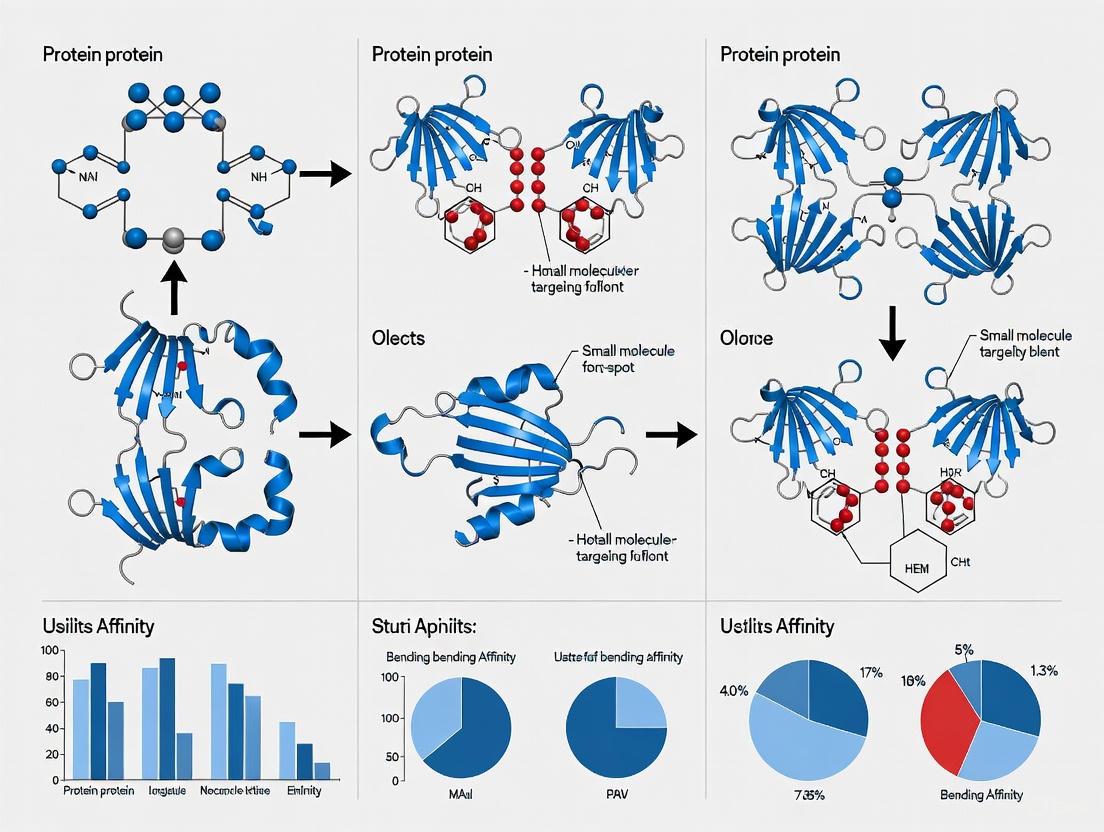
Protein-protein interactions (PPIs) are fundamental to biological processes and represent a promising yet challenging class of therapeutic targets.
Targeting Protein-Protein Interactions: A Strategic Guide to Hot Spots for Small Molecule Drug Discovery
Abstract
Protein-protein interactions (PPIs) are fundamental to biological processes and represent a promising yet challenging class of therapeutic targets. This article provides a comprehensive resource for researchers and drug development professionals on targeting PPIs through hot spots—critical residues that contribute the majority of the binding energy. We explore the foundational principles of hot spot identification, from the O-ring theory to amino acid composition. The review then details state-of-the-art computational and experimental methodologies for hot spot prediction and application, including machine learning and alanine scanning. Furthermore, we address key challenges such as molecular cooperativity and pocket transience, offering troubleshooting and optimization strategies. Finally, we present a comparative analysis of validation techniques and prediction tools, equipping scientists with a validated framework for advancing PPI-targeted drug discovery programs.
The Blueprint of Binding: Deconstructing Hot Spot Fundamentals and Energetic Landscapes
Protein-protein interactions (PPIs) serve as fundamental regulators of diverse biological processes, including signal transduction, cell cycle control, and transcriptional regulation [1]. The binding sites through which these interactions occur are known as protein interfaces. Research over recent decades has revealed that the binding energy within these interfaces is not uniformly distributed; instead, it is concentrated at critical residues known as "hot spots" [2] [3]. These hot spots comprise only a small fraction of the interface yet account for the majority of the binding free energy, making them crucial for understanding the function and stability of protein complexes [2] [4]. The seminal work of Clackson and Wells on human growth hormone binding to its receptor first introduced the hot spot concept, defining them specifically as residues whose mutation to alanine causes a decrease in binding free energy (ΔΔG) of ≥ 2.0 kcal/mol [3]. This definition has become the standard in experimental and computational studies of PPIs.
The identification and characterization of hot spots hold profound implications for drug discovery, particularly in targeting PPIs with small molecules. As protein-protein interactions are often dysregulated in diseases such as cancer, infectious diseases, and neurodegenerative disorders, hot spots represent attractive targets for therapeutic intervention [4] [5]. Despite the challenges presented by the typically large and flat surfaces of PPIs, hot spots provide structural and energetic footholds that small molecules can exploit to modulate these interactions [3] [4]. This whitepaper provides an in-depth technical examination of hot spot characteristics, prediction methodologies, experimental validation protocols, and their application in drug development, framing this discussion within the context of small molecule targeting research.
Characteristics and Structural Properties of Hot Spots
Energetic and Compositional Profiles
Hot spots exhibit distinctive energetic and compositional profiles that set them apart from other interface residues. Statistically, they constitute approximately 9.5% of interfacial residues yet dominate the binding energy landscape [3]. The amino acid composition of hot spots is notably non-random, with a strong preference for specific residues. Tryptophan (21%), arginine (13.3%), and tyrosine (12.3%) occur with the highest frequency, collectively accounting for nearly half of all hot spot residues [3]. This compositional bias reflects the unique physicochemical properties these residues contribute, including their large surface area, aromaticity, and potential for forming multiple hydrogen bonds and π-interactions.
The structural conservation of hot spots is another defining characteristic. Comparative analyses of protein interfaces reveal that hot spots mutate at a slower rate compared to other surface residues, indicating evolutionary pressure to maintain these critical regions [2] [3]. This conservation extends beyond sequence preservation to include the spatial arrangement of hot spots within the interface. They often cluster together in densely packed regions termed "hot regions," where they function cooperatively to enhance binding affinity and specificity [4]. This modular organization enables proteins to achieve high-affinity binding while maintaining the potential for interaction with multiple partners through similar interface architectures.
Structural Microenvironments and Solvent Exclusion
The structural microenvironments surrounding hot spots follow distinctive patterns that contribute to their energetic importance. The "O-ring" theory proposed by Bogan and Thorn suggests that hot spots are often surrounded by energetically less critical residues that form a ring-like structure, occluding bulk solvent from the hot spot and enhancing its energetic contribution [4]. This theory has been refined through subsequent studies into a "double water exclusion" hypothesis, which provides a more detailed roadmap for understanding the relationship between solvent accessibility and binding affinity in protein interfaces [6].
The solvent accessibility of hot spots follows a consistent pattern: they tend to be more buried within the interface compared to non-hot spot residues. Computational analyses incorporate solvent accessibility parameters such as the change in accessible surface area (ΔASA) upon complex formation, with typical thresholds requiring ΔASA > 49 Ų and ASA in the complex form (ASAcomplex) < 12 Ų for a residue to be considered a potential hot spot [2]. This burial protects the hydrophobic effects and hydrogen bonds that hot spots form from competing water interactions, thereby maximizing their contribution to binding stability.
Table 1: Key Characteristics of Hot Spot Residues in Protein-Protein Interfaces
| Characteristic | Description | Experimental/Computational Basis |
|---|---|---|
| Energetic Contribution | ΔΔG ≥ 2.0 kcal/mol upon alanine mutation | Alanine scanning mutagenesis |
| Amino Acid Preference | Trp (21%), Arg (13.3%), Tyr (12.3%) most frequent | Statistical analysis of known hot spots |
| Structural Conservation | Evolve slower than other surface residues | Phylogenetic analysis, sequence alignment |
| Spatial Organization | Tend to cluster in "hot regions" | Structural analysis of protein complexes |
| Solvent Accessibility | Highly buried (ΔASA > 49Ų, ASAcomplex < 12Ų) | Solvent accessibility calculations (e.g., NACCESS) |
| Microenvironment | Often surrounded by O-ring of less critical residues | Structural and energetic analysis |
Computational Prediction Methods for Hot Spots
Feature-Based Machine Learning Approaches
Computational prediction of hot spots has evolved substantially, with feature-based machine learning approaches demonstrating particular success. These methods employ classifiers trained on diverse features extracted from protein sequences, structures, and evolutionary profiles. The PredHS2 method exemplifies this approach, utilizing Extreme Gradient Boosting (XGBoost) with 26 optimally selected features from an initial set of 600 candidate properties [6]. The feature selection process employs a two-step methodology: first, minimum Redundancy Maximum Relevance (mRMR) sorting, followed by sequential forward selection to identify the most discriminative features. Critical features identified through this process include solvent exposure characteristics, secondary structure elements, disorder scores, and various neighborhood properties that capture the structural environment around target residues [6].
Other notable machine learning methods include KFC2 (Knowledge-based FADE and Contacts), which combines features such as atomic density, contact potentials, and solvation energy [3], and Hotpoint, which utilizes empirical potentials and accessibility measures [5]. The performance of these methods is typically evaluated using metrics such as sensitivity, precision, accuracy, F1-score, and Matthews correlation coefficient (MCC), with comparative analyses demonstrating progressive improvements in prediction accuracy over time [6].
Conservation-Based and Energy-Based Methods
Conservation-based methods represent another important approach for hot spot prediction. The HotSprint database employs an empirical method that combines evolutionary conservation scores from Rate4Site algorithm with solvent accessibility parameters to identify hot spots [2]. The conservation scores are rescaled using amino acid-specific propensities, as different residues have varying likelihoods of functioning as hot spots independent of their sequence position. This method achieved 76.83% accuracy in correlating with experimental hot spots, demonstrating the power of integrating evolutionary information with structural parameters [2].
Energy-based methods constitute a third major category, with tools such as FoldX and Robetta performing computational alanine scanning to estimate the energetic contribution of interface residues [3]. These methods calculate the difference in binding free energy between wild-type and alanine-mutated structures using empirical force fields or physical energy functions. While generally accurate, energy-based approaches tend to be computationally intensive compared to machine learning or conservation-based methods, making them less practical for large-scale screenings but valuable for detailed analyses of specific complexes.
Table 2: Performance Comparison of Representative Hot Spot Prediction Methods
| Method | Approach | Key Features | Reported Performance |
|---|---|---|---|
| PredHS2 | Machine Learning | 26 optimal features (solvent exposure, secondary structure, etc.) with XGBoost | F1-score: 0.689 (10-fold CV) [6] |
| HotSprint | Conservation-Based | Conservation scores + solvent accessibility | Accuracy: 76.83% [2] |
| PPI-hotspotID | Machine Learning | Ensemble classifiers with 4 residue features | F1-score: 0.71 [5] |
| KFC2 | Knowledge-Based | Atomic density, contact potentials, solvation | AUC: ~0.70 [3] |
| FoldX | Energy-Based | Computational alanine scanning with empirical force field | Accuracy: ~80% on specific test sets [3] |
Emerging Approaches and Integration with Structural Prediction
Recent advances in deep learning and structural bioinformatics are opening new frontiers in hot spot prediction. Graph Neural Networks (GNNs), including Graph Convolutional Networks (GCNs) and Graph Attention Networks (GATs), have shown remarkable capability in capturing both local patterns and global relationships in protein structures [1]. These architectures naturally represent proteins as graphs with residues as nodes and their interactions as edges, enabling effective learning of structural features relevant to hot spot identification.
The integration of AlphaFold-Multimer predictions represents another significant development. AlphaFold-Multimer has demonstrated exceptional performance in predicting protein-protein complex structures, and its predicted interface residues can be combined with dedicated hot spot prediction methods like PPI-hotspotID to enhance performance [5]. This hybrid approach leverages the complementary strengths of complex structure prediction and residue-level energetic importance assessment, potentially offering more reliable identification of hot spots, particularly for proteins without experimentally determined complex structures.
Computational Prediction Workflow for Hot Spots
Experimental Protocols for Hot Spot Validation
Alanine Scanning Mutagenesis
Alanine scanning mutagenesis serves as the gold standard for experimental identification and validation of hot spot residues. This technique involves systematically mutating interface residues to alanine and measuring the resulting changes in binding affinity. The experimental protocol begins with site-directed mutagenesis to replace the target residue with alanine, effectively removing all side-chain atoms beyond the β-carbon while minimizing perturbations to protein backbone flexibility [3]. Each mutant protein must then be expressed, purified, and in some cases refolded before binding affinity assessment.
The binding affinity measurements typically employ techniques such as isothermal titration calorimetry (ITC), surface plasmon resonance (SPR), or fluorescence-based binding assays. The change in binding free energy (ΔΔG) is calculated as ΔΔG = ΔGmut - ΔGwt, where ΔGmut and ΔGwt represent the binding free energies of the mutant and wild-type proteins, respectively. Residues yielding ΔΔG ≥ 2.0 kcal/mol are classified as hot spots [3]. While highly informative, traditional alanine scanning is resource-intensive, as each mutant requires individual construction, purification, and analysis. Approaches such as "shotgun scanning" have been developed to increase throughput by creating and analyzing multiple mutants simultaneously [3].
High-Throughput Experimental Methods
To address the scalability limitations of conventional alanine scanning, several high-throughput experimental methods have been developed. The yeast two-hybrid system provides a powerful platform for screening protein interactions and identifying critical residues [7]. In this system, the protein of interest is fused to a DNA-binding domain, while its interaction partner is fused to an activation domain. Mutation of hot spot residues typically disrupts the interaction, which can be detected through reporter gene expression.
Other high-throughput approaches include co-immunoprecipitation combined with mutational analysis, protein fragment complementation assays, and deep mutational scanning techniques that leverage next-generation sequencing to assess the functional consequences of thousands of mutations in parallel [5]. While these methods may not provide the precise energetic measurements of alanine scanning, they enable large-scale identification of residues critical for protein interactions, effectively expanding the definition of hot spots to include any residues whose mutation significantly impairs or disrupts PPIs [5].
The Scientist's Toolkit: Research Reagent Solutions
Table 3: Essential Research Reagents for Hot Spot Analysis
| Reagent/Resource | Function/Application | Examples/Sources |
|---|---|---|
| Alanine Scanning Kits | Site-directed mutagenesis for hot spot validation | Commercial kits (e.g., QuikChange) |
| Expression Vectors | Protein expression and purification for binding assays | pET, pGEX series vectors |
| Binding Assay Reagents | Measuring binding affinity changes | ITC reagents, SPR chips, fluorescence dyes |
| Hot Spot Databases | Reference data for validation and benchmarking | ASEdb, BID, SKEMPI, PPI-HotspotDB [3] [5] |
| Prediction Servers | Computational hot spot identification | HotSprint, KFC2, PredHS2, PPI-hotspotID [2] [5] |
| Structural Biology Tools | Visualization and analysis of protein interfaces | PyMOL, Chimera, NACCESS [2] |
| KRAS G12C inhibitor 46 | KRAS G12C inhibitor 46, MF:C32H33F2N7O2, MW:585.6 g/mol | Chemical Reagent |
| D-mannose-13C6,d7 | D-mannose-13C6,d7, MF:C6H12O6, MW:193.16 g/mol | Chemical Reagent |
Therapeutic Targeting of Hot Spots
Hot Spots in Drug Discovery
The therapeutic targeting of hot spots represents a promising strategy for modulating PPIs with small molecules. Despite the historical challenges presented by the large and relatively flat surfaces typical of protein interfaces, hot spots provide localized regions of high energetic contribution that can be exploited by small molecules [4]. These regions often exhibit structural and physicochemical properties more amenable to small-molecule binding, including concave topography, higher hydrophobicity, and preorganization in the unbound state [4]. The successful development of small-molecule inhibitors targeting hot spots in proteins such as Bcl-2, MDM2-p53, and IL-2 has validated this approach and stimulated continued research in this area [3] [4].
Hot spots facilitate drug design in two primary ways. First, they can identify druggable binding sites within larger protein interfaces, providing starting points for docking and screening campaigns [3]. Second, the relative structural rigidity of hot spots compared to surrounding interface regions can be leveraged in structure-based drug design, as their conformations tend to be more conserved between bound and unbound states [4]. Molecular dynamics simulations have revealed that hot spots often exist in preformed configurations that resemble their bound-state geometry, reducing the entropic penalty upon small-molecule binding [4].
Integration with Modern Drug Discovery Platforms
The integration of hot spot analysis with modern drug discovery platforms has created powerful workflows for PPI modulator development. Fragment-based drug discovery (FBDD) approaches particularly benefit from hot spot information, as they often identify small fragments that bind to these energetically important regions [4]. Biophysical techniques such as nuclear magnetic resonance (NMR), X-ray crystallography, and thermal shift assays can detect the binding of small fragments to hot spots, even with weak affinity, providing starting points for medicinal chemistry optimization.
Computational approaches further enhance this integration. FTMap, a computational mapping server, identifies hot spots on protein surfaces by determining consensus regions where multiple small organic probes bind [5]. When applied to protein-protein interfaces, FTMap can pinpoint regions likely to bind small molecules, guiding experimental screening efforts. The combination of these computational mapping approaches with experimental fragment screening creates a powerful cycle for identifying and validating small molecules that target hot spots, accelerating the development of PPI modulators into clinical candidates.
Hot Spot-Driven Drug Discovery Pipeline
Hot spots represent the energetic powerhouses of protein-protein interfaces, contributing disproportionately to binding affinity while maintaining distinct structural and evolutionary characteristics. Their identification through both computational and experimental methods has matured significantly, with current approaches achieving robust prediction accuracy by integrating multiple features and advanced machine learning algorithms. For drug discovery professionals targeting PPIs, hot spots offer strategic footholds for small molecule intervention, transforming previously "undruggable" targets into tractable opportunities. As prediction methods continue to evolve through deep learning and integration with structural biology advances, and as experimental techniques increase in throughput and precision, the systematic identification and targeting of hot spots will undoubtedly play an increasingly central role in therapeutic development for diseases driven by aberrant protein interactions.
The O-ring theory, first introduced by Bogan and Thorn in 1998, represents a foundational principle for understanding the architecture and energetic landscape of protein-protein interfaces [8] [9]. This theory, also termed the "water exclusion" hypothesis, posits that the stability of a protein complex is governed by a small number of energetically outstanding residues, known as hot spots, which are typically surrounded by a ring of residues that are energetically less important [8]. This surrounding ring functions to occlude bulk water molecules from the hot spot, creating a local environment with a lower dielectric constant that enhances specific electrostatic and hydrogen bond interactions critical for binding stability [8] [9]. The profound insight offered by this theory has shaped experimental and computational approaches to protein-protein interaction analysis for decades.
The original O-ring theory has subsequently been refined through further research. Li and Liu proposed a "double water exclusion" hypothesis that accepts the existence of a protective ring surrounding the hot spot but further assumes that the hot spot itself is water-free [8] [6]. They computationally modeled this water-free hot spot using a biclique pattern—defined as two maximal groups of residues from two chains in a protein complex where every residue contacts all residues in the opposing group [8]. This dense interaction network leaves no sufficient room between residues to accommodate water molecules, representing an interface structure with zero-water tolerance that enhances binding stability through collective forces of multiple, dense atom-atom pairs [8]. This refinement theoretically strengthens and signifies the earlier "hot region" proposition by Keskin et al., which described assemblies of hot residues within densely packed regions with extensive interaction networks [8].
Table: Key Theoretical Models of Protein Binding Site Architecture
| Theory Name | Proposed/Refined By | Core Principle | Structural Organization |
|---|---|---|---|
| O-Ring Theory (Water Exclusion) | Bogan & Thorn (1998) | Hot spots surrounded by less important residues that exclude solvent | Central hot spot → Ring of occluding residues |
| Double Water Exclusion | Li & Liu (2009) | Hot spot itself is water-free, in addition to being surrounded by protective ring | Water-free hot spot → Protective ring → Bulk solvent |
| Hot Region Concept | Keskin et al. (2005) | Assemblies of hot residues within densely packed regions with interaction networks | Clustered hot spots forming cooperative networks |
| Biclique Pattern | Li & Liu (2009) | Two maximal residue groups with all-to-all contacting interactions | Maximal clusters of residues with complete inter-group contacts |
The O-ring theory's applicability has been extended beyond protein-protein interactions. Research has demonstrated that a similar architectural principle governs protein-DNA interfaces, where hot spots are organized in the central region of the interface, though with a different residue composition biased toward positively charged residues (Arginine and Lysine) to facilitate DNA binding [9]. This extension underscores the fundamental nature of solvent exclusion principles across different biological complex types.
Experimental Methodologies for Hot Spot Characterization
Alanine Scanning Mutagenesis
Alanine scanning mutagenesis remains the established experimental standard for identifying hot spot residues and validating the O-ring theory [10] [9]. This method involves systematically mutating each interface residue to alanine and measuring the resulting impact on binding affinity [10]. A residue is typically defined as a hot spot if its mutation to alanine causes a substantial drop in binding affinity (ΔΔG ≥ 2.0 kcal/mol) [6] [9]. The experimental procedure follows a standardized protocol: first, target residues for mutation are selected based on interface localization; second, site-directed mutagenesis is performed to create alanine substitutions; third, binding affinity changes are quantified using techniques such as isothermal titration calorimetry (ITC) or surface plasmon resonance (SPR); finally, residues are classified as hot spots or null spots based on the measured energy thresholds [10] [9].
The databases collecting experimental alanine scanning data include the Alanine Scanning Energetics Database (ASEdb), Binding Interface Database (BID), SKEMPI database, and Alexov_sDB [6]. These databases have enabled large-scale analysis of hot spot properties and provided training data for computational prediction methods. Despite being considered the gold standard, alanine scanning mutagenesis is costly, time-consuming, and not always applicable to all protein systems, particularly those with highly charged interfaces like protein-DNA complexes [9].
Protein Painting Technique
A novel experimental method called "protein painting" has emerged as a powerful tool for rapidly identifying solvent-excluded hot spots within native protein-protein interfaces [11]. This technique employs small molecules as molecular paints that tightly coat the exposed surfaces of protein complexes but cannot access solvent-excluded hot spots between interacting native proteins [11]. The experimental workflow consists of several key steps: first, a pulse of small-molecule paints (e.g., RBB, AO50, R49, ANSA) is applied in vast molar excess to native preformed protein complexes; second, non-bound paint molecules are rapidly removed using a Sephadex G25 molecular sieve quick spin column; third, the painted protein-protein interactions are dissociated; finally, the proteins are linearized, digested with trypsin, and sequenced by mass spectrometry [11].
The fundamental principle underlying this technique is that paint molecules block trypsin cleavage sites on coated protein surfaces, while unmodified contact points between protein partners remain accessible to proteolysis [11]. Consequently, only peptides derived from interaction interfaces emerge as positive hits in mass spectrometry analysis. This method has been successfully validated on the interleukin-1β complex (IL1β ligand, receptor IL1R1, and accessory protein IL1RAcP), revealing critical contact regions that were then targeted with inhibitory peptides and monoclonal antibodies that abolished IL1β cell signaling [11]. The major advantage of protein painting is its ability to directly identify the amino acid sequence of physically interacting regions of native proteins without requiring protein modification through crosslinking, mutation, or genetic tagging [11].
Fragment Screening Approaches
Fragment-based screening methods provide another experimental avenue for identifying hot spots relevant to drug discovery [10]. The Structure-Activity Relationship by Nuclear Magnetic Resonance (SAR by NMR) method screens libraries of fragment-sized organic compounds for binding to target proteins using NMR, with fragments clustering at ligand binding sites [10]. Similarly, the Multiple Solvent Crystal Structures (MSCS) method involves determining X-ray structures of a target protein in aqueous solutions containing high concentrations of organic co-solvents, then superimposing these structures to find consensus binding sites that accommodate multiple organic probes [10]. These consensus sites identified by fragment screening represent surface regions with high propensity for ligand binding and have been shown to frequently coincide with functionally important regions of proteins [10].
Table: Experimental Methods for Hot Spot Identification
| Method | Underlying Principle | Key Output | Advantages | Limitations |
|---|---|---|---|---|
| Alanine Scanning Mutagenesis | Measure binding affinity changes after mutation to alanine | ΔΔG values for each mutated residue | Direct thermodynamic measurement; considered gold standard | Time-consuming; expensive; not always applicable |
| Protein Painting | Small molecule dyes coat exposed surfaces but not interfaces | Mass spectrometry peptides from interaction regions | Works on native proteins; rapid results | Requires optimization of painting conditions |
| Fragment Screening (SAR by NMR, MSCS) | Identify consensus sites binding multiple small molecules | Hot spot locations based on fragment clustering | Identifies druggable sites; provides structural information | Requires specialized equipment/expertise |
| Computational Solvent Mapping (FTMap) | Computational analog of MSCS using molecular probes | Ranked consensus sites based on probe clustering | Fast; low cost; web server available | Computational approximation of experimental methods |
Computational Prediction Methods
Feature-Based Machine Learning Approaches
Computational prediction of hot spots has advanced significantly with the adoption of machine learning methods that leverage various features derived from protein sequence and structure [6]. The PredHS2 method represents the state-of-the-art in this category, employing Extreme Gradient Boosting (XGBoost) trained on a comprehensive set of 26 optimal features selected from an initial pool of 600 candidate features [6]. These features encompass several categories: sequence features include amino acid composition, evolutionary conservation, and pairing potential; structural features incorporate solvent accessible surface area (SASA), protrusion index, atomic density, and secondary structure elements; energy features involve van der Waals contacts, electrostatic interactions, and hydrogen bonding potentials; and neighborhood properties capture information about the local environment around target residues using both Euclidean and Voronoi neighborhood definitions [6].
The feature selection process in PredHS2 employs a two-step approach: first, the Minimum Redundancy Maximum Relevance (mRMR) method ranks features by their importance, followed by a sequential forward selection (SFS) procedure that adds features until prediction performance no longer improves [6]. Notable novel features found to be particularly discriminative include solvent exposure characteristics, secondary structure features, and disorder scores [6]. When evaluated on independent test sets, PredHS2 achieved superior performance compared to other machine learning algorithms and existing prediction methods, demonstrating the power of sophisticated feature engineering and selection combined with advanced machine learning algorithms [6].
Biclique Pattern Detection
To computationally model the "double water exclusion" hypothesis, Li and Liu developed a method to identify biclique patterns at protein-protein interfaces [8]. The algorithm processes protein complexes from the Protein Data Bank through several stages: first, interatomic distances are calculated for all possible atom pairs between two chains; second, the chains are represented as a bipartite graph based on distance information; third, maximal biclique subgraphs are identified from all bipartite graphs to locate biclique patterns at interfaces [8]. A residue contact is typically defined as existing when the distance between any two atoms of the residues is below the sum of their van der Waals radii plus the diameter of a water molecule (2.75Ã…) [8].
The key properties of biclique patterns include their non-redundant occurrence in PDB and correspondence with hot spots when the solvent-accessible surface area of the pattern in the complex form is small [8]. Through extensive queries to hot spot databases, biclique patterns have been verified to be rich in true hot residues, providing a structural topology that reflects the double water exclusion principle [8]. This method offers a structure-based approach to hot spot prediction that directly embodies the theoretical framework of solvent exclusion at binding interfaces.
Applications to Drug Discovery
The understanding of O-ring theory and solvent exclusion principles has profound implications for drug discovery, particularly in targeting protein-protein interactions (PPIs) with small molecules [12] [13]. PPIs have traditionally been challenging therapeutic targets because their interfaces often appear flat and featureless, lacking obvious binding pockets for small molecules [11]. However, the recognition that binding energy is concentrated in hot spots surrounded by solvent-excluding rings has provided a strategic approach to addressing this challenge [13].
Hot Spot-Based Inhibitor Design
Hot spot-based design of small-molecule inhibitors leverages the knowledge that certain regions at PPI interfaces contribute disproportionately to binding energy and may present more druggable sites [13]. This approach typically follows a systematic procedure: first, hot spots are identified experimentally through alanine scanning or computationally using prediction methods; second, the structural and physicochemical properties of these hot spots are characterized to assess their "druggability"; third, fragment-based screening or structure-based design is employed to identify small molecules that target these regions; finally, initial hits are optimized for potency and selectivity [13]. Successful examples of this strategy demonstrate the importance of hot spots in discovering potent and selective PPI inhibitors [13].
Relationship Between Hot Spot Concepts
A critical insight for drug discovery comes from understanding the relationship between two different hot spot concepts: the energetic hot spots identified by alanine scanning mutagenesis and the ligand-binding hot spots identified by fragment screening [10]. Research comparing these two types of hot spots has revealed that they are largely complementary—residues protruding into hot spot regions identified by computational mapping or experimental fragment screening are almost always themselves hot spot residues as defined by alanine scanning experiments [10]. However, only a minority of hot spots identified by alanine scanning represent sites that are potentially useful for small inhibitor binding, and it is this subset that is identified by experimental or computational fragment screening [10]. This distinction is crucial for prioritizing targets for drug discovery efforts.
Table: Comparison of Hot Spot Types in Drug Discovery
| Hot Spot Type | Identification Method | Key Characteristics | Relevance to Drug Discovery |
|---|---|---|---|
| Energetic Hot Spots | Alanine scanning mutagenesis | High ΔΔG upon mutation (>2.0 kcal/mol); often enriched in Trp, Arg, Tyr | Define critical regions for binding energy; indicate potential target regions |
| Ligand-binding Hot Spots | Fragment screening (X-ray, NMR) | Consensus sites binding multiple fragments; specific physicochemical properties | Directly indicate druggable sites; starting points for inhibitor design |
| Biclique Patterns | Structural graph theory | Dense residue clusters with all-to-all contacts; water exclusion properties | Suggest stable interaction networks; potential for disruptive targeting |
Visualization of Core Concepts and Methodologies
O-Ring Theory Architectural Principles
Protein Painting Experimental Workflow
Table: Key Research Reagents and Computational Tools for Solvent Exclusion Studies
| Category | Resource/Tool | Specific Examples | Primary Application | Key Features |
|---|---|---|---|---|
| Experimental Reagents | Molecular Paints | RBB, AO50, R49, ANSA [11] | Protein painting technique | Rapid on-rates, slow off-rates, trypsin blockade |
| Databases | Hot Spot Databases | ASEdb, BID, SKEMPI [6] | Training and validation | Curated experimental ΔΔG values |
| Databases | Protein Interaction Networks | HPRD, MINT, STRING, DIP [14] [15] | Contextual analysis | Protein-protein interaction maps |
| Computational Tools | Hot Spot Prediction Servers | PredHS2, SpotOn, FTMap [6] [10] | Computational identification | Machine learning, energy-based methods |
| Computational Tools | Structural Analysis | NACCESS [8] [16] | Solvent accessibility calculation | ASA calculations for interface definition |
| Computational Tools | Biclique Pattern Mining | Custom algorithm [8] | Double water exclusion modeling | Identifies dense residue clusters |
| Experimental Kits | Alanine Scanning Kits | Commercial mutagenesis kits | Experimental validation | Site-directed mutagenesis |
| Analytical Software | Molecular Visualization | VMD [9], Cytoscape [14] | Structure analysis and visualization | Interface characterization, network analysis |
The O-ring theory and its subsequent refinements provide a fundamental architectural framework for understanding the organization and energetics of protein binding sites. The principle of solvent exclusion represents a unifying concept across diverse biological interactions, from protein-protein to protein-DNA complexes. Experimental methods ranging from traditional alanine scanning to innovative protein painting techniques continue to validate and refine these theoretical models, while computational approaches increasingly enable accurate prediction of hot spots. The integration of these principles into drug discovery pipelines, particularly through hot spot-based inhibitor design, has created promising avenues for targeting previously challenging protein-protein interactions. As these methods continue to evolve, they will undoubtedly yield deeper insights into the molecular principles governing biomolecular recognition and enable more effective therapeutic interventions.
Protein-protein interactions (PPIs) are fundamental to virtually all biological processes, and the targeted disruption of these interfaces with small molecules represents a promising therapeutic strategy. The conceptual breakthrough that made this approach feasible was the discovery that binding energy is not distributed evenly across an interface but is concentrated at specific "hot spot" residues. This whitepaper delves into the molecular and structural underpinnings of why three amino acids—tryptophan (Trp), tyrosine (Tyr), and arginine (Arg)—are disproportionately enriched at these hot spots. We synthesize data from large-scale mutagenesis studies, structural analyses, and computational predictions to explain the unique biochemical properties that equip these residues for dominant roles in binding energy. Furthermore, we detail the experimental and computational methodologies essential for hot spot identification and characterization, framing this knowledge within the context of rational drug discovery for PPI targets.
Protein-protein interactions are often governed by a small subset of interface residues, known as hot spots, which contribute the majority of the binding free energy. A residue is typically defined as a hot spot if its mutation to alanine causes a significant change in binding free energy (ΔΔG ≥ 2.0 kcal/mol) [6]. The seminal work by Bogan and Thorn in 1998 first systematically analyzed these regions, revealing that tryptophan, tyrosine, and arginine are the most frequently occurring residues in hot spots [17].
From a drug discovery perspective, hot spots are critically important because they represent druggable epitopes within often large and flat PPI interfaces. While the complete interface may encompass 1,000-2,000 Ų, the central hot spot region often covers an area comparable to the size of a typical small-molecule binding site (approximately 250-900 Ų) [18]. This insight overturned the previous dogma that PPIs were "undruggable" and provided a roadmap for designing small molecules that can potently and specifically disrupt these interactions. Successful targeting of PPIs has since led to several FDA-approved drugs, such as venetoclax, and many more candidates in clinical trials [19] [20].
Quantitative Propensity of Tyr, Trp, and Arg in Hot Spots
Statistical analysis of alanine scanning mutagenesis databases provides unambiguous evidence for the enrichment of specific amino acids in hot spots. The following table summarizes the propensity of different amino acids to function as hot spot residues, compiled from large-scale experimental studies.
Table 1: Amino Acid Propensities in Protein-Protein Interaction Hot Spots
| Amino Acid | Frequency in Hot Spots (%) | Key Biochemical Properties |
|---|---|---|
| Tryptophan (W) | 21% | Large, hydrophobic indole ring; Amphipathic; Can form π-π, cation-π, and hydrogen bond interactions. |
| Arginine (R) | 13.1% | Positively charged guanidinium group; Can form multiple bidentate hydrogen bonds and cation-Ï€ interactions. |
| Tyrosine (Y) | 12.3% | Hydrophobic aromatic ring; Amphipathic; Phenolic -OH group can form strong hydrogen bonds. |
| Other Residues | ~53.6% (combined) | Varying properties; includes other hydrophobic (I, L, V) and polar (N, D, E) residues. |
Data derived from Bogan & Thorn (1998) and subsequent analyses [17] [6].
The data shows that Trp, Arg, and Tyr together constitute nearly half of all hot spot residues, a significant overrepresentation compared to their overall abundance in protein sequences. This enrichment is a direct consequence of their unique and versatile biochemical properties, which enable them to make outsized contributions to binding affinity.
Structural and Energetic Basis for Dominance
The dominance of Tyr, Trp, and Arg at hot spots is not accidental but stems from a combination of structural and energetic factors that maximize binding energy within a minimal footprint.
Versatile Molecular Interactions
These three residues are uniquely capable of engaging in multiple, strong non-covalent interactions:
- Tryptophan: Its bulky, dual-ring indole side chain is a versatile interaction platform. It is predominantly hydrophobic, providing substantial energy through the hydrophobic effect when shielded from solvent. The indole nitrogen can serve as both a strong hydrogen bond donor and acceptor. Furthermore, the electron-rich ring system can engage in π-π stacking with other aromatic residues and cation-π interactions with positively charged residues like arginine and lysine [17] [6].
- Tyrosine: Tyr shares the hydrophobic character of Trp via its phenolic ring, contributing to van der Waals interactions and the hydrophobic effect. Its key feature is the phenolic hydroxyl group, which can form high-energy hydrogen bonds that are stronger than those from main-chain carbonyls or amides due to the electron-withdrawing nature of the aromatic ring. This makes Tyr amphipathic, capable of straddling hydrophobic and polar regions of the interface [17].
- Arginine: The guanidinium group of Arg is a potent source of electrostatic interactions. Its planar structure, with multiple nitrogen atoms, allows it to form multiple, often bidentate hydrogen bonds with acceptor groups on the binding partner. This group can also participate in cation-Ï€ interactions and salt bridges with negatively charged residues like aspartate and glutamate [17] [6].
The O-Ring and Solvent Exclusion Effect
A critical theory explaining the architecture of hot spots is the "O-ring" model proposed by Bogan and Thorn [17]. This model posits that the central hot spot residues (frequently containing Trp, Tyr, and Arg) are often surrounded by a ring of energetically less critical, but tightly packed, residues. The primary function of this O-ring is to occlude bulk solvent from the central hot spot.
The exclusion of water is crucial because the strong interactions formed by Trp, Tyr, and Arg (e.g., hydrogen bonds, hydrophobic effects) are significantly amplified in a low-dielectric environment. When water is displaced, the effective strength of these interactions increases dramatically. The O-ring theory has been refined by the "double water exclusion" hypothesis, which further emphasizes the role of structured water molecules in shaping binding affinity [6].
Methodologies for Experimental Identification and Analysis
The identification and validation of hot spots rely on a combination of experimental and computational techniques. The gold standard is alanine scanning mutagenesis, but several other methods provide complementary data.
Core Experimental Protocol: Alanine Scanning Mutagenesis
This is the primary experimental method for identifying hot spot residues.
Table 2: Essential Research Reagents and Solutions for Alanine Scanning
| Reagent / Solution | Function / Explanation |
|---|---|
| Wild-Type Gene Construct | Template for site-directed mutagenesis to create alanine point mutants. |
| Site-Directed Mutagenesis Kit | For introducing specific point mutations (e.g., to alanine) into the gene of interest. |
| Recombinant Protein Expression System | (e.g., E. coli, insect cells). To produce and purify wild-type and mutant proteins. |
| Surface Plasmon Resonance (SPR) / Bio-Layer Interferometry (BLI) | Label-free techniques to measure binding kinetics (KD, Kon, Koff) between protein partners. |
| Isothermal Titration Calorimetry (ITC) | Provides direct measurement of binding affinity (KD) and thermodynamics (ΔH, ΔS). |
Detailed Workflow:
- Site-Directed Mutagenesis: Identify all residues at the PPI interface via structural analysis (e.g., X-ray crystallography). Systematically mutate each interfacial residue to alanine, which removes the side-chain atoms beyond the Cβ while preserving the protein backbone, thereby isolating the functional contribution of that side chain.
- Protein Expression and Purification: Express and purify the wild-type protein and each alanine mutant to homogeneity.
- Binding Affinity Measurement: Determine the binding affinity of the wild-type complex and each mutant complex using a technique like SPR or ITC.
- Free Energy Calculation: For each mutant, calculate the change in binding free energy: ΔΔG = ΔG(mutant) - ΔG(wild-type). A residue is typically classified as a hot spot if ΔΔG ≥ 2.0 kcal/mol [6].
Supporting and Alternative Methodologies
- High-Throughput Screening (HTS): Utilizes diverse chemical libraries to identify small molecules that disrupt a PPI. While not a direct mapping technique, a successful hit can indicate the presence of a druggable hot spot [19].
- Fragment-Based Drug Discovery (FBDD): Particularly suited for targeting the discontinuous hot spots of PPI interfaces. Small, low molecular weight fragments are screened for binding to the target protein. These fragments often bind to sub-pockets within the hot spot region and can be linked or elaborated into high-affinity inhibitors [19] [18].
- Biophysical and Structural Techniques: X-ray crystallography and NMR are used to solve the structures of protein complexes, revealing atomic-level details of the interactions at the interface. This structural information is invaluable for rational drug design.
The following diagram illustrates the logical workflow for integrating these methods to identify and target hot spots.
Computational Prediction of Hot Spots
Given the cost and time associated with experimental methods, robust computational prediction of hot spots is a major focus in bioinformatics. Modern machine learning (ML) approaches have demonstrated high accuracy.
Feature Selection for Machine Learning
Effective prediction relies on extracting informative features from protein sequences and structures. The PredHS2 method, for example, uses a two-step feature selection process (mRMR followed by sequential forward selection) to identify 26 optimal features from an initial set of 600 [6]. Key features include:
- Evolutionary Conservation: Hot spot residues are often more evolutionarily conserved than non-hot spot interface residues.
- Solvent Accessibility / Exclusion: Measures the extent to which a residue is buried at the interface, a key tenet of the O-ring theory.
- Atomic Packing Density: Describes how tightly atoms are packed around a residue.
- Energy Terms: Estimates of various interaction energies (e.g., van der Waals, electrostatic).
- Secondary Structure and Disorder Scores: Propensity for certain structural elements can be indicative.
- Amino Acid-Specific Features: Including the inherent physicochemical properties of the residue.
Machine Learning Algorithms
Classifiers like Support Vector Machines (SVMs), Random Forests (RF), and more recently, Extreme Gradient Boosting (XGBoost) are trained on datasets of known hot spots and non-hot spots (e.g., from ASEdb or BID databases) using the selected features [6]. The XGBoost-based PredHS2 model, for instance, has been shown to outperform other state-of-the-art methods.
Application in Small Molecule Drug Discovery
The strategic importance of hot spots is fully realized in the design of PPI modulators. Understanding the chemical composition of hot spots directly informs the design of small-molecule inhibitors.
- Mimicking Key Residues: Small molecules can be designed to mimic the interactions of a critical hot spot residue. For example, an inhibitor might incorporate a heteroaromatic ring system to mimic the indole of tryptophan or a guanidinium group to mimic arginine, thereby recapitulating the essential binding interactions [18].
- Targeting Hot Spot Pockets: Although PPI interfaces are generally flat, the regions around central Trp, Tyr, and Arg residues often contain small, druggable pockets that can be targeted by fragments or small molecules. This is the basis for the success of FBDD in this field [19] [18].
- Case Study: Bcl-2 Family Proteins: The successful development of venetoclax, a Bcl-2 inhibitor, exemplifies hot spot targeting. The drug binds to a hydrophobic cleft on Bcl-2, a cleft that normally engages with a BH3 α-helix from its binding partner. The inhibitor effectively mimics key hydrophobic and aromatic hot spot residues of the native helix [18].
The diagram below outlines the strategic pipeline for translating hot spot knowledge into a therapeutic lead.
The dominance of tyrosine, tryptophan, and arginine in protein-protein interaction hot spots is a direct consequence of their superior and versatile molecular interaction capabilities. Their ability to contribute significantly to binding affinity through a combination of the hydrophobic effect, hydrogen bonding, and complex electrostatic interactions, all within the context of a solvent-excluded environment, makes them indispensable for high-affinity binding. The continued refinement of experimental and computational methods for hot spot identification, coupled with advanced drug design strategies like FBDD, ensures that targeting these critical residues will remain a cornerstone of therapeutic PPI modulation. As our understanding of the nuanced roles these residues play in specific complexes deepens, so too will our ability to design potent and selective small-molecule drugs for previously intractable targets.
The study of protein-protein interactions (PPIs) is pivotal for understanding cellular physiology and designing targeted therapeutic interventions. Within the vast landscape of protein interfaces, hot spots—a small subset of residues accounting for the majority of binding free energy—have emerged as critical targets. Recent research has revealed that these hot spots are not randomly distributed but rather form clustered, cooperative networks known as hot regions. This whitepaper provides an in-depth technical examination of the transition from identifying individual hot spots to understanding the organization and function of hot regions. Framed within the context of small molecule targeting research, we detail experimental and computational methodologies for identifying these features, analyze their structural and energetic properties, and discuss their implications for drug discovery, particularly in stabilizing or disrupting PPIs with molecular glues and other small molecules.
Protein-protein interactions are fundamental to virtually all biological processes, from signal transduction to immune response. The binding energy in these complexes is not uniformly distributed across the interface; instead, it is concentrated at specific residues termed "hot spots" [21]. Experimentally, hot spots are defined as residues whose mutation to alanine causes a significant increase in binding free energy (ΔΔG ≥ 2.0 kcal/mol) [22] [21]. From a drug discovery perspective, these residues represent promising targets for small molecules aimed at modulating PPIs.
A critical advancement in this field has been the recognition that hot spots tend to cluster together within protein interfaces, forming what are known as "hot regions" [23] [21]. These are defined as spatially clustered sets of three or more hot spot residues [23]. This clustering is not merely structural; it reflects functional cooperativity, where the collective contribution of clustered residues to binding affinity exceeds the sum of their individual contributions. For researchers targeting PPIs, understanding these cooperative networks is essential, as targeting an entire hot region may prove more effective than targeting individual hot spots.
Methodologies for Identifying Hot Spots and Hot Regions
Experimental Approaches
Alanine Scanning Mutagenesis
Alanine scanning mutagenesis remains the gold standard for experimental identification of hot spots.
Protocol:
- Site-Directed Mutagenesis: Introduce point mutations to substitute target interface residues with alanine, one at a time.
- Protein Expression and Purification: Express and purify both wild-type and mutant proteins.
- Binding Affinity Measurement: Determine the change in binding free energy (ΔΔG) using techniques such as isothermal titration calorimetry (ITC) or surface plasmon resonance (SPR).
- Hot Spot Classification: Residues whose alanine substitution results in ΔΔG ≥ 2.0 kcal/mol are classified as hot spots [22] [21].
Limitations: This process is time-consuming, expensive, and low-throughput, which has motivated the development of computational alternatives.
Structural and Biophysical Techniques
- X-ray Crystallography: Reveals atomic-level details of interface architecture and resident water molecules.
- Nuclear Magnetic Resonance (NMR): Provides information on dynamics and transient interactions.
- Mass Spectrometry (MS): Used in fragment-based screening to identify small molecules that bind at PPI interfaces [24].
Computational Prediction Methods
Computational methods offer high-throughput alternatives for hot spot and hot region prediction. These can be broadly categorized as sequence-based, structure-based, or machine learning-driven.
Table 1: Key Computational Methods for Hot Spot Prediction
| Method Name | Type | Input | Key Features | Performance (ACC/MCC) |
|---|---|---|---|---|
| Extreme Learning Machine (ELM) [22] | Machine Learning | Protein Complex Structure | Hybrid features from target residue and spatial neighbors (mirror-contact & intra-contact residues) | ACC: 82.1%, MCC: 0.459 (5-fold CV) |
| PPI-hotspotID [25] | Machine Learning | Free Protein Structure | Conservation, amino acid type, SASA, and gas-phase energy (ΔGgas) | Recall: 0.67, Precision: 0.76, F1-score: 0.71 |
| HotPoint [23] | Knowledge-Based | Protein Complex Structure | Accessible surface area (ASA) and knowledge-based pair potentials | N/A |
| KFC2 [22] | Machine Learning | Protein Complex Structure | Structural features and biochemical properties | Benchmarking available in independent studies |
| Robetta [22] | Energy-Based | Protein Complex Structure | Free energy function calculations | N/A |
| FOLDEF [22] | Energy-Based | Protein Complex Structure | Quantitative estimation of interaction energy | N/A |
Feature Extraction for Machine Learning
Effective machine learning models depend on carefully selected features:
- Evolutionary Conservation: Calculated using Shannon entropy from multiple sequence alignments [26] [27].
- Structural Features: Solvent accessible surface area (SASA), pairwise residue potentials, atomic contacts, and packing density [22] [23].
- Hybrid Spatial Features: Incorporating information from spatial neighbor residues (mirror-contact and intra-contact residues) significantly improves prediction accuracy [22].
Hot Region Identification Protocol
The HotRegion database provides a systematic framework for identifying hot regions [23]:
- Interface Residue Definition: Two residues from different chains are considered in contact if the distance between any of their atoms is less than the sum of their van der Waals radii plus 0.5 Ã….
- Hot Spot Prediction: Predict hot spots using a method like HotPoint, based on ASA and knowledge-based pair energies.
- Network Construction: Represent hot spots as nodes in a network, connecting them with edges if the distance between their Cα atoms is < 6.5 Å.
- Cluster Identification: Find connected components in the network; components with ≥3 nodes are defined as hot regions.
Structural and Functional Characteristics of Hot Regions
Spatial Clustering of Conserved Residues
Evolutionarily conserved residues at protein interfaces show significant spatial clustering. Analysis shows that 96.7% of homodimer interfaces and 86.7% of heterocomplex interfaces have conserved positions clustered within the interface region [26]. The degree of spatial clustering (Ms) can be quantified using the average inverse distance between all pairs of conserved residues [26] [27]:
[ Ms = \frac{1}{N{\text{pairs}}} \sum{i=1}^{Ns-1} \sum{j=i+1}^{Ns} \left( \frac{1}{r_{ij}} \right) ]
Where ( Ns ) is the number of conserved residues and ( r{ij} ) is the distance between residues i and j.
Relationship Between Hot Regions and Hot Spots
Hot regions serve as functional modules where hot spots are concentrated. Analysis reveals that approximately 60% of experimental hot spot residues are localized to these conserved residue clusters [26]. This relationship has important implications for mutagenesis studies and drug targeting.
Table 2: Amino Acid Preferences in Hot Regions
| Residue Type | Preference in Hot Regions | Remarks |
|---|---|---|
| Tryptophan (Trp) | Strongly favored | Highest propensity, often central to hot regions |
| Tyrosine (Tyr) | Strongly favored | Aromatic, contributes to packing and interactions |
| Arginine (Arg) | Favored | Positive charge, forms salt bridges and hydrogen bonds |
| Hydrophobic (Leu, Ile, Met) | Favored | Enhance binding through hydrophobic effect |
| Charged (Asp, Glu, Lys) | Less common | Less frequent than aromatic and hydrophobic residues |
Cooperativity Within Hot Regions
Hot regions exhibit cooperativity, where the energetic contribution of the cluster is greater than the sum of individual hot spots. This cooperativity arises from:
- Dense Packing: Tightly packed regions exclude water molecules, enhancing electrostatic interactions [21].
- Networked Interactions: Hot spots within a region form extensive interaction networks with mutual stabilization [21].
- Additivity Between Regions: While contributions within a hot region are cooperative, the contributions of independent hot regions to overall binding affinity are typically additive [21].
Quantitative Analysis of Hot Regions
Table 3: Statistical Analysis of Conserved Residue Clustering at Protein Interfaces
| Interface Type | Interfaces with Clustered Conserved Residues | Interfaces with Multiple Sub-Clusters | Hot Spots in Conserved Clusters | Preferred Residue Types |
|---|---|---|---|---|
| Protein-Protein (Homodimers) | 96.7% [26] | Common in larger interfaces [26] | ~60% [26] | Hydrophobic, Aromatic, Arg [26] |
| Protein-Protein (Heterocomplexes) | 86.7% [26] | Common in larger interfaces [26] | ~60% [26] | Hydrophobic, Aromatic, Arg [26] |
| Protein-RNA | 77.8% [27] | Multiple sub-clusters observed [27] | 51.5% [27] | Hydrophobic, Aromatic, Arg [27] |
The data consistently shows that conserved residues cluster significantly across different interface types, with a strong correlation between these clusters and experimentally determined hot spots.
Applications in Small Molecule Targeting Research
Molecular Glues for PPI Stabilization
Molecular glues (MGs) are small molecules that bind cooperatively at PPI interfaces, stabilizing otherwise transient interactions [24]. These compounds represent a promising strategy for targeting hot regions.
Case Study: 14-3-3/ERα Stabilization [24]
- Fragment-Based Screening: Using disulfide-tethering technology to identify cysteine-reactive fragments binding at the 14-3-3/client interface.
- Structure-Guided Optimization: X-ray crystallography to guide fragment linking and optimization.
- Cellular Validation: NanoBRET assays confirm PPI stabilization in living cells.
Targeting Hot Regions for PPI Inhibition
Small molecules can be designed to disrupt PPI by targeting hot regions:
- Competitive Inhibition: Designing molecules that mimic key residues in the hot region.
- Allosteric Inhibition: Targeting residues adjacent to hot regions that are crucial for maintaining the cooperative network.
Predicting Cooperative vs. Competitive Interactions
Recent computational frameworks using hyperbolic embedding of protein interaction networks and Random Forest classifiers can distinguish between cooperative and competitive triplets (AUC = 0.88) [28]. This helps identify which PPIs are amenable to simultaneous targeting.
Table 4: Key Research Reagent Solutions for Hot Region Studies
| Resource/Reagent | Type | Function/Application | Availability |
|---|---|---|---|
| HotRegion Database [23] | Database | Provides hot region information, structural properties, and 3D visualization of interfaces | http://prism.ccbb.ku.edu.tr/hotregion |
| PPI-hotspotID Web Server [25] | Prediction Tool | Identifies PPI-hot spots using free protein structures | https://ppihotspotid.limlab.dnsalias.org/ |
| Alanine Scanning Mutagenesis Kit | Experimental Kit | Systematically mutate interface residues to alanine for energetic profiling | Commercial vendors |
| Interactome3D [28] | Database | Structurally annotated protein interactions for validation | http://interactome3d.irbbarcelona.org |
| Disulfide Tethering Fragments [24] | Chemical Library | Cysteine-reactive fragments for targeting PPI interfaces | Custom synthesis |
| NanoBRET Assay System [24] | Cellular Assay | Measures PPIs in living cells for compound validation | Commercial vendors |
The paradigm shift from studying individual hot spots to understanding clustered hot regions has significantly advanced our knowledge of protein-protein interactions. The clustered, cooperative nature of these residues has profound implications for drug discovery, particularly for designing small molecules that target PPIs. Molecular glues that stabilize native interactions represent a particularly promising avenue, especially for proteins with intrinsically disordered domains traditionally considered "undruggable."
Future research directions should focus on:
- Dynamic Characterization: Understanding the temporal dynamics of hot region formation and dissociation.
- Machine Learning Enhancements: Integrating AlphaFold-predicted structures with hot region prediction tools [25].
- Multi-Target Strategies: Designing compounds that simultaneously target multiple hot regions for enhanced specificity and efficacy.
As computational methods continue to improve and experimental techniques become more sophisticated, the systematic targeting of hot regions will likely play an increasingly important role in therapeutic development for cancer, neurodegenerative diseases, and other conditions driven by dysregulated protein interactions.
Protein-protein interactions (PPIs) are fundamental to virtually all cellular processes, including signal transduction, gene expression, and immune responses. The dysregulation of these interactions is implicated in numerous diseases, making them attractive targets for therapeutic intervention [19]. However, the development of small-molecule drugs that effectively modulate PPIs has long been considered a formidable challenge. This difficulty primarily stems from the structural nature of PPI interfaces, which are typically large, flat, and lacking the deep, well-defined binding pockets commonly found on traditional enzyme targets [19] [29]. These characteristics limit the ability of small molecules to form specific, high-affinity interactions necessary for effective inhibition or stabilization.
Despite these challenges, the field has witnessed significant progress over the past two decades. Technological advances in structural biology, computational modeling, and screening methodologies have transformed PPIs from "undruggable" targets to increasingly feasible therapeutic opportunities [19]. Central to this progress has been the recognition that binding energy across PPI interfaces is not distributed uniformly but is concentrated at specific regions known as hot spots [19] [30]. These hot spots represent crucial footholds for drug discovery, providing localized regions where small molecules can achieve potent binding despite the extensive interface. This whitepaper examines the current methodologies, challenges, and strategic approaches for targeting PPI hot spots with small molecules, providing researchers with a technical framework for addressing this persistent druggability challenge.
The Structural and Energetic Landscape of PPI Interfaces
Defining Characteristics of PPI Hot Spots
Hot spots are defined as specific residues within a PPI interface that contribute disproportionately to the binding free energy. Experimentally, they are identified as residues whose mutation to alanine causes a significant decrease in binding free energy (typically ΔΔG ≥ 2 kcal/mol) [19] [25]. These regions are characterized by several key structural and physicochemical properties:
- Spatial Localization: Hot spots tend to cluster in tightly packed "hot regions" within the broader interface, rather than being randomly distributed [19].
- Amino Acid Composition: They are frequently enriched in specific residue types, particularly aromatic amino acids (tyrosine, tryptophan, phenylalanine) and arginine, which form strong van der Waals contacts, hydrogen bonds, and electrostatic interactions [19].
- Structural Organization: Unlike enzyme active sites, hot spots do not necessarily form deep pockets but can exist as shallow depressions or even relatively flat surfaces with specific topological features that can be exploited by small molecules [19].
The presence of these hot spots explains a fundamental paradox of PPIs: how a single protein surface can often interact with multiple structurally diverse partners. The clustered, energetically critical nature of hot spots allows for targeted intervention, as disrupting these focal points can effectively inhibit the entire interaction without requiring blockade of the entire interface [19] [30].
The Hydrophobic Effect and Its Role in PPIs
The hydrophobic effect represents a major driving force for PPI formation, with hot spot residues often containing a mix of hydrophobic and polar components [19]. This combination allows for both favorable desolvation energetics and specific hydrogen bonding interactions. The interfacial surface area of typical PPI hot spots ranges from 600-1000 Ų, significantly larger than traditional small-molecule binding sites but considerably smaller than complete PPI interfaces, which often exceed 1500-3000 Ų [19]. This size discrepancy highlights the potential for targeted intervention at these critical regions.
Methodological Approaches for Identifying and Targeting Hot Spots
Computational Prediction of Hot Spots
Computational methods have become indispensable tools for hot spot identification, dramatically reducing the experimental burden of characterizing PPI interfaces. Current approaches can be broadly categorized into sequence-based, structure-based, and hybrid methods:
Table 1: Computational Methods for Hot Spot Prediction
| Method Type | Representative Tools | Key Inputs | Strengths | Limitations |
|---|---|---|---|---|
| Structure-Based | PPI-hotspotID [25], FTMap [25], KFC2 [30] | Free or complex protein structure | Higher accuracy; Provides spatial localization | Limited by structural availability and quality |
| Sequence-Based | SPOTONE [25] | Protein sequence only | Applicable when structural data is unavailable | Lower accuracy; Limited structural insights |
| Homology-Based | Various [19] | Sequence of homologs with known interactions | Accurate for well-conserved families | Limited to proteins with characterized homologs |
| Machine Learning | Random Forests, SVMs [19] [25] | Multiple features (conservation, SASA, energy, etc.) | Integrates diverse data types; Improved performance | Requires large training datasets |
Recent advances in machine learning have significantly enhanced prediction accuracy. The PPI-hotspotID method, for instance, employs an ensemble of classifiers using only four residue features: evolutionary conservation, amino acid type, solvent-accessible surface area (SASA), and gas-phase energy (ΔGgas) [25]. When validated on a dataset containing 414 experimentally known PPI-hot spots and 504 nonhot spots, PPI-hotspotID demonstrated substantially better performance (F1-score: 0.71) compared to FTMap (F1-score: 0.13) and SPOTONE (F1-score: 0.17) [25].
The integration of AlphaFold-Multimer for interface residue prediction with dedicated hot spot detection methods like PPI-hotspotID has shown promise for further improving prediction accuracy, especially for PPIs without experimentally determined complex structures [25].
Figure 1: Workflow for Hot Spot Identification and Targeting. This diagram illustrates the integrated computational and experimental pipeline for identifying PPI hot spots and developing small molecule modulators.
Experimental Validation of Hot Spots
Computational predictions require experimental validation to confirm biological significance and therapeutic relevance. Several established methodologies provide this essential validation:
Alanine Scanning Mutagenesis: This remains the gold standard for experimental hot spot identification. The method involves systematically mutating interface residues to alanine and measuring the resulting changes in binding affinity using techniques such as isothermal titration calorimetry (ITC) or surface plasmon resonance (SPR) [19] [25]. Residues whose mutation causes a ≥ 2 kcal/mol reduction in binding free energy are classified as hot spots.
High-Throughput Mutational Approaches: Techniques such as deep mutational scanning combine library-based mutagenesis with next-generation sequencing to assess the functional impact of thousands of mutations in parallel, providing comprehensive maps of energetic contributions across PPI interfaces [19].
Biophysical Mapping: Methods like hydrogen-deuterium exchange mass spectrometry (HDX-MS) and chemical cross-linking can identify regions of structural perturbation upon binding, indirectly highlighting critical interfacial residues.
Table 2: Experimental Techniques for Hot Spot Validation
| Technique | Key Measurements | Throughput | Information Gained | Requirements |
|---|---|---|---|---|
| Alanine Scanning | ΔΔG of binding | Low | Energetic contribution of specific residues | Protein production and purification |
| Deep Mutational Scanning | Functional impact of mutations | High | Comprehensive interface energetics | DNA library construction; NGS capability |
| HDX-MS | Deuterium uptake rates | Medium | Structural dynamics and binding interfaces | MS expertise; Specialized instrumentation |
| Yeast Two-Hybrid (Y2H) | Binary interaction strength | Medium-High | Functional consequences of mutations | Compatible bait/prey systems |
Strategic Frameworks for Small Molecule Discovery
Overcoming the "Flat Interface" Challenge
The absence of deep binding pockets at PPI interfaces necessitates specialized approaches for small molecule discovery. Successful strategies have included:
Fragment-Based Drug Discovery (FBDD): This approach is particularly well-suited to PPI inhibition because smaller fragments (molecular weight < 250 Da) can bind to discontinuous hot spots that larger compounds cannot access [19]. The presence of aromatic-rich regions at many PPI interfaces makes them especially amenable to fragment binding [19]. Following initial fragment identification, structure-based optimization can then link multiple fragments or elaborate individual fragments into more potent inhibitors.
Structure-Based Drug Design (SBDD): Leveraging high-resolution structural information from X-ray crystallography, cryo-EM, or computational models enables the rational design of compounds that complement the topology and chemical features of hot spot regions [19]. The dramatic improvements in protein structure prediction through AlphaFold and RosettaFold have significantly expanded the potential for SBDD against PPIs with unknown experimental structures [19].
Targeted Library Design: Screening libraries specifically enriched for "PPI-privileged" scaffolds—compounds with characteristics known to favor PPI engagement—can improve hit rates. These characteristics include semi-rigid structures, specific stereochemistry, and balanced hydrophobicity [19] [29].
Advanced Modalities for Intractable PPIs
For particularly challenging PPIs that remain resistant to conventional small molecule approaches, several advanced modalities have emerged:
Stabilizers vs. Inhibitors: While most PPI drug discovery focuses on inhibitors, there is growing interest in developing small molecule stabilizers that enhance native PPIs [19]. This approach is particularly relevant for diseases caused by loss-of-function mutations or decreased complex formation. However, stabilizer development presents unique challenges, as these compounds often act allosterically and their binding sites may not be readily apparent in static structures [19].
Covalent Strategies: Targeted covalent modifiers can achieve enhanced potency against challenging PPIs by forming irreversible or slowly reversible bonds with nucleophilic residues (e.g., cysteine) within hot spot regions [29].
Targeted Protein Degradation: Technologies such as proteolysis-targeting chimeras (PROTACs) offer an alternative strategy—rather than inhibiting the PPI interface directly, these molecules recruit the protein to E3 ubiquitin ligases, leading to its degradation [29]. This approach effectively modulates PPIs by reducing the cellular concentration of one interaction partner.
The Scientist's Toolkit: Essential Research Reagents and Methodologies
Table 3: Research Reagent Solutions for PPI Drug Discovery
| Reagent/Method | Function in PPI Research | Key Applications | Considerations |
|---|---|---|---|
| PPI-hotspotID [25] | Computational hot spot prediction from free protein structures | Prioritizing residues for mutagenesis or targeting | Requires protein structure; Web server available |
| AlphaFold-Multimer [25] | Prediction of protein complex structures and interface residues | Generating structural models when experimental structures are unavailable | Accuracy varies; Best for complexes with homologs |
| FTMap Server [25] | Identification of binding hot spots via computational mapping | Detecting potential small molecule binding sites | Can be used in PPI mode for interface analysis |
| Fragment Libraries [19] | Collections of low molecular weight compounds for FBDD | Initial screening against challenging PPI targets | Typically 500-1500 compounds; High quality essential |
| Alanine Scanning Kits | Experimental validation of computational hot spot predictions | Measuring energetic contributions of specific residues | Requires protein expression and purification capabilities |
| Cryo-EM Services [19] | High-resolution structure determination of protein complexes | SBDD for PPIs resistant to crystallization | Increasingly accessible; High startup costs |
| Anticancer agent 133 | Anticancer agent 133, MF:C24H19Cl3N5ORh, MW:602.7 g/mol | Chemical Reagent | Bench Chemicals |
| Tempol-d17,15N | Tempol-d17,15N|Deuterium-Labeled SOD Mimetic | Bench Chemicals |
The perception of protein-protein interactions as "undruggable" targets has been fundamentally transformed by advances in our understanding of hot spot biology and the development of specialized technologies for their exploitation. While the challenges posed by large, flat interface surfaces remain substantial, integrated approaches combining computational prediction, experimental validation, and structure-based design have demonstrated repeated success. The continued refinement of AI-driven structure prediction, fragment-based screening, and targeted degradation approaches promises to further expand the druggable PPI landscape. By focusing therapeutic discovery efforts on the critical hot spot regions that dominate binding energy, researchers can develop effective small-molecule modulators for this important class of biological targets, opening new avenues for treating complex diseases.
From Prediction to Design: Computational and Experimental Strategies for Hot Spot Engagement
Computational Alanine Scanning (CAS) has emerged as a powerful in silico technique for mapping the energetic landscape of protein-protein interfaces, enabling rapid identification of "hot spot" residues critical for binding affinity. This technical guide provides a comprehensive overview of CAS methodologies, validation benchmarks, and implementation workflows, with particular emphasis on its application in small molecule targeting research. By leveraging computational efficiency that far surpasses experimental alanine scanning, CAS offers researchers the capability to perform rapid mutational analysis across entire protein interfaces, delivering critical insights for rational drug design targeting protein-protein interactions (PPIs). This review synthesizes current methodologies, accuracy assessments, and practical protocols to equip researchers with the necessary framework for implementing CAS in structural biology and drug discovery pipelines.
Historical Context and Biological Rationale
Alanine scanning mutagenesis originated as an experimental technique to systematically probe the functional contributions of individual amino acid residues at protein-protein interfaces. The methodology involves substituting single residues with alanine, effectively removing all side-chain atoms beyond the β-carbon, thereby enabling researchers to isolate the specific energetic contributions of each side chain to the binding interaction [31]. A seminal finding from decades of alanine scanning experiments is that binding energy is not distributed uniformly across interface residues; instead, it is concentrated at specific "hot spot" regions—small clusters of residues that account for the majority of the binding free energy [32] [13].
The Transition to Computational Methods
Computational Alanine Scanning (CAS) represents the natural evolution of this experimental approach, leveraging computational power and molecular modeling to predict hot spot residues from three-dimensional structural data. The development of CAS was driven by the labor-intensive and time-consuming nature of experimental alanine scanning, which requires producing, purifying, and testing hundreds of mutant proteins—a process often requiring weeks to months for a single interface [31]. In contrast, CAS can analyze a complete protein-protein interface in minutes to hours, dramatically accelerating the initial mapping phase of PPI characterization [33].
Significance for Drug Discovery
The identification of hot spots through CAS is particularly valuable for small molecule drug development. Protein-protein interactions have traditionally been considered challenging therapeutic targets due to their large, relatively flat interfaces. However, the discovery that these interfaces contain localized hot spots that can be targeted by small molecules has revitalized PPI drug discovery efforts [13]. Hot spots tend to cluster in structurally complementary regions, creating energetically favorable pockets that can be exploited by small molecule inhibitors, effectively disrupting the PPI with drug-sized compounds [32].
Fundamental Principles of CAS Energetics
Thermodynamic Foundations
At its core, CAS calculates the change in binding free energy (ΔΔG) when a specific residue is mutated to alanine. This calculation follows the thermodynamic principle:
ΔΔG = ΔG(mutant) - ΔG(wild type)
A positive ΔΔG value indicates destabilization of the complex (reduced binding affinity), suggesting the mutated residue contributes favorably to binding in the wild-type complex. Residues with ΔΔG ≥ 2.0 kcal/mol are typically classified as "hot spots," while those with ΔΔG < 0.5 kcal/mol are considered neutral [32]. Intermediate values (0.5-2.0 kcal/mol) indicate warm spots with moderate contributions.
Key Energetic Components
Successful CAS methodologies incorporate multiple energetic terms to accurately capture the physical chemistry of protein interactions:
- Van der Waals interactions: These short-range attractive and repulsive forces are critical for shape complementarity and packing density at protein interfaces. Alanine mutations that remove larger side chains primarily disrupt these interactions.
- Electrostatic contributions: Including hydrogen bonding, salt bridges, and polar interactions. These directional interactions often show significant energetic contributions when disrupted by alanine substitution.
- Solvation effects: The balance between desolvation penalties and binding-associated solvation energy changes is a crucial component. Implicit solvation models are typically employed to calculate these effects.
- Conformational entropy: Changes in side-chain flexibility upon binding and mutation contribute to the overall free energy balance, though this term is challenging to calculate accurately.
The Challenge of Context Dependence
Recent comprehensive quantitative studies have revealed that mutational tolerance is highly context-dependent, challenging simplistic assumptions about chemical conservatism in protein interfaces. Surprisingly, many substitutions considered chemically conservative are not tolerated, while conversely, many non-conservative substitutions can be accommodated without significant energetic penalty [34]. This complexity underscores the importance of methods like CAS that can evaluate residues within their specific structural environments rather than relying solely on general chemical principles.
Computational Methodologies and Algorithms
Robetta Alanine Scanning
The Robetta alanine scanning server (http://robetta.bakerlab.org/alaninescan) implements a widely validated CAS approach that combines physical energy functions with statistical knowledge-based terms [33]. The methodology uses the fixed backbone approximation and calculates ΔΔG based on changes in van der Waals interactions, solvation energy, hydrogen bonding, and electrostatic interactions. The algorithm incorporates side-chain repacking in the vicinity of the mutation to account for local structural relaxation. In validation tests across 233 mutations in 19 protein-protein complexes, Robetta correctly predicted 79% of hot spots and 68% of neutral residues [33].
Quantum Mechanics-Based Approaches
Recent advancements have incorporated linear scaling semi-empirical quantum mechanical (QM) methods into CAS workflows. These approaches employ a scoring function that combines multiple energetic terms:
Where α is an empirically determined parameter (optimized at 0.26), ΔGasphaseHOF represents the change in gas phase heat of formation, ΔPBDesolvation captures the change in Poisson-Boltzmann desolvation energy, and ΔAttractiveLJ represents the change in the attractive Leonard-Jones potential [32]. In benchmark studies, this QM-based approach outperformed both buried accessible surface area calculations and potentials of mean force, demonstrating the value of incorporating electronic structure calculations into CAS methodologies.
Molecular Mechanics/Poisson-Boltzmann Surface Area (MM/PBSA)
MM/PBSA represents another important methodological approach for CAS, combining molecular mechanics energy calculations with implicit solvation models. This method typically involves running molecular dynamics simulations of the wild-type and mutant complexes, then extracting snapshots for energy calculations using the following components:
- Molecular mechanics energy: Van der Waals and electrostatic interactions calculated using force field parameters
- Polar solvation energy: Calculated by solving the Poisson-Boltzmann equation
- Non-polar solvation energy: Estimated based on solvent-accessible surface area
While computationally more intensive than other methods, MM/PBSA can provide insights into conformational dynamics and entropy contributions that are challenging for static structure-based methods.
Table 1: Comparison of Major CAS Methodologies
| Method | Theoretical Foundation | Key Energy Terms | Computational Cost | Best Application Context |
|---|---|---|---|---|
| Robetta | Physical + knowledge-based | VdW, solvation, H-bond, electrostatics | Minutes per interface | Rapid screening of large interfaces |
| QM-Based | Semi-empirical QM | Heat of formation, desolvation, LJ potential | Hours per interface | High-accuracy for critical residues |
| MM/PBSA | Molecular dynamics + implicit solvation | MM energy, polar/non-polar solvation | Days per interface | Systems with significant conformational flexibility |
Workflow Implementation
Input Preparation and Preprocessing
A successful CAS calculation begins with careful preparation of input structures:
Structure Acquisition and Validation: Obtain high-resolution three-dimensional structures of protein-protein complexes from the Protein Data Bank (PDB). Structures with resolution better than 2.5 Ã… are generally preferred, as they provide more accurate atomic positions for energy calculations [32].
Structure Preparation:
- Remove crystallographic waters and small molecule ligands unless functionally relevant
- Add missing hydrogen atoms and optimize their placement
- Assign protonation states for histidine residues appropriate for physiological pH
- Ensure proper assignment of disulfide bonds where present
Interface Definition: Identify residues at the protein-protein interface using distance-based criteria, typically including all residues with atoms within 5-10 Ã… of the binding partner.
Mutation Scanning Protocol
The core CAS procedure involves systematically mutating each interface residue to alanine:
Residue Selection: For each residue at the interface (excluding glycine and proline due to their unique conformational properties), perform in silico mutation to alanine [32].
Side-Chain Optimization: For each mutation, optimize the conformations of neighboring side chains (typically within 5-8 Ã… of the mutation site) to accommodate the structural change and avoid steric clashes.
Energy Minimization: Perform limited conformational sampling and energy minimization to relieve local strain introduced by the mutation while keeping the protein backbone fixed.
Energy Evaluation: Calculate the binding free energy for both wild-type and mutant complexes using the chosen energy function, then compute ΔΔG as the difference between them.
Result Compilation: Generate a comprehensive table of ΔΔG values for all scanned residues, ranked by their energetic contribution to binding.
Results Analysis and Hot Spot Identification
The final stage involves interpreting calculated ΔΔG values to identify biologically and therapeutically relevant hot spots:
Threshold Application: Classify residues using established energetic thresholds:
- Hot spots: ΔΔG ≥ 2.0 kcal/mol
- Warm spots: 0.5 ≤ ΔΔG < 2.0 kcal/mol
- Neutral residues: ΔΔG < 0.5 kcal/mol
Spatial Clustering Analysis: Identify clusters of hot spot residues that form potential small molecule binding pockets, as these represent the most promising targets for inhibitor design [13].
Conservation Analysis: Compare identified hot spots with evolutionary conservation patterns, though note that conservation alone is a poor predictor of energetic importance [34].
Structural Validation: Visually inspect hot spot residues in the context of the three-dimensional structure to assess their chemical environment and accessibility to small molecule binders.
Figure 1: Computational Alanine Scanning Workflow. This diagram illustrates the sequential steps in a typical CAS analysis, from structure preparation through hot spot identification.
Benchmarking and Validation
Performance Metrics
Extensive benchmarking studies have established the reliability of CAS methodologies across diverse protein-protein complexes. In a comprehensive assessment using 400 single-point alanine mutations across 15 protein-protein complexes, quantum mechanics-based CAS methods demonstrated strong correlation with experimental data, outperforming simpler methods based on buried surface area or statistical potentials [32]. The Robetta server achieved 79% accuracy in predicting hot spots and 68% accuracy for neutral residues across 19 protein-protein complexes with 233 mutations [33].
Table 2: CAS Performance Across Protein Complex Types
| Complex Type | Example PDB | Number of Mutations Tested | Prediction Accuracy | Special Considerations |
|---|---|---|---|---|
| Enzyme-Inhibitor | 1cbw (Chymotrypsin-BPTI) | 8 | High (ΔΔG std dev: 0.61) | Rigid binding interfaces typically well predicted |
| Antibody-Antigen | 1vfb (Lysozyme-D1.3) | 29 | Moderate (ΔΔG std dev: 0.98) | Interface flexibility can challenge predictions |
| Receptor-Ligand | 1hwg (Growth Hormone-Receptor) | 67 | High (ΔΔG std dev: 1.10) | Large interfaces benefit from comprehensive scanning |
| Signaling Complexes | 1fak (Factor VIIa-Tissue Factor) | 19 | Moderate (ΔΔG std dev: 0.85) | Allosteric effects may complicate predictions |
Despite overall strong performance, CAS methodologies face several challenges:
- Backbone Rigidity: The fixed backbone approximation fails when alanine mutations would induce significant structural rearrangements [33]
- Cooperative Effects: CAS typically mutates single residues, potentially missing cooperative interactions between multiple residues [31]
- Electrostatic Environments: Accurate modeling of dielectric environments and electrostatic interactions remains challenging, particularly for polar and charged residues [35]
- Solvation Models: Implicit solvation models may not fully capture specific water-mediated interactions critical to binding in some complexes
Applications to Small Molecule Drug Design
Hot Spot-Based Inhibitor Design
The primary application of CAS in pharmaceutical research is guiding the design of small molecule inhibitors targeting PPIs. This process follows a logical progression from hot spot identification to compound design:
Target Identification: CAS identifies "druggable hot spots" - clusters of energetically important residues that form structurally defined pockets suitable for small molecule binding [13]
Anchor Point Selection: Within hot spot regions, specific residues are selected as primary targets for establishing key interactions with small molecule scaffolds
Pharmacophore Modeling: The spatial and chemical features of hot spots inform the development of pharmacophore models for virtual screening
Specificity Profiling: CAS can predict specificity determinants by comparing hot spot patterns across related PPIs, enabling design of selective inhibitors
Successful Case Examples
Several successful PPI inhibitor programs have leveraged CAS methodologies:
- MDM2-p53 Inhibitors: CAS identified key hot spot residues in the MDM2-p53 interaction, guiding the development of nutlin compounds that effectively disrupt this oncogenic PPI
- Bcl-2 Family Inhibitors: CAS mapping of Bcl-2 family interactions informed the design of venetoclax, an FDA-approved therapy for chronic lymphocytic leukemia
- IL-2 Receptor Inhibitors: Hot spot analysis enabled development of small molecules that disrupt the IL-2/IL-2Rα interaction with therapeutic potential in autoimmune diseases
Figure 2: Hot Spot-Driven Drug Design Pipeline. This workflow illustrates how CAS results directly inform small molecule inhibitor design, from initial target identification through lead optimization.
Research Reagent Solutions
Table 3: Essential Research Tools for CAS Implementation
| Tool/Category | Specific Examples | Function in CAS Workflow | Access Information |
|---|---|---|---|
| CAS Servers | Robetta Alanine Scanning | Web-based CAS implementation using validated algorithms | http://robetta.bakerlab.org/alaninescan |
| Molecular Modeling Suites | Maestro (Schrödinger) | Structure preparation, visualization, and analysis | Commercial software |
| Quantum Chemistry Packages | Divcon | Semi-empirical QM calculations for advanced CAS | Commercial and academic licenses |
| Force Field Parameters | AMBER, CHARMM | Molecular mechanics energy calculations | Widely distributed |
| Structure Databases | Protein Data Bank (PDB) | Source of high-quality protein complex structures | https://www.rcsb.org/ |
| Mutation Databases | AESDB, BID | Experimental alanine scanning data for validation | Publicly available |
Future Directions and Methodological Advances
The field of CAS continues to evolve with several promising developments on the horizon. Integration of machine learning approaches with physical energy functions shows potential for improving prediction accuracy, particularly for challenging cases involving conformational flexibility. The incorporation of explicit water molecules in energy calculations may better capture solvation effects critical to binding energetics. Additionally, the move toward high-throughput virtual alanine scanning across entire protein families promises to enable systematic identification of selectivity determinants for drug discovery. As structural biology advances through cryo-EM and deep learning structure prediction, the application scope of CAS will continue to expand, potentially enabling reliable energetic mapping even without experimental structures. These advances will further solidify CAS as an indispensable tool in the rational design of PPI-targeted therapeutics.
Protein-protein interactions (PPIs) represent a fundamental biological mechanism governing virtually all cellular processes, from signal transduction and immune responses to metabolic regulation and gene expression [36]. The therapeutic potential of targeting PPIs is immense, particularly for addressing previously considered "undruggable" targets involved in various diseases, including cancer and neurodegenerative disorders [37]. However, PPI interfaces present unique challenges for drug discovery—they are typically large, flat, and hydrophobic surfaces lacking well-defined binding pockets that traditional small molecules can target [37].
Within these complex interfaces, specific "hot spots" drive molecular interactions. These regions, characterized by hydrophobic and conformationally flexible properties, provide promising targets for small-molecule modulators and have become crucial focal points for computational drug design [37]. Accurately identifying these interface binding sites is paramount for developing PPI-targeted therapeutics. Machine learning, particularly algorithms like XGBoost and Support Vector Machines (SVM), has emerged as a powerful approach to address the limitations of traditional experimental methods, which are often resource-intensive, time-consuming, and limited in scalability [38] [39].
Core Machine Learning Approaches for PPI Prediction
Support Vector Machines (SVM) in PPI Prediction
Support Vector Machines represent one of the earliest and most successfully applied machine learning approaches for PPI prediction. Their strength lies in the ability to find optimal separation boundaries between interacting and non-interacting protein pairs in high-dimensional feature space. In practice, SVMs have been employed with various evolutionary and sequence-based features for PPI prediction. For instance, Hamp et al. designed an evolutionary profile kernel-based SVM sequence predictor that used k-mer representations as input features, successfully improving PPI predictions when filtered by gene expression [40]. Similarly, in developing the RVM-AB model, researchers found that SVM-based models provided a strong baseline for predicting protein interactions from Saccharomyces cerevisiae and Helicobacter pylori datasets [40].
XGBoost for Handling Imbalanced PPI Data
XGBoost (Extreme Gradient Boosting) has gained significant traction in PPI prediction due to its robust handling of imbalanced datasets—a common challenge in biological data where non-interacting sites far outnumber interacting ones. XGBoost's effectiveness stems from its ensemble approach, which builds multiple decision trees sequentially, with each new tree correcting errors made by previous ones. This makes it particularly adept at capturing complex patterns in heterogeneous biological features.
In one notable study, researchers developed two imbalanced data processing strategies based on the XGBoost algorithm to re-balance original datasets by addressing the inherent relationship between positive and negative samples [41]. When applied to a dataset containing 10,455 surface residues with only 2,297 interface residues, their XGBoost-based method achieved a prediction accuracy of 0.807 and an Matthews correlation coefficient (MCC) of 0.614, demonstrating significant improvement in identifying protein-protein interaction sites despite severe class imbalance [41].
Comparative Performance of Machine Learning Algorithms
Table 1: Performance Comparison of ML Algorithms in PPI Prediction
| Algorithm | Key Strengths | Typical Applications | Performance Examples |
|---|---|---|---|
| SVM | Effective in high-dimensional spaces; Memory efficient; Versatile kernel functions | Evolutionary profile-based prediction; Sequence-based classification | Robust performance on S. cerevisiae and H. pylori datasets [40] |
| XGBoost | Handles imbalanced data; Feature importance ranking; High computational efficiency | Interaction site prediction; Feature selection; Large-scale PPI screening | Accuracy: 0.807, MCC: 0.614 on imbalanced dataset [41] |
| Random Forest | Reduces overfitting; Handles missing values; Parallelizable | Multi-feature integration; Importance analysis for various feature types | Used in ensemble approaches for improved generalization [40] |
| Ensemble Methods | Improves generalization; Combines diverse models; Reduces variance | Stacked classifiers; Feature fusion; Cross-domain prediction | StackPPI used RF and extremely randomized trees with logistic regression meta-classifier [40] |
Integrated Workflow for PPI Prediction
The accurate prediction of protein-protein interactions and their interface hot spots typically follows a multi-stage computational workflow that integrates feature extraction, machine learning, and validation. The following diagram illustrates this comprehensive process:
Diagram 1: Integrated machine learning workflow for PPI and hot spot prediction, featuring multiple feature types and algorithm integration.
Advanced Methodologies and Experimental Protocols
Feature Engineering for PPI Prediction
Effective feature extraction is fundamental to building accurate PPI prediction models. Successful implementations typically incorporate multiple feature types:
Sequence-based features: Amino acid composition (AAC), conjoint triads, and spaced conjoint triads that capture complex sequence motifs by considering non-adjacent amino acid interactions [38]. The novel spaced conjoint triad (SCT) method extends traditional approaches by considering triplets of amino acids with possible gaps between them, thereby capturing more complex interaction patterns [38].
Evolutionary features: Position-specific scoring matrices (PSSM) that add evolutionary information by considering the likelihood of each amino acid's occurrence in a given position [38]. These are often processed as composition, transition and distribution (CTD) descriptors or bi-gram PSSM representations [40].
Structural features: Amino acid pairwise distance (AAPD) that provides critical spatial information about amino acid residues within protein sequences, capturing spatial information essential for understanding protein structure and interaction dynamics [38]. With advancements in AlphaFold2, structural descriptors such as solvent accessibility and interface propensities have become feasible at proteome scale [39].
Ensemble Approaches with XGBoost Feature Selection
The StackPPI framework demonstrates an advanced implementation of ensemble learning combined with XGBoost for feature selection [40]. The methodology involves:
Multi-information fusion: Encoding biological feature vectors using pseudo amino acid composition (PAAC), Moreau-Broto, Moran and Geary autocorrelation descriptors, AAC-PSSM, Bi-gram PSSM, and CTD descriptors, which are subsequently fused [40].
XGBoost feature selection: Employing XGBoost for noise elimination and dimensionality reduction, selecting the most discriminative features for PPI prediction [40].
Stacked ensemble classification: Constructing a two-layer classifier with Random Forest and extremely randomized trees as base classifiers, and logistic regression as the meta-classifier [40].
This approach enables the model to learn essential features representing PPIs through two-layered learning, significantly improving prediction accuracy over single-classifier models [40].
Handling Data Imbalance with XGBoost
Addressing class imbalance is critical for PPI prediction, as interaction sites are typically vastly outnumbered by non-interaction sites. Advanced implementations have developed specialized sampling strategies:
Instance Hardness Threshold (IHT): A down-sampling method that selectively removes non-interface residues from overlapping regions in the feature space to achieve balance with interface residues [41].
Repetitive Nearest Neighbor Rule (RENN): Repeatedly removes noise from non-interface residues and overlapping areas of samples until no further removal is possible [41].
Experimental results demonstrate that combining these sampling strategies with XGBoost significantly improves prediction performance, with IHT-XGBoost achieving 80.7% accuracy and 81.2% sensitivity compared to 70.7% accuracy with RENN-XGBoost on the same dataset [41].
Table 2: Performance Comparison of Sampling Methods with XGBoost on Imbalanced PPI Data
| Sampling Method | Accuracy | Sensitivity | Specificity | F-measure | MCC |
|---|---|---|---|---|---|
| Unbalanced Dataset | 0.780 | 0.002 | ~1.000 | 0.004 | N/A |
| RENN + XGBoost | 0.707 | 0.776 | 0.639 | 0.715 | 0.417 |
| IHT + XGBoost | 0.807 | 0.812 | 0.802 | 0.792 | 0.614 |
Research Reagents and Computational Tools
Table 3: Essential Research Tools for ML-Based PPI Prediction
| Resource Category | Specific Tools/Databases | Function and Application |
|---|---|---|
| PPI Databases | DIP Database, BioGRID, STRING | Provide experimentally validated PPIs for model training and benchmarking [40] |
| Feature Extraction | Pse-in-One, iLearn, PFeature | Generate various modes of pseudo components and features from biological sequences [40] |
| Machine Learning Libraries | XGBoost, Scikit-learn | Implement core ML algorithms with optimized performance for biological data [40] [41] |
| Structure Prediction | AlphaFold2, ESM2, ProTrans | Provide protein structural information and evolutionary representations [37] [39] |
| Validation Frameworks | Cross-validation, LOPO, Cold-Pair Split | Assess model generalization capability and prevent overfitting [37] [39] |
Future Directions and Integration with Advanced Frameworks
The field of PPI prediction is rapidly evolving toward integrated deep learning frameworks that combine traditional machine learning with advanced neural architectures. The AlphaPPIMI framework represents this next generation, combining large-scale pretrained language models with domain adaptation for predicting PPI-modulator interactions [37]. Notably, these advanced frameworks still build upon foundational ML principles, with AlphaPPIMI incorporating XGBoost as one of its baseline comparators during evaluation [37].
Future advancements will likely focus on improving model generalization across diverse protein families—a significant challenge given that datasets for PPI modulators are inherently fragmented, exhibiting substantial distributional shifts in chemical space and interface properties among distinct protein domains [37]. Approaches incorporating Conditional Domain Adversarial Networks (CDAN) show promise in addressing this cross-domain generalization problem [37].
Additionally, the integration of topological deep learning represents an emerging frontier. Models like TopoDockQ leverage persistent combinatorial Laplacian features to predict DockQ scores for accurately evaluating peptide-protein interface quality, aimed at enhancing precision and mitigating false positive rates in model selection [42]. When combined with traditional ML approaches, these advanced geometric and topological analyses may further enhance hot spot prediction accuracy.
Machine learning algorithms, particularly XGBoost and SVM, have fundamentally transformed our ability to predict protein-protein interactions and identify targetable hot spots on PPI interfaces. Through sophisticated feature engineering, ensemble methods, and specialized approaches for handling biological data challenges like class imbalance, these computational tools have become indispensable for modern drug discovery pipelines targeting PPIs. As the field advances toward integrated deep learning frameworks, the foundational principles established by XGBoost and SVM continue to inform next-generation architectures, ensuring their lasting impact on accelerating therapeutic development for previously undruggable targets.
Leveraging Evolutionary Conservation and Structural Features for Hot Spot Identification
Protein-protein interactions (PPIs) are fundamental to virtually all biological processes, from cellular signaling to immune response. The precise modulation of these interactions, particularly through the use of small molecules, represents a promising therapeutic strategy for a range of diseases, including cancer and neurodegenerative disorders. Central to this approach is the concept of the "hot spot"—a critical residue or cluster of residues on the PPI interface that contributes disproportionately to the binding free energy. The seminal work of Clackson and Wells on human growth hormone binding to its receptor first introduced this term, defining a hot spot empirically as a residue whose mutation to alanine causes a significant reduction in binding affinity (typically ≥ 2.0 kcal/mol) [3]. It is estimated that only about 9.5% of interfacial residues qualify as hot spots, and they often form cooperative, structurally conserved clusters [3] [43]. Their identification is therefore a critical first step in rational drug design, enabling researchers to target the most energetically important regions of an interaction surface with small-molecule inhibitors [10].
The Molecular and Energetic Basis of Hot Spots
Characteristic Features of Hot Spot Residues
Hot spot residues possess distinct physicochemical and structural properties that differentiate them from other interface residues. They often form a central, tightly packed cluster surrounded by a ring of less critical residues, a configuration known as the "O-ring" model, which may serve to occlude the hot spot from solvent water and stabilize the interaction [3] [44]. The amino acid composition of hot spots is notably non-random. Tryptophan (21%), arginine (13.3%), and tyrosine (12.3%) are the most frequently occurring hot spot residues, a prevalence attributed to their large, complex side chains capable of diverse interactions [3]. Tryptophan, for instance, with its large, hydrophobic, and π-interactive surface, is particularly dominant. Its mutation to alanine creates a substantial cavity, leading to significant complex destabilization [3].
The Relationship Between Hot Spots and Small Molecule Binding
A crucial consideration for drug discovery is the relationship between energetic hot spots (identified by alanine scanning) and regions on the protein surface that exhibit a high propensity for binding small molecules (often identified by fragment screening). These two concepts are largely complementary. Research has shown that residues protruding into hot spot regions identified by computational fragment mapping (e.g., with FTMap) or experimental fragment screening are almost invariably themselves hot spot residues as defined by alanine scanning [10]. However, the concepts are not identical. While an alanine scanning hot spot establishes the potential to generate substantial interaction energy, becoming a hot spot for small molecule binding imposes additional topological requirements. Consequently, only a minority of alanine scanning hot spots represent sites that are potentially useful for small inhibitor binding, and it is this specific subset that is identified by fragment screening methods [10].
Core Methodologies for Hot Spot Identification
Experimental Gold Standard: Alanine Scanning Mutagenesis
The definitive experimental method for hot spot identification is alanine scanning mutagenesis. This technique involves systematically mutating each residue at an interface to alanine, which removes all side-chain atoms past the β-carbon, and measuring the resulting change in binding free energy (ΔΔG) [3]. A residue is typically classified as a hot spot if its mutation leads to a ΔΔG ≥ 2.0 kcal/mol [3]. Alanine is used because its small, inert methyl group minimizes unintended conformational perturbations that a glycine mutation might introduce [3]. Although techniques like "shotgun scanning" have increased throughput, comprehensive experimental alanine scanning remains a resource-intensive process, requiring the purification and analysis of individual mutants [3] [45]. Data from these studies are cataloged in public databases such as the Alanine Scanning Energetics Database (ASEdb) and the Structural Kinetic and Energetic database of Mutant Protein Interactions (SKEMPI) [3] [46].
Computational Prediction: Integrating Evolution and Structure
The high cost of large-scale experimental mapping has driven the development of numerous computational methods for hot spot prediction, which can be broadly categorized as energy-based or machine learning-based.
- Energy-based methods, such as FoldX and Robetta, use force fields or empirical scoring functions to compute the difference in binding free energy between a wild-type protein and its alanine-mutated counterpart [3] [45] [46].
- Machine learning (ML) methods train classifiers on a variety of features to discriminate hot spots from non-hot spots. These features often include evolutionary conservation, solvent accessibility, amino acid type, and geometric descriptors of the local protein structure [44] [46].
A key insight is that evolutionary conservation and structural features provide complementary information. A unified analysis of evolutionary and population constraint demonstrated that missense-depleted sites (a measure of population constraint) are enriched in buried residues and those involved in binding, mirroring patterns seen in deep evolutionary conservation [47]. This synergy between evolution and structure is the foundation for many modern predictors.
Table 1: Key Features for Computational Hot Spot Prediction
| Feature Category | Specific Features | Rationale |
|---|---|---|
| Evolutionary | Sequence Conservation, Evolutionary Rate, Phylogenetic Profiles | Hot spots are under selective pressure and evolve slower [47] [44] [48]. |
| Structural | Solvent Accessible Surface Area (SASA), Buried Surface Area | Hot spots are often partially buried [47] [44]. |
| Energetic | Estimated Binding Free Energy (ΔG), Solvation Energy | Direct measure of the contribution to complex stability [44] [48]. |
| Geometric | Shape Index, Curvedness, Planarity Index, Local Atom Density | Identifies concave, pocket-like regions favorable for binding [44] [48]. |
| Amino Acid | Residue Type, Biochemical Properties (e.g., hydrophobicity) | Specific residues (Trp, Arg, Tyr) have high propensity to be hot spots [3] [44]. |
A Technical Guide to Key Prediction Workflows
Workflow 1: Combining Evolutionary and Population Constraint
A powerful approach for identifying functionally critical residues involves integrating deep evolutionary conservation with constraint observed in human population variation.
Workflow for Evolutionary and Population Constraint Analysis
Protocol:
- Input Domain Family: Begin with a protein domain family from a database like Pfam [47].
- Build Multiple Sequence Alignment (MSA): Construct a high-quality MSA for the domain family to capture evolutionary diversity.
- Calculate Evolutionary Conservation: Compute a conservation score (e.g., Shenkin's diversity) for each column in the MSA. Low-diversity positions are evolutionarily conserved [47].
- Map Population Variants: Annotate the MSA with missense variants from human population databases (e.g., gnomAD). Calculate a residue-level Missense Enrichment Score (MES), which quantifies whether a site has fewer (depleted) or more (enriched) variants than expected based on the domain average [47].
- Integrate on Conservation Plane: Analyze the relationship between evolutionary conservation and population constraint (MES). This creates a 2D "conservation plane" for residue classification [47].
- Classification and Validation: Classify residues into categories (e.g., conserved-and-depleted, diverse-but-depleted). Validate these categories against structural features (e.g., buried residues, binding sites) and pathogenic variants from ClinVar [47].
This unified analysis can reveal functional residues that are evolutionarily diverse but constrained in the human population, which may be related to functional specificity, as well as family-wide conserved sites critical for folding [47].
Workflow 2: A Structure-Based Machine Learning Pipeline
For predicting hot spots from a single protein structure (without a known complex), a machine learning pipeline using structural and evolutionary features is highly effective.
Structure-Based ML Prediction Workflow
Protocol (e.g., based on PPI-hotspotID):
- Input Structure: Obtain the 3D structure of the free (unbound) protein from the PDB or via prediction tools [46].
- Feature Extraction: For each residue, calculate a set of descriptive features. The PPI-hotspotID method, for example, uses an ensemble of classifiers requiring only four key features [46]:
- Evolutionary Conservation: Calculate using tools like
rate4siteon an MSA of homologs [44] [46]. - Amino Acid Type: Encode the biochemical properties of the residue.
- Solvent Accessible Surface Area (SASA): Compute the relative accessibility of the residue using a tool like
Volbl[44]. - Gas-Phase Energy (ΔGgas): Estimate the energy contribution of the residue in the absence of solvent.
- Evolutionary Conservation: Calculate using tools like
- Machine Learning Classification: Apply a trained classifier (e.g., Support Vector Machine, Random Forest) to score each residue. The classifier outputs a probability of the residue being a hot spot [44] [46].
- Optional Interface Filtering: To improve precision, filter the predictions using independently predicted protein-protein interface residues, which can be obtained from tools like AlphaFold-Multimer [46].
This workflow has been shown to achieve a recall of 78.1% and a precision of 49.5% on benchmark datasets, outperforming methods that rely on sequence alone or fragment mapping for this specific task [44] [46].
Table 2: Performance Comparison of Selected Hot Spot Prediction Methods
| Method | Input | Core Approach | Reported Performance (F1-Score) |
|---|---|---|---|
| PPI-hotspotID [46] | Free Structure | Machine Learning (Ensemble) | 0.71 |
| FTMap (PPI mode) [46] | Free Structure | Computational Fragment Mapping | 0.13 |
| SPOTONE [46] | Sequence | Machine Learning (Extremely Randomized Trees) | 0.17 |
| SIM [49] | Free Structure | Spatial Interaction Map | Accuracy: 36-57% |
| SVM Classifier [44] | Free Structure | Machine Learning (SVM) | F1-Score: 0.604 |
Table 3: Key Reagents and Databases for Hot Spot Research
| Resource Name | Type | Primary Function | Relevance to Hot Spot Research |
|---|---|---|---|
| ASEdb [3] [46] | Database | Repository of experimental alanine scanning energetics. | Source of validated hot spot data for training and benchmarking. |
| SKEMPI 2.0 [46] | Database | Database of binding free energy changes for protein interface mutations. | Larger, more comprehensive dataset for model training and validation. |
| PPI-HotspotDB [46] | Database | Curated database of experimentally determined PPI-hot spots from UniProt. | Expanded benchmark dataset including non-ala mutations that disrupt PPIs. |
| FTMap Server [10] [46] | Computational Tool | Identifies binding hot spots by computational fragment mapping. | Finds regions on a protein surface with high propensity to bind small molecules. |
| FoldX [3] [45] | Computational Tool | Protein engineering suite with computational alanine scanning. | Predicts ΔΔG upon mutation to estimate residue energetic contribution. |
| AlphaFold-Multimer [46] | Computational Tool | Predicts structures of protein complexes from sequence. | Provides predicted protein-protein interfaces to guide hot spot search. |
| gnomAD [47] | Database | Catalog of human genetic variation from population sequencing. | Provides data to calculate population constraint (e.g., MES). |
Application in Small Molecule Targeting Research
The ultimate goal of hot spot identification is to facilitate the discovery and design of small molecules that modulate PPIs. The energy contributed by hot spots is not uniformly distributed across the interface but is concentrated, making these regions ideal targets for small molecule inhibitors, which typically cannot cover large surface areas [3] [10]. As discussed, fragment-based screening methods (both experimental and computational like FTMap) identify "consensus sites" that bind diverse small molecules. The strong correlation between these consensus sites and energetic hot spots provides a powerful strategy: use computational hot spot prediction to prioritize regions on a PPI interface, then employ fragment screening to identify lead compounds that bind these specific, energetically critical regions [10]. This combined approach efficiently focuses drug discovery efforts on the most promising and "druggable" parts of the interface, significantly advancing the development of therapeutics targeting previously intractable PPIs.
Protein-protein interactions (PPIs) are fundamental to nearly every aspect of cellular signaling and function, with estimates suggesting the existence of more than 200,000 such interactions within a single cell [50]. The modulation of PPIs represents a promising therapeutic strategy, yet their targeting with small molecules presents significant challenges due to the typically large, flat, and featureless nature of their interfaces [19]. A critical breakthrough in understanding PPIs came with the recognition that binding energy is not distributed uniformly across the interface. Instead, a small subset of residues, termed "hot spots," contributes disproportionately to the binding free energy [50] [6]. These are empirically defined as residues whose alanine mutation causes a substantial decrease in binding free energy (ΔΔG ≥ 2.0 kcal/mol) [6].
The traditional view of static protein structures has evolved to acknowledge the dynamic nature of PPIs. Proteins are constantly in motion, and this dynamism can lead to the formation of transient pockets—cavities that are not present in static crystal structures but emerge as a result of protein flexibility [51]. These transient pockets often coincide with hot spot regions and provide unique opportunities for small-molecule engagement [50]. The ability to identify these fleeting structural features and design compounds that target them represents a frontier in structure-based drug design, particularly for disrupting challenging PPIs that were once considered "undruggable" [19].
Characterization of Hot Spots and Transient Pockets
Fundamental Properties of Hot Spots
Hot spots exhibit distinct physicochemical and structural characteristics that differentiate them from other interface residues. Analysis of known hot spots reveals a non-random amino acid distribution, with tryptophan (21%), arginine (13.1%), and tyrosine (12.3%) occurring most frequently due to their size, conformational flexibility, and chemical properties [6]. Structurally, hot spots often reside within densely packed regions and are frequently surrounded by a ring of energetically less critical residues that shield them from bulk solvent, a phenomenon known as the "O-ring theory" [6]. Additionally, hot spots tend to be more evolutionarily conserved than non-hot spot interface residues [6].
Table 1: Key Characteristics of Hot Spot Residues at Protein-Protein Interfaces
| Characteristic | Description | Experimental/Computational Basis |
|---|---|---|
| Energetic Contribution | ΔΔG ≥ 2.0 kcal/mol upon alanine mutation | Alanine scanning mutagenesis [6] |
| Amino Acid Composition | Enriched in Tryptophan, Arginine, Tyrosine | Statistical analysis of known hot spots [6] |
| Structural Environment | Often buried and occluded by O-ring of hydrophobic residues | Structural analysis and O-ring theory [6] |
| Conservation | Higher evolutionary conservation than non-hot spots | Sequence alignment and phylogenetic analysis [6] |
| Solvent Accessibility | Low solvent accessibility in bound state | Computational solvent accessibility calculations [6] |
Transient Pockets in Dynamic Interfaces
Transient pockets are structural cavities that form due to protein flexibility and are not necessarily observable in static crystal structures. These pockets can be categorized as transient pockets (forming and disappearing on short timescales) and cryptic pockets (requiring substantial conformational changes to become accessible) [51]. The identification of these pockets is crucial for PPI drug discovery because they often provide anchor points for small molecules to engage hot spot residues that would otherwise be inaccessible [50].
Molecular dynamics (MD) simulations have revealed that proteins sample multiple conformational states, and transient pockets often coincide with regions of high conformational entropy [50]. For example, in studies of the uPAR•uPA interaction, molecular dynamics simulations exposed previously hidden pockets that engaged small-molecule inhibitors through interactions with residues like Arg-53, which is not traditionally considered a hot spot but contributes to binding in a highly cooperative manner [50].
Computational Methodologies for Identification and Characterization
Pocket Detection Algorithms
Computational methods for identifying binding pockets fall into two primary categories: geometry-based and energy-based approaches. Geometry-based methods identify surface concavities and clefts based on structural topography, with the underlying assumption that binding sites often correspond to the largest clefts on the protein surface [51]. These methods include tools like fpocket and MetaPocket 2.0, which correctly predict >74% of drug binding sites on protein targets [51]. In contrast, energy-based methods use chemical probes to scan the protein surface for regions with favorable interaction energies. Tools like SiteHound and MolSite employ this strategy and can correctly identify binding sites in 80-99% of cases, even in unbound (apo) structures [51].
Table 2: Computational Methods for Pocket Detection and Characterization
| Method Type | Examples | Strengths | Limitations |
|---|---|---|---|
| Geometry-Based | fpocket, MetaPocket 2.0, CAVER | Computationally efficient, insensitive to input parameters | May miss binding sites that aren't the largest clefts [51] |
| Energy-Based | SiteHound, MolSite, SiteMap | Can discriminate different types of binding sites using various probes | More computationally intensive, sensitive to input parameters [51] |
| MD-Based | Explicit-solvent MD simulations, Normal Mode Analysis | Captures protein flexibility and transient pockets | Computationally expensive, requires significant resources [50] [51] |
| Machine Learning | PredHS2, SpotOn | High accuracy using multiple features, can learn complex patterns | Dependent on training data quality and feature selection [6] |
Advanced Machine Learning Approaches
Machine learning methods have dramatically improved hot spot prediction accuracy. The PredHS2 method exemplifies this advancement, employing Extreme Gradient Boosting (XGBoost) on a selected set of 26 optimal features from an initial pool of 600 possible features [6]. This approach achieved superior performance with F1-scores of 0.689, outperforming other machine learning algorithms and existing prediction methods [6]. Important features for discrimination include solvent exposure characteristics, secondary structure elements, and disorder scores, highlighting the complex interplay of factors that determine hot spot residues [6].
Molecular Dynamics for Capturing Pocket Dynamics
Explicit-solvent molecular dynamics (MD) simulations are particularly valuable for studying transient pockets because they capture protein flexibility at atomic resolution over time. MD simulations can reveal: 1) Correlations of motion between ligands and protein residues, 2) Transient pocket formation and lifetime characteristics, and 3) Allosteric networks that connect distant sites to the binding interface [50]. In the uPAR system, MD simulations demonstrated that small molecules like pyrrolinone 12 exhibited dramatically different correlations of motion with uPAR residues compared to other compounds, explaining their differential ability to disrupt the tight uPAR•uPA interaction [50].
Experimental Techniques for Validation and Characterization
Structural Biology Methods
Experimental validation of computationally predicted transient pockets and hot spots relies heavily on structural biology techniques. X-ray crystallography provides high-resolution (typically 1.5-3.5 Å) snapshots of protein-ligand complexes and accounts for the majority of structures in the Protein Data Bank [52]. For example, the crystal structure of uPAR bound to pyrrolinone 12 revealed a π-cation interaction with Arg-53, confirming computational predictions [50]. Cryo-electron microscopy (cryo-EM) has emerged as a powerful alternative, especially for large protein complexes and membrane proteins that are difficult to crystallize [52]. Recent technical advances have pushed cryo-EM resolutions below 3 Å, with some structures reaching atomic resolution (1.25 Å) [52]. NMR spectroscopy offers unique insights into protein dynamics and transient states in solution, providing complementary information to static structures [52].
Table 3: Comparison of Key Structural Biology Techniques
| Aspect | X-ray Crystallography | Cryo-EM | NMR Spectroscopy |
|---|---|---|---|
| Resolution | High (1.5-3.5 Ã…) | Variable (often ~3.5 Ã…) | Medium to High (2.5-4.0 Ã…) |
| Sample Preparation | Requires protein crystallization | Requires protein vitrification | Requires isotopically labeled samples |
| Throughput | High | Lower | Moderate |
| Suitable Samples | Crystallizable proteins and complexes | Large, dynamic proteins (>100 kDa) | Smaller proteins (<50 kDa) |
| Dynamic Information | Limited (static snapshot) | Moderate (multiple conformations) | High (solution dynamics) |
| Ligand Incorporation | Soaking or co-crystallization | Native conditions | Solution conditions |
Biophysical and Biochemical Assays
Functional validation of potential PPI inhibitors requires robust assays to quantify binding and inhibitory activity. Fluorescence polarization measures changes in molecular rotation upon binding and is widely used to monitor displacement of fluorescently labeled peptides or proteins [50]. Enzyme-linked immunosorbent assays (ELISAs) can assess inhibition of full protein-protein interactions under more physiological conditions [50]. Alanine scanning mutagenesis remains the gold standard for experimental identification of hot spot residues, systematically replacing interface residues with alanine and measuring the resulting change in binding free energy (ΔΔG) [6].
Integrated Workflow for Targeting Transient Pockets
Case Studies and Therapeutic Applications
Successful Targeting of Transient Pockets
The power of targeting transient pockets is exemplified by the development of small-molecule inhibitors of the urokinase receptor (uPAR) and its binding partner urokinase-type plasminogen activator (uPA) interaction—a tight PPI with a Kd of approximately 1 nM [50]. Initial computational screening identified compound 1, a pyrrolinone-based inhibitor, which was subsequently optimized through the synthesis of more than 40 derivatives [50]. Crystal structures revealed that the optimized inhibitor (pyrrolinone 12) engaged uPAR through a critical π-cation interaction with Arg-53, a residue not initially identified as a hot spot through traditional alanine scanning [50]. Free energy calculations demonstrated that Arg-53 interacts with uPA in a highly cooperative manner, altering the contributions of traditional hot spots to binding [50]. This case highlights the importance of considering peripheral residues beyond classical hot spots for enhanced small-molecule engagement.
FDA-Approved PPI Modulators
The field of PPI modulation has transitioned from early-stage discovery to clinical success, with several FDA-approved drugs now on the market. These include venetoclax (BCL-2 inhibitor), maraviroc (CCR5 receptor blocker), sotorasib and adagrasib (KRAS G12C inhibitors) [19]. The approval of KRAS G12C inhibitors is particularly noteworthy as KRAS was long considered "undruggable" due to the absence of traditional binding pockets. These inhibitors successfully target a transient pocket that forms adjacent to the switch II region only in the GDP-bound state of KRAS G12C, demonstrating the therapeutic potential of targeting dynamic interfaces [19].
The Scientist's Toolkit: Essential Research Reagents and Materials
Table 4: Key Research Reagent Solutions for Targeting Transient Pockets
| Reagent/Material | Function/Application | Example Usage |
|---|---|---|
| Stabilized suPAR (H47C/N259C) | Facilitates crystallization of protein-ligand complexes | Crystallization of uPAR with small-molecule inhibitors [50] |
| Fluorescently Labeled Peptide Probes | Monitoring binding and displacement in fluorescence polarization assays | Competition studies to measure inhibitor potency [50] |
| Alanine Scanning Mutagenesis Kits | Experimental identification of hot spot residues | Determining ΔΔG values for interface residues [6] |
| Crystallization Screening Kits | Identifying optimal conditions for protein crystallization | Initial screening for uPAR-inhibitor complex crystallization [50] |
| Isotopically Labeled Proteins | Enables NMR studies of protein dynamics and ligand binding | Structural studies of proteins in solution [52] |
| Fragment Libraries | Identifying low molecular weight binders to hot spots | Initial screening for PPI inhibitor discovery [19] |
| Hedgehog IN-2 | Hedgehog IN-2, MF:C24H22N4O2, MW:398.5 g/mol | Chemical Reagent |
| N-Acetyl-D-glucosamine-13C-3 | N-Acetyl-D-glucosamine-13C-3 | 13C Labeled Compound | N-Acetyl-D-glucosamine-13C-3 is a 13C-labeled monosaccharide for research. It is used as a tracer in metabolic and pharmacokinetic studies. For Research Use Only. Not for human use. |
Targeting transient pockets in dynamic PPI interfaces represents a paradigm shift in structure-based drug design. The integration of computational methods—particularly molecular dynamics simulations and machine learning—with experimental structural biology techniques has created a powerful pipeline for identifying and validating these elusive targets. The success stories in targeting previously "undruggable" interfaces like KRAS G12C provide compelling evidence for this approach [19].
Future advances will likely come from improved algorithms for predicting protein dynamics, more accurate free energy calculations, and the integration of artificial intelligence across the drug discovery pipeline. As our understanding of allostery and cooperativity in PPIs deepens, and as structural techniques like cryo-EM continue to advance, the systematic targeting of transient pockets will undoubtedly yield new therapeutic agents for challenging disease targets. The framework outlined in this review provides a roadmap for researchers to exploit protein dynamics and hot spot cooperativity in the design of next-generation PPI modulators.
The urokinase-type plasminogen activator receptor (uPAR) and its ligand, the urokinase-type plasminogen activator (uPA), constitute a pivotal biological axis that facilitates cancer metastasis. Approximately 20 million new cancer cases were reported in 2022, resulting in 9.7 million fatalities, with metastasis accounting for over 90% of cancer-related deaths [53]. The uPAR-uPA system has attracted significant attention as a therapeutic target due to its central role in promoting tumor invasion and metastatic dissemination [53] [54]. uPAR is a glycosylphosphatidylinositol (GPI)-anchored cell surface receptor that is highly expressed in many cancer types, where it actively participates in extracellular matrix (ECM) degradation, thrombolysis, and processes of cell invasion and migration [53]. When uPA binds to uPAR, it focalizes plasminogen activation to the cell surface, generating active plasmin which subsequently degrades ECM components, thereby enabling cancer cells to migrate to new locations [53] [55]. This interaction also activates downstream signaling pathways through associations with integrins and growth factor receptors, further promoting metastatic progression [54]. The critical importance of the uPAR-uPA interaction in cancer progression, combined with the challenges in targeting large, flat protein-protein interfaces (PPIs), makes this system an ideal case study for examining small molecule inhibition strategies focused on interfacial hotspots [56].
Structural Basis of uPAR-uPA Interaction and Hotspot Identification
uPAR Architecture and Domain Organization
uPAR, also known as CD87, is a member of the lymphocyte antigen-6 (Ly6/uPAR) superfamily and is composed of three homologous domains (DI, DII, and DIII) connected by flexible hinge regions [55] [54]. The mature uPAR protein is a 55–60 kDa glycoprotein consisting of 283 amino acids after post-translational removal of signal sequences [53] [55]. Each domain exhibits characteristic LU (Ly6/uPAR) folds stabilized by disulfide bonds, with the N-terminal DI domain notably lacking one conserved disulfide bond present in other family members—a evolutionary adaptation that likely facilitates receptor flexibility and ligand binding [55] [57]. uPAR is tethered to the outer leaflet of the cell membrane via a GPI anchor, which localizes the receptor to membrane microdomains but prevents direct transmembrane signaling, necessitating interactions with coreceptors like integrins for signal transduction [55] [54].
The uPAR-uPA Binding Interface and Hotspot Residues
The high-affinity interaction between uPAR and uPA occurs through a specific binding interface where the growth factor-like domain (GFD) of uPA inserts into a deep hydrophobic pocket within uPAR's DI domain [54] [57]. Crystallographic studies have revealed that this interaction is primarily mediated by the insertion of a protruding β-hairpin of the uPA GFD into the central cavity formed by uPAR DI [54]. This binding is stabilized by several key hotspot residues within the DI domain, including Tyr57, Tyr92, Arg91, and Trp32, which form critical hydrophobic contacts with uPA [54]. These residues represent the energetic epicenters of the protein-protein interaction, contributing disproportionately to the binding free energy [56]. The DII and DIII domains, while not directly involved in uPA binding, are essential for maintaining the overall structural integrity of uPAR and for mediating interactions with other cell surface molecules such as integrins and vitronectin [54]. The conformational flexibility of uPAR, particularly in the interdomain hinge regions, allows for allosteric modulation of the binding interface and presents opportunities for small molecule intervention [55].
Table 1: Key Hotspot Residues in uPAR-uPA Interaction
| Residue | Domain Location | Role in uPA Binding | Conservation |
|---|---|---|---|
| Trp32 | DI | Forms hydrophobic core of binding pocket | High |
| Tyr57 | DI | Critical for GFD β-hairpin accommodation | High |
| Arg91 | DI | Stabilizes binding interface through polar interactions | Medium |
| Tyr92 | DI | Contributes to hydrophobic interface | High |
Figure 1: uPAR Domain Architecture and uPA Binding Interface
Small Molecule Inhibitors of uPAR-uPA: Quantitative Analysis
Development Strategies and Chemical Classes
The development of small molecule inhibitors targeting the uPAR-uPA interaction has faced significant challenges due to the extensive protein-protein interface, which spans approximately 1,200 Ų [53] [56]. Nevertheless, several strategic approaches have emerged over the past three decades. Early efforts focused on high-throughput screening of compound libraries, which identified initial lead compounds with moderate affinity. Subsequent structure-based drug design leveraged crystallographic data of uPAR in complex with peptide antagonists to guide rational optimization [53] [57]. More recently, computer-aided drug design approaches, including molecular docking and molecular dynamics simulations, have enabled virtual screening of chemical libraries and prediction of binding poses [53]. These computational methods have been particularly valuable for identifying compounds that target the binding hotspots within the uPAR-uPA interface [56].
Small molecule inhibitors of uPAR can be broadly categorized into several chemical classes: peptidomimetics derived from the uPA GFD sequence, heterocyclic compounds identified through screening efforts, and natural product-derived scaffolds with inherent protein-protein interaction inhibition properties [53]. The most successful inhibitors have typically incorporated aromatic and hydrophobic groups that complement the hydrophobic character of the uPAR binding pocket, along with strategically positioned hydrogen bond donors/acceptors to engage polar hotspot residues [56].
Comparative Analysis of Representative Small Molecule Inhibitors
Table 2: Quantitative Profile of Small Molecule uPAR Inhibitors
| Compound/Class | ICâ‚…â‚€ (nM) | Binding Affinity (Kd) | Mechanism of Action | Chemical Features |
|---|---|---|---|---|
| Peptidomimetics (AE105-derived) | 7-50 | 10-100 nM | Competitive inhibition at uPA binding site | Cyclic peptides with D-amino acids, hydrophobic residues |
| Quinoline derivatives | 100-500 | Not reported | Allosteric modulation of DI conformation | Rigid aromatic core, basic nitrogen |
| Triazole-based compounds | 50-200 | 80-300 nM | Disruption of DI-DII interface | 1,2,3-triazole linker, aromatic substituents |
| Quinazoline-based inhibitors | 200-1000 | Not reported | Partial blocking of uPA access | Planar heterocyclic system, halogen substituents |
Despite these advancements, no uPAR-targeted small molecule inhibitors have yet been approved for clinical applications [53]. The most promising candidates have demonstrated efficacy in preclinical models of breast, prostate, and colorectal cancers, with several compounds showing synergistic effects when combined with conventional chemotherapy [53] [54].
Experimental Protocols for uPAR-uPA Inhibition Studies
Biochemical and Biophysical Characterization
Surface Plasmon Resonance (SPR) for Binding Kinetics SPR provides real-time analysis of the interaction between uPAR and small molecule inhibitors. The experimental protocol involves immobilizing recombinant uPAR on a CM5 sensor chip using standard amine coupling chemistry. Small molecule analytes are then injected over the chip surface at varying concentrations (typically 0.1-100 μM) in HBS-EP buffer (10 mM HEPES, 150 mM NaCl, 3 mM EDTA, 0.005% surfactant P20, pH 7.4) at a flow rate of 30 μL/min. The association phase is monitored for 120 seconds, followed by a 300-second dissociation phase. Sensorgrams are processed using double referencing and fitted to a 1:1 Langmuir binding model to determine kinetic parameters (kâ‚, ká¸, KḎ) [53].
Fluorescence Polarization Competition Assay This assay measures the ability of small molecules to displace a fluorescently-labeled uPA peptide from uPAR. The protocol involves incubating recombinant uPAR (10 nM) with FITC-AE105 peptide (5 nM) in assay buffer (20 mM Tris, 150 mM NaCl, 0.01% Tween-20, pH 7.4) along with varying concentrations of test compounds. After 60-minute incubation at room temperature, fluorescence polarization values are measured using a plate reader. ICâ‚…â‚€ values are determined by fitting the competition curve to a four-parameter logistic equation [57].
Cellular and Functional Assays
Cell Invasion and Migration Assays The functional efficacy of uPAR inhibitors is evaluated using Boyden chamber assays with Matrigel-coated membranes. Cancer cells (e.g., MDA-MB-231, PC-3) are pre-treated with inhibitors for 2 hours before seeding into the upper chamber. Serum-free medium containing the inhibitor is placed in the upper chamber, while complete growth medium serves as a chemoattractant in the lower chamber. After 24-hour incubation, cells that invade through the Matrigel are fixed, stained with crystal violet, and quantified by counting five random fields per membrane. Percent inhibition is calculated relative to vehicle-treated controls [53] [54].
uPAR-mediated Signaling Analysis To assess the impact of small molecule inhibitors on uPAR-dependent signaling pathways, serum-starved cancer cells are treated with compounds for 4 hours before stimulation with pro-uPA (5 nM). Cells are lysed and subjected to Western blot analysis for phosphorylated ERK, AKT, and FAK. Band intensity is quantified by densitometry and normalized to total protein levels [54].
Figure 2: Experimental Workflow for uPAR Inhibitor Development
Signaling Pathways Modulated by uPAR Inhibition
uPAR-mediated Signaling Networks
uPAR exerts its pro-metastatic effects not only through proteolytic activity but also by activating multiple intracellular signaling pathways via interactions with coreceptors. The primary signaling pathways modulated by uPAR include:
Integrin-Mediated Signaling uPAR forms complexes with various integrins (particularly α5β1, αvβ3, and αvβ5), leading to activation of focal adhesion kinase (FAK) and Src family kinases. This initiates downstream signaling through ERK/MAPK and PI3K/AKT pathways, promoting cell survival, proliferation, and motility [54]. Small molecule inhibitors that disrupt uPAR-integrin interactions demonstrate reduced phosphorylation of FAK at Tyr397 and subsequent decreased activation of ERK and AKT [54].
Growth Factor Receptor Transactivation uPAR crosstalks with receptor tyrosine kinases, especially the epidermal growth factor receptor (EGFR). uPA binding to uPAR induces EGFR transactivation independent of EGF binding, leading to RAS-RAF-MEK-ERK pathway activation. Small molecule inhibition of uPAR-uPA interaction attenuates this transactivation, reducing downstream ERK phosphorylation and cell proliferation [54].
JAK/STAT Pathway Modulation In certain cancer types, uPAR engagement activates Janus kinases (JAK) and signal transducers and activators of transcription (STAT), particularly STAT3 and STAT5. This promotes transcription of genes involved in cell survival and immune evasion. Effective uPAR inhibitors suppress STAT3 phosphorylation and nuclear translocation [54].
Pathway Inhibition by Small Molecules
The molecular mechanisms by which small molecule inhibitors modulate these signaling pathways vary depending on their binding site and mode of action. Compounds targeting the uPA binding site primarily prevent uPA-induced conformational changes in uPAR that are necessary for coreceptor interactions [53] [57]. Allosteric inhibitors that bind outside the primary uPA interface may stabilize uPAR in inactive conformations that have reduced affinity for integrins and other signaling partners [56]. The most effective small molecules demonstrate dose-dependent inhibition across multiple pathways, with significant reduction in phospho-ERK, phospho-AKT, and phospho-FAK levels at concentrations corresponding to their biochemical ICâ‚…â‚€ values [54].
Figure 3: uPAR-Mediated Signaling Pathways and Inhibitor Mechanism
The Scientist's Toolkit: Essential Research Reagents
Table 3: Key Research Reagents for uPAR-uPA Interaction Studies
| Reagent/Category | Specific Examples | Research Application | Technical Notes |
|---|---|---|---|
| Recombinant uPAR proteins | Soluble suPAR (DI-DIII), Full-length GPI-anchored | Binding assays, crystallography, screening | Commercial sources: R&D Systems, Sino Biological |
| uPAR antibodies | Anti-uPAR monoclonal (R3, R4), HuATN-658 | Cellular localization, inhibition studies | Validation required for specific applications |
| Peptide antagonists | AE105, AE147 | Competition assays, positive controls | Custom synthesis with D-amino acids for stability |
| Fluorescent probes | FITC-AE105, Alexa488-uPA | Cellular binding, internalization studies | Quenching antibodies needed for internalization assays |
| Cell lines | MDA-MB-231 (breast), PC-3 (prostate), HT-29 (colon) | Functional invasion/migration assays | uPAR expression should be verified by Western blot |
| Animal models | Tail vein metastasis, Orthotopic transplantation | In vivo efficacy studies | Immunodeficient mice for human cell lines |
| Detection assays | suPAR ELISA, uPAR immunohistochemistry | Biomarker analysis, tissue localization | Multiple commercial ELISA kits available |
| mGluR2 modulator 4 | mGluR2 Modulator 4 | Bench Chemicals | |
| Dpp-4-IN-1 | Dpp-4-IN-1|Potent DPP-4 Inhibitor|For Research Use | Dpp-4-IN-1 is a potent, long-acting DPP-4 inhibitor for type 2 diabetes research (KD 0.177 nM). This product is for Research Use Only (RUO), not for human or veterinary use. | Bench Chemicals |
The targeted inhibition of the uPAR-uPA interaction represents a promising therapeutic strategy for preventing cancer metastasis through interference with both proteolytic and signaling functions of this system. Small molecule inhibitors offer distinct advantages over biological approaches, including lower molecular weight, better tissue penetration, and reduced immunogenicity [53]. However, significant challenges remain in developing clinically viable compounds, particularly achieving sufficient potency against a large PPI interface and ensuring selectivity in complex biological environments [53] [56].
Future directions in this field include the development of bifunctional inhibitors that simultaneously target uPAR and associated coreceptors, allosteric modulators that stabilize inactive conformations of uPAR, and PROTAC molecules that direct uPAR for proteasomal degradation [53]. Advances in structural biology, particularly cryo-EM analysis of uPAR in complex with full-length coreceptors, may reveal new binding pockets for small molecule intervention [54]. Additionally, the integration of uPAR-targeted small molecules with existing therapies—including chemotherapy, radiotherapy, and immunotherapy—presents opportunities for synergistic effects in advanced cancers [53] [54].
The continued focus on interfacial hotspots as privileged sites for small molecule intervention, combined with innovative chemical approaches to address the challenges of PPI inhibition, provides a robust framework for advancing uPAR-targeted therapeutics toward clinical application. As our understanding of uPAR biology in the tumor microenvironment expands, particularly its role in immune modulation and therapy resistance, new opportunities will emerge for therapeutic intervention using small molecule inhibitors [54].
Overcoming Hurdles: Strategies for Addressing Cooperativity, Plasticity, and Specificity
Targeting protein-protein interactions (PPIs) with small molecules has long been considered challenging due to their extensive, flat interfaces. The paradigm has shifted from targeting single residues to understanding that PPI interfaces are dynamic, and their modulation often depends on cooperative networks and allosteric effects [58]. Intensive research over the past decade has revealed that PPI interfaces contain specific "hot spot" residues—often aromatic or charged—whose mutation significantly disrupts binding free energy (ΔΔG ≥ 2 kcal/mol) [19]. These hot spots are not isolated; they form tightly packed "hot regions" that enable flexibility and capacity to bind multiple partners [19].
The traditional focus on single residues has evolved to recognize that effective small-molecule targeting requires understanding how these residues work cooperatively within networks and how allosteric mechanisms can control PPIs from distant sites. This whitepaper provides a technical guide to the core principles, experimental methodologies, and computational approaches for investigating cooperative networks and allosteric effects in PPI hotspot targeting.
Core Principles: Cooperativity and Allostery in PPIs
Defining Cooperativity and Allostery in Molecular Recognition
In PPIs, cooperativity refers to the phenomenon where the binding of one ligand influences the binding of another at a different site on the same protein complex. This can be positive (enhancing binding) or negative (diminishing binding). Recent studies on nuclear receptors like RORγt demonstrate that orthosteric and allosteric ligands can bind simultaneously, with positive cooperativity significantly enhancing their mutual potency [59].
Allostery represents the process by which biological macromolecules transmit the effect of binding at one site to another, often distal, functional site, thereby regulating activity. Allosteric ligands bind to pockets that typically do not overlap with canonical orthosteric binding pockets, offering advantages in selectivity because allosteric sites are less conserved across protein families [59] [60].
The Structural Basis of Cooperative Networks
Cooperative effects in PPIs emerge from specific structural and dynamic properties:
- Dynamic Interfaces: PPI interfaces are conformationally flexible, a property fundamental to the hotspot theory for PPI targeting [58]. This flexibility enables allosteric communication between binding sites.
- Frustration in Interfaces: Recent research on PROTAC-induced ternary complexes reveals that interfacial residues often adopt energetically suboptimal, or "frustrated," configurations. The degree of this frustration correlates with experimentally measured cooperativity, suggesting it plays a central role in cooperative binding [61].
- Clamping Motions: Structural studies of RORγt show that binding of an orthosteric ligand can induce a clamping motion (e.g., via helices 4-5) that stabilizes the allosteric pocket, thereby enhancing affinity for allosteric ligands [59].
Table 1: Key Concepts in Cooperative PPI Modulation
| Concept | Structural Basis | Functional Impact |
|---|---|---|
| Hot Spots | Clustered residues forming tightly packed "hot regions" with high binding energy contribution [19] | Serve as key anchor points for small molecule inhibitors; enable targeting of otherwise large interfaces |
| Cooperativity | Simultaneous binding of orthosteric and allosteric ligands inducing conformational stabilization [59] | Enhances ligand potency and efficacy through positive binding influence between sites |
| Allostery | Transmission of binding effects through protein dynamics and conformational changes [60] | Enables modulation of PPIs without direct competition at primary binding interface |
| Frustration | Energetically suboptimal residue configurations at protein-protein interfaces [61] | Correlates with cooperativity in ternary complexes; may guide PROTAC design |
Experimental Methodologies for Investigating Cooperative Effects
Biochemical and Biophysical Approaches
Time-Resolved Fluorescence Resonance Energy Transfer (TR-FRET)
TR-FRET provides a robust method for quantifying cooperativity in dual ligand binding systems.
Detailed Protocol:
- Sample Preparation: His6-tagged protein (e.g., RORγt LBD) is incubated with a biotinylated probe.
- FRET Pairing: Use anti-His terbium cryptate as FRET donor and d2-labeled cofactor as acceptor.
- Ligand Titration: Titrate PROTACs or other ligands in concentration series.
- Signal Measurement: Measure FRET signal loss upon competitive displacement.
- Data Analysis: Calculate IC50 values for binary (protein-PROTAC) and ternary (protein-PROTAC-cofactor) complexes.
- Cooperativity Calculation: Determine cooperativity (α) as α = IC50(binary) / IC50(ternary), where α > 1 indicates positive cooperativity [59] [61].
Thermal Shift Assays (Thermal Denaturation)
Protein thermal stability changes upon ligand binding indicate cooperative stabilization.
Detailed Protocol:
- Sample Preparation: Incubate target protein with single ligands or ligand combinations.
- Temperature Ramp: Apply gradual temperature increase to denature protein.
- Detection Method: Use fluorescent dyes (e.g., SYPRO Orange) that bind hydrophobic regions exposed during denaturation.
- Data Collection: Monitor fluorescence changes throughout thermal denaturation.
- Melting Temperature (Tm) Determination: Identify temperature at which 50% of protein is denatured.
- Cooperative Stability Assessment: Synergistic Tm increases (>additive effects of individual ligands) indicate cooperative binding [59].
Alanine Scanning Mutagenesis
Systematic identification of hotspot residues and their cooperative networks.
Detailed Protocol:
- Residue Selection: Choose interface residues for systematic mutation to alanine.
- Mutant Generation: Create individual alanine mutants via site-directed mutagenesis.
- Binding Affinity Measurement: Determine binding free energy (ΔG) for each mutant.
- Energy Calculation: Calculate ΔΔG = ΔG(mutant) - ΔG(wild-type).
- Hotspot Identification: Residues with ΔΔG ≥ 2 kcal/mol are classified as hotspots [19].
- Network Analysis: Identify clusters of hotspots that may function cooperatively.
Structural Biology Approaches
X-ray Crystallography of Ternary Complexes
High-resolution structural data is crucial for understanding cooperative binding mechanisms.
Detailed Protocol:
- Complex Preparation: Co-crystallize target protein with both orthosteric and allosteric ligands.
- Crystallization Screening: Employ high-throughput crystallization screens.
- Data Collection: Collect X-ray diffraction data at synchrotron facilities.
- Structure Determination: Solve structures using molecular replacement or other phasing methods.
- Comparative Analysis: Compare ternary complex structures with binary complexes to identify conformational changes.
- Interface Mapping: Analyze protein-protein interfaces in ternary complexes for frustrated configurations [61].
Table 2: Key Research Reagents and Solutions for Cooperative Binding Studies
| Reagent/Solution | Function/Application | Technical Specifications |
|---|---|---|
| TR-FRET Kit | Quantifying cooperative binding in nuclear receptors | Includes anti-His terbium cryptate (donor) and d2-labeled cofactor (acceptor) [59] |
| Thermal Shift Dye | Detecting protein thermal stability changes | SYPRO Orange or similar environment-sensitive fluorescent dye [59] |
| Alanine Mutagenesis Kit | Systematic identification of hotspot residues | Site-directed mutagenesis system with optimized primers [19] |
| VHL Binder (VH101) | PROTAC component for E3 ligase recruitment | Hydroxy-pyrrolidine moiety with phenolic exit vector for linker [61] |
| SMARCA2 Binder (GEN-1) | PROTAC component for target protein engagement | Quinazolinone core binding to acetyl-lysine site [61] |
| Crystallization Screen Kits | Identifying conditions for ternary complex crystallization | Sparse matrix screens with diverse precipitant conditions [61] |
Computational Approaches for Modeling Cooperative Systems
Molecular Dynamics Simulations
Molecular dynamics (MD) simulations provide insights into the dynamic behavior of cooperative systems.
Methodology:
- System Preparation: Build simulation systems from crystal structures of ternary complexes.
- Solvation and Ionization: Embed proteins in explicit solvent with appropriate ion concentration.
- Equilibration: Gradually relax system constraints while maintaining protein structure.
- Production Run: Perform extended simulations (often >100 ns) to sample conformational space.
- Trajectory Analysis: Calculate residue-level frustration, identify allosteric pathways, and quantify conformational changes [61].
Frustration Analysis
Frustration analysis quantifies the degree to which residue interactions are energetically suboptimal.
Methodology:
- Structure Input: Use crystal structures or MD snapshots of ternary complexes.
- Interaction Energy Calculation: Compute pairwise interaction energies for interfacial residues.
- Frustration Index Calculation: Compare actual interaction energies with optimal configurations.
- Correlation with Cooperativity: Relieve frustration patterns with experimentally measured cooperativity values (α) [61].
Case Studies in Cooperative PPI Modulation
Case Study 1: Dual Ligand Binding in RORγt
System Overview: RORγt is a nuclear receptor associated with autoimmune diseases that contains both orthosteric and allosteric binding pockets.
Key Findings:
- Orthosteric agonists (e.g., 20α-hydroxycholesterol) and allosteric inverse agonists (e.g., MRL-871) bind cooperatively to RORγt [59].
- Thermal shift assays showed synergistic stabilization: single ligands increased Tm by 1-7°C, while combinations increased Tm by 7-14°C [59].
- TR-FRET studies demonstrated that orthosteric ligands enhance allosteric ligand potency, reducing IC50 values in dose-dependent manner [59].
- Structural analysis revealed that orthosteric ligand binding induces clamping motion via helices 4-5, stabilizing allosteric pocket [59].
Mechanistic Insight: The cooperative effect stems from orthosteric ligand-induced conformational changes that pre-organize the allosteric pocket, reducing the entropy cost for allosteric ligand binding.
Case Study 2: Frustration and Cooperativity in PROTAC Design
System Overview: PROTAC-mediated degradation of SMARCA2 via VHL E3 ligase recruitment.
Key Findings:
- Crystal structures of SMARCA2-VHL complexes bound to different PROTACs revealed conformational flexibility at protein-protein interface [61].
- Molecular dynamics simulations showed interfacial residues adopt frustrated configurations [61].
- Degree of frustration correlates with experimentally measured cooperativity (α) for 11 PROTACs [61].
- PROTACs with higher cooperativity exhibited greater number of frustrated residue pairs at interface [61].
Mechanistic Insight: Frustration at protein-protein interfaces creates conformational tension that can be exploited by PROTACs to enhance cooperative binding and degradation efficiency.
Table 3: Quantitative Analysis of Cooperative Effects in Case Studies
| System | Experimental Measurement | Cooperativity Metric | Structural Correlation |
|---|---|---|---|
| RORγt Dual Ligands | Thermal shift (ΔTm) | +7 to +14°C stabilization | Clamping motion of helices 4-5 [59] |
| RORγt Dual Ligands | TR-FRET (IC50 shift) | 2-10 fold decrease in IC50 | Stabilized allosteric pocket conformation [59] |
| SMARCA2-VHL PROTACs | Cooperativity (α) | α values from 0.1 to >10 | Number of frustrated residue pairs [61] |
| General PPI Hotspots | Alanine scanning (ΔΔG) | ≥2 kcal/mol per hotspot | Clustered "hot regions" at interfaces [19] |
The investigation of cooperative networks and allosteric effects represents a paradigm shift in PPI drug discovery. Moving beyond single residues to understand how networks of interactions function cooperatively enables more effective targeting of challenging PPIs. The experimental and computational methodologies outlined provide researchers with robust tools for investigating these complex phenomena.
Key insights for drug development professionals include:
- Cooperativity as Design Principle: Intentionally designing dual ligands or PROTACs that exploit natural cooperativity can enhance potency and selectivity.
- Frustration as Predictive Metric: Quantifying interface frustration provides structure-based approach to guide PROTAC design and predict cooperativity.
- Dynamic Interfaces as Targets: The flexibility of PPI interfaces, once considered a challenge, can be leveraged through allosteric mechanisms.
As structural biology techniques advance and computational models become more sophisticated, the rational design of PPI modulators that exploit cooperative networks and allosteric effects will increasingly become standard approach in targeted therapeutic development.
Protein-protein interactions (PPIs) represent a crucial class of therapeutic targets involved in numerous cellular pathways and disease states. However, targeting these interfaces with small-molecule protein-protein interaction modulators (PPIMs) has long been considered challenging due to the extensive, relatively flat nature of these surfaces. The discovery of hot spots—energetically favored residues that disproportionately contribute to binding stability—has revolutionized this field by providing defined targets for therapeutic intervention [12] [13]. These hot spots are characterized by specific clusters of tryptophan, tyrosine, or arginine residues that form critical contact points within PPIs [58]. Intensive interdisciplinary research has revealed that these regions often coincide with transient pockets—dynamic cavities that emerge from the inherent plasticity of protein structures [62]. The ability to predict and target these ephemeral structural features has opened new avenues for small-molecule drug development against previously considered "undruggable" targets.
The flexibility of protein-protein interfaces is fundamental to the hot spot theory for PPI targeting strategy. Since PPIs are dynamic with varying binding affinities (Kd), small molecule-based targeting becomes feasible through the discovery of hot spots within the PPI of interest [58]. Computational methodologies have emerged as powerful tools for identifying these regions, enabling researchers to move beyond traditional experimental approaches like alanine-scanning mutagenesis [58]. This technical guide explores integrated computational strategies for mapping these dynamic interfaces, with particular emphasis on the comparative advantages of FRODA (Framework Rigidity Optimized Dynamic Algorithm) and conventional Molecular Dynamics (MD) simulations for sampling transient pockets and facilitating the design of targeted small-molecule inhibitors.
Computational Methodologies for Sampling Protein Dynamics
FRODA (Framework Rigidity Optimized Dynamic Algorithm)
FRODA represents a computationally efficient constrained geometric simulation method that excels at sampling protein conformational diversity. Unlike physics-based simulations, FRODA utilizes a rigidity theory approach to explore protein dynamics by modeling the protein as a collection of rigid clusters connected by flexible hinges. This method generates conformational changes through random motions that maintain the protein's essential geometric constraints, allowing for rapid exploration of potential energy landscapes and efficient identification of transient pockets that might be missed by more computationally intensive methods [62].
When applied to interleukin-2 (IL-2), the computationally inexpensive constrained geometric simulation method FRODA demonstrated superior performance in sampling hydrophobic transient pockets compared to traditional molecular dynamics simulations [62]. This enhanced sampling capability makes FRODA particularly valuable for initial screening of protein interfaces where limited structural information is available beyond the protein-protein complex structure itself.
Molecular Dynamics (MD) Simulations
Conventional MD simulations employ physics-based force fields to model atomic interactions and simulate protein motion over time based on numerical solutions of Newton's equations of motion. While providing more physically accurate trajectories of protein dynamics, MD simulations are computationally demanding, often requiring extensive sampling times to observe rare conformational transitions such as transient pocket formation. This limitation becomes particularly pronounced when studying large protein systems or attempting to sample multiple pocket opening events, which may occur on timescales beyond practical simulation limits [62].
Table 1: Comparative Analysis of FRODA and MD Simulation Capabilities
| Feature | FRODA | Molecular Dynamics |
|---|---|---|
| Sampling Efficiency | High - Rapid exploration of conformational space | Low - Computationally intensive for large systems |
| Physical Accuracy | Moderate - Geometrically constrained motions | High - Physics-based force fields |
| Transient Pocket Identification | Superior for hydrophobic pockets | Limited by simulation timescales |
| Computational Cost | Low | High |
| Application Context | Initial screening, large conformational changes | Detailed mechanistic studies, refinement |
Integrated Workflow for Transient Pocket Identification and Targeting
The comprehensive strategy for identifying determinants of small-molecule binding to protein-protein interfaces involves a sequential integration of computational techniques that leverage the complementary strengths of FRODA and MD simulations.
PPIAnalyzer Approach for Transient Pocket Detection
The PPIAnalyzer approach represents a key innovation in identifying transient pockets based exclusively on geometrical criteria [62]. This method analyzes conformational ensembles generated through FRODA simulations to detect evolving cavities that may not be apparent in static crystal structures. The algorithm scans protein surfaces using geometric parameters such as pocket volume, depth, and accessibility to identify regions that periodically open and close during simulations. These transient pockets are then ranked based on their occurrence frequency, geometric properties, and proximity to known hot spot residues, providing prioritized targets for subsequent small-molecule docking studies.
Integration of Energetic and Geometric Features
A critical advancement in the field has been the simultaneous consideration of both energetic properties (hot spots) and plasticity (transient pockets) in the context of PPIM binding [62]. This dual approach recognizes that while hot spots identify residues contributing significantly to binding energy, transient pockets provide the structural accommodation necessary for small-molecule binding. The integration of these concepts enables researchers to identify regions where small molecules can achieve maximal binding energy through optimal shape complementarity and interaction with key hot spot residues.
Experimental Protocols and Methodologies
Protocol 1: FRODA-Based Transient Pocket Sampling
System Preparation: Obtain the protein-protein complex structure from the Protein Data Bank. Remove crystallographic water molecules and heteroatoms unless functionally significant.
Parameter Configuration: Define protein constraints based on secondary structure elements using the FRODA framework. Set simulation parameters including step size (typically 0.5-1Ã…), number of steps (10,000-50,000), and ensemble size (100-500 conformations).
Conformational Sampling: Execute FRODA simulations to generate an ensemble of protein conformations. The constrained geometric approach efficiently explores backbone and side-chain motions while maintaining protein integrity.
Pocket Detection: Apply the PPIAnalyzer algorithm to each conformation in the ensemble using geometric criteria for pocket identification. Parameters include:
- Pocket volume threshold: Minimum 50ų
- Surface accessibility: Measured by solvent-accessible surface area
- Depth-to-width ratio: Minimum 0.5 to exclude shallow surface cavities
Consensus Pocket Identification: Cluster detected pockets across the ensemble based on spatial overlap and identify consensus transient pockets that appear in multiple conformations.
Protocol 2: Hot Spot Informed Docking and Affinity Prediction
Hot Spot Identification: Utilize computational alanine scanning or energy-based methods (e.g., FoldX) to identify hot spot residues at the protein-protein interface [12] [58].
Structure Selection: Select protein conformations from the FRODA ensemble that contain well-defined transient pockets overlapping with hot spot regions.
Molecular Docking: Perform docking studies of small-molecule compounds into the identified transient pockets using programs such as AutoDock or Glide. Prioritize binding poses that form interactions with hot spot residues.
RMSD Clustering: Cluster docking poses based on Root Mean Square Deviation (RMSD) to identify representative binding modes.
Affinity Prediction: Employ Molecular Mechanics-Poisson Boltzmann Surface Area (MM-PBSA) calculations to rank compounds based on predicted binding affinities. This approach has demonstrated success in enriching IL-2 PPIMs from decoy sets and discriminating between subgroups of IL-2 PPIMs with low and high affinity [62].
Table 2: Key Metrics for Successful Transient Pocket-Based PPIM Identification
| Parameter | Target Range | Significance |
|---|---|---|
| Transient Pocket Volume | >100 ų | Accommodates drug-like small molecules |
| Hot Spot Residue Proximity | <5Ã… from pocket | Maximizes binding energy contribution |
| Pocket Occurrence Frequency | >30% of simulation frames | Indicates stable, reproducible pocket |
| MM-PBSA Binding Energy | <-30 kcal/mol | Predicts strong binding affinity |
| Docking Pose Clusters | <2Ã… RMSD | Consistent binding mode |
Table 3: Research Reagent Solutions for Transient Pocket Studies
| Tool/Category | Specific Examples | Function/Application |
|---|---|---|
| Simulation Software | FRODA, GROMACS, AMBER, NAMD | Protein dynamics sampling and trajectory analysis |
| Pocket Detection | PPIAnalyzer, POCASA, fpocket | Identification and characterization of transient binding pockets |
| Hot Spot Prediction | Robetta Alanine Scanning, FoldX, KFC | Computational identification of energetically critical residues |
| Molecular Docking | AutoDock Vina, Glide, GOLD | Small-molecule binding mode prediction |
| Binding Affinity | MM-PBSA, LIE, FEP | Quantitative prediction of protein-ligand interaction strength |
| PPI Databases | PPI-HotSpotDB, TIMBAL | Structural and energetic information on protein interfaces |
Advanced Applications and Case Studies
Case Study: Interleukin-2 (IL-2) PPIM Development
The application of this integrated strategy to interleukin-2 (IL-2) demonstrates its practical utility in drug discovery. Through FRODA simulations, researchers identified key hydrophobic transient pockets that were not evident in crystal structures [62]. Subsequent docking of small molecules to these pockets, followed by structure selection based on hot spot information and MM-PBSA calculations, enabled successful enrichment of IL-2 PPIMs from decoy sets. This approach effectively discriminated between subgroups of IL-2 PPIMs with low and high affinity, validating the methodology's predictive power for compound prioritization.
Emerging Frontiers: Machine Learning and High-Throughput Screening
Recent advances have incorporated machine learning algorithms and high-throughput computational screening approaches to enhance the efficiency of transient pocket identification and PPIM development [63]. While initially applied to materials science, these methodologies are increasingly being adapted for protein-ligand interactions. Random Forest and CatBoost regression algorithms can predict binding capabilities based on multiple feature sets including structural, molecular, and chemical descriptors [63]. Molecular fingerprint techniques provide comprehensive structural information that helps identify key molecular features enhancing target binding, such as specific ring structures or heteroatom presence [63].
The strategic integration of FRODA-based geometric simulations with hot spot analysis represents a powerful paradigm for targeting transient pockets in protein-protein interfaces. This approach successfully addresses the historical challenges of PPI modulation by leveraging protein plasticity to identify druggable sites that traditional structure-based methods might overlook. The computationally efficient nature of FRODA sampling, combined with geometrical pocket detection and energetic hot spot mapping, provides a robust framework for initial stages of PPIM discovery when only protein complex structures are available [62].
Future developments in this field will likely focus on enhanced sampling algorithms that combine the speed of geometric simulations with the physical accuracy of molecular dynamics, creating hybrid approaches that overcome the limitations of individual methods. Additionally, the growing availability of PPI hot spot databases [58] and advanced machine learning techniques [63] will accelerate the identification of promising targets and optimize the design of small-molecule inhibitors. As these computational methodologies mature, they will increasingly facilitate the rational design of potent and selective PPI inhibitors, transforming previously "undruggable" targets into tractable therapeutic opportunities.
The discovery of small molecules that target protein-protein interactions (PPIs) represents a frontier in therapeutic development. PPIs are fundamental regulators of cellular processes, and their dysregulation is implicated in numerous diseases [19]. Central to this endeavor is the concept of "hot spots"—specific residues within PPI interfaces that contribute disproportionately to binding energy [4]. Targeting these hot spots with small molecules offers a powerful strategy for modulating pathological PPIs. However, PPI interfaces are typically large, flat, and lack deep binding pockets, making them notoriously difficult to target with conventional small molecules [4] [19].
Machine learning (ML) has emerged as a transformative technology for identifying and characterizing these hot spots, thereby accelerating small molecule drug discovery. The performance of any ML model in this domain is critically dependent on the feature selection process—the identification and optimization of molecular descriptors that most accurately capture the biophysical and evolutionary determinants of hot spot formation [64]. Effective feature selection improves model interpretability, reduces computational overhead, and mitigates the risk of overfitting, which is paramount when dealing with the high-dimensional biological data typical of PPI research [1] [64]. This technical guide provides an in-depth analysis of feature selection strategies for building robust ML models aimed at predicting PPI hot spots to facilitate small molecule targeting.
Core Feature Categories for PPI Hot Spot Prediction
The features used for ML models can be systematically categorized based on the underlying information they encode. The table below summarizes the primary feature categories relevant to PPI hot spot prediction.
Table 1: Core Feature Categories for PPI Hot Spot Prediction
| Feature Category | Description | Key Examples | Interpretability |
|---|---|---|---|
| Sequence-Based Features [64] | Derived from the primary amino acid sequence. | Amino Acid Composition (AAC), Pseudo Amino Acid Composition (PseAAC), Conjoint Triad (CT), Autocovariance (AC) [64]. | High |
| Structure-Based Features [4] | Derived from 3D protein structures (bound or unbound). | Solvent Accessible Surface Area (SASA), residue propensity, spatial neighborhood density, O-ring characteristics [4]. | High |
| Evolutionary Features [64] | Capture evolutionary conservation from homologous sequences. | Position-Specific Scoring Matrix (PSSM), evolutionary rates, phylogenetic information [64]. | Medium |
| Network-Based Features [1] [64] | Represent proteins as nodes in a PPI network, capturing topological properties. | Node degree, betweenness centrality, community structure, embeddings from Graph Neural Networks (GNNs) [1] [64]. | Medium to Low |
| Energetic Features [4] | Estimate the binding energy contribution of residues. | Computed binding free energy changes (e.g., from alanine scanning mutagenesis in silico), van der Waals interactions, hydrogen bonding [4]. | High |
Methodologies for Feature Selection and Model Integration
Selecting the most informative subset of features is a critical step. The following section details prevalent methodologies and their experimental protocols.
Filter Methods
Filter methods assess the relevance of features based on their intrinsic statistical properties, independent of the ML model.
- Protocol:
- Compute Univariate Metric: For each feature, calculate a statistical score against the target variable (e.g., hot spot vs. non-hot spot). Common metrics include Pearson correlation, mutual information, or chi-squared tests.
- Rank Features: Sort all features based on their computed scores in descending order.
- Select Top-k Features: Choose the top k features from the ranked list for model training.
- Advantages: Computationally efficient and scalable to high-dimensional datasets.
- Disadvantages: Ignores feature dependencies and interactions, which can be critical for capturing the cooperative nature of hot spots [4].
Wrapper Methods
Wrapper methods use the performance of a predictive model as the objective function to evaluate feature subsets.
- Protocol:
- Choose Search Strategy: Select a strategy for searching the space of possible feature subsets (e.g., forward selection, backward elimination, or recursive feature elimination).
- Train and Validate Model: For each candidate feature subset, train a model (e.g., SVM or Random Forest) and evaluate its performance using cross-validation.
- Select Optimal Subset: Identify the feature subset that yields the best model performance.
- Advantages: Considers feature interactions and is tied directly to model accuracy.
- Disadvantages: Computationally intensive and prone to overfitting if not properly validated [64].
Embedded Methods
Embedded methods integrate feature selection as part of the model training process.
- Protocol:
- Train a Model with Regularization: Use algorithms that inherently perform feature selection. For example, Lasso (L1 regularization) penalizes the absolute size of coefficients, driving less important feature weights to zero.
- Extract Feature Importance: After training, rank features based on the model's internal metrics (e.g., coefficient magnitudes in Lasso or Gini importance in Random Forest).
- Prune Features: Remove features with zero coefficients or importance below a defined threshold.
- Advantages: Model-specific, computationally more efficient than wrapper methods, and effectively captures feature relevance.
- Disadvantages: The selected feature set is dependent on the choice of the ML algorithm.
Advanced Fusion Strategies
For complex problems like hot spot prediction, simply concatenating features from different categories can lead to high dimensionality and noise [64]. Advanced fusion strategies are required.
- Protocol for Weighted Feature Fusion (e.g., FFADW [64]):
- Extract Multi-Modal Features: Generate feature vectors from different domains, such as sequence similarity (using Levenshtein distance) and network topology (using a Gaussian kernel-based approach).
- Apply Weighted Fusion: Integrate the features using a weighted sum, controlled by a tunable parameter α (e.g., Fused Feature = α * SequenceFeature + (1-α) * NetworkFeature).
- Dimensionality Reduction: Process the fused feature representation using techniques like Attributed DeepWalk or autoencoders to learn a low-dimensional, informative embedding [1] [64].
- Classifier Training: Use the refined embeddings to train a final classifier (e.g., XGBoost or SVM).
Diagram 1: ML Feature Selection Workflow for PPI Hot Spot Prediction
Experimental Validation and Benchmarking
Robust validation is essential to ensure that the selected features yield models that generalize well to unseen data.
Performance Metrics and Evaluation
ML models for hot spot prediction are typically framed as binary classification tasks. The following metrics, derived from the confusion matrix (True Positives, False Positives, True Negatives, False Negatives), are critical for evaluation [64]:
- Accuracy: Overall correctness of the model.
- Precision: Proportion of predicted hot spots that are correct.
- Recall (Sensitivity): Proportion of actual hot spots that are correctly identified.
- F1-Score: Harmonic mean of precision and recall.
- Area Under the ROC Curve (AUC): Measures the model's ability to distinguish between classes across all classification thresholds. An AUC of 1 represents perfect performance, while 0.5 is equivalent to random guessing [64].
Benchmarking Framework
A systematic framework for benchmarking different feature selection methods and ML algorithms is crucial. The "Bahari" framework, developed for building performance science, offers a transferable paradigm [65]. It provides a standardized, repeatable method for testing multiple algorithms and comparing them against traditional statistical methods, ensuring fair and transparent comparisons.
Table 2: Experimental Protocol for Benchmarking Feature Sets
| Step | Action | Rationale |
|---|---|---|
| 1. Data Curation | Use standardized datasets (e.g., from databases like ASEdb, BID [4]) and apply rigorous train-test splits. | Ensures consistency and comparability across studies. |
| 2. Model Training | Train multiple classifiers (e.g., SVM, Random Forest, XGBoost [64]) using different feature sets on the same training data. | Evaluates the compatibility of features with various algorithms. |
| 3. Hyperparameter Tuning | Use grid search or random search with cross-validation to optimize model parameters for each feature set. | Isolates the impact of feature quality from model configuration. |
| 4. Performance Evaluation | Calculate metrics (Accuracy, F1, AUC) on a held-out test set for all models. | Provides an unbiased estimate of generalization performance. |
| 5. Statistical Analysis | Perform statistical significance tests (e.g., t-tests) to compare the performance of different feature sets. | Determines if observed performance differences are statistically significant. |
The Scientist's Toolkit: Research Reagent Solutions
The following table details key resources for implementing the computational workflows described in this guide.
Table 3: Essential Research Reagents and Computational Tools
| Item/Tool Name | Type | Function in Research |
|---|---|---|
| Alanine Scanning Mutagenesis Data [4] | Experimental Dataset | Provides ground truth data for training and validating hot spot prediction models. A residue is a hot spot if its mutation to alanine causes a binding energy change (ΔΔG) ≥ 2 kcal/mol. |
| PPI Databases (e.g., BioGRID, STRING, DIP) [1] | Data Resource | Provide large-scale, experimentally verified PPI data for constructing networks and extracting network-based features. |
| Scikit-learn | Software Library | A comprehensive Python library for machine learning, providing implementations of filter, wrapper, and embedded feature selection methods, as well as a wide array of classifiers. |
| Attributed DeepWalk [64] | Algorithm | A network embedding technique that learns low-dimensional representations of proteins by integrating node attributes and network structure, useful for feature fusion and reduction. |
| XGBoost [64] | Software Library | An optimized gradient boosting library known for high performance and built-in feature importance calculation, often a top-performing classifier in PPI prediction tasks [64]. |
| Cdk7-IN-15 | Cdk7-IN-15, MF:C21H24F4N6OS, MW:484.5 g/mol | Chemical Reagent |
Diagram 2: Feature Selection Validation Loop
The strategic selection of molecular descriptors is a cornerstone of building robust, interpretable, and predictive ML models for PPI hot spot identification. No single feature category is sufficient; a multi-modal approach that intelligently fuses sequence, structural, evolutionary, and network-based information is essential. The field is moving beyond simple feature concatenation towards sophisticated weighted fusion and embedding techniques that reduce noise and dimensionality while preserving critical biological signals [64]. As the structural proteome is further elucidated by technologies like AlphaFold [1] [19], the availability of high-quality features will only increase, making prudent feature selection even more critical. By adhering to the rigorous methodologies and validation frameworks outlined in this guide, researchers can develop highly accurate models that significantly advance the discovery of small molecules targeting therapeutically relevant PPIs.
In the strategic targeting of protein-protein interfaces (PPIs), the focus has traditionally been on central, high-affinity "hot spots." However, emerging evidence underscores the critical importance of peripheral residues in mediating binding specificity and potency through robust non-covalent interactions. This whitepaper delineates the pivotal roles of π-cation and salt-bridge interactions, often found at the periphery of PPI interfaces, in stabilizing complexes and enhancing small-molecule inhibitor efficacy. We synthesize quantitative data on the energetic contributions of these interactions, detail robust experimental methodologies for their characterization, and contextualize their utility within rational drug design. By framing these molecular interactions within the broader thesis of PPI hot spot targeting, this guide provides a technical roadmap for researchers and drug development professionals aiming to harness peripheral residues for the development of potent and selective therapeutic agents.
Protein-protein interactions are fundamental to cellular signaling and transduction, making them attractive therapeutic targets [19]. The concept of "hot spots"—residues whose mutation causes a significant decrease in binding free energy (ΔΔG ≥ 2 kcal/mol)—has long guided PPI inhibitor design [19]. These hot spots are typically characterized by their networked arrangement within tightly packed regions, enabling flexibility and the capacity to bind multiple partners [19].
However, an exclusive focus on central hot spots presents limitations. The extensive and often flat nature of PPI interfaces necessitates a broader perspective that includes peripheral residues which contribute significantly to binding affinity and specificity through electrostatic and aromatic interactions. Among these, π-cation and salt-bridge interactions serve as critical determinants of potency. π-Cation interactions involve the attraction between a cation and the π-electron cloud of an aromatic ring, while salt bridges combine electrostatic attraction with hydrogen bonding between oppositely charged groups [66] [67]. This review establishes the quantitative energetics, experimental characterization, and strategic application of these interactions, positioning them as essential components in the modern PPI targeting toolkit.
Fundamental Principles and Energetic Landscapes
Ï€-Cation Interactions: Mechanism and Specificity
π-Cation interactions are short-range, noncovalent attractions between a cation and a nearby π system. In biological systems, the cationic partners are typically the guanidinium group of arginine or the ammonium group of lysine, while the π-systems are provided by the aromatic side chains of phenylalanine, tyrosine, or tryptophan [66].
The interaction strength derives from two key components: the electric field generated by the cation polarizes the π-electron cloud of the aromatic ring, and the induced dipole moment of the ring interacts with the polarizing positive charge [66]. This results in a geometrically specific "en face" requirement where the cation must engage directly with the face of the aromatic ring. The guanidinium moiety of arginine can interact with an aromatic through either parallel (stacking) or perpendicular (T-shaped) geometries [66].
Salt-Bridge Interactions: Beyond Simple Electrostatics
A salt bridge is a potent non-covalent interaction that combines a straightforward electrostatic attraction between oppositely charged groups with one or more hydrogen bonds. This combination makes it stronger than a simple hydrogen bond [68]. In proteins, salt bridges most frequently form between the positively charged basic residues (lysine or arginine) and the negatively charged acidic residues (aspartic acid or glutamic acid) [68] [67].
For a salt bridge to form, the distance between the nitrogen and oxygen atoms of the participating residues should be less than 4 Ã… [67]. The strength of this interaction is highly dependent on the environment; it is strongest in low-dielectric (nonpolar) environments but weakens significantly in aqueous solutions due to solvation effects [66].
Comparative Energetics and Environmental Resilience
Table 1: Comparative Energetics of Non-Covalent Interactions
| Interaction Type | Representative Residues | Strength in Low-Dielectric Environment (kcal/mol) | Strength in Aqueous Environment | Key Geometric Constraints |
|---|---|---|---|---|
| π-Cation | Arg/Tyr, Lys/Trp | ~20 [66] | Resilient; 2.5-10x stronger than salt bridge in water [66] | "En face" orientation; cation over aromatic ring plane [66] |
| Salt Bridge | Asp/Arg, Glu/Lys | ~60 (approaching covalent bond strength) [66] | Greatly attenuated by solvation [66] | N-O distance < 4 Ã… [67] |
| Hydrogen Bond | Various | ~1-5 | Moderate attenuation | Donor-H---Acceptor alignment |
A critical distinction lies in their environmental resilience. While salt bridges nearly approach covalent bond strength in low-dielectric environments, they weaken dramatically upon solvation. π-Cation interactions, though weaker in vacuum, are far less affected by aqueous environments. This is because salt bridge formation requires both charge partners to pay a substantial desolvation penalty, whereas in π-cation interactions, only the cation suffers this penalty [66]. This makes π-cation interactions particularly valuable for surface-exposed PPI interfaces and for interactions with small molecules in physiological conditions.
Quantitative Contributions to Binding and Stability
Energetic Contributions in Protein Complexes
Quantitative studies reveal that both interaction types contribute significantly to the stability of protein complexes and protein-ligand interactions. A survey of cation-pi interactions in protein-protein interfaces found they occur in approximately half of all protein complexes and one-third of homodimers, with arginine-tyrosine being the most prevalent pair [69]. The calculated average electrostatic interaction energy was approximately 3 kcal/mol [69], a substantial contribution to overall binding energy.
Salt bridges demonstrate remarkable energetic importance in specific systems. In N-myristoyltransferases (NMT), the formation of a salt bridge between a positively charged chemical group of small-molecule inhibitors and the negatively charged C-terminus of the enzyme is crucial for potency [68]. Substituting the positively charged amine with a neutral methylene group prevented salt bridge formation and led to a dramatic activity loss of over 1,000-fold (IC50 increased from 7 nM to 9.3 µM) [68].
Table 2: Experimentally Determined Energy Contributions
| Interaction Type | System/Context | Experimental Method | Energetic Contribution (kcal/mol) | Biological Consequence |
|---|---|---|---|---|
| π-Cation | General PPI interfaces [69] | Computational electrostatic analysis | ~3 | Stabilization of protein complexes |
| Salt Bridge | NMT inhibitors [68] | Functional assay (IC50 shift) | >4.2 | >1000-fold potency reduction when disrupted |
| Salt Bridge | T4 Lysozyme [67] | NMR titration & mutagenesis | ~3 | Stabilization of folded state |
| Interhelical Salt Bridge | RGS proteins [70] | Thermal shift & HDX | Altered flexibility | 2-8 fold change in inhibitor potency |
Allosteric Effects and Conformational Control
Beyond direct binding energy contributions, these interactions frequently exert allosteric effects by controlling protein flexibility and conformational stability. In Regulators of G-protein signaling (RGS) proteins, a single interhelical salt bridge controls flexibility and inhibitor potency [70]. Introducing a salt bridge-stabilizing mutation (L118D) in RGS19 increased thermal stability and decreased inhibitor potency by 8-fold, while eliminating salt bridges in RGS4 and RGS8 increased flexibility and increased potency by 2-4 fold [70]. Molecular dynamics simulations confirmed that salt bridges reduce protein flexibility, establishing a causal relationship between flexibility and covalent inhibitor potency [70].
Similarly, salt bridges in NMT function as "molecular clips" that stabilize the conformation of the protein structure upon ligand binding [68]. This conformational stabilization represents an underappreciated mechanism through which peripheral interactions can dramatically influence biological activity and inhibitor efficacy.
Experimental Characterization and Methodologies
Quantifying Salt Bridge Stability
Site-Directed Mutagenesis with Thermal Denaturation
This approach assesses a salt bridge's contribution to protein stability by mutating participating residues and comparing the stability of wild-type versus mutant proteins.
Protocol:
- Identify putative salt bridge: From structural data (X-ray crystallography, cryo-EM), identify residue pairs with opposed charges within 4 Ã….
- Design mutants: Create single and double mutants where charged residues are replaced with uncharged isosteric or conservative substitutes (e.g., Asp → Asn, Lys → Gln, Arg → Ala).
- Express and purify wild-type and mutant proteins.
- Measure thermal stability using differential scanning fluorimetry (DSF):
- Prepare 10 µM protein samples in appropriate buffer (e.g., 50 mM HEPES, 100 mM NaCl, pH 7.4).
- Add fluorescent dye (e.g., SYPRO Orange) that binds exposed hydrophobic patches upon denaturation.
- Ramp temperature from 20°C to 80°C at 0.05°C/s in a real-time PCR instrument.
- Record fluorescence intensity as a function of temperature.
- Determine melting temperature (Tₘ): Identify the temperature at which the fastest increase in fluorescence occurs.
- Calculate free energy difference: Using the formula ΔΔG = ΔTₘ × ΔS, where ΔS is the entropy change for unfolding (previously determined for the system), calculate the contribution of the salt bridge to stability [67].
NMR Titration for pKa Shift Analysis
This method detects changes in the pKa of a residue when its salt bridge partner is mutated, indicating a stabilizing electrostatic interaction.
Protocol:
- Select NMR-observable nucleus: Typically the C2 proton of histidine or methylene protons adjacent to carboxyl/amino groups.
- Record NMR spectra of wild-type protein at a series of pH values (e.g., from 3 to 10).
- Plot chemical shift of the observed nucleus versus pH, fitting to the Henderson-Hasselbalch equation to determine the pKa.
- Repeat titration with a mutant protein where the putative salt bridge partner is eliminated.
- Calculate free energy contribution from the pKa shift using: ΔG = -RT ln([Hâº]WT/[Hâº]Mutant) = -2.303RT ΔpKa where R is the gas constant, T is temperature, and ΔpKa is the pKa difference between wild-type and mutant [67].
Diagram 1: Salt Bridge Stability Workflow
Probing π-Cation Interactions
Fluorination Strategy for Energetic Mapping
The most definitive method for validating π-cation interactions involves systematic fluorination of the aromatic residue, which progressively reduces electron density without significant steric alteration.
Protocol:
- Site-specific incorporation of fluoro-aromatics: Using genetic code expansion methodologies such as nonsense suppression:
- Chemically aminoacylate an orthogonal tRNA with the desired fluoro-aromatic amino acid (e.g, 4-fluorophenylalanine, 3,5-difluorophenylalanine, 2,4,5-trifluorophenylalanine, hexafluorinated leucine as tryptophan analog).
- Co-inject the acylated tRNA with mRNA containing a TAG amber codon at the position of interest into an expression system (e.g., Xenopus laevis oocytes).
- Measure functional output: For each fluorination level, quantify biological activity (e.g., ligand binding affinity by surface plasmon resonance, enzymatic activity, or ion channel gating energetics by electrophysiology).
- Plot correlation: Graph the experimental binding energy against the calculated cation-Ï€ binding energy for an ideal system (e.g., Naâº-bound benzene). A linear relationship confirms the presence of a significant cation-Ï€ interaction [66].
Diagram 2: Fluorination Workflow
Hydrogen-Deuterium Exchange (HDX) Mass Spectrometry
This method detects changes in protein flexibility and dynamics resulting from π-cation interactions.
Protocol:
- Prepare protein samples: Wild-type and mutants with disrupted π-cation interactions (e.g., Phe→Leu, Arg→Ala).
- Dilute protein into D₂O-based exchange buffer (e.g., 90% D₂O, 5 mM HEPES, 100 mM NaCl, pD 7.4) at 1.2 µM concentration.
- Incubate on ice for various time points (e.g., 1, 3, 10, 30, 100 minutes).
- Quench exchange by adding ice-cold 1% formic acid (1:1 volume).
- Digest and analyze: Load onto a pepsin column for rapid digestion, then trap peptides on a C18 column followed by LC-MS/MS analysis.
- Compare deuterium uptake: Identify regions with altered flexibility by comparing deuterium incorporation rates between wild-type and mutant proteins [70].
The Scientist's Toolkit: Essential Research Reagents
Table 3: Key Research Reagents for Characterizing π-Cation and Salt Bridge Interactions
| Reagent / Material | Function and Application | Key Features and Considerations |
|---|---|---|
| QuikChange II Mutagenesis Kit (Agilent) | Site-directed mutagenesis for salt bridge disruption | Efficient introduction of point mutations; verification by Sanger sequencing essential [70] |
| Protein Thermal Shift Dye Kit (Thermo Fisher) | Differential scanning fluorimetry for thermal stability assessment | Fluorescent dye binding upon denaturation; enables high-throughput Tₘ determination [70] |
| Fluoro-aromatic Amino Acids (e.g., Fₙ-Phe, Fₙ-Trp analogs) | Probing π-cation interaction strength | Electron-withdrawing fluorine reduces quadrupole moment linearly; requires genetic code expansion [66] |
| Orthogonal tRNA/synthetase Pairs | Site-specific incorporation of unnatural amino acids | Enables encoding of fluoro-aromatics; orthogonal to endogenous translation machinery [66] |
| X. laevis Oocyte Expression System | Eukaryotic membrane protein expression & electrophysiology | Large cytoplasmic volume for tRNA injection; suitable for electrophysiology of ion channels [66] |
| Pepsin Column (Waters) | Hydrogen-deuterium exchange protein digestion | Low-pH, immobilized pepsin for rapid digestion prior to MS analysis [70] |
| LumAvidin Microspheres (Luminex) | Flow cytometry protein interaction assay (FCPIA) | Bead-based protein immobilization for ligand binding studies [70] |
Strategic Implementation in Drug Discovery
Leveraging Interactions in Small-Molecule Design
The strategic incorporation of positive charges and aromatic systems in small-molecule design can yield substantial potency benefits. Systematic surveys of protein-ligand complexes have identified over a thousand unique small molecule ligands that form salt bridges with their protein targets [68]. In the NMT inhibitor series, the critical basic nitrogen atom is protonated under physiological conditions, enabling salt bridge formation with the enzyme's C-terminus [68]. Similarly, interfacial cation-Ï€ interactions involving arginine are particularly abundant in protein complexes, with approximately half of surveyed complexes containing at least one intermolecular cation-Ï€ pair [69].
Targeting PPIs with Peptide-Based Approaches
Peptides represent particularly useful tools for inhibiting PPIs due to their exquisite potency, specificity, and selectivity [71]. Chemical combinatorial peptide library approaches enable the identification of peptide sequences that target PPI interfaces by recapitulating key secondary structures involved in these interactions [71]. The frequent occurrence of π-cation and salt bridge interactions at PPI interfaces makes them ideal targets for such peptide-based strategies, especially when these interactions occur at the periphery of large interaction surfaces.
Harnessing Computational Prediction Tools
Modern computational methods have dramatically improved our ability to predict and characterize these interactions. Machine learning algorithms including Support Vector Machines (SVMs) and Random Forests (RFs) can predict novel PPIs from sequence and structural features [19]. Large language models and protein structure prediction tools like AlphaFold and RosettaFold have significantly accelerated PPI therapeutic development by providing high-confidence structural models of complexes [19]. Molecular dynamics simulations can reveal how salt bridges function as "molecular clips" that stabilize specific protein conformations [68] [70].
π-Cation and salt bridge interactions represent powerful electrostatic forces that significantly contribute to the stability and specificity of protein-protein interfaces, particularly through peripheral residues that extend beyond traditional hot spots. With characteristic energies of 3-5 kcal/mol, these interactions can produce orders-of-magnitude effects on binding potency and inhibitor efficacy. The experimental toolkit for characterizing these interactions—including mutagenesis, fluorination strategies, and biophysical measurements—provides robust methodologies for quantifying their contributions. As drug discovery increasingly targets challenging PPIs, the strategic design of compounds that engage peripheral residues through these potent interactions will be crucial for developing effective therapeutics. By integrating detailed structural knowledge with sophisticated computational predictions and careful experimental validation, researchers can harness these fundamental molecular interactions to achieve unprecedented potency and selectivity in PPI modulation.
Protein-protein interactions (PPIs) represent the fundamental framework of cellular signaling and regulation, making them attractive yet challenging targets for therapeutic intervention. The central challenge in targeting PPIs lies in the specificity-promiscuity paradox: while some proteins maintain highly specific, monogamous relationships with single partners, others function as promiscuous "hub" proteins, engaging with numerous partners through the same or similar interfaces [72] [73]. This biological reality creates significant hurdles for drug discovery efforts aiming to selectively modulate specific PPIs without disrupting related interactions.
The crowded cellular environment, where proteins constitute approximately 30% of the dry mass, further complicates this landscape by enabling weak, non-specific interactions that can hinder molecular diffusion [72]. Biologically relevant binding occurs across an astonishingly wide affinity range, from millimolar to femtomolar, meaning that specificity cannot be defined by a simple affinity threshold [72]. Instead, specificity must be understood as a context-dependent property influenced by local protein concentrations, compartmentalization, and the energy gaps between cognate and non-cognate interactions [73]. For researchers targeting PPIs, this necessitates a sophisticated understanding of how proteins achieve molecular discrimination through their interfaces.
Hot Spots: The Key to Targeting Protein-Protein Interfaces
Defining and Characterizing Hot Spots
Hot spots represent critical regions within PPIs that contribute disproportionately to binding energy. These residues are operationally defined as those whose alanine substitution (or substitution with similar disruptive amino acids like glycine or valine) results in a substantial decrease in binding free energy (ΔΔG ≥ 2 kcal/mol) [19]. These energetic contributions stem from their localized networked arrangement within tightly packed "hot" regions, which enable flexibility and the capacity to bind to multiple different partners [19].
Hot spots exhibit distinct biophysical and structural properties:
- They often form clustered networks rather than existing as isolated residues
- They frequently contain disproportionately high levels of aromatic residues (tyrosine, tryptophan) and arginine
- They create discontinuous epitopes that pose challenges for traditional small-molecule targeting
- They provide the structural plasticity necessary for some interfaces to engage multiple partners
Hot Spot Molecular Properties
Table 1: Characteristics of Protein-Protein Interaction Hot Spots
| Property | Description | Experimental Significance |
|---|---|---|
| Energetic Contribution | ΔΔG ≥ 2 kcal/mol upon mutation | Identified through alanine scanning mutagenesis |
| Amino Acid Composition | Enriched in Tyr, Trp, Arg | Provides diverse interaction capabilities; amenable to fragment-based drug discovery |
| Structural Arrangement | Form clustered, networked regions | Creates opportunities for targeting with smaller molecules |
| Evolutionary Conservation | Higher conservation than surrounding interface | Suggests functional importance across protein families |
| Structural Plasticity | Ability to accommodate different binding modes | Enables multi-specificity in hub proteins |
Structural Strategies for Multi-Specificity and Selectivity
Mechanisms of Multi-Interface Binding
Proteins have evolved sophisticated structural strategies to achieve either high specificity or controlled promiscuity. Understanding these mechanisms is essential for rational drug design targeting PPIs.
Multi-interface domains represent a particularly important class, comprising approximately 1.8% of all domains yet enabling approximately 40% of proteins to interact with multiple partners [74]. These domains can shape multiple distinctive binding sites to contact different domains, functioning as hubs in domain-domain interaction networks [74]. The functions played by these multiple interfaces are typically different, though some subsets of interfaces may perform the same function.
The β-lactamase/β-lactamase inhibitor protein (BLIP) system provides an exemplary case study in specificity modulation. Research shows that despite binding similar partners at conserved locations, different BLIP variants use distinct residues as hot spots for binding different β-lactamase proteins [72]. Even when comparing four different BLIP/β-lactamase complexes, only two conserved sidechain-sidechain interactions and three conserved mainchain-to-sidechain interactions were identified [72]. This demonstrates that multiple solutions exist for achieving high-affinity binding to similar interfaces.
Intrinsic Disorder and Structural Plasticity
At the extreme end of the promiscuity spectrum, natively unstructured proteins employ structural flexibility as a mechanism for multi-specificity. These proteins or regions adopt defined conformations only upon binding different partners, allowing them to serve as interaction hubs in protein networks [72]. This extreme structural plasticity presents both challenges and opportunities for drug discovery, as the same protein can adopt dramatically different structures in different complexes.
Post-translational modifications further expand the functional repertoire of multi-interface domains by altering the chemistry and structure of the same protein sequence, enabling diverse interactions with different partners [72]. This structural adaptability makes computational prediction of protein interactions, complex structures, and interaction hot spots particularly challenging.
Experimental Methodologies for Characterizing Multi-Interface Binding
Identifying and Validating Hot Spots
Alanine Scanning Mutagenesis remains the gold standard for experimental hot spot identification. This methodology involves systematic replacement of interface residues with alanine to measure their contribution to binding energy.
Experimental Protocol:
- Select Candidate Residues: Choose interface residues based on structural analysis, conservation, or chemical properties
- Generate Mutants: Create individual alanine substitutions for each selected residue
- Express and Purify mutant proteins
- Measure Binding Affinities using surface plasmon resonance (SPR), isothermal titration calorimetry (ITC), or similar biophysical techniques
- Calculate ΔΔG by comparing wild-type and mutant binding energies
- Validate Structural Integrity of mutants via circular dichroism (CD) or nuclear magnetic resonance (NMR) to ensure mutations don't cause global unfolding
Structural Characterization of Multi-Interface Domains
X-ray Crystallography and Cryo-Electron Microscopy provide high-resolution structural information essential for understanding multi-interface binding.
Workflow for Structural Analysis:
Diagram 1: Multi-Interface Domain Analysis Workflow
For multi-interface domains, structural analysis extends beyond single complexes to include:
- Comparative Interface Mapping: Identifying distinct binding sites through structural alignment of multiple complexes [74]
- Interface Clustering: Grouping similar interfaces across homologs using algorithms like complete-linkage clustering [56]
- Functional Annotation Association: Linking specific interfaces to molecular functions using Gene Ontology terms [74]
- Conservation Analysis: Assessing evolutionary constraints across different interfaces
Computational Approaches for Interface Prediction
Computational methods have become indispensable for predicting PPIs and identifying potential hot spots. These approaches generally fall into two categories:
Homology-based methods operate on the "guilt by association" principle, predicting interactions based on sequence similarity to known interactors [19]. While accurate for well-characterized proteins, their applicability diminishes when experimentally determined homologs are unavailable.
Template-free machine learning methods identify patterns in vast datasets of known interacting and non-interacting protein pairs. Common algorithms include Support Vector Machines (SVMs) and Random Forests (RFs), which use features like amino acid sequences, protein structures, or interaction affinities for prediction [19].
Targeting Multi-Interface Domains in Drug Discovery
Strategies for PPI Modulator Development
The challenging nature of PPI interfaces, which are often flat and featureless, has necessitated innovative approaches for modulator development. Successful strategies include:
Fragment-Based Drug Discovery (FBDD) has proven particularly valuable for targeting PPI hot spots. The presence of discontinuous hot spots on PPI interfaces poses challenges for High-Throughput Screening (HTS) but is amenable to binding by smaller, low molecular weight fragments [19]. Interfaces rich in aromatic residues like tyrosine or phenylalanine have shown particular promise for fragment hit identification [19].
High-Throughput Screening (HTS) utilizing chemically diverse libraries enriched with compounds likely to target PPIs remains a viable approach, though its effectiveness can be limited by the lack of defined hot spots on some interfaces [19].
Rational Drug Design leveraging structural information from hot spot analysis has demonstrated success in identifying PPI modulators, particularly through the design of peptidomimetics that recapitulate key secondary structures like α-helices, β-sheets, and loops [19].
Computational Tools for PPI Modulator Discovery
Table 2: Computational Approaches for PPI Modulator Development
| Method Category | Representative Tools/Approaches | Applications | Limitations |
|---|---|---|---|
| Structure-Based Virtual Screening | Molecular docking, IBIS (Inferred Biomolecular Interaction Server) | Identifying binders to known binding pockets | Limited by pocket definition in flat PPIs |
| Ligand-Based Virtual Screening | Pharmacophore modeling, QSAR | Screening compounds using known inhibitor patterns | Requires existing potent inhibitors as templates |
| Machine Learning Approaches | Support Vector Machines (SVMs), Random Forests (RFs) | PPI prediction, compound prioritization | Dependent on training data quality and quantity |
| Homology-Based Methods | Sequence similarity, structure alignment | Predicting interactions for homologous proteins | Limited when experimental homologs are unavailable |
Research Reagent Solutions for PPI Studies
Table 3: Essential Research Reagents for Multi-Interface Binding Studies
| Reagent/Category | Specific Examples | Function/Application |
|---|---|---|
| Protein Expression Systems | E. coli, insect cell, mammalian expression systems | Production of recombinant proteins and mutants for binding studies |
| Biophysical Characterization Instruments | Surface Plasmon Resonance (SPR), Isothermal Titration Calorimetry (ITC) | Quantitative measurement of binding affinities and thermodynamics |
| Structural Biology Platforms | X-ray crystallography, Cryo-EM, NMR spectroscopy | High-resolution structure determination of protein complexes |
| Mutagenesis Kits | Site-directed mutagenesis systems | Generation of alanine scanning mutants for hot spot identification |
| Computational Resources | PDB, IBIS, homology modeling software | Structure analysis, interface prediction, and binding site characterization |
| Fragment Libraries | Curated chemical fragment collections | Screening for initial hits in FBDD campaigns targeting PPIs |
| PPI-Specific Compound Libraries | Chemically diverse libraries enriched for PPI inhibitors | HTS for identifying PPI modulator starting points |
Case Study: The β-Lactamase/BLIP System
The β-lactamase/β-lactamase inhibitor protein (BLIP) system exemplifies the challenges and opportunities in targeting multi-interface domains. Structural studies of five different β-lactamase/BLIP complexes (TEM1-BLIP, TEM1-BLIP1, TEM1-BLIP2, SHV–BLIP, and KPC2–BLIP) reveal that while the binding location remains highly conserved across complexes, the specific residues serving as hot spots vary significantly [72].
This system demonstrates the principle of "specificity by demand" – the idea that interface specificity is tunable through evolutionary pressure [72]. Even within a fixed backbone scaffold, computational protein design algorithms often find numerous solutions predicted to complement a known interface, particularly when both sides can be modified [72]. This case study highlights that targeting multi-interface domains requires understanding not just a single interaction, but the entire spectrum of potential binding modes and their respective energy landscapes.
Navigating multi-interface binding and specificity challenges requires integrated experimental and computational approaches. The key insights emerging from current research include:
- Specificity is context-dependent, influenced by local concentrations and energy gaps between cognate and non-cognate partners
- Hot spots provide viable targeting sites despite the large surface areas of PPIs
- Structural plasticity enables multi-specificity through mechanisms ranging from subtle sidechain adjustments to complete disorder-to-order transitions
- Multiple solutions exist for achieving binding via similar interfaces, providing both challenges and opportunities for selective inhibitor design
As structural prediction methods like AlphaFold and RosettaFold continue to advance, and as machine learning approaches become increasingly sophisticated, our ability to predict and target multi-interface domains will continue to improve. The future of PPI-targeted therapeutics lies in leveraging these tools to understand the complete specificity landscape of target interfaces, enabling the design of highly selective modulators that can navigate the complex web of protein interaction networks without disrupting essential biological functions.
Benchmarking Success: Experimental Validation and Tool Performance Assessment
Protein-protein interactions (PPIs) govern virtually all cellular processes, from signal transduction to cell cycle control [3]. The targeted disruption of aberrant PPIs represents a promising therapeutic strategy for numerous diseases, including cancer and neurological disorders [3]. However, the large, relatively flat, and often featureless landscapes of PPI interfaces initially posed a significant challenge for traditional small-molecule drug discovery [3] [75].
A critical breakthrough was the discovery that binding energy is not distributed uniformly across a PPI interface. Instead, a small subset of residues, termed "hot spots," contributes the majority of the binding free energy [3] [6]. Experimentally, a hot spot is defined as a residue whose mutation to alanine causes a significant decrease in binding affinity, specifically a ΔΔG ≥ 2.0 kcal/mol [3] [6] [76]. These residues, often enriched in tryptophan, arginine, and tyrosine, become compelling targets for small-molecule inhibitors [3] [77]. The identification of hot spots is therefore a pivotal step in rational drug design, and alanine scanning mutagenesis remains the gold standard for their experimental validation [3].
This guide details the methodology of alanine scanning, providing researchers with a comprehensive technical overview of its principles, protocols, and integration with modern computational approaches.
Fundamental Principles of Alanine Scanning Mutagenesis
Core Concept and Energetic Definition
Alanine scanning mutagenesis is a systematic experimental technique used to quantify the functional contribution of individual amino acid side chains to the binding free energy of a protein-protein complex [3] [33]. The core premise is to simplify the structure by removing all atoms of a side chain beyond the β-carbon through substitution with alanine, which possesses a minimally inert methyl group [3]. This mutation eliminates the side chain's specific interactions—such as van der Waals contacts, hydrogen bonds, and salt bridges—without introducing major steric distortions or conformational flexibility that a glycine mutation might cause [3].
The primary quantitative output is the change in binding free energy (ΔΔGbinding), calculated as ΔΔGbinding = ΔGmut – ΔGwt, where ΔGwt and ΔGmut are the binding free energies of the wild-type and alanine-mutated complexes, respectively [3]. Residues are classified as follows:
This 2.0 kcal/mol threshold corresponds to an approximately tenfold decrease in binding affinity, signifying a biologically critical residue [3].
The O-Ring Theory and Structural Context
The structural environment of hot spots is as important as their energetic contribution. The "O-Ring Theory" proposes that hot spots are often surrounded by a ring of energetically less critical residues that shield them from bulk solvent [3] [6]. This enclosure creates a localized hydrophobic environment, enhancing the energetic contribution of the buried hot spot. This theory has been refined by the "double water exclusion" hypothesis, which provides a more detailed roadmap for understanding the binding affinity of protein interactions [6].
The following diagram illustrates the workflow of a typical alanine scanning experiment, from target selection to data interpretation.
Detailed Experimental Methodology
Workflow and Key Techniques
A comprehensive alanine scanning study involves a multi-step, iterative process. The key stages are detailed below.
Stage 1: Target Selection and Residue Choice
The process begins with a high-resolution 3D structure of the protein-protein complex, typically from X-ray crystallography or cryo-electron microscopy [78]. Initial computational analysis can prioritize interfacial residues for mutation based on evolutionary conservation, burial depth, or energetic predictions from tools like FoldX or Robetta [3] [6]. A systematic approach may mutate all residues at the interface.
Stage 2: Creating Alanine Mutants
- Site-Directed Mutagenesis: This is the standard method for introducing point mutations. Techniques include PCR-based methods (e.g., overlap extension PCR) or commercially available kits that use a mutagenic oligonucleotide primer to alter the codon for the target residue to one encoding alanine [3].
- Cloning and Expression: The mutated DNA is cloned into an appropriate expression vector. Each mutant protein is then expressed in a heterologous system such as E. coli or mammalian cells, and purified to homogeneity [3]. The purity and structural integrity of each mutant must be verified (e.g., by circular dichroism) to ensure that the mutation has not caused global unfolding.
Stage 3: Measuring Binding Affinity
The binding affinity of each purified alanine mutant for its protein partner is measured and compared to the wild-type complex. Several biophysical techniques are employed:
- Surface Plasmon Resonance (SPR): Provides real-time kinetic data (association rate kon and dissociation rate koff) from which the equilibrium dissociation constant (KD) is derived.
- Isothermal Titration Calorimetry (ITC): Directly measures the heat change upon binding, providing the stoichiometry (n), KD, and the thermodynamic parameters (ΔH, ΔS). This is considered a gold standard for in-solution affinity measurement.
- Other Techniques: Fluorescence polarization, bio-layer interferometry, and enzyme-linked immunosorbent assays (ELISA) can also be used depending on the system.
The Scientist's Toolkit: Essential Reagents and Materials
Table 1: Key research reagents and solutions for alanine scanning mutagenesis.
| Reagent / Material | Function / Description | Key Considerations |
|---|---|---|
| Template DNA | Plasmid containing the wild-type gene of the protein of interest. | Must be of high purity and low mutation load. |
| Mutagenic Primers | Oligonucleotides designed to change the target codon to alanine (e.g., to GCC, GCT, GCA, or GCG). | Typically 25-45 bases long, with the mutation centrally located. |
| High-Fidelity DNA Polymerase | Enzyme for PCR amplification during mutagenesis. | Low error rate is critical to avoid secondary mutations. |
| Expression System | Cell line (e.g., E. coli, HEK293, insect cells) for producing the mutant protein. | Choice affects post-translational modifications and proper folding. |
| Chromatography Media | Resins (e.g., Ni-NTA for His-tagged proteins, ion-exchange, size-exclusion) for protein purification. | Essential for obtaining pure, monodisperse protein for reliable assays. |
| Binding Assay Buffer | A physiologically relevant buffer (e.g., PBS, HEPES) for affinity measurements. | pH, ionic strength, and additives (e.g., DTT, detergents) must be optimized for stability. |
| Reference Databases | ASEdb, BID, SKEMPI [6] [76]. | Used for depositing results and benchmarking against known hot spots. |
Data Interpretation and Benchmarking
Analysis of Energetic Data
The primary data from binding assays (KD values) are converted to free energy changes using the relationship ΔG = RT ln(KD). The ΔΔGbinding is then calculated for each mutant. A significant ΔΔGbinding (≥ 2.0 kcal/mol) indicates the removed side chain made crucial interactions stabilizing the complex [3].
It is vital to interpret these energetic contributions in the context of the protein ensemble. A mutation can destabilize the bound state, stabilize the unbound state, or both [3]. Furthermore, hot spots are often cooperative, meaning clusters of hot spots can have a combined energetic effect that is non-additive [3].
Performance of Computational Predictors
While experimental alanine scanning is the benchmark, it is resource-intensive. Several computational methods have been developed to predict hot spots, leveraging machine learning on features like solvent accessibility, evolutionary conservation, and physical-chemical properties. The performance of leading tools is benchmarked against experimental data.
Table 2: Performance comparison of selected hot spot prediction methods.
| Prediction Method | Underlying Technique | Reported Accuracy | Key Features |
|---|---|---|---|
| PredHS2 [6] | Extreme Gradient Boosting (XGBoost) | High (F1-score: 0.689 on own dataset) | 26 optimal features including solvent exposure, structure, disorder scores. |
| SpotOn [76] | Ensemble Machine Learning | Accuracy: 0.95, Sensitivity: 0.98 | Combines 881 structural and evolutionary features with up-sampling. |
| Robetta [3] [33] | Computational Alanine Scanning | 79% of hot spots correctly predicted | Energy-based calculations on 3D structures. |
| FoldX [3] [78] | Empirical Force Field | N/A (Widely used for energy estimation) | Fast computational alanine scanning and protein design. |
Integration with Drug Discovery
From Hot Spots to Small-Molecule Inhibitors
The identification of hot spots directly facilitates drug discovery in two primary ways:
- Providing Starting Points for Design: Hot spots define minimal functional epitopes. Small clusters of co-located hot spot residues, known as Small-Molecule Inhibitor Starting Points (SMISPs), can be mimicked by small molecules or peptidomimetics to disrupt the PPI [79]. This strategy of "chemical mimicry" has successfully produced inhibitors for targets like MDM2-p53 [75].
- Identifying Druggable Pockets: The relatively conserved and structurally constrained nature of hot spots makes them attractive for docking and virtual screening of small-molecule libraries [3] [79]. Their lower flexibility compared to the rest of the interface can also be exploited by rigid docking protocols [3].
A Hybrid Experimental-Computational Pipeline
Modern drug discovery does not rely on experimental alanine scanning alone. Instead, it is most powerful when integrated into a hybrid pipeline. Computational predictors can rapidly screen interfaces to prioritize residues for experimental validation, drastically reducing the number of required mutants [6] [76]. Conversely, experimental hot spot data is used to train and refine computational models, improving their accuracy [79] [6]. This synergistic relationship accelerates the overall process of PPI inhibitor development.
The following diagram illustrates this integrated pipeline.
Alanine scanning mutagenesis remains the definitive experimental method for identifying and validating hot spot residues at protein-protein interfaces. Its rigorous, quantitative output provides an indispensable foundation for understanding the energetic landscape of PPIs. While the method demands significant time and resources, its integration with modern computational predictions creates a powerful, synergistic workflow. This combined approach is crucial for translating the fundamental knowledge of PPI structures into the rational design of small-molecule inhibitors, thereby unlocking the vast therapeutic potential of targeting the human interactome.
The identification of hot spots on protein-protein interfaces has emerged as a pivotal frontier in modern drug discovery. Protein-protein interactions (PPIs) govern fundamental cellular processes, and their dysregulation is implicated in numerous diseases, including cancer and neurodegenerative disorders [25]. Small molecules that modulate these interactions offer tremendous therapeutic potential, yet discovering such compounds remains challenging [56]. Computational prediction tools have become indispensable for identifying binding sites and critical hot spot residues, but their evaluation and selection depend critically on appropriate performance metrics [80] [25].
Within this context, researchers must navigate a complex landscape of statistical measures to assess their prediction tools accurately. While accuracy and sensitivity provide intuitive initial assessments, they can present dangerously overoptimistic views of model performance, particularly when dealing with imbalanced datasets where interface residues represent a small minority of all surface residues [81] [82]. The Matthews correlation coefficient (MCC) has gained recognition as a more reliable statistical rate that produces high scores only when predictions perform well across all confusion matrix categories [81] [83].
This technical guide examines the properties, calculations, and appropriate applications of these metrics within PPI hot spot prediction, providing researchers with the framework needed to make informed decisions in tool selection and development for small molecule targeting research.
Performance Metrics in PPI Research
The Confusion Matrix Foundation
All performance metrics for binary classification in PPI prediction stem from the confusion matrix, which categorizes predictions into four fundamental groups [83]:
- True Positives (TP): Interface residues correctly predicted as interface
- False Positives (FP): Non-interface residues incorrectly predicted as interface
- True Negatives (TN): Non-interface residues correctly predicted as non-interface
- False Negatives (FN): Interface residues incorrectly predicted as non-interface
In typical PPI prediction scenarios, significant class imbalance exists, with interface residues comprising only approximately 10% of surface residues [82]. This imbalance fundamentally affects how different metrics should be interpreted.
Metric Definitions and Formulae
Table 1: Key Performance Metrics for Binary Classification
| Metric | Formula | Value Range | Optimal Value |
|---|---|---|---|
| Accuracy | (TP + TN) / (TP + TN + FP + FN) | [0, 1] | 1 |
| Sensitivity (Recall) | TP / (TP + FN) | [0, 1] | 1 |
| Specificity | TN / (TN + FP) | [0, 1] | 1 |
| Precision | TP / (TP + FP) | [0, 1] | 1 |
| F1 Score | 2 × Precision × Recall / (Precision + Recall) | [0, 1] | 1 |
| MCC | (TP × TN - FP × FN) / √[(TP+FP)(TP+FN)(TN+FP)(TN+FN)] | [-1, +1] | +1 |
Accuracy represents the overall proportion of correct predictions, but becomes misleading with class imbalance. A predictor that always returns "non-interface" would achieve 90% accuracy on a dataset with 10% interface residues, despite being useless for identifying actual binding sites [81].
Sensitivity (also called recall) measures the ability to identify true interface residues, making it crucial when missing actual binding sites has high costs [84]. However, maximizing sensitivity alone can yield excessive false positives.
Specificity measures the ability to correctly identify non-interface residues, which is important when follow-up experimental validation is expensive [84].
The Matthews Correlation Coefficient (MCC) generates a high score only if the predictor performs well across all four confusion matrix categories, proportionally to the dataset size and imbalance [81] [83]. Unlike other metrics, MCC accounts for all portions of the confusion matrix and produces reliable scores even with significant class imbalance.
Diagram 1: Relationship between confusion matrix elements and performance metrics. MCC incorporates all four confusion matrix categories, unlike other metrics.
Comparative Analysis of Metrics in PPI Prediction
Practical Implications of Metric Selection
The choice of evaluation metric directly influences tool development and assessment in PPI research. When comparing the recently developed PPI-hotspotID method against established tools like FTMap and SPOTONE, different metrics tell contrasting stories [25]:
Table 2: Performance Comparison of PPI Hot Spot Prediction Methods
| Method | Sensitivity | Precision | F1 Score | MCC |
|---|---|---|---|---|
| PPI-hotspotID | 0.67 | 0.75 | 0.71 | 0.41* |
| FTMap | 0.07 | 0.50 | 0.13 | 0.09* |
| SPOTONE | 0.10 | 0.44 | 0.17 | 0.12* |
Note: MCC values estimated from reported sensitivity, precision, and assumed class distribution based on dataset description [25].
PPI-hotspotID demonstrates substantially better sensitivity (0.67) compared to FTMap (0.07) and SPOTONE (0.10), indicating it successfully identifies a much higher proportion of true hot spot residues [25]. However, sensitivity alone doesn't capture the full picture - the moderate precision (0.75) shows that approximately 25% of its predictions are incorrect. The F1 score (0.71) balances these concerns, but MCC provides the most comprehensive assessment by incorporating all confusion matrix categories.
Case Study: Performance Evaluation in Different Scenarios
Consider a typical PPI prediction scenario with 1000 surface residues, including 100 actual interface residues (10% prevalence):
Table 3: Metric Comparison Across Different Prediction Scenarios
| Scenario | TP | FP | TN | FN | Accuracy | Sensitivity | F1 Score | MCC |
|---|---|---|---|---|---|---|---|---|
| Balanced Performance | 70 | 30 | 850 | 30 | 0.92 | 0.70 | 0.70 | 0.68 |
| High False Positives | 80 | 150 | 730 | 20 | 0.81 | 0.80 | 0.45 | 0.46 |
| High False Negatives | 30 | 10 | 870 | 70 | 0.90 | 0.30 | 0.40 | 0.38 |
| Optimal Predictor | 90 | 10 | 880 | 10 | 0.97 | 0.90 | 0.90 | 0.89 |
In the "High False Positives" scenario, sensitivity appears strong (0.80) but MCC (0.46) correctly identifies the problematic performance due to numerous false positives that would lead to wasted experimental validation efforts. Similarly, in the "High False Negatives" scenario, accuracy remains deceptively high (0.90) while MCC (0.38) reflects the poor identification of true interface residues.
Experimental Protocols for Metric Evaluation
Standardized Evaluation Framework
To ensure fair comparison of PPI prediction tools, researchers should implement standardized evaluation protocols:
Dataset Preparation
- Utilize non-redundant protein sets with less than 60% sequence identity to prevent benchmark bias [25]
- Define surface residues using relative solvent-accessible surface area (RASA) threshold of 25% [82]
- Classify interface residues where RASA in complex (CASA) decreases by ≥1Ų versus monomer (MASA) [82]
- Implement balanced sampling techniques (SMOTE, ADASYN, SMOTEENN) to address class imbalance [82]
Cross-Validation Strategy
- Employ stratified k-fold cross-validation (typically k=5 or k=10) to maintain class distribution across folds
- Ensure no homologous proteins appear in both training and test sets
- For deep learning approaches, use separate validation set for hyperparameter tuning
Metric Computation
- Calculate all metrics from the same confusion matrix generated at standard threshold (Ï„=0.5) unless specifically evaluating threshold-independent performance [83]
- Report multiple metrics to provide comprehensive assessment, with MCC as the primary evaluation criterion
- Perform statistical significance testing (e.g., paired t-tests) when comparing methods
Implementation Example
The following workflow illustrates a standardized evaluation process for PPI prediction tools:
Diagram 2: Standardized workflow for evaluating PPI prediction tools, incorporating class imbalance handling and comprehensive metric calculation.
The Scientist's Toolkit: Research Reagent Solutions
Table 4: Essential Research Resources for PPI Prediction and Validation
| Resource | Type | Function | Access |
|---|---|---|---|
| PPI-HotspotDB | Database | Comprehensive collection of experimentally determined PPI hot spots with standardized annotations | Publicly available |
| IBIS (Inferred Biomolecular Interaction Server) | Software | Infer binding sites by analyzing homologous complexes from MMDB/PDB | Public web server |
| PISA algorithm | Software | Identifies biologically relevant interfaces in crystal structures, distinguishing from crystal packing artifacts | Integrated in IBIS |
| DSSP program | Software | Calculates secondary structure and solvent accessibility from 3D coordinates | Standalone tool |
| FTMap | Web Server | Identifies binding hot spots by computational mapping of small molecule probes | Public web server |
| AlphaFold-Multimer | Software | Predicts protein-protein complexes and interface residues from sequence | Publicly available |
| PPI-hotspotID | Software | Ensemble classifier predicting PPI hot spots using conservation, SASA, ΔGgas, and amino acid type | Public web server |
Experimental Validation Reagents
While computational prediction provides the initial screening, experimental validation remains essential for confirming PPI hot spots:
Alanine Scanning Mutagenesis
- Systematic mutation of predicted interface residues to alanine
- Measurement of binding energy changes (≥2 kcal/mol decrease indicates hot spot)
- Considered the gold standard for experimental hot spot identification [25]
Binding Affinity Assays
- Surface plasmon resonance (SPR) for quantitative binding kinetics
- Isothermal titration calorimetry (ITC) for thermodynamic characterization
- Fluorescence polarization/anisotropy for high-throughput screening
Functional Assays
- Co-immunoprecipitation (Co-IP) to detect interaction disruption
- Yeast two-hybrid screening for in vivo validation
- FRET-based assays for monitoring intracellular PPIs
Metric Selection Guidelines for PPI Research
Context-Dependent Recommendations
The optimal metric choice depends on the specific research context and application goals:
Early Discovery Screening
- Prioritize sensitivity when identifying potential binding sites for further investigation
- Willing to tolerate higher false positive rates to minimize missed true binding sites
- MCC provides crucial context about the false positive burden
Experimental Planning
- Emphasize precision when resources for experimental validation are limited
- Critical when mutagenesis studies or compound screening is expensive
- MCC naturally incorporates precision concerns while maintaining balance
Method Development
- MCC should serve as the primary optimization criterion
- Ensures balanced performance across all error types
- Prevents artificial inflation of scores due to class imbalance
Comparative Studies
- Report multiple metrics (sensitivity, precision, F1, MCC) for comprehensive assessment
- Use MCC for overall performance ranking and statistical comparisons
- Provide confusion matrices in supplementary materials for detailed analysis
Emerging Trends and Future Directions
The field of PPI prediction is evolving toward more sophisticated evaluation frameworks:
Multiclass Metrics
- Extension of MCC to multiclass scenarios for complex interface characterization
- Separate assessment of core versus rim interface residues [80]
Threshold-Independent Analysis
- ROC AUC analysis despite its limitations for imbalanced data [83]
- Precision-recall curves more informative for imbalanced classification
Integration with Structural Biology
- Correlation of computational predictions with experimental structural data
- Validation through comparison with mutagenesis studies and binding assays
The evaluation of PPI prediction tools requires careful metric selection to avoid misleading conclusions. While accuracy provides an intuitive but flawed assessment, and sensitivity focuses on identifying true binding sites, the Matthews correlation coefficient emerges as the most reliable comprehensive metric for method comparison and optimization. By considering all categories of the confusion matrix and accounting for class imbalance, MCC aligns with the practical needs of drug discovery researchers working on small molecule targeting of PPI hot spots. As the field advances, standardized evaluation protocols emphasizing MCC alongside complementary metrics will accelerate the development of more reliable prediction tools and ultimately enhance our ability to target therapeutically relevant protein-protein interactions.
Protein-protein interactions (PPIs) form the backbone of most cellular processes, and their dysregulation is a hallmark of numerous diseases. Within the vast landscape of PPI interfaces, hot spots—a small subset of residues that account for the majority of the binding free energy—have emerged as pivotal targets for therapeutic intervention [4]. The identification of these residues is crucial for understanding the function of proteins, studying their interactions, and most importantly, for rational drug design [85] [86]. Small molecule drugs preferentially bind to these hot spots, making their accurate prediction a critical first step in disrupting pathogenic PPIs [4]. While experimental techniques like alanine scanning mutagenesis can identify hot spots, they are notoriously time-consuming, expensive, and not suited for large-scale application [85] [6]. This limitation has spurred the development of computational prediction methods, whose performance must be rigorously evaluated against standardized benchmarks. This guide provides a technical deep dive into three essential databases—ASEdb, BID, and HotSprint—for benchmarking computational hot spot prediction methods within the context of small molecule targeting research.
Database Fundamentals: Scope, Content, and Access
A foundational step in benchmarking is selecting appropriate datasets with known experimental validation. The following table summarizes the core characteristics of the three primary databases used in this field.
Table 1: Core Characteristics of Key Hot Spot Databases
| Database | Primary Content | Hot Spot Definition | Key Features | Access |
|---|---|---|---|---|
| ASEdb (Alanine Scanning Energetics database) [85] [87] | Experimentally determined hot spots from alanine scanning mutagenesis [85]. | Binding free energy change (ΔΔG) ≥ 2.0 kcal/mol upon mutation to alanine [6] [87]. | First database of its kind; a standard, albeit limited, benchmark for hot spot prediction [2] [4]. | Publicly available |
| BID (Binding Interface Database) [85] [6] | Experimentally verified hot spots extracted from scientific literature [85] [2]. | Disruptive effect of mutation is categorized (e.g., 'strong'); often mapped to ΔΔG ≥ 2.0 kcal/mol [85] [6]. | Provides data on amino acids at protein-protein binding interfaces; often used as an independent test set [6] [88]. | Publicly available |
| HotSprint [2] | Computational predictions of hot spots for a large number of protein interfaces from the PDB. | Residues that are highly evolutionarily conserved and have sufficient buried solvent accessibility [2]. | Large-scale database; combines conservation scores with solvent accessibility; provides a computational perspective [2]. | Freely accessible via web interface |
Experimental Foundations: The Alanine Scanning Mutagenesis Protocol
The gold standard for experimental hot spot identification is alanine scanning mutagenesis. The following section details the core protocol that generates the ground-truth data in ASEdb and BID.
Detailed Experimental Workflow
Principle: Systematically replacing individual amino acid residues at a protein-protein interface with alanine to measure their contribution to the binding free energy. Alanine is used because it removes the side-chain beyond the β-carbon without altering the main chain conformation or introducing extreme steric or chemical effects [87].
Procedure:
- Site-Directed Mutagenesis: Identify interface residues from a known 3D structure of a protein complex. Create a series of mutant proteins, each with a single interface residue mutated to alanine [87].
- Protein Purification: Express and purify both the wild-type and each mutant protein to homogeneity.
- Binding Affinity Measurement: Determine the binding affinity (e.g., measured as the dissociation constant, Kd) of the wild-type and each mutant protein for its binding partner. This is typically done using techniques like isothermal titration calorimetry (ITC) or surface plasmon resonance (SPR) [89].
- Energetic Calculation: Calculate the change in binding free energy (ΔΔG) for each mutation using the relationship: ΔΔG = -RT ln( Kd,mutant / Kd,wild-type ), where R is the gas constant and T is the temperature [89] [87].
- Classification: A residue is typically classified as a hot spot if its mutation to alanine causes a ΔΔG ≥ 2.0 kcal/mol. Residues with a ΔΔG less than a certain threshold (e.g., < 0.4 kcal/mol) are considered non-hot spots [85] [6].
Diagram 1: Alanine scanning mutagenesis workflow.
Benchmarking Predictive Models: Performance Metrics and Methodologies
When benchmarking a new computational hot spot prediction method against standard databases, a clear experimental protocol and evaluation framework must be established.
Benchmarking Workflow and Performance Metrics
The standard approach involves training a model on a curated set of hot spots and non-hot spots, often derived from ASEdb, and then testing its performance on an independent set, such as from BID, to avoid overfitting [85] [6] [88]. The following workflow outlines this process.
Diagram 2: Predictive model benchmarking workflow.
Key performance metrics must be calculated based on the confusion matrix (True Positives-TP, True Negatives-TN, False Positives-FP, False Negatives-FN) [6]:
- Sensitivity/Recall: TP / (TP + FN) - The ability to correctly identify true hot spots.
- Specificity: TN / (TN + FP) - The ability to correctly identify non-hot spots.
- Precision: TP / (TP + FP) - The fraction of predicted hot spots that are correct.
- Accuracy: (TP + TN) / (TP + TN + FP + FN) - The overall correctness.
- F1-Score: 2 × (Precision × Recall) / (Precision + Recall) - The harmonic mean of precision and recall.
- Matthews Correlation Coefficient (MCC): A more robust measure that accounts for class imbalance.
Comparative Performance of State-of-the-Art Methods
Numerous computational methods have been developed and benchmarked against these databases. The table below summarizes the reported performance of selected methods.
Table 2: Reported Performance of Selected Hot Spot Prediction Methods on Benchmark Datasets
| Method | Core Approach | Key Features | Reported Performance |
|---|---|---|---|
| APIS [85] [86] | SVM ensemble classifier | Protrusion Index (PI) & Solvent Accessibility (ASA) | Outperformed earlier methods on ASEdb and BID benchmarks [85]. |
| PredHS2 [6] | Extreme Gradient Boosting (XGBoost) | 26 optimal features from 600 candidates (solvent exposure, secondary structure, disorder) | F1-score of 0.689 on its training set; outperformed other state-of-the-art methods on an independent BID test set [6]. |
| HotSprint [2] | Empirical formula | Evolutionary conservation (Rate4Site) & Solvent Accessibility (ASA) | Accuracy of 76.83%, Sensitivity of 60.1%, Specificity of 86.56% when compared to ASEdb [2]. |
| PPI-HotspotID [25] | Ensemble machine learning on free structures | Conservation, amino acid type, SASA, and gas-phase energy (ΔGgas) | On its dataset: Recall=0.67, Precision=0.75, F1-score=0.71 [25]. |
Table 3: Essential Research Reagents and Computational Tools for Hot Spot Analysis
| Category | Item/Resource | Function/Description | Example/Reference |
|---|---|---|---|
| Experimental Kits & Reagents | Site-Directed Mutagenesis Kit | Creates specific point mutations in the gene of interest. | Commercial kits from suppliers like NEB, Agilent. |
| Protein Purification Systems | Isolates and purifies wild-type and mutant protein constructs. | AKTA FPLC systems (Cytiva). | |
| Binding Affinity Measurement Instruments | Quantifies the strength of protein-protein interactions. | Isothermal Titration Calorimeter (ITC), Surface Plasmon Resonance (SPR) systems like Biacore [89]. | |
| Computational Tools & Servers | Robetta [87] | Energy-based method for alanine scanning, used as a benchmark. | Web server. |
| FoldX [90] | Empirical force field for quick energy calculations and in silico mutagenesis. | Software suite / plugin [90]. | |
| NACCESS [2] | Calculates solvent accessible surface areas (SASA), a key feature. | Standalone software. | |
| Rate4Site [2] | Algorithm for estimating evolutionary conservation rates of residues. | Standalone algorithm, integrated into HotSprint. | |
| Databases & Benchmarks | ASEdb | Provides experimental ground-truth data for training and validation. | Public database [85]. |
| BID | Serves as a key independent test set for benchmarking predictions. | Public database [85]. | |
| SKEMPI | A broader database of mutational effects on PPIs, used in recent studies [89] [25]. | Public database. |
Advanced Applications and Future Directions in Drug Discovery
The ultimate goal of hot spot research is to facilitate drug discovery. Hot spots are prime targets for small molecule inhibitors because binding to these critical residues can efficiently disrupt the entire PPI [4]. The O-ring theory, which posits that hot spots are often occluded from solvent by a ring of surrounding residues, provides a structural rationale for why small molecules can effectively target these regions [85] [4]. Furthermore, the organization of hot spots into clustered "hot regions" explains how a single protein can achieve binding affinity and specificity towards different partners, a key consideration for designing selective drugs [4].
The field is rapidly evolving with the integration of deep learning and state-of-the-art structure prediction tools. While AlphaFold3 has revolutionized the prediction of protein-protein complexes, independent benchmarks caution that its predicted structures may still contain inconsistencies in interfacial packing and polar interactions, which can affect downstream hot spot identification tasks [89]. Therefore, while predicted structures can be highly useful, benchmarking against experimental databases remains critical for validating new methods. Future developments will likely involve even closer integration of large-scale experimental data, advanced machine learning models, and precise structural insights to accelerate the discovery of small molecule drugs targeting PPI hot spots.
Protein-protein interactions (PPIs) represent a frontier in drug discovery, with their modulation offering significant therapeutic potential. Central to these interactions are "hot spots"—specific residues that contribute disproportionately to binding free energy. Computational alanine scanning (CAS) has emerged as a powerful technique for predicting these hot spots, providing a rapid alternative to experimental methods. This whitepaper presents a comprehensive comparative analysis of four prominent CAS methodologies: Robetta, FOLDEF (FoldX), PredHS2, and BUDE Alanine Scanning. We evaluate their underlying algorithms, performance metrics, and practical applications in small molecule targeting research, providing drug development professionals with critical insights for tool selection and implementation in PPI modulator discovery pipelines.
The Biological and Therapeutic Significance of Hot Spots
Protein-protein interactions form the backbone of most cellular signaling processes and biological functions. Hot spot residues are defined as specific amino acids within PPI interfaces whose mutation to alanine causes a significant decrease in binding free energy (typically ΔΔG ≥ 2.0 kcal/mol) [91] [3]. These residues are crucial for understanding protein function and designing therapeutic interventions. Despite occupying only a small fraction (approximately 9.5%) of the total interface area, hot spots contribute the majority of the binding energy that stabilizes protein complexes [3]. The composition of hot spots is distinctive and non-random, with tryptophan (21%), arginine (13.3%), and tyrosine (12.3%) occurring with highest frequency due to their unique physicochemical properties [3].
From a drug discovery perspective, hot spots represent attractive targets for small molecule inhibitors. They often form structurally conserved, densely packed regions that can be targeted to disrupt pathogenic PPIs [12] [13]. The ability to accurately identify these residues is therefore crucial for rational drug design targeting previously considered "undruggable" PPI interfaces [19]. Notable successes in this area include FDA-approved drugs such as venetoclax, which targets BCL-2 family PPIs, demonstrating the clinical relevance of hot spot-based drug design [19].
Fundamentals of Computational Alanine Scanning
Experimental alanine scanning mutagenesis, while considered the gold standard for hot spot identification, is time-consuming, expensive, and difficult to implement on a large scale [91] [3]. Computational alanine scanning addresses these limitations by predicting the change in binding free energy (ΔΔG) that would result from mutating specific residues to alanine using in silico methods.
CAS methodologies generally fall into two broad categories: energy-based approaches that use physical force fields or empirical potentials to calculate binding energy changes, and feature-based machine learning approaches that train classifiers on known hot spot characteristics [85] [3]. The four tools examined in this analysis—Robetta, FOLDEF (FoldX), BUDE Alanine Scanning, and PredHS2—represent different implementations within these categories, each with distinct theoretical foundations and practical considerations.
Methodological Approaches and Underlying Algorithms
Robetta Alanine Scanning
Robetta's alanine scanning service implements a sophisticated physical energy function parameterized on monomeric protein stability data from the ProTherm database [91]. The method employs the Flex_ddG protocol, which combines Monte Carlo sampling with specialized force fields (Ref2015 and Talaris2014) to account for side-chain flexibility upon mutation [91] [92]. This approach generates structural ensembles to estimate the free energy change associated with alanine mutations, providing one of the most accurate but computationally intensive methods currently available [91]. Robetta can be accessed via a web server and typically processes single structures from crystallographic data.
FOLDEF (FoldX) Alanine Scanning
FoldX utilizes empirical potentials built from optimized combinations of various physical energy terms, including van der Waals forces, solvation effects, hydrogen bonding, and electrostatic interactions [91]. The force field has been calibrated against experimental protein stability and binding energy data, creating a fast yet reasonably accurate CAS method. FoldX operates primarily on single protein structures and can perform rapid scanning of multiple residues, typically completing analysis of an entire interface in approximately 8 minutes on standard hardware [91]. Its balance between speed and accuracy has made it one of the most widely used tools for computational alanine scanning.
BUDE Alanine Scanning
BUDE Alanine Scanning represents a novel empirical free-energy approach adapted from the BUDE (Bristol University Docking Engine) small-molecule docking algorithm [91]. It uses an empirical force field (version heavybyatom_2016.bhff) that incorporates terms for electrostatic, dispersion, solvation, and repulsive interactions. A distinctive feature of BUDE Alanine Scanning is its ability to process structural ensembles from NMR or molecular dynamics simulations, not just single structures [91]. Additionally, it can scan multiple mutations to alanine simultaneously, making it particularly efficient for analyzing hot-spot clusters. For residues that may carry a charge, BUDE employs a rotamer library to estimate configurational entropy loss when forming interfacial salt bridges [91].
PredHS2
While detailed information about PredHS2 specifically is limited in the search results, it represents the category of feature-based machine learning approaches for hot spot prediction [85]. Such methods typically employ classifiers like Support Vector Machines (SVMs) trained on combinations of sequence- and structure-based features, including evolutionary conservation, solvent accessibility, protrusion indices, and physicochemical properties [85]. APIS, an earlier accurate prediction method, utilized an ensemble classifier combining protrusion index with solvent accessibility and achieved high prediction accuracy on benchmark datasets [85]. These methods can often achieve reasonable accuracy without requiring intensive energy calculations.
Table 1: Core Methodological Approaches of CAS Tools
| Tool | Computational Approach | Theoretical Foundation | Key Differentiating Features |
|---|---|---|---|
| Robetta | Physical energy function with conformational sampling | Monte Carlo sampling with Ref2015/Talaris2014 force fields | High accuracy through flexible backbone treatment |
| FOLDEF (FoldX) | Empirical force field | Optimized combination of physical energy terms | Balance of speed (∼8 min/interface) and reasonable accuracy |
| BUDE Alanine Scanning | Empirical free-energy from docking algorithm | BUDE force field with solvation terms | Handles structural ensembles; scans multiple mutations simultaneously |
| PredHS2 | Machine learning classifier | Feature-based prediction using sequence/structure properties | No structural ensembles required; fast prediction |
Performance Comparison and Benchmarking
Quantitative Accuracy Metrics
A comparative analysis of CAS methods highlights variations in their predictive performance. When benchmarked against the SKEMPI database (containing 3047 binding free energy changes upon mutation), the methods demonstrated different correlation levels with experimental data [91]. The consensus approach—averaging ΔΔG values across multiple methods—has been shown to yield more accurate predictions than any single method alone [91].
In validation studies across diverse PPI targets including NOXA-B/MCL-1 (α-helix-mediated), SIMS/SUMO (β-strand-mediated), and GKAP/SHANK-PDZ (β-strand-mediated), the consensus approach consistently identified bona fide hot spot residues that were experimentally validated [91]. This suggests that leveraging complementary strengths of different algorithms enhances reliability.
Table 2: Performance Characteristics of CAS Tools
| Tool | Computational Speed | Accuracy (Correlation with Experimental ΔΔG) | Key Advantages | Key Limitations |
|---|---|---|---|---|
| Robetta Flex_ddG | Slow (1-2 hours/mutation on single CPU core) | High (one of the most accurate current methods) | Sophisticated conformational sampling | Computationally intensive; not practical for large-scale scans |
| FOLDEF (FoldX) | Fast (∼8 minutes for complete interface) | Moderate to good | Excellent speed-accuracy balance; widely validated | Limited consideration of protein dynamics |
| BUDE Alanine Scanning | Fast (∼5 minutes for complete interface) | Moderate to good | Unique ensemble capability; efficient cluster scanning | Less established track record |
| PredHS2 | Very fast | Varies based on feature set and training data | No complex energy calculations required | Limited by feature selection and training data quality |
Practical Considerations for Different PPI Types
The performance of CAS tools can vary depending on the structural characteristics of the PPI under investigation. α-helix-mediated PPIs (e.g., NOXA-B/MCL-1) may benefit from methods with sophisticated conformational sampling like Robetta, while β-strand-mediated interactions (e.g., SIMS/SUMO, GKAP/SHANK-PDZ) can be effectively analyzed with faster empirical methods like FoldX or BUDE [91]. For interfaces involving intrinsically disordered regions or significant dynamics, BUDE Alanine Scanning's unique capability to process structural ensembles from NMR or MD simulations provides a distinct advantage [91].
Experimental Protocols and Implementation
Workflow for Computational Alanine Scanning
The following diagram illustrates the generalized workflow for performing computational alanine scanning, integrating steps specific to different tools:
Detailed Methodological Protocols
Robetta Alanine Scanning Protocol
- Structure Preparation: Obtain crystal or NMR structure of the protein complex from PDB. Ensure completeness of interface residues.
- Submission: Access the Robetta web server (http://robetta.bakerlab.org) and submit the complex structure using the alanine scanning service.
- Parameter Specification: Define which chain(s) to scan and set appropriate calculation parameters.
- Execution: The server runs Flex_ddG protocol, which performs:
- Monte Carlo sampling of side-chain conformations
- Energy minimization using Talaris2014/Ref2015 force fields
- ΔΔG calculation for each mutation
- Result Analysis: Download results containing predicted ΔΔG values for each mutated residue. Residues with ΔΔG ≥ 2.0 kcal/mol are classified as hot spots [92] [33].
FOLDEF (FoldX) Alanine Scanning Protocol
- Structure Repair: Use the FoldX "RepairPDB" command to optimize the structure by fixing stereochemical irregularities and removing clashes.
- Stability Check: Verify the repaired structure using the "Stability" command to ensure realistic folding energy.
- Alanine Scanning: Execute the "BuildModel" command with the alanine scanning option specified, which:
- Systematically mutates each interface residue to alanine
- Calculates energy differences using empirical potentials
- Outputs ΔΔG values for each mutation
- Data Analysis: Identify hot spots using the threshold of ΔΔG ≥ 2.0 kcal/mol. The entire process typically takes approximately 8 minutes for a standard interface [91].
BUDE Alanine Scanning Protocol
- Ensemble Preparation (Optional): If using structural ensembles from MD or NMR, prepare trajectory files in appropriate format.
- Configuration: Set up the BudeAlaScan analysis with receptor and ligand chains specified in configuration files.
- Execution: Run the command-line application, which:
- Processes native and mutant structures using the BUDE force field
- Accounts for entropy effects for charged residues using rotamer libraries
- Calculates ΔΔG values for single or multiple simultaneous mutations
- Result Interpretation: Extract hot spot predictions from output files. Positive ΔΔG values indicate energetically important residues [91].
Applications in Drug Discovery and Research
Integration in Small Molecule Targeting Pipelines
Computational alanine scanning has become an integral component of modern PPI-targeted drug discovery pipelines. By identifying hot spot residues, CAS tools provide critical starting points for multiple drug discovery approaches:
Fragment-Based Drug Discovery: Hot spots often comprise discontinuous regions that can be targeted by small, low molecular weight fragments, which can later be linked or optimized into larger inhibitors [19].
Virtual Screening: Predicted hot spot locations enable structure-based virtual screening of compound libraries against specific, energetically important regions rather than entire interfaces [19].
Peptidomimetic Design: CAS identifies key residues in α-helical or β-strand mediated PPIs that can be mimicked by stabilized peptides or peptidomimetics [19].
Allosteric Modulator Discovery: Understanding hot spot organization helps identify allosteric sites that indirectly affect interface stability [19].
Case Studies and Therapeutic Applications
Successful applications of CAS-based approaches include:
BCL-2 Family Inhibitors: CAS analysis of NOXA-B/MCL-1 and Affimer/BCL-xL interfaces identified hot spots that guided the development of small molecule inhibitors like venetoclax, now FDA-approved for certain leukemias [91] [19].
SUMOylation Pathways: Hot spot prediction for SIMS/SUMO interactions enabled targeting of SUMO-mediated regulatory processes with potential applications in cancer and neurodegenerative diseases [91].
Synaptic Scaffolding Proteins: Analysis of GKAP/SHANK-PDZ interactions provided insights into neurological disorder mechanisms and potential intervention points [91].
Essential Research Reagents and Computational Tools
Table 3: Research Reagent Solutions for CAS Experiments
| Category | Specific Tool/Resource | Function in CAS Workflow | Key Features |
|---|---|---|---|
| Structure Resources | Protein Data Bank (PDB) | Source of experimental protein complex structures | Curated 3D structures of proteins and complexes |
| Molecular Dynamics Trajectories | Provides structural ensembles for dynamics-aware scanning | Enables analysis of conformational flexibility | |
| CAS Tools | Robetta Alanine Scanning | High-accuracy ΔΔG prediction with flexibility | Web server interface; sophisticated sampling |
| FOLDEF (FoldX) Suite | Empirical energy-based scanning | Fast calculation; command-line control | |
| BUDE Alanine Scanning | Ensemble-enabled scanning | Handles NMR/MD data; scans mutation clusters | |
| PredHS2 | Machine learning prediction | Feature-based; no complex calculations | |
| Validation Databases | ASEdb (Alanine Scanning Energetics db) | Experimental reference data for validation | Curated experimental alanine scanning results |
| BID (Binding Interface Database) | Benchmarking and validation | Experimentally verified hot spots from literature | |
| SKEMPI Database | Method training and benchmarking | Comprehensive mutation energy changes |
Computational alanine scanning methodologies have evolved into sophisticated tools that significantly accelerate the identification of hot spot residues in protein-protein interfaces. Each major tool—Robetta, FOLDEF, BUDE Alanine Scanning, and PredHS2—offers distinct advantages depending on the research context: Robetta provides high accuracy through sophisticated conformational sampling, FOLDEF offers an excellent balance of speed and accuracy, BUDE uniquely handles structural ensembles, and PredHS2 represents machine learning approaches.
For drug development professionals, the consensus approach of combining multiple methods appears to provide the most reliable predictions. As structural biology advances with cryo-EM and artificial intelligence-based structure prediction (e.g., AlphaFold, RoseTTAFold), the accuracy and scope of CAS methods will continue to improve. Integration of these computational approaches with experimental validation represents the most robust strategy for targeting therapeutically relevant PPIs, opening new avenues for drug discovery against challenging targets previously considered undruggable.
The identification of hot spots—residues that contribute the most binding energy in protein-protein interactions (PPIs)—is a critical step in targeted drug discovery. These regions present promising targets for small molecules aimed at modulating pathological interactions. This technical guide provides a comprehensive workflow that integrates robust computational predictions with rigorous experimental validation to confidently identify hot spot residues. By leveraging the complementary strengths of both approaches, researchers can prioritize key residues for functional analysis, thereby accelerating the development of PPI-targeted therapeutics.
Protein-protein interactions regulate nearly all cellular processes, and their dysregulation is a fundamental mechanism in many diseases. Targeting PPIs with small molecules, however, is challenging because the interfaces are often large, flat, and lack defined pockets [4]. The discovery of hot spots has transformed this paradigm. Hot spots are a small subset of interface residues that account for the majority of the binding free energy [2]. They are structurally and energetically critical, often characterized by specific amino acid preferences (Tyr, Arg, Trp), and tend to be clustered in densely packed regions known as "hot regions" [4]. Furthermore, they are often structurally occluded from solvent by surrounding residues, a phenomenon described as the "O-ring" theory [4].
Framed within the broader context of small molecule targeting research, hot spots are not merely academic curiosities. They are functional linchpins. Drugs and drug-like small molecules have been shown to preferentially bind these exact locations [4]. Consequently, a methodical workflow for their confident identification is the foundation for rational drug design aimed at modulating PPIs.
Computational Prediction of Hot Spots
Computational methods provide an efficient, cost-effective way to scan protein interfaces and prioritize candidate hot spot residues for experimental validation.
Foundational Concepts and Energetic Definition
The operational definition of a hot spot residue is derived from alanine scanning mutagenesis. A residue is designated a hot spot if the change in binding free energy (∆∆G) upon its mutation to alanine is ≥ 2.0 kcal/mol [4] [93]. This energetic threshold identifies residues with a significant impact on the binding affinity.
Key Features for Machine Learning-Based Prediction
Machine learning (ML) models predict hot spots by training on a variety of sequence- and structure-based features derived from known examples. The following table summarizes the major categories of features used in state-of-the-art predictors.
Table 1: Key Feature Categories for Computational Hot Spot Prediction
| Feature Category | Description | Rationale and Example Features |
|---|---|---|
| Evolutionary Conservation | Measures how evolutionarily constrained a residue position is. | Hot spots are often under strong selective pressure and are more conserved than other interface residues [2] [88]. Example: Rate4Site score. |
| Structural Features | Describes the residue's physical and chemical microenvironment within the 3D structure. | Hot spots are often tightly packed and buried. Examples: Solvent Accessible Surface Area (SASA), protrusion index (PI), depth index (DI), B-factor [88]. |
| Physicochemical Properties | Encodes the intrinsic biochemical properties of the amino acid. | Certain residues (Tyr, Arg, Trp) have higher propensity to be hot spots [4]. Examples: Hydrophobicity, electron-ion interaction pseudopotential (EIIP) [88]. |
| Neighborhood Features | Characterizes the environment and spatial context around the target residue. | Accounts for the "O-ring" effect and the cooperative nature of hot regions. Examples: Residue density, composition of neighboring residues [88]. |
Selecting a Computational Tool: A Comparative Analysis
Numerous computational tools have been developed, each with different underlying algorithms and performance characteristics. The choice of tool can be guided by the available input data (e.g., unbound structure vs. complex) and the desired balance of sensitivity and precision.
Table 2: Comparison of Representative Hot Spot Prediction Methods
| Tool/Method | Input Requirement | Core Methodology | Reported Performance Notes |
|---|---|---|---|
| HotSprint | Protein complex structure | Conservation (Rate4Site) combined with solvent accessibility [2]. | Accuracy: ~76% [2]. |
| HEP | Protein interface | SVM model using a hybrid feature set (e.g., EIIP, pseudo hydrophobicity) [88]. | High F1-score (0.70) and MCC (0.46) on independent tests [88]. |
| Method from BMC Bioinf. | Protein interface | Machine learning model based on a hybrid feature selection strategy (mRMR + PSFS) [93]. | F-measure 0.622, Recall 0.821 on independent test set [93]. |
| Robetta | Protein structure | Energy function-based (physical chemistry) [88]. | Based on computational alanine scanning. |
| KFC2/APIS | Protein interface | Machine learning (SVM) with structural and evolutionary features [88]. | Predecessors to the HEP method. |
Experimental Validation of Hot Spots
Computational predictions are powerful for generating hypotheses, but these must be confirmed experimentally. A multi-technique approach provides the most confident validation.
Gold Standard: Alanine Scanning Mutagenesis
Objective: To quantitatively measure the energetic contribution of a specific residue to the binding free energy.
Detailed Protocol:
- Site-Directed Mutagenesis: For each residue identified as a computational hot spot candidate, create a mutant construct where the codon for that residue is changed to encode an alanine. Alanine is used because it removes the side-chain beyond the β-carbon without altering the protein backbone or introducing major steric or conformational constraints.
- Protein Expression and Purification: Express and purify both the wild-type and the alanine mutant proteins using standard systems (e.g., E. coli, insect cells).
- Binding Affinity Measurement: Determine the binding affinity (equilibrium dissociation constant, Kd) of both the wild-type and mutant proteins for their binding partner. This can be achieved using techniques such as:
- Isothermal Titration Calorimetry (ITC): Directly measures the heat change upon binding, providing both Kd and the thermodynamic parameters (∆H, ∆S).
- Surface Plasmon Resonance (SPR): Measures binding kinetics (association rate kon and dissociation rate koff) and affinity in real-time.
- Data Analysis: Calculate the change in binding free energy (∆∆G) using the formula: ∆∆G = RT ln( Kd,mutant / Kd,wild-type ) where R is the gas constant and T is the temperature in Kelvin. A ∆∆G ≥ 2.0 kcal/mol confirms the residue as an experimental hot spot [4] [93].
Complementary Experimental Techniques
Table 3: Supplementary Methods for Hot Spot Analysis
| Technique | Function in Workflow | Key Output |
|---|---|---|
| X-ray Crystallography/ Cryo-EM | Confirm the structural context of the predicted residue. Visualize atomic interactions and solvent occlusion. | High-resolution 3D structure of the protein-protein complex. |
| Molecular Dynamics (MD) Simulations | Provide dynamic assessment of stability and energy contributions beyond static structures. | Time-resolved data on residue interaction networks and energy fluctuations [4]. |
| Functional Cell-Based Assays | Contextualize the biological importance of the hot spot within a cellular environment. | Impact of mutations on downstream signaling or phenotypic outcomes. |
An Integrated Workflow for Confident Identification
The highest confidence in hot spot identification comes from a convergent approach, where computational and experimental data cross-validate each other.
Phase 1: Computational Screening Initiate the process by running multiple complementary prediction tools (e.g., one from Table 2) on the target protein complex structure. Generate a consensus list of candidate hot spot residues, ranking them by their predicted scores or energies.
Phase 2: Prioritization for Experimental Testing Prioritize residues that are predicted by multiple methods, have high conservation scores, and are located within structurally clustered "hot regions." This prioritization maximizes the return on investment for costly experimental work.
Phase 3: Targeted Experimental Validation Subject the top-priority candidate residues to alanine scanning mutagenesis and binding affinity assays. Use techniques like ITC or SPR to obtain quantitative ∆∆G values.
Phase 4: Data Integration and Model Refinement Compare experimental results with computational predictions. Use the experimental data to validate and, if necessary, retrain or refine the computational models. This feedback loop is critical for improving prediction accuracy for future targets. Discrepancies should be investigated—for example, a residue predicted as a hot spot but that shows no energetic effect upon mutation may be part of a cooperative network where its effect is context-dependent.
The Scientist's Toolkit: Essential Research Reagents and Materials
Table 4: Key Reagents and Resources for Hot Spot Identification
| Item / Resource | Function / Application | Example / Notes |
|---|---|---|
| Protein Expression System | Produces the target protein and its mutants for analysis. | E. coli, insect cell (e.g., Sf9), or mammalian HEK293 systems. |
| Site-Directed Mutagenesis Kit | Creates specific point mutations (to Ala) in the protein gene. | Commercial kits from suppliers like Agilent, NEB, or Thermo Fisher. |
| Isothermal Titration Calorimeter (ITC) | Gold-standard for label-free, in-solution measurement of binding affinity (Kd) and thermodynamics. | Malvern MicroCal PEAQ-ITC. |
| Surface Plasmon Resonance (SPR) Instrument | For kinetic analysis of binding (kon, koff) and affinity (Kd). | Cytiva Biacore series. |
| Hot Spot Prediction Servers | For in silico screening and candidate prioritization. | HotSprint, HEP, KFC2, Robetta. |
| Protein Data Bank (PDB) | Source for 3D protein structures required for structure-based prediction. | https://www.rcsb.org/ [2]. |
| Alanine Scanning Databases | Source of experimental data for training and benchmarking. | ASEdb, BID (Binding Interface Database) [93] [88]. |
The challenging frontier of drug discovery targeting protein-protein interfaces demands a rigorous and multi-faceted approach. Relying solely on computational predictions or isolated experimental findings is insufficient for the confident identification of hot spots, which are the critical footholds for small molecule therapeutics. The integrated workflow outlined in this guide—leveraging the predictive power of advanced machine learning models and grounding these predictions in the quantitative rigor of experimental biophysics—provides a robust path forward. By systematically converging data from these complementary domains, researchers can move beyond tentative predictions to achieve high-confidence identification of hot spots, thereby de-risking and accelerating the early stages of PPI-targeted drug discovery.
Conclusion
The strategic targeting of hot spots has transformed the landscape of PPI drug discovery, providing a viable path to inhibit interactions once deemed 'undruggable.' The key takeaways from this review synthesize a clear roadmap: foundational knowledge of hot spot architecture informs target selection; advanced computational methods, particularly those incorporating machine learning and molecular dynamics, enable accurate prediction; tackling challenges like cooperativity and transience is essential for optimization; and rigorous experimental validation remains the critical final step for confirmation. Future progress will hinge on the development of more integrated and dynamic prediction platforms, the expansion of curated hot spot databases, and the continued elucidation of successful small-molecule engagement strategies. These advances promise to unlock a new generation of therapeutics for diseases driven by aberrant protein-protein interactions, solidifying the central role of hot spot analysis in biomedical and clinical research.
References
- 1. Recent advances in deep learning for protein-protein interaction [https://pmc.ncbi.nlm.nih.gov/articles/PMC12168265/]
- 2. database of computational hot spots in protein interfaces [https://pmc.ncbi.nlm.nih.gov/articles/PMC2238999/]
- 3. Computational Prediction of Hot Spot Residues - PMC [https://pmc.ncbi.nlm.nih.gov/articles/PMC3807665/]
- 4. Hot spots in protein–protein interfaces: Towards drug ... [https://www.sciencedirect.com/science/article/abs/pii/S0079610714000455]
- 5. PPI-hotspotID for detecting protein–protein interaction hot ... [https://pmc.ncbi.nlm.nih.gov/articles/PMC11405013/]
- 6. Enhanced Prediction of Hot Spots at Protein ... [https://www.nature.com/articles/s41598-018-32511-1]
- 7. High-throughput screening for protein-protein ... - PubMed - NIH [https://pubmed.ncbi.nlm.nih.gov/11075334/]
- 8. 'Double water exclusion': a hypothesis refining the O-ring ... [https://pmc.ncbi.nlm.nih.gov/articles/PMC2654803/]
- 9. Extending the applicability of the O-ring theory to protein– ... [https://www.sciencedirect.com/science/article/abs/pii/S1476927113000182]
- 10. Relationship between Hot Spot Residues and Ligand ... [https://pmc.ncbi.nlm.nih.gov/articles/PMC3623692/]
- 11. Protein painting reveals solvent-excluded drug targets ... [https://www.nature.com/articles/ncomms5413]
- 12. Hot spots in protein-protein interfaces: towards drug ... [https://pubmed.ncbi.nlm.nih.gov/24997383/]
- 13. Hot spot-based design of small-molecule inhibitors for ... [https://www.sciencedirect.com/science/article/pii/S0960894X1400331X]
- 14. Visual integration of quantitative proteomic data, pathways ... [https://pmc.ncbi.nlm.nih.gov/articles/PMC2872116/]
- 15. Resource A Human Protein-Protein Interaction Network [https://www.sciencedirect.com/science/article/pii/S0092867405008664]
- 16. A novel index of protein-protein interface propensity improves ... [https://bmcsystbiol.biomedcentral.com/articles/10.1186/s12918-016-0351-7]
- 17. Anatomy of hot spots in protein interfaces [https://pubmed.ncbi.nlm.nih.gov/9653027/]
- 18. Small-molecule inhibitors of protein-protein interactions [https://pmc.ncbi.nlm.nih.gov/articles/PMC4179228/]
- 19. New insights into protein–protein interaction modulators in ... [https://www.nature.com/articles/s41392-024-02036-3]
- 20. Modulators approved or in clinical trials for cancer treatment [https://www.sciencedirect.com/science/article/pii/S1043661824004894]
- 21. Hot Regions in Protein–Protein Interactions [https://www.sciencedirect.com/science/article/abs/pii/S0022283604013981]
- 22. Prediction of hot spots in protein interfaces using extreme ... [https://pmc.ncbi.nlm.nih.gov/articles/PMC8687429/]
- 23. HotRegion: a database of predicted hot spot clusters - PMC [https://pmc.ncbi.nlm.nih.gov/articles/PMC3245113/]
- 24. Stabilization of Native Protein–Protein Interactions with ... [https://pmc.ncbi.nlm.nih.gov/articles/PMC12444995/]
- 25. PPI-hotspot ID : A Method for Detecting Protein ... [https://elifesciences.org/reviewed-preprints/96643v2]
- 26. Conserved residue clusters at protein-protein interfaces and ... [https://pmc.ncbi.nlm.nih.gov/articles/PMC2894039/]
- 27. Analyses on clustering of the conserved residues at protein ... [https://bmcbioinformatics.biomedcentral.com/articles/10.1186/s12859-020-3398-9]
- 28. Unraveling cooperative and competitive interactions within ... [https://www.nature.com/articles/s41598-025-19264-4]
- 29. Protein-Protein Interactions | 12-13 November 2025 [https://www.drugdiscoverychemistry.com/europe/protein-protein-interactions]
- 30. Hot-spot analysis for drug discovery targeting protein- ... [https://pubmed.ncbi.nlm.nih.gov/29376444/]
- 31. Epitope Mapping: Alanine Scanning Mutagenesis vs. HDX- ... [https://www.rapidnovor.com/alanine-scanning-mutagenesis-vs-hdxms/]
- 32. Computational Alanine Scanning with Linear Scaling Semi ... [https://pmc.ncbi.nlm.nih.gov/articles/PMC2919288/]
- 33. Computational alanine scanning of protein-protein interfaces [https://pubmed.ncbi.nlm.nih.gov/14872095/]
- 34. Comprehensive and Quantitative Mapping of Energy ... [https://www.sciencedirect.com/science/article/pii/S0021925819477569]
- 35. Computational design of protein-small molecule interfaces [https://pmc.ncbi.nlm.nih.gov/articles/PMC3946393/]
- 36. Sequence-Based Protein–Protein Interaction Prediction and ... [https://pmc.ncbi.nlm.nih.gov/articles/PMC12468386/]
- 37. a comprehensive deep learning framework for predicting PPI ... [https://pmc.ncbi.nlm.nih.gov/articles/PMC12395666/]
- 38. Protein-protein interaction prediction using enhanced ... [https://peerj.com/articles/cs-2748/]
- 39. Recent Advances and Application of Machine Learning for ... [https://www.mdpi.com/2227-7382/13/4/54]
- 40. Improving protein-protein interactions prediction accuracy ... [https://www.sciencedirect.com/science/article/abs/pii/S0010482520302481]
- 41. Developing Computational Model to Predict Protein ... [https://www.mdpi.com/1422-0067/21/7/2274]
- 42. Topological deep learning for enhancing peptide-protein ... [https://www.nature.com/articles/s42004-025-01727-4]
- 43. Prediction and redesign of protein–protein interactions - PMC [https://pmc.ncbi.nlm.nih.gov/articles/PMC4246023/]
- 44. Prediction of binding hot spot residues by using structural ... [https://pmc.ncbi.nlm.nih.gov/articles/PMC3036045/]
- 45. Predicting interacting hotspots for nanobodies' binding using ... [https://pmc.ncbi.nlm.nih.gov/articles/PMC12268110/]
- 46. PPI-hotspot ID : A Method for Detecting Protein ... [https://elifesciences.org/reviewed-preprints/96643]
- 47. A unified analysis of evolutionary and population constraint ... [https://www.nature.com/articles/s42003-024-06117-5]
- 48. Predicting Protein Ligand Binding Sites by Combining ... [https://journals.plos.org/ploscompbiol/article?id=10.1371/journal.pcbi.1000585]
- 49. A computational tool to predict the evolutionarily conserved ... [https://www.sciencedirect.com/science/article/pii/S0014579313008247]
- 50. Small Molecules Engage Hot Spots through Cooperative ... [https://pmc.ncbi.nlm.nih.gov/articles/PMC5812370/]
- 51. Pocket-Based Drug Design: Exploring Pocket Space - PMC [https://pmc.ncbi.nlm.nih.gov/articles/PMC3535113/]
- 52. The power of structure-based drug design [https://www.drugdiscoverynews.com/structure-based-drug-design-15997]
- 53. Targeting Urokinase-type plasminogen activator receptor ... [https://www.sciencedirect.com/science/article/abs/pii/S0045206825006534]
- 54. The Urokinase-Type Plasminogen Activator Receptor (uPAR ... [https://pmc.ncbi.nlm.nih.gov/articles/PMC12563076/]
- 55. Targeting the Urokinase-Type Plasminogen Activator ... [https://pmc.ncbi.nlm.nih.gov/articles/PMC8417595/]
- 56. Modulating Protein–Protein Interactions with Small Molecules [https://pmc.ncbi.nlm.nih.gov/articles/PMC3433052/]
- 57. Targeting the Urokinase-Type Plasminogen Activator ... [https://www.frontiersin.org/journals/cell-and-developmental-biology/articles/10.3389/fcell.2021.732015/full]
- 58. PPI Hotspot Targeting: Recent Approaches [https://prismbiolab.com/ppi-hotspot-targeting-recent-approaches/]
- 59. Cooperativity between the orthosteric and allosteric ligand ... [https://pmc.ncbi.nlm.nih.gov/articles/PMC8017705/]
- 60. Review Allostery in Disease and in Drug Discovery [https://www.sciencedirect.com/science/article/pii/S0092867413003917]
- 61. Frustration in the protein-protein interface plays a central ... [https://www.nature.com/articles/s41467-025-63713-7]
- 62. predicting the determinants of small-molecule binding to a ... [https://pubmed.ncbi.nlm.nih.gov/22087639/]
- 63. High throughput computational screening and interpretable ... [https://www.nature.com/articles/s41524-025-01617-2]
- 64. Feature fusion with attributed deepwalk for protein– ... [https://www.nature.com/articles/s41598-025-96510-9]
- 65. A comparative analysis of machine learning and statistical ... [https://www.sciencedirect.com/science/article/abs/pii/S0360132324001100]
- 66. Cation-Ï€ Interactions and their Functional Roles in ... [https://www.sciencedirect.com/science/article/abs/pii/S0022283621002497]
- 67. Salt bridge (protein and supramolecular) [https://en.wikipedia.org/wiki/Salt_bridge_(protein_and_supramolecular)]
- 68. A role of salt bridges in mediating drug potency [https://pmc.ncbi.nlm.nih.gov/articles/PMC9871453/]
- 69. Cation-pi interactions in protein-protein interfaces [https://pubmed.ncbi.nlm.nih.gov/15726638/]
- 70. An Interhelical Salt Bridge Controls Flexibility and Inhibitor ... [https://pmc.ncbi.nlm.nih.gov/articles/PMC6820219/]
- 71. Targeting Protein-Protein Interfaces with Peptides [https://pubmed.ncbi.nlm.nih.gov/37175549/]
- 72. Protein Binding Specificity versus Promiscuity - PMC [https://pmc.ncbi.nlm.nih.gov/articles/PMC3053118/]
- 73. Protein binding specificity versus promiscuity [https://www.sciencedirect.com/science/article/abs/pii/S0959440X1000165X]
- 74. Structural and Functional Analysis of Multi-Interface Domains [https://journals.plos.org/plosone/article?id=10.1371/journal.pone.0050821]
- 75. Quantitative comparison of protein-protein interaction ... [https://pmc.ncbi.nlm.nih.gov/articles/PMC9939524/]
- 76. SpotOn: High Accuracy Identification of Protein- ... [https://www.nature.com/articles/s41598-017-08321-2]
- 77. Binding of small molecules at interface of protein ... [https://www.sciencedirect.com/science/article/pii/S1319562X16000103]
- 78. A comprehensive dataset of protein-protein interactions ... [https://www.nature.com/articles/s41597-024-03233-z]
- 79. Small-molecule inhibitor starting points learned from ... [https://pmc.ncbi.nlm.nih.gov/articles/PMC3307105/]
- 80. Prediction of protein-protein binding site by using core ... [https://pmc.ncbi.nlm.nih.gov/articles/PMC2627892/]
- 81. The advantages of the Matthews correlation coefficient (MCC ... [https://bmcgenomics.biomedcentral.com/articles/10.1186/s12864-019-6413-7]
- 82. Prediction of Protein-Protein Interaction Sites by ... [https://pmc.ncbi.nlm.nih.gov/articles/PMC9553539/]
- 83. The Matthews correlation coefficient (MCC) should replace the ... [https://pmc.ncbi.nlm.nih.gov/articles/PMC9938573/]
- 84. Sensitivity and specificity [https://en.wikipedia.org/wiki/Sensitivity_and_specificity]
- 85. APIS: accurate prediction of hot spots in protein by... interfaces [https://bmcbioinformatics.biomedcentral.com/articles/10.1186/1471-2105-11-174]
- 86. APIS: accurate prediction of hot spots in protein by... interfaces [https://pubmed.ncbi.nlm.nih.gov/20377884/]
- 87. Prediction of hot spot residues at protein-protein interfaces by ... [https://bmcbioinformatics.biomedcentral.com/articles/10.1186/1471-2105-10-365]
- 88. Predicting hot spots in protein interfaces based on ... [https://www.oncotarget.com/article/7695/text/]
- 89. AlphaFold3 prediction of protein-protein complex [https://pmc.ncbi.nlm.nih.gov/articles/PMC12550796/]
- 90. PPI-Graphomer: enhanced protein-protein affinity prediction ... [https://bmcbioinformatics.biomedcentral.com/articles/10.1186/s12859-025-06123-2]
- 91. Predicting and Experimentally Validating Hot-Spot Residues ... [https://pmc.ncbi.nlm.nih.gov/articles/PMC6804253/]
- 92. Robetta - Baker Lab [https://robetta.bakerlab.org/]
- 93. Protein-protein interface hot spots prediction based on a ... [https://bmcbioinformatics.biomedcentral.com/articles/10.1186/s12859-018-2009-5]