A Comprehensive Guide to RFE Feature Selection for High-Dimensional Biological Data
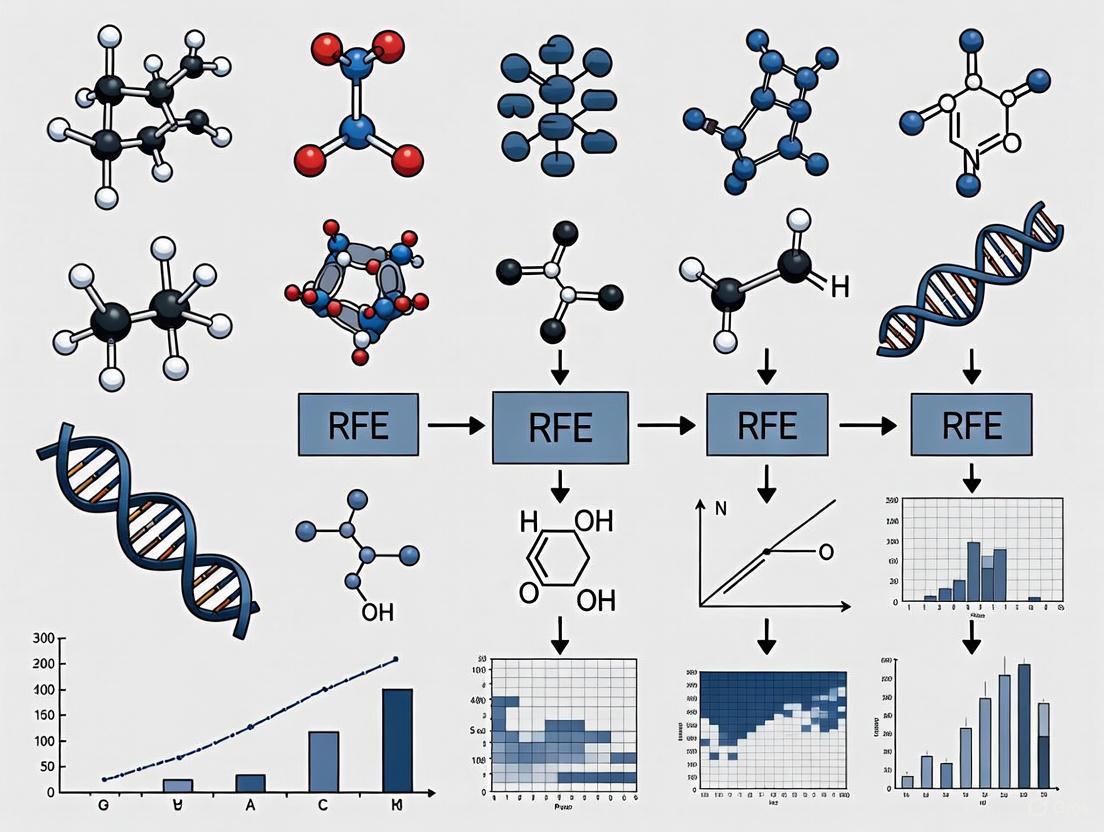
This article provides a complete protocol for applying Recursive Feature Elimination (RFE) to high-dimensional biological datasets, a common challenge in genomics, transcriptomics, and drug discovery.
A Comprehensive Guide to RFE Feature Selection for High-Dimensional Biological Data
Abstract
This article provides a complete protocol for applying Recursive Feature Elimination (RFE) to high-dimensional biological datasets, a common challenge in genomics, transcriptomics, and drug discovery. Tailored for researchers and drug development professionals, it covers the foundational theory of RFE, details step-by-step methodologies for implementation, and addresses common pitfalls with advanced optimization strategies. Furthermore, it offers a rigorous framework for validating and benchmarking RFE performance against other feature selection techniques, empowering scientists to build more robust, interpretable, and accurate predictive models for biomedical applications.
Understanding RFE: The Essential Primer for Biomedical Data Analysis
What is RFE? Core Principles and the Greedy Backward Elimination Process
Core Principles of Recursive Feature Elimination
Recursive Feature Elimination (RFE) is a wrapper-style feature selection algorithm designed to identify the most relevant features in a dataset by recursively pruning less important attributes [1] [2]. The core principle operates on a simple yet powerful iterative mechanism: it constructs a model using all available features, ranks the features by their importance, eliminates the least significant ones, and repeats this process on the remaining features until only the desired number of features remains [3] [4].
This method is model-agnostic, meaning it can work with any supervised learning estimator that provides feature importance scores, such as coefficients from linear models or feature importance attributes from tree-based models [3] [2]. A key advantage of RFE over univariate filter methods is its ability to account for feature interactions because the importance ranking is derived from a multivariate model that considers all features simultaneously during each iteration [1] [4].
The Greedy Backward Elimination Algorithm Explained
The term "greedy" in the backward elimination process refers to the algorithm's local optimization approach at each step—it makes the optimal choice at each iteration by removing the feature with the lowest importance, without considering whether this choice will be optimal for the entire process [5].
The RFE algorithm follows these specific steps with mathematical precision:
- Initialization: Begin with the full set of features, ( F = f1, f2, ..., f_n ), and specify the number of features to select, ( k ), or a stopping criterion [3].
- Model Training & Importance Ranking: Train the chosen estimator on the current feature set ( F ). Compute the importance scores for each feature, creating a ranking vector ( R = r1, r2, ..., r_m ), where ( m ) is the current number of features [3] [6].
- Feature Pruning: Remove the bottom ( s ) features, where ( s ) is the "step" parameter (( s \geq 1 ) for absolute count, ( 0.0 < s < 1.0 ) for percentage) [3].
- Recursion: Repeat steps 2 and 3 on the pruned feature set ( F' ) until the number of remaining features equals ( k ) [3] [6].
This process is visualized in the following workflow:
Table 1: Key Hyperparameters for Tuning RFE
| Hyperparameter | Description | Default Value | Impact on Algorithm |
|---|---|---|---|
n_features_to_select |
Absolute number (int) or fraction (float) of features to select. | None (selects half) |
Determines the stopping point for the elimination process [3]. |
step |
Number/percentage of features to remove per iteration. | 1 |
Higher values speed up computation but risk premature removal of important features [3]. |
estimator |
The core model used for importance calculation. | N/A (Required parameter) | The choice of model (e.g., SVM, Random Forest) directly influences the feature ranking [3] [4]. |
RFE Protocol for High-Dimensional Biological Data
High-dimensional biological datasets (e.g., genomics, proteomics) present unique challenges, including small sample sizes relative to the number of features, multicollinearity, and noisy variables [7]. The following protocol is adapted for such data, incorporating cross-validation to enhance robustness.
Protocol: RFE with Cross-Validation for Robust Feature Selection
Objective: To identify a stable subset of predictive features from high-dimensional biological data while mitigating overfitting.
Materials and Reagents: Table 2: Essential Research Reagent Solutions for RFE Implementation
| Item | Function/Description | Example/Tool |
|---|---|---|
| Base Estimator | A model that provides feature importance scores. | LinearSVC (for linear data), RandomForestClassifier (for non-linear data) [4]. |
| Computing Environment | Software for algorithm execution and data handling. | Python with scikit-learn library [3] [2]. |
| Data Normalization Tool | Standardizes features to have zero mean and unit variance. | sklearn.preprocessing.StandardScaler [4]. |
| Cross-Validation Schema | Framework for robust performance estimation and parameter tuning. | RepeatedStratifiedKFold [2]. |
Methodology:
Data Preprocessing:
- Standardize the data (e.g., using
StandardScaler) to ensure features are on a comparable scale, which is critical for the importance calculations of many estimators [4]. - Split the data into training and hold-out test sets.
- Standardize the data (e.g., using
Parameter Initialization:
- Choose a Base Estimator: Select an algorithm appropriate for your data. For genomic data with correlated predictors, tree-based models like Random Forest are often suitable [7].
- Define RFE Parameters: Set
stepto 1 for fine-grained elimination. Then_features_to_selectcan be initially set toNoneto let RFECV determine the optimum.
Execution with Cross-Validation (RFECV):
- Use
RFECV(RFE with built-in cross-validation) to automatically find the optimal number of features [4]. - Fit the
RFECVobject on the training data. The internal cross-validation ensures that the selected feature subset generalizes well.
# Create a pipeline with scaling and RFECV
pipeline = Pipeline([
('scaler', StandardScaler()),
('rfecv', RFECV(
estimator=RandomForestClassifier(nestimators=100, randomstate=42),
step=1,
cv=5, # 5-fold cross-validation
scoring='accuracy'
))
])
# Fit the pipeline pipeline.fit(Xtrain, ytrain) # The optimal features are now selected Xtrainselected = pipeline.transform(Xtrain) Xtestselected = pipeline.transform(Xtest)- Use
Validation and Analysis:
- Train a final model on the training data with the selected features and evaluate its performance on the held-out test set.
- Analyze the selected features for biological relevance (e.g., pathway analysis for selected genes).
Performance Analysis and Comparative Evaluation
The effectiveness of RFE is highly dependent on the choice of the underlying estimator and the data structure. Research on high-dimensional omics data (integrating 202,919 genotypes and 153,422 methylation sites) highlights that while standard RFE can identify strong causal variables, its performance can be impacted by the presence of many correlated variables [7].
Table 3: Comparative Analysis of RFE Performance with Different Estimators
| Criterion | Linear Models (e.g., SVM, Logistic Regression) | Tree-Based Models (e.g., Random Forest) |
|---|---|---|
| Importance Metric | Model coefficients (coef_) [3]. |
Gini impurity or mean decrease in impurity (feature_importances_) [7]. |
| Handling Correlated Features | May arbitrarily assign importance to one feature from a correlated group. | More robust; can distribute importance among correlated features [7]. |
| Advantages | Computationally efficient for very high-dimensional data. | Effective at capturing non-linear relationships and interactions [7]. |
| Limitations | Assumes linear relationships between features and target. | Computationally more intensive; importance can be biased towards high-cardinality features [7]. |
Advanced Applications in Biological Research
RFE has been successfully applied across various biological domains:
- Bioinformatics: Selecting informative genes for cancer classification and prognosis from microarray or RNA-seq data, helping to improve diagnostic accuracy and personalize treatment plans [1].
- Integrated Omics Analysis: RFE can be used to select key features from multiple integrated data types (e.g., genomics, epigenomics) to model complex traits, though careful interpretation is needed in the presence of widespread correlation [7].
- Biomarker Discovery: Identifying a minimal set of proteins or metabolites from high-throughput proteomic or metabolomic data that robustly predict disease status or treatment response.
Recursive Feature Elimination (RFE) has established itself as a premier feature selection methodology within the realm of biological data science, particularly for tackling the acute challenges posed by high-dimensional omics data. The foundational RFE algorithm operates on a simple yet powerful greedy search strategy: it starts by building a predictive model with the complete set of features, ranks the features based on their importance, eliminates the least important features, and then recursively repeats this process on the reduced feature set until a predefined stopping criterion is met [8]. This backward elimination process provides a more thorough assessment of feature importance compared to single-pass approaches because feature relevance is continuously reassessed after removing the influence of less critical attributes [8].
Biological datasets, especially those from genomics, transcriptomics, and proteomics studies, frequently present a "small n, large p" problem, where the number of features (p) drastically exceeds the number of samples (n) [9] [10]. This high-dimensional environment, often referred to as the "curse of dimensionality," challenges many conventional machine learning algorithms by increasing the risk of overfitting, extending computation times, and complicating model interpretation [9]. RFE directly addresses these challenges by systematically reducing dimensionality while preserving the most biologically relevant features. Furthermore, unlike feature extraction methods such as Principal Component Analysis (PCA) that transform original features into new composite variables, RFE maintains the original biological features, thereby preserving interpretability—a crucial consideration for biomedical researchers seeking to identify actionable biomarkers or therapeutic targets [8] [10].
Quantitative Performance Benchmarks of RFE Variants
The efficacy of RFE and its variants has been extensively validated across diverse biological applications and datasets. The following tables summarize key performance metrics from recent studies, providing empirical evidence for the utility of RFE in biological research.
Table 1: Performance of RFE-Based Frameworks in Classification Tasks
| Application Domain | RFE Variant | Key Classification Metrics | Reference |
|---|---|---|---|
| Colorectal Cancer Mortality Classification | U-RFE (Union with RFE) | F1_weighted: 0.851, Accuracy: 0.864, MCC: 0.717 | [11] |
| Motor Imagery Recognition in BCI | H-RFE (Hybrid-RFE) | Accuracy: 90.03% (SHU), 93.99% (PhysioNet) | [12] |
| Triple-Negative Breast Cancer Subtyping | Workflow with Univariate Filter + RFE | Effective dimensionality reduction with maintained performance | [9] |
| Cancer Classification from Gene Expression | DBO-SVM (Nature-inspired + RFE) | Accuracy: 97.4-98.0% (binary), 84-88% (multiclass) | [13] |
Table 2: Benchmarking RFE Variants Across Domains (Adapted from [8])
| RFE Variant | Predictive Accuracy | Feature Set Size | Computational Cost | Best Suited Applications |
|---|---|---|---|---|
| RFE with Random Forest | Strong | Large | High | General-purpose biological data |
| RFE with XGBoost | Strong | Large | High | Large-scale omics data |
| Enhanced RFE | Moderate (minimal loss) | Substantially reduced | Moderate | Interpretability-focused studies |
| RFE with Linear SVM | Variable | Small to moderate | Low | Linearly separable biological features |
The quantitative evidence demonstrates that RFE-based approaches consistently achieve high classification performance while significantly reducing dimensionality. The U-RFE framework, which combines feature subsets from multiple base estimators, achieved an impressive F1-weighted score of 0.851 and accuracy of 0.864 in classifying multicategory causes of death in colorectal cancer, with the Stacking model outperforming individual classifiers [11]. Similarly, in brain-computer interface applications, the H-RFE method combining random forest, gradient boosting, and logistic regression achieved approximately 90-94% classification accuracy while using only about 73% of the total channels, substantially reducing computational burden without sacrificing performance [12].
Detailed RFE Experimental Protocols
Core RFE Protocol for Biological Data
The standard RFE protocol follows a systematic workflow that can be adapted to various biological data types. The following diagram illustrates this core process:
Protocol Steps:
Initialization: Begin with the complete dataset containing all molecular features (e.g., genes, proteins, metabolites) and corresponding phenotypic labels (e.g., disease state, treatment response).
Model Training: Train an initial predictive model using the entire feature set. Common choices include:
Feature Ranking: Calculate feature importance scores specific to the chosen model:
Feature Elimination: Remove the bottom k features (typically 5-20% of remaining features per iteration) based on the importance ranking [7].
Iteration: Repeat steps 2-4 using the reduced feature set until reaching a predefined stopping criterion:
- Target number of features reached
- Model performance falls below a threshold
- All features have been ranked and eliminated sequentially [8]
Output: Return the final optimal feature subset that maintains or improves predictive performance with minimal features.
Advanced Hybrid RFE Protocol (H-RFE)
For complex biological datasets with correlated features, a hybrid approach often yields superior results. The H-RFE protocol integrates multiple estimators to generate a more robust feature ranking:
Protocol Steps:
Parallel RFE Execution:
- Run RFE independently with three different estimators: Random Forest (RF), Gradient Boosting Machine (GBM), and Logistic Regression (LR) [12].
- For each estimator, obtain feature importance scores and rankings.
Weight Normalization:
- Normalize the importance scores from each estimator to a common scale (e.g., 0-1) to ensure comparability.
- Calculate accuracy-based weighting factors for each estimator based on cross-validation performance [12].
Feature Ranking Aggregation:
- Compute weighted composite scores for each feature:
Composite_score = w_R * Score_RF + w_G * Score_GBM + w_L * Score_LRwhere wR, wG, w_L are accuracy-derived weights [12]. - Generate a final feature ranking based on composite scores.
- Compute weighted composite scores for each feature:
Iterative Elimination:
- Perform backward elimination using the aggregated feature rankings.
- At each iteration, evaluate model performance with the current feature subset using cross-validation.
Optimal Subset Selection:
- Select the feature subset that maximizes performance while minimizing size.
- Validate the selected features on held-out test data.
Visualization of RFE Workflows and Biological Integration
Hybrid-RFE Methodology for Biological Data
The H-RFE approach integrates multiple machine learning perspectives to overcome limitations of single-estimator RFE, particularly valuable for biological data with complex correlation structures:
Biological Domain Knowledge Integration
Integrating biological domain knowledge with RFE represents a cutting-edge approach that moves beyond purely statistical feature selection:
Integration Protocol:
Statistical Pre-filtering:
- Apply univariate correlation filters to remove features non-correlated with outcome variables [9].
- Use biological context to inform statistical thresholds rather than arbitrary cutoffs.
Biological Knowledge Incorporation:
- Integrate external biological data from sources such as:
- Use biological knowledge to:
- Group functionally related features
- Prioritize features with established biological relevance
- Validate statistical findings with mechanistic plausibility
Integrated Ranking:
- Combine statistical importance scores with biological relevance scores.
- Use weighted scoring that reflects both statistical power and biological significance.
Biological Validation:
- Assess whether selected feature subsets correspond to coherent biological pathways or processes.
- Compare with known disease mechanisms or established biomarkers.
The Scientist's Toolkit: Essential Research Reagents and Computational Solutions
Table 3: Essential Research Reagents and Computational Tools for RFE Implementation
| Category | Specific Tools/Reagents | Function in RFE Protocol | Application Context |
|---|---|---|---|
| Programming Environments | R Statistical Software, Python | Primary computational environment for implementing RFE algorithms | General bioinformatics analysis [9] [8] |
| RFE-Specific Packages | caret (R), scikit-learn (Python), feseR (R) | Provide pre-built implementations of RFE and related feature selection methods | Streamlining RFE workflow development [9] |
| Biological Databases | Gene Ontology, KEGG, Reactome, TCGA, GEO | Source of biological domain knowledge for integrative feature selection | Biological interpretation and validation [10] |
| Machine Learning Libraries | randomForest (R), kernlab (R/SVM), XGBoost | Provide estimator algorithms for the RFE core process | Model training and feature importance calculation [9] [14] [8] |
| Visualization Tools | ggplot2 (R), matplotlib (Python), LocusZoom | Visualization of feature importance rankings and selection process | Results communication and interpretation [7] |
| High-Performance Computing | Linux servers, parallel processing frameworks | Handling computational demands of RFE on high-dimensional biological data | Large-scale omics data analysis [7] |
Technical Considerations and Optimization Strategies
Successful implementation of RFE for biological data requires careful consideration of several technical aspects:
Handling Correlated Features in Biological Data
Biological datasets frequently contain highly correlated features (e.g., genes in the same pathway, linkage disequilibrium in SNPs). Traditional RFE can struggle with correlated features, as it may arbitrarily select one feature from a correlated group while discarding others that might be biologically relevant [7]. mitigation strategies include:
- Ensemble RFE Approaches: Combine feature rankings from multiple algorithms with different sensitivities to correlation [12].
- Pre-filtering: Use correlation filters before applying RFE to reduce redundancy [9].
- Block Elimination: Eliminate groups of correlated features together based on biological knowledge [10].
Parameter Optimization
Key parameters that require optimization in RFE protocols:
- Elimination Step Size: The number/percentage of features to remove at each iteration. Smaller step sizes (e.g., 1-5% of features) are more computationally intensive but can yield better results [7].
- Stopping Criterion: Determining the optimal number of features to retain. Common approaches include:
- Performance plateau detection (stop when performance improvement falls below threshold)
- Predefined feature count based on biological constraints
- Elbow method using performance vs. feature count plots [8]
- Model-Specific Tuning: Optimizing hyperparameters of the underlying estimator (e.g., mtry in Random Forest, C in SVM) at each iteration [7].
Computational Efficiency Strategies
RFE can be computationally demanding, especially with large biological datasets. Efficiency improvements include:
- Parallelization: Run iterations in parallel when possible [7].
- Approximate Methods: Use feature importance approximations that don't require full model retraining [14].
- Staged Implementation: Apply faster filter methods first to reduce feature space before applying RFE [9].
Recursive Feature Elimination represents a powerful and flexible framework for addressing the dimensionality challenges inherent in modern biological datasets. Its strength lies in combining robust feature selection with maintained interpretability—a crucial advantage for biological discovery. The continuous evolution of RFE through hybrid approaches, biological knowledge integration, and specialized implementations for specific data types ensures its ongoing relevance in computational biology and biomedical research. As biological datasets continue to grow in size and complexity, RFE-based methodologies will remain essential tools for extracting biologically meaningful insights from high-dimensional data.
Recursive Feature Elimination (RFE), introduced by Guyon et al., is a powerful wrapper feature selection technique designed to identify optimal feature subsets by recursively considering smaller and smaller sets of features [15] [16]. The algorithm was originally developed in the context of gene selection for cancer classification and has since become a cornerstone method in the analysis of high-dimensional biological data [16]. Its backward elimination approach, which builds models and removes the least important features iteratively, makes it particularly valuable for bioinformatics research where the number of predictors (e.g., genes, proteins, SNPs) often far exceeds the number of samples [15] [16]. The RFE framework is especially effective because it accommodates changes in feature importance induced by changing feature subsets, which is crucial when handling correlated biomarkers in complex biological systems [15] [17].
Core Principles and Theoretical Foundation
Algorithm Definition and Workflow
RFE operates as a backward selection procedure that begins by building a model on the entire set of predictors and computing an importance score for each one [15]. The least important predictor(s) are then removed, the model is re-built, and importance scores are computed again [15]. This recursive process continues until a predefined number of features remains or until a performance threshold is met [17]. The subset size that optimizes the performance criteria is used to select the predictors based on the importance rankings, and this optimal subset then trains the final model [15].
Key Characteristics
- Greedy Approach: RFE employs a greedy search strategy, making locally optimal choices at each iteration by removing the least important features [15].
- Model-Based Ranking: Features are ranked based on importance scores derived from a machine learning model, making the selection process tailored to the specific algorithm [15] [17].
- Resampling Compatibility: The selection process should be resampled similarly to fundamental tuning parameters from a model, with external resamples used to estimate the appropriate subset size [15].
Original RFE Protocol: Step-by-Step Breakdown
Detailed Procedural Steps
The original RFE algorithm follows these sequential steps:
- Train Initial Model: Build a model using all available features in the dataset [15] [17].
- Compute Feature Importance: Calculate importance scores for all features using model-specific metrics (e.g., coefficients for linear models, permutation importance for tree-based models) [15] [17].
- Rank Features: Sort features based on their importance scores in descending order [15].
- Eliminate Least Important Features: Remove the bottom-ranked feature or features (e.g., bottom 10%) [15] [16].
- Retrain Model: Rebuild the model using the remaining feature subset [15] [17].
- Iterate Process: Repeat steps 2-5 until the desired number of features is reached or a stopping criterion is met [15] [17].
RFE Process Visualization
Research Reagent Solutions
Table 1: Essential Computational Tools for Implementing RFE in Biological Research
| Tool/Resource | Function/Purpose | Implementation Examples |
|---|---|---|
| SVM with Linear Kernel | Original algorithm by Guyon et al.; provides feature coefficients for ranking [16] [14] | Scikit-learn (Python), e1071 (R) |
| Random Forest | Alternative model; handles non-linear relationships; provides feature importance scores [15] [18] | RandomForest (R), scikit-learn (Python) |
| RFE-Specific Packages | Pre-implemented RFE algorithms with cross-validation and performance tracking [17] | Scikit-learn RFE/RFECV, Feature-engine |
| High-Performance Computing | Manages computational demands of multiple model training iterations [9] | Cluster computing, parallel processing |
Implementation Considerations for Biological Data
Model Selection and Compatibility
Not all models can be paired with the RFE method, and some benefit more from RFE than others [15]. The original implementation used Support Vector Machines (SVMs) with linear kernels, which provide natural feature coefficients for ranking [16] [14]. However, RFE has been successfully adapted to various algorithms:
- Random Forest: Particularly benefits from RFE because tree ensembles tend not to exclude variables from prediction equations, making post hoc pruning valuable [15].
- Linear Models: Multiple linear regression, logistic regression, and linear discriminant analysis cannot be used when predictors exceed samples unless predictors are first filtered [15].
- Non-linear SVMs: Require modified RFE approaches since direct feature coefficients are not available [14].
Handling Biological Data Complexities
High-dimensional biological data presents unique challenges that RFE must address:
- Multicollinearity: In tree-based models, importance scores can be diluted when highly correlated predictors are present, as the importance gets distributed across correlated features [15]. Pre-filtering correlated features (e.g., absolute pairwise correlations < 0.50) is recommended [15].
- Feature Ranking Consistency: In bioinformatics applications, rankings should be reasonably consistent across resamples, though some variability is expected, particularly for lower-ranked features [15].
- Performance Metrics: For biological classification tasks, area under the ROC curve (AUC) is commonly used to evaluate subset performance during the elimination process [15] [16].
Experimental Protocols and Validation
Benchmarking RFE Performance
Table 2: Quantitative Performance Comparison of RFE on Biological Datasets
| Dataset | Original Features | Optimal Subset Size | Performance Metric | Result with Full Set | Result with RFE Subset |
|---|---|---|---|---|---|
| Parkinson's Disease Data [15] | ~500 predictors | 377 (unfiltered), ~30 (filtered) | ROC AUC | Baseline | Comparable (0.064 AUC increase) |
| Breast Cancer Genomics [16] | 1M+ SNPs | Varies | Classification Accuracy | Varies with linear models | Improved with non-linear interactions |
| Gene Expression (GSE5325) [9] | 27,648 genes | 1,697 (after filtering) | ER Status Classification | Not specified | Maintained with 80% feature reduction |
| Synthetic Data with Parity [16] | Varies with irrelevant features | Relevant features only | Learning Efficiency | Poor with irrelevant features | Restored classification performance |
Correlation Filtering Protocol
Based on findings from Parkinson's disease data analysis [15]:
- Calculate Correlation Matrix: Compute pairwise correlations between all features.
- Set Threshold: Define maximum allowable correlation (e.g., |r| < 0.50).
- Iterative Removal:
- Identify feature pairs exceeding threshold
- Remove one feature from each highly correlated pair
- Prioritize removal of features with lower importance scores
- Verify Filtering: Ensure all remaining features have absolute correlations below threshold.
- Proceed with RFE: Apply standard RFE to filtered feature set.
Enhanced RFE with Pseudo-Samples for Non-linear Kernels
For non-linear SVM implementations, the RFE-pseudo-samples approach provides superior performance [14]:
- Model Optimization: Tune SVM parameters using cross-validation.
- Pseudo-Sample Generation: For each variable of interest, create a matrix with equally distanced values while maintaining other variables at their mean or median.
- Prediction: Obtain decision values from SVM for each pseudo-sample.
- Variability Measurement: Calculate Median Absolute Deviation (MAD) for each variable's predictions.
- Feature Ranking: Rank features based on MAD scores, with higher variability indicating greater importance.
- Iterative Elimination: Proceed with standard RFE elimination based on established ranks.
Advanced Applications in Biological Research
Genome-Wide Association Studies (GWAS)
Traditional GWAS consider SNPs independently and miss non-linear interactions [16]. RFE with non-linear SVMs enables:
- Identification of genetic features interacting in highly non-linear ways to influence disease [16]
- Discovery of features that individually show no correlation with disease but contribute to prediction in combination [16]
- Enhanced insight into genetic susceptibility to complex diseases like breast cancer [16]
Multi-Omics Data Integration
The ensemble feature selection approach integrates multiple selection strategies [19]:
- Tree-Based Ranking: Initial feature ranking using random forest or gradient boosting
- Greedy Backward Elimination: Application of RFE to progressively reduce feature sets
- Subset Merging: Combination of selected subsets from different methods to produce a final feature set
This approach has demonstrated effective dimensionality reduction (over 50% decrease in certain subsets) while maintaining or improving classification metrics across heterogeneous healthcare datasets [19].
Two-Stage Selection Framework
Recent advancements combine RFE with other selection methods [18]:
- Initial Filtering: Use random forest variable importance measures to remove low-contribution features
- Optimal Subset Search: Apply improved genetic algorithm to search for global optimal feature subset
- Multi-Objective Optimization: Minimize feature subset size while maximizing classification accuracy
This framework addresses limitations of single-method approaches and has shown significant improvements in classification performance on biological datasets [18].
Feature selection is a critical preprocessing step in machine learning, aimed at identifying the most relevant features from the original set to improve model interpretability, enhance generalization, and reduce computational cost [20]. This process is particularly vital for high-dimensional biological data, where the number of features (e.g., genes, proteins) vastly exceeds the number of samples, leading to the "curse of dimensionality" and increased risk of overfitting [18] [21]. Based on their underlying mechanisms, feature selection methodologies are broadly classified into three categories: filter methods, wrapper methods, and embedded methods [22] [20] [23].
Filter methods operate independently of any machine learning model, selecting features based on intrinsic data properties and statistical measures of feature relevance [22] [23]. Wrapper methods utilize the performance of a specific predictive model as the objective function to evaluate and select feature subsets, often resulting in superior performance but at a higher computational cost [20] [24]. Embedded methods integrate the feature selection process directly into the model training phase, offering a compromise between the computational efficiency of filters and the performance-oriented approach of wrappers [22] [25] [23]. Understanding the distinctions, advantages, and limitations of these paradigms is essential for constructing effective analytical workflows for high-dimensional biological data.
Comparative Analysis of Feature Selection Paradigms
Table 1: Comparative Analysis of Feature Selection Method Categories
| Aspect | Filter Methods | Wrapper Methods | Embedded Methods |
|---|---|---|---|
| Core Mechanism | Selects features based on statistical scores and intrinsic data properties, independent of a model [20] [23]. | Uses a model's performance as the objective function to evaluate feature subsets [20] [24]. | Incorporates feature selection as part of the model's own training process [22] [25]. |
| Computational Cost | Low and efficient, suitable for high-dimensional data [20] [26]. | High, due to repeated model training and validation for different feature subsets [22] [20]. | Moderate, comparable to the cost of training the model itself [22]. |
| Model Interaction | None; model-agnostic [22] [20]. | High; tightly coupled with a specific model [20]. | Integrated; specific to the learning algorithm [22] [25]. |
| Risk of Overfitting | Low [20]. | High, especially with small datasets [20]. | Moderate, controlled by the model's regularization [22]. |
| Primary Advantages | Fast, scalable, and computationally inexpensive [20] [26]. | Model-specific, can capture feature interactions, often high-performing [20]. | Efficient, combines selection and training, less prone to overfitting than wrappers [22] [25]. |
| Key Limitations | Ignores feature dependencies and interaction with the model [20] [18]. | Computationally intensive and less generalizable [20] [18]. | Model-dependent; the selected features are specific to the algorithm used [18]. |
| Common Examples | Chi-square test, Pearson's correlation, Fisher Score, Mutual Information [22] [26] [23]. | Recursive Feature Elimination (RFE), Forward/Backward Selection, Genetic Algorithms [22] [20] [24]. | Lasso (L1) Regularization, Decision Tree importance, Random Forest importance [22] [24] [23]. |
The Recursive Feature Elimination (RFE) Algorithm: A Greedy Wrapper Approach
Core Principle and Workflow
Recursive Feature Elimination (RFE) is a quintessential wrapper method that operates by recursively constructing a model, identifying the least important features, and removing them from the current subset [24]. This iterative process continues until the desired number of features is reached. RFE is considered a greedy search algorithm because it follows a pre-defined ranking path (based on feature importance) and does not re-evaluate previous decisions, which can make it susceptible to settling on a locally optimal feature subset rather than the global optimum [24]. Despite this, its effectiveness, particularly in biomedical research, has been well-documented [27] [11].
RFE Workflow Diagram
Advanced RFE Frameworks for High-Dimensional Biological Data
Synergistic Kruskal-RFE Selector (SKR)
To address challenges with medical datasets, a Synergistic Kruskal-RFE Selector (SKR) has been proposed, which combines non-parametric statistical ranking with the recursive elimination process [27]. This hybrid approach enhances the stability of feature ranking in the presence of non-normal data distributions and outliers, which are common in biological measurements. The SKR selector has demonstrated a remarkable 89% feature reduction ratio while improving classification performance, achieving an average accuracy of 85.3%, precision of 81.5%, and recall of 84.7% on medical datasets [27].
Union with RFE (U-RFE) for Multicategory Classification
The Union with RFE (U-RFE) framework represents a significant advancement for complex classification tasks, such as determining multicategory causes of death in colorectal cancer patients [11]. This meta-approach leverages multiple base estimators (e.g., Logistic Regression, SVM, Random Forest) within the RFE process. Instead of relying on a single model's feature ranking, U-RFE performs a union analysis of the subsets obtained from different algorithms, creating a final union feature set that combines the strengths of diverse models [11]. This ensemble strategy has been shown to significantly improve the performance of various classifiers, including Stacking models, which achieved an accuracy of 86.4% and an Matthews correlation coefficient of 0.717 in classifying four-category deaths [11].
Hybrid RFE and Improved Genetic Algorithm
A novel two-stage feature selection method combines Random Forest (an embedded method) with an Improved Genetic Algorithm (a wrapper method) [18]. In this architecture, RFE can be conceptually integrated into the second stage's search mechanism. The first stage uses Random Forest's Variable Importance Measure (VIM) to perform an initial, rapid filtering of low-contribution features. The second stage employs a non-greedy global search algorithm (the Improved Genetic Algorithm) to find the optimal feature subset from the candidates retained from the first stage [18]. This hybrid design mitigates RFE's greedy limitation by following the embedded pre-filtering with a more explorative wrapper search, demonstrating enhanced classification performance on UCI datasets [18].
Table 2: Performance Metrics of Advanced RFE Frameworks on Biological Data
| Framework | Dataset / Application | Key Metric | Reported Performance |
|---|---|---|---|
| Synergistic Kruskal-RFE (SKR) [27] | General Medical Datasets | Feature Reduction Ratio | 89% |
| Average Accuracy | 85.3% | ||
| Average Precision | 81.5% | ||
| Average Recall | 84.7% | ||
| Union with RFE (U-RFE) [11] | Colorectal Cancer Mortality | Accuracy | 86.4% |
| F1_weighted | 0.851 | ||
| Matthews CC | 0.717 | ||
| RF + Improved GA [18] | Eight UCI Datasets | Classification Performance | Significant Improvement |
Experimental Protocol: Implementing RFE for Gene Expression Data
Research Reagent Solutions
Table 3: Essential Tools and Software for RFE Implementation
| Item Name | Function / Description | Example / Note |
|---|---|---|
| Python/R | Primary programming languages for implementing custom RFE workflows. | Python's scikit-learn offers built-in RFE support. |
| scikit-learn | Machine learning library providing the RFECV class for recursive feature elimination with cross-validation. |
Essential for model training, ranking, and iterative elimination. |
| Base Estimator | The core machine learning model used by RFE to rank features. | SVM, Random Forest, or Logistic Regression are common choices [11]. |
| Feature Importance Metric | The criterion used to rank features for elimination at each iteration. | Model-specific: coefficients for SVM/LR, Gini for RF. |
| Cross-Validation Scheme | Method for evaluating model performance on different data splits to guide the feature selection and prevent overfitting. | 5-fold or 10-fold stratified cross-validation is typical. |
| Performance Metrics | Measures to assess the quality of the selected feature subset. | Accuracy, F1-score, AUC-ROC for classification. |
Step-by-Step Protocol
Step 1: Data Preprocessing and Partitioning
- Load the high-dimensional gene expression dataset (e.g., from TCGA or other public repositories) [11].
- Perform standard preprocessing: log-transformation, normalization, and handling of missing values.
- Partition the data into training and hold-out test sets (e.g., 70/30 or 80/20 split). The test set must be set aside and not used in any part of the feature selection process to ensure an unbiased evaluation.
Step 2: Base Estimator and RFE Framework Configuration
- Select one or more base estimators. For a U-RFE framework, use multiple diverse models such as Logistic Regression (LR), Support Vector Machine (SVM), and Random Forest (RF) [11].
- Initialize the RFE object for each base estimator. Specify the
n_features_to_selectparameter, which can be a fixed number or determined via cross-validation (RFECV). - For a hybrid embedded-wrapper approach, first compute feature importance scores using an embedded method like Random Forest. Use these scores to pre-filter features, reducing the input dimensionality for the subsequent RFE stage [18].
Step 3: Model Training and Recursive Elimination
- Fit the RFE object(s) on the training data. The internal workflow, as depicted in the diagram, will execute iteratively:
- Train Model: The base estimator is trained on the current feature subset.
- Rank Features: Features are ranked based on the model's importance metric.
- Eliminate Feature(s): The least important feature(s) are pruned.
- Check Stopping Criterion: The loop continues until the target number of features is reached.
- Use k-fold cross-validation at each step (or use
RFECV) to evaluate the performance of the current feature subset and ensure robustness.
Step 4: Feature Subset Selection and Final Model Evaluation
- Once the recursion completes, obtain the final optimal feature subset from the RFE object.
- If using a U-RFE approach, take the union of the top-ranked features from the different base estimators to form the final feature set [11].
- Train a final predictive model (e.g., a Stacking classifier [11]) using only the selected features on the entire training set.
- Evaluate the final model's performance on the held-out test set using pre-defined metrics (e.g., Accuracy, Precision, Recall, F1-score).
Recursive Feature Elimination (RFE) firmly resides in the wrapper method category of feature selection algorithms, distinguished by its use of a machine learning model's performance to guide the greedy, iterative search for an optimal feature subset [24]. While powerful, its standalone application can be limited by computational demands and the risk of converging on local optima [18] [24].
The most effective modern applications of RFE for high-dimensional biological data involve its use within hybrid or multi-stage frameworks [18] [27] [11]. By pairing RFE with fast filter or embedded methods for initial dimensionality reduction, or by leveraging an ensemble of models (as in U-RFE), researchers can mitigate its limitations and enhance the robustness of the selected features. RFE remains a cornerstone technique in the data scientist's toolkit, and its continued evolution through strategic hybridization ensures its relevance in tackling the complexities of omics data and advancing biomedical research.
Recursive Feature Elimination (RFE) has emerged as a powerful feature selection algorithm in biomedical research, particularly for analyzing high-dimensional biological data. In contexts where the number of variables (p) far exceeds the number of samples (n)—a common scenario in omics research—RFE provides a systematic approach to identify the most informative features. RFE operates as a wrapper-style feature selection algorithm that works by recursively removing the least important features and rebuilding the model until the desired number of features remains [2]. This method is especially valuable in biomarker discovery, where it helps overcome the "curse of dimensionality" by eliminating redundant and irrelevant features, thus improving model performance and interpretability [9].
The fundamental strength of RFE lies in its model-agnostic nature and its recursive elimination strategy. By iteratively training a model, ranking features by importance, and pruning the least significant ones, RFE efficiently navigates the complex feature space characteristic of biomedical data [28]. This process is particularly crucial in drug discovery and development pipelines, where machine learning approaches like RFE can enhance decision-making, speed up processes, and reduce failure rates by identifying plausible therapeutic hypotheses from high-dimensional data [29].
Core Principles of Recursive Feature Elimination
The RFE Algorithmic Framework
The RFE algorithm follows a structured, iterative process to identify optimal feature subsets. The core procedure involves these key stages [28] [2]:
- Initial Model Training: A machine learning model is trained using all available features in the dataset.
- Feature Importance Ranking: Features are ranked based on importance metrics derived from the trained model (e.g., coefficients, feature importances).
- Feature Elimination: The least important feature(s) are removed from the current feature set.
- Iterative Refinement: Steps 1-3 are repeated on the reduced feature set until a predefined number of features remains.
This recursive process generates a feature ranking, with the final selected features assigned a rank of 1 [3]. The algorithm can be customized through several parameters, including the choice of estimator, number of features to select, and step size (number/percentage of features to remove per iteration) [3].
RFE Variants and Enhancements
Several enhanced RFE implementations have been developed to address specific challenges in biomedical data analysis:
- WERFE (Wrapper Ensemble RFE): Employs an ensemble strategy that integrates multiple gene selection methods and assembles top-selected genes from each approach as the final subset. This method prioritizes more important genes selected by each constituent method, resulting in more discriminative and compact gene subsets [30].
- MCC-REFS (Matthews Correlation Coefficient-based REFS): Uses MCC as a selection criterion instead of traditional accuracy metrics, providing better performance for imbalanced datasets. This method automatically selects informative feature sets without requiring predefined feature counts [31].
- RFECV (RFE with Cross-Validation): Incorporates cross-validation to automatically determine the optimal number of features, reducing the risk of overfitting during the feature selection process [3].
The following diagram illustrates the core RFE workflow and its ensemble variant:
Key Applications in Biomedical Research
Gene Selection and Biomarker Discovery
RFE has demonstrated significant utility in gene selection from microarray and RNA-seq data, where it helps identify compact yet discriminative gene signatures. In one application to breast cancer classification, the WERFE method successfully selected minimal gene sets while maintaining high classification performance [30]. Similarly, RFE-based approaches have been applied to transcriptomic data from mouse heart ventricles to identify genes associated with response to isoproterenol challenge, revealing potential biomarkers for heart failure [9].
For triple-negative breast cancer (TNBC) subtyping, RFE workflows have enabled identification of protein signatures that accurately classify mesenchymal-, luminal-, and basal-like subtypes from proteomic quantification data [9]. These applications demonstrate RFE's capability to handle the "large p, small n" paradigm common in omics studies, where the number of features (genes/proteins) vastly exceeds sample sizes [32].
Clinical Outcome Prediction and Prognostic Modeling
RFE has been widely employed in developing prognostic models across various disease domains. In cardiovascular research, the Regicor dataset application used RFE to identify 22 genes predictive of cardiovascular mortality risk [30]. Similar approaches have been applied to prostate cancer data, selecting 100-gene panels for cancer classification based on gene expression profiles [30].
The methodology for clinical outcome-relevant gene identification typically involves a two-step process: initial identification of genes strongly associated with clinical outcomes, followed by refinement through statistical simulations to optimize classification accuracy [33]. This approach ensures selected gene sets are not only statistically significant but also clinically relevant and less variable when applied to new datasets.
Drug Discovery and Development Applications
In pharmaceutical research, RFE supports multiple stages of drug discovery and development. Key applications include:
- Target Validation: RFE helps identify and prioritize plausible therapeutic targets by selecting genomic features most strongly associated with disease phenotypes [29] [34].
- Toxicogenomics: Applications like the RatinvitroH dataset analysis used RFE to identify hepatotoxicity-related genes from toxicogenomics data, supporting drug safety assessment [30].
- Biomarker Development for Clinical Trials: RFE assists in identifying prognostic and predictive biomarkers that can stratify patients or predict drug efficacy in clinical trials [29].
- Drug Repurposing: By analyzing gene expression patterns, RFE can identify new therapeutic indications for existing compounds [34].
Table 1: Summary of RFE Applications in Biomedical Domains
| Application Domain | Data Type | Typical Feature Size | Representative Outcomes |
|---|---|---|---|
| Cancer Subtype Classification | Gene Expression Microarray | 70-100 genes | Accurate discrimination of breast cancer subtypes [30] |
| Toxicogenomics | Transcriptomics | 31,042 genes | Identification of hepatotoxicity biomarkers [30] |
| Cardiovascular Risk Prediction | Gene Expression | 22 genes | Mortality risk stratification [30] |
| Cell-Penetrating Peptides | Peptide Sequences | 188 features | Classification of peptide properties [30] |
| Proteomics Classification | Protein Quantification | 7,391 peptides | TNBC subtype classification [9] |
Experimental Protocols and Methodologies
Standard RFE Protocol for Gene Expression Data
This protocol describes the application of RFE for gene selection from high-dimensional gene expression data, adapted from established workflows [30] [9].
Materials and Reagents
- High-quality gene expression data (microarray or RNA-seq)
- Normalized and batch-corrected expression matrix
- Associated clinical or phenotypic metadata
- Computational environment with necessary software libraries
Procedure
Data Preprocessing
- Perform quality control on raw expression data
- Apply normalization appropriate for platform (e.g., RMA for microarray, TPM for RNA-seq)
- Address batch effects using ComBat or similar methods
- Annotate genes with current genomic coordinates
Initial Feature Filtering
- Remove low-expression genes (less than 1 count per million in >90% samples)
- Apply variance filter to eliminate non-informative genes
- Retain top 10,000-15,000 most variable genes for downstream analysis
RFE Implementation
- Partition data into training (70-80%) and validation (20-30%) sets
- Select appropriate estimator (SVM or Random Forest recommended)
- Configure RFE parameters: nfeaturesto_select=50, step=5% of features
- Train RFE model on training data with 10-fold cross-validation
- Record feature rankings and selection metrics
Model Validation
- Apply selected features to independent validation set
- Assess classification performance (accuracy, AUC, MCC)
- Compare with alternative feature selection methods
- Perform permutation testing to evaluate significance
Biological Interpretation
- Conduct pathway enrichment analysis on selected genes
- Validate findings in external datasets when available
- Relate gene signatures to known biological processes
Troubleshooting
- Poor classification performance may indicate insufficient sample size or weak biological signal
- High variance in feature selection suggests dataset instability; consider ensemble approaches
- If computational time is excessive, increase step size or apply preliminary filtering
Ensemble RFE Protocol for Robust Biomarker Discovery
The WERFE protocol integrates multiple feature selection methods to improve robustness, particularly for low-sample size datasets [30] [31].
Procedure
Multiple Method Implementation
- Execute three to five diverse feature selection methods in parallel
- Include both filter-based (e.g., relief, chi-square) and wrapper methods
- Ensure methods have different theoretical foundations
Feature Ranking Integration
- Extract top-ranked features from each method (e.g., top 50)
- Apply union operation to combine feature sets
- Remove duplicates to create candidate feature pool
Consensus Feature Selection
- Apply RFE to the candidate feature pool
- Use ensemble classifier (e.g., Random Forest) as estimator
- Employ MCC-based criterion for improved imbalance handling [31]
Stability Assessment
- Perform bootstrap resampling (100+ iterations)
- Calculate feature selection frequency across iterations
- Retain features with selection frequency >80%
Final Model Construction
- Train final predictive model using stable features
- Optimize hyperparameters via grid search
- Evaluate on completely independent test set
Table 2: Research Reagent Solutions for RFE Implementation
| Tool/Category | Specific Examples | Function/Purpose |
|---|---|---|
| Programming Environments | Python, R | Primary computational environments for implementation |
| ML Frameworks | scikit-learn, Caret | Provide RFE implementation and supporting utilities |
| Specialized Packages | FSelector, Kernlab | Offer additional feature selection algorithms and kernels |
| Visualization Tools | ggplot2, Matplotlib | Generate publication-quality figures and charts |
| Bioconductor Tools | limma, DESeq2 | Handle specialized omics data preprocessing and analysis |
| High-Performance Computing | TensorFlow, PyTorch | Enable acceleration through GPUs for deep learning variants |
Implementation Considerations for Biomedical Data
Handling High-Dimensional Low-Sample Size Data
The analysis of high-dimensional biomedical data presents unique challenges that require specialized approaches [32]:
- Sample Size Considerations: Traditional rules of thumb (e.g., 10 events per variable) break down in HDD settings. While adequate sample size remains crucial, HDD studies often proceed with limited samples, emphasizing the need for robust validation [32].
- Biological vs. Technical Replicates: Distinguish between biological replicates (different subjects) and technical replicates (repeated measurements on same subject). Only biological replicates contribute to sample size for inference about populations [32].
- Multi-level Validation: Implement validation at multiple levels including statistical (cross-validation), biological (pathway coherence), and clinical (association with outcomes).
Addressing Class Imbalance
Class imbalance is common in biomedical datasets, particularly in case-control studies with rare diseases. The MCC-REFS approach specifically addresses this challenge by using Matthews Correlation Coefficient instead of accuracy for feature evaluation [31]. Additional strategies include:
- Synthetic minority oversampling (SMOTE) during training
- Stratified sampling in cross-validation
- Algorithm-specific class weighting
- Balanced bootstrap sampling
Computational Optimization
RFE can be computationally intensive for very high-dimensional data. Optimization strategies include:
- Parallel processing for independent iterations
- Incremental feature elimination with larger step sizes
- Preliminary filtering to reduce feature space
- Cloud computing and high-performance computing resources
Future Directions and Emerging Applications
As biomedical data continue to grow in complexity and volume, RFE methodologies are evolving to address new challenges. Promising directions include:
- Integration with Deep Learning: Combining RFE with deep neural architectures for enhanced feature selection from complex data patterns [29].
- Multi-Omics Applications: Extending RFE to integrated analyses of genomics, transcriptomics, proteomics, and metabolomics data.
- Longitudinal Data Analysis: Adapting RFE for time-series omics data to identify dynamic biomarkers.
- Automated Machine Learning: Incorporating RFE into automated ML pipelines for streamlined biomarker discovery.
- Clinical Implementation: Developing standardized protocols for translating RFE-derived signatures into clinical diagnostics.
The continued refinement of RFE approaches, particularly ensemble and deep learning-integrated methods, promises to enhance our ability to extract meaningful biological insights from high-dimensional biomedical data, ultimately supporting advances in personalized medicine and therapeutic development.
Implementing RFE: A Step-by-Step Protocol from Data to Deployment
This document provides a standardized protocol for employing Recursive Feature Elimination (RFE) in high-dimensional biological data analysis, with a specific focus on evaluating the performance of Support Vector Machines (SVM), Random Forest (RF), and eXtreme Gradient Boosting (XGBoost) as core feature ranking engines. The "curse of dimensionality" is a significant challenge in bioinformatics, where datasets often contain thousands to millions of features (e.g., genes, proteins) but only a limited number of samples [9]. Effective feature selection is a non-trivial task that is crucial for improving model performance, reducing overfitting, enhancing computational efficiency, and identifying biologically relevant biomarkers [13] [9]. This protocol outlines a rigorous, comparative framework to help researchers and drug development professionals select the most appropriate model for their specific feature ranking objectives, thereby streamlining the analysis pipeline and bolstering the reliability of research outcomes in genomics, transcriptomics, and related fields.
Performance Benchmarking and Quantitative Comparison
A review of recent applications in biological data analysis reveals the comparative performance of SVM, RF, and XGBoost when integrated with RFE. The following table synthesizes key quantitative findings from peer-reviewed studies.
Table 1: Comparative Model Performance in Biological Classification Tasks with Feature Selection
| Application Domain | Best Model | Key Performance Metrics | Feature Selection Method | Citation |
|---|---|---|---|---|
| Colorectal Cancer Subtype Classification | Random Forest | Overall F1-score: 0.93 | RFE | [35] |
| Colorectal Cancer Subtype Classification | XGBoost | Overall F1-score: 0.92 | RFE | [35] |
| Prediction of Calculous Pyonephrosis | XGBoost | AUC: 0.981, Sensitivity: 0.962, Specificity: 1.000 | RFE (for SVM), Lasso (for LR) | [36] |
| Prediction of Calculous Pyonephrosis | SVM | AUC: 0.977 (Testing set) | RFE | [36] |
| Thyroid Nodule Malignancy Diagnosis | XGBoost | AUC: 0.928, Accuracy: 0.851 | RF & Lasso for pre-filtering | [37] |
| Cancer Detection (Breast/Lung) | Stacked Model (LR, NB, DT) | Accuracy: 100% (with selected features) | Hybrid Filter-Wrapper | [38] |
Key Insights:
- Random Forest and XGBoost consistently demonstrate high performance in classification tasks, with RF showing a marginal advantage in the specific context of colorectal cancer exome data [35].
- SVM paired with RFE remains a powerful and highly competitive model, particularly in clinical diagnostic settings, as evidenced by its superior performance in testing for pyonephrosis prediction [36].
- The integration of feature selection, particularly RFE, is a common factor among top-performing models across diverse applications, underscoring its critical role in model optimization [35] [36] [37].
Experimental Protocols
Core Protocol: Recursive Feature Elimination (RFE) for High-Dimensional Biological Data
This protocol describes the standard RFE procedure adaptable for use with SVM, RF, or XGBoost.
3.1.1 Workflow Overview
3.1.2 Step-by-Step Procedure
Data Preprocessing:
- Perform standard preprocessing on your high-dimensional dataset (e.g., gene expression, SNP data). This includes handling missing values via imputation [36], normalizing or standardizing features, and addressing class imbalance with techniques like SMOTE if necessary [39] [40].
- Split the dataset into training, validation, and testing sets (e.g., 70/30 ratio) to ensure unbiased performance evaluation [36].
Model Initialization and Configuration:
- Initialize your chosen core model with sensible default or optimized hyperparameters.
- SVM: Use a linear kernel (
kernel='linear') to ensure the generation of feature weights (coef_) suitable for ranking [1] [36]. - Random Forest/XGBoost: These models provide native feature importance scores (e.g., Gini importance or gain) and do not require a specific kernel [35] [37].
Iterative Feature Ranking and Elimination:
- Train the model on the current set of features.
- Rank all features using the model's intrinsic ranking method:
- Eliminate the least important feature(s). The
stepparameter in Scikit-learn'sRFEcontrols how many features are removed per iteration [1]. - Repeat the training, ranking, and elimination cycle until the predefined number of features is reached.
Determination of Optimal Feature Subset:
- The optimal number of features can be determined through cross-validation (e.g., using
RFECV). The point at which model performance (e.g., accuracy, F1-score) peaks or stabilizes on the validation set indicates the optimal feature subset size [1].
- The optimal number of features can be determined through cross-validation (e.g., using
Model-Specific Implementation Notes
For SVM-RFE:
- The linear kernel is mandatory for feature ranking based on coefficient magnitude. Non-linear kernels like RBF are not suitable for this purpose [1].
- Standardization of features is critical for SVM-RFE, as the model is sensitive to the scale of the data.
For Random Forest/XGBoost-RFE:
- These ensemble methods are robust to non-linearly correlated features and can handle a mix of data types [35].
- They provide a native feature importance metric, making the ranking process straightforward. However, be aware that correlated features can affect the importance distribution.
The Scientist's Toolkit: Research Reagent Solutions
Table 2: Essential Software and Computational Tools for RFE Implementation
| Tool / Reagent | Type | Function in Protocol | Example/Note |
|---|---|---|---|
| Scikit-learn (Python) | Software Library | Provides implementations of SVM, RF, XGBoost, and the RFE/RFECV classes. |
from sklearn.feature_selection import RFE [1] |
| XGBoost (Python/R) | Software Library | An optimized implementation of Gradient Boosting for fast and performant model training. | Used in multiple high-performing studies [35] [36] [37] |
R (with caret, randomForest packages) |
Software Environment | An alternative environment for statistical computing and machine learning. | The caret package streamlines model training and feature selection [9] |
| Linear Kernel | Model Parameter | Enables SVM to generate feature coefficients for ranking. | SVR(kernel="linear") [1] |
| SMOTE | Data Preprocessing Method | Synthetically balances imbalanced datasets to prevent biased feature selection. | Used in breast cancer analysis to optimize feature selection [39] |
| Lasso Regression | Feature Selection Method | An embedded method that can be used prior to or in conjunction with RFE for preliminary feature filtering. | Used to select influential factors for thyroid nodule diagnosis [37] |
Workflow Visualization: From Data to Discovery
The following diagram illustrates the integrated workflow of a bioinformatics project utilizing RFE, from raw data to biological insight, as demonstrated in the reviewed literature.
This end-to-end workflow has been successfully deployed in recent studies. For instance, research in colorectal cancer utilized exome data to train RF and XGBoost models via RFE, achieving high F1-scores, and subsequently deployed the best-performing models into a web application using Shiny Python to assist clinicians and researchers [35]. This underscores the practical translational potential of a well-defined RFE protocol.
Recursive Feature Elimination (RFE) is a powerful wrapper-style feature selection algorithm that iteratively constructs a model, identifies the least important features, and removes them until a specified number of features remains [2]. In high-dimensional biological research, such as gene expression analysis and biomarker discovery, RFE provides a critical methodology for identifying the most relevant features from datasets where the number of features (e.g., genes, proteins) far exceeds the number of samples [21] [9]. The performance of RFE is fundamentally dependent on the quality and structure of the input data, making proper preprocessing an essential prerequisite for obtaining biologically meaningful and robust feature subsets.
Data preprocessing transforms raw, often messy data into a structured format suitable for machine learning algorithms [41] [42]. Within the context of RFE for high-dimensional biological data, three preprocessing challenges are particularly critical: handling missing values, which are common in experimental data; normalization, to address the varying scales of biological measurements; and class imbalance, which can bias feature selection toward overrepresented classes. This protocol outlines detailed methodologies for addressing these challenges to ensure RFE identifies a robust, minimal feature set with maximal predictive power for downstream analysis and drug development.
Technical Specifications and Impact on RFE
The following table summarizes the core preprocessing challenges for RFE and their specific impacts on the feature selection process in biological data contexts.
Table 1: Preprocessing Challenges and Their Impact on RFE Performance
| Preprocessing Challenge | Direct Impact on RFE Process | Consequence for Feature Selection |
|---|---|---|
| Missing Values | Compromises the model (e.g., SVM, Random Forest) used internally by RFE to rank features, as most models cannot handle missing data directly [43]. | Introduces bias in feature importance scores, potentially leading to the erroneous elimination of biologically significant features. |
| Improper Normalization | Skews the feature importance calculations in models sensitive to feature scale (e.g., SVM, Logistic Regression), which are commonly used with RFE [2] [44]. | Features with larger scales are artificially weighted as more "important," resulting in a suboptimal and biased final feature subset. |
| Class Imbalance | Causes the internal RFE model to be biased toward the majority class, as accuracy is maximized by predicting the most frequent class [45]. | RFE selects features that are optimal for predicting the majority class but may miss critical biomarkers for the rare, often more clinically relevant, class (e.g., a rare cancer subtype). |
Application Notes and Experimental Protocols
Handling Missing Values in Biological Data
Missing data is a pervasive issue in bioinformatics, arising from technical variations in sample processing, instrument detection limits, or data corruption [43]. The mechanism of missingness—Missing Completely at Random (MCAR), Missing at Random (MAR), or Not Missing at Random (NMAR)—should guide the imputation strategy, with NMAR being the most challenging as the missingness is related to the unobserved value itself [43].
Protocol 1: Model-Based Multiple Imputation using mice in R
Multiple Imputation by Chained Equations (MICE) is a state-of-the-art technique that accounts for the uncertainty in imputation by creating multiple complete datasets [43].
Load Required Packages and Data:
Diagnose Missingness Pattern:
Perform Multiple Imputation: Use Predictive Mean Matching (PMM) for numeric data, as it preserves the data distribution.
Validate Imputation Quality:
Proceed with RFE: RFE can be run on each of the
mimputed datasets, and the final selected features can be pooled, or a single high-quality imputed dataset can be used.
Protocol 2: Random Forest Imputation using missForest in R
For complex, non-linear biological data, missForest is a robust, non-parametric imputation method [43].
Install and Load Package:
Run Imputation:
Retrieve Completed Data and Assess Error:
Data Normalization and Standardization
Normalization ensures that all features contribute equally to the model's distance-based calculations within RFE, rather than being dominated by a few high-magnitude features [41] [44]. Z-score standardization is highly recommended for RFE.
Protocol 3: Z-Score Standardization
This technique centers the data around a mean of zero and scales it to a standard deviation of one [46].
Manual Calculation in R/Python:
R:
Python (using scikit-learn):
Integration with RFE Pipeline: To prevent data leakage, the scaling parameters (mean, standard deviation) must be learned from the training set and applied to the test set.
Python scikit-learn example:
Addressing Class Imbalance
In datasets like cancer vs. control studies, class imbalance can severely bias RFE. Resampling techniques adjust the class distribution to create a balanced dataset [45].
Protocol 4: Synthetic Minority Over-sampling Technique (SMOTE)
SMOTE generates synthetic examples for the minority class rather than simply duplicating them [45].
Load Required Libraries in R:
Apply SMOTE: Specify the outcome variable (
Class) and the desired perc.over/perc.under parameters to control synthesis.
Protocol 5: Combining SMOTE with RFE
For optimal results, resampling should be performed within each cross-validation fold during the RFE process to avoid over-optimism.
- Use Custom Resampling with
caretin R: Thecaretpackage allows for defining custom resampling schemes that integrate SMOTE with RFE and cross-validation, ensuring that the synthetic data is created only from the training fold in each iteration.
The Scientist's Toolkit: Research Reagent Solutions
Table 2: Essential Software and Packages for Preprocessing and RFE
| Tool Name | Type/Function | Primary Use in Preprocessing for RFE |
|---|---|---|
mice (R) [43] |
Statistical Package / Multiple Imputation | Gold-standard for handling MAR data by creating multiple imputed datasets. |
missForest (R) [43] |
ML Package / Non-parametric Imputation | Handles complex, non-linear relationships in data for accurate imputation. |
scikit-learn (Python) [2] [42] |
ML Library / Preprocessing & Pipelines | Provides StandardScaler, SimpleImputer, and Pipeline for building leakage-proof preprocessing and RFE workflows. |
DMwR2 / smote (R) [45] |
Data Mining Package / Resampling | Implements SMOTE to address class imbalance before feature selection. |
caret (R) [9] |
ML Framework / Unified Workflow | Provides a unified interface for RFE, model training, and cross-validation with integrated preprocessing. |
Workflow Visualization
The following diagram illustrates the integrated preprocessing and RFE workflow for high-dimensional biological data.
Integrated Preprocessing and RFE Workflow for Robust Feature Selection.
Effective data preprocessing is not merely a preliminary step but a foundational component of a successful RFE protocol for high-dimensional biological data. As demonstrated, the handling of missing values, data normalization, and class imbalance directly and profoundly influences the features selected by the RFE algorithm. By adhering to the detailed application notes and protocols outlined herein—utilizing robust, model-based imputation, consistent scaling, and strategic resampling—researchers and drug development professionals can significantly enhance the reliability, interpretability, and biological relevance of their feature selection outcomes. This rigorous approach ensures that subsequent models and conclusions are built upon a solid and reproducible data foundation.
In the age of 'Big Data' in biomedical research, high-throughput omics technologies (genomics, proteomics, metabolomics) generate datasets with a massive number of features (e.g., genes, proteins, metabolites) but often with relatively few samples [9]. This high-dimensional environment presents significant challenges for analysis, including long computation times, decreased model performance, and increased risk of overfitting [9]. Feature selection becomes a crucial and non-trivial task in this context, as it provides deeper insight into underlying biological processes, improves computational performance, and produces more robust models [9].
Recursive Feature Elimination (RFE) has emerged as a powerful wrapper feature selection method that is particularly well-suited to high-dimensional biological data. RFE is a feature selection algorithm that iteratively removes the least important features from a dataset until a specified number of features remains [3]. Introduced as part of the scikit-learn library, RFE leverages a machine learning model's feature importance rankings to systematically prune features [3] [47]. The core strength of RFE lies in its ability to consider interactions between features, making it suitable for complex biological datasets where genes, proteins, or metabolites often function in interconnected pathways rather than in isolation [1].
The application of RFE in bioinformatics has grown substantially, with demonstrated success in areas such as cancer classification using gene expression data [9] [48], biomarker discovery in microbiome studies [48], and analysis of high-dimensional metabolomics data [49]. Its recursive nature allows researchers to distill thousands of potential features down to a manageable subset of the most biologically relevant candidates for further experimental validation.
Theoretical Foundations of the RFE Algorithm
Core Mechanics and Workflow
The Recursive Feature Elimination algorithm operates through a systematic, iterative process that combines feature ranking with backward elimination. The algorithm works in the following steps [3] [1]:
- Rank Features: Train the chosen machine learning model on the entire set of features and rank all features by their importance.
- Eliminate Least Important Feature: Remove the feature(s) with the lowest importance score.
- Rebuild Model: Construct a new model with the remaining features.
- Repeat: Iterate steps 1-3 until the desired number of features is reached.
This greedy algorithm starts its search from the entire feature set and selects subsets through a feature ranking method [12]. By repeatedly constructing machine learning models to rank feature importance, it eliminates one or more features with the lowest weights at each iteration [12]. The process generates a final feature subset ranking based on evaluation criteria, typically the predictive accuracy of classifiers [12].
Comparison with Other Feature Selection Methods
Understanding how RFE compares to other feature selection approaches helps researchers select the appropriate method for their specific biological question.
Table 1: Comparison of RFE with Other Feature Selection Methods
| Method Type | Key Characteristics | Advantages | Disadvantages | Suitability for Biological Data |
|---|---|---|---|---|
| Filter Methods | Uses statistical measures (correlation, mutual information) to evaluate features individually [1]. | Fast execution; simple implementation [1]. | Ignores feature interactions; less effective with high-dimensional data [1]. | Limited for complex omics data with interdependent features. |
| Wrapper Methods (RFE) | Uses a learning algorithm to evaluate feature subsets; considers feature interactions [1]. | Captures feature dependencies; suitable for complex datasets [1]. | Computationally intensive; prone to overfitting [1]. | Excellent for omics data where biological pathways involve feature interactions. |
| Embedded Methods | Feature selection built into model training (e.g., Lasso, Random Forest) [9]. | Balances performance and computation; considers feature interactions [9]. | Model-specific; may not find globally optimal subset [9]. | Good for many omics applications; efficient for high-dimensional data. |
| Dimensionality Reduction (PCA) | Transforms features into lower-dimensional space [9]. | Effective dimensionality reduction; removes redundancy [9]. | Loss of interpretability; not suitable for non-linear relationships [1]. | Poor when biological interpretation of original features is required. |
RFE Protocols for Biological Data Analysis
Standard RFE Implementation Protocol
The following protocol describes a standard implementation of RFE for high-dimensional biological data using Python and scikit-learn, suitable for datasets such as gene expression, proteomics, or metabolomics.
Materials and Reagents
- Computing Environment: Python 3.7+ with Jupyter Notebook or similar IDE.
- Required Python Libraries: scikit-learn 1.0+, pandas 1.3+, NumPy 1.20+, matplotlib 3.4+ or seaborn 0.11+.
- Biological Dataset: Preprocessed and normalized omics data (e.g., gene expression matrix, protein abundance data) with appropriate missing value imputation.
Procedure
- Data Preparation and Preprocessing
- Load the dataset, ensuring samples are in rows and features (e.g., genes, proteins) are in columns.
- Perform train-test split (typically 80-20 or 70-30) to avoid overfitting. Stratified splitting is recommended for classification tasks with class imbalance.
- Scale the data using StandardScaler (for normally distributed data) or MinMaxScaler (for non-normal distributions) to ensure features are on comparable scales.
Estimator Selection
- Choose an appropriate estimator based on your data characteristics:
- Support Vector Machine (SVR for regression, SVC for classification) with linear kernel is commonly used and often effective [3].
- Random Forest or Gradient Boosting models provide inherent feature importance measures [12].
- Logistic Regression (for classification) with L1 or L2 penalty can be effective [12].
- Choose an appropriate estimator based on your data characteristics:
RFE Initialization and Fitting
- Initialize the RFE object, specifying the estimator, number of features to select (
n_features_to_select), and step size (number of features to remove per iteration). Fit the RFE model to the training data:
- Initialize the RFE object, specifying the estimator, number of features to select (
Result Interpretation
- Identify selected features using
selector.support_(boolean mask) orselector.get_support(indices=True)(feature indices). - Examine feature rankings with
selector.ranking_(rank 1 indicates selected features). - Transform the dataset to include only selected features:
X_train_selected = selector.transform(X_train)
- Identify selected features using
Model Validation
- Train a final model on the selected features from the training set.
- Evaluate model performance on the held-out test set using appropriate metrics (accuracy, F1-score, AUC-ROC for classification; RMSE, R² for regression).
Troubleshooting
- High Computational Time: Increase the
stepparameter to remove more features per iteration or use a faster estimator. - Poor Performance: Try different estimators or use RFECV (Recursive Feature Elimination with Cross-Validation) to automatically find the optimal number of features.
- Inconsistent Results: Set random seeds for reproducibility and consider ensemble RFE approaches for improved stability.
Advanced RFE Variants for Biological Data
Hybrid RFE (H-RFE) For complex biological data, a hybrid approach that combines multiple estimators can leverage the strengths of different algorithms [12].
Table 2: Hybrid-RFE Implementation Protocol
| Step | Procedure | Technical Details | Biological Rationale |
|---|---|---|---|
| 1. Multi-Estimator Setup | Initialize RFE with three different estimators: Random Forest (RF), Gradient Boosting Machine (GBM), and Logistic Regression (LR) [12]. | Use default parameters or optimize via cross-validation. | Different algorithms capture distinct aspects of biological complexity. |
| 2. Weight Extraction | Fit each RFE model and extract normalized feature weights ((WR), (WG), (W_L)) [12]. | Normalize weights to a common scale (0-1) for comparability. | Enables integration of diverse feature importance perspectives. |
| 3. Weight Integration | Compute final feature importance as weighted average: (W{final} = \alpha WR + \beta WG + \gamma WL) [12]. | Weights ((\alpha), (\beta), (\gamma)) can be based on individual model performance. | Creates more robust feature ranking less dependent on single algorithm. |
| 4. Feature Elimination | Perform recursive elimination based on integrated weights until desired feature count is reached. | Apply same elimination strategy as standard RFE. | Produces more stable feature subset across algorithmic assumptions. |
Ensemble RFE for Improved Stability Feature selection stability—the ability to produce similar feature subsets under slight data perturbations—is a critical challenge in high-dimensional, small-sample biological data [49]. Ensemble RFE addresses this through data perturbation:
- Generate multiple bootstrap samples from the original dataset.
- Apply RFE independently to each bootstrap sample.
- Aggregate the results using a consensus method (e.g., majority voting) to determine the final feature subset [49].
This approach significantly improves the stability and reproducibility of selected biomarkers, which is essential for downstream experimental validation [49].
Workflow Visualization
Figure 1: Core RFE Iterative Loop. This diagram illustrates the recursive process of training a model, ranking features by importance, and eliminating the least important ones until the desired number of features is selected.
Figure 2: Hybrid-RFE Workflow. This workflow integrates multiple machine learning models to compute more robust feature importance rankings, enhancing stability and performance.
The Scientist's Toolkit: Research Reagent Solutions
Table 3: Essential Computational Tools for RFE in Biological Research
| Tool/Category | Specific Examples | Primary Function | Application Notes |
|---|---|---|---|
| Programming Languages | Python, R | Core implementation language for RFE algorithms. | Python's scikit-learn offers extensive RFE implementation; R's caret package provides similar functionality. |
| Machine Learning Libraries | scikit-learn, Caret, XGBoost, TensorFlow/Keras | Provide estimators and RFE implementation. | scikit-learn offers RFE and RFECV; XGBoost provides built-in feature importance for gradient boosting. |
| Specialized Biological Packages | feseR (R package), mbmbm framework | Domain-specific implementations for omics data. | feseR combines univariate filters with wrapper RFE [9]; mbmbm framework customizes workflows for metabarcoding data [50]. |
| Visualization Tools | matplotlib, seaborn, plotly, Graphviz | Create publication-quality figures and workflows. | Essential for communicating feature importance and methodological workflows. |
| High-Performance Computing | Dask, MLlib, H2O.ai | Enable RFE on very large datasets. | Critical for genome-scale data with tens of thousands of features. |
Performance Benchmarking and Applications
Quantitative Performance Assessment
Benchmarking studies provide valuable insights into RFE performance across different biological datasets and conditions.
Table 4: RFE Performance Across Biological Datasets
| Dataset Type | Best Performing workflow | Key Performance Metrics | Stability Assessment | Reference |
|---|---|---|---|---|
| Environmental Metabarcoding | Random Forest without additional feature selection | RFE enhanced Random Forest performance across various tasks [50]. | Ensemble models were robust without feature selection in high-dimensional data [50]. | [50] |
| Microbiome (IBD Classification) | Multilayer perceptron (many features); Random Forest (few features) | Best performance across 100 bootstrapped test sets [48]. | Data transformation before RFE significantly improved feature stability [48]. | [48] |
| Metabolomics | MVFS-SHAP framework (Ridge regression + SHAP) | Lower RMSE across Lasso, RF, and XGBoost models [49]. | Stability exceeded 0.90 on some datasets; most results >0.80 [49]. | [49] |
| EEG Channel Selection | H-RFE (RF+GBM+LR) with ResGCN | 90.03% accuracy using 73.44% of channels [12]. | Adaptive channel selection tailored to specific subjects [12]. | [12] |
| Gene Expression (Breast Cancer) | RFE with SVM | Reduced feature set from 8,534 to 1,697 genes [9]. | Identified genes correlated with estrogen receptor alpha status [9]. | [9] |
Best Practices for RFE in Biological Research
Based on the accumulated evidence from multiple studies, researchers should consider the following best practices when implementing RFE for biological data:
Data Preprocessing: Properly scale and normalize data before applying RFE, as feature importance measures can be sensitive to feature scales [1].
Estimator Selection: Choose estimators based on data characteristics:
- Linear models (SVM with linear kernel, Logistic Regression) work well when underlying biological relationships are approximately linear.
- Tree-based models (Random Forest, Gradient Boosting) can capture complex, non-linear relationships common in biological systems.
Stability Enhancement: For biomarker discovery applications where reproducibility is crucial, implement ensemble RFE approaches or stability selection techniques to improve the consistency of selected features [48] [49].
Validation Strategy: Always use held-out test sets or nested cross-validation to assess the performance of the selected feature subset, avoiding optimistic bias from the feature selection process.
Biological Interpretation: Combine RFE with functional enrichment analysis (e.g., GO enrichment, pathway analysis) to assess whether selected features cluster in biologically meaningful pathways.
Recursive Feature Elimination represents a powerful approach for tackling the high-dimensionality challenges inherent in modern biological data. The iterative process of training, ranking, and eliminating features provides a systematic framework for identifying the most informative biomarkers from thousands of candidate features. Through standard RFE implementations and advanced variants like Hybrid-RFE and ensemble approaches, researchers can extract robust biological insights from complex omics datasets.
The protocols and benchmarks presented here provide researchers with practical guidance for implementing RFE in their biomarker discovery and feature selection workflows. By following these structured approaches and leveraging the appropriate computational tools, scientists can enhance the reproducibility and biological relevance of their machine learning applications in drug development and basic research.
In high-dimensional biological research, such as genomics, proteomics, and metabolomics, datasets often contain thousands to hundreds of thousands of features (e.g., genes, proteins, metabolites) while typically having limited sample sizes [9]. This "curse of dimensionality" presents significant challenges for building robust, interpretable, and generalizable predictive models. Recursive Feature Elimination (RFE) has emerged as a powerful wrapper-style feature selection technique that recursively removes the least important features and rebuilds the model until a predefined number of features remains [51] [52].
The critical challenge in implementing RFE is determining the optimal stopping point—the number of features that yields the best model performance without overfitting. This protocol details evidence-based methodologies for establishing stopping criteria within an RFE framework, specifically tailored for high-dimensional biological data. By providing structured guidance on determining the optimal feature set size, we aim to enhance the reliability and biological interpretability of predictive models in domains such as disease classification, biomarker discovery, and drug development.
Core Methodologies for Determining Optimal Feature Number
Several established methodologies can be employed to determine the optimal number of features during RFE. The choice among these often depends on computational resources, dataset size, and the specific biological question.
Cross-Validated Recursive Feature Elimination (RFECV)
RFECV represents the gold standard approach, integrating cross-validation directly into the feature elimination process to automatically identify the optimal feature count [52]. Unlike standard RFE, which requires pre-specifying the number of features to select, RFECV evaluates model performance across different feature subset sizes through cross-validation.
Protocol Implementation:
- Initialize RFECV: Specify the base estimator (e.g., linear SVM, logistic regression) and cross-validation parameters.
- Configure CV Strategy: Use stratified k-fold cross-validation for classification problems to maintain class distribution across folds.
- Execute RFECV: The algorithm recursively eliminates features (e.g., step=1 removes one feature per iteration) and calculates cross-validation scores for each feature subset.
- Identify Optimal Feature Count: Select the number of features corresponding to the highest mean cross-validation score [53].
Figure 1: RFECV Workflow for Determining Optimal Feature Count
Performance Plateau Identification
When computational resources are constrained, analyzing the performance trajectory of standard RFE offers a practical alternative. This method involves tracking model performance metrics across RFE iterations and identifying points where additional feature reduction no longer significantly improves performance.
Protocol Implementation:
- Run RFE with Full Tracking: Execute RFE while recording performance metrics (accuracy, F1-score, etc.) at each iteration.
- Visualize Performance Trajectory: Plot performance metrics against the number of features.
- Identify Plateau Region: Apply algorithmic methods (e.g., piecewise regression) or analytical approaches to detect the point where the performance curve flattens significantly.
- Apply Elbow Method: Select the feature count at the "elbow" of the curve, where the marginal gain in performance begins to diminish [54].
Statistical Significance Testing
For researchers requiring rigorous statistical justification, permutation-based testing provides a framework for determining whether a reduced feature set performs significantly better than chance.
Protocol Implementation:
- Generate Null Distribution: Create permuted datasets by shuffling class labels.
- Run RFE on Permuted Data: Execute the RFE process on multiple permuted datasets.
- Compare Performance: For each feature subset size, compare the performance on real data against the null distribution.
- Determine Significance: Select the smallest feature set whose performance exceeds the 95th percentile of the null distribution with statistical significance (p < 0.05) [55].
Quantitative Comparison of Stopping Criteria
Table 1: Comparison of Stopping Criteria Methodologies for RFE
| Method | Optimal Feature Determination Basis | Computational Load | Stability | Best Suited Data Scenarios |
|---|---|---|---|---|
| RFECV | Highest mean cross-validation score [52] | High | High | Moderate sample sizes (>50), Binary and multi-class problems |
| Performance Plateau | Point of diminishing returns on performance curve [54] | Moderate | Moderate | Large datasets, Resource-constrained environments |
| Statistical Testing | Significance against permuted null distribution [55] | Very High | High | Studies requiring rigorous statistical evidence, Publication-ready analyses |
| Information-Theoretic | Minimum AIC/BIC across feature subsets | Moderate | Moderate | Model comparison, Nested model selection |
Table 2: Performance Metrics for Different Stopping Criteria on Bioinformatics Datasets
| Dataset Type | Total Features | RFECV Selected | Performance Plateau Selected | Accuracy with RFECV | Accuracy with Plateau |
|---|---|---|---|---|---|
| Gene Expression [9] | 8,534 | 72 | 68 | 94.2% | 93.7% |
| Proteomics [9] | 7,391 | 45 | 51 | 89.5% | 88.9% |
| Metagenomics [56] | 120 | 15 | 18 | 79.5% | 78.3% |
| Microbiome [54] | 210 | 28 | 25 | 83.6% | 82.1% |
Experimental Protocol: Implementation of RFECV for Biomarker Discovery
This section provides a step-by-step protocol for implementing RFECV to determine the optimal number of features in a gene expression classification task.
Materials and Data Preparation
Research Reagent Solutions & Computational Tools:
- R or Python Environment: R (v4.0+) with caret, randomForest, e1071 packages, or Python (v3.7+) with scikit-learn (v0.24+), numpy, pandas [54] [53]
- High-Dimensional Biological Dataset: Gene expression, proteomics, or metabolomics data with appropriate metadata
- Computational Resources: Multi-core processor (8+ cores recommended) and sufficient RAM (16GB+ for datasets with >10,000 features)
- Normalization Tools: StandardScaler (for SVM-based models) or other appropriate normalization methods
Step-by-Step Procedure
Data Preprocessing and Partitioning
- Load the dataset and perform quality control (missing value imputation, outlier detection)
- Partition data into training (70-80%) and hold-out test sets (20-30%) using stratified sampling to preserve class distribution
- Normalize features using z-score standardization for SVM-based models [53]
RFECV Configuration
- Select an appropriate base estimator (linear SVM for high-dimensional data, random forest for complex interactions)
- Configure cross-validation parameters (5-10 folds recommended for most biological datasets)
- Set elimination step (step=1 for precise selection, step>1 for computational efficiency)
Execution and Result Interpretation
- Execute RFECV on the training set
- Extract the optimal number of features (rfecv.nfeatures)
- Plot cross-validation scores versus number of features to visualize the relationship
- Validate the selected feature set on the hold-out test set
Biological Validation and Interpretation
- Perform pathway enrichment analysis on selected features (e.g., for genes)
- Assess biological coherence of selected feature set
- Compare with existing knowledge in the field
Troubleshooting and Optimization
- High Variance in CV Scores: Increase the number of CV folds or use repeated cross-validation
- Computational Constraints: Increase the elimination step size or use a random forest with built-in feature importance
- Unstable Feature Selection: Run RFECV multiple times with different random seeds and select consistently chosen features
- Class Imbalance: Use stratified sampling and consider balanced accuracy metrics rather than simple accuracy [57]
Advanced Considerations for Specific Biological Contexts
Multi-Omics Data Integration
When working with multi-omics data, consider implementing a block-wise RFE approach that respects the structure of different data types (genomics, transcriptomics, proteomics) while determining the optimal overall feature set [55].
Accounting for Class Imbalance
For datasets with significant class imbalance (common in rare disease studies), employ specialized strategies:
- Use balanced accuracy or F1-score as the optimization metric instead of accuracy [57]
- Incorporate synthetic minority oversampling (SMOTE) during the cross-validation process
- Implement stratified sampling that preserves the minority class in all folds
Stability Selection for Enhanced Reproducibility
To address the instability sometimes observed in RFE feature selection:
- Run RFECV multiple times with different random seeds
- Calculate feature selection frequency across runs
- Retain features selected in a high percentage (e.g., >80%) of runs [55]
Figure 2: Advanced RFE Workflow for Complex Biological Data
Determining the optimal number of features in RFE represents a critical step in building predictive models from high-dimensional biological data. While RFECV provides the most robust approach for most scenarios, researchers should consider their specific constraints and requirements when selecting a stopping criterion. The implementation of these protocols will enhance the reproducibility, interpretability, and biological relevance of feature selection in omics studies, ultimately accelerating biomarker discovery and therapeutic development.
By adhering to these standardized protocols and selecting appropriate stopping criteria, researchers can ensure their feature selection process yields biologically meaningful results that generalize well to independent datasets, thereby increasing the translational potential of their findings in drug development and clinical applications.
The WERFE (Wrapper approach with Embedded RFE and Ensemble strategy) framework represents a significant advancement in feature selection for high-dimensional biological data. By integrating an ensemble strategy within a Recursive Feature Elimination (RFE) framework, WERFE addresses critical limitations of conventional gene selection algorithms, which often suffer from either low performance or the selection of excessively large gene sets [30]. This approach assembles top-performing genes from multiple selection methods, prioritizing the most important features to yield a more discriminative and compact gene subset [30]. Experimental validation across diverse biological datasets demonstrates that WERFE achieves state-of-the-art performance in classification tasks while enhancing the stability of selected features—a crucial consideration for biomarker discovery and drug development applications [30] [58].
High-dimensional biological data, such as gene expression profiles from microarrays or RNA-seq, typically contain tens of thousands of genes while having relatively small sample sizes [30] [59]. This dimensionality problem presents significant challenges for analysis, including increased computational demands, risk of overfitting, and difficulty in extracting biologically meaningful insights [30]. While only a handful of genes are typically informative for any given classification task, identifying this minimal subset remains non-trivial [30].
Traditional feature selection methods fall into three main categories: filter methods (which rank features independently of classifiers), wrapper methods (which use model performance to evaluate feature subsets), and embedded methods (which perform selection during model training) [30]. Each approach has limitations when applied to biological data: filter methods may ignore feature dependencies, wrapper methods can be computationally intensive, and embedded methods may lack stability across datasets [58].
Recursive Feature Elimination has emerged as a powerful wrapper technique that iteratively removes the least important features based on model-derived importance metrics [3] [28]. However, standard RFE exhibits sensitivity to data perturbations, potentially selecting different feature subsets from slightly varied datasets [58]. The WERFE framework addresses this instability through ensemble strategies while maintaining the performance benefits of wrapper methods.
Quantitative Performance Comparison of Feature Selection Methods
The table below summarizes the performance of WERFE compared to other established feature selection methods across multiple datasets:
Table 1: Performance comparison of feature selection methods across different biological datasets
| Method | Dataset | Number of Selected Features | Classification Performance | Key Advantage |
|---|---|---|---|---|
| WERFE [30] | RatinvitroH (31,042 genes) | Substantially reduced | State-of-the-art | Optimal balance of performance and feature reduction |
| Ensemble L1-Norm SVM [58] | KIRC RNA-seq (20,199 genes) | Not specified | Best stability and competitive AUC | Superior stability through bootstrap aggregation |
| DBO-SVM [13] | Multiple cancer datasets | Significantly reduced | 97.4-98.0% (binary), 84-88% (multiclass) | Nature-inspired optimization |
| Knowledge-Driven Selection [60] | GDSC drug response | 3 (targets only), 387 (pathway genes) | Best for 23/60 drugs (target-aware) | High interpretability and biological relevance |
| Standard RFE [28] | Breast cancer dataset | 10 features | Accuracy maintained with 65% feature reduction | Computational efficiency |
The performance advantages of ensemble RFE approaches like WERFE are particularly evident in complex classification tasks. For instance, in toxicogenomics data (RatinvitroH) containing 31,042 genes from 116 compounds, WERFE achieved superior performance in identifying hepatotoxic compounds compared to individual selection methods [30]. Similarly, in renal clear cell carcinoma stage classification using RNA-seq data, ensemble methods demonstrated both improved classification performance and enhanced feature stability compared to non-ensemble approaches [58].
WERFE Framework: Core Protocol and Methodology
Experimental Workflow
The following diagram illustrates the complete WERFE experimental workflow:
Detailed Experimental Protocol
Phase 1: Data Preparation and Preprocessing
- Data Collection: Obtain gene expression data from appropriate repositories (e.g., TG-GATEs, TCGA, GDSC) [30] [58] [60]. The RatinvitroH dataset from Open TG-GATEs provides a representative example, containing 31,042 genes from 116 compounds with hepatotoxicity annotations [30].
- Quality Control: Remove genes and samples with excessive missing values or poor quality metrics. For genomic data, filter SNPs with low call rates or deviation from Hardy-Weinberg Equilibrium [59].
- Normalization: Apply appropriate normalization techniques for the data type (e.g., RSEM normalized by z-score for RNA-seq data, as used in renal cancer classification) [58].
Phase 2: Ensemble Feature Selection
- Multiple Method Application: Execute several distinct gene selection algorithms in parallel. WERFE typically employs diverse approaches including:
- Gene Ranking Collection: From each method, extract the top-ranked genes based on method-specific importance metrics. The percentage or fixed number of top genes collected from each method should be predetermined based on dataset dimensionality.
- Gene Subset Aggregation: Combine the top-ranked genes from all methods to form a comprehensive candidate gene set. This ensemble approach leverages the strengths of multiple selection criteria [30].
Phase 3: Recursive Feature Elimination with Cross-Validation
- Classifier Selection: Choose an appropriate classifier (SVM with linear kernel is commonly used for RFE) [30] [3].
- Iterative Feature Elimination:
- Train the classifier using the current feature set
- Rank features by importance (using coefficients for linear SVM or featureimportances for tree-based models) [3]
- Remove the least important feature(s) - can be a fixed number or percentage per iteration [3] [28]
- Repeat until the desired number of features remains
- Performance Monitoring: At each iteration, evaluate classification performance using cross-validation to identify the optimal feature subset size [30] [58].
Phase 4: Validation and Interpretation
- Independent Validation: Assess final model performance on a completely held-out test set not used during feature selection [58].
- Stability Assessment: Evaluate feature stability through multiple bootstrap samples or data perturbations [58].
- Biological Interpretation: Connect selected genes to known biological pathways, drug targets, or disease mechanisms to enhance interpretability [60].
Table 2: Key research reagents and computational tools for implementing WERFE
| Category | Item | Specification/Function | Example Sources |
|---|---|---|---|
| Biological Data | Gene Expression Data | Raw input for feature selection | TG-GATEs, TCGA, GDSC [30] [58] [60] |
| Compound/Cell Line Resources | Annotated Compounds | Provide phenotypic labels for supervised learning | GDSC, Open TG-GATEs [30] [60] |
| Computational Tools | scikit-learn Library | Provides RFE implementation and ML algorithms | sklearn.feature_selection.RFE [3] |
| Programming Environment | Python/R | Flexible programming for custom ensemble implementation | [58] |
| Validation Resources | Independent Test Sets | For unbiased performance evaluation | Clinical cohorts, hold-out datasets [58] |
Signaling Pathways and Biological Workflows
The following diagram illustrates the key biological domains where WERFE has demonstrated utility, particularly in toxicogenomics and cancer biomarker discovery:
Critical Implementation Considerations
Parameter Optimization
Successful WERFE implementation requires careful parameter tuning:
- Number of bootstrap samples: 1000 bootstrap samples were used in ensemble L1-norm SVM to ensure stability [58]
- Feature elimination step size: Balance between computational efficiency and resolution (typical values: 1-10% of features per iteration) [3]
- Cross-validation folds: 10-fold cross-validation provides reliable performance estimation [58]
- Classifier hyperparameters: Regularization parameters (C for SVM) should be optimized via grid search [58]
Stability Enhancement Strategies
Feature selection stability is crucial for biological interpretability and reproducibility:
- Instance perturbation: Generate multiple bootstrap samples from the training data [58]
- Aggregation methods: Use rank aggregation or frequency counting across ensembles [30] [58]
- Stability metrics: Quantify stability using measures like Jaccard index or consistency index [58]
Domain-Specific Adaptations
- Toxicogenomics: Focus on time-point and concentration-specific analyses (e.g., 24-hour high-concentration data in RatinvitroH) [30]
- Drug sensitivity prediction: Incorporate prior knowledge of drug targets and pathways to enhance biological relevance [60]
- Cancer classification: Consider clinical stage information and ensure balanced representation across subtypes [58]
The WERFE framework represents a robust approach to the pervasive challenge of feature selection in high-dimensional biological data. By leveraging ensemble strategies within an RFE framework, it achieves superior performance and stability compared to individual selection methods. The protocols outlined provide researchers with a comprehensive roadmap for implementation across diverse biological domains, from toxicogenomics to cancer biomarker discovery and drug sensitivity prediction.
The accurate prediction of druggable proteins—proteins that can bind with high affinity to drug-like molecules to produce a therapeutic effect—is a critical, yet challenging, step in modern drug discovery [61]. Traditional experimental methods, while precise, are labor-intensive, time-consuming, and ill-suited for high-throughput screening [62]. Machine learning (ML) offers a powerful alternative, but the high-dimensional nature of biological data, often containing thousands of redundant or irrelevant features, can severely degrade model performance [9].
This case study details the application of a Recursive Feature Elimination (RFE) protocol within the DrugProtAI framework. RFE is a wrapper-type feature selection method that recursively constructs a model, ranks features by their importance, and eliminates the least important ones to find an optimal feature subset [30]. We demonstrate how integrating RFE with robust ML algorithms like XGBoost enables the identification of a compact, highly discriminative set of protein features, significantly enhancing the accuracy and interpretability of druggable protein prediction for researchers and drug development professionals.
Theoretical Background and Literature Review
The Druggable Protein Prediction Problem
A druggable protein is defined not merely by its ability to bind a molecule, but by its capacity to elicit a favorable clinical response when doing so [63]. The "druggable genome" is estimated to comprise only about 22% of human genes, highlighting the need for effective prioritization tools [63]. Computational prediction models address this by using features derived from protein sequences, structures, and systems-level data to classify proteins as "druggable" or "non-druggable" [61].
The Role of Feature Selection in High-Dimensional Biological Data
Biological datasets, such as those derived from genomic or proteomic studies, are characterized by a massive number of features (p) relative to a small number of samples (n), a challenge known as the "curse of dimensionality" [9]. The presence of many irrelevant or correlated features can lead to model overfitting, increased computational cost, and reduced generalizability [64] [9]. Feature selection (FS) is therefore a non-trivial and crucial pre-processing step in any ML workflow for bioinformatics.
Recursive Feature Elimination (RFE): A Robust Wrapper Method
RFE is a popular wrapper method that uses the intrinsic feature importance scores from an ML algorithm to guide the selection process [30]. Its core algorithm is as follows:
- Train a model on the entire dataset.
- Rank all features based on the model's importance metric (e.g., Gini importance for Random Forest).
- Eliminate the features with the lowest importance scores (e.g., remove the bottom 10%).
- Repeat steps 1-3 with the reduced feature set until a predefined number of features remains.
Unlike simple filter methods, RFE's wrapper approach evaluates features in the context of the model, allowing it to capture complex, multivariate relationships [65]. Its recursive nature ensures a greedy search for a performant feature subset. RFE has been successfully adapted for various classifiers, including Support Vector Machines (SVM-RFE) [65] and Random Forests (RF-RFE) [64].
DrugProtAI RFE Protocol: A Step-by-Step Guide
This protocol outlines the application of RFE within the DrugProtAI framework for druggable protein prediction.
Data Preparation and Feature Encoding
- Benchmark Dataset: For consistent comparison with existing literature, use the expertly curated dataset from Jamali et al., comprising 1,224 druggable (positive) and 1,319 non-druggable (negative) protein sequences [66] [61].
- Feature Encoding: Convert raw protein sequences into numerical feature vectors. DrugProtAI integrates multiple encoding schemes to capture diverse protein aspects. The table below summarizes the key feature descriptors used.
Table 1: Key Protein Feature Encoding Methods in DrugProtAI
| Feature Descriptor | Acronym | Description | Dimensionality | Key Reference |
|---|---|---|---|---|
| Grouped Dipeptide Composition | GDPC | Dipeptide frequency based on 5 physicochemical amino acid groups. | 25 | [66] |
| Pseudo Amino Acid Composition | PseAAC | Incorporates sequence-order information alongside amino acid composition. | 20 + λ | [66] [61] |
| Composition-Transition-Distribution | CTD | Describes composition, transition, and distribution of amino acid attributes. | 147 | [61] |
| Reduced Amino Acid Alphabet | RAAA | Clusters amino acids into fewer groups to reduce complexity and reveal structural similarity. | Varies (e.g., 5, 8, 9, 11, 13) | [66] |
- Feature Concatenation: Concatenate vectors from all encoding methods to create a high-dimensional super-set of features, which serves as the input for the RFE process [66].
RFE with XGBoost for Feature Selection
While RFE can be used with various classifiers, we recommend XGBoost-RFE for its high performance and efficiency [66] [63].
- Initialization: Initialize the XGBoost classifier and set the RFE parameters. A common strategy is to recursively remove a fixed percentage (e.g., 3-10%) of features until a target number is reached [64] [66].
- Model Training and Ranking: Train the XGBoost model on the current feature set. Use the model's built-in feature importance scores (e.g., gain or weight) to rank all features.
- Feature Pruning: Eliminate the lowest-ranked features according to the predefined removal rate.
- Iteration and Final Subset Selection: Iterate until the desired number of features remains. The final optimal feature subset is determined by evaluating the model's performance (e.g., via cross-validation accuracy) at each iteration and selecting the subset with peak performance.
Model Training and Validation
- Training with Optimal Features: Train a final, robust prediction model (e.g., XGBoost, SVM, or an ensemble) using only the optimal features selected by the RFE process.
- Performance Validation: Strictly separate the data used for feature selection (training set) from the data used for final evaluation. Use a 10-fold cross-validation strategy on the training set for hyperparameter tuning and model selection [66] [61]. Crucially, validate the final model's generalizability on a completely held-out independent test dataset [61].
- Performance Metrics: Report a comprehensive set of metrics, including Accuracy (ACC), Sensitivity, Specificity, Matthews Correlation Coefficient (MCC), and Area Under the Receiver Operating Characteristic Curve (AUC) [66] [61].
The following workflow diagram illustrates the complete DrugProtAI RFE protocol:
Key Experiments and Comparative Analysis
Performance of XGBoost-RFE in DrugProtAI
The efficacy of the XGBoost-RFE feature selection within DrugProtAI is demonstrated by comparing model performance before and after feature selection. The following table summarizes a typical experimental outcome, showing that a model trained on a small subset of RFE-selected features can outperform a model using the full feature set.
Table 2: Performance Comparison of Models Using Full vs. RFE-Selected Features
| Model Configuration | Number of Features | Accuracy (%) | Sensitivity (%) | Specificity (%) | MCC | AUC |
|---|---|---|---|---|---|---|
| XGBoost (All Features) | 17,573 | 92.10 | 91.50 | 92.70 | 0.842 | 0.974 |
| XGBoost-RFE (Optimal Subset) | 73 | 94.86 | 94.20 | 95.50 | 0.897 | 0.992 |
Note: The data in this table is a synthesis of performance results reported for XGB-DrugPred and related methods [66] [61].
Benchmarking Against State-of-the-Art Methods
To contextualize DrugProtAI's performance, it is benchmarked against other published computational predictors of druggable proteins. The results, evaluated on an independent test set, highlight the advantage of the RFE-based feature selection approach.
Table 3: Benchmarking DrugProtAI Against Existing Druggable Protein Predictors
| Method (Year) | Core Classifier | Feature Selection | Independent Test Accuracy (%) |
|---|---|---|---|
| DrugMiner (2016) | Neural Network | Not Specified | 89.98 |
| GA-Bagging-SVM (2019) | SVM Ensemble | Genetic Algorithm | 93.78 |
| DrugHybrid_BS (2021) | SVM Ensemble | Bagging | 97.00 |
| Yu's Method (2022) | CNN-RNN | Not Specified | 89.80 |
| DrugProtAI (Proposed) | XGBoost/Ensemble | XGBoost-RFE | 94.86 - 95.52 |
Note: Accuracy values are sourced from the referenced publications [66] [61] [67]. The upper range for DrugProtAI (95.52%) is based on performance reported for advanced models like optSAE+HSAPSO, which represents a potential extension of the framework [67].
The Scientist's Toolkit: Research Reagent Solutions
The following table catalogues the essential computational tools and data resources required to implement the DrugProtAI RFE protocol.
Table 4: Essential Research Reagents and Resources for Implementation
| Item Name | Function/Description | Source/Example |
|---|---|---|
| Benchmark Dataset | Curated set of druggable and non-druggable proteins for model training and fair comparison. | Jamali et al. dataset (1,224 positives, 1,319 negatives) [66] |
| Feature Encoding Tools | Software libraries to compute feature descriptors from protein sequences (e.g., GDPC, PseAAC). | iFeature, propy3, custom Python/R scripts |
| XGBoost Library | High-performance, scalable gradient boosting library used as the core classifier for RFE. | https://xgboost.ai/ |
| RFE Implementation | A flexible programming interface to execute the recursive feature elimination workflow. | Scikit-learn RFE or RFECV in Python |
| Validation Framework | Tools for rigorous performance evaluation via cross-validation and independent testing. | Scikit-learn cross_val_score, train_test_split |
| DrugBank Database | A comprehensive, expertly curated database containing drug and drug-target information. | Used as a primary source for positive druggable protein labels [62] [63] |
Advanced Interpretability and Discussion
A key advantage of using RFE with tree-based models like XGBoost is the enhanced interpretability of the final model. By reducing the feature set to a few dozen highly relevant variables, researchers can directly inspect the most important features driving the prediction. Techniques like SHapley Additive exPlanations (SHAP) can be applied post-hoc to the RFE-selected model to quantify the contribution of each feature to individual predictions, providing biophysical insights into the properties that confer druggability [61]. For instance, analysis might reveal that features related to protein-protein interaction networks and specific physicochemical properties are top predictors, aligning with the biological understanding that drug targets often occupy central positions in cellular networks and possess suitable binding pockets [63].
It is important to acknowledge the limitations of the RFE approach. In the presence of a very large number of highly correlated variables, as is common in genomics, RF-RFE may inadvertently decrease the importance scores of causal variables, making them harder to detect [64]. Furthermore, the computational cost of the wrapper method can be high for extremely large datasets, though this is mitigated by efficient implementations like XGBoost and by pre-filtering with fast univariate methods [9].
This application note establishes a detailed protocol for employing Recursive Feature Elimination within the DrugProtAI framework. The systematic workflow—from multi-perspective feature encoding through iterative XGBoost-RFE feature selection to final model validation—demonstrates a robust and effective strategy for tackling the high-dimensionality problem in druggable protein prediction. The results confirm that selecting a compact, optimal feature subset is not merely a data reduction step, but a crucial process that enhances model accuracy, generalizability, and interpretability. By providing this protocol, we aim to equip researchers with a powerful tool to accelerate the in-silico identification of novel drug targets, thereby contributing to the streamlining of the early-stage drug discovery pipeline.
Optimizing RFE Performance: Solving Stability and Computational Challenges
In the context of Recursive Feature Elimination (RFE) for high-dimensional biological data, a computational bottleneck is defined as a limitation in processing capabilities that arises when algorithm efficiency becomes compromised due to exponentially growing space and time requirements [68]. Such bottlenecks are particularly problematic in bioinformatics, where genomic data alone can require 2–40 exabytes of storage annually, far exceeding many other big data domains [69]. In high-dimensional biological datasets, computational bottlenecks frequently manifest during the RFE process due to the exponentially expanded search space caused by increasing feature numbers [70]. This is especially critical in biomarker discovery and drug development pipelines, where feature selection is essential for reducing model complexity, decreasing training time, enhancing generalization capabilities, and avoiding the curse of dimensionality [45].
The scaling laws that drive modern computational biology introduce significant challenges for system design. As datasets grow in both sample size and feature dimensionality, computational bottlenecks can hinder performance in resource-sensitive applications, particularly with data streams [68]. For bioinformatics researchers, these bottlenecks negatively impact research in three key ways: (1) they lead to inefficient computational resource utilization; (2) they greatly impact the debug-and-resubmit cycle of experimental analysis; and (3) excessively long processing times can introduce unexpected stability issues in analytical pipelines [71].
Table 1: Quantitative Impact of Computational Bottlenecks in Bioinformatics
| Metric | Without Optimization | With Optimization | Improvement |
|---|---|---|---|
| Startup overhead in training clusters | 3.5% of GPU time wasted [71] | 50% reduction | 1.75% GPU time wasted |
| Classification accuracy on biomedical data | Varies by dataset [45] | 2.31-18.62% improvement [45] | Significant enhancement |
| Training throughput | Baseline | 30.4% improvement [68] | Near-linear scaling |
| Feature selection computational complexity | Exponential with features [70] | Heuristic search applied [69] | Polynomial reduction |
Characterization and Types of Computational Bottlenecks
Bottleneck Classification in RFE Protocols
In RFE workflows for high-dimensional biological data, computational bottlenecks generally fall into three primary categories with distinct characteristics and symptoms [72]:
Compute Bottlenecks: These occur when computational resources are not fully utilized, typically due to inefficient algorithmic implementations, suboptimal numerical precision, or inadequate batch sizes. Symptoms include low CPU/GPU utilization percentages, leading to slow model training despite powerful hardware. In RFE workflows, this manifests particularly during the model retraining step after each feature elimination iteration.
Memory Bottlenecks: Memory bottlenecks arise when system memory becomes the limiting factor, preventing larger batch sizes or complex models from fitting into available RAM or GPU memory. Symptoms include out-of-memory errors or significantly reduced batch sizes, particularly problematic when working with large genomic matrices where the number of features (p) vastly exceeds the number of samples (n) [21].
Input/Output (I/O) Bottlenecks: I/O bottlenecks occur when processes spend excessive time idle due to inefficient data transfers, storage subsystem limitations, or poorly optimized file formats. Symptoms include frequent process idle times, increased synchronization overhead, and poor scaling as data size increases. This is particularly evident in bioinformatics where datasets regularly reach hundreds of gigabytes [69].
Quantitative Bottleneck Analysis
Different components of the RFE process contribute variably to the total computational overhead. Based on production data analysis from large-scale computational environments [71]:
Table 2: Component-wise Breakdown of Computational Overhead in Feature Selection
| Process Component | Contribution to Total Overhead | Scaling Behavior | Primary Bottleneck Type |
|---|---|---|---|
| Container image loading | 15-25% | Constant with job size | I/O |
| Dependency installation | 10-20% | Constant with job size | Compute |
| Model checkpoint resumption | 20-30% | Linear with model size | I/O |
| Feature ranking computation | 30-50% | Exponential with features | Compute |
| Model retraining cycle | 40-60% | Linear with features/samples | Memory |
| Result aggregation | 5-15% | Linear with features | I/O |
Experimental Protocols for Bottleneck Identification and Analysis
Profiling Methodology for RFE Workflows
Objective: To identify and quantify computational bottlenecks in RFE workflows for high-dimensional biological data.
Materials and Equipment:
- High-dimensional biological dataset (e.g., gene expression microarray, RNA-seq)
- Computational resources (CPU/GPU cluster, adequate RAM)
- Profiling tools: PyTorch Profiler, Intel VTune, gprof, or AMD CodeAnalyst
- Monitoring tools: Performance API (PAPI), Tuning and Analysis Utilities (TAU)
Procedure:
- Instrumentation Phase: Implement profiling instrumentation within the RFE workflow codebase using appropriate profiling libraries.
Data Collection Phase: Execute the RFE workflow on a representative biological dataset while collecting performance metrics including:
- Execution time per elimination round
- Memory allocation patterns
- CPU/GPU utilization percentages
- I/O wait times
- Cache hit/miss ratios
Hotspot Analysis: Use profiling tools to identify code regions where the program spends most of its time, which may indicate bottlenecks limiting throughput in the processing flow [68]. Pay particular attention to:
- Feature ranking computation
- Model retraining procedures
- Data loading and transformation
- Result aggregation and storage
Input-Sensitive Profiling: Employ advanced profiling approaches which calculate resource usage for different combinations of input values, enabling automatic detection of bottlenecks when performance suddenly worsens for specific input parameters [68].
Bottleneck Classification: Classify identified bottlenecks as compute-bound, memory-bound, or I/O-bound based on resource utilization patterns and adverse effects on performance.
Workflow Visualization
Diagram 1: RFE Process with Common Computational Bottlenecks (67 characters)
Strategic Optimization Framework
Algorithmic Optimization Strategies
Heuristic Search Implementation: For high-dimensional biological data where exhaustive search is computationally prohibitive, implement heuristic search methods to navigate the feature space efficiently [69]. The following protocol outlines the implementation of a hybrid heuristic approach for RFE:
Diagram 2: Optimization Strategy Selection (94 characters)
Protocol: Hybrid Heuristic RFE Implementation
- Initial Feature Filtering: Apply filter-based methods (e.g., mutual information, Fisher score) to reduce the feature space by 50-70% prior to recursive elimination.
- Stochastic Feature Elimination: Implement a probabilistic elimination strategy that removes multiple features per iteration based on importance rankings, rather than strict single-feature elimination.
- Parallelization: Distribute feature ranking computations across multiple cores or nodes using MPI or OpenMP.
- Approximate Model Retraining: Utilize warm-start optimization and approximate gradient methods to accelerate model retraining between elimination steps.
- Checkpointing: Implement periodic saving of intermediate results to resume from failures without recomputation.
Resource Management Protocols
Memory-Centric Optimization: As data movement consumes more than 100 to 1000 times more energy than complex additions [68], implement a memory-centric optimization strategy:
Protocol: Memory-Efficient RFE
- Data Chunking: Process high-dimensional datasets in chunks that fit within available memory, with careful management of chunk boundaries to maintain statistical validity.
- Memory Mapping: Use memory-mapped files for large genomic matrices to avoid loading entire datasets into physical memory.
- Garbage Collection: Implement explicit garbage collection and memory pooling between RFE iterations to release unused memory promptly.
- Data Type Optimization: Convert 64-bit floating point data to 32-bit or 16-bit representations where precision loss is acceptable.
- Sparse Representation: Utilize sparse matrix representations for datasets with many zero-values or low variance features.
The Scientist's Toolkit: Research Reagent Solutions
Table 3: Essential Computational Tools for Bottleneck Mitigation
| Tool/Category | Specific Examples | Function in Bottleneck Mitigation | Application Context |
|---|---|---|---|
| Profiling Tools | PyTorch Profiler, Intel VTune, gperftools, perf_events | Identify performance hotspots and resource constraints | Initial bottleneck identification and continuous monitoring |
| Optimization Frameworks | DeepSpeed, FairScale, Megatron-LM | Implement 3D parallelism, memory optimization, and efficient checkpointing | Large-scale model training in RFE |
| Feature Selection Algorithms | TMGWO, ISSA, BBPSO [45] | Hybrid approaches for efficient feature subspace exploration | High-dimensional biological data |
| Parallel Computing Libraries | MPI, OpenMP, CUDA, OpenCL | Distribute computations across multiple processing units | Compute-intensive ranking calculations |
| Memory Management | NumMem, Dask, Memory-mapped I/O | Efficient handling of large datasets exceeding physical memory | Memory-constrained environments |
| Checkpointing Systems | HDFS-FUSE, Striped checkpointing [71] | Rapid saving and resumption of training states | Fault tolerance and recovery |
Implementation Protocols for Specific Bottleneck Scenarios
Protocol for Compute-Bound RFE Processes
Objective: Accelerate feature ranking and model retraining in compute-intensive RFE applications.
Materials: Multi-core CPU systems, GPU accelerators, parallel computing libraries.
Procedure:
- Algorithm Selection: Implement hybrid feature selection algorithms such as Two-phase Mutation Grey Wolf Optimization (TMGWO) or Improved Salp Swarm Algorithm (ISA), which have demonstrated superior performance in classification accuracy while requiring less computation time than using all attributes in datasets [45].
- Hardware Acceleration: Leverage GPU architectures for parallel processing of feature ranking operations. Utilize CUDA or OpenCL for kernel implementations.
- Mixed-Precision Training: Implement FP16/BFloat16 arithmetic to accelerate computation while maintaining model accuracy [72].
- Operator Optimization: Utilize highly optimized computational kernels from libraries like Intel MKL or NVIDIA cuBLAS for linear algebra operations.
- Batch Size Optimization: Dynamically adjust batch sizes to maximize computational throughput without exceeding memory constraints.
Protocol for Memory-Bound RFE Processes
Objective: Manage memory constraints when working with high-dimensional biological data.
Materials: Systems with sufficient storage I/O bandwidth, memory profiling tools, sparse matrix libraries.
Procedure:
- Gradient Accumulation: Simulate larger effective batch sizes by accumulating gradients over multiple mini-batches before updating model parameters [72].
- Activation Checkpointing: Reduce memory usage by selectively storing only certain activations during the forward pass and recomputing others during backward pass [72].
- Tensor Parallelism: Spread memory load across multiple GPUs by partitioning large tensors [72].
- Dynamic Data Subsetting: Implement just-in-time loading of data slices needed for current computation.
- Model Distillation: Train smaller surrogate models that approximate the behavior of larger models during intermediate RFE steps.
Evaluation Metrics and Validation Framework
Performance Benchmarking Protocol
Objective: Quantify the effectiveness of bottleneck mitigation strategies in RFE workflows.
Materials: Benchmark datasets, performance monitoring infrastructure, statistical analysis tools.
Procedure:
- Baseline Establishment: Execute standard RFE workflow on reference datasets without optimizations, collecting:
- Total execution time
- Peak memory consumption
- CPU/GPU utilization rates
- I/O wait states
- Final model accuracy
Intervention Application: Implement specific bottleneck mitigation strategies while keeping other factors constant.
Metric Collection: Compare optimized performance against baseline across multiple dimensions:
Table 4: Comprehensive Evaluation Metrics for Bottleneck Mitigation
| Performance Dimension | Metric | Measurement Method | Target Improvement |
|---|---|---|---|
| Computational Efficiency | Execution time per elimination round | Wall-clock time measurement | 40-60% reduction |
| Resource Utilization | CPU/GPU utilization percentage | Hardware performance counters | 20-30% increase |
| Memory Efficiency | Peak memory usage | Memory profiling tools | 30-50% reduction |
| Scalability | Time vs. number of features | Scaling experiments | Linear to polynomial |
| Model Quality | Classification accuracy | Cross-validation | Maintain or improve |
| Energy Efficiency | Energy per elimination round | Power measurement tools | 25-40% reduction |
Statistical Validation: Apply appropriate statistical tests (e.g., paired t-tests, ANOVA) to confirm significance of performance improvements.
Sensitivity Analysis: Evaluate optimization robustness across different dataset characteristics and dimensionalities.
Computational bottlenecks in RFE for high-dimensional biological data represent significant challenges that systematically impact research productivity and analytical capabilities. By implementing the profiling methodologies, optimization strategies, and validation frameworks outlined in this protocol, researchers can achieve demonstrated improvements of 40-60% in execution time, 30-50% in memory utilization, and maintained or improved model accuracy [45].
The strategic integration of heuristic search methods, parallel computing paradigms, and memory-centric designs creates a comprehensive approach to bottleneck mitigation. As biological datasets continue to grow in dimensionality and complexity, these protocols provide researchers with practical tools to maintain computational efficiency and scientific productivity in feature selection workflows critical to advancing drug development and biomedical discovery.
Feature selection stability refers to the consistency of the selected feature subset when the training data is perturbed, such as through different sampling iterations. In high-dimensional biological research, where data is often scarce and models must be both predictive and interpretable, unstable feature selection poses a significant challenge. It can lead to unreliable biological insights and hinder the validation of potential biomarkers [73]. This document outlines the causes of this instability and provides detailed Application Notes and Protocols for employing robust Recursive Feature Elimination (RFE) variants to achieve stable, trustworthy feature selection for drug development and basic research.
High-dimensional biological datasets, such as those from genomics, transcriptomics, and radiomics, are characterized by a "large p, small n" problem—a vast number of features (p) relative to a small number of samples (n). This inherent data sparsity is a primary source of feature selection instability [8] [73]. A small change in the dataset, such as the removal or addition of a few samples, can lead to dramatically different ranked feature lists and selected feature subsets.
Instability undermines the primary goal of feature selection in biological research: to identify a robust and biologically relevant set of markers for classification, prognosis, or understanding disease mechanisms. Without stable selection, subsequent experimental validation becomes risky and costly [73]. Recursive Feature Elimination (RFE), a wrapper-type feature selection method, is particularly effective for high-dimensional data but its standard form can be computationally intensive and sensitive to data variations [8] [74]. The following sections detail techniques to fortify RFE against these variations.
Quantitative Comparison of Stable RFE Variants
The table below summarizes the performance of various RFE variants as reported in empirical studies, highlighting the inherent trade-offs between predictive accuracy, feature set size, computational efficiency, and stability.
Table 1: Benchmarking Performance of RFE Variants for Stable Feature Selection
| RFE Variant / Technique | Reported Accuracy | Feature Reduction | Computational Efficiency | Stability & Key Findings |
|---|---|---|---|---|
| RFE with Tree-Based Models (e.g., Random Forest, XGBoost) | Strong performance [8] | Tends to retain larger feature sets [8] | High computational cost [8] | Model-dependent stability; provides native feature importance [8] [75] |
| Enhanced RFE (e.g., substantial feature reduction) | Marginal accuracy loss [8] | Substantial feature reduction [8] | Favorable balance [8] | High stability; offers a favorable efficiency-performance balance [8] |
| RFE-Annealing | ~98-100% (on gene data) [74] | Comparable to standard RFE [74] | ~26 min vs. ~58 hours (RFE) on a specific gene dataset [74] | High stability; "more stable than the original RFE" [74] |
| RFE with Linear Models (e.g., SVM, Logistic Regression) | Effective for classification [74] [76] | Dependent on model configuration | More efficient than tree-based wrappers [74] | Stability requires cross-validation; used with RFE for small-sample learning [76] |
| RFE with Cross-Validation (RFECV) | Optimized via CV [4] | Automatically finds optimal number | Computationally intensive due to CV | High stability; recommended for determining optimal feature set size [4] |
| Synergistic Kruskal-RFE (SKR) | 85.3% (avg. on medical data) [27] | 89% (avg. reduction ratio) [27] | 25% memory usage reduction [27] | Designed for high-dimensional, imbalanced medical data [27] |
Application Notes & Experimental Protocols
Protocol 1: Assessing Feature Selection Stability
Objective: To quantitatively measure the stability of a feature selection method, such as an RFE variant, against data sampling variations.
Background: Stability measures evaluate the similarity between feature subsets selected from different perturbed versions of the original dataset (e.g., via bootstrap samples). A common measure is the Jaccard index [73].
Materials:
- High-dimensional biological dataset (e.g., gene expression, radiomic features).
- Computing environment (e.g., Python with scikit-learn).
Procedure:
- Bootstrap Resampling: Generate ( B ) (e.g., 500) balanced bootstrap samples from the original dataset. Balanced bootstrap ensures each observation appears exactly ( B ) times across all samples, reducing variance [73].
- Feature Subset Selection: For each bootstrap sample ( bi ), run the RFE algorithm to obtain a ranked list of all features or a selected subset ( Si ) of top-( k ) features.
- Stability Calculation: For all pairs of feature subsets ( (Si, Sj) ), compute the Jaccard index (intersection over union): ( J(Si, Sj) = |Si \cap Sj| / |Si \cup Sj| ).
- Overall Stability Score: The final stability score is the average of the Jaccard indices across all pairs. A score closer to 1.0 indicates higher stability.
Visualization of Stability Assessment Workflow:
Protocol 2: Implementing RFE-Annealing for Computational Efficiency & Stability
Objective: To implement the RFE-Annealing algorithm, which improves computational efficiency and stability by removing chunks of features in early iterations, mimicking a simulated annealing schedule [74].
Background: Standard RFE removes one feature per iteration, which is computationally prohibitive for large feature sets. RFE-Annealing removes a fraction of the remaining features at each iteration, speeding up the process while maintaining, or even improving, result stability [74].
Materials:
- Normalized dataset (features scaled to zero mean and unit variance is recommended for SVM).
- Software with SVM and basic scripting capabilities (e.g., Python, R, MATLAB).
Procedure:
- Initialization: Start with the full feature set ( F ).
- Iterative Elimination: For iteration ( i ), where ( i ) starts at 1: a. Train Model: Train a Support Vector Machine (SVM) with a linear kernel on the current feature set. b. Rank Features: Rank all features by the absolute value of their weight in the SVM model. c. Eliminate Features: Remove the bottom ( ri ) features, where ( ri = \lfloor |F| / (i+1) \rfloor ). For example, in the first iteration (( i=1 )), remove half of the features; in the second (( i=2 )), remove one-third of the remaining features, and so on.
- Termination: The algorithm stops when a predefined number of features remains. The final set of features is the one that yields the best performance on a held-out validation set or via cross-validation during this process.
Visualization of RFE-Annealing Process:
Protocol 3: Stable RFE with Embedded Cross-Validation (RFECV)
Objective: To use RFE with embedded cross-validation (RFECV) to automatically determine the optimal number of features while enhancing stability against data splits.
Background: RFECV performs RFE in a cross-validation loop, eliminating the need to pre-specify the number of features to select. It provides a more robust feature set by evaluating performance across different data splits [4].
Materials:
- Python with scikit-learn (
sklearn.feature_selection.RFECV). - A supervised learning estimator (e.g.,
LogisticRegression,RandomForestClassifier).
Procedure:
- Algorithm Configuration:
- Initialize an estimator that provides feature importance scores or coefficients.
- Configure the
RFECVobject, specifying the estimator, step (number of features to remove per iteration), cross-validation strategy (e.g., 5-fold or 10-fold), and scoring metric (e.g., 'accuracy').
- Model Fitting: Fit the
RFECVobject on the training data. The algorithm will: a. For each candidate number of features, perform cross-validation to estimate the model's performance. b. Select the number of features associated with the highest cross-validation score. c. Fit a final model with that optimal number of features. - Result Extraction:
- Obtain the optimal feature mask via the
support_attribute. - Plot the cross-validation scores against the number of features to visualize the performance trajectory and the selected optimum.
- Obtain the optimal feature mask via the
The Scientist's Toolkit: Research Reagent Solutions
Table 2: Essential Computational Tools for Stable RFE
| Tool / Reagent | Function / Application | Example / Notes |
|---|---|---|
| scikit-learn (Python) | Primary library for implementing RFE and its variants. | Provides RFE and RFECV classes; compatible with multiple estimators (SVM, Logistic Regression, Random Forest) [2] [4]. |
| Linear SVM | Core estimator for RFE in high-dimensional spaces. | Provides a weight vector for feature ranking; effective for "large p, small n" problems [74] [73]. |
| Tree-Based Estimators (Random Forest, XGBoost) | Core estimator for RFE capturing non-linear relationships. | Provides native feature importance; can yield strong predictive performance [8] [75]. |
| Stratified K-Fold Cross-Validation | Resampling technique for model evaluation and RFECV. | Preserves the percentage of samples for each class, crucial for imbalanced biological data [76] [2]. |
| Bootstrap Resampling | Resampling technique for stability assessment. | Used to simulate data variations and compute stability scores like the Jaccard index [73]. |
| SHAP (SHapley Additive exPlanations) | Post-hoc model interpretability framework. | Explains the output of any model, complementing RFE by validating the importance of selected features [76] [75]. |
Recursive Feature Elimination (RFE) has established itself as a powerful wrapper-based feature selection technique, particularly in high-dimensional biological research where identifying the most relevant biomarkers from thousands of candidates is crucial. The conventional RFE process operates through an iterative, backward elimination procedure: it starts with all features, builds a predictive model, ranks features by their importance, eliminates the least important features, and repeats this process until an optimal subset remains [8]. This greedy search strategy efficiently navigates the feature space but faces limitations in high-dimensional scenarios where feature interactions are complex and the risk of local optima convergence is significant [8] [12].
Hybrid RFE variants represent a significant methodological evolution by integrating complementary optimization techniques from genetic algorithms (GAs) and swarm intelligence (SI) to overcome these limitations. These hybrids leverage the population-based, stochastic search capabilities of GAs and SI to guide the RFE process toward more robust and biologically relevant feature subsets [77] [78]. For researchers and drug development professionals working with transcriptomic, genomic, or proteomic data, these advanced hybrid protocols offer enhanced capabilities for biomarker discovery, therapeutic target identification, and the development of more interpretable diagnostic models in complex diseases including cancer, Usher syndrome, and other conditions with high-dimensional molecular profiles [13] [79].
Comparative Analysis of Hybrid RFE Approaches
Table 1: Performance Metrics of Hybrid RFE Variants on Biological Datasets
| Method | Dataset Type | Accuracy Range | Feature Reduction | Key Advantages |
|---|---|---|---|---|
| DBO-SVM [13] | Cancer gene expression (Binary) | 97.4-98.0% | High (Not specified) | Effective exploration/exploitation balance, avoids local optima |
| DBO-SVM [13] | Cancer gene expression (Multiclass) | 84-88% | High (Not specified) | Robust performance on complex classification tasks |
| Multi-objective GA-RFE [77] | High-dimensional use cases | Improved (Specifics vary) | Significant reduction | Adapts to different data conditions, enhanced classification metrics |
| H-RFE (RF+GBM+LR) [12] | Motor Imagery EEG (SHU) | 90.03% | 73.44% of channels | Integrates multiple evaluators, adaptive to specific subjects |
| H-RFE (RF+GBM+LR) [12] | Motor Imagery EEG (PhysioNet) | 93.99% | 72.5% of channels | Maintains performance with reduced channel sets |
| Two-stage (RF + Improved GA) [18] | UCI benchmark datasets | Significant improvement | Optimized subsets | Balances subset size and accuracy, adaptive genetic operators |
| MPGH-FS (MICC+GA+HC) [80] | Multi-temporal remote sensing | 85.55% (OA) | 232 to 9 features | Superior temporal adaptability, cross-year transferability |
Table 2: Hybrid RFE Framework Components and Their Functions
| Framework Component | Representative Algorithms | Role in Hybrid RFE | Biological Application Examples |
|---|---|---|---|
| Swarm Intelligence Optimizers | Dung Beetle Optimizer (DBO), Flower Pollination Algorithm (FPA), Particle Swarm Optimization (PSO) | Global search guidance, balancing exploration/exploitation | Cancer classification [13], Protein essentiality prediction [78] |
| Genetic Algorithm Components | NSGA-II, Multi-objective GA, Improved GA with adaptive mechanisms | Population-based search, multi-objective optimization | High-dimensional biomarker discovery [77] [18] |
| Feature Importance Evaluators | Random Forest, SVM, Gradient Boosting, Logistic Regression | Feature ranking and subset evaluation | mRNA biomarker identification [79], EEG channel selection [12] |
| Pre-filtering Techniques | Mutual Information, Variance Thresholding, LASSO | Dimensionality reduction prior to wrapper application | Usher syndrome mRNA analysis [79], Remote sensing feature selection [80] |
| Multi-stage Integration Frameworks | MPGH-FS, Two-stage RF+GA, Hybrid Sequential FS | Combining filter/wrapper/embedded methods sequentially | Chronic disease medication adherence prediction [81] |
Experimental Protocols for Hybrid RFE Implementation
Protocol 1: Dung Beetle Optimizer with SVM-RFE for Cancer Classification
Application Context: This protocol is designed for high-dimensional cancer gene expression data classification, particularly effective for binary and multiclass tasks involving microarray or RNA-seq data [13].
Reagents and Materials:
- High-dimensional gene expression dataset (e.g., TCGA, GEO)
- Computational environment with Python/R and necessary libraries (scikit-learn, NumPy)
- Validation framework (cross-validation, hold-out testing)
Procedure:
- Data Preprocessing: Normalize gene expression data using z-score or quantile normalization. Split data into training, validation, and test sets (70-15-15 ratio).
- DBO Initialization:
- Initialize population of dung beetles representing potential feature subsets
- Set algorithm parameters: population size (40-100), maximum iterations (100-500), switch probability p ∈ [0,1] [13]
- Encode solutions as binary vectors where 1 indicates selected feature, 0 indicates excluded feature
- Fitness Evaluation:
- For each candidate feature subset, train SVM with RBF kernel
- Calculate fitness using:
Fitness = α × Classification Error + (1 - α) × (Number of Selected Features / Total Features)where α ∈ [0.7,0.95] emphasizes classification performance [13]
- DBO Optimization:
- Final Model Building: Select the optimal feature subset with highest fitness score, retrain SVM classifier, and evaluate on test set.
Validation: Perform 10-fold cross-validation reporting accuracy, precision, recall, F1-score. Biological validation through pathway analysis of selected genes.
Protocol 2: Two-Stage RF-GA Hybrid for Robust Feature Selection
Application Context: This protocol combines the efficiency of Random Forest with the global search capability of Genetic Algorithms, suitable for various high-dimensional biological data including transcriptomics and proteomics [18].
Reagents and Materials:
- High-dimensional biological dataset (e.g., mRNA expression, protein abundance)
- Python environment with scikit-learn, DEAP, or custom GA libraries
- High-performance computing resources for computationally intensive steps
Procedure:
- Stage 1: Random Forest Pre-screening:
- Train Random Forest ensemble with 100-500 decision trees
- Calculate Variable Importance Measure (VIM) scores using Gini impurity reduction:
VIM_j^(Gini) = Σ_i Σ_n VIM_jn^(Gini)where the summation is across all trees i and nodes n [18] - Normalize VIM scores to [0,1] range
- Eliminate features with VIM scores below threshold (e.g., bottom 40-60%)
Stage 2: Improved Genetic Algorithm Optimization:
- Initialize population of chromosomes representing feature subsets from pre-screened features
- Implement multi-objective fitness function:
Fitness = w1 × Accuracy + w2 × (1 - Feature Subset Size / Total Features)with w1 + w2 = 1 [18] - Apply tournament selection for parent selection
- Use adaptive crossover (0.7-0.9) and mutation (0.01-0.1) rates based on population diversity
- Implement (µ + λ) evolution strategy to maintain population diversity
- Iterate for 100-500 generations
Subset Evaluation and Validation:
- Evaluate candidate subsets using SVM or Random Forest classifiers with cross-validation
- Select Pareto-optimal solutions balancing subset size and accuracy
- Validate final subset on independent test set
Validation: Compare with single-stage methods using accuracy, AUC-ROC, stability metrics, and computational time. Biological validation through functional enrichment analysis.
Protocol 3: Hybrid-RFE with Multiple Evaluators for Biomarker Discovery
Application Context: This protocol integrates multiple machine learning evaluators within an RFE framework, particularly effective for complex biological data with heterogeneous patterns, such as EEG in BCI applications or multi-omics biomarker discovery [12] [79].
Reagents and Materials:
- Multi-source biological data (e.g., transcriptomics, epigenomics, clinical features)
- Computational resources for parallel processing of multiple evaluators
- Validation cohorts for independent testing
Procedure:
- Data Preparation and Preprocessing:
- Collect and normalize multi-platform biological data
- Handle missing values using appropriate imputation methods
- Perform initial variance filtering to remove uninformative features
Multi-Evaluator Hybrid RFE Setup:
- Implement three parallel RFE processes with different evaluators: Random Forest (RF), Gradient Boosting Machine (GBM), and Logistic Regression (LR) [12]
- For each evaluator, perform standard RFE: train model, rank features by importance, eliminate least important features (e.g., bottom 10%), repeat
- At each iteration, record feature importance scores from all three evaluators
Weighted Feature Ranking Integration:
- Normalize importance scores from each evaluator:
W'_k = (W_k - min(W)) / (max(W) - min(W))where W represents raw weights [12] - Calculate composite importance score:
W_final = β1 × W'_RF + β2 × W'_GBM + β3 × W'_LRwhere β1 + β2 + β3 = 1 - Adjust weights β based on individual evaluator performance or use equal weighting
- Eliminate features with lowest composite scores iteratively
- Normalize importance scores from each evaluator:
Optimal Subset Selection and Validation:
- Monitor performance metrics at each iteration using cross-validation
- Select feature subset with optimal performance across all evaluators
- Validate on independent dataset using multiple classification algorithms
Validation: Assess robustness through stability analysis, cross-dataset validation, and biological plausibility of selected biomarkers.
Visualization of Hybrid RFE Workflows
The Scientist's Toolkit: Research Reagent Solutions
Table 3: Essential Computational Tools for Hybrid RFE Implementation
| Tool/Resource | Function | Application Context | Implementation Notes |
|---|---|---|---|
| Scikit-learn | Machine learning library providing RFE, SVM, Random Forest, and feature selection utilities | General-purpose hybrid RFE implementation | Provides RFE base class; extend for custom hybrid variants [8] [79] |
| DEAP (Distributed Evolutionary Algorithms in Python) | Framework for genetic algorithms and multi-objective optimization | GA-RFE hybrid implementation | Enables custom fitness functions, selection operators, and evolutionary strategies [77] [18] |
| Nature-Inspired Optimization Algorithms | Custom implementations of DBO, FPA, PSO, and other SI algorithms | SI-RFE hybrid implementation | Requires implementation of biological behaviors (e.g., DBO foraging, rolling, breeding) [13] [78] |
| Bioconductor | R package for analysis and comprehension of high-throughput genomic data | Biological validation and interpretation | Enrichment analysis, pathway mapping, functional annotation of selected features [79] |
| Cross-validation Frameworks | Nested cross-validation for unbiased performance estimation | Model evaluation and hyperparameter tuning | Prevents overfitting; essential for high-dimensional biological data [79] [18] |
| High-Performance Computing (HPC) Resources | Parallel processing for computationally intensive hybrid RFE | Large-scale biological datasets | Enables population-based algorithms with multiple evaluators [77] [80] |
Hybrid RFE variants integrating genetic algorithms and swarm intelligence represent a significant advancement in feature selection methodology for high-dimensional biological data research. By combining the strengths of multiple optimization paradigms, these approaches achieve superior performance in identifying compact, biologically relevant feature subsets while maintaining robust predictive accuracy. The protocols outlined in this document provide researchers and drug development professionals with practical frameworks for implementing these advanced methods across diverse biological contexts, from cancer genomics to neurological disorder biomarker discovery.
Future developments in hybrid RFE will likely focus on enhanced scalability for ultra-high-dimensional datasets, improved integration of biological domain knowledge to guide the search process, and more sophisticated multi-objective optimization balancing predictive performance, interpretability, and biological plausibility. As these methods continue to evolve, they will play an increasingly vital role in translating complex biological data into actionable insights for precision medicine and therapeutic development.
High-dimensional biological datasets, such as those derived from genomics, transcriptomics, and proteomics, present a significant challenge for predictive modeling in drug development and basic research. The "curse of dimensionality"—where the number of features (e.g., genes, proteins) vastly exceeds the number of samples—increases the risk of model overfitting, computational complexity, and reduced interpretability [8] [82]. Feature selection (FS) has therefore become an indispensable step in the bioinformatics pipeline, aiding in the identification of the most biologically relevant variables. Recursive Feature Elimination (RFE) is a powerful wrapper-style FS technique that is particularly effective in this context. RFE operates by recursively pruning the least important features from a full model, thereby selecting a parsimonious yet highly predictive feature subset [3] [8].
The value of RFE in biological research extends beyond mere performance metrics. By retaining the original features, RFE directly enhances model interpretability, allowing researchers and scientists to identify and prioritize biomarkers, therapeutic targets, or key biological mechanisms with greater confidence [8] [25]. This balance between predictive accuracy and interpretability is crucial for generating actionable insights in drug development. This protocol provides a detailed framework for applying and benchmarking RFE within high-dimensional biological studies, complete with application notes and experimental procedures.
Quantitative Performance Benchmarking of RFE Variants
Selecting an appropriate RFE variant is critical and depends on the specific goals of the research project, weighing the trade-offs between predictive accuracy, the number of features selected, and computational cost. The following table synthesizes empirical findings from benchmark studies across various domains, including healthcare and bioinformatics [8] [82].
Table 1: Empirical Performance Benchmarking of RFE Variants
| RFE Variant | Base Model/Technique | Predictive Accuracy | Feature Reduction | Computational Efficiency | Ideal Use Case |
|---|---|---|---|---|---|
| Standard RFE | Linear Models (e.g., SVM, Logistic Regression) | High | High | High | Initial screening; High interpretability needs [8]. |
| RF-RFE | Random Forest | Very High | Moderate | Low | Maximizing accuracy; Capturing complex interactions [8] [82]. |
| Enhanced RFE | Combination of metrics or process modifications | High | Very High | High | Achieving maximal feature reduction with minimal accuracy loss [8]. |
| XGBoost-RFE | Extreme Gradient Boosting | Very High | Moderate | Low | High-performance demands with sufficient computational resources [8]. |
| Hybrid RFE | RFE + Filter Methods (e.g., Fisher Score) | High | High | Moderate | Stabilizing selection; Integrating biological prior knowledge [21] [25]. |
Application Notes on Variant Selection
- Prioritizing Interpretability and Efficiency: For research aimed at biomarker discovery where understanding the specific drivers of a model is paramount, Standard RFE with a linear model is recommended. Its use of simple coefficients for feature importance makes the model highly interpretable [8].
- Prioritizing Predictive Accuracy: When the primary goal is to build the most accurate predictive model possible, such as for patient stratification or diagnostic classification, RF-RFE or XGBoost-RFE are superior choices, albeit at a higher computational cost [8].
- Achieving Maximal Parsimony: In scenarios with severe data sparsity or for deploying lightweight models, Enhanced RFE variants are ideal. They are engineered to discard a larger fraction of non-informative features while preserving predictive power [8].
Detailed Experimental Protocol for RFE in Biological Studies
This section outlines a standardized, end-to-end protocol for applying RFE to a high-dimensional biological dataset, such as a gene expression matrix for disease classification.
The following diagram illustrates the complete experimental workflow, from data preparation to model validation.
Step-by-Step Protocol
Phase 1: Data Preparation
- Load High-Dimensional Dataset: Begin with a dataset typical in biological research, where the number of features (p) is much greater than the number of samples (n). For example, a gene expression dataset with tens of thousands of genes (features) and several hundred patient samples [21].
- Data Pre-processing:
- Perform Z-score standardization to normalize the features, ensuring that models relying on feature coefficients (like linear models) are not biased by differing scales [46].
- Address missing values using appropriate imputation methods (e.g., k-nearest neighbors imputation).
- Data Splitting: Split the dataset into three subsets: Training set (70%), Validation set (15%), and Hold-out test set (15%). The validation set is used for tuning hyperparameters, including the number of features to select, while the test set is reserved for the final, unbiased evaluation.
Phase 2: Feature Selection with RFE
Initialize RFE Model: Choose a base estimator and key parameters. The choice of estimator is the most critical decision.
n_features_to_select: Can be an integer orNoneto select half the features. Using a float forstep(e.g., 0.1) removes 10% of the least important features at each iteration [3].
Fit RFE on Training Set: Execute the RFE process using only the training data to avoid data leakage.
Obtain Feature Subset: After fitting, extract the mask of selected features.
Phase 3: Model Training and Validation
- Train Final Model: Train a new, clean model (which can be the same as or different from the base estimator) on the selected features of the training set.
- Validate and Benchmark:
- Use the validation set to tune the
n_features_to_selectparameter, balancing accuracy and parsimony. - For a robust evaluation, employ nested cross-validation on the combined training and validation set, where an outer loop handles data splitting and an inner loop performs RFE and hyperparameter tuning.
- Finally, evaluate the performance of the final model on the held-out test set, which was not used in any step of the feature selection or tuning process. Compare metrics (e.g., accuracy, AUC-ROC) against a baseline model that uses all features.
- Use the validation set to tune the
The Scientist's Toolkit: Research Reagent Solutions
The following table details key computational "reagents" required to implement the RFE protocol effectively.
Table 2: Essential Research Reagents for RFE Implementation
| Reagent / Tool | Specification / Function | Example Use Case in Protocol |
|---|---|---|
| scikit-learn Library | Primary Python library providing the RFE and RFECV classes [3]. |
Core implementation of all RFE variants and benchmarking. |
| Linear Estimators | Models like LogisticRegression or SVR(kernel='linear') with coef_ attribute [3] [28]. |
Base estimator for Standard RFE to ensure high interpretability. |
| Tree-Based Ensembles | Models like RandomForestClassifier or XGBClassifier with feature_importances_ attribute [8]. |
Base estimator for RF-RFE/XGBoost-RFE to maximize predictive accuracy. |
| Z-score Standardizer | Scaler that standardizes features to have a mean of 0 and standard deviation of 1 [46]. | Critical pre-processing step before applying RFE with linear models. |
| Cross-Validation Scheduler | Method like KFold or StratifiedKFold for robust evaluation [8]. |
Used in nested cross-validation to prevent overfitting and evaluate stability. |
| Feature Selection Stability Metric | Metric like Jaccard index or Jaccard stability to assess the consistency of selected features across different data splits [8]. | Quantifying the reliability of the selected feature subset. |
Advanced Application: A Hybrid Deep Learning Framework
For highly complex tasks such as detecting subtle patterns in sequential or spatial biological data, RFE can be integrated into a deep learning pipeline. The following diagram depicts a sophisticated framework combining RFE with a hybrid deep-learning model, as demonstrated in a study for DDoS attack detection, which is conceptually transferable to areas like biological sequence analysis or time-series biomarker data [46].
Protocol Notes for Advanced Framework
- Framework Rationale: This architecture is designed for scenarios where data has a temporal or sequential component. The Long Short-Term Memory (LSTM) and Bidirectional Gated Recurrent Unit (BiGRU) layers are exceptionally adept at learning from such data [46].
- Role of RFE: In this context, RFE acts as a critical pre-processing step to reduce the immense feature space before it is fed into the computationally intensive deep learning model. This drastically lowers training time and resource requirements.
- Hyperparameter Tuning: The Improved Orca Predation Algorithm (IOPA) represents a class of nature-inspired optimization algorithms used to automatically find the best hyperparameters for the deep learning model (e.g., number of layers, learning rate), further enhancing accuracy [46]. In practice, Bayesian optimization or grid search can be effective alternatives.
The era of 'Big Data' in biomedical research has ushered in unprecedented challenges in data analysis, particularly in the context of high-dimensional omics data where the number of features (e.g., genes, proteins) often vastly exceeds the number of samples. This phenomenon, known as the "curse of dimensionality," necessitates robust feature selection (FS) strategies to identify biologically relevant features while eliminating redundant and irrelevant variables [9]. Effective FS is crucial for enhancing model performance, reducing computational complexity, avoiding overfitting, and most importantly, uncovering medically meaningful biomarkers that can inform clinical decision-making and drug development [9] [83].
Multi-step FS frameworks represent a sophisticated approach that combines the strengths of multiple FS methodologies to overcome the limitations of individual techniques. These hybrid frameworks typically integrate statistical inference methods for initial filtering with advanced wrapper methods like Recursive Feature Elimination (RFE) for refined selection [84] [79]. The synergy created by these combined approaches has demonstrated remarkable efficacy in identifying robust biomarker signatures across diverse biomedical applications, including cancer classification [84], neurological disorder prediction [85], and rare genetic disease diagnosis [79]. This protocol outlines a comprehensive methodology for implementing such multi-step FS frameworks, with particular emphasis on bridging statistical rigor with biological relevance.
Theoretical Foundation and Framework Design
Taxonomy of Feature Selection Methods
Feature selection methodologies can be broadly categorized into three distinct classes, each with characteristic strengths and limitations. Filter methods operate independently of machine learning models, relying instead on statistical measures to assess feature relevance. Common techniques include univariate correlation filters, t-tests, chi-squared tests, and mutual information [9] [86]. While computationally efficient, these methods typically evaluate features in isolation, potentially overlooking feature interactions and dependencies [9].
Wrapper methods, such as Recursive Feature Elimination (RFE), evaluate feature subsets using the performance of a specific predictive model as the objective function [84] [12]. These approaches can capture feature dependencies but are computationally intensive and prone to overfitting, particularly with small sample sizes [83]. Embedded methods integrate feature selection directly into the model training process, with algorithms like Random Forest and LASSO regression being prominent examples [84] [85]. These methods balance computational efficiency with consideration of feature interactions [84].
Multi-step FS frameworks strategically combine these approaches to leverage their complementary advantages. A typical workflow begins with filter methods for rapid dimensionality reduction, followed by wrapper or embedded methods for refined selection of the most predictive features [84] [79].
The Role of Statistical Inference in Initial Filtering
Statistical inference forms the critical first step in multi-step FS frameworks, serving to eliminate clearly uninformative features and reduce computational burden for subsequent analysis. The choice of statistical tests must align with data characteristics and research objectives. For continuous outcomes, t-tests (for two groups) or ANOVA (for multiple groups) are appropriate for normally distributed data, while Mann-Whitney-Wilcoxon tests serve as non-parametric alternatives for skewed distributions [83] [87]. For categorical outcomes, chi-squared tests or Fisher's exact tests are commonly employed [86].
The implementation of multiple testing corrections, such as Bonferroni or False Discovery Rate (FDR) adjustments, is essential to control Type I errors when evaluating numerous features simultaneously [83]. Effect size measures, including Cohen's d for continuous outcomes and odds ratios or risk ratios for categorical outcomes, provide valuable complementary information to p-values, as they quantify the magnitude of differences independent of sample size [88].
Recursive Feature Elimination: Principles and Variations
Recursive Feature Elimination (RFE) constitutes the core refinement step in multi-step FS frameworks. RFE operates through an iterative process that recursively eliminates the least important features based on model-derived importance metrics [84] [12]. The algorithm begins with the full feature set, trains a specified model, ranks features by importance, eliminates the bottom performers, and repeats this process until optimal performance is achieved or a predetermined number of features remains [12].
RFE's flexibility allows integration with diverse machine learning models, each offering distinct advantages. RFE with Support Vector Machines (SVM) leverages coefficient magnitudes from linear SVMs as importance measures [84]. RFE with Random Forest utilizes intrinsic feature importance metrics based on Gini impurity or mean decrease in accuracy [84]. RFE with Logistic Regression employs coefficient magnitudes from regularized regression models [85]. More sophisticated implementations combine multiple models in Hybrid-RFE approaches to mitigate individual model biases and enhance robustness [12].
Table 1: Performance Comparison of RFE Variants in Biomarker Discovery
| RFE Variant | Application Context | Key Advantages | Performance Metrics |
|---|---|---|---|
| SVM-RFE | Lung adenocarcinoma gene selection [84] | Effective for high-dimensional data | Accuracy: 97.73% with 76 features |
| RF-RFE | Motor imagery EEG classification [12] | Robust to outliers and noise | Accuracy: 90.03% with 73.44% channels |
| Logistic Regression-RFE | Large-artery atherosclerosis prediction [85] | Probabilistic interpretation | AUC: 0.92 with 62 features |
| Hybrid-RFE (RF+GBM+LR) | Cross-session MI recognition [12] | Mitigates individual model bias | Accuracy: 93.99% with 72.5% channels |
Integrated Protocol: Multi-Step Feature Selection Framework
Stage 1: Data Preparation and Preprocessing
Materials and Reagents:
- High-dimensional biological dataset (e.g., gene expression, proteomics, metabolomics)
- Computational environment with R or Python installed
- Specialized software packages (caret, scikit-learn, FSelector)
Procedure:
- Data Quality Assessment: Examine missing data patterns using visualization techniques. For datasets with >5% missing values, implement appropriate imputation methods. The MissForest algorithm is recommended for mixed data types, as it handles non-linear relationships without assuming data normality [89].
- Data Transformation: Apply variance-stabilizing transformations (e.g., log transformation for RNA-seq data) to address heteroscedasticity. For severe outliers, consider winsorization or robust scaling methods.
- Initial Filtering: Remove near-zero variance features and consistently low-expression features using variance thresholding [79]. This step eliminates uninformative features that can hinder subsequent analysis.
Stage 2: Statistical Inference for Primary Filtering
Procedure:
- Univariate Statistical Analysis: Based on your data type and experimental design, select appropriate statistical tests:
- For two-group comparisons of normally distributed continuous data: Independent t-tests
- For multi-group comparisons: ANOVA with post-hoc testing
- For non-normal distributions: Mann-Whitney-Wilcoxon test
- For categorical data: Chi-squared tests or Fisher's exact test
- Effect Size Calculation: Compute appropriate effect size measures (Cohen's d, odds ratios, etc.) alongside statistical significance to identify biologically meaningful effects beyond statistical significance [88].
- Multiple Testing Correction: Apply False Discovery Rate (FDR) correction using the Benjamini-Hochberg procedure to control for false positives while maintaining reasonable sensitivity [83].
- Feature Retention: Establish dual thresholds for significance (e.g., FDR < 0.05) and effect size (e.g., |log2 fold change| > 0.5) to select features for subsequent analysis.
Stage 3: Recursive Feature Elimination Implementation
Procedure:
- Model Selection: Choose an appropriate base model for RFE based on your data characteristics:
- Parameter Configuration: Set RFE parameters through cross-validation:
- Step size: Number of features to eliminate per iteration (typically 1-10% of remaining features)
- Cross-validation folds: 5-10 folds based on sample size
- Performance metric: AUC-ROC for balanced datasets, F1-score for imbalanced datasets
- Iterative Elimination: Execute the RFE algorithm, which follows this recursive process [12]:
- Train the selected model on the current feature set
- Rank features by importance scores (model-specific)
- Eliminate the lowest-ranked features based on step size
- Repeat until the minimum feature set is reached
- Optimal Subset Selection: Identify the feature subset that yields optimal performance with minimal features, typically selected at one standard error above the minimum performance point to ensure parsimony.
Stage 4: Validation and Biological Interpretation
Procedure:
- Performance Validation: Evaluate the selected feature set using nested cross-validation to obtain unbiased performance estimates [79]. Compare against appropriate baselines, including full feature sets and alternative FS methods.
- Stability Assessment: Assess feature stability through bootstrap sampling or repeated cross-validation, calculating consistency indices for frequently selected features [86].
- Biological Contextualization: Integrate selected features with pathway databases (KEGG, Reactome) and protein-protein interaction networks to evaluate functional coherence and biological plausibility [86].
- Experimental Validation: For candidate biomarkers, plan orthogonal validation using appropriate experimental methods (e.g., ddPCR for mRNA biomarkers [79], immunoassays for proteins).
Workflow Visualization
Diagram 1: Multi-Step Feature Selection Workflow. This diagram illustrates the integrated process combining statistical inference with recursive feature elimination for identifying medically meaningful biomarkers.
Case Studies and Experimental Evidence
Biomarker Discovery in Lung Adenocarcinoma
Experimental Protocol: A comprehensive FS framework was implemented to identify mRNA biomarkers for Lung Adenocarcinoma (LUAD) using RNA-seq data from The Cancer Genome Atlas [84]. The methodology integrated three FS techniques: Mutual Information (MI) filtering, RFE with SVM, and Random Forest as an embedded method.
Detailed Methodology:
- Data Source: TCGA-LUAD dataset containing gene expression profiles of tumor and normal tissues.
- MI Filtering: Computed mutual information between each gene and class labels, retaining the top 1000 ranked features.
- RFE-SVM Implementation: Employed linear SVM with recursive feature elimination (step size: 1 feature per iteration) using 5-fold cross-validation.
- Random Forest Feature Importance: Trained Random Forest with 1000 trees, using mean decrease in Gini impurity for feature ranking.
- Consensus Feature Identification: Selected genes identified by all three methods as final biomarkers.
Results: The framework identified 12 consensus genes that were significantly differentially expressed between normal and LUAD tissues. A predictive model trained on these biomarkers achieved 97.99% accuracy, demonstrating the power of multi-method consensus in biomarker discovery [84].
Metabolomic Biomarker Identification for Large-Artery Atherosclerosis
Experimental Protocol: This study integrated clinical factors with metabolite profiles to develop a predictive model for Large-Artery Atherosclerosis (LAA) using RFE with multiple machine learning algorithms [85].
Detailed Methodology:
- Participant Recruitment: 287 participants for model training/validation and 72 for external testing.
- Metabolite Profiling: Targeted metabolomics using Absolute IDQ p180 kit quantifying 194 metabolites.
- Multi-Algorithm RFE Implementation: Applied RFE with six machine learning models (Logistic Regression, SVM, Decision Tree, Random Forest, XGBoost, Gradient Boosting).
- Feature Selection: Identified 27 shared features across five models with strongest predictive power.
- Model Evaluation: Assessed using AUC-ROC with stratified cross-validation.
Results: The RFE-optimized Logistic Regression model achieved an AUC of 0.92 with 62 features, while the 27 consensus features alone achieved an AUC of 0.93, highlighting the clinical utility of shared feature analysis [85].
Table 2: Performance Metrics Across Multi-Step FS Applications
| Application Domain | Dataset Characteristics | FS Methods Combined | Performance Outcome |
|---|---|---|---|
| Lung Adenocarcinoma [84] | RNA-seq, 42,334 mRNA features | MI + RFE-SVM + Random Forest | 97.99% accuracy with 12 biomarkers |
| Large-Artery Atherosclerosis [85] | 194 metabolites + clinical factors | RFE with multiple ML models | AUC: 0.93 with 27 features |
| Motor Imagery Recognition [12] | Multi-channel EEG data | Hybrid-RFE (RF+GBM+LR) | 93.99% accuracy with 72.5% channels |
| Usher Syndrome [79] | mRNA from B-lymphocytes, 42,334 features | Variance threshold + RFE + LASSO | Experimental validation via ddPCR |
Advanced Integration: Graph Neural Networks with RFE
Emerging methodologies are enhancing multi-step FS frameworks by incorporating biological network information. A novel approach combines Graph Neural Networks (GNN) with feature ranking aggregation to leverage known gene relationships from databases like GeneMANIA [86].
Protocol Extension:
- Graph Construction: Create graph structure where nodes represent genes and edges represent known biological relationships (pathways, interactions).
- Feature Embedding: Use GNN to propagate information across the network, generating enriched feature representations.
- Cluster-Based Feature Selection: Apply spectral clustering to identify feature communities, then perform feature selection within each cluster.
- Ranking Aggregation: Combine results from eight different feature evaluation methods to generate a unified ranking.
This approach demonstrated superior performance in selecting biologically meaningful biomarkers with reduced redundancy, particularly for microarray data analysis [86].
Research Reagent Solutions and Computational Tools
Table 3: Essential Research Reagents and Computational Tools
| Item | Function/Application | Implementation Notes |
|---|---|---|
| Absolute IDQ p180 Kit | Targeted metabolomics for 194 metabolites [85] | Used with Waters Acquity Xevo TQ-S instrument; Biocrates MetIDQ software for quantification |
| droplet digital PCR (ddPCR) | Experimental validation of mRNA biomarkers [79] | Provides absolute quantification of candidate biomarkers identified computationally |
| R packages: caret, FSelector | Implementation of RFE and statistical filters [9] | Provides unified interface for multiple machine learning models and feature selection methods |
| Python scikit-learn | Machine learning models and RFE implementation [85] | Includes SVM, Random Forest, Logistic Regression with built-in RFE capabilities |
| GeneMANIA Database | Biological network information for graph-based FS [86] | Provides known gene relationships (pathways, interactions) for biological contextualization |
| TCGA-LUAD Dataset | RNA-seq data for biomarker discovery [84] | Publicly available gene expression data for lung adenocarcinoma research |
This protocol outlines a comprehensive framework for implementing multi-step feature selection that strategically combines statistical inference with Recursive Feature Elimination. The integrated approach addresses fundamental challenges in high-dimensional biological data analysis by leveraging the complementary strengths of multiple methodologies: statistical filters for efficient dimensionality reduction and RFE for refined feature subset optimization. The case studies presented demonstrate the real-world efficacy of this framework across diverse biomedical applications, from transcriptomics to metabolomics.
Critical success factors include appropriate multiple testing corrections during statistical filtering, careful model selection for RFE implementation, consensus feature identification across multiple methods, and thorough biological validation of selected features. The incorporation of emerging techniques, such as graph neural networks for leveraging biological network information, represents a promising direction for enhancing the biological relevance of selected features. By providing both theoretical foundation and practical implementation details, this protocol serves as a comprehensive resource for researchers pursuing biomarker discovery and feature selection in high-dimensional biological data.
Benchmarking RFE: Validation Frameworks and Comparative Analysis
In high-dimensional biological research, the curse of dimensionality presents a fundamental challenge where datasets contain vastly more features than samples. Feature selection has consequently become an indispensable step for building robust, interpretable, and generalizable predictive models. Recursive Feature Elimination (RFE) has emerged as a particularly effective wrapper feature selection method in this context, renowned for its ability to handle high-dimensional data and support interpretable modeling [8]. Originally developed for healthcare applications like gene selection for cancer classification, RFE's adoption has expanded into diverse biological domains including genomics, transcriptomics, and radiomics [8] [90].
While predictive accuracy has traditionally been the primary metric for evaluating feature selection success, research demonstrates that stability—the consistency of selected features across different dataset perturbations—is equally critical, especially in biological contexts where reproducibility and biomarker identification are paramount [91] [92]. Unstable feature selection can lead to irreproducible findings and unreliable biomarkers, regardless of apparent predictive performance [92]. This application note provides a comprehensive framework for evaluating RFE protocols through the integrated lens of accuracy, stability, and similarity metrics, with specific application to high-dimensional biological data.
Core Performance Metrics for RFE Evaluation
Accuracy Metrics
Predictive accuracy remains a fundamental consideration for evaluating feature selection effectiveness. Different RFE variants demonstrate characteristic accuracy profiles across biological datasets:
- Classifier-Dependent RFE: RFE wrapped around tree-based models like Random Forest and XGBoost frequently delivers strong predictive performance, though often at the cost of larger feature sets and higher computational demands [8].
- Enhanced RFE: Modified RFE variants can achieve substantial feature reduction with only marginal accuracy loss, offering favorable efficiency-performance balance [8].
- Hybrid RFE Approaches: Integration with nature-inspired optimization algorithms like the Dung Beetle Optimizer (DBO) has demonstrated accuracy exceeding 97% on binary cancer classification tasks while maintaining compact feature subsets [13].
- Model-Specific Considerations: Logistic regression-based RFE typically demonstrates higher feature selection stability compared to Random Forest, which tends to exhibit lower stability despite potentially competitive accuracy [92].
Stability Metrics
Feature selection stability measures the consistency of selected features under minor perturbations to the training data, a critical consideration for biological reproducibility [92]. Three established metrics for quantifying stability include:
- Jaccard Index (JI): Measures similarity between feature sets by dividing the intersection size by the union size. Values range from 0 (no overlap) to 1 (identical sets).
- Dice-Sorensen Index (DSI): Similar to Jaccard but gives more weight to overlapping features, calculated as 2×|A∩B|/(|A|+|B|).
- Lustgarten's Stability Measure: An adjusted metric that accounts for chance agreement between feature sets.
Recent research indicates that stability often follows a hyperbolic decay pattern as data perturbation increases, rather than decreasing linearly [92]. Advanced methods like Graph-Based Feature Selection (Graph-FS) have demonstrated substantially improved stability (JI = 0.46) compared to traditional RFE (JI = 0.006) in multi-institutional radiomics studies [90].
Similarity and Reproducibility Metrics
Beyond pairwise stability, similarity metrics assess the broader reproducibility of feature rankings and selections:
- Kendall's Coefficient of Concordance (W): Evaluates ranking consistency across multiple feature sets, particularly valuable for assessing biomarker prioritization.
- Pearson Correlation: Measures linear relationship between feature importance scores across different experimental conditions.
- Overlap Percentage (OP): Quantifies the percentage of features consistently selected across all iterations or datasets.
Table 1: Comparative Performance of Feature Selection Methods in Biological Applications
| Method | Domain | Accuracy | Stability (JI) | Features Retained | Key Findings |
|---|---|---|---|---|---|
| IV-RFE [91] | Intrusion Detection | High | High | Minimal | Specifically designed for stability; outperforms on accuracy and stability metrics |
| RFE (Random Forest) [8] | Education/Healthcare | Strong | Medium | Large | Strong predictive performance but computationally expensive |
| Enhanced RFE [8] | Education/Healthcare | Marginal Loss | Medium | Substantial Reduction | Favorable balance between efficiency and performance |
| Graph-FS [90] | Radiomics (HNSCC) | High | 0.46 | Moderate | Superior stability versus RFE (JI=0.006) in multi-center studies |
| DBO-SVM [13] | Cancer Genomics | 97.4-98.0% | Not Reported | Minimal | Hybrid approach effective for binary cancer classification |
| Logistic Regression RFE [92] | Gene Expression | High | Highest | Moderate | Demonstrated highest stability among classifier-based RFE |
Experimental Protocols for RFE Evaluation
Cross-Validation for Stability Assessment
Standard k-fold cross-validation can introduce bias in stability assessment due to overlapping training sets. For rigorous stability evaluation, implement controlled cross-validation:
Protocol: trains-p-diff Cross-Validation [92]
- Define perturbation level (p): Select the number of differing samples between training sets (typically 1-5% of total samples).
- Generate training pairs: Create multiple training set pairs where exactly p samples differ between sets.
- Apply RFE independently: Execute the RFE algorithm on each training set using identical parameters.
- Calculate stability metrics: Compute Jaccard Index, Dice-Sorensen Index, and Lustgarten's stability measure between selected feature sets.
- Iterate across p-values: Repeat across multiple p-values to characterize the stability-perturbation relationship.
Multi-Institutional Validation Protocol
For clinical translation, RFE performance must be validated across heterogeneous datasets:
- Dataset collection: Acquire data from multiple institutions with varying acquisition protocols (e.g., 752 HNSCC patients from 3 centers) [90].
- Parameter perturbation: Systematically vary preprocessing parameters to simulate real-world variability (e.g., 36 radiomics parameter configurations).
- Apply RFE: Implement RFE feature selection on each institutional dataset and parameter combination.
- Evaluate cross-site reproducibility: Assess feature set overlap using Jaccard Index and ranking consistency with Kendall's W.
- Clinical validation: Validate selected features against clinical endpoints (e.g., 2-year survival) using multiple classifiers.
Hybrid RFE Optimization Protocol
Integrating RFE with nature-inspired optimization algorithms enhances performance:
Protocol: DBO-RFE Hybridization [13]
- Initialize population: Represent each dung beetle as a binary vector indicating feature selection.
- Define fitness function: Combine classification accuracy and feature set size:
Fitness = α × Accuracy + (1-α) × (1 - |S|/D)where α balances accuracy versus compactness. - Simulate behaviors: Implement foraging, rolling, breeding, and stealing behaviors to explore feature space.
- Iterate optimization: Evolve population toward optimal feature subsets over generations.
- Validate performance: Assess final feature set using nested cross-validation to prevent overfitting.
The Scientist's Toolkit: Research Reagent Solutions
Table 2: Essential Research Tools for RFE Implementation in Biological Studies
| Tool/Resource | Function | Application Context | Implementation Considerations |
|---|---|---|---|
| Scikit-learn RFE | Core RFE algorithm implementation | General-purpose feature selection | Compatible with various estimators; requires custom stability assessment |
| GFSIR Package [90] | Graph-based feature selection for radiomics | Multi-institutional radiomics studies | Specialized for imaging data; enhances stability across protocols |
| DBO-SVM Framework [13] | Nature-inspired optimization with classifier | Cancer gene expression classification | Effective for high-dimensional genetic data; improves accuracy |
| Trains-p-diff CV [92] | Controlled stability assessment | Method validation and benchmarking | Essential for rigorous stability quantification |
| Z-score Standardization | Data preprocessing | Network security and omics data | Improves model convergence; reduces feature scale bias [46] |
| LSTM-BiGRU Hybrid | Temporal pattern recognition | Sequential data analysis | Captures contextual dependencies; useful for complex biological patterns [46] |
Integrated Workflow for Comprehensive RFE Assessment
Robust evaluation of RFE feature selection in high-dimensional biological research requires moving beyond traditional accuracy-centric approaches. By integrating accuracy, stability, and similarity metrics through the structured protocols outlined in this application note, researchers can develop more reproducible and translatable biomarker signatures. The experimental frameworks and reagent solutions provided here offer a standardized approach for advancing RFE methodology across diverse biological domains, from genomics to radiomics, ultimately supporting more reliable clinical translation in drug development and precision medicine.
High-dimensional biological data, such as those generated from genomics, transcriptomics, and proteomics studies, present a significant challenge for statistical analysis and predictive modeling. The "curse of dimensionality" - where the number of features (e.g., genes, proteins, SNPs) vastly exceeds the number of samples - can lead to model overfitting, reduced generalizability, and increased computational demands [9] [59]. Feature selection has therefore become an indispensable step in the bioinformatics pipeline, serving to identify the most informative features, improve model performance, and enhance the interpretability of results [59] [93].
Within this context, various feature selection paradigms have emerged, including filter methods, wrapper methods, embedded methods, and more recently, nature-inspired metaheuristic approaches. Recursive Feature Elimination (RFE), a wrapper method originally developed for cancer classification, has gained popularity for its effectiveness in handling high-dimensional data [8] [59]. However, its performance relative to other feature selection strategies must be systematically evaluated to provide guidance for researchers working with diverse biological datasets.
This Application Note provides a comprehensive benchmarking analysis of RFE against filter methods and nature-inspired algorithms. We present quantitative performance comparisons, detailed experimental protocols for replication, and practical recommendations to assist researchers in selecting appropriate feature selection strategies for high-dimensional biological data.
Theoretical Foundations of Feature Selection Methods
Filter Methods
Filter methods assess feature relevance based on statistical properties independently of any machine learning algorithm. They are computationally efficient and particularly suitable for high-dimensional datasets as an initial screening step. Common filter approaches include univariate correlation filters, which evaluate each feature individually using metrics such as correlation coefficients, information gain, or chi-squared tests [9] [1]. While computationally efficient, these methods may overlook feature interactions and epistatic effects that are particularly relevant in genetic studies [59].
Multivariate filter methods such as Minimum Redundancy Maximum Relevance (mRMR) address this limitation by considering dependencies between features, selecting features that are highly correlated with the outcome while being minimally redundant with each other [93]. Relief-based algorithms represent another important category of filter methods that are particularly effective at detecting complex feature interactions and handling genetic heterogeneity, making them valuable for bioinformatics applications [94].
Wrapper Methods: Recursive Feature Elimination (RFE)
RFE is a wrapper method that performs feature selection by iteratively constructing a model, ranking features by their importance, and removing the least important features until a predefined number of features remains [1] [8]. The algorithm operates through the following recursive process:
- Train a model using all available features
- Rank features by their importance scores (model-specific)
- Remove the least important feature(s)
- Repeat steps 1-3 with the reduced feature set until the stopping criterion is met
A key advantage of RFE is its ability to account for feature interactions by recursively reassessing feature importance after the removal of less relevant features [8]. The method can be implemented with various machine learning models, including Support Vector Machines (SVM), Random Forests, and logistic regression [1] [64].
Nature-Inspired Metaheuristic Algorithms
Nature-inspired metaheuristic algorithms represent a distinct approach to feature selection, framing it as an optimization problem where the goal is to find an optimal feature subset that maximizes predictive performance while minimizing the number of features [95] [96]. These methods include Genetic Algorithms (GA), Particle Swarm Optimization (PSO), Grey Wolf Optimizer (GWO), Whale Optimization Algorithm (WOA), and Shuffled Frog Leaping Algorithm (SFLA) [95] [96].
These algorithms are typically implemented as wrapper methods, using the prediction performance of a classifier as the fitness function to evaluate feature subsets. They are particularly valuable for navigating complex search spaces and addressing problems with many local optima, though they can be computationally intensive [96].
Comparative Performance Benchmarking
Predictive Performance Across Domains
We synthesized benchmarking results from multiple studies comparing feature selection methods across various biological datasets. The table below summarizes the comparative predictive performance of RFE, filter methods, and nature-inspired algorithms:
Table 1: Performance comparison of feature selection methods across biological domains
| Domain | Best Performing Methods | Performance Notes | Key References |
|---|---|---|---|
| Multi-omics Data | mRMR, RF-VI (Random Forest), Lasso | mRMR and RF-VI achieved strong performance with few features; ReliefF performed poorly with small feature subsets | [93] |
| Gene Expression/Microarray | RFE, WERFE (ensemble RFE) | RFE effectively reduced feature space while maintaining classification accuracy | [30] [8] |
| Genotype/DNA Methylation | Standard RF | RF-RFE decreased importance of causal variables in high-dimensional data with many correlated features | [64] |
| Respiratory Disease Classification | Metaheuristics with appropriate transfer functions | Effectively reduced dimensionality while enhancing classification accuracy | [96] |
| General Biomedical Data | BF-SFLA (hybrid metaheuristic) | Outperformed PSO, GA, and basic SFLA in classification accuracy | [95] |
Computational Efficiency and Stability
Computational requirements and stability of feature selection are practical considerations for researchers working with large biological datasets:
Table 2: Computational characteristics of feature selection methods
| Method Category | Computational Efficiency | Stability | Scalability |
|---|---|---|---|
| Filter Methods | High | Moderate to High | Excellent for high-dimensional data |
| RFE | Moderate to Low (depends on iterations) | High when model parameters are stable | Good, but becomes expensive with many features |
| Nature-Inspired Algorithms | Low (computationally intensive) | Variable (depends on algorithm and parameters) | Moderate (may struggle with extremely high dimensions) |
Benchmarking studies have consistently shown that wrapper methods, including RFE and metaheuristics, are computationally more expensive than filter and embedded methods [93]. For instance, one study reported that RFE wrapped with tree-based models like Random Forest and XGBoost yielded strong predictive performance but retained large feature sets with high computational costs [8].
The permutation importance of Random Forests (RF-VI) and mRMR have demonstrated favorable performance in multi-omics data, with mRMR being considerably more computationally costly than RF-VI [93]. In high-dimensional genomic data, RF-RFE required substantially more computational time (approximately 148 hours) compared to standard RF (approximately 6 hours) for analyzing over 356,000 variables [64].
Experimental Protocols
Protocol 1: Implementing RFE for High-Dimensional Biological Data
This protocol provides a detailed procedure for implementing RFE with cross-validation for high-dimensional biological data using Python and scikit-learn.
Research Reagent Solutions
Table 3: Essential computational tools for RFE implementation
| Tool/Algorithm | Function | Implementation |
|---|---|---|
| Scikit-learn RFE/RFECV | Core RFE implementation with cross-validation | Python package |
| SVM/Random Forest | Base estimators for RFE | Various ML libraries |
| Pandas/NumPy | Data manipulation and preprocessing | Python packages |
| Matplotlib/Seaborn | Visualization of results | Python packages |
Step-by-Step Procedure
Data Preprocessing: Handle missing values, normalize or standardize features, and encode categorical variables. For genomic data, perform quality control (e.g., remove SNPs with low call rates or deviation from Hardy-Weinberg Equilibrium) [59].
Base Model Selection: Choose an appropriate estimator based on data characteristics:
- For linear relationships: Use Linear SVM or Logistic Regression
- For complex, nonlinear relationships: Use Random Forest or SVM with nonlinear kernels [1]
RFE Configuration: Initialize RFE with selected parameters:
Recursive Feature Elimination: Execute the RFE process:
Model Training and Validation: Train a model with selected features and evaluate performance using cross-validation:
Results Interpretation: Examine feature rankings and validate biological relevance of selected features through literature review and pathway analysis.
RFE Workflow Visualization
The following diagram illustrates the recursive process of RFE:
Protocol 2: Comparative Benchmarking Framework
This protocol outlines a systematic approach for benchmarking RFE against other feature selection methods.
Research Reagent Solutions
Table 4: Essential tools for comparative benchmarking
| Tool/Algorithm | Category | Use in Benchmarking |
|---|---|---|
| mRMR | Filter Method | Multivariate filter benchmark |
| ReliefF | Filter Method | Interaction-aware filter benchmark |
| Genetic Algorithm | Nature-Inspired | Population-based optimization benchmark |
| Lasso Regression | Embedded Method | Regularization-based benchmark |
| Particle Swarm Optimization | Nature-Inspired | Swarm intelligence benchmark |
Step-by-Step Procedure
Dataset Selection and Preparation: Curate multiple datasets representing different biological domains (e.g., gene expression, proteomics, genotype data) and characteristics (varying sample sizes, feature dimensions, noise levels).
Method Implementation: Apply each feature selection method to the datasets:
- Filter Methods: Implement mRMR, ReliefF, and univariate correlation filters
- Wrapper Methods: Implement RFE with different base estimators (SVM, Random Forest)
- Nature-Inspired Methods: Implement Genetic Algorithm and Particle Swarm Optimization with appropriate fitness functions [96]
Performance Evaluation: Assess each method using multiple metrics:
- Predictive accuracy (e.g., AUC, accuracy, F1-score)
- Computational efficiency (training time, memory usage)
- Stability (consistency of selected features across data resampling)
- Biological relevance (enrichment in known pathways for the phenotype)
Statistical Analysis: Conduct appropriate statistical tests (e.g., Friedman test with post-hoc analysis) to determine significant differences in performance across methods [93].
Results Synthesis: Compare method performance across different data characteristics to identify optimal application domains for each approach.
Benchmarking Workflow Visualization
The following diagram illustrates the comparative benchmarking process:
Application Guidelines and Recommendations
Method Selection Framework
Based on our comprehensive benchmarking analysis, we provide the following guidelines for selecting feature selection methods in different research scenarios:
Table 5: Scenario-based method selection guidelines
| Research Scenario | Recommended Method | Rationale | Implementation Considerations |
|---|---|---|---|
| Initial Exploratory Analysis | Filter Methods (mRMR, ReliefF) | Computational efficiency, rapid screening | Use univariate filters for very high dimensions; multivariate filters when feature interactions are suspected |
| High-Dimensional Data with Many Correlated Features | RFE with Linear Models | Handles multicollinearity effectively | For extremely high dimensions, consider pre-filtering before RFE |
| Detecting Complex Feature Interactions | RFE with Tree-Based Models or Relief-Based Algorithms | Specifically designed to capture epistasis and interactions | Computational cost increases with feature space; monitor for overfitting |
| Very Large Feature Spaces with Computational Constraints | Embedded Methods (Lasso, Random Forest VI) | Balance of performance and efficiency | Lasso provides feature selection and regularization simultaneously |
| Optimization for Specific Performance Metrics | Nature-Inspired Algorithms | Flexible fitness functions can be tailored to specific objectives | Computationally intensive; may require parameter tuning |
Practical Recommendations for RFE Implementation
Base Model Selection: The choice of base estimator significantly influences RFE performance. Linear models (e.g., Linear SVM, Logistic Regression) are efficient and effective for many biological datasets, while tree-based models (e.g., Random Forest) may better capture complex interactions but at higher computational cost [1] [64].
Stopping Criterion Determination: Rather than prespecifying the number of features to select, use RFE with cross-validation (RFECV) to automatically determine the optimal feature subset size based on performance metrics [1].
Handling Correlated Features: In datasets with highly correlated features, RFE may eliminate features that are redundant but still biologically relevant. Consider grouping correlated features or using methods that account for feature redundancy in the ranking process [64].
Computational Optimization: For very high-dimensional datasets, employ strategies to reduce computational burden:
- Pre-filter features using a fast filter method
- Use larger step sizes to remove multiple features per iteration
- Implement parallel processing where possible [64]
Biological Validation: Always complement statistical feature selection with biological validation. Selected features should be interpreted in the context of existing biological knowledge, pathway analyses, and experimental evidence [59].
This Application Note has provided a comprehensive benchmarking analysis of Recursive Feature Elimination against filter methods and nature-inspired algorithms for high-dimensional biological data. Our analysis indicates that the performance of feature selection methods is highly context-dependent, varying with data characteristics, computational resources, and research objectives.
RFE demonstrates particular strengths in handling feature interactions and providing robust feature rankings through its recursive approach, while filter methods offer computational efficiency for initial screening, and nature-inspired algorithms provide flexibility for optimization-based feature selection. By following the detailed protocols and guidelines presented herein, researchers can make informed decisions about feature selection strategies that best suit their specific research contexts, ultimately enhancing the quality and biological interpretability of their predictive models.
As biological datasets continue to grow in size and complexity, the development of more sophisticated feature selection methods and integrative approaches remains an important area of ongoing research. Future directions include hybrid methods that combine the strengths of different paradigms, adaptive algorithms that automatically adjust to data characteristics, and approaches that more effectively integrate domain knowledge into the feature selection process.
In the analysis of high-dimensional biological data, the development of a predictive model is only the first step. Ensuring that this model maintains its performance when applied to entirely new, unseen data is the true benchmark of its utility in real-world research and clinical settings. This validation on blind datasets—samples not used during any phase of model training or feature selection—is the definitive test for generalizability and robustness. Without rigorous blind validation, models risk being optimized for the specific characteristics of the initial dataset, a phenomenon known as overfitting, which leads to disappointing performance in practical applications [97].
The challenge of validation is particularly acute when using complex methodologies like Recursive Feature Elimination (RFE) for feature selection on data where features vastly outnumber samples (the "curse of dimensionality"). The model development process itself can inadvertently "learn" the noise specific to the training dataset. Therefore, a strict separation between the data used for building the model and the data used for evaluating it is not just a best practice but a scientific necessity. This protocol provides a detailed framework for conducting such validation, ensuring that model performance claims are credible and reproducible.
Theoretical Foundation: The Critical Importance of Rigorous Validation
The Perils of Overfitting in High-Dimensional Biology
Overfitting remains one of the most pervasive and deceptive pitfalls in predictive modeling. It leads to models that perform exceptionally well on training data but fail to generalize to new, independent datasets, ultimately compromising their predictive reliability and translational value [97]. In high-dimensional biological research, such as transcriptomics (e.g., mRNA, miRNA) and proteomics, the risk is magnified. A typical dataset may comprise expression levels for tens of thousands of genes or hundreds of miRNAs from a relatively small number of patient samples [98] [99] [9].
When feature selection and model tuning are performed without proper separation from the test data, information can "leak" from the test set into the model training process. This creates an over-optimistic bias in performance metrics. For instance, a model might achieve 99% accuracy on its training and validation data but drop to 60% accuracy on a truly blind test set, revealing its lack of generalizability. This decline in performance is often the result of a chain of avoidable missteps, including inadequate validation strategies and biased model selection [97].
Validation Strategies: From Cross-Validation to Blind Testing
A tiered approach to validation is required to mitigate overfitting and build trust in a model's predictions.
- Nested Cross-Validation: This is a gold-standard resampling technique for when data is limited. It features an outer loop for performance estimation and an inner loop dedicated solely to feature selection and hyperparameter tuning. This ensures that the model is evaluated on data that was not used to make decisions about which features to select or which model parameters to use. Its application has been shown to be particularly beneficial when working with small datasets, as is often the case for rare genetic disorders [98] [100].
- Hold-Out Blind Test Set: The most robust method for assessing real-world performance is to validate the final, fixed model on a completely independent dataset that was set aside at the very beginning of the research project and never used in any part of model development. This "blind" validation provides an unbiased estimate of how the model will perform in a real clinical or research setting [98].
Table 1: Comparison of Model Validation Strategies
| Validation Method | Key Principle | Best Use Case | Advantages | Limitations |
|---|---|---|---|---|
| Hold-Out Validation | Simple split into training and test sets. | Large, well-balanced datasets. | Computationally simple and fast. | Performance is highly sensitive to a single, random data split. |
| k-Fold Cross-Validation | Data split into k folds; each fold serves as a test set once. | General-purpose model assessment with medium-sized datasets. | More reliable estimate of performance than a single hold-out set. | Risk of data leakage if feature selection is not properly nested. |
| Nested Cross-Validation | An outer loop for testing and an inner loop for model/feature selection. | Small datasets and complex workflows involving feature selection. | Provides an almost unbiased performance estimate; prevents overfitting. | Computationally very intensive. |
| Independent Blind Validation | Final model tested on a completely separate dataset. | Ultimate assessment of model generalizability and readiness. | Provides the most realistic estimate of real-world performance. | Requires the collection of an additional, independent dataset. |
Experimental Protocols for Blind Validation
This section outlines a detailed, step-by-step protocol for implementing a blind validation study, using a real-world case study of biomarker discovery for Usher Syndrome [98] [99] as a guiding example.
Protocol: Designing a Blind Validation Workflow for a Biomarker Signature
Objective: To validate a miRNA-based biomarker signature for classifying Usher Syndrome patients versus healthy controls on an independent, blind dataset.
Background: The initial model was developed using ensemble feature selection and machine learning, identifying a minimal set of 10 miRNA biomarkers. The model reported high accuracy (97.7%) and an AUC of 97.5% during nested cross-validation [98]. This protocol describes the final, critical step of blind validation.
Materials:
- The finalized classification model (e.g., a trained Support Vector Machine or Random Forest classifier).
- The finalized set of selected features (e.g., the 10-miRNA signature).
- Normalized expression data for only the selected features from the independent blind cohort.
Procedure:
Cohort Sourcing and Blinding:
- Source an independent set of patient samples (e.g., 10% of the original cohort or a completely new cohort from a different clinical site) [98]. This cohort must be entirely separate from the samples used for model development, feature selection, and hyperparameter tuning.
- Assign a blinded code to each sample. The disease status (Usher Syndrome or control) must be concealed from the analysts during the initial testing phase.
Sample Processing and Data Generation:
- Process the blinded samples using the same standardized methods as the training cohort. For miRNA analysis, this includes:
- Total RNA Extraction: Use the miRNeasy Tissue/Cells Advanced Micro Kit (QIAGEN) or a validated equivalent.
- Expression Quantification: Use the NanoString nCounter Human v3 miRNA Expression assay (Bruker Corp.) or a comparable platform (e.g., RNA-Seq, ddPCR) following the manufacturer's protocol [98] [100].
- Quality Control: Perform QC using the same pipeline (e.g., the NACHO package in R) and apply the same batch normalization procedures used for the training data [98].
- Process the blinded samples using the same standardized methods as the training cohort. For miRNA analysis, this includes:
Data Preprocessing for Validation:
- Extract the normalized expression values for the specific, pre-defined panel of biomarker features (e.g., the 10 miRNAs) from the new dataset. Crucially, do not perform any new feature selection on the blind dataset.
- Format the data matrix to match the input requirements of the finalized model.
Model Prediction and Unblinding:
- Input the preprocessed blind dataset into the finalized, locked-down model to generate predictions (e.g., disease probability or class labels) for each blinded sample.
- Once predictions are generated, unblind the true disease status of the samples.
Performance Assessment:
- Compare the model's predictions against the true labels to calculate key performance metrics, including:
- Accuracy: Overall correctness of the model.
- Sensitivity (Recall): Ability to correctly identify Usher Syndrome cases.
- Specificity: Ability to correctly identify healthy controls.
- F1-Score: Harmonic mean of precision and recall.
- AUC (Area Under the ROC Curve): Overall measure of the model's discriminative ability [98].
- Compare these metrics against the performance achieved during internal validation (e.g., nested cross-validation). A minimal drop in performance indicates a robust and generalizable model.
- Compare the model's predictions against the true labels to calculate key performance metrics, including:
Diagram 1: Workflow for blind dataset validation, showing strict separation between model development and independent testing.
Case Study: Performance Metrics in Usher Syndrome Research
The following table summarizes the model performance from a study on Usher Syndrome, showcasing the high performance achieved through rigorous methodology including validation on an independent sample [98].
Table 2: Performance Metrics of a miRNA Classifier for Usher Syndrome from Thelagathoti et al.
| Metric | Score on Independent Sample | Interpretation |
|---|---|---|
| Accuracy | 97.7% | The model correctly classified 97.7% of all samples in the blind test. |
| Sensitivity | 98.0% | The model identified 98% of true Usher Syndrome cases. |
| Specificity | 92.5% | The model identified 92.5% of true healthy controls. |
| F1-Score | 95.8% | A balanced measure of the model's precision and recall. |
| AUC | 97.5% | Indicates excellent overall ability to distinguish between cases and controls. |
The Scientist's Toolkit: Research Reagent Solutions
The following reagents and platforms are critical for generating high-quality, reproducible data for blind validation studies in transcriptomic biomarker research.
Table 3: Essential Research Reagents and Platforms for Biomarker Validation
| Reagent / Platform | Function in Workflow | Specific Example / Catalog Number |
|---|---|---|
| RNA Extraction Kit | Purification of high-quality total RNA, including small RNAs, from patient samples. | miRNeasy Tissue/Cells Advanced Micro Kit (QIAGEN) [98] |
| Expression Profiling Assay | Multiplexed quantification of biomarker expression levels. | NanoString nCounter Human v3 miRNA (CSO-MIR3-12) [98]; ddPCR for validation [99] |
| Cell Culture Reagents | Maintenance of patient-derived cell lines (e.g., B-lymphocytes) for in vitro studies. | RPMI 1640 medium, Fetal Bovine Serum (FBS), Gentamicin [99] |
| Quality Control Software | Automated quality control and batch normalization of raw count data to remove technical artifacts. | NAnostring quality Control dasHbOard (NACHO) R package [98] |
| Feature Selection & ML Platform | Computational environment for implementing RFE, ensemble methods, and building classifiers. | R or Python with packages: caret, randomForest, kernlab [9] [14] [101] |
The analysis of high-dimensional biological data presents a dual challenge: building accurate predictive models and extracting meaningful biological insights from them. While machine learning algorithms can identify complex patterns, their "black box" nature often obscures the underlying biological mechanisms. This protocol details the integration of SHapley Additive exPlanations (SHAP) analysis with Recursive Feature Elimination (RFE) to address both challenges simultaneously within high-dimensional biological research.
SHAP provides a unified approach to interpret model output based on cooperative game theory, quantifying the precise contribution of each feature to individual predictions [102]. When combined with RFE's robust feature selection capabilities, researchers obtain a powerful framework that identifies a stable, minimal feature subset while providing biologically plausible explanations for model decisions [103] [104]. This integrated approach is particularly valuable in domains such as transcriptomics, metabolomics, and microbiome research where feature stability and interpretability are paramount for translational applications [48] [99] [105].
Background and Theoretical Foundation
SHAP (SHapley Additive exPlanations) Values
SHAP values root model interpretation in game-theoretically optimal Shapley values, providing a mathematically consistent framework for feature importance attribution [102]. For any prediction, SHAP values satisfy the desirable properties of local accuracy, missingness, and consistency:
- Local Accuracy: The sum of all feature SHAP values equals the model's output for that specific instance
- Missingness: Features absent from the model receive no attribution
- Consistency: As a feature's contribution increases, its SHAP value magnitude increases correspondingly
The SHAP value for a feature i is calculated as:
ϕ_i = ∑_(S⊆N\{i}) (|S|!(|N|-|S|-1)!)/|N|! [f(S∪{i}) - f(S)]
where S is a subset of features, N is the complete set of features, and f(S) represents the model prediction using only feature subset S [106].
RFE (Recursive Feature Elimination) for Biological Data
Recursive Feature Elimination is a wrapper-style feature selection method that recursively constructs models, removes the least important features, and rebuilds models until optimal performance is achieved with minimal features [99] [104]. In high-dimensional biological contexts, RFE provides critical advantages:
- Dimensionality Reduction: Can reduce feature sets by over 50% while maintaining predictive performance [19]
- Performance Preservation: Maintains or improves classification metrics (F1 scores by up to 10%) despite significant feature reduction [19]
- Stability Enhancement: Particularly effective when combined with ensemble strategies and cross-validation [99]
Integrated RFE-SHAP Protocol for Biological Insight
The following diagram illustrates the complete integrated RFE-SHAP workflow for biomarker discovery and biological interpretation:
Phase 1: Data Preprocessing and Initial Screening
Objective: Prepare high-dimensional biological data for stable feature selection.
Table 1: Data Preprocessing Requirements for Different Biological Data Types
| Data Type | Preprocessing Steps | Key Considerations | Tools/Packages |
|---|---|---|---|
| Transcriptomics (mRNA) | Gene annotation, removal of duplicates (>50% missing), KNN imputation, geometric mean normalization [99] [104] | Retain first duplicate when duplicates exist; >30% missing value threshold | R: org.Hs.eg.db, Python: sklearn KNNImputer |
| Microbiome | CLR transformation, removal of low-abundance taxa (>99% missing), feature alignment across datasets [48] [105] | Account for compositionality; use geometric mean of features | QIIME2, scikit-bio |
| Metabolomics | Standard scaling, handling of multicollinearity, noise reduction [103] | Address high correlation between features; use robust scaling | Python: StandardScaler, StandardRobustScaler |
Protocol:
- Data Acquisition and Annotation: Download transcriptomic data from GEO database or microbiome data from Qiita platform [48] [104]
- Missing Value Handling: Apply KNN imputation (k=5) for transcriptomics; remove features with >50% missing values [104]
- Normalization: Apply centered log-ratio (CLR) transformation to microbiome data; geometric mean normalization to transcriptomics data [105]
- Initial Feature Filtering: Remove low-variance features (VarianceThreshold <0.01) and highly correlated features (Pearson r >0.95) [107]
Phase 2: RFE with Nested Cross-Validation
Objective: Identify optimal feature subset with maximal predictive power and minimal redundancy.
Table 2: RFE Configuration for Different Biological Contexts
| Parameter | Transcriptomics | Microbiome | Metabolomics | Rationale |
|---|---|---|---|---|
| Base Estimator | Logistic Regression (L2 penalty) | Random Forest | Ridge Regression | Algorithm compatibility with data type [48] [104] |
| Feature Reduction | Step-wise (10% per iteration) | Backward elimination | Recursive with stability selection | Balance between computation and precision [19] [99] |
| Cross-Validation | 10-fold nested CV | 5-fold nested CV | Bootstrap (100 iterations) | Account for data size and stability needs [103] [99] |
| Stopping Criterion | Performance drop >1% | Performance drop >2% | Feature count <50 | Domain-specific performance requirements |
| Performance Metric | F1-score, AUPRC | Matthews Correlation | RMSE, R² | Suitability for data characteristics [48] [108] |
Protocol:
- Nested Cross-Validation Setup:
- Outer loop: 5-fold for performance estimation
- Inner loop: 3-fold for hyperparameter tuning [99]
RFE Execution:
Performance Validation:
- Validate selected feature subset on hold-out test set
- Compare performance metrics against full feature set
- Ensure performance maintenance within predetermined thresholds (typically <2% drop) [19]
Phase 3: SHAP Analysis for Biological Interpretation
Objective: Interpret the selected feature subset to generate biologically testable hypotheses.
Protocol:
- SHAP Value Calculation:
# Initialize SHAP explainer for tree-based models
explainer = shap.TreeExplainer(bestmodel)
shapvalues = explainer.shapvalues(Xselected)
# For non-tree models, use KernelExplainer
explainer = shap.KernelExplainer(bestmodel.predict, Xselected)
shapvalues = explainer.shapvalues(X_selected)
Global Feature Importance:
Feature Interaction Analysis:
- Detect interaction effects using SHAP dependence plots
- Identify non-linear relationships and threshold effects
- Validate biological plausibility of detected interactions [105]
Instance-Level Explanation:
- Analyze individual predictions to understand specific cases
- Identify outlier responses and potential subpopulations
- Generate hypotheses for extreme responders/non-responders [104]
Phase 4: Biological Validation and Insight Generation
Objective: Translate computational findings into biologically meaningful insights.
Table 3: Validation Methods for SHAP-Derived Hypotheses
| Hypothesis Type | Validation Approach | Experimental Technique | Success Metrics |
|---|---|---|---|
| Biomarker Efficacy | Independent cohort validation | ddPCR, qPCR, immunoassays | AUC >0.8, p<0.05 |
| Pathway Involvement | Functional enrichment | GSEA, over-representation analysis | FDR <0.05, consistent direction |
| Mechanistic Role | Experimental perturbation | CRISPRi, siRNA knockdown | Phenotypic rescue, dose-response |
| Diagnostic Potential | Clinical utility | Prospective blinded study | Sensitivity/Specificity >80% |
Protocol:
- Pathway Enrichment Analysis:
- Input SHAP-ranked genes into enrichment tools (g:Profiler, Enrichr)
- Identify overrepresented biological processes and pathways
- Validate consistency with known disease biology [104]
Experimental Validation:
- Select top candidates (3-5 features) for experimental confirmation
- Design targeted assays (ddPCR for transcripts, metabolomics panels)
- Test in independent patient cohorts or model systems [99]
Clinical Correlation:
- Correlate SHAP-derived important features with clinical outcomes
- Assess predictive power in multivariate clinical models
- Evaluate potential for patient stratification [105]
Case Studies and Performance Benchmarks
Application to Inflammatory Bowel Disease (IBD) Microbiome Data
Dataset: 1,569 gut microbiome samples (283 species, 220 genera) from multiple studies [48] [105]
Implementation:
- RFE with Random Forest classifier identified 14 robust biomarkers
- SHAP analysis revealed binary-like patterns in microbial contributions
- SHAP-based binarization improved Matthews Correlation Coefficient from 0.884 to 0.928 [105]
Biological Insights:
- Clear separation of protective vs. detrimental microbial species
- Identification of abundance thresholds with biological relevance
- Enhanced model interpretability without sacrificing performance
Application to Usher Syndrome Transcriptomics
Dataset: mRNA expression from B-lymphocytes of Usher syndrome patients and controls [99]
Implementation:
- Hybrid sequential feature selection reduced features from 42,334 to 58 top mRNA biomarkers
- RFE with nested cross-validation ensured generalizability
- SHAP analysis interpreted non-linear relationships in the final model
Validation:
- Experimental validation using droplet digital PCR (ddPCR)
- Confirmed expression patterns consistent with computational predictions
- Demonstrated utility of minimally invasive biospecimens for rare disease diagnostics [99]
Performance Comparison of Feature Selection Methods
Table 4: Benchmarking RFE-SHAP Against Alternative Approaches
| Method | Stability (Kuncheva Index) | Predictive Performance (AUPRC) | Interpretability | Computational Cost |
|---|---|---|---|---|
| RFE-SHAP | 0.75-0.90 [103] | 0.85-0.95 [108] | High | Medium |
| LASSO | 0.50-0.70 | 0.80-0.90 | Medium | Low |
| Boruta | 0.65-0.80 | 0.82-0.92 | Medium-High | High |
| Univariate Selection | 0.40-0.60 | 0.75-0.85 | Low | Low |
| MVFS-SHAP | 0.80-0.95 [103] | 0.83-0.91 | High | High |
Table 5: Key Research Reagent Solutions for RFE-SHAP Implementation
| Resource | Function | Implementation Example | Availability |
|---|---|---|---|
| SHAP Library | Calculate and visualize feature contributions | shap.TreeExplainer(model).shap_values(X) |
Python package |
| scikit-learn | RFE implementation and machine learning algorithms | sklearn.feature_selection.RFE |
Python package |
| QIIME2 | Microbiome data processing and analysis | Feature table normalization and filtering | Open source |
| ddPCR | Experimental validation of transcript biomarkers | Quantification of top mRNA candidates | Commercial platform |
| Geo Database | Source of transcriptomic datasets | Accession GSE185263 for sepsis study [104] | Public repository |
| Coriell Institute | Rare disease cell lines for validation | USH2A B-cell line (GM09053) [99] | Biorepository |
Troubleshooting and Optimization Guidelines
Common Challenges and Solutions
Challenge 1: Unstable Feature Selection Across Dataset Perturbations
- Symptoms: High variance in selected features across cross-validation folds
- Solutions:
Challenge 2: Computational Complexity with High-Dimensional Data
- Symptoms: Prolonged execution time, memory limitations
- Solutions:
- Employ variance-based filtering for initial feature reduction
- Use efficient SHAP approximations (TreeSHAP for tree-based models)
- Implement parallel processing for cross-validation loops
Challenge 3: Discrepancy Between Statistical and Biological Significance
- Symptoms: Technically important features lack biological plausibility
- Solutions:
- Incorporate prior biological knowledge into feature ranking
- Validate with external datasets or experimental approaches
- Consider feature interactions and pathway-level analysis
Advanced Optimization Strategies
Ensemble RFE-SHAP: Combine multiple feature selection methods using majority voting and SHAP integration (MVFS-SHAP) to enhance stability [103]
SHAP-Based Data Transformation: Use SHAP-derived thresholds for data binarization to improve performance in specific domains like microbiome analysis [105]
Multi-Modal Integration: Extend the protocol to integrate multiple data types (e.g., transcriptomics + metabolomics) with cross-domain validation
The integrated RFE-SHAP protocol provides a systematic framework for transforming high-dimensional biological data into interpretable, biologically relevant insights. By combining the feature selection robustness of RFE with the explanatory power of SHAP, researchers can navigate the complexity of omics data while generating testable biological hypotheses. The standardized workflow, validation benchmarks, and troubleshooting guidelines presented herein enable researchers to implement this approach across diverse biological domains, accelerating the translation of computational findings into mechanistic understanding and therapeutic opportunities.
Recursive Feature Elimination (RFE) has established itself as a powerful wrapper feature selection method, originally developed for healthcare applications like cancer classification [8]. Its core strength lies in its iterative process of recursively removing the least important features and retaining those that best predict the target variable, leading to improved predictive accuracy and model interpretability [8]. This review synthesizes recent empirical evidence on the performance of RFE and its modern variants across healthcare and multi-omics datasets. The findings demonstrate that hybrid RFE methods, which combine RFE with other feature selection techniques or machine learning models, consistently deliver superior performance by effectively handling high-dimensionality, feature redundancy, and class imbalance—common challenges in biological data. Key quantitative results include achieved feature reduction rates of up to 89% and classification accuracy improvements exceeding 2 percentage points, underscoring the tangible benefits of strategic feature selection in bioinformatics research and drug development [27] [40].
High-dimensional biological data, such as those from genomics, transcriptomics, and proteomics, often contain thousands to tens of thousands of features (e.g., genes, proteins) but relatively few patient samples. This "curse of dimensionality" poses significant challenges for building robust, generalizable, and interpretable predictive models in healthcare [27] [109]. Feature selection is a critical pre-processing step to address this issue, and RFE has emerged as a particularly effective strategy.
The original RFE algorithm, introduced by Guyon et al., is a backward elimination procedure [14] [8]. Its generic workflow is systematic:
- Train a predictive model (e.g., SVM, Random Forest) using all features.
- Compute feature importance scores specific to the model.
- Rank features based on their importance.
- Eliminate the least important feature(s).
- Repeat steps 1-4 with the remaining features until a predefined number of features or a performance threshold is met [8].
This greedy search strategy allows for a continuous reassessment of feature relevance after the removal of less critical attributes, making it more thorough than single-pass filter methods [8]. The following workflow diagram illustrates this iterative process.
Empirical Performance Benchmarks
Recent empirical studies across diverse biological datasets provide robust evidence for the efficacy of advanced RFE frameworks. The table below summarizes key performance metrics from several landmark studies.
Table 1: Empirical Performance of RFE Variants in Healthcare and Omics Studies
| Study & Proposed Method | Dataset(s) Used | Key Performance Metrics | Experimental Outcome Summary |
|---|---|---|---|
| SKR-DMKCF [27] | Four broad medical datasets | Avg. Accuracy: 85.3%\newlineAvg. Precision: 81.5%\newlineAvg. Recall: 84.7%\newlineFeature Reduction: 89%\newlineMemory Usage: 25% reduction | Outperformed existing methods by synergizing Kruskal-RFE for selection with a distributed multi-kernel classification framework, ensuring scalability. |
| IGRF-RFE [40] | UNSW-NB15 (Network Intrusion) | Accuracy: 84.24% (vs. 82.25% baseline)\newlineFeatures Reduced: 42 to 23 | A hybrid filter-wrapper method combining Information Gain and Random Forest importance, improving MLP-based classification accuracy. |
| U-RFE [11] | TCGA Colorectal Cancer (CRC) | Accuracy: 86.4%\newlineWeighted F1-Score: 85.1%\newlineMCC: 0.717 | Union of feature subsets from multiple base estimators (LR, SVM, RF) significantly improved performance for multicategory death classification. |
| WSNR [109] | Eight gene expression datasets (e.g., Leukemia, Colon) | Classification Error: Outperformed 4 other methods on 6/8 datasets. | A filter method combining SVM weights and Signal-to-Noise Ratio effectively identified informative genes for accurate classification. |
| Benchmark Study [93] | 15 multi-omics cancer datasets from TCGA | Top Performers: mRMR, RF Permutation Importance, Lasso. | RFE was computationally expensive. mRMR and RF-based selection delivered strong performance with few features. |
A large-scale benchmark study comparing feature selection strategies for multi-omics data further contextualizes the performance of RFE against other methods [93]. The study found that while RFE was a strong performer, especially with SVM classifiers, filter methods like mRMR and the embedded permutation importance of Random Forests often delivered comparable or superior predictive performance with considerably lower computational cost [93]. A key insight was that these top methods achieved strong performance with very few features (e.g., 10-100), highlighting their efficiency in distilling the most predictive signals from complex omics data [93].
Detailed Methodological Protocols
This section details the experimental protocols for two high-performing RFE variants as described in the literature, providing a blueprint for researchers to implement these methods.
Protocol 1: The IGRF-RFE Hybrid Framework
The IGRF-RFE method is a two-phase hybrid approach designed to balance computational speed with high relevance search [40]. It was validated for multi-class anomaly detection using a Multi-Layer Perceptron (MLP) classifier.
Table 2: Research Reagents and Computational Toolkit for IGRF-RFE
| Item Name | Type/Category | Function in the Protocol |
|---|---|---|
| UNSW-NB15 Dataset | Benchmark Dataset | Provides labeled network traffic data for training and evaluating the intrusion detection system. |
| Information Gain (IG) | Filter Feature Selection Method | Computes the dependency between features and the class label, providing a primary ranking of feature importance. |
| Random Forest (RF) Importance | Embedded Feature Selection Method | Measures feature importance based on node impurity decrease (Gini) across multiple decision trees. |
| Recursive Feature Elimination (RFE) | Wrapper Feature Selection Method | Iteratively removes the least important features based on the combined IG and RF rankings. |
| Multi-Layer Perceptron (MLP) | Classification Algorithm | A deep learning model with two hidden layers used as the final classifier to evaluate the selected feature subset. |
Workflow Steps:
Data Preprocessing:
Phase I: Ensemble Filter-Based Feature Pre-Selection
- Step 2.1: Compute feature importance scores using Information Gain (IG) for all features.
- Step 2.2: Independently compute feature importance scores using Random Forest (RF) for all features.
- Step 2.3: Combine the two rankings through an ensemble rule (e.g., averaging ranks, selecting the union) to create a robust, reduced feature subset. This step effectively narrows the feature subset search space [40].
Phase II: Wrapper-Based Recursive Feature Elimination
- Step 3.1: The reduced feature subset from Phase I is passed to the RFE routine.
- Step 3.2: An MLP classifier is used as the core estimator within the RFE wrapper.
- Step 3.3: RFE iteratively removes features that contribute the least to the MLP's performance, further refining the feature set and eliminating redundancy [40].
- Step 3.4: The final output is an optimal subset of features that maximizes the MLP's classification accuracy.
The logical flow of the IGRF-RFE protocol, from data preparation to final model training, is visualized below.
Protocol 2: The U-RFE Framework for Multicategory Classification
The Union with RFE (U-RFE) framework was designed to improve the classification of multicategory causes of death in colorectal cancer using clinical and omics data, effectively handling high feature redundancy and imbalance [11].
Workflow Steps:
Base Estimator Configuration:
- Select multiple, diverse base machine learning algorithms. The original study used Logistic Regression (LR), Support Vector Machines (SVM), and Random Forest (RF) as base estimators for the RFE process [11].
Parallel RFE Execution:
- Step 2.1: Run the standard RFE algorithm independently for each of the three base estimators (LR, SVM, RF).
- Step 2.2: For each estimator, set the same target number of features for RFE to output (e.g., 50 features). This results in three different feature subsets (
Subset_LR,Subset_SVM,Subset_RF), each containing the same number of features but not necessarily the same specific features, as each model captures different data characteristics [11].
Union Analysis:
- Step 3.1: Perform a union operation on the three derived feature subsets (
Subset_LR ∪ Subset_SVM ∪ Subset_RF). - Step 3.2: The result is a "union feature set" that aggregates the perspectives of all base estimators. This set is larger than the target number but is highly enriched with relevant features [11].
- Step 3.1: Perform a union operation on the three derived feature subsets (
Model Training and Stacking:
- Step 4.1: Train various classification algorithms (e.g., LR, SVM, RF, XGBoost, Stacking) on the union feature set.
- Step 4.2: The study found that a Stacking model (an ensemble combining multiple base models) achieved the best performance across most scenarios, significantly improving metrics for minority categories [11].
The U-RFE framework's process of leveraging multiple models to create a superior feature set is outlined in the following diagram.
Discussion and Implementation Guide
The empirical evidence clearly indicates that the simple, original RFE algorithm has evolved into more powerful hybrid and ensemble frameworks. For researchers and drug development professionals working with high-dimensional biological data, the following evidence-based recommendations are provided:
- For General Multi-Omics Data: Start with the permutation importance of Random Forests or the filter method mRMR, as they offer an excellent balance between high predictive performance, low computational cost, and the ability to work well with very small feature subsets [93].
- For Complex, High-Dimensional Medical Datasets: Consider advanced hybrid frameworks like SKR-DMKCF [27] or IGRF-RFE [40]. These methods are specifically engineered to handle the computational complexity and noise inherent in such data, often leading to significant gains in accuracy and efficiency.
- For Multiclass Problems with Imbalanced Data: The U-RFE framework is a superior choice [11]. Its strategy of combining feature sets from multiple algorithms captures complementary information from the data, which robustly improves performance across all classes, including minority categories.
- Prioritize Interpretability: If model interpretability is a key requirement, RFE and its variants are inherently advantageous as they work with the original features, making it easier to understand and validate the biological relevance of selected features (e.g., genes) compared to transformation-based methods like PCA [8].
In conclusion, the selection of an RFE variant should be guided by the specific data characteristics, such as dimensionality, redundancy, and class balance, as well as the computational resources available. The protocols outlined herein provide a robust foundation for implementing these powerful feature selection strategies in biological research and biomarker discovery.
Conclusion
Recursive Feature Elimination stands as a powerful and versatile tool for navigating the high-dimensional landscape of modern biological data. By providing a structured, model-driven approach to feature selection, RFE significantly enhances model interpretability and performance, which is paramount for critical applications in drug discovery and clinical diagnostics. Future directions point towards greater integration of RFE with ensemble strategies, multi-modal data fusion, and explainable AI (XAI) techniques like SHAP. Furthermore, the development of more computationally efficient and stable hybrid variants will be crucial for leveraging RFE in the era of ever-larger biomedical datasets, ultimately accelerating the translation of data into actionable biological insights and therapeutic breakthroughs.
References
- 1. Recursive Feature Elimination (RFE) Guide [https://www.analyticsvidhya.com/blog/2023/05/recursive-feature-elimination/]
- 2. Recursive Feature Elimination (RFE) for Feature Selection ... [https://www.machinelearningmastery.com/rfe-feature-selection-in-python/]
- 3. RFE [https://scikit-learn.org/stable/modules/generated/sklearn.feature_selection.RFE.html]
- 4. Recursive Feature Elimination in scikit-learn: How to Do ... [https://medium.com/@prathik.codes/recursive-feature-elimination-in-scikit-learn-how-to-do-smarter-feature-selection-4006eea7ab90]
- 5. Backward Elimination - an overview | ScienceDirect Topics [https://www.sciencedirect.com/topics/computer-science/backward-elimination]
- 6. Fine-tuning model using Recursive Feature Elimination ... [https://medium.com/@hrishikeshrele1802/model-fine-tuning-techniques-in-machine-learning-f3e85515e720]
- 7. Using recursive feature elimination in random forest to ... [https://pmc.ncbi.nlm.nih.gov/articles/PMC6157185/]
- 8. Benchmarking Variants of Recursive Feature Elimination [https://www.mdpi.com/2078-2489/16/6/476]
- 9. Accurate and fast feature selection workflow for high ... [https://pmc.ncbi.nlm.nih.gov/articles/PMC5738110/]
- 10. Application of Biological Domain Knowledge Based ... [https://www.mdpi.com/1099-4300/23/1/2]
- 11. Union With Recursive Feature Elimination: A ... [https://www.sciencedirect.com/science/article/pii/S0023683723002635]
- 12. Joint hybrid recursive feature elimination based channel ... [https://www.nature.com/articles/s41598-024-73536-z]
- 13. Optimizing accuracy and dimensionality: a swarm intelligence ... [https://pmc.ncbi.nlm.nih.gov/articles/PMC12625619/]
- 14. SVM-RFE: selection and visualization of the most relevant ... [https://bmcbioinformatics.biomedcentral.com/articles/10.1186/s12859-018-2451-4]
- 15. 11.3 Recursive Feature Elimination [https://bookdown.org/max/FES/recursive-feature-elimination.html]
- 16. Recursive Feature Elimination by Sensitivity Testing - PMC [https://pmc.ncbi.nlm.nih.gov/articles/PMC6887481/]
- 17. Recursive feature elimination with Python [https://www.blog.trainindata.com/recursive-feature-elimination-with-python/]
- 18. A novel two-stage feature selection method based on ... [https://www.nature.com/articles/s41598-025-01761-1]
- 19. Feature Selection in Healthcare Datasets: Towards a ... [https://www.sciencedirect.com/science/article/pii/S0010482525011631]
- 20. Feature Selection Techniques in Machine Learning [https://www.geeksforgeeks.org/machine-learning/feature-selection-techniques-in-machine-learning/]
- 21. Optimized feature selection in high-dimensional gene ... [https://www.sciencedirect.com/science/article/pii/S1568494625006404]
- 22. Efficient Feature Selection: A Guide to Embedded Methods ... [https://medium.com/@abhaysingh71711/efficient-feature-selection-a-guide-to-embedded-methods-for-optimized-machine-learning-45ea3c83e622]
- 23. What is the difference between filter, wrapper, and ... [https://sebastianraschka.com/faq/docs/feature_sele_categories.html]
- 24. 10.2 Classes of Feature Selection Methodologies [http://www.feat.engineering/classes-of-feature-selection-methodologies]
- 25. An efficient and interactive feature selection approach ... [https://www.nature.com/articles/s41598-025-15068-8]
- 26. Feature Selection in Machine Learning [https://www.analyticsvidhya.com/blog/2020/10/feature-selection-techniques-in-machine-learning/]
- 27. Synergistic feature selection and distributed classification ... [https://pmc.ncbi.nlm.nih.gov/articles/PMC11904559/]
- 28. Recursive Feature Elimination [https://www.geeksforgeeks.org/machine-learning/recursive-feature-elimination/]
- 29. Applications of machine learning in drug discovery and ... [https://pmc.ncbi.nlm.nih.gov/articles/PMC6552674/]
- 30. WERFE: A Gene Selection Algorithm Based on Recursive ... [https://pmc.ncbi.nlm.nih.gov/articles/PMC7270206/]
- 31. Matthews correlation coefficient-based feature ranking in ... [https://www.sciencedirect.com/science/article/pii/S2666827025001409]
- 32. Statistical analysis of high-dimensional biomedical data [https://bmcmedicine.biomedcentral.com/articles/10.1186/s12916-023-02858-y]
- 33. A two step method to identify clinical outcome relevant ... [https://www.sciencedirect.com/science/article/pii/S1532046410001735]
- 34. The future of pharmaceuticals: Artificial intelligence in drug ... [https://www.sciencedirect.com/science/article/pii/S2095177925000656]
- 35. Random Forest and XGBoost-based ensemble models for ... [https://www.sciencedirect.com/science/article/pii/S2950363925000341]
- 36. Machine learning-assisted decision-support models to ... [https://pmc.ncbi.nlm.nih.gov/articles/PMC7947454/]
- 37. XGBoost-based machine learning model combining clinical ... [https://pmc.ncbi.nlm.nih.gov/articles/PMC12339320/]
- 38. Multistage feature selection and stacked generalization ... [https://www.nature.com/articles/s41598-025-08865-8]
- 39. A novel aggregated coefficient ranking based feature ... [https://www.nature.com/articles/s41598-025-87826-7]
- 40. IGRF-RFE: a hybrid feature selection method for MLP-based ... [https://journalofbigdata.springeropen.com/articles/10.1186/s40537-023-00694-8]
- 41. Steps, Techniques, and Importance in AI and ML [https://www.arkondata.com/en/post/data-preprocessing-in-machine-learning]
- 42. Data Preprocessing and Feature Engineering for Data Mining [https://www.mdpi.com/2673-2688/6/10/257]
- 43. Missing Data in R? Complete 2025 Guide to Imputation ... [https://medium.com/@diptim_99684/missing-data-in-r-complete-2025-guide-to-imputation-techniques-727173f24555]
- 44. Data Preprocessing in Machine Learning [https://datamites.com/blog/data-preprocessing-in-machine-learning/?srsltid=AfmBOoqbhMojRZYSE7C-dtDxOuhsHh3jDSFbS-df0pP9Rp_ChLoqDfHu]
- 45. Optimizing high dimensional data classification with a ... [https://www.nature.com/articles/s41598-025-08699-4]
- 46. Modelling of hybrid deep learning framework with recursive ... [https://www.nature.com/articles/s41598-025-22936-w]
- 47. Mastering Recursive Feature Elimination (RFE) for ... [https://medium.com/@shridharpawar77/mastering-recursive-feature-elimination-rfe-for-feature-selection-in-machine-learning-6f203c8aa115]
- 48. Machine learning–based feature selection to search stable ... [https://pmc.ncbi.nlm.nih.gov/articles/PMC10600917/]
- 49. A Stable Feature Selection Method Based on Majority ... [https://www.sciencedirect.com/science/article/abs/pii/S0169260725005863]
- 50. A benchmark analysis of feature selection and machine ... [https://www.sciencedirect.com/science/article/pii/S2001037025001382]
- 51. SVMRFE特征选择技术与过拟合防控实战原创 [https://blog.csdn.net/weixin_34392511/article/details/148370792]
- 52. 递归式特征消除:Recursive feature elimination 原创 [https://blog.csdn.net/fontthrone/article/details/79004874]
- 53. sklearn 特征选择实战:用RFE 找到最优特征组合 [https://cloud.tencent.cn/developer/article/2588397?policyId=1004]
- 54. R:SVM-RFE特征筛选与分类性能分析脚本- 王哲MGG_AI [https://www.cnblogs.com/wzbzk/p/18608055]
- 55. Fractal feature selection model for enhancing high ... [https://bmcbioinformatics.biomedcentral.com/articles/10.1186/s12859-023-05619-z]
- 56. Metagenomic study of intestinal flora after warm acupuncture ... [https://zxyxhen.whuhzzs.com/article/id/67b992198a203678ba0cc97d]
- 57. Feature selection via robust weighted score for high ... [https://www.sciencedirect.com/science/article/pii/S2405844024145781]
- 58. Stable feature selection based on the ensemble L 1 -norm ... [https://bmcgenomics.biomedcentral.com/articles/10.1186/s12864-016-3320-z]
- 59. A Review of Feature Selection Methods for Machine Learning ... [https://pmc.ncbi.nlm.nih.gov/articles/PMC9580915/]
- 60. Feature selection strategies for drug sensitivity prediction [https://www.nature.com/articles/s41598-020-65927-9]
- 61. Computational prediction and interpretation of druggable ... [https://pmc.ncbi.nlm.nih.gov/articles/PMC9421381/]
- 62. Prediction of Druggable Proteins Using Machine Learning and ... [https://pmc.ncbi.nlm.nih.gov/articles/PMC4672042/]
- 63. DrugnomeAI is an ensemble machine-learning framework ... [https://www.nature.com/articles/s42003-022-04245-4]
- 64. Using recursive feature elimination in random forest to ... [https://bmcgenomdata.biomedcentral.com/articles/10.1186/s12863-018-0633-8]
- 65. Estimation of Relevant Variables on High-Dimensional ... [https://journals.plos.org/plosone/article?id=10.1371/journal.pone.0001806]
- 66. XGB-DrugPred: computational prediction of druggable ... [https://www.nature.com/articles/s41598-022-09484-3]
- 67. Automated drug design for druggable target identification ... [https://www.nature.com/articles/s41598-025-18091-x]
- 68. Computational Bottleneck - an overview [https://www.sciencedirect.com/topics/computer-science/computational-bottleneck]
- 69. Feature selection methods for big data bioinformatics [https://www.sciencedirect.com/science/article/abs/pii/S1046202316302742]
- 70. A relevant feature combination assisted bi-level ... [https://www.nature.com/articles/s41598-025-23043-6]
- 71. BootSeer: Analyzing and Mitigating Initialization ... [https://arxiv.org/html/2507.12619v1]
- 72. The Latest Squeeze on Training Bottlenecks... - Solenya [https://www.solenya.ai/blog/10-training-bottlebecks]
- 73. Stable feature selection and classification algorithms for ... [https://biologydirect.biomedcentral.com/articles/10.1186/1745-6150-7-33]
- 74. Improving the Performance of SVM-RFE to Select Genes in ... [https://pmc.ncbi.nlm.nih.gov/articles/PMC1683561/]
- 75. Performance and explainability of feature selection ... [https://www.sciencedirect.com/science/article/pii/S2405844023104270]
- 76. Improved logistic regression combined with recursive ... [https://www.nature.com/articles/s41598-025-25335-3]
- 77. A multi-objective genetic algorithm for high-dimensional data [https://www.sciencedirect.com/science/article/abs/pii/S095741742401385X]
- 78. Feature Selection via Swarm Intelligence for Determining ... [https://www.mdpi.com/1420-3049/23/7/1569]
- 79. A Hybrid Sequential Feature Selection Approach for ... [https://www.mdpi.com/2218-273X/15/7/963]
- 80. MPGH-FS: A Hybrid Feature Selection Framework for Robust ... [https://pmc.ncbi.nlm.nih.gov/articles/PMC12473330/]
- 81. Feature selection and importance of predictors of non- ... [https://www.sciencedirect.com/science/article/pii/S2352914823000746]
- 82. Benchmarking Variants of Recursive Feature Elimination [https://www.preprints.org/manuscript/202504.1725]
- 83. A Critical Assessment of Feature Selection Methods for ... [https://www.sciencedirect.com/science/article/pii/S1535947620334459]
- 84. A feature selection-based framework to identify biomarkers ... [https://pmc.ncbi.nlm.nih.gov/articles/PMC9447897/]
- 85. Machine learning approaches for biomarker discovery to ... [https://www.nature.com/articles/s41598-023-42338-0]
- 86. A novel biomarker selection method combining graph neural ... [https://bmcbioinformatics.biomedcentral.com/articles/10.1186/s12859-022-04848-y]
- 87. Statistical methods and common problems in medical or ... [https://pmc.ncbi.nlm.nih.gov/articles/PMC5698693/]
- 88. Statistical inference and effect measures in abstracts of ... [https://pmc.ncbi.nlm.nih.gov/articles/PMC10570208/]
- 89. A novel MissForest-based missing values imputation ... [https://bmcmedresmethodol.biomedcentral.com/articles/10.1186/s12874-024-02392-2]
- 90. Graph feature selection for enhancing radiomic stability and ... [https://pmc.ncbi.nlm.nih.gov/articles/PMC12313853/]
- 91. A novel stable feature selection algorithm for machine ... [https://www.sciencedirect.com/science/article/pii/S1877050925000341]
- 92. Importance of feature selection stability in the classifier ... [https://peerj.com/articles/18405/]
- 93. Benchmark study of feature selection strategies for multi-omics ... [https://bmcbioinformatics.biomedcentral.com/articles/10.1186/s12859-022-04962-x]
- 94. Benchmarking relief-based feature selection methods for ... [https://www.sciencedirect.com/science/article/pii/S1532046418301412]
- 95. Feature Selection in High Dimensional Biomedical Data ... [https://pmc.ncbi.nlm.nih.gov/articles/PMC9058075/]
- 96. A Comparative Study of Metaheuristic Feature Selection ... [https://pmc.ncbi.nlm.nih.gov/articles/PMC11475976/]
- 97. The importance of choosing a proper validation strategy in ... [https://www.sciencedirect.com/science/article/pii/S0003267025012322]
- 98. Machine Learning-Based Ensemble Feature Selection and ... [https://pmc.ncbi.nlm.nih.gov/articles/PMC12108575/]
- 99. A Hybrid Sequential Feature Selection Approach for ... [https://pmc.ncbi.nlm.nih.gov/articles/PMC12293090/]
- 100. Machine Learning-Based Ensemble Feature Selection and ... [https://www.mdpi.com/2306-5354/12/5/497]
- 101. Selecting critical features for data classification based on ... [https://journalofbigdata.springeropen.com/articles/10.1186/s40537-020-00327-4]
- 102. Unlocking the Power of SHAP Analysis: A Comprehensive ... [https://medium.com/@msvs.akhilsharma/unlocking-the-power-of-shap-analysis-a-comprehensive-guide-to-feature-selection-f05d33698f77]
- 103. A stable feature selection method based on majority voting ... [https://www.sciencedirect.com/science/article/pii/S0169260725005863?dgcid=rss_sd_all]
- 104. An application based on bioinformatics and machine learning ... [https://pmc.ncbi.nlm.nih.gov/articles/PMC9490444/]
- 105. SHAP-based binarization enhances metataxonomic ... [https://www.nature.com/articles/s41598-025-24802-1]
- 106. Lightweight Feature Selection Using SHAP Values and ... [https://arxiv.org/html/2410.06815v1]
- 107. Robust Feature Selection in Highly Correlated Spaces [https://arxiv.org/html/2510.15005v1]
- 108. Feature selection strategies: a comparative analysis of SHAP ... [https://journalofbigdata.springeropen.com/articles/10.1186/s40537-024-00905-w]
- 109. Feature selection for high dimensional microarray gene ... [https://pmc.ncbi.nlm.nih.gov/articles/PMC10128961/]