Beyond the Single Gene: Decoding Genetic Heterogeneity in Rare Disease Diagnosis and Therapy
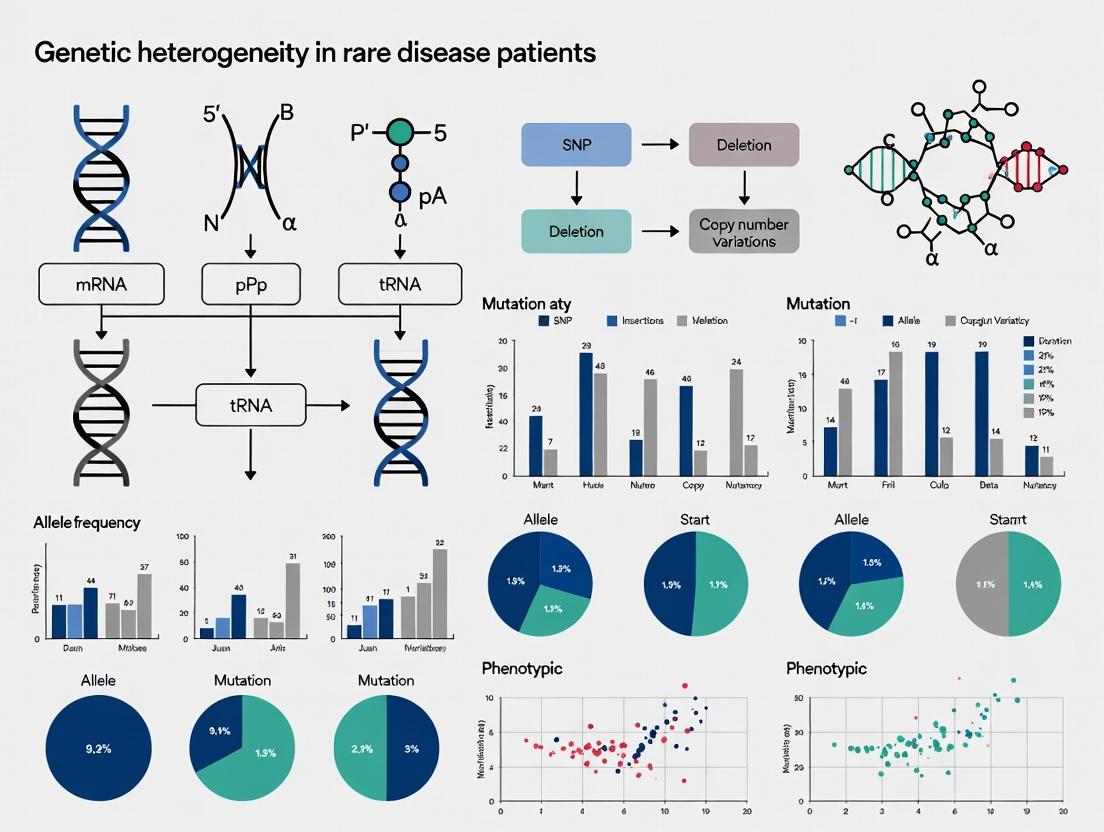
Genetic heterogeneity—where diverse genetic causes lead to similar clinical phenotypes—is a profound challenge in rare disease research and drug development.
Beyond the Single Gene: Decoding Genetic Heterogeneity in Rare Disease Diagnosis and Therapy
Abstract
Genetic heterogeneity—where diverse genetic causes lead to similar clinical phenotypes—is a profound challenge in rare disease research and drug development. This article explores the foundational science behind this complexity, detailing advanced genomic methodologies like WGS and transcriptomics for its resolution. It addresses critical challenges in data interpretation and variant classification, and evaluates emerging analytical frameworks and collaborative models essential for translating genetic insights into targeted, effective therapies for patient subgroups.
The Genetic Mosaic: Understanding the Core Concepts of Rare Disease Heterogeneity
Genetic heterogeneity is a fundamental concept explaining why distinct genetic alterations can converge on similar clinical presentations, and conversely, why identical mutations can yield divergent phenotypes. Within the context of rare disease research, dissecting this heterogeneity is paramount for accurate diagnosis, prognostic stratification, and the development of targeted therapies. This whitepaper defines and distinguishes the three primary axes of genetic heterogeneity—locus, allelic, and phenotypic—providing a technical framework for researchers and drug development professionals navigating this complex landscape.
Defining the Axes of Heterogeneity
- Locus Heterogeneity: Occurs when pathogenic variants at different genomic loci (different genes) cause the same or similar disease phenotype. This indicates convergence on a critical biological pathway or protein complex.
- Allelic Heterogeneity: Occurs when different pathogenic variants within the same gene (different alleles) cause the same or similar disease. Variants can range from missense to nonsense, splice-site, or deletions.
- Phenotypic Heterogeneity: Occurs when pathogenic variants in the same gene, or even the identical allele, result in a wide spectrum of clinical manifestations across different individuals. Modifying factors include genetic background, epigenetics, and environment.
The following table synthesizes recent cohort study data to illustrate the prevalence and impact of each heterogeneity type in diagnosed rare disease populations.
Table 1: Prevalence and Impact of Heterogeneity Types in Rare Diseases
| Heterogeneity Type | Approximate Prevalence in Molecularly Diagnosed Rare Diseases* | Exemplary Disease(s) | Key Implication for Research |
|---|---|---|---|
| Locus Heterogeneity | 30-40% | Hereditary Spastic Paraplegia (80+ genes), Deafness (100+ genes), Bardet-Biedl Syndrome (20+ genes) | Requires gene-agnostic screening (e.g., WES/WGS); complicates gene-specific therapy. |
| Allelic Heterogeneity | >90% of genes with known disease association | CFTR in Cystic Fibrosis (>2000 variants), PAH in Phenylketonuria | Demands functional validation of VUS; enables variant-specific therapy (e.g., CFTR modulators). |
| Phenotypic Heterogeneity | Highly variable (20-80% per disease) | LMNA variants (Lipodystrophy, Progeria, Cardiomyopathy), NF1 variants | Necessitates deep phenotyping and modifier gene studies for prognosis. |
Data synthesized from recent analyses of the Genomics England 100,000 Genomes Project, ClinVar, and OMIM.
Experimental Protocols for Dissecting Heterogeneity
Protocol 1: Resolving Locus Heterogeneity via Trio-Based Whole Exome Sequencing (WES) Objective: To identify novel and known disease-associated genes in patients with a defined phenotype where prior single-gene tests are negative.
- Sample Preparation: Collect peripheral blood from proband and both biological parents (trio). Extract high-molecular-weight DNA.
- Library Prep & Enrichment: Fragment DNA, perform end-repair, adapter ligation, and PCR amplification. Enrich exonic regions using a solution-based hybridization capture kit (e.g., IDT xGen Exome Research Panel).
- Sequencing: Sequence on a short-read platform (e.g., Illumina NovaSeq) to a mean coverage depth of >100x, with >95% of target bases ≥20x.
- Bioinformatic Analysis: Align reads to GRCh38. Call variants (SNVs, Indels). Perform variant prioritization: a) Filter for de novo (absent in parents), b) Compound heterozygous, or c) X-linked recessive models. Annotate against population (gnomAD) and disease (ClinVar, HGMD) databases.
- Validation: Confirm candidate pathogenic variants by Sanger sequencing.
Protocol 2: Functional Assay for Allelic Heterogeneity (Splice-Site Variants) Objective: Experimentally validate the pathogenicity of a VUS suspected to disrupt RNA splicing.
- Minigene Construction: Clone a genomic fragment of the patient's gene containing the exon with the VUS and its flanking introns into a mammalian expression vector (e.g., pSpliceExpress).
- Site-Directed Mutagenesis: Generate the patient-specific variant in the minigene construct. A wild-type construct serves as control.
- Cell Transfection: Transfect constructs into HEK293T cells using a lipid-based transfection reagent (e.g., Lipofectamine 3000). Harvest RNA 48h post-transfection.
- RT-PCR Analysis: Isolate total RNA, perform reverse transcription. Amplify cDNA using primers in the vector's constitutive exons.
- Gel Electrophoresis & Sequencing: Resolve PCR products on agarose gel. Abnormal splice products (size shift vs. wild-type) are purified and Sanger sequenced to confirm aberrant exon skipping or cryptic site usage.
Protocol 3: Assessing Phenotypic Heterogeneity via Model Organism CRISPR-Cas9 Knock-In Objective: To model a specific human allele and assess variable phenotypic expressivity in a controlled genetic background.
- Guide RNA & Donor Design: Design sgRNAs flanking the target site. Synthesize a single-stranded oligodeoxynucleotide (ssODN) donor template containing the patient-specific variant and silent restriction site for screening.
- Microinjection: Co-inject Cas9 protein, sgRNA, and ssODN donor into fertilized zygotes of model organism (e.g., C57BL/6J mouse).
- Genotyping: Extract genomic DNA from founder pups. Perform PCR/RFLP or sequencing to identify correctly targeted knock-in alleles.
- Phenotypic Cohort Analysis: Establish a homozygous knock-in line. Subject age- and sex-matched cohorts to a standardized phenotyping pipeline (e.g., IMPC protocols), including metabolic, cardiovascular, behavioral, and histological assays. Apply statistical analysis to quantify variance in phenotypic traits.
Visualizing Concepts and Workflows
Diagram 1: Locus Heterogeneity Model
Diagram 2: Allelic Heterogeneity in a Single Gene
Diagram 3: Drivers of Phenotypic Heterogeneity
The Scientist's Toolkit: Essential Research Reagents
Table 2: Key Reagents for Investigating Genetic Heterogeneity
| Reagent / Solution | Function in Research | Example Product/Catalog |
|---|---|---|
| Whole Exome/Genome Capture Kits | Target enrichment for comprehensive, locus-heterogeneity-aware screening. | IDT xGen Exome Research Panel, Illumina Nextera DNA Exome. |
| CRISPR-Cas9 System Components | For generating allelic series or isogenic models of specific variants. | Alt-R S.p. Cas9 Nuclease V3 (IDT), synthetic sgRNA, ssODN donors. |
| Minigene Splicing Vectors | Functional validation of allelic heterogeneity affecting RNA splicing. | pSpliceExpress vector, pcDNA3.1-based splice assay vectors. |
| Long-Range PCR & HMW DNA Kits | Essential for detecting complex structural variants or assembling haplotypes. | Takara LA Taq, Qiagen Blood & Cell Culture DNA Maxi Kit. |
| Phenotypic Screening Platforms | High-throughput, standardized assays to quantify phenotypic heterogeneity in models. | Seahorse XF Analyzer (Metabolism), Noldus EthoVision (Behavior), EchoMRI (Body Composition). |
| Population Variant Databases | Critical for filtering and assessing allele frequency to prioritize candidates. | gnomAD, dbSNP, 1000 Genomes Project. |
The pursuit of genetic diagnosis for rare diseases presents a fundamental clinical and scientific conundrum: a single, well-defined phenotypic presentation can be the convergent endpoint for hundreds of distinct genetic variants. This phenomenon, termed genetic heterogeneity, is a core challenge in modern genomics and drug development. Within the broader thesis of rare disease research, understanding this heterogeneity is not merely an academic exercise; it is critical for developing diagnostic frameworks, prognostic stratification, and targeted therapeutic strategies. This whitepaper explores the mechanistic basis of this convergence, details current experimental methodologies for its resolution, and discusses implications for therapeutic development.
Mechanistic Bases for Phenotypic Convergence
A unified clinical phenotype arises from diverse genetic origins through several non-exclusive biological principles.
Functional Convergence in Biological Pathways
Most heterogeneous diseases are "pathway diseases." Disruption at any node within a critical signaling cascade or structural complex can lead to similar functional deficits. For example, the cilium is a complex organelle requiring hundreds of proteins for assembly and function. Mutations in any of these can cause clinically overlapping ciliopathies.
Protein Complex Disruption
Many phenotypes result from impaired multi-protein complexes. Variants in different genes encoding subunits of the same complex (e.g., the SWI/SNF chromatin remodeling complex, the nuclear pore complex) can produce strikingly similar syndromes.
Threshold Effects and Haploinsufficiency
For dosage-sensitive genes or pathways, a variety of disruptive mutations—from point mutations to copy-number variants—can reduce output below a critical threshold, leading to a common phenotype.
Alternative Splicing and Modifier Genes
The influence of genetic background, including modifier genes and alternative splicing events, can modulate the expressivity of primary mutations, sometimes making distinct genetic lesions appear phenotypically similar.
Table 1: Quantifying Genetic Heterogeneity in Selected Rare Diseases
| Disease Phenotype | Estimated Number of Associated Genes (2024) | Primary Pathogenic Mechanism | Key Convergent Pathway/Structure |
|---|---|---|---|
| Hereditary Spastic Paraplegia | > 80 | Axonal transport disruption | Corticospinal tract neuron axon integrity |
| Bardet-Biedl Syndrome | ~ 24 | Ciliary dysfunction | Primary cilium signaling & trafficking |
| Congenital Disorders of Glycosylation | > 150 | Impaired protein/lipid glycosylation | ER/Golgi N-linked & O-linked glycosylation |
| Juvenile Amyotrophic Lateral Sclerosis | > 20 | Motor neuron degeneration | RNA metabolism, protein homeostasis |
| Sensorineural Hearing Loss | > 100 | Hair cell/neuronal dysfunction | Stereocilia structure, synaptic transmission |
Experimental Protocols for Disentangling Heterogeneity
Tiered Genomic Analysis for Diagnosis
Protocol: Whole Exome/Genome Sequencing (WES/WGS) Trio Analysis
- Sample Preparation: Collect peripheral blood (EDTA tubes) or saliva from proband and both biological parents. Extract high-molecular-weight DNA (e.g., using Qiagen MagAttract HMW DNA Kit).
- Library Prep & Sequencing: Perform exome capture (e.g., Illumina Nexome) or whole-genome library prep. Sequence on a platform like Illumina NovaSeq X to achieve >30x mean coverage for WGS or >100x for WES.
- Bioinformatic Pipeline:
- Alignment: Map reads to GRCh38 reference genome using BWA-MEM.
- Variant Calling: Use GATK for SNVs/indels and MANTA/DELLY for CNVs/SVs.
- Annotation & Filtering: Annotate with ANNOVAR/snpeff. Filter against population databases (gnomAD). Prioritize: a) de novo variants, b) rare (MAF<0.001) homozygous/compound heterozygous variants in recessive models, c) rare heterozygous variants in known dominant genes.
- Pathogenicity Prediction: Use REVEL, CADD, and SpliceAI scores. Match to patient phenotype via HPO terms.
- Validation: Confirm candidate variants by orthogonal method (Sanger sequencing, digital PCR).
Functional Validation in Model Systems
Protocol: CRISPR-Cas9 Knockout in Human iPSC-Derived Neurons
- iPSC Generation: Reprogram patient fibroblasts (or PBMCs) using non-integrating Sendai virus vectors (CytoTune-iPS 2.0 Kit).
- Gene Editing: Design sgRNAs targeting candidate gene exon 2. Transfect iPSCs with ribonucleoprotein complex (Cas9 protein + sgRNA) via nucleofection.
- Clonal Selection: Single-cell sort, expand clones, and screen by PCR and Sanger sequencing for frameshift indels.
- Differentiation: Differentiate isogenic control and knockout iPSC lines into cortical neurons using a dual-SMAD inhibition protocol (with SB431542 and LDN193189).
- Phenotypic Assay: At day 60 of differentiation, perform whole-cell patch-clamp recording to assess neuronal excitability and calcium imaging (using Fluo-4 AM dye) to measure spontaneous activity, comparing knockout to control lines.
Visualization of Core Concepts
Genetic Heterogeneity Converges on a Common Pathway
Genomic Workflow for Resolving Heterogeneity
The Scientist's Toolkit: Key Research Reagent Solutions
Table 2: Essential Reagents for Investigating Genetic Heterogeneity
| Reagent Category | Specific Example | Function in Research |
|---|---|---|
| Genomic Library Prep | Illumina DNA Prep with Enrichment (Exome) | Prepares high-complexity, adapter-ligated libraries from DNA for targeted or whole-genome sequencing. |
| CRISPR-Cas9 Editing | Alt-R S.p. Cas9 Nuclease V3 (IDT) | High-fidelity Cas9 enzyme for precise genome editing in cellular models to create isogenic controls or introduce patient variants. |
| iPSC Reprogramming | CytoTune-iPS 4.0 Sendai Virus Kit (Thermo) | Non-integrating viral vectors for efficient, footprint-free reprogramming of somatic cells to pluripotency. |
| Directed Differentiation | STEMdiff Cortical Neuron Kit (Stemcell Tech.) | Defined, serum-free medium for robust and reproducible differentiation of iPSCs to forebrain neurons. |
| Phenotypic Screening | FLIPR Calcium 6 Assay Kit (Molecular Devices) | No-wash, fluorescent dye for high-throughput measurement of intracellular calcium flux, indicative of neuronal or cellular activity. |
| Pathogenicity Prediction | REVEL (Rare Exome Variant Ensemble Learner) | In-silico tool that aggregates scores from multiple predictors to rank missense variant pathogenicity. |
| Variant Annotation | ANNOVAR | Efficient software to functionally annotate genetic variants detected from sequencing experiments. |
The Impact of Modifier Genes and Non-Mendelian Inheritance Patterns
1. Introduction: Framing within Genetic Heterogeneity in Rare Disease Research The investigation of rare diseases is fundamentally a study in genetic heterogeneity. While primary pathogenic mutations are necessary for disease manifestation, the profound variability in clinical presentation—spanning age of onset, symptom severity, and rate of progression—often remains unexplained. This gap in understanding is critically addressed by examining the impact of modifier genes and non-Mendelian inheritance patterns. Modifier genes, through their variants, alter the phenotypic expression of a primary mutation. Concurrently, non-Mendelian mechanisms such as mosaicism, oligogenic inheritance, and epigenetic regulation further layer complexity onto inheritance models. This whitepaper provides a technical guide to their roles, experimental dissection, and implications for therapeutic development.
2. Quantitative Landscape of Modifier Effects in Selected Rare Diseases Recent studies underscore the prevalence and magnitude of modifier gene effects. The following table summarizes key quantitative findings from current literature.
Table 1: Documented Modifier Gene Effects in Monogenic Rare Diseases
| Primary Disease (Gene) | Modifier Gene/Locus | Effect on Phenotype | Study Population Size (n) | Reported Effect Size (Odds Ratio/Hazard Ratio) | Key Reference (Year) |
|---|---|---|---|---|---|
| Cystic Fibrosis (CFTR) | SLC26A9, SLC6A14 | Modulates lung function severity and meconium ileus risk. | >30,000 patients | OR: 1.15 - 1.82 for severe lung disease | Corvol et al. (2022) |
| Spinal Muscular Atrophy (SMN1) | PLS3, NCALD | Influences motor neuron survival and disease severity. | ~3,500 patients | HR for milestone achievement: 1.5 - 2.1 | Oprea et al. (2023) |
| Huntington's Disease (HTT) | MSH3, FAN1 | Modifies rate of somatic CAG expansion and age of onset. | ~9,000 patients | Variance in onset explained: ~13% | Genetic Modifiers of HD (2023) |
| Bardet-Biedl Syndrome (BBS1-21) | MGC1203, CCDC28B | Modifies retinal degeneration and obesity penetrance. | ~1,500 patients | Penetrance reduction: Up to 40% for specific alleles | Suspitsin et al. (2023) |
3. Experimental Protocols for Modifier Gene Identification Protocol 3.1: Genome-Wide Association Study (GWAS) for Modifier Loci
- Objective: Identify common genetic variants associated with phenotypic variance in a genetically homogeneous rare disease cohort.
- Methodology:
- Cohort Stratification: Assemble a patient cohort all harboring an identical primary pathogenic mutation. Quantitatively phenotype for a specific trait (e.g., FEV1% for cystic fibrosis).
- Genotyping & Imputation: Perform high-density SNP genotyping (e.g., Illumina Global Screening Array). Impute to a reference panel (1000 Genomes/gnomAD) for full genome-wide variant coverage.
- Quality Control: Apply filters: sample call rate >98%, variant call rate >95%, Hardy-Weinberg equilibrium p > 1x10⁻⁶, minor allele frequency >1%.
- Association Analysis: Conduct linear or logistic regression using a mixed model to account for population structure (e.g., via PLINK, REGENIE). The phenotype is the dependent variable; genotype dosages of SNPs are independent variables, adjusted for relevant covariates (age, sex).
- Significance & Validation: Set genome-wide significance (p < 5x10⁻⁸). Replicate significant loci in an independent cohort. Perform functional validation via in vitro or model organism studies.
Protocol 3.2: Functional Validation Using CRISPR/Cas9 in Cellular Models
- Objective: Validate candidate modifier gene function in an isogenic background.
- Methodology:
- Cell Line Engineering: Use a patient-derived iPSC line or a cell line with the disease-causing mutation. Create isogenic pairs via CRISPR/Cas9: (a) edit the modifier gene candidate (knock-out or introduce patient SNP) in the disease background, and (b) a control edit (scramble) in the same background.
- Phenotypic Assay: Design a high-content assay relevant to the disease (e.g., mitochondrial respiration for neuromuscular diseases, ciliary function for ciliopathies). Perform assay in triplicate for all isogenic lines.
- Statistical Analysis: Use ANOVA with post-hoc testing to compare the phenotype across: (i) disease + modified gene edit, (ii) disease + control edit, (iii) wild-type control. A significant difference between (i) and (ii) confirms a modifier effect.
- Pathway Analysis: Follow with transcriptomics (RNA-seq) or proteomics on the isogenic pairs to identify dysregulated pathways.
4. Visualizing Complex Genetic Interactions
Diagram 1: Network of phenotypic modifiers.
Diagram 2: Modifier gene discovery workflow.
5. The Scientist's Toolkit: Essential Research Reagents & Solutions Table 2: Key Reagents for Investigating Modifiers and Non-Mendelian Inheritance
| Reagent / Solution | Provider Examples | Function in Research |
|---|---|---|
| Long-Range PCR & SMRT Sequencing Kits | PacBio, Oxford Nanopore | Detection of somatic mosaicism and complex structural variants in primary and modifier loci. |
| CRISPR Cas9 Nickase (Cas9n) & HDR Donor Templates | IDT, Synthego | For precise introduction or correction of modifier SNP alleles in isogenic cellular models. |
| Methylation-Specific PCR (MSP) or Bisulfite Sequencing Kits | Qiagen, Zymo Research | Profiling epigenetic modifications (DNA methylation) as potential non-genetic modifiers. |
| Multiplexed Guide RNA Libraries | Dharmacon, Addgene | For CRISPR-based modifier gene screening in disease-relevant cellular phenotypes. |
| Single-Cell RNA-Sequencing (scRNA-seq) Kits | 10x Genomics, Parse Biosciences | Dissecting cell-type-specific effects of modifier genes in heterogeneous tissues. |
| Anti-Histone Modification Antibodies (H3K27ac, H3K9me3) | Abcam, Cell Signaling Tech. | ChIP-seq to map regulatory landscape changes influenced by modifier loci. |
| Genotype-Tissue Expression (GTEx) & Disease-Specific eQTL Datasets | NIH GTEx Portal, EBI | In silico prioritization of modifier variants based on expression quantitative trait loci data. |
6. Implications for Drug Development and Personalized Medicine The integration of modifier genes and non-Mendelian patterns into rare disease research directly informs therapeutic strategy. Firstly, modifiers can identify novel drug targets within genetic networks that amplify or suppress the primary defect. Secondly, they enable patient stratification: individuals with severe-disease modifier profiles can be prioritized for aggressive or novel therapies, while those with protective modifiers may benefit from standard care. Thirdly, understanding oligogenic inheritance prevents therapeutic failure by ensuring all contributing loci are considered. Finally, epigenetic modifiers present druggable targets (e.g., using histone deacetylase inhibitors) to modulate disease expression postnatally. For drug developers, this landscape mandates the collection of deep genomic and phenotypic data in clinical trials to uncover treatment-response modifiers, moving beyond a one-gene, one-drug paradigm to a network-based precision medicine approach.
Within the broader thesis on genetic heterogeneity in rare disease research, Charcot-Marie-Tooth disease (CMT) and Inherited Retinal Dystrophies (IRDs) serve as paradigmatic examples. CMT, the most common inherited peripheral neuropathy, and IRDs, a leading cause of inherited blindness, are both characterized by extreme genetic heterogeneity, where mutations in numerous distinct genes can lead to clinically similar phenotypes. This allelic and locus heterogeneity presents significant challenges for diagnosis, prognosis, and therapeutic development, while also offering unique opportunities to understand fundamental biological pathways.
Quantitative Landscape of Heterogeneity
Table 1: Genetic Heterogeneity in CMT and IRDs (Current Data)
| Disorder | Approx. Number of Associated Genes | Major Inheritance Patterns | Approx. % of Cases with Defined Genetic Cause | Most Common Genetic Causes (% of Cases) |
|---|---|---|---|---|
| Charcot-Marie-Tooth Disease | Over 100 | AD, AR, X-linked | ~60-70% | PMP22 duplication (CMT1A, ~40-50%), GJB1 (CMTX1, ~10%), MFN2 (CMT2A, ~20% of axonal) |
| Inherited Retinal Dystrophies | Over 280 | AD, AR, X-linked, Mitochondrial | ~50-70% | ABCA4 (Stargardt, ~30% of recessive), USH2A (Usher/Retinitis Pigmentosa, ~20% of recessive), RPGR (X-linked RP, ~70% of X-linked) |
Table 2: Phenotypic Heterogeneity Stemming from Genetic Variants
| Gene | Disorder | Number of Known Pathogenic Variants | Associated Phenotypic Spectrum |
|---|---|---|---|
| GJB1 | CMTX1 | >400 | Classical CMT, transient CNS symptoms, late-onset forms |
| MFN2 | CMT2A | >100 | Severe early-onset axonal neuropathy, optic atrophy, pyramidal signs |
| ABCA4 | IRDs (Stargardt, etc.) | >1200 | Stargardt disease, cone-rod dystrophy, retinitis pigmentosa |
| RPGR | X-linked RP | >500 | Classic retinitis pigmentosa, cone/cone-rod dystrophy, atrophic macular lesions |
Core Experimental Methodologies for Dissecting Heterogeneity
Next-Generation Sequencing (NGS) Diagnostics
Protocol: Whole Exome Sequencing (WES) for Novel Gene Discovery
- Sample Prep: Isolate genomic DNA from patient peripheral blood (min. 200 ng, Qubit QC).
- Library Preparation: Use a kit like Twist Human Core Exome or IDT xGen Exome Research Panel for target capture. Fragment DNA, ligate platform-specific adapters, and hybridize with biotinylated probes.
- Sequencing: Perform paired-end sequencing (2x150 bp) on an Illumina NovaSeq 6000 platform to a mean coverage depth of >100x.
- Bioinformatics Pipeline:
- Alignment: Map reads to human reference genome (GRCh38) using BWA-MEM.
- Variant Calling: Use GATK best practices for SNV/indel calling. For CMT, include expansion calling tools for RFC1 (CANVAS).
- Annotation & Filtering: Annotate with ANNOVAR/SnpEff. Filter against population databases (gnomAD). Prioritize rare (MAF<0.1%), protein-altering variants in known disease genes, then candidate genes.
- Segregation & Validation: Confirm candidate variants by Sanger sequencing in proband and available family members to assess co-segregation with disease.
Functional Validation in Cellular Models
Protocol: CRISPR/Cas9 Generation of Isogenic iPSC Lines
- Design: Design sgRNAs targeting the specific pathogenic variant using online tools (e.g., CRISPOR).
- Transfection: Electroporate ribonucleoprotein complexes (sgRNA + SpCas9 protein) and an ssODN repair template into patient-derived induced pluripotent stem cells (iPSCs).
- Selection & Cloning: Allow recovery for 48 hrs, then single-cell clone by FACS into 96-well plates.
- Genotyping: Expand clones, extract genomic DNA, and screen by PCR/sequencing to identify isogenic corrected clones.
- Differentiation: Differentiate corrected and uncorrected iPSC clones into relevant cell types (e.g., motor neurons for CMT, retinal organoids for IRDs).
- Phenotypic Assay: Perform functional assays (e.g., axonal transport analysis in neurons, electroretinography in photoreceptors, or protein localization via immunofluorescence).
Pathway and Workflow Visualizations
The Scientist's Toolkit: Key Research Reagent Solutions
Table 3: Essential Research Tools for Heterogeneity Studies
| Category / Reagent | Example Product/Kit | Primary Function in Research |
|---|---|---|
| Targeted NGS Panels | Twist Inherited Diseases Panel, Illumina TruSight | Cost-effective sequencing of all known CMT/IRD genes simultaneously. |
| Long-Read Sequencing | Oxford Nanopore PromethION, PacBio Sequel IIe | Detection of structural variants, repeat expansions, and phasing of complex alleles. |
| iPSC Reprogramming | CytoTune-iPS 2.0 Sendai Kit (Thermo), Episomal vectors | Generation of patient-specific pluripotent stem cells from somatic cells (fibroblasts, blood). |
| CRISPR-Cas9 Editing | Alt-R CRISPR-Cas9 System (IDT), TrueCut Cas9 Protein (Thermo) | Creation of isogenic controls or introduction of specific variants into cell lines. |
| Retinal Differentiation | STEMdiff Retinal Organoid Kit (StemCell Tech.) | Guided, reproducible differentiation of iPSCs into 3D retinal tissues containing photoreceptors. |
| Axonal Transport Assay | SNAP-tag/CLIP-tag live-cell imaging reagents (NEB) | Real-time visualization of mitochondrial and vesicular transport in derived neurons. |
| Protein Mislocalization | Antibodies against Rhodopsin, Cone Arrestin, PMP22, Neurofilament | Immunofluorescence assessment of subcellular protein trafficking defects. |
| Functional Electrophysiology | Multi-electrode array (MEA) systems (Axion, MaxWell) | Measurement of neuronal or photoreceptor network activity in vitro. |
Mapping the Unseen: Modern Genomic Strategies to Unravel Heterogeneity
Whole Genome Sequencing as the Gold Standard for Unbiased Detection
Genetic heterogeneity—the phenomenon where pathogenic variants in different genes lead to similar clinical phenotypes—presents a fundamental challenge in rare disease diagnosis and research. Phenotypic convergence complicates gene discovery, delays diagnosis, and hampers the development of targeted therapies. Within this context, Whole Genome Sequencing (WGS) emerges as the singular, comprehensive technology capable of delivering an unbiased survey of the genome. Unlike targeted panels or exome sequencing, WGS provides a base-by-base interrogation of both coding and non-coding regions, enabling the detection of all variant types, from single nucleotide variants (SNVs) and small indels to structural variants (SVs), repeat expansions, and intronic mutations, without prior assumptions about disease etiology.
Technical Superiority of WGS in Variant Detection
WGS offers near-complete genomic coverage, crucial for identifying variants in regions poorly captured by exome sequencing. Current benchmarks demonstrate its superior analytical sensitivity and specificity.
Table 1: Comparative Detection Rates of Genomic Variants by Sequencing Method
| Variant Type | Whole Genome Sequencing (WGS) | Whole Exome Sequencing (WES) | Targeted Gene Panel |
|---|---|---|---|
| Coding SNVs/Indels | >99% sensitivity | ~95-98% sensitivity | ~99.5% sensitivity* |
| Non-coding Regulatory Variants | Detectable | Not Detectable | Not Detectable |
| Structural Variants (SVs) | >95% sensitivity for >50bp events | Limited (<50%) | Limited to designed targets |
| Copy Number Variants (CNVs) | High resolution, genome-wide | Moderate, limited to exons | High only within targets |
| Repeat Expansions | Detectable (short-read) / Characterizable (long-read) | Limited | Only if targeted |
| Mitochondrial DNA Variants | Detectable (with specific analysis) | Detectable (with specific analysis) | Only if included |
*Within its designed target region.
Core WGS Experimental Protocol for Rare Disease Research
Sample Preparation & Library Construction
Protocol: PCR-free, Paired-End Library Preparation
- Input: High-molecular-weight genomic DNA (≥1μg, integrity number RINe/ DIN >7).
- Fragmentation: Covaris shearing to a target size of 350-550bp.
- End Repair & A-tailing: Standard enzymatic steps to generate blunt-end, 5'-phosphorylated, 3'-dA-tailed fragments.
- Adapter Ligation: Ligation of indexed, unique dual-indexed (UDI) adapters to minimize index hopping. PCR-free protocol is preferred to eliminate amplification bias and improve GC-coverage uniformity.
- Clean-up & Size Selection: Solid-phase reversible immobilization (SPRI) beads for purification and narrow size selection.
- Quality Control: Qubit for quantification and Bioanalyzer/TapeStation for fragment size distribution.
Sequencing
Platform: Illumina NovaSeq X or comparable, generating ≥30x coverage (minimum) with paired-end 150bp reads. For complex SVs or regions of high homology, integration with long-read technologies (PacBio HiFi, Oxford Nanopore) is recommended.
Bioinformatic Analysis Workflow
A standardized pipeline is critical for reproducible variant calling.
Diagram Title: Standard WGS Bioinformatic Analysis Pipeline
Variant Prioritization in Heterogeneous Disease
Given the thousands of variants per genome, prioritization is key.
- Frequency Filtering: Remove common variants (gnomAD allele frequency >0.1% for recessive, >0.001% for dominant models).
- Predicted Impact: Prioritize high-impact (loss-of-function, splice-disrupting, missense) variants in genes with known disease association (OMIM, PanelApp).
- Phenotype-driven Ranking: Use tools like Exomiser, PhenoRank, or Genomiser that integrate patient HPO terms with model organism data, protein interaction networks, and expression data to score genes.
- Compound Heterozygosity Detection: Identify biallelic hits in recessive genes, requiring phasing information available from WGS data.
- Non-coding Analysis: For unsolved cases, screen deep intronic, promoter, and enhancer regions for non-coding variants using tools like CADD, FATHMM-XF, or FAVOR.
Visualizing the Analytical Power of WGS in a Heterogeneous Cohort
Diagram Title: WGS Resolves Genetic Heterogeneity in a Rare Disease Cohort
The Scientist's Toolkit: Key Reagents & Solutions for WGS Research
Table 2: Essential Research Reagents for WGS-based Rare Disease Studies
| Item / Solution | Function & Rationale |
|---|---|
| High-Fidelity DNA Extraction Kits (e.g., Qiagen Gentra, Promega Maxwell) | Ensure high-molecular-weight, inhibitor-free genomic DNA, critical for even coverage and SV detection. |
| PCR-free Library Prep Kits (e.g., Illumina DNA PCR-Free Prep, TruSeq Nano) | Eliminate amplification bias, essential for accurate detection of CNVs and regions with extreme GC content. |
| Unique Dual Index (UDI) Adapters | Enable multiplexing of hundreds of samples while preventing index hopping artifacts, ensuring sample integrity. |
| Whole Genome Sequencing Standards (e.g., GIAB Reference Materials) | Provide benchmark samples with characterized variants (SNV, Indel, SV) for pipeline validation and performance monitoring. |
| Long-read Sequencing Kits (e.g., PacBio SMRTbell, ONT Ligation Kit) | Complementary technology for resolving complex SVs, phasing alleles, and characterizing repetitive regions. |
| Enrichment Kits for Methylation/Epigenetics (e.g., Agilent SureSelect XT Methyl-Seq) | For integrated multi-omics analysis to detect epigenetic causes of disease when the primary sequence is uninformative. |
| Bioinformatic Pipeline Containers (e.g., GATK Docker, Nextflow pipelines) | Ensure reproducible, version-controlled, and portable analysis environments across research teams. |
Within the research paradigm of genetic heterogeneity, WGS is not merely an incremental improvement but a paradigm shift. It consolidates multiple testing modalities into a single, definitive assay, increasing diagnostic yield while providing a rich dataset for secondary analysis and novel gene discovery. As costs decline and analytical frameworks mature, WGS is poised to become the first-line investigative tool for rare disease research, fundamentally accelerating the path from genomic insight to therapeutic development. Its unbiased nature is essential for disentangling phenotypic convergence and delivering precise molecular diagnoses at scale.
Genetic heterogeneity in rare disease research has traditionally been addressed through exome sequencing, successfully identifying pathogenic coding variants in a significant subset of patients. However, a substantial diagnostic gap remains. This whitepaper details the critical roles of non-coding regulatory variants, structural variants (SVs), and short tandem repeat (STR) expansions in rare Mendelian disorders, framed within the imperative to solve unexplained genetic heterogeneity. Moving beyond the exome is essential for comprehensive diagnosis and understanding disease mechanisms.
The Genomic Landscape Beyond the Exome
Table 1: Contribution of Variant Types to Solved Rare Disease Cases Post-Exome Sequencing
| Variant Class | Estimated Diagnostic Yield | Common Detection Methods |
|---|---|---|
| Coding (Exonic) | ~30-40% | WES, Panel Sequencing |
| Non-Coding Regulatory | ~1-5% | WGS, ATAC-seq, ChIP-seq, Luciferase Assay |
| Structural Variants | ~10-15% | WGS (LR), CMA, Optical Mapping |
| Repeat Expansions | ~2-10% (neurology focus) | LR-PCR, RP-PCR, WGS (ExpansionHunter) |
Non-Coding Regulatory Variants
These variants reside in regions such as promoters, enhancers, silencers, and insulators, altering transcription factor binding and gene expression without changing protein sequence.
Experimental Protocol: Validating a Non-Coding Candidate Variant
- Step 1: Identification via Whole Genome Sequencing (WGS). Perform deep (>30x) WGS on trio or family cohorts. Use pipelines like GATK for SNV/indel calling and tools like
FUNSEQ2orDeepSEAfor in silico pathogenicity prediction of non-coding variants. - Step 2: Epigenomic Annotation. Overlap variant coordinates with cell-type-relevant epigenomic data (ENCODE, Roadmap Epigenomics). Assay for Transposase-Accessible Chromatin with sequencing (ATAC-seq) on patient-derived cells to identify active regulatory regions.
- Step 3: In vitro Enhancer Activity Assay. Clone the wild-type and mutant genomic fragment (300-800 bp) into a luciferase reporter vector (e.g., pGL4.23). Co-transfect into relevant cell lines with a Renilla control plasmid. Measure firefly/Renilla luciferase activity after 48h. A significant activity change (p<0.05, t-test) supports functional impact.
- Step 4: In vivo Validation (CRISPR). Use CRISPR/Cas9 to introduce the candidate variant into a wild-type cell line or model organism. Quantify expression of the putative target gene via qRT-PCR or RNA-seq.
Diagram Title: Non-Coding Variant Analysis Workflow
Structural Variants (SVs)
SVs include deletions, duplications, inversions, and translocations >50bp. Balanced SVs and complex rearrangements are particularly elusive to exome sequencing.
Experimental Protocol: Resolving a Complex Structural Variant
- Step 1: Detection via Long-Read WGS. Isolate high molecular weight DNA. Prepare libraries for platforms like PacBio HiFi or Oxford Nanopore. Sequence to ~20x coverage. Align reads with
minimap2and call SVs using tools likepbsv,Sniffles, orcuteSV. - Step 2: De Novo Assembly and Phasing. For complex regions, perform de novo assembly with
hifiasmorFlye. Phase haplotypes using parental data or read-based phasing. - Step 3: Junction Validation. Design PCR primers spanning predicted SV breakpoints. Perform long-range PCR, gel purify products, and Sanger sequence to confirm precise junction sequence.
- Step 4: Determine Copy Number. For CNVs, use digital droplet PCR (ddPCR) with two TaqMan assays: one targeting the region of interest and one targeting a diploid reference gene. Calculate copy number from the ratio of concentrations.
Diagram Title: Pathogenic Mechanisms of Structural Variants
Short Tandem Repeat (STR) Expansions
Expansions of repetitive DNA sequences (e.g., CAG, GGGGCC) are a major cause of neurogenetic rare diseases and can be missed by standard short-read WGS.
Experimental Protocol: Detecting a Novel Repeat Expansion
- Step 1: Bioinformatics Suspicion. Analyze short-read WGS with expansion detection tools (
ExpansionHunter,STRipy). Look for signs: poor mapping, increased depth, or interrupted repeat motifs. - Step 2: Targeted Long-Read Sequencing. Design locus-specific PCR primers flanking the repeat. Amplify using long-range polymerase. Sequence amplicons on an Oxford Nanopore MinION flow cell. Basecall with
Guppyand analyze repeat length withTandem Repeats Finder. - Step 3: Repeat-Primed PCR (RP-PCR). For very large or GC-rich expansions (e.g., FMR1), use RP-PCR. A locus-specific forward primer and a reverse primer consisting of the repeat sequence itself generate a ladder of products on capillary electrophoresis, indicating an expansion.
- Step 4: Southern Blot Confirmation (Gold Standard). Digest genomic DNA with restriction enzymes that flank the repeat. Separate fragments via pulsed-field gel electrophoresis, transfer to a membrane, and hybridize with a radiolabeled probe complementary to the repeat region. Size the expansion accurately.
The Scientist's Toolkit: Key Research Reagent Solutions
| Item | Function & Application |
|---|---|
| PacBio HiFi SMRTbell Libraries | Generate highly accurate long reads for SV detection and de novo assembly. |
| Oxford Nanopore Ligation Sequencing Kit (SQK-LSK114) | Prepare libraries for long-read sequencing on MinION/PromethION for repeat sizing and phasing. |
| LongAmp Taq DNA Polymerase | Amplify long genomic templates (>10 kb) for LR-PCR of repeat regions or SV breakpoints. |
| Luciferase Reporter Vectors (pGL4 series) | Clone candidate regulatory elements to quantify enhancer/promoter activity changes. |
| ddPCR Supermix for Probes | Enable absolute quantification of DNA copy number without a standard curve for CNV validation. |
| CRISPR-Cas9 Ribonucleoprotein (RNP) Complex | Efficiently and cleanly edit genomes in cell lines to introduce or correct candidate variants. |
| ATAC-seq Kit (Illumina) | Profile open chromatin regions from low cell inputs to annotate regulatory landscape. |
| Bionano Saphyr System & DLS DNA Labeling Kit | Optical genome mapping for detecting large SVs and phased assemblies independent of sequencing. |
Closing the diagnostic gap in genetically heterogeneous rare diseases necessitates a multi-faceted genomic approach. Integrating WGS with advanced assays for non-coding variants, complex SVs, and repeat expansions is now a clinical and research imperative. This comprehensive strategy not only increases diagnostic yield but also reveals novel disease biology, paving the way for targeted therapeutic development.
In the study of genetic heterogeneity in rare diseases, a pathogenic variant is merely the starting point. Functional genomics and transcriptomics provide the critical framework to bridge the gap between a non-coding single nucleotide polymorphism (SNP), a novel missense variant of uncertain significance (VUS), or a splice-site mutation and the dysregulated biological pathway that underlies the patient's phenotype. This guide details the integrative experimental and computational approaches used to delineate these mechanistic links, moving from variant discovery to actionable biological insight for therapeutic development.
Core Methodologies and Experimental Protocols
High-Throughput Functional Assays for Variant Interpretation
Protocol 2.1.1: Massively Parallel Reporter Assay (MPRA) for Non-Coding Variants
- Objective: Quantify the transcriptional regulatory activity of thousands of non-coding variants in parallel.
- Workflow:
- Library Design: Synthesize oligonucleotides containing the genomic region of interest, incorporating both reference and alternative alleles of candidate regulatory variants (e.g., from rare disease GWAS or whole-genome sequencing).
- Cloning: Ligate the oligo pool into a plasmid vector upstream of a minimal promoter and a unique DNA barcode, then downstream of a fluorescent reporter gene (e.g., GFP).
- Delivery: Transfect the plasmid library into relevant cell models (e.g., patient-derived iPSCs or differentiated lineages).
- Sorting & Sequencing: After 48-72 hours, use FACS to sort cells into bins based on reporter fluorescence intensity. Extract plasmid DNA from each bin and perform high-throughput sequencing of the barcode region.
- Analysis: Count barcodes in each bin. The distribution of each variant's barcodes across fluorescence bins determines its regulatory activity. Allelic activity differences are calculated.
Protocol 2.1.2: Deep Mutational Scanning (DMS) for Coding Variants
- Objective: Assess the functional impact of all possible amino acid substitutions within a disease-associated gene.
- Workflow:
- Variant Library Generation: Use saturation mutagenesis (e.g., error-prone PCR or oligonucleotide synthesis) to create a library of the target gene encoding all possible single-amino-acid variants.
- Selection Pressure: Clone the variant library into an expression vector and transduce a cell model where gene function is linked to survival, growth (proliferation assay), or a selectable marker (antibiotic resistance).
- Pre- & Post-Selection Sequencing: Harvest genomic DNA from the cell pool before and after applying selection pressure. Amplify and sequence the variant region.
- Enrichment Scoring: Calculate an enrichment score for each variant by comparing its frequency post-selection to its frequency pre-selection. Low enrichment indicates a deleterious variant.
Transcriptomic Profiling to Capture Pathway Dysregulation
Protocol 2.2.1: Bulk RNA-Sequencing of Patient-Derived Cells
- Objective: Identify differentially expressed genes and pathways in patient vs. control samples.
- Workflow:
- Sample Preparation: Isolate high-quality total RNA from primary tissues or cell models (e.g., fibroblasts, iPSC-derived neurons). Assess RNA Integrity Number (RIN > 8).
- Library Prep: Deplete ribosomal RNA or perform poly-A selection. Generate cDNA libraries with unique dual indices (UDIs) to mitigate index hopping.
- Sequencing: Perform paired-end sequencing (2x150 bp) on an Illumina platform to a minimum depth of 30-50 million reads per sample.
- Bioinformatic Analysis: Align reads to a reference genome (e.g., STAR aligner). Quantify gene expression (e.g., using featureCounts). Perform differential expression analysis (DESeq2, edgeR) and Gene Set Enrichment Analysis (GSEA) to uncover perturbed pathways.
Protocol 2.2.2: Single-Cell (sc)RNA-Seq for Cellular Heterogeneity
- Objective: Resolve cell-type-specific expression signatures and rare cell populations in complex tissues.
- Workflow:
- Single-Cell Suspension: Generate a viable single-cell suspension from tissue or complex organoid cultures.
- Partitioning & Barcoding: Use a microfluidic platform (10x Genomics, Drop-seq) to encapsulate single cells in droplets with unique barcoded beads.
- Library Construction: Perform reverse transcription within droplets, labeling all cDNA from a single cell with the same cellular barcode. Construct sequencing libraries.
- Sequencing & Analysis: Sequence libraries. Use computational tools (Cell Ranger, Seurat, Scanpy) for demultiplexing, quality control, clustering, and identifying cell-type-specific differential expression.
Table 1: Comparison of Key Functional Genomic Assays
| Assay | Typical Scale (Variants Tested) | Primary Readout | Key Advantage | Key Limitation | Typical Turnaround Time |
|---|---|---|---|---|---|
| MPRA | 10^3 - 10^5 | Regulatory Activity (Fluorescence) | Direct, quantitative measurement of variant effect on transcription | Assays elements outside native chromatin context | 4-6 weeks |
| DMS | 10^3 - 10^4 | Functional Enrichment Score | Saturation coverage of a gene's mutational landscape | Requires a strong, selectable phenotype | 8-12 weeks |
| Bulk RNA-Seq | N/A (Sample-based) | Gene Expression Profile (FPKM/TPM) | Captures global transcriptome; mature analysis pipelines | Masks cellular heterogeneity | 2-3 weeks |
| scRNA-Seq | N/A (Cell-based) | Cell-Type Specific Expression | Unmaps heterogeneity; identifies rare populations | High cost per cell; complex data analysis | 3-5 weeks |
Table 2: Common Transcriptomic Analysis Tools for Pathway Linking
| Tool Name | Category | Primary Function | Input | Output |
|---|---|---|---|---|
| DESeq2 / edgeR | Differential Expression | Statistical testing for differentially expressed genes | Read counts matrix | List of DEGs with p-values & fold-change |
| GSEA | Pathway Enrichment | Determines if a priori defined gene sets are enriched at expression extremes | Gene list ranked by expression change | Enrichment score (ES), FDR q-value |
| WGCNA | Co-expression Network | Identifies modules of highly correlated genes and links to traits | Expression matrix (genes x samples) | Gene modules and module-trait associations |
| STRING-db | Protein Network | Constructs protein-protein interaction networks for gene lists | List of candidate genes | Interactive PPI network with confidence scores |
Visualizing Workflows and Pathways
Title: Linking Rare Disease Variants to Pathways
Title: Pathway Mapping from Transcriptomic Data
The Scientist's Toolkit: Key Research Reagent Solutions
Table 3: Essential Reagents and Materials for Featured Experiments
| Item / Kit | Vendor Examples | Function in Protocol |
|---|---|---|
| SMART-Seq v4 Ultra Low Input RNA Kit | Takara Bio | Provides sensitive, full-length cDNA amplification for low-input and single-cell RNA-seq library prep. |
| Chromium Next GEM Single Cell 3' Reagent Kit | 10x Genomics | Integrated solution for partitioning cells, barcoding cDNA, and constructing scRNA-seq libraries. |
| NEBNext Ultra II FS DNA Library Prep Kit | New England Biolabs | High-efficiency library preparation for sequencing of DNA from functional assay outputs (e.g., MPRA barcodes). |
| Lipofectamine 3000 Transfection Reagent | Thermo Fisher | High-efficiency plasmid delivery for MPRA and other reporter assays in a wide range of cell types. |
| CellTiter-Glo Luminescent Viability Assay | Promega | Measures ATP levels as a proxy for cell viability and proliferation in DMS or functional validation experiments. |
| TruSeq Unique Dual Index (UDI) Sets | Illumina | Provides unique index adapters for multiplexed sequencing, essential for preventing sample misassignment. |
| Doxycycline-inducible gene expression system | Clontech (Takara) | Enables controlled, inducible expression of wild-type or variant cDNA for functional complementation studies. |
| CRISPR-Cas9 RNPs (Synthetic crRNA & tracrRNA) | Integrated DNA Technologies (IDT) | For precise genome editing in cell models to introduce or correct patient-specific variants for isogenic control lines. |
Leveraging AI and Machine Learning for Pattern Recognition in Heterogeneous Datasets
Within rare disease research, genetic heterogeneity presents a profound challenge. A single phenotype can arise from distinct pathogenic variants across numerous genes. Identifying causal variants within this noise necessitates advanced computational methods. This guide details the application of AI and ML for pattern recognition in multi-modal datasets—genomic, transcriptomic, proteomic, and clinical—to unravel this complexity and accelerate diagnosis and therapy development.
Core Methodological Framework
Data Integration and Preprocessing
Heterogeneous data must be harmonized into a unified analytical framework.
Key Preprocessing Steps:
- Genomic Data (WGS/WES): Variant calling (GATK), annotation (ANNOVAR, SnpEff), and quality control.
- Transcriptomic Data (RNA-seq): Alignment (STAR), quantification (featureCounts), and normalization (TPM, DESeq2).
- Clinical Data: Standardization using ontologies (HPO, SNOMED-CT), handling of missing data (MICE imputation), and dimensionality reduction.
Table 1: Representative Public Data Sources for Rare Disease Research
| Data Source | Data Type | Scale/Size | Primary Use Case |
|---|---|---|---|
| gnomAD (v4.1) | Genomic (pop. freq.) | > 800,000 exomes & genomes | Filtering common variants |
| DECIPHER | Genomic & Phenotypic | > 45,000 patients | Genotype-phenotype association |
| GTEx (v9) | Transcriptomic (tissue-specific) | 17,382 samples from 54 tissues | Expression outlier detection |
| ClinVar | Clinical Significance | > 2 million submissions | Variant pathogenicity benchmarking |
Machine Learning Models for Pattern Recognition
Model selection is dictated by data structure and the biological question.
Supervised Learning (For diagnosis/classification):
- Random Forests/Gradient Boosting (XGBoost): Handle mixed data types, provide feature importance for variant prioritization.
- Deep Neural Networks (DNNs): For integrated analysis of image (histopathology, facial) and sequence data.
Unsupervised Learning (For novel gene discovery & patient stratification):
- Autoencoders: Learn compressed representations of high-dimensional data (e.g., gene expression) to identify outliers.
- Graph Neural Networks (GNNs): Operate on biological networks (protein-protein interaction, gene co-expression) to propagate information and identify disease modules.
Table 2: Comparative Performance of Select ML Models in Variant Prioritization
| Model | Data Types Used | Reported AUC (Range) | Key Strength | Reference (Example) |
|---|---|---|---|---|
| Eigen | Genomic sequence context | 0.74 - 0.85 | Coding & non-coding | 2015, Nature Methods |
| REVEL | Ensemble of 13 tools | 0.81 - 0.93 | Aggregated meta-score | 2016, The American Journal of Human Genetics |
| AlphaMissense (CNN) | Protein sequence & structure | 0.94 | High accuracy for missense | 2023, Science |
| CADD | Genomic, conservation | 0.79 - 0.87 | Genome-wide scoring | 2014, Nature Genetics |
Experimental Protocol: A Multi-Omic Integration Workflow
Objective: To identify a molecular diagnosis for patients with a suspected rare Mendelian disorder where standard genetic testing was inconclusive.
Protocol:
Cohort & Data Acquisition:
- Recruit N=50 probands with a shared core phenotype (e.g., intellectual disability, specific dysmorphism).
- Generate Whole Genome Sequencing (WGS) data (30x coverage) and whole-blood RNA-seq data (100M paired-end reads) for each proband and available parents (trio-based design).
Modality-Specific Processing:
- WGS: Perform joint variant calling. Annotate with population frequency (gnomAD), conservation (phyloP), and pathogenicity scores (see Table 2).
- RNA-seq: Align reads, quantify gene-level counts. Perform Outlier Analysis using
OUTRIDER(autoencoder-based) to detect aberrantly low or high expression genes (Z-score > |3|).
AI-Driven Integration & Prioritization:
- Construct a heterogeneous knowledge graph with nodes for patients, genes, variants, HPO terms, and pathways.
- Embed features from WGS (variant scores), RNA-seq (expression Z-scores), and PPI networks.
- Train a Graph Attention Network (GAT) to learn node representations. The model is trained to connect patients with likely causal genes via shared pathophenotypes.
- Output: A ranked list of candidate genes per patient, integrating genomic rarity, predicted effect, and transcriptomic support.
Validation:
- Top candidates are validated via Sanger sequencing and functional assays (e.g., CRISPR knock-out in cell lines, followed by qPCR/western blot).
Diagram Title: AI-Driven Multi-Omic Analysis Workflow for Rare Disease
Signaling Pathway Analysis via ML
ML can infer pathway dysregulation from heterogeneous data. A common finding in rare diseases is perturbation of the RAS/MAPK signaling pathway (associated with RASopathies).
Protocol for Pathway Dysregulation Score:
- From RNA-seq data, extract expression levels of all genes in the Reactome RAS/MAPK pathway (R-HSA-5673001).
- For each patient, compute a single-sample Gene Set Variation Analysis (ssGSVA) score, which represents the relative enrichment of the pathway's gene expression signature.
- Cluster patients using these pathway scores alongside relevant genomic variants (e.g., in PTPN11, KRAS, BRAF) using a variational autoencoder (VAE) to identify distinct molecular subtypes beyond clinical diagnosis.
Diagram Title: RAS/MAPK Pathway with Rare Disease Variant Impact
The Scientist's Toolkit: Research Reagent Solutions
Table 3: Essential Tools for AI/ML-Enhanced Rare Disease Research
| Item/Category | Example Product/Platform | Function in Research |
|---|---|---|
| High-Throughput Sequencer | Illumina NovaSeq X Plus | Generates foundational WGS/RNA-seq data at scale and low cost. |
| ML Framework | PyTorch Geometric (PyG), TensorFlow | Libraries specifically suited for building GNNs on biological graphs. |
| Variant Annotation Suite | ANNOVAR, Ensembl VEP | Adds critical meta-data (frequency, consequence) to raw variants for ML features. |
| Cloud Computing Platform | Google Cloud Life Sciences, AWS HealthOmics | Provides scalable infrastructure for running large, integrated ML pipelines. |
| Gene Perturbation Kit | Synthego CRISPR Kit (for validation) | Enables rapid functional validation of AI-prioritized candidate genes in vitro. |
| Pathway Analysis Database | Reactome, MSigDB | Curated gene sets for functional enrichment analysis of ML results. |
| Containerization Tool | Docker/Singularity | Ensures reproducibility of complex ML and bioinformatics pipelines across labs. |
Navigating the Noise: Overcoming Challenges in Heterogeneity Analysis
The identification of pathogenic variants underlying rare diseases is fundamentally confounded by extensive genetic heterogeneity. This heterogeneity, where variants in many different genes can lead to similar clinical phenotypes, creates a massive challenge for variant interpretation. The central bottleneck in genomic medicine is the classification of Variants of Uncertain Significance (VUS). Moving a VUS to a definitive pathogenic or benign classification requires the integration of multifaceted evidence, a process that is both computationally and experimentally intensive. This whitepaper outlines the core bottlenecks and provides a technical guide to the experimental and bioinformatic methodologies essential for resolving VUS in the context of genetically heterogeneous rare disease research.
The scale of the VUS problem is vast and growing with increased sequencing. The following table summarizes key quantitative data from recent sources.
Table 1: Scale and Resolution of the VUS Bottleneck
| Metric | Current Estimate | Source/Context |
|---|---|---|
| VUS per clinical exome | ~500 - 1,200 variants | Aggregate of laboratory reports |
| % of rare missense variants that are VUS | ~70-80% | Public database analyses (e.g., ClinVar) |
| Reported VUS in ClinVar | ~1.2 million (as of 2023) | NIH ClinVar public statistics |
| Pathogenic/Likely Pathogenic variants in ClinVar | ~800,000 (as of 2023) | NIH ClinVar public statistics |
| Rate of VUS reclassification to Pathogenic | ~5-10% in follow-up studies | Longitudinal cohort studies |
| Average time for evidence accumulation for reclassification | 2-5 years | Expert panel estimates |
The Evidence Framework: From ACMG/AMP to Functional Assays
The American College of Medical Genetics and Genomics (ACMG) and the Association for Molecular Pathology (AMP) guidelines provide a qualitative framework for classification using evidence types (PVS1, PS1-PS4, PM1-PM6, PP1-PP5, BA1, BS1-BS3, BP1-BP7). The critical bottlenecks lie in acquiring strong (PS3/BS3) functional evidence and disease-specific (PP3/BP4) computational evidence.
Diagram 1: VUS Resolution Evidence Pathway
Core Experimental Protocols for Functional Validation (PS3/BS3)
Functional assays are the gold standard for providing strong evidence. The choice of assay depends on the gene's known function.
Protocol: Saturation Genome Editing (SGE) for Missense VUS
Objective: Quantitatively assess the functional impact of thousands of missense variants in their native genomic context. Workflow:
- Design: Create a library of single-guide RNAs (sgRNAs) and donor oligonucleotide templates to introduce every possible single nucleotide variant in a target exon.
- Delivery: Co-electroporate the library into a diploid human cell line (e.g., HAP1) harboring a doxycycline-inducible Cas9.
- Editing & Selection: Induce Cas9, enabling HDR-mediated variant incorporation. Apply a selective pressure relevant to gene function (e.g., cell survival, fluorescence-based sorting).
- Sequencing & Analysis: Harvest genomic DNA from pre-selection and post-selection cell populations. Perform deep sequencing of the target locus. Calculate the functional score for each variant as the log2 ratio of its frequency post-selection vs. pre-selection.
Diagram 2: Saturation Genome Editing Workflow
Protocol: Splicing Assays via Minigene Construction
Objective: Determine if a variant disrupts normal mRNA splicing. Workflow:
- Cloning: Amplify genomic DNA fragments containing the variant exon(s) and ~300bp of flanking intronic sequence from patient and wild-type control. Clone into an exon-trapping vector (e.g., pSPL3).
- Site-Directed Mutagenesis: If patient DNA is unavailable, introduce the VUS into the wild-type construct.
- Transfection: Transfect wild-type and mutant minigene plasmids into a relevant cell line (e.g., HEK293T).
- RNA Analysis: Isolate total RNA 48h post-transfection. Perform RT-PCR using vector-specific primers flanking the cloned region.
- Electrophoresis: Resolve PCR products by capillary or gel electrophoresis. Aberrantly sized bands indicate splicing defects (exon skipping, cryptic splice site usage, intron retention). Bands should be Sanger sequenced for confirmation.
The Scientist's Toolkit: Key Research Reagent Solutions
Table 2: Essential Reagents for Functional Validation of VUS
| Item | Function | Example/Provider |
|---|---|---|
| HAP1 Cell Line | Near-haploid human cell line ideal for SGE; enables clear genotype-phenotype interpretation. | Horizon Discovery |
| pSPL3 Exon-Trapping Vector | Minigene vector for in vitro analysis of splice variants. | Invitrogen |
| Precision gRNA Synthesis Kit | High-fidelity synthesis of sgRNA libraries for CRISPR-based editing. | Synthego |
| High-Efficiency Electroporation System | For delivering RNP complexes or plasmid libraries into difficult cell lines. | Lonza Nucleofector |
| Multisite-Directed Mutagenesis Kit | Efficiently introduces single or multiple point mutations into plasmid constructs. | Agilent QuikChange |
| Long-Read Sequencing Platform | Resolves complex variant phasing, repeat expansions, and splicing isoforms. | PacBio (HiFi), Oxford Nanopore |
| Variant Effect Prediction Tool (AlphaMissense) | AI-powered prediction of missense variant pathogenicity with calibrated confidence scores. | Google DeepMind |
| Splicing Prediction Algorithm (SPANR) | Computes the probability of a variant altering RNA splicing from sequence alone. | Illumina, incorporated into BaseSpace |
| Population Variant Frequency Database (gnomAD) | Primary resource for assessing variant frequency in control populations (BA1, BS1, PM2). | Broad Institute |
Integrated Data Interpretation & Future Directions
Overcoming the VUS bottleneck requires integrating orthogonal evidence lines. Functional assay results (PS3/BS3) must be combined with clinical segregation data (PP1), de novo occurrence (PS2), and computational predictions (PP3/BP4) within the ACMG/AMP framework. Emerging technologies like deep mutational scanning in animal models, high-content cellular phenotyping, and AI that integrates protein structure and multi-omics data will further accelerate resolution. For genetically heterogeneous rare diseases, solving the VUS bottleneck is not merely a classification exercise but a prerequisite for delivering on the promise of precision medicine, enabling accurate diagnosis, and identifying actionable targets for drug development.
Integrating Multi-Omics Data to Strengthen Evidence for Causality
1. Introduction: The Challenge of Causality in Genetically Heterogeneous Rare Diseases
Rare diseases, often monogenic in origin, are paradoxically characterized by extreme genetic heterogeneity. Allelic heterogeneity (different variants in the same gene) and locus heterogeneity (variants in different genes leading to the same phenotype) confound variant interpretation and causal gene assignment. Traditional single-omics approaches (e.g., exome sequencing alone) frequently yield Variants of Uncertain Significance (VUS), inconclusive functional data, or an inability to link genotype to observed pathophysiology. This whitepaper details a framework for integrating multi-omics data to move beyond association and build robust, convergent evidence for causality, accelerating diagnosis and therapeutic target identification.
2. A Multi-Omics Integration Framework for Causal Inference
The proposed framework is iterative, moving from genomic discovery to functional validation. Each layer provides orthogonal evidence, with convergence strengthening causal claims.
Diagram 1: Multi-omics causal inference framework.
3. Core Methodologies & Experimental Protocols
3.1. Genomic Layer: Variant Discovery & Prioritization
- Protocol: Whole Genome Sequencing (WGS) for Rare Disease Trios.
- Method: Perform WGS (30-40X coverage) on proband and parents. Align to GRCh38. Call SNVs, indels, and structural variants (SVs). Apply Mendelian error filtering. Prioritize de novo, homozygous, or compound heterozygous variants. Annotate with CADD, gnomAD frequency, and in silico predictors.
- Integration Point: Variants are not considered causal until supported by other omics layers.
3.2. Transcriptomic Layer: Assessing Functional Impact
- Protocol: Bulk RNA-seq on Disease-Relevant Tissues or Cell Lines.
- Method: Isolate RNA from patient-derived fibroblasts, PBMCs, or induced pluripotent stem cell (iPSC)-derived cell types (e.g., neurons, cardiomyocytes). Prepare stranded mRNA-seq libraries. Sequence to depth of 30-50M paired-end reads. Align to GRCh38, quantify gene/isoform expression (e.g., with Salmon). Perform differential expression and outlier analysis (e.g., using OUTRIDER). Assess allele-specific expression (ASE) to identify monoallelic expression from a heterozygous variant.
- Causal Support: A pathogenic variant leading to nonsense-mediated decay (NMD) should correlate with reduced expression of that allele (ASE) and overall lower gene expression (outlier). Expression changes should be in pathways relevant to the phenotype.
3.3. Epigenomic Layer: Identifying Regulatory Disruptions
- Protocol: Assay for Transposase-Accessible Chromatin with sequencing (ATAC-seq).
- Method: Harvest 50,000 viable nuclei from patient cells. Perform transposition reaction with Tn5 transposase. Amplify libraries via PCR. Sequence to saturation. Map reads, call peaks, and perform differential accessibility analysis. Overlap accessible chromatin regions with variant calls from WGS.
- Causal Support: A non-coding variant found in an open chromatin region (ATAC-seq peak) that disrupts a transcription factor motif or alters chromatin accessibility provides mechanistic evidence for dysregulation.
3.4. Proteomic & Metabolomic Layer: Assessing Biochemical Consequences
- Protocol: Tandem Mass Tag (TMT)-Based Quantitative Proteomics.
- Method: Lyse patient and control cells. Digest proteins with trypsin. Label peptides with isobaric TMT reagents. Pool samples and fractionate by high-pH reverse-phase chromatography. Analyze by LC-MS/MS. Quantify protein abundance ratios. Perform pathway enrichment.
- Causal Support: The candidate gene's protein product showing significant abundance change, or downstream pathway proteins being perturbed, provides direct biochemical evidence of the variant's functional impact.
4. Quantitative Data Integration & Causal Scoring
A scoring table can integrate evidence across omics layers to prioritize variants.
Table 1: Multi-Omics Evidence Integration Matrix for Variant Prioritization
| Evidence Layer | Assay | Supporting Finding | Assigned Evidence Points |
|---|---|---|---|
| Genomics | WGS Trio | Rare, de novo, loss-of-function predicted | 3 |
| Transcriptomics | RNA-seq + ASE | Outlier low expression & allelic imbalance | 2 |
| Epigenomics | ATAC-seq | Variant in open chromatin, motif disruption | 1 |
| Proteomics | TMT-MS | Altered protein abundance of gene product | 2 |
| Phenotypic Fit | Model Organism/HPO | Gene KO recapitulates core phenotype | 2 |
| Total Causal Score | 10 |
A hypothetical variant accumulating a high score (e.g., ≥7) across independent layers represents a strong causal candidate.
5. Constructing a Causal Biological Network
Integration tools (e.g., MEMIC, PEER) can fuse omics data to infer networks. The diagram below illustrates a simplified causal network derived from integrating data on a hypothetical neurodevelopmental disorder gene (NDD1).
Diagram 2: Integrated multi-omics network for NDD1.
6. The Scientist's Toolkit: Key Research Reagent Solutions
Table 2: Essential Reagents & Tools for Multi-Omics Causal Analysis
| Item | Function in Causal Analysis | Example/Provider |
|---|---|---|
| PacBio HiFi or Oxford Nanopore WGS | Accurate long-read sequencing for resolving complex SVs and phasing variants. | PacBio Revio, Oxford Nanopore PromethION |
| SMART-Seq v4 Ultra Low Input RNA Kit | High-sensitivity RNA-seq from limited patient cells (e.g., sorted neurons). | Takara Bio |
| Chromium Next GEM Single Cell Multiome ATAC + Gene Exp. | Simultaneous profiling of chromatin accessibility and gene expression in single nuclei. | 10x Genomics |
| TMTpro 16plex Label Reagent Set | Multiplexed quantitative proteomics for deep coverage across many samples. | Thermo Fisher Scientific |
| Human Phenotype Ontology (HPO) Annotations | Standardized phenotypic data integration for genotype-phenotype correlation. | Monarch Initiative |
| Causality Inference Tools (MEMIC, PEER) | Computational algorithms to integrate multi-omics data and infer causal networks. | Published R/Python packages |
7. Conclusion
In genetically heterogeneous rare diseases, causality is a mosaic built from convergent evidence. No single omics layer is sufficient. The systematic integration of genomics, transcriptomics, epigenomics, and proteomics, guided by deep phenotyping, creates a powerful, iterative framework to elevate VUS to pathogenic causality, identify novel disease genes, and illuminate actionable biological pathways for targeted therapy development. This approach transforms heterogeneity from a barrier into a resolvable pattern through layered data integration.
Rare diseases, often driven by significant genetic heterogeneity, present a formidable challenge for research and therapeutic development. Building robust patient cohorts through integrated registries and biobanking is not merely a logistical exercise but a fundamental scientific strategy to disentangle this heterogeneity. This guide details the technical frameworks required to establish these resources, ensuring they are capable of powering discovery in the genomics era.
Core Components of an Integrated Registry-Biobank System
Patient Registry: Design and Data Standards
A high-quality registry is the foundational layer for cohort identification and clinical data capture.
Key Design Principles:
- Patient-Centric Ontologies: Utilize standardized vocabularies (e.g., HPO, OMIM, SNOMED CT) to encode phenotypes, ensuring interoperability.
- Longitudinal Data Capture: Implement modules for tracking disease progression, interventions, and outcomes.
- Genuine Informed Consent: Deploy tiered consent models allowing patients to choose levels of participation (e.g., registry only, registry + biobank contact, full data sharing for research).
Essential Data Elements (Minimum Dataset):
| Data Category | Specific Elements | Standards/Format |
|---|---|---|
| Demographics | Unique pseudonymized ID, year of birth, sex, ethnicity, geographic region | ISO 3166, CDISC |
| Clinical Diagnosis | Diagnosed condition(s), date of diagnosis, diagnosing center, diagnostic criteria used | ORPHAcodes, ICD-11 |
| Phenotype | Core clinical features, age of onset, disease severity score (e.g., CGI-S), major complications | HPO terms, LOINC |
| Genetics | Known pathogenic variants, genes tested, testing method (e.g., WES, Panel) | HGVS nomenclature, ClinVar ID |
| Interventions | Current and past treatments, response, adverse events | ATC codes, MedDRA |
Biobanking: Strategic Collection and Annotation
The biobank transforms a registry from a clinical database into a research-ready resource.
Strategic Collection Protocols:
- Multi-Modal Sampling: Prioritize collection of DNA (from blood or saliva), plasma/serum, and, where feasible and ethical, tissue biopsies (e.g., skin fibroblast for iPSC generation).
- Pre-analytical Standardization: Adopt SOPs from the ISBER Best Practices to minimize pre-analytical variability.
Standardized Biobank Annotation Table:
| Biospecimen Type | Primary Container | Standard Volume/Amount | Initial Processing | Storage Temp | Linked Data |
|---|---|---|---|---|---|
| Whole Blood (EDTA) | EDTA tube | 6-10 mL | Aliquot plasma; Buffy coat isolation | Plasma: -80°C; Buffy: -80°C or LN2 | Time of draw, fasting status |
| Saliva | OGR-500 kit | 2 mL | Stabilization solution added | Room temp (stabilized) | Collection time, mouth health |
| Skin Biopsy | Sterile container with medium | 3-4 mm punch | Aseptic transfer to lab | 4°C (short-term) | Body location, local anesthetic used |
Methodologies for Addressing Genetic Heterogeneity
Experimental Protocol: Genomic Trio-Based Whole Exome/Genome Sequencing (WES/WGS)
This protocol is critical for identifying de novo and inherited variants in genetically heterogeneous disorders.
Detailed Workflow:
- Sample Selection: Proband and both biological parents (trio). Prioritize probands with clear phenotype but negative targeted gene panel tests.
- DNA Extraction: Use automated magnetic bead-based extraction (e.g., Qiagen QIAsymphony) from buffy coat or saliva. QC: Nanodrop (A260/280 ~1.8), Qubit dsDNA HS Assay (≥ 50 ng/µL), agarose gel (high molecular weight).
- Library Preparation & Sequencing: Use a kit like Illumina TruSeq DNA PCR-Free for WGS or Twist Human Core Exome for WES. Sequence on an Illumina NovaSeq X platform to a minimum mean coverage of 30x for WGS and 100x for WES across target regions.
- Bioinformatics Pipeline:
- Alignment: BWA-MEM to reference genome GRCh38/hg38.
- Variant Calling: GATK Best Practices for germline short variants (HaplotypeCaller). Structural variants: Manta.
- Annotation & Prioritization: Annotate with Ensembl VEP. Filter against gnomAD population frequency (<0.1% for recessive, <0.01% for dominant). Prioritize: a) De novo variants (present in proband, absent in parents), b) Compound heterozygous or homozygous rare variants in relevant genes, c) Rare predicted-damaging variants in genes linked to the phenotype (via Phenolyzer).
- Validation: Confirm candidate variants by Sanger sequencing or orthogonal NGS method.
Experimental Protocol: Functional Validation using Patient-Derived Induced Pluripotent Stem Cells (iPSCs)
To assess the pathogenicity of Variants of Uncertain Significance (VUS) found in heterogeneous genes.
Detailed Workflow:
- iPSC Generation from Dermal Fibroblasts:
- Culture fibroblasts from a 3mm skin biopsy in DMEM + 10% FBS.
- Reprogram using non-integrating Sendai virus vectors carrying the Yamanaka factors (OCT4, SOX2, KLF4, c-MYC).
- Pick and expand individual colonies with embryonic stem cell-like morphology on feeder-free vitronectin-coated plates in mTeSR Plus medium.
- Differentiation into Relevant Cell Lineage:
- Example for a neurological disorder: Direct differentiation into cortical neurons using dual-SMAD inhibition (LDN193189 + SB431542) followed by neurogenic patterning.
- Functional Assay:
- Perform transcriptomic analysis (RNA-seq) on patient and isogenic control iPSC-derived neurons.
- Perform electrophysiology (patch clamp) to assess neuronal activity.
- Compare phenotypes between patient lines, isogenic corrected lines (CRISPR), and lines from patients with known pathogenic variants.
Diagram Title: iPSC-Based Functional Validation Workflow for VUS
The Scientist's Toolkit: Research Reagent Solutions
| Reagent/Material | Supplier Examples | Primary Function in Cohort Study |
|---|---|---|
| PAXgene Blood DNA Tubes | Qiagen, PreAnalytiX | Stabilizes nucleic acids in whole blood for consistent DNA/RNA yield during transport. |
| OGR-500 Saliva Collection Kit | DNA Genotek | Non-invasive, room-temperature stable DNA collection for broad patient inclusion. |
| TruSeq DNA PCR-Free Library Prep | Illumina | High-quality, low-bias library preparation for whole-genome sequencing. |
| Twist Human Core Exome Kit | Twist Bioscience | High-uniformity capture for comprehensive exome sequencing across heterogeneous genes. |
| CytoTune-iPS 2.0 Sendai Reprogramming Kit | Thermo Fisher | Non-integrating, efficient reprogramming of patient fibroblasts to iPSCs. |
| mTeSR Plus Medium | STEMCELL Technologies | Feeder-free, defined medium for robust maintenance of pluripotent iPSCs. |
| CRISPR-Cas9 Gene Editing System (v2) | Synthego, Integrated DNA Technologies | Creation of isogenic control cell lines for functional validation of genetic variants. |
| GATK Best Practices Workflow | Broad Institute | Industry-standard pipeline for accurate germline variant discovery from NGS data. |
Diagram Title: Integrated Registry-Biobank Strategy to Decipher Heterogeneity
Quantitative Data on Registry-Biobank Impact
Table: Impact Metrics from Exemplar Rare Disease Networks
| Network/Resource | Primary Focus | Cohort Size (Approx.) | Key Genetic Discovery Enabled | Time to Identify 50 Patients |
|---|---|---|---|---|
| RD-Connect | Multiple Rare Diseases | 50,000+ patients (linked data) | Novel genes for inherited peripheral neuropathies | ~6-12 months (vs. years historically) |
| Simons Searchlight | Autism & Related Disorders | 5,000+ families | Genotype-phenotype maps for 200+ SNV/CNV loci | ~3 months for specific genetic subtypes |
| Care4Rare Canada Consortium | Undiagnosed Rare Diseases | 3,000+ families | Over 165 new disease genes identified via WGS | N/A (focus on unsolved cases) |
| National Institutes of Health (NIH) | Undiagnosed Diseases Network (UDN) | 1,500+ cases | Diagnosis rate ~35% via integrated clinical & genomic deep phenotyping | N/A (focus on single cases) |
The investigation of genetic heterogeneity in rare disease patients represents a paradigm of modern biomedical complexity. Research requires the integration of disparate data types—whole genome/exome sequencing, RNA-seq, proteomics, clinical phenotyping (often using ontologies like HPO), and longitudinal patient data. The core computational challenges—integrating these heterogeneous, high-volume datasets; storing them in an accessible, performant manner; and sharing them within ethical and regulatory frameworks—are the primary bottlenecks translating genomic discovery into therapeutic insight. This guide details the technical frameworks and methodologies essential to overcoming these challenges.
Core Computational Challenges & Quantitative Landscape
The scale and variety of data generated in a rare disease study present formidable hurdles. The table below quantifies the typical data landscape.
Table 1: Quantitative Data Profile for a Rare Disease Cohort Study (N=1000 Patients)
| Data Type | Volume per Sample | Total Cohort Volume | Primary Format | Key Challenge |
|---|---|---|---|---|
| WGS (Raw FASTQ) | ~100 GB | ~100 TB | Compressed text | Storage cost, transfer bandwidth |
| WGS (Processed BAM/CRAM) | ~40 GB | ~40 TB | Binary alignment | Indexed query performance |
| Variant Calls (VCF) | ~100 MB | ~100 GB | Compressed text | Annotation, multi-sample query |
| RNA-Seq (Raw & Aligned) | ~10-50 GB | ~10-50 TB | FASTQ/BAM | Integration with genomic variants |
| Clinical Phenotype Data | ~10-100 KB | ~10-100 MB | JSON/CSV/OMOP | Ontological standardization, linking |
| Imaging Data | ~50 MB - 1 GB | ~50 GB - 1 TB | DICOM/NIFTI | Federated storage, de-identification |
Methodologies for Data Integration & Analysis
Experimental Protocol: Multi-Omics Variant-to-Function Pipeline
This protocol describes a core computational experiment linking genetic heterogeneity to functional validation.
Objective: To identify and prioritize putative causal variants from heterogeneous rare disease cohorts and infer their functional impact via integrated multi-omics data.
Data Ingestion & Standardization:
- Input: Raw VCFs, BAMs, clinical HPO terms, RNA-seq BAMs.
- Tools: Seqr for pedigree-aware variant aggregation, Hail on Apache Spark for cohort-scale VCF processing.
- Method: Annotate all variants with population frequency (gnomAD), pathogenicity predictors (CADD, REVEL), and gene constraint (pLI). Standardize HPO terms per patient using the PhenoTagger NLP tool.
Variant Prioritization & Cohort Analysis:
- Method: Apply compound heterozygous or de novo mutation models based on pedigree. Filter for rare (MAF<0.1%), predicted deleterious variants. Perform gene-burden tests across phenotypic sub-groups using Hail's logistic regression module.
Transcriptomic Integration:
- Method: For prioritized genes/variants, extract RNA-seq data. Use STAR and RSEM for alignment and quantification. Perform outlier analysis (OUTRIDER) to identify aberrant expression or splicing in patients vs. controls. Test for allele-specific expression (ASE) using GATK ASEReadCounter.
Pathway & Network Enrichment:
- Method: Input prioritized gene list into g:Profiler or Enrichr for GO, Reactome pathway analysis. Construct protein-protein interaction networks using STRINGdb to identify shared modules among genetically heterogeneous patients.
Diagram: Multi-Omics Integration Workflow
Title: Multi-Omics Data Integration Workflow for Rare Disease
Storage & Sharing Frameworks
Diagram: Federated Data Sharing Architecture
Title: Federated Data Sharing and Query Architecture
Key Frameworks & Technologies
- Cloud-Native Storage: Use of Google Genomics API, AWS S3/GLACIER with lifecycle policies, and Terra.bio for managed data orchestration.
- Metadata Catalogs: MLflow Model Registry, REMS for access management, and DUOS for consent management.
- Federated Analysis: GA4GH Beacon API for discovery, DUCKDB-in-WASM for client-side analysis, and Data Safe Havens (e.g., Seven Bridges, DNAnexus) for secure, compliant workspaces.
The Scientist's Toolkit: Research Reagent Solutions
Table 2: Essential Computational Tools & Platforms for Integrated Rare Disease Research
| Item | Category | Function & Explanation |
|---|---|---|
| Hail / Glow | Variant Analysis | Open-source, scalable framework for genomic variant dataset processing on Apache Spark, enabling cohort-level QC and rare-variant association tests. |
| Seqr | Variant Prioritization | Web-based platform for searching, filtering, and annotating genomic variants in families, designed for gene discovery in rare disease. |
| PhenoTagger | Phenotype Integration | NLP tool to extract and standardize Human Phenotype Ontology (HPO) terms from unstructured clinical notes, enabling computable phenotypes. |
| Cohort Manager (Terra, Dockstore) | Workflow Orchestration | Platforms to run portable, reproducible analysis workflows (WDL/CWL) at scale in cloud environments, integrating multiple data types. |
| Beacon API | Data Sharing | A GA4GH standard web service allowing federated discovery of genetic variants across institutions without moving raw data. |
| Gen3 / DCP | Data Commons | A platform providing a unified data ecosystem for managing, analyzing, and sharing large-scale biomedical data with fine-grained access control. |
| JupyterHub / RStudio Server | Interactive Analysis | Web-based interactive development environments enabling collaborative exploration of data within secure, containerized compute spaces. |
| IRB-Compliant Cloud Workspace (e.g., AnVIL, BioData Catalyst) | Secure Environment | Pre-configured, compliant cloud platforms that adhere to data security and privacy regulations (HIPAA, GDPR), essential for sensitive human data. |
Bench to Bedside: Validating Findings and Assessing Therapeutic Pathways
The study of rare diseases is fundamentally challenged by pronounced genetic heterogeneity, where pathogenic variants in numerous different genes can lead to phenotypically similar disorders, and conversely, variants in a single gene can produce a spectrum of clinical manifestations. This heterogeneity complicates diagnosis, mechanistic understanding, and therapeutic development. Functional validation models serve as critical tools to bridge the gap between genotype and phenotype, enabling researchers to dissect the pathophysiological consequences of diverse genetic variants and identify convergent biological pathways for targeted intervention.
In Vitro 2D Cell-Based Assays
In vitro assays using patient-derived or genetically engineered cell lines provide the first line of functional validation. They offer high-throughput capabilities for initial screening of variant pathogenicity and molecular mechanisms.
Key Experimental Protocols
Protocol: High-Content Imaging for Nuclear Morphology in Fibroblasts (Relevant for Laminopathies)
- Cell Culture: Seed patient-derived and isogenic control fibroblasts in a 96-well imaging plate at 5,000 cells/well. Culture in DMEM + 10% FBS for 24h.
- Fixation & Permeabilization: Aspirate media, wash with PBS, and fix with 4% PFA for 15 min. Permeabilize with 0.1% Triton X-100 in PBS for 10 min.
- Staining: Stain nuclei with Hoechst 33342 (1 µg/mL) and the nuclear envelope with an anti-Lamin A/C antibody (1:500), followed by a fluorescent secondary antibody.
- Imaging & Analysis: Acquire ≥20 fields/well using a high-content imaging system with a 20x objective. Use analysis software (e.g., CellProfiler) to segment nuclei based on Hoechst signal and extract metrics: nuclear circularity, area, and intensity of Lamin A/C staining. Statistical significance is determined via a two-tailed t-test comparing patient to control cells (n≥3 biological replicates).
Protocol: Luciferase Reporter Assay for Pathway Activation (e.g., TGF-β, Wnt)
- Transfection: Co-transfect HEK293T cells in a 24-well plate with a plasmid containing the pathway-responsive promoter driving firefly luciferase, a Renilla luciferase control plasmid (for normalization), and either the patient variant or WT gene construct using a lipid-based transfection reagent.
- Stimulation: 24h post-transfection, stimulate the pathway with recombinant ligand (e.g., TGF-β1 at 5 ng/mL) or inhibit it with a small molecule as a control.
- Lysis & Measurement: 48h post-transfection, lyse cells with passive lysis buffer. Measure firefly and Renilla luminescence sequentially using a dual-luciferase assay kit on a plate reader.
- Analysis: Calculate the ratio of Firefly/Renilla luminescence for each sample. Normalize the variant's ratio to the WT control's ratio to determine the fold-change in pathway activity.
Table 1: Common In Vitro Assays for Functional Validation in Rare Disease.
| Assay Type | Typical Readout | Measurable Parameters | Relevant Disease Examples |
|---|---|---|---|
| Immunofluorescence | Protein localization/expression | Co-localization coefficients, fluorescence intensity, morphological changes (e.g., nuclear shape) | Ciliopathies, Laminopathies |
| Reporter Gene Assay | Pathway activity | Luminescence/fluorescence ratio (fold-change vs. control) | RASopathies, TGF-β-related disorders |
| Seahorse Analysis | Cellular metabolism | Oxygen Consumption Rate (OCR), Extracellular Acidification Rate (ECAR) | Mitochondrial disorders |
| Western Blot | Protein expression & modification | Protein molecular weight, abundance, phosphorylation status | Most disorders with known protein product |
In Vitro Functional Validation Workflow
The Zebrafish (Danio rerio) Model
Zebrafish offer a unique vertebrate platform with high genetic homology, optical transparency, and rapid development. They are ideal for medium-throughput in vivo phenotyping, organ-level pathology assessment, and small-molecule screening.
Key Experimental Protocols
Protocol: CRISPR/Cas9 Knock-in for Patient-Specific Variant Modeling
- gRNA and Donor Design: Design a gRNA targeting the genomic locus of interest. Synthesize a single-stranded oligodeoxynucleotide (ssODN) donor template containing the patient-specific variant and silent mutations to disrupt the protospacer adjacent motif (PAM).
- Microinjection: Prepare an injection mix containing Cas9 protein (300 ng/µL), gRNA (50 ng/µL), and ssODN donor (100 ng/µL). Inject 1 nL of the mix into the cytoplasm of 1-cell stage zebrafish embryos.
- Screening: At 24-48 hours post-fertilization (hpf), extract genomic DNA from pools of embryos (or fin clips from adults) using alkaline lysis. Screen for precise knock-in via PCR amplification of the target region followed by Sanger sequencing or restriction fragment length polymorphism (RFLP) analysis if a silent restriction site was introduced.
Protocol: Morpholino-Based Transient Knockdown & Phenotypic Rescue
- Morpholino (MO) Injection: Rescale a gene-specific translation-blocking or splice-blocking MO to 1-2 nL at a working concentration (typically 0.1-0.5 mM) into the yolk of 1-4 cell stage embryos. Include a standard control MO.
- Rescue Co-injection: For rescue experiments, co-inject the MO with in vitro-transcribed, capped mRNA encoding the human wild-type or patient-variant gene. The mRNA should be polyadenylated and diluted to a sub-phenotypic dose (e.g., 25-50 pg).
- Phenotypic Scoring: At relevant developmental stages (e.g., 24, 48, 72 hpf), anesthetize embryos and score for morphological phenotypes (e.g., otolith formation, brain morphology, axis curvature) under a stereomicroscope. Quantitative imaging (e.g., heart rate, body length) can be performed. A successful rescue by WT, but not patient-variant mRNA, confirms variant pathogenicity.
Table 2: Quantitative Advantages of the Zebrafish Model.
| Parameter | Typical Metric/Value | Advantage for Rare Disease Research |
|---|---|---|
| Genetic Conservation | ~70-80% of human disease genes have a zebrafish orthologue | Enables modeling of diverse genotypes underlying heterogeneous diseases |
| Embryonic Development | Major organs formed within 48-72 hours | Rapid in vivo phenotyping |
| Clutch Size | 50-300 embryos per mating | Enables statistical analysis and medium-throughput chemical screens |
| Chemical Screening | Compounds added to water in 96-well format; 10-20 embryos/well | Allows direct in vivo drug discovery on patient-specific genetic background |
Zebrafish Model Informs Pathway & Therapy
Human Pluripotent Stem Cell-Derived Organoids
Organoids are self-organizing, 3D structures derived from stem cells that recapitulate key architectural and functional aspects of native organs. Patient-derived iPSC-organoids provide a genetically relevant human model for studying tissue-level pathology.
Key Experimental Protocols
Protocol: Cerebral Organoid Generation for Neurodevelopmental Disorders
- iPSC Maintenance: Culture human iPSCs (patient-derived or isogenic controls) in mTeSR Plus on Matrigel-coated plates. Maintain cells in a 5% CO2, 37°C incubator.
- Embryoid Body (EB) Formation: At ~80% confluence, dissociate iPSCs with Accutase. Seed 9,000 cells per well in a 96-well U-bottom low-attachment plate in mTeSR Plus supplemented with 50 µM ROCK inhibitor (Y-27632) and 4 ng/mL bFGF. Centrifuge at 300xg for 3 min to aggregate. Day 1-6: Feed daily with neural induction medium (NIM: DMEM/F12, 1% N2 supplement, 1% GlutaMAX, 1% Non-Essential Amino Acids, 1 µg/mL heparin).
- Matrigel Embedding & Expansion: On Day 6, individually transfer EBs to droplets of Matrigel on a Petri dish. Allow to solidify at 37°C for 20 min. Overlay with cerebral organoid differentiation medium. Day 7 onward: Transfer organoids to an orbital shaker in a CO2 incubator. Feed twice weekly with cerebral organoid maturation medium.
- Analysis: At relevant time points (e.g., week 8-12), fix organoids for immunohistochemistry (e.g., PAX6, SOX2 for neural progenitors; TBR1, CTIP2 for neurons) or dissociate for single-cell RNA sequencing to assess cell type composition and transcriptional dysregulation.
Protocol: Functional Calcium Imaging in Organoids
- Loading: Transfer live cerebral organoids to artificial cerebrospinal fluid (aCSF). Incubate with the calcium-sensitive dye Cal-520 AM (5 µM) and 0.02% Pluronic F-127 for 60 min at 37°C. Wash 3x with aCSF and allow de-esterification for 30 min.
- Imaging: Place organoid in a recording chamber under a confocal microscope. Use a 10x objective. Acquire time-lapse images at 2-4 Hz for 5-10 minutes under baseline conditions and during stimulation (e.g., KCl depolarization).
- Analysis: Use software (e.g., ImageJ/FIJI, MATLAB) to define regions of interest (ROIs) corresponding to individual cells. Plot fluorescence intensity (F) over time (t) for each ROI. Calculate ∆F/F0 = (F - F0)/F0, where F0 is the baseline fluorescence. Analyze parameters like frequency, amplitude, and synchronicity of calcium transients.
Table 3: Organoid Models for Rare Disease Tissues.
| Organoid Type | Key Cell Types Present | Functional Assays | Relevant Rare Disease Applications |
|---|---|---|---|
| Cerebral | Neural progenitors, glutamatergic/GABAergic neurons, astrocytes | Calcium imaging, multi-electrode array (MEA), IHC | Rett syndrome, CDKL5 deficiency, lissencephaly |
| Retinal | Photoreceptor precursors, retinal ganglion cells | Electroretinography (ERG)-like light response, IHC | Retinitis pigmentosa, Leber congenital amaurosis |
| Hepatic | Hepatocyte-like cells, cholangiocytes | Albumin secretion, CYP450 activity, glycogen storage | Alagille syndrome, Progressive familial intrahepatic cholestasis |
| Kidney | Nephrons (podocytes, proximal/distal tubules) | Albumin uptake, cyst formation assays | Polycystic kidney disease, nephrotic syndromes |
Patient iPSC to Organoid Analysis Pipeline
The Scientist's Toolkit: Key Research Reagent Solutions
Table 4: Essential Reagents for Functional Validation Across Models.
| Category / Reagent | Specific Example(s) | Primary Function in Validation |
|---|---|---|
| Genome Editing | CRISPR-Cas9 ribonucleoprotein (RNP) complexes, ssODN donors, Cas9 mRNA, synthetic gRNAs | Precise introduction of patient variants into model systems (cells, zebrafish, iPSCs). |
| Cell/Stem Cell Culture | mTeSR Plus, Matrigel, Geltrex, Essential 8 Medium, Defined FBS, Y-27632 (ROCKi) | Maintenance of pluripotency and directed differentiation of iPSCs into organoids or other lineages. |
| Lineage Differentiation | Small molecules (CHIR99021, SB431542), Recombinant proteins (BMP4, FGF2, Wnt3a) | Steering stem cell fate to generate specific cell types and tissues in 2D and 3D cultures. |
| 3D Matrix | Matrigel, Cultrex BME, Synthetic PEG-based hydrogels, Collagen I | Provides a physiological scaffold for 3D cell growth and self-organization into organoids. |
| Reporter Assays | Dual-Luciferase Reporter Assay Kits, Pathway-specific reporter cell lines (CAGA-luc, TOPFlash) | Quantitative measurement of signaling pathway activity (TGF-β, Wnt, etc.) perturbed by variants. |
| Viability/Phenotype Assays | CellTiter-Glo 3D, Caspase-Glo 3/7, High-content imaging dye sets (CellMask, HCS CellGreen) | Assessing cell health, apoptosis, and morphological changes in 2D and 3D contexts. |
| Functional Probes | Fluorescent calcium indicators (Cal-520 AM, Fluo-4), Mitochondrial dyes (TMRE, MitoTracker), pH-sensitive dyes (BCECF-AM) | Measuring dynamic cellular processes: neuronal activity, metabolic state, organelle function. |
| Zebrafish Tools | Gene-specific Morpholinos, Tol2 transposon system for transgenesis, PTU for pigment inhibition | Rapid gene knockdown and creation of transgenic reporter lines for in vivo phenotyping. |
Integrated Validation Strategy for Genetic Heterogeneity
To address genetic heterogeneity, a tiered, convergent validation strategy is recommended:
- Tier 1 (High-Throughput): Use in vitro assays in patient cells to categorize variants by molecular phenotype (e.g., protein mislocalization, reduced enzymatic activity).
- Tier 2 (In Vivo Phenotyping): Model a subset of variants representing different classes in zebrafish to assess organismal impact and identify conserved phenotypes.
- Tier 3 (Human Tissue Context): For variants affecting complex organs (brain, liver), employ patient iPSC-derived organoids to uncover cell-type-specific and tissue-level pathologies.
- Data Integration: Cross-model analysis identifies common downstream pathways disrupted by genetically diverse variants, revealing convergent therapeutic targets.
This multi-model approach moves beyond single-gene studies to build a network-based understanding of rare disease, accelerating therapy development for genetically diverse patient populations.
Within the broader thesis of addressing profound genetic heterogeneity in rare disease research, the N-of-1 paradigm emerges as a critical frontier. This approach moves beyond cohort-based studies to design, test, and implement therapies for a single patient, often with a truly unique or ultra-rare genetic subtype. It represents the logical extreme of personalized medicine, necessitating novel regulatory, scientific, and manufacturing frameworks.
Quantitative Landscape of Ultra-Rare Genetic Disease
Table 1: Scope of the Ultra-Rare Challenge in Genetic Disease
| Metric | Value / Estimate | Source / Notes |
|---|---|---|
| Total recognized rare diseases | ~7,000 - 10,000 | NIH Genetic and Rare Diseases Information Center |
| Percentage considered ultra-rare (affecting <1 in 1,000,000) | Estimated 30-40% of all rare diseases | Analysis of Orphanet data |
| New causal gene-disease associations published annually | ~250-300 | PMID: 34737426 |
| Patients awaiting therapy after genetic diagnosis | >95% | Industry surveys |
| Average cost of developing an N-of-1 antisense oligonucleotide (ASO) therapy | $1M - $5M (research to initial dose) | Estimates from n-Lorem Foundation, Cure Rare Disease |
| Typical timeline from design to clinical administration for N-of-1 ASO | 12 - 24 months | Accelerated pathways |
Core Methodological Framework: From Variant to Vial
The N-of-1 development pipeline is a compressed, patient-centric iteration of traditional drug development.
Experimental Protocol:In VitroSplice Correction Assay for ASO Development
Aim: To functionally validate a candidate antisense oligonucleotide (ASO) designed to correct a pathogenic splice variant in patient-derived cells.
Materials:
- Patient-derived fibroblasts or lymphoblastoid cells harboring the variant.
- Control cell lines (isogenic corrected, if available, or wild-type).
- Custom-designed ASOs (typically 18-22mer gapmers for RNase H-mediated degradation, or splice-switching oligos).
- Transfection reagent (e.g., Lipofectamine).
- RNA extraction kit (e.g., TRIzol, column-based).
- Reverse transcription kit.
- PCR reagents and primers flanking the exon of interest.
- Agarose gel electrophoresis or capillary electrophoresis system (e.g., Bioanalyzer).
Procedure:
- Cell Culture: Maintain patient and control cells in appropriate medium.
- ASO Transfection: Seed cells in 24-well plates. At 60-70% confluence, transfect with a range of ASO concentrations (e.g., 10 nM, 50 nM, 100 nM) using optimized protocol. Include a scrambled ASO control and untransfected control.
- RNA Harvest: 24-48 hours post-transfection, extract total RNA. Quantify and assess purity (A260/A280 ~2.0).
- cDNA Synthesis: Perform reverse transcription on equal amounts of RNA.
- RT-PCR: Amplify the target region using fluorescently labeled primers. Run products on a high-resolution agarose gel or capillary electrophoresis.
- Analysis: Quantify the ratio of correctly spliced to incorrectly spliced PCR products using densitometry or peak area analysis. Normalize to control.
Visualizing the N-of-1 Therapeutic Development Workflow
Diagram Title: N-of-1 Therapeutic Development Pipeline
Mechanism of Action: Splice-Switching Antisense Oligonucleotide (SSO)
Diagram Title: SSO Mechanism Correcting Cryptic Splicing
The Scientist's Toolkit: Research Reagent Solutions
Table 2: Essential Reagents & Materials for N-of-1 In Vitro Studies
| Item | Function & Rationale | Example Products/Providers |
|---|---|---|
| Patient-derived iPSCs | Provides a genetically relevant, renewable cell source for mechanistic studies and high-throughput screening of candidate therapeutics. | Cellular Dynamics International, REPROCELL, in-house reprogramming. |
| Isogenic Control Lines | CRISPR-corrected iPSC clones; critical control for confirming phenotype is due to the specific variant and for assay validation. | Contract research organizations (CROs) specializing in gene editing (e.g., Ncardia, Takara). |
| Custom Antisense Oligonucleotides (Research Grade) | Rapid synthesis of multiple candidate ASOs for initial in vitro screening of efficacy and specificity. | IDT, Sigma-Aldrich, LGC Biosearch Technologies. |
| Splice-Switching Reporter Assays | Luciferase-based minigene constructs to quickly test if a variant affects splicing and if ASOs can correct it. | Custom cloning services; SwitchGear Genomics' vectors. |
| Nanoparticle/Lipid Transfection Reagents | For efficient delivery of oligonucleotides into hard-to-transfect primary cells or iPSC-derived neurons/cardiomyocytes. | Lipofectamine (Thermo Fisher), RNAiMAX (Thermo Fisher), JetPEI (Polyplus). |
| Capillary Electrophoresis System | High-resolution analysis of RT-PCR products to precisely quantify splice variant ratios. | Agilent Fragment Analyzer, Bio-Rad Experion. |
| NGS-based Splicing Analysis Kit | Deep, quantitative measurement of full transcriptional consequences of ASO treatment. | Illumina RNA Prep with Enrichment, Twist Pan-Cancer Panel. |
Regulatory & Ethical Protocol Framework
Protocol Outline: Single Patient Investigational New Drug (IND) Application
Pre-IND Meeting Request: Submit to regulatory agency (FDA/EMA) containing:
- Target patient clinical summary.
- Molecular diagnosis and mechanistic rationale.
- In vitro and any in vivo (e.g., animal model) efficacy data.
- Proposed drug manufacturing information (chemistry, manufacturing, controls - CMC).
- Proposed clinical protocol (dosing, monitoring plan).
- Pharmacokinetic/Pharmacodynamic (PK/PD) assessment plan.
CMC Package Development:
- Small-scale Good Manufacturing Practice (GMP) or high-quality research-grade synthesis.
- Full characterization: identity, purity, strength, sterility, endotoxin.
- Stability testing under proposed storage conditions.
Nonclinical Safety Package:
- In vitro toxicity screening (e.g., off-target RNA hybridization prediction, mitochondrial toxicity assay).
- Toxicology study in a relevant animal species (may be limited in scope/duration under "Animal Rule" or similar flexibility).
Clinical Protocol Design:
- Single-subject, open-label design.
- Clear definition of primary efficacy endpoint(s) (biomarker, functional measure).
- Safety monitoring schedule.
- Stopping rules for toxicity.
- Plan for long-term follow-up.
The N-of-1 paradigm is not merely an endpoint but a transformative approach within rare disease research. It directly confronts the challenge of genetic heterogeneity by creating a scalable framework to address biological uniqueness. Success hinges on interoperable platforms for rapid target validation, modular therapeutic design (especially for ASOs and AAVs), and adaptive regulatory pathways. This paradigm shift promises to convert genetic diagnoses from terminal pronouncements into actionable starting points for therapeutic development.
Genetic heterogeneity—the phenomenon where variants in different genes lead to the same or similar clinical phenotypes—is a paramount challenge in rare disease research. This heterogeneity complicates patient stratification, prognostic prediction, and therapeutic development. Two principal strategic paradigms have emerged to address this: Gene-Targeted Therapies (e.g., gene replacement, antisense oligonucleotides) designed for monogenic subsets, and Pathway-Based Drug Development, which aims to modulate a shared downstream pathway affected by diverse genetic variants. This analysis compares these approaches, evaluating their technical frameworks, applicability in the context of heterogeneity, and translational potential.
Core Strategic Paradigms and Quantitative Comparison
Gene-Targeted Therapies involve interventions directly correcting or compensating for a specific genetic defect. Pathway-Based Therapies intervene at the level of a dysregulated biological pathway common to multiple genetic causes.
Table 1: Strategic Comparison of Development Paradigms
| Aspect | Gene-Targeted Therapy | Pathway-Based Drug Development |
|---|---|---|
| Primary Target | Specific DNA, RNA, or protein product of a single gene. | Key node (e.g., kinase, receptor) in a shared signaling or cellular pathway. |
| Patient Population | Genetically defined subset; often small. | Potentially all patients with a common phenotypic pathway, regardless of genetic cause; larger. |
| Development Timeline | Often accelerated via orphan drug pathways (e.g., ~5-7 years). | More traditional timeline (~10-15 years), but repurposing can shorten. |
| Approved Examples (2024-2025) | Onasemnogene abeparvovec (SMA), Etranacogene dezaparvovec (Hemophilia B). | Sirolimus (mTOR pathway) for various overgrowth syndromes, Ripretinib (KIT/PDGFRA) for GIST. |
| Avg. Clinical Trial Cost (Phase 3) | ~$150M - $300M (smaller trials). | ~$500M - $1B+ (larger, traditional trials). |
| Key Challenge in Heterogeneity | Requires separate development for each genetic cause; misses patients with variants of unknown significance (VUS) or different genes. | Identifying a universally druggable and critical pathway node; risk of off-target effects. |
| Potential Efficacy in Trial | Very high in matched genotype (e.g., >90% functional improvement in spinal muscular atrophy Type 1). | Moderate to high (e.g., 40-60% response rate in pathway-defined cancers). |
Experimental Protocols for Key Methodologies
Protocol for In Vitro Modeling of Genetic Heterogeneity (CRISPR-Cas9 Isogenic Panel Generation)
Purpose: To create a cell line panel with distinct disease-associated mutations in the same genetic background to test pathway responses. Materials: Wild-type iPSC line, sgRNA plasmids targeting the gene of interest, donor DNA templates for HDR (if needed), Cas9 expression vector, Lipofectamine CRISPRMAX, puromycin. Methodology:
- Design sgRNAs targeting exons of interest and synthesize donor DNA with desired point mutations and a silent restriction site for screening.
- Co-transfect wild-type iPSCs with CRISPR-Cas9 components and donor template using Lipofectamine CRISPRMAX.
- Apply puromycin selection (48-72 hours) to enrich transfected cells.
- Isolate single-cell clones by serial dilution in 96-well plates.
- Expand clones and genotype via PCR, restriction digest, and Sanger sequencing.
- Differentiate clones into relevant disease cell types (e.g., neurons, cardiomyocytes) for downstream pathway analysis.
Protocol for Pathway Activity Profiling (Phospho-Proteomic Mass Spectrometry)
Purpose: To quantitatively map signaling pathway activation states across genetically heterogeneous patient-derived samples. Materials: Patient-derived fibroblasts or iPSC-derived cells, lysis buffer (8M urea, phosphatase/protease inhibitors), TMTpro 16plex reagents, anti-phosphotyrosine antibody, TiO2 phosphopeptide enrichment beads, LC-MS/MS system. Methodology:
- Lyse cells from 10 distinct genotypic cohorts (n=3 biological replicates each).
- Reduce, alkylate, and digest proteins with trypsin. Label peptides with TMTpro tags.
- Pool samples and perform immunoprecipitation with anti-phosphotyrosine antibody for global phosphotyrosine profiling.
- Further enrich phosphopeptides using TiO2 beads.
- Analyze by nanoLC-MS/MS (Orbitrap Eclipse). Acquire data in MS3 mode to reduce ratio compression.
- Process data using MaxQuant. Map phosphorylation sites to pathways using KEGG and Reactome databases. Perform hierarchical clustering to identify common dysregulated pathways across genotypes.
Visualization of Pathways and Workflows
Diagram 1: Pathway targeting for genetic heterogeneity
Diagram 2: Workflow for identifying shared pathway targets
The Scientist's Toolkit: Key Research Reagent Solutions
Table 2: Essential Reagents for Comparative Therapy Research
| Reagent / Material | Supplier Examples | Function in Research Context |
|---|---|---|
| CRISPR-Cas9 Ribonucleoprotein (RNP) Complex Kits | IDT, Synthego, Thermo Fisher | Enables rapid, high-efficiency generation of isogenic mutant cell lines to model genetic heterogeneity without genomic integration. |
| TMTpro 16plex or 18plex Isobaric Labels | Thermo Fisher | Allows multiplexed quantitative proteomic and phosphoproteomic analysis of up to 18 samples simultaneously, critical for comparing multiple genotypes. |
| Phospho-Specific Antibody Arrays (Panorama) | Sigma-Aldrich, CST | For medium-throughput screening of phosphorylation changes across key signaling nodes in pathway validation studies. |
| Patient-Derived iPSC Lines (Disease-Specific) | CIP, CDI, RUCDR | Provide genetically relevant, renewable cell sources for disease modeling and drug screening across diverse variants. |
| SMARTer Single-Cell RNA-Seq Kits | Takara Bio | Facilitates transcriptomic profiling at single-cell resolution to uncover cell-type-specific pathway dysregulation in heterogeneous samples. |
| Pathway Reporter Assay Kits (NF-κB, MAPK/ERK, Wnt, etc.) | Qiagen, BPS Bioscience | Luciferase-based assays to functionally validate pathway activity modulation by candidate gene or pathway therapies. |
| Polymer-based siRNA/miRNA Mimic/Inhibitor Libraries | Horizon Discovery, Qiagen | For high-throughput functional genomic screens to identify key pathway genes whose modulation rescues phenotypic defects across genotypes. |
| Organoid Culture Matrices (e.g., Matrigel, BME) | Corning, Cultrex | Provides 3D extracellular environment for developing more physiologically relevant patient-derived organoids for drug testing. |
Within the broader thesis on genetic heterogeneity in rare disease research, designing robust clinical trials presents a paramount challenge. Traditional trial paradigms, often assuming a homogeneous patient population, are ill-suited for conditions characterized by diverse genetic etiologies. This guide outlines the principles, methodologies, and analytical frameworks essential for evaluating therapeutic success in genetically heterogeneous cohorts, ensuring that pivotal trials deliver interpretable and regulatory-grade evidence.
Challenges in Heterogeneous Populations
The core challenge stems from the "n-of-1" problem at a population scale. Multiple rare genetic variants, even within a single gene, can lead to a common phenotypic disease through varied molecular mechanisms (e.g., loss-of-function, gain-of-function, dominant-negative). This variability risks diluting treatment signals in unstratified trials and obscures genotype-phenotype correlations critical for understanding drug response.
Key Strategic Frameworks for Trial Design
Basket vs. Umbrella vs. Platform Trials
Modern adaptive designs are fundamental.
- Basket Trials: Test a single targeted therapy on multiple diseases or subgroups that share a common molecular biomarker (e.g., NTRK gene fusions across different cancer types).
- Umbrella Trials: Test multiple targeted therapies on different subgroups of a single disease, stratified by genetic marker (e.g., the National Cancer Institute's MATCH trial).
- Platform Trials: A master protocol with a perpetual control arm and the flexibility to add or drop investigational therapies for specific biomarker-defined subgroups over time.
Table 1: Comparison of Adaptive Trial Designs for Genetic Heterogeneity
| Design Feature | Basket Trial | Umbrella Trial | Platform Trial (Master Protocol) |
|---|---|---|---|
| Patient Population | Multiple diseases/types | Single disease type | Single or related disease spectrum |
| Stratification Basis | Common genetic biomarker | Different biomarkers within disease | Different biomarkers within disease |
| Interventions | Single therapy | Multiple therapies | Multiple therapies, iteratively |
| Control Arm | Often historical or within-cohort | Shared or separate control arms | Permanent shared control arm |
| Primary Advantage | Efficiency in studying rare mutations | Direct comparison of targeted strategies | Operational efficiency & long-term learning |
| Key Statistical Challenge | Evidence aggregation across histologies | Multiple comparison adjustment | Controlling type I error with adaptation |
Endpoint Selection & Biomarker Validation
Endpoints must be sensitive to change across potentially varying clinical presentations.
- Primary Endpoints: May require composite endpoints, patient-reported outcomes (PROs), or functional performance tests validated for the disease spectrum.
- Biomarker Qualification: Surrogate endpoints (e.g., protein level, metabolite concentration) must be rigorously qualified through the FDA's Biomarker Qualification Program or EMA's qualification advice process, demonstrating a clear link to clinical benefit across genotypes.
Essential Methodologies & Protocols
Protocol 1: Prospective Genomic Screening & Stratification
Objective: To identify, enroll, and randomize patients into biomarker-defined substudies. Workflow:
- Pre-screening Consent: Obtain broad consent for genetic screening from potential participants.
- Centralized Genomic Profiling: Perform next-generation sequencing (NGS) on a designated platform (e.g., whole exome, targeted panel) at a central lab.
- Variant Interpretation & Classification: Use an independent Molecular Tumor Board (MTB) or Genomics Review Committee to assign patients to biomarker-defined cohorts based on pre-specified variant classification rules (e.g., pathogenic, likely pathogenic).
- Real-time Assignment: Integrate screening results with clinical data management system (CDMS) for real-time cohort assignment and randomization.
Protocol 2: Bayesian Adaptive Randomization
Objective: To increase the probability of patients being assigned to the most effective treatment for their subgroup. Method:
- Define initial equal randomization probabilities (e.g., 1:1 for Drug A vs. Control).
- Pre-specify interim analysis timepoints based on accrued efficacy data (e.g., every 50 patients per cohort).
- Employ a Bayesian model (e.g., hierarchical model borrowing strength across related subgroups) to update the probability of treatment superiority for each biomarker cohort.
- Adjust future randomization ratios in favor of the treatment arm showing superior response odds, while maintaining a minimum allocation (e.g., 10%) to all arms for continued learning.
Statistical Considerations & Data Analysis
Analytical plans must account for multiplicity and potential borrowing of information.
- Hierarchical Modeling: Uses a Bayesian framework to partially pool data across genetic subgroups, allowing subgroups with sparse data to borrow strength from related subgroups, while preventing excessive borrowing from dissimilar ones. The key hyperparameter controls the degree of borrowing.
- Simulation-Based Power Analysis: Given uncertainty in subgroup prevalence and effect size, power is not a single number. Use comprehensive simulation studies across multiple plausible scenarios to evaluate trial operating characteristics (power, type I error, sample size distribution).
Diagram 1: Adaptive Trial Workflow for Genetically Heterogeneous Disease
The Scientist's Toolkit: Research Reagent & Solution Guide
Table 2: Essential Reagents & Materials for Genomic Screening in Clinical Trials
| Item | Function & Rationale |
|---|---|
| Targeted NGS Panels (e.g., Illumina TruSight, Sophia Genetics DDM) | Focused sequencing of known disease-associated genes. Offers high coverage at lower cost and faster turnaround vs. WES/WGS, crucial for rapid screening. |
| Cell-Free DNA (cfDNA) Collection Tubes (e.g., Streck cfDNA BCT) | Preserves blood samples for liquid biopsy analysis. Enables longitudinal monitoring of biomarker status and resistance mechanisms non-invasively. |
| Digital PCR (dPCR) Assays (e.g., Bio-Rad ddPCR) | Provides absolute quantification of specific rare variants (e.g., SNVs, CNVs) with high sensitivity. Used for validating NGS findings and monitoring minimal residual disease. |
| Variant Classification Databases (e.g., ClinVar, VARSOME) | Curated public resources for interpreting pathogenicity of genetic variants. Essential for consistent cohort assignment per ACMG/AMP guidelines. |
| Clinical Trial-Specific LIMS (e.g., LabVantage, STARLIMS) | Laboratory Information Management System configured to track pre-analytical, analytical, and post-analytical data, ensuring chain of custody and regulatory compliance (21 CFR Part 11). |
Diagram 2: Genetic Heterogeneity Leading to Divergent Molecular Phenotypes
Success in clinical trials for genetically heterogeneous populations is redefined from simply achieving a primary endpoint to generating a comprehensive understanding of treatment effects across the genotypic spectrum. This requires the integration of prospective genomic screening, adaptive trial designs, and sophisticated analytical models. By adopting these frameworks, researchers can navigate heterogeneity not as a barrier, but as a structured variable, ultimately delivering precision therapies to all subgroups of rare disease patients.
Conclusion
Genetic heterogeneity is not merely a complicating factor but a fundamental reality of rare diseases that demands a paradigm shift in research and therapy development. Success hinges on integrating deep foundational knowledge with cutting-edge, holistic genomic methodologies, while building collaborative ecosystems to share data and functional evidence. Future progress requires a dual focus: refining computational and functional tools to resolve individual patient diagnoses, and strategically identifying shared pathological nodes across genetically diverse groups to enable broader, pathway-targeted therapeutics. Embracing this complexity is the key to unlocking precision medicine for all rare disease patients.