Decoding Life: How Computational Biology is Revolutionizing Medicine
When Biology Meets Big Data
Explore the RevolutionIntroduction: When Biology Meets Big Data
Imagine trying to understand a complex symphony by examining only a single instrument. For centuries, this was the challenge biologists faced when studying diseases—they could examine individual genes or proteins, but struggled to see the entire orchestral performance within a living cell. Computational biology, the revolutionary field that combines biology, computer science, and mathematics, is changing all that. By harnessing unprecedented computational power and sophisticated algorithms, scientists can now decode biological systems in their breathtaking complexity.
"The emergence of genome information has overwhelmed our efforts to analyze the unexpected amount of data generated during the last two decades" 3 .
This interdisciplinary approach has become indispensable in our data-rich age. Computational biology provides the essential tools to navigate this deluge, transforming raw data into life-saving insights. From accelerating drug discovery to personalizing cancer treatments, this field is reshaping our approach to some of medicine's most persistent challenges, offering new hope for patients worldwide.
Genomic Analysis
Decoding the blueprint of life through advanced sequencing technologies.
AI & Machine Learning
Identifying patterns and making predictions from complex biological data.
Single-Cell Analysis
Studying individual cells to understand tissue diversity and disease mechanisms.
The Computational Biology Revolution: From Data to Discovery
What is Computational Biology?
Computational biology represents the convergence of multiple scientific disciplines. It utilizes mathematics, statistics, and computer science to study biological systems, focusing on developing algorithms, models, and simulations for testing hypotheses and organizing massive biological datasets 5 .
This field has evolved from a niche specialty to a central pillar of modern biological research. The global computational biology market, valued at USD 6.34 billion in 2024, is projected to reach approximately USD 21.95 billion by 2034, reflecting its growing importance across healthcare and research 5 .
Frontier Technologies Reshaping the Field
AI & Machine Learning
Revolutionizing drug discovery by identifying patterns and making predictions that humans might miss 9 .
Single-Cell Genomics
Studying individual cells in unprecedented detail, revealing the full diversity of cells within tissues 9 .
Quantum Computing
Solving problems too complex for traditional computers, such as simulating molecular interactions 9 .
Cloud Computing
Enabling real-time analysis of large datasets and facilitating global collaboration 9 .
| Application Area | Market Share (2024) | Projected CAGR | Key Drivers |
|---|---|---|---|
| Clinical Trials | 28% | Not specified | Rising chronic diseases, personalized medicine demand |
| Computational Genomics | Not specified | 16.23% | Advancements in sequencing technologies, AI integration |
| Cellular & Biological Simulation | Not specified | Significant growth | Drug discovery and development optimization |
| Drug Discovery & Disease Modeling | Not specified | Not specified | Targeted therapies, precision diagnostics |
A Deep Dive: Studying Microbes in Complex Environments
Experimental Overview
To understand how computational biology works in practice, let's examine a crucial area of research: understanding how microbial cells interact with natural and synthetic surfaces . This investigation is vital for addressing diverse challenges, from combating hospital-acquired infections to developing beneficial industrial processes.
When microbes attach to surfaces, they often form biofilms—complex 3D structures that represent a "recalcitrant expression of microbial adaptation and survival" . These biofilms pose significant problems in healthcare, as they can colonize medical devices and develop increased resistance to antimicrobial treatments.
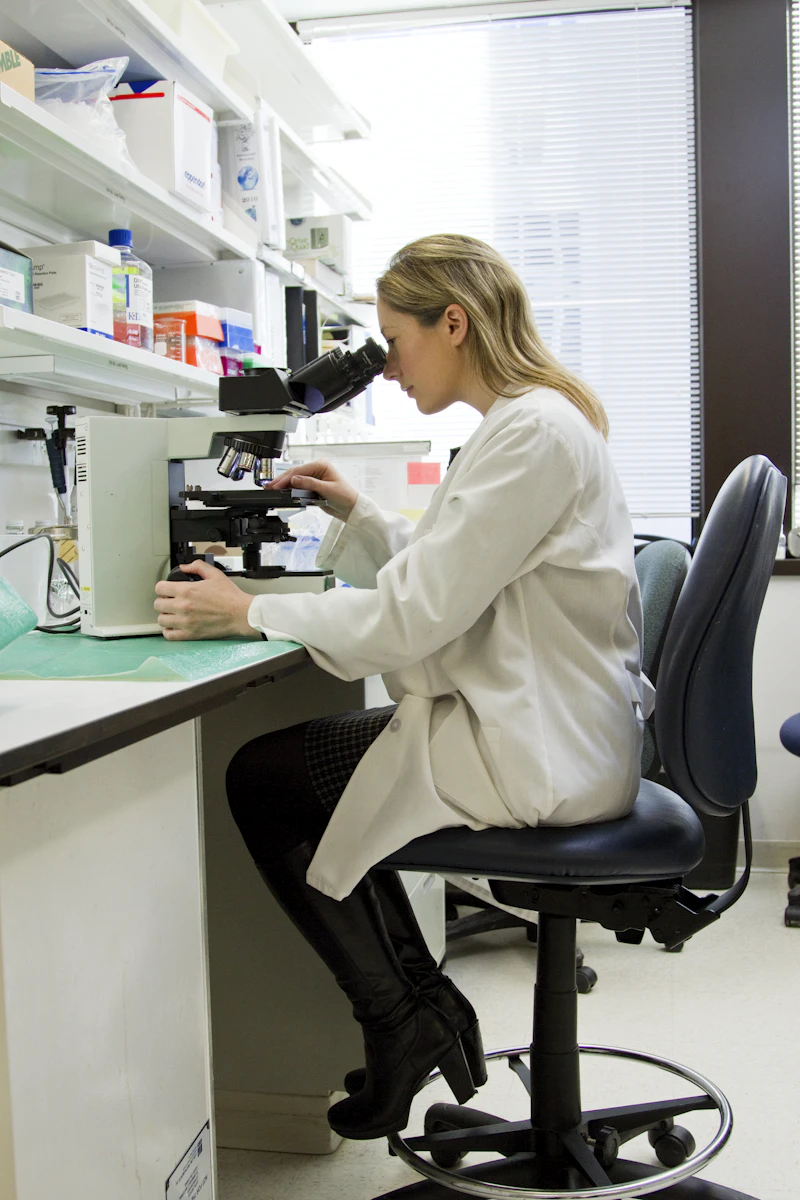
Studying microbial biofilms requires sophisticated methods that can analyze communities at multiple biological levels.
Methodology: A Multi-Omics Approach
Sample Collection
The process begins with recovering microbial cells from surfaces, which presents unique challenges due to the low quantity of viable cells (especially at early biofilm stages) and the complexity of the extracellular matrix that can trap cells and bind biological molecules .
Genomic Analysis
DNA sequencing reveals the composition of microbial communities and the functional potential of their members. Techniques like marker gene analysis (targeting 16S rRNA for prokaryotes) and metagenomics provide insights into community structure and function .
Transcriptomic Profiling
RNA sequencing identifies which genes are actively being expressed under surface interaction conditions, revealing how microbes adapt their behavior when attaching to surfaces.
Proteomic and Metabolomic Analysis
Researchers analyze the proteins and metabolites present in the biofilm, providing insight into the functional molecules and metabolic activities driving surface adaptation .
Data Integration and Computational Modeling
Advanced computational tools integrate these datasets to create comprehensive models of biofilm development and function. Specialized algorithms help overcome challenges like sample contamination, low-quality reads, and limited coverage that are common when working with complex surface samples .
| Omics Level | What It Analyzes | Key Insights Provided | Methodological Challenges |
|---|---|---|---|
| Genomics | DNA sequences | Community composition, functional potential | Low biomass, extracellular DNA interference |
| Transcriptomics | RNA expression | Active adaptation mechanisms | RNA stability, limited starting material |
| Proteomics | Protein profiles | Functional molecules, enzymatic activities | Complex extraction, dynamic range issues |
| Metabolomics | Metabolic compounds | Metabolic activities, signaling molecules | Rapid turnover, chemical diversity |
Results and Significance
This integrated approach has yielded critical insights into microbial life on surfaces. For instance, research has revealed that upon surface attachment, microbes trigger specific biochemical pathways, including alteration of membrane lipid profiles and increased production of siderophores to capture available iron . These adaptations represent the microbial strategy for thriving in the biofilm environment.
The practical applications of this research are far-reaching. In healthcare, it informs strategies to prevent biofilm formation on medical devices, potentially reducing hospital-acquired infections. In industrial settings, it guides the development of surfaces that resist microbial colonization or selectively promote beneficial microbial attachment for biotechnology applications .
The Scientist's Toolkit: Essential Research Solutions
Modern computational biology relies on sophisticated experimental tools that generate high-quality data for computational analysis.
| Tool Category | Specific Examples | Function in Research |
|---|---|---|
| Single-Cell Multiomics Reagents | BD Single-Cell Multiomics Reagents | Enable analysis of hundreds of genes and proteins simultaneously at single-cell level 4 |
| Bioinformatics Software | FlowJo™ v10 Software | Platform for single-cell flow cytometry analysis, widely cited in immunology research 4 |
| Cell Preparation Reagents | BD Cell Separation Reagents | Isolate specific cell populations for downstream analysis 7 |
| Advanced Antibodies | BD Horizon Brilliant™ Ultraviolet Reagents | High-quality antibody conjugates for complex panel design in cell analysis 4 |
| Automated Sample Prep | Sample preparation instruments | Standardize and streamline processing of biological samples for multiomics analysis 4 |
| Custom Reagent Solutions | Pre-aliquoted panels, bulk custom reagents | Provide lot-to-lot consistency for longitudinal studies and specialized applications 4 |
Laboratory Reagents
High-quality reagents for consistent and reproducible experimental results in multiomics studies.
Bioinformatics Software
Advanced computational tools for analyzing complex biological datasets and visualizing results.
Automation Systems
Automated platforms that increase throughput and reduce human error in sample processing.
The Future of Computational Biology: Opportunities and Challenges
Emerging Frontiers
Integration of Nanotechnology and Robotics
The integration of nanotechnology and robotics with computational approaches promises new capabilities, such as nanoparticle-based drug delivery systems guided by predictive models 9 .
CRISPR and Genome Editing
CRISPR technology and genome editing are being enhanced by computational tools that predict editing outcomes with greater accuracy, improving the safety of gene therapies for conditions like sickle cell anemia and cystic fibrosis 9 .
Key Challenges
Data Privacy and Security
Issues of data privacy and security are paramount as genetic information becomes more widely collected and analyzed.
Ethical Implications
Researchers must navigate the ethical implications of increasingly powerful biological technologies. Stronger regulations and advanced encryption methods are being developed to ensure genetic data is used responsibly 9 .
A New Era of Biological Understanding
Computational biology represents far more than a technical specialty—it embodies a fundamental shift in how we understand life itself. By embracing complexity rather than reducing it, this field provides "a roadmap toward personalized, predictive, and preventive medicine" 1 .
The integration of computational and systems approaches is guiding every stage of disease management, from early detection and patient stratification to therapeutic design and monitoring 1 .
As these technologies continue to evolve, their impact will extend beyond human health into agriculture, environmental science, and biotechnology. With ongoing advancements in AI, quantum computing, and multiomics integration, computational biology is poised to unlock even deeper mysteries of living systems.
References
References will be added here manually.