Definitive Protocol for Replacing Contaminated PCR Reagents: A Step-by-Step Guide for Researchers
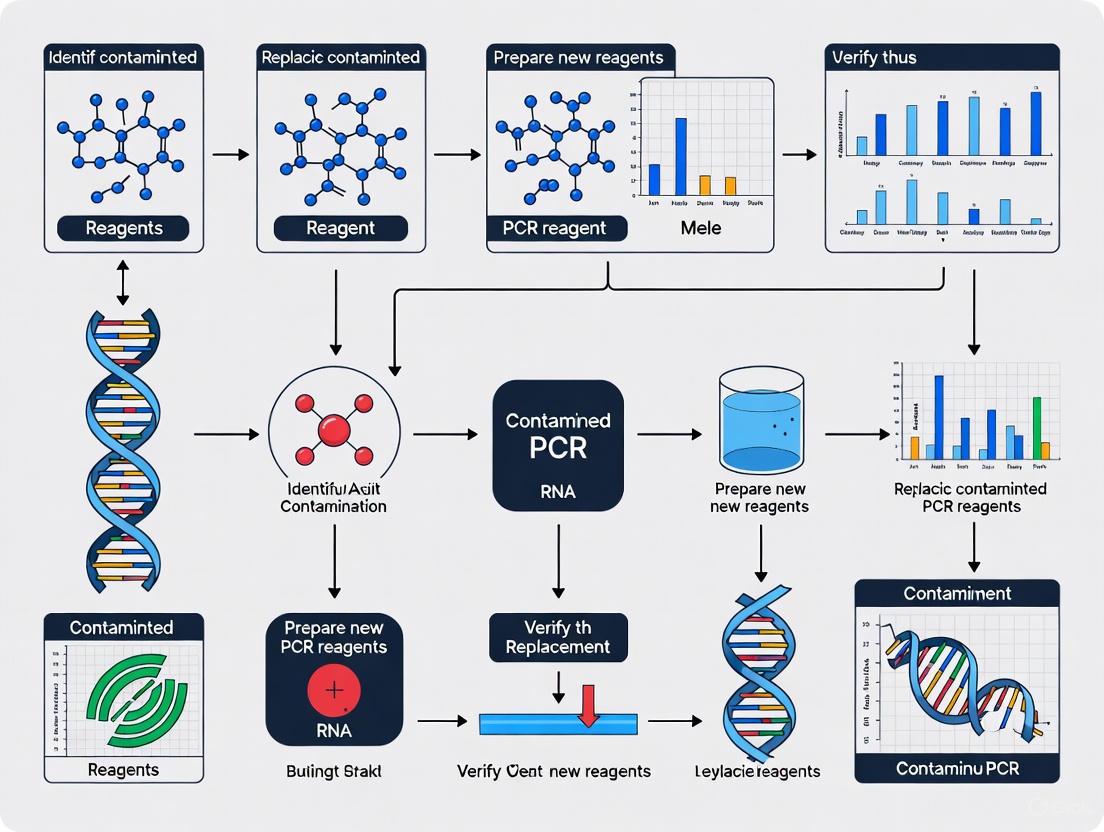
This article provides a comprehensive, evidence-based protocol for identifying, replacing, and preventing contaminated PCR reagents, a critical issue that can compromise experimental integrity and lead to false results.
Definitive Protocol for Replacing Contaminated PCR Reagents: A Step-by-Step Guide for Researchers
Abstract
This article provides a comprehensive, evidence-based protocol for identifying, replacing, and preventing contaminated PCR reagents, a critical issue that can compromise experimental integrity and lead to false results. Tailored for researchers, scientists, and drug development professionals, the content spans from foundational knowledge about contamination sources to a systematic methodological guide for reagent replacement. It further covers advanced troubleshooting for persistent issues and validation techniques to confirm decontamination success, ensuring the restoration of PCR specificity and reliability for sensitive applications in biomedical research and diagnostics.
Understanding PCR Contamination: Sources, Signs, and Impacts on Research Integrity
Polymerase Chain Reaction (PCR) contamination is a critical challenge that can compromise experimental integrity, leading to false-positive or false-negative results. For researchers and drug development professionals, understanding and controlling contamination is paramount, especially within the context of developing protocols to replace contaminated reagents. This guide defines the three primary contamination types—amplicon carryover, cross-contamination, and environmental DNA—and provides actionable troubleshooting and prevention strategies.
Understanding the Types of PCR Contamination
PCR contamination occurs when unintended nucleic acid sequences are introduced into a reaction, providing alternative templates for amplification. The exquisite sensitivity of PCR makes it vulnerable to even minute quantities of contaminants [1].
The table below outlines the three main types of PCR contamination, their sources, and consequences.
| Contamination Type | Primary Sources | Key Characteristics | Potential Consequences |
|---|---|---|---|
| Amplicon Carryover | Aerosolized amplification products from previous PCR runs [1] [2] | Most common source; each PCR can generate up to 10⁹ copies of the target sequence [1] | False-positive results; can lead to retraction of published data [1] |
| Cross-Contamination | Contaminated pipettes, reagents, or sample-to-sample transfer during handling [3] [4] | Often involves splashing or aerosol generation during sample preparation [2] | False-positive results; misinterpretation of sample integrity [4] |
| Environmental DNA | Bacterial DNA in commercial enzyme preparations [5] [4], human DNA, or contaminants from laboratory surfaces [6] | Reagent-derived contamination is a significant concern for low-biomass and microbiome studies [5] [6] | "Kitome" effects; spurious results in microbiome and metagenomic analyses [5] |
Comprehensive Contamination Control Strategies
Effective contamination control requires a multi-pronged approach combining physical separation, chemical decontamination, and enzymatic sterilization.
Physical and Workflow Barriers
- Spatial Separation: Maintain strict, unidirectional separation of pre- and post-amplification areas. All traffic must flow from reagent preparation to sample preparation, amplification, and finally product analysis without backtracking [1] [2].
- Dedicated Equipment and PPE: Each area must have dedicated instruments, disposable devices, laboratory coats, gloves, and aerosol-free pipettes. Technologists must be aware that amplification products can transfer on hair, glasses, jewelry, and clothing [1] [6].
- Aerosol-Reduction Techniques: Use positive-displacement pipettes or aerosol-resistant filtered tips to minimize the creation of aerosols during liquid handling [3] [2].
Chemical and Enzymatic Decontamination
- Surface Decontamination: Regularly clean workstations with a 10% sodium hypochlorite (bleach) solution, followed by ethanol to remove the bleach. Bleach causes oxidative damage to nucleic acids, preventing re-amplification [1] [2].
- Enzymatic Sterilization with UNG/UDG: The dUTP/Uracil-N-Glycosylase (UNG) system is the most widely used method to prevent amplicon carryover [1] [3] [2].
- Principle: dUTP is substituted for dTTP in the PCR master mix. All newly synthesized amplicons then contain uracil.
- Action: Before the next PCR, the UNG enzyme hydrolyzes any uracil-containing contaminating amplicons from previous runs.
- Inactivation: The initial denaturation step (95°C) inactivates UNG, allowing new amplification to proceed with the native DNA template [1].
- UV Irradiation: Exposing reaction setups to UV light (254-300 nm) can induce thymidine dimers in contaminating DNA, rendering it inactive as a template. This method is less effective for short (<300 bp) or GC-rich templates [1].
Experimental Protocols for Identifying Contamination
Protocol 1: Testing Commercial PCR Reagents for Bacterial DNA Contamination
This protocol is essential when establishing a baseline before replacing contaminated reagents, particularly for low-biomass microbiome studies [5].
- Reagent Preparation: Under a laminar flow hood dedicated to PCR preparation, prepare reactions for multiple commercial PCR enzymes according to their manufacturers' recommendations.
- Control Setup:
- Positive Control: Include a reaction with a known bacterial DNA template (e.g., E. coli DNA).
- Test Reactions: For each enzyme, set up a reaction using nuclease-free water instead of a DNA template.
- PCR Amplification: Use primers targeting the bacterial 16S rRNA gene (e.g., V3-4 region). Perform amplification with standard cycling conditions [5]:
- Initial Denaturation: 95°C for 2 minutes
- 45 cycles of:
- Denature: 95°C for 30 seconds
- Annealing: 55°C for 30 seconds
- Elongation: 72°C for 1 minute
- Final Elongation: 72°C for 5 minutes
- Analysis: Run 5 µL of the PCR product on a 1% agarose gel. The presence of a band in the no-template control (NTC) indicates bacterial DNA contamination in the reagent mix. Bands can be excised and sequenced by Sanger sequencing to identify the contaminating species [5].
Protocol 2: Implementing a Contamination-Controlled Amplicon Sequencing (ccAMP-Seq) Workflow
This advanced protocol combines multiple strategies for highly sensitive detection, crucial for validating a clean reagent system [3].
- Physical Isolation: Perform all pre-amplification steps in a standardized, physically isolated laboratory using filter tips to prevent cross-contamination [3].
- Competitive Amplification with Spike-ins: Prior to library preparation, add a defined amount (e.g., 10,000 copies) of synthetic DNA spike-ins to each sample. These spike-ins have the same primer-binding regions as the target but contain significant internal nucleotide differences. They competitively inhibit the amplification of low-level contaminants [3].
- UNG Treatment: Use a master mix containing dUTP and UNG to digest any carryover amplicons, as described in the previous section [3].
- Data Analysis Pipeline: Implement a bioinformatic procedure to remove sequencing reads that match the synthetic spike-in sequences or known contaminant profiles from the final dataset [3].
Frequently Asked Questions (FAQs)
Q1: My No-Template Control (NTC) shows amplification. What does this mean and how should I proceed? Amplification in your NTC indicates contamination. The pattern of amplification can help identify the source:
- If all NTCs are positive with similar Ct values: The contamination is likely in a shared reagent. You should replace all reagents, starting with a new aliquot of water, primers, and master mix [2] [4].
- If NTCs are sporadically positive with varying Ct values: The contamination is likely environmental, from aerosolized amplicons in the lab. Review your physical workflow, decontaminate surfaces with 10% bleach, and ensure proper spatial separation of pre- and post-PCR areas [2].
Q2: How can I prevent contamination when the same target is amplified repeatedly in my lab? The dUTP/UNG system is specifically designed for this scenario. By incorporating dUTP into your master mix and using UNG, you ensure that any amplicons generated in one run will be destroyed before the next PCR, effectively breaking the cycle of carryover contamination [1] [3].
Q3: We work with low-biomass samples. What extra precautions are necessary? Low-biomass samples are disproportionately affected by contamination. In addition to standard practices, you must:
- Include extensive controls: Process multiple negative controls (e.g., blank collection vessels, swabs of the air, aliquots of preservation solution) alongside your samples through DNA extraction and PCR [5] [6].
- Decontaminate thoroughly: Use DNA removal solutions (e.g., bleach, UV-C light) on surfaces and equipment, as autoclaving and ethanol alone do not remove persistent DNA [6].
- Test your reagents: Assume your enzymes and water contain bacterial DNA until proven otherwise via the testing protocol above [5].
The Scientist's Toolkit: Essential Reagents for Contamination Control
The following table lists key reagents and materials crucial for implementing an effective contamination control protocol.
| Item | Function | Key Considerations |
|---|---|---|
| Aerosol-Resistant Filter Tips | Prevents aerosol and liquid from entering pipette shaft, reducing cross-contamination [3] [2] | Use for all liquid handling steps, especially when setting up the PCR master mix. |
| dUTP/UNG Master Mix | Enzymatically destroys carryover amplicons from previous PCRs [1] [2] | Most effective for thymine-rich targets; ensure UNG is fully inactivated during initial denaturation. |
| Nuclease-Free Water | Serves as the solvent for reactions; must be free of contaminating nucleic acids [7] [5] | Aliquot upon receipt to avoid repeated freeze-thaw cycles and exposure to the environment. |
| Sodium Hypochlorite (Bleach) | Oxidatively damages nucleic acids on surfaces, preventing their amplification [1] [2] | Use a fresh 10% dilution for decontamination; allow 10-15 minutes of contact time before wiping. |
| Synthetic DNA Spike-ins | Acts as an internal control and competes with contaminating DNA during amplification [3] | The sequence must be distinct from the target amplicon but contain the same primer-binding sites. |
Troubleshooting Quick Reference Guide
| Observation | Possible Contamination Type | Immediate Actions |
|---|---|---|
| Consistent amplification in all NTCs | Contaminated reagent (water, primers, master mix) [2] [4] | Replace with new aliquots of all reagents. Test reagents individually if possible. |
| Sporadic amplification in NTCs | Environmental amplicon carryover or aerosol contamination [2] | Decontaminate workspaces and equipment with bleach. Review and enforce unidirectional workflow. |
| High background in microbiome data from low-biomass samples | Reagent-derived bacterial DNA (Environmental DNA) [5] [6] | Include and sequence negative control reactions (water blanks). Subtract contaminant sequences found in controls from sample data. |
| Unexpected amplicon size or sequence | Cross-contamination from a different sample or plasmid [8] | Check primer specificity. Use dedicated equipment for different sample types. Ensure proper sample storage. |
FAQ: Interpreting Your No-Template Control (NTC)
What does amplification in my NTC indicate?
Amplification in your No-Template Control (NTC) indicates that contamination has been introduced into your PCR reaction [9] [10]. Since the NTC contains all reaction components except the template DNA, any amplification signal means that the primers are binding to and amplifying non-target, contaminating DNA [10]. This can lead to false positive results in your experimental samples [11].
The pattern of amplification in your NTC replicates can help identify the contamination source [9] [2].
- Reagent Contamination: If the same reagent is contaminated, the NTC replicates will typically show amplification at similar, consistent Ct values because the same amount of contaminating DNA is present in each reaction [9].
- Random Environmental Contamination: If contamination occurs randomly during plate loading from aerosolized DNA, NTCs will show amplification in only some wells, with varying Ct values [9] [2].
The most common sources of contamination include [12] [2] [4]:
- Carryover Contamination: Amplified PCR products from previous reactions [12] [2].
- Contaminated Reagents: One or more reaction components (master mix, water, primers) contain foreign DNA [9] [5].
- Cross-Contamination: Between samples during handling [11] [4].
- Environmental DNA: Exogenous DNA present on laboratory equipment or in the environment [12].
My NTC shows amplification with SYBR Green chemistry. What should I check?
For SYBR Green-based assays, you must distinguish between contamination and primer-dimer formation [9]. Primer dimers are short, nonspecific products formed by primer self-annealing.
- Action: Run a dissociation (melting) curve analysis following amplification. A sharp peak at your target amplicon's melting temperature (Tm) suggests genuine contamination. A peak at a lower Tm, often with a broader shape, indicates primer-dimer formation [9].
Troubleshooting Guide: Contaminated NTC
| Observation | Possible Cause | Recommended Solutions |
|---|---|---|
| Consistent amplification across NTC replicates | Contaminated reagent(s) [9] | Replace all reagents, starting with a new aliquot of water, then master mix, and finally primers/probes [2]. |
| Random amplification in NTC replicates | Cross-contamination during setup or aerosol contamination [9] | Improve technique, use aerosol-filter tips, decontaminate worksurface and equipment with 10% bleach or 70% ethanol [2] [11]. |
| Amplification in SYBR Green NTC, with low Tm peak | Primer-dimer formation [9] | Optimize primer concentrations; use a primer design tool to check for self-complementarity; increase annealing temperature [9] [7]. |
| False positives in specific assays (e.g., bacterial) | Bacterial DNA contamination of PCR enzymes [5] | Use enzymes certified for microbiome studies; include robust NTCs to identify contaminating sequences [5]. |
| Persistent contamination after replacing reagents | Widespread environmental carryover contamination [12] [4] | Implement strict unidirectional workflow (pre- and post-PCR areas); use Uracil-N-Glycosylase (UNG) to degrade carryover products; perform deep cleaning [2] [11]. |
Experimental Protocol: Diagnosing Reagent Contamination
This protocol provides a systematic method to identify which specific reagent is contaminated.
Objective: To pinpoint the source of DNA contamination by testing individual PCR reaction components.
Materials:
- Fresh, sterile microcentrifuge tubes
- Fresh, sterile, nuclease-free water
- Aerosol-filter pipette tips
- All stock reagents: master mix, forward primer, reverse primer, and water
- Thermal cycler
Method:
- Prepare Individual Reaction Tests: Set up a series of NTC reactions as outlined in the table below. Each reaction should be prepared in a fresh tube with fresh tips.
- Thermal Cycling: Run the reactions using your standard PCR cycling conditions.
- Analyze Results: After amplification, check for signal in each reaction. The tube that contains the contaminated reagent will show amplification.
Table: Experimental Setup for Identifying a Contaminated Reagent
| Tube Label | Master Mix | Forward Primer | Reverse Primer | Tested Water | Expected Volume | Contaminant Indicated if Positive |
|---|---|---|---|---|---|---|
| Positive Control | Yes | Yes | Yes | No | 50 µL | N/A |
| Full NTC | Yes | Yes | Yes | Yes | 50 µL | Any component |
| NTC - Master Mix | Yes | No | No | Yes | 50 µL | Master Mix |
| NTC - Forward Primer | No | Yes | No | Yes | 50 µL | Forward Primer |
| NTC - Reverse Primer | No | No | Yes | Yes | 50 µL | Reverse Primer |
| NTC - Water | No | No | No | Yes | 50 µL | Water |
The Scientist's Toolkit: Key Reagents and Solutions
Table: Essential Materials for Contamination Control
| Item | Function in Contamination Control |
|---|---|
| Aerosol-Filter Pipette Tips | Prevents aerosols from contaminating pipette shafts and subsequent reactions, a primary defense against carryover [2] [11]. |
| Uracil-N-Glycosylase (UNG) | Enzyme incorporated into master mixes that degrades PCR products from previous reactions (containing dUTP), preventing carryover contamination [9] [2] [4]. |
| Molecular Grade Water | Sterile, nuclease-free water certified to be free of microbial DNA, used to prepare reagents and reactions [5]. |
| Bleach Solution (10%) | A potent decontaminant for cleaning work surfaces and equipment; freshly diluted bleach is highly effective at degrading DNA [2] [11]. |
| Hot-Start DNA Polymerase | Polymerase that is inactive at room temperature, preventing nonspecific amplification and primer-dimer formation during reaction setup, which can complicate NTC interpretation [7]. |
| DNase/Rnase Decontamination Reagents | Sprays and wipes used to eliminate nucleic acids from benches, equipment, and gloves [2]. |
Workflow: Systematic Response to a Contaminated NTC
The following diagram outlines a logical pathway for responding to and resolving NTC contamination.
FAQs: Identifying and Troubleshooting PCR Contamination
There are four primary sources of contamination in PCR experiments:
- Carryover contamination: This is the most common source, involving PCR products (amplicons) from previous amplification reactions. A single PCR can generate over a billion copies of the target sequence, and if aerosolized, these can easily contaminate new reactions [1] [13].
- Laboratory reagents and consumables: Molecular biology grade water, DNA extraction kits, PCR enzymes, and plasticware can be inherently contaminated with microbial DNA [5] [14] [15].
- Cross-contamination between samples: This can occur during sample preparation, especially when handling multiple specimens that require extensive processing [13].
- Exogenous DNA from the environment: This includes DNA from laboratory personnel (skin cells, hair) present on equipment, lab coats, or gloves [15] [16].
How can I tell if my PCR is contaminated?
The most reliable method to detect contamination is to include a No Template Control (NTC) in your run. The NTC contains all PCR reaction components—master mix, primers, water—except for the DNA template [2] [11].
- No amplification in the NTC: Your reaction is likely clean.
- Amplification in the NTC: Indicates contamination. If the contamination is from a reagent, you will likely see amplification in all NTC wells at similar cycle threshold (Ct) values. If the contamination is random, such as from an aerosol, you may see amplification in only some NTC wells with varying Ct values [2].
My negative control shows amplification. What should I do next?
If you confirm contamination, take these immediate steps [17] [11]:
- Discard all reagents: Dispose of all open reagents and buffers used in the experiment, including master mixes, primers, and water.
- Decontaminate equipment and workspaces: Thoroughly clean pipettes, workbenches, and other surfaces with a solution of 5-10% bleach (sodium hypochlorite), followed by ethanol or water to remove the bleach residue [1] [2] [11].
- Use new consumables: Open new bags of tubes and tip boxes to ensure you are using sterile supplies.
- Audit your workflow: Keep a record of the incident to identify any potential systematic errors in your laboratory practices.
Why is contamination a particularly critical issue in low-biomass microbiome studies?
In samples with a high microbial load (like stool), the sample DNA vastly outweighs any potential contaminating DNA. However, in low-biomass samples (such as tissue, blood, or plasma), the minute amount of target DNA can be dwarfed by the DNA contamination present in the laboratory reagents themselves [15]. This contamination can critically impact results from both 16S rRNA gene sequencing and shotgun metagenomics, leading to incorrect conclusions about the sample's microbiota [14] [15]. One study demonstrated that in samples with a low input of bacterial cells, contamination became the dominant feature of the sequencing results [15].
What are the "kitome" and "mixome"?
- Kitome: This term refers to the contaminating microbial DNA introduced by DNA extraction kits [5] [14].
- Mixome: This refers to the contaminating DNA present in PCR master mixes [14]. Recent research suggests that the PCR master mix can be a primary source of contaminating DNA, sometimes even outweighing the kitome [14].
Experimental Protocols for Detection and Decontamination
Protocol 1: Testing Commercial Reagents for Bacterial DNA Contamination
This protocol, adapted from a 2025 study, allows you to identify contaminating bacterial DNA in your PCR enzymes and reagents using accessible endpoint PCR and Sanger sequencing [5].
Methodology:
- Reagent Preparation: Prepare your PCR master mix under a laminar flow hood dedicated to PCR setup, using aseptic technique.
- Test Reactions: For each commercial PCR enzyme or master mix being tested, set up two reactions:
- Positive Control: A reaction containing a known template (e.g., E. coli DNA) to confirm the primers and reaction work.
- No-Template Control (NTC): A reaction where the template DNA is replaced with molecular-grade water.
- Primers and Cycling: Use universal primers targeting the bacterial 16S rRNA gene (e.g., the V3-4 region). Standard PCR cycling conditions can be used (e.g., initial denaturation at 95°C for 2 min, followed by 45 cycles of 95°C for 30s, 55°C for 30s, and 72°C for 1 min, with a final elongation at 72°C for 5 min) [5].
- Analysis:
- Run the PCR products on a 1% agarose gel. The presence of a band in the NTC lane (at the expected size, e.g., ~500 bp) indicates contamination.
- For identification, the band can be excised from the gel, purified, and submitted for Sanger sequencing. The resulting sequence can be queried against a database like NCBI GenBank to identify the contaminating genus/species [5].
Protocol 2: Enzymatic Decontamination of PCR Master Mix with dsDNase
For low-biomass studies, treating the PCR master mix with a double-stranded DNase (dsDNase) before adding the template can drastically reduce contamination.
Methodology [14]:
- Prepare Master Mix: Combine all PCR reagents except for the DNA template.
- dsDNase Treatment: Add dsDNase to the master mix according to the manufacturer's instructions.
- Incubate: Incubate the mixture at room temperature or 37°C (as per protocol) for a set period to allow the enzyme to degrade contaminating DNA.
- Inactivate Enzyme: Heat-inactivate the dsDNase (often at 95°C for 2-5 minutes) before proceeding.
- Add Template: Once the master mix is cooled, add your sample DNA template and proceed with the PCR amplification. One study showed this treatment can achieve a 99% reduction in contaminating bacterial reads [14].
Protocol 3: Combined UV-EMA Treatment for Sensitive Pan-Bacterial PCR
This protocol is designed for highly sensitive applications like detecting sepsis in blood, where distinguishing a few true pathogen copies from background is essential [18].
Methodology [18]:
- UV Treatment of Reagents: Expose the PCR master mix (without primers) to UV light in a cross-linker or similar device. This damages any contaminating DNA, making it unamplifiable.
- EMA Treatment of Primers: Separately, treat the oligonucleotide primers with Ethidium Monoazide (EMA). Incubate the primers with EMA in the dark, then expose them to bright light (465-475 nm) to activate the compound. This cross-links and inactivates any DNA that may be contaminating the primer stocks.
- Combine and Amplify: Combine the UV-treated master mix with the EMA-treated primers, add the DNA template, and run the PCR.
Table 1: Common Reagent-Derived Bacterial Contaminants and Their Impact
| Contamination Source | Examples of Common Contaminating Genera | Reported Impact |
|---|---|---|
| PCR Master Mix (Mixome) | Acinetobacter, Bacillus, Burkholderia, Pseudomonas [14] [15] | Primary source of contamination in one study; caused >99% of contaminating reads in 16S sequencing [14]. |
| DNA Extraction Kits (Kitome) | Acidobacteria Gp2, Bradyrhizobium, Burkholderia, Mesorhizobium, Methylobacterium, Sphingomonas [15] | Composition varies by kit and batch; can dominate sequence data in low-biomass samples [15]. |
| Laboratory Water & Buffers | Acinetobacter, Alcaligenes, Herbaspirillum, Ralstonia [15] | Ubiquitous in the environment; a potential confounder in all molecular experiments [15]. |
| Human-Associated (Skin/Environment) | Corynebacterium, Propionibacterium, Streptococcus [15] | Commonly introduced via laboratory personnel, gloves, or hair [15] [16]. |
Table 2: Summary of Decontamination Methods for PCR Reagents
| Method | Mechanism of Action | Advantages | Limitations / Considerations |
|---|---|---|---|
| dsDNase Treatment [14] | Enzymatically degrades double-stranded DNA contaminants. | Simple, effective (up to 99% reduction reported), does not require reagent modification. | Requires an incubation and heat-inactivation step prior to PCR. |
| UNG (Uracil-N-Glycosylase) [1] [2] | Degrades DNA from previous PCRs that contain dUTP (instead of dTTP). | Prevents carryover contamination; active at room temperature. | Requires using dUTP in all PCR mixes; less effective on GC-rich targets; residual activity may degrade new products if not fully inactivated [1]. |
| UV Irradiation [1] [18] | UV light induces thymidine dimers, fragmenting DNA and preventing amplification. | Simple, inexpensive, does not modify reagents. | Inefficient for short or GC-rich templates; can damage primers/polymerase if overexposed [1] [18]. |
| Combined UV-EMA [18] | UV treats master mix; EMA (a DNA-intercalating dye) treats primers upon light exposure. | Effective for low-copy-number detection; targets multiple contamination sources. | More complex workflow; requires optimization of EMA concentration to avoid inhibition. |
Workflow: A Proactive Strategy to Minimize PCR Contamination
The following diagram illustrates a unidirectional workflow to physically separate PCR processes and prevent carryover contamination.
The Scientist's Toolkit: Key Reagents and Materials
Table 3: Essential Research Reagent Solutions for Contamination Control
| Item | Function in Contamination Control |
|---|---|
| Aerosol-Resistant Filter Tips | Creates a barrier between the pipette and the liquid, preventing aerosol contamination from entering samples and reagents [2] [17] [16]. |
| Molecular Biology Grade Water | Certified nuclease-free and low in bacterial DNA, used for preparing all reagents and reactions [5]. |
| Uracil-N-Glycosylase (UNG) | An enzyme incorporated into some master mixes to selectively destroy carryover contamination from previous PCRs [1] [2]. |
| Double-Stranded DNase (dsDNase) | An enzyme used to pre-treat PCR master mixes to degrade contaminating microbial DNA before template addition [14]. |
| Bleach (Sodium Hypochlorite) | A chemical decontaminant (typically 5-10% solution) used to clean work surfaces and equipment by oxidizing and degrading nucleic acids [1] [2] [11]. |
| Ethidium Monoazide (EMA) / Propidium Monoazide (PMA) | Photoreactive DNA-intercalating dyes used to treat reagents (like primers) to cross-link and inactivate contaminating DNA upon light exposure [18]. |
| Aliquoted Reagents | Dividing stocks of enzymes, primers, dNTPs, and water into single-use volumes to prevent widespread contamination of entire stocks [2] [17] [16]. |
Bacterial DNA contamination in commercial PCR enzymes is a critical yet often overlooked issue that can compromise the integrity of molecular biology research, particularly in sensitive applications like low-biomass microbiome studies. This contamination, originating from environmental bacterial DNA during manufacturing, can lead to false positives and erroneous conclusions. This technical support center provides researchers, scientists, and drug development professionals with actionable troubleshooting guides, FAQs, and detailed protocols to identify, prevent, and address this problem within the broader context of replacing contaminated PCR reagents.
FAQs: Understanding Contamination
1. What is the primary source of bacterial DNA contamination in PCR? The primary source is the commercial PCR reagents themselves, including the enzymes and master mixes. A 2025 study found bacterial DNA contamination in seven out of nine tested commercial PCR enzymes [5]. This environmental bacterial DNA is introduced during the manufacturing process.
2. How does contaminating DNA affect my microbiome research? In low-biomass microbiome studies (e.g., studying tissues previously thought to be sterile), the contaminating bacterial DNA from your reagents can be amplified and sequenced instead of your target DNA. This creates a "kitome" – a background of contaminating sequences that can be misinterpreted as a genuine biological signal, leading to false positives [5].
3. Can I simply use a DNase treatment to clean my PCR reagents? While DNase I is a powerful tool for degrading contaminating DNA, its use directly in PCR master mixes is complex. DNase I requires specific buffer conditions (Mg2+ and Ca2+) for optimal activity [19]. Furthermore, the enzyme must be thoroughly inactivated before PCR begins, as it will otherwise degrade your target DNA. Specialized kits are available for this purpose [19].
4. What are the best laboratory practices to prevent contamination? Key practices include establishing separate, dedicated pre- and post-amplification laboratory areas, using aerosol-resistant pipette tips, and regularly decontaminating surfaces with 10% bleach solution followed by 70% ethanol [2] [1]. Always include negative control reactions (No Template Controls) to monitor for contamination [2].
5. Are there enzymatic methods to prevent carryover contamination? Yes. Using the enzyme Uracil-N-Glycosylase (UNG) is a common strategy. This method involves incorporating dUTP instead of dTTP in your PCR. UNG then degrades any PCR products (amplicons) from previous reactions that contain uracil, preventing their re-amplification. The UNG is inactivated during the high-temperature steps of the PCR cycle [1].
Troubleshooting Guide: Identifying and Resolving Contamination
| Problem Description | Possible Causes | Recommended Solutions |
|---|---|---|
| Amplification in No-Template Control (NTC) | Contaminated reagents (master mix, primers, water) or contaminated laboratory environment [2]. | Test all reaction components individually in NTCs. Replace contaminated reagents. Implement stricter physical separation of pre- and post-PCR areas [2] [1]. |
| High background or nonspecific bands in gel electrophoresis | Contaminating DNA or nonspecific amplification due to non-optimized reaction conditions [5] [7]. | Run NTC to confirm/rule out DNA contamination. Use hot-start DNA polymerases to increase specificity. Optimize Mg2+ concentration and annealing temperature [7]. |
| Inconsistent results between replicates in low-biomass samples | Low-level, stochastic contamination from reagents or environment [5]. | Include a high number of negative controls. Use statistical/bioinformatic tools to identify and subtract contaminant sequences found in controls from your dataset [5]. |
| False positives in qPCR experiments | Carryover contamination from amplified products (amplicons) from previous runs [2] [1]. | Implement a one-way workflow. Use the UNG enzymatic system to degrade carryover contaminants containing uracil [2] [1]. |
Quantitative Data: Assessing the Scale of the Problem
The following table summarizes key quantitative findings from a 2025 study that systematically evaluated bacterial DNA contamination in nine commercial PCR enzymes from five manufacturers [5].
Table 1: Summary of Contamination Data from Commercial PCR Enzymes [5]
| Metric | Finding | Experimental Detail |
|---|---|---|
| Contamination Prevalence | 7 out of 9 enzymes tested positive | Tests performed with no-template controls (NTCs) using bacterial 16S rRNA gene primers [5]. |
| Detection Method | Endpoint PCR & Sanger Sequencing | Accessible method confirming contamination is detectable without expensive NGS [5]. |
| Contaminant Diversity | Variety of bacterial species | Different enzymes were contaminated with different dominant bacterial DNAs [5]. |
| Recommended Action | Include negative controls in all experiments | Essential for identifying contaminating sequences for exclusion during analysis [5]. |
Experimental Protocols
Protocol 1: Testing Commercial PCR Reagents for Bacterial DNA Contamination
This protocol allows you to validate your own reagents for bacterial DNA contamination using accessible methods [5].
Materials:
- PCR enzymes/master mixes to be tested
- Sterile, PCR-grade water
- Primers targeting the bacterial 16S rRNA gene (e.g., V3-4 region: Forward:
TCGTCGGCAGCGTCAGATGTGTATAAGAGACAGCCTACGGGNGGCWGCAG, Reverse:GTCTCGTGGGCTCGGAGATGTGTATAAGAGACAGGACTACHVGGGTATCTAATCC) [5] - PCR tubes and thermal cycler
- Gel electrophoresis equipment
Method:
- Reaction Setup: Under a laminar flow hood dedicated to PCR setup, prepare a no-template control (NTC) for each PCR enzyme/master mix to be tested. The reaction should contain all components except the DNA template, which is replaced with an equal volume of sterile water [5].
- PCR Amplification: Run the PCR using a standard cycling protocol for 16S amplification. An example protocol is:
- Initial Denaturation: 95°C for 2 min
- 45 cycles of:
- Denature: 95°C for 30 s
- Annealing: 55°C for 30 s
- Elongation: 72°C for 1 min
- Final Elongation: 72°C for 5 min [5]
- Analysis: Analyze 5 µL of the PCR product by gel electrophoresis. The presence of a band of the expected size (~500 bp for V3-4) in the NTC indicates bacterial DNA contamination in that reagent [5].
- Identification (Optional): The contaminating band can be excised from the gel, purified, and identified by Sanger sequencing [5].
Protocol 2: Decontaminating RNA Samples with DNase I
This protocol is suitable for removing DNA contamination from RNA preparations prior to RT-PCR, a common step in gene expression analysis.
Materials:
- RNA sample
- DNase I (e.g., 1 U/µL)
- 10X DNase I Reaction Buffer (100 mM Tris pH 7.5, 25 mM MgCl₂, 5 mM CaCl₂) [19]
- Stop Solution (e.g., 20 mM EGTA, pH 8.0) or DNase Inactivation Reagent
Method:
- Prepare Reaction: For a 50 µL reaction, combine:
- RNA sample (up to 10 µg)
- 5 µL of 10X DNase I Reaction Buffer
- 1-2 µL of DNase I (2-4 units per ~10 µg RNA)
- Add sterile water to 50 µL final volume [19].
- Incubate: Mix gently and incubate at 37°C for 15-30 minutes.
- Inactivate DNase I:
- Option A (Chemical Inactivation): Add Stop Solution to a final concentration of 2-5 mM EGTA and incubate at 75°C for 10 minutes [19].
- Option B (Commercial Kits): Add DNase Inactivation Reagent, mix, and pellet the reagent by centrifugation according to the manufacturer's instructions. This method is efficient and avoids heat-induced RNA degradation [19].
- Proceed: The treated RNA is now ready for downstream applications like RT-PCR.
Workflow Diagrams
Diagram 1: Contamination identification and response workflow.
Diagram 2: Unidirectional workflow to prevent amplicon contamination.
The Scientist's Toolkit: Research Reagent Solutions
Table 2: Key Reagents for Contamination Management
| Item | Function | Considerations |
|---|---|---|
| Hot-Start DNA Polymerase | Reduces nonspecific amplification and primer-dimer formation by requiring heat activation. | Essential for improving specificity in sensitive PCR applications [7]. |
| UNG (Uracil-N-Glycosylase) | Enzymatically destroys carryover contamination from previous PCRs by degrading uracil-containing DNA. | Requires using dUTP in place of dTTP in all PCR mixes [1]. |
| DNase I, RNase-free | Degrades contaminating DNA in RNA samples or can be used to treat some reagents. | Requires specific buffer (Mg²⁺, Ca²⁺) and must be fully inactivated before PCR [19]. |
| Aerosol-Resistant Pipette Tips | Prevents aerosolized contaminants from entering pipette shafts and contaminating subsequent samples. | A critical physical barrier for maintaining a contamination-free workspace [2]. |
| 10% Bleach Solution | Effective chemical decontaminant that causes oxidative damage to nucleic acids on surfaces. | Fresh dilutions should be made weekly as bleach is unstable [2] [1]. |
| Homemade Master Mix | A cost-effective alternative that offers full control over individual reagent quality and sourcing. | Requires bulk purchasing and validation but avoids proprietary additives [20]. |
In molecular biology research, few issues are as pervasive and costly as contamination in Polymerase Chain Reaction (PCR) experiments. For researchers and drug development professionals, the consequences of contamination extend far beyond a simple failed experiment. False positives resulting from contamination can lead to misinterpreted data, wasted resources, and flawed scientific conclusions that may undermine entire research programs. The exponential amplification power of PCR, while being its greatest strength, also makes it exceptionally vulnerable to minute contaminants, where even a single copy of foreign DNA can generate significant false results [21].
Within the specific context of replacing contaminated PCR reagents, understanding the sources, prevention methods, and remediation protocols becomes paramount. This technical support center provides comprehensive troubleshooting guides and FAQs to help researchers identify, address, and prevent contamination issues, thereby safeguarding the integrity of their experimental data and ensuring the reliability of their research outcomes.
What is PCR Contamination?
PCR contamination occurs when unwanted DNA sequences are introduced into a PCR reaction, leading to the amplification of non-target molecules. This is primarily categorized into two types:
- Carryover Contamination: The most common source, involving previously amplified PCR products from earlier experiments contaminating new reactions [11] [22]. These products can become aerosolized when opening tubes or pipetting, creating microscopic droplets that spread throughout the laboratory environment.
- Cross-Contamination: Physical transfer of DNA between samples, reagents, and equipment during experimental setup [23]. This can include contamination from positive controls, cloned DNA handled in the laboratory, or sample-to-sample contamination during processing.
Quantitative Impact of Contamination
The following table summarizes the documented consequences of PCR contamination in research and clinical settings:
Table 1: Documented Impacts of PCR Contamination
| Impact Category | Specific Consequences | Documentation Source |
|---|---|---|
| Data Integrity | False positive results; Incorrect identification of target sequences; Detection of non-existent targets | [23] [11] |
| Research Efficiency | Wasted time troubleshooting; Need to repeat experiments; Discarding of contaminated reagents | [22] |
| Clinical/Diagnostic | Unnecessary additional tests and treatments; Psychological distress to patients; Inflated asymptomatic infection statistics | [23] [24] |
| Resource Allocation | Unnecessary consumption of personal protective equipment; Temporary closure of facilities; Unnecessary contact tracing and testing | [24] |
| Analytical Sensitivity | Reduced ability to detect low-abundance targets due to dilution of target DNA by contaminants | [11] |
In one documented case from the entertainment industry during COVID-19 screening, 22.6% of positive tests were subsequently identified as false positives upon retesting, yielding a positive predictive value of only 77.4% in this low-prevalence setting [24].
Troubleshooting Guide: Identifying and Resolving Contamination
FAQ: Common Contamination Scenarios
Q: How can I determine if my PCR reagents are contaminated? A: Systematic testing is required. First, minimize environmental sources by thoroughly cleaning your workspace and using dedicated equipment. Then, substitute each old reagent with a new, previously unopened reagent while running negative controls. The specific substitution that eliminates contamination identifies the contaminated reagent, which should be discarded immediately [22].
Q: My negative control shows amplification. What steps should I take? A: First, determine the amplification cycle. Late amplification (beyond cycle 34 for SYBR Green-based assays or cycle 38 for probe-based assays) may indicate primer-dimer formation rather than true contamination. Perform melt curve analysis to confirm [21]. If contamination is confirmed:
- Replace all reagents and stock buffers
- Thoroughly clean PCR preparation areas with 10% bleach and UV irradiation
- Check for probe degradation using signal-to-noise assessment, mass spectrometry, or a fluorometric scan [21]
- Use fresh aliquots of all reagents
Q: What are the less obvious sources of contamination I might be missing? A: Beyond common sources, consider these often-overlooked contaminants:
- Interior of pipettes (from improper pipetting techniques or placing pipettes horizontally with liquid in tips) [23]
- Lab coats worn in post-PCR areas [23]
- Reagents contaminated during manufacturing [24]
- DNA present on laboratory equipment and in reagents used for DNA extraction [25]
- Contaminants on skin, hair, watches, or jewelry [23]
Q: How can I prevent contamination when using universal primers for bacterial identification? A: Bacterial ribosomal sequences (e.g., 16S rRNA) can be amplified from virtually any bacterial source, including Taq polymerases themselves. If positive No Template Control (NTC) is observed:
- Test with different master mixes to rule out the master mix as the contamination source
- Choose unique sequences from hypervariable regions of the 16S rRNA gene
- Use blocking oligos or clamps to block amplification of common sequences
- Perform BLAST searches of all primer and probe sequences to check for cross-reactivity [21]
Contamination Identification and Resolution Workflow
The following diagram outlines a systematic approach to identifying and resolving PCR contamination:
Prevention Protocols: Establishing a Contamination-Free Workflow
Physical Laboratory Setup and Workflow
Maintaining distinct workspaces is crucial for minimizing PCR contamination. The following physical separation strategy is recommended by multiple sources [21] [25] [11]:
Table 2: Recommended Laboratory Zoning for PCR Work
| Work Area | Purpose | Equipment & Practices |
|---|---|---|
| Reagent Preparation Area | Handling and preparing PCR reagents only | Dedicated pipettes, tips, and lab coats; aliquoting reagents; UV-equipped laminar flow hood |
| Sample Preparation Area | Sample preparation and DNA extraction | Separate from reagent area; dedicated equipment; careful sample handling |
| PCR Amplification Area | Thermal cycling and amplification | PCR machines located here; no reagent preparation |
| Post-PCR Analysis Area | Gel electrophoresis, product analysis | Located away from pre-PCR areas; dedicated equipment; NEVER bring items back to pre-PCR areas |
A unidirectional workflow should be maintained, moving from clean (reagent preparation) to dirty (post-PCR analysis) areas, with no backtracking [11]. Personnel should change gloves and potentially lab coats when moving between areas to prevent transfer of contaminants [23].
Research Reagent Solutions
Table 3: Essential Reagent Management Practices
| Reagent Solution | Function | Implementation Protocol |
|---|---|---|
| Aliquoting Strategy | Prevents contamination of entire reagent stocks | Divide reagents into single-use amounts; use one aliquot at a time [11] [22] |
| Hot-Start Polymerases | Increases specificity by reducing non-specific amplification at room temperature | Use polymerases that remain inactive until high-temperature activation [7] [23] |
| Uracil-DNA-Glycosylase (UNG) | Reduces carryover contamination from previous PCR products | Incorporate UNG into master mix; often included in commercial kits [23] |
| Blocking Oligos/Clamps | Suppresses amplification of contaminating sequences when using universal primers | Design oligos complementary to common contaminants; use DNA/LNA chimeric strands for higher specificity [21] [26] |
| Sterile, Filter Tips | Prevents aerosol contamination from entering pipettes | Use for all pipetting steps; never use non-filter tips [21] [27] |
Procedural Safeguards
- Master Mix Preparation: Always prepare a master mixer when setting up multiple reactions and add the template last to minimize handling and potential contamination [22].
- Negative Controls: Always include negative control reactions (containing all PCR components except template DNA) in every experiment to detect contamination [11] [27].
- Equipment Dedication: Maintain separate sets of pipettes, pipette tips, lab coats, and other equipment for pre-PCR and post-PCR work [25] [11]. Clearly label these items to prevent cross-use.
- Proper Pipetting Technique: Use gentle, precise pipetting without flicking tubes open to minimize aerosol creation [23] [22].
Advanced Techniques for Stubborn Contamination Problems
Molecular Solutions for Persistent Issues
For contamination problems that persist despite implementing standard protocols, consider these advanced techniques:
Blocker Method for Mishybridization When false positives result from primer binding to contaminating sequences with similar homology, blocker sequences can be employed. These are nucleic acid sequences designed to be complementary to the contaminating sequence, which suppress errors by blocking mishybridization of the primer [26]. Recent research demonstrates that a mixture of multiple blocker sequences can effectively suppress PCR amplification errors even with only partial information about contaminating sequences [26].
Homotrimeric Nucleotide Blocks for UMI Errors In sequencing applications using Unique Molecular Identifiers (UMIs), PCR errors can lead to inaccurate molecule counting. Synthesizing UMIs using homotrimeric nucleotide blocks (three identical nucleotides in a block) provides an error-correcting solution that allows absolute counting of sequenced molecules through a 'majority vote' correction method [28].
Comprehensive Decontamination Protocol
When contamination is confirmed, implement this comprehensive decontamination protocol:
- Discard contaminated materials: Dispose of all reagents, enzymes, and consumables suspected of contamination [11] [22]
- Surface decontamination: Clean all work surfaces, pipettes, centrifuges, vortexers, and equipment with 10% bleach (with minimum 10 minutes contact time), followed by ethanol or sterile water [21] [23]
- UV irradiation: Leave pipettes and open workspaces under UV light in a cell culture hood overnight [25] [22]
- Equipment servicing: Consider having pipettes professionally serviced and recalibrated, as interiors can become contaminated [23]
- Replace consumables: Use new, unopened boxes of filter tips, PCR tubes, and other disposables [22]
Addressing PCR contamination requires both technical solutions and a cultural commitment to meticulous laboratory practice. The real-world costs of false positives and misinterpreted data extend beyond individual experiments to impact research credibility, resource allocation, and in clinical settings, patient care. By implementing the systematic approaches outlined in this guide—including proper laboratory zoning, rigorous reagent management, comprehensive controls, and effective decontamination protocols—research teams can significantly reduce contamination risks.
Within the specific context of replacing contaminated PCR reagents, the protocols described here provide a roadmap for both remediation and prevention. Establishing these practices as standard laboratory operating procedures ensures the generation of reliable, reproducible data and protects the significant investment of time and resources dedicated to PCR-based research and development.
Systematic Decontamination: A Step-by-Step Protocol for Replacing Reagents and Restoring Your Lab
Frequently Asked Questions
How can I confirm my PCR reagents are contaminated?
A systematic approach using your reaction controls is the most reliable method to confirm contamination.
- Check Your No-Template Control (NTC): The primary indicator of reagent contamination is amplification in your NTC, which contains all PCR components except the template DNA [29] [30]. A positive NTC signal confirms that one or more of your reagents are contaminated with amplifiable DNA.
- Test Reagents Individually: To identify the specific contaminated reagent, create a series of tests where each individual reagent (water, master mix, primers, etc.) is used as the sole "template" in a PCR reaction [30]. The reagent that produces an amplification signal is the source of contamination.
- Monitor for Inconsistent Results: Unexplained false positives, high background, or a loss of sensitivity in detecting low-abundance targets can also indicate a contamination issue, even if the NTC appears clean [31] [30].
Contamination can originate from various sources, often from the production process or laboratory handling.
- Bacterial DNA: Enzymes like Taq polymerase are often purified from bacteria and can be contaminated with host genomic DNA (e.g., E. coli DNA) [31].
- Fungal and Environmental DNA: Trace amounts of fungal DNA have been identified in various commercially available reagents, including lyophilized primers, TaqMan probes, and master mix solutions [30].
- Human DNA: Reagents and consumables can sometimes be contaminated with human DNA during manufacturing or handling [32].
- Previous Amplicons (Carryover Contamination: PCR products from previous reactions are a major source and can contaminate master stocks if proper laboratory workflow is not followed [29] [33].
What is the first thing I should do upon confirming reagent contamination?
Your immediate actions should focus on preventing the spread of contamination.
- Quarantine Contaminated Batches: Immediately remove the contaminated reagent batches from your workspace and clearly label them as contaminated to prevent further use [33].
- Decontaminate Your Workspace: Clean your pre-PCR area, including pipettes, tube racks, and surfaces, with a 10% bleach solution (made fresh daily) or a validated commercial DNA-destroying decontaminant [29] [34]. UV irradiation in closed hoods can also be used for decontamination [29] [34].
- Assemble Your Decontamination Toolkit: Before proceeding with experiments, ensure you have the necessary tools and reagents for decontamination, as detailed in the following sections.
The table below summarizes the types of contaminants and how to identify them.
| Contamination Source | Common Culprits | How to Identify |
|---|---|---|
| Bacterial Genomic DNA [31] | Polymerases, dNTPs, buffers | Positive signal in NTC with bacterial-targeting primers (e.g., 16S rRNA). |
| Fungal DNA [30] | Master mixes, lyophilized primers, probes | Positive signal in NTC with pan-fungal or specific fungal primers. |
| Previous Amplicons (Carryover) [29] [32] | Aerosols on lab surfaces, equipment | Positive NTC for a specific target recently amplified in the lab. |
| Cross-Sample Contamination [29] | Improperly stored samples, shared equipment | Sporadic, unexpected positive results across different experiments. |
The Scientist's Toolkit: Research Reagent Solutions
The following table lists essential items for your decontamination toolkit.
| Tool/Reagent | Function | Key Considerations |
|---|---|---|
| dsDNase Decontamination Kit [31] [35] | Enzymatically degrades double-stranded DNA contaminants in PCR master mixes. | Can be used in the presence of primers/probes; is heat-inactivated to preserve your template [31]. |
| 10% Sodium Hypochlorite (Bleach) [29] [34] | Chemical decontamination of laboratory surfaces and equipment. | Must be made fresh daily; requires >10 min contact time; can damage some metals/plastics [34]. |
| UV Lamp [29] [34] | Irradiation induces thymidine dimers, rendering contaminating DNA unamplifiable. | Most effective in closed cabinets (e.g., laminar flow hoods) for safety and efficacy [34]. |
| Filter Pipette Tips [29] [34] | Create an aerosol barrier to prevent micropipettor contamination. | Essential for all pre-PCR pipetting steps; confirm fit with your pipette brand [34]. |
| Uracil-N-Glycosylase (UNG) [32] | Prevents carryover contamination from previous PCR amplicons. | Only works on amplicons incorporating dUTP; ineffective on native DNA contaminants [32]. |
Experimental Protocol: Reagent Decontamination with dsDNase
This protocol is adapted from published methodologies for eliminating DNA contamination from PCR reagents [30] [35].
Principle: A recombinant double-strand specific DNase (dsDNase) is used to digest contaminating DNA in master mixes or individual reagents. The enzyme is then thermally inactivated before the addition of your template DNA, ensuring no loss of target.
Materials Needed:
- PCR Decontamination Kit (e.g., containing dsDNase and DTT) [31] [35]
- Your contaminated PCR master mix (without template)
- Filter-sterilized Tris buffer (e.g., 20 mM Tris-HCl, 5 mM MgCl₂, pH 8) [30]
- Thermal cycler or water bath
Step-by-Step Procedure:
Prepare Decontamination Mix: In a sterile, nuclease-free tube, combine the following components on ice:
Incubate for Digestion: Mix the reaction thoroughly by gentle vortexing and brief centrifugation. Incubate at 37–40°C for 20–30 minutes to allow the dsDNase to digest contaminating DNA [30] [35].
Heat-Inactivate the Enzyme: Transfer the tube to a thermal cycler or heat block and incubate at 60–65°C for 15–20 minutes. This step irreversibly inactivates the dsDNase [31] [30].
Proceed with PCR: The decontaminated master mix is now ready for use. Add your template DNA and perform the PCR amplification under standard conditions.
Validation:
- Always run a No-Template Control (NTC) using the decontaminated master mix to confirm the success of the decontamination (a flat line in qPCR or no band in gel electrophoresis) [35].
- Run a positive control with a known, low-copy-number template to verify that PCR sensitivity has not been compromised [35].
Workflow: Confirming and Addressing Reagent Contamination
The following diagram illustrates the logical workflow for handling suspected PCR reagent contamination.
Important Note: This guide is for Research Use Only. All protocols should be validated in your own laboratory context. Always refer to the manufacturer's instructions for specific reagents and equipment.
FAQ: Managing Contaminated PCR Reagents
What is the "Nuclear Option" and when should I use it?
The "Nuclear Option" is a comprehensive protocol for the safe and complete disposal of PCR reagents, aliquots, and consumables suspected of widespread contamination. This decisive step is recommended when you have persistent contamination that cannot be resolved through standard decontamination methods (such as UV irradiation or UNG treatment) or when you cannot identify the specific contaminated source within your inventory. It involves systematically removing and properly disposing of all potential contamination sources to establish a clean baseline for your PCR work [1] [2].
Which specific reagents and materials should be discarded?
When executing this protocol, you should target all reagents and materials that are inexpensive, difficult to decontaminate, or could act as potential reservoirs for amplicons. A systematic approach is crucial. The table below summarizes the key items and the rationale for their disposal.
Table: Reagents and Materials for Disposal in the "Nuclear Option"
| Item Category | Specific Examples | Disposal Rationale |
|---|---|---|
| Liquid Reagents | Primer stocks, dNTP mixes, water, buffer aliquots, master mix aliquots | Aerosols can contaminate even closed tubes; difficult to verify as contamination-free [2] [16]. |
| Chemical Reagents | Guanidinium thiocyanate (GTC)-containing extraction reagents | Particularly hazardous; improper disposal can release toxic cyanide gas [36]. |
| Consumables | Opened boxes of pipette tips, PCR tubes, strips | Low-cost items can be easily contaminated by ambient aerosols; not worth the risk of re-use [16]. |
| Other Supplies | Any aliquoted reagents shared across multiple users, gloves, lab coats | Contamination can be transferred via contact with surfaces, hair, or contaminated PPE [1] [6]. |
How do I safely dispose of contaminated liquid reagents?
The disposal of liquid chemical waste must follow strict institutional and regulatory guidelines. Never dispose of hazardous liquids down the sink or in regular trash [37].
- Segregation is Critical: Collect waste in chemically compatible, leak-proof containers. Keep different types of hazardous waste segregated (e.g., corrosive acids separate from flammable solvents) to prevent dangerous reactions [37] [38].
- Proper Labeling: Every container must be clearly labeled with a "Hazardous Waste" tag, a description of the waste, its hazards, and the location where it was generated [37].
- Special Case - Guanidinium Thiocyanate (GTC): This common nucleic acid extraction reagent requires special attention. When mixed with bleach, it can release toxic cyanide gas. Alternative disposal methods identified for GTC-containing waste include:
- Encapsulation with cement for small volumes.
- Chemical precipitation of the thiocyanate.
- Incineration using facilities equipped with fluid injection systems [36].
- Institutional Protocols: Always coordinate with your institution's Environmental Health and Safety (EHS) department for pick-up and final disposal [37].
How should I handle contaminated solid waste and plastics?
Solid waste, such as contaminated tips, tubes, and gloves, must also be handled as hazardous material.
- Designated Containers: Use dedicated, labeled containers (e.g., blue drums with "Chemically Contaminated Material Only" stickers) for laboratory debris [38].
- What to Include: Place used pipette tips, contaminated gloves, and other disposable labware in these containers.
- What to Exclude: Do not place sharps, bulk liquids, or intact vials of chemicals in these general waste streams; these items require specific disposal procedures [38].
What steps should I take after disposal to prevent recurrence?
The "Nuclear Option" is not just about disposal; it is about creating a fresh start with more rigorous practices.
- Decontaminate Workspaces: Thoroughly clean all work surfaces, pipettes, centrifuges, and equipment with a 10% bleach (sodium hypochlorite) solution, followed by ethanol to remove the bleach residue. Bleach causes oxidative damage to DNA, rendering it unamplifiable [1] [2].
- Implement a New Aliquoting System: When you acquire new reagents, immediately aliquot them into single-use volumes. This prevents the entire stock from being contaminated if one experiment fails and minimizes freeze-thaw cycles [2] [16].
- Reinforce Physical Barriers: Re-establish and enforce strict unidirectional workflow from pre-amplification (reagent preparation) to post-amplification (product analysis) areas, with dedicated equipment, lab coats, and supplies for each area [1] [39].
- Introduce UNG Treatment: As a new standard practice, use a master mix containing uracil-N-glycosylase (UNG) and substitute dUTP for dTTP in your PCRs. This enzymatic system selectively degrades carryover amplicons from previous reactions before thermocycling begins, providing a powerful chemical barrier to contamination [1] [2].
Diagram Title: Nuclear Option Workflow
Research Reagent Solutions for a Clean Restart
After performing the "Nuclear Option," rebuilding your PCR setup with the right tools is essential for long-term success. The following table lists key solutions and their functions for maintaining a contamination-free environment.
Table: Key Reagents and Solutions for Contamination Control
| Item | Primary Function | Considerations |
|---|---|---|
| UNG/dUTP System | Enzymatically degrades carryover amplicons from previous PCRs containing uracil [1] [2]. | Most effective for thymine-rich targets. Requires optimization of dUTP concentration. |
| Sodium Hypochlorite (Bleach) | Oxidizes and fragments nucleic acids on surfaces and equipment, preventing amplification [1] [2]. | Prepare fresh dilutions (10-15%) weekly. Always wipe down with ethanol afterwards to prevent corrosion. |
| 70% Ethanol | Effective for general surface decontamination and removing nuclease contamination from skin and gloves [2] [16]. | Does not destroy DNA; used for cleaning and removing bleach residue. |
| DNase I, RNase-free | Removes contaminating genomic DNA from RNA samples prior to RT-PCR, preventing false positives [40]. | Critical for RNA work. Requires a subsequent inactivation or removal step. |
| Filter Pipette Tips | Contain an aerosol barrier to prevent contamination of the pipette shaft and subsequent samples [16]. | A key investment for pre-amplification areas. Designate specific boxes for PCR use only. |
| Alternative Extraction Reagents | Replacing guanidinium thiocyanate (GTC) with less hazardous agents like guanidine hydrochloride [36]. | Reduces environmental toxicity and safety risks associated with waste disposal. |
FAQs on Sodium Hypochlorite for PCR Workspace Decontamination
Why is sodium hypochlorite (bleach) recommended for decontaminating PCR workspaces?
Sodium hypochlorite is recommended because it effectively degrades DNA, including the amplification products (amplicons) from PCR, which are a common source of contamination in molecular laboratories. It acts by causing oxidative damage to nucleic acids, rendering them unsuitable for amplification in subsequent PCR reactions [1]. This makes it a critical tool for preventing false-positive results. One study found that sodium hypochlorite solutions were among the most efficient strategies, recovering a maximum of only 0.3% of cell-free DNA after decontamination [41].
What concentration of sodium hypochlorite is effective for DNA decontamination?
Effective concentrations for DNA decontamination can vary, but studies and protocols consistently recommend solutions diluted from household bleach. The key is to ensure the final working solution contains a sufficient level of sodium hypochlorite to be effective.
The table below summarizes concentrations and their applications from the literature:
| Solution Description | Approximate Sodium Hypochlorite Concentration | Documented Use |
|---|---|---|
| Standard Household Bleach Dilution [42] | 0.5% - 2% (e.g., a 1:10 dilution of 5.25% bleach) | General laboratory disinfection; effective against a broad spectrum of biological agents. |
| Freshly Diluted Household Bleach [41] | 0.54% (a 15% dilution of 3.6% stock) | Highly effective for removing cell-free DNA from plastic, metal, and wood surfaces. |
| Stored Diluted Bleach (80 days) [41] | 0.4% | Effective for DNA decontamination, though fresh dilutions are preferred due to stability concerns. |
| General Surface Decontamination [1] | 2% - 10% | Used for soaking items or wiping down surfaces in PCR workstations. |
What are the critical safety precautions when working with bleach?
Bleach is an oxidizer and corrosive. Handling it requires strict adherence to safety protocols:
- Personal Protective Equipment (PPE): Always wear safety goggles, nitrile gloves, and a lab coat [42].
- Ventilation: Work in a well-ventilated area. For volumes greater than 1 liter, use a chemical fume hood [42].
- Chemical Incompatibility: NEVER mix bleach with incompatible chemicals. A summary of key incompatibilities is provided below [42].
| Incompatible Chemical/Class | Examples | Hazardous Reaction Products |
|---|---|---|
| Acids and Acidic Compounds | Hydrochloric acid, sulfuric acid | Toxic chlorine gas |
| Alcohols | Ethanol, isopropanol | Chloroform, hydrochloric acid |
| Ammonia-containing Compounds | Ammonium salts, quaternary ammonium salts | Toxic chlorine and chloramine gases |
| Guanidine Salts | Guanidine hydrochloride, guanidine thiocyanate (common in DNA/RNA kits) | Toxic gases (e.g., chloramine, chlorine, hydrogen cyanide) |
| Reducing Agents | Sodium bisulfite, sodium hydrosulfate | Boiling or splashing hazard |
My PCR workspace is contaminated with amplicons. What is the step-by-step decontamination protocol?
The following workflow outlines a comprehensive decontamination procedure for a contaminated PCR workspace, synthesizing recommendations from multiple sources [42] [1] [41].
I followed the decontamination protocol, but I'm still getting false-positive results. What should I troubleshoot?
If contamination persists, investigate these common issues:
- Inadequate Contact Time: The bleach solution was wiped off too quickly.
- Old or Inactivated Bleach: Bleach decomposes over time, especially when diluted or exposed to light.
- Solution: Always prepare a fresh dilution weekly and write the preparation date on the bottle. Store bleach in a cool, dark place [42].
- Contaminated Equipment: Bleach was not applied to all potential sources of contamination.
- Solution: Decontaminate all equipment, including pipettes, tube racks, centrifuges, and instrument exteriors. For small items, consider a 2-10% bleach soak followed by extensive rinsing with water and then 70% ethanol to prevent corrosion [1].
- Contaminated Reagents: The contamination source may be within your PCR master mix, primers, or water.
- Solution: Test all reagents by running a no-template control (NTC). Replace any contaminated reagents and ensure all aliquoting is done in a dedicated, clean UV-irradiated workspace [1].
The Scientist's Toolkit: Research Reagent Solutions
The following table details key materials and reagents used in the decontamination protocol, along with their functions and important notes for researchers.
| Item | Function in Decontamination | Technical Notes & Precautions |
|---|---|---|
| Household Bleach (5-6% NaOCl) | Source solution for making diluted sodium hypochlorite working solutions. | Check concentration; verify it has not expired. Incompatible with many chemicals [42]. |
| 70% Ethanol | Used to wipe down surfaces after bleach treatment to remove residue and prevent corrosion of metal surfaces [1]. | Effective concentration for general disinfection; allows for sufficient contact time due to slower evaporation than higher concentrations [44]. |
| Nuclease-Free Water | Diluent for preparing bleach solutions where trace nuclease activity could be problematic, though tap water is often sufficient for surface cleaning. | Critical for preparing molecular biology reagents. |
| Aerosol-Resistant Pipette Tips | Prevent cross-contamination between samples by filtering aerosols generated during pipetting. | Essential for pre-PCR areas to prevent contamination of reagents and samples [1]. |
| Personal Protective Equipment (PPE) | Protects the researcher from exposure to corrosive bleach and other hazardous chemicals. | Minimum requirement: safety goggles, nitrile gloves, and a lab coat [42]. |
| Chemical Fume Hood | Provides a ventilated workspace to protect the user from inhaling fumes generated by bleach and other volatile chemicals. | Required when working with volumes greater than 1 liter of bleach solution [42]. |
Why is spatial separation between pre- and post-PCR areas so critical?
The extreme sensitivity of Polymerase Chain Reaction (PCR) is a double-edged sword. While it can amplify a single DNA molecule, this also makes the technique profoundly vulnerable to contamination. [2] Amplified DNA fragments, known as amplicons, are produced in enormous quantities (billions of copies per reaction) and can easily become aerosolized. [1] If these amplicons drift into your pre-PCR reagents or samples, they become templates for amplification in subsequent runs, leading to false-positive results. [45] [2] Spatial separation is the primary physical barrier to prevent this "carryover contamination," ensuring the integrity and accuracy of your experimental data. [46]
How to implement spatial separation in different laboratory settings
The ideal configuration depends on your available space and resources. The core principle is a unidirectional workflow, moving only from the "clean" pre-PCR area to the "contaminated" post-PCR area, never in reverse. [45] [47]
- Ideal: Separate Rooms - The most effective setup uses physically isolated rooms. [45] [46] The pre-PCR room should be kept at a slightly positive air pressure to prevent external aerosols from flowing in. The post-PCR room should be at a slightly negative air pressure to ensure any amplicon aerosols do not escape. [45]
- Acceptable: Dedicated Benches or Hoods - If separate rooms are not feasible, designate benches or workstations on opposite sides of a single lab as pre- and post-PCR zones. [45] Performing pre-PCR setup within a laminar flow hood or biosafety cabinet provides a protected, clean air environment for handling reagents. [45] [47]
The flowchart below illustrates the strict unidirectional workflow and key activities for each designated area.
What equipment and consumables are dedicated to each area?
To maintain separation, all equipment, supplies, and personal protective equipment (PPE) must be dedicated to their respective areas. [45] [2] [47] The table below details the essential items for each zone.
| Item Category | Pre-PCR Area (Clean Zone) | Post-PCR Area (Contaminated Zone) |
|---|---|---|
| Pipettes & Tips | Dedicated pipettes; use aerosol-resistant filter tips [45] [2] | Dedicated pipettes |
| Consumables | Sterile, DNase-/RNase-free tubes and plates [45] | Standard tubes and plates |
| Reagents | Aliquoted stocks of enzymes, primers, dNTPs, master mix [45] [2] | Reagents for analysis (e.g., gel loading dye, buffers) |
| Major Equipment | Centrifuge, vortex, laminar flow hood [45] | Thermal cycler, gel electrophoresis system, real-time PCR machine [45] |
| Personal Protective Equipment (PPE) | Dedicated lab coat and gloves [2] | Dedicated lab coat and gloves [2] |
| Waste Streams | General lab waste, tip boxes | Amplicon-containing waste; decontaminate before disposal |
What procedures enforce a contamination-free workflow?
- Adhere to a Unidirectional Workflow: Once you or any material enters the post-PCR area, do not return to the pre-PCR area on the same day without rigorous decontamination. [2] If you must move from post- to pre-PCR, change your lab coat and gloves thoroughly. [45] [2]
- Temporal Separation: When spatial separation is limited, perform pre-PCR activities (e.g., reaction setup) at a different time than post-PCR analysis (e.g., opening tubes with amplified DNA). [45]
- Rigorous Decontamination: Regularly clean all surfaces, equipment, and common touchpoints (e.g., doorknobs, freezer handles) in both areas. [45] [2] For pre-PCR areas, use a freshly prepared 10% bleach solution (sodium hypochlorite), which degrades DNA, followed by rinsing with distilled water or ethanol to prevent corrosion. [2] [1] For post-PCR areas, thorough cleaning with bleach is critical to contain amplicons. [2]
How do I troubleshoot suspected contamination from workflow failure?
If your negative controls show amplification, indicating contamination, take these immediate and systematic actions to re-establish a clean workflow: [11]
| Action Step | Details |
|---|---|
| 1. Identify and Discard | Discard all reagents and consumables suspected of contamination (e.g., opened aliquots of master mix, primers, buffers). [11] |
| 2. Deep Clean | Decontaminate all pre-PCR work surfaces and equipment with 10% bleach, followed by ethanol or water. [2] [11] Launder dedicated lab coats. [11] |
| 3. Replace Consumables | Use new, unopened packages of filter tips, tubes, and reaction plates. [11] |
| 4. Review Practices | Audit lab workflow and techniques. Ensure all personnel adhere to unidirectional movement and dedicated equipment use. [11] |
Your quick-reference checklist for spatial separation
- Dedicated Spaces: Establish physically separated pre- and post-PCR areas. [45] [46]
- Unidirectional Flow: Move only from clean to dirty areas; never backtrack. [45] [2]
- Dedicated Equipment: Assign pipettes, centrifuges, vortexers, and PPE to specific areas. [45] [47]
- Use Filter Tips: Always use aerosol-resistant filter tips in the pre-PCR area. [45]
- Aliquot Reagents: Divide bulk reagents into single-use aliquots to protect stock solutions. [45] [2]
- Clean Meticulously: Decontaminate surfaces with 10% bleach solution regularly. [2] [1]
- Include Controls: Always run negative controls to monitor for contamination. [2] [11]
Frequently Asked Questions (FAQs)
Q1: Why is a complete reagent replacement necessary after a contamination incident? Contaminating DNA, especially previous PCR amplicons, can become aerosolized and disperse widely. If even a single stock reagent is contaminated, it can systematically spoil every subsequent experiment. Replacing all reagents is the only way to guarantee a fresh start and restore the reliability of your results [1] [11].
Q2: What is the primary benefit of an aliquoting strategy? Aliquoting creates single-use amounts of reagents, which drastically reduces the risk of contaminating an entire stock solution. If one aliquot becomes contaminated, you can discard it without financial or operational catastrophe, preserving the rest of your inventory [48] [16].
Q3: Which reagents should absolutely be aliquoted? All critical PCR reagents should be aliquoted. This includes primers, dNTPs, polymerase, MgCl₂, buffers, and PCR-grade water. Template DNA should also be stored in aliquots to prevent it from becoming a source of cross-contamination between samples [48] [16].
Q4: How large should a single aliquot be? The ideal aliquot size is the volume typically consumed in a single experiment or a single day's work. This minimizes freeze-thaw cycles and repeated exposure to potential contaminants [48].
Q5: Besides contamination, what other advantages does aliquoting provide? Aliquoting maintains reagent integrity by limiting repeated freeze-thaw cycles, which can degrade enzymes like polymerase and dNTPs. It also enhances experimental reproducibility by ensuring consistent reagent quality and concentration across different runs [49].
Troubleshooting Guide: Replenishment and Aliquoting
| Problem | Possible Cause | Recommended Solution |
|---|---|---|
| Contamination recurs after full reagent replacement. | Cross-contamination from non-replaced consumables or equipment. | Discard all opened tip boxes, tubes, and gels. Decontaminate pipettes, centrifuges, and work surfaces with 10% bleach and/or 70% ethanol. Use new, sterile consumables [11] [16]. |
| Inconsistent PCR results despite using aliquoted reagents. | Improper storage or handling of aliquots. | Ensure all aliquots are immediately frozen at the recommended temperature (-20°C or -80°C) after creation. Avoid more than 3-5 freeze-thaw cycles. Keep reagents on ice during use [50] [48]. |
| Difficulty pipetting small, viscous aliquot volumes accurately. | Sub-optimal pipetting technique or equipment. | Use positive-displacement pipettes or low-retention filter tips for viscous liquids (e.g., polymerase). For high-throughput work, consider electronic pipettes for improved accuracy and reproducibility [48] [2]. |
| Uncertainty about which reagents to replace after a contamination event. | Inability to trace the source of contamination. | Adopt a systematic approach: replace all reagents used in the contaminated run. This includes water, buffer, dNTPs, primers, and enzyme. Do not test suspected reagents individually, as this risks spreading contamination [11]. |
Experimental Protocol: Systematic Replenishment and Aliquoting
This protocol provides a detailed methodology for safely replacing contaminated stocks and establishing a robust aliquoting system to prevent future incidents.
1. Materials and Reagent Solutions
- Fresh Stock Reagents: PCR-grade water, 10X reaction buffer, dNTP mix, primer stocks, MgCl₂ (if separate), DNA polymerase.
- Consumables: Sterile, DNA-free microcentrifuge tubes (various sizes), sterile PCR tubes/strips, low-retention filter pipette tips.
- Equipment: Calibrated micropipettes, dedicated ice buckets, permanent lab marker or automated labeling system (e.g., TubeWriter for cryo-resistant labels), personal protective equipment (gloves, lab coat) [48] [49].
2. Step-by-Step Procedure
Part A: Discarding Contaminated Materials and Decontaminating the Workspace 1. Discard Reagents: Safely dispose of all reagents suspected of contamination. 2. Discard Consumables: Dispose of all tip boxes, tubes, and any other consumables that were open or in use during the contamination event [11]. 3. Surface Decontamination: Thoroughly clean all work surfaces, pipettes, racks, and equipment with a fresh 10% bleach solution. Allow it to sit for 10-15 minutes before wiping down with deionized water or 70% ethanol to remove residue [1] [2]. 4. Launder Lab Coats: Clean any potentially contaminated lab coats to remove aerosols [11].
Part B: Creating Aliquots from Fresh Reagents 1. Thaw and Centrifuge: Thaw new stock reagents completely and briefly centrifuge them to collect the liquid at the bottom of the tube. 2. Prepare Tubes: Label a sufficient number of sterile microcentrifuge tubes with a unique identifier. For long-term storage, use labels resistant to extreme temperatures and solvents [49]. 3. Pipetting Order: Work in a clean, pre-PCR area. Add reagents to the aliquot tubes in order of increasing cost, starting with water and ending with the most expensive polymerase. This minimizes financial loss if a mistake is made mid-process [48]. 4. Aseptic Technique: Use a fresh filter tip for each transfer to prevent cross-contamination between stocks. Pipette slowly to avoid aerosol formation [16]. 5. Immediate Storage: Once aliquoted, immediately return the tubes to the appropriate freezer (-20°C or -80°C).
The following workflow summarizes the critical steps for implementing a strict aliquoting strategy:
Research Reagent Solutions for Contamination Control
The following table details key materials and their specific functions in establishing a contamination-free reagent system.
| Item | Function & Role in Contamination Control |
|---|---|
| Low-Retention Filter Tips | Act as an aerosol barrier, preventing contaminants from entering the pipette shaft and cross-contaminating stock reagents. Essential for handling all reagents [48] [11]. |
| Sterile, DNA-Free Tubes | Provide a pristine, nuclease-free environment for storing aliquots. Using certified DNA-free tubes prevents introducing contaminants at the storage level [48]. |
| Cryo-Resistant Labels | Ensure aliquot identifiers remain legible during long-term storage at -80°C or in liquid nitrogen. Prevents sample mix-ups and loss of traceability, which is critical for data integrity [49]. |
| Electronic Pipettes | Improve pipetting accuracy and reproducibility for master mix preparation, especially for small volumes. Motorized piston movement reduces user-dependent variability [48]. |
| 10% Sodium Hypochlorite (Bleach) | The primary chemical decontaminant. It causes oxidative damage to nucleic acids, rendering contaminating DNA incapable of being amplified. Used for surface decontamination [1] [2]. |
| Uracil-N-Glycosylase (UNG) | An enzymatic pre-PCR contamination control. When dUTP is used in place of dTTP, UNG selectively degrades any carryover amplicons from previous reactions before the new PCR begins [1] [2]. |
Advanced Troubleshooting and Proactive Optimization for a Contamination-Free Workflow
FAQ: How can I tell if my PCR reagents are contaminated?
Contamination manifests primarily through false-positive results in your negative controls. The table below outlines the key indicators and how to confirm them.
| Observation | What It Suggests | Confirmatory Action |
|---|---|---|
| Amplification in the No-Template Control (NTC) [51] | Contamination in one or more reagents, master mix, or environmental amplicon contamination. | Test each reagent individually by using it as the only variable in a new NTC. Run the assay with a fresh, unopened set of reagents. |
| Unexpected or multiple bands on an agarose gel [51] | Non-specific amplification, which can be caused by contaminating DNA or degraded reagents. | Check primer specificity. Ensure reagents like dNTPs are not degraded and are at the correct concentration [52]. |
| High baseline or elevated quantification cycle (Cq) values in qPCR [39] | Reagent degradation or the presence of inhibitors (e.g., phenol, EDTA, heparin) in the reaction [39]. | Perform a standard curve to assess PCR efficiency. A drop in efficiency suggests reagent issues or inhibitors. |
FAQ: What is the definitive protocol for replacing contaminated reagents?
When contamination is confirmed, a systematic and thorough replacement is crucial. Follow this detailed protocol.
Pre-Replacement Preparation
- Discard Contaminated Stock: Immediately remove and safely discard all suspected reagent aliquots from the work area to prevent further spread [53].
- Decontaminate Workspace: Thoroughly clean the reagent preparation area and laminar flow hood with a DNA-decontaminating agent, such as a freshly made 10-15% sodium hypochlorite solution. Wait 10-15 minutes before wiping down with de-ionized water or ethanol [53]. Follow with UV irradiation for at least 30 minutes [53].
- Use Dedicated Equipment: Ensure that pipettes, centrifuges, and racks used in the reagent preparation area have never been in post-PCR areas [53].
Re-establishing a Clean Reagent Set
- Source New Reagents: Use new, unopened stocks. If possible, use a different lot number than the contaminated one.
- Prepare a Master Mix: In the clean, decontaminated reagent preparation area, prepare a new master mix using the new reagents [51] [53].
- Aliquot Immediately: Divide the new master mix and critical reagents (like primers and dNTPs) into single-use aliquots to minimize freeze-thaw cycles and cross-contamination risks [53].
- Re-test with Controls: Run a new PCR assay with the fresh reagents. Include a Negative Control (NTC) and a Positive Control. The NTC must show no amplification, and the positive control must amplify as expected to confirm the success of the replacement and the functionality of the new reagents [53].
FAQ: What are the best practices to prevent contamination from recurring?
Prevention is the most effective strategy for managing PCR contamination.
- Physical Laboratory Separation: Maintain physically separate rooms for reagent preparation, sample preparation, and amplification/product analysis. This prevents amplicons from contaminating clean reagents and samples [53].
- Unidirectional Workflow: Always move from the cleanest area (reagent prep) to the dirtiest (amplification). Never take equipment, samples, or consumables from a post-PCR area into a pre-PCR area [53].
- Use Aerosol Barrier Tips: Always use filter tips to prevent aerosol-based cross-contamination during pipetting [53].
- Incorporate Uracil-DNA-Glycosylase (UDG/UNG): Use dUTP in place of dTTP in your PCR mixes. The UDG enzyme will degrade any carryover dUTP-containing amplicons from previous reactions before the amplification cycle begins, but it will not affect your native, dTTP-containing template DNA [53].
Diagnostic Flowchart for Persistent Contamination
Use the following flowchart to systematically diagnose the source of persistent contamination in your PCR workflow. This visual guide is based on established laboratory practices for contamination control [53].
The Scientist's Toolkit: Key Reagent Solutions
The following table lists essential reagents and materials critical for establishing and maintaining a contamination-free PCR environment.
| Item | Function in Contamination Control |
|---|---|
| Uracil-DNA-Glycosylase (UDG/UNG) | Enzyme that enzymatically degrades carryover contamination from previous PCR amplifications (containing dUTP) before the thermal cycling starts [53]. |
| dUTP | A nucleotide that replaces dTTP in the PCR master mix. When incorporated into amplicons, it makes them susceptible to degradation by UDG/UNG, providing a target for carryover decontamination [53]. |
| Aerosol Barrier Pipette Tips | Pipette tips with an internal filter that prevent aerosols from contaminating the pipette shaft and subsequent samples, a primary source of cross-contamination [53]. |
| DNA-Decontaminating Solution | A solution like sodium hypochlorite (bleach) or commercial DNA-Zap products that chemically destroys contaminating DNA on work surfaces and equipment [53]. |
| Single-Use, Aliquoted Reagents | Master mix components and water divided into small, single-use volumes to prevent the introduction of contaminants into a large stock and to minimize repeated freeze-thaw cycles [53]. |
| No-Template Control (NTC) | A critical quality control reaction containing all PCR components except the template DNA. Amplification in the NTC is the primary indicator of reagent or environmental contamination [51] [53]. |
FAQs on Preventing PCR Contamination
Q1: What are the most common sources of contamination in PCR?
There are four primary sources of PCR contamination:
- Carryover contamination: This is the most common source, involving PCR products from previous amplifications. A single PCR can generate billions of copies, and if aerosolized, these can easily contaminate new reactions [54] [55].
- Contaminated reagents or samples: Cross-contamination from other samples, especially those requiring extensive processing [54].
- Laboratory environment: Exogenous DNA present on laboratory equipment, benches, or in reagents used for DNA extraction [54].
- Cloned DNA: Plasmid DNA previously handled in the laboratory can be a significant contamination source [54].
Q2: How can my lab setup help minimize contamination risks?
A physically separated workflow is the most effective strategy for contamination control.
- Pre-PCR Area: This dedicated space should be used only for preparing reaction mixtures, including master mix preparation, and template addition. No amplified products should ever enter this area [2] [54]. It should contain dedicated equipment, lab coats, and consumables.
- Post-PCR Area: This separate area is used for running the PCR thermocycler, analyzing PCR products (e.g., gel electrophoresis), and purifying amplified DNA [2] [54].
- Unidirectional Workflow: Personnel should move from the pre-PCR to the post-PCR area, but not in reverse. If one must go from a post- to a pre-PCR area, they must change gloves and lab coat [2].
Q3: What is the role of filter tips and dedicated pipettes?
- Filter Tips: These pipette tips contain a barrier that prevents aerosols and liquids from entering the pipette shaft, thereby protecting the instrument from becoming a source of contamination [2] [55].
- Dedicated Pipettes: Assigning specific pipettes for pre-PCR work ensures they are never exposed to amplified DNA. Pipettes used in post-PCR areas should never be brought back into the pre-PCR area [2] [54].
Q4: What specific aseptic techniques should I use during PCR setup?
- Personal Protective Equipment (PPE): Always wear a dedicated lab coat and gloves in the pre-PCR area. Change gloves frequently, especially if you suspect they have touched a non-sterile surface [2] [55].
- Workspace Decontamination: Thoroughly clean the work surface with 70% ethanol before and after setup. For more robust decontamination, especially after a spill, use a fresh 10% bleach solution, allowing it to sit for 10-15 minutes before wiping with de-ionized water [2] [1].
- Careful Handling: Open tubes carefully to avoid splashing and keep them capped as much as possible. Use good pipetting technique to prevent unnecessary aerosol formation [2].
Q5: How can I verify that my PCR reaction is free of contamination?
The most critical verification is the No Template Control (NTC). This reaction contains all PCR components—except the DNA template, which is replaced with sterile water [2] [55]. If amplification occurs in the NTC, it signals contamination in one of your reagents or in the environment [2].
Q6: Are there enzymatic methods to prevent carryover contamination?
Yes, the Uracil-N-Glycosylase (UNG) system is highly effective. In this method:
- dTTP is replaced with dUTP in the PCR master mix, so all newly synthesized amplification products contain uracil instead of thymine [2] [1].
- UNG enzyme is added to the master mix. Before the PCR cycling begins, UNG incubates at room temperature and degrades any uracil-containing DNA contaminants from previous reactions [2] [1].
- UNG is inactivated during the initial high-temperature denaturation step of PCR, leaving your new, dUTP-containing target DNA intact for amplification [2].
Troubleshooting Guide for Contamination Issues
This guide helps diagnose and correct common contamination problems.
| Observation & Possible Cause | Recommended Solution |
|---|---|
| Observation: Amplification in No Template Control (NTC) [2] [55] | |
| Contaminated reagent in master mix | Replace all suspect reagents, particularly water and master mix, with new aliquots. Prepare a fresh master mix [2]. |
| Aerosolized amplicons in lab environment | Review and improve physical separation of pre- and post-PCR areas. Decontaminate surfaces and equipment with 10% bleach or UV light [2] [54]. Ensure use of filter tips and dedicated pipettes. |
| Observation: Multiple or Non-Specific Bands/Smearing on Gel [56] [54] | |
| Contamination with exogenous DNA | Use aerosol-resistant filter tips and a dedicated work area for reaction setup. Wear gloves and use a laminar flow hood if available [56] [55]. |
| PCR conditions not sufficiently stringent | Increase the annealing temperature in 2°C increments. Reduce the number of PCR cycles. Use a hot-start polymerase to prevent premature amplification [56] [54]. |
| Too much template or primer | Reduce the amount of template by 2–5 fold. Optimize primer concentration, typically between 0.1–1 µM [56] [54]. |
Experimental Protocol: Decontaminating a Contaminated Workspace
If you suspect your workspace is contaminated, follow this systematic protocol to decontaminate it.
Objective: To eliminate contaminating DNA and RNase from laboratory surfaces and equipment to restore a sterile pre-PCR environment.
Materials Needed:
- 10% fresh sodium hypochlorite (bleach) solution [2] [1]
- 70% Ethanol [2] [57]
- Nuclease-decontaminating solution (commercially available)
- UV light box/cabinet (optional) [54]
- Personal protective equipment (gloves, lab coat, eye protection) [2]
Methodology:
- Clear and Initial Clean: Remove all equipment and consumables from the work area. Wipe down the entire surface with 70% ethanol to remove gross contaminants and allow to dry [57].
- Bleach Decontamination:
- Rinse and Final Clean: Wipe down the area with de-ionized water to remove residual bleach, which can corrode equipment. Follow with a wipe of 70% ethanol [2].
- Equipment-Specific Measures:
- Pipettes: If possible, leave pipettes under UV light in a culture hood overnight. UV light creates thymine dimers in DNA, rendering it unamplifiable [54]. Internal components may require professional cleaning or servicing.
- Consumables: Replace all open containers of consumables (e.g., tubes, filter tips) that were in the contaminated area. Always use sterile, aerosol-resistant filter tips [2] [55].
- Verification: After decontamination, run multiple NTCs to confirm the absence of contamination before proceeding with critical experiments [55].
Workflow Diagram: Contamination-Control Pipeline
The following diagram illustrates the logical workflow for preventing and addressing PCR contamination, integrating physical, chemical, and enzymatic strategies.
Research Reagent Solutions
The following table details key reagents and materials essential for implementing robust contamination control in PCR workflows.
| Item | Function in Contamination Control |
|---|---|
| Aerosol-Resistant Filter Tips | Creates a physical barrier within the pipette tip, preventing aerosols from contaminating the pipette shaft and subsequent reactions. Essential for all pre-PCR liquid handling [2] [55]. |
| Uracil-N-Glycosylase (UNG) | An enzymatic system to prevent carryover contamination. Degrades PCR products from previous reactions that contain dUTP before amplification begins, while leaving native thymine-containing template DNA untouched [2] [1]. |
| 10% Bleach (Sodium Hypochlorite) | A potent chemical decontaminant that causes oxidative damage to nucleic acids, rendering them unamplifiable. Used for surface and equipment decontamination [2] [1]. |
| 70% Ethanol | Used for routine cleaning of work surfaces and equipment. Effective at disinfecting and removing impurities, but less effective than bleach at destroying naked DNA [2] [57]. |
| Aliquoted Reagents | Storing reagents (e.g., water, master mix, primers) in small, single-use volumes prevents the contamination of a large stock and reduces repeated freeze-thaw cycles [2] [55]. |
| Hot-Start DNA Polymerase | Remains inactive at room temperature, preventing non-specific amplification and primer-dimer formation that can occur during reaction setup, which indirectly improves specificity and reduces false positives [56] [54]. |
| No Template Control (NTC) | A critical quality control reaction containing all components except template DNA. Its primary function is to monitor for the presence of DNA contamination in reagents or the environment [2] [55]. |
In the context of research focused on replacing contaminated PCR reagents, the implementation of robust enzymatic and chemical barriers is paramount. Two cornerstone technologies for achieving this are Uracil-DNA Glycosylase (UDG/UNG) and Hot-Start Polymerases. These tools address the major challenges of carryover contamination and nonspecific amplification, respectively, which are critical for ensuring the integrity of experimental results in fields ranging from basic research to drug development.
Carryover contamination, where PCR products from previous amplifications are inadvertently re-amplified, is a primary source of false positives [11] [58]. Even minute quantities of amplicon are sufficient to contaminate future reactions. UDG/UNG provides an elegant enzymatic solution to this problem by selectively degrading these leftover PCR products before a new amplification begins [58].
Simultaneously, nonspecific amplification—such as primer-dimers and misprimed products—can compromise PCR efficiency and specificity, leading to unreliable data. Hot-Start polymerases are engineered to remain inactive at room temperature, preventing these spurious amplification events during the critical reaction setup phase and ensuring that DNA synthesis only initiates at the intended high-temperature step [59].
Integrating both UDG/UNG and Hot-Start technology creates a powerful, multi-layered defense system that significantly enhances the reliability and reproducibility of PCR-based assays, forming the basis of an effective contaminated reagent replacement protocol.
Understanding and Implementing UDG/UNG
Mechanism of Action and Key Considerations
Uracil-DNA Glycosylase (UDG), also known as UNG, refers to a family of DNA repair enzymes. For practical PCR purposes, the terms are often used interchangeably, with UNG specifically denoting Family I enzymes [58]. Its biological function is to excise uracil bases from DNA molecules by cleaving the N-glycosidic bond, thereby creating an abasic (apurinic/apyrimidinic or AP) site [60] [61]. This initiation of the Base Excision Repair (BER) pathway prevents mutagenesis in living cells [61].
In PCR, this natural mechanism is harnessed for contamination control through a specific workflow:
- dUTP Incorporation: In the PCR, dUTP is substituted for dTTP in the master mix. Consequently, all newly synthesized PCR products incorporate uracil instead of thymine [61].
- Enzymatic Digestion: In subsequent PCR setups, the reaction mixture is treated with UDG/UNG prior to thermal cycling. The enzyme specifically recognizes and removes uracil bases from any contaminating, uracil-containing DNA (carryover amplicons), creating abasic sites [58] [61].
- Backbone Cleavage: During the subsequent high-temperature incubation step (initial denaturation), the DNA backbone at these abasic sites is cleaved, rendering the contaminated amplicons unamplifiable [58].
- Neutralization and Amplification: The UDG/UNG enzyme is typically heat-inactivated, and the PCR then proceeds to amplify only the native, thymine-containing template DNA [58].
The following diagram illustrates this protective workflow and its key components:
Table: Key Components of a UDG/UNG System
| Component | Function/Role |
|---|---|
| dUTP | Deoxynucleotide triphosphate that is incorporated into PCR products in place of dTTP, making them susceptible to future degradation by UDG/UNG [58]. |
| UDG/UNG Enzyme | Enzyme that excises uracil bases from DNA, initiating the degradation process for uracil-containing contaminants [58] [61]. |
| Native DNA Template | The natural, thymine-containing DNA sample meant for amplification; it is not degraded by UDG/UNG and remains intact for PCR [58]. |
Troubleshooting UDG/UNG Implementation
The following table addresses common challenges encountered when integrating UDG/UNG into a PCR workflow:
Table: UDG/UNG Troubleshooting Guide
| Problem | Possible Cause | Solution |
|---|---|---|
| No Amplification | UNG degradation of desired product; unsuitable template. | Ensure annealing temperature is ≥55°C to prevent residual UNG activity from degrading new dU-containing products. Do not use with dU-containing templates (e.g., from nested PCR) [58]. |
| False Positives Persist | Preexisting dTTP-containing contamination. | UDG/UNG only degrades uracil-containing DNA. Replace all contaminated reagent stocks and decontaminate workspaces with 10% bleach [58] [17]. |
| Low PCR Yield | Over-degradation of product or primers. | Use heat-labile UDG (e.g., from Atlantic cod) for one-step RT-PCR. Ensure primers have dA-nucleotides near their 3' end for efficient degradation of primer-dimers [58]. |
| Incorrect Results with Bisulfite-Treated DNA | UNG degrades the desired template. | Bisulfite conversion turns unmethylated cytosine to uracil. Do not use UDG/UNG with bisulfite-converted DNA templates [58]. |
Understanding and Implementing Hot-Start Polymerases
Mechanism of Action and Technology Comparison
Nonspecific amplification, including primer-dimer formation and mispriming, often occurs when the DNA polymerase is active during reaction preparation at room temperature [59]. Hot-Start technology addresses this by inhibiting the polymerase's activity until a high-temperature activation step is reached in the thermal cycler.
This inhibition is achieved through various methods, each with distinct benefits and considerations for experimental design:
Table: Comparison of Common Hot-Start Technologies
| Hot-Start Method | Mechanism | Benefits | Considerations |
|---|---|---|---|
| Antibody-Based | An antibody blocks the polymerase's active site at low temperatures [59]. | Rapid activation; full enzyme activity restored; performance mirrors native enzyme. | Animal-origin antibodies present; higher protein load in reaction. |
| Chemical Modification | Polymerase is covalently modified to block activity [59]. | Highly stringent inhibition; free of animal-origin components. | Requires longer initial activation; may affect long amplicon (>3kb) yield. |
| Affibody/Aptamer-Based | Peptide (Affibody) or oligonucleotide (Aptamer) binds the active site [59]. | Short activation time; animal-origin free; lower protein load (Affibody). | May be less stringent; reactions may be less stable at room temperature. |
Troubleshooting Hot-Start Polymerase Use
Table: Hot-Start Polymerase Troubleshooting Guide
| Problem | Possible Cause | Solution |
|---|---|---|
| Persistent Nonspecific Bands/Smearing | Insufficient hot-start stringency; PCR conditions not optimal. | Use a more stringent hot-start polymerase (e.g., chemically modified). Increase annealing temperature in 2°C increments, reduce cycle number, or use touchdown PCR [62] [59]. |
| Low Yield of Target Amplicon | Enzyme not fully activated; inhibitors present. | Ensure initial denaturation step duration and temperature meet manufacturer's specs. Purify template or dilute to reduce inhibitors [62] [63]. |
| No Amplification | Enzyme inactivated; primer/template issues. | Verify polymerase is compatible with template (e.g., high-GC). Check primer design for specificity and secondary structures. Increase template concentration [62] [63]. |
Integrated Experimental Protocols
Comprehensive Protocol: dUTP Incorporation and Contamination Control
This protocol is designed for the complete replacement of contaminated reagents and the establishment of a long-term, UDG/UNG-based contamination control system.
Research Reagent Solutions:
- PCR Master Mix with Hot-Start DNA Polymerase: Select an antibody-based or chemically modified enzyme per experimental needs [59].
- dUTP Solution: Use as a direct substitute for dTTP in the nucleotide mix [58].
- Uracil-DNA Glycosylase (UNG/UDG): Recombinant E. coli UNG is standard; use heat-labile UNG for one-step RT-PCR [58].
- Nuclease-Free Water: Aliquot into single-use volumes to prevent contamination of stock [11] [17].
- 10% Bleach Solution: Freshly diluted for surface decontamination [11] [17].
Methodology:
- Decontaminate Workspace: Before beginning, thoroughly wipe down pipettes, work surfaces, and equipment with a 10% bleach solution, followed by nuclease-free water or ethanol [11] [17].
- Prepare Master Mix with dUTP:
- In a clean, designated "pre-PCR" area, prepare a master mix containing Hot-Start DNA Polymerase, primers, dATP, dCTP, dGTP, dUTP (in place of dTTP), and reaction buffer.
- Include UNG/UDG in the master mix according to the manufacturer's recommended concentration.
- Include a negative control (no template) and a positive control (known good template) in every run [11] [58].
- UNG Incubation:
- Program the thermal cycler to hold at 50°C for 2 minutes as the first step. This allows UNG to degrade any uracil-containing contaminating DNA from previous reactions [58].
- Polymerase Activation and PCR:
- Following the UNG incubation, program a prolonged initial denaturation step (e.g., 95°C for 5-10 minutes). This serves to inactivate UNG and fully activate the Hot-Start DNA Polymerase.
- Continue with the standard PCR cycling protocol, ensuring the annealing temperature is maintained at or above 55°C to prevent any potential residual UNG activity from degrading new products [58].
- Post-Amplification Analysis:
- Analyze PCR products in a separate "post-PCR" area. Remember that dU-containing DNA behaves identically to dT-containing DNA in gel electrophoresis, cloning, and sequencing [58].
Protocol: USER Enzyme for Advanced DNA Engineering
Beyond contamination control, uracil-excision technology enables precise DNA manipulation. The USER (Uracil-Specific Excision Reagent) enzyme, a mixture of UDG and DNA glycosylase-lyase Endonuclease VIII, facilitates advanced cloning and assembly [64].
Research Reagent Solutions:
- USER Enzyme: Commercial mixture of UDG and Endonuclease VIII [64].
- PfuTurbo Cx Hotstart or Taq DNA Polymerase: Polymerases capable of incorporating primers containing deoxyuridine (dU) [64].
- dU-containing PCR Primers: Primers synthesized with a single dU residue 6-10 nucleotides from the 5' end [64].
Methodology:
- Amplify DNA Fragments: Perform PCR using primers that contain a single deoxyuridine (dU) residue at the desired position. The 5' end of the primer is designed to be compatible with the ss extension of the vector or another PCR product [64].
- Generate Single-Stranded Overhangs: Treat the PCR products with the USER enzyme. This excises the dU base and then cleaves the phosphodiester backbone, generating a defined, single-nucleotide gap with 3' single-stranded extensions on the PCR fragment [64].
- Assemble Recombinant Molecule: Mix the USER-treated PCR fragment with the prepared vector (linearized to have compatible single-stranded ends). The complementary single-stranded extensions will anneal directionally, creating a recombinant molecule ready for transformation without the need for in vitro ligation [64].
Frequently Asked Questions (FAQs)
Q1: Can I use UNG/UDG in a one-step RT-PCR protocol? A1: Standard E. coli UNG is not recommended for one-step RT-PCR because the reverse transcription step incorporates dU nucleotides into the cDNA, which would then be degraded by UNG in the same reaction. The solution is to either perform reverse transcription separately (two-step RT-PCR) or to use a master mix that employs a heat-labile UNG, which is inactivated during the reverse transcription step [58].
Q2: Why are my negative controls still showing amplification after implementing UDG/UDG? A2: UDG/UNG is only effective against uracil-containing DNA. If the contamination originates from previous PCRs that used standard dTTP, or from genomic DNA, UNG will not degrade it. You must combine UNG/UDG use with rigorous laboratory practices: replace all reagent stocks, decontaminate surfaces with bleach, use filter tips, and maintain separate pre- and post-PCR work areas [58] [17].
Q3: What is the main advantage of using a Hot-Start polymerase over simply setting up reactions on ice? A3: While setting up reactions on ice reduces polymerase activity, it does not completely inhibit it. Aerosols generated during pipetting can still lead to low-level nonspecific amplification. Hot-Start polymerases provide complete inhibition at room temperature, offering greater protection against mispriming and primer-dimer formation, which is especially important for high-throughput setups or when using complex templates [59].
Q4: My PCR yield is low when using UNG, even with a good template. What should I check? A4: First, verify that your annealing temperature is at least 55°C. Lower temperatures can allow residual UNG activity to degrade your new, dU-containing amplicons. Second, review your primer design; primers should have dA-nucleotides near their 3' ends to ensure any primer-dimers formed are efficiently degraded by UNG [58].
Q5: When should I avoid using a master mix containing UNG/UDG? A5: You should avoid UNG/UDG in the following scenarios:
- When amplifying from bisulfite-treated DNA (which contains uracil residues).
- When using dU-containing templates in nested PCR.
- When you plan to perform an end-point read of the PCR product at a much later date, as residual activity over time can degrade the product [58].
Frequently Asked Questions (FAQs)
Q1: How can I tell if my PCR reagents are contaminated? The primary method is to use a No Template Control (NTC). This reaction contains all PCR components—primers, master mix, water—except for the DNA template. If you observe amplification in the NTC well, it indicates that one of your reagents or the environment is contaminated with amplifiable DNA [2] [22].
Q2: What are the first steps to take when I suspect reagent contamination? You should immediately stop using your current reagent aliquots. Systematically replace each old reagent with a new, previously unopened aliquot, testing the NTC each time. The substitution that eliminates the NTC amplification identifies the contaminated reagent, which should be discarded [22].
Q3: My template DNA is scarce. What is the minimum amount I can use, and how do I calculate it? In theory, PCR can amplify from a single copy of DNA. In practice, the optimal input depends on the DNA source. The following table summarizes recommended starting amounts. You can also calculate template quantity in terms of copy number using the formula that relies on Avogadro's constant [65].
Q4: How do high primer concentrations lead to non-specific products? Excessive primer concentrations increase the likelihood of mispriming, where primers bind to unintended, partially complementary sequences on the template DNA. This results in the amplification of non-target products, visible as multiple or smeared bands on a gel [65] [66].
Q5: What is a standard dNTP concentration, and what happens if it's incorrect? A standard final concentration for each dNTP (dATP, dCTP, dGTP, dTTP) is 0.2 mM. Higher concentrations can be inhibitory, while concentrations significantly lower than the enzyme's Km (0.01-0.015 mM) can lead to reduced yield or failed amplification because the polymerase runs out of building blocks [65].
Troubleshooting Guide: Key Reagent Issues
Issue 1: Poor Template Quality or Quantity
Problem: No amplification or low yield due to suboptimal template. Solutions:
- Verify Purity and Concentration: Use spectrophotometry (A260/A280 ratio) or fluorometry to assess DNA concentration and purity. Poor purity suggests contaminants that can inhibit polymerase [66].
- Optimize Input Amount: Use the recommended amounts for your DNA type. Overloading can increase non-specific amplification, while underloading reduces yield [65].
- Purify the Template: If using a previous PCR product as a template, purify it to remove salts, primers, and enzymes from the prior reaction that may inhibit the new one [65].
Issue 2: Non-Specific Amplification due to Primer Concentration
Problem: Multiple unwanted bands or a smear on the gel. Solutions:
- Optimize Primer Concentration: Titrate primer concentrations, typically between 0.1–1 µM. Start at 0.3 µM and adjust. High concentrations cause mispriming; low concentrations cause low yield [65].
- Improve Primer Design: Ensure primers have a Tm of 55–70°C, are within 5°C of each other, and have a GC content of 40–60%. Avoid complementarity at the 3' ends to prevent primer-dimer formation [65].
- Use a Hot-Start Polymerase: This prevents polymerase activity at room temperature during reaction setup, reducing opportunities for non-specific priming and primer-dimer formation [66].
Experimental Protocol: Systematic Reagent Evaluation
This protocol helps identify which specific reagent is contaminated or faulty.
- Preparation: Before starting, ensure your workspace and equipment are decontaminated with a 10% bleach solution, followed by 70% ethanol to remove residual bleach [2] [1]. Use fresh, aerosol-resistant filter tips and dedicated PPE.
- Create a Master Mix Matrix: Prepare a series of master mixes, each containing all but one of the reagents (a "minus" reagent). For example:
- Master Mix A: Contains all reagents except the polymerase (substitute with water/buffer).
- Master Mix B: Contains all reagents except the primers (substitute with water).
- Continue for each critical reagent (dNTPs, MgCl₂, water).
- Add Back the Isolated Reagent: To each "minus" master mix, add back the reagent it is missing from a new, uncontaminated stock.
- Run with Controls: For each mix, run two reactions: one with your target template and one NTC (water). Use optimized cycling conditions.
- Analyze Results:
- The reactions that show clean amplification in the sample well and no amplification in the NTC have non-contaminated reagents.
- The specific "minus" master mix that continues to show amplification in its NTC pinpoints the source of contamination, as the contaminant was introduced when the single reagent was added back.
The tables below consolidate key quantitative information for reagent optimization.
Table 1: Recommended Template DNA Input for PCR
| Template Type | Recommended Input in a 50 µL Reaction | Notes |
|---|---|---|
| Plasmid DNA | 0.1–1 ng | Less complex, requires less input. |
| Genomic DNA (gDNA) | 5–50 ng | More complex, requires more input. |
| cDNA | 1–10 ng | Dependent on reverse transcription efficiency. |
| Purified PCR Product | 1–10 ng (or 1:10–1:100 dilution) | Purification removes inhibitors from the previous reaction [65]. |
Table 2: Optimal Concentrations for Core PCR Reagents
| Reagent | Final Concentration in Reaction | Effect of High Concentration | Effect of Low Concentration |
|---|---|---|---|
| Primers | 0.1–1 µM (each) | Mispriming; non-specific products; primer-dimers [65] [66] | Low or no yield [65] |
| dNTPs | 0.2 mM (each dNTP) | Can inhibit PCR [65] | Reduced yield; polymerase stalls [65] |
| MgCl₂ | 1.5–2.5 mM (needs optimization) | Increases non-specific binding [66] | Reduced or no polymerase activity [66] |
Research Reagent Solutions
Table 3: Essential Materials for Contamination-Free PCR Setup
| Item | Function | Best Practice |
|---|---|---|
| Aerosol-Resistant Filter Tips | Liquid Handling | Prevents aerosols from contaminating pipette shafts and subsequent reactions [2] [67]. |
| dUTP/UNG System | Enzymatic Contamination Control | UNG enzyme degrades carryover uracil-containing amplicons from previous PCRs before thermocycling begins [2] [1] [65]. |
| Aliquoted Reagents | Reagent Management | Prevents repeated freeze-thaw cycles and cross-contamination of stock solutions. Discard single-use aliquots after opening [2] [22]. |
| Hot-Start DNA Polymerase | Specificity Enhancement | Remains inactive until the initial high-temperature denaturation step, preventing non-specific amplification during reaction setup [66]. |
| Bleach (10% Sodium Hypochlorite) | Surface Decontamination | Degrades DNA through oxidation, effectively sterilizing work surfaces and equipment [2] [1]. |
| Dedicated Pre-PCR Equipment | Physical Contamination Control | Using separate pipettes, centrifuges, and lab coats for pre- and post-PCR work prevents amplicon carryover [2] [67] [22]. |
Experimental Workflow and Signaling Pathways
The following diagram illustrates the logical workflow for addressing the reagent-specific issues discussed in this guide.
PCR Reagent Troubleshooting Workflow
Contamination control is a critical foundation for the integrity of Polymerase Chain Reaction (PCR) experiments. This Standard Operating Procedure (SOP) provides a comprehensive framework for preventing, detecting, and remediating contamination within the context of research focused on replacing contaminated PCR reagents. The exquisite sensitivity of PCR, which allows for the amplification of millions of DNA copies from a single template, also makes it exceptionally vulnerable to contamination from previous amplification products (amplicons), the laboratory environment, and reagents [2] [1]. Once introduced, DNA contamination cannot be removed from a reaction, making proactive prevention the only viable strategy [2] [68]. This document outlines the essential components of a contamination-aware SOP, including physical laboratory design, workflow practices, decontamination protocols, and the use of enzymatic controls to safeguard research outcomes and ensure the reliability of experimental data.
Understanding PCR Contamination
PCR contamination primarily originates from previously amplified DNA products (carryover contamination), which can aerosolize when tubes are opened, creating a persistent source of false positives [2] [1]. Other sources include cloned DNA, cross-contamination between samples, and exogenous DNA from the laboratory environment, equipment, or reagents [69]. In low-biomass or high-sensitivity applications, the impact of contamination is disproportionately large, as the contaminant "noise" can overwhelm the target "signal" [6]. Contamination can lead to misleading results, false conclusions, and in a clinical context, misdiagnosis [1].
Detection with Controls
Rigorous use of controls is essential for monitoring contamination. The most critical control is the No Template Control (NTC), which contains all PCR reaction components—primers, master mix, water—except for the DNA template [2] [68]. Amplification in the NTC wells indicates contamination. A consistent Ct value across NTCs suggests reagent contamination, while random Ct values point to environmental aerosol contamination [2]. For reverse transcription PCR (RT-PCR), a "no-RT" control (-RT control) should be included to detect contamination from genomic DNA in the RNA preparation [17].
The Pillars of a Contamination-Aware SOP
A robust, long-term prevention strategy is built on four pillars: physical separation, workflow discipline, routine decontamination, and biochemical safeguards.
Physical Laboratory Zoning
The cornerstone of contamination prevention is the physical separation of pre- and post-amplification processes [2] [69] [39]. This separation minimizes the risk of amplified DNA entering early-stage reactions.
- Pre-PCR Area (Clean Zone): This dedicated space should be further subdivided, ideally into separate rooms or designated benches for (a) PCR master mix preparation and (b) sample preparation and template addition [68]. This area must contain dedicated equipment, including pipettes, centrifuges, vortexers, lab coats, and a dedicated supply of consumables [2] [69]. Reagents, enzymes, primers, and probes should be stored here, separate from DNA samples or PCR products [2].
- Post-PCR Area (Contamination Zone): This physically separated area houses the thermal cycler, equipment for gel electrophoresis, and all analysis of PCR products [69]. No items from the post-PCR area should ever be brought back into the pre-PCR area without extensive decontamination [69] [1].
Unidirectional Workflow and Personal Practices
Maintaining a one-way workflow from clean to contaminated areas is critical [2] [68]. Personnel must not move from the post-PCR area to the pre-PCR area on the same day without changing lab coats and gloves [2]. Contamination can be transmitted via gloves, lab coats, jewelry, cell phones, and hair [2] [68].
- Pipetting: Use aerosol-resistant filter tips or positive-displacement pipettes to prevent aerosol contamination [2] [17]. Open tubes carefully and spin them down briefly before opening to avoid splashing [68].
- Reagent Handling: Aliquot all reagents, including primers, probes, dNTPs, and master mixes, into single-use volumes to prevent repeated freeze-thaw cycles and cross-contamination of stock solutions [2] [17].
- Glove Use: Change gloves frequently, especially after contacting potential contamination sources or when moving between different preparation stages [2].
Routine Decontamination Protocols
Regular decontamination of surfaces and equipment is essential. The following table summarizes the key decontamination agents and their applications.
Table 1: Decontamination Solutions for PCR Work Areas
| Agent | Concentration | Mechanism of Action | Application & Notes |
|---|---|---|---|
| Sodium Hypochlorite (Bleach) | 10% (0.5-1% sodium hypochlorite) [2] [68] | Oxidizes and fragments nucleic acids [1] | Best for surface and equipment decontamination [2]. Leave on for 10-15 minutes before wiping with deionized water [2] [68]. Fresh solutions must be prepared weekly as bleach is unstable [2]. |
| Ethanol | 70% | Denatures proteins and kills microbial cells, but does not effectively remove DNA [6] | General surface cleaning. Often used after bleach to dry surfaces and remove residue [68]. |
| UV Irradiation | 254-300 nm wavelength [1] | Induces thymidine dimers, damaging DNA and preventing amplification [1] | Effective for sterilizing empty reaction tubes, pipettes, and surfaces in UV light boxes [1]. Less effective for short or GC-rich templates [1]. |
Biochemical and Enzymatic Safeguards
In addition to physical measures, biochemical methods can be incorporated into the PCR reaction itself to target contaminants.
- Uracil-N-Glycosylase (UNG): This is the most widely used enzymatic contamination control system [2] [1]. The method involves substituting dUTP for dTTP in the PCR master mix. All subsequent amplification products will then contain uracil. In future reactions, the UNG enzyme, included in the master mix, is activated during a room-temperature incubation step prior to thermal cycling. It selectively degrades any uracil-containing carryover contamination from previous PCRs. The UNG is then permanently inactivated during the first high-temperature denaturation step, allowing the new amplification to proceed with the natural (dTTP-containing) template [2] [1]. UNG works best with thymine-rich amplicons [2].
- Psoralen Compounds: Compounds like isopsoralen can be used for post-amplification sterilization. They intercalate into DNA and, upon UV irradiation, form covalent cross-links, blocking the DNA from being used as a template in future reactions [1].
Research Reagent Solutions for Contamination Control
The following table details key reagents and materials essential for implementing a contamination-aware SOP.
Table 2: Essential Research Reagents and Materials for Contamination Control
| Item | Function in Contamination Control |
|---|---|
| Aerosol-Resistant Filter Pipette Tips | Creates a barrier between the pipette and the liquid, preventing aerosol contamination of pipette shafts and samples [2] [17]. |
| Hot-Start DNA Polymerase | Remains inactive at room temperature, preventing non-specific amplification and primer-dimer formation during reaction setup, which can compete with target amplification [66] [70]. |
| UNG-Containing Master Mix | Enzymatically degrades carryover contamination from previous uracil-containing PCR products prior to the start of the new amplification cycle [2] [1]. |
| DNase I | Degrades contaminating genomic DNA in RNA samples prior to reverse transcription for RT-PCR experiments [17]. |
| Dedicated Pre-PCR Labware | Includes microcentrifuge tubes, PCR plates, and racks used exclusively in the clean pre-PCR area to prevent introduction of amplicons. |
| Sodium Hypochlorite (Bleach) | Primary chemical agent for surface and equipment decontamination through nucleic acid degradation [2] [1]. |
| Aliquoted, Nuclease-Free Water | Guaranteed DNA/RNA-free water for preparing reaction mixes, aliquoted to prevent contamination of the entire stock [71]. |
Troubleshooting and Decontamination Response Guide
Despite best efforts, contamination can occur. The following workflow outlines a systematic response.
If contamination is detected via NTCs:
- Discard Contaminated Reagents: Immediately discard all reagents and aliquots suspected of contamination, including water, master mix, and primers [17]. Prepare fresh aliquots from stock solutions.
- Decontaminate Equipment and Workspace:
- Surfaces: Thoroughly clean all work surfaces, centrifuges, vortexers, and tube racks with a fresh 10% bleach solution, allowing a 10-15 minute contact time before wiping with deionized water or 70% ethanol [2] [69].
- Pipettes: Decontaminate pipettes externally with bleach or ethanol. Internally, UV irradiation can be used, or pipettes can be left under a UV lamp in a culture hood overnight [69] [17].
- Consumables: Use UV irradiation to decontaminate tubes, racks, and other non-porous equipment [17].
- Review and Reinforce SOP: Use a contamination event as an opportunity to review laboratory practices, retrain staff on unidirectional workflow and zoning, and ensure all preventive measures are being strictly followed.
Frequently Asked Questions (FAQs)
Q1: My No Template Control (NTC) shows amplification. What does this mean? Amplification in your NTC indicates contamination is present. If the amplification occurs at a consistent Ct value across all NTC wells, the contamination likely originates from a contaminated reagent. If the amplification is random and occurs at different Ct values in different wells, it is more likely due to environmental aerosols or cross-contamination during pipetting [2].
Q2: How can I prevent carryover contamination without access to separate rooms? If separate rooms are not feasible, at a minimum, designate separate, dedicated benches or hoods for pre- and post-PCR work, ensuring they are as far apart as possible. Use dedicated equipment and lab coats for each area. A laminar flow cabinet equipped with a UV lamp is highly recommended for setting up PCR reactions [69]. The unidirectional workflow rule must be strictly enforced.
Q3: What is the most critical step in preventing long-term PCR contamination? The single most critical step is the strict physical separation of pre- and post-amplification activities [2] [69] [39]. This, combined with a rigorous unidirectional workflow, prevents the overwhelming majority of carryover contamination issues by blocking amplified DNA from entering the clean reagent and sample preparation area.
Q4: We use UNG, but still got contamination. Why? The UNG system is only effective against uracil-containing carryover contamination from previous PCRs [2]. It will not protect against contamination from natural DNA (which contains thymine), such as genomic DNA, plasmid clones, or environmental DNA. Furthermore, UNG is less effective on GC-rich amplification products and requires optimized concentrations of dUTP and the enzyme to work reliably [1]. UNG is a powerful safeguard but does not replace the need for good physical laboratory practices.
Q5: How often should I decontaminate my work area? Surfaces and equipment in the pre-PCR area should be decontaminated with bleach before and after each use [2]. This routine is the best defense against the accumulation of contaminating DNA. A general weekly deep-clean of the entire area is also recommended.
Validating Success and Comparing Methodologies for Ensuring PCR Fidelity
For researchers in drug development and molecular biology, the integrity of polymerase chain reaction (PCR) experiments is paramount. The unexpected amplification in negative controls is a critical challenge that threatens experimental validity, potentially leading to false conclusions and costly setbacks. This guide provides a systematic, evidence-based approach to diagnosing contamination, re-establishing clean workflows, and implementing rigorous prevention protocols to uphold the highest standards of data quality in your research.
FAQ: Understanding Control Failures
1. What does amplification in my No-Template Control (NTC) indicate? Amplification in your NTC signifies contamination in your reaction. The pattern of amplification can help identify the source:
- Consistent amplification across NTC replicates at similar Ct values strongly suggests that one or more liquid reagents (master mix, water, primers/probes) are contaminated with template DNA [9] [2].
- Random amplification in some NTCs with varying Ct values typically indicates random environmental contamination, such as an aerosolized DNA template drifting into wells during plate setup [9] [2].
- A single band with a low melting temperature in SYBR Green assays is often indicative of primer-dimer formation, a type of non-specific amplification [9].
2. Can commercial PCR enzymes themselves be a source of contamination? Yes. A 2025 study examining nine different commercial PCR enzymes found that seven were contaminated with bacterial DNA from a variety of species [5]. This is a critical consideration for microbiome studies or any research involving samples with low bacterial burden. Always include controls to identify these "kitome" contaminants [5].
3. What is the first thing I should do when I confirm NTC contamination? The first and most critical step is to discard all existing reagents and repeat the experiment with fresh stocks [17]. Contaminated reagents cannot be salvaged, and continuing with them will perpetuate the problem.
Troubleshooting Guide: Diagnosing and Resolving Contamination
Step 1: Systematic Decontamination of the Work Environment
Before introducing new reagents, you must ensure your workspace and equipment are clean.
Table: Decontamination Procedures for Laboratory Equipment
| Equipment/Surface | Decontamination Agent | Procedure and Contact Time |
|---|---|---|
| Pipettes, Benchtops, Centrifuges | 5-10% Bleach (freshly diluted) | Spray surface, leave for 10-15 minutes, then wipe with de-ionized water [17] [2] [22]. |
| Non-porous surfaces | 70% Ethanol | Wipe down before and after PCR setup; effective for general cleaning but less effective than bleach for DNA degradation [2]. |
| Tubes, Racks, Pipettes | UV Sterilization | Expose equipment to UV light to degrade any surface DNA [17]. |
Step 2: Identify the Source of Contamination
Follow this workflow to methodically rule out potential contamination sources.
Procedure:
- Eliminate the environment: Thoroughly clean your entire PCR setup area and equipment using the decontamination procedures outlined in the table above [22].
- Eliminate the reagents: Use fresh, previously unopened aliquots of all reagents (water, buffer, dNTPs, polymerase, primers) to assemble your PCR master mix [17] [22].
- Run a new NTC: If the NTC is now clean, the contamination has been eliminated. If amplification persists, the contamination is likely deeply embedded in the lab environment.
- Identify the contaminated reagent: If the NTC is clean after step 2, systematically reintroduce one of your old reagents at a time, running a new NTC each time. The reagent that causes amplification to reappear is the contaminated source and must be discarded [22].
Step 3: Implement a Robust Contamination Prevention Protocol
Prevention is the most effective strategy for maintaining clean controls.
Table: Essential Components of a Contamination Prevention Protocol
| Prevention Strategy | Key Actions | Rationale |
|---|---|---|
| Physical Workflow Separation | Establish separate, dedicated rooms/areas for: 1. PCR master mix preparation 2. Template addition 3. PCR amplification 4. Post-PCR analysis [17] [2] | Prevents aerosolized amplicons from previous reactions from contaminating new experiments. Maintain a unidirectional workflow; do not re-enter pre-amplification areas after working with PCR products [17] [2]. |
| Good Pipetting Practice | Use aerosol-resistant filter tips or positive-displacement pipettes [17] [2] [72]. Open tubes carefully without flicking to minimize aerosols [22]. | Prevents the transfer of aerosols and liquid, protecting both your samples and your pipette from contamination. |
| Reagent Management | Store all oligonucleotides and reagents in single-experiment aliquots at –20°C [17] [2] [22]. Store PCR reagents and amplified PCR products in separate locations [22]. | Aliquoting prevents the loss of entire reagent stocks to contamination and reduces freeze-thaw cycles. |
| * enzymatic Contamination Control* | Use a master mix containing Uracil-N-Glycosylase (UNG) and substitute dTTP with dUTP in your PCRs [9] [2]. | UNG enzymatically degrades any carryover uracil-containing amplicons from previous PCRs before thermocycling begins, providing a powerful biochemical barrier to contamination. |
The Scientist's Toolkit: Essential Research Reagent Solutions
Table: Key Reagents and Materials for Contamination Control
| Item | Function in Contamination Control |
|---|---|
| Aerosol-Resistant Filter Tips | Creates a barrier between the pipette and the liquid, preventing aerosol contamination of samples and reagents [17] [2]. |
| UNG (Uracil-N-Glycosylase) | Enzyme incorporated into master mixes that degrades carryover contamination from previous PCRs containing uracil, preventing its re-amplification [9] [2]. |
| Molecular Biology Grade Water | Nuclease-free and sterile water ensures no external DNA/RNA is introduced when hydrating reactions or diluting samples [2]. |
| Bleach Solution (5-10%) | Effective decontaminant for degrading DNA on non-porous surfaces like benchtops and equipment [17] [2]. |
| Hot-Start DNA Polymerase | Polymerase that is inactive at room temperature, preventing non-specific amplification and primer-dimer formation during reaction setup, which can complicate the interpretation of NTCs [7] [72]. |
| Dedicated Lab Coat and Gloves | Personal protective equipment worn only in the pre-amplification area and changed frequently to prevent tracking amplicons into clean spaces [2] [22]. |
Re-establishing and maintaining clean no-template controls is not a one-time task but a continuous commitment to rigorous laboratory practice. By understanding the sources of contamination, executing a systematic diagnostic and cleanup protocol, and embedding robust preventive measures into your daily workflow, you can safeguard the validity of your PCR data. This gold standard of validation is fundamental to producing reliable, reproducible results that accelerate drug development and scientific discovery.
Frequently Asked Questions (FAQs)
1. What are the most common sources of PCR contamination? PCR contamination primarily originates from several key sources:
- Amplicon Carryover: Previously amplified PCR products, which exist in very high copy numbers, are the most significant source. These can aerosolize when tubes are opened and contaminate new reactions [73] [22].
- Contaminated Reagents: Enzymes, water, buffers, and dNTPs can be contaminated with microbial DNA or human DNA during manufacturing or through improper handling in the lab [73] [14].
- Cross-Contamination from Samples: This occurs when a sample with a high target concentration contaminates a sample with a low concentration [74].
- Laboratory Environment: Surfaces, equipment (pipettes, centrifuges), and personnel can harbor contaminating DNA, which is then introduced during reaction setup [75] [74].
2. How can I confirm that my PCR reagents are contaminated? A systematic approach is required to identify contaminated reagents:
- Run Comprehensive Negative Controls: Always include a "no-template" control (NTC) containing all PCR reagents except for the DNA template. The appearance of an amplification product in the NTC indicates contamination [22].
- Test Reagents Individually: Create a master mix omitting one reagent at a time and run each variation as an NTC. The mix that fails to amplify in the NTC pinpoints the contaminated reagent [22].
3. Which decontamination methods are most effective for laboratory surfaces and equipment? Efficiency varies by surface and the nature of the contaminant (cell-free DNA vs. cellular DNA). The table below summarizes quantitative data on DNA removal efficiencies [75]:
Table 1: Efficiency of Cleaning Strategies on Different Surfaces
| Cleaning Agent | Surface | Contaminant | Mean % DNA Recovered Post-Cleaning |
|---|---|---|---|
| Sodium Hypochlorite (0.4-0.54%) | Plastic | Cell-free DNA | 0.3% |
| Metal | Cell-free DNA | 0.3% | |
| Wood | Cell-free DNA | 0.3% | |
| 1% Virkon | Plastic | Blood (Cell-contained) | 0.8% |
| Metal | Blood (Cell-contained) | 0.1% | |
| Wood | Blood (Cell-contained) | 0.4% | |
| 70% Ethanol | Plastic | Cell-free DNA | 52.0% |
| Metal | Cell-free DNA | 32.0% | |
| Wood | Cell-free DNA | 27.0% | |
| UV Radiation | Plastic | Cell-free DNA | 11.0% |
| Metal | Cell-free DNA | 6.5% | |
| Wood | Cell-free DNA | 6.7% |
Chemical agents like sodium hypochlorite (bleach) and Virkon are highly effective, while ethanol alone is relatively ineffective for DNA decontamination [75]. A multistep protocol combining different methods (e.g., UV irradiation, hypochlorite wiping) is often most reliable [74].
4. What is the impact of different decontamination methods on PCR efficiency? Many decontamination methods can inhibit PCR if not used correctly or completely removed.
- Chemical Residues: Residual sodium hypochlorite or alcohol can inhibit DNA polymerases [73].
- Enzymatic Treatments: DNase enzymes used to decontaminate reagents must be thoroughly inactivated before PCR setup; otherwise, they will degrade the target DNA [73].
- UV/γ-Irradiation: While effective, high doses can damage reagents or the DNA polymerase itself, reducing amplification efficiency. Optimization is required to find a balance between decontamination and PCR performance [73].
5. Are there specific methods to decontaminate PCR reagents directly? Yes, for hypersensitive applications, direct decontamination of reagents is recommended:
- dsDNase Treatment: Treating the PCR master mix (without polymerase and template) with a double-strand specific DNase, followed by heat inactivation, can drastically reduce contaminating DNA [14].
- Multistrategy Decontamination: A highly effective procedure involves using a combination of γ-irradiation, UV-irradiation, and treatment with a heat-labile dsDNase tailored to different reagent categories to avoid damaging heat-sensitive components [73].
- UV Irradiation: Exposing reagents (except primers, dNTPs, and polymerase) to UV light can cross-link contaminating DNA, but it is less effective on short DNA fragments [73].
Troubleshooting Guides
Problem: False-Positive Results in No-Template Controls (NTCs)
Possible Causes and Solutions:
Cause 1: Contaminated Reagents
Cause 2: Contaminated Laboratory Equipment or Environment
- Solution:
- Decontaminate Surfaces: Wipe down benches, pipettes, centrifuges, and other equipment with a 5-10% bleach solution or a commercial DNA-decontaminating agent. Leave the solution on for a few minutes before wiping clean [17] [22].
- UV Sterilization: Use UV light to sterilize pipettes, tube racks, and other non-porous equipment [74] [17].
- Use Filter Tips: Always use aerosol-resistant filter tips to prevent cross-contamination via pipettes [17].
- Solution:
Cause 3: Amplicon Carryover Contamination
- Solution:
- Physical Separation: Maintain separate pre- and post-PCR areas with dedicated equipment, lab coats, and supplies. Never open PCR product tubes in the reagent preparation area [17] [22].
- Unidirectional Workflow: Always follow a workflow from "clean" pre-PCR areas to "dirty" post-PCR areas without backtracking [17].
- Good Pipetting Practice: Avoid flicking tubes open. Carefully open and close tubes to minimize aerosol creation [22].
- Solution:
Problem: Reduced PCR Efficiency or Amplification Failure After Decontamination
Possible Causes and Solutions:
Cause 1: Residual Decontamination Agent Inhibiting the Reaction
- Solution: If using chemical decontamination like bleach on surfaces, ensure thorough drying or a final wipe with water or ethanol to remove residues. For enzymatic decontamination like dsDNase, ensure the inactivation step (e.g., heat treatment) is performed correctly and completely before adding the DNA polymerase and template [73] [14].
Cause 2: Damage to PCR Reagents from Decontamination
- Solution: Over-exposure to UV or γ-irradiation can damage reagents. Use validated, optimized doses for decontamination. For critical reagents, consider using pre-decontaminated commercial products or the multistrategy approach that treats reagents according to their stability [73].
Cause 3: Inadequate Positive Control
- Solution: Always run a positive control with a known, clean template and primers. If the positive control fails, the issue is likely with the core PCR components or cycling conditions, not necessarily contamination. Refer to general PCR troubleshooting guides for issues like suboptimal Mg2+ concentration, incorrect annealing temperature, or poor primer design [7] [76].
Experimental Protocols
Protocol 1: Decontamination of Laboratory Surfaces and Equipment
This protocol is adapted from established hygiene standards and research on surface decontamination [75] [74].
1. Materials:
- Sodium hypochlorite solution (5-10% dilution of commercial bleach)
- DNA-away or similar commercial decontaminant
- UV lamp (254 nm)
- Spray bottles, clean wipes, and personal protective equipment (PPE)
2. Procedure: 1. Spray a generous amount of 5-10% bleach solution onto all work surfaces, pipettes, centrifuge rotors, tube racks, and other equipment. 2. Allow the solution to sit for 5-10 minutes to ensure complete degradation of DNA [17]. 3. Wipe the surfaces clean with water-moistened wipes to remove residual bleach that could corrode equipment. 4. For additional decontamination, place small equipment (e.g., pipettes, racks) under a UV lamp and irradiate for 20 minutes at a distance of 60-70 cm [75]. 5. Designate this decontaminated area and equipment for pre-PCR work only.
Protocol 2: dsDNase Treatment of PCR Master Mix for Low-Biomass Studies
This protocol is effective for removing microbial DNA contamination from PCR reagents, which is critical for microbiome and other sensitive studies [14].
1. Materials:
- PCR reagents: buffer, dNTPs, water (Taq polymerase and primers are added later)
- Commercial dsDNase enzyme and its corresponding buffer
- Thermal cycler
2. Procedure: 1. In a PCR tube, combine the PCR water, buffer, and dNTPs. 2. Add dsDNase enzyme according to the manufacturer's instructions. 3. Incubate the mixture in a thermal cycler at 37°C for 30 minutes to allow the enzyme to degrade double-stranded DNA contaminants. 4. Heat-inactivate the dsDNase at 55°C for 10 minutes. 5. Briefly centrifuge the tube to collect condensation. 6. Now, add the Taq DNA polymerase and primers to the treated master mix. Aliquot the master mix and then add your template DNA last. 7. Proceed with standard PCR cycling conditions.
Protocol 3: Comprehensive Multistrategy Reagent Decontamination
For the most demanding applications (e.g., ancient DNA, forensic analysis of minute quantities), a rigorous, multistrategy approach is required [73].
1. Principle: Different reagent categories are treated with the most suitable decontamination method to maximize contaminant DNA destruction while preserving reagent functionality.
2. Workflow Diagram:
3. Procedure: 1. Categorize Reagents: Separate your PCR reagents into groups based on their ability to withstand different decontamination stresses. 2. Apply Treatments: * For thermostable reagents (buffers, water): Subject to γ-irradiation (if available) or a combination of UV-irradiation and heat-labile dsDNase treatment (as in Protocol 2). * For heat-sensitive reagents (primers, dNTPs): Decontaminate using UV-irradiation only to prevent degradation. 3. Combine Reagents: After treatment, combine the decontaminated reagents to create the master mix. Add the template last. 4. Validate: Always run NTCs to confirm the success of the decontamination procedure.
The Scientist's Toolkit: Research Reagent Solutions
Table 2: Key Reagents and Materials for PCR Decontamination
| Item | Function/Benefit in Decontamination |
|---|---|
| Sodium Hypochlorite (Bleach) | Powerful oxidizing agent that degrades DNA on laboratory surfaces and equipment; highly effective on both cell-free and cellular DNA contaminants [75] [17]. |
| dsDNase Enzyme | Double-strand-specific DNase used to directly degrade contaminating DNA in PCR master mixes prior to reaction setup; crucial for low-biomass studies [14]. |
| UV Lamp (254 nm) | Used for decontaminating surfaces, equipment, and certain heat-sensitive reagents (primers, dNTPs) by inducing DNA cross-links and strand breaks [75] [73]. |
| Aerosol-Resistant Filter Tips | Prevent micropipettes from drawing aerosols and particles into their shafts, thereby preventing cross-contamination between samples and reagents [17]. |
| Virkon | Broad-spectrum disinfectant shown to be highly effective at removing cell-contained DNA (e.g., from blood) from various surfaces [75]. |
| Trigene | Commercial disinfectant cleaner demonstrated to be highly effective for removing cell-free DNA from plastic, metal, and wood surfaces [75]. |
| Heat-Labile dsDNase | A variant of dsDNase that can be completely inactivated by a mild heat step (e.g., 5 minutes at 55°C), minimizing the risk of PCR inhibition from residual enzyme activity [73]. |
FAQs: Core Concepts and Contamination Challenges
1. Why are low-biomass microbiome studies particularly vulnerable to contamination? In low-biomass samples, the microbial DNA from the actual environment is minimal. Consequently, even tiny amounts of contaminating DNA from reagents, equipment, or the laboratory environment can make up a large, misleading proportion of the final sequencing data. This contamination can generate false positives and obscure the true biological signal [77] [6].
2. What is the difference between external contamination and cross-contamination?
- External Contamination: This involves the introduction of DNA from sources outside the experiment, such as laboratory reagents, kit components, or personnel during sample collection or processing [77] [6].
- Cross-Contamination (Well-to-Well Leakage): This refers to the transfer of DNA between different samples processed concurrently, for example, in adjacent wells on a 96-well plate. This can compromise the integrity of all samples in a batch [77] [6].
3. How can I determine if my PCR reagents are contaminated? The most effective method is to run a No-Template Control (NTC). This reaction contains all PCR components—master mix, primers, water—except for the sample DNA. If amplification occurs in the NTC, it confirms the presence of contaminating DNA in your reagents [78] [2]. One study found bacterial DNA contamination in seven out of nine commercial PCR enzymes tested [78].
4. What are the critical steps for decontaminating laboratory surfaces and equipment? Regular decontamination is essential. For work surfaces and equipment, clean with a 10% sodium hypochlorite (bleach) solution, followed by ethanol or deionized water to remove the bleach residue. Bleach causes oxidative damage to DNA, rendering it unamplifiable. For general cleaning, 70% ethanol is also recommended [1] [11] [2].
5. When should I consider replacing my PCR reagents? You should immediately discard and replace all reagents if you consistently observe amplification in your NTCs after other contamination sources have been ruled out. Furthermore, to minimize the risk of widespread contamination, it is best practice to aliquot all reagents upon receipt for single-use applications [11] [16] [2].
Troubleshooting Guides
Issue 1: Consistent Contamination in No-Template Controls (NTCs)
Problem: Amplification curves are consistently observed in all NTC wells, often at similar Ct values.
Solution:
- Replace Reagents: Discard all opened aliquots of the master mix, primers, and water suspected of contamination. Use fresh, new aliquots from your freezer stock [2].
- Decontaminate Equipment: Thoroughly clean pipettes, centrifuges, and workstations with a 10% bleach solution, followed by 70% ethanol or DNase-free water [1] [2].
- Use UNG Treatment: If your qPCR master mix does not contain it, switch to one that includes Uracil-N-glycosylase (UNG). During setup, UNG enzymatically degrades any carryover PCR products from previous reactions that contain uracil (dUTP), and it is then inactivated during the PCR heating steps [1] [2].
Issue 2: Sporadic or Random Contamination in NTCs
Problem: Amplification appears unpredictably in only some NTC wells, with varying Ct values.
Solution:
- Review Lab Practice: This pattern suggests aerosol contamination. Ensure you are using aerosol-resistant filter tips for all pipetting steps. Avoid creating aerosols when opening tubes and mix reactions slowly and carefully [11] [16].
- Enforce Physical Separation: Maintain strict unidirectional workflow from pre-amplification (reagent preparation, sample setup) to post-amplification (product analysis) areas. Use separate rooms, equipment, lab coats, and supplies for each area. Do not move equipment or personnel from post-PCR to pre-PCR areas [1] [2].
- Wear Proper PPE: Ensure gloves fit properly and are changed frequently. Wear a clean lab coat dedicated to the pre-PCR area to prevent introducing contaminants from your clothing [16].
Issue 3: Suspected Reagent Contamination in a Low-Biomass Workflow
Problem: Despite negative NTCs in standard PCR, low-biomass sequencing results show a high background of contaminating taxa.
Solution:
- Profile the "Kitome": Include multiple types of negative process controls from the very start of your experiment. These should encompass extraction blanks (water taken through DNA extraction), library preparation controls, and no-template PCR controls. Sequence these controls alongside your samples [77] [6] [78].
- Test Reagents Directly: Perform an endpoint PCR targeting the 16S rRNA gene (or other relevant marker) using only your reagents (water, polymerase, buffers) as template. Visualization of a band on a gel indicates bacterial DNA contamination in those reagents [78].
- Use Bioinformatics Decontamination: Employ bioinformatic tools (e.g., Decontam, SourceTracker) to identify and remove sequences from your experimental dataset that are also found in your negative process controls [77] [6].
Research Reagent Solutions for Low-Biomass Studies
Table: Essential Reagents and Controls for Validating a Low-Biomass Workflow
| Item | Function | Special Considerations for Low-Biomass |
|---|---|---|
| UNG-containing Master Mix | Prevents amplification carryover from previous PCR products by degrading uracil-containing DNA. | A critical defense against false positives; most effective for thymine-rich targets [1] [2]. |
| Molecular Grade Water | Serves as a solvent and negative control. | Must be certified DNA-free. Always aliquot upon receipt to prevent contamination of the entire stock [16]. |
| DNA Extraction Kits | Isolate microbial DNA from complex samples. | Known to be a major source of contaminating bacterial DNA ("kitome"); requires concurrent extraction blank controls [6] [78]. |
| PCR Enzymes | Amplify target DNA sequences. | Commercially available enzymes can be contaminated with bacterial DNA; test new lots with water controls before use [78]. |
| Process Controls | Blank samples that undergo the entire experimental workflow to identify contamination sources. | Must include multiple types (extraction, library, PCR) and be processed in the same batch as experimental samples [77] [6]. |
Experimental Protocol: Validating PCR Reagents for Bacterial DNA Contamination
This protocol allows you to test commercial PCR enzymes and other reagents for bacterial DNA contamination using endpoint PCR and gel electrophoresis, a method accessible to most laboratories [78].
Reagent Preparation
- Gather the commercial PCR enzymes, master mixes, and molecular biology grade water to be tested.
- Prepare a positive control (e.g., a known quantity of E. coli DNA).
- Prepare a negative control (nuclease-free water).
- Aliquot all reagents using aerosol-resistant filter tips in a dedicated pre-PCR clean hood or workspace [11] [16].
PCR Setup
- For each enzyme or master mix being tested, set up two reactions:
- Test Reaction: The PCR mix contains the enzyme/master mix, primers (e.g., targeting the V3-V4 region of the 16S rRNA gene), and nuclease-free water. No template DNA is added.
- Positive Control Reaction: The same PCR mix, but with the addition of the E. coli DNA template.
- Use standard cycling conditions for 16S rRNA gene amplification (e.g., initial denaturation at 95°C, followed by 30-35 cycles of denaturation, annealing, and extension).
Analysis
- After amplification, run 5 µL of each PCR product on a 1-2% agarose gel.
- Interpretation: A clear band in the test reaction at the expected size (~500 bp for V3-V4) indicates bacterial DNA contamination in the reagents. The positive control should show a band, and the negative control should show no band [78].
Low-Biomass Contamination Control Workflow
The diagram below outlines the key decision points and actions in a robust low-biomass study workflow to prevent and manage contamination.
FAQ
Why is standard PCR cleanup often insufficient, and how does sequencing provide a higher level of confidence?
Standard decontamination procedures, while essential, primarily address cross-contamination from amplicons (PCR products) or sample-to-sample carryover. However, a significant source of contamination originates from the reagents and kits themselves. These can contain low levels of microbial DNA, which is introduced during the manufacturing process [79].
Sequencing moves beyond simple detection of amplification in negative controls by identifying the exact DNA sequences present. This allows you to:
- Identify the contaminant source: By comparing the sequences found in your negative controls to known contaminant databases, you can determine if the contamination is from a common environmental bacterium (e.g., from a reagent) or is actually your target amplicon (indicating carryover contamination) [79].
- Establish a contaminant profile: Every laboratory and reagent batch has a unique "background" contaminant profile. Sequencing negative controls from each reagent lot and workflow creates a definitive baseline [6].
- Validate decontamination protocols: After replacing reagents and cleaning, sequencing the new negative controls provides definitive evidence that the contaminants have been eliminated, confirming the success of your remediation protocol [17].
What is the definitive experimental workflow for using sequencing to validate reagent purity?
This protocol is designed to be integrated into your standard reagent quality control process, especially when working with low-biomass samples or after a contamination incident.
Workflow Overview:
Detailed Methodology:
Sample the Workflow: Create multiple negative controls that mimic your entire experimental process.
- Extraction Controls: Include "blank" extractions where you use molecular-grade water instead of a sample during the DNA extraction step [79] [6].
- PCR Controls: Standard No-Template Controls (NTCs) containing all PCR components except the DNA template [11] [2].
- Process Controls Alongside Samples: These controls must be processed simultaneously with your experimental samples using the same reagents, equipment, and personnel to accurately capture the contaminant background of that specific batch [6].
Sequencing Library Preparation:
- 16S rRNA Gene Amplicon Sequencing: This is the most common and cost-effective method. It involves amplifying a variable region of the 16S rRNA gene from your controls and samples, then sequencing the amplicons. This is ideal for identifying bacterial contaminants [79].
- Shotgun Metagenomic Sequencing: This sequences all the DNA in the sample without targeting a specific gene. It is more powerful, as it can identify contaminants from bacteria, archaea, viruses, and fungi, and can even reveal functional genes. However, it is more expensive and requires greater sequencing depth [79].
Bioinformatic Analysis:
- Processing: Use pipelines like QIIME 2 or DADA2 to quality-filter your sequences, remove chimeras, and cluster them into Operational Taxonomic Units (OTUs) or Amplicon Sequence Variants (ASVs) [79].
- Taxonomic Assignment: Assign taxonomy to each OTU/ASV by comparing them to reference databases (e.g., SILVA, Greengenes). This generates a list of all microbial taxa present in your controls [79].
- Contaminant Identification: The resulting list from your negative controls is your contaminant profile. Common reagent contaminants include genera like Acinetobacter, Bacillus, Bradyrhizobium, Methylobacterium, Pseudomonas, Ralstonia, and Sphingomonas [79].
How do I use the sequencing data to distinguish contaminants from true signal in my experimental samples?
Once you have a high-confidence contaminant profile from your controls, you can use it to clean your experimental data.
Table 1: Common Reagent-Derived Contaminant Genera
| Contaminant Genus | Typical Source/Environment | Frequently Detected In |
|---|---|---|
| Acinetobacter [79] | Soil, Water | DNA Extraction Kits |
| Bacillus [79] | Soil, Surfaces | Multiple reagent types |
| Bradyrhizobium [79] | Soil | DNA Extraction Kits |
| Methylobacterium [79] | Water, Soil | PCR Reagents, Water |
| Propionibacterium [79] | Human Skin | Laboratory environments |
| Pseudomonas [79] | Water, Soil | Multiple reagent types |
| Ralstonia [79] | Water, Soil | DNA Extraction Kits |
| Sphingomonas [79] | Water, Soil | DNA Extraction Kits |
Strategies for Distinguishing Signal from Noise:
- Prevalence-Based Methods: Contaminants are often present in negative controls but not consistently across all experimental samples. Tools like the R package
decontamcan use prevalence (frequency of occurrence) to identify and remove contaminants [6]. - Abundance-Based Methods: In low-biomass samples, contaminants might be present at similar or even higher concentrations than the true signal. In such cases, the sequences that are more abundant in your negative controls than in your true samples are likely contaminants [79] [6].
- Comparative Analysis: Any taxonomic group that appears in your experimental sample but is also prominently featured in your negative control contaminant profile should be treated with extreme caution. Its presence in the sample may be artifactual, especially if it is a known common reagent contaminant [79].
My sequencing revealed contaminants in my reagents. What are the definitive steps for replacement and system cleanup?
If sequencing confirms reagent contamination, a systematic and rigorous response is required.
The Scientist's Toolkit: Research Reagent Solutions
| Item | Function in Contamination Control |
|---|---|
| Aerosol-Resistant Filter Tips | Creates a barrier preventing aerosols from entering pipette shafts and contaminating stocks [11] [17]. |
| Molecular Grade Water | Certified DNA-free, used for preparing controls and reagents [79]. |
| Sodium Hypochlorite (Bleach, 5-10%) | Degrades DNA through oxidation; used for surface and equipment decontamination [11] [2] [1]. |
| Uracil-N-Glycosylase (UNG) | Enzyme used in qPCR to selectively degrade carryover contamination from previous PCRs containing dUTP [2] [1]. |
| UV Crosslinker/ Cabinet | UV light induces thymine dimers in DNA, sterilizing surfaces, plasticware, and solutions [1]. |
Actionable Protocol:
- Immediate Discard: Discard all reagents and consumables that were exposed to the contaminated workflow. This includes opened boxes of tips, PCR tubes, and all aliquots of buffers, enzymes, and master mixes that were in use [11] [17].
- Systemic Decontamination:
- Surfaces: Thoroughly clean all work surfaces, pipettes, centrifuges, and vortexers with a fresh 10% bleach solution, followed by 70% ethanol to remove residual bleach [11] [2].
- Equipment: Use UV irradiation in a crosslinker or cabinet to decontaminate pipettes, racks, and other non-disposable equipment [17] [80].
- Reagent Replacement:
- Validation: Before resuming experiments, repeat the sequencing validation protocol with your new reagents to confirm the system is clean. Only proceed when the negative controls are free of contaminant sequences [17].
In the critical context of research aimed at replacing contaminated PCR reagents, meticulous documentation of decontamination steps is not optional—it is fundamental to ensuring the validity, reproducibility, and trustworthiness of your findings. The inability to reproduce scientific results, often termed the "reproducibility crisis," is a significant challenge across disciplines, frequently caused by incomplete information in study methods [81]. Proper documentation creates a transparent chain of evidence, transforming your protocol from a simple procedure into a defensible and reliable body of work. This guide provides the necessary tools and frameworks to establish an impeccable record of your decontamination processes, crucial for both internal quality control and external audit.
Systematic Documentation for Decontamination Protocols
An effective documentation strategy, often called an Audit Trail, is a systematic and comprehensive record of the entire research process. It enables an external reviewer to trace the study's path and assess the dependability of the findings [82]. For decontamination protocols, this involves documenting every decision, action, and observation.
The Audit Trail Framework
An audit trail should be initiated at the beginning of your research and meticulously maintained throughout the study [82]. The table below outlines the key categories of information to document, adapted from established qualitative research frameworks for laboratory science [82] [83].
| Category | Description | Specific Examples for Decontamination |
|---|---|---|
| Raw Data | The original, unprocessed records and observations. | Lab notebook entries; photos of workspace before/after cleaning; inventory logs of quarantined reagents. |
| Process Notes | Methodological notes on procedures and rationales. | Detailed decontamination steps; reasons for selecting specific cleaning agents (e.g., 10% bleach vs. DNA Away); challenges encountered (e.g., equipment incompatibility). |
| Data Reconstruction & Synthesis | Interpretation of data and conclusions. | Links between a specific contamination event and failed QC results; conclusions on the efficacy of a new decontamination agent. |
| Intentions & Dispositions | The research plan and reflexive notes. | The original decontamination protocol; personal memos on hypothesized contamination sources. |
| Instrument Development | Pilots and preliminary schedules. | Early versions of decontamination checklists; validation data for UV decontamination cycles. |
Best Practices for Maintaining Your Audit Trail
- Maintain Chronological Order: Date every entry and document to create a clear timeline of actions and decisions, demonstrating the evolution of your protocol [82].
- Ensure Detailed Documentation: Record the rationale for all decisions. For example, if you alter a cleaning step, document why the change was made and what you hope to achieve [82] [84].
- Use Clear Organization: Implement a consistent filing system with logical folders for raw data, analyzed data, and process notes. Use descriptive labels for all files [82].
Troubleshooting Guide & FAQs: Addressing Contamination
Contamination can derail PCR experiments. This guide helps diagnose and resolve common issues, emphasizing the documentation required for reproducibility and audit.
Frequently Asked Questions
Q1: My PCR reactions are consistently producing multiple unexpected bands or a smear on the gel. I suspect contamination. What should I do? A: This is a classic sign of contamination or nonspecific amplification. Your actions should be systematic and well-documented.
- Immediate Actions:
- Discard Suspect Reagents: Quarantine and replace all aliquots of water, buffers, and master mix components that were exposed to the workspace. Document the batch numbers and dates of all discarded reagents.
- Decontaminate Workspace: Thoroughly clean your pipettes, benchtop, and equipment with a DNA-degrading solution (e.g., 10% bleach or a commercial DNA decontaminant). Record the decontamination agent used, concentration, and exposure time.
- Implement Rigorous Controls: Include a negative control (a reaction with no template DNA) in your next experiment. A positive result in this control confirms contamination. Document the outcome of this control.
- Long-Term Protocol Adjustment:
Q2: I have confirmed contamination in my negative control. How do I trace the source? A: Tracing the source requires a stepwise investigative process, treating each component as a variable.
- Create a Testing Matrix: Set up a series of PCR reactions where you systematically test individual components of your master mix as the suspected variable. The table below outlines a standard approach. Document the exact results for each well.
| Well # | Template | Water | Master Mix | Interpretation of Positive Result |
|---|---|---|---|---|
| 1 | Known Clean Template | From aliquot A | From aliquot A | Positive control; should work. |
| 2 | None | From aliquot A | From aliquot A | Tests water and master mix. |
| 3 | None | From aliquot B (new) | From aliquot A | If positive, master mix is contaminated. |
| 4 | None | From aliquot A | From aliquot B (new) | If positive, water is contaminated. |
Q3: My new, unopened reagent was just delivered. Should I quality-control (QC) test it before use? A: Yes. While manufacturers have rigorous QC, errors can occur. Testing new reagents, especially critical ones like primers or enzymes, upon receipt establishes a baseline for their performance. Document the date of testing, the QC results (e.g., gel image, qPCR amplification curve), and the storage location. This provides a reference point if problems arise later and is a key part of a robust audit trail [84].
Essential Research Reagent Solutions
The following table details key materials and reagents essential for executing and documenting decontamination and PCR protocols.
| Item | Function |
|---|---|
| DNA Decontamination Solutions (e.g., 10% bleach, commercial DNA degradation sprays) | To destroy contaminating DNA nucleotides on surfaces and equipment, ensuring the workspace does not introduce false positives. |
| Molecular Grade Water | Used as a pure, DNase/RNase-free solvent for preparing PCR reagents; a common source of contamination if not properly sourced and aliquoted. |
| dNTPs | The building blocks (deoxynucleoside triphosphates) for DNA synthesis by the polymerase. Unbalanced concentrations can increase error rates [7]. |
| Hot-Start DNA Polymerase | An enzyme engineered to be inactive at room temperature, preventing nonspecific amplification and primer-dimer formation before the PCR cycle begins, thereby enhancing specificity [7] [85]. |
| Primers | Short, single-stranded DNA sequences that are complementary to the target DNA and define the region to be amplified. Their design and quality are critical for specificity [7]. |
| Positive Control DNA | A known, clean DNA template that the primers are designed to amplify. Its successful amplification verifies that the entire PCR system is working correctly. |
| UV Crosslinker | Used to decontaminate surfaces and certain solutions by damaging nucleic acids with ultraviolet light, providing a chemical-free decontamination method. |
Workflow: Decontamination Response and Documentation
The following diagram illustrates the logical workflow from identifying a potential contamination event to implementing a solution and, crucially, documenting the entire process for reproducibility and audit.
This decision tree maps the logical process of investigating different sources of PCR contamination, guiding you from observation to likely cause.
Conclusion
Effectively managing PCR contamination is not a one-time task but a fundamental component of rigorous molecular biology. This protocol synthesizes the critical journey from recognizing contamination signs through executing a systematic reagent replacement and workspace decontamination, to finally validating the return of experimental integrity. The key takeaway is the necessity of a proactive, rather than reactive, approach—integrating spatial separation, rigorous use of controls, and careful reagent handling into daily practice. For future directions, the research community must continue to emphasize the reporting of contamination controls, especially in low-biomass studies, and develop more robust, contamination-resistant reagents. Adopting these practices is essential for upholding data quality, ensuring reproducibility, and advancing reliable diagnostics and drug development in the biomedical sciences.
References
- 1. Preventing PCR Amplification Carryover Contamination in ... [https://www.annclinlabsci.org/content/34/4/389.long]
- 2. Avoiding Contamination | Thermo Fisher Scientific - ES [https://www.thermofisher.com/us/en/home/life-science/pcr/real-time-pcr/real-time-pcr-learning-center/real-time-pcr-basics/good-laboratory-practice-avoid-contamination-qpcr-experiments.html]
- 3. Carryover Contamination-Controlled Amplicon Sequencing ... [https://pmc.ncbi.nlm.nih.gov/articles/PMC10269707/]
- 4. Controlling for contamination in qPCR testing - LGC [https://blog.biosearchtech.com/how-to-control-for-contamination-in-qpcr-testing]
- 5. Bacterial DNA Contamination of Commercial PCR Enzymes [https://pmc.ncbi.nlm.nih.gov/articles/PMC12029200/]
- 6. Guidelines for preventing and reporting contamination in ... [https://www.nature.com/articles/s41564-025-02035-2]
- 7. PCR Troubleshooting Guide | Thermo Fisher Scientific - US [https://www.thermofisher.com/us/en/home/life-science/cloning/cloning-learning-center/invitrogen-school-of-molecular-biology/pcr-education/pcr-reagents-enzymes/pcr-troubleshooting.html]
- 8. PCR Troubleshooting Guide [https://www.neb.com/en-us/tools-and-resources/troubleshooting-guides/pcr-troubleshooting-guide?srsltid=AfmBOorPID9aBtGKQkAprFJK-H4InxTEJeeo75rImFY7WxbcEmJQ0SeV]
- 9. Amplification of the No Template Control (NTC) [https://www.thermofisher.com/us/en/home/life-science/pcr/real-time-pcr/real-time-pcr-learning-center/real-time-pcr-basics/real-time-pcr-troubleshooting-tool/gene-expression-quantitation-troubleshooting/amplification-no-template-control.html]
- 10. PCR controls [https://www.qiagen.com/us/knowledge-and-support/knowledge-hub/bench-guide/pcr/reference-genes-and-controls/pcr-controls]
- 11. How to prevent PCR contamination [https://www.minipcr.com/how-to-prevent-pcr-contamination/]
- 12. Troubleshooting your PCR [https://www.takarabio.com/learning-centers/pcr/faq/troubleshooting?srsltid=AfmBOorPRVUOEx5GcI4j1gTONEcViHWagJOtWiF6hgBZ5yRqH2m520mO]
- 13. What are some sources of PCR contamination? [https://help.takarabio.com/36168/kb/article/110039/what-are-some-sources-of-pcr-contamination]
- 14. Identification and removal of contaminating microbial DNA from PCR ... [https://pubmed.ncbi.nlm.nih.gov/30383890/]
- 15. Reagent and laboratory contamination can critically impact ... [https://bmcbiol.biomedcentral.com/articles/10.1186/s12915-014-0087-z]
- 16. 10 Handy Tips to Help Keep Your PCRs Contamination Free [https://bitesizebio.com/23625/10-handy-tips-to-help-keep-your-pcrs-contamination-free/]
- 17. Could your PCR be affected by contamination ? | IDT [https://www.idtdna.com/page/support-and-education/decoded-plus/could-your-pcr-be-affected-by-contamination/]
- 18. Removal of Contaminant DNA by Combined UV-EMA... | PLOS One [https://journals.plos.org/plosone/article?id=10.1371/journal.pone.0132954]
- 19. DNase, a powerful research tool for DNA manipulations [https://www.thermofisher.com/br/en/home/references/ambion-tech-support/nuclease-enzymes/general-articles/dnase-i-demystified.html]
- 20. Affordable Alternatives to Commercial PCR Master Mixes [https://synapse.patsnap.com/article/affordable-alternatives-to-commercial-pcr-master-mixes]
- 21. Avoiding false positives with PCR | IDT [https://www.idtdna.com/page/support-and-education/decoded-plus/how-to-avoid-false-positives-in-pcr-and-what-to-do-if-you-get-them/]
- 22. Clean Up Your Act! How To Clean Up PCR Contamination [https://bitesizebio.com/20773/clean-up-your-act-how-to-clean-up-pcr-contamination/]
- 23. Preventing False Positive and False Negative PCR Results [https://www.clinicallab.com/preventing-false-positive-and-false-negative-pcr-results-26261]
- 24. False Positive Results With SARS-CoV-2 RT-PCR Tests ... [https://pmc.ncbi.nlm.nih.gov/articles/PMC7934325/]
- 25. Troubleshooting your PCR [https://www.takarabio.com/learning-centers/pcr/faq/troubleshooting?srsltid=AfmBOoo7gVBjGDLzoYNnBcK0xoeF37rtUhBU8drQqhuR_3e2M2Ov2f1H]
- 26. Blocking uncertain mispriming errors of PCR - PMC [https://pmc.ncbi.nlm.nih.gov/articles/PMC11494492/]
- 27. Common Mistakes in PCR Experiments and How to Avoid Them [https://shop.cgenomix.com/archives/54051/common-mistakes-in-pcr-experiments-and-how-to-avoid-them/?srsltid=AfmBOoojUD4qdn6zMSXJtNuwWq8CQlnKkF2up2d85IQK7eXcwC9ODQCe]
- 28. Correcting PCR amplification errors in unique molecular ... [https://www.nature.com/articles/s41592-024-02168-y]
- 29. Is Contamination Compromising Your RT-PCR Results? ... [https://www.abdoslifesciences.com/is-contamination-compromising-your-rt-pcr-results-heres-how-to-detect-it-and-stop-it-effectively/]
- 30. Occurrence of Fungal DNA Contamination in PCR Reagents [https://pmc.ncbi.nlm.nih.gov/articles/PMC4702712/]
- 31. PCR decontamination kit [https://www.enzo.com/product/pcr-decontamination-kit/]
- 32. An Efficient Multistrategy DNA Decontamination Procedure ... [https://pmc.ncbi.nlm.nih.gov/articles/PMC2946917/]
- 33. Troubleshooting your PCR [https://www.takarabio.com/learning-centers/pcr/faq/troubleshooting?srsltid=AfmBOoqfhlgCJMkM7AKwDi8eUz5ijVIvJuCIndGo6P_AaC5zS20LyqjF]
- 34. Dos and don'ts for molecular testing [https://www.who.int/teams/global-malaria-programme/case-management/diagnosis/nucleic-acid-amplification-based-diagnostics/dos-and-don-ts-for-molecular-testing]
- 35. PCR Decontamination Kit - Effective Solution [https://www.arcticzymes.com/product-details/pcr-decontamination-kit]
- 36. The environmental price of diagnostic scale-up ... [https://www.frontiersin.org/journals/lab-on-a-chip-technologies/articles/10.3389/frlct.2025.1693514/full]
- 37. Hazardous Waste Disposal Procedures [https://safety.uchicago.edu/environmental-health/hazardous-waste-and-handling/hazardous-waste-and-disposal-procedures/]
- 38. H&S Section 6: Hazardous Materials Recycling & Disposal [https://chemistry.berkeley.edu/research-safety/manual/section-6]
- 39. Polymerase Chain Reaction (PCR) - StatPearls - NCBI - NIH [https://www.ncbi.nlm.nih.gov/books/NBK589663/]
- 40. RNA Isolation for RT-PCR [https://www.thermofisher.com/us/en/home/references/ambion-tech-support/rna-isolation/tech-notes/rna-isolation-for-rt-pcr.html]
- 41. Evaluation of Different Cleaning Strategies for Removal ... [https://www.mdpi.com/2073-4425/13/1/162]
- 42. Sodium Hypochlorite (Bleach) [https://ehs.stanford.edu/reference/sodium-hypochlorite-bleach]
- 43. Validation of forensic cleaning processes undertaken ... [https://www.sciencedirect.com/science/article/pii/S1752928X25002240]
- 44. Chemical Disinfectants | Infection Control [https://www.cdc.gov/infection-control/hcp/disinfection-sterilization/chemical-disinfectants.html]
- 45. Setting up a PCR lab from scratch - Integra Biosciences [https://www.integra-biosciences.com/united-states/en/blog/article/setting-pcr-lab-scratch]
- 46. General guidelines and tips for good scientific practice [https://www.lexogen.com/blog/general-guidelines-and-tips-for-good-scientific-practice/]
- 47. Help Prevent PCR Contamination with Laminar Flow Hoods [https://www.sentryair.com/blog/industry-applications/laboratories/help-prevent-pcr-contamination-with-laminar-flow-hoods/]
- 48. PCR tips and tricks (incl. master mix calculations) | INTEGRA [https://www.integra-biosciences.com/united-states/en/blog/article/pcr-tips]
- 49. Aliquoting Best Practices [https://tubewriter.com/aliquot-labeling/]
- 50. : Basic Polymerase Plus Chain ... Reaction Protocol Troubleshooting [https://www.jove.com/t/3998/polymerase-chain-reaction-basic-protocol-plus-troubleshooting]
- 51. A Comprehensive Guide to Polymerase Chain Reaction (PCR) [https://www.clyte.tech/post/unlocking-the-power-of-dna-a-comprehensive-guide-to-polymerase-chain-reaction-pcr?srsltid=AfmBOorgrPU1HKJltJfMa9stLh_7fzkw7iyN8X7SLT6rHTExQsXUxXPM]
- 52. Standard Polymerase Chain Reaction (PCR) Protocol [https://www.bocsci.com/resources/standard-polymerase-chain-reaction-pcr-protocol.html?srsltid=AfmBOorwDkoRm8RbeB5ARKYMdiNGyuqgF5vBLEFBFC58tVtvhJbZZ_sV]
- 53. The Devil in the Details: Contamination in a PCR Lab [https://www.rapidmicrobiology.com/news/the-devil-in-the-details-contamination-in-a-pcr-lab]
- 54. Troubleshooting your PCR [https://www.takarabio.com/learning-centers/pcr/faq/troubleshooting?srsltid=AfmBOooMByi_0FQHK03XUPM8FGCZ-ywulcyP28y6lewp6iQw5KD0RRKF]
- 55. Tips for successful PCR and Troubleshooting PCR-qPCR [https://info.abmgood.com/polymerase-chain-reaction-pcr-qpcr-troubleshooting]
- 56. PCR Troubleshooting Guide [https://www.neb.com/en-us/tools-and-resources/troubleshooting-guides/pcr-troubleshooting-guide?srsltid=AfmBOoo6zR8U5C_HvAvldZTafR0udJQ5aeNMJkL3zN28dxyoHsWdIJjy]
- 57. Aseptic Laboratory Techniques: Volume Transfers with ... [https://pmc.ncbi.nlm.nih.gov/articles/PMC3941987/]
- 58. What is UNG/UDG? [https://www.thermofisher.com/us/en/home/life-science/pcr/real-time-pcr/real-time-pcr-learning-center/real-time-pcr-basics/what-is-ung-udg.html]
- 59. How is Hot-Start Technology Beneficial For Your PCR [https://www.thermofisher.com/us/en/home/brands/thermo-scientific/molecular-biology/molecular-biology-learning-center/molecular-biology-resource-library/spotlight-articles/hot-start-technology-benefits-PCR.html]
- 60. Uracil-DNA glycosylases—Structural and functional ... [https://pmc.ncbi.nlm.nih.gov/articles/PMC4253808/]
- 61. Uracil-DNA glycosylase [https://en.wikipedia.org/wiki/Uracil-DNA_glycosylase]
- 62. Frequently asked questions about troubleshooting your PCR problems. [https://www.takarabio.com/learning-centers/pcr/faq/troubleshooting]
- 63. & Solutions | Boster Bio PCR Troubleshooting Guide [https://www.bosterbio.com/protocol-and-troubleshooting/pcr-troubleshooting]
- 64. USER™ friendly DNA engineering and cloning method by ... [https://pmc.ncbi.nlm.nih.gov/articles/PMC1874603/]
- 65. PCR Setup—Six Critical Components to Consider [https://www.thermofisher.com/us/en/home/life-science/cloning/cloning-learning-center/invitrogen-school-of-molecular-biology/pcr-education/pcr-reagents-enzymes/pcr-component-considerations.html]
- 66. PCR Troubleshooting: Common Problems and Solutions [https://www.mybiosource.com/learn/pcr-troubleshooting-common-problems-and-solutions/]
- 67. Optimizing PCR Workflows: 4 Strategies for Lab Managers [https://www.labmanager.com/optimizing-pcr-workflows-4-strategies-for-lab-managers-33688]
- 68. How to Avoid Contamination in Your qPCR Experiments [https://rheniumbio.co.il/how-to-avoid-contamination-in-your-qpcr-experiments/]
- 69. Troubleshooting your PCR [https://www.takarabio.com/learning-centers/pcr/faq/troubleshooting?srsltid=AfmBOoqdLueNbPkan5asNkL1VQw9I7nplCdFUtBqMvO_oNmGcVssJ2_r]
- 70. PCR Troubleshooting Guide [https://www.neb.com/en-us/tools-and-resources/troubleshooting-guides/pcr-troubleshooting-guide?srsltid=AfmBOoocsiCByUmawFt1eTODKf_OK1LBT0wnN3cNYvM84MA4ACqCGiB8]
- 71. Standard Operating Procedure for Polymerase Chain ... [https://www.genfollower.com/standard-operating-procedure-for-pcr/]
- 72. PCR Troubleshooting Guide [https://www.neb.com/en-us/tools-and-resources/troubleshooting-guides/pcr-troubleshooting-guide?srsltid=AfmBOopZYOHzIIy3NGAzuRbJw3RW18mPAQ493rshYb1o9ozwVeEy7OOO]
- 73. An Efficient Multistrategy DNA Decontamination Procedure of ... [https://journals.plos.org/plosone/article?id=10.1371/journal.pone.0013042]
- 74. DNA decontamination methods for internal quality ... [https://pmc.ncbi.nlm.nih.gov/articles/PMC6816905/]
- 75. Evaluation of Different Cleaning Strategies for Removal ... [https://pmc.ncbi.nlm.nih.gov/articles/PMC8775027/]
- 76. PCR Troubleshooting Guide [https://www.neb.com/en-us/tools-and-resources/troubleshooting-guides/pcr-troubleshooting-guide?srsltid=AfmBOorClG27HKK4nLWaO2IXLtjen1hXuaTLrm8gh-wQSFQmEnqlekPI]
- 77. Planning and analyzing a low-biomass microbiome study [https://pmc.ncbi.nlm.nih.gov/articles/PMC12445924/]
- 78. Bacterial DNA Contamination of Commercial PCR Enzymes [https://www.mdpi.com/2076-2607/13/4/732]
- 79. Reagent and laboratory contamination can critically impact ... [https://pmc.ncbi.nlm.nih.gov/articles/PMC4228153/]
- 80. Troubleshooting your PCR [https://www.takarabio.com/learning-centers/pcr/faq/troubleshooting?srsltid=AfmBOopi-ha-UvSoU6Z85o9sN7LWyOaXPJVZZPGDJ-y62XTbUM3vCBop]
- 81. Understanding experiments and research practices for ... [https://pmc.ncbi.nlm.nih.gov/articles/PMC8067906/]
- 82. Audit Trail In Qualitative Research [https://www.simplypsychology.org/audit-trail-in-qualitative-research.html]
- 83. Audit Trail [http://www.qualres.org/HomeAudi-3700.html]
- 84. 8 Tips to Improve Your Research Reproducibility [https://bitesizebio.com/75844/improve-your-research-reproducibility/]
- 85. PCR Troubleshooting Guide [https://www.neb.com/en-us/tools-and-resources/troubleshooting-guides/pcr-troubleshooting-guide?srsltid=AfmBOoplEroftNNGJuqHs82WHAFiCnoxWHKuGJ8O-v8gwfxUSe1r5tIL]