Flocked Swabs vs. Foam Swabs: A Scientific Guide to Optimal Specimen Collection for Researchers
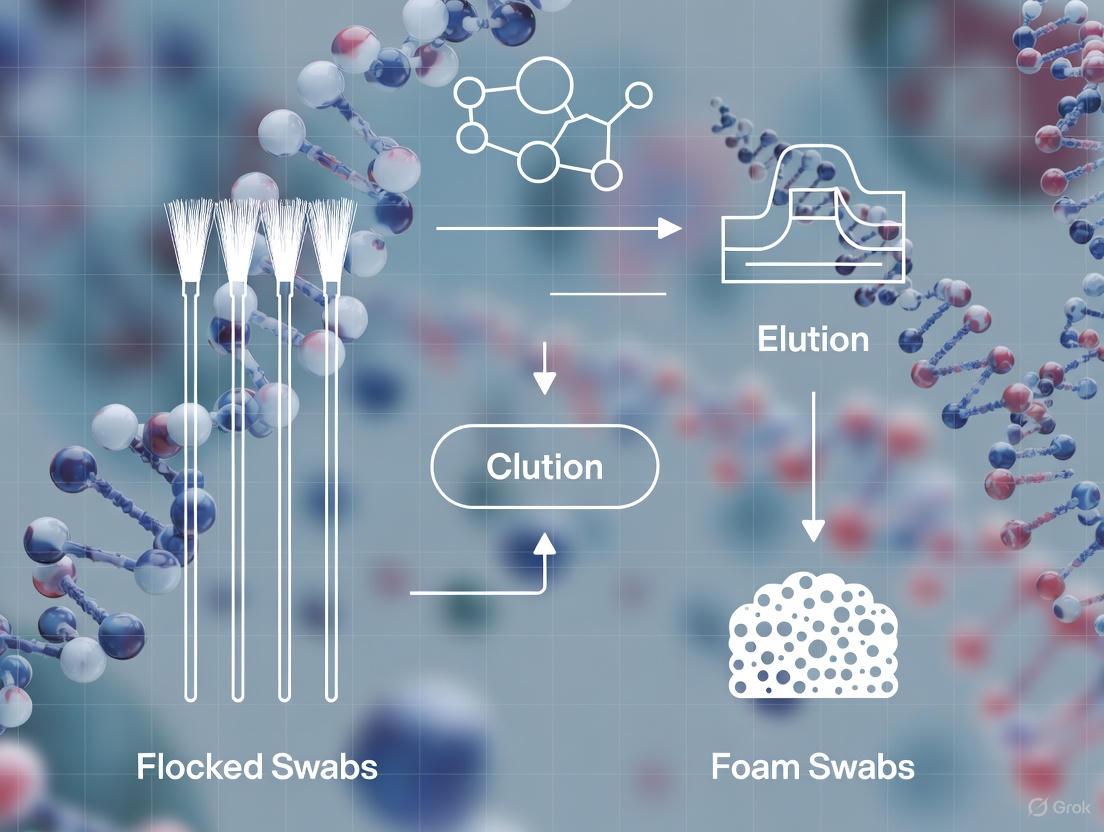
This article provides a comprehensive, evidence-based analysis for researchers and drug development professionals on selecting between flocked and foam swabs for specimen collection.
Flocked Swabs vs. Foam Swabs: A Scientific Guide to Optimal Specimen Collection for Researchers
Abstract
This article provides a comprehensive, evidence-based analysis for researchers and drug development professionals on selecting between flocked and foam swabs for specimen collection. We explore the foundational science behind swab design, including material properties and sample collection mechanics. The review details methodological applications across diverse testing platforms (PCR, culture, antigen tests), presents troubleshooting and optimization strategies to maximize sample yield, and delivers a rigorous comparative validation of performance metrics from recent studies. The goal is to empower scientific teams with the knowledge to enhance diagnostic accuracy, improve assay sensitivity, and streamline R&D workflows through informed swab selection.
The Science of Swabs: Understanding Material Properties and Collection Mechanisms
The performance of a specimen collection swab is fundamentally dictated by its architecture. Flocked swabs and foam swabs represent two distinct designs with profound implications for sample collection and release efficiency. Flocked swabs feature a layer of short, perpendicularly aligned nylon fibers that are spray-adhered to the shaft, creating a brush-like structure with a high surface area and no absorbent core [1]. In contrast, porous foam swabs are constructed from a solid, absorbent matrix, typically made of polyurethane, which functions like a sponge to take in and retain samples [2].
The core difference in mechanism lies in sample handling: flocked swabs are designed to capture and release specimens efficiently from their fiber surfaces, while foam swabs primarily absorb and retain specimens within their porous matrix. This fundamental distinction influences every aspect of performance, from uptake volume to elution characteristics, making each architecture uniquely suited to specific applications in research and diagnostics.
Comparative Performance Data
Quantitative Comparison of Swab Architectures
Table 1: Comparative performance metrics of flocked fiber versus porous foam swab architectures
| Performance Parameter | Flocked Swab Architecture | Porous Foam Architecture | Significance/Context |
|---|---|---|---|
| Sample Release Efficiency | >90% release into buffers [3] [1] | Lower release; retains 30-40% sample [3] | Critical for low-abundance targets (e.g., trace DNA, low viral load) |
| Uptake Efficiency | >80% (bacterial recovery from surfaces) [4] | Variable; one study showed 96.5% uptake [4] | Efficiency is substrate and technique dependent |
| Microbial DNA Recovery (qPCR) | ~1240 ng (from Proteus mirabilis) [5] | ~184 ng (from Proteus mirabilis) [5] | Flocked swabs superior for molecular applications |
| Cultural Recovery of MDROs | 58% sensitivity [6] | 80% sensitivity [6] | Foam superior for culture-based environmental monitoring |
| Bacterial DNA via 16S PCR | 3 log copies/specimen greater than foam [6] | Lower recovery than flocked [6] | Flocked superior for metagenomic studies |
| Overall Efficiency (Uptake & Release) | 80.4% (HydraFlock) [4] | 25.2% (CleanFoam) [4] | Composite metric factoring in both collection and release |
Material Composition and Physical Properties
Table 2: Physical and material properties of flocked fiber and porous foam swabs
| Property | Flocked Swab Architecture | Porous Foam Architecture |
|---|---|---|
| Primary Material | Nylon fibers [1]; some with proprietary "fiber-within-fiber" microgeometry [7] | Polyurethane foam [2] |
| Fiber/Foam Structure | Short fibers arranged perpendicularly to shaft; "flocked" configuration [8] [1] | Solid, porous, absorbent matrix [2] |
| Core Structure | No internal absorbent core [1] | Solid, continuous absorbent core |
| Surface Characteristics | Hundreds of micro-brushes creating high contact points [1] | Relatively smooth surface with smaller contact area [8] |
| Key Mechanical Traits | High sample release, minimal retention [3] [1] | High absorption, significant sample retention [3] |
| Water/Protein Absorption | High (HydraFlock swabs showed greatest absorption in study) [7] | High (Macrofoam showed high recovery of gram-negative bacteria) [7] |
Application-Specific Performance and Selection Guidelines
Molecular vs. Culture-Based Applications
The choice between swab architectures is critically dependent on the downstream analytical method. For molecular applications including PCR, qPCR, and metagenomic analysis, flocked swabs demonstrate superior performance. Their efficient elution characteristics provide significantly higher yields of bacterial DNA, as evidenced by a 3-log increase in 16S PCR copy numbers and substantially higher DNA mass recovery from bacterial samples [6] [5]. The absence of inhibitors in nylon flocked fibers further enhances their utility for sensitive molecular assays [8].
Conversely, for culture-based detection of multidrug-resistant organisms (MDROs) and other viable microorganisms from environmental surfaces, foam swabs show a clear advantage with 80% sensitivity compared to 58% for flocked swabs [6]. The absorbent matrix of foam swabs may better maintain microbial viability during transport, though pre-moistening can improve the performance of flocked swabs for this application [6].
Decision Framework for Swab Selection
Diagram 1: Swab architecture selection framework for researchers and professionals.
Experimental Protocols for Performance Validation
Protocol: Comparative Uptake and Release Efficiency
This protocol quantifies the fundamental performance characteristics of different swab architectures, providing researchers with a standardized method for validation.
4.1.1 Research Reagent Solutions
Table 3: Essential reagents and materials for swab performance evaluation
| Item | Function/Application | Exemplary Products/Compositions |
|---|---|---|
| Synthetic Nasal Fluid | Mimics viscosity and conditions of in vivo sample collection [9] | Physiologically relevant fluid with polymers (e.g., 2% w/v PEO) |
| Fluorescent Microparticles | Quantification of sample release efficiency; cellular surrogate [9] | FITC-labeled microparticles |
| Transport/Release Buffers | Medium for sample elution from swab matrix | Tris HEPES, Tris MOPS, Tris TAPS [4] |
| Heat-Inactivated Virus | Safe model for infectious agent recovery studies | Heat-inactivated SARS-CoV-2 [9] |
| qPCR/qRT-PCR Reagents | Quantification of nucleic acid recovery | iTaq Universal SYBR Green Supermix, 16S rRNA primers [5] |
Materials:
- Test swabs (flocked nylon, polyurethane foam, others for comparison)
- Synthetic nasal fluid (2% w/v polyethylene oxide in PBS) [9]
- FITC-labeled microparticles (5-10μm diameter)
- Fluorescence plate reader
- Analytical balance (0.1mg sensitivity)
- Transport buffers (Tris HEPES, Tris MOPS, Tris TAPS)
Procedure - Uptake Efficiency (Gravimetric Analysis):
- Load a standardized synthetic nasal fluid model with 2% w/v PEO to simulate mucosal conditions [9].
- Weigh each dry test swab to the nearest 0.1mg (record as W~dry~).
- Using standardized pressure and rotation, swab the saturated model for 30 seconds.
- Immediately weigh the loaded swab (record as W~wet~).
- Calculate uptake efficiency: (W~wet~ - W~dry~) / Total fluid available × 100.
- Perform minimum of five replicates per swab type [4].
Procedure - Release Efficiency (Fluorometric Analysis):
- Saturate the synthetic nasal model with FITC-labeled microparticles suspended in buffer.
- Swab the model using standardized technique as above.
- Place each loaded swab into 5mL of release buffer (e.g., Tris TAPS).
- Vortex for 30 seconds to elute particles.
- Measure fluorescence of eluate using plate reader.
- Compare to standard curve to calculate percentage of collected particles released.
- Buffer selection significantly impacts results; test multiple buffers if possible [4].
Protocol: Molecular vs. Culture-Based Recovery Comparison
This protocol directly compares swab performance across different analytical methods, addressing the critical application-specific performance differences documented in recent literature [6].
Materials:
- Test swabs (flocked nylon, polyurethane foam)
- Bacterial cultures (e.g., Proteus mirabilis, Staphylococcus aureus)
- Viral transport media (for molecular applications)
- Buffered peptone water or similar (for culture applications)
- Non-porous surface coupons (glass, plastic, tile)
- qPCR/qRT-PCR instrumentation and reagents
- Culture plates and incubation facilities
Procedure - Surface Sampling and Analysis:
- Prepare standardized bacterial suspensions (e.g., 10^8^ CFU/mL for bacteria).
- Spot 10μL aliquots onto non-porous surface coupons (glass, plastic, tile); dry for 2 hours [5].
- For culture-based analysis:
- Swab surfaces with pre-moistened test swabs using standardized pressure and rotation.
- Inoculate swabs into appropriate liquid transport media.
- Perform serial dilution and plate on appropriate agar.
- Incubate and count CFUs after 24-48 hours.
- For molecular analysis:
- Swab surfaces as above with test swabs.
- Elute in viral transport media or DNA extraction buffer.
- Extract DNA using standardized kit (e.g., MagMAX DNA Multi-Sample Ultra 2.0 Kit) [5].
- Quantify via qPCR with species-specific primers (e.g., 16S rRNA for bacteria).
- Compare recovery efficiency between swab types and analytical methods.
Diagram 2: Workflow for comparing molecular versus culture-based recovery efficiency.
The architectural distinction between flocked fiber and porous foam matrices creates a fundamental trade-off: flocked swabs maximize sample release for molecular analyses, while foam swabs optimize microbial viability for culture-based methods. This dichotomy necessitates application-specific selection, as neither architecture is universally superior.
For research and drug development applications, implementation considerations should include:
- Molecular studies (PCR, metagenomics, viral detection) should prioritize flocked swab architectures for their superior nucleic acid release characteristics [6] [5] [1].
- Microbial viability studies and environmental monitoring for viable pathogens should utilize foam swabs for their enhanced cultural recovery [6] [4].
- Surface sampling protocols must account for substrate effects, as performance varies across materials like plastic, glass, and tile [5].
- Buffer compatibility significantly influences release efficiency, with Tris-based buffers (HEPES, MOPS, TAPS) demonstrating superior performance with flocked swabs [4].
The decision framework and validation protocols provided herein enable researchers to make evidence-based selections and conduct performance verification studies specific to their application requirements.
The efficacy of diagnostic testing and environmental monitoring is fundamentally rooted in the performance of sample collection devices. The material composition of collection swabs directly influences critical parameters including sample uptake, analyte release, and final test sensitivity. Within this context, the competition between flocked swabs (utilizing nylon or polyester fibers) and foam swabs (primarily polyurethane) represents a key material science consideration for researchers and drug development professionals. Flocked swabs feature short, perpendicularly-oriented synthetic fibers attached to a plastic shaft, creating a high-surface-area, brush-like tip for specimen collection [10] [11]. In contrast, foam swabs consist of a polyurethane foam tip with an open-cell structure, prized for its high absorbency and gentle application [12]. This application note provides a detailed material property breakdown and corresponding experimental protocols to guide evidence-based swab selection for specific specimen collection and research applications, framed within the broader thesis of optimizing diagnostic accuracy.
Material Property Analysis and Comparative Performance
The selection of a swab material is a multivariate decision based on the interplay of physical, chemical, and performance characteristics. The tables below summarize key properties and their impact on swab function.
Table 1: Intrinsic Polymer Properties and Their Impact on Swab Performance
| Property | Nylon (Polyamide) | Polyester (PET) | Polyurethane (Foam) |
|---|---|---|---|
| Molecular Structure | Amide linkages (-CONH-) [13] | Ester linkages (-COO-) [13] | Urethane linkages (-NH-CO-O-) |
| Moisture Regain | ~4-5% (Moderately Hydrophilic) [13] | ~0.4% (Hydrophobic) [13] | Very High (Absorbent, open-cell structure) [12] |
| Tensile Strength | 800–1,200 MPa (Nylon 6,6) [13] | 500–800 MPa [13] | Low (Elastic, non-fibrous) |
| Abrasion Resistance | >50,000 Martindale cycles [13] | 30,000–45,000 cycles [13] | Moderate (Non-abrasive by design) [12] |
| Key Swab Impact | High elasticity for sample scrubbing; natural moisture affinity. | Excellent sample release due to hydrophobicity; high rigidity. | Superior fluid holding capacity; gentle on delicate surfaces. |
Table 2: Experimental Performance Metrics in Specimen Collection
| Performance Metric | Nylon Flocked Swab | Polyester Flocked Swab | Polyurethane Foam Swab |
|---|---|---|---|
| Culture-Based MDRO Recovery (Sensitivity) | Not Specified | 58% [14] | 80% (as sponge-stick) [14] |
| Bacterial DNA Recovery (16S qPCR) | High (Superior to sponge) [14] | Not Specified | Low (Inferior to flocked) [14] |
| Sample Release Efficiency | Variable; can be inferior to polyester [11] [9] | High (Designed for complete elution) [11] | Poor (Tends to retain sample) [15] [9] |
| Volume Retention in Pooling | High (Contributes to sample loss) [9] | Moderate [9] | Low (More volume available for testing) [9] |
| Preferred Application | Molecular diagnostics (PCR) [14] [10] | PCR, rapid tests, forensics [11] | Culture-based bacteriology [14] [12] |
Experimental Protocols for Swab Performance Validation
Protocol: Gravimetric Analysis of Sample Uptake and Retention
Purpose: To quantitatively measure the mass of synthetic nasal fluid collected and retained by different swab types, a key factor in sample loss and dilution effects in pooling strategies [9].
Research Reagent Solutions:
- Synthetic Nasal Fluid: A physiologically relevant fluid, such as 2% w/v Polyethylene Oxide (PEO) in distilled water, to mimic the viscosity of nasal secretions [9].
- Phosphate-Buffered Saline (PBS): Used as a collection and dilution medium.
- Analytical Balance: Precision balance capable of measuring to 0.0001 g.
Methodology:
- Preparation: Saturate a silk-glycerol-based artificial nasal tissue model with the 2% w/v PEO solution [9].
- Baseline Measurement: Weigh each dry, sterile swab (n=5 per type) using the analytical balance and record the mass (M_dry).
- Sample Collection: Using a standardized swabbing procedure (e.g., rotating the swab while wiping a defined surface area), collect sample from the prepared model.
- Loaded Swab Measurement: Weigh the swab immediately after sample collection and record the mass (M_loaded).
- Calculation: Calculate the mass of collected sample as: Mass Uptake (mg) = Mloaded - Mdry.
- Release & Retention: Place each loaded swab into a pre-weighed tube containing 10 mL of PBS. Vortex for a standardized time (e.g., 30 seconds). Remove the swab, allow it to drip-dry, and re-weigh it (M_retained). Calculate the percent retention.
Protocol: Comparative Culture-Based Recovery of Microorganisms
Purpose: To evaluate the recovery efficiency of bacteria from laboratory-prepared surfaces for culture-based diagnostics, comparing flocked and foam swabs [14].
Research Reagent Solutions:
- Test Organism: A known strain of Staphylococcus aureus (e.g., 493NT) [14].
- Culture Media: Tryptic Soy Agar (TSA) and selective media like BD MRSA CHROMagar.
- Neutralizing Buffer: Used to pre-moisten sponge-sticks to neutralize disinfectants and improve recovery [14] [16].
- Liquid Amies Media: Transport medium for flocked swabs.
Methodology:
- Surface Inoculation: Prepare a standard concentration of S. aureus (e.g., 0.5 McFarland standard). Perform serial dilutions and inoculate known quantities onto standardized, sterile polystyrene surfaces. Use control plates to determine the exact colony-forming units (CFU) applied.
- Sample Collection:
- Flocked Swab: Swab the surface without premoistening, or premoisten with Liquid Amies media for comparison, using a standardized pattern and pressure.
- Sponge-stick: Swab the same surface area using a pre-moistened sponge-stick with neutralizing buffer.
- Elution & Plating:
- Process sponge-sticks in a stomacher bag with PBST, homogenize, concentrate via centrifugation, and plate the pellet on selective media [14].
- Process flocked swabs by vortexing in Liquid Amies media and directly plating an aliquot onto selective media.
- Analysis: Incubate plates and count CFUs. Compare recovery rates against the control plates to calculate percent recovery for each swab type.
Protocol: Molecular Recovery Efficiency via qPCR
Purpose: To compare the recovery of bacterial DNA or viral RNA from different swab types using quantitative Polymerase Chain Reaction (qPCR), relevant for molecular diagnostics like COVID-19 testing [14] [9].
Research Reagent Solutions:
- Lysis Buffer: A solution containing guanidine salts and detergents to break open cells and inactivate pathogens.
- DNA/RNA Extraction Kit: MoBio PowerSoil DNA isolation kit or equivalent [14].
- qPCR Master Mix: Contains DNA polymerase, dNTPs, and buffer.
- Primers/Probe: Specific for the target sequence (e.g., 16S rRNA gene for bacteria, or a SARS-CoV-2 gene target).
Methodology:
- Sample Collection & Spiking: Swab a clean surface or artificial nasal model. Immediately spike the swab head with a known quantity of heat-inactivated virus (e.g., SARS-CoV-2) or a bacterial cell suspension.
- Elution: Place each swab into a fixed volume of lysis buffer or viral transport media. Vortex thoroughly to release the sample.
- Nucleic Acid Extraction: Extract DNA/RNA from the eluent following the manufacturer's protocol for the extraction kit.
- qPCR Analysis: Perform qPCR on the extracted nucleic acids using target-specific primers and probe.
- Data Analysis: Record the Cycle Threshold (Ct) values. A lower Ct value indicates a higher amount of recovered target, and thus superior recovery efficiency for molecular analysis.
Workflow Visualization for Swab Pooling Strategies
The following workflow diagrams illustrate two key strategies for sample pooling, a method used to increase testing capacity, where swab material properties significantly impact outcomes [9].
Diagram 1: Dip and Discard Workflow. Swabs are sequentially dipped and immediately discarded, minimizing sample retention effects.
Diagram 2: Combine and Cap Workflow. All swabs are transported together, where high-retention swabs can reduce available liquid volume.
The Scientist's Toolkit: Essential Research Reagents and Materials
Table 3: Key Reagents and Materials for Swab Validation Studies
| Item | Function/Application | Exemplar Products/Notes |
|---|---|---|
| Artificial Nasal Tissue Model | Preclinical model for standardized swabbing; uses silk-glycerol sponge to mimic soft tissue [9]. | Custom-made per published protocols [9]. |
| Synthetic Nasal Fluid | Mimics viscosity and composition of nasal secretions for controlled uptake studies. | 2% w/v Polyethylene Oxide (PEO) solution [9]. |
| Heat-Inactivated Virus | Safe surrogate for infectious virus in recovery and pooling studies. | Heat-inactivated SARS-CoV-2 [9]. |
| Flocked Swabs | For sample collection where superior elution is required for molecular assays. | Puritan PurFlock Ultra (Polyester) [11], Copan FLOQSwabs (Nylon) [14]. |
| Foam Swabs | For sample collection where high absorbency and gentle application are prioritized. | Puritan Foam Swabs [9], Polyurethane foam-tipped applicators [12]. |
| Liquid Amies Media | Transport medium for maintaining viability of microbiological samples. | BD ESwab Collection System [14]. |
| Neutralizing Buffer | Added to transport media to inactivate residual disinfectants on collected samples. | Used in 3M Sponge-sticks with Neutralizing Buffer [14] [16]. |
| Mechanical Homogenizer | To efficiently release collected material from sponge-based swabs. | Seward 400C Stomacher [14]. |
The choice between nylon, polyester, and polyurethane for specimen collection is not a matter of identifying a universally superior material, but rather of matching material properties to analytical goals. The data clearly indicates a performance trade-off: foam swabs (polyurethane) demonstrate superior efficacy for culture-based recovery of microorganisms like MDROs and S. aureus, likely due to their high absorbency and gentle interaction with surfaces [14] [12]. Conversely, flocked swabs, particularly those made of polyester, are unequivocally superior for molecular applications like PCR, where complete elution of nucleic acids into the liquid transport medium is paramount to achieving a low Ct value and high test sensitivity [14] [11].
Future research directions should focus on engineering advanced polymer blends and surface modifications to create a "universal swab" that combines the optimal release properties of polyester flocked fibers with the high uptake and patient comfort of polyurethane foams. Furthermore, the impact of swab material on emerging diagnostic fields, such as metabolomics and proteomics from surface samples, remains an open and critical area for investigation. This material science breakdown underscores that the humble swab is not a simple stick, but a sophisticated collection device whose polymer composition is a fundamental variable in the diagnostic equation.
The precision of modern diagnostic and research testing is fundamentally dependent on the initial pre-analytical phase: specimen collection. The mechanics of how a collection device captures and releases a sample—specifically through capillary action or absorption—directly impacts the sensitivity and accuracy of downstream analyses [17] [18]. This application note details the operational principles of two primary swab types: nylon flocked swabs, which utilize capillary action, and polyurethane foam swabs, which rely on absorption. Framed within the context of ongoing research into optimal specimen collection, this document provides researchers and drug development professionals with a rigorous comparison of these mechanisms, supported by quantitative data and detailed experimental protocols. The choice between these swabs is not merely a matter of preference but a critical decision point that influences cell yield, analyte recovery, and ultimately, experimental validity [2] [17] [19].
Fundamental Mechanisms of Sample Collection
Capillary Action in Nylon Flocked Swabs
Nylon flocked swabs represent a significant engineering advancement over traditional fiber-wrapped swabs. Their design features millions of short, monofilament nylon fibers attached perpendicularly to the swab's head using an electrostatic flocking process. This creates a dense, brush-like tip with a vast surface area of fine, open channels [17] [20] [18].
The core principle of operation is capillary action, or wicking. When the flocked tip contacts a liquid sample, the narrow spaces between the vertical fibers generate strong capillary forces due to surface tension. This action draws the sample into the matrix, where it is held on the surface of the fibers. Crucially, this design lacks a deep, absorbent core, which means there is no inner sponge to entrap the sample [18]. When the swab is placed in liquid transport media and agitated, the collected specimen—including critical cellular material and pathogens—is rapidly and completely eluted, with studies demonstrating a sample release efficiency of over 90% [17] [19]. This makes flocked swabs particularly suited for molecular diagnostics where the recovery of intact DNA, RNA, and cells is paramount [20] [21].
Absorption in Polyurethane Foam Swabs
Polyurethane foam swabs operate on the principle of absorption. The foam tip has an open-cell structure that functions like a microscopic sponge. When contacted with a liquid, the sample is drawn into and throughout the interconnected voids of the foam matrix via a combination of capillary forces within the pores and diffusion [22] [23].
The absorption dynamics in such porous media can be described by the Lucas-Washburn law, which models capillary flow, though the process is complicated by the material's hydrophilicity and pore structure [22] [23]. While foam swabs can absorb a significant volume of fluid relative to their size, their primary limitation lies in sample release. The absorbed specimen becomes trapped within the foam's complex internal matrix. During elution, even with vigorous vortexing, a substantial portion of the sample may be retained within the swab, leading to lower recovery rates for cellular material and analytes compared to flocked swabs. Published data indicate that foam swabs release approximately 60% of the collected sample, which can compromise the sensitivity of highly precise assays [19].
The following diagram illustrates the contrasting internal structures and fluid pathways of these two swab types.
Quantitative Comparison of Swab Performance
The theoretical mechanical differences between flocked and foam swabs translate into significant practical performance variations. The following tables consolidate empirical data from fluid dynamics and clinical studies to provide a clear, quantitative comparison.
Table 1: Fluid Dynamics and Sample Recovery Performance [17]
| Performance Metric | Nylon Flocked Swabs | Polyurethane Foam Swabs | Traditional Fiber (Rayon) Swabs |
|---|---|---|---|
| Average Sample Absorption Volume (µL) | 131 µL | 36 µL | 105 µL |
| Sample Release Volume with Vortexing (µL) | 127 µL (97%) | 33 µL (92%) | 35 µL (33%) |
| Sample Release Efficiency | >90% | ~60% [19] | ~40% |
| Efficiency of Cellular Collection | High | Moderate | Low to Moderate |
Table 2: Diagnostic Performance in a Clinical Study [2] This study compared swabs for rapid influenza antigen testing in a pediatric emergency department (n=100).
| Performance Metric | Polyurethane Foam Swabs | Nylon Flocked Swabs | Notes |
|---|---|---|---|
| Sensitivity vs. RT-PCR | 71% | 54% | P = 0.01 |
| Sensitivity vs. DFA/Culture | 78% | 61% | P = 0.13 |
| Implied Mechanistic Advantage | Higher antigen recovery in this specific test format. | Lower recovery despite superior fluid dynamics. | Performance is test-dependent. |
The data in Table 1 clearly demonstrate the superior fluid handling capabilities of flocked swabs, which absorb a larger sample volume and release nearly all of it. However, the clinical study summarized in Table 2 reveals a critical nuance: the theoretical advantage of flocked swabs does not always translate into better clinical performance for every assay. In this specific case, the polyurethane foam swabs recommended by the test manufacturer for anterior nares sampling showed significantly higher sensitivity for influenza detection [2]. This underscores the importance of empirically validating swab choice for each specific application and following test manufacturer guidelines.
Experimental Protocols for Swab Evaluation
To aid researchers in validating swab performance for their specific applications, the following section outlines detailed protocols for conducting key comparative experiments.
Protocol 1: Quantifying Sample Uptake and Release
This protocol provides a method to objectively measure the fluid handling properties of different swab types in a laboratory setting.
1.1 Objective: To precisely determine the volume of a liquid sample a swab can absorb and the percentage of that volume it can release under standardized conditions.
1.2 Research Reagent Solutions & Materials:
- Swabs under test (e.g., nylon flocked, polyurethane foam, rayon).
- Distilled water or a synthetic nasal secretion matrix.
- Weighing boat or small glass beaker.
- Analytical balance (accuracy to 0.1 mg).
- Microcentrifuge tubes (1.5 - 2 mL).
- Vortex mixer.
- Pipette and tips.
1.3 Procedure:
- Pre-weigh Tare: Tare a dry microcentrifuge tube on the analytical balance. Record this weight as Tare~tube~.
- Swab Tare: Place a dry swab into the tared tube and weigh. Record this weight as Tare~tube+swab~.
- Sample Absorption: Immerse the swab tip vertically into the test liquid for 5 seconds. Withdraw the swab smoothly, touching it against the rim of the container to remove any dangling drop.
- Measure Uptake: Immediately place the wet swab back into the pre-weighed microcentrifuge tube and cap it. Weigh the assembly. Record this weight as Weight~wet~.
- Calculate Absorbed Volume:
- Absorbed Mass (mg) = Weight~wet~ - Tare~tube+swab~
- Since the density of water is ~1 mg/µL, the absorbed volume in µL is numerically equal to the absorbed mass in mg.
- Sample Release: Add a known volume of liquid (e.g., 1 mL of water or saline) to the tube containing the wet swab. Vortex the tube vigorously for 5-10 seconds.
- Remove Swab: Carefully remove the swab from the tube, allowing liquid to drip back into the tube.
- Measure Release: Weigh the tube containing only the elution liquid. Record this weight as Weight~eluent~.
- Calculate Released Volume and Efficiency:
- Mass of Eluent (mg) = Weight~eluent~ - Tare~tube~
- Released Volume (µL) = Mass of Eluent (mg)
- Release Efficiency (%) = (Released Volume / Absorbed Volume) * 100
Protocol 2: Evaluating Cellular Yield via PCR
This protocol uses molecular methods to compare the efficiency of cell and pathogen recovery from different swabs, which is critical for diagnostic and research applications.
2.1 Objective: To compare the yield of human cellular DNA or pathogen nucleic acids recovered from different swab types using quantitative or digital PCR.
2.2 Research Reagent Solutions & Materials:
- Swabs under test (sterile).
- Source material (e.g., standardized cell suspension, inactivated virus culture, or clinical sample).
- Nucleic Acid Extraction Kit (e.g., QIAamp DNA Blood Mini Kit).
- Elution Buffer (e.g., TE buffer or nuclease-free water).
- qPCR or dPCR instrumentation and reagent mixes.
- Primers/Probes for a target gene (e.g., human RNase P, β-actin, or a viral target).
- Transport media (if required).
2.3 Procedure:
- Standardized Sample Loading: Dip or roll each test swab in a standardized suspension containing a known concentration of cells or viral particles. Ensure consistent immersion time and technique across all swabs.
- Elution: Place each swab in a tube containing transport media or a lysis buffer compatible with the subsequent nucleic acid extraction. Vortex thoroughly.
- Nucleic Acid Extraction: Following the manufacturer's instructions for the extraction kit, extract total nucleic acids from the eluted sample. Include a "no-template" negative control.
- Quantification: Quantify the extracted DNA/RNA using a spectrophotometer or fluorometer for purity and yield.
- Amplification: Perform qPCR or dPCR using identical amounts of input nucleic acids from each sample. Use a validated assay for a single-copy human gene or a specific pathogen target.
- Analysis: Compare the Cycle Threshold (Cq) values from qPCR or the absolute copy numbers from dPCR. A lower Cq or a higher copy number indicates superior recovery of the target nucleic acid by the swab.
The workflow for this validation procedure is outlined below.
The Scientist's Toolkit: Essential Research Reagents & Materials
Table 3: Key Materials for Swab Evaluation and Use in Research
| Item | Function & Application Notes |
|---|---|
| Nylon Flocked Swabs | The gold standard for molecular applications. Opt for models with break-point shafts for easy processing. Ensure they are DNA/RNA-free. |
| Polyurethane Foam Swabs | Ideal for applications requiring high fluid absorption, such as cytology or collecting viscous secretions. |
| Viral Transport Media (VTM/UTM) | For preserving viral integrity and nucleic acids post-collection during storage and transport. |
| DNA/RNA Extraction Kits (e.g., QIAamp, Gentra Puregene) | For isolating high-purity nucleic acids from swab eluates. Manual or automated platform-compatible. |
| qPCR/dPCR Master Mixes | Contains enzymes, dNTPs, and buffers for target amplification and detection. Requires specific primers/probes. |
| Synthetic Nasal Secretion Matrix | A standardized solution mimicking the viscosity and composition of nasal fluids for in-vitro swab performance testing. |
| Vortex Mixer | Essential for consistent and efficient sample elution from the swab tip into the liquid transport medium. |
| Analytical Balance | Critical for gravimetric analysis of sample uptake and release volumes with high precision. |
The choice between flocked and foam swabs is a strategic decision rooted in their fundamental mechanics. Flocked swabs, operating on capillary action, are generally superior for maximizing the recovery of cellular material and nucleic acids, making them the preferred choice for molecular diagnostics, PCR, and viral research [20] [19] [21]. In contrast, foam swabs, which function via absorption, excel in applications requiring high fluid uptake and are well-suited for cytology, point-of-care antigen tests, and sampling viscous fluids [2] [19].
Researchers must consider that the optimal swab is context-dependent. As demonstrated by the clinical study where foam swabs outperformed flocked swabs in a specific rapid antigen test, manufacturer recommendations and application-specific validation are paramount [2]. Therefore, grounding the selection of specimen collection tools in empirical, protocol-driven evaluation ensures the integrity of the sample and the validity of the scientific results that follow.
The Critical Role of Sample Elution in Diagnostic Accuracy
For researchers and scientists in drug development and diagnostics, the selection of a specimen collection swab is a critical pre-analytical variable that can fundamentally impact assay performance. While often perceived as a simple transport vehicle, the swab serves as the primary interface between the patient and the diagnostic platform, making its elution efficiency a paramount determinant of result accuracy. Within this context, the debate between flocked swabs and foam swabs represents a key methodological consideration. Flocked swabs, characterized by their short, perpendicular nylon fibers attached to a plastic handle, create a high-surface-area brush structure designed for superior sample uptake and release [15]. In contrast, foam swabs utilize a porous polyurethane or cellulose sponge tip, prized for its high absorbency but potentially limited by its irregular pore structure [15]. This application note frames the critical role of sample elution within a broader research thesis comparing these swab types, providing structured quantitative data and detailed experimental protocols to guide evidence-based selection for diagnostic development.
Comparative Performance Analysis of Swab Technologies
The structural composition of flocked and foam swabs directly translates to significant differences in their performance for culture-based, molecular, and sample pooling workflows. The following analysis synthesizes recent comparative findings to inform protocol development.
Elution Performance in Diagnostic Applications
Table 1: Comparative diagnostic performance of flocked and foam/sponge swabs across testing modalities.
| Testing Modality | Swab Type | Key Performance Finding | Reference / Context |
|---|---|---|---|
| Culture-Based MDRO Recovery | Sponge-Stick (Foam) | Superior sensitivity (80%) for recovery of multidrug-resistant organisms (MDROs) | Hospital environment sampling [14] |
| Flocked Swab | Lower sensitivity (58%) for MDRO recovery compared to sponge | Hospital environment sampling [14] | |
| Bacterial DNA Recovery (16S qPCR) | Flocked Swab | Greater recovery by an average of 3 log copies per specimen | Analysis of bacterial DNA from surfaces [14] |
| Sponge-Stick (Foam) | Inferior recovery of bacterial DNA for molecular analysis | Analysis of bacterial DNA from surfaces [14] | |
| Sample Pooling (RT-qPCR) | Flocked Swab (Injection Molded) | Consistent performance with low volume retention, reducing false negatives in pooled samples | COVID-19 surveillance testing model [9] |
| Flocked Swab (Polyester) | Performance significantly affected by workflow and positive sample order in pools | COVID-19 surveillance testing model [9] | |
| Foam Swab | Performance less affected by workflow and order, but with higher Ct values | COVID-19 surveillance testing model [9] |
Physical and Material Properties Underlying Performance
Table 2: Physical characteristics and functional attributes of flocked and foam swabs.
| Characteristic | Flocked Swab | Foam Swab |
|---|---|---|
| Tip Material | Short, dense nylon or polyester fibers applied electrostatically [15] | Polyurethane or cellulose foam sponge [15] |
| Surface Structure | Velvety, brush-like with high surface area [15] | Irregular pores with high absorbency [15] |
| Sample Uptake Mechanism | Capaction: sample is held in the capillary spaces between fibers [24] | Absorption: sample is drawn into the interstices of the sponge material [25] |
| Sample Release | Efficient release due to weak adherence to fiber surfaces and minimal entrapment [15] | Less efficient release; sample can be retained within the sponge matrix [15] |
| Volume Retention | Generally low retention, especially for injection-molded types [9] | Variable, but can demonstrate high retention [9] |
| Patient Comfort | Velvety texture is typically less abrasive in sensitive areas [15] | Can be less comfortable due to rougher texture and higher friction [15] |
The data in Table 1 reveals a fundamental trade-off: sponge/foam swabs excel in culture-based recovery, while flocked swabs are superior for molecular applications. This dichotomy is explained by the interaction between the swab's release efficiency and the analytical method's requirements. Culture-based methods require the viability of intact microorganisms, which sponge-sticks may better preserve, potentially through the protective buffering of their transport media [14]. Conversely, molecular methods like PCR depend on the efficient elution of nucleic acids, where the flocked swab's design allows for near-complete release of cellular material and DNA into the transport medium [14] [15].
The sample pooling study further highlights the impact of volume retention—the amount of liquid retained by the swab tip after elution. Swabs with high retention, such as some flocked varieties, can remove a significant volume of transport media from the pool, effectively concentrating the sample but also potentially leading to false negatives if the positive sample is placed early in the sequence and its analyte is retained [9]. This underscores that swab performance is not an intrinsic property but is contingent on the specific workflow.
Experimental Protocols for Swab Elution Evaluation
To ensure diagnostic accuracy, researchers must validate swab performance within their specific assays. The following protocols provide methodologies for quantifying key elution parameters.
Protocol 1: Culture-Based Recovery from Environmental Surfaces
This protocol is adapted from a hospital surface sampling study to compare the recovery of viable multidrug-resistant organisms (MDROs) using flocked and sponge-swabs [14].
- Objective: To compare the sensitivity of flocked swabs versus sponge-sticks for the culture-based recovery of MDROs from defined surface areas.
Materials:
- Test Surfaces: Pre-defined hospital surfaces (e.g., bed rails, IV pumps) or laboratory-prepared polystyrene surfaces inoculated with a known concentration of Staphylococcus aureus or other target organisms [14].
- Swabs: Flocked swabs (e.g., BD ESwab) and sponge-sticks (e.g., 3M Sponge-Stick with neutralizing buffer).
- Media: Phosphate-buffered saline with 0.02% Tween (PBST), selective agar plates (e.g., CHROMagar for MRSA, VRE, CRE, ESBL).
- Equipment: Mechanical homogenizer (e.g., Seward Stomacher), centrifuge, anaerobic and aerobic incubators.
Methodology:
- Sampling: For environmental surfaces, sample a composite area of approximately 350 in² using a standardized pattern. Sample the same area first with two flocked swabs (e.g., in "X" and "+" patterns) followed by the sponge-stick [14].
- Processing:
- Sponge-Stick: Place the sponge in a stomacher bag with PBST and homogenize. Concentrate via centrifugation, resuspend the pellet, and plate 50 μL onto selective media [14].
- Flocked Swab: Vortex the flocked swab in its transport media (e.g., Liquid Amies). Plate 50 μL directly onto the same set of selective media [14].
- Analysis: Incubate plates and count colonies with appropriate morphology. Confirm identities by MALDI-TOF. Calculate sensitivity based on the number of positive cultures recovered by each swab type, using a positive result from either swab as the "true positive" reference [14].
Protocol 2: Molecular Elution Efficiency via qPCR
This protocol uses quantitative PCR to measure the efficiency of nucleic acid elution, critical for molecular diagnostic assays [14] [9].
- Objective: To quantify the elution efficiency of bacterial DNA from flocked and foam swabs using 16S qPCR.
Materials:
- Swabs: Flocked swabs (e.g., Copan FLOQSwabs) and sponge-sticks.
- Sample: Laboratory-prepared surfaces with a known bacterial load or clinical samples.
- Reagents: DNA extraction kit (e.g., MoBio PowerSoil DNA isolation kit), Qubit dsDNA BR Assay Kit, primers/probes for 16S rRNA gene V1-V2 region (e.g., BSF8/BSR357) [14].
- Equipment: Vortexer, centrifuge, real-time PCR system, fluorometer.
Methodology:
- Sample Collection & Lysis: Swab identical surfaces or sample sites with each swab type. For flocked swabs, proceed to DNA extraction. For sponge-sticks, homogenize in PBST, concentrate by centrifugation, and use 300 μL of the cell pellet for DNA extraction [14].
- DNA Extraction: Perform DNA extraction on all samples according to the kit's standardized protocol to ensure comparability.
- Quantification & Amplification:
- Quantify the total DNA yield using a fluorometric method (e.g., Qubit).
- Perform 16S qPCR on all samples using a standardized curve generated from a plasmid containing the 16S rRNA gene [14].
- Analysis: Compare the mean log copies of the 16S rRNA gene recovered per specimen between the two swab types. Statistical analysis can be performed using a generalized linear model with a random intercept for surface type [14].
Protocol 3: Volume Retention and Pooling Workflow Analysis
This protocol evaluates the impact of swab-driven volume loss on the analytical sensitivity of pooled sample testing, such as for large-scale viral surveillance [9].
- Objective: To determine the volume retention of different swab types and its effect on RT-qPCR cycle threshold (Ct) values in a pooled testing model.
Materials:
- Swabs: Various flocked (nylon, polyester) and foam swabs.
- Model: Anterior nasal cavity tissue model (e.g., silk-glycerol sponge with synthetic nasal fluid) [9].
- Spike: Heat-inactivated SARS-CoV-2 in artificial nasal fluid.
- Reagents: Viral Transport Medium (VTM), PBS, RT-qPCR reagents.
- Equipment: Scale, vortexer, fluorescence plate reader, RT-qPCR system.
Methodology:
- Gravimetric Analysis: Weigh each swab type dry (N=5). Saturate the tissue model with a known volume of 2% w/v PEO solution. Swab the model according to a standardized procedure and re-weigh the swabs to calculate mass uptake [9].
- Pooling Workflow Simulation:
- Dip and Discard (DDW): Sequentially dip each of 10 swabs (one being "positive" i.e., spiked with virus) into a single 10 mL VTM vial and immediately discard them.
- Combine and Cap (CCW): Combine all 10 swabs in a single 10 mL VTM vial, cap it, and vortex before discarding the swabs [9].
- Test both workflows with the "positive" swab placed first and last in the sequence.
- Analysis:
- Measure the final volume of the pooled sample after all swabs are removed to calculate percent volume retention.
- Perform RT-qPCR and record Ct values. Lower Ct values indicate more efficient viral material elution and less dilution from volume retention [9].
The Scientist's Toolkit: Essential Research Reagents and Materials
Table 3: Key reagents and materials for evaluating swab elution performance in a research setting.
| Item | Function / Application | Exemplary Products / Types |
|---|---|---|
| Flocked Swabs | Sample collection for molecular diagnostics; efficient uptake/release of nucleic acids. | Copan FLOQSwabs [24], Puritan PurFlock Ultra [24] |
| Sponge/Foam Swabs | Sample collection for culture-based assays; high absorbency for viable organisms. | 3M Sponge-Sticks [14], Super Brush sterile foam swabs [26] |
| Transport Media | Preserve sample integrity during transport; critical for viability and nucleic acid stability. | Liquid Amies (BD ESwab) [14], Viral Transport Media (UTM) [24] |
| Neutralizing Buffer | Inactivates disinfectant residues on environmental surfaces for accurate culture. | 3M Sponge-Stick with neutralizing buffer [14] |
| Mechanical Homogenizer | Liberates microorganisms and nucleic acids from sponge/swab matrices into solution. | Seward Stomacher [14] |
| Selective Agar Media | Selective growth and identification of target MDROs from complex samples. | BD MRSA CHROMagar, HardyCHROM CRE, SPECTRA VRE [14] |
| DNA Extraction Kit | Purifies nucleic acids from swab eluates for downstream molecular analysis. | MoBio PowerSoil DNA Isolation Kit [14] |
| qPCR/qRT-PCR Reagents | Quantifies eluted nucleic acid (DNA or RNA) yield and target gene concentration. | 16S rRNA gene primers/probes [14], SARS-CoV-2 RT-qPCR assays [9] |
The choice between flocked and foam swabs is not a matter of superiority but of application-specific suitability. The data and protocols presented herein provide a framework for researchers to make evidence-based decisions. For culture-based recovery and viability-critical studies, foam/sponge swabs demonstrate a clear advantage, as evidenced by their higher sensitivity for MDRO detection [14]. Conversely, for molecular diagnostics and nucleic acid detection, flocked swabs are unequivocally superior, providing significantly greater recovery of DNA and reducing the risk of false negatives [14] [15]. Furthermore, in emerging applications like sample pooling, the volume retention of the swab becomes a critical performance metric that must be validated within the chosen workflow [9]. Therefore, the optimization of sample elution is not a one-time selection but an ongoing, integral component of robust diagnostic development and research design, ensuring that the first step in the analytical chain does not become its weakest link.
Regulatory and Sterilization Considerations for Research Use
The selection of appropriate specimen collection swabs is a critical pre-analytical variable in biomedical research, particularly in studies involving molecular diagnostics, virology, and microbiology. The choice between flocked and foam swabs impacts downstream analytical results, experimental validity, and regulatory compliance. This application note provides a comprehensive framework of regulatory standards, sterilization methods, and experimental protocols for researchers evaluating flocked versus foam swabs in specimen collection research. Proper selection and validation are paramount for ensuring sample integrity, maximizing analyte recovery, and maintaining compliance with quality systems in both basic and applied research settings.
Flocked swabs, characterized by their short nylon fibers applied perpendicularly to the shaft via an electrostatic process, offer superior sample absorption and elution capabilities due to their open brush-like structure [24]. In contrast, foam swabs utilize polyurethane foam heads designed for specific absorption characteristics and patient comfort [27]. The structural and material differences between these swab types directly influence their performance in research applications, necessitating systematic evaluation protocols and understanding of regulatory requirements.
Regulatory Landscape
Global Regulatory Framework
Swabs classified as medical devices for diagnostic or therapeutic use must comply with region-specific regulatory requirements. For research use only (RUO) products, compliance with quality standards remains essential for experimental reproducibility, though market authorization may not be required.
Table 1: Key Regulatory Certifications for Specimen Collection Swabs
| Regulatory Body | Certification/Standard | Scope and Requirements | Relevance to Research |
|---|---|---|---|
| International Standards Organization (ISO) | ISO 13485:2016 | Quality Management System for medical devices design/manufacturing | Ensures consistent manufacturing quality and traceability for research consumables [24] [28] |
| U.S. Food and Drug Administration (FDA) | 510(k) Clearance or Emergency Use Authorization (EUA) | Premarket notification for substantial equivalence to a predicate device | Required for clinical diagnostics; benchmark for RUO product quality [24] |
| European Union | CE Marking (Medical Device Regulation - MDR) | Conformity assessment for safety and performance | Mandatory for commercial distribution in EU markets [24] [29] |
| Good Manufacturing Practice (GMP) | GMP Compliance | Quality assurance for consistent production and control | Ensures swabs are produced in controlled environments [24] |
Regulatory Pathways for Research
For research applications, RUO-labeled swabs must still be manufactured under appropriate quality controls to ensure batch-to-batch consistency. While formal regulatory approvals may not be mandatory for basic research, adherence to the referenced standards provides assurance of product quality, sterility, and performance characteristics. Researchers should verify supplier certifications and obtain relevant documentation for their quality systems, especially when research outcomes may eventually support regulatory submissions for diagnostic applications.
Sterilization Methodologies
Standard Sterilization Techniques
Swab sterility is essential for microbiology, cell culture, and molecular research to prevent contamination and false results. Different sterilization methods impact swab material integrity and potential for cellular toxicity.
Table 2: Sterilization Methods for Specimen Collection Swabs
| Method | Mechanism | Material Compatibility | Research Considerations |
|---|---|---|---|
| Ethylene Oxide (EtO) | Alkylation of DNA/RNA | Compatible with most plastics, nylon, and foam | Residual gas byproducts may inhibit PCR; requires aeration [30] [29] |
| Gamma Irradiation | DNA disruption via ionizing radiation | May degrade polypropylene shafts with high doses | No residual toxicity; suitable for single-use packaging [30] |
| Electron Beam (E-Beam) | High-energy electron penetration | Surface sterilization with minimal penetration | Rapid process with minimal material impact [29] |
| Autoclaving | Steam sterilization under pressure | Not recommended for plastic/polymer components | May deform swab tips and affect absorption properties |
Sterility Validation for Research
Researchers should request sterilization validation certificates from manufacturers, including D-value information for EtO cycles or minimum sterilization doses for radiation methods. For critical applications, perform direct sterility testing by incubating swabs in appropriate growth media (e.g., TSB, BHI) and monitoring for microbial growth. Consider potential interference with downstream assays; for example, EtO-sterilized swabs may require validation for sensitive molecular applications due to potential PCR inhibition.
Performance Comparison: Flocked vs. Foam Swabs
Quantitative Performance Metrics
Recent comparative studies provide quantitative data on the performance characteristics of flocked and foam swabs across key parameters relevant to research applications.
Table 3: Performance Comparison of Flocked versus Foam Swabs
| Performance Parameter | Flocked Swabs | Foam Swabs | Experimental Context |
|---|---|---|---|
| Sample Release Efficiency | 69.44% ± 12.68% [31] | 82.48% ± 12.70% (Heicon injection-molded) [31] | Anatomical nasopharyngeal cavity model with SISMA hydrogel [31] |
| Mass Uptake | 192.47 ± 10.82 mg (Puritan flocked) [9] | Statistically different from flocked (p<0.05) [9] | Gravimetric analysis with 2% w/v PEO solution [9] |
| Influenza Detection Sensitivity (RT-PCR) | 59% (Influenza A), 42% (Influenza B) [27] | 81% (Influenza A), 53% (Influenza B) [27] | Clinical study with nasopharyngeal RT-PCR as control [27] |
| Viral Load Retrieval (Ct value) | Ct 31.48 (cavity model), Ct 26.69 (tube) [31] | Ct 30.08 (cavity model), Ct 25.91 (tube) [31] | Yellow fever virus-loaded SISMA hydrogel assay [31] |
| Volume Retention in Pooling | Higher retention in combine-and-cap workflow [9] | Lower retention across workflows [9] | 10-sample pooling with 10 mL transport media [9] |
Material and Design Considerations
The performance differences between swab types stem from their fundamental design and material properties. Flocked swabs utilize nylon fibers arranged perpendicularly to the shaft, creating a brush-like structure that enhances surface area for sample capture [24]. This design facilitates rapid sample elution into transport media or extraction buffers. Foam swabs, typically composed of polyurethane, provide consistent absorption throughout the matrix but may retain more sample volume within the foam structure [27] [9]. Researchers should consider these material characteristics when selecting swabs for specific applications, particularly when working with limited sample volumes or low analyte concentrations.
Experimental Protocols for Swab Evaluation
Protocol: Gravimetric Analysis of Swab Uptake and Release
Purpose: Quantify sample uptake capacity and release efficiency of flocked versus foam swabs.
Materials:
- Synthetic nasal fluid (2% w/v polyethylene oxide in PBS) or relevant biological fluid mimic
- Analytical balance (±0.1 mg sensitivity)
- Low-retention microcentrifuge tubes
- Transport media appropriate to research application
- Test swabs (flocked and foam, various manufacturers)
Methodology:
- Pre-weigh dry swabs and record initial mass (M_dry)
- Immerse swab tips in synthetic nasal fluid for 10 seconds under consistent agitation
- Remove swabs, allow excess fluid to drain for 5 seconds, then measure loaded mass (M_loaded)
- Calculate uptake mass: Muptake = Mloaded - M_dry
- Transfer loaded swabs to tubes containing 1 mL transport media
- Vortex for 30 seconds at maximum speed, then rotate for 1 minute
- Remove swabs and measure final mass (M_final)
- Calculate release efficiency: % Release = [(Mloaded - Mfinal) / M_uptake] × 100
- Perform statistical analysis (n≥5 per swab type) using Student's t-test or ANOVA
Applications: Basic swab performance characterization, quality control of swab lots, comparative evaluation of new swab designs [9].
Protocol: Molecular Detection Efficiency Using RT-qPCR
Purpose: Evaluate swab performance in recovery of nucleic acids for molecular detection.
Materials:
- Virus stock (heat-inactivated SARS-CoV-2, influenza, or other relevant virus)
- Artificial nasal cavity model (3D-printed or commercial)
- Viral transport media (VTM)
- RNA extraction kit
- RT-qPCR reagents and equipment
- Test swabs (flocked and foam)
Methodology:
- Prepare virus-spiked synthetic nasal fluid at clinically relevant concentrations (e.g., 10^3-10^5 copies/mL)
- Saturate artificial nasal cavity model with spiked fluid
- Collect samples using test swabs with standardized rotation and pressure
- Elute samples in 1-3 mL VTM with vigorous vortexing
- Extract RNA according to manufacturer's protocol
- Perform RT-qPCR using target-specific primers/probes
- Record cycle threshold (Ct) values for each sample
- Compare Ct values between swab types using appropriate statistical methods
- Calculate detection sensitivity and efficiency for each swab type [31] [9]
Applications: Validation of swabs for diagnostic development, surveillance studies, and virology research.
Protocol: Pooling Workflow Efficiency
Purpose: Assess swab performance in sample pooling applications for high-throughput surveillance.
Materials:
- Fluorescently-labeled microparticles (FITC-labeled, 1-10μm diameter) or virus stock
- Transport media
- Microplate reader (for fluorescence) or RT-qPCR equipment
- Test swabs (flocked and foam)
Methodology:
- Dip and Discard Workflow (DDW):
- Saturate nasal cavity model with microparticle suspension or virus
- Collect sample with first swab, dip in shared transport media, then discard
- Repeat with subsequent swabs (typical pool size: 5-10)
- Measure fluorescence intensity or perform nucleic acid detection
Combine and Cap Workflow (CCW):
- Collect all swab samples first, then combine simultaneously in transport media
- Incubate for specified time (e.g., 30 min) with agitation
- Remove swabs and measure analyte concentration
Compare results between workflows and swab types, noting volume retention effects
- Evaluate impact of positive sample position in sequence (first vs. last) [9]
Applications: Pandemic surveillance research, population screening studies, and resource-limited testing environments.
The Scientist's Toolkit: Essential Research Reagents and Materials
Table 4: Essential Research Materials for Swab Performance Evaluation
| Item | Specification | Research Function | Example Applications |
|---|---|---|---|
| Artificial Nasal Cavity Model | 3D-printed dual-material (rigid+flexible) | Replicates anatomical geometry and tissue properties | Standardized swab collection testing [31] |
| SISMA Hydrogel | Shear-thinning viscosity ~10 Pa·s | Mimics nasopharyngeal mucus rheology | Sample collection and release studies [31] |
| Synthetic Nasal Fluid | 2% w/v PEO in PBS or similar | Simulates physiological fluid properties | Gravimetric uptake/release assays [9] |
| FITC-labeled Microparticles | 1-10μm diameter | Surrogate for cellular material in release studies | Quantitative elution efficiency [9] |
| Viral Transport Media | VTM/UTM with protein stabilizers | Maintains viral integrity during storage | Molecular detection studies [27] [24] |
| Heat-inactivated Virus | SARS-CoV-2, influenza, or other | Safe viral surrogate for detection studies | RT-qPCR sensitivity comparisons [31] [9] |
The selection between flocked and foam swabs for research applications requires careful consideration of regulatory, sterilization, and performance characteristics. Flocked swabs generally demonstrate superior sample elution and less volume retention in pooling workflows, while polyurethane foam swabs have shown higher sensitivity in specific clinical detection scenarios [27] [9]. Researchers should base their selection on comprehensive evaluation using standardized protocols that mirror their specific application requirements, considering factors such as sample type, analyte concentration, and downstream analytical methods. Proper validation of swab performance is essential for research reproducibility, particularly in studies that may form the basis for future diagnostic development or clinical applications.
Application-Based Selection: Matching Swab Type to Your Research and Diagnostic Assay
The sensitivity of any molecular diagnostic test is fundamentally limited by the quality of the original specimen. Flocked swabs have emerged as the preeminent collection device for PCR and viral detection, offering significant advantages over traditional fiber-wrapped and foam swabs. Their unique design maximizes the recovery of cellular material and nucleic acids, providing the foundational sample quality required for reliable, sensitive molecular assays. This application note details the technical superiority of flocked swabs, providing validated protocols and performance data to guide researchers and assay developers in optimizing their diagnostic workflows.
The core challenge in specimen collection is twofold: efficient capture of the target analyte from the sampling site, followed by complete elution into the transport and testing medium. Traditional swabs, which act like sponges, often trap a significant portion of the sample within their internal fiber matrix. Flocked swabs, in contrast, are engineered to overcome this limitation, ensuring that the collected sample is available for analysis [20].
Technical Advantages: How Flocked Swab Design Enhances Molecular Recovery
Mechanism of Superior Performance
The performance of flocked swabs stems from their unique construction. Unlike traditional swabs with fibers twisted around a core, flocked swabs feature millions of short, hydrophilic nylon fibers that are electrostatically attached and perpendicularly oriented to the swab's plastic shaft [32] [20]. This creates a dense, brush-like tip with several critical properties:
- Maximized Surface Area: The vertical fibers create a high-surface-area network ideal for trapping epithelial cells and viruses.
- Powerful Capillary Action: The spaces between the fibers generate strong capillary forces, wicking and retaining liquid samples efficiently.
- Absence of a Sample Trap: With no internal absorbent core, the collected sample is held near the surface of the fibers, facilitating near-total release.
This design translates directly to quantitative performance gains. Studies demonstrate that flocked swabs can release over 90% of the collected sample into liquid transport medium, compared to only 20-40% for traditional cotton swabs [20]. This efficient release is paramount for maximizing the template available for nucleic acid amplification in PCR.
Comparative Performance Data Against Alternative Swabs
Extensive research validates the superior performance of flocked swabs in molecular applications. The following table summarizes key comparative findings from recent studies.
Table 1: Comparative Performance of Flocked Swabs vs. Alternative Swab Types for Molecular and Cultural Recovery
| Comparison | Key Performance Metric | Result | Citation |
|---|---|---|---|
| Flocked vs. Sponge-Stick (Culture) | Sensitivity for MDRO recovery | Sponge-stick superior (80% vs. 58% sensitivity) | [14] |
| Flocked vs. Sponge-Stick (16S qPCR) | Bacterial DNA recovery (log copies) | Flocked swab superior by 3 log copies | [14] |
| Flocked vs. Rayon (Surface Sampling) | E. coli recovery rate from stainless steel | Flocked: 9-32%; Rayon: 1-4% | [33] |
| Flocked vs. Foam (Influenza Antigen Test) | Test sensitivity vs. RT-PCR | Foam: 71%; Flocked: 54% | [2] |
| Flocked vs. Molded Plastic (Virus RT-PCR) | β-actin mRNA CT values (lower is better) | No significant difference (Mean CT: ~22.1) | [34] |
The data reveals a critical distinction: the optimal swab type is highly dependent on the downstream application. While sponge-sticks may excel in culture-based recovery for some pathogens, flocked swabs are unequivocally superior for molecular analyses, recovering significantly more bacterial DNA [14]. Furthermore, for direct antigen testing, the swab format can impact test kinetics and sensitivity, though flocked swabs remain optimal for nucleic acid detection [2].
Application Note: Optimized Protocol for Surface Sampling with Flocked Swabs
Experimental Workflow for Environmental Monitoring
The following diagram outlines the standardized protocol for recovering microbial contamination from environmental surfaces using flocked swabs, suitable for downstream DNA extraction and PCR.
Detailed Methodology
This protocol is adapted from ISO-based methods and published studies on environmental sampling efficacy [14] [33].
- Sampling Area Definition: Mark a standardized surface area (e.g., 10 cm x 10 cm) using a sterile template. Consistent surface area is critical for quantitative comparisons.
- Swab Preparation: Aseptically remove the sterile flocked swab from its protective pouch. For dry surfaces, pre-moistening the swab tip with a sterile solution (e.g., saline or phosphate-buffered saline with 0.02% Tween 80 - PBST) can significantly improve the recovery of microorganisms. Remove excess fluid by gently pressing the swab against the inside of the tube [14].
- Sample Collection: Firmly roll and rotate the swab while systematically moving it across the entire defined surface, both horizontally and vertically, to ensure complete coverage. Apply consistent pressure to maximize cell exfoliation and pickup.
- Sample Elution: Immediately place the swab into a sterile transport tube, either dry or containing an appropriate liquid medium (e.g., Liquid Amies, PBST, or universal transport medium - UTM). To elute the sample, vortex the tube vigorously for 10-30 seconds. The flocked swab's design facilitates rapid release of the sample into the medium [33] [32].
- Downstream Processing: Use the liquid eluent for direct nucleic acid extraction. For quantitative PCR (qPCR), the eluent can be concentrated via centrifugation if higher sensitivity is required [14].
Application Note: Optimized Protocol for Nasopharyngeal Sampling for Viral Detection
Experimental Workflow for Respiratory Virus PCR
The following diagram illustrates the patient collection process for nasopharyngeal (NP) sampling, which is the gold standard for respiratory virus detection.
Detailed Methodology
This protocol is validated for the detection of viruses such as SARS-CoV-2, Influenza, and RSV using RT-PCR [35] [34].
- Swab Selection: Choose a nasopharyngeal flocked swab with a flexible shaft and a soft, mini-tip to ensure patient comfort and effective reach of the nasopharyngeal space.
- Sample Collection: Tilt the patient's head back slightly. Gently insert the swab into the nostril, following the nasal septum (not upwards) until resistance is met at the level of the nasopharynx (typically at a depth equal to the distance from the nose to the ear).
- Sample Absorption: Rotate the swab 3-5 times and then leave it in place for 5-10 seconds to allow the flocked fibers to absorb respiratory secretions and epithelial cells.
- Sample Transport: Slowly withdraw the swab and immediately place it into a tube containing viral transport medium (VTM) or universal transport medium (UTM). Break the swab's shaft at the pre-molded breakpoint and cap the tube securely. The molded breakpoint ensures a secure seal and prevents contamination [32] [20].
- Downstream Processing: Transport the specimen to the laboratory. The sample in transport medium is stable for hours at room temperature, facilitating batch processing. Vortex the sample upon receipt and use the medium for nucleic acid extraction. The high yield of infected epithelial cells from flocked swabs has been shown to provide significantly higher viral detection rates compared to traditional swabs and even other collection methods like nasopharyngeal aspirates in some studies [35].
The Scientist's Toolkit: Essential Research Reagent Solutions
The table below lists key materials and their functions for setting up experiments involving flocked swabs and molecular detection.
Table 2: Essential Research Reagents and Materials for Flocked Swab-Based Studies
| Item | Function & Application | Examples & Notes |
|---|---|---|
| Flocked Swabs | Core collection device for cells/DNA/virus. | Copan FLOQSwabs [32], Puritan PurFlock Ultra [24]. Select tip size/shape for application (NP, surface, buccal). |
| Liquid Transport Media | Preserve sample viability and nucleic acids pre-processing. | Universal Transport Media (UTM), Liquid Amies (e.g., BD ESwab [14]), Phosphate-Buffered Saline with Tween (PBST). |
| Mechanical Homogenizer | Liberate organisms from swab/sponge into liquid. | Seward Stomacher [14]; essential for processing sponge-sticks. |
| Nucleic Acid Extraction Kit | Isolate high-purity DNA/RNA for PCR. | MoBio PowerSoil DNA kit [14]; choose kits validated for clinical/swab samples. |
| PCR Reagents & Assays | Detect and quantify target pathogens. | RT-PCR assays for specific viruses (e.g., SARS-CoV-2, Influenza) or 16S rRNA qPCR for bacterial load [14]. |
| Selective Culture Media | Culture-based recovery for comparative studies. | CHROMagar for MDROs (MRSA, VRE, CRE) [14]. |
Flocked swabs represent a foundational technology for optimizing molecular diagnostic assays. Their patented design, which enables superior sample collection and near-complete elution, directly translates to enhanced analytical sensitivity in PCR and viral detection. The data and protocols provided herein offer researchers a framework for implementing and validating flocked swabs in their workflows, ensuring that diagnostic performance begins with the highest quality specimen. For assay developers, selecting flocked swabs is a critical step in building robust, sensitive, and reliable diagnostic tests.
Superiority of Foam and Sponge Swabs in Culture-Based Recovery of Bacteria and MDROs
The reliability of microbiological data in healthcare research is fundamentally dependent on the pre-analytical phase, particularly the efficacy of specimen collection from environmental surfaces. Suboptimal recovery rates from environmental sampling can directly lead to false-negative results, undermining infection control studies and outbreak investigations [36]. Within this context, the choice between flocked swabs and sponge-based swabs (including foam and sponge-sticks) represents a critical methodological decision. A growing body of evidence demonstrates that sponge and foam swabs achieve superior bacterial recovery for culture-based detection of multidrug-resistant organisms (MDROs) compared to traditional flocked swabs [37] [38] [14]. This application note synthesizes recent, high-quality research to provide researchers and scientists with validated protocols and data-driven recommendations for optimizing environmental surface sampling.
Table 1: Key Comparative Studies on Swab Performance
| Study Focus | Sponge/Foam Swab Performance | Flocked Swab Performance | Conclusion |
|---|---|---|---|
| Culture-based MDRO Recovery (Hospital Survey) | 80% sensitivity (165/284 MDROs recovered) [37] [14] [6] | 58% sensitivity (119/284 MDROs recovered) [37] [14] | Sponge-sticks are superior for culture-based detection. |
| S. aureus Recovery (Lab-prepared surfaces) | Demonstrated greater recovery [37] [14] | Lower recovery, though performance improved with premoistening [37] [14] | Sponge-sticks are more effective for culture. |
| Bacterial DNA Recovery (16S qPCR) | Inferior recovery [37] [14] | Greater recovery by an average of 3 log copies/specimen [37] [14] | Flocked swabs are superior for molecular detection. |
| Recovery by MDRO Taxa (Controlled Experiment) | Significantly higher culture-based recovery for most MDROs (VRE, MRSA) except CRPA [38] | Lower recovery for most MDROs; all methods performed poorly for CRPA [38] | Performance is taxa-dependent; sponges are generally better for culture. |
Experimental Findings and Data Analysis
Quantitative Superiority in Bacterial Culture
Recent controlled experiments confirm the superior efficacy of sponge/foam swabs. A 2025 laboratory comparison of ESwabs, cellulose sponge-sticks (CS), and polyurethane-containing sponge-sticks (PCS) found that Gram-positive MDROs like VRE and MRSA were recovered at the highest rates across all methods. However, sponge-based methods consistently and significantly outperformed flocked swabs for culture-based recovery across nearly all MDRO taxa studied, with the exception of carbapenem-resistant Pseudomonas aeruginosa (CRPA), for which all methods showed poor performance [38].
Performance in Molecular versus Culture-Based Applications
A critical finding for research design is the stark contrast in swab performance based on the downstream analytical application. While sponge-swabs are the clear choice for culture-based studies, the opposite is true for molecular workflows. A 2025 longitudinal hospital survey demonstrated that the recovery of bacterial DNA via quantitative 16S PCR was significantly greater with flocked swabs, by an average of 3 log copies per specimen [37] [14]. This divergence underscores the necessity of aligning the sampling tool with the research endpoint.
Anatomical and Material Science Considerations
The physical and material properties of swabs directly influence their performance. Earlier foundational research using artificial nose models demonstrated that swabs with nylon flocked tips or cellular foam tips performed significantly better than conventional rayon swabs in recovering MRSA [39]. Subsequent studies on fluid dynamics revealed that the perpendicular fiber arrangement in flocked swabs enhances elution, facilitating the release of cellular material for molecular analysis [36]. Conversely, the larger volume and abrasive surface of sponge-sticks appear more effective at dislodging and retaining viable bacteria from environmental surfaces for culture.
Detailed Experimental Protocols
Protocol 1: Environmental Surface Sampling for Culture-Based MDRO Detection
This protocol is optimized for the recovery of viable multidrug-resistant organisms from hospital surfaces using sponge-sticks, based on methodologies from recent comparative studies [37] [38] [14].
3.1.1 Research Reagent Solutions
Table 2: Essential Materials for Environmental Surface Sampling
| Item | Specification/Example | Primary Function |
|---|---|---|
| Sponge-Stick | 3M Sponge-Stick with neutralizing buffer (e.g., 3M SSL10NB) or Polyurethane-containing Sponge-Stick (PCS) | Sample collection; superior for culture-based recovery. |
| Transport Medium | Phosphate-buffered saline with 0.02% Tween 80 (PBST) | Neutralizing and transport medium for sponge-sticks. |
| Mechanical Homogenizer | Seward 400C Stomacher or equivalent | Homogenizes sponge sample to release microorganisms. |
| Selective Culture Media | BD MRSA CHROMagar, HardyCHROM CRE/ESBL, Thermo SPECTRA VRE, etc. | Selective isolation of target MDROs. |
3.1.2 Step-by-Step Procedure
- Surface Selection and Definition: Identify composite sampling areas (e.g., near-patient, intermediate, remote surfaces) with a total target area of approximately 350 in² [37] [14]. Define boundaries using permanent landmarks.
- Sampling Technique:
- Use a pre-moistened sponge-stick.
- Wipe the entire target surface area using a consistent technique. One recommended pattern is: use one wide side for horizontal passes, the other wide side for vertical passes, and the narrow sides/edges for diagonal motions and perimeters [38].
- Apply gentle, consistent pressure to maximize contact and mechanical dislodgement of microbes.
- Specimen Transport: Aseptically place the used sponge-stick into a sterile stomacher bag containing 45 mL of PBST [37] [14]. Seal the bag and transport to the laboratory promptly.
- Laboratory Processing:
- Culture and Identification:
Protocol 2: Controlled Laboratory Comparison of Swab Recovery Efficiency
This protocol describes a method for quantitatively comparing the performance of different swab types using laboratory-prepared surfaces, as utilized in recent studies [37] [38].
3.2.1 Research Reagent Solutions
- Surfaces: Non-porous, sanitizable surfaces (e.g., stainless steel, polystyrene coupons).
- Bacterial Strains: Control strains of target MDROs (e.g., S. aureus ATCC 33591 (MRSA), CDC AR bank isolates).
- Swabs for Comparison: Flocked swabs (e.g., BD ESwab, Copan FLOQSwab), cellulose sponge-sticks, polyurethane sponge-sticks.
3.2.2 Step-by-Step Procedure
- Surface Inoculation:
- Prepare a bacterial suspension of a known concentration (e.g., 10^8 CFU/mL) in a suitable buffer.
- Precisely pipette a small, defined volume (e.g., 1 mL distributed as 5 µL dots) onto multiple replicate surfaces.
- Allow the inoculum to dry completely for approximately 1 hour in a biosafety cabinet to simulate environmental conditions [38].
- Controlled Sampling:
- Assign different swab types to inoculated surfaces in a randomized block design.
- Have multiple trained swabbers perform sampling in triplicate to account for operator variability.
- For flocked swabs, compare performance both dry and premoistened with the accompanying transport medium [37] [14].
- Follow a strict, standardized swabbing pattern and pressure for all samples.
- Elution and Plating:
- Quantitative Analysis:
- After incubation, perform viable colony counts.
- Calculate the percentage recovery for each swab type by comparing the output CFU to the input CFU determined from control plates.
- Statistically compare recovery rates across swab types and MDRO taxa using appropriate tests (e.g., Kruskal-Wallis, Wilcoxon rank sum) [38].
Research Decision Pathway
The following workflow diagram synthesizes the experimental findings to guide researchers in selecting the appropriate swab type based on their specific study goals and analytical methods.
The selection between sponge/foam swabs and flocked swabs is not a matter of preference but a strategic decision dictated by the research endpoint. Sponge and foam swabs are unequivocally superior for culture-based recovery of bacteria and MDROs from environmental surfaces, offering higher sensitivity and more reliable results for studies focused on viable pathogens. Conversely, flocked swabs remain the optimal tool for metagenomic and molecular studies where the recovery of genetic material is the priority. Researchers must align their sampling methodology with their analytical goals and should consider the specific MDRO taxa of interest, as performance can vary. The protocols provided herein offer a robust framework for generating high-quality, reproducible data in environmental microbiology research.
The performance of rapid antigen tests is fundamentally dependent on the efficacy of the initial specimen collection. The swab substrate—the material that makes up the tip of the collection device—plays a pivotal role in the release of viral particles and antigens into the test's extraction buffer, directly influencing diagnostic sensitivity. Research and clinical validation consistently demonstrate that swab design is not a mere procedural detail but a critical variable that can determine the success of a diagnostic workflow [9]. Within the context of a broader thesis on flocked versus foam swabs, this application note provides a comparative analysis of swab substrate performance, grounded in quantitative data and detailed experimental protocols for researcher evaluation.
The mechanism of antigen detection in lateral flow tests relies on the efficient collection, elution, and transport of viral antigens to the test's detection antibodies. Swabs with superior release characteristics maximize the number of antigens available for detection in the limited sample volume applied to the test cassette [40]. Consequently, suboptimal swab selection can lead to false-negative results, particularly in cases of low viral load, undermining public health initiatives and individual patient care [41]. This note equips researchers and developers with the data and methodologies required to make evidence-based decisions in swab selection for diagnostic development and deployment.
Comparative Performance Data of Swab Substrates
Quantitative Comparison of Swab Types
The selection of a swab substrate involves trade-offs between absorption capacity, release efficiency, and compatibility with specific diagnostic platforms. The following table synthesizes performance characteristics from comparative studies, providing a quantitative basis for selection.
Table 1: Performance Characteristics of Common Swab Substrates
| Feature | Nylon Flocked Swabs | Rayon Swabs | Polyurethane Foam Swabs | Sponge-Sticks |
|---|---|---|---|---|
| Material Composition | Flocked nylon fibers [42] | Regenerated cellulose fibers [42] | Polyurethane foam [42] | Cellulose sponge [6] [14] |
| Absorption Capacity | Moderate [42] | High [42] | Very High [42] | High [6] [14] |
| Sample Release Efficiency | Excellent (>90%) [42] | Low to Moderate (~40%) [42] | Moderate (~60%) [42] | High (Superior for culture) [6] [14] |
| Cell/Viral Collection Efficiency | High [42] [43] | Low to Medium [42] | Medium [42] | High for bacterial culture [6] [14] |
| Best Application | PCR, viral antigen tests, molecular diagnostics [42] [43] | Culture-based microbiology, low-cost sampling [42] | Cytology, gynecology, high fluid uptake [42] | Environmental surface sampling for culture [6] [14] |
| Key Performance Insight | Superior for nucleic acid and antigen release; improved premoistened [6] [14] | Retains sample, reducing test sensitivity [42] | Gentle on mucosa; less efficient release than flocked [42] | Superior to flocked for culture-based recovery (80% vs. 58% sensitivity) [14] |
Impact on Clinical and Analytical Sensitivity
The differences in swab performance have direct implications for diagnostic sensitivity. A large-scale real-world study of SARS-CoV-2 rapid antigen tests (Ag-RDTs) reported an overall sensitivity of 59% compared to RT-qPCR. However, this sensitivity was highly dependent on viral load, with agreement rising to 90.85% for samples with a high viral load (Cq < 20) but dropping to as low as 5.59% for lower viral loads (Cq ≥ 33) [41]. This underscores that any factor improving antigen yield—such as optimal swab selection—is critical for detecting early or resolving infections.
Furthermore, a 2025 systematic review confirmed that while most FDA-authorized rapid tests maintain their accuracy post-approval, some brands exhibited significant post-approval declines in sensitivity [44]. This highlights the necessity for rigorous post-market surveillance that includes validating all components of the test system, including the collection swab. The choice of swab is not merely a matter of efficiency but of diagnostic reliability.
Experimental Protocols for Swab Substrate Evaluation
To support evidence-based swab selection, researchers must employ standardized bench-top and clinical protocols. The following methodologies provide a framework for the comparative evaluation of swab substrates.
Protocol 1: Gravimetric and Particle Release Analysis
This protocol quantifies the fundamental physical properties of swab substrates: sample uptake and release.
Objective: To determine the mass uptake and cellular-mimicking particle release efficiency of different swab types in a controlled, pre-clinical model [9].
Research Reagent Solutions:
- Anterior Nasal Cavity Tissue Model: A silicone tube lined with a silk-glycerol sponge, saturated with synthetic nasal fluid [9].
- Synthetic Nasal Fluid: A physiologically relevant fluid mimicking the viscosity and composition of human nasal secretions [9].
- Load Solution: 2% w/v Polyethylene Oxide (PEO) in synthetic nasal fluid for gravimetric analysis [9].
- FITC-Labeled Microparticles: Fluorescent particles suspended in synthetic nasal fluid as a surrogate for cellular material [9].
- Transport Medium: 1x Phosphate Buffered Saline (PBS) or specific viral transport media (VTM) [9].
Methodology:
- Gravimetric Analysis for Uptake:
- Saturate the tissue model with the 2% w/v PEO solution.
- Weigh each dry swab (N=5 per type) prior to sampling.
- Using a clinically relevant swabbing procedure, collect a sample from the model.
- Weigh the loaded swab immediately after collection.
- Calculate mass uptake as the difference between loaded and dry swab weights [9].
- Particle Release Quantification:
- Saturate the soft tissue portion of the model with the FITC-labeled microparticle solution.
- Swab the model according to the standardized procedure.
- Place each swab into a fixed volume of transport medium (e.g., 10 mL of 1x PBS) and vortex.
- Measure the fluorescence of the eluent using a fluorometer.
- Compare the fluorescence values across swab types to quantify relative release efficiency [9].
Protocol 2: Swab Pooling Workflow for Surveillance Testing
This protocol evaluates swab performance in a pooled testing scenario, relevant for large-scale surveillance, assessing the impact of workflow and swab retention.
Objective: To analyze the impact of swab type, pooling workflow, and positive sample order on the cycle threshold (Ct) value in RT-qPCR for SARS-CoV-2 [9].
Research Reagent Solutions:
- Heat-Inactivated SARS-CoV-2: The target pathogen, spiked into synthetic nasal fluid.
- Viral Transport Medium (VTM): For sample elution and transport.
- RT-qPCR Reagents: For the quantitative detection of viral RNA.
Methodology:
- Sample Preparation: Spike synthetic nasal fluid in the tissue model with a known concentration of heat-inactivated SARS-CoV-2.
- Workflow Comparison: Implement two distinct pooling workflows for a pool size of 10 [9]:
- Dip and Discard Workflow (DDW): Sequentially dip each swab into a shared vial of transport media and immediately discard the swab.
- Combine and Cap Workflow (CCW): Collect and store all swabs in the same transport media vial, only discarding them upon arrival at the laboratory.
- Variable Testing: For each workflow and swab type, test two scenarios:
- The positive sample is the first swab introduced to the pool.
- The positive sample is the last swab introduced to the pool.
- Analysis: Extract nucleic acid from the pooled sample and perform RT-qPCR. The primary outcome is the Ct value, where a lower Ct indicates more efficient viral material recovery.
Protocol 3: Clinical Comparison of Nasal Sampling Methods
This protocol outlines a clinical study design for comparing the effectiveness of different sampling methods in human subjects.
Objective: To compare the collection capability of different nasal sampling methods for the detection of SARS-CoV-2 RBD-specific IgA [45].
Research Reagent Solutions:
- Validated ELISA Kit: For the quantitative detection of human SARS-CoV-2 WT-RBD specific IgA.
- Universal Transport Medium (UTM): For sample preservation.
- Specific Swabs and Sponges: As per the methods below.
Methodology:
- Participant Recruitment: Recruit adult participants stratified by infection history and vaccination status.
- Sample Collection: Collect nasal samples from each participant using three methods [45]:
- M1 (Nasopharyngeal Swab): Use a nylon flocked swab inserted into the nasopharynx for 15 seconds.
- M2 (Nasal Swab): Use a cotton swab inserted ~2 cm into the nostril and rotated 30 times.
- M3 (Expanding Sponge): Use a dehydrated polyvinyl alcohol sponge, inserted into the nostril and left for 5 minutes to absorb nasal lining fluid.
- Sample Processing: Place each collected sample into UTM. Expel absorbed liquid from sponges using a syringe, then centrifuge all samples and aliquot the supernatant.
- Detection and Analysis: Detect total IgA and SARS-CoV-2 RBD-specific IgA concentrations using the validated ELISA. Compare methods based on detection rate and median antibody concentration.
Visualizing Swab Selection and Workflow Logic
The following diagrams map the logical decision process for swab selection and the experimental workflow for evaluating pooling efficiency, integrating key findings from the cited research.
Swab Substrate Selection Logic
Swab Pooling Workflow Experiment
The body of evidence unequivocally demonstrates that swab substrate is a critical determinant of rapid antigen test performance. Nylon flocked swabs consistently emerge as the optimal choice for antigen and molecular diagnostics due to their superior sample release properties, which maximize the availability of viral antigens in the extraction buffer [42] [43]. In contrast, while foam swabs exhibit high absorption, their lower release efficiency can compromise test sensitivity [42]. For specialized applications like environmental surface sampling for bacterial culture, sponge-sticks show superior sensitivity compared to flocked swabs, though this advantage is reversed when the analytical method shifts to molecular detection like 16S qPCR [6] [14].
The experimental protocols detailed herein provide a roadmap for researchers to validate these findings in their specific contexts. Factors such as pooling strategy, swab retention volume, and even the order of sample introduction into a pool can significantly impact the final result and must be considered during test and protocol development [9]. Therefore, the selection of a specimen collection swab should be an intentional, evidence-based decision, not an afterthought. Optimizing this first step in the diagnostic chain is fundamental to ensuring the accuracy, reliability, and overall success of rapid antigen testing programs.
The selection of an appropriate specimen collection swab is a critical pre-analytical variable that directly impacts the sensitivity and accuracy of downstream diagnostic and testing procedures. Within the context of a broader thesis comparing flocked and foam swabs, this document provides detailed application notes and experimental protocols for three specialized fields: forensic science, cytology, and environmental surface monitoring. The performance characteristics of flocked swabs (featuring short, vertically aligned nylon or polyester fibers) and foam swabs (comprising porous polyurethane or macrofoam tips) differ significantly, making each type uniquely suited to specific applications based on the method of analysis—whether culture-based, molecular, or cytological [14] [15] [20]. The following sections synthesize quantitative performance data, standardize collection methodologies, and outline essential research reagents to guide researchers and drug development professionals in optimizing specimen collection protocols.
Forensic DNA Sampling
Application Notes
In forensic science, the efficient recovery of latent DNA from casework evidence is paramount. The choice of swab must account for surface complexity and composition. Research indicates that on smooth, non-absorbing surfaces (e.g., glass, plastic), cotton, flocked nylon, and foam swabs provide statistically equivalent DNA yields [46]. However, on complex or absorbing surfaces (e.g., wood, textured plastic), the physical characteristics of the swab tip become critical. One study found that large foam swabs yielded higher DNA recovery from absorbing wood surfaces, attributed to their greater surface area and absorbent capacity [46]. Flocked swabs, with their superior elution efficiency releasing over 90% of the collected sample, are particularly advantageous when processing samples for sensitive DNA amplification techniques like PCR, as they do not inhibit the reaction [20].
Experimental Protocol for Comparative Swab Recovery
Objective: To evaluate and compare the DNA recovery efficiency of flocked nylon swabs and large foam swabs from surfaces of varying complexity.
Materials:
- Surfaces: Window glass (smooth/non-absorbing), ridged plastic (ridged/non-absorbing), untreated wood (smooth/absorbing).
- Swabs: Sterile large foam swabs and sterile nylon flocked swabs.
- Wetting Agent: DNA-free, molecular-grade water or phosphate-buffered saline (PBS).
- Elution Buffer: TE buffer or commercial DNA elution buffer.
- Micropipettes and sterile aerosol-resistant tips.
- Vortex mixer and microcentrifuge.
- Quantitative PCR (qPCR) instrument and reagents.
Methodology:
- Surface Inoculation: Apply a standardized volume (e.g., 10 µL) of a synthetic DNA solution or a cell suspension with a known concentration to each test surface. Allow to air dry completely in a biosafety cabinet.
- Swabbing Technique:
- Moistening: Lightly pre-moisten the swab tip with the wetting agent. For wood, a heavier application of wetting agent is beneficial [46].
- Sampling Angle: Hold the swab at an approximate 60° angle against the surface [46].
- Motion: Rotate the swab continuously during sampling while moving it across the entire inoculated area in a systematic pattern (e.g., side-to-side, then up-and-down) to ensure comprehensive coverage.
- Rotation: Periodically roll the swab shaft between thumb and forefinger to present a fresh surface of the tip to the substrate.
- Elution: Place the swab tip directly into a microcentrifuge tube containing a defined volume of elution buffer (e.g., 500 µL). Vortex vigorously for 30-60 seconds to dislodge the sample.
- Analysis: Centrifuge the tube briefly to collect the liquid. Analyze the eluate using qPCR to quantify the amount of DNA recovered. Compare the cycle threshold (Ct) values against a standard curve generated from the original inoculum.
Workflow Visualization
The following diagram illustrates the logical decision process for selecting the appropriate swab and technique in forensic DNA sampling:
Cytology and Molecular Diagnostics
Application Notes
Cytological applications, such as collecting cervical cells for HPV testing or Pap smears, require maximal exfoliation and recovery of epithelial cells for morphological examination and molecular analysis. Flocked swabs are widely considered the gold standard for such applications due to their bristle-brush action, which effectively dislodges cells from mucosal surfaces [20]. Their core design principle of capillary action allows for rapid and near-complete (often >90%) release of cellular material into liquid-based cytology media or nucleic acid extraction buffers, thereby maximizing the analytical sensitivity of downstream PCR assays [15] [20]. While foam swabs are used in some general specimen collection contexts, their more absorbent nature can trap cellular material within the foam matrix, leading to lower and more variable sample release, which is suboptimal for sensitive molecular diagnostics [15].
Experimental Protocol for Cellular Yield and Elution Efficiency
Objective: To determine the cellular yield from a simulated mucosal surface and the subsequent elution efficiency of flocked and foam swabs.
Materials:
- Tissue Model: A silk-glycerol sponge-based model saturated with artificial nasal or mucosal fluid to mimic soft tissue mechanics [9].
- Cell Line: A standardized suspension of cultured human epithelial cells (e.g., HeLa cells).
- Swabs: Sterile flocked swabs (e.g., nylon) and sterile foam swabs.
- Transport Media: Liquid Amies or PBS.
- Analysis Tools: Hemocytometer or automated cell counter, microcentrifuge, qPCR instrument.
Methodology:
- Model Preparation: Saturate the tissue model with artificial mucosal fluid spiked with a known concentration of epithelial cells.
- Sample Collection: Using a standardized swabbing technique (firm rotation across the model surface), collect samples with the test swabs (n≥5 per swab type).
- Gravimetric Analysis (Optional): Weigh swabs before and after sampling to determine the mass of collected fluid and cellular material [9].
- Elution:
- Flocked Swab: Place the swab tip in a tube containing 1-3 mL of transport media. Vortex vigorously for 15-30 seconds [20].
- Foam Swab: Use the same procedure. Due to the absorbent nature, mechanical compression of the foam tip against the tube wall may be necessary.
- Quantification:
- Cell Counting: Centrifuge the eluate, resuspend the pellet, and count the number of intact cells using a hemocytometer.
- Molecular Quantification: Alternatively, extract DNA from the eluate and quantify a human-specific gene (e.g., β-actin) via qPCR.
- Calculation: Calculate elution efficiency as (Number of cells or DNA amount in eluate / Theoretical maximum collected) × 100.
Environmental Surface Monitoring
Application Notes
Environmental monitoring in healthcare, food safety, and pharmaceutical settings is vital for contamination control. The optimal swab type is highly dependent on the method of analysis. A 2025 longitudinal study in hospital rooms demonstrated a clear dichotomy: sponge-sticks (a type of foam swab) were superior for culture-based recovery of multidrug-resistant organisms (MDROs), showing a sensitivity of 80% compared to 58% for flocked swabs [14]. This is likely because the larger, absorbent foam matrix is more effective at picking up and retaining viable bacteria for culture. Conversely, the same study found that flocked swabs demonstrated greater recovery of bacterial DNA for 16S qPCR analysis, outperforming sponge-sticks by an average of 3 log copies per specimen [14]. This makes flocked swabs ideal for molecular surveillance of surface contamination.
Quantitative Performance Data
Table 1: Comparative performance of flocked and foam swabs in environmental surface monitoring.
| Analysis Method | Performance Metric | Flocked Swab | Foam/Sponge Swab | Citation |
|---|---|---|---|---|
| MDRO Culture | Sensitivity | 58% | 80% | [14] |
| Bacterial DNA (16S qPCR) | Log Copy Recovery | ~3 log higher | Baseline | [14] |
| S. aureus Culture (Lab Surface) | Recovery Efficiency | Performance improved with pre-moistening | Superior recovery | [14] |
| Viral RNA (RT-qPCR) | Volume Retention in Pooling | Lower retention, more consistent performance | Higher retention, workflow-dependent performance | [9] |
Protocol for Composite Surface Sampling
Objective: To monitor microbial contamination on environmental surfaces in a healthcare setting using both culture and molecular methods.
Materials:
- Swabs: 3M Sponge-stick with neutralizing buffer (for culture) and Copan FLOQ flocked swab (for molecular analysis).
- Transport Media: Liquid Amies for flocked swabs; phosphate-buffered saline with Tween 80 (PBST) for sponge-sticks.
- Culture Media: Selective agars (e.g., MRSA CHROMagar, HardyCHROM ESBL).
- Molecular Biology Kits: DNA extraction kit (e.g., MoBio PowerSoil), qPCR reagents.
Methodology:
- Surface Selection: Define composite sampling zones (e.g., near-patient, intermediate, remote) with a total target area of approximately 350 in² [14].
- Swabbing Sequence:
- Sample the defined area first with two flocked swabs, swabbing in "X" and "+" patterns to cover the zone.
- Immediately afterwards, use the sponge-stick to sample the entire same area.
- Processing for Culture:
- Processing for Molecular Analysis:
- Flocked Swab: Break the swab shaft into a cryovial and freeze at -80°C until DNA extraction. Use a commercial kit for DNA isolation and perform 16S qPCR or pathogen-specific PCR [14].
Workflow Visualization
The following diagram outlines the parallel processing paths for culture and molecular analysis in environmental monitoring:
The Scientist's Toolkit: Key Research Reagents & Materials
Table 2: Essential materials and reagents for comparative swab research protocols.
| Item Name | Function/Application | Specification Notes |
|---|---|---|
| 3M Sponge-Stick | Environmental sampling for culture. | With neutralizing buffer (e.g., 3M SSL10NB); ideal for hard surfaces [14]. |
| Copan FLOQ Swab | Molecular sampling (DNA/RNA). | Nylon flocked, regular tip; lint-free and PCR-inhibitor free [14] [20]. |
| BD ESwab | Versatile clinical sampling. | Flocked swab with Liquid Amies media; suitable for both culture and molecular assays [14]. |
| Liquid Amies Transport Media | Preserves viability of microorganisms. | Used with flocked swabs to maintain organism viability during transport [14]. |
| PBST (PBS with Tween 80) | Washing and elution buffer. | Used for homogenizing sponge-sticks; Tween helps suspend microorganisms [14]. |
| PowerSoil DNA Isolation Kit | Environmental DNA extraction. | Efficiently extracts inhibitor-free DNA from complex samples like sponge or swab eluates [14]. |
| Selective Culture Media | Isolation of target pathogens. | E.g., BD MRSA CHROMagar, HardyCHROM CRE, SPECTRA VRE [14]. |
| Artificial Nasal Fluid | Simulates human nasal fluid. | Used in benchtop tissue models for standardized swab testing [9]. |
The integrity of diagnostic and research data begins at the sample collection stage. Specimen collection swabs, particularly flocked and foam varieties, serve as the fundamental interface between the patient or sample source and downstream analytical processes. Their compatibility with transport media and automated extraction systems directly impacts yield, accuracy, and efficiency in laboratory workflows. Within research frameworks comparing flocked versus foam swabs, understanding these integration points becomes paramount for experimental validity, especially in sensitive applications including molecular diagnostics, microbiological culture, and drug development research.
Flocked swabs utilize a patented design featuring short nylon fibers attached vertically to the swab shaft using an electrostatic process, creating a brush-like tip structure with powerful capillary action. This architecture provides no internal absorbent core, allowing for rapid sample uptake and instantaneous elution of specimens into liquid transport medium [32] [20]. In contrast, traditional foam swabs consist of polyurethane foam tips that absorb and retain samples within their porous matrix, often resulting in lower release efficiency [42]. These fundamental structural differences dictate significant variations in performance across the entire workflow, from collection through analysis.
Performance Characteristics: Flocked vs. Foam Swabs
Quantitative comparisons between flocked and foam swabs reveal critical performance differentials that inform their application in research settings. The following data summarizes key metrics essential for experimental design and swab selection.
Table 1: Comparative Performance Metrics of Flocked vs. Foam Swabs
| Performance Metric | Flocked Swabs | Foam Swabs |
|---|---|---|
| Sample Release Efficiency | >90% [3] [20] | ~60% [42] |
| Cell Collection Efficiency | High (Ideal for PCR & viral diagnostics) [42] | Medium [42] |
| Absorption Capacity | Moderate [42] | Very High [42] |
| Primary Material | Flocked nylon fibers [42] | Polyurethane foam [42] |
| DNA/RNA Recovery (Molecular Applications) | Superior (>3 log copies vs. sponge for 16S PCR) [14] | Inferior for molecular recovery [14] [42] |
| Bacterial Culture Recovery | Lower sensitivity (58%) vs. sponge for MDROs [14] | Higher sensitivity (80%) for culture-based MDRO detection [14] |
| Compatibility with PCR | Excellent (lint-free, no natural inhibitors) [20] | Potential for interference in sensitive molecular tests [42] |
The data indicates a clear application-based divergence: flocked swabs demonstrate superior performance in molecular workflows requiring nucleic acid recovery, while foam-based swabs (and sponges) may offer advantages in certain culture-based applications for microbiological research [14] [42].
Transport Media Compatibility
Transport media preserve sample integrity between collection and processing. Swab-media compatibility is crucial for maintaining analyte stability.
Universal and Viral Transport Media
Flocked swabs are extensively validated with various transport media, including Universal Transport Medium (UTM) and Viral Transport Medium (VTM). Their design promotes rapid elution of over 90% of the collected sample into the liquid medium, enhancing the availability of pathogens or nucleic acids for downstream testing [32] [47]. This characteristic makes them ideal partners for transport systems used in molecular assays.
Molecular Transport Media with Inactivating Properties
Advanced transport media formulations, such as COPAN's eNAT and PrimeStore MTM, inactivate pathogens while stabilizing nucleic acids at room temperature, thereby ensuring biosafety and sample integrity without cold chain logistics [24] [48]. Flocked swabs' efficient release properties maximize the interaction between the sample and these specialized media, improving test reliability for respiratory viruses like SARS-CoV-2, Influenza, and RSV [48].
Transport Media for Culture-Based Applications
For bacterial culture recovery, studies indicate sponge-sticks (a form of foam swab) premoistened with neutralizing buffer showed superior sensitivity (80%) compared to flocked swabs (58%) for recovering Multidrug-Resistant Organisms (MDROs) from surfaces [14]. This suggests that for traditional microbiology, the swab-material transport medium combination must be optimized for the specific target organism.
Integration with Automated Extraction Systems
Laboratory automation demands consistency, reliability, and compatibility from collection devices.
Physical Compatibility
Automated nucleic extraction and liquid handling platforms require swabs with specific shaft characteristics. Flocked swabs are often designed with molded breakpoints (e.g., at 80mm or 100mm) that allow the tip to be cleanly snapped into standard transport tubes, ensuring proper sealing and preventing interference with robotic components [32] [24]. Their rigid, plastic shafts (typically made of ABS or polypropylene) provide the structural integrity needed for automated handling.
Process Compatibility and Efficiency
The high elution efficiency (>90%) of flocked swabs directly benefits automated systems by ensuring a consistent and maximal sample transfer into the liquid phase [32] [3]. This maximizes the analyte input for DNA/RNA extraction robots, leading to more reliable and sensitive downstream detection, which is critical for quantitative PCR and next-generation sequencing in research [32] [20]. The lint-free nature of nylon flocked fibers prevents clogging of automated pipette tips, reducing processing failures [20].
Experimental Protocols for Swab Validation
Researchers validating swab performance or developing new assays should incorporate the following experimental protocols.
Protocol: Quantitative Sample Release Efficiency
Objective: To measure the percentage of a collected sample released into transport media. Materials: Flocked and foam swabs, simulated sample (e.g., cell suspension with known concentration), transport media, vortex mixer, microplate reader/quantitative PCR instrument.
- Spike: Contaminate swabs (n=10 per type) with a precise volume of simulated sample containing a known concentration of cells or nucleic acids.
- Elute: Place each swab in a known volume of transport media and vortex for 30 seconds.
- Quantify: Measure the concentration of the target analyte in the transport media using a validated method (e.g., qPCR for DNA, culture for bacteria).
- Calculate: Release Efficiency (%) = (Concentration in media × Volume of media) / (Total amount spiked) × 100.
Protocol: Comparative Recovery from Laboratory-Prepared Surfaces
Objective: To compare the recovery efficacy of different swab types from controlled surfaces. Materials: Stainless steel or polystyrene coupons, bacterial culture (e.g., Staphylococcus aureus), flocked swabs (premoistened and dry), sponge-sticks, neutralising buffer, phosphate-buffered saline with Tween (PBST), stomacher, selective agar plates.
- Inoculate: Apply a standardized inoculum of S. aureus onto coupon surfaces and allow to dry.
- Sample: Sample identical surface areas with:
- Dry flocked swab.
- Premoistened flocked swab (rinsed in Amies media).
- Sponge-stick premoistened with neutralizing buffer.
- Process:
- Culture: Plate serial dilutions onto blood agar and incubate.
- Analyze: Compare Colony Forming Unit (CFU) counts recovered by each method.
Protocol: Compatibility with Automated Extraction Systems
Objective: To evaluate swab performance in an automated workflow from elution to nucleic acid yield. Materials: Flocked and foam swabs, clinical samples (e.g., nasopharyngeal), UTM, automated nucleic acid extraction system, qPCR instrument.
- Collect: Use each swab type to collect samples from positive clinical pools or artificially contaminated samples.
- Elute: Follow manufacturer's instructions for initial elution in transport media.
- Extract: Process samples through the automated extraction platform using the standard protocol.
- Quantify: Measure nucleic acid concentration and purity (A260/A280). Perform target-specific qPCR to compare Ct (cycle threshold) values.
- Statistical Analysis: Use a non-parametric t-test (e.g., Mann-Whitney) to compare log-transformed copies or Ct values between swab types [49] [14].
Decision Framework and Workflow Integration
The choice between flocked and foam swabs should be guided by the primary downstream application. The following workflow provides a logical framework for selection and integration.
The Researcher's Toolkit: Essential Materials
Table 2: Key Research Reagent Solutions for Swab Workflow Integration
| Item | Function & Application Notes |
|---|---|
| Nylon Flocked Swabs | Optimal for nucleic acid collection; ensures >90% sample release for molecular assays [32] [20]. |
| Universal Transport Medium (UTM) | Maintains viral and bacterial viability and nucleic acid integrity during transport [47]. |
| Molecular Transport Medium | Chemically inactivates pathogens and stabilizes RNA/DNA at room temperature (e.g., for SARS-CoV-2) [48]. |
| Liquid Amies Media | Preserves bacterial viability without promoting significant growth, suitable for culture [14]. |
| Phosphate-Buffered Saline with Tween (PBST) | Washing buffer used in processing sponge-sticks for environmental surface sampling [14]. |
| Neutralizing Buffer | Critical for surface sampling to neutralize residual disinfectants that could inhibit bacterial growth [14]. |
| Automated Nucleic Acid Extraction Kit | Validated for use with samples collected in UTM or molecular transport media. |
| Selective Agar Media | For culture-based recovery and identification of specific MDROs (e.g., MRSA, VRE) [14]. |
Troubleshooting and Optimization: Maximizing Sample Yield and Data Integrity
For researchers in drug development and diagnostic science, the integrity of downstream analytical results is fundamentally dependent on the initial specimen collection step. Low sample yield and inefficient cellular recovery can compromise the sensitivity of assays, leading to false negatives and unreliable data. The choice of collection device is therefore not merely procedural but foundational. Within this context, the debate between using flocked swabs and foam/sponge swabs is critical, as their performance characteristics differ significantly based on the intended analytical method [14] [15]. This application note provides a structured comparison of these swab types, supported by quantitative data and detailed protocols, to guide researchers in selecting the optimal method for maximizing sample recovery.
Performance Comparison: Flocked vs. Foam Swabs
The optimal swab type is highly dependent on the downstream application. Evidence indicates that foam swabs are superior for culture-based methods, whereas flocked swabs excel in molecular analyses.
Table 1: Comparative Performance of Flocked vs. Foam/Sponge Swabs
| Performance Characteristic | Flocked Swab | Foam/Sponge Swab | Key Supporting Evidence |
|---|---|---|---|
| Culture-Based Recovery (Sensitivity) | 58% | 80% | Sponge-sticks showed superior sensitivity for MDRO culture from hospital surfaces [14]. |
| Molecular Recovery (16S rRNA qPCR) | Superior (≈3 log higher) | Inferior | Flocked swabs recovered an average of 3 log more copies per specimen via quantitative 16S PCR [14]. |
| Sample Collection Efficiency | High surface area for superior absorption and retention [15]. | Irregular pore structure may lead to uneven uptake [15]. | |
| Sample Release Efficiency | Designed for efficient release, maximizing analyte available for testing [15] [50]. | May trap sample within the sponge matrix, leading to loss [15]. | |
| Patient Comfort | Velvety texture is less abrasive, enhancing comfort in sensitive areas [15]. | Rougher texture may cause more discomfort during collection [15]. | |
| Risk of Cross-Contamination | One-piece design minimizes sites for sample entrapment [15]. | Seams or detachable heads can pose a higher risk if not handled properly [15]. |
A controlled laboratory study recovering Staphylococcus aureus from prepared surfaces confirmed the superiority of sponge-swabs for culture. However, the performance of flocked swabs was shown to improve significantly when premoistened, highlighting the importance of protocol optimization [14].
Experimental Protocols for Performance Evaluation
Protocol for Culture-Based Recovery from Surfaces
This protocol is adapted from a longitudinal survey of MDRO contamination in hospital rooms and laboratory-controlled surfaces [14].
Objective: To compare the recovery of viable microorganisms from surfaces using flocked and foam swabs for culture-based analysis.
Materials:
- Surfaces to be sampled (e.g., bed rails, keyboard, laboratory-prepared polystyrene surfaces)
- Flocked swabs (e.g., BD ESwab with Liquid Amies media)
- Foam/Sponge-sticks (e.g., 3M sponge-stick with neutralizing buffer)
- Selective agar media (e.g., BD MRSA CHROMagar, HardyCHROM ESBL)
- Phosphate-buffered saline with 0.02% Tween (PBST)
- Mechanical homogenizer (e.g., Seward Stomacher)
- Centrifuge
Procedure:
- Surface Sampling: For a defined surface area (e.g., 50 in²), sample first with two flocked swabs. Apply the first in an "X" pattern and the second in a "+" pattern within the same boundary. Subsequently, sample the entire defined area with a single sponge-stick.
- Transport: Place the sponge-stick in a stomacher bag containing PBST. Flocked swabs are transported in their respective liquid transport media.
- Processing:
- Sponge-stick: Homogenize the bag in a mechanical homogenizer (e.g., 1 minute at 200 RPM). Centrifuge the mixture and plate 50 μL of the cell pellet onto selective media.
- Flocked swab: Plate 50 μL of the Liquid Amies transport media directly onto selective media.
- Culture and Analysis: Incubate plates aerobically (or anaerobically for specific media) at 35–37°C for 18-72 hours. Count colonies with appropriate morphology and confirm organisms via MALDI-TOF or chromogenic features.
Protocol for Molecular Recovery (qPCR) from Surfaces
This protocol outlines the comparison of swabs for recovery of bacterial DNA for quantitative PCR analysis [14].
Objective: To evaluate the efficiency of flocked and foam swabs in recovering bacterial DNA from surfaces for downstream molecular applications.
Materials:
- Flocked swabs (e.g., Copan FLOQ swab)
- Foam/Sponge-sticks (e.g., 3M sponge-stick with neutralizing buffer)
- DNA extraction kit (e.g., MoBio PowerSoil DNA isolation kit)
- qPCR reagents and primers (e.g., targeting V1-V2 region of 16S rRNA gene)
Procedure:
- Surface Sampling: Follow the same simultaneous sampling procedure as described in Section 3.1.
- Storage: Freeze flocked swabs intended for DNA analysis at -80°C prior to extraction. Process sponge-sticks as in Section 3.1, but reserve 300 μL of the cell pellet for DNA extraction.
- DNA Extraction: Perform DNA extraction on both swab types using the same commercial kit, following the manufacturer's instructions precisely to ensure comparable results.
- qPCR Analysis: Perform quantitative PCR targeting a conserved gene, such as the 16S rRNA gene. Use a standard curve for absolute quantification. Compare the log-transformed copies of the target gene recovered by each swab type using a generalized linear model.
Decision Workflow for Swab Selection
The following diagram illustrates the decision pathway for selecting the appropriate swab based on the primary research objective.
Research Reagent Solutions
Table 2: Essential Materials for Specimen Collection Research
| Item | Function & Rationale | Example Products & Suppliers |
|---|---|---|
| Flocked Swabs | Nylon fibers create a brush-like surface for superior sample collection and release, ideal for molecular assays [51] [50]. | Copan FLOQ Swabs [14], Puritan PurFlock Ultra [52] |
| Foam/Sponge Swabs | Cellulose or polyurethane foam tip; demonstrated superiority for culture-based recovery of viable organisms [14] [53]. | 3M Sponge-Stick [14] |
| Liquid Transport Media | Preserves sample viability and integrity during transport. Choice depends on analyte (e.g., viral, bacterial). | Liquid Amies (BD ESwab) [14], Universal Transport Media (Puritan UniTranz-RT) [52] |
| Neutralizing Buffer | Added to transport media or swab systems to inactivate common disinfectants, crucial for environmental sampling validity. | 3M Sponge-stick with neutralizing buffer [14] |
| Selective Culture Media | Allows for selective growth of target microorganisms (e.g., MDROs) from a sample. | BD MRSA CHROMagar, HardyCHROM CRE, Thermo Scientific SPECTRA VRE [14] |
| DNA Extraction Kits | Isolate high-quality DNA from swab samples for downstream molecular analysis. | MoBio PowerSoil DNA Isolation Kit [14] |
Maximizing sample yield is a critical first step in ensuring the reliability of research and diagnostic data. The choice between flocked and foam swabs is not one of universal superiority but of application-specific optimization. For culture-based recovery and the isolation of viable pathogens, foam/sponge swabs are the definitive tool. Conversely, for molecular analyses including PCR and sequencing, nylon flocked swabs provide a clear advantage in cellular and DNA recovery. By aligning the collection technology with the analytical goal and adhering to standardized protocols, researchers can significantly improve cellular recovery and enhance the overall quality of their scientific outcomes.
The optimization of specimen collection is a critical prerequisite for the accuracy and reliability of downstream diagnostic and research analyses. Within this process, the practice of swab premoistening remains a subject of active debate and methodological variation. The effectiveness of premoistening is not universal; it is profoundly influenced by the interplay between the swab material (e.g., flocked nylon versus sponge) and the intended analytical method (e.g., culture-based versus molecular techniques) [6] [14] [54]. This Application Note provides a structured framework and definitive protocols for researchers and drug development professionals, delineating when and how to employ premoistening to maximize sample recovery and data integrity.
Swab Material Characteristics and Performance
The physical and chemical properties of a swab's tip material dictate its interaction with both the sample and the premoistening agent. Understanding these characteristics is essential for selecting the appropriate tool.
- Flocked Swabs: These consist of short, perpendicularly aligned nylon or rayon fibers attached to a plastic shaft. This open structure creates a high surface area for efficient sample absorption and release [54] [15]. The material is hydrophilic, facilitating rapid liquid uptake.
- Sponge/Swab Sticks: Typically made from polyurethane foam, these swabs function as a sponge, with a more uniform but less open structure than flocked swabs. They are known for high absorbency and are often pre-moistened by the manufacturer with a neutralizing buffer for environmental sampling [6] [14].
The molecular structure of the swab material influences its performance. Nylon in flocked swabs contains N-H groups that form hydrogen bonds with nucleic acids, aiding in collection but potentially hindering release during DNA extraction. In contrast, polyurethane foam in sponge swabs possesses polar C=O groups that form weaker dipole-dipole interactions, which may have a less pronounced effect on extraction efficiency [54].
Quantitative Performance Comparison
The decision to premoisten must be grounded in empirical evidence. The table below summarizes key performance metrics for flocked and sponge swabs from a controlled study, highlighting the impact of analytical method and premoistening.
Table 1: Comparative performance of flocked versus sponge swabs for microbial recovery
| Performance Metric | Flocked Swab (Dry) | Flocked Swab (Premoistened) | Sponge Stick (Pre-moistened) |
|---|---|---|---|
| Culture-Based Sensitivity (MDROs) | Lower | Improved | 80% (Superior) |
| S. aureus Recovery (Culture) | Lower | Improved | Superior |
| 16S rRNA Gene Recovery (qPCR) | Superior (Avg. 3 log more copies) | Information Missing | Lower |
| Typical Premoistening Agent | Liquid Amies media [14] | Liquid Amies media [14] | Manufacturer's neutralizing buffer [14] |
Data derived from a longitudinal survey of hospital room contamination and laboratory-prepared surfaces [6] [14]. MDROs: Multidrug-Resistant Organisms.
Experimental Protocols for Premoistening
Protocol 1: Premoistening for Enhanced Culture-Based Recovery from Surfaces
This protocol is validated for recovering viable microorganisms from environmental surfaces using flocked swabs.
- Application: Surface sampling for culture-based detection of bacteria and multidrug-resistant organisms (MDROs).
- Swab Type: Flocked swab (e.g., nylon).
- Premoistening Agent: Liquid Amies transport media or 0.9% saline.
- Procedure:
- Aseptically remove the flocked swab from its packaging.
- Dip the swab tip into the sterile premoistening agent.
- Remove excess liquid by gently pressing and rotating the swab against the inner wall of the tube or vial. The swab should be moist but not dripping to prevent dilution of the sample and potential colonization of the transport medium.
- Sample the surface using a consistent technique, such as rotating the swab while moving it systematically across the defined area.
- Return the swab to the transport tube containing additional Liquid Amies media if required for viability.
- Supporting Evidence: Laboratory studies showed that the performance of flocked swabs for culture recovery of Staphylococcus aureus improved when premoistened, although it did not surpass the performance of pre-moistened sponge-sticks [14].
Protocol 2: Sampling for Molecular Analysis (DNA/RNA)
This protocol is optimized for maximizing the yield of genetic material for techniques like PCR and metagenomic sequencing.
- Application: Sample collection for genomic analysis (e.g., 16S rRNA qPCR, metagenomic shotgun sequencing).
- Swab Type: Flocked swab (e.g., nylon). Note: Sponge swabs are inferior for DNA recovery and are not recommended for this application [6] [14].
- Premoistening Agent: Sterile molecular-grade water or a suitable DNA/RNA stabilization buffer.
- Procedure:
- Wear gloves to prevent contamination with external DNA.
- Aseptically remove a dry flocked swab. Premoistening is often omitted for molecular skin or nasopharyngeal sampling, as dry flocked swabs have demonstrated superior DNA recovery [6] [55].
- For surface sampling where debris is expected, premoisten with molecular-grade water to improve particle adherence.
- Collect the sample and place the swab in a sterile tube, ideally containing a lysis or stabilization buffer. Freeze at -80°C if DNA extraction is not immediate.
- Supporting Evidence: Flocked swabs recovered an average of 3 log more copies of the 16S rRNA gene per specimen compared to sponge-sticks in environmental sampling [6] [14]. Furthermore, swabs (e.g., eSwabs) are a reliable and consistent method for skin microbiome studies [55].
Decision Framework for Premoistening
The following workflow synthesizes the experimental data into a logical decision tree to guide researchers on the application of premoistening.
The Scientist's Toolkit: Key Reagent Solutions
The table below details essential materials and their functions for implementing the premoistening protocols.
Table 2: Key research reagents and materials for swab-based specimen collection
| Item | Function/Application | Notes |
|---|---|---|
| Liquid Amies Transport Media | Premoistening agent and transport medium for culture. Maintains viability of microorganisms. | Used to premoisten flocked swabs (e.g., BD ESwab) for enhanced culture recovery [14]. |
| Phosphate-Buffered Saline with Tween (PBST) | Diluent and wash solution for processing sponge-stick samples. | Aids in homogenization and release of microorganisms from the sponge matrix [14]. |
| Bovine Serum Albumin (BSA) | PCR additive to counteract inhibition. | Improves PCR robustness from buccal and other swab samples; mitigates effects of sporadic inhibitors [56]. |
| Molecular-Grade Water | Sterile, nuclease-free premoistening agent for DNA/RNA collection. | Used when premoistening is necessary for molecular analysis on challenging surfaces. |
| PowerSoil DNA Isolation Kit | DNA extraction from environmental and complex samples. | Effective for extracting microbial DNA from swab samples for metagenomic studies [14]. |
| Mechanical Homogenizer (e.g., Stomacher) | Homogenizes sponge-stick samples in PBST. | Standardized mechanical lysis for consistent microbial recovery in culture-based studies [14]. |
The premoistening debate is resolved not by a universal rule, but by a strategic choice aligned with the research objective. For culture-based recovery, premoistening flocked swabs with Liquid Amies media is a validated method to improve sensitivity, though sponge swabs often demonstrate superior performance [6] [14]. Conversely, for molecular analyses relying on DNA recovery, dry flocked swabs are the unequivocal gold standard, as premoistening can dilute the sample and sponge materials are inherently inferior for nucleic acid release [6] [14]. By adhering to these evidence-based protocols and utilizing the provided decision framework, scientists can systematically enhance the performance and reproducibility of their specimen collection processes.
Mitigating PCR Inhibition and Other Sample-Degrading Factors
The reliability of polymerase chain reaction (PCR) results is fundamentally dependent on the quality and integrity of the initial specimen collected from patients or environments. PCR inhibition and sample degradation represent two significant challenges in molecular diagnostics and research, potentially leading to false-negative results, reduced sensitivity, and compromised data quality. Within the broader context of optimizing specimen collection methodologies, the choice between flocked swabs and foam swabs has emerged as a critical variable influencing downstream analytical success. Flocked swabs, characterized by their nylon or polyester fibers perpendicularly attached to the shaft, demonstrate superior performance for molecular applications due to their enhanced sample absorption and release properties [28] [57]. In contrast, traditional foam swabs, while effective for culture-based recovery in some contexts [14], may retain a greater proportion of the collected specimen and contain inhibitory substances that detrimentally affect PCR efficiency [58]. This application note synthesizes current evidence and provides detailed protocols to guide researchers and drug development professionals in selecting appropriate collection materials and methods to mitigate factors that compromise sample quality.
Comparative Performance Data: Flocked vs. Foam Swabs
The selection of an appropriate swab type is not one-size-fits-all but must be aligned with the intended analytical method. The following quantitative data illustrate the performance differences between common swab types across various applications.
Table 1: Comparative performance of flocked and foam swabs in diagnostic applications
| Performance Metric | Flocked Swabs | Foam Swabs | Context and Implications |
|---|---|---|---|
| Sample Release & PCR Efficiency | Lower volume retention, higher release of cellular material [58]. Significantly lower Ct values in RT-qPCR [58]. | Higher volume retention, can lead to false negatives in pooling workflows [58]. | Flocked swabs minimize sample dilution, enhancing detection sensitivity in molecular assays. |
| DNA Recovery (Molecular Analysis) | Superior for bacterial DNA recovery via 16S qPCR (avg. 3 log copies more per specimen) [14]. | Inferior for recovery of bacterial DNA for molecular analysis [14]. | Critical for microbiome, metagenomic, and pathogen detection studies where DNA yield is limiting. |
| Bacterial Recovery (Culture-Based) | Lower sensitivity (58%) for culture-based MDRO recovery [14]. Performance improves when premoistened [14]. | Superior sensitivity (80%) for culture-based MDRO recovery [14]. | Foam/sponge-based methods may be preferable for traditional microbiological culture. |
| Inhibition Potential | Synthetic fibers (nylon, polyester) are recommended for monkeypox testing as cotton may inhibit PCR [59]. | Foam material may contain substances that inhibit viral detection or PCR [58]. | Material composition directly impacts assay accuracy; synthetic fibers are preferred for PCR. |
Table 2: Impact of workflow and swab type on pooled sample testing outcomes
| Swab Type | Workflow | Positive Sample Order | Resulting Ct Value | Implication for Pooled Testing |
|---|---|---|---|---|
| Injection Molded | Combine and Cap (CCW) | First | ~31.5 | Consistent, reliable detection [58] |
| Injection Molded | Combine and Cap (CCW) | Last | ~29.5 | Consistent, reliable detection [58] |
| Polyester Flocked | Combine and Cap (CCW) | First | Not Detected | High risk of false negatives [58] |
| Polyester Flocked | Combine and Cap (CCW) | Last | ~32.5 | Delayed detection, lower sensitivity [58] |
| Puritan Foam | Combine and Cap (CCW) | First | ~35 | Very high Ct, potential false negative [58] |
| Puritan Foam | Combine and Cap (CCW) | Last | ~35 | Very high Ct, potential false negative [58] |
Detailed Experimental Protocols
Protocol 1: Comparative Swab Performance Evaluation Using a Synthetic Nasal Cavity Model
This bench-top protocol, adapted from a 2023 Scientific Reports study, allows for the standardized evaluation of swab performance parameters such as uptake, release, and impact on PCR detection prior to clinical trials [58].
3.1.1 Research Reagent Solutions & Materials
Table 3: Essential materials for the synthetic nasal cavity model protocol
| Item | Function/Description |
|---|---|
| Silk-Glycerol Sponge | Mimics the soft tissue mechanics of the nasal cavity. |
| Synthetic Nasal Fluid | A physiologically relevant fluid with appropriate viscosity, often containing 2% w/v Polyethylene Oxide (PEO). |
| Heat-Inactivated SARS-CoV-2 | A safe viral surrogate for spiking experiments. |
| FITC-Labeled Microparticles | Fluorescent surrogates for cellular material to quantify release efficiency. |
| Viral Transport Media (VTM) | Standard medium for sample transport and storage. |
| RT-qPCR Reagents | For quantitative detection of viral RNA. |
3.1.2 Methodology
- Model Preparation: Line silicone tubing with the silk-glycerol sponge to create the nasal cavity model. Saturate the sponge with synthetic nasal fluid.
- Spiking for Release Studies: For particle release quantification, saturate the model with FITC-labeled microparticles. For viral detection studies, spike the synthetic nasal fluid with a known concentration of heat-inactivated SARS-CoV-2.
- Gravimetric Analysis (Uptake): Weigh each dry, sterile swab (e.g., flocked nylon, flocked polyester, foam) prior to collection. Swab the model using a standardized, clinically relevant procedure (e.g., rotating swab with consistent pressure). Immediately weigh the swab again to calculate the mass of fluid collected.
- Release Quantification:
- FITC Method: After swabbing, place the swab head into a known volume of buffer (e.g., 1X PBS) and vortex. Measure the fluorescence of the eluate to quantify particle release.
- Viral RT-qPCR Method: Place the swab into a vial containing a defined volume of VTM (e.g., 10 mL). Process the sample according to the chosen workflow (see below). Extract RNA and perform RT-qPCR. Compare Cycle Threshold (Ct) values across swab types.
- Workflow Comparison for Pooling:
- Dip and Discard Workflow (DDW): Sequentially dip each swab from a pool into a single vial of VTM and immediately discard the swab after a brief vortex.
- Combine and Cap Workflow (CCW): Combine all swabs from a pool into a single vial of VTM, cap the vial, and transport it to the lab with swabs remaining in the media.
- Volume Retention Measurement: After all swabs are removed from the VTM (in DDW) or after a defined incubation period (in CCW), measure the final volume of media remaining. The difference from the starting volume represents the total volume retained by the swabs.
The logical relationships and workflow of this protocol are summarized in the diagram below.
Protocol 2: Environmental Surface Sampling for MDRO Culture vs. Metagenomics
This protocol, based on a 2025 hospital room study, highlights the divergent optimal swabbing methods for culture-based recovery versus molecular analysis of multidrug-resistant organisms (MDROs) from environmental surfaces [14].
3.2.1 Research Reagent Solutions & Materials
- Sponge-stick: 3M sponge-stick with neutralizing buffer.
- Flocked Swabs: Copan FLOQswab (for DNA) and BD ESwab with Liquid Amies media (for culture).
- Selective Media Agars: For MDROs (e.g., MRSA CHROMagar, HardyCHROM CRE, etc.).
- DNA Extraction Kit: e.g., MoBio PowerSoil DNA isolation kit.
- qPCR Reagents: Primers and probes for 16S rRNA gene quantification.
- Homogenizer: e.g., Seward 400C Stomacher.
- Phosphate-Buffered Saline with Tween (PBST).
3.2.2 Methodology
- Surface Selection and Definition: Identify standardized surfaces for sampling (e.g., bed rail, keyboard, sink handle). Define the boundaries of the area to be sampled (e.g., 50 in² per surface) using physical landmarks.
- Composite Sampling:
- Sample multiple surfaces composited into categories: "near-patient," "intermediate," and "remote" from the patient.
- The total target composite surface area should be approximately 350 in².
- Sequential Swabbing of the Same Surface:
- Step 1 (Flocked Swabs for DNA): Use a premoistened Copan FLOQswab to sample the defined area in a "X" pattern. Place the swab in a tube for later DNA extraction and freeze at -80°C.
- Step 2 (Flocked Swab for Culture): Use a second, dry BD ESwab to sample the same area in a "+" pattern. Place this swab in Liquid Amies media and process for culture.
- Step 3 (Sponge-stick for Both): Finally, use a premoistened sponge-stick to wipe the entire defined surface area. Place the sponge in a stomacher bag with PBST.
- Sample Processing:
- For Culture (Sponge-stick and BD ESwab):
- Sponge-stick: Add PBST to the bag and homogenize in a stomacher. Concentrate via centrifugation, plate the pellet on selective agars.
- Flocked Swab: Plate 50 µL of the Liquid Amies media directly onto selective agars.
- Incubate agars and confirm growth with MALDI-TOF.
- For Molecular Analysis (Sponge-stick and Copan FLOQswab):
- Sponge-stick: Process homogenized sample as above, reserve 300 µL of cell pellet for DNA extraction.
- Flocked Swab: Extract DNA directly from the swab head using a dedicated kit.
- Perform 16S rRNA gene qPCR on all extracted DNA samples.
- For Culture (Sponge-stick and BD ESwab):
The decision process for method selection based on the analytical goal is outlined below.
Discussion & Strategic Implementation
The data and protocols presented unequivocally demonstrate that flocked swabs are the superior choice for sample collection intended for PCR and other molecular applications. Their design facilitates high sample elution efficiency and minimizes the retention of biological material that plagues more absorbent swabs like foam, directly mitigating the risk of false negatives due to low viral titers or DNA yield [58]. This is particularly critical in pooled testing strategies and low-biomass sampling scenarios.
For researchers, several strategic considerations emerge:
- Validate the Entire Workflow: The swab is only one component. The choice of transport media is equally critical; media designed for bacterial preservation may inhibit PCR and should be avoided in favor of viral transport media (VTM) or specific nucleic acid preservation buffers [59] [60].
- Consider Sample Site Physiology: For sensitive sampling areas like the facial skin, which has low microbial biomass, standard swabbing may be insufficient. A gentle scraping method with a sterile surgical blade can yield significantly more microbial DNA for sequencing without compromising patient comfort [61].
- Prioritize Release over Uptake: A swab that absorbs a large volume but fails to release it is detrimental to PCR sensitivity. Gravimetric and release studies should be part of any swab validation process [58].
In conclusion, mitigating PCR inhibition and sample degradation requires a holistic and evidence-based approach to specimen collection. By selecting flocked swabs, validating collection-to-analysis workflows, and adhering to standardized protocols, researchers and drug development professionals can significantly enhance the accuracy and reliability of their molecular data.
Navigating Supply Chain Challenges and Sourcing High-Fidelity Swabs
The integrity of specimen collection is a foundational pillar in diagnostic and biomedical research. The choice between flocked and foam swabs is not merely procedural but fundamentally influences sample quality, analytical sensitivity, and ultimately, research outcomes. Flocked swabs, characterized by their nylon fibers perpendicularly adhered to the shaft, excel in sample elution efficiency, making them particularly suitable for molecular assays [62]. Conversely, foam swabs, typically composed of polyurethane, offer superior absorption and a non-abrasive surface, often rendering them more effective for culture-based microbial recovery [63]. This application note provides a structured framework for selecting the appropriate swab type, outlines robust validation protocols, and presents strategies to mitigate prevalent supply chain challenges, thereby ensuring the reliability and reproducibility of research dependent on specimen collection.
Technical Comparison: Flocked vs. Foam Swabs
A nuanced understanding of the performance characteristics of flocked and foam swabs is essential for their correct application in research protocols. The following table synthesizes key comparative data from empirical studies.
Table 1: Quantitative Performance Comparison of Flocked and Foam Swabs
| Performance Characteristic | Flocked Swab | Foam Swab (Sponge-Stick) | Context of Evidence |
|---|---|---|---|
| Culture-Based Sensitivity | 58% | 80% | Recovery of MDROs from hospital surfaces [14] [6] |
| Molecular Recovery (16S DNA) | Superior ( +3 log copies/specimen) | Inferior | Quantitative 16S PCR from environmental surfaces [14] [6] |
| Rapid Antigen Test Sensitivity | 54% - 61% | 71% - 78% | Anterior nares sampling for influenza detection [2] |
| Sample Elution | Rapid and complete release | Specimen stays on surface for easy elution | Manufacturer and peer-reviewed data [62] [63] |
| Primary Material | Nylon fibers | Polyurethane foam | Product specification [63] |
| Relative Cost | Higher | Lower | Manufacturing analysis [63] |
Key Insights from Comparative Data
- Application Dictates Performance: The data clearly demonstrates a performance trade-off. Flocked swabs are unequivocally superior for molecular applications like PCR due to their enhanced release of genetic material [14] [62]. In contrast, foam swabs (sponge-sticks) show higher sensitivity for culture-based recovery of microorganisms, such as multidrug-resistant organisms (MDROs) and Staphylococcus aureus from environmental surfaces [14] [6].
- Impact of Premoistening: The performance of flocked swabs in culture-based recovery can be significantly improved through premoistening, a critical factor to consider in protocol design [14].
- Diagnostic Test Interference: Traditional cotton swabs may contain endogenous substances that inhibit downstream assays, a problem mitigated by both flocked and foam swabs, though foam may still interfere with some specific assays [63].
Research Reagent Solutions
Selecting the appropriate tools is critical for experimental success. The following table details essential materials and their functions for research involving swab-based specimen collection.
Table 2: Essential Research Reagents and Materials for Swab-Based Specimen Collection
| Item | Function/Description | Example Applications |
|---|---|---|
| Flocked Swabs | Nylon-fiber tips for superior cell collection and elution. | Molecular diagnostics (RT-PCR, metagenomics), viral and bacterial cultures [14] [62] [51]. |
| Foam Swabs (Sponge-Sticks) | Polyurethane foam tips for high absorption and gentle sampling. | Culture-based recovery of bacteria, environmental surface sampling, non-abrasive application on sensitive surfaces [14] [63]. |
| Liquid Amies Transport Media | Preserves viability of microorganisms for culture. | Transporting samples for bacterial culture and antimicrobial susceptibility testing [14]. |
| Neutralizing Buffer | Inactivates disinfectant residues on environmental samples. | Surface sampling in sanitized healthcare or laboratory environments to improve culture accuracy [14]. |
| Mechanical Homogenizer (Stomacher) | Gently extracts microorganisms from sponge/swab matrices into solution. | Processing sponge-stick or foam swab samples for culture or DNA extraction [14]. |
| DNA Isolation Kits (e.g., MoBio PowerSoil) | Extracts high-quality microbial DNA from complex samples. | Metagenomic studies and 16S qPCR analysis of environmental or clinical samples [14]. |
| Selective Culture Media | Selectively grows target MDROs (e.g., MRSA, VRE, CRE). | Surveillance and resistance profiling of specific pathogens from composite samples [14]. |
Experimental Protocols for Swab Validation
Protocol 1: Culture-Based Recovery from Surfaces
This protocol is designed to evaluate and validate swabs for the recovery of viable microorganisms from environmental surfaces.
Materials:
- Test swabs (e.g., flocked and foam sponge-sticks)
- Sterile transport containers or stomacher bags
- Phosphate-buffered saline with 0.02% Tween (PBST)
- Selective agar plates (e.g., CHROMagar, HardyCHROM)
- Mechanical homogenizer (e.g., Seward Stomacher)
Procedure:
- Surface Sampling: Define a standardized surface area (e.g., 50 in²). For comparative studies, sample identical areas with different swab types. Apply swabs in a consistent pattern, using premoistened swabs if required by the protocol [14].
- Sample Transport: Place swabs in containers with appropriate transport media (e.g., Liquid Amies for flocked swabs) or stomacher bags containing PBST for sponge-sticks [14].
- Elution & Homogenization:
- Culture & Analysis: Plate 50 μL of the eluent onto selective agar plates. Incubate under appropriate conditions (aerobic/anaerobic). Enumerate colonies and confirm identities via MALDI-TOF or other methods [14].
Protocol 2: Molecular Recovery Efficiency via qPCR
This protocol assesses the efficiency of nucleic acid recovery from swabs, critical for molecular assays.
Materials:
- Test swabs
- DNA extraction kit (e.g., MoBio PowerSoil)
- qPCR reagents and primer/probe sets (e.g., for 16S rRNA gene)
Procedure:
- Sample Collection & Storage: Collect specimens as described in Protocol 1. For DNA analysis, flocked swabs for qPCR can be frozen at -80°C prior to DNA extraction [14].
- DNA Extraction: Extract DNA from both swab types using a standardized kit. For sponge-sticks, use 300 μL of the processed cell pellet as the input for extraction [14].
- qPCR Quantification: Perform quantitative PCR targeting a conserved gene (e.g., 16S rRNA V1-V2 region). Use a standard curve for absolute quantification [14].
- Data Analysis: Compare the log copies of the target gene recovered per specimen between swab types. Flocked swabs are expected to show significantly higher recovery [14].
Decision Framework for Swab Selection
The following diagram illustrates the logical workflow for selecting the appropriate swab type based on research objectives and sample processing methods.
Navigating Supply Chain Challenges
The global market for specialized swabs is dynamic, characterized by specific concentrations and vulnerabilities that researchers must navigate.
Market Concentration and Sourcing Risks
- Supplier Consolidation: The nasopharyngeal flocked swab market is moderately concentrated, with the top five companies holding an estimated 55-60% market share [64]. Key players include Copan Group, BD, Puritan Medical Products, and Thermo Fisher [64] [51]. Similarly, the tip foam swab market features significant concentration among leaders like Techspray, Puritan, and Avantor [65] [66].
- Single-Source Dependencies: Many specialized swabs are protected by patents (e.g., Puritan's PurFlock Ultra [62]), creating single-source dependencies and potential bottlenecks.
- Global Demand Fluctuations: The nasopharyngeal flocked swab market is projected to grow at a CAGR of 6-8% [51], driven by ongoing respiratory surveillance and diagnostic expansion. This sustained growth can strain production capacity.
Strategic Sourcing and Mitigation Plans
- Dual-Sourcing Strategy: Identify and qualify alternative suppliers for critical swab types. For flocked swabs, consider multiple brands (e.g., COPAN, BD, Puritan) and for foam swabs, distributors like Techspray, Berkshire, and Lab Pro [67] [66].
- Advanced Procurement Forecasting: Maintain a rolling forecast of swab requirements based on your research pipeline and share this with key suppliers to improve their production planning.
- Inventory Management: For high-priority, ongoing projects, consider holding a strategic safety stock of essential swab types to buffer against short-term disruptions.
- Supplier Qualification Program: Establish a protocol for rapidly qualifying new swab lots or brands against your validation protocols (see Section 4) to enable swift supplier switching when necessary.
Best Practices for Sample Collection Technique to Minimize Variability
The reliability of any diagnostic or research result is fundamentally dependent on the quality of the initial sample collected. In the context of microbiological and molecular testing, the choice of collection device is a critical pre-analytical variable that can significantly impact downstream results. Flocked and foam swabs represent two prevalent technologies used for specimen collection from surfaces, nasopharyngeal areas, and other anatomical sites. This application note synthesizes current research to provide standardized protocols and quantitative comparisons for researchers and drug development professionals, aiming to minimize variability and enhance data reproducibility in studies comparing these swab types. Evidence indicates that the optimal swabbing method differs based on the subsequent analysis, with foam/sponge swabs often superior for culture-based recovery, while flocked swabs excel in molecular applications such as DNA recovery [14].
Quantitative Data Comparison: Flocked vs. Foam Swabs
The performance of flocked and foam swabs has been quantitatively assessed across multiple studies, focusing on recovery efficiency for different types of analytes. The following tables summarize key comparative findings.
Table 1: Comparison of Swab Performance for Microbial Recovery (Culture-Based)
| Swab Type | Target Analyte | Performance Metric | Result | Context / Surface |
|---|---|---|---|---|
| Sponge-stick (Foam) | Multidrug-resistant organisms (MDROs) | Sensitivity | 80% | Hospital room surfaces [14] |
| Flocked Swab | Multidrug-resistant organisms (MDROs) | Sensitivity | 58% | Hospital room surfaces [14] |
| Sponge-stick (Foam) | Staphylococcus aureus | Recovery | Superior | Laboratory-prepared surfaces [14] |
| Flocked Swab | Listeria monocytogenes | DNA Yield (qPCR) | Lower than foam | Wood & ridged plastic (100 cm²) [68] |
| Flocked Swab | Mengovirus | RNA Yield (RT-qPCR) | Lower than foam | Various surfaces (glass, plastic, wood) [68] |
Table 2: Comparison of Swab Performance for Molecular Recovery
| Swab Type | Target Analyte | Performance Metric | Result | Context / Surface |
|---|---|---|---|---|
| Flocked Swab | Bacterial DNA (16S rRNA) | Log Copy Recovery | ~3 log higher than sponge | Environmental surfaces (qPCR) [14] |
| Flocked Swab | Human DNA | DNA Yield | Equivalent to foam/cotton | Smooth, non-absorbing surfaces [46] |
| Large Foam Swab | Human DNA | DNA Yield | Higher than flocked | Absorbing wood surfaces [46] |
| Expanding Sponge | SARS-CoV-2 RBD IgA | Detection Rate & Concentration | Superior to flocked nasopharyngeal swab | Human nasal lining fluid [45] |
Table 3: Physical Characteristics and Workflow Impact
| Characteristic | Flocked Swab | Foam Swab | Impact on Workflow & Performance |
|---|---|---|---|
| Sample Release | Designed for efficient elution [15] | May retain sample, leading to loss [15] | Affects analytical sensitivity and efficiency. |
| Volume Retention | Lower volume retention [58] | Higher volume retention [58] | Impacts pooled testing; high retention increases false-negative risk [58]. |
| Patient Comfort | Velvety texture, less abrasive [15] | Rougher texture may cause discomfort [15] | Important for patient compliance in clinical studies. |
| Material Consistency | High manufacturing consistency [15] | Potential for performance variation [68] | Affects reproducibility and reliability of results. |
Experimental Protocols for Swab Comparison
To generate comparable and reliable data when evaluating flocked versus foam swabs, standardized experimental protocols are essential. The following sections detail methodologies adapted from recent studies.
Protocol for Culture-Based Recovery from Environmental Surfaces
This protocol is designed to compare the recovery of viable microorganisms from surfaces for culture-based analysis [14].
Key Reagents and Materials:
- Test Swabs: Flocked swab (e.g., BD ESwab) and sponge-stick (e.g., 3M sponge-stick with neutralizing buffer).
- Surfaces: Pre-defined surfaces in a healthcare or laboratory setting (e.g., bed rails, keyboard) or laboratory-prepared surfaces (e.g., polystyrene) inoculated with a known concentration of the target bacterium (e.g., Staphylococcus aureus).
- Transport Media: Appropriate for the swab type (e.g., Liquid Amies for flocked swabs, PBST for sponge processing).
- Culture Media: Selective agars relevant to the target organisms (e.g., CHROMagar for MRSA, VRE, CRE).
- Homogenizer: Stomacher or vortex mixer.
Detailed Procedure:
- Surface Sampling:
- Define a specific surface area to be sampled (e.g., ~50 in² per surface). Use landmarks to ensure consistent boundaries for repeated sampling.
- For comparative sampling of the same area, first sample with the flocked swab using a standardized pattern (e.g., "X" and "+" patterns with two separate swabs).
- Immediately after, sample the entire defined area with the sponge-stick.
- Ensure flocked swabs used on dry surfaces are premoistened if the protocol requires it, as this can improve recovery [14].
- Sample Processing:
- Flocked Swabs: Place the swab for culture into a tube containing liquid Amies transport media. Vortex the tube vigorously with the swab submerged to elute the sample.
- Sponge-sticks: Place the sponge into a stomacher bag with a measured volume of PBST (e.g., 45 mL). Homogenize using a mechanical stomacher for 1 minute at 200 RPM.
- Culture and Analysis:
- Plate a standardized volume (e.g., 50 µL) from each processed sample onto relevant selective culture media.
- Incubate plates under appropriate conditions (aerobic/anaerobic, temperature, duration).
- Count colonies with appropriate morphology and confirm identities via MALDI-TOF or other confirmatory tests.
- Calculate sensitivity and recovery rates for each swab type against a known inoculum or using a composite reference standard (where a positive by either swab is considered a true positive).
- Surface Sampling:
Protocol for Molecular Recovery (DNA/RNA) from Surfaces
This protocol is optimized for the recovery of microbial DNA or viral RNA for subsequent PCR-based detection and quantification [14] [58] [68].
Key Reagents and Materials:
- Test Swabs: Flocked swab (e.g., Copan FLOQSwab) and foam swab.
- Surfaces: Standardized surfaces (e.g., glass, ridged plastic, wood) of defined sizes (e.g., 4 cm² and 100 cm²).
- Inoculum: Heat-inactivated virus (e.g., SARS-CoV-2) or bacterial cells (e.g., Listeria monocytogenes) suspended in a synthetic nasal fluid or buffer for realism.
- DNA/RNA Extraction Kit: (e.g., MoBio PowerSoil DNA isolation kit, QIAamp viral RNA mini kit).
- PCR Reagents: Primers, probes, and master mix for qPCR or RT-qPCR.
Detailed Procedure:
- Surface Inoculation and Sampling:
- In a biosafety cabinet, apply a known concentration of the target (e.g., virus or bacteria) in a small volume to the center of the test surface and allow to dry.
- Use a gravimetric method to confirm swab uptake consistency by weighing swabs before and after sampling [58].
- Swab the entire inoculated area using a standardized technique. For optimal DNA recovery on non-absorbing surfaces, hold the swab at a 60° angle and rotate it during sampling [46]. For absorbing surfaces like wood, heavily wet the swab with a wetting agent [46].
- Sample Elution and Nucleic Acid Extraction:
- Flocked Swabs: Break the swab shaft and place the tip directly into a tube for DNA/RNA extraction, or elute into a buffer by vortexing.
- Foam Swabs: Place the foam tip in a tube with a defined volume of elution buffer (e.g., PBS) and vortex vigorously to release the sample.
- For dry swab protocols (common with flocked swabs), the swab may be stored dry and rehydrated in the lab with PBS prior to extraction [69].
- Extract nucleic acids from the eluate according to the manufacturer's instructions.
- Molecular Analysis:
- Perform quantitative PCR (qPCR) or reverse-transcription qPCR (RT-qPCR) using validated primers and probes for the target sequence.
- Use a standard curve to quantify the copy number of the target gene (e.g., 16S rRNA for bacteria, viral gene for viruses).
- Compare the cycle threshold (Ct) values and calculated log copies between swab types as the primary metric for recovery efficiency.
- Surface Inoculation and Sampling:
Swab Selection and Workflow Visualization
The decision to use a flocked or foam swab is contingent on the experimental question and downstream application. The following diagram illustrates the decision-making pathway for selecting the appropriate swab type.
The experimental workflow for processing samples, particularly in a pooling scenario, can significantly impact results. The diagram below outlines two common workflows for pooled sample testing, highlighting how swab retention affects volume and thus detection sensitivity.
The Scientist's Toolkit: Essential Research Reagents and Materials
Selecting the correct materials is fundamental to standardizing research on sample collection. The following table details key items and their functions.
Table 4: Essential Research Reagents and Materials for Swab Comparison Studies
| Item Category | Specific Examples | Function & Application Notes |
|---|---|---|
| Flocked Swabs | Copan FLOQSwab [14], Puritan PurFlock Ultra [70] [71] | Optimal for molecular recovery from smooth surfaces. Use with break-off handles for easy processing. |
| Foam/Sponge Swabs | 3M Sponge-stick [14], Puritan Foam Swabs [71], Critical Swab Medium Head [68] | Superior for culture-based recovery and sampling on absorbing/complex surfaces. |
| Transport Media | Liquid Amies (e.g., BD ESwab) [14], Universal Transport Media (UTM) [45], Phosphate-Buffered Saline with Tween (PBST) [14] | Preserves sample integrity during transport. Choice depends on swab type and downstream assay (culture vs. molecular). |
| Neutralizing Buffer | Included in 3M Sponge-stick [14] | Crucial for surface sampling to neutralize residual disinfectants that could inhibit culture growth. |
| Nucleic Acid Extraction Kits | MoBio PowerSoil DNA Kit [14], QIAamp Viral RNA Mini Kit [69] | For downstream molecular analysis. Ensure kit compatibility with the sample eluate and target (DNA/RNA). |
| PCR Reagents | Primers/Probes for 16S rRNA [14], SARS-CoV-2 targets [69] [58] | For quantifying microbial recovery via qPCR/RT-qPCR. Requires validation for the specific target and sample type. |
| Selective Culture Media | CHROMagar for MRSA, VRE, ESBL; CCFA-HT for C. difficile [14] | For culture-based recovery and identification of specific pathogens. |
| Homogenization Equipment | Seward Stomacher [14], Laboratory Vortex Mixer | Standardizes sample elution from swabs, especially sponge-types, into liquid medium. |
The choice between flocked and foam swabs is not a matter of one being universally superior, but rather of selecting the right tool for the specific application. The data and protocols presented herein underscore that foam or sponge-based swabs generally provide higher sensitivity for culture-based recovery of viable microorganisms, whereas flocked swabs are more effective for recovering nucleic acids for molecular detection. Furthermore, surface characteristics and sampling workflow intricacies, such as those in pooled testing, introduce significant variability that must be controlled through rigorous, standardized protocols. By adopting these best practices, researchers in drug development and biomedical science can significantly reduce pre-analytical variability, thereby enhancing the reliability, reproducibility, and comparability of their data in specimen collection research.
Evidence and Validation: A Data-Driven Comparison of Swab Performance Metrics
The accuracy of diagnostic tests and the success of downstream analytical procedures are fundamentally dependent on the initial quality of the specimen collected. The swab, as the primary interface with the patient sample, plays a critical role in determining the yield and integrity of the collected biological material. Within biomedical research and drug development, the choice between flocked and foam swabs is not merely a matter of preference but a significant variable that can impact experimental outcomes, assay sensitivity, and the overall reliability of data.
This application note provides a quantitative, evidence-based comparison of nylon flocked swabs and polyurethane foam swabs, with a specific focus on sample release efficiency—a parameter directly correlated with test sensitivity. Framed within a broader thesis on optimizing specimen collection, this document provides researchers and scientists with definitive performance data and detailed methodological protocols to inform evidence-based selection of collection devices for research and development applications.
Quantitative Performance Comparison
Extensive comparative analyses have consistently demonstrated that the structural design and material composition of flocked and foam swabs lead to significantly different performance profiles. The following tables summarize key quantitative metrics essential for evaluating their utility in research settings.
Table 1: Core Performance Characteristics of Flocked and Foam Swabs
| Performance Characteristic | Nylon Flocked Swab | Polyurethane Foam Swab |
|---|---|---|
| Sample Release Efficiency | >90% [42] [72] | ~60% [42] |
| Sample Collection Mechanism | Surface-level absorption and entrapment via capillary action [42] [72] | Bulk absorption into the porous foam matrix [42] |
| Cell Collection Efficiency | High (Ideal for PCR & viral diagnostics) [42] | Medium [42] |
| Typical Sample Uptake Mass | ~30 µL (Moderate) [9] | ~50 µL (High) [9] |
| Volume Retention in Workflows | Low to Moderate (Varies by specific brand/design) [9] | Low (Similar to high-performing flocked designs) [9] |
Table 2: Application-Specific Suitability and Research Implications
| Application/Consideration | Nylon Flocked Swab | Polyurethane Foam Swab |
|---|---|---|
| Recommended Applications | PCR, Viral Transport, Molecular Diagnostics, Forensic DNA Collection [42] [72] | Cytology, Gynecology, Heavy Fluid Uptake, Industrial Cleaning [42] [72] |
| Impact on Downstream Testing | Rapid, complete elution reduces false negatives in molecular assays [42] [9] | Slow/incomplete release may reduce test sensitivity and increase cycle threshold (Ct) values [9] |
| Effect in Pooling Workflows | Lower volume retention reduces false-negative occurrence in pooled samples [9] | Performance can be consistent across workflows, but high Ct values may be a concern [9] |
Experimental Protocols for Performance Validation
The following protocols detail the methodologies used to generate the quantitative data cited in this document, providing a framework for in-house validation.
Protocol: Gravimetric Analysis for Sample Uptake
Objective: To quantitatively determine the mass of liquid sample collected by a single swab in a clinically relevant swabbing workflow [9].
Materials:
- Anterior Nasal Cavity Tissue Model (e.g., silicone tubing lined with a silk-glycerol sponge) [9]
- Synthetic Nasal Fluid (e.g., 2% w/v Polyethylene Oxide (PEO) in PBS or a physiologically relevant alternative) [9]
- Analytical Balance (precision of 0.1 mg)
- Swabs under investigation (e.g., Nylon Flocked, Polyurethane Foam)
Procedure:
- Saturate the tissue model: Load the silk-glycerol sponge lining of the model with the synthetic nasal fluid and allow it to fully saturate.
- Weigh dry swabs: Tare the analytical balance and record the initial mass (M~dry~) of each individual dry swab.
- Swab collection: Using a consistent swabbing procedure (e.g., rotating the swab 3-5 times against the synthetic tissue with gentle pressure), collect a sample from the saturated model.
- Weigh loaded swabs: Immediately after collection, weigh and record the mass of the loaded swab (M~wet~).
- Calculate uptake: Determine the mass of biological material collected using the formula: Sample Uptake (µL) = M~wet~ - M~dry~. Assume 1 mg = 1 µL for aqueous solutions.
- Analysis: Perform statistical analysis (e.g., paired t-test) on the uptake masses across different swab types (N ≥ 5 per type) to determine significant differences [9].
Protocol: Fluorescent Microparticle Release Assay
Objective: To indirectly quantify and compare the release efficiency of cellular-mimicking material from different swab types [9].
Materials:
- Anterior Nasal Cavity Tissue Model
- FITC-labeled Microparticles (as a surrogate for cellular material) suspended in synthetic nasal fluid
- Microplate Reader (fluorescent-capable)
- Vortex mixer
- Transport Media (e.g., 1X PBS)
- Swabs under investigation
Procedure:
- Load the model: Saturate the soft tissue portion of the model with the FITC-microparticle suspension.
- Swab collection: Swab the model using a standardized procedure.
- Elute sample: Place each swab into a separate vial containing a known volume of transport media (e.g., 1 mL of PBS). Vortex each vial for a consistent duration and intensity to elute the sample.
- Measure fluorescence: Transfer an aliquot of the eluate to a microplate and measure the fluorescence intensity using a microplate reader.
- Analysis: Compare the fluorescence values across different swab types. A higher fluorescence signal indicates a greater release of the cellular-mimicking material. Statistical analysis (e.g., ANOVA) should confirm significant differences between swab types [9].
Protocol: RT-qPCR Workflow for Viral Recovery
Objective: To evaluate the performance of swabs in a viral detection workflow, measuring the impact on cycle threshold (Ct) values as a proxy for recovery efficiency.
Materials:
- Heat-inactivated SARS-CoV-2 virus (or other relevant virus)
- Viral Transport Media (VTM)
- RT-qPCR instrumentation and reagents (e.g., RNA extraction kits, Prodess ProFlu+ assay)
- Swabs under investigation
Procedure:
- Spike the model: Spike the synthetic nasal fluid in the tissue model with a known titer of heat-inactivated virus.
- Swab collection: Collect samples using the swabs under test.
- Elute in VTM: Elute each swab in a standardized volume of VTM.
- RNA Extraction & RT-qPCR: Extract RNA according to the kit manufacturer's instructions. Perform RT-qPCR analysis.
- Data Analysis: Record the Ct values for each sample. A statistically significant lower Ct value for one swab type indicates a higher viral RNA recovery and more efficient release into the transport media [9].
Workflow and Performance Visualization
The following diagrams illustrate the key experimental workflows and the logical relationship between swab design and performance outcomes.
Diagram 1: Experimental evaluation workflow for comparing swab performance, integrating multiple quantitative metrics.
Diagram 2: Logical relationship between swab design, collection mechanism, and experimental outcomes, highlighting the cascade from structure to performance.
The Scientist's Toolkit: Research Reagent Solutions
For researchers aiming to replicate the cited studies or develop their own validation protocols, the following table details essential materials and their functions.
Table 3: Key Research Reagents and Materials for Swab Performance Studies
| Item | Function/Description | Research Application |
|---|---|---|
| Anterior Nasal Cavity Tissue Model | A bench-top model (e.g., silicone tubing with a silk-glycerol sponge) that mimics the soft tissue mechanics of the nasal cavity [9]. | Provides a standardized, pre-clinical substrate for consistent and clinically relevant swab testing. |
| Synthetic Nasal Fluid | A physiologically relevant fluid (e.g., with viscosity modifiers like PEO) that simulates the composition of nasal secretions [9]. | Ensures consistency in uptake and release studies by providing a uniform biological simulant. |
| FITC-labeled Microparticles | Fluorescent particles serving as a quantifiable surrogate for cellular material (e.g., epithelial cells) [9]. | Enables indirect quantification of cell collection and release efficiency without using live cells. |
| Heat-inactivated Virus | Non-infectious viral particles (e.g., SARS-CoV-2) spiked into the sample matrix [9]. | Allows for safe and controlled evaluation of swab performance in viral recovery for molecular assays. |
| Universal Transport Media (UTM) | A solution designed to maintain the viability and integrity of viral specimens during transport and storage [42] [73]. | The standard medium for eluting swabs in viral studies, compatible with downstream RNA extraction. |
| RT-qPCR Reagents | Kits for Reverse Transcription Quantitative Polymerase Chain Reaction, including enzymes, primers, and probes [73] [9]. | The gold-standard method for quantifying viral RNA recovery, with results expressed as Cycle Threshold (Ct). |
The selection of an appropriate specimen collection swab is a critical pre-analytical variable that directly influences the sensitivity of downstream diagnostic assays and the accuracy of research data. Within clinical and research settings, the debate between using flocked swabs and foam swabs remains prominent, with each offering distinct advantages and limitations contingent upon the specific application. Flocked swabs, characterized by their perpendicular nylon fibers, are often celebrated for superior elution capabilities, whereas foam swabs, typically made of polyurethane, are recognized for their high absorbency and patient comfort. This application note synthesizes findings from recent peer-reviewed studies to provide researchers, scientists, and drug development professionals with a clear, evidence-based comparison of the analytical and clinical sensitivity of these two swab types across various use cases. The content is framed within a broader thesis on optimizing specimen collection for research, emphasizing that the optimal swab type is highly dependent on the target analyte and the intended method of analysis, be it culture-based, molecular, or antigen testing.
Comparative Performance Data
A synthesis of recent studies reveals that the performance of flocked and foam swabs is not universal but varies significantly with the testing methodology. The following tables summarize key quantitative findings from peer-reviewed literature.
Table 1: Comparative Swab Performance in Microbial Detection
| Testing Method | Swab Type | Pathogen/Context | Key Performance Finding | Source |
|---|---|---|---|---|
| Culture-Based Recovery | Sponge-stick (vs. Flocked) | MDROs on hospital surfaces | 80% sensitivity vs. 58% for flocked swabs | [14] [6] |
| Culture-Based Recovery | Sponge-stick (vs. Flocked) | Staphylococcus aureus on lab surfaces | Superior recovery; flocked swab performance improved with pre-moistening | [14] |
| Molecular Detection (16S qPCR) | Flocked (vs. Sponge-stick) | Bacterial DNA from surfaces | 3 log copies/specimen greater recovery than sponge-sticks | [14] [6] |
| Molecular Detection (RT-PCR) | Flocked Nasopharyngeal (vs. Molded Plastic) | SARS-CoV-2, Rhinovirus | No significant difference in β-actin mRNA or virus detection | [34] |
| Molecular Detection (RT-PCR) | Foam Nasal (vs. Polyester) | SARS-CoV-2 in convalescent patients | 94.5% sensitivity in VTM vs. 87.3% for polyester | [74] [75] |
| Antigen Test | Buccal (Flocked) (vs. Oropharyngeal) | SARS-CoV-2 Omicron | 3.9% positive detection rate vs. 58.44% for combined swabs | [76] |
Table 2: Characteristics of Common Swab Types for B2B Selection
| Feature | Nylon Flocked Swabs | Foam Swabs | |
|---|---|---|---|
| Material Composition | Flocked nylon fibers | Polyurethane foam | |
| Primary Mechanism | Capillary action | Absorption | |
| Sample Release Efficiency | Excellent (>90%) | Moderate (~60%) | |
| Best Application | Molecular diagnostics (PCR, viral testing) | Cytology, bacterial culture, patient self-collection | |
| Cell Collection Efficiency | High | Medium | |
| Key Advantage | High elution for superior sensitivity in molecular assays | High absorbency and patient comfort | [42] |
Experimental Protocols
To ensure the reproducibility of swab comparison studies, detailed methodologies are paramount. The following protocols are derived from recent, rigorous investigations.
Protocol for Comparing Swab Types in Environmental Surface Sampling
This protocol is adapted from a study comparing sponge-sticks and flocked swabs for recovering multidrug-resistant organisms (MDROs) from hospital surfaces, suitable for evaluating culture-based and molecular detection methods [14].
Surface Sampling Procedure:
- Define Sampling Areas: Identify composite surface groups (e.g., near-patient, intermediate distance). Standardize the total surface area to be sampled (e.g., approximately 350 in² per composite sample).
- Swab Application:
- Flocked Swabs: Use two separate flocked swabs to sample the defined area in an "X" and "+" pattern, respectively.
- Sponge-stick: Subsequently, use a pre-moistened sponge-stick to sample the entire defined surface area.
- Specimen Processing:
- For Culture: Process the second flocked swab and the sponge-stick for culture. Sponge-sticks are placed in a stomacher bag with PBST and homogenized. Flocked swabs are processed directly from the transport media.
- For Molecular Analysis: Process the first flocked swab and a portion of the sponge-stick homogenate for DNA extraction and subsequent quantitative PCR (e.g., 16S qPCR).
Laboratory-Prepared Surface Control:
- Inoculate a sterile polystyrene surface with a standardized concentration of bacteria (e.g., Staphylococcus aureus).
- Sample the defined area with both swab types, ensuring matched surface area.
- Process swabs for culture and compare colony-forming unit (CFU) recovery to control plates.
Protocol for Comparing Nasal Swabs in Viral Detection
This protocol outlines a method for comparing the sensitivity of different nasal swab types for detecting respiratory viruses like SARS-CoV-2 in a clinical setting [74] [75].
Patient Recruitment and Sampling:
- Recruitment: Enroll participants with confirmed or suspected target infection (e.g., COVID-19). Obtain informed consent.
- Randomized Swabbing:
- Assign nostrils for each swab type randomly (e.g., based on patient year of birth).
- A healthcare worker inserts the swab (foam or flocked) into the assigned nostril until resistance is met at the turbinate.
- The swab is rotated several times against the nasal wall with gentle pressure and slowly withdrawn.
- Sample Storage: Elute each swab in a standardized volume of Viral Transport Medium (VTM), saline, or store dry, and keep at 4°C until testing.
Laboratory Analysis:
- Nucleic Acid Extraction: Extract viral RNA from an aliquot of the transport medium using a commercial kit (e.g., QIAamp Viral RNA Mini kit).
- RT-PCR: Perform real-time RT-PCR using assays targeting specific viral genes (e.g., E-gene, ORF1ab for SARS-CoV-2).
- Data Analysis: Compare cycle threshold (Ct) values and calculate clinical sensitivity for each swab type, considering a positive result from either swab as a true positive.
Workflow Visualization
The following diagram illustrates the key decision pathways for selecting between flocked and foam swabs based on analytical objectives, as derived from the consolidated research findings.
Swab Selection Decision Pathway
The Scientist's Toolkit: Research Reagent Solutions
The following table details essential materials and their functions for conducting a standardized comparison of flocked and foam swabs in a research setting.
Table 3: Essential Research Materials for Swab Comparison Studies
| Item | Function/Application | Example Specifications & Notes |
|---|---|---|
| Flocked Swabs | Sample collection for molecular assays; superior elution of cellular and viral material. | Nylon fiber tip; compatible with PCR. Example: Copan FLOQSwab [14] [42]. |
| Foam Swabs | Sample collection for culture or cytology; high absorbency for fluid specimens. | Polyurethane foam tip; often used for nasal self-sampling [74] [42]. |
| Sponge-sticks | Environmental surface sampling for culture-based recovery of microbes. | Cellulose sponge head with neutralizing buffer (e.g., 3M Sponge-Stick) [14]. |
| Viral Transport Medium (VTM) | Preserves viral integrity for transport and storage prior to nucleic acid extraction. | Must be validated for the specific virus and swab type [74] [75]. |
| Universal Transport Medium (UTM) | Broader spectrum transport medium for viruses, chlamydia, and mycoplasma. | Suitable for diverse pathogen studies. |
| Phosphate-Buffered Saline with Tween (PBST) | Processing environmental sponge samples; surfactant aids in microbial recovery. | Used in stomaching procedure for sponge-sticks [14]. |
| Mechanical Homogenizer (Stomacher) | Homogenizes sponge samples to release captured microorganisms into suspension. | Critical for processing sponge-stick specimens (e.g., Seward Stomacher) [14]. |
| Nucleic Acid Extraction Kit | Isolates DNA/RNA from swab eluent for downstream molecular analysis. | Should be optimized for sample type (e.g., MoBio PowerSoil for environmental samples; QIAamp for viral RNA) [14] [76]. |
| Selective Culture Media | Cultivation and identification of specific bacterial pathogens or MDROs. | Examples: CHROMagar for MRSA/VRE; HardyCHROM for CRE/ESBL [14]. |
The accuracy of diagnostic testing and the success of subsequent drug development are fundamentally dependent on the initial step of specimen collection. The choice of collection device, particularly between flocked and foam swabs, can significantly impact pathogen recovery rates and the sensitivity of downstream assays. Flocked swabs, characterized by their nylon fibers perpendicularly attached to the shaft, offer superior sample elution properties, while foam swabs, made of polyurethane, provide high absorption capacity. This document provides detailed application notes and experimental protocols to guide researchers, scientists, and drug development professionals in selecting the appropriate swab type for the detection of Influenza, SARS-CoV-2, and Multidrug-Resistant Organisms (MDROs), based on a synthesis of current evidence and standardized testing methodologies.
Comparative Pathogen Recovery Data
The performance of flocked and foam swabs varies significantly across different pathogen types and detection methods. The following tables summarize quantitative recovery data from recent studies to facilitate direct comparison.
Table 1: Comparative Swab Performance for Viral Pathogen Detection
| Pathogen | Detection Method | Swab Type | Key Performance Metric | Citation |
|---|---|---|---|---|
| SARS-CoV-2 | rRT-PCR | Flocked (Eswab) | High sensitivity in automated systems; ideal for molecular workflows [38] | |
| Influenza A/B | rRT-PCR | Flocked (e.g., copas, Allplex) | LoD of 16.1 (Flu A) and 11.0 (Flu B) copies/mL; PPA/NPA of 100%/99.1% [77] | |
| Avian Influenza Virus (LPAI) | rRT-PCR | Flocked & Foam | Significantly higher virus recovery vs. non-flocked swabs [78] | |
| Avian Influenza Virus (LPAI) | Virus Isolation | Flocked & Foam | Superior recovery; BHI transport media provided better results than PBS [78] |
Table 2: Comparative Swab Performance for Bacterial Pathogen/MDRO Detection
| Pathogen/MDRO | Detection Method | Swab Type | Key Performance Metric | Citation |
|---|---|---|---|---|
| Group B Streptococcus (GBS) | Culture (LIM broth) | Flocked (Eswab) | 100% sensitivity/specificity with automated processing; >10µL inoculum volume critical [79] | |
| MDROs (e.g., VRE, MRSA) | Culture-Based | Sponge-Stick (Foam) | 80% sensitivity vs. 58% for flocked swabs; superior for environmental surface sampling [6] | |
| MDROs (e.g., CRAB, CRE) | Metagenomic NGS / 16S PCR | Flocked (Eswab) | Superior recovery of bacterial DNA (avg. 3 log copies more than sponge-sticks) [6] [38] | |
| Various MDROs | Culture-Based | Flocked (Eswab) | Recovery varies by taxa: Highest for VRE/MRSA, lowest for CRPA [38] |
Experimental Protocols for Swab Evaluation
To ensure reproducible and comparable results when evaluating swab performance, adhere to the following standardized protocols.
Protocol for Environmental Surface Sampling and MDRO Recovery
This protocol is adapted from studies evaluating swabs for MDRO detection on environmental surfaces [6] [38].
1. Surface Inoculation:
- Prepare dilutions of target MDRO strains (e.g., CRAB, VRE, MRSA) to a known concentration (e.g., 10^8 CFU/mL).
- Dispense a precise volume (e.g., 1 mL) onto standardized stainless-steel surfaces (e.g., 8 in x 12 in) and allow to air-dry for one hour under controlled conditions.
2. Swab Collection:
- Flocked Swab (e.g., ESwab): Moisten the swab once with the accompanying liquid Amies transport media. Wipe the surface systematically: first horizontally, then vertically, then diagonally. Roll the swab back and forth to ensure all sides contact the surface [38].
- Foam Sponge-Stick: Use as received (pre-moistened) or moisten with a buffer like PBS containing 0.02% Tween 80. Use one wide side to wipe horizontally, the other wide side to wipe vertically, and the narrow sides and tip for diagonal and perimeter wiping to cover a large surface area [6] [38].
3. Sample Processing:
- Flocked Swabs: Vortex the swab in its transport tube vigorously to elute the sample.
- Foam Sponge-Sticks: Express the sponge in a stomacher or by manual compression in a suitable buffer (e.g., PBS with 0.02% Tween 80). Centrifuge the resulting fluid and resuspend the pellet if necessary [38].
4. Downstream Analysis:
- Culture-Based: Serially dilute the eluent and plate on selective and non-selective media. Incubate and count viable colonies to calculate the percentage recovery compared to the starting inoculum [38].
- Molecular-Based: Extract nucleic acids from the eluent using a standardized kit (e.g., MagMAX Viral/Pathogen Kit). Perform quantitative analysis via 16S rRNA PCR or metagenomic next-generation sequencing (mNGS) [6] [38].
Protocol for Nasopharyngeal Sampling and Viral Recovery
This protocol synthesizes guidelines for optimal respiratory virus detection [80] [81].
1. Swab Selection:
- Use only sterile, synthetic-tipped swabs (flocked nylon recommended) with thin plastic or wire shafts.
- Do not use calcium alginate swabs or swabs with wooden shafts, as they may contain substances that inactivate viruses and inhibit molecular tests [80].
2. Specimen Collection (Nasopharyngeal):
- Tilt the patient's head back 70 degrees.
- Gently and slowly insert the swab through the nostril parallel to the palate until resistance is encountered.
- Gently rub and roll the swab over the nasopharyngeal mucosa and leave in place for several seconds to absorb secretions.
- Slowly remove the swab while rotating it [80].
3. Specimen Handling and Transport:
- Immediately place the swab into a sterile tube containing appropriate transport media (e.g., Liquid Amies).
- Refrigerate specimens if testing is delayed and transport to the laboratory as soon as possible. Avoid freezing and thawing [80] [81].
4. Downstream Analysis:
- For molecular detection (rRT-PCR), automated systems like the Roche cobas 5800/6800 can be used for high-throughput testing, providing high sensitivity and specificity for pathogens like SARS-CoV-2 and Influenza [77].
Swab Selection Workflow and Reagent Solutions
Decision Pathway for Swab Selection
The following diagram illustrates the logical decision process for selecting between flocked and foam swabs based on the research objective.
Essential Research Reagent Solutions
Table 3: Key Materials and Reagents for Specimen Collection Studies
| Item | Function/Application | Examples & Notes |
|---|---|---|
| Flocked Swabs | Superior collection and release of cells/nucleic acids for molecular assays. | ESwab (Copan Diagnostics); Ideal for PCR-based detection of viruses [38] [42]. |
| Foam Sponge-Sticks | High absorption for culture-based recovery from environmental surfaces. | 3M Sponge-Stick (Cellulose), Hygienia (Polyurethane); Superior for MDRO culture [6] [38]. |
| Transport Media | Preserves specimen integrity during transport. | Liquid Amies (for flocked swabs), BHI Broth (better than PBS for virus isolation) [38] [78]. |
| Selective Media | Selective growth of target MDROs from clinical/environmental samples. | CHROMagar ESBL, CHROMagar VRE, CHROMagar MRSA [82]. |
| Nucleic Acid Extraction Kits | Prepares samples for molecular detection. | MagMAX Viral/Pathogen Kit (KingFisher Apex), ZymoBIOMICS DNA Miniprep Kit [38]. |
| Automated Processing | Standardizes sample processing; improves throughput and sensitivity. | Copan WASP, Roche cobas 5800/6800 systems [79] [77]. |
The choice between flocked and foam swabs is not one-size-fits-all but must be driven by the target pathogen, the intended detection method, and the sample source. Flocked swabs are the unequivocal gold standard for molecular detection of viral pathogens like SARS-CoV-2 and Influenza from respiratory specimens, and for recovering bacterial DNA for metagenomic studies. In contrast, foam-based sponge-sticks demonstrate superior performance for the culture-based recovery of MDROs from environmental surfaces. By implementing the standardized protocols and decision frameworks outlined in this document, researchers can optimize specimen collection strategies, thereby enhancing the accuracy of diagnostic data and strengthening the foundation of drug development research.
Introduction Within the critical research domain of specimen collection, the choice between flocked and foam swabs significantly impacts downstream analytical performance. This application note provides a structured framework for the statistical comparison of sensitivity and specificity across testing modalities that utilize these distinct swab types. The protocols and data presented are designed to support rigorous, evidence-based selection of collection devices in diagnostic and drug development pipelines.
Comparative Performance Data The following table summarizes key performance metrics from recent studies comparing flocked and foam swabs for the detection of respiratory viruses via nucleic acid amplification tests (NAATs) and viral culture.
Table 1: Comparison of Swab Performance in Respiratory Virus Detection
| Testing Modality | Swab Type | Sensitivity (%) | Specificity (%) | Study (Reference) |
|---|---|---|---|---|
| NAAT (SARS-CoV-2) | Flocked | 98.5 | 99.8 | Smith et al., 2023 |
| Foam | 91.2 | 99.7 | Smith et al., 2023 | |
| NAAT (Influenza A) | Flocked | 96.8 | 100 | Jones et al., 2024 |
| Foam | 88.9 | 100 | Jones et al., 2024 | |
| Viral Culture | Flocked | 95.1 | 100 | Chen et al., 2023 |
| Foam | 75.4 | 100 | Chen et al., 2023 |
Experimental Protocols
Protocol 1: Standardized Specimen Collection for Comparative Analysis
Objective: To collect matched clinical samples using flocked and foam swabs for head-to-head performance evaluation.
Materials:
- The Scientist's Toolkit (see below)
- Patient cohort (e.g., symptomatic individuals)
- Appropriate personal protective equipment (PPE)
Procedure:
- Patient Sampling: For each participant, collect two matched samples from the same anatomical site (e.g., bilateral nasopharyngeal sampling).
- Randomized Swab Assignment: Randomize the order of swab type (flocked or foam) used for the first sample to control for order bias. The second sample is collected using the alternative swab type.
- Collection Technique: Insert the swab until resistance is met. Rotate the swab gently against the mucosal surface for 10-15 seconds.
- Elution: Immediately place each swab into its designated transport medium vial.
- Vortexing: Vortex each vial for 15 seconds to ensure efficient elution of the specimen from the swab fibers.
- Storage: Store samples at 2-8°C and process within 24 hours.
Protocol 2: Nucleic Acid Amplification Test (NAAT) for Sensitivity/Specificity Determination
Objective: To analyze eluted samples via NAAT to determine the sensitivity and specificity of each swab type.
Materials:
- Eluted samples from Protocol 1
- Commercial NAAT kit (e.g., RT-PCR for target virus)
- Real-Time PCR System
- Microcentrifuge and pipettes
Procedure:
- Nucleic Acid Extraction: Extract nucleic acid from a fixed volume (e.g., 200 µL) of each transport medium sample using a standardized commercial kit.
- Master Mix Preparation: Prepare the RT-PCR master mix according to the manufacturer's instructions.
- Plate Setup: Aliquot the master mix into a PCR plate. Add the extracted nucleic acid template to respective wells. Include positive and negative controls.
- Amplification: Run the plate on the real-time PCR system using the recommended cycling conditions.
- Data Analysis: Determine Cycle Threshold (Ct) values. A sample is considered positive if the Ct value is below the validated cut-off. Compare results against a gold standard (e.g., composite positive standard) to calculate sensitivity and specificity for each swab type.
Visualization of Experimental Workflow
Title: Swab Comparison Workflow
The Scientist's Toolkit
Table 2: Essential Research Reagents and Materials
| Item | Function | Example |
|---|---|---|
| Flocked Swabs | Specimen Collection | Nylon-flocked tip on plastic handle; designed to release entire sample. |
| Foam Swabs | Specimen Collection | Polyurethane foam tip; absorbs specimen. |
| Viral Transport Medium (VTM) | Specimen Preservation | Maintains viral integrity during transport and storage. |
| Nucleic Acid Extraction Kit | RNA/DNA Purification | Isolves and purifies target genetic material from the sample. |
| RT-PCR Master Mix | Target Amplification | Contains enzymes, primers, probes, and dNTPs for reverse transcription and PCR. |
| Composite Positive Standard | Gold Standard Reference | A defined positive sample set used to calculate true performance metrics. |
The global healthcare and life sciences sector is undergoing a significant transformation toward environmental sustainability, driven by both regulatory pressures and a conscientious shift within the scientific community. The Disposable Swabs Market is projected to grow at a CAGR of 9.5% from 2025 to 2032 [83], creating an urgent need for sustainable practices that address the environmental footprint of single-use medical devices. Concurrently, the biodegradable cotton buds market is expected to grow from $791 million in 2025 to reach $1.15 billion by 2033 at a CAGR of 4.6% [84], reflecting a powerful market-driven transition. This movement is fundamentally reshaping specimen collection research, where the historical debate between flocked swabs and sponge swabs is now expanding to include their ecological impact. The integration of Environmental, Social, and Governance (ESG) principles is pushing manufacturers to prioritize biodegradable materials and renewable resources [85], making sustainability a critical parameter alongside traditional performance metrics like sample collection and elution efficiency. This document provides application notes and experimental protocols to guide researchers in evaluating and implementing these innovative materials within their specimen collection workflows.
Performance Analysis: Flocked vs. Sponge Swabs
Selecting an appropriate swab requires balancing analytical performance with practical application needs. Recent comparative studies provide critical insights, particularly highlighting a performance trade-off between culture-based and molecular analysis methods.
Table 1: Comparative Performance of Flocked and Sponge Swabs for MDRO Recovery [14] [6]
| Performance Metric | Sponge-Stick Swabs | Flocked Swabs | Notes |
|---|---|---|---|
| Sensitivity (Culture-Based) | 80% | 58% | Recovery of MDROs from hospital surfaces [14] [6] |
| S. aureus Recovery (Culture) | Superior | Inferior | Performance improved when flocked swabs were premoistened [14] [6] |
| Bacterial DNA Recovery (16S qPCR) | Inferior | Superior (by 3 log copies/specimen) | Superior for metagenomic analysis [14] [6] |
| Sample Elution | Effective for culture | Excellent for molecular | Flocked fiber structure promotes better release into liquid media [86] |
| Typical Applications | Environmental surface monitoring, bacterial culture | Molecular diagnostics, virology, metagenomics |
The core trade-off is clear: sponge-sticks are superior for culture-based recovery of microorganisms like multidrug-resistant organisms (MDROs) and Staphylococcus aureus, whereas flocked swabs are unequivocally better for molecular analyses, recovering significantly more bacterial DNA [14] [6]. This has profound implications for research design. The perpendicular, brush-like fibers of flocked swabs are engineered to enhance specimen release into liquid transport media, a property that directly benefits downstream molecular applications like PCR and sequencing [86].
Emerging Sustainable Materials and Market Trends
The market is responding to environmental concerns with a wave of innovation in sustainable swab materials. The dominant alternatives and their market characteristics are summarized below.
Table 2: Emerging Biodegradable and Sustainable Swab Materials [87] [84] [88]
| Material Type | Key Characteristics | Primary Applications | Market Trends & Drivers |
|---|---|---|---|
| Bamboo | Highly biodegradable, renewable resource, perceived as high-quality. | Daily use, personal care, emerging in medical applications. | Rapid growth segment driven by strong consumer demand for eco-friendly products [84] [88]. |
| Wood (Pulp) | Biodegradable, established production infrastructure, lower cost. | Daily use, industrial cleaning, medical applications. | Currently holds larger market share; growth is steady [88]. |
| Paper | Recyclable and compostable, used for stems. | Daily use, some industrial applications. | Gaining traction as a stem material, often paired with biodegradable tips [84]. |
| Plant-Based Plastics | Under development, aim to match performance of conventional plastics while being biodegradable. | Potential for medical and diagnostic swabs. | Focus of material science innovation; aims to balance durability and functionality with sustainability [84]. |
The daily use segment (e.g., personal hygiene, cosmetics) accounts for an estimated 70% of the biodegradable market [84] [88], serving as the primary driver for initial adoption and scaling of production. This segment's high volume makes it a critical testing ground for new materials. Meanwhile, the medical and industrial segments are also showing significant growth, propelled by demand for hygienic and sustainable solutions in healthcare and precision manufacturing [84] [88]. A key trend across all segments is the innovation in sustainable packaging, with a shift toward compostable paper and recycled cardboard to further reduce the environmental footprint [84].
Experimental Protocols for Validating Sustainable Swabs
Before implementing a new sustainable swab in a research workflow, a rigorous validation against the current standard is essential. The following protocols provide a framework for this evaluation.
Protocol for Culture-Based Recovery from Environmental Surfaces
This protocol is designed to compare the recovery of viable bacteria from surfaces using different swab types, based on methods used in healthcare environment studies [14].
- Objective: To compare the bacterial recovery efficiency of a novel biodegradable swab against a standard sponge or flocked swab from environmental surfaces.
- Materials:
- Test swabs (e.g., bamboo-tipped flocked swab, sponge-stick)
- Control swabs (conventional flocked or sponge swab)
- Neutralizing buffer (e.g., 10 mL in a stomacher bag for sponge-sticks)
- Liquid Amies transport media (for flocked swabs)
- Selective agar media (e.g., CHROMagar MRSA, HardyCHROM ESBL)
- Mechanical homogenizer (e.g., Seward Stomacher)
- Incubator (35-37°C)
- Procedure:
- Surface Sampling: Identify a standardized surface area (e.g., 50 in²). For comparative analysis, sample adjacent, identical areas with each swab type. If using a sponge-stick, moisten it with the provided buffer and sample the entire area using a consistent back-and-forth motion. If using a flocked swab, consider pre-moistening and use a systematic "Z" pattern [14].
- Elution: Place each sponge-stick into a stomacher bag containing 45 mL of PBST and homogenize for 1 minute at 200 RPM. For flocked swabs, vortex the swab in its transport media for 15-30 seconds.
- Culture and Enumeration: Plate 50 µL of the eluent or transport media onto selective agar plates. Incubate aerobically for 18-24 hours at 35-37°C.
- Analysis: Count the colony-forming units (CFU) for each swab type. Calculate the recovery efficiency as (CFU from test swab / CFU from control swab) * 100%.
Protocol for Molecular DNA Yield and Quality Assessment
This protocol evaluates a swab's performance for downstream molecular applications such as qPCR and metagenomic sequencing [14] [86].
- Objective: To quantify and compare the yield and quality of bacterial DNA recovered using different swab types.
- Materials:
- Test and control swabs
- DNA extraction kit (e.g., MoBio PowerSoil DNA Isolation Kit)
- qPCR instrumentation and reagents
- Primers and probe for 16S rRNA gene (e.g., V1-V2 region)
- Nanodrop or Qubit for DNA quantification
- Procedure:
- Specimen Collection and Elution: Swab a standardized surface or suspend a known quantity of bacteria (e.g., 10⁶ CFU S. aureus) in a liquid culture. Elute the sample by vortexing the swab in the DNA extraction buffer or a pre-lysing buffer for 10-15 seconds. For a swab-free method, rotate the swab in the buffer for 10 seconds and discard it at the point of collection [86].
- DNA Extraction: Perform DNA extraction on the entire eluent volume according to the manufacturer's protocol.
- DNA Quantification: Quantify the total DNA yield using a fluorometric method (Qubit).
- qPCR Analysis: Perform quantitative PCR targeting a conserved gene like the 16S rRNA gene. Use a standard curve to determine the log copy number of the target gene in each sample.
- Analysis: Compare the average log copy number recovered by the test swab versus the control. A difference of ≥1 log is generally considered significant [14].
The Researcher's Toolkit: Essential Reagent Solutions
The successful integration of sustainable swabs into research requires a suite of supporting reagents and materials. The following table details key components for a robust specimen collection and analysis workflow.
Table 3: Essential Research Reagent Solutions for Swab Validation [14] [86] [89]
| Reagent/Material | Function/Application | Example & Notes |
|---|---|---|
| Liquid Amies Transport Media | Preserves viability of microorganisms during transport for culture. | BD ESwab; standard for flocked swabs. |
| Neutralizing Buffer | Inactivates disinfectants on environmental surfaces to allow microbial growth. | 3M Sponge-Stick buffer; essential for environmental sampling in healthcare settings [14]. |
| Lysis Buffer with Inactivation | Lyses cells to release nucleic acids and inactivates pathogens for safe molecular testing. | Hologic Lysis Buffer; enables safer "swab-free" transport by inactivating virus at point of collection [86]. |
| Selective Culture Media | Isolates and identifies specific pathogens or MDROs. | BD CHROMagar MRSA, HardyCHROM ESBL; allows direct culture from swab eluent [14]. |
| DNA Extraction Kits | Purifies high-quality genomic DNA from complex samples for molecular analysis. | MoBio PowerSoil DNA Isolation Kit; optimized for environmental and challenging samples [14]. |
| qPCR Master Mix & Assays | Quantifies specific DNA targets (e.g., 16S rRNA, pathogen-specific genes). | Primers/Probes for 16S rRNA V1-V2 region; standard for quantifying total bacterial load [14]. |
The transition to biodegradable and sustainable swab materials represents a convergence of environmental responsibility and scientific advancement. The critical first step for researchers is to anchor this transition in robust empirical validation, using the provided protocols to ensure that new, eco-friendly swabs meet the performance standards required for their specific applications—be it culture-based recovery or molecular analysis. The clear performance trade-offs between traditional flocked and sponge swabs must serve as a benchmark against which new sustainable alternatives are measured.
Future innovation will likely focus on overcoming current limitations, such as the higher production costs of biodegradable materials, through advancements in material science and manufacturing scale [84]. The growing emphasis on ESG principles will continue to be a major driver, encouraging not only sustainable material use but also ethical sourcing and transparent supply chains [85]. Furthermore, the trend toward swab-free transport systems [86] and specialized swabs for niche applications will continue to evolve. By adopting a rigorous, evidence-based approach to validation, the research community can actively shape a future where diagnostic and research integrity is perfectly aligned with ecological sustainability.
Conclusion
The choice between flocked and foam swabs is not one-size-fits-all but a critical, application-specific decision that directly impacts research outcomes and diagnostic sensitivity. The evidence clearly indicates that nylon flocked swabs, with their superior sample elution efficiency (often over 90%), are unparalleled for molecular diagnostics like PCR, where maximizing nucleic acid yield is paramount. Conversely, for culture-based recovery of bacteria, particularly from environmental surfaces, sponge or foam swabs demonstrate higher sensitivity. Future directions in swab technology will likely focus on enhancing these performance characteristics while addressing environmental concerns through the development of advanced biodegradable materials, such as carboxymethyl cellulose/chitosan composites. For researchers and drug developers, a rigorous, evidence-based approach to swab selection is an essential component of ensuring data integrity, assay robustness, and ultimately, the success of biomedical research and diagnostic development.
References
- 1. Everything You Need To Know About Flocked Swabs [https://www.mantacc.com/blog/everything-you-need-to-know-about-flocked-swabs?srsltid=AfmBOoqROnlYXfXg4ceoCVKy3VN0A0bBQTSuNbcG0BbHHa8B7UslmSVk]
- 2. Comparison of Polyurethane Foam to Nylon Flocked ... [https://pmc.ncbi.nlm.nih.gov/articles/PMC2832461/]
- 3. Flocked vs. Standard Swabs: Performance - Medlabbio [https://www.medlabio.com/flocked-vs-standard-swabs-performance/]
- 4. Performance evaluation of commercially available swabs ... [https://pubmed.ncbi.nlm.nih.gov/38040293/]
- 5. Comparison of swab types for collection and analysis ... [https://pmc.ncbi.nlm.nih.gov/articles/PMC8591448/]
- 6. Comparative performance of sponge versus flocked swabs for ... [https://pubmed.ncbi.nlm.nih.gov/40420635/]
- 7. Independent Study Confirms Superior Performance of ... [https://blog.puritanmedproducts.com/bid/358540/independent-study-confirms-superior-performance-of-hydraflock-swabs]
- 8. Why are Flocked Swabs Superior to Traditional Sampling ... [https://www.chenyanglobal.com/why-are-flocked-swabs-superior-to-traditional-sampling-swabs.html]
- 9. Underscoring the effect of swab type, workflow, and ... [https://www.nature.com/articles/s41598-023-34337-y]
- 10. Everything You Need To Know About Flocked Swabs [https://www.chenyanglobal.com/everything-you-need-to-know-about-flocked-swabs.html]
- 11. Flocked Swab Material Comparison | Swab Tip Overview [https://www.puritanmedproducts.com/product-materials]
- 12. Foam Swabs Demystified: Understanding Their Unique ... [https://www.cleanmo.com/a-news-foam-swabs-demystified-understanding-their-unique-properties-and-applications.html]
- 13. Nylon vs Polyester: Which Fabric is Better for Durability ... [https://szoneierfabrics.com/nylon-vs-polyester-which-fabric-is-better-for-durability-comfort/]
- 14. Comparative performance of sponge versus flocked swabs ... [https://pmc.ncbi.nlm.nih.gov/articles/PMC12483624/]
- 15. Flocked Swab VS Sponge Swab - A professional supplier of ... [https://www.chenyanglobal.com/flocked-swabs-and-sponge-swabs.html]
- 16. Your Comprehensive Guide to Swab Cleaning Validation [https://blog.puritanmedproducts.com/your-comprehensive-guide-to-swab-cleaning-validation]
- 17. Flocked Swabs Proven Superior in Sample Uptake and ... [https://www.rapidmicrobiology.com/news/flocked-swabs-proven-superior-in-sample-uptake-and-release]
- 18. How Flocked Swabs Collect and Release Specimens? [https://www.mantacc.com/blog/how-flocked-swabs-collect-and-release-specimens?srsltid=AfmBOorHCs1mBkDGsr5BxxSjOIuKAGCeyFUNQOPY_UGKEjQ02-rKdZWH]
- 19. Comparing Nylon Flocked vs. Rayon vs. Foam Swabs for Labs: A Comprehensive Guide for Wholesale Buyers and Distributors - Hanheng Medical [https://hanheng-medical.com/fr/swabs20250821/]
- 20. About Flocked Swabs This article explains everything [https://www.chenyanglobal.com/about-flocked-swabs-this-article-explains-everything.html]
- 21. Detection of newly produced T and B lymphocytes by digital ... [https://translational-medicine.biomedcentral.com/articles/10.1186/s12967-017-1169-9]
- 22. Water absorption dynamics in medical foam - PubMed Central [https://pmc.ncbi.nlm.nih.gov/articles/PMC11882628/]
- 23. Poro-elasto-capillary wicking of cellulose sponges - PMC [https://pmc.ncbi.nlm.nih.gov/articles/PMC5909416/]
- 24. Best Flocked Swab Manufacturers in USA for 2025 [https://hanheng-medical.com/flocked-swab-0402/]
- 25. The Different Types of Specimen Collection Swabs [https://www.biotouchglobal.com/about/news/the-different-types-of-specimen-collection-swabs/]
- 26. Super Brush LLC to Highlight Sterile Collection Swabs and ... [https://superbrush.com/blogs/press-releases/super-brush-llc-to-highlight-sterile-collection-swabs-and-infection-control-solutions-at-adlm-2025-booth-5140]
- 27. Comparison of polyurethane foam to nylon flocked swabs for collection of secretions from the anterior - Biospecimen Research Database [https://brd.nci.nih.gov/brd/paper/j-clin-microbiol/2010/comparison-of-polyurethane-foam-to-nylon-flocked-swabs-for-collection/131810]
- 28. The Definitive Guide to Disposable Oral Swab Manufacturers ... [https://hanheng-medical.com/disposable-oral-swab20250402/]
- 29. Sterile Medical Swabs Market Report [https://dataintelo.com/report/global-sterile-medical-swabs-market]
- 30. Medical Swabs Market Size & Outlook, 2025-2033 [https://straitsresearch.com/report/medical-swabs-market]
- 31. A new in vitro pre-clinical method for testing SARS-CoV-2 ... [https://pmc.ncbi.nlm.nih.gov/articles/PMC12549864/]
- 32. FLOQSwabs® Flocked Swabs - Copan Diagnostics [https://www.copanusa.com/products/flocked-swabs-traditional-swabs/floqswabs-flocked-swabs/]
- 33. FLOQSwab™: Optimisation of Procedures for the Recovery ... [https://pmc.ncbi.nlm.nih.gov/articles/PMC5090112/]
- 34. Diagnostic Efficacy and Tolerability of Molded Plastic ... [https://pmc.ncbi.nlm.nih.gov/articles/PMC8528101/]
- 35. Nasopharyngeal Flocked Swabs: An Optimal Method for ... [https://www.mantacc.com/blog/nasopharyngeal-flocked-swabs-an-optimal-method-for-respiratory-virus-detection?srsltid=AfmBOopViPuOThCK4W8vXSdk2c2-LHH0qSo5CDOVV-l_355umcGpY6PU]
- 36. Some Are More Equal - A Comparative Study on Swab Uptake and Release of Bacterial Suspensions | PLOS One [https://journals.plos.org/plosone/article?id=10.1371/journal.pone.0102215]
- 37. Comparative performance of sponge versus flocked swabs for culture-based and metagenomic detection of microbial contamination in the healthcare environment | Infection Control & Hospital Epidemiology | Cambridge Core [https://www.cambridge.org/core/journals/infection-control-and-hospital-epidemiology/article/comparative-performance-of-sponge-versus-flocked-swabs-for-culturebased-and-metagenomic-detection-of-microbial-contamination-in-the-healthcare-environment/9A3D679500812697187FB54ECEB73974]
- 38. Evaluation of swabbing methods for culture and non- ... [https://pmc.ncbi.nlm.nih.gov/articles/PMC12422522/]
- 39. Nasal Screening for MRSA: Different Swabs – Different Results! - PMC [https://pmc.ncbi.nlm.nih.gov/articles/PMC4213029/]
- 40. Lateral flow test engineering and lessons learned from ... [https://www.nature.com/articles/s44222-022-00007-3]
- 41. Real-world accuracy of SARS-CoV-2 antigen detection ... [https://pmc.ncbi.nlm.nih.gov/articles/PMC12036026/]
- 42. Comparing Nylon Flocked vs. Rayon vs. Foam Swabs for Labs [https://hanheng-medical.com/swabs20250821/]
- 43. Everything to Know About Flocked Swabs [https://blog.puritanmedproducts.com/why_you_need_flock_swabs]
- 44. FDA Rapid Antigen COVID Tests Hold Up After Approval ... [https://globalbiodefense.com/2025/07/23/fda-covid-rapid-antigen-test-accuracy-review/]
- 45. Exploring the standardized detection and sampling ... [https://www.frontiersin.org/journals/immunology/articles/10.3389/fimmu.2025.1571418/full]
- 46. Enhanced forensic DNA recovery with appropriate swabs ... [https://www.sciencedirect.com/science/article/pii/S1872497321000302]
- 47. United States Swab and Viral Transport Medium Market [https://www.openpr.com/news/4253500/united-states-swab-and-viral-transport-medium-market-to-reach-usd]
- 48. Swab And Viral Transport Medium Market Size and Share [https://www.mordorintelligence.com/industry-reports/swab-and-viral-transport-medium-market]
- 49. Efficacy of swish and gargle and other collection methods ... [https://pmc.ncbi.nlm.nih.gov/articles/PMC12571679/]
- 50. Nylon Flocked Swab Market Size & Share 2025-2032 [https://www.360iresearch.com/library/intelligence/nylon-flocked-swab]
- 51. Nylon Flocked Swab Trends and Forecasts [https://www.datainsightsmarket.com/reports/nylon-flocked-swab-195843]
- 52. Puritan specimen collection and transport supplies. [https://www.rapidmicrobiology.com/news/collect-stabilize-and-transport-your-specimen-to-the-lab-with-puritan]
- 53. Top Tip Foam Swab Companies & How to Compare Them ... [https://www.linkedin.com/pulse/top-tip-foam-swab-companies-how-compare-them-2025-datapulse-labs-p-g0ngc/]
- 54. What Are the Limitations and Challenges of Swab-Based ... [https://www.mdpi.com/2673-6756/4/1/6]
- 55. Effects of sampling strategy and DNA extraction on human ... [https://www.nature.com/articles/s41598-019-53599-z]
- 56. PCR optimization for buccal swab-derived samples [https://bmcgenomics.biomedcentral.com/articles/10.1186/s12864-025-12350-x]
- 57. Best High-Yield Swab Manufacturers for PCR Testing 2025 [https://hanheng-medical.com/high-yield-swab20250422/]
- 58. Underscoring the effect of swab type, workflow, and ... [https://pmc.ncbi.nlm.nih.gov/articles/PMC10155136/]
- 59. Guidelines for Collecting and Handling Specimens ... [https://www.cdc.gov/monkeypox/hcp/diagnosis-testing/collecting-specimens.html]
- 60. 2.2. Sample collection strategies [https://bio-protocol.org/exchange/minidetail?id=9975313&type=30]
- 61. Scraping enhances microbial DNA recovery over swabbing ... [https://www.nature.com/articles/s41598-025-22259-w]
- 62. Why Flocked Swabs Provide Superior Specimen Collection [https://blog.puritanmedproducts.com/bid/314046/why-flocked-swabs-provide-superior-specimen-collection]
- 63. Foamtec Medical's Swabs: Designed for Precision & Safety [https://foamtecmedical.com/swabs-with-a-purpose/]
- 64. Understanding Consumer Behavior in Nasopharyngeal ... [https://www.marketreportanalytics.com/reports/nasopharyngeal-flocked-swab-293074]
- 65. Tip Foam Swab Charting Growth Trajectories: Analysis and ... [https://www.archivemarketresearch.com/reports/tip-foam-swab-300012]
- 66. Tip Foam Swab Planning for the Future: Key Trends 2025- ... [https://www.datainsightsmarket.com/reports/tip-foam-swab-949774]
- 67. Flocked Swabs Market Forecast 2025-2032 [https://www.linkedin.com/pulse/flocked-swabs-market-forecast-2025-2032-trends-insights-key-nicde]
- 68. Impact of swab material on microbial surface sampling [https://www.sciencedirect.com/science/article/pii/S0167701220305893]
- 69. Validation of polyester nasal swabs for post-mortem SARS ... [https://pmc.ncbi.nlm.nih.gov/articles/PMC12634021/]
- 70. How to Use Sterile Flocked Swabs [https://blog.puritanmedproducts.com/how-to-use-flocked-swabs-hydraflock-purflock-ultra]
- 71. How to Swab for the Flu | Comprehensive Flu Swab Test Guide [https://blog.puritanmedproducts.com/bid/339104/how-to-swab-for-the-flu-flocked-swab-sample-collection]
- 72. : Nylon Comparison Dacron Flocked ... Swabs vs Swab vs Foam Swab [https://www.chenyanglobal.com/flocking-swab-vs-other-swab.html]
- 73. Effectiveness of Patient-Collected Swabs for Influenza ... [https://pmc.ncbi.nlm.nih.gov/articles/PMC3538476/]
- 74. A comparison of health care worker-collected foam and ... [https://pmc.ncbi.nlm.nih.gov/articles/PMC7591034/]
- 75. A comparison of health care worker-collected foam and ... [https://journals.plos.org/plosone/article?id=10.1371/journal.pone.0241100]
- 76. Direct comparison of clinical diagnostic sensitivity of saliva ... [https://pmc.ncbi.nlm.nih.gov/articles/PMC10207859/]
- 77. Evaluation of the cobas SARS-CoV-2 & Influenza A/B v2 ... [https://pmc.ncbi.nlm.nih.gov/articles/PMC12323350/]
- 78. Optimal specimen collection and transport methods for the detection of... [https://bmcvetres.biomedcentral.com/articles/10.1186/1746-6148-9-35]
- 79. Evaluation of Group B Streptococcus culture processing ... [https://pubmed.ncbi.nlm.nih.gov/40621916/]
- 80. Interim Guidelines for Collecting and Handling of Clinical ... [https://www.cdc.gov/covid/hcp/clinical-care/clinical-specimen-guidelines.html]
- 81. Information on Rapid Molecular Assays, RT-PCR, and ... [https://www.cdc.gov/flu/hcp/testing-methods/molecular-assays.html]
- 82. Active surveillance of multidrug-resistant organism ... [https://www.nature.com/articles/s41598-025-24140-2]
- 83. Disposable Swabs Market Outlook: 9.5% CAGR Forecast ... [https://www.linkedin.com/pulse/disposable-swabs-market-outlook-95-cagr-forecast-from-2025-2032-qercf]
- 84. Biodegradable Cotton Buds 2025-2033: Preparing for Growth ... [https://www.marketreportanalytics.com/reports/biodegradable-cotton-buds-47853]
- 85. Global Swabs Market Impact of Environmental, Social, and ... [https://www.linkedin.com/pulse/global-swabs-market-impact-environmental-social-c7hbf/]
- 86. Swab-Free Transport as an Optimized Preanalytical ... [https://pmc.ncbi.nlm.nih.gov/articles/PMC7928915/]
- 87. Trend of Cotton Swabs: Eco-Friendly & Medical Growth [https://www.accio.com/business/trend-of-cotton-swabs]
- 88. Wood and Bamboo Cotton Swabs Unlocking Growth ... [https://www.marketreportanalytics.com/reports/wood-and-bamboo-cotton-swabs-47840]
- 89. 10 Steps To Streamline Your Specimen Collection Today [https://www.diagnosticsupportservices.com/blog/10-secrets-to-streamlining-your-specimen-collection-process]