Improving Specificity for Protein Interaction Hotspots: Computational and Experimental Strategies for Drug Discovery
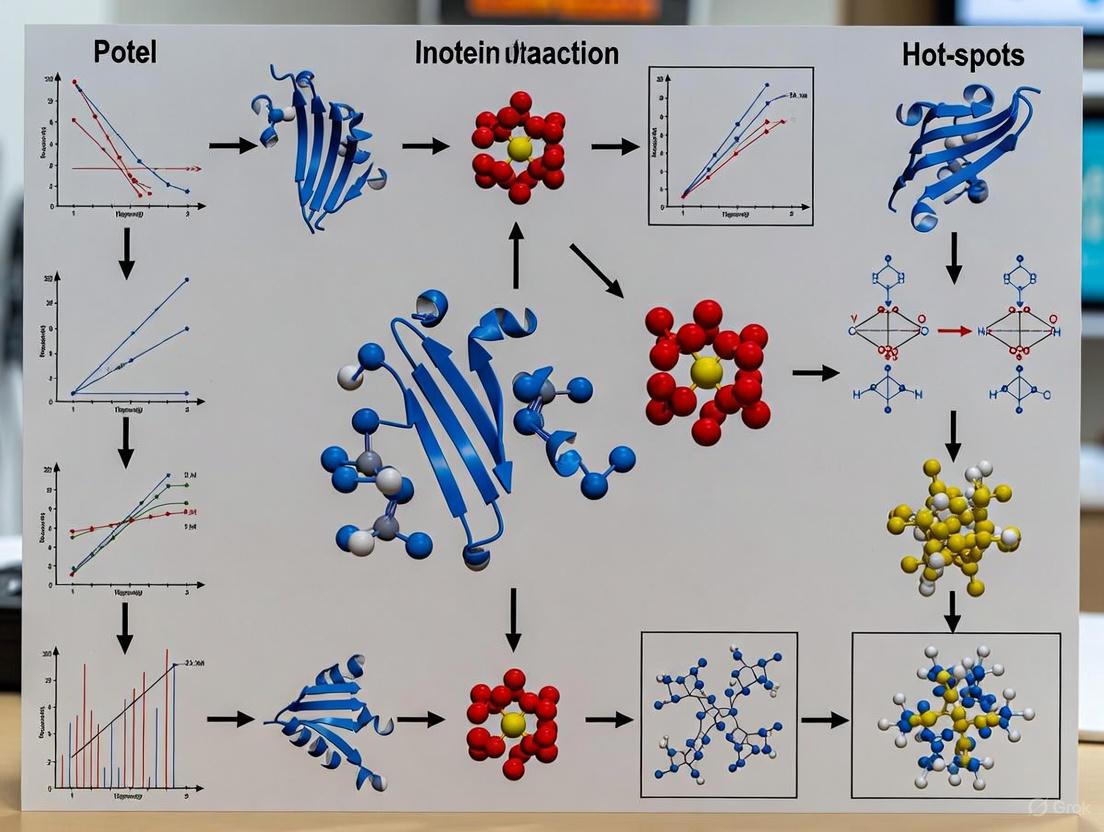
This article provides a comprehensive resource for researchers and drug development professionals aiming to improve the specificity of protein-protein interaction (PPI) hotspot prediction.
Improving Specificity for Protein Interaction Hotspots: Computational and Experimental Strategies for Drug Discovery
Abstract
This article provides a comprehensive resource for researchers and drug development professionals aiming to improve the specificity of protein-protein interaction (PPI) hotspot prediction. It covers the foundational principles defining PPI hotspots and their critical role in drug targeting. The content explores a spectrum of methodological approaches, from machine learning and graph theory to structural analysis, detailing their practical applications. It further addresses common troubleshooting and optimization challenges in both computational and experimental validation. Finally, a comparative analysis of current tools and validation frameworks is presented to guide the selection and implementation of high-specificity prediction strategies for advancing PPI-targeted therapeutics.
Defining the Target: The Critical Role of PPI Hotspots in Cellular Function and Disease
Operational Definitions & Core Concepts FAQ
Q1: What is the foundational, energy-based definition of a protein "hot spot"? A hot spot is traditionally defined through alanine scanning mutagenesis as a residue where mutation to alanine causes a significant drop in binding free energy (typically ≥ 2.0 kcal/mol) [1] [2]. This energetic penalty demonstrates the residue's critical role in stabilizing a protein-protein interaction (PPI) [2].
Q2: How has the definition of a hot spot expanded in modern research? The definition has broadened beyond purely energetic criteria. Many resources now also classify a residue as a hot spot if its mutation (not necessarily to alanine) significantly impairs or disrupts the PPI, as confirmed by experimental methods like co-immunoprecipitation (Co-IP) or yeast two-hybrid (Y2H) screening [1] [3]. This functional expansion allows for the inclusion of residues that are critical for interaction integrity but may not meet the strict energetic threshold.
Q3: What is the relationship between a structural "consensus site" and a functional "hot spot"? A consensus site is a region on a protein's surface identified by experimental or computational methods as having a high propensity to bind various small molecule probes [2]. These sites are often, but not always, coincident with energetic hot spots [2]. The key relationship is that residues protruding into these consensus sites are almost always themselves hot spot residues as defined by alanine scanning [2].
Q4: In a protein-protein interface, how is the binding energy typically distributed? The binding energy is not evenly distributed across the large interface. Instead, it is often focused into a small number of complementary "hotspots." For example, in the CaVα1-CaVβ complex, a 24-sidechain interface has its binding energy concentrated in just four deeply-conserved residues that form two key hotspots [4].
Troubleshooting Experimental Hot-Spot Analysis
Q1: My Co-IP/ Pulldown experiment shows no interaction. What are the primary causes?
- Lysis Buffer Stringency: The use of a strongly denaturing lysis buffer (e.g., RIPA, which contains ionic detergents like sodium deoxycholate) can disrupt native protein-protein interactions. For Co-IP, use a milder cell lysis buffer [5].
- Epitope Masking: The antibody's binding site on your target protein (the epitope) might be obscured by the protein's conformation or by other bound proteins. Solution: Try an antibody that recognizes a different epitope on the target protein [5].
- Low Protein Expression: The bait or prey protein may be expressed at levels below the detection limit. Solution: Check expression levels in your cell line or tissue using an input lysate control and consult expression databases or literature [5].
- Interaction is Not Direct: The interaction you are studying might be indirect and mediated by a third protein. More sophisticated methods, such as mass spectrometry, may be needed to identify all components of the complex [6].
Q2: I am getting a high background or non-specific bands in my Co-IP. How can I resolve this?
- Inadequate Controls: Always include a bead-only control (beads + lysate) and an isotype control (an irrelevant antibody from the same host species) to identify non-specific binding to the beads or the antibody itself [6] [5].
- Antibody Cross-Reactivity: The antibody may be binding off-target proteins. Solution: Use independently derived antibodies against different epitopes on your target for verification [6].
Q3: My Yeast Two-Hybrid (Y2H) screen yields no positives. What could be wrong?
- Protein Toxicity or Instability: The bait or prey protein may be toxic to yeast or unstable, requiring subcloning of alternative protein segments [6].
- Improper Post-Translational Modifications: Some interactions require specific modifications (e.g., phosphorylation) that the yeast system cannot perform [6].
- Library Quality: The cDNA library may have a low percentage of full-length inserts or may not express proteins that interact with your bait. Solution: Use a high-quality library from a relevant tissue or organism [6].
Q4: How can I capture a transient protein-protein interaction for analysis? Transient interactions can be stabilized using chemical crosslinkers. For intracellular interactions, use membrane-permeable crosslinkers like DSS. For cell surface interactions, use membrane-impermeable crosslinkers like BS3. Ensure your buffer does not contain primary amines (e.g., Tris, glycine) that would out-compete the crosslinking reaction [6].
Quantitative Data & Method Performance
Table 1: Energetic Contributions of Hot Spot Residues in the CaVα1 AID - CaVβ ABP Complex [4]
| Residue Role | Number of Residues at Interface | Binding Energy Concentration | Functional Outcome of Disruption |
|---|---|---|---|
| Total Interface | 24 sidechains | Distributed across the interface | Reduced affinity |
| Identified Hotspots | 4 residues (2 complementary pairs) | Energy is focused here | Prevents channel trafficking and functional modulation |
Table 2: Performance Comparison of PPI-Hot Spot Prediction Methods on a Benchmark Dataset [3]
| Prediction Method | Sensitivity (Recall) | Precision | F1-Score |
|---|---|---|---|
| PPI-hotspotID | 0.67 | N/A | 0.71 |
| FTMap | 0.07 | N/A | 0.13 |
| SPOTONE | 0.10 | N/A | 0.17 |
Detailed Experimental Protocols
Protocol 1: Alanine Scanning Mutagenesis and Analysis via Isothermal Titration Calorimetry (ITC) This protocol is adapted from studies on voltage-gated calcium channels [4].
- Design and Cloning: Identify the protein-protein interaction domain (e.g., the AID peptide). Design primers to mutate target residues to alanine via site-directed mutagenesis.
- Protein Expression and Purification: Express and purify the wild-type and mutant peptides (e.g., AID peptides) and the binding partner (e.g., the CaVβ subunit ABP) using an appropriate system (e.g., E. coli). Use tags (e.g., His-tag) for affinity purification.
- ITC Measurement:
- Dialyze both proteins (or peptide and protein) into an identical, degassed buffer.
- Load the cell with one binding partner (e.g., CaVβ) and the syringe with the other (e.g., AID peptide).
- Perform titrations at constant temperature, injecting the syringe component into the cell.
- A control experiment (injecting peptide into buffer) should be run to account for dilution heats.
- Data Analysis: Fit the resulting thermogram (plot of heat vs. molar ratio) to an appropriate binding model to derive the binding affinity (Ka, Kd), stoichiometry (n), enthalpy (ΔH), and entropy (ΔS).
Protocol 2: Validating Hot Spots with a Co-Immunoprecipitation (Co-IP) Assay
- Lysate Preparation: Lyse cells expressing your wild-type or mutant protein in a mild, non-denaturing lysis buffer (e.g., Cell Lysis Buffer #9803) [5]. Include protease and phosphatase inhibitors. Avoid strong ionic detergents.
- Preclearing (Optional): Incubate the lysate with bare Protein A/G beads for 30-60 minutes at 4°C to remove proteins that bind non-specifically to the beads.
- Immunoprecipitation: Incubate the precleared lysate with the antibody against your bait protein. Then add Protein A/G beads to capture the antibody-protein complex. Incubate for several hours or overnight at 4°C with gentle agitation.
- Washing and Elution: Wash the beads extensively with lysis buffer to remove non-specifically bound proteins. Elute the bound proteins by boiling in SDS-PAGE sample buffer.
- Analysis: Analyze the eluates by Western blotting, probing for both the bait protein and the putative interacting partner (prey).
Research Reagent Solutions
Table 3: Essential Reagents for Hot-Spot Research
| Reagent / Material | Function / Application | Key Considerations |
|---|---|---|
| Mild Cell Lysis Buffer | Extracting native protein complexes without disrupting weak PPIs. | Avoid RIPA buffer for Co-IP; use milder buffers without strong ionic detergents [5]. |
| Protease/Phosphatase Inhibitor Cocktails | Preserving protein integrity and post-translational modifications during extraction. | Essential for studying modified proteins (e.g., phosphorylated targets) [5]. |
| Protein A, G, or A/G Beads | Immobilizing antibodies for immunoprecipitation. | Protein A has higher affinity for rabbit IgG; Protein G for mouse IgG. Optimize bead choice for your antibody host species [5]. |
| Chemical Crosslinkers (e.g., DSS, BS3) | Stabilizing transient or weak protein interactions for detection. | DSS is membrane-permeable for intracellular crosslinking; BS3 is impermeable for cell surface crosslinking [6]. |
| Alanine Scanning Mutagenesis Kits | Site-directed mutagenesis to create point mutants for functional testing. | Allows for systematic probing of residue contribution to binding energy [4] [7]. |
| PPI-HotspotID Web Server | Computational prediction of hot spots using free protein structures. | Employs machine learning on features like conservation, SASA, and aa type [1] [3]. |
Signaling Pathways & Experimental Workflows
Hot Spot Identification Workflow
Hot Spot Definition Relationships
The Structural and Energetic Landscape of Protein-Protein Interfaces
Foundational Concepts & FAQs
What defines a protein-protein interaction (PPI) hot spot?
A PPI hot spot is typically defined as a residue where mutation to alanine causes a significant drop (≥ 2.0 kcal/mol) in binding free energy [3] [1]. These residues are critical for the interaction's stability and specificity. Beyond this strict energetic definition, the term is also broadly used for residues whose mutation significantly impairs or disrupts the interaction, as determined by methods like co-immunoprecipitation or yeast two-hybrid screening [3] [1].
What are the key biophysical factors controlling affinity at a protein-protein interface?
Affinity maturation pathways at protein-protein interfaces are largely controlled by two key biophysical factors [8] [9]:
- Shape Complementarity: The geometric fit between the two interacting protein surfaces. This dominates the early stages of affinity maturation.
- Buried Hydrophobic Surface: The non-polar surface area removed from solvent upon binding. This becomes responsible for improved binding in the later stages of affinity maturation [8] [9].
The interplay of these forces creates a landscape where binding affinity and specificity are optimized through a combination of structural fit and energetic contributions.
What is the difference between stable and transient protein-protein interactions?
- Stable Interactions: These are long-lasting and are associated with proteins that purify as multi-subunit complexes, such as hemoglobin or core RNA polymerase [10].
- Transient Interactions: These are temporary and often require specific conditions like phosphorylation, conformational changes, or localization to discrete cellular areas [10]. They can be strong or weak, and fast or slow, and are involved in processes like signaling, protein modification, and transport [10].
Troubleshooting Common Experimental Issues
Co-immunoprecipitation (Co-IP) and Pulldown Assays
Issue: How can I eliminate false positives in my co-IP or pulldown experiments? [11]
| Problem Cause | Recommended Solution |
|---|---|
| Antibody specificity | Use monoclonal antibodies; pre-adsorb polyclonal antibodies against sample devoid of primary target [11]. |
| Non-specific binding to support | Include negative control with non-treated affinity support (minus bait protein) [11]. |
| Non-specific binding to tag | Use immobilized bait control (plus bait protein, minus prey protein) [11]. |
| Interaction mediated by third party | Use immunological methods or mass spectrometry to identify all complex members [11]. |
| Interaction occurs only after lysis | Validate with co-localization studies or site-specific mutagenesis [11]. |
Issue: Why is my bait protein not detected in pulldown assays? [11]
- Protein Degradation: Ensure protease inhibitors are included in your lysis buffer [11].
- Cloning Issues: Confirm the fusion protein was properly cloned into the expression vector [11].
- Detection Sensitivity: Use more lysate or employ a more sensitive detection system like chemiluminescent substrates [11].
Yeast Two-Hybrid (Y2H) Screening
Issue: Why am I getting no transformations in my Y2H screen? [11]
| Problem Cause | Recommended Solution |
|---|---|
| Incorrect antibiotic | Use correct selection: 10 μg/mL gentamicin for bait plasmids, 100 μg/mL ampicillin for prey plasmids [11]. |
| LR Clonase II enzyme issues | Ensure proper storage at -20°C or -80°C; avoid >10 freeze/thaw cycles; use recommended amount [11]. |
| Insufficient transformation mixture | Increase the amount of E. coli plated [11]. |
Issue: Why is there excessive background growth on my Y2H selection plates? [11]
- Technical Issues: Replica clean immediately after plating and again after 24 hours; ensure minimal cell transfer during replica plating [11].
- Preparation Errors: Confirm 3AT plates were prepared correctly with fresh stock solutions and proper calculations [11].
- Incubation Time: Do not incubate plates longer than 60 hours (40-44 hours is optimal) [11].
Issue: Why are my bait and prey proteins not interacting in Y2H? [11]
- Plasmid Issues: Ensure both bait and prey plasmids were co-transformed; plate on correct selection media (SC-Leu-Trp) [11].
- False Positives: Candidate clones might be self-activating mutants of bait; retransform with fresh colonies [11].
- Framing Issues: Sequence the DBD/test DNA junction to ensure gene of interest is in frame with GAL4 DNA Binding Domain [11].
Crosslinking Protein Interaction Analysis
Issue: Why is my crosslinking experiment not capturing transient interactions? [11]
- Reagent Competition: Avoid primary amine-containing buffers (Tris, glycine) that out-compete amine-reactive crosslinkers like DSS or BS3 [11].
- Permeability Issues: For intracellular crosslinking, ensure you're using a membrane-permeable crosslinker [11].
- pH and Freshness: Ensure proper pH for crosslinking and use fresh crosslinkers [11].
- Photo-reactive Crosslinkers: For these, confirm proper UV wavelength (300-370 nm), distance, and exposure time [11].
Advanced Methodologies & Computational Tools
How can I identify PPI hot spots using computational methods?
PPI-HotspotID is a novel machine-learning method that identifies hot spots using only the free protein structure [3] [1]. It employs an ensemble of classifiers and uses only four residue features:
- Evolutionary conservation
- Amino acid type
- Solvent-accessible surface area (SASA)
- Gas-phase energy (ΔGgas) [3] [1]
Performance Comparison of PPI-Hot Spot Detection Methods [3]
| Method | Input | Sensitivity/Recall | F1-Score |
|---|---|---|---|
| PPI-HotspotID | Free protein structure | 0.67 | 0.71 |
| FTMap (PPI mode) | Free protein structure | 0.07 | 0.13 |
| SPOTONE | Protein sequence | 0.10 | 0.17 |
When combined with interface residues predicted by AlphaFold-Multimer, PPI-HotspotID achieves even better performance than either method alone [3] [1]. The method is available as a freely accessible web server and open-source code [3].
Experimental Workflow for Comprehensive PPI Hot Spot Analysis
How do I integrate structural, energetic, and functional analysis?
A comprehensive approach combining crystal structures, binding-free energies, and functional assays reveals how affinity maturation pathways correspond to biological function [8] [9]. This integrated methodology involves:
- Structural Analysis: Determining crystal structures of protein complexes at different affinity stages [8].
- Energetic Profiling: Measuring binding-free energies of variant complexes [8] [9].
- Functional Correlation: Linking biophysical changes to functional outcomes, such as T-cell activation by superantigens [8] [9].
The Scientist's Toolkit: Research Reagent Solutions
| Essential Material | Function & Application |
|---|---|
| Monoclonal Antibodies | Target-specific recognition in co-IP; reduces false positives compared to polyclonals [11]. |
| Protease Inhibitors | Prevent degradation of bait protein in pulldown assays; essential in lysis buffers [11]. |
| Crosslinkers (DSS, BS3) | Stabilize transient interactions; "freeze" complexes for analysis [11]. |
| Photo-reactive Crosslinkers | Enable temporal control; react only upon UV exposure for capturing dynamic interactions [11]. |
| 3-AT (3-Aminotriazole) | Competitive inhibitor of HIS3 reporter gene in Y2H; controls background growth [11]. |
| SuperSignal West Femto | Maximum sensitivity chemiluminescent substrate for detecting low-abundance proteins [11]. |
| Glutathione Agarose | Affinity support for GST-tagged bait proteins in pull-down assays [10]. |
| Metal Chelate Resins | Capture polyHis-tagged proteins using cobalt or nickel coatings [10]. |
Frequently Asked Questions
What is the fundamental difference between an interface residue and a hotspot? An interface residue is any amino acid located in the physical contact area between two interacting proteins. In contrast, a true hotspot is a very small subset of these interface residues that contributes the majority of the binding free energy. Mutating a hotspot (e.g., to alanine) significantly disrupts the interaction (typically with a ΔΔG ≥ 2.0 kcal/mol), whereas mutating most other interface residues has little to no effect [12] [13].
Why do my computational predictions identify so many interface residues, but experimental validation shows few functional hotspots? This is a classic issue of sensitivity versus specificity. Many prediction methods are trained to identify all interface residues, which form a large, heterogeneous group. However, true hotspots have distinct evolutionary, structural, and physicochemical features. Your model might have high sensitivity (finding many true interface residues) but low precision for the specific, energetically crucial hotspots. The machine learning algorithm may be learning to disregard the non-hotspot residues as noise and identifying only the hotspot residues as the signal [12].
Which machine learning models are best for improving the specificity of hotspot prediction? Recent studies show that advanced ensemble and boosting methods significantly enhance specificity. Extreme Gradient Boosting (XGBoost) has been demonstrated to outperform other models like Support Vector Machines (SVM) and Random Forests by effectively integrating diverse features and handling class imbalance [13]. Furthermore, transformer-based models like Prot-BERT combined with Artificial Neural Networks (ANN) show high generalizability for predicting protein-protein interaction sites from sequence alone [14].
What are the most informative features for distinguishing hotspots from other interface residues? While many features exist, a curated set proves most effective. The PredHS2 method, for instance, identified an optimal set of 26 features. Key discriminators include [13]:
- Evolutionary conservation: Hotspots are often more conserved.
- Solvent Accessible Surface Area (SASA): Related to the "O-ring" theory of solvent exclusion.
- Amino acid type: Tryptophan, arginine, and tyrosine are disproportionately represented.
- Secondary structure propensities: Including novel junction propensities between structures [14].
- Energy terms: Such as gas-phase energy (ΔGgas) [3].
Troubleshooting Guides
Problem: Low Precision in Hotspot Predictions
Symptoms: Your computational model successfully predicts a large number of putative interface residues, but subsequent alanine scanning or functional assays confirm only a small fraction of them as true hotspots. Your false positive rate is high.
Diagnosis and Solution:
- Action 1: Implement Advanced Feature Selection.
- Procedure: Do not use all available features. Employ a two-step feature selection process to eliminate redundancy.
- Use the minimum Redundancy Maximum Relevance (mRMR) method to rank all candidate features.
- Apply a sequential forward selection (SFS) wrapper method, adding features one by one until prediction performance (e.g., F1-score or MCC) no longer improves [13].
- Expected Outcome: This will yield a compact set of highly discriminative features (e.g., ~26 features as in PredHS2), reducing noise and improving model specificity.
- Procedure: Do not use all available features. Employ a two-step feature selection process to eliminate redundancy.
Action 2: Address Class Imbalance.
- Procedure: Hotspots are rare, leading to a skewed dataset. Use techniques like minority class oversampling or adjust the model's class weights during training. For datasets with unlabeled data, consider Positive-Unlabeled (PU) Learning frameworks [14].
- Expected Outcome: The model will be less biased toward the majority class (non-hotspots) and better at recognizing the critical minority class.
Action 3: Utilize Structural Neighborhoods.
- Procedure: Incorporate information from a residue's structural environment. Extract Euclidean neighborhood properties (residues within a specific radius in 3D space) and Voronoi neighborhood properties (topological neighbors) [13].
- Expected Outcome: This captures the context that shapes a hotspot, such as the "O-ring" of surrounding residues that occlude solvent, a key characteristic of true hotspots [13].
Problem: Handling Proteins Without Solved Complex Structures
Symptoms: You need to predict hotspots for a protein of interest, but no 3D structure of its complex with a partner is available. Structure-based prediction methods are not applicable.
Diagnosis and Solution:
- Action 1: Leverage Sequence-Based Deep Learning.
- Procedure: Use protein language models like Prot-BERT [14]. These models, pre-trained on millions of protein sequences, generate rich, context-aware feature representations from a single protein sequence, capturing evolutionary and functional patterns predictive of interaction sites.
- Expected Outcome: Ability to make robust predictions directly from sequence, bypassing the need for structural data.
- Action 2: Combine Predictors.
- Procedure: Use a method like PPI-hotspotID, which can work with free protein structures (unbound) and can be combined with interface residues predicted by AlphaFold-Multimer. This integrated approach has been shown to outperform either method alone [3].
- Expected Outcome: Improved reliability of hotspot predictions when only the unbound structure or a high-quality predicted complex is available.
Experimental Protocols & Data
Protocol: Alanine Scanning Mutagenesis for Experimental Hotspot Validation
Purpose: To experimentally identify hotspot residues by systematically mutating interface residues to alanine and measuring the change in binding affinity.
Procedure:
- Site-Directed Mutagenesis: Design and generate mutant constructs where each candidate interface residue is replaced with alanine. This side-chain truncation removes interactions without altering the protein backbone.
- Protein Purification: Express and purify the wild-type and all mutant proteins.
- Binding Affinity Measurement: Determine the binding constant (Kd) between each mutant protein and its interaction partner using a technique like Isothermal Titration Calorimetry (ITC) or Surface Plasmon Resonance (SPR).
- Calculate ΔΔG: Compute the change in binding free energy using the formula: ΔΔG = -RT ln( Kd(mutant) / Kd(wild-type) ).
- Classification: A residue is typically defined as a hotspot if ΔΔG ≥ 2.0 kcal/mol [13].
Quantitative Performance of Select Prediction Methods
The table below summarizes the performance of various methods, highlighting the challenge of achieving high specificity (precision) while maintaining good sensitivity (recall).
Table 1: Performance Comparison of Hotspot Prediction Methods
| Method | Input Data | Sensitivity (Recall) | Precision | F1-Score | Key Features |
|---|---|---|---|---|---|
| PredHS2 (XGBoost) [13] | Protein Complex Structure | 0.70 | 0.67 | 0.689 | 26 optimal features (e.g., SASA, conservation, energy) |
| Prot-BERT-ANN [14] | Protein Sequence Only | 0.53 (avg. for IAV proteins) | N/A | N/A | Contextual sequence embeddings from a transformer model |
| PPI-hotspotID [3] | Free Protein Structure | 0.67 | 0.75 | 0.71 | Conservation, amino acid type, SASA, ΔGgas |
| D-SCRIPT [14] | Protein Sequence Only | 0.18 (avg. for IAV proteins) | N/A | N/A | Neural language model predicting interaction interfaces |
Table 2: Essential Research Reagent Solutions
| Reagent / Resource | Function / Application | Example / Source |
|---|---|---|
| ASEdb / BID / SKEMPI | Databases of experimental hotspot data from alanine scanning mutagenesis; used for training and benchmarking computational models. [14] [13] | Alanine Scanning Energetics Database (ASEdb), Binding Interface Database (BID) |
| PPI-HotspotDB | A comprehensive database of experimentally determined hotspots, including those from expanded definitions beyond alanine scanning. [3] | PPI-HotspotDB |
| XGBoost | An advanced, scalable machine learning algorithm based on gradient boosting, highly effective for building classification models with high specificity. [13] | Chen & Guestrin, 2016 |
| Prot-BERT | A deep learning model that generates feature representations from protein sequences, enabling state-of-the-art sequence-based prediction. [14] | Hugging Face Model Repository |
| AlphaFold-Multimer | Predicts the 3D structure of a protein complex from sequence; output can be used to identify interface residues for subsequent hotspot analysis. [3] | AlphaFold Server |
Workflow and Conceptual Diagrams
Experimental Hotspot Identification Workflow
The following diagram illustrates the standard workflow for identifying hotspots, integrating both computational prediction and experimental validation.
The O-Ring Theory of Hotspots
This diagram visualizes the "O-ring" theory, a key conceptual model for why only specific residues are hotspots.
Hotspots as Attractive Therapeutic Targets in Cancer, Neurodegenerative, and Infectious Diseases
FAQs: Fundamental Concepts and Definitions
Q1: What exactly is a "hot spot" in the context of protein-protein interactions (PPIs)? A PPI hot spot is defined as a residue or a cluster of residues within a protein-protein interface that makes a substantial contribution to the binding free energy. Conventionally, these are residues whose mutation to alanine causes a significant drop (≥2 kcal/mol) in the binding free energy. These residues are often part of tightly packed "hot regions" that provide flexibility and the capacity to bind to multiple different partners [15].
Q2: Why are PPI hot spots considered attractive therapeutic targets? Hot spots are attractive targets because they are central to the interaction networks that drive cellular processes. Dysregulation of these PPIs is associated with cancer, neurodegenerative diseases, and infectious diseases. Targeting these specific, critical residues allows for the precise modulation of pathological interactions—either inhibiting detrimental ones or stabilizing beneficial ones—with high potential for therapeutic effect and reduced off-target consequences [15] [1] [16].
Q3: What are the key differences between PPI hot spots and mutation hot spots in cancer genomics? These are distinct concepts. PPI hot spots are functional sites on a protein's surface critical for binding energy. In contrast, cancer mutation hot spots are specific genomic positions recurrently mutated across patients, presumably because they confer a selective growth advantage to cancer cells (e.g., in genes like BRAF, KRAS). While both are "hot spots," one refers to protein function and interaction, and the other to mutation frequency in a population [17].
Q4: Can hot spots be found in disordered protein regions, or only in structured domains? Yes, hot spots can exist within both structured and disordered protein interfaces. This complexity necessitates innovative targeting strategies. For instance, chimeric peptide inhibitors have been developed that contain both a structured, cyclic part and a disordered part to simultaneously target structured and disordered hot spots on the same protein, such as iASPP in cancer [18].
FAQs: Computational and Experimental Identification
Q5: What are the main computational methods for predicting PPI hot spots, and how do they differ? Computational methods fall into two primary categories, as summarized in the table below.
Table 1: Key Computational Methods for PPI Hot Spot Prediction
| Method Category | Description | Key Tools/Examples | Data Requirements |
|---|---|---|---|
| Energy-Based Methods | Calculate the binding free energy difference between wild-type and mutant proteins using force fields or empirical scoring functions [1]. | FoldX, Roberta [1]. | Protein complex structure. |
| Machine Learning (ML) Classifiers | Employ classifiers (e.g., Random Forest, SVM) trained on features like evolutionary conservation, solvent accessibility, and amino acid properties [14] [1]. | PPI-hotspotID [1] [3], KFC2 [1], SPOTONE [1]. | Varies; can use complex structure, free structure, or sequence only. |
Q6: My hot spot prediction results have low precision. How can I improve specificity? Low precision (many false positives) is a common challenge. To improve specificity:
- Combine Complementary Methods: Integrate different computational approaches. For example, using interface residues predicted by AlphaFold-Multimer as a filter for other hot spot prediction methods has been shown to enhance performance [1] [3].
- Leverage Larger, Curated Datasets: Train or validate your models on larger, broad-definition databases like PPI-HotspotDB, which contains over 4,000 experimentally determined hot spots, to reduce overfitting and improve generalizability [1] [3].
- Incorporate Biological Context: Use features like evolutionary conservation and structural context (e.g., solvent-accessible surface area) that are hallmarks of true functional residues [1].
Q7: What is a typical experimental workflow to validate a predicted hot spot? A standard validation workflow involves structure-based mutagenesis followed by binding or functional assays, as outlined in the diagram below.
Detailed Protocol: Experimental Validation of a Predicted PPI Hot Spot
- Principle: Disrupting a critical hot spot residue via mutation should significantly impair the protein-protein interaction and its downstream biological function.
- Materials:
- Plasmid containing the wild-type gene of interest.
- Site-directed mutagenesis kit.
- Cell line for protein expression (e.g., HEK293T).
- Antibodies for immunoprecipitation (Co-IP).
- Equipment for binding assays (e.g., Surface Plasmon Resonance - SPR).
- Procedure:
- Mutagenesis: Design primers to mutate the predicted hot spot residue to alanine. Perform site-directed mutagenesis on the wild-type plasmid to generate the mutant construct [1].
- Protein Expression: Transfect an appropriate cell line with both wild-type and mutant plasmids. Express and purify the proteins using standard protocols (e.g., affinity chromatography) [1].
- Binding Assay:
- Co-immunoprecipitation (Co-IP): Lyse transfected cells and perform Co-IP using an antibody against your protein of interest. Probe the immunoprecipitate via Western blotting for its known interaction partner. A significant reduction in binding for the mutant compared to wild-type supports the prediction [1] [3].
- Surface Plasmon Resonance (SPR): Immobilize one interaction partner on a sensor chip and flow the wild-type or mutant protein over it. A substantial decrease in binding affinity (increase in K~D~) for the mutant confirms its importance [1].
- Functional Assay: In a relevant cellular model, assay a pathway or phenotype dependent on the PPI. For example, if the interaction promotes cell survival, test if the mutant protein fails to rescue cell death upon knockdown of the endogenous protein [18].
FAQs: Therapeutic Targeting and Troubleshooting
Q8: What strategies exist for targeting PPI hot spots with small molecules or peptides? The table below outlines key therapeutic strategies for targeting PPI hot spots.
Table 2: Strategies for Therapeutic Targeting of PPI Hot Spots
| Strategy | Mechanism | Example/Therapeutic Context |
|---|---|---|
| Small Molecule Inhibitors | Bind to hot spot regions, disrupting the PPI. Often identified via HTS or FBDD [15]. | Venetoclax (BCL-2 inhibitor), Sotorasib (KRAS inhibitor) [15]. |
| Stapled/Peptidomimetic Inhibitors | Stabilize secondary structures (e.g., α-helices) to mimic key interaction motifs, improving stability and binding [15] [18]. | Stapled helical peptides targeting iASPP in cancer cells [18]. |
| Chimeric Peptide Inhibitors | Combine structured (e.g., cyclic) and disordered peptide parts to target both structured and disordered hot spots on a single protein [18]. | Chimeric peptides targeting iASPP, showing enhanced cytotoxicity [18]. |
| PPI Stabilizers | Enhance the formation or stability of a protein complex, a emerging therapeutic modality [15] [16]. | Potential application in diseases caused by loss-of-function interactions [15]. |
Q9: I've identified a potential hot spot, but it's a flat, featureless surface. How can I target it? Flat PPI interfaces are notoriously difficult to target with traditional small molecules.
- Use Fragment-Based Drug Discovery (FBDD): FBDD uses low molecular weight fragments that can bind to small, discontinuous sub-pockets within the flat interface. These fragments can then be linked or optimized into larger, high-affinity inhibitors [15].
- Explore Peptidomimetics: Design molecules that mimic the key secondary structure (e.g., α-helix, β-sheet) of one protein partner that engages the hot spot. Stapled peptides are a prominent example that confer proteolytic resistance and cell permeability [15] [18].
- Leverage AI and Computational Tools: AI-driven algorithms can now model complex PPI structures and identify cryptic pockets or design binders that target flat surfaces with remarkable accuracy [16].
Q10: The therapeutic agent targeting a hot spot shows efficacy in cells but not in animal models. What could be wrong? This discrepancy can arise from several factors:
- Pharmacokinetics (PK): The agent may have poor absorption, distribution, metabolism, or excretion (ADME) properties in vivo. Check its bioavailability, half-life, and tissue penetration.
- Off-Target Effects: The agent might be hitting other targets in vitro, where concentration is precisely controlled, but its effect is diluted in vivo by a more complex proteome.
- Redundant Pathways: The disease pathway in vivo may have redundancy that is not present in your cellular model, bypassing the inhibition of your single target.
- Compound Stability: The compound may be degraded or inactivated in the serum or specific tissues of the animal model.
The Scientist's Toolkit: Research Reagent Solutions
Table 3: Essential Research Reagents and Resources for PPI Hot Spot Research
| Reagent/Resource | Function/Description | Example Use Case |
|---|---|---|
| PPI-HotspotDB | A comprehensive database of over 4,000 experimentally determined PPI hot spots. Used for training ML models and benchmarking predictions [1] [3]. | Calibrating new computational hot spot prediction methods. |
| AlphaFold-Multimer | An AI system that predicts the 3D structure of protein complexes from sequence. Can predict interface residues to guide hot spot identification [1] [3]. | Providing structural context for proteins with unknown complex structures. |
| FTMap Server | A computational mapping server that identifies hot spots on protein surfaces by finding consensus binding sites for small molecular probes [1]. | Identifying potential binding hot spots on a free protein structure. |
| PPI-Focused Compound Libraries | Chemically diverse libraries enriched with compounds (small molecules, fragments) likely to target PPI interfaces [16]. | High-throughput screening to discover initial hits for PPI modulation. |
| Stapled Peptide Synthesis Kits | Facilitate the creation of stabilized α-helical peptides through site-specific hydrocarbon stapling. | Generating metabolically stable peptide inhibitors for cellular and in vivo studies [18]. |
The following diagram illustrates the integrated research and development pipeline for discovering and targeting PPI hot spots, connecting the tools and strategies discussed.
A Methodological Toolkit: From Machine Learning to Network Analysis for High-Specificity Prediction
Frequently Asked Questions (FAQs)
Q1: My model for predicting protein-protein interaction (PPI) hot spots has high recall but poor precision, leading to too many false positives. What feature-related issues should I investigate? A high false positive rate often stems from two key issues: class imbalance and uninformative features. PPI hot spots are rare, making it easy for models to overfit to noise. Furthermore, features that do not directly distinguish hot spot from non-hot spot residues add dimensionality without benefit. To address this:
- Action: Implement rigorous feature selection. The method PPI-hotspotID demonstrated that using just four key features—conservation, amino acid type, SASA, and ΔGgas—can achieve high precision (0.76) and an F1-score of 0.71, significantly outperforming methods that use broader, less curated feature sets [19]. This focuses the model on the most discriminative information.
Q2: Why are the features Conservation, SASA, and ΔGgas particularly powerful for achieving high specificity in PPI hot spot prediction? These three features provide a multi-faceted physicochemical and evolutionary profile that is highly characteristic of functionally critical residues.
- Conservation: Hot spots are often found in structurally conserved regions [20]. Evolution preserves residues that are critical for function and binding.
- Solvent-Accessible Surface Area (SASA): This feature describes the residue's exposure to the solvent. Hot spots, while often buried in the interface, have specific accessibility characteristics that can be a strong predictive signal [19].
- Gas-Phase Energy (ΔGgas): This energetic feature, often derived from force fields, estimates the contribution of a residue to the stability of the interaction, directly relating to the binding free energy change upon mutation [19].
Q3: My model performs well on the training data but generalizes poorly to new protein complexes. How can feature selection improve this? This is a classic sign of overfitting, frequently caused by a high number of features relative to the number of training samples. Irrelevant or redundant features allow the model to learn patterns specific to the training set that are not generally applicable [21].
- Action: Employ feature selection methods like Random Forests to identify and retain only the most informative features [20] [22]. This reduces model complexity, minimizes learning from noise, and enhances generalizability by ensuring the model focuses on robust, transferable signals.
Q4: Are ensemble methods useful for combining these features, and how do they compare to single-model approaches? Yes, ensemble methods are highly effective. They combine the predictions of multiple base classifiers (e.g., SVM, KNN) to create a more robust and accurate final model. This approach mitigates the weaknesses of any single classifier.
- Evidence: One study using an ensemble of SVM and KNN with sequence-based features achieved an F1 score of 0.92 on the ASEdb dataset, a significant improvement over many single-model methods [23]. Similarly, PPI-hotspotID itself uses an ensemble of classifiers [19].
Troubleshooting Guides
Issue: Low Specificity and Precision in Predictions
Problem: Your model identifies many residues as hot spots, but experimental validation shows most are not. The specificity and precision metrics are unacceptably low.
Diagnosis and Solution Steps:
Audit Your Feature Set:
Implement Advanced Feature Selection:
- Action: Use a method like Random Forest to rank feature importance. Train your final model using only the top-ranked features.
- Protocol: Using scikit-learn in Python, you can train a
RandomForestClassifier, access thefeature_importances_attribute, and select features with importance above a chosen threshold. This ensures only the most discriminative features are used.
Incorporate Spatial Neighbor Information:
- Problem: Features are calculated only for the target residue, ignoring its microenvironment.
- Solution: Extract hybrid features that include information from the target residue's spatial neighbors, such as the nearest contact residue on the binding partner and the nearest residue on the same chain [20].
- Rationale: Hot spots often exist in tightly packed clusters, and their identity is influenced by their spatial context [20].
Issue: Handling Small and Class-Imbalanced Datasets
Problem: The number of known hot spot residues is very small compared to non-hot spots, leading to a model biased toward the majority class.
Diagnosis and Solution Steps:
Apply Data Resampling Techniques:
- Action: Use the Synthetic Minority Over-sampling Technique (SMOTE) to generate synthetic examples of the minority class (hot spots) [22].
- Protocol: Employ the
imbalanced-learnlibrary in Python. After partitioning your data, apply SMOTE only to the training set to avoid data leakage. - Rationale: This creates a balanced dataset for training, preventing the model from being biased toward predicting the more common non-hot spots.
Utilize the Largest Available Benchmark:
- Action: Train and validate your model on the most comprehensive, non-redundant benchmark available, such as PPI-Hotspot+PDBBM [19].
- Rationale: This dataset contains over 4,000 experimentally determined hot spots, providing a much larger and more robust foundation for training models and reducing the risk of overfitting from small sample sizes [19].
Experimental Protocols & Data
Detailed Method for PPI-hotspotID Feature Extraction and Validation
The following workflow outlines the key steps for building a high-precision prediction model, as demonstrated by PPI-hotspotID [19].
1. Data Curation:
- Source: Use a non-redundant benchmark dataset like PPI-Hotspot+PDBBM [19]. Ensure proteins share < 60% sequence identity to avoid homology bias.
- Definition: PPI-hot spots are defined as residues whose mutation causes a ≥ 2.0 kcal/mol drop in binding free energy or is manually curated in UniProt as significantly impairing the interaction [19].
2. Feature Extraction:
- Conservation: Calculate evolutionary conservation scores for each residue using tools like ConSurf, which analyzes homologous sequences.
- SASA (Solvent-Accessible Surface Area): Compute the SASA for each residue from the free protein structure using a tool like DSSP or from the free protein structure directly within the PPI-hotspotID method [19]. Units are typically in Ų.
- ΔGgas (Gas-Phase Energy): Calculate this energy term using a molecular mechanics force field. It represents the intramolecular energy of the residue in the protein environment.
- Amino Acid Type: Encode the amino acid as a categorical or one-hot feature.
3. Model Training & Validation:
- Classifier: Use an ensemble machine learning classifier, such as the one implemented in PPI-hotspotID [19].
- Validation: Perform k-fold cross-validation (e.g., 5-fold or 10-fold) on the training set.
- Performance Metrics: Calculate Sensitivity (Recall), Precision, Specificity, and F1-score on an independent test set. The following table summarizes the performance achievable with a focused feature set:
Table: Performance Comparison of PPI Hot Spot Prediction Methods
| Method | Input Data | Key Features | Precision | Recall (Sensitivity) | F1-Score | Specificity |
|---|---|---|---|---|---|---|
| PPI-hotspotID | Free Structure | Conservation, SASA, ΔGgas, AA Type | 0.76 | 0.67 | 0.71 | Not Reported [19] |
| FTMap (PPI Mode) | Free Structure | Probe cluster consensus sites | Very Low | 0.07 | 0.13 | Not Reported [19] |
| SPOTONE | Sequence | Sequence-derived features | Very Low | 0.10 | 0.17 | Not Reported [19] |
| Ensemble (SVM+KNN) | Sequence | Auto-correlation, relASA | Not Reported | Not Reported | 0.92 | Not Reported [23] |
Protocol for Integrating AlphaFold-Multimer with Feature-Based Prediction
Objective: Enhance prediction by combining interface residue information from AlphaFold-Multimer with the energetic and evolutionary features from PPI-hotspotID.
Procedure:
- Predict Interface: Run AlphaFold-Multimer on the free protein structure and its binding partner to predict the complex structure and identify interface residues [19].
- Filter Residues: Restrict your subsequent analysis to the set of predicted interface residues. This drastically reduces the search space and the class imbalance problem.
- Run PPI-hotspotID: Apply the PPI-hotspotID method (or your own model based on Conservation, SASA, and ΔGgas) only to these predicted interface residues.
- Combine Results: The final hot spot predictions are the high-probability outputs from the feature-based model within the AlphaFold-predicted interface. This combined approach has been shown to yield better performance than either method alone [19].
The Scientist's Toolkit: Research Reagent Solutions
Table: Essential Resources for PPI Hot Spot Prediction Research
| Resource Name | Type | Primary Function in Research | Key Application |
|---|---|---|---|
| PPI-HotspotDB | Database | Repository of experimentally determined PPI hot spots. | Provides a large, curated benchmark for training and testing prediction models [19]. |
| ASEdb / BID | Database | Legacy databases of binding energetics from alanine scanning mutagenesis. | Source of standardized hot spot data for building and comparing models [23] [20]. |
| AlphaFold-Multimer | Software Tool | Predicts the 3D structure of protein complexes from sequence. | Identifies potential protein-protein interfaces from free structures to narrow down the residue search space [19]. |
| Robetta | Web Server | Provides binding free energy estimates upon alanine mutation. | Used as an energy-based computational method for hot spot prediction and validation [20]. |
| Random Forest (scikit-learn) | Algorithm | A powerful ensemble ML algorithm for classification and regression. | Used for both feature selection and as a classifier to build the final prediction model [20] [22]. |
Frequently Asked Questions (FAQs)
Q1: What is the main difference between PPI-hotspotID, FTMap, and SPOTONE? PPI-hotspotID is a machine-learning method that uses the free protein structure to predict residues critical for protein-protein interactions (PPIs), employing features like conservation, amino acid type, solvent-accessible surface area (SASA), and gas-phase energy (ΔGgas) [24] [1]. FTMap identifies binding hot spots for protein-protein interactions by finding consensus sites on the free protein structure that bind clusters of small molecular probes [24] [25]. SPOTONE predicts PPI-hot spots directly from the protein sequence using an ensemble of extremely randomized trees [1] [26].
Q2: When should I use the PPI mode in FTMap? You should use the PPI mode in FTMap when your goal is to detect binding hot spots specifically for protein-protein interactions rather than for small molecule binding [25]. This mode uses an alternative set of parameters tailored for PPIs.
Q3: My dataset of protein structures is non-redundant. How does PPI-hotspotID ensure reliable performance? PPI-hotspotID was validated on the largest collection of experimentally confirmed PPI-hot spots to date, using a benchmark dataset of 158 non-redundant proteins (sharing <60% sequence identity) with free structures [27] [1] [26]. The use of cross-validation during model development helps provide a reliable estimate of performance and reduces variability [24].
Q4: Can these tools predict hot spots that are not in direct contact with a binding partner? Yes, this is a noted capability of PPI-hotspotID. While many methods predict residues that make multiple contacts across a protein-protein interface, PPI-hotspotID can also detect PPI-hot spots that lack direct contact with the partner protein or are in indirect contact [24] [26].
Q5: What file format should my protein structure be in for the FTMap server? FTMap requires a structure file in PDB format. You can either enter a four-digit PDB ID from the Protein Data Bank or upload your own PDB file. The server will remove all ligands, non-standard amino acid residues, and small molecules before mapping [25].
Troubleshooting Guides
Problem: Low Recall (Sensitivity) with FTMap or SPOTONE
- Description: The tool fails to identify a large fraction of known true PPI-hot spots.
- Solution: Consider using PPI-hotspotID, which demonstrated a significantly higher recall (0.67) compared to FTMap (0.07) and SPOTONE (0.10) on a benchmark dataset [27]. For a further performance boost, you can combine PPI-hotspotID predictions with interface residues predicted by AlphaFold-Multimer [1] [26].
Problem: Interpreting FTMap Results for PPI Hot Spots
- Description: Uncertainty in how to translate FTMap's output into a set of predicted PPI-hot spot residues.
- Solution: When FTMap is run in PPI mode, the hot spots are identified as consensus sites—regions that bind multiple probe clusters. The residues considered as PPI-hot spots are those in van der Waals (vdW) contact with probe molecules within the largest consensus site (the one containing the most probe clusters) [24] [1].
Problem: "Incomplete" or "Misinterpreted" Validation in Methodology
- Description: Peer reviewers or readers raise concerns about the strength of evidence or validation of the hot spot prediction method, specifically regarding comparisons with other tools like FTMap.
- Solution: Ensure you understand and clearly communicate the fundamental differences between the tools. FTMap identifies regions that bind small molecular probes, which are often correlated with, but not identical to, the classic definition of PPI-hot spots based on binding free energy changes from alanine scanning [24]. When comparing methods, use a large, experimentally validated benchmark dataset and appropriate performance metrics like precision, recall, and F1-score [24] [27].
Performance Data for Key Prediction Tools
The following table summarizes the performance of PPI-hotspotID, FTMap, and SPOTONE on a benchmark dataset containing 414 true PPI-hot spots and 504 non-hot spots [27].
| Method | Input Required | Sensitivity (Recall) | F1-Score |
|---|---|---|---|
| PPI-hotspotID | Free Protein Structure | 0.67 | 0.71 |
| FTMap | Free Protein Structure | 0.07 | 0.13 |
| SPOTONE | Protein Sequence | 0.10 | 0.17 |
Experimental Protocol: Validating Predicted PPI-Hot Spots
Title: Experimental Verification of Predicted PPI-Hot Spots Using Co-immunoprecipitation.
Background: This protocol describes a method to validate computationally predicted PPI-hot spots, as exemplified by the experimental verification of predictions for eukaryotic elongation factor 2 (eEF2) made by PPI-hotspotID [27] [1] [26].
Materials:
- Plasmids: Vectors (e.g., pcDNA3.1) encoding the wild-type protein and mutant versions (e.g., alanine substitutions) of the predicted hot spot residues.
- Cell Line: A relevant mammalian cell line (e.g., HEK293T) for protein expression.
- Antibodies: Antibody against the protein of interest for immunoprecipitation and antibody against its known binding partner for immunoblotting.
- Lysis Buffer: Non-denaturing cell lysis buffer (e.g., containing Tris-HCl pH 7.5, NaCl, NP-40, and protease inhibitors).
- Protein A/G Beads: For antibody immobilization during co-immunoprecipitation.
Procedure:
- Mutagenesis: Generate mutant constructs of the protein of interest where the predicted hot spot residues are substituted (e.g., with alanine).
- Transfection: Transfect the mammalian cell line with plasmids encoding the wild-type and mutant proteins.
- Cell Lysis: Harvest cells and lyse them in a non-denaturing lysis buffer to preserve protein-protein interactions.
- Co-immunoprecipitation (Co-IP)
- Incubate the cell lysates with an antibody specific to the protein of interest.
- Add Protein A/G beads to capture the antibody-protein complex.
- Wash the beads extensively with lysis buffer to remove non-specifically bound proteins.
- Immunoblotting (Western Blot)
- Elute the proteins from the beads by boiling in SDS-PAGE loading buffer.
- Separate the proteins by SDS-PAGE and transfer them to a nitrocellulose or PVDF membrane.
- Probe the membrane with an antibody against the known binding partner.
- Analysis: A significant reduction or loss of the binding partner signal in the mutant samples compared to the wild-type sample confirms that the mutated residue is critical for the interaction, thus validating the prediction.
The Scientist's Toolkit: Research Reagent Solutions
| Reagent / Material | Function in Experimentation |
|---|---|
| UniProtKB | Provides manually curated data on mutations that significantly impair/disrupt PPIs, used for building comprehensive training and benchmark datasets [27] [1]. |
| PPI-HotspotDB | A database containing thousands of experimentally determined PPI-hot spots, serving as a key resource for method development and validation [27] [26]. |
| AlphaFold-Multimer | Predicts the structure of protein-protein complexes and the residues located at the interface, which can be combined with other tools to improve hot spot prediction [1] [26]. |
| ASEdb / SKEMPI 2.0 | Energetic databases of mutations used for training and testing many PPI-hot spot prediction methods [27] [1]. |
Workflow Diagram: Integrating PPI-hotspotID and FTMap
Frequently Asked Questions
What is partner-independent hotspot identification and why is it important? Partner-independent hotspot identification refers to computational methods that can pinpoint key residues critical for protein-protein interactions using only the sequence or structure of a single protein, without requiring information about its binding partner. This capability is crucial for drug discovery as it allows researchers to identify potential therapeutic targets even when interaction partners are unknown or poorly characterized, significantly improving research specificity by focusing experimental efforts on the most promising regions [3].
My sequence-based predictor yields high accuracy on training data but performs poorly on my experimental validation. What could be wrong? This common issue often stems from data leakage due to sequence redundancy. If homologous proteins exist between your training and test sets, performance metrics become artificially inflated [28]. To resolve this:
- Apply sequence identity filtering (typically ≤25-35%) between training and test datasets [20] [28]
- Ensure any external tools used for feature generation (e.g., PSI-BLAST for PSSMs) were not trained on data homologous to your test set [28]
- Use clustering methods (e.g., 30% sequence identity clusters from RCSB) to ensure non-redundant dataset construction [29]
Which machine learning algorithm is best for sequence-based hotspot prediction? No single algorithm universally outperforms others, as the optimal choice depends on your specific dataset and features. Research shows various methods achieving success [20] [13]:
| Algorithm | Reported Performance | Best For |
|---|---|---|
| Random Forest | 79% accuracy, 75% precision [30] | Sequence-frequency features [30] |
| Extreme Learning Machine (ELM) | 82.1% accuracy, MCC: 0.459 [20] | Hybrid spatial features [20] |
| Extreme Gradient Boosting (XGBoost) | Superior performance in independent tests [13] | Large feature sets (26+ features) [13] |
| Support Vector Machines (SVM) | Competitive performance [20] | Various sequence and structure features [20] |
What are the most informative features for discriminating hotspot residues? While optimal features vary by method, these consistently rank as highly discriminative [3] [13]:
- Evolutionary conservation: Hotspots are significantly more conserved than non-hotspot residues [13]
- Amino acid type: Tryptophan (21%), arginine (13.1%), and tyrosine (12.3%) are disproportionately represented [13]
- Solvent accessibility: Hotspots often reside in structurally conserved, occluded regions [13]
- Structural neighborhood properties: Spatial arrangement of neighboring residues [20]
How reliable are current sequence-based methods compared to structure-based approaches? Sequence-based methods provide valuable insights when structures are unavailable, but have limitations [28]:
- Performance gap: Structure-based methods generally outperform sequence-based approaches when high-quality structures are available [28]
- Accuracy range: Modern sequence-based predictors achieve approximately 73-82% accuracy depending on methodology and dataset [30] [29] [20]
- Practical utility: For proteome-scale screening where structures are unknown, sequence methods offer the only feasible approach [31]
Troubleshooting Guides
Poor Prediction Accuracy
Problem: Your model shows low precision or recall on independent validation sets.
Solution:
- Verify dataset quality and balance
- Implement rigorous feature selection
- Use minimum Redundancy Maximum Relevance (mRMR) followed by sequential forward selection [13]
- Prioritize features with proven discriminative power (see Table 1)
- Avoid overfitting with cross-validation during feature selection
Validation Protocol:
Handling Class Imbalance
Problem: Hotspots are rare, leading to models biased toward non-hotspot prediction.
Solution Strategies:
- Ensemble methods with up-sampling: Methods like SpotOn successfully employ this approach [13]
- Cost-sensitive learning: Adjust algorithm weights to penalize misclassification of minority class [28]
- Synthetic data generation: Carefully apply techniques like SMOTE for limited augmentation
Performance Metrics Focus:
- Prioritize F1-score and Matthews Correlation Coefficient (MCC) over raw accuracy [13]
- Analyze precision-recall curves in addition to ROC curves [3]
- Report sensitivity specifically, as identifying true positives is often the primary goal [3]
Interpreting Evolutionary Conservation Signals
Problem: Conservation patterns are ambiguous or conflict with other features.
Analysis Framework:
- Calculate conservation using multiple methods (PSI-BLAST, hidden Markov models)
- Contextualize with structural data when available (hotspots often cluster in tightly packed regions) [20]
- Consider the "O-ring" theory: Hotspots may be surrounded by less important residues that occlude water [13]
Decision Matrix:
- High conservation + Buried residue → Strong hotspot candidate
- High conservation + Exposed residue → Likely functionally important but not necessarily interaction hotspot
- Low conservation + Structural centrality → Requires additional evidence from other features
Performance Comparison of Major Methodologies
The table below summarizes quantitative performance metrics for various hotspot prediction approaches:
| Method | Input Data | Accuracy | Precision | Sensitivity/Recall | F1-Score |
|---|---|---|---|---|---|
| Sequence-frequency features + Random Forest [30] | Sequence | 79% | 75% | N/A | N/A |
| Digital signal processing features [30] | Sequence | 79% | 75% | N/A | N/A |
| Combined with structural features [30] | Sequence + Structure | 82% | 80% | N/A | N/A |
| Extreme Learning Machine (ELM) [20] | Hybrid features | 82.1% | N/A | N/A | N/A |
| ELM (Independent test) [20] | Hybrid features | 76.8% | N/A | N/A | N/A |
| HotspotPred [29] | Structure | 73% | N/A | N/A | N/A |
| PPI-HotspotID [3] | Free protein structure | N/A | N/A | 0.67 | 0.71 |
Experimental Protocols
Alanine Scanning Mutagenesis Validation
Purpose: Experimental validation of predicted hotspots by measuring binding energy changes.
Procedure:
- Site-directed mutagenesis: Substitute predicted hotspot residues with alanine
- Protein expression and purification: Express wild-type and mutant proteins
- Binding affinity measurement: Use surface plasmon resonance (SPR) or isothermal titration calorimetry (ITC)
- Energy change calculation: Compute ΔΔG ≥ 2.0 kcal/mol indicates a true hotspot [13]
Interpretation:
- Strong confirmation: ΔΔG ≥ 2.0 kcal/mol upon alanine mutation
- Consider broader definition: Some resources (UniProtKB) include mutations that significantly impair/disrupt PPIs beyond just alanine [3]
Sequence-Based Prediction Workflow
The following diagram illustrates a standardized workflow for sequence-based hotspot prediction:
Feature Selection Methodology
Two-Step Feature Selection Protocol [13]:
Minimum Redundancy Maximum Relevance (mRMR):
- Rank all features by their discriminative power
- Select top candidates while minimizing inter-feature correlation
Sequential Forward Selection (SFS):
- Start with three top-ranked features from mRMR
- Iteratively add features that maximize prediction performance
- Stop when performance plateaus (typically at 20-30 features) [13]
Evaluation Metric:
- Use cross-validated performance with ranking criterion Rc [13]
- Focus on F1-score and MCC for class-imbalanced data [13]
Research Reagent Solutions
| Reagent/Resource | Type | Function/Purpose | Example Sources |
|---|---|---|---|
| ASEdb | Database | Experimental alanine scanning energetics data | Alanine Scanning Energetics Database [20] [13] |
| SKEMPI 2.0 | Database | Structural, kinetic and energetic mutation data | SKEMPI database [29] [13] |
| PPI-HotspotDB | Database | Comprehensive experimentally determined hotspots | PPI-HotspotDB [3] |
| BID | Database | Binding interface database for independent testing | Binding Interface Database [20] [13] |
| Robetta | Software | Energy-based hotspot prediction | Robetta server [20] [13] |
| FOLDEF | Software | Empirical free energy function calculation | FoldX suite [20] [13] |
| SPOTONE | Web server | Sequence-based prediction with extremely randomized trees | SPOTONE web server [3] |
| Hotpoint | Web server | Conservation and solvent accessibility-based prediction | Hotpoint server [20] |
| KFC2 | Web server | Knowledge-based FADE and Contacts method | KFC2 server [20] |
| AlphaFold-Multimer | Software | Protein complex structure prediction for interface identification | AlphaFold-Multimer [3] |
Frequently Asked Questions (FAQs) & Troubleshooting
FAQ 1: What is the primary advantage of using the Min-SDS densest subgraph method over previous graph-based approaches for hot spot prediction?
Answer: The primary advantage of Min-SDS is its significantly higher recall while maintaining robust performance. Traditional graph theory-based methods often struggle to identify a comprehensive set of potential hot spots, typically achieving a recall of less than 0.400. In contrast, Min-SDS achieves an average recall of over 0.665, allowing researchers to capture a much larger fraction of true positive hot spot residues, which is crucial for understanding complete interaction mechanisms [32].
- Troubleshooting Note: If your results show a high rate of false positives, consider integrating the Min-SDS output with other residue features like evolutionary conservation or energy terms to refine the predictions, as done in other methods like PPI-hotspotID [3].
FAQ 2: Our residue interaction network (RIN) is built from a computational model (e.g., AlphaFold-Multimer). Is Min-SDS still applicable?
Answer: Yes. The Min-SDS method is designed to work with a single residue interaction network, irrespective of whether it is derived from experimental structures or computational models. This is a key strength, as it mitigates the shortage of wet-lab experimental complex structures [32]. For optimal results, ensure your computational model is of high quality.
- Troubleshooting Note: If predictions from a computational model seem unreliable, validate the underlying RIN. Compare the network's topology (e.g., average degree, connected components) against RINs built from high-resolution crystal structures to identify potential anomalies in the model.
FAQ 3: What are the most common reasons for a densest subgraph analysis failing to identify known hot spots?
Answer: Failure typically stems from issues in the initial RIN construction:
- Incomplete Network: The RIN may lack critical residues or interactions. Solution: Re-check the parameters used to define an atomic contact or interaction when building the network.
- Low Graph Connectivity: If the interface is not well-represented as a connected subgraph, the algorithm may not find a meaningful cluster. Solution: Experiment with different distance cutoffs for defining residue interactions to improve connectivity without introducing excessive noise [32].
- Data Quality: The underlying protein structure (experimental or predicted) may have inaccuracies in the region of the interface.
FAQ 4: How can we handle the trade-off between recall (sensitivity) and precision in a practical drug discovery setting?
Answer: In early-stage discovery, high recall is often preferred to ensure no potential hot spot is missed for further experimental validation. Min-SDS excels here. For later-stage, cost-intensive experiments like alanine scanning, you may need higher precision. To improve precision:
- Post-filtering: Filter the Min-SDS output residues by high conservation scores or computed binding energy contributions [33] [3].
- Integration: Use Min-SDS as a primary screen and integrate its results with methods like PPI-hotspotID or FTMap, which may have higher precision but lower recall on their own [3].
The following tables summarize key performance metrics and methodological comparisons for hot spot prediction.
Table 1: Performance Comparison of Graph-Based Prediction Methods
| Method | Key Principle | Average Recall | Average F-Score | Specificity |
|---|---|---|---|---|
| Min-SDS | Finds subgraphs with high average degrees (density) [32] | > 0.665 | > 0.364 (f2-score) | Data Not Specified |
| Previous Graph Methods | Varied network analysis techniques [32] | < 0.400 | < 0.224 (f2-score) | Data Not Specified |
| PPI-hotspotID | Machine learning on conservation, SASA, aa type, and energy [3] | 0.67 (Sensitivity) | 0.71 (F1-score) | Data Not Specified |
| FTMap (PPI mode) | Identifies consensus binding sites with probe molecules [3] | 0.07 (Sensitivity) | 0.13 (F1-score) | Data Not Specified |
| SPOTONE | Ensemble of extremely randomized trees using sequence features [3] | 0.10 (Sensitivity) | 0.17 (F1-score) | Data Not Specified |
Table 2: Key Databases for Hot Spot Research
| Database Name | Description | Key Use Case |
|---|---|---|
| SKEMPI 2.0 | A database containing binding free energy changes for mutations at protein-protein interfaces [32] | Primary benchmark dataset for training and validating prediction methods. |
| ASEdb (Alanine Scanning Energetics db) | Database of free energy changes upon alanine mutations [33] [3] | Foundational dataset for defining and studying hot spots. |
| PPI-HotspotDB | An expanded database incorporating data from UniProtKB for impaired/disrupting mutations [3] | Provides a larger, more diverse set of experimentally determined hot spots for robust method calibration. |
Experimental Protocol: Min-SDS Workflow for Hot Spot Prediction
This section provides a detailed step-by-step protocol for implementing the Min-SDS method.
Objective: To identify key residue clusters (hot spots) in a protein-protein interface from a 3D structure using the Min-SDS densest subgraph algorithm.
Input: The atomic coordinate file (e.g., PDB format) of a protein-protein complex.
Methodology:
Residue Interaction Network (RIN) Construction
- Software Requirement: A RIN builder (e.g., NAPS, RING, or a custom script).
- Procedure:
- Parse the input PDB file.
- Represent each amino acid residue as a node in the graph.
- Define an edge between two nodes if any of their heavy atoms are within a specified distance cutoff (typically 4.5 - 5.0 Å).
- The output is an undirected graph, G = (V, E), where V is the set of residues and E is the set of interactions.
Application of the Min-SDS Algorithm
- Algorithm Core: The goal is to find a subgraph S that maximizes the average degree, density = |E(S)| / |S|, where E(S) are the edges within S.
- Implementation: The Min-SDS method uses linear programming to solve this problem efficiently [32].
- Software: Implement the algorithm using a programming language like Python with graph libraries (e.g., NetworkX) and a linear programming solver.
Extraction and Interpretation of Results
- The output of the Min-SDS algorithm is a set of nodes (residues) forming the densest subgraph.
- This cluster of residues is predicted to be the hot spot region critical for the protein-protein interaction.
- Validation: Compare the predicted residues against experimental alanine scanning data from databases like SKEMPI or ASEdb, if available.
Workflow Visualization
Research Reagent Solutions
Table 3: Essential Computational Tools & Datasets
| Item Name | Function / Purpose | Use in Experimental Context |
|---|---|---|
| Protein Data Bank (PDB) | Repository for 3D structural data of proteins and nucleic acids. | Source of atomic coordinate files for building the initial Residue Interaction Network (RIN). |
| Residue Interaction Network (RIN) Builder | Software (e.g., NAPS) that converts a 3D structure into a graph of interacting residues. | Creates the foundational network graph required for all subsequent densest subgraph analysis. |
| Linear Programming Solver | A computational library (e.g., PuLP in Python, Gurobi) that solves optimization problems. | Core computational engine for executing the Min-SDS algorithm to find the densest subgraph. |
| SKEMPI / ASEdb / PPI-HotspotDB | Curated databases of experimental hot spot and binding energy data. | Used as benchmark datasets to validate and calibrate the predictions made by the Min-SDS method. |
| AlphaFold-Multimer | AI system that predicts the 3D structure of multi-protein complexes. | Provides computational structural models for RIN construction when experimental complex structures are unavailable. |
Frequently Asked Questions (FAQs)
FAQ 1: What are the most common pitfalls when using AlphaFold-Multimer's ipTM score to identify potential interfaces, and how can I avoid them?
A primary pitfall is the misinterpretation of the ipTM score when using full-length protein sequences. The ipTM score is calculated over entire chains, and the presence of large disordered regions or accessory domains that do not participate in the core interaction can artificially lower the score, even if the domain-domain interaction is predicted accurately [34]. To avoid this:
- Use Domain-Informed Constructs: Whenever possible, define and use sequence constructs that contain only the putative interacting domains, rather than full-length sequences [34] [35].
- Employ Alternative Metrics: For full-length predictions, use the ipSAE score or interface pDockQ, which focus analysis on the interfacial residue pairs and are less sensitive to non-interacting regions [34].
- Cross-Reference Biological Data: Never rely on ipTM alone. Always check predicted interfaces against known biological data from interaction databases like BioGRID and literature to assess plausibility [35].
FAQ 2: My AlphaFold-Multimer model shows a high-quality interface, but subsequent alanine scanning does not confirm hot spots. What could be wrong?
AlphaFold models can exhibit major inconsistencies in key interfacial details, even when the overall global accuracy metrics (like DockQ) appear high. Common inaccuracies include incorrect intermolecular polar interactions (e.g., hydrogen bonds) and flawed apolar-apolar packing [36]. These compact but inaccurate interfaces lack the specific stabilizing interactions that define true energetic hot spots.
- Always Refine and Validate: Use molecular mechanics energy minimization or short molecular dynamics simulations to relax the predicted complex. This can relieve atomic clashes and improve side-chain packing [36].
- Conformational Sampling: Be aware that a single AlphaFold prediction is a static snapshot. For proteins with flexible interfaces, consider methods that sample conformational ensembles to better understand the interaction landscape [37].
- Prioritize with Complementary Tools: Use the AlphaFold-predicted interface as a scaffold for dedicated hot spot prediction tools like PPI-hotspotID or energy-based methods like FoldX, which are specifically designed to evaluate energetic contributions [27] [35].
FAQ 3: How can I improve the specificity of my hot spot predictions when I only have a free protein structure?
Many powerful hot spot prediction methods require the structure of the bound complex. When only the free (unbound) protein structure is available, you can use a combination of interface prediction and dedicated free-structure classifiers.
- Predict the Interface First: Run AlphaFold-Multimer to generate a model of the complex and identify the interface residues [27].
- Apply a Free-Structure Classifier: Use a tool like PPI-hotspotID, which is specifically trained on free protein structures. It uses an ensemble of classifiers with features including conservation, amino acid type, solvent-accessible surface area (SASA), and gas-phase energy (ΔGgas) to identify hot spots [27].
- Combine the Outputs: The combination of AlphaFold-Multimer-predicted interface residues and PPI-hotspotID analysis has been shown to yield better performance than either method alone [27].
Troubleshooting Guides
Issue 1: Low Confidence in Predicted Protein-Protein Interface
Problem: AlphaFold-Multimer returns a model with a low ipTM score, creating uncertainty about whether the proteins interact.
Investigation and Resolution Protocol:
| Step | Action | Rationale & Technical Notes |
|---|---|---|
| 1 | Verify your sequence constructs are optimal by removing long disordered regions and non-interacting accessory domains. Check with predictors like IUPred2. | This is the most critical step. Shorter constructs containing only interacting domains often yield significantly higher and more reliable ipTM scores [34] [35]. |
| 2 | Re-run AlphaFold-Multimer with the optimized constructs. | This directly addresses the primary cause of artificially low ipTM scores. |
| 3 | Calculate alternative interface confidence metrics from the original model, such as ipSAE or pDockQ. | These metrics focus on the interface itself and are less biased by chain length and disordered regions, providing a more accurate assessment of interface quality [34]. |
| 4 | Perform a literature and database search (e.g., BioGRID, String) for experimental evidence of the interaction. | Independent biological evidence is crucial for validating a computationally predicted interface. A low-confidence prediction without biological support should be treated with skepticism [35]. |
Issue 2: High-Ranking AlphaFold Model Fails to Identify Known Hot Spots
Problem: The predicted complex structure appears plausible, but computational alanine scanning of the model does not recover experimentally validated hot spot residues.
Investigation and Resolution Protocol:
| Step | Action | Rationale & Technical Notes |
|---|---|---|
| 1 | Visually inspect the predicted interface for obvious structural flaws, such as unsatisfied hydrogen bonds, buried charged residues without solvation or salt bridges, and poor van der Waals packing. | AlphaFold models, despite high overall scores, can have localized inaccuracies in polar interactions and apolar packing that are critical for hot spot formation [36]. |
| 2 | Subject the AlphaFold model to a physics-based relaxation protocol using a tool like FoldX or a short MD simulation with a tool like GROMACS. | This step allows the structure to settle into a more energetically favorable state, correcting minor clashes and improving side-chain rotamers, which can significantly impact ΔΔG calculations [36] [35]. |
| 3 | Perform the alanine scanning (e.g., with FoldX's BuildModel function or the AnalyseComplex command) on the relaxed structure. |
Alanine scanning on a refined structure is more likely to yield accurate binding free energy changes (ΔΔG) [36]. |
| 4 | If performance remains poor, use the predicted interface as input for a specialized hot spot prediction tool like PPI-hotspotID or PredHS2. | These machine-learning tools integrate features beyond pure geometry (e.g., conservation, energy terms) and can identify hot spots that are not obvious from the complex structure alone [27] [13]. |
Experimental Protocols
Protocol 1: Integrative Workflow for Hot Spot Identification from a Free Protein Structure
Objective: To accurately identify energetic hot spots using only the structure of a free (unbound) protein monomer.
Methodology:
This protocol combines the interface residue prediction of AlphaFold-Multimer with the specific hot spot detection of PPI-hotspotID, validated on the largest collection of experimentally confirmed hot spots to date [27].
- Input Preparation: Obtain the free protein structure from the PDB or via homology modeling. If the exact interacting partner is known, obtain its sequence.
- Interface Prediction with AlphaFold-Multimer:
- Input the sequences of the target protein and its known partner into AlphaFold-Multimer.
- Generate multiple models (e.g., 5) and select the top-ranked model based on the highest ipTM and lowest interface PAE scores.
- Analyze the model to define the interface residues on your target protein. A common definition is residues with any atom within 5-10 Å of an atom in the binding partner.
- Hot Spot Prediction with PPI-hotspotID:
- Submit the free protein structure from Step 1 to the PPI-hotspotID web server (https://ppihotspotid.limlab.dnsalias.org/).
- The server uses an ensemble machine-learning model based on residue conservation, amino acid type, SASA, and ΔGgas to predict hot spot likelihood [27].
- Result Integration:
- Combine the outputs from Step 2 (AlphaFold interface) and Step 3 (PPI-hotspotID predictions).
- Residues that are both predicted to be at the interface and flagged as hot spots by PPI-hotspotID represent high-confidence candidates for experimental validation.
The workflow for this integrative analysis is summarized in the following diagram:
Protocol 2: Feature-Based Hot Spot Prediction Using Machine Learning
Objective: To train a high-specificity hot spot prediction model using curated structural and evolutionary features.
Methodology:
This protocol is based on the methodology of PredHS2, which uses Extreme Gradient Boosting (XGBoost) on an optimized feature set to achieve state-of-the-art performance [13].
- Dataset Curation:
- Compile a training set of experimentally characterized hot spots and non-hot spots from databases like ASEdb, SKEMPI, and BID [13]. A common definition is a hot spot residue having a ΔΔG ≥ 2.0 kcal/mol upon alanine mutation.
- Ensure non-redundancy by culling sequences with high identity (e.g., <35%).
- Feature Extraction and Selection:
- For each residue in the dataset, extract a wide variety of ~600 features, including:
- Sequence features: Amino acid type, physicochemical properties.
- Structural features: Solvent Accessible Surface Area (SASA), secondary structure, protrusion index.
- Energetic features: Side-chain energy scores, gas-phase energy.
- Evolutionary features: Sequence conservation scores.
- Neighborhood properties: Features from Euclidean and Voronoi neighbors, including intra-contact and mirror-contact residues [20] [13].
- Apply a two-step feature selection process:
- Use minimum Redundancy Maximum Relevance (mRMR) to rank all features.
- Use a Sequential Forward Selection (SFS) wrapper with XGBoost to select the top ~26 features that maximize the Matthew's Correlation Coefficient (MCC) or F1-score [13].
- For each residue in the dataset, extract a wide variety of ~600 features, including:
- Model Training and Validation:
- Train an XGBoost classifier using the selected optimal features.
- Evaluate model performance using 10-fold cross-validation on the training set. Key metrics should include Sensitivity, Precision, F1-score, and MCC [13].
- Finally, test the model on a completely independent test set to estimate real-world performance.
The following table summarizes the types and importance of key features used in advanced prediction models like PredHS2 and PPI-hotspotID:
Table: Key Feature Categories for Hot Spot Prediction
| Feature Category | Example Features | Role in Hot Spot Identification | Model Example |
|---|---|---|---|
| Evolutionary | Sequence Conservation | Hot spots are often more evolutionarily conserved than other interface residues [13]. | PredHS2, PPI-hotspotID [27] [13] |
| Amino Acid Composition | Residue Type (e.g., Trp, Arg, Tyr) | Tryptophan, arginine, and tyrosine are statistically overrepresented in hot spots [13]. | PredHS2, PPI-hotspotID [27] [13] |
| Structural | Solvent Accessible Surface Area (SASA) | Hot spots are often buried but must have some degree of accessibility to form interactions; part of the "O-ring" theory [13]. | PredHS2, PPI-hotspotID [27] [13] |
| Energetic | Side-Chain Energy, ΔGgas | Represents the intrinsic energetic contribution of a residue to stability [27]. | PPI-hotspotID [27] |
| Neighborhood | Intra- and Mirror-Contact Residue Features | Captures the local structural environment and packing density around the target residue, critical for the "O-ring" effect [20] [13]. | PredHS2 [13] |
The Scientist's Toolkit: Research Reagent Solutions
Table: Essential Computational Tools for Integrative Hot Spot Analysis
| Tool Name | Type | Primary Function in Workflow | Key Consideration |
|---|---|---|---|
| AlphaFold-Multimer [37] | Deep Learning Model | Predicts the 3D structure of a protein complex from amino acid sequences. | Sensitive to input sequence constructs; ipTM score can be misled by disordered regions [34] [35]. |
| PPI-hotspotID [27] | Machine Learning Web Server | Identifies hot spot residues directly from a free (unbound) protein structure. | Validated on a large, non-antibody dataset; combines well with AlphaFold interface data [27]. |
| FoldX [36] [35] | Energy Function Suite | Performs computational alanine scanning and calculates mutation-induced changes in binding free energy (ΔΔG). | Requires a structurally relaxed input model for accurate results; a valuable validation step [36]. |
| PredHS2 [13] | Machine Learning Model (XGBoost) | Predicts hot spots from protein complex structures using an optimized set of 26 structural and evolutionary features. | Demonstrates the power of sophisticated feature selection and ensemble learning [13]. |
| IUPred2A | Analysis Tool | Predicts intrinsically disordered regions from a protein sequence. | Critical for designing optimal constructs for AlphaFold-Multimer to avoid ipTM artifacts [35]. |
| ipSAE Calculator [34] | Scoring Metric | An improved interface confidence score that is less sensitive to chain length and disorder than ipTM. | Use to re-score AlphaFold models, especially when using full-length sequences [34]. |
Overcoming Specificity Challenges: Troubleshooting Prediction and Experimental Validation
Protein-protein interaction (PPI) hot spots—the subset of interface residues that account for most of the binding free energy—are critical for understanding cellular functions and developing therapeutic interventions [38]. However, the experimental detection of these residues through methods like alanine scanning mutagenesis is "time-consuming, costly, and labor-intensive" [3] [39]. This creates a fundamental data scarcity problem that impedes research progress. The core challenge stems from the fact that each mutant must be "purified and analyzed separately" [3], severely limiting the scale of experimental data generation.
The data problem is further compounded by several factors. First, the Alanine Scanning Energetics database (ASEdb) and the Structural Kinetic and Energetic database of Mutant Protein Interactions (SKEMPI) 2.0 database together contain only 399 distinct PPI-hot spots across 132 proteins [3]. Second, available structural data for PPIs is remarkably sparse—while the BioGRID database curates evidence for over 2.2 million PPIs, only around 23,000 complexes have resolved 3D structures [40]. Third, known structures are heavily "biased toward stable, soluble, globular assemblies," whereas most biologically relevant PPIs are "transient, involve intrinsically disordered regions, or occur at membranes" [40]. This comprehensive data scarcity necessitates innovative computational strategies to advance PPI hot spot research.
Computational Prediction Methods to Overcome Data Limitations
Performance Comparison of Key Prediction Tools
| Method | Input Requirements | Key Features | Reported Sensitivity | Reported F1-Score |
|---|---|---|---|---|
| PPI-hotspotID [3] [39] | Free protein structure | Ensemble classifiers using conservation, aa type, SASA, and ΔGgas; combines with AlphaFold-Multimer | 0.67 | 0.71 |
| FTMap [3] | Free protein structure | Identifies consensus regions binding multiple probe clusters in PPI mode | 0.07 | 0.13 |
| SPOTONE [3] | Protein sequence | Ensemble of extremely randomized trees using residue-specific features | 0.10 | 0.17 |
| DeepTAG [40] [41] | Protein structures | Template-agnostic; predicts interaction hot spots then matches them | Outperforms docking (specific metrics not provided) | - |
Methodology: Implementing PPI-hotspotID
PPI-hotspotID represents a significant advancement in detecting PPI-hot spots using only the free protein structure, validated on "the largest collection of experimentally confirmed PPI-hot spots to date" [3] [39]. The implementation workflow involves these key steps:
Feature Extraction: For each residue in the protein, compute four critical features:
- Evolutionary conservation
- Amino acid type
- Solvent-accessible surface area (SASA)
- Gas-phase energy (ΔGgas)
Model Application: Process these features through an ensemble of classifiers built using the AutoGluon automated machine-learning framework [39].
Integration with Interface Predictions: Combine predictions with interface residues identified by AlphaFold-Multimer, which has been shown to "outperform current docking methods in predicting protein-protein complexes" [3].
Experimental Validation: The authors experimentally verified several PPI-hot spot predictions for eukaryotic elongation factor 2 (eEF2), demonstrating real-world applicability [39].
Advanced Experimental Approaches for Validation
Deep Mutational Scanning Methodology
Deep mutational scanning represents a powerful experimental approach to address data scarcity by enabling high-throughput characterization of protein interactions. The methodology for comprehensive specificity profiling involves [42]:
Library Construction: Create variant libraries by mutating each position in the domain of interest (e.g., JUN bZIP domain) to every possible amino acid using NNS primers in overlap-extension PCR.
Barcoding System: Incorporate random DNA barcodes that can be "sequenced with shorter read lengths that are robust to sequencing errors" [42] for accurate variant identification.
Protein Fragment Complementation Assay: Employ BindingPCA (bPCA) based on a split DHFR system where proteins of interest are fused to complementary fragments of a murine DHFR variant.
Selection and Sequencing: Grow yeast cells in selective medium (methotrexate) where survival depends on interaction strength, then use deep sequencing to quantify variant frequency changes.
Data Analysis: Calculate binding fitness scores from enrichment data and fit thermodynamic models to infer changes in binding free energy.
Key Research Reagent Solutions
| Reagent/Resource | Function/Application | Key Features |
|---|---|---|
| BindingPCA (bPCA) [42] | High-throughput interaction profiling | Split DHFR system; quantitative with large dynamic range; enables library-on-library screening |
| AutoGluon [39] | Automated machine learning | Automates ML pipeline for PPI-hot spot detection; ensemble classifiers |
| AlphaFold-Multimer [3] [41] | Interface residue prediction | Predicts protein-protein complexes; integrates with PPI-hotspotID |
| FTMap [3] | Hot spot region identification | Identifies consensus sites binding multiple probe clusters; PPI mode available |
| Combinatorial Libraries [43] | Specificity determinant mapping | Enables complete substitution analysis at key interface positions |
Frequently Asked Questions (FAQs)
Q1: What practical steps can I take when working with PPIs that have no structural templates available?
Adopt a template-free approach that focuses on fundamental biophysical properties rather than template matching. Methods like DeepTAG first scan protein surfaces to locate 'hot-spots'—clusters of residues whose side-chain properties favor binding, then match these hot spots between partners to define candidate interfaces [40] [41]. This strategy leverages the insight that "intra-protein interactions follow the same fundamental physical rules as PPIs," dramatically expanding the usable training data to nearly 1 million hot spots from available PDB structures [40].
Q2: How reliable are computational predictions compared to experimental methods for hot spot identification?
Computational predictions have achieved significant reliability but require strategic implementation. PPI-hotspotID demonstrates a sensitivity of 0.67 and F1-score of 0.71 on the largest benchmark of experimentally confirmed hot spots [3], making it suitable for generating high-confidence hypotheses. However, these predictions should be considered as guides for prioritizing experimental validation rather than replacements for experimental confirmation. The most effective approach combines multiple computational methods with targeted experimental verification.
Q3: What specific experimental strategies work best for validating computational predictions with limited resources?
Focus on implementing focused mutant libraries based on computational predictions rather than comprehensive scanning. For example, after obtaining computational predictions for key residues, create targeted substitutions at these positions and test interaction effects using accessible methods like yeast two-hybrid screening or co-immunoprecipitation [3] [43]. This balanced approach maximizes resource efficiency by concentrating experimental efforts on the most promising candidates identified computationally.
Q4: How can we distinguish between affinity-changing and specificity-altering mutations in practice?
Employ interaction profiling against multiple partners rather than single pairs. Research on JUN bZIP domains revealed that "most affinity-changing mutations equally affect JUN's affinity to all its interaction partners," while "mutations that alter binding specificity are relatively rare but distributed throughout the interaction interface" [42]. To identify specificity-altering mutations, measure binding effects across a panel of related proteins, as specificity emerges from differential effects across partners rather than changes to a single interaction.
Troubleshooting Common Experimental Challenges
Problem: Computational predictions yield too many false positives for practical experimental follow-up.
Solution: Implement a consensus approach by running multiple prediction tools (e.g., PPI-hotspotID, FTMap) and focus only on residues identified by multiple methods [3]. Additionally, integrate evolutionary information by examining conservation patterns—true hot spots often show higher evolutionary conservation than peripheral interface residues. This strategy significantly improves prediction precision while maintaining reasonable sensitivity.
Problem: Experimental validation efforts are hampered by the inability to express and purify protein variants.
Solution: Optimize expression systems by utilizing fusion tags and testing multiple expression conditions. For challenging proteins, consider using protein fragment complementation assays like BindingPCA that can work with lower protein expression levels and directly select for functional interactions [42]. This approach bypasses some of the traditional purification challenges while still providing quantitative interaction data.
Problem: Difficulty interpreting whether a mutation affects specificity or general stability.
Solution: Include comprehensive controls in experimental design. Measure both cognate and non-cognate interactions for each variant, and incorporate stability assays (e.g., thermal shift, circular dichroism) to distinguish between specific binding effects and general folding defects [43]. Additionally, include positive controls with known specificity effects and negative controls with expected neutral effects to calibrate your experimental system.
FAQs: Core Principles and Controls
Why are controls absolutely necessary in pulldown assays? Carefully designed control experiments are biologically critical for generating significant results. A negative control (affinity support without bait protein, plus prey) identifies false positives from non-specific binding to the support matrix. An immobilized bait control (bait protein, minus prey) identifies false positives caused by non-specific binding to the tag of the bait protein and verifies the affinity support is functional [6].
What are the essential controls for a complete Co-IP experiment? A properly controlled Co-IP includes three key setups [44]:
- Positive Control: GFP and GFP-bait are analyzed without the prey protein. This confirms the IP conditions work for the bait.
- Negative Control: The prey protein is analyzed in the absence of the GFP-bait (e.g., with GFP only or no bait). The prey should not be precipitated, confirming its binding is specific to the bait.
- Co-IP Experiment: The prey protein is analyzed in the presence of the GFP-bait. A successful interaction shows co-precipitation of both proteins.
My antibody works in Western blotting. Can I use it for Co-IP? Not necessarily. Antibody performance is highly dependent on the assay context [45]. An antibody validated for Western blotting may not be suitable for Co-IP. Always check the supplier's datasheet for Co-IP validation and confirm performance yourself. For Co-IP, using monoclonal antibodies is recommended to ensure the antibody does not directly bind the prey protein. If only a polyclonal antibody is available, pre-adsorption to eliminate contaminants that bind prey directly may be required [6].
Troubleshooting Guides
Case 1: No Pulldown of the Bait Protein
- Observation: The bait protein is present in the input fraction but is not found in the IP fraction. The positive control (e.g., GFP alone) precipitates successfully [44].
- Diagnosis: The issue is specific to the bait protein. It may be insoluble after cell lysis, unfolded, or otherwise inaccessible [44].
- Solutions:
- Optimize expression conditions for the GFP-bait protein.
- Test different lysis and IP buffers (varying salt concentrations, detergents).
- Adjust lysis and IP conditions (e.g., time, temperature).
Case 2: No Pulldown of the Prey Protein
- Observation: The prey protein is in the input, but not in the IP fraction. The bait protein precipitates correctly [44].
- Diagnosis: The issue lies with the prey protein or its interaction with the bait. The prey may be insoluble, denatured, or the interaction may be disrupted by the buffer conditions. Harsh washing can also remove the prey [44].
- Solutions:
- Optimize expression conditions for the prey protein.
- Modify lysis, IP, and wash buffers to be less stringent.
- Verify the bait's tag does not sterically hinder the interaction.
Case 3: Unspecific Pulldown of the Prey Protein
- Observation: The prey protein is precipitated even when the bait protein is absent (e.g., in the GFP-only negative control) [44].
- Diagnosis: The prey protein is binding non-specifically to the beads, the antibody/Nanobody, or plastic consumables. It may be unfolded or hydrophobic [44].
- Solutions:
- Use more stringent wash buffers (e.g., higher salt concentration).
- Use low-binding plastic consumables.
- Test different lysis and IP conditions to keep the prey soluble and folded.
- Include nuclease treatment to eliminate nucleic acid-mediated false positives [46].
Advanced Technical Notes
The Critical Role of Nucleic Acid Contamination
A common but overlooked source of false positives is contaminating nucleic acid (often cellular RNA), which can adhere to basic protein surfaces and mediate apparent interactions between bait and target proteins. This is especially problematic when studying RNA/DNA-binding proteins like transcription factors [46].
Protocol: Micrococcal Nuclease Treatment to Reduce False Positives This protocol can be incorporated into standard GST pulldown or Co-IP workflows [46].
- Materials:
- Micrococcal nuclease
- TGMC(0.1) Buffer: 20 mM Tris-HCl (pH 7.9), 20% glycerol, 5 mM MgCl₂, 5 mM CaCl₂, 0.1% NP-40, 1 mM DTT, 0.2 mM PMSF, 0.1 M NaCl.
- Procedure:
- Prepare your immobilized bait protein (e.g., GST-bait bound to beads) and your target protein extract according to your standard protocol.
- Suspend both the immobilized bait and the target protein in a compatible buffer like TGMC(0.1), which provides the CaCl₂ required for nuclease activity.
- Add 1 unit of micrococcal nuclease per 30 μL of protein preparation (final concentration ~0.033 U/μL).
- Incubate at 30°C for 10 minutes, gently mixing samples containing beads every few minutes.
- Place samples on ice. No nuclease inactivation is required.
- Proceed with the standard binding reaction by combining the treated bait and target protein.
Specialized Co-IP for Subcellular Complexes
For studying protein complexes on specific organelles, such as lipid droplets (LDs), standard lysate Co-IP can lack specificity. A modified approach involves performing Co-IP directly on proteins extracted from isolated organelles [47].
Workflow: LD-specific Co-IP Protocol [47]
- Key Advantage: This method enhances specificity by isolating the organelle first, ensuring detected interactions are directly relevant to that cellular compartment [47].
Data Presentation
| Control Type | Experimental Setup | Purpose | Interpretation of a Successful Result |
|---|---|---|---|
| Negative Control | Affinity support + Prey protein (No Bait) [6] | Identify non-specific binding of the prey to the beads or matrix. | No prey protein is detected in the pull-down. |
| Bait Control | Affinity support + Bait protein (No Prey) [6] | Confirm the bait binds to the support and check for non-specific binding to the bait's tag. | Only the bait protein is detected in the pull-down. |
| Positive Control | Antibody/Nanobody + Known interacting partner [44] | Verify the entire Co-IP protocol is functioning correctly. | The known interacting partner is co-precipitated. |
| Isotype Control | Non-specific antibody (Same host species/isotype) + Sample | Identify interactions mediated by the antibody's Fc region or non-specific epitopes. | Significantly less prey precipitation compared to the specific antibody. |
| Validation Method | Description | Key Strength |
|---|---|---|
| Genetic/Knockout (KO) | Use of cell lines or tissues where the target gene has been knocked out, deleted, or silenced. | Gold standard for confirming antibody specificity; no band should appear in the KO sample. |
| Independent Epitope | Using a second antibody against a different epitope on the same target protein. | Confirms the identity of the target protein. |
| Orthogonal Method | Using a non-antibody-based method (e.g., mass spectrometry) to confirm the identity of the pulled-down protein. | Provides high-confidence identification of interacting partners. |
| Overexpression | Use of lysates from cells overexpressing the target protein. | Useful as a positive control for protocol verification. |
Research Reagent Solutions
Table 3: Key Reagents for Optimized Co-IP and Pulldown Assays
| Reagent | Function | Example/Note |
|---|---|---|
| Magnetic Beads | Solid support for antibody immobilization, enabling gentle magnetic separation instead of centrifugation to preserve complexes [48]. | Dynabeads Co-Immunoprecipitation Kit [48] |
| Tag-Specific Nanobodies | High-affinity binders for specific tags (e.g., GFP) conjugated to beads, offering high specificity and reduced background [44]. | GFP-Trap [44] |
| Micrococcal Nuclease | Enzyme that digests nucleic acids (RNA and DNA) to eliminate nucleic acid-mediated false positive interactions [46]. | Add to protein preparations before binding [46]. |
| Protease Inhibitors | Prevent proteolytic degradation of the bait, prey, and their complex during cell lysis and the IP procedure [6]. | Include in all lysis and wash buffers. |
| Stringent Wash Buffers | Buffers with high salt concentration or mild detergents to remove weakly bound, non-specific proteins without disrupting true interactions [46]. | RIPA buffers with 150-500 mM NaCl [47]. |
Defining the Challenge in Protein Interaction Research
Protein-protein interactions (PPIs) form the backbone of cellular signaling and regulation, yet not all interactions are created equal. While stable interactions are readily characterized, transient interactions present unique experimental challenges due to their short-lived nature, occurring in the range of microseconds to seconds with μM–mM binding affinity [49]. Similarly, allosteric interactions involve regulatory events where effector binding at one site modulates protein function at a distant site, often through complex dynamic mechanisms [50] [51]. These interactions play crucial roles in immune signaling, host-pathogen interactions, cancer, and neurodegenerative diseases, yet their study requires specialized approaches beyond conventional structural biology methods [49] [52].
The fundamental challenge in studying these interactions lies in their dynamic equilibrium. Transient complexes are always in flux with freely diffusing monomers, and they are frequently disrupted during in vitro isolation and purification processes [49]. Allosteric sites often emerge only in specific conformational states, creating "transient pockets" that evade detection by static experimental methods like X-ray crystallography [50]. This technical support center addresses these challenges through targeted methodologies, troubleshooting guides, and practical FAQs to enhance research specificity and reliability.
Experimental Methods & Protocols
Crosslinking Strategies for Capturing Transient Interactions
Crosslinking provides a powerful approach to "trap" transient interactions for detailed structural analysis. The protocol below outlines a comprehensive strategy combining crosslinking with structural and computational methods.
Protocol: Crosslinking Workflow for Transient PPIs in Fatty Acid Biosynthesis
Step 1: Complex Stabilization
- Develop enzyme-specific crosslinking probes to covalently stabilize carrier protein (AcpP) interactions with partner proteins in E. coli fatty acid biosynthesis [53].
- Critical Parameter: Crosslinker length and specificity must preserve native interaction geometry while preventing complex dissociation.
Step 2: Structural Validation
- Determine X-ray crystal structures of crosslinked complexes including AcpP•FabA, AcpP•FabZ, AcpP•FabB, and AcpP•FabF [53].
- Troubleshooting Tip: If crystallization fails, consider mild proteolysis to remove flexible regions while preserving the core interaction interface.
Step 3: Computational Docking
- Use Molsoft's ICM software for protein-protein docking with a defined water box for partner protein minimization [53].
- Input: Heptanoyl-AcpP-C7 structure (PDB 2FAD) and partner protein structures with cofactors removed.
- Validation Metric: Successful protocols recapitulate crosslinked structures with <7 Å RMSD for the complex and <2 Å RMSD at the interface [53].
Step 4: NMR Integration
- Perform ¹H-¹⁵N HSQC-NMR titrations with uniformly labeled ¹⁵N-C8-AcpP against unlabeled partner proteins.
- Calculate chemical shift perturbations (CSPs) using the formula: CSP = √(ΔδH² + (ΔδN/5)²) [53].
- Use CSP-identified interface residues as constraints for refining docked models, significantly improving accuracy from 20.08 Å to 9.29 Å RMSD for FabF•AcpP [53].
Advanced Biophysical Methods for Allosteric and Transient Interactions
Several biophysical techniques enable researchers to study transient and allosteric interactions without stabilization, preserving their native dynamic properties.
Protocol: Fluorescence Polarization for Molecular Glue Characterization
Application: Quantifying cooperativity factors (α) for 14-3-3 PPI molecular glues that enhance partner protein affinity [52].
Step-by-Step Procedure:
- Prepare fluorescently labeled tracer peptides mimicking phosphorylated partner protein binding motifs (<2 kDa) [52].
- Perform 14-3-3 protein titrations with fixed concentrations of molecular glue and partner peptide.
- Measure fluorescence polarization (P) using: P = (F‖ - F⊥)/(F‖ + F⊥) where F‖ and F⊥ represent emission intensity parallel and perpendicular to the excitation plane [52].
- Repeat titrations at increasing fixed glue concentrations until saturation.
- Calculate cooperativity factor (α) as the ratio between the minimal effective Kd (at glue saturation) and the control Kd (no glue) [52].
Data Interpretation:
- The cooperativity factor (α) provides a concentration-independent measure of molecular glue effectiveness.
- Typical glue concentrations range from nM to μM, with higher α values indicating stronger cooperative stabilization [52].
Protocol: NMR for Transient Interaction Kinetics and Allosteric Mechanisms
Application 1: Transient PPI Kinetics
Application 2: Allosteric Loop Mechanisms
- Apply paramagnetic relaxation enhancement (PRE) NMR to study flexible, distal loops in allosteric proteins like chorismate mutase (CM) [51].
- Strategy: Introduce paramagnetic labels into loop 11-12 (residues 212-226) to measure transient excursions toward the active site (>20 Å away).
- Finding: Loop 11-12 reorients toward the active site only in the presence of activator Trp, revealing a dynamic allosteric mechanism [51].
Troubleshooting: Missing backbone amide resonances indicate excessive flexibility; consider alternative labeling strategies or relaxation-optimized NMR experiments.
Computational & Prediction Methods
Machine Learning for Hot Spot Prediction
Accurately predicting protein interaction hotspots enables targeted experimental validation and reduces resource-intensive screening.
Method: PPI-hotspotID for Hot Spot Prediction
Basis: Machine learning method using only free protein structures (no complex required) [3] [1].
Input Features:
Performance Metrics:
Protocol for Use:
Molecular Dynamics for Allosteric Site Detection
Molecular dynamics (MD) simulations capture the conformational flexibility essential for identifying cryptic allosteric sites.
Protocol: MD Simulations for Transient Allosteric Pocket Detection
System Setup:
- Build simulation system with explicit solvent membrane environment as needed.
- Equilibrate using standard minimization and gradual heating protocols.
Production Simulation:
- Run microsecond-scale simulations to capture large conformational changes and transient pocket formation [50].
- Utilize enhanced sampling techniques (GaMD, aMD) for more efficient phase space exploration.
Analysis Methods:
Troubleshooting Guides & FAQs
Frequently Asked Questions
Q: Why do my crosslinking experiments consistently disrupt transient interactions rather than stabilizing them?
- A: This typically indicates excessive crosslinker reactivity or concentration. Optimize by: (1) Testing shorter, more specific crosslinkers; (2) Reducing crosslinker concentration 10-100 fold; (3) Using zero-length crosslinkers that minimize structural perturbation [53].
Q: How can I distinguish true allosteric regulation from non-specific binding effects?
- A: Implement three validation strategies: (1) Perform binding assays at multiple pH levels (allosteric effects often show pH dependence [51]); (2) Use mutants in proposed allosteric pathways (e.g., D215A in CM loop 11-12 [51]); (3) Employ multiple biophysical techniques (ITC, SPR, NMR) to confirm consistent binding models.
Q: My NMR spectra for studying transient interactions show excessive line broadening—what does this indicate?
- A: Line broadening suggests intermediate timescale exchange (μs-ms). Address by: (1) Using TITAN NMR lineshape analysis to extract kinetic parameters [53]; (2) Adjusting temperature or solution conditions to alter exchange rates; (3) Employing relaxation-optimized NMR experiments for broad signals.
Q: Computational methods predict many potential hotspot residues—how do I prioritize for experimental validation?
- A: Use a consensus approach: (1) Combine predictions from multiple methods (PPI-hotspotID, FTMap, AlphaFold-Multimer) [3] [1]; (2) Prioritize residues with high conservation scores and structural proximity in predicted complexes; (3) Validate first with small-scale alanine scanning of top candidates.
Method Selection Guide
Table: Comparison of Methods for Studying Transient and Allosteric Interactions
| Method | Applications | Key Strengths | Limitations | Information Provided |
|---|---|---|---|---|
| NMR CSP Titrations | Transient PPI mapping, binding kinetics [53] | Solution state, residue-specific information, no molecular weight limits | Low sensitivity, requires isotope labeling | Binding interfaces, affinity estimates (Kd), kinetic parameters (kon, koff) |
| Fluorescence Polarization | Molecular glue screening, affinity measurements [52] | High sensitivity, works with peptides, adaptable to HTS | Limited to smaller tracers (<10 kDa), requires labeling | Binding constants (Kd), cooperative factors (α) |
| Crosslinking + Docking | Structural characterization of transient complexes [53] | Stabilizes complexes for structure determination, identifies interfaces | May perturb native geometry, requires optimization | Atomic-resolution complex structures, interface residues |
| PPI-hotspotID | Hot spot prediction from sequence/structure [3] [1] | Uses free protein structure, machine learning approach, web server available | Computational prediction requires experimental validation | Predicted hotspot residues, probability scores |
| MD Simulations | Allosteric pathway mapping, transient pocket detection [50] | Atomic-level dynamics, captures conformational ensembles | Computationally intensive, limited timescales | Transient states, allosteric networks, cryptic sites |
Research Reagent Solutions
Essential Materials and Tools
Table: Key Research Reagents for Transient and Allosteric Interaction Studies
| Reagent/Tool | Function | Application Examples | Considerations |
|---|---|---|---|
| Isotope-labeled Proteins (¹⁵N, ¹³C) | NMR spectroscopy signal detection | ¹H-¹⁵N HSQC for binding interfaces, PRE measurements [53] [51] | High-cost, requires bacterial/insect cell expression |
| Molecular Glue Compounds | PPI stabilizers/agonists | 14-3-3 interactome modulation (e.g., fusicoccin A) [52] | Specificity validation critical, potential pleiotropic effects |
| Crosslinking Probes | Covalent complex stabilization | AcpP-partner crosslinks in fatty acid biosynthesis [53] | Optimization required for length and specificity |
| Fluorescent Tracer Peptides | FP binding assays | Phosphorylated peptide motifs for 14-3-3 interactions [52] | Labeling must not disrupt binding, typically <2 kDa |
| PPI-hotspotID Web Server | Computational hot spot prediction | Hot spot identification from free structures [3] [1] | Free access, requires protein structure input |
| AlphaFold-Multimer | Protein complex structure prediction | Interface residue prediction complementary to hot spot ID [3] [1] | Computational resources needed, accuracy varies |
Workflow Visualization
Integrated Workflow for Transient PPI Characterization
Integrated Workflow for Transient PPI Characterization
Allosteric Mechanism Analysis Pathway
Allosteric Mechanism Analysis Pathway
Frequently Asked Questions
1. What is the practical difference between precision and recall in a research context?
- Precision answers: "Of all the residues my model predicted as hot spots, how many are actually hot spots?" A high precision means your positive predictions are very reliable, minimizing false positives and saving wet-lab resources from being wasted on validating incorrect leads [54].
- Recall (also called Sensitivity) answers: "Of all the true hot spots in the dataset, how many did my model successfully find?" A high recall means you are missing very few real hits, which is crucial when omitting a true positive is costly [54].
2. How does the research goal dictate whether I should prioritize precision or recall? Your primary objective should guide your threshold tuning [54].
- Prioritize Recall in the early discovery phase or functional analysis. Here, the cost of missing a true interaction hot spot (a false negative) is high, as it could mean overlooking a critical biological mechanism or a promising drug target. It is better to cast a wide net and then validate.
- Prioritize Precision later in the pipeline for drug discovery candidate selection. When resources for experimental validation (like alanine scanning) are limited and expensive, you need high confidence that your predicted hot spots are real. Minimizing false positives is key to efficiency [54].
3. What is a good starting point for the classification threshold, and how do I adjust it? The default threshold for many classifiers is 0.5. However, this is rarely optimal.
- To Increase Recall: Lower the threshold (e.g., to 0.3). This makes the model less "strict," classifying more residues as positive and thus capturing more true hot spots (increasing TP), but at the cost of also increasing false positives (which may lower precision).
- To Increase Precision: Raise the threshold (e.g., to 0.7). This makes the model more "conservative," only making a positive prediction when it is very confident. This reduces false positives, increasing the reliability of your predictions, but may miss some true hot spots (lowering recall).
4. How can I objectively track the impact of threshold adjustments? Generate and consult a Precision-Recall Curve for your model. This curve shows the trade-off between precision and recall across all possible threshold values. The Area Under the Precision-Recall Curve (AUPRC) is a key metric for model performance, especially on imbalanced datasets where hot spots are rare [55]. You can select an operating point (threshold) on this curve that best suits your project's needs.
5. My dataset is highly imbalanced (few hot spots, many non-hot spots). Which metric should I trust more? For imbalanced datasets, precision and recall (and their combination, the F1-score) are more informative than overall accuracy. A high accuracy can be misleading if the model simply classifies everything as the majority (non-hot spot) class. The F1-score provides a single metric that balances the concern for both false positives (precision) and false negatives (recall) [54]. The Matthews Correlation Coefficient (MCC) is another robust metric that performs well in imbalanced scenarios [55] [13].
6. What are some common pitfalls when tuning thresholds based on these metrics?
- Over-optimizing for a single metric: Maximizing recall to 99% might seem good, but if precision drops to 10%, you will have an unmanageable number of false positives to validate.
- Ignoring the validation set: Always tune your threshold on a held-out validation set, not the training set, to avoid overfitting to your training data.
- Setting a threshold once and forgetting it: The optimal threshold is not universal. It depends on your specific dataset and project phase. Re-evaluate it as your model or data changes.
Troubleshooting Guides
Problem: My Model is Missing Too Many Known Hot Spots (Low Recall)
Potential Cause: The classification threshold is set too high, making the model overly conservative.
Solution Steps:
- Confirm the Issue: Check the model's confusion matrix and classification report. A high number of False Negatives (FN) confirms low recall.
- Lower the Classification Threshold: Gradually decrease the threshold value (e.g., from 0.5 to 0.4, then 0.3) and observe the impact on recall and precision.
- Analyze the Precision-Recall Curve: Use the curve to find a threshold where recall is significantly improved without a catastrophic drop in precision. The goal is to find an "elbow" where recall gains are high for a small precision cost.
- Re-evaluate on Validation Set: After selecting a new threshold, assess the F1-score and MCC on the validation set to ensure the new balance is beneficial [13].
Advanced Consideration:
- If lowering the threshold creates too many false positives, the model itself may need improvement. Consider integrating additional features that help discriminate true hot spots. For instance, methods like PPI-hotspotID use features like evolutionary conservation, solvent-accessible surface area (SASA), and amino acid type to improve overall performance [1] [3]. Similarly, using ensemble models like XGBoost with optimally selected features has been shown to enhance predictive capability [13].
Problem: My Model is Producing Too Many False Positives (Low Precision)
Potential Cause: The classification threshold is set too low, or the model has not learned sufficient discriminatory features.
Solution Steps:
- Confirm the Issue: A high number of False Positives (FP) in the confusion matrix indicates low precision.
- Raise the Classification Threshold: Systematically increase the threshold (e.g., from 0.5 to 0.6, then 0.7). This will make the model only assign the positive class when it is highly confident.
- Inspect Feature Importance: Use your model's built-in tools (e.g., from Random Forest or XGBoost) to see which features are driving predictions. Ensure that biologically meaningful features (e.g., conservation, structural energy) are among the top contributors [13].
- Employ Feature Selection: Redundant or irrelevant features can hurt precision. Implement a feature selection method like mRMR (Minimum Redundancy Maximum Relevance) to identify and retain an optimal feature subset. Studies have shown that selecting a small set of ~26 optimal features from a large pool can significantly boost performance [13].
Advanced Consideration:
- For highly imbalanced data, synthetic data generation techniques like Generative Adversarial Networks (GANs) can be used to create synthetic examples of the minority class (hot spots), which can help the model learn a more robust decision boundary and improve precision [56].
Problem: I Need a Balanced Model for Both Discovery and Validation
Potential Cause: The default threshold does not reflect the specific balance required for your multi-stage project.
Solution Steps:
- Define a Target Metric: The F1-score is the harmonic mean of precision and recall and is an excellent default target for a balanced view. You can also use the Matthews Correlation Coefficient (MCC), which is considered more informative for imbalanced datasets [55].
- Grid Search for Optimal Threshold: Write a script to evaluate the F1-score (or MCC) across a range of thresholds (e.g., from 0.1 to 0.9 in 0.05 increments) on your validation set.
- Select the Threshold that maximizes your chosen balanced metric.
- Implement a Two-Stage Workflow:
- Stage 1 (High Recall): Use a low threshold to generate a comprehensive list of candidate hot spots for initial functional analysis.
- Stage 2 (High Precision): Apply a higher threshold to the initial candidate list to select the most promising targets for expensive experimental validation, like alanine scanning.
Quantitative Data for Model Selection and Comparison
The following table summarizes performance metrics from various computational methods for predicting protein-protein interaction hot spots. This data can serve as a benchmark when evaluating and tuning your own models.
| Method / Model | Key Methodology | Precision | Recall (Sensitivity) | F1-Score | MCC / Other Metrics | Best For / Context |
|---|---|---|---|---|---|---|
| PPI-hotspotID [1] | Ensemble classifiers using conservation, SASA, aa type, ΔGgas (Free structure) | 0.75 | 0.67 | 0.71 | - | Identifying hot spots from free protein structures; high precision context. |
| PredHS2 [13] | XGBoost on 26 optimal features (e.g., solvent exposure, structure) | - | - | 0.689 (on all features) | 0.459 (MCC, 5-fold CV) | Demonstrates impact of feature selection (F1 increased to 0.755 after selection). |
| OPCNN [55] | Outer Product-based CNN (Clinical trial success prediction) | 0.9889 | 0.9893 | 0.9868 | 0.8451 (MCC) | High-accuracy binary classification on imbalanced biomedical data. |
| Protein Language Model (ESM-2) [57] | AutoML on ESM-2 embeddings (Sequence-only) | - | - | ~0.71 (Comparable) | - | Prediction when 3D structure is unavailable; uses sequence context. |
| FTMap (PPI mode) [3] | Identifies binding consensus sites on free structures | Very Low | 0.07 | 0.13 | - | Basal performance; highlights need for machine learning enhancement. |
Experimental Protocols for Key Cited Methods
1. Protocol: Implementing and Validating the PPI-hotspotID Approach This protocol outlines the steps to predict protein-protein interaction hot spots from a free protein structure, based on the PPI-hotspotID method [1] [3].
- Primary Objective: To identify residue-level hot spots using an ensemble classifier with four key features.
- Materials & Software:
- Input: 3D structure of the target protein in PDB format.
- Software: PPI-hotspotID web server or its open-source code from GitHub.
- Feature Calculation Tools: Software to compute:
- Evolutionary Conservation: From a tool like Rate4Site or ConSurf.
- Solvent-Accessible Surface Area (SASA): From a tool like DSSP.
- Amino Acid Type: The residue's identity.
- Gas-Phase Energy (ΔGgas): An energy score from a force field or FoldX.
- Procedure:
- Prepare the Protein Structure: Ensure your PDB file is clean (remove heteroatoms, and non-standard residues if required) and contains only the chain of interest.
- Compute Feature Vectors: For every residue in the protein, calculate the four feature values (conservation, SASA, amino acid type, ΔGgas).
- Run the Classifier: Submit the feature vectors to the PPI-hotspotID model. The model uses an ensemble of classifiers (via an AutoML framework) to make a prediction.
- Obtain Probability Scores: The model returns a probability score (between 0 and 1) for each residue, indicating its likelihood of being a hot spot.
- Apply Threshold: Apply a classification threshold (default is >0.5) to generate binary predictions (hot spot / non-hot spot).
- Validation & Tuning:
- Perform cross-validation on your dataset to establish baseline performance.
- To adjust the model's behavior, tune the classification threshold based on your precision/recall requirements, as detailed in the troubleshooting guides above.
2. Protocol: Feature Selection for Hot Spot Prediction using mRMR and XGBoost This protocol describes a two-step feature selection process to improve model performance, as used in the development of PredHS2 [13].
- Primary Objective: To select a minimal, non-redundant, and highly informative set of features from a large initial pool.
- Materials:
- A training dataset of known hot spots and non-hot spots.
- A comprehensive set of initially calculated features (e.g., 600 features including sequence, structure, energy, and neighborhood properties).
- Procedure:
- Initial Ranking with mRMR: Use the Minimum Redundancy Maximum Relevance (mRMR) algorithm to rank all features. This method selects features that are highly correlated with the classification target (hot spot vs. non-hot spot) but minimally correlated with each other.
- Sequential Forward Selection (SFS):
- Start with the top three features from the mRMR ranking.
- Iteratively add the next best feature from the mRMR list.
- In each iteration, evaluate the model's performance (e.g., using the F1-score or a custom ranking criterion Rc) via 10-fold cross-validation.
- Continue adding features as long as the performance metric improves significantly.
- Define Optimal Subset: The process stops when performance plateaus or begins to drop. The features selected up to that point form your optimal feature subset.
- Validation:
- Train your final model (e.g., XGBoost) using only the selected optimal features.
- Compare its performance on an independent test set against a model trained on all features to confirm the improvement.
Workflow and Model Architecture Diagrams
Model Threshold Tuning Workflow
PPI-hotspotID Model Architecture
The Scientist's Toolkit: Research Reagent Solutions
| Item | Function in Experiment |
|---|---|
| PPI-HotspotDB / ASEdb / SKEMPI 2.0 | Provides curated, experimentally determined hot spots and non-hot spots for training and benchmarking computational models [1] [13]. |
| Free Protein Structure (PDB Format) | The primary input for structure-based prediction methods. Represents the unbound state of the protein of interest [1] [3]. |
| Feature Calculation Software (e.g., DSSP, FoldX, ConSurf) | Tools used to compute the physicochemical, evolutionary, and energetic features (e.g., SASA, ΔΔG, conservation) that serve as input for machine learning models [1] [13]. |
| AlphaFold-Multimer | A tool for predicting the structure of a protein complex. Can be used to predict interface residues, which can then be analyzed for hot spots [1] [3]. |
| FTMap Server | Identifies binding "hot spots" on protein surfaces by computational mapping of small molecule probes. Can be used as a complementary or baseline method [3]. |
| AutoML Frameworks (e.g., AutoGluon) | Automates the process of training, tuning, and ensembling multiple machine learning models, reducing the need for manual hyperparameter optimization [57]. |
| XGBoost Classifier | A powerful and efficient machine learning algorithm based on gradient boosting, frequently used in state-of-the-art prediction methods for its performance [13]. |
Troubleshooting Guide: Yeast Two-Hybrid (Y2H) Assays
Why is my Y2H screen producing so many false positives?
False positives, where interactions are reported that do not actually occur biologically, are a common challenge in Y2H systems. To minimize these:
- Run experimental replicates: Conducting multiple replicates helps distinguish true interactions from random, indiscriminate reporter gene activation [58].
- Include stringent controls: Always include a prey-only control to establish a baseline level of reporter activation. This helps identify auto-activating preys [58].
- Modulate protein expression levels: High overexpression of bait and prey proteins can force non-physiological interactions. Lowering expression levels increases binding stringency and reduces false positives [58].
- Validate findings independently: Any putative interaction identified through Y2H should be confirmed using an alternative biochemical or biophysical method, such as co-immunoprecipitation [58].
How can I reduce false negatives in my Y2H experiment?
False negatives, where true interactions are missed, can be even more prevalent than false positives; some screens miss up to 75% of known interactions [58].
- Verify system functionality with positive controls: Always test your reporter system with a pair of proteins known to bind. This confirms that your experimental setup is working correctly before you begin a full library screen [58].
- Address fusion protein configuration: The binding site on your protein of interest might be physically blocked by the DNA-binding domain (DBD) or activation domain (AD) fusion. Screen the same libraries using both N-terminal and C-terminal fusions of your bait and prey proteins to ensure accessibility [58].
- Ensure proper subcellular localization: For transcription-based Y2H systems, fusion proteins must enter the nucleus. If you are working with transmembrane proteins, consider alternative systems like the split-ubiquitin system, which is designed for membrane proteins [58].
- Vary expression vectors and levels: Using a variety of bait and prey vectors with different promoters can alleviate issues related to low or faulty protein expression. This strategy has been shown to be as effective as using multiple independent protein interaction detection methods [58].
- Consider post-translational modifications: If your protein requires a specific modification for binding that yeast cannot perform, try co-expressing the modifying enzyme in the host strain [58].
Troubleshooting Guide: Surface Plasmon Resonance (SPR) Assays
How do I resolve non-specific binding in my SPR experiment?
Non-specific binding (NSB) occurs when analytes bind to the sensor chip surface or other non-target components, rather than specifically to your immobilized ligand.
- Modify the running buffer: Supplement your running buffer with additives to reduce NSB. Common additives include surfactants, bovine serum albumin (BSA), dextran, or polyethylene glycol (PEG) [59].
- Employ an effective blocking strategy: Before ligand immobilization, block the sensor surface with a suitable blocking agent like BSA or ethanolamine to occupy reactive groups [60].
- Optimize the reference channel: Couple a non-reactive compound to the reference flow cell. You can also test the suitability of your reference by injecting a high analyte concentration over different surfaces (native, deactivated, BSA-coated) [59].
- Consider alternative coupling chemistries: If NSB persists, switch your immobilization strategy. For instance, use site-directed immobilization (e.g., via introduced cysteine residues) instead of random amine coupling to better orient your ligand and shield its hydrophobic patches [59] [60].
What should I do if I see no signal change or a weak signal upon analyte injection?
A lack of response or a weak signal can stem from several issues related to the ligand, analyte, or instrument.
- Verify ligand activity and integrity: Your target protein may be inactive or have low binding activity. Confirm ligand functionality through an independent assay [59].
- Check analyte concentration and compatibility: Ensure the analyte concentration is within the detection range of your instrument and that it is biophysically capable of interacting with the ligand [60].
- Increase ligand immobilization density: A low level of immobilized ligand will produce a weaker signal. Optimize your coupling conditions to achieve a higher density, but be cautious as very high densities can cause mass transport limitations [60].
- Optimize binding kinetics: Extend the association time or adjust the flow rate. A longer contact time or a slower flow rate can allow more analyte to bind, enhancing the signal [60].
- Evaluate surface regeneration: If the sensor surface is not properly regenerated between cycles, carryover of analyte can reduce the available binding sites for the next injection. Optimize your regeneration solution and contact time [60].
How can I fix an unstable or drifting baseline?
A stable baseline is crucial for accurate data interpretation. Baseline instability is often related to buffer or fluidic system issues.
- Degas your buffers: Properly degas all buffers to eliminate microbubbles, which can cause significant signal spikes and drift [60].
- Inspect the fluidic system: Check for leaks in the tubing or microfluidics cartridge that could introduce air or cause buffer flow inconsistencies [60].
- Use fresh, filtered buffers: Always use fresh, high-quality buffer solutions and filter them to remove particulate contaminants [60].
- Stabilize the environment: Ensure the instrument is placed in an environment with minimal temperature fluctuations and vibrations [60].
- Verify system grounding: Confirm that the instrument is properly grounded to minimize electrical noise [60].
Frequently Asked Questions (FAQs)
What are the first steps I should take when any SPR experiment fails?
Start with the fundamentals. First, confirm that your buffers are freshly prepared, filtered, and thoroughly degassed. Next, verify the activity and concentration of both your ligand and analyte using techniques outside of SPR. Finally, run a positive control interaction on your sensor chip to ensure the instrument and surface chemistry are performing as expected [60].
My Y2H negative controls are showing growth. What does this mean?
Growth of your negative controls indicates auto-activation of the reporter system. This means your "bait" construct is activating transcription without the need for a "prey" interaction. To resolve this, you can increase the stringency of your selection media (e.g., use a higher concentration of 3-AT for HIS3 reporters). If the problem persists, you may need to re-engineer your bait construct, perhaps by truncating the protein to remove any inherent activation domains [58].
What is the single most important factor for a successful Y2H screen?
Thorough validation. Given that Y2H is prone to both false positives and false negatives, the most critical step is to independently confirm any putative interactions discovered using an alternative, orthogonal method. Co-immunoprecipitation (Co-IP), cross-linking, or SPR can provide this essential validation, transforming a screening result into a reliable biological finding [58] [61].
Enhancing Specificity in Protein Interaction Hot-Spots Research
Computational Prediction of Hot Spots
Integrating computational prediction with experimental methods can significantly focus your efforts and improve the specificity of your research. Protein-protein interaction hot spots are defined as residues that contribute significantly (typically ΔΔG ≥ 2.0 kcal/mol) to the binding free energy upon alanine mutation [13] [1]. Recent machine learning approaches have greatly enhanced our ability to predict these residues.
Table 1: Performance Metrics of Select PPI-Hot Spot Prediction Methods
| Method | Key Features / Approach | Reported Performance (F1-Score) |
|---|---|---|
| PredHS2 [13] | Extreme Gradient Boosting (XGBoost) with 26 optimal structural & energy features. | 0.689 (on training dataset) |
| PPI-hotspotID [1] | Ensemble classifier using conservation, amino acid type, SASA, and gas-phase energy. | Better performance than FTMap and SPOTONE (specific values in source) |
| SPOTONE [1] | Ensemble of extremely randomized trees trained on protein sequence data. | Performance benchmarked against other methods (specific values in source) |
These tools can be used to prioritize residues for mutagenesis studies in Y2H or to design targeted binding experiments in SPR, thereby reducing experimental noise and increasing the likelihood of studying functionally relevant regions.
Experimental Workflow for Specificity
The following diagram outlines a synergistic workflow combining computational and experimental techniques to identify and validate interaction hot spots with high specificity.
Research Reagent Solutions
Table 2: Essential Reagents for Y2H and SPR Assays
| Reagent / Material | Function / Application |
|---|---|
| Reporter Gene Systems (Y2H) | Detect successful protein-protein interactions. Common systems include lacZ (colorimetric) and HIS3 (growth selection on histidine-deficient media) [58]. |
| pEZY202 Gateway-compatible Bait Plasmid | An example of a Y2H bait vector utilizing the HIS3 reporter system for selection [58]. |
| Split-Luciferase System | A Y2H variant that avoids transcriptional reporters, reconstituting functional luciferase upon interaction via intein splicing [58]. |
| Sensor Chips (SPR) | The solid support with a gold film for ligand immobilization. Various surface chemistries (e.g., CM5 for carboxylated dextran) are available from instrument manufacturers [59] [60]. |
| Regeneration Solutions (SPR) | Used to remove bound analyte without damaging the immobilized ligand. Common solutions include glycine (pH 2.0), NaOH, and high-salt buffers [59] [60]. |
| Blocking Agents (SPR) | Such as Bovine Serum Albumin (BSA) or ethanolamine, used to cap unreacted groups on the sensor surface to minimize non-specific binding [59] [60]. |
| Buffer Additives (SPR) | Surfactants (e.g., Tween 20), BSA, dextran, or PEG can be added to the running buffer to reduce non-specific interactions [59]. |
Benchmarking Performance: A Comparative Framework for Validating Hotspot Prediction Methods
Frequently Asked Questions (FAQs)
Q1: What are the key databases for protein-protein interaction (PPI) hot spots, and how do they differ? The three primary databases are ASEdb, SKEMPI, and PPI-HotspotDB. They differ in data volume, the definition of a "hot spot," and the types of data they contain [62] [1] [63].
Table 1: Key Databases for PPI Hot-Spot Research
| Database | Key Features | Number of Mutations/Hot Spots | Primary Application |
|---|---|---|---|
| ASEdb [1] [3] | Focuses on binding free energy changes (ΔΔG) from alanine scanning mutagenesis. | 96 PPI-hot spots from 26 proteins [1]. | Foundation for early prediction methods; defines hot spots as ΔΔG ≥ 2 kcal/mol upon alanine mutation [3]. |
| SKEMPI 2.0 [62] | Manually curated database with binding affinity, kinetics (kon, koff), and thermodynamics (ΔH, ΔS). | 7,085 mutations; 343 PPI-hot spots from 117 proteins [62] [1]. | Training and benchmarking energy functions and prediction tools; includes mutations beyond alanine [62]. |
| PPI-HotspotDB [63] | Expanded definition to include any mutation that significantly impairs/disrupts PPIs, curated from UniProtKB. | 4,039 experimentally determined PPI-hot spots in 1,893 proteins [1] [63]. | Training and validating prediction methods on a larger, more diverse dataset; enables benchmarking on free protein structures [1]. |
Q2: My model performs well on ASEdb but poorly on newer data. What could be wrong? This is a common issue known as data bias. ASEdb, while foundational, is relatively small and may not represent the diversity of PPIs in larger datasets like SKEMPI 2.0 or PPI-HotspotDB [1] [3]. To troubleshoot:
- Action: Validate your models on multiple, up-to-date benchmarks, particularly PPI-HotspotDB, to ensure they generalize well and are not over-fitted to the limited ASEdb data [1].
- Check: Ensure your preprocessing accounts for different residue numbering schemes between the database and your protein structure, as SKEMPI uses PDB file numbering [62].
Q3: What metrics should I use to validate a PPI-hot spot prediction method? Given that hot spots are a small fraction of all residues, metrics that account for class imbalance are essential. Relying solely on accuracy can be misleading [1] [3].
Table 2: Essential Validation Metrics for PPI-Hot Spot Prediction
| Metric | Formula | Interpretation |
|---|---|---|
| Sensitivity (Recall) | TP / (TP + FN) | The ability to correctly identify true hot spots. The most critical metric for many applications [1]. |
| Precision | TP / (TP + FP) | The reliability of a positive prediction; the fraction of predicted hot spots that are correct [1]. |
| F1-Score | 2 × (Precision × Sensitivity) / (Precision + Sensitivity) | The harmonic mean of precision and sensitivity. Provides a single balanced metric [1]. |
| Specificity | TN / (TN + FP) | The ability to correctly identify non-hot spots [1]. |
The following workflow outlines the process of data curation and benchmark creation for developing a robust prediction method:
Q4: How was the data in these key databases curated to ensure quality? High-quality databases like SKEMPI 2.0 and PPI-HotspotDB use rigorous, multi-step manual curation [62] [1].
- SKEMPI 2.0 Protocol:
- Source Identification: Data is gathered from literature and older databases (e.g., ASEdb, PINT), but not directly copied [62].
- Validation Check: Ensure the paper's affinity data and the PDB structure refer to the same protein species, fragments, cofactors, and modifications (e.g., distinguishing Ras vs. Ras·GTP) [62].
- Data Extraction & Conversion: Extract PDB ID, interacting chains, mutation, wild-type/mutant affinities (KD), kinetics, thermodynamics, temperature, and experimental method. Convert all values to standard units [62].
- Numbering Standardization: Convert residue numbering to match the PDB file to ensure consistency [62].
- PPI-HotspotDB Protocol: Expands beyond binding energy by including mutations from UniProtKB manually curated as "significantly impairing/disrupting" PPIs, thereby greatly increasing dataset size [63].
The Scientist's Toolkit: Research Reagent Solutions
Table 3: Essential Resources for PPI Hot-Spot Research
| Resource | Type | Function | Example/Reference |
|---|---|---|---|
| Free Protein Structure Benchmark | Dataset | Calibrates methods that predict hot spots using only the free (unbound) protein structure. | PPI-Hotspot+PDBBM from PPI-HotspotDB [1]. |
| PPI-Hot Spot Prediction Server | Web Tool | Identifies critical residues from free protein structures using machine learning. | PPI-hotspotID Web Server [3]. |
| Complex Structure Prediction | Algorithm | Predicts protein-protein complex structures from sequence, aiding interface identification. | AlphaFold-Multimer [1] [3]. |
| Probe Mapping Server | Web Tool | Identifies binding hot spots on protein surfaces by scanning with small organic molecules. | FTMap (in PPI mode) [1] [3]. |
| Deep Mutational Scanning | Experimental Method | High-throughput method to quantify the effects of thousands of mutations on binding affinity and specificity. | deepPCA/bPCA [42]. |
Performance Comparison of PPI Hot Spot Prediction Tools
Table 1: Quantitative Performance Metrics of Key Prediction Methods
| Method | Input Requirement | Key Features / Algorithm | Sensitivity (Recall) | Precision | F1-Score | Key Advantage |
|---|---|---|---|---|---|---|
| PPI-hotspotID | Free protein structure | Ensemble classifier using conservation, aa type, SASA, and ΔGgas [1] [3] | 0.67 [3] | - | 0.71 [3] | High recall & F1-score; identifies indirect contact spots [1] [3] |
| FTMap (PPI Mode) | Free protein structure | Maps consensus binding sites for multiple small molecule probes [1] [25] | 0.07 [3] | - | 0.13 [3] | Identifies regions important for any interaction [1] |
| SPOTONE | Protein sequence | Ensemble of extremely randomized trees using sequence-derived features [1] [3] | 0.10 [3] | - | 0.17 [3] | Requires only sequence, no structure needed [1] |
| Min-SDS (Graph-Based) | Residue Interaction Network | Finds high-density subgraphs in a single residue interaction network [32] | 0.665 [32] | - | f2-score: 0.364 [32] | High recall from network topology [32] |
| PredHS2 | Protein complex interface | Extreme Gradient Boosting (XGBoost) with 26 optimized features [13] | - | - | 0.689 (with all features) [13] | Comprehensive feature set including neighborhood properties [13] |
Frequently Asked Questions (FAQs)
Tool Selection & Capabilities
Q1: What is the primary advantage of PPI-hotspotID over other tools like FTMap?
PPI-hotspotID's main advantage is its significantly higher sensitivity and F1-score, as validated on a large dataset, meaning it correctly identifies a much larger fraction of true hot spots. Furthermore, it can reveal hot spots that are not obvious from complex structures, including residues that are only in indirect contact with binding partners, a capability not offered by methods that rely solely on interface analysis [1] [3].
Q2: I only have protein sequence data. Which tool can I use?
SPOTONE is specifically designed to predict protein-protein interaction hot spots using only protein sequence information. It uses residue-specific features like atom type and amino acid properties to train its model, making it suitable when structural data is unavailable [1] [3].
Q3: How do graph-based methods like Min-SDS work for hot spot prediction?
Methods like Min-SDS represent the protein as a residue interaction network, where residues are nodes and their spatial proximity forms connections. They predict hot spots by finding the densest subgraphs within this network, operating on the principle that a subgraph with a high average degree (high connectivity) is likely to be a binding site with a high rate of hot spots [32].
Data & Practical Application
Q4: What data were these tools trained on, and how might that affect their performance?
Most traditional tools were trained on relatively small datasets like ASEdb and SKEMPI. PPI-hotspotID was trained and validated on a significantly expanded benchmark derived from PPI-HotspotDB, which contains over 4,000 experimentally determined hot spots. This larger and more diverse dataset likely contributes to its improved predictive reliability [1] [3]. It is important to note that these tools are typically trained exclusively on non-antibody proteins, as antibody-antigen interactions have distinct characteristics [1].
Q5: Can these tools be combined for better results?
Yes, a combined approach can be beneficial. The research behind PPI-hotspotID showed that when its predictions were combined with interface residues predicted by AlphaFold-Multimer, the performance was better than using either method alone [1] [3]. This suggests that integrating multiple computational strategies can enhance prediction quality.
Troubleshooting Common Experimental & Computational Issues
Issue: Low Specificity or Too Many False Positives
Problem: Your computational tool predicts a large number of hot spots, but experimental validation confirms only a few.
Solution:
- Action 1: Adjust Prediction Threshold. For machine-learning-based tools like PPI-hotspotID and SPOTONE, which often use a probability threshold (e.g., >0.5), increasing this threshold will make the prediction more conservative, reducing false positives at the potential cost of missing some true positives (lower recall) [1] [3].
- Action 2: Integrate Interface Filtering. Filter the predicted hot spots by first identifying the likely protein-protein interface. You can use a tool like AlphaFold-Multimer to predict the complex structure and its interface residues, then cross-reference these with the hot spots predicted by your chosen method [1] [3].
- Action 3: Leverage Structural Neighborhoods. If using a method that allows custom feature sets, ensure it incorporates structural neighborhood properties. As demonstrated in PredHS2, features describing the Euclidean and Voronoi neighborhood around a target residue are vital for improving prediction accuracy and context [13].
Issue: FTMap Does Not Return Meaningful Consensus Sites in PPI Mode
Problem: You ran FTMap on your protein structure in PPI mode, but it did not identify strong consensus sites, or the results seem weak.
Solution:
- Action 1: Verify Input Structure. FTMap removes all ligands, non-standard amino acids, and small molecules before mapping. Ensure your input PDB file is clean or that these components are not critical for the protein's native fold [25].
- Action 2: Check for Masking. Review if a protein mask file was inadvertently used that might have masked critical atoms as "non-interacting," which would prevent probes from binding to those regions [25].
- Action 3: Confirm PPI Mode Activation. When submitting your job on the FTMap server, you must explicitly select the "PPI Mode" under "Advanced Options." This mode uses an alternative set of parameters specifically tuned for identifying protein-protein interaction hot spots [25].
Issue: Handling Proteins with No Available Complex Structure
Problem: You want to predict hot spots for a protein, but its structure in complex with a partner is unknown.
Solution:
- Action 1: Use Free-Structure-Based Tools. This is the primary use case for tools like PPI-hotspotID and FTMap (in PPI mode). They are designed to work with the free (unbound) protein structure, which is more widely available [1] [25] [3].
- Action 2: Employ AlphaFold for Structure Prediction. If no experimental structure exists, use AlphaFold2 to predict a high-confidence model of your protein's free structure. This predicted model can then be used as input for PPI-hotspotID or FTMap [1].
- Action 3: Cascade Predictions. First, use AlphaFold-Multimer to predict a model of the protein complex and identify the interface. Then, use a free-structure-based hot spot prediction tool like PPI-hotspotID on your target protein within that predicted interface region [1] [3].
Experimental Protocols & Workflows
Core Protocol: Using PPI-hotspotID with AlphaFold-Multimer for Enhanced Predictions
This protocol outlines a robust method for identifying protein-protein interaction hot spots by combining state-of-the-art structure and interface prediction with specialized hot spot detection [1] [3].
Research Reagent Solutions:
- Protein Sequence(s): The amino acid sequence of the target protein and its interaction partner.
- AlphaFold-Multimer: An AI system that predicts the 3D structure of a protein complex from its amino acid sequences.
- PPI-hotspotID Web Server: A machine-learning-based tool that identifies hot spots from a free protein structure using an ensemble classifier and four residue features [1] [3].
- Visualization Software: PyMOL or UCSF Chimera for analyzing and visualizing the predicted structures and hot spots.
Step-by-Step Methodology:
- Input Preparation. Gather the amino acid sequences of your target protein and its known or putative binding partner in FASTA format.
- Complex Structure Prediction. Submit the two sequences to AlphaFold-Multimer to generate a predicted 3D model of the protein complex.
- Interface Residue Identification. Analyze the predicted complex structure to identify residues on the target protein that are at the interface with the binding partner (typically defined by a distance cutoff, e.g., <6Å between atoms).
- Hot Spot Prediction. Submit the free structure of your target protein (which can be extracted from the complex or predicted separately using AlphaFold2) to the PPI-hotspotID web server.
- Result Integration and Filtering. Cross-reference the list of residues predicted to be hot spots by PPI-hotspotID with the list of predicted interface residues from Step 3. Residues appearing in both lists are high-confidence hot spot predictions.
- Experimental Validation. Design mutants for the top predicted hot spot residues (e.g., alanine mutations) and test the impact on binding affinity using experimental methods like co-immunoprecipitation or yeast two-hybrid assays [1] [3].
Workflow for Integrated Hot Spot Prediction.
Core Protocol: Benchmarking Tool Performance on a Known Complex
This protocol describes how to compare the performance of different computational tools against a gold-standard dataset with experimentally known hot spots, which is crucial for validating methods for a specific protein family or project.
Research Reagent Solutions:
- Curated Benchmark Dataset: A non-redundant set of proteins with free structures and experimentally known hot spots and non-hot spots (e.g., from PPI-Hotspot+PDBBM) [1] [3].
- Target Computational Tools: The software or web servers for PPI-hotspotID, FTMap, SPOTONE, etc.
- Calculation Scripts: Custom scripts (e.g., in Python or R) to calculate performance metrics like Sensitivity, Precision, and F1-score.
Step-by-Step Methodology:
- Dataset Acquisition. Obtain a benchmark dataset, such as the updated PPI-Hotspot+PDBBM, which contains 158 nonredundant proteins with 414 known hot spots and 504 non-hot spots [1] [3].
- Run Predictions. For each protein in the benchmark dataset, run the free protein structure through PPI-hotspotID and FTMap (in PPI mode). Run the protein sequences through SPOTONE.
- Compile Results. For each method and each protein, record the predicted hot spot residues.
- Calculate Performance Metrics.
- True Positive (TP): Experimentally known hot spot correctly predicted.
- False Positive (FP): Experimentally known non-hot spot incorrectly predicted as a hot spot.
- False Negative (FN): Experimentally known hot spot that was not predicted.
- Calculate: Sensitivity = TP / (TP + FN); Precision = TP / (TP + FP); F1-Score = 2 * (Precision * Sensitivity) / (Precision + Sensitivity) [1] [3] [13].
- Comparative Analysis. Compare the metrics across all tools to determine which performs best for your specific use case.
Table 2: Key Computational Resources for PPI Hot Spot Research
| Resource Name | Type | Function / Application | Access |
|---|---|---|---|
| PPI-hotspotID | Web Server / Code | Identifies PPI hot spots from free protein structures using machine learning [1] [3]. | Web Server: https://ppihotspotid.limlab.dnsalias.org/ GitHub: https://github.com/wrigjz/ppihotspotid/ [1] [3] |
| FTMap | Web Server | Identifies binding hot spots and consensus sites on protein surfaces using small molecule probes; includes a dedicated PPI mode [25]. | https://ftmap.bu.edu/ [25] |
| AlphaFold-Multimer | Software | Predicts the 3D structure of protein complexes from sequence, which can be used to define interaction interfaces [1] [3]. | https://github.com/deepmind/alphafold |
| PPI-HotspotDB | Database | Collection of experimentally determined PPI hot spots; used for training and benchmarking [1] [3]. | - |
| SKEMPI 2.0 / ASEdb | Database | Databases of binding free energy changes upon mutation, used for training many prediction methods [1] [13]. | - |
| SPOTONE | Web Server | Predicts PPI hot spots from protein sequence using extremely randomized trees [1] [3]. | - |
Tool Selection Guide Based on Input Data.
In the field of protein interaction hot-spots research, the rigorous evaluation of computational and experimental methods is paramount. Performance metrics such as sensitivity, precision, and F1-score provide standardized measures to assess the reliability and accuracy of different methodologies. These metrics are particularly crucial when validating computational predictions against experimental data, helping researchers select the most appropriate tools for identifying residues critical for protein-protein interactions (PPIs). For drug development professionals, understanding these metrics ensures that predictions of PPI-hot spots, which represent key targets for therapeutic intervention, are both accurate and reliable.
The consistent application of these metrics allows for direct comparison across different methodologies, from machine learning-based predictors like PPI-hotspotID to experimental techniques such as co-immunoprecipitation and yeast two-hybrid screening. This article establishes a technical support framework to help researchers troubleshoot experimental workflows while maintaining focus on methodological performance evaluation within the broader context of improving specificity for protein interaction hot-spots research.
Performance Metrics: Definitions and Computational Method Comparisons
Fundamental Metric Definitions
In the validation of PPI-hot spot detection methods, the following core metrics are universally employed [1] [3]:
- Sensitivity (Recall): The fraction of true PPI-hot spots correctly identified, calculated as Sensitivity = TP/(TP+FN), where TP represents true positives and FN represents false negatives.
- Precision: The fraction of predicted PPI-hot spots that are true PPI-hot spots, calculated as Precision = TP/(TP+FP), where FP represents false positives.
- F1-Score: The harmonic mean of precision and sensitivity, providing a balanced measure of a method's performance, calculated as F1 = 2 × (Sensitivity × Precision)/(Sensitivity + Precision).
- Specificity: The fraction of true PPI-nonhot spots correctly identified, calculated as Specificity = TN/(TN+FP), where TN represents true negatives.
Quantitative Comparison of Computational Methods
The table below summarizes the performance of various computational methods for predicting PPI-hot spots, based on a benchmark dataset containing 414 true PPI-hot spots and 504 nonhot spots [1] [3]:
Table 1: Performance comparison of PPI-hot spot prediction methods
| Method | Input Requirements | Sensitivity | Precision | F1-Score |
|---|---|---|---|---|
| PPI-hotspotID | Free protein structure | 0.67 | N/A | 0.71 |
| FTMap | Free protein structure | 0.07 | N/A | 0.13 |
| SPOTONE | Protein sequence | 0.10 | N/A | 0.17 |
| Ensemble Learning Method [64] | Protein sequence | N/A | N/A | 0.92 |
PPI-hotspotID significantly outperforms other methods, detecting a much higher fraction of true positives (0.67) compared to FTMap (0.07) or SPOTONE (0.10), and achieving a substantially higher F1-score (0.71 versus 0.13 and 0.17, respectively) [3]. The ensemble learning method referenced achieved an F1 score of 0.92 on the ASEdb dataset, though direct comparison is complicated by different benchmark datasets [64].
Frequently Asked Questions (FAQs)
Q1: Why are multiple performance metrics necessary when evaluating PPI-hot spot prediction methods?
Different metrics capture distinct aspects of performance. Sensitivity measures the ability to identify true hot spots, which is crucial when missing real interactions is costly. Precision measures the reliability of predictions, which is important when experimental validation resources are limited. The F1-score balances these concerns, which is particularly valuable given that true PPI-hot spots typically represent only about 2% of all residues in a protein [1] [3]. Depending on your research goals, you may prioritize different metrics.
Q2: How does PPI-hotspotID achieve better performance compared to other computational methods?
PPI-hotspotID employs an ensemble of classifiers using only four residue features: conservation, amino acid type, solvent-accessible surface area (SASA), and gas-phase energy (ΔGgas) [1]. This feature selection, combined with validation on the largest collection of experimentally confirmed PPI-hot spots to date, contributes to its superior performance. Additionally, when combined with AlphaFold-Multimer-predicted interface residues, it yields better performance than either method alone [3].
Q3: What are the limitations of relying solely on sequence-based prediction methods?
Sequence-based methods like SPOTONE, while valuable when structural information is unavailable, generally show lower performance compared to structure-based methods. This performance gap occurs because structural features including solvent accessibility and spatial arrangement significantly influence interaction hot spots [1] [64] [3]. For critical applications in drug design, structure-based methods are generally recommended when available.
Q4: How can researchers handle the challenge of imbalanced datasets in PPI-hot spot prediction?
True PPI-hot spots represent a small minority of residues (approximately 2% in benchmark datasets [3]). This class imbalance can bias predictive models. Techniques to address this include using balanced benchmark datasets specifically constructed for this purpose, employing sampling techniques during model training, and focusing on metrics like F1-score that are more informative than accuracy for imbalanced datasets [1] [64].
Troubleshooting Experimental Methodologies
Co-immunoprecipitation (Co-IP) Troubleshooting
Table 2: Common co-immunoprecipitation issues and solutions
| Problem | Possible Causes | Recommended Solutions |
|---|---|---|
| Low or no signal | Protein-protein interactions disrupted by stringent lysis conditions | Use mild lysis buffers (e.g., Cell Lysis Buffer #9803) instead of strong denaturing buffers like RIPA; include protease inhibitors; confirm protein expression levels [11] [65] |
| Low protein expression | Verify expression using profiling tools (BioGPS, Human Protein Atlas); include positive controls; use more lysate [65] | |
| Epitope masking | Use antibodies recognizing different epitopes; verify epitope region information from antibody supplier [65] | |
| Multiple bands or non-specific binding | Non-specific binding to beads or IgG | Include bead-only controls; pre-clear lysate; use isotype controls; optimize bead choice (Protein A for rabbit antibodies, Protein G for mouse antibodies) [11] [65] |
| Post-translational modifications | Consult databases (PhosphoSitePlus) to identify potential modifications; include appropriate phosphatase inhibitors [65] | |
| Target signal obscured by IgG | Target protein migrates near 25kDa or 50kDa | Use different species for IP and western blot antibodies; use biotinylated primary antibodies with streptavidin-HRP; use light-chain specific secondary antibodies [65] |
Yeast Two-Hybrid (Y2H) Screening Troubleshooting
Issue: No growth after transformation
- Cause: Incorrect antibiotic selection or inactive LR Clonase II enzyme mix [11]
- Solution: Select transformants on LB agar plates with correct antibiotics (10 μg/mL gentamicin for bait plasmids, 100 μg/mL ampicillin for prey plasmids). Ensure proper storage of LR Clonase II enzyme mix (-20°C or -80°C), avoid excessive freeze-thaw cycles (>10 times), and use recommended amounts [11]
Issue: Excessive background growth
- Cause: Inadequate replica cleaning or incorrectly prepared 3AT plates [11]
- Solution: Replica clean immediately after replica plating and again after 24 hours incubation. Ensure all stock solutions for 3AT plates are fresh and properly prepared. Verify calculations for 3AT concentration [11]
Issue: Bait protein self-activates
- Cause: inherent transcriptional activation by bait protein [11]
- Solution: Subclone segments of bait into pDEST32 and retest. Incubate plates for optimal duration (40-44 hours typically best; do not exceed 60 hours) [11]
Crosslinking Troubleshooting
Issue: No crosslinking detected
- Cause: Membrane-impermeable crosslinker used for intracellular interactions; amine-containing buffers interfering with amine-reactive crosslinkers; improper pH [11]
- Solution: Use membrane-permeable crosslinkers (e.g., DSS) for intracellular crosslinking. Avoid amine-containing buffers like Tris or glycine with amine-reactive crosslinkers. Ensure proper pH conditions and use fresh crosslinkers [11]
Issue: Non-specific crosslinking
- Cause: Failure to remove non-reacted reagent [11]
- Solution: Remove non-reacted crosslinker by dialysis or desalting after the reaction is complete [11]
Experimental Workflows and Methodologies
Computational Prediction Workflow
The following diagram illustrates a integrated workflow for computational prediction of PPI-hot spots:
Diagram 1: Computational PPI-hot spot prediction workflow
Experimental Validation Workflow
The following diagram illustrates the experimental validation workflow for computational predictions:
Diagram 2: Experimental validation workflow
Research Reagent Solutions
Table 3: Essential research reagents for protein interaction studies
| Reagent/Category | Specific Examples | Function/Application |
|---|---|---|
| Lysis Buffers | Cell Lysis Buffer #9803 [65] | Mild lysis for preserving protein-protein interactions in co-IP experiments |
| RIPA Buffer #9806 [65] | Strong denaturing buffer for complete protein extraction (not recommended for interaction studies) | |
| Protease Inhibitors | Protease/Phosphatase Inhibitor Cocktail #5872 [65] | Prevent protein degradation during extraction and purification |
| Phosphatase Inhibitors | Sodium pyrophosphate, Beta-glycerophosphate, Sodium orthovanadate [65] | Maintain protein phosphorylation states during experiments |
| Crosslinkers | DSS (Disuccinimidyl suberate) #21658 [11] | Membrane-permeable crosslinker for intracellular interactions |
| BS3 (Bis(sulfosuccinimidyl)suberate) #21585 [11] | Membrane-impermeable crosslinker for cell surface interactions | |
| Affinity Beads | Protein A beads [11] [65] | High affinity for rabbit IgG in immunoprecipitation |
| Protein G beads [11] [65] | High affinity for mouse IgG in immunoprecipitation | |
| Detection Reagents | SuperSignal West Femto Maximum Sensitivity Substrate #34095 [11] | Highly sensitive chemiluminescent detection for western blotting |
| Streptavidin-HRP #3999 [65] | Detection of biotinylated antibodies without cross-reactivity with IgG | |
| Secondary Antibodies | Mouse Anti-Rabbit IgG (Light-Chain Specific) #93702 [65] | Avoids detection of heavy chains in western blot after IP |
| Rabbit Anti-Mouse IgG (Light Chain Specific) #58802 [65] | Species-specific detection with reduced background |
What are Protein-Protein Interaction (PPI) Hotspots? PPI-hot spots are residues critical for protein-protein interactions. Conventionally, they are defined as residues whose mutation to alanine causes a significant drop (≥2 kcal/mol) in binding free energy. A broader definition includes any residue whose mutation significantly impairs or disrupts a protein-protein interaction [1] [3]. Identifying these spots is crucial for understanding cellular physiology and designing targeted drug interventions, as PPI dysregulation is associated with various diseases including cancer and neurodegenerative disorders [1].
Why is eEF2 a Relevant Case Study? Eukaryotic Elongation Factor 2 (eEF2) is an essential GTPase that catalyzes ribosomal translocation during protein translation elongation [66] [67]. Its activity is regulated through phosphorylation at Thr56 by its specific kinase, eEF2K [68] [66]. The eEF2K/eEF2 pathway is implicated in diseases including cancer and is a potential therapeutic target [67]. Understanding its interaction hotspots provides insights for therapeutic intervention. This case study details the experimental validation of PPI-hot spots in eEF2 predicted by the computational tool, PPI-hotspotID [1] [3].
Computational Prediction: The PPI-hotspotID Method
What is PPI-hotspotID? PPI-hotspotID is a novel computational method for identifying PPI-hot spots using only the free protein structure, without requiring a pre-determined protein complex structure [1] [3]. It was trained and validated on the largest collection of experimentally confirmed PPI-hot spots to date (PPI-HotspotDB) [1].
How does it work? The method employs an ensemble of classifiers using an automatic machine-learning framework. It relies on only four key residue features [1] [3]:
- Conservation: Evolutionary conservation of the residue.
- Amino Acid Type: The specific type of amino acid.
- SASA: Solvent-Accessible Surface Area.
- ΔGgas: Gas-phase energy.
In the specific case study on eEF2, researchers also explored a combined approach, using interface residues predicted by AlphaFold-Multimer to refine the predictions from PPI-hotspotID, which was found to yield better performance than either method alone [1] [3].
Table 1: Performance Comparison of PPI-hotspotID Against Other Methods on a General Dataset [3]
| Method | Sensitivity (Recall) | Precision | F1-Score |
|---|---|---|---|
| PPI-hotspotID | 0.67 | N/A | 0.71 |
| FTMap | 0.07 | N/A | 0.13 |
| SPOTONE | 0.10 | N/A | 0.17 |
Experimental Validation Workflow for eEF2 Hotspots
The following diagram illustrates the multi-stage workflow from computational prediction to experimental validation of hotspots in eEF2.
Troubleshooting Guides & FAQs
Co-Immunoprecipitation (Co-IP) Troubleshooting
Co-IP is a key technique for validating protein-protein interactions by testing if the interaction is disrupted in hotspot mutants [1] [11].
Table 2: Common Co-IP Issues and Solutions [11] [69]
| Problem | Possible Cause | Solution & Recommendations |
|---|---|---|
| Low/No Signal | Interaction disrupted by stringent lysis buffer. | Use a mild, non-denaturing lysis buffer (e.g., Cell Lysis Buffer #9803). Avoid RIPA buffer which can denature proteins and disrupt interactions [69]. |
| Low expression of the target protein (eEF2 or partner). | Check protein expression levels with an input lysate control. Use expression profiling tools to confirm your cell line expresses the proteins [69]. | |
| The antibody does not recognize the target under native conditions (epitope masking). | Use an antibody that recognizes a different epitope on the target protein [69]. | |
| Multiple Bands or Non-specific Binding | Off-target proteins binding to the beads or IgG. | Include a bead-only control and an isotype control to identify non-specific binding. Pre-clearing the lysate may be necessary [69]. |
| Post-translational modifications (PTMs) causing shifts. | Consult databases like PhosphoSitePlus for known PTMs. Include phosphatase/protease inhibitors in the lysis buffer [69]. | |
| Target Signal Masked by IgG | Target protein migrates at a similar molecular weight to IgG heavy (~50 kDa) or light chains (~25 kDa). | Use antibodies from different species for the IP and western blot. Alternatively, use a biotinylated detection antibody with Streptavidin-HRP [69]. |
FAQ: How can I confirm a co-IP result is not a false positive?
- Use monoclonal antibodies for the IP to ensure specificity.
- Include critical controls: A negative control with a non-specific antibody, a bead-only control, and an "immobilized bait control" (bait protein without prey) are absolutely necessary [11].
- Verify with an alternative antibody: Use an independently derived antibody against the prey protein to co-IP the same complex [11].
Yeast Two-Hybrid (Y2H) Screening Troubleshooting
Y2H is another method used to detect interactions and validate the functional impact of hotspot mutations [1] [11].
Table 3: Common Y2H Issues and Solutions [11]
| Problem | Possible Cause | Solution & Recommendations |
|---|---|---|
| No Growth on Selection Plates | Failure to add both bait and prey plasmids. | Plate co-transformations on correct selection plates (e.g., SC-Leu-Trp). Ensure both plasmids are used [11]. |
| Incorrect antibiotic used for selection. | Select for transformants using the correct antibiotic for your plasmid (e.g., gentamicin for bait, ampicillin for prey) [11]. | |
| High Background/False Positives | Bait protein self-activates the reporter gene. | Subclone segments of your bait gene to find a non-self-activating construct. Re-test on various concentrations of 3-AT (3-amino-1,2,4-triazole) [11]. |
| Inadequate replica cleaning during plating. | Replica clean immediately after replica plating and again after 24 hours. Transfer a minimal number of cells [11]. | |
| No Interaction Detected | Protein toxicity, instability, or missing post-translational modification in yeast. | Some modifications cannot be accomplished in yeast. Subclone alternative segments of your bait protein and retest [11]. |
| The cDNA library may not contain interacting proteins. | Screen a cDNA library from an alternative tissue or organism. Confirm the bait protein is expressed in the yeast [11]. |
Key Signaling Pathway and Logical Relationships
The validation of eEF2 hotspots is framed within its regulatory pathway. The following diagram summarizes the core eEF2K/eEF2 signaling axis, which is frequently manipulated in validation experiments (e.g., using inhibitors or activators) to test the functional consequence of a hotspot mutation [68] [66].
The Scientist's Toolkit: Research Reagent Solutions
Table 4: Essential Reagents for eEF2 Hotspot Validation Experiments [11] [68] [69]
| Reagent / Tool | Function / Application | Examples & Notes |
|---|---|---|
| PPI-hotspotID Web Server | Computational prediction of hotspot residues from a free protein structure. | Freely accessible at: https://ppihotspotid.limlab.dnsalias.org/ [1] [3]. |
| AlphaFold-Multimer | Predicts protein-protein complex structures and interface residues. | Used in conjunction with PPI-hotspotID to refine hotspot predictions [1]. |
| Mild Lysis Buffer | Extracts proteins while preserving native interactions for Co-IP. | Cell Lysis Buffer #9803 is recommended over denaturing RIPA buffer for Co-IP experiments [69]. |
| Protease/Phosphatase Inhibitors | Prevents degradation and maintains post-translational modifications during lysis. | Essential for detecting modifications like eEF2 phosphorylation. Use cocktails (e.g., #5872) [69]. |
| Specific Antibodies | Detection and immunoprecipitation of eEF2 and its binding partners. | Critical for Co-IP and western blot. Use antibodies from different species for IP and blot to avoid IgG masking [69]. |
| Inhibitors & Activators | Modulating the eEF2K/eEF2 pathway to test functional impact. | NH125: Inhibits eEF2K. BAPTA-AM: Calcium chelator that inhibits Ca²⁺-dependent eEF2K activation. Nifedipine: Blocks Cav1.1, reducing Ca²⁺ leakage and eEF2K activity [68]. |
| Crosslinkers (e.g., DSS, BS3) | "Freeze" transient protein interactions inside or on the surface of cells. | Membrane-permeable DSS for intracellular interactions. Use fresh and ensure proper pH [11]. |
Performance Benchmarks: Computational Methods for Hot-Spot Prediction
A critical step in improving the specificity of your protein interaction hot-spots research is selecting the appropriate computational tool. The table below summarizes the key performance metrics of recent prediction methods to help you make an informed choice.
Table 1: Comparison of Protein-Protein Interaction (PPI) Hot-Spot Prediction Methods
| Method Name | Input Required | Key Features / Basis of Prediction | Reported Performance (F1 Score) | Key Strengths |
|---|---|---|---|---|
| PPI-hotspotID [3] [1] | Free protein structure | Machine learning ensemble using conservation, amino acid type, SASA, and gas-phase energy. | 0.71 [3] | Validated on a large, experimentally confirmed dataset; works with free protein structure. |
| PredHS2 [13] | Protein complex structure | Extreme Gradient Boosting (XGBoost) using 26 optimal sequence, structure, and energy features. | 0.689 (with all features) [13] | Employs a two-step feature selection method; incorporates novel solvent exposure features. |
| FTMap (PPI Mode) [3] | Free protein structure | Identifies consensus sites on the protein surface that bind multiple probe clusters. | 0.13 [3] | Identifies regions important for any interaction, independent of a specific partner protein. |
| SPOTONE [3] | Protein sequence | Ensemble of extremely randomized trees using residue-specific features from sequence. | 0.17 [3] | Useful when only sequence information is available. |
| HotspotPred [70] | Protein structure (generic & nanobodies) | Queries a curated database of triplets of interacting residues from non-redundant PDB structures. | Accuracy: 0.73 [70] | Scalable, structure-aware algorithm; shows specific utility for nanobody design. |
Quantitative Performance Metrics
When evaluating these tools, it is essential to understand the metrics. Performance is often measured on datasets containing known hot spots and non-hot spots. Key metrics include [3] [13]:
- Sensitivity/Recall: The fraction of true hot spots correctly identified (TP / (TP + FN)).
- Precision: The fraction of predicted hot spots that are true hot spots (TP / (TP + FP)).
- F1-Score: The harmonic mean of recall and precision, providing a single metric for comparison (2 × (Precision × Recall) / (Precision + Recall)).
- Specificity: The fraction of true non-hot spots correctly identified (TN / (TN + FP)).
Experimental Protocols for Validation
After generating computational predictions, experimental validation is the "gold standard" for confirmation. Below are detailed protocols for key techniques.
Alanine Scanning Mutagenesis
This is a foundational method for experimentally identifying hot spot residues.
Principle: Interface residues are systematically mutated to alanine, and the change in binding free energy (ΔΔG) is measured. A residue is typically defined as a hot spot if its mutation causes a ΔΔG ≥ 2.0 kcal/mol [13] [1].
Detailed Protocol:
- Site-Directed Mutagenesis: Design and create plasmid constructs where each candidate residue at the protein-protein interface is mutated to alanine. This substitution removes the side-chain atoms beyond the beta-carbon, effectively probing the functional importance of the original side chain.
- Protein Purification: Express and purify both the wild-type and each alanine mutant protein. It is critical to maintain consistent purification conditions and buffer compositions across all samples to ensure comparability.
- Binding Affinity Measurement: Determine the binding affinity (e.g., dissociation constant, Kd) of the wild-type and each mutant protein for its binding partner. Techniques such as isothermal titration calorimetry (ITC) or surface plasmon resonance (SPR) are well-suited for this.
- Energetic Calculation: Calculate the change in binding free energy: ΔΔG = -RT ln( Kd-mutant / Kd-wild-type ), where R is the gas constant and T is the temperature in Kelvin.
- Data Interpretation: Residues yielding a ΔΔG ≥ 2.0 kcal/mol are confirmed as experimental hot spots. Compare this list to your computational predictions to calculate performance metrics like precision and recall [3].
Co-Immunoprecipitation (Co-IP) for Interaction Disruption
Co-IP can be used to validate whether a predicted hot spot residue is critical for an interaction in a more complex, cellular context.
Principle: This method tests if a mutation in a predicted hot spot disrupts the physical interaction between two proteins that are known to bind [1].
Detailed Protocol:
- Cell Transfection: Co-transfect cells with plasmids encoding:
- The wild-type or mutant "bait" protein.
- The wild-type "prey" protein.
- Cell Lysis: Lyse the cells using a mild, non-denaturing lysis buffer (e.g., Cell Lysis Buffer #9803). Avoid stringent buffers like RIPA, as they contain ionic detergents that can denature proteins and disrupt native interactions, leading to false negatives [71].
- Immunoprecipitation: Incubate the cell lysate with an antibody specific to the bait protein and immobilize it on Protein A or G beads. The choice of bead should be optimized based on the host species of the antibody [71].
- Washing and Elution: Wash the beads thoroughly to remove non-specifically bound proteins. Elute the bound protein complexes.
- Detection (Western Blot): Resolve the eluted proteins by SDS-PAGE and perform a western blot. Probe the blot with an antibody against the prey protein.
- Critical Controls:
- Negative Control: Beads with a non-specific IgG antibody or no antibody to identify proteins that bind non-specifically to the beads [11] [71].
- Input Lysate Control: A sample of the total cell lysate to confirm expression of both bait and prey proteins [71].
- Bait Protein Integrity: Probe the blot with an antibody to the bait protein to confirm successful immunoprecipitation [71].
- Data Interpretation: A significant reduction in prey protein signal for the mutant bait compared to the wild-type bait suggests the mutated residue is a functional hot spot.
Table 2: Essential Research Reagent Solutions for Experimental Validation
| Reagent / Material | Function in Experiment | Key Considerations |
|---|---|---|
| Non-denaturing Cell Lysis Buffer [71] | To extract proteins from cells while preserving weak or transient protein-protein interactions. | Avoid RIPA buffer for Co-IPs; use milder buffers like Cell Lysis Buffer #9803 [71]. |
| Protease/Phosphatase Inhibitor Cocktail [71] | To prevent degradation of proteins and post-translational modifications during lysis and IP. | Essential for maintaining protein integrity and phosphorylation states. |
| Protein A/G Beads [71] | To immobilize antibody-bound protein complexes for pulldown. | Protein A has higher affinity for rabbit IgG; Protein G for mouse IgG. Optimize choice to increase binding [71]. |
| Crosslinkers (e.g., DSS, BS3) [11] | To "freeze" transient protein-protein interactions inside or on the surface of cells before lysis. | Membrane-permeable (DSS) for intracellular interactions; membrane-impermeable (BS3) for cell surface interactions [11]. |
| Species-Specific Secondary Antibodies (HRP-linked) [71] | For specific detection of primary antibodies in western blot without cross-reactivity. | Prevents the detection of denatured IP antibody heavy/light chains, which can obscure the target signal [71]. |
Troubleshooting Guides & FAQs
Computational Prediction & Analysis
Q: My computational tool predicts several potential hot spots, but I have limited resources for experimental validation. Which ones should I prioritize?
A: Prioritize residues that are predicted by multiple algorithms or that appear in clusters at the interaction interface. Also, focus on residues that are evolutionarily conserved, as conservation is a strong indicator of functional importance [3] [13]. Residues like tryptophan, arginine, and tyrosine are statistically overrepresented in hot spots and should be considered high-priority candidates [13].
Q: The predicted hot spots from my free protein structure do not match the interface residues in a complex structure. Why?
A: This is a key strength of methods like PPI-hotspotID. Complex structures only reveal residues in direct contact, but hot spots can exist that are in indirect contact with binding partners, allosterically regulating the interaction. Your free-structure prediction may be identifying these functionally critical, yet structurally non-obvious, residues [3] [1].
Experimental Validation
Q: In my Co-IP experiment, I see no signal for the co-precipitated protein. What could be the cause?
A: This is a common issue with several potential causes [11] [71]:
- Stringent Lysis Conditions: Your lysis buffer may be too harsh and denaturing the proteins, disrupting the interaction. Solution: Switch to a milder, non-denaturing cell lysis buffer.
- Low Protein Expression: The bait or prey protein may be expressed at very low levels. Solution: Include an input lysate control in your western blot to verify expression. Use expression profiling tools to confirm your cell line is suitable.
- Epitope Masking: The antibody's binding site on the target protein might be obscured. Solution: Try an antibody that recognizes a different epitope on the target protein.
- Transient Interaction: The interaction may be too transient to capture. Solution: Use crosslinkers (e.g., DSS) to stabilize the interaction before lysis [11].
Q: I get a high background or multiple non-specific bands in my Co-IP/western blot. How can I fix this?
A: This indicates non-specific binding [71].
- Bead-Related Background: Proteins may be binding non-specifically to the beads. Solution: Include a "bead-only" control (beads with no antibody). If background is seen here, pre-clear your lysate by incubating it with beads before adding your antibody.
- Antibody-Related Background: The antibody itself may be binding proteins non-specifically. Solution: Include an "isotype control" (an antibody of the same species and type but without target specificity).
- Signal from IgG Chains: The denatured heavy (~50 kDa) and light (~25 kDa) chains of the IP antibody can be detected by the secondary antibody, obscuring your target. Solution: Use antibodies from different species for the IP and the western blot (e.g., rabbit for IP, mouse for blot) with highly species-specific secondary antibodies [71].
Q: My yeast two-hybrid (Y2H) screen yields no interactors for my bait protein. What should I check?
A: Follow this troubleshooting checklist [11]:
- Plasmid Combination: Confirm you co-transformed the bait and prey plasmids. Plate on the correct selection medium (e.g., SC-Leu-Trp).
- Bait Self-Activation: Test your bait plasmid alone with an empty prey vector. If it activates reporter genes without a prey, it "self-activates" and is unsuitable for standard Y2H. You may need to use a truncated bait or a different system.
- Protein Toxicity/Instability: The bait or prey protein may be toxic to yeast or unstable. Solution: Subclone segments of your bait protein or use a lower-copy-number vector.
- cDNA Library Quality: Ensure the cDNA library is of high quality, with a high percentage of inserts and large average insert size.
- Post-Translational Modifications: Some interactions require modifications that cannot be accomplished in yeast. Consider an alternative system.
Workflow for Correlating Computational and Experimental Data
Leveraging existing data is crucial for guiding your research. The following databases provide valuable information on protein interactions, essential genes, and known hot spots.
Table 3: Key Databases for Protein Interaction and Hot-Spot Research
| Database Name | Primary Function | Utility in Hot-Spot Research |
|---|---|---|
| PPI-HotspotDB [3] [1] | Database of experimentally determined PPI-hot spots. | Provides a large benchmark dataset (4,039 hot spots) for calibrating and validating prediction methods. |
| ASEdb / SKEMPI 2.0 [3] [13] [1] | Databases of binding free energy changes from alanine scanning mutagenesis. | Source of traditional, energetically defined hot spots for training computational models. |
| StringDB [72] | Database of known and predicted protein-protein interactions. | Recommended for integrated visual analysis of PPI networks; helps place your target protein in a functional context. |
| Database of Essential Genes (DEG) [73] | Catalog of genes essential for survival in various organisms. | Identifying essential genes can help pinpoint potential drug targets and understand fundamental biological processes. |
| SFARI Gene PIN [74] | Manually curated database of protein interactions for genes associated with autism spectrum disorder (ASD). | Example of a specialized, highly curated resource providing reliable interaction data for a specific research domain. |
Data Integration for Specificity
Conclusion
Improving specificity in PPI hotspot prediction requires a multi-faceted strategy that integrates diverse computational methodologies with rigorous experimental validation. The field has progressed from identifying broad interaction interfaces to precisely pinpointing energetically critical residues using advanced machine learning, graph theory, and structural bioinformatics. Tools like PPI-hotspotID, which leverage large, curated datasets and ensemble classifiers, demonstrate significant gains in predictive performance. Future directions will involve deeper integration of AI-predicted structures from AlphaFold, a stronger focus on dynamic and allosteric hotspots, and the application of these high-specificity predictions to rationally design next-generation PPI modulators. This enhanced capability will accelerate the development of targeted therapeutics for diseases driven by aberrant protein interactions, solidifying PPI hotspots as a cornerstone of modern drug discovery.
References
- 1. PPI-hotspotID for detecting protein–protein interaction hot ... [https://pmc.ncbi.nlm.nih.gov/articles/PMC11405013/]
- 2. Relationship between Hot Spot Residues and Ligand ... [https://pmc.ncbi.nlm.nih.gov/articles/PMC3623692/]
- 3. PPI-hotspot ID : A Method for Detecting Protein ... [https://elifesciences.org/reviewed-preprints/96643v2]
- 4. Alanine-scanning mutagenesis defines a conserved energetic ... [https://pmc.ncbi.nlm.nih.gov/articles/PMC3018278/]
- 5. Immunoprecipitation Troubleshooting Guide [https://www.cellsignal.com/learn-and-support/troubleshooting/ip-troubleshooting-guide?srsltid=AfmBOorPMU77il8rYz2dyVjGWemJ6I9ikPQr5XLMzzpxnkM5YlmHvZmk]
- 6. Protein-Protein Interactions Support—Troubleshooting [https://www.thermofisher.com/us/en/home/technical-resources/technical-reference-library/protein-assays-analysis-support-center/protein-protein-interactions-support/protein-protein-interactions-support-troubleshooting.html]
- 7. Alanine Scanning Mutagenesis of an αβ T Cell Receptor [https://www.sciencedirect.com/science/article/pii/S1074761300805476]
- 8. Structural, energetic, and functional analysis of a protein ... [https://pubmed.ncbi.nlm.nih.gov/12962633/]
- 9. Article Structural, Energetic, and Functional Analysis of a Protein ... [https://www.sciencedirect.com/science/article/pii/S0969212603001874?showall%3Dtrue#!]
- 10. Overview of Protein–Protein Interaction Analysis [https://www.thermofisher.com/us/en/home/life-science/protein-biology/protein-biology-learning-center/protein-biology-resource-library/pierce-protein-methods/overview-protein-protein-interaction-analysis.html]
- 11. Protein-Protein Interactions Support—Troubleshooting [https://www.thermofisher.com/my/en/home/technical-resources/technical-reference-library/protein-assays-analysis-support-center/protein-protein-interactions-support/protein-protein-interactions-support-troubleshooting.html]
- 12. Protein–Protein Interaction Hotspots Carved into Sequences [https://pmc.ncbi.nlm.nih.gov/articles/PMC1914369/]
- 13. Enhanced Prediction of Hot Spots at Protein ... [https://www.nature.com/articles/s41598-018-32511-1]
- 14. Identification of Protein–Protein Interaction (PPI) Sites on ... [https://pmc.ncbi.nlm.nih.gov/articles/PMC12631352/]
- 15. New insights into protein–protein interaction modulators in ... [https://www.nature.com/articles/s41392-024-02036-3]
- 16. Recent Advances in Protein-Protein Interactions as ... [https://lifechemicals.com/blog/computational-chemistry/670-recent-advances-in-protein-protein-interactions-as-druggable-targets]
- 17. Computational methods for detecting cancer hotspots - PMC [https://pmc.ncbi.nlm.nih.gov/articles/PMC7711189/]
- 18. Targeting Protein Interaction Hotspots Using Structured ... [https://pubmed.ncbi.nlm.nih.gov/35758642/]
- 19. PPI-hotspotID: A Method for Detecting Protein-Protein Interaction Hot Spots from the Free Protein Structure [https://elifesciences.org/reviewed-preprints/96643]
- 20. Prediction of hot spots in protein interfaces using extreme learning machines with the information of spatial neighbour residues - PMC [https://pmc.ncbi.nlm.nih.gov/articles/PMC8687429/]
- 21. A Review of Feature Selection Methods for Machine Learning ... [https://pmc.ncbi.nlm.nih.gov/articles/PMC9580915/]
- 22. Integrative Machine Learning, Virtual Screening, and ... [https://www.mdpi.com/2073-4352/14/12/1057]
- 23. Hot spot prediction in protein-protein interactions by an ensemble system | BMC Systems Biology | Full Text [https://bmcsystbiol.biomedcentral.com/articles/10.1186/s12918-018-0665-8]
- 24. PPI-hotspotID: A Method for Detecting Protein- ... [https://elifesciences.org/reviewed-preprints/96643/reviews]
- 25. FTMap: A Small Molecule Mapping Server - Boston University [https://ftmap.bu.edu/serverhelp.php]
- 26. PPI-hotspotID for detecting protein–protein interaction hot ... [https://elifesciences.org/articles/96643]
- 27. PPI-hotspot ID : A Method for Detecting Protein ... [https://elifesciences.org/reviewed-preprints/96643v1]
- 28. Ten quick tips for sequence-based prediction of protein ... [https://pmc.ncbi.nlm.nih.gov/articles/PMC9714715/]
- 29. Predicting interacting hotspots for nanobodies' binding using ... [https://pmc.ncbi.nlm.nih.gov/articles/PMC12268110/]
- 30. Protein Interaction Hotspot Identification Using Sequence- ... [https://pubmed.ncbi.nlm.nih.gov/21742567/]
- 31. Assessing sequence-based protein–protein interaction ... [https://www.nature.com/articles/s41598-022-13227-9]
- 32. Densest subgraph-based methods for protein ... [https://pubmed.ncbi.nlm.nih.gov/36316653/]
- 33. Identification of hot-spot residues in protein ... - PubMed Central [https://pmc.ncbi.nlm.nih.gov/articles/PMC2579439/]
- 34. What's wrong with AlphaFold's ipTM score and how to fix it [https://pmc.ncbi.nlm.nih.gov/articles/PMC11844409/]
- 35. AlphaFold Predictions: Eight Critical Traps and How ... [https://www.accurascience.com/blogs_38_0.html]
- 36. AlphaFold3 prediction of protein-protein complex: Is it ... [https://www.sciencedirect.com/science/article/pii/S2001037025004180]
- 37. Multimeric protein interaction and complex prediction [https://pmc.ncbi.nlm.nih.gov/articles/PMC12149419/]
- 38. Machine Learning Approaches for Protein⁻ ... [https://pubmed.ncbi.nlm.nih.gov/30287797/]
- 39. PPI-hotspotID for detecting protein-protein interaction hot ... [https://pubmed.ncbi.nlm.nih.gov/39283314/]
- 40. PPI modality: How can AI overcome data scarcity? [https://www.receptor.ai/news-and-blogs/ppi-modality-how-can-ai-overcome-data-scarcity]
- 41. advancing protein–protein interaction structure prediction ... [https://www.drugtargetreview.com/article/188511/beyond-templates-advancing-protein-protein-interaction-structure-prediction-with-ai/]
- 42. The genetic architecture of protein interaction affinity and ... [https://www.nature.com/articles/s41467-024-53195-4]
- 43. Uncovering the basis of protein-protein interaction ... [https://pmc.ncbi.nlm.nih.gov/articles/PMC7669267/]
- 44. Co-immunoprecipitation troubleshooting, tips and tricks [https://www.ptglab.com/news/blog/co-immunoprecipitation-troubleshooting-tips-and-tricks/?srsltid=AfmBOopy6D7iZyp4HVN-_d9OCOZxpz2i-MEZWCR1hF5te1XhDDlciKOC]
- 45. Antibody validation for Western blot: By the user, for the user [https://pmc.ncbi.nlm.nih.gov/articles/PMC6983856/]
- 46. Protein-protein interaction assays: eliminating false ... [https://pmc.ncbi.nlm.nih.gov/articles/PMC2730730/]
- 47. Co-immunoprecipitation for identifying protein– ... [https://pmc.ncbi.nlm.nih.gov/articles/PMC11103721/]
- 48. Co-Immunoprecipitation (Co-IP) and Pull-Down [https://www.thermofisher.com/us/en/home/life-science/protein-biology/protein-assays-analysis/protein-interaction-analysis/co-immunoprecipitation-co-ip-pull-down.html]
- 49. Current Methods for Detecting Cell Membrane Transient ... [https://pmc.ncbi.nlm.nih.gov/articles/PMC7750205/]
- 50. Recent advances in computational strategies for allosteric ... [https://www.sciencedirect.com/science/article/abs/pii/S1359644625001795]
- 51. A flexible, allosteric loop regulates protein activity and rewires ... [https://pmc.ncbi.nlm.nih.gov/articles/PMC12459221/]
- 52. Contemporary biophysical approaches for studying 14-3-3 ... [https://pmc.ncbi.nlm.nih.gov/articles/PMC9679655/]
- 53. Elucidation of transient protein-protein interactions within ... [https://www.nature.com/articles/s42003-021-01838-3]
- 54. Data Science in Medicine: Precision & Recall or Specificity ... [https://www.analyticsvidhya.com/blog/2024/06/data-science-in-medicine/]
- 55. Predicting Successes and Failures of Clinical Trials With ... [https://pmc.ncbi.nlm.nih.gov/articles/PMC8242994/]
- 56. Predicting drug-target interactions using machine learning ... [https://www.nature.com/articles/s41598-025-03932-6]
- 57. Using protein language models for protein interaction hot spot ... [https://bmcbioinformatics.biomedcentral.com/articles/10.1186/s12859-024-05737-2]
- 58. Tips for Screening with Yeast Two Hybrid Systems [https://blog.addgene.org/tips-for-screening-with-yeast-two-hybrid-systems]
- 59. Surface Plasmon Resonance Troubleshooting - SPR ... [https://bitesizebio.com/31665/spr-instrument-troubleshooting-surface-plasmon-resonance-assay-technology/]
- 60. Surface Plasmon Resonance (SPR) Troubleshooting Guide [https://knowledge.kactusbio.com/trouble-shooting-guide-for-surface-plasmon-resonance-spr]
- 61. Yeast Two-Hybrid, a Powerful Tool for Systems Biology - PMC [https://pmc.ncbi.nlm.nih.gov/articles/PMC2705515/]
- 62. SKEMPI 2.0: an updated benchmark of changes in protein ... [https://pmc.ncbi.nlm.nih.gov/articles/PMC6361233/]
- 63. PPI-HotspotDB: Database of Protein-Protein Interaction Hot ... [https://pubmed.ncbi.nlm.nih.gov/35147037/]
- 64. Hot spot prediction in protein-protein interactions by an ... [https://pmc.ncbi.nlm.nih.gov/articles/PMC6311905/]
- 65. Immunoprecipitation Troubleshooting Guide [https://www.cellsignal.com/learn-and-support/troubleshooting/ip-troubleshooting-guide?srsltid=AfmBOornesOEoksIk5L3rRyE8nUMOGD_3DraQ-lqdX-BfC6lF76C0lUz]
- 66. Elongation Factor 2 - an overview [https://www.sciencedirect.com/topics/neuroscience/elongation-factor-2]
- 67. Elongation factor 2 in cancer: a promising therapeutic target in ... [https://cmbl.biomedcentral.com/articles/10.1186/s11658-024-00674-7]
- 68. Investigating Eukaryotic Elongation Factor 2 Kinase ... [https://pmc.ncbi.nlm.nih.gov/articles/PMC12178329/]
- 69. Immunoprecipitation Troubleshooting Guide [https://www.cellsignal.com/learn-and-support/troubleshooting/ip-troubleshooting-guide?srsltid=AfmBOopciBRPDwCJfTV-T9WnVFQoO5ycE73mn1ZK3BHjb8dQY7LOFqcr]
- 70. Predicting interacting hotspots for nanobodies' binding ... [https://pubmed.ncbi.nlm.nih.gov/40671551/]
- 71. Immunoprecipitation Troubleshooting Guide [https://www.cellsignal.com/learn-and-support/troubleshooting/ip-troubleshooting-guide?srsltid=AfmBOooQ8hR_AsHbsu6eXEECuPUj7Q-UwBabPYJEK3egDPvLWYenPJXg]
- 72. Integrated web visualizations for protein-protein interaction ... [https://pmc.ncbi.nlm.nih.gov/articles/PMC4466863/]
- 73. Research on the Computational Prediction of Essential Genes [https://pmc.ncbi.nlm.nih.gov/articles/PMC8685449/]
- 74. PIN - User guide - SFARI Gene [https://gene.sfari.org/user-guide/pin/]