Isothermal Amplification in Molecular Point-of-Care Testing: A Comprehensive Guide for Researchers and Developers
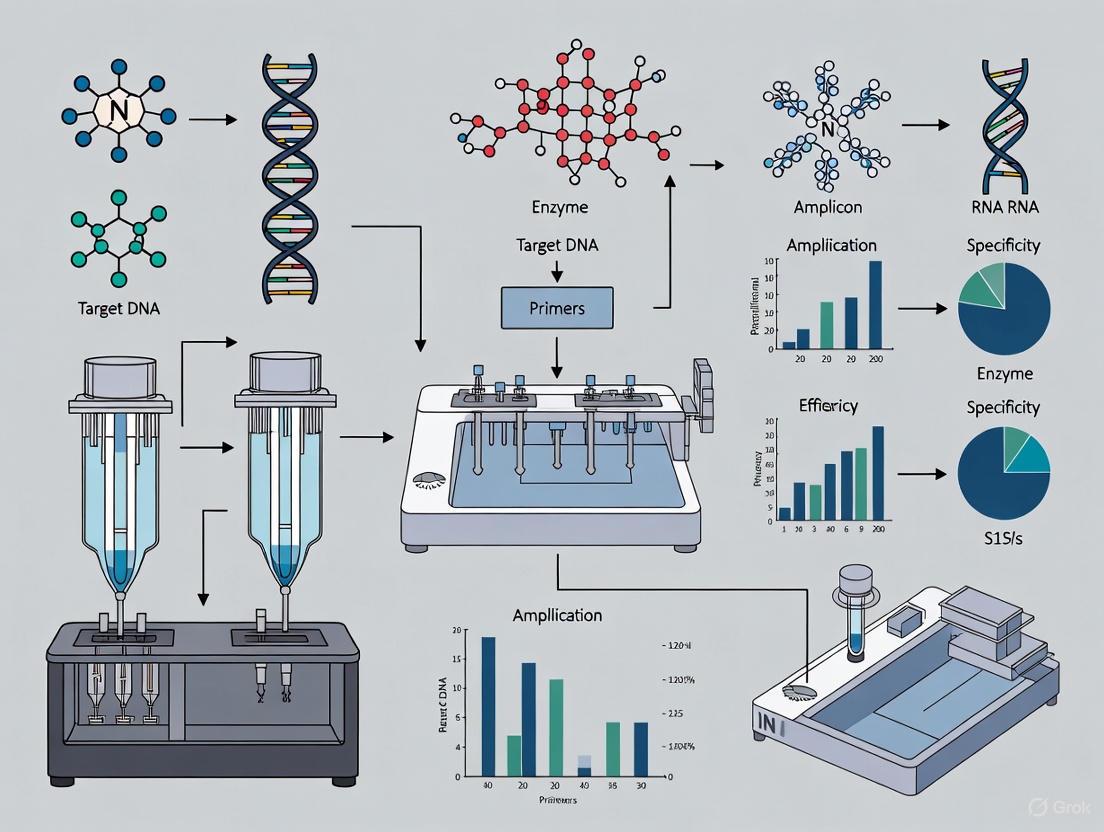
This article provides a comprehensive analysis of isothermal nucleic acid amplification technologies (INAATs) for molecular point-of-care (POC) diagnostics, tailored for researchers, scientists, and drug development professionals.
Isothermal Amplification in Molecular Point-of-Care Testing: A Comprehensive Guide for Researchers and Developers
Abstract
This article provides a comprehensive analysis of isothermal nucleic acid amplification technologies (INAATs) for molecular point-of-care (POC) diagnostics, tailored for researchers, scientists, and drug development professionals. It explores the foundational principles and market drivers behind INAATs, details the methodologies and diverse applications of key techniques like LAMP and RPA, addresses critical challenges in sample preparation and workflow optimization, and offers a rigorous framework for test validation and performance comparison. By synthesizing the latest research and commercial trends, this review serves as an essential resource for professionals developing the next generation of rapid, sensitive, and field-deployable molecular diagnostic devices.
The Rise of Isothermal Amplification: Principles, Drivers, and Core Technologies
Isothermal Nucleic Acid Amplification Technology (INAAT) represents a fundamental transformation in molecular diagnostics, moving beyond the limitations of traditional Polymerase Chain Reaction (PCR). Unlike PCR, which requires thermal cycling, INAAT enables rapid amplification of nucleic acids at a constant temperature, making it ideally suited for point-of-care testing (POCT) and resource-limited settings. This paradigm shift is driven by INAAT's simplified instrumentation, reduced energy requirements, and compatibility with microfluidic integration. This article provides a comprehensive technical overview of major INAAT methods, detailed experimental protocols, and their application in next-generation molecular POCT devices, framed within the context of advancing diagnostic accessibility.
Since its development in 1985, Polymerase Chain Reaction (PCR) has established itself as the "gold standard" for nucleic acid amplification in molecular biology [1]. Its profound impact extends across infectious disease diagnosis, genetic disorder identification, and biomedical research. However, PCR's fundamental requirement for precise thermal cycling between different temperatures (denaturation at 95°C, annealing at 50-65°C, and extension at 72°C) presents significant limitations for point-of-care applications [2]. This dependency necessitates sophisticated, energy-intensive thermocycling equipment, restricts portability, and requires trained personnel in laboratory settings [1] [3].
Isothermal Nucleic Acid Amplification Technology (INAAT) emerges as a transformative alternative, mimicking in vivo amplification mechanisms to operate at a single, constant temperature [1] [4]. By eliminating thermal cycling, INAAT protocols achieve amplification with high sensitivity and specificity while significantly simplifying device design and operation [5]. This technical evolution supports the development of fully automated, sample-to-answer POCT devices that can be deployed in diverse settings, from community health centers to remote field locations [6] [7].
Key INAAT Methodologies: Mechanisms and Applications
Comparative Analysis of Major Isothermal Amplification Techniques
Various INAAT methods have been developed, each with unique amplification mechanisms, enzymatic requirements, and optimal applications. The table below summarizes the characteristics of leading isothermal amplification technologies.
Table 1: Comparison of Major Isothermal Nucleic Acid Amplification Technologies
| Technique | Mechanism | Key Enzymes | Temp (°C) | Time (min) | Primary Applications | Key Advantages | Key Challenges |
|---|---|---|---|---|---|---|---|
| LAMP [1] [7] | Strand displacement with loop primers | Bst DNA polymerase | 60-65 | 15-60 | Pathogen detection (COVID-19, influenza) | High amplification efficiency, simple detection (e.g., turbidity) | Complex primer design (4-6 primers), false positives from aerosol contamination |
| RPA [1] [2] | Recombinase-mediated primer insertion | Recombinase, single-stranded DNA-binding protein, strand-displacing polymerase | 37-42 | 20-40 | Rapid field diagnostics, CRISPR-coupled detection | Fast amplification, low temperature operation, simple primer design | High primer specificity requirements, higher cost |
| NASBA [1] [4] | RNA replication mimicry | Reverse transcriptase, RNase H, T7 RNA polymerase | 41 | 90-120 | RNA virus detection (viral load monitoring) | Specifically targets RNA, high sensitivity | Multiple enzyme requirements, complex optimization |
| RCA [1] [8] | Circular template replication | Phi29 DNA polymerase | 30-37 | 60-120 | miRNA detection, pathogen identification | Simple mechanism, high processivity | Requires circular template, linear amplification |
| HDA [8] [4] | Helicase-dependent strand separation | DNA helicase, strand-displacing polymerase | 60-65 | 60-120 | Bacterial pathogen detection | Mimics in vivo replication, uses standard primers | Enzyme complex stability issues |
Technical Workflow Diagrams
The following diagrams illustrate the fundamental mechanisms of two prominent INAAT methods: LAMP and RPA.
INAAT in Microfluidic POCT Devices: Integration Strategies
The combination of INAAT with microfluidic technology represents the forefront of POCT device development, enabling complete integration of sample processing, amplification, and detection in compact, automated systems [8] [3].
Microfluidic Platform Architectures for INAAT
Table 2: Microfluidic Platforms for INAAT-Based POCT Devices
| Platform Type | Working Principle | INAAT Compatibility | Advantages for POCT | Limitations |
|---|---|---|---|---|
| Centrifugal Microfluidics [7] | Centrifugal force drives fluid flow through microchannels | LAMP, RPA | Pump-free operation, parallel processing | Limited complex fluidic control, fixed sequence |
| Digital Microfluidics [2] | Electrowetting manipulates discrete droplets on electrode arrays | RPA, LAMP, NASBA | Dynamic reconfigurability, precise droplet control | Complex fabrication, electrode addressing |
| Paper-Based Microfluidics [3] | Capillary action wicks fluids through porous paper matrix | RPA, LAMP | Ultra-low cost, simple operation | Limited multi-step protocol complexity |
| Integrated Microfluidic Chips [7] | Multiple functional units (lysis, extraction, amplification, detection) | All major INAAT methods | True "sample-in-answer-out" automation | Complex design, higher manufacturing cost |
Digital Microfluidics for Advanced INAAT Implementation
Digital Microfluidics (DMF) has emerged as a particularly promising platform for INAAT-based NAATs (Nucleic Acid Amplification Tests) [2]. DMF manipulates discrete droplets on a planar surface using electrowetting-on-dielectric (EWOD) principles, enabling programmable, flexible fluid handling without the need for pumps, valves, or complex channel networks [2]. This capability allows multiple processes - including sample preparation, nucleic acid extraction, isothermal amplification, and detection - to be performed simultaneously and automatically in a compact system [2].
The configuration of DMF devices typically follows either open (single-plate) or closed (two-plate) architectures, with closed systems being preferred for nucleic acid amplification to minimize evaporation and prevent cross-contamination [2]. These systems can integrate heating elements for temperature control, magnetic beads for nucleic acid extraction, and optical sensors for real-time detection, creating fully self-contained diagnostic platforms [2].
Experimental Protocols and Reagent Solutions
The Scientist's Toolkit: Essential Research Reagents
Table 3: Essential Research Reagents for INAAT Experiments
| Reagent Category | Specific Examples | Function in INAAT | Commercial Sources |
|---|---|---|---|
| Strand-Displacing Polymerases | Bst DNA polymerase (LAMP), Phi29 DNA polymerase (RCA) | DNA synthesis without thermal denaturation | New England BioLabs, Lucigen |
| Recombinase Enzymes | T4 uvsX recombinase (RPA) | Facilitates primer invasion into double-stranded DNA | TwistDx (now part of Abbott) |
| Reverse Transcriptases | AMV RT, M-MLV RT (NASBA, RT-LAMP, RT-RPA) | RNA template conversion to DNA for RNA target detection | Thermo Fisher Scientific, Promega |
| Specialized Primer Sets | LAMP (F3, B3, FIP, BIP, LF, LB), RPA (standard primers) | Target-specific amplification initiation | Integrated DNA Technologies, Sigma-Aldrich |
| Single-Strand Binding Proteins | T4 gp32 (RPA) | Stabilizes displaced DNA strands during amplification | New England BioLabs |
| Nucleotide Mixes | dNTPs (all methods), NTPs (NASBA) | Building blocks for new nucleic acid strand synthesis | Thermo Fisher Scientific, Roche |
| Detection Probes | Molecular beacons, fluorescent probes, lateral flow probes | Amplification product detection and quantification | Biosearch Technologies |
Detailed Protocol: LAMP-Based Pathogen Detection
Objective: Detect bacterial pathogen DNA using loop-mediated isothermal amplification.
Workflow:
Step-by-Step Procedure:
Primer Design (Critical Step):
- Design four to six specific primers recognizing 6-8 distinct regions of target DNA
- Use primer design software (e.g., PrimerExplorer, NEB LAMP Primer Design Tool)
- Primer set includes: F3 (forward outer), B3 (backward outer), FIP (forward inner primer), BIP (backward inner primer)
- Optional loop primers (LF, LB) can enhance amplification speed
Reaction Mixture Preparation: Combine in a total volume of 25µL:
- 1× Isothermal Amplification Buffer (20mM Tris-HCl, 10mM (NH4)2SO4, 50mM KCl, 2mM MgSO4, 0.1% Tween 20)
- 1.4mM each dNTPs
- 0.8µM FIP and BIP primers
- 0.2µM F3 and B3 primers
- 0.4µM LF and LB primers (if using)
- 8 U Bst DNA polymerase (large fragment)
- 1µL fluorescent intercalating dye (e.g., SYBR Green, 1:1000 dilution)
- 5µL template DNA (1pg-100ng)
- Nuclease-free water to volume
Amplification Protocol:
- Transfer reaction mixture to isothermal amplification device
- Incubate at 60-65°C for 15-60 minutes
- For real-time monitoring: measure fluorescence every 30-60 seconds
- For endpoint detection: proceed to detection after incubation
Detection and Analysis: Real-time fluorescence: Positive samples show exponential fluorescence increase Endpoint detection options:
- Add SYBR Green post-amplification: color change from orange to green
- Lateral flow dipsticks: visual band formation
- Turbidity measurement: magnesium pyrophosphate precipitate
- Gel electrophoresis: ladder-like banding pattern
Troubleshooting Notes:
- No amplification: Check primer design, enzyme activity, and template quality
- False positives: Implement strict spatial separation of pre- and post-amplification areas
- Non-specific amplification: Optimize Mg2+ concentration (1-6mM range) and temperature
Application Notes: Implementing INAAT in POCT Development
Integrated Sample-to-Answer System for Respiratory Pathogens
Background: The COVID-19 pandemic highlighted the critical need for rapid, accurate, and deployable molecular diagnostics [3]. The following application note describes an integrated microfluidic system for simultaneous detection of multiple respiratory pathogens.
System Architecture:
- Centrifugal microfluidic platform with 12 parallel reaction chambers
- Integrated reagents: LAMP master mix (lyophilized), sample lysis buffer, washing buffers
- On-board nucleic acid extraction: silica-based membrane in microfluidic cartridge
- Detection: real-time fluorescence with minimal optical components
Performance Characteristics:
- Sample type: Nasopharyngeal swabs in viral transport media
- Sample volume: 200µL
- Time-to-result: <45 minutes (including extraction)
- Detection limit: <100 copies/reaction for SARS-CoV-2
- Multiplexing capacity: 3 targets per reaction chamber
Implementation Considerations:
- Lyophilized reagent stability: 12 months at 4°C, 3 months at 25°C
- Cartridge manufacturing: Injection molding for cost-effective mass production
- Usability: Minimal training required for operation
CRISPR-Enhanced Specificity in INAAT Platforms
Innovation Approach: Combining RPA's rapid amplification with CRISPR-Cas12a's specific recognition for highly specific detection [2].
Workflow Integration:
- RPA amplification at 39°C for 20 minutes
- CRISPR-Cas12a recognition at 37°C for 10 minutes
- Lateral flow detection of collateral cleavage products
Technical Advantages:
- Specificity: Single-base mismatch discrimination
- Sensitivity: Attomolar detection limits
- Compatibility: Simple integration with lateral flow readout
- Speed: <30 minutes total processing time
Implementation Challenges:
- Multiplexing limitations in current CRISPR systems
- Optimization of combined reaction buffers
- Manufacturing consistency for multi-enzyme systems
Future Perspectives and Development Trends
The evolution of INAAT continues to advance POCT capabilities through several key technological trends:
Automation and Integration: The ongoing development of fully integrated "sample-in-answer-out" systems that minimalize user intervention [7] [2]. Digital Microfluidics (DMF) platforms are particularly promising, with the ability to perform entire NAAT workflows automatically in a programmable fashion [2].
Multiplexing Capabilities: Advances in primer design and detection chemistries are enabling simultaneous detection of multiple pathogens in a single reaction, expanding diagnostic utility while maintaining simplicity [2].
Artificial Intelligence Integration: AI algorithms are being developed to optimize INAAT primer design, interpret complex amplification curves, and enhance detection accuracy in resource-limited settings [2].
Material Science Innovations: New substrate materials including flexible polymers and paper-based systems are reducing costs and enabling novel device form factors [2].
As these technologies mature, INAAT is positioned to become the new gold standard for molecular diagnostics outside traditional laboratory settings, ultimately making sophisticated nucleic acid testing accessible across diverse healthcare landscapes [1] [5].
The field of molecular diagnostics is undergoing a transformative shift, driven by a convergence of market demands and technological innovations. The global molecular diagnostics market, valued at USD 27 billion in 2024, is projected to grow to USD 40.4 billion by 2034 [9]. Concurrently, the global Point-of-Care Testing (POCT) market, valued at USD 40.73 billion in 2024, is projected to reach USD 87.36 billion by 2032, exhibiting a robust Compound Annual Growth Rate (CAGR) of 10.1% [10]. This parallel growth underscores a fundamental industry trend: the movement of complex molecular testing from centralized laboratories to decentralized settings.
This transition is fueled by three primary market drivers: the need for rapid diagnostic results to guide clinical decision-making, the requirement for affordable and accessible testing solutions, particularly in resource-limited settings, and the growing demand for decentralized testing capabilities to improve patient access and outcomes. Isothermal amplification technologies are at the forefront of addressing these demands, enabling the development of next-generation molecular POCT devices.
Quantitative Market Drivers and Growth Analysis
The demand for rapid, affordable, and decentralized testing is quantified by several key market metrics and growth areas. The data reveals a robust and expanding landscape for molecular POCT solutions.
Table 1: Key Quantitative Drivers for Molecular POCT and Isothermal Amplification Markets
| Market Segment | Key Metric | 2024/2025 Value | Projected Value | CAGR/Growth Rate | Primary Driver |
|---|---|---|---|---|---|
| Overall POCT Market [10] | Market Size | USD 40.73 Billion | USD 87.36 Billion (2032) | 10.1% | Demand for rapid, decentralized testing |
| Molecular Diagnostics Market [9] | Market Size | USD 27 Billion | USD 40.4 Billion (2034) | 4.2% | Rising infectious diseases & early diagnosis |
| LAMP Technology Market [11] | Market Size | USD 115.7 Million | USD 184.8 Million (2035) | 4.9% | Cost-effectiveness & suitability for POC |
| Infectious Disease MDx [12] | Market Segment | Largest non-respiratory segment | --- | --- | Rising incidence & screening initiatives |
| Ex-COVID MDx Growth [12] | Market Growth | --- | --- | High single-digit growth | Recovery & expansion into STIs, AMR, GI panels |
Table 2: High-Growth Application Areas for Molecular POCT
| Application Area | Growth / Significance | Specific Example |
|---|---|---|
| Infectious Disease Testing [12] | STI diagnostics are now the largest non-respiratory molecular segment. | Roche's cobas liat system received FDA clearance for CT/NG (Chlamydia/Gonorrhea) testing. |
| Antimicrobial Resistance (AMR) [12] | A critical focus area; projected 10 million annual deaths by 2050. | Driving demand for multiplex panels and flexible testing options. |
| Respiratory Pathogen Panels [12] | Evolution from "tripledemic" to "quademic" (Flu, RSV, COVID, Norovirus). | Demand for multiplex panels to manage complex seasonal infections. |
| Home-Based Testing [13] | Accelerated shift towards self-administered, accurate molecular tests. | Popular for respiratory infections, STIs, and chronic disease monitoring. |
Core Experimental Protocols in Isothermal Amplification
The following protocols detail the core methodologies enabling the development of rapid and decentralized molecular tests. These isothermal techniques form the foundation of modern molecular POCT devices by eliminating the need for complex thermal cyclers.
Protocol: Loop-Mediated Isothermal Amplification (LAMP)
Principle: LAMP amplifies DNA with high specificity, efficiency, and rapidity under isothermal conditions (60–65 °C) using a strand-displacing DNA polymerase and 4–6 primers that recognize 6–8 distinct regions of the target DNA [14] [11].
Procedure:
- Reaction Setup:
- Combine 12.5 µL of 2x LAMP Master Mix (containing strand-displacing DNA polymerase, dNTPs, and buffer) with 2.5 µL of 10x LAMP primer mix (F3, B3, FIP, BIP) [15].
- Add 2 µL of extracted DNA template (can be crude lysates in optimized systems).
- Add nuclease-free water to a final volume of 25 µL.
- Amplification:
- Incubate the reaction tube at 60–65 °C for 15–60 minutes in a simple heating block or water bath.
- Detection:
- Real-time Fluorescence: Monitor amplification in real-time using intercalating dyes (e.g., SYBR Green).
- Endpoint Detection: Visualize results via color change with colorimetric indicators or gel electrophoresis.
- CRISPR-Cas Coupling: For enhanced specificity, the LAMP product can be used as input for a CRISPR-Cas detection step (see Protocol 3.3).
Applications: This protocol is widely used for detecting pathogens such as Staphylococcus aureus, Mycobacterium tuberculosis, and SARS-CoV-2, with a total detection time of under 40 minutes from sample to result [15] [11].
Protocol: Recombinase Polymerase Amplification (RPA)
Principle: RPA employs recombinase enzymes to facilitate primer annealing to homologous sequences in the target DNA at a low, constant temperature (37–42 °C). Strand-displacing DNA polymerase then initiates synthesis, enabling exponential amplification [14].
Procedure:
- Reaction Setup:
- Use a commercial RPA kit (e.g., from TwistDx). Reconstitute the lyophilized pellets containing enzymes and reagents.
- Add 480 nM of forward and reverse primers, and a fluorescent probe if using real-time detection.
- Add 2 µL of DNA template.
- Adjust the final volume to 50 µL with supplied rehydration buffer and nuclease-free water.
- Amplification:
- Incubate at 39 °C for 15–20 minutes. No initial denaturation step is required.
- Detection:
- Can be monitored in real-time with fluorescent probes or as an endpoint reaction.
Applications: RPA is ideal for field-deployable diagnostics due to its low energy requirement and rapid turnaround. It has been successfully coupled with CRISPR systems for highly sensitive detection of pathogens like Zika virus and E. coli O157:H7 [15] [14].
Protocol: Integrated RPA-LAMP with CRISPR-Cas12a for Fluorescent and Visual Detection
Principle: This integrated protocol combines the rapid amplification of RPA or LAMP with the high specificity of the CRISPR-Cas12a system. Upon recognizing its target sequence (amplified by RPA/LAMP), the Cas12a enzyme exhibits "collateral" cleavage activity, indiscriminately degrading nearby single-stranded DNA reporter molecules, which generates a detectable signal [15] [14].
Procedure for RPA-CRISPR/Cas12a-Fluorescence (Flu):
- Nucleic Acid Amplification:
- First, perform the RPA or LAMP reaction as described in sections 3.1 and 3.2 to amplify the target gene (e.g., the nuc gene for S. aureus).
- CRISPR-Cas12a Detection:
- Prepare a separate detection mix containing:
- 50 nM LbCas12a nuclease
- 50 nM target-specific crRNA
- 500 nM of single-stranded DNA (ssDNA) reporter molecule labeled with a fluorophore and quencher (e.g., FAM/BHQ1)
- Appropriate reaction buffer
- Combine 5 µL of the RPA/LAMP amplification product with the detection mix.
- Incubate at 37 °C for 10-15 minutes.
- Prepare a separate detection mix containing:
- Signal Readout:
- Fluorescence: Measure fluorescence intensity using a portable fluorometer. Positive results show a significant increase in fluorescence as the reporter is cleaved. The reported limit of detection for this method can be as low as 5.78 fg/µL of genomic DNA [15].
Procedure for RPA-CRISPR/Cas12a-Immunochromatographic Test Strip (ICS):
- Amplification and Detection:
- Perform steps 1 and 2 above, but use a labeled ssDNA reporter (e.g., labeled with Biotin and FAM).
- Lateral Flow Readout:
- Apply the reaction mixture to the sample pad of an immunochromatographic test strip.
- As the solution migrates, gold nanoparticle-labeled anti-FAM antibodies bind to the FAM-labeled reporter.
- If the reporter is cleaved (negative result), no complex forms. If the reporter is intact (positive result), it is captured at the test line by streptavidin, forming a visible band.
- The control line should always show a band, confirming proper strip function.
- The limit of visual detection for this platform has been reported at 57.8 fg/µL of nuc DNA [15].
Workflow Visualization: From Sample to Result
The following diagram illustrates the integrated workflow for a CRISPR-coupled isothermal amplification assay, demonstrating the path to a visual result.
The Scientist's Toolkit: Essential Research Reagents and Materials
Successful development of molecular POCT devices based on isothermal amplification requires a specific set of reagents and materials. The following table details the core components.
Table 3: Essential Research Reagent Solutions for Isothermal Amplification Assays
| Item | Function / Role | Specific Example / Note |
|---|---|---|
| LAMP Master Mix | Contains strand-displacing DNA polymerase (e.g., Bst), dNTPs, and optimized buffer for isothermal amplification. | Commercial kits are available from New England Biolabs (WarmStart LAMP Kit) [15]. |
| RPA Kit | Contains recombinase enzymes, single-stranded DNA-binding proteins, strand-displacing polymerase, and rehydration buffer. | TwistDx is a common commercial source for RPA assay kits [15] [14]. |
| LbCas12a Nuclease | CRISPR-associated enzyme that, upon target recognition, cleaves both target and reporter molecules. | Key component for post-amplification specific detection and signal generation [15]. |
| Target-Specific crRNA | Guide RNA that directs the Cas12a nuclease to the complementary target DNA sequence. | Must be designed for the specific amplicon generated by the LAMP/RPA primers [15]. |
| Fluorescent ssDNA Reporter | A short single-stranded DNA oligonucleotide labeled with a fluorophore and quencher. Signal is generated upon Cas12a collateral cleavage. | e.g., FAM-TTATT-BHQ1; cleavage separates fluor from quencher [15]. |
| ICS Reporter | A labeled ssDNA for lateral flow detection (e.g., Biotin- and FAM-labeled). | Remains intact in a positive test, forming a visible complex at the test line [15]. |
| Immunochromatographic Test Strip | Provides a visual, instrument-free readout. Typically contains a test line (e.g., streptavidin) and control line. | Can be constructed in-house with nitrocellulose membrane, absorbent pads, and conjugate pads [15]. |
| Microfluidic Chip | Miniaturized device that integrates and automates sample preparation, amplification, and detection. | Critical for creating compact, user-friendly, and automated POCT devices [11]. |
Isothermal Nucleic Acid Amplification Techniques (INAAT) represent a group of molecular methods that amplify specific DNA or RNA sequences at a constant temperature, eliminating the need for the thermal cycling required in conventional Polymerase Chain Reaction (PCR). These techniques leverage enzymes with strand-displacement activity to separate DNA strands, enabling rapid amplification under isothermal conditions ranging from 37°C to 65°C [16]. The fundamental principle unifying INAAT methods is their reliance on alternative approaches to enable primer binding and initiation of amplification without thermal denaturation, typically using polymerases with inherent strand-displacement capabilities [17]. This core mechanism allows INAATs to streamline nucleic acid detection, making them particularly valuable for point-of-care testing (POCT), field diagnostics, and resource-limited settings where sophisticated thermal cycling equipment is unavailable [18].
The significance of INAATs has substantially increased in molecular diagnostics, especially during the COVID-19 pandemic, where techniques like LAMP and RPA were successfully deployed for rapid SARS-CoV-2 detection [17] [19]. Compared to traditional PCR, isothermal methods generally offer faster reaction times (often under 30 minutes), simplified instrumentation, and greater tolerance to inhibitors present in complex biological samples [16] [18]. According to the World Health Organization's ASSURED criteria (Affordable, Sensitive, Specific, User-friendly, Rapid and robust, Equipment-free, and Deliverable to end-users), INAATs represent promising platforms for developing next-generation molecular diagnostics suitable for decentralized healthcare settings [18].
Comparative Analysis of Core INAAT Methods
Technical Specifications and Performance Parameters
Table 1: Comparative analysis of major INAAT techniques
| Technique | Target | Optimal Temperature | Key Enzymes | Primer Number | Amplicon Size | Reaction Time | Sensitivity |
|---|---|---|---|---|---|---|---|
| LAMP | DNA, RNA (with RT) | 60-65°C | Bst DNA polymerase | 4-6 | <250 nt | <30 min | 10-100 copies/reaction [20] |
| RPA | DNA, RNA (with RT) | 37-42°C | Recombinase (UvsX), Strand-displacing polymerase | 2 | <1,000 nt | <20 min | High (femtogram levels) [17] |
| HDA | DNA, RNA (with RT) | 60-65°C | Helicase, DNA polymerase | 2 | <150 nt | 60-90 min | Moderate [17] |
| TMA | RNA | 40-55°C | Reverse transcriptase, RNA polymerase | 2 | <150 nt | <1 hour | High [17] |
| NASBA | RNA | 40-55°C | Reverse transcriptase, RNase H, RNA polymerase | 2 | <150 nt | <1.5 hours | 95-100 copies/mL [18] |
Applications and Implementation Considerations
Table 2: Applications, advantages, and limitations of INAAT methods
| Technique | Primary Applications | Key Advantages | Major Limitations |
|---|---|---|---|
| LAMP | Infectious disease diagnosis (malaria, Zika, TB), plant pathogen detection [16] | High sensitivity and specificity, rapid amplification, visual detection possible [16] [21] | Complex primer design, limited multiplexing capability, nonspecific amplification [22] [23] |
| RPA | Field-based testing, POC diagnostics | Low temperature operation, rapid results, simple primer design [17] | Proprietary enzymes, cost per test, limited amplicon size [17] |
| HDA | Clinical diagnostics, biosafety applications | Simple mechanism (two primers), compatible with multiple detection methods [16] [17] | Requires optimization of multiple enzyme ratios, moderate sensitivity [17] |
| TMA/NASBA | RNA virus detection (HIV, HCV), microbial viability assessment [18] | High specificity for RNA targets, isothermal throughout, automated formats available [17] [18] | RNA secondary structure may hinder amplification, complex enzyme mixture [18] |
Detailed Mechanism and Protocol for LAMP
Principle and Workflow
Loop-mediated isothermal amplification (LAMP) is among the most widely adopted isothermal amplification techniques, first described by Notomi et al. in 2000 [23]. The method employs a DNA polymerase with high strand displacement activity (typically Bst polymerase) and 4-6 specifically designed primers that recognize 6-8 distinct regions of the target DNA [16] [21]. The amplification mechanism proceeds through the formation of loop structures that facilitate subsequent rounds of amplification, resulting in the generation of stem-loop DNA structures with multiple inverted repeats [23]. The addition of loop primers further accelerates the reaction by providing additional initiation sites, reducing amplification time to less than 30 minutes in many cases [23].
The LAMP reaction begins with the binding of inner primers (FIP and BIP) to their complementary regions on the target DNA, initiating strand displacement synthesis. Outer primers (F3 and B3) then displace the newly synthesized strands, which form loop structures due to complementary inverted repeats at their ends [21]. These looped structures serve as templates for subsequent amplification cycles, leading to the formation of long concatemers containing multiple repeats of the target sequence [23]. The final amplification products are characterized by cauliflower-like structures with multiple loops formed by hybridization between alternately inverted repeats [23].
Detailed Experimental Protocol
LAMP Assay for Pathogen Detection [16] [23] [21]
Reagent Preparation:
- Prepare LAMP reaction mixture containing:
- 1.5-2.5 µL of target DNA (10-100 ng)
- 1.6-2.0 µM each of FIP and BIP primers
- 0.2-0.4 µM each of F3 and B3 primers
- 0.8-1.2 µM each of LF and LB loop primers (optional, for accelerated reaction)
- 1.4-1.6 mM each dNTPs
- 6-8 mM MgSO₄
- 0.32-0.64 U/µL Bst DNA polymerase (large fragment)
- 1X appropriate reaction buffer (typically containing Tris-HCl, KCl, (NH₄)₂SO₄, and Tween 20)
- Nuclease-free water to 25 µL final volume
- For colorimetric detection, include pH-sensitive indicators like phenol red (0.1-0.3 mM) or metal indicators such as hydroxynaphthol blue (0.5-1.0 mM)
Amplification Procedure:
- Incubate reaction mixture at 60-65°C for 30-60 minutes
- For real-time monitoring, measure turbidity or fluorescence at 1-minute intervals
- Terminate reaction by heating at 80°C for 5 minutes to inactivate enzyme
Detection and Analysis:
- Visual detection: Observe color change from pink to yellow (pH indicators) or violet to sky blue (metal indicators)
- Turbidimetry: Measure white precipitate of magnesium pyrophosphate at 400 nm
- Gel electrophoresis: Analyze 5 µL of product on 2% agarose gel; characteristic ladder-like pattern indicates successful amplification
- Fluorometry: Use intercalating dyes like SYBR Green I with excitation/emission at 497/520 nm
Validation Controls:
- Include positive control (known target DNA)
- Include negative control (no template DNA)
- Run in triplicate for quantitative assessments
Detailed Mechanism and Protocol for RPA
Principle and Workflow
Recombinase Polymerase Amplification (RPA) utilizes a recombinase enzyme (typically T4 UvsX) to facilitate primer invasion into double-stranded DNA at low temperatures (37-42°C) [17]. The technique employs two primers that are designed similarly to PCR primers but operate at much lower temperatures. The core mechanism involves the formation of recombinase-primer complexes that scan double-stranded DNA for homologous sequences and facilitate strand exchange, enabling primer binding without prior thermal denaturation [17]. Once primers are bound, strand-displacing DNA polymerases (such as Bsu or Sau polymerases) extend the primers, synthesizing new DNA strands while displacing the non-template strand.
The RPA reaction begins with the loading of recombinase enzymes onto primers, forming nucleoprotein filaments. These filaments then scan double-stranded DNA for homologous sequences and facilitate strand invasion. Single-stranded DNA binding proteins (SSBs) stabilize the displaced strands, preventing reannealing. The DNA polymerase then binds to the 3'-end of the invading primer and initiates synthesis, displacing the non-template strand as it extends. This process enables exponential amplification through repeated cycles of recombinase-mediated primer binding and polymerase-mediated strand displacement, all occurring isothermally at 37-42°C [17].
Detailed Experimental Protocol
RPA Assay for DNA/RNA Detection [17]
Reagent Preparation:
- Prepare RPA reaction mixture containing:
- 2.0 µL of target nucleic acid (1-100 ng DNA or RNA)
- 0.24-0.48 µM each of forward and reverse primers
- 14.5-29.0 ng/µL recombinase (T4 UvsX)
- 15-30 ng/µL single-stranded DNA binding protein (GP32)
- 0.5-1.0 µL strand-displacing DNA polymerase (Bsu or Sau)
- 2.5-3.5 mM ATP
- 1.4-1.6 mM each dNTPs
- 25-50 mM Tris-acetate (pH 8.0)
- 75-100 mM potassium acetate
- 8-12% PEG 3350
- 1-3 mM DTT
- Nuclease-free water to 50 µL final volume
- For RNA detection, include reverse transcriptase (0.5-1.0 µL) in the reaction mix
Amplification Procedure:
- Incubate reaction mixture at 37-42°C for 15-20 minutes
- For real-time detection, include fluorescent probes (0.12-0.24 µM) compatible with exo- probes
- Terminate reaction by heating at 80°C for 5 minutes or adding EDTA to 10 mM
Detection and Analysis:
- Lateral flow detection: Use biotin- and FAM-labeled primers with commercial lateral flow strips
- Fluorometry: Monitor fluorescence in real-time with compatible instruments
- Gel electrophoresis: Analyze 5-10 µL of product on 2% agarose gel; discrete bands indicate specific amplification
Validation Controls:
- Include positive control with known target sequence
- Include no-template control to assess background
- For quantitative applications, run standard curve with serial dilutions
Research Reagent Solutions for INAAT Development
Table 3: Essential research reagents for INAAT experiments
| Reagent Category | Specific Examples | Function in INAAT | Application Notes |
|---|---|---|---|
| Strand-Displacing DNA Polymerases | Bst DNA Polymerase (large fragment), Bsm DNA Polymerase, phi29 DNA Polymerase [16] | Catalyzes DNA synthesis while displacing downstream DNA strands | Bst polymerase optimal at 60-65°C for LAMP; phi29 offers proofreading for MDA/WGA [16] |
| Reverse Transcriptases | WarmStart RTx, M-MLV Reverse Transcriptase | Converts RNA to cDNA for RNA target amplification | Critical for RT-LAMP, NASBA, and TMA; temperature compatibility with main reaction is essential [17] |
| Recombinase Systems | T4 UvsX/Y recombinase system | Facilitates primer invasion into dsDNA at low temperatures | Core component of RPA/RAA; requires optimization with SSB proteins [17] |
| Helicase Enzymes | T7 helicase-gp4, E. coli UvrD, TteUvrD [24] | Unwinds double-stranded DNA to enable primer access | Key component for HDA; thermostable variants preferred for higher temperature applications [16] |
| Specialized Primers | LAMP primers (FIP/BIP/F3/B3/LF/LB), RCA random hexamers | Target recognition and amplification initiation | LAMP requires careful design of 4-6 primers recognizing 6-8 target regions [23] |
| Detection Reagents | SYBR Green I, hydroxynaphthol blue, phenol red, calcein, magnesium pyrophosphate | Signal generation for amplification monitoring | Colorimetric indicators enable visual detection; fluorescent dyes offer higher sensitivity [21] |
Advanced Applications and Integration with Detection Technologies
Probe-Based Detection Systems
Traditional INAAT detection methods that rely on non-specific indicators like turbidity or intercalating dyes are increasingly being supplemented with probe-based systems that enhance specificity and enable multiplexing. For LAMP, several probe strategies have been developed including assimilating probes, Detection of Amplification by Release of Quenching (DARQ), Quenching Probe (Q Probe) systems, and enzyme-mediated probe cleavage approaches [23]. These systems typically involve fluorophore-quencher pairs that separate during amplification, generating fluorescence signals that can be monitored in real-time with high specificity. The assimilating probe system, for instance, employs two partially complementary oligonucleotides - a fluorescent probe attached to a loop primer and a quenching probe that hybridizes to it. During amplification, the quenching probe is displaced, restoring fluorescence [23]. Similarly, the Q Probe system utilizes a fluorophore-labeled cytosine at the 3' end of a loop primer, whose fluorescence is quenched when the probe hybridizes to guanine-rich target sequences [23].
Integration with Microfluidic and POCT Platforms
INAATs have been successfully integrated into microfluidic and lab-on-a-chip platforms to create automated, sample-to-result systems suitable for point-of-care testing. The Dragonfly platform exemplifies this integration, combining power-free nucleic acid extraction based on magnetic beads with lyophilized colorimetric LAMP chemistry in a portable format [19]. This system demonstrated clinical validation for mpox detection with 94.1% sensitivity and 100% specificity, performing complete analysis from sample to result in under 40 minutes [19]. Similarly, other microfluidic platforms have leveraged the isothermal nature of INAATs to create compact, disposable cartridges that integrate sample preparation, amplification, and detection, minimizing user steps and reducing contamination risks [22] [25]. These systems often incorporate innovative detection methods such as smartphone-based fluorescence or colorimetry, electrochemical sensors, or lateral flow strips, making them suitable for resource-limited settings [20] [25].
Troubleshooting and Optimization Guidelines
Common Technical Challenges and Solutions
Non-specific Amplification in LAMP:
- Problem: Spurious amplification in negative controls due to primer dimerization or non-specific interactions
- Solutions:
- Redesign primers using specialized software with stricter parameters
- Implement WarmStart enzymes that activate only at elevated temperatures
- Optimize Mg²⁺ concentration (typically 4-8 mM)
- Include additives such as betaine (0.8-1.2 M) to enhance specificity
- Use probe-based detection rather than intercalating dyes [23] [21]
Low Sensitivity in RPA:
- Problem: Poor detection limit despite apparent amplification
- Solutions:
- Verify recombinase activity and concentration (optimize between 14-29 ng/µL)
- Ensure adequate ATP concentration (2.5-3.5 mM) in reaction mix
- Optimize PEG concentration (8-12%) to enhance macromolecular crowding
- Check primer design - RPA primers should be 30-35 nucleotides long
- Include SSB proteins at appropriate concentrations (15-30 ng/µL) [17]
Inconsistent HDA Performance:
- Problem: Variable amplification efficiency between runs
- Solutions:
- Freshly prepare ATP and dNTP stocks to prevent degradation
- Optimize helicase-to-polymerase ratio as this is critical
- Include single-stranded binding proteins to stabilize displaced strands
- For thermostable HDA, use TteUvrD helicase and Bst polymerase at 60-65°C [16]
Quality Control Measures
Implementing robust quality control is essential for reliable INAAT performance:
- Include internal amplification controls to distinguish true negatives from amplification failures
- For clinical applications, validate against reference methods (e.g., PCR) with appropriate statistical analysis
- Establish minimum information for publication of INAAT experiments (including primer sequences, enzyme sources, and precise reaction conditions)
- For quantitative applications, generate standard curves with known copy numbers and determine limits of detection and quantification
- Monitor reaction inhibition by spiking samples with known targets and assessing amplification efficiency [18] [19]
Isothermal nucleic acid amplification techniques represent powerful alternatives to PCR-based methods, particularly for point-of-care diagnostics and resource-limited settings. Each major INAAT method - LAMP, RPA, HDA, TMA, and NASBA - offers unique advantages and limitations that make them suitable for different applications. LAMP provides exceptional speed and sensitivity but requires complex primer design; RPA operates at lower temperatures with simple primer requirements but involves proprietary enzyme systems; HDA mimics natural DNA replication but requires optimization of multiple enzymes; while TMA and NASBA offer specialized RNA amplification capabilities. The ongoing development of improved enzymes, probe-based detection systems, and integration with microfluidic platforms continues to enhance the performance, specificity, and practicality of INAATs. As these technologies mature, they hold significant promise for advancing molecular diagnostics, disease surveillance, and personalized medicine through rapid, accessible nucleic acid testing.
The ASSURED criteria, established by the World Health Organization (WHO), define the ideal benchmarks for point-of-care tests (POCTs) intended for resource-limited settings (RLS) [26]. The acronym stands for Affordable, Sensitive, Specific, User-friendly, Rapid and robust, Equipment-free, and Deliverable to end-users [27] [26]. These criteria address the critical need for diagnostic tools that function effectively outside centralized laboratory settings, where limitations in infrastructure, trained personnel, and financial resources disproportionately burden healthcare systems [26]. The burden of infectious diseases is markedly higher in low-income states (58.1%) compared to developed countries (4.6%), a disparity exacerbated by limited access to molecular diagnostics [27]. The ASSURED framework aims to mitigate this gap by guiding the development of tests that are clinically effective and practically deployable. A proposed evolution, the REASSURED criteria, incorporates Real-time connectivity and Easily specimen collection, reflecting modern technological capabilities and patient-centric needs, further refining the benchmark for next-generation POCTs.
ASSURED Criteria in Practice: A Quantitative Framework
The following table details the core ASSURED criteria, providing a structured framework for evaluating and developing POCTs.
Table 1: The ASSURED Criteria for Point-of-Care Tests
| Criterion | Description | Quantitative/Qualitative Benchmark |
|---|---|---|
| Affordable | Low cost to make the test accessible in resource-limited settings [26]. | Cost per test should be minimized (e.g., ~USD 0.25 for pp-IPA) [27]. |
| Sensitive | Few false negatives; high detection accuracy [26]. | High analytical sensitivity (e.g., pp-IPA LoD: 1.28×10⁻⁴ parasites/μL) [27]. |
| Specific | Few false positives; high reliability [26]. | 100% specificity against common pathogens with similar clinical presentation [27]. |
| User-friendly | Simple to perform, requiring minimal training [26]. | Minimal hands-on time; simple operation (e.g., liquid-transfer skill only) [27]. |
| Rapid & Robust | Fast results for treatment at first visit; stable in various conditions [26]. | Short turnaround time (e.g., 60-80 minutes); does not require refrigerated storage [27]. |
| Equipment-free | Operates without reliance on complex, powered instruments [26]. | Uses only basic tools like a water bath and Pasteur pipette [27]. |
| Deliverable | Accessible to those who need it, considering supply chain and stability [26]. | Stable under challenging environmental conditions for easy distribution [27]. |
Molecular POCTs and Isothermal Amplification: A Synergistic Response
Molecular point-of-care tests (POCTs) represent a transformative approach to diagnosing infectious diseases by enabling rapid, on-site detection of pathogen nucleic acids [27]. Their development is particularly crucial for resource-limited regions, where expanding screening capacity for diseases like tuberculosis, malaria, and various cancers can prevent significant mortality [28]. The primary challenge has been adapting gold-standard molecular methods, which require expensive equipment, complex procedures, and well-trained personnel, into a format that meets the ASSURED criteria [27].
Isothermal amplification techniques have emerged as a powerful solution to this challenge. Unlike traditional polymerase chain reaction (PCR) that requires thermal cycling, isothermal methods amplify nucleic acids at a constant temperature [27]. This fundamental characteristic offers intrinsic advantages for POCT development, including independence from expensive thermocyclers, faster reaction times, and potentially simpler instrument design [27] [28]. Techniques such as Loop-Mediated Isothermal Amplification (LAMP) and novel methods like Isothermal Probe Amplification (IPA) are at the forefront of this diagnostic revolution. Furthermore, CRISPR-based diagnostic (CRISPR-Dx) assays are emerging as powerful and versatile alternatives to traditional nucleic acid tests, showing strong potential to meet the need for new POCTs in low-resource settings [28]. These technologies form the technical core for a new class of ASSURED-compliant molecular diagnostics.
Case Study: Pasteur Pipette-Assisted Isothermal Probe Amplification (pp-IPA)
The pp-IPA (Pasteur Pipette-assisted Isothermal Probe Amplification) test for malaria detection is a exemplar of a molecular POCT designed to align with the ASSURED criteria [27]. This method innovatively uses a modified Pasteur pipette as a multifunctional device for sample handling, target capture, and the amplification reaction, thereby eliminating the need for complex microfluidics or nucleic acid extraction [27].
Research Reagent Solutions
The following table lists the key reagents and materials required for the pp-IPA protocol, along with their specific functions in the assay.
Table 2: Key Research Reagents and Materials for pp-IPA
| Item | Function/Description | Source/Example |
|---|---|---|
| Modified Pasteur Pipette | Multifunctional tool for sample capture, washing, and as a reaction vessel. | Diacurate (Beijing, China) [27]. |
| Tailed Genus-Specific Probes | Hybridize to Plasmodium 18S rRNA target within the pipette. | Synthesized by Sangon (Shanghai, China) [27]. |
| Colorimetric IPA Master Mix | Contains enzymes and reagents for isothermal amplification and visual readout. | Hzymes Biotechnology [27]. |
| Lysis Buffer | Lyses whole blood samples to release Plasmodium RNA. | Diacurate [27]. |
| Ligation Mixture | Joins bound tailed probes to form a template for amplification. | Diacurate [27]. |
| Washing Buffer / SSC Buffer | Washes the pipette to remove unbound sample material and reduce background. | Diacurate [27]. |
| Proteinase K | Aids in sample lysis and degradation of nucleases. | Tiangen Biotech [27]. |
Detailed pp-IPA Experimental Protocol
Principle: The pp-IPA method captures Plasmodium 18S rRNA directly from lysed whole blood within a Pasteur pipette using tailed genus-specific probes. After washing, the bound probes are ligated to form a template for a novel isothermal probe amplification, bypassing nucleic acid extraction and reverse transcription. A colorimetric change from pink to yellow indicates a positive result [27].
Workflow Diagram:
Step-by-Step Procedure:
- Sample Lysis: In a sampling tube, mix 10 μL of thawed whole blood with a lysis buffer containing 1x lysis buffer, 1 nmol/L Ligation Probes (LPs), 1 nmol/L Capture Probes (CPs), and 1 μg/μL Proteinase K. Use a Pasteur pipette to pipette the mixture up and down several times for thorough mixing. The final lysate volume is 50 μL [27].
- Target Capture: Draw the entire 50 μL lysate into the modified Pasteur pipette. Seal the tip of the pipette using a handheld mini hair-dresser sealer. Incubate the sealed pipette in a 55 °C water bath for 30 minutes to facilitate the hybridization and capture of Plasmodium 18S rRNA onto the immobilized probes within the pipette [27].
- Washing: After incubation, cut the seal off with scissors and expel the liquid from the pipette. Wash the pipette by drawing up and expelling 150 μL of washing buffer, followed by 150 μL of 0.1x SSC buffer. This step removes unbound cellular material and contaminants [27].
- Ligation: Draw 50 μL of the ligation mixture into the pipette and incubate for 10 minutes at room temperature. This step ligates the captured tailed probes to form a continuous DNA template for the subsequent amplification reaction. Expel the ligation mixture after incubation [27].
- Isothermal Amplification & Detection: Draw 25 μL of the pink-colored isothermal amplification mix into the pipette. The mix contains 12.5 μL of 2x Colorimetric IPA Master Mix and generic primers (800 nmol/L final concentration). Reseal the pipette and incubate it in a 65 °C water bath to initiate the amplification. Visually assess the result; a positive reaction is indicated by a color change from pink to yellow, while a negative sample remains pink [27].
Performance Evaluation and ASSURED Alignment
The pp-IPA assay was rigorously evaluated and demonstrated strong alignment with the ASSURED criteria [27]. Its performance is summarized below and compared with other molecular and POC technologies.
Table 3: Performance Metrics and ASSURED Compliance of pp-IPA versus Other Platforms
| Parameter | pp-IPA (Malaria) | RT-LAMP / RT-qPCR | High-End POC Platforms (e.g., GeneXpert) |
|---|---|---|---|
| Assay Time | 60-80 minutes [27] | Varies; typically >60 min [27] | Rapid (instrument-dependent) |
| Analytical Sensitivity (LoD) | 1.28×10⁻⁴ parasites/μL [27] | High (reference method) [27] | High |
| Specificity | 100% (against blood-borne pathogens) [27] | High [27] | High |
| Cost Per Test | ~USD 0.25 [27] | Low (reagent cost, but high equipment) | USD 78 - 180 [27] |
| Key Equipment | Water bath, Pasteur pipette [27] | Thermocycler (qPCR) or water bath (LAMP) [27] | Proprietary, expensive instrument [27] |
| Operator Skill | Liquid-transfer skill only [27] | Trained personnel required [27] | Minimal (for test operation) |
| Nucleic Acid Extraction | Not required [27] | Typically required [27] | Integrated (increases cost) |
| ASSURED Score | High | Low | Medium |
The ASSURED/REASSURED criteria provide an essential framework for developing diagnostic tools that can effectively combat health disparities in resource-limited regions. The emergence of novel molecular technologies, particularly isothermal amplification methods as exemplified by the pp-IPA test, demonstrates that it is feasible to create highly sensitive and specific assays that also meet the critical benchmarks of affordability, user-friendliness, and equipment simplicity. Continued innovation in this field, guided by these criteria, is paramount for achieving equitable global health diagnostics. Future efforts will focus on integrating real-time connectivity (completing the REASSURED acronym) and expanding the platform to a multiplexed format for simultaneous detection of multiple pathogens.
Global Market Outlook and Growth Trajectory for INAAT from 2025 to 2034
Isothermal Nucleic Acid Amplification Technology (INAAT) is revolutionizing molecular diagnostics by enabling rapid, precise amplification of genetic material at a constant temperature, eliminating the need for complex thermal cycling equipment required by traditional PCR [29]. This advantage is particularly valuable for point-of-care (POC) testing, making INAAT an indispensable tool in modern healthcare, especially in resource-limited settings [29].
Global Market Size and Growth Projections
The INAAT market is poised for a period of rapid expansion, driven by the increasing demand for rapid and decentralized diagnostics. The table below summarizes the quantitative growth trajectory for the global INAAT market from 2024 to 2034.
Table 1: Global INAAT Market Size and Growth Forecasts (2024-2034)
| Report Attribute | 2024 Base Value | Forecast Period | 2034 Projected Value | Compound Annual Growth Rate (CAGR) | Source/Reference |
|---|---|---|---|---|---|
| Market Size | USD 3.94 billion [30] | 2024-2029 | USD 7.44 billion [30] | 14.5% [30] | The Business Research Company |
| Market Size | USD 5.2 billion [31] | 2024-2034 | USD 16.7 billion [31] | 12.4% [31] | Market.us |
| Market Size | USD 3.7 billion [29] | 2024-2030 | USD 6.7 billion [29] | 10.2% [29] | Global Industry Analysts, Inc. |
| Market Size | USD 3.23 billion [32] | 2025-2033 | USD 8.96 billion [32] | 12.0% [32] | Market Data Forecast |
Growth in the historic period has been driven by factors including infectious disease diagnostics, the proliferation of point-of-care testing, and tuberculosis control programs [30] [33]. The growth in the forecast period will be fueled by pandemic preparedness, the challenge of antimicrobial resistance, environmental monitoring, and global health initiatives [30] [33].
Market Segmentation Analysis
The INAAT market can be segmented by product, technology, application, and end-user. Understanding these segments is crucial for identifying key growth areas and application focus.
Table 2: INAAT Market Segmentation and Dominant Segments
| Segmentation Category | Key Segments | Dominant Segment & Market Share | Key Growth Driver/Rationale |
|---|---|---|---|
| Product | Instruments, Reagents [30] [31] | Reagents (58.3% share) [31] | Repeated purchase, ease of use, and compatibility with various platforms [31] [32]. |
| Technology | LAMP, NASBA, HDA, SDA, NEAR, SPIA, TMA [31] [34] [32] | LAMP (46.4% share) [31] | Rapid processing, simplicity, high efficiency, and suitability for POC settings [31] [35]. |
| Application | Infectious Disease, Blood Screening, Cancer [30] [31] | Infectious Disease Diagnostics (56.7% share) [31] | Rising global incidence of infectious diseases and need for rapid, accurate tools [31] [33]. |
| End-User | Hospitals, Reference Labs, Diagnostic Centers [30] [31] [35] | Hospitals (51.9% share) [31] | Primary setting for molecular diagnostic testing, especially for critical and emergency care [31]. |
Application Note: Rapid Detection of Infectious Pathogens at Point-of-Care
Context and Objective
The rising global incidence of infectious diseases, such as tuberculosis, influenza, and COVID-19, necessitates diagnostic solutions that are both rapid and deployable outside central laboratories [31] [33]. This application note details a protocol for the rapid detection of a viral pathogen (e.g., Influenza A) from a nasopharyngeal swab sample using Loop-mediated Isothermal Amplification (LAMP) technology on a portable device. The objective is to achieve a sensitive and specific diagnosis at the point-of-care within 30 minutes.
Experimental Workflow
The following diagram illustrates the streamlined workflow for the LAMP-based point-of-care test, from sample collection to result interpretation.
Detailed Step-by-Step Protocol
Title: Protocol for Rapid Detection of Influenza A using RT-LAMP at Point-of-Care
Principle: Reverse Transcription Loop-mediated Isothermal Amplification (RT-LAMP) amplifies a specific region of the Influenza A RNA genome at a constant temperature (60-65°C) using a DNA polymerase with high strand displacement activity and a set of four to six specially designed primers. Amplification is detected in real-time via fluorescence or at endpoint via colorimetric change.
Materials:
- Sample: Patient nasopharyngeal swab in viral transport medium.
- Sample Lysis Buffer: Commercially available nucleic acid extraction buffer containing Guanidine Thiocyanate and Triton X-100.
- Portable Isothermal Amplification Device (e.g., from companies like Abbott, Lucira Health, or Molbio Diagnostics [34]).
- Lyophilized RT-LAMP Reagent Pellet or ready mix, containing:
- Bst DNA Polymerase (with reverse transcriptase activity for RNA targets)
- dNTPs
- Specific Primer Mix (F3, B3, FIP, BIP, Loop F, Loop B)
- Buffer with MgSO4
- Fluorescent intercalating dye (e.g., SYBR Green) or colorimetric pH indicator.
- Nuclease-free water.
- Microcentrifuge tubes and pipettes.
Procedure:
- Sample Preparation: Mix 50 µL of the swab sample with 50 µL of the Sample Lysis Buffer in a microcentrifuge tube. Vortex briefly and incubate at room temperature for 2 minutes to lyse the virus and inactivate nucleases.
- Reaction Setup: In a single tube or disposable cartridge containing the lyophilized reagents, add 10 µL of the lysed sample directly. Resuspend the pellet by pipetting up and down gently. Note: For colorimetric detection, the sample can be added directly without a separate extraction step in some optimized protocols.
- Amplification: Place the reaction tube/cartridge into the pre-heated portable device at 65°C. Initiate the amplification program for 30 minutes.
- Detection & Analysis:
- Real-time Fluorescence: The device will monitor fluorescence intensity. A plot of fluorescence over time will show a sharp increase for positive samples.
- Endpoint Colorimetric: After the run, add 1 µL of SYBR Green dye to the tube (if not pre-included) or observe the color change of a pH indicator. A color change from orange to green/yellow (SYBR Green) or pink to yellow (pH indicator) under visible or UV light indicates a positive result.
Troubleshooting:
- No Amplification in Positive Control: Check reagent integrity and device temperature calibration.
- False Positives: Avoid cross-contamination; use dedicated pre- and post-amplification areas. Ensure primer specificity.
The Scientist's Toolkit: Key Research Reagent Solutions
Successful development and deployment of INAAT-based assays rely on a core set of high-quality reagents and materials. The table below details these essential components and their functions.
Table 3: Essential Research Reagents and Materials for INAAT Development
| Item | Function | Key Considerations for INAAT |
|---|---|---|
| Bst-like DNA Polymerase | The core enzyme for strand-displacement DNA synthesis during isothermal amplification [35]. | Must have high strand displacement activity and be robust at a constant temperature (typically 60-65°C). Reverse transcriptase activity is required for RNA targets (RT-LAMP) [35]. |
| Primer Sets (F3, B3, FIP, BIP) | Specifically designed primers that recognize 6-8 distinct regions on the target DNA, ensuring high specificity for LAMP assays [35]. | Design is critical for assay success. Software tools (e.g., PrimerExplorer) are used. Primers form complex loop structures to enable self-priming amplification. |
| dNTPs | The building blocks (A, T, C, G) for synthesizing new DNA strands. | Standard molecular biology grade dNTPs are used. Concentration must be optimized to ensure efficient amplification without promoting non-specific products. |
| Magnesium Ions (Mg2+) | A essential cofactor for DNA polymerase activity. | Concentration is a critical parameter that affects enzyme activity, primer specificity, and reaction efficiency. Typically supplied as MgSO4 in the reaction buffer. |
| Fluorescent Dyes / Probes | Enable real-time or endpoint detection of amplified products. | Intercalating dyes (e.g., SYBR Green) are common. Probe-based systems (e.g., FIT, Quencher) can enhance specificity. Colorimetric dyes (pH-sensitive) allow visual readout without instrumentation [35]. |
| Stabilizers for Lyophilization | Protect enzymes and reagents during freeze-drying for room-temperature storage and POC use. | Trehalose and other sugars are often used to maintain protein structure and reagent stability in lyophilized pellets or strips, critical for field-deployable tests [34]. |
Technology Landscape and Strategic Directions
Key Technology Trends and Classifications
The INAAT landscape comprises several technologies beyond LAMP, each with unique characteristics. Major trends shaping the field include miniaturization, multiplexing, and integration with digital platforms.
Strategic Drivers and Opportunities
Market Drivers: The primary driver is the rising demand for rapid and decentralized diagnostics for infectious diseases [31]. This is compounded by the rising global incidence of chronic and infectious diseases [30] [33] and supportive government-led healthcare research and development initiatives [30]. The need for tools to combat antimicrobial resistance also presents a significant growth avenue [35].
Key Restraints: The market faces challenges, including high manufacturing costs for complex reagents and platforms, which can limit adoption in resource-limited settings [31]. Furthermore, regulatory compliance and the need for technical standardization across different platforms can slow down commercialization and create variability in results [29] [34].
Future Outlook and Opportunities: The integration of nanostructures and nanotechnology is enhancing the sensitivity of diagnostic tests [30] [33]. There is a strong trend toward developing integrated, all-in-one "sample-to-answer" diagnostic platforms that combine sample preparation, amplification, and detection into a single, user-friendly device [31] [34]. A significant growth opportunity lies in the expansion into non-clinical applications such as food safety, environmental monitoring, and agriculture, opening up large-scale, non-traditional markets [31].
Implementing Isothermal POCT: From Sample Collection to Result Readout
The advent of molecular point-of-care testing (POCT) for infectious disease diagnostics and health monitoring represents a paradigm shift in clinical and public health strategies. These technologies, particularly those leveraging isothermal amplification techniques, promise rapid, accurate, and accessible testing outside central laboratories. However, the analytical performance of any molecular assay is fundamentally constrained by the initial sample collection and matrix properties. The choice of sample matrix—be it nasal swabs, saliva, or whole blood—directly influences parameters such as sensitivity, specificity, ease of collection, and compatibility with downstream amplification. The matrix effect, defined as the influence of the sample's components on the measurement of an analyte, is a critical consideration; components in these biological samples can inhibit enzymatic amplification reactions, leading to false negatives or reduced sensitivity [36]. This application note provides a detailed comparative analysis of nasal swabs, saliva, and whole blood as sample matrices, framed within the development of point-of-care molecular diagnostics utilizing isothermal amplification. It includes structured quantitative data, standardized protocols for sample processing, and visualization of workflows to assist researchers and developers in optimizing pre-analytical procedures for robust and reliable assay performance.
Comparative Analysis of Sample Matrices
The selection of an appropriate sample matrix requires a balanced consideration of analytical performance, practicality of collection, and patient comfort. Table 1 provides a comparative summary of the key characteristics of nasal swabs, saliva, and whole blood for use in molecular POCT.
Table 1: Comparative Analysis of Sample Matrices for Molecular POCT
| Characteristic | Nasal Swabs | Saliva | Whole Blood |
|---|---|---|---|
| Primary Analytic(s) | Respiratory viruses (e.g., SARS-CoV-2), bacterial pathogens [37] | SARS-CoV-2, oral pathogens, human genomic DNA/RNA [36] [38] [39] | Intracellular pathogens, systemic infections, human genomic DNA/RNA, metabolic markers [40] |
| Invasiveness of Collection | Minimally invasive | Non-invasive | Invasive (venipuncture or fingerstick) [40] |
| Collection Skill Required | Low (can be self-collected) [37] | Low (can be self-collected) [38] | High (requires phlebotomist for venous draw) [36] [41] |
| Typical Collected Volume | Swab immersed in ~1-3 mL transport medium [37] | 0.5 - 2 mL [37] [42] | 3 mL (standard tube) to microliters (microsampling) [40] |
| Key Matrix Challenges | Mucus, variable collection efficiency [37] | High nuclease activity, heterogenous composition (viscosity, food debris), inhibitors [36] | Complex composition, high nuclease activity, abundant inhibitors (heme, immunoglobulins), hemolysis risk [41] |
| Compatibility with Direct (Extraction-Free) Amplification | High (with sample pre-treatment) [43] [42] | Moderate to High (with sample pre-treatment) [38] [42] | Low (typically requires nucleic acid extraction or specialized collection tubes) [40] |
Quantitative data from clinical studies directly comparing sample types for pathogen detection further informs this selection. Table 2 summarizes real-time PCR cycle threshold (Ct) values, which are inversely correlated with viral load, from a study comparing nasal swabs, nasopharyngeal swabs (NPS), and saliva for detecting respiratory viruses, including SARS-CoV-2.
Table 2: Quantitative Comparison of Viral Load in Different Sample Matrices via RT-PCR Ct Values [37]
| Sample Type | Median Ct Value for SARS-CoV-2 E Gene | Positivity Rate for SARS-CoV-2 (%) | Positivity Rate for Other Respiratory Viruses (%) |
|---|---|---|---|
| Nasopharyngeal Swab (NPS) | ~24.3 (for 10-rub nasal swab equivalent) | 100 | 100 |
| Nasal Swab (5 rubs) | 28.9 | 83.3 | 85.7 |
| Nasal Swab (10 rubs) | 24.3 | 100 | 100 |
| Saliva (Swab) | 28.9 | 75.0 | 78.6 |
| Saliva (Undiluted) | 29.5 | 82.4 | Not Reported |
This data confirms that NPS remains the gold standard for sensitivity, but also demonstrates that sufficiently collected nasal swabs (10 rubs) can achieve equivalent virus concentrations [37]. Saliva shows a slightly lower positivity rate, reflecting its more heterogeneous and inhibitory nature [36].
Sample-Specific Protocols for Isothermal Amplification
Successful integration of these matrices with isothermal amplification depends on optimized sample preparation protocols to inactivate nucleases and liberate the target nucleic acid while minimizing the presence of amplification inhibitors.
Protocol for Nasal Swab Processing for Direct RT-LAMP
This protocol is adapted from methods demonstrating sensitive detection of SARS-CoV-2 variants using a fluorescence-quenched RT-LAMP (FQ-LAMP) assay, which eliminates false positives from non-specific amplification [43].
- Objective: To prepare a nasal swab sample for direct, extraction-free RT-LAMP amplification.
- Principle: The sample preparation solution (SPS) lyses the virus and inactivates RNases, while the FQ-LAMP assay uses a quencher oligonucleotide to suppress fluorescence from unincorporated primers, ensuring signal is specific only to the target amplicon [43].
- Materials:
- Nasal swab specimen (collected in viral transport medium)
- Sample Preparation Solution (SPS): 500 mM guanidine HCl, 0.1% Triton X-100, 1 mM EDTA, pH 7.8 (with Tris HCl)
- Proteinase K (e.g., 80 U/mL from New England Biolabs)
- WarmStart LAMP 2X Master Mix (New England Biolabs)
- FQ-LAMP Oligo Mix (primers targeting SARS-CoV-2 N gene with fluorescently labeled LoopB primer and quencher oligonucleotide)
- Thermostatic mixer or water baths (37°C and 95°C)
- Real-time isothermal fluorimeter or standard thermocycler
- Workflow:
- Mix 20 µL of nasal swab transport medium with 20 µL of SPS containing Proteinase K.
- Incubate the mixture at 37°C for 15 minutes.
- Heat-inactivate at 95°C for 10 minutes.
- Centrifuge briefly to pellet debris.
- For the FQ-LAMP reaction, combine:
- 12.5 µL WarmStart LAMP 2X Master Mix
- 2.5 µL 10X FQ-LAMP oligo mix
- 2 µL of the heat-treated supernatant
- 8 µL nuclease-free water
- Run the reaction at 65°C for 30 minutes in a real-time fluorimeter, then cool to 25°C and measure end-point fluorescence [43].
Protocol for Saliva Processing for Direct RT-LAMP
This protocol is optimized from a study that enabled rapid, direct detection of SARS-CoV-2 RNA in saliva using RT-LAMP, overcoming the inhibitory nature of the matrix [38].
- Objective: To prepare a saliva sample for direct, extraction-free RT-LAMP amplification.
- Principle: Mucolyse (a mucolytic agent) breaks down mucins to reduce viscosity. Chelex 100 resin chelates divalent cations that are cofactors for nucleases, and the heat step further inactivates enzymes and disrupts viral particles [38].
- Materials:
- Freshly collected saliva specimen
- Mucolyse
- 10% (w/v) Chelex 100 Resin slurry
- RT-LAMP Master Mix (e.g., from New England Biolabs)
- RT-LAMP primer sets (e.g., targeting SARS-CoV-2 N, E, and ORF1a genes)
- Thermostatic mixer or water baths (room temperature and 98°C)
- Centrifuge
- Real-time isothermal fluorimeter
- Workflow:
- Mix saliva 1:1 (v:v) with Mucolyse and vortex thoroughly.
- Incubate at room temperature for 5-10 minutes.
- Dilute the mucolyzed saliva 1:1 in 10% (w/v) Chelex 100 Resin.
- Heat the mixture at 98°C for 2 minutes.
- Centrifuge briefly to pellet the resin and debris.
- Use 2-5 µL of the supernatant directly as template in a 25 µL RT-LAMP reaction.
- Amplify at 65°C for 20-30 minutes while monitoring fluorescence in real-time [38] [42].
Considerations for Whole Blood Collection and Stabilization
Whole blood presents the greatest challenge for direct amplification due to its complexity and high inhibitor content. While direct amplification is possible, best practices often involve stabilization at the point of collection.
- Objective: To collect and stabilize whole blood for downstream nucleic acid analysis.
- Principle: Evacuated blood collection tubes containing DNA/RNA Shield or similar reagents immediately lyse cells and inactivate nucleases upon draw, preserving the nucleic acid profile at the moment of collection. This allows for room temperature storage and transport [40].
- Materials:
- Evacuated blood collection tubes containing DNA/RNA Shield (e.g., 6 mL reagent volume for a 3 mL draw)
- Standard venipuncture or fingerstick lancet supplies [41]
- Workflow:
- Collect venous whole blood directly into the stabilization tube using standard phlebotomy practices. For microsampling, a lancet and capillary action can be used [40] [44].
- Invert the tube 10-15 times immediately after draw to ensure complete mixing of blood with the stabilization reagent.
- The sample is now stabilized and can be stored or shipped at room temperature. For downstream molecular analysis, nucleic acids typically require purification from the stabilized lysate, though some direct protocols may be feasible [40].
Workflow Visualization
The following diagram illustrates the generalized sample-to-answer workflow for processing nasal, saliva, and blood samples in the context of a molecular POCT device using isothermal amplification.
General Sample-to-Answer Workflow for POCT
The specific mechanism of the FQ-LAMP assay, which enhances specificity over standard dye-based LAMP, is detailed below.
FQ-LAMP Specific Detection Mechanism
The Scientist's Toolkit: Research Reagent Solutions
Successful implementation of the aforementioned protocols relies on key reagents and materials. The following table catalogs essential solutions for developing direct amplification assays for these sample matrices.
Table 3: Essential Research Reagents for Sample Processing and Amplification
| Reagent / Material | Function | Application Notes |
|---|---|---|
| Guanidine HCl-based Lysis Buffer | Chaotropic agent that denatures proteins, inactivates nucleases, and lyses viral envelopes/cells [43]. | Core component of SPS for nasal swabs; also effective for saliva and blood. Enables sample inactivation at room temperature. |
| Chelex 100 Resin | Chelating resin that binds divalent cations (Mg²⁺, Ca²⁺), inhibiting nucleases and potentiating heat-based lysis [38]. | Particularly useful for saliva processing to overcome nuclease activity and viscosity. |
| Mucolytic Agents (e.g., Mucolyse) | Break down glycoproteins in mucus, reducing sample viscosity and homogenizing the matrix [38]. | Critical pre-treatment step for raw saliva samples to enable pipetting and consistent reaction assembly. |
| DNA/RNA Shield | A stabilization reagent that immediately lyses cells and inactivates nucleases upon contact with a sample, preserving nucleic acids [40]. | Ideal for whole blood collection, allowing room-temperature storage and transport without nucleic acid degradation. |
| WarmStart RT-LAMP Master Mix | Enzyme mix containing a strand-displacing DNA polymerase and reverse transcriptase that is inactive at ambient temperatures, preventing primer-dimer formation prior to incubation [43] [42]. | Essential for robust and specific isothermal amplification, especially in complex matrices where non-specific amplification is a risk. |
| Fluorescence-Quenched (FQ) Probes | A system comprising a fluorescently labeled primer and a complementary quencher oligonucleotide that provides sequence-specific detection, eliminating false positives from non-specific amplification [43]. | Superior to intercalating dyes for specificity in direct amplification applications. |
The drive towards decentralized molecular testing necessitates a deep understanding of sample collection and matrix effects. Nasal swabs and saliva offer significant advantages for non-invasive, self-administered collection and are highly compatible with simplified, direct isothermal amplification protocols, making them ideal for rapid infectious disease testing. Whole blood, while rich in analytical information, requires more rigorous processing or stabilization but remains indispensable for a broad range of systemic and intracellular targets. The protocols and data summarized herein provide a foundation for researchers to make informed decisions and optimize pre-analytical workflows. By carefully selecting and preparing the sample matrix, developers can fully leverage the speed and simplicity of isothermal amplification technologies to create next-generation POCT devices that are accurate, robust, and accessible.
In the field of molecular point-of-care testing (POCT), the sample preparation process has consistently been identified as a critical barrier to implementation. Traditional nucleic acid extraction methods involve complex, multi-step processes requiring specialized equipment and trained personnel, significantly hampering their use in resource-limited settings [45]. The paradigm is now shifting toward extraction-free protocols and direct lysis methods that simplify the workflow while maintaining analytical sensitivity.
For molecular POCT devices utilizing isothermal amplification, sample preparation strategies must be co-designed with the amplification chemistry to achieve optimal performance [45]. The elimination of separate nucleic acid extraction and purification steps can dramatically reduce the time-to-result, lower the requirement for operator expertise, and minimize the need for costly infrastructure [46]. This application note examines current strategies for extraction-free sample preparation and direct lysis, providing detailed protocols and performance data to guide researchers in developing next-generation molecular diagnostic platforms.
Strategic Approaches to Extraction-Free Testing
Direct Lysis and On-Sample Concentration
The PASAP (Paper-based Abridged Solid-Phase Extraction with Alkaline Poly(ethylene) Glycol Lysis) method represents an innovative approach that combines lysis and crude purification in a single step [46]. This technique utilizes a single reagent that provides both the alkaline conditions needed for cell lysis and the molecular crowding effects that facilitate DNA binding to a solid matrix under high-salt conditions.
- Mechanism: The poly(ethylene) glycol-based reagent creates a high-pH environment for alkaline lysis while simultaneously enabling ionic binding of DNA to anionic mixed cellulose ester (MCE) paper
- Workflow: After lysis, DNA binds to the MCE paper concentrate at the bottom while sample matrix components are transported away by wicking action
- Compatibility: The approach has been successfully coupled with colorimetric loop-mediated isothermal amplification (cLAMP) for visual detection [46]
Power-Free Nucleic Acid Extraction
The Dragonfly platform incorporates a power-free nucleic acid extraction method using magnetic beads that can be completed in less than 5 minutes [19]. This system utilizes a magnetic lid (SmartLid technology) to capture and transfer superparamagnetic nanoparticles with attached DNA/RNA through a series of pre-aliquoted buffers in a color-coded system.
- Buffer System: Sequential traffic-light system (red, yellow, and green tubes) contains all necessary reagents
- Magnetic Manipulation: SmartLid technology enables bead manipulation without centrifugation or manual pipetting
- Integration: Successfully combined with lyophilized colorimetric LAMP chemistry for room-temperature stable, instrument-free detection [19]
Table 1: Comparison of Extraction-Free and Simplified Sample Preparation Methods
| Method | Principle | Processing Time | Limit of Detection | Compatible Amplification |
|---|---|---|---|---|
| PASAP | Alkaline lysis with paper-based DNA concentration | 15 minutes | 10²-10³ CFU/mL E. coli [46] | Colorimetric LAMP [46] |
| SmartLid/Dragonfly | Power-free magnetic bead extraction | <5 minutes | 100 genome copies/reaction [19] | Colorimetric LAMP, lyophilized reagents [19] |
| Direct Amplification | Crude lysis without purification | <2 minutes | Varies significantly with sample matrix [45] | RPA, LAMP with inhibitor-tolerant enzymes [47] |
Experimental Protocols for Extraction-Free Sample Preparation
Protocol 1: PASAP for Bacterial Detection in Food Samples
This protocol details the detection of Escherichia coli in milk samples using the PASAP method coupled with colorimetric LAMP, adapted from the procedure described by [46].
Reagents and Materials
- Mixed cellulose ester (MCE) membrane filters (1.2 µm pore size)
- PASAP solution: PEG 8000, KOH, NaCl
- Wash solution: 40% isopropanol
- WarmStart Colorimetric LAMP 2× Master Mix
- Sample: Milk spiked with E. coli
Procedure
Sample Lysis and Application
- Mix 100 µL of milk sample with 100 µL of PASAP solution
- Vortex for 10 seconds and incubate at room temperature for 2 minutes
- Place MCE paper strip into the lysate and allow wicking for 5 minutes
Washing
- Transfer MCE paper strip to 40% isopropanol for 10 seconds
- Air-dry for 30 seconds
Amplification Preparation
- Snap off bottom section (3 mm × 4 mm) of the MCE paper using a PCR tube cap
- Immerse paper segment in 25 µL colorimetric LAMP reaction mix
Amplification and Detection
- Incubate at 65°C for 60 minutes
- Visualize color change: positive samples turn from pink to yellow
Performance Data
The PASAP method enabled detection of E. coli in milk at concentrations below 10³ CFU/mL, with a 40% success rate even at 10² CFU/mL [46]. This sensitivity is sufficient for food safety applications, as it falls below the maximum allowable plate count of 10⁴-10⁵ CFU/mL for raw and pasteurised milk.
Protocol 2: Power-Free Nucleic Acid Extraction for Viral Detection
This protocol adapts the Dragonfly platform methodology for rapid extraction of viral nucleic acids from swab samples, based on the work described by [19].
Reagents and Materials
- SmartLid magnetic transfer device
- Color-coded buffer tubes (red: lysis-binding, yellow: wash, green: elution)
- Magnetic beads
- Lyophilised colourimetric LAMP reagents
- Exact-volume disposable pipettes
- Sample: Swab in inactivating medium
Procedure
Sample Lysis-Binding
- Add 200 µL of sample to the red lysis-binding buffer tube
- Add 10 µL magnetic beads and mix by pipetting
- Incubate for 1 minute at room temperature
- Use SmartLid to capture beads and transfer to yellow wash tube
Washing
- Mix beads in wash buffer by moving SmartLid up and down
- Incubate for 30 seconds
- Transfer beads to green elution tube using SmartLid
Elution and Amplification
- Resuspend lyophilised LAMP pellets with eluate
- Transfer to heating block at 65°C for 35 minutes
Result Interpretation
- Visual assessment of color change from pink to yellow
- Optional: Use companion software for result logging
Performance Data
Clinical validation on 164 samples, including 51 mpox-positive cases, demonstrated 96.1% sensitivity and 100% specificity for orthopoxviruses, and 94.1% sensitivity and 100% specificity for monkeypox virus specifically [19]. The entire workflow from sample to result was completed in under 40 minutes.
Diagram 1: Simplified workflow highlighting the extraction-free approach in sample preparation
The Scientist's Toolkit: Essential Research Reagent Solutions
Table 2: Key Research Reagent Solutions for Extraction-Free Sample Preparation
| Reagent/Material | Function | Application Notes |
|---|---|---|
| Mixed Cellulose Ester (MCE) Paper | Solid phase for DNA binding under molecular crowding conditions | Ionic binding of DNA; compatible with direct amplification; brittle nature allows easy segmentation [46] |
| Magnetic Beads | Nucleic acid capture and purification | Enable power-free extraction; compatible with sequential buffer systems; suitable for automation [19] |
| Alkaline PEG Solution | Combined lysis and DNA binding reagent | Provides high pH for lysis and molecular crowding effects for DNA precipitation; single reagent simplifies workflow [46] |
| Lyophilised LAMP Master Mix | Room-temperature stable amplification | Colorimetric versions enable visual detection; pre-aliquoted formats reduce pipetting steps [19] |
| BSt DNA Polymerase | Strand-displacing enzyme for isothermal amplification | Operates at 60-65°C; resistant to inhibitors common in crude lysates [48] |
Technical Considerations and Optimization Strategies
Sample Matrix Effects
The performance of extraction-free methods is highly dependent on the sample matrix. Complex biological samples such as blood, milk, or stool contain numerous substances that can inhibit enzymatic amplification reactions [46]. When developing direct lysis protocols, researchers should:
- Characterize matrix-specific inhibition profiles
- Incorporate inhibitor-tolerant enzyme blends
- Optimize sample dilution factors to balance inhibitor concentration and target availability
- Implement internal amplification controls to detect inhibition
Integration with Microfluidic Platforms
Microfluidic technologies provide powerful tools for implementing extraction-free protocols in automated systems [47]. Key considerations include:
- Use of centrifugal microfluidic chips to eliminate external pumps
- Implementation of paper-based fluid transport to replace active pumping mechanisms
- Pre-storage of reagents in dried formats to enhance stability
- Design of integrated "sample-in-answer-out" systems that minimize user intervention
Diagram 2: Decision pathway for selecting extraction-free sample preparation strategies
Extraction-free sample preparation and direct lysis methods represent a significant advancement in the development of practical molecular POCT devices using isothermal amplification. The strategies outlined in this application note demonstrate that simplified workflows can maintain robust analytical performance while dramatically improving accessibility, reducing costs, and decreasing time-to-result.
As the field progresses, the co-design of sample preparation and amplification components will be essential for optimizing overall system performance [45]. Future developments will likely focus on enhancing the stability of reagents at ambient temperatures, improving resistance to sample-derived inhibitors, and further simplifying user steps to enable truly decentralized testing by non-specialist operators.
Primer Design and Reaction Optimization for LAMP and RPA Assays
Within the rapidly advancing field of molecular point-of-care testing (POCT), isothermal amplification techniques have emerged as transformative technologies for developing rapid, sensitive, and equipment-independent diagnostic assays [49]. Loop-mediated isothermal amplification (LAMP) and recombinase polymerase amplification (RPA) are two of the most prominent methods, enabling exponential nucleic acid amplification at constant temperatures without the need for thermal cyclers [50]. This application note provides detailed protocols and optimization strategies for LAMP and RAMP assay development, specifically framed within the context of creating next-generation POCT devices for researchers and scientists in drug development and molecular diagnostics.
The transition from conventional laboratory-based PCR to isothermal amplification represents a paradigm shift in diagnostic testing, particularly for resource-limited settings [51]. LAMP and RPA offer distinct advantages for decentralized testing, including minimal instrumentation, rapid turnaround times, and compatibility with simple detection methods such as colorimetric change or lateral flow strips [52]. However, realizing the full potential of these techniques requires careful attention to primer design, reaction optimization, and detection strategy selection, which form the core focus of this technical guide.
LAMP and RPA employ fundamentally different enzymatic mechanisms to achieve exponential amplification under isothermal conditions. LAMP utilizes a DNA polymerase with high strand displacement activity and 4-6 specially designed primers that recognize 6-8 distinct regions of the target DNA, leading to the formation of stem-loop structures that enable auto-cycling amplification at 60-65°C [50]. In contrast, RPA relies on a combination of recombinase enzymes, single-stranded DNA-binding proteins, and strand-displacing polymerases to facilitate primer invasion into double-stranded DNA at lower temperatures of 37-42°C, eliminating the need for initial thermal denaturation [50] [53].
Table 1: Fundamental Characteristics of LAMP and RPA
| Characteristic | LAMP | RPA |
|---|---|---|
| Reaction Temperature | 60-72°C [52] | 37-42°C [52] |
| Typical Reaction Time | 15-60 minutes [50] | 10-30 minutes [53] |
| Number of Primers | 4-6 [50] | 2 [50] |
| Key Enzyme | Bst DNA Polymerase [50] | Recombinase (T4 uvsX), SSB, Polymerase [53] |
| Optimal Amplicon Size | >20 kb [50] | <1 kb [50] |
| Primer Design Complexity | High [52] | Moderate [53] |
The selection between LAMP and RPA for a specific POCT application depends on multiple factors, including the required time-to-result, available instrumentation for temperature control, target sequence characteristics, and the expertise available for primer design and assay optimization. LAMP typically offers higher amplification yields and more robust detection options via turbidity or colorimetric change, while RPA provides advantages in speed and lower operating temperatures [52].
Primer Design Guidelines
LAMP Primer Design
LAMP requires a set of four to six primers that recognize six to eight distinct regions of the target DNA, making primer design more complex than conventional PCR but contributing to exceptional specificity [54]. A standard LAMP primer set consists of:
- Forward Inner Primer (FIP): Contains F2 region (complementary to F2c) and F1c region (identical to F1)
- Backward Inner Primer (BIP): Contains B2 region (complementary to B2c) and B1c region (identical to B1)
- Forward Outer Primer (F3): Complementary to F3c region
- Backward Outer Primer (B3): Complementary to B3c region
- Loop Primer F (LF): Optional, accelerates reaction
- Loop Primer B (LB): Optional, accelerates reaction
Table 2: Recommended LAMP Primer Concentrations
| Primer Type | Final Concentration in Reaction | Function |
|---|---|---|
| FIP/BIP | 1.6 µM each [54] | Inner primers for strand displacement and loop formation |
| F3/B3 | 0.2 µM each [54] | Outer primers for strand displacement |
| LF/LB | 0.4 µM each [54] | Loop primers to accelerate amplification |
For LAMP primer design, the following specific parameters are recommended:
- Target regions of 200-300 bp for optimal amplification [54]
- Primer length of 18-25 nucleotides for F3/B3, 40-45 nucleotides for FIP/BIP
- Melting temperature (Tm): 60-65°C for F3/B3, 65-70°C for F1c/B1c regions of FIP/BIP
- GC content: 40-60%
- Avoid secondary structures and primer dimer formation
Primer design should be performed using specialized software such as PrimerExplorer V5 or the NEB LAMP Primer Design Tool, as manual design is exceptionally challenging [52]. These tools facilitate the selection of appropriate target regions and generate primer sequences that meet the specific structural requirements for efficient LAMP amplification.
RPA Primer Design
RPA primer design shares similarities with PCR but requires longer primers to facilitate efficient recombinase filament formation. Key considerations include:
- Primer length: 30-38 nucleotides for optimal performance [53]
- Melting temperature: No specific constraints due to isothermal nature
- Avoid 3' complementarity to prevent primer-dimer artifacts
- GC content: 30-70%
Unlike LAMP, RPA can utilize standard PCR primers, though with potentially reduced sensitivity and speed [53]. For optimal performance, primers should be designed according to the manufacturer's guidelines when using commercial kits such as TwistAmp.
Figure 1: Primer design workflows for LAMP and RPA assays
Experimental Protocols
LAMP Assay Protocol
Materials and Reagents:
- WarmStart 2x LAMP master mix (New England Biolabs) [54]
- Target DNA template
- LAMP primer mix (prepared according to Table 2)
- Fluorescent intercalating dye (e.g., SYBR Green) for real-time detection
- Nuclease-free water
Procedure:
- Prepare LAMP primer mix by combining FIP, BIP, F3, B3, and optional LF/LB primers at concentrations specified in Table 2.
- Prepare LAMP reaction master mix fresh immediately before use:
- 5 µL WarmStart 2x LAMP master mix
- 1 µL 10x LAMP primer mix
- 0.2 µL 50x fluorescent dye (if using real-time detection)
- X µL DNA template (1-10 pg/µL optimal)
- Nuclease-free water to 10 µL total volume [54]
- Incubate reactions at 65°C for 30-60 minutes using a heating block, water bath, or portable incubator.
- For endpoint detection, monitor amplification in real-time with fluorescence reading every 60 seconds, or perform colorimetric detection after reaction completion.
Optimization Notes:
- For colorimetric detection, phenol red can be incorporated into the reaction mix, with positive amplification indicated by a color change from pink to yellow [52].
- To prevent non-specific amplification, ensure clean work environment, set up reactions on ice, and consider using warm-start enzyme variants [50].
- Optimal MgSO4 concentration should be determined empirically (typically 4-8 mM).
RPA Assay Protocol
Materials and Reagents:
- TwistAmp RPA basic kit (TwistDx) [53]
- Target DNA or RNA template
- RPA primers (30-38 nucleotides)
- Nuclease-free water
Procedure:
- Prepare rehydration buffer by resuspending the provided lyophilized pellets in the specified volume of nuclease-free water.
- Prepare RPA reaction mix:
- 29.5 µL rehydration buffer
- 2.4 µL each forward and reverse primer (10 µM stock)
- X µL DNA template
- Nuclease-free water to 47.5 µL total volume
- Add 2.5 µL magnesium acetate (280 mM) to the reaction tube lid.
- Briefly centrifuge to mix magnesium acetate with the reaction mix, initiating the amplification.
- Incubate at 37-42°C for 15-30 minutes. No initial denaturation step is required.
- Detect amplification products using lateral flow strips, fluorescence detection, or gel electrophoresis.
Optimization Notes:
- Reaction temperature can be optimized between 20-45°C, though 37-42°C is optimal [55].
- Incubation time can be reduced to as little as 5-10 minutes for high target concentrations [55].
- For RNA detection, include a reverse transcriptase in the reaction mix for one-step RT-RPA.
Figure 2: LAMP and RPA experimental workflow for POCT applications
Detection Methods and Integration with POCT Platforms
Both LAMP and RPA products can be detected through multiple methods suitable for point-of-care applications. Lateral flow detection (LFD) has emerged as a particularly versatile platform for both techniques, offering simplicity, rapid readout, and compatibility with multiplexing [52].
LAMP Detection Options:
- Colorimetric: Direct naked-eye visualization based on pH change or metal ion indicators; positive reaction shows color change [52].
- Turbidity: Precipitation of magnesium pyrophosphate during amplification causes turbidity that can be measured visually or with simple optics.
- Fluorescence: Intercalating dyes (e.g., SYBR Green) enable real-time or endpoint fluorescence detection.
- Lateral Flow Assay (LFA): Hybridization-based detection using labeled primers or probes; offers high specificity and sensitivity [52].
RPA Detection Options:
- Lateral Flow Assay: Most common detection method using nfo probes with FAM/biotin labels for capture on commercial strips [53].
- Fluorescence: Real-time detection using exo probes with fluorophore-quencher systems [53].
- Gel Electrophoresis: Traditional separation and visualization of amplification products.
Table 3: Comparison of Detection Methods for LAMP and RPA
| Detection Method | Complexity | Time Required | Equipment Needed | Sensitivity | POCT Compatibility |
|---|---|---|---|---|---|
| Colorimetric LAMP | Low | None | None | Moderate | High [52] |
| LAMP-LFA | Moderate | Additional 5-10 min | None | High | High [52] |
| Fluorescence LAMP | Moderate | None | LED/Filter | High | Moderate |
| RPA-LFA | Moderate | Additional 5-10 min | None | High | High [53] |
| Fluorescence RPA | High | None | LED/Filter | High | Moderate |
For lateral flow detection, several labeling strategies can be employed as detailed in Table 4. The choice of labeling strategy significantly impacts assay specificity, sensitivity, and potential for multiplexing.
Table 4: Labeling Strategies for LAMP Lateral Flow Detection
| Labeled Component | Label Location | Specificity | Probability of Cross Primer Dimers | Multiplexing Capability | Reference |
|---|---|---|---|---|---|
| FIP and BIP | FIP: 5' Biotin, BIP: 5' FITC/FAM | ++ | +++ | Yes | [52] |
| FIP and LF/BIP and BF | FIP/BIP: 5' Biotin, LF/BF: 5' FITC/FAM | ++ | ++ | Yes | [52] |
| dNTPs and LF or BF | dNTPs: Biotin-11-dUTP, LF/BF: 5' FITC/FAM | ++ | - | Yes | [52] |
| FIP or BIP and probe | FIP/BIP: 5' Biotin, probe: 5' FITC/FAM | +++ | ++ | Yes | [52] |
A critical consideration in LAMP-LFA development is the potential for high-dose hook effect, where excessive amplicon concentration saturates the detection system, leading to false negatives with strongly positive samples [52]. This can be mitigated by optimizing primer concentrations, sample dilution, or reaction time.
Troubleshooting and Optimization
Addressing Non-Specific Amplification: Non-specific amplification is a common challenge in isothermal amplification techniques, particularly for LAMP. Several strategies can improve specificity:
- Use warm-start enzyme variants (e.g., Bst 2.0) that remain inactive below 45°C, enabling reaction setup at room temperature without non-specific initiation [52].
- Optimize primer design to ensure appropriate melting temperatures and avoid secondary structures.
- Clean work environment and dedicated equipment to prevent amplicon contamination.
- Reduce Bst DNA polymerase concentration to as low as 1 U per reaction [50].
- Limit incubation time to the minimum required for specific target detection.
Enhancing Sensitivity:
- For LAMP, include loop primers (LF/LB) to accelerate reaction kinetics and improve sensitivity [52].
- For RPA, ensure primers are 30-38 nucleotides for optimal recombinase loading and filament formation [53].
- Optimize magnesium concentration (LAMP) or magnesium acetate (RPA) for specific target-primer combinations.
- Use high-purity nucleic acid templates and minimize inhibitors in sample preparation.
Reaction Optimization Parameters: Systematic optimization of reaction parameters is essential for robust assay performance. Key variables to test include:
- Temperature gradient testing (LAMP: 60-70°C; RPA: 37-42°C)
- Time course experiments (5-60 minutes)
- Primer concentration titration (especially inner primers for LAMP)
- Magnesium concentration (4-8 mM for LAMP)
- Enzyme concentration (typically 0.5-2x recommended concentration)
The Scientist's Toolkit: Essential Research Reagents
Table 5: Key Reagents for LAMP and RPA Assay Development
| Reagent | Function | Examples/Specifications |
|---|---|---|
| Bst DNA Polymerase | Strand-displacing polymerase for LAMP | Bst 2.0 WarmStart for room temperature setup; Bst 3.0 for enhanced RT activity [52] |
| RPA Enzyme Cocktail | Recombinase, SSB, polymerase for RPA | TwistAmp kits (basic, exo, nfo) [53] |
| Fluorescent Dyes | Real-time detection | SYBR Green, EvaGreen [54] |
| Lateral Flow Strips | Endpoint detection | Milenia HybriDetect, TwistAmp nfo compatible strips [52] |
| Reverse Transcriptase | RNA detection for RT-LAMP/RT-RPA | Compatible with isothermal conditions [50] |
| Lyo-Ready Components | Stabilized reagents for room-temperature storage | Glycerol-free enzymes for lyophilization [50] |
LAMP and RPA represent powerful isothermal amplification technologies that are reshaping the landscape of molecular point-of-care testing. Their minimal equipment requirements, rapid turnaround times, and compatibility with simple detection platforms make them ideal for decentralized testing environments from clinical settings to field surveillance. Successful implementation requires careful attention to primer design, reaction optimization, and appropriate detection strategy selection.
As these technologies continue to evolve, integration with emerging platforms such as digital microfluidics (DMF) promises to further enhance their utility in POCT applications [49]. The combination of isothermal amplification with automated sample processing and detection systems will enable the development of truly sample-to-answer diagnostic platforms for use in diverse settings, ultimately democratizing access to sophisticated molecular diagnostics.
The evolution of point-of-care testing (POCT) is fundamentally shifting diagnostics from centralized laboratories to decentralized settings. Isothermal amplification techniques, which amplify nucleic acids at a constant temperature, are central to this transformation. They eliminate the need for sophisticated thermal cyclers, making molecular diagnostics feasible in resource-limited environments [56] [57]. The full potential of these amplification methods is realized only when they are seamlessly integrated with simple, reliable detection strategies. This document details the application and protocols for three primary readout methodologies—fluorescent, colorimetric, and lateral flow—within the context of developing robust molecular POCT devices. The convergence of these amplification and detection systems enables rapid, accurate, and user-friendly diagnostic solutions critical for modern healthcare [52].
The Scientist's Toolkit: Essential Reagents and Materials
Successful integration of amplification and detection requires a specific set of biochemical reagents and hardware components. The table below catalogues the essential toolkit for developing these assays.
Table 1: Key Research Reagent Solutions and Their Functions
| Item | Function/Description | Key Examples & Notes |
|---|---|---|
| Bst DNA Polymerase | The "workhorse" enzyme for LAMP; has strand displacement activity. | Bst 2.0 WarmStart (inhibited below 45°C) and Bst 3.0 (enhanced RT activity) are common choices [52]. |
| Fluorescent Indicators | Bind to amplification products (e.g., dsDNA) to generate a signal. | Calcein-Mn²⁺, SYBR Green, Syto dyes; signal increases 800-1000x upon binding [58] [57]. |
| Colorimetric Indicators | Change color in response to byproducts of amplification (e.g., pH shift or Mg²⁺ depletion). | Hydroxy Naphthol Blue (HNB); pH-sensitive dyes (phenol red) [59] [57]. |
| Labeled Primers/Probes | For targeted detection in lateral flow or real-time systems. | 5' modifications with Biotin, FITC, FAM, or Digoxigenin are standard [60] [52]. |
| Lateral Flow Dipsticks | Membrane-based strips for visual, immunochromatographic detection. | Milenia HybriDetect is a universal, commercially available platform [52]. |
| Portable Detection Hardware | Compact devices for controlled heating and signal capture. | Smartphone-based devices with dark boxes and heating plates; portable fluorimeters [58]. |
Fluorescent Readouts
Principle and Applications
Fluorescent detection leverages the high sensitivity of light-emitting probes to monitor nucleic acid amplification in real-time or at endpoint. This approach is highly versatile, suitable for quantitative analysis and multiplexing when integrated with appropriate optical systems. The principle involves fluorescent dyes or probes that undergo a significant increase in emission intensity upon interaction with double-stranded DNA amplicons [57]. A prominent application is in smartphone-based portable devices, where the phone's camera is repurposed as a fluorimeter to detect signals from microfluidic chips or paper-based biochips, making it ideal for field-deployable pathogen detection [58].
Protocol: Smartphone-Based Fluorescent Detection of Foodborne Pathogens
This protocol details the simultaneous detection of E. coli O157:H7, Salmonella spp., and S. aureus using a paper-based biochip and a custom portable device [58].
Materials:
- LAMP Reagents: Bst 2.0 WarmStart DNA polymerase, isothermal amplification buffer, MgSO₄, dNTPs, target-specific primers (e.g., for eaeA, invA, and nuc genes).
- Fluorescent Indicator: Calcein and MnCl₂ solution.
- Biochip: Fabricated from Whatman filter paper with patterned reaction chambers sealed with PDMS.
- Device: A 3D-printed dark box containing a smartphone adapter, a heating plate (set to 65°C), and two UV-LED beads (300-310 nm) for excitation.
Procedure:
- Chip Preparation: Pre-load the LAMP reagent mix, including primers, Bst polymerase, and the calcein-Mn²⁺ complex, into the reaction chambers of the paper-based biochip.
- Sample Introduction: Add the purified DNA sample from the test specimen (e.g., spiked milk) to the reaction chambers.
- Isothermal Amplification: Place the loaded biochip onto the heating plate within the portable device. Close the dark box and incubate at 65°C for 30-60 minutes.
- Signal Acquisition & Analysis: After incubation, use the smartphone to capture a fluorescence image of the biochip under UV excitation. An open-source Android app can be used to extract and analyze the RGB values from the images to determine positive (fluorescent) vs. negative reactions.
Performance: This system demonstrated a limit of detection (LOD) of 2.8 × 10⁻⁵ ng/μL for target DNA and successfully detected spiked milk samples with concentrations as low as 10 CFU/mL within a total processing time of 4 hours [58].
Colorimetric Readouts
Principle and Applications
Colorimetric readouts offer the simplest path to visual, instrument-free interpretation of results, which is a cornerstone of POCT. These methods typically rely on a visible color change caused by amplification byproducts. The two main mechanisms are:
- Metal Ion Indicators: Dyes like Hydroxy Naphthol Blue (HNB) or calcein chelate Mg²⁺ ions. During LAMP, the massive synthesis of DNA produces pyrophosphate, which binds to Mg²⁺ to form magnesium pyrophosphate. This depletes free Mg²⁺, causing HNB to change color from violet to sky blue [59] [61].
- pH Indicators: The amplification process releases hydrogen ions, acidifying the reaction mixture. pH-sensitive dyes like phenol red undergo a visible color change (e.g., from magenta to orange-yellow in positive reactions) [57].
Protocol: Colorimetric LAMP with Hydroxy Naphthol Blue (HNB)
This is a generalized protocol for a simple, visual LAMP assay suitable for high-throughput screening [59] [61].
Materials:
- LAMP Reagents: Bst DNA polymerase, reaction buffer, dNTPs, MgSO₄ (or Mg²⁺), and specific primer sets (FIP, BIP, F3, B3).
- Colorimetric Dye: 120 μM Hydroxy Naphthol Blue (HNB) prepared in water.
Procedure:
- Reaction Setup: Prepare a master mix on ice containing the following components per reaction:
- 12.5 μL of 2x reaction buffer
- 1-2 μL of primer mix (containing FIP, BIP, F3, B3)
- 1 μL of Bst polymerase
- 1.5 μL of 120 μM HNB
- Nuclease-free water up to 23 μL
- Initiate Reaction: Add 2 μL of the target DNA template to the master mix, bringing the final volume to 25 μL.
- Amplification: Incubate the reaction tube at a constant temperature of 60-65°C for 30-60 minutes. A thermal cycler, water bath, or heating block can be used.
- Result Interpretation: Visually inspect the tube for a color change after the incubation period.
- Positive Result: Sky blue color.
- Negative Result: Original violet color.
Note: This assay can also be adapted for a 96-well microplate format and the absorbance measured at 650 nm with a plate reader for semi-quantitative analysis [59].
Lateral Flow Readouts
Principle and Applications
Lateral Flow Assays (LFA) provide a user-friendly, dipstick-style readout that separates the detection step from amplification, offering enhanced specificity and reduced risk of amplicon contamination during interpretation. The principle involves the migration of amplified products across a nitrocellulose membrane. The products are typically labeled with tags (e.g., biotin and FITC/FAM) that are captured by specific antibodies at test and control lines, producing visible bands [52]. This format is highly compatible with quantitative and semi-quantitative applications, such as HIV viral load monitoring, when a competitive internal amplification control (IAC) is used [60].
Protocol: Quantitative HIV Viral Load Testing with Competitive RPA and Lateral Flow
This protocol describes a quantitative approach using Recombinase Polymerase Amplification (RPA) and lateral flow detection, which can be adapted for LAMP with appropriate primer redesign [60].
Materials:
- RPA Reagents: Recombining enzymes, primers, probes, and rehydration buffer from a commercial RPA kit.
- Synthetic Templates: HIV target DNA/RNA and a competitive Internal Amplification Control (IAC) template with a known, fixed copy number (e.g., 1000 copies, matching the clinical threshold for virologic failure).
- Labeled Probes: HIV probe labeled with 5' digoxigenin (DIG); IAC probe with a shuffled sequence labeled with 5' 6-FAM.
- Lateral Flow Strip: Strip with a test line that captures anti-DIG antibodies (for HIV amplicon) and a second test line that captures anti-FAM antibodies (for IAC amplicon). The control line should capture universal tags.
Procedure:
- Co-amplification: Set up a single RPA reaction tube containing:
- The patient sample (HIV target).
- A known quantity of the IAC synthetic template.
- Both the DIG-labeled HIV probe and the FAM-labeled IAC probe.
- Incubate at 37-42°C for 30 minutes.
- Lateral Flow Detection: Dilute a small aliquot (e.g., 5 μL) of the RPA amplicon in a suitable buffer. Dip the lateral flow strip into the solution and allow it to develop for 5-10 minutes.
- Result Interpretation:
- Naked-Eye Semi-Quantification: Compare the intensity of the HIV test line to the IAC test line. An HIV line intensity stronger than the IAC line indicates a viral load above the IAC threshold.
- Quantitative Analysis: Capture an image of the strip with a scanner or cell phone camera. Use densitometry software to calculate the ratio of the HIV band intensity to the IAC band intensity. This ratio can be used to estimate the initial HIV copy number with 95% confidence intervals.
Performance: This competitive internal control method reliably differentiated ≤600 from ≥1400 copies of HIV DNA against a 1000-copy threshold and was robust against common inhibitors [60].
Comparative Analysis of Readout Methods
Selecting the appropriate readout technology depends on the specific requirements of the POCT application, including the need for quantification, simplicity, equipment availability, and cost. The table below provides a structured comparison to guide this decision.
Table 2: Comparison of Fluorescent, Colorimetric, and Lateral Flow Readout Methods
| Parameter | Fluorescent Readout | Colorimetric Readout | Lateral Flow Readout |
|---|---|---|---|
| Sensitivity | Very High [58] | High | High [60] |
| Quantification | Yes (Real-time/Endpoint) | Semi-Quantitative | Yes (Semi-Quantitative with IAC) [60] |
| Ease of Use | Requires portable device | Very High; direct visual | High; simple dipstick |
| Equipment Needed | Excitation source & detector (e.g., smartphone) | None | None |
| Multiplexing Potential | High (with multiple dyes) | Low | Medium (Multiple test lines) [52] |
| Risk of Carryover Contamination | Low (closed-tube possible) | Low (closed-tube possible) | High (post-amplification handling) [52] |
| Key Challenge | Device cost and complexity | Specificity (false positives from non-specific amplification) | Hook effect from excessive amplicon [52] |
Workflow Integration Diagram
The following diagram illustrates the general integrated workflow from sample to result, highlighting the key steps and decision points shared across the different readout methodologies.
Integrated Workflow from Sample to Readout
Molecular Point-of-Care Testing (POCT) is revolutionizing diagnostic methodologies by enabling rapid, on-site detection of nucleic acids without the need for sophisticated laboratory infrastructure. Isothermal amplification techniques represent a cornerstone of this revolution, allowing for efficient nucleic acid amplification at a constant temperature. These techniques provide compelling alternatives to traditional polymerase chain reaction (PCR) by eliminating requirements for thermal cycling equipment, reducing operational complexity, and delivering results with speed and accuracy comparable to conventional molecular methods [14] [7]. The integration of isothermal amplification into POCT platforms aligns with the World Health Organization's ASSURED criteria (Affordable, Sensitive, Specific, User-friendly, Rapid and robust, Equipment-free, and Deliverable to end-users), making advanced molecular diagnostics accessible in resource-limited settings [27].
The expanding applications of isothermal amplification technologies span critical domains including infectious disease diagnosis, oncology, food safety, and environmental monitoring. In infectious diseases, these methods facilitate rapid detection of pathogens like Salmonella, Plasmodium (malaria), and respiratory viruses directly from clinical specimens [62] [27] [63]. In oncology, they enable sensitive detection of microRNA (miRNA) biomarkers from liquid biopsies, offering potential for non-invasive cancer screening [64]. For food safety and environmental monitoring, isothermal amplification provides tools for on-site detection of foodborne pathogens and environmental contaminants with minimal equipment requirements [65] [63]. This application note delineates detailed protocols and experimental methodologies underpinning these diverse applications, providing researchers and developers with practical frameworks for implementing isothermal amplification in molecular POCT devices.
Isothermal Amplification Technologies: Principles and Comparative Analysis
Core Technologies and Mechanisms
Several isothermal amplification technologies have been developed, each with unique mechanisms and optimal use cases. Loop-mediated isothermal amplification (LAMP) employs 4-6 primers recognizing 6-8 distinct regions of the target DNA and a strand-displacing Bst DNA polymerase. Amplification occurs at 60-65°C through a complex process involving stem-loop structure formation, resulting in 10^9–10^10 amplicons within 30-60 minutes [21] [63]. Recombinase Polymerase Amplification (RPA) utilizes recombinase enzymes (UvsX) that form complexes with primers, facilitating their insertion into homologous DNA sequences at low temperatures (37-42°C). Strand-displacing DNA polymerase then extends the primers, with single-stranded binding proteins stabilizing the displaced strands [62] [7]. Nucleic Acid Sequence-Based Amplification (NASBA) is specifically designed for RNA amplification through the coordinated activity of three enzymes: reverse transcriptase, RNase H, and T7 RNA polymerase, operating isothermally at 41°C [14] [65]. Rolling Circle Amplification (RCA) amplifies circular DNA templates using phi29 DNA polymerase, generating long single-stranded DNA products that can be detected through various methods [64].
Comparative Performance Characteristics
Table 1: Comparative Analysis of Major Isothermal Amplification Techniques
| Technique | Optimal Temperature | Amplification Time | Key Enzymes | Primary Applications | Detection Methods |
|---|---|---|---|---|---|
| LAMP | 60-65°C | 30-60 minutes | Bst DNA polymerase | Pathogen detection, cancer biomarkers | Turbidity, colorimetry, fluorescence, gel electrophoresis [21] [63] |
| RPA | 37-42°C | 20-40 minutes | Recombinase (UvsX), single-stranded binding protein, strand-displacing polymerase | Bacterial respiratory infections, viral detection | Gel electrophoresis, lateral flow assay, ELISA, real-time fluorescence [62] [7] |
| NASBA | 41°C | 90-120 minutes | Reverse transcriptase, RNase H, T7 RNA polymerase | RNA virus detection, bacterial viability assessment | Electrochemiluminescence, real-time monitoring, molecular beacons [14] [65] |
| RCA | 30-65°C | 60-90 minutes | Phi29 DNA polymerase, T4 DNA ligase | miRNA detection, viral pathogen identification | Fluorescence, colorimetry, electrochemical biosensors [64] |
Application Protocols
Infectious Disease Diagnosis: RPA-ELISA for Bacterial Respiratory Infections
Background and Principle
Acute Respiratory Infections (ARIs) remain a leading cause of childhood mortality globally, particularly in low- and middle-income countries. This protocol describes an RPA-ELISA method for rapid detection of bacterial pathogens (Klebsiella pneumoniae, Streptococcus pneumoniae, and Moraxella catarrhalis) from respiratory samples, providing results within 1.5 hours compared to 24-48 hours for culture methods [62].
Experimental Protocol
Sample Collection and Preparation:
- Collect respiratory samples (BAL, sputum, or swabs) from patients with ARI symptoms (fever >38°C, cough within last 10 days).
- Divide each sample: one portion for culture (gold standard) and another for DNA extraction.
- Extract DNA using column-based methods, with elution volume of 50-100 μL.
Primer and Probe Design:
- Design primers targeting species-specific genes: khe for K. pneumoniae, Sp2020 for S. pneumoniae, and copB for M. catarrhalis.
- Use primers with 5'-FAM and 3'-Biotin modifications for ELISA detection.
- Recommended amplicon size: 80-400 bp [62].
RPA Reaction:
- Prepare 25 μL reaction mixture containing:
- 12.5 μL reaction buffer
- 1 μL each of forward and reverse primers (20 μM concentration)
- 1.5 μL magnesium sulfate (20 μM)
- 1 μL DNA template
- 8 μL double-distilled water
- RPA enzymes (Rec.A, Uvs.x, and Bst DNA polymerase)
- Incubate at 39°C for 30 minutes in a dry bath or heating block.
ELISA Detection:
- Dilute 2 μL RPA product with 198 μL SCC buffer (150 mM NaCl, 15 mM Sodium Citrate, pH=7).
- Add 1.5 μL of appropriate detection probe.
- Incubate at 95°C for 5 minutes.
- Transfer to ELISA plate and read results spectrophotometrically.
Validation:
- Compare results with conventional culture and real-time PCR.
- The method demonstrated 100% sensitivity for all three pathogens, though with slightly lower specificity than RT-PCR [62].
Figure 1: RPA-ELISA Workflow for Bacterial Respiratory Pathogen Detection
Food Safety: LAMP-based Detection ofSalmonellaspp.
Background and Principle
Salmonella represents a major global foodborne pathogen causing numerous poisoning incidents annually. This LAMP-based protocol enables rapid detection of Salmonella in food samples within 1 hour, significantly faster than traditional culture methods (3-5 days) [63]. The method targets conserved genomic regions of Salmonella and can be adapted for genus, species, or serotype-level detection.
Experimental Protocol
Sample Processing and DNA Extraction:
- Homogenize 25 g food sample with 225 mL appropriate enrichment broth.
- Incubate at 37°C for 16-20 hours for enrichment.
- Extract DNA from 1 mL enriched culture using commercial kits or boiling method.
LAMP Primer Design:
- Design primers targeting 6-8 regions of Salmonella-specific genes (invA, fimY, sty, etc.) using PrimerExplorer V4/V5 software.
- Use 4-6 primers: forward inner primer (FIP), backward inner primer (BIP), forward outer primer (F3), backward outer primer (B3), and optional loop primers (LF, LB).
- Ensure amplicon length <230 bp for optimal amplification [63].
LAMP Reaction:
- Prepare 25 μL reaction mixture containing:
- 2.5 μL 10× isothermal amplification buffer
- 1.6 μM each FIP and BIP
- 0.8 μM each LF and LB (if using)
- 0.2 μM each F3 and B3
- 1.4 mM dNTPs
- 6 mM MgSO₄
- 8 U Bst DNA polymerase (large fragment)
- 1 μL DNA template
- Nuclease-free water to 25 μL
- Incubate at 60-65°C for 45-60 minutes.
Result Detection:
- Colorimetric: Add hydroxy naphthol blue (HNB) at 120 μM prior to amplification. Positive: color change from violet to sky blue due to Mg²⁺ consumption.
- Turbidimetry: Measure turbidity at 400 nm caused by magnesium pyrophosphate precipitation.
- Fluorometric: Include DNA intercalating dyes (SYTO-9, SYBR Green I) and monitor fluorescence.
- Gel Electrophoresis: Analyze products on 2% agarose gel; expect ladder-like pattern.
Analytical Sensitivity and Specificity:
- The method can detect 10-100 CFU/reaction without cross-reactivity with other foodborne pathogens [63].
Oncology: RCA-based Detection of MicroRNA Biomarkers
Background and Principle
MicroRNAs (miRNAs) have emerged as promising biomarkers for cancer diagnosis, prognosis, and treatment monitoring. This protocol describes a rolling circle amplification (RCA)-based method for sensitive detection of low-abundance miRNAs in clinical samples, achieving detection limits as low as 1 fM [64]. The method is particularly valuable for detecting miRNA biomarkers such as miR-143, miR-221, and miR-222, which show altered expression in various cancers.
Experimental Protocol
Sample Collection and RNA Extraction:
- Collect biological fluids (plasma, serum, urine, or saliva) in appropriate collection tubes.
- Centrifuge at 13,000 × g for 10 minutes to remove cellular debris.
- Extract total RNA including small RNAs using commercial kits with modifications to retain miRNAs.
Padlock Probe Design:
- Design linear padlock probes (50-70 nt) with 5' and 3' ends complementary to adjacent regions of target miRNA.
- Include a ligation site for circularization upon target recognition.
RCA Reaction:
- Ligation: Incubate 5 μL RNA sample with:
- 1 μL padlock probe (1 μM)
- 1 μL T4 RNA ligase or DNA ligase
- 1 μL 10× ligation buffer
- 2 μL nuclease-free water
- Incubate at 25°C for 60 minutes for circularization.
- Amplification: Prepare 25 μL RCA reaction containing:
- 5 μL ligation product
- 1 μL phi29 DNA polymerase
- 2.5 μL 10× phi29 buffer
- 1 μL dNTPs (10 mM each)
- 0.5 μL single-stranded binding protein (optional)
- 15 μL nuclease-free water
- Incubate at 30°C for 90 minutes.
- Termination: Heat-inactivate at 65°C for 10 minutes.
Detection Methods:
- Colorimetric: Add gold nanoparticles and observe color change from red to blue upon aggregation.
- Fluorescence: Include molecular beacons or DNA intercalating dyes for real-time monitoring.
- CRISPR Integration: Combine with Cas12a/Cas13a systems for enhanced sensitivity and specificity [64].
Validation:
- Validate using spike-recovery experiments with synthetic miRNAs.
- Compare with RT-qPCR for clinical samples.
- The method demonstrated capability to distinguish cancer patients from healthy controls based on miRNA signatures [64].
Figure 2: RCA-based miRNA Detection Workflow
Environmental Monitoring: pp-IPA for Malaria Detection in Resource-Limited Settings
Background and Principle
The Pasteur pipette-assisted Isothermal Probe Amplification (pp-IPA) represents an innovative approach designed specifically for resource-limited settings. This method enables detection of Plasmodium 18S rRNA directly from blood samples without nucleic acid extraction or specialized equipment, achieving sensitivity of 1.28 × 10^(-4) parasites/μL at approximately USD 0.25 per test [27].
Experimental Protocol
Sample Preparation:
- Collect 10 μL whole blood via fingerstick into anticoagulant-treated capillary.
- Transfer to sampling tube containing 50 μL lysis buffer (1× lysis buffer, 1 nmol/L Ligation Probes, 1 nmol/L Capture Probes, and 1 μg/μL Proteinase K).
Target Capture:
- Draw lysate into modified Pasteur pipette using rubber bulb.
- Seal pipette tip with handheld mini hair-dress sealer.
- Incubate in 55°C water bath for 30 minutes for target capture.
Washing and Ligation:
- Cut seal and expel content from pipette.
- Wash twice: first with 150 μL washing buffer, then with 150 μL 0.1× SSC.
- Draw 50 μL ligation mixture into pipette.
- Incubate at room temperature for 10 minutes.
- Expel ligation mixture.
Isothermal Amplification and Detection:
- Draw 25 μL colorimetric amplification mix (containing 2× Colorimetric IPA Master Mix, 800 nmol/L forward primer, and 800 nmol/L reverse primer) into pipette.
- Reseal pipette and incubate in 65°C water bath for 60-80 minutes.
- Visually assess results: color change from pink to yellow indicates positive reaction; no change indicates negative.
Quality Control:
- Include positive control (known Plasmodium RNA) and negative control (nuclease-free water) with each run.
- The method demonstrated 100% specificity against various blood-borne pathogens causing malaria-like symptoms [27].
Research Reagent Solutions
Table 2: Essential Research Reagents for Isothermal Amplification Applications
| Reagent Category | Specific Examples | Function | Application Notes |
|---|---|---|---|
| DNA Polymerases | Bst DNA polymerase (large fragment) | Strand-displacing polymerase for LAMP | Optimal activity at 60-65°C; lacks 3'-5' exonuclease activity [21] |
| Bst 2.0 WarmStart | Engineered Bst variant with hot-start capability | Reduces non-specific amplification; enables room-temperature setup [21] | |
| Bst 3.0 | Bst variant with reverse transcriptase activity | Enables RT-LAMP for RNA targets; tolerant to inhibitors [21] | |
| Bst P DNA/RNA Polymerase | Enhanced variant with hot-start aptamer | Allows reactions at 70°C; reduces primer dimer formation [66] | |
| Recombinase System | UvsX recombinase (from T4-like bacteriophages) | Forms nucleoprotein filaments with primers | Core component of RPA; requires ATP for activity [62] |
| Single-stranded binding protein | Stabilizes displaced DNA strands | Prevents reannealing in RPA reactions [7] | |
| Reverse Transcriptases | AMV reverse transcriptase | RNA-dependent DNA synthesis | Used in NASBA and RT-LAMP; thermolabile [14] |
| Thermostable reverse transcriptase | RNA-dependent DNA synthesis at high temperatures | Compatible with LAMP at 60-65°C [66] | |
| RNA Polymerases | T7 RNA polymerase | DNA-dependent RNA synthesis | Core enzyme in NASBA; recognizes T7 promoter sequences [14] |
| Detection Reagents | Hydroxynaphthol blue (HNB) | Metal ion indicator for LAMP | Color change from violet to sky blue with Mg²⁺ depletion [21] |
| Calcein | Fluorescent metal indicator | Fluorescence enhancement with Mn²⁺ depletion in LAMP [21] | |
| SYTO dyes (SYTO-9, SYTO-82) | Nucleic acid intercalating dyes | Fluorescent detection of amplification products [21] | |
| Gold nanoparticles | Colorimetric reporters | Color change based on dispersion/aggregation state [63] |
Technological Advancements and Integration Strategies
Enzyme Engineering and Improved Polymerases
Recent advancements in enzyme engineering have significantly enhanced the performance of isothermal amplification techniques. Second-generation Bst polymerases (Bst 2.0) demonstrate improved polymerization speed, thermal stability, salt tolerance, and dUTP tolerance compared to wild-type enzymes [21]. Third-generation variants (Bst 3.0) incorporate reverse transcriptase activity, enabling efficient RNA detection without separate reverse transcription steps. The development of Bst P DNA/RNA Polymerase with hot-start aptamer technology allows reactions at elevated temperatures (up to 70°C), reducing non-specific amplification and improving specificity [66]. These engineered polymerases maintain functionality in the presence of inhibitors commonly found in clinical, food, and environmental samples, reducing the need for extensive sample purification.
CRISPR/Cas System Integration
The integration of isothermal amplification with CRISPR/Cas systems represents a breakthrough in nucleic acid detection technology. Methods such as SHERLOCK (Specific High-sensitivity Enzymatic Reporter unLOCKing) and DETECTR (DNA Endonuclease Targeted CRISPR Trans Reporter) combine the amplification power of RPA or LAMP with the specific recognition capabilities of Cas12, Cas13, or Cas9 proteins [14]. This combination enables:
- Enhanced Specificity: CRISPR/Cas systems provide an additional layer of sequence verification, reducing false positives.
- Improved Sensitivity: Detection limits as low as aM (attomolar) concentrations for target nucleic acids.
- Versatile Detection: Cas12 targets DNA, while Cas13 targets RNA, enabling pathogen detection and genotyping.
- Point-of-Care Compatibility: Lateral flow readout integration facilitates field-deployable diagnostics [14] [64].
Microfluidic Platform Integration
Microfluidic technologies enable the automation and miniaturization of isothermal amplification assays, addressing challenges related to contamination, user variability, and operational complexity. Various platform configurations have been developed:
- Centrifugal Microfluidic Chips: Utilize centrifugal force for fluid control, eliminating need for external pumps [7].
- Integrated Microfluidic Chips: Combine sample preparation, nucleic acid extraction, amplification, and detection in a single device [7].
- Paper-based Platforms: Provide low-cost, equipment-free alternatives suitable for extreme resource limitations [27].
- Droplet Microfluidic Chips: Enable digital isothermal amplification for absolute quantification of target molecules [7].
These integrated systems facilitate the development of true "sample-to-answer" platforms that require minimal user intervention, making sophisticated molecular testing accessible in non-laboratory settings.
Isothermal amplification technologies have evolved from niche laboratory methods to robust platforms driving the expansion of molecular POCT across diverse application domains. The protocols detailed in this application note demonstrate the versatility, sensitivity, and practicality of these methods for infectious disease diagnosis, food safety monitoring, cancer biomarker detection, and environmental surveillance. Ongoing advancements in enzyme engineering, CRISPR integration, and microfluidic automation continue to enhance the performance and accessibility of these technologies.
For researchers and developers implementing these methods, careful attention to primer design, reaction optimization, and appropriate detection method selection is crucial for success. The continued refinement of isothermal amplification platforms holds promise for further expanding molecular testing capabilities, particularly in resource-limited settings where rapid, accurate diagnostics can significantly impact public health outcomes. As these technologies mature, standardization of reagents, protocols, and quality control measures will be essential for ensuring reliability and reproducibility across different laboratories and field settings.
Overcoming Technical Hurdles: Inhibition, Sensitivity, and Workflow Integration
Identifying and Mitigating Amplification Inhibitors in Complex Sample Matrices
The deployment of molecular point-of-care testing (POCT) devices, particularly those utilizing isothermal amplification techniques, is revolutionizing diagnostic capabilities in remote and resource-limited settings. A significant challenge impeding the reliability of these devices is the presence of amplification inhibitors in complex sample matrices. These substances can co-purify with nucleic acids from clinical, environmental, or food samples, leading to false-negative results and compromising diagnostic accuracy. This application note delineates the primary inhibitors encountered in common sample types, provides quantitative data on their effects, and details robust experimental protocols for their identification and mitigation within the context of developing resilient molecular POCT devices.
Common Inhibitors and Their Mechanisms
Amplification inhibitors originate from a wide variety of sources. Complex biological matrices such as blood, feces, and soil are frequent sources [67] [68]. Their mechanisms of action are equally diverse. Some inhibitors, like hematin and humic acid, directly inhibit DNA polymerase activity [67] [69]. Others, such as tannic acid, are potent fluorescence quenchers that interfere with signal detection in real-time assays, even when amplification has occurred [67]. Yet another group, including CaCl₂, can interfere with essential co-factors like Mg²⁺, which are crucial for polymerase function and primer annealing [67] [68]. Understanding these mechanisms is the first step in developing effective countermeasures.
Table 1: Common Amplification Inhibitors and Their Sources.
| Inhibitor | Common Sample Sources | Primary Mechanism of Inhibition |
|---|---|---|
| Hematin | Blood, Tissue | DNA polymerase inhibition [67] [69] |
| Humic Acid | Soil, Plants | DNA polymerase inhibition; nucleic acid binding [67] [69] |
| Immunoglobulin G (IgG) | Blood, Serum | DNA polymerase inhibition [67] |
| Bile Salts | Feces, Gut Content | Disruption of enzyme activity [67] |
| Urea | Urine | Disruption of enzyme activity [67] |
| Tannic Acid | Plants, Food | Fluorescence quenching [67] |
| Calcium Chloride (CaCl₂) | Various Environmental | Mg²⁺ interference [67] |
Quantitative Comparison of Inhibitor Effects
The tolerance of an amplification technique to inhibitors is a critical parameter for POCT applications. Recent research provides a direct quantitative comparison of the effects of various inhibitors on Loop-Mediated Isothermal Amplification (LAMP) versus PCR. The data indicates that LAMP generally demonstrates comparable or superior robustness to a range of inhibitors. Inhibitors like bile salts, IgG, and urea primarily delay the time to detection in real-time LAMP assays but may not prevent amplification entirely. Crucially, endpoint detection methods (e.g., colorimetric readouts) are often unaffected by this delay, making LAMP particularly suitable for simple POCT devices [67]. In contrast, inhibitors that quench fluorescence, such as hematin and tannic acid, can cause false negatives in fluorescence-based real-time systems but may be circumvented with alternative detection chemistries [67] [69].
Table 2: Quantitative Comparison of Inhibitor Effects on LAMP vs. PCR [67].
| Inhibitor | Effect on Real-Time LAMP | Reported LAMP Inhibition Threshold | Comparative Robustness to PCR |
|---|---|---|---|
| Hematin | Fluorescence quenching; reduced yield | >12.5 µM | Similar or more robust |
| Humic Acid | Delayed detection; reduced yield | >0.72 µg/mL | Similar or more robust |
| Tannic Acid | Fluorescence quenching; reduced yield | >0.36 mM | Similar or more robust |
| Bile Salts | Delayed detection | >0.4 mM | More robust |
| Immunoglobulin G | Delayed detection | >0.48 µM | More robust |
| Urea | Delayed detection | >480 mM | More robust |
| Calcium Chloride | Delayed detection | >0.96 mM | More robust |
The Scientist's Toolkit: Key Reagents for Inhibition Management
Successfully managing inhibitors in amplification reactions requires a combination of specialized reagents and strategic approaches. The table below outlines key solutions that form the core of an effective inhibitory mitigation strategy.
Table 3: Research Reagent Solutions for Overcoming Amplification Inhibition.
| Reagent / Solution | Function & Mechanism | Application Notes |
|---|---|---|
| Inhibitor-Tolerant Polymerase Blends | Engineered polymerases or blends with enhanced resistance to common inhibitors [69]. | Crucial for direct amplification from crude samples. |
| BSA (Bovine Serum Albumin) | Binds to and neutralizes inhibitors; stabilizes polymerase [69]. | Common, low-cost additive to improve reaction robustness. |
| Trehalose | Stabilizes enzymes and protects against denaturation [69]. | Used in buffer formulations to enhance polymerase stability. |
| Alternative Fluorescent Dyes | Using hydrolysis probes instead of intercalating dyes can reduce fluorescence quenching effects [69]. | Mitigates false negatives from quenchers like hematin. |
| Magnetic Silica Beads | Solid-phase nucleic acid purification; separates DNA from inhibitors in a lysate [70]. | High-efficiency purification, amenable to microfluidic automation. |
| Internal Amplification Control (IAC) | Non-target DNA sequence co-amplified with the target; identifies inhibition-induced false negatives [69]. | Essential quality control for diagnostic assay validation. |
Experimental Protocols
Protocol 1: Evaluating Inhibitor Effects on LAMP Efficiency
This protocol is designed to quantitatively assess the impact of specific inhibitors on LAMP reactions, generating data similar to that in Table 2.
Materials:
- WarmStart Bst 2.0 DNA Polymerase (or similar isothermal polymerase)
- LAMP primer mix (FIP, BIP, F3, B3, LF, LB)
- dNTPs, MgSO₄, and appropriate reaction buffer
- Fluorescent DNA dye (e.g., EvaGreen, SYBR Green)
- Purified target DNA
- Stock solutions of inhibitors (e.g., hematin, humic acid, urea)
- Real-time isothermal fluorometer or thermal cycler with isothermal function
Procedure:
- Prepare Inhibitor Dilutions: Create a series of two-fold dilutions of each inhibitor stock in nuclease-free water.
- Formulate Master Mix: For each reaction, combine:
- Run Amplification: Load reactions into a real-time instrument and incubate at 65°C for 30-60 minutes, with fluorescence measured every 60 seconds.
- Data Analysis:
- Determine the Time to detection (Td) for each reaction, defined as the time when fluorescence exceeds a threshold (e.g., 5x standard deviation of baseline) [67].
- Plot Td versus inhibitor concentration. A significant delay in Td indicates inhibition.
- Perform endpoint analysis (e.g., gel electrophoresis) to confirm amplification and assess product yield.
Protocol 2: Sample Processing for Inhibition Mitigation in Feces
This protocol, adapted from veterinary POCT development, effectively removes inhibitors from complex fecal samples for downstream LAMP analysis [71].
Materials:
- Fecal sample transport medium
- Enrichment broth (e.g., Buffered Peptone Water)
- Centrifuge and microcentrifuge tubes
- Washing buffer (e.g., Phosphate Buffered Saline)
Procedure:
- Sample Enrichment: Suspend ~1 g of fecal sample in 10 mL of enrichment broth. Incubate for 6-18 hours at 37°C to increase bacterial load.
- Primary Centrifugation: Transfer 1 mL of enriched culture to a microcentrifuge tube. Centrifuge at 500 x g for 5 minutes. This step pellets large particulate matter and debris.
- Cell Harvesting: Transfer the supernatant to a new tube. Centrifuge at 13,000 x g for 5 minutes to pellet the bacterial cells.
- Wash Step: Carefully discard the supernatant. Resuspend the cell pellet in 1 mL of washing buffer by vortexing. Centrifuge again at 13,000 x g for 5 minutes.
- Lysis and Amplification: Discard the supernatant. The washed pellet can now be used for direct lysis or nucleic acid extraction. The resulting lysate or nucleic acid is significantly less inhibitory and can be used in a LAMP reaction as described in Protocol 1 [71].
Workflow and Pathway Diagrams
The following diagram illustrates the logical workflow for identifying and mitigating amplification inhibitors during the development of a molecular POCT device.
Diagram 1: A systematic workflow for tackling amplification inhibition in POCT development.
This diagram outlines the strategic decision-making process for selecting the appropriate mitigation technique based on the identified inhibition mechanism.
Diagram 2: A decision pathway for selecting inhibitor mitigation strategies.
The presence of amplification inhibitors in complex samples is a significant hurdle, but not an insurmountable one, for molecular POCT development. A systematic approach involving an understanding of inhibitor mechanisms, quantitative assessment of their effects, and the implementation of robust sample processing and reagent solutions is paramount. The protocols and data presented herein provide a framework for researchers to engineer more reliable and effective isothermal amplification-based devices, thereby enhancing the accuracy of molecular diagnostics across diverse field settings.
The deployment of molecular point-of-care testing (POCT) devices using isothermal amplification represents a paradigm shift in rapid diagnostics. These tests are designed to be rapid, cost-effective, and deployable in non-laboratory settings, adhering to the World Health Organization's REASSURED criteria (Real-time connectivity, Ease of specimen collection, Affordable, Sensitive, Specific, User-friendly, Rapid and robust, Equipment-free or simple, and Deliverable) [72]. A significant technical challenge in this field is the sensitivity disparity observed when assays developed with purified RNA are transitioned to an extraction-free paradigm using crude patient samples. This application note quantitatively analyzes this sensitivity gap, explores its underlying causes, and provides detailed protocols and reagent solutions to bridge it, enabling more robust and sensitive POCT device development.
The Quantitative Sensitivity Gap: A Systematic Analysis
A comprehensive meta-analysis of isothermal POCTs for human coronaviruses provides stark evidence of the sensitivity gap. The pooled data reveal a clear performance drop when moving from purified RNA to crude samples [73] [74].
Table 1: Pooled Sensitivity of RT-LAMP Assays for COVID-19 Diagnosis Based on Sample Type
| Sample Preparation Method | Pooled Sensitivity | 95% Confidence Interval |
|---|---|---|
| Purified RNA | 0.94 | (0.90 - 0.96) |
| Crude Samples | 0.78 | (0.65 - 0.87) |
This decline is not unique to RT-LAMP. The performance of the Abbott ID Now platform, which uses a different isothermal method, was noted to be similar to the lower sensitivity observed with RT-LAMP on crude samples [74]. In contrast, other platforms like RT-Recombinase Assisted Amplification (RT-RAA) and SAMBA-II have demonstrated the ability to maintain high sensitivity (>0.95) in point-of-care formats, highlighting that the gap is not insurmountable [74].
Root Causes of the Sensitivity Gap
The loss of sensitivity in extraction-free protocols is primarily attributed to two interconnected factors: the presence of amplification inhibitors and reduced target availability.
Amplification Inhibitors in Crude Samples
Crude biological samples contain a multitude of substances that can inhibit the enzymatic reactions central to isothermal amplification [72]. These inhibitors act through various mechanisms, including:
- Degradation or sequestration of the nucleic acid target.
- Inhibition of the polymerase enzyme used for amplification.
- Chelation of co-factors (e.g., Mg²⁺) essential for polymerase activity.
- Interference with the assay readout, such as quenching fluorescent signals [72].
Table 2: Common Inhibitors in Biological Samples and Their Sources
| Inhibitor | Primary Source |
|---|---|
| Heparin, Hemin, Urea | Blood, Urine |
| Humic Acid, Xylan | Soil, Plants |
| Ethanol, Salts | Sample Preparation Reagents |
| Mucins, Glycoproteins | Saliva, Nasal Secretions |
| Transport Media Components | Clinical Transport Media (e.g., UTM) [75] |
The impact of these inhibitors is technique-specific. For instance, LAMP enzymes generally exhibit higher tolerance to certain inhibitors compared to other isothermal methods, a consideration critical for assay design [72] [75].
Target Availability and Lysis Efficiency
Without nucleic acid extraction and purification, the target RNA remains in a complex matrix. The efficiency of the initial lysis step is critical to release sufficient intact target RNA for detection. Inefficient lysis can leave a significant portion of the target, particularly from viruses or cells, inaccessible to primers and enzymes, directly leading to false-negative results [72]. Furthermore, in crude samples, RNA is more susceptible to degradation by endogenous nucleases, further reducing the effective target concentration.
The following diagram illustrates how these factors create a bottleneck in the crude sample analysis workflow.
Detailed Experimental Protocol: Evaluating Inhibitor Tolerance
To systematically bridge the sensitivity gap, researchers must evaluate their assay's performance with crude samples. The following protocol provides a method for quantifying the effect of specific inhibitors.
Protocol: Assessing LAMP Reaction Robustness Against Inhibitors
Objective: To determine the impact of common inhibitors on the time-to-positive (TTP) detection and ultimate sensitivity of a RT-LAMP assay.
Materials:
- Enzyme: Lyo-ready Bst DNA Polymerase (or equivalent robust, inhibitor-tolerant polymerase) [75].
- Reaction Mix: Commercially available RT-LAMP master mix or individual components (dNTPs, primers, buffer with Mg²⁺, SYTO 9 fluorescent dye).
- Target: Synthetic RNA target (e.g., SARS-CoV-2 RNA) at a known concentration (e.g., 1000 copies/reaction).
- Inhibitors: Heparin, Hemin, Humic Acid, Ethanol.
- Equipment: Real-time fluorometer or plate reader capable of maintaining 65°C.
Method:
- Prepare Inhibitor Stocks: Create a series of dilutions for each inhibitor in nuclease-free water to achieve the desired final reaction concentrations.
- Set Up Reactions: For each inhibitor, prepare a set of 25 µL reactions containing:
- 1x RT-LAMP Master Mix
- Target RNA (1000 copies)
- Varying concentrations of the inhibitor (e.g., 0 U/mL, 0.1 U/mL, 0.5 U/mL of Heparin).
- Include a no-inhibitor control and a no-template control (NTC) for each condition.
- Amplification: Load reactions into the real-time instrument and run at 65°C for 60 minutes, with fluorescence measured every 60 seconds.
- Data Analysis:
- Calculate Time to Positive (TTP): For each reaction, determine the TTP at a fluorescence threshold significantly above the background.
- Calculate Relative Increase in TTP: (TTP
inhibitor- TTPcontrol) / TTPcontrol. - Determine Sensitivity Loss: Perform endpoint dilution studies with and without a sub-critical inhibitor concentration to establish the new limit of detection (LoD).
Expected Outcome: As shown in foundational studies, the presence of inhibitors leads to a concentration-dependent increase in TTP and can ultimately result in complete reaction failure, directly quantifying the sensitivity gap [75].
The Scientist's Toolkit: Key Research Reagent Solutions
Selecting the right reagents is paramount for developing robust extraction-free iNAATs. The table below details essential materials and their critical functions.
Table 3: Essential Reagents for Developing Robust Extraction-Free iNAATs
| Reagent / Material | Function & Importance | Specific Example / Property |
|---|---|---|
| Robust Bst DNA Polymerase | Engineered for high speed, sensitivity, and superior tolerance to common inhibitors found in crude samples. | Lyo-ready Bst Polymerase demonstrates fast amplification (<10 min) and maintains performance in heparin, hemin, and ethanol [75]. |
| Reverse Transcriptase | Efficiently converts target RNA to cDNA under isothermal conditions; critical for RT-LAMP/RPA. | SuperScript IV Reverse Transcriptase offers high robustness and efficiency in one-step master mixes [75]. |
| Ribonuclease Inhibitor | Protects target RNA from degradation by RNases present in crude samples during reaction setup. | RNaseOUT Recombinant Ribonuclease Inhibitor is a potent inhibitor of RNase A, B, and C [75]. |
| Chemical Lysis Buffers | Releases nucleic acids from viral envelopes or cells without inhibiting downstream amplification. | Buffers containing non-ionic detergents and chelating agents; must be optimized for compatibility with the amplification chemistry [72]. |
| Modified Primers | Enhance specificity for detecting single-nucleotide variants (SNVs) in complex backgrounds, crucial for oncology and strain discrimination. | Primers modified at the 3' end of F2 or B2 to be specific only to the mutated sequence, enabling variant detection without complex probes [76]. |
Advanced Strategy: Integrated Assay Co-Design
Moving beyond simply adding robust reagents, a forward-thinking strategy is the co-design of sample preparation and amplification. This involves optimizing the sample collection buffer, lysis method, and amplification chemistry as an integrated system [72].
Workflow: Co-Designing Sample Preparation and Amplification
A strategic, integrated workflow is key to developing successful extraction-free POCT devices, as illustrated below.
An exemplary application of this co-design principle is a novel modified LAMP method for detecting genetic variations in oncology. This approach uses primers specifically designed with 2-7 nucleotide modifications at their 3' end, making them specific only to the mutated sequence (e.g., in the EGFR gene for non-small-cell lung cancer). This assay achieves high specificity and sensitivity in mixed wild-type and mutated material without requiring RNA purification, making it ideally suited for a rapid POCT in a clinical setting [76].
The sensitivity gap between purified RNA and crude sample analysis is a significant but addressable challenge in the development of molecular POCTs based on isothermal amplification. A multi-faceted approach is required to bridge this gap: the selection of inhibitor-tolerant enzymes, a deep understanding of the sample matrix, and the co-design of sample preparation and amplification workflows. By adopting the detailed protocols and strategies outlined in this application note, researchers and developers can accelerate the creation of more robust, sensitive, and truly decentralized diagnostic devices, thereby fully realizing the potential of isothermal amplification technologies.
The evolution of point-of-care testing (POCT) for molecular diagnostics hinges on the development of robust, reliable, and rapid enzymatic tools. Bst DNA polymerase, the core enzyme in Loop-Mediated Isothermal Amplification (LAMP), has emerged as a critical component due to its inherent strand displacement activity, which enables rapid nucleic acid amplification at a constant temperature of 60–65 °C, eliminating the need for thermal cyclers [77] [78]. The pressing demand for decentralized diagnostics, as starkly highlighted by recent public health emergencies, has driven intensive research into engineering enhanced Bst polymerase variants that overcome key limitations such as slow reaction kinetics, susceptibility to common PCR inhibitors, and instability during storage and transport [22] [19].
This application note, framed within a broader thesis on molecular POCT devices using isothermal amplification, details the latest advancements in Bst polymerase engineering. We systematically summarize key performance metrics and provide detailed protocols for evaluating engineered Bst variants, focusing on enhancements in amplification speed and inhibitor tolerance—two properties paramount for developing next-generation diagnostic solutions for use in resource-limited settings.
Engineering Strategies for Enhanced Bst Polymerase
The pursuit of superior Bst polymerase for POCT has followed two primary engineering pathways: domain-specific mutagenesis and fusion protein strategies.
Domain-Specific Mutagenesis
Current research is focused on identifying key mutation sites within the structural domains of Bst polymerase. Specific amino acid substitutions are being explored to directly influence critical performance parameters. Systematically analyzing these mutations allows researchers to tailor the enzyme's properties, enhancing its thermostability, strand displacement efficiency, fidelity, and nucleotide selectivity [77]. This approach represents a targeted method for incrementally improving the native enzyme's capabilities.
Fusion Protein Strategies
A highly successful strategy for creating more robust enzymes involves generating chimeric polymerases by fusing the catalytic domain of Bst-like polymerases with DNA-binding domains from other proteins. For instance, fusing the polymerase with the DNA-binding domain of Pyrococcus abyssi DNA ligase or the Sso7d protein from Sulfolobus tokodaii has yielded remarkable results [79]. These chimeric enzymes, such as DBD-Gss, Sto-Gss, and Gss-Sto, have demonstrated a 3-fold increase in processivity, leading to a 4-fold increase in DNA product yield during whole genome amplification compared to the native enzyme [79]. Furthermore, the attachment of these DNA-binding proteins significantly enhances the enzyme's tolerance to common inhibitors found in clinical samples.
Table 1: Key Engineering Strategies for Bst Polymerase Enhancement
| Engineering Strategy | Key Features | Resulting Enhancements |
|---|---|---|
| Domain-Specific Mutagenesis [77] | Systematic analysis of amino acid substitution sites within enzyme domains. | Improved thermostability, strand displacement efficiency, fidelity, and nucleotide selectivity. |
| Fusion Protein Construction [79] | Fusion of catalytic core with DNA-binding domains (e.g., Sto7d, P. abyssi ligase domain). | Increased processivity (up to 3x) and significantly improved tolerance to a broad spectrum of inhibitors. |
Performance Metrics of Engineered Bst Variants
The success of these engineering efforts is quantifiable across several key performance indicators, with speed and inhibitor tolerance being the most critical for POCT.
Amplification Speed
Amplification speed, often measured as time to positive detection, is a crucial metric for rapid diagnostics. Engineered Bst polymerases have demonstrated exceptional performance in this area. For example, the Lyo-ready Bst DNA Polymerase can detect targets like adenovirus and Mycoplasma pneumoniae in as little as 10 minutes in LAMP reactions, showing significantly faster reaction speeds compared to other commercial Bst polymerases [80]. Similarly, the SuperScript IV RT-LAMP Master Mix, which utilizes an evolved Bst polymerase, can achieve detection of SARS-CoV-2 RNA in approximately 5 minutes [80]. The high extension rate of these engineered enzymes is a direct contributor to these accelerated reaction times.
Tolerance to Inhibitors
Clinical samples often contain substances that can inhibit enzymatic amplification, leading to false-negative results. Enhanced Bst polymerases show markedly improved resilience. Chimeric polymerases like Sto-Gss exhibit superior tolerance to whole blood, heparin, EDTA, NaCl, and ethanol [79]. Specially formulated buffers, such as the Inhibitor-Tolerant Bst Buffer, are designed to maintain high performance in the presence of up to 30% saliva or 20% artificial sputum, and show improved performance in Universal Transport Media (UTM) compared to standard buffers [81]. Furthermore, the Lyo-ready Bst DNA Polymerase demonstrates robust activity in the presence of humic acid (from soil/plants), heparin, and high concentrations of ethanol [80].
Sensitivity and Stability
Beyond speed and toughness, modern Bst variants also offer high sensitivity and stability. Sensitivities down to 30-50 copies of a target DNA or RNA have been consistently reported [80]. Furthermore, the glycerol-free formulation of many advanced polymerases makes them ideal for lyophilization, enabling long-term stability at ambient temperatures and facilitating ambient temperature transportation, which is vital for expanding the reach of POCT to regions without reliable cold-chain infrastructure [78] [82].
Table 2: Quantitative Performance of Commercial Advanced Bst Polymerases
| Performance Metric | Lyo-ready Bst DNA Polymerase [80] | SuperScript IV RT-LAMP Master Mix [80] | Chimeric Gss-Polymerase (e.g., Sto-Gss) [79] |
|---|---|---|---|
| Detection Speed | ~10 minutes (for DNA/RNA targets) | ~5 minutes (for SARS-CoV-2 RNA) | Not Specified |
| Analytical Sensitivity | 50 copies | 30 copies | Not Specified |
| Key Inhibitor Tolerance | Humic acid, Heparin, Ethanol, Salts | Not Specified | Whole blood, Heparin, EDTA, NaCl, Ethanol |
| Processivity | Not Specified | Not Specified | 3x increase over native polymerase |
| Storage | Lyophilization-ready | Lyophilized format | Not Specified |
Figure 1: Logical pathway from Bst polymerase engineering strategies through enhanced properties to practical POCT outcomes.
Application Notes & Experimental Protocols
Protocol: Evaluating Bst Polymerase Speed in LAMP
This protocol is designed to quantitatively compare the amplification speed of different Bst polymerase variants.
Reagent Preparation:
- Template: Prepare a dilution series of target DNA or RNA (e.g., synthetic SARS-CoV-2 RNA). A common range is from 10^1 to 10^5 copies/µL.
- Primers: Reconstitute LAMP primer sets (4-6 primers specific to the target) in nuclease-free water to a stock concentration of 100 µM.
- Master Mix: Prepare a reaction master mix on ice. A typical 25 µL reaction contains:
- 1x Reaction Buffer (e.g., Inhibitor-Tolerant Buffer or standard Bst Buffer)
- 1.4 µM each of FIP and BIP primers
- 0.2 µM each of F3 and B3 primers
- 0.4 µM each of LoopF and LoopB primers (if using)
- 6 mM MgSO₄
- 1.4 mM each dNTP
- 1x Fluorescent DNA intercalating dye (e.g., SYTO 9)
- 8 U of Bst DNA Polymerase variant under test.
- Aliquot the master mix into strip tubes or a plate, then add the template DNA/RNA. Include a no-template control (NTC).
Instrument Setup and Amplification:
- Use a real-time PCR instrument or a dedicated isothermal fluorometer.
- Program the instrument for an isothermal hold at 63 °C for 60 minutes, with fluorescence acquisition every 30-60 seconds.
- Load the prepared reactions and start the run.
Data Analysis:
- Determine the Time to Positive (Tp) or time to threshold for each reaction.
- Plot Tp versus the log of the starting template copy number to generate standard curves for each enzyme.
- Compare the Tp values at a specific copy number (e.g., 1000 copies) across different Bst polymerase variants. A faster (lower) Tp indicates a superior enzyme in terms of amplification speed [80].
Protocol: Assessing Inhibitor Tolerance of Bst Polymerase
This protocol tests the robustness of Bst polymerase variants against common inhibitors found in clinical and environmental samples.
Inhibitor Stock Solution Preparation:
- Prepare stock solutions of common inhibitors:
- Human Blood: Use EDTA-treated whole blood.
- Heparin: Prepare an aqueous stock solution.
- Artificial Sputum: Prepare as described in literature or use commercial preparations.
- Humic Acid: Prepare an aqueous stock solution to simulate soil-derived inhibitors.
- Urea: Prepare an aqueous stock solution.
- Prepare stock solutions of common inhibitors:
Reaction Setup with Inhibitors:
- Prepare the LAMP master mix as described in Protocol 4.1, using a fixed, known concentration of target template (e.g., 500 copies/reaction).
- Spike the master mix with serial dilutions of the inhibitor stocks to achieve final concentrations that reflect challenging real-world conditions. For example:
- Whole Blood: 2%, 5%, 10% (v/v)
- Heparin: 0.1, 0.5, 1.0 U/mL
- Artificial Sputum: 10%, 20% (v/v)
- Humic Acid: 10, 100 ng/µL
- Include a positive control (template without inhibitor) and an NTC for each condition.
Amplification and Analysis:
- Run the reactions as described in Protocol 4.1.
- Calculate the relative increase in time to detection for each inhibitor concentration compared to the uninhibited positive control.
- Determine the maximum inhibitor concentration at which the polymerase still produces a reliable positive signal. A polymerase that shows a smaller delay in Tp and works at higher inhibitor concentrations is deemed more robust [79] [81].
The Scientist's Toolkit: Research Reagent Solutions
Table 3: Essential Reagents for Developing Bst Polymerase-based POCT Assays
| Research Reagent / Tool | Function & Application Note |
|---|---|
| Lyo-ready Bst DNA Polymerase [80] | An engineered Bst variant formulated for lyophilization. It provides fast amplification speed, high sensitivity (∼50 copies), and notable tolerance to inhibitors like heparin and humic acid. |
| Inhibitor-Tolerant Bst Buffer [81] | A specialized reaction buffer formulated to maintain high polymerase activity in the presence of challenging sample matrices like sputum, saliva, and universal transport media (UTM). |
| SuperScript IV RT-LAMP Master Mix [80] | An integrated master mix containing an evolved Bst polymerase and SuperScript IV reverse transcriptase for one-step RT-LAMP. Enables ultra-rapid detection (<10 min) of RNA targets. |
| Lyophilized Colorimetric LAMP Reagents [19] | Pre-mixed, lyophilized reagents containing a pH-sensitive dye. The color change from pink (negative) to yellow (positive) allows for equipment-free visual readout, ideal for true POCT. |
| Magnetic Bead-based NA Extraction Kits [19] | Enable rapid, power-free nucleic acid extraction from crude samples in under 5 minutes, a critical sample preparation step for integrated sample-to-answer POCT platforms. |
The strategic engineering of Bst DNA polymerase has yielded a new generation of enzymes with transformative capabilities for point-of-care molecular diagnostics. Through domain-specific mutagenesis and fusion protein strategies, these enhanced polymerases now deliver the combination of speed, robustness against inhibitors, and storage stability required for practical, decentralized testing. The provided protocols and performance data offer a framework for researchers to validate these enzymes in their specific applications. As these engineered enzymes are integrated into innovative platforms—such as those using lyophilized reagents, microfluidics, and portable heaters—they hold the promise of making rapid, sensitive, and cost-effective molecular diagnostics accessible anywhere, strengthening global health security and paving the way for a new era of patient-centered care.
Lyophilization and Microfluidic Integration for Stable, Equipment-Free Platforms
The advancement of molecular point-of-care testing (POCT) represents a paradigm shift from centralized laboratory diagnostics to decentralized, patient-centered care [51]. Isothermal amplification techniques, particularly loop-mediated isothermal amplification (LAMP), have emerged as cornerstone technologies enabling this transition by providing rapid, specific nucleic acid amplification without the need for complex thermal cycling equipment [83] [14]. However, a significant barrier to truly equipment-free, field-deployable POCT has been the cold-chain dependency of enzymatic reaction components, which necessitates refrigerated storage and transport [84] [85].
Lyophilization (freeze-drying) addresses this critical limitation by removing water from enzymatic master mixes under vacuum, creating stable, room-temperature-storable reagents [84] [86]. When integrated with microfluidic platforms, these lyophilized reagents enable the development of complete "sample-in-answer-out" systems that are robust, equipment-free, and ideally suited for resource-limited environments [51] [87]. This convergence of stabilization technology with miniaturized fluidic handling forms the foundation for next-generation molecular POCT devices that can function effectively outside traditional laboratory settings, potentially revolutionizing infectious disease surveillance, food safety monitoring, and environmental pathogen detection [51] [87] [14].
Lyophilization Fundamentals and Stabilization Mechanisms
Principles of Lyophilization
Lyophilization is a dehydration process that operates on the principle of sublimation, whereby frozen water transitions directly from solid to vapor phase without passing through a liquid phase [86]. This gentle preservation method maintains the structural integrity and biological activity of sensitive biomolecules, including enzymes essential for isothermal amplification reactions [84] [85]. The process occurs in three distinct phases: freezing, primary drying (sublimation of free water), and secondary drying (desorption of bound water) [86]. For enzymatic reagents, the complete process typically requires 24-48 hours depending on volume and formulation, resulting in a dry, porous matrix that can be rapidly rehydrated when needed [84] [85] [86].
Protective Excipients and Stabilizing Formulations
The stability of lyophilized biological reagents depends critically on the inclusion of protective excipients that preserve tertiary protein structure during and after the dehydration process. Disaccharides, particularly trehalose and sucrose, serve as effective cryoprotectants and lyoprotectants by forming a stable amorphous glass matrix that immobilizes biomolecules and replaces hydrogen bonds normally formed with water molecules [85].
Experimental evidence demonstrates that trehalose concentrations between 10-20% (w/v) optimally preserve enzyme activity during lyophilization and extended storage [85]. One study evaluating lyophilized LAMP reagents found that formulations incorporating 15% trehalose maintained full biological activity for 30 days at 20°C and for over one year when stored at 4°C [85]. Additional stabilizers including betaine (0.8 M), dNTPs (1.4 mM), and primers at specific concentrations (0.2-1.6 μM depending on primer function) further enhance stability during the freeze-drying process and subsequent storage [84].
Experimental Protocols for Lyophilized Reagent Preparation
Lyophilization Protocol for LAMP Reagents
This protocol describes the complete process for producing lyophilized LAMP reagent beads, adapted from established methodologies with demonstrated efficacy in diagnostic applications [84] [85] [86].
Materials and Equipment:
- WarmStart LAMP 2X Master Mix (includes Bst DNA polymerase, dNTPs, and reaction buffer)
- LAMP primers (F3, B3, FIP, BIP, LF, LB) at working concentrations
- Trehalose (molecular biology grade)
- Nuclease-free water
- Laboratory freeze-dryer with vacuum pump
- -80°C freezer or dry-ice/ethanol bath
- Lyophilization vials or appropriate containers
- Inert gas source (nitrogen or argon)
Procedure:
Reagent Formulation:
- Prepare LAMP reaction mixture according to manufacturer's instructions for 25μL reactions
- Add trehalose to a final concentration of 15% (w/v)
- Mix thoroughly by gentle pipetting to ensure homogeneity
- Dispense 5μL aliquots into pre-chilled lyophilization vials
Snap-Freezing:
- Immediately submerge vials in dry-ice/ethanol bath or liquid nitrogen for 5 minutes
- Ensure complete freezing; solutions should appear opaque and solid
- Alternatively, freeze at -80°C for 4 hours or overnight
Primary Drying (Sublimation):
- Transfer frozen vials to pre-cooled lyophilizer shelf (-40°C)
- Start vacuum pump to achieve pressure of 0.1 mbar or lower
- Maintain shelf temperature at -40°C for 12 hours
- Monitor ice condensation on lyophilizer condenser
Secondary Drying (Desorption):
- Gradually increase shelf temperature to 25°C over 2 hours
- Maintain this temperature for 4-6 hours under continuous vacuum
- Monitor until pressure stabilizes, indicating moisture removal completion
Post-Lyophilization Handling:
- Vent chamber with dry nitrogen gas to prevent moisture absorption
- Seal vials immediately under inert atmosphere
- Store with desiccant at recommended temperatures
Quality Control:
- Visually inspect lyophilized beads for uniform, cake-like appearance
- Test bioactivity using reference DNA template
- Determine residual moisture content if possible (target <3%)
Stability Testing Protocol for Lyophilized Reagents
Rigorous stability testing is essential to establish shelf-life and appropriate storage conditions for lyophilized reagents [84] [85].
Experimental Design:
- Store lyophilized reagents at multiple temperatures: 4°C, 25°C, and 37°C
- Test bioactivity at predetermined intervals (0, 2, 7, 14, 28, 60, 90, 180 days)
- Include positive controls (freshly prepared reagents) and negative controls (no template)
- Perform all tests in duplicate or triplicate
Assessment Method:
- Reconstitute lyophilized reagents with nuclease-free water containing target DNA
- Perform amplification using standard LAMP conditions (60°C for 60 minutes)
- Determine detection limit using serial dilutions of target DNA
- Compare with freshly prepared reagents to calculate percentage activity retention
Table 1: Stability Profile of Lyophilized LAMP Reagents for C. burnetii Detection
| Storage Temperature | Storage Duration | Detection Limit | Activity Retention |
|---|---|---|---|
| 4°C | 0 days (initial) | 25 plasmid copies | 100% |
| 4°C | 24 months | 25 plasmid copies | 100% |
| 25°C | 28 days | 25 plasmid copies | 100% |
| 25°C | 60 days | 50 plasmid copies | ~80% |
| 37°C | 2 days | 25 plasmid copies | 100% |
| 37°C | 7 days | 50 plasmid copies | ~80% |
Table 2: Stability Profile of Lyophilized LAMP Reagents for E. lucius Detection
| Storage Temperature | Storage Duration | Detection Limit | Activity Retention |
|---|---|---|---|
| 4°C | 0 days (initial) | Full sensitivity | 100% |
| 4°C | 12 months | Full sensitivity | 100% |
| 20°C | 30 days | Full sensitivity | 100% |
| 20°C | 60 days | Reduced sensitivity | ~60% |
Integration with Microfluidic Platforms
Microfluidic Device Architectures for Lyophilized Reagents
The integration of lyophilized reagents into microfluidic platforms enables the development of complete, self-contained diagnostic systems [51] [87]. Modular device architectures incorporating separate compartments for sample preparation, reagent storage, amplification, and detection provide the most flexible framework for incorporating lyophilized reagent beads [87].
Three-dimensional microfluidic devices constructed from layered paper or polymers can distribute fluids vertically and horizontally, enabling complex fluidic pathways while preventing stream mixing [51]. These systems use capillary action or externally applied forces to transport liquids through predefined channels, rehydrating lyophilized reagents at specific stages of the analytical process [87]. The design typically incorporates a reagent reservoir positioned upstream from mixing and reaction chambers, allowing the sample eluent to dissolve the lyophilized pellet as it flows through the system [88] [87].
Material Considerations and Fabrication Techniques
Material selection critically influences device performance and reagent stability. Polydimethylsiloxane (PDMS) remains widely used due to its optical transparency, gas permeability, and ease of fabrication, while polymethyl methacrylate (PMMA) offers superior mechanical rigidity [87]. Paper-based microfluidics provide an ultra-low-cost alternative ideal for single-use applications in resource-limited settings [51].
Advanced fabrication techniques including soft lithography, laser cutting, and 3D printing enable rapid prototyping of microfluidic architectures optimized for lyophilized reagent integration [87]. Critical design parameters include channel dimensions (typically 100-500 μm), chamber volumes (5-25 μL for reagent reservoirs), and surface treatments that facilitate controlled fluid flow without nonspecific adsorption of biomolecules.
Figure 1: Workflow of an integrated microfluidic device with lyophilized reagents
Performance Validation and Applications
Analytical Validation Parameters
Comprehensive validation of integrated lyophilized microfluidic systems requires assessment of multiple performance parameters. Sensitivity and specificity should be determined against reference standards, with particular attention to limit of detection (LOD) in relevant sample matrices [84]. Assay reproducibility must be established across multiple device batches and operators to ensure consistent performance [87].
Robustness testing under varying environmental conditions (temperature, humidity) is essential for devices intended for field use [84] [85]. Accelerated stability studies provide critical data on shelf-life, with demonstrated stability of lyophilized LAMP reagents ranging from 24 months at 4°C to 28 days at 25°C [84]. Importantly, lyophilized reagents maintain functionality for short periods (2-7 days) at elevated temperatures (37°C), sufficient for shipping and emergency use [84].
Application Case Studies
Infectious Disease Diagnostics: Lyophilized LAMP reagents integrated into microfluidic devices have been successfully deployed for detection of Coxiella burnetii (Q fever pathogen) with a detection limit of 25 plasmid copies, equivalent to a single bacterium [84]. The system demonstrated 100% sensitivity and specificity compared to conventional PCR, with results available within 60 minutes using only a heating block [84].
Food Safety Monitoring: Microfluidic biosensors incorporating lyophilized recognition elements (antibodies, aptamers) enable rapid detection of foodborne pathogens including Salmonella, E. coli, and Listeria monocytogenes [87]. These systems provide results within 2-4 hours compared to 24-48 hours for culture-based methods, significantly enhancing response capability during contamination events [87].
Environmental DNA Monitoring: Lyophilized LAMP reagents targeting species-specific mitochondrial genes (e.g., Cyt B gene of Esox lucius) facilitate field-based environmental DNA analysis for ecological monitoring and invasive species detection [85]. The stability of lyophilized reagents enables transportation and storage without cold chain requirements, making them ideal for remote fieldwork [85].
Table 3: Performance Comparison of Lyophilized Isothermal Amplification Formats
| Amplification Method | Key Enzymes | Reaction Temperature | Reaction Time | Lyophilization Compatibility |
|---|---|---|---|---|
| LAMP | Bst DNA polymerase | 60-65°C | 15-60 minutes | Excellent [84] [85] |
| RPA/RAA | Recombinase, polymerase | 37-42°C | 10-30 minutes | Good [14] |
| NASBA | AMV-RT, RNase H, T7 RNA polymerase | 41°C | 60-120 minutes | Moderate [14] |
| CRISPR/Cas Systems | Cas proteins, polymerase | 37°C | 30-90 minutes | Good [14] |
The Scientist's Toolkit: Essential Research Reagents and Materials
Table 4: Essential Research Reagent Solutions for Lyophilization and Microfluidic Integration
| Reagent/Material | Function | Application Notes |
|---|---|---|
| Bst DNA Polymerase (glycerol-free) | Strand-displacing DNA polymerase | Essential for LAMP; glycerol-free formulation enables lyophilization [83] |
| Trehalose (molecular biology grade) | Cryoprotectant and lyoprotectant | Stabilizes enzymes during freeze-drying; optimal concentration 10-20% (w/v) [85] |
| Betaine | Helix-destabilizer | Reduces DNA secondary structure; standard concentration 0.8 M [84] |
| WarmStart LAMP Master Mix | Complete amplification mixture | Includes Bst polymerase, dNTPs, buffer; optimized for lyophilization [85] |
| Polydimethylsiloxane (PDMS) | Microfluidic device fabrication | Elastic polymer for soft lithography; gas permeable [87] |
| Polymethyl methacrylate (PMMA) | Microfluidic device fabrication | Rigid thermoplastic for laser cutting and milling [87] |
| SYBR Green or alternative intercalating dyes | Nucleic acid detection | Fluorescent detection; can be incorporated into lyophilized pellets [84] |
| Lyophilization stabilizer cocktails | Multi-component stabilizers | Proprietary formulations enhancing enzyme stability [83] |
Figure 2: Logical relationships between lyophilization, integration, and applications
Troubleshooting and Optimization Guidelines
Common Lyophilization Challenges
Incomplete drying manifests as collapsed or sticky pellets and typically results from insufficient primary or secondary drying times [86]. Resolution requires extension of drying cycles and verification of vacuum integrity. Reduced enzymatic activity post-lyophilization often indicates improper freezing rates or suboptimal protectant formulations [84] [85]. Systematic optimization of trehalose concentration and implementation of snap-freezing protocols typically resolve this issue.
Poor rehydration kinetics in microfluidic devices can result from dense pellet structure or inadequate fluid contact time [85]. Reformulation with porosity-enhancing excipients and design modifications to increase reagent surface area exposure to eluent improve rehydration efficiency. Moisture uptake during storage compromises long-term stability and is addressed through proper sealing under inert atmosphere and inclusion of desiccants in packaging [84] [86].
Microfluidic Integration Issues
Fluidic resistance causing failure to rehydrate lyophilized pellets often stems from channel blockages or inadequate driving pressure [87]. Design improvements include increasing channel dimensions near reagent chambers and implementing passive pumping mechanisms. Non-specific adsorption of enzymes to microfluidic surfaces reduces assay sensitivity and is mitigated by surface treatments including bovine serum albumin (BSA) passivation or chemical modification of polymer surfaces [87].
Signal detection challenges in integrated systems frequently relate to optical incompatibilities between device materials and detection systems [88]. Material selection (e.g., optically clear polymers) and incorporation of reference standards ensure reliable signal capture and interpretation.
The integration of lyophilized reagents with microfluidic platforms represents a transformative approach for developing truly equipment-free, stable molecular POCT devices based on isothermal amplification technologies. The protocols and data presented herein provide a foundation for researchers developing such systems, with demonstrated stability profiles enabling deployment in diverse settings from clinical diagnostics to environmental monitoring.
Future advancements will likely focus on multiplexed detection capabilities through spatial segregation of lyophilized reagents targeting different analytes, enhanced reagent stabilization formulations extending room-temperature stability beyond current limitations, and manufacturing innovations enabling cost-effective mass production. As these technologies mature, lyophilized microfluidic systems promise to significantly expand access to molecular diagnostics, ultimately realizing the vision of decentralized, patient-centered testing across healthcare, food safety, and environmental monitoring domains.
Leveraging Artificial Intelligence and Machine Learning for Assay Optimization and Result Interpretation
The integration of artificial intelligence (AI) and machine learning (ML) into molecular diagnostics is revolutionizing point-of-care testing (POCT), particularly for devices utilizing isothermal amplification. This synergy addresses critical challenges in assay sensitivity, specificity, and operational efficiency, enabling rapid and accurate diagnostics outside traditional laboratory settings [89]. Isothermal amplification techniques provide the foundational advantage of nucleic acid amplification at constant temperatures, eliminating the need for thermal cyclers and making them ideal for decentralized testing [90]. When combined with AI's computational power, these systems evolve into sophisticated diagnostic tools capable of optimizing their own performance and interpreting complex results with minimal human intervention.
The convergence of these technologies is particularly vital for managing infectious disease outbreaks, where rapid identification of pathogens is crucial for containment [14] [91]. The COVID-19 pandemic highlighted the urgent need for diagnostic solutions that deliver laboratory-quality results at the point of care, spurring innovation in both molecular techniques and computational analytics [91]. This application note provides detailed protocols and frameworks for leveraging AI and ML to enhance isothermal amplification-based POCT, supported by experimental data and practical implementation guidelines for researchers and developers.
AI/ML Applications in Molecular POCT: Mechanisms and Impact
Core AI/ML Paradigms for Diagnostic Enhancement
Machine learning enhances molecular POCT through several distinct computational approaches, each suited to specific aspects of diagnostic optimization and interpretation. As outlined in Nature Communications, these can be categorized into three primary learning modalities with particular relevance to diagnostic applications [89]:
- Supervised Learning: Utilizes labeled datasets to train algorithms for classification (discrete categories) or regression (continuous variables) tasks. In POCT, this approach is most prevalent due to the availability of labeled clinical samples and the need for definitive diagnostic outcomes.
- Unsupervised Learning: Identifies inherent patterns and structures in unlabeled data through clustering and dimensionality reduction techniques. This approach valuable for discovering novel biomarker patterns or patient stratification groups without predefined categories.
- Semi-supervised Learning: Combines a small amount of labeled data with large amounts of unlabeled data during training. This hybrid approach particularly useful in diagnostic settings where obtaining expert-annotated samples is costly or time-consuming.
Table 1: Machine Learning Approaches with Applications in Molecular POCT
| ML Approach | Key Algorithms | POCT Applications | Benefits |
|---|---|---|---|
| Supervised Learning | CNN, SVM, Random Forest, κNN | Image-based result interpretation, Quantitative signal analysis | High accuracy with sufficient labeled data, Direct clinical correlation |
| Unsupervised Learning | K-means, PCA, Autoencoders | Pattern discovery in multiplex assays, Quality control monitoring | Identifies hidden patterns, No need for labeled datasets |
| Semi-supervised Learning | Generative Adversarial Networks | Assay optimization with limited labeled data, Faint signal classification | Reduces annotation costs, Leverages unlabeled data effectively |
Convolutional Neural Networks (CNNs) have demonstrated exceptional utility in processing imaging data from lateral flow assays and other visual readout systems, achieving diagnostic accuracy comparable to expert interpretation while enabling quantitative analysis traditionally requiring specialized equipment [89]. For complex, multi-analyte detection systems, neural networks enhance multiplexing capabilities by parallel analysis of multiple sensing channels, significantly improving quantification accuracy compared to standard regression methods [89].
Technical Enhancements Through AI Integration
The implementation of AI/ML algorithms in isothermal POCT systems provides measurable improvements across key performance parameters:
Enhanced Analytical Sensitivity and Specificity: ML algorithms significantly improve detection of low-abundance biomarkers by distinguishing true signals from background noise in complex biological samples. In radiology applications, AI systems have achieved 94% accuracy in detecting lung nodules, outperforming human radiologists (65% accuracy) in the same task [92]. Similar advances translate to molecular diagnostics, where AI can identify subtle amplification patterns indicative of true positive results.
Optimized Multiplexing Capabilities: Deep learning algorithms enable computational optimization of multiplexed assay designs, identifying optimal immunoreaction conditions that enhance diagnostic performance while reducing cost per test [89]. Neural network-based analyte concentration inference from multiplexed sensing channels significantly improves quantification accuracy and repeatability compared to standard multi-variable regression methods.
Rapid Result Interpretation and Error Reduction: AI automation streamlines diagnostic processes, reducing time from sample to answer. CNNs can analyze test images within seconds, providing immediate insights crucial in emergency and critical care scenarios [92] [89]. Implementation of AI-driven platforms has demonstrated 40% reduction in workflow errors and enhanced patient satisfaction through instant report access in diagnostic laboratory settings [92].
Table 2: Quantitative Performance Improvements with AI Integration in Diagnostic Systems
| Performance Parameter | Traditional Methods | AI-Enhanced Systems | Application Context |
|---|---|---|---|
| Diagnostic Accuracy | 65-78% | 90-94% | Cancer detection in radiology [92] |
| Workflow Error Reduction | Baseline | 40% reduction | Diagnostic laboratory automation [92] |
| Sensitivity in Cancer Detection | 78% (human) | 90-93% | Breast cancer detection [92] [93] |
| Result Turnaround Time | Hours to days | Minutes to hours | Point-of-care testing systems [89] |
Experimental Protocols for AI-Enhanced Isothermal Assay Development
Protocol 1: CNN-Based Lateral Flow Assay (LFA) Interpretation
Background: Subjective interpretation of LFA results, particularly faint test lines, represents a significant challenge in molecular POCT. This protocol details the development of a CNN system for objective, quantitative LFA result interpretation suitable for integration with isothermal amplification platforms.
Materials:
- LFA Cassettes: Commercial or custom lateral flow strips
- Imaging Device: Smartphone with camera or dedicated portable reader
- Computational Resources: Python environment with TensorFlow/Keras or PyTorch libraries
- Labeled Dataset: Minimum 500 LFA images with expert-annotated ground truth
Methodology:
Data Acquisition and Preprocessing:
- Capture LFA images under standardized lighting conditions using a consistent imaging device
- Apply data augmentation techniques (rotation, brightness adjustment, contrast normalization) to increase dataset size and improve model robustness
- Partition dataset into training (60%), validation (20%), and testing (20%) subsets
CNN Architecture and Training:
- Implement a CNN architecture with convolutional, pooling, and fully connected layers
- Utilize transfer learning from pre-trained models (e.g., ResNet, VGG) when limited data available
- Train model using categorical cross-entropy loss and Adam optimizer
- Implement early stopping based on validation loss to prevent overfitting
Model Validation and Integration:
- Evaluate model performance on blinded test set using accuracy, sensitivity, specificity metrics
- Deploy optimized model to mobile application or embedded system for point-of-care use
- Establish continuous learning framework to incorporate new data and improve performance over time
Expected Outcomes: A study implementing this approach demonstrated that ML-assisted interpretation reduced false positives and negatives when used by individuals with less training, significantly improving diagnostic accuracy in decentralized settings [89].
Protocol 2: AI-Optimized CRISPR-Isothermal Assay Integration
Background: The combination of isothermal amplification techniques with CRISPR/Cas systems creates highly specific detection platforms, but optimization of reaction conditions is complex and time-consuming. This protocol employs ML to accelerate and enhance this optimization process.
Materials:
- Isothermal Amplification Reagents: RPA or LAMP master mixes
- CRISPR/Cas Components: Cas12a or Cas13a proteins with crRNA guides
- Fluorescent Reporters: FAM-quenched probes for real-time detection
- Microplate Reader or portable fluorometer for signal detection
Methodology:
Experimental Design for Reaction Optimization:
- Utilize design of experiments (DoE) methodology to vary multiple parameters simultaneously: magnesium concentration, temperature, crRNA concentration, and amplification time
- Generate 50-100 unique reaction conditions with measured outcomes (amplification efficiency, signal-to-noise ratio, time to positive)
Model Training for Predictive Optimization:
- Employ random forest or gradient boosting algorithms to identify key parameters influencing assay performance
- Train regression models to predict assay outcomes based on input parameters
- Validate model predictions with experimental testing of recommended conditions
Implementation of AI-Optimized Assay:
- Apply optimized conditions to clinical sample detection
- Integrate real-time signal analysis with classification algorithm for automated result calling
- Establish threshold values based on receiver operating characteristic (ROC) analysis
Expected Outcomes: Research shows that integrated isothermal amplification-CRISPR systems can achieve clinically relevant accuracy within 60 minutes without specialized instrumentation [90]. ML optimization enhances reproducibility and sensitivity while reducing development time.
Research Reagent Solutions for AI-Enhanced Molecular POCT
Successful implementation of AI-enhanced isothermal POCT requires carefully selected reagents and materials. The following table details essential components and their functions in experimental workflows.
Table 3: Essential Research Reagent Solutions for AI-Enhanced Isothermal POCT Development
| Reagent/Material | Function | Example Applications | AI/ML Integration Points |
|---|---|---|---|
| Isothermal Master Mixes | Enzymatic amplification at constant temperature | LAMP, RPA, NASBA reactions | Optimization of reaction conditions using ML algorithms |
| CRISPR/Cas Systems | Sequence-specific detection and signal amplification | Cas12, Cas13 proteins for nucleic acid detection | Prediction of optimal crRNA designs and concentration parameters |
| Lyophilized Reagents | Enhanced stability for point-of-care use | Room temperature-stable test cartridges | Stability prediction models for formulation optimization |
| Fluorescent Reporters | Real-time signal generation | FAM, HEX-quenched probes for amplification monitoring | Signal processing algorithms for quantitative analysis |
| Microfluidic Chips | Integrated sample processing | Cartridge-based sample-to-answer systems | Computer vision for quality control and flow monitoring |
| Multiplex Primers/Probes | Simultaneous detection of multiple targets | Co-infection panels, internal controls | Neural network analysis of complex signal patterns |
Workflow Visualization and System Architecture
The integration of AI and ML into isothermal amplification POCT follows a systematic workflow from assay design through clinical implementation. The following diagram illustrates this integrated architecture:
Integrated AI and Isothermal Amplification Workflow
This architecture demonstrates the synergistic relationship between wet-lab assay development and computational model training, culminating in an integrated diagnostic system that leverages the strengths of both domains for optimal performance at point of care.
The integration of AI and ML with isothermal amplification technologies represents a paradigm shift in molecular POCT, enabling unprecedented levels of accuracy, efficiency, and accessibility in diagnostic testing. The protocols and frameworks presented in this application note provide researchers with practical methodologies for developing and optimizing these advanced diagnostic systems.
Future advancements in this field will likely focus on several key areas: enhanced personalization through adaptive learning systems that continuously improve based on real-world usage data; expanded multiplexing capabilities for comprehensive pathogen detection and resistance profiling; and greater autonomy through fully integrated sample-to-answer systems with minimal user intervention [89] [94]. As AI algorithms become more sophisticated and isothermal techniques more robust, the combination of these technologies will play an increasingly vital role in global health security, personalized medicine, and decentralized healthcare delivery.
The successful implementation of these systems requires collaborative expertise across molecular biology, engineering, and data science disciplines. By following the structured approaches outlined in this document, researchers can accelerate the development of next-generation POCT devices that deliver laboratory-quality diagnostics to the point of need, ultimately transforming patient care and outbreak management worldwide.
Benchmarking Performance: Analytical Validation and Comparative Meta-Analysis
Molecular point-of-care tests (POCTs) based on isothermal amplification represent a paradigm shift in diagnostic technology, offering the potential for rapid, decentralized testing in resource-limited settings. A rigorous validation framework is essential to ensure these tests are reliable, accurate, and clinically useful. This framework rests on a core set of performance metrics: Sensitivity, Specificity, Positive Predictive Value (PPV), Negative Predictive Value (NPV), and the Limit of Detection (LoD). These parameters collectively define a test's analytical and diagnostic performance, providing developers and end-users with the critical data needed for deployment decisions. The World Health Organization (WHO) underscores the importance of these metrics through its ASSURED criteria (Affordable, Sensitive, Specific, User-friendly, Rapid and robust, Equipment-free, and Deliverable), which set the global benchmark for ideal POCTs [27].
This application note provides a detailed protocol for establishing this validation framework, using relevant examples from isothermal amplification-based POCTs to illustrate key concepts and experimental procedures.
Theoretical Foundation of Key Metrics
Understanding the statistical interdependence of sensitivity, specificity, PPV, and NPV is crucial for interpreting test performance accurately. Sensitivity and Specificity are intrinsic test characteristics, describing its ability to correctly identify true positives and true negatives, respectively [95]. In contrast, PPV and NPV are highly dependent on the prevalence of the target condition in the population being tested. A test's PPV decreases as disease prevalence decreases, meaning that in low-prevalence settings, even a test with high specificity can yield a substantial number of false positives [95].
The relationship between these metrics is defined as follows:
- Sensitivity = True Positives / (True Positives + False Negatives)
- Specificity = True Negatives / (True Negatives + False Positives)
- PPV = True Positives / (True Positives + False Positives)
- NPV = True Negatives / (True Negatives + False Negatives)
The following diagram illustrates the logical relationships and calculations between these core metrics and prevalence within a validation framework:
Performance Data from Isothermal POCT Studies
Recent studies on isothermal amplification platforms demonstrate the high performance achievable with well-validated assays. The following table summarizes the validation metrics reported for a selection of molecular POCTs:
Table 1: Validation Metrics of Selected Isothermal Amplification POCTs
| Pathogen/Condition | Technology | Sensitivity | Specificity | PPV | NPV | LoD | Source |
|---|---|---|---|---|---|---|---|
| Vulvovaginal Candidiasis | LAMP | 90.91% | 100% | 100% | 93.4% | Not Specified | [96] |
| SARS-CoV-2 | RT-LAMP + LFA | 87.1% | 100% | Calculated as 100% | Calculated | 500 copies/mL | [97] |
| E. coli | LAMP + LFIA | 100% | 85% | Calculated | Calculated | Not Specified | [98] |
| Malaria | Pasteur Pipette-assisted IPA (pp-IPA) | Approx. 100% (inferred) | 100% | Not Specified | Not Specified | 1.28×10⁻⁴ parasites/μL | [27] |
| STIs (7 pathogens) | LAMP | High (method comparison) | High (method comparison) | Not Specified | Not Specified | Varies by target | [99] |
A meta-analysis of coronavirus POCTs further highlights how methodological choices impact performance. Tests using purified RNA consistently showed higher sensitivity than those using crude samples. For instance, the pooled sensitivity for RT-LAMP on purified RNA was 0.94, compared to 0.78 for RT-LAMP on crude samples, a finding also observed with the Abbott ID Now platform [74].
Detailed Experimental Protocols
Protocol 1: Determining Sensitivity and Specificity Using a LAMP Assay
This protocol is adapted from a study validating a LAMP test for vulvovaginal candidiasis [96].
1. Sample Collection and Preparation:
- Collect clinical samples (e.g., 202 vaginal swabs) from a defined patient population.
- Split each sample for testing with both the index test (LAMP) and the reference standard (conventional culture and ITS sequencing).
2. DNA Extraction:
- Extract genomic DNA from samples using a standardized kit method.
- For a point-of-care workflow, a rapid thermal/chemical extraction step can be integrated [99].
3. LAMP Reaction Setup:
- Prepare a 25 µL LAMP reaction mixture containing:
- 12.5 µL of 2× LAMP reaction buffer
- 1.6 µM each of FIP and BIP primers
- 0.2 µM each of F3 and B3 primers
- 0.8 µM each of LF and LB loop primers (if used)
- 1 µL of Bst 2.0 or 3.0 WarmStart DNA polymerase
- 5 µL of extracted DNA template
- Include no-template controls (NTC) and positive controls in each run.
4. Isothermal Amplification:
- Incubate the reaction tubes at 60-65°C for 45-60 minutes in a heating block or water bath.
- Monitor amplification in real-time using a fluorescent intercalating dye (e.g., SYTO-9) or endpoint colorimetric indicators (e.g., hydroxy naphthol blue) [21].
5. Data Analysis and Calculation:
- Compare LAMP results to the gold standard.
- Calculate Sensitivity and Specificity using the formulas in Section 2.
- Report with 95% confidence intervals.
Protocol 2: Establishing the Limit of Detection (LoD)
This protocol is adapted from SARS-CoV-2 RT-LAMP and pp-IPA studies [27] [97].
1. Preparation of Standard Material:
- Use a quantified standard, such as cultured Plasmodium falciparum [27] or SARS-CoV-2 pseudovirus [97].
- Serially dilute the standard in a negative matrix (e.g., healthy whole blood or nasal transport medium) to create a dilution series covering a broad concentration range.
2. Testing of Dilution Series:
- Test each dilution level in a minimum of 20 replicates to ensure statistical reliability for a qualitative test.
- For the pp-IPA assay, the entire process—from lysis in a modified Pasteur pipette to colorimetric readout—is performed for each replicate [27].
3. Data Analysis and LoD Determination:
- The LoD is the lowest concentration at which ≥95% of the replicates test positive.
- For the pp-IPA assay, this was determined to be 1.28×10⁻⁴ parasites/μL [27].
- For the SARS-CoV-2 RT-LAMP assay, the LoD was established at 500 copies/mL [97].
The workflow for a complete sample-to-answer validation, incorporating LoD determination, is summarized below:
The Scientist's Toolkit: Research Reagent Solutions
Successful development and validation of isothermal POCTs rely on specialized reagents and materials. The following table catalogs key solutions used in the featured protocols.
Table 2: Essential Research Reagents for Isothermal POCT Validation
| Reagent/Material | Function/Description | Example from Literature |
|---|---|---|
| Bst 2.0/3.0 DNA Polymerase | Strand-displacing DNA polymerase with high processivity and tolerance to inhibitors; Bst 3.0 possesses reverse transcriptase activity for single-enzyme RT-LAMP. | Used for rapid detection of Foot-and-Mouth Disease Virus within 15 minutes [21]. |
| LAMP Primer Sets (FIP/BIP, F3/B3, LF/LB) | Specifically designed primers (4-6 total) recognizing 6-8 distinct regions of the target gene, ensuring high amplification efficiency and specificity. | Designed for SARS-CoV-2 N gene and human ACTB internal control using Primer Explorer V4 [97]. |
| Colorimetric Detection Mix | Contains pH-sensitive dyes (e.g., xylenol orange) or metal ion indicators (e.g., hydroxy naphthol blue) for visual result interpretation without equipment. | Enabled naked-eye readout of pp-IPA results in a Pasteur pipette, changing from pink to yellow [27] [21]. |
| Lateral Flow Immunoassay (LFIA) Strip | Provides a simple, equipment-free platform for detecting labeled amplicons, often using biotin and FITC labels captured on nitrocellulose. | Used for dual-target (viral and internal control) visualization in a SARS-CoV-2 RT-LAMP test [97]. |
| Rapid Lysis Buffer | A buffer containing detergents and proteinase K to liberate nucleic acids directly from crude samples (e.g., swabs, blood), bypassing complex extraction. | Enabled sample lysis at room temperature for a nucleic acid extraction-free SARS-CoV-2 test [97]. |
A robust validation framework built on solid experimental determination of Sensitivity, Specificity, PPV, NPV, and LoD is non-negotiable for the translation of molecular POCTs from research to clinical application. The protocols and data summarized here provide a concrete roadmap for researchers and developers. As the field advances, integrating these validated isothermal assays with user-friendly platforms like paper-based devices [100] and digital microfluidics [101] will be key to achieving the WHO's ASSURED vision and making high-quality molecular diagnostics accessible to all.
The emergence of SARS-CoV-2 highlighted a critical global need for diagnostic tools that are not only accurate but also rapid, portable, and deployable at the point of care. While reverse transcription-quantitative polymerase chain reaction (RT-qPCR) remains the gold standard for viral detection, its reliance on sophisticated laboratory infrastructure, expensive instrumentation, and lengthy processing times limited its effectiveness for mass screening and rapid outbreak containment during the pandemic [102] [103]. This gap catalyzed the advancement and application of isothermal nucleic acid amplification tests (INAATs), a class of molecular diagnostics that amplifies nucleic acids at a constant temperature.
INAATs, including techniques such as loop-mediated isothermal amplification (LAMP), have demonstrated significant potential for use in point-of-care testing (POCT). They eliminate the need for thermal cyclers, are generally more resistant to sample contaminants, and can yield results in significantly less time than traditional RT-qPCR [104]. The objective of this application note is to synthesize meta-analysis insights and provide detailed protocols for INAATs, with a specific focus on their pooled performance for SARS-CoV-2 detection. This content is framed within the broader research context of developing next-generation molecular POCT devices that leverage isothermal amplification to deliver laboratory-grade accuracy in field-deployable and resource-limited settings.
Pooled Performance Data and Meta-Analysis Insights
The diagnostic performance of INAATs has been extensively evaluated against RT-qPCR. The following table summarizes pooled performance data from meta-analyses and key individual studies for SARS-CoV-2 detection.
Table 1: Pooled Performance of INAATs and Other Diagnostic Modalities for SARS-CoV-2 Detection
| Diagnostic Method | Pooled Sensitivity (%) (95% CI) | Pooled Specificity (%) (95% CI) | Key Performance Factors | Source Type |
|---|---|---|---|---|
| RT-LAMP (Multiple Formats) | 97.8 | 100 | Sample prep method, primer design, detection method [103] | Individual Study |
| Instrument-based Antigen Tests (iAg Tests) | 76.7 (73.5 - 79.7) | 98.4 (98.0 - 98.7) | Viral load (Ct value), symptom duration [105] | Meta-Analysis |
| Rapid Antigen Tests (Ag-RDTs) | 59.0 (56.0 - 62.0) | 99.0 (98.0 - 99.0) | Viral load, manufacturer/brand [106] | Individual Study |
| Laboratory Immunoassays (ELISA/CLIA) | Varies widely: 48.1 (RT-PCR alone) to 72.2 (combined Ab detection) | Up to 99.8% for specific kits | Antigen/antibody target, disease stage [102] | Review |
A specific evaluation of a rapid RT-LAMP-Lateral Flow Assay (LFA) kit demonstrated a sensitivity of 97.8% and a specificity of 100% when compared to a commercial RT-PCR assay, showcasing performance on par with the gold standard but with a much faster turnaround time of 40 minutes [103]. This high performance is contextualized by a large-scale meta-analysis of instrument-based antigen tests (iAg tests), which found a moderate pooled sensitivity of 76.7% but a high pooled specificity of 98.4% [105]. The same analysis confirmed that sensitivity drastically increases to 99.6% in samples with a high viral load (Ct-value ≤ 20), underscoring that viral load is a critical performance determinant across all rapid diagnostic technologies [105].
Another real-world study on rapid antigen tests (Ag-RDTs) reported an even lower overall sensitivity of 59%, with significant variation between manufacturers, highlighting a key advantage of molecular INAATs over simpler antigen-based assays [106]. Performance is also influenced by the sample pre-processing method; for instance, the detection limit for an RT-LAMP-LFA kit was 100 PFU/mL when using a simple Chelex-100/boiling nucleic acid extraction method, but improved to 10^-1 PFU/mL when using a commercial RNA extraction system [103].
Detailed Experimental Protocols
Protocol 1: Rapid RT-LAMP-Lateral Flow Assay for SARS-CoV-2
This protocol describes a method for detecting SARS-CoV-2 from nasopharyngeal (NP) samples in under 40 minutes, from extraction to result, using a closed-tube system designed to prevent amplicon contamination [103].
I. Sample Collection and Nucleic Acid Extraction
- Sample Type: Nasopharyngeal (NP) swabs.
- Chelex-100/Boiling Extraction Method:
- Add 200 µL of the NP sample to a tube containing 200 µL of 20% Chelex-100 Resin solution.
- Tap the tube 5 times to mix.
- Heat the tube at 95°C for 3 minutes in a heating block.
- Tap the tube 5 times again after heating.
- Filter the supernatant through a 3 µm polycarbonate track-etched membrane filter.
- The resulting filtrate is used directly as the template for the RT-LAMP reaction.
II. RT-LAMP Reaction Setup
- Primer Design: Design primers to target specific genes of SARS-CoV-2 (e.g., N, E, Orf1ab). Typically, a set of six primers (F3, B3, FIP, BIP, LF, LB) per target are required for LAMP.
- Reaction Master Mix:
- WarmStart LAMP 2× Master Mix (includes strand-displacing DNA polymerase and buffer)
- Primers (at optimized concentrations)
- Reverse Transcriptase (for RNA targets)
- The extracted RNA template (from Step I)
- Amplification Protocol:
- Pipette the complete reaction mixture into a specialized sample tube.
- Seal the tube with a cap that has a hole covered by aluminum tape.
- Incubate the tube at a constant temperature of 65°C for 25-30 minutes. The reaction is performed within a one-step amplification-detection device.
III. Detection via Lateral Flow Assay (LFA)
- Process:
- After amplification, the device's mechanism is activated.
- A needle in the strip holder pierces the aluminum tape on the sample tube and the seal of a buffer tank.
- The amplified product, labeled with FAM and DIG during amplification, mixes with the buffer and migrates along a PCRD flex nucleic acid test strip.
- The labeled amplicon is captured at the test line, producing a visible band.
- Result Interpretation: The appearance of both control and test lines indicates a positive result. Only the control line indicates a negative result.
The following workflow diagram illustrates this integrated process:
Protocol 2: Smartphone-based Quantitative Colorimetric LAMP (qLAMP)
This protocol enables real-time, quantitative monitoring of colorimetric LAMP reactions using a smartphone-based platform, the integrated gene box (i-Genbox) [107].
I. Device and App Setup
- Hardware: The i-Genbox consists of:
- A smartphone with a dedicated mobile app.
- A 3D-printed enclosure.
- A film heater maintained at 65°C by a DC converter.
- A white LED for illumination.
- A disposable LAMP chip with multiple reaction chambers.
- A portable 5V USB battery.
- Software: A custom mobile app is installed on the smartphone. The app uses an auto-select algorithm to define the image area of the reaction chambers and calculates color values (RGB ratios or hue) from the camera feed in real-time.
II. Colorimetric RT-LAMP Reaction
- Reaction Master Mix:
- WarmStart Colorimetric LAMP 2× Master Mix (contains phenol red pH indicator).
- Target-specific LAMP primers.
- Reverse Transcriptase.
- Optional additives like guanidine hydrochloride to enhance efficiency [104].
- Template RNA.
- Amplification and Data Acquisition:
- Load the reaction mix into the LAMP chip and place it inside the i-Genbox.
- The smartphone camera captures an image of the reaction chambers every minute under consistent LED illumination.
- The app converts the images from RGB color space to a normalized hue value.
- As amplification proceeds, protons are released, lowering the pH and changing the color from pink (negative) to yellow (positive). This corresponds to a measurable shift in hue.
- Data Analysis and Quantification:
- The app plots the hue value versus time, generating a real-time amplification curve.
- A threshold time (Tt), analogous to the Ct value in qPCR, is determined.
- A calibration curve is constructed by plotting the log of known template concentrations against their Tt values.
- This curve is used to interpolate the concentration of unknown samples, enabling quantification.
Advanced Analysis and Data Treatment
The analysis of real-time colorimetric LAMP data presents unique challenges compared to fluorescent qPCR data. Endpoint visualization can be subjective and lead to ambiguous interpretation of weak positive results [104]. Therefore, quantitative analysis of the amplification kinetics is essential for robust and unbiased diagnostics.
Mathematical Modeling of Amplification Curves: Raw colorimetric data, often from the green channel or converted to hue values, generates a time-series signal. This curve typically has a sigmoidal profile, featuring a lag phase, an exponential phase, and a plateau phase. To standardize analysis, several regression models can be fitted to this data to extract objective parameters [104]:
- Sigmoidal Models: Four- or five-parameter logistic functions (e.g., Richard's Generalized logistic function) can model the curve. Key parameters like the inflection point or the point of maximum curvature (Cbend) can serve as analogs to Ct.
- Multimodal Gompertz Model: This model is particularly useful for describing more complex curve shapes and can be implemented with a weighted polynomial regression to ensure stability at the data boundaries [104].
The double sigmoid equation has been identified as the most adequate model for describing amplification data from certain remote diagnostic systems, accounting for complex reaction kinetics and providing a standardized approach for parameter extraction and inter-assay comparison [104].
The Scientist's Toolkit
Successful development and deployment of INAAT-based POCT require a suite of specialized reagents and materials. The following table details key components and their functions.
Table 2: Essential Research Reagent Solutions for INAAT-based POCT Development
| Item | Function/Description | Example Use Case |
|---|---|---|
| Chelex-100 Resin | A chelating resin that binds metal ions, inhibits nucleases, and stabilizes nucleic acids during a simple boiling extraction. [103] | Rapid, equipment-minimal nucleic acid extraction from NP samples for RT-LAMP. |
| WarmStart Master Mixes | Engineered enzyme mixes (e.g., LAMP) that are inactive at room temperature to prevent non-specific amplification, with activity at isothermal temperatures. | Colorimetric or fluorescent LAMP/RT-LAMP reactions, improving assay robustness. [104] |
| LAMP Primers | A set of 4-6 primers designed to recognize 6-8 distinct regions on the target gene, enabling highly specific strand-displacement amplification. [104] | Core component for any LAMP assay; requires careful in silico design and empirical validation. |
| PCRD Flex LFA Strip | A lateral flow strip designed to detect nucleic acid amplicons dual-labeled with haptens like FAM and DIG. | Endpoint detection of amplified LAMP products in a simple, visual format. [103] |
| Colorimetric Dyes (Phenol Red, EBT) | pH-sensitive indicators that change color (e.g., pink to yellow) as amplification releases protons. | Enables visual or smartphone-based real-time detection of LAMP reactions without complex optics. [104] [107] |
| Guanidine Hydrochloride | A chaotropic salt that can denature proteins and secondary structures, potentially enhancing LAMP efficiency and sensitivity. | Additive in LAMP master mixes to improve assay performance for complex targets. [104] |
The integration of these components into a cohesive diagnostic system is summarized in the following diagram, which maps the technology to the diagnostic workflow:
The evolution of Point-of-Care Testing (POCT) represents a paradigm shift in diagnostic medicine, particularly for infectious disease management. Within this landscape, two technologies stand out for their rapid results and decentralized application: isothermal amplification tests and rapid antigen tests. While both offer significant advantages over traditional laboratory-based PCR, they embody fundamentally different technological principles and performance characteristics. This analysis provides a detailed comparison of these platforms, focusing on their analytical sensitivity, clinical performance, and appropriate use cases within the framework of molecular POCT device research. Understanding these nuances is critical for researchers and drug development professionals aiming to design optimal diagnostic strategies for diverse clinical and public health scenarios.
The core distinction between these technologies lies in their fundamental approach: isothermal tests amplify and detect nucleic acids, while antigen tests detect viral proteins. This difference underlies the significant disparity in analytical sensitivity, as quantified by their limits of detection (LoD).
Table 1: Comparative Analytical Performance of Isothermal vs. Antigen Tests
| Parameter | Isothermal Amplification Tests | Rapid Antigen Tests (Ag-RDTs) |
|---|---|---|
| Target Molecule | Viral RNA/DNA (Nucleic Acids) | Viral Proteins (e.g., Nucleocapsid) |
| Limit of Detection (LoD) | As low as 10 RNA copies/reaction [108] | Approx. 30,000 RNA copies/reaction [108] |
| Typical Assay Time | 15 - 60 minutes [109] [110] | 15 - 30 minutes [109] |
| Key Technology Variants | RT-RPA, LAMP, NASBA, RAA [14] | Immunochromatographic Lateral Flow [109] |
The difference in LoD, spanning three orders of magnitude, directly impacts clinical sensitivity, especially in patients with low viral loads. A study evaluating an RT-RPA assay and an antigen test reported that the isothermal assay maintained a 100% Positive Percent Agreement (PPA) during the asymptomatic phase of infection, compared to 82.86% for the antigen test [108]. This performance gap narrows at high viral loads, where antigen tests demonstrate optimal performance.
Table 2: Clinical Performance in Relation to Viral Load (qPCR Ct Values)
| Test Type | Performance in High Viral Load (Ct ≤ 25) | Performance in Lower Viral Load (Ct > 30) |
|---|---|---|
| Isothermal Amplification | PPA: 95.83% - 100% [108] | Maintains high sensitivity; PPA of 100% reported in some studies during asymptomatic phase [108] |
| Antigen Test | PPA: 85.7% - 91.7% [111] [109] | Sensitivity drops significantly; as low as 36.4% [111] and below 30% at very low viral loads [112] |
Experimental Protocols for Performance Evaluation
For researchers seeking to validate and compare these platforms, the following protocols outline standardized methodologies derived from recent literature.
Protocol 1: Evaluating Isothermal Amplification Assays (e.g., LAMP-coupled Lateral Flow Biosensor)
This protocol is adapted from a study developing a LAMP-LFB assay for Talaromyces marneffei and principles from SARS-CoV-2 assay evaluations [108] [110].
I. Sample Processing and Nucleic Acid Extraction
- Sample Type: Nasal swab specimens eluted in 1X PBS or universal transport medium [108].
- Lysis: Incubate samples at 95°C for 3 minutes using a heat block to release nucleic acids and inactivate the virus. Centrifuge briefly to pellet debris [108].
- Alternative Method: Use a commercial genomic DNA/RNA extraction kit per manufacturer's instructions for purified nucleic acid input [110].
II. Isothermal Amplification Reaction Setup
- Reaction Mix (25 μL total volume):
- 12.5 μL of 2x Isothermal Amplification Buffer (e.g., containing betaine and trehalose)
- 1.0 μL of Bst DNA Polymerase (8 U/μL)
- Primer Mix (Final Concentrations):
- Inner Primers (FIP/BIP): 1.6 μM each
- Loop Primers (LF/LB): 0.8 μM each
- Outer Primers (F3/B3): 0.4 μM each
- 1-2 μL of processed sample template (or extracted nucleic acid)
- Nuclease-free water to 25 μL
- Modification for RT-RPA: For RNA targets, include reverse transcriptase (e.g., 0.5 μL SuperScript IV RT) and RNase H in the reaction mix [108].
- Amplification: Incubate the reaction tube at a constant temperature (63°C for LAMP; 38-42°C for RPA) for 20-40 minutes using a dry bath or heat block [108] [110].
III. Amplicon Detection via Lateral Flow Biosensor (LFB)
- Hybridization: Post-amplification, combine 1 μL of the LAMP product with 19 μL of a hybridization buffer containing a labeled probe.
- Flow Detection: Apply the entire hybridized mix to the sample pad of the LFB strip. Add 100 μL of running buffer.
- Result Interpretation: Visually read the strip after 2 minutes.
- Positive: Both Control Line (CL) and Test Line (TL) are visible.
- Negative: Only the Control Line (CL) is visible [110].
Protocol 2: Assessing Rapid Antigen Test (Ag-RDT) Performance
This protocol is based on clinical evaluations of SARS-CoV-2 antigen tests, such as the Panbio COVID-19 Ag Rapid test [111].
I. Direct Sample Testing with Ag-RDT
- Sample Collection: Collect nasopharyngeal or anterior nasal swab samples from patients according to the test manufacturer's instructions.
- Test Procedure: Perform the antigen test immediately after sample collection, strictly adhering to the manufacturer's protocol. This typically involves:
- Placing the swab in an extraction buffer tube and agitating.
- Dispensing a precise number of drops onto the sample well of the test device.
- Incubation and Reading: Allow the test to develop for the exact time specified (usually 15-20 minutes). Interpret the result by the presence or absence of a test line relative to the control line. Do not read results after the maximum specified time.
II. Parallel qPCR for Reference Testing
- RNA Extraction: From the remnant sample buffer, extract total nucleic acid using a commercial viral RNA/DNA kit (e.g., MagMAX Viral/Pathogen II Nucleic Acid Isolation Kit) on a liquid handler [108].
- qPCR Setup: Use a validated qPCR assay (e.g., CDC 2019-nCoV_N1 and N2 assay).
- Reaction Mix: 2 μL of extracted nucleic acid in a 20 μL reaction using a 1-Step RT-qPCR system.
- Cycling Conditions: Run on a real-time PCR instrument with appropriate cycling conditions (e.g., 50°C for 15 min, 95°C for 2 min, followed by 45 cycles of 95°C for 3 sec and 55°C for 30 sec).
- Data Analysis: Determine the Cycle Threshold (Ct) value for each sample. A sample is considered positive if it produces a Ct value < 40 for both viral targets.
III. Data Correlation and Analysis
- Statistical Calculation: Calculate the Positive Percent Agreement (PPA) and Negative Percent Agreement (NPA) of the Ag-RDT against the qPCR reference.
- Stratification by Viral Load: Stratify the positive samples based on their qPCR Ct values (e.g., Ct ≤ 25, Ct 25-30, Ct > 30) and calculate the PPA for each stratum [111]. This reveals the test's performance across the infectious spectrum.
Workflow and Decision Pathway
The following diagram illustrates the procedural workflow and key decision points for selecting and implementing these tests, based on their operational characteristics.
The Scientist's Toolkit: Essential Research Reagents
For research and development in this field, specific reagents and materials are fundamental. The following table details key components for developing and evaluating isothermal and antigen-based assays.
Table 3: Essential Research Reagents for POC Test Development
| Reagent/Material | Function/Description | Example Use Cases |
|---|---|---|
| Bst DNA Polymerase | Strand-displacing DNA polymerase; engine of LAMP amplification. Active at 60-65°C [14]. | Core enzyme in LAMP-based isothermal assays [110]. |
| Recombinase Enzymes | Facilitates primer invasion into double-stranded DNA without denaturation. Key component of RPA/RAA [108] [14]. | Core enzyme system in RPA/RAA assays for rapid, low-temperature amplification [108]. |
| Gold Nanoparticles (GNPs) | 35 ± 5 nm particles deposited on conjugate pad; form the visual signal in lateral flow biosensors [110]. | Label for detection probes in LAMP-LFB and some antigen LFA formats [110]. |
| Monoclonal Antibodies | Target-specific antibodies; critical for capture and detection in antigen tests [109]. | Coated on nitrocellulose membrane (test line) and conjugated to GNPs [109]. |
| Nitrocellulose Membrane | Porous matrix for capillary flow; contains immobilized capture lines (anti-FAM antibody, biotin-BSA) [110]. | Platform for all lateral flow assays (LFA) for both antigen and nucleic acid detection [110]. |
| Primer/Probe Sets | LAMP: 6 primers (F3/B3, FIP/BIP, LF/LB). RPA: 2 primers. Often labeled with FAM/biotin for LFB [110]. | Target-specific recognition for nucleic acid amplification and subsequent detection [110]. |
Isothermal amplification and antigen testing are complementary technologies within the POCT ecosystem, each with distinct advantages. Isothermal assays, with their nucleic acid amplification foundation, provide PCR-level sensitivity in a decentralized format, making them ideal for settings where diagnostic accuracy is paramount, such as confirming symptomatic cases or detecting pre-symptomatic and asymptomatic infections. In contrast, antigen tests offer a truly rapid, low-cost, and instrument-free solution best suited for identifying individuals with high viral loads who are most likely to be contagious, a critical function for large-scale public health screening campaigns. The choice between them is not a matter of superiority but of strategic application, guided by the specific diagnostic question, resource constraints, and public health objective. Future research will continue to enhance the sensitivity and multiplexing capabilities of both platforms, further solidifying their role in the next generation of molecular diagnostics.
Isothermal Nucleic Acid Amplification Technologies (INAAT) represent a paradigm shift in molecular diagnostics, enabling the rapid amplification of specific DNA or RNA sequences at a single, constant temperature. This fundamental difference from traditional polymerase chain reaction (PCR), which requires thermal cycling, makes INAAT platforms particularly suited for point-of-care testing (POCT) and resource-limited settings. By eliminating the need for sophisticated thermal cycling equipment, these techniques offer simplified instrumentation, reduced operational costs, and faster time-to-results [113] [20]. The global INAAT market, valued between USD 4.4 billion and USD 5.54 billion in 2024, is projected to grow at a compound annual growth rate (CAGR) of 9.2% to 12.5%, reaching USD 6.8 billion to USD 18.04 billion by 2028-2034, reflecting their increasing clinical importance [114] [115].
Among the numerous isothermal amplification methods developed, three platforms have garnered significant attention for clinical applications: Loop-Mediated Isothermal Amplification (LAMP), Recombinase Polymerase Amplification (RPA), and Helicase-Dependent Amplification (HDA). Each technology employs a distinct enzymatic mechanism to achieve exponential nucleic acid amplification under isothermal conditions, resulting in unique performance characteristics, operational requirements, and application suitability [113] [116]. This application note provides a structured, head-to-head comparison of LAMP, RPA, and HDA, focusing on their implementation in clinical settings. It includes detailed experimental protocols and reagent specifications to facilitate method selection and implementation for researchers, scientists, and drug development professionals working on molecular POCT devices.
Technology Comparison: Mechanisms, Performance, and Clinical Utility
Principles of Operation and Key Enzymatic Components
The three INAAT platforms employ distinct biochemical mechanisms to achieve strand separation and amplification without thermal denaturation:
LAMP (Loop-Mediated Isothermal Amplification): This method utilizes a DNA polymerase with high strand displacement activity (typically Bst DNA polymerase or Bsm DNA polymerase) and 4-6 specially designed primers that recognize 6-8 distinct regions of the target DNA. The primers form loop structures that facilitate self-priming and subsequent amplification, generating stem-loop DNA structures with multiple repeats of the target sequence. The optimal reaction temperature ranges from 60-65°C, and amplification can be completed in 15-60 minutes [113] [116] [20].
RPA (Recombinase Polymerase Amplification): RPA employs three core enzymes: a recombinase that pairs primers with homologous sequences in duplex DNA, a single-stranded DNA-binding protein (SSB) that stabilizes the displaced strands, and a strand-displacing polymerase that initiates DNA synthesis. This synergistic combination enables rapid amplification at low temperatures (37-42°C), with results often available within 10-30 minutes. The addition of reverse transcriptase allows for direct RNA detection without a separate cDNA synthesis step [53] [116].
HDA (Helicase-Dependent Amplification): HDA mimics the in vivo DNA replication mechanism by utilizing a helicase enzyme to unwind double-stranded DNA, SSB proteins to prevent reannealing, and a DNA polymerase to extend the primers. This method operates at a moderate temperature range (60-65°C) and typically requires 60-90 minutes for completion. The simplicity of its primer design (similar to PCR primers) is a notable advantage [113] [116] [117].
Comparative Performance Characteristics in Clinical Diagnostics
The table below summarizes the key performance parameters of LAMP, RPA, and HDA based on current literature and commercial implementations:
Table 1: Performance Comparison of LAMP, RPA, and HDA in Clinical Settings
| Parameter | LAMP | RPA | HDA |
|---|---|---|---|
| Optimal Temperature | 60-65°C [113] | 37-42°C [53] | 60-65°C [113] [117] |
| Reaction Time | 15-60 minutes [113] [116] | 10-30 minutes [53] | 60-90 minutes [116] [117] |
| Primer Requirements | 4-6 primers recognizing 6-8 regions [113] | 2 primers (typically 30-38 bases) [53] | 2 primers (similar to PCR) [117] |
| Detection Sensitivity | Femtogram level [113] | <10 copies/μL [117] | ~10 copies/μL [117] |
| Amplicon Size | >20 kb [116] | <1 kb [116] | ~150 nt [116] |
| Detection Methods | Turbidity, colorimetric, fluorescence, lateral flow [113] [116] | Fluorescence, lateral flow [53] [116] | Fluorescence, colorimetric, lateral flow [116] |
| RNA Target Capability | With reverse transcriptase (RT-LAMP) [113] | With reverse transcriptase (RT-RPA) [53] | With reverse transcriptase (RT-HDA) [117] |
| Inhibitor Tolerance | High tolerance to blood, urine, saliva inhibitors [113] | Reported resistance to PCR inhibitors [53] | Moderate tolerance [117] |
Clinical Application Suitability and Implementation Considerations
Each INAAT platform offers distinct advantages for specific clinical scenarios:
LAMP dominates the INAAT market with a 44.34% revenue share in 2024 and is projected to grow at a 13.36% CAGR through 2030 [118]. Its high sensitivity (detection starting at femtogram levels), rapid turnaround (often <30 minutes), and robust performance with complex samples (blood, urine, saliva) with minimal processing make it ideal for high-throughput clinical settings and emergency department testing [113] [118]. LAMP has been successfully deployed for detecting plant pathogens, malaria, Zika, tuberculosis, and SARS-CoV-2 [113] [20]. The main implementation challenges include complex primer design and optimization requirements.
RPA excels in point-of-care and resource-limited settings due to its low operational temperature (37-42°C, sometimes room temperature), exceptional speed (as fast as 10 minutes), and high sensitivity (<10 copies/μL) [53] [117]. These attributes make it suitable for field deployment and rapid screening during outbreaks. RPA has demonstrated excellent performance in detecting Rift Valley fever virus, foot-and-mouth disease virus, and HIV-1 proviral DNA [53] [117]. However, it requires longer primers (30-38 bases) for optimal performance, and the proprietary formulation of reaction components may increase costs compared to other methods [53].
HDA offers a familiar primer design process similar to PCR, making it accessible for laboratories transitioning from conventional PCR to isothermal methods [117]. Its moderate temperature requirements (60-65°C) and robust performance with various sample types provide a balanced option for routine clinical diagnostics. Recent research has validated HDA for detecting monkeypox virus, showing a limit of detection (LOD) of 9.86 copies/μL with high specificity (>90%) when combined with lateral flow detection [117]. The longer reaction time (60-90 minutes) compared to LAMP and RPA may limit its utility in ultra-rapid testing scenarios.
Detailed Experimental Protocols
Protocol 1: LAMP-Based Detection of Viral Pathogens
This protocol adapts established LAMP methodologies for detecting RNA viruses such as SARS-CoV-2, with reaction conditions optimized from published clinical validations [20].
Reagent Preparation:
- Prepare LAMP master mix containing:
- 1.25-2.5 U/μL Bst DNA polymerase or Bsm DNA polymerase [113]
- 1.4 mM each dNTPs
- 6 mM MgSO₄
- 20 mM (NH₄)₂SO₄
- 100 mM Tris-HCl (pH 8.8)
- 50 mM KCl
- 0.1% Tween 20
- 1.6 μM each FIP and BIP primers
- 0.2 μM each F3 and B3 primers
- 0.8 μM each LF and LB loop primers (optional, for enhanced speed)
- For RNA targets: 0.5 U/μL reverse transcriptase (for RT-LAMP)
Procedure:
- Sample Processing: Collect nasopharyngeal or throat swab samples in appropriate transport media. Extract nucleic acids using silica-based columns or simple lysis buffers (LAMP is tolerant to many inhibitors) [113].
- Reaction Setup: Combine 12.5 μL of LAMP master mix with 2.5 μL of template DNA (or RNA for RT-LAMP) in a 0.2 mL reaction tube. Include appropriate positive and negative controls.
- Amplification: Incubate reactions at 60-65°C for 15-60 minutes using a dry bath heater, water bath, or portable heating block.
- Detection:
- Real-time monitoring: Use a fluorescence reader with intercalating dyes (SYBR Green, EvaGreen) or calcein.
- Endpoint detection: Add SYBR Green I (1:1000 dilution) or hydroxynaphthol blue (1.2 mM) post-amplification and observe color change under UV or visible light.
- Lateral flow: Incorporate labeled primers during amplification and detect using commercial lateral flow strips.
Validation Parameters:
- Analytical Sensitivity: Typically 10-50 copies/reaction for SARS-CoV-2 [20]
- Specificity: >95% for well-designed primer sets
- Inhibition Testing: Spike internal controls to identify inhibition
Protocol 2: RPA-Lateral Flow Assay for DNA Virus Detection
This protocol details RPA combined with lateral flow detection (RPA-LFT), optimized from monkeypox virus detection studies with an LOD of 6.97 copies/μL [117].
Reagent Preparation:
- Prepare RPA master mix using a commercial TwistAmp kit (TwistDx Ltd.) containing:
- Recombinase (proprietary formulation)
- Single-stranded DNA-binding protein (SSB)
- Strand-displacing DNA polymerase
- 1x rehydration buffer
- 14 mM magnesium acetate
- 0.48 μM each forward and reverse primer (30-38 nucleotides)
- 0.12 μL of probe (containing THF site and FAM/biotin labels)
Procedure:
- Sample Preparation: Extract DNA using magnetic bead-based methods or rapid lysis protocols. RPA demonstrates good tolerance to inhibitors present in crude samples.
- Reaction Assembly:
- Resuspend TwistAmp pellet in 29.5 μL of rehydration buffer containing primers and probe.
- Add 2 μL of template DNA.
- Initiate reaction by adding 2.5 μL of 280 mM magnesium acetate (final concentration 14 mM).
- Mix thoroughly by pipetting.
- Amplification: Incubate at 37-42°C for 10-30 minutes. No initial denaturation step is required.
- Lateral Flow Detection:
- Dilute 5-10 μL of RPA product in 100 μL of running buffer.
- Insert lateral flow strip containing anti-FAM antibodies at the test line and control line.
- Interpret results after 5-10 minutes: two lines (test and control) = positive; one line (control only) = negative.
Validation Parameters:
- Limit of Detection: <10 copies/μL for MPXV F3L gene target [117]
- Specificity: >90% against related orthopoxviruses [117]
- Reaction Efficiency: Assess using standard curves with plasmid DNA
Protocol 3: HDA for Bacterial Pathogen Detection
This protocol adapts HDA methodology for detecting bacterial DNA targets, utilizing components from commercial kits such as the IsoAmp II Universal tHDA Kit (NEB) with modifications from published protocols [117].
Reagent Preparation:
- Prepare HDA master mix containing:
- 1x annealing buffer (20 mM Tris-HCl, pH 8.8, 10 mM KCl, 10 mM (NH₄)₂SO₄, 2 mM MgSO₄, 0.1% Tween 20)
- 3.5 mM magnesium sulfate (optimized for specific primer sets)
- 40 mM NaCl (optional, for enhanced helicase activity)
- 250 μM each dNTPs
- 5 U of helicase (thermostable UvrD from T. thermophilus)
- 0.2 μg/μL single-stranded DNA binding protein (SSB)
- 0.1 U/μL DNA polymerase (exo- Klenow fragment or Bst polymerase)
- 0.4 μM each forward and reverse primer
Procedure:
- Sample Processing: Extract bacterial DNA using commercial kits or rapid thermal lysis. HDA works effectively with purified DNA templates.
- Reaction Setup: Combine 23 μL of HDA master mix with 2 μL of template DNA (1-100 ng) in a 0.2 mL tube.
- Amplification: Incubate at 60-65°C for 60-90 minutes. A heating block or water bath suffices; no thermal cycling is required.
- Detection:
- Real-time monitoring: Include SYBR Green I (1x) or EvaGreen (1x) and monitor fluorescence in a real-time isothermal instrument.
- Gel electrophoresis: Analyze 10 μL of product on 2% agarose gel stained with ethidium bromide; expect discrete bands of expected size.
- Lateral flow: Similar to RPA-LFT, using appropriately labeled primers and probes.
Validation Parameters:
- Sensitivity: ~10 copies/μL for MPXV detection [117]
- Specificity: Verify against closely related bacterial species
- Optimization: Titrate magnesium concentration (2-5 mM) for each new primer set
The Scientist's Toolkit: Essential Research Reagent Solutions
Table 2: Essential Reagents and Components for INAAT Implementation
| Reagent/Component | Function | Technology Specificity | Commercial Examples |
|---|---|---|---|
| Bst DNA Polymerase | Strand-displacing polymerase for DNA amplification | LAMP, HDA | IsoAmp II (NEB), WarmStart Bst (NEB) [113] |
| Recombinase Enzyme | Facilitates primer invasion into double-stranded DNA | RPA | Proprietary enzyme in TwistAmp kits (TwistDx) [53] |
| DNA Helicase | Unwinds double-stranded DNA without thermal denaturation | HDA | Thermostable UvrD helicase in IsoAmp kits [117] |
| Single-Strand Binding Protein (SSB) | Stabilizes single-stranded DNA after unwinding | RPA, HDA | E. coli SSB in commercial HDA/RPA kits [53] [117] |
| Reverse Transcriptase | Converts RNA to cDNA for RNA virus detection | RT-LAMP, RT-RPA, RT-HDA | SuperScript IV (Thermo Fisher) [116] |
| Strand-Displacing DNA Polymerase | Extends primers while displacing downstream strands | RPA | Proprietary polymerase in TwistAmp kits [53] |
| Isothermal Amplification Buffers | Provides optimal ionic and pH conditions | All INAAT | Manufacturer-specific formulations [113] [53] [117] |
| Nucleotide Mix (dNTPs) | Building blocks for DNA synthesis | All INAAT | Various manufacturers (NEB, Thermo Fisher) |
| Visual Detection Reagents | Enables colorimetric or fluorescent detection | Primarily LAMP | SYBR Green I, hydroxynaphthol blue, calcein [20] |
Technology Selection Workflow and Implementation Strategy
The following decision pathway provides a systematic approach for selecting the appropriate INAAT platform based on clinical requirements and operational constraints:
The comprehensive evaluation of LAMP, RPA, and HDA platforms reveals distinctive profiles that dictate their optimal application in clinical settings. LAMP emerges as the market leader with superior throughput, robust detection capabilities, and well-established protocols, making it ideal for hospital laboratories and moderate-complexity testing facilities. RPA offers unparalleled advantages in point-of-care and resource-limited scenarios due to its low temperature requirements and exceptional speed, though with potentially higher reagent costs. HDA provides a balanced solution with familiar PCR-like primer design and reliable performance, suitable for laboratories transitioning from conventional PCR to isothermal methods.
The growing INAAT market, projected to reach USD 6.8-18.04 billion by 2028-2034, reflects the increasing adoption of these technologies in clinical diagnostics [114] [115]. Future developments will likely focus on integrating these platforms with microfluidic systems, CRISPR-based detection, and automated sample-to-result systems to further simplify testing and expand their utility in decentralized healthcare settings. The choice among LAMP, RPA, and HDA ultimately depends on specific clinical requirements, including sample type, infrastructure availability, required throughput, and operational constraints.
The evolution of point-of-care (POC) devices, particularly those utilizing isothermal amplification technologies, represents a paradigm shift in molecular diagnostics by enabling rapid, accurate testing outside centralized laboratories. These specialized devices offer unprecedented advantages in convenience, mobility, and faster diagnostic turnaround times, ultimately revolutionizing healthcare delivery [119]. The global molecular diagnostics market, valued at US$ 5.9 billion in 2025 and projected to reach US$ 9.1 billion by 2032, reflects the growing significance of these technologies in modern healthcare systems [120].
For researchers and developers, navigating the path from innovation to commercially available POC devices requires meticulous attention to regulatory compliance and robust quality control frameworks. The successful deployment of POC molecular diagnostics demands a delicate balance between technological innovation and adherence to stringent regulatory standards that ensure patient safety and diagnostic reliability. This application note provides a comprehensive guide to the essential regulatory considerations and quality control protocols required for the successful development and commercialization of POC devices utilizing isothermal amplification methods, with a specific focus on meeting the needs of research scientists and drug development professionals working in this rapidly advancing field.
Regulatory Framework for POC Devices
Key Regulatory Bodies and Standards
Navigating the regulatory landscape begins with understanding the primary agencies governing medical devices in major markets. The U.S. Food and Drug Administration (FDA) and European Medicines Agency (EMA) establish foundational regulatory requirements for POC devices, with cybersecurity and data protection becoming increasingly critical focus areas [119]. Regulatory compliance is not a single event but an ongoing process that spans the entire device lifecycle, from initial design through post-market surveillance.
The Health Insurance Portability and Accountability Act (HIPAA) plays a complementary role in safeguarding patient data confidentiality and privacy, creating a comprehensive regulatory framework that addresses both device safety and information security [119]. For POC devices utilizing connectivity features like Bluetooth, cellular, or Wi-Fi to transmit patient data to cloud solutions and healthcare providers, demonstrating compliance with these overlapping regulations becomes particularly crucial [119].
FDA's Evolving Cybersecurity Requirements
The FDA has significantly heightened its focus on cybersecurity for medical devices, issuing updated guidance that emphasizes the need for robust security measures throughout the product lifecycle [119]. This evolving regulatory landscape now requires medical device manufacturers to comprehensively demonstrate the cybersecure nature of their designs during the approval process.
Key FDA Cybersecurity Expectations:
- Threat Modeling: Implementation of formal processes to identify potential security risks and guide mitigation strategies [119]
- Secure Product Development Framework (SPDF): Establishment of a structured approach to integrate security throughout the design process [119]
- Documentation Requirements: Comprehensive planning, design procedures, and device documentation proving effective protection against cybersecurity threats [119]
- Post-Market Vigilance: Continuous monitoring and updating of security measures to address emerging threats after device deployment [119]
For POC devices running complex software and connected decision support algorithms, these requirements are particularly stringent, necessitating thorough documentation and validation of safety measures [119].
Quality System Regulations and Pre-market Submissions
Beyond cybersecurity, developers must comply with the FDA's Quality System Regulation (QSR), which governs the methods used in the design, manufacture, and distribution of medical devices. This includes establishing appropriate design controls, document management, and production process validation. The pre-market submission process requires extensive validation data demonstrating analytical and clinical performance, especially for devices claiming equivalent performance to traditional laboratory methods.
Table: Key Regulatory Standards and Their Applications for POC Devices
| Regulatory Standard | Governing Body | Primary Focus | Key Requirements |
|---|---|---|---|
| FDA Quality System Regulation | U.S. FDA | Device design and manufacturing | Design controls, document management, process validation |
| Cybersecurity Guidance | U.S. FDA | Data protection and device security | Threat modeling, secure development framework, risk mitigation |
| HIPAA Compliance | U.S. Department of Health | Patient data privacy | Data encryption, access controls, privacy safeguards |
| ASSURED Criteria | WHO | Ideal test characteristics | Affordable, sensitive, specific, user-friendly, rapid, equipment-free |
Quality Control in POC Device Development
Temperature Monitoring and Control
Quality control in POC devices utilizing temperature-dependent amplification reactions demands precise temperature monitoring and stabilization. Nucleic acid amplification assays, including isothermal methods, require stringent quality control as reaction temperature significantly impacts assay specificity and sensitivity [121]. For reactions typically performed between 35°C to 95°C, even minor temperature deviations can compromise results.
Advanced quality control systems employ molecular beacons (MBs)—stem-and-loop structured DNA hairpins—rationally designed for precise temperature measurements in microfluidic assays [121]. These specialized biosensors absorb and emit in the visible and red spectral region, enabling temperature resolution of approximately 0.5°C without interference from assay components [121]. When two spectrally distinguishable MBs are combined, temperature sensitivity can be enhanced to 0.1°C, providing exceptional precision for quality control in diagnostic assays utilizing temperature-dependent amplification reactions [121].
Microfluidic Platform Quality Assurance
Digital microfluidics (DMF) represents a significant advancement in POC diagnostic platforms, enabling precise control of discrete microliter droplets through computed electrical control commands [122]. Quality control in DMF systems focuses on maintaining consistent droplet manipulation and reaction conditions across all device units.
Recent research demonstrates integrated DMF platforms designed for loop-mediated isothermal amplification (LAMP) that achieve exceptional temperature stability, with reaction droplets experiencing variations of just 0.3°C at 65°C [122]. This level of thermal control is critical for maintaining reaction efficiency and detection reliability. Additionally, DMF systems offer significant reagent consumption reduction (up to 40,000-fold) and improved detection limits (up to 100 times) compared to conventional bench-top processes [122].
The following workflow illustrates a quality-assured DMF-LAMP process for POC cancer diagnostics:
Analytical Performance Validation
Rigorous validation of analytical performance is fundamental to quality control in POC device development. This includes determining limit of detection (LOD), analytical specificity, and assay reproducibility across multiple production lots and operating conditions.
For isothermal amplification-based POC devices, LOD validation should demonstrate consistent detection of the target at clinically relevant concentrations. For example, RT-LAMP assays for SARS-CoV-2 have achieved an LOD of 50 RNA copies per μL in viral transport medium within 30 minutes, comparable to conventional RT-PCR [123]. Similarly, LAMP assays can detect malaria infections with a threshold of 1-2 parasites/μL, significantly more sensitive than Rapid Diagnostic Tests (RDTs) which may miss low parasitaemia cases below 50 parasites/μL [124].
Table: Performance Comparison of Molecular Detection Methods
| Parameter | PCR | LAMP | RPA | RDTs |
|---|---|---|---|---|
| Detection Limit | 1-2 parasites/μL [124] | 1-2 parasites/μL [124] | Tens of target copies [125] | ~50 parasites/μL [124] |
| Time to Result | Several hours [126] | 15-60 minutes [126] [124] | 5-7 minutes [125] | 15-20 minutes |
| Temperature Requirements | Thermal cycling: 50-95°C [126] | Isothermal: 60-65°C [126] [124] | Isothermal: 37-42°C [125] | Ambient |
| Equipment Needs | Complex, expensive thermocyclers [126] | Simple heating block or water bath [126] | Simple heating block | None |
| Infrastructure Requirements | Centralized laboratory [126] | Field-deployable [126] | Field-deployable [125] | Any setting |
Experimental Protocols for POC Device Validation
LAMP-Based Detection Protocol for Malaria
Principle: Loop-mediated isothermal amplification (LAMP) amplifies target DNA through strand displacement activity of Bst DNA polymerase at a constant temperature of 65°C, eliminating the need for thermal cycling [124]. The protocol below validates POC device performance using clinical samples.
Materials:
- DNA template extracted from clinical samples
- LAMP reaction tubes containing dried Bst polymerase
- Pan primers (FIP, BIP, F3, B3) targeting species-specific genes
- Heating block or water bath maintained at 65°C
- Fluorescent detection system or visual readout reagents
Procedure:
- DNA Extraction: Extract DNA from clinical samples using the Chelex method
- Add 50 μL of saponin in 1000 μL of Phosphate Saline Buffer (PBS) to the sample strip
- Incubate overnight at 4°C to remove hemoglobin (PCR inhibitor)
- Wash with 1000μL PBS buffer, incubate 30 minutes, aspirate and discard
- Add 100μL nuclease-free water and 50μL of 20% Chelex solution
- Heat at 98°C for 10 minutes to lyse cells
- Aspirate 100μL of eluted DNA, transfer to clean tube, store at -20°C [124]
LAMP Reaction Setup:
- Combine 15μL of DNA template with LAMP reagents in reaction tube
- Invert tubes 5 times to mix DNA template with reagents in LAMP tube cap [124]
Amplification:
- Incubate reactions at 65°C for 45 minutes [124]
Result Interpretation:
- Visualize results through fluorescence detection or colorimetric change
- Compare with positive and negative controls
Quality Control Measures:
- Include positive and negative controls in each run
- Monitor reaction temperature to maintain 65°C ± 0.5°C
- Validate primer specificity for target pathogen
- Establish threshold values for positive detection
Integrated DMF-LAMP Protocol for Cancer Biomarker Detection
Principle: Digital microfluidics (DMF) enables precise manipulation of discrete droplets containing LAMP reagents and DNA samples on an electrode array, enhancing reaction efficiency and reducing volumes [122].
Materials:
- T-shaped DMF chip with electrode array
- ITO-coated top plate with injection ports
- LAMP reagents targeting specific cancer biomarkers (e.g., c-Myc oncogene)
- DNA samples from clinical specimens
- AC voltage control system with Arduino-based controller
- Temperature control system with ITO thermoresistor
Procedure:
- Device Preparation:
- Assemble DMF chip with approximately 180 μm gap between plates
- Fill assembled chip with 5 cSt silicone oil immediately before use [122]
Sample and Reagent Loading:
- Dispense LAMP reagents into designated reservoir
- Load DNA samples into separate reservoir
- Use computed control commands to activate electrodes for droplet movement [122]
On-Chip Mixing and Reaction:
- Transport LAMP reagents and DNA sample to reaction reservoir via zig-zag electrodes
- Merge droplets and mix by moving between adjacent electrodes
- Maintain reaction temperature at 65°C with minimal variation (±0.3°C) [122]
Amplification and Detection:
- Perform LAMP amplification for 45 minutes
- Monitor real-time fluorescence or endpoint detection
- Retrieve reaction products from dedicated reservoir for additional analysis if needed
Validation Parameters:
- Demonstrate detection of 0.5 ng/μL target DNA [122]
- Confirm reaction volume of 1.5 μL (significantly lower than bench-top reactions) [122]
- Verify temperature stability throughout reaction duration
- Compare efficiency with conventional LAMP reactions
Research Reagent Solutions for POC Development
The successful development and quality control of POC devices utilizing isothermal amplification requires specific reagent systems optimized for stability and performance in resource-limited settings.
Table: Essential Research Reagents for POC Device Development
| Reagent/Chemical | Function | Application Notes | Quality Control Parameters |
|---|---|---|---|
| Bst DNA Polymerase | Strand-displacing enzyme for isothermal amplification | Stable at 65°C; used in LAMP protocols [124] | Activity units, strand displacement efficiency, thermal stability |
| Molecular Beacons (MBs) | DNA hairpin probes for temperature monitoring and detection | Rationally designed for specific thermal stability; visible/red emissive [121] | Thermal resolution (0.1-0.5°C), emission intensity, specificity |
| Lyophilized Reagents | Pre-mixed, stable reaction components | Room temperature stability up to 12 months; ideal for cartridges [127] | Reconstitution volume, activity retention, shelf-life validation |
| Reverse Transcriptase | RNA-to-DNA conversion for RNA targets | Combined with DNA polymerase for RT-LAMP [124] | Processivity, inhibition resistance, optimal temperature range |
| Chelating Resins (Chelex) | DNA purification and inhibitor removal | Simple, rapid extraction; suitable for field use [124] | Binding capacity, inhibitor removal efficiency, DNA yield |
| Cationic Polymers | Fluorescent polymeric thermometers | Ratiometric sensing of intracellular temperature [121] | Temperature sensitivity, calibration curves, biocompatibility |
The successful commercialization of POC devices utilizing isothermal amplification technologies depends on seamlessly integrating regulatory compliance and quality control throughout the development lifecycle. From initial design through post-market surveillance, manufacturers must maintain rigorous attention to both technological performance and regulatory requirements. The evolving regulatory landscape, particularly regarding cybersecurity and data protection, necessitates proactive planning and documentation.
As the field advances toward increasingly automated, connected, and user-friendly POC platforms, the fundamental principles of analytical validation, quality control, and regulatory compliance remain paramount. By implementing the protocols and frameworks outlined in this application note, researchers and developers can navigate the complex path to market more effectively, ultimately delivering safe, reliable, and effective POC diagnostic devices that address pressing healthcare needs across diverse clinical settings.
Conclusion
Isothermal amplification technologies represent a transformative force in molecular point-of-care testing, successfully balancing the high sensitivity of central lab PCR with the speed and simplicity required for decentralized settings. The successful implementation of INAATs hinges on a co-design approach that integrates robust sample preparation, optimized amplification chemistry, and user-friendly readouts. While challenges related to sensitivity with crude samples and standardization remain, ongoing innovations in enzyme engineering, microfluidics, AI-driven optimization, and extraction-free protocols are rapidly closing these gaps. For researchers and developers, the future lies in creating fully integrated, sample-to-answer systems that meet REASSURED criteria, thereby unlocking the potential for truly accessible molecular diagnostics in clinical, field, and home settings, ultimately advancing global health security and personalized medicine.
References
- 1. Frontiers | Isothermal Amplification of Nucleic Acids: The Race for the Next “Gold Standard” [https://www.frontiersin.org/journals/sensors/articles/10.3389/fsens.2021.752600/full]
- 2. tests in digital microfluidics: the promise of... Nucleic acid amplification [https://www.nature.com/articles/s41378-025-00977-5?error=cookies_not_supported&code=5aebc1ea-8dd1-437d-b132-f9496c408f32]
- 3. Microfluidic chip and isothermal for the... amplification technologies [https://jbioleng.biomedcentral.com/articles/10.1186/s13036-022-00312-w]
- 4. : a review Nucleic acid isothermal amplification technologies [https://pubmed.ncbi.nlm.nih.gov/18260008/]
- 5. What is Isothermal ? Nucleic Acid Amplification Technology [https://www.linkedin.com/pulse/what-isothermal-nucleic-acid-amplification-technology-7d8cc/]
- 6. for point-of-care... Isothermal nucleic acid amplification technologies [https://pubmed.ncbi.nlm.nih.gov/22592150/]
- 7. 分子即时检测技术研究进展-顶旭微控 [https://www.dxfluidics.com/en/technical-support/information/2191/]
- 8. Isothermal Amplification Methods for the Detection of Nucleic Acids in Microfluidic Devices - PMC [https://pmc.ncbi.nlm.nih.gov/articles/PMC4263587/]
- 9. Molecular Diagnostics Market Size & Share Report, 2025 – 2034 [https://www.gminsights.com/industry-analysis/molecular-diagnostics-market-report]
- 10. Point-Of-Care-Testing (POCT) Market Size, Trends, Growth Report 2032 [https://www.databridgemarketresearch.com/reports/point-care-testing-poct-market]
- 11. Loop-mediated Isothermal -2035 Amplification Market 2025 [https://www.futuremarketinsights.com/reports/loop-mediated-isothermal-amplification-market]
- 12. Diagnostics in Molecular - IQVIA 2025 [https://www.iqvia.com/blogs/2025/05/molecular-diagnostics-in-2025]
- 13. Emerging Trends in Molecular Diagnostics to Watch in 2025 [https://www.linkedin.com/pulse/emerging-trends-molecular-diagnostics-watch-2025-n6pne]
- 14. Frontiers | Progress in the application of isothermal amplification technology in the diagnosis of infectious diseases [https://www.frontiersin.org/journals/microbiology/articles/10.3389/fmicb.2025.1601644/full]
- 15. Isothermal Amplification and CRISPR/Cas12a-System-Based Assay for Rapid, Sensitive and Visual Detection of Staphylococcus aureus - PMC [https://pmc.ncbi.nlm.nih.gov/articles/PMC10742561/]
- 16. The Long and Short of Isothermal... | Thermo Fisher Scientific - UY [https://www.thermofisher.com/uy/en/home/brands/thermo-scientific/molecular-biology/molecular-biology-learning-center/molecular-biology-resource-library/spotlight-articles/isothermal-amplification.html]
- 17. Isothermal Amplification | NEB [https://www.neb.com/applications/dna-amplification-pcr-and-qpcr/isothermal-amplification]
- 18. nucleic acid Isothermal and its uses in modern... amplification [https://pmc.ncbi.nlm.nih.gov/articles/PMC10193355/]
- 19. Portable molecular diagnostic platform for rapid point-of-care detection of mpox and other diseases | Nature Communications [https://www.nature.com/articles/s41467-025-57647-3]
- 20. Current Trends in RNA Virus Detection via Nucleic Acid Isothermal Amplification-Based Platforms - PMC [https://pmc.ncbi.nlm.nih.gov/articles/PMC10886876/]
- 21. Frontiers | Advancements and applications of loop-mediated... [https://www.frontiersin.org/journals/microbiology/articles/10.3389/fmicb.2024.1406632/full]
- 22. Towards practical point-of-care quick, ubiquitous, integrated, cost-efficient molecular diagnostic Kit (QUICK) PCR for future pandemic response | Microsystems & Nanoengineering [https://www.nature.com/articles/s41378-025-01057-4]
- 23. Evolution of the Probe-Based Loop-Mediated Isothermal Amplification (LAMP) Assays in Pathogen Detection - PMC [https://pmc.ncbi.nlm.nih.gov/articles/PMC10177487/]
- 24. Nucleic Acid Isothermal Techniques | PPTX Amplification [https://www.slideshare.net/slideshow/isothermal-nucleic-acid-amplification-techniques/43835059]
- 25. Molecular Testing in Point-of-Care (POC) | myadlm.org [https://myadlm.org/education/point-of-care-testing-professional-certification/the-point/articles/2025/august]
- 26. Evaluating Diagnostic Point - of - Care in Resource-Limited... Tests [https://pmc.ncbi.nlm.nih.gov/articles/PMC4016042/]
- 27. Point-of-care test of blood Plasmodium RNA within a Pasteur pipette... [https://idpjournal.biomedcentral.com/articles/10.1186/s40249-024-01255-8]
- 28. CRISPR for companion diagnostics in low-resource settings [https://pubs.rsc.org/en/content/articlelanding/2024/lc/d4lc00340c]
- 29. Isothermal Nucleic Acid Amplification Technology ( INAAT ) - Global ... [https://www.researchandmarkets.com/reports/4805655/isothermal-nucleic-acid-amplification]
- 30. Isothermal Nucleic Acid Amplification Technology ( INAAT ) Market ... [https://www.thebusinessresearchcompany.com/report/isothermal-nucleic-acid-amplification-technology-global-market-report]
- 31. Isothermal Nucleic Acid Amplification Technology Market Size [https://market.us/report/global-isothermal-nucleic-acid-amplification-technology-market/]
- 32. Isothermal Nucleic Acid Amplification Technology Market Size, 2033 [https://www.marketdataforecast.com/market-reports/inaat-market]
- 33. Future of the Global Isothermal Nucleic Acid Amplification Technology (INAAT) Market: Trends, Innovations, and Key Forecasts Through 2034 [https://www.openpr.com/news/4277432/future-of-the-global-isothermal-nucleic-acid-amplification]
- 34. Isothermal Nucleic Acid Amplification... | Data Bridge Market Research [https://www.databridgemarketresearch.com/reports/global-isothermal-nucleic-acid-amplification-technology-inaat-market]
- 35. Loop-mediated Isothermal Amplification Market Share|CAGR 4.9% [https://market.us/report/loop-mediated-isothermal-amplification-market/]
- 36. , Saliva , or Nasal : Best Swabs for Pathogen Detection Blood Samples [https://www.genengnews.com/resources/saliva-nasal-swabs-or-blood-best-samples-for-pathogen-detection/]
- 37. of Comparison , Nasopharyngeal Nasal , and Swabs ... Swabs Saliva [https://pmc.ncbi.nlm.nih.gov/articles/PMC10151282/]
- 38. Preliminary optimisation of a simplified sample preparation method to permit direct detection of SARS-CoV-2 within saliva samples using reverse-transcription loop-mediated isothermal amplification (RT-LAMP) - PubMed [https://pubmed.ncbi.nlm.nih.gov/33358911/]
- 39. A simple identification method of saliva by detecting Streptococcus salivarius using loop-mediated isothermal amplification - PubMed [https://pubmed.ncbi.nlm.nih.gov/21198609/]
- 40. Blood Collection Tubes and Kits - Blood Sample Collection [https://www.zymoresearch.com/collections/blood-collection]
- 41. Blood Specimens: Chemistry and Hematology | Labcorp [https://www.labcorp.com/test-menu/resources/blood-specimens-chemistry-and-hematology]
- 42. -to-answer, extraction-free, real-time RT-LAMP... | PLOS One Sample [https://journals.plos.org/plosone/article?id=10.1371/journal.pone.0264130]
- 43. using sequence-specific fluorescence... Isothermal amplification [https://pmc.ncbi.nlm.nih.gov/articles/PMC9248022/]
- 44. Whole blood analysis for medical diagnostics by GC‐MS with Cold EI - PMC [https://pmc.ncbi.nlm.nih.gov/articles/PMC9540862/]
- 45. Point-of-care isothermal nucleic acid amplification tests: progress... [https://pubmed.ncbi.nlm.nih.gov/38973430/]
- 46. Method for lysis and paper-based elution- free DNA extraction with... [https://www.nature.com/articles/s41598-024-59763-4?error=cookies_not_supported&code=54f6c3e0-753f-484f-912e-49a1fea4d427]
- 47. Frontiers | Rapid on-site nucleic acid testing: On-chip sample ... [https://www.frontiersin.org/journals/bioengineering-and-biotechnology/articles/10.3389/fbioe.2023.1020430/full]
- 48. 恒温扩增技术,引领分子诊断POCT新方向 [https://www.yeasen.com/solutiondetail/1159]
- 49. Nucleic acid amplification tests in digital microfluidics: the promise of next-generation point-of-care diagnostics | Microsystems & Nanoengineering [https://www.nature.com/articles/s41378-025-00977-5]
- 50. Isothermal Amplification | Thermo Fisher Scientific - JP [https://www.thermofisher.com/jp/ja/home/life-science/pcr/isothermal-amplification.html]
- 51. Advancement in POCT Molecular Testing: The Multiplex PCR POCT Devices for Infectious Diseases - PMC [https://pmc.ncbi.nlm.nih.gov/articles/PMC6247132/]
- 52. Loop Mediated Isothermal Amplification ( LAMP ) - Lateral Flow [https://www.milenia-biotec.com/en/isothermal-amplification-lateral-flow/]
- 53. Recombinase polymerase amplification - Wikipedia [https://en.wikipedia.org/wiki/Recombinase_polymerase_amplification]
- 54. Rapid identification of bacterial select agents using loop-mediated... [https://bmcinfectdis.biomedcentral.com/articles/10.1186/s12879-024-09573-w]
- 55. conditions and RPA reaction parameter optimisation [https://bio-protocol.org/exchange/minidetail?id=8880325&type=30]
- 56. How POCT Diagnostics Works — In One Simple Flow ( Molecular ) 2025 [https://www.linkedin.com/pulse/how-poct-molecular-diagnostics-works-tnyxc]
- 57. Isothermal Amplification Technology: Pioneering a New Direction for Molecular Diagnostic POCT [https://www.yeasenbio.com/blogs/ivd/isothermal-amplification-technology-pioneering-a-new-direction-for-molecular-diagnostic-poct]
- 58. on-site Fluorescent of multiple pathogens using... detection [https://pmc.ncbi.nlm.nih.gov/articles/PMC9378262/]
- 59. of loop-mediated Colorimetric ... detection isothermal amplification [https://pubmed.ncbi.nlm.nih.gov/19317660/]
- 60. Isothermal Amplification with a Target-Mimicking Internal Control and Quantitative Lateral Flow Readout for Rapid HIV Viral Load Testing in Low-Resource Settings - PMC [https://pmc.ncbi.nlm.nih.gov/articles/PMC9219584/]
- 61. Loop-mediated isothermal ... | Nature amplification Protocols [https://www.nature.com/articles/nprot.2008.57?error=cookies_not_supported&code=210a0149-9dd3-49dc-af5d-386c11eedfb2]
- 62. Recombinase Polymerase Amplification (RPA)-ELISA as an... - AJMB [https://www.ajmb.org/Article?id=60609]
- 63. Research progress of loop-mediated isothermal amplification in the detection of Salmonella for food safety applications | Discover Nano [https://link.springer.com/article/10.1186/s11671-024-04075-9]
- 64. Advances in Research on Isothermal Signal Amplification Mediated MicroRNA Detection of Clinical Samples: Application to Disease Diagnosis [https://www.mdpi.com/2079-6374/15/6/395]
- 65. A Review of Isothermal Amplification Methods and Food-Origin Inhibitors against Detecting Food-Borne Pathogens [https://www.mdpi.com/2304-8158/11/3/322]
- 66. What Is Loop-mediated Isothermal Amplification Used For... [https://www.sbsgenetech.com/blog/what-is-loop-mediated-isothermal-amplification-used-for]
- 67. Evaluation of molecular inhibitors of loop-mediated isothermal... [https://www.nature.com/articles/s41598-024-55241-z?error=cookies_not_supported&code=a430739a-1459-4072-aeea-c769abf51254]
- 68. Understanding PCR Inhibitors : Impact on Molecular and... Diagnostics [https://www.linkedin.com/pulse/understanding-pcr-inhibitors-impact-molecular-removal-medabio-paq7f]
- 69. for Overcoming PCR Strategies in Inhibition Analysis Diagnostic [https://www.amerigoscientific.com/resource-strategies-for-overcoming-pcr-inhibition-in-diagnostic-analysis.html]
- 70. Frontiersin [https://frontiersin.org/articles/10.3389/fbioe.2023.1020430/xml/nlm]
- 71. Rapid detection of Salmonella enterica in primary production samples... [https://pubmed.ncbi.nlm.nih.gov/37776205/]
- 72. Point-of-care isothermal nucleic acid amplification tests: progress and bottlenecks for extraction-free sample collection and preparation - PMC [https://pmc.ncbi.nlm.nih.gov/articles/PMC11514575/]
- 73. The diagnostic accuracy of isothermal nucleic acid point-of-care tests... [https://pubmed.ncbi.nlm.nih.gov/33339871/]
- 74. The diagnostic accuracy of isothermal nucleic acid point-of-care tests... [https://www.nature.com/articles/s41598-020-79237-7?error=cookies_not_supported&code=25428afa-967a-44e6-99df-cde107435041]
- 75. Loop-Mediated Isothermal (LAMP) Amplification [https://www.thermofisher.com/us/en/home/life-science/pcr/isothermal-nucleic-acid-amplification/loop-mediated-isothermal-amplification.html]
- 76. A new approach for the detection of genetic alterations utilizing modified loop-mediated isothermal amplification reaction (LAMP) | Scientific Reports [https://www.nature.com/articles/s41598-025-93086-2]
- 77. and enhancement of Engineering DNA Bst variants... polymerase [https://pubmed.ncbi.nlm.nih.gov/41177494/]
- 78. High-quality Bst Enzyme Lyophilized Material Makes Molecular POCT ... [https://www.yeasenbio.com/blogs/ivd/high-quality-bst-enzyme-lyophilized-material-makes-molecular-poct-more-convenient]
- 79. Derivatives of Bst-like Gss-polymerase with improved processivity and inhibitor tolerance - PubMed [https://pubmed.ncbi.nlm.nih.gov/28934494/]
- 80. Loop-Mediated Isothermal Amplification... | Thermo Fisher Scientific - UK [https://www.thermofisher.com/uk/en/home/life-science/pcr/isothermal-nucleic-acid-amplification/loop-mediated-isothermal-amplification.html]
- 81. Bst DNA Polymerase [https://collateral.meridianlifescience.com/view/33751484]
- 82. Hyasen Biotech Launchess Superstart Taq DNA Polymerase M3 to... [https://www.hyasen.com/news/hyasen-biotech-launchess-superstart-taq-dna-polymerase-m3-to-elevate-mpoc-detection-technology/]
- 83. Facilitating Isothermal Amplification–Based POC Diagnostics | Thermo Fisher Scientific - US [https://www.thermofisher.com/us/en/home/brands/thermo-scientific/molecular-biology/molecular-biology-learning-center/molecular-biology-resource-library/spotlight-articles/iso-amp-point-care.html]
- 84. Evaluation of the stability of lyophilized loop-mediated isothermal amplification reagents for the detection of Coxiella burnetii - PMC [https://pmc.ncbi.nlm.nih.gov/articles/PMC5639046/]
- 85. Characterization and Validation of a Lyophilized Loop-Mediated Isothermal Amplification Method for the Detection of Esox lucius - PMC [https://pmc.ncbi.nlm.nih.gov/articles/PMC11401793/]
- 86. Lyophilized Peptides: Enhancing Stability and... - Verified Peptides [https://verifiedpeptides.com/knowledge-hub/peptide-lyophilization-protocol-a-step-by-step-lab-guide/]
- 87. Frontiers | Microfluidic biosensors for rapid detection of foodborne... [https://www.frontiersin.org/journals/chemistry/articles/10.3389/fchem.2025.1536928/full]
- 88. A protein detection POCT device based on microfluidic immunoassay chips - Beijing Institute of Technology [https://pure.bit.edu.cn/en/publications/a-protein-detection-poct-device-based-on-microfluidic-immunoassay/]
- 89. Machine learning in point-of-care testing: innovations, challenges, and opportunities | Nature Communications [https://www.nature.com/articles/s41467-025-58527-6]
- 90. Recent advances in isothermal amplification techniques coupled with clustered regularly interspaced short palindromic repeat/Cas systems [https://www.ovid.com/journals/inmed/fulltext/10.1002/inmd.20250052~recent-advances-in-isothermal-amplification-techniques]
- 91. The Future of Point-of-Care Nucleic Acid Amplification Diagnostics ... [https://mdpi.com/1422-0067/23/22/14110/htm]
- 92. AI Diagnostics: Revolutionizing Medical Diagnosis in 2026 | Trends [https://www.scispot.com/blog/ai-diagnostics-revolutionizing-medical-diagnosis-in-2025]
- 93. Groundbreaking Research on AI Diagnostics to Take Center Stage at AMP 2025 [https://bioengineer.org/groundbreaking-research-on-ai-diagnostics-to-take-center-stage-at-amp-2025/]
- 94. Seeking Solutions for Inclusively Economic, Rapid, and Safe Molecular ... [https://pmc.ncbi.nlm.nih.gov/articles/PMC12029528/]
- 95. Statistics | Sensitivity , Specificity , PPV and NPV | Geeky Medics [https://geekymedics.com/sensitivity-specificity-ppv-and-npv/]
- 96. Loop-Mediated Isothermal (LAMP): Potential... Amplification [https://pubmed.ncbi.nlm.nih.gov/38132760/]
- 97. Development and clinical application of loop-mediated isothermal ... [https://bmcinfectdis.biomedcentral.com/articles/10.1186/s12879-023-08924-3]
- 98. Establishment of Sample-to-Answer Loop-Mediated Isothermal Amplification-Based Nucleic Acid Testing Using the Sampling, Processing, Incubation, Detection and Lateral Flow Immunoassay Platforms - PMC [https://pmc.ncbi.nlm.nih.gov/articles/PMC11674888/]
- 99. Evaluation of a rapid Loop Mediated Isothermal ... Amplification [https://journals.plos.org/plosone/article?id=10.1371/journal.pone.0298398]
- 100. Development of a point-of-care testing (POCT)-use paper-based device for recombinase polymerase amplification (RPA)-based bioassays-: Demonstration of the detection of Neisseria gonorrhoeae - ScienceDirect [https://www.sciencedirect.com/science/article/pii/S2666053925000268]
- 101. DropLab: an automated magnetic digital microfluidic platform for sample-to-answer point-of-care testing—development and application to quantitative immunodiagnostics | Microsystems & Nanoengineering [https://www.nature.com/articles/s41378-022-00475-y]
- 102. Recent findings and applications of biomedical engineering for... [https://pmc.ncbi.nlm.nih.gov/articles/PMC8806999/]
- 103. Simple Point-of-Care Nucleic Acid Amplification Test for Rapid... [https://pmc.ncbi.nlm.nih.gov/articles/PMC10529522/]
- 104. Data treatment methods for real-time colorimetric loop-mediated isothermal amplification reactions | Scientific Reports [https://www.nature.com/articles/s41598-023-40737-x]
- 105. Clinical accuracy of instrument-based SARS-CoV-2 antigen diagnostic tests: a systematic review and meta-analysis | Virology Journal | Full Text [https://virologyj.biomedcentral.com/articles/10.1186/s12985-024-02371-5]
- 106. Real-world accuracy of SARS-CoV-2 antigen detection compared with qPCR: A cross-sectional study in Toledo - PR, Brazil - PMC [https://pmc.ncbi.nlm.nih.gov/articles/PMC12036026/]
- 107. Quantification of colorimetric isothermal amplification on the smartphone and its open-source app for point-of-care pathogen detection | Scientific Reports [https://www.nature.com/articles/s41598-020-72095-3]
- 108. Evaluation of Rapid Comparative Amplification and... Isothermal [https://pmc.ncbi.nlm.nih.gov/articles/PMC8951466/]
- 109. Home testing for COVID-19: Benefits and limitations | Cleveland Clinic... [https://www.ccjm.org/content/early/2021/02/24/ccjm.88a.ccc071]
- 110. Frontiers | Loop-mediated isothermal amplification coupled with... [https://www.frontiersin.org/journals/microbiology/articles/10.3389/fmicb.2025.1661312/full]
- 111. Evaluating the clinical utility and sensitivity of SARS-CoV-2 antigen testing in relation to RT-PCR Ct values - PMC [https://pmc.ncbi.nlm.nih.gov/articles/PMC7662025/]
- 112. PCR: less haste, more speed please Antigen testing vs [https://www.cepheid.com/en-US/insights/insight-hub/respiratory-health/2025/09/antigen-testing-vs-pcr-less-haste-more-speed-please.html]
- 113. Isothermal Nucleic Acid Amplification Techniques ( INAAT ) [https://www.thermofisher.com/es/en/home/brands/thermo-scientific/molecular-biology/molecular-biology-learning-center/molecular-biology-resource-library/spotlight-articles/isothermal-nucleic-acid-amplification.html]
- 114. Isothermal Nucleic Acid Amplification Technologies ( INAAT ) Market... [https://www.linkedin.com/pulse/isothermal-nucleic-acid-amplification-technologies-mjcne]
- 115. Isothermal Nucleic Acid Amplification Technology Market Growth, Drivers, and Opportunities [https://www.marketsandmarkets.com/Market-Reports/isothermal-nucleic-acid-amplification-technologies-inaat-market-839.html]
- 116. Isothermal Nucleic Acid Amplification | Thermo Fisher Scientific - US [https://www.thermofisher.com/us/en/home/life-science/pcr/isothermal-nucleic-acid-amplification.html]
- 117. Detection of monkeypox virus using helicase dependent amplification... [https://pmc.ncbi.nlm.nih.gov/articles/PMC10668421/]
- 118. Isothermal Nucleic Acid Amplification Technology Market Size Report, 2030 [https://www.mordorintelligence.com/industry-reports/global-isothermal-nucleic-acid-amplification-technology-inaat-market-industry]
- 119. Point of Care Miniaturization and Cybersecurity [https://www.bench.com/setting-the-benchmark/point-of-care-miniaturization-and-cybersecurity]
- 120. Molecular Diagnostics Market Set for 6.4% CAGR Growth through 2032 [https://www.openpr.com/news/4274569/molecular-diagnostics-market-set-for-6-4-cagr-growth-through]
- 121. Visible and red emissive molecular beacons for optical temperature... [https://link.springer.com/article/10.1007/s00216-016-0088-6]
- 122. A Digital Microfluidics Platform for Loop-Mediated Isothermal ... [https://mdpi.com/1424-8220/17/11/2616/htm]
- 123. Rapid isothermal amplification and portable detection system for SARS-CoV-2 — University of Illinois Urbana-Champaign [https://experts.illinois.edu/en/publications/rapid-isothermal-amplification-and-portable-detection-system-for-]
- 124. Loop-mediated isothermal (LAMP) and... | PLOS One amplification [https://journals.plos.org/plosone/article?id=10.1371/journal.pone.0206848]
- 125. Isothermal Amplification of Nucleic Acids Coupled with Nanotechnology and Microfluidic Platforms for Detecting Antimicrobial Drug Resistance and Beyond - PMC [https://www.ncbi.nlm.nih.gov/pmc/articles/PMC9012923/]
- 126. techniques for combating infectious diseases... Molecular isothermal [https://pmc.ncbi.nlm.nih.gov/articles/PMC7103708/]
- 127. Point of Care Testing Technology Advancements [https://iconiferz.com/point-of-care-testing-technology-advancements-2025/]