Mitigating Contamination in Multiplex Nested PCR: Strategies for Robust Assay Design and Validation in Biomedical Research
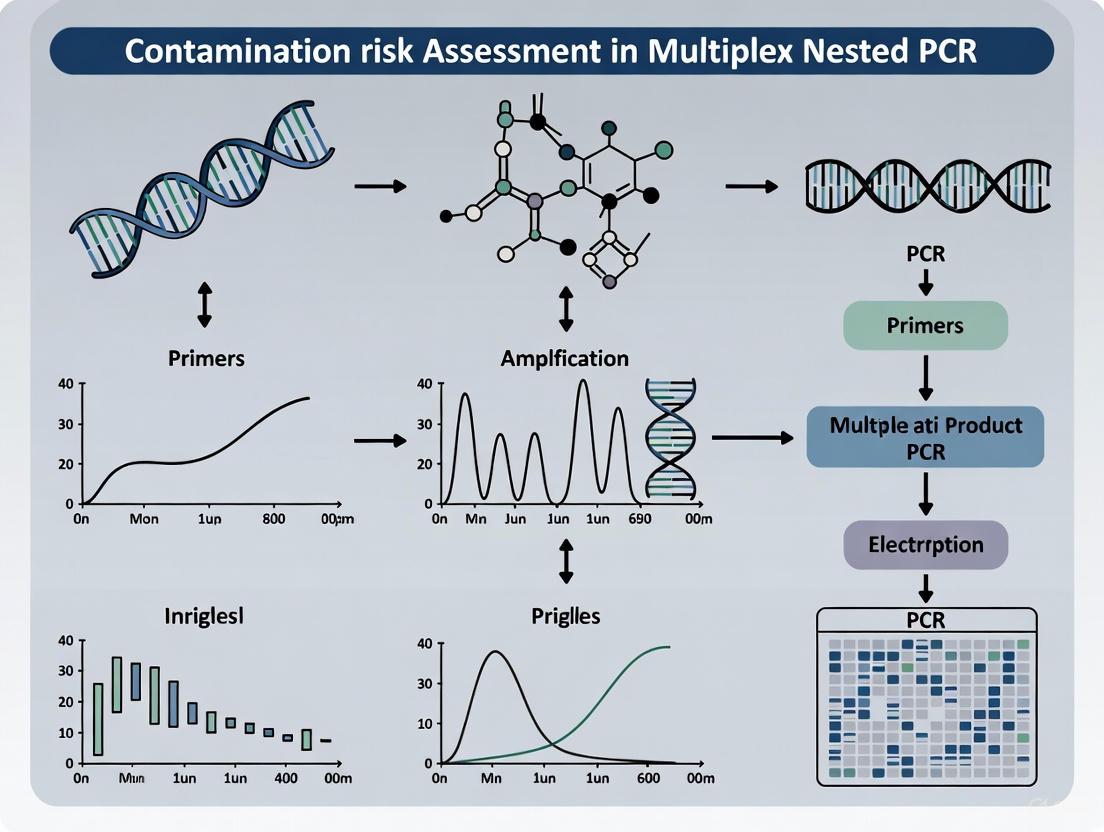
Multiplex nested PCR is a powerful molecular technique that offers exceptional sensitivity and specificity for detecting multiple targets, such as respiratory viruses, malaria parasites, and fungal pathogens.
Mitigating Contamination in Multiplex Nested PCR: Strategies for Robust Assay Design and Validation in Biomedical Research
Abstract
Multiplex nested PCR is a powerful molecular technique that offers exceptional sensitivity and specificity for detecting multiple targets, such as respiratory viruses, malaria parasites, and fungal pathogens. However, its multi-step, open-tube nature introduces a significant risk of amplicon contamination, leading to false-positive results. This article provides a comprehensive resource for researchers and drug development professionals, addressing the foundational principles of contamination risks, methodological strategies for its mitigation, practical troubleshooting and optimization protocols, and rigorous validation frameworks. By synthesizing current research and applications, we outline a systematic approach to contamination risk assessment that is crucial for ensuring the reliability of data in clinical diagnostics and biomedical research.
Understanding the Achilles' Heel: Why Multiplex Nested PCR is Inherently Prone to Contamination
In the pursuit of high-sensitivity detection of pathogens, multiplex nested PCR has emerged as a powerful molecular technique, combining the multi-target capability of multiplex PCR with the enhanced sensitivity of nested amplification. This two-round amplification method significantly improves the detection of low-abundance targets, such as viral and bacterial pathogens in clinical samples [1] [2]. However, this very design introduces a critical vulnerability: an inherently elevated risk of contamination compared to single-round amplification methods. This article examines the procedural foundations of this contamination risk, presents comparative experimental data, and outlines established mitigation strategies within the context of contamination risk assessment for research and diagnostic applications.
The Procedural Anatomy of Contamination Risk
The fundamental contamination vulnerability in two-round amplification protocols stems from the requirement to transfer first-round PCR products to a second reaction vessel. This transfer step creates an opportunity for aerosolized amplicons to contaminate both the second reaction mixture and the laboratory environment.
Standard Two-Round Amplification Workflow
The canonical nested PCR procedure involves two discrete amplification stages, each with distinct primer sets [3] [4]. The initial round uses outer primers that target a relatively large fragment of the template DNA (typically 15-30 cycles). A small aliquot of this amplified product is then physically transferred to a new tube containing the inner primers (or nested primers), which bind to sequences internal to the first amplicon for a second round of amplification (typically another 15-30 cycles) [4]. This two-stage process is what confers the technique's exceptional sensitivity and specificity, as it virtually eliminates non-specific amplification products [5].
Figure 1: Contamination Risk Pathway in Standard Nested PCR. The critical vulnerability occurs during the product transfer step, where opening the reaction tube risks environmental contamination and cross-contamination between samples.
Quantifying the Contamination Risk
The risk materializes through several mechanisms during the transfer process [4] [5]:
- Aerosol Generation: Pipetting creates microscopic droplets containing billions of copies of the first-round amplicons, which can settle on laboratory surfaces, equipment, or gloves.
- Carryover Contamination: Even minute volumes of contaminating amplicon (from previous reactions) can serve as a highly efficient template in the second round, leading to false positives.
- Cross-Contamination: When processing multiple samples simultaneously, amplicons from one sample can contaminate adjacent reaction setups.
This vulnerability is particularly problematic in high-throughput diagnostic settings where numerous samples are processed in parallel, exponentially increasing the risk of cross-contamination [2].
Comparative Performance and Contamination Data
Despite its contamination risks, the two-round amplification design offers significant analytical advantages that justify its continued use in research and clinical diagnostics, particularly for challenging samples with low pathogen loads.
Sensitivity and Specificity Comparisons
Table 1: Performance Comparison of PCR Methods in Respiratory Pathogen Detection
| Method | Detection Sensitivity | Multiplexing Capacity | Relative Contamination Risk | Key Applications |
|---|---|---|---|---|
| Standard PCR | Low to Moderate | Limited | Low | High-abundance target detection [1] |
| Single-Tube Real-Time PCR | Moderate | Up to 6 targets | Very Low | Routine clinical quantification [6] |
| Multiplex Nested PCR | High (100-1000x standard PCR) [2] | High (20+ targets) [2] | High | Comprehensive pathogen screening [2] |
| 2D PCR | High | Very High (12+ targets in single tube) [6] | Low | High-throughput genotyping [6] |
A study on respiratory pathogen detection demonstrated that multiplex nested PCR achieved an overall positive rate of 48.5% in clinical specimens, significantly outperforming virus isolation (20.1%) and immunofluorescence assays (13.5%) [2]. This enhanced detection capability is particularly valuable for identifying non-cultivatable viruses and pathogens present in low concentrations.
Experimental Protocol: Respiratory Pathogen Detection
The high-performance multiplex nested PCR protocol for respiratory pathogens exemplifies both the power and the inherent contamination risks of the method [2]:
Primer Design: Five groups of multiplex nested PCR assays were developed to detect 21 different respiratory pathogens. Primer pairs were selected to ensure amplicon sizes could be easily differentiated by agarose gel electrophoresis.
First-Round Amplification: Fast PCR technology was employed to complete the first amplification within 35 minutes using outer primer sets.
Product Transfer: After the first round, amplification products were physically transferred to new reaction tubes – the critical contamination risk step.
Second-Round Amplification: Nested primers specific to internal sequences were used for the second amplification, enhancing both sensitivity and specificity.
Detection: Amplified products were separated by agarose gel electrophoresis and visualized under UV light.
This protocol's success in detecting a wide range of pathogens demonstrates the utility of two-round amplification, while the transfer step highlights the unavoidable contamination vulnerability [2].
Contamination Mitigation Strategies and Methodological Adaptations
Several procedural and technical adaptations have been developed to mitigate the contamination risks inherent in two-round amplification protocols.
Standard Contamination Control Practices
Table 2: Essential Contamination Control Measures for Two-Round Amplification
| Control Measure | Implementation | Risk Reduction Mechanism |
|---|---|---|
| Physical Separation | Dedicated pre- and post-PCR rooms with separate equipment [5] | Prevents amplicon transfer to reaction setup areas |
| Aerosol-Reduction Tips | Use during all liquid handling steps, especially during product transfer | Minimizes droplet formation and dispersion |
| UNG Treatment | Incorporation of uracil-N-glycosylase in reaction mixes | Enzymatically degrades contaminating amplicons from previous reactions |
| Dedicated Reagents and Equipment | Separate sets of pipettes, tubes, and reagents for pre- and post-amplification | Eliminates cross-contamination via shared equipment |
| Positive Displacement Pipettes | Use during product transfer steps | Prevents aerosol contamination in pipette shafts |
Technical Adaptations for Reduced Contamination
Single-Tube Nested PCR
This adaptation contains both primer sets in the same reaction tube but exploits different annealing temperatures for sequential amplification [4]:
- High-Temperature Stage: The first amplification occurs with outer primers that have higher annealing temperatures (e.g., 68°C).
- Low-Temperature Stage: The second amplification uses inner primers with lower annealing temperatures (e.g., 46°C) that target the products of the first reaction.
This approach eliminates the tube-opening step while maintaining the specificity advantages of nested amplification, though it requires careful optimization of primer design and cycling conditions [4].
Closed-Tube Detection Systems
Novel approaches like 2D PCR integrate asymmetric PCR amplification with melting curve analysis in a completely closed-tube system [6]. This method uses base-quenched probes and tagged primers to detect multiple targets (e.g., 11 high-risk HPV genotypes) across three fluorescent channels without ever opening the reaction tube, thereby eliminating the primary contamination risk while maintaining high throughput [6].
Figure 2: Closed-Tube 2D PCR Workflow. This system maintains reaction containment throughout amplification and analysis, dramatically reducing contamination risk while enabling high-throughput, multi-target detection.
Essential Research Reagent Solutions
Table 3: Key Reagents for Two-Round Amplification and Contamination Control
| Reagent/Supply | Critical Function | Contamination Control Role |
|---|---|---|
| Hot-Start Taq DNA Polymerase [1] | Reduces non-specific amplification during reaction setup | Minimizes primer-dimer formation and non-target products that could complicate interpretation |
| Aerosol-Reduction Pipette Tips | Prevents droplet formation during liquid handling | Critical during product transfer step; reduces environmental contamination |
| dNTP Mix with dUTP | Provides nucleotides for DNA synthesis | Enables UNG treatment to degrade contaminating amplicons from previous runs |
| Uracil-N-Glycosylase (UNG) [5] | Enzymatically cleaves uracil-containing DNA | Destroys carryover contamination from prior amplification reactions |
| Physical Barrier Reagents | Form protective layer over reaction mix | Prevents cross-contamination during reaction setup (e.g., wax barriers) |
| Dedicated PCR Buffer Systems | Optimizes enzyme activity and specificity | Reduces non-specific amplification that could generate potential contaminants |
The two-round amplification design of multiplex nested PCR presents a fundamental trade-off: exceptional analytical sensitivity versus significant contamination risk. The procedural requirement to transfer first-round amplification products to a second reaction tube creates an unavoidable vulnerability point where amplicon contamination can occur. While this risk can be mitigated through rigorous laboratory practices, physical separation of workspaces, and molecular safeguards like UNG treatment, it remains an inherent limitation of the method. Emerging technologies such as single-tube nested PCR and fully closed-tube detection systems represent promising alternatives that maintain the sensitivity advantages while minimizing contamination vulnerabilities. Researchers and diagnosticians must carefully weigh these factors when selecting amplification methodologies, considering both the required detection sensitivity and the implementation of appropriate contamination control measures to ensure result reliability.
In the realm of molecular diagnostics and research, multiplex nested PCR represents a powerful tool for pathogen detection, offering exceptional sensitivity and specificity. However, this exquisite sensitivity comes with a significant vulnerability: contamination. The potential for false-positive results due to contaminating nucleic acids presents a formidable challenge in both research and clinical diagnostic settings, potentially leading to erroneous data, misdiagnosis, and inappropriate therapeutic interventions [7] [8]. The fundamental principle underlying this vulnerability stems from the amplification power of PCR itself; a typical reaction can generate as many as 10^8 to 10^9 copies of the target sequence, creating a substantial reservoir of potential contaminants in the laboratory environment [9] [8]. Even minute quantities of these amplification products can compromise subsequent reactions, jeopardizing the accuracy and reliability of test results. This guide systematically examines the primary sources of contamination, presents comparative experimental data on contamination control methods, and provides detailed protocols for implementing effective contamination prevention strategies in laboratory practice.
Understanding the specific pathways through which contamination occurs is the foundational step in developing effective prevention strategies. Contamination in multiplex nested PCR workflows primarily manifests through three distinct mechanisms, each requiring specific intervention approaches.
Table 1: Primary Contamination Sources in Multiplex Nested PCR
| Contamination Type | Source | Mechanism | Impact |
|---|---|---|---|
| Amplicon Carryover | Previously amplified PCR products | Aerosolized amplicons contaminate reagents, equipment, or new reaction setups | False positives due to amplification of contaminating DNA from earlier runs |
| Cross-Contamination Between Samples | High-concentration target samples | Transfer of nucleic acids between specimens during processing | False positives in negative samples processed alongside strong positives |
| Reagent/Environmental Contamination | Contaminated reagents, primers, or laboratory surfaces | Introduction of exogenous DNA during reagent preparation or storage | Systemic contamination affecting multiple samples and experiments |
Amplicon Carryover Contamination
Amplicon carryover represents the most significant contamination threat in laboratories performing repeated amplification of the same target sequences. The enormous quantity of amplification products generated in each PCR cycle – theoretically as many as 10^8 copies per reaction – creates a persistent contamination risk [9] [7]. When reaction tubes are opened for post-amplification analysis, these products can become aerosolized, with even the smallest droplets containing as many as 10^6 amplification products [8]. These contaminants then settle on laboratory surfaces, equipment, and ventilation systems, creating a reservoir of contamination that can persist in the laboratory environment for extended periods. The risk is particularly pronounced in nested PCR protocols, which require transferring the first-round amplification product to a second reaction tube, effectively doubling the opportunities for amplicon release into the laboratory environment [10].
Cross-Contamination Between Samples
Cross-contamination occurs when nucleic acids from high-positive samples are inadvertently transferred to negative or low-positive samples during the processing workflow. This transfer can occur through multiple pathways, including contaminated pipettes, centrifuges, vortex mixers, or even laboratory personnel [11]. Research has demonstrated that pipettes used without filter tips can significantly contribute to cross-contamination, with one study showing contamination levels increasing from 0.43% to 1.12% when filter tips were not employed [9]. The physical arrangement of workspace also significantly influences cross-contamination rates, with non-physically isolated laboratories demonstrating higher contamination levels compared to standardized laboratories with separate areas for each processing step [9].
Reagent and Environmental Contamination
Laboratory reagents and environmental surfaces represent additional contamination vectors. Nucleotide-free water left exposed in laboratory environments has been shown to accumulate detectable levels of contaminating DNA, with similar contamination rates observed in PCR preparation rooms, analysis rooms, and even outdoor environments away from the laboratory [9]. Commercial PCR master mix reagents have also been identified as potential contamination sources, with experiments demonstrating significantly higher contamination levels (9.18% versus 0.01%) when using original versus newly purchased master mix preparations [9]. These findings underscore the importance of proper reagent handling, storage, and quality control procedures in maintaining contamination-free workflows.
Diagram 1: Pathways of PCR contamination showing how previous amplicons, sample processing, and contaminated reagents contribute to false positive results through different transfer mechanisms.
Quantitative Comparison of Contamination Control Methods
Numerous contamination control strategies have been developed and validated, each with distinct mechanisms of action, advantages, and limitations. The efficacy of these methods has been quantitatively assessed in multiple studies, providing evidence-based guidance for selection and implementation.
Table 2: Comparative Efficacy of Contamination Control Methods
| Method | Mechanism of Action | Contamination Reduction | Limitations |
|---|---|---|---|
| Physical Separation | Spatial segregation of pre-and post-amplification areas | ~60% reduction in contamination levels [9] | Requires dedicated equipment and laboratory space |
| dUTP/UNG System | Enzymatic degradation of uracil-containing contaminants | Up to 22-fold reduction in contamination levels [9] | Reduced efficiency with GC-rich targets; may affect hybridization |
| Filter Tips | Prevention of aerosol transfer during pipetting | 62% reduction in contamination [9] | Increased consumable costs |
| Synthetic DNA Spike-Ins | Competitive amplification against contaminants | Enables detection down to 1 copy/reaction [9] | Requires customized design and optimization |
| UV Irradiation | Thymidine dimer formation in contaminating DNA | Variable efficacy; protocol-dependent [8] | Reduced efficiency for short or GC-rich templates |
Physical Segregation and Workflow Optimization
The foundation of effective contamination control lies in proper laboratory design and workflow management. Establishing physically separated areas for different stages of the PCR workflow represents one of the most effective strategies for preventing amplicon carryover contamination [11] [7] [8]. This approach typically involves dividing laboratory space into three distinct areas: (1) a pre-amplification zone dedicated to reagent preparation and sample processing; (2) an amplification area for thermal cycling; and (3) a post-amplification area for product analysis [7]. The workflow must be strictly unidirectional, with personnel and materials moving from clean to contaminated areas without backtracking [8]. Research has demonstrated that implementing physical separation combined with dedicated equipment can reduce contamination levels by approximately 60%, from 1.28% to 0.43% in controlled experiments [9]. Personnel must remain vigilant about potentially transferring amplification products on hair, glasses, jewelry, and clothing between areas, as these personal items can serve as contamination vectors [8].
Enzymatic Control with dUTP/UNG Systems
The dUTP/uracil-N-glycosylase (UNG) system represents one of the most widely adopted and effective methods for preventing carryover contamination in PCR workflows. This approach incorporates uracil (dUTP) instead of thymine (dTTP) during PCR amplification, generating amplification products that contain uracil rather than thymine [9] [8]. In subsequent reactions, the UNG enzyme recognizes and removes uracil residues from contaminating amplification products before PCR cycling begins, effectively destroying potential contaminants while leaving native thymine-containing DNA templates unaffected [11]. The UNG enzyme is active at room temperature but is rapidly inactivated at the high temperatures (95°C) used for PCR denaturation, preventing degradation of newly synthesized amplification products [8]. Studies implementing the dUTP/UNG system in carryover contamination-controlled amplicon sequencing (ccAMP-Seq) have demonstrated at least a 22-fold reduction in contamination levels compared to standard protocols [9]. One limitation of this approach is that UNG works best with thymine-rich amplification products and has reduced activity with G+C-rich targets [8]. Additionally, U-containing DNA may not hybridize as efficiently in Southern blot applications, and some restriction endonucleases cleave U-DNA with reduced efficiency [8].
Chemical and Physical Decontamination Methods
Routine decontamination of laboratory surfaces and equipment with chemical agents provides an essential supplementary approach to contamination control. Sodium hypochlorite (bleach) at concentrations of 10-15% effectively causes oxidative damage to nucleic acids, preventing their amplification in subsequent reactions [11] [7]. Surfaces should be treated with bleach for 10-15 minutes before wiping with deionized water or 70% ethanol to remove residual bleach [11]. UV irradiation represents another physical method for decontaminating work surfaces and equipment [7] [8]. UV light at 254 nm induces thymidine dimers and other covalent modifications in DNA, rendering contaminants unable to serve as amplification templates [8]. The efficacy of UV irradiation depends on the distance from the light source, exposure time, and template characteristics, with shorter fragments (<300 nucleotides) and G+C-rich templates showing reduced sensitivity to UV inactivation [8]. For optimal results, UV exposure of 5-20 minutes is recommended for work surfaces and equipment before use [7].
Experimental Protocols for Contamination Control
Implementation of robust contamination control measures requires careful experimental design and standardized protocols. The following section details specific methodologies for assessing and preventing contamination in multiplex nested PCR workflows.
Determining the specific sources of contamination in a laboratory workflow represents the critical first step in implementing effective control measures. The following protocol, adapted from controlled studies, provides a systematic approach for contamination source identification [9]:
Aerosol Contamination Assessment: Place aliquots of nuclease-free sterile (NFS) water in open tubes in various laboratory locations (PCR preparation room, analysis room, and outdoor control location). After 1 day and 1 week of exposure, use these samples as templates in multiplex nested PCR reactions to detect environmental contamination.
Reagent Contamination Testing: Test newly purchased NFS water samples using both newly purchased and existing lots of PCR master mix reagents. Compare contamination levels between reagent lots using statistical analysis (e.g., Wilcoxon rank-sum test) to identify contaminated reagents.
Equipment Contamination Evaluation: Process NFS water samples in both physically isolated (standardized) and non-isolated (general) laboratories, using pipettes both with and without filter tips. Perform five technical replicates for each condition to assess the individual and combined effects of physical separation and filtered pipettes on contamination rates.
Data Analysis: Calculate the target value (T value) for each sample as the ratio of reads mapped to target loci versus total qualifying reads. Use this quantitative measure to compare contamination levels across different experimental conditions.
This systematic approach allows researchers to identify the most significant contamination sources in their specific laboratory environment and prioritize interventions accordingly.
Contamination-Controlled Amplicon Sequencing (ccAMP-Seq) Workflow
The ccAMP-Seq protocol represents a comprehensive approach to contamination control that integrates multiple prevention strategies into a single workflow [9]. This method has demonstrated sensitivity as low as one copy per reaction and 100% sensitivity and specificity when testing dilution series of SARS-CoV-2 nucleic acid standards [9]. The protocol consists of the following components:
Physical Isolation and Filter Tips: Perform all pre-amplification steps in physically isolated laboratory areas using aerosol-resistant filter tips for all liquid handling procedures.
Synthetic DNA Spike-Ins: Design and synthesize fragment-derived DNA spike-ins that share primer-binding regions with target sequences but contain significant nucleotide differences in amplified regions. Add these spike-ins (10,000 copies/reaction determined as optimal concentration) to all samples prior to library preparation to compete with contaminants during amplification.
dUTP/UNG System: Incorporate dUTP instead of dTTP in all PCR reactions and add UNG enzyme to the reaction mix. Incubate reactions at room temperature for 10 minutes before thermal cycling to allow degradation of contaminating amplification products from previous reactions.
Bioinformatic Contamination Removal: Implement a data analysis procedure that removes sequencing reads originating from contamination based on their alignment to spike-in sequences rather than native target sequences.
Validation studies implementing this comprehensive approach have demonstrated significant improvements in detection accuracy, with 100% concordance with qPCR for positive clinical samples and identification of additional true positives that were missed by standard qPCR protocols [9].
Diagram 2: Unidirectional workflow for contamination-controlled multiplex nested PCR showing how physical separation of laboratory areas combines with specific control methods at each processing stage to minimize contamination risk.
Essential Research Reagent Solutions for Contamination Control
Implementing effective contamination control requires specific reagents and laboratory materials designed to prevent, detect, or eliminate contaminants. The following toolkit details essential solutions for maintaining contamination-free multiplex nested PCR workflows.
Table 3: Essential Research Reagent Solutions for Contamination Control
| Reagent/Material | Function | Application Protocol |
|---|---|---|
| Aerosol-Resistant Filter Tips | Prevent aerosol transfer during pipetting; reduce cross-contamination between samples | Use for all liquid handling steps; change tips between each sample processing step |
| dUTP/dNTP Mixture | Substitute for dTTP in PCR mixes; enables UNG-based carryover prevention | Replace 25-100% of dTTP with dUTP in PCR master mix; optimize concentration for specific targets |
| Uracil-N-Glycosylase (UNG) | Enzymatic degradation of uracil-containing carryover contaminants | Add to PCR master mix (0.01-0.1 U/μL final concentration); incubate 10 min at room temperature before PCR |
| Synthetic DNA Spike-Ins | Competitive amplification against contaminants; quality control for amplification efficiency | Design modified target sequences with identical primer-binding regions; add 10,000 copies/reaction |
| Sodium Hypochlorite (Bleach) | Chemical decontamination of surfaces and equipment through nucleic acid oxidation | Prepare fresh 10% dilution weekly; apply to surfaces for 10-15 minutes before removal with ethanol or water |
| Nuclease-Free Water | Contamination-free water for reagent preparation and reaction setup | Aliquot upon receipt; use dedicated aliquots for each experiment to prevent bulk contamination |
Effective contamination control in multiplex nested PCR requires a multifaceted approach that addresses all potential sources of contamination throughout the experimental workflow. The most successful strategies integrate physical, enzymatic, and chemical methods tailored to specific laboratory environments and applications. Physical separation of pre- and post-amplification areas establishes the foundational framework, while implementation of the dUTP/UNG system provides robust protection against amplicon carryover contamination. Supplementary approaches including aerosol-resistant pipette tips, synthetic DNA spike-ins, and rigorous surface decontamination further reduce contamination risks. The quantitative data presented in this guide demonstrates that comprehensive contamination control can improve detection sensitivity by approximately an order of magnitude while reducing false positives through 22-fold lower contamination levels. As molecular diagnostics continue to evolve toward more sensitive applications, implementing these evidence-based contamination control measures will remain essential for generating reliable, reproducible results in both research and clinical settings.
Diagnostic error, defined as the failure to establish an accurate and timely explanation of a patient's health problem or to communicate that explanation, represents a significant threat to patient safety [12]. It is estimated that 5 percent of adults are affected by diagnostic errors in the outpatient environment, while in hospital settings, diagnostic errors are responsible for 6 to 17 percent of adverse events [12]. The National Academy of Medicine has concluded that "most people will experience at least one diagnostic error in their lifetime" [12]. False positives and false negatives represent two critical dimensions of diagnostic inaccuracy that can severely impact both clinical decision-making and research data fidelity. These errors become particularly problematic in multiplex nested PCR research, where the simultaneous detection of multiple targets increases the potential for contamination and misinterpretation, ultimately compromising the validity of scientific findings and subsequent therapeutic development.
The complex relationship between sensitivity and specificity creates an inherent tension in diagnostic test design. As sensitivity increases, specificity typically decreases, and vice versa [13]. This inverse relationship means that efforts to reduce false positives may inadvertently increase false negatives, and conversely, attempts to minimize false negatives may raise the rate of false positives. Understanding this balance is crucial for researchers and clinicians working with molecular diagnostics, particularly in contamination-prone environments like multiplex nested PCR laboratories. The consequences of these diagnostic inaccuracies extend beyond individual patient harm to include systematic distortions in research data, potentially leading to erroneous conclusions about drug efficacy and disease mechanisms.
Fundamental Concepts: Diagnostic Accuracy Parameters
Diagnostic test accuracy is quantified through several interconnected parameters that collectively describe a test's performance characteristics. Understanding these fundamental metrics is essential for evaluating the impact of false positives on research outcomes.
Sensitivity: The proportion of true positives correctly identified by a test, calculated as True Positives / (True Positives + False Negatives) [13]. Highly sensitive tests are critical for ruling out diseases when negative (high negative predictive value).
Specificity: The proportion of true negatives correctly identified by a test, calculated as True Negatives / (True Negatives + False Positives) [13]. Tests with high specificity are valuable for confirming or ruling in diseases when positive.
Positive Predictive Value (PPV): The probability that a subject with a positive test result actually has the disease, calculated as True Positives / (True Positives + False Positives) [13]. PPV is highly dependent on disease prevalence.
Negative Predictive Value (NPV): The probability that a subject with a negative test result truly does not have the disease, calculated as True Negatives / (True Negatives + False Negatives) [13].
Likelihood Ratios: These metrics quantify how much a test result will change the odds of having a disease, with positive likelihood ratio calculated as Sensitivity / (1 - Specificity) and negative likelihood ratio as (1 - Sensitivity) / Specificity [13].
Table 1: Diagnostic Accuracy Parameters and Their Clinical Implications
| Parameter | Formula | Interpretation | Impact of False Positives |
|---|---|---|---|
| Sensitivity | True Positives / (True Positives + False Negatives) | Ability to correctly identify those with disease | Not directly affected |
| Specificity | True Negatives / (True Negatives + False Positives) | Ability to correctly identify those without disease | Decreased with increasing false positives |
| Positive Predictive Value (PPV) | True Positives / (True Positives + False Positives) | Probability disease is present when test is positive | Significantly decreased with increasing false positives |
| Negative Predictive Value (NPV) | True Negatives / (True Negatives + False Negatives) | Probability disease is absent when test is negative | Modestly increased with increasing false positives |
| Positive Likelihood Ratio | Sensitivity / (1 - Specificity) | How much the odds of disease increase with a positive test | Decreased with increasing false positives |
The relationship between these parameters can be visualized through their functional dependencies and how they are affected by false positives in diagnostic testing:
Quantitative Impact of False Positives Across Diagnostic Modalities
False Positives in Large-Scale Health Data
The impact of false-positive diagnoses extends beyond individual patient harm to significantly distort population-level data. A study of German health insurance claims data encompassing approximately 70 million insurants revealed substantial false-positive ratios for type 2 diabetes diagnoses, with notable sex and age disparities [14]. The analysis demonstrated that false-positive ratios were consistently higher in women across all age groups, peaking at approximately 12 per 1,000 between 60 and 70 years of age, compared to a maximum of 5 per 1,000 in men over 80 years [14]. In absolute numbers, this translated to an estimated 217,000 people (95% CI: 204-229) with false-positive diabetes diagnoses in the dataset, with the vast majority being women (172,000, 95% CI: 162-180) [14]. These findings highlight how systematic diagnostic errors can substantially skew disease prevalence estimates in large datasets, potentially leading to misallocation of healthcare resources and flawed public health interventions.
Performance Comparison of Diagnostic Methods for Melioidosis
A systematic review and meta-analysis of non-culture diagnostic methods for melioidosis provides insightful data on how different methodologies balance sensitivity and specificity, directly impacting false-positive rates [15]. The study evaluated 36 studies comprising 21,289 tests, with culture serving as the gold standard [15].
Table 2: Diagnostic Accuracy of Melioidosis Detection Methods
| Method | Target | Pooled Sensitivity (95% CI) | Pooled Specificity (95% CI) | False Positive Rate |
|---|---|---|---|---|
| Indirect ELISA | Antibodies | 0.86 (0.80-0.90) | 0.85 (0.80-0.89) | 15% |
| IHA (threshold 1:160) | Antibodies | 0.60 (0.46-0.72) | 0.70 (0.58-0.79) | 30% |
| Lateral Flow Immunoassay | CPS | 0.52 (0.33-0.70) | 0.96 (0.93-0.98) | 4% |
| Immunofluorescence Assay | Polyclonal antibody | 0.60 (0.44-0.75) | 0.99 (0.97-1.00) | 1% |
| RT-PCR | T3SS | 0.72 (0.41-0.91) | 1.00 (0.97-0.99) | 0-3% |
The data reveal significant methodological trade-offs. While the Immunofluorescence Assay (IFA) demonstrated excellent specificity (99%) with a correspondingly low false-positive rate (1%), its sensitivity was limited to 60% [15]. Conversely, Indirect ELISA showed higher sensitivity (86%) but substantially lower specificity (85%), resulting in a 15% false-positive rate [15]. These differential error profiles have direct implications for clinical and research applications: high-specificity tests like IFA and RT-PCR are preferable for confirmatory testing, while high-sensitivity tests may be more appropriate for initial screening despite their higher false-positive rates.
Impact on Super-Resolution Ultrasound Imaging
Research in super-resolution ultrasound localization microscopy (ULM) has quantitatively demonstrated the differential impact of false positives versus false negatives on image quality metrics [16]. Studies systematically introducing controlled detection errors revealed that while both false positives and false negatives impact Peak Signal-to-Noise Ratio (PSNR) similarly, they have divergent effects on the Structural Similarity Index (SSIM) [16]. Increasing false positive rates from 0% to 20% decreased SSIM by approximately 7%, while equivalent increases in false negative rates caused a substantially greater decline of about 45% [16]. Furthermore, the impact varied significantly based on microbubble density, with sparse regions showing higher sensitivity to detection errors than dense regions [16]. This research provides important insights for molecular diagnostics, suggesting that the optimal balance between false positives and false negatives may depend on the specific application and the relative importance of different quality metrics.
Multiplex Nested PCR: Methodological Considerations and Contamination Risks
Experimental Protocol for Respiratory Pathogen Detection
The multiplex nested PCR protocol for respiratory pathogen detection exemplifies the sophisticated methodology required for simultaneous identification of multiple targets while managing contamination risks [2]. The assay development involved five groups of multiplex nested PCRs that could simultaneously detect 21 different respiratory pathogens, including influenza viruses, parainfluenza viruses, respiratory syncytial viruses, human rhinoviruses, coronaviruses, and bacterial pathogens including Mycoplasma pneumoniae, Chlamydophila pneumoniae, and Legionella pneumophila [2].
The methodological workflow can be summarized as follows:
Primer Design and Preparation: Primers were either modified from previously published sequences or designed from consensus genome regions obtained from GenBank [2]. Sequences of 10-20 representative strains of each pathogen were aligned using Clustal X, and primer pairs were selected to ensure amplicons of different pathogens could be easily differentiated by agarose gel electrophoresis [2].
Multiplex PCR Primer Grouping: Five groups of multiplex nested PCR assays were developed, each detecting 4-5 viruses and/or bacteria [2]:
- Group 1: Influenza A (subtypes H1, H3, H5) and Influenza B
- Group 2: Parainfluenza virus types 1, 2, 3, 4a, and 4b
- Group 3: Respiratory syncytial viruses A and B, human rhinoviruses, human enteroviruses
- Group 4: Human coronaviruses (OC43, 229E, SARS-CoV) and human metapneumoviruses
- Group 5: Mycoplasma pneumoniae, Chlamydophila pneumoniae, Legionella pneumophila, and adenoviruses
PCR Conditions and Amplification: The multiplex nested PCRs adopted fast PCR technology, with the high speed of fast PCR (within 35 minutes) greatly improving efficiency [2]. The assays demonstrated significantly higher sensitivity (100- to 1000-fold) than conventional methods and achieved an overall positive rate of 48.5% in clinical specimens compared to 20.1% for virus isolation and 13.5% for immunofluorescence assay [2].
The experimental workflow for multiplex nested PCR demonstrates the complex process where contamination can occur, potentially leading to false positive results:
Candida Species Detection in Paediatric Patients
A study developing multiplex nested PCR for detecting Candida species in blood samples of critically ill paediatric patients demonstrated both the advantages and challenges of this methodology [17]. The assay was designed to identify seven Candida species simultaneously with a detection limit of four Candida genomes per milliliter of blood for all species [17]. While blood cultures were positive in only 14.8% of patients with suspected candidaemia, the multiplex nested PCR was positive in 24.0% of patients, including all culture-positive patients [17]. The methodology required stringent contamination control measures, including performing reaction mixes, DNA extractions, and amplifications in separate rooms equipped with safety cabinets to prevent carryover contamination [17]. This protocol highlights how proper laboratory design and workflow segregation are essential for minimizing false positives in sensitive nested PCR applications.
Essential Research Reagent Solutions for Contamination Control
Implementing appropriate reagent systems and laboratory practices is crucial for minimizing false-positive results in multiplex nested PCR applications. The following solutions represent critical components for maintaining diagnostic accuracy and research data fidelity.
Table 3: Research Reagent Solutions for Multiplex Nested PCR Contamination Control
| Reagent/Laboratory Tool | Function | Application in False-Positive Prevention |
|---|---|---|
| dUTP-UNG Decontamination System | Incorporation of deoxyuridine triphosphate with uracil-N-glycosylase | Degrades PCR products from previous reactions containing uracil, preventing carryover contamination |
| Separate Laboratory Spaces | Physical segregation of PCR workflow components | Prevents amplicon contamination of pre-PCR areas; requires dedicated rooms for reagent preparation, sample handling, and amplification |
| QIAamp DNA Mini Kit | Nucleic acid extraction and purification | Removes PCR inhibitors and standardizes template quality, reducing false positives from non-specific amplification |
| Ashdown Agar Selective Medium | Selective isolation of Burkholderia pseudomallei | Reduces misidentification of pathogens in culture-based diagnosis, serving as reference standard for molecular test validation |
| SYBR Green with Melt Curve Analysis | Intercalating dye with post-amplification dissociation analysis | Enables closed-tube amplification and product verification without contamination risk of gel electrophoresis |
| Plasmid DNA Controls | Quantified reference standards for sensitivity determination | Establishes limit of detection and validates assay performance, identifying non-specific amplification |
The implementation of these reagent systems must be complemented by rigorous methodological practices. For instance, the use of SYBR Green with melt curve analysis for detecting simian Plasmodium species provided a contamination-resistant alternative to traditional nested PCR while enabling species differentiation through distinct melting temperatures [18]. Similarly, the incorporation of dUTP-UNG decontamination systems has become standard practice in many diagnostic laboratories to prevent carryover contamination from previous amplifications. These technical solutions, when combined with appropriate quality control measures and personnel training, form a comprehensive strategy for minimizing false-positive results in sensitive molecular diagnostics.
The impact of false positives on diagnostic accuracy and research data fidelity extends across multiple dimensions, from individual patient harm to systematic distortions in public health data. The evidence demonstrates that false-positive rates vary significantly across diagnostic modalities, with methodologies balancing sensitivity and specificity according to their intended application [15] [13]. In multiplex nested PCR, the risk of contamination and subsequent false positives necessitates comprehensive contamination control strategies, including physical segregation of laboratory workflows, implementation of chemical decontamination systems, and rigorous validation against reference standards [2] [17] [18].
For researchers and drug development professionals, these findings highlight the critical importance of understanding the limitations and error profiles of diagnostic methodologies. The selection of appropriate diagnostic tests should be guided by their intended use-case, with high-specificity tests preferred for confirmatory applications despite potentially lower sensitivity [15] [13]. Furthermore, the development of novel diagnostic platforms should prioritize not only analytical sensitivity but also implementation of built-in contamination controls, as demonstrated by the advantages of closed-tube systems like real-time PCR with melt curve analysis [18]. Through systematic attention to these factors, the scientific community can enhance the reliability of diagnostic data supporting drug development and clinical decision-making, ultimately improving patient outcomes and advancing public health.
Building a Fortified Workflow: Procedural and Technological Barriers Against Contamination
Multiplex nested Polymerase Chain Reaction (PCR) represents a powerful yet highly sensitive molecular technique that combines the high-throughput capability of multiplex PCR with the exceptional sensitivity of nested PCR. This method is particularly valuable in diagnostic virology, pathogen detection, and genetic research where simultaneous amplification of multiple targets from minimal starting material is required [19] [1]. However, this exquisite sensitivity comes with a significant vulnerability: contamination risks that can compromise experimental results through false positives or misinterpretation of data. The fundamental principle underlying this vulnerability lies in the massive amplification of target sequences, creating an environment where even minute quantities of amplicons from previous reactions can contaminate new experiments, leading to exponential amplification of errors [20].
The contamination challenge is particularly pronounced in multiplex nested PCR due to the multi-stage amplification process and the presence of multiple primer sets. During the nested PCR process, the initial amplification products become templates for the second round of amplification, creating abundant opportunities for amplicon carryover if proper spatial segregation is not maintained [21]. The primary sources of contamination in these sensitive reactions include cross-contamination between samples, carryover of amplified DNA from previous experiments, contamination from laboratory reagents and surfaces, and operator-introduced contamination [20] [11]. Without proper containment measures, these contamination sources can render experimental data unreliable and irreproducible, potentially impacting critical areas such as patient diagnostics and drug development research.
The Critical Role of Spatial Segregation in Contamination Control
Fundamental Principles of Spatial Segregation
Spatial segregation establishes a physical barrier against the most common contamination sources in multiplex nested PCR workflows. The core principle involves creating distinct, dedicated areas for pre-amplification and post-amplification activities, separated either by different rooms or specialized workstation setups [22] [23]. This physical separation is crucial because pre-PCR samples contain precious, low-concentration nucleic acid templates that are extremely vulnerable to contamination from the massive quantities of amplification products generated in post-PCR areas [23].
The implementation of a unidirectional workflow forms the foundation of effective spatial segregation. This workflow mandates that materials, equipment, and personnel movement proceed exclusively from pre-amplification to post-amplification areas, with no reverse movement unless thorough decontamination procedures are implemented [22] [23]. The unidirectional flow prevents amplified DNA, which can be aerosolized when opening reaction tubes post-amplification, from entering pre-PCR areas where it could contaminate reagents, equipment, or new samples [11]. Personnel must change gloves and lab coats when moving between areas, as protective equipment can harbor amplicon contaminants that would otherwise be transferred back to clean pre-PCR spaces [23].
Comparative Performance: Segregated vs. Non-Segregated Workstations
Implementing dedicated pre-and post-amplification workstations significantly enhances experimental reliability and performance metrics. The table below summarizes quantitative and qualitative comparisons between segregated and non-segregated laboratory setups:
Table 1: Performance Comparison Between Segregated and Non-Segregated Workstations
| Performance Metric | Segregated Workstations | Non-Segregated Workstations |
|---|---|---|
| Contamination Incidence | Up to 90% reduction [24] | High incidence of amplicon carryover |
| False Positive Rates | Significantly reduced [23] | Elevated due to cross-contamination |
| Experimental Reproducibility | High consistency across replicates [22] | Variable, often inconsistent results |
| Sensitivity Preservation | Maintains detection of low-copy targets [19] | Reduced sensitivity due to background |
| Required Repeats | Minimal repeat experiments | Frequent repeats needed |
| Operator Workflow | Requires discipline but prevents errors [23] | Convenient but prone to contamination |
| Laboratory Space Needs | Dedicated areas or rooms recommended [23] | Single space sufficient but risky |
The performance advantages of spatial segregation extend beyond basic contamination control. In multiplex nested PCR applications targeting pathogen detection, segregated workstations enabled researchers to achieve detection sensitivity as low as 1 fg of target bacterial DNA in a 20-μL reaction volume, a significant improvement over conventional multiplex PCR which detected a minimum of 1 pg only [19]. This enhanced sensitivity is directly attributable to reduced background contamination, which otherwise masks the detection of low-abundance targets.
Experimental Evidence and Data Supporting Spatial Segregation
Contamination Control Studies
Empirical studies consistently demonstrate the necessity of spatial segregation for maintaining PCR integrity. Research specifically focused on biosafety cabinets with proper airflow management demonstrated that laminar airflow systems can reduce airborne contaminants by up to 99.99%, creating an ideal environment for sensitive molecular biology techniques [24]. The directional airflow in these specialized cabinets creates a constant stream of filtered air that sweeps contaminants away from the work surface, providing essential protection for pre-amplification steps.
The implementation of comprehensive training programs for proper spatial segregation techniques has yielded measurable improvements in experimental outcomes. Laboratories that institute thorough training protocols for PCR biosafety cabinet use report up to 60% fewer contamination incidents and a 40% increase in successful PCR outcomes compared to those with minimal training [24]. These statistics highlight that proper technique combined with appropriate physical infrastructure generates the most reliable results for multiplex nested PCR applications.
Multiplex Nested PCR Performance Metrics
The application of spatial segregation principles directly enhances the performance of multiplex nested PCR assays. In one development study for a single-tube multiplex nested PCR system, researchers achieved simultaneous detection of multiple bacterial pathogens with significantly improved sensitivity compared to conventional multiplex PCR [19]. The segregated workflow allowed for detection limits as low as 1 fg of target bacterial DNA, representing a 1000-fold improvement over standard multiplex PCR detection limits. This enhanced sensitivity is crucial for applications requiring identification of low-abundance pathogens in complex samples.
Another study focusing on hepatitis C virus (HCV) detection through multiplex nested PCR amplification of NS3 and NS5A regions demonstrated the practical benefits of proper workflow segregation [21]. Through optimized laboratory practices including spatial separation, researchers successfully amplified both target regions in 70% of clinical samples (14 out of 20 samples), with detection sensitivity maintained in cDNA dilutions as low as 1:8 [21]. The successful application of this technique to clinical samples underscores the importance of contamination control for reliable diagnostic outcomes.
Table 2: Multiplex Nested PCR Performance in Pathogen Detection with Optimized Workflows
| Application | Targets | Sensitivity with Spatial Segregation | Comparative Sensitivity without Segregation |
|---|---|---|---|
| Bacterial Pathogen Detection [19] | S. aureus, P. aeruginosa, K. pneumoniae, R. pneumotropicus | 1 fg DNA/reaction | 1 pg DNA/reaction (1000x less sensitive) |
| HCV Genotyping [21] | NS3 and NS5A regions | 70% detection in clinical samples (14/20) with both targets amplified | Not specified, but vulnerable to false positives |
| Mycotoxigenic Fusarium Detection [25] | Multiple Fusarium species | Reliable detection in stored maize grains | Increased false negatives from contamination |
Implementation Protocols for Spatial Segregation
Laboratory Design and Workflow Optimization
Implementing effective spatial segregation requires careful planning of laboratory layout and workflow processes. The ideal configuration involves two separate rooms with dedicated purposes: one room exclusively for pre-PCR activities (divided into master mix preparation and sample preparation areas), and a second room for DNA amplification and product analysis [23]. The pre-PCR room should maintain slightly positive air pressure to prevent aerosols from flowing in, while the post-PCR area should have slightly negative air pressure to ensure that amplicon aerosols don't leave the room [23].
For laboratories with space constraints, practical alternatives can provide effective contamination control. When separate rooms are not feasible, placing pre-PCR and post-PCR workstations on separate benches at maximum possible distance from each other can serve as a workable solution [23]. The use of dedicated PCR hoods or biosafety cabinets creates physical barriers that substitute for separate rooms, with UV lamps providing additional decontamination capabilities between uses [20] [24]. Temporal separation represents another valuable strategy, where technicians perform pre-PCR setup in the morning and post-PCR analysis in the afternoon to minimize cross-contamination risks [23].
Standard Operating Procedures and Decontamination Protocols
Establishing and严格遵守 standard operating procedures (SOPs) is essential for maintaining contamination control in spatially segregated workstations. These protocols should enforce a strict unidirectional workflow where materials and equipment never move from post-amplification to pre-amplification areas without thorough decontamination [22] [23]. All personnel must receive comprehensive training on these procedures, with clear understanding that violation of unidirectional flow represents a critical protocol breach that jeopardizes experimental integrity [24].
Decontamination procedures form a crucial component of spatial segregation maintenance. Regular cleaning of work surfaces with freshly prepared 10-15% bleach solution followed by 70% ethanol effectively degrades DNA contaminants and removes residues [11]. Equipment decontamination should include UV irradiation where applicable, with research showing that 30-minute exposure to UV-C light in a PCR biosafety cabinet can reduce microbial contamination on surfaces by up to 99.9% [24]. These decontamination protocols must be performed consistently before and after workstation use, with particular attention to equipment such as centrifuges and vortex mixers that are prone to contamination [11].
Essential Research Reagent Solutions and Materials
The implementation of effective spatial segregation requires specific reagents and materials dedicated to each workstation. The table below details essential items and their functions within the contamination control framework:
Table 3: Essential Research Reagent Solutions for Spatially Segregated PCR Workstations
| Item | Function | Application Notes |
|---|---|---|
| Aerosol-resistant Filter Pipette Tips | Prevent aerosol contamination of pipettes and samples; critical for pre-PCR areas [20] [23] | Use for all liquid handling; create barrier between pipette and reagents |
| HEPA-Filtered Biosafety Cabinet | Provide particle-free work area; remove 99.97% of particles ≥0.3 microns [24] | Essential for pre-PCR setup; maintain laminar airflow |
| Freshly Prepared Bleach Solution (10-15%) | Degrade DNA contaminants on surfaces and equipment [11] | Prepare weekly; allow 10-15 minute contact time before wiping |
| 70% Ethanol Solution | General surface decontamination; remove bleach residues [11] | Use after bleach treatment; effective for routine cleaning |
| UV Chamber or UV-equipped Cabinet | Inactivate microorganisms and degrade nucleic acids [20] [24] | Use 254nm UV-C light; 30-minute exposure reduces contamination by 99.9% |
| UNG (Uracil-N-Glycosylase) | Enzymatically destroy carryover contamination from uracil-containing amplicons [11] | Add to master mix; effective against previous amplification products |
| Dedicated Pre-PCR Reagents | Maintain contamination-free stock solutions [23] | Aliquot upon receipt; avoid repeated freeze-thaw cycles |
| Positive Displacement Pipettes | Eliminate air space between piston and liquid; reduce aerosol formation [20] | Alternative to filter tips; prevent aerosol contamination |
Workflow Visualization and Practical Implementation
The logical relationships and workflow requirements for implementing spatial segregation in multiplex nested PCR environments can be visualized through the following diagram:
Spatial Segregation Workflow for Multiplex Nested PCR
This workflow diagram illustrates the critical unidirectional process that must be maintained in multiplex nested PCR laboratories. The strict separation between pre-amplification (green) and post-amplification (red) areas is reinforced by dedicated equipment and standardized protocols for each zone. The decontamination barrier (blue) represents an essential control point where reverse flow is prohibited unless thorough decontamination occurs, effectively preventing amplicon carryover into clean areas [22] [23].
Spatial segregation through separate pre-and post-amplification workstations represents a fundamental requirement for reliable multiplex nested PCR research. The implementation of dedicated physical spaces, unidirectional workflows, and rigorous decontamination protocols collectively form a robust defense against the contamination risks inherent in these highly sensitive amplification techniques. The experimental evidence consistently demonstrates that proper spatial segregation enhances detection sensitivity, reduces false positives, and improves overall assay reproducibility [19] [21] [24].
For researchers and drug development professionals working with multiplex nested PCR, investing in appropriate laboratory design and strict procedural adherence to spatial segregation principles yields significant returns in data quality and experimental efficiency. As molecular diagnostics continue to advance toward more sensitive multiplexed applications, maintaining contamination-free work environments through systematic spatial segregation will remain an essential component of scientifically valid and clinically relevant research outcomes.
In molecular diagnostics, particularly in multiplex nested polymerase chain reaction (PCR) applications, the exquisite sensitivity that makes these techniques powerful also renders them exceptionally vulnerable to contamination from amplification products (amplicons). Traditional laboratory-developed PCR assays often require extensive physical segregation of pre- and post-amplification areas, specialized facility designs, and rigorous manual decontamination protocols to prevent false-positive results [8]. The emergence of fully automated, sample-to-answer systems represents a paradigm shift in contamination management. These platforms integrate mechanical, biochemical, and procedural barriers within a closed-tube—or more accurately, a closed-pouch—environment, effectively moving the contamination control focus from the laboratory infrastructure to the design of the device itself. This guide explores how platforms like the BioFire FilmArray and comparable systems implement integrated contamination control, objectively comparing their performance and providing the experimental data crucial for researchers and drug development professionals conducting contamination risk assessments.
Mechanisms of Contamination Control in Automated Systems
Automated closed-tube systems employ a multi-layered strategy to contain and neutralize amplification products, thereby preserving the integrity of results.
Physical and Mechanical Barriers
The foundational layer of protection is physical containment. Systems like the FilmArray completely enclose the entire diagnostic process—from sample preparation and nucleic acid extraction to amplification and detection—within a sealed, disposable pouch [26].
- Enclosed Pouch Design: The FilmArray pouch is constructed from welded polyester/polypropylene films, creating a network of sealed channels and blisters that contain all necessary reagents and host the biochemical reactions [26]. This physical barrier prevents the release of amplicons into the laboratory environment during the testing process.
- Contamination-Free Liquid Handling: Integrated systems automate liquid handling with closed fluidic pathways. The Roche cobas 6800 system, for instance, uses a stainless steel 8-fold needle that is washed after each use and pipette tips with filter technology to prevent cross-contamination between samples [27].
- Environmental Controls: Many systems incorporate positive pressure and HEPA filtration within their instrumentation to further protect against the intrusion of environmental contaminants. The cobas 6800 system features airlock doors with HEPA filtration, creating a clean internal environment for processing [27].
Biochemical Decontamination Methods
In addition to physical containment, these systems integrate biochemical methods to neutralize any contaminating DNA that might be present in the reaction mix before amplification begins.
- Enzymatic Inactivation with UNG: Uracil-N-Glycosylase (UNG) is the most widely employed biochemical method for amplicon sterilization in commercial systems [8]. This contamination control strategy involves incorporating deoxyuridine triphosphate (dUTP) in place of thymidine triphosphate (dTTP) during the PCR master mix formulation. As a result, all newly synthesized amplification products contain uracil rather than thymine. The UNG enzyme, included in the reaction mix, selectively hydrolyzes any uracil-containing DNA (i.e., amplicons from previous runs) present in the reaction setup before amplification. The enzyme is then permanently inactivated during the initial high-temperature denaturation step of the PCR cycle, allowing the new amplification reaction to proceed unimpeded. This method is so effective that it is incorporated into all PCR kits manufactured by Roche Diagnostics [8].
- Chemical Decontamination: While not typically integrated into the disposable pouches themselves, the broader laboratory workflow for these systems often includes chemical decontamination of work surfaces and equipment with sodium hypochlorite (bleach), which causes oxidative damage to nucleic acids, rendering them unamplifiable [8].
Table 1: Core Contamination Control Mechanisms in Automated Platforms
| Control Mechanism | Principle | Implementation in Automated Systems |
|---|---|---|
| Physical Enclosure | Contains amplicons within a sealed, disposable unit | Disposable polyester/polypropylene pouches with integrated reagents and fluidic channels [26] |
| UNG Digestion | Hydrolyzes uracil-containing contaminating DNA from previous amplifications | dUTP incorporated in PCR master mix; UNG enzyme active during setup, inactivated during PCR [8] |
| Closed Liquid Handling | Prevents sample-to-sample cross-contamination | Automated pipetting with washed needles or disposable tips; closed fluidic pathways [27] |
| HEPA Filtration | Creates a particle-free internal environment for processing | Airlock doors with integrated HEPA filters in instrument systems [27] |
Comparative Platform Analysis and Performance Data
Several automated platforms have been developed that exemplify the integrated contamination control approach, with the BioFire FilmArray being a prominent example.
The FilmArray System
The BioFire FilmArray is an automated nested multiplex PCR system that fully integrates sample preparation, reverse transcription, amplification, and detection within a single, sealed pouch [26].
- Workflow and Technology: The system uses a unique two-stage amplification process. The first stage is a single, large-volume multiplex PCR that amplifies all targets. A small aliquot of this product is then diluted into the second-stage amplification, which consists of a panel of singleplex, nested PCRs performed in an array of individual wells. This nested approach significantly enhances sensitivity and specificity, as it requires four distinct primers to bind correctly for a positive signal [26]. Crucially, this entire process occurs within the confines of the sealed pouch, eliminating the need for user intervention and thus the risk of carryover contamination.
- Performance in Respiratory Pathogen Detection: A 2024 comparative study evaluated the FilmArray Respiratory 2.1 plus Panel (FARP) against two other multiplex platforms. The FARP demonstrated a sensitivity of 98.2% (56/57) and a specificity of 99.0% (704/711) for overlapping viral targets, indicating robust performance with minimal false positives, which can often be a sign of contamination or cross-reactivity [28]. Another study found that the FilmArray system detected viruses in over 97% of true-positive samples, confirming its high clinical sensitivity which is preserved by its closed design [29].
Other Automated Platforms
- Roche cobas 6800/8800 Systems: These high-throughput, automated molecular systems integrate sample preparation, amplification, and detection. They employ multiple built-in contamination controls, including UNG, HEPA filtration, and disposable pipette tips, to ensure result integrity [27].
- QIAstat-Dx System: This is another cartridge-based, syndromic testing platform that automates nucleic acid extraction and multiplex PCR analysis in a closed system [28]. While it offers a similar closed-tube paradigm, a 2024 study noted its overall sensitivity (80.7%) was inferior to that of the FilmArray for respiratory virus detection, though its specificity remained high at 99.7% [28]. This suggests that while contamination control (which affects specificity) is effective, other factors can influence overall assay performance.
Performance Comparison in Clinical Studies
Independent comparisons provide valuable insights into the real-world performance of these integrated systems.
Table 2: Comparative Performance Data of Automated Multiplex Platforms
| Platform (Study) | Overall Sensitivity | Overall Specificity | Key Findings Related to Contamination/Reliability |
|---|---|---|---|
| BioFire FilmArray [28] | 98.2% (56/57) | 99.0% (704/711) | High sensitivity and specificity; low false-positive rate indicative of effective contamination control. |
| QIAstat-Dx [28] | 80.7% (46/57) | 99.7% (709/711) | High specificity suggests good contamination control, but lower sensitivity highlights other performance variations. |
| BioFire FilmArray [30] | N/A | N/A | Identified as the platform with the highest relative sensitivity in a comparative study. |
| TaqMan Array Card (TAC) [29] | >97% detection of true positives | High overall agreement | Performance comparable to FilmArray, though it may involve more open-tube steps. |
Experimental Protocols for Contamination Assessment
For researchers validating these systems or developing new ones, assessing contamination control is a critical component of the protocol. The following methodology, derived from common practices in the field, outlines how this can be achieved.
Protocol: Contamination Rate Validation for Automated Platforms
Objective: To empirically determine the rate of false positives due to amplicon contamination in an automated closed-tube system.
Materials:
- Automated instrument (e.g., FilmArray, cobas 6800, QIAstat-Dx)
- Appropriate test kits or panels
- Known positive clinical specimens (for target pathogens)
- Negative Control Matrix (see Reagent Solutions below)
- Environmental sampling swabs
Procedure:
- Preparation: Schedule the validation during a period of low laboratory activity to minimize background environmental contamination. Clean the instrument exterior and work area with 10% bleach followed by 70% ethanol [8].
- Negative Control Run: Process a panel of negative controls (e.g., nuclease-free water or sterile transport media) interspersed with high-positive patient samples. A standard validation run should include at least 20-30 negative controls to achieve statistical significance.
- Environmental Monitoring: Before and after the run, use moistened swabs to sample the instrument's loading bay, door handles, and adjacent work surfaces. Elute the swabs and test the eluate using a highly sensitive PCR assay for a common target (e.g., a human gene or a ubiquitous viral target).
- Data Analysis: Calculate the false-positive rate as (Number of contaminated negative controls / Total number of negative controls) x 100. A well-functioning closed-system should yield a 0% false-positive rate from the processed negative controls. Environmental samples should also test negative, confirming no amplicon leakage.
The Scientist's Toolkit: Essential Research Reagent Solutions
The successful implementation and validation of automated closed-tube systems require specific reagents and materials.
Table 3: Key Research Reagent Solutions for Contamination Control Studies
| Reagent/Material | Function in Contamination Control | Application Example |
|---|---|---|
| UNG (Uracil-N-Glycosylase) | Enzymatically degrades carryover contaminant amplicons from previous reactions that contain dUTP. | Integrated into the PCR master mix of many commercial closed-system assays [8]. |
| dUTP | A nucleotide analog that replaces dTTP in PCR mixes, allowing newly synthesized amplicons to be susceptible to UNG digestion. | Used in conjunction with UNG to create a sterilizable system in platforms like the Roche cobas systems [8]. |
| Negative Control Matrix | A sterile, pathogen-free substance used to monitor for cross-contamination during a run. | Sterile saline or universal transport medium; run intermittently to validate process cleanliness. |
| Sodium Hypochlorite (Bleach) | Causes oxidative damage to nucleic acids, rendering them unamplifiable. Used for surface decontamination. | Diluted to 10% for cleaning work surfaces, instruments, and equipment [8]. |
| HEPA Filter | Removes airborne particles, including potential aerosolized amplicons, from the instrument's internal environment. | Integrated into the air handling system of instruments like the cobas 6800 to maintain a clean processing area [27]. |
Automated closed-tube systems like the BioFire FilmArray and Roche cobas 6800 represent a significant advancement in managing the inherent risk of contamination in multiplex nested PCR. By integrating physical containment, biochemical decontamination with UNG, and automated, closed liquid handling, these platforms effectively transfer the burden of contamination control from the laboratory environment and technician to the engineered system itself. Performance data from comparative studies consistently show that these systems maintain high specificity, a key indicator of minimal false positives due to contamination. For researchers and drug developers, this integrated approach offers a robust, reliable, and standardized diagnostic platform that mitigates a major risk variable in molecular assay data, thereby enhancing the validity and reproducibility of research outcomes.
In multiplex nested PCR research, the reliability of experimental data is paramount. A core vulnerability in this process is the risk of false results due to non-specific amplification and primer-dimer formation. These artifacts not only compromise data integrity but also pose a significant contamination risk, as they can serve as unintended templates in subsequent reactions, leading to cascading experimental failures. Primer-dimer (PD) is a small, unintended DNA fragment that forms when PCR primers anneal to each other via complementary regions instead of binding to their intended target DNA template [31]. This non-specific amplification consumes reaction resources—polymerase, nucleotides, and primers—thereby reducing the sensitivity and efficiency of the target amplification [31] [32].
The challenge is exponentially magnified in highly multiplexed assays. For an N-plex PCR primer set comprising 2N primers, there are 2N² potential primer-dimer interactions. For a 96-plex reaction (192 primers), this equates to 36,864 potential pair-wise interactions that must be managed, a number that renders manual design and traditional optimization strategies inadequate [33]. Furthermore, the nested PCR technique, while offering exquisitely sensitive detection, is particularly susceptible to amplicon contamination during the transfer of first-stage product to the second reaction, making robust primer design not just a matter of efficiency, but of fundamental assay validity [26] [17]. This guide objectively compares the performance of modern primer and assay design strategies, providing a framework for selecting the optimal approach to mitigate these risks.
Understanding the Fundamental Problem
Mechanisms of Primer-Dimer Formation and Non-Specific Amplification
Primer-dimer formation occurs primarily through two mechanisms: self-dimerization and cross-dimerization. Self-dimerization happens when a single primer contains regions that are self-complementary, allowing it to fold and create a free 3' end that DNA polymerase can extend. Cross-dimerization occurs when two different primers (e.g., a forward and a reverse primer) have complementary sequences, particularly at their 3' ends, leading to hybridization and extension [31]. The polymerase enzyme then extends the annealed primers, synthesizing a short, stable DNA duplex that can compete efficiently with the longer, desired amplicon in subsequent PCR cycles [34].
The root causes fostering this undesirable amplification include primers designed with high 3' complementarity, excessive primer concentrations leading to a low primer-to-template ratio, and suboptimal thermal cycling conditions—particularly low annealing temperatures that permit loose, non-specific binding [31] [32]. Contaminating DNA or impurities in the reaction mix can further exacerbate these issues.
The Compounding Risk in Multiplex Nested PCR
Multiplex nested PCR presents a perfect storm for specificity challenges. The technique's two-stage amplification process—an initial PCR with "outer" primers followed by a second, "inner" primer set—inherently increases the risk of contamination during the physical transfer of the first-stage amplicon [26] [17]. Each stage introduces its own set of primers and potential interactions. The multiplexing aspect compounds this, as the number of potential primer-dimer interactions grows quadratically with the number of primers [33]. This complexity is illustrated in the following diagram, which contrasts the ideal specific amplification pathway with the major pathways leading to non-specific artifacts and contamination.
Comparative Analysis of Design and Technological Strategies
A range of strategies has been developed to combat non-specific amplification, from sophisticated computational designs to novel biochemistry and integrated systems. The following table provides a high-level comparison of the core approaches.
Table 1: Core Strategies for Minimizing Non-Specific Amplification
| Strategy | Underlying Principle | Key Advantage | Primary Limitation | Best Suited For |
|---|---|---|---|---|
| Computational Design (SADDLE) [33] | Algorithmically minimizes complementary 3' ends across entire primer set. | Proactively prevents dimers at design stage; scales to high plexity. | Computational complexity; requires specialized software. | Highly multiplexed NGS panels (>50-plex). |
| Hot-Start Polymerases [31] [32] | Polymerase is inactive until high temperature denaturation step. | Reduces pre-PCR dimer formation; easy to implement. | Cannot stop dimer propagation after first cycle. | Routine singleplex and low-plexity PCR. |
| Chemical Modification (SAMRS) [34] | Uses altered nucleobases that pair with natural bases but not with each other. | Fundamentally reduces primer-primer interactions. | Requires custom synthesis; can reduce priming efficiency. | Challenging SNP assays and multiplex qPCR. |
| Cooperative Primers [35] | A novel primer design that impedes polymerase extension on primer-dimers. | Dramatically reduces dimer propagation (2.5M-fold improvement cited). | Proprietary technology; limited independent validation. | Ultra-sensitive detection of low-copy targets. |
| Fully Integrated Systems (FilmArray) [26] | Encapsulates entire nested PCR process in a sealed, automated pouch. | Eliminates amplicon contamination risk; minimal hands-on time. | Closed system; limited assay customization. | Clinical diagnostics and standardized testing. |
Computational Primer Design Algorithms
The SADDLE (Simulated Annealing Design using Dimer Likelihood Estimation) algorithm represents a paradigm shift in designing highly multiplexed primer sets. It reframes the problem as a stochastic optimization challenge. The algorithm starts by generating multiple candidate primer sequences for each target, then selects an initial random primer set. It iteratively evaluates a "Loss Function" that estimates the total potential for primer-dimer formation (Badness) across all possible primer pairs in the set. Through a simulated annealing process, it makes random changes to the primer set, accepting changes that reduce the total Loss Function and occasionally accepting some that increase it to escape local minima [33].
Table 2: Experimental Performance of a SADDLE-Optimized 96-Plex Primer Set vs. Naive Design
| Performance Metric | Naive Primer Set | SADDLE-Optimized Primer Set | Improvement Factor |
|---|---|---|---|
| Fraction of Primer Dimer Reads (NGS) | 90.7% | 4.9% | ~18.5x reduction |
| Number of Primers | 192 | 192 | - |
| Theoretical Primer-Pair Interactions | 36,864 | 36,864 | - |
| Scalability | Failed to scale | Functional 384-plex set (768 primers) demonstrated | Successfully scaled |
Supporting Experimental Protocol: The validation experiment involved designing a 96-plex panel (192 primers) targeting human genomic sequences. Both naive and SADDLE-designed sets were used in PCR under identical conditions. The resulting libraries were sequenced on a high-throughput platform, and the reads were mapped to the human reference genome and analyzed for unmapped short fragments characteristic of primer-dimers. The SADDLE set reduced dimer reads from 90.7% to 4.9%, a dramatic improvement that also allowed for the successful design of a 384-plex set [33].
Biochemical and Reagent-Based Solutions
Hot-Start Polymerases are a foundational tool. These enzymes are rendered inactive at room temperature through antibody binding, chemical modification, or aptamer-based inhibition. This inactivity prevents the polymerase from extending transiently annealed primers during reaction setup. The enzyme is only activated by a high-temperature incubation step (e.g., 95°C) at the beginning of cycling [31] [32]. While highly effective at reducing pre-amplification artifacts, this method offers no protection against primer-dimers that form during the later thermal cycles once the enzyme is active.
Self-Avoiding Molecular Recognition Systems (SAMRS) represent a more fundamental chemical solution. SAMRS are modified nucleobases (e.g., 'a', 't', 'g', 'c') that retain the ability to hydrogen bond with their natural complementary bases (A with T, G with C) but form weak, non-productive pairs with other SAMRS nucleotides. When incorporated into primers, this means a SAMRS-containing primer can still bind efficiently to its natural DNA target but is much less likely to form stable interactions with another SAMRS-containing primer, thereby reducing primer-dimer formation at a molecular level [34].
Supporting Experimental Protocol: In one validation, researchers systematically replaced standard bases with SAMRS bases in primers at various positions and quantities. They then performed PCR with these modified primers and analyzed products by gel electrophoresis and melt curve analysis. The optimal design rule emerged: incorporating 3-5 SAMRS nucleotides, preferably placing them at the 3'-end of the primer, which is most critical for dimer initiation. This approach was shown to improve single nucleotide polymorphism (SNP) discrimination while eliminating primer-dimer artifacts [34].
Integrated System Engineering
The FilmArray System tackles the contamination problem of nested PCR through integrated engineering rather than just biochemical optimization. It is a fully automated, sample-to-answer platform that encapsulates the entire nested multiplex PCR process within a sealed, disposable pouch. The unprocessed sample is injected into the pouch, which contains all necessary reagents for sample lysis, nucleic acid purification, reverse transcription, a first-stage multiplex PCR, and a second-stage highly multiplexed PCR in a 102-well array [26].
Supporting Experimental Protocol: In the development of the FilmArray Respiratory Panel, the system was validated using both cultured organisms and clinical nasal aspirates from children. The pouch-based system demonstrated a clinical sensitivity and specificity comparable to existing, more labor-intensive diagnostic platforms. Crucially, by performing all stages of nucleic acid amplification in a sealed, disposable unit, it completely eliminated the risk of amplicon contamination between samples in the laboratory, which is a major concern for traditional, open-tube nested PCR protocols [26]. The workflow of this integrated system is shown below.
The Scientist's Toolkit: Essential Research Reagents and Materials
Successful implementation of the strategies discussed requires key laboratory reagents and materials. The following table details these essential components and their functions.
Table 3: Key Research Reagent Solutions for Robust PCR Assay Development
| Reagent / Material | Critical Function | Role in Minimizing Artifacts | Example Application in Protocol |
|---|---|---|---|
| Hot-Start DNA Polymerase | Catalyzes DNA synthesis; inactive at room temperature. | Prevents extension of misprimed templates during reaction setup. | Used in all PCR setups; activated by initial 95°C incubation [31] [32]. |
| SAMRS-Modified Nucleotides | Synthetic nucleobases for primer synthesis. | Reduce primer-primer hybridization by altering H-bonding preferences. | Incorporated at 3'-ends of primers during synthesis for SNP assays [34]. |
| Magnetic Silica Beads | Solid-phase matrix for nucleic acid binding and purification. | Removes contaminating proteins and inhibitors that can promote non-specificity. | Used in automated nucleic acid extraction in FilmArray pouch [26]. |
| dNTP Mix | Nucleotide triphosphates (dATP, dCTP, dGTP, dTTP). | Building blocks for DNA synthesis. | Balanced concentrations are critical to prevent misincorporation. |
| PCR Buffer with MgCl₂ | Provides optimal ionic and pH environment for polymerization. | Mg²⁺ concentration is a key variable; optimization can enhance specificity. | Titrating MgCl₂ (e.g., 1.5 mM to 5.0 mM) is a standard optimization step [17] [34]. |
| Lyophilized Primer Pellets | Pre-aliquoted, stable form of primers for multiplex assays. | Ensures reagent consistency and minimizes pipetting steps, reducing error. | Loaded into automated system pouches during manufacturing [26]. |
| DNA Intercalating Dye (e.g., SYBR Green, EvaGreen) | Fluorescently labels double-stranded DNA. | Enables real-time monitoring of amplification and melt curve analysis for specificity validation. | Used in qPCR and melt curve analysis to distinguish specific products from dimers [18]. |
The pursuit of robust primer and assay design is a cornerstone of reliable molecular diagnostics and research, directly impacting the integrity of results by mitigating contamination risks and false findings. As this guide illustrates, no single solution is universally superior; rather, the choice of strategy is highly context-dependent. For laboratories developing custom, highly multiplexed NGS panels, computational design with tools like SADDLE offers a powerful proactive solution. For clinical labs prioritizing standardization and contamination control, fully integrated systems like the FilmArray are optimal. Meanwhile, biochemical innovations like SAMRS and hot-start polymerases provide essential tools that can be integrated into various experimental workflows.
The future of specific amplification lies in the intelligent combination of these approaches. One can envision assays designed by sophisticated algorithms like SADDLE, synthesized with SAMRS modifications at critical positions, and run with hot-start enzymes in a partially or fully automated system to minimize cross-contamination. As the demand for higher plexity, sensitivity, and throughput continues to grow, the synergy between bioinformatics, biochemical engineering, and hardware design will be the key to unlocking the next generation of robust, reliable molecular assays.
Respiratory virus surveillance and pathogen detection are critical components of public health, enabling timely responses to outbreaks and informing therapeutic development. The accuracy of these efforts, however, hinges on the diagnostic methodologies employed, each with varying sensitivities, specificities, and contamination risks. This guide objectively compares the performance of leading detection techniques—from sample collection to molecular analysis—within the specific context of contamination risk assessment in multiplex nested PCR research. We provide supporting experimental data and detailed methodologies to help researchers, scientists, and drug development professionals select optimal approaches for their respiratory pathogen detection workflows, with particular attention to minimizing false results through improved procedural controls.
Comparative Analysis of Respiratory Sample Collection Methods
The initial step of sample collection fundamentally influences detection success. A comprehensive network meta-analysis of 57 studies compared 16 different sampling methods for respiratory virus detection, providing a hierarchy of effectiveness based on detection rates [36].
Table 1: Detection Rate Ranking of Respiratory Sample Collection Methods
| Rank | Sampling Method | Overall Detection Performance | Key Advantages | Virus-Specific Considerations |
|---|---|---|---|---|
| 1 | Nasopharyngeal Wash (NPW) | Highest | High viral yield from nasal cavity | Preferred for RSV and Adenovirus [36] |
| 2 | Mid-Turbinate Swab (MTS) | Very High | Less discomfort, easy to operate, high positive rate | Superior for Influenza A and B, Coronavirus [36] |
| 3 | Nasopharyngeal Swab (NPS) | High | Considered historical gold standard | High performance for Rhinovirus and Parainfluenza [36] |
| 4 | Saliva | High | Non-invasive, self-collection possible | Top method for Rhinovirus and Parainfluenza [36] |
| 5 | Sputum | Moderate to High | High yield for lower respiratory targets | Highest detection for common coronaviruses [36] |
The analysis established that while Nasopharyngeal Wash (NPW), Mid-Turbinate Swab (MTS), and Nasopharyngeal Swab (NPS) offer the highest overall diagnostic value, the optimal choice can depend on the target pathogen [36]. For instance, sputum ranks first for detecting common coronaviruses, suggesting its potential application for pathogens with similar pathophysiology like SARS-CoV-2 [36]. When balancing positive rate, patient comfort, and operational simplicity, MTS often emerges as the optimal choice for broad respiratory virus diagnosis [36].
Advanced Surveillance Paradigms: Wastewater and Air Sampling
Moving beyond individual patient sampling, population-level surveillance through wastewater and air sampling has emerged as a powerful tool for comprehensive pathogen tracking.
A two-year study in Leuven, Belgium, demonstrated that wastewater-based epidemiology effectively mirrored clinical surveillance data for seasonal respiratory viruses [37]. The quantity of viruses like Influenza A, Respiratory Syncytial Virus (RSV), and Enterovirus D68 in wastewater strongly correlated with positivity rates in clinical samples, with wastewater detection sometimes preceding clinical case reports, offering an early-warning signal [37].
Similarly, a hospital air sampling study found that air samples contained an average of four detected pathogens per sample, with 97% of samples containing SARS-CoV-2 [38]. Pathogen positivity and quantity in air were strongly correlated with traditional clinical surveillance for seasonal viruses like Influenza A and B, RSV, and human metapneumovirus [38]. Furthermore, SARS-CoV-2 lineages sequenced from air samples reflected those from contemporaneous clinical specimens, proving air sampling's utility for genome characterization and agile surveillance [38].
Molecular Detection Technologies: Performance and Protocols
Following sample collection, the choice of molecular detection technology is paramount. The following table compares the performance of several PCR-based assays.
Table 2: Performance Comparison of PCR-Based Detection Assays
| Assay Type | Target Pathogens | Sensitivity Gain vs. Conventional Methods | Turnaround Time | Key Feature / Application |
|---|---|---|---|---|
| Rapid Multiplex Nested PCR [2] | 21 respiratory pathogens (viruses & bacteria) | 100- to 1,000-fold more sensitive than virus isolation or immunofluorescence | ~35 min for fast PCR step | Detects cultivatable and non-cultivatable viruses simultaneously |
| One-Tube Nested Real-Time PCR [39] | Porcine Cytomegalovirus (PCMV) - model organism | 38.6% vs. 12.6% for conventional PCR in clinical samples | ~1.5 hours | Combines high specificity of nesting with speed and quantification of real-time PCR in closed-tube format |
| Multiplex Family-Wide PCR & Nanopore Sequencing (FP-NSA) [40] | Zoonotic respiratory viruses (Influenza, Coronaviridae) | High sensitivity for novel and known viruses | ~4 hours from PCR to sequencing | Enables discovery of novel viruses; suitable for resource-limited settings |
Detailed Experimental Protocol: Rapid Multiplex Nested PCR
The highly sensitive rapid multiplex nested PCR assay for 21 respiratory pathogens was developed as follows [2]:
- Primer Design: Primers were either modified from published sequences or designed from consensus genome regions obtained from GenBank. Sequences of 10-20 representative strains of each pathogen were aligned using Clustal X. Primer pairs were selected so that amplicon sizes could be easily differentiated by agarose gel electrophoresis.
- Primer Grouping: Five groups of multiplex nested PCR assays were developed:
- Group 1: Influenza A (H1, H3, H5) and Influenza B.
- Group 2: Parainfluenza virus types 1, 2, 3, 4a, and 4b.
- Group 3: Respiratory syncytial virus A & B, human rhinovirus, human enterovirus.
- Group 4: Human coronaviruses (OC43, 229E, SARS-CoV), human metapneumovirus.
- Group 5: Mycoplasma pneumoniae, Chlamydophila pneumoniae, Legionella pneumophila, Adenovirus.
- Fast PCR Protocol: The assay adopted fast PCR technology, completing the amplification within 35 minutes, which greatly improved efficiency compared to conventional thermocycling protocols [2].
Detailed Experimental Protocol: One-Tube Nested Real-Time PCR
A one-tube nested real-time PCR assay was developed for rapid screening of Porcine Cytomegalovirus (PCMV), demonstrating principles applicable to human pathogens [39]:
- Primer and Probe Design: Oligonucleotide primers and a TaqMan probe were designed to target the PCMV DNA polymerase gene, ensuring they differed from human and mouse cytomegalovirus genes.
- Reaction Composition: The 20 μL reaction contained 10 μL of 2× Thunderbird probe qPCR mix, 2.5 μL of a primer-probe mixture (5 pmol each), and 3 μL template DNA.
- Thermal Cycling Profile:
- Initial Denaturation: 95°C for 3 minutes.
- First Stage Amplification (10 cycles): 95°C for 3 seconds (denaturation), 60°C for 30 seconds (annealing/extension). This uses the outer primer set.
- Second Stage Amplification (40 cycles): 95°C for 3 seconds (denaturation), 55°C for 30 seconds (annealing/extension). This uses the inner primer set.
- Performance: This assay achieved a 38.6% positive detection rate in clinical samples, compared to 23.6% for traditional nested PCR and 12.6% for conventional PCR, demonstrating superior sensitivity while completing in approximately 1.5 hours [39].
Diagram 1: Nested PCR contamination risk pathways.
Contamination Risk Assessment in Multiplex Nested PCR
A critical consideration in highly sensitive nested PCR methods is the risk of contamination and false-positive results. Standard nested PCR requires opening the reaction tube after the first round of amplification to add the second set of primers, which dramatically increases the risk of amplicon contamination between specimens [41]. This contamination can lead to false positive results, as minute quantities of amplification products from previous reactions can serve as templates in subsequent assays [42].
To mitigate these risks, several solutions have been developed:
- Physical Separation: Different stages of the nested PCR process (reagent preparation, first amplification, second amplification) should be physically separated in different rooms or biosafety cabinets to minimize carryover contamination [42].
- One-Tube Nested Protocols: Assays like the one-tube nested real-time PCR consolidate both amplification rounds into a single, sealed tube [39]. This closed-tube system prevents the manual transfer of amplicons, thereby significantly reducing the risk of contamination.
- Careful Primer Design and Cycling Optimization: Using the lowest possible amount of primers in the first PCR and optimizing cycle numbers can help consume residual primers, reducing non-specific amplification in the second round [41].
The Scientist's Toolkit: Essential Research Reagents and Materials
Successful implementation of these advanced detection protocols requires specific, high-quality reagents and materials.
Table 3: Essential Research Reagent Solutions for Respiratory Pathogen Detection
| Reagent / Material | Function / Application | Example in Context |
|---|---|---|
| Primer Sets (Outer & Inner) | Specifically bind to and amplify target pathogen sequences in nested PCR. | Used in two successive rounds of amplification to enhance specificity and sensitivity [41] [42]. |
| Taq DNA Polymerase | Enzyme that synthesizes new DNA strands by adding dNTPs to the primer-template complex. | Essential for PCR amplification; thermostable versions (e.g., from Thermus aquaticus) are standard [41] [42]. |
| dNTP Mixture | The building blocks (dATP, dCTP, dGTP, dTTP) for DNA synthesis. | Incorporated into the newly synthesized DNA strand during the extension phase of PCR [41]. |
| PCR Buffer with MgCl₂ | Provides optimal chemical conditions (pH, ionic strength) for polymerase activity. Mg²⁺ is a essential cofactor. | Concentration is typically optimized (1.5-2.0 mM final concentration) for each assay [41]. |
| TaqMan Probe | Fluorescently labeled probe for real-time PCR detection; enables quantification and closed-tube nesting. | Binds internally to the target amplicon; cleavage during PCR generates a fluorescent signal [39]. |
| Nucleic Acid Extraction Kit | Isolates and purifies DNA/RNA from clinical or environmental samples. | Automated systems (e.g., Miracle-AutoXT) can be used to standardize extraction from tissues, blood, or serum [39]. |
| Viral Transport Medium (VTM) | Preserves virus viability and nucleic acids during sample transport and storage. | Used with swab samples (e.g., NPS, MTS) before nucleic acid extraction [36]. |
Diagram 2: FP-NSA workflow for virus surveillance.
The landscape of respiratory virus detection and surveillance is multifaceted, requiring informed choices at every step—from selecting the appropriate sample collection method to implementing sophisticated molecular assays. This comparison highlights that mid-turbinate swabs offer an excellent balance of high detection rate and practicality for many respiratory viruses, while wastewater and air sampling provide powerful complementary population-level surveillance data. In the molecular realm, multiplex nested PCR formats provide exceptional sensitivity and breadth of detection, but their utility depends on rigorous contamination control measures, such as adopting one-tube nested real-time PCR protocols. By understanding the performance data, experimental protocols, and inherent risks of these methodologies, researchers and drug developers can significantly enhance the accuracy and reliability of their respiratory pathogen detection and surveillance programs.
Troubleshooting the Pipeline: A Step-by-Step Guide to Identifying and Correcting Contamination
Multiplex nested PCR represents a powerful advancement in molecular diagnostics, combining the capacity to detect multiple targets in a single reaction with the enhanced sensitivity of a two-step amplification process. However, this very power makes it exceptionally vulnerable to contamination, potentially leading to catastrophic false-positive results. The exquisite sensitivity of these techniques makes them vulnerable to contamination, and without stringent controls, the buildup of aerosolized amplification products can contaminate laboratory reagents, equipment, and ventilation systems [8]. In highly regulated fields like drug development and clinical diagnostics, the consequences of such contamination are severe, including false test results leading to inappropriate treatment choices, wasted resources on retesting, and a fundamental erosion of confidence in testing methodologies [43]. Proactive monitoring through robust negative controls and internal amplification controls (IACs) is, therefore, not merely a best practice but a critical component of any rigorous multiplex nested PCR protocol. This guide objectively compares the performance of various control strategies and decontamination methods, providing researchers with the experimental data and protocols needed to implement effective contamination risk assessment.
The Critical Role of Controls in Contamination Risk Assessment
Defining Control Types and Their Functions
Controls are integral for troubleshooting, validating results, and ensuring the integrity of the entire PCR workflow, from DNA extraction to final amplification [44]. Their strategic use allows researchers to pinpoint the exact stage at which a failure or contamination has occurred.
- Negative Controls: These are designed to detect contamination in the PCR reagents or workflow. A No Template Control (NTC), which uses PCR-grade water instead of a DNA template, is the most common form. A negative result (no amplification) confirms the reaction is free from contaminating nucleic acids, while a positive signal indicates a contamination event that invalidates the experimental run [43].
- Internal Amplification Controls (IACs): An IAC is a non-target nucleic acid sequence co-amplified in the same reaction tube as the target sample. Its primary function is to detect the presence of PCR inhibitors in the sample, which would otherwise lead to false-negative results. The successful amplification of the IAC confirms that the PCR reaction itself was efficient and that a negative result for the target is genuine [45].
- Positive Controls: These consist of a known, working DNA template and are used to verify that the PCR reagents and thermal cycling conditions are functioning correctly. A positive result confirms general PCR efficacy, while a negative result indicates a failure in the PCR process itself [44].
Interpreting Control Results for Systematic Troubleshooting
The simultaneous use of multiple control types enables precise diagnosis of experimental issues. The table below synthesizes interpretations and actionable inferences based on combined control results.
Table 1: Interpretation of PCR Results Using Positive and Negative Controls
| Sample PCR Result | Negative PCR Control | Positive PCR Control | Inferences and Next Steps |
|---|---|---|---|
| Amplicons observed | Negative | Positive | The PCR worked and is uncontaminated. Results are valid [44]. |
| Amplicons observed | Positive | Positive | Systemic contamination is present. Distinguishing true products from contamination is difficult; decontaminate workflow [44]. |
| No amplicons observed | Negative | Positive | The PCR process worked, but the sample PCRs failed. Troubleshoot DNA extraction from samples [44]. |
| No amplicons observed | Negative | Negative | The PCR process itself failed. Troubleshoot PCR reagents and thermal cycling conditions [44]. |
Comparative Performance Data of Control-Integrated Assays
Incorporating well-designed controls does not compromise assay performance. Data from developed assays demonstrate that high sensitivity and specificity can be maintained with proper design and validation.
Table 2: Performance Metrics of Control-Incorporated Multiplex PCR Assays
| Assay Target | Assay Type | Key Controls Incorporated | Reported Sensitivity (LoD) | Specificity/Cross-Reactivity | Reference |
|---|---|---|---|---|---|
| Shigella spp. & EIEC | Multiplex qPCR | Internal Amplification Control (IAC) | 1-3 CFU, 5-50 fg DNA | No cross-reactivity with >30 non-Shigella isolates [45]. | |
| Simian Plasmodium | SYBR Green multiplex qPCR with melt curve | Non-Template Control (NTC) | 10 copies/µL | No cross-reactivity; distinct Tm peaks for species differentiation [18]. | |
| Gram-positive/-negative bacteria, fungi | Nested-multiplex RT-PCR | Not explicitly stated | 101 CFU/mL | Primers correctly typed species into their main groups without cross-reaction [46]. | |
| Zoonotic respiratory viruses | Multiplex RT-PCR & Nanopore (FP-NSA) | Positive controls for each viral family | Optimized on serial dilutions; validated on clinical samples | Successfully detected IAVs, α-, β-, and γ-CoVs without cross-reactivity [40]. |
Experimental Protocols for Control Implementation
Protocol for Integrating an Internal Amplification Control
The development of a multiplex real-time PCR assay for Shigella species and enteroinvasive E. coli provides a clear methodology for IAC integration [45].
- IAC Design and Selection: The IAC should be a non-competitive synthetic oligonucleotide or a cloned gene fragment that is not related to the target sequences. It must be amplified by a separate primer pair and detected by a probe labeled with a fluorophore distinct from those used for the target pathogens.
- Reaction Setup: The IAC is spiked into the master mix at a defined, low concentration that produces a late-cycle quantification (Cq) value. This ensures the IAC does not outcompete the target for reaction components.
- Interpretation: In each sample, the IAC must amplify with its expected Cq value. If the target is negative and the IAC is also negative or has a significantly delayed Cq, the sample is considered inhibited. A positive target result with a normal IAC Cq is valid, as is a negative target result with a normal IAC Cq.
Protocol for a Contamination-Monitored Nested Multiplex PCR
The following protocol is adapted from a study on sepsis diagnostics, incorporating best practices for contamination control [46] [44] [43].
Workflow Overview:
Step-by-Step Procedure:
Pre-PCR Setup (Dedicated Clean Area):
- Reagent Preparation: Prepare the master mix for the first (outer) PCR on ice. Include all components: buffer, dNTPs (using dUTP instead of dTTP), external primer sets, and a uracil-N-glycosylase (UNG)-containing polymerase [43].
- Aliquoting with Controls: Aliquot the master mix into sterile PCR tubes. Include at least one NTC (add PCR-grade water) and one positive control (add a known, weak-positive template) for every run [44].
- Sample Addition: Add the extracted sample DNA to their respective tubes. Use aerosol-resistant pipette tips throughout.
First Round Amplification:
- Transfer the plate to the thermal cycler.
- Run a UNG incubation step (e.g., 10-15 minutes at 25°C) to degrade any contaminating uracil-containing amplicons from previous runs [43].
- Proceed with the first-round amplification using the thermal profile optimized for the external primers (e.g., 30 cycles with an annealing temperature of 46.0°C, as used in one study [46]).
Second Round Amplification:
- In the clean pre-PCR area, prepare the master mix for the second (inner) PCR. This mix contains internal primers and, if using probe-based detection, species-specific probes.
- Transfer a small aliquot (e.g., 3 µL) of the first-round product into the second-round master mix [46]. Critical: Use a dedicated pipette for this transfer that never contacts first-round products outside of this specific step.
- Run the second-round PCR (e.g., 40 cycles with an annealing temperature of 65.0°C [46]).
Post-PCR Analysis (Separate Area):
- Analyze the amplification products. The controls must be interpreted before the sample results.
- Valid Run Criteria: The positive control must be positive, and the NTC must be negative. Any deviation invalidates the run, and the experiment must be repeated after decontamination.
Decontamination Methods: A Comparative Analysis
When controls indicate contamination, implementing effective decontamination procedures is essential. The table below compares common methods based on published studies.
Table 3: Comparison of Amplicon Decontamination Methods for PCR Reagents
| Method | Mode of Action | Advantages | Disadvantages / Impact on PCR |
|---|---|---|---|
| Uracil-N-Glycosylase (UNG) | Enzymatic hydrolysis of uracil-containing amplicons from previous runs [8] [43]. | Easy to incorporate into master mix; highly effective against most contaminants [43]. | Less effective for G+C-rich targets; residual activity may degrade new products if not fully inactivated; requires use of dUTP in dNTP mix [8] [43]. |
| UV Irradiation | Induces thymidine dimers in DNA, preventing amplification [8]. | Inexpensive; requires no change to PCR protocol [43]. | Ineffective against short (<300 bp) and G+C-rich amplicons; can damage primers and polymerase; efficacy depends on distance from source [8] [43]. |
| DNase Treatment | Enzymatic degradation of contaminating DNA. | Efficient at eliminating contaminating DNA while conserving PCR efficiency [47]. | Time-consuming; requires thorough inactivation of the DNase before PCR can proceed, risking re-contamination [47]. |
| Psoralen/ Isopsoralen | Intercalates and forms covalent cross-links in DNA upon UV exposure, blocking polymerization [8]. | Relatively inexpensive; requires minor protocol modification [43]. | Carcinogenic; not very effective for short, G+C-rich amplicons; requires added equipment [43]. |
| Sodium Hypochlorite (Bleach) | Causes oxidative damage to nucleic acids [8]. | Effective surface decontaminant; inexpensive. | Cannot be used on reagents or samples as it destroys all DNA [8]. |
Essential Research Reagent Solutions
Successful implementation of controlled multiplex nested PCR relies on specific, high-quality reagents. The following table details key solutions and their critical functions.
Table 4: Essential Reagents for Controlled Multiplex Nested PCR Workflows
| Research Reagent Solution | Critical Function in the Workflow |
|---|---|
| dUTP / UNG Enzyme System | The cornerstone of pre-emptive contamination control. dUTP is incorporated during PCR, and UNG enzymatically degrades these amplicons in subsequent pre-run steps, preventing carryover contamination [43]. |
| Sequence-Specific Primers & Probes | Designed to target conserved regions for broad detection (e.g., 16S rRNA for bacteria [46]) or variable regions for species differentiation (e.g., msp1 for Plasmodium [18]). Fluorophore-labeled probes enable multiplexing in real-time PCR. |
| Internal Amplification Control (IAC) | A non-target nucleic acid sequence spiked into each reaction to distinguish true target negativity from PCR failure caused by inhibition, thereby preventing false negatives [45]. |
| Optimized PCR Buffers with MgCl₂ | The buffer system and magnesium concentration are critical for multiplex assay performance and must be optimized for each primer set combination to ensure efficient and specific amplification of all targets [46]. |
| High-Purity, Contamination-Free Enzymes | DNA polymerases must be of high purity and verified to be free of bacterial DNA contamination, which is a common source of false positives in assays detecting bacterial targets [43]. |
Proactive monitoring through negative controls and internal amplification controls is a non-negotiable standard in multiplex nested PCR research. The experimental data and protocols presented here demonstrate that these controls are compatible with high-performance assays, providing sensitivity down to single-digit copy numbers while safeguarding result integrity. The choice of decontamination method, particularly the integration of UNG, is a powerful strategy to mitigate the persistent risk of amplicon carryover. For researchers in drug development and diagnostics, a rigorously controlled and monitored PCR workflow is the ultimate risk assessment tool, transforming a technically sensitive method into a robust, reliable, and trustworthy platform for critical decision-making.
Multiplex nested PCR represents a powerful tool in molecular diagnostics and research, enabling the simultaneous detection of multiple pathogens with exceptional sensitivity [2] [26]. However, this very sensitivity renders the technique extraordinarily vulnerable to contamination, potentially compromising experimental integrity through false-positive results [48]. The primary contamination sources in molecular biology laboratories include sample-to-sample cross-contamination, environmental contamination on laboratory surfaces, and most critically, carryover contamination from amplified products of previous PCR reactions [48]. These amplicons can be present at extremely high concentrations (up to 10¹³ molecules per reaction) and serve as efficient templates for re-amplification [48].
Within this context, robust decontamination protocols are not merely optional but fundamental to generating reliable data. Two principal strategies have emerged as cornerstones for contamination control: ultraviolet (UV) irradiation and enzymatic methods utilizing uracil-N-glycosylase (UNG). This guide provides an objective comparison of these technologies, presenting experimental data and detailed methodologies to inform their application in multiplex nested PCR workflows, with a specific focus on contamination risk assessment.
Ultraviolet Germicidal Irradiation (UVGI)
Mechanism of Action: UV irradiation, particularly in the UVC range (200-280 nm), inactivates microorganisms and degrades contaminating DNA by inducing the formation of cyclobutane pyrimidine dimers (CPDs) in nucleic acids [49]. These photolesions, primarily thymine dimers, distort the DNA helix and prevent polymerases from replicating the template, thereby rendering the DNA non-amplifiable.
Efficacy Profile: The efficacy of UVGI is wavelength-dependent. Recent studies using standardized UV-LED systems demonstrate that bacterial inactivation peaks at 263–270 nm, a range that strongly correlates with maximal CPD production [49]. The table below summarizes the fluence required for a 3-log₁₀ (99.9%) inactivation of various bacterial strains at this optimal wavelength.
Table 1: UV Inactivation Efficacy Against Bacterial Strains (at ~265 nm)
| Bacterial Strain | Gram Classification | Approximate Fluence for 3-log Inactivation (J/m²) | Notes |
|---|---|---|---|
| Escherichia coli | Negative | ~50-100 | Commonly used model organism [49] |
| Staphylococcus aureus | Positive | ~150-200 | Higher resistance due to thicker peptidoglycan layer [49] |
| Pseudomonas aeruginosa | Negative | ~50-100 | Similar sensitivity to E. coli [49] |
| Bacillus subtilis (vegetative) | Positive | ~100-150 | [49] |
| Bacillus subtilis (spores) | Positive | >>200 | Significantly higher resistance [49] |
A critical limitation of UV decontamination is its inefficiency against short DNA fragments, which are the primary substrate in analyses of degraded DNA (e.g., ancient DNA, forensic samples). Studies have shown that common UV treatments are not efficient enough to decontaminate short DNA fragments of low concentration typically below 200 base pairs [48].
Uracil-N-Glycosylase (UNG) System
Mechanism of Action: The UNG (also referred to as UDG) system is a biochemical strategy for preventing carryover contamination. It involves incorporating dUTP in place of dTTP during PCR amplification [50] [51]. The resulting amplicons contain uracil in place of thymine. In subsequent PCR setups, the reaction mixture is treated with the UNG enzyme prior to thermal cycling. UNG catalyzes the hydrolysis of the N-glycosylic bond between the sugar and uracil in single- or double-stranded DNA, creating an abasic (apyrimidinic) site [50] [51]. When the PCR thermocycler reaches the denaturation temperature (typically 95°C), the backbone at these abasic sites breaks, rendering the contaminating uracil-containing DNA non-amplifiable.
Key Properties and Variants: Standard UNG from E. coli is active at lower temperatures (e.g., room temperature to 50°C) and requires a heat-inactivation step (e.g., 95°C) to prevent degradation of newly synthesized dU-containing products [50]. To streamline one-step RT-PCR protocols, psychrophilic (cold-active) UNG variants have been engineered from organisms like Photobacterium aplysiae or Atlantic cod [51] [50]. These enzymes are active at ambient setup temperatures but are rapidly and irreversibly inactivated at the moderate temperatures (50-55°C) used for reverse transcription, eliminating the need for a separate inactivation step [51].
Table 2: Comparison of UNG Enzyme Types
| Property | E. coli UNG | Psychrophilic UNG (e.g., Pap GMD509) |
|---|---|---|
| Optimal Activity Temperature | ~25-50°C | ~4-25°C (Highly active on ice) |
| Heat Inactivation | Partially heat-labile; requires >95°C | Fully inactivated at ~50-55°C for 5-10 min |
| Compatibility with 1-Step RT-PCR | Not suitable | Suitable |
| Primary Application | Standard qPCR/qRT-PCR | Protocols requiring mild inactivation (e.g., 1-Step RT-PCR) |
Experimental Protocols and Workflows
Protocol for UV Irradiation Decontamination
This protocol is designed for decontaminating laboratory surfaces and non-plastic reagents (e.g., water, buffer solutions) before setting up PCR reactions [48].
Materials:
- UV light source (e.g., UV-C lamp, UV crosslinker)
- Items for decontamination (benchtops, pipettes, reagent solutions)
Procedure:
- Preparation: Ensure the area to be irradiated is clear of personnel. For liquid reagents, dispense into a thin layer in an open, UV-transparent container to ensure even exposure.
- Irradiation: Expose the surface or reagents to 254 nm UV-C light. The required dose depends on the target, but for surface decontamination, a typical approach is to irradiate for 15-30 minutes at a set distance [48].
- Post-Irradiation: After irradiation, reagents can be used directly in PCR setup. Note that UV energy can generate free radicals in solutions, which may inhibit PCR; consider filter-sterilizing solutions after UV treatment if inhibition is observed.
Critical Considerations:
- Efficiency on Surfaces: UV irradiation is effective for sanitizing smooth, non-porous surfaces. Its efficacy diminishes on irregular or shadowed surfaces.
- Reagent Compatibility: UV light can degrade certain reagents, including fluorescent dyes, proteins, and some plastics. It is not suitable for decontaminating master mixes containing polymerase, primers, or dNTPs.
- Fragment Length Dependence: As noted, UV is less effective at degrading short DNA fragments (<200 bp), which are prevalent in nested PCR products [48].
Protocol for UNG-Mediated Carryover Prevention
This protocol is integrated directly into the qPCR or multiplex nested PCR setup to specifically eliminate uracil-containing carryover amplicons [50].
Materials:
- PCR Master Mix containing dUTP (in place of or in addition to dTTP)
- Uracil-N-Glycosylase (UNG), either standard or heat-labile
- Template DNA/RNA
Procedure:
- Reaction Assembly: Prepare the PCR master mix on ice, including all components: buffer, dNTPs/dUTP, primers, UNG enzyme, and DNA polymerase.
- UNG Incubation: Incubate the assembled, sealed reaction plate or tubes at 25-50°C for 2-10 minutes (follow manufacturer's recommendation). During this step, UNG actively excises uracil bases from any contaminating dU-PCR products.
- Enzyme Inactivation/Initiation of PCR:
- For standard UNG: Proceed directly to the initial denaturation step at 95°C for 2-10 minutes. The high temperature both inactivates the UNG and breaks the DNA backbone at the abasic sites.
- For heat-labile UNG: If performing 1-step RT-PCR, the 50-55°C reverse transcription step will inactivate the UNG. Otherwise, a brief 5-10 minute incubation at 50°C may be used before starting thermal cycling.
- PCR Amplification: Continue with the standard thermal cycling protocol for the multiplex nested PCR.
Critical Considerations and Limitations:
- Incompatible Applications: UNG is not suitable for:
- Nested PCR protocols where the template is a dU-containing product from a previous amplification [50].
- Analysis of bisulfite-treated DNA, as bisulfite conversion turns unmethylated cytosines into uracils [50].
- Genotyping or end-point reads performed long after PCR completion, as residual UNG activity may slowly degrade the products [50].
- Primer Design: Primers should ideally contain dA-nucleotides near their 3' ends to ensure any primer-dimers formed are also degraded by UNG [50].
Workflow Integration and Contamination Risk Assessment
The following diagram illustrates the decision-making workflow for integrating UV and UNG decontamination strategies within a multiplex nested PCR research context, based on the specific contamination risks.
Essential Research Reagent Solutions
The following table details key reagents and their functions for implementing the decontamination protocols discussed.
Table 3: Key Reagents for Decontamination Protocols
| Reagent/Material | Function/Description | Key Considerations |
|---|---|---|
| dUTP | Deoxynucleoside triphosphate used to replace dTTP in PCR, resulting in uracil-containing amplicons that are susceptible to UNG cleavage. | Must be used in the initial amplification to generate the susceptible contaminant. Compatibility with polymerase efficiency should be verified. |
| UNG (E. coli) | Standard uracil-N-glycosylase enzyme for excising uracil from DNA. | Requires a high-temperature (95°C) inactivation step. Not suitable for one-step RT-PCR. |
| Heat-Labile UNG | Psychrophilic UNG variant (e.g., from Atlantic cod or P. aplysiae) that is inactivated at mild temperatures (50-55°C). | Ideal for one-step RT-PCR protocols. Simplifies workflow by eliminating a separate inactivation step. |
| UV-C Lamp/Crosslinker | Light source emitting at ~254 nm (or other germicidal wavelengths) for irradiating surfaces and reagents. | Efficacy is reduced for short DNA fragments. Can degrade photosensitive reagents and plastics. |
| PMA/EMA Dye | DNA intercalating dyes that penetrate compromised membranes of dead cells; upon photoactivation, they covalently bind DNA and inhibit PCR. | Useful for distinguishing viable from dead bacteria in a sample (viability PCR), a different contamination challenge. PMA is generally preferred over EMA due to better penetration selectivity [52]. |
Both UV irradiation and the UNG system offer distinct, complementary advantages in the fight against contamination in sensitive multiplex nested PCR applications. UV irradiation serves as a broad-spectrum, physical method for decontaminating laboratory environments and certain reagents but is less effective against the short DNA fragments typical of nested PCR products. In contrast, the UNG system provides a targeted, biochemical defense specifically designed to prevent the most pernicious form of contamination—carryover of amplicons from previous reactions.
The choice between, or combination of, these methods should be guided by a thorough contamination risk assessment. For core laboratories handling diverse sample types and assays, maintaining capabilities for both UV surface decontamination and UNG-integrated master mixes is recommended. Furthermore, as technology advances, innovations such as multistrategy procedures combining UV, UNG, and double-strand specific DNases [48], along with integrated, automated systems like the FilmArray that enclose the entire process [26], represent the future of robust contamination control in molecular research and diagnostics.
The exquisite sensitivity of the Polymerase Chain Reaction (PCR) makes it a powerful tool for molecular diagnostics and research, but this same sensitivity also renders it highly vulnerable to the risks of non-specific amplification and contamination. These vulnerabilities are particularly pronounced in multiplex nested PCR formats, where the use of multiple primer sets and a second round of amplification exponentially increases the potential for primer-dimers, off-target binding, and false-positive results [53] [17]. The consequences are not merely academic; they directly impact diagnostic accuracy, research reproducibility, and patient outcomes. A recent study on visceral leishmaniasis diagnosis starkly illustrated this problem, where a commonly used primer-probe set demonstrated critical specificity failures by unexpectedly amplifying all seronegative control samples, leading to potentially widespread false-positive results [54]. This article provides a comparative guide to optimizing key reagent and workflow parameters, focusing on primer concentrations and cycling conditions as a foundational strategy to enhance assay specificity and minimize contamination risks within the broader context of multiplex nested PCR research.
Primer Design and Concentration: The First Line of Defense
The journey toward a highly specific PCR assay begins with meticulous primer design. Primers are arguably the single most critical component, as their properties control the exquisite specificity and sensitivity that make PCR uniquely powerful [55]. Poorly designed primers lack intended specificity, can form dimers, or compete with template secondary structures, leading to reduced technical precision and false results.
Core Principles of Specific Primer Design
The strategic design of oligonucleotide primers is the most significant determinant of reaction specificity and efficiency. Adherence to established thermodynamic and structural rules during the design phase is non-negotiable for robust PCR performance [56]. The following parameters are critical:
- Primer Length: Optimal performance is typically observed with primers between 18 and 24 bases. Shorter primers may reduce specificity, while longer primers can reduce annealing efficiency [56].
- Melting Temperature (Tm): The ideal Tm for both forward and reverse primers should fall between 55°C and 65°C, and their Tm values must be closely matched (within 1-2°C) to ensure synchronous annealing [56].
- GC Content: A GC content ranging from 40% to 60% provides a balance between binding stability and the potential for secondary structure formation like hairpins [56].
- 3' End Stability: The last five bases at the 3' end, or the "core," should be rich in G and C bases to enhance stability and ensure efficient initiation of polymerase extension, but avoid a GC clamp which can promote mis-priming [56].
Computational analysis is essential to avoid secondary structures such as primer-dimers and hairpins, which can sequester the primer and prevent productive annealing, consuming reagents and significantly lowering the yield of the desired target [56]. For challenging targets like microRNAs, empirical-based design methods such as miPrimer have been developed, which systematically factor in various intrinsic primer properties to reduce dimerization and increase the ability to discriminate between family members differing by a single nucleotide [57].
Optimizing Primer Concentration
Once well-designed primers are in hand, optimizing their concentration in the reaction is a crucial next step. There is a delicate balance to be struck; too much primer decreases product specificity by promoting non-specific binding, while insufficient amounts result in lower yields [58]. A recent study on a multiplex family-wide PCR assay for respiratory viruses demonstrated this optimization process. Researchers first optimized each primer set in singleplex reactions before pooling them for multiplex reactions, fine-tuning concentrations to ensure balanced amplification of all targets. The final optimized multiplex assay used a final concentration of 900 nM for coronavirus primers and 100 nM for influenza virus primers [40]. This disparity highlights the need for empirical, target-specific optimization.
Table 1: Optimized Primer Concentrations in Published Multiplex Assays
| Assay Target | Primer Type | Optimized Concentration | Key Outcome |
|---|---|---|---|
| Zoonotic Respiratory Viruses [40] | α-, β-, γ-CoV Primers | 900 nM each | Efficient detection of all targeted viruses singly and in co-infection |
| IAV and IDV Primers | 100 nM each | Balanced amplification in a multiplex format | |
| Candida Species (Nested PCR) [17] | Inner Primers (C. albicans, C. glabrata, etc.) | 0.1 μM - 0.3 μM (varied by species) | Highly sensitive detection (limit of 4 genomes/mL) and species identification |
Mastering Reaction Components and Cycling Conditions
With primers optimized, attention must turn to the other critical components of the reaction mix and the thermal cycling profile. These factors work in concert to either promote a clean, specific reaction or one plagued by background noise and false amplification.
Magnesium Ion Concentration and Buffer Composition
Magnesium ions (Mg2+) are the most critical divalent cations in the PCR mix, acting as an essential cofactor for all thermostable DNA polymerases. Its concentration profoundly affects enzyme activity, primer-template annealing stability, and reaction fidelity [56] [58]. The typical optimal MgCl2 concentration ranges from 1.5 to 2.5 mM, but this must be determined empirically for each assay [56]. A recent mathematical modeling study aimed to predict optimal MgCl2 concentration using a multivariate Taylor series expansion and thermodynamic integration, achieving an excellent predictive capability (R2 = 0.9942). Their model highlighted that the interaction between dNTP and primer concentrations was the most important variable, accounting for 28.5% of the relative influence on the optimal MgCl2 concentration [59].
Buffer additives can be invaluable for resolving specific challenges. DMSO (Dimethyl Sulfoxide), used at 2-10%, helps lower the Tm of DNA templates and disrupt strong secondary structures in GC-rich templates (over 65%). Betaine, at 1-2 M, can homogenize the thermodynamic stability of GC-rich and AT-rich regions, improving yield and specificity in long-range PCR [56]. The multiplex nested PCR for Candida species successfully used 5% DMSO in its second-round amplification to enhance specificity [17].
Annealing Temperature and Cycling Parameters
The annealing temperature (Ta) is perhaps the most critical thermal parameter, directly controlling the stringency of primer-template binding. Proper Ta calibration is the primary tool for minimizing non-specific binding [56]. The most efficient method for determining the optimal Ta is gradient PCR, which tests a range of temperatures (e.g., 50-65°C) in a single run [58] [56].
For most DNA fragments ranging from 100-500 base pairs, the optimal annealing temperature is usually between 55°C and 65°C [58]. A Ta that is too low permits primers to bind imperfectly to similar regions across the template DNA, resulting in non-specific products. Conversely, a Ta that is too high prevents efficient annealing, leading to reduced or failed amplification [56]. The development of the FP-NSA assay for respiratory viruses utilized an annealing temperature of 52°C for its multiplex reverse transcription PCR, which provided a balance between sensitivity and specificity for the broad range of targets [40]. Furthermore, the use of a "hot start" technique is highly recommended, as it prevents non-specific amplification and primer-dimer formation that can occur during reaction setup at lower temperatures [56].
Table 2: Optimization of Key PCR Reaction Components
| Reaction Component | Optimal Range / Type | Effect of Poor Optimization |
|---|---|---|
| MgCl2 Concentration [58] [56] | 1.5 - 2.5 mM (requires titration) | Low: Reduced enzyme activity, poor yield. High: Non-specific amplification, low fidelity. |
| Annealing Temperature (Ta) [58] [56] | 55°C - 65°C (determined by gradient PCR) | Low: Non-specific binding and amplification. High: Reduced or failed target amplification. |
| DNA Polymerase [56] | Standard Taq: Routine screening. High-Fidelity (Pfu, KOD): Cloning, sequencing. Hot Start: All applications to prevent pre-cycling activity. | Mismatched choice: High error rates (standard Taq for cloning) or inefficient/expensive use (high-fidelity for simple PCR). |
| Buffer Additives [56] | DMSO (2-10%): For high GC-content templates. Betaine (1-2 M): For long amplicons or difficult templates. | None with difficult templates: Poor yield or amplification failure. |
Case Study: Overcoming Specificity Failure in Visceral Leishmaniasis Diagnosis
A powerful illustration of the importance of systematic optimization comes from a 2025 study on the molecular diagnosis of visceral leishmaniasis. Researchers evaluated a widely used primer-probe set (LEISH-1/LEISH-2 with a TaqMan MGB probe) and found it exhibited critical specificity failures, unexpectedly amplifying all seronegative control samples from dogs and wild animals. This would lead to a high rate of false positives in diagnostic settings [54].
The researchers employed in silico analyses (Primer-BLAST, multiple sequence alignments, and secondary structure prediction) to diagnose the problem, revealing structural incompatibilities and low selectivity in the original probe sequence. To address this, they designed a new set of oligonucleotides, named GIO. Computational analysis of the new set showed superior performance, with greater structural stability, an absence of unfavorable secondary structures, and improved specificity. Although experimental validation is pending, the case highlights that even established, commonly used assays can suffer from specificity issues that can be identified and corrected through rigorous sequence analysis and re-design [54].
A Roadmap for Specificity: Workflow and Contamination Control
Implementing a structured workflow is essential for achieving and maintaining high specificity, especially in sensitive nested PCR protocols. The process begins with rigorous in-silico primer design and validation, proceeds through systematic experimental optimization of reagents and cycling conditions, and is underpinned by stringent contamination control measures throughout.
The following diagram summarizes the key stages of this optimization roadmap and their logical relationships:
The Scientist's Toolkit: Essential Reagents for Optimization
The following table details key reagents and materials that are essential for executing the optimization workflow described in this guide.
Table 3: Research Reagent Solutions for PCR Optimization
| Reagent / Material | Function in Optimization |
|---|---|
| High-Fidelity DNA Polymerase (e.g., Pfu, KOD) [56] | Possesses 3'→5' exonuclease (proofreading) activity to correct misincorporated nucleotides, significantly reducing error rates and improving fidelity for sequencing and cloning. |
| Hot-Start DNA Polymerase [56] | Requires heat activation, preventing enzymatic activity during reaction setup and effectively reducing primer-dimer formation and non-specific amplification at low temperatures. |
| Gradient Thermal Cycler [56] | Allows for the empirical determination of the optimal annealing temperature (Ta) by running a single PCR reaction across a range of temperatures, saving time and reagents. |
| DMSO & Betaine [56] | Chemical additives that help denature DNA secondary structures and homogenize base-stacking stability, respectively. They are crucial for amplifying difficult templates (e.g., high GC-content). |
| MgCl2 Solution [58] [56] | A titratable source of the essential Mg2+ cofactor. Fine-tuning its concentration is one of the most critical steps for maximizing specificity and yield. |
| Computational Design Tools (e.g., Primer-BLAST) [54] | Software used for in-silico primer design and validation, helping to predict Tm, check for secondary structures, and ensure target specificity before synthesis. |
The path to a highly specific and robust PCR assay, particularly in complex multiplex nested formats, requires a systematic and empirical approach to optimization. As demonstrated, there is no universal set of conditions; optimal primer concentrations, MgCl2 levels, and annealing temperatures must be determined experimentally for each assay [54] [40] [17]. The consequences of neglecting this process can be severe, leading to diagnostic inaccuracies and compromised research data. By adhering to a structured workflow that integrates rigorous in-silico primer design, meticulous titration of reaction components, and stringent contamination control, researchers can significantly enhance assay specificity. This process transforms a potentially unreliable method into a precise and trustworthy tool, thereby strengthening the foundation of molecular diagnostics and research, especially within the high-stakes context of multiplex nested PCR and contamination risk assessment.
In the advanced landscape of molecular diagnostics, multiplex nested PCR represents a powerful tool for its exceptional sensitivity and capacity to detect multiple targets simultaneously. However, this high sensitivity also renders it exceptionally vulnerable to false positives caused by low-level contamination, creating a significant challenge for result interpretation in research and drug development [1] [60]. The consequences of misinterpreting these ambiguous signals are profound, potentially leading to erroneous scientific conclusions, misdirected resource allocation, and compromised diagnostic accuracy, particularly in high-stakes fields like respiratory pathogen detection and HCID diagnosis [61] [62]. This guide provides a structured, evidence-based framework to help researchers and scientists systematically differentiate true positives from contamination artifacts, thereby strengthening the validity of experimental data.
The Contamination Challenge in Multiplex Nested PCR
The very features that make multiplex nested PCR so powerful are also the source of its greatest vulnerability. The nested amplification process, involving two rounds of PCR, and the multiplex nature of the assay, which uses multiple primer sets in a single reaction, combine to create multiple avenues for contamination.
- Amplicon Contamination (Carryover): This is the most prevalent and problematic source. Previous PCR amplifications generate massive quantities of target DNA (up to 10^12 molecules), and these products can easily contaminate new reactions [63] [64]. Even a single aerosol, which can contain as many as 10^6 amplification products, is sufficient to generate a false positive [64].
- Cross-Contamination: This occurs between samples during processing, especially when dealing with clinical specimens containing high pathogen loads [64]. It can also occur via contaminated reagents, pipettes, or laboratory surfaces [60] [63].
- Cloned DNA and Environmental Nucleic Acids: Plasmid DNA previously handled in the lab or exogenous DNA present in the environment or reagents can also serve as template, leading to spurious amplification [63].
Technical Complexities of Multiplex Systems
Multiplex PCR systems introduce additional layers of complexity that can amplify contamination risks or create interpretive challenges. PCR selection and PCR drift are two recognized phenomena in multiplex systems that can cause preferential amplification of certain targets, making low-level contaminating templates more or less likely to be detected based on the specific primer pairs used [1]. Furthermore, the optimization of multiple primer pairs is inherently challenging; suboptimal conditions can lead to the formation of primer-dimers and other spurious amplification products that complicate result analysis [1].
Experimental Protocols for Contamination Control
Implementing rigorous and validated experimental protocols is the first line of defense against contamination. The following methodologies, drawn from recent studies, provide a blueprint for reliable multiplex nested PCR.
Protocol: Multiplex Family-Wide PCR and Nanopore Sequencing (FP-NSA)
This protocol, designed for surveillance of zoonotic respiratory viruses, exemplifies a robust approach to specific amplification while mitigating contamination risks [40].
- Primer Design: Download full-length sequences of conserved target genes (e.g., ORF1ab for Coronaviridae, M gene for Orthomyxoviridae) from GenBank. Align sequences from diverse strains and geographical locations. Design primers from consensus sequences of conserved regions using software like Primer3Plus. Verify specificity with BLAST searches [40].
- Nucleic Acid Extraction: Use commercial kits (e.g., RNeasy Mini Kit) following standard procedures. Include negative extraction controls containing nuclease-free water instead of sample to monitor contamination during extraction [40].
- Multiplex RT-PCR Optimization:
- Reaction Composition: 20 µL reaction containing 4 µL of One-Step RT-PCR Buffer (5X), 0.8 µL One-Step RT-PCR enzyme mix, 900 nM of each coronavirus primer, 100 nM of each influenza virus primer, and 2 µL of RNA template [40].
- Cycling Conditions: Reverse transcription at 50°C for 30 min; initial denaturation at 95°C for 15 min; 40 cycles of 94°C for 30 s, 52°C for 30 s, and 72°C for 30 s; final extension at 72°C for 10 min [40].
- Sequencing and Bioinformatics: Sequence amplicons using a portable MinION device. Perform rapid bioinformatics analysis to confirm target identity and identify novel strains, which can help distinguish true pathogens from contaminating amplicons [40].
Protocol: Three-Tube Multiplex Real-time RT-PCR for Nine Respiratory Pathogens
This protocol highlights the use of real-time detection with TaqMan probes, which reduces contamination risk by eliminating the need for post-PCR processing [65].
- Primer and Probe Design: Design TaqMan primer-probe sets targeting conserved gene sequences of the nine pathogens. Label probes with different fluorescent dyes to allow multiplexing in a single tube. This design should span exon junctions where applicable to minimize genomic DNA amplification [60] [65].
- Assay Validation:
- Specificity: Test against a panel of 25 non-target microorganisms to ensure no cross-reactivity [65].
- Sensitivity and Linearity: Assess using serial tenfold dilutions of target nucleic acids (e.g., from 5 × 10^8 to 5 × 10^2 copies/mL) to determine the limit of detection (LOD) and establish a standard curve. The LOD for this assay was determined to be 250-500 copies/mL [65].
- Precision: Evaluate both intra-assay repeatability (triplicates within the same run) and inter-assay reproducibility (across three different days) [65].
The workflow below illustrates the critical stages of a multiplex nested PCR experiment and the corresponding contamination control checkpoints integrated into the protocols.
Performance Data & Comparative Analysis
Evaluating the performance of multiplex PCR assays against reference methods provides critical context for interpreting their results and understanding their susceptibility to contamination.
Table 1: Comparative Performance of Multiplex PCR Assays in Pathogen Detection
| Assay Description | Pathogens Targeted | Sensitivity (%) | Specificity (%) | Key Findings & Contamination Risks |
|---|---|---|---|---|
| 17-Plex PCR Kit (Bacterial/Fungal) [61] | 13 bacteria, 4 fungi | >90% for most bacteria33.3–59.6% for mycobacteria/fungi | 93.9–100.0% for mycobacteria/fungi | Positivity rate (86.9%) was much higher than routine microbiology (56.9%), highlighting risk of false positives without clinical correlation. |
| Three-Tube Multiplex Real-time RT-PCR [65] | 9 respiratory pathogens (viruses & bacteria) | LOD: 250-500 copies/mL | No cross-reactivity with 25 non-target microbes | TaqMan probe system and closed-tube analysis significantly reduce amplicon contamination risk. |
| BioFire FilmArray Global Fever Panel [62] | Multiple HCID pathogens | 85.71% overall(Variable by pathogen: e.g., Plasmodium spp. 95.65%, Leptospira 50%) | 96.0% overall | Rapid, closed-system POC testing minimizes contamination and biosafety risks for HCIDs. |
The data in Table 1 reveals a common theme: while multiplex PCR assays offer excellent sensitivity for many targets, their accuracy can vary significantly, and the high sensitivity itself can lead to the detection of contaminants or clinically insignificant targets. The following table summarizes quantitative data on the limits of detection for various assay types, which is a critical factor in assessing the potential for low-level contamination to be misinterpreted as a true positive.
Table 2: Analytical Sensitivity and Detection Limits of Featured Assays
| Assay Type | Reported Limit of Detection (LoD) | Experimental Basis for LoD Determination |
|---|---|---|
| FP-NSA Assay [40] | Not explicitly quantified in results | Assessed using 10-fold serial dilutions of quantified RNA from H5N1, IDV, and SARS-CoV-2. |
| 17-Plex PCR Kit [61] | 0.5 - 1 copy/μL for most targets | Testing serial dilutions of target pathogen plasmids (100, 10, 2, 1, 0.5 copies/μL). Positive result defined as Ct ≤ 38. |
| Three-Tube Multiplex Real-time RT-PCR [65] | 250 - 500 copies/mL (1.25 - 2.5 copies/reaction) | Twenty repetitions of the lowest detectable concentration (500 copies/mL) showed >90% detection rate. Some targets (IVA, IVB, C. pneumoniae) detected at 250 copies/mL. |
The Scientist's Toolkit: Essential Reagents & Controls
A successful and contamination-free multiplex nested PCR experiment relies on a suite of critical reagents and controls. The following table details these essential components.
Table 3: Key Research Reagent Solutions for Contamination Control
| Item | Function & Importance | Specific Examples & Implementation |
|---|---|---|
| Primer Sets | Designed in conserved genomic regions to ensure broad detection of target pathogens while minimizing non-specific binding [40] [1]. | Primers for IAV (M gene) and CoVs (ORF1ab) designed from multi-sequence alignments. GC content of 35-60% and similar annealing temperatures are ideal [40] [1]. |
| Hot-Start DNA Polymerase | Reduces non-specific amplification and primer-dimer formation by requiring enzyme activation at high temperatures, thereby improving assay specificity [1]. | A key component in modern multiplex kits to prevent spurious early amplification during reaction setup. |
| dNTP Mix | Building blocks for DNA synthesis. Consistent quality and concentration are vital for efficient and balanced amplification of all targets in a multiplex reaction [1]. | Part of the PCR premix; concentrations of 0.1–0.8 mM are typical [61]. |
| Nuclease-Free Water | A contaminant-free solvent for preparing master mixes and dilutions. Essential for preventing introduction of exogenous RNases, DNases, and nucleic acids [60]. | Used in all reagent preparations and as a template for negative controls. |
| Negative Controls | Critical for detecting contamination from reagents, environment, or amplicon carryover [60] [63]. | Includes No-Template Control (NTC) (water), No-RT Control (for RT-PCR), and Negative Extraction Control [60]. |
| Positive Controls | Verify that the assay is functioning correctly and can detect the target, providing confidence in negative results [60]. | Can be quantified synthetic nucleic acids (plasmid or RNA) or characterized pathogen stocks [40] [61]. |
| Surface Decontamination Reagents | Destroy contaminating nucleic acids on lab equipment and surfaces [60] [64]. | 5-10% Bleach solution is highly effective. UV irradiation can also be used to induce thymidine dimers in contaminating DNA [64]. |
| Aerosol-Barrier Pipette Tips | Prevent aerosol contamination from pipettes, a common source of cross-contamination between samples and reagent stocks [64]. | Filter tips provide a physical barrier, while positive displacement tips have no air interface [60] [64]. |
A Decision Matrix for Interpreting Ambiguous Results
When faced with a weak or ambiguous positive signal, researchers can use the following structured decision matrix to systematically evaluate the result and determine the most likely interpretation. This matrix integrates controls, experimental context, and confirmatory steps.
Application of the Decision Matrix
- Negative Controls: The first and most critical question. If the negative controls (NTC, no-RT) show amplification, the entire run is compromised, and the sample result is almost certainly due to contamination [60] [63]. The experiment must be repeated with fresh reagents.
- Reproducibility: A true positive should be reproducible from a fresh nucleic acid extraction. Repeating the test from a new extraction controls for cross-contamination that may have occurred during the initial sample processing [64].
- Biological/Clinical Context: Evaluate whether the result aligns with other available data. Does the detected pathogen fit the patient's symptoms and epidemiology? Is it a known lab contaminant (e.g., S. pneumoniae in respiratory samples)? A result that lacks clinical correlation should be viewed with skepticism [61].
- Orthogonal Confirmation: The gold standard for verification. Using a different methodological principle, such as sequencing the amplicon [40], metagenomic sequencing [40], or an independent PCR assay targeting a different gene region, can provide definitive confirmation of a true positive.
In the sensitive world of multiplex nested PCR, the line between a groundbreaking discovery and a costly false positive is often defined by the rigor of contamination control. This guide underscores that interpreting ambiguous results is not a matter of guesswork but a systematic process of investigative science. By integrating robust experimental protocols—such as the FP-NSA and three-tube real-time RT-PCR—with a disciplined workflow and the structured decision matrix provided, researchers can confidently navigate the challenges of low-level signals. The consistent application of these practices, coupled with a critical assessment of biological context, is paramount for generating reliable data, advancing drug development, and ensuring that diagnostic and research outcomes are built upon a foundation of accuracy, not artifact.
Ensuring Assay Fidelity: Validation Frameworks and Comparative Analysis with Alternative Methods
Molecular diagnostics, particularly polymerase chain reaction (PCR)-based technologies, have revolutionized pathogen detection in clinical and research settings. However, the increasing complexity of multiplex assays, especially those involving nested amplification steps, introduces significant challenges for validation and contamination control. Establishing a robust framework for assessing analytical sensitivity, specificity, and robustness is paramount for ensuring reliable test performance and accurate results.
This guide provides a comprehensive comparison of molecular detection platforms and their validation metrics, with particular emphasis on contamination risks inherent in multiplex nested PCR workflows. We present experimental data and methodologies to help researchers and drug development professionals implement rigorous validation protocols that address these critical performance parameters while mitigating amplification-related artifacts.
Comparative Performance of Molecular Detection Platforms
Platform Characteristics and Capabilities
Molecular diagnostic platforms vary significantly in their technical approaches, detection capabilities, and susceptibility to contamination. The table below summarizes key characteristics of major platforms relevant to validation framework establishment.
Table 1: Comparison of Molecular Detection Platforms and Their Validation Parameters
| Platform | Multiplexing Capacity | Analytical Sensitivity (LOD) | Key Specificity Measures | Contamination Risk Factors | Best Application Context |
|---|---|---|---|---|---|
| Multiplex FMCA-based PCR [66] | 6-plex in single tube | 4.94-14.03 copies/μL [66] | Tm-based differentiation; no cross-reactivity [66] | Single closed-tube reaction reduces contamination | High-throughput screening during outbreaks [66] |
| SYBR Green Melt Curve Analysis [67] [18] | 3-plex in single tube | 10 copies/μL [67] [18] | Distinct Tm values (e.g., P. knowlesi: 85.2°C) [67] [18] | Post-amplification melt analysis in same tube | Species differentiation in resource-limited settings [67] [18] |
| Digital PCR (Droplet & Nanoplate) [68] [69] | Duplex assays | 0.17-4.26 copies/μL [69] | Endpoint detection with Poisson statistics | Partitioning reduces cross-contamination impact | Absolute quantification without standards [68] |
| Nested PCR [70] | Typically single-plex | 31 fg/μL [70] | Two rounds of primer binding | HIGH - tube opening between rounds [70] | Detection of low-abundance targets [70] |
| Multiplex PCR-Capillary Electrophoresis [71] | 28-plex panel | 2.77×10² copies/mL [71] | Fragment size separation | Homo-tag primers reduce primer dimers [71] | High-throughput routine screening [71] |
Quantitative Performance Metrics
Validation requires precise quantification of performance metrics across platforms. The following table compares experimental data on sensitivity, precision, and reproducibility from recent studies.
Table 2: Quantitative Performance Metrics Across Detection Platforms
| Platform/Assay | Sensitivity (LOD) | Precision (CV) | Reproducibility Data | Amplification Efficiency | Dynamic Range |
|---|---|---|---|---|---|
| FMCA Respiratory Panel [66] | 4.94-14.03 copies/μL [66] | Intra-assay: ≤0.70%; Inter-assay: ≤0.50% [66] | 98.81% agreement with RT-qPCR (n=1005) [66] | Not specified | Not specified |
| SYBR Green Simian Plasmodium [67] [18] | 10 copies/μL [67] [18] | Tm CV: 0.34-0.37%; Ct CV: 0.13-0.85% [67] [18] | 100% concordance with nested PCR/sequencing [67] [18] | R²>0.90 [67] [18] | 10²-10⁵ copies/reaction [67] [18] |
| dPCR (QX200 vs. QIAcuity) [69] | 0.17-0.39 copies/μL [69] | CVs: 6-13% (ddPCR); 7-11% (ndPCR) [69] | Linear trend for increasing cell numbers [69] | R²adj=0.98-0.99 [69] | <0.5->3000 copies/μL [69] |
| qPCR (F. tricinctum) [70] | 3.1 fg/μL [70] | Not specified | 10x more sensitive than LAMP/nested PCR [70] | Not specified | Not specified |
| Nested PCR (F. tricinctum) [70] | 31 fg/μL [70] | Exceptional stability and reliability [70] | Effective for early diagnosis [70] | Not specified | Not specified |
Experimental Protocols for Validation Parameters
Analytical Sensitivity and Limit of Detection (LOD) Determination
Protocol for Probit Analysis LOD Determination [66]
- Prepare serial dilutions of target nucleic acids covering expected detection limit
- Analyze each dilution in 20 replicate reactions [66]
- Calculate detection probability at each concentration
- Define LOD as concentration detectable with ≥95% probability [66]
- For dPCR platforms, use copy number quantification to establish LOD based on Poisson statistics [69]
Alternative LOD Protocol [67] [18]
- Use 10-fold serial dilutions of plasmid DNA carrying target genes
- Test each dilution in 20 replicate reactions
- Define LOD as lowest concentration with 100% detectable amplification in replicates [67] [18]
- Confirm with distinct melt curve peaks for melt-based assays
Analytical Specificity Testing
Cross-Reactivity Assessment [66] [67]
- Assemble panel of non-target pathogens commonly found in same sample matrix
- Include 10 respiratory viruses and 4 bacteria for respiratory panels [66]
- Test for cross-reactivity against near-neighbor species
- Verify no amplification with non-target Plasmodium species for parasite detection [67]
- Use BLAST analysis during primer design to ensure specificity [66]
Melting Temperature Verification for Specificity [67] [18]
- Establish reference Tm values for each target (e.g., 85.2°C for P. knowlesi) [67] [18]
- Determine acceptable Tm variation range (±0.29°C) [67] [18]
- Verify distinct separation between target Tm values (≥3.5°C difference)
- Confirm no peak overlap in multiplex reactions with mixed targets
Precision and Reproducibility Assessment
Intra-Assay and Inter-Assay Precision Protocol [66]
- Prepare samples at two concentrations (5×LOD and 2×LOD)
- For intra-assay precision: analyze each concentration 5 times in single run [66]
- For inter-assay precision: analyze each concentration 5 times in separate runs by different users on different days [66]
- Calculate coefficient of variation (CV) for Tm values and Ct values
- Accept precision with CVs ≤0.70% for intra-assay and ≤0.50% for inter-assay [66]
Contamination Risk Assessment in Multiplex Nested PCR
Nested PCR presents exceptional contamination risks due to the requirement for tube opening between amplification rounds. The workflow diagram below identifies critical control points for contamination risk management.
Comparative Contamination Risk in Molecular Workflows
Table 3: Contamination Risk Assessment Across PCR Platforms
| Platform/Technique | Primary Contamination Risks | Critical Control Points | Recommended Mitigation Strategies |
|---|---|---|---|
| Nested PCR [70] | HIGH: Tube opening between rounds; amplicon carryover [70] | Product transfer step; reagent preparation | Physical separation of pre- and post-amplification areas; UDG incorporation; closed-system alternatives |
| Multiplex FMCA [66] | LOW: Single closed-tube reaction [66] | Sample loading; reagent contamination | Automated nucleic acid extraction; dedicated pre-PCR workspace |
| SYBR Green Melt Curve [67] [18] | LOW-MODERATE: Single closed-tube | Primer dimer formation; non-specific amplification | Primer design optimization; melt curve validation; template-free controls |
| Digital PCR [68] [69] | LOW: Partitioning reduces cross-contamination impact | Partitioning quality; droplet integrity | Threshold optimization; partition quality control; template dilution |
| Multiplex Capillary Electrophoresis [71] | MODERATE: Post-amplification handling | PCR product loading; capillary carryover | Homo-tag primer design; inter-run flushing; size standard validation |
The Scientist's Toolkit: Essential Research Reagents and Materials
Core Reagent Solutions for Validation Studies
Table 4: Essential Research Reagents for Molecular Assay Validation
| Reagent Category | Specific Examples | Function in Validation | Performance Considerations |
|---|---|---|---|
| Nucleic Acid Extraction Kits | Column Fungal DNAout 2.0 Kit [70]; MPN-16C RNA/DNA extraction kit [66] | Yield, purity, and inhibitor removal assessment | Direct impact on LOD; potential source of cross-contamination |
| Polymerase Master Mixes | One Step U* Mix [66]; SYBR Fast mastermix [72]; ddPCR Supermixes [72] | Amplification efficiency and specificity | Impacts multiplexing capability; resistance to inhibitors |
| Reference Materials | ERM-BF410cp CRM [68]; Plasmid DNA standards [67] [18] | Quantification standards; LOD determination | Essential for traceability and method comparability |
| Positive Controls | Reference strains from NIFDC/BNCC [66]; Known positive clinical samples [73] | Specificity verification; assay performance monitoring | Should represent target diversity; concentration critical |
| Inhibition Controls | Human RNase P gene [66]; Synthetic oligonucleotides [69] | Distinguish true negatives from inhibition | Crucial for clinical sample validation |
| Restriction Enzymes | HaeIII, EcoRI [69] | Improve DNA accessibility; reduce variability | Impact precision, especially in high GC targets |
Establishing a comprehensive validation framework for molecular diagnostics requires meticulous assessment of analytical sensitivity, specificity, and robustness, with special consideration for contamination risks in complex workflows. As demonstrated by comparative data, platform selection significantly influences validation parameters, with closed-tube systems generally offering superior contamination control compared to nested methods.
The experimental protocols and validation metrics presented provide a foundation for robust assay implementation. Particularly for multiplex nested PCR applications, stringent contamination control measures must be integrated throughout the workflow, from sample preparation through amplification and detection. By adopting this systematic approach to validation, researchers and drug development professionals can ensure reliable test performance while mitigating the risks associated with amplification-based methodologies.
The accurate and timely identification of pathogens is a cornerstone of effective clinical diagnostics and therapeutic intervention. For researchers and drug development professionals, selecting the optimal diagnostic tool requires a clear understanding of the comparative strengths and limitations of available technologies. This guide provides a systematic performance benchmark of multiplex nested PCR against established methods including singleplex PCR, metagenomic next-generation sequencing (mNGS), and conventional culture. A particular focus is placed on contamination risk assessment, a critical consideration in the development and deployment of highly sensitive molecular assays. The following sections synthesize recent experimental data and detailed methodologies to offer an objective comparison for application in research and development settings.
Performance Metrics Across Diagnostic Platforms
A synthesis of recent clinical studies reveals distinct performance profiles for each diagnostic method. The table below summarizes key comparative metrics, including detection sensitivity, turnaround time, and resistance to pre-analytical confounding factors.
Table 1: Comparative performance of pathogen detection methods
| Method | Key Principle | Reported Positive Detection Rate | Typical Turnaround Time | Impact of Empirical Antibiotics | Key Advantage | Key Limitation |
|---|---|---|---|---|---|---|
| Multiplex Nested PCR | Target-specific nested amplification in a single reaction [26] [17] | 24.0% (Candida in blood) [17] | ~24 hours [17] | Not Reported | High sensitivity for targeted pathogens; automated systems available [26] | Limited to pre-defined targets; high contamination risk [60] [74] |
| Singleplex PCR | Amplification of a single target per reaction [75] | Varies by target and sample type | ~35 min for fast PCR [2] | Not Reported | Simplicity, speed, and low cost for single targets [75] | Low-throughput for multiple pathogens; requires prior suspicion [75] |
| Metagenomic NGS (mNGS) | High-throughput, unbiased sequencing of all nucleic acids in a sample [76] [75] | 86.6% (NCNSIs); 88.2% (LRTI* vs Sanger) [76] [77] | 16.8 ± 2.4 hours [76] | Minimal impact on detection rate [76] | Unbiased detection of novel/rare/atypical pathogens [76] [77] | High cost; complex data analysis; host DNA background [75] [77] |
| Culture-Based Methods | Growth of microorganisms on specific media [76] [75] | 59.1% (NCNSIs); 14.8% (Candida in blood) [76] [17] | 22.6 ± 9.4 hours to >48 hours [76] [17] | Significantly reduces sensitivity [76] | Gold standard; allows for antibiotic susceptibility testing [75] | Slow; cannot detect unculturable or fastidious organisms [76] [75] |
NCNSIs: Neurosurgical central nervous system infections | *LRTI: Lower respiratory tract infections*
Detailed Experimental Protocols and Data
Multiplex Nested PCR for Candidaemia Detection
A study developed a multiplex nested PCR to detect Candida species in blood samples from critically ill paediatric patients, a context where rapid diagnosis is crucial [17].
- Objective: To create a highly sensitive method for detecting and identifying seven Candida species directly from blood, and to compare its performance with blood culture [17].
- Methodology:
- DNA Extraction: Genomic DNA was extracted from 1-2 mL of peripheral blood using a protocol involving blood lysis, enzymatic treatment with lyticase, and purification with a commercial kit [17].
- Primer Design: The assay used universal fungal outer primers (ITS1 and ITS4). For the second round of amplification, two separate multiplex assays contained species-specific inner primers for C. albicans, C. glabrata, C. parapsilosis, C. tropicalis, C. krusei, C. lusitaniae, and C. pelliculosa [17].
- Amplification Protocol:
- First PCR: 35 cycles with outer primers.
- Second PCR: A 1:100 dilution of the first PCR product was used as a template for a touchdown PCR protocol with inner primers. The products were visualized on agarose gels [17].
- Control Measures: Reaction setup, DNA extraction, and amplification were performed in separate rooms to prevent carryover contamination [17].
- Key Findings: The multiplex nested PCR demonstrated a detection limit of four Candida genomes per milliliter of blood. It detected Candida in 24.0% of patients, including all culture-positive cases (14.8%), and identified three cases of dual candidaemia missed by culture. Results were available within 24 hours [17].
mNGS vs. Culture for Neurosurgical and Respiratory Infections
Two recent studies highlight the performance of mNGS in challenging clinical scenarios.
Study 1: Neurosurgical CNS Infections (2025)
- Method: 127 patients were enrolled. Cerebrospinal fluid (CSF) or pus samples were subjected to microbial culture, mNGS, and droplet digital PCR (ddPCR) [76].
- Finding: mNGS showed a significantly higher detection rate (86.6%) compared to culture (59.1%). Empiric antibiotic administration did not significantly affect its detection rate [76].
Study 2: Lower Respiratory Tract Infections (2025)
- Method: 184 BALF and 322 sputum samples were analyzed by mNGS, Sanger sequencing, and culture [77].
- Finding: For BALF samples, mNGS and Sanger sequencing agreed in 91.3% of cases. mNGS detected more species in 7.6% of cases and was far superior to culture in identifying co-infections (66 samples vs. 22 samples) [77].
Contamination Control in Multiplex Nested PCR
The high sensitivity of nested PCR, achieved through two rounds of amplification, makes it exceptionally vulnerable to contamination from amplicons (PCR products) from previous reactions [74]. Effective contamination control is not merely a best practice but a fundamental requirement for generating reliable data.
Diagram: Essential pillars of a contamination control strategy for sensitive PCR methods, based on established laboratory protocols [60] [74] [17].
The following workflow illustrates how these control measures are integrated into a typical multiplex nested PCR experiment.
Diagram: Critical contamination control points in a manual multiplex nested PCR workflow. The step of diluting the first-round PCR product represents the highest risk for amplicon contamination [74] [17].
The Scientist's Toolkit: Essential Research Reagent Solutions
Successful implementation and benchmarking of these diagnostic platforms rely on a suite of essential reagents and tools.
Table 2: Key research reagents and materials for pathogen detection methods
| Category | Specific Examples | Function in Experimental Protocol |
|---|---|---|
| Nucleic Acid Extraction | Lyticase [17], QIAamp DNA Mini Kit [17], Silica-magnetic beads [26] | Digests fungal cell walls; purifies and isolates DNA from complex clinical samples. |
| Amplification Reagents | Platinum Taq DNA Polymerase [17], dNTPs, PCR Buffer, MgCl₂ [17], Primers/Probes | Enzymes and nucleotides for efficient and specific DNA amplification. Primer design is critical for specificity and multiplexing. |
| Contamination Control | DNase I [60], Bleach (5% sodium hypochlorite) [60] [74], UV Sterilizer [60], Filter Pipette Tips [60] [74] | Degrades contaminating DNA; decontaminates surfaces and equipment; prevents aerosol cross-contamination during pipetting. |
| Detection & Analysis | Agarose Gels, GelRed [17], VisionSeq 1000 Sequencer [77], IDseqTM-2 Bioinformatics [77] | Separates and visualizes PCR amplicons; platform and software for high-throughput sequencing and automated pathogen identification. |
| Specialized Systems | FilmArray Pouch [26], Bactec Culture Bottles & Analyzer [17] | Integrated, disposable vessel that automates the entire process from sample prep to detection; automated system for microbial growth detection. |
Simian malaria, caused by Plasmodium species such as P. knowlesi, P. cynomolgi, and P. inui, represents a significant zoonotic threat in Southeast Asia, with long-tailed macaques (Macaca fascicularis) serving as natural reservoirs [18]. The complex epidemiology of malaria and the risk of cross-species transmission necessitate accurate diagnostic tools capable of detecting and differentiating simian Plasmodium species with high specificity and sensitivity [18]. Traditional diagnostic methods, including microscopy and nested PCR, present limitations in detecting low parasitemia and mixed-species infections, highlighting the need for innovative solutions [18] [78] [79].
This case study validates a SYBR Green-based multiplex real-time PCR assay with melt curve analysis for simultaneous detection of three simian Plasmodium species: P. knowlesi, P. cynomolgi, and P. inui. The development of this assay addresses critical challenges in simian malaria surveillance, particularly the need for a rapid, cost-effective, and reliable tool for ecological studies and public health risk assessment [18]. We focus particularly on how this methodology addresses contamination risks inherent in conventional multiplex nested PCR protocols, while providing improved sensitivity for mixed infections.
Methodological Approach: Multiplex PCR with Melt Curve Analysis
Assay Design and Primer Selection
The multiplex assay was designed to target the msp1 gene of simian Plasmodium species due to its species-specific sequence variability, which enables accurate discrimination among closely related species [18]. Primer sets were meticulously designed and aligned against other Plasmodium species known to infect humans to ensure specificity, with each primer pair yielding amplification fragments with distinct melting temperatures (Tm) [18].
Key experimental protocols included:
- Reaction Composition: SYBR Green-based real-time PCR master mix with species-specific primer sets
- Amplification Conditions: Universal cycling conditions (95°C for 15 seconds, 60°C for 1 minute) for 40 cycles
- Melt Curve Analysis: Temperature gradient from 65°C to 85°C with fluorescence measurement at 0.3°C increments
- Sample Volume: 5 μL of DNA template in 25 μL total reaction volume [18]
The assay was optimized for simultaneous detection in a single closed-tube reaction, eliminating the need for post-amplification processing and significantly reducing contamination risk compared to nested PCR methods [18].
Contamination Control Strategies
The closed-tube design of this melt curve assay addresses a critical limitation of traditional nested PCR, which requires multiple handling steps that increase contamination potential [18]. Additional contamination control measures implemented included:
- Physical separation of pre-and post-amplification areas
- Use of dedicated equipment and supplies for each processing stage
- Inclusion of multiple negative controls (non-template controls and extraction controls) in each run
- Meticulous laboratory workflow protocols to prevent amplicon carryover [18]
Performance Comparison: Melt-Curve Analysis Versus Alternative Detection Methods
The validation of the multiplex melt-curve assay demonstrated significant advantages over existing diagnostic approaches for simian malaria detection. The table below summarizes the key performance metrics compared to conventional methods:
Table 1: Performance comparison of malaria detection methods
| Method | Sensitivity | Specificity | Mixed Infection Detection | Turnaround Time | Contamination Risk |
|---|---|---|---|---|---|
| Multiplex PCR with Melt Curve Analysis | 10 copies/μL [18] | 100% (no cross-reactivity) [18] | Excellent (clearly resolved Tm peaks) [18] | ~2 hours [18] | Low (closed-tube system) [18] |
| Microscopy | 10-30 parasites/μL [78] | Variable (operator dependent) [78] | Poor (misses minor species) [78] [79] | 30-60 minutes [78] | Not applicable |
| Nested PCR | ~5 parasites/μL [78] | High with optimized primers [79] | Limited by primer competition [79] | 6-8 hours [18] | High (multiple handling steps) [18] |
| HRM Analysis | 5 parasites/μL [78] | High (distinct Tm profiles) [78] | Good (detects mixed infections) [78] | ~2 hours [78] | Low (closed-tube system) [78] |
| Probe-Based qPCR | 10 copies/reaction [79] | High (specific probes) [79] | Improved with optimized primers [79] | ~2 hours [79] | Low (closed-tube system) [79] |
Analytical Sensitivity and Specificity
The multiplex melt-curve assay demonstrated a limit of detection (LOD) of 10 copies/μL for all three target species (P. knowlesi, P. cynomolgi, and P. inui) in both single-plex and multiplex formats, with 100% of replicates producing detectable amplification at this concentration [18]. The assay showed excellent specificity with no cross-reactivity observed with non-target Plasmodium species, macaque DNA, or human DNA [18].
Species differentiation was achieved through distinct, reproducible melting temperature (Tm) profiles:
- P. knowlesi: 85.2°C
- P. cynomolgi: 78.0°C
- P. inui: 82.5°C [18]
The Tm values showed minimal variation with standard deviations of ±0.29°C and coefficients of variation ranging from 0.34% to 0.37%, confirming robust reproducibility [18].
Detection of Mixed Infections
A critical advantage of the melt-curve assay was its ability to reliably detect mixed-species infections. Artificially prepared DNA mixtures containing two or three Plasmodium species generated multiple, well-resolved melt peaks corresponding to each target species without overlap or distortion of melt profiles [18]. This represents a significant improvement over conventional nested PCR, which often exhibits poor sensitivity for mixed infections due to primer competition for multiple templates in the sample [79].
Experimental Results: Validation with Field Samples
Field Application and Concordance with Reference Methods
The assay was evaluated using 191 archived blood samples from wild M. fascicularis collected across three provinces in Thailand [18]. The results demonstrated complete concordance with genus-specific nested PCR and sequencing:
Table 2: Field validation results of the multiplex melt-curve assay
| Sample Source | Number of Samples | P. knowlesi Positives by Melt-Curve Assay | Concordance with Nested PCR | Confirmation by Sequencing |
|---|---|---|---|---|
| Prachuap Khiri Khan | 66 | 0 | 100% | Not applicable |
| Songkhla | 39 | 1 | 100% | Confirmed |
| Lopburi | 86 | 1 | 100% | Confirmed |
| Total | 191 | 2 | 100% | 100% |
Notably, no P. cynomolgi or P. inui infections were detected in these field samples, and both positive detections showed distinct melt peaks at 85.2°C, aligning with P. knowlesi [18].
Reproducibility and Precision Assessment
The assay demonstrated strong reproducibility in both intra-assay and inter-assay experiments. The coefficient of variation (CV) for cycle threshold (Ct) values ranged from 0.13% to 0.44% for intra-assay and 0.28% to 0.85% for inter-assay comparisons [18]. The high consistency of both Tm and Ct values across independent runs confirms the precision and reliability of the method for routine application in diagnostic and surveillance settings [18].
The Scientist's Toolkit: Essential Reagents and Materials
Successful implementation of the multiplex melt-curve assay for simian malaria detection requires several key research reagents and materials:
Table 3: Essential research reagents for multiplex melt-curve analysis
| Reagent/Material | Function | Specification Notes |
|---|---|---|
| SYBR Green Master Mix | Fluorescent DNA binding dye | Provides fluorescence signal proportional to DNA amplification [18] |
| Species-Specific Primers | Targeted amplification | Designed against msp1 gene with species-specific sequence regions [18] |
| DNA Extraction Kit | Nucleic acid purification | Optimized for blood samples; capable of processing 200 μL sample volume [78] |
| Plasmid DNA Controls | Quantification standards | Used for determining copy number and limit of detection [18] |
| Real-Time PCR Instrument | Amplification and detection | Must include melt curve analysis capability (e.g., ABI 7500, Bio-Rad CFX96) [18] [78] |
| Negative Control Materials | Contamination monitoring | Non-template controls and extraction controls to ensure assay specificity [18] |
Workflow and Contamination Risk Assessment
The following diagram illustrates the comparative workflows and contamination risk points of the melt-curve assay versus traditional nested PCR:
Diagram 1: Workflow comparison highlighting contamination risk points
The contamination risk assessment logic follows a clear decision pathway:
Diagram 2: Contamination risk assessment logic tree
Discussion and Implications for Field Surveillance
The validated multiplex melt-curve assay represents a significant advancement in simian malaria diagnostics, addressing key limitations of conventional methods while maintaining high sensitivity and specificity. The implementation of this assay offers several distinct advantages for research and surveillance applications:
Technical Advantages:
- Reduced contamination risk through closed-tube design
- Lower operational costs compared to probe-based assays
- Rapid turnaround time (approximately 75 minutes)
- Compatibility with standard real-time PCR instrumentation [18]
Surveillance Applications:
- Enhanced detection of mixed-species infections in reservoir populations
- Improved sensitivity for low parasitemia infections
- High-throughput capability for large-scale ecological studies
- Reliable species differentiation without sequencing confirmation [18]
The assay's performance in detecting P. knowlesi in wild macaque populations confirms its utility for zoonotic malaria surveillance, particularly in regions where human-primate interactions are intensifying due to ecological changes [18]. The method's cost-effectiveness and technical accessibility make it particularly suitable for implementation in regional laboratories in endemic areas, potentially enhancing early warning systems for zoonotic malaria transmission.
Future development directions include expanding the assay to incorporate additional simian Plasmodium species of emerging concern and adapting the platform for point-of-care applications in remote field settings. The successful validation of this melt-curve approach also provides a template for the development of similar assays for other multiplex diagnostic challenges in infectious disease research.
In the field of multiplex nested PCR research, the accurate determination of Limits of Detection (LOD) and reproducibility is fundamentally intertwined with effective contamination control. The exquisite sensitivity of nested PCR methodologies, while enabling detection of low-abundance targets, simultaneously increases vulnerability to false positives from amplicon contamination. This statistical assessment examines how integrated contamination controls impact the reliable determination of key analytical figures of merit, particularly LOD and reproducibility, across different technological implementations. The evaluation is framed within the broader context of contamination risk assessment, recognizing that reliable LOD determination requires not only statistical rigor but also robust physical and biochemical safeguards against contamination.
The clinical and research implications of these methodological considerations are significant. Acute respiratory infections, for instance, are caused by diverse pathogens including influenza A and B, respiratory syncytial virus (RSV), adenovirus, and various bacterial species including Streptococcus pneumoniae and Mycoplasma pneumoniae [2] [65]. Accurate detection of these pathogens demands methods capable of reliably identifying low concentrations of target nucleic acids while maintaining specificity. The integration of contamination controls directly impacts the reliability of the resulting LOD values, which for respiratory pathogen detection typically range from 250-500 copies/mL for well-optimized systems [65]. This assessment compares traditional and emerging approaches through the critical lens of contamination management and its statistical consequences.
Theoretical Foundations: LOD, LOQ, and Reproducibility Definitions
Hierarchical Limits: Blank, Detection, and Quantitation
The reliable determination of an assay's detection capability requires precise differentiation between three hierarchical concepts: Limit of Blank (LoB), Limit of Detection (LoD), and Limit of Quantitation (LoQ). Each represents a distinct performance characteristic with specific statistical definitions and clinical implications [80] [81].
The Limit of Blank (LoB) is defined as the highest apparent analyte concentration expected to be found when replicates of a blank sample containing no analyte are tested. Statistically, it is expressed as LoB = meanblank + 1.645(SDblank), assuming a Gaussian distribution where the LoB represents the 95th percentile of blank measurements [80]. This parameter establishes the threshold above which an observed signal is unlikely to result from background noise alone.
The Limit of Detection (LoD) represents the lowest analyte concentration likely to be reliably distinguished from the LoB. The Clinical and Laboratory Standards Institute (CLSI) EP17 guideline defines it as LoD = LoB + 1.645(SDlow concentration sample), where SDlow concentration sample is the standard deviation of measurements from a sample containing low concentration of analyte [80]. At this concentration, only 5% of results will fall below the LoB, minimizing false negatives while controlling false positives.
The Limit of Quantitation (LoQ) is the lowest concentration at which the analyte can not only be reliably detected but also measured with predefined goals for bias and imprecision met [80]. The LoQ may be equivalent to the LoD or considerably higher, depending on the stringency of precision requirements. Some approaches define LoQ as the concentration where the signal-to-noise ratio reaches 10:1 or where a specific coefficient of variation (e.g., 20%) is achieved [82] [81].
Statistical Risks: False Positives and Negatives
The determination of these limits inherently involves balancing statistical risks. A Type I error (α) or false positive occurs when a blank sample produces a signal exceeding the decision threshold, while a Type II error (β) or false negative occurs when a sample containing the analyte at the LoD produces a signal below the decision threshold [83]. Proper LOD determination requires controlling both error types, typically at 5% each [80] [83]. The relationship between these errors and the established limits can be visualized as overlapping distributions of blank and low-concentration samples.
Reproducibility in Analytical Methods
Reproducibility encompasses both intra-assay precision (repeatability) and inter-assay precision (intermediate precision), reflecting the consistency of results when the assay is performed multiple times within the same laboratory or across different conditions [65]. In the context of LOD determination, reproducibility specifically addresses the consistency of detection at the claimed limit across different operators, instruments, reagent lots, and days [65] [39]. Contamination events directly impair reproducibility by introducing unpredictable variation in results.
Methodological Approaches for LOD Determination
Established Statistical Methods
Table 1: Comparison of LOD Determination Methodologies
| Method | Fundamental Approach | Data Requirements | Advantages | Limitations |
|---|---|---|---|---|
| Blank Standard Deviation | LoB = meanblank + 1.645(SDblank)LoD = meanblank + 3.3(SDblank) [80] [81] | Replicates of blank samples | Simple calculation; directly measures background noise | Does not confirm detection of actual analyte; assumes normal distribution |
| Response Standard Deviation & Slope | LoD = 3.3σ/SlopeLoQ = 10σ/Slope [81] | Calibration curve with low-concentration standards | Uses actual analyte response; converts signal variation to concentration | Requires linear response at low concentrations; depends on calibration quality |
| Signal-to-Noise Ratio | LoD at S/N = 2-3:1LoQ at S/N = 10:1 [81] | Blank measurements and low-concentration samples | Intuitively understandable; commonly used in chromatography | Subjective noise measurement; instrument-dependent |
| Empirical Verification | Testing serial dilutions around expected LoD with predetermined acceptance criteria [80] [65] | Multiple replicates at different concentrations near LoD | Confirms actual detection capability; does not assume distribution | Resource-intensive; requires precise low-concentration samples |
Multiple standardized approaches exist for determining LOD, each with specific statistical foundations and data requirements. The blank standard deviation method relies on extensive characterization of blank samples, typically recommending 60 replicates for establishment and 20 for verification [80]. This approach specifically defines LoB as the highest measurement result likely observed from a blank sample, with LoD set higher to minimize false negatives [81].
The response standard deviation and slope method leverages calibration curve parameters, where σ represents the standard deviation of the response and the slope is derived from the calibration curve [81]. This approach is particularly useful when blank signals are minimal or non-existent, converting the variation in instrument response directly to concentration units.
For chromatographic methods and other techniques with measurable baseline noise, the signal-to-noise ratio approach defines LOD at a ratio of 2:1 or 3:1, and LOQ at 10:1 [83] [81]. The European Pharmacopoeia defines signal-to-noise as S/N = 2H/h, where H is the peak height of the component and h is the range of background noise [83].
Most regulatory perspectives emphasize empirical verification through testing samples with known concentrations near the claimed LoD. The CLSI EP17 protocol recommends testing sufficient replicates to demonstrate with 95% confidence that at least 95% of true detects occur at the claimed LoD [80].
Experimental Design Considerations
Proper LOD determination requires careful experimental design. Sample size recommendations vary by approach, with 60 replicates suggested for manufacturers establishing LoB and LoD, and 20 replicates for laboratories verifying manufacturer claims [80]. The low-concentration sample should contain analyte near the expected LoD, typically prepared in the same matrix as actual samples to account for matrix effects [80].
The statistical analysis must account for the distribution of results. While parametric methods assuming Gaussian distributions are most common, non-parametric techniques may be necessary when data significantly deviate from normality [80]. For visual methods, logistic regression can model the probability of detection across concentrations, with LoD typically set at 99% detection probability [81].
Contamination Risks in Multiplex Nested PCR
Vulnerability of Conventional Methodologies
Multiplex nested PCR presents exceptional contamination challenges due to its two-stage amplification process that generates abundant PCR products (amplicons) that can serve as templates for subsequent reactions [26]. Traditional nested PCR protocols involve transferring first-stage amplification products to a second reaction tube, creating opportunities for aerosol contamination that can lead to false positives [26]. This risk is compounded in multiplex assays that simultaneously target numerous pathogens, as the consequences of contamination affect multiple detection channels.
The sensitivity gains achieved through nested PCR come at the cost of increased contamination vulnerability. While conventional PCR typically achieves detection limits of 103-104 copies/mL, nested PCR can detect as few as 1-10 copies/mL, making it exquisitely sensitive to minute contamination levels [2] [39]. One study comparing detection methods for Porcine Cytomegalovirus found positive detection rates of 38.6% for one-tube nested real-time PCR versus 12.6% for conventional PCR, reflecting both increased sensitivity and potential contamination susceptibility [39].
Impact on LOD and Reproducibility Determination
Contamination events directly compromise LOD determination by artificially lowering the apparent detection limit while reducing method robustness. When calculating LoB, contamination can elevate the apparent blank signal, incorrectly increasing both LoB and LoD estimates [80]. More insidiously, sporadic contamination causes inconsistent results at low analyte concentrations, directly impairing reproducibility measurements that are essential for validating the LoD [65].
The presence of contamination also introduces additional variability into measurement results, increasing the standard deviation component of LoD calculations and resulting in overestimated detection limits [80] [83]. This variability manifests as reduced reproducibility in both intra-assay and inter-assay precision studies, potentially rendering otherwise suitable methods unfit for purpose due to uncontrolled contamination.
Integrated Contamination Control Strategies
Physical Containment Approaches
Table 2: Contamination Control Method Comparison
| Control Strategy | Implementation | Effect on LOD/Reproducibility | Limitations |
|---|---|---|---|
| Spatial Separation | Dedicated areas for pre- and post-amplification steps [26] | Reduces false positives; improves reproducibility | Requires significant laboratory space; procedural complexity |
| Closed Systems | Integrated pouches or cassettes combining sample prep, amplification, and detection [26] | Eliminates amplicon contamination; enables reliable LoD determination | Higher per-test cost; limited customization |
| One-Tube Nested PCR | Single-tube design with outer and inner primers [39] | Maintains sensitivity while reducing contamination risk | Complex primer/probe design; optimization challenges |
| UTP-UNG System | Incorporation of uracil and uracil-N-glycosylase in reaction mix [26] | Controls carryover contamination without physical separation | Doesn't prevent same-run contamination; additional reagent cost |
Advanced physical containment strategies represent the most direct approach to contamination control. The FilmArray system employs a fully integrated pouch that contains all reagents for nucleic acid extraction, reverse transcription, nested multiplex PCR, and detection [26]. This closed-system design eliminates amplicon exposure to the environment, fundamentally addressing the primary contamination route in conventional nested PCR.
Spatial separation in traditional laboratory settings involves designating physically separated areas for reagent preparation, sample preparation, amplification, and product analysis [26]. While effective when rigorously maintained, this approach requires significant laboratory infrastructure and remains vulnerable to procedural breaches. The implementation of dedicated equipment and supplies for each area further reduces contamination risk but increases operational complexity.
Biochemical and Procedural Controls
Biochemical methods supplement physical containment strategies. The uracil-N-glycosylase (UNG) system incorporates deoxyuridine triphosphate (dUTP) in place of deoxythymidine triphosphate (dTTP) during amplification, creating amplicons susceptible to degradation by UNG enzyme in subsequent reactions [26]. This approach specifically targets carryover contamination from previous amplifications while preserving target template.
Robust experimental design incorporates multiple negative controls across processing batches to monitor contamination. The CLSI EP17 protocol recommends including blank samples throughout LoD determination studies to quantify background signals and identify contamination events [80]. Rigorous workflow protocols including unidirectional movement of materials and dedicated protective equipment further reduce contamination risk.
Comparative Platform Analysis
Automated Integrated Systems
The FilmArray platform represents an automated integrated approach to multiplex nested PCR, performing nucleic acid purification, reverse transcription, nested multiplex PCR, and amplicon melt curve analysis within a sealed pouch [26]. This system demonstrates how integrated contamination controls enable reliable LOD determination, with reported detection of >100 different nucleic acid targets simultaneously while minimizing false positives from amplicon contamination [26].
A key advantage of such integrated systems is the standardization of reaction conditions, which improves reproducibility across operators and laboratories. By eliminating manual transfer steps between amplification stages, these systems fundamentally address the primary contamination vulnerability of conventional nested PCR while maintaining the sensitivity advantage of nested approaches.
Conventional Laboratory-Developed Tests
Traditional laboratory-developed multiplex nested PCR assays offer greater flexibility but require meticulous contamination control practices. One study detecting 21 respiratory pathogens reported significantly higher sensitivity with multiplex nested PCR (48.5% positive rate) compared to virus isolation (20.1%) or immunofluorescence (13.5%) [2]. This enhanced detection capability comes with increased contamination management requirements.
The three-tube multiplex real-time PCR assay for nine respiratory pathogens demonstrates how strategic assay design can balance multiplexing capability with contamination control [65]. This approach achieved detection limits of 250-500 copies/mL while simplifying the testing process, though it still requires careful laboratory practices to prevent amplicon contamination [65].
One-Tube Nested Real-Time PCR Formats
Emerging one-tube nested real-time PCR formats represent a compromise between conventional and fully integrated approaches. These systems contain both outer and inner primer sets in a single tube, often with differential sealing or timed release mechanisms to maintain reaction specificity while preventing amplicon escape [39]. One such system for Porcine Cytomegalovirus detection achieved completion in approximately 1.5 hours while demonstrating superior sensitivity to conventional and nested PCR methods [39].
The diagnostic performance of one-tube nested formats shows promise, with one study reporting perfect agreement (κ = 1) with sequencing results while maintaining a 38.6% positive detection rate compared to 12.6% for conventional PCR [39]. This approach reduces but does not eliminate contamination risk, as tube opening post-amplification remains necessary in some implementations.
Experimental Protocols for LOD Verification with Contamination Controls
Protocol 1: Blank Characterization for LoB Determination
This protocol establishes the Limit of Blank while monitoring for contamination:
Sample Preparation: Prepare 60 aliquots of blank matrix identical to test samples but without target analyte [80]. Include matrix components and all reagents to account for background signals.
Processing: Process blank samples identically to test samples, incorporating the same contamination controls (spatial separation, closed systems, or UNG treatment as appropriate).
Analysis: Analyze blank samples using the complete analytical procedure. Record all results, including any potential false positives.
Statistical Analysis: Calculate meanblank and SDblank. Determine LoB as meanblank + 1.645(SDblank) for 95% percentile [80].
Contamination Assessment: Identify and investigate any outliers that may indicate contamination events. The blank study both establishes the LoB and validates contamination control effectiveness.
Protocol 2: Low-Concentration Sample Analysis for LoD Verification
This protocol verifies LoD using low-concentration samples while controlling for contamination:
Sample Preparation: Prepare samples with analyte concentration near the claimed LoD, typically in the matrix of interest. Use serial dilution from characterized stocks to ensure accuracy [65].
Experimental Design: Process 20 replicates of the low-concentration sample interspersed with blank samples (recommended ratio: 1 blank per 5 test samples) to monitor for contamination during the run [80].
Processing with Controls: Process all samples using the standardized protocol with integrated contamination controls. For open systems, include UNG treatment and maintain physical separation.
Data Collection and Analysis: Record detection results for each replicate. Calculate detection rate and compare to the expected 95% detection at LoD [80]. Calculate LoD as LoB + 1.645(SDlow concentration sample) if recalculating.
Acceptance Criteria: Verify that ≥95% of low-concentration samples produce positive results [80]. Confirm that no more than 5% of blank samples show false positives.
Visualization of Relationships
Figure 1: Contamination Control in LOD Determination - This diagram illustrates the critical relationship between contamination control strategies and reliable LOD determination in multiplex nested PCR systems. Contamination risk directly impacts result reliability, while implementation of physical, biochemical, and procedural controls mitigates this risk and enables accurate LOD measurement through blank characterization, low-concentration testing, and reproducibility assessment.
Essential Research Reagent Solutions
Table 3: Key Research Reagents for Contamination-Controlled LOD Studies
| Reagent Category | Specific Examples | Function in LOD/Contamination Control | Implementation Considerations |
|---|---|---|---|
| Closed System Consumables | FilmArray pouches [26] | Integrated containment of entire PCR process | Limited customization; platform-specific |
| Enzymatic Controls | Uracil-N-glycosylase (UNG) [26] | Degrades contaminating amplicons from previous runs | Requires dUTP incorporation in amplification |
| Nucleic Acid Analogues | Deoxyuridine triphosphate (dUTP) [26] | Replaces dTTP to create UNG-sensitive amplicons | Potential efficiency impact on some assays |
| Specialized Primer Systems | One-tube nested primers [39] | Enables nested PCR sensitivity without tube opening | Complex design and optimization required |
| Process Monitoring Controls | Internal control DNA [39] | Monitors extraction efficiency and inhibition | Must not compete with target amplification |
The reliable determination of Limits of Detection and reproducibility in multiplex nested PCR systems is fundamentally dependent on effective contamination control strategies. Traditional statistical approaches for LOD determination must be implemented within experimental designs that explicitly address contamination risks through physical, biochemical, and procedural safeguards. Integrated closed systems demonstrate the most comprehensive solution by physically segregating amplification products, while advanced reagent systems like UNG and one-tube nested designs offer complementary approaches for conventional laboratory settings.
The comparative analysis presented herein provides a framework for evaluating multiplex PCR platforms through the critical lens of contamination-controlled performance assessment. As molecular diagnostics continue to push detection limits downward, the integration of robust contamination controls will remain essential for delivering reproducible, reliable results that translate effectively from validation studies to clinical application. Future methodological developments should continue to prioritize the integration of contamination management with statistical rigor in LOD determination.
Conclusion
Effective contamination risk assessment is not merely a supplementary step but a foundational component of any robust multiplex nested PCR workflow. By integrating a thorough understanding of inherent risks, implementing stringent physical and biochemical barriers, adhering to meticulous troubleshooting protocols, and employing rigorous validation, researchers can harness the full power of this sensitive technique. Future directions point toward the wider adoption of fully integrated, automated systems that minimize human intervention, the development of novel biochemical reagents that further reduce carryover risk, and the establishment of universal quality control standards. Mastering contamination control is paramount for advancing the reliability of molecular diagnostics, accelerating drug development, and ensuring the integrity of scientific discovery in genomics and pathogen surveillance.
References
- 1. Multiplex PCR: Optimization and Application in Diagnostic ... [https://pmc.ncbi.nlm.nih.gov/articles/PMC88949/]
- 2. Rapid Multiplex Nested PCR for Detection of Respiratory ... [https://pmc.ncbi.nlm.nih.gov/articles/PMC2168518/]
- 3. Nested PCR [https://www.creative-biolabs.com/gene-therapy/nested-pcr.htm]
- 4. Nested PCR: Principle, Protocol and Application [https://www.bocsci.com/resources/nested-pcr-principle-protocol-and-applications.html?srsltid=AfmBOopm0DSYtAcWCzwgsTowSdABc5-QYeCriRe9POHc5Zb8kTd1aDVe]
- 5. Advantages & Limits of Nested PCR vs. Standard PCR [https://www.aatbio.com/resources/application-notes/advantages-limits-of-nested-pcr-vs-standard-pcr]
- 6. Application of 2D polymerase chain reaction for single-tube ... [https://www.frontiersin.org/journals/microbiology/articles/10.3389/fmicb.2025.1528094/full]
- 7. Regulatory Concern of Polymerase Chain Reaction (PCR) ... [https://www.intechopen.com/chapters/52932]
- 8. Preventing PCR Amplification Carryover Contamination in ... [https://www.annclinlabsci.org/content/34/4/389.long]
- 9. Carryover Contamination-Controlled Amplicon Sequencing ... [https://pmc.ncbi.nlm.nih.gov/articles/PMC10269707/]
- 10. Nested Polymerase Chain Reaction - an overview [https://www.sciencedirect.com/topics/agricultural-and-biological-sciences/nested-polymerase-chain-reaction]
- 11. Avoiding Contamination | Thermo Fisher Scientific - ES [https://www.thermofisher.com/us/en/home/life-science/pcr/real-time-pcr/real-time-pcr-learning-center/real-time-pcr-basics/good-laboratory-practice-avoid-contamination-qpcr-experiments.html]
- 12. Diagnostic Errors - Making Healthcare Safer III - NCBI [https://www.ncbi.nlm.nih.gov/books/NBK555525/]
- 13. Diagnostic Testing Accuracy: Sensitivity, Specificity, Predictive ... [https://www.ncbi.nlm.nih.gov/books/NBK557491/]
- 14. False-Positive Diagnoses of Type 2 Diabetes in Health ... [https://www.frontiersin.org/journals/epidemiology/articles/10.3389/fepid.2022.887335/full]
- 15. Diagnostic accuracy of non-culture methods for the diagnosis ... [https://bmcinfectdis.biomedcentral.com/articles/10.1186/s12879-025-11214-9]
- 16. Evaluating Detection Thresholds: The Impact of False ... [https://arxiv.org/html/2411.07426v1]
- 17. A multiplex nested PCR for the detection and identification of ... [https://bmcinfectdis.biomedcentral.com/articles/10.1186/1471-2334-14-406]
- 18. Development and validation of a multiplex PCR assay with ... [https://www.nature.com/articles/s41598-025-07337-3]
- 19. Single-tube Multiplex Nested PCR System for Efficient ... [https://pmc.ncbi.nlm.nih.gov/articles/PMC9536825/]
- 20. How to prevent PCR contamination and identify it? [https://denagene.com/en/articles/How-to-prevent-Contamination-in-Polymerase-Chain-Reactions-PCR]
- 21. Amplification of NS3 and NS5A in hepatitis C virus by the ... [https://www.spandidos-publications.com/10.3892/wasj.2025.342]
- 22. General guidelines and tips for good scientific practice [https://www.lexogen.com/blog/general-guidelines-and-tips-for-good-scientific-practice/]
- 23. Setting up a PCR lab from scratch - INTEGRA Biosciences [https://www.integra-biosciences.com/united-states/en/blog/article/setting-pcr-lab-scratch]
- 24. PCR Setup in Biosafety Cabinets: Contamination Control [https://qualia-bio.com/blog/pcr-setup-in-biosafety-cabinets-contamination-control/]
- 25. Development of multiplex PCR assay for detection ... [https://www.sciencedirect.com/science/article/pii/S2950194625000081]
- 26. FilmArray, an Automated Nested Multiplex PCR System for ... [https://journals.plos.org/plosone/article?id=10.1371/journal.pone.0026047]
- 27. cobas® 6800 System [https://diagnostics.roche.com/us/en/products/instruments/cobas-6800-ins-2693.html]
- 28. Performance comparison of three commercial multiplex ... [https://pmc.ncbi.nlm.nih.gov/articles/PMC11369576/]
- 29. Comparative analysis of three multiplex platforms for the ... [https://www.sciencedirect.com/science/article/abs/pii/S1386653222002062]
- 30. Comparison of three cartridge-based platforms for ... [https://www.sciencedirect.com/science/article/pii/S0732889324001378]
- 31. Troubleshooting primer dimer in PCR [https://www.minipcr.com/primer-dimer-pcr/]
- 32. PCR Optimization: Strategies To Minimize Primer Dimer [https://genemod.net/blog/pcr-optimization]
- 33. Designing highly multiplex PCR primer sets with Simulated ... [https://pmc.ncbi.nlm.nih.gov/articles/PMC9001684/]
- 34. Eliminating primer dimers and improving SNP detection ... [https://pmc.ncbi.nlm.nih.gov/articles/PMC7200914/]
- 35. Cooperative Primers: 2.5 Million–Fold Improvement in the ... [https://www.sciencedirect.com/science/article/pii/S1525157813002493]
- 36. Comparison of detection rate of 16 sampling methods for ... [https://pmc.ncbi.nlm.nih.gov/articles/PMC7654123/]
- 37. Respiratory Viruses in Wastewater Compared with Clinical ... [https://wwwnc.cdc.gov/eid/article/30/1/23-1011_article]
- 38. Hospital air sampling enables surveillance of respiratory ... [https://www.sciencedirect.com/science/article/pii/S0048969725009829]
- 39. One-Tube Nested Real-Time PCR Assay for Rapid ... [https://www.frontiersin.org/journals/veterinary-science/articles/10.3389/fvets.2020.586045/full]
- 40. Novel multiplex family-wide PCR and Nanopore sequencing ... [https://pmc.ncbi.nlm.nih.gov/articles/PMC12535105/]
- 41. Nested PCR: Principle, Protocol and Application [https://www.bocsci.com/resources/nested-pcr-principle-protocol-and-applications.html?srsltid=AfmBOopGJRN43CByGAwe5x5RVA6qmMInqRaPqV3T3Puw9up6mjNXXi9T]
- 42. Nested Polymerase Chain Reaction - an overview [https://www.sciencedirect.com/topics/immunology-and-microbiology/nested-polymerase-chain-reaction]
- 43. Controlling for contamination in qPCR testing - LGC [https://blog.biosearchtech.com/how-to-control-for-contamination-in-qpcr-testing]
- 44. Controls in PCR and PCR assays [https://bento.bio/resources/bento-lab-advice/controls-in-pcr-and-pcr-assays-with-bento-lab/]
- 45. Development of a Multiplex Real-Time PCR Assay with ... [https://www.sciencedirect.com/science/article/pii/S0362028X23047099]
- 46. A novel, nested, multiplex, real-time PCR for detection of ... [https://pmc.ncbi.nlm.nih.gov/articles/PMC4049433/]
- 47. Comparison of different decontamination methods for ... [https://pubmed.ncbi.nlm.nih.gov/12448878/]
- 48. An Efficient Multistrategy DNA Decontamination Procedure ... [https://pmc.ncbi.nlm.nih.gov/articles/PMC2946917/]
- 49. Efficacy of ultraviolet-light emitting diodes in bacterial ... [https://pmc.ncbi.nlm.nih.gov/articles/PMC12031847/]
- 50. What is UNG/UDG? [https://www.thermofisher.com/us/en/home/life-science/pcr/real-time-pcr/real-time-pcr-learning-center/real-time-pcr-basics/what-is-ung-udg.html]
- 51. Properties of cold-active uracil-DNA glycosylase from ... [https://www.sciencedirect.com/science/article/abs/pii/S0141022908003529]
- 52. PCR Mediated Nucleic Acid Molecular Recognition ... [https://www.mdpi.com/2304-8158/11/17/2675]
- 53. Rapid and sensitive multiplex single-tube nested PCR for ... [https://www.sciencedirect.com/science/article/abs/pii/S138357691730377X]
- 54. Specificity of Primers and Probes for Molecular Diagnosis ... [https://pmc.ncbi.nlm.nih.gov/articles/PMC12566895/]
- 55. qPCR primer design revisited [https://www.sciencedirect.com/science/article/pii/S221475351730181X]
- 56. Optimizing PCR Reaction Conditions for High Fidelity and ... [https://www.labx.com/resources/optimizing-pcr-reaction-conditions-for-high-fidelity-and-yield/5579]
- 57. miPrimer: an empirical-based qPCR primer design method ... [https://pmc.ncbi.nlm.nih.gov/articles/PMC5824350/]
- 58. PCR Optimization: Factors Affecting Reaction Specificity ... [https://www.mybiosource.com/learn/pcr-optimization-factors-affecting-reaction-specificity-and-efficien/]
- 59. Mathematical Modeling and Thermodynamic Integration for ... [https://pmc.ncbi.nlm.nih.gov/articles/PMC12620865/]
- 60. Could your PCR be affected by contamination? | IDT [https://www.idtdna.com/page/support-and-education/decoded-plus/could-your-pcr-be-affected-by-contamination/]
- 61. Evaluation of a multiplex PCR kit for detection of 17 ... [https://pmc.ncbi.nlm.nih.gov/articles/PMC9562540/]
- 62. Comparative Evaluation of a multiplex PCR panel for high ... [https://www.sciencedirect.com/science/article/pii/S1201971225003698]
- 63. What are some sources of PCR contamination? [https://help.takarabio.com/36168/kb/article/110039/what-are-some-sources-of-pcr-contamination]
- 64. Is Contamination Compromising Your RT-PCR Results? ... [https://www.abdoslifesciences.com/is-contamination-compromising-your-rt-pcr-results-heres-how-to-detect-it-and-stop-it-effectively/]
- 65. Development of a diagnostic assay by three-tube multiplex ... [https://www.nature.com/articles/s41598-022-15543-6]
- 66. Development and clinical validation of a novel multiplex ... [https://pmc.ncbi.nlm.nih.gov/articles/PMC12368015/]
- 67. Development and validation of a multiplex PCR assay with ... [https://pmc.ncbi.nlm.nih.gov/articles/PMC12216036/]
- 68. Comparison of two digital PCR platforms for quantification ... [https://pmc.ncbi.nlm.nih.gov/articles/PMC12622311/]
- 69. Comparing the precision of two digital PCR applications for ... [https://www.nature.com/articles/s41598-025-13143-8]
- 70. Development and comparative evaluation of LAMP, nested ... [https://bmcmicrobiol.biomedcentral.com/articles/10.1186/s12866-025-04295-8]
- 71. A rapid, sensitive, and high-throughput pathogen detection ... [https://www.sciencedirect.com/science/article/pii/S0732889324003882]
- 72. Comparison of qRT-PCR and ddPCR for multi-strain ... [https://www.frontiersin.org/journals/microbiology/articles/10.3389/fmicb.2025.1579797/full]
- 73. Diagnostic accuracy and clinical impact of filmarray ... [https://pmc.ncbi.nlm.nih.gov/articles/PMC12282700/]
- 74. Clean Up Your Act! How To Clean Up PCR Contamination [https://bitesizebio.com/20773/clean-up-your-act-how-to-clean-up-pcr-contamination/]
- 75. Metataxonomic and Metagenomic Approaches vs. Culture ... [https://www.frontiersin.org/journals/microbiology/articles/10.3389/fmicb.2016.00484/full]
- 76. Comparison of microbial culture, metagenomic next ... [https://pmc.ncbi.nlm.nih.gov/articles/PMC12343261/]
- 77. Comparative Analysis of Metagenomic Next-Generation ... [https://www.mdpi.com/2076-2607/13/3/682]
- 78. High-Resolution Melting Analysis in Comparison with Microscopic Method: An Experimental Study to Diagnosis of Plasmodium Species Infections in Human - PMC [https://www.ncbi.nlm.nih.gov/pmc/articles/PMC7548472/]
- 79. Multiplexed Real-Time PCR Assay for Discrimination of Plasmodium Species with Improved Sensitivity for Mixed Infections - PMC [https://pmc.ncbi.nlm.nih.gov/articles/PMC2668309/]
- 80. Limit of Blank, Limit of Detection and Limit of Quantitation [https://pmc.ncbi.nlm.nih.gov/articles/PMC2556583/]
- 81. Method Validation Essentials, Limit of Blank ... [https://www.biopharminternational.com/view/method-validation-essentials-limit-blank-limit-detection-and-limit-quantitation]
- 82. Detection limit [https://en.wikipedia.org/wiki/Detection_limit]
- 83. The Limit of Detection [https://www.chromatographyonline.com/view/limit-detection]