Nasal vs. Nasopharyngeal Specimen Processing: A Comprehensive Guide for Diagnostic and Research Applications
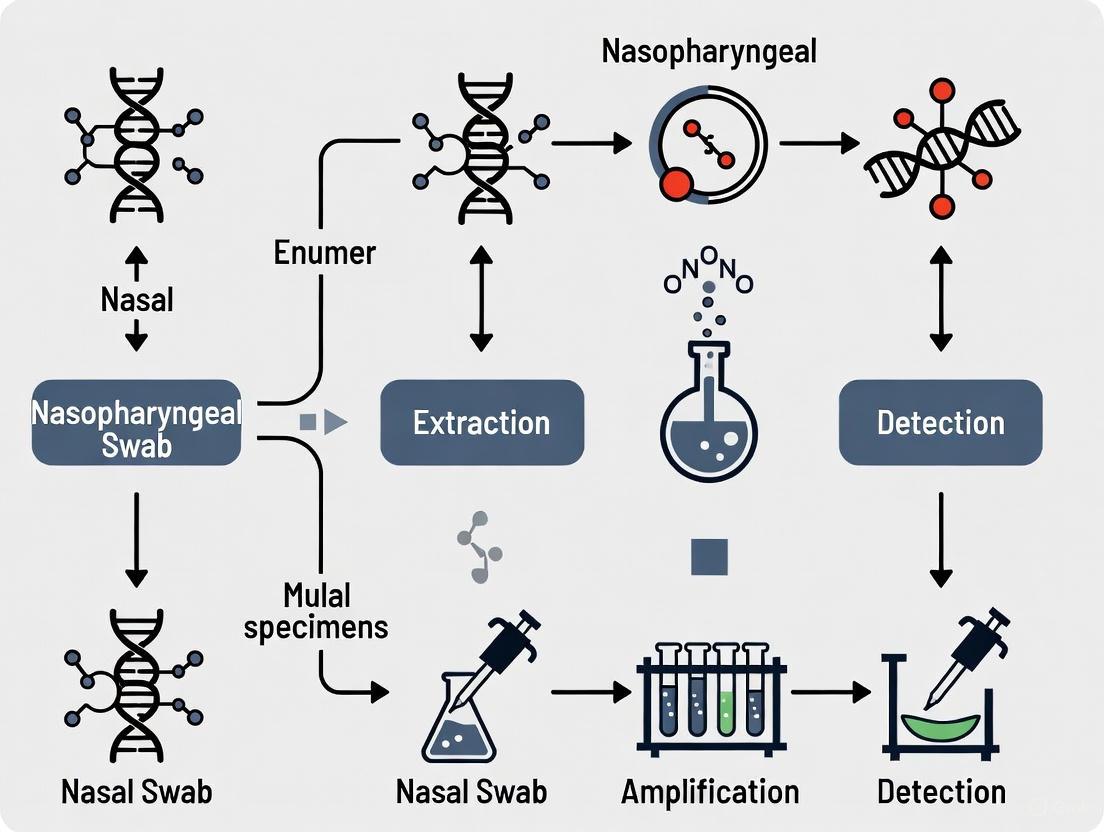
This article provides a systematic comparison of nasal and nasopharyngeal specimen processing methods, tailored for researchers, scientists, and drug development professionals.
Nasal vs. Nasopharyngeal Specimen Processing: A Comprehensive Guide for Diagnostic and Research Applications
Abstract
This article provides a systematic comparison of nasal and nasopharyngeal specimen processing methods, tailored for researchers, scientists, and drug development professionals. It covers foundational anatomical and procedural differences, detailed methodological protocols for various testing scenarios, strategies for troubleshooting and optimizing sample quality, and a critical validation of diagnostic performance across different pathogens. By synthesizing current evidence and best practices, this resource aims to support the selection of appropriate sampling and processing techniques to enhance the accuracy and efficiency of respiratory pathogen detection in both clinical trials and public health initiatives.
Anatomy, Specimen Types, and Fundamental Principles of Upper Respiratory Sampling
Defining Nasal and Nasopharyngeal Anatomy and Sampling Sites
Anatomical Definitions and Clinical Significance
The upper respiratory tract is a primary site of entry and infection for many pathogens. Understanding its anatomy is fundamental to effective specimen collection for diagnostic and research purposes. The nasal cavity (anterior nares) is the interior of the nose, from the nostrils back to the turbinates. Sampling this area, often called a nasal or anterior nasal swab, involves inserting a swab about 0.5 to 0.75 inches (1-2 cm) into the nostril and rotating it along the nasal walls [1] [2]. This region is lined with mucosal epithelium, which produces secretions containing antibodies and can harbor colonizing pathogens.
The nasopharynx is the upper part of the throat, situated behind the nose and above the soft palate. It is a key site for the replication of many respiratory viruses. Nasopharyngeal swab collection requires inserting a long, flexible swab through the nasal cavity parallel to the palate until it reaches the posterior nasopharynx, typically indicated by encountering resistance [1] [3]. This method accesses the mucosal lining of the nasopharynx, where pathogen concentration is often highest in the early stages of infection.
The biological significance of these sites is profound. The nasal and nasopharyngeal mucosae are rich in immune cells and are a primary site for the induction of mucosal immunity, particularly the production of pathogen-specific immunoglobulin A (IgA) [4]. The concentration of pathogens and immune molecules can vary significantly between these anatomical locations, making the choice of sampling site a critical variable in research and diagnostics [4] [5].
Comparative Analysis of Sampling Method Performance
The choice between nasal and nasopharyngeal sampling involves trade-offs between patient comfort, ease of collection, and analytical performance. The tables below summarize key comparative data from recent studies.
Table 1: Comparison of Sampling Method Performance for SARS-CoV-2 Detection via PCR
| Sampling Method | Definition/Description | Relative Sensitivity/Positivity Rate | Key Advantages | Key Limitations |
|---|---|---|---|---|
| Nasopharyngeal Swab (NPS) | A mini-tipped swab is inserted to the nasopharynx, rotated, and held for several seconds [1]. | Considered the gold standard; 100% positivity rate in a comparative study [5]. | Highest sensitivity for many viruses [5] [3]. Collects from the site of active viral replication. | Invasive, uncomfortable for patients, requires trained staff, risk of nosebleeds [2] [3]. |
| Nasal Swab (Anterior Nares) | A swab is inserted ~0.5-0.75 inches into the nostril and rotated for 10-15 seconds [1]. | 83.3% positivity rate; can match NPS if performed vigorously (10 rubs) [5]. | Well-tolerated, suitable for self-collection, less invasive [1] [2]. | Lower sensitivity for some pathogens; sample quality dependent on user technique [5] [3]. |
| Expanding Sponge Method | A dehydrated polyvinyl alcohol sponge is inserted into the nostril and expands over 5 minutes to absorb mucosal lining fluid [4]. | Not a direct virus detection method; optimized for antibody collection. | Superior for collecting nasal mucosal antibodies (IgA) compared to swabs [4]. | Longer collection time; primarily validated for immunology research, not direct pathogen detection. |
Table 2: Quantitative Comparison of Nasal Sampling Methods for Immunological Research
| Performance Metric | Nasopharyngeal Swab (M1) | Nasal Swab (M2) | Expanding Sponge (M3) |
|---|---|---|---|
| Single-day detection rate (above LOQ) for SARS-CoV-2 RBD IgA | 68.8% | 88.3% | 95.5% |
| 5-day consecutive detection rate (above LOQ) | 48.7% | 77.3% | 88.9% |
| Median SARS-CoV-2 RBD IgA Concentration (U/mL) | 28.7 U/mL | 93.7 U/mL | 171.2 U/mL |
| Key Findings | Significantly outperformed by M3 (p<0.0001) [4]. | Outperformed M1 (p<0.05) but was inferior to M3 (p<0.05) [4]. | Achieved superior performance in all metrics [4]. |
Detailed Experimental Protocols for Standardized Sampling
Protocol for Standardized Nasopharyngeal and Nasal Swab Collection
This protocol, adapted from clinical comparisons, ensures consistent sample collection for pathogen detection [4] [5].
Materials Required:
Procedure for Nasopharyngeal Swab Collection:
- Preparation: Ask the patient to tilt their head back ~70 degrees. Don appropriate personal protective equipment.
- Insertion: Gently insert the swab into a nostril, advancing along the floor of the nasal passage parallel to the palate until you reach the nasopharynx (resistance is met, approximately halfway from the nostril to the ear).
- Collection: Rotate the swab 2-3 times and hold it in place for 5-15 seconds to absorb secretions [4] [5].
- Withdrawal: Slowly withdraw the swab while rotating it.
- Processing: Immediately place the swab tip into the VTM tube. Snap the shaft at the score line and cap the tube tightly. Store at 4°C and process within 4 hours.
Procedure for Nasal (Anterior Nares) Swab Collection:
- Insertion: Insert the swab approximately 2 cm (0.75 inches) into the nostril [4].
- Collection: Firmly rub the swab against the nasal walls by rotating it at least 5 times (up to 30 rotations for research-grade samples) to ensure adequate sample collection [4] [5].
- Repeat: Use the same swab to repeat the process in the second nostril.
- Processing: Place the swab in VTM, store at 4°C, and process promptly.
Protocol for Nasal Mucosal Lining Fluid Collection for Immunological Studies
This protocol uses the expanding sponge method, which is optimized for the standardized recovery of mucosal antibodies like IgA [4].
Materials Required:
Procedure:
- Sponge Preparation: Soak the dehydrated PVA sponge in 50 mL of physiological saline to allow it to fully expand. Place the expanded sponge into a 10 mL syringe and push the plunger to the 4 mL mark to expel excess fluid [4].
- Sponge Preparation (Cutting): Using sterile scissors, cut the dehydrated sponge into two equal parts, and then further cut one part into three equal pieces [4].
- Sample Collection: Insert one piece of the sponge into the patient's nostril. Leave it in place for 5 minutes to allow for the absorption of mucosal lining fluid [4].
- Sample Recovery: Remove the sponge and place it into a tube containing 1.5 mL of universal transport medium. Using a syringe, expel the absorbed liquid from the sponge into the medium. Centrifuge the sample (room temperature, 1000 rpm, 3 minutes) to pellet any debris, then aliquot the supernatant for analysis [4].
- Storage: Store aliquots at -80°C for long-term preservation.
Advanced Pre-Clinical Swab Validation Models
Innovative pre-clinical models have been developed to quantitatively evaluate swab performance under physiologically relevant conditions, moving beyond simple tube immersion tests.
- 3D-Printed Nasopharyngeal Cavity Model: This model involves reconstructing the nasopharyngeal anatomy from patient CT scans using dual-material 3D printing. A rigid resin (e.g., VeroBlue) simulates bone, while a flexible resin (e.g., Agilus30) mimics soft tissue, providing a high degree of structural and mechanical fidelity [6].
- Mucus-Mimicking Hydrogel: A SISMA hydrogel with shear-thinning behavior and viscosity parameters nearly identical to human nasal mucus is used to line the 3D-printed cavity, accurately replicating the rheological properties of the sampling environment [6].
- Validation Metrics: This platform allows for the quantitative comparison of swabs based on:
- Collection Volume: The volume (µL) of hydrogel collected by the swab.
- Release Volume & Efficiency: The volume (µL) and percentage of the collected sample released into the transport medium. One study found a commercial flocked swab released 69.4% of its sample in the anatomical model, versus only 25.9% in a standard tube [6].
- Viral RNA Recovery: Using inactivated virus-spiked hydrogel, cycle threshold (Ct) values from RT-qPCR quantify the amount of viral genetic material recovered, with the anatomical model showing a >20-fold decrease in detected RNA compared to the tube model, highlighting the challenges of real-world sampling [6].
Research Reagent Solutions and Essential Materials
Table 3: Essential Materials for Nasal and Nasopharyngeal Specimen Research
| Item Category | Specific Examples & SKUs | Research Function & Application |
|---|---|---|
| Nasopharyngeal Swabs | Copan FLOQSwabs [5]; HydraFlock 6" Sterile Ultrafine Flock Swab (25-3317-H) [1] | Gold-standard sample collection for pathogen detection from the nasopharynx. Flocked tips enhance sample absorption and release. |
| Nasal Swabs | Puritan 6” Sterile Foam Swab (25-1506 1PF) [1]; SS-SWAB applicator (Noble Bio) [5] | Less-invasive collection from anterior nares. Ideal for self-collection and rapid antigen testing. |
| Expanding Sponge | Polyvinyl alcohol sponge (PVF-J, Beijing Yingjia) [4] | Optimized for recovery of nasal mucosal lining fluid, particularly for immunological assays (e.g., IgA detection). |
| Transport Media | UTM Universal Transport Medium (Copan) [4]; Clinical Virus Transport Medium (Noble Bio) [5] | Preserves pathogen viability and nucleic acids, and stabilizes proteins during transport and storage. |
| Specialized Assays | Human/NHP Kit (Meso Scale Diagnostics, K15203D) [4]; Allplex SARS-CoV-2/Respiratory Panels (Seegene) [5] | Validated ELISA/ECL for quantifying mucosal antibodies; Multiplex PCR panels for detecting a wide range of respiratory pathogens. |
Workflow for Sampling Method Selection and Analysis
The following diagram illustrates the logical decision-making process and subsequent laboratory workflow for analyzing nasal and nasopharyngeal specimens, based on the research objectives.
The accuracy of respiratory pathogen diagnostics, crucial for public health and drug development, is fundamentally dependent on the efficacy of the specimen collection tool. Nasal and nasopharyngeal swabs are the primary instruments for obtaining upper respiratory samples, yet their design specifications dictate their application performance [1] [2]. The choice between a nasal swab and a nasopharyngeal swab influences patient comfort, suitability for self-administration, and, most critically, the sensitivity of downstream diagnostic assays like PCR and rapid antigen tests [1] [7]. For researchers and scientists developing new diagnostics or therapeutics, a precise understanding of these design differences is essential for selecting the appropriate biospecimen collection method in clinical trials and laboratory studies. This application note delineates the key differences in swab design, focusing on materials, tip geometry, and handle flexibility, to inform robust experimental and clinical protocols.
Comparative Analysis of Swab Design Specifications
The design of a swab is a critical determinant of its function, influencing its ability to collect and release a sufficient specimen volume and to navigate anatomical structures effectively.
Material Composition and Performance
The material of the swab tip is selected for its absorption and elution properties, directly impacting test sensitivity.
- Flocked Tips: Typically made of nylon or rayon, these swabs feature fibers positioned perpendicularly to the swab shaft. This design creates capillary action that rapidly absorbs and releases biological specimens, leading to higher yields of viral particles and cellular material [8] [9]. Flocked swabs are often considered the gold standard for molecular detection due to this superior release efficiency.
- Spun Polyester/Foam Tips: These are traditional, sponge-like materials. While they can have a high particle collection capacity, their release of the specimen into transport media may be less efficient than flocked alternatives [1] [9].
- Cotton Tips: Although once common, cotton can contain PCR inhibitors that may interfere with molecular assays, making them less desirable for sensitive pathogen detection compared to synthetic materials [9].
Table 1: Comparison of Swab Tip Materials
| Material Type | Absorption Efficiency | Elution (Release) Efficiency | Compatibility with PCR | Common Applications |
|---|---|---|---|---|
| Flocked (Nylon/Rayon) | High [8] | High [8] | High; no known inhibitors [9] | NP sampling, high-sensitivity viral detection [1] [8] |
| Spun Polyester | High [1] | Moderate [1] | High; no known inhibitors [9] | Nasal sampling, general purpose [1] |
| Medical-Grade Foam | Moderate to High [1] | Moderate [1] | High; no known inhibitors | Nasal sampling, general purpose [1] |
| Cotton | Moderate | Variable, can be lower | Can contain inhibitors [9] | General purpose, less common for sensitive PCR |
Tip Geometry and Shaft Flexibility
The physical design of the swab is tailored to its intended sampling site, balancing effective specimen collection with patient safety and comfort.
- Nasopharyngeal Swabs: These are characterized by a miniature, ultrafine tip and a long, thin, and highly flexible shaft [1] [8]. The flexibility is paramount for safely navigating the nasal passage to reach the nasopharynx, the area behind the nose. The mini-tip is designed to minimize patient discomfort during this deeper collection [1] [10].
- Nasal (Anterior Nares) Swabs: These typically feature a larger tip (made of foam, flocked fibers, or polyester) and a shorter, more rigid handle [1]. The rigidity allows for sufficient control to collect a sample from the anterior nasal cavity, but the swab is only inserted about 0.5 to 0.75 inches into the nostril [1].
Table 2: Physical Design Specifications by Swab Type
| Design Feature | Nasopharyngeal Swab | Nasal (Anterior Nares) Swab |
|---|---|---|
| Typical Total Length | ~151 mm (6 inches) [8] | ~150 mm (6 inches) [1] |
| Tip Dimensions | Mini-tip; ~3.0 mm length and width [8] | Medium-sized tip; larger than NP swab [1] |
| Shaft Flexibility | High flexibility for patient comfort and safety [1] [10] | Moderately flexible to rigid for patient self-use [1] |
| Breakpoint | Present, often at ~50 mm for easy insertion into vial [8] | May or may not be present |
| Insertion Depth | Deep, until resistance is met (approx. nostril-to-ear distance) [1] [8] | Shallow, 0.5-0.75 inches [1] |
Experimental Protocols for Swab Evaluation
For researchers validating swab performance or developing new collection kits, the following protocols provide a methodological foundation.
Protocol: In-Vitro Assessment of Swab Specimen Retention and Release
This protocol is adapted from methodology used to evaluate swabs for SARS-CoV-2 testing [9].
Objective: To quantitatively compare the volume of liquid retained and released by different swab types.
Materials:
- Swabs for testing (e.g., flocked nylon, polyester, foam)
- Analytical scale
- Sterile transport media (e.g., DMEM, PBS) or viral transport media (VTM)
- 2 mL cryovials
- Sterile reagent reservoir
Procedure:
- Preparation: Tare the weight of an empty 2 mL cryovial on the analytical scale. Add 1200 μL of sterile transport media to the cryovial and record the weight.
- Immersion: Immerse the tip of a test swab into the media, rotating it to ensure the entire tip is coated.
- Draining: Remove the swab and allow it to drain briefly back into the cryovial.
- Measurement: Weigh the cryovial with the remaining media. Calculate the volume retained by the swab by the difference in weight (assuming 1 mg = 1 μL). Repeat this process for at least five replicates per swab type.
- Elution Testing (optional): Place the saturated swab into a new, pre-weighed vial containing a known volume of fresh media. Vortex and then remove the swab. Weigh the vial again to determine the amount of liquid released.
Protocol: Clinical Comparison of Swab Diagnostic Sensitivity
This protocol is based on a head-to-head comparison of anterior nares and nasopharyngeal swabs for antigen detection [7].
Objective: To determine the diagnostic sensitivity and specificity of a pathogen detection assay using different swab types collected from human subjects.
Materials:
- Paired swab types (e.g., NP swab and nasal swab)
- Universal Transport Media (UTM)
- Required personal protective equipment (PPE)
- Approved sample collection kits (Ag-RDT or PCR)
Procedure:
- Ethics and Consent: Obtain ethical approval and informed consent from participants.
- Sample Collection: A trained healthcare worker collects samples from the same participant using both swab types. The order of collection should be randomized (e.g., NP swab from one nostril, followed by a nasal swab from the other) to control for potential cross-contamination or order effects.
- Processing: Process each swab according to the instructions for use of the specific diagnostic test (e.g., place NP swab in UTM for RT-qPCR, use nasal swab directly in an Ag-RDT).
- Data Analysis: Calculate the sensitivity and specificity for each swab type against a reference standard (e.g., RT-qPCR from NP swab). Analyze the agreement between swab types using Cohen’s kappa (κ) statistic [7].
Visualization of Swab Selection and Validation Workflow
The following diagram illustrates the key decision points and experimental steps in selecting and validating a swab for a specific research application.
The Scientist's Toolkit: Essential Research Reagent Solutions
For researchers designing studies involving respiratory specimen collection, the following reagents and materials are essential.
Table 3: Key Research Reagents and Materials
| Item | Function/Application | Example Specifications & Notes |
|---|---|---|
| Flocked Nasopharyngeal Swabs | Gold-standard for high-sensitivity pathogen detection from the nasopharynx. | 6" length, mini-tip (3mm), highly flexible shaft, 50mm breakpoint [8]. Sterile, DNase/RNase-free. |
| Flocked or Foam Nasal Swabs | For anterior nares sampling; suitable for home-testing protocols and less invasive collection. | 6" length, medium foam or flocked tip, more rigid handle for patient self-use [1]. |
| Viral Transport Media (VTM) | Preserves viral integrity for transport and storage prior to molecular analysis (e.g., RT-PCR). | Contains antibiotics and antifungals to prevent microbial overgrowth. Must be compatible with downstream assays. |
| Universal Transport Media (UTM) | Broader-spectrum medium for transporting viruses, chlamydia, and mycoplasma. | Often used in multi-pathogen studies. |
| Phosphate Buffered Saline (PBS) | A simple salt solution used as an alternative transport medium or for dilution series in validation studies. | Readily available and useful for in-vitro testing [9]. |
| 3D-Printed Swab Prototypes | For custom design applications, such as creating pediatric-specific swabs [10]. | Can be produced using biocompatible polylactic acid (PLA); allows for rapid iteration of tip geometry and shaft flexibility. |
The design of a swab—encompassing its material composition, tip geometry, and handle flexibility—is a primary determinant of its diagnostic performance and practical utility. Nasopharyngeal swabs, with their mini-tipped, flocked design and highly flexible shafts, remain the clinical gold standard for sensitivity in detecting respiratory pathogens [1] [7]. In contrast, nasal swabs offer a less invasive alternative that enables self-collection and broad screening, albeit with potential trade-offs in sensitivity for some targets [1] [2]. For the research and development community, the choice is not merely one of preference but of strategic alignment with study objectives. Validating swab performance through structured in-vitro and clinical protocols is critical for ensuring the reliability of biospecimens, which form the foundational data point in the pipeline of diagnostic and therapeutic development.
Understanding Viral Tropism and Pathogen Distribution in the Respiratory Tract
The accurate detection and identification of respiratory pathogens are fundamental to diagnostic microbiology, epidemiological surveillance, and therapeutic development. The choice of sampling method significantly influences test sensitivity and reliability, as viral tropism and pathogen distribution vary considerably across the respiratory tract. Nasopharyngeal swabs (NPS) have long been the gold standard for respiratory virus detection due to high sensitivity. However, the COVID-19 pandemic accelerated the development and validation of alternative specimens, including anterior nasal swabs and saliva samples, which offer advantages in self-collection and comfort. This Application Note synthesizes recent comparative studies to guide researchers and scientists in selecting appropriate specimen types and optimizing processing protocols for respiratory pathogen research.
Comparative Performance of Respiratory Specimens
The diagnostic accuracy of different specimen types is a critical consideration for research and clinical practice. The table below summarizes key performance metrics from recent studies.
Table 1: Comparative Performance of Respiratory Specimen Types for Pathogen Detection
| Specimen Type | Target Pathogens | Sensitivity (%) | Specificity (%) | Key Findings | Citation |
|---|---|---|---|---|---|
| Nasopharyngeal Swab (NPS) | SARS-CoV-2, Various Respiratory Viruses | 100% (for SARS-CoV-2) | - | Considered reference standard; yields lowest Ct values (highest virus concentration) | [5] |
| Anterior Nasal Swab | SARS-CoV-2, Other Respiratory Viruses | 83.3% (for SARS-CoV-2) | - | Sensitivity improves with sufficient rubbing (10 rubs vs. 5 rubs); viable alternative to NPS | [5] |
| Saliva Sample | Common Respiratory Viruses (e.g., RSV, Rhinovirus) | 49.4% (overall) | 96-100% | Sensitivity is highly variable and age-dependent; lower in children <12 months | [11] |
| Oral-Nasal Swab | Influenza, RSV | Influenza: 67.0RSV: 75.0 | Influenza: 96.0RSV: 99.0 | Not a comparable alternative to NPS for multiplex Influenza/RSV testing | [12] |
Quantitative data from real-time PCR studies provide further insight into viral load differences. One study reported that the median Ct value for SARS-CoV-2 was significantly lower with NPS samples compared to other types, indicating a higher viral concentration. Notably, the performance of anterior nasal swabs was significantly improved when swabs were rubbed vigorously 10 times inside the nostril, achieving Ct values similar to those from NPS [5].
Experimental Protocols for Specimen Collection and Processing
Protocol: Paired Sampling for Comparative Studies
This protocol is designed for studies comparing the diagnostic yield of different specimen types from the same subject, as used in recent validation studies [5] [11].
1. Sample Collection Order:
- Collect specimens in the following sequence to minimize cross-contamination and fluid transfer between sites:
- Anterior Nasal Swab
- Nasopharyngeal Swab (using products from different manufacturers if comparing)
- Saliva Samples (swab and undiluted)
2. Anterior Nasal Swab Self-Collection:
- Material: SS-SWAB applicator (or similar flocked swab).
- Procedure:
- Insert the swab applicator into one nostril.
- Firmly rub the swab against the inner surface of the nostril while rotating it.
- Perform this action 10 times to ensure adequate sample collection [5].
- Immerse the swab in Clinical Virus Transport Medium (CTM).
3. Nasopharyngeal Swab Collection:
- Material: NFS-SWAB applicator or FLOQSwabs, CTM.
- Procedure:
- Tilt the patient's head back approximately 70 degrees.
- Insert the swab along the nasal septum until resistance is met (distance to nasopharynx).
- Gently rotate the swab 2-3 times and hold for 5-10 seconds to absorb secretions.
- Withdraw the swab and immerse it in CTM [5].
4. Saliva Sample Collection:
- Option A - Saliva Swab: Use a Lollisponge salivette or SLS-1 swab. Place the swab under the tongue and against the inner cheeks for at least 3 minutes. Withdraw and immerse in CTM [5] [11].
- Option B - Undiluted Saliva: Ask the subject to spit saliva into a funnel-shaped collection tube. This method is not suitable for young children [5].
5. Post-Collection Handling:
- Transport all samples to the laboratory at 4°C within 1 hour.
- Process samples for nucleic acid extraction within 24 hours of collection [5] [13].
Protocol: In Vitro Pre-Clinical Swab Efficiency Testing
This protocol utilizes a biomimetic model to evaluate the performance of novel swab designs under physiologically relevant conditions, as described by [6].
1. Fabrication of a 3D Nasopharyngeal Cavity Model:
- Imaging: Reconstruct the nasopharyngeal anatomy from patient CT scans.
- Printing: Use dual-material 3D printing with a rigid resin (e.g., VeroBlue) to simulate bone and a flexible resin (e.g., Agilus30) to simulate soft tissue [6].
2. Preparation of Mucus-Mimicking Hydrogel:
- Prepare SISMA hydrogel, which demonstrates shear-thinning behavior and viscosity parameters nearly identical to human nasal mucus (~10 Pa·s at low shear rates) [6].
3. Swab Testing Procedure:
- Loading: Inoculate the nasopharyngeal cavity model with a standardized volume of virus-loaded SISMA hydrogel (e.g., 5000 copies/mL of Yellow Fever Virus as a model).
- Collection: Insert the test swab into the model following a standardized sampling protocol.
- Elution: Place the swab into transport medium and vortex to release the collected material.
- Analysis: Quantify the released viral RNA using RT-qPCR and compare Cycle Threshold (Ct) values between swab types and against a standard tube model [6].
Research Reagent Solutions
The table below lists essential materials and reagents used in the cited studies for respiratory pathogen research.
Table 2: Essential Research Reagents and Materials for Respiratory Specimen Processing
| Item | Function/Application | Example Products & Specifications | Citation |
|---|---|---|---|
| Flocked Swabs | Sample collection from nasopharynx, anterior nares, or oral cavity | FLOQSwabs (Copan), SS-SWAB (Noble Bio), SLS-1 Saliva Swab (Noble Bio) | [5] [11] |
| Viral Transport Medium | Preservation of viral integrity during transport | Clinical Virus Transport Medium (CTM), Copan Universal Transport Media (UTM) | [5] [12] |
| Nucleic Acid Extraction Kits | Isolation of viral RNA/DNA from specimens | QIAamp Viral RNA Mini Kit (Qiagen), Maxwell HT Viral TNA Kit (Promega) | [5] [12] [14] |
| RT-qPCR Assays | Detection and quantification of respiratory pathogens | Allplex Respiratory Panels & SARS-CoV-2 Assay (Seegene), Laboratory-developed multiplex RT-PCR | [5] [13] [12] |
| 3D Printing Resins | Fabrication of anatomical models for swab testing | VeroBlue (rigid, bone-like), Agilus30 (flexible, tissue-like) | [6] |
| Mucus-Mimicking Hydrogel | Simulating nasopharyngeal mucus in pre-clinical models | SISMA Hydrogel (shear-thinning, viscosity ~10 Pa·s) | [6] |
Workflow and Pathway Visualizations
Diagram 1: Experimental workflow for comparative respiratory specimen analysis, covering from study design to data interpretation and application.
Diagram 2: Pre-clinical swab validation workflow using a biomimetic 3D nasopharyngeal model for physiologically relevant performance testing.
The Critical Link Between Sample Collection Site and Downstream Analytical Results
For researchers and scientists investigating respiratory diseases, the integrity of downstream analytical results is fundamentally determined at the initial stage of specimen collection. The choice between nasal and nasopharyngeal sampling sites is not merely a procedural detail but a critical analytical variable that directly impacts pathogen recovery, assay sensitivity, and the reliability of subsequent data interpretation. Within the broader context of processing methods for nasal versus nasopharyngeal specimens research, understanding these pre-analytical factors is paramount for robust study design in drug development and clinical diagnostics. This application note synthesizes recent comparative findings to establish evidence-based protocols that ensure specimen quality aligns with analytical requirements.
Comparative Analysis of Sampling Sites
Quantitative Comparison of Swab Sensitivities
Recent clinical studies provide compelling quantitative data on the performance characteristics of different respiratory sampling sites, particularly for detecting viruses such as SARS-CoV-2 and its variants.
Table 1: Comparative Sensitivity of Respiratory Specimen Collection Methods
| Specimen Type | Target Pathogen | Sensitivity (%) | Comparative Reference | Key Findings |
|---|---|---|---|---|
| Combined Nose & Throat | SARS-CoV-2 Omicron | 100% (ref) | Nose Only (91%), Throat Only (97%) [15] | Highest viral concentration and detection sensitivity [15] |
| Anterior Nasal (NS) | Multiple Respiratory Viruses* | 84.3% | Nasopharyngeal (NP) Specimen [16] | Sensitivity increases to 95.7% when collected within 24h of NP [16] |
| Anterior Nasal (NS) | Seasonal Coronavirus | 36.4% | Nasopharyngeal (NP) Specimen [16] | Poor sensitivity for this specific virus [16] |
| Anterior Nasal (NS) | Adenovirus, Influenza, Parainfluenza, RSV, SARS-CoV-2 | 100% | Nasopharyngeal (NP) Specimen (within 24h) [16] | Excellent sensitivity for key viruses when timed correctly [16] |
| Throat Only | SARS-CoV-2 Omicron | 97% | Combined Nose & Throat (100%) [15] | Higher sensitivity than nose-only, but viral concentration declines faster [15] |
| Nose Only | SARS-CoV-2 Omicron | 91% | Combined Nose & Throat (100%) [15] | Lower sensitivity than throat, but more stable viral concentration over time [15] |
*Multiple Respiratory Viruses include: Adenovirus, seasonal coronaviruses, human metapneumovirus, respiratory syncytial virus, influenza, rhinovirus/enterovirus, SARS-CoV-2, and parainfluenza viruses [16].
Viral Dynamics and Temporal Considerations
The viral dynamics at different anatomical sites present a critical layer of complexity for researchers. A key finding from SARS-CoV-2 Omicron research indicates that while throat swabs may initially offer higher sensitivity, the viral concentration (VC) in anterior nasal samples demonstrates greater stability over time compared to throat samples [15]. This temporal stability of nasal specimens is a significant advantage for studies involving longitudinal monitoring or when exact timing of infection is unknown.
However, this stability must be balanced against overall sensitivity. For seasonal coronavirus, anterior nasal swabs showed notably poor sensitivity (36.4%) compared to nasopharyngeal swabs [16], highlighting that pathogen-specific tropisms can dramatically influence optimal site selection. Consequently, a singular approach for all respiratory pathogens is not scientifically justified.
Experimental Protocols for Specimen Collection
The following protocols are standardized for consistent implementation in research settings, ensuring specimen integrity from collection to analysis.
Protocol 1: Anterior Nasal Swab (NS) Collection
Principle: To self-collect or collect a sample from the anterior nares (nostrils) for the detection of respiratory viruses.
Materials:
- Sterile flocked or spun polyester nasal swab
- Appropriate transport medium (e.g., viral transport medium)
- Leak-proof primary container and secondary packaging
- Cold chain materials (cold packs or dry ice)
- Personal Protective Equipment (PPE): Gloves, lab coat, safety glasses
Procedure:
- Preparation: Instruct the participant to blow their nose to remove excess mucus if needed. Don appropriate PPE.
- Swab Insertion: Tilt the participant's head back slightly. Gently insert the swab into one nostril approximately 1-2 centimeters (about 1 inch) until resistance is met at the turbinates.
- Sample Collection: Roll the swab against the nasal mucosa for 10-15 seconds, applying gentle pressure to ensure adequate sampling of epithelial cells.
- Repeat: Using the same swab, repeat the process in the second nostril.
- Transport: Immediately place the swab into the vial containing transport medium. Break or cut the swab shaft at the score mark and tightly close the vial cap.
- Storage and Transport: Label the specimen clearly. Store and transport at 2-8°C and process within 72 hours. If a delay exceeds 72 hours, freeze at -70°C or lower and transport on dry ice [16] [17].
Protocol 2: Nasopharyngeal Swab (NP) Collection
Principle: To collect a sample from the nasopharyngeal space for superior recovery of respiratory pathogens. Note: This procedure should be performed by trained personnel.
Materials:
- Flexible, fine-shafted flocked nasopharyngeal swab
- Appropriate transport medium
- Leak-proof primary container and secondary packaging
- Cold chain materials
- Personal Protective Equipment (PPE): Gloves, lab coat, face shield
Procedure:
- Preparation: Don appropriate PPE. Assess the nostril for patency and have the participant blow their nose if necessary.
- Swab Measurement: Estimate the distance from the patient's nostril to the earlobe. This is the approximate distance to the nasopharynx.
- Swab Insertion: Tilt the participant's head back to 70 degrees. Gently insert the swab along the nasal septum, following the floor of the nasal passage to the nasopharynx. A slight resistance indicates contact with the posterior nasopharynx.
- Sample Collection: Leave the swab in place for 10-15 seconds, then rotate it slowly 3-5 times to collect epithelial cells.
- Withdrawal and Transport: Withdraw the swab smoothly and immediately place it into the transport medium. Break the shaft and secure the cap.
- Storage and Transport: Identical to Protocol 1 (Anterior Nasal Swab). Maintain cold chain and process promptly [17].
Workflow Visualization
The following workflow diagram illustrates the critical decision points and procedures for optimizing specimen collection based on research objectives.
Research Reagent Solutions & Essential Materials
Selecting the appropriate materials is fundamental to preserving sample integrity for downstream analytical processes.
Table 2: Essential Research Materials for Respiratory Specimen Collection
| Item | Function & Importance | Application Notes |
|---|---|---|
| Flocked Swabs | Superior release of cellular material into transport medium due to perpendicular fibers. Increases nucleic acid yield [17]. | Preferred for both NP and anterior nasal collection. Use flexible shaft for NP, sturdier shaft for self-collected anterior nasal. |
| Viral Transport Medium (VTM) | Preserves viral integrity and prevents bacterial overgrowth during transport and storage. | Essential for maintaining RNA/DNA stability. Must be validated for the specific downstream molecular assay. |
| Universal Transport Medium (UTM) | Supports a broader range of pathogens (viruses, chlamydia, mycoplasma). | Provides greater flexibility for studies targeting multiple pathogen types. |
| Cold Chain Packaging | Maintains recommended 2-8°C temperature during transport to prevent pathogen degradation [17]. | Critical for preserving specimen quality. Use validated coolers and temperature monitors. |
| Leak-proof Primary Container | Contains the specimen securely, preventing contamination and protecting handlers. | A primary safety container that should withstand centrifugation. |
| Biospecimen Labels | Provides secure, smudge-proof specimen identification for traceability. | Must remain adherent at freezer temperatures (e.g., -70°C). |
| Personal Protective Equipment (PPE) | Protects research personnel from exposure to potentially infectious materials during collection [18]. | Includes gloves, lab coat, and safety glasses; face shield recommended for NP collection. |
Standardized Protocols for Specimen Collection, Transport, and Pre-Analytical Processing
Step-by-Step Protocol for Nasopharyngeal Swab Collection in Clinical Settings
Nasopharyngeal (NP) swab collection is a critical procedure for the diagnosis of respiratory infections, including SARS-CoV-2, influenza, and RSV. The accuracy of subsequent laboratory testing is fundamentally dependent on the quality of the specimen obtained during collection [19]. This protocol outlines a standardized, evidence-based procedure for obtaining NP specimens from patients in clinical and research settings. The guidance is intended for trained healthcare providers and is framed within a research context comparing the efficiencies of different respiratory specimen types, particularly nasal versus nasopharyngeal swabs [19] [16]. Proper execution of this technique ensures optimal sample quality for a variety of downstream applications, including molecular diagnostic testing, bacterial culture, viral detection, and host-response analyses [20].
Materials and Research Reagent Solutions
The following reagents and materials are essential for the successful collection and processing of nasopharyngeal swabs.
Table: Essential Materials for Nasopharyngeal Swab Collection and Processing
| Item | Specification/Function |
|---|---|
| NP Swab | Sterile, flexible-shaft swab with a mini-tip made of synthetic fiber (flocked nylon or spun polyester) or foam. Wooden shafts or calcium alginate tips are not acceptable as they may inhibit molecular tests [19] [1]. |
| Transport Medium | Liquid Amies, viral transport medium (VTM), or other appropriate sterile transport media to preserve specimen viability [19] [20]. |
| Transport Tube | Sterile, leak-proof, screw-cap tube, often with a break-point notch in the swab shaft [21]. |
| Personal Protective Equipment (PPE) | N95 or higher-level respirator (or face mask), eye protection, gloves, and a gown to maintain infection control [19]. |
| Cooler with Ice Packs | For temporary refrigeration (2-8°C) and transport of specimens to maintain sample integrity [19] [22]. |
| Biohazard Bag | For the secure secondary containment of the labeled specimen tube during transport [21]. |
Step-by-Step Collection Procedure
Pre-Collection Preparation
- Patient Identification: Confirm the patient's identity using two unique identifiers (e.g., full name and date of birth) [19] [21].
- Hand Hygiene and PPE: Perform hand hygiene and don appropriate PPE, including a respirator, eye protection, gloves, and a gown [19].
- Swab Inspection: Carefully remove the sterile NP swab from its packaging, handling it only by the distal end to avoid contaminating the tip. Ensure the swab has a thin, flexible shaft and a synthetic mini-tip [19].
Patient Positioning and Anatomical Guidance
- Positioning: Instruct the patient to tilt their head back to approximately 70 degrees from horizontal, placing the nasal passage in a more favorable anatomical position [19].
- Nostril Selection: Ask the patient to gently blow their nose to clear the nasal passages, if possible. Alternatively, visually inspect the nostrils and ask the patient to alternately press on each side to identify the less congested nostril for swab insertion [23] [22].
- Depth Estimation: To estimate the required insertion depth, hold the swab externally from the patient's nostril to the tragus of the ear. The swab must reach the posterior nasopharynx, typically at a depth of about 7 cm or half the distance from the nostril to the ear [23] [22].
Swab Insertion and Sample Collection
- Insertion: Gently insert the swab along the floor of the nasal cavity, parallel to the palate (directed straight back, not upwards), until resistance is encountered upon contacting the nasopharynx [19] [21] [22].
- Sample Absorption: Leave the swab in place for several seconds (e.g., 5-10 seconds) to allow the tip to absorb secretions [19] [22].
- Swab Manipulation: Gently rub and roll the swab against the nasopharyngeal mucosa. Note: Recent evidence suggests that a simple "in-out" technique without rotation may be equally effective in nucleic acid recovery and is better tolerated by patients [23]. Follow specific study or test manufacturer instructions regarding rotation.
- Withdrawal: Slowly remove the swab while gently rotating it [19]. If the mini-tip is saturated with fluid from the first nostril, it is not necessary to collect from the other side [19].
Post-Collection Processing
- Transport Medium: Remove the cap from the transport tube and immediately place the swab into the medium, tip-first. If applicable, bend the swab shaft against the pre-scored breakpoint to snap it, allowing the tube to be closed securely [21].
- Labeling: Label the tube with the patient's full name, date of birth, a second unique identifier, and the date, time, and site of collection (e.g., "NP") [19] [21].
- Packaging and Storage: Place the specimen tube into a biohazard bag. Store the specimen at 2-8°C and transport it to the laboratory as soon as possible, following laboratory-specific requirements [19] [21] [22].
- Waste Disposal and Hygiene: Dispose of all used materials appropriately, remove PPE, and perform hand hygiene [22].
Comparative Data and Research Context
The choice between nasal and nasopharyngeal sampling is a key consideration in research on respiratory pathogens. The following table summarizes comparative performance data.
Table: Comparison of Nasopharyngeal and Anterior Nasal Swabs for Respiratory Virus Detection
| Parameter | Nasopharyngeal (NP) Swab | Anterior Nasal (NS) Swab |
|---|---|---|
| Overall Sensitivity | Generally considered the gold standard for many respiratory viruses [1]. | 84.3% compared to NP; increases to 95.7% when collected within 24 hours of NP specimen [16]. |
| Sensitivity for SARS-CoV-2 | High detection rate [16]. | 100% when collected within 24 hours of an NP swab [16]. |
| Sensitivity for Seasonal Coronavirus | High detection rate. | Poor (36.4%) [16]. |
| Patient Tolerance | Less comfortable; procedural discomfort can be significant and may vary by ethnicity [23] [1]. | Generally better tolerated and suitable for self-collection [16] [1]. |
| Collection Requirements | Must be performed by a trained healthcare provider [19] [1]. | Can be performed by a provider or by the patient after instruction [19]. |
Associated Experimental Protocols
Protocol for Processing a Single NP Swab for Multiple Analyses
This protocol, adapted from Hogg et al. (2019), enables comprehensive research from a single NP swab, maximizing data yield from precious clinical samples [20].
- Collection: Collect an NP specimen using a flocked swab in liquid Amies transport media (e.g., ESwab) and refrigerate until processing.
- Partitioning for RNA Sequencing: Using clean scissors, aseptically cut off the distal ~0.5 cm of the swab tip immediately after collection. Place the tip into a cryovial containing 350μL of RLT Plus buffer with beta-mercaptoethanol. Vortex for 30 seconds and store at -80°C for subsequent RNA extraction.
- Standard Processing: Place the remaining proximal part of the swab back into the liquid Amies media.
- Bacterial Culture: Remove the swab and use it to inoculate standard culture media (e.g., blood agar, chocolate agar). Incubate and identify pathogens using standard techniques.
- Aliquoting for Multiple Assays: Vortex the remaining liquid Amies medium. Divide it into multiple aliquots for various downstream applications:
- Viral PCR: Extract nucleic acids from one aliquot using a magnetic bead-based automated system (e.g., MagMAX). Perform singleplex or multiplex RT-PCR assays for respiratory viruses.
- Cytokine Measurement: Use another aliquot for RNA extraction and gene expression analysis of cytokines (e.g., IL-6, IL-8, IFN) via qPCR, normalizing to a housekeeping gene like GAPDH.
- Microbiome Analysis: Extract total nucleic acids from a separate aliquot. Amplify the 16S rRNA gene V4-V5 region and sequence on an Illumina platform for microbiome analysis [20].
Protocol for Evaluating Swab Collection Techniques
This protocol is based on the methodology of To et al. (2020) for comparing the nucleic acid recovery and patient tolerance of different swab techniques [23].
- Participant Recruitment and Consent: Recruit eligible participants and obtain informed consent. Assign participants to different collection technique groups (e.g., "in-out" vs. "rotation").
- Standardized Swab Collection: A single, experienced healthcare provider collects NP swabs using a standardized transport system (e.g., Puritan UniTranz-RT). For the "rotation" group, the swab is rotated in place for 10 seconds after insertion; for the "in-out" group, it is removed immediately.
- Patient Experience Quantification: Immediately after the procedure, ask participants to rate their discomfort on a scale of 0 (no discomfort) to 10 (maximum discomfort).
- Nucleic Acid Extraction and Quantification: Process swabs within a few hours of collection. Extract total nucleic acids from the transport medium (e.g., using a NucliSens easyMAG system). Elute in a fixed volume.
- Sample Quality Assessment: Use droplet digital PCR (ddPCR) to quantify human DNA (e.g., using the RPP30 gene) and RT-ddPCR to quantify human RNA (e.g., RNase P transcript) as surrogates for cellular and nucleic acid recovery. Compare the mean copy numbers/μL between the different technique groups.
Workflow Visualization
The following diagram illustrates the logical workflow for the collection and processing of a nasopharyngeal swab in a research context.
NP Swab Research Workflow: This diagram outlines the key stages from pre-collection preparation to various downstream research analyses.
The accurate collection of anterior nasal (AN) swabs is a critical step in the reliable detection of respiratory pathogens, including SARS-CoV-2. Within research contexts, particularly those comparing specimen types, standardized protocols ensure data comparability and reproducibility. This document provides detailed application notes and protocols for both healthcare-administered and self-collected AN swabbing, framed within the broader research objective of evaluating processing methods for nasal versus nasopharyngeal (NP) specimens. The guidance is intended for researchers, scientists, and drug development professionals conducting clinical studies or evaluating diagnostic assays.
Performance Comparison: Anterior Nasal vs. Nasopharyngeal Swabs
Research consistently demonstrates that while AN swabs are a less invasive alternative to nasopharyngeal (NP) swabs, their performance is comparable for detecting SARS-CoV-2, especially when viral loads are high. The following tables summarize key quantitative findings from recent studies.
Table 1: Diagnostic Accuracy of Anterior Nasal (AN) vs. Nasopharyngeal (NP) Swabs for SARS-CoV-2 Antigen Detection [7]
| Ag-RDT Brand | Swab Type | Sensitivity (%, 95% CI) | Specificity (%, 95% CI) | Agreement (κ) with NP Swab |
|---|---|---|---|---|
| Sure-Status | NP | 83.9 (76.0–90.0) | 98.8 (96.6–9.8) | (Reference) |
| AN | 85.6 (77.1–91.4) | 99.2 (97.1–99.9) | 0.918 | |
| Biocredit | NP | 81.2 (73.1–87.7) | 99.0 (94.7–86.5) | (Reference) |
| AN | 79.5 (71.3–86.3) | 100 (96.5–100) | 0.833 |
Table 2: SARS-CoV-2 PCR Positivity Rates and Viral Load Across Specimen Types [5] [24]
| Specimen Type | Collector | Positivity Rate (SARS-CoV-2) | Comparative Viral Load (Ct Value) | Notes |
|---|---|---|---|---|
| Nasopharyngeal (NP) | Healthcare Worker | 100% | Lowest Ct values (Highest concentration) | Considered the reference standard. |
| Anterior Nasal (AN) | Patient/Self | 83.3% - 86.3% | Significantly higher vs. NP | Sensitivity is technique-dependent [5] [24]. |
| Saliva | Patient/Self | 93.8% | Intermediate Ct values | A viable alternative, though viscosity can impact testing [3] [24]. |
Table 3: Impact of Collection Technique on AN Swab Performance [5]
| Collection Factor | Impact on Sample Quality |
|---|---|
| Number of Rubs | Nasal swabs collected with 10 rubs had a significantly lower median Ct value (24.3) than those with 5 rubs (28.9), indicating higher viral collection [5]. |
| Test Line Intensity | One study noted that for Ag-RDTs, the test line intensity was lower for AN swabs compared to NP swabs, which could potentially lead to misinterpretation by lay users [7]. |
Experimental Protocols
The following protocols are synthesized from methodologies used in cited comparative studies.
Protocol 1: Healthcare Worker-Administered Anterior Nasal Swab Collection
This protocol is designed for use in clinical research settings where a healthcare professional collects the sample.
Objective: To standardize the collection of AN swabs by trained healthcare workers for the detection of respiratory viruses.
Materials Required:
- Sterile AN swab (typically with a foam, flocked, or polyester tip and a rigid/flexible handle)
- Appropriate transport medium (e.g., Universal Transport Media, Viral Transport Media, or sterile phosphate-buffered saline)
- Unique patient identification labels
- Cooler with cold packs for transport (if required)
Procedure:
- Patient Positioning: Instruct the patient to tilt their head slightly back.
- Swab Insertion: Gently insert the swab tip into one nostril, advancing it approximately 0.5-1.0 cm (or ~0.5 inches) inside the nostril, until resistance is met at the nasal turbinates [1] [25].
- Sample Collection: Rotate the swab firmly against the nasal wall using 4-5 sweeping circles for 10-15 seconds [26]. Ensure the swab is in contact with the walls of the anterior nares.
- Repeat: Using the same swab, repeat the procedure in the second nostril.
- Storage: Immediately place the swab into the designated transport medium. Break or cut the swab shaft as per the manufacturer's instructions and close the tube securely.
- Labeling and Transport: Label the tube with the patient ID and immediately place it on ice or in a refrigerator for transport to the laboratory.
Protocol 2: Patient Self-Collection of Anterior Nasal Swab
This protocol is for studies involving at-home or unsupervised self-collection. Clear instruction is critical for success [26].
Objective: To enable patients to self-collect a sufficient AN swab sample for molecular or antigen testing.
Materials Required:
- Approved self-collection swab kit
- Step-by-step written or video instructions [26]
Procedure (To be provided to the patient):
- Preparation: Wash your hands thoroughly with soap and water.
- Swab Handling: Remove the swab from its packaging, being careful to touch only the handle and not the soft tip.
- Insertion: Tilt your head back slightly. Gently insert the entire tip of the swab into one nostril.
- Swabbing:
- Firmly rub the swab tip against the inside walls of your nostril.
- Make a minimum of 4-5 large, sweeping circles for about 10-15 seconds [26]. Do not simply spin the swab in one spot.
- Apply moderate pressure to ensure good contact with the nasal mucosa.
- Repeat: Carefully remove the swab and use the same swab to repeat the exact same process in your other nostril.
- Storage: Place the swab into the provided transport tube, snap the shaft at the marked line, and close the cap tightly.
Key Consideration for Researchers: A study found that self-collected AN swabs showed a high negative agreement (99.6%) with healthcare worker-collected NP swabs, though the positive agreement was lower (86.3%), underscoring the importance of proper technique for sensitivity [24].
Workflow Visualization
The following diagram illustrates the logical decision-making and experimental workflow for incorporating AN swabbing into a comparative research study on respiratory specimen types.
The Scientist's Toolkit: Research Reagent Solutions
Table 4: Essential Materials for AN and NP Swab Research [1] [5] [6]
| Item | Function in Research | Examples & Specifications |
|---|---|---|
| AN Swabs | Collects specimen from anterior nares. Ideal for self-collection studies. | Foam-tipped (e.g., Puritan 25-1506), Flocked (e.g., HydraFlock 25-3206-H), or Polyester-tipped swabs; typically 6" long with plastic handles [1]. |
| NP Swabs | Gold-standard collector for nasopharyngeal specimen; used for comparative accuracy. | Mini-tipped and flexible-shaft swabs (e.g., FLOQSwabs, HydraFlock Ultrafine) to reach nasopharynx with patient comfort [1] [5]. |
| Transport Media | Preserves viral integrity and inhibits microbial growth during transport. | Universal Transport Media (UTM), Viral Transport Media (VTM), or sterile phosphate-buffered saline (PBS) [5] [24]. |
| RNA Extraction Kits | Isolates viral RNA for downstream molecular detection. | QIAamp Viral RNA Mini Kits (Qiagen), other silica-membrane based kits [7] [5]. |
| PCR Master Mixes | Amplifies target viral sequences for detection and quantification. | Allplex SARS-CoV-2 Assay (Seegene), TaqPath COVID-19 (ThermoFisher) [7] [5]. |
| Antigen Test Kits | For rapid detection and comparing Ag-RDT vs. PCR performance. | WHO-EUL approved tests (e.g., Sure-Status, Biocredit) validated for both AN and NP swabs [7]. |
Within the critical field of respiratory virus diagnostics, particularly for pathogens such as SARS-CoV-2, Influenza, and RSV, the integrity of specimen collection and transport is paramount. The choice between Viral Transport Media (VTM) and dry swabs represents a significant decision point in the research and clinical workflow, directly impacting the viability of the sample and the reliability of subsequent analyses, including viral culture and molecular detection. This application note provides a detailed comparison of VTM and dry swabs, framing the discussion within the context of processing methods for nasal and nasopharyngeal specimens. It is designed to equip researchers, scientists, and drug development professionals with standardized protocols and quantitative data to inform their experimental designs and operational planning.
Principle and Composition
Viral Transport Media (VTM)
Viral Transport Media are nutrient substances specifically formulated to maintain the viability of viral specimens during transit from the collection site to the laboratory [27]. The core principle of VTM is to provide a protective environment that preserves viral infectivity and genetic material by simulating physiological conditions. This is achieved through a balanced composition that typically includes [27] [28]:
- Balanced Salt Solutions: Solutions such as Hank's Balanced Salt Solution (HBSS) or phosphate-buffered saline (PBS) maintain an isotonic environment and a stable pH, crucial for preventing viral degradation.
- Protective Proteins: Components like bovine serum albumin or gelatin safeguard the often labile structure of enveloped viruses by preventing viral adsorption to the container walls and stabilizing the viral envelope.
- Antimicrobial Agents: Antibiotics (e.g., gentamicin) and antifungals (e.g., amphotericin B) are included to suppress the overgrowth of contaminating bacteria and fungi that could otherwise overwhelm the virus or interfere with downstream assays.
- Stabilizers: Sugars such as sucrose can be added to further stabilize viral particles, particularly important when samples may be exposed to temperature variations.
Dry Swabs
Dry swabs, in contrast, involve the collection of a specimen without immediate immersion in a liquid transport medium. The sample is retained within the fibers of the swab tip itself. While this method simplifies collection and reduces potential biohazards, it does not actively preserve viral viability. The integrity of the sample is more susceptible to environmental factors such as drying and temperature fluctuations during transport [29] [30]. The performance of dry swabs is highly dependent on the swab material's inherent ability to collect and release the sample efficiently for subsequent elution and testing in the laboratory.
Comparative Performance Data
The selection between VTM and dry swabs can be guided by key performance characteristics. The table below summarizes a comparative analysis based on current literature.
Table 1: Quantitative Comparison of VTM and Dry Swabs for Respiratory Virus Detection
| Characteristic | Viral Transport Media (VTM) | Dry Swabs | Experimental Context & Key Findings |
|---|---|---|---|
| Viral Yield & Detection Sensitivity | No meaningful difference in SARS-CoV-2 detection versus most alternative transport fluids (PBS, saline) [9] [31]. | Comparable SARS-CoV-2 detection to swabs in VTM when using molecular methods [9]. | Study compared six swab types and five transport mediums for SARS-CoV-2 RT-PCR; both VTM and dry swabs (eluted in DMEM) showed high efficacy [9]. |
| Sample Integrity & Viability | Formulated to maintain viral viability for up to 48-72 hours at room temperature, essential for viral culture [27] [28]. | Primarily suitable for direct molecular detection; not ideal for maintaining viral infectivity for culture [30]. | VTM contains proteins and buffers that protect labile viral structures, which dry storage cannot provide [27]. |
| Storage & Logistics | Requires refrigeration for storage and cold chain for certain transports; limited shelf-life [29] [27]. | Ambient temperature storage and transport; less stringent storage requirements, simplifying logistics [29] [30]. | Dry swabs do not require specialized storage conditions, making them practical for resource-limited settings [29]. |
| Cost & Workflow Considerations | Higher cost per unit; pre-filled tubes simplify processing but require inventory management [29]. | Typically more cost-effective; simplifies collection workflow by eliminating liquid medium handling [29]. | Cost savings of dry swabs must be weighed against potential impacts on specific downstream assays [29]. |
Experimental Protocols
Protocol 1: Evaluation of Swab Collection and Release Efficiency
This protocol is adapted from a 2025 study that used a novel 3D-printed nasopharyngeal model to quantitatively evaluate swab performance [6].
1. Aim: To compare the sample collection and release capabilities of different swab types (e.g., nylon flocked vs. injection-molded) using a physiologically relevant model. 2. Materials: - 3D-printed nasopharyngeal cavity model (using rigid resin for bone and flexible resin for soft tissue) [6]. - SISMA hydrogel or equivalent mucus mimic (shear-thinning behavior, viscosity ~10 Pa·s at low shear rates) [6]. - Test swabs (e.g., commercial nylon flocked swab and novel injection-molded Heicon swab). - Analytical microbalance. - Centrifuge and microcentrifuge tubes. 3. Method: - Model Preparation: Line the 3D-printed nasopharyngeal cavity with the SISMA hydrogel to simulate the mucosal lining [6]. - Sample Collection: Insert each test swab into the model following a standardized clinical sampling protocol (e.g., rotating gently against the nasal wall). For a baseline comparison, also dip and rotate each swab in a standard tube containing a known volume of hydrogel. - Gravimetric Analysis: - Weigh the empty microcentrifuge tube. - Place the swab into the tube after collection and weigh again to determine the collected sample mass (assuming hydrogel density ~1 g/mL). - Sample Release: - Add a fixed volume of elution buffer (e.g., PBS or plain DMEM) to the tube. - Vortex and/or centrifuge the tube to facilitate sample release from the swab. - Remove the swab and weigh the tube to determine the amount of hydrogel released. - Calculation: Calculate the release efficiency as (Volume Released / Volume Collected) × 100%. 4. Analysis: The 2025 study found that while commercial flocked swabs collected more material, the Heicon swabs exhibited superior release efficiency (82.5% vs. 69.4%) in the anatomical model, highlighting how model complexity impacts performance [6].
Protocol 2: Comparing Transport Media for Molecular Detection
This protocol is based on a 2020 study that investigated alternative swabs and transport media for SARS-CoV-2 detection during a supply shortage [9].
1. Aim: To assess the performance of different transport mediums (including VTM and dry swabs eluted in alternative fluids) for the molecular detection of SARS-CoV-2 via RT-PCR. 2. Materials: - Synthetic flocked swabs (e.g., PurFlock Ultra). - Transport mediums: Commercial VTM, DMEM, PBS, 0.9% normal saline. - Serial dilutions of SARS-CoV-2 virus (or other virus of interest) in a neutral medium like DMEM. - 2 mL cryovials. - RT-PCR platform and reagents. 3. Method: - Virus Inoculation: Serially dilute the virus to concentrations spanning the expected detection limit (e.g., from 5.5 × 10⁵ PFU/mL down to 5.5 × 10⁻⁴ PFU/mL) [9]. - Sample Collection with Swabs: - Submerge the tip of a swab into a virus dilution and rotate to ensure full coating. - For "dry" transport simulation, place the swab into a cryovial without medium. - For "VTM" and alternative media, place the swab into a cryovial containing 500 μL of the respective medium. - Storage Conditions: Store the loaded swabs at room temperature for various time points (e.g., 0, 24, 48, 72 hours) to simulate transport delays [9]. - Elution and Testing: - For dry swabs, add an appropriate elution buffer (e.g., 500 μL of DMEM or PBS) to the tube and vortex to release the sample. - For swabs in VTM/other media, vortex the tube to mix. - Proceed with standard virus inactivation, RNA extraction, and RT-PCR analysis for all samples. 4. Analysis: Compare Cycle Threshold (Ct) values across the different media and time points. The reference study concluded that there was "no meaningful difference in viral yield" from different swabs and most transport mediums, including PBS and saline, for SARS-CoV-2 detection [9].
Workflow and Decision Pathway
The following diagram illustrates the logical decision-making process for selecting between VTM and dry swabs based on research objectives and logistical constraints.
The Scientist's Toolkit: Essential Research Reagents and Materials
Table 2: Key Materials for Research on Nasal and Nasopharyngeal Specimens
| Item | Function/Application | Examples & Specifications |
|---|---|---|
| Synthetic Flocked Swabs | Sample collection; designed to maximize sample uptake and release for improved sensitivity [19] [6]. | PurFlock Ultra, FLOQSwab [9]. Must have plastic or wire shafts; avoid calcium alginate or wooden shafts [19]. |
| Universal Transport Media (UTM) | Transport and preservation of viruses for both culture and molecular detection; a standardized, commercially available option [32]. | BD Universal Viral Transport System, Copan UTM [32]. |
| Inactivated Transport Medium (ITM) | Inactivates virus upon contact, enabling safe handling and processing at lower biosafety levels while preserving nucleic acids for PCR [32]. | Contains inactivating agents like guanidine thiocyanate [32]. |
| Balanced Salt Solutions | Serve as base for in-house VTM preparation or as simple elution buffers for dry swabs in molecular assays [9] [27]. | DMEM, PBS, Hanks' Balanced Salt Solution (HBSS) [9] [27]. |
| 3D-Printed Anatomical Models | Pre-clinical evaluation of swab performance under physiologically relevant conditions [6]. | Models printed with rigid (VeroBlue) and flexible (Agilus30) resins, lined with SISMA hydrogel [6]. |
| Antimicrobial Agents | Added to VTM to prevent bacterial and fungal overgrowth in specimens during transport [27]. | Gentamicin (antibiotic), Amphotericin B (antifungal) [27]. |
The choice between VTM and dry swabs is not a matter of absolute superiority but rather a strategic decision dictated by the research or diagnostic objectives. For studies requiring viral viability, such as culture, isolation, or antigen detection, VTM remains the indispensable gold standard. However, for molecular detection methods like RT-PCR, especially in contexts with supply chain or logistical challenges, dry swabs present a robust and often equivalent alternative. The ongoing development of sophisticated testing models, such as 3D-printed anatomical simulators, continues to refine our understanding of swab and media performance, ensuring that specimen collection strategies are both scientifically sound and pragmatically optimized.
Sample Storage and Stability Considerations for Different Analytical Methods
Within respiratory pathogen research, the pre-analytical phase—specifically sample collection, handling, and storage—is a critical determinant of data reliability and experimental reproducibility. This application note systematically examines storage and stability profiles for nasal and nasopharyngeal specimens, which are cornerstone sample types in respiratory diagnostics and therapeutic development. The stability of viral RNA, antigens, and mucosal antibodies directly impacts the sensitivity of downstream analytical methods, including real-time reverse transcription polymerase chain reaction (rRT-PCR), viral culture, and immunoassays. This document provides a consolidated reference and detailed protocols to guide researchers in establishing robust, standardized handling procedures that ensure sample integrity from collection to analysis.
Stability Profiles of Respiratory Specimens
The stability of target analytes in respiratory swabs is influenced by a complex interplay of time, temperature, and swab media. The following data summaries provide evidence-based guidance for defining acceptable pre-analytical conditions.
Viral RNA Stability in Nasopharyngeal Swabs
Viral RNA, the primary target for molecular detection of pathogens like Influenza, RSV, and SARS-CoV-2, demonstrates variable stability depending on storage conditions. Evidence suggests that while RNA is relatively stable at low temperatures, degradation can occur rapidly under suboptimal conditions, leading to reduced detection sensitivity and higher cycle threshold (Ct) values [33].
Table 1: Stability of Viral RNA from Nasopharyngeal Swabs in Viral Transport Medium (VTM) for rRT-PCR Detection
| Pathogen | 25°C | 4°C | -20°C | Key Findings |
|---|---|---|---|---|
| Influenza A & B | Up to 1 day | Up to 6 days | Up to 6 months | A Ct delay of ~1 unit was observed after 2 days at 25°C [33]. |
| RSV | Up to 1 day | Up to 6 days | Up to 6 months | No major differences in detection within recommended timeframes; degradation observed after 2 days at 25°C [33]. |
| SARS-CoV-2 | Not specified in results | Not specified in results | Not specified in results | Detection is comparable between swab types when using highly sensitive rRT-PCR, but specimen integrity remains crucial [34] [35]. |
Specimen Type and Diagnostic Sensitivity
The choice of specimen type (e.g., nasal vs. nasopharyngeal) significantly influences the initial viral load recovered, which in turn affects analytical sensitivity. This is a critical consideration when designing studies that may use samples stored for future analysis.
Table 2: Comparative Sensitivity of Different Upper Respiratory Specimen Types
| Specimen Type | Influenza (rRT-PCR) | RSV (rRT-PCR) | SARS-CoV-2 (rRT-PCR) | Notes |
|---|---|---|---|---|
| Nasopharyngeal (NP) Swab | 94.3% [34] | Gold Standard [1] | 92.5% [35] | Considered the gold standard for many respiratory viruses due to high viral load yield. |
| Nasal Swab | 88.6% [34] | 76% [1] | 82.4% [35] | Less invasive; sensitivity is higher when using molecular methods like rRT-PCR compared to culture. |
| Oropharyngeal (OP) Swab | Data not available | Data not available | 94.1% [35] | For SARS-CoV-2, sensitivity can be comparable to NP swabs when collected by trained personnel. |
| Oral-Nasal Combo Swab | Sensitivity: 67% [12] | Sensitivity: 75% [12] | Comparable to HCW-collected NP [36] | A self-collection method; sensitivity for Influenza and RSV may be suboptimal [12]. |
Experimental Protocols for Stability Validation
This section provides a detailed methodology for conducting a systematic stability study of respiratory swab specimens, which is essential for validating in-house storage protocols or for use in drug and diagnostic development projects.
Protocol: Evaluating Swab Specimen Stability Under Various Storage Conditions
1. Objective: To determine the stability of viral RNA in nasopharyngeal swabs stored in VTM at different temperatures over time, simulating common storage and transport scenarios.
2. Experimental Design:
- Sample Preparation: Use characterized positive clinical samples or viral culture supernatants spiked into negative NP swab pool in VTM. Prepare a large, homogeneous pool to minimize inter-sample variability.
- Storage Conditions: Aliquot the pooled sample and store them at:
- Room Temperature (e.g., 25°C): Test at 0, 1, and 2 days.
- Refrigeration (4°C): Test at 0, 3, and 6 days.
- Frozen (-20°C): Test at 0, 8, and 30 days, and 6 months.
- Replication: Each condition-time point should be tested in triplicate to account for analytical variation [33].
3. Materials and Reagents:
- Nasopharyngeal Swabs: Flocked swabs are recommended for superior sample release [1] [6].
- Viral Transport Medium (VTM): Use a validated, sterile VTM.
- RNA Extraction Kit: e.g., MagDEA Dx SV kit (Precision System Science Co.) or equivalent [33].
- rRT-PCR Assay: Multiplex assays such as the VIASURE SARS-CoV-2, Flu & RSV Real Time PCR Detection Kit or the Allplex SARS-CoV-2/FluA/FluB/RSV Assay [36] [33].
- Equipment: Real-Time PCR cycler (e.g., CFX96 from Bio-Rad), nucleic acid extraction system [33].
4. Procedure:
- Day 0 (Baseline): Extract RNA and perform rRT-PCR analysis for all targets of interest on the freshly prepared pool. Record Ct values for all targets.
- Time-Point Analysis: At each predetermined time point, remove aliquots from the respective storage condition, thaw frozen samples on ice if applicable, and process identically to the baseline samples.
- Data Analysis: Calculate the mean Ct value for each pathogen at each time point and condition. Compare these to the baseline Ct values. An increase in mean Ct of >1-2 cycles may indicate significant degradation and reduced analyte stability [33].
Workflow Diagram: Swab Stability Testing Protocol
The following diagram visualizes the key steps involved in a comprehensive swab stability study.
The Scientist's Toolkit: Key Research Reagent Solutions
Selecting the appropriate materials is fundamental to the success of any study involving respiratory specimens. The table below details essential reagents and their functions.
Table 3: Essential Research Reagents for Respiratory Specimen Processing
| Reagent / Material | Function & Application | Key Considerations |
|---|---|---|
| Flocked Nasopharyngeal Swabs | Sample collection from the nasopharynx. The ultrafine, brush-like fibers enhance cellular sample collection and release [1] [35]. | Superior sample release compared to spun fiber or foam swabs [6]. The flexible wire shaft is designed for patient comfort and anatomical reach. |
| Viral Transport Medium (VTM) | Preserves viral integrity and prevents desiccation during transport and storage. | Essential for maintaining RNA stability prior to nucleic acid extraction. Compatibility with downstream assays should be verified. |
| Universal Transport Media (UTM) | A type of VTM used for maintaining viability of viruses and other microbes for culture and molecular tests. | Used in multiplex PCR studies for pathogens like Influenza, RSV, and SARS-CoV-2 [12]. |
| Multiplex rRT-PCR Assays | Simultaneous detection and differentiation of multiple respiratory pathogens in a single reaction (e.g., SARS-CoV-2, Flu A/B, RSV). | Kits like the Allplex SARS-CoV-2/FluA/FluB/RSV Assay [36] or laboratory-developed tests [12] increase throughput and conserve sample. |
| RNA Extraction Kits | Isolation of high-quality viral RNA from swab media and clinical samples for downstream molecular analysis. | Automated systems (e.g., STARlet, magLEAD) improve reproducibility and throughput for large-scale studies [36] [33]. |
| SISMA Hydrogel | A synthetic mucus mimic for in vitro pre-clinical swab validation. Models the rheological properties of human nasal mucus [6]. | Useful for standardizing swab performance testing (collection & release efficiency) under physiologically relevant conditions without clinical samples. |
Advanced Considerations for Mucosal Immunity Research
Research extending beyond viral detection to host mucosal immunity, particularly for evaluating intranasal vaccines, requires specialized handling of unique analytes.
Nasal Antibody Stability and Standardization
Secretory IgA (sIgA) is the predominant antibody isotype in the nasal mucosa and a critical marker for mucosal immune response. However, assessing it accurately presents challenges.
- Standardization Challenge: Serum-derived immunoglobulin standards are not commutable for nasal antibodies, which are predominantly dimeric or polymeric sIgA. Using serum standards can introduce a systematic error of up to 10-fold [37].
- Novel Standards: Research has led to the development of national standards based on nasal mucosal lining fluids (NMLFs) from convalescent donors or intranasal vaccine recipients (e.g., Candidate Standard 2, Lot: 300052-202401). These standards significantly improve harmonization between laboratories [37].
- Implication for Storage: The stability profile of sIgA in nasal samples may differ from that of viral RNA. While specific stability data is not provided in the results, the sensitivity of polymeric antibodies to freeze-thaw cycles and prolonged storage necessitates in-house validation of storage conditions for immunoassays.
Workflow Diagram: Nasal Antibody Assessment
The process for accurately quantifying nasal antibodies involves specific steps to ensure data quality, as illustrated below.
The integrity of data generated from nasal and nasopharyngeal specimens is inextricably linked to rigorous pre-analytical practices. This document has outlined that viral RNA in VTM can be stable for extended periods at -20°C, but degrades within days at elevated temperatures. Furthermore, the choice of specimen type (nasal vs. nasopharyngeal) has a direct impact on the analytical sensitivity of detection methods. For advanced applications like mucosal immunology, the use of commutable standards derived from nasal fluids is essential for accurate quantification of sIgA. By adhering to the detailed protocols and stability guidelines provided herein, researchers can significantly enhance the reliability, reproducibility, and translational value of their work in respiratory pathogen research and drug development.
Novel Standardized Nasal Sampling Kits and Their Workflow Integration
The accurate collection of nasal specimens has emerged as a critical component in respiratory disease diagnostics and mucosal immunity research. The COVID-19 pandemic highlighted significant challenges in standardized specimen collection, driving innovation in nasal sampling technologies and methodologies. Traditional nasopharyngeal swabbing, while considered the historical gold standard for respiratory virus detection, presents practical limitations including patient discomfort, requirement for trained healthcare personnel, and limited suitability for self-sampling and large-scale screening programs [38] [1]. These challenges have accelerated the development and validation of novel anterior nasal sampling approaches that offer comparable diagnostic accuracy with enhanced patient comfort and workflow flexibility.
This paradigm shift is particularly relevant for pharmaceutical development and clinical research, where standardized and reproducible sampling is prerequisite for reliable data generation. The nasal cavity represents not only an important viral entry point but also a primary site of infection for respiratory pathogens like SARS-CoV-2, with the highest expression of ACE2 receptors found in the nasopharyngeal passage [38] [39]. Furthermore, with growing interest in mucosal vaccines that elicit localized immune responses, particularly antigen-specific IgA antibodies in the upper respiratory tract, standardized nasal sampling has become indispensable for evaluating vaccine immunogenicity [4]. The establishment of validated sampling protocols and performance-verified collection devices is thus essential for advancing both diagnostic and therapeutic applications in respiratory medicine.
Technical Comparison of Nasal Sampling Methodologies
Performance Characteristics of Sampling Methods
Table 1: Comparative analysis of nasal sampling methods for SARS-CoV-2 detection
| Sampling Method | Target Anatomy | Sensitivity (%) | Specificity (%) | Patient Comfort | Collection Capability for IgA |
|---|---|---|---|---|---|
| Nasopharyngeal (Reference) | Nasopharynx | 97.0 (for RSV) | N/A | Low | 28.7 U/mL (Median) |
| Anterior Nasal (Rhinoswab) | Anterior nares | 80.7 | 99.6 | High | 93.7 U/mL (Median) |
| Expanding Sponge | Nasal cavity | N/A | N/A | Moderate | 171.2 U/mL (Median) |
Anatomical and Operational Considerations
The selection of nasal sampling methodology involves important trade-offs between diagnostic accuracy, patient tolerance, and technical feasibility. Nasopharyngeal swabbing accesses the upper part of the throat behind the nose using mini-tipped flexible swabs, providing comprehensive sampling of the nasopharyngeal region where viral loads are typically highest during early infection [38] [1]. However, this approach requires trained healthcare professionals, specific sampling swabs, and is frequently described as uncomfortable by patients, potentially reducing compliance with repeat testing protocols [38].
Anterior nasal sampling offers a less invasive alternative, with swabs inserted only 0.5-0.75 inches into the nostril to collect specimens from the nasal membrane [1]. The novel Rhinoswab design features a double-loops nylon-flocked swab with large surface areas for simultaneous sampling of both nostrils, achieving 80.7% sensitivity and 99.6% specificity compared to combined oro-nasopharyngeal sampling when using an extended procedure with side-to-side movements [38]. This method is particularly suitable for self-sampling and home testing applications, significantly enhancing workflow integration for large-scale surveillance studies.
For mucosal immunology research, the expanding sponge method has demonstrated superior performance in collecting nasal lining fluids for antibody detection. Recent comparative studies show this method achieved significantly higher detection rates (95.5% above dilution-adjusted LOQ) and median SARS-CoV-2 WT-RBD IgA concentrations (171.2 U/mL) compared to both nasopharyngeal swabs (68.8%, 28.7 U/mL) and standard nasal swabs (88.3%, 93.7 U/mL) [4]. This enhanced collection capability makes it particularly valuable for evaluating mucosal immune responses following vaccination or natural infection.
Standardized Protocols for Nasal Specimen Collection
Anterior Nasal Sampling with Rhinoswab for SARS-CoV-2 Detection
Table 2: Step-by-step protocol for anterior nasal sampling with Rhinoswab
| Step | Procedure | Technical Notes | Quality Indicators |
|---|---|---|---|
| 1. Preparation | Verify patient identity, explain procedure, ensure proper PPE | Use personal protective equipment; maintain chain of custody documentation | Patient understands procedure; all materials available |
| 2. Swab Insertion | Insert double-loop swab into both nostrils until slight resistance is encountered | Ensure swab contacts nasal walls in both nostrils; depth approximately 0.5-0.75 inches | Swab tip fully inserted; patient experiences minimal discomfort |
| 3. Sample Collection | Leave swab in place for 60 seconds, then perform side-to-side movements for 15 seconds | Maintain gentle pressure against nasal walls; rotate swab slightly during movement | Swab tip remains in contact with nasal mucosa throughout |
| 4. Sample Recovery | Gently remove swab and place in viral transport medium | Break swab at score line if applicable; ensure medium covers swab tip | Adequate specimen volume collected (visibly moistened swab tip) |
| 5. Transport | Label specimen, place in sealed bag, store at 2-8°C if processing within 48 hours | Freeze at -20°C if processing delayed beyond 48 hours; avoid repeated freeze-thaw cycles | Complete patient information; proper storage conditions maintained |
This protocol was validated in a prospective observational study of 412 patients with suspected COVID-19, demonstrating overall diagnostic accuracy of 80.7% sensitivity (95% CI 73.8-86.2) and 99.6% specificity (95% CI 97.3-100) compared to combined oro-nasopharyngeal sampling [38]. The extended procedure with side-to-side movements significantly enhances viral recovery compared to simple insertion without movement.
Expanding Sponge Method for Nasal Mucosal IgA Collection
Table 3: Protocol for expanding sponge collection of nasal lining fluid
| Step | Procedure | Technical Notes | Quality Indicators |
|---|---|---|---|
| 1. Sponge Preparation | Hydrate polyvinyl alcohol sponge in 50mL physiological saline; place in 10mL syringe | Express excess fluid by pushing plunger to 4mL mark; divide sponge into appropriate sections | Uniformly hydrated sponge; proper sizing for nasal insertion |
| 2. Sponge Insertion | Insert one sponge piece into nostril using sterile forceps | Position in nasal cavity; ensure complete contact with nasal mucosa | Sponge positioned beyond nasal vestibule; patient tolerance confirmed |
| 3. Absorption Period | Leave sponge in place for 5 minutes | Monitor patient comfort; ensure sponge remains in position | Complete 5-minute absorption period; sponge remains in place |
| 4. Sample Elution | Remove sponge, place in collection device; express fluid using syringe | Apply gentle pressure to maximize fluid recovery; combine specimens if bilateral sampling | Adequate fluid volume recovered (typically 100-300μL per sponge) |
| 5. Processing | Centrifuge at 1000rpm for 3 minutes; aliquot supernatant | Process within 4 hours of collection; store aliquots at -80°C | Clear supernatant obtained; proper labeling and storage |
This method has demonstrated superior performance for nasal antibody collection, with studies showing significantly higher detection rates and concentrations of SARS-CoV-2 WT-RBD IgA compared to swab-based methods [4]. The expanded surface area and extended contact time enable more comprehensive sampling of the nasal mucosal lining fluid, making it particularly valuable for mucosal immunology research and vaccine evaluation studies.
Workflow Integration and Quality Assurance
Experimental Workflow for Nasal Sampling Studies
Diagram 1: Nasal sampling study workflow
Method Selection and Validation Framework
Diagram 2: Method selection framework
Successful integration of novel nasal sampling kits into research workflows requires systematic validation and quality assurance measures. For diagnostic applications, the Rhinoswab system has demonstrated excellent performance characteristics with overall sensitivity of 80.7% and specificity of 99.6% compared to combined oro-nasopharyngeal sampling [38]. Importantly, healthcare worker evaluations of the Rhinoswab method reported high scores for ease of insertion (median 4/5) and patient comfort (median 4/5), with preference for the nasal method over traditional NP sampling [38].
For mucosal immunology research, the expanding sponge method has shown superior performance for antibody detection, achieving 95.5% detection rates for SARS-CoV-2 WT-RBD IgA compared to 68.8% for nasopharyngeal swabs and 88.3% for standard nasal swabs [4]. This method also demonstrated higher median IgA concentrations (171.2 U/mL versus 28.7 U/mL for nasopharyngeal and 93.7 U/mL for nasal swabs), making it particularly suitable for vaccine immunogenicity studies [4].
Quality control measures should include regular training and competency assessment for sample collectors, verification of sample adequacy through visual inspection or biomarker assessment, and monitoring of storage conditions to maintain sample integrity. For molecular applications, cycle threshold (Ct) values can serve as quality indicators, with studies showing strong correlation between paired nasopharyngeal and anterior nasal samples (Pearson's correlation coefficient 0.50, p<0.01) despite significantly different median Ct values (21.3 versus 30.4) [38].
The Scientist's Toolkit: Research Reagent Solutions
Table 4: Essential research reagents and materials for nasal sampling studies
| Item | Specifications | Application | Representative Products |
|---|---|---|---|
| Anterior Nasal Swab | Double-loop nylon-flocked tip, polystyrene handle | SARS-CoV-2 detection, viral studies | Rhinoswab (Rhinomed) |
| Expanding Sponge | Polyvinyl alcohol sponge, cut to appropriate size | Nasal lining fluid collection for antibody detection | PVF-J (Beijing Yingjia) |
| Universal Transport Medium | Viral inactivation properties, protein stabilization | Specimen transport and storage | UTM (Copan Diagnostics) |
| Flocked Nasopharyngeal Swab | Mini-tip, flexible shaft, ultrafine fibers | Reference standard sampling | HydraFlock (Puritan) |
| 3D Printed Nasal Model | Dual-material (rigid and flexible resins), mucus-mimicking hydrogel | Swab performance validation | Custom models with SISMA hydrogel |
| ELISA Kits | Validated for nasal specimens, high sensitivity | IgA quantification | Human/NHP Kit (Meso Scale Diagnostics) |
The selection of appropriate research reagents is critical for reliable nasal sampling outcomes. For diagnostic applications, the Rhinoswab provides standardized anterior nasal sampling with optimized surface area for specimen collection [38]. For immunological studies, the expanding sponge method offers superior recovery of mucosal antibodies, with studies demonstrating significantly higher detection rates and concentrations of pathogen-specific IgA compared to swab-based methods [4].
Transport media should be selected based on intended analytical methods, with universal transport media suitable for both molecular and cultural applications. For antibody detection, media with protein stabilizers may enhance recovery. The incorporation of anatomically accurate 3D nasal models lined with mucus-mimicking hydrogels such as SISMA (shear-thinning behavior with viscosity parameters nearly identical to actual mucosa) enables preclinical validation of sampling devices and methods under physiologically relevant conditions [6].
Analytical methods require appropriate validation for nasal specimens, as demonstrated by the establishment of the first standardized ELISA for nasal SARS-CoV-2 WT-RBD specific IgA detection through analytical target profiling, risk assessment, and design of experiment optimization [4]. This validated assay demonstrated exclusive specificity for the target antigen with intermediate precision of <17% and relative bias of <±4%, meeting analytical performance requirements for clinical evaluation of mucosal vaccines [4].
The development and standardization of novel nasal sampling kits represent significant advancements in respiratory research methodology. The validation of anterior nasal swabs like the Rhinoswab system provides a less invasive alternative to nasopharyngeal sampling while maintaining good diagnostic accuracy for SARS-CoV-2 detection [38]. For mucosal immunology research, the expanding sponge method offers superior performance for antibody detection, addressing critical needs in vaccine development and evaluation [4].
Future directions in nasal sampling technology will likely focus on further enhancing patient comfort and enabling self-sampling for decentralized clinical trials and large-scale surveillance studies. The integration of novel materials with optimized absorption and release properties, coupled with advanced pre-clinical testing using anatomically accurate nasal models, will continue to improve sampling efficiency and reliability [6]. Additionally, the establishment of standardized detection systems for nasal antibodies will facilitate cross-study comparisons and accelerate the development of mucosal vaccines against respiratory pathogens [4].
As research continues to elucidate the complex dynamics of respiratory infections and mucosal immunity, standardized nasal sampling methodologies will play an increasingly important role in both diagnostic applications and therapeutic development. The integration of these novel sampling approaches into well-defined workflows with appropriate quality control measures will enhance data reliability and support advancements in respiratory medicine.
Mitigating Pre-Analytical Errors and Optimizing Sample Quality for Reliable Results
Within the critical research on processing methods for nasal versus nasopharyngeal specimens, understanding the safety profiles and procedural risks of different collection techniques is paramount for assay development and establishing standardized protocols. The selection of specimen type—be it nasopharyngeal (NP), anterior nares (AN), or mid-turbinate (MT) swabs—directly influences not only the diagnostic sensitivity for pathogens like SARS-CoV-2 but also the patient safety profile and risk of adverse events [5] [40]. This application note synthesizes current clinical data to detail the incidence, risk factors, and prevention strategies for three key complications: retained swabs, epistaxis, and cerebrospinal fluid (CSF) leakage. The objective is to equip researchers and drug development professionals with the evidence necessary to design safer specimen collection protocols and optimize reagent kits for superior patient outcomes.
Complication Incidence and Comparative Analysis
Complications from nasal swabbing, while generally rare, present significant clinical concerns and can impact patient compliance and procedural feasibility in large-scale testing initiatives. The table below summarizes the documented incidence and key characteristics of the primary complications.
Table 1: Documented Complications from Nasopharyngeal and Nasal Swabbing
| Complication | Reported Incidence | Common Associated Factors | Typical Management |
|---|---|---|---|
| Retained Swab | Rare (Case reports) [41] | Swab fracture; underlying anatomical variations like severe septal deviation [41] | Removal under endoscopic view or via GI endoscopy if swallowed [41] |
| Epistaxis (Nosebleed) | Varies; one study reported complications requiring medical evaluation at 0.0012% - 0.026% [41] | Anticoagulant use, hypertension, local trauma, oxygen use [41] [42] | Digital pressure, topical vasoconstrictors, nasal packing, or cauterization [42] [43] |
| CSF Leakage | Very rare (Case reports) [41] | Pre-existing skull base defects, previous sinus/pituitary surgery, undiagnosed meningoencephalocele [41] [44] | Often requires surgical repair (e.g., endoscopic closure) [41] [44] |
The overall risk of a complication requiring further medical evaluation is low, with one broad review citing a range of 0.0012% to 0.026% [41]. However, the frequency of specific adverse events differs. Epistaxis is the most frequently reported complication, while retained swabs and CSF leakage are far rarer but often more serious [41]. A study of inpatient epistaxis found that 74.1% of patients experiencing a nosebleed were on anticoagulant or antiplatelet medication, and 66.4% had a diagnosis of hypertension, highlighting these as key risk factors [42].
The choice of swabbing method also influences sensitivity, which is a critical parameter in diagnostic research. The table below compares the performance of different upper respiratory specimen types.
Table 2: Comparison of Swab Types for SARS-CoV-2 Detection
| Specimen Type | Relative Sensitivity (vs. Composite Standard) | Key Advantages | Key Disadvantages |
|---|---|---|---|
| Nasopharyngeal (NP) | ~98% [40] | Highest sensitivity, considered "gold standard" [5] [40] | Uncomfortable, requires trained staff, higher risk of complications [41] [3] |
| Anterior Nares (AN) | 82% - 88% [40] | Better patient tolerance, suitable for self-collection [3] [40] | Lower sensitivity compared to NP [3] [40] |
| Mid-Turbinate (MT) | Similar to AN [40] | Good balance of comfort and sensitivity | Not as well-studied as AN or NP |
| Saliva | Variable [3] | Non-invasive, no swab shortage concern | Variable viscosity can impact test performance [3] |
Experimental Protocols for Safe Specimen Collection
Standardized Protocol for Nasopharyngeal Swab Collection
Principle: To obtain a high-quality specimen from the nasopharynx for molecular detection of respiratory pathogens while minimizing patient discomfort and risk of complications [41] [1].
Materials:
- Flexible, mini-tipped nasopharyngeal swab (e.g., ultrafine flocked or foam tip)
- Appropriate viral transport medium (VTM) tube
- Personal protective equipment (PPE)
- Headlamp or source of direct light
Procedure:
- Patient Positioning: Tilt the patient's head back slightly to about 70 degrees.
- Swab Insertion: Gently insert the swab along the nasal septum, following the floor of the nasal canal, parallel to the palate (direction of the ear). The angle of insertion should remain within 30° of the nasal floor [41].
- Advancement: Advance the swab until resistance is met (the nasopharynx), which is typically at a depth equivalent to half the distance from the nostril to the external ear canal. Do not use excessive force [41] [1].
- Specimen Collection: Once placed, rotate the swab gently and maintain contact with the mucosal surface for several seconds (e.g., 5-10 seconds) to ensure adequate absorption [41].
- Swab Removal: Slowly withdraw the swab while rotating it gently.
- Sample Processing: Immediately place the swab into the VTM tube, snap off the applicator stick at the break line, and cap the tube securely. Transport to the laboratory on ice or as per standard protocol [3].
Protocol for Comparative Swab Sensitivity Studies
Principle: To objectively compare viral load recovery and detection rates between different swab types (e.g., NP, AN, MT) from the same patient cohort using reverse transcription-polymerase chain reaction (RT-PCR) [5] [40].
Materials:
- Paired swab types (e.g., NP swab and AN swab)
- VTM tubes for each swab
- RT-PCR platform and reagents (e.g., Allplex SARS-CoV-2 assay)
- Nucleic acid extraction kit (e.g., QIAamp Viral RNA Mini Kit)
Procedure:
- Subject Cohort: Recruit symptomatic patients suspected of respiratory viral infection. Obtain informed consent.
- Sample Collection: Collect paired swabs from the same patient simultaneously or in immediate succession, documenting the order of collection. For AN swabs, specify the number of rotations (e.g., 5 vs. 10 rubs) as this impacts viral yield [5].
- Sample Processing: Transport all samples in VTM to the lab within 1 hour on ice. Extract nucleic acids from all samples using an identical, validated protocol [5].
- RT-PCR Analysis: Perform real-time RT-PCR for target pathogens (e.g., SARS-CoV-2) on all samples in the same batch to minimize run-to-run variability. Include a human cellular control (e.g., RNase P) to monitor sample quality and cellular content [5].
- Data Analysis: Compare Cycle Threshold (Ct) values between swab types using non-parametric tests (e.g., Wilcoxon signed-rank test for paired samples). A lower Ct value indicates a higher viral concentration. Calculate relative sensitivity and positive/negative percent agreement [5] [40].
Pathophysiology and Complication Risk Workflow
The following diagram illustrates the logical relationship between patient-specific risk factors, improper technique during swab collection, and the resulting complications, alongside key prevention strategies.
Diagram 1: Complication risk and prevention in nasal swabbing. This workflow outlines how specific risk factors and improper techniques lead to complications, and how targeted prevention strategies can mitigate these risks.
The Scientist's Toolkit: Essential Research Reagents & Materials
For researchers designing studies on specimen collection or developing new diagnostic assays, selecting the appropriate materials is critical for data integrity and patient safety.
Table 3: Essential Research Reagents and Materials
| Item | Function/Application | Examples/Specifications |
|---|---|---|
| Nasopharyngeal Swabs | Gold standard specimen collection from nasopharynx. | Thin, flexible handle with mini-tip (e.g., ultrafine flocked or mini-tip foam) to reach nasopharynx and enhance patient comfort [1]. |
| Anterior Nares Swabs | Less invasive specimen collection for self-testing or comfort. | Typically shorter, more rigid handle with standard foam or flocked tip for sampling the anterior nostrils [1]. |
| Viral Transport Medium (VTM) | Preserves viral integrity and nucleic acids during transport. | Contains proteins, antibiotics, and antifungals to stabilize virus and prevent microbial overgrowth [5]. |
| Nucleic Acid Extraction Kits | Isolate high-purity viral RNA/DNA for downstream molecular assays. | Silica-membrane based kits (e.g., QIAamp Viral RNA Mini Kit) compatible with automation [5]. |
| RT-PCR Master Mix | Amplify and detect target viral sequences. | Multiplex assays (e.g., Allplex Respiratory Panels) for detecting SARS-CoV-2 and other respiratory viruses simultaneously [5]. |
| Human RNase P PCR Assay | Internal control to assess sample adequacy and cellular content. | Targets human RNase P gene to confirm proper sample collection and rule out inhibition [5]. |
The choice between nasal and nasopharyngeal specimen collection methods presents a trade-off between diagnostic sensitivity and patient safety. While nasopharyngeal swabs remain the gold standard for sensitivity, they carry a higher, albeit low, risk of complications like epistaxis and, in extremely rare cases, CSF leakage [41] [40]. Anterior nares and mid-turbinate swabs offer a favorable safety profile and are suitable for self-collection, making them vital for widespread screening, albeit with a potential reduction in sensitivity [3] [40]. Rigorous training in proper anatomical technique, careful patient risk assessment, and the use of appropriate, high-quality swabs are the cornerstones of complication prevention. Future research and development should focus on optimizing swab design and collection protocols that maximize both diagnostic yield and patient comfort, thereby strengthening the foundation of respiratory pathogen testing.
Identifying and Managing High-Risk Factors in Patients and Study Participants
Application Note: Comparative Analysis of Nasal and Nasopharyngeal Specimens
Background and Significance
The accurate detection of respiratory pathogens like SARS-CoV-2 depends heavily on proper specimen collection. Pre-analytical factors, including specimen type selection, significantly impact test sensitivity and reliability. The nasopharyngeal (NP) swab has traditionally been the gold standard for respiratory pathogen detection, but its patient discomfort and supply chain vulnerabilities have prompted the adoption of alternative specimen types, including anterior nares (AN) swabs [3].
Quantitative Comparison of Specimen Types
The following table summarizes the key performance characteristics and considerations for NP and AN swabs, aiding in the assessment of risk related to specimen selection.
Table 1: Comparative Analysis of SARS-CoV-2 Specimen Types [3]
| Specimen Type | Relative Sensitivity (%) | Patient Tolerance | Key Advantages | Key Limitations & Risk Factors |
|---|---|---|---|---|
| Nasopharyngeal (NP) Swab | Considered reference standard (100%) | Poor; uncomfortable for patients | Highest sensitivity; established gold standard [3] | Requires trained personnel; patient discomfort can limit compliance [3] |
| Anterior Nares (AN) Swab | 82 - 88% (vs. NP) | Good; less invasive | Less invasive; can be self-administered [3] | Statistically significant reduction in mean viral load compared to NP; potential for false negatives, especially at low viral loads [3] |
| Oropharyngeal (OP) Swab | Lower than AN; higher false-negative rate | Moderate | Better tolerated than NP swab | Not recommended by IDSA as a standalone sample due to poor performance [3] |
| Saliva | Good performance (variable) | Good; non-invasive | Non-invasive; no swab shortages | High viscosity can affect pipetting accuracy; variable production may dilute viral load [3] |
Key Risk Factors in Specimen Management
Managing pre-analytical risk is crucial for reliable results. Key risk factors include:
- Specimen Collection Quality: Inadequate sampling technique can result in insufficient viral RNA, leading to false-negative results regardless of test accuracy [3].
- Temporal Viral Load Dynamics: Viral load fluctuates during infection and may vary between anatomical sites. Serial sampling with intervals of less than 24 hours may yield false negatives due to insufficient viral repopulation at the collection site [3].
- Specimen Integrity: Using incorrect transport media, delays in transportation, or failure to maintain recommended temperatures (e.g., transport on ice) can lead to nucleic acid degradation and loss of specimen viability [3].
- Interfering Substances: Patient use of nasal medications or other compounds can interfere with molecular assays or dilute the viral load below the detection limit of the test [3].
Experimental Protocols
Protocol for Paired Specimen Collection and Comparison
This protocol outlines a method for directly comparing viral load between different specimen types from the same patient.
Objective: To quantitatively compare SARS-CoV-2 viral RNA load between paired Nasopharyngeal (NP) and Anterior Nares (AN) swab specimens.
Materials:
- Sterile NP swabs (flocked, recommended)
- Sterile AN swabs
- Viral Transport Media (VTM) tubes
- Cooler with ice packs or refrigerated block
- Personal Protective Equipment (PPE)
- Permanent labels and waterproof pen
Procedure:
- Patient Preparation and Consent: Obtain informed consent. Explain the collection procedure for both swab types.
- Specimen Collection Order: a. AN Swab Collection: First, insert an AN swab into one nostril until resistance is met at the turbinate (approximately 1-2 cm). Rotate the swab against the nasal wall for 10-15 seconds. Repeat in the second nostril using the same swab. b. NP Swab Collection: Tilt the patient's head back 70 degrees. Gently insert an NP swab through the nostril straight back (not upwards) until resistance is encountered. Rotate the swab and hold for 5-10 seconds to absorb secretions. Slowly remove the swab while rotating it.
- Specimen Processing: Immediately place each swab into its own separate VTM tube. Break or cut the swab shaft to secure it in the tube and close the lid tightly.
- Labeling and Storage: Label tubes clearly with patient ID, specimen type (NP or AN), and date/time of collection. Place specimens on ice or in a refrigerator (2-8°C) immediately.
- Transportation: Transport all specimens to the laboratory as soon as possible, ideally within 72 hours, maintaining cold chain conditions.
Quality Control: Ensure both swabs are collected within a very short time frame (minutes apart) to minimize temporal variation in viral load.
Protocol for Evaluating Pre-Analytical Risk Factors
This protocol provides a framework for systematically assessing the impact of various pre-analytical variables on test results.
Objective: To identify and evaluate pre-analytical factors that contribute to risk and variability in SARS-CoV-2 testing.
Methodology:
- Study Design: Prospective observational or experimental cohort study.
- Data Collection: For each specimen, record the following metadata:
- Time from symptom onset to collection
- Collection technique and operator
- Time from collection to processing
- Transportation conditions (temperature log)
- Patient factors (symptom status, vaccination history, use of nasal sprays)
- Data Analysis: Correlate the pre-analytical variables with the quantitative PCR results (e.g., Ct values) to identify significant risk factors for false negatives or degraded samples.
Workflow Visualization
Specimen Decision Pathway
The following diagram outlines the logical decision process for selecting an appropriate specimen type based on clinical and operational constraints.
Pre-Analytical Risk Management Workflow
This diagram details the end-to-end workflow for handling specimens, highlighting critical control points where risks must be managed.
The Scientist's Toolkit: Research Reagent Solutions
Table 2: Essential Materials for Nasal Specimen Research
| Item | Function / Application | Key Considerations |
|---|---|---|
| Flocked Swabs | Superior specimen collection and release of cellular material for NP and AN sampling. | Designed with perpendicular fibers to maximize cell collection and elution into transport media [3]. |
| Viral Transport Media (VTM) | Stabilizes viral nucleic acids and inhibits microbial growth during transport. | Essential for maintaining sample integrity; must be used with cold chain management [3]. |
| RNA Stabilization Reagents | Preserve RNA integrity in specimens if processing delays are expected. | Critical for preserving labile viral RNA and ensuring accurate quantitative PCR results. |
| PCR Master Mix | Contains enzymes, dNTPs, and buffer for reverse transcription and amplification of viral RNA. | Should include uracil-N-glycosylase (UNG) carryover prevention for amplicon contamination control. |
| SARS-CoV-2 Primers/Probes | Target specific genomic sequences (e.g., N, E, RdRp genes) for virus detection and quantification. | Multiplex assays targeting multiple genes enhance reliability and guard against sequence variant dropout. |
| Internal Control Template | Non-human, non-viral RNA sequence added to the lysis buffer. | Monitors sample processing, reverse transcription, and amplification; identifies PCR inhibition [3]. |
The accuracy of molecular diagnostic testing for respiratory viruses is fundamentally dependent on the quality of the specimen collected at the outset. For researchers and drug development professionals, maximizing viral yield from nasal and nasopharyngeal specimens is paramount for achieving reliable, reproducible results in assays ranging from viral load quantification to pathogen culture. This document details evidence-based protocols for optimizing three critical parameters in specimen collection: insertion depth, rotation technique, and dwell time. These techniques are framed within a broader research context comparing the inherent characteristics and applications of nasal versus nasopharyngeal specimens, providing a standardized methodological foundation for respiratory virus research.
Comparative Analysis of Nasal vs. Nasopharyngeal Specimens
The choice between a nasal and a nasopharyngeal swab is the first critical decision in the specimen collection workflow. The table below summarizes the key characteristics of each specimen type to guide researchers in selecting the appropriate method for their specific experimental aims.
Table 1: Comparison of Nasal and Nasopharyngeal Specimen Collection for Viral Detection
| Parameter | Nasal Swab (Anterior Nares) | Nasopharyngeal Swab (NP) |
|---|---|---|
| Collection Site | Anterior nares (nasal cavity) [1] | Nasopharynx (upper part of the throat behind the nose) [1] [2] |
| Insertion Depth | 0.5 - 0.75 inches (≈1.3 - 2 cm) [1] or 1 - 3 cm [45] | Up to 8 - 11 cm (until resistance is met) [45] |
| Patient Comfort | Less invasive, better tolerated [1] [3] | More invasive, can be uncomfortable [3] [45] [2] |
| Relative Sensitivity | Generally high, but may be slightly lower than NP for some viruses [3] [45] [16] | Considered the gold standard with high sensitivity [3] [45] |
| Ideal Research Context | Large-scale surveillance, at-home testing, serial sampling studies, pediatric populations [1] [16] | Studies requiring maximum viral yield, pathogen discovery, or when monitoring low viral load infections [3] [2] |
Optimized Specimen Collection Protocols
Nasopharyngeal Swab Collection Protocol
The nasopharyngeal (NP) swab is designed to collect a sample from the nasopharynx, an area known to harbor high concentrations of replicating respiratory virus [2].
- Step 1: Material Selection. Use a swab with a flexible, thin handle and a mini-tip made of flocked fiber or foam. Flocked fibers have demonstrated superior specimen release properties, potentially increasing viral yield [1] [45].
- Step 2: Insertion. Tilt the patient's head back slightly. Gently insert the swab into the nostril, parallel to the palate (direction of the chin), following the floor of the nasal passage [45].
- Step 3: Depth. Advance the swab until resistance is met, typically at a depth of 8 to 11 cm in adults, which corresponds to the posterior wall of the nasopharynx [45].
- Step 4: Dwell and Rotation. Once the swab is in place, maintain its position for several seconds to allow for absorption. Then, rotate the swab 3 to 5 times to ensure adequate sampling of the mucosal surface [1] [45].
- Step 5: Removal. Slowly withdraw the swab while gently rotating it [1].
Nasal Swab Collection Protocol
The nasal swab (anterior nares) collects a sample from the nasal membrane and is less invasive, making it suitable for self-collection and serial sampling in clinical trials [1].
- Step 1: Material Selection. A swab with a standard foam, flocked, or polyester tip and a polystyrene handle is appropriate [1].
- Step 2: Insertion and Depth. Insert the swab into the nostril to a depth of approximately 1 to 3 cm (approximately 0.5 to 0.75 inches), brushing along the nasal septum and inferior nasal concha [1] [45].
- Step 3: Rotation and Dwell. Firmly rotate the swab against the nasal wall for 10 to 15 seconds [1]. Some protocols specify rotating the swab "about three times" [45].
- Step 4: Repeat. Use the same swab to repeat the process in the other nostril to maximize sample adequacy [1].
The following workflow diagram summarizes the key decision points and procedural steps for both methods.
Performance Data and Analytical Sensitivity
The performance of these collection methods has been quantitatively assessed in multiple clinical studies. The following table synthesizes key comparative findings, particularly for SARS-CoV-2 and other respiratory viruses, providing a research-focused perspective on test sensitivity.
Table 2: Comparative Performance Metrics of Swab Types from Clinical Studies
| Study Focus | Nasopharyngeal (NP) Swab Sensitivity | Nasal (Anterior Nares) Swab Sensitivity | Key Findings |
|---|---|---|---|
| SARS-CoV-2 Detection in Adults [45] | 92.5% | 82.4% | Oropharyngeal (OP) swabs showed 94.1% sensitivity. Combining OP/NS increased sensitivity to 96.1%. NP swabs had significantly lower mean Ct values (24.98) vs. nasal swabs (30.60), p=0.002. |
| Multiple Respiratory Viruses in Children [16] | Reference Standard | 84.3% (overall) | Sensitivity of nasal swabs increased to 95.7% when collected within 24 hours of the NP swab. Sensitivity for seasonal coronavirus was low (36.4%) but was 100% for adenovirus, influenza, parainfluenza, RSV, and SARS-CoV-2 within 24 hours. |
| RSV Detection [1] | 97% detection rate | 76% detection rate | Highlights the superior performance of NP swabs for certain pathogens. |
The Scientist's Toolkit: Essential Research Reagents & Materials
Successful implementation of the protocols above requires the use of specific, high-quality materials. The following table details essential components for a respiratory specimen collection and processing workflow.
Table 3: Key Research Reagent Solutions for Viral Specimen Collection and Analysis
| Item | Function & Description | Research Application |
|---|---|---|
| Flocked Nasopharyngeal Swab [45] | Mini-tip swab with ultrafine fibers on a flexible shaft. Designed to maximize cell collection and elution of viral particles from the nasopharynx. | Gold standard for maximum viral yield; critical for pathogen discovery and viral load quantification studies. |
| Flocked or Foam Nasal Swab [1] | Standard or elongated tip on a rigid or semi-rigid handle. Collects specimen from the anterior nares with high patient tolerance. | Ideal for large-scale surveillance studies, serial sampling protocols, and pediatric research. |
| Viral Transport Media (VTM) [45] | Liquid medium containing buffers, proteins, and antibiotics to stabilize viral nucleic acids and inhibit microbial growth during transport. | Essential for preserving specimen integrity from collection site to laboratory for culture, PCR, or other downstream assays. |
| Polymerase Chain Reaction (PCR) Assays [2] | Molecular tests (e.g., multiplex real-time RT-PCR) for the qualitative and quantitative detection of viral RNA/DNA from swab specimens. | The primary tool for viral detection, identification, and load measurement in respiratory virus research. |
| Enzyme-Linked Immunosorbent Assay (ELISA) [2] | Immunoassay to detect viral antigens or host antibodies in a sample. | Useful for seroprevalence studies, vaccine immunogenicity assessment, and antigen detection. |
Integrated Workflow for Research Specimen Handling
A high-quality result is dependent on a chain of custody and handling that begins immediately after collection. Pre-analytical factors are a major source of variability in test performance [3].
- Transport Media: Immediately after collection, place the swab into a sterile tube containing viral transport media (VTM) to prevent desiccation and stabilize the viral particles [45].
- Transport Conditions: Store and transport specimens on ice (2-6°C) to minimize viral degradation. Delays in transportation or exposure to inappropriate temperatures can significantly impact viral yield and RNA integrity [3].
- Specimen Integrity: Inconsistent sample collection, the presence of interfering substances (e.g., nasal medications), or high viscosity of the sample matrix can adversely affect downstream analytical processes [3].
The relationship between collection method, handling, and analytical outcomes can be visualized as a critical pathway where optimization at each stage enhances final results.
Maximizing viral yield from respiratory specimens is a critical pre-analytical step that directly influences the success of downstream research applications. The protocols detailed herein—emphasizing precise insertion depth, adequate dwell time, and proper rotation technique—provide a standardized approach for researchers. The choice between nasal and nasopharyngeal sampling should be guided by the specific research question, weighing the need for maximum sensitivity against practical considerations like scalability and participant tolerance. By rigorously applying these techniques and managing the entire specimen handling workflow, researchers can ensure the highest quality data for drug development, virological surveillance, and diagnostic innovation.
Addressing Challenges in Self-Collection and Large-Scale Screening Programs
Large-scale screening programs are vital for the early detection and prevention of diseases. The paradigm shift towards self-collection of specimens, such as nasal swabs, presents a significant opportunity to improve screening coverage and accessibility, especially for hard-to-reach populations [46] [47]. While nasopharyngeal swabs (NPS) often remain the clinical gold standard for respiratory virus detection due to their high viral load yield, their collection requires skilled healthcare professionals, is invasive, and can be a barrier to mass screening [1] [5]. Self-collected nasal swabs offer a less invasive, more comfortable, and scalable alternative. However, implementing these programs at scale introduces challenges related to sample quality, participant compliance, logistical complexity, and ensuring diagnostic accuracy comparable to clinician-collected samples. This application note outlines these challenges and provides detailed protocols and solutions to support robust, large-scale screening programs utilizing self-collection methods.
Key Challenges and Data-Driven Comparisons
A primary challenge is ensuring that self-collected samples provide analytical sensitivity comparable to healthcare worker-collected specimens. The choice between nasal and nasopharyngeal sampling is a key decision point, with implications for test performance and program feasibility.
Table 1: Comparison of Swab Types for Respiratory Virus Detection
| Feature | Nasopharyngeal Swab (NPS) | Nasal Swab (Anterior Nasal) |
|---|---|---|
| Collection Site | Nasopharynx (upper part of the throat behind the nose) [1] | Nasal cavity (about 0.5-0.75 inches into the nostril) [1] |
| Collection Method | Inserted parallel to the chin until resistance is met; rotated for several seconds [1] | Inserted into the nostril and rotated for 10-15 seconds against the nasal wall [1] |
| Comfort & Invasiveness | Less comfortable, more invasive for patients [1] [5] | More comfortable, less invasive [1] |
| Typical Collector | Skilled healthcare professional [1] | Healthcare professional or self-collection by patient [1] [5] |
| Ideal Use Case | Gold standard for clinical diagnosis in healthcare settings [5] | Large-scale screening programs, home testing, and rapid antigen tests [1] [5] |
Quantitative data reveals critical nuances in the performance of different sample types. One study directly compared virus concentrations, as measured by PCR cycle threshold (Ct) values, across multiple sample types, with lower Ct values indicating higher virus concentrations [5].
Table 2: Quantitative Comparison of Sample Types for SARS-CoV-2 Detection (Representative Data)
| Sample Type | PCR Positivity Rate (%) | Median Ct Value (SARS-CoV-2 E gene) | Key Findings |
|---|---|---|---|
| Nasopharyngeal Swab (NPS) | 100% [5] | Lowest (Highest virus concentration) [5] | Considered the best sample type for detecting respiratory viruses [5]. |
| Nasal Swab (5 rubs) | 83.3% [5] | 28.9 [5] | Positivity rate and viral load are highly dependent on collection vigor [5]. |
| Nasal Swab (10 rubs) | Not specified | 24.3 [5] | Vigorous collection (10 rubs) yielded a significantly lower Ct value (p=0.002) than 5 rubs, making it comparable to NPS [5]. |
| Saliva Samples | Positive results achieved [5] | Higher than NPS [5] | A viable alternative but generally with lower virus concentrations than NPS [5]. |
These findings underscore that self-collection is viable but requires optimized and standardized protocols to ensure sample quality.
Detailed Experimental Protocols
Protocol for Self-Collection of Nasal Swabs
This protocol is designed for self-collection under the guidance of healthcare staff or illustrated instructions [5].
Title: Standardized Self-Collection of Anterior Nasal Swab.
Objective: To obtain a high-quality anterior nasal specimen for molecular (e.g., PCR) or antigen-based testing.
Materials:
- Sterile flocked or foam-tipped nasal swab (e.g., Puritan 6” Sterile Foam Swab) [1]
- Collection tube containing appropriate transport medium (e.g., Viral Transport Medium - VTM) or a dry tube for specific assays [47]
- Patient identifier label and requisition form
Procedure:
- Preparation: Wash or sanitize hands thoroughly. Remove the swab from its sterile packaging, handling only the handle. Avoid touching the soft tip.
- Positioning: Tilt head slightly back. Gently insert the swab tip into one nostril, approximately 0.5 to 0.75 inches (1.5-2 cm) from the edge of the nostril [1].
- Collection: Firmly roll and rub the swab against the inner wall of the nostril in a circular motion. Ensure adequate contact is made with the nasal membrane. Continue this motion for 10-15 seconds [1] [5]. Applying sufficient pressure and achieving multiple rubs is critical for sample adequacy [5].
- Repeat: Using the same swab, repeat the collection process in the second nostril [1].
- Storage: Immediately place the swab into the provided collection tube. Snap or break the swab shaft at the score mark, if present, and close the tube lid securely.
- Transport: Label the tube and place it in the provided biohazard bag. Follow program-specific instructions for storage and transport to the laboratory. Refrigerate if transport is delayed for more than 1 hour.
Protocol for Laboratory Processing of Self-Collected Samples
This protocol outlines a general method for processing nasal swabs for PCR-based detection of respiratory viruses.
Title: Nucleic Acid Extraction and PCR Analysis from Self-Collected Nasal Swabs.
Objective: To extract and amplify viral nucleic acids from self-collected nasal swab samples for the detection of respiratory pathogens.
Materials:
- Vortex mixer
- Microcentrifuge
- Nucleic acid extraction kit (e.g., QIAamp Viral RNA Mini Kit) and automated system like QIAcube [5]
- Real-time PCR (RT-PCR) reagents and assays (e.g., Allplex SARS-CoV-2 Assay) [5]
- Real-time PCR instrument (e.g., CFX96 Real-Time PCR Detection System) [5]
Procedure:
- Sample Reception and Inactivation: Upon receipt in the laboratory, verify sample information. Samples may be inactivated according to biosafety level 2 procedures.
- Vortexing: Vortex each sample tube vigorously for 10-15 seconds to ensure the specimen is eluted from the swab into the transport medium.
- Nucleic Acid Extraction: Following the manufacturer's instructions for the extraction kit:
- Pipette a specified volume (e.g., 200 µL) of the transport medium into a microcentrifuge tube.
- Add lysis buffer and incubate.
- Complete the extraction process on the automated system, which includes washing steps and final elution in a small volume (e.g., 60 µL) of elution buffer.
- PCR Setup: On ice, prepare the master mix for the RT-PCR assay. This typically contains primers, probes, enzymes, and buffer. Dispense the master mix into individual PCR wells.
- Add a specified volume (e.g., 5-10 µL) of the extracted nucleic acid template to each well.
- Seal the PCR plate and centrifuge briefly to remove bubbles.
- Amplification and Detection: Place the plate in the real-time PCR instrument and run the appropriate cycling conditions as defined by the assay manufacturer.
- Analysis: Analyze the amplification curves and Ct values. Report results based on the assay's interpretation guidelines.
Workflow Visualization
The following diagram illustrates the end-to-end process for a self-collection-based screening program, highlighting key decision points and quality control checks.
The Scientist's Toolkit: Research Reagent Solutions
Successful implementation of self-collection programs relies on a suite of reliable reagents and materials. The table below details essential components.
Table 3: Essential Research Reagents and Materials for Self-Collection Programs
| Item | Function/Description | Example Products / Notes |
|---|---|---|
| Flocked Nasal Swab | Sample collection; ultrafine fibers release specimens efficiently for high analytical sensitivity [1]. | HydraFlock Sterile Flock Swab; designed for rapid absorption and release [1]. |
| Foam-Tipped Nasal Swab | Sample collection; foam tip has high particle collection capacity for sufficient sample uptake [1]. | Puritan Sterile Foam Swab; can be used for a variety of diagnostic tests [1]. |
| Viral Transport Medium (VTM) | Preserves viral integrity and prevents desiccation during transport and storage. | Clinical Virus Transport Medium (CTM); used to immerse swabs immediately after collection [5]. |
| Dry Transport Tube/Card | An alternative to liquid media; allows for dry specimen transport, reducing cost and complexity [47]. | Solid media transport cards or "dry brush" in an empty tube; simplifies logistics [47]. |
| Nucleic Acid Extraction Kit | Isolates and purifies viral RNA/DNA from the clinical sample for downstream molecular analysis. | QIAamp Viral RNA Mini Kit; used in automated systems like QIAcube [5]. |
| Real-Time PCR Assay | Detects and amplifies specific viral genetic sequences; the gold standard for confirmation. | Allplex SARS-CoV-2 Assay; multiplex panels can detect multiple pathogens simultaneously [5]. |
| Contamination-Safe PCR Kit | Integrated reagent system that prevents amplicon contamination, crucial for low-resource labs. | ScreenFire RS HPV assay with Zebra Biodome; seals reaction during amplification [47]. |
Self-collection for large-scale screening is a powerful tool to expand access to diagnostic testing. The transition from clinician-collected nasopharyngeal swabs to self-collected nasal swabs, while challenging, is feasible with rigorous protocols, community engagement, and context-specific solutions. Key to success is addressing the multi-faceted challenges: optimizing collection techniques to ensure sample adequacy, building robust logistical pathways, and selecting appropriate laboratory technologies that balance cost, simplicity, and accuracy. By standardizing procedures as outlined in this document and learning from successful implementations in global health, researchers and public health professionals can design effective programs that overcome barriers to screening and move closer to the goal of disease elimination.
The reliability of diagnostic and research data for respiratory pathogens, including SARS-CoV-2, is fundamentally dependent on the quality of the original specimen collected. Nasopharyngeal (NP) and anterior nasal (AN) swabs are cornerstone sample types for upper respiratory tract infection research, yet they present distinct challenges and considerations for quality control (QC) [7] [48]. The deep, often uncomfortable NP swab is considered the clinical gold standard for many pathogens due to its high sensitivity, while the less invasive AN swab offers advantages for self-collection and scalability, albeit with potential trade-offs in analyte concentration [1] [48]. This document outlines critical QC measures, framed within a broader research context on processing methods for nasal versus nasopharyngeal specimens, to ensure sample adequacy, minimize contamination, and safeguard the integrity of experimental data for scientists and drug development professionals.
Establishing a Quality Control Framework
A robust QC framework for respiratory swab analysis is built on two pillars: confirming that a sample has been collected from the correct anatomical site with sufficient cellular material (sample adequacy) and ensuring that the sample has not been compromised during collection or handling (contamination control).
Sample Adequacy Controls (SACs)
Sample Adequacy Controls are internal assays that verify a swab has made sufficient contact with the nasal or nasopharyngeal mucosa. Their application is crucial for validating self-collection protocols and preventing false negatives due to inadequate sampling.
- Human Mitochondrial DNA (mtDNA) Quantification: The quantification of human mtDNA via qPCR serves as a highly sensitive SAC. As mtDNA is abundant in human cells, its presence in a sample directly correlates with the number of collected mucosal cells. A study establishing this method demonstrated that a Cq (quantification cycle) cutoff of ≤31.3 for human mtDNA could perfectly distinguish between buccal (mouth) swabs and hand swabs used as negative controls, providing a clear threshold for adequate collection [49].
- Microbiome-Based SACs: The human oral and nasal cavities host a distinct microbial ecosystem. Targeting DNA from representative oral microbiota, such as Streptococcus species, with a qPCR Cq cutoff of ≤34.9, has been shown to achieve 99.0% sensitivity and specificity for identifying oral-derived samples [49]. While slightly less specific than the human mtDNA test, as Streptococcus can also be present on skin, it offers a complementary approach.
Contamination Control Protocols
Preventing contamination is paramount, as it can lead to false positives and render data unusable.
- Sample Collection: Swabs must be sterile and used according to manufacturer instructions. For NP swabs, which require trained healthcare workers, proper personal protective equipment (PPE) is essential to protect the collector and prevent sample compromise [48].
- Sample Processing: All processing steps should occur in a controlled environment, preferably using a biosafety cabinet. The use of internal extraction controls or internal amplification controls spiked into the sample lysis buffer is critical. These controls monitor for inhibition of the RNA/DNA extraction and amplification processes, identifying samples that may yield false negative results due to interferents [7].
- Workflow and Reagent QC: Implementing unidirectional workflow practices (from pre-amplification to post-amplification areas) and using dedicated equipment for each zone prevents amplicon contamination. All reagents should be aliquoted and tested for contamination prior to use in experimental assays.
Experimental Protocols for Comparative Studies
The following protocols are adapted from recent comparative studies to guide researchers in evaluating nasal and nasopharyngeal specimens.
Protocol 1: Head-to-Head Diagnostic Accuracy Evaluation
This protocol is designed to compare the sensitivity and specificity of different swab types for pathogen detection, such as SARS-CoV-2 antigen rapid diagnostic tests (Ag-RDTs) [7].
Methodology:
- Participant Recruitment: Recruit a cohort of symptomatic individuals. A sample size of at least 100 positive cases (as determined by a reference standard) is recommended to meet WHO evaluation standards for alternative sample types [7].
- Sample Collection: Trained healthcare workers collect paired swabs from each participant. The recommended order is:
- First, an NP swab from one nostril for the reference standard test (e.g., RT-qPCR).
- Second, an NP swab from the other nostril for the index test (e.g., Ag-RDT).
- Finally, an AN swab from both nostrils for the index test.
- Sample Analysis: Process all samples in a CL3 containment laboratory if working with viable pathogens. Perform the index tests (e.g., Ag-RDTs) following manufacturers' instructions, with results interpreted by two or more operators blinded to each other's readings and the reference standard result to minimize bias.
- Reference Standard Testing: Extract RNA from the reference NP swab and analyze via a validated RT-qPCR assay. A sample is considered positive if two or more viral target genes amplify with a cycle threshold (Ct) ≤40 [7].
Data Analysis:
- Calculate the sensitivity, specificity, positive predictive value (PPV), and negative predictive value (NPV) for each swab type and index test against the reference standard.
- Determine the level of agreement between AN and NP swabs using Cohen’s kappa (κ).
- Use logistic regression to analyze the relationship between test sensitivity and viral load (RNA copies/mL).
Protocol 2: Standardized Assessment of Sample Adequacy
This protocol outlines the use of SACs to verify that a swab has been properly collected from the nasal cavity [49].
Methodology:
- Swab Collection: Collect swabs from the target anatomical site (e.g., anterior nares, buccal mucosa). Include negative control swabs (e.g., handled but not inserted into the nose, or "air swabs") to establish baseline signal levels.
- Sample Lysis: Immediately after collection, place the swab head into a tube containing a lysis/preservation buffer (e.g., 50 mM EDTA, 100 mM NaCl, 65 mM Tris, 0.3% SDS). Store samples at -80°C until analysis.
- Nucleic Acid Extraction: Extract total nucleic acid from the lysate.
- qPCR for SACs: Perform qPCR assays targeting:
- Human mtDNA: Use primers and probes specific for a conserved region of the mitochondrial genome.
- Streptococcal DNA: Use primers and probes specific for the 16S rRNA gene of Streptococcus species.
Data Analysis:
- Record the Cq values for both assays.
- Establish Cq cutoffs that maximize Youden's index to distinguish adequate from inadequate samples. The previously validated cutoffs are Cq ≤31.3 for human mtDNA and Cq ≤34.9 for Streptococcus DNA [49].
- Samples with Cq values below these thresholds are considered adequately collected.
Data Presentation and Analysis
Quantitative Comparison of Swab Performance
The following tables summarize key quantitative findings from recent studies, providing a benchmark for researchers.
Table 1: Diagnostic Accuracy of SARS-CoV-2 Antigen Tests (Ag-RDTs) Using Paired Swabs [7]
| Ag-RDT Brand | Swab Type | Sensitivity (%, 95% CI) | Specificity (%, 95% CI) | Agreement with NP (κ) |
|---|---|---|---|---|
| Sure-Status | Nasopharyngeal | 83.9 (76.0–90.0) | 98.8 (96.6–99.8) | 0.918 (vs. AN) |
| Sure-Status | Anterior Nares | 85.6 (77.1–91.4) | 99.2 (97.1–99.9) | - |
| Biocredit | Nasopharyngeal | 81.2 (73.1–87.7) | 99.0 (94.7–99.9) | 0.833 (vs. AN) |
| Biocredit | Anterior Nares | 79.5 (71.3–86.3) | 100 (96.5–100) | - |
Table 2: Diagnostic Accuracy of RT-PCR for SARS-CoV-2 Using a Novel Anterior Nasal Swab (Rhinoswab) [38]
| Swab Type | Sensitivity (%, 95% CI) | Specificity (%, 95% CI) | PPV (%, 95% CI) | NPV (%, 95% CI) |
|---|---|---|---|---|
| ANS (Rhinoswab) | 80.7 (73.8–86.2) | 99.6 (97.3–100) | 99.3 (95.5–100) | 87.9 (83.3–91.4) |
| OP/NP (Reference) | 100 (Reference) | 100 (Reference) | 100 (Reference) | 100 (Reference) |
Table 3: Limits of Detection (LoD) for SARS-CoV-2 Ag-RDTs by Swab Type [7]
| Swab Type | LoD₅₀ (RNA copies/mL) | LoD₉₅ (RNA copies/mL) |
|---|---|---|
| Nasopharyngeal | 0.9–2.4 × 10⁴ | 3.0–3.2 × 10⁸ |
| Anterior Nares | 0.3–1.1 × 10⁵ | 0.7–7.9 × 10⁷ |
Visualizing Quality Control Workflows
The following diagrams illustrate the core experimental and quality control processes.
The Scientist's Toolkit: Essential Research Reagents and Materials
Table 4: Key Reagents and Materials for Respiratory Swab Research
| Item | Function & Specification | Key Considerations |
|---|---|---|
| NP Swabs | Mini-tipped, flocked swabs with flexible shaft for nasopharyngeal sample collection. | Flexibility is critical for patient comfort and safety. Sterility must be maintained [1] [48]. |
| AN Swabs | Flocked, foam, or polyester swabs with standard tip for anterior nasal sampling. | Suitable for self-collection. Design (e.g., double-loop) can impact surface area and sample yield [38] [1]. |
| Viral Transport Media (VTM) | Liquid medium for preserving viral RNA/DNA integrity during transport and storage. | Must be compatible with downstream assays (e.g., PCR, antigen detection). Use validated formulations [7] [48]. |
| Lysis/Preservation Buffer | Buffer containing EDTA, Tris, and SDS for cell lysis and nucleic acid preservation at point of collection. | Enables direct sample processing for SACs or molecular assays without immediate freezing [49]. |
| qPCR Assays for SACs | Validated primer/probe sets for human mtDNA and specific bacterial DNA (e.g., Streptococcus). | Establishes that a sample contains sufficient human cellular material from the correct anatomical site [49]. |
| Internal Extraction Control | Non-target RNA/DNA spiked into the sample lysis buffer. | Monitors for inhibition and failures in the nucleic acid extraction and amplification process [7]. |
| RT-qPCR Master Mix | Optimized reagents for reverse transcription and quantitative PCR of target pathogens. | Critical for quantifying viral load and determining the reference standard result [7] [38]. |
Implementing rigorous quality control measures is non-negotiable for high-quality research on nasal and nasopharyngeal specimens. The protocols and data presented herein demonstrate that while AN swabs can achieve diagnostic accuracy equivalent to NP swabs for certain analytes like SARS-CoV-2 antigens, they may exhibit lower test line intensity and require careful validation [7]. The NP swab remains the gold standard for sensitivity in many contexts, particularly for molecular detection, but its collection is more invasive and requires trained personnel [50] [48].
Researchers should integrate SACs, particularly human mtDNA quantification, into their workflows to objectively validate sample collection, especially in self-sampling or decentralized research settings. Furthermore, a clear understanding of the limits of detection for each swab type and assay combination is essential for interpreting results, particularly in patients with low viral loads [7] [50]. By systematically applying these QC measures—assessing adequacy, controlling contamination, and using validated protocols—the research community can generate more reliable, reproducible, and comparable data, ultimately accelerating drug and diagnostic development.
Analytical Sensitivity, Diagnostic Performance, and Comparative Efficacy Across Pathogens
Within research on respiratory specimen processing, a critical question persists: can less invasive sampling methods achieve diagnostic performance comparable to traditional nasopharyngeal approaches? The SARS-CoV-2 pandemic created an unprecedented natural experiment for evaluating this question, accelerating the validation of alternative specimen types. This application note synthesizes recent evidence from head-to-head comparisons of SARS-CoV-2 detection methods, focusing specifically on the analytical sensitivity and specificity of nasal swabs versus saliva-based specimens. We provide structured quantitative comparisons and detailed experimental protocols to support researchers and drug development professionals in optimizing their diagnostic strategies.
Performance Data Comparison
The following tables consolidate quantitative performance data from recent clinical studies evaluating different respiratory specimen types for SARS-CoV-2 detection using molecular methods.
Table 1: Overall Diagnostic Performance of Saliva Versus Nasopharyngeal/Nasal Swab Reference Standards
| Specimen Type | Reference Standard | Sensitivity (%) | Specificity (%) | Overall Agreement (%) | Study Details |
|---|---|---|---|---|---|
| Saliva (RT-qPCR) [51] | Anterior Nasal Swab (RT-qPCR) | 94.0 (95% CI: 88.9–99.1) | 99.0 (95% CI: 98.1–99.9) | Not Reported | Symptomatic participants (n=737), first 5 days of symptoms [51] |
| Saliva (RT-qPCR) [52] | Nasopharyngeal Swab (RT-qPCR) | 69.2 (95% CI: 57.2–79.5) | 96.6 (95% CI: 92.9–98.7) | 91.6 (κ = 0.78) | Longitudinal study in symptomatic individuals (n=72, 285 paired samples) [52] |
| Oral Sponge (RT-PCR) [53] | Nasopharyngeal Swab (RT-PCR) | ~95 (Precise value not reported) | ~95 (Precise value not reported) | Not Reported | Large prospective cohort (n=3,488), symptomatic & asymptomatic [53] |
| Buccal Swab (RT-PCR) [53] | Nasopharyngeal Swab (RT-PCR) | Variable (Depended on prior infection/vaccination) | ~100 | Not Reported | Large prospective cohort (n=3,488), symptomatic & asymptomatic [53] |
Table 2: Performance of Swish & Gargle Method with Abbott ID NOW Point-of-Care System
| Cohort | Collection Method | Positive Percent Agreement (PPA) | Negative Percent Agreement (NPA) | Study Population |
|---|---|---|---|---|
| Cohort 1 & 2 [54] | Nasopharyngeal (NP) Swab | 76.7% (Cohort 1), 68.0% (Cohort 2) | 100% (Cohort 1), 99% (Cohort 2) | Outpatients & Healthcare Workers (HCWs) |
| Cohort 3 [54] | Swish & Gargle (SG) | 80.0% | 100% | Healthcare Workers (HCWs) |
Table 3: Temporal Dynamics of Viral Detection in Saliva vs. Nasal Compartments
| Days Since Symptom Onset | Sensitivity (Saliva vs. Nasal Swab) [51] | Viral Load Trend (Saliva) [51] | Viral Load Trend (Nasal Swab) [51] | Notes |
|---|---|---|---|---|
| Early (Day 0-5) | 94.0% | Decreases after day 1 | Increases up to day 4 | High concordance, minimal discordant samples [51] |
| Visit 1 (Early Infection) [52] | 82% (vs. NPS) | Not Reported | Not Reported | Saliva sensitivity peaks early [52] |
| Visit 3 (Mid-Phase) [52] | 40% (vs. NPS) | Not Reported | Not Reported | Saliva sensitivity lowest [52] |
| Beyond Day 6 | Decreasing Concordance | Decreasing | Decreasing | Increasing discordance between sample types [51] |
Experimental Protocols
Direct Saliva-to-RT-qPCR Test Protocol
This protocol is adapted from a study comparing an Emergency Use Authorized direct saliva test against an FDA-authorized nasal swab RT-qPCR assay [51].
Sample Collection:
- Saliva: Participants provide 1–2 mL of saliva (drool) into a preservative-free collection tube using a funnel. No stimulation methods are used. Participants remove the funnel and cap the vial themselves [51].
- Nasal Swab: Following saliva collection, participants self-collect an anterior nasal swab using a Roche cobas PCR Uni swab. The swab is inserted ~1 inch into a nostril and rubbed in a circle 5 times for 10–15 seconds. The procedure is repeated in the other nostril with the same swab [51].
- Order: The sequence of collection (saliva first, then nasal swab) is consistent for all participants to minimize variability [51].
Sample Transport & Storage: Saliva samples are transported at room temperature in insulated containers to the central laboratory. Testing is completed within 48 hours of collection, as SARS-CoV-2 RNA has been shown to be stable in raw saliva during this period [51].
Laboratory Processing (Saliva):
- Heat Inactivation: Saliva samples are heated at 95°C for 30 minutes [51].
- Buffer Addition: A 2x Tris/borate/EDTA/Tween20 buffer is added to the heat-treated saliva at a 1:1 ratio [51].
- RT-qPCR: Processed samples are tested using the Thermo Fisher TaqPath COVID-19 Combo Kit, which targets three SARS-CoV-2 genes (ORF, N, and S) [51].
Swish and Gargle Collection for Point-of-Care Testing
This protocol details the collection and processing of swish and gargle samples for use with the Abbott ID NOW point-of-care system [54].
Sample Collection:
- Participants are provided with 10 mL of sterile normal saline.
- They are instructed to vigorously swish and gargle the saline for a full 30 seconds.
- The sample is then expectorated into a sterile collection container [54].
Point-of-Care Testing:
- Trained staff aliquots the collected swish and gargle sample.
- The aliquot is immediately tested on the Abbott ID NOW platform according to the manufacturer's instructions, without the use of transport medium [54].
Sample Archiving (Optional): Residual sample can be aseptically stored in Universal Transport Medium (UTM) tubes and frozen at -80°C for potential future confirmatory testing or analysis [54].
Longitudinal Paired Sampling Protocol
This protocol is designed for studies tracking viral dynamics over time, comparing saliva and nasopharyngeal swabs (NPS) across multiple time points [52].
Study Design & Visits: Participants are enrolled at symptom onset (Day 0) and followed at predetermined intervals. A typical schedule includes Visit 2 (Day 7), Visit 3 (Day 14), Visit 4 (Day 21), Visit 5 (3 Months), and Visit 6 (6 Months) to capture early, acute, and convalescent phases of infection [52].
Sample Collection at Each Visit:
- Saliva: Participants are asked to bring up saliva from the back of the throat and spit at least 3 mL into an empty, sterile 50 mL conical tube. They are instructed not to let the tube touch their mouth [52].
- Nasopharyngeal Swab (NPS): A trained healthcare professional collects the NPS. A swab is inserted into the nasopharynx, rubbed and rotated for 10 seconds, and removed with a gentle rotating motion. The procedure is repeated in the other nostril [52].
- Transport: Both sample types are immediately refrigerated after collection and transported to the laboratory within 24 hours [52].
Laboratory Analysis:
Workflow Visualization
The following diagram illustrates the parallel processing pathways for nasal and saliva specimens, highlighting key comparative steps from collection to result interpretation.
The Scientist's Toolkit: Research Reagent Solutions
Table 4: Essential Reagents and Kits for Comparative SARS-CoV-2 Detection Studies
| Item | Function/Application | Example Products / Components |
|---|---|---|
| Nasal Swab & VTM Kit | Collection and transport of nasopharyngeal/anterior nasal swabs; stabilizes viral RNA. | cobas PCR Media Dual Swab Sample Kit (Roche) [54] [53] |
| Saliva Collection Tube | Preservative-free container for drool saliva collection; simplifies workflow. | Preservative-free tube with funnel (e.g., covidSHIELD protocol) [51] |
| Oral Sponge | Non-invasive saliva collection device; absorbs oral fluid for later elution. | Merocel Standard Dressing [53] |
| RT-qPCR Master Mix | Detection of SARS-CoV-2 RNA; targets specific viral genes. | Thermo Fisher TaqPath COVID-19 Combo Kit (ORF, N, S genes) [51] |
| RNA Extraction Kit | Purification of viral RNA from samples; required for many standard RT-qPCR protocols. | MGI Easy Nucleic Acid Extraction Kit [52] |
| Lysis Buffer | Inactivates virus and stabilizes RNA; enables direct testing of saliva without extraction. | Roche Lysis Buffer (Ref. 06997538190) [53] |
| Point-of-Care Instrument | Rapid, automated testing for SARS-CoV-2; provides results in minutes. | Abbott ID NOW system [54] |
The accurate detection and surveillance of influenza, Respiratory Syncytial Virus (RSV), and other seasonal viruses are fundamental to public health responses and therapeutic development. Central to this is the ongoing research into optimizing specimen collection methods. The choice between nasal and nasopharyngeal specimens significantly impacts detection sensitivity, and consequently, the accuracy of prevalence studies and the efficacy of clinical trials. This document provides detailed application notes and experimental protocols, framed within a broader thesis on processing methods for nasal versus nasopharyngeal specimens, to guide researchers and drug development professionals in evaluating key performance metrics for these pathogens.
Specimen Performance Metrics
The sensitivity of viral detection is highly dependent on the specimen type. The following table summarizes key quantitative findings from recent studies comparing the performance of different specimen types for virus detection.
Table 1: Comparative Sensitivity of Specimen Types for Viral Detection
| Virus | Specimen Type | Performance Metric | Value/Findings | Study Context |
|---|---|---|---|---|
| RSV | Nasopharyngeal Swab (NPS) | Test Sensitivity | 47.2% (95% CI, 41.1%-53.4%) [55] | Hospitalized adults (≥40 years) with ARI [55] |
| RSV | Saliva | Test Sensitivity | 61.4% (95% CI, 55.4%-67.5%) [55] | Hospitalized adults (≥40 years) with ARI [55] |
| RSV | Sputum | Test Sensitivity | 70.1% (95% CI, 62.1%-78.0%) [55] | Hospitalized adults (≥40 years) with ARI [55] |
| RSV | Paired Serology | Test Sensitivity | 73.0% (95% CI, 65.1%-80.8%) [55] | Hospitalized adults (≥40 years) with ARI [55] |
| RSV | Multi-Specimen (NPS, Saliva, Sputa, Sera) | Increase in Detection vs. NPS alone | 112% higher (95% CI, 86%-141%) [55] | Hospitalized adults (≥40 years) with ARI [55] |
| Multiple Respiratory Viruses* | Anterior Nasal Swab (NS) vs. NPS | Overall Concordance | 77.5% (114 of 147 pairs) [56] | Hospitalized children with paired specimens [56] |
| Multiple Respiratory Viruses* | Anterior Nasal Swab (NS) collected within 24h of NPS | Sensitivity (vs. NPS as gold standard) | 95.7% [56] | Hospitalized children [56] |
*Viruses detected included those on the QIAstat-Dx Respiratory SARS-CoV-2 Panel [56].
These findings underscore a critical consideration for research design: reliance on a single nasopharyngeal swab can substantially underestimate the true incidence of viral infection, particularly for RSV in adult populations [55]. Anterior nasal swabs demonstrate high concordance with NPS in pediatric settings, supporting their utility as a less invasive alternative for certain study populations and applications [56].
Experimental Protocols
Below are detailed methodologies for key experiments relevant to assessing specimen performance and exploring novel diagnostic approaches.
Protocol: Multi-Specimen Collection for Enhanced RSV Detection in Adults
This protocol is adapted from the "Multispecimen Study" to maximize the detection rate of RSV in hospitalized adults, thereby providing a more accurate measure of viral burden for clinical research [55].
I. Materials
- Sterile nasopharyngeal swabs (flocked recommended).
- Sterile universal transport media (UTM) tubes.
- Saliva collection kits (e.g., sterile salivettes or passive drool cups).
- Sputum collection cups.
- Serum separation tubes (SST) for blood collection.
- Phlebotomy equipment.
- Freezers (-80°C) for sample storage.
- PCR testing platform and RSV-specific assay reagents.
II. Procedure
- Participant Enrollment: Prospectively enroll eligible participants (e.g., adults ≥40 years hospitalized with acute respiratory illness) following informed consent [55].
- Specimen Collection:
- Nasopharyngeal Swab (NPS): Collect using a standardized technique, inserting the swab into the nostril to the nasopharynx. Place the swab in UTM and store immediately on ice or at 4°C [55] [57].
- Saliva: Have the participant provide a saliva sample via passive drool or using a salivette. Ensure collection occurs before meals to avoid contamination.
- Sputum: Instruct the participant to produce a deep cough sputum sample into a sterile cup.
- Paired Sera: Collect blood via venipuncture into SST at enrollment (acute serum) and 2-4 weeks later (convalescent serum). Process to separate and store serum.
- Specimen Handling: All specimens should be transported to the laboratory promptly. Aliquoting and freezing at -80°C is recommended if testing cannot be performed immediately [57].
- Laboratory Testing:
III. Data Analysis
- Calculate the detection rate for each specimen type independently.
- Determine the overall RSV detection rate when a positive result in any of the four specimen types is considered a true positive.
- Compare the cumulative detection rate to the rate from NPS alone to quantify the underestimation factor [55].
Protocol: Evaluation of a Pan-Viral Host Biomarker (CXCL10) for Infection Screening
This protocol outlines a method to evaluate nasopharyngeal CXCL10 as a host biomarker to rule out viral respiratory infection, a strategy that can conserve testing resources during broad surveillance [57].
I. Materials
- Residual nasopharyngeal swab specimens in UTM.
- Commercial human CXCL10/IP-10 immunoassay kit (e.g., ELISA).
- Comprehensive respiratory virus PCR panel (RVP) capable of detecting 15+ common viruses.
- Microplate reader.
- Automated nucleic acid extraction system.
- Real-time PCR instrumentation.
II. Procedure
- Sample Preparation: Thaw residual NP-UTM samples on ice. Create two aliquots: one for CXCL10 protein measurement and one for respiratory virus PCR testing [57].
- CXCL10 Immunoassay:
- Following the manufacturer's instructions for the commercial kit, quantify CXCL10 concentrations in the NP-UTM samples.
- Include appropriate standards and controls on each plate.
- Comprehensive PCR Testing:
- Extract nucleic acids from the UTM aliquot using a standardized method (e.g., Boom method on an EasyMAG instrument) [57].
- Perform a multi-plex respiratory virus PCR panel (RVP) testing for a broad range of viruses (e.g., influenza A/B, RSV, SARS-CoV-2, rhinovirus, metapneumovirus, parainfluenza, seasonal coronaviruses, adenovirus) [57].
- Data Collection: Record CXCL10 concentration (pg/mL) and RVP result (positive/negative, virus type, cycle threshold (Ct) value) for each sample.
III. Data Analysis
- Perform Receiver Operating Characteristic (ROC) analysis to evaluate the ability of CXCL10 to discriminate between virus-positive and virus-negative samples (as determined by RVP). Report the Area Under the Curve (AUC) [57].
- Determine an optimal CXCL10 concentration cutoff that maximizes the Negative Predictive Value (NPV).
- Model the potential reduction in PCR testing volume by calculating the proportion of samples that would be ruled negative by the CXCL10 screen at different levels of viral prevalence in the population [57].
Visualization of Workflows
The following diagrams, generated using Graphviz, illustrate the logical relationships and experimental workflows described in the protocols.
Specimen Type Decision Pathway
Diagram 1: Specimen selection pathway for optimal sensitivity.
Host Biomarker Triage Workflow
Diagram 2: CXCL10 biomarker triage workflow for efficient testing.
The Scientist's Toolkit
Table 2: Essential Research Reagent Solutions for Respiratory Virus Studies
| Item | Function/Application |
|---|---|
| Flocked Nasopharyngeal Swabs | Specimen collection; designed to release cellular material effectively for higher viral yields. |
| Universal Transport Media (UTM) | Preserves viral integrity and nucleic acids during specimen transport and storage. |
| Respiratory Virus PCR Panel (RVP) | Multiplex molecular diagnostic tool for simultaneous detection of numerous respiratory pathogens [57]. |
| qPCR/RT-qPCR Reagents | Gold-standard for sensitive, quantitative detection of specific viral targets from clinical specimens [57]. |
| Human CXCL10/IP-10 Immunoassay | Quantifies levels of this host biomarker in nasal samples to screen for pan-viral infection [57]. |
| Automated Nucleic Acid Extractor | Standardizes and improves efficiency of nucleic acid purification from complex sample matrices like UTM [57]. |
| ELISA Kit for RSV Serology | Detects and quantifies RSV-specific antibodies in serum to confirm recent infection via seroconversion [55]. |
Correlation of Cycle Threshold (Ct) Values with Viral Load Across Specimen Types
In molecular diagnostics of respiratory viruses, the Cycle Threshold (Ct)* value serves as a crucial, albeit indirect, quantitative measure of viral load in clinical specimens. The correlation between Ct values and actual viral concentration is fundamentally influenced by the specimen type collected, a variable of paramount importance in both clinical practice and research settings. Within the context of a broader thesis on processing methods for nasal versus nasopharyngeal specimens, this application note systematically examines how Ct values correlate with viral load across different upper respiratory tract sample types. We present consolidated quantitative data and standardized protocols to guide researchers, scientists, and drug development professionals in optimizing their diagnostic strategies and accurately interpreting molecular testing results for respiratory pathogens, with a specific focus on SARS-CoV-2 and influenza virus.
The following tables summarize key comparative findings from recent clinical studies evaluating viral load detection across different specimen types.
Table 1: SARS-CoV-2 Detection Sensitivity and Ct Values by Specimen Type
| Specimen Type | Sensitivity (%) | Comparative Mean Ct Value | Notes | Study |
|---|---|---|---|---|
| Nasopharyngeal Swab (NPS) | 92.5 - 97.0 | 24.98 (Reference) | Considered gold standard; higher patient discomfort [45] | [15] [45] |
| Oropharyngeal Swab (OPS) | 94.1 | 26.63 | Comparable sensitivity to NPS (p=1.00); less invasive [45] | [45] |
| Combined NPS & OPS | 100 | N/A | Highest sensitivity; covers broader anatomical sites [15] [45] | [15] [45] |
| Nasal Swab (Mid-turbinate) | 82.4 | 30.60 | Significantly higher Ct vs. NPS (p=0.002); better patient tolerance [45] | [45] |
| Combined OPS & Nasal | 96.1 | N/A | Significant sensitivity increase vs. nasal swab alone (p=0.03) [45] | [45] |
| Saliva | 94.0 PPA* | N/A | High agreement with nasal swab PCR in first 5 days of symptoms [51] | [51] |
*PPA: Positive Percent Agreement
Table 2: Influenza Viral Load Comparison between Swab Types
| Specimen Type | Median Viral Load (log10 vp/mL) | Relative Difference | Statistical Significance | Study |
|---|---|---|---|---|
| Nasopharyngeal Swab (NPS) | 6.37 | Reference | N/A | [58] |
| Mid-turbinate Swab (MTS) | 6.04 | 53% lower than NPS | p = 0.0002 | [58] |
Experimental Protocols for Comparative Studies
Protocol 1: Paired Swab Collection for SARS-CoV-2 Sensitivity Comparison
This protocol is adapted from a prospective, head-to-head comparison study evaluating NPS, OPS, and nasal swabs [45].
- Objective: To determine and compare the clinical sensitivity and mean Ct values of different upper respiratory swab types for SARS-CoV-2 detection using RT-PCR.
- Materials:
- Participants: Adults (≥18 years) with a recently confirmed positive SARS-CoV-2 test.
- Swabs: Flexible minitip flocked swabs for NPS; rigid-shaft flocked swabs for OPS and nasal swabs.
- Transport Medium: Sterile tubes containing 2-3 mL of viral transport medium (e.g., UTM) or validated alternatives like Dulbecco's Modified Eagle Medium (DMEM) [59].
- PCR Assay: RT-PCR platform capable of quantifying Ct values (e.g., Roche Cobas 6800, Allplex SARS-CoV-2 Assay) [59] [45].
- Procedure:
- Sample Collection Order: Collect specimens in the following sequence to minimize cross-contamination and viral carryover: OPS first, followed by nasal swab, and then NPS [45].
- Oropharyngeal Swab (OPS): Using a tongue depressor for visualization, swab both palatine tonsils and the posterior oropharyngeal wall with a rotating motion. Avoid touching the teeth, gums, or cheeks [45].
- Nasal Swab: Insert the swab approximately 1-3 cm into the nostril. Brush along the nasal septum and inferior concha, rotating three times before withdrawal [45].
- Nasopharyngeal Swab (NPS): Tilt the patient's head back slightly. Insert the swab along the nasal floor towards the earlobe to a depth of 8-11 cm until reaching the nasopharynx. Rotate the swab 3-5 times and hold for a few seconds to absorb secretions [59] [45].
- Sample Processing: Place each swab immediately into its own tube containing transport medium. Store samples at 4°C and process for RNA extraction and RT-PCR within 48 hours [59] [45].
- Data Analysis:
- Calculate sensitivity for each swab type against a composite gold standard (positive result in any specimen).
- Compare mean Ct values for a common target gene (e.g., N gene) using non-parametric tests like the Wilcoxon matched-pairs signed-rank test.
- Use McNemar's test to compare paired categorical outcomes (positive/negative) between swab types.
Protocol 2: Viral Load Kinetics in Relation to Symptom Onset
This protocol is derived from studies investigating viral load dynamics in symptomatic and asymptomatic individuals [60] [51] [61].
- Objective: To analyze how viral loads (as measured by Ct values) in different specimen types change relative to days since symptom onset (DSO) and between symptomatic and asymptomatic individuals.
- Materials:
- Cohort: Both symptomatic and asymptomatic participants with confirmed SARS-CoV-2 infection.
- Data Collection Tool: Standardized questionnaire or electronic data capture system (e.g., REDCap) to record symptom type and onset date [51].
- Sample Types: Nasopharyngeal and oropharyngeal swabs, or nasal swabs and saliva, collected concurrently.
- Procedure:
- Stratification: Stratify enrolled participants based on symptom status (asymptomatic vs. symptomatic) and, for symptomatic individuals, by DSO (e.g., 0-4 days, 5-9 days, ≥10 days) [61].
- Sample Collection: Collect paired specimen types from each participant using standardized techniques as described in Protocol 3.1.
- RT-PCR Analysis: Process all samples using the same RT-PCR platform and gene targets to ensure Ct value comparability. Include a negative control and a positive control with known Ct value in each run.
- Data Analysis:
- Compare median Ct values between symptomatic and asymptomatic groups using Mann-Whitney U test.
- For symptomatic participants, perform longitudinal analysis of Ct values versus DSO using regression models.
- Compare viral load distribution across different age groups using Kruskal-Wallis test with post-hoc analyses [60].
Visualization of Relationships and Workflows
The following diagram illustrates the logical relationship between key variables affecting Ct values and the resulting interpretive considerations, as established by the cited research.
The Scientist's Toolkit: Essential Research Reagents and Materials
Table 3: Key Research Reagent Solutions for Comparative Swab Studies
| Item | Function/Application | Examples & Notes |
|---|---|---|
| Flocked Swabs | Sample collection; superior release of cellular material compared to spun fiber swabs. | NPS: Flexible minitip (e.g., COPAN FLOQSwabs). OPS/Nasal: Rigid-shaft flocked swabs [45]. |
| Viral Transport Medium (VTM) | Preserves viral integrity during transport and storage. | Universal Transport Medium (UTM) is standard. Alternative: Dulbecco's Modified Eagle Medium (DMEM) has been validated as an equivalent for SARS-CoV-2 [59]. |
| RNA Extraction & PCR Kits | Viral RNA purification and amplification for Ct value determination. | Systems: Roche Cobas 6800, Seegene Allplex, Thermo Fisher TaqPath. Ensure kit targets conserved genes (e.g., E, N, RdRP for SARS-CoV-2) [59] [45]. |
| 3D-Printed Nasopharyngeal Model | Pre-clinical, standardized testing of swab collection and release efficiency. | Anatomically accurate model printed with rigid (bone) and flexible (soft tissue) resins, lined with SISMA hydrogel to mimic nasal mucus [6]. |
| Digital PCR Systems | Absolute quantification of viral load without standard curves; resolves discordant results. | Droplet Digital RT-PCR (ddRT-PCR) used in pediatric studies for precise viral load comparison, especially for viruses like Rhinovirus [62]. |
The correlation between Ct values and viral load is intrinsically dependent on the choice of specimen type. Nasopharyngeal swabs consistently yield lower Ct values (indicating higher viral loads) and are considered the clinical gold standard, particularly for influenza [58]. However, oropharyngeal swabs demonstrate statistically equivalent sensitivity for SARS-CoV-2 detection [45], while combined sampling approaches (e.g., nose and throat) provide the highest overall sensitivity [15] [45]. Alternative specimens like anterior nasal swabs and saliva offer practical advantages with good sensitivity, especially in the early symptomatic phase when viral load is high [51] [61]. Researchers must therefore select specimen collection protocols that align with their specific diagnostic or research objectives, considering the inherent trade-offs between analytical sensitivity, patient comfort, and operational feasibility. The standardized protocols and consolidated data provided here serve as a foundation for robust experimental design in viral load quantification studies.
The accurate detection of respiratory pathogens, including SARS-CoV-2 and influenza viruses, is a cornerstone of modern clinical and public health responses. The diagnostic performance of any assay is fundamentally dependent on the quality and appropriateness of the initial specimen collection. Nasopharyngeal (NP) swabs are widely regarded as the gold standard for respiratory virus testing due to their high sensitivity, as they sample the primary site of viral replication [63] [3]. However, their collection is invasive, requires trained healthcare workers, and can be uncomfortable for patients, potentially limiting widespread testing capacity [63] [1].
Alternative sampling methods, notably anterior nares (nasal) swabs, have gained prominence for their ease of collection, greater patient comfort, and suitability for self-collection [3] [1]. A critical question for researchers and clinicians is how this choice of sampling method impacts the results across different downstream analytical platforms: RT-PCR, antigen tests (Ag-RDTs), and viral culture. Understanding these relationships is essential for designing accurate diagnostic protocols, interpreting test results correctly, and implementing large-scale testing strategies. This application note synthesizes current evidence to guide these decisions, providing structured comparisons and detailed protocols for researchers and drug development professionals.
Comparative Performance Data Across Assays
The analytical performance of different swab types varies significantly depending on the detection technology used. The tables below summarize key comparative data from published studies.
Table 1: Comparative sensitivity of different specimen types for SARS-CoV-2 detection relative to NP swabs by RT-PCR (systematic review data) [63] [64]
| Specimen Type | Sensitivity (%) | 95% CI | Positive Predictive Value (%) | 95% CI |
|---|---|---|---|---|
| Pooled Nasal & Throat | 97 | 93–100 | 97 | 90–100 |
| Nasal (Anterior Nares) | 86 | 77–93 | 96 | 87–100 |
| Saliva | 85 | 75–93 | 93 | 88–97 |
| Throat (Oropharyngeal) | 68 | 35–94 | 75 | 45–96 |
Table 2: Head-to-head comparison of nasal vs. nasopharyngeal swabs for SARS-CoV-2 Antigen Rapid Diagnostic Tests (Ag-RDTs) [65] [7]
| Ag-RDT Brand | Swab Type | Sensitivity (%) | 95% CI | Specificity (%) | 95% CI |
|---|---|---|---|---|---|
| SD Biosensor (STANDARD Q) | Nasopharyngeal | 70.2 | 61.3–78.0 | 97.9 | 97.1–98.4 |
| Nasal | 67.3 | 57.3–76.3 | 97.9 | 97.2–98.5 | |
| Sure-Status | Nasopharyngeal | 83.9 | 76.0–90.0 | 98.8 | 96.6–9.8 |
| Nasal (AN) | 85.6 | 77.1–91.4 | 99.2 | 97.1–99.9 | |
| Biocredit | Nasopharyngeal | 81.2 | 73.1–87.7 | 99.0 | 94.7–86.5 |
| Nasal (AN) | 79.5 | 71.3–86.3 | 100 | 96.5–100 |
Table 3: Comparison of nasal and nasopharyngeal swabs for influenza virus detection by rRT-PCR and viral culture [34]
| Diagnostic Test | Swab Type | Sensitivity (%) | 95% CI | P-value |
|---|---|---|---|---|
| Viral Culture | Nasal | 40.0 | 23.8–56.2 | 0.34 |
| Nasopharyngeal | 51.4 | 34.9–68.2 | ||
| rRT-PCR | Nasal | 88.6 | 78.0–99.1 | 0.40 |
| Nasopharyngeal | 94.3 | 86.6–100 |
Detailed Experimental Protocols
Protocol 1: Paired Swab Collection for Method Comparison Studies
Application: This protocol is designed for head-to-head studies evaluating the diagnostic accuracy of different swab types against a reference standard, as used in several cited clinical studies [65] [35] [7].
Materials:
- Sterile nasopharyngeal swabs (mini-tip, flexible shaft)
- Sterile anterior nares swabs
- Universal Transport Media (UTM) tubes
- Personal Protective Equipment (PPE)
- Unique participant identification codes
Procedure:
- Participant Enrollment: Recruit symptomatic individuals and/or those with a history of exposure to the pathogen of interest. Obtain informed consent.
- Sample Collection Order: To minimize cross-contamination and viral load depletion, collect samples in the following sequence:
- a. Nasopharyngeal swab for reference standard test (e.g., RT-PCR): Insert NP swab into nostril parallel to the palate, advancing until resistance is met (approximately 8-11 cm deep). Rotate swab 3-5 times and hold for a few seconds to saturate. Withdraw slowly while rotating [35].
- b. Nasopharyngeal swab for index test (e.g., Ag-RDT): Repeat procedure in the other nostril using a new NP swab.
- c. Anterior nares swab for index test: Insert nasal swab approximately 1-2 cm into nostril (or until tip is not visible). Firmly brush swab along nasal septum and inferior concha while rotating for 10-15 seconds. Use the same swab for both nostrils [7] [1].
- Sample Processing:
- Place each swab immediately into labeled UTM tubes.
- For Ag-RDTs, perform the test immediately at point-of-care according to manufacturer's instructions.
- For RT-PCR, transport UTM tubes on ice to the laboratory within 24 hours. Store at 2-8°C until nucleic acid extraction can be performed.
Protocol 2: Viral Culture from Swab Specimens
Application: Assessing viral viability and infectivity from different specimen types, as performed in studies comparing nasal and NP swabs [34] [66].
Materials:
- Cell line appropriate for the virus (e.g., Madin-Darby canine kidney (MDCK) cells for influenza)
- Shell vials or cell culture plates
- Viral transport media containing antibiotics and antifungals
- Centrifuge
- Inverted microscope
- Immunofluorescence staining reagents
Procedure:
- Sample Preparation: Vortex UTM tubes containing swab specimens. Centrifuge briefly to pellet debris.
- Cell Inoculation:
- Aspirate 200 µL of the transport media supernatant.
- Inoculate the sample onto prepared cell monolayers in shell vials.
- Centrifuge inoculated vials at 2000 rpm for 1 hour at room temperature to enhance viral adsorption.
- Incubation and Observation:
- Add maintenance media to vials and incubate at appropriate temperature (e.g., 35-37°C).
- Examine cultures daily for cytopathic effect (CPE) using an inverted microscope for up to 5-7 days.
- Viral Detection:
- When CPE is observed or at the end of the incubation period, scrape the cell monolayer.
- Prepare slides for virus-specific immunofluorescence staining to confirm viral presence and identity.
Visualization of Method Selection and Workflow
The following diagram illustrates the decision-making process for selecting appropriate sampling methods based on research objectives and downstream applications.
The Scientist's Toolkit: Research Reagent Solutions
Table 4: Essential materials and reagents for respiratory specimen collection and processing
| Item | Specifications | Research Function |
|---|---|---|
| Nasopharyngeal Swabs | Mini-tip, flocked or foam, flexible shaft (e.g., Puritan 25-1406, HydraFlock 25-3317-H) [1] | Optimal collection from nasopharynx for maximum viral RNA yield; gold standard for sensitivity comparisons. |
| Anterior Nares Swabs | Standard tip, flocked or spun polyester, rigid shaft (e.g., Puritan 25-1506, 25-806) [66] [1] | Less invasive sampling; suitable for self-collection; validated for Ag-RDTs and RT-PCR. |
| Universal Transport Media (UTM) | Contains stabilizers and antimicrobial agents [7] | Preserves viral nucleic acid and viability during transport and storage for various assay types. |
| Viral Culture System | Cell lines (e.g., MDCK, Vero E6), shell vials, culture media [34] | Determines infectious viral load and viability from different specimen types. |
| RNA Extraction Kits | Silica-membrane or magnetic bead-based (e.g., QIAamp 96 Virus QIAcube HT kit) [7] | Isolates high-quality viral RNA for sensitive RT-PCR detection; critical for quantitative comparisons. |
| RT-PCR Master Mix | One-step, multiplex capability (e.g., Allplex SARS-CoV-2 assay, TaqPath COVID-19) [35] [7] | Enables sensitive detection and quantification of viral targets; allows Ct value comparison between swab types. |
| Antigen Rapid Tests | WHO-EUL approved (e.g., SD Biosensor STANDARD Q, Sure-Status, Biocredit) [65] [7] | Evaluates clinical performance of swab types for rapid, point-of-care detection. |
The choice between nasal and nasopharyngeal sampling methods has substantial implications for downstream assay performance. For RT-PCR, NP swabs remain the gold standard with the highest sensitivity, while nasal swabs offer a very good and clinically acceptable alternative with approximately 86-95% relative sensitivity [63] [3]. The performance gap narrows significantly when viral loads are high (>1,000 RNA copies/mL) [3]. For antigen tests, recent evidence suggests that nasal and NP swabs perform equivalently for some brands, making nasal swabs an excellent choice for rapid testing scenarios, especially those involving self-collection [65] [7]. However, some studies report lower test line intensity with nasal swabs, which could potentially affect interpretation by untrained users [7].
For viral culture, which depends on detecting viable virus, NP swabs demonstrate superior performance, likely due to higher viral concentrations in the nasopharynx [34] [66]. This makes NP sampling preferable for studies focused on infectivity, antiviral testing, or isolation of viable virus. The lower sensitivity of nasal swabs with viral culture indicates that the anterior nares may contain less viable virus or that the sampling method collects fewer infected cells crucial for successful culture.
These findings provide a critical framework for researchers designing diagnostic studies, evaluating antiviral therapeutics, or developing public health testing strategies. The optimal sampling method represents a balance between diagnostic accuracy, practical implementation constraints, patient comfort, and the specific requirements of the downstream analytical platform.
Utility of Residual Test Buffer for Confirmatory Molecular Testing Without Recollection
The accurate and efficient detection of SARS-CoV-2 remains critical for public health responses and clinical management. Nasopharyngeal (NP) swabs have traditionally been considered the gold standard for respiratory virus detection, including SARS-CoV-2, but their collection requires trained healthcare professionals and causes significant patient discomfort [3] [1]. The emergence of less invasive sampling methods, particularly anterior nasal (NA) swabs, has transformed testing approaches, especially for community-based screening and home testing.
A significant operational challenge in diagnostic testing has been the requirement for specimen recollection when confirmatory testing is necessary. Traditional algorithms require collecting a second swab for molecular confirmation when rapid antigen tests yield positive results, creating workflow inefficiencies, increasing resource consumption, and prolonging the time to definitive results. Recent research has demonstrated that the residual test buffer (RTB) remaining after rapid antigen testing contains amplifiable viral genetic material suitable for molecular confirmation without the need for specimen recollection [67]. This approach streamlines testing workflows and maintains the benefits of less invasive sampling methods while providing the accuracy of molecular confirmation.
This application note details the experimental protocols and analytical performance data supporting the use of residual test buffer from antigen-based rapid diagnostic tests for confirmatory molecular testing without recollection, contextualized within broader research on processing methods for nasal versus nasopharyngeal specimens.
Comparative Analysis of Specimen Types
Anatomical and Procedural Differences
The diagnostic performance of respiratory specimen types is fundamentally influenced by their anatomical collection sites and sampling procedures:
Nasopharyngeal swabs: These are inserted through the nostril parallel to the palate until resistance is met (approximately half the distance from the nostril to the ear) [1]. The swab reaches the nasopharynx, where it is typically rotated several times to collect epithelial cells. This method samples the posterior nasopharynx, where viral concentration is typically highest for respiratory infections, but causes significant patient discomfort and requires trained healthcare personnel.
Anterior nasal swabs: These are inserted only 0.5-0.75 inches into the nostril and rotated along the nasal wall for 10-15 seconds in each nostril [1]. This less invasive method can be performed by patients themselves with minimal training or discomfort, making it ideal for widespread screening programs and home testing.
Analytical Sensitivity Across Specimen Types
Multiple studies have systematically compared the sensitivity of different specimen types for SARS-CoV-2 detection. The following table summarizes key performance characteristics:
Table 1: Performance comparison of nasal versus nasopharyngeal swabs for SARS-CoV-2 detection
| Specimen Type | Relative Sensitivity | Optimal Use Cases | Key Advantages | Key Limitations |
|---|---|---|---|---|
| Nasopharyngeal (NP) swab | Reference standard (97% detection rate for RSV) [1] | Symptomatic individuals; confirmatory testing | Highest viral concentration; established gold standard | Requires trained staff; patient discomfort; induces coughing |
| Anterior nasal (NA) swab | 82-88% relative to NP [3]; 88% in asymptomatic individuals [67] | Asymptomatic screening; home testing; serial monitoring | Patient self-collection; minimal discomfort; suitable for mass testing | Lower sensitivity in low viral load cases |
| Saliva | Variable performance across studies [3] [5] | Pediatric populations; settings where swabs are unavailable | Non-invasive; no specialized equipment needed | Variable viscosity; potential interference substances |
The sensitivity of anterior nasal swabs is highly dependent on viral load, with performance nearly equivalent to nasopharyngeal swabs in cases with high viral concentrations (CT values <20) [67]. One study found that nasal swabs collected with more vigorous rubbing (10 times versus 5 times) showed significantly improved viral detection (CT=24.3 vs. 28.9; P=0.002), achieving concentrations similar to nasopharyngeal swabs [5].
Residual Test Buffer for Confirmatory Testing
Experimental Protocol for RTB Molecular Testing
The following protocol details the methodology for utilizing residual test buffer from antigen-based rapid diagnostic tests for molecular confirmation without recollection:
Table 2: Protocol for molecular confirmation using residual test buffer
| Step | Procedure | Technical Notes |
|---|---|---|
| 1. Antigen Testing | Perform standard Ag-RDT according to manufacturer instructions using NP or NA swabs | Use Abbott Panbio COVID-19 Ag Rapid Test Device or equivalent |
| 2. RTB Collection | Retain residual test buffer from the specimen processing tube after antigen test interpretation | Transfer to sterile microcentrifuge tube if not testing immediately |
| 3. Nucleic Acid Extraction | Extract using EZ1 Virus 2.0 kit (Qiagen) with 400μl sample input and 90μl elution volume | Alternative systems: MagNA Pure MP24 (Roche) with 200μl input/100μl elution |
| 4. Molecular Detection | Perform real-time RT-PCR using CDC assay reagents (IDT Technologies) targeting N1 and N2 genes | Alternative platforms: ABI 7500 Fast or LightCycler 480 II |
| 5. Interpretation | Consider positive if one or both viral gene targets detected (including indeterminate interpretations) | Use standard CT value cutoffs established for the assay |
This protocol was validated in a community-based asymptomatic testing study involving 123,617 individuals, where 197 NP Ag-RDT-positive participants returned for confirmatory testing [67]. The residual buffer from both NP and NA swab collections demonstrated excellent performance for molecular confirmation.
Performance Characteristics of RTB Testing
The analytical sensitivity of molecular testing directly from residual test buffer has been rigorously evaluated:
Table 3: Performance characteristics of RT-PCR on residual test buffer
| Parameter | NP Swab RTB | NA Swab RTB |
|---|---|---|
| Sensitivity | 100% (95% CI: 95.4-100%) [67] | 98.7% (95% CI: 92.9-100%) [67] |
| Cases Identified | 79/79 positive by RT-PCR [67] | 72/76 positive; 3 indeterminate [67] |
| False-negative NA Ag-RDTs Detected | Not applicable | 5/8 positive; 2/8 indeterminate; 1/8 negative [67] |
| Correlation with VTM CT values | Low direct correlation (R² values) [67] | Low direct correlation (R² values) [67] |
The high sensitivity of RT-PCR on residual test buffer enables a more streamlined approach to confirmatory testing, particularly valuable in asymptomatic screening populations where false-positive rapid antigen tests may occur. The approach successfully detected SARS-CoV-2 in five of eight false-negative nasal Ag-RDT results, demonstrating its utility in capturing cases that would otherwise be missed by antigen testing alone [67].
Research Reagent Solutions
Table 4: Essential research materials for residual test buffer studies
| Reagent/Equipment | Specification | Application/Function |
|---|---|---|
| Antigen Test Device | Abbott Panbio COVID-19 Ag Rapid Test Device | Initial detection of SARS-CoV-2 antigen in patient samples |
| Transport Media | Universal Transport Media (UTM) or Viral Transport Media (VTM) | Preserves specimen integrity during storage and transport |
| Nucleic Acid Extraction Kit | EZ1 Virus 2.0 kit (Qiagen) or MagNA Pure MP24 kit (Roche) | Isolation of viral RNA from residual test buffer |
| RT-PCR Reagents | CDC assay reagents (IDT Technologies) targeting N1 and N2 genes | Molecular detection of SARS-CoV-2 RNA |
| Real-time PCR Instruments | ABI 7500 Fast (Applied Biosystems) or LightCycler 480 II (Roche) | Amplification and detection of SARS-CoV-2 targets |
| Digital PCR System | ApexBio Technology Novel Coronavirus (2019 nCoV) Digital PCR Detection Kit | Absolute quantification of viral load in specimens |
Workflow Integration and Technical Considerations
Diagnostic Algorithm Implementation
The integration of residual test buffer testing into diagnostic algorithms represents a significant advancement in testing efficiency. The following diagram illustrates the comparative workflow for traditional versus RTB-based confirmatory testing:
Technical Considerations for Implementation
Several technical factors must be considered when implementing residual test buffer protocols:
Extraction efficiency: The EZ1 Virus 2.0 kit with 400μl sample input and 90μl elution volume has demonstrated optimal performance for RTB extraction [67] [68].
Inhibition potential: Residual test buffer may contain substances that could potentially inhibit PCR amplification, though studies have demonstrated excellent sensitivity despite this theoretical concern [67].
Sample stability: While comprehensive stability studies specific to RTB are limited, standard recommendations for respiratory specimens include storage at 4°C with nucleic acid extraction within 24 hours of collection [3].
Quality monitoring: Incorporation of human RNase P amplification as an internal control for sample adequacy is recommended, particularly when evaluating new implementations of the RTB protocol [5].
The utilization of residual test buffer from antigen rapid diagnostic tests for molecular confirmation without recollection represents a significant advancement in diagnostic efficiency for SARS-CoV-2 testing. This approach maintains the operational benefits of less invasive anterior nasal sampling while providing the accuracy of molecular confirmation, addressing a critical gap in testing algorithms, particularly in asymptomatic screening populations.
The high sensitivity of RT-PCR on residual test buffer (100% for NP swabs and 98.7% for NA swabs) enables laboratories and public health programs to streamline testing workflows, reduce resource consumption, and accelerate confirmatory testing timelines [67]. This methodology effectively bridges the sensitivity gap between anterior nasal and nasopharyngeal sampling, particularly when specimens are collected with sufficient vigor to ensure adequate viral material transfer to the test buffer.
For researchers and clinical laboratories, the protocols detailed in this application note provide a validated framework for implementing residual test buffer testing, contributing to the evolving landscape of respiratory pathogen diagnostics and the optimization of testing strategies for future public health challenges.
Conclusion
The choice between nasal and nasopharyngeal specimen processing is not one-size-fits-all but must be guided by a clear understanding of the trade-offs between patient comfort, operational feasibility, and diagnostic accuracy. Nasopharyngeal sampling remains the gold standard for maximum sensitivity, particularly for pathogens like RSV and in cases of low viral load, but is more invasive and requires trained personnel. Nasal swabs, including newer standardized anterior nasal methods, offer a compelling alternative for large-scale screening and home testing due to their superior comfort and ease of use, with performance nearing that of NP swabs in individuals with high viral loads. Future directions for research include the development of even less invasive yet highly sensitive collection devices, the standardization of self-collection protocols to minimize user error, and the refinement of transport media and extraction techniques that maximize analyte stability and recovery. For the research and drug development community, these advancements will be crucial for designing robust clinical trials, developing next-generation diagnostics, and implementing effective public health surveillance systems.
References
- 1. Nasopharyngeal Swab vs Nasal Swab: Comparing Methods [https://blog.puritanmedproducts.com/nasopharyngeal-swab-vs-nasal-swab]
- 2. Nasopharyngeal Swab vs. Nasal Swab - iProcess [https://iprocess.net/nasopharyngeal-swab-vs-nasal-swab/]
- 3. Comparison of SARS-CoV-2 Specimen Types [https://health.ucdavis.edu/blog/lab-best-practice/comparison-of-sars-cov-2-specimen-types-nasal-swabs-nasopharyngeal-swabs-and-beyond/2021/09]
- 4. Exploring the standardized detection and sampling ... [https://www.frontiersin.org/journals/immunology/articles/10.3389/fimmu.2025.1571418/full]
- 5. Comparison of Nasal Swabs, Nasopharyngeal ... [https://pmc.ncbi.nlm.nih.gov/articles/PMC10151282/]
- 6. A new in vitro pre-clinical method for testing SARS-CoV-2 ... [https://www.nature.com/articles/s41598-025-21107-1]
- 7. Head-to-head comparison of anterior nares and ... [https://pmc.ncbi.nlm.nih.gov/articles/PMC11934397/]
- 8. 96000KS 6'' Sterile Standard Flocked Nasopharyngeal ... [https://www.mantacc.com/shop/96000ks?srsltid=AfmBOorb1heq0e5zIDqcj3EGi_tDlkkkx2_kvDpEcGcCgSZHJViHmdou]
- 9. Comparison analysis of different swabs and transport ... [https://pmc.ncbi.nlm.nih.gov/articles/PMC7414358/]
- 10. Innovative design of 3D-printed nasopharyngeal pediatric ... [https://pmc.ncbi.nlm.nih.gov/articles/PMC8376627/]
- 11. Comparison between Nasopharyngeal and Saliva ... [https://www.mdpi.com/2227-9067/10/5/899]
- 12. Validation of oral-nasal specimen collection for influenza ... [https://pmc.ncbi.nlm.nih.gov/articles/PMC12022927/]
- 13. Changes in the epidemic patterns of respiratory pathogens ... [https://pmc.ncbi.nlm.nih.gov/articles/PMC12210601/]
- 14. Metagenomic next-generation sequencing reveals ... [https://www.nature.com/articles/s41598-025-21722-y]
- 15. Comparative evaluation of swabbing sites for Omicron ... [https://www.sciencedirect.com/science/article/pii/S0732889324004024]
- 16. Anterior nasal swabs compared to nasopharyngeal ... [https://pubmed.ncbi.nlm.nih.gov/40153904/]
- 17. If Specimen Collection and Processing Guidelines Fall ... [https://www.sciencedirect.com/science/article/abs/pii/S0196439914000488]
- 18. Quality Sample Collection, Handling, and Preservation for an ... [https://pmc.ncbi.nlm.nih.gov/articles/PMC1610269/]
- 19. Interim Guidelines for Collecting and Handling of Clinical ... [https://www.cdc.gov/covid/hcp/clinical-care/clinical-specimen-guidelines.html]
- 20. A method of processing nasopharyngeal swabs to enable ... [https://pmc.ncbi.nlm.nih.gov/articles/PMC6851467/]
- 21. Nasal, Nasopharyngeal (NP), & Oropharyngeal (OP) Swab ... [https://clevelandcliniclabs.com/laboratory-resources/specimen-collection-transport/collection/nasal-nasopharyngeal-np-oropharyngeal-op-swab-collection-instructions/]
- 22. How to collect a Nasopharyngeal (NP) swab [https://www.ottawapublichealth.ca/en/professionals-and-partners/how-to-collect-a-nasopharyngeal--np--swab.aspx]
- 23. Evaluation of Nasopharyngeal Swab Collection Techniques ... [https://pmc.ncbi.nlm.nih.gov/articles/PMC7665666/]
- 24. Self-Collected Anterior Nasal and Saliva Specimens ... [https://pmc.ncbi.nlm.nih.gov/articles/PMC7587122/]
- 25. Comparing SARS-CoV-2 Testing in Anterior Nasal ... [https://www.frontiersin.org/journals/cellular-and-infection-microbiology/articles/10.3389/fcimb.2021.653794/full]
- 26. Proper Self-collection of Nasal Swabs Critical for Accurate ... [https://www.testing.com/news/proper-self-collection-nasal-swabs-critical-accurate-covid-19-testing/]
- 27. Viral Transport Media (VTM)- Principle, Preparation, Uses ... [https://microbenotes.com/viral-transport-media-vtm/]
- 28. Viral Transport Media: The Unsung Hero of Clinical ... [https://www.mantacc.com/viral-transport-media?srsltid=AfmBOooWSKgqc-ntygxDDCwmvn9KVhydgzBW7vlJvN6gGPo80-0XP4Dj]
- 29. Dry Swabs vs. VTM Swabs: A Comparison in Hospital ... [https://www.needle.tube/resources-7/Dry-Swabs-vs.-VTM-Swabs:-A-Comparison-in-Hospital-Supply-Management]
- 30. Dry Swabs vs. VTM Swabs for COVID-19 Testing [https://www.needle.tube/resources-7/Proper-Management-of-Hospital-Supplies:-Dry-Swabs-vs.-VTM-Swabs-for-COVID-19-Testing]
- 31. Comparison analysis of different swabs and transport ... [https://www.sciencedirect.com/science/article/pii/S0166093420301993]
- 32. Swabs and COVID-19 – A Guide [https://logicalbiological.com/swabs-and-covid-19-a-guide/]
- 33. Are your nasopharyngeal swabs stored in good condition? [https://infectiouscongress.com/program/scientific-program/2023/are-your-nasopharyngeal-swabs-stored-in-good-condition]
- 34. Comparison of Nasal and Nasopharyngeal Swabs for Influenza Detection in Adults - PMC [https://pmc.ncbi.nlm.nih.gov/articles/PMC3494547/]
- 35. Head-to-Head Comparison of Nasopharyngeal, Oropharyngeal and Nasal Swabs for SARS-CoV-2 Molecular Testing - PMC [https://pmc.ncbi.nlm.nih.gov/articles/PMC9857511/]
- 36. Diagnostic Performance, Stability, and Usability of Self ... [https://pmc.ncbi.nlm.nih.gov/articles/PMC9533156/]
- 37. Exploring the standardization of human nasal antibody ... [https://pmc.ncbi.nlm.nih.gov/articles/PMC11915745/]
- 38. Evaluation of a New Standardized Nasal Sampling Method ... [https://pmc.ncbi.nlm.nih.gov/articles/PMC10820932/]
- 39. Computational optimization of delivery parameters to guide ... [https://pmc.ncbi.nlm.nih.gov/articles/PMC10008197/]
- 40. Relative sensitivity of anterior nares and nasopharyngeal ... [https://journals.plos.org/plosone/article?id=10.1371/journal.pone.0254559]
- 41. Complications of Nasopharyngeal Swabs and Safe ... [https://pmc.ncbi.nlm.nih.gov/articles/PMC8938608/]
- 42. Risk Factors and Management for Epistaxis in a ... [https://pmc.ncbi.nlm.nih.gov/articles/PMC9448657/]
- 43. An update on epistaxis [https://www.racgp.org.au/afp/2015/september/an-update-on-epistaxis]
- 44. Cerebrospinal Fluid Leak - StatPearls - NCBI Bookshelf - NIH [https://www.ncbi.nlm.nih.gov/books/NBK538157/]
- 45. Head-to-Head Comparison of Nasopharyngeal ... [https://www.mdpi.com/2075-4418/13/2/283]
- 46. Challenges in the Implementation of Human ... [https://pmc.ncbi.nlm.nih.gov/articles/PMC10281403/]
- 47. Why Self-collection Is the Means to Maximize Cervical ... [https://clpmag.com/disease-states/cancer/cervical-hpv/why-self-collection-is-the-means-to-maximize-cervical-cancer-screening/]
- 48. Everything You Need To Know About NP Swabs [https://www.mantacc.com/np-swab-collection-2.html?srsltid=AfmBOoq6GJXuClLiuptdOy8cFoPMmc_oM6Q3gZ31W-rym4BY5GHP8zGW]
- 49. Sample adequacy controls for infectious disease diagnosis by ... [https://journals.plos.org/plosone/article?id=10.1371/journal.pone.0241542]
- 50. Quantitative analysis of different respiratory specimens on ... [https://www.sciencedirect.com/science/article/pii/S0732889322001663]
- 51. Saliva Has High Sensitivity and Specificity for Detecting SARS ... [https://pmc.ncbi.nlm.nih.gov/articles/PMC12346843/]
- 52. Accuracy of saliva tests for SARS-CoV-2 diagnosis during ... [https://www.nature.com/articles/s41598-025-20841-w]
- 53. Diagnostic accuracy of non-invasive SARS-CoV-2 ... [https://pmc.ncbi.nlm.nih.gov/articles/PMC12096796/]
- 54. Efficacy of swish and gargle and other collection methods ... [https://pmc.ncbi.nlm.nih.gov/articles/PMC12571679/]
- 55. The Multispecimen Study's Final Analysis [https://pubmed.ncbi.nlm.nih.gov/40250971/]
- 56. Research Days: Viral Detection in Anterior Nasal Swabs ... [https://scholarlyexchange.childrensmercy.org/researchdays/GME_Research_Days_2025/ResearchDay5/10/]
- 57. Nasal biomarker testing to rule out viral respiratory ... [https://pmc.ncbi.nlm.nih.gov/articles/PMC12216728/]
- 58. Comparison of influenza viral load in nasopharyngeal and ... [https://pmc.ncbi.nlm.nih.gov/articles/PMC10800293/]
- 59. Sensitivity of nasopharyngeal, oropharyngeal, and nasal wash specimens for SARS-CoV-2 detection in the setting of sampling device shortage - PMC [https://pmc.ncbi.nlm.nih.gov/articles/PMC7494432/]
- 60. Viral RNA Load in Symptomatic and Asymptomatic COVID-19 Omicron Variant-Positive Patients - PubMed [https://pubmed.ncbi.nlm.nih.gov/36072643/]
- 61. Evaluation of the Diagnostic Accuracy of Nasal Cavity and ... [https://www.mdpi.com/2075-4418/12/3/710]
- 62. Comparison of mid-turbinate nasal and combined nasal-throat specimen types for detection of respiratory viruses in children - ScienceDirect [https://www.sciencedirect.com/science/article/abs/pii/S1386653225000435]
- 63. Diagnostic performance of different sampling approaches for ... [https://pmc.ncbi.nlm.nih.gov/articles/PMC8041361/]
- 64. Diagnostic performance of different sampling approaches ... [https://www.sciencedirect.com/science/article/abs/pii/S1473309921001468]
- 65. Head-to-head comparison of nasal and nasopharyngeal ... [https://pmc.ncbi.nlm.nih.gov/articles/PMC9980827/]
- 66. Performance of anterior nares and tongue swabs for ... [https://www.sciencedirect.com/science/article/pii/S1201971222000868]
- 67. Comparison between Nasal and Nasopharyngeal Swabs ... [https://pmc.ncbi.nlm.nih.gov/articles/PMC8849095/]
- 68. Direct Comparison of SARS-CoV-2 Analytical Limits ... [https://pmc.ncbi.nlm.nih.gov/articles/PMC7448668/]