Non-Coding RNAs in Hepatocellular Carcinoma: Molecular Classification, Clinical Applications, and Future Therapeutics
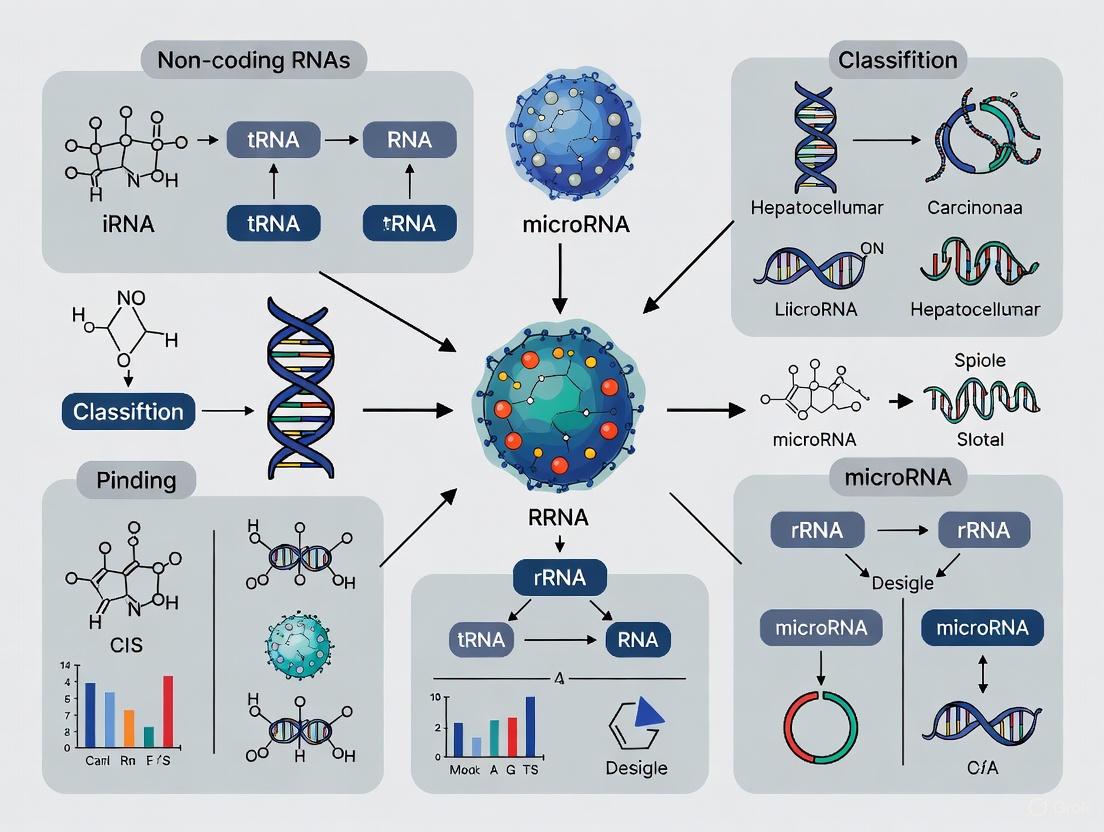
Hepatocellular carcinoma (HCC) is a global health challenge with high mortality, often due to late-stage diagnosis and limited treatment options.
Non-Coding RNAs in Hepatocellular Carcinoma: Molecular Classification, Clinical Applications, and Future Therapeutics
Abstract
Hepatocellular carcinoma (HCC) is a global health challenge with high mortality, often due to late-stage diagnosis and limited treatment options. This article explores the transformative role of non-coding RNAs (ncRNAs)—including miRNAs, lncRNAs, and circRNAs—in redefining the molecular classification of HCC. We provide a comprehensive analysis of how ncRNAs function as regulatory molecules and biomarkers, their integration with advanced machine learning for diagnostic and prognostic models, and the current challenges in clinical translation. Aimed at researchers, scientists, and drug development professionals, this review synthesizes foundational knowledge, methodological advances, and validation strategies, highlighting the potential of ncRNA-based tools for precise patient stratification, early detection, and the development of novel targeted therapies.
The Foundational Landscape: How Non-Coding RNAs Define HCC Biology and Subtypes
Hepatocellular carcinoma (HCC) represents a major global health challenge, ranking as the sixth most common cancer and the third leading cause of cancer-related mortality worldwide [1]. The pathogenesis of HCC involves complex biological processes including DNA damage, epigenetic modifications, and oncogene mutations, with recent research illuminating the critical regulatory roles of non-coding RNAs (ncRNAs) [2]. While only 1-2% of the human genome encodes proteins, the vast majority is actively transcribed into ncRNAs that play essential roles in cancer biology [3]. The American Cancer Society estimates that HCC will affect over one million people annually by 2025, with a dismal five-year survival rate of less than 20%, largely due to late diagnosis, high recurrence rates (up to 70% within 5 years post-treatment), and limited responsiveness to current therapies [4] [5] [6]. This technical review comprehensively examines the oncogenic and tumor-suppressive roles of three principal ncRNA families—microRNAs (miRNAs), long non-coding RNAs (lncRNAs), and circular RNAs (circRNAs)—in hepatocellular carcinoma, providing a structured framework for researchers and drug development professionals working in ncRNA classification and therapeutic development.
MicroRNAs (miRNAs) in HCC
Biogenesis and Functional Mechanisms
MicroRNAs are small endogenous non-coding RNAs approximately 21-25 nucleotides in length that regulate gene expression at the post-transcriptional level [7]. Their biogenesis begins with transcription of primary miRNAs (pri-miRNAs) by RNA polymerase II, which undergo nuclear processing by the Drosha enzyme to generate precursor miRNAs (pre-miRNAs) [7]. These precursors are exported to the cytoplasm and cleaved by Dicer enzyme to produce mature miRNAs, which are then assembled into the RNA-induced silencing complex (RISC) to bind complementary sequences on target mRNAs, resulting in message degradation or translational inhibition [7]. This sequence-specific targeting mechanism allows miRNAs to fine-tune the expression of numerous genes involved in critical cellular processes.
Table 1: Key Oncogenic and Tumor-Suppressive miRNAs in HCC
| miRNA | Expression in HCC | Target Genes/Pathways | Functional Role in HCC |
|---|---|---|---|
| miR-21 | Upregulated | PDCD4, PTEN | Promotes tumor cell growth and survival [7] |
| miR-221/222 | Upregulated | CXCL4/12, TFRC | Facilitates cell cycle progression, suppresses apoptosis [7] |
| miR-17-92 cluster | Upregulated | ERα | Promotes proliferation, angiogenesis, immune evasion [7] |
| let-7c | Downregulated | PI3K-Akt pathway | Tumor suppressor; negatively regulated by SNHG16 [4] |
| miR-122 | Downregulated | PKM2, SLC7A1 | Critical liver miRNA; loss promotes tumor development and metabolism reprogramming [7] |
| miR-199a/b | Downregulated | ROCK1, PI3K/Akt | Inhibits HCC progression; low expression correlates with poor survival [7] |
| miR-125b | Downregulated | VEGFA, cyclin D2/E2 | Suppresses angiogenesis, induces cell-cycle arrest [7] |
Oncogenic miRNAs in HCC
In HBV-related HCC, numerous miRNAs demonstrate upregulated expression that contributes to oncogenic processes. miR-21, regulated by the HBV-encoded X protein (HBx), consistently shows elevated expression and functions as a potent oncogene by targeting tumor suppressors PDCD4 and PTEN [7]. Similarly, miR-221 and miR-222 are commonly upregulated in response to HBx and promote cancer cell growth by targeting CXCL4/12 and transferrin receptor protein 1 (TFRC), respectively, thereby facilitating cell cycle progression while suppressing apoptosis [7]. The miR-17-92 cluster, including miR-18a, miR-19a/b, and miR-92a, represents another oncogenic miRNA group upregulated in HBV-HCC that targets ERα and contributes to proliferation, angiogenesis, and immune evasion [7]. Under hypoxic conditions commonly found in the HCC tumor microenvironment, miR-210-3p is upregulated and enhances tumor survival by targeting HIF-1α and FGF1, enabling adaptation to oxygen scarcity [7].
Tumor-Suppressive miRNAs in HCC
Conversely, several miRNAs with tumor-suppressive functions are frequently downregulated in HCC. miR-122, a liver-specific miRNA crucial for HBV infection, is downregulated by IL-6 and TNF-α, and its loss promotes tumor development, motility, and invasion through metabolic reprogramming of anaerobic glycolysis and amino acid metabolism by targeting pyruvate kinase M2 (PKM2) and solute carrier family 7 member 1 (SLC7A1), respectively [7]. The let-7 family, particularly let-7c, is significantly downregulated in HCC and regulates tumor progression via pathways like PI3K-Akt, with its expression negatively correlated with lncRNA SNHG16 (r = -0.160, p = 0.002) [4]. Additional tumor-suppressive miRNAs include miR-199a/b which inhibits ROCK1 and PI3K/Akt pathways, miR-125b which suppresses angiogenesis by targeting VEGFA and induces cell-cycle arrest, miR-101 which is downregulated by HBx and targets DNMT3A to prevent aberrant DNA methylation, and miR-29 which modulates apoptosis and cancer stem cell properties by inhibiting BCL-2 expression [7].
Long Non-Coding RNAs (lncRNAs) in HCC
Classification and Molecular Functions
Long non-coding RNAs constitute a diverse class of RNA molecules exceeding 200 nucleotides in length that lack protein-coding potential [3]. Current estimates indicate humans possess over 60,000 lncRNAs, with this number continuing to increase rapidly [2]. Similar to mRNAs, most lncRNAs are transcribed by RNA polymerase II and undergo processing including 5' capping, splicing, and polyadenylation [2]. LncRNAs demonstrate high tissue specificity and can be classified based on genomic location relative to protein-coding genes into sense, antisense, intronic, intergenic, and bidirectional categories [2] [3]. Their functional mechanisms are exceptionally diverse, including: (1) epigenetic regulation through interactions with chromatin-modifying enzymes; (2) transcriptional regulation by guiding transcription factors or directly repressing transcription; (3) post-transcriptional regulation by affecting mRNA stability, translation, or acting as competing endogenous RNAs (ceRNAs); and (4) protein scaffolding to assemble functional complexes [3]. The subcellular localization of lncRNAs significantly influences their function, with nuclear lncRNAs predominantly regulating transcription and chromatin organization, while cytoplasmic lncRNAs often modulate mRNA stability, translation, and signal transduction [2].
Table 2: Prominent Oncogenic and Tumor-Suppressive lncRNAs in HCC
| lncRNA | Expression | Molecular Mechanisms | Clinical/Functional Significance |
|---|---|---|---|
| SNHG16 | Upregulated | Negatively regulates let-7c | Associated with shorter DFS (HR=1.711, p=0.009) and OS (HR=1.837, p=0.001); higher recurrence (p<0.001) [4] |
| HOTAIR | Upregulated | Interacts with PRC2 to inhibit tumor suppressor genes | Promotes proliferation, invasion, and metastasis [2] [8] |
| MALAT1 | Upregulated | Modulates splicing and cell cycle | Enhances proliferation, inhibits cell death pathways [8] |
| H19 | Upregulated | Downregulates miRNA-15b, stimulates CDC42/PAK1 axis | Increases proliferation rate of HCC cells [2] |
| NEAT1 | Upregulated | Multiple oncogenic pathways | Regulates proliferation, migration, and apoptosis [2] |
| HULC | Upregulated | Multiple oncogenic pathways | Regulates proliferation, migration, and apoptosis [2] |
| -p21 | Context-dependent | Forms feedback loop with HIF-1α | Drives glycolysis and tumor growth under hypoxia [2] |
Oncogenic lncRNAs in HCC
Numerous lncRNAs function as oncogenic drivers in HCC pathogenesis. LncRNA SNHG16 is significantly upregulated in HCC tissues and demonstrates a strong negative correlation with let-7c expression (r = -0.160, p = 0.002) [4]. Clinically, high SNHG16 expression associates with shorter disease-free survival (HR = 1.711, 95% CI: 1.144-2.559, p = 0.009), higher recurrence rates (p < 0.001), and reduced overall survival (HR = 1.837, 95% CI: 1.283-2.629, p = 0.001) [4]. HOX transcript antisense intergenic RNA (HOTAIR) represents another prominently oncogenic lncRNA that is overexpressed in HCC and interacts with polycomb repressive complex 2 (PRC2) to inhibit tumor suppressor genes, thereby modifying chromatin to enhance proliferative and invasive phenotypes [8]. Metastasis-associated lung adenocarcinoma transcript 1 (MALAT1) contributes to early tumor development by modulating splicing and cell cycle regulation, ultimately promoting cellular proliferation while inhibiting cell death pathways [8]. Additional oncogenic lncRNAs include H19, which stimulates the CDC42/PAK1 axis by downregulating miRNA-15b to increase HCC cell proliferation, and NEAT1, HULC, and DSCR8, which regulate proliferation, migration, and apoptosis through diverse mechanisms [2].
Tumor-Suppressive lncRNAs in HCC
While most research has focused on oncogenic lncRNAs, several demonstrate tumor-suppressive capabilities in HCC. The hypoxia-responsive lncRNA -p21 forms a positive feedback loop with HIF-1α to drive glycolysis and promote tumor growth [2]. Other lncRNAs including PNUTS, HClnc1, LINC01343, FAM111A-DT, CERS6-AS1, and TLNC1 significantly affect HCC progression by regulating key signaling axes or protein functions and correlate with patient prognosis [2]. The tumor-suppressive functions of these lncRNAs typically involve restraining proliferative signaling, activating apoptotic pathways, or maintaining differentiation states, though their mechanisms remain less characterized than their oncogenic counterparts.
Circular RNAs (circRNAs) in HCC
Biogenesis and Structural Properties
Circular RNAs constitute a recently rediscovered class of ncRNA molecules characterized by covalently closed continuous loop structures formed via non-sequential back-splicing of pre-mRNAs, where a downstream splice donor links to an upstream splice acceptor [6] [9]. This unique structure lacking 5' caps and 3' polyadenylated tails confers exceptional stability, protecting circRNAs from exonucleolytic degradation and granting them significantly longer half-lives (>48 hours) compared to their linear counterparts (average mRNA half-life of 10 hours) [6]. CircRNAs are classified into three primary structural categories: (1) exonic circRNAs (ecircRNAs) derived solely from exons, representing over 80% of known circRNAs and predominantly localized in the cytoplasm; (2) exon-intron circRNAs (EIciRNAs) containing retained introns between exons, primarily nuclear localized; and (3) circular intronic RNAs (ciRNAs) consisting entirely of introns that are also nuclear localized [9]. Their biogenesis occurs through three established mechanisms: intron pairing-driven circularization mediated by reverse complementary sequences like ALU repeats, RNA-binding protein (RBP)-mediated circularization facilitated by factors including Quaking (QKI) and Muscleblind (MBL), and lariat-driven circularization resulting from exon skipping during splicing [6] [9].
Functional Roles in HCC Pathogenesis
CircRNAs regulate gene expression through multiple mechanisms including miRNA sponging, binding RNA-binding proteins, competing with linear splicing, protein scaffolding, and translation regulation [6] [9]. In HCC, specific circRNAs have been identified as critical regulators of cancer hallmarks. For instance, circRNA-100338 promotes HCC metastasis by regulating angiogenesis, with higher exosomal circRNA-100338 serum levels predicting poor prognosis [1]. CircPTGR1 exists in three isoforms that promote hepatocellular carcinoma metastasis via the miR449a-MET pathway [1]. Additionally, circ_0067934 enhances tumor growth and metastasis in hepatocellular carcinoma through regulation of miR-1324/FZD5/Wnt/β-catenin axis [1]. The functional diversity of circRNAs, combined with their exceptional stability and disease-specific expression patterns, positions them as promising diagnostic biomarkers and therapeutic targets in HCC.
Experimental Approaches and Research Methodologies
Core Experimental Protocols
Research into ncRNA roles in HCC employs sophisticated methodological approaches combining bioinformatics, molecular biology, and clinical validation. A representative experimental workflow for investigating lncRNA-miRNA interactions in HCC exemplifies this integrated approach [4]:
TCGA Data Analysis: Researchers initially utilized RNA-seq data and clinical information from The Cancer Genome Atlas (TCGA) dataset, including 370 primary HCC tumors and 50 normal samples. Differential expression analysis identified significantly dysregulated miRNAs and lncRNAs using statistical packages like "DESeq2" with threshold criteria (FoldChange > 1, p < 0.05) [4].
Database Mining for Regulatory Networks: The StarBase database (http://starbase.sysu.edu.cn) was interrogated to identify lncRNAs that regulate miRNAs of interest and their target mRNAs, generating complementary tables of interactions for further validation [4].
Functional Enrichment Analysis: Gene Ontology (GO) and Kyoto Encyclopedia of Genes and Genomes (KEGG) analyses were performed on differentially expressed target mRNAs using R packages "DESeq2" and "ggplot2" for visualization, revealing involvement in critical pathways like PI3K-Akt and cancer-related miRNA networks [4].
Clinical Correlation and Survival Analysis: Univariate Cox and LASSO regression analyses identified factors influencing overall survival (OS), followed by multivariate Cox regression to develop prognostic signatures. Risk scores were calculated as Score = ∑ (gene expression level × λ), with cutoff values determined by ROC curve analysis. Kaplan-Meier analysis evaluated prognosis between high-risk and low-risk groups using R packages "ggplot2" and "pheatmap" [4].
Experimental Validation via qRT-PCR: RNA extraction from HCC tissues using Trizol (Invitrogen) was followed by quality assessment with NanoDrop ND-2000 spectrophotometer. For miRNA detection, the TaqMan miRNA reverse transcription kit and SYBR Green real-time PCR with TaqMan Universal PCR master mix were employed. For lncRNA detection, the PrimeScript RT reagent Kit with gDNA Eraser and SYBR Green real-time PCR with TB Green Premix Ex TaqII were utilized, with U6 and GAPDH serving as reference genes [4].
Figure 1: Regulatory Networks of ncRNAs in HCC Pathogenesis. This diagram illustrates how dysregulated ncRNAs including miRNAs, lncRNAs, and circRNAs converge on oncogenic signaling pathways to drive hepatocellular carcinoma progression through complex interacting networks.
Table 3: Essential Research Reagents and Resources for ncRNA Studies in HCC
| Resource Category | Specific Examples | Application/Function |
|---|---|---|
| Bioinformatics Databases | TCGA dataset (portal.gdc.cancer.gov/repository), StarBase (starbase.sysu.edu.cn) | Provide RNA-seq data, clinical information, and ncRNA interaction networks [4] |
| Analysis Tools/Software | R packages: "DESeq2", "ggplot2", "pheatmap" | Differential expression analysis, data visualization, heatmap generation [4] |
| RNA Extraction Kits | Trizol (Invitrogen) | High-quality RNA extraction from tissues and cells [4] |
| qRT-PCR Reagents | TaqMan miRNA RT kit, PrimeScript RT reagent Kit, TB Green Premix Ex TaqII | miRNA and lncRNA detection and quantification [4] |
| Quality Assessment | NanoDrop ND-2000 spectrophotometer | RNA concentration and quality measurement [4] |
| Reference Genes | U6 (for miRNA), GAPDH (for lncRNA) | Endogenous controls for normalization in qRT-PCR [4] |
The comprehensive characterization of dysregulated ncRNA families—miRNAs, lncRNAs, and circRNAs—has fundamentally advanced our understanding of hepatocellular carcinoma pathogenesis. These regulatory molecules form intricate networks that control all canonical cancer hallmarks through diverse mechanisms including epigenetic regulation, transcriptional and post-transcriptional modulation, and protein scaffolding. The robust association of specific ncRNAs with clinical outcomes, exemplified by SNHG16's significant correlation with reduced survival and higher recurrence rates, highlights their potential as diagnostic and prognostic biomarkers. Furthermore, the unique structural properties of circRNAs and their stability in bodily fluids present exceptional opportunities for non-invasive liquid biopsy applications. As research methodologies continue to evolve, particularly in single-cell sequencing and spatial transcriptomics, the ncRNA field promises to yield increasingly refined biomarkers and therapeutic targets. For drug development professionals, these molecules offer promising avenues for therapeutic intervention, with emerging approaches including antisense oligonucleotides, small interfering RNAs, and CRISPR-based systems already showing preclinical promise. The ongoing integration of multi-omics data and development of ncRNA-targeting therapeutics heralds a new era in precision oncology for hepatocellular carcinoma management.
Hepatocellular carcinoma (HCC) represents a major global health challenge, ranking as the sixth most commonly diagnosed cancer and the third leading cause of cancer-related deaths worldwide [10] [11]. Its molecular pathogenesis is remarkably complex, driven by heterogeneous genetic and epigenetic alterations that create a diverse landscape of tumor phenotypes and clinical behaviors [10] [12]. Within this complexity, three interconnected regulatory mechanisms have emerged as critical contributors to hepatocarcinogenesis: miRNA sponging by non-coding RNAs, multifaceted epigenetic regulation, and dysregulation of key signaling pathways. Understanding these mechanisms is paramount for advancing molecular classification systems and developing targeted therapeutic interventions for HCC [13] [10].
The following sections provide a comprehensive technical analysis of these mechanisms, with particular emphasis on their roles within the context of non-coding RNA research in HCC classification. This review integrates current experimental evidence, methodological approaches, and clinical implications to establish a foundational resource for researchers, scientists, and drug development professionals working in hepatic oncology.
miRNA Sponging: The ceRNA Hypothesis in HCC
Fundamental Mechanisms and Molecular Players
The competing endogenous RNA (ceRNA) hypothesis describes a sophisticated post-transcriptional regulatory network where various RNA transcripts communicate by competing for shared microRNAs (miRNAs). This interaction is mediated through miRNA response elements (MREs), binding sites through which miRNAs normally suppress their target mRNAs [13] [14]. In HCC, two major classes of non-coding RNAs function as efficient miRNA sponges: circular RNAs (circRNAs) and long non-coding RNAs (lncRNAs) [13].
Circular RNAs possess a unique covalently closed continuous loop structure formed through "back-splicing" events, rendering them exceptionally stable due to their resistance to exonuclease-mediated degradation [14] [15]. This stability makes them particularly effective as miRNA sponges. For instance, CDR1as (also known as ciRS-7) contains more than 70 conserved binding sites for miR-7 and functions as a powerful sponge for this miRNA in HCC [14]. Similarly, circTRIM33-12 is significantly downregulated in HCC tissues and acts as a tumor suppressor by sponging oncogenic miR-191, thereby upregulating TET1 expression and increasing global 5-hydroxymethylcytosine (5hmC) levels [15].
Long non-coding RNAs represent another crucial category of miRNA sponges. The lncRNA KCNQ1OT1 exemplifies this mechanism by physically interacting with and sequestering five tumor-suppressive miRNAs (miR-424-5p, miR-136-3p, miR-139-5p, miR-223-3p, and miR-375-3p) in the cytoplasm of HCC cells [16]. This sequestration leads to the activation of BMP signaling through receptors BMPR1A/BMPR1B-ACVR2A/ACVR2B, promoting chemoresistance, epithelial-mesenchymal transition (EMT), and stemness properties in HCC cells [16].
Table 1: Clinically Significant miRNA Sponges in Hepatocellular Carcinoma
| Sponge RNA | Type | Sponged miRNA(s) | Affected Pathway/Gene | Functional Outcome in HCC | Clinical Correlation |
|---|---|---|---|---|---|
| KCNQ1OT1 | lncRNA | miR-424-5p, miR-136-3p, miR-139-5p, miR-223-3p, miR-375-3p | BMPR1A/BMPR1B-ACVR2A/ACVR2B | Promotes chemoresistance, EMT, stemness | Associated with advanced disease and poor response to therapy [16] |
| circTRIM33-12 | circRNA | miR-191 | TET1 | Suppresses proliferation, migration, invasion, immune evasion | Downregulation correlates with poor overall and recurrence-free survival [15] |
| CDR1as | circRNA | miR-7 | Unknown targets | Promotes growth and progression | Considered a potential diagnostic biomarker [14] |
| circHIPK3 | circRNA | Multiple miRNAs | Multiple pathways | Promotes growth and metastasis | Potential diagnostic biomarker for multiple cancers including HCC [14] |
Experimental Approaches for ceRNA Validation
Establishing authentic miRNA sponge interactions requires integrated experimental approaches that move beyond correlative expression analyses:
1. miRNA Response Element Mapping: Initial bioinformatic analysis using tools like TargetScan, miRDB, and micro-T-CDS identifies potential MREs within candidate sponge RNAs [16]. The DIANA-LncBase platform specifically predicts lncRNA-miRNA interactions [16].
2. Expression Correlation Analysis: Examination of paired HCC and normal tissue datasets (e.g., TCGA-LIHC, GEO datasets GSE21362, GSE40744, GSE74618) confirms inverse correlations between sponge RNA and target miRNA expression [16] [15].
3. Direct Interaction Validation:
- In vivo circRNA Precipitation (circRIP): Uses biotin-labeled circRNA-specific probes to pull down endogenous circRNAs and their directly bound miRNAs [15].
- RNA Immunoprecipitation (RIP) with AGO2 Antibodies: Confirms enrichment of both the sponge RNA and miRNA in the RNA-induced silencing complex [15].
- Luciferase Reporter Assays: Engineered vectors containing wild-type or mutant MRE sequences establish binding specificity when co-transfected with miRNA mimics or inhibitors [16] [15].
4. Functional Rescue Experiments: Restoration of miRNA activity following sponge RNA knockdown (e.g., using CRISPR/Cas9 or RNA interference) provides critical functional validation [16]. Conversely, sponge RNA overexpression should recapitulate the miRNA loss-of-function phenotype [15].
Figure 1: miRNA Sponging Mechanism. Competitive endogenous RNAs sequester miRNAs, preventing target mRNA suppression.
Epigenetic Regulation in HCC
DNA Methylation Dynamics
The DNA methylation landscape in HCC is characterized by two paradoxical patterns: global hypomethylation accompanied by focal hypermethylation of specific genomic regions. Global hypomethylation affects approximately 40-60% of CpG sequences in HCC genomes compared to 80% in normal cells, leading to chromosomal instability and oncogene activation [10]. Notably, the overall genomic 5-methylcytosine (5-mC) content is markedly lower in HCC compared to non-HCC liver tissues, with the extent of demethylation correlating with higher histopathological grades and larger tumor sizes [10].
Simultaneously, focal hypermethylation occurs primarily at CpG islands in promoter regions of tumor suppressor genes. This process is catalyzed by DNA methyltransferases (DNMTs), particularly DNMT1 and DNMT3B, which are overexpressed in HCC [10]. Critical tumor suppressor genes frequently silenced by promoter hypermethylation in HCC include:
- CDKN2A: Leads to cell cycle dysregulation [10]
- APC, RASSF1, RUNX3: Multiple pathways affected [10]
- HIC1, GSTP1, SOCS1: Diverse cellular processes impacted [10]
- ZNF334: Disrupts control of cell cycle and apoptosis [10]
The active DNA demethylation pathway, mediated by ten-eleven translocation (TET) family enzymes (TET1, TET2, TET3), is impaired in HCC through downregulation of TET1 and TET2, contributing to the aberrant methylation landscape [10] [15].
Histone Modifications and Chromatin Remodeling
Post-translational modifications of histone proteins constitute another crucial layer of epigenetic regulation in HCC. The balance between "writer" and "eraser" enzymes that respectively add or remove these modifications is frequently disrupted in hepatocarcinogenesis [10] [12].
Table 2: Key Epigenetic Modifiers in Hepatocellular Carcinoma
| Epigenetic Modulator | Class | Expression in HCC | Primary Epigenetic Function | Impact on HCC Pathogenesis |
|---|---|---|---|---|
| EZH2 | Writer | Upregulated | H3K27 methyltransferase | Represses tumor suppressor miRNAs and Wnt antagonists [12] |
| DNMT1 | Writer | Upregulated | DNA methyltransferase | Promotes hypermethylation of tumor suppressor genes [10] |
| HDAC1/2/3 | Erasers | Upregulated | Histone deacetylases | Repress tumor suppressor expression (e.g., p21) [12] |
| KDM1B | Eraser | Upregulated | H3K4 demethylase | Enhances proliferation [12] |
| KDM5C | Eraser | Upregulated | H3K4 demethylase | Promotes metastasis by repressing BMP7 transcription [12] |
| BRD4 | Reader | Upregulated | Recognizes acetylated lysines | Promotes EMT and enhances oncogene expression [12] |
| TET1 | Eraser | Downregulated | DNA demethylation | Tumor suppressor; downregulated in HCC [10] [15] |
Histone acetylation is regulated by histone acetyltransferases (HATs) and histone deacetylases (HDACs). HDACs 1, 2, 3, 5, and 8 are significantly overexpressed in HCC and contribute to the repression of tumor suppressor genes such as p21 [12]. Similarly, histone methyltransferases (e.g., EZH2, SETDB1) and demethylases (e.g., KDM series enzymes) are frequently dysregulated, altering chromatin accessibility and oncogene expression patterns [12].
Experimental Methods for Epigenetic Analysis
Comprehensive epigenetic profiling in HCC employs several specialized methodologies:
1. DNA Methylation Analysis:
- Bisulfite Sequencing: Provides single-base resolution methylation maps after bisulfite conversion of unmethylated cytosines to uracils.
- Methylated DNA Immunoprecipitation (MeDIP): Uses anti-5-methylcytosine antibodies to enrich methylated DNA fragments for sequencing.
- Pyrosequencing: Quantifies methylation levels at specific candidate loci.
2. Histone Modification Profiling:
- Chromatin Immunoprecipitation Sequencing (ChIP-seq): Maps genome-wide histone modification patterns using modification-specific antibodies.
- Histone Modification-Specific Mass Spectrometry: Precisely quantifies relative abundance of different histone modifications.
3. Chromatin Accessibility Assessment:
- Assay for Transposase-Accessible Chromatin with Sequencing (ATAC-seq): Identifies genomically accessible regions where nucleosomes have been displaced.
- DNase I Hypersensitivity Sequencing: Maps open chromatin regions sensitive to DNase I digestion.
4. Integrated Multi-Omics Approaches: Combining DNA methylomics, epigenomics, and transcriptomics provides comprehensive views of the epigenetic landscape and its functional consequences in HCC [10] [12].
Signaling Pathway Dysregulation in HCC
Multiple signaling pathways are dysregulated in HCC, contributing to uncontrolled proliferation, evasion of apoptosis, sustained angiogenesis, and metastatic dissemination.
Receptor Tyrosine Kinase Pathways
The receptor tyrosine kinase (RTK) pathways represent crucial signaling networks in HCC pathogenesis and have become prime targets for therapeutic intervention [11] [17]. Among these, the VEGF/VEGFR pathway stands out as particularly significant:
VEGF/VEGFR Signaling: HCC is a hypervascular tumor where neovascularization plays a critical role in development and progression [11] [17]. VEGF-A demonstrates a 7-14% frequency of focal amplification in HCC, while its receptors VEGFR-1 and VEGFR-2 are highly expressed and correlate with tumor differentiation and stage [11]. This pathway maintains an immunosuppressive tumor microenvironment and promotes angiogenesis through multiple mechanisms [11]. The clinical importance of this pathway is underscored by the approval of bevacizumab (anti-VEGFA antibody) in combination with atezolizumab (anti-PD-L1) as first-line therapy for advanced HCC [11].
Other Significant RTK Pathways:
- EGFR Pathway: Regulates cell survival, proliferation, differentiation, and motility, with overexpression observed at both mRNA and protein levels in HCC [17] [18].
- FGFR Signaling: Fibroblast growth factors and their receptors are upregulated in HCC, with FGF19 amplification acting as an oncogenic driver in a subset of cases [11] [18].
- HGF/MET Pathway: MET activation signatures are present in approximately 40% of HCC patients and correlate with poor prognosis [18].
Developmental and Intracellular Signaling Pathways
Several evolutionarily conserved developmental pathways are frequently dysregulated in HCC:
Wnt/β-catenin Pathway: Approximately 30-40% of HCCs demonstrate activation of this pathway, often through CTNNB1 mutations or AXIN1/APC inactivation [19] [18]. This pathway promotes stemness maintenance through regulation of CD44 and EpCAM expression, drives proliferation via cyclin D1 and c-Myc, and facilitates EMT [19].
TGF-β Signaling: This pathway plays a dual role in HCC, acting as a tumor suppressor in early stages but promoting EMT, metastasis, and immune suppression in advanced disease [19]. TGF-β upregulates Snail while downregulating E-cadherin, induces VEGF expression to promote angiogenesis, and converts tumor-associated macrophages to immunosuppressive M2-like phenotypes [19].
Hedgehog Signaling: Activated in HCC, particularly in cases associated with hepatitis B virus infection, this pathway promotes expression of cell cycle genes (cyclin D, c-Myc), invasion-related genes (MMPs), and cancer stem cell markers (CD133) [19].
Table 3: Therapeutically Targeted Signaling Pathways in Hepatocellular Carcinoma
| Pathway | Frequency in HCC | Key Molecular Components | Targeted Therapies (Examples) | Primary Biological Effects |
|---|---|---|---|---|
| VEGF/VEGFR | Highly prevalent (VEGFR highly expressed) | VEGFA, VEGFR1/2 | Bevacizumab, Ramucirumab, Apatinib | Angiogenesis, immunosuppression, proliferation [11] [17] |
| Wnt/β-catenin | 30-40% | CTNNB1, AXIN1, APC | None approved (CGP049090, PKF115-854 in development) | Stemness maintenance, proliferation, EMT [19] [18] |
| TGF-β | Highly prevalent | TGF-β, TβRI/II, Smad2/3 | Galunisertib (LY2157299) | EMT, metastasis, immune suppression [19] |
| PI3K/AKT/mTOR | Highly prevalent | PIK3CA, PTEN, AKT, mTOR | Everolimus, Rapamycin (limited efficacy) | Proliferation, metabolism, therapy resistance [17] [19] |
| JAK/STAT | Highly prevalent | JAKs, STATs | None approved (under investigation) | Proliferation, inflammation, immune regulation [17] [19] |
| Hedgehog | 50-60% | SHH, SMO, Gli | GDC-0449/Vismodegib (in trials) | CSC maintenance, proliferation, angiogenesis [19] [18] |
Figure 2: Key Signaling Pathways in HCC. Multiple dysregulated pathways converge on oncogenic phenotypes.
Experimental Approaches for Signaling Pathway Analysis
1. Pathway Activity Assessment:
- Phosphoprotein Analysis: Western blotting and phospho-specific flow cytometry to evaluate activation status of pathway components.
- Pathway Reporter Assays: Luciferase reporters under control of pathway-responsive elements (e.g., TCF/LEF for Wnt signaling).
- Gene Expression Signatures: Multi-gene panels that reflect pathway activation status.
2. Functional Validation:
- Small Molecule Inhibitors: Chemical probes with defined specificity profiles (e.g., trametinib for MEK, MK2206 for AKT).
- RNA Interference: Gene-specific knockdown to establish requirement for particular pathway components.
- CRISPR/Cas9 Screening: Genome-wide or focused screens to identify essential pathway components and synthetic lethal interactions.
3. Preclinical Models:
- Patient-Derived Xenografts (PDXs): Maintain tumor heterogeneity and therapeutic responses observed in patients.
- Genetically Engineered Mouse Models (GEMMs): Enable study of specific genetic alterations in immunocompetent contexts.
- 3D Organoid Cultures: Permit high-throughput drug screening while preserving some tumor microenvironment interactions.
The Scientist's Toolkit: Essential Research Reagents and Methodologies
Table 4: Essential Research Reagents and Experimental Resources
| Reagent/Resource Category | Specific Examples | Primary Research Application | Technical Considerations |
|---|---|---|---|
| miRNA Sponging Tools | Biotin-labeled circRNA probes, AGO2 antibodies, MRE-luciferase reporters | Validation of ceRNA interactions | circRNA probes require careful design across back-splice junctions [15] |
| Epigenetic Modulators | HDAC inhibitors (vorinostat), DNMT inhibitors (decitabine), BET inhibitors | Functional studies of epigenetic mechanisms | Potential off-target effects require appropriate controls [12] |
| Pathway-Specific Inhibitors | Sorafenib (multi-kinase), Trametinib (MEK), Vismodegib (SMO) | Functional validation of signaling pathways | Specificity varies; combination approaches often needed [11] [19] |
| CRISPR/Cas9 Systems | lentiCRISPRv2, sgRNAs targeting sponge RNAs or epigenetic regulators | Genetic loss-of-function studies | Careful sgRNA design and off-target assessment critical [16] |
| Animal Models | PDX models, hydrodynamic tail vein injection, DEN-induced HCC | Preclinical validation | PDX models best preserve tumor heterogeneity [19] |
| Bioinformatics Databases | TCGA-LIHC, GEO datasets, miRSponge, DIANA-LncBase | Bioinformatic discovery and validation | Integration across multiple datasets improves robustness [16] [14] |
The intricate interplay between miRNA sponging mechanisms, epigenetic regulation, and signaling pathway dysregulation creates a complex molecular network that drives hepatocellular carcinoma pathogenesis. The ceRNA hypothesis has unveiled a sophisticated layer of post-transcriptional regulation where non-coding RNAs communicate through miRNA competition, potentially explaining aspects of HCC heterogeneity that were previously poorly understood [13] [16] [14]. Simultaneously, the reversible nature of epigenetic alterations presents attractive therapeutic opportunities, with numerous epigenetic modulators currently under investigation for HCC treatment [10] [12]. The continued dysregulation of multiple signaling pathways, particularly in advanced HCC, underscores the necessity for combination therapeutic approaches that simultaneously target multiple mechanisms [11] [17] [19].
Future research directions should focus on elucidating the precise context-dependent interactions between these mechanisms, developing more refined molecular classification systems based on integrated multi-omics profiling, and advancing therapeutic strategies that specifically target the non-coding RNA epitranscriptome. As our understanding of these fundamental mechanisms deepens, so too will our ability to precisely classify HCC subtypes and develop personalized treatment approaches that meaningfully improve patient outcomes.
Linking ncRNA Profiles to Histological and Molecular HCC Subtypes
Hepatocellular carcinoma (HCC) represents a major global health challenge characterized by significant molecular and histological heterogeneity. The integration of non-coding RNA (ncRNA) profiles with traditional classification frameworks is revolutionizing our understanding of HCC pathogenesis. This technical review examines how long non-coding RNAs (lncRNAs) and other ncRNAs define molecular subtypes with distinct clinical outcomes, histological features, and therapeutic vulnerabilities. We present comprehensive data synthesis of ncRNA-based classification systems, detailed experimental methodologies for ncRNA profiling, and visualization of critical signaling pathways. The emerging paradigm demonstrates that ncRNA signatures provide a robust framework for patient stratification that complements histological evaluation and enables more precise prognostic prediction and treatment selection. These advances are particularly valuable for addressing the limitations of conventional HCC diagnostics and therapeutics, ultimately paving the way for personalized medicine approaches in hepatocellular carcinoma management.
Hepatocellular carcinoma is the most common primary liver cancer and a leading cause of cancer-related mortality worldwide [20]. The clinical management of HCC faces significant challenges due to the remarkable diversity in its histological presentation, molecular pathogenesis, and treatment response. Conventional diagnostic approaches relying on ultrasound and serum alpha-fetoprotein (AFP) lack sufficient sensitivity and specificity for early detection, often resulting in late-stage diagnoses and poor clinical outcomes [20].
The histological heterogeneity of HCC is well-documented, with the World Health Organization (WHO) 2019 classification recognizing multiple subtypes with distinct features, including fibrolamellar carcinoma, macrotrabecular massive HCC, scirrhous HCC, clear cell HCC, and chromophobe HCC, among others [20] [21]. This morphological diversity parallels molecular heterogeneity, with HCCs demonstrating varied mutational profiles, signaling pathway alterations, and microenvironment compositions [21] [22].
Non-coding RNAs have emerged as crucial regulators of gene expression and key contributors to HCC pathogenesis. Long non-coding RNAs (lncRNAs), defined as transcripts exceeding 200 nucleotides with limited protein-coding potential, represent a particularly promising class of molecular biomarkers and therapeutic targets [23] [24]. These molecules participate in diverse biological processes, including chromatin remodeling, transcriptional regulation, and post-transcriptional modification, making them ideal candidates for refining HCC classification systems and informing treatment decisions [24].
Molecular Landscape of HCC: Setting the Stage for ncRNA Integration
The molecular pathogenesis of HCC involves multiple dysregulated signaling pathways and accumulated genetic alterations. Large-scale genomic studies have identified recurrent mutations in key driver genes, including TERT promoter (60% of tumors), TP53 (50%), CTNNB1 (40%), ARID1A (10-20%), and AXIN1 (10-15%) [21]. These genetic alterations converge on critical cellular processes such as telomere maintenance, cell cycle regulation, Wnt/β-catenin signaling, chromatin remodeling, and oxidative stress response [21].
The relationship between molecular features and HCC phenotype is increasingly recognized. A landmark study of 343 resected HCCs demonstrated strong associations between specific mutations and histological subtypes [22]. CTNNB1 mutations were associated with a specific HCC subtype characterized by low-grade histology, cholestasis, and immune exclusion, while TP53 mutations correlated with more aggressive features including the macrotrabecular massive subtype, high proliferation, and vascular invasion [22]. Other molecular-pathological correlations included TSC1/TSC2 mutations with the scirrhous subtype [22].
This molecular-pathological correlation provides the essential context for integrating ncRNA profiles into HCC classification. As regulators of gene expression, ncRNAs frequently operate within these established molecular pathways, offering additional layers of biological insight and potential clinical utility beyond mutational status alone.
Table 1: Common Genetic Alterations in Hepatocellular Carcinoma
| Gene/Pathway | Approximate Frequency | Biological Function | Associated Histological Features |
|---|---|---|---|
| TERT promoter | 60% | Telomere maintenance | Not specified |
| TP53 | 50% | Cell cycle regulation, DNA damage response | Macrotrabecular massive pattern, poor differentiation |
| CTNNB1 | 40% | Wnt/β-catenin signaling | Low-grade histology, cholestasis, immune exclusion |
| ARID1A | 10-20% | Chromatin remodeling | Not specified |
| AXIN1 | 10-15% | Wnt/β-catenin signaling | Not specified |
| FGF19 amplification | 5-10% | Cell proliferation, metabolic regulation | Not specified |
| TSC1/TSC2 | 5% | mTOR signaling pathway | Scirrhous subtype |
ncRNA-Based Molecular Classification of HCC
CD8 T Cell Exhaustion-Associated LncRNA Signature
The tumor immune microenvironment plays a crucial role in HCC progression and treatment response. A 2025 study identified a prognostic model based on CD8 T cell exhaustion-associated lncRNAs that defines novel molecular subtypes with implications for immunotherapy [25]. Through single-cell RNA sequencing analysis of the GSE140228 dataset, researchers identified key genes associated with CD8 T cell exhaustion (CD8Tex) in HCC, noting strong interactions between CD8Tex cells and other immune populations including dendritic cells and monocytes/macrophages [25].
Using Pearson correlation analysis with TCGA-LIHC data, the team identified CD8Tex-associated lncRNAs and developed a prognostic model incorporating 5 lncRNAs through univariate and multivariate Cox regression analyses with LASSO regularization to prevent overfitting [25]. Among these lncRNAs, AL158166.1 demonstrated the strongest correlation with CD8⁺ T cell exhaustion and was significantly associated with poor prognosis, highlighting its potential as both a biomarker and therapeutic target in HCC [25]. This classification system successfully stratified patients into distinct risk groups with differential survival outcomes and informed immunotherapy approaches tailored to the immune characteristics of each molecular subtype.
Plasma Exosomal LncRNA-Derived Classification
Liquid biopsy approaches using plasma exosomal lncRNAs offer a minimally invasive method for HCC classification. A 2025 study integrated transcriptomic data from 230 plasma exosomes and 831 HCC tissues to establish an exosomal lncRNA-based framework for molecular classification and prognostication [26] [27]. The researchers identified 22 dysregulated plasma exosomal lncRNAs in HCC, with upregulated lncRNAs forming a competitive endogenous RNA (ceRNA) network regulating 61 exosome-related genes (ERGs) [26].
Through unsupervised consensus clustering based on ERG expression profiles, HCC patients were stratified into three molecular subtypes (C1-C3) with distinct clinical outcomes [26] [27]:
- C3 subtype: Exhibited the poorest overall survival, advanced grade and stage, an immunosuppressive microenvironment (increased Treg infiltration, elevated PD-L1/CTLA4 expression), and hyperactivation of proliferation (MYC, E2F targets) and metabolic pathways (glycolysis, mTORC1)
- C1 and C2 subtypes: Demonstrated more favorable prognosis and less aggressive tumor characteristics
Using ten machine learning algorithms with 10-fold cross-validation, the researchers developed a random survival forest-derived 6-gene risk score (G6PD, KIF20A, NDRG1, ADH1C, RECQL4, MCM4) that demonstrated high prognostic accuracy [26]. This risk model successfully predicted differential treatment responses, with low-risk patients showing superior anti-PD-1 immunotherapy responses, while high-risk patients exhibited increased sensitivity to DNA-damaging agents and sorafenib [26] [27].
Immune-Related LncRNA Classification
Another approach identified molecular subtypes based on immune-related lncRNAs through comprehensive analysis of TCGA HCC data [28]. The study mapped the profile of lncRNA regulation in 17 immune function-related pathways from the ImmPort database, including antigen processing and presentation, chemokines, cytokines, and various signaling pathways [28].
Through gene set enrichment analysis (GSEA), researchers identified 1,984 immunoregulatory functional lncRNAs specific to HCC, with 18 dysregulated immune lncRNAs showing significant association with immune cell infiltration [28]. These lncRNAs were enriched in cytokines, cytokine receptors, TGFb family members, TNF family members, and TNF family member receptor pathways [28].
Unsupervised clustering based on these 18 dysregulated immune lncRNAs revealed two distinct molecular subtypes with significant prognostic differences [28]:
- Subtype 1: Characterized by higher levels of cytokine response and better survival outcomes
- Subtype 2: Exhibited higher levels of tumor proliferation and poorer survival
This classification system highlights the importance of immune-related lncRNAs in shaping the tumor microenvironment and influencing clinical outcomes in HCC.
Table 2: ncRNA-Based Molecular Classification Systems in HCC
| Classification Approach | Subtypes Identified | Key ncRNA Biomarkers | Clinical Implications |
|---|---|---|---|
| CD8 T Cell Exhaustion-Associated LncRNAs | Risk-based stratification | AL158166.1 and 4 other lncRNAs | Guides immunotherapy approach; identifies immunosuppressive environments |
| Plasma Exosomal LncRNA Signatures | C1, C2, C3 | 22 dysregulated exosomal lncRNAs; 6-gene risk score (G6PD, KIF20A, NDRG1, ADH1C, RECQL4, MCM4) | Predicts survival; distinguishes immunotherapy-sensitive vs. targeted therapy-sensitive patients |
| Immune-Related LncRNA Profiling | Subtype 1 (cytokine response), Subtype 2 (proliferative) | 18 dysregulated immune lncRNAs | Stratifies patients by immune microenvironment and proliferation status; prognostic significance |
Experimental Protocols for ncRNA Profiling in HCC
Plasma Exosomal lncRNA Analysis Workflow
The following detailed protocol outlines the methodology for plasma exosomal lncRNA analysis from the aforementioned study [26] [27]:
Step 1: Data Collection and Preprocessing
- Obtain transcriptomic data from multiple sources: TCGA-LIHC (n=370), GEO (GSE14520, n=221), and ICGC (LIRI, n=240)
- Acquire plasma exosomal lncRNA expression matrix from exoRBase 2.0 database (112 HCC patients vs. 118 healthy controls)
- Normalize RNA-seq data using TPM transformation followed by log2 transformation
- Process microarray data with log2 transformation and quantile normalization
Step 2: Construction of ceRNA Regulatory Network
- Identify miRNA binding sites of differentially expressed lncRNAs using miRcode database
- Integrate miRNA-mRNA interactions from three stringent databases: miRTarBase, TargetScan, and miRDB
- Retain only miRNA-mRNA relationships supported by all three databases
- Define exosome-related genes (ERGs) as the intersection of target genes of differentially expressed lncRNAs and upregulated mRNAs in HCC tissues (|logFC|>1, FDR<0.05)
- Construct ternary regulatory network using Cytoscape 3.9.1
Step 3: Molecular Subtype Identification
- Perform unsupervised consensus clustering using ConsensusClusterPlus package
- Apply Pearson distance metric with PAM clustering algorithm
- Use 80% resampling ratio with 1000 iterations
- Determine optimal cluster number (k=3) based on cumulative distribution function curve
Step 4: Prognostic Model Development
- Utilize ten machine learning algorithms: CoxBoost, stepwise Cox, Lasso, Ridge, elastic net (Enet), survival-SVMs, GBMs, SuperPC, plsRcox, and random survival forest (RSF)
- Implement 10-fold cross-validation framework with 118 distinct configurations
- Optimize hyperparameters using concordance index (C-index) as evaluation metric
- Validate model in independent cohorts (ICGC/GSE14520)
Step 5: Treatment Response Prediction
- Calculate drug sensitivity based on GDSC2 database using oncoPredict to determine IC50 values
- Evaluate immunotherapy response via SubMap analysis to assess transcriptional similarity between risk groups and samples treated with anti-PD-1/CTLA-4
- Apply Bonferroni correction with significance threshold of p<0.05
Figure 1: Experimental Workflow for ncRNA Profiling in HCC Classification
ncRNA Family Classification Using Computational Approaches
Advanced computational methods have been developed to classify ncRNA families based on multiple features, which can be applied to HCC research [29]. The nRMFCA (noncoding RNA family classification based on multifeature fusion and convolutional block attention residual networks) model represents a state-of-the-art approach:
Feature Extraction and Encoding
- Apply 3-mer, word2vec, GCN, and 3D-base encoding methods to generate four feature datasets with different dimensions
- Utilize a novel 3D graphical representation method based on Z-curve and chaos game representation of RNA secondary structure
- Convert RNA sequences into 3D graphs visualizing sequence morphologies under different base classification methods
Feature Fusion and Classification
- Process feature sets through dynamic Bi_GRU model to capture contextual information
- Generate unified dimension feature datasets and concatenate for multisource feature fusion
- Implement convolutional block attention module within residual network (CBAM-ResNet) to focus on important feature channels
- Perform final classification through deep feature learning and output prediction results
This computational approach has demonstrated superior classification performance on benchmark ncRNA datasets (NCY and nRC) compared to previous methods, providing a powerful tool for in-depth research on ncRNAs in HCC [29].
Table 3: Essential Research Reagents and Computational Tools for ncRNA Studies in HCC
| Category | Specific Tools/Reagents | Application/Function | Reference/Source |
|---|---|---|---|
| Databases | TCGA-LIHC, ICGC, GEO (GSE14520) | Provide comprehensive HCC genomic and transcriptomic data | [23] [26] [28] |
| ncRNA-specific Databases | exoRBase 2.0, MiTranscriptome | Annotate lncRNAs; provide plasma exosomal transcriptome data | [23] [26] |
| miRNA Interaction Tools | miRcode, miRTarBase, TargetScan, miRDB | Predict miRNA binding sites; validate miRNA-mRNA interactions | [26] [27] |
| Computational Analysis Packages | ConsensusClusterPlus, clusterProfiler, glmnet, randomForestSRC, survivalsvm | Perform clustering, pathway enrichment, and machine learning modeling | [26] [28] |
| Immunogenomic Tools | CIBERSORT, TIDE, SubMap, ImmuCellAI | Analyze immune cell infiltration; predict immunotherapy response | [26] [28] |
| Drug Sensitivity Prediction | oncoPredict, GDSC2 database | Calculate IC50 values; predict sensitivity to therapeutic agents | [26] [27] |
| Visualization Tools | Cytoscape, Graphviz | Construct and visualize molecular networks and pathways | [26] |
Therapeutic Implications and Clinical Translation
The integration of ncRNA profiles into HCC classification has significant implications for therapeutic development and clinical decision-making. Different molecular subtypes defined by ncRNA signatures demonstrate distinct therapeutic vulnerabilities, enabling more precise treatment selection.
Immunotherapy Guidance
The CD8 T cell exhaustion-associated lncRNA signature and immune-related lncRNA subtypes provide valuable insights for immunotherapy approaches [25] [28]. Subtype 1 of the immune-related lncRNA classification, characterized by higher cytokine response, may be more responsive to immunomodulatory approaches, while subtype 2 with proliferative features might require combination strategies targeting cell cycle progression [28].
Similarly, the plasma exosomal lncRNA-based risk model predicts differential responses to immune checkpoint inhibitors, with low-risk patients showing superior anti-PD-1 immunotherapy responses [26]. This stratification is particularly valuable given the variable response rates to immunotherapy in HCC and the need for reliable predictive biomarkers.
Targeted Therapy Selection
The ncRNA-based classifications also inform targeted therapy approaches. The C3 subtype identified through plasma exosomal lncRNA profiling exhibits hyperactivation of MYC, E2F targets, and metabolic pathways such as glycolysis and mTORC1, suggesting potential vulnerability to corresponding pathway inhibitors [26].
High-risk patients in the exosomal lncRNA model show increased sensitivity to DNA-damaging agents (e.g., the Wee1 inhibitor MK-1775) and sorafenib, providing rationale for tailored treatment approaches based on molecular subtype [26]. Additionally, the association between specific ncRNA profiles and driver mutations (e.g., CTNNB1, TP53) further refines targeted therapy selection [22].
ncRNA-Targeted Therapeutics
Beyond serving as biomarkers, ncRNAs represent promising therapeutic targets themselves. Several strategies are being explored for ncRNA-based therapeutics in HCC [24]:
- ncRNA replacement therapy: Restoring tumor-suppressive ncRNAs using synthetic analogs or expression vectors
- Anti-ncRNA approaches: Inhibiting oncogenic ncRNAs through antisense oligonucleotides, small interfering RNAs, or CRISPR-based systems
- ncRNA modulation: Using small molecules or other modalities to modulate ncRNA expression or function
The liver's unique physiology and anatomical features, including fenestrated endothelium and robust blood supply, make it particularly amenable to nucleic acid-based therapies, facilitating the development of ncRNA-targeted approaches for HCC [24].
Figure 2: Clinical Translation Pathway from ncRNA Profiling to Personalized Therapy in HCC
The integration of ncRNA profiles with histological and molecular classification systems represents a significant advancement in HCC stratification. The studies reviewed demonstrate that ncRNA signatures, particularly lncRNAs, define molecular subtypes with distinct clinical outcomes, histological features, and therapeutic vulnerabilities. These approaches complement traditional histopathological evaluation and provide insights into tumor biology that inform personalized treatment strategies.
Future research directions should focus on validating these classification systems in prospective clinical trials, standardizing analytical approaches across laboratories, and developing integrated models that incorporate ncRNA profiles with other molecular data (genomic, proteomic) and clinical parameters. Additionally, the development of ncRNA-targeted therapeutics holds promise for expanding the treatment arsenal for HCC, particularly for subtypes with defined ncRNA dependencies.
As the field progresses, ncRNA-based classification is poised to become an integral component of HCC management, enabling more precise prognostication and treatment selection tailored to the molecular characteristics of individual tumors. This approach represents a paradigm shift toward personalized medicine in hepatocellular carcinoma, addressing the profound heterogeneity that has long complicated effective clinical management.
Non-coding RNAs as Key Regulators of the Tumor Immune Microenvironment and Metastasis
Non-coding RNAs (ncRNAs) have emerged as pivotal regulators of gene expression and cellular function in hepatocellular carcinoma (HCC). This whitepaper examines the sophisticated mechanisms by which ncRNAs—particularly long non-coding RNAs (lncRNAs), microRNAs (miRNAs), and circular RNAs (circRNAs)—orchestrate the tumor immune microenvironment and drive metastatic progression. By integrating findings from recent transcriptomic analyses, functional studies, and clinical validations, we delineate how these molecules modulate immune cell activity, cytokine networks, and metastatic signaling pathways. The document further provides standardized experimental frameworks for investigating ncRNA functions and presents actionable data on their clinical applications as biomarkers and therapeutic targets. This resource aims to equip researchers and drug development professionals with the conceptual and methodological tools necessary to advance HCC classification and therapy.
Hepatocellular carcinoma represents a major global health challenge, characterized by a complex tumor microenvironment (TME) and high metastatic potential [30] [20]. The majority of the human genome is transcribed into non-coding RNAs, which lack protein-coding capacity but exert profound regulatory functions [2] [31]. In HCC, ncRNAs have been identified as critical drivers of tumor initiation, progression, and immune evasion, making them essential components of a refined molecular classification system [2] [1].
The TME of HCC is a multifaceted ecosystem comprising various immune cells, stromal components, and signaling molecules that collectively influence tumor behavior [30]. ncRNAs operate within this environment as precise molecular switches, fine-tuning gene expression through diverse mechanisms including chromatin remodeling, transcriptional regulation, and post-transcriptional modifications [2] [31]. Their expression patterns are highly specific to tissue type, developmental stage, and pathological condition, offering unprecedented opportunities for patient stratification and targeted intervention [2] [32].
ncRNA Biogenesis and Functional Classification
Biogenesis Pathways
Long non-coding RNAs are primarily transcribed by RNA polymerase II, undergoing 5' capping, 3' polyadenylation, and splicing to become mature transcripts [30] [31]. They are classified according to their genomic location relative to protein-coding genes into sense, antisense, bidirectional, intronic, intergenic, and enhancer lncRNAs [2]. Their functional capacity is largely determined by their subcellular localization: nuclear lncRNAs predominantly regulate transcription and chromatin organization, while cytoplasmic lncRNAs influence mRNA stability, translation, and protein function [2].
MicroRNAs are transcribed as primary transcripts (pri-miRNAs) that are processed in the nucleus by the Drosha-DGCR8 complex to form precursor miRNAs (pre-miRNAs) [31]. Following export to the cytoplasm, Dicer cleaves pre-miRNAs to generate mature miRNA duplexes approximately 20-25 nucleotides in length. One strand is incorporated into the RNA-induced silencing complex (RISC), where it guides target recognition through complementary base pairing with mRNAs, leading to translational repression or degradation [1] [31].
Circular RNAs constitute a novel class of ncRNAs characterized by covalently closed continuous loops formed through back-splicing events [1]. This unique structure confers resistance to exonuclease-mediated degradation, enhancing their stability compared to linear RNAs. circRNAs primarily function as miRNA sponges, protein decoys, or translational regulators, with emerging roles in HCC pathogenesis [1] [32].
Functional Mechanisms
The following diagram illustrates the biogenesis and primary functional mechanisms of different ncRNA classes in HCC:
Figure 1: ncRNA Biogenesis and Functional Mechanisms in HCC
ncRNA Regulation of the Tumor Immune Microenvironment
Immune Cell Modulation
ncRNAs serve as master regulators of immune cell infiltration, differentiation, and function within the HCC TME. Specific lncRNAs have been identified that directly influence the activity of T cells, macrophages, and myeloid-derived suppressor cells (MDSCs), shaping the overall anti-tumor immune response [30] [33].
T Cell Regulation: The lncRNA NEAT1 is significantly upregulated in peripheral blood mononuclear cells of HCC patients and promotes CD8+ T cell apoptosis while suppressing cytotoxic activity through the miR-155/Tim-3 pathway [30]. Downregulation of NEAT1 enhances CD8+ T cell-mediated killing of HCC cells, identifying it as a promising immunotherapeutic target. Similarly, lnc-Tim3 directly binds to Tim-3, disrupting its interaction with Bat3 and inhibiting downstream signaling in the Lck/NFAT1/AP-1 pathway, ultimately contributing to T cell exhaustion [30].
Macrophage Polarization: Multiple lncRNAs regulate the polarization of tumor-associated macrophages (TAMs) toward the immunosuppressive M2 phenotype. For instance, the lncRNA HEIH, initially identified as an oncogenic lncRNA in HBV-related HCC, has been shown to facilitate M2 macrophage polarization through its interaction with EZH2, resulting in enhanced immunosuppression [33]. This polarization creates a permissive environment for tumor growth and immune evasion.
Myeloid-Derived Suppressor Cells: lncRNAs such as TUG1, LINC01116, and CRNDE influence the recruitment and activation of MDSCs, potent suppressors of anti-tumor immunity [30]. These lncRNAs operate through various pathways to enhance MDSC-mediated T cell inhibition, thereby fostering an immunosuppressive niche.
Cytokine and Chemokine Networks
ncRNAs extensively modulate the cytokine and chemokine milieu within the TME, indirectly shaping immune cell behavior and function. The lncRNA HOTAIR promotes the expression of pro-metastatic genes including MMP9 and VEGF, contributing to angiogenesis and immune cell recruitment [32]. Similarly, linc-RoR functions as a competitive endogenous RNA (ceRNA) for miR-145, leading to upregulation of its downstream targets p70S6K1, PDK1, and HIF-1α, which collectively enhance pro-tumorigenic signaling and cytokine production [2].
Immune Checkpoint Regulation
Emerging evidence indicates that ncRNAs directly regulate the expression of immune checkpoint molecules. lncRNAs can modulate the PD-1/PD-L1 axis through various mechanisms, including transcriptional activation and epigenetic modification [33]. For example, the lncRNA HEIH has been implicated in the regulation of checkpoint pathways, although its precise mechanisms continue to be elucidated [33]. This regulatory capacity positions ncRNAs as potential targets for overcoming resistance to immune checkpoint inhibitor therapy.
Table 1: Key Immune-Regulatory ncRNAs in HCC
| ncRNA | Type | Expression in HCC | Immune Target | Mechanism | Clinical Association |
|---|---|---|---|---|---|
| NEAT1 | lncRNA | Upregulated | CD8+ T cells | miR-155/Tim-3 pathway | Poor response to immunotherapy |
| lnc-Tim3 | lncRNA | Upregulated | T cell exhaustion | Binds Tim-3, inhibits Lck/NFAT1/AP-1 | Advanced disease stage |
| HEIH | lncRNA | Upregulated | Macrophages | EZH2 interaction, M2 polarization | HBV-related HCC, poor prognosis |
| HOTAIR | lncRNA | Upregulated | Multiple | PRC2 interaction, MMP9/VEGF upregulation | 3-fold higher recurrence rate |
| miR-21 | miRNA | Upregulated | Innate immunity | PTEN targeting, PI3K/AKT activation | 78% diagnostic sensitivity |
| miR-221/222 | miRNA | Upregulated | T cell function | p27/p57 downregulation, EMT promotion | Metastatic progression |
ncRNA Control of Metastatic Pathways
Key Signaling Pathways in HCC Metastasis
Metastasis in HCC is orchestrated by complex molecular networks that ncRNAs intricately regulate. Several well-defined signaling pathways serve as central conduits for ncRNA-mediated metastatic progression.
Wnt/β-catenin Signaling: This pathway is critically involved in epithelial-mesenchymal transition (EMT) and metastatic dissemination. Multiple ncRNAs regulate Wnt/β-catenin activation: the lncRNA CCAL promotes HCC progression by regulating AP-2α and the Wnt/β-catenin pathway [1], while circRNA circ_0067934 enhances tumor growth and metastasis through the miR-1324/FZD5/Wnt/β-catenin axis [1]. Conversely, tumor-suppressive miR-122 inhibits EMT in HCC by targeting Snail1 and Snail2, thereby suppressing Wnt/β-catenin signaling [1].
HIF-1α Signaling: Intratumoral hypoxia activates HIF-1α signaling, conferring enhanced metastatic potential. The lncRNA -p21 forms a positive feedback loop with HIF-1α to drive glycolysis and promote tumor growth [2]. Similarly, linc-RoR, upregulated under hypoxic conditions, functions as a miR-145 sponge, leading to increased expression of HIF-1α and downstream targets that accelerate proliferation [2].
IL-6/STAT3 Signaling: Chronic inflammation driven by IL-6 signaling promotes HCC metastasis. The lncRNA STAT3-mediated upregulation of HOXD-AS1 functions as a ceRNA to facilitate liver cancer metastasis by regulating SOX4 [1]. This ncRNA-mediated activation of the IL-6/STAT3 axis creates a pro-inflammatory TME conducive to metastatic spread.
TGF-β Signaling: TGF-β plays a dual role in HCC, acting as a tumor suppressor in early stages but promoting invasion and metastasis in advanced disease. The molecular mechanism of lncRNA34a in regulating bone metastasis of HCC involves modulation of TGF-β signaling [1]. Additionally, miR-130a-3p regulates cell migration and invasion via inhibition of Smad4 in gemcitabine-resistant hepatoma cells [1].
The following diagram illustrates how ncRNAs regulate key metastatic signaling pathways in HCC:
Figure 2: ncRNA Regulation of Metastatic Signaling Pathways in HCC
Exosomal ncRNAs in Metastatic Niche Formation
Exosomes serve as critical vehicles for intercellular communication by transporting ncRNAs between primary tumor cells and potential metastatic sites, facilitating pre-metastatic niche formation [1]. Exosomal circRNA-100338 promotes HCC metastasis by regulating angiogenesis and has been identified as a poor prognostic indicator [1]. Similarly, loss of exosomal miR-320a from cancer-associated fibroblasts contributes to HCC proliferation and metastasis, highlighting the importance of stromal-tumor communication [1]. Three isoforms of exosomal circPTGR1 have been shown to promote hepatocellular carcinoma metastasis via the miR449a-MET pathway [1], illustrating the complexity of exosomal ncRNA networks in metastatic progression.
Table 2: Metastasis-Associated ncRNAs in HCC
| ncRNA | Type | Expression | Metastatic Pathway | Function | Prognostic Value |
|---|---|---|---|---|---|
| CCAL | lncRNA | Upregulated | Wnt/β-catenin | AP-2α regulation | Shorter recurrence-free survival |
| circ_0067934 | circRNA | Upregulated | Wnt/β-catenin | miR-1324/FZD5 axis | Advanced tumor stage |
| lncRNA-p21 | lncRNA | Upregulated | HIF-1α | Glycolysis drive | Tumor progression |
| HOXD-AS1 | lncRNA | Upregulated | IL-6/STAT3 | SOX4 regulation | Metastasis promotion |
| circRNA-100338 | circRNA | Upregulated (exosomal) | Angiogenesis | Notch signaling | Poor survival |
| miR-122 | miRNA | Downregulated | Multiple | Snail1/2 targeting | Favorable prognosis |
Clinical Translation: Biomarkers and Therapeutics
Diagnostic and Prognostic Biomarkers
The distinct expression patterns of ncRNAs in HCC tissues and biofluids offer exceptional opportunities for clinical biomarker development. Diagnostic panels incorporating multiple ncRNAs have demonstrated superior performance compared to traditional markers like alpha-fetoprotein (AFP).
Diagnostic Applications: A panel comprising miR-21, miR-155, and miR-122 achieved an area under the receiver operating characteristic curve (AUC-ROC) of 0.89, significantly outperforming AFP alone (AUC=0.72) in distinguishing HCC from cirrhosis [32]. Serum lncRNA HOTAIR levels demonstrated 82% specificity for early-stage HCC detection, highlighting its potential for early diagnosis [32].
Prognostic Stratification: Multivariate analyses have established several ncRNAs as independent prognostic factors. miR-221 expression is associated with a hazard ratio (HR) of 2.4 (95% CI: 1.5-3.8, p<0.001) for reduced recurrence-free survival [32]. Similarly, HOTAIR (HR=1.9, 95% CI: 1.1-3.2, p=0.021) and CDR1as (HR=1.7, 95% CI: 1.0-2.8, p=0.045) serve as significant predictors of poor outcomes [32].
Table 3: Clinical Performance of ncRNA Biomarkers in HCC
| Biomarker | Sample Type | Sensitivity (%) | Specificity (%) | AUC-ROC | Clinical Utility |
|---|---|---|---|---|---|
| miR-21 | Serum | 78 | 85 | 0.85 | Diagnosis & progression |
| miR-155 | Plasma | 82 | 78 | 0.87 | Early detection |
| miR-21+miR-122 | Tissue | 89 | 91 | 0.92 | Differential diagnosis |
| HOTAIR | Serum | 75 | 82 | 0.84 | Early-stage detection |
| CDR1as | Tissue | 70 | 75 | 0.79 | Vascular invasion prediction |
Therapeutic Targeting Strategies
Several innovative approaches are being developed to target oncogenic ncRNAs or restore tumor-suppressive ncRNA function in HCC.
Antisense Oligonucleotides (ASOs): These synthetic single-stranded oligonucleotides complementary to target lncRNAs can inhibit their function by promoting RNase H-mediated degradation or steric hindrance [33]. ASOs targeting HOTAIR have demonstrated significant anti-tumor effects in preclinical models, inhibiting cell proliferation (IC50=20 nM) and inducing apoptosis (25% vs. 5% in controls) [32].
RNA Interference (RNAi): Small interfering RNAs (siRNAs) and short hairpin RNAs (shRNAs) enable sequence-specific silencing of oncogenic ncRNAs. In vivo delivery of siRNA against HOTAIR suppressed tumor growth by 60% and reduced migration by 70% in HCC models [32].
miRNA Mimics and Inhibitors: Synthetic double-stranded RNA molecules mimicking tumor-suppressive miRNAs (e.g., miR-122) or single-stranded antisense oligonucleotides inhibiting oncogenic miRNAs (e.g., antagomir-21) have shown efficacy in preclinical studies [32]. Lipid-nanoparticle delivery of miR-122 mimics suppressed tumor growth by 55% in murine models and sensitized HCC cells to chemotherapy [32].
CRISPR/Cas9 Genome Editing: This technology enables precise deletion or modification of ncRNA genomic loci. While still in early stages for ncRNA targeting, CRISPR/Cas9 has been successfully employed to disrupt oncogenic lncRNA genes in various cancer models [33].
Experimental Framework for ncRNA Research
Standardized Methodological Pipeline
A robust experimental workflow is essential for validating ncRNA functions and translational potential in HCC. The following protocol outlines key methodological considerations:
1. ncRNA Identification and Validation:
- Transcriptome Sequencing: Employ RNA-seq (bulk or single-cell) to identify differentially expressed ncRNAs in HCC tissues versus normal controls [34].
- Validation: Confirm expression patterns using qRT-PCR in expanded patient cohorts.
- Bioinformatic Analysis: Utilize weighted gene co-expression network analysis (WGCNA) and correlation analyses to identify ncRNA modules associated with clinical features and immune cell infiltration [34].
2. Functional Characterization:
- In Vitro Models: Perform gain-of-function and loss-of-function studies using ncRNA mimics, expression vectors, siRNAs, or ASOs in HCC cell lines.
- Phenotypic Assays: Evaluate proliferation (CCK-8, colony formation), apoptosis (Annexin V/PI staining), migration/invasion (Transwell assays), and immune cell interactions (co-culture systems).
3. Mechanism Elucidation:
- Subcellular Localization: Determine ncRNA compartmentalization (nuclear vs. cytoplasmic) using fractionation assays and RNA-FISH.
- Interaction Mapping: Identify binding partners through RNA immunoprecipitation (RIP), chromatin isolation by RNA purification (ChIRP), and RNA pulldown assays.
- Pathway Analysis: Assess downstream effects via transcriptomic profiling, western blotting, and luciferase reporter assays.
4. Preclinical Validation:
- In Vivo Models: Employ orthotopic, patient-derived xenograft (PDX), or immunocompetent mouse models to evaluate therapeutic efficacy.
- Drug Sensitivity Screening: Utilize platforms like oncoPredict to assess correlations between ncRNA expression and response to chemotherapeutic/ targeted agents [34].
Essential Research Reagents
Table 4: Key Reagents for ncRNA Functional Studies in HCC
| Reagent/Category | Specific Examples | Research Application | Technical Considerations |
|---|---|---|---|
| Expression Vectors | pcDNA3.1, lentiviral constructs | ncRNA overexpression | Include selection markers for stable cell line generation |
| Silencing Reagents | siRNAs, ASOs, shRNAs | ncRNA knockdown | Optimize delivery (lipofection, electroporation); include multiple targets to minimize off-target effects |
| Detection Assays | qRT-PCR primers, RNA-FISH probes | ncRNA quantification & localization | Use stem-loop primers for miRNA detection; validate specificity |
| Interaction Kits | RIP, ChIRP, RNA pulldown kits | Identifying molecular partners | Include appropriate controls (IgG, sense probes); cross-linking optimization |
| In Vivo Models | Orthotopic, PDX, transgenic mice | Therapeutic validation | Monitor tumor growth via bioluminescence; assess metastasis histologically |
| Analytical Tools | WGCNA, CIBERSORT, TIDE | Bioinformatic analysis | Adjust for multiple testing; validate computational predictions experimentally |
The intricate involvement of ncRNAs in regulating the immune microenvironment and metastatic cascade positions them as central players in HCC pathogenesis. Their diverse mechanisms of action, tissue-specific expression patterns, and detectability in biofluids offer unprecedented opportunities for refining molecular classification systems and developing novel therapeutic strategies. The integration of comprehensive ncRNA profiles with existing clinicopathological parameters will enable more precise patient stratification and personalized treatment approaches.
Future research should prioritize several key areas: (1) large-scale validation of ncRNA biomarker panels in multi-institutional cohorts; (2) development of targeted delivery systems for ncRNA-based therapeutics; (3) exploration of combination therapies incorporating ncRNA modulation with existing modalities like immune checkpoint inhibitors; and (4) investigation of ncRNA crosstalk with epigenetic and metabolic pathways to identify novel therapeutic vulnerabilities. As our understanding of ncRNA biology continues to evolve, these molecules are poised to revolutionize HCC management through improved diagnostic accuracy, prognostic precision, and therapeutic efficacy.
From Data to Diagnosis: Methodological Approaches for ncRNA Discovery and Clinical Application
Hepatocellular carcinoma (HCC) represents a major global health challenge as the sixth most common malignancy and the third leading cause of cancer-related deaths worldwide [35] [36]. The molecular pathogenesis of HCC is highly complex and heterogeneous, driven by diverse etiologies including chronic hepatitis B and C infections, alcohol consumption, and metabolic dysfunction-associated steatotic liver disease [20]. This heterogeneity has complicated the identification of reliable diagnostic and prognostic biomarkers, with current multimodal treatments often failing to achieve satisfactory outcomes [36]. In this context, non-coding RNAs (ncRNAs)—including microRNAs (miRNAs), long non-coding RNAs (lncRNAs), and circular RNAs (circRNAs)—have emerged as crucial regulators of hepatocarcinogenesis, tumor progression, metastasis, and treatment response [35] [1] [36].
High-throughput technologies for ncRNA profiling, particularly microarrays and RNA sequencing (RNA-Seq), have become indispensable tools for deciphering the complex ncRNA landscape in HCC. These technologies enable comprehensive transcriptome-wide analyses that facilitate the discovery of novel ncRNA biomarkers and therapeutic targets. The application of these technologies in HCC research has revealed distinct molecular subclasses, identified metastasis-associated ncRNAs, and uncovered critical regulatory networks, thereby providing new insights into HCC biology and potential clinical applications [35] [37] [38].
Technology Platforms: Principles and Methodologies
Microarray Technology
Microarray technology represents a hybridization-based approach that has served as the standard method for ncRNA expression profiling for nearly two decades. This platform operates on the principle of complementary base pairing, where fluorescently labeled RNA or cDNA samples are hybridized to thousands of predefined nucleic acid probes immobilized on a solid surface [39] [40].
Experimental Protocol for miRNA Microarray in HCC:
- Total RNA Extraction: Isolate total RNA from HCC tissue and matched non-tumor liver tissue using kits such as the mirVana miRNA Isolation Kit (Invitrogen) [40].
- Quality Control: Assess RNA integrity using an Agilent BioAnalyzer to ensure RNA Integrity Number (RIN) scores meet quality thresholds (typically RIN ≥ 7) [40].
- Labeling: Fluorescently label miRNAs using specific labeling kits (e.g., Cy3 or Cy5 dyes).
- Hybridization: Incubate labeled samples on microarray chips (e.g., Agilent human miRNA microarray) containing probes for known miRNAs.
- Signal Detection: Scan arrays using a DNA microarray scanner (e.g., Agilent DNA microarray scanner G2505B).
- Data Extraction: Analyze scanned images with feature extraction software (e.g., Agilent Feature Extraction Software v9.5.3.1) to obtain raw signal intensities [40].
- Normalization: Process raw data (gProcessedSignal) using statistical packages in R to normalize expression values, typically setting mean to zero and variance to one [40].
RNA Sequencing Technology
RNA-Seq represents a sequencing-based approach that has emerged as a powerful alternative to microarray platforms. This technology involves direct sequencing of cDNA libraries, providing comprehensive transcriptome coverage without requiring prior knowledge of transcript sequences [35] [39] [40].
Experimental Protocol for ncRNA Sequencing in HCC:
- Library Preparation: Use 75 ng total RNA from HCC tissues with library prep kits such as the TruSeq Stranded Total RNA Kit (Illumina). For small RNA sequencing, employ the TruSeq Small RNA Sample Prep Kit (Illumina) with unique barcode-labeled amplification primers [35] [40].
- Size Selection: Perform size selection on polyacrylamide gels (e.g., 6% native PAGE). Excise cDNA fragments between 145-160 bp corresponding to miRNA populations [40].
- Quality Control: Verify cDNA quantity using a Qubit fluorometer (Invitrogen) [40].
- Sequencing: Pool barcoded libraries at equimolar concentrations (e.g., 2 nM) and sequence on platforms such as Illumina MiSeq or NextSeq500, generating single-end reads (50-75 bp) [35] [40].
- Bioinformatic Analysis:
- Adapter Trimming: Remove adapter sequences using tools like fastx_clipper from the FASTX toolkit [40].
- Alignment: Map reads to the reference genome (e.g., hg19) using aligners such as OSA4 (Omicsoft) or mapper.pl from miRDeep2 [35] [40].
- Quantification: Process resulting files with miRDeep2.pl to obtain miRNA read counts and identify novel miRNAs [35] [40].
- Differential Expression: Identify differentially expressed ncRNAs using statistical packages with thresholds such as adjusted p-value <0.1 and fold-change >2 [35].
Comparative Analysis of Platform Performance
Table 1: Performance Comparison of RNA-Seq and Microarray Platforms for ncRNA Profiling in HCC
| Feature | RNA-Sequencing | Microarray |
|---|---|---|
| Dynamic Range | Wider quantitative range [39] | Limited dynamic range [40] |
| Novel ncRNA Discovery | Identifies novel miRNAs and circRNAs [35] [40] | Limited to predefined transcripts [40] |
| Sensitivity | Detects low-abundance transcripts [40] | Lower sensitivity for rare transcripts [40] |
| Background Issues | Minimal background noise [40] | Cross-hybridization can cause background [40] |
| Throughput | 25-26 million reads/sample (MiSeq) [40] | Fixed by array design |
| Mapping Efficiency | 86-91% uniquely mapped reads [39] | Not applicable |
| Data Analysis Complexity | High, requires extensive bioinformatics [39] | Lower, standardized workflows |
| HCC-Specific Performance | Identified 80 circRNAs, 114 miRNAs, 844 lncRNAs differentially expressed in HCC [35] | ~65% of lncRNAs, ~76% of circRNAs validated from sequencing [35] |
Table 2: Concordance Between RNA-Seq and Microarray for miRNA Profiling in HCC
| Parameter | Value | Context |
|---|---|---|
| Average Correlation | 0.613 | miRNA expression between platforms [40] |
| Technical Replicate Correlation | 0.976 | RNA-Seq reproducibility [40] |
| Diagnostic Accuracy | 90.0% | HCC vs. non-tumor tissue [40] |
| AUC | 0.92 | HCC diagnostic performance [40] |
| p-value | 7.22×10⁻⁴ | Statistical significance for HCC diagnosis [40] |
Diagram 1: Integrated Workflow for ncRNA Profiling in HCC Research
Key Research Reagents and Computational Tools
Table 3: Essential Research Reagents and Tools for HCC ncRNA Profiling
| Reagent/Tool | Specific Examples | Application in HCC ncRNA Research |
|---|---|---|
| RNA Extraction Kits | mirVana miRNA Isolation Kit (Invitrogen), Qiazol with DNase I treatment [39] [40] | Total RNA extraction from HCC tissues, preserving small RNA fraction |
| Library Prep Kits | TruSeq Small RNA Sample Prep Kit, TruSeq Stranded mRNA Kit (Illumina) [35] [40] | Construction of sequencing libraries for ncRNA profiling |
| Quality Control Instruments | Agilent BioAnalyzer, Qubit Fluorometer (Invitrogen) [39] [40] | RNA quality assessment (RIN ≥ 9) and cDNA quantification |
| Sequencing Platforms | Illumina MiSeq, NextSeq500 [35] [40] | High-throughput sequencing with 50-75 bp single-end reads |
| Microarray Platforms | Agilent human miRNA microarray (Release 14.0) [40] | miRNA expression profiling with predefined probes |
| Bioinformatic Tools | miRDeep2, OSA4 (Omicsoft), FASTX toolkit, limma R package [35] [39] [40] | Adapter trimming, read alignment, differential expression analysis |
| Reference Databases | miRBase (v20), GENCODE (v19), circBase, NONCODE V4 [35] [38] | ncRNA annotation and identification of novel transcripts |
Applications in HCC Molecular Classification and Biomarker Discovery
The application of high-throughput ncRNA profiling technologies has significantly advanced our understanding of HCC molecular heterogeneity and has facilitated the development of novel classification systems and biomarkers.
miRNA-Based Molecular Classification
Comprehensive miRNA profiling of HCC samples has enabled the identification of distinct molecular subclasses with clinical relevance. One seminal study analyzed 89 HCC samples using a ligation-mediated amplification method and identified three main molecular subclasses:
- Wnt Subclass: Represented 36% of cases, characterized by Wnt pathway activation
- Interferon-Related Subclass: Comprised 33% of cases, showing interferon signaling dominance
- Proliferation Subclass: Accounted for 31% of cases, exhibiting enhanced proliferative signatures [37]
Within the proliferation subclass, a subset of patients (9%) overexpressed a family of poorly characterized miRNAs from chromosome 19q13.42. Functional validation demonstrated that miR-517a and miR-520c promoted proliferation, migration, and invasion of HCC cells in vitro, while miR-517a enhanced tumorigenesis and metastatic dissemination in vivo, establishing its role as a novel oncogenic miRNA in HCC [37].
Multi-ncRNA Regulatory Networks in HCC
Integrative analysis of multiple ncRNA types has revealed complex regulatory networks contributing to hepatocarcinogenesis. One study performing parallel RNA sequencing and small RNA sequencing of eight paired HCC tissues identified:
- 844 differentially expressed lncRNAs
- 80 differentially expressed circRNAs
- 114 differentially expressed miRNAs [35]
Notably, the circRNA cZRANB1 and lncRNA DUXAP10 were significantly upregulated not only in tumor tissues but also in blood exosomes of HCC patients compared with healthy donors, suggesting their potential as non-invasive diagnostic biomarkers [35]. The study also identified DLX6-AS1, an antisense RNA of DLX6, as highly expressed in the S1 HCC subclass, which exhibits a more invasive/disseminative phenotype. The high correlation between DLX6-AS1 and DLX6 expression suggested that DLX6-AS1 may function by promoting DLX6 transcription [35].
Integrative bioinformatics approaches analyzing nine microarray datasets from the Gene Expression Omnibus (GEO) database identified 628 mRNAs, 15 miRNAs, and 49 lncRNAs that were differentially expressed in HCC. Construction of regulatory networks revealed five miRNAs and ten lncRNAs as key differentially expressed ncRNAs associated with HCC progression [38].
Diagram 2: ncRNA Regulatory Networks in Hepatocellular Carcinoma
ncRNAs in HCC Metastasis and Progression
High-throughput technologies have been instrumental in identifying metastasis-associated ncRNAs that regulate key signaling pathways in HCC progression. Multiple studies have demonstrated that ncRNAs can control HCC metastasis by modulating flux through critical signaling pathways:
Wnt/β-catenin Signaling: Numerous ncRNAs regulate this pathway, which is aberrantly activated in HCC metastasis through epithelial-mesenchymal transition (EMT). For example, circRNA circ_0067934 promotes tumor growth and metastasis by regulating the miR-1324/FZD5/Wnt/β-catenin axis [1].
HIF-1α Signaling: Intra-tumor hypoxia activates HIF-related pathways, endowing HCC cells with greater metastatic ability. circRNA cSMARCA5 regulates this pathway by sponging miR-17-3p and miR-181b-5p, inhibiting HCC growth and metastasis [1].
IL-6 Signaling: The upregulation of IL-6 in HCC induces STAT3 overexpression and JAK/STAT3 signaling activation. The lncRNA lncRNA-ATB promotes HCC progression by activating the IL-6/STAT3 signaling pathway [1].
TGF-β Signaling: This pathway promotes tumor invasion and metastasis by stimulating EMT. The miR-449 family inhibits TGF-β-mediated liver cancer cell migration by targeting SOX4, while miR-130a-3p regulates cell migration and invasion via inhibition of Smad4 in gemcitabine-resistant hepatoma cells [1].
High-throughput technologies for ncRNA profiling, particularly RNA-Seq and microarrays, have revolutionized our understanding of hepatocellular carcinoma biology. While microarrays offer a cost-effective solution for focused profiling of known ncRNAs, RNA-Seq provides a comprehensive, discovery-based approach with superior dynamic range and ability to identify novel transcripts. The application of these technologies has enabled the identification of molecular subclasses in HCC, revealed complex regulatory networks, and uncovered potential diagnostic and prognostic biomarkers.
Future developments in ncRNA profiling technologies will likely focus on single-cell sequencing approaches to resolve cellular heterogeneity within HCC tumors, enhanced computational methods for integrative multi-omics analyses, and the development of standardized protocols for liquid biopsy-based ncRNA detection. As these technologies continue to evolve, they will undoubtedly contribute to more precise molecular classification of HCC, identification of novel therapeutic targets, and development of non-invasive biomarkers for early detection and monitoring of this devastating malignancy.
Hepatocellular carcinoma (HCC) is a major global health challenge, characterized by high mortality rates and often late-stage diagnosis. Within the context of advancing non-coding RNA (ncRNA) research for HCC classification, liquid biopsy has emerged as a transformative, minimally invasive approach for early detection, prognosis, and therapeutic monitoring. This technique analyzes tumor-derived components, including various classes of circulating ncRNAs, from biofluids such as plasma, serum, and urine [41] [42]. These ncRNAs, once considered "junk RNA," are now recognized as crucial regulators of gene expression and cellular processes in HCC pathogenesis [43] [44]. Their exceptional stability in bodily fluids, conferred by encapsulation in extracellular vesicles or complexes with proteins, makes them exceptionally suitable for liquid biopsy applications [45] [46]. This technical guide details the methodologies, biomarkers, and analytical frameworks for leveraging circulating ncRNAs in HCC management, providing a comprehensive resource for researchers and drug development professionals.
Classes of Circulating Non-Coding RNAs and Their Biological Significance
Circulating ncRNAs can be broadly categorized by structure and function. The most extensively studied in HCC include microRNAs (miRNAs), long non-coding RNAs (lncRNAs), and circular RNAs (circRNAs).
- MicroRNAs (miRNAs): These small ncRNAs, approximately 22 nucleotides in length, regulate gene expression at the post-transcriptional level by binding to target mRNAs, leading to their degradation or translational repression [24] [44]. The biogenesis of miRNAs is a multi-step process involving transcription, Drosha/DGCR8 processing in the nucleus, export to the cytoplasm, and final Dicer-mediated maturation before loading into the RNA-induced silencing complex (RISC) [44]. Tumors release miRNAs that can influence the tumor microenvironment, making them potent biomarkers [43].
- Long Non-Coding RNAs (lncRNAs): Defined as transcripts longer than 200 nucleotides, lncRNAs exhibit diverse regulatory mechanisms. They can act as scaffolds, guides, decoys, or miRNA sponges, modulating transcriptional and post-transcriptional events [47] [46]. Their size and relative stability allow them to be robustly detected in plasma and serum.
- Circular RNAs (circRNAs): Characterized by a covalently closed loop structure lacking 5' caps and 3' poly(A) tails, circRNAs are remarkably resistant to exonuclease degradation [45]. This inherent stability makes them ideal candidates for liquid biopsy. They primarily function as miRNA sponges, protein decoys, or templates for translation, and are actively involved in HCC drug resistance pathways [45].
Table 1: Key Classes of Non-Coding RNAs in HCC Liquid Biopsy
| ncRNA Class | Average Size | Key Characteristics | Primary Functions in HCC | Stability in Biofluids |
|---|---|---|---|---|
| miRNA | ~22 nucleotides | Single-stranded, seed sequence for target binding [44] | Post-transcriptional gene regulation, modulation of TME [43] [44] | High (protected in exosomes/AGO2 complexes) [46] |
| lncRNA | >200 nucleotides | Complex secondary structures, often polyadenylated [44] | Transcriptional regulation, miRNA sponging, epigenetic modification [47] [46] | Moderate to High [47] |
| circRNA | 100 nt - 4 kb | Covalently closed loop, no free ends [45] | miRNA sponging, drug resistance, protein scaffolding [45] | Very High (resistant to RNases) [45] [46] |
Detection Methodologies and Workflows for Circulating ncRNAs
The isolation and accurate detection of ncRNAs from biofluids require optimized protocols to overcome challenges such as low abundance and the presence of nucleases.
Sample Collection, Processing, and RNA Isolation
The initial pre-analytical steps are critical for preserving RNA integrity.
- Sample Collection: Blood is collected in EDTA or cell-stabilizing tubes. Plasma is obtained by centrifugation to remove cells, while serum is the supernatant after blood clotting [47]. Urine samples are collected as mid-stream clean catch. Consistent processing time and temperature are vital.
- RNA Isolation: Total RNA, including small ncRNAs, is extracted from plasma, serum, or urine using commercial kits (e.g., miRNeasy Mini Kit, QIAGEN) [47]. These kits typically involve phenol-chloroform extraction combined with silica-membrane purification, efficiently recovering RNAs as small as miRNAs. For specific analysis of vesicular RNAs, exosomes are first isolated from biofluids using ultracentrifugation, precipitation, or immunoaffinity capture methods before RNA extraction [43].
Profiling and Quantification Techniques
- Quantitative Reverse Transcription PCR (qRT-PCR): This is the gold standard for sensitive and specific quantification of known ncRNAs. It involves reverse transcribing RNA into cDNA followed by amplification with specific primers and fluorescent dyes [47]. For circRNAs, divergent primers are designed to span the back-splice junction to ensure specificity. The expression data are normalized using housekeeping genes (e.g., GAPDH) or spiked-in synthetic RNAs [47].
- RNA Sequencing (RNA-Seq): For discovery-based profiling without prior knowledge of targets, high-throughput RNA sequencing is employed. It allows for the identification of novel ncRNAs, splice variants, and circRNAs. Advanced computational tools like CIRCexplorer or CIRI2 are used to map the back-splicing junctions unique to circRNAs [45] [46]. The RARE-seq method has been developed to enhance the capture of low-concentration cfRNA signals [46].
- Droplet Digital PCR (ddPCR): This technique provides absolute quantification of target ncRNAs without the need for a standard curve, offering high precision and sensitivity, which is particularly useful for detecting low-abundance targets in a complex background [45].
The following workflow diagram illustrates the complete process from sample collection to data analysis.
Quantitative Data and Diagnostic Performance of Key ncRNAs in HCC
Research has identified numerous specific ncRNAs with significant diagnostic, prognostic, and predictive value in HCC. The performance of these biomarkers is often enhanced when combined into multi-analyte panels or integrated with machine learning models.
Table 2: Diagnostic Performance of Select ncRNAs in Hepatocellular Carcinoma
| ncRNA Biomarker | Class | Biofluid | AUC | Sensitivity (%) | Specificity (%) | Clinical Utility |
|---|---|---|---|---|---|---|
| LINC00152 | lncRNA | Plasma | ~0.80 [47] | 83 | 67 | Early detection, often combined with AFP [47] |
| Exosomal lncRNA-GC1 | lncRNA | Serum | >0.86 [43] | - | - | Distinguishes GC patients from controls [43] |
| Serum Exosomal FOXD2-AS1 | lncRNA | Serum | 0.736 (All stages) 0.758 (Early-stage) [43] | - | - | Early-stage specific detection [43] |
| 4-lncRNA Panel (with ML) | lncRNA | Plasma | ~1.00 [47] | 100 | 97 | Machine learning integration for diagnosis [47] |
| Circ_0001380 | circRNA | Tissue/Cell Line | - | - | - | Upregulated in HCC cell lines, potential biomarker [48] |
| hsacirc0001380 | circRNA | - | - | - | - | Interacts with hsa-miR-193b-3p, novel regulatory mechanism [48] |
The table above demonstrates that while individual ncRNAs show moderate diagnostic accuracy, their combination into panels, especially when augmented by machine learning, can achieve exceptional performance. For instance, a model integrating four lncRNAs (LINC00152, LINC00853, UCA1, and GAS5) with conventional laboratory data achieved 100% sensitivity and 97% specificity for HCC diagnosis [47]. Furthermore, the ratio of oncogenic LINC00152 to tumor-suppressive GAS5 was a significant prognostic indicator of mortality risk [47].
The Scientist's Toolkit: Essential Research Reagent Solutions
Successful experimentation in the field of ncRNA-based liquid biopsy relies on a suite of specialized reagents and tools.
Table 3: Essential Research Reagents and Kits for ncRNA Analysis
| Reagent / Kit | Function / Application | Example Product / Method |
|---|---|---|
| RNA Extraction Kit | Isolation of total RNA, including small RNAs, from biofluids or exosomes. | miRNeasy Mini Kit (QIAGEN) [47] |
| Exosome Isolation Reagent | Enrichment of exosomes from plasma, serum, or urine for vesicular RNA analysis. | Ultracentrifugation, Precipitation-based kits [43] |
| cDNA Synthesis Kit | Reverse transcription of RNA into stable cDNA, crucial for miRNA and circRNA analysis. | RevertAid First Strand cDNA Synthesis Kit (Thermo Scientific) [47] |
| qPCR Master Mix | Sensitive detection and quantification of specific ncRNA targets via amplification. | PowerTrack SYBR Green Master Mix (Applied Biosystems) [47] |
| Library Prep Kit | Preparation of RNA-seq libraries for high-throughput, unbiased ncRNA profiling. | Strand-specific RNA-seq library kits [45] [46] |
| Digital PCR System | Absolute quantification of low-abundance ncRNAs without a standard curve. | Droplet Digital PCR (ddPCR) [45] |
| Bioinformatics Tools | For RNA-seq data analysis: identification of differentially expressed ncRNAs, circRNA detection, and pathway analysis. | LncTAR, CircBank, miRWalk, GEO2R [45] [48] [46] |
Advanced Research Applications: ncRNAs in HCC Signaling Pathways and Drug Resistance
Circulating ncRNAs are not merely passive biomarkers but active players in HCC progression and therapy resistance, often through intricate regulatory networks.
Regulatory Networks and the ceRNA Hypothesis
A dominant mechanism of action for lncRNAs and circRNAs is the "competing endogenous RNA" (ceRNA) hypothesis. Here, they act as molecular sponges for miRNAs, sequestering them and preventing them from repressing their target mRNAs. For example, a bioinformatics and experimental study identified a complex network where circRNAs and lncRNAs (e.g., hsacirc0001380, lnc-LRR1-1:2) could interact with key genes in the Hippo signaling pathway (MOB1A, LEF1) and HCC pathways (PRKCB) [48]. This interaction suggests that these ncRNAs can act as ceRNAs to modulate critical oncogenic or tumor-suppressive pathways in HCC.
ncRNAs in Therapeutic Resistance
CircRNAs have been strongly implicated in mediating resistance to anticancer therapies in HCC and other cancers. They can confer resistance through mechanisms such as inhibiting apoptosis, promoting epithelial-mesenchymal transition (EMT), and enhancing drug efflux [45]. For instance, circRNA_102231 is associated with resistance to gefitinib in non-small cell lung cancer, while circ-MTO1 promotes sensitivity to doxorubicin in HCC by sponging miR-9 and upregulating the tumor suppressor p21 [45]. The dynamic monitoring of these resistance-associated circRNAs via liquid biopsy offers a promising strategy for guiding personalized treatment decisions and overcoming therapy failure.
The following diagram illustrates a common ceRNA mechanism and its impact on a key signaling pathway.
The detection of circulating ncRNAs in plasma, serum, and urine represents a paradigm shift in the non-invasive diagnosis and management of hepatocellular carcinoma. The integration of specific, stable, and functionally relevant biomarkers like miRNAs, lncRNAs, and circRNAs into liquid biopsy panels, supported by robust experimental protocols and advanced computational analysis, provides a powerful tool for researchers and clinicians. As the field progresses, the convergence of multi-analyte ncRNA profiling, machine learning, and a deeper understanding of ncRNA biology in HCC signaling pathways will undoubtedly unlock new frontiers in precision oncology, enabling earlier detection, better prognosis, and more effective, personalized therapeutic strategies.
Hepatocellular carcinoma (HCC) remains a formidable global health challenge, ranking as the sixth most common cancer and the third leading cause of cancer-related deaths worldwide [49] [50]. The disease's ominous prognosis stems primarily from late diagnosis and the limited therapeutic options available for advanced stages [51]. Within the complex molecular landscape of HCC, non-coding RNAs (ncRNAs) – including microRNAs (miRNAs), long non-coding RNAs (lncRNAs), and circular RNAs (circRNAs) – have emerged as pivotal regulators of pathogenesis, offering unprecedented opportunities for classification and prognostic assessment [52] [32]. Simultaneously, artificial intelligence (AI) and machine learning (ML) have revolutionized oncological research by providing powerful tools to decipher complex biological patterns from high-dimensional data. This technical guide explores the integration of these two transformative fields, providing researchers and drug development professionals with methodologies to construct robust predictive models for HCC that leverage ncRNA biomarkers alongside clinical and molecular features.
The clinical imperative for improved HCC prediction is starkly evident. Despite advancements in surveillance strategies, overall 5-year survival rates remain disappointingly low at 50-70%, largely because the disease is frequently diagnosed at advanced stages when curative interventions are no longer feasible [53]. Traditional diagnostic dependence on alpha-fetoprotein (AFP) testing and ultrasound has limitations in sensitivity and specificity, particularly for early-stage detection [49] [47]. Furthermore, HCC exhibits profound heterogeneity in its molecular pathogenesis, disease progression, and treatment response, necessitating more sophisticated approaches to patient stratification [50]. The convergence of ncRNA biology with AI/ML methodologies creates a promising paradigm to address these challenges through the development of models that can integrate multimodal data for enhanced diagnostic accuracy, prognostic prediction, and treatment selection.
Key Non-coding RNA Biomarkers in HCC Pathogenesis
Non-coding RNAs have revolutionized our understanding of HCC biology, transitioning from "junk RNA" to essential regulators of gene expression with profound implications for carcinogenesis. These molecules exhibit remarkable stability in body fluids, making them exceptionally suitable as clinical biomarkers through liquid biopsy approaches [32] [47]. Their diverse mechanisms of action – including miRNA-mediated post-transcriptional regulation, lncRNA modulation of chromatin structure and signaling, and circRNA function as molecular sponges – position them as critical components in the molecular networks driving HCC progression [52] [32].
Table 1: Key Non-coding RNA Biomarkers in Hepatocellular Carcinoma
| RNA Category | Biomarker | Expression in HCC | Molecular Function | Clinical Significance |
|---|---|---|---|---|
| Oncogenic miRNA | miR-21 | Upregulated (82% of tissues) | Targets PTEN; activates PI3K/AKT signaling | Serum sensitivity: 78%; correlates with tumor size (r=0.62) |
| Oncogenic miRNA | miR-221/222 | Upregulated | Downregulates p27 and p57; enhances EMT | Independent predictor of poor RFS (HR=2.4) |
| Tumor suppressive miRNA | miR-122 | Downregulated (65% of cases) | Represses c-Myc; enhances sorafenib sensitivity | Predicts poor OS (median: 16 vs. 28 months) |
| Oncogenic lncRNA | HOTAIR | Upregulated in advanced HCC | Promotes chromatin remodeling via PRC2 interaction | 3-fold higher recurrence rate; prognostic (HR=1.9) |
| Oncogenic lncRNA | LINC00152 | Upregulated | Promotes cell proliferation via CCDN1 regulation | Diagnostic panel component; ratio to GAS5 predicts mortality |
| Tumor suppressive lncRNA | GAS5 | Downregulated | Triggers CHOP and caspase-9 signaling pathways | Diagnostic panel component; tumor suppressor |
| Oncogenic circRNA | CDR1as | Upregulated (3.5-fold) | Sponges miR-7 to activate EGFR signaling | Correlates with vascular invasion (OR=2.3) |
The clinical utility of ncRNA biomarkers is particularly evident when they are combined into diagnostic panels. A panel comprising three miRNAs (miR-21, miR-155, miR-122) achieved an area under the receiver operating characteristic curve (AUC-ROC) of 0.89, significantly outperforming AFP alone (AUC=0.72) in distinguishing HCC from cirrhosis [32]. Similarly, integrating lncRNAs with conventional biomarkers in machine learning models has demonstrated remarkable diagnostic performance, with one study reporting 100% sensitivity and 97% specificity for HCC detection [47]. These findings underscore the transformative potential of ncRNA biomarkers when leveraged through sophisticated computational approaches.
Machine Learning Algorithms for HCC Classification: Performance and Applications
The application of machine learning in HCC research encompasses a diverse array of algorithms, each with distinct strengths for classification and prognostic prediction tasks. The selection of an appropriate algorithm depends on multiple factors including dataset dimensionality, sample size, feature types, and the specific clinical question being addressed.
Algorithm Performance for HCC Detection
Recent comparative studies have evaluated multiple machine learning algorithms for HCC detection using clinical and biomarker data. In one comprehensive analysis testing seven algorithms, tree-based ensemble methods demonstrated superior performance:
Table 2: Performance Comparison of Machine Learning Algorithms for HCC Detection
| Algorithm | Accuracy | Sensitivity | Specificity | AUC | Key Advantages |
|---|---|---|---|---|---|
| Random Forest | 98.9% | 90.5% | 99.8% | 0.999 | Robust to overfitting; handles mixed data types |
| LightGBM | 99.1% | 94.9% | 99.5% | 0.999 | High efficiency with large datasets; fast training |
| Logistic Regression | 95.8% | 85.2% | 97.1% | 0.958 | Highly interpretable; efficient with linear relationships |
| Support Vector Classifier | 96.3% | 87.6% | 97.8% | 0.967 | Effective in high-dimensional spaces |
| k-Nearest Neighbor | 95.1% | 83.4% | 96.9% | 0.961 | Simple implementation; no training period |
Random Forest (RF) emerged as a particularly robust algorithm, achieving 98.9% accuracy, 90.5% sensitivity, 99.8% specificity, and an AUC of 0.999 in detecting HCC using only seven clinical predictors: age, albumin, alkaline phosphatase (ALP), alpha-fetoprotein (AFP), des-gamma-carboxy prothrombin (DCP), aspartate transaminase (AST), and platelet count [49]. The algorithm's strength lies in its ensemble approach, which constructs multiple decision trees during training and outputs the mode of their predictions, effectively reducing variance and minimizing overfitting.
Advanced AI Architectures for HCC Proteomics and Imaging
Beyond traditional machine learning, deep learning architectures have demonstrated remarkable capabilities in processing complex biomedical data. For mass spectrometry-based proteomics, novel architectures like MS1Former have been developed specifically for HCC diagnosis using raw MS1 spectra without peptide precursor identification [53]. This end-to-end deep learning model employs a transformer encoder framework with convolutional neural network (CNN) layers and multi-head attention mechanisms to capture long-range dependencies in m/z sequences, achieving accuracy exceeding 0.934 across multiple validation datasets [53].
For image analysis in HCC, several deep learning architectures have been optimized for distinct clinical applications. The U-Net architecture, originally designed for biomedical image segmentation, has been adapted for precise liver and tumor segmentation from CT and MRI scans, with variants achieving Dice scores ranging from 0.81 to 0.93 [50]. Similarly, DeepLab V3+ has demonstrated exceptional performance in microvascular invasion (MVI) prediction, integrating semantic segmentation with clinical feature analysis to enhance prognostic assessment [50]. These specialized architectures highlight how AI can be tailored to specific data modalities and clinical questions in HCC research.
Experimental Protocols for Predictive Model Development
Building robust ML models for HCC classification requires meticulous experimental design and execution across multiple phases. Below are detailed protocols for key stages in model development.
Feature Selection and Data Preprocessing Protocol
Objective: To identify the most predictive features from high-dimensional data and prepare datasets for model training.
Materials:
- RNA extraction: miRNeasy Mini Kit (QIAGEN, cat no. 217004)
- cDNA synthesis: RevertAid First Strand cDNA Synthesis Kit (Thermo Scientific, cat no. K1622)
- qRT-PCR: PowerTrack SYBR Green Master Mix (Applied Biosystems, cat no. A46012)
- Clinical data: Laboratory values for ALT, AST, AFP, total bilirubin, albumin
Procedure:
- Data Collection and Integration
- Collect plasma samples from HCC patients and age-matched controls (minimum recommended: 50 patients per group for initial studies) [47]
- Isolate total RNA using silica-membrane based purification methods
- Perform reverse transcription with random hexamers or gene-specific primers
- Conduct quantitative real-time PCR in triplicate for each ncRNA target
- Calculate relative expression using the ΔΔCT method with GAPDH normalization [47]
- Compile clinical laboratory parameters from electronic health records
Feature Selection Methods
- Apply multiple feature selection techniques to identify optimal predictor sets:
- Recursive Feature Elimination with Cross-Validation (RFE-CV) to determine optimal feature number
- Random Forest feature importance using Gini impurity reduction
- LASSO regression with L1 penalty to shrink coefficients of non-informative features
- Information gain and Pearson correlation for univariate feature ranking
- Select features that demonstrate consistency across multiple selection methods
- Validate biological plausibility of selected features through literature review
- Apply multiple feature selection techniques to identify optimal predictor sets:
Data Preprocessing
- Address missing data using appropriate imputation methods (e.g., k-nearest neighbors for clinical variables)
- Normalize continuous variables using z-score standardization or min-max scaling
- Address class imbalance through techniques such as Synthetic Minority Oversampling (SMOTE) or cluster-based oversampling [49]
- Partition data into training (70-80%), validation (10-15%), and test (10-15%) sets while maintaining class distribution
Model Training and Validation Protocol
Objective: To develop and validate ML models for HCC classification and prognosis using ncRNA biomarkers and clinical features.
Materials:
- Python 3.8+ with scikit-learn, XGBoost, LightGBM, PyTorch/TensorFlow
- Computing resources: Minimum 16GB RAM, multi-core processor (GPU recommended for deep learning)
Procedure:
- Algorithm Selection and Hyperparameter Optimization
- Implement diverse algorithms including tree-based methods (RF, GBMs), regularized regression (LASSO, Ridge), and support vector machines
- Utilize grid search or random search with cross-validation for hyperparameter tuning
- For tree-based methods: optimize maxdepth, minsamplessplit, nestimators, learning_rate
- For regularized models: tune regularization strength (alpha, lambda)
- For neural networks: optimize architecture, dropout rates, learning rate
Model Training with Cross-Validation
- Implement stratified k-fold cross-validation (k=5 or 10) to assess model stability
- Train multiple algorithms on the training set using optimized hyperparameters
- Evaluate performance on validation set using multiple metrics: AUC, accuracy, sensitivity, specificity, F1-score
- For survival prediction, use concordance index (C-index) and time-dependent AUC
Model Interpretation and Explainability
- Apply SHapley Additive exPlanations (SHAP) analysis to quantify feature importance [54]
- Generate partial dependence plots to visualize feature effects on predictions
- For clinical deployment, create nomogram score plots based on algorithmic risk scores
- Develop Shiny web applications for interactive model exploration and prediction [54]
Integrated Workflow for HCC Classification Using ncRNA and ML
The following diagram illustrates the comprehensive workflow for developing HCC classification models that integrate ncRNA biomarkers with machine learning:
Diagram 1: Integrated Workflow for HCC Classification Models (Title: HCC ML Development Pipeline)
Successful implementation of ML models for HCC classification requires both wet-lab and computational resources. The following table details essential research reagents and their applications:
Table 3: Essential Research Reagents and Computational Resources for HCC Predictive Modeling
| Category | Item/Resource | Specification/Function | Application in HCC Research |
|---|---|---|---|
| Wet-Lab Reagents | miRNeasy Mini Kit | Silica-membrane based RNA purification | Isolation of high-quality total RNA from plasma/tissue samples |
| Wet-Lab Reagents | RevertAid First Strand cDNA Synthesis Kit | Reverse transcription with M-MuLV Reverse Transcriptase | cDNA synthesis for qRT-PCR analysis of ncRNAs |
| Wet-Lab Reagents | PowerTrack SYBR Green Master Mix | SYBR Green-based qPCR detection | Quantification of ncRNA expression levels |
| Wet-Lab Reagents | Custom LNA-enhanced primers | Sequence-specific amplification with enhanced specificity | Detection of low-abundance ncRNA targets |
| Computational Resources | Python scikit-learn library | Machine learning algorithms (RF, SVM, LR, etc.) | Model development and evaluation |
| Computational Resources | SHAP (SHapley Additive exPlanations) | Model interpretation framework | Feature importance analysis and prediction explanation |
| Computational Resources | TensorFlow/PyTorch | Deep learning frameworks | Neural network model development |
| Computational Resources | R survival package | Survival analysis and Cox regression | Prognostic model development |
| Data Resources | The Cancer Genome Atlas (TCGA) | Multi-omics database for liver cancer | Training and validation datasets |
| Data Resources | International Cancer Genome Consortium (ICGC) | Genomic and clinical data repository | Independent validation cohorts |
The integration of non-coding RNA biology with machine learning methodologies represents a paradigm shift in hepatocellular carcinoma classification and prognosis. This technical guide has outlined the fundamental principles, experimental protocols, and computational frameworks necessary to develop robust predictive models that leverage the rich biological information encoded in ncRNAs. The remarkable performances achieved by existing models – including Random Forest classifiers achieving 98.9% accuracy with minimal clinical predictors [49] and integrated ncRNA panels reaching 100% sensitivity [47] – underscore the transformative potential of this approach.
Future advancements in this field will likely emerge from several key directions. First, the development of more sophisticated multi-modal AI architectures capable of seamlessly integrating ncRNA data with radiomics, proteomics, and clinical features will provide more comprehensive patient characterization. Second, the exploration of novel ncRNA classes and their complex regulatory networks will yield additional biomarker candidates for model refinement. Third, addressing challenges in model interpretability and generalizability across diverse populations will be essential for clinical translation. Finally, the application of these models to therapeutic decision support, particularly in predicting response to immunotherapies and targeted agents, represents a critical frontier in personalized oncology. As these methodologies mature, they hold immense promise for fundamentally transforming HCC management through earlier detection, accurate prognosis, and personalized treatment selection.
Integrating ncRNA Signatures with Conventional Biomarkers and Clinical Variables
Hepatocellular carcinoma (HCC) represents a global health challenge, accounting for 75-85% of primary liver cancers and causing over 830,000 annual deaths worldwide [55] [2]. Despite advances in therapeutic options, the five-year survival rate for advanced HCC remains below 20%, largely attributable to late diagnosis and heterogeneous treatment responses [27]. Current standard biomarkers, particularly alpha-fetoprotein (AFP), exhibit limited sensitivity for early-stage detection, with approximately two-thirds of HCC patients showing elevated AFP levels [47]. The endemic prevalence of hepatitis B and C viruses further compounds the HCC burden in specific regions such as Egypt, where HCC ranks as the fourth most common cancer and leading cause of cancer-related death [47].
The molecular heterogeneity of HCC necessitates novel stratification tools that transcend conventional clinical parameters. Non-coding RNAs (ncRNAs), particularly long non-coding RNAs (lncRNAs), have emerged as pivotal regulators of hepatocarcinogenesis, functioning through diverse mechanisms including epigenetic modification, microRNA sponging, and protein interaction [2]. These molecules demonstrate high tissue specificity, stability in circulation, and tumor-specific expression patterns, making them ideal candidates for liquid biopsy applications [27]. The integration of ncRNA signatures with established biomarkers and clinical variables represents a paradigm shift toward precision oncology in HCC management, enabling improved early detection, prognostic stratification, and therapeutic guidance.
ncRNA Biology and Mechanistic Insights in HCC
Classes of ncRNAs with Clinical Relevance in HCC
Non-coding RNAs encompass several functionally distinct classes with demonstrated roles in HCC pathogenesis. Long non-coding RNAs (lncRNAs), defined as transcripts exceeding 200 nucleotides without protein-coding capacity, represent the most extensively studied category. It is estimated that the number of human lncRNAs has exceeded 60,000 and continues to increase rapidly [2]. These molecules regulate gene expression through interactions with DNA, RNA, and proteins, affecting cellular processes including growth, development, and proliferation. In HCC, lncRNAs are broadly categorized as oncogenic or tumor-suppressive based on their functional outcomes. For instance, oncogenic lncRNAs such as HOTAIR, MALAT1, and HULC promote proliferation, invasion, and metastasis, while tumor-suppressive lncRNAs including GAS5 and LINC00152 inhibit cancer progression [2] [32].
MicroRNAs (miRNAs), typically 18-22 nucleotides in length, function as post-transcriptional regulators of gene expression through mRNA degradation or translational repression. In HCC, miR-21 promotes cell proliferation by targeting tumor suppressor PTEN and activating PI3K/AKT signaling, with serum miR-21 levels demonstrating 78% sensitivity for HCC diagnosis [32]. Conversely, the liver-specific miR-122 is downregulated in 65% of HCC cases and represses oncogenes like c-Myc while enhancing sensitivity to sorafenib [32].
Circular RNAs (circRNAs), characterized by covalently closed loop structures, function primarily as miRNA sponges or protein scaffolds. CDR1as, upregulated 3.5-fold in HCC tissues, sponges miR-7 to activate EGFR signaling, promoting migration and invasion [32].
Molecular Mechanisms of ncRNA Action in HCC
The competitive endogenous RNA (ceRNA) hypothesis provides a fundamental framework for understanding lncRNA functionality in HCC. This mechanism proposes that lncRNAs can function as molecular sponges that sequester miRNAs via shared microRNA response elements (MREs), indirectly regulating the expression levels of downstream mRNAs [56]. For example, the lncRNA HOTAIR increases HER2 expression by competing with miR-331-3p, thereby promoting cancer progression and metastasis [56].
Table 1: Experimentally Validated ncRNA-mRNA Regulatory Axes in HCC
| ncRNA | Type | Target/Mechanism | Functional Outcome | Reference |
|---|---|---|---|---|
| H19 | lncRNA | Sponges miR-520a-3p, upregulates LIMK1 | Drives metastasis | [27] |
| HEIH | lncRNA | Upregulates STAT3 | Induces immunosuppression | [27] |
| SNHG6-003 | lncRNA | Binds miR-26a/b, increases TAK1 | Facilitates cell proliferation | [56] |
| MIR31HG | lncRNA | Hypoxia-responsive, forms feedback with HIF-1α | Drives glycolysis | [2] |
| linc-RoR | lncRNA | Sponges miR-145, upregulates p70S6K1/PDK1/HIF-1α | Accelerates proliferation | [2] |
| miR-21 | miRNA | Targets PTEN, activates PI3K/AKT | Promotes proliferation | [32] |
| miR-221/222 | miRNA | Downregulates p27 and p57 | Enhances EMT and invasion | [32] |
| CDR1as | circRNA | Sponges miR-7, activates EGFR | Promotes migration and invasion | [32] |
Methodological Framework for ncRNA Integration
ncRNA Detection and Profiling Technologies
Robust detection and quantification of ncRNAs form the foundation for their integration into clinical biomarker panels. The technical workflow typically begins with sample collection, with plasma, serum, and tissue specimens representing the most common sources. For liquid biopsy applications, exosomal ncRNAs offer enhanced stability and tumor specificity. Plasma exosomal lncRNAs can be isolated from blood samples collected in EDTA tubes, followed by sequential centrifugation steps: 2,000 × g for 30 minutes to remove cells, 12,000 × g for 45 minutes to remove debris, and final ultracentrifugation at 120,000 × g for 70 minutes to pellet exosomes [27].
Total RNA isolation typically employs commercial kits such as the miRNeasy Mini Kit (QIAGEN, cat no. 217004) according to the manufacturer's protocol [47]. RNA quality and concentration are assessed via spectrophotometry or microfluidic analysis. Reverse transcription into complementary DNA (cDNA) is performed using kits such as the RevertAid First Strand cDNA Synthesis Kit (Thermo Scientific, cat no. K1622) on a thermal cycler [47].
Quantitative real-time PCR (qRT-PCR) represents the current gold standard for ncRNA quantification due to its sensitivity, specificity, and reproducibility. The PowerTrack SYBR Green Master Mix kit (Applied Biosystems, cat no. A46012) on a ViiA 7 real-time PCR system (Applied Biosystems) provides robust amplification, with each reaction performed in triplicate [47]. The ΔΔCT method is used for relative quantification, with normalization to housekeeping genes such as GAPDH. For discovery-phase studies, RNA-sequencing approaches enable unbiased profiling of ncRNA expression patterns across the transcriptome.
Computational and Bioinformatic Approaches for Integration
The integration of ncRNA signatures with conventional biomarkers necessitates sophisticated computational approaches. The construction of ceRNA networks begins with the identification of differentially expressed ncRNAs, typically defined by a false discovery rate (FDR) <0.05 and |log2 Fold Change (log2 FC)| > 2 [57]. LncRNA-miRNA interactions are predicted using the miRcode database, while miRNA-mRNA relationships are validated through the integration of miRTarBase, TargetScan, and miRDB databases, retaining only interactions supported by all three resources to enhance reliability [57] [56].
Machine learning algorithms play a pivotal role in developing integrated prognostic models. Ten algorithms—CoxBoost, stepwise Cox, Lasso, Ridge, elastic net (Enet), survival support vector machines (survival-SVMs), generalized boosted regression models (GBMs), supervised principal components (SuperPC), partial least squares Cox (plsRcox), and random survival forest (RSF)—can be systematically integrated under a 10-fold cross-validation framework [27]. The concordance index (C-index) serves as the primary evaluation metric for prognostic performance.
Diagram 1: Workflow for Integrating ncRNA Signatures with Clinical Biomarkers. This diagram outlines the key phases in developing and validating integrated ncRNA-based biomarker panels for HCC management.
Quantitative Integration of ncRNA Signatures with Conventional Biomarkers
Diagnostic Performance of Integrated Biomarker Panels
The integration of ncRNA signatures with conventional biomarkers significantly enhances diagnostic performance compared to individual markers. A machine learning model incorporating four lncRNAs (LINC00152, LINC00853, UCA1, and GAS5) with standard laboratory parameters achieved 100% sensitivity and 97% specificity for HCC diagnosis, substantially outperforming individual lncRNAs which demonstrated sensitivity and specificity ranging from 60-83% and 53-67%, respectively [47]. Similarly, a panel of three miRNAs (miR-21, miR-155, miR-122) achieved an AUC-ROC of 0.89, surpassing the diagnostic performance of AFP alone (AUC=0.72) for distinguishing HCC from cirrhosis [32].
Table 2: Diagnostic Performance of ncRNA Biomarkers in HCC
| Biomarker | Sample Type | Sensitivity | Specificity | AUC-ROC | Reference |
|---|---|---|---|---|---|
| miR-21 | Serum | 78% | 85% | 0.85 | [32] |
| miR-155 | Plasma | 82% | 78% | 0.87 | [32] |
| miR-21+miR-122 | Tissue | 89% | 91% | 0.92 | [32] |
| HOTAIR | Serum | 82% (specificity) | - | - | [32] |
| 4-lncRNA ML Panel | Plasma | 100% | 97% | - | [47] |
| AFP | Serum | ~67% | - | 0.72 | [32] |
Prognostic Integration and Risk Stratification Models
ncRNA-based prognostic models demonstrate remarkable accuracy in stratifying HCC patients according to survival outcomes and treatment responses. A random survival forest-derived 6-gene risk score (G6PD, KIF20A, NDRG1, ADH1C, RECQL4, MCM4) developed from plasma exosomal lncRNA-related signatures demonstrated high prognostic accuracy, with high-risk patients exhibiting increased TP53/TTN mutations and elevated tumor mutational burden [55] [27]. This model successfully predicted differential treatment responses: low-risk patients showed superior anti-PD-1 immunotherapy responses, while high-risk patients displayed increased sensitivity to DNA-damaging agents and sorafenib [27].
A separate study identified a 5-lncRNA signature (LINC00200, MIR137HG, LINC00462, AP002478.1, and HTR2A-AS1) that effectively stratified patients into high- and low-risk groups, with the high-risk group demonstrating significantly poorer overall survival [56]. Multivariate Cox regression analysis confirmed that both the TNM stage and this lncRNA signature could serve as independent prognostic factors for HCC [56].
Diagram 2: ceRNA Network Mechanism of Exosomal lncRNAs in HCC. This diagram illustrates the molecular mechanism through which upregulated exosomal lncRNAs function as competitive endogenous RNAs (ceRNAs) to sponge miRNAs and derepress oncogenic target mRNAs, driving HCC progression through key signaling pathways.
Experimental Protocols for Key Methodologies
Plasma Exosomal lncRNA Isolation and Validation Protocol
Sample Preparation: Collect peripheral blood (5-10 mL) in EDTA-containing tubes. Process within 2 hours of collection. Centrifuge at 2,000 × g for 30 minutes at 4°C to remove cells and debris. Transfer supernatant to ultracentrifuge tubes and centrifuge at 12,000 × g for 45 minutes at 4°C. Transfer the resulting supernatant to fresh tubes for final ultracentrifugation at 120,000 × g for 70 minutes at 4°C to pellet exosomes [27].
RNA Extraction: Resuspend exosomal pellets in QIAzol lysis reagent. Extract total RNA using the miRNeasy Mini Kit (QIAGEN) according to manufacturer's protocol, including DNase digestion step. Elute RNA in 30-50 μL RNase-free water. Quantify RNA concentration using Nanodrop or Qubit RNA HS Assay Kit. Assess RNA quality via Bioanalyzer RNA Nano Chip (RIN >7.0 acceptable) [47].
cDNA Synthesis and qRT-PCR: Perform reverse transcription using the RevertAid First Strand cDNA Synthesis Kit. Use 10-100 ng total RNA in 20 μL reaction volume. Incubate at 25°C for 5 minutes, 42°C for 60 minutes, and 70°C for 5 minutes. For qRT-PCR, prepare reactions in triplicate using PowerTrack SYBR Green Master Mix. Use 1 μL cDNA template in 10 μL total reaction volume. Run on ViiA 7 real-time PCR system with the following conditions: 95°C for 2 minutes, followed by 40 cycles of 95°C for 15 seconds and 60°C for 1 minute. Include no-template controls and interplate calibrators. Calculate relative expression using the ΔΔCT method with GAPDH as reference gene [47].
ceRNA Network Construction Protocol
Differential Expression Analysis: Download RNA-seq and miRNA-seq data from TCGA or GEO databases. Normalize raw count data using DESeq2 or edgeR packages in R. Identify differentially expressed lncRNAs, miRNAs, and mRNAs with FDR <0.05 and |log2FC| > 2. Visualize results with volcano plots and heatmaps [57] [56].
Interaction Prediction: For lncRNA-miRNA interactions, use miRcode database with default parameters. For miRNA-mRNA interactions, integrate predictions from miRTarBase, TargetScan, and miRDB, retaining only interactions experimentally validated or predicted by all three databases. Identify competing triplets by matching shared miRNAs between DElncRNAs and DEmRNAs [57].
Network Visualization and Functional Analysis: Construct ceRNA network using Cytoscape 3.7.1 or higher. Perform functional enrichment analysis of network genes using clusterProfiler R package with GO and KEGG databases (FDR <0.05 significance threshold). Conduct gene set enrichment analysis (GSEA) to identify pathways enriched in specific molecular subtypes [56].
Table 3: Key Research Reagent Solutions for ncRNA Biomarker Studies
| Reagent/Resource | Manufacturer/Catalog Number | Function/Application | Key Considerations |
|---|---|---|---|
| miRNeasy Mini Kit | QIAGEN (217004) | Total RNA isolation from cells, tissues, plasma | Includes DNase digestion step; suitable for small RNAs |
| RevertAid First Strand cDNA Synthesis Kit | Thermo Scientific (K1622) | Reverse transcription for cDNA synthesis | Includes RNase H- M-MuLV Reverse Transcriptase |
| PowerTrack SYBR Green Master Mix | Applied Biosystems (A46012) | qRT-PCR detection and quantification | Optimized for fast cycling conditions |
| ExoQuick Exosome Precipitation Solution | System Biosciences | Exosome isolation from plasma/serum | Alternative to ultracentrifugation method |
| TruSeq Stranded Total RNA Library Prep Kit | Illumina | RNA sequencing library preparation | Captures coding and non-coding RNAs |
| ConsensusClusterPlus R Package | Bioconductor | Unsupervised consensus clustering | Determines molecular subtypes based on ncRNA profiles |
| CIBERSORT Algorithm | N/A | Immune cell infiltration estimation | Deconvolutes immune contexture from RNA-seq data |
| TIDE Algorithm | N/A | Immunotherapy response prediction | Models T-cell dysfunction and exclusion |
Clinical Translation and Therapeutic Implications
Predictive Biomarkers for Treatment Selection
Integrated ncRNA signatures demonstrate significant utility in predicting responses to conventional and novel therapeutics. Analysis of plasma exosomal lncRNA-related signatures revealed that HCC patients classified as C3 subtype exhibited an immunosuppressive microenvironment characterized by increased Treg infiltration, elevated PD-L1/CTLA4 expression, and the highest TIDE score, suggesting limited benefit from anti-PD-1 immunotherapy [55] [27]. Conversely, low-risk patients per the 6-gene risk score showed superior responses to immune checkpoint blockade, while high-risk patients demonstrated increased sensitivity to DNA-damaging agents such as the Wee1 inhibitor MK-1775 and to sorafenib [27].
Hypoxia- and anoikis-related lncRNA signatures further enable chemotherapy sensitivity prediction. A nine-lncRNA prognostic model effectively stratified patients according to their likely response to conventional chemotherapeutic agents, with high-risk patients showing distinct sensitivity profiles compared to low-risk patients [58]. These findings underscore the potential of ncRNA-based classification to guide personalized treatment selection in HCC.
Emerging Therapeutic Approaches Targeting ncRNAs
Beyond their biomarker utility, ncRNAs represent promising therapeutic targets in HCC. siRNA-mediated knockdown of HOTAIR inhibited HCC cell proliferation (IC50=20 nM) and induced apoptosis (25% vs. 5% in controls) in preclinical models [32]. Lipid-nanoparticle delivery of miR-122 mimics suppressed tumor growth by 55% in nude mice and sensitized HCC cells to chemotherapy [32]. Antagomir-21 reduced lung metastasis by 60% in orthotopic HCC models, highlighting the therapeutic potential of ncRNA modulation [32].
The development of circRNA_0001649 inhibitors disrupted CDK4 binding, leading to G1 phase arrest in HepG2 cells, providing proof-of-concept for targeting circRNA-protein interactions in HCC therapy [32]. These approaches, while primarily in preclinical development, represent promising avenues for novel HCC treatment strategies grounded in ncRNA biology.
The integration of ncRNA signatures with conventional biomarkers and clinical variables represents a transformative approach to HCC management. The methodologies outlined in this technical guide provide a framework for developing validated integrated biomarker systems that enhance diagnostic sensitivity, prognostic accuracy, and therapeutic prediction. Future developments in this field will likely focus on the standardization of ncRNA detection protocols, validation in multi-center prospective trials, and the incorporation of artificial intelligence approaches to refine predictive models. As our understanding of ncRNA biology deepens and analytical technologies advance, integrated biomarker systems promise to usher in a new era of precision medicine for hepatocellular carcinoma patients.
Navigating Challenges: Optimization of ncRNA Biomarkers for Robust Clinical Utility
The investigation of non-coding RNAs (ncRNAs) as biomarkers for hepatocellular carcinoma (HCC) classification represents a frontier in molecular oncology with immense diagnostic and therapeutic potential. Long non-coding RNAs (lncRNAs) have been increasingly implicated in HCC pathogenesis, influencing critical processes including cell proliferation, metastasis, and apoptosis [2] [59]. However, the transition of these molecular discoveries into clinically applicable tools faces substantial technical hurdles, primarily centered on the standardization of detection methods and sample processing protocols. The inherent variability in pre-analytical and analytical procedures currently generates significant data inconsistency, impeding the validation and comparative analysis of novel ncRNA biomarkers across different research centers and clinical populations [60] [61]. This technical guide provides an in-depth examination of these challenges and outlines standardized experimental workflows essential for generating reproducible, reliable data in ncRNA-HCC research.
Technical Hurdles in ncRNA Detection and Analysis
Pre-analytical Variability in Sample Processing
The integrity of ncRNA analysis begins with sample collection and processing, where inconsistencies can profoundly impact downstream results. Technical variability arises at multiple stages:
- Sample Source and Handling: The quality and composition of ncRNAs can vary significantly depending on the sample source (e.g., plasma vs. serum for liquid biopsy) [60]. Different blood collection tubes, processing delays, and centrifugation protocols can alter the ncRNA profile, particularly affecting fragile species or those present in low concentrations.
- RNA Isolation and Storage: The efficiency of RNA extraction methods varies considerably between commercial kits, with differential recovery of specific ncRNA subtypes [62]. Extracellular vesicle (EV) isolation for ncRNA analysis presents particular challenges, as different purification methods (e.g., ultracentrifugation, polymer-based precipitation, immunoaffinity capture) yield distinct EV subpopulations with varying ncRNA cargo [60]. Storage conditions (temperature, duration) further introduce variability in ncRNA integrity and quantitation.
Analytical Challenges in Detection and Quantification
The analytical phase of ncRNA research introduces additional layers of complexity that demand standardization:
- Platform-Specific Biases: Different high-throughput sequencing platforms exhibit distinct ligation biases, amplification artifacts, and detection thresholds for various ncRNA classes [62] [63]. For lncRNAs, which often have lower expression levels than protein-coding RNAs, this variability is particularly problematic [2].
- Normalization and Data Processing: The absence of universally validated reference genes for ncRNA normalization in HCC studies complicates data comparison across studies. Bioinformatics pipelines for ncRNA identification, quantification, and annotation lack standardization, leading to inconsistent results even when analyzing identical datasets [63].
Table 1: Key Technical Challenges in ncRNA Detection and Analysis
| Process Stage | Specific Challenge | Impact on Data Quality |
|---|---|---|
| Sample Collection | Choice of biofluid (serum vs. plasma), anticoagulants, processing time | Affects ncRNA yield, integrity, and population representation |
| RNA Isolation | Variation in extraction efficiency across kits and operators | Introduces biases in ncRNA recovery and profile composition |
| EV Purification | Inconsistent methods for extracellular vesicle isolation | Yields different EV subpopulations with distinct ncRNA cargo |
| Library Preparation | Platform-specific ligation and amplification biases | Alters the representation of certain ncRNA sequences |
| Data Analysis | Lack of standardized reference genes and bioinformatics pipelines | Hinders cross-study comparison and validation |
Standardized Experimental Protocols for ncRNA Research
Sample Collection and Processing Standards
Robust ncRNA analysis requires stringent standardization of pre-analytical conditions:
Blood Collection Protocol for Liquid Biopsy:
- Collect venous blood using EDTA tubes (shown to provide superior ncRNA stability compared to other anticoagulants)
- Process samples within 2 hours of collection to minimize ncRNA degradation
- Perform sequential centrifugation: 1,200 × g for 15 minutes at 4°C to obtain plasma, followed by 12,000 × g for 15 minutes at 4°C to remove cellular debris and platelets
- Aliquot plasma into small volumes (200-500 μL) to avoid freeze-thaw cycles
- Store at -80°C until RNA extraction [60] [61]
Uniform RNA Extraction Methodology:
- Use silica membrane-based columns specifically validated for small RNA recovery
- Incorporate spike-in synthetic RNA controls (e.g., from C. elegans) to monitor extraction efficiency and normalize technical variation
- Include DNase treatment step to eliminate genomic DNA contamination
- Quantify RNA using fluorometric methods (e.g., Qubit) with specificity for RNA rather than spectrophotometry [62]
Advanced Detection and Quantification Methods
Cutting-edge technologies offer solutions for standardized ncRNA detection:
Next-Generation Sequencing Workflow:
- Use ribosomal RNA depletion rather than poly-A selection to capture full ncRNA diversity
- Employ unique molecular identifiers (UMIs) during library preparation to correct for PCR amplification biases
- Utilize PCR-free library preparation methods when possible to avoid amplification artifacts
- Implement spike-in controls for normalization across sequencing runs [63]
Single-Cell RNA Sequencing Protocol:
- Use fresh single-cell suspensions with viability >85%
- Employ droplet-based partitioning systems (e.g., 10X Genomics) with kits optimized for ncRNA capture
- Include cell hashing or multiplexing to minimize batch effects
- Use high-resolution bioinformatics pipelines specifically designed for ncRNA annotation [20]
The following workflow diagram illustrates the standardized process for ncRNA analysis in HCC research:
Diagram 1: Standardized ncRNA Analysis Workflow
Quality Control and Data Standardization Frameworks
Quality Assessment Benchmarks
Implementing rigorous quality control checkpoints throughout the experimental pipeline is essential for generating reliable ncRNA data:
- RNA Quality Metrics: Establish minimum thresholds for RNA integrity (RIN >7 for tissue samples; minimal fragmentation for liquid biopsy samples) using automated electrophoresis systems [62].
- Sequencing Quality Control: Require Q-score >30 for >80% of bases, minimum sequencing depth of 50 million reads per sample for lncRNA profiling, and mapping rates >70% to appropriate reference genomes [63].
- Sample Tracking: Implement barcoding systems to track samples throughout processing and prevent sample mix-ups, which is particularly critical in multi-center HCC studies [60].
Data Processing and Normalization Standards
Standardized computational approaches are needed to ensure consistent ncRNA analysis:
- Uniform Pipeline Implementation: Adopt consensus bioinformatics workflows for ncRNA quantification, such as those established by the RNA Atlas consortium, which enable cross-study comparisons [63].
- Reference-Based Normalization: Utilize standardized reference genes for ncRNA data normalization, validated specifically in HCC contexts. For liquid biopsy samples, implement external spike-in controls to account for technical variation during RNA extraction and library preparation [61].
- Metadata Documentation: Adhere to FAIR (Findable, Accessible, Interoperable, Reusable) data principles with complete annotation of clinical variables (e.g., HCC etiology, stage, liver function) and technical parameters (e.g., RNA extraction method, sequencing platform) [64].
Table 2: Essential Quality Control Parameters for ncRNA Studies
| QC Checkpoint | Parameter | Acceptance Criteria |
|---|---|---|
| Sample Quality | RNA Integrity Number (RIN) | >7.0 (tissue), >5.0 (liquid biopsy) |
| Absence of Genomic DNA | No high molecular weight bands on bioanalyzer | |
| Library Quality | Fragment Size Distribution | Appropriate for ncRNA species of interest |
| Adapter Dimer Contamination | <10% of total sequences | |
| Sequencing | Q30 Score | >80% of bases |
| Mapping Rate | >70% to reference genome | |
| Duplication Rate | <30% for standard RNA-seq | |
| Data Analysis | Detection of Spike-in Controls | Linear correlation with expected concentrations |
| Principal Component Analysis | Clustering by biological rather than technical factors |
Research Reagent Solutions for Standardized ncRNA Studies
The selection of appropriate reagents and tools is fundamental to establishing reproducible ncRNA research protocols. The following table outlines essential research reagents and their applications in HCC-focused ncRNA studies:
Table 3: Essential Research Reagents for Standardized ncRNA Detection in HCC
| Reagent Category | Specific Examples | Function in ncRNA Research |
|---|---|---|
| RNA Stabilization | PAXgene Blood RNA tubes, RNAlater | Preserves ncRNA integrity during sample collection and storage |
| Extraction Kits | miRNeasy Serum/Plasma Kit, Norgen's Cell-Free RNA Isolation Kit | Isolves high-quality total RNA including small ncRNAs from various sample types |
| Library Prep Kits | NEBNext Small RNA Library Prep Set, SMARTer smRNA Seq Kit | Prepares sequencing libraries optimized for ncRNA detection |
| Depletion Kits | Illumina's Ribozero Gold Kit, QIAseq FastSelect | Removes ribosomal RNA to enhance ncRNA sequencing coverage |
| Amplification Reagents | SuperScript IV Reverse Transcriptase, Q5 High-Fidelity DNA Polymerase | Enables sensitive detection and amplification with high fidelity |
| Detection Probes | LNA-enhanced FISH probes, TaqMan Advanced miRNA Assays | Facilitates specific detection and validation of target ncRNAs |
| Reference Materials | miRXplore Universal Reference, External RNA Controls Consortium (ERCC) spikes | Provides normalization standards for cross-platform comparison |
Future Directions and Implementation Strategies
Emerging Technologies for Standardization
Novel technological approaches offer promising solutions to current standardization challenges:
- Nanopore Direct RNA Sequencing: This technology enables sequencing of native RNA without reverse transcription or amplification biases, providing a more quantitative assessment of ncRNA expression levels and allowing direct detection of RNA modifications [63].
- Digital PCR Platforms: Droplet digital PCR (ddPCR) and similar technologies provide absolute quantification of specific ncRNA targets without requiring standard curves, significantly improving reproducibility across laboratories for validation studies [61].
- Automated Sample Processing: Implementation of liquid handling robots for RNA extraction and library preparation minimizes operator-induced variability, particularly crucial in multi-center HCC biomarker studies [60].
Framework for Multi-Center Study Design
To advance ncRNA-based HCC classification, the field requires coordinated efforts implementing standardized protocols:
- Reference Material Exchange: Development and sharing of well-characterized reference RNA samples from HCC cell lines or pooled patient samples to calibrate assays across different laboratories [63].
- Blinded Proficiency Testing: Regular exchange of blinded samples between collaborating institutions to assess inter-laboratory reproducibility and identify sources of technical variability [60].
- Data Sharing Infrastructures: Establishment of centralized repositories with standardized annotation formats for ncRNA data from HCC studies, enabling meta-analyses and validation across diverse patient populations [64].
The following diagram illustrates the integrated approach needed to overcome technical hurdles in ncRNA research:
Diagram 2: Integrated Strategy for Technical Standardization
The standardization of detection methods and sample processing represents a critical pathway toward realizing the full potential of ncRNAs in HCC classification and clinical management. By implementing the standardized protocols, quality control frameworks, and reagent solutions outlined in this technical guide, researchers can overcome the current reproducibility challenges and accelerate the translation of ncRNA discoveries into clinically actionable tools. The convergence of technological advancements, collaborative research networks, and rigorous methodological standards will ultimately pave the way for ncRNA-based precision medicine in hepatocellular carcinoma, enabling earlier detection, accurate molecular classification, and improved patient outcomes.
Hepatocellular carcinoma (HCC) represents a global health challenge characterized by high molecular heterogeneity, which complicates diagnosis, prognosis, and treatment stratification. This whitepaper explores the integration of non-coding RNA (ncRNA) signatures as powerful tools to decode HCC complexity. We detail how etiology-specific ncRNA profiles, particularly long non-coding RNAs (lncRNAs) derived from plasma exosomes, enable robust molecular subtyping, accurate prognostic stratification, and prediction of treatment response. Experimental protocols for ncRNA biomarker discovery and validation are presented, alongside visualizations of key signaling pathways and a comprehensive toolkit for researchers. The synthesized evidence demonstrates that ncRNA-based frameworks provide clinically actionable insights for precision oncology in HCC, effectively addressing the challenges posed by tumor heterogeneity.
Hepatocellular carcinoma (HCC) ranks as the sixth most common cancer worldwide and a leading cause of cancer-related mortality, accounting for approximately 830,000 annual deaths globally [55] [65]. As the most common form of primary liver cancer, HCC constitutes 75-85% of all liver cancer cases and originates from hepatocytes, typically developing against a background of chronic liver disease and cirrhosis [20]. The global incidence of HCC continues to rise, with projections estimating a 55% increase by 2040, posing a significant healthcare burden [65].
A defining characteristic of HCC that complicates its clinical management is its profound tumor heterogeneity, which exists at multiple levels [65]:
- Inter-tumoral heterogeneity: Variations between tumors of different patients or between different tumor nodules in the same patient
- Intratumoral heterogeneity (ITH): Diverse cellular subpopulations and molecular signatures within a single tumor
- Etiological heterogeneity: Distinct molecular features driven by different risk factors including hepatitis B (HBV) and C (HCV) infections, metabolic dysfunction-associated steatotic liver disease (MASLD), alcohol consumption, and aflatoxin exposure
This heterogeneity manifests through varying genetic mutations, epigenetic modifications, and cellular phenotypes, leading to differential responses to therapy and clinical outcomes [65]. For instance, scRNA-seq studies have revealed ITH in global molecular profiles, while histological analyses identify diverse growth patterns including trabecular, solid, pseudo-glandular, and macrotrabecular architectures, each with distinct clinical behaviors [65] [20].
The limitations of current diagnostic and prognostic biomarkers further exacerbate the clinical challenges. Alpha-fetoprotein (AFP), the most widely used serum biomarker, demonstrates insufficient sensitivity and specificity, particularly for early-stage detection [55] [20]. Conventional imaging techniques also face limitations in identifying micrometastatic disease and capturing molecular heterogeneity [27]. These diagnostic shortcomings contribute to late-stage diagnoses and poor five-year survival rates that remain below 20% for advanced HCC [27].
Within this context, non-coding RNAs (ncRNAs) have emerged as promising molecular tools to address HCC heterogeneity. These regulatory molecules - including microRNAs (miRNAs), long non-coding RNAs (lncRNAs), and circular RNAs (circRNAs) - exhibit disease-specific expression patterns, stability in circulation, and detectability in bodily fluids, rendering them ideal candidates for liquid biopsy applications [66] [32]. This whitepaper comprehensively examines how etiology-specific ncRNA signatures can overcome biological complexity in HCC, with particular focus on their roles in molecular classification, prognostic stratification, and therapeutic guidance.
Molecular Landscape of ncRNAs in HCC
Classification and Functions of ncRNAs
Non-coding RNAs represent a diverse class of RNA molecules that lack protein-coding capacity but exert crucial regulatory functions in HCC pathogenesis. The major categories include:
- MicroRNAs (miRNAs): Short RNA molecules (18-22 nucleotides) that repress mRNA translation or induce degradation through sequence-specific binding. They function as key post-transcriptional regulators of gene expression networks in HCC [32].
- Long non-coding RNAs (lncRNAs): Transcripts longer than 200 nucleotides that modulate gene expression through diverse mechanisms including chromatin remodeling, miRNA sponging, and protein interactions. They demonstrate high tissue specificity and subcellular localization patterns that inform their functions [2].
- Circular RNAs (circRNAs): Covalently closed loop structures that act as miRNA sponges, protein scaffolds, or potential templates for translation. Their stable circular configuration enhances their durability in clinical samples [32].
LncRNAs can be further classified based on their genomic locations relative to protein-coding genes into sense, antisense, bidirectional, intronic, intergenic, and enhancer lncRNAs [2]. Functionally, they can be categorized as cis-acting or trans-acting based on their mechanisms of regulating target gene expression [2].
ncRNA Mechanisms in HCC Pathogenesis
Dysregulated ncRNAs contribute to hepatocarcinogenesis through involvement in critical cancer hallmarks:
Table 1: Key ncRNAs in HCC Pathogenesis and Their Mechanisms
| ncRNA | Type | Expression in HCC | Molecular Targets | Functional Impact |
|---|---|---|---|---|
| miR-21 | miRNA | Upregulated (82% of tissues) | PTEN | Activates PI3K/AKT signaling; promotes proliferation [32] |
| miR-221/222 | miRNA | Upregulated in metastasis | p27, p57 | Enhances epithelial-mesenchymal transition (EMT) [32] |
| miR-122 | miRNA | Downregulated (65% of cases) | c-Myc | Tumor suppressor; enhances sorafenib sensitivity [32] |
| HOTAIR | lncRNA | Overexpressed in advanced HCC | PRC2 complex | Promotes chromatin remodeling; upregulates MMP9, VEGF [32] |
| MALAT1 | lncRNA | Elevated in sorafenib resistance | miR-143 | Drives drug resistance via SNAIL activation [32] |
| H19 | lncRNA | Upregulated | miR-520a-3p/LIMK1 axis | Drives metastasis; promotes proliferation via CDC42/PAK1 [27] [2] |
| CDR1as | circRNA | Upregulated 3.5-fold | miR-7 | Activates EGFR signaling; promotes migration [32] |
| LINC00152 | lncRNA | Downregulated | c-Myc | Tumor suppressor; inhibits proliferation [32] |
The subcellular localization of ncRNAs significantly influences their functional mechanisms. Nuclear lncRNAs typically regulate transcription and chromatin organization, while cytoplasmic lncRNAs modulate mRNA stability, translation, and protein functions [2]. For instance, the hypoxia-responsive lncRNA-p21 forms a positive feedback loop with HIF-1α to drive glycolysis in HCC cells, while linc-RoR acts as a molecular sponge for tumor-suppressive miR-145 under hypoxic conditions, promoting self-renewal capabilities [2].
Etiology-Specific ncRNA Signatures in HCC
The expression and functional roles of ncRNAs exhibit considerable variation across HCCs of different etiologies, reflecting the molecular heterogeneity driven by distinct pathogenic mechanisms.
HBV-Related HCC ncRNA Signatures
Hepatitis B virus infection represents a major risk factor for HCC, particularly in endemic regions. Viral proteins, especially HBx, interact with host cell machinery to dysregulate ncRNA expression patterns [66]. HBV-related ncRNAs modulate various cancer hallmarks including immune evasion, metabolic reprogramming, and genomic instability. These ncRNAs demonstrate stability and detectability in bodily fluids, making them promising biomarkers for HBV-HCC [66].
Specific HBV-related lncRNAs such as HEIH induce immunosuppression through STAT3 upregulation, while others contribute to the transition from chronic hepatitis to cirrhosis and ultimately HCC through the regulation of inflammatory pathways [66] [2]. The distinct ncRNA signature in HBV-HCC offers potential for differentiating this etiology from other HCC subtypes, which is clinically significant given the unique pathogenesis and treatment considerations for virus-associated tumors.
MASLD-Related HCC ncRNA Signatures
Metabolic dysfunction-associated steatotic liver disease (MASLD) has emerged as a rapidly growing cause of HCC, driven by global changes in lifestyle and dietary habits [20]. The ncRNA profiles in MASLD-related HCC reflect the underlying metabolic disturbances, with specific miRNAs and lncRNAs involved in lipid metabolism, insulin resistance, and oxidative stress response.
While the specific ncRNA signatures distinguishing MASLD-HCC from other etiologies are still being characterized, current evidence indicates unique expression patterns related to metabolic pathway regulation. The rising incidence of MASLD-related HCC underscores the importance of identifying these etiology-specific ncRNA biomarkers for early detection in this patient population [20].
Alcohol-Related HCC ncRNA Signatures
Alcohol consumption represents another significant risk factor for HCC, typically through the progression of alcoholic liver disease to cirrhosis and subsequently HCC. Alcohol-related HCC exhibits distinct molecular features, including specific ncRNA expression patterns associated with the oxidative stress and inflammatory microenvironment characteristic of alcohol-induced liver damage.
These etiology-specific ncRNA signatures contribute to the comprehensive molecular classification of HCC subtypes, enabling more precise patient stratification and personalized therapeutic approaches based on the underlying disease driver.
Experimental Approaches for ncRNA Signature Discovery
Integrated Transcriptomic Analysis
The discovery of robust ncRNA signatures requires sophisticated computational analysis of multi-source genomic data:
Workflow for ncRNA Signature Discovery
Protocol Details:
- Data Collection: Integration of transcriptomic data from multiple sources including The Cancer Genome Atlas (TCGA-LIHC), Gene Expression Omnibus (GEO datasets such as GSE14520), and International Cancer Genome Consortium (ICGC-LIRI). Inclusion of plasma exosomal RNA sequencing data from repositories like exoRBase 2.0, encompassing both HCC patients and healthy controls [55] [27].
- Data Preprocessing: Raw count data transformation to Transcripts Per Million (TPM) values followed by log2 transformation. Microarray data normalization using quantile normalization. Batch effect correction when integrating multiple datasets [27].
- Differential Expression Analysis: Identification of dysregulated ncRNAs using the limma package with false discovery rate (FDR) correction. Significance thresholds typically set at |logFC| > 1 and FDR < 0.05 [27] [58].
Competitive Endogenous RNA (ceRNA) Network Construction
The ceRNA hypothesis posits that RNA transcripts including lncRNAs and circRNAs can communicate with and regulate each other by competing for shared miRNA response elements:
ceRNA Regulatory Mechanism
Protocol Details:
- miRNA Binding Prediction: Prediction of miRNA binding sites on differentially expressed lncRNAs using the miRcode database [27].
- miRNA-mRNA Interaction Mapping: Integration of three stringent miRNA-mRNA interaction databases (miRTarBase, TargetScan, miRDB) to identify high-confidence relationships [27].
- Network Construction: Visualization of ternary regulatory networks (lncRNA-miRNA-mRNA) using Cytoscape 3.9.1. Definition of exosome-related genes (ERGs) as the intersection of lncRNA target genes and upregulated mRNAs in HCC tissues [55] [27].
Molecular Subtyping and Prognostic Model Development
Consensus Clustering:
- Application of unsupervised consensus clustering using the ConsensusClusterPlus package with Pearson distance metric and Partitioning Around Medoids (PAM) algorithm
- Parameters: 80% resampling ratio, 1000 iterations, optimal cluster number determination based on cumulative distribution function (CDF) curve [55] [27]
- Identification of molecular subtypes with distinct clinical outcomes and biological characteristics
Machine Learning-Based Prognostic Modeling:
- Systematic evaluation of 10 machine learning algorithms including CoxBoost, stepwise Cox, Lasso, Ridge, elastic net, survival-SVMs, generalized boosted regression models, supervised principal components, partial least squares Cox, and random survival forest
- 10-fold cross-validation framework with concordance index (C-index) as evaluation metric
- Risk score calculation based on final gene signature for patient stratification [55] [27]
Treatment Response Prediction
Immunotherapy Response Assessment:
- Transcriptional similarity evaluation using SubMap analysis
- Tumor Immune Dysfunction and Exclusion (TIDE) algorithm application to predict immune checkpoint inhibitor response
- Immunophenoscore (IPS) calculation to quantify tumor immunogenicity [55] [27] [58]
Drug Sensitivity Prediction:
- Calculation of half-maximal inhibitory concentration (IC50) values using oncoPredict algorithm based on the Genomics of Drug Sensitivity in Cancer (GDSC2) database
- Identification of differential drug sensitivity patterns between molecular subtypes or risk groups [55] [27]
Research Reagent Solutions for ncRNA Studies
| Category | Specific Tool/Reagent | Application | Key Features |
|---|---|---|---|
| Databases | miRcode, miRTarBase, TargetScan, miRDB | ceRNA network construction | Validated miRNA-mRNA interactions [27] |
| Analytical Tools | CIBERSORT | Immune cell infiltration analysis | Deconvolution of immune cell fractions from bulk RNA-seq [55] [27] |
| Prognostic Modeling | ConsensusClusterPlus | Molecular subtyping | Unsupervised consensus clustering [55] [27] [58] |
| Drug Sensitivity | oncoPredict | Chemotherapy response prediction | GDSC2 database integration for IC50 calculation [55] [27] |
| Experimental Validation | RT-qPCR with specific primers | ncRNA expression validation | Confirmation of dysregulation in cell lines/patient samples [55] [27] |
| Cell Culture | Ultra-low adsorption plates | Anoikis resistance studies | Modeling detachment-induced cell death [58] |
| Pathway Analysis | clusterProfiler | Functional enrichment | GO/KEGG pathway analysis [27] |
Clinical Applications and Validation
Diagnostic and Prognostic Performance
Numerous studies have validated the clinical utility of ncRNA signatures in HCC management:
Table 3: Diagnostic Performance of ncRNA Biomarkers in HCC
| Biomarker | Sample Type | Sensitivity | Specificity | AUC-ROC | Reference |
|---|---|---|---|---|---|
| miR-21 | Serum | 78% | 85% | 0.85 | [32] |
| miR-155 | Plasma | 82% | 78% | 0.87 | [32] |
| miR-21+miR-122 | Tissue | 89% | 91% | 0.92 | [32] |
| HOTAIR | Serum | 82% (early-stage) | 82% (early-stage) | N/A | [32] |
| 3-miRNA panel (miR-21, miR-155, miR-122) | Serum/Plasma | N/A | N/A | 0.89 | [32] |
The prognostic significance of ncRNAs has been extensively demonstrated. For instance, a plasma exosomal lncRNA-based study identified three molecular subtypes (C1-C3) with distinct outcomes, where the C3 subtype exhibited the poorest overall survival, advanced tumor stage, and immunosuppressive microenvironment characterized by increased Treg infiltration and elevated PD-L1/CTLA4 expression [55].
Predictive Biomarkers for Treatment Response
ncRNA signatures demonstrate significant utility in predicting response to various HCC treatments:
- Immunotherapy: Low-risk patients per the 6-gene risk score (G6PD, KIF20A, NDRG1, ADH1C, RECQL4, MCM4) exhibited superior anti-PD-1 immunotherapy responses [55]
- Targeted Therapies: High-risk patients showed increased sensitivity to DNA-damaging agents such as the Wee1 inhibitor MK-1775 and to sorafenib [55]
- Chemotherapy: Hypoxia- and anoikis-related lncRNA signatures predict differential sensitivity to conventional chemotherapeutic agents [58]
These predictive capabilities enable more precise treatment selection based on individual tumor biology, addressing a critical need in HCC management where response rates to systemic therapies remain suboptimal.
The integration of etiology-specific ncRNA signatures represents a transformative approach to addressing HCC heterogeneity in the era of precision oncology. The robust molecular subtyping, accurate prognostic stratification, and treatment response prediction enabled by these biomarkers provide clinically actionable tools that can significantly improve patient outcomes.
Future research directions should prioritize:
- Large-scale validation of ncRNA panels across diverse etiologies and ethnic populations
- Development of targeted delivery systems for ncRNA-based therapeutics
- Exploration of combination therapies integrating ncRNA modulation with immune checkpoint inhibitors
- Investigation of ncRNA crosstalk with epigenetic and metabolic pathways
- Standardization of liquid biopsy protocols for clinical implementation
As the field advances, ncRNA-based classification systems are poised to redefine HCC management by capturing the molecular complexity of this heterogeneous disease and enabling truly personalized therapeutic strategies.
Hepatocellular carcinoma (HCC) remains a major cause of cancer-related mortality worldwide, with its early diagnosis critically dependent on accurately distinguishing it from common benign liver lesions. Conventional imaging and serum biomarkers like alpha-fetoprotein (AFP) lack sufficient sensitivity and specificity, particularly in early-stage disease. This whitepaper explores the integration of advanced molecular features, particularly non-coding RNAs (ncRNAs), with traditional radiological and histological findings to enhance diagnostic precision. We provide a comprehensive technical guide for researchers and drug development professionals, detailing current methodologies, emerging biomarkers, and experimental protocols that form the foundation for next-generation diagnostic strategies in HCC classification and detection.
The accurate differentiation of hepatocellular carcinoma from benign liver conditions such as hemangiomas and focal nodular hyperplasia (FNH) represents a significant challenge in clinical oncology. HCC typically develops in the context of chronic liver disease and cirrhosis, with major risk factors including chronic hepatitis B (HBV) and C (HCV) infection, alcohol abuse, and metabolic dysfunction-associated steatotic liver disease (MASLD) [20]. The global incidence of HCC is rising, making improved diagnostic specificity an urgent priority in oncology research and drug development.
Conventional diagnostic strategies, including ultrasound and serum AFP measurement, lack sufficient sensitivity and specificity for early detection. Only approximately 50% of patients with HCC present elevated AFP levels, particularly in early stages when interventions are most effective [20]. Furthermore, imaging characteristics of common benign lesions often overlap with early HCC features, complicating differential diagnosis. This diagnostic challenge underscores the critical need for more specific molecular biomarkers that can complement traditional imaging and histopathological evaluation.
Conventional Diagnostic Modalities and Their Limitations
Imaging-Based Differentiation
Radiological imaging serves as the frontline modality for detecting and characterizing liver lesions. The table below summarizes key imaging characteristics for differentiating common benign lesions from HCC:
Table 1: Imaging Features of HCC versus Common Benign Liver Lesions
| Lesion Type | NECT Appearance | Arterial Phase | Portal Venous/Delayed Phase | Key Distinguishing Features |
|---|---|---|---|---|
| HCC | Iso- or hypodense | Hyperenhancing | Rapid washout (becomes hypodense); capsule may enhance | "Mosaic" pattern, vascular invasion, occurs typically in cirrhotic liver [67] |
| Hemangioma | Hypodense, matches blood pool | Peripheral, nodular, discontinuous enhancement | Progressive centripetal "fill-in"; matches blood pool density [68] [67] | Globular enhancement pattern, follows blood pool in all phases [68] |
| Focal Nodular Hyperplasia | Iso- or slightly hypodense | Homogeneous hyperenhancement | Iso- or slightly hyperdense; central scar may enhance | Central scar, spoke-wheel vascularity, no capsule [68] |
| Hepatic Adenoma | Hypodense, may show hemorrhage/fat | Homogeneous enhancement | Iso- to hypodense; may show pseudocapsule on delayed images | Associated with oral contraceptives, no central scar, intracellular fat [67] |
Current Serum Biomarkers and Composite Scores
Serum alpha-fetoprotein (AFP) remains the most widely used biomarker for HCC detection despite its limitations. To improve upon AFP alone, several composite scoring systems have been developed:
Table 2: Composite Biomarker Scores for HCC Detection
| Biomarker Score | Components | Performance Characteristics | Limitations |
|---|---|---|---|
| GALAD Score | Gender, Age, AFP, AFP-L3, DCP | 82% sensitivity, 89% specificity for HCC detection; AUROC 0.92 [20] | Limited validation in non-cirrhotic populations |
| HES v2.0 | AFP, AFP-L3, DCP, age, ALT, platelet count | 6-15% higher sensitivity than GALAD during 1-2 years surveillance [20] | Requires further multicenter validation |
| aMAP Score | Age, sex, albumin-bilirubin, platelet count | Risk stratification tool for personalized surveillance [20] | Under investigation as surveillance tool |
While these integrated models represent improvements over single biomarkers, they still lack the specificity needed for definitive diagnosis, particularly for distinguishing early HCC from benign regenerative nodules in cirrhotic livers.
The Emerging Role of Non-Coding RNAs in HCC Diagnostics
Long Non-Coding RNAs as Molecular Classifiers
Long non-coding RNAs (lncRNAs) have emerged as crucial regulators of gene expression in hepatocellular carcinoma, with great potential as diagnostic biomarkers due to their tissue specificity and stability in bodily fluids. These RNA molecules, longer than 200 nucleotides, regulate gene expression through diverse mechanisms including chromatin remodeling, miRNA sponging, and protein interactions [2].
Several lncRNAs have demonstrated significant diagnostic potential for HCC:
Table 3: Diagnostic and Prognostic lncRNAs in Hepatocellular Carcinoma
| lncRNA | Expression in HCC | Functional Role | Clinical Utility |
|---|---|---|---|
| HULC | Upregulated | Promotes cell proliferation, migration, and invasion [2] | Potential diagnostic biomarker |
| NEAT1 | Upregulated | Regulates proliferation, migration, and apoptosis [2] | Correlates with poor prognosis |
| HOTAIR | Upregulated | Modulates epigenetic regulation [2] | Associated with metastasis |
| SNHG16 | Upregulated | Negatively regulates let-7c [4] | Prognostic for recurrence and survival (HR = 1.711 for DFS) [4] |
| MIR31HG | Variable | Regulates autophagy and therapy resistance [69] | Potential therapeutic target |
| H19 | Upregulated | Promotes proliferation via miR-15b/CDC42/PAK1 axis [2] | Diagnostic and prognostic potential |
The following diagram illustrates the multifaceted regulatory mechanisms of lncRNAs in HCC pathogenesis:
Experimental Protocols for lncRNA Validation
Bioinformatics Analysis of ncRNA Interactions
Objective: To identify and validate interactions between ncRNAs and key signaling pathways in HCC using integrated bioinformatics approaches.
Methodology:
- Data Acquisition: Obtain gene expression data from public repositories (e.g., GEO database accession GSE14520) [48].
- Differential Expression Analysis: Perform analysis using GEO2R tool with limma R package, applying adjusted p-value < 0.05 as significance threshold [48].
- Interaction Prediction: Utilize LncTAR resource to predict physical interactions between selected ncRNAs and target mRNAs based on complementary base pairing and thermodynamic stability (Minimum Free Energy threshold: -15 kcal/mol) [48].
- miRNA-mRNA Network Analysis: Employ miRWalk database to identify miRNA binding sites in 3'UTR and 5'UTR regions of target genes, filtered through miRTarBase for validated interactions [48].
- Pathway Enrichment: Conduct Gene Ontology (GO) and Kyoto Encyclopedia of Genes and Genomes (KEGG) analyses on differentially expressed target mRNAs using R packages "DESeq2" and "ggplot2" for visualization [4].
Experimental Validation by Quantitative Real-Time PCR
Objective: To validate bioinformatics findings through experimental assessment of ncRNA expression in HCC cell lines.
Methodology:
- Cell Culture: Maintain HCC cell lines (e.g., HepG2) and normal control cells (e.g., NIH fibroblasts) under standard conditions [48].
- RNA Extraction: Isolate total RNA using TRIzol reagent, treat with RNase-free DNase I to remove genomic DNA contamination [4].
- cDNA Synthesis: Perform reverse transcription using miRNA-specific primers (for miRNA detection) or random hexamers (for lncRNA/mRNA detection) with appropriate cDNA synthesis kits [4].
- qRT-PCR Amplification: Prepare reactions containing 10 pmol/μL of each primer, 10 μL SYBR Green PCR Master Mix, and 50 ng cDNA in 20 μL final volume [4].
- Data Analysis: Normalize expression levels using reference genes (U6 for small RNAs, GAPDH or β-actin for lncRNAs/mRNAs), calculate relative expression using the 2^(-ΔΔCt) method [4].
Integrative Diagnostic Approach: Bridging Molecular and Clinical Features
The most promising approach for enhancing diagnostic specificity involves integrating molecular biomarkers with conventional clinical, radiological, and histopathological features. The following diagram illustrates a comprehensive workflow for differentiating HCC from benign liver conditions:
This integrative model leverages both conventional diagnostic modalities and novel molecular features to improve diagnostic accuracy. The approach is particularly valuable for indeterminate cases where imaging and standard biomarkers provide conflicting or inconclusive results.
Table 4: Essential Research Reagents and Resources for HCC ncRNA Studies
| Category | Specific Examples | Function/Application | Key References |
|---|---|---|---|
| Cell Lines | HepG2, Huh-7, PLC/PRF/5 | In vitro HCC models for functional validation | [48] |
| Bioinformatics Tools | LncTAR, miRWalk, Starbase, GEO2R | Prediction of ncRNA-target interactions and expression analysis | [4] [48] |
| qPCR Reagents | TRIzol, SYBR Green Master Mix, Reverse Transcriptase Kits | Experimental validation of ncRNA expression | [4] |
| Databases | TCGA, GEO (GSE14520), LncPedia, CircBank | Source of ncRNA sequences and expression data | [4] [48] |
| Pathway Analysis | GO, KEGG, Gene Set Enrichment Analysis | Functional annotation of ncRNA-regulated pathways | [4] |
The integration of non-coding RNA biomarkers with conventional diagnostic modalities represents a paradigm shift in the differentiation of hepatocellular carcinoma from benign liver conditions. While imaging characteristics and current serum biomarkers provide a necessary foundation, the addition of molecular signatures derived from lncRNAs, circRNAs, and miRNAs offers unprecedented opportunities for enhancing diagnostic specificity. The experimental protocols and integrative approach outlined in this technical guide provide researchers and drug development professionals with a framework for advancing this critical field. As ncRNA-based diagnostics continue to evolve, they hold immense promise for enabling earlier detection, accurate differential diagnosis, and ultimately improved clinical outcomes for patients at risk for hepatocellular carcinoma.
Strategies for Validating ncRNA Panels in Diverse and Multi-Centric Cohorts
Hepatocellular carcinoma (HCC) represents a global health crisis, accounting for 90% of primary liver cancers and causing over 830,000 annual deaths worldwide [26]. The molecular heterogeneity of HCC poses significant challenges for early diagnosis, prognosis, and treatment stratification [26]. Non-coding RNAs (ncRNAs), particularly microRNAs (miRNAs) and long non-coding RNAs (lncRNAs), have emerged as promising biomarkers and therapeutic targets due to their stability in circulation, tumor-specific expression patterns, and critical roles in hepatocarcinogenesis [2] [70]. The validation of ncRNA panels in diverse, multi-centric cohorts is therefore paramount for translating these molecular discoveries into clinically actionable tools for precision oncology.
The complexity of HCC pathogenesis, influenced by diverse etiologies including chronic hepatitis B and C, alcohol consumption, and non-alcoholic fatty liver disease, necessitates validation approaches that account for this heterogeneity [2]. Furthermore, the insidious progression of HCC, with approximately 50% of patients diagnosed at advanced stages, underscores the urgent need for robust early detection biomarkers [71]. This technical guide outlines comprehensive strategies for validating ncRNA panels across multi-centric cohorts, addressing key methodological considerations, analytical challenges, and clinical translation pathways within the broader context of HCC classification research.
Methodological Framework for Cohort Design and Sample Processing
Cohort Composition and Recruitment Strategies
The foundation of robust ncRNA validation lies in careful cohort design and sample recruitment. Multi-centric studies must enroll participants from diverse geographical locations and etiological backgrounds to ensure findings are generalizable across different patient populations. A well-designed cohort should include patients with HCC, those with underlying chronic liver conditions (such as liver cirrhosis), and healthy control subjects [71] [72].
Recent studies demonstrate the importance of adequate sample sizes and matched cohort designs. One multicenter study investigating plasma miRNAs enrolled 522 participants from separate geographical cohorts (Chongqing and Beijing), with 354 matched patients adjusted for confounding factors including age, sex, and HBV status in the primary validation stage [71]. This approach controls for potential biases while enabling validation across distinct patient populations. For longitudinal assessments of HCC risk, studies have implemented extended follow-up periods (e.g., 5 years) to monitor disease progression in patients with advanced chronic hepatitis C [72].
Table 1: Key Considerations for Multi-centric Cohort Design
| Design Element | Specifications | Rationale |
|---|---|---|
| Participant Groups | HCC patients, liver cirrhosis patients, healthy controls | Enables differentiation of disease-specific biomarkers |
| Sample Size | Minimum 100-200 per group (multi-centric) | Provides statistical power for biomarker discovery and validation |
| Matching Criteria | Age, sex, HBV status, etiology | Controls for confounding variables in initial validation stages |
| Follow-up Period | 5+ years for longitudinal studies | Assesses biomarker predictive value for HCC development |
| Multi-centric Approach | Recruitment from geographically distinct sites | Ensures population diversity and generalizability |
Standardized Sample Collection and Processing
Standardization of sample collection and processing protocols across participating centers is critical for minimizing technical variability. Blood samples should be collected using consistent protocols, with plasma obtained through centrifugation at standardized forces (e.g., 704× g for 10 minutes) and stored at -70°C until RNA extraction [72]. For ncRNA analysis from plasma, samples should be processed promptly to prevent RNA degradation.
The selection of appropriate normalization controls is essential for accurate quantification. Studies have identified miR-16-5p as a suitable normalization control for miRNA analyses due to its consistent expression across samples and strong correlation with total quantified miRNA expression [71]. For lncRNA analyses, reference genes such as β-actin have been successfully employed in RT-qPCR assays [72]. For exosomal ncRNA studies, the exoRBase 2.0 database provides a valuable resource for accessing exosomal transcriptome data from both HCC patients and healthy individuals [26] [73].
Analytical Validation Approaches
ncRNA Detection and Quantification Methods
Multiple analytical platforms are available for ncRNA detection and quantification, each with distinct advantages. Reverse transcription quantitative PCR (RT-qPCR) remains the gold standard for targeted ncRNA validation due to its sensitivity, specificity, and reproducibility. RT-qPCR should be performed using appropriate chemistry (e.g., SYBR Green or TaqMan assays) with conditions including initial denaturation at 95°C for 2 minutes, followed by 40 cycles of 95°C for 15 seconds and 62°C for 1 minute [72]. All samples should be analyzed in technical triplicates with appropriate no-template controls to ensure assay specificity.
For discovery-phase studies, high-throughput approaches including microarrays and next-generation sequencing (NGS) enable identification of differentially expressed ncRNAs. In one multi-center study, microarray analysis interrogated 2549 miRNAs to identify 188 differentially expressed between HCC and liver cirrhosis patients, which were subsequently validated via RT-qPCR [71]. Similarly, NGS studies of liver tissue from patients with advanced chronic hepatitis C and HCC have identified deregulated lncRNAs that can be further validated in plasma samples [72].
Multi-Algorithmic Model Development
The development of prognostic and diagnostic models based on ncRNA panels requires sophisticated computational approaches. Studies have successfully integrated multiple machine learning algorithms within cross-validation frameworks to optimize predictive models. One comprehensive approach systematically evaluated ten machine learning algorithms—including CoxBoost, stepwise Cox, Lasso, Ridge, elastic net, survival SVMs, generalized boosted regression models, supervised principal components, partial least squares Cox, and random survival forests—within a 10-fold cross-validation framework, resulting in 118 distinct configurations [26].
The random survival forest-derived 6-gene risk score (incorporating G6PD, KIF20A, NDRG1, ADH1C, RECQL4, and MCM4) demonstrated high prognostic accuracy in HCC, with validation across multiple independent cohorts (TCGA-LIHC, GSE14520, and ICGC-LIRI) [26]. This multi-algorithmic approach ensures robust model selection and enhances generalizability across diverse patient populations.
Table 2: Analytical Validation Benchmarks for ncRNA Panels
| Validation Parameter | Performance Benchmark | Application Example |
|---|---|---|
| Diagnostic Accuracy | AUC: 0.924 for combined 5-miRNA + AFP panel vs 0.794 for AFP alone [71] | Early HCC detection |
| Prognostic Stratification | C-index optimization via 10-fold cross-validation [26] | Survival prediction |
| Technical Reproducibility | Detection in >92% of samples with correlation analysis (Pearson's r=0.82) [71] | Assay reliability |
| Multi-cohort Validation | Independent validation in ICGC/GSE14520 cohorts [26] | Generalizability assessment |
Clinical Validation and Functional Characterization
Clinical Performance Assessment
Rigorous clinical validation is essential to establish the utility of ncRNA panels for HCC management. Receiver operating characteristic (ROC) analysis should be employed to evaluate diagnostic performance, with combinatorial analysis using tools such as CombiROC to optimize multi-marker panels [72]. For prognostic models, time-dependent ROC analysis assesses predictive accuracy at clinically relevant timepoints (1, 3, and 5 years) [74].
The clinical utility of ncRNA panels is enhanced when they complement existing clinical standards. For instance, a 5-miRNA panel (miR-361-5p, miR-130a-3p, miR-27a-3p, miR-30d-5p, and miR-193a-5p) combined with alpha-fetoprotein (AFP) demonstrated superior diagnostic performance compared to AFP alone (AUC: 0.924 vs. 0.794) in distinguishing HCC patients from those with liver cirrhosis [71]. Similarly, plasma exosomal lncRNA-based stratification has identified HCC subtypes with distinct clinical outcomes, molecular features, and treatment responses [26].
Functional and Mechanistic Validation
To establish biological relevance, computational predictions should be complemented by experimental validation. Functional validation typically begins with in vitro models, where ncRNA expression is modulated in HCC cell lines (e.g., Huh7) followed by assessment of phenotypic effects on proliferation, invasion, and apoptosis [74]. For example, suppression of selected PANoptosis-related lncRNAs (PRLs) via knockdown experiments validated their role in HCC progression and invasiveness [74].
Mechanistic insights can be elucidated through competitive endogenous RNA (ceRNA) network construction, which maps interactions between lncRNAs, miRNAs, and mRNAs. This approach involves using multiple miRNA-mRNA interaction databases (miRTarBase, TargetScan, miRDB) to ensure reliability, followed by experimental validation via RT-qPCR to confirm expression patterns in HCC cell lines [26]. Such integrated computational and experimental approaches establish the functional significance of ncRNA panels in HCC pathogenesis.
Diagram 1: Comprehensive Workflow for ncRNA Panel Validation - This diagram illustrates the sequential stages of ncRNA validation, from multi-centric sample collection through computational analysis to clinical application.
Integration with Clinical Parameters and Therapeutic Applications
Correlation with Clinical and Pathological Features
Validated ncRNA panels must demonstrate significant correlations with established clinical and pathological parameters. These include Barcelona Clinic Liver Cancer (BCLC) stage, tumor size, macrovascular invasion, metastasis, and serum AFP levels [71]. For prognostic applications, ncRNA-based risk scores should effectively stratify patients into distinct survival groups across multiple independent cohorts [26] [74].
Unsupervised consensus clustering based on exosome-related gene (ERG) expression profiles has identified three HCC subtypes (C1-C3) with distinct clinical outcomes. The C3 subtype exhibits the poorest overall survival, advanced grade and stage, an immunosuppressive microenvironment, and hyperactivation of proliferation and metabolic pathways [26]. Such molecular subtyping enhances traditional staging systems by providing biological insights that may guide therapeutic decisions.
Predicting Treatment Response
Beyond diagnosis and prognosis, ncRNA panels show promise for predicting treatment response. For instance, risk models based on plasma exosomal lncRNAs can predict differential responses to therapies: low-risk patients exhibit superior anti-PD-1 immunotherapy responses, while high-risk patients show increased sensitivity to DNA-damaging agents and sorafenib [26]. Similarly, specific miRNAs such as miR-21 and miR-486-3p correlate with sorafenib resistance, highlighting their potential as predictive biomarkers [73].
Drug sensitivity prediction can be calculated using computational approaches such as oncoPredict based on the GDSC2 database to determine IC50 values [26]. Additionally, immune therapy response can be evaluated via SubMap analysis to assess transcriptional similarity between risk groups and samples from patients treated with immune checkpoint inhibitors [26]. These approaches facilitate the development of personalized treatment strategies based on ncRNA profiling.
Diagram 2: ncRNA-Based Treatment Response Prediction - This diagram illustrates how ncRNA profiling enables molecular subtyping and prediction of response to different therapeutic modalities.
Table 3: Research Reagent Solutions for ncRNA Validation
| Reagent/Resource | Specification | Application | Example |
|---|---|---|---|
| RNA Isolation Kits | Plasma/Serum Circulating and Exosomal RNA Purification Mini Kit | Extraction of ncRNAs from biofluids | Norgen Biotek Corp [72] |
| Reverse Transcription Kits | High-Capacity cDNA Reverse Transcription Kit | cDNA synthesis from RNA templates | Thermo Fisher Scientific [72] |
| qPCR Master Mix | Power SYBR Green PCR Master Mix | Quantitative PCR amplification | Thermo Fisher Scientific [72] |
| Reference Databases | exoRBase 2.0, TCGA-LIHC, ICGC-LIRI | Access to exosomal transcriptome data | [26] [73] |
| miRNA Interaction Databases | miRTarBase, TargetScan, miRDB | Validation of miRNA-mRNA interactions | [26] |
| Cell Culture Models | HCC cell lines (Huh7, etc.) + culture media | Functional validation experiments | [74] |
| Computational Tools | CombiROC, CIBERSORT, oncoPredict | Data analysis and visualization | [26] [72] |
The validation of ncRNA panels in diverse, multi-centric cohorts represents a critical pathway for advancing HCC classification, prognosis, and treatment selection. Through standardized cohort design, rigorous analytical validation, and comprehensive clinical correlation, researchers can transform ncRNA discoveries into clinically implementable tools. The integration of computational approaches with experimental validation provides a robust framework for establishing both statistical and biological significance. As these validation strategies continue to evolve, ncRNA panels hold immense promise for addressing the pressing challenges in HCC management, ultimately contributing to more personalized and effective approaches for this devastating malignancy.
Bench to Bedside: Validating and Comparing ncRNA Performance Against Current Standards
Within the field of hepatocellular carcinoma (HCC) research, the discovery and validation of biomarkers for early detection, prognosis, and therapeutic monitoring are paramount. Non-coding RNAs (ncRNAs), including microRNAs (miRNAs) and long non-coding RNAs (lncRNAs), have emerged as promising candidate biomarkers due to their stability in body fluids, tissue-specific expression patterns, and critical roles in tumorigenesis and cancer progression [75]. The translation of these molecular discoveries into clinically useful tests, however, is entirely dependent on rigorous and systematic validation. This process is bifurcated into analytical validation, which ensures the test itself is robust and reliable, and clinical validation, which confirms the test's ability to accurately detect or predict a clinical condition [75].
This technical guide provides an in-depth examination of the core principles of analytical and clinical validation, framed within the context of ncRNA research in HCC. It will detail experimental protocols, data analysis methods, and key performance metrics such as sensitivity, specificity, and reproducibility, providing researchers and drug development professionals with a framework for advancing ncRNA biomarkers from the bench to the bedside.
Analytical Validation for ncRNA Biomarkers
Analytical validation establishes that the measurement procedure is precise, accurate, and reproducible under specified conditions. For ncRNA biomarkers, this involves confirming the performance of the assay itself, independent of its clinical utility.
Key Analytical Performance Metrics
A comprehensive analytical validation assesses the following parameters:
- Accuracy and Precision: The closeness of agreement between the measured value and a known reference value, and the closeness of agreement between repeated measurements, respectively.
- Sensitivity (Limit of Detection): The lowest concentration of the ncRNA that can be reliably distinguished from zero.
- Specificity: The ability of the assay to measure solely the intended ncRNA target without cross-reactivity with similar sequences.
- Reproducibility and Robustness: The precision of the assay under varied conditions, such as different operators, instruments, or days, demonstrating its reliability in a real-world laboratory setting.
Standard Experimental Protocols
The cornerstone of ncRNA quantification in both research and clinical settings is RNA extraction followed by reverse transcription quantitative PCR (RT-qPCR).
- Protocol: RNA Extraction and RT-qPCR for ncRNAs
- Sample Collection: Plasma, serum, or tissue samples are collected under standardized protocols. For blood-based samples, use EDTA or citrate tubes; avoid heparin as it inhibits PCR [47].
- RNA Isolation: Total RNA, including the small RNA fraction, is isolated using commercial kits (e.g., miRNeasy Mini Kit). RNA concentration and purity (A260/A280 ratio of ~2.0) are assessed using a spectrophotometer [4] [47].
- Reverse Transcription: For miRNA analysis, a stem-loop reverse transcription primer is recommended for its specificity and efficiency in generating cDNA. For lncRNAs, random hexamers or gene-specific primers are used with a reverse transcriptase enzyme [4] [47].
- Quantitative PCR: The cDNA is amplified using SYBR Green or TaqMan chemistry on a real-time PCR system. Reactions should be performed in triplicate to account for technical variability [4] [47].
- Data Analysis: The cycle threshold (Ct) values are obtained. Relative quantification is typically performed using the ΔΔCt method, normalizing the Ct values of the target ncRNA to a stable endogenous control (e.g., U6 for miRNA, GAPDH for lncRNA) and then to a calibrator sample (e.g., pooled control sample) [47].
The Scientist's Toolkit: Essential Research Reagents
Table 1: Key Research Reagent Solutions for ncRNA Analysis in HCC.
| Reagent/Material | Function | Example Kits/Products |
|---|---|---|
| RNA Stabilization Tubes | Preserves RNA integrity in blood samples during transport and storage. | PAXgene Blood RNA Tubes |
| Total RNA Extraction Kits | Isolates high-quality RNA, including the small RNA fraction, from tissues or biofluids. | miRNeasy Mini Kit (QIAGEN) [47] |
| miRNA-Specific RT Kits | Enables highly specific cDNA synthesis for low-abundance miRNAs using stem-loop primers. | TaqMan MicroRNA Reverse Transcription Kit (Thermo Fisher) [4] |
| SYBR Green Master Mix | Fluorescent dye for detecting PCR amplification in real-time; cost-effective for lncRNA assays. | PowerTrack SYBR Green Master Mix (Applied Biosystems) [47] |
| Endogenous Control Assays | Reference genes for data normalization to correct for technical variations in RNA input and efficiency. | Assays for U6 snRNA, GAPDH, RNUs |
| Synthetic ncRNA Standards | Recombinant RNA molecules used as positive controls and for constructing standard curves to assess linearity and LOD. | Custom miRNA or lncRNA oligos |
Clinical Validation and Performance Assessment
Clinical validation evaluates the ability of a biomarker to accurately identify or predict a clinical state or outcome. For HCC-related ncRNAs, this involves correlating biomarker levels with endpoints such as diagnosis, prognosis, or treatment response.
Core Clinical Performance Metrics
The clinical utility of a diagnostic or prognostic test is evaluated using a standard set of metrics, often derived from a confusion matrix (comparing test results to a "gold standard" diagnosis like histopathology).
- Sensitivity: The proportion of individuals with the disease who test positive. A high sensitivity is crucial for rule-out tests.
- Specificity: The proportion of individuals without the disease who test negative. A high specificity is crucial for rule-in tests.
- Area Under the Curve (AUC): A single metric derived from the Receiver Operating Characteristic (ROC) curve that summarizes the overall diagnostic performance. An AUC of 1 represents a perfect test, while 0.5 represents a test no better than chance.
- Hazard Ratio (HR): Used in survival analysis (e.g., Cox regression) to quantify the relationship between biomarker levels (e.g., high vs. low expression) and time-to-event outcomes like overall survival or disease-free survival.
Performance of Validated ncRNA Biomarkers in HCC
Recent studies have provided robust clinical validation data for various ncRNAs in HCC, as summarized in the table below.
Table 2: Clinically Validated ncRNA Biomarkers in Hepatocellular Carcinoma.
| ncRNA Biomarker | Clinical Utility | Performance Metrics | Study Details |
|---|---|---|---|
| SNHG16 (lncRNA) | Prognostic | HR for Overall Survival = 1.837 (95% CI: 1.283–2.629, p=0.001) [4] | High expression associated with shorter survival and higher recurrence [4]. |
| let-7c (miRNA) | Prognostic / Regulatory | Significantly downregulated in HCC; negatively correlated with SNHG16 (r = -0.160, p=0.002) [4] | Acts as a tumor suppressor; part of a regulatory axis with SNHG16 [4]. |
| LINC00152 (lncRNA) | Diagnostic | Sensitivity: 83%; Specificity: 67% (individual) [47] | Plasma levels used for detection; performance enhanced in a machine learning panel [47]. |
| Machine Learning Panel (LINC00152, UCA1, etc.) | Diagnostic | Sensitivity: 100%; Specificity: 97% [47] | Integration of multiple lncRNAs and clinical lab data vastly improves diagnostic accuracy [47]. |
| AI-Assisted Ultrasound | Diagnostic / Screening | Sensitivity: 95.6%; Specificity: 78.7% [76] | Strategy combining AI initial detection with radiologist review of negatives reduced workload by 54.5% [76]. |
Advanced Integrative Technologies and Workflows
The complexity of HCC and the interplay of multiple ncRNAs necessitate the use of advanced technologies for comprehensive biomarker discovery and validation.
Workflow: From Single-Cell Analysis to Clinical Assay
Modern biomarker development often integrates high-dimensional data to pinpoint critical targets.
Diagram 1: Biomarker Development Workflow.
The Competitive Endogenous RNA (ceRNA) Network Mechanism
A principal mechanism of action for lncRNAs in HCC is acting as a miRNA "sponge," a concept known as the ceRNA network.
Diagram 2: ceRNA Network Mechanism.
AI-Enhanced Clinical Validation Workflow
Artificial intelligence is now being integrated into diagnostic pathways to improve accuracy and efficiency, particularly in imaging-based screening.
Diagram 3: AI-Enhanced HCC Screening.
The path from discovering a dysregulated ncRNA in HCC to establishing a clinically validated biomarker is complex and demands rigorous, systematic evaluation. Analytical validation ensures that the measurement of the ncRNA is a precise and reproducible technical feat, while clinical validation confirms its power to answer a meaningful clinical question, be it diagnosis, prognostic stratification, or prediction of therapeutic response. As the field progresses, the integration of multi-omics data and artificial intelligence will be crucial for developing complex, multi-analyte signatures that surpass the performance of single biomarkers. Furthermore, the consistent application of the principles outlined in this guide—emphasizing sensitivity, specificity, and reproducibility—is essential for building the robust evidence base needed to gain regulatory approval and, ultimately, to improve outcomes for patients with hepatocellular carcinoma.
The diagnosis and monitoring of hepatocellular carcinoma (HCC) have long relied on the serum biomarker alpha-fetoprotein (AFP), despite its well-documented limitations in sensitivity and specificity. The emergence of non-coding RNAs (ncRNAs) as molecular regulators in carcinogenesis presents a paradigm shift in HCC biomarker research. This whitepaper provides a head-to-head comparison between these two classes of biomarkers, synthesizing evidence that circulating ncRNAs—including microRNAs (miRNAs), long non-coding RNAs (lncRNAs), and circular RNAs (circRNAs)—consistently outperform AFP in early detection accuracy, prognostic stratification, and mechanistic insight into HCC pathogenesis. The integration of ncRNA signatures with traditional markers and advanced computational analytics represents the future of personalized HCC management.
Diagnostic Performance: Quantitative Data Comparison
The clinical utility of a biomarker is primarily gauged by its diagnostic accuracy. The following tables summarize the performance of traditional and ncRNA-based biomarkers for HCC.
Table 1: Diagnostic Performance of Individual Biomarkers for HCC
| Biomarker | Sample Source | AUC | Sensitivity (%) | Specificity (%) | References |
|---|---|---|---|---|---|
| AFP (Traditional) | Serum | ~0.70* | 40-60* | 80-90* | [77] [78] |
| miR-21 | Plasma | 0.773 | 61.1 | 83.3 | [77] |
| miR-122 | Plasma | 0.96 | 87.5 | 95.0 | [77] |
| miR-224 | Plasma | 0.94 | 92.5 | 90.0 | [77] |
| LncRNA Panel (Meta-Analysis) | Plasma/Serum | 0.88 | 83.0 | 80.0 | [78] |
| LINC00152 | Plasma | N/A | 60.0 | 67.0 | [47] |
| GAS5 | Plasma | N/A | 83.0 | 53.0 | [47] |
*Estimates based on generalized data from reviewed literature; AFP lacks sensitivity in up to 40% of early-stage HCC cases [77] [78].
Table 2: Performance of Combined Biomarker Panels
| Biomarker Combination | Sample Source | AUC | Sensitivity (%) | Specificity (%) | References |
|---|---|---|---|---|---|
| miR-122 + AFP | Plasma | 1.00 | 97.5 | 100.0 | [77] |
| miR-21 + AFP | Plasma | 0.823 | 81.0 | 76.7 | [77] |
| miR-34a + AFP | Serum Exosome | 0.855 | 68.3 | 93.3 | [77] |
| 4-lncRNA Panel + Lab Data (Machine Learning Model) | Plasma | N/A | 100.0 | 97.0 | [47] |
Molecular Mechanisms and Clinical Utility
Alpha-Fetoprotein (AFP): A Traditional Marker with Limitations
AFP is a glycoprotein produced by the fetal liver and yolk sac, with serum levels declining rapidly after birth. Its re-emergence in adults is associated with HCC [79]. While elevated AFP is a key diagnostic criterion, its limitations are significant:
- Poor Early-Stage Sensitivity: AFP levels remain normal in up to 40% of early-stage HCC patients, leading to missed diagnoses [77] [78].
- Limited Specificity: Elevated AFP can occur in non-malignant chronic liver diseases, such as chronic hepatitis B/C and liver cirrhosis, causing false positives [78].
- Unreliable for Monitoring: A subset of advanced HCC patients exhibits declining AFP levels despite clear disease progression, a phenomenon associated with extremely poor treatment response and survival [80].
Non-Coding RNAs: Mechanistic Biomarkers with High Precision
ncRNAs are functional RNA molecules not translated into proteins. Their dysregulation is directly implicated in HCC pathogenesis, making them mechanistically informative biomarkers [81] [82].
MicroRNAs (miRNAs): Short RNAs (~22 nt) that regulate gene expression post-transcriptionally. They are remarkably stable in circulation, often encapsulated in extracellular vesicles or complexed with proteins [77] [83].
Long Non-Coding RNAs (lncRNAs): RNAs >200 nucleotides that regulate gene expression at epigenetic, transcriptional, and post-transcriptional levels [81] [84].
- Mechanisms: They function as signals, decoys, guides, or scaffolds [81]. For example, HOTAIR recruits chromatin-modifying complexes to silence tumor suppressor genes [82] [84], while HULC acts as a "molecular sponge" for miRNAs, sequestering them and altering their activity [82].
- Diagnostic Utility: A meta-analysis confirmed the moderate diagnostic accuracy of lncRNAs for HCC (AUC=0.88) [78].
Circular RNAs (circRNAs): A stable class of ncRNAs with covalently closed loop structures, resistant to exonuclease degradation. They can function as efficient miRNA sponges [77] [83].
The diagram below illustrates the multi-level regulatory functions of lncRNAs in a hepatocyte, highlighting their direct involvement in HCC pathogenesis.
Figure 1: Multifunctional Roles of LncRNAs in HCC. LncRNAs exert regulatory functions in both the nucleus and cytoplasm, directly influencing processes critical to carcinogenesis.
Experimental Protocols for Biomarker Analysis
Standard Protocol for AFP Detection
- Method: Enzyme-Linked Immunosorbent Assay (ELISA) or Chemiluminescent Immunoassay (CLIA).
- Workflow: Serum sample → incubation in antibody-coated well → washing → addition of enzyme-conjugated detection antibody → second incubation and wash → addition of substrate → measurement of colorimetric/chemiluminescent signal.
- Advantages: High-throughput, standardized, low-cost, readily available in clinical laboratories.
Core Protocol for Circulating ncRNA Analysis
The isolation and quantification of circulating ncRNAs require specialized molecular techniques. The workflow below details the standard protocol used in recent studies [77] [47].
Figure 2: Experimental Workflow for Circulating ncRNA Analysis.
Detailed Methodology:
- Sample Collection and Preparation: Blood is collected in EDTA tubes. Plasma is obtained via a two-step centrifugation protocol (e.g., 3,000 rpm for 10 min, then 12,000 rpm for 10 min) to remove cells and debris [47].
- RNA Isolation: Total RNA, including the small RNA fraction, is extracted using commercial kits (e.g., QIAGEN miRNeasy Mini Kit). This is critical for capturing miRNAs and other small ncRNAs [77] [47].
- Reverse Transcription (cDNA Synthesis): RNA is reverse transcribed into stable cDNA using specific RT primers for the ncRNA of interest (for miRNAs) or random hexamers/oligo-dT primers (for lncRNAs). Kits like Thermo Scientific RevertAid are commonly used [47].
- Quantification:
- Data Analysis: The ΔΔCt method is used to calculate relative expression levels, normalizing to stable endogenous controls (e.g., GAPDH, U6 snRNA) [47]. For diagnostic accuracy, Receiver Operating Characteristic (ROC) curves are generated to determine the Area Under the Curve (AUC), sensitivity, and specificity.
Pathway Analysis: ncRNAs in HCC Signaling Networks
ncRNAs are not passive markers; they are active players in key oncogenic signaling pathways that drive HCC progression. Understanding these interactions is crucial for appreciating their superiority as mechanistically informed biomarkers.
Figure 3: ncRNA Regulation of Key HCC Signaling Pathways. Oncogenic ncRNAs (red) promote pathway activation, while tumor-suppressive ncRNAs (green) inhibit them.
The Scientist's Toolkit: Research Reagent Solutions
Table 3: Essential Reagents and Kits for HCC ncRNA Research
| Reagent/Kits | Function | Example Product/Catalog Number |
|---|---|---|
| miRNeasy Mini Kit | Total RNA isolation from plasma/serum, including small RNAs. | QIAGEN (cat no. 217004) [47] |
| RevertAid First Strand cDNA Synthesis Kit | Reverse transcription of RNA into stable cDNA. | Thermo Scientific (cat no. K1622) [47] |
| PowerTrack SYBR Green Master Mix | Fluorescent dye for qRT-PCR quantification of ncRNAs. | Applied Biosystems (cat no. A46012) [47] |
| TaqMan MicroRNA Assays | Sequence-specific probes for highly sensitive and specific miRNA quantification. | Applied Biosystems [77] |
| Agilent miRNA Microarray | High-throughput platform for profiling known miRNAs. | Agilent Technologies [77] |
| Illumina RNA-Seq Platform | Next-generation sequencing for whole-transcriptome ncRNA discovery. | Illumina [77] [83] |
| Specific Primers for LncRNAs | Custom-designed oligonucleotides for amplifying target lncRNAs (e.g., LINC00152, UCA1). | Thermo Fisher Scientific [47] |
The evidence demonstrates a clear and compelling case for the superior performance of ncRNA biomarkers over traditional AFP in HCC management. ncRNAs offer enhanced diagnostic accuracy for early-stage disease, provide deep mechanistic insights into tumor biology, and enable dynamic monitoring of treatment response. The future of HCC biomarkers lies not in a single "winner," but in the integration of multi-analyte panels that combine the established role of AFP with the precision of specific ncRNA signatures. The application of machine learning models to analyze these complex datasets, as demonstrated by a study achieving 100% sensitivity and 97% specificity, heralds a new era of predictive oncology and personalized therapeutic strategies for HCC patients [47].
The integration of non-coding RNA (ncRNA) signatures into the clinical prognostication of hepatocellular carcinoma (HCC) represents a paradigm shift in oncology. This technical guide delineates the rigorous experimental and bioinformatic methodologies required to robustly validate the correlation of ncRNA signatures with critical clinical outcomes: overall survival (OS), recurrence-free survival (RFS), and treatment response. Framed within a broader thesis on ncRNAs in HCC classification, this document provides a comprehensive framework for researchers and drug development professionals. It details the construction of multi-ncRNA prognostic models, their functional validation through in vitro and in vivo assays, and the evaluation of their interplay with the tumor immune microenvironment. By standardizing the protocols for prognostic validation, this guide aims to accelerate the translation of ncRNA biomarkers from bench to bedside, paving the way for precision medicine in HCC management.
Hepatocellular carcinoma (HCC) ranks as the sixth most prevalent cancer and a leading cause of cancer-related deaths globally. A paramount clinical challenge is the high recurrence rate of approximately 70% within five years post-treatment, which severely impacts long-term patient survival [85]. This stark clinical reality underscores the urgent need for reliable prognostic tools that can stratify patients based on their risk of recurrence and predicted survival, thereby enabling personalized therapeutic strategies.
Long non-coding RNAs (lncRNAs) and other ncRNAs have emerged as pivotal regulators of HCC pathogenesis, influencing fundamental processes such as cell proliferation, metastasis, drug resistance, and immune evasion [2] [69]. Their expression is frequently dysregulated in HCC tissues and blood circulation, and their high tissue specificity and temporal expression patterns make them exceptionally suitable as biomarkers [86]. The central thesis of this guide is that multi-ncRNA signatures, derived through systematic bioinformatic analyses and validated in robust experimental models, provide a more powerful and stable prognostic tool than single molecular markers. The following sections provide an in-depth technical roadmap for constructing, validating, and functionally characterizing these prognostic ncRNA signatures.
Computational Construction of Prognostic ncRNA Signatures
The development of a prognostic ncRNA signature is a multi-stage process that leverages high-throughput transcriptomic data and sophisticated statistical modeling.
Data Acquisition and Preprocessing
The foundation of any prognostic model is high-quality, clinically annotated genomic data.
- Primary Data Sources: The Cancer Genome Atlas Liver Hepatocellular Carcinoma (TCGA-LIHC) dataset is a primary source for bulk RNA-seq data and corresponding clinical information (e.g., OS, RFS, TNM stage) [87] [88]. Gene Expression Omnibus (GEO) datasets (e.g., GSE76427) serve as crucial independent validation cohorts [85].
- Single-Cell RNA-seq (scRNA-seq): Integrating scRNA-seq data (e.g., from GEO's GSE242889) helps deconvolute the tumor microenvironment and identify ncRNA expression patterns at a cellular resolution, reducing biological noise inherent in bulk data [85].
- Data Cleaning: Rigorous preprocessing is essential. This includes normalizing RNA-seq data (e.g., to Transcripts Per Million or Fragments Per Kilobase Million), merging datasets batch effects, and filtering out patients with missing survival or expression data.
Identification of Prognosis-Related ncRNAs
Candidate ncRNAs are selected based on their correlation with clinical outcomes and specific biological processes.
- Differential Expression Analysis: Compare ncRNA expression profiles between tumor and adjacent normal tissues using R packages like
limma. Thresholds such as |log2 fold-change| > 1 and adjusted p-value < 0.05 are commonly applied [85]. - Survival Analysis: Univariate Cox proportional hazards regression analysis is performed to identify ncRNAs whose expression levels are significantly associated with OS or RFS. A p-value < 0.05 is typically used to select candidates for further model building [88].
- Contextual Filtering: To build biologically relevant signatures, researchers often focus on ncRNAs related to specific pathways, such as ferroptosis-related lncRNAs [87] or migrasome-related lncRNAs [88]. This is achieved by performing co-expression analysis between known pathway genes and lncRNAs (Pearson |R| > 0.4, p < 0.001).
Signature Building with Regression Models
The selected candidate ncRNAs are refined into a concise, powerful prognostic signature.
- LASSO Cox Regression: The Least Absolute Shrinkage and Selection Operator (LASSO) method is particularly valuable as it penalizes the coefficients of non-contributory variables, reducing overfitting and selecting the most parsimonious set of ncRNAs for the final model [87] [85]. This is implemented with 10-fold cross-validation using the
glmnetpackage in R. - Risk Score Calculation: A risk score formula is established for each patient based on the final model. For example:
Risk Score = Σ (Expression of ncRNA_i × Coefficient_i)Patients are then dichotomized into high-risk and low-risk groups using the median risk score as a cutoff, allowing for Kaplan-Meier survival analysis and log-rank testing to evaluate the signature's prognostic power [88].
Table 1: Exemplary Prognostic ncRNA Signatures in HCC
| Signature Type | Component ncRNAs | Clinical Endpoint | Validation Cohort | Key Findings | Reference |
|---|---|---|---|---|---|
| Ferroptosis-Related LncRNA | 7-FRlncRNA signature (includes LINC01063) | Overall Survival | TCGA (internal) | AUC 0.719 for 3-year OS; HR group had elevated immune cell infiltration. | [87] |
| Integrative Bulk & scRNA-seq | CDKN2A, CFHR3, CYP2C9, HMGB2, IGLC2, JPT1 | Recurrence-Free Survival | GSE76427 | High-risk group had worse RFS; pathways: cell cycle & immunosuppression. | [85] |
| Migrasome-Related LncRNA | LINC00839, MIR4435-2HG | Overall Survival & Immunotherapy Response | Clinical cohort (n=100) | High-risk linked to immunosuppressive TME and PD-L1 upregulation. | [88] |
| Single Oncogenic LncRNA | SNHG16 | Disease-Free & Overall Survival | TCGA & clinical samples | High expression correlated with shorter DFS (HR=1.711) and OS (HR=1.837). | [89] |
Experimental Validation Protocols
Computational predictions must be followed by rigorous experimental validation in the laboratory and in clinical samples.
Functional Validation In Vitro
- Gene Knockdown/Overexpression: The oncogenic or tumor-suppressive role of key ncRNAs within a signature is validated using siRNA or shRNA for knockdown, and plasmid vectors for overexpression, in HCC cell lines (e.g., HepG2, Huh7).
- Phenotypic Assays:
- Proliferation: Assessed via CCK-8 or MTT assays. For instance, knockdown of LINC01063 was shown to inhibit HCC cell proliferation [87].
- Migration/Invasion: Evaluated using Transwell assays with or without Matrigel coating. LINC01063 knockdown reduced migration and invasion capacities [87].
- Apoptosis: Quantified by flow cytometry using Annexin V/PI staining.
Validation In Vivo
- Xenograft Models: Nude BALB/c mice are subcutaneously injected with control or ncRNA-knockdown/overexpressing HCC cells. Tumor growth is monitored over 4-6 weeks. For example, mice injected with LINC01063-knockdown cells exhibited significantly reduced tumor growth compared to controls [87].
Clinical Tissue Validation
- Reverse Transcription-Quantitative PCR (RT-qPCR): The expression levels of the signature ncRNAs are technically and clinically validated using RT-qPCR on a independent set of human HCC and paired non-tumor liver tissues. Statistical analysis confirms the association between high ncRNA expression (or high risk score) and poor clinical outcomes (recurrence, survival) in this real-world cohort [85] [89].
Correlating Signatures with Tumor Immunity and Treatment Response
A prognostically relevant ncRNA signature must be mechanistically linked to cancer biology, particularly the tumor immune microenvironment and therapy resistance.
Immune Profiling and Checkpoint Analysis
- Immune Cell Infiltration: Algorithms like CIBERSORT [85] or ESTIMATE [88] are used to analyze the abundance of 22 immune cell subtypes in high- versus low-risk groups. High-risk scores are frequently associated with an immunosuppressive microenvironment, characterized by elevated infiltration of M2 macrophages and T-regulatory cells [88].
- Immune Checkpoint Expression: Analyze the correlation between the ncRNA risk score and the expression of critical immune checkpoint genes (e.g., PD-1, PD-L1, CTLA-4). A positive correlation suggests the signature may predict response to immunotherapy [88]. For example, functional assays showed that MIR4435-2HG promotes immune evasion by regulating PD-L1 [88].
Pathway Enrichment Analysis
- Gene Set Enrichment Analysis (GSEA): GSEA is performed to identify signaling pathways significantly enriched in the high-risk group. Common pathways activated in high-risk HCC patients include PI3K/AKT/mTOR, Wnt/β-catenin, and cell cycle pathways [87] [70]. This provides a mechanistic basis for the aggressive phenotype associated with the signature.
Predicting Therapeutic Sensitivity
- Theoretical Drug Prediction: Connect enriched pathways to targeted therapies (e.g., AKT inhibitors for PI3K/AKT-activated tumors).
- TIDE Algorithm: The Tumor Immune Dysfunction and Exclusion (TIDE) computational framework can be applied to predict the likelihood of response to immune checkpoint inhibitors based on the ncRNA risk score [88].
Table 2: The Scientist's Toolkit for Prognostic ncRNA Validation
| Category | Reagent / Tool / Method | Primary Function in Validation |
|---|---|---|
| Bioinformatic Tools | TCGA & GEO Databases | Source of transcriptomic and clinical data for model training/validation. |
limma R Package |
Identify differentially expressed ncRNAs. | |
survival R Package |
Perform univariate & multivariate Cox regression analysis. | |
glmnet R Package |
Perform LASSO Cox regression for feature selection. | |
| CIBERSORT/ESTIMATE | Quantify tumor immune cell infiltration. | |
| GSEA Software | Identify enriched biological pathways in risk groups. | |
| Wet-Lab Reagents | siRNA/shRNA | Knock down specific ncRNAs for functional studies in cell lines. |
| HCC Cell Lines (e.g., HepG2, Huh7) | In vitro models for phenotypic assays. | |
| Nude BALB/c Mice | In vivo xenograft models for tumor growth studies. | |
| RT-qPCR Kits | Quantify ncRNA expression in clinical tissue samples. | |
| Clinical Tools | Clinical Cohorts (with OS/RFS data) | Independent validation of the prognostic signature's power. |
| Prognostic Nomogram | Integrate risk score with clinical factors for personalized prediction. |
Signaling Pathways and Workflow Visualization
The following diagrams illustrate the core signaling pathways regulated by prognostic ncRNAs and the integrated workflow for signature development and validation.
Key Signaling Pathways in HCC
Figure 1: Key Signaling Pathways in HCC. This diagram summarizes critical oncogenic pathways (PI3K/AKT/mTOR, Wnt/β-catenin), tumor suppressor pathways (PTEN, p27/p57), and immune evasion mechanisms (checkpoint expression) that are frequently modulated by prognostic ncRNAs, influencing tumor growth, metastasis, and therapy resistance [87] [32] [70].
Prognostic Validation Workflow
Figure 2: Prognostic Validation Workflow. This diagram outlines the multi-step pipeline for developing and validating a prognostic ncRNA signature, from data acquisition and bioinformatic modeling to experimental functional assays and final clinical correlation and application [87] [85] [88].
The prognostic validation of ncRNA signatures is a multi-disciplinary endeavor that seamlessly integrates computational biology, molecular oncology, and clinical research. The protocols detailed in this guide—from LASSO-based signature construction and functional assays to immune correlation analysis—provide a rigorous framework for establishing ncRNAs as robust biomarkers. The emerging evidence, synthesized here, strongly indicates that multi-ncRNA signatures hold unparalleled potential to refine HCC prognosis, predict recurrence, and guide therapeutic decisions, particularly in the era of immunotherapy. Future efforts must focus on the standardization of these protocols and the execution of large-scale, prospective clinical trials to fully realize the promise of ncRNA-based precision medicine for HCC patients.
Hepatocellular carcinoma (HCC) remains a major global health burden, ranking as the sixth most common malignancy and the third leading cause of cancer-related deaths worldwide [24] [36]. Despite significant advancements in therapeutic strategies, the overall 5-year survival rate for HCC patients remains approximately 12%, primarily due to the disease's heterogeneity, frequent recurrence, and drug resistance [36]. The development of HCC is a multifactorial process typically arising from chronic liver diseases, including hepatitis B and C virus infections, metabolic dysfunction-associated fatty liver disease, and alcohol-induced steatotic liver disease [24] [90]. Current treatment modalities for early-stage HCC include surgical resection, local ablation, and transplantation, while advanced stages rely on systemic therapies such as multi-tyrosine kinase inhibitors and immunotherapies [24] [11]. However, resistance to these agents often limits overall survival to just a few months, creating an urgent need for novel therapeutic approaches [24].
The non-coding genome has emerged as a crucial regulator of cellular processes in both physiology and pathology. Once considered "junk DNA," non-coding RNAs (ncRNAs) now represent a promising frontier in cancer biology and therapeutic development [91] [92]. These RNA molecules, which lack protein-coding capacity, constitute approximately 98% of the transcribed human genome and play essential roles in regulating gene expression at epigenetic, transcriptional, and post-transcriptional levels [36] [92]. In the context of HCC, ncRNAs have demonstrated significant potential as therapeutic targets, diagnostic biomarkers, and tools for personalized medicine. The liver's unique physiology, with its fenestrated endothelium and robust blood supply, makes it particularly amenable to nucleic acid-based therapies, further enhancing the promise of ncRNA-targeted interventions for HCC [24].
Classification and Functional Mechanisms of ncRNAs in HCC
Major ncRNA Categories and Their Characteristics
Non-coding RNAs are broadly classified based on their transcript size into small ncRNAs (less than 200 nucleotides) and long ncRNAs (more than 200 nucleotides) [90] [91]. Each category encompasses several distinct RNA species with unique functional properties and mechanistic roles in hepatocellular carcinoma pathogenesis.
Table 1: Major Non-Coding RNA Classes in Hepatocellular Carcinoma
| ncRNA Class | Size Range | Key Characteristics | Primary Functions | Examples in HCC |
|---|---|---|---|---|
| microRNAs (miRNAs) | 18-25 nucleotides | Highly conserved; tissue-specific expression patterns | Post-transcriptional gene regulation via mRNA degradation or translational repression | miR-122, miR-221, miR-34a [90] [93] |
| Long Non-coding RNAs (lncRNAs) | >200 nucleotides | Lower expression than protein-coding genes; high tissue specificity | Chromatin modification, transcriptional regulation, molecular sponging | HOTAIR, MALAT1, H19, NEAT1 [2] [94] |
| Circular RNAs (circRNAs) | Variable; often hundreds of nucleotides | Covalently closed loop structure; high stability | miRNA sponging, protein scaffolding, translation regulation | CircMET, circ-0136666 [95] [36] |
| Small Interfering RNAs (siRNAs) | 20-25 nucleotides | Exogenous origin; high sequence specificity | Gene silencing through mRNA degradation | Therapeutic siRNAs (e.g., against PKN3, PLK1) [95] |
Molecular Mechanisms of ncRNA Action in HCC Pathogenesis
The functional diversity of ncRNAs enables them to participate in virtually all aspects of hepatocellular carcinoma pathogenesis through multiple mechanistic frameworks:
Transcriptional and Epigenetic Regulation: Numerous lncRNAs interact with chromatin-modifying complexes to regulate gene expression epigenetically. For instance, the lncRNA HOTAIR recruits polycomb repressive complex 2 (PRC2) to specific genomic loci, facilitating histone methylation and transcriptional repression of tumor suppressor genes [94]. Similarly, other lncRNAs can guide DNA methyltransferases or histone modifiers to specific gene promoters, establishing stable gene expression patterns that drive hepatocarcinogenesis.
Post-transcriptional Control: miRNAs represent the most extensively studied class of post-transcriptional regulators in HCC. These small RNAs bind to complementary sequences in the 3' untranslated regions of target mRNAs, leading to translational repression or mRNA degradation [90] [93]. The miR-17 family, for example, targets multiple components of the TGF-β signaling pathway, including TGF-β receptors and downstream transducers such as SMADs, thereby influencing cell proliferation and differentiation [93].
Molecular Sponging and Competing Endogenous RNA (ceRNA) Networks: Multiple ncRNA classes can function as molecular "decoys" that sequester other regulatory molecules. Circular RNAs and certain lncRNAs contain binding sites for specific miRNAs, preventing them from interacting with their natural mRNA targets [36]. The circRNA circMET, frequently overexpressed in HCC, sponges miR-30-5p, leading to upregulation of Snail and DPP4, which promotes immune evasion and metastasis [36].
Protein Interaction and Modulation: Many lncRNAs directly interact with proteins to modulate their functions. These interactions can influence protein stability, enzymatic activity, or subcellular localization. For example, the lncRNA Linc-Tim3 binds to Tim-3 and disrupts its interaction with Bat3, thereby inhibiting downstream signaling in CD8+ T cells and contributing to immune exhaustion in the HCC microenvironment [36].
Diagram 1: Functional Mechanisms of ncRNAs in HCC Pathogenesis. ncRNAs influence hepatocellular carcinoma development through multiple interconnected mechanisms leading to diverse pathological consequences.
ncRNA-Targeted Therapeutic Strategies for HCC
Principal Therapeutic Approaches
The development of ncRNA-based therapeutics for hepatocellular carcinoma has progressed significantly, with several strategies showing promise in preclinical models and early-stage clinical trials. These approaches can be broadly categorized into replacement therapies for tumor-suppressive ncRNAs and inhibition strategies for oncogenic ncRNAs.
miRNA-Based Therapeutics: miRNA modulation represents one of the most advanced ncRNA-targeting approaches. Two primary strategies have emerged: (1) miRNA inhibition for oncogenic miRNAs (oncomiRs) using antisense oligonucleotides (anti-miRs), and (2) miRNA replacement therapy for tumor-suppressor miRNAs using synthetic miRNA mimics [93] [95]. Anti-miRs are chemically modified oligonucleotides designed to bind specifically to and neutralize overexpressed oncomiRs. For instance, Miravirsen, an anti-miR-122 oligonucleotide, has demonstrated efficacy in clinical trials for hepatitis C, highlighting the potential of this approach for virus-related HCC [93]. Conversely, miRNA mimics are synthetic double-stranded RNAs that mimic endogenous tumor-suppressive miRNAs. MRX34, a liposomal formulation of a miR-34 mimic, reached phase I clinical trials for HCC before being terminated due to immune-related adverse events, yet provided valuable proof-of-concept for miRNA replacement therapy [93] [95].
lncRNA-Targeted Approaches: Long non-coding RNAs present unique targeting challenges due to their complex secondary structures and diverse mechanisms of action. Multiple strategies are under investigation, including antisense oligonucleotides, small interfering RNAs (siRNAs), and small molecule inhibitors [2] [95]. ASOs targeting lncRNAs can modulate splicing or promote degradation of the target transcript. For example, targeting the oncogenic lncRNA HULC with antisense oligonucleotides has shown promise in preclinical HCC models by reducing tumor growth and metastasis [24]. siRNA-based approaches enable specific silencing of oncogenic lncRNAs. An EphA2-targeting siRNA delivered via neutral liposome (DOPC) is currently under evaluation for safety and tolerability (NCT01591356) [95]. Additionally, small molecules that bind within the 3D structure of lncRNAs with stabilizing or destabilizing effects represent an emerging therapeutic avenue [95].
circRNA-Targeted Therapies: The unique closed-loop structure of circRNAs confers high stability, making them attractive therapeutic targets. siRNA-based approaches have been developed to target specific circRNAs involved in HCC pathogenesis. For instance, an LNP-formulated siRNA targeting Hsacirc0136666 has demonstrated efficacy in preclinical models by improving anti-PD-L1 drug efficacy [95]. Additionally, circRNAs can be exploited as therapeutic platforms themselves due to their stability and ability to sponge miRNAs or proteins.
Delivery Systems for ncRNA Therapeutics
Effective delivery remains a critical challenge in ncRNA-based therapeutics. Several delivery platforms have been developed to enhance stability, cellular uptake, and target specificity while minimizing off-target effects and immune activation.
Table 2: Delivery Systems for ncRNA-Based Therapeutics in HCC
| Delivery System | Mechanism | Advantages | Limitations | Examples |
|---|---|---|---|---|
| Lipid Nanoparticles (LNPs) | Encapsulate ncRNAs in lipid bilayers | High encapsulation efficiency; proven clinical success | Potential liver toxicity; limited tissue specificity | MRX34 (miR-34 mimic), siRNA formulations [95] |
| N-Acetylgalactosamine (GalNAc) Conjugation | Targets asialoglycoprotein receptor on hepatocytes | Excellent liver tropism; reduced off-target effects | Limited to liver applications; size restrictions | RG-125 (anti-miR-103/107), GalNAc-siRNA conjugates [24] [93] |
| Viral Vectors | Utilizes engineered viruses to deliver ncRNA genes | High transduction efficiency; sustained expression | Immunogenicity; insertional mutagenesis risk | AAV-based miRNA delivery [24] |
| Polymeric Nanoparticles | Uses biodegradable polymers for ncRNA encapsulation | Tunable properties; controlled release | Variable encapsulation efficiency | Polypeptide nanoparticles (e.g., STP705) [95] |
| Spherical Nucleic Acids (SNAs) | Gold nanoparticles covalently conjugated with oligonucleotides | Enhanced stability; cellular penetration without transfection agents | Complex synthesis; potential toxicity | NU-0129 (for GBM) [95] |
Advanced Delivery Strategies: Recent advances in delivery technology have focused on improving specificity and safety profiles. Tissue-specific promoters, cell-penetrating peptides, and antibody-oligonucleotide conjugates are being explored to enhance targeted delivery. The development of conditionally activated ncRNA prodrugs that become functional only in the presence of tumor-specific enzymes represents another innovative approach to increase specificity [24] [95].
Experimental Protocols for ncRNA Therapeutic Development
In Vitro Screening and Validation Workflow
The development of ncRNA-based therapeutics begins with comprehensive in vitro screening to identify potential targets and validate their functional significance in HCC pathogenesis.
Step 1: Target Identification and Expression Profiling
- Isolate RNA from paired HCC and adjacent non-tumor liver tissues
- Perform next-generation sequencing (small RNA-seq for miRNAs, total RNA-seq for lncRNAs and circRNAs)
- Validate differential expression using quantitative RT-PCR on an expanded cohort
- Analyze correlations between ncRNA expression and clinical parameters (survival, recurrence, metastasis)
Step 2: Functional Validation Using Gain- and Loss-of-Function Approaches
- Transfert synthetic miRNA mimics (for tumor suppressors) or inhibitors (for oncogenic miRNAs) into HCC cell lines
- For lncRNAs, utilize siRNA or ASO-mediated knockdown; for overexpression, employ plasmid or viral vector systems
- Assess phenotypic effects including:
- Cell proliferation (MTT, CCK-8 assays)
- Apoptosis (Annexin V/PI staining, caspase activation)
- Migration and invasion (Transwell, wound healing assays)
- Cell cycle distribution (flow cytometry)
Step 3: Mechanism of Action Studies
- Identify downstream targets using RNA sequencing or proteomic analysis after ncRNA modulation
- Validate direct interactions through:
- Luciferase reporter assays for miRNA-mRNA interactions
- RNA immunoprecipitation (RIP) for lncRNA-protein interactions
- Chromatin isolation by RNA purification (ChIRP) for chromatin-associated lncRNAs
Step 4: Preclinical Therapeutic Assessment
- Formulate lead ncRNA candidates in appropriate delivery systems (LNPs, GalNAc conjugates)
- Evaluate efficacy in 3D spheroid or organoid cultures
- Assess pharmacokinetics and toxicity profiles in relevant in vitro models
Diagram 2: Experimental Workflow for ncRNA Therapeutic Development. The process begins with target identification and progresses through functional validation and mechanistic studies to select lead therapeutic candidates.
In Vivo Validation and Preclinical Development
Robust in vivo validation is essential before clinical translation of ncRNA therapeutics. Standardized protocols have been established to assess efficacy, pharmacokinetics, and safety in animal models.
Animal Model Selection and Therapeutic Evaluation
- Utilize immunocompromised mice (e.g., NOD/SCID) for xenograft models with human HCC cell lines
- Employ immunocompetent models (e.g., hydrodynamic tail vein injection with oncogenes) for evaluating immune responses
- Implement genetically engineered mouse models that recapitulate specific HCC subtypes
- Establish patient-derived xenograft (PDX) models for personalized therapy assessment
Therapeutic Administration and Monitoring
- Administer formulated ncRNA therapeutics via intravenous, intraperitoneal, or subcutaneous routes
- For liver-specific targeting, utilize hydrodynamic injection or GalNAc-conjugated formulations
- Monitor tumor growth regularly using caliper measurements or in vivo imaging systems (bioluminescence, fluorescence)
- Assess metastatic potential through ex vivo examination of common metastatic sites (lungs, lymph nodes)
Pharmacokinetic and Toxicological Assessment
- Measure ncRNA stability, tissue distribution, and clearance rates
- Evaluate potential immune activation (cytokine release, immune cell infiltration)
- Assess organ-specific toxicity through histological examination and serum biochemistry
- Determine maximum tolerated dose and establish therapeutic window
The Scientist's Toolkit: Essential Research Reagents
Table 3: Key Research Reagents for ncRNA Therapeutic Development
| Reagent Category | Specific Examples | Primary Applications | Considerations |
|---|---|---|---|
| ncRNA Modulators | miRNA mimics/inhibitors; siRNAs against lncRNAs; ASOs | Gain/loss-of-function studies; mechanism of action | Chemical modifications enhance stability (2'-O-methyl, phosphorothioate) |
| Delivery Vehicles | Lipofectamine RNAiMAX; LNPs; GalNAc conjugates; viral vectors | In vitro and in vivo delivery | Optimization required for specific ncRNA type and cell system |
| Detection Reagents | TaqMan assays; SYBR Green; branched DNA signal amplification | ncRNA quantification; expression validation | Specificity challenges for circRNAs and lncRNAs with overlapping transcripts |
| Cell Culture Models | HCC cell lines (HepG2, Huh7, PLC/PRF/5); primary hepatocytes; 3D spheroids | Functional screening; therapeutic assessment | Limited representation of tumor microenvironment |
| Animal Models | Xenograft models; genetically engineered mice; PDX models | In vivo efficacy; toxicology | Species-specific ncRNA differences may limit translation |
Clinical Translation and Current Landscape
Clinical Trial Status of ncRNA-Based Therapeutics
The clinical translation of ncRNA-targeted therapies for hepatocellular carcinoma has progressed steadily, with several candidates reaching early-phase clinical trials. The table below summarizes key clinical developments in ncRNA-based therapeutics, including both HCC-specific trials and related indications with potential relevance to liver cancer.
Table 4: Clinical Trial Status of ncRNA-Based Therapeutics
| Therapeutic Agent | ncRNA Target/Type | Mechanism | Trial Phase | Status | Key Findings |
|---|---|---|---|---|---|
| Miravirsen | Anti-miR-122 | Locks nucleic acid antisense oligonucleotide | Phase II | Completed | Effective in HCV; potential for HCV-related HCC [93] |
| RG-101 | Anti-miR-122 | GalNAc-conjugated anti-miR | Phase Ib | Terminated | Demonstrated hepatotropism; development halted [93] |
| MRX34 | miR-34 mimic | Liposomal miR-34 replacement | Phase I | Terminated | Proof-of-concept established; immune-related adverse events [93] [95] |
| RG-125 | Anti-miR-103/107 | GalNAc-conjugated anti-miR | Phase I/IIa | Suspended | For NAFLD/NASH; potential preventive application for HCC [93] |
| EphA2 siRNA (DOPC) | siRNA therapeutic | Neutral liposome-encapsulated siRNA | Phase I | Ongoing (NCT01591356) | Safety and tolerability evaluation [95] |
| STP705 | siRNA (TGF-β1/COX-2) | Dual-targeted siRNA nanoparticle | Phase II | Ongoing | Received IND approvals for cholangiocarcinoma [95] |
Integration with Current Treatment Modalities
The future of ncRNA-based therapeutics in hepatocellular carcinoma likely lies in combination strategies with established treatment modalities. Several synergistic approaches have emerged from preclinical studies:
Combination with Targeted Therapies: ncRNA therapeutics can enhance responses to tyrosine kinase inhibitors by overcoming resistance mechanisms. For example, restoring miR-122 expression has been shown to sensitize HCC cells to sorafenib treatment, while inhibition of oncogenic miR-221 can reverse resistance to multiple TKIs [24] [90].
Synergy with Immunotherapies: ncRNAs play crucial roles in modulating the tumor immune microenvironment, making them ideal partners for immune checkpoint inhibitors. Targeting immunosuppressive ncRNAs like circMET or Linc-Tim3 can enhance T-cell infiltration and function, potentially converting "cold" tumors into "hot" ones that respond better to immunotherapy [36]. The combination of DPP4 inhibitors (downstream of circMET) with anti-PD1 therapy has demonstrated improved efficacy in preclinical models [36].
Sensitization to Conventional Chemotherapy: Numerous ncRNAs regulate drug efflux, DNA repair, and apoptosis pathways, contributing to chemoresistance. Targeting these ncRNAs can resensitize HCC cells to conventional chemotherapeutic agents. For instance, inhibition of the lncRNA H19 has been shown to enhance doxorubicin sensitivity in preclinical HCC models [2].
Challenges and Future Perspectives
Current Limitations in ncRNA Therapeutic Development
Despite significant progress, several challenges remain in the clinical development of ncRNA-based therapeutics for hepatocellular carcinoma:
Delivery Efficiency and Specificity: While recent advances in delivery platforms have improved hepatocyte targeting, achieving tumor-specific delivery within the liver remains challenging. Off-target effects on normal hepatocytes can lead to toxicity, as observed in some clinical trials [24] [95]. Developing dual-specificity systems that require both hepatocyte entry and tumor-specific activation represents a promising future direction.
Pharmacokinetic Optimization: The optimal dosing schedules, routes of administration, and duration of effect for ncRNA therapeutics require further refinement. Unlike small molecules, ncRNAs often have prolonged pharmacological effects due to their mechanism of action, necessitating less frequent administration but complicating toxicity management [93].
Immune Activation and Toxicity: Synthetic RNA oligonucleotides can activate pattern recognition receptors, leading to unintended immune stimulation. While chemical modifications can mitigate this risk, they may also affect efficacy. The balance between minimizing immunostimulation and maintaining biological activity requires careful optimization for each therapeutic candidate [95].
Biomarker-Driven Patient Selection: The heterogeneous nature of HCC necessitates biomarker-driven approaches to identify patients most likely to benefit from specific ncRNA-targeted therapies. Developing companion diagnostics based on ncRNA profiling in tumor tissue or liquid biopsies is essential for personalized treatment approaches [36] [92].
Emerging Technologies and Future Directions
Several emerging technologies hold promise for advancing ncRNA-based therapeutics for hepatocellular carcinoma:
RNA Engineering and Chemical Modification: Novel nucleotide modifications continue to enhance the stability, specificity, and safety profile of ncRNA therapeutics. Bridged nucleic acids, peptide nucleic acids, and other advanced chemical platforms offer improved binding affinity and nuclease resistance [95].
Advanced Delivery Platforms: Next-generation delivery systems including extracellular vesicles, targeted lipid nanoparticles, and stimulus-responsive nanoparticles are under development to improve tumor-specific delivery. These platforms aim to maximize therapeutic index by enhancing accumulation in tumor tissue while minimizing exposure to normal tissues [24] [95].
CRISPR-Based ncRNA Modulation: While most current approaches target mature ncRNAs, CRISPR-based technologies enable modulation at the genomic level. CRISPR inhibition or activation systems can selectively repress or induce transcription of specific ncRNA genes, offering potentially durable effects from a single administration [95].
Multi-Targeting Approaches: Engineering ncRNA therapeutics that simultaneously target multiple pathways represents another promising strategy. These include multi-targeting siRNAs, miRNA sponges that sequester entire families of oncogenic miRNAs, and bifunctional oligonucleotides that combine targeting with immunostimulatory properties [95].
Liquid Biopsy and Treatment Monitoring: The development of sensitive assays for detecting ncRNAs in circulation enables non-invasive monitoring of treatment response and disease progression. Dynamic changes in ncRNA profiles following therapy may provide early indicators of efficacy and guide treatment adaptation [36] [92].
In conclusion, ncRNA-based therapeutics represent a promising new frontier in the battle against hepatocellular carcinoma. While challenges remain in delivery, specificity, and clinical translation, rapid advances in RNA biology, chemical modification, and delivery technologies continue to address these limitations. As our understanding of ncRNA networks in HCC deepens and clinical experience grows, these innovative therapeutic approaches are poised to make significant contributions to personalized medicine for hepatocellular carcinoma patients.
Conclusion
The integration of non-coding RNAs into the molecular classification of hepatocellular carcinoma marks a paradigm shift in oncology. This synthesis confirms that ncRNAs provide an unprecedented, granular view of HCC biology, enabling more precise patient stratification than traditional methods. Foundational research has established their critical roles in tumor regulation; methodological advances, particularly in machine learning and liquid biopsy, are translating these discoveries into powerful diagnostic and prognostic tools. While challenges in standardization and validation remain, the ongoing optimization of ncRNA panels promises to overcome the limitations of current biomarkers like AFP. The future of HCC management lies in leveraging these molecular insights to develop ncRNA-driven diagnostic kits, refine risk assessment scores, and ultimately create targeted therapeutics, paving the way for truly personalized medicine and improved patient outcomes.
References
- 1. Non-coding RNAs in hepatocellular carcinoma metastasis [https://www.sciencedirect.com/science/article/abs/pii/S0010482524009521]
- 2. Long non-coding RNA in hepatocellular carcinoma [https://link.springer.com/article/10.1007/s13402-025-01119-9]
- 3. Long non-coding RNAs in hepatocellular carcinoma [https://pmc.ncbi.nlm.nih.gov/articles/PMC5583571/]
- 4. The Long Non-Coding RNA SNHG16 Negatively Regulates ... [https://pmc.ncbi.nlm.nih.gov/articles/PMC12558101/]
- 5. Long non-coding RNAs and autophagy: dual drivers of ... [https://pmc.ncbi.nlm.nih.gov/articles/PMC12339970/]
- 6. Emerging Role of Circular RNAs in Hepatocellular ... [https://pmc.ncbi.nlm.nih.gov/articles/PMC10671287/]
- 7. Non-coding RNAs as key regulators in hepatitis B virus- ... [https://www.frontiersin.org/journals/immunology/articles/10.3389/fimmu.2025.1602252/full]
- 8. LincRNA-miR interactions in hepatocellular carcinoma [https://link.springer.com/article/10.1007/s00210-025-04285-7]
- 9. Involvement of CircRNAs in regulating The “New ... [https://www.sciencedirect.com/science/article/abs/pii/S1040842824000556]
- 10. The epigenetic basis of hepatocellular carcinoma [https://www.nature.com/articles/s41416-025-02969-8]
- 11. Hepatocellular carcinoma: signaling pathways and ... [https://www.nature.com/articles/s41392-024-02075-w]
- 12. Epigenetic mechanisms involved in hepatocellular carcinoma ... [https://pmc.ncbi.nlm.nih.gov/articles/PMC12107448/]
- 13. Role of miRNA sponges in hepatocellular carcinoma [https://pubmed.ncbi.nlm.nih.gov/31604064/]
- 14. Review Role of miRNA sponges in hepatocellular carcinoma [https://www.sciencedirect.com/science/article/abs/pii/S0009898119320601]
- 15. Circular RNA circTRIM33–12 acts as the sponge of MicroRNA ... [https://molecular-cancer.biomedcentral.com/articles/10.1186/s12943-019-1031-1]
- 16. Sponging of five tumour suppressor miRNAs by lncRNA ... [https://www.nature.com/articles/s41420-024-02016-0]
- 17. Hepatocellular carcinoma: signaling pathways, targeted ... [https://pmc.ncbi.nlm.nih.gov/articles/PMC10838672/]
- 18. Emerging Signaling Pathways in Hepatocellular Carcinoma [https://pmc.ncbi.nlm.nih.gov/articles/PMC3747540/]
- 19. Critical signaling pathways governing hepatocellular ... [https://cancerci.biomedcentral.com/articles/10.1186/s12935-021-01924-w]
- 20. Decoding the molecular and genomic landscape of ... [https://www.nature.com/articles/s44355-025-00038-8]
- 21. Advances in Histological and Molecular Classification of ... [https://pmc.ncbi.nlm.nih.gov/articles/PMC10526317/]
- 22. Histological subtypes of hepatocellular carcinoma are ... [https://www.sciencedirect.com/science/article/abs/pii/S0168827817320500]
- 23. Expression levels of lncRNAs are prognostic for ... [https://pmc.ncbi.nlm.nih.gov/articles/PMC7269992/]
- 24. Harnessing non-coding RNA therapeutics for ... [https://www.sciencedirect.com/science/article/abs/pii/S0163725825001688]
- 25. CD8 T cell exhaustion-associated LncRNA signature ... [https://pubmed.ncbi.nlm.nih.gov/41060483/]
- 26. Plasma exosomal lncRNA-related signatures define ... [https://pmc.ncbi.nlm.nih.gov/articles/PMC12568545/]
- 27. Plasma exosomal lncRNA-related signatures define ... [https://www.frontiersin.org/journals/immunology/articles/10.3389/fimmu.2025.1663943/full]
- 28. Identification of Two Molecular Subtypes of Hepatocellular ... [https://www.frontiersin.org/journals/molecular-biosciences/articles/10.3389/fmolb.2021.625858/full]
- 29. Noncoding RNA family classification based on multifeature ... [https://pmc.ncbi.nlm.nih.gov/articles/PMC12599324/]
- 30. Long non-coding rnas as key modulators of the immune ... [https://www.frontiersin.org/journals/immunology/articles/10.3389/fimmu.2025.1523190/full]
- 31. Unraveling the advances of non-coding RNAs on the tumor ... [https://translational-medicine.biomedcentral.com/articles/10.1186/s12967-025-06629-6]
- 32. Non-coding RNAs in Hepatocellular Carcinoma [https://www.genesispub.org/non-coding-rnas-in-hepatocellular-carcinoma]
- 33. Long non-coding RNAs as immune landscape regulators ... [https://www.sciencedirect.com/science/article/abs/pii/S104084282500280X]
- 34. Potential role of immune-related LncRNAs in prognosis of ... [https://pmc.ncbi.nlm.nih.gov/articles/PMC12399479/]
- 35. Transcriptome sequencing of hepatocellular carcinoma ... [https://pmc.ncbi.nlm.nih.gov/articles/PMC9484539/]
- 36. Non-coding RNAs in hepatocellular carcinoma: Insights ... [https://www.frontiersin.org/journals/immunology/articles/10.3389/fimmu.2022.985815/full]
- 37. MicroRNA-Based Classification of Hepatocellular Carcinoma ... [https://pmc.ncbi.nlm.nih.gov/articles/PMC3680790/]
- 38. The mRNA, miRNA and lncRNA networks in hepatocellular ... [https://pmc.ncbi.nlm.nih.gov/articles/PMC5928629/]
- 39. Comparison of RNA-Seq and Microarray Gene Expression ... [https://www.frontiersin.org/journals/genetics/articles/10.3389/fgene.2018.00636/full]
- 40. Comparison of Hepatocellular Carcinoma miRNA Expression ... [https://journals.plos.org/plosone/article?id=10.1371/journal.pone.0106314]
- 41. Role of Liquid Biopsy for Early Detection, Prognosis, and ... [https://pmc.ncbi.nlm.nih.gov/articles/PMC12249386/]
- 42. Liquid biopsy in cancer: current status, challenges and ... [https://www.nature.com/articles/s41392-024-02021-w]
- 43. Exosomal ncRNAs in liquid biopsy: a new paradigm for ... [https://www.frontiersin.org/journals/oncology/articles/10.3389/fonc.2025.1615433/full]
- 44. Unraveling the advances of non-coding RNAs on the tumor ... [https://pmc.ncbi.nlm.nih.gov/articles/PMC12131439/]
- 45. Circular RNA-based liquid biopsy: a promising approach for ... [https://pmc.ncbi.nlm.nih.gov/articles/PMC12635984/]
- 46. Proceedings of cell-free noncoding RNA biomarker studies in ... [https://pmc.ncbi.nlm.nih.gov/articles/PMC12495990/]
- 47. Analysis of four long non-coding RNAs for hepatocellular ... [https://www.nature.com/articles/s41598-024-80926-w]
- 48. Integrative Analysis of Non-coding RNAs and Hippo ... [https://brieflands.com/journals/ijcm/articles/157228]
- 49. Minimal clinical predictors enable machine learning ... [https://www.nature.com/articles/s41598-025-22927-x]
- 50. An Artificial Intelligence Pipeline for Hepatocellular Carcinoma [https://pmc.ncbi.nlm.nih.gov/articles/PMC12229156/]
- 51. miRNA and lncRNA as potential tissue biomarkers in ... [https://pmc.ncbi.nlm.nih.gov/articles/PMC10700120/]
- 52. Long non-coding RNA in hepatocellular carcinoma [https://pubmed.ncbi.nlm.nih.gov/41186893/]
- 53. A deep learning framework for hepatocellular carcinoma ... [https://www.nature.com/articles/s41598-024-77494-4]
- 54. Construction of a prediction model for hepatocellular ... [https://pmc.ncbi.nlm.nih.gov/articles/PMC12517959/]
- 55. Plasma exosomal lncRNA-related signatures define ... [https://pubmed.ncbi.nlm.nih.gov/41169384/]
- 56. Integrated Analysis of lncRNA-Mediated ceRNA Network ... [https://www.frontiersin.org/journals/genetics/articles/10.3389/fgene.2020.602542/full]
- 57. Integrated analysis of competing endogenous RNA ... [https://pmc.ncbi.nlm.nih.gov/articles/PMC6603367/]
- 58. Hypoxia- and Anoikis-Related lncRNA Signature Defines ... [https://pmc.ncbi.nlm.nih.gov/articles/PMC12533731/]
- 59. Long non-coding RNA in the regulation of cell death ... [https://pubmed.ncbi.nlm.nih.gov/40290684/]
- 60. DEvelopment of Technologies for Early HCC deTection [https://pmc.ncbi.nlm.nih.gov/articles/PMC9232964/]
- 61. Biomarkers for diagnosis and therapeutic options in ... [https://molecular-cancer.biomedcentral.com/articles/10.1186/s12943-024-02101-z]
- 62. Experimental approaches to identify non-coding RNAs - PMC [https://pmc.ncbi.nlm.nih.gov/articles/PMC1351373/]
- 63. Methods for studying non-coding RNA [https://www.nature.com/collections/ceeghhaigb]
- 64. Utilizing tables, figures, charts and graphs to enhance the ... [https://pmc.ncbi.nlm.nih.gov/articles/PMC10394528/]
- 65. Heterogeneity of hepatocellular carcinoma [https://www.nature.com/articles/s41417-024-00764-w]
- 66. Non-coding RNAs as key regulators in hepatitis B virus- ... [https://pubmed.ncbi.nlm.nih.gov/40625740/]
- 67. Common Liver Tumors [https://radiologyassistant.nl/abdomen/liver/common-liver-tumors]
- 68. Distinguishing benign from malignant liver tumours - PMC [https://pmc.ncbi.nlm.nih.gov/articles/PMC2727979/]
- 69. Long non-coding RNAs and autophagy: dual drivers of ... [https://www.nature.com/articles/s41420-025-02667-7]
- 70. Non-coding RNAs: emerging biomarkers and therapeutic ... [https://www.frontiersin.org/journals/oncology/articles/10.3389/fonc.2025.1534862/full]
- 71. Establishing a miRNA panel for hepatocellular carcinoma ... [https://pmc.ncbi.nlm.nih.gov/articles/PMC12275877/]
- 72. lncRNAs as Biomarkers of Hepatocellular Carcinoma Risk ... [https://www.mdpi.com/1467-3045/47/5/348]
- 73. MicroRNA Landscape in Hepatocellular Carcinoma: Metabolic ... [https://pmc.ncbi.nlm.nih.gov/articles/PMC12467513/]
- 74. Identification and validation of PANoptosis-related ... [https://www.nature.com/articles/s41598-025-90498-y]
- 75. Non-Coding RNAs in Health and Disease [https://www.mdpi.com/2813-9038/2/3/17]
- 76. AI enhanced diagnostic accuracy and workload reduction ... [https://www.nature.com/articles/s41746-025-01892-9]
- 77. Circulating Non-Coding RNAs as Potential Diagnostic ... [https://pmc.ncbi.nlm.nih.gov/articles/PMC9484560/]
- 78. Diagnostic value of long noncoding RNAs for ... [https://pmc.ncbi.nlm.nih.gov/articles/PMC5515770/]
- 79. Serum Alpha-Fetoprotein-Tumor Size Ratio as a Prognostic ... [https://cancer.jmir.org/2025/1/e64929]
- 80. declining alpha-fetoprotein levels despite disease progression [https://pmc.ncbi.nlm.nih.gov/articles/PMC12181455/]
- 81. Function of the Long Noncoding RNAs in Hepatocellular ... [https://pmc.ncbi.nlm.nih.gov/articles/PMC9405066/]
- 82. Review Non-coding RNA in hepatocellular carcinoma [https://www.sciencedirect.com/science/article/abs/pii/S0168827817302507]
- 83. Non-coding RNAs: emerging biomarkers and therapeutic ... [https://pmc.ncbi.nlm.nih.gov/articles/PMC11931079/]
- 84. Role of lncRNAs in hepatocellular carcinoma [https://www.sciencedirect.com/science/article/abs/pii/S0024320523003855]
- 85. Prognostic model for predicting recurrence-free survival in ... [https://pmc.ncbi.nlm.nih.gov/articles/PMC12485595/]
- 86. Long non-coding RNA-based single and combination ... [https://pubmed.ncbi.nlm.nih.gov/40892177/]
- 87. Identification and validation of a ferroptosis-related long ... [https://pubmed.ncbi.nlm.nih.gov/40672083/]
- 88. A migrasome-related lncRNA signature predicts prognosis ... [https://www.frontiersin.org/journals/pharmacology/articles/10.3389/fphar.2025.1581122/full]
- 89. The Long Non-Coding RNA SNHG16 Negatively ... [https://pubmed.ncbi.nlm.nih.gov/41158137/]
- 90. Role of Non-Coding RNAs in Hepatocellular Carcinoma ... [https://pmc.ncbi.nlm.nih.gov/articles/PMC10647270/]
- 91. Novel classes of non-coding RNAs and cancer [https://translational-medicine.biomedcentral.com/articles/10.1186/1479-5876-10-103]
- 92. Non‐coding RNAs as key player in cancer diagnosis and ... [https://pmc.ncbi.nlm.nih.gov/articles/PMC12401177/]
- 93. MicroRNAs (miRNAs) and Long Non-Coding RNAs (lncRNAs ... [https://pmc.ncbi.nlm.nih.gov/articles/PMC7283209/]
- 94. LincRNA-miR interactions in hepatocellular carcinoma [https://pmc.ncbi.nlm.nih.gov/articles/PMC12552288/]
- 95. A systematic review of non-coding RNA therapeutics in early ... [https://translational-medicine.biomedcentral.com/articles/10.1186/s12967-024-05554-4]