Optimizing AmpliSeq for Illumina Workflows: A Complete Guide to Library Equalizer Normalization
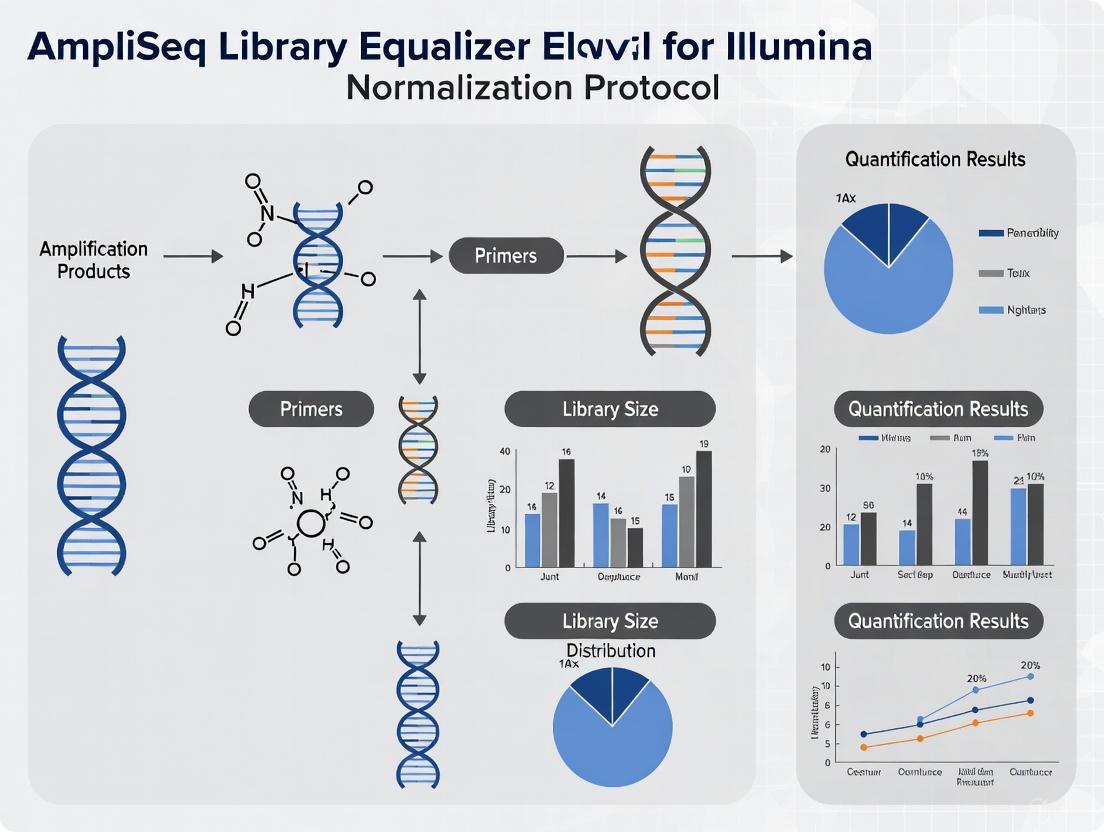
This comprehensive guide details the AmpliSeq Library Equalizer for Illumina, a bead-based normalization technology that streamlines targeted sequencing library preparation.
Optimizing AmpliSeq for Illumina Workflows: A Complete Guide to Library Equalizer Normalization
Abstract
This comprehensive guide details the AmpliSeq Library Equalizer for Illumina, a bead-based normalization technology that streamlines targeted sequencing library preparation. Designed for researchers and drug development professionals, the article covers foundational principles, step-by-step protocols, and automated implementation for the Immune Response Panel workflow. It provides practical troubleshooting solutions and comparative analysis against traditional quantification methods like qPCR, Qubit, and TapeStation, empowering laboratories to achieve consistent sequencing coverage and enhance throughput in cancer research, biomarker discovery, and clinical genomics.
Understanding AmpliSeq Library Equalizer: Principles and Role in NGS Workflows
Bead-based normalization is a critical laboratory technique designed to ensure uniform sequencing depth and consistent data quality across multiple samples in next-generation sequencing (NGS) workflows. This method is particularly vital in large-scale genomic studies, such as HLA sequencing or targeted panels like those used with the AmpliSeq for Illumina system, where accurate, comparable data from dozens or even hundreds of samples is essential for reliable results. The core principle involves using magnetic beads to precisely adjust the molar concentration of DNA libraries, replacing more labor-intensive methods like agarose gel sizing and bioanalyzer measurements. This technology underpins commercial reagents such as the AmpliSeq Library Equalizer for Illumina, enabling automated, high-throughput, and cost-effective library preparation for research and clinical applications [1] [2].
Detailed Mechanism of Action
The bead-based normalization mechanism leverages the predictable binding of DNA to magnetic beads in the presence of a crowding agent, typically polyethylene glycol (PEG) and salt. The following diagram illustrates the core workflow of a bead-based normalization protocol, known as the Bead-based Normalization for Uniform Sequencing (BeNUS) protocol [1].
The mechanism operates through three distinct bead-binding steps, each with a specific function:
- Initial Bead Cleanup: In this step, a specific volume of beads (e.g., 20 μl) is added to the PCR amplicon. The beads bind a broad range of DNA fragments. The supernatant, which contains the desired smaller fragments (under ~1000 bp), is collected and carried forward. This removes very large fragments and impurities [1].
- Precise Size Selection: A smaller volume of beads (e.g., 5 μl) is added to the supernatant from the first step. This limited quantity of beads binds larger fragments within the supernatant, specifically those above a desired threshold (e.g., 500 bp). The subsequent discard of the supernatant effectively removes primer dimers and other small unwanted fragments, resulting in a size-homogeneous library, typically between 500-1000 bp [1].
- Final Normalization: The size-selected library is then mixed with a diluted bead solution (e.g., 20-fold diluted). At this dilution, the beads can bind only a saturated amount of DNA. Since all samples are processed identically, this step effectively equalizes the molar concentration across all libraries, ensuring that each sample contributes an equivalent number of sequences during multiplexed sequencing [1].
This entire process is based on the fundamental principle that the amount of DNA bound to the beads is directly proportional to the number of beads available when the bead capacity is saturated [1].
Experimental Protocol and Methodology
Bead-Based Normalization for Uniform Sequencing (BeNUS) Protocol
The following section provides a detailed, step-by-step methodology for implementing a bead-based normalization protocol, as exemplified by the BeNUS protocol for HLA-B sequencing [1].
Principle: Utilize AMPure XP beads in a series of three steps with varying bead volumes and buffers to selectively bind and size-select DNA, resulting in normalized library concentrations.
Materials and Reagents:
- DNA libraries (e.g., long-range PCR amplicons)
- Magnetic beads (e.g., AMPure XP Beads)
- Polyethylene Glycol (PEG) solution (20%)
- Sodium Chloride (NaCl) solution (2.5 M)
- Ethanol (80%)
- Elution Buffer (e.g., Tris-HCl, pH 8.0)
- Magnetic stand
- Nuclease-free water
Procedure:
Initial Binding and Cleanup:
- Dilute the PCR amplicon to 50 μl with nuclease-free water.
- Add 20 μl of magnetic beads suspended in a solution of 20% PEG and 2.5 M NaCl to the 50 μl of diluted PCR product.
- Mix thoroughly and incubate at room temperature for 5 minutes.
- Place the tube on a magnetic stand until the solution clears. Transfer the supernatant, which contains fragments smaller than approximately 1000 bp, to a new tube.
Size Selection:
- To the collected supernatant, add 5 μl of pure magnetic beads.
- Mix thoroughly and incubate at room temperature for 5 minutes.
- Place the tube on a magnetic stand until the solution clears. Carefully discard the supernatant, which contains fragments smaller than the desired cutoff (~500 bp).
- With the tube on the magnetic stand, wash the bead-bound DNA twice with 200 μl of 80% ethanol without disturbing the pellet.
- Air-dry the bead pellet and elute the size-selected DNA (fragments ~500-1000 bp) in Elution Buffer.
Library Normalization:
- Add a calculated volume of 20-fold diluted magnetic beads to the eluted, size-selected library.
- Mix thoroughly and incubate at room temperature for 5 minutes.
- Place the tube on a magnetic stand and discard the supernatant.
- Wash the bead-bound DNA twice with 200 μl of 80% ethanol.
- Air-dry the bead pellet and elute the final, normalized DNA library in Elution Buffer. The resulting libraries are now ready for pooling and sequencing.
Key Experimental Parameters and Outcomes
The table below summarizes the quantitative improvements observed when implementing the BeNUS protocol compared to a traditional gel-based method [1].
Table 1: Performance Comparison of Normalization Methods in HLA-B Sequencing
| Parameter | Traditional Gel-Based Method | Bead-Based (BeNUS) Method |
|---|---|---|
| Sample Read Distribution (Range) | 0.06% to 2.74% of total reads | 0.2% to 1.55% of total reads |
| Average Read Distribution | Not specified | 1.04% ± 0.32% |
| Protocol Workflow | Laborious gel cutting and BioAnalyzer validation | Automated, bead-based purification steps |
| Key Outcome | Sample dropouts due to insufficient reads | No sample dropouts; all 96 samples fully phased |
The Scientist's Toolkit: Essential Research Reagents
Successful implementation of bead-based normalization and related NGS workflows requires a suite of specialized reagents and tools. The following table outlines the essential components.
Table 2: Key Research Reagent Solutions for Bead-Based Normalization
| Reagent / Tool | Function / Purpose | Example Product |
|---|---|---|
| Magnetic Beads | Selective binding and size-selection of DNA fragments based on volume and buffer conditions. | AMPure XP Beads [1] |
| Library Prep Kit | Facilitates library construction, including fragmentation and adapter ligation. | AmpliSeq Library Plus for Illumina [2] |
| Normalization Equalizer | Commercial kit designed specifically for bead-based normalization of libraries. | AmpliSeq Library Equalizer for Illumina [2] |
| Indexing Kit | Allows for multiplexing of samples by adding unique barcode sequences to each library. | AmpliSeq CD Indexes for Illumina [2] |
| Targeted Panel | A set of probes or primers designed to amplify specific genomic regions of interest. | Various AmpliSeq for Illumina Panels (e.g., Comprehensive Cancer Panel) [2] |
| Internal Standard Beads | Used in mass cytometry to monitor and correct for instrument variation over time, a related but distinct application of bead-based standardization [3]. | Polystyrene beads embedded with metal lanthanides (e.g., La, Pr, Tb) [3] |
Data Analysis and Technical Validation
Following sequencing, the effectiveness of bead-based normalization is quantitatively assessed by examining the distribution of sequence reads across the multiplexed samples. A successful normalization will result in a tight, uniform distribution of read counts per sample. In a study sequencing HLA-B for 96 samples, the BeNUS protocol achieved a read distribution ranging from 0.2% to 1.55% of the total 24.6 million reads, with an average of 1.04% ± 0.32% [1]. This represents a significant improvement over previous methods, which showed a much wider variation (0.06% to 2.74%), and successfully eliminated sample dropouts [1].
The quality of the data after normalization is further validated by downstream analytical metrics. This includes a high average mapping rate of the sequence reads to the reference genome (e.g., 99.63%) and the ability to achieve complete "haplotype phasing" of alleles, which requires consistent and sufficient sequencing depth across all samples [1]. The protocol demonstrated that an average sequencing depth of 800x was sufficient for full phasing of HLA-B alleles, and all 96 samples met this criterion without failure [1].
The AmpliSeq for Illumina ecosystem represents a highly integrated, targeted sequencing solution designed to generate high-quality libraries from precious and limited samples, such as FFPE tissue. This ecosystem is engineered to support a wide range of applications—from DNA to RNA analysis—encompassing cancer research, immunology, and disease profiling. At its core, the workflow seamlessly integrates several specialized kits and components that function in concert to transform raw nucleic acids into sequencing-ready libraries. The protocol fundamentally requires three essential elements: a library prep kit (AmpliSeq Library PLUS for Illumina), an indexing kit (AmpliSeq CD Indexes for Illumina), and a targeted panel (AmpliSeq for Illumina oligo pools) [2]. For RNA-focused studies, an additional mandatory step involves the AmpliSeq cDNA Synthesis for Illumina kit to convert RNA into cDNA prior to library construction [2].
Positioned as a critical post-library preparation step, the AmpliSeq Library Equalizer for Illumina provides an efficient, bead-based normalization method that ensures libraries are equilibrated to optimal concentrations for downstream sequencing. This entire ecosystem is architected to deliver exceptional performance on Illumina sequencing platforms, enabling researchers to achieve consistent, high-quality data with simplified, streamlined protocols that reduce hands-on time and minimize sample loss—a crucial consideration for clinical and translational research settings where sample integrity and reproducibility are paramount.
Core Components and Research Reagent Solutions
The AmpliSeq for Illumina workflow incorporates a meticulously formulated suite of reagents, each performing a specific function within the library preparation and normalization pipeline. These Research Reagent Solutions are optimized for compatibility and performance, ensuring robust amplification, efficient ligation, and reliable normalization across various sample types and input quantities. The following table details the key reagents, their configurations, and their specific functions within the experimental workflow.
Table 1: Research Reagent Solutions for AmpliSeq Library Preparation and Normalization
| Component | Reaction Configurations | Storage Conditions | Primary Function |
|---|---|---|---|
| AmpliSeq Library PLUS for Illumina | 24, 96, or 384 reactions [4] | -25°C to -15°C [4] | Core library preparation including amplification and enzymatic fragmentation |
| 1X Lib Amp Mix | Varies by kit size (1, 4, or 16 tubes) [4] | -25°C to -15°C [4] | Library amplification master mix |
| 10X Library Amp Primers | Varies by kit size (1, 1, or 4 tubes) [4] | -25°C to -15°C [4] | Primer set for targeted amplification |
| DNA Ligase | Varies by kit size (1, 1, or 4 tubes) [4] | -25°C to -15°C [4] | Enzymatic ligation of adapters |
| 5X AmpliSeq HiFi Mix | Varies by kit size (1, 1, or 4 tubes) [4] | -25°C to -15°C [4] | High-fidelity PCR mix for target amplification |
| FuPa Reagent | Varies by kit size (1, 1, or 4 tubes) [4] | -25°C to -15°C [4] | Enzymatic fragmentation and partial digestion of amplicons |
| Switch Solution | Varies by kit size (1, 1, or 4 tubes) [4] | -25°C to -15°C [4] | Facilitates library structure conversion |
| AmpliSeq cDNA Synthesis for Illumina | Sold separately [4] | -25°C to -15°C [4] | Converts RNA to cDNA for RNA panel sequencing |
| AmpliSeq Library Equalizer for Illumina | Standard configuration [4] | Varies by component (2-8°C or 15-30°C) [4] | Bead-based library normalization |
The AmpliSeq Library Equalizer kit contains several specialized components with specific storage requirements critical for maintaining reagent stability and performance. The Equalizer Beads, Equalizer Capture, Equalizer Elution Buffer, and Equalizer Primer must be stored at 2°C to 8°C, while the Equalizer Wash Buffer is stable at standard room temperature (15°C to 30°C) [4]. Proper storage conditions are essential for preserving the functional integrity of these reagents and ensuring reproducible normalization efficiency across multiple experiments. The strategic formulation of these components enables researchers to maintain a continuous workflow from library preparation through normalization without requiring manual quantification or dilution steps, thereby reducing technical variability and increasing throughput capacity for targeted sequencing applications.
Experimental Protocol: Comprehensive Library Preparation and Normalization
Library Construction Methodology
The initial phase of the AmpliSeq for Illumina protocol involves the meticulous conversion of input nucleic acids into adaptor-ligated libraries. For RNA samples, this process begins with cDNA synthesis using the AmpliSeq cDNA Synthesis for Illumina kit, which contains both 5X AmpliSeq cDNA Reaction Mix and 10X AmpliSeq RT Enzyme Mix to reverse transcribe RNA into stable cDNA templates [4] [2]. For DNA samples, the process initiates directly with targeted amplification. The core library preparation utilizes the AmpliSeq Library PLUS for Illumina kit, which provides all necessary components for amplification, enzymatic fragmentation, and adapter ligation in a single optimized system.
The detailed experimental procedure follows these critical steps:
Target Amplification: Combine 1X Lib Amp Mix, 10X Library Amp Primers, and 5X AmpliSeq HiFi Mix with the input DNA or cDNA. The Lib Amp Mix and HiFi Mix provide the enzymatic foundation for highly specific, multiplexed PCR amplification of targeted regions specified by the selected AmpliSeq panel.
Enzymatic Fragmentation: Treat amplification products with FuPa Reagent, which simultaneously fragments and partially digests the amplicons to optimal sizes for sequencing library construction. This enzymatic fragmentation approach eliminates the need for physical shearing methods and preserves sample integrity.
Adapter Ligation: Introduce DNA Ligase and Switch Solution to the fragmented amplicons to ligate Illumina-specific adapters, thereby creating a library structure compatible with Illumina sequencing platforms. The Switch Solution facilitates the structural transition necessary for downstream processing.
Library Amplification: Perform a final amplification step to enrich for adapter-ligated fragments, incorporating unique dual indices (UDIs) from the AmpliSeq CD Indexes for Illumina kit to enable sample multiplexing and downstream deconvolution.
Throughout this protocol, researchers should utilize the appropriate kit configuration (24-, 96-, or 384-reaction) based on their throughput requirements, ensuring reagent volumes are scaled accordingly [4]. All library preparation components should be maintained at their specified storage temperature (-25°C to -15°C) until use, with brief centrifugation before opening to collect contents at the tube bottom.
Library Equalization Protocol
Following library construction, the AmpliSeq Library Equalizer for Illumina implements a robust, bead-based normalization methodology that eliminates the need for quantitative QC steps such as qPCR or fragment analysis, streamlining the workflow significantly. The normalization procedure employs specifically formulated Equalizer Beads that bind libraries in a concentration-dependent manner, effectively normalizing library quantities across multiple samples.
The detailed normalization protocol consists of these methodical steps:
Bead Preparation: Resuspend the Equalizer Beads by vigorous vortexing to ensure homogeneous suspension. Transfer the appropriate volume of beads to a fresh microcentrifuge tube.
Library Capture: Combine the completed amplification reactions from the library preparation step directly with the Equalizer Beads. Mix thoroughly by pipetting and incubate at room temperature to allow for concentration-dependent binding of library fragments to the beads.
Bead Washing: Place the tube on a magnetic separator until the supernatant clears completely. Carefully remove and discard the supernatant while retaining the bead-bound normalized libraries. Wash the beads with the prepared Equalizer Wash Buffer to remove non-specifically bound contaminants and salts that might interfere with sequencing.
Library Elution: Resuspend the beads in the supplied Equalizer Elution Buffer to release the normalized libraries from the beads. The elution buffer is specifically formulated to efficiently release the bound libraries while maintaining their structural integrity.
Library Recovery: Transfer the eluate containing the normalized libraries to a fresh tube. The resulting libraries are now normalized to optimal concentrations for pooling and sequencing on Illumina platforms.
This bead-based normalization technology demonstrates broad compatibility with various AmpliSeq panels, including BRCA, Cancer Hotspot v2, Childhood Cancer, Comprehensive Cancer, and many others [2]. The entire equalization process can be completed in approximately 15-20 minutes, dramatically reducing hands-on time compared to manual quantification and normalization methods while ensuring consistent library representation in downstream sequencing applications.
Workflow Integration and Strategic Positioning
Diagram 1: AmpliSeq workflow integration from sample to sequencing
The AmpliSeq Library Equalizer occupies a strategically important position within the broader AmpliSeq ecosystem, functioning as an optional but highly valuable intermediary between library preparation and final sequencing. As illustrated in Diagram 1, the complete workflow begins with either DNA or RNA input, with RNA samples requiring mandatory conversion to cDNA using the AmpliSeq cDNA Synthesis kit before proceeding to library preparation [2]. The core library construction then occurs through the integrated action of the Library PLUS kit, CD Indexes, and a specific AmpliSeq panel that defines the genomic targets for amplification.
The Library Equalizer introduces a critical quality control and processing step that standardizes library concentrations across multiple samples, effectively addressing a common bottleneck in high-throughput sequencing workflows. This bead-based normalization technology demonstrates particularly strong utility in scenarios involving multiple sample batches, degraded samples such as FFPE tissue, or when processing libraries with varying amplification efficiencies [2]. The strategic implementation of this normalization step ensures equitable library representation during sequencing, improves data consistency, and reduces sequencing costs by minimizing lane under- or over-utilization.
Compatibility analysis reveals that the Library Equalizer integrates seamlessly with most AmpliSeq panels, with notable application in comprehensive cancer profiling (BRCA, Comprehensive Cancer, Myeloid), targeted gene expression (Immune Response, Transcriptome), and specialized immunology research (TCR beta-SR, Immune Repertoire) [2]. This broad compatibility profile positions the Equalizer as a versatile tool that enhances workflow standardization across diverse research applications, from oncology biomarker discovery to immunological monitoring and translational drug development programs.
The AmpliSeq for Illumina ecosystem represents a comprehensively engineered solution for targeted sequencing that integrates library preparation, targeted amplification, and optional normalization into a streamlined, efficient workflow. The strategic positioning of the AmpliSeq Library Equalizer as a bead-based normalization tool addresses a critical need for standardization and reproducibility in sequencing library preparation, particularly valuable in research and drug development settings where consistent results across experiments and sample batches are paramount. By eliminating manual quantification and normalization steps, this integrated system significantly reduces hands-on time while improving data quality and sequencing efficiency.
For researchers and drug development professionals implementing targeted sequencing applications, the complete AmpliSeq workflow—incorporating the Library PLUS kit, appropriate panels, and the Library Equalizer—delivers a robust, standardized approach suitable for challenging sample types including FFPE tissue and limited clinical specimens. This integrated methodological framework accelerates the translation of genomic information into actionable biological insights, supporting advancements in precision medicine and therapeutic development through reliable, high-quality targeted sequencing data.
This application note details the key advantages of the AmpliSeq Library Equalizer for Illumina, a bead-based library normalization kit that significantly enhances next-generation sequencing (NGS) workflow efficiency. By replacing manual quantification and dilution steps, the Equalizer kit reduces library preparation hands-on time from hours to minutes, slashes reagent consumption, and minimizes technical variability. We present quantitative data, a detailed normalization protocol, and essential reagent solutions that enable researchers and drug development professionals to achieve consistent, high-quality sequencing results with exceptional operational efficiency.
Traditional NGS library preparation involves multiple labor-intensive steps for library quantification and normalization, which introduce significant hands-on time and potential for technical error. The AmpliSeq Library Equalizer for Illumina revolutionizes this process by providing a simple, bead-based normalization method that integrates seamlessly into the AmpliSeq for Illumina workflow [5]. This protocol simplification is a critical advancement for laboratories processing high sample volumes, such as in clinical research and drug development, where throughput, reproducibility, and cost containment are paramount.
Quantitative Advantages: Speed and Cost-Effectiveness
The implementation of the Library Equalizer kit translates into direct, measurable benefits for the sequencing laboratory. The following table summarizes the key quantitative advantages that contribute to accelerated project timelines and reduced operational costs.
Table 1: Key Performance Metrics of the AmpliSeq Library Equalizer Workflow
| Metric | Traditional Workflow (Without Equalizer) | Equalizer Workflow | Advantage |
|---|---|---|---|
| Total Library Prep Hands-on Time [5] | ~5 hours (excluding quantification/normalization) | < 1.5 hours (including normalization) | > 70% Reduction in active labor |
| Normalization Process | Multi-step quantification (e.g., qPCR) followed by manual dilution | Single, automated bead-based step | Eliminates 2-3 manual steps, reduces variability |
| Input Quantity [5] | Varies by method | 1–100 ng (10 ng recommended per pool) | Low input requirement conserves precious samples |
| Multiplexing Capacity [5] | Limited by manual handling efficiency | Up to 384-plex | Enables high-throughput screening |
Experimental Protocol: Library Normalization Using AmpliSeq Library Equalizer
This section provides a detailed methodology for normalizing AmpliSeq for Illumina libraries using the Library Equalizer kit, based on the established workflow for panels such as the Myeloid Panel [6].
Pre-Normalization: Library Amplification
- Prepare Master Mix: In a sterile microcentrifuge tube, combine the following reagents on ice:
45 μL per sample × 1.1=49.5 μLof 1X Lib AMP Mix5 μL per sample × 1.1=5.5 μLof 10X Library Amp Primers [6]
- Aliquot and Amplify: Dispense the master mix into a PCR plate. Transfer the cleaned-up library constructs into the mix. Perform amplification using a thermal cycler with the "EQUAL" thermal cycler program [6].
Bead-Based Normalization
- Combine Libraries with Beads: Transfer the amplified libraries to a new plate or tube. Add a pre-defined volume of AmpliSeq Library Equalizer beads to each library [6]. The bead-based method automatically normalizes libraries based on their relative concentrations.
- Incubate and Capture: Incubate the mixture at room temperature to allow binding of the libraries to the beads. Place the plate on a magnetic separator until the supernatant is clear.
- Wash and Elute: While the plate is on the magnet, carefully remove the supernatant. Wash the bead-bound libraries with a freshly prepared 70% ethanol solution without disturbing the pellet. After washing and air-drying, elute the normalized libraries in a low-volume elution buffer (e.g., Low TE) [6].
Post-Normalization: Library Pooling and Sequencing
The eluted, normalized libraries are now at a uniform concentration and can be pooled directly for sequencing on Illumina platforms such as the MiSeq, iSeq, or NextSeq series [5].
Diagram: AmpliSeq Library Equalizer Normalization Workflow.
The Scientist's Toolkit: Essential Research Reagent Solutions
A complete AmpliSeq for Illumina workflow requires several key components. The table below lists the essential reagents and their specific functions.
Table 2: Essential Reagents for the AmpliSeq for Illumina Workflow with Library Equalizer
| Product Name | Catalog Number Examples | Function in the Workflow |
|---|---|---|
| AmpliSeq Library PLUS | 20019101 (24 rxns)20019102 (96 rxns) [5] [7] | Core library preparation reagents for constructing amplicon libraries. |
| AmpliSeq CD Indexes | Set A-D (20031676) [5] | Unique index adapters for multiplexing up to 384 samples in a single run. |
| AmpliSeq for Illumina Panel | Varies (e.g., Custom RNA Panel 20020496) [7] | Target-specific primer pools to amplify genes or regions of interest. |
| AmpliSeq Library Equalizer | 20019171 [5] [7] | Bead-based kit for normalizing libraries, eliminating quantification and dilution steps. |
| AmpliSeq cDNA Synthesis | 20022654 [2] [7] | Converts total RNA to cDNA; required for RNA panels (e.g., Immune Response, Myeloid). |
The AmpliSeq Library Equalizer for Illumina delivers substantial improvements in sequencing workflow efficiency. Its integrated, bead-based protocol directly addresses the major bottlenecks of speed, cost, and complexity in traditional library normalization. By adopting this technology, research and drug development teams can achieve higher throughput, greater reproducibility, and significant resource savings, accelerating the pace from sample to actionable genomic data.
In next-generation sequencing (NGS), library quantification and normalization are critical preparatory steps that directly impact the quality and reliability of sequencing data. The primary goal of normalization is to adjust individual library concentrations to a uniform level before pooling, ensuring an even read distribution across all samples during the sequencing run [8]. Inconsistent library concentrations can lead to significant data skewing, where some samples are over-represented while others are under-represented, compromising the integrity of experimental results [8]. This challenge is particularly pronounced in targeted sequencing approaches like AmpliSeq for Illumina, where multiplexed polymerase chain reaction (PCR) generates amplicon libraries of variable yields that require careful adjustment before sequencing [2] [5].
The AmpliSeq for Illumina workflow employs a highly multiplexed PCR-based approach that enables researchers to analyze from 12 to over 24,000 amplicons in a single panel [5]. While this technology offers substantial benefits in terms of speed and efficiency, with library preparation completed in approximately 5 hours with less than 1.5 hours of hands-on time [5], it introduces quantification challenges due to inherent variability in PCR amplification efficiency across different primer pairs. The AmpliSeq Library Equalizer for Illumina (catalog #20019171) addresses these challenges through a specialized bead-based normalization method that streamlines the process while maintaining consistency across samples [2] [5]. This application note examines the technical challenges of library quantification and presents optimized protocols for achieving consistent coverage in AmpliSeq for Illumina workflows, framed within broader research on normalization methodologies.
Library Quantification Challenges in NGS Workflows
Multiple technical factors contribute to library quantification challenges in NGS workflows. The amplification bias inherent in multiplex PCR approaches can result in substantial variation in library concentrations, even when starting with standardized input quantities [9]. This variability stems from differences in primer annealing efficiency, template quality, and reaction kinetics across thousands of simultaneous amplification reactions. Additionally, sample-specific factors such as the integrity of input nucleic acids, particularly when working with challenging sample types like formalin-fixed, paraffin-embedded (FFPE) tissues, can further exacerbate quantification inconsistencies [5] [10].
The fundamental requirement for accurate quantification lies in the need for precise molarity determination of sequencing libraries, which depends on both concentration measurements and accurate library size distribution analysis [8]. Traditional quantification methods face limitations when dealing with complex amplicon mixtures characteristic of AmpliSeq panels, where size variation, adapter artifacts, and the presence of primer dimers can interfere with accurate quantification [9]. These technical challenges are compounded by the practical realities of high-throughput laboratories, where workflow efficiency and reproducibility across multiple operators and experiments are essential for meaningful research outcomes [8] [5].
Impact on Data Quality
Inconsistent library quantification directly negatively impacts sequencing data quality through several mechanisms. Uneven cluster density on the flow cell can result from pooling libraries of varying concentrations, leading to suboptimal sequencing performance and potential data loss [8]. Coverage disparity across targeted regions reduces the statistical power for variant detection, particularly for low-frequency mutations that are critical in cancer research and genetic disease studies [9]. Furthermore, inefficient resource utilization occurs when sequencing capacity is wasted on over-represented samples while under-represented samples fail to generate sufficient data for confident analysis [8].
Table 1: Common Library Quantification Challenges and Their Impacts
| Challenge | Technical Cause | Impact on Data | Downstream Effect |
|---|---|---|---|
| Amplification Bias | Differential PCR efficiency across targets | Uneven coverage of genomic regions | Reduced sensitivity for variant detection |
| Sample Quality Variation | Degraded nucleic acids from FFPE samples | Inconsistent library yields between samples | Compromised comparative analysis |
| Adapter Artifacts | Presence of adapter-dimers and chimeric molecules | Overestimation of library concentration | Reduced sequencing efficiency and higher costs |
| Size Distribution Complexity | Variable amplicon sizes in multiplex panels | Inaccurate molarity calculations | Skewed representation of target regions |
AmpliSeq Library Equalizer: A Bead-Based Normalization Approach
The AmpliSeq Library Equalizer for Illumina employs a specialized bead-based normalization chemistry that automatically adjusts library concentrations to a consistent level without requiring manual quantification and dilution steps [2] [5]. This innovative approach integrates seamlessly into the AmpliSeq for Illumina workflow following the initial library amplification and cleanup steps, serving as a streamlined alternative to traditional manual normalization methods [8] [5]. The technology utilizes functionalized magnetic beads that selectively bind amplicon libraries in a concentration-dependent manner, effectively normalizing different input libraries to a standardized output concentration ideal for sequencing [11].
The Library Equalizer protocol is designed with workflow efficiency in mind, requiring minimal hands-on time while ensuring highly reproducible results across different operators and experiments [5]. The complete Equalizer protocol can be implemented within the broader AmpliSeq workflow, with specific steps for library capture, cleanup, and elution of normalized libraries ready for pooling and sequencing [11]. This integrated approach significantly reduces the technical variability introduced by manual pipetting steps and calculation errors that often plague traditional normalization methods [8]. For research environments requiring full traceability and protocol standardization, the Equalizer workflow can be implemented through the Clarity LIMS system with preconfigured steps for automated volume calculations and reagent tracking [11].
Comparative Performance
When compared to manual normalization methods, the AmpliSeq Library Equalizer demonstrates superior performance in several critical metrics. The normalization precision achieved with the bead-based approach consistently outperforms manual methods, with coefficient of variation values typically below 10% compared to 15-25% for manual normalization [8]. This enhanced precision directly translates to more consistent cluster densities during sequencing, optimizing data yield across all Illumina sequencing platforms compatible with AmpliSeq libraries, including the iSeq 100, MiSeq, NextSeq 500/550, and NextSeq 1000/2000 systems [5].
The practical benefits of the Library Equalizer extend beyond performance metrics to encompass workflow efficiency gains. The complete AmpliSeq workflow with Library Equalizer requires less than 1.5 hours of hands-on time compared to approximately 2.5 hours for workflows incorporating manual quantification and normalization [5]. This represents a 40% reduction in hands-on time, significantly increasing laboratory throughput while reducing opportunities for operator-induced variability [5]. Additionally, the Library Equalizer eliminates the need for intermediate quantification steps using instrumentation such as Bioanalyzer/Fragment Analyzer and qPCR, further streamlining the process and reducing consumable costs [8].
Table 2: AmpliSeq Library Equalizer Compatibility with Select AmpliSeq Panels
| AmpliSeq Panel | Library Equalizer Compatible | Sample ID Panel* | Direct FFPE DNA* |
|---|---|---|---|
| BRCA | Yes | Included/Separate | Yes |
| Cancer Hotspot v2 | Yes | Yes | Yes |
| Comprehensive Cancer | Yes | Yes | Yes |
| Myeloid | Yes | Included/Separate | |
| Focus | Yes | Yes | Yes |
| Transcriptome Human Gene Expression | Yes |
*Compatibility information for reference; based on manufacturer specifications [2]
Experimental Protocols for Library Evaluation
Manual Normalization Methodology
For laboratories performing manual normalization without the Library Equalizer, a systematic approach is essential for achieving consistent results. The manual normalization protocol consists of four critical steps: (1) determination of library size distribution, (2) library quantification, (3) dilution calculations, and (4) volumetric pooling [8]. Each step must be performed with careful attention to technical details to minimize variability and ensure sequencing success.
The initial size determination is performed using a microcapillary electrophoresis system such as the Agilent Bioanalyzer or Fragment Analyzer, which provides precise sizing information and identifies potential library issues including adapter dimers or unexpected size distributions [8]. Following size analysis, library quantification is performed using fluorescence-based methods recommended in the library preparation guide, with results converted from ng/μL to nM using the average library size obtained from the sizing analysis [8]. The dilution calculation step involves determining a common target concentration (typically 2-4 nM for most Illumina sequencing platforms) and calculating the appropriate dilution factors for each library using the equation: C₁V₁ = C₂V₂ [8]. A critical consideration in this step is ensuring that pipetted volumes remain at or above 2 μL to minimize concentration errors, with highly concentrated libraries requiring intermediate dilutions to maintain accuracy [8]. The final pooling step combines equal volumes of each normalized library, followed by thorough mixing to ensure homogeneity [8].
Equalizer Normalization Protocol
The AmpliSeq Library Equalizer protocol integrates into the standard AmpliSeq workflow following library amplification and cleanup steps. The complete Equalizer protocol consists of four main stages executed within the Clarity LIMS system or following manufacturer guidelines: (1) library cleanup, (2) library amplification, (3) capture and cleanup, and (4) library elution [11].
The process begins with the library cleanup step using Agencourt AMPure XP beads to purify amplification products [11]. Following cleanup, the library amplification step utilizes specific thermal cycler programs (EQUAL program for Equalizer Workflow) with automated calculation of master mix volumes based on sample count [11]. The critical capture and cleanup step employs the AmpliSeq Library Equalizer beads themselves, which selectively bind libraries and normalize concentrations through precisely controlled binding kinetics [11]. During this step, the bead-based chemistry automatically adjusts varying input concentrations to a consistent output level without requiring manual intervention or calculations. The final elution step releases normalized libraries from the beads in a ready-to-sequence format, with libraries typically eluted in 15-20 μL of elution buffer [11]. Throughout the protocol, automated systems track reagent volumes and quality control parameters, ensuring consistency across samples and processing batches [11].
Figure 1: AmpliSeq Library Equalizer Workflow Integration. The Equalizer protocol integrates after initial library cleanup and before final pooling, enabling automated normalization without manual quantification steps.
Research Reagent Solutions for AmpliSeq Workflows
Successful implementation of the AmpliSeq for Illumina workflow with consistent library normalization requires several specialized reagents and components that work in concert to deliver high-quality sequencing results. These solutions have been optimized for compatibility and performance across the entire workflow, from initial library preparation through final sequencing.
Table 3: Essential Research Reagents for AmpliSeq Workflows with Library Equalizer
| Product Name | Catalog Number | Function | Key Specifications |
|---|---|---|---|
| AmpliSeq Library PLUS | 20019101 (24rxn)20019102 (96rxn)20019103 (384rxn) | Core library preparation reagents | Includes reagents for preparing libraries; panels and indexes sold separately [5] |
| AmpliSeq CD Indexes | Set A: 20019105Set B: 20019106Set C: 20019107Set D: 20019167 | Sample indexing for multiplexing | 8 bp indexes; 96 indexes per set; sufficient for labeling 96 samples per set [5] |
| AmpliSeq Library Equalizer | 20019171 | Bead-based library normalization | Includes beads and reagents for library normalization; compatible with multiple AmpliSeq panels [2] [5] |
| AmpliSeq cDNA Synthesis | 20022654 | RNA-to-cDNA conversion (RNA panels only) | Converts RNA to cDNA for use with AmpliSeq RNA Panels; number of reactions varies by panel [2] [7] |
| AmpliSeq for Illumina Panels | Varies by panel | Target-specific primer pools | 12 to 12,288 amplicons; predefined or custom content; species-specific or community panels [5] [10] |
The integrated nature of these research reagents ensures optimal performance throughout the AmpliSeq workflow, with each component rigorously tested for compatibility and efficiency. The AmpliSeq Library PLUS forms the foundation of the library preparation process, providing the essential enzymes and buffers for targeted amplification [5]. The AmpliSeq CD Indexes enable flexible levels of multiplexing with minimal index hopping, a critical consideration for sensitive applications [5]. The AmpliSeq Library Equalizer represents the culminating step in standardizing library concentrations, while the cDNA Synthesis kit extends the workflow to RNA targets when conducting gene expression studies [2] [7]. Together, these components provide researchers with a complete, validated solution for targeted sequencing applications across diverse sample types and input quantities.
Comparative Analysis of Normalization Approaches
Technical Comparison
The selection between manual normalization and bead-based Equalizer approaches involves careful consideration of technical requirements, resource availability, and project objectives. Each method offers distinct advantages and limitations that make them suitable for different laboratory environments and applications.
Manual normalization provides researchers with full procedural control over each step of the normalization process, allowing for customization based on specific project requirements [8]. This approach requires significant technical expertise and relies on precise pipetting techniques to minimize volumetric errors, particularly when working with small volumes (<2 μL) that can introduce significant concentration inaccuracies [8]. The manual method also depends on access to specialized instrumentation for library sizing (Bioanalyzer/Fragment Analyzer) and quantification (fluorometric methods), representing additional investments in equipment and consumables [8]. While offering flexibility, the manual approach introduces multiple potential variability sources, including operator technique, calculation errors, and instrumentation performance, which can compromise reproducibility across experiments and between laboratory personnel [8].
In contrast, the AmpliSeq Library Equalizer approach standardizes the normalization process through automated chemistry that reduces operator-dependent variability [2] [5]. This bead-based method eliminates the need for intermediate quantification steps and associated instrumentation, potentially reducing overall workflow costs despite the initial reagent investment [5]. The Equalizer protocol demonstrates particular strength in high-throughput environments where processing consistency and workflow efficiency are prioritized, with the system capable of normalizing up to 384 libraries in a single kit [5]. The simplified workflow also reduces the technical barrier for implementation, allowing researchers with varying experience levels to generate consistent, high-quality results [5] [11].
Application-Specific Recommendations
The optimal normalization approach varies based on specific research applications, sample types, and experimental designs. For large-scale screening studies involving hundreds of samples processed across multiple batches, the AmpliSeq Library Equalizer provides significant advantages in consistency and throughput [5]. The reduced hands-on time and elimination of manual calculations minimize batch effects and operator-specific variability, enhancing data comparability across large sample sets [5] [11].
For method development or custom panel optimization where library behavior may be unpredictable, manual normalization offers greater flexibility for adjusting normalization parameters based on real-time quantification data [8]. The ability to customize dilution factors and incorporate additional cleanup steps can be advantageous when working with challenging samples or non-standard panel configurations [8] [9]. Similarly, for low-input applications where library yields may approach the detection limits of bead-based methods, manual normalization with potential concentration steps may be preferable despite the additional time investment [8].
When working with RNA panels requiring cDNA synthesis, the integrated Equalizer workflow maintains compatibility with the AmpliSeq cDNA Synthesis kit, providing a seamless path from RNA to normalized libraries [7]. For FFPE-derived samples with potentially compromised nucleic acid quality, the standardized Equalizer approach minimizes additional manipulation of fragile libraries while still achieving consistent normalization [2] [5]. The Direct FFPE DNA accessory (catalog #20023378) further enhances this application by enabling library preparation from slide-mounted FFPE tissues without requiring deparaffinization or DNA purification [2].
Figure 2: Decision Framework for Library Normalization Approaches. The selection between manual and Library Equalizer methods depends on application requirements, available resources, and sample characteristics.
Library quantification challenges represent a significant technical hurdle in targeted sequencing workflows, with direct implications for data quality, experimental reproducibility, and research efficiency. The AmpliSeq Library Equalizer for Illumina addresses these challenges through an innovative bead-based normalization approach that standardizes library concentrations without requiring manual quantification and dilution steps. This technology enables researchers to achieve consistent coverage across samples and experiments, enhancing the reliability of downstream variant detection and expression analysis.
The comparative analysis presented in this application note demonstrates that while manual normalization retains value in specific research contexts requiring maximum flexibility, the Library Equalizer approach provides substantial advantages in standardization, efficiency, and reproducibility for most routine applications. The integration of this technology within the broader AmpliSeq for Illumina ecosystem creates a seamless workflow from library preparation through sequencing, particularly beneficial for high-throughput environments and multi-operator core facilities. As targeted sequencing applications continue to expand in complexity and scale, solutions like the AmpliSeq Library Equalizer will play an increasingly important role in ensuring data consistency and quality across diverse research applications in cancer genomics, genetic disease research, and drug development.
Next-generation sequencing (NGS) library preparation is a critical first step in generating high-quality data for genomic and transcriptomic studies. The process involves converting extracted DNA or RNA samples into a library of fragments with specialized adapters attached, making them suitable for sequencing on NGS platforms [12]. For targeted sequencing applications, such as immune response profiling, specialized oligo panels are used to enrich for specific genes or regions of interest. The AmpliSeq for Illumina system provides a streamlined, PCR-based amplicon library prep workflow that enables researchers to simultaneously measure thousands of targets from challenging sample types, including formalin-fixed, paraffin-embedded (FFPE) tissue [2] [12].
A complete AmpliSeq for Illumina library prep protocol requires several components: the AmpliSeq Library Plus for Illumina kit (library prep kit), AmpliSeq CD Indexes for Illumina (index kit), and a specific AmpliSeq for Illumina panel (oligo pools) [2]. For RNA-based panels, an additional required component is the AmpliSeq cDNA Synthesis for Illumina kit (catalog # 20022654), which converts RNA into cDNA prior to library preparation [2]. Understanding the compatibility between these components is essential for designing successful experiments in immune oncology and other research areas.
Compatible AmpliSeq Panels and Accessories
The AmpliSeq for Illumina portfolio offers a range of panels designed for various applications, from targeted gene sequencing to comprehensive immune profiling. These panels maintain specific compatibility with accessory products that enhance workflow efficiency and data quality.
Table 1: AmpliSeq Panel Compatibility with Key Accessory Products
| AmpliSeq for Illumina Panel | Library Equalizer | Sample ID Panel | Direct FFPE DNA |
|---|---|---|---|
| BRCA | X | X* | X |
| Cancer Hotspot v2 | X | X | X |
| Childhood Cancer | X | X* | X |
| Comprehensive Cancer | X | X | X |
| Comprehensive v3 | X | X* | X |
| Immune Repertoire | |||
| Immune Response | X | ||
| Myeloid | X | X* | |
| On-Demand | X | X | X |
Note: * indicates the Sample ID Panel is included with the panel; otherwise, it is sold separately. Based on information from [2].
The AmpliSeq Library Equalizer for Illumina (catalog # 20019171) is a valuable accessory that normalizes libraries using a bead-based method, reducing hands-on time and improving sequencing efficiency [2]. This product is compatible with most DNA-based AmpliSeq panels, including those specifically designed for cancer research and immune response profiling. The AmpliSeq for Illumina Sample ID Panel (catalog # 20019162) generates a unique identifier for each sample, enabling sample tracking and quality control, while AmpliSeq for Illumina Direct FFPE DNA (catalog # 20023378) optimizes library preparation from challenging FFPE tissue samples [2].
Reagent Composition and Storage Conditions
Proper handling and storage of library preparation reagents is essential for experimental success. The AmpliSeq Library PLUS for Illumina is available in 24-, 96-, and 384-reaction configurations, with core components including Lib Amp Mix, Library Amp Primers, DNA Ligase, AmpliSeq HiFi Mix, FuPa Reagent, Low TE, and Switch Solution [4]. These reagents should be stored at -25°C to -15°C, with the exception of Low TE, which can be stored at room temperature [4]. The Library Equalizer kit contains Equalizer Beads, Equalizer Capture, Equalizer Elution Buffer, Equalizer Wash Buffer, and Equalizer Primer, most of which require storage at 2°C to 8°C [4].
Immune Profiling Technologies and Applications
Immune profiling characterizes the tumor immune microenvironment, which contains various lymphocytes, tumor-infiltrating leukocytes, dendritic cells, and other immune cells [13]. The composition, density, location, and functional state of tumor-infiltrating lymphocytes (TILs) provide valuable prognostic information across multiple cancer types, with studies showing that high lymphocytic infiltration (CD3+ T cells, CD8+ cytotoxic T cells, and CD45RO+ memory T cells) is associated with increased disease-free survival and overall survival in colorectal carcinoma, melanoma, ovarian cancer, and other malignancies [13].
The Immunoscore System
The Immunoscore is a powerful classification system that quantifies the in-situ T cell infiltrate in the tumor core and invasive margin [13]. This standardized assay evaluates CD3+ and CD8+ T-cell densities and categorizes patients into five groups (0-4) based on their immune profile. In a landmark validation study of 3,539 samples from 2,681 colon cancer patients, the Immunoscore was independently associated with time to recurrence, with significantly lower 5-year recurrence rates in patients with high Immunoscores [13]. The system has demonstrated superior prognostic value compared to traditional TNM staging and has been approved for clinical diagnostic use in colorectal cancer patients [13].
Comparison of Immune Profiling Technologies
Multiple technological approaches are available for immune profiling, each with distinct advantages and applications:
Table 2: Immune Profiling Technologies and Their Applications
| Technology | Principle | Applications | Sample Types |
|---|---|---|---|
| Tissue Section-Based | Preserves spatial information through staining | TIL evaluation, Immunohistochemistry (IHC) | FFPE, fresh-frozen tissue |
| AmpliSeq Immune Panels | Targeted amplicon sequencing with NGS | Immune repertoire, immune response profiling | DNA, RNA (with cDNA synthesis) |
| nCounter PanCancer Immune Profiling | Direct RNA quantification without amplification | 770-immune gene expression profiling | FFPE, fresh-frozen, PBMCs, cell lysates |
| Single-Cell RNA Sequencing | Gene expression at individual cell level | Cell type identification, heterogeneity analysis | Single-cell suspensions |
Tissue section-based immune profiling, including hematoxylin and eosin (HE) staining and immunohistochemistry (IHC), preserves spatial information and can be performed on archival FFPE samples [13]. HE staining provides a cost-effective method for semi-quantitative evaluation of TILs according to International Immuno-Oncology Biomarkers Working Group recommendations, while IHC uses antibodies to identify specific cell types (CD3+, CD4+, CD8+, CD45+) in tumor stroma and cancer cell nests [13].
The nCounter PanCancer Immune Profiling Panel (NanoString) enables direct multiplexed measurement of 770 immune-related genes without enzymatic processing or amplification [14]. This technology is particularly valuable for FFPE samples, where RNA is often degraded, as it demonstrates high correlation (r = 0.9) between fresh and FFPE RNA samples [13]. The panel covers genes from different immune cell types, checkpoint inhibitors, cancer-testis antigens, and both adaptive and innate immune responses [14].
Experimental Protocols for Immune Response Profiling
DNA-Based Immune Repertoire Profiling
DNA-based immune profiling captures the complete repertoire of T-cell and B-cell receptors by targeting the rearranged V(D)J regions in genomic DNA. This approach identifies all receptor sequences regardless of expression levels, providing a comprehensive view of immune receptor diversity.
DNA Immune Profiling Workflow
Protocol Steps:
- DNA Extraction: Obtain high-quality genomic DNA from patient samples (peripheral blood mononuclear cells, fresh tissue, or FFPE tissue). For FFPE samples, use the AmpliSeq for Illumina Direct FFPE DNA protocol (catalog # 20023378) to optimize library preparation from degraded material [2].
- Library Preparation: Use the AmpliSeq Library Plus for Illumina kit with a compatible immune profiling panel. The protocol involves:
- Target amplification using panel-specific primers
- Partial digestion of primer sequences with FuPa Reagent
- Adapter ligation using DNA Ligase and CD Indexes
- Library amplification using AmpliSeq HiFi Mix [4]
- Library Normalization: Normalize libraries to the same concentration using the AmpliSeq Library Equalizer for Illumina (bead-based method) or manual normalization [2] [8].
- Pooling and Sequencing: Combine equal volumes of normalized libraries and sequence on appropriate Illumina platforms following standard denaturation and dilution procedures [8].
RNA-Based Immune Response Profiling
RNA-based immune profiling offers several advantages over DNA-based approaches, including enhanced sensitivity for detecting expressed receptors and the ability to identify functional immune responses through gene expression signatures.
RNA Immune Profiling Workflow
Protocol Steps:
- RNA Extraction and QC: Extract total RNA from patient samples (tissue, PBMCs, or cell lines). Assess RNA quality and quantity using appropriate methods (e.g., Bioanalyzer, Fragment Analyzer). For FFPE samples, use extraction kits designed for degraded RNA (e.g., QIAGEN RNeasy FFPE Kit) [13].
- cDNA Synthesis: Convert RNA to cDNA using the AmpliSeq cDNA Synthesis for Illumina kit (catalog # 20022654), which is specifically optimized for compatibility with AmpliSeq RNA panels [2]. The kit includes 5X AmpliSeq cDNA Reaction Mix and 10X AmpliSeq RT Enzyme Mix [4].
- Library Preparation: Prepare sequencing libraries using AmpliSeq Library Plus for Illumina with a targeted immune panel (e.g., Immune Response Panel). The workflow is similar to DNA library prep but uses cDNA as starting material [2].
- Library Normalization and Equalization: Normalize libraries using the AmpliSeq Library Equalizer for Illumina. This bead-based method efficiently normalizes libraries without the need for precise concentration measurements, saving time and reducing pipetting errors [2] [8].
- Sequencing and Analysis: Pool equalized libraries and sequence on Illumina platforms. Analyze data using appropriate bioinformatics pipelines for gene expression quantification or immune repertoire analysis.
Comparison of DNA vs. RNA for Immune Profiling
The choice between DNA and RNA templates significantly impacts immune profiling results. RNA-based approaches generally offer higher sensitivity for detecting expressed immune receptors, with studies showing 1.5-2x more TCR/BCR clonotypes detected from mRNA compared to gDNA from the same cell populations [15]. This enhanced sensitivity stems from the higher copy number of mRNA per cell (10- to 100-fold more than gDNA) and the transcriptional upregulation of TCR and BCR in antigen-activated clonotypes (up to 1,000-fold for plasma B cells) [15].
Additionally, RNA-based profiling selectively targets functionally expressed receptor chains, avoiding amplification of non-functional pseudogenes and open reading frames that can contribute to background noise in DNA-based approaches [15]. RNA templates also enable identification of immunoglobulin isotypes, which cannot be determined from gDNA because the V(D)J and constant regions are separated by introns [15].
The Scientist's Toolkit: Research Reagent Solutions
Table 3: Essential Reagents for Immune Profiling with AmpliSeq
| Product/Reagent | Function | Application Note |
|---|---|---|
| AmpliSeq Library Plus for Illumina | Core library preparation | Contains all enzymes and buffers for amplification, digestion, ligation, and purification [4] |
| AmpliSeq CD Indexes | Sample multiplexing | Enables pooling of multiple libraries by adding unique barcode sequences [2] |
| AmpliSeq Library Equalizer | Library normalization | Bead-based normalization method; reduces hands-on time vs manual normalization [2] |
| AmpliSeq cDNA Synthesis Kit | RNA to cDNA conversion | Required for all RNA panels; optimized for compatibility with AmpliSeq workflow [2] |
| AmpliSeq Immune Response Panel | Targeted immune gene enrichment | Pre-designed oligo pool for immune-relevant transcripts [2] |
| AmpliSeq Direct FFPE DNA | FFPE DNA library prep | Optimized for challenging FFPE samples; compatible with multiple DNA panels [2] |
| QIAGEN RNeasy FFPE Kit | RNA from FFPE samples | Extracts high-quality RNA from archived FFPE tissue; compatible with Nanostring and AmpliSeq [13] |
Best Practices for Library Normalization and Quality Control
Proper library normalization is essential for achieving balanced sequencing coverage across multiple samples. The AmpliSeq Library Equalizer for Illumina provides a bead-based normalization approach that is integrated into the workflow, eliminating the need for precise concentration measurements and manual dilutions [2]. For protocols requiring manual normalization, follow these best practices:
- Determine Library Size: Validate library size distribution using capillary electrophoresis systems (Bioanalyzer or Fragment Analyzer). This step also identifies potential issues such as adapter dimers or unexpected size distributions [8].
- Quantify Libraries: Use sensitive fluorescence-based quantification methods (e.g., Qubit dsDNA HS Assay) as specified in library preparation guides. Convert concentration values from ng/µl to nM using the average library size obtained from sizing analysis [8].
- Plan Dilution Calculations: Calculate dilutions to achieve a common concentration (typically 2-4 nM for most Illumina platforms). Use the formula:
Volume of Library = (Desired Concentration × Final Volume) / Initial Concentration. For highly concentrated libraries, perform intermediate dilutions to ensure pipetting volumes are at least 2 µl for accuracy [8]. - Pool Normalized Libraries: Combine equal volumes of each normalized library and mix thoroughly by pipetting up and down 10 times before sequencing [8].
For quality control, incorporate the PhiX Control v3 library as a sequencing run control, particularly for balanced amplicon panels or when sequencing diversity is low. Additionally, utilize platform-specific QC protocols such as the MiSeq i100 Series for library quality assessment before large-scale sequencing [12].
The AmpliSeq for Illumina system provides a robust, targeted sequencing solution compatible with both DNA and RNA panels for comprehensive immune response profiling. Understanding panel compatibility with accessory products like the AmpliSeq Library Equalizer enables researchers to optimize workflows for efficiency and reproducibility. The choice between DNA and RNA templates depends on research goals: DNA-based approaches capture the complete immune receptor repertoire, while RNA-based methods offer enhanced sensitivity for expressed receptors and functional immune responses. By following optimized protocols and best practices for library preparation, normalization, and quality control, researchers can generate high-quality data to advance understanding of the tumor immune microenvironment and its role in disease progression and treatment response.
Step-by-Step Protocol: Implementing Library Equalization in Research and Automated Workflows
In targeted next-generation sequencing (NGS) using the AmpliSeq for Illumina platform, the process of library normalization represents a critical step to ensure sequencing efficiency and data quality. The AmpliSeq Library Equalizer for Illumina provides a bead-based normalization method that streamlines library preparation by eliminating the need for manual quantification and dilution steps [5] [16]. This automated approach significantly reduces hands-on time while improving reproducibility across samples.
This technical note details the standardized workflow from an amplified library to a finalized, normalized eluate, framed within the broader research context of optimizing AmpliSeq Library Equalizer protocols. The documented protocol enables researchers to achieve uniform library representation, which is particularly valuable in applications requiring consistent coverage across targets, such as gene expression studies, cancer hotspot detection, and custom panel sequencing [2]. The entire normalization process integrates seamlessly with the Clarity LIMS environment, facilitating automated reagent calculations and step transitions within a controlled workflow framework [11].
Workflow Principles and Mechanism of Action
Core Principles of Bead-Based Normalization
The AmpliSeq Library Equalizer employs a bead-based capture mechanism that fundamentally differs from traditional quantification-based normalization methods. Rather than relying on precise concentration measurements followed by manual pooling adjustments, this technology utilizes specialized beads that bind libraries in a concentration-dependent manner [16]. This binding characteristic allows the system to effectively normalize libraries by retaining optimal quantities during the capture phase while removing excess amplification products.
The underlying mechanism operates on the principle of competitive binding, where bead binding sites become saturated at predetermined library concentrations, automatically standardizing the amount of carried-forward material regardless of initial concentration variations. This process occurs during the Perform Capture and Clean Up step, where the equalizer beads selectively bind amplified libraries, followed by washing steps to remove impurities and excess reagents [11]. The final elution step then releases the normalized libraries in a purified, sequencing-ready format.
Integration with AmpliSeq Chemistry
The normalization protocol is specifically optimized for AmpliSeq for Illumina libraries, which are generated through a multiplex PCR-based workflow [5]. This compatibility ensures maximum efficiency with amplicon-based libraries ranging from 12 to over 12,000 amplicons. The equalizer beads function effectively across various AmpliSeq panels, including the Immune Response Panel, Comprehensive Cancer Panel, Custom DNA Panels, and numerous other targeted sequencing applications [2].
Table 1: AmpliSeq Library Equalizer Compatibility with Selected AmpliSeq Panels
| AmpliSeq for Illumina Panel | Library Equalizer Compatibility | Primary Research Applications |
|---|---|---|
| Immune Response Panel | Yes | Immunogenomics, cytokine signaling |
| Comprehensive Cancer Panel | Yes | Oncogenomics, somatic variant detection |
| Custom DNA Panels | Yes | Focused genomic regions of interest |
| BRCA Panel | Yes | Hereditary cancer risk assessment |
| Myeloid Panel | Yes | Hematological malignancies |
| Transcriptome Human Gene Expression | Yes | Gene expression profiling |
Detailed Experimental Protocol
Equipment and Reagent Specifications
The library normalization workflow requires specific reagents and equipment to ensure reproducible results. The essential components include the AmpliSeq Library Equalizer for Illumina (catalog #20019171) [16], which contains all necessary beads and reagents for the normalization process. Additional required materials include the AmpliSeq Library PLUS for Illumina (available in 24, 96, or 384 reactions) [5], Agencourt AMPure XP Beads (Thermo Fisher, catalog #NC9959336 or NC9933872) [11], and fresh 70% ethanol prepared daily [11].
The protocol is supported on various Illumina sequencing instruments, including the MiSeq System, iSeq 100 System, NextSeq 550 System, NextSeq 2000 System, and NextSeq 1000 System [5]. Thermal cycler compatibility is essential, with specific programs (EQUAL) designated for the equalizer workflow [11]. The automated version of this protocol implemented in Clarity LIMS includes preconfigured settings for these instruments, automated reagent calculations, and defined step transitions to minimize manual intervention.
Table 2: Key Research Reagent Solutions for Library Normalization
| Reagent/Lot | Catalog Number | Function in Workflow |
|---|---|---|
| AmpliSeq Library Equalizer for Illumina | 20019171 | Bead-based normalization of libraries |
| Agencourt AMPure XP Beads | NC9959336; NC9933872 | Magnetic bead-based cleanups |
| AmpliSeq Library PLUS for Illumina | 20019101 (24-rxn) | Library preparation master mix |
| 70% Ethanol | - | Purification and washing |
| Elution Buffer | Included with Equalizer | Final resuspension of normalized libraries |
Step-by-Step Workflow Procedure
Workflow Initialization and Sample Preparation
The normalization workflow begins with an amplified library generated through the standard AmpliSeq for Illumina library preparation process. Prior to normalization, the amplified library should have undergone initial cleanup steps using AMPure XP beads to remove primers, enzymes, and other reaction components [11]. The Clarity LIMS system automatically calculates required reagents based on sample count, applying a 1.1x overage factor to ensure sufficient volume for liquid handling operations [11].
For the Amplify Library step, the system automatically computes master mix volumes using the formula:
1X Lib AMP Mix (μL) = Total Samples × 1.1 × 45
10X Library Amp Primers (μL) = Total Samples × 1.1 × 5 [11]
The thermal cycler program must be set to "EQUAL" specifically for the Equalizer workflow, as this program contains optimized temperature parameters for the subsequent capture step [11].
Library Capture and Cleanup
The core normalization occurs during the Perform Capture and Clean Up step, where the AmpliSeq Library Equalizer beads are added to the amplified library [11]. During this step:
- The bead suspension is thoroughly mixed before use to ensure uniform distribution.
- The bead-to-library ratio is critical for effective normalization, with the Clarity LIMS automatically calculating precise volumes based on the number of samples.
- The mixture is incubated under specific conditions that facilitate optimal binding of libraries to the equalizer beads.
- Following incubation, a magnetic separation is performed to retain the bead-bound libraries while discarding the supernatant containing excess amplification products.
- Two wash steps with freshly prepared 70% ethanol are performed to remove residual contaminants while maintaining bead-bound libraries.
This capture process effectively normalizes library concentrations across samples by retaining a consistent amount of amplified product regardless of initial concentration variations, thereby eliminating the need for precise quantification and manual normalization [16].
Library Elution and Quality Assessment
The final Elute Library step releases the normalized libraries from the equalizer beads into a sequencing-compatible solution [11]. The elution process involves:
- Adding elution buffer to the washed bead-bound libraries.
- Incubating at a defined temperature to promote efficient library release from the beads.
- Magnetic separation to transfer the normalized eluate to a fresh tube.
The resulting normalized eluate is now ready for sequencing pool preparation or downstream applications. While the Equalizer workflow automatically normalizes libraries, optional quality assessment can be performed using fluorometric methods or capillary electrophoresis to verify library size distribution and confirm the absence of contaminants.
Workflow Visualization
Technical Specifications and Performance Parameters
The complete workflow from amplified library to normalized eluate requires approximately 5 hours for library preparation (including normalization), with less than 1.5 hours of hands-on time [5]. The process accommodates 1-100 ng input material, with 10 ng per pool recommended for optimal performance [5]. The normalized libraries generated through this protocol are compatible with all major Illumina sequencing systems, including iSeq 100, MiSeq, NextSeq 500/1000/2000 series instruments [5].
The Equalizer workflow supports processing of up to 96 uniquely indexed libraries in a single run [11], with scalability to 384 reactions using the appropriate reagent formats [5]. The bead-based normalization technology demonstrates particular robustness with challenging sample types, including FFPE tissues and blood specimens [5] [2], making it suitable for clinical research applications where sample quality and quantity may vary.
Applications in Research and Drug Development
The streamlined normalization workflow enables researchers to accelerate project timelines while maintaining data consistency across experiments. In drug development pipelines, the protocol facilitates high-throughput screening of genetic targets across large sample sets with minimal technical variation introduced during library preparation [17]. The customized AmpliSeq panels for pain genotyping described in research literature exemplify how this normalization approach supports complex genotyping assays in pharmacological studies [17].
For cancer research applications, the compatibility of the Equalizer workflow with panels such as the Comprehensive Cancer Panel and BRCA Panel enables efficient normalization of libraries for variant detection [2]. The automated implementation in Clarity LIMS further enhances reproducibility through standardized reagent calculations and step-by-step protocol guidance, reducing inter-operator variability in multi-site studies [11] [18].
The integration of this normalization methodology with automated liquid handling systems creates a seamless pathway from library amplification to sequencing-ready pools, representing a significant efficiency improvement over traditional quantification-based normalization approaches. This end-to-end workflow standardization ensures that researchers can obtain consistent, high-quality sequencing data across projects and throughout extended research timelines.
The AmpliSeq Library Equalizer for Illumina is a critical component in next-generation sequencing workflows, specifically designed for the normalization of AmpliSeq libraries. This bead-based solution streamlines library preparation, ensuring consistent sequencing coverage and improving the efficiency of downstream genetic analysis. This manual protocol provides a detailed, step-by-step guide for researchers, scientists, and drug development professionals to execute the reagent preparation, capture, wash, and elution steps essential for successful library normalization. The procedures outlined herein are fundamental to achieving high-quality sequencing results in complex research applications, including cancer genomics and transcriptomic studies where precise library representation is paramount.
Experimental Preparation
Reagent Specifications and Storage Conditions
Proper storage and handling of the AmpliSeq Library Equalizer kit components are vital for assay performance and reproducibility. The kit consists of several reagents with specific storage requirements as detailed below.
Table 1: AmpliSeq Library Equalizer Kit Components and Storage Conditions [4] [19]
| Reagent | Storage Condition | Quantity per Kit (20019171) |
|---|---|---|
| Equalizer Beads | 2°C to 8°C | 1 |
| Equalizer Capture | 2°C to 8°C | 1 |
| Equalizer Elution Buffer | 2°C to 8°C | 1 |
| Equalizer Wash Buffer | 15°C to 30°C | 1 |
| Equalizer Primer | 2°C to 8°C | 1 |
Note: The AmpliSeq Library PLUS for Illumina kit, which is often used in conjunction with the Equalizer, must be stored at -25°C to -15°C [4]. Always ensure all reagents are thoroughly centrifuged and mixed gently before use to maintain consistency.
The Scientist's Toolkit: Essential Research Reagent Solutions
A successful normalization experiment requires precise combinations of specialized reagents and equipment. The following toolkit details the key materials and their functions within the AmpliSeq for Illumina workflow.
Table 2: Essential Research Reagent Solutions and Materials for the AmpliSeq Equalizer Workflow [4] [11] [19]
| Item | Function / Application | Example / Supplier |
|---|---|---|
| AmpliSeq Library Equalizer for Illumina | Bead-based normalization of libraries for balanced sequencing coverage. | Illumina (Cat. No. 20019171) [19] |
| Agencourt AMPure XP Beads | Clean-up of sequencing libraries by size selection and purification of DNA. | Supplier: Thermo [11] |
| 1X Lib Amp Mix | Amplification of the library constructs during the PCR step. | Part of AmpliSeq Library PLUS kit [4] [11] |
| 10X Library Amp Primers | Provides primer pairs for targeted amplification of the library. | Part of AmpliSeq Library PLUS kit [4] [11] |
| FuPa Reagent | Fragmentation and partial digestion of amplified PCR products. | Part of AmpliSeq Library PLUS kit [4] |
| Switch Solution | Facilitates fluidic changes during the library preparation process. | Part of AmpliSeq Library PLUS kit [4] |
| Low TE | Low Tris-EDTA buffer used for dilution and resuspension of nucleic acids. | Part of AmpliSeq Library PLUS kit [4] |
| Thermal Cycler | Programmable instrument for precise temperature cycling during library amplification. | Used with "EQUAL" program [11] |
Protocol Steps
The following diagram illustrates the logical flow of the manual normalization protocol, from initial library cleanup to the final elution of normalized libraries ready for sequencing.
Step 1: Clean Up Library
Objective: To purify the initial library using solid-phase reversible immobilization (SPRI) bead-based technology, removing short fragments, enzymes, and salts.
Methodology: [11]
- Transfer the library reaction to a fresh microcentrifuge tube.
- Add a defined volume of Agencourt AMPure XP Beads to the library. The typical bead-to-sample ratio is 1.8X.
- Mix thoroughly by pipetting and incubate at room temperature for 5 minutes.
- Place the tube on a magnetic stand until the supernatant is clear.
- Carefully remove and discard the supernatant without disturbing the bead pellet.
- With the tube on the magnetic stand, wash the bead pellet twice with 200 µL of freshly prepared 80% ethanol. Incubate for 30 seconds per wash before removing the ethanol.
- Air-dry the bead pellet for 5-10 minutes, ensuring it does not crack.
- Remove the tube from the magnetic stand and elute the DNA in a suitable volume of Low TE or nuclease-free water. Mix well.
- Incubate for 2 minutes at room temperature, then place the tube back on the magnetic stand. Once clear, transfer the purified library to a new tube.
Step 2: Amplify Library
Objective: To amplify the purified library, ensuring sufficient material for the subsequent capture and normalization steps.
Methodology: [11]
- Prepare the amplification master mix on ice. The volumes are calculated based on the number of samples (
n), including an overtage of 10% to account for pipetting loss.n * 1.1 * 45 µLof 1X Lib Amp Mixn * 1.1 * 5 µLof 10X Library Amp Primers
- Mix the master mix gently and dispense the appropriate volume into each PCR tube or plate well.
- Add the purified library from Step 1 as the template.
- Run the amplification on a thermal cycler using the pre-defined "EQUAL" thermal cycling program [11].
Step 3: Perform Capture and Clean Up
Objective: To normalize the amplified library concentration using the specific Equalizer Beads and Equalizer Capture mix.
Methodology: [11]
- Vortex the Equalizer Beads to ensure a homogeneous suspension.
- Combine the following in a nuclease-free tube:
- The amplified library from Step 2.
- A calculated volume of Equalizer Capture mix.
- A calculated volume of Equalizer Beads.
- Mix the components thoroughly by pipetting up and down.
- Incubate the mixture at room temperature for a specified duration (e.g., 15 minutes) to allow the capture of library molecules by the beads. Agitate periodically during incubation.
- Briefly centrifuge the tube and place it on a magnetic stand. Allow separation until the supernatant is clear.
- Carefully remove and discard the supernatant. This step removes excess, unbound library fragments.
Step 4: Wash
Objective: To remove non-specifically bound contaminants and salts from the normalized library bound to the Equalizer Beads.
- With the tube remaining on the magnetic stand, add a predetermined volume of Equalizer Wash Buffer to the bead pellet.
- Without disturbing the beads, incubate for 1 minute at room temperature.
- Carefully remove and discard the wash buffer.
- Repeat the wash step once more for a total of two washes.
- After the second wash, perform a quick spin to collect residual liquid and return the tube to the magnet. Remove any remaining traces of wash buffer with a low-volume pipette.
- Air-dry the bead pellet for a few minutes, ensuring it does not become desiccated.
Step 5: Elute Library
Objective: To release the normalized library from the Equalizer Beads into a clean buffer, ready for quality control and sequencing.
Methodology: [11]
- Remove the tube from the magnetic stand.
- Add the recommended volume of pre-warmed Equalizer Elution Buffer or nuclease-free water to the bead pellet.
- Mix thoroughly by pipetting to resuspend the beads completely.
- Incubate at the specified temperature (e.g., 70°C for 2 minutes or as per kit instructions) to elute the DNA from the beads.
- Place the tube back on the magnetic stand and wait for the solution to clear.
- Transfer the supernatant, which contains the normalized and purified library, to a new, labeled tube.
- Proceed with library quantification (e.g., using Qubit or qPCR) and quality assessment (e.g., Bioanalyzer or TapeStation) before pooling and sequencing.
Application in Cancer Research
The precision and robustness of the AmpliSeq Library Equalizer protocol are instrumental in oncology research, where detecting low-frequency variants is critical. For instance, in a seminal study on ameloblastoma, a combination of BRAF V600E allele-specific PCR and the Ion AmpliSeq Cancer Hotspot Panel revealed that 88% of cases harbored activating, mutually exclusive mutations in the FGFR2-RAS-BRAF pathway, with BRAF V600E being the most common (62%) [20]. This discovery was pivotal, as it correlated the BRAF V600E mutation with a younger age of onset and identified a potential therapeutic vulnerability. The efficacy of the BRAF inhibitor vemurafenib was subsequently confirmed in an ameloblastoma-derived cell line, demonstrating how standardized library preparation and normalization are foundational for generating reliable data that can bridge the gap from genomic discovery to pre-clinical validation [20].
This manual protocol provides a comprehensive guide for executing the reagent preparation, capture, wash, and elution steps of the AmpliSeq Library Equalizer for Illumina. Adherence to the specified storage conditions, reagent volumes, and incubation times is critical for achieving optimal normalization, which in turn ensures uniform sequencing coverage and enhances the detection of true genetic variants. The integration of this protocol into broader next-generation sequencing workflows, as evidenced by its application in cancer genomics, empowers researchers to generate high-fidelity data that can accelerate scientific discovery and drug development.
The Equalizer Workflow for the AmpliSeq for Illumina Immune Response Panel represents a significant advancement in the standardization and automation of targeted RNA sequencing library preparation within Clarity LIMS. This preconfigured protocol is engineered for the preparation of up to 96 uniquely indexed libraries from total RNA input, integrating the AmpliSeq Library Equalizer for Illumina to automate the critical library normalization step [11]. The automation of this workflow minimizes hands-on time, reduces potential for manual error, and enhances reproducibility, which is paramount for clinical cancer research and drug development studies requiring high-throughput analysis of immune response signatures [10].
Framed within broader research on the AmpliSeq Library Equalizer for Illumina normalization protocol, this automated implementation demonstrates how bead-based normalization can be seamlessly incorporated into a LIMS-managed pipeline. The Equalizer kit (Catalog # 20019171) contains the necessary beads and reagents to normalize libraries prepared with the AmpliSeq for Illumina method, and its compatibility with the Immune Response Panel is explicitly confirmed in Illumina's documentation [2] [5]. By leveraging Clarity LIMS, the entire workflow—from cDNA synthesis to normalized library elution—benefits from automated volume calculations, reagent tracking, and quality control pass/fail assignment based on user-defined thresholds, ensuring that data generated for thesis research is both robust and reliable [11].
Workflow Components and Reagent Specifications
Core and Required Components
The successful execution of the Equalizer Workflow for the Immune Response Panel depends on a suite of specialized kits and reagents. The table below details the essential components, their specific functions within the protocol, and their catalog numbers for procurement.
Table 1: Core Reagent Kits and Components for the Automated Equalizer Workflow
| Component Name | Function in the Workflow | Catalog Number | Compatibility Note |
|---|---|---|---|
| AmpliSeq Library PLUS for Illumina | Provides core reagents for library preparation. | 20019101 (24 rxns), 20019102 (96 rxns), 20019103 (384 rxns) |
Required for all steps [5]. |
| AmpliSeq CD Indexes for Illumina | Provides unique indexing adapters for sample multiplexing. | Set A: 20019105, Set B: 20019106, Set C: 20019107, Set D: 20019167 |
Enables pooling of up to 384 samples [5]. |
| AmpliSeq for Illumina Immune Response Panel | Target-specific oligo pool for immune gene amplification. | Panel-specific | The target enrichment panel [11]. |
| AmpliSeq cDNA Synthesis for Illumina | Converts input total RNA to cDNA for the RNA panel. | 20022654 |
Mandatory for RNA input [2] [7]. |
| Agencourt AMPure XP Beads | Used for clean-up steps post-amplification. | NC9959336 or NC9933872 |
For size selection and purification [11]. |
Key Accessory Products
In addition to the core components, several accessory products are available to enhance the workflow. The AmpliSeq Library Equalizer for Illumina (Catalog # 20019171) is the central focus of this normalization protocol research, providing a bead-based method for library normalization that is integrated directly into the automated workflow [2] [5]. Furthermore, the AmpliSeq for Illumina Sample ID Panel (Catalog # 20019162) can be incorporated to generate a unique genetic identifier for each sample, thereby minimizing sample misidentification in large-scale studies [5]. For researchers working with challenging sample types, the AmpliSeq for Illumina Direct FFPE DNA kit is available, though its primary use is for DNA panels [2].
Detailed Automated Protocol in Clarity LIMS
The automated Equalizer Workflow is a preconfigured protocol within Clarity LIMS, designed to support the AmpliSeq for Illumina Immune Response Panel v1.1 [11]. The process begins with extracted RNA samples; notably, the workflow does not include a nucleic acid extraction step [11]. The initial setup in Clarity LIMS involves assigning samples to the "Equalizer Workflow (AmpliSeq for Illumina Immune Response Panel v1.1)" protocol. The system automatically groups samples by containers and sorts them by well position, streamlining sample management [11]. A critical preliminary step is the conversion of total RNA to cDNA using the AmpliSeq cDNA Synthesis for Illumina kit, which is a mandatory requirement before proceeding with the library preparation steps for any AmpliSeq RNA panel, including the Immune Response Panel [2] [7].
Step 1: Clean Up Library
The first formal step of the library prep protocol is the "Clean Up Library" step. In this phase, the initial amplified library undergoes purification using Agencourt AMPure XP Beads [11]. This bead-based clean-up removes primers, dimers, and other enzymatic reaction components, ensuring that only the desired amplicons proceed to subsequent steps. In the Clarity LIMS interface, this step requires the user to record the preparation date of the 70% ethanol used in the clean-up process, a detail that aids in traceability and quality control [11]. The automation for this step is configured to advance to the next step automatically upon completion, ensuring a seamless and uninterrupted workflow.
Step 2: Amplify Library
The "Amplify Library" step is where the library undergoes further amplification. A key feature of the Clarity LIMS automation is the automatic calculation of master mix volumes upon entry into this step. The automation script executes a bash command that counts the total number of samples and then calculates the required volumes of the 1X Lib AMP Mix and 10X Library Amp Primers with a built-in overage factor of 1.1 to ensure sufficient volume [11]. The calculations are performed as follows:
- 1X Lib AMP Mix (µL) = Total Samples × 1.1 × 45
- 10X Library Amp Primers (µL) = Total Samples × 1.1 × 5
Furthermore, this step requires the selection of a thermal cycler program. For the Equalizer Workflow, the specific program "EQUAL" must be selected from the dropdown menu in the Record Details, differentiating it from other workflows like "AMP" or "AMP_7" [11].
Step 3: Perform Capture and Clean Up
This step is the core of the Equalizer normalization protocol. The AmpliSeq Library Equalizer for Illumina kit is used here to perform bead-based capture and clean-up of the amplified libraries [11]. The Equalizer kit normalizes the libraries, ensuring a more uniform representation of amplicons in the final sequencing pool. This process is critical for achieving balanced sequencing coverage across all targets in the Immune Response Panel. The Clarity LIMS step is of the "Standard" type and generates one derived sample output for each input, with the naming convention automatically set to {InputItemName} for consistent tracking [11]. The automation is again set to advance to the final step automatically upon exit.
Step 4: Elute Library
The final step in the wet-lab procedure is "Elute Library," where the purified and normalized libraries are eluted in a final buffer, making them ready for pooling, quantification, and subsequent sequencing on an Illumina platform such as the iSeq 100, MiSeq, or NextSeq series [5] [7]. This is also a "Standard" step in Clarity LIMS that generates the final library sample. The successful completion of this step yields a ready-to-sequence library that has been processed through the entire automated Equalizer Workflow, from RNA-derived cDNA to a normalized sequencing library [11].
Automation Scripts and Data Management in LIMS
The robustness of the Equalizer Workflow in Clarity LIMS is underpinned by specific automation scripts that handle calculations and process transitions. A central script is the "Count Samples and Calculate Master Mix" automation, which triggers upon entry to the amplification step. This script executes a Java command that leverages the ngs-extensions.jar library to dynamically evaluate expressions for sample counting and reagent calculation, thereby eliminating manual computation errors [11].
Beyond specific calculations, a fundamental automation used across multiple steps is the "Set Next Step - Advance" script. This trigger, set to "Automatic upon exit," ensures that the workflow progresses from one step to the next without requiring manual intervention from the user, enhancing throughput and standardization [11]. The Clarity LIMS configuration also includes a dedicated sample table with column headers for critical data fields such as Container Name, LIMS ID, Well Position, Sample Name, and Project Name. This structured data management allows for clear tracking of samples throughout the protocol and is integral to the Sample ID Panel functionality for preventing sample misidentification [11] [5].
Visual Workflow and Automation Architecture
The following diagram illustrates the streamlined, automated pathway of the Equalizer Workflow within Clarity LIMS, from sample input to normalized library output.
Figure 1. Automated Equalizer Workflow in Clarity LIMS.
Discussion and Research Context
The automated implementation of the Equalizer Workflow for the Immune Response Panel within Clarity LIMS provides a compelling model for integrating specialized normalization protocols into a scalable, high-throughput laboratory informatics framework. This approach directly addresses key challenges in next-generation sequencing (NGS) laboratory management, particularly the bottlenecks associated with library normalization and sample tracking [21]. The use of the AmpliSeq Library Equalizer kit within an automated workflow minimizes hands-on time to less than 1.5 hours and reduces inter-sample variability, which is a critical factor for generating high-quality, reproducible data in large-scale gene expression studies, such as those profiling immune responses in cancer and autoimmune diseases [5] [10].
From the perspective of a broader thesis on normalization protocols, this implementation highlights the synergy between optimized biochemistry and sophisticated laboratory information management. The bead-based normalization method of the Equalizer kit is not merely a standalone procedure but is transformed into a tracked, automated, and quality-controlled process through its codification in Clarity LIMS. This integration offers a tangible blueprint for how other complex molecular biology protocols can be standardized and scaled in research and potential clinical diagnostics settings, ensuring data integrity from wet-lab bench to computational analysis [21]. The success of this workflow, as evidenced by its inclusion in Illumina's preset protocols (IPP), underscores the importance of such automated systems in advancing the reproducibility and efficiency of modern genomic research [22] [23].
Within the context of a broader thesis on the AmpliSeq Library Equalizer for Illumina normalization protocol research, this application note addresses two fundamental technical procedures critical for experimental success and reproducibility: master mix calculation and thermal cycler program selection. Accurate master mix preparation ensures precise reagent volumes and concentrations, directly impacting library amplification efficiency. Similarly, proper thermal cycler program selection is essential for optimal primer annealing and DNA polymerase activity. This document provides detailed methodologies and structured data to guide researchers, scientists, and drug development professionals in standardizing these critical steps within the AmpliSeq for Illumina BRCA Panel workflow, thereby enhancing the reliability of downstream sequencing data [24].
Experimental Workflow and Logical Relationships
The following diagram illustrates the key decision points and procedural flow for master mix preparation and thermal cycler program selection within the Equalizer Workflow for the AmpliSeq for Illumina BRCA Panel.
Diagram 1. Workflow for Master Mix and Thermal Cycler Setup. This diagram outlines the sequential steps in the AmpliSeq for Illumina BRCA Panel Equalizer Workflow, highlighting the critical stages of master mix calculation (CalcMM) and thermal cycler program selection (SelectTC) that directly impact library quality and normalization efficacy [24].
Master Mix Calculation Methodology
Protocol and Automation
The master mix calculation is an automated process within the Clarity LIMS system. Upon entry to the "Amplify Library" step, a pre-configured script triggers to count the total number of samples and calculate the required volumes for critical reagents, incorporating a 10% overage to account for pipetting error and ensure sufficient volume [24].
The calculations for a single reaction, as defined by the automation script, are as follows:
- 1X Lib AMP Mix (µL):
Number of Samples * 1.1 * 45 - 10X Library Amp Primers (µL):
Number of Samples * 1.1 * 5
Quantitative Data for Master Mix Preparation
Table 1. Master Mix Components and Volumes for Library Amplification. This table details the reagents, their respective concentrations in the master mix, and the calculated volumes required per sample, including the 10% overage factor.
| Component | Concentration in Master Mix | Volume per Sample (µL) | Function |
|---|---|---|---|
| 1X Lib AMP Mix | 1X | 49.5 | Contains DNA polymerase, dNTPs, and buffers essential for PCR amplification [24]. |
| 10X Library Amp Primers | 1X | 5.5 | Contains primers necessary for amplifying the target library. The 10X stock is diluted to 1X in the final reaction [24]. |
| Total Volume | 55.0 | The final master mix volume per sample before addition to the template. |
Thermal Cycler Program Selection
Protocol and Program Specifications
The selection of the thermal cycler program is a critical parameter configured in the "Amplify Library" step. The LIMS system provides a dropdown menu with specific program options. For the Equalizer Workflow, the EQUAL program must be selected to ensure the correct thermal profile is applied for optimal library amplification [24].
Program Options and Applications
Table 2. Thermal Cycler Program Configurations. This table compares the available thermal cycler programs within the protocol, specifying the intended use case for each.
| Thermal Cycler Program | Recommended Use Case |
|---|---|
| EQUAL | Equalizer Workflow. This is the specific program required for library amplification within the AmpliSeq for Illumina BRCA Panel Equalizer protocol [24]. |
| AMP | AmpliSeq for CHS V2 workflow. An alternative program for different library preparation kits [24]. |
| AMP_7 | Standard Workflow. An alternative program for standard, non-equalizer library preparations [24]. |
The Scientist's Toolkit: Research Reagent Solutions
Table 3. Essential Materials and Reagents for the Equalizer Workflow. This list details key reagents, their suppliers, and their primary functions in the library preparation and normalization process.
| Item | Supplier | Catalog Number Example | Function |
|---|---|---|---|
| Agencourt AMPure XP Beads | Thermo | NC9959336; NC9933872 | Used for post-amplification clean-up to purify the library from unwanted reagents and by-products [24]. |
| AmpliSeq Library Equalizer for Illumina | Illumina | N/A | A specialized reagent kit designed to normalize library concentrations, ensuring even sequencing coverage across samples [24]. |
| Ion AmpliSeq Library Kit 2.0 | Thermo Fisher | 4475345 | Designed for rapid amplicon library preparation. The associated Ion Library Equalizer Kit provides a bead-based normalization method as an alternative to manual quantification [25]. |
| Library Normalization Beads (LNB1) | Illumina | N/A | Beads used in the Nextera XT bead-based normalization process to normalize library quantities [26]. |
| Library Normalization Additives (LNA1) | Illumina | N/A | Additives used in conjunction with normalization beads; require vigorous vortexing and the use of wide-bore pipette tips [26]. |
The AmpliSeq for Illumina library preparation workflow represents a highly optimized, multiplex PCR-based approach for targeted sequencing. A critical yet often challenging phase in this process is the transition from prepared libraries to clonally amplified templates ready for sequencing on Illumina platforms. The AmpliSeq Library Equalizer for Illumina plays an indispensable role in this integration point by normalizing libraries to ensure uniform representation across all samples in a sequencing run. This protocol addresses the fundamental requirement for precise library quantification and normalization to prevent over-representation of some samples and under-representation of others, which directly impacts sequencing efficiency and data quality [27] [5].
Failure to properly normalize libraries can result in significant sequencing coverage bias, where some samples consume a disproportionate share of sequencing resources while others yield insufficient data for reliable analysis. The AmpliSeq Library Equalizer protocol bridges the preparative and analytical phases through a bead-based normalization method that enables researchers to achieve equimolar pooling of multiple libraries without the time-intensive quantification steps traditionally required. This integration is particularly valuable in high-throughput screening environments where consistency and reproducibility across large sample sets are paramount for generating clinically actionable or research-significant results [2] [5].
Quantitative Comparison of Library Quantification Methods
Performance Metrics Across Quantification Platforms
Accurate library quantification is paramount for successful template generation. Various quantification methods offer different advantages and limitations in precision, workflow compatibility, and cost-effectiveness. The following table summarizes key performance characteristics of commonly used quantification techniques in the context of AmpliSeq library preparation.
Table 1: Comparative Analysis of Library Quantification Methods for NGS Workflows
| Quantification Method | Principle of Detection | Quantitative Range | Advantages | Limitations |
|---|---|---|---|---|
| Spectrophotometry (NanoDrop) | UV absorbance at 260nm | Broad dynamic range | Fast workflow; minimal sample consumption | Overestimates concentration by detecting non-library molecules [28] |
| Fluorometry (Qubit) | DNA-binding fluorescent dyes | Moderate to high sensitivity | Specific for dsDNA; more accurate than spectrophotometry | Cannot distinguish between adapter-ligated fragments and primer dimers [28] |
| Capillary Electrophoresis (Bioanalyzer, TapeStation, Fragment Analyzer) | Separation by size and fluorescence detection | Varies by sensitivity kit | Provides fragment size distribution; identifies adapter dimers; enables molar concentration calculation | Higher cost per sample; more complex workflow [28] |
| qPCR-based Methods (Ion Library Quantitation Kit, GeneRead Library Quant Kit) | Amplification of adapter-specific sequences | High sensitivity in low concentration | Quantifies only amplifiable fragments; most accurate predictor of sequencing performance | Requires specific optimization; additional time investment [28] |
Impact of Quantification Method on Sequencing Performance
The choice of quantification method directly influences sequencing outcomes. A comprehensive comparative study evaluating eight different quantification methods demonstrated that qPCR-based quantification provided the most accurate prediction of sequencing coverage, outperforming both Qubit and TapeStation measurements [28]. This superiority stems from qPCR's ability to specifically target and amplify adapter-ligated fragments while ignoring non-productive library molecules such as adapter dimers or incomplete products. The study further revealed that spectrophotometry (NanoDrop) consistently yielded the highest concentration estimates, followed by fluorometry (Qubit) and electrophoresis-based instruments, with qPCR assays providing the lowest—but most sequencing-relevant—concentrations [28].
For AmpliSeq workflows specifically, the Ion Library Quantitation Kit provides a optimized qPCR solution that correlates well with downstream template generation efficiency. The critical consideration when selecting a quantification method is understanding that not all double-stranded DNA molecules quantified by non-specific methods represent productive library fragments capable of clonal amplification. This distinction becomes particularly important when processing challenging samples such as FFPE-derived nucleic acids or low-input preparations where the ratio of productive to non-productive molecules may be suboptimal [28] [5].
Experimental Protocols for Library Preparation and Normalization
AmpliSeq Library Preparation Workflow
The AmpliSeq for Illumina library preparation follows a streamlined protocol that converts limited input DNA or RNA into sequencing-ready libraries in approximately 5 hours with less than 1.5 hours of hands-on time [5]. The procedure consists of the following critical steps:
Input DNA/RNA Qualification: Begin with quality assessment of input material using recommended methods. For DNA, the Qubit dsDNA HS Assay Kit is recommended, while RNA samples should be converted to cDNA using the AmpliSeq cDNA Synthesis for Illumina kit prior to library preparation [2] [29]. Input requirements are flexible, ranging from 1–100 ng, with 10 ng per pool recommended for optimal performance [5].
Multiplex PCR Amplification: Set up the amplification reaction using the selected AmpliSeq for Illumina panel, which can target from 12 to 12,288 amplicons in a single reaction [5]. The reaction should include:
- 1-100 ng DNA or cDNA (10 ng recommended per pool)
- AmpliSeq for Illumina primer pool
- AmpliSeq HiFi Mix
- Nuclease-free water
- Thermal cycling conditions: Initial denaturation at 99°C for 2 minutes; followed by 18-25 cycles of 99°C for 15 seconds and 60°C for 4 minutes; final hold at 10°C [5]
Partial Digest of Primer Sequences: Following amplification, add FuPa Reagent to partially digest the primer sequences and phosphorylate the amplicons. Incubate at 50°C for 10 minutes, then at 55°C for 10 minutes, and finally hold at 10°C. This step prepares the amplicon ends for adapter ligation [5].
Adapter Ligation: Construct sequencing-ready libraries by ligating unique Illumina CD Indexes to each sample using DNA Ligase and Ligase Reaction Mix. Incubate at 22°C for 15 minutes, followed by 68°C for 5 minutes, then hold at 10°C. This step enables sample multiplexing by assigning a unique barcode to each library [5].
Library Purification: Clean up the ligated libraries using AMPure XP Beads to remove excess adapters, primers, and enzyme inhibitors. Resuspend the final purified library in Elution Buffer [5].
Library Equalization and Normalization Protocol
The AmpliSeq Library Equalizer protocol provides a bead-based normalization method that significantly streamlines the library pooling process:
Library Qualification: Before normalization, quantify the purified libraries using a qPCR-based method such as the Ion Library Quantitation Kit to verify library concentration and quality [28] [29]. Capillary electrophoresis (Bioanalyzer or TapeStation) should be used concurrently to assess fragment size distribution and detect adapter dimers [28].
Equalizer Bead Preparation: Resuspend the AmpliSeq Library Equalizer beads by vortexing for 30 seconds or until thoroughly dispersed. The equalizer beads are provided in the AmpliSeq Library Equalizer for Illumina kit (catalog #20019171) [2] [5].
Library Normalization: Combine equal volumes of each library with the Equalizer bead suspension. The bead-based normalization operates on the principle of binding a fixed amount of DNA per bead, effectively normalizing all libraries to approximately the same concentration without requiring precise initial quantification [2].
Pool Normalized Libraries: Following the equalization reaction, combine the normalized libraries into a single pool for downstream template generation. The equalized pool should contain equimolar representations of each library, ready for clonal amplification on the Illumina platform [2] [5].
Quality Control of Normalized Pool: Assess the final library pool concentration using qPCR and fragment size distribution using capillary electrophoresis to verify successful normalization before proceeding to template generation [28].
The Scientist's Toolkit: Essential Research Reagent Solutions
Table 2: Key Research Reagents for AmpliSeq Library Preparation and Normalization Workflows
| Reagent/Kit | Catalog Number | Function/Application | Key Specifications |
|---|---|---|---|
| AmpliSeq Library PLUS for Illumina | 20019101 (24 rxn)20019102 (96 rxn)20019103 (384 rxn) | Core library preparation reagents | Enables preparation of 24-384 libraries; <1.5 hours hands-on time [5] |
| AmpliSeq CD Indexes for Illumina | Set A: 20019105Set B: 20019106Set C: 20019107Set D: 20019167 | Unique sample barcoding | 8 bp indexes; 96 indexes per set; enables multiplexing up to 384 samples [5] |
| AmpliSeq Library Equalizer for Illumina | 20019171 | Bead-based library normalization | Normalizes libraries without precise quantification; simplifies pooling [2] [5] |
| AmpliSeq cDNA Synthesis for Illumina | 20022654 | RNA to cDNA conversion for RNA panels | Required for RNA panels; 100-200 reactions per kit depending on panel [2] [5] |
| Ion Library Quantitation Kit | N/A (Refer to manufacturer) | qPCR-based library quantification | Quantifies only amplifiable fragments; most accurate prediction of sequencing performance [28] [29] |
| AmpliSeq for Illumina Direct FFPE DNA | 20023378 | Direct library prep from FFPE tissues | Prepares DNA from unstained FFPE tissues without deparaffinization [2] [5] |
Technical Considerations for Workflow Integration
Optimization Strategies for Challenging Sample Types
The integration between library preparation and template generation requires special consideration when working with suboptimal sample types. For FFPE-derived nucleic acids, the AmpliSeq for Illumina Direct FFPE DNA protocol (catalog #20023378) enables library construction without requiring DNA purification, preserving often limited material [2] [5]. When processing these challenging samples, consider increasing input amounts within the recommended range (1-100 ng) to compensate for potential fragmentation and damage. Additionally, incorporating additional PCR cycles during library amplification (up to 25 cycles instead of standard 21) may be necessary to generate sufficient material for template generation, particularly for low-input or degraded samples [28].
For RNA sequencing applications using AmpliSeq RNA panels, the cDNA synthesis step proves critical for successful downstream template generation. The AmpliSeq cDNA Synthesis for Illumina kit (catalog #20022654) provides optimized reagents for converting total RNA to cDNA, with reaction counts varying by specific panel requirements [5]. Between 100-200 reactions are provided per kit, supporting medium to high-throughput study designs. Quality assessment of input RNA using appropriate methods such as TapeStation or Bioanalyzer RNA integrity measurements is recommended before proceeding to cDNA synthesis to ensure library generation success [28].
Quality Control Checkpoints Throughout the Workflow
Implementing robust quality control checkpoints at critical phases of the integrated workflow ensures successful template generation and sequencing:
Pre-library Preparation QC: Assess input DNA/RNA quality using appropriate methods. For DNA, fluorometric quantification (Qubit) combined with fragment size analysis provides essential quality metrics. For RNA, integrity number (RIN) or similar metrics should be determined [28].
Post-library Construction QC: Evaluate completed libraries using both qPCR-based quantification and capillary electrophoresis. The qPCR concentration should be used for preliminary pooling calculations, while electrophoregrams verify appropriate fragment size distribution and absence of significant adapter dimer contamination [28].
Post-normalization QC: Validate the normalized library pool concentration and size distribution before template generation. The molar concentration of the final pool should align with the requirements of the specific Illumina sequencing platform being utilized [2] [5].
Documenting results at each QC checkpoint creates a quality trail that facilitates troubleshooting should issues arise during template generation or sequencing. This practice is particularly valuable when establishing new panels or processing challenging sample types where workflow optimization may be required.
Solving Common Challenges and Enhancing Equalizer Performance
Achieving high library yield is fundamental to the success of next-generation sequencing (NGS) workflows. Within the context of AmpliSeq for Illumina protocols, yield is profoundly influenced by the quality and quantity of input nucleic acids. This application note provides a detailed examination of how input material characteristics impact library yield and outlines optimized experimental protocols to address low yield challenges. The guidance is framed within broader research on the AmpliSeq Library Equalizer for Illumina, a bead-based normalization tool that functions effectively only when preceded by careful input material assessment and optimization [2] [5]. By systematically addressing input variables, researchers can significantly improve library preparation efficiency and data quality for various applications including cancer research, genetic disorder studies, and pharmacogenomics [30].
Input Specifications and Their Impact on Yield
The AmpliSeq for Illumina system offers flexibility in input requirements, but adhering to optimal ranges is crucial for maximizing yield. The following specifications provide a framework for assessing input material suitability.
Table 1: Input Quantity Specifications for AmpliSeq for Illumina Libraries
| Input Type | Recommended Input Range | Optimal Input per Pool | Specialized Sample Considerations |
|---|---|---|---|
| DNA | 1–100 ng [31] [5] | 10 ng [31] [5] | FFPE tissue, Blood [31] |
| RNA | Requires cDNA synthesis step [2] | Varies by panel [2] | FFPE tissue, fresh-frozen tissue [32] |
Input Quantity Considerations
The recommended DNA input range of 1-100 ng with an optimal point of 10 ng per pool provides a balance between sufficient molecular complexity and minimal bias introduction [31] [5]. Excessive input (>100 ng) can increase background noise and non-specific amplification, while insufficient input (<1 ng) may lead to significant dropout of low-abundance targets and poor library complexity. For degraded samples such as FFPE tissues, the AmpliSeq for Illumina Direct FFPE DNA kit (Catalog #20023378) enables library construction without deparaffinization or DNA purification, potentially recovering yield from challenging samples [2] [5].
Input Quality Assessment
Input quality significantly influences amplification efficiency and subsequent library yield. While the search results do not provide explicit quality metrics (e.g., DIN, RIN), they emphasize the system's capability to work with "low-quality starting materials such as formalin-fixed, paraffin-embedded (FFPE) tissues" [31]. The AmpliSeq chemistry achieves this through optimized multiplex PCR that can accommodate fragmented DNA, though severely degraded samples may still exhibit reduced yield and coverage uniformity [31]. For RNA applications, the mandatory AmpliSeq cDNA Synthesis for Illumina (Catalog #20022654) converts total RNA to cDNA, with reaction numbers varying by specific panel [2] [5].
Experimental Protocols for Input Optimization
DNA Input Quantification and Quality Control Protocol
Principle: Accurate quantification and quality assessment of input DNA ensures optimal PCR amplification efficiency during library preparation, directly impacting final yield.
Materials:
- Fluorometric DNA quantification system (e.g., Qubit)
- Fragment analyzer system (e.g., Bioanalyzer, TapeStation)
- AmpliSeq for Illumina Direct FFPE DNA (Catalog #20023378) [5]
Procedure:
- Quantification: Quantify DNA samples using fluorometric methods. Avoid spectrophotometric measurements which may overestimate concentration due to RNA contamination.
- Quality Assessment: Analyze DNA integrity using appropriate systems. For FFPE samples, note the degree of fragmentation as this affects amplifiability.
- Input Normalization: Dilute samples to the optimal 10 ng per pool concentration in nuclease-free water [31].
- Special Cases: For slide-mounted FFPE tissues, use the AmpliSeq for Illumina Direct FFPE DNA protocol, which bypasses traditional extraction and purification steps [5].
- Library Preparation: Proceed with AmpliSeq Library PLUS protocol using determined input amounts.
Troubleshooting: If yield remains low after optimization, consider increasing input amount within the 1-100 ng range, though this may increase bias. For FFPE samples with extreme fragmentation, the AmpliSeq for Illumina Direct FFPE DNA approach may improve yield recovery [5].
RNA Input Handling and cDNA Synthesis Protocol
Principle: Conversion of RNA to cDNA is prerequisite for RNA panels, with synthesis efficiency directly determining available template for subsequent amplification.
Materials:
- AmpliSeq cDNA Synthesis for Illumina (Catalog #20022654) [2]
- Total RNA samples
- Nuclease-free tubes and pipette tips
Procedure:
- RNA Quantification: Quantify total RNA using fluorometric methods.
- cDNA Synthesis: Combine in nuclease-free tube:
- Total RNA (varies by panel)
- cDNA Synthesis Reaction Mix
- Enzyme Blend
- Incubate: Perform cDNA synthesis according to thermal cycler conditions specified for your specific RNA panel.
- Library Preparation: Use synthesized cDNA as input for AmpliSeq RNA panels following standard library preparation protocols.
Notes: The number of reactions per kit varies by panel—100 reactions per kit for Immune Response, Focus, Comprehensive Panel v3, and Custom panels, and 200 reactions for Transcriptome Human Gene Expression, Myeloid, Immune Repertoire Plus, and TCR beta Panels [5].
Integrated Workflow for Addressing Low Yield
The following diagram illustrates the decision-making process for addressing low yield issues, from initial input assessment through library preparation and normalization:
The Scientist's Toolkit: Research Reagent Solutions
The following table details essential materials for optimizing input quality and quantity in AmpliSeq workflows:
Table 2: Key Research Reagent Solutions for Input Optimization
| Product Name | Catalog Number | Function | Application Context |
|---|---|---|---|
| AmpliSeq Library Equalizer for Illumina | 20019171 [2] [5] | Bead-based library normalization | Normalizes prepared libraries after input optimization |
| AmpliSeq for Illumina Direct FFPE DNA | 20023378 [2] [5] | Prepares DNA libraries from FFPE tissue without purification | Recovers yield from degraded samples |
| AmpliSeq cDNA Synthesis for Illumina | 20022654 [2] [5] | Converts total RNA to cDNA for RNA panels | Enables RNA input for sequencing |
| AmpliSeq for Illumina Sample ID Panel | 20019162 [2] [5] | Provides SNP-based sample identification | Verifies sample integrity post-sequencing |
| AmpliSeq Library PLUS for Illumina | 20019101/20019102/20019103 [31] [5] | Core library preparation reagents | Essential for all AmpliSeq library constructions |
Addressing low yield in AmpliSeq for Illumina workflows requires methodical attention to input quality and quantity parameters. By implementing the quantitative specifications and experimental protocols outlined in this application note, researchers can significantly improve library yield before employing the AmpliSeq Library Equalizer for final normalization. The specialized reagent solutions provide targeted approaches for challenging sample types, particularly FFPE tissues and RNA samples. Through systematic optimization of input materials, researchers can enhance the efficiency of their AmpliSeq workflows, ensuring high-quality data generation for diverse research applications in drug development and biomedical science.
Magnetic bead-based technologies are fundamental to modern molecular biology, providing a mechanism for the purification, size selection, and normalization of nucleic acids. Within the context of the AmpliSeq Library Equalizer for Illumina workflow, bead binding serves as the critical mechanism for achieving consistent library concentrations, thereby ensuring uniform sequencing coverage and cost-effective utilization of sequencing capacity. This normalization protocol leverages the predictable binding kinetics between library molecules and functionalized bead surfaces to standardize library concentrations to approximately 100 pM, offering a rapid and cost-effective alternative to traditional quantification methods like qPCR or fluorometric assays [33].
The efficiency of this process is governed by the precise interplay of buffer composition and incubation conditions, which collectively determine the yield, specificity, and reproducibility of the nucleic acid binding. This application note details the core principles and optimized parameters for maximizing bead binding efficiency, with a specific focus on applications within next-generation sequencing library preparation, particularly the AmpliSeq workflow.
Critical Factors for Bead Binding Optimization
Buffer Composition
The chemical environment during binding is the primary determinant of success. The interaction between nucleic acids and the solid phase, typically magnetic silica or carboxylated beads, is facilitated by a carefully formulated binding buffer.
- Chaotropic Salts and pH: Guanidine salts, such as guanidine hydrochloride or guanidine thiocyanate, are potent chaotropic agents that disrupt the hydration shell around nucleic acids, facilitating their binding to silica surfaces. This binding is profoundly influenced by pH. Recent studies demonstrate that a lower pH (e.g., pH 4.1) significantly enhances DNA binding efficiency to silica beads compared to a higher pH (e.g., pH 8.6), with near-complete (98.2%) binding achieved within 10 minutes at the lower pH. The proposed mechanism is the reduction of negative charge on both the silica surface and the DNA phosphate backbone, thereby minimizing electrostatic repulsion [34].
- Polyethylene Glycol (PEG) and Salt Concentration: For SPRI (Solid-Phase Reversible Immobilization) bead methods, PEG acts as a crowding agent that promotes the collapse of DNA into a globule conformation, exposing phosphate groups for binding. Simultaneously, salts like NaCl and MgCl₂ provide a "salty ion bridge" between the negatively charged DNA and the carboxylated bead surface. An optimized SPRI beads DNA purification system (SDPS) has been reported to contain 20% PEG 8000, 2 M NaCl, and 16.3 mM MgCl₂, which yielded a DNA recovery of 97.70% ± 1.97%, comparable to commercial standards [35].
- Bead Concentration and Properties: The surface chemistry, diameter, and concentration of the beads themselves are critical. Research indicates that for a homemade SDPS, reducing the bead concentration to 1.25 mg/mL maximized DNA recovery. This is because an optimal bead-to-sample surface area ratio reduces steric hindrance and maximizes binding capacity [35].
Table 1: Optimized Buffer Components for Efficient Nucleic Acid Binding
| Component | Optimal Concentration/Type | Primary Function | Impact on Binding Efficiency |
|---|---|---|---|
| PEG 8000 | 20% | Molecular crowding agent; induces DNA collapse | Maximizes recovery of fragments >150 bp [35] |
| NaCl | 2 M | Provides "salty ion bridging" | Facilitates binding of exposed DNA phosphates to carboxylated beads [35] |
| MgCl₂ | 16.3 mM | Divalent cation; enhances DNA-bead interaction | Improves binding efficiency and recovery yield [35] |
| Chaotropic Salt (e.g., Guanidine) | Kit-dependent concentration | Denatures proteins, inactivates nucleases, promotes DNA-silica binding | Essential for nucleic acid capture from complex samples; efficiency is pH-dependent [34] |
| Buffer pH | 4.1 (for silica-based binding) | Modifies surface charge of silica and DNA | Reduces electrostatic repulsion; significantly increases binding yield (>98%) [34] |
Incubation Conditions
The kinetics of nucleic acid binding are heavily influenced by physical incubation parameters.
- Mode of Bead Mixing: The method of mixing during the binding reaction drastically affects efficiency. A "tip-based" method, where the binding mix is repeatedly aspirated and dispensed, was shown to be far superior to orbital shaking. For 100 ng of input DNA, tip-based mixing achieved ~85% binding within 1 minute, whereas orbital shaking only achieved ~61% in the same time. This is attributed to the rapid and uniform exposure of the entire sample volume to the bead surface, preventing bead settling and ensuring homogeneous binding conditions [34].
- Incubation Time and Temperature: Binding is a time-sensitive process. Data indicates that DNA binding to silica beads increases over time, plateauing after a certain period. Furthermore, elevated temperature (e.g., 62°C) can be used to accelerate the binding process without compromising yield. For the optimized SDPS, a binding time of 10 minutes at room temperature is sufficient for maximum recovery, though this can be shortened with more vigorous mixing [35] [34].
Table 2: Impact of Incubation Conditions on Binding Kinetics and Yield
| Condition | Standard Protocol | Optimized Protocol | Observed Outcome |
|---|---|---|---|
| Mixing Mode | Orbital shaking | Pipette-based tip mixing (aspirate/dispense) | ~85% binding in 1 min (tip) vs. ~61% (shaking) for 100 ng DNA [34] |
| Binding Time | 5-15 minutes | 1-2 minutes (with tip mixing) | Near-maximal yield achieved in a fraction of the time [34] |
| Temperature | Room Temperature (25°C) | Elevated temperature (up to 62°C) | Can be used to reduce required binding time [34] |
| Bead-to-Sample Ratio (SPRI) | 1.0x - 1.8x | 0.6x (for Adjustment SPRI system - ASDPS) | Maintains high recovery (97.23%) while reducing reagent cost and volume [35] |
Experimental Protocol: Bead-Based Library Normalization
This protocol is adapted for use with the AmpliSeq Library Equalizer for Illumina, which utilizes a specialized bead-based normalization technology [4] [33].
The following diagram illustrates the complete library preparation and normalization workflow, culminating in the bead-based normalization step.
Step-by-Step Procedure
Materials Required:
- AmpliSeq Library Equalizer for Illumina Kit (Contains: Equalizer Beads, Equalizer Capture Solution, Equalizer Wash Buffer, Equalizer Elution Buffer) [4]
- Amplified and ligated Illumina library
- Magnetic separation rack
- Low-bind microcentrifuge tubes or plates
Procedure:
- Library Amplification: Begin with an amplified Illumina library prepared using the AmpliSeq Library PLUS for Illumina kit or a comparable method. Ensure the library is in a low TE buffer to minimize interference with downstream binding [4] [33].
- Bead-Binding Reaction: Combine the amplified library with the Equalizer Beads and Equalizer Capture Solution [4]. The precise mechanism of the Capture Solution is proprietary but is designed to facilitate the specific and consistent binding of library molecules to the bead surface in a concentration-dependent manner.
- Incubation: Incubate the mixture to allow the library to bind to the beads. While the exact time and temperature are specified in the manufacturer's protocol, general optimization principles suggest using efficient mixing (e.g., vortexing or pipette mixing) and controlled temperature to ensure uniform and rapid binding [34].
- Magnetic Separation and Wash: Place the tube on a magnetic rack until the supernatant is clear. Carefully remove and discard the supernatant. Wash the beads with the provided Equalizer Wash Buffer while the tube is still on the magnet. This step removes non-specifically bound contaminants and unbound library fragments.
- Elution: Remove the tube from the magnetic rack and resuspend the beads in the Equalizer Elution Buffer. This buffer is specially formulated to release the bound library from the beads, yielding a normalized library concentration of approximately 100 pM [33]. Incubate as per the kit instructions to ensure maximal elution efficiency.
- Final Collection: Return the tube to the magnetic rack. Once the beads have pelleted, transfer the supernatant containing the normalized library to a new tube. The library is now ready for downstream applications, such as denaturation and loading onto an Illumina sequencer [36].
The Scientist's Toolkit: Essential Reagents for Bead-Based Workflows
Table 3: Key Research Reagent Solutions for Bead-Based Nucleic Acid Manipulation
| Reagent / Material | Function / Principle of Action | Example Product / Component |
|---|---|---|
| SPRI Beads | Paramagnetic particles (e.g., silica or carboxylated) for reversible nucleic acid binding; enable purification and size selection. | AMPure XP Beads; Home-made SPRI beads [35] |
| Equalizer Beads | Functionalized magnetic beads designed for normalizing sequencing library concentration to a set molarity. | Equalizer Beads (AmpliSeq Library Equalizer for Illumina) [4] |
| Binding Buffer (LBB) | Contains chaotropic salts and pH modifiers to promote nucleic acid adsorption to the solid phase. | Lysis Binding Buffer (LBB) with guanidine salts, pH 4.1 [34] |
| PEG-NaCl Solution | Induces nucleic acid condensation and provides ionic bridging for binding to carboxylated beads. | 20% PEG 8000, 2 M NaCl, 16.3 mM MgCl₂ [35] |
| Wash Buffer | Removes salts, enzymes, and other impurities while keeping nucleic acids bound; typically contains ethanol. | Equalizer Wash Buffer; 80% Ethanol [4] |
| Elution Buffer | A low-salt aqueous buffer (e.g., Tris-EDTA) that rehydrates nucleic acids, breaking their interaction with the solid phase. | Equalizer Elution Buffer; Low TE Buffer [4] [33] |
Optimizing bead binding for nucleic acid applications requires a meticulous approach to both buffer composition and physical incubation conditions. Key parameters such as low pH for silica binding, the use of 20% PEG 8000 with salt additives for SPRI methods, and the adoption of vigorous tip-based mixing have been demonstrated to significantly enhance binding efficiency, reduce process time, and improve overall yield. When integrated into the AmpliSeq Library Equalizer workflow, these principles underpin a robust and reliable method for achieving normalized sequencing libraries, which is a prerequisite for generating high-quality, uniform sequencing data in drug development and clinical research.
This application note addresses two critical technical challenges encountered during the automation of the AmpliSeq library normalization protocol: troubleshooting erroneous step transitions in Laboratory Information Management Systems (LIMS) and ensuring the accuracy of library volume calculations. It provides detailed, actionable protocols for diagnosing and resolving these issues to enhance workflow reliability and data integrity in automated drug development research.
Troubleshooting LIMS Step Transitions
Automated workflow execution within a LIMS can be disrupted by failures in transitioning between process steps. The following diagnostic protocol and visualization outline a systematic approach to identify the root cause.
Diagnostic Protocol for Step Transition Failures
Objective: To methodically identify the cause of a failure in a LIMS automated workflow step transition. Primary Equipment: LIMS client workstation, network diagnostics tools.
| Step # | Action | Expected Outcome | Acceptance Criteria |
|---|---|---|---|
| 1 | Verify the completion status of the preceding step within the LIMS workflow. | The LIMS log confirms the preceding step is flagged as "Complete." | The system audit trail shows a valid timestamp and user ID for the step completion event [37]. |
| 2 | Inspect the LIMS decision point (Diamond symbol) logic preceding the failed transition [38] [39]. | The logical condition (e.g., "QC Pass?") is clearly defined, and all possible outcomes (Yes/No) have valid subsequent paths. | The logic validation tool within the LIMS returns no errors; the condition checks against a defined data field (e.g., "QC_Flag"). |
| 3 | Confirm data integrity for the variable used in the decision logic. | The data field evaluated by the decision point contains an expected and valid value (e.g., "Pass," "Fail," a numeric value). | The data value is not null, is from a pre-defined list, and matches the format expected by the logic statement. |
| 4 | Review system integration points for data transfer failures between the LIMS and external instruments or software [37]. | The LIMS successfully sent a command and received an expected acknowledgment or data packet from the external system. | The integration middleware or API log shows a successful transaction with a "200 OK" or equivalent status code within the expected timeout period. |
| 5 | Check for manual operation requirements (Trapezoid symbol) that were not fulfilled [38]. | A system alert or pending task is active, requiring researcher intervention (e.g., "Load reagent," "Confirm volume"). | The required manual action is documented in the workflow, and the LIMS interface displays a clear prompt for the user. |
Figure 1: LIMS Step Transition Failure Diagnosis
Ensuring Accuracy in Volume Calculations
Inaccurate volume calculations during the library normalization process can lead to significant downstream sequencing issues. The following section outlines common pitfalls and a standardized protocol for achieving reliable results.
Common Pitfalls and Solutions in Volume Calculation
Primary Equipment: Automated liquid handler, precision balance (for validation), photometric or fluorometric quantification instrument.
| Pitfall | Underlying Cause | Corrective Action Protocol |
|---|---|---|
| Inconsistent Units | Mixing volume units (e.g., µL vs. nL) or using angular coordinates (lat/long) for spatial calculations [40]. | Action: Standardize all inputs to a single unit (µL). Verification: Implement a software-side unit check before calculation execution. |
| Incorrect Grid Resolution | Using a low-resolution model that oversimplifies the data, failing to capture critical variations in concentration or volume [40]. | Action: Use a high-resolution grid for data representing irregular surfaces or complex distributions. Verification: Compare results at multiple grid densities; the calculated volume should stabilize as resolution increases. |
| Poorly Defined Calculation Boundaries | Failing to specify the upper and lower surfaces or reference planes for a volume calculation, leading to an undefined or incorrect calculation space [40]. | Action: Explicitly define both the upper surface (e.g., normalized library concentration) and lower surface (e.g., baseline or threshold concentration). Verification: Visually inspect the defined 3D calculation space within the software before final computation. |
| Data Migration Errors | Legacy data from spreadsheets or previous systems transferred with undetected formatting or quality issues affecting calculated inputs [37]. | Action: Perform a comprehensive data audit and cleanup before migration. Verification: Cross-validate a subset of calculations using the original and migrated data. |
Quantitative Comparison of Volume Calculation Methods
The choice of calculation algorithm can impact the result. The table below summarizes common methods relevant to laboratory data analysis [40].
| Calculation Method | Principle | Best Use Case in Normalization | Note on Precision |
|---|---|---|---|
| Trapezoidal Rule | Approximates the area under a curve by dividing it into trapezoids. | Calculating total volume from a series of discrete concentration measurements. | Good for smoothly varying data; can underestimate peaks. |
| Simpson's Rule | Uses parabolic arcs instead of straight lines to approximate the area under a curve. | Providing a more accurate estimate of volume from continuous or near-continuous concentration data. | Generally more accurate than Trapezoidal Rule for smooth functions. |
| Cut and Fill | Calculates the volume difference between two defined surfaces. | Highly Recommended: Directly calculating the "volume" of reagent (fill) needed to bridge the gap between current and target library concentrations (cut) [40]. | Most intuitive and practical for normalization workflows. |
Figure 2: Volume Calculation Accuracy Protocol
The Scientist's Toolkit: Research Reagent Solutions
The following reagents and materials are essential for executing the AmpliSeq library normalization protocol and troubleshooting associated automation tasks.
| Item Name | Function / Role in Protocol |
|---|---|
| AmpliSeq Library Quantification Kit | Provides the reagents and standards for accurately determining library concentration via qPCR or fluorometry, a critical input for volume calculation. |
| Normalization Beads / Buffers | The chemical reagents used to adjust the library concentration to the target level for balanced sequencing. |
| ELISA Assay Kits | Used for quality control (QC) checkpoints; the results (Pass/Fail) are often the data inputs for LIMS decision points [41]. |
| System Suitability Standards | Calibrated samples used to verify the integrated performance of the automated liquid handler, LIMS tracking, and quantification steps before processing valuable research libraries. |
Integrated Experimental Protocol: LIMS and Volume Workflow
This protocol integrates the troubleshooting and calculation principles into a cohesive workflow for the AmpliSeq library equalizer normalization.
Objective: To execute an automated normalization of Illumina AmpliSeq libraries with integrated monitoring for step transitions and volume calculation accuracy. Primary Equipment: LIMS, automated liquid handling platform, quantitative PCR instrument, microplate reader.
| Procedure Step | LIMS Interaction / Potential Failure Point | Volume Calculation & Data Integrity Check |
|---|---|---|
| 1. Input Library QC | LIMS records QC metrics (e.g., concentration, fragment size). Failure Point: Data transfer from bioanalyzer to LIMS fails [37]. | Confirm concentration units (ng/µL) from source instrument are correctly parsed by LIMS. |
| 2. Calculate Dilution/Norm. | LIMS executes internal script to calculate required volumes. Failure Point: Script error due to unexpected input value (e.g., null). | Verify calculation method (e.g., Cut-and-Fill). Validate one sample manually against the LIMS-calculated volume [40]. |
| 3. Liquid Handler Transfer | LIMS sends volume instructions to liquid handler. Failure Point: Command timeout due to network latency [37]. | Audit trail in LIMS should log the exact volume instruction sent. Liquid handler log should confirm receipt and execution. |
| 4. Post-Norm. QC Check | LIMS evaluates the results of post-normalization quantification. Decision Point: Is concentration within tolerance? [38] | If "No," investigate: was initial volume calculation wrong, or was liquid handler dispensing inaccurate? |
| 5. Pooling & Final Storage | LIMS updates pool composition and final storage location for each library. | Final library volume and concentration in the pool are recorded in LIMS, completing the data traceability chain. |
Advanced genomic studies often rely on samples that are challenging to work with, such as Formalin-Fixed Paraffin-Embedded (FFPE) tissues, low-input RNA specimens, and samples containing PCR inhibitors. These sample types present unique obstacles for reliable nucleic acid extraction and downstream next-generation sequencing (NGS) applications, including library preparation for protocols like the AmpliSeq for Illumina system. FFPE samples are invaluable for biomedical research, particularly in oncology, as they provide stable, long-term preservation of tissue morphology and molecular information, enabling retrospective studies [42]. However, the formalin fixation process introduces protein-nucleic acid cross-linking and can lead to nucleic acid fragmentation and chemical modifications [42]. Similarly, low-input RNA samples, often encountered when working with rare cell types or limited biopsy material, risk significant loss of transcriptome diversity during library preparation steps [43]. This application note details standardized protocols and solutions for handling these problematic specimens to generate robust, reproducible sequencing data within the context of AmpliSeq Library Equalizer for Illumina normalization protocol research.
FFPE Sample Handling: Protocols and Precautions
FFPE Sample Preparation and inherent Challenges
The process of creating FFPE blocks is a meticulous, multi-step procedure designed to preserve tissue integrity for decades. The key steps include: fixation in formalin to halt cellular processes via cross-linking, dehydration in a graded series of ethanol, clearing with agents like xylene to remove fats, and embedding in paraffin wax for structural support [42]. Each step presents potential pitfalls that can compromise molecular integrity if not properly executed.
Several critical factors significantly impact the quality of nucleic acids derived from FFPE samples:
- Fixation Duration: Optimal fixation times typically range from 6 to 24 hours. Under-fixation results in inadequate preservation, while over-fixation causes excessive cross-linking, impairing nucleic acid recovery [42].
- Ischemic Time: The delay between tissue removal and fixation must be minimized. Prolonged ischemic times lead to cellular degradation (autolysis), compromising molecular integrity [42].
- Tissue Size and Thickness: Larger or thicker tissues may experience incomplete formalin penetration, resulting in non-uniform preservation [42].
- Decalcification: Tissues with calcified structures often require decalcification before fixation, a process that can co-purify and lead to significant loss of nucleic acids [42].
Table 1: Key Challenges in FFPE Sample Preparation and Their Impacts
| Challenge | Molecular Impact | Effect on Downstream Analysis |
|---|---|---|
| Prolonged Formalin Fixation | Excessive protein-DNA/RNA cross-links | Reduced nucleic acid yield; introduction of sequencing artifacts [42] |
| Extended Ischemic Time | RNA degradation and protein denaturation | Poor quality of transcriptomic and proteomic data [42] |
| Improper Dehydration/Clearing | Incomplete paraffin infiltration; tissue softening | Difficult microtomy; poor morphology and uneven staining [42] |
| Long-Term Storage | Progressive nucleic acid fragmentation and oxidation | Decreasing success rate for long-amplicon assays [42] |
Optimized RNA Extraction Protocol from FFPE Samples
The following protocol is designed to maximize the recovery of high-quality RNA from FFPE tissue sections, which is particularly challenging due to RNA's susceptibility to degradation.
Materials & Reagents:
- Xylene (or less toxic alternative: isopropanol)
- Absolute Ethanol (100%, 95%, 70%)
- Proteinase K
- DNase I (RNase-free)
- Commercial RNA Extraction Kit (compatible with FFPE samples)
- Nuclease-free Water and consumables
Procedure:
- Sectioning: Cut 5-10 µm thick sections from the FFPE block using a microtome. Place sections in a nuclease-free microcentrifuge tube.
- Deparaffinization:
- Add 1 mL of xylene to the tube. Vortex vigorously and incubate at room temperature for 5 minutes.
- Centrifuge at full speed (>12,000 × g) for 2 minutes. Carefully remove and discard the supernatant.
- Repeat the xylene wash step once.
- Ethanol Washes:
- Add 1 mL of 100% ethanol to the pellet. Vortex and incubate for 2 minutes at room temperature to rehydrate.
- Centrifuge at full speed for 2 minutes and discard the supernatant.
- Repeat the wash series with 1 mL of 95% ethanol and then 70% ethanol, following the same procedure.
- After the final ethanol wash, air-dry the pellet briefly (5-10 minutes) to ensure all ethanol has evaporated.
- Proteinase K Digestion:
- Resuspend the deparaffinized pellet in 100-200 µL of a digestion buffer containing 1-2 mg/mL of Proteinase K.
- Incubate at 55°C for a minimum of 3 hours up to overnight, with constant agitation. This step is critical for reversing cross-links.
- RNA Extraction & DNase Treatment:
- Proceed with RNA purification using your chosen commercial kit, following the manufacturer's instructions.
- Include an on-column DNase I digestion step (typically 15-30 minutes) to remove genomic DNA contamination.
- Elution and Storage: Elute the RNA in nuclease-free water. Assess concentration and quality (e.g., via TapeStation/Fragment Analyzer). Store at –80°C.
Mastering Low-Input RNA-Seq Workflows
Key Strategies for Success with Limited RNA
Working with RNA quantities in the nanogram to picogram range demands a tailored approach to prevent sample loss and preserve transcriptome diversity. The primary challenges include the disproportionate loss of low-abundance transcripts during enzymatic and bead cleanup steps and contamination from abundant ribosomal RNA (rRNA), which can drastically reduce on-target reads [43].
Key strategies to overcome these hurdles are:
- Implement an Effective rRNA Removal Method: Efficient depletion of rRNA is critical to avoid wasting sequencing reads on non-informative targets. Technologies like QIAseq FastSelect remove >95% of rRNA in a single step, which is especially beneficial for fragmented RNA from FFPE samples [43].
- Choose Optimized Library Prep Chemistry: Specialized kits, such as the QIAseq UPXome RNA Library Kit, are explicitly designed for inputs as low as 500 pg. These chemistries are more forgiving and minimize sample loss throughout the process [43]. For ultra-low inputs down to 10 pg or even 1 pg, proprietary technologies from service providers like Lexogen can be employed [44].
- Adopt a Streamlined, Automatable Workflow: Reducing the number of pipetting and bead cleanup steps is paramount. Simplified protocols (e.g., a fast 6-hour workflow) minimize handling errors and sample loss. Whenever possible, automation should be leveraged for greater standardization and reproducibility [43].
Table 2: Comparison of Low-Input RNA-Seq Solutions and Performance
| Solution / Kit | Minimum Input | Key Feature(s) | Workflow Duration | Best Suited For |
|---|---|---|---|---|
| QIAseq UPXome RNA Library Kit | 500 pg | Integrated rRNA removal; flexible for 3' or whole transcriptome | ~6 hours | Standard low-input studies (precious samples) [43] |
| Lexogen Ultra-low Input RNA-Seq Service | 10 pg (from cells); 1 pg* | Proprietary HD technology; handles low-quality samples | Custom | Ultra-rare cell types, single-cell analyses, cytoplasmic extracts [44] |
| AmpliSeq for Illumina RNA Panels | Varies by panel | Targeted gene expression; requires cDNA synthesis step | Varies | Focused gene expression panels [2] |
*e.g., from cytoplasmic extracts [44]
Protocol for Low-Input RNA Library Preparation (500 pg - 10 ng)
This protocol outlines a generalized workflow for constructing RNA-seq libraries from low-input samples, incorporating best practices for rRNA depletion.
Materials & Reagents:
- QIAseq FastSelect rRNA Removal Kit (or equivalent)
- QIAseq UPXome RNA Library Kit (or other low-input optimized kit)
- RNase-free reagents and consumables
- Magnetic bead-based cleanup reagents
- Agencourt AMPure XP beads or equivalent
Procedure:
- RNA Quality Control (QC): Quantify the RNA using a fluorescence-based method (e.g., Qubit) and assess integrity if possible (RIN may be low for FFPE/low-input).
- rRNA Depletion:
- Combine up to 100 ng of RNA with the FastSelect hybridization buffer and oligo mix.
- Incubate at the appropriate temperature (varies by species) for 5-10 minutes.
- Add rRNA Digestion Buffer and incubate for 2 minutes to digest the rRNA. Proceed immediately to cleanup or library prep.
- Library Preparation:
- Use the entire rRNA-depleted sample as input into the low-input RNA library prep kit.
- Follow the manufacturer's instructions for reverse transcription, adapter ligation/indexing, and library amplification. Critical: Reduce the number of recommended bead cleanups only if the protocol explicitly allows it.
- Library QC and Normalization:
- Quantify the final library using qPCR for accurate molarity.
- Assess library size distribution using a TapeStation or Bioanalyzer.
- For multiplexing, normalize libraries to equimolar concentrations. The AmpliSeq Library Equalizer for Illumina can be used for this normalization step, employing a bead-based method to standardize library concentrations efficiently [2].
- Pooling and Sequencing: Pool the normalized libraries and sequence on the appropriate Illumina platform with sufficient depth (recommended >50 million reads per sample for low-input).
Managing Inhibitor-Containing Specimens
Common Inhibitors and Preservation Strategies
Samples from various sources (e.g., soil, gut microbiome, blood) can contain substances that inhibit enzymatic reactions in downstream molecular applications. The choice of preservative used during sample collection is a primary determinant of inhibitor presence and nucleic acid quality.
A summary of common preservatives and their compatibility with multi-omics approaches is shown below. It is crucial to maintain the recommended material-to-buffer ratio to ensure optimal efficacy, as overloading with biological material can negate the preservative's effects [45].
Table 3: Preservatives and Their Suitability for Multi-Omic Analyses
| Preservative | Host/ Microbial Genomics (HG/MG) | Host/ Microbial Transcriptomics (HT/MT) | Metaproteomics (MP) | Metabolomics (ME) | Key Considerations |
|---|---|---|---|---|---|
| Snap Frozen (LN₂) | Yes | Yes | Yes | Yes | Gold standard; requires unbroken cold chain [45] |
| RNAlater | Yes | Yes | Yes | No | May require removal, potentially losing non-pelleting viruses [45] |
| DNA/RNA Shield | Yes | Yes | No | No | Acts as lysis buffer; no need for removal before extraction [45] |
| TRIzol | Yes | Yes | Yes | No | Effective for simultaneous RNA/protein recovery [45] |
| FTA Cards | Yes | Yes | No | Yes | Solid-phase storage; simple room-temperature storage [45] |
Protocol for Nucleic Acid Extraction from Inhibitor-Rich Samples
This protocol utilizes specialized lysis buffers to inactivate inhibitors and is adaptable for various sample types.
Materials & Reagents:
- DNA/RNA Shield (or similar preservative/lysis buffer)
- Inhibitor Removal Tubes (e.g., Zymo OneStep PCR Inhibitor Removal tubes) or alternative cleanup kits
- Bead-beater or homogenizer (for tough tissues)
- Standard DNA/RNA Extraction Kit
Procedure:
- Sample Lysis in Stabilization Buffer:
- Lyse the sample directly in DNA/RNA Shield or a similar guanidine thiocyanate-based buffer. This immediately stabilizes nucleic acids and inactivates many common inhibitors and nucleases.
- For tough tissues or spores, perform mechanical lysis using a bead-beater in the presence of the buffer.
- Inhibitor Removal:
- Option A (Spin-Column): Proceed with a commercial extraction kit designed for inhibitor-rich samples (e.g., Zymo BIOMICS DNA/RNA Kit or Qiagen PowerSoil Pro Kit). These columns have resins that selectively bind inhibitors.
- Option B (Inhibitor Removal Tubes): After initial lysis and centrifugation, mix the supernatant with a solution from inhibitor removal tubes. Vortex, incubate, and centrifuge. The supernatant containing purified nucleic acids is then used for standard extraction or directly in PCR if clean enough.
- Nucleic Acid Purification: Complete the purification according to the chosen kit's instructions, including the standard wash steps.
- Post-Extraction Assessment: Check the purity of the eluted nucleic acids by spectrophotometry (A260/A280 and A260/A230 ratios). If inhibition is suspected, perform a spike-in assay with a control PCR.
Essential Research Reagent Solutions
The following table catalogs key reagents and kits critical for successfully handling problematic samples in genomics research.
Table 4: Research Reagent Solutions for Problematic Samples
| Reagent / Kit | Primary Function | Application Context |
|---|---|---|
| QIAseq FastSelect | Rapid removal of ribosomal RNA (>95%) in a single step | Low-input RNA-Seq; FFPE RNA-Seq to increase on-target reads [43] |
| QIAseq UPXome RNA Library Kit | Library preparation from low-input RNA (from 500 pg) | Whole transcriptome or 3' RNA-Seq from precious samples [43] |
| AmpliSeq Library Equalizer | Bead-based normalization of libraries for multiplexing | Used with AmpliSeq for Illumina panels to standardize library concentrations prior to pooling [2] |
| DNA/RNA Shield | Preservative and lysis buffer that inactivates nucleases and inhibitors | Room-temperature stabilization and storage of samples for DNA/RNA work; no need for removal [45] |
| RNAlater | Tissue preservative that stabilizes and protects cellular RNA | Immediate stabilization of RNA in fresh tissues prior to homogenization and extraction [45] |
| OMNIgene GUT | Microbiome sample stabilizer for room-temperature transport | Preservation of microbial community structure in stool samples for genomic analysis [45] |
| Lexogen Ultra-low Input RNA-Seq Service | Proprietary technology for sequencing from pg-range RNA inputs | Enables transcriptomic profiling from ultra-rare cells or limited material [44] |
Success in sequencing problematic samples hinges on understanding the unique challenges posed by FFPE, low-input, and inhibitor-containing specimens and implementing the appropriate pre-analytical strategies. Key to this is the use of optimized protocols for nucleic acid extraction, the integration of efficient rRNA depletion, and the selection of library preparation chemistries designed for minimal inputs. Furthermore, the choice of sample preservative must be deliberate and consistent to ensure reliable, reproducible multi-omics data. By adhering to these detailed application notes and protocols, researchers can confidently unlock the vast potential held within these challenging yet invaluable biological resources, seamlessly integrating them into robust NGS pipelines, including those utilizing the AmpliSeq platform.
Next-generation sequencing (NGS) library preparation requires precise normalization to ensure balanced representation and high-quality sequencing data. The AmpliSeq Library Equalizer for Illumina provides a bead-based normalization method, offering a rapid and efficient alternative to traditional, time-consuming quantification techniques like fluorometry or spectrophotometry. However, the unique properties of amplicon-based libraries and the specific demands of various downstream applications mean that reliance on a single normalization method can sometimes introduce risk. This application note details critical scenarios within the AmpliSeq for Illumina workflow where supplementing the Library Equalizer with traditional quantification methods is essential for ensuring optimal experimental outcomes. We provide a structured framework and practical protocols for implementing a hybrid quality control strategy, thereby enhancing the reliability and reproducibility of your NGS data.
Understanding the AmpliSeq for Illumina Workflow
The standard AmpliSeq for Illumina protocol involves a series of integrated kits and components. A clear understanding of this workflow is foundational for identifying points where additional QC is beneficial.
Core Workflow Components
The fundamental protocol requires several key products [2]:
- AmpliSeq Library Plus for Illumina: The primary library preparation kit.
- AmpliSeq CD Indexes for Illumina: Used for sample multiplexing.
- AmpliSeq for Illumina Panel: Gene-specific oligo pools.
- AmpliSeq cDNA Synthesis for Illumina (Catalog # 20022654): Required for RNA panels to convert RNA into cDNA.
The Role of the Library Equalizer
The AmpliSeq Library Equalizer for Illumina (Catalog # 20019171) is an accessory kit designed to normalize libraries using a bead-based method, streamlining the workflow by reducing hands-on time. Its compatibility varies by gene panel; for instance, it is used with panels such as the BRCA, Comprehensive Cancer, and Myeloid panels, but is not typically used with the Exome or Immune Repertoire panels [2].
The workflow below illustrates the key steps and decision points in a standard AmpliSeq procedure that incorporates the Library Equalizer.
When to Supplement with Traditional Quantification Methods
While the Library Equalizer is robust for standard applications, specific experimental conditions and sample types necessitate verification using traditional methods. The following scenarios demand a supplementary QC approach.
Critical Scenarios for Supplemental QC
Demanding Sample Types:
- FFPE-Derived DNA: Libraries prepared from Formalin-Fixed Paraffin-Embedded (FFPE) tissues using accessories like the AmpliSeq for Illumina Direct FFPE DNA (Catalog # 20023378) often contain DNA crosslinks and fragmentation [2]. These damages can lead to biased amplification during the library prep process. Traditional quantification helps verify that the bead-based normalization has effectively compensated for these potential biases before proceeding to sequencing.
- Low Input or Degraded Samples: Samples with low quantities of starting material (e.g., liquid biopsies, single-cells) or significantly degraded RNA/DNA can result in libraries with atypical size distributions or yields. Supplemental QC is critical to confirm that normalization was successful and that sufficient library material exists for sequencing.
Complex or Custom Panels:
- Large Panels: Comprehensive panels, such as the AmpliSeq Exome or Comprehensive Cancer Panel, cover a vast genomic territory [2]. These panels are more prone to uneven amplification and performance variations across targets. Verification of normalization consistency via fluorometry or qPCR is recommended.
- Custom Designed Panels: Custom panels, including AmpliSeq On-Demand and Community Panels, may not have undergone the same level of empirical optimization as pre-designed panels [2] [30]. Their performance with the Library Equalizer can be less predictable, making supplemental quantification a prudent step.
High-Stakes Applications:
- Clinical or Diagnostic Development Studies: In applications where data accuracy is paramount for patient or sample diagnosis, leaving nothing to chance is essential. Implementing a multi-faceted QC strategy that includes traditional quantification acts as a critical failsafe, ensuring data integrity and reproducibility.
Decision Framework for QC Strategy
The following table summarizes key indicators for supplementing the Library Equalizer protocol with traditional quantification methods.
Table 1: Framework for Implementing Supplemental Quantification Methods
| Scenario | Risk Factor | Recommended Traditional Method | Primary Goal of Supplementation |
|---|---|---|---|
| FFPE-Derived DNA [2] | High fragmentation, crosslinking bias | Fluorometry (Qubit), Fragment Analyzer | Verify normalization efficiency and library integrity despite input damage. |
| Low Input/Degraded Samples | Low yield, amplification bias | Fluorometry (Qubit), qPCR | Confirm sufficient library yield and accurate normalization from suboptimal input. |
| Large/Complex Panels (e.g., Exome) [2] | Uneven amplification, high diversity | qPCR, Fragment Analyzer | Assess overall library complexity and ensure balanced representation across targets. |
| Custom Panel Designs [30] | Unpredictable performance with beads | Fluorometry (Qubit), qPCR | Empirically validate the effectiveness of bead-based normalization for a novel design. |
| Critical Clinical Applications | Requirement for maximal data fidelity | qPCR, Fragment Analyzer | Act as a failsafe to prevent data loss and ensure result reproducibility. |
Essential Protocols for Supplemental Quantification
Integrating these protocols after the Library Equalizer step and before final pooling and sequencing provides a robust safety check.
Protocol 1: Fluorometric Quantification (e.g., Qubit Assay)
Fluorometry provides a highly accurate measurement of double-stranded DNA (dsDNA) concentration without being influenced by contaminants like salts or RNA, a significant advantage over spectrophotometry.
Materials:
- Qubit Fluorometer (or equivalent)
- Qubit dsDNA HS (High Sensitivity) Assay Kit
- Qubit assay tubes
- AmpliSeq library post-Equalizer
Methodology:
- Prepare Working Solution: Prepare the Qubit working solution by diluting the dsDNA HS reagent 1:200 in the provided Qubit buffer.
- Prepare Standards: Pipette 190 µL of working solution into each of two Qubit assay tubes. Add 10 µL of the provided standard to each tube, labeling one as "Standard 1" and the other as "Standard 2".
- Prepare Samples: For each library, pipette 199 µL of working solution and 1 µL of the normalized library into a Qubit assay tube. Note: The library may require a dilution if the concentration is expected to be high.
- Measure and Analyze: Vortex all tubes for 3 seconds and incubate at room temperature for 2 minutes. Read the samples on the Qubit fluorometer and record the concentrations.
- Interpretation: Compare the measured concentration to the expected range for your specific AmpliSeq panel and instrument. Significant deviations (e.g., >±30%) may indicate an issue with the normalization and warrant further investigation before pooling.
Protocol 2: Quantitative PCR (qPCR) for Library Quantification
qPCR quantifies only amplifiable library fragments, providing the most accurate prediction of cluster generation on the Illumina flow cell. This method is considered the gold standard for functional library quantification.
Materials:
- Real-Time PCR System
- Kapa Library Quantification Kit (or equivalent) for Illumina platforms
- Optical qPCR plates or tubes
- Diluted, normalized AmpliSeq libraries
Methodology:
- Dilute Library: Serially dilute the normalized library (e.g., 1:10,000 and 1:100,000) in the provided dilution buffer or TE buffer.
- Prepare qPCR Reactions: Set up reactions according to the kit's instructions. This typically involves combining the SYBR Green qPCR master mix, the specific Illumina primer premix, and the diluted library template.
- Run qPCR Program: Use the standard qPCR cycling conditions recommended by the quantification kit manufacturer.
- Data Analysis: The qPCR software will generate concentrations (in nM) based on the standard curve. Use the average concentration from the dilution that falls within the linear range of the standard curve.
- Interpretation: This functional concentration is used to calculate the final loading concentration for sequencing. Discrepancies between qPCR concentration and the expected yield post-Equalizer can indicate issues with library amplifiability.
Protocol 3: Fragment Analysis for Size Distribution
Fragment analysis assesses the size profile and integrity of the final library, ensuring the absence of adapter dimers or excessive high-molecular-weight contamination.
Materials:
- Fragment Analyzer (e.g., Agilent TapeStation, Bioanalyzer) or equivalent capillary electrophoresis system
- Appropriate HS dsDNA Reagent Kit (e.g., DNF-474)
- AmpliSeq library post-Equalizer
Methodology:
- Prepare Samples: Dilute 1-3 µL of the normalized library as specified by the fragment analyzer kit protocol (typically to a final concentration of ~0.1-1 ng/µL).
- Load and Run: Follow the manufacturer's instructions to load the samples, markers, and gel-dye mix onto the instrument.
- Analyze Profile: The software will generate an electrophoretogram and a pseudo-gel image. The main peak should correspond to the expected size for your AmpliSeq library (which is panel-dependent).
- Interpretation: A clean profile with a sharp peak in the expected size range and minimal signal in the lower (adapter dimer) or higher molecular weight regions confirms a successful library prep and normalization. A skewed profile suggests potential issues.
The Scientist's Toolkit: Research Reagent Solutions
A successful hybrid QC strategy relies on having the right tools. The following table details key reagents and instruments essential for implementing the protocols described in this note.
Table 2: Essential Research Reagents and Instruments for Library QC
| Item Name | Function/Application | Example Catalog Numbers |
|---|---|---|
| AmpliSeq Library Equalizer | Primary, bead-based normalization of AmpliSeq libraries [2]. | 20019171 |
| AmpliSeq for Illumina Direct FFPE DNA | Optimized library prep from challenging FFPE tissue samples [2]. | 20023378 |
| Fluorometer & dsDNA HS Assay | Accurate, dye-based quantification of dsDNA library concentration (Protocol 1). | Qubit Assay Kits |
| qPCR Library Quantification Kit | Functional quantification of amplifiable library fragments for sequencing (Protocol 2). | Kapa Biosystems #KK4824 |
| Fragment Analyzer & Kits | Assessment of library size distribution and integrity (Protocol 3). | Agilent DNF-474 |
| AmpliSeq CD Indexes | Unique dual indexes for sample multiplexing in sequencing pools [2]. | Various |
| AmpliSeq Panels | Target-specific oligo pools for gene amplification (e.g., Myeloid, BRCA) [2]. | Various |
Integrating the AmpliSeq Library Equalizer with targeted traditional quantification methods creates a robust, defensible QC strategy. This hybrid approach maximizes efficiency while safeguarding data quality, especially for critical samples and complex panels. The final, optimized workflow ensures that every library pool is validated for concentration, functionality, and integrity before committing to a sequencing run.
Performance Benchmarking: Equalizer vs. Traditional Library Quantification Methods
In next-generation sequencing (NGS), the accurate quantification of sequencing libraries is a foundational step that directly impacts experimental success, cost-efficiency, and data quality. Inaccurate quantification can lead to suboptimal cluster density on the flow cell, large variations in library coverage when multiplexing samples, or even complete sequencing failure. This application note provides a comparative analysis of four common quantification methodologies—Equalizer, qPCR, Fluorometry, and Electrophoresis—within the context of normalizing libraries for the AmpliSeq for Illumina platform. The selection of an appropriate quantification method is crucial for generating high-quality, reproducible sequencing data, particularly in sensitive applications like drug development and clinical research.
Comparative Analysis of Quantification Methods
Principles and Performance Characteristics
Table 1: Principle of Operation and Key Characteristics of DNA Quantification Methods
| Method | Principle of Operation | Quantifies Functional Library? | Provides Size Information? | Typical Workflow Time |
|---|---|---|---|---|
| Library Equalizer | Bead-based normalization utilizing specific binding properties [11] | Yes | No | Fast (minimal hands-on) |
| qPCR | Quantitative PCR amplification of adapter-ligated fragments [28] | Yes | No | Moderate to High (requires assay setup) |
| Fluorometry | Fluorescent dye that intercalates with dsDNA [28] [46] | No | No | Fast |
| Electrophoresis | Microfluidic separation and fluorescence detection of DNA fragments [28] | No | Yes | Moderate |
Table 2: Quantitative Performance Comparison of DNA Quantification Methods
| Method | Reported Concentration Trend | Key Advantages | Key Limitations |
|---|---|---|---|
| Library Equalizer | N/A (Provides normalized libraries) | Simple, fast workflow; integrates seamlessly with AmpliSeq library prep; no instrumentation for quantification needed [47] [11] | Does not provide concentration data; limited ability to troubleshoot library quality |
| qPCR | Lowest concentration estimates [28] | Highest accuracy for predicting sequencing coverage; quantifies only amplifiable, adapter-ligated fragments [28] | Susceptible to PCR inhibitors; requires specific assays and standards |
| Fluorometry (e.g., Qubit) | Intermediate concentration estimates [28] [46] | More specific for dsDNA than spectrophotometry; insensitive to salts and solvents [46] | Cannot distinguish between adapter-ligated fragments and other dsDNA (e.g., primer dimers) |
| Electrophoresis (e.g., TapeStation, Bioanalyzer) | Intermediate concentration estimates, adjusted for size [28] | Provides fragment size distribution; allows visual identification of adapter dimers and assessment of library quality [28] | Higher cost per sample; concentration estimates can be less accurate than qPCR for predicting cluster generation [28] |
| Spectrophotometry (e.g., NanoDrop) | Highest concentration estimates [28] [46] | Fast; low cost; provides sample purity ratios (A260/A280 and A260/A230) [46] | Overestimates functional library concentration due to detection of ssDNA, RNA, and free nucleotides; poor sensitivity for dilute samples [28] [46] |
Key Findings from Comparative Studies
A comprehensive study comparing eight quantification methods across 54 amplicon libraries found distinct trends in concentration estimates [28]. Spectrophotometry consistently yielded the highest values, followed by fluorometry and electrophoresis-based instruments, while SYBR Green and TaqMan-based qPCR assays gave the lowest estimates [28]. Critically, qPCR demonstrated more accurate predictions of subsequent sequencing coverage than either Qubit (fluorometry) or TapeStation (electrophoresis), as it specifically quantifies molecules that contain the adapters required for amplification on the sequencing platform [28].
Fluorometric methods like the Qubit assay offer greater specificity for double-stranded DNA (dsDNA) compared to spectrophotometry, as they are unaffected by common contaminants like salts or solvents [46]. However, they still cannot differentiate between a functional library molecule and a non-functional byproduct like adapter-dimer [28]. Electrophoresis-based methods fill this gap by providing a profile of the library's size distribution, enabling users to identify and exclude adapter-dimer contamination from their concentration calculations [28].
Detailed Experimental Protocols
Protocol 1: Normalization Using AmpliSeq Library Equalizer
The AmpliSeq Library Equalizer kit is designed to streamline the workflow by normalizing libraries without the need for precise concentration measurement.
- Library Preparation: Construct AmpliSeq for Illumina libraries according to the standard protocol. After the final PCR amplification and cleanup, proceed with the Equalizer protocol [11].
- Equalizer Reaction: Transfer 10 µL of each purified library to a new tube or plate. Add 10 µL of the provided AmpliSeq Library Equalizer beads to each library. Mix thoroughly by pipetting [11].
- Incubation: Incubate the library-bead mixture at room temperature for 5 minutes to allow for binding.
- Magnetic Separation: Place the tube or plate on a magnetic stand and wait until the supernatant is clear (approximately 2-5 minutes).
- Wash: Carefully remove and discard the supernatant without disturbing the beads. While the tube is still on the magnet, add 50 µL of freshly prepared 80% ethanol. Incubate for 30 seconds, then remove and discard the ethanol. Repeat this wash step a second time.
- Dry: Briefly air-dry the beads for about 5 minutes, ensuring the pellet does not crack.
- Elute: Remove the tube from the magnetic stand. Add 25 µL of Low TE buffer or nuclease-free water to elute the normalized libraries. Mix thoroughly by pipetting.
- Final Separation: Return the tube to the magnetic stand. Once the supernatant is clear, transfer the normalized library to a new tube. The libraries are now ready for pooling and sequencing [11].
Protocol 2: Quantification via qPCR (e.g., Ion Library Quantitation Kit)
This protocol quantifies only library molecules that contain the appropriate adapters and are amplifiable.
- Standard Dilution Series: Prepare a series of dilutions (e.g., 1:10, 1:100, 1:1000, 1:10000) from the provided DNA standard.
- Sample Dilution: Dilute the sequencing libraries 1:1000 to 1:10000 in a low-EDTA TE buffer or the kit's dilution buffer to bring them within the quantitative range of the standard curve.
- qPCR Reaction Setup: For each standard and diluted sample, prepare a reaction mix containing:
- SYBR Green or TaqMan qPCR Master Mix
- Forward and Reverse Primers specific to the library adapters
- Nuclease-free water Aliquot the reaction mix into a qPCR plate and add the standards and diluted samples in triplicate.
- qPCR Run: Run the plate on a real-time PCR instrument using the following cycling conditions:
- Hold Stage: 95°C for 2 minutes (enzyme activation)
- PCR Stage (40 cycles): 95°C for 15 seconds (denaturation) → 60°C for 1 minute (annealing/extension & data acquisition)
- Data Analysis: The instrument software will generate a standard curve from the known standards. Use this curve to determine the concentration (in pM) of each unknown library sample. Use the average of the triplicates for downstream calculations.
Protocol 3: Quantification via Fluorometry (e.g., Qubit dsDNA HS Assay)
This protocol provides a highly specific measurement of dsDNA concentration.
- Working Solution Preparation: Prepare the Qubit working solution by diluting the Qubit dsDNA HS reagent 1:200 in the provided Qubit dsDNA HS buffer. Make enough volume for 200 µL per standard and sample.
- Standard Preparation: For two standards, pipet 190 µL of working solution into each Qubit assay tube. Add 10 µL of the provided standard #1 to one tube and standard #2 to the other. Mix by vortexing.
- Sample Preparation: For each library sample, pipet 198 µL of working solution into a Qubit assay tube. Add 2 µL of the undiluted or appropriately diluted library. Mix by vortexing.
- Measurement: Allow all tubes to incubate at room temperature for 2 minutes. On the Qubit fluorometer, select the
dsDNA HSassay. Read the standards first, then the samples. - Data Analysis: The fluorometer will directly display the concentration of each sample in ng/µL. Convert to molarity (nM) using the average library fragment size determined by electrophoresis.
Protocol 4: Quantification and Quality Control via Electrophoresis (e.g., Agilent TapeStation)
This protocol provides both concentration and size distribution data.
- Reagent Preparation: Condition the ScreenTape by inserting it into the TapeStation instrument. Dispense 9 µL of the provided ladder buffer into the well marked "L" for the DNA High Sensitivity ScreenTape.
- Ladder and Sample Preparation: Load 1 µL of the DNA High Sensitivity ladder into the same well. For each sample, dispense 9 µL of the sample buffer into a sample well, followed by 1 µL of the library.
- Run: Insert the loaded TapeStation cartridge into the instrument and start the analysis run.
- Data Analysis: The TapeStation analysis software will automatically generate an electrophoretogram and a virtual gel image for each sample. The software calculates the molar concentration (nM) based on the integrated peak area corresponding to the library's size, excluding smaller peaks (e.g., primer-dimers). The average fragment size is also reported.
Visual Guide to Method Selection and Relationships
Diagram 1: Decision Workflow for Selecting a Library Quantification Method
The Scientist's Toolkit: Essential Research Reagent Solutions
Table 3: Key Reagents and Kits for Library Quantification and Normalization
| Product Name | Function / Description | Key Features |
|---|---|---|
| AmpliSeq Library Plus for Illumina | Core library preparation kit for AmpliSeq panels [2]. | Optimized for amplicon-based targeted sequencing; works with a wide range of DNA input types, including FFPE [31]. |
| AmpliSeq Library Equalizer for Illumina | Bead-based normalization kit [11]. | Eliminates the need for precise library quantification prior to pooling; simplifies and speeds up the workflow [47]. |
| Ion Library Quantitation Kit | qPCR-based quantification assay for Ion Torrent libraries [28]. | Quantifies only amplifiable, adapter-ligated fragments; provides accurate prediction of template-positive ISPs. |
| Qubit dsDNA HS Assay Kit | Fluorometric quantification of dsDNA [28] [46]. | Highly specific for dsDNA; insensitive to common contaminants like RNA, salts, or free nucleotides; requires only 1-20 µL of sample. |
| Agilent High Sensitivity D1000 ScreenTape | Electrophoresis-based analysis for DNA fragments [28]. | Provides sizing (35-1000 bp) and quantitative information; critical for assessing library quality and identifying adapter dimers. |
| AmpliSeq CD Indexes for Illumina | Indexing adapters for sample multiplexing [2]. | Allows unique labeling of up to 384 samples; essential for pooling multiple libraries in a single sequencing run. |
The choice of library quantification method for AmpliSeq for Illumina libraries depends heavily on the specific requirements of the experiment. The following recommendations are made based on the comparative data and protocols outlined in this note:
- For the highest sequencing accuracy and optimal cluster density, especially when multiplexing precious samples, qPCR is the recommended method as it quantifies only functional, amplifiable library fragments [28].
- For a balance of information and throughput, use electrophoresis (e.g., TapeStation) for quality control and size determination, followed by fluorometry (e.g., Qubit) for rapid, dsDNA-specific concentration measurements of qualified libraries. This combination is a robust, standard practice.
- For maximum workflow simplicity and speed in high-throughput environments where absolute concentration data is less critical, the AmpliSeq Library Equalizer provides an effective, integrated normalization solution [47] [11].
- Spectrophotometry (NanoDrop) is not recommended for final library quantification due to its consistent overestimation of functional library concentration, which can lead to failed or suboptimal sequencing runs [28] [46].
A thorough understanding of the principles, advantages, and limitations of each method allows researchers to strategically select and implement the optimal quantification strategy for their AmpliSeq for Illumina workflows, ensuring the generation of high-quality, reliable sequencing data.
Accurate prediction of sequencing coverage is a critical prerequisite for successful next-generation sequencing (NGS) experiments. In the context of AmpliSeq for Illumina workflows, proper library quantification ensures optimal cluster density during sequencing and uniform coverage across multiplexed samples, thereby maximizing data quality and cost-effectiveness. This application note examines the accuracy of various quantification methods in predicting actual sequencing coverage, with particular focus on their implementation within targeted amplification workflows such as those utilizing the AmpliSeq Library Equalizer for Illumina normalization protocol. We present a comparative analysis of eight quantification methodologies, provide detailed experimental protocols, and offer evidence-based recommendations for researchers seeking to optimize their sequencing outcomes.
Comparative Analysis of Quantification Methods
Performance Characteristics of Quantification Methods
Table 1: Comparison of Library Quantification Methods for Predicting Sequencing Coverage
| Quantification Method | Principle | Estimated Concentration Trend | Coverage Prediction Accuracy | Hands-on Time | Cost Category |
|---|---|---|---|---|---|
| NanoDrop 1000 | UV Spectrophotometry | Highest | Low (overestimates functional library) | Low | Low |
| Qubit dsDNA HS Assay | Fluorescent dye binding | Intermediate | Moderate | Low | Moderate |
| Bioanalyzer 2100 | Microcapillary electrophoresis | Intermediate | High (with peak adjustment) | Moderate | High |
| TapeStation 2200 | ScreenTape electrophoresis | Intermediate | High (with peak adjustment) | Moderate | High |
| Fragment Analyzer | Capillary electrophoresis | Intermediate | High (with peak adjustment) | Moderate | High |
| GX Touch | Microchip electrophoresis | Intermediate | High (with peak adjustment) | Moderate | High |
| SYBR Green-based qPCR | DNA intercalation fluorescence | Lowest | Highest (quantifies amplifiable molecules) | High | Moderate |
| TaqMan-based qPCR | Sequence-specific probe | Lowest | Highest (quantifies amplifiable molecules) | High | Moderate |
The quantification of massively parallel sequencing libraries is crucial for obtaining optimal sequencing coverage and avoiding substantial variations when multiple samples are pooled [28]. Our evaluation of eight quantification methods revealed distinct performance characteristics. Spectrophotometric methods (NanoDrop) consistently yielded the highest concentration estimates, likely due to their inability to distinguish between functional library molecules and contaminants such as adapter dimers or free nucleotides [28]. Fluorescence-based methods (Qubit) provided intermediate values, while quantitative PCR (qPCR) methods delivered the lowest estimates but demonstrated superior accuracy in predicting actual sequencing coverage [28].
The critical advantage of qPCR methods lies in their specific quantification of molecules containing intact adapter sequences necessary for successful cluster amplification during sequencing. This translates to more accurate predictions of sequencing output compared to methods like Qubit and TapeStation [28]. Electrophoresis-based systems (Bioanalyzer, TapeStation, Fragment Analyzer) offer the additional benefit of visualizing fragment size distribution, enabling researchers to identify and exclude adapter-dimer contamination from concentration calculations [28].
Impact on Sequencing Success
Inaccurate library quantification can lead to two primary failure modes: (1) overestimation of library concentration results in insufficient template molecules, leading to low cluster density and poor data output; (2) underestimation causes overclustering, resulting in poor sequence quality and mixed signals [28]. Both scenarios ultimately waste sequencing capacity and compromise data quality. For AmpliSeq workflows specifically, the AmpliSeq Library Equalizer for Illumina provides an alternative normalization approach that uses bead-based technology to normalize final library concentration to approximately 100 pM without requiring precise quantification [5] [48]. While this method offers workflow simplicity, it does not provide the quality control information (concentration verification, size distribution) obtainable through other quantification methods [48].
Methodologies for Library Quantification
qPCR-Based Quantification Protocol
Reagents Required:
- Ion Library Quantitation Kit or similar qPCR assay
- Library samples (diluted 1:10,000 in low TE buffer)
- qPCR-compatible plates or tubes
- Appropriate qPCR instrument
Procedure:
- Prepare serial dilutions of library samples in low TE buffer to achieve final dilution of approximately 1:10,000 from original library stock.
- Prepare qPCR master mix according to manufacturer's instructions, sufficient for all samples and standards.
- Load diluted libraries and standards into qPCR plate in triplicate.
- Run qPCR program with the following typical cycling conditions: 95°C for 2 minutes, followed by 35 cycles of 95°C for 15 seconds and 60°C for 30 seconds.
- Analyze data using the standard curve method to determine library concentration in molarity.
- Convert molar concentration to nmol/L using the average library fragment size (determined by electrophoresis).
Technical Notes:
- For AmpliSeq libraries with average fragment sizes of 200-280 bp, use fragment lengths of 203 bp for Identity Panels and 280 bp for fragment libraries when converting molar concentrations to mass concentrations [28].
- qPCR specifically quantifies molecules with intact adapters, providing the most accurate prediction of sequencer-compatible molecules [28].
- Include negative controls to detect contamination and ensure standard curve values fall within the linear range of the assay.
Electrophoresis-Based Quantification (Bioanalyzer/TapeStation)
Reagents Required:
- Agilent High Sensitivity DNA Kit or ScreenTape
- Appropriate ladder standards
- Electrode cleaners
Procedure:
- Prepare samples and ladder according to manufacturer's specifications.
- Prime chip or load ScreenTape according to instrument requirements.
- Vortex and spin all samples before loading.
- Load ladder and samples in designated wells.
- Run analysis protocol.
- For data analysis, manually adjust the quantification region to include the entire library peak while excluding fragments consistent with adapter dimers (typically <100-150 bp) [28].
Technical Notes:
- Electrophoresis methods provide both concentration and size distribution, enabling identification of adapter dimers that can comprise 5-30% of total DNA in poorly optimized libraries [28].
- The concentration estimates from electrophoresis show high correlation with qPCR measurements (R² > 0.95 in dilution series) when properly adjusted for adapter dimer contamination [28].
- This method requires approximately 30-60 minutes hands-on time plus instrument run time.
AmpliSeq Library Equalizer Protocol
Reagents Required:
- AmpliSeq Library Equalizer for Illumina
- AMPure XP beads
- Freshly prepared 70% ethanol
- Elution buffer
Procedure:
- Amplify the final library with Equalizer Primers.
- Bind the amplified library to Equalizer Beads.
- Wash beads with ethanol solution to remove contaminants.
- Elute the normalized library in Equalizer Elution Buffer.
- The resulting library is approximately 100 pM and ready for template preparation.
Technical Notes:
- The Library Equalizer method provides a rapid, cost-effective alternative to quantification-based normalization but does not yield quality control information about size distribution or exact concentration [5] [48].
- This method is particularly valuable in high-throughput settings where rapid processing of multiple samples is prioritized over individual library quantification.
- For applications requiring precise loading, verify normalization with qPCR or electrophoresis before proceeding to sequencing.
Experimental Workflow and Relationships
The relationship between quantification methodology and sequencing success is illustrated in Figure 1. The workflow begins with library preparation using AmpliSeq for Illumina kits, which requires only 1.5 hours of hands-on time and accommodates input quantities as low as 1 ng [5] [7]. Selection of quantification method directly impacts normalization accuracy, with qPCR methods providing the most reliable prediction of final sequencing coverage due to their specific detection of amplifiable library molecules [28]. The AmpliSeq Library Equalizer offers an alternative pathway that bypasses precise quantification but may sacrifice some quality control information [5].
Research Reagent Solutions
Table 2: Essential Reagents for Library Quantification and Normalization
| Product Name | Application | Key Features | Compatibility |
|---|---|---|---|
| AmpliSeq Library Equalizer for Illumina | Library normalization | Bead-based normalization to ~100 pM; no quantification needed | AmpliSeq for Illumina libraries |
| Agilent High Sensitivity DNA Kit | Electrophoresis-based quantification | Size distribution analysis; detects adapter dimers | Bioanalyzer 2100 system |
| Ion Library Quantitation Kit | qPCR-based quantification | Quantifies amplifiable molecules; high coverage prediction accuracy | Ion Proton and Illumina platforms |
| Qubit dsDNA HS Assay Kit | Fluorometric quantification | Selective dsDNA quantification; more accurate than spectrophotometry | All sequencing platforms |
| AmpliSeq cDNA Synthesis for Illumina | RNA library input | Converts total RNA to cDNA for RNA panels | AmpliSeq for Illumina RNA Panels |
| AmpliSeq ERCC RNA Spike-In Mix | Process control | External RNA controls for differential expression quantification | Transcriptome panels |
The selection of appropriate reagents and methods for library quantification and normalization depends on several factors, including required accuracy, throughput needs, and available instrumentation. For the highest coverage prediction accuracy, qPCR-based methods such as the Ion Library Quantitation Kit are recommended [28]. For laboratories prioritizing workflow simplicity and throughput, the AmpliSeq Library Equalizer provides a effective normalization solution without the need for precise quantification [5] [48]. Electrophoresis-based methods offer a balanced approach, providing both quantification and quality assessment through size distribution analysis [28].
Accurate prediction of sequencing coverage requires careful selection of quantification methodology. Our evaluation demonstrates that qPCR-based methods provide superior coverage prediction compared to spectrophotometric, fluorometric, or electrophoresis-based approaches, though they require more hands-on time and expertise. The AmpliSeq Library Equalizer offers a valid alternative for laboratories prioritizing workflow simplicity, though it sacrifices the quality control information provided by other methods. Researchers should select their quantification approach based on their specific requirements for accuracy, throughput, and available resources. For the most critical applications where coverage uniformity is paramount, qPCR quantification followed by precise molar pooling is recommended.
Targeted sequencing using the AmpliSeq for Illumina platform enables researchers to efficiently investigate specific genomic regions of interest, from a few to hundreds of genes in a single run [49]. This multiplexed PCR-based workflow is designed for robust performance with low-input DNA and RNA samples (as little as 1 ng), making it particularly valuable for precious biobank samples, such as formalin-fixed, paraffin-embedded (FFPE) tissues, and liquid biopsy applications [49] [5]. A critical, yet often bottlenecking, step in this high-throughput workflow is the library normalization prior to sequencing. Manual normalization methods are time-consuming, susceptible to pipetting error, and can become a significant constraint on laboratory throughput. The AmpliSeq Library Equalizer for Illumina is an integrated solution designed to automate and streamline this normalization process. This application note provides a detailed cost-benefit analysis of incorporating the Library Equalizer into the AmpliSeq workflow, evaluating the trade-offs in time investment, reagent costs, and instrumentation requirements to guide research and drug development professionals in optimizing their operational efficiency.
The AmpliSeq Library Equalizer: Protocol and Integration
The AmpliSeq Library Equalizer for Illumina is a bead-based reagent kit engineered for the normalization of AmpliSeq libraries before pooling and sequencing [5] [7]. A single kit supports 96 reactions, aligning with standard mid- to high-throughput experimental designs [50]. Its primary function is to standardize library concentrations, which ensures an equitable distribution of sequencing reads across samples and maximizes the utility of sequencing capacity. This step is highly recommended for all AmpliSeq for Illumina library preparation methods, including DNA and RNA panels such as the Comprehensive Panel v3, Focus Panel, and various Custom Panels [7].
Detailed Experimental Protocol: Equalizer Workflow
The following protocol is adapted from the "Equalizer Workflow" for the AmpliSeq for Illumina Comprehensive Panel v3, which is a preconfigured protocol within the Illumina Connected Software suite [51]. The entire AmpliSeq library prep, culminating in the Equalizer step, can be visualized in the workflow below.
Step-by-Step Methodology Post-Amplification: The Equalizer workflow is typically initiated after the initial library amplification and clean-up steps.
- Clean Up Library (Post-Amplification): After the initial PCR amplification of the target regions, a clean-up step is performed using Agencourt AMPure XP Beads to purify the amplicons from enzymes, primers, and salts. The automated protocol uses a "Set Next Step - Advance" function to move samples seamlessly to the next stage [51].
- Amplify Library (Master Mix Calculation): This second PCR amplification step attaches full adapter sequences required for sequencing. A key feature of the automated protocol is the automated calculation of master mix volumes. Upon entry to this step, a script triggers to count the total number of samples and calculate the required volumes of "1X Lib AMP Mix" and "10X Library Amp Primers" with a 10% overage to account for pipetting dead volume [51]. The thermal cycler program is set to "EQUAL" for this workflow [51].
- Perform Capture and Clean Up: This is a standard step in the protocol where any final capture and purification is performed [51].
- Elute Library: The final purified libraries are eluted in a buffer, ready for the normalization step [51].
- Library Equalization: The eluted libraries are then combined with the AmpliSeq Library Equalizer reagents. The bead-based chemistry of the Equalizer automatically normalizes the libraries to a consistent concentration. This step eliminates the need for tedious quantitative PCR (qPCR) or fluorometric quantification and manual volume adjustments for each individual library [7].
Quantitative Analysis: Time and Reagent Investment
A critical component of the cost-benefit analysis is a quantitative comparison of the resource requirements for a standard AmpliSeq workflow versus one that incorporates the Library Equalizer. The following tables break down the time and reagent commitments.
Table 1: Time Investment Breakdown for AmpliSeq Workflow with and without Library Equalizer
| Workflow Step | Manual Workflow (Hands-On Time) | Equalizer Workflow (Hands-On Time) | Time Savings with Equalizer |
|---|---|---|---|
| Library Preparation | ~1.5 hours [5] | ~1.5 hours [5] | None |
| Library Quantification | 30 - 60 minutes (qPCR/fluorometry) | Eliminated | 30 - 60 minutes |
| Library Normalization | 30 - 60 minutes (manual calculations/pipetting) | < 10 minutes (reagent addition) | 20 - 50 minutes |
| Total Hands-On Time | ~2.5 - 3.5 hours | ~1.6 - 1.7 hours | ~0.9 - 1.8 hours (≈ 35-50% reduction) |
Table 2: Reagent and Consumable Cost Considerations
| Component | Manual Workflow | Equalizer Workflow | Cost-Benefit Note |
|---|---|---|---|
| Quantification Kit | Required (e.g., qPCR/fluorometry kit) | Not Required | Direct cost saving per sample |
| Library Equalizer Kit | Not Used | Required (20019171) [7] | Additional direct cost |
| Pipette Tips & Plates | Higher consumption | Reduced consumption | Indirect saving from reduced steps |
| Labor Cost | Higher (technician time) | Lower | Significant saving, scales with throughput |
Cost-Benefit and Instrumentation Considerations
Key Benefits and Potential Drawbacks
- Benefits: The primary advantage is a dramatic reduction in hands-on time (approximately 50%), which directly translates to lower labor costs and increased technician capacity [5] [7]. The process also enhances reproducibility by removing human error from quantification and pipetting during normalization, leading to more consistent sequencing data. Furthermore, it simplifies training and facilitates seamless integration with laboratory automation systems and liquid handlers, as reflected in the preconfigured Illumina Connected Software protocols [51].
- Drawbacks: The main trade-off is the additional per-sample reagent cost of the Library Equalizer kit itself. This cost must be weighed against the savings from eliminated quantification kits and, more significantly, reduced labor. The initial per-sample cost may be less justifiable for very low-throughput projects (e.g., fewer than 24 samples per run).
Instrumentation and Scalability
The AmpliSeq for Illumina workflow, including the Library Equalizer, is compatible with a range of Illumina benchtop sequencers, including the iSeq 100, MiSeq, MiniSeq, and NextSeq series [5] [7]. The Library Equalizer is inherently scalable; its 96-reaction kit format is ideal for labs using 96-well plates [50]. The availability of library prep reagents in 24-, 96-, and 384-reaction sizes allows for flexible scaling to match project needs [5] [7].
The Scientist's Toolkit: Essential Research Reagent Solutions
To successfully implement the AmpliSeq for Illumina workflow with the Library Equalizer, the following key reagents and kits are required.
Table 3: Essential Materials for the AmpliSeq Workflow with Library Equalizer
| Item Name | Catalog Number Example | Function in the Workflow |
|---|---|---|
| AmpliSeq for Illumina Panel | Varies (e.g., 20020496 for Custom RNA) [7] | A ready-to-use or custom panel containing the primer pools to amplify your specific genomic targets of interest. |
| AmpliSeq Library PLUS | 20019101 (24-rxn) [5] [7] | Core library preparation reagents for end-repair, ligation, and amplification. |
| AmpliSeq CD Indexes | 20019105 (Set A) [5] [7] | Unique oligonucleotide adapters used to barcode individual samples for multiplexing. |
| AmpliSeq Library Equalizer | 20019171 [7] | Bead-based reagent for automated normalization of library concentrations before pooling and sequencing. |
| Agencourt AMPure XP Beads | NC9959336 [51] | Magnetic beads used for post-amplification and post-capture clean-up steps to purify nucleic acids. |
| AmpliSeq cDNA Synthesis Kit | 20022654 [7] | Required for RNA panels to convert total RNA to cDNA before library preparation. |
The AmpliSeq Library Equalizer for Illumina presents a compelling option for research and drug development laboratories prioritizing operational efficiency, reproducibility, and scalability. The analysis indicates that the most significant benefit is the substantial reduction in hands-on time, which lowers labor costs and mitigates the risk of human error. While the kit adds a direct reagent cost, this is often offset by savings from eliminated quantification steps and reduced labor, especially in medium- to high-throughput environments. The decision to adopt the Equalizer protocol should be guided by a project-specific evaluation of the trade-off between reagent expenditure and the value of freed personnel and instrument time. For most core facilities and labs engaged in large-scale profiling for oncology, genetic disease, or pharmacogenomics research, the integration of the Library Equalizer represents a strategic investment in workflow optimization.
The Ion Library Equalizer Kit represents a bead-based normalization technology designed for use with Ion AmpliSeq libraries, providing a rapid and cost-effective alternative to traditional library quantification methods. This kit performs a critical step in next-generation sequencing (NGS) workflows by normalizing final library concentration to approximately 100 pM, facilitating consistent loading across sequencing runs. The normalization process involves amplifying the library with specialized primers, capturing it onto Equalizer Beads, and then eluting the normalized library using a proprietary buffer formulation [52].
While this technology offers significant advantages in speed and simplicity, researchers must recognize a fundamental limitation: the normalization process occurs without generating standard quality control (QC) metrics. This absence of QC data creates specific experimental constraints that researchers must address through complementary quality assessment strategies, particularly when working within the rigorous requirements of drug development and clinical research environments where reproducibility and data quality are paramount.
Critical Analysis of QC Information Limitations
Missing Quality Control Parameters
The Library Equalizer Kit's methodological approach fundamentally excludes standard quality assessment metrics that researchers typically rely on to validate library preparation success. The table below details the specific QC parameters unavailable when using this normalization technology compared to standard quantification approaches:
Table 1: Quality Control Parameters Missing from Equalizer Kit Normalization
| QC Parameter | Availability with Equalizer Kit | Standard Method Alternative | Impact on Experimental Quality |
|---|---|---|---|
| Measured Concentration | Not Available | Ion Library Quantitation Kit (qPCR) | Unable to verify exact library concentration post-normalization |
| Size Distribution | Not Available | Agilent High Sensitivity DNA Kit | No confirmation of fragment size integrity or adapter dimer presence |
| Fragment Profile Visualization | Not Available | Agilent Bioanalyzer Instrument | Lacks qualitative assessment of library size distribution pattern |
| Degradation Assessment | Not Available | Electropherogram Analysis | Cannot detect potential nucleic acid degradation issues |
This lack of QC information presents particular challenges for applications requiring precise quantification, such as somatic variant detection in cancer research, where recommended coverage can exceed 500X [52]. Without size distribution data, researchers cannot confirm that their libraries contain the appropriately sized fragments, potentially compromising data quality in applications sensitive to fragment length biases.
Experimental Implications in Research Contexts
The absence of QC metrics carries specific consequences across different research applications:
- For rare variant detection: Without precise concentration measurements, achieving the required ~2500X average coverage for 5% variant detection frequency becomes challenging to verify [52].
- For FFPE samples: Degraded DNA may normalize differently than intact DNA, yet the lack of size distribution prevents detection of this potential bias.
- For multi-sample studies: Inconsistent normalization across samples due to unmeasured variables could introduce batch effects in large-scale drug development screens.
- For protocol optimization: The inability to track size distribution and concentration makes systematic troubleshooting difficult when optimizing new panel designs.
Methodological Framework and Alternative QC Approaches
Recommended QC Integration Strategies
To mitigate the Equalizer Kit's limitations while maintaining its workflow advantages, researchers should implement a complementary QC strategy that incorporates traditional quantification methods at key workflow stages:
Table 2: Essential Research Reagent Solutions for Comprehensive QC
| Reagent/Kit | Primary Function | Application Context | Key Advantage |
|---|---|---|---|
| Ion Library Quantitation Kit (qPCR) | Precise library quantification | Pre-normalization quality assessment | Measures amplifiable library concentration |
| Qubit dsDNA HS Assay Kit | Double-stranded DNA quantification | General DNA quality check | Rapid fluorescence-based measurement |
| Agilent High Sensitivity DNA Kit | Size distribution analysis | Fragment profile verification | Provides electrophoretogram visualization |
| TaqMan RNase P Detection Reagents Kit | Input DNA quantification | Pre-library preparation QC | Superior for degraded FFPE DNA samples |
Comprehensive Experimental Protocol for QC Integration
Protocol: Integrated Quality Control for Equalizer Kit Normalization
Sample Requirements: 1-100 ng DNA input (10 ng recommended for standard panels)
Workflow Stages with QC Checkpoints:
Input DNA Qualification:
- Quantify DNA using TaqMan RNase P Detection Reagents Kit for FFPE samples or Qubit dsDNA HS Assay Kit for high-quality DNA [52].
- Record concentration and quality metrics in laboratory information management system.
Library Preparation and Amplification:
Pre-Normalization QC Checkpoint:
- Dilute amplified library for analysis.
- Quantify using Qubit dsDNA HS Assay Kit (typical range: 300-1500 ng/μL).
- Analyze size distribution using Agilent High Sensitivity DNA Kit (typical range: 1000-5000 pM) [52].
- Document results before proceeding to normalization.
Equalizer Kit Normalization:
- Proceed with standard Equalizer Kit protocol: amplification with Equalizer Primers, capture onto Equalizer Beads, and elution with Equalizer Elution Buffer [52].
- Recognize that no QC data will be generated during this step.
Post-Normalization Verification:
- Utilize normalized library immediately for template preparation.
- Store any unused normalized library at 4-8°C for ≤48 hours [52].
- Consider performing post-sequencing QC metrics alignment to indirectly assess normalization success.
Diagram 1: QC integration workflow for Equalizer Kit
The Ion Library Equalizer Kit provides a valuable normalization solution for AmpliSeq libraries when workflow speed and cost efficiency are primary considerations. However, researchers must acknowledge its intrinsic limitation: the complete absence of standard QC metrics including measured concentration and size distribution data. This constraint necessitates strategic implementation of complementary quality assessment methods, particularly for applications requiring high accuracy such as low-frequency variant detection in oncology and drug development research.
A balanced approach that leverages the Equalizer Kit's normalization efficiency while implementing pre-normalization QC checkpoints represents the most methodologically sound strategy. This hybrid methodology ensures that researchers can benefit from the workflow advantages of bead-based normalization while maintaining the rigorous quality standards required for publication-quality data and robust scientific conclusions.
Normalization is a critical pre-processing step in the analysis of high-throughput biological data, serving to minimize unwanted technical variation and systematic biases that are not due to the controlled biological factors of an experiment. The primary objective of normalization is to enhance data comparability across different samples, experimental batches, and technological platforms, thereby improving the reliability of downstream biological inferences. This technical note examines normalization methodologies within the specific context of bead-based technologies, with particular emphasis on their relationship to the AmpliSeq Library Equalizer for Illumina protocol, a bead-based normalization approach designed for next-generation sequencing libraries.
The necessity for robust normalization strategies is particularly pronounced in bead-based assay systems, which encompass diverse applications from protein quantification to library preparation for sequencing. These platforms, including the widely adopted Luminex xMAP technology for immunoassays and Illumina's bead-based sequencing workflows, share common challenges with technical variability that must be statistically addressed to ensure data integrity. While the core biochemistry differs between protein immunoassays and sequencing library preparation, the underlying principles of normalization for mitigating batch effects, sample processing artifacts, and measurement inaccuracies demonstrate significant methodological overlap.
Comparative Performance of Normalization Methods
Methodologies for Comparing Normalization Techniques
The evaluation of normalization method performance requires systematic comparison across multiple statistical dimensions. Research studies typically employ a combination of quantitative metrics and visual diagnostics to assess how effectively each method reduces technical variance while preserving biological signal. Key evaluation criteria include:
- Variance Stability: Assessment of within-group and between-group variances using metrics like mean square quotients (MSQ) and F-statistics to ensure technical variability is minimized without over-correction [53].
- Distribution Alignment: Examination of how effectively methods align data distributions across samples and batches, particularly important for cross-study comparisons and meta-analyses [54].
- Downstream Analysis Performance: Evaluation based on critical analytical outcomes such as differential expression accuracy, phenotype prediction performance, and false discovery rates in real and simulated datasets [55] [54].
- Technical Validation: Correlation analysis with orthogonal measurement technologies like quantitative RT-PCR to establish ground truth comparisons [56].
In one comprehensive evaluation of Luminex xMAP data pre-processing, researchers applied 37 different combinations of transformation and normalization methods to 384 analytes measured across 42 samples. Each pre-processing approach was scored across six performance criteria by multiple blinded readers to ensure objective assessment [55].
Performance Comparison Across Technologies
Table 1: Comparative Performance of Normalization Methods Across Bead-Based Technologies
| Technology | Top-Performing Methods | Key Performance Findings | Study Reference |
|---|---|---|---|
| Luminex xMAP Immunoassays | Weighted Box-Cox + quantile; Weighted Box-Cox + robust spline normalization (rsn); asinh + loess; Box-Cox + rsn | Effectively reduced technical variability while maintaining biological signal; Suitable for multiplex bead-based protein immunoassays | [55] |
| Microarray Gene Expression | No background correction + cubic spline; log2/variance-stabilizing transformation + robust spline normalization | Minimized variation within treatment groups while maintaining sensitivity to true differential expression | [53] |
| RNA-Seq Data | Trimmed Mean of M-values (TMM); Relative Log Expression (RLE); Batch correction methods (BMC, Limma) | Showed consistent performance in cross-study predictions; Outperformed simple scaling methods under heterogeneity | [54] [56] |
| Metagenomic Cross-Study | Batch correction methods (BMC, Limma); Transformation methods (Blom, NPN) | Enhanced prediction performance for heterogeneous populations; Effectively addressed skewed distributions and extreme values | [54] |
Quantitative Performance Metrics
Table 2: Quantitative Performance Metrics for Normalization Methods
| Normalization Category | Specific Methods | Prediction AUC Range | Advantages | Limitations | |
|---|---|---|---|---|---|
| Scaling Methods | TMM, RLE | 0.5-0.6 (under high heterogeneity) | Consistent performance; Simple implementation | Rapid performance decline with increasing population effects | [54] |
| Transformation Methods | Blom, NPN, STD | Maintained higher AUC under heterogeneity | Address data normality; Handle skewed distributions and extreme values | May misclassify controls as cases in cross-prediction | [54] |
| Batch Correction Methods | BMC, Limma | Maintained high AUC (>0.8) under heterogeneity | Effectively remove batch effects; Improve cross-population prediction | May over-correct with small true biological effects | [54] |
| Distribution Alignment | Quantile normalization | Variable performance | Force identical distributions across samples | Can distort true biological variation | [55] [54] |
Experimental Protocols for Normalization Assessment
Protocol for Evaluating Bead-Based Immunoassay Normalization
The following detailed protocol was adapted from a comprehensive comparison of pre-processing methods for multiplex bead-based immunoassays [55]:
Step 1: Quality Control of Raw Data
- Exclude analytes with a proportion of null values exceeding 19%
- Remove samples with a proportion of null values exceeding 20%
- Set signal intensities ≤ 0 as missing values
- Apply minimum bead count criterion (>35 beads measured per bead ID)
Step 2: Data Transformation
- Apply one of the following transformation methods to quality-controlled data:
- No transformation (no)
- Log₂ transformation (log2)
- Inverse hyperbolic sine transformation (asinh)
- Box-Cox transformation (boxcox)
- Weighted Box-Cox transformation (boxcoxweights)
- Variance stabilizing transformation (vst)
- For Box-Cox transformations, the parameter λ is estimated from the data
Step 3: Missing Data Imputation
- Apply median imputation to replace remaining missing values
- Calculate median values for each analyte across all samples
- Replace missing values with the corresponding analyte-specific median
Step 4: Normalization
- Apply one of the following normalization methods to the transformed, imputed data:
- Loess normalization (loess)
- Global median normalization (global)
- Quantile normalization (quantile)
- Improved quantile normalization (quanimpr)
- Robust spline normalization (rsn)
- z-score normalization (zscore)
- Variance stabilizing normalization (vsn)
Step 5: Evaluation
- Assess each pre-processing combination using six performance criteria
- Utilize multiple blinded readers for plot-based evaluations
- Assign scores (0-2) for each criterion and calculate total performance score
Protocol for Cross-Study Phenotype Prediction Evaluation
This protocol, adapted from microbiome research, evaluates normalization methods for cross-study prediction performance under heterogeneity [54]:
Step 1: Dataset Selection and Characterization
- Select multiple datasets with known phenotypic outcomes (e.g., colorectal cancer datasets)
- Characterize background distributions using principal coordinates analysis
- Quantify between-dataset heterogeneity using distance metrics (e.g., Bray-Curtis)
Step 2: Experimental Design for Heterogeneity Assessment
- Define disease effect (ed) and population effect (ep) parameters
- Create mixed populations with varying degrees of heterogeneity
- Split data into training and testing sets with controlled population effects
Step 3: Normalization Application
- Apply multiple normalization categories to the data:
- Scaling methods (TMM, RLE, UQ, MED, CSS)
- Compositional data methods (CLR)
- Transformation methods (LOG, AST, Rank, Blom, NPN, STD, logCPM, VST)
- Batch correction methods (BMC, Limma, QN)
Step 4: Prediction Modeling and Evaluation
- Train prediction models (e.g., logistic regression, random forests) on normalized training data
- Apply trained models to normalized testing data
- Calculate performance metrics (AUC, accuracy, sensitivity, specificity)
- Repeat process with multiple iterations (e.g., 100 iterations) for robustness
Integration with AmpliSeq Library Equalizer Workflow
The AmpliSeq Library Equalizer for Illumina represents a bead-based physical normalization method that operates prior to sequencing, complementary to the computational normalization approaches discussed in this technical note. This protocol utilizes specialized beads to normalize library concentrations, reducing sample handling and improving sequencing efficiency [2].
dot code for workflow:
Title: Integrated Bead-Based and Computational Normalization Workflow
The workflow illustrates how physical bead-based normalization using the AmpliSeq Library Equalizer integrates with subsequent computational normalization methods. The combination addresses different sources of variability: the bead-based step reduces technical variation in library concentrations before sequencing, while computational methods address remaining technical artifacts in the resulting data.
The Scientist's Toolkit: Research Reagent Solutions
Table 3: Essential Research Reagents and Materials for Bead-Based Normalization Studies
| Reagent/Material | Function/Application | Example Products | Technical Considerations |
|---|---|---|---|
| Color-Coded Microspheres | Multiplex analyte detection; Bead classification in immunoassays | MagPlex microspheres (Luminex) | 500 different bead colors allow simultaneous analysis of 500 analytes [55] |
| AmpliSeq Library Equalizer | Physical normalization of library concentrations for sequencing | AmpliSeq Library Equalizer for Illumina | Normalizes libraries using bead-based method; compatible with various AmpliSeq panels [2] |
| AmpliSeq CD Indexes | Sample indexing for multiplex sequencing | AmpliSeq CD Indexes for Illumina | Essential for sample multiplexing after normalization |
| Antibody-Conjugated Beads | Target analyte capture in immunoassays | Custom-conjugated beads | Beads conjugated to specific capture antibodies; critical for assay specificity [57] |
| Fluorescence-Labeled Detection Antibodies | Analyte quantification in bead-based immunoassays | R-phycoerythrin conjugated antibodies | Provide signal detection; critical for median fluorescence intensity (MFI) measurement [55] |
| Automated Liquid Handling Systems | Standardized sample and reagent processing | Hamilton Starlet, Tecan Evo Freedom 150 | Reduce technical variability in high-throughput bead-based assays [55] |
Signaling Pathways and Data Relationships in Normalization Studies
Understanding the relationship between normalization approaches and their effects on biological interpretation requires visualization of how technical variability influences downstream analysis.
dot code for data relationships:
Title: Technical and Biological Variance in Data Analysis
This diagram illustrates the conceptual framework for understanding how normalization methods separate technical artifacts from biological signals in bead-based assay data. The application of mixed-effects modeling has proven particularly valuable in this context, as it provides estimates for both technical and biological sources of variance simultaneously, allowing for more precise detection of ligand effects on signaling pathways [57].
Based on comprehensive comparisons across multiple bead-based technologies and analytical contexts, several key recommendations emerge for researchers designing normalization strategies:
First, the selection of optimal normalization methods must be guided by both the specific technology platform and the experimental design. As demonstrated across multiple studies, no single normalization approach performs optimally across all scenarios. For bead-based immunoassays, combinations of variance-stabilizing transformations followed by distribution alignment methods (e.g., weighted Box-Cox with quantile normalization) have shown superior performance [55].
Second, the integration of physical bead-based normalization (such as the AmpliSeq Library Equalizer) with computational normalization methods creates a comprehensive strategy addressing different sources of variability at distinct stages of the experimental workflow. This integrated approach recognizes that normalization is not merely a computational correction but begins with proper experimental design and standardized wet-lab procedures.
Finally, normalization method selection should be validated using technology-specific performance criteria, including variance stabilization metrics, downstream analytical outcomes, and when possible, correlation with orthogonal validation data. This systematic approach to normalization ensures that bead-based technologies, across their diverse applications from protein quantification to sequencing library preparation, yield data of the highest quality and biological relevance.
Conclusion
The AmpliSeq Library Equalizer for Illumina represents a significant advancement in NGS workflow efficiency, offering researchers a rapid, cost-effective alternative to traditional library quantification methods. By understanding its bead-based technology, implementing robust protocols, and applying targeted troubleshooting, laboratories can achieve highly consistent library normalization crucial for reliable multi-sample sequencing. While the Equalizer excels in throughput and simplicity, its optimal use involves recognizing when supplementary QC with methods like qPCR or TapeStation is warranted. As targeted sequencing expands in clinical research and diagnostic development, integration of automated normalization technologies like the Library Equalizer will be pivotal for scaling genomic operations while maintaining data quality and reproducibility across diverse applications from cancer genomics to infectious disease monitoring.
References
- 1. A Bead-based Normalization for Uniform Sequencing depth ... [https://bmcgenomics.biomedcentral.com/articles/10.1186/1471-2164-15-645]
- 2. AmpliSeq Library PLUS for Illumina Compatible Products [https://support.illumina.com/sequencing/sequencing_kits/ampliseq-library-plus-for-illumina/compatibility.html]
- 3. Normalization of mass cytometry data with bead standards [https://pmc.ncbi.nlm.nih.gov/articles/PMC3688049/]
- 4. AmpliSeq Library PLUS for Illumina Contents & Storage [https://support.illumina.com/sequencing/sequencing_kits/ampliseq-library-plus-for-illumina/contents-storage.html]
- 5. AmpliSeq for Illumina Library Prep, Indexes, and Accessories [https://www.illumina.com/products/by-type/sequencing-kits/library-prep-kits/ampliseq-library-plus-adapters-accessories.html]
- 6. Equalizer v1.1 [https://help.connected.illumina.com/clarity-lims/library-prep/ampliseq/myeloid-panel/ampliseq-mye-equ-v1.1]
- 7. AmpliSeq for Illumina Custom RNA Panel [https://www.illumina.com/products/by-type/sequencing-kits/library-prep-kits/ampliseq-custom-rna-panel.html]
- 8. Best practices for manually normalizing library concentrations [https://knowledge.illumina.com/library-preparation/general/library-preparation-general-reference_material-list/000001252]
- 9. Addressing challenges in the production and analysis of ... [https://pmc.ncbi.nlm.nih.gov/articles/PMC3163567/]
- 10. AmpliSeq for Illumina Sequencing Solution [https://support1.dev-web.illumina.com.cn/content/illumina-marketing/apac/en/products/by-brand/ampliseq.html]
- 11. Equalizer v1.1 | Clarity LIMS - Illumina [https://help.claritylims.illumina.com/library-prep/ampliseq/immune-response-panel/ampliseq-response-equ-v1.1]
- 12. NGS Library Preparation - 3 Key Technologies [https://www.illumina.com/techniques/sequencing/ngs-library-prep.html]
- 13. Techniques for Profiling the Cellular Immune Response ... [https://pmc.ncbi.nlm.nih.gov/articles/PMC9332307/]
- 14. nCounter® PanCancer Immune Profiling Panel [https://nanostring.com/products/ncounter-assays-panels/ncounter-rna-assays/oncology/pancancer-immune-profiling/]
- 15. Comparing DNA vs. RNA Samples for Immune Repertoire ... [https://cellecta.com/blogs/news/comparing-dna-vs-rna-samples-for-immune-repertoire-profiling]
- 16. AmpliSeq™ Library Equalizer for Illumina [https://www.govsci.com/product-detail/Illumina-----Inc/20019171/EA/?srsltid=AfmBOoriO9JAUW63-t51qHpV42uYgBQacmRFrOHfj78Cz6lBWtcFSCUl]
- 17. Computational Functional Genomics-Based AmpliSeq ... [https://pmc.ncbi.nlm.nih.gov/articles/PMC7830224/]
- 18. Standard v1.1 - Clarity LIMS - Illumina [https://help.claritylims.illumina.com/library-prep/ampliseq/comprehensive-cancer-panel/ampliseq-ccp-std-v1.1]
- 19. AmpliSeq™ Library Equalizer for Illumina [https://www.govsci.com/product-detail/Illumina-----Inc/20019171/EA/?srsltid=AfmBOooox0DOX2zyNXxhh5QkEWpbz3pW-ukiCa7NkjUuxlVHOq2UKPVz]
- 20. Activating FGFR2-RAS-BRAF mutations in ameloblastoma [https://www.academia.edu/22895309/Activating_FGFR2_RAS_BRAF_mutations_in_ameloblastoma?hb-sb-sw=14212705]
- 21. Adaptive Biotechnologies [https://bioit.semaphoresolutions.com/case-study-adaptive-biotechnologies/]
- 22. Installation and User Configuration - Clarity LIMS - Illumina [https://help.claritylims.illumina.com/illumina-preset-protocols/ipp-v2.8/ipp-v2.8.0-installation-and-user-configuration]
- 23. Manual Upgrade | Clarity LIMS [https://help.claritylims.illumina.com/illumina-preset-protocols/ipp-v2.6/ipp-v2.6.0-manual-upgrade]
- 24. Equalizer v1.1 [https://help.connected.illumina.com/clarity-lims/library-prep/ampliseq/brca-panel/ampliseq-brca-equ-v1.1]
- 25. Ion AmpliSeq ™ Library Kit 2.0 8 Reactions | thermofisher.com [https://www.thermofisher.com/order/catalog/product/4475345]
- 26. Normalize Libraries [https://support-docs.illumina.com/LP/NexteraXTRef/Content/LP/Nextera/XT/NormalizeLibraries.htm]
- 27. Real-Time PCR (qPCR) and Whole-Transcriptome NGS [https://www.thermofisher.com/us/en/home/life-science/pcr/real-time-pcr/ngs-comparison.html]
- 28. Quantification of massively parallel sequencing libraries [https://www.nature.com/articles/s41598-018-19574-w]
- 29. Getting Started [https://ampliseq.com/help/gettingStarted.action]
- 30. Release Notes [https://www.ampliseq.com/displayChangeLog.action]
- 31. AmpliSeq for Illumina Custom DNA Panel [https://www.illumina.com/products/by-type/sequencing-kits/library-prep-kits/ampliseq-custom-dna-panel.html]
- 32. NGS Library Preparation Support—Getting Started [https://www.thermofisher.com/us/en/home/technical-resources/technical-reference-library/next-generation-sequencing-support-center/ngs-library-preparation-support/ngs-library-preparation-support-getting-started.html]
- 33. The Ion AmpliSeq™ Exome Kit - FAQs [https://www.thermofisher.com/order/catalog/product/4487084/faqs]
- 34. A rapid and high-yield method for nucleic acid extraction [https://www.nature.com/articles/s41598-025-95226-0]
- 35. An SPRI beads-based DNA purification strategy for ... [https://pmc.ncbi.nlm.nih.gov/articles/PMC10022144/]
- 36. Denature and Dilute Libraries for the MiSeq system [https://support-docs.illumina.com/IN/MiSeq_DnD/Content/MiSeq/DnD-MiSeq.htm?protocol=standard]
- 37. Common Challenges With LIMS Implementation (and How ... [https://www.splashlake.com/blog/common-challenges-with-lims-implementation-and-how-to-solve-them]
- 38. Flowchart Symbols and Meaning: A Complete Guide (2025) [https://venngage.com/blog/flowchart-symbols/]
- 39. Guide to Flowchart Symbols, from Basic to Advanced [https://www.gliffy.com/blog/guide-to-flowchart-symbols]
- 40. 6 Factors to Consider to Ensure Effective & Accurate ... [https://www.goldensoftware.com/effective-and-accurate-volume-calculation/]
- 41. Innovations at SLAS 2025: Future of Lab Automation [https://www.lablynx.com/resources/articles/innovations-unveiled-at-slas-2025-the-future-of-lab-automation/]
- 42. What are FFPE samples and how are they prepared? [https://www.lexogen.com/blog/what-are-ffpe-samples-and-how-are-they-prepared/]
- 43. Top 3 tips for low-input RNA-seq success [https://www.qiagen.com/us/knowledge-and-support/knowledge-hub/science-matters/genomics/top-3-tips-for-low-input-rna-seq-success]
- 44. Ultra-Low Input RNA Sequencing | Lexogen NGS Services [https://www.lexogen.com/services/ultra-low-input-rna/]
- 45. 5 Sample preservation - A Practical Guide to Holo-Omics [https://holo-omics.science/fieldwork-sample-preservation.html]
- 46. Performance of Spectrophotometric and Fluorometric DNA ... [https://www.mdpi.com/2673-4532/3/3/25]
- 47. Tumor molecular profiling of NSCLC patients using next ... [https://pmc.ncbi.nlm.nih.gov/articles/PMC5783588/]
- 48. Ion AmpliSeq™ Library Kit 2.0, 96 reactions - FAQs [https://www.thermofisher.com/store/v3/products/faqs/4480441]
- 49. AmpliSeq for Illumina Sequencing Solution [https://www.illumina.com/products/by-brand/ampliseq.html]
- 50. How many reactions are in the AmpliSeq Library Equalizer for Illumina? | Illumina Knowledge [https://knowledge.illumina.com/library-preparation/ampliseq/library-preparation-ampliseq-faq-list/000006521]
- 51. Equalizer v1.1 | Illumina Connected Software [https://help.connected.illumina.com/clarity-lims-software/library-prep/ampliseq/comprehensive-panel-v3/ampliseq-cp-v3-equ-v1.1]
- 52. The Ion AmpliSeq™ Exome Kit - FAQs [https://www.thermofisher.com/store/v3/products/faqs/4487084]
- 53. Comparison of normalization methods for Illumina BeadChip ... [https://pmc.ncbi.nlm.nih.gov/articles/PMC3091625/]
- 54. Comparison of the effectiveness of different normalization ... [https://www.nature.com/articles/s41598-024-57670-2]
- 55. Comparison of pre-processing methods for multiplex bead ... [https://bmcgenomics.biomedcentral.com/articles/10.1186/s12864-016-2888-7]
- 56. Comparing the normalization methods for the differential ... [https://bmcbioinformatics.biomedcentral.com/articles/10.1186/s12859-015-0778-7]
- 57. Normalization and Statistical Analysis of Multiplexed Bead- ... [https://pmc.ncbi.nlm.nih.gov/articles/PMC3536905/]