Prime Editing: A Guide to Precise Genetic Repair Without Double-Strand Breaks
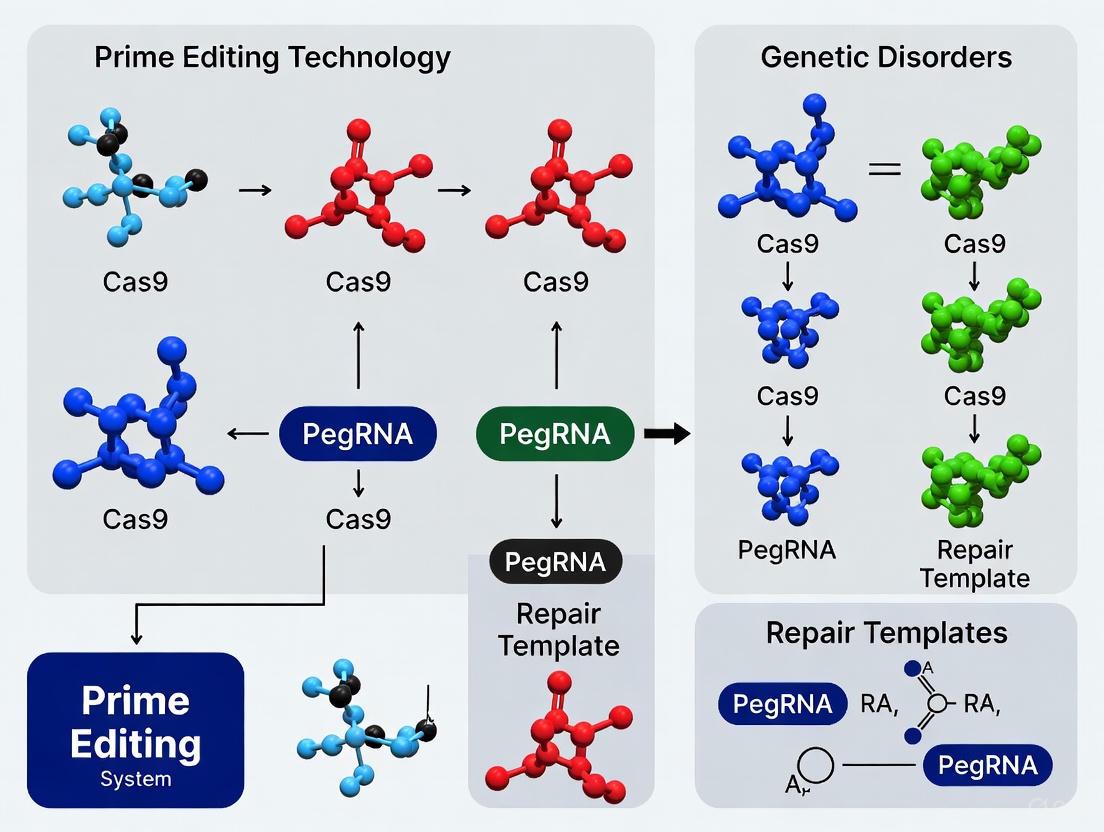
This article provides a comprehensive overview of prime editing, a revolutionary genome-editing technology that enables precise correction of genetic mutations without introducing double-strand DNA breaks.
Prime Editing: A Guide to Precise Genetic Repair Without Double-Strand Breaks
Abstract
This article provides a comprehensive overview of prime editing, a revolutionary genome-editing technology that enables precise correction of genetic mutations without introducing double-strand DNA breaks. Tailored for researchers and drug development professionals, it covers the foundational mechanisms of prime editing, its methodological applications across diverse genetic disorders, current challenges with optimization strategies, and a comparative analysis with other editing platforms. The content synthesizes the latest research and clinical advancements, offering insights into the therapeutic potential and future trajectory of this precise genetic tool.
The Foundation of Prime Editing: From Search-and-Replace to Clinical Potential
The landscape of genome editing has been fundamentally reshaped by the advent of CRISPR-Cas9, which offers unprecedented ability to manipulate DNA sequences. However, its therapeutic application is constrained by a fundamental limitation: the reliance on creating double-strand breaks (DSBs) in DNA. These breaks activate error-prone repair pathways, leading to unpredictable insertions, deletions, and chromosomal rearrangements that pose significant safety risks for clinical applications [1]. Furthermore, the requirement for donor DNA templates in homology-directed repair complicates the editing process and reduces efficiency.
Prime editing represents a paradigm shift in precision genome editing by enabling precise genetic modifications without inducing DSBs or requiring donor DNA templates [1]. This "search-and-replace" technology significantly expands the scope of editable sequences while minimizing unwanted byproducts, addressing critical limitations of both nuclease-dependent CRISPR systems and earlier base editing platforms. This Application Note details the operational principles, optimized protocols, and key applications of prime editing, providing researchers with the tools to implement this transformative technology for therapeutic development and functional genomics.
Core Architecture and Mechanism
The prime editing system consists of two principal components: (1) a prime editor protein and (2) a prime editing guide RNA (pegRNA). The editor is a fusion of a Cas9 nickase (H840A) that cuts only a single DNA strand, and an engineered reverse transcriptase (RT) from Moloney Murine Leukemia Virus (MMLV) [1] [2]. The pegRNA serves a dual function, both directing the complex to the target genomic locus and encoding the desired edit [2].
The editing mechanism occurs through a coordinated multi-step process:
- Target Recognition and Strand Nicking: The PE:pegRNA complex binds to the target DNA sequence, where the Cas9 nickase introduces a single-strand cut in the non-target DNA strand [1] [2].
- Reverse Transcription and Flap Formation: The exposed 3' end of the nicked DNA hybridizes with the primer binding site (PBS) on the pegRNA, serving as a primer for reverse transcription. The RT synthesizes a new DNA flap containing the desired edit using the reverse transcription template (RTT) region of the pegRNA [1] [2].
- Flap Resolution and Strand Integration: Cellular repair machinery resolves the branched DNA structure, favoring the incorporation of the edited 3' flap over the original 5' flap, resulting in the installation of the new genetic information into the genome [1].
The following diagram illustrates this sophisticated mechanism:
Evolution of Prime Editing Systems
Since its initial development, prime editing has undergone significant optimization through successive generations of improved editors:
Table 1: Evolution of Prime Editing Systems
| Editor Version | Key Features | Improvements Over Previous Generation | Primary Applications |
|---|---|---|---|
| PE1 | Initial proof-of-concept: nCas9(H840A)-MMLV-RT fusion [1] | Foundation of prime editing technology | Demonstration of precise edits without DSBs [1] |
| PE2 | Engineered RT with enhanced thermostability and processivity [1] | 2-5x higher editing efficiency than PE1 [1] | Broad research applications requiring moderate efficiency [1] |
| PE3 | PE2 + additional sgRNA to nick non-edited strand [1] | Encourages cellular repair to use edited strand as template; increases editing efficiency [1] | Applications requiring highest possible editing rates [1] |
| PEmax | Codon-optimized editor with nuclear localization signals, R221K, N394K mutations [3] | Improved nuclear localization and expression; enhanced editing across diverse targets [3] | High-efficiency editing in therapeutic contexts [3] |
| vPE | Modified Cas9 with reduced error rate; stabilized RNA template [4] | Error rate reduced to 1/60th of original (from ~1/7 to ~1/543 edits) [4] | Therapeutic applications where safety is paramount [4] |
Quantitative Performance and Applications
Benchmarking Editing Efficiency
Recent advances in prime editing platform optimization have demonstrated remarkable improvements in editing efficiency. A benchmarked, high-efficiency platform developed for multiplexed dropout screening achieved unprecedented performance when combining stable expression of optimized components with DNA mismatch repair (MMR) deficiency [3].
Table 2: High-Efficiency Prime Editing Performance Metrics
| Experimental Condition | Editing Target | Precise Editing Efficiency (Day 7) | Precise Editing Efficiency (Day 28) | Key Parameters |
|---|---|---|---|---|
| PEmax + epegRNA | HEK3 +1 T>A | 2.3% | 7.8% | MMR-proficient background [3] |
| PEmax + epegRNA | DNMT1 +6 G>C | 55.9% | ~78% | MMR-proficient background [3] |
| PEmaxKO + epegRNA | HEK3 +1 T>A | 68.9% | 94.9% | MLH1 knockout (MMR-deficient) [3] |
| PEmaxKO + epegRNA | DNMT1 +6 G>C | 81.1% | ~95% | MLH1 knockout (MMR-deficient) [3] |
| Self-targeting library | 1,453 edits | - | >75% (75.5% of edits) | MMR-deficient cells; 2,000 epegRNA-target pairs [3] |
The data demonstrate that stable expression of editing components in MMR-deficient backgrounds enables continuous accumulation of precise edits over time, with many targets reaching near-saturation editing (>95%) after extended duration [3]. This represents a substantial improvement over transient delivery approaches, which typically achieve lower efficiencies.
Therapeutic Applications and Clinical Potential
Prime editing's versatility enables diverse therapeutic applications, with several approaches demonstrating promise in preclinical models:
Disease-Agnostic Treatment Platforms The PERT (Prime Editing-mediated Readthrough of Premature Termination Codons) platform addresses nonsense mutations that account for approximately 30% of rare genetic diseases [5]. Rather than correcting individual mutations, PERT installs a engineered suppressor tRNA that enables readthrough of premature stop codons, potentially treating multiple diseases with a single editor [5]. In proof-of-concept studies:
- Restored protein function in cell models of Batten disease, Tay-Sachs disease, and Niemann-Pick disease type C1 (20-70% of normal enzyme activity) [5]
- Alleviated disease symptoms in a mouse model of Hurler syndrome with ~6% enzyme restoration [5]
- No detected off-target edits or disruption of normal protein synthesis [5]
High-Throughput Functional Genomics The precision and programmability of prime editing enables multiplexed functional screening. A platform utilizing 240,000 engineered pegRNAs (epegRNAs) targeting ~17,000 codons successfully identified negative selection phenotypes for 7,996 nonsense mutations in 1,149 essential genes, demonstrating the technology's scalability for functional variant characterization [3].
Experimental Protocols
Protocol: High-Efficiency Prime Editing in Mammalian Cells
This protocol describes a robust method for achieving high-efficiency prime editing in mammalian cell lines through stable expression of editing components and MMR manipulation, adapted from benchmarked approaches [3].
Materials and Reagents
Table 3: Essential Research Reagents for High-Efficiency Prime Editing
| Reagent Category | Specific Product/Component | Function in Protocol | Notes and Optimization |
|---|---|---|---|
| Prime Editor Expression | PEmax plasmid [3] | Optimized editor fusion protein | Contains nuclear localization signals, codon optimization [3] |
| Guide RNA System | epegRNA with tevopreQ1 motif [3] | Target specification and edit template; enhanced stability | 3' structural motif protects against degradation [3] |
| Delivery Vector | Lentiviral transfer plasmid (e.g., pBYR2eFa-U6-sgRNA) [3] | Stable genomic integration of editing components | Enables long-term expression and edit accumulation [3] |
| Cell Line | K562 PEmaxKO (MLH1 knockout) [3] | MMR-deficient background | Critical for high efficiency editing; MLH1 disruption prevents edit rejection [3] |
| Selection Agent | Appropriate antibiotic (e.g., puromycin) | Selection of successfully transduced cells | Concentration determined by kill curve analysis |
| Analysis Reagents | Next-generation sequencing library preparation kit | Quantification of editing efficiency and purity | AmpSeq considered gold standard [6] |
Procedure
Day 1: Cell Culture Preparation
- Culture K562 PEmaxKO cells in appropriate medium (RPMI-1640 + 10% FBS) at 37°C, 5% CO₂.
- Ensure cells are in log-phase growth (density 2-5×10⁵ cells/mL) at time of transduction.
Day 2: Lentiviral Transduction
- Design epegRNA with the following components:
- 20 nt spacer sequence complementary to target site
- Scaffold sequence for Cas9 binding
- 10-15 nt primer binding site (PBS)
- 25-40 nt reverse transcription template (RTT) encoding desired edit
- tevopreQ1 stability motif at 3' end [3]
- Package epegRNA into lentiviral particles using standard packaging systems (psPAX2, pMD2.G).
- Transduce K562 PEmaxKO cells at low multiplicity of infection (MOI=0.7) to ensure single copy integration [3].
- Include negative control (non-targeting epegRNA) and positive control (previously validated epegRNA).
Day 3: Selection and Expansion
- Begin antibiotic selection (e.g., 1-2 μg/mL puromycin) 24 hours post-transduction.
- Maintain selection for 5-7 days until >90% of control non-transduced cells are dead.
- Expand selected cell population in fresh medium without selection.
Days 4-30: Monitoring and Harvest
- Passage cells every 3-4 days to maintain log-phase growth.
- Harvest aliquots of 1×10⁶ cells at weekly intervals (days 7, 14, 21, 28) for editing efficiency analysis.
- Extract genomic DNA using standard methods (e.g., column-based extraction).
Editing Efficiency Analysis
- Amplify target region using PCR with barcoded primers.
- Prepare next-generation sequencing libraries and sequence with sufficient coverage (>1000x).
- Analyze sequencing data using computational pipelines to quantify:
- Precise editing rate (% reads with only intended edit)
- Error rate (% reads with unintended edits)
- Unedited rate (% reads with no edit) [3]
Protocol: Error-Reduced Prime Editing with vPE System
For applications requiring maximal precision, the vPE system significantly reduces unwanted edits through Cas9 protein engineering [4].
Specialized Materials
- vPE expression plasmid (available from MIT researchers) [4]
- Modified Cas9 variants with reduced error rate (specific mutations not detailed in source) [4]
- RNA binding protein for template stabilization [4]
Procedure Modifications
- Substitute PEmax with vPE construct in transduction protocol.
- Follow identical transduction and selection steps as in section 4.1.2.
- Compare error rates between standard PE and vPE systems:
The experimental workflow for implementing these protocols is summarized below:
Technical Considerations and Optimization
pegRNA Design and Engineering
The pegRNA is a critical determinant of prime editing efficiency. Optimal design parameters include:
- Primer Binding Site (PBS): 10-15 nucleotides in length with melting temperature of 30-40°C [2]
- Reverse Transcription Template (RTT): 25-40 nucleotides, encoding the desired edit with sufficient flanking homology [2]
- Stability Motifs: Incorporation of structured RNA elements (tevopreQ1, evopreQ, mpknot) at the 3' end to protect against exonucleolytic degradation, improving efficiency 3-4 fold [1]
Addressing Technical Challenges
Successful implementation of prime editing requires addressing several technical challenges:
Delivery Efficiency The large size of prime editing components (Cas9-RT fusion + pegRNA) complicates delivery, particularly for in vivo applications. Effective strategies include:
- Engine viral vectors (dual AAV systems for sPE) [1]
- Lipid nanoparticles (LNPs) demonstrating success in clinical applications [7] [8]
- Non-viral delivery methods under development
Minimizing Unwanted Edits Cellular repair pathways can introduce unwanted mutations. Optimization approaches include:
- Engineered Cas9 variants (H840A + N863A) to reduce DSB formation and indel byproducts [1]
- MMR inhibition (MLH1 knockout) to prevent rejection of edited strands [3]
- vPE system with reduced error rates for high-fidelity applications [4]
Immune Considerations The bacterial origin of CRISPR components may trigger immune responses in therapeutic contexts. Mitigation strategies include:
Prime editing represents a significant advancement beyond CRISPR-Cas9, offering researchers and therapeutic developers a precise and versatile genome editing platform that operates without double-strand breaks. The optimized protocols and performance metrics detailed in this Application Note provide a foundation for implementing this technology in both basic research and translational applications. As delivery methods continue to improve and editing efficiencies reach therapeutic thresholds, prime editing holds exceptional promise for addressing the vast landscape of genetic disorders through precise genomic correction.
Prime editing represents a paradigm shift in genome engineering, enabling precise modifications without inducing double-strand DNA breaks (DSBs) or requiring donor DNA templates [1] [9]. At its core, the prime editor is a complex molecular machine designed to "search and replace" genetic sequences with high fidelity. This technology significantly expands the scope of editable mutations, allowing for all 12 possible base-to-base conversions, targeted insertions, and deletions [1] [10]. The architecture of this system is fundamentally different from previous CRISPR-Cas9 tools because it divorces the target recognition process from the editing action, offering unprecedented versatility for basic research and therapeutic development [9]. Understanding this architecture is essential for leveraging its full potential in the treatment of genetic disorders.
Core Components of the Prime Editing Machinery
The prime editing system consists of two essential components that work in concert: the prime editor protein and a specialized guide RNA.
The Prime Editor Protein
The prime editor protein is a fusion of two key enzymes:
- A Cas9 Nickase (H840A): This engineered version of the Streptococcus pyogenes Cas9 protein contains a single active-site mutation (H840A) that enables it to nick only one DNA strand instead of creating a double-strand break [1] [9]. This nicking activity is crucial for initiating the editing process without the genomic instability associated with DSBs.
- A Reverse Transcriptase (RT): Typically derived from the Moloney Murine Leukemia Virus (M-MLV), this enzyme is fused to the Cas9 nickase and is responsible for synthesizing new DNA directly at the target site, using the guide RNA as a template [1] [9].
The Prime Editing Guide RNA (pegRNA)
The pegRNA is a multi-functional RNA molecule that serves both as a targeting mechanism and a template for editing. It contains two distinct regions:
- A Standard sgRNA Spacer Sequence: This portion directs the Cas9 nickase to the specific genomic target site [9].
- A 3' Extension: This critical addition contains two functional elements:
Table 1: Core Components of the Prime Editing System
| Component | Function | Key Features |
|---|---|---|
| Cas9 Nickase (H840A) | Binds and nicks target DNA strand | Creates single-strand break; prevents DSB formation |
| Reverse Transcriptase | Synthesizes new DNA containing desired edit | Uses pegRNA template; polymerizes DNA at target site |
| pegRNA | Targets complex and provides edit template | Combines spacer, PBS, and RTT in single molecule |
The Prime Editing Mechanism: A Step-by-Step Workflow
The prime editing mechanism involves a coordinated series of molecular events that result in precise genome modification.
Target Binding and DNA Nicking
The process begins when the pegRNA directs the prime editor fusion protein to the specific target DNA locus through standard Cas9:RNA DNA recognition mechanics. Once bound, the Cas9 nickase (H840A) nicks the non-target strand of the DNA, exposing a 3'-hydroxyl group [1] [9]. This exposed end serves as a primer for the subsequent reverse transcription step.
Primer Binding and Reverse Transcription
The PBS region of the pegRNA hybridizes with the nicked DNA strand, forming a temporary RNA-DNA duplex. The reverse transcriptase then uses the RTT region of the pegRNA as a template to synthesize a new DNA flap containing the desired edit [1] [11]. This newly synthesized DNA is complementary to the RTT and therefore incorporates the programmed genetic change.
Flap Equilibrium and DNA Repair
The editing process creates a branched DNA intermediate with three flaps: the original unedited 5' flap, the newly synthesized edited 3' flap, and the complementary unedited strand [1] [9]. Cellular enzymes resolve this structure by:
- Excising the original unedited 5' flap
- Ligating the edited 3' flap to the complementary DNA strand This results in a heteroduplex DNA molecule with one edited strand and one original unedited strand [1].
Encouraging Permanent Edit Incorporation
To bias cellular repair machinery toward using the edited strand as a template, additional strategies can be employed. The PE3 system introduces a second nick on the non-edited strand using a standard sgRNA, which encourages the cell to use the edited strand as a repair template, thereby increasing editing efficiency [1] [11].
Evolution of Prime Editor Systems: From PE1 to PEmax
Since its initial development, the prime editing system has undergone significant optimization to improve its efficiency and precision.
Table 2: Evolution of Prime Editing Systems
| System | Key Features | Editing Efficiency | Indel Formation | Primary Use Cases |
|---|---|---|---|---|
| PE1 | Wild-type M-MLV RT fused to Cas9 nickase | Low (prototype) | Not characterized | Proof-of-concept |
| PE2 | Engineered RT with 5 mutations enhancing activity | 2.3- to 5.1-fold higher than PE1 [9] | Low (1-10%) [9] | Standard editing with optimized RT |
| PE3 | PE2 + additional nicking sgRNA | 2-3-fold higher than PE2 [9] | Moderate increase vs PE2 [9] | High-efficiency editing applications |
| PE4/PE5 | PE2/PE3 + MLH1dn to transiently inhibit MMR | 7.7-fold (PE4) and 2.0-fold (PE5) improvement [9] | Reduced | Editing in MMR-proficient contexts |
| PEmax | Codon-optimized RT, additional NLS, engineered Cas9 | Up to 94.9% in optimized systems [12] | Minimal in MMR-deficient contexts [12] | High-efficiency therapeutic applications |
Protein Engineering Advancements
The evolution from PE1 to PE2 involved engineering the reverse transcriptase domain with five mutations (D200N/L603W/T330P/T306K/W313F) that collectively increase thermostability, processivity, and affinity for RNA-DNA hybrid substrates [1] [9]. These modifications significantly enhanced editing efficiency without increasing off-target effects.
The PEmax architecture further optimized the system through codon optimization for human cells, addition of nuclear localization signals, and incorporation of mutations known to improve Cas9 activity [9]. When combined with engineered pegRNAs (epegRNAs) that include structured RNA motifs like evopreQ1 or mpknot at their 3' end to prevent degradation, these systems achieve remarkably high editing efficiencies of up to 94.9% in certain contexts [1] [12].
Manipulating Cellular DNA Repair
A critical insight in prime editing development was understanding how cellular DNA repair pathways, particularly mismatch repair (MMR), influence editing outcomes. The PE4 and PE5 systems address this by transiently expressing a dominant-negative version of the MLH1 protein (MLH1dn) to temporarily inhibit MMR, which biases repair toward the edited strand and can improve editing efficiency by up to 7.7-fold [11] [9].
Experimental Protocol: Implementing Prime Editing in Mammalian Cells
The following protocol outlines key steps for implementing prime editing in mammalian cells, based on established methodologies [11] [12].
pegRNA and Template Design
- Target Selection: Identify the target genomic locus, ensuring the PAM sequence (NGG for SpCas9) is present. Prime editing can install edits at positions ranging from immediately adjacent to the PAM to over 30 base pairs away [9].
- pegRNA Design:
- Design the spacer sequence (approximately 20 nt) to target the desired locus.
- Define the RTT sequence to encode your desired edit(s). The RTT typically ranges from 10-16 nucleotides for optimal efficiency [11].
- Design the PBS sequence (typically 10-16 nt) complementary to the 3' flap created after nicking.
- Nicking sgRNA Design (for PE3/PE5): If using PE3 or PE5 systems, design an additional sgRNA to nick the non-edited strand. The optimal nicking site is typically 40-100 bp away from the pegRNA nicking site to avoid creating a double-strand break [11].
Delivery and Expression of Editing Components
- Editor Expression: Deliver the prime editor (PE2, PEmax, etc.) using appropriate expression systems. For therapeutic applications, the split prime editor (sPE) system enables delivery via dual AAV vectors [1].
- pegRNA Delivery: Express pegRNAs using RNA polymerase III promoters (U6 is commonly used). For enhanced stability, use engineered pegRNAs (epegRNAs) with 3' RNA motifs like tevopreQ1 [1] [12].
- MMR Inhibition (for PE4/PE5): For PE4/PE5 systems, co-express the MLH1dn protein to transiently inhibit mismatch repair [11] [9].
Optimization and Validation
- Efficiency Optimization: Test multiple pegRNAs with varying PBS and RTT lengths (typically 10-16 nt) to identify optimal designs [11].
- Editing Analysis: Assess editing efficiency 3-7 days post-transfection using next-generation sequencing of PCR-amplified target regions.
- Byproduct Analysis: Quantify indel formation and other unwanted editing outcomes through detailed sequence analysis.
The Scientist's Toolkit: Essential Research Reagents
Table 3: Essential Research Reagents for Prime Editing
| Reagent | Function | Examples & Notes |
|---|---|---|
| Prime Editor Plasmids | Express the fusion protein | PE2, PEmax; mammalian codon optimization preferred |
| pegRNA Expression Vectors | Express pegRNA with structural motifs | U6 promoter-driven; epegRNA designs with evopreQ1/mpknot |
| MMR Inhibition System | Enhance editing efficiency | MLH1dn expression for PE4/PE5 systems |
| Nicking sgRNA Vectors | For PE3/PE5 systems | Standard sgRNA expression for non-edited strand nicking |
| Delivery Tools | Introduce editing components | Lentivirus, AAV (split systems), electroporation, lipofection |
| Validation Primers | Amplify target locus for sequencing | Should flank edit site by ≥50 bp on each side |
Advanced Architectures: Specialized Prime Editing Systems
Recent innovations have expanded the prime editing toolbox with specialized systems designed to address specific challenges.
Reverse Prime Editing (rPE)
A recently developed variant called reverse prime editing (rPE) utilizes Cas9-D10A instead of Cas9-H840A and is programmed with a reverse pegRNA (rpegRNA) that binds to the targeted DNA strand rather than the non-targeted strand [13]. This architecture creates a reverse editing window that enables modifications at the 3' direction of the HNH-mediated nick site, expanding the targeting scope of prime editing and potentially offering higher fidelity by reducing unwanted DSB formation [13].
PE6 Systems
The PE6 systems represent a collection of specialized editors derived from phage-assisted evolution. These include:
- PE6a/b: Compact editors using RT domains from bacterial retrons or retrotransposons
- PE6c/d: Evolved editors optimized for AAV delivery
- PE6e-g: Editors with mutations in the Cas9 domain that show unpredictable but sometimes dramatic efficiency improvements for specific edits [9]
Twin Prime Editing
For larger modifications, twinPE systems use two pegRNAs that target opposite DNA strands to install complementary edits, enabling precise deletions, insertions, or inversions of dozens to hundreds of base pairs [11]. When combined with recombinase systems, this approach can facilitate gene-sized insertions of over 5 kilobases [11].
The modular architecture of the prime editor complex—comprising a Cas9 nickase, reverse transcriptase, and multifunctional pegRNA—provides a versatile foundation for precise genome manipulation without double-strand breaks. Through systematic optimization of each component and thoughtful engagement with cellular repair pathways, prime editing systems have evolved from proof-of-concept tools to highly efficient platforms capable of installing a wide range of genetic modifications. As delivery methods continue to improve and our understanding of the cellular context deepens, this technology holds exceptional promise for developing one-time treatments for diverse genetic disorders, potentially benefiting large patient populations with a single therapeutic agent.
Prime editing represents a transformative advance in precision genome editing, enabling the installation of targeted insertions, deletions, and all 12 possible point mutations without requiring double-strand DNA breaks (DSBs) or donor DNA templates [2] [14]. This technology substantially expands the scope of therapeutic genome editing for genetic disorders. The prime editing system consists of two core components: a prime editor protein and a prime editing guide RNA (pegRNA). The prime editor is a fusion protein comprising a Cas9 nickase (H840A) that cleaves only a single DNA strand and an engineered reverse transcriptase (RT) [2] [11]. The pegRNA serves as the blueprint that directs both the targeting and the editing functions of the system, making its design critical for successful experimental outcomes.
The pegRNA molecule is fundamentally a dual-function guide that uniquely integrates both targeting and editing instructions within a single RNA entity [2] [15]. Unlike traditional CRISPR single guide RNAs (sgRNAs) that only specify the target genomic location, the pegRNA additionally encodes the desired genetic modification. This dual functionality enables the "search-and-replace" capability that distinguishes prime editing from previous genome editing technologies. The pegRNA directs the prime editor complex to a specific DNA site through its spacer sequence and simultaneously provides the template for reverse transcription to write new genetic information into the genome [14] [11]. This comprehensive guide explores the molecular architecture of pegRNAs, quantitative design parameters, optimized experimental protocols, and advanced applications to empower researchers leveraging prime editing for therapeutic development.
Molecular Architecture of the pegRNA
The pegRNA consists of four essential sequence components that collectively enable its dual targeting and editing functions. Each structural element plays a distinct and critical role in the prime editing mechanism [2] [16].
- Spacer Sequence: A 20-nucleotide sequence that directs the Cas9 nickase to the specific target DNA site through complementary base pairing, fulfilling the "search" function of the system [2] [11].
- Scaffold Sequence: Maintains the secondary structure necessary for proper binding to the Cas9 nickase protein, enabling the formation of the ribonucleoprotein complex [2].
- Primer Binding Site (PBS): Typically 10-15 nucleotides in length, the PBS anneals to the nicked DNA strand after target recognition, serving as an anchor point for the reverse transcriptase to initiate DNA synthesis [2] [16].
- Reverse Transcription Template (RTT): Contains the desired edit and additional homology sequence, typically ranging from 10-30 nucleotides. The RTT serves as the direct template for the reverse transcriptase to synthesize the edited DNA strand, fulfilling the "replace" function [2] [11].
The complete pegRNA molecule generally ranges from 120-145 nucleotides in length, though more complex edits may require longer constructs up to 170-190 nucleotides [2]. This extended length compared to traditional sgRNAs (approximately 100 nucleotides) presents unique challenges in synthesis, delivery, and cellular stability that must be addressed through thoughtful experimental design.
Diagram 1: Structural components of pegRNA showing the four essential sequence elements that enable its dual targeting and editing functions.
Quantitative Design Parameters for pegRNA Optimization
Systematic analysis of pegRNA editing outcomes has revealed critical parameters that significantly influence editing efficiency. The following tables summarize evidence-based design guidelines derived from large-scale pegRNA screens and optimization studies.
Table 1: Optimal design parameters for pegRNA components based on empirical efficiency data
| Component | Parameter | Optimal Range | Impact on Efficiency | Design Recommendation |
|---|---|---|---|---|
| PBS | Length | 13 nt [17] | Medium | Start with 13 nt, test 10-15 nt range [16] |
| GC Content | 40-60% [16] | High | Avoid extremes (<30% or >70%) | |
| Melting Temp | ~38°C [17] | High | Match to cellular temperature | |
| RTT | Length | 10-16 nt [16] | Medium | Test multiple lengths |
| Overhang Length | Longer preferred [17] | High | Increase for better efficiency | |
| Edit Position | Include PAM modification [16] | High | Prevents re-cutting | |
| Spacer | Consecutive T's | Avoid >3 [17] | Critical | 4+ T's reduces efficiency to <10% |
Table 2: Editing efficiency by mutation type and sequence context
| Edit Type | Median Efficiency | Sequence Context Influence | Optimization Strategy |
|---|---|---|---|
| Point Mutations | 52% [17] | A-to-G most efficient [17] | Add silent mutations for 3+ base "bubbles" [16] |
| Insertions | 31% [17] | Inverse correlation with length [17] | Test multiple RTT overhangs |
| Deletions | 31% [17] | Inverse correlation with length [17] | Ensure sufficient homology |
| All Types | 46% overall median [17] | G/C flanking bases beneficial [17] | Avoid polyT stretches in spacer/RTT |
The editing efficiency varies substantially depending on the specific mutation type and sequence context. Point mutations generally install more efficiently than insertions or deletions, with A-to-G conversions showing particularly high efficiency, potentially due to strand-specific bias in repairing G:T mismatches [17]. For all edit types, the length of the insertion or deletion inversely correlates with efficiency, with longer edits typically showing reduced success rates [17].
A critical design consideration is the inclusion of PAM-modifying edits when possible. When the prime editing system successfully installs an edit that alters the PAM sequence, it prevents the Cas9 nickase from re-binding and re-nicking the newly synthesized strand, thereby reducing indel formation and increasing the purity of editing outcomes [16]. Additionally, introducing multiple silent mutations near the primary edit to create "bubbles" of three or more mismatched bases can help evade cellular mismatch repair (MMR) systems, which more efficiently target single-base mismatches [16].
Experimental Protocols for pegRNA Design and Testing
pegRNA Design Workflow
The following step-by-step protocol ensures systematic design and testing of pegRNAs for optimal editing efficiency:
Target Site Selection: Identify the target genomic locus and desired edit. Select a protospacer adjacent to the edit site with an NGG PAM sequence on the same strand. Verify that no polyT stretches (≥3 consecutive T's) exist in the spacer sequence [17].
pegRNA Component Design:
- Design the spacer sequence (20 nt) complementary to the target DNA.
- Design the PBS sequence (13 nt starting point) complementary to the 3' end of the nicked DNA strand.
- Design the RTT sequence encoding the desired edit with 10-16 nt of homology beyond the edit site.
- Ensure the first base of the 3' extension is not C to prevent non-canonical base pairing with G81 of the gRNA scaffold [16].
pegRNA Cloning: Clone the pegRNA sequence into an appropriate expression vector using standardized molecular biology techniques. For high-throughput applications, consider using the Prime Editing Guide Generator (PEGG) Python package for automated design [18].
Delivery and Expression: Co-deliver the pegRNA and prime editor (PE2) to cells using optimized methods such as lipid nanoparticles, electroporation, or viral vectors. Use strong RNA polymerase III promoters (e.g., U6) for pegRNA expression [2] [11].
Efficiency Validation: Harvest cells 3-7 days post-editing and extract genomic DNA. Amplify the target region by PCR and analyze editing efficiency using next-generation sequencing or targeted assays.
Diagram 2: Experimental workflow for pegRNA design and testing, showing the five critical steps from target selection to efficiency validation.
Advanced Prime Editing Systems
Later-generation prime editing systems incorporate additional components to enhance efficiency and specificity. The PE3 system introduces a second sgRNA that directs nicking of the non-edited strand to bias cellular repair toward the edited sequence [11] [15]. The PE3b variant designs this nicking sgRNA to bind only after successful editing, reducing concurrent nicks and minimizing indel formation [16]. The PE4 and PE5 systems incorporate dominant-negative MLH1 (MLH1dn) to transiently inhibit mismatch repair, increasing editing efficiency by preventing reversion of edits [11] [15]. When using these advanced systems, specific design considerations apply:
- For PE3/PE5: Test multiple nicking sgRNA sites, starting with positions approximately 50 bp upstream and downstream from the prime editing nick site [16].
- For PE3b/PE5b: Design the nicking sgRNA to target the edited DNA sequence, ensuring it only binds after successful edit installation [16].
- For PE4/PE5: Ensure the pegRNA scaffold sequence lacks homology to the target genomic sequence to prevent unintended incorporation when MMR is inhibited [16].
Table 3: Evolution of prime editing systems and their experimental applications
| System | Key Components | Editing Efficiency | Best For | Design Considerations |
|---|---|---|---|---|
| PE2 | Cas9 nickase + engineered RT | 20-40% [15] | Basic edits, minimal indels | No nicking sgRNA needed |
| PE3 | PE2 + nicking sgRNA | 30-50% [15] | Higher efficiency needs | Test multiple nick sites [16] |
| PE3b | PE2 + edit-specific nick | 30-50% [15] | Reducing indel byproducts | Nicking sgRNA targets edited sequence [16] |
| PE4 | PE2 + MLH1dn | 50-70% [15] | MMR-proficient cell types | Avoid scaffold homology [16] |
| PE5 | PE3 + MLH1dn | 60-80% [15] | Maximum efficiency | Combine nicking & MMR inhibition |
Research Reagent Solutions for Prime Editing Applications
Successful implementation of prime editing requires carefully selected reagents and tools. The following toolkit provides essential resources for researchers developing pegRNA-based experiments.
Table 4: Essential research reagents and tools for pegRNA experimentation
| Reagent Category | Specific Examples | Function | Implementation Notes |
|---|---|---|---|
| Prime Editor Proteins | PE2, PEmax [11] | Catalyze targeted DNA modification | PEmax improves nuclear localization |
| pegRNA Design Tools | PRIDICT [17], PEGG [18] | Predict efficiency and design sequences | PRIDICT achieves Spearman's R=0.85 [17] |
| Stabilized pegRNAs | epegRNAs [16], PE7 system [15] | Protect against degradation | epegRNAs use structured RNA motifs |
| Delivery Systems | Lipid nanoparticles (LNPs) [2], AAV [5] | Cellular delivery of editing components | LNPs effective for RNA delivery |
| Efficiency Sensors | Prime editing sensor libraries [18] | Quantify editing outcomes | Couples pegRNAs with target sites |
Advanced Applications and Future Directions
The versatility of pegRNA-guided prime editing has enabled sophisticated applications beyond single nucleotide changes. Twin prime editing (twinPE) systems use two pegRNAs to precisely insert or delete hundreds of base pairs, enabling gene-sized (>5 kb) insertions when combined with recombinase systems [11]. In therapeutic development, prime editing has been applied to correct primary genetic causes of sickle cell disease and Tay-Sachs disease in human cells [14], and more recently to install suppressor tRNAs that can read through premature termination codons in a disease-agnostic manner [5] [19].
The emerging PERT (prime editing-mediated readthrough of premature termination codons) approach demonstrates how pegRNA design can enable broadly applicable therapeutic strategies. Rather than correcting individual nonsense mutations, PERT uses prime editing to convert a redundant endogenous tRNA into an optimized suppressor tRNA, allowing readthrough of premature stop codons regardless of their specific genomic context [5] [19]. This approach restored 20-70% of normal enzyme activity in cell models of Batten disease, Tay-Sachs disease, and Niemann-Pick disease type C1 using the same prime editing composition [5].
High-throughput screening approaches using prime editing sensor libraries have further expanded pegRNA applications, enabling functional assessment of thousands of genetic variants in their endogenous genomic context [18]. These screens couple pegRNAs with synthetic versions of their cognate target sites to quantitatively assess editing efficiency and functional impact simultaneously, providing powerful resources for characterizing pathogenic variants in genes like TP53 [18].
As prime editing continues to evolve, pegRNA design remains foundational to its advancing applications. Ongoing optimization of pegRNA stability through engineered motifs (epegRNAs) [16] and protective binding proteins (PE7 system) [15] [16], coupled with improved computational prediction tools like PRIDICT [17], will further enhance the precision and efficiency of this transformative genome editing technology.
The Step-by-Step Mechanism of Precision DNA Repair
Prime editing represents a transformative advance in precision genome editing, offering a versatile "search-and-replace" capability for modifying DNA without introducing double-strand breaks (DSBs) [20] [9]. This technology addresses a critical limitation in the therapeutic correction of genetic disorders, as DSBs can lead to unintended insertions, deletions, and chromosomal rearrangements that compromise safety and efficacy [1] [21]. By enabling precise corrections at the single-base level and facilitating small insertions and deletions, prime editing provides researchers and drug development professionals with a powerful tool to address the root causes of genetic diseases.
The fundamental innovation of prime editing lies in its ability to mediate targeted DNA changes without relying on donor DNA templates or the error-prone non-homologous end joining (NHEJ) pathway that often dominates DSB repair [20] [9]. This breakthrough is particularly significant for therapeutic applications, where minimizing off-target effects and maximizing product purity are paramount concerns. Prime editing systems have demonstrated capability in correcting a wide spectrum of genetic mutations, including point mutations, insertions, and deletions, which collectively account for approximately 75,000 known pathogenic human genetic variants [9] [22].
Table 1: Comparison of Genome Editing Technologies
| Editing Technology | Editing Capabilities | DSB Formation | Donor DNA Required | Key Limitations |
|---|---|---|---|---|
| CRISPR-Cas9 Nuclease | Indels via NHEJ | Yes | No (for disruption) | High indel rates, chromosomal abnormalities |
| Base Editing | C•G to T•A, A•T to G•C | No | No | Restricted to 4 transition mutations, bystander editing |
| Prime Editing | All 12 base-to-base conversions, insertions, deletions | No | No | Variable efficiency across sites and cell types |
Molecular Mechanism of Prime Editing
Core Components of the Prime Editing System
The prime editing system consists of two essential molecular components that work in concert to enable precise genome modification. First, the prime editor protein is a fusion of a Cas9 nickase (H840A mutant) and a reverse transcriptase (RT) domain [20] [2]. The Cas9 nickase provides DNA targeting specificity through its guide RNA-binding capability but is engineered to cut only one DNA strand instead of creating double-strand breaks. The reverse transcriptase domain, typically derived from Moloney Murine Leukemia Virus (M-MLV), synthesizes DNA using an RNA template [2] [9].
Second, the prime editing guide RNA (pegRNA) serves both targeting and templating functions [2]. Unlike conventional single-guide RNAs (sgRNAs), pegRNAs contain a 3' extension that includes a primer binding site (PBS) and a reverse transcriptase template (RTT) encoding the desired edit [2] [1]. The standard pegRNA architecture consists of: (1) a ~20-nucleotide spacer sequence that specifies the target genomic locus through complementary base pairing; (2) a scaffold sequence that binds the Cas9 nickase; (3) a primer binding site (typically 10-15 nucleotides) that anneals to the nicked DNA strand to initiate reverse transcription; and (4) a reverse transcription template (typically 25-40 nucleotides) containing the desired genetic alteration flanked by homologous sequences [2].
Step-by-Step Molecular Mechanism
The prime editing process follows an ordered sequence of molecular events that enables precise rewriting of genetic information:
Target Recognition and Binding: The prime editor-pegRNA complex scans the genome and binds to the target DNA sequence specified by the pegRNA spacer through complementary base pairing [2] [1]. This binding forms an R-loop structure where the DNA duplex is partially unwound, exposing the target strand for editing.
DNA Strand Nicking: The Cas9 nickase (H840A) component creates a single-strand break (nick) in the non-target DNA strand at a precise position determined by the pegRNA-spacer complex [20] [2]. This nick generates a 3'-hydroxyl group that serves as a primer for reverse transcription.
Primer Binding and Reverse Transcription: The primer binding site (PBS) within the pegRNA anneals to the complementary sequence on the nicked DNA strand. The reverse transcriptase domain then uses the 3'-hydroxyl group as a primer and the RTT region of the pegRNA as a template to synthesize a new DNA strand containing the desired edit [2] [9]. This process directly copies the edited sequence from the pegRNA into the DNA.
Flap Intermediation and Resolution: The newly synthesized edited DNA strand forms a 3' flap structure that displaces the original unedited 5' DNA flap [20] [1]. Cellular repair machinery then resolves this branched DNA intermediate through flap dynamics, where the 5' flap (typically containing the original sequence) is excised, and the edited 3' flap is ligated into the genome.
Heteroduplex Resolution: The editing process creates a heteroduplex DNA structure with one strand containing the edit and the complementary strand retaining the original sequence [9]. Cellular mismatch repair (MMR) pathways then resolve this heteroduplex, potentially copying the edit to the complementary strand to permanently incorporate the genetic change.
Diagram 1: Prime Editing Mechanism - This diagram illustrates the sequential molecular steps in prime editing, from target recognition to final edited DNA duplex formation.
DNA Repair Pathways in Prime Editing
Prime editing leverages and manipulates endogenous DNA repair pathways to achieve permanent genetic changes. The process primarily involves three key repair mechanisms:
Flap Excision and Ligation: The 5' flap containing the original sequence is recognized and removed by structure-specific endonucleases such as XPF-ERCC1 and FEN1 [20]. DNA ligases then seal the nick between the edited flap and the genomic DNA, incorporating the edit into one strand of the DNA duplex [23].
Mismatch Repair (MMR) Modulation: The heteroduplex formed after flap resolution activates cellular MMR machinery, which can either preserve the edit by using the edited strand as a template or revert the change by excising the edited strand [9] [21]. Recent prime editing enhancements (PE4/PE5 systems) temporarily inhibit the MLH1 component of the MMR pathway to bias resolution toward the edited strand, significantly improving efficiency [9] [21].
DNA Replication-Dependent Fixation: In dividing cells, DNA replication permanently fixes the edit by generating daughter DNA molecules that either contain or lack the modification. The edited strand serves as a template during replication, increasing the likelihood of permanent edit incorporation [20].
Evolution of Prime Editing Systems
Development of Prime Editor Generations
Since its initial development in 2019, prime editing technology has evolved through multiple generations with significant improvements in efficiency and fidelity:
PE1 was the original prime editor, consisting of a wild-type M-MLV reverse transcriptase fused to Cas9 nickase (H840A) [20] [1]. While it demonstrated proof-of-concept, editing efficiency was modest (typically <5% of targeted alleles) [20].
PE2 incorporated an engineered reverse transcriptase with five mutations (D200N/L603W/T330P/T306K/W313F) that enhanced thermostability, processivity, and binding to template-primer complexes [20] [9]. These modifications resulted in a 1.6- to 5.1-fold increase in editing efficiency compared to PE1 [20].
PE3 introduced a second sgRNA that directs nicking of the non-edited strand to bias cellular repair toward the edited strand [20] [1]. This system increases editing efficiency by 2-3-fold but slightly elevates indel formation [20]. PE3b is a refined version where the additional sgRNA is designed to bind only after the edit is incorporated, reducing indels by 13-fold [9].
Table 2: Evolution of Prime Editing Systems
| Prime Editor Version | Key Features | Improvements | Efficiency Range | Indel Formation |
|---|---|---|---|---|
| PE1 | Wild-type M-MLV RT + nCas9 (H840A) | Foundation | 0.7-17% | Low |
| PE2 | Engineered RT (5 mutations) + nCas9 | 1.6-5.1× over PE1 | 1.8-53% | Low |
| PE3/PE3b | PE2 + additional sgRNA for non-edited strand nicking | 2-3× over PE2 | 5.5-63% | Moderate |
| PE4/PE5 | PE2/PE3 + MLH1dn MMR inhibition | 7.7× (PE4) and 2.0× (PE5) over predecessors | Up to 78% | Low with improved edit:indel ratio |
| PEmax | Codon-optimized RT, additional NLS, Cas9 mutations | Enhanced expression and activity | Varies by target | Low |
| PE6a-g | Evolved RT domains from various sources | Improved efficiency with specific edits | Target-dependent | Low |
Enhancing Prime Editing Efficiency
Recent advances have focused on addressing limitations in prime editing efficiency through multiple engineering approaches:
pegRNA Engineering: The development of engineered pegRNAs (epegRNAs) incorporated structured RNA motifs (evopreQ1, mpknot, xrRNA) at the 3' end to protect against exonuclease degradation [1]. These modifications improved editing efficiency by 3-4-fold across multiple human cell lines and primary fibroblasts without increasing off-target effects [1].
MMR Pathway Modulation: The PE4 and PE5 systems co-express a dominant-negative version of the MLH1 protein (MLH1dn) to temporarily suppress mismatch repair activity that often reverses prime edits [9] [21]. This approach improves editing efficiency by 7.7-fold for PE4 (compared to PE2) and 2.0-fold for PE5 (compared to PE3) [9].
Protein Engineering: The PEmax architecture incorporates codon optimization for human cells, additional nuclear localization signals, and beneficial mutations in the Cas9 domain to improve expression and activity [9]. The PE6 series further evolved the reverse transcriptase domain through phage-assisted continuous evolution, creating specialized editors optimized for different types of edits [9].
Dual Flap Systems: Advanced approaches like Twin Prime Editing use two pegRNAs to create complementary edits on both DNA strands, improving efficiency for larger modifications and reducing reliance on cellular repair pathways [22].
Experimental Protocols and Applications
Research Reagent Solutions
Table 3: Essential Research Reagents for Prime Editing Experiments
| Reagent Category | Specific Examples | Function | Considerations |
|---|---|---|---|
| Prime Editor Proteins | PE2, PEmax, PE6 variants | Catalyze the prime editing reaction | Size affects delivery efficiency; specificity varies |
| Guide RNAs | pegRNAs, epegRNAs | Target specificity and edit templating | Length (120-145 nt) affects synthesis yield and stability |
| Delivery Vehicles | AAV vectors, lipid nanoparticles, electroporation | Introduce editing components into cells | Must accommodate large size of editor and pegRNA |
| MMR Modulators | MLH1dn | Enhance editing efficiency | Transient expression recommended to minimize risks |
| Validation Tools | Next-generation sequencing, T7E1 assay | Confirm editing outcomes and detect off-target effects | Amplicon sequencing provides quantitative assessment |
Detailed Protocol for Prime Editing in Zebrafish Models
Prime editing has been successfully implemented in zebrafish (Danio rerio), providing a valuable model for studying human disease variants in a vertebrate system [24]. The following protocol has been optimized for precise nucleotide substitutions and small insertions:
Component Preparation:
- Synthesize PE2 mRNA using in vitro transcription with codon-optimized sequences for zebrafish expression [24].
- Chemically synthesize pegRNAs with a 13-nucleotide primer binding site (PBS) and appropriate reverse transcription template (RTT) encoding the desired edit [24].
- For 3-bp insertions (e.g., stop codon introduction), include a 13-nucleotide homology arm extension in the RTT template [24].
Microinjection Setup:
- Prepare an injection mixture containing 300 ng/μL PE2 mRNA and 100 ng/μL pegRNA in nuclease-free water [24].
- Load the mixture into glass capillary needles calibrated for zebrafish embryo injection.
- Collect one-cell stage zebrafish embryos and align them on an injection mold.
Embryo Injection and Incubation:
- Microinject 1-2 nL of the ribonucleoprotein mixture into the cytoplasm of one-cell stage zebrafish embryos [24].
- Incubate injected embryos at 32°C in E3 embryo medium, refreshing daily [24].
- Monitor embryonic development daily until 96 hours post-fertilization (hpf) for phenotypic analysis.
Editing Efficiency Assessment:
- At 96 hpf, extract genomic DNA from pooled (n=10) or individual embryos using standard protocols [24].
- Amplify the target region by PCR using gene-specific primers flanking the edit site.
- Quantify editing efficiency using amplicon sequencing or for rapid assessment, use T7 Endonuclease I (T7E1) assay to detect sequence modifications [24].
- Calculate precision scores as the ratio of precise prime edits to total edits (including imprecise edits and indels) [24].
Germline Transmission:
- Raise injected embryos (F0) to adulthood and outcross with wild-type fish.
- Screen F1 offspring for the desired edit using PCR and sequencing.
- Establish stable transgenic lines from edit-positive F1 fish.
This protocol has demonstrated 8.4% efficiency for nucleotide substitutions using PE2 compared to 4.4% with nuclease-based PEn editors in zebrafish, with significantly higher precision scores (40.8% vs. 11.4%) [24].
Quantitative Performance Data
Table 4: Prime Editing Efficiency Across Experimental Systems
| Application | Editor System | Edit Type | Efficiency | Key Parameters |
|---|---|---|---|---|
| HEK293T Cells [9] | PE2 | Point mutations | 20-50% | 1-10% indels |
| Zebrafish crbn Gene [24] | PE2 | 2-nt substitution | 8.4% | Precision score: 40.8% |
| Zebrafish crbn Gene [24] | PEn | 2-nt substitution | 4.4% | Precision score: 11.4% |
| Human Cell Lines [1] | PE2 + epegRNA | Multiple edits | 3-4× improvement | Across 10 targets |
| Therapeutic Correction [25] | PE | Sickle cell mutation | ~40% | Patient-derived stem cells |
Diagram 2: Prime Editing Workflow - This diagram outlines the complete experimental workflow for prime editing applications, from component design to final validation.
Prime editing represents a significant advancement in precision genome editing technology, offering researchers and therapeutic developers an unprecedented ability to correct genetic mutations without inducing double-strand breaks. The step-by-step mechanism—from target recognition and DNA nicking to reverse transcription and flap resolution—provides a foundation for understanding how this technology achieves its remarkable precision [20] [2]. The evolution of prime editing systems from PE1 through PE6, coupled with enhancements in pegRNA design and MMR modulation, has substantially improved editing efficiencies while maintaining high specificity [1] [9] [21].
For the research community, prime editing opens new possibilities for modeling genetic diseases, studying gene function, and developing transformative therapies. The successful application in zebrafish models demonstrates the technology's versatility across biological systems [24]. As delivery methods continue to improve and our understanding of DNA repair mechanisms deepens, prime editing is poised to become an increasingly powerful tool for addressing genetic disorders with unprecedented precision and safety profiles.
The future of prime editing will likely focus on enhancing delivery efficiency, expanding targeting scope through engineered Cas variants with altered PAM requirements, and developing more sophisticated control over DNA repair pathways to further improve editing outcomes [26] [22]. With these advancements, prime editing holds exceptional promise for realizing the full potential of therapeutic genome editing for a broad spectrum of human genetic diseases.
Prime editing represents a transformative advancement in precision genome engineering, offering a versatile "search-and-replace" methodology that enables precise genetic modifications without inducing double-strand breaks (DSBs) or requiring donor DNA templates [1] [27]. This technology significantly expands the capabilities of genetic disorder research and therapeutic development by supporting a wide range of genetic modifications, including all 12 possible base-to-base conversions, targeted insertions, and deletions [1] [2]. By avoiding DSBs, prime editing addresses critical safety concerns associated with earlier CRISPR-Cas9 systems, which often led to unintended mutations, chromosomal rearrangements, and activation of cellular stress responses [1] [28].
The fundamental prime editing system consists of two core components: a prime editor protein and a specialized prime editing guide RNA (pegRNA) [1] [2]. The prime editor is a fusion protein comprising a Cas9 nickase (H840A) capable of cutting only a single DNA strand, coupled with an engineered reverse transcriptase (RT) from the Moloney-Murine Leukemia Virus (M-MLV) [1] [15]. The pegRNA serves both as a targeting mechanism and a template for new genetic information, containing a spacer sequence that identifies the target DNA site, a reverse transcriptase template (RTT) encoding the desired edit, and a primer binding site (PBS) that facilitates the initiation of reverse transcription [2].
Table 1: Core Components of Prime Editing Systems
| Component | Description | Function |
|---|---|---|
| Cas9 Nickase (H840A) | Modified Cas9 protein that nicks rather than cleaves DNA | Creates single-strand break to initiate editing process |
| Reverse Transcriptase (RT) | Engineered M-MLV reverse transcriptase | Synthesizes DNA using pegRNA template |
| pegRNA | Specialized guide RNA with 3' extension | Targets specific locus and encodes desired edit |
| Reverse Transcriptase Template (RTT) | Sequence within pegRNA 3' extension | Contains the desired genetic modification |
| Primer Binding Site (PBS) | Region within pegRNA 3' extension | Anneals to nicked DNA to initiate reverse transcription |
The prime editing mechanism operates through a sophisticated multi-step process [2]. First, the prime editor-pegRNA complex binds to the target DNA sequence through standard Cas9 targeting mechanisms. The Cas9 nickase then creates a single-strand break in the DNA, exposing a 3'-hydroxyl group that serves as a primer for reverse transcription. The PBS region of the pegRNA anneals to the complementary DNA region adjacent to the nick, positioning the RT template for reverse transcription. The reverse transcriptase then synthesizes a new DNA strand using the RTT as a template, incorporating the desired edit. Finally, cellular repair mechanisms resolve the resulting DNA heteroduplex, incorporating the edited strand into the genome [1] [2].
The Evolution of Prime Editor Systems: From PE1 to PE7
The development of prime editing has followed a rapid iterative path, with each generation introducing significant improvements in efficiency, precision, and versatility. This evolution has addressed key challenges including editing efficiency, product purity, and delivery constraints.
Early Generations: PE1 to PE3
The initial prime editor, PE1, demonstrated the proof-of-concept for search-and-replace genome editing but exhibited modest efficiency of approximately 10-20% in HEK293T cells [15]. PE2 incorporated engineered mutations in the M-MLV reverse transcriptase to enhance thermostability, processivity, and affinity for RNA-DNA hybrid substrates, resulting in improved editing outcomes with efficiencies of 20-40% [1] [15]. PE3 further augmented this system by incorporating an additional sgRNA that nicks the non-edited DNA strand, encouraging cellular repair machinery to use the newly synthesized edited strand as a template and increasing editing efficiency to 30-50% [1] [15].
Advanced Systems: PE4 to PE7
Later generations of prime editors implemented increasingly sophisticated approaches to overcome cellular barriers to efficient editing, particularly mismatch repair (MMR) pathways that often reverse prime edits [15] [2]. PE4 and PE5 systems addressed this limitation by incorporating a dominant-negative MLH1 (MLH1dn) protein to inhibit the MMR pathway, increasing editing efficiency to 50-70% for PE4 and 60-80% for PE5 [15]. The PE6 system introduced multiple variants with compact reverse transcriptase domains (PE6a, PE6b, PE6c) and enhanced Cas9 variants (PE6e, PE6f, PE6g) to improve delivery efficiency, achieving 70-90% editing efficiency in HEK293T cells [15]. Most recently, PE7 demonstrated further refinements by fusing the La(1-194) protein to the prime editor complex to enhance pegRNA stability and editing outcomes, reaching remarkable efficiencies of 80-95% in human cells [15].
Table 2: Evolution of Prime Editing Systems
| Editor Version | Key Components | Editing Efficiency | Major Innovations |
|---|---|---|---|
| PE1 | nCas9(H840A) + M-MLV RT | ~10-20% | Proof-of-concept system |
| PE2 | nCas9(H840A) + engineered RT | ~20-40% | Optimized reverse transcriptase |
| PE3 | PE2 + additional sgRNA | ~30-50% | Dual-nicking strategy |
| PE4 | PE2 + MLH1dn | ~50-70% | MMR inhibition |
| PE5 | PE3 + MLH1dn | ~60-80% | Combined nicking + MMR inhibition |
| PE6 | Compact RT variants + epegRNAs | ~70-90% | Improved delivery and stability |
| PE7 | La protein fusion + epegRNAs | ~80-95% | Enhanced pegRNA stability |
Diagram 1: The evolutionary pathway of prime editing systems from PE1 to PE7, highlighting major innovations at each stage.
Cas12a Prime Editing Systems
While most prime editors utilize Cas9-derived nickases, recent research has explored alternative CRISPR effectors to expand targeting scope and overcome limitations. Cas12a-based prime editing systems represent a significant advancement in this direction, offering distinct advantages including different protospacer adjacent motif (PAM) requirements and simpler guide RNA architectures [29] [15].
Cas12a prime editors employ a nickase variant of Cas12a (R1226A) fused with reverse transcriptase and utilize a circular RNA for reverse transcription [15]. This system demonstrates particular strength in targeting T-rich PAM sequences, complementing the G-rich PAM preference of Cas9-based systems and thereby expanding the total targetable genomic space [29]. In benchmarking studies, improved LbCas12a (impLbCas12a) has been identified as the most efficient and PAM-relaxed Cas12a variant in Saccharomyces cerevisiae, showing high editing purity and a well-defined editing window centering on the double-strand break [29].
The Cas12a prime editing system has demonstrated robust efficiency, achieving editing rates of up to 40.75% in HEK293T cells while maintaining a smaller size compared to Cas9-based systems, which offers advantages for viral packaging and delivery [15]. This compact architecture, combined with its preferential targeting of T-rich PAM regions, makes Cas12a prime editing particularly valuable for applications requiring access to genomic regions inaccessible to Cas9-based editors.
Experimental Protocols for Prime Editing
Prime Editing Workflow for Genetic Disorder Research
The following protocol outlines a standardized approach for implementing prime editing in mammalian cell lines for genetic disorder research, incorporating best practices from recent advancements.
Day 1: Cell Seeding
- Plate HEK293T cells (or relevant cell model for the genetic disorder being studied) in a 24-well plate at a density of 1.0 × 10^5 cells per well in DMEM medium supplemented with 10% FBS and 1% penicillin-streptomycin.
- Incubate cells at 37°C with 5% CO₂ for 24 hours to achieve 70-80% confluency at time of transfection.
Day 2: Plasmid Transfection
- For each sample, prepare a transfection mixture containing:
- 500 ng prime editor expression plasmid (PE2, PE3, or later variant)
- 250 ng pegRNA expression plasmid
- For PE3 systems: 250 ng additional nicking sgRNA plasmid
- 1.5 μL Lipofectamine 3000 in Opti-MEM reduced serum medium
- Incubate the transfection mixture for 15 minutes at room temperature
- Add mixture dropwise to cells with complete medium exchange
- Incubate cells for 72 hours at 37°C with 5% CO₂
Day 5: Harvest and Analysis
- Extract genomic DNA using commercial extraction kits
- Amplify target region by PCR using specific primers flanking the edit site
- Analyze editing efficiency via next-generation sequencing or restriction fragment length polymorphism
- For therapeutic applications, assess cell viability and potential off-target effects
EXPERT System Protocol for Extended Editing Range
The recently developed EXPERT (extended prime editor system) protocol enables editing on both sides of the pegRNA nick, significantly expanding the editable genomic region [30].
Design Phase:
- Design extended pegRNA (ext-pegRNA) with elongated 3' extension containing:
- Primer binding site (PBS: 10-15 nt)
- Edit sequence (ES: variable length)
- Homologous sequence (HS: 25-40 nt)
- Design upstream sgRNA (ups-sgRNA) targeting genomic region 5' of the pegRNA nick site
- Verify that both nicks created by the system are in cis configuration (same DNA strand)
Experimental Setup:
- Co-transfect cells with:
- 500 ng prime editor plasmid (PE2 architecture)
- 300 ng ext-pegRNA expression plasmid
- 300 ng ups-sgRNA expression plasmid
- Include controls with single guide systems (EXPERT-a and EXPERT-b) to validate performance
Validation and Optimization:
- Assess editing efficiency via sequencing across target region
- Quantify indel formation using TIDE decomposition or similar methods
- For large fragment edits (>50 bp), optimize HS length to enhance efficiency
- EXPERT has demonstrated 3.12-fold average improvement in editing efficiency for large fragments, with up to 122.1-fold enhancement in specific cases [30]
Diagram 2: Prime editing experimental workflow outlining key phases from design to validation.
The Scientist's Toolkit: Essential Research Reagents
Successful implementation of prime editing requires carefully selected reagents and optimization strategies. The following toolkit summarizes critical components and their functions based on current best practices.
Table 3: Essential Research Reagents for Prime Editing
| Reagent Category | Specific Examples | Function | Optimization Notes |
|---|---|---|---|
| Prime Editor Plasmids | PE2, PE3, PE5, PE7 | Express the core editor fusion protein | PE5 recommended for high-efficiency editing with minimal indels |
| pegRNA Expression Systems | epegRNA with evopreQ1 or mpknot motifs | Encode target specificity and edit template | Structured RNA motifs improve stability and efficiency 3-4 fold |
| Delivery Vehicles | Lipid nanoparticles (LNPs), AAV vectors | Facilitate cellular entry of editing components | Dual AAV systems required for larger editors; SORT LNPs enable organ-specific targeting |
| MMR Inhibitors | MLH1dn | Suppress mismatch repair to enhance edit retention | Critical for achieving high editing efficiency (>60%) |
| Cell Culture Reagents | HEK293T, HCT116, iPSCs | Provide cellular context for editing | iPSCs recommended for disease modeling |
| Analysis Tools | Next-generation sequencing, TIDE | Quantify editing efficiency and specificity | Amplicon sequencing provides most accurate efficiency measurement |
pegRNA Design and Optimization
The pegRNA represents the most critical component for successful prime editing, requiring careful design and stabilization:
- Target Sequence: Standard 20 nt spacer sequence with minimal off-target potential
- Scaffold: Standard sgRNA scaffold compatible with Cas9 nickase
- Reverse Transcriptase Template (RTT): 25-40 nt sequence encoding desired edit with appropriate homologous flanking sequences
- Primer Binding Site (PBS): 10-15 nt complementary to DNA target immediately 3' of nick site
- Stabilization Motifs: Incorporate evopreQ1, mpknot, or G-quadruplex motifs at 3' end to prevent degradation and improve efficiency [1] [2]
For challenging edits, utilize dual-pegRNA systems such as twinPE or EXPERT, which can expand the editable range and enhance efficiency through coordinated editing strategies [30].
DNA Repair Pathways in Prime Editing
Understanding and modulating DNA repair pathways is essential for optimizing prime editing outcomes. Unlike traditional CRISPR-Cas9 systems that rely on double-strand break repair pathways, prime editing primarily engages distinct DNA repair mechanisms.
The prime editing process initiates when the Cas9 nickase creates a single-strand break in the target DNA, exposing a 3'-hydroxyl group that serves as a primer for reverse transcription [28]. The reverse transcriptase then synthesizes a new DNA strand containing the desired edit using the pegRNA template. This creates a DNA heteroduplex with one edited strand and one original unedited strand. Cellular repair machinery then resolves this intermediate structure through flap equilibrium, where the edited 3' flap and unedited 5' flap compete for integration into the genome [28].
The mismatch repair (MMR) pathway represents a significant barrier to efficient prime editing, as it frequently recognizes and reverses the incorporated edits [28]. Advanced prime editors (PE4, PE5) address this limitation by incorporating dominant-negative MLH1 (MLH1dn) to temporarily suppress MMR activity, dramatically improving editing efficiency [15] [2]. Additionally, the use of a second nicking sgRNA in PE3 and PE5 systems encourages the cellular repair machinery to use the edited strand as a template for repairing the complementary strand, further enhancing edit incorporation [1] [15].
Diagram 3: Prime editing mechanism with key pathways including the inhibitory effect of MMR and its modulation by MLH1dn.
Applications in Genetic Disorder Research
Prime editing technologies have demonstrated remarkable potential for correcting diverse genetic mutations associated with human diseases. The technology's ability to install precise edits without double-strand breaks makes it particularly valuable for therapeutic applications where minimizing genomic instability is critical.
In proof-of-concept studies, prime editing has successfully corrected mutations associated with Ducheme muscular dystrophy (DMD) by restoring the reading frame of the dystrophin gene in human cardiomyocytes, achieving up to 50% correction efficiency and corresponding functional improvement [27]. Similarly, prime editing approaches have shown promise for treating chronic granulomatous disease, with the first FDA-approved clinical trial announced in April 2024 [31]. This rapid translation from technology development to clinical application in under five years represents an unprecedented pace in gene therapy development.
The expansion of prime editing tools, including Cas12a-based systems and specialized approaches like EXPERT, has further broadened the therapeutic scope. These systems enable targeting of previously inaccessible genomic regions, including T-rich sequences and areas requiring large fragment modifications up to 100 bp [29] [30]. As delivery technologies continue to advance, particularly lipid nanoparticle formulations and engineered viral vectors, the therapeutic potential of prime editing for addressing the vast landscape of genetic disorders appears increasingly attainable.
The evolution from PE1 to PE7 and the development of Cas12a-based systems represents a remarkable trajectory of innovation in prime editing technology. Each generation has addressed specific limitations, resulting in editors with dramatically improved efficiency, precision, and versatility. The integration of MMR inhibition, pegRNA stabilization strategies, and expanded editing architectures has transformed prime editing from a proof-of-concept technology to a robust platform for genetic engineering.
For researchers and drug development professionals focused on genetic disorders, these advancements offer unprecedented opportunities to develop precise therapeutic interventions without the safety concerns associated with double-strand breaks. As prime editing systems continue to evolve, with ongoing improvements in delivery, efficiency, and targeting range, their impact on genetic medicine is expected to grow substantially. The recent clinical progression of prime editing therapies underscores the translational potential of these technologies and their capacity to address previously untreatable genetic conditions.
Methodology and Therapeutic Applications: From Cell Models to Clinical Trials
The liver is a vital organ responsible for numerous metabolic functions, including the synthesis of most serum proteins. Consequently, it is also the origin of a wide array of inherited genetic disorders, such as hemophilia, ornithine transcarbamylase deficiency (OTCD), phenylketonuria (PKU), and alpha-1 antitrypsin deficiency [32] [33]. For many of these conditions, orthotopic liver transplantation is the only curative option, a procedure hampered by the limited availability of donor organs, high costs, and the necessity for lifelong immunosuppression [32] [34]. Gene therapy presents a promising alternative, aiming to address the root cause of disease by correcting genetic mutations.
The development of prime editing (PE), a versatile "search-and-replace" genome editing technology, marks a significant advancement for treating genetic disorders. Unlike traditional CRISPR-Cas9, which relies on creating double-stranded DNA breaks (DSBs), prime editing uses a fusion of a Cas9 nickase and a reverse transcriptase to directly write new genetic information into a target DNA site directed by a specialized prime editing guide RNA (pegRNA) [10] [35]. This mechanism avoids the pitfalls of DSBs—such as unintended insertions, deletions, and chromosomal rearrangements—and enables a wider range of precise edits, including all 12 possible base-to-base conversions, as well as small insertions and deletions, without requiring donor DNA templates [10] [34] [35].
The success of in vivo prime editing, however, is critically dependent on the delivery vehicle. The liver's unique physiology, particularly its fenestrated endothelium with pores ranging from 100–175 nm, makes it naturally accessible to nanoparticle-based delivery systems [36]. Lipid nanoparticles (LNPs) have emerged as the leading non-viral platform for in vivo delivery of nucleic acids, proven by their clinical success in siRNA therapeutics and mRNA vaccines [32] [37]. This combination of a susceptible target organ and a clinically validated delivery system positions LNP-mediated prime editing as a transformative approach for treating inherited liver diseases.
Therapeutic Approaches and Quantitative Outcomes
Lipid nanoparticles can be engineered to deliver various nucleic acid payloads for different therapeutic strategies, from gene silencing to precise gene correction. The table below summarizes key therapeutic approaches and their demonstrated efficacy in preclinical models.
Table 1: Therapeutic Outcomes of LNP-Mediated Nucleic Acid Delivery for Liver Disorders
| Therapeutic Approach | Nucleic Acid Payload | Disease Model | Target Gene / Locus | Editing / Silencing Efficiency | Physiological Outcome | Citation |
|---|---|---|---|---|---|---|
| Prime Editing | PE7 mRNA + pegRNA (AAV vector) | PKU (Pahenu2 mice) | Pahenu2 | 20.7% | Blood L-phenylalanine reduced from >1,500 µmol/L to <360 µmol/L (therapeutic threshold) | [38] |
| Prime Editing | PE7 mRNA + synthetic pegRNA (co-delivered in LNP) | PKU (Pahenu2 mice) | Pahenu2 | 8.0% | Blood L-phenylalanine reduced to <360 µmol/L | [38] |
| Gene Knockout (CRISPR-Cas9) | iGeoCas9 RNP | Reporter Mice (Ai9) | tdTomato | 37% (average liver editing) | N/A (Reporter activation) | [39] |
| Gene Knockout (CRISPR-Cas9) | iGeoCas9 RNP | Wild-Type Mice | PCSK9 | 31% | N/A | [39] |
| Gene Silencing (siRNA) | siRNA Cocktail | Mouse HSCs & Hepatocytes | Reln (HSCs) / Ttr (Hepatocytes) | 0-80% (Reln) / >90% (Ttr) | N/A | [36] |
Experimental Protocols
Protocol: LNP Formulation for Prime Editor mRNA and pegRNA Delivery
This protocol details the co-encapsulation of prime editor mRNA and chemically modified pegRNA into LNPs for in vivo delivery, based on the methodology that successfully treated phenylketonuria in a mouse model [38].
Key Reagents:
- Ionizable lipid (e.g., ALC-0315, SM-102, MC3)
- Helper phospholipid (e.g., DSPC)
- Cholesterol
- PEG-lipid (e.g., DMG-PEG2000)
- Prime editor mRNA (e.g., PE7, modified with 5' cap and poly-A tail)
- Chemically modified pegRNA (tevopreQ1 structure with 3' pseudo-knots for stability)
Procedure:
- Lipid Mixture Preparation: Prepare an ethanol solution containing the ionizable lipid, DSPC, cholesterol, and PEG-lipid at a molar ratio of 50:10:38.5:1.5 [40] [37].
- Aqueous Phase Preparation: Dilute the PE7 mRNA and synthetic pegRNA in an acidic aqueous buffer (e.g., sodium acetate, pH 4.0). A weight ratio of approximately 10:1 (lipids:RNA) is typical [40].
- Nanoparticle Formation: Use a microfluidics device to rapidly mix the ethanolic lipid solution with the aqueous RNA solution at a controlled flow rate and volume ratio (typically 3:1, aqueous:ethanol). This instantiates the formation of RNA-encapsulated LNPs [40] [37].
- Buffer Exchange and Purification: Dialyze the raw LNP formulation against a phosphate-buffered saline (PBS) solution at pH 7.4 to remove residual ethanol and adjust the pH to physiological conditions. This step is critical for stability.
- Quality Control: Characterize the final LNP product by measuring:
- Particle Size and Dispersity (PDI): Using dynamic light scattering. Target diameter should be <100 nm with a PDI <0.1 for optimal liver transit [40] [36].
- RNA Encapsulation Efficiency: Using a dye exclusion assay (e.g., RiboGreen). Target >90% encapsulation.
- Zeta Potential: As an indicator of colloidal stability.
Figure 1: Workflow for formulating and testing Prime Editing LNPs for liver-targeted therapy.
Protocol: In Vivo Administration and Efficacy Assessment in Murine Models
This protocol outlines the systemic administration of prime editing LNPs and the subsequent evaluation of editing efficiency and therapeutic effect [38].
Key Reagents:
- Formulated PE LNP (from Protocol 3.1)
- Animal model of genetic liver disease (e.g., Pahenu2 mice for PKU)
- Equipment for intravenous injection (e.g., syringe, tail vein restrainer)
- Tools for sample collection (e.g., tubes for blood, containers for tissue)
Procedure:
- LNP Administration:
- Tissue Collection and Analysis:
- At the experimental endpoint (e.g., 7-14 days post-injection), collect blood and liver tissue.
- Blood Plasma Analysis: Quantify the concentration of relevant metabolites (e.g., L-phenylalanine for PKU models) using high-performance liquid chromatography (HPLC) or mass spectrometry to assess physiological correction [38].
- Liver Tissue Analysis:
- Isolate hepatocytes or genomic DNA from liver tissue.
- Amplify the targeted genomic region by PCR.
- Quantify prime editing efficiency using next-generation sequencing (NGS). Analyze for intended edits and potential byproducts like indels.
The Scientist's Toolkit: Essential Research Reagents
Successful development of LNP-based prime editing therapies relies on a suite of specialized reagents and materials. The following table catalogs key components and their functions.
Table 2: Essential Research Reagents for LNP-Based Prime Editing
| Reagent Category | Specific Examples | Function / Rationale | Key Characteristics |
|---|---|---|---|
| Ionizable Lipids | ALC-0315, SM-102, DLin-MC3-DMA (MC3) | Core component; encapsulates nucleic acids, enables endosomal escape [36] [37] | pKa ~6-7; biodegradable linkers; ALC-0315 shows high HSC delivery [36] |
| Helper Lipids | DSPC, DOPE | Stabilizes LNP structure, enhances fusogenicity [40] [37] | Constitutes ~10 mol% of formulation |
| Sterol | Cholesterol | LNP integrity and stability [40] [37] | Constitutes ~30-40 mol% of formulation |
| PEG-Lipids | DMG-PEG2000, ALC-0159 | Controls LNP size, improves stability, reduces nonspecific uptake [40] [37] | Constitutes ~1.5-2 mol% of formulation |
| Prime Editor Systems | PEmax, PE7 (mRNA) | Engineered PE proteins with enhanced editing efficiency [38] [10] | Codon-optimized, includes nuclear localization signals |
| Guide RNAs | epegRNA, pegRNA with tevopreQ1 | Directs PE to target locus, encodes the desired edit [38] [10] | 3' pseudo-knots (epegRNA) improve stability and efficiency [38] |
| Analytical Tools | NGS (e.g., Illumina), HPLC-MS | Gold standard for quantifying editing efficiency and metabolic correction [38] | Provides deep, quantitative data on outcomes |
The convergence of prime editing technology and advanced lipid nanoparticle delivery systems creates a powerful and precise platform for treating genetic liver disorders. Prime editing's ability to correct a broad spectrum of mutations without inducing double-stranded breaks addresses a fundamental limitation of earlier gene-editing tools. Concurrently, the liver's natural predisposition to accumulate nanoparticles and the proven clinical track record of LNPs provide an ideal delivery pathway. As research continues to optimize LNP formulations for specific liver cell types and enhance the efficiency and fidelity of prime editors, this combined approach is poised to move from preclinical success to transformative therapies for patients with inherited metabolic diseases.
Prime Editing-mediated Readthrough of premature termination codons (PERT) represents a groundbreaking, disease-agnostic genome-editing strategy designed to address a significant challenge in human genetics: nonsense mutations. These mutations create premature stop codons within the coding sequence of mRNA, leading to truncated, non-functional proteins and causing approximately 30% of all rare genetic diseases [5] [41]. The PERT approach, developed by researchers at the Broad Institute, circumvents the conventional model of developing a unique therapeutic agent for each specific mutation. Instead, it employs a single prime editing system to permanently equip cells with the machinery to overcome premature termination signals, thereby enabling the production of full-length, functional proteins across a wide spectrum of disorders caused by nonsense mutations [5].
This strategy is situated within the broader thesis of advancing prime editing technology for treating genetic disorders without inducing double-strand DNA breaks (DSBs). Unlike traditional CRISPR-Cas9 systems that rely on DSBs and error-prone repair mechanisms, prime editing uses a catalytically impaired Cas9 nickase (nCas9) fused to a reverse transcriptase to directly write new genetic information into a target DNA site [1] [42]. This foundational characteristic of prime editing makes it an exceptionally precise tool for genetic surgery and is the core engine that enables the PERT strategy's universal applicability.
The PERT strategy creatively combines prime editing with engineered transfer RNA (tRNA) biology. Nonsense mutations convert a sense codon into one of three premature termination codons (PTCs)—UAA, UAG, or UGA—which are normally signals to halt protein synthesis. The central innovation of PERT is the use of prime editing to genomically install a highly efficient suppressor tRNA (sup-tRNA) that can read through these PTCs. This engineered tRNA is integrated into a cell's genome by converting a dispensable, endogenous tRNA gene, avoiding the need for continuous overexpression and ensuring the edit is heritable [41].
The molecular mechanism can be visualized as a multi-stage process, from the initial problem posed by a nonsense mutation to the restored production of a full-length protein.
The PERT machinery consists of two core components. First, a prime editor protein is a fusion of a Cas9 nickase (H840A) and an engineered Moloney Murine Leukemia Virus reverse transcriptase (MMLV-RT). Second, a specialized prime editing guide RNA (pegRNA) not only directs the nCas9 to the specific genomic locus of the endogenous tRNA but also encodes the template for the extensive edits required to convert it into the optimized sup-tRNA [1] [5]. Upon binding to the target DNA, the nCas9 nicks the strand, and the reverse transcriptase uses the pegRNA's template to synthesize a new DNA flap containing the sup-tRNA sequence. Cellular repair mechanisms then resolve this intermediate, permanently incorporating the sup-tRNA into the genome [1].
Detailed Experimental Protocol for PERT Workflow
The implementation of the PERT strategy involves a sequence of critical steps, from initial design to validation. The workflow below outlines the key stages for researchers seeking to apply this technology.
Protocol: In Vitro PERT in Human Cell Models
Step 1: Identification of Target tRNA and pegRNA Design
- Objective: Select a redundant, dispensable endogenous human tRNA gene as the target for conversion into a sup-tRNA.
- Method:
- Analyze the human tRNA repertoire to identify candidates whose function is redundant with other isoacceptors.
- Design a pegRNA that directs the prime editor to this genomic locus. The pegRNA's reverse transcriptase template (RTT) must encode the sequences for the engineered sup-tRNA, incorporating the optimized anticodon loop for PTC readthrough and stabilizing mutations identified through prior screening [5] [41].
- The pegRNA should be modified with evopreQ1 or mpknot RNA motifs at its 3' end to create an epegRNA, which protects it from degradation and enhances editing efficiency by 3-4 fold [1].
Step 2: Delivery of Prime Editing Components
- Objective: Introduce the prime editing machinery into the target cells.
- Method:
- Utilize a pre-formed ribonucleoprotein (RNP) complex for high efficiency and reduced off-target effects. Complex purified PEmax (an enhanced prime editor protein) with the synthesized epegRNA in vitro [43].
- Deliver the RNP complex into the target cells (e.g., patient-derived fibroblasts or induced pluripotent stem cells) via electroporation or lipofection. For hard-to-transfect cells, consider using engineered virus-like particles (eVLPs) optimized for prime editor delivery [44].
Step 3: Isolation and Sequencing of Edited Clones
- Objective: Obtain clonal cell lines with the correct genomic integration of the sup-tRNA.
- Method:
- 72-96 hours post-delivery, isolate single cells by fluorescence-activated cell sorting (FACS) or dilution cloning into 96-well plates.
- Allow clonal expansion for 2-3 weeks.
- Extract genomic DNA from expanded clones and perform PCR amplification of the modified tRNA locus.
- Confirm the presence of the precise sup-tRNA sequence via Sanger sequencing or next-generation sequencing.
Step 4: Functional Validation of Protein Rescue
- Objective: Quantify the restoration of full-length protein and function.
- Method:
- Western Blot: Probe for the protein of interest (e.g., the enzyme deficient in Tay-Sachs disease) in lysates from edited clones. The appearance of a full-length protein band, compared to the truncated form in control cells, indicates successful readthrough.
- Enzymatic Activity Assay: Perform a substrate-specific enzymatic assay to confirm that the restored protein is functional. For example, in a Tay-Sachs disease model, measure hexosaminidase A activity [5] [41].
- Immunofluorescence: Visualize the cellular localization and expression of the rescued protein.
Protocol: In Vivo PERT in a Mouse Model of Hurler Syndrome
Step 1: Preparation of In Vivo Delivery Vector
- Objective: Package the PERT machinery for safe and efficient delivery to a living organism.
- Method:
- Given the large size of the prime editor, use a dual adeno-associated virus (AAV) system. Split the PEmax coding sequence between two AAV vectors using intein-mediated trans-splicing technology.
- Package one AAV vector with the 5' half of PEmax and another with the 3' half of PEmax along with the epegRNA expression cassette targeting the endogenous mouse tRNA gene [5] [44].
Step 2: Animal Injection and Biodistribution
- Objective: Deliver the PERT system to relevant tissues.
- Method:
- Administer the two AAV vectors systemically via tail-vein or retro-orbital injection into a mouse model of Hurler syndrome, which carries a nonsense mutation.
- The AAV serotype (e.g., AAV9) should be selected for its tropism to organs affected by the disease, such as the liver, spleen, and brain [5].
Step 3: Analysis of Editing and Phenotypic Rescue
- Objective: Assess the efficacy of PERT in correcting the disease phenotype.
- Method:
- Molecular Analysis: After 4-8 weeks, harvest tissues (liver, brain, spleen). Isolve DNA and confirm sup-tRNA integration by sequencing. Isolate RNA to ensure sup-tRNA expression.
- Biochemical Analysis: Measure the activity of the rescued enzyme (e.g., α-L-iduronidase in Hurler syndrome) in tissue homogenates.
- Pathological Assessment: Analyze tissue sections for the resolution of disease-specific pathology, such as the reduction of lysosomal storage material, using histochemical staining [5] [41].
Key Research Findings and Quantitative Data
The PERT strategy has been quantitatively validated in multiple disease models, demonstrating its potential as a universal therapeutic platform. The table below summarizes the efficacy of PERT in rescuing protein function across these models.
Table 1: Quantitative Efficacy of PERT in Preclinical Models
| Disease Model | Model Type | Key Metric for Rescue | Result with PERT | Citation |
|---|---|---|---|---|
| Batten Disease | Human Cell Model | Enzyme activity restoration | ~20-70% of normal levels | [5] [41] |
| Tay-Sachs Disease | Human Cell Model | Enzyme activity restoration | ~20-70% of normal levels | [5] [41] |
| Niemann-Pick Type C1 | Human Cell Model | Enzyme activity restoration | ~20-70% of normal levels | [5] |
| Hurler Syndrome | Mouse Model | Enzyme activity in tissues | ~6% of normal (sufficient for phenotypic rescue) | [5] [41] |
A critical aspect of validating any gene therapy is assessing its safety and specificity. The PERT strategy was rigorously tested for potential off-target effects. The findings confirmed that the engineered sup-tRNA did not cause detectable off-target DNA edits, significant changes to the cellular transcriptome or proteome, or readthrough of natural termination codons at a level that would disrupt normal cellular function [5] [41]. This high specificity profile is crucial for its therapeutic development.
The Scientist's Toolkit: Essential Research Reagents
Implementing the PERT strategy requires a suite of specialized reagents and tools. The following table details the key components and their functions for researchers in this field.
Table 2: Essential Reagents for PERT Research
| Research Reagent / Tool | Function in the PERT Workflow | Key Characteristics & Examples |
|---|---|---|
| Prime Editor Protein | Executes the genomic edit by nicking DNA and reverse transcribing the new sequence. | PEmax: An optimized version of PE2 with higher editing efficiency. Comprises an engineered M-MLV RT fused to nCas9 (H840A) [1] [42]. |
| epegRNA | Guides the prime editor to the target tRNA locus and provides the template for the sup-tRNA. | Contains a 3' structured RNA motif (e.g., evopreQ1) to prevent degradation and enhance stability and efficiency [1]. |
| Engineered sup-tRNA | The therapeutic payload; inserts an amino acid at a PTC to allow translation to continue. | Identified via high-throughput screening of thousands of tRNA variants for optimal efficiency and minimal toxicity [41]. |
| Delivery System | Introduces the prime editing components into cells. | In Vitro: RNP complexes for high efficiency and low off-targets. In Vivo: Dual AAV vectors or engineered Virus-Like Particles (eVLP) [44] [43]. |
| Cell & Animal Models | Provide a context for testing PERT efficacy and safety. | Patient-derived iPSCs, disease-specific cell lines, and genetically engineered mouse models harboring nonsense mutations (e.g., Hurler model) [5] [41]. |
The PERT strategy represents a paradigm shift in the therapeutic application of prime editing. By moving beyond a one-drug-one-mutation model to a single-agent-many-diseases approach, it directly addresses the significant commercial and development bottlenecks that have hindered progress for rare genetic diseases [5]. The robust experimental protocols and promising quantitative data from multiple disease models underscore its potential. As a powerful manifestation of DSB-free prime editing technology, PERT holds the promise of delivering transformative, one-time genetic therapies to a broad population of patients affected by nonsense mutations. Future work will focus on further optimizing delivery, efficacy, and safety to pave the way for clinical trials.
Ex Vivo Cell Engineering for Rare Genetic Diseases
Prime editing represents a transformative advancement in precision genome editing, offering a versatile "search-and-replace" methodology that directly writes new genetic information into a specified DNA site without requiring double-strand breaks (DSBs) or donor DNA templates [14] [45]. This technology utilizes a catalytically impaired Cas9 endonuclease (H840A nickase) fused to an engineered reverse transcriptase, programmed with a specialized prime editing guide RNA (pegRNA) that specifies both the target site and encodes the desired edit [45] [15]. Unlike conventional CRISPR-Cas systems that induce DSBs and rely on error-prone repair mechanisms, prime editing operates through a more controlled mechanism: the Cas9 nickase nicks the target DNA strand, the reverse transcriptase utilizes the pegRNA template to synthesize a edited DNA flap, and cellular machinery integrates this edit into the genome [15]. This approach substantially expands the capabilities of therapeutic genome editing for rare genetic diseases by enabling precise correction of pathogenic mutations—including all 12 possible base-to-base conversions, targeted insertions, and deletions—while minimizing undesired byproducts and off-target effects [14] [27].
The development of prime editing addresses critical limitations of previous genome editing platforms. While nuclease-based approaches cause DSBs that can lead to unpredictable insertions, deletions, p53 activation, and chromosomal abnormalities [46] [15], and base editors are restricted to specific transition mutations and can cause bystander edits at adjacent nucleotides [45] [15], prime editing offers a more precise and comprehensive solution. Its ability to correct a broad range of mutation types without inducing DSBs makes it particularly valuable for therapeutic applications in non-dividing cells and for disorders where precise correction is essential, positioning prime editing as a cornerstone technology for the next generation of genetic medicines for rare diseases [15] [27].
Prime Editing Technology and Workflow
Molecular Mechanism of Prime Editing
The prime editing system consists of two core components: (1) a prime editor protein fusion of Cas9 H840A nickase and an engineered reverse transcriptase (RT), and (2) a prime editing guide RNA (pegRNA) that both directs the complex to the target genomic locus and encodes the desired genetic edit [45] [15]. The editing mechanism proceeds through several well-defined steps. First, the pegRNA directs the prime editor complex to bind the target DNA sequence through standard Cas9-DNA recognition, with the spacer sequence ensuring specific targeting. The Cas9 H840A nickase then introduces a single-strand nick in the non-target (PAM-containing) DNA strand, exposing a 3'-hydroxyl group that serves as a primer for reverse transcription [15]. The RT component subsequently synthesizes a DNA flap using the reverse transcriptase template (RTT) region of the pegRNA as a template, incorporating the desired genetic edit into the newly synthesized DNA segment. Finally, cellular repair mechanisms resolve the resulting DNA heteroduplex structure, with the edited strand preferentially incorporated into the genome through flap equilibrium, permanently installing the desired genetic modification [45] [15].
Evolution of Prime Editing Systems
Since the initial development of prime editing, successive generations of improved systems have significantly enhanced editing efficiency and versatility. The technology has evolved from the foundational PE1 system to increasingly optimized editors:
Table: Evolution of Prime Editing Systems
| Editor | Components | Editing Frequency | Key Improvements |
|---|---|---|---|
| PE1 | nCas9(H840A) + WT M-MLV RT | ~10-20% in HEK293T [15] | Initial proof-of-concept [45] |
| PE2 | nCas9(H840A) + Engineered RT (5 mutations) | ~20-40% in HEK293T [15] | Enhanced RT thermostability, processivity, DNA-RNA affinity [45] [15] |
| PE3 | PE2 + additional sgRNA for opposing strand nick | ~30-50% in HEK293T [15] | Dual nicking strategy encourages use of edited strand as repair template [45] [15] |
| PE4 | PE2 + dominant-negative MLH1 (MLH1dn) | ~50-70% in HEK293T [15] | MMR inhibition reduces repair of edited strand [15] |
| PE5 | PE3 + MLH1dn | ~60-80% in HEK293T [15] | Combines dual nicking with MMR inhibition [15] |
| PEmax | Optimized Cas9/NLS + codon usage | 1.3- to 3.5-fold increase over PE [46] | Improved nuclear localization and expression [46] |
Later systems including PE4, PE5, and PEmax further enhance editing outcomes through inhibition of mismatch repair (MMR) pathways and optimization of protein architecture, with PEmax demonstrating 1.3- to 3.5-fold increases in editing efficiency over previous systems in hematopoietic stem and progenitor cells (HSPCs) [46] [15]. Additional advancements include engineered pegRNAs (epegRNAs) with 3' structural motifs that protect against exonuclease degradation, significantly improving editing outcomes in primary human cells [46].
Application Notes: Disease-Specific Editing Outcomes
Correction of Sickle Cell Disease Mutations
Prime editing has demonstrated remarkable efficacy in correcting the fundamental genetic mutation underlying sickle cell disease (SCD). The A·T-to-T·A transversion in the β-globin gene (HBB) results in the pathogenic sickle-cell allele (HBBS) encoding a Glu6Val (E6V) substitution [46]. Recent research has established that prime editing can correct the SCD allele back to the wild-type HBBA at frequencies of 15%-41% in hematopoietic stem and progenitor cells (HSPCs) from SCD patients [46]. Critically, these edited cells maintained correction levels 17 weeks after transplantation into immunodeficient mice, with an average of 42% of human erythroblasts and reticulocytes across four patient donors containing at least one wild-type HBBA allele—exceeding predicted therapeutic thresholds [46]. The edited erythrocytes demonstrated functional improvement, carrying less sickle hemoglobin (28%-43% of normal adult hemoglobin levels) and resisting hypoxia-induced sickling, a key pathophysiological mechanism in SCD [46].
Table: Prime Editing Outcomes for Sickle Cell Disease Correction
| Parameter | Result | Significance |
|---|---|---|
| Editing Efficiency in SCD HSPCs | 15%-41% [46] | Achieves therapeutic levels of correction |
| Persistence Post-Transplantation | Maintained at 17 weeks [46] | Demonstrates stable engraftment of edited cells |
| HBBA Expression in Erythroid Cells | 42% average across donors [46] | Exceeds predicted therapeutic threshold |
| HbA Production | 28%-43% of normal levels [46] | Substantial reduction in sickling potential |
| Off-Target Editing | Minimal at >100 nominated sites [46] | High specificity with minimal unwanted edits |
Comprehensive off-target analysis revealed minimal editing at over 100 experimentally nominated candidate sites, demonstrating the high specificity of this approach and supporting the feasibility of a one-time prime editing treatment that directly corrects the sickle cell mutation to wild-type HBB without DSBs, viral DNA templates, or excessive undesirable byproducts [46].
PERT: A Disease-Agnostic Approach for Nonsense Mutations
Beyond mutation-specific corrections, prime editing enables innovative disease-agnostic strategies. The Prime Editing-mediated Readthrough of Premature Termination Codons (PERT) approach targets nonsense mutations—premature stop codons that account for approximately 30% of rare genetic diseases [5]. Rather than correcting individual mutations, PERT installs an engineered suppressor tRNA that enables readthrough of premature termination codons, allowing production of full-length functional proteins regardless of the specific gene affected [5]. This single editing system has demonstrated therapeutic potential across multiple disease models, restoring protein function in human cell models of Batten disease, Tay-Sachs disease, and Niemann-Pick disease type C1, and ameliorating disease symptoms in a mouse model of Hurler syndrome [5].
The PERT platform represents a paradigm shift in therapeutic development for rare diseases, as a single editing agent can potentially benefit patients with different genetic disorders. In proof-of-concept studies, PERT restored enzyme activity to approximately 20%-70% of normal levels in disease cell models—theoretically sufficient to alleviate disease symptoms—while exhibiting no detected off-target edits, changes in normal RNA or protein production, or cellular toxicity [5]. This approach could dramatically streamline the development of gene-editing medicines by enabling treatment of multiple rare diseases with a single therapeutic agent, potentially overcoming significant economic and manufacturing barriers that currently limit treatments for ultra-rare disorders [5].
Experimental Protocols
Workflow for Ex Vivo Prime Editing of Hematopoietic Stem and Progenitor Cells
Ex vivo prime editing of patient-derived HSPCs requires carefully optimized conditions to maintain stem cell fitness while achieving efficient editing. The following protocol outlines key steps for successful editing and transplantation:
Critical to this workflow is the optimization of culture conditions to preserve long-term engraftment potential. Integration of p38 inhibitors in ex vivo cultures reduces detrimental cellular responses during the editing process, maintaining the repopulating capacity of edited HSPCs [47]. Following editing, comprehensive in vitro analyses assess HSPC fitness, including viability, proliferation, and differentiation potential, while in vivo transplantation validates long-term repopulating capacity and functional correction [47].
Research Reagent Solutions
Successful implementation of prime editing protocols requires specific reagent systems optimized for precise genetic manipulation:
Table: Essential Research Reagents for Prime Editing
| Reagent | Function | Examples & Specifications |
|---|---|---|
| Prime Editor Plasmids/mRNA | Encodes editor protein (nCas9-RT fusion) | PEmax architecture with optimized nuclear localization signals and codon usage [46] |
| pegRNA/epegRNA | Targets locus and templates edit | Synthetic RNA with 3' structural motif (epegRNA) to resist degradation [46] |
| Nicking sgRNA | Directs nicking of non-edited strand (PE3/PE5 systems) | Standard sgRNA for Cas9 H840A nickase [46] [15] |
| HSPC Culture Supplements | Maintain stemness during editing | Cytokine combinations (SCF, TPO, FLT3-L) with p38 inhibitor [47] |
| Electroporation System | Deliver editing components to cells | RNA electroporation for transient expression [46] |
| Engraftment Reagents | Support transplantation | Immunodeficient mouse models (NSG, NRG) for in vivo validation [46] |
For HSPC editing, RNA electroporation rather than plasmid transfection is preferred, as it enables transient expression of editing components while minimizing genomic integration risks [46]. The use of engineered pegRNAs (epegRNAs) with 3' structural motifs significantly enhances editing efficiency by protecting the reverse transcriptase template from exonuclease degradation [46]. Additionally, culture conditions incorporating p38 inhibitors help reduce detrimental cellular responses during extended ex vivo manipulation, preserving the long-term engraftment potential of edited HSPCs [47].
Prime editing represents a significant advancement in the therapeutic landscape for rare genetic diseases, offering precise correction of diverse pathogenic mutations without inducing double-strand breaks or requiring donor DNA templates. The technology's versatility enables both mutation-specific approaches, as demonstrated by the efficient correction of the sickle cell disease mutation in patient-derived HSPCs, and disease-agnostic strategies like PERT that can address multiple disorders through a single editing system. As optimization of editing efficiency and delivery continues, prime editing holds exceptional promise for developing one-time, durable treatments for numerous rare genetic conditions, potentially transforming the therapeutic paradigm for patients with these disorders. The continued refinement of prime editing systems and delivery methodologies will further enhance the technology's applicability, bringing us closer to widespread clinical implementation of precise genetic medicines for rare diseases.
Prime editing represents a transformative advancement in precision genome engineering, enabling the installation of targeted mutations without inducing double-strand DNA breaks (DSBs) or requiring donor DNA templates [1]. This "search-and-replace" technology utilizes a Cas9 nickase-reverse transcriptase fusion protein programmed with a prime editing guide RNA (pegRNA) to directly write specified genetic information into genomic DNA [42]. Unlike earlier CRISPR-Cas9 systems that rely on DSBs and error-prone repair mechanisms, prime editing offers superior precision with significantly reduced off-target effects and unwanted byproducts [1]. The technology supports a wide spectrum of genetic modifications, including all 12 possible base-to-base conversions, targeted insertions, and small deletions, making it particularly suitable for modeling the diverse mutational landscapes found in human cancers [1] [42].
The integration of prime editing with high-throughput screening methodologies has created powerful new paradigms for functional cancer genomics. Recent advances have enabled researchers to move beyond artificial overexpression systems and instead study genetic variants in their native genomic context, preserving endogenous gene regulation mechanisms that are crucial for understanding protein function [18]. This approach is especially valuable for investigating tumor suppressor genes like TP53, where protein stoichiometry, oligomerization, and interaction networks dictate biological activity [18]. By combining the precision of prime editing with scalable screening formats, scientists can now systematically interrogate thousands of cancer-associated variants to determine their functional impact on cellular fitness, pathway modulation, and therapeutic susceptibility [48] [18].
Prime Editing Sensor Strategy for High-Throughput Functional Genomics
The Sensor Library Concept and Design Principles
The prime editing sensor strategy represents a methodological innovation that addresses the fundamental challenge of variable editing efficiency across different pegRNAs [18]. This approach couples each pegRNA with a synthetic "sensor" site—an artificial copy of the endogenous target sequence that recapitulates the native genomic architecture while enabling simultaneous quantification of editing efficiency and functional impact [18]. The sensor library framework allows researchers to control for confounding effects of variable editing efficiency in high-throughput screens by directly measuring how well each pegRNA performs its intended edit alongside the biological consequences of that edit.
The experimental workflow begins with comprehensive computational design of pegRNA libraries targeting genetic variants of interest. For TP53 screening, researchers developed the Prime Editing Guide Generator (PEGG), a Python package that enables high-throughput design of prime editing sensor libraries [18]. PEGG processes mutation inputs from various sources, including clinical databases like cBioPortal and ClinVar, then generates multiple pegRNA designs per variant with varying reverse transcription template (10-30 nucleotides) and primer binding site lengths (10-15 nucleotides) [18]. The tool ranks pegRNAs using a composite "PEGG score" that integrates literature best practices for optimal pegRNA design, facilitating the selection of the most promising guides for library construction [18].
TP53 as a Prototype for Cancer Variant Screening
TP53, the most frequently mutated gene in human cancer, serves as an ideal prototype for establishing prime editing sensor-based screening approaches [18]. The p53 transcription factor exhibits extensive allelic heterogeneity across cancers, with thousands of unique mutations identified in patient tumors [18]. Traditional methods for studying these variants, particularly cDNA-based exogenous overexpression systems, often fail to recapitulate native p53 biology because they disrupt the stoichiometric balance of p53 tetramer formation and eliminate endogenous regulatory mechanisms [18].
The prime editing sensor approach enables functional assessment of TP53 variants in their native genomic context, preserving the physiological gene dosage and regulation that are critical for accurate functional classification [18]. In a landmark demonstration of this methodology, researchers created a library of >28,000 pegRNAs targeting >1,000 TP53 variants observed across >40,000 cancer patients, including single nucleotide variants, insertions, deletions, and silent substitutions as controls [18]. This comprehensive library design allowed systematic functional annotation of p53 variants while controlling for the confounding effects of variable prime editing efficiency through the integrated sensor system.
Experimental Protocols and Workflows
Prime Editing Sensor Library Construction
Library Design and pegRNA Selection
- Input Variant Curation: Compile target mutations from clinical databases (e.g., MSK-IMPACT, cBioPortal, ClinVar). For TP53 screening, include all observed single nucleotide variants, frequently observed insertions/deletions, and a collection of random indels to increase functional search space [18].
- pegRNA Design Parameters: Use PEGG or similar computational tools to generate 25-30 pegRNA designs per variant where possible. Vary reverse transcription template (RTT) length between 10-30 nucleotides and primer binding site (PBS) length between 10-15 nucleotides. Employ canonical 'NGG' PAM sequences for Cas9 nickase targeting [18].
- Quality Control Metrics: Rank pegRNAs using composite scoring algorithms that integrate known design efficiency factors. Select top-performing designs for library synthesis based on predicted efficiency while maintaining diversity in structural features.
Sensor Library Cloning and Validation
- Vector Selection: Clone pegRNA library into appropriate expression vectors compatible with your prime editor system (e.g., PEmax optimized for efficiency) [18]. Ensure inclusion of unique molecular identifiers for tracking individual pegRNAs.
- Sensor Site Integration: Couple each pegRNA with its cognate synthetic sensor site in the library construct. The sensor should recapitulate the endogenous target locus architecture while including appropriate reporter elements or selection markers [18].
- Library Scale and Diversity: Aim for minimum 500x coverage across the entire library to ensure representation of all variants. For the TP53 library, this required >28,000 pegRNAs to cover >1,000 variants with multiple guides per variant [18].
- Pre-screening Validation: Sequence validate the complete library to confirm representation and integrity before proceeding to cellular experiments.
Cell Culture and Screening Implementation
Cell Line Preparation and Transfection
- Cell Line Selection: Choose physiologically relevant cell models for your cancer type. For TP53 screening, select human cancer cell lines with appropriate tissue origins that maintain functional DNA repair pathways necessary for prime editing [18].
- Prime Editor Stable Line Generation: Create cell lines stably expressing the PEmax prime editor system through lentiviral transduction and antibiotic selection. Verify editor expression and function using standardized reporter assays before library screening [18].
- Library Transduction: Transduce the pegRNA-sensor library into prime editor-expressing cells at low multiplicity of infection (MOI ~0.3) to ensure most cells receive single integrations. Maintain minimum 500x coverage throughout transduction and subsequent passages [18].
- Selection and Expansion: Apply appropriate selection (e.g., puromycin for pegRNA vectors) for 5-7 days to eliminate untransduced cells. Expand cell populations while maintaining representation through careful calculation of cell numbers at each passage.
Screening Timeline and Sample Collection
- Timepoint Selection: Collect samples at multiple timepoints to capture both immediate and long-term fitness effects. Standard collection points include immediately post-selection (T0), 7-10 days (T1), and 14-21 days (T2) to monitor variant enrichment/depletion dynamics [18].
- Sample Processing: Harvest minimum 10 million cells per timepoint for genomic DNA extraction. Preserve additional samples for RNA and protein analysis to correlate genomic changes with functional outcomes.
- Control Inclusions: Include non-edited control populations and cells transduced with non-targeting pegRNAs to establish baseline fitness metrics and control for experimental noise.
Sequencing and Data Analysis
Library Preparation and Sequencing
- Amplification Strategy: Amplify pegRNA representations from genomic DNA using PCR with unique dual indexing to enable multiplexing. Include sufficient cycles to maintain library complexity while avoiding over-amplification artifacts [18].
- Sequencing Depth: Sequence each sample to sufficient depth (typically >50 million reads for libraries of ~30,000 guides) to accurately quantify pegRNA abundance across all conditions and timepoints [18].
- Multi-modal Sequencing: Complement pegRNA abundance sequencing with targeted amplicon sequencing of both endogenous loci and sensor sites to directly measure editing efficiency and correlate with phenotypic outcomes [18].
Bioinformatic Analysis Pipeline
- Read Processing: Demultiplex sequencing data and align reads to reference pegRNA library using standardized bioinformatic tools (e.g., Bowtie2, BWA). Count reads for each pegRNA to generate abundance tables.
- Quality Control Metrics: Calculate sample correlation coefficients, library coverage statistics, and mapping rates. Exclude samples with poor quality (correlation <0.8 compared to replicates) from downstream analysis.
- Fitness Score Calculation: Normalize pegRNA counts using DESeq2 or similar methods. Calculate relative enrichment/depletion between timepoints to derive variant-specific fitness scores. Apply statistical thresholds (e.g., FDR <0.1, log2 fold change >0.5) to identify hits [18].
- Sensor Correlation Analysis: Integrate sensor site editing efficiency data with endogenous editing rates and fitness scores to control for pegRNA performance variability and identify bona fide functional variants [18].
Research Reagent Solutions
Table 1: Essential Research Reagents for Prime Editing High-Throughput Screening
| Reagent Category | Specific Product/System | Function and Application Notes |
|---|---|---|
| Prime Editor Systems | PEmax [18] | Optimized prime editor with enhanced efficiency; contains engineered reverse transcriptase and Cas9 nickase (H840A) |
| pegRNA Design Tools | PEGG (Prime Editing Guide Generator) [18] | Python package for high-throughput pegRNA design; generates sensor-coupled libraries with efficiency scoring |
| pegRNA Modifications | epegRNA (engineered pegRNA) [1] | pegRNA with structured RNA motifs (evopreQ1, mpknot) at 3' end to enhance stability and editing efficiency |
| Delivery Systems | Lentiviral vectors [18] | For stable integration of prime editor components and pegRNA libraries; enables broad cell type compatibility |
| Cell Line Models | TP53-wildtype or null cancer lines [18] | Physiologically relevant models for cancer variant screening; select lines with intact DNA repair pathways |
| Sequencing Approaches | Next-generation sequencing [49] | For pegRNA abundance quantification and editing validation; Illumina platforms commonly used |
| Analysis Software | Custom Python/R pipelines [18] | For processing sequencing data, calculating fitness scores, and correlating sensor editing efficiency |
Key Experimental Results and Data Interpretation
Quantitative Performance Metrics
Table 2: Prime Editing Screening Performance Metrics from TP53 Functional Analysis
| Performance Parameter | Reported Value/Range | Experimental Context and Implications |
|---|---|---|
| Library Scale | >28,000 pegRNAs targeting >1,000 variants [18] | Demonstrated scalability for comprehensive gene variant coverage |
| Editing Efficiency Range | 2-65% across variants [18] | Highlights pegRNA-dependent variability, necessitating sensor normalization |
| Sensor-Endogenous Correlation | R² = 0.72-0.89 [18] | Validates sensor approach for controlling editing efficiency confounding |
| Functional Hit Rate | 8.3% of tested variants [18] | Proportion of TP53 variants with measurable fitness impacts in native context |
| Oligomerization Domain Discordance | 22% of OD variants [18] | Percentage showing opposite phenotypes in endogenous vs. overexpression systems |
| Z'-factor for HTS Quality | ≥0.449 [50] | Benchmark for robust high-throughput screening assay performance |
Biological Insights from TP53 Screening
The prime editing sensor approach revealed several critical biological insights that were obscured in previous overexpression systems. Most notably, variants in the p53 oligomerization domain (OD) displayed opposite fitness phenotypes when studied in their endogenous context compared to exogenous overexpression systems [18]. This discordance highlights the physiological importance of gene dosage in shaping native protein stoichiometry and protein-protein interactions, particularly for proteins like p53 that function as tetramers [18].
The screening data enabled functional classification of TP53 variants beyond traditional loss-of-function/gain-of-function binaries, revealing mechanistically diverse effects on p53 activity [18]. Certain variants exhibited pathway-specific effects, disrupting subsets of p53 functions while preserving others, which could have significant implications for targeted therapeutic approaches [18]. The integration of editing efficiency data from sensor sites with functional outcomes allowed researchers to distinguish true biological effects from artifacts of variable editing efficiency, demonstrating the critical importance of the sensor normalization approach for accurate variant interpretation [18].
Visualizing Workflows and Experimental Design
Prime Editing Sensor Screening Workflow
Prime Editing Sensor Screening
Sensor Library Architecture and Editing Validation
Sensor Editing Validation
Technical Considerations and Optimization Strategies
Enhancing Prime Editing Efficiency in Screening Contexts
Successful implementation of prime editing high-throughput screening requires careful optimization of multiple parameters to ensure robust editing efficiency across diverse genomic contexts. The PEmax system, which contains engineered reverse transcriptase and Cas9 nickase components, demonstrates significantly improved editing efficiency compared to earlier prime editor versions and is recommended for screening applications [18]. Additional enhancements can be achieved through:
pegRNA Engineering and Stabilization
- Implement engineered pegRNAs (epegRNAs) with structured RNA motifs (evopreQ1, mpknot) at the 3' terminus to protect against degradation and improve editing efficiency 3-4 fold without increasing off-target effects [1].
- Optimize primer binding site (PBS) length (typically 10-15 nucleotides) and reverse transcription template (RTT) length (typically 10-30 nucleotides) through systematic testing for each target locus [18].
- Consider twin prime editing approaches using two pegRNAs for larger edits (up to 100bp), though this increases library complexity and requires additional optimization [44].
Cellular Environment Modulation
- Transiently modulate DNA repair pathway activities, particularly mismatch repair inhibition, to boost prime editing efficiency and product purity [42].
- Consider cell cycle synchronization strategies, as prime editing efficiency can vary across cell cycle phases due to differential DNA repair activity.
- Optimize delivery methods for your specific cell models, whether lentiviral transduction, lipid nanoparticles, or other approaches, balancing efficiency with practicality for high-throughput applications [8].
Addressing Technical Challenges in High-Throughput Implementation
Library Design and Coverage Considerations
- Include multiple pegRNAs per variant (recommended 5-10 designs) to account for efficiency variability and enable robust statistical analysis [18].
- Incorporate silent substitutions and negative control variants to establish baseline fitness measurements and normalize screen data.
- Maintain minimum 500x library coverage throughout the screening process to prevent stochastic loss of pegRNA representations, particularly for large libraries [18].
Data Quality Control and Normalization
- Implement the sensor-based normalization approach to control for pegRNA efficiency variability, which is particularly important for comparing variants across different genomic contexts [18].
- Establish rigorous quality control metrics including Z'-factor calculations (target ≥0.4) to ensure screening robustness [50].
- Include replicate experiments (minimum n=3) and calculate correlation coefficients between replicates (target R² >0.8) to assess reproducibility [18].
The prime editing sensor screening approach represents a powerful methodology for functional annotation of cancer-associated genetic variants in their native genomic context. By controlling for the confounding effects of variable editing efficiency while preserving endogenous gene regulation mechanisms, this strategy enables more accurate classification of variant pathogenicity and function [18]. As prime editing technologies continue to evolve with improved efficiency and specificity profiles, their integration with high-throughput screening platforms will dramatically accelerate our understanding of cancer genetics and inform the development of targeted therapeutic interventions.
Prime editing (PE) represents a transformative advancement in genome engineering, offering a versatile "search-and-replace" capability for installing precise genetic modifications without introducing double-strand breaks (DSBs) or requiring donor DNA templates [1] [42]. This technology bridges critical gaps left by previous editing tools—overcoming the limited scope of base editing and the indel-associated risks of nuclease-dependent CRISPR/Cas9 systems [51] [52]. The core of the prime editing system consists of two primary components: a prime editor protein, typically a fusion of a Cas9 nickase (nCas9) and a reverse transcriptase (RT), and a specialized prime editing guide RNA (pegRNA) [2]. The pegRNA not only directs the complex to a specific genomic locus but also encodes the desired edit within its reverse transcription template sequence [2].
For agricultural and livestock research, prime editing opens new avenues for precision breeding by enabling a wide spectrum of edits—including all 12 possible base-to-base conversions, small insertions, and deletions—with minimal off-target effects [52] [42]. This precision is particularly valuable for introducing beneficial traits such as disease resistance, improved nutritional profiles, and enhanced productivity while maintaining the genetic background of elite breeds and cultivars [51]. The technology's ability to function without creating DSBs reduces the incidence of complex unwanted mutations, making it a safer alternative for developing improved livestock and crop varieties [1]. As the global demand for livestock products continues to rise, with projections indicating an 8% increase for red meat and poultry from 2020 to 2050, such precision tools become essential for sustainable agricultural intensification [51].
Prime Editing Mechanism and System Evolution
The Molecular Mechanism of Prime Editing
The prime editing process operates through a sophisticated multi-step mechanism that combines DNA targeting with reverse transcription. Initially, the prime editor complex, composed of the nCas9-RT fusion protein and pegRNA, binds to the target DNA sequence through standard Cas9-guide RNA recognition, with the nCas9 (H840A) introducing a single-strand nick in the non-target DNA strand [1] [2]. The exposed 3'-hydroxyl end of the nicked DNA then serves as a primer for reverse transcription, using the pegRNA's built-in template to synthesize a new DNA flap containing the desired edit [2]. This creates a branched intermediate structure where the edited flap competes with the original unedited flap for incorporation into the genome [1].
Cellular repair machinery subsequently resolves this intermediate by preferentially removing the original 5' flap and ligating the edited 3' flap into place [1]. To increase the probability of obtaining fully edited cells, advanced PE systems (PE3 and PE3b) incorporate a second standard sgRNA that directs nicking of the non-edited strand, encouraging the cell to use the edited strand as a repair template [1] [2]. This elegant mechanism allows for precise genome manipulation without the potentially detrimental consequences of DSBs, which can lead to chromosomal rearrangements, p53-mediated cellular stress, and unpredictable repair outcomes [1].
Evolution of Prime Editing Systems
Prime editing technology has rapidly evolved through several generations of optimization, each offering improved efficiency and precision. The initial PE1 system established the proof-of-concept but demonstrated moderate editing efficiencies [1] [2]. PE2 incorporated engineered reverse transcriptase mutations that enhanced thermostability, processivity, and affinity for RNA-DNA hybrid substrates, significantly improving editing outcomes across diverse genomic contexts [1]. PE3 and PE3b further augmented efficiency by incorporating the additional sgRNA to nick the non-edited strand, with PE3b specifically designed to minimize off-target nicking by avoiding the original edit site [1] [2].
Recent advancements have continued this trajectory of improvement through multiple strategic approaches. pegRNA engineering has proven particularly valuable, with the incorporation of structured RNA motifs (evopreQ1 and mpknot) at the 3' end creating engineered pegRNAs (epegRNAs) that resist degradation and improve editing efficiency by 3-4-fold in mammalian cells [1]. Similarly, the development of split prime editing systems (sPE) addresses the challenge of delivering the large prime editing components by separating the nCas9 and RT into independently functioning units, enabling delivery via dual AAV vectors [1]. Protein engineering has also reduced unwanted byproducts; introducing an N863A mutation to the nCas9 (H840A) significantly decreased the enzyme's ability to create DSBs, thereby minimizing indel formation while maintaining efficient target editing [1].
Table 1: Evolution of Prime Editing Systems
| System | Key Features | Primary Improvements | Common Applications |
|---|---|---|---|
| PE1 | Original nCas9-RT fusion | Proof-of-concept establishment | Basic validation of edit types |
| PE2 | Engineered RT (M-MLV RT) | Enhanced binding strength and thermostability | Standard precise editing protocols |
| PE3/3b | Additional nicking sgRNA | Increased editing efficiency | Applications requiring high editing rates |
| PEmax | Codon/architecture optimization | Improved nuclear localization and expression | Multiplexed editing and screening |
| PE5 | MMR inhibition (MLH1dn) | Enhanced edit persistence in MMR-proficient cells | Therapeutic applications and functional genomics |
Prime Editing in Livestock Improvement
The application of prime editing in livestock breeding addresses several limitations of conventional genetic improvement approaches, which often face extended generation intervals and dependence on existing natural genetic variation [51]. Prime editing enables direct introduction of beneficial alleles without the genetic drag associated with traditional crossbreeding, accelerating the development of animals with enhanced productivity, disease resistance, and welfare traits.
Key Application Areas in Livestock
Recent research has demonstrated the potential of prime editing across multiple domains of livestock improvement. In disease resistance, initial successes with earlier editing tools like ZFNs and TALENs have shown promise for enhancing mastitis resistance in dairy cattle—a direction where prime editing's precision could offer further refinements [51]. For production traits, prime editing can modulate genes controlling growth performance, meat quality, and milk composition with greater precision than conventional breeding [51]. The technology also supports animal welfare improvements, such as producing polled (hornless) cattle without the need for painful dehorning procedures [51].
Environmental adaptation traits represent another promising application, where prime editing could introduce genetic variants that improve thermotolerance or feed efficiency, helping livestock production systems adapt to climate challenges [51]. Additionally, prime editing enables the creation of more accurate biomedical models in livestock, such as cystic fibrosis sheep or Huntington's disease pigs, which recapitulate human disease pathology more effectively than rodent models [51]. These diverse applications highlight prime editing's potential to address multiple simultaneous challenges in livestock production through precise genetic interventions.
Experimental Protocol: Prime Editing in Bovine Fibroblasts
The following protocol outlines a standard workflow for installing precise edits in bovine fibroblasts using the PE3 system, suitable for generating edited nuclei for somatic cell nuclear transfer.
Table 2: Key Reagents for Livestock Prime Editing
| Reagent | Function | Recommended Source/Format |
|---|---|---|
| PEmax plasmid | Expresses optimized prime editor protein | Addgene # #132775 |
| pegRNA expression vector | Delivers pegRNA with desired edit | Designed with epegRNA scaffold |
| nicking sgRNA vector | Enables PE3 strategy for efficiency | Standard sgRNA expression cassette |
| MLH1dn plasmid (optional) | Inhibits MMR to improve editing yield | Addgene # #174828 |
| Transfection reagent | Introduces plasmids into cells | Lipofectamine CRISPRMAX |
| Selection antibiotic | Enriches transfected cells | Appropriate for selection marker |
| Fibroblast culture media | Supports bovine fibroblast growth | DMEM with 10% FBS |
Day 1: Cell Seeding
- Harvest early-passage bovine fibroblasts (e.g., American Quarter Horse Association cell line) and seed at 2.5×10^5 cells per well in a 6-well plate using complete fibroblast culture medium (DMEM supplemented with 15% FBS, 1% non-essential amino acids, and 1% penicillin-streptomycin).
- Incubate at 38.5°C with 5% CO₂ for 24 hours to achieve 70-80% confluence at time of transfection.
Day 2: Transfection
- For each well, prepare two DNA mixtures:
- Prime editing components: 1.5μg PEmax plasmid + 0.75μg pegRNA plasmid + 0.75μg nicking sgRNA plasmid
- MMR inhibition option: Add 0.5μg MLH1dn plasmid if working with MMR-proficient cells
- Complex DNA with 7.5μL Lipofectamine CRISPRMAX in Opti-MEM reduced serum medium according to manufacturer's instructions.
- Add complex dropwise to cells and incubate for 72 hours.
Day 5: Analysis and Selection
- Harvest a subset of cells for initial efficiency assessment by PCR and sequencing (amplicon-seq recommended).
- Passage remaining cells into selection media (containing appropriate antibiotic based on plasmid markers) for 7-10 days to eliminate non-transfected cells.
- Isolve single-cell clones by limiting dilution or FACS sorting for expansion and genotyping.
Validation:
- Extract genomic DNA from expanded clones and amplify target region with high-fidelity polymerase.
- Perform deep sequencing (recommended >10,000x coverage) to confirm precise edit installation and assess potential off-target events.
- For critical applications, verify protein-level changes via Western blot or immunofluorescence if antibodies are available.
Prime Editing in Crop Improvement
In plant biotechnology, prime editing offers solutions to the unique challenges of crop breeding, where traditional methods face limitations of long generation times and restricted genetic diversity [52]. The technology enables precise installation of agronomically valuable traits—such as disease resistance, abiotic stress tolerance, and improved nutritional quality—without the chromosomal disruptions associated with DSB-dependent editing approaches [52]. Since its initial demonstration in rice and wheat, prime editing has been successfully implemented in diverse crop species including maize, tomato, and tobacco [52].
Optimization Strategies for Plant Systems
A significant challenge in plant prime editing has been the low and variable editing efficiency observed across species, targets, and edit types [52]. For instance, in rice, editing efficiency at the OsCDC48 gene reached 29.17%, while no edited events were detected for the OsACC1 gene using similar parameters [52]. This variability has prompted the development of species-specific optimization strategies that address the unique cellular environment of plants.
Four primary optimization approaches have emerged in plant prime editing research. First, component engineering focuses on modifying the Cas9 nickase, reverse transcriptase, and overall editor architecture to enhance performance in plant cells [52]. Second, expression and delivery optimization involves using plant-specific promoters and transformation vectors to improve editor expression and cellular availability [52]. Third, reaction process modulation through temporary alteration of DNA repair pathways or external conditions can significantly boost editing yields [52]. Finally, selection strategies employing visual markers (e.g., GFP) or selectable markers (e.g., herbicide resistance) enable enrichment of edited cells, compensating for initially low efficiency [52].
Table 3: Prime Editing Efficiency in Major Crop Species
| Crop Species | Target Gene | Edit Type | Efficiency Range | Key Factors Influencing Efficiency |
|---|---|---|---|---|
| Rice (Oryza sativa) | OsALS | W548L substitution | 0.6% - 64% | pegRNA design, promoter selection |
| Rice | OsCDC48 | Premature stop | Up to 29.17% | RT template length, PBS length |
| Rice | OsACC1 | Tishi-1 mutation | 0% (no editing) | Chromatin context, unknown factors |
| Wheat (Triticum aestivum) | TaALS | Multiple substitutions | 1.2% - 11.3% | Species-specific codon optimization |
| Maize (Zea mays) | ALS2 | Amino acid change | 0.5% - 2.5% | Transformation method, cell type |
| Tomato (Solanum lycopersicum) | PDS | Stop codon | Trace - 2.0% | High sensitivity to pegRNA design |
Experimental Protocol: Plant Prime Editing Vector Assembly
This protocol describes the assembly of prime editing vectors for monocot transformation using the pGreen3-based system and Golden Gate cloning [53].
Design Phase:
- Identify target sites using dedicated design tools (e.g., CRISPOR) with attention to specificity scores and PAM availability [53].
- Design pegRNA components: (1) 20-nt spacer sequence, (2) reverse transcription template containing desired edit with 8-15 nt homology arms, and (3) primer binding site (PBS) of 10-15 nucleotides.
- Synthesize the pegRNA as a synthetic fragment flanked by BsaI sites in the format: BsaI-Spacer-sgRNA-rtT-PBS-HDV-ribozyme-BsaI [53].
Golden Gate Assembly:
- Set up reaction mixture:
- 2μL pegRNA vector with synthetic fragment (~100 ng/μL)
- 2μL prime editing vector (e.g., pG3H/GB/B-PE2-35U6, ~100 ng/μL)
- 1.5μL 10× T4 DNA Ligase Buffer (NEB)
- 1.5μL 10× BSA
- 1μL BsaI-HFv2 (NEB)
- 1μL High-Concentration T4 DNA Ligase (2×10^6 U/mL, NEB)
- 6μL ddH₂O
- Total volume: 15μL
- Incubate in thermal cycler: 5 hours at 37°C, 5 minutes at 50°C, 10 minutes at 80°C, then hold at 4°C.
- Transform 5μL reaction mixture into E. coli competent cells and plate on kanamycin LB agar plates.
Validation and Plant Transformation:
- Screen colonies by PCR using primers tGly-IDF2 (GCACCAGTGGTCTAGTGGTAGAATA) and tMet-IDR2 (TATCAGAGCCAGGTTTCGATCCT), yielding ~344 bp product for correct clones [53].
- Verify positive clones by restriction digest with HindIII and SpeI, which releases a 1.8 kb fragment.
- Introduce validated prime editors into Agrobacterium strain LBA4404/pVS1-VIR2 or EHA105/pVS1-SAH2 for monocot transformation [53].
- Transform plant explants using standard protocols for the target species and regenerate plants under appropriate selection.
Quantitative Assessment and Benchmarking
Rigorous benchmarking of prime editing efficiency is essential for experimental planning and technology optimization. Recent advances in high-throughput screening have enabled comprehensive assessment of editing outcomes across thousands of target sites, revealing clear patterns in editing success rates.
Efficiency by Edit Type and Cellular Context
Editing efficiency varies significantly based on edit type and the cellular environment, particularly the status of the DNA mismatch repair (MMR) system. In MMR-deficient contexts (e.g., HEK293T cells), prime editing installations of 1-3 bp substitutions have achieved remarkable efficiencies of 68.9-81.1% within 7 days using optimized PEmax and epegRNAs [3]. These rates further increased to approximately 95% after 28 days of sustained editor expression, demonstrating near-perfect editing for amenable targets [3]. In MMR-proficient cells (e.g., K562), editing patterns differ substantially, with 3-5 bp replacements installing more efficiently than 1-2 bp replacements—a trend attributed to MMR evasion [3] [54].
The length and type of modification also profoundly influence efficiency. In MMR-deficient settings, insertion efficiency gradually declines with increasing length, while deletion efficiency shows an inverse correlation with length [54]. For replacements, length has minimal impact in MMR-deficient cells but significantly affects outcomes in MMR-proficient contexts [54]. These patterns highlight the importance of considering both edit parameters and cellular MMR status when designing prime editing experiments.
Table 4: Prime Editing Efficiency by Edit Type in MMR-Deficient Contexts
| Edit Category | Specific Edit Type | Efficiency Range | Key Influencing Factors |
|---|---|---|---|
| Single Base Substitutions | All 12 possible changes | 2.3% - 81.1% | Edit position relative to nick, local sequence context |
| Multi-base Replacements | 3-5 bp replacements | Up to 95% (28 days) | RTT length, PBS optimization, MMR status |
| Insertions | 1-15 bp insertions | Decreasing with length | Presence of polyT sequences, secondary structures |
| Deletions | 1-15 bp deletions | Inverse length correlation | Flap equilibrium, cellular repair preferences |
| Combination Edits | Dual substitutions | Variable, often intermediate | Distance between edits, PAM-proximal effects |
Machine Learning for Efficiency Prediction
The development of computational prediction tools has addressed the challenge of variable editing efficiency. PRIDICT2.0, an attention-based bidirectional recurrent neural network model, demonstrates robust prediction capabilities across diverse edit types in both MMR-deficient (R=0.91/r=0.90) and MMR-proficient (R=0.81/r=0.70) contexts [54]. This model, trained on over 400,000 pegRNAs, outperforms previous algorithms, particularly for multi-base replacements and deletions [54].
Feature importance analysis reveals distinct predictive elements across cellular environments. In MMR-deficient cells, the most relevant features include edit type (with replacements showing highest efficiency), edit length, presence of consecutive T bases in spacer/extension sequences, and RTT overhang length [54]. In MMR-proficient contexts, edit position relative to the nick site, melting temperature, and GC content of the edited bases emerge as primary efficiency determinants [54]. The complementary ePRIDICT model further quantifies how local chromatin environments influence prime editing rates, enabling more accurate prediction of editing outcomes at endogenous loci [54].
Research Reagent Solutions
Successful implementation of prime editing requires carefully selected molecular tools and reagents. The following toolkit summarizes essential components for establishing prime editing in agricultural research settings.
Table 5: Essential Research Reagents for Prime Editing Applications
| Reagent Category | Specific Examples | Function | Considerations for Agricultural Applications |
|---|---|---|---|
| Editor Expression Plasmids | PEmax, PE2, PE3 | Express optimized prime editor proteins | Species-specific codon optimization improves expression in plants/livestock |
| pegRNA Expression Systems | epegRNA vectors, U6 promoters | Deliver pegRNA with desired edit | Plant-specific promoters (U3, U6) enhance expression in monocots/dicots |
| Delivery Tools | Lipid nanoparticles, Agrobacterium, Viral vectors | Introduce editing components into cells | Species- and cell-type dependent efficiency; plant cell walls require special methods |
| Efficiency Enhancers | MLH1dn, pegRNA scaffolds | Improve editing rates and product purity | MMR inhibition particularly valuable in MMR-proficient species |
| Validation Reagents | High-fidelity PCR mix, sequencing primers | Confirm edit installation and specificity | Multiplexed amplicon sequencing enables high-throughput screening |
| Selection Markers | Antibiotic resistance, fluorescence | Enrich successfully edited cells | Plant-selectable markers (hygromycin, basta) differ from mammalian systems |
Visualizing Prime Editing Workflows
The following diagrams illustrate key experimental workflows and molecular mechanisms in prime editing applications for agricultural research.
Prime Editing Workflow for Agricultural Research
Prime Editing Molecular Mechanism
Overcoming Hurdles: Optimizing Delivery, Efficiency, and Safety
Prime editing represents a transformative advance in genome editing technology, enabling precise correction of genetic mutations without inducing double-strrand breaks (DSBs). This capability makes it particularly promising for therapeutic applications in genetic disorders. However, the efficient delivery of prime editing components remains a significant challenge. The system comprises two bulky components: a prime editor protein, which is a fusion of a Cas9 nickase (nCas9) and an engineered reverse transcriptase (RT), and a prime editing guide RNA (pegRNA) that frequently exceeds 110 nucleotides in length [55] [15]. This substantial molecular payload creates hurdles for packaging into delivery vectors, particularly adeno-associated viruses (AAVs) with limited cargo capacity, and can compromise editing efficiency due to complex RNA secondary structures and nuclear import difficulties.
Beyond delivery constraints, the large size and complexity of pegRNAs can negatively impact their performance. The 3' extension of pegRNAs, which contains the primer binding site (PBS) and reverse transcriptase template (RTT), often exhibits high complementarity to the protospacer sequence. This complementarity promotes the formation of stable secondary structures that can obstruct proper interaction between the pegRNA, Cas9 protein, and target DNA, ultimately reducing editing efficiency [56]. Additionally, the continuous presence of active prime editors in cells raises safety concerns regarding off-target editing and genotoxicity [57]. This application note examines these delivery challenges and presents strategic solutions supported by recent experimental data.
Strategic Solutions and Experimental Validation
pegRNA Engineering and Stabilization
Optimizing pegRNA design represents the most direct approach to mitigate size-related challenges. Research has identified several effective strategies for enhancing pegRNA performance through rational engineering.
Modified pegRNAs to Prevent Reverse Transcriptase Readthrough: A significant issue with conventional pegRNAs is reverse transcriptase readthrough into the pegRNA scaffold sequence, which incorporates unintended sequences into edits. Recent research demonstrates that incorporating specific modifications between the RTT and scaffold sequences can precisely block this readthrough. Abasic spacers (riboabasic [rSp] or C3 spacers) and internal 2'-O-methylation (e.g., at the C96 position) effectively terminate reverse transcription, mitigating scaffold-derived by-products. In one study, these modifications reduced scaffold integration events by up to 5.3-fold, significantly improving editing precision [58].
Mismatched pegRNA (mpegRNA) Strategy: Introducing strategic mismatches within the pegRNA protospacer region can reduce complementarity between the protospacer and the 3' extension, minimizing problematic secondary structures. This mpegRNA approach has demonstrated up to 2.3-fold enhancement in editing efficiency while reducing indel formation by 76.5% compared to conventional pegRNAs. The optimal mismatch positions typically lie between N6 and N10 of the protospacer, though the precise location varies across targets [56].
Generalizable pegRNA Design Principles: High-throughput analyses of pegRNA activity across multiple cell types have revealed consistent design rules for non-engineered PE2 systems. Key recommendations include placing the desired edit within five nucleotides upstream of the nick site, using PBS and RTT lengths of at least 12 and 14 nucleotides respectively, and avoiding initial templating cytosine nucleotides in the 3' extension [59].
Table 1: Optimized pegRNA Design Parameters for Enhanced Efficiency
| Design Parameter | Recommendation | Impact on Efficiency |
|---|---|---|
| Edit-to-Nick Distance | Within 5 nt upstream | Precise positioning critical for optimal editing |
| PBS Length | ≥12 nucleotides | Ensures stable binding for reverse transcription initiation |
| RTT Length | ≥14 nucleotides | Provides sufficient template for desired edit |
| Initial Templating Base | Avoid cytosine | Prevents potential interference with editing process |
| Scaffold Modifications | Abasic spacer or 2'-O-Me | Reduces scaffold-derived by-products 5.3-fold |
System Engineering to Enhance Efficiency and Reduce Size
EXPERT System for Expanded Editing Range: The recently developed EXPERT (extended prime editor system) addresses a fundamental limitation of canonical prime editing—the inability to modify upstream regions of the pegRNA nick. This system utilizes an extended pegRNA (ext-pegRNA) with modified 3' extensions and an additional sgRNA (ups-sgRNA) that targets the upstream region. EXPERT generates two cis nicks on the same DNA strand, enabling editing on both sides of the ext-pegRNA nick. This approach has demonstrated remarkable efficiency for large fragment edits, showing an average 3.12-fold improvement (up to 122.1-fold higher) compared to PE2, while maintaining low indel rates comparable to single-nick systems [60].
Compact Editor Variants: The development of smaller Cas proteins and optimized reverse transcriptase domains offers promising pathways for reducing the overall size of the prime editing machinery. While the search results don't provide specific size reductions for prime editors, they indicate that variants such as PE6 (with compact RT variants PE6a, PE6b, PE6c) and Cas12a-based prime editors represent active research directions for creating more compact systems [15]. These smaller variants facilitate packaging into viral vectors with limited cargo capacity.
Controllable Protein Degradation Systems: To address safety concerns related to prolonged editor expression, researchers have developed degron systems that enable precise control of Cas9 protein levels. The Cas9-degron (Cas9-d) system rapidly degrades Cas9 in the presence of the FDA-approved drug pomalidomide (POM), reducing protein levels within 4 hours and decreasing on-target editing by 3- to 5-fold. This system is reversible and maintains normal cell function, providing a valuable safety switch for therapeutic applications [57].
Experimental Protocol for Evaluating pegRNA Modifications
This protocol details the assessment of modified pegRNAs using a PRINS (primed-insertion) editing assay, which efficiently captures scaffold incorporation events [58].
Materials Required:
- Synthetic pegRNAs (unmodified and modified)
- PEn mRNA (prime editor with Cas9 nuclease)
- Human cell line (e.g., K562, HEK293T)
- Transfection reagent (e.g., lipofectamine or electroporation system)
- Lysis buffer and PCR reagents for amplicon sequencing
- Next-generation sequencing platform
Procedure:
- Design and Synthesis: Design pegRNAs targeting your locus of interest with appropriate modifications:
- Abasic Spacer Modification: Insert either a riboabasic (rSp) or C3 abasic spacer directly between the RTT and pegRNA scaffold sequence.
- 2'-O-Methylation: Incorporate a 2'-O-methyl modification at the C96 position of the pegRNA scaffold.
- mpegRNA Design: Introduce single-base mismatches at positions N6-N10 of the protospacer.
Cell Transfection:
- Culture approximately 200,000 K562 or HEK293T cells per condition.
- Transfect cells with 1 µg PEn mRNA and 45 pmol of each pegRNA variant using electroporation.
- Include appropriate controls (unmodified pegRNA, mock transfection).
Incubation and Harvest:
- Maintain transfected cells in complete medium for 72 hours at 37°C, 5% CO₂.
- Harvest cells and extract genomic DNA using standard protocols.
Editing Efficiency Analysis:
- Amplify the target region by PCR using specific primers.
- Perform next-generation amplicon sequencing with sufficient coverage (>100,000 reads per sample).
- Analyze sequencing data for:
- Precise editing efficiency (% of reads containing desired edit)
- Scaffold incorporation frequency (% of edited reads containing scaffold-derived sequences)
- Indel formation rates
Data Interpretation:
- Compare precise editing efficiency between modified and unmodified pegRNAs.
- Calculate the reduction in scaffold-derived by-products for abasic spacer or 2'-O-methyl modified pegRNAs.
- Assess changes in indel rates for mpegRNA constructs.
Research Reagent Solutions for Prime Editing
Table 2: Essential Research Reagents for Prime Editing Applications
| Reagent / Tool | Function / Application | Key Features / Specifications |
|---|---|---|
| pegRNA Synthesis Service [55] | Production of long RNA oligonucleotides for prime editing | Length: 110-266 nt; Modifications: 2'-O-methyl + phosphorothioate; Purity: ≥85% (HPLC grade) |
| Abasic Spacer Modifications [58] | Prevents RT readthrough into pegRNA scaffold | Available as riboabasic (rSp) or C3 spacers; positioned between RTT and scaffold |
| 2'-O-Methyl Modifications [58] | Blocks reverse transcriptase; enhances oligonucleotide stability | Internal modification at scaffold position C96; standard RNA modification |
| Engineered Prime Editors [15] | Enhanced efficiency editors for challenging applications | PE6 variants with compact RT; PEmax with optimized expression; EXPERT for upstream editing |
| Cas9-degron System [57] | Controlled degradation of Cas9 for safety | Rapid degradation (4h) with pomalidomide; reversible; 3-5 fold editing reduction |
The delivery challenges posed by the large size of pegRNAs and prime editors remain significant but not insurmountable barriers to therapeutic application. Strategic pegRNA engineering through abasic spacers, 2'-O-methylation, and mismatch incorporation directly addresses size-related inefficiencies while improving precision. System-level innovations like the EXPERT platform and compact editor variants expand editing capabilities and ease delivery constraints. When combined with controllable degradation systems for enhanced safety, these approaches form a comprehensive strategy for advancing prime editing toward clinical application. As these technologies continue to mature, researchers should prioritize matching specific editing goals with the most appropriate combination of these tools to optimize efficiency, precision, and deliverability for their specific therapeutic targets.
Prime editing is a versatile "search-and-replace" genome editing technology that enables precise correction of genetic mutations without introducing double-stranded DNA breaks (DSBs) [31] [35]. The system consists of a Cas9 nickase fused to an engineered reverse transcriptase (RT) and a prime editing guide RNA (pegRNA) that both specifies the target site and encodes the desired edit [61] [62]. Despite its precision and versatility, prime editing efficiency is limited by cellular DNA repair pathways, with the mismatch repair (MMR) system identified as a major barrier to efficient edit installation [61] [21] [62].
The MMR system, particularly the MutLα complex composed of MLH1 and PMS2, recognizes and repairs mismatched nucleotides during DNA replication [21]. During prime editing, after the edited strand is synthesized, a heteroduplex DNA intermediate forms containing the newly edited strand and the original unedited strand [61] [63]. The MMR system frequently recognizes this heteroduplex as an error and preferentially repairs it using the unedited strand as a template, thereby reversing the intended edit and reducing editing efficiency [61] [21] [62]. This document details the development, implementation, and optimization of PE4 and PE5 systems that address this limitation through the co-expression of a dominant-negative MLH1 variant (MLH1dn).
The PE4 and PE5 Systems: Mechanism and Development
From PE2/PE3 to PE4/PE5: Overcoming the MMR Bottleneck
The evolution of prime editing systems began with PE1, which demonstrated proof-of-concept but had limited efficiency [21]. PE2 incorporated an engineered reverse transcriptase, improving editing efficiency 1.6- to 5.1-fold over PE1 [21]. The PE3 system further enhanced efficiency by introducing an additional nicking sgRNA to nick the non-edited strand, encouraging the cell to use the edited strand as a repair template [61] [21]. However, PE3 also increased the frequency of undesired indel byproducts [61].
The critical breakthrough came with the discovery that MMR strongly suppresses prime editing efficiency. Through pooled CRISPR interference (CRISPRi) screens targeting 476 DNA repair genes, researchers identified that knockdown of MLH1, MSH2, MSH6, and PMS2 significantly enhanced prime editing outcomes [61] [62]. This finding led to the development of PE4 and PE5 systems, which are built upon the PE2 and PE3 architectures, respectively, but incorporate the transient expression of an engineered dominant-negative MLH1 protein (MLH1dn) [61] [21]. This MLH1dn disrupts the formation of the functional MutLα complex (MLH1-PMS2), thereby temporarily inhibiting the MMR system during prime editing [61] [64].
Table 1: Evolution of Prime Editing Systems
| System | Components | Key Features | Average Efficiency Gain | Limitations |
|---|---|---|---|---|
| PE2 | Cas9 nickase-RT fusion + pegRNA | Engineered reverse transcriptase | 1.6-5.1x over PE1 [21] | Limited by MMR activity [61] |
| PE3 | PE2 + nicking sgRNA | Nicks non-edited strand to bias repair | ~3x over PE2 [21] | Increased indel formation [61] |
| PE4 | PE2 + MLH1dn | Co-expression of dominant-negative MLH1 | 7.7x over PE2; improved edit/indel ratio [61] | Potential safety concerns with MMR inhibition [21] |
| PE5 | PE3 + MLH1dn | Combines nicking sgRNA with MLH1dn | 2.0x over PE3; improved edit/indel ratio [61] | Potential safety concerns with MMR inhibition [21] |
Visualizing the Mechanism of PE5 with MLH1dn
The following diagram illustrates the mechanism of the PE5 system, which combines the PE3 approach with MMR inhibition via MLH1dn:
Diagram 1: PE5 system combines pegRNA-directed editing, non-edited strand nicking, and MLH1dn-mediated MMR inhibition. MLH1dn (red) disrupts the MMR complex (blue), preventing edit reversal and promoting permanent integration of the desired edit (green).
Quantitative Performance Assessment
The enhancement of prime editing efficiency through MMR inhibition with MLH1dn has been quantitatively demonstrated across multiple studies and cell types. The following table summarizes key performance metrics for PE4 and PE5 systems compared to their predecessors.
Table 2: Performance Metrics of PE4/PE5 Systems Across Cell Types
| Cell Type | Edit Type | Baseline (PE2/PE3) | With MLH1dn (PE4/PE5) | Fold Improvement | Edit/Indel Ratio Improvement | Citation |
|---|---|---|---|---|---|---|
| HEK293T | Substitution | 4.3-4.9% (PE2) | ~33% (PE4) | 7.7x (avg) | 3.4x (avg) | [61] |
| HeLa | Substitution | 8.5-8.7% (PE2) | ~65% (PE4) | 7.7x (avg) | 3.4x (avg) | [61] |
| K562 | G∙C-to-C∙G | 4.3-4.9% (PE2) | 14-16% (PE4) | ~3.3x | Not specified | [61] |
| iPSCs | Various | PE3 baseline | PE5 | 2.0x (avg) | 3.4x (avg) | [61] |
| Primary T cells | Various | PE3 baseline | PE5 | 2.0x (avg) | 3.4x (avg) | [61] |
| HeLa (with PE7-SB2) | Various | PEmax baseline | PE7-SB2 | 18.8x | Not specified | [64] |
| Mouse liver (with PE7-SB2) | Various | PE7 baseline | PE7-SB2 | 3.4x | Not specified | [64] |
| Rice (with OsMLH1 knockdown) | Various | ePE3 baseline | ePE5c | 1.3-2.11x | Not specified | [65] |
Beyond these general efficiency gains, a study focusing on correcting the CFTR F508del mutation in cystic fibrosis models demonstrated that combining MLH1dn with other optimizations (epegRNAs, PEmax, silent edits) increased correction efficiency from <0.5% to 58% in immortalized bronchial epithelial cells and to 25% in patient-derived airway epithelial cells [63]. This 140-fold improvement highlights the transformative potential of MMR inhibition for therapeutic applications.
Essential Reagents and Experimental Protocols
Research Reagent Solutions
Table 3: Essential Reagents for Implementing PE4/PE5 Systems
| Reagent | Function | Key Specifications | Alternative/Advanced Versions |
|---|---|---|---|
| MLH1dn (dominant-negative MLH1) | Inhibits MMR by disrupting MLH1-PMS2 complex | Human MLH1 variant (truncated, 753 aa); transiently expressed [61] | Species-specific variants (e.g., OsMLH1dn for plants [65]); AI-designed MLH1-SB (82 aa) [64] |
| Prime editor plasmid | Expresses the core editing machinery | Codon-optimized Cas9(H840A)-RT fusion; PEmax architecture provides 2.8x enhancement [61] | PE6 variants with evolved RT domains [63] |
| pegRNA expression vector | Encodes target-specific pegRNA | U6 promoter-driven; includes spacer, RTT, and PBS; epegRNAs with pseudoknot enhance stability [63] | La protein-fused pegRNAs (PE7 system) [66] |
| Nicking sgRNA vector (for PE5) | Directs nicking of non-edited strand | U6 promoter-driven; targets edited strand without PAM sequence [61] | "Dead" sgRNAs for enhanced safety [63] |
| Delivery vehicle | Introduces genetic material into cells | Lentiviral, adenoviral, or AAV systems; AAV limited by packaging capacity [21] | Non-viral delivery methods (e.g., electroporation, nanoparticles) |
| MMR-proficient cell lines | Provides physiologically relevant testing environment | HeLa, HEK293T, K562, iPSCs, primary T cells [61] | Disease-specific primary cells (e.g., cystic fibrosis airway epithelial cells [63]) |
Detailed Protocol: Implementing PE4/PE5 in Mammalian Cells
Phase 1: System Design and Vector Construction
- pegRNA Design: Design pegRNAs with 10-16 nt primer binding site (PBS) and 10-16 nt reverse transcriptase template (RTT) regions. The RTT should encode the desired edit. Consider incorporating engineered pseudoknots (epegRNAs) to enhance pegRNA stability [63].
- MLH1dn Expression Cassette: Clone the dominant-negative MLH1 (residues 1-753 of human MLH1 or species-appropriate ortholog) under a strong promoter (e.g., CMV, EF1α) in the same or a separate plasmid from the prime editor [61].
- Nicking sgRNA Design (for PE5): Design nicking sgRNAs to target the non-edited strand with an appropriate inter-nick distance (typically 40-100 bp from the pegRNA nick site) [61].
Phase 2: Delivery and Editing
- Cell Seeding: Plate mammalian cells (HEK293T, HeLa, or target-specific cells) to achieve 60-80% confluency at time of transfection.
- Transient Transfection: Co-transfect cells with the following plasmid combinations using an appropriate transfection reagent:
- PE4 System: Prime editor plasmid (e.g., PEmax) + pegRNA plasmid + MLH1dn plasmid.
- PE5 System: Prime editor plasmid + pegRNA plasmid + MLH1dn plasmid + nicking sgRNA plasmid.
- Use a minimum of three biological replicates per condition.
- Include controls: PE2/PE3 (without MLH1dn) and untreated cells.
- Alternative Delivery: For hard-to-transfect cells (e.g., iPSCs, primary T cells), use ribonucleoprotein (RNP) electroporation or viral delivery (lentiviral, AAV). Note that the large size of MLH1dn (753 aa) presents challenges for AAV packaging [21].
Phase 3: Analysis and Validation
- Harvesting: Collect cells 72-96 hours post-transfection for genomic DNA extraction.
- Editing Efficiency Quantification: Amplify the target region by PCR and analyze editing efficiency using next-generation sequencing (NGS) or targeted deep sequencing. Calculate the percentage of reads containing precise intended edits.
- Byproduct Analysis: Quantify undesired indels from the same sequencing data and calculate the edit-to-indel ratio to assess editing precision [61].
- Functional Assays: For therapeutic applications, perform appropriate functional assays (e.g., protein restoration, physiological functional assays in target cells) [63].
- Off-target Assessment: Perform whole-genome sequencing or targeted off-target analysis to confirm editing specificity [65].
Protocol Modifications for Plant Systems
In rice, direct RNAi knockdown of OsMLH1 in the ePE5c system increased PE efficiency by 1.30- to 2.11-fold compared to ePE3, with up to 85.42% homozygous mutants in the T0 generation [65]. To overcome the partial sterility induced by constitutive OsMLH1 knockdown, implement a conditional excision system using Cre-mediated site-specific recombination to remove the RNAi module after editing [65].
Advanced Strategies: Beyond MLH1dn
AI-Designed Miniaturized MMR Inhibitors
Recent advances have utilized generative AI (RFdiffusion and AlphaFold 3) to design a dramatically smaller MLH1-binding protein called MLH1 small binder (MLH1-SB) [64] [66]. At only 82 amino acids (less than one-ninth the size of MLH1dn), MLH1-SB achieves potent MMR inhibition while solving the AAV packaging problem [64]. The PE7-SB2 system (incorporating MLH1-SB) demonstrated an 18.8-fold increase in editing efficiency over PEmax and a 2.5-fold increase over PE7 in HeLa cells [64].
MMR Evasion Through Silent Mutations
As an alternative to direct MMR inhibition, strategic installation of additional silent mutations near the primary edit can evade MMR recognition [61] [62] [63]. These silent edits disrupt the sequence homology that MMR uses to identify the template strand, thereby increasing the likelihood that the edit will be permanently incorporated into the genome [61].
Troubleshooting and Safety Considerations
Common Technical Issues and Solutions
- Low Editing Efficiency: Ensure MLH1dn is robustly expressed; optimize pegRNA design (PBS and RTT length); test multiple nicking sgRNA positions (for PE5); use PEmax architecture [61].
- Cellular Toxicity: Limit the duration of MLH1dn expression through transient delivery; titrate MLH1dn expression levels; consider inducible systems [21].
- High Indel Rates: Optimize nicking sgRNA position and concentration; use "dead" sgRNAs to reduce off-target nicking [63].
Safety Assessment and Risk Mitigation
Transient MMR inhibition with MLH1dn raises theoretical oncogenic concerns due to the established role of MMR in maintaining genomic stability and preventing cancer [21]. However, several factors mitigate this risk:
- Transient vs. Permanent Inhibition: PE4/PE5 systems typically use transient MLH1dn expression (days) rather than permanent MMR disruption [61].
- Limited Mutation Burden: The brief MMR inhibition window is unlikely to generate significant mutation accumulation [61].
- No Detected Microsatellite Instability: Studies reported no detected changes in microsatellite repeat length following transient MLH1dn expression [61].
- Alternative Approaches: For applications requiring maximal safety, consider MMR evasion strategies (silent mutations) or miniaturized inhibitors (MLH1-SB) with potentially more controlled activity [61] [64].
The integration of MLH1dn into PE4 and PE5 systems represents a fundamental advancement in prime editing technology, directly addressing the major cellular barrier of mismatch repair. These systems typically achieve 2.0- to 7.7-fold enhancements in editing efficiency while improving edit-to-indel ratios by 3.4-fold across diverse cell types [61]. The continued evolution of MMR inhibition strategies—from initial MLH1dn to AI-designed mini-inhibitors and silent mutation approaches—demonstrates the dynamic progress in overcoming this critical bottleneck. When implementing these systems, researchers should carefully select the appropriate MMR inhibition strategy based on their specific application, delivery constraints, and safety requirements, while adhering to the detailed protocols outlined herein.
Addressing Immune Responses to Bacterial-Derived Components
The therapeutic application of bacterial-derived components, such as those from the CRISPR-Cas system, represents a frontier in genetic disorder treatment. Prime editing technology, which utilizes a Cas9 nickase-reverse transcriptase fusion protein derived from bacterial systems, offers unprecedented precision for correcting genetic mutations without introducing double-strand breaks [15] [2]. However, the bacterial origin of these components can trigger host immune responses that may compromise therapeutic efficacy and safety [2]. This application note details the mechanisms of immune recognition and provides standardized protocols for evaluating and mitigating these responses during prime editing development, enabling researchers to advance therapies while addressing critical immunological challenges.
Background and Significance
Immune Recognition of Bacterial Components
The innate immune system detects bacterial components through Pattern Recognition Receptors (PRRs) that identify evolutionarily conserved Microbe-Associated Molecular Patterns (MAMPs) [67]. Key receptors include Toll-like receptors (TLRs) and inflammasomes, which sense bacterial proteins, nucleic acids, and other motifs [67] [68]. Bacterial Cas9 proteins and RNA components can activate these pathways, potentially triggering inflammatory responses that reduce editing efficiency and cause adverse effects [2].
The "surveillance immunity" model proposes that hosts not only detect microorganisms through MAMPs but also assess the threat level by monitoring disruption to core cellular activities [67]. This dual sensing mechanism is particularly relevant for prime editing applications, where bacterial-derived editors introduced into human cells may be perceived as both foreign and disruptive, potentially activating robust immune signaling pathways.
Prime Editing Architecture and Immune Challenges
Prime editing systems consist of a Cas9 nickase (H840A) fused to an engineered reverse transcriptase (RT) programmed with a specialized prime editing guide RNA (pegRNA) [15] [2]. While this system represents a significant advancement over conventional CRISPR-Cas9 by avoiding double-strand breaks, its bacterial-derived components present immunological challenges:
- Cas9 immunogenicity: Bacterial Cas9 proteins can be recognized as foreign antigens
- RNA-mediated immune activation: pegRNAs can trigger RNA-sensing pathways
- Delivery-associated immunity: Viral vectors may compound immune responses [2] [44]
Table 1: Prime Editor Components and Potential Immune Recognition Sites
| Component | Origin | Potential Immune Sensor | Resulting Pathway |
|---|---|---|---|
| Cas9 nickase | Bacterial | TLRs, intracellular nucleic acid sensors | NF-κB, interferon production |
| Reverse transcriptase | Viral/Bacterial | cGAS-STING, TLRs | Type I interferon response |
| pegRNA | Synthetic/Bacterial | RIG-I-like receptors, PKR | Interferon and inflammatory cytokine release |
| Delivery vector (LNP/Viral) | Variable | Various PRRs | Inflammatory response |
Quantitative Analysis of Immune Pathway Activation
Comprehensive profiling of signal transduction pathway activity enables quantitative assessment of immune responses to bacterial-derived editors. The Signal Transduction Pathway Activity Profiling (STAP-STP) technology measures activity of multiple pathways simultaneously based on mRNA analysis of pathway-specific target genes [69].
Table 2: Signal Transduction Pathways Activated by Immune Recognition
| Pathway | Resting Immune Cells (PAS) | Activated Immune Cells (PAS) | Key Transcription Factors | Primary Cytokines |
|---|---|---|---|---|
| NF-κB | 0.2-0.5 | 3.5-4.2 | NF-κB1, RelA | TNF-α, IL-1β, IL-6 |
| JAK-STAT1/2 | 0.1-0.3 | 3.0-3.8 | STAT1, STAT2 | IFN-α, IFN-γ |
| JAK-STAT3 | 0.3-0.6 | 2.8-3.5 | STAT3 | IL-6, IL-10 |
| MAPK | 0.4-0.7 | 2.5-3.2 | ELK1, c-Fos | IL-1, IL-8 |
| PI3K-FOXO | 2.8-3.5* | 0.5-1.2* | FOXO1, FOXO3 | IL-2, Survival signals |
| TGF-β | 0.5-0.8 | 1.8-2.5 | SMAD2, SMAD3 | TGF-β1, TGF-β2 |
*Note: PI3K pathway activity is inversely related to FOXO PAS. High FOXO PAS indicates low PI3K activity and vice versa [69]. PAS values represent log2odds scores quantitatively reflecting pathway activity.
Experimental Protocols
Protocol 1: In Vitro Immune Profiling of Prime Editor Components
Objective: Quantify innate immune activation by bacterial-derived prime editing components in human immune cells.
Materials:
- Primary human peripheral blood mononuclear cells (PBMCs) from healthy donors
- Prime editor components: Cas9 nickase-RT fusion protein, pegRNAs
- Control stimuli: LPS (1μg/mL), poly(I:C) (25μg/mL)
- Cell culture reagents: RPMI-1640, FBS, penicillin-streptomycin
- Analysis tools: ELISA kits (IL-6, TNF-α, IFN-α), qPCR reagents, flow cytometry antibodies
Methodology:
- Isolate PBMCs using density gradient centrifugation (Ficoll-Paque)
- Culture 1×10^6 cells/mL in 24-well plates with:
- Experimental groups: Prime editor ribonucleoprotein complexes (50nM, 100nM, 200nM)
- Positive controls: LPS (TLR4 agonist), poly(I:C) (TLR3 agonist)
- Negative control: Vehicle alone
- Incubate at 37°C, 5% CO2 for 6h (early cytokine measurement) and 24h (late cytokine measurement)
- Collect supernatants for cytokine analysis by ELISA
- Harvest cells for:
- RNA extraction and qPCR analysis of interferon-stimulated genes (ISGs)
- Flow cytometry for surface activation markers (CD69, CD86)
- Analyze data relative to controls using one-way ANOVA with post-hoc testing
Protocol 2: Pathway Activity Profiling Using STAP-STP Technology
Objective: Quantitatively measure activity of 9 signal transduction pathways in cells exposed to prime editors.
Materials:
- Treated cells from Protocol 1
- RNA extraction kit (e.g., miRNeasy)
- Microarray or RNA-seq platform (e.g., Affymetrix U133 Plus 2.0 Array)
- STAP-STP computational models for 9 pathways [69]
Methodology:
- Extract high-quality RNA from treated cells (minimum RIN 8.0)
- Process samples for transcriptome analysis per platform specifications
- Generate gene expression data for target genes of each pathway:
- NF-κB: NFKBIA, TNF, IL6
- JAK-STAT1/2: IRF9, ISGF3G
- JAK-STAT3: SOCS3, MYC
- Additional pathway-specific gene sets [69]
- Apply Bayesian network-based probabilistic computational models to calculate Pathway Activity Scores (PAS)
- Generate STP Activity Profile (SAP) for each experimental condition
- Compare SAPs across treatment groups to identify specifically activated pathways
Protocol 3: In Vivo Immunogenicity Assessment
Objective: Evaluate immune responses to prime editor administration in murine models.
Materials:
- C57BL/6 mice (6-8 weeks)
- Prime editor delivery formulation (LNP, AAV)
- Control formulations
- Animal monitoring equipment
- Sample collection supplies
Methodology:
- Administer prime editors via relevant route (IV, IP, local)
- Monitor for clinical signs of immune activation (activity, posture, piloerection)
- Collect blood and tissue samples at 6h, 24h, 72h, and 7 days post-administration
- Analyze samples for:
- Plasma cytokine levels (multiplex array)
- Immune cell infiltration (histopathology)
- Antigen-specific T cell responses (ELISpot)
- Editor persistence (qPCR, sequencing)
- Perform statistical analysis comparing treatment and control groups
Signaling Pathway Visualization
Immune Recognition of Bacterial Components
Research Reagent Solutions
Table 3: Essential Research Reagents for Immune Response Characterization
| Reagent Category | Specific Products | Application | Key Features |
|---|---|---|---|
| Pathway Inhibitors | BAY-11-7082 (NF-κB), Ruxolitinib (JAK-STAT), SB203580 (p38 MAPK) | Mechanism validation | Target-specific, dose-dependent activity |
| Cytokine Detection | Luminex multiplex assays, ELISA kits (IL-6, TNF-α, IFN-α), ELISpot kits | Immune response quantification | High sensitivity, validated standards |
| Immune Cell Markers | Anti-CD14, CD68, CD3, CD19, CD56 antibodies | Cell phenotyping | Flow cytometry-validated, multiple conjugates |
| Gene Expression Analysis | STAP-STP pathway panels, RT-qPCR assays for ISGs | Pathway activity profiling | Pre-validated gene sets, standardized analysis |
| Control Agonists | Ultrapure LPS, poly(I:C), CL097, ODN2006 | Assay validation | TLR-specific, low endotoxin |
Mitigation Strategies and Technical Solutions
Prime Engineering to Reduce Immunogenicity
- Cas9 humanization: Engineer Cas9 variants with reduced immunogenicity through directed evolution or human codon optimization [2]
- Domain modification: Identify and modify immunodominant epitopes while maintaining editing function
- Bacterial strain screening: Source Cas orthologs from non-pathogenic bacterial strains with lower human seroprevalence
Delivery Optimization
- Lipid nanoparticles (LNPs): Optimized formulations can shield bacterial components from immediate immune recognition [2]
- Transient expression systems: Minimize prolonged exposure to bacterial antigens
- Tissue-specific targeting: Localize delivery to reduce systemic immune exposure
Immunomodulation Approaches
- Transient immunosuppression: Co-administer short-course corticosteroids or other immunomodulators during prime editor delivery
- Mismatch repair inhibition: Incorporate MLH1dn in PE4/PE5 systems to improve editing efficiency while potentially modulating immune recognition [15]
- Pre-screening: Identify patients with pre-existing immunity to bacterial components through serological testing
Addressing immune responses to bacterial-derived components is essential for translating prime editing technologies into safe and effective genetic therapies. The protocols and analytical frameworks presented herein enable systematic evaluation and mitigation of these responses throughout therapeutic development. By integrating immune characterization early in the design process and implementing appropriate engineering and delivery strategies, researchers can advance prime editing applications while minimizing immunological barriers. As the field progresses, continued refinement of these approaches will be crucial for realizing the full potential of precision genetic medicine.
Enhancing pegRNA Stability and Efficiency with epegRNAs and La Protein Fusions
A primary challenge in prime editing, a precise "search-and-replace" genome editing technology, is the inherent instability of the prime editing guide RNA (pegRNA). The original pegRNA structures are prone to degradation by exonucleases, which significantly reduces editing efficiency and has limited the broader application of this technology [1]. To overcome this limitation, researchers have developed two major, complementary strategies: engineered pegRNAs (epegRNAs) that incorporate stabilizing RNA motifs, and the fusion of prime editor proteins with the La protein, an RNA-binding protein that enhances pegRNA stability [15] [1]. These innovations are particularly crucial within the context of developing therapeutic applications for genetic disorders, as they enhance editing efficiency without resorting to double-strand DNA breaks, thereby promising a safer profile for clinical applications [15] [42].
Engineering Strategies and Mechanisms
Engineered pegRNAs (epegRNAs)
The degradation of standard pegRNAs primarily occurs at their 3' ends, which compromises the reverse transcription template (RTT) and primer binding site (PBS) sequences essential for the prime editing reaction. To address this, epegRNAs incorporate structured RNA motifs at the 3' end of the pegRNA, effectively protecting it from exonuclease activity [1]. Independent research efforts have identified several effective motifs:
- tevopreQ1 and mpknot: These are naturally occurring RNA structural motifs that, when appended to the 3' end of the pegRNA, create a physical barrier against degradation [15] [1].
- Zika virus exoribonuclease-resistant RNA motif (xr-pegRNA): This viral-derived motif confers resistance to specific cellular exoribonucleases [1].
- G-Quadruplex (G-PE): This stable, four-stranded RNA structure significantly enhances the half-life of the pegRNA within the cellular environment [1].
The mechanism of action for epegRNAs involves stabilizing the pegRNA structure to ensure that a higher proportion of prime editor complexes remain intact and functional. This stabilization directly leads to more productive editing events, as the reverse transcriptase enzyme can more reliably access the intact template [1]. Studies across multiple human cell lines, including primary human fibroblasts, have demonstrated that epegRNAs can improve prime editing efficiency by 3 to 4-fold without increasing off-target effects [1].
La Protein Fusion Systems
The La protein is an endogenous RNA-binding protein that naturally stabilizes RNA polymerase III transcripts by binding to their 3' oligouridine tails, protecting them from exonuclease activity. This natural function has been harnessed to further augment prime editing systems:
- PE7 Development: The PE7 prime editor was developed by fusing a La(1–194) protein domain directly to the prime editor complex. This fusion significantly enhances the stability of the epegRNA by mimicking the natural protective function of the La protein [15].
- Synergy with epegRNAs: The La fusion strategy is often used in conjunction with epegRNAs, creating a multi-layered stabilization approach. The structured RNA motifs in the epegRNA provide initial protection, while the La protein offers additional, active stabilization [15].
The integration of the La protein into the prime editing system has demonstrated remarkable improvements in editing outcomes, particularly in challenging cell types that were previously refractory to efficient editing. The PE7 system has been reported to achieve editing efficiencies of 80–95% in HEK293T cells [15].
Table 1: Comparison of Prime Editor Systems with Enhanced pegRNA Stability
| System Name | Core Innovation | Reported Editing Efficiency | Key Advantages |
|---|---|---|---|
| epegRNAs [1] | Structured RNA motifs (e.g., evopreQ1, mpknot) at pegRNA 3' end | 3–4 fold improvement over standard pegRNAs | Reduced degradation; broad compatibility with existing PE systems |
| PE7 [15] | Fusion of La(1–194) protein to the prime editor complex | 80–95% in HEK293T cells | Enhanced pegRNA stability; improved performance in difficult cell types |
| pvPE-V4 [70] | Uses PERV reverse transcriptase; can be combined with La fusion | Up to 2.39-fold higher than PE7 | High efficiency and precision; reduced unwanted edits |
Experimental Workflow for pegRNA Stabilization
The following diagram illustrates the logical relationship and workflow for implementing combined epegRNA and La protein fusion strategies to enhance prime editing.
Research Reagent Solutions
Table 2: Essential Reagents for Implementing Enhanced Prime Editing
| Reagent / Material | Function / Role | Specific Examples / Notes |
|---|---|---|
| Stabilized pegRNAs [1] | Directs editing machinery to target locus and templates the edit | epegRNAs with 3' motifs: evopreQ1, mpknot, G-Quadruplex, or xrRNA |
| La Fusion PE Protein [15] | Executes the nick and reverse transcription; La domain stabilizes pegRNA | PE7 system: nCas9(H840A)-RT-La(1-194) fusion construct |
| Optimized Reverse Transcriptase [15] [70] | Catalyzes DNA synthesis using the pegRNA template | Engineered M-MLV RT (in PE2/PE7) or PERV-RT (in pvPE) |
| Delivery Vector [1] [70] | Packages and delivers the prime editing components into cells | Plasmids, viral vectors (AAV, lentivirus), or virus-like particles (eVLPs) |
| MMR Inhibition Component [3] | Temporarily suppresses mismatch repair to increase editing efficiency | Dominant-negative MLH1 (MLH1dn) or small molecules |
Detailed Experimental Protocols
Protocol 1: Design and Synthesis of epegRNAs
This protocol outlines the steps for creating stabilized epegRNAs for high-efficiency prime editing experiments [1].
Materials:
- DNA oligos for pegRNA spacer, RTT, and PBS
- Synthetic DNA templates or plasmids encoding evopreQ1, mpknot, or other stabilizing motifs
- In vitro transcription kit or commercial synthetic RNA service
- RNA purification reagents (e.g., RNAClean XP beads)
Procedure:
- Design the pegRNA core components:
- Identify a 20-nt spacer sequence complementary to the target genomic DNA site, ensuring it is adjacent to a valid PAM sequence (e.g., 5'-NGG-3' for SpCas9).
- Design the Reverse Transcription Template (RTT), which must encode your desired edit(s) and be long enough (typically 10-16 nt) to support efficient reverse transcription.
- Design the Primer Binding Site (PBS), a sequence complementary to the 3' end of the nicked DNA strand, typically 8-13 nucleotides in length.
Append a stabilizing RNA motif:
- Fuse the selected RNA motif (e.g., the tevopreQ1 sequence: 5'-GGGCAACCUAUAAAAUCGCUAGCAACUGCUAAC-3') directly to the 3' end of the PBS sequence within the pegRNA construct.
Synthesize the epegRNA:
- Option A (In vitro transcription): Clone the full epegRNA sequence into a plasmid under a U6 promoter. Transcribe the RNA in vitro, then purify using RNAClean XP beads. Quantify the yield via spectrophotometry.
- Option B (Chemical synthesis): Order the epegRNA from a commercial supplier specializing in synthetic guide RNAs, specifying the full sequence including the stabilizing motif.
Validate integrity: Analyze the final epegRNA product by denaturing gel electrophoresis to confirm its size and integrity before use.
Protocol 2: Co-delivery of La-PE7 System and epegRNA in Mammalian Cells
This protocol describes a method for achieving high-efficiency prime editing using the La-fused PE7 system in conjunction with epegRNAs [15].
Materials:
- Plasmid encoding PE7 (nCas9(H840A)-RT-La(1-194))
- Plasmid(s) encoding your designed epegRNA(s) (under U6 promoter)
- Mammalian cell line (e.g., HEK293T, K562)
- Transfection reagent (e.g., Lipofectamine 3000 for HEK293T)
- Flow cytometry cells (for fluorescent reporter assays) or DNA extraction kit (for genomic editing analysis)
Procedure:
- Cell culture: Seed HEK293T cells in a 24-well plate at a density of 1.5 x 10^5 cells per well in DMEM with 10% FBS. Incubate until cells are 70-90% confluent.
Transfection mixture preparation:
- For one well, prepare Solution A: Dilute 500 ng of PE7 expression plasmid and 250 ng of epegRNA plasmid in 50 µL of Opti-MEM.
- Prepare Solution B: Dilute 1.5 µL of Lipofectamine 3000 reagent in 50 µL of Opti-MEM.
- Combine Solutions A and B, mix gently, and incubate for 15 minutes at room temperature.
Transfection: Add the DNA-lipid complex dropwise to the cells. Gently swirl the plate and return it to the 37°C, 5% CO2 incubator.
Post-transfection culture: Replace the culture medium 6-8 hours after transfection. Continue to culture the cells for an additional 3-7 days to allow for the accumulation of precise edits, refreshing the medium as needed.
Efficiency analysis (at day 5-7 post-transfection):
- Genomic DNA Extraction: Harvest cells and isolate genomic DNA using a commercial kit.
- PCR Amplification: Amplify the target locus using high-fidelity DNA polymerase.
- Next-Generation Sequencing (NGS): Sequence the PCR amplicons and analyze the data using a prime editing analysis tool (e.g., PE-Analyzer) to quantify the percentage of reads containing the precise intended edit, as well as any byproducts (indels or other errors).
Troubleshooting and Optimization
Despite the enhancements from epegRNAs and La fusions, prime editing efficiency can be context-dependent. Key parameters to optimize include:
- PBS and RTT Length: Systematically test PBS lengths between 8-15 nt and RTT lengths between 10-18 nt for each target site, as optimal lengths are not universally predictable [3].
- Cellular Environment Modulation: Co-treatment with small molecules like nocodazole (a microtubule disruptor that modulates DNA repair) has been shown to enhance the efficiency of some prime editors by an average of 2.25-fold [70].
- MMR Inhibition: Using cell lines deficient in Mismatch Repair (MMR), such as those with MLH1 knockout, or co-expressing a dominant-negative MLH1 (MLH1dn) protein, can dramatically increase prime editing efficiency by preventing the removal of the edited strand [3].
Table 3: Troubleshooting Common Issues in Enhanced Prime Editing
| Problem | Potential Cause | Suggested Solution |
|---|---|---|
| Low Editing Efficiency | pegRNA degradation or suboptimal design | Switch to epegRNA format; test multiple PBS/RTT combinations |
| High Byproduct (Indel) Formation | Off-target nicking or DSB formation | Use engineered nCas9 with N863A mutation to reduce DSBs [1] |
| Inefficient Delivery | Large size of PE7 construct | Utilize split-intein systems or dual AAV vectors for delivery [1] |
Prime editing represents a transformative advancement in precision genome engineering, enabling the installation of targeted small insertions, deletions, and all 12 possible base-to-base conversions without inducing double-strand DNA breaks (DSBs) [15]. Unlike conventional CRISPR-Cas9 systems that rely on cellular repair pathways to resolve DSBs—processes that often generate unintended mutations and complex structural variations—prime editing operates through a sophisticated "search-and-replace" mechanism [15] [71]. This technology utilizes a catalytically impaired Cas9 nickase (H840A) fused to an engineered reverse transcriptase (RT) and a specialized prime editing guide RNA (pegRNA) that both specifies the target site and encodes the desired edit [15]. The edited DNA strand is then resolved through cellular flap excision and repair processes, primarily involving the mismatch repair (MMR) pathway [15] [72]. While avoiding DSBs significantly reduces genotoxic risks compared to nuclease-based editing, the efficiency of prime editing remains intrinsically linked to cellular DNA repair machinery, creating a critical balance where manipulations to enhance editing efficiency may inadvertently impact genomic integrity [15] [71] [72]. This Application Note examines the interplay between DNA repair pathways and prime editing outcomes, providing optimized protocols and analytical frameworks to maximize editing efficiency while minimizing genotoxic consequences for therapeutic development.
DNA Repair Pathways in Prime Editing
Key Repair Mechanisms
The successful integration of prime edits relies on the cell's innate DNA repair machinery to resolve the edited DNA flap structures. Understanding and strategically modulating these pathways is essential for optimizing editing outcomes while maintaining genomic stability.
Mismatch Repair (MMR): The MMR system represents a significant barrier to prime editing efficiency by recognizing and rejecting the heteroduplex formed between the edited and non-edited DNA strands. The MMR pathway, particularly the MLH1 protein, actively removes prime edits before they become permanently incorporated into the genome [72]. Strategic inhibition of MMR through dominant-negative MLH1 (MLH1dn) co-expression has been demonstrated to enhance prime editing efficiency by 1.5- to 3-fold across multiple cell types and loci [15] [72].
Flap Excision and Resolution: The resolution of the branched DNA intermediate formed during prime editing involves structure-specific endonucleases that process the 5' and 3' DNA flaps. Proper balance in this excision process is critical; excessive nuclease activity may remove the edited strand before integration, while insufficient activity impedes edit incorporation [15].
Cellular Stress Responses: While prime editing avoids DSBs, the persistent nicked DNA intermediate can activate DNA damage signaling pathways, including p53-mediated stress responses that may lead to cell cycle arrest or apoptosis [71]. Monitoring these responses is essential for assessing the cellular impact of extended prime editor expression.
Table 1: DNA Repair Pathways Influencing Prime Editing Outcomes
| Repair Pathway | Impact on Prime Editing | Manipulation Strategy | Genotoxicity Risk |
|---|---|---|---|
| Mismatch Repair (MMR) | Reduces editing efficiency by rejecting edits | MLH1dn expression | Low with transient inhibition |
| Flap Excision | Determines edit incorporation efficiency | Optimize editor expression levels | Moderate (potential for small indels) |
| DNA Damage Signaling | May cause cell cycle arrest | Transient editor delivery | Low with efficient editing |
| Non-homologous End Joining (NHEJ) | Minimal involvement (no DSBs) | Not applicable | Very low |
Quantitative Analysis of Prime Editor Systems
The evolution of prime editing systems has progressively addressed DNA repair barriers through protein engineering and strategic pathway modulation. These advancements have yielded substantial improvements in editing efficiency while maintaining high precision.
Table 2: Evolution of Prime Editing Systems and DNA Repair Manipulations
| Prime Editor Version | Key Features | DNA Repair Manipulation | Average Editing Efficiency | Genotoxicity Profile |
|---|---|---|---|---|
| PE1 | Initial proof-of-concept | None | ~10-20% | Baseline indels |
| PE2 | Engineered RT | None | ~20-40% | Similar to PE1 |
| PE3 | Additional sgRNA nicks non-edited strand | Strand-specific nicking to bias repair | ~30-50% | Slight increase in indels |
| PE4 | MLH1dn co-expression | MMR inhibition | ~50-70% | Reduced indel formation |
| PE5 | MLH1dn + PE3 system | Combined MMR inhibition & strand nicking | ~60-80% | Optimized balance |
| PE6 | Compact RT variants, engineered Cas9 | Enhanced delivery & engagement | ~70-90% | Improved specificity |
| PE7 | La protein fusion for pegRNA stability | Enhanced RNP complex stability | ~80-95% | Highest precision |
Diagram Title: DNA Repair Pathways in Prime Editing
Optimized Experimental Protocols
High-Efficiency Prime Editing with Controlled DNA Repair Manipulation
This protocol describes a systematic approach for achieving high-efficiency prime editing while managing DNA repair pathways to minimize genotoxicity, optimized for human cell lines including HEK293T, HeLa, and pluripotent stem cells.
Materials and Reagents
Table 3: Essential Research Reagent Solutions for Prime Editing Optimization
| Reagent Category | Specific Examples | Function & Application Notes |
|---|---|---|
| Prime Editor Systems | PEmax, PE6, PE7 variants | Engineered for enhanced efficiency and specificity; PE4/5 include MLH1dn for MMR inhibition [15] [72] |
| Delivery Vectors | piggyBac transposon system, lentiviral vectors | Enable stable integration and sustained expression; piggyBac offers high cargo capacity and reduced immunogenicity [72] |
| pegRNA Design | epegRNA with structured motifs | Enhance RNA stability and reduce degradation; improve editing efficiency 2-5 fold [15] [72] |
| DNA Repair Modulators | Dominant-negative MLH1 (MLH1dn) | Inhibits MMR pathway to increase editing efficiency 1.5-3 fold; critical for challenging edits [15] [72] |
| Promoter Systems | CAG, EF1α, UbC | Drive high-level, ubiquitous expression; CAG shows superior performance in multiple cell types [72] |
| Analytical Tools | amplicon sequencing (Illumina), CAST-Seq for SVs | Comprehensive genotoxicity assessment; detects large structural variations missed by standard sequencing [71] |
Step-by-Step Procedure
Day 1: Cell Seeding
- Seed HEK293T cells (or target cell line) in 6-well plates at 60-70% confluence using complete growth medium. For difficult-to-transfect cells, use appropriate specialized media.
- Incubate cells overnight at 37°C with 5% CO₂ to ensure 80-90% confluence at time of transfection.
Day 2: Prime Editor Delivery
- For plasmid-based delivery: Prepare DNA mixture containing:
- 1.0 µg prime editor expression vector (pB-pCAG-PEmax-P2A-hMLH1dn recommended)
- 0.5 µg pegRNA expression vector (with optimized PBS length of 10-13 nt and RTT of 10-30 nt)
- 0.5 µg hyPBase transposase vector (if using piggyBac system)
- 0.2 µg ngRNA vector (for PE3 systems only)
- Transfect using preferred transfection reagent (Lipofectamine 3000 or Polyethylenimine) according to manufacturer's protocol.
- For viral delivery: Transduce cells with lentiviral particles at MOI 5-20 in the presence of 8 µg/mL polybrene.
Day 3: Post-Transfection Processing
- Replace transfection medium with fresh complete growth medium 6-8 hours post-transfection.
- For selection of stably integrated editors, begin antibiotic selection (e.g., 1-2 µg/mL puromycin) 48 hours post-transfection.
Day 4-14: Extended Expression and Analysis
- Maintain cells under selection for 7-14 days to ensure sustained editor expression.
- For single-cell cloning: Trypsinize cells and seed at 0.5 cells/well in 96-well plates. Expand clones for 2-3 weeks with regular medium changes.
- Monitor cell viability and morphology daily as indicators of potential genotoxic stress.
Critical Optimization Parameters
- pegRNA Design: Implement epegRNA architecture with 3' RNA motifs (e.g., mpknot) to enhance stability. Systematically test PBS lengths of 8-15 nt and RTT lengths of 10-30 nt for each target locus.
- MMR Manipulation: Co-express MLH1dn to inhibit mismatch repair, but limit duration to 72 hours to prevent potential mutator phenotypes.
- Editor Expression: Utilize the CAG promoter for superior expression across cell types. For in vivo applications, consider tissue-specific promoters to restrict editing to target cells.
- Delivery Optimization: For primary cells and stem cells, leverage piggyBac transposon system for high-efficiency integration with large cargo capacity and reduced genotoxicity compared to viral methods.
Genotoxicity Assessment Protocol
Comprehensive safety profiling is essential for therapeutic applications of prime editing. This protocol outlines a multi-layered approach to detect potential genotoxic outcomes.
On-Target Analysis
- Amplicon Sequencing: Design PCR primers flanking the target site (150-250 bp upstream/downstream). Perform deep sequencing (Illumina MiSeq) with minimum 100,000 reads per sample to quantify editing efficiency and indel formation.
- Structural Variation Detection: Utilize long-read sequencing (Oxford Nanopore, PacBio) or CAST-Seq to identify large deletions (>100 bp) and chromosomal rearrangements that may escape detection by short-read sequencing [71].
- Karyotype Analysis: Perform metaphase spread analysis or spectral karyotyping in clinically relevant cell types to detect chromosomal abnormalities following editing.
Off-Target Assessment
- Computational Prediction: Employ Cas-OFFinder and in silico prediction tools to identify potential off-target sites with sequence similarity to the pegRNA spacer.
- Biochemical Methods: Implement CIRCLE-seq or GUIDE-seq to empirically identify off-target sites in cellular contexts.
- Genome-Wide Analysis: Perform whole-genome sequencing at sufficient coverage (30-50x) to detect rare off-target events in clonal populations.
Advanced Applications: DNA Repair Manipulation in Therapeutic Development
Disease-Agnostic Editing Through Suppressor tRNA Installation
The PERT (Prime Editing-mediated Readthrough of Premature Termination Codons) strategy represents a innovative application of prime editing that leverages DNA repair mechanisms for therapeutic benefit while minimizing repeated manipulations. This approach addresses nonsense mutations—which account for approximately 30% of inherited genetic diseases—by permanently installing an optimized suppressor tRNA (sup-tRNA) into a dispensable genomic tRNA locus [5] [19].
Mechanism and Workflow:
- Identification: Target a redundant endogenous tRNA locus (e.g., tRNA-Gln-CTG-6-1) for conversion to an optimized sup-tRNA using prime editing.
- Engineering: Iteratively optimize the sup-tRNA through screening thousands of variants to maximize premature termination codon (PTC) readthrough while minimizing natural stop codon readthrough.
- Installation: Utilize prime editing to precisely convert the endogenous tRNA to the optimized sup-tRNA without overexpression, maintaining native regulatory control.
- Validation: Assess protein restoration in disease models with minimal impact on global transcriptomics or proteomics [5] [19].
Therapeutic Validation: In human cell models of Batten disease (TPP1 p.L211X/L527X), Tay-Sachs disease (HEXA p.L273X/L274X), and Niemann-Pick disease type C1 (NPC1 p.Q421X/Y423X), a single prime editor installing an optimized sup-tRNA restored 20-70% of normal enzyme activity—therapeutically relevant levels for disease mitigation [5] [19]. In a mouse model of Hurler syndrome (IDUA p.W392X), this approach restored approximately 6% of normal enzyme activity, which nearly eliminated disease pathology without detected off-target effects or significant transcriptomic alterations [5].
Diagram Title: PERT Strategy for Nonsense Mutations
Emerging Technologies: Reverse Prime Editing
Reverse prime editing (rPE) represents a novel advancement that expands the targeting scope of prime editing while potentially reducing genotoxic risks. This system utilizes Cas9-D10A nickase instead of H840A to create an editing window on the 5' side of the HNH-mediated nick site, achieving editing efficiencies of up to 16.99% at tested loci [13].
Advantages for Genotoxicity Profile:
- Reduced Undesired Byproducts: rPE demonstrates lower indel frequencies compared to conventional PE2 systems at multiple genomic loci [13].
- Elimination of Persistent Nicks: By enabling editing of PAM-proximal sequences, rPE avoids the continuous single-strand breaks associated with canonical PE when targeting these regions [13].
- Structural Innovations: Fusion of La motif to the RT domain enhances complex stability and editing efficiency without increasing genotoxic risks [13].
The strategic manipulation of DNA repair pathways presents both significant opportunities and challenges for prime editing applications in therapeutic development. While inhibition of the MMR pathway through MLH1dn expression can enhance editing efficiency 1.5- to 3-fold, and novel approaches like suppressor tRNA installation offer disease-agnostic treatment strategies, maintaining genomic integrity remains paramount. The comprehensive protocols and analytical frameworks presented herein enable researchers to navigate the critical balance between editing efficiency and genotoxicity risk. As prime editing systems continue to evolve—with advancements including reverse prime editing, engineered RT variants, and optimized delivery platforms—the strategic guidance of DNA repair outcomes will remain essential for translating precise genome editing into safe, effective human therapies.
Validation and Comparative Analysis: Prime Editing vs. Other Platforms
Prime editing technology demonstrates a substantial reduction in the generation of large, unintended DNA deletions compared to traditional CRISPR-Cas9 nuclease editing. Whereas CRISPR-Cas9 induces error-prone repair of double-strand breaks (DSBs) leading to significant frequencies of large deletions (>100 bp), prime editors, which primarily cause single-strand nicks, produce these undesirable outcomes at approximately 20-fold lower frequency [73]. This application note details the quantitative evidence supporting this safety profile, outlines the experimental protocols for assessing genomic structural variations, and contextualizes these findings for therapeutic development.
Quantitative Safety Assessment: Prime Editing vs. CRISPR-Cas9
The propensity of genome editing technologies to induce large DNA deletions is a critical safety parameter. Direct comparative studies reveal a clear and significant advantage for prime editing.
Table 1: Frequency of Large Deletion Events Across Editing Platforms
| Editing Platform | Mechanism of DNA Lesion | Typical Frequency of Large Deletions (>100 bp) | Key Supporting Evidence |
|---|---|---|---|
| CRISPR-Cas9 Nuclease | Double-Strand Break (DSB) | ~4-6% (average across cell lines) [73] | Analysis in multiple human cell lines (HeLa, HEK293T, U2OS, K562, fibroblasts, H9 stem cells) [73] |
| Base Editors (BE) | Single-Strand Nick / Base Excision Repair | ~20-fold lower than Cas9 [73] | Optimized long-range amplicon sequencing in various human cell lines [73] |
| Prime Editors (PE) | Single-Strand Nick / Reverse Transcription | ~20-fold lower than Cas9 [73] | Optimized long-range amplicon sequencing in various human cell lines [73] |
The occurrence of large deletions is not the only structural risk. CRISPR-Cas9-mediated DSBs can also lead to chromosomal translocations and megabase-scale deletions, particularly when DNA repair pathways like NHEJ are chemically inhibited to enhance HDR rates [71]. While high-fidelity Cas9 variants and paired nickase strategies can reduce off-target effects, they still introduce substantial on-target aberrations, including large deletions [71].
Experimental Protocol: Detecting Large Deletions with Long-Range Amplicon Sequencing
Accurately quantifying large deletions requires specialized methods that overcome the limitations of standard short-read sequencing. The following optimized protocol ensures high-fidelity detection of both small indels and large structural variations [73].
The diagram below illustrates the key steps in the optimized long-range amplicon sequencing protocol designed to minimize PCR bias and accurately detect large deletions.
Detailed Methodological Steps
Step 1: Genomic DNA (gDNA) Extraction
- Extract high-quality, high-molecular-weight gDNA from edited and control cell populations using standard phenol-chloroform protocols or commercial kits. Ensure DNA integrity by agarose gel electrophoresis [73].
Step 2: Long-Range PCR Amplification
- Primer Design: Design primers to amplify a ~10-15 kb region flanking the on-target editing site.
- Critical Reagent - DNA Polymerase: Use KOD (Multi & Epi) DNA polymerase. This polymerase was empirically validated to exhibit the least length bias compared to other tested enzymes (Phusion HF, Q5, Accuprime pfx, SUN-PCR blend), ensuring equitable amplification of wild-type and large-deletion alleles [73].
- PCR Conditions: Optimize cycling conditions (annealing temperature, extension time) according to the polymerase manufacturer's instructions and the amplicon size.
Step 3: Library Preparation for Next-Generation Sequencing (NGS)
- Fragment the long-range PCR products to ~300 bp using mechanical shearing or enzymatic fragmentation.
- Perform end-repair, dA-tailing, and ligation of Illumina sequencing adaptors.
- Perform limited-cycle PCR to enrich for successfully ligated fragments [73].
Step 4: Sequencing and Data Analysis
- Sequence the library on an Illumina platform (e.g., MiSeq, MiniSeq) to obtain high-accuracy short reads.
- Critical Software - ExCas-Analyzer: Analyze the sequencing data using the ExCas-Analyzer program. This tool uses a dedicated k-mer alignment algorithm to simultaneously quantify small indels and large deletions from the short-read data mapped against the long amplicon reference. It demonstrates higher analysis speed and lower memory usage compared to BWA-mem and CRISPResso2 for this specific application [73].
Mechanistic Insights: Why Prime Editing Reduces Structural Variations
The fundamental difference in DNA lesion and repair pathways underpins the superior safety profile of prime editing.
DNA Repair Pathways in Genome Editing
The diagram below contrasts the repair pathways engaged by CRISPR-Cas9 and prime editing, highlighting the sources of genetic instability.
CRISPR-Cas9 and DSB Repair: Cas9 nuclease creates a blunt-ended DSB, which is primarily repaired by several competing, error-prone pathways [73] [71]:
- NHEJ: Often results in small insertions or deletions (indels) at the break site.
- TMEJ/MMEJ and SSA: These microhomology-mediated pathways are major contributors to large genomic deletions [73]. Recent studies confirm that DNA polymerase theta (Pol θ), a key enzyme in TMEJ, is a dominant pathway generating these large deletions [73].
Prime Editing and Nick Repair: The prime editing system uses a Cas9 nickase (H840A) to create a single-strand break, fused to an engineered reverse transcriptase [15] [1]. It is guided by a pegRNA that both specifies the target and encodes the desired edit. The process involves:
- Nicking of the target DNA strand.
- Reverse transcription of the edit from the pegRNA template.
- Resolution of the resulting branched DNA intermediate by flap dynamics and incorporation of the edit [15] [1] [44]. This mechanism avoids the formation of a DSB and the subsequent engagement of the TMEJ and SSA pathways that cause large deletions [73]. While low levels of large deletions can still occur, potentially through the base excision repair (BER) pathway in the case of base editors or via nicking-related intermediates, their frequency is drastically reduced [73].
The Scientist's Toolkit: Essential Reagents for Prime Editing R&D
Table 2: Key Research Reagent Solutions for Prime Editing Development
| Item | Function in Prime Editing R&D |
|---|---|
| KOD (Multi & Epi) DNA Polymerase | Critical for unbiased long-range PCR amplification during on-target efficacy and safety profiling [73]. |
| ExCas-Analyzer Software | Dedicated k-mer alignment tool for simultaneous analysis of small indels and large deletions from long-amplicon sequencing data [73]. |
| Engineered pegRNA (epegRNA) | pegRNA with stabilizing RNA motifs (e.g., evopreQ, mpknot) at the 3' end to resist degradation, improving editing efficiency by 3-4 fold [1]. |
| PEmax System | An optimized second-generation prime editor protein with improved nuclear localization and codon usage, enhancing editing efficiency across diverse targets [42]. |
| Dual AAV Vector System | Delivery strategy for the large prime editing construct, splitting components (e.g., nCas9-RT and pegRNA) into two AAVs for in vivo applications [1]. |
| MLH1dn Protein | Dominant-negative mutant of the MLH1 protein to transiently inhibit the mismatch repair (MMR) pathway, significantly increasing prime editing efficiency [15]. |
The documented ~20-fold reduction in large DNA deletions positions prime editing as a fundamentally safer technology for precise genome engineering, particularly for therapeutic applications where genotoxicity is a paramount concern [73]. The availability of robust, bias-minimized experimental protocols for detecting these structural variations is essential for the rigorous safety assessment required for clinical translation.
Future development efforts are focused on further enhancing the efficiency and purity of prime editing outcomes through protein engineering, optimized pegRNA design, and transient modulation of cellular DNA repair pathways [15] [1] [42]. As the first prime editing therapies enter clinical trials (e.g., PM359 for chronic granulomatous disease) [42], the validated safety profile of this technology, underpinned by the quantitative data and methods outlined herein, provides a strong foundation for its progression toward transformative genetic medicines.
The advent of CRISPR-based technologies has revolutionized genetic engineering, enabling targeted modifications to the genome with unprecedented ease and precision. However, traditional CRISPR-Cas9 systems initiate editing by creating double-strand breaks (DSBs), which can lead to unintended mutations, chromosomal rearrangements, and activation of cellular stress pathways [15] [20]. These limitations have prompted the development of more precise editing technologies that avoid DSBs, primarily base editing and prime editing. Both technologies represent significant advancements in the field of genetic therapy, offering researchers powerful tools to model and correct pathogenic mutations without the risks associated with DSB-dependent repair mechanisms [74].
Base editing, developed in 2016, and prime editing, introduced in 2019, constitute the current forefront of precision genome editing tools [2] [20]. While they share the common goal of making precise changes without DSBs, their mechanisms, capabilities, and limitations differ substantially. Understanding these differences is crucial for researchers and therapeutic developers to select the appropriate technology for specific applications, particularly when working on genetic disorders where precision is paramount. This application note provides a detailed comparison of these technologies, with a specific focus on their targeting scope, editing precision, and propensity for bystander effects, framed within the context of developing therapies for genetic disorders.
Base Editing Mechanics and Limitations
Base editors are fusion proteins that combine a catalytically impaired Cas protein (a nickase) with a nucleobase deaminase enzyme [2] [74]. These editors function by chemically converting one DNA base into another without breaking the DNA backbone. Cytosine base editors (CBEs) convert cytosine (C) to thymine (T), while adenine base editors (ABEs) convert adenine (A) to guanine (G) [15] [75]. The mechanism involves the Cas nickase binding to a target sequence specified by a guide RNA, which locally unwinds the DNA double helix. The deaminase enzyme then acts on a narrow window of exposed single-stranded DNA (typically 4-5 nucleotides) to convert specific bases [15]. The resulting base mismatch is then resolved into a permanent point mutation through cellular repair processes or DNA replication [74].
While base editors represent a significant advance over DSB-dependent editing, they face several inherent limitations. Their application is restricted to four transition mutations (C to T, G to A, T to C, and A to G), leaving eight transversion mutations inaccessible [2] [20]. Furthermore, base editors are constrained by a relatively narrow editing window and often produce unwanted bystander edits when multiple targetable bases are present within the activity window [15]. Their efficiency is also dependent on the presence of a protospacer adjacent motif (PAM) at an appropriate distance from the target base, which can limit targeting scope [15].
Prime Editing Mechanics and Advantages
Prime editing was developed to overcome the limitations of both nuclease-based editing and base editing. This "search-and-replace" technology uses a prime editor protein and a specialized prime editing guide RNA (pegRNA) [15] [76]. The prime editor consists of a Cas9 nickase fused to an engineered reverse transcriptase (RT) [2]. The pegRNA serves a dual function: it guides the complex to the target DNA site and also templates the desired edit through an extended RNA sequence that includes a primer binding site (PBS) and a reverse transcription template (RTT) containing the desired genetic change [76].
The prime editing process involves multiple coordinated steps: (1) the pegRNA directs the prime editor to the target genomic locus; (2) the Cas9 nickase nicks one DNA strand; (3) the PBS hybridizes to the nicked DNA strand; (4) the RT synthesizes DNA using the RTT as a template, creating an edited DNA flap; (5) cellular processes incorporate this edited flap into the genome [2] [76]. To improve efficiency, additional systems like PE3 incorporate a second nicking sgRNA to encourage the cell to use the edited strand as a repair template [15] [9].
Prime editing's principal advantage lies in its exceptional versatility. It can theoretically mediate all 12 possible base-to-base conversions, along with targeted insertions and deletions, without requiring DSBs or donor DNA templates [2] [76]. It also demonstrates higher precision with minimal bystander editing and a broader targeting scope, as edits can be located further from the PAM sequence [9].
Table 1: Core Components and Mechanisms of Base Editing and Prime Editing
| Feature | Base Editing | Prime Editing |
|---|---|---|
| Core Components | Nickase Cas9 + Deaminase enzyme (e.g., APOBEC, TadA) | Nickase Cas9 + Reverse Transcriptase (e.g., M-MLV RT) |
| Guide RNA | Standard sgRNA | pegRNA (with spacer, scaffold, PBS, and RTT) |
| Editing Action | Chemical conversion of bases | Reverse transcription from RNA template |
| Key Intermediate | Base mismatch in DNA | DNA flap with edited sequence |
| Cellular Repair Involvement | Low to moderate | Moderate to high (flap resolution, MMR) |
| Primary Patent | Liu Lab, 2016 | Anzalone et al., 2019 |
Comparative Analysis: Scope, Precision, and Bystander Effects
Editing Scope and Versatility
The scope of editable sequences represents a fundamental difference between base editing and prime editing technologies. Base editors are primarily limited to transition mutations (C•G to T•A and A•T to G•C), which constitute only four of the twelve possible base-to-base changes [2] [20]. While this covers a significant proportion of known pathogenic point mutations (estimated at ~30%), it leaves many mutation types uncorrectable, including all transversion mutations and larger sequence alterations [20].
In contrast, prime editing offers substantially broader capabilities. It can theoretically perform all 12 possible base substitutions, in addition to small insertions, deletions, and combinations thereof [15] [76]. This versatility makes prime editing particularly valuable for researching and potentially treating genetic disorders caused by diverse mutation types beyond single-nucleotide transitions. The technology has demonstrated the ability to install mutations ranging from single-base changes to insertions of up to dozens of base pairs, though efficiency generally decreases with larger edits [20] [9].
Another critical distinction lies in their PAM dependency and editing windows. Base editors require the target base to be positioned within a specific narrow window (typically 4-5 nucleotides) relative to the PAM sequence, which can restrict targeting options [15]. Prime editing is less constrained by PAM positioning, as the edit can be located further from the nick site (up to 30+ base pairs), significantly expanding the targetable genomic space [9].
Table 2: Quantitative Comparison of Editing Scope and Efficiency
| Parameter | Base Editing | Prime Editing |
|---|---|---|
| Possible Base Substitutions | 4 of 12 (transition mutations only) | 12 of 12 (all possible point mutations) |
| Typical Editing Efficiency | 10-50% (higher for optimized targets) | 5-50% (highly variable; improved with PE4/PE5) |
| Insertion Capacity | Not supported | Up to 100+ bp (with decreasing efficiency) |
| Deletion Capacity | Not supported | Up to 100s of bp (with decreasing efficiency) |
| PAM Constraint | High (strict positioning required) | Moderate (more flexible positioning) |
| Theoretical Coverage of Pathogenic SNVs | ~30% | ~90% |
Editing Precision and Bystander Effects
Editing precision is a crucial consideration for therapeutic applications, where off-target effects and unintended modifications can have serious consequences. Base editors are particularly prone to bystander edits - unintended modifications of additional bases within the activity window [15]. For example, when multiple cytosines or adenines are present in the editing window, all may be deaminated, resulting in additional, potentially deleterious, mutations alongside the intended edit [15] [20]. This lack of specificity poses challenges for therapeutic applications where only a single base needs correction.
Prime editing demonstrates superior precision in this regard. Since the desired edit is explicitly encoded in the pegRNA's reverse transcription template, prime editing typically produces only the specific intended modification without bystander edits at adjacent bases [15] [9]. This precise "search-and-replace" capability makes prime editing particularly valuable for correcting mutations in genomic regions with high sequence similarity or multiple potential target bases.
Both technologies can potentially cause off-target effects at unintended genomic sites, though the mechanisms differ. Base editors may cause off-target DNA or RNA editing due to promiscuous deaminase activity [15]. Prime editors generally show fewer off-target effects than CRISPR nucleases, likely because productive editing requires three separate hybridization events (spacer, PBS, and 3' homology), providing multiple opportunities to reject off-target sequences [11]. Recent studies using whole-genome sequencing have detected minimal to no Cas9-independent off-target effects from prime editing in various cell types [11].
Byproducts and Cellular Responses
The byproducts generated during editing and the subsequent cellular responses represent another important distinction. Base editing typically produces very few indel byproducts (<1%) since it doesn't rely on DSB formation [20]. However, the cellular mismatch repair (MMR) system can sometimes correct the base mismatches created by base editors back to the original sequence, reducing editing efficiency [15].
Prime editing generates a more complex set of intermediates and byproducts. The original PE3 system can produce indels (typically 1-10%) when nicks on both strands occur simultaneously, creating a DSB [76] [11]. Additionally, the heteroduplex DNA formed during prime editing is susceptible to MMR, which can reduce editing efficiency by reverting the edit [11]. Newer prime editing systems (PE4/PE5) address this limitation by incorporating a dominant-negative MLH1 (MLH1dn) to transiently inhibit MMR, improving editing efficiency up to 7.7-fold while reducing indels [11] [9].
Diagram 1: Comparative editing mechanisms and outcomes of base editing (red) versus prime editing (blue), highlighting different bystander effect profiles.
Advanced Systems and Experimental Optimization
Evolution of Prime Editing Systems
Since its initial development, prime editing has undergone rapid evolution with successive generations improving efficiency and specificity. The original PE1 system, featuring a wild-type M-MLV reverse transcriptase fused to Cas9 nickase, demonstrated proof-of-concept but with modest efficiency (0.7-5.5% in HEK293T cells) [15] [9]. PE2 incorporated an engineered RT with five mutations that enhanced thermostability, processivity, and template binding, improving efficiency 1.6- to 5.1-fold over PE1 [15] [20].
The PE3 system added a second sgRNA to nick the non-edited strand, encouraging the cell to use the edited strand as a repair template and increasing efficiency 2-3-fold over PE2, though with a slight increase in indel formation [15] [9]. To address this, PE3b was developed with a nicking sgRNA that only binds after editing has occurred, reducing indels by 13-fold [9].
More recent systems (PE4 and PE5) represent significant advances by incorporating a dominant-negative MLH1 (MLH1dn) to transiently inhibit mismatch repair, improving editing efficiency up to 7.7-fold while reducing indel byproducts [11] [9]. The latest PE6 systems feature evolved RT domains from various sources (e.g., E. coli Ec48 retron RT, S. pombe Tf1 retrotransposon RT) and optimized Cas9 domains, offering compact size for delivery while maintaining or improving editing efficiency for specific types of edits [9].
Table 3: Evolution of Prime Editing Systems and Their Performance
| System | Key Improvements | Editing Efficiency* | Indel Rate* | Best Use Cases |
|---|---|---|---|---|
| PE1 | Original proof-of-concept | 0.7-5.5% | <1% | Historical reference only |
| PE2 | Engineered RT (5 mutations) | 1.6-5.1x over PE1 | <1% | Basic editing where efficiency is sufficient |
| PE3/PE3b | Additional nicking sgRNA | 2-3x over PE2 | 1-10% | Applications requiring higher efficiency |
| PE4/PE5 | MLH1dn to inhibit MMR | Up to 7.7x over PE2 | <1% | Therapeutic applications requiring high purity |
| PE6a-g | Evolved RT/Cas9 domains | Variable by target | Variable | Specialized applications; AAV delivery |
| PE7 | La fusion for pegRNA stability | Improved in challenging cells | Low | Difficult cell types; in vivo applications |
Typical ranges in HEK293T cells based on data from [15] [11] [9]
Optimized Experimental Protocol for Prime Editing
This protocol outlines the recommended workflow for conducting prime editing experiments in mammalian cells, incorporating current best practices for achieving high editing efficiency with minimal byproducts.
Stage 1: Experimental Design and pegRNA Selection (Days 1-2)
Target Analysis: Identify the specific edit(s) required and analyze the genomic context, including PAM availability (typically 5'-NGG-3' for SpCas9). Prime editing can tolerate edits located up to 30+ bp from the PAM site [9].
pegRNA Design:
- Design the pegRNA spacer sequence (typically 20 nt) to target the desired locus with minimal off-target potential.
- Design the primer binding site (PBS): Test lengths of 10-15 nt, with melting temperature of ~30°C [11].
- Design the reverse transcription template (RTT): Include the desired edit(s) flanked by sufficient homology (typically 10-16 nt) to the downstream genomic sequence.
- Consider using epegRNAs with structured RNA motifs (evopreQ or mpknot) at the 3' end to protect against degradation and improve efficiency [15] [9].
System Selection:
- For maximal efficiency with minimal indels: Use PE5max system (PEmax + MLH1dn + nicking sgRNA) [11].
- For applications where transient MMR inhibition is undesirable: Use PE3 system with PE3b nicking sgRNA design [11].
- For difficult-to-edit cell types or in vivo applications: Consider PE7 system with La fusion for enhanced pegRNA stability [15].
Stage 2: Delivery and Editing (Days 3-7)
Delivery Method Selection:
- For HEK293T and other easily transfected cells: Use plasmid transfection (2:1 ratio of editor:pegRNA plasmid) [11].
- For primary cells and difficult-to-transfect types: Use ribonucleoprotein (RNP) delivery with preassembled PE-pegRNA complexes [76].
- For in vivo applications: Use dual AAV vectors with split-intein systems to accommodate the large PE coding sequence [1] [74].
Editing Conditions:
- Transfert cells at 70-80% confluence using appropriate transfection reagent.
- Include appropriate controls: untreated cells, pegRNA-only, and editor-only.
- For PE4/PE5 systems: Co-express MLH1dn transiently to inhibit MMR during the editing window [11].
Stage 3: Analysis and Validation (Days 8-14)
Efficiency Assessment (Day 3-5 post-editing):
- Harvest cells and extract genomic DNA.
- Amplify target region by PCR and assess editing efficiency using next-generation sequencing or TIDE decomposition analysis.
- For enrichment of edited cells, consider co-selection strategies using additional pegRNAs targeting genes like ATP1A1 that confer resistance to ouabain [77].
Byproduct Analysis:
- Quantify indel formation at the target site by NGS or TIDE decomposition.
- Assess potential off-target editing at predicted off-target sites with high sequence similarity.
Validation:
- For clonal analyses, isolate single cells and expand for 2-3 weeks before genotyping.
- For therapeutic applications, validate editing at the protein level and assess functional correction.
Diagram 2: Comprehensive workflow for prime editing experiments showing key decision points and timeline.
Research Toolkit for Precision Genome Editing
Successful implementation of precision editing requires careful selection of reagents and tools. The following toolkit summarizes essential components for prime editing experiments, based on current best practices and commercially available resources.
Table 4: Essential Research Reagents for Prime Editing Experiments
| Reagent Category | Specific Examples | Function & Importance | Optimization Tips |
|---|---|---|---|
| Prime Editor Proteins | PEmax, PE2, PE4, PE5, PE6 variants [11] [9] | Core editing machinery; determines efficiency and specificity | PE5max recommended for highest efficiency and purity; PE6 for specialized applications |
| pegRNA Expression Systems | pegRNA expression vectors, epegRNA designs [15] [9] | Encodes target specificity and desired edit | Use epegRNAs with 3' pseudoknots (evopreQ) for enhanced stability and efficiency |
| Delivery Vehicles | Plasmid systems, RNPs, AAV vectors (dual for large PEs) [76] [74] | Enables intracellular delivery of editing components | RNP delivery minimizes off-target effects; dual AAV necessary for in vivo delivery |
| MMR Modulators | MLH1dn (for PE4/PE5 systems) [11] [9] | Temporarily inhibits mismatch repair to boost efficiency | Express transiently to avoid long-term genomic instability |
| Nicking sgRNAs | PE3/PE3b sgRNAs [15] [11] | Directs nicking of non-edited strand to enhance editing | PE3b design (overlapping edit site) reduces indel formation |
| Selection Systems | Ouabain resistance (ATP1A1 editing) [77] | Enriches for successfully edited cells | Particularly valuable for low-efficiency edits or challenging cell types |
| Analysis Tools | NGS platforms, TIDE decomposition, amplicon sequencing [11] | Quantifies editing efficiency and byproducts | Include comprehensive off-target assessment for therapeutic applications |
Base editing and prime editing represent complementary technologies in the precision genome editing toolkit, each with distinct advantages and limitations. Base editing offers higher efficiency for specific transition mutations and remains the tool of choice for straightforward C•G to T•A or A•T to G•C conversions, particularly when the target base is optimally positioned within the editing window. However, its susceptibility to bystander editing and limited scope restrict its application for more complex genetic corrections.
Prime editing demonstrates superior versatility, capable of installing virtually any small genetic change—all 12 possible base substitutions, insertions, and deletions—with exceptional precision and minimal bystander effects. While its efficiency can be variable and requires optimization, recent advancements in PE4/PE5 systems with MMR inhibition and engineered pegRNAs have substantially improved performance. The technology's ability to make precise changes without double-strand breaks or donor DNA templates makes it particularly valuable for therapeutic applications targeting genetic disorders.
For researchers and therapeutic developers, the choice between these technologies depends heavily on the specific application. Base editing is optimal for efficient installation of transition mutations in permissive contexts, while prime editing is preferred for more complex edits, in PAM-restricted regions, or when utmost precision is required. As both technologies continue to evolve—with improvements in editing efficiency, delivery methods, and targeting scope—they promise to significantly advance both basic research and clinical applications for genetic disorders.
Quantifying On-target and Off-target Effects with Advanced Sequencing
Prime editing represents a significant advancement in precision genome editing, capable of installing targeted insertions, deletions, and all base-to-base conversions without double-strand breaks (DSBs) [14] [27]. Unlike traditional CRISPR-Cas9 approaches that rely on DSBs and error-prone repair pathways, prime editing uses a catalytically impaired Cas9 nickase (H840A) fused to an engineered reverse transcriptase, programmed with a prime editing guide RNA (pegRNA) that specifies both the target site and encodes the desired edit [14] [11]. This mechanism theoretically reduces off-target effects, but comprehensive quantification remains essential for therapeutic development.
Accurate assessment of editing outcomes—both intended (on-target) and unintended (off-target)—requires sophisticated sequencing methods and carefully designed experimental protocols. This application note details established methodologies for quantifying prime editing efficiency and specificity, providing researchers with structured frameworks for evaluating novel prime editing systems.
Quantitative Comparison of Detection Methods
Multiple experimental methods have been developed to profile genome-wide off-target activities of genome editing tools, each with distinct strengths, sensitivities, and limitations [78] [79]. The table below summarizes key quantitative metrics and characteristics of major detection methodologies.
Table 1: Genome-wide off-target detection methods for precision genome editing tools
| Method | Type | Key Principle | Sensitivity | Advantages | Limitations |
|---|---|---|---|---|---|
| TAPE-seq [80] | Cell-based | Uses PE2 to insert specific 34-bp tag sequence at on-/off-target sites via pegRNA | Lower miss rate; Higher AUC than GUIDE-seq/nDigenome-seq | Directly measures PE off-target activity; Higher validation rate | Requires stable cell line generation (2-week selection) |
| GUIDE-seq [80] [78] | Cell-based | Double-stranded oligodeoxynucleotide (dsODN) integration into DSBs | Highly sensitive, low false positive rate | Well-established protocol; Cost-effective | Limited by transfection efficiency; Not ideal for nicking enzymes |
| Digenome-seq [80] [78] [79] | In vitro | Cas9/sgRNA digestion of purified genomic DNA + WGS | Identifies indels with 0.1% frequency | Highly sensitive; In vitro conditions | High sequencing coverage required (∼400-500M reads); Omits chromatin effects |
| DIG-seq [78] [79] | In vitro | Digenome-seq using cell-free chromatin DNA | Higher validation rate than Digenome-seq | Accounts for chromatin accessibility | Still not a true cellular environment |
| CIRCLE-seq [78] [79] | In vitro | Circularization of sheared DNA + in vitro cleavage + NGS | Highly sensitive (low background) | Genome-wide; sensitive | Biochemical rather than cellular context |
| GUIDE-tag [79] | In vivo | Uses biotin-dsDNA to mark DSBs in vivo | Highly sensitive | Detects off-target sites in vivo | Low incorporation rate of biotin-dsDNA (~6%) |
| DISCOVER-seq [79] | In vivo | MRE11 DNA repair protein as bait for ChIP-seq | High sensitivity and precision in cells | Utilizes endogenous repair machinery | Potential for false positives |
| Whole Genome Sequencing (WGS) [81] [78] [79] | Cell-based | Sequences entire genome before and after editing | Comprehensive but limited by clone number | Unbiased genome-wide analysis | Expensive; Typically analyzes limited clones |
Table 2: Performance comparison of prime editing off-target detection methods
| Method | PE-Specific | Detection Principle | Validated Off-targets Identified | Comparison to Other Methods |
|---|---|---|---|---|
| TAPE-seq [80] | Yes | Tagmentation via PE2 with 34-bp tagged pegRNA | Identified valid off-target sites missed by other methods | Lower miss rate, higher AUC than GUIDE-seq and nDigenome-seq |
| GUIDE-seq [80] | Indirect | dsODN integration into DSBs | Limited for PE (nicking activity) | Higher miss rate for PE off-targets compared to TAPE-seq |
| nDigenome-seq [80] | Indirect | In vitro nicking of genomic DNA | Limited for PE (nicking activity) | Higher miss rate for PE off-targets compared to TAPE-seq |
| WGS [81] | Applicable | Comprehensive genome sequencing | No guide RNA-independent off-target mutations detected in hPSCs | High confidence for clone analysis |
Diagram 1: Method selection workflow for off-target detection
Detailed Experimental Protocols
TAPE-seq for Genome-wide Prime Editing Off-target Detection
TAPE-seq (TAgmentation of Prime Editor sequencing) is specifically designed to directly identify prime editing off-target activities in live cells [80]. The method uses the prime editor itself to insert a specific tag sequence at both on-target and off-target sites.
Protocol Steps:
pegRNA Design and Vector Construction:
- Design pegRNAs with 34-bp tag sequence inserted between the primer binding site (PBS) and reverse transcriptase template (RTT) [80]
- Clone PE2 and tagged pegRNA into piggyBac all-in-one vector system
- Include puromycin resistance marker for selection
Stable Cell Line Generation:
- Co-transfect HEK293T cells with 1000 ng piggyBac vector and transposase plasmid
- Select with puromycin for 14 days to establish stable expression
- Confirm editor expression via GFP reporter (if available) [80]
- Note: Extension beyond 2 weeks (up to 7 weeks tested) does not significantly improve target identification [80]
Genomic DNA Extraction and Library Preparation:
- Harvest cells after optimal editing period (typically 14-28 days)
- Extract genomic DNA using standard phenol-chloroform protocol or commercial kits
- Fragment DNA to ~300-500 bp fragments via sonication
- Perform nested PCR amplification using tag-specific primers
Sequencing and Data Analysis:
- Sequence amplified libraries on Illumina platforms (minimum recommended depth: 5 million reads) [80]
- Map reads to reference genome using BWA or Bowtie2
- Identify tag integration sites with ≥5 read counts and compare to negative controls
- Validate top candidate off-target sites via amplicon sequencing
Optimization Notes:
- Tagmentation efficiency is not directly proportional to PE2 editing efficiency [80]
- 34-bp tag length provides optimal specificity compared to shorter tags [80]
- The method successfully identified valid off-target sites missed by GUIDE-seq and nDigenome-seq [80]
Amplicon Sequencing for On-target Efficiency Quantification
Targeted amplicon sequencing provides precise measurement of prime editing efficiency at specific genomic loci.
Protocol Steps:
Primer Design and Validation:
- Design primers flanking target site (amplicon size: 250-400 bp)
- Include Illumina adapter sequences for downstream sequencing
- Validate primer specificity via PCR and gel electrophoresis
Sample Preparation and PCR Amplification:
- Lyse cells directly in culture plates using proteinase K/SDS buffer (37°C for 1h, 85°C for 15min) [81]
- Perform first-round PCR with target-specific primers using high-fidelity polymerase (e.g., KAPA HiFi HotStart)
- Conduct second-round PCR with barcoding primers for sample multiplexing
Sequencing and Analysis:
- Pool purified PCR products in equimolar ratios
- Sequence on Illumina MiSeq or HiSeq platforms (recommended depth: >10,000x per amplicon)
- Analyze sequencing data with CRISPResso2 or similar tools to quantify:
- Precise intended edits (%)
- Unintended insertions/deletions (%)
- Unedited sequences (%)
Diagram 2: TAPE-seq experimental workflow
The Scientist's Toolkit: Essential Research Reagents
Successful quantification of prime editing outcomes requires carefully selected reagents and tools. The table below outlines essential components for designing and executing these experiments.
Table 3: Essential research reagents for prime editing quantification studies
| Reagent/Category | Specific Examples | Function/Application | Protocol-Specific Notes |
|---|---|---|---|
| Prime Editor Systems | PE2, PE3, PEmax, PE4, PE5 [11] [9] | Core editing machinery | PE4/PE5 systems include MLH1dn for MMR inhibition [11] |
| pegRNA Modifications | epegRNAs with tevopreQ1 motif [3] | Enhanced pegRNA stability | Improves editing efficiency by protecting 3' end [3] |
| Delivery Vectors | piggyBac system [80] | Stable integration of editor components | Optimal at 1000 ng transfection amount [80] |
| Selection Markers | Puromycin resistance [80] | Enrichment of editor-expressing cells | 14-day selection period optimal [80] |
| Cell Lines | HEK293T, H9 hESCs, K562 [80] [81] [3] | Editing hosts | MMR-deficient lines (e.g., MLH1-/-) enhance editing [3] |
| Sequencing Platforms | Illumina MiSeq/HiSeq, NextSeq | Outcome quantification | Depth requirement varies by method [80] [78] |
| Analysis Tools | CRISPResso2, Cas-OFFinder, BWA, Bowtie2 [78] | Bioinformatics analysis | Custom pipelines needed for TAPE-seq [80] |
| Control Elements | Non-targeting pegRNAs, reference sequence controls [3] | Experimental normalization | Essential for background subtraction |
Key Quantitative Findings in Prime Editing Assessment
Recent studies have generated substantial quantitative data on prime editing efficiency and specificity. The table below summarizes critical performance metrics across different experimental systems.
Table 4: Quantitative assessment of prime editing efficiency and specificity
| Study System | Editing Efficiency Range | Off-target Assessment | Key Findings |
|---|---|---|---|
| PE2 in HEK293T [14] | ~20-50% at various loci, 1-10% indels | Compared to Cas9 nuclease | Much lower off-target editing than Cas9 at known off-target sites |
| PE2 in hPSCs [81] | Successful induction of all nucleotide substitutions and small indels | Whole-genome sequencing | No guide RNA-independent off-target mutations detected |
| PEmax + epegRNAs in MMR-deficient K562 [3] | Up to 95% precise editing (HEK3 +1 T>A and DNMT1 +6 G>C) | Self-targeting sensor libraries | Near-perfect editing achieved with stable expression and MMR inhibition |
| TAPE-seq [80] | Tagmentation rates variable across 9 pegRNAs (not proportional to PE2 efficiency) | Genome-wide identification | Lower miss rate, higher AUC than GUIDE-seq and nDigenome-seq |
| PE4/PE5 Systems [11] | 7.7-fold improvement vs PE2 (PE4); 2.0-fold vs PE3 (PE5) | Not specifically reported | MMR inhibition boosts editing efficiency and reduces indels |
Accurate quantification of on-target and off-target effects remains crucial for advancing prime editing toward therapeutic applications. The methodologies detailed herein—particularly TAPE-seq for direct off-target profiling and amplicon sequencing for precise on-target quantification—provide researchers with robust frameworks for comprehensive prime editing assessment. As prime editing systems continue to evolve with enhanced efficiency and specificity [3] [9], these quantification protocols will enable critical evaluation of next-generation editors, ultimately accelerating the development of safe genetic therapies for human diseases.
Prime editing represents a significant advancement in the field of genome engineering, offering a versatile and precise method for modifying DNA without introducing double-strand breaks (DSBs). This technology has the potential to correct a wide range of genetic mutations responsible for human diseases. As the field transitions from preclinical research to clinical applications, understanding the validation data from early trials and the associated regulatory pathways becomes paramount for researchers and drug development professionals. This application note synthesizes the current clinical landscape, detailed experimental protocols, and key considerations for therapeutic development, providing a framework for advancing prime editing therapies toward clinical use.
Breaking New Ground: The First Clinical Validation of Prime Editing
The most significant milestone in the clinical translation of prime editing to date is the recent report from the first-in-human Phase 1/2 trial of PM359, an investigational therapy for chronic granulomatous disease (CGD).
Table 1: Clinical Outcomes from the First Prime Editing Trial (PM359 for CGD)
| Parameter | Result | Significance |
|---|---|---|
| Therapy | PM359 (ex vivo prime-edited autologous HSC product) | First prime editor administered to humans [82] [83]. |
| Target | Correction of the prevalent delGT mutation in the NCF1 gene (p47phox CGD) | Addresses the underlying genetic cause of approximately 25% of CGD cases [82]. |
| NADPH Oxidase Restoration (DHR Assay) | 58% of neutrophils at Day 15; 66% at Day 30 | Significantly exceeds the ~20% threshold believed to be necessary for clinical benefit [82] [83]. |
| Engraftment | Neutrophils: Day 14; Platelets: Day 19 | Nearly twice as fast as median engraftment with approved gene-editing technologies [82]. |
| Safety Profile | No serious adverse events (AEs) related to PM359 | Reported AEs were consistent with those from the myeloablative conditioning agent (busulfan) [82]. |
This initial data successfully demonstrates two critical points: first, that prime editing can safely and efficaciously correct a disease-causing mutation in a patient's cells, and second, that the edited cells can engraft and function at a level predicted to alter the course of a life-limiting disease [82]. This trial employed an ex vivo strategy, where the patient's hematopoietic stem cells (HSCs) were edited outside the body before being reinfused.
Advancing Toward In Vivo Prime Editing Therapies
While the PM359 trial represents a landmark ex vivo application, the broader therapeutic potential of prime editing lies in its ability to correct mutations in vivo. Although no in vivo prime editing therapies have yet reached clinical trials, preclinical research is progressing rapidly, focusing on key technological challenges.
Table 2: Key Challenges and Innovational Strategies for In Vivo Prime Editing
| Challenge | Impact on Development | Emerging Solutions |
|---|---|---|
| Delivery Efficiency | The large size of the PE and pegRNA complicates packaging into delivery vectors like adeno-associated viruses (rAAV) [84]. | Use of compact prime editors (e.g., PE6a, PE6b), dual rAAV vector systems, and non-viral delivery such as lipid nanoparticles (LNPs) [85] [84]. |
| Editing Efficiency & Specificity | Inconsistent editing rates across cell types and target sites; potential for off-target edits [20] [85]. | Engineered pegRNAs (e.g., with 3' pseudoknot motifs), optimized reverse transcriptases, and systems like PE5 that inhibit mismatch repair (MMLH1dn) to prevent reversal of edits [85] [2]. |
| Immune Recognition | Immune responses to bacterial-derived Cas9 or delivery vector components can reduce efficacy and cause toxicity [2]. | Engineering Cas9 variants with reduced immunogenicity, using transient delivery methods (e.g., LNP-mRNA), and patient pre-screening [2]. |
A promising approach for streamlining therapy development is the "disease-agnostic" PERT (Prime Editing-mediated Readthrough of premature termination codons) strategy. This method involves using a single prime editing system to install a suppressor tRNA into the genome. This tRNA allows cells to read through nonsense mutations—which cause ~30% of rare genetic diseases—enabling production of full-length, functional protein regardless of the specific mutated gene. This has shown efficacy in cell and animal models of Batten, Tay-Sachs, Niemann-Pick, and Hurler syndromes [5].
Detailed Experimental Protocol: Ex Vivo HSC Prime Editing
The following protocol is adapted from the methods underpinning the PM359 clinical trial, detailing the critical steps for ex vivo prime editing of hematopoietic stem cells.
Materials and Reagents
Table 3: Research Reagent Solutions for Ex Vivo Prime Editing
| Item | Function/Description | Example/Note |
|---|---|---|
| Source Cells | Autologous CD34+ hematopoietic stem cells (HSCs) | Isolated from patient via mobilization and apheresis. |
| Prime Editor System | mRNA for PE protein (e.g., PEmax, PE6b) and synthetic pegRNA. | PE6b offers high efficiency with a smaller size [85]. Electroporation is a common delivery method [86] [2]. |
| Delivery Method | Electroporation system (e.g., Lonza 4D-Nucleofector). | |
| Cell Culture Media | Serum-free expansion media supplemented with cytokines (SCF, TPO, FLT3-L). | Maintains stem cell viability and potency during editing. |
| Myeloablative Conditioning | Busulfan. | Creates space in bone marrow for edited HSCs to engraft [82]. |
Step-by-Step Methodology
- HSC Collection and Isolation: Collect patient HSCs via apheresis. Isulate CD34+ cells using immunomagnetic selection (e.g., CliniMACS system). Confirm cell viability and purity.
- pegRNA Design and Synthesis:
- Spacer Sequence: Design a 20-nucleotide sequence complementary to the target genomic DNA adjacent to a 3' NGG PAM sequence.
- Reverse Transcription Template (RTT): Include the desired edit (e.g., correction of the NCF1 delGT mutation) along with sufficient homologous sequence flanking the edit (typically 10-15 nt).
- Primer Binding Site (PBS): Design a 10-15 nucleotide PBS that is complementary to the DNA 3' flap created after nicking [20] [2].
- Synthesize the pegRNA as a chemically modified RNA to enhance stability.
- Electroporation and Prime Editing:
- Combine the isolated CD34+ cells with PE mRNA and pegRNA in an electroporation cuvette.
- Electroporate using a pre-optimized program (e.g., pulse code EO-117 on the 4D-Nucleofector X-unit).
- Immediately after electroporation, transfer cells to pre-warmed culture media.
- Quality Control and Potency Assay:
- Editing Efficiency: Assess the percentage of alleles with the desired correction using next-generation sequencing (NGS) of the target locus.
- Viability and Yield: Monitor cell count and viability post-editing.
- Product Potency: For CGD, use a dihydrorhodamine (DHR) assay on differentiated neutrophils to confirm functional restoration of NADPH oxidase activity [82].
- Product Infusion and Patient Monitoring:
- Cryopreserve the final cell product and perform release testing (sterility, mycoplasma, etc.).
- The patient undergoes myeloablative conditioning with busulfan.
- Thaw and administer the PM359 product via intravenous infusion.
- Monitor for engraftment (absolute neutrophil count >500/μL for 3 consecutive days) and adverse events. Track long-term persistence of edited cells and clinical outcomes.
Workflow Visualization
The following diagram illustrates the ex vivo prime editing workflow used in the PM359 clinical trial.
Regulatory Pathways and Considerations
Navigating the regulatory landscape is critical for the successful translation of prime editing therapies. Key considerations include:
- Early Engagement: Regulatory agencies like the FDA and EMA encourage early, pre-submission meetings to discuss manufacturing, preclinical, and clinical trial design.
- Preclinical Evidence: Data must demonstrate proof-of-concept, specificity (minimal off-target editing), and safety in relevant animal models. For PM359, this included demonstrating that edited cells could repopulate bone marrow and restore NADPH function in preclinical models [83].
- Manufacturing and Quality Control: Rigorous documentation of the manufacturing process and comprehensive characterization of the final product (e.g., identity, purity, potency) are required. The use of novel reagents like pegRNAs necessitates robust analytical methods.
- Clinical Trial Design: For rare diseases, efficient trial designs are essential. PM359 received Orphan Drug and Rare Pediatric Disease designations from the FDA, which provide incentives and support [82] [83].
The first clinical data for prime editing mark the beginning of a new chapter in genetic medicine, providing crucial validation of its safety and therapeutic potential. The ex vivo success in CGD, combined with promising preclinical strategies for in vivo delivery and disease-agnostic approaches, outlines a clear path forward. Future progress will hinge on continued innovation to overcome delivery and efficiency hurdles, coupled with proactive and collaborative regulatory strategies. By leveraging the detailed protocols and lessons from these early trials, researchers and drug developers can accelerate the development of transformative, one-time curative treatments for a wide spectrum of genetic disorders.
Risk-Benefit Analysis for Therapeutic Development
Prime editing represents a transformative advancement in the field of precision genome engineering, offering a versatile approach to correcting genetic mutations without introducing double-strand DNA breaks (DSBs). This technology effectively functions as a "search-and-replace" genomic tool, capable of installing all 12 possible base-to-base conversions, small insertions, and deletions with high precision [15] [20]. Unlike traditional CRISPR-Cas9 systems that rely on creating DSBs and cellular repair mechanisms—processes that often generate unintended insertions, deletions, and other byproducts—prime editing directly rewrites genetic information using a reverse transcriptase enzyme programmed with a prime editing guide RNA (pegRNA) [15] [20]. This fundamental distinction forms the basis for its improved safety profile and positions prime editing as a promising platform for therapeutic development for genetic disorders.
The core prime editing system consists of two primary components: a prime editor protein and a specialized pegRNA. The editor protein is typically a fusion of a Cas9 nickase (H840A mutation) and an engineered reverse transcriptase (RT) from the Moloney Murine Leukemia Virus (M-MLV) [85] [15]. The pegRNA not only directs the complex to the target DNA sequence but also contains a reverse transcriptase template (RTT) encoding the desired edit and a primer binding site (PBS) that facilitates the initiation of reverse transcription [85]. This elegant mechanism enables precise genetic corrections while avoiding the pitfalls of DSB-based editing tools, including reduced risks of chromosomal rearrangements, translocations, and unintended on-target mutations [20] [87].
Risk-Benefit Analysis of Prime Editing
Therapeutic Benefits and Advantages
Table 1: Key Advantages of Prime Editing Over Conventional Genome Editing Technologies
| Feature | Prime Editing | CRISPR-Cas9 Nuclease | Base Editing |
|---|---|---|---|
| Double-Strand Break Formation | No DSBs [15] [20] | Requires DSBs [20] [87] | No DSBs, but can cause single-strand nicks [20] |
| Editing Versatility | All 12 base substitutions, insertions, deletions [85] [15] | Primarily indels via NHEJ; precise edits require HDR [20] | C→T, A→G, C→G transitions only [20] |
| Byproduct Profile | Minimal indel formation [15] [20] | High frequency of indels [20] [87] | Bystander editing within activity window [20] |
| Applicable Cell States | Dividing and non-dividing cells [85] | HDR primarily in dividing cells [20] | Dividing and non-dividing cells [20] |
| Template Requirement | No donor DNA template needed [15] [20] | Donor DNA required for precise edits via HDR [20] | No donor DNA needed [20] |
The therapeutic benefits of prime editing are substantial and multidimensional. By eliminating the need for double-strand breaks, prime editing significantly reduces the risks associated with conventional CRISPR-Cas9 systems, including minimized p53 activation, reduced chromosomal abnormalities, and lower incidence of unintended on-target mutations [15] [20]. Early comparative studies demonstrate this advantage clearly; when correcting the cystic fibrosis-causing variant R785X, prime editing showed substantially reduced off-target effects compared to base editing and homology-directed repair approaches, though with initially lower efficiency than adenine base editing [85].
The technology's remarkable versatility represents another significant benefit. Analysis of ClinVar data indicates that prime editing could theoretically repair approximately 16,000 small deletions associated with human genetic diseases [85]. Furthermore, its ability to function in both dividing and non-dividing cells expands its potential therapeutic applications to include post-mitotic tissues such as neuronal and muscular systems [85]. This capability is particularly valuable for addressing monogenic disorders affecting non-regenerative tissues.
Recent clinical and preclinical validations further underscore prime editing's therapeutic potential. The first human trial of a prime editing therapy (PM359 for chronic granulomatous disease/CGD) demonstrated compelling evidence of safety and efficacy, with a single dose restoring NADPH oxidase activity in 66% of neutrophils by day 30—significantly exceeding the anticipated 20% minimum threshold for clinical benefit [83]. The treatment was well-tolerated with no serious adverse events related to the prime editor, and engraftment occurred nearly twice as fast as with approved gene-editing technologies [83]. Additionally, prime editing's application extends beyond single-gene corrections through innovative approaches like PERT (Prime Editing-mediated ReadThrough of premature termination codons), which enables a single editing agent to potentially treat multiple unrelated genetic diseases caused by nonsense mutations [5] [19].
Limitations and Risk Considerations
Table 2: Key Challenges and Limitations in Prime Editing Therapeutic Development
| Challenge Category | Specific Limitations | Potential Impact |
|---|---|---|
| Efficiency & Performance | Variable editing efficiency across loci and cell types [85] [88] | May require optimization for each therapeutic target |
| Inconsistent editing outcomes in different genomic contexts [85] | Could limit broad applicability | |
| Technical Hurdles | Large cargo size of editor components [85] | Complicates delivery, especially with AAV vectors |
| pegRNA stability and degradation concerns [85] | Reduces editing efficiency | |
| Safety Considerations | Potential for pegRNA scaffold integration [85] | Theoretical genotoxic risk |
| Off-target editing at DNA or RNA level [15] | Requires careful characterization | |
| Manufacturing & Delivery | Delivery efficiency to target tissues [8] [88] | Limits therapeutic application |
| High development and manufacturing costs [5] | Challenges commercial viability for rare diseases |
Despite its considerable promise, prime editing faces several significant challenges that must be addressed through continued technological development. Editing efficiency remains a primary concern, as it can vary substantially across different target sites, cell types, and desired edits [85] [88]. The original PE2 system demonstrated modest efficiency (typically <5% of targeted alleles), though subsequent generations have made substantial improvements [20]. This variability necessitates extensive optimization for each therapeutic application and may limit the technology's broad implementation without further refinement.
The substantial cargo size of prime editing components presents another significant challenge, particularly for viral delivery systems with limited packaging capacity [85]. The original PE2 editor measures approximately 2.2 kb, creating difficulties for adeno-associated virus (AAV) vectors, which have a packaging limit of ~4.7 kb [85]. While newer, more compact editors like PE6b (~1.5 kb) have been developed to address this limitation, delivery remains a critical bottleneck for in vivo applications [85].
Safety considerations, though improved over DSB-based approaches, require thorough investigation. Although prime editing significantly reduces off-target effects compared to conventional CRISPR-Cas9, potential risks include pegRNA scaffold integration, unintended editing at off-target sites, and possible immune responses to bacterial-derived Cas9 components [85] [15]. The high processivity of some evolved editors like PE6d, while beneficial for complex edits, correlates with increased rates of pegRNA scaffold integration—a tradeoff that must be carefully balanced in therapeutic development [85].
Experimental Protocols for Prime Editing
Prime Editing Workflow for Therapeutic Development
Figure 1: Prime editing therapeutic development workflow. This diagram outlines the key stages in developing prime editing-based therapies, from initial target identification to clinical trial design.
Protocol 1: Prime Editing in Mammalian Cells for Target Validation
Objective: To evaluate the efficiency and specificity of prime editing for a specific therapeutic target in mammalian cell cultures.
Materials:
- Prime Editor Expression Plasmid: PEmax (optimized Cas9 nickase-RT fusion) [85] [15]
- pegRNA Expression System: Plasmid or PCR-based expression with 3' pseudoknot modifications to enhance stability [85]
- Target Cells: HEK293T or disease-relevant cell lines
- Delivery Reagent: Lipofectamine or electroporation system appropriate for cell type
- Analysis Reagents: Lysis buffer, PCR reagents, NGS library preparation kit
Procedure:
- pegRNA Design: Design pegRNA with 10-15 nt primer binding site (PBS) and 10-30 nt reverse transcriptase template (RTT) containing desired edit. Consider using engineered pegRNAs (epegRNAs) with 3' structural motifs to enhance stability [85].
Component Delivery:
- For HEK293T cells: Seed 2×10^5 cells per well in 24-well plate 24 hours before transfection
- Prepare transfection mixture with 500 ng prime editor plasmid and 250 ng pegRNA plasmid
- Transfect using appropriate method (e.g., lipofection, electroporation)
- Include controls: empty vector, pegRNA only, prime editor only
Harvest and Analysis:
- Harvest cells 72-96 hours post-transfection
- Extract genomic DNA using standard protocols
- Amplify target region by PCR with barcoded primers
- Perform next-generation sequencing (NGS) to quantify editing efficiency and byproducts
Data Analysis:
- Calculate editing efficiency as percentage of reads containing desired edit
- Assess presence of indels, undesired point mutations, and other byproducts
- Evaluate product purity (ratio of desired edits to total edited sequences)
Troubleshooting Notes:
- If efficiency is low (<5%), consider testing different PBS and RTT lengths or using PE3 system with nicking sgRNA [85] [20]
- For difficult-to-edit loci, consider using enhanced systems like PE6 with evolved RT domains [85]
- Include mismatch repair inhibition (e.g., MLH1dn) for edits that may be disfavored by MMR [15]
Protocol 2: Safety and Specificity Assessment Using BreakTag
Objective: To comprehensively profile prime editing-induced DNA breaks and assess editing precision.
Materials:
- Purified Prime Editor Protein: PE2, PEmax, or other variant
- In Vitro Transcribed pegRNA: With 5' and 3' homology to target site
- BreakTag Reagents: End repair/A-tailing module, UMI-adapter ligation mix, Tn5 transposase, PCR amplification mix [87]
- NGS Platform: Illumina or comparable system
Procedure:
- RNP Complex Formation:
- Incubate 2 μg prime editor protein with 1.2 μg pegRNA in reaction buffer
- Incubate at 37°C for 10 minutes to form ribonucleoprotein (RNP) complex
In Vitro Digestion:
- Isolate genomic DNA from target cells (200-500 ng per reaction)
- Digest with RNP complex in appropriate reaction buffer at 37°C for 2 hours
- Include no-RNP control for background subtraction
BreakTag Library Preparation [87]:
- Perform end repair/A-tailing on digested DNA
- Ligate UMI-containing adapters to DSB ends
- Conduct tagmentation with Tn5 transposase
- Amplify libraries with sample-specific barcodes
- Purify and quantify final libraries
Sequencing and Analysis:
- Sequence libraries on appropriate NGS platform
- Use BreakInspectoR pipeline or similar to identify and quantify DSBs
- Analyze on-target and off-target cleavage profiles
- Assess DSB end structures (blunt vs. staggered)
Interpretation:
- Identify primary on-target cleavage site and frequency
- Nominate and quantify off-target sites
- Correlate break profiles with editing outcomes
- Compare to conventional Cas9 nuclease for safety assessment
Research Reagent Solutions
Table 3: Essential Research Reagents for Prime Editing Therapeutic Development
| Reagent Category | Specific Examples | Function and Application |
|---|---|---|
| Prime Editor Proteins | PE2, PEmax, PE6 variants (PE6a, PE6b, PE6c, PE6d) [85] | Core editing machinery with varying efficiency, size, and processivity characteristics |
| pegRNA Systems | Linear pegRNA, epegRNA (engineered pegRNA) [85] | Target specification and edit templating; engineered versions improve stability |
| Delivery Systems | Lipid Nanoparticles (LNPs) [89] [8], AAV vectors, Electroporation systems | Enable editor delivery to target cells and tissues |
| Efficiency Enhancers | Nicking sgRNAs (for PE3 systems) [85] [20], MMR inhibitors (MLH1dn for PE4/5) [15] | Boost editing efficiency through strand nicking or repair pathway manipulation |
| Analysis Tools | BreakTag [87], NGS-based editing quantification, RNA-seq, Proteomics | Assess editing outcomes, safety, and functional effects |
| Cell Type-Specific Reagents | Hematopoietic stem cell media [83], Primary cell culture systems, Differentiation protocols | Enable editing in therapeutically relevant cell types |
Prime editing represents a significant advancement in precision genome engineering for therapeutic applications, offering an unprecedented combination of versatility, specificity, and safety. The technology's ability to correct a broad spectrum of genetic mutations without inducing double-strand breaks positions it as a promising platform for addressing previously untreatable genetic disorders. Early clinical validation from the PM359 CGD trial provides compelling evidence of both safety and efficacy in humans, restoring critical neutrophil function with a favorable safety profile [83].
The ongoing development of next-generation prime editors continues to address current limitations. The creation of more compact editors like PE6b (approximately 33% smaller than PEmax) enhances deliverability, while evolved variants like PE6d demonstrate improved processivity for complex edits [85]. Innovative approaches such as the PERT system further expand the technology's potential by enabling disease-agnostic correction of nonsense mutations, potentially allowing a single therapeutic to address multiple genetic disorders [5] [19].
Future directions in prime editing therapeutic development will likely focus on improving delivery efficiency to target tissues, enhancing editing efficiency across diverse genomic contexts, and comprehensively characterizing long-term safety profiles. As the field advances, prime editing holds considerable promise for delivering transformative treatments for thousands of genetic disorders, potentially benefiting millions of patients worldwide through precise genetic correction strategies.
Conclusion
Prime editing represents a paradigm shift in genome engineering, offering an unprecedented ability to correct a wide array of genetic mutations with high precision and a significantly improved safety profile by avoiding double-strand breaks. While challenges in delivery and efficiency remain, ongoing innovations in editor design, pegRNA optimization, and delivery systems are rapidly overcoming these hurdles. The technology's versatility, evidenced by its application in diverse strategies from specific gene correction to universal mutation readthrough, positions it as a powerful platform for developing transformative therapies for genetic disorders. Future directions will focus on expanding targetable tissues beyond the liver, refining safety profiles for clinical use, and streamlining regulatory pathways to bring these precise genetic medicines to patients. The continued evolution of prime editing promises to redefine the boundaries of genetic medicine, moving the field closer to curative treatments for a broad spectrum of diseases.
References
- 1. Emerging trends in prime editing for precision genome ... [https://www.nature.com/articles/s12276-025-01463-8]
- 2. Prime Editing as a Precision Gene Editing Tool [https://www.synthego.com/guide/crispr-methods/prime-editing/]
- 3. A benchmarked, high-efficiency prime editing platform for ... [https://www.nature.com/articles/s41592-024-02502-4]
- 4. A more precise way to edit the genome [https://news.mit.edu/2025/more-precise-way-edit-genome-0917]
- 5. Single prime editing system could potentially treat multiple ... [https://www.broadinstitute.org/news/single-prime-editing-system-could-potentially-treat-multiple-genetic-diseases]
- 6. Comprehensive benchmarking of genome editing ... [https://pmc.ncbi.nlm.nih.gov/articles/PMC12144422/]
- 7. Infant with rare, incurable disease is first to successfully ... [https://www.nih.gov/news-events/news-releases/infant-rare-incurable-disease-first-successfully-receive-personalized-gene-therapy-treatment]
- 8. CRISPR Clinical Trials: A 2025 Update [https://innovativegenomics.org/news/crispr-clinical-trials-2025/]
- 9. Prime Editing: Adding Precision and Flexibility to CRISPR ... [https://blog.addgene.org/prime-editing-crisp-cas-reverse-transcriptase]
- 10. Prime Editing: A Revolutionary Technology for Precise ... [https://pmc.ncbi.nlm.nih.gov/articles/PMC11969253/]
- 11. Designing and executing prime editing experiments in ... [https://pmc.ncbi.nlm.nih.gov/articles/PMC9799714/]
- 12. A benchmarked, high-efficiency prime editing platform for ... [https://pmc.ncbi.nlm.nih.gov/articles/PMC10996517/]
- 13. Prime editor with rational design and AI-driven optimization ... [https://www.nature.com/articles/s41467-025-60495-w]
- 14. Search-and-replace genome editing without double-strand ... [https://www.nature.com/articles/s41586-019-1711-4]
- 15. Emerging trends in prime editing for precision genome ... [https://pmc.ncbi.nlm.nih.gov/articles/PMC12322275/]
- 16. Design Tips for Prime Editing [https://blog.addgene.org/design-tips-for-prime-editing]
- 17. Predicting prime editing efficiency and product purity by ... [https://pmc.ncbi.nlm.nih.gov/articles/PMC7614945/]
- 18. High-throughput evaluation of genetic variants with prime ... [https://www.nature.com/articles/s41587-024-02172-9]
- 19. Prime editing-installed suppressor tRNAs for disease ... [https://www.nature.com/articles/s41586-025-09732-2]
- 20. Prime editing for precise and highly versatile genome ... [https://pmc.ncbi.nlm.nih.gov/articles/PMC10989687/]
- 21. Prime Editing and DNA Repair System - PubMed Central - NIH [https://pmc.ncbi.nlm.nih.gov/articles/PMC11120019/]
- 22. Science [https://primemedicine.com/science/]
- 23. Prime Editing: Mechanistic Insights and DNA Repair ... [https://pubmed.ncbi.nlm.nih.gov/39996750/]
- 24. Optimised genome editing for precise DNA insertion and ... [https://elifesciences.org/reviewed-preprints/107475]
- 25. Back to Basics - Base & Prime Editing [https://frontlinegenomics.com/back-to-basics-base-and-prime-editing/]
- 26. Modified Prime Genomic Editing Greatly Improves Precision [https://www.insideprecisionmedicine.com/topics/precision-medicine/modified-prime-genomic-editing-greatly-improves-precision/]
- 27. Prime Editing: A Double-Strand Break Free Solution for ... [https://crisprmedicinenews.com/news/prime-editing-a-double-strand-break-free-solution-for-safe-and-efficient-gene-editing/]
- 28. Prime Editing: Mechanistic Insights and DNA Repair ... [https://www.mdpi.com/2073-4409/14/4/277]
- 29. Benchmarking the PAM compatibility of Cas12a variants for ... [https://pubmed.ncbi.nlm.nih.gov/41288355/]
- 30. EXPERT expands prime editing efficiency and range of ... [https://pmc.ncbi.nlm.nih.gov/articles/PMC11822059/]
- 31. David Liu Wins 2025 Breakthrough Prize for Base Editing and ... [https://www.the-scientist.com/david-liu-wins-2025-breakthrough-prize-for-base-editing-and-prime-editing-72888]
- 32. Lipid-nanoparticle-enabled nucleic acid therapeutics for ... [https://pmc.ncbi.nlm.nih.gov/articles/PMC11252464/]
- 33. Liver-directed Gene Therapy: Approaches and Challenges [https://pmc.ncbi.nlm.nih.gov/articles/PMC9353592/]
- 34. In vivo liver targeted genome editing as therapeutic approach [https://pmc.ncbi.nlm.nih.gov/articles/PMC11378722/]
- 35. : The Next Frontier in Prime Medicine Editing Genetic [https://www.news-medical.net/health/Prime-Editing-The-Next-Frontier-in-Genetic-Medicine.aspx]
- 36. Ionizable lipid chemistry in lipid nanoparticles determines ... [https://www.sciencedirect.com/science/article/abs/pii/S0168365925006777]
- 37. Lipid nanoparticles for mRNA delivery [https://www.nature.com/articles/s41578-021-00358-0]
- 38. Treatment of a metabolic liver disease in mice with a ... [https://www.nature.com/articles/s41551-025-01399-4]
- 39. Lung and liver editing by lipid nanoparticle delivery of a ... [https://www.nature.com/articles/s41587-024-02437-3]
- 40. Lipid Nanoparticles: A Novel Gene Delivery Technique for ... [https://pmc.ncbi.nlm.nih.gov/articles/PMC9600891/]
- 41. Prime editing-installed suppressor tRNAs for disease ... [https://pubmed.ncbi.nlm.nih.gov/41261131/]
- 42. Prime Editing: The Next Frontier in Precision Gene Therapy [https://pubmed.ncbi.nlm.nih.gov/41038616/]
- 43. Analysis of conventional and alternative CRISPR/Cas9 ... [https://pmc.ncbi.nlm.nih.gov/articles/PMC8317408/]
- 44. Prime Editing Brings Precision and Breadth to Genome Editing [https://www.the-scientist.com/prime-editing-brings-precision-and-breadth-to-genome-editing-73253]
- 45. Prime Editing: Genome Editing for Rare Genetic Diseases ... [https://pmc.ncbi.nlm.nih.gov/articles/PMC7296174/]
- 46. Ex vivo prime editing of patient haematopoietic stem cells ... [https://www.nature.com/articles/s41551-023-01026-0]
- 47. Protocol for optimizing culture conditions for ex vivo ... [https://www.sciencedirect.com/science/article/pii/S2666166725001285]
- 48. Prime editor-based high-throughput screening reveals ... [https://pubmed.ncbi.nlm.nih.gov/40555761/]
- 49. High Throughput Gene Screening: Methods and Protocols [https://link.springer.com/book/10.1007/978-1-0716-4192-7]
- 50. Establishment of High-Throughput Screening Protocol ... [https://pubmed.ncbi.nlm.nih.gov/40877025/]
- 51. Application of Gene Editing Technology in Livestock [https://www.mdpi.com/2077-0472/15/20/2155]
- 52. Prime Editing for Crop Improvement: A Systematic Review ... [https://pmc.ncbi.nlm.nih.gov/articles/PMC12385346/]
- 53. A manual for the prime editing vectors [https://www.molecularcloud.org/p/a-manual-for-the-prime-editing-vectors]
- 54. Machine learning prediction of prime editing efficiency ... [https://pmc.ncbi.nlm.nih.gov/articles/PMC7617539/]
- 55. pegRNA(Prime Editing guide RNA)Synthesis Service [https://www.genscript.com/pegrna-synthesis-service.html]
- 56. Mismatch prime editing gRNA increased efficiency and ... [https://www.nature.com/articles/s41467-024-55578-z]
- 57. Controlling CRISPR-Cas9 genome editing in human cells ... [https://www.sciencedirect.com/science/article/pii/S2162253125001945]
- 58. Modified pegRNAs mitigate scaffold-derived prime editing ... [https://www.nature.com/articles/s41467-025-58653-1]
- 59. Generalizable features of pegRNA design for prime editing ... [https://pubmed.ncbi.nlm.nih.gov/41208252/]
- 60. EXPERT expands prime editing efficiency and range of ... [https://www.nature.com/articles/s41467-025-56734-9]
- 61. Enhanced prime editing systems by manipulating cellular ... [https://pmc.ncbi.nlm.nih.gov/articles/PMC8584034/]
- 62. Enhanced prime editing systems by manipulating cellular ... [https://www.sciencedirect.com/science/article/pii/S0092867421010655]
- 63. Systematic optimization of prime editing for the efficient ... [https://www.nature.com/articles/s41551-024-01233-3]
- 64. AI-generated MLH1 small binder improves prime editing ... [https://www.sciencedirect.com/science/article/pii/S0092867425007998]
- 65. Conditional knockdown of OsMLH1 to improve plant prime ... [https://genomebiology.biomedcentral.com/articles/10.1186/s13059-024-03282-y]
- 66. AI Protein "Plug-ins": Turbocharging Prime Editing with ... [https://www.ailurus.bio/post/ai-protein-plug-ins-turbocharging-prime-editing-with-efficiency-engine]
- 67. Biological and clinical implications of a model of surveillance ... [https://pmc.ncbi.nlm.nih.gov/articles/PMC12321384/]
- 68. Innate immune mechanisms of infection: what we know ... [https://www.sciencedirect.com/science/article/pii/S2451994425000100]
- 69. Quantitative characterization of immune cells by measuring ... [https://www.nature.com/articles/s41598-024-75666-w]
- 70. Highly efficient prime editors for mammalian genome ... [https://www.sciencedirect.com/science/article/pii/S0167779925003142]
- 71. The hidden risks of CRISPR/Cas: structural variations and ... [https://www.nature.com/articles/s41467-025-62606-z]
- 72. Systematic optimization of prime editing for enhanced ... [https://www.frontiersin.org/journals/cell-and-developmental-biology/articles/10.3389/fcell.2025.1589034/full]
- 73. Large DNA deletions occur during DNA repair at 20-fold ... [https://www.nature.com/articles/s41551-024-01277-5]
- 74. Next-Generation CRISPR Technologies and their ... [https://pmc.ncbi.nlm.nih.gov/articles/PMC8166939/]
- 75. The Next Big Thing in CRISPR: Base Editing Prime ... [https://synapse.patsnap.com/article/the-next-big-thing-in-crispr-base-editing-prime-editing-compared]
- 76. Explainer: What Is Prime Editing and What Is It Used For? [https://crisprmedicinenews.com/news/explainer-what-is-prime-editing-and-what-is-it-used-for/]
- 77. It's prime time for multiplexed prime editing - PMC [https://pmc.ncbi.nlm.nih.gov/articles/PMC12008801/]
- 78. Off-target effects in CRISPR/Cas9 gene editing - PMC [https://pmc.ncbi.nlm.nih.gov/articles/PMC10034092/]
- 79. Frontiers | Off - target in CRISPR/Cas9 gene effects editing [https://www.frontiersin.org/journals/bioengineering-and-biotechnology/articles/10.3389/fbioe.2023.1143157/full]
- 80. TAPE-seq is a cell-based method for predicting genome-wide... [https://pmc.ncbi.nlm.nih.gov/articles/PMC9800413/]
- 81. Comprehensive analysis of prime editing outcomes in ... [https://pmc.ncbi.nlm.nih.gov/articles/PMC8789035/]
- 82. Prime Medicine Announces Breakthrough Clinical Data ... [https://investors.primemedicine.com/news-releases/news-release-details/prime-medicine-announces-breakthrough-clinical-data-showing]
- 83. First-Ever Prime-Editing Therapy Shows Safety and ... [https://crisprmedicinenews.com/news/first-ever-prime-editing-therapy-shows-safety-and-efficacy-in-patient-with-chronic-granulomatous-dis/]
- 84. innovations and challenges in rAAV vector-based CRISPR ... [https://www.nature.com/articles/s41434-025-00573-2]
- 85. Prime editing: therapeutic advances and mechanistic insights [https://www.nature.com/articles/s41434-024-00499-1]
- 86. Advancing gene editing therapeutics: Clinical trials and ... [https://www.sciencedirect.com/science/article/pii/S2162253125002203]
- 87. Linking CRISPR–Cas9 double-strand break profiles to ... [https://www.nature.com/articles/s41587-024-02238-8]
- 88. Review Prime editing: advances and therapeutic applications [https://www.sciencedirect.com/science/article/pii/S0167779923000859]
- 89. CORRECTION - Prime Medicine Reports Third Quarter ... [https://www.biospace.com/press-releases/correction-prime-medicine-reports-third-quarter-2025-financial-results-and-provides-business-updates]