Protein Crystallization for Beginners: A 2025 Guide from Principles to Practice
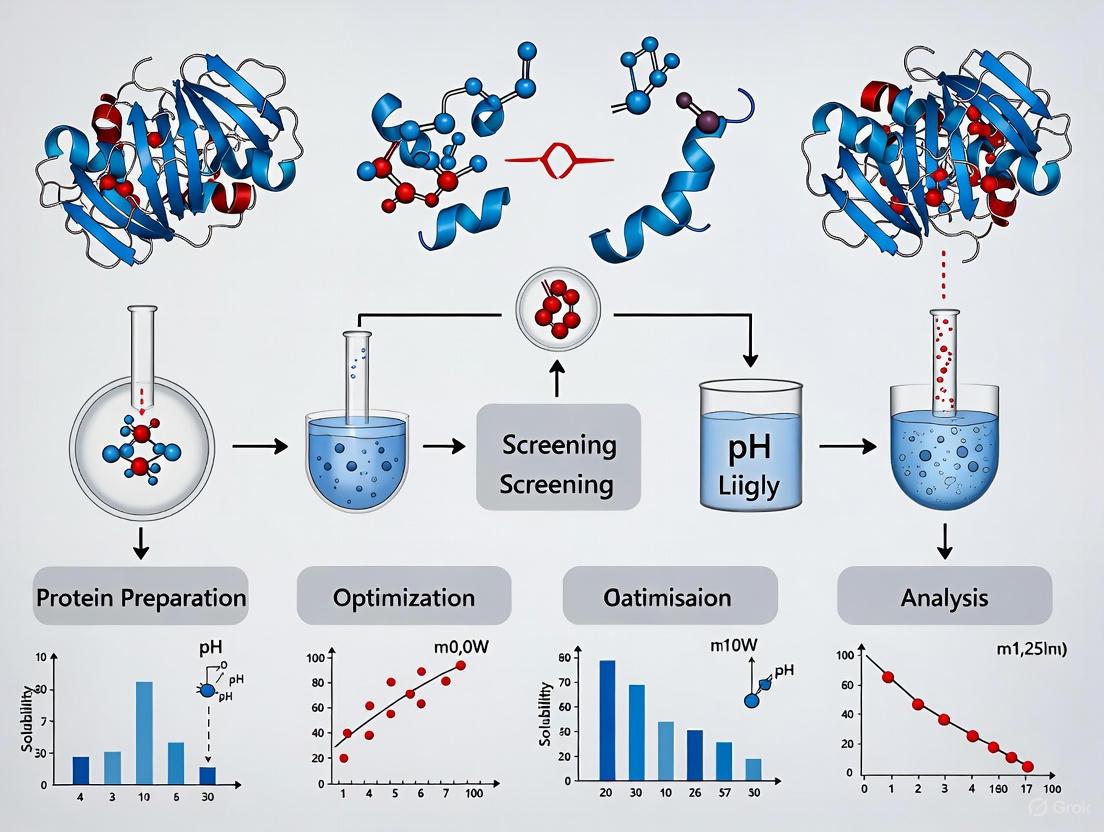
This guide provides a comprehensive introduction to the protein crystallization process, a critical step in X-ray crystallography for determining 3D protein structures.
Protein Crystallization for Beginners: A 2025 Guide from Principles to Practice
Abstract
This guide provides a comprehensive introduction to the protein crystallization process, a critical step in X-ray crystallography for determining 3D protein structures. Tailored for researchers and professionals in drug discovery, it covers foundational principles, from the importance of sample purity and stability to an overview of standard methods like vapor diffusion. It then delves into practical troubleshooting for common challenges and explores how modern automation, AI, and complementary techniques are revolutionizing the field. The article synthesizes established methodologies with the latest 2025 advancements, offering a clear pathway for beginners to approach and succeed in their crystallization experiments.
The What and Why: Understanding Protein Crystallization Fundamentals
Defining Protein Crystallization and Its Role in Structural Biology
Protein crystallization is the process of forming a highly ordered, three-dimensional array of protein molecules stabilized by crystal contacts [1]. This process serves as the critical gateway to X-ray crystallography, the predominant method for determining the high-resolution three-dimensional structures of biological macromolecules [2] [3]. The knowledge of these atomic-scale structures is fundamental to understanding biological function and is instrumental in fields such as drug development [4].
The indispensability of structural knowledge
Understanding the precise three-dimensional structure of a protein is crucial for elucidating its mechanism of action, including how it interacts with other molecules, substrates, and drugs [4]. Crystal-based diffraction methods are responsible for approximately 85-90% of all biomolecular structural models deposited in the Protein Data Bank (PDB), the worldwide repository for atomic-level structural data [3] [5] [6]. This dominance underscores the technique's unparalleled importance in modern structural biology.
The following table compares the primary methods used in structural biology.
Table 1: Key Structural Biology Methods for Macromolecular Structure Determination
| Method | Primary Use | Approximate PDB Share | Key Requirement |
|---|---|---|---|
| X-ray Crystallography | Determining atomic-level 3D structures of proteins, nucleic acids, and viruses [2]. | ~85-90% [3] [5] | High-quality, well-ordered single crystals [2]. |
| NMR Spectroscopy | Studying protein structures and dynamics in solution [5]. | ~14% [5] | Proteins must be soluble and not too large. |
| Cryo-Electron Microscopy (Cryo-EM) | Determining structures of large complexes and membrane proteins that are difficult to crystallize [4]. | Growing share | A thin, vitrified layer of the sample in solution [4]. |
The theory and practice of protein crystallization
The thermodynamic principle
At its core, protein crystallization is a thermodynamic process aimed at achieving a supersaturated solution, where the protein concentration exceeds its equilibrium solubility [2] [1]. In this metastable state, the dissolved protein molecules begin to self-organize into a crystal lattice, a process governed by the need to lower the system's overall free energy (ΔG) by forming stable, low-energy intermolecular contacts, despite an associated decrease in entropy [1]. The process occurs in two critical steps:
- Nucleation: The initial formation of a small, stable aggregate of protein molecules that acts as a template for the crystal.
- Crystal Growth: The subsequent, ordered addition of protein molecules to the nucleus, leading to the formation of a macroscopic crystal [1].
A practical workflow for structure determination
The journey from a protein of interest to a refined three-dimensional structure involves a series of critical, interconnected steps, summarized in the workflow below.
Essential reagents for crystallization trials
Successful crystallization depends on creating a chemical environment that promotes the orderly association of protein molecules. The following table details key reagents used in formulating crystallization conditions.
Table 2: Key Reagents in Protein Crystallization
| Reagent Category | Examples | Primary Function in Crystallization |
|---|---|---|
| Precipitants | Polyethylene Glycol (PEG), Ammonium Sulfate, 2-methyl-2,4-pentanediol (MPD) | Reduce protein solubility by excluding water (PEGs) or competing for hydration (salts), driving the solution toward supersaturation [3] [1] [7]. |
| Buffers | HEPES, Tris, MES | Maintain a stable pH, which critically influences the ionization state of surface residues and their potential for forming crystal contacts [3] [8]. |
| Salts | Sodium Chloride, Magnesium Chloride, Ammonium Sulfate | Modulate electrostatic interactions between protein molecules; at high concentrations, they can "salt out" the protein [3] [8]. |
| Additives | Metal Ions, Ligands, Substrates, Reducing Agents (DTT, TCEP) | Enhance protein stability, lock specific conformations, or mediate specific intermolecular contacts in the crystal lattice [2] [3]. |
Methodologies in protein crystallization
Several experimental methods are employed to gently drive a protein solution to supersaturation. The most common and widely used techniques are based on vapor diffusion.
Vapor diffusion methods
Vapor diffusion is the cornerstone of modern protein crystallization [1] [7]. In this method, a small droplet containing a mixture of purified protein and precipitant solution is sealed in an enclosure with a larger reservoir of a solution containing a higher concentration of precipitant. Water slowly evaporates from the droplet and diffuses to the reservoir until the vapor pressure equilibrates. This gradual process increases the concentration of both the protein and the precipitant in the droplet, guiding the solution into a supersaturated state ideal for crystal nucleation and growth [1] [7]. The two primary setups are:
- Hanging Drop: The protein-precipitant droplet is suspended from a coverslip over the reservoir [8].
- Sitting Drop: The droplet rests on a small pedestal or ledge separated from the reservoir [1].
The physical setup of these two methods is illustrated below.
Other crystallization techniques
While vapor diffusion is most prevalent, other methods are valuable for specific applications:
- Batch Crystallization: The protein is directly mixed with a precipitant to achieve immediate supersaturation, and the mixture is left undisturbed for crystals to form [4]. This method is often performed under oil to prevent evaporation [1].
- Microdialysis: The protein solution is separated from a larger precipitant solution by a semi-permeable membrane. Small molecules and ions diffuse across the membrane, slowly changing the chemical environment of the protein to induce crystallization [1].
- Free-Interface Diffusion: Solutions of protein and precipitant are brought into contact without mixing, allowing crystallization to occur at the interface where the two solutions diffuse into one another [1].
Guiding principles and current innovations
Biochemical prerequisites for success
The likelihood of successful crystallization is heavily dependent on the quality and stability of the protein sample itself. Key prerequisites include:
- High Purity: Samples should typically be >95% pure, as impurities can disrupt the uniform packing of molecules required for a crystal lattice [3] [8].
- Homogeneity and Monodispersity: The protein must be conformationally uniform and exist as a single oligomeric species in solution. Dynamic light scattering (DLS) and size-exclusion chromatography (SEC) are key techniques for assessing this [3].
- Stability: The protein must remain stable and folded for the duration of the crystallization experiment, which can take days to months [3]. Buffer components, salts, and additives like reducing agents (e.g., TCEP) are often included to maintain stability [3].
- Construct Design: Modern tools like AlphaFold can guide the design of protein constructs by identifying and removing flexible regions that introduce heterogeneity and hinder crystallization [3].
Key parameters influencing crystallization
Crystallization is influenced by a multitude of interconnected factors that must be empirically optimized for each unique protein. The most critical parameters to screen include [7]:
- pH: Dramatically affects the surface charge and bonding potential of the protein. Crystallization often occurs near the protein's isoelectric point (pI) [3] [1].
- Temperature: Alters protein solubility and kinetics of crystal growth. Trials are often conducted at both 4°C and 20°C [1].
- Protein Concentration: Must be high enough to reach supersaturation but not so high as to cause immediate, amorphous precipitation [7].
- Precipitant Type and Concentration: The nature and concentration of the precipitant are primary drivers of supersaturation [3].
- Additives and Ligands: Ions, substrates, or inhibitors can stabilize specific conformations and mediate crucial crystal contacts [2] [3].
Emerging trends and rational design
The field is evolving from a purely empirical endeavor toward a more rational science. Notable innovations include:
- High-Throughput Robotics: Automation allows researchers to set up thousands of crystallization trials with nanoliter volumes of protein, drastically increasing the speed and efficiency of screening [2] [7].
- Advanced Computational Prediction: Machine learning models and tools like DSDCrystal are being developed to predict a protein's crystallization propensity based on its dynamic and physico-chemical features, guiding experimental efforts [9] [6].
- Surface Engineering: Techniques like surface entropy reduction (SER) involve mutating large, flexible surface residues to smaller ones (e.g., lysine to alanine) to create patches conducive to forming crystal contacts [3] [6].
Protein crystallization remains the foundational pillar of structural biology, enabling the visualization of biological macromolecules at an atomic level. While the process presents significant challenges, its principles are well-established, revolving around the careful manipulation of a protein's solution environment to foster spontaneous self-assembly into an ordered crystal. Continued advancements in automation, computational prediction, and rational protein engineering are steadily increasing the success rate and expanding the frontiers of this indispensable technique, solidifying its central role in driving discovery in basic research and drug development.
Why Crystallize? The Critical Link to X-ray Crystallography and Drug Discovery
Protein crystallization represents a fundamental prerequisite for X-ray crystallography, a technique responsible for determining approximately 86% of the macromolecular structures in the Protein Data Bank (PDB) [10]. This method enables researchers to elucidate the three-dimensional structure of biological macromolecules at atomic resolution, providing a deep and unique understanding of protein function and the inner workings of living cells [10]. The process of transforming proteins from a disordered solution into a highly ordered crystalline state creates a repeating lattice that can diffract X-rays, allowing scientists to deduce the precise spatial arrangement of atoms within the protein [11]. This structural information has become indispensable in modern drug discovery, particularly for understanding drug-target interactions at the molecular level and facilitating the development of targeted therapies [12] [13].
The critical importance of protein crystallization is reflected in its growing market impact, with the global protein crystallization market projected to increase from $1.84 billion in 2023 to $3.84 billion by 2033, registering a compound annual growth rate (CAGR) of 8.5% [14]. This growth is driven by rising investments in biopharmaceutical research and development and the expanding use of protein therapies for treating various diseases [14]. As the demand for novel therapeutics escalates, the tools and technologies supporting protein crystallization are positioned for robust expansion, reflecting the necessity for precise structural insights in complex biological systems [12].
The Science of Protein Crystallization: From Principle to Practice
Fundamental Principles
The process of protein crystallization requires bringing the macromolecule to a state of supersaturation, where the solution contains a higher protein concentration than its equilibrium solubility [10]. This is typically achieved by concentrating the protein sample to the highest possible concentration without causing aggregation or precipitation (usually 2-50 mg/mL) and introducing it to a precipitating agent that promotes the nucleation of protein crystals in the solution [10]. The crystallization process can be understood through phase diagrams that map the relationship between protein concentration and precipitant concentration, identifying zones where the solution is undersaturated, metastable (where crystal growth occurs), or labile (where spontaneous nucleation happens) [10].
The homogeneity of the protein preparation is a key factor in obtaining crystals that diffract to high resolution [10]. Proteins must be purified to homogeneity, or as close as possible to homogeneity, before crystallization attempts can begin. Even minor impurities can disrupt the orderly packing of protein molecules into a crystal lattice, preventing the formation of diffraction-quality crystals. This requirement for extreme purity makes protein production and purification critical preliminary steps in the crystallography pipeline [11].
Key Crystallization Techniques
Several experimental approaches have been developed to achieve the controlled supersaturation necessary for protein crystallization:
Vapor Diffusion (Hanging Drop and Sitting Drop): In vapor diffusion, a drop containing a mixture of precipitant and protein solutions is sealed in a chamber with pure precipitant [10]. Water vapor then diffuses out of the drop until the osmolarity of the drop and the precipitant are equal. The dehydration of the drop causes a slow concentration of both protein and precipitant until equilibrium is achieved, ideally in the crystal nucleation zone of the phase diagram [10]. In the hanging drop method, the protein-precipitant mixture is suspended from a cover slide above the reservoir, while in the sitting drop method, the mixture is placed on a small platform or shelf within the well.
Batch Crystallization under Oil: This method relies on bringing the protein directly into the nucleation zone by mixing the protein with the appropriate amount of precipitant [10]. This method is usually performed under a paraffin/minimal oil mixture to prevent the diffusion of water out of the drop, maintaining constant conditions throughout the crystallization experiment [10].
Microbatch Crystallization: A modern variation of batch crystallization conducted in 96-well trays where small volumes (typically 1-2 μL) of protein and precipitant solutions are mixed under oil to prevent evaporation [10]. This approach enables high-throughput screening of crystallization conditions with minimal reagent consumption.
Table 1: Comparison of Major Protein Crystallization Techniques
| Technique | Principle | Advantages | Common Applications |
|---|---|---|---|
| Hanging Drop Vapor Diffusion | Slow equilibration through vapor phase | Allows gradual approach to supersaturation; widely used | Initial screening; optimization |
| Sitting Drop Vapor Diffusion | Equilibration from elevated platform | Reduced surface contact; better for automated systems | High-throughput screening |
| Batch Crystallization | Direct mixing to supersaturation | Simplified setup; constant conditions | Known conditions; membrane proteins |
| Microbatch under Oil | Small-volume mixing under oil | Minimal reagent use; high-throughput | Sparse matrix screening; precious samples |
The Crystallization Workflow
The following diagram illustrates the complete protein crystallization and structure determination workflow:
The Scientist's Toolkit: Essential Materials and Reagents
Successful protein crystallization requires specialized reagents, equipment, and consumables. The market for these tools continues to expand, with consumables representing the largest product segment in the protein crystallization market [14]. The following table details essential components of the protein crystallization toolkit:
Table 2: Essential Research Reagent Solutions for Protein Crystallization
| Item | Function | Examples/Specifications |
|---|---|---|
| Purified Protein Sample | Macromolecule for crystallization | High purity (>95%); concentration 5-50 mg/mL; filtered through 0.22 μm filter [10] |
| Crystallization Screens/Kits | Sparse matrix incomplete factorial screening | Commercial screens (Hampton Research, Molecular Dimensions); PEG-based, ammonium sulfate conditions [10] |
| Precipitating Agents | Induce supersaturation | Polyethylene glycol (PEG), ammonium sulfate (account for ~60% of successful conditions) [10] |
| Buffers | Control pH environment | NaOAc (pH 4.0-4.9), HEPES, Tris; various pH ranges to optimize crystallization [10] |
| Salts and Additives | Modify chemical environment | NaCl (0.6-1.6 M concentrations); cations, anions, and small molecules that promote ordering [10] |
| Crystallization Plates | Platform for crystallization experiments | 24-well hanging/sitting drop trays; 96-well microbatch trays; Corning CrystalEX Microplates [10] [14] |
| Liquid Handling Systems | Precise dispensing of small volumes | Automated systems for high-throughput screening; minimize human error [15] |
| Imaging Systems | Monitor crystal growth | Automated crystal imaging systems; document drop morphologies over time [15] |
The selection of appropriate reagents and equipment is crucial for successful crystallization. Polyethylene glycol (PEG) followed by ammonium sulfate are the most commonly successful precipitating agents, accounting for approximately 60% of all recorded macromolecular precipitants used for crystallization [10]. Commercial screens that exploit the sparse matrix incomplete factorial method of trial conditions provide an efficient starting point for initial crystallization trials of new proteins [10].
Applications in Drug Discovery: From Structure to Function
Enabling Rational Drug Design
X-ray crystallography provides the structural basis for rational drug design by revealing atomic-level details of protein-ligand interactions [13]. When the three-dimensional structure of a therapeutic target is known, researchers can design molecules that precisely fit into binding pockets, optimizing interactions for higher affinity and specificity. This structure-based approach has revolutionized drug discovery, particularly for targets where natural products serve as starting points for drug development [13].
Natural products have often been viewed as "privileged structures" in drug discovery, which may be attributable to evolution driving biological activity irrespective of molecular structure [13]. Analysis of drugs approved by the US Food and Drug Administration (FDA) from 1981 to 2019 shows that nearly 30% of clinical drugs come from natural products or natural product derivatives [13]. The dual characteristics of evolution-driven bioactive property and unique chemical structure make natural products valuable leads in drug discovery [13].
Case Studies: Successful Drugs Developed Through Crystallography
Several blockbuster drugs have been developed using structural information obtained through X-ray crystallography:
Taxol/Paclitaxel: This natural product anticancer drug binds to tubulin, stabilizing microtubules and preventing cell division [13]. The co-crystal structure of tubulin with taxol provided insights into its mechanism of action and has guided the development of analogs with improved therapeutic properties.
Rapamycin (Sirolimus): Originally discovered as an antifungal antibiotic, rapamycin's complex with FKBP12 was determined through X-ray crystallography [13]. This structural information revealed its unique mechanism as a molecular glue that forms a complex with mTOR, leading to its development as an immunosuppressant and anticancer agent [13].
Artemisinin: This natural product antimalarial, discovered by Nobel laureate Tu Youyou, has saved millions of lives [13]. Structural studies have helped elucidate its mechanism of action and guided the development of more stable derivatives.
Berberine: A natural product with multiple therapeutic applications, berberine's complex with phospholipase A2 was determined at 1.93Å resolution, providing a rationale for its anti-inflammatory activity [13].
The following diagram illustrates how structural information enables the drug discovery and optimization process:
Market Impact and Therapeutic Areas
The critical role of protein crystallization in drug discovery is reflected in market trends and investment patterns. Pharmaceutical and biotechnology companies represent the largest end-user segment of the protein crystallization market, utilizing these techniques for drug discovery and protein engineering [12] [14]. The fastest-growing application segment in terms of revenue is in drug discovery and development, driven by the increasing demand for precision medicine and biologics in targeted therapies, which rely heavily on detailed structural insights from crystallographic data [12].
The expanding focus on protein therapeutics has significantly contributed to market growth. Biopharmaceuticals offer targeted treatments for chronic conditions, leveraging protein crystallization for precise protein structure determination, yielding effective and stable therapeutics [15]. Investments in research and development, such as Australia's $4.34 billion allocation in 2022-23, underline the sector's influence on market acceleration [15].
Table 3: Protein Crystallization Market Analysis by Segment and Region
| Segment | Market Size/Share | Growth Trends | Key Drivers |
|---|---|---|---|
| Overall Market | $1.84B (2023) to $3.84B (2033) [14] | CAGR 8.5% (2025-2033) [14] | Demand for protein therapeutics; biopharmaceutical R&D [14] |
| Product Type (Consumables) | Largest revenue share [14] | Recurrent revenue stream | Need for reagents, kits, microplates for screening [14] |
| Technology (X-ray Crystallography) | Largest market share [14] | Sustained dominance | High resolution; well-established methodology [12] |
| End User (Pharma/Biotech) | Largest market share [14] | Strong growth | Targeted drug development; structural biology applications [12] |
| Region (North America) | 40% market share [12] | CAGR 8.1% [14] | Advanced research facilities; drug development funding [12] |
| Region (Asia-Pacific) | 20% market share [12] | Fastest-growing (CAGR 8.8%) [14] | Expanding biotechnology sectors; increasing healthcare investment [12] [14] |
Current Trends and Future Perspectives
Technological Advancements
The field of protein crystallization is being transformed by several cutting-edge technologies that are addressing traditional challenges and expanding capabilities:
Automation and High-Throughput Screening: Enhanced robotic systems streamline the crystallization process, improving efficiency and reproducibility while reducing manual labor [12]. Automated liquid handling systems can rapidly set up thousands of crystallization trials with minimal protein consumption.
Microfluidics and Miniaturization: Miniaturized techniques allow for high-throughput screening and reduced reagent use, accelerating discovery and enabling work with scarce protein samples [12]. These systems can manipulate nanoliter volumes, dramatically reducing consumption of precious protein samples.
Artificial Intelligence and Machine Learning: AI-driven algorithms optimize crystallization conditions and predict outcomes, reducing trial-and-error approaches [12]. Machine learning models can analyze historical crystallization data to recommend promising conditions for new targets.
Advanced Imaging and Analysis: Improved crystallization imaging systems coupled with sophisticated software enable automated crystal detection and monitoring [15]. These systems can detect early crystal formation and track growth kinetics without manual intervention.
Cell-Free Protein Crystallization: Innovative methods, such as that developed by the Tokyo Institute of Technology in 2022, represent groundbreaking approaches that offer improved crystallization processes for structural biology and drug discovery [15]. This technique enables the study of unstable proteins that are not amenable to investigation using conventional methods [14].
Addressing Challenges and Limitations
Despite significant advances, protein crystallization remains a bottleneck in structural biology due to several persistent challenges:
Membrane Protein Complexity: Membrane proteins pose significant challenges in terms of purification and crystallization [14]. Several proteins in this category, such as transmembrane receptors and ion channels, are highly intriguing regarding drug development but difficult to crystallize [14].
Sample Requirements: The technique requires relatively large amounts (milligrams) of pure protein, and for each protein of interest, a large number of crystallization conditions must be tried [11]. Producing high-quality crystals from proteins beyond well-characterized examples remains challenging [14].
Dynamic and Flexible Proteins: Proteins with inherent flexibility or multiple conformations often resist crystallization because they lack the rigid structure needed to form ordered lattices.
The scientific community is addressing these challenges through collaborative efforts, shared resources, and technological innovations. As these barriers are overcome, the application of protein crystallization in drug discovery will continue to expand, enabling the development of novel therapeutics for an increasingly diverse range of biological targets.
Protein crystallization serves as the critical gateway to atomic-resolution structure determination through X-ray crystallography, providing indispensable insights for modern drug discovery. The process, while sometimes considered more art than science, has been systematically improved through technological advancements in automation, miniaturization, and computational approaches. As the field continues to evolve, protein crystallization remains foundational to understanding biological function at the molecular level and developing targeted therapies for human disease. The continued growth of the protein crystallization market, driven by demand for protein therapeutics and biopharmaceutical innovation, underscores its enduring importance in structural biology and drug development. For researchers entering the field, mastering the principles and techniques of protein crystallization provides access to a powerful toolkit for elucidating biological mechanisms and advancing human health.
Protein crystallization is a pivotal technique in structural biology, enabling the determination of three-dimensional protein architectures that are essential for understanding function, studying interactions, and guiding drug discovery [16] [17]. Despite its importance, the process of growing high-quality protein crystals remains challenging and is often characterized by trial and error rather than predictable outcomes [18]. At the heart of understanding and controlling this process lies the protein-water phase diagram, which maps the thermodynamic conditions under which a protein solution transitions between different physical states [18]. For researchers beginning investigations in this field, mastering the interpretation and navigation of this phase diagram is fundamental to achieving reproducible and diffraction-quality crystals.
This technical guide provides an in-depth examination of protein crystallization through the lens of phase diagram principles. It is structured to lead beginner researchers from core theoretical concepts to practical experimental methodologies, emphasizing how a rational approach to phase behavior can dramatically increase crystallization success rates [19]. By establishing a firm foundation in these core principles, researchers can transform crystal growth from an empirical art to a more predictable scientific process.
Theoretical Foundations of the Protein Phase Diagram
Essential Zones of the Phase Diagram
The phase diagram of a protein-water system graphically represents the relationship between protein concentration, precipitant concentration, and the resulting physical states of the solution. The characteristic features of this diagram can be captured by a relatively simple model with parameters describing interactions between protein molecules in both solution and crystalline states [18]. This model allows researchers to predict and identify optimal conditions for crystal growth. The diagram is typically divided into several key zones, each representing a distinct thermodynamic regime critical for understanding crystallization pathways [20]:
- Undersaturated Zone: At low concentrations of both protein and precipitant, the protein is completely soluble and remains in a homogeneous solution. No phase separation occurs under these conditions.
- Metastable Zone: At moderate supersaturation, the solution is thermodynamically primed for crystal growth, but spontaneous nucleation is unlikely. Existing crystals will grow, but new nuclei do not form. Crystals grown in this zone are often better ordered and yield higher diffraction quality than those from higher concentration regions [20].
- Nucleation Zone: At higher supersaturation, the solution becomes favorable for the spontaneous formation of crystal nuclei. This region often produces showers of small crystals, but controlling their size and quality can be challenging.
- Precipitation Zone: At very high concentrations, the protein forms amorphous aggregates rather than ordered crystals, resulting in irreversible and unproductive precipitation.
Table 1: Key Zones in the Protein Crystallization Phase Diagram
| Zone | Protein/Precipitant Concentration | Thermodynamic Behavior | Experimental Outcome |
|---|---|---|---|
| Undersaturated | Low | Soluble, homogeneous solution | No phase separation |
| Metastable | Moderate | Supersaturated, no spontaneous nucleation | Crystal growth from existing nuclei; often produces highest quality crystals [20] |
| Nucleation | High | Spontaneous nucleation possible | Formation of new crystal nuclei; may yield many small crystals |
| Precipitation | Very High | Rapid, disordered aggregation | Amorphous, non-crystalline precipitate |
The Role of Supersaturation
The journey from a soluble protein to a crystalline solid begins with achieving supersaturation, the fundamental driving force behind crystallization [18]. A solution becomes supersaturated when the concentration of protein exceeds its equilibrium solubility under given conditions of precipitant concentration, temperature, and pH. This metastable state provides the thermodynamic potential for molecules to leave the solution phase and incorporate into a solid crystal lattice.
Creating a supersaturated state typically involves gradually reducing protein solubility through the careful addition of precipitating agents such as salts or polymers [21] [16]. These precipitants act by competing for water molecules (salting-out) or creating macromolecular crowding environments that effectively increase protein-protein interactions while decreasing protein-solvent interactions [21]. The trajectory of this process through the phase diagram must be carefully controlled, as moving too rapidly into high supersaturation often leads to irreversible precipitation rather than productive crystallization [18] [20].
Advanced Phase Behavior: Liquid-Liquid Phase Separation
An interesting phenomenon observed in some protein systems is metastable liquid-liquid phase separation (LLPS), where a protein solution separates into protein-rich and protein-poor liquid phases [22]. This creates a distinct region in the phase diagram where two liquid phases coexist, typically located within the supersaturated region above the crystal solubility curve. While LLPS is metastable with respect to crystallization, it can significantly enhance crystal nucleation through two proposed mechanisms: the wetting mechanism, where a protein-rich liquid layer lowers the interfacial energy of crystal nuclei, and the two-step mechanism, where crystal nucleation proceeds through intermediate liquid-like protein clusters [22].
Research on lysozyme has demonstrated that LLPS can be harnessed to dramatically improve crystallization yields. One study reported that combining a traditional salting-out agent (NaCl) with an organic buffer (HEPES) under LLPS conditions resulted in crystallization yields exceeding 90% at fairly low ionic strength within approximately one hour—more than three times the yield achieved without HEPES [22]. This suggests a promising strategy for enhancing crystallization of challenging proteins by strategically manipulating the phase diagram with multiple additives.
Experimental Determination of Phase Diagrams
Microbatch Method for Phase Diagram Mapping
The microbatch technique under oil is an efficient approach for rapidly determining the phase diagram of a target protein [20]. This method involves dispensing numerous small-volume trials (typically nanoliter to microliter scale) containing varying concentrations of protein and precipitant, then observing the outcomes after incubation. The procedure can be broken down into the following detailed protocol:
- Sample Preparation: Prepare a highly pure (>95%) and homogeneous protein sample in a stabilizing buffer. Assess monodispersity using dynamic light scattering (DLS) or size-exclusion chromatography (SEC) to ensure the sample is aggregation-free [21].
- Experimental Design: Select a range of protein concentrations (e.g., 5-100 mg/mL) and precipitant concentrations (e.g., 0-30% PEG) that will adequately probe the different zones of the phase diagram.
- Dispensing: Using automated liquid handling or manual techniques, dispense trials with systematic variations of protein and precipitant concentrations into a microbatch plate. Each trial combines protein solution and precipitant solution in a defined ratio.
- Sealing and Incubation: Cover the trials with a layer of oil to prevent evaporation and incubate at a constant temperature for a defined period (days to weeks).
- Observation and Scoring: Regularly examine each trial under a microscope to identify clear drops (undersaturated), crystals (nucleation or metastable zone), or precipitate (precipitation zone).
- Diagram Construction: Plot the results on a graph with protein concentration on one axis and precipitant concentration on the other, delineating the boundaries between different zones based on experimental outcomes.
Table 2: Crystallization Reagent Solutions and Their Functions
| Reagent Category | Specific Examples | Primary Function | Key Considerations |
|---|---|---|---|
| Precipitating Salts | Ammonium sulfate, Sodium chloride | Competes for water molecules, reduces protein solubility (salting-out) [21] | Concentration-dependent effect; easily form insoluble salts with certain buffers [21] |
| Polymers | PEG 4000, PEG 8000 | Creates macromolecular crowding, excludes protein from solution [21] | Longer polymers generally more effective at lower concentrations [19] |
| Buffers | HEPES, Acetate, Tris | Controls pH, affects protein charge and electrostatic interactions [21] | Keep concentration below ~25 mM; avoid phosphate with certain salts [21] |
| Organic Additives | MPD, HEPES | Modifies hydration shell, binds hydrophobic regions, may stabilize crystals [21] [22] | HEPES can act as salting-out for crystallization while salting-in for LLPS [22] |
| Reducing Agents | DTT, TCEP, BME | Prevents cysteine oxidation, maintains protein stability [21] | Consider half-life at experimental pH (TCEP most stable) [21] |
Microseeding from Metastable Zone Conditions
Once the phase diagram is established, the identified metastable zone can be exploited through microseeding to produce high-quality crystals consistently [20]. This technique separates the nucleation and growth phases of crystallization, allowing each to be optimized independently:
- Seed Stock Preparation: Transfer a well-formed crystal to a harvesting buffer containing a precipitant concentration approximately 20% higher than the nucleation zone concentration.
- Crystal Crushing: Gently crush the crystal using a glass fiber or similar tool to create a suspension of microscopic seeds.
- Seed Serial Dilution: Prepare a series of dilutions (e.g., from 10⁻¹ to 10⁻⁴) in harvesting buffer to obtain an appropriate seed density.
- Seeded Crystallization Setup: Set up vapor diffusion trials with reservoir solutions containing precipitant at the metastable zone concentration determined from the phase diagram.
- Seed Introduction: Add a small volume (0.3 μL) of the seed dilution to the crystallization drops. The seeds will then grow in the metastable environment where spontaneous nucleation is unfavorable.
- Optimization: The 10⁻³ dilution typically provides the optimal seed density for producing large, single crystals. Fresh seed stocks should be used immediately as they lose effectiveness upon storage [20].
This approach was successfully applied to a bacterial enzyme that previously produced poorly diffracting crystals (≤3.5 Å). By employing microseeding based on a phase diagram determined via microbatch, researchers obtained crystals that diffracted to 2 Å resolution, demonstrating the power of this rational approach [20].
Rational Screening Based on Phase Behavior
Phase Diagram-Informed Screening Strategy
Traditional crystallization screening often employs generic sparse-matrix approaches that sample chemical space without considering the specific biophysical properties of the target protein. In contrast, a rational screening strategy based on detailed phase behavior knowledge has been shown to significantly increase success rates for challenging proteins [19]. This approach involves:
- High-Throughput Solubility Screening: Using microfluidics to perform hundreds of protein solubility experiments across diverse chemical conditions, identifying reagents that significantly affect protein aggregation behavior.
- Phase Diagram Generation: Constructing complete phase diagrams for the most promising reagents identified in the initial screen, mapping out solubility boundaries under each condition.
- Customized Screen Design: Designing individualized crystallization screens tailored to target the solubility boundary of the protein with each effective reagent.
This methodology was applied to 12 diverse and challenging proteins, most of which had failed to crystallize using traditional techniques. The phase diagram-based approach achieved a remarkable 75% crystallization success rate, with an overall diffraction success rate of approximately 33%—roughly double what was achieved with conventional automation in large-scale structural genomics consortia [19].
Key Factors Influencing Phase Behavior
Several biochemical parameters significantly impact protein phase behavior and should be carefully controlled during crystallization experiments:
- pH: Reagents with pH values near the theoretical isoelectric point (pI) of the target protein are identified as potential crystallizing agents with higher frequency, consistent with reduced intermolecular electrostatic repulsion near the pI [19]. The ideal pH is typically within 1-2 units of the protein's pI [21].
- Precipitant Properties: Longer-chain PEG polymers generally produce more crystallization hits than shorter polymers, with chemically modified PEGs (e.g., monomethyl ether end groups) showing different effectiveness depending on polymer size [19].
- Ionic Strength: Higher ionic strengths typically increase the number of identified crystallization reagents, though the effect is generally less pronounced than that of precipitant composition [19].
- Protein Quality and Concentration: High purity (>95%) and homogeneity are essential for crystallization success [21]. Both insufficient and excessive protein concentration can hinder crystallization, with the optimal range being protein-specific and determinable through pre-crystallization testing [21].
Emerging Technologies and Future Directions
Automation and Advanced Imaging
Automation technologies are revolutionizing protein crystallization by increasing throughput, improving reproducibility, and enabling more precise phase diagram mapping. Integrated systems now combine laboratory information management software (LIMS), automated screen builders, nanoliter-scale drop setters, and automated imagers [16]. These systems significantly reduce human error in liquid handling and allow researchers to set up thousands of crystallization trials with minimal protein consumption.
Advanced imaging modalities enhance the ability to detect and characterize crystal formation:
- Visible Light Imaging: Suitable for analyzing large crystals but cannot distinguish between protein and salt crystals.
- Ultraviolet (UV) Imaging: Utilizes natural protein fluorescence to distinguish protein crystals from salt.
- Multi-fluorescent Imaging (MFI): Employs trace fluorescent labeling to efficiently identify protein crystals in complex mixtures.
- SONICC: Combines second harmonic generation with UV two-photon excited fluorescence to detect microcrystals, even those obscured in lipid cubic phase or aggregates [16].
Artificial intelligence-based autoscoring models are increasingly being integrated with crystallization software to help researchers analyze the extensive image datasets generated by high-throughput experiments [16].
Innovative Approaches: Microgravity and Bioassemblers
Microgravity environments in space offer unique advantages for protein crystallization by minimizing buoyancy-driven convection, sedimentation, and hydrostatic pressure [17]. These quiescent conditions promote more orderly crystal packing and can produce crystals with improved order, fewer defects, and better diffraction properties compared to Earth-grown crystals.
Recent innovations include the development of bioassembler systems specifically engineered for protein crystallization in space. One such system, the "Organ.Aut," employs magnetic forces to assemble biomaterials in a controlled manner and has successfully produced highly ordered lysozyme crystals diffracting to approximately 1 Å resolution in space [17]. These systems allow for direct mixing of protein and precipitant solutions on space stations and real-time observation of crystal growth, addressing previous challenges in sample handling and inspection during space-based crystallization experiments.
Navigating the protein phase diagram from supersaturation to crystal growth represents the core principle underlying rational approaches to protein crystallization. For beginning researchers, understanding that crystallization is not a single event but a pathway through different thermodynamic zones is fundamental to designing successful experiments. The metastable zone, in particular, offers the most promising conditions for growing high-quality, well-ordered crystals, especially when accessed through techniques like microseeding [20].
The future of protein crystallization lies in increasingly rational approaches that leverage detailed phase behavior knowledge, high-throughput automation, and innovative technologies like microgravity crystallization [17] [19]. By continuing to shift from empirical screening to principle-based design, researchers can overcome the challenges of crystallizing complex targets, ultimately accelerating structural biology and drug discovery efforts. For those beginning research in this field, mastering the phase diagram provides not only practical experimental guidance but also a deeper theoretical framework for understanding and innovating in protein crystallization science.
In the realm of structural biology, protein crystallization represents the critical gateway to elucidating three-dimensional molecular structures through X-ray crystallography. This process, essential for understanding protein function, facilitating drug design, and unraveling disease mechanisms, is absolutely dependent on the quality of the initial protein sample [23]. The journey from a protein solution to a highly ordered crystal lattice is remarkably demanding, requiring the protein molecules to self-organize into a translationally periodic arrangement with long-range order [24]. To achieve this molecular self-assembly, the protein sample must meet stringent prerequisite conditions. Sample purity, stability, and homogeneity are not merely advantageous—they are fundamental, non-negotiable requirements without which crystallization efforts are fundamentally compromised [25] [24] [3]. This technical guide examines the indispensable role of these three pillars in the protein crystallization workflow, providing researchers with the foundational knowledge and practical methodologies needed to prepare samples capable of forming diffraction-quality crystals.
The Critical Triad: Purity, Stability, and Homogeneity
Pillar 1: Protein Purity
Protein purity is arguably the most critical factor for successful crystallization. The presence of impurities, even in small amounts, can severely disrupt the highly ordered process of crystal lattice formation. Impurities may include other proteins, nucleic acids, lipids, or carbohydrates that co-purify with the target protein [3]. These contaminants compete with the target protein for interactions, leading to non-specific aggregation, amorphous precipitation, or disordered crystals that lack the periodic regularity required for diffraction [3]. Crystallization typically requires a purity level of at least 95% as assessed by SDS-PAGE with Coomassie-blue staining [25]. However, for particularly challenging proteins, even higher purity levels may be necessary. Furthermore, post-translational modifications such as glycosylation, phosphorylation, or proteolytic cleavage must be homogeneous throughout the sample, as heterogeneity in these modifications creates chemical variability that prevents uniform molecular packing [25] [24].
Table 1: Analytical Methods for Assessing Protein Purity
| Method | Key Application in Purity Assessment | Optimal Outcome for Crystallization |
|---|---|---|
| SDS-PAGE | Assesses protein size homogeneity and detects contaminating proteins [25] | Single band at expected molecular weight [25] |
| Mass Spectrometry | Detects chemical heterogeneity, post-translational modifications, and proteolysis [24] | Single major species with expected mass [24] |
| Chromatography (SEC, IEX) | Evaluates sample composition and separates protein variants [23] | Single, symmetric elution peak [23] |
Pillar 2: Protein Stability
Protein stability encompasses both conformational stability (the maintenance of native structure) and compositional stability (the maintenance of chemical identity over time) [24]. A protein must remain stable throughout the crystallization process, which can take days to months [3]. Conformational instability, manifested as flexible regions, disordered domains, or dynamic variability, prevents proteins from adopting consistent orientations needed for lattice formation [24]. Intrinsically disordered proteins or regions are particularly challenging for this reason [24]. Compositional instability, such as degradation through proteolysis, oxidation of cysteine residues, or deamidation of asparagine and glutamine, introduces chemical heterogeneity that disrupts crystal packing [24] [3]. Stability must be maintained not only in the storage buffer but also under the conditions of the crystallization experiment itself.
Table 2: Reducing Agents for Maintaining Protein Stability
| Reducing Agent | Solution Half-Life | Application Considerations |
|---|---|---|
| Dithiothreitol (DTT) | 40 h (pH 6.5), 1.5 h (pH 8.5) [3] | Short-term experiments at lower pH [3] |
| Tris(2-carboxyethyl)phosphine (TCEP) | >500 h (pH 1.5–11.1) in non-phosphate buffers [3] | Long-term experiments, wide pH range [3] |
| β-Mercaptoethanol (BME) | 100 h (pH 6.5), 4.0 h (pH 8.5) [3] | Less efficient than DTT or TCEP [3] |
Pillar 3: Protein Homogeneity
Homogeneity refers to the uniformity of the protein sample in terms of conformational state, oligomeric state, and monodispersity. Even a pure and stable protein may fail to crystallize if it exists in multiple conformational or oligomeric states [25] [3]. The goal is a monodisperse solution where all protein molecules have identical shape, size, and interaction surfaces. This uniformity allows them to pack into a repeating lattice. Gel filtration is commonly used to ensure a homogenous sample following purification, while dynamic light scattering (DLS) is invaluable for confirming a single, homogenous protein population in solution [25]. Samples prone to aggregation, as indicated by multiple peaks in size-exclusion chromatography or polydisperse populations in DLS, are notoriously difficult to crystallize [3].
The Scientist's Toolkit: Essential Reagents and Methods
Table 3: Key Research Reagent Solutions for Sample Preparation
| Reagent/Category | Primary Function | Specific Examples |
|---|---|---|
| Chromatography Resins | Protein purification to achieve >95% purity [25] [23] | Affinity, Ion-Exchange, Size-Exclusion resins [23] |
| Precipitating Agents | Reduce protein solubility to drive crystallization [3] | Ammonium sulfate, Polyethylene glycols (PEGs) [3] |
| Buffers and Salts | Maintain protein stability and pH [3] | HEPES, Tris; Sodium Chloride (keep <200 mM) [3] |
| Stabilizing Additives | Enhance solubility and maintain native conformation [26] | Glycerol (<5% v/v), ligands, substrates, metal ions [3] [26] |
| Reducing Agents | Prevent cysteine oxidation and maintain activity [3] | DTT, TCEP, BME (choice depends on pH and timescale) [3] |
Experimental Workflows for Quality Assessment
Workflow for Evaluating Sample Quality
The following diagram illustrates the integrated experimental workflow for preparing and evaluating a protein sample to ensure it meets the essential prerequisites for crystallization trials.
Comprehensive Stability Assessment Protocol
Evaluating protein stability requires a multi-faceted approach. The following workflow outlines a comprehensive protocol for assessing both conformational and compositional stability, which is critical for successful crystallization.
Detailed Methodologies for Key Experiments
Size-Exclusion Chromatography (SEC) for Homogeneity
Principle: SEC separates proteins based on their hydrodynamic volume, providing information about oligomeric state and aggregation [23]. A monodisperse sample appears as a single, symmetric peak at the elution volume corresponding to the correct oligomeric state.
Protocol:
- Column Equilibration: Equilibrate the SEC column with at least two column volumes of your storage buffer (e.g., 20 mM HEPES, 150 mM NaCl, pH 7.5).
- Sample Preparation: Centrifuge the protein sample (≥95% pure) at high speed (e.g., 14,000 × g) for 10 minutes to remove any insoluble material.
- Sample Loading: Load a volume appropriate for your column size (typically 0.5-1% of the column volume) onto the pre-equilibrated column.
- Chromatography: Run the chromatography at a flow rate suitable for the column, monitoring the UV absorbance at 280 nm.
- Data Analysis: Collect fractions corresponding to the major peak. Analyze the peak symmetry and elution volume compared to standards. A single, symmetric peak indicates homogeneity suitable for crystallization [25].
Dynamic Light Scattering (DLS) for Monodispersity
Principle: DLS measures fluctuations in scattered light caused by Brownian motion of particles in solution, providing a hydrodynamic size distribution [25] [3]. It is a rapid method to assess sample monodispersity and detect aggregation.
Protocol:
- Sample Preparation: Clarify the protein sample by centrifugation (≥95% pure). For crystallization purposes, use the same concentrated stock intended for crystallization trials.
- Instrument Setup: Load 15-20 μL of sample into a quartz cuvette or plate. Set the instrument to the appropriate temperature (typically 4°C or 20°C).
- Data Collection: Perform multiple measurements (typically 10-15) per sample to ensure reproducibility.
- Data Interpretation: Examine the size distribution plot. An ideal sample for crystallization shows a single, sharp peak with a polydispersity value below 20-30%. The presence of multiple peaks indicates heterogeneity, which must be addressed before crystallization trials [3].
Differential Scanning Fluorimetry (DSF) for Stability
Principle: Also known as a thermal shift assay, DSF monitors the unfolding of a protein as temperature increases using a fluorescent dye that binds to hydrophobic patches exposed during denaturation [3]. The midpoint of the unfolding transition (melting temperature, Tₘ) indicates conformational stability.
Protocol:
- Sample Preparation: Prepare a protein solution at 0.5-2 mg/mL in the desired buffer. Include a 1:1000 dilution of a fluorescent dye such as SYPRO Orange.
- Plate Setup: Dispense 20-25 μL of the protein-dye mixture into each well of a real-time PCR plate. For buffer screening, include different buffer conditions in adjacent wells.
- Run Experiment: Place the plate in a real-time PCR instrument and ramp the temperature from 25°C to 95°C at a rate of 1°C per minute while monitoring fluorescence.
- Data Analysis: Plot fluorescence versus temperature and calculate the Tₘ for each condition. The buffer condition yielding the highest Tₘ provides the greatest conformational stability and is optimal for crystallization trials [3].
The path to successful protein crystallization is fundamentally predicated on meticulous sample preparation. Purity exceeding 95%, conformational and compositional stability, and rigorous homogeneity are not merely beneficial attributes but absolute prerequisites that directly determine the feasibility of forming a well-ordered crystal lattice [25] [24]. Neglecting any one of these pillars undermines the entire structural biology enterprise. By implementing the systematic assessment workflows and detailed experimental protocols outlined in this guide—including SEC, DLS, and DSF—researchers can objectively quantify these essential parameters. This disciplined, analytical approach to sample preparation transforms protein crystallization from a black art into a rational scientific process, ultimately accelerating the generation of high-quality structural data to drive scientific discovery and drug development.
Protein crystallization is a critical step for structural biology, enabling the determination of three-dimensional protein structures through techniques like X-ray crystallography. This process is highly sensitive to the biochemical environment, where factors such as buffer composition, salt concentration, pH, and redox potential must be meticulously controlled. This technical guide provides an in-depth examination of these key factors, offering established methodologies and practical insights to assist researchers in designing robust crystallization experiments. Framed within the context of a broader thesis on protein crystallization for beginner researchers, this whitepaper synthesizes foundational principles with advanced optimization strategies to enhance crystallization success rates for scientists and drug development professionals.
The elucidation of protein structure via X-ray crystallography begins with the growth of high-quality, well-ordered crystals. This process is thermodynamically driven and occurs in distinct phases of nucleation and growth, both of which are profoundly influenced by the solution conditions [27] [28]. A fundamental understanding and careful manipulation of the biochemical environment—specifically the buffers, salts, pH, and reducing agents—is therefore not merely beneficial but essential for successful crystallization outcomes.
The challenge lies in the unique nature of each protein; conditions that promote crystallization for one may lead to precipitation or amorphous aggregation for another. Buffer components maintain pH stability, salts modulate electrostatic interactions, pH determines net charge and solubility, and reducing agents control disulfide bond integrity. This guide deconstructs these critical variables, providing a systematic framework for beginners to navigate the complex landscape of protein crystallization. The subsequent sections will delve into each factor's specific roles, present optimized experimental protocols, and provide practical tools to integrate this knowledge into effective crystallization strategies.
The Fundamental Role of Buffers
Buffer Composition and Selection
Buffers are crucial for maintaining a stable pH environment, which is a prerequisite for protein stability and consistent crystallization results. The choice of buffer system directly influences protein behavior by affecting its charge state, solubility, and conformational homogeneity. While standard chromatography buffers (e.g., 50 mM Tris-HCl pH 7.5 with 100 mM NaCl) are common starting points, they are often suboptimal for crystallization [29]. Research indicates that screening and selecting optimal buffer components can significantly enhance protein solubility, which in turn increases the number of successful crystallization conditions in initial screens [29] [30].
Advanced strategies involve the use of multi-buffer systems that allow sampling of a broad pH range without altering the chemical composition of the buffering component, thereby simplifying the optimization process by reducing variable interdependence [31]. The ionic effects of the buffer should also be considered; for instance, high salt concentrations (e.g., 1 M NaCl) in Tris-HCl or HEPES buffers have been shown to significantly stabilize proteins like Beta-lactoglobulin, correlating with improved crystallization success [30].
Buffer Optimization Methodology
Optimizing the buffer for a specific protein is a critical step preceding crystallization trials. The primary goal is to identify conditions that maximize protein solubility and stability, thereby promoting ordered crystal growth instead of precipitation.
Differential Scanning Fluorimetry (DSF) Protocol: DSF is a high-throughput method for rapidly assessing protein stability across a wide range of buffer conditions.
- Sample Preparation: Dispense a commercial 96-condition buffer screen (e.g., the RUBIC screen from Molecular Dimensions) into a 384-well PCR plate. Each condition is typically tested with multiple replicates.
- Protein Addition: Add the target protein to each well. A final concentration of 0.5 mg/mL is commonly used.
- Thermal Ramp: Load the plate into a DSF instrument (e.g., SUPR-DSF) and perform a thermal ramp, for example, from 10°C to 95°C at a rate of 1°C per minute. The instrument monitors changes in fluorescence related to protein unfolding.
- Data Analysis: Determine the melting temperature (Tm) for each condition using algorithms like the barycentric mean. Generate a heat map of Tm values to visually identify the most stabilizing conditions (highest Tm). These conditions are prime candidates for downstream crystallization screening [30].
Solubility Enhancement Protocol:
- Initial Assessment: Estimate relative solubility improvements by observing the protein's resistance to precipitation when challenged with a precipitant like Polyethylene Glycol 8000 [29].
- Additive Screening: For proteins with limited solubility improvement from buffer optimization alone, additives like glycerol can be introduced to further enhance solubility.
- Maximum Solubility Determination: Concentrate the optimized protein solution until a precipitate forms. The concentration of protein in the supernatant then provides an estimate of the upper solubility limit, which directly informs the ideal starting protein concentration for crystallization trials [29].
Critical Influence of Salts and Ionic Strength
Mechanisms of Salt Action
Salts exert a dual influence on proteins in solution, affecting both stability and solubility through two primary mechanisms: electrostatic shielding and altering water structure.
- Electrostatic Shielding: At low to moderate concentrations, salts shield charges on the protein surface, reducing electrostatic repulsions between protein molecules. This is governed by the Debye-Hückel theory and can promote the close approach necessary for crystal lattice formation [27].
- Hofmeister Series: At high concentrations, salts directly affect protein solubility based on their position in the Hofmeister series. Kosmotropic salts (e.g., sulfate, phosphate) stabilize the native protein structure and decrease solubility ("salting out"), making them effective crystallizing agents. In contrast, chaotropic salts (e.g., thiocyanate, perchlorate) destabilize the protein structure and can increase solubility ("salting in") [27].
The marginal ionic strength required for crystallization increases as the difference between the protein's pI and the buffer pH grows larger, consistent with the need for greater electrostatic screening under conditions of high net charge [27].
Optimizing Salt Concentration
The optimal salt concentration is a delicate balance. It must be high enough to provide necessary stabilization and screening but not so high as to cause non-specific precipitation or to destabilize the protein.
Table 1: Effects of Salt Concentration on Crystallization
| Salt Level | Impact on Protein | Impact on Crystallization |
|---|---|---|
| Too Low | Insufficient charge shielding; high solubility | Fails to reach marginal concentration for nucleation in the drop [27] |
| Optimal | Balances solubility and attractive interactions | Promotes slow dehydration and controlled crystal growth [27] |
| Too High | Can destabilize or "salt out" the protein | Leads to uncontrolled nucleation and precipitation [27] |
For large macromolecular complexes or viruses, high salt concentrations are often ineffective at inducing crystallization, and polymers like Polyethylene Glycol (PEG) are instead the preferred precipitant [27]. Furthermore, the type of salt can influence the crystal form and quality, necessitating empirical screening.
Controlling pH and the Isoelectric Point (pI)
The pH-pI Relationship
The pH of the solution relative to a protein's isoelectric point (pI) is a master variable controlling its net charge and electrostatic interactions. A protein carries a net positive charge at pH values below its pI and a net negative charge above its pI. At the pI, the net charge is zero, electrostatic repulsion is minimized, and the protein is most prone to aggregation and precipitation [27]. While this precipitation can be detrimental, a controlled approach towards the pI can facilitate the weak attractions needed for crystallization.
A general guideline observed in crystallization databases is that acidic proteins (pI < 7) tend to crystallize at approximately one pH unit above their pI, while basic proteins (pI > 7) often crystallize at about 1.5–3 pH units below their pI [27]. This strategy ensures the protein has a small, defined net charge that can facilitate ordered lattice formation without causing irreversible aggregation.
pH-Modulation Crystallization
For compounds with challenging solubility profiles, such as zwitterionic molecules that possess both an amino group and a carboxylic acid group, pH-modulation crystallization is a powerful technique. This method involves carefully adjusting the pH to traverse the solubility curve and enter the metastable zone where nucleation and growth can be controlled [32].
Protocol for pH-Modulation Crystallization:
- pKa Determination: Intensively investigate the pKa values of the ionizable groups to understand the compound's dissociation equilibrium and solubility profile [32].
- Metastable Zone Width: Identify the metastable zone width (MZW)—the region between the solubility curve and the spontaneous nucleation boundary—where crystal growth can occur without excessive nucleation [32].
- Controlled Nucleation: The key to success is controlling the number of primary particles that aggregate into secondary particles. A higher number of primary particles can lead to the formation of larger, monodisperse crystals with better filtration properties [32].
The Role of Reducing Agents
Disulfide Bond Management
Reducing agents are essential for cleaving and preventing the reformation of disulfide bonds, both within (intramolecular) and between (intermolecular) protein molecules. Uncontrolled disulfide bonding can lead to protein aggregation, heterogeneity, and precipitation, all of which inhibit the formation of high-quality crystals [27] [33]. These agents are particularly critical for proteins that contain cysteine residues, especially when those residues are surface-exposed.
The most common reducing agents are thiol-based, such as Dithiothreitol (DTT), Dithioerythritol (DTE), and β-Mercaptoethanol (BME). They work through a thiol-disulfide exchange mechanism to maintain cysteine residues in their reduced (-SH) state. A key advancement in this area is Tris(2-carboxyethyl)phosphine hydrochloride (TCEP), which is a strong, odor-free, and thiol-free reducing agent that is more stable than DTT or BME and effective over a wider pH range [33].
Selection and Use of Reducing Agents
The choice of reducing agent depends on the specific needs of the protein and the crystallization experiment. Some agents can interact with metal ions present in the protein sample or buffer; for example, BME is sensitive to cobalt and copper, while DTT is sensitive to nickel [27].
Table 2: Common Reducing Agents for Crystallization
| Reagent | Key Features | Common Use in Crystallization |
|---|---|---|
| TCEP | Thiol-free; odor-free; more stable; wide pH range | Ideal for long-term stability; preferred for metalsensitive samples [33] |
| DTT/DTE | Strong reductant; common in storage buffers | Used to prevent aggregation during purification; may need to be removed pre-crystallization [27] [33] |
| β-Mercaptoethanol (BME) | Volatile; less potent than DTT or TCEP | Less favored for crystallization due to volatility and odor [27] [33] |
It is often advisable to use reducing agents during protein purification and storage to maintain homogeneity. However, for the crystallization experiment itself, it may be beneficial to remove the reducing agent via dialysis or buffer exchange to avoid potential interference with crystal contacts. The use of immobilized TCEP columns can facilitate this removal [33].
Integrated Experimental Workflows
Pre-Crystallization Optimization Workflow
A systematic approach to buffer optimization before setting up crystallization screens can dramatically improve success rates. The following workflow integrates key concepts from previous sections into a logical sequence.
The Scientist's Toolkit: Essential Reagents
A well-stocked laboratory is crucial for efficiently navigating the optimization process. The table below lists key reagents and their specific functions in preparing a protein for crystallization.
Table 3: Essential Research Reagent Solutions for Pre-Crystallization Optimization
| Reagent Category | Specific Examples | Function in Crystallization |
|---|---|---|
| Buffer Systems | HEPES, Tris, Citric Acid, SPG buffer [30] [31] | Maintain pH stability; screen for optimal protein stability. |
| Salts | Sodium Chloride (NaCl), Ammonium Sulfate, Sodium Citrate [27] [30] | Modulate ionic strength and protein solubility via electrostatic shielding or "salting out". |
| Reducing Agents | TCEP, DTT, β-Mercaptoethanol [27] [33] | Maintain disulfide bonds in reduced state to prevent aggregation and ensure sample homogeneity. |
| Solubility Additives | Glycerol, L-Arginine, L-Glutamate [27] | Increase protein solubility and prevent aggregation without disrupting specific interactions. |
| Precipitants | Polyethylene Glycol (PEG), Methylpentanediol (MPD) [29] [27] | Excluded from protein surface, they increase effective protein concentration and induce supersaturation. |
| Denaturants | Guanidine-HCl, Urea [33] | Solubilize hydrophobic proteins under denaturing conditions for refolding studies. |
The path to successful protein crystallization is paved with meticulous attention to the biochemical environment. As detailed in this guide, the interplay between buffers, salts, pH, and reducing agents is not a matter of chance but one of controlled, rational design. Beginners must internalize that optimizing these factors before embarking on extensive crystallization screens is not an optional prelude but a fundamental requirement. By leveraging high-throughput stability assays like DSF, understanding the relationship between pH and pI, carefully selecting salts and ionic strength, and judiciously employing reducing agents, researchers can transform a problematic protein sample into a candidate ripe for crystallization. The integrated workflows and toolkit provided here offer a strategic starting point. Ultimately, mastering these key biochemical factors empowers researchers to systematically navigate the challenges of protein crystallization, thereby accelerating progress in structural biology and rational drug design.
From Theory to Bench: A Practical Guide to Crystallization Techniques and Setup
Protein crystallization is a critical step in structural biology, enabling researchers to determine the three-dimensional structures of proteins via techniques like X-ray crystallography. This process, which involves bringing a purified protein to a supersaturated state to form ordered crystals, remains a significant bottleneck in structural determination [10] [2]. For researchers and drug development professionals, selecting the appropriate crystallization technique is paramount to success. The chosen method influences the consumption of often-precious protein, the time required to obtain results, and the ultimate quality and size of the crystals. This guide provides an in-depth comparison of the three most common laboratory methods: vapor diffusion, microbatch, and dialysis. By understanding the principles, advantages, and limitations of each technique, scientists can make informed decisions to optimize their crystallization trials.
Core Principles of Protein Crystallization
Protein crystallization requires the careful creation of a supersaturated solution where protein molecules are driven to form an ordered, repeating lattice. The fundamental principle involves gradually altering the protein's solvent environment to reduce its solubility. This is typically achieved by adding mild precipitating agents (such as salts or polymers), adjusting the pH, changing the temperature, or a combination of these factors [2]. The goal is to slowly cross the boundary into the metastable zone of the phase diagram, where crystal nucleation and growth can occur without spontaneous precipitation [10]. The resulting protein crystals are notably different from their small-molecule counterparts; they contain a large amount of solvent (often 25-90%) within their lattice, making them soft, sensitive to handling, and susceptible to dehydration [2].
Method 1: Vapor Diffusion
Vapor diffusion is the most widely employed method for initial protein crystallization screening [10]. Its popularity stems from its simplicity and effectiveness in exploring a wide range of conditions.
How It Works
In vapor diffusion, a small drop containing a mixture of the protein sample and precipitant solution is suspended (hanging drop) or placed on a platform (sitting drop) above a much larger reservoir of precipitant solution within a sealed chamber [10]. The reservoir solution has a higher concentration of precipitant than the drop. This creates a vapor pressure differential, causing water to slowly evaporate from the drop and diffuse into the reservoir. Consequently, the drop dehydrates, gradually concentrating both the protein and the precipitant until equilibrium with the reservoir is reached [10]. This slow concentration change systematically moves the drop from an undersaturated state into a zone of supersaturation conducive to crystal nucleation and growth.
Experimental Protocol: Hanging Drop Vapor Diffusion
The following protocol, adapted from a standardized methodology, uses lysozyme as a model protein [10].
Materials:
- Purified protein sample (e.g., 50 mg/mL lysozyme)
- 24-well hanging drop tray
- Precipitant solutions (e.g., NaCl at varying molarities in NaOAc buffer at varying pH)
- Silicon grease
- Siliconized cover slides
- Low-retention pipette tips (0.1-2 µL)
- Tweezers
- Professional wipes
Procedure:
- Prepare Precipitant Solutions: Filter stock solutions using a 0.22 µm filter. Prepare a matrix of conditions varying precipitant concentration and pH [10].
- Prepare Protein Sample: Thaw the protein sample on ice. Centrifuge at 18,000 x g for 15 minutes at 4°C to remove any aggregates. Keep on ice until use [10].
- Set Up Tray: Fill the reservoir wells with 500 µL of precipitant solution. Create a continuous, thin ring of silicone grease around the rim of each well [10].
- Prepare Drop: Clean a cover slide with compressed air or a professional wipe. Pipette 2 µL of the protein solution onto the center of the cover slide. Add 2 µL of the reservoir solution to the same drop, carefully avoiding bubble formation [10].
- Seal Chamber: Gently flip the cover slide and place it over the corresponding well, ensuring the drop is centered. Press down lightly to seal the well with grease, taking care to leave a small gap to prevent air pressure buildup [10].
- Incubate and Monitor: Place the tray gently in a stable-temperature incubator (commonly 20°C). Avoid vibrations and temperature fluctuations. Check for crystal formation after 24 hours and then periodically over days or weeks [10].
Figure 1: Vapor diffusion workflow.
Method 2: Microbatch Crystallization
The microbatch method is characterized by its simplicity and low consumption of protein, making it excellent for high-throughput screening, particularly when protein quantity is limited [34] [35].
How It Works
In microbatch crystallization, the protein and precipitant solutions are directly mixed together in a single droplet, instantly bringing the protein to the desired supersaturated concentration [10]. This droplet is then dispensed under a layer of oil. The oil layer serves a dual purpose: it prevents evaporation of the drop (in standard microbatch) and protects the protein from airborne contaminants [10] [35]. A key variant, known as "modified microbatch" or "microbatch diffusion," uses a mixture of paraffin and silicone oils. Silicone oil is permeable to water, allowing for slow, controlled evaporation from the drop over time. This introduces a concentrating effect similar to vapor diffusion, enabling the method to scan through a broader range of conditions [34] [35].
Experimental Protocol: Microbatch Under Oil
This protocol outlines the procedure for setting up a standard microbatch experiment [10].
Materials:
- Purified protein sample
- 96-well microbatch tray or a shallow well plate
- Paraffin oil (or a 1:1 mixture of paraffin and silicone oil for modified microbatch)
- Low-retention pipette tips
Procedure:
- Prepare Plate: Air-spray the tray to remove dust. Fill the wells with paraffin oil (or the oil mixture) to a depth of about 3 mm, enough to cover subsequent drops [10].
- Dispense Protein: Pipette 1 µL of protein solution directly to the bottom of an oil-filled well [10].
- Dispense Precipitant: Add 1 µL of precipitant solution to the same well, ensuring it sinks and fuses with the protein droplet [10].
- Repeat and Incubate: Move to the next well and repeat the process until the tray is complete. Seal the plate if necessary and place it in a stable-temperature environment for incubation. Monitor as for vapor diffusion [10].
Method 3: Dialysis
Dialysis is a powerful technique for crystallizing proteins that are sensitive to gradual changes in ionic strength or pH, and it is particularly useful for growing large, high-quality crystals [36] [37].
How It Works
Dialysis employs a semi-permeable membrane that allows the passage of small molecules and water but retains the large protein molecules. The protein solution is placed on one side of the membrane, which is exposed to a large volume of precipitant solution. The precipitant and buffer components slowly diffuse across the membrane, gradually changing the environment of the protein in a very controlled and gentle manner [36]. This slow equilibration allows for precise control over the level of supersaturation. A "double-dialysis" technique, which incorporates a second membrane to further slow the rate of equilibration, has been shown to reduce the number of nucleation sites and can lead to a significant increase in crystal size [36].
Experimental Protocol: Dialysis Crystallization
While specific protocols vary with equipment (e.g., dialysis buttons, microdialysis cells), the general principle remains consistent [36] [37].
Materials:
- Purified protein sample
- Dialysis membrane (with appropriate molecular weight cutoff)
- Dialysis chamber or button
- Precipitant solution
- Sealant
Procedure:
- Prepare Protein Chamber: Load a concentrated protein solution into the dialysis chamber and seal it with the dialysis membrane.
- Set Up Equilibration: Place the sealed dialysis chamber into a container holding a large volume of the precipitant solution. The precipitant concentration should be chosen to drive the protein toward supersaturation.
- Equilibrate: Seal the outer container and store it at a constant temperature. The system will slowly equilibrate over hours, days, or even weeks.
- Monitor: Periodically check the protein chamber for crystal formation. The slow kinetics of dialysis often result in fewer, but larger and better-ordered, crystals.
Comparative Analysis of Crystallization Methods
Choosing the right crystallization method depends heavily on project constraints and goals. The table below summarizes the key characteristics of each technique for direct comparison.
Table 1: Quantitative comparison of protein crystallization methods.
| Feature | Vapor Diffusion | Microbatch | Dialysis |
|---|---|---|---|
| Basic Principle | Slow concentration via vapor equilibration [10] | Direct mixing to supersaturation; optional slow evaporation under oil [10] [35] | Slow equilibration across a semi-permeable membrane [36] |
| Typely Used Protein Volume | ~2-4 µL per trial [10] [34] | ~0.5-2 µL per trial [34] [35] | > 10 µL, varies by equipment |
| Throughput | High (sitting drop) to Moderate (hanging drop) | Very High (amenable to full automation) [35] | Low |
| Control & Tunability | Good control over concentration rate | Good, especially with oil mixtures [34] | Excellent, allows very precise and gentle changes [36] |
| Crystal Size & Quality | Often produces large, high-quality crystals | Crystals can be smaller; quality comparable to VD [34] | Can produce very large, high-quality crystals [36] [38] |
| Key Advantage | Searches a wide condition space; most common method | Minimal protein consumption; fast setup; protects from contaminants [35] | Ideal for salts and ionic strength screens; gentle on sensitive proteins [36] |
| Main Limitation | Sensitive to vibrations and temperature fluctuations | Crystal harvesting can be more challenging | Requires more protein; slower; not ideal for PEG screens |
A comparative study screening six proteins found that while vapor diffusion and microbatch identified a similar total number of crystallization conditions (71% vs 74%), each method uniquely identified a significant number of conditions that the other missed. Specifically, 17 out of 58 conditions (29%) would have been missed if microbatch had not been used [34]. This underscores the value of using multiple methods for comprehensive screening. Vapor diffusion generally produces crystals faster in the first few weeks, though microbatch under evaporative oils can eventually catch up. Crystals from vapor diffusion also tend to be larger, partly due to the larger drop volumes typically used [34].
The Scientist's Toolkit: Essential Research Reagents
Successful crystallization relies on a suite of reagents and materials to create the optimal environment for crystal growth.
Table 2: Key reagents and materials for protein crystallization.
| Item | Function | Examples & Notes |
|---|---|---|
| Precipitants | To reduce protein solubility and drive supersaturation | Polyethylene glycol (PEG) - most common [10]; Ammonium sulfate - common salt [10] [39] |
| Buffers | To control the pH of the crystallization environment | NaOAc for low pH; HEPES for near-physiological pH [10] |
| Oils | To prevent evaporation in microbatch and control its rate | Paraffin oil (minimizes evaporation); Silicone oil mix (allows controlled evaporation) [10] [34] [35] |
| Salts & Additives | To modify protein interactions and promote ordering | Various salts (e.g., NaCl); Additives (e.g., metal ions, inhibitors) can be crucial [10] [2] |
| Detergents | Essential for solubilizing and crystallizing membrane proteins | Replaces lipid bilayer to maintain protein stability [40] |
Vapor diffusion, microbatch, and dialysis each offer distinct pathways to a common goal: growing high-quality protein crystals. Vapor diffusion is the versatile and widely successful workhorse, microbatch is the efficient and protein-sparing screener, and dialysis is the master of control for growing the largest and most ordered crystals. The choice is not a matter of which method is universally best, but which is most appropriate for a given protein and project constraints. Factors such as protein availability, project timeline, and the need for thoroughness should guide this decision [34]. For the most challenging targets, employing a combination of these techniques may be the most effective strategy to uncover the initial crystallization conditions that will ultimately unlock a protein's three-dimensional structure.
Protein Purification: The Foundation of Crystallization
The journey to a high-resolution protein structure begins with obtaining a highly pure and stable protein sample. This initial phase is critical, as the success of all subsequent steps hinges on the quality of the purified protein.
Core Purification Techniques
A combination of chromatography methods is typically employed to achieve the necessary level of purity for crystallization. The table below summarizes the key techniques.
Table 1: Common Protein Purification Chromatography Methods
| Method | Principle of Separation | Primary Application |
|---|---|---|
| Affinity Chromatography | Utilizes specific binding interactions (e.g., His-tag to nickel resin) [41]. | Initial capture and purification of the target protein. |
| Ion-Exchange Chromatography | Separates proteins based on their net surface charge [41]. | Intermediate purification and polishing step. |
| Size-Exclusion Chromatography | Separates proteins according to their size and hydrodynamic volume [41]. | Final polishing step to remove aggregates and obtain a monodisperse sample. |
Assessing Sample Quality
Before proceeding to crystallization, the purified protein must be rigorously assessed. Key criteria include:
- Purity: A purity level of >95% is typically required, often assessed by SDS-PAGE, to prevent impurities from disrupting the crystal lattice [3].
- Homogeneity and Monodispersity: The sample should be uniform and non-aggregating. Techniques like Dynamic Light Scattering (DLS) and analytical size-exclusion chromatography are invaluable for confirming that the protein exists as a single, monodisperse species [3].
- Stability: The protein must remain stable throughout the crystallization process, which can take days to months. Buffer components, salts, and reducing agents are used to maintain stability. It is recommended to keep buffer concentrations below ~25 mM and salt concentrations below 200 mM to avoid interference with crystallization [3].
Protein Sample Preparation for Crystallization
Once purified, the protein sample must be prepared to meet the specific requirements for crystallization trials.
Biochemical Optimization
Careful consideration of the sample buffer is essential for promoting crystallization.
- Buffer and Salt Conditions: Use a simple buffer formulation that maintains stability. Phosphate buffers should be avoided as they can form insoluble salts [3].
- Reducing Agents: For proteins with cysteine residues, a reducing agent is often necessary to prevent disulfide bond formation and aggregation. The choice and concentration of reductant are important, as their half-lives vary significantly [3].
- Additives and Ligands: The addition of substrates, cofactors, or specific ligands can stabilize a particular conformational state of the protein, which may be more amenable to crystallization [3].
Table 2: Common Reducing Agents and Their Properties
| Reducing Agent | Solution Half-life (at pH 6.5) | Solution Half-life (at pH 8.5) | Key Considerations |
|---|---|---|---|
| Dithiothreitol (DTT) | 40 hours | 1.5 hours | Unstable at higher pH; requires replenishment in long experiments. |
| Tris(2-carboxyethyl)phosphine (TCEP) | >500 hours (across a wide pH range) [3] | >500 hours (across a wide pH range) [3] | More stable than DTT; effective in a broad pH range. |
Crystallization Techniques and Setup
With a well-prepared protein sample, the next step is to set up crystallization experiments to identify conditions that promote the formation of ordered crystals.
Several techniques are available for setting up crystallization trials, each with its own advantages and suitability for different proteins and throughput needs.
Table 3: Comparison of Protein Crystallization Techniques
| Method | Amount of Protein | Automation Potential | Key Features |
|---|---|---|---|
| Vapor Diffusion (Sitting Drop) | Small | Possible | Most common initial screening method; easy harvesting [16]. |
| Vapor Diffusion (Hanging Drop) | Small to Large | Possible | Uses high surface tension reagents; easy harvesting [16]. |
| Micro-Batch | Small | Not Possible | Crystallization under a layer of oil; minimizes evaporation [16]. |
| Lipidic Cubic Phase (LCP) | Small to Large | Possible | Particularly suited for membrane proteins [16]. |
The following workflow diagram outlines the key stages from purification to data collection.
Initial Screening with 96-Well Plates
The first experimental step is to screen a wide array of conditions to identify initial "hits."
- Automated Setup: Using an automated liquid handler (e.g., a Mosquito or NT8 robot), nanoliter-scale droplets are dispensed. A typical setup mixes 100 nL of protein with 100 nL of reservoir solution in each well of a 96-well plate [42]. This miniaturization allows for thousands of conditions to be tested with minimal protein consumption.
- Commercial Screens: Start with commercially available sparse-matrix screens, which sample a diverse range of chemicals, pH, and precipitants [42].
- Incubation: Plates are sealed and incubated at a stable temperature (e.g., 290K or 4°C) in a vibration-free environment [42]. Plates are then monitored regularly for crystal formation over days to weeks.
Optimization with 24-Well Plates
Once initial hits are identified, these conditions are optimized in larger-volume, 24-well plates to improve crystal size and quality.
- Manual Hanging Drop Setup:
- Prepare Reservoir: Add 500 µL - 1 mL of the crystallization condition to the well of a 24-well plate [42].
- Apply Grease: Apply silicone grease to the rim of the well to ensure an airtight seal [42].
- Mix Drop: On a siliconized glass coverslip, mix 1 µL of purified protein with 1 µL of the reservoir solution [42].
- Seal and Incubate: Invert the coverslip and place it over the well, ensuring the drop is suspended over the reservoir. Seal the well and incubate at a controlled temperature [42].
Advanced Technique: Seeding
If initial crystals are too small or multiple, seeding techniques can be used to improve crystal quality by bypassing the stochastic nucleation step.
- Microseed Matrix Screening: This powerful method combines seeding with broad screening.
- Prepare Seed Stock: Use a "seed bead" to crush existing microcrystals into a fine suspension in their mother liquor [43].
- Set Up Trials: An automated dispenser mixes the seed stock (e.g., 50 nL) with fresh protein (150 nL) and reservoir solution (200 nL) across a new 96-well plate containing various crystallization conditions [43].
- Incubate and Monitor: This technique efficiently finds conditions that support the growth of the seeded crystals, often leading to larger, single crystals [43].
The Scientist's Toolkit: Essential Reagents and Materials
A successful protein crystallization lab is equipped with specific reagents and tools. The following table details key items.
Table 4: Essential Research Reagent Solutions and Materials
| Item | Function / Application |
|---|---|
| 24-Well Plates & Glass Coverslips | Platform for manual hanging/sitting drop vapor diffusion experiments [42]. |
| MRC 2-Well Crystallization Plates | Platform for automated, nanoliter-scale crystallization setup [42]. |
| Commercial Crystallization Screens | Pre-formulated solutions (e.g., PACT, JCSG-plus) providing a diverse matrix of conditions for initial screening [42]. |
| Precipitants (e.g., PEGs, Ammonium Sulfate) | Chemicals that reduce protein solubility, driving the solution toward supersaturation and crystal formation [3]. |
| Cryoprotectants (e.g., Glycerol) | Agents used to prepare crystals for flash-cooling in liquid nitrogen, preventing ice formation during data collection [42]. |
| Crystallography Loops | Small nylon or plastic loops for harvesting and mounting individual crystals [42]. |
The Role of Crystallization Screens in Structural Biology
Protein crystallization is a critical step in X-ray crystallography, a primary method for determining the three-dimensional structure of biological macromolecules. These structures are essential for understanding biological mechanisms at the atomic level and play a vital role in rational drug design [44]. The process involves a solution typically containing three types of reagents: a precipitant, a buffer to control pH, and an additive [44]. However, the number of variables affecting crystallization is immense, and a systematic permutation of all known reagents at various concentrations would result in millions of combinations. This comprehensive approach is prevented by constraints on sample quantity and time [44]. To overcome this, scientists employ initial screening strategies, primarily sparse matrix and grid screens, to efficiently explore the "condition space" and identify initial crystallization hits [44].
The quality of the protein crystal directly impacts the success of structural determination. Higher-quality crystals diffract X-rays to a higher resolution, leading to more accurate atomic models [45]. Research has shown that the microgravity environment of the International Space Station can produce larger, more ordered protein crystals with fewer defects than those grown on Earth, underscoring the sensitivity of crystal growth to experimental conditions [45] [46].
Core Screening Methodologies
Sparse Matrix Screens
The sparse matrix approach, pioneered by Jancarik and Kim, involves selecting a limited set of conditions that have a proven history of success in crystallizing a wide variety of proteins [44]. This method is empirically biased toward successful outcomes.
The LMB sparse matrix screen is a modern example developed by studying published conditions that resulted in protein structures at the MRC Laboratory of Molecular Biology. This screen comprises 96 non-redundant conditions optimized for soluble proteins and their complexes. An analysis of successful conditions reveals distinct trends [44]:
- Precipitants: Polyethylene glycols (PEGs), particularly those with a molecular weight ≥1000 Da, are the most successful precipitants, found in 46% of published conditions. These are followed by common salts (e.g., ammonium sulfate, sodium citrate) and small volatiles (e.g., ethanol).
- pH: The optimal pH for crystallization clusters in the range of 5.0–7.9, accounting for 72% of published conditions.
This screen formulation effectively samples a wide range of chemical space based on historical success rates.
Incomplete Factorial and Grid Screens
In contrast to the empirical sparse matrix, incomplete factorial screens are formulated de novo based on the principles of randomization and balance across all main crystallization parameters [44]. The Pi sampling method is one such approach that uses modular arithmetic to generate 96 maximally diverse combinations from three grouped sets of 12 stock solutions each [44]. A key advantage is the ability to customize the screen based on the properties of the target macromolecule and the crystallization technique.
Grid screens, such as the MORPHEUS screens, take a systematic approach. The original MORPHEUS screen formulation follows a 3D grid where eight mixes of additives are combined with four precipitant mixes and three buffer systems [44]. This design integrates "silver bullet" additives—components selected for their high occurrence as ligands in the Protein Data Bank, which can stabilize, cross-link, or otherwise promote crystallization of the protein [44]. A follow-up screen, MORPHEUS II, incorporates heavy atoms and other reagents not commonly found in initial screens to opportunistically facilitate structure solving via methods like SAD or MAD [44].
Table 1: Comparison of Key Crystallization Screen Types
| Screen Type | Underlying Principle | Key Features | Example Screens |
|---|---|---|---|
| Sparse Matrix | Empirical selection of historically successful conditions | • Biased toward known "winners"• Efficiently samples broad chemical space• Often tailored for specific protein classes | LMB Sparse Matrix [44] |
| Incomplete Factorial | Statistical diversity and balance of parameters | • Formulated de novo• Maximally diverse combinations• Customizable for specific needs | Pi-PEG Screen [44] |
| Grid Screen | Systematic combination of reagent mixes | • Integrates additive, precipitant, and buffer mixes• Can include cryo-protectants or heavy atoms• Amenable to full automation | MORPHEUS & MORPHEUS II [44] |
Experimental Protocol: Implementing a Sparse Matrix Screen
The following protocol is adapted for a standard vapor-diffusion experiment, a common technique for initial screening.
Materials and Reagents
- Purified, concentrated protein sample (>95% purity recommended)
- Sparse matrix screening kit (e.g., pre-filled 96-condition plates or solutions)
- Crystallization plates (e.g., 96-well sitting-drop or hanging-drop trays)
- Sealing film or tape
- Incubator or controlled temperature environment
- Light microscope for crystal detection
Procedure
- Plate Preparation: If not using pre-filled plates, dispense the reservoir solutions from your sparse matrix screen kit (e.g., the LMB sparse matrix) into the wells of the crystallization plate. A volume of 50-100 µL per well is typical.
- Protein Dispensing: Mix your purified protein sample with a precipitant or buffer to ensure it is in a stable, non-aggregating state. Using a liquid handling robot or pipette, dispense a small drop (typically 0.1-0.5 µL) of the protein solution into the designated drop location for each well (e.g., on a sitting-drop bridge).
- Reservoir Addition and Sealing: For each well, add an equal volume (0.1-0.5 µL) of the corresponding reservoir solution to the protein drop. Carefully mix the drop if necessary. Once all drops are set, immediately seal the entire plate with clear, airtight sealing film to prevent evaporation and allow vapor diffusion equilibrium.
- Incubation and Monitoring: Place the sealed plate in a temperature-controlled incubator. A constant temperature (e.g., 20°C or 4°C) is often used initially. Observe the drops regularly under a light microscope, starting at 24 hours and continuing for several weeks. Document the appearance of any precipitate, phase separation, or crystal nuclei.
The following workflow diagram illustrates the key stages of this initial screening process.
From Initial Hit to Diffraction-Quality Crystal
Initial crystal hits, often micro-crystals, frequently require optimization to produce crystals of sufficient size and quality for X-ray diffraction. The ANGSTROM optimization screen, exclusively composed of polyols, is an example of a screen designed for this later stage [44]. Optimization strategies include:
- Fine-Screening: Creating a finer grid of conditions around the initial hit by varying the pH, precipitant concentration, and additive concentration in small increments.
- Additive Screening: Using a secondary screen of various additives (e.g., salts, ligands, small molecules) to improve crystal order and size.
- Seeding: Transferring microscopic crystal nuclei from a pre-crystallization drop or crushed crystals into a new, optimized solution to promote larger crystal growth.
The relationship between initial screening and the optimization process is a logical pipeline, as shown in the diagram below.
The Scientist's Toolkit: Essential Research Reagents
Table 2: Key Reagent Solutions in Protein Crystallization
| Reagent Category | Specific Examples | Primary Function in Crystallization |
|---|---|---|
| Precipitants | Polyethylene Glycol (PEG) 3350, PEG 6000, Ammonium Sulfate | Drives protein out of solution by excluding volume or competing for hydration, promoting supersaturation. |
| Buffers | HEPES pH 7.5, MES pH 6.5, Tris pH 8.5 | Maintains the pH of the crystallization solution at a specific, stable value. |
| Salts | Sodium Chloride, Magnesium Chloride, Lithium Sulfate | Modifies ionic strength, which can shield charge-charge repulsions between protein molecules. |
| Additives | Glycerol, 1,2,3-Heptanetriol, L-Proline | Fine-tunes solution properties; can stabilize protein conformation or mediate crystal contacts. |
Sparse matrix and grid screens are indispensable tools for navigating the vast and unpredictable landscape of protein crystallization. The sparse matrix offers an empirically-guided shortcut to potential hits, while grid and incomplete factorial screens provide a systematic, diverse, and customizable exploration of condition space. Mastering these initial screens and the subsequent optimization process is fundamental to obtaining high-quality crystals. This, in turn, enables the determination of high-resolution protein structures, fueling advances in basic biology and the development of new therapeutics through rational drug design [44]. As techniques evolve, including the use of microgravity to enhance crystal quality, these screening strategies remain the cornerstone of structural biology efforts worldwide [45] [46].
Protein crystallization, the process of forming a regular, ordered array of protein molecules, serves as a critical gateway to understanding three-dimensional protein structures through techniques like X-ray crystallography [16] [47]. For decades, this process remained a labor-intensive, artisanal endeavor in structural biology laboratories, plagued by low throughput and challenging reproducibility due to its sensitivity to numerous variables including pH, temperature, salt concentration, and precipitant type [16]. The advent of automation technologies, specifically robotic liquid handlers and screen builders, has revolutionized this field by introducing unprecedented levels of precision, efficiency, and reliability. These systems address the fundamental challenge of reproducibility in scientific research by minimizing human error and variability, while simultaneously accelerating the empirical screening process necessary to identify successful crystallization conditions [16] [48].
The global protein crystallization market, valued at USD 1.52 billion in 2023 and projected to grow at a CAGR of 8.25%, reflects the increasing importance of these technologies in modern biomedical research and drug development [49]. This growth is largely fueled by the escalating demand for novel therapeutics and the critical role structural insights play in targeted drug design [49]. Automation solutions are no longer luxury items but have become essential tools for laboratories aiming to contribute meaningfully to structural biology and pharmaceutical development, transforming protein crystallization from a major bottleneck into a streamlined, data-driven component of the research pipeline.
The Case for Automation: Overcoming Manual Limitations
The Reproducibility Crisis in Manual Pipetting
Manual protein crystallization workflows are inherently vulnerable to inconsistencies that compromise data integrity and experimental outcomes. When researchers perform repetitive pipetting of sub-microliter volumes—a common requirement in crystallization trials—even slight variations in technique can lead to significant errors in reagent concentrations and drop compositions [16]. These inconsistencies are compounded when multiple personnel are involved in a single project, introducing inter-operator variability that makes it difficult to reproduce results across experiments or between laboratories. The problem extends beyond simple precision; manual methods struggle with the physical and cognitive fatigue associated with setting up hundreds or thousands of crystallization trials, leading to plate setup errors, sample misidentification, and documentation inaccuracies that can invalidate entire experimental campaigns.
Throughput Limitations of Manual Methods
The traditional approach to protein crystallization requires screening a vast matrix of conditions to navigate the complex phase diagram and identify parameters that lead to well-diffracting crystals [16]. This comprehensive screening involves testing various combinations of precipitants, buffers, salts, and additives—a process that is prohibitively slow and resource-intensive when performed manually. The low throughput of manual methods directly constrains research progress, limiting the number of proteins that can be characterized and slowing the pace of structural discovery. Furthermore, the substantial protein sample consumption required for manual screening poses a significant barrier for studying challenging targets, such as membrane proteins, which are often difficult to express and purify in large quantities [50]. This bottleneck has real-world implications, particularly in drug discovery where understanding the structure of a protein target can significantly accelerate therapeutic development.
Core Automated Technologies and Their Functions
Robotic Liquid Handlers (Drop Setters)
Robotic liquid handlers, often termed drop setters or crystallization robots, automate the precise dispensing of nanoliter-to-microliter volumes of protein and screening solutions to set up crystallization trials [16]. These systems represent a fundamental advancement in experimental consistency by eliminating the variability inherent in manual pipetting. Modern systems, such as the Formulatrix NT8, can dispense drops from 10 nL to 1.5 μL with high precision, supporting various experimental setups including hanging drop, sitting drop, lipidic cubic phase (LCP), and co-crystallization with additives [16]. A key feature of advanced systems is proportionally controlled active humidification, which prevents drop evaporation during plate setup—a critical factor for maintaining intended reagent concentrations and ensuring reproducible results [16].
The technological approaches to liquid handling vary based on application requirements. Positive displacement systems, such as the Formulatrix F.A.S.T. and FLO i8 PD liquid handlers, use disposable tips and are liquid-class agnostic, achieving a coefficient of variation (CV) of <5% at 100 nL [51]. Conversely, non-contact dispensers like the Mantis and Tempest employ micro-diaphragm pump technology with isolated fluid paths, offering CVs of <2% at 100 nL and <3% at 200 nL respectively while minimizing contamination risk [51]. This precision is crucial for conducting Design of Experiments (DoE) approaches, where systematic optimization of multiple parameters requires highly accurate liquid handling to generate reliable data [51].
Automated Screen Builders
Automated screen builders are specialized liquid handlers designed specifically for the task of preparing crystallization screening plates by dispensing precise combinations and concentrations of crystallization reagents into plate wells. These systems, such as the Formulatrix Formulator, can dispense up to 34 different ingredients of varying volumes and viscosities using a 96-nozzle chip, with capabilities spanning from 200 nL with no upper volume limit [16]. This flexibility allows laboratories to create customized screening matrices tailored to their specific protein targets, moving beyond commercial, one-size-fits-all screens.
The efficiency gains from automation are substantial; the Formulator can dispense a 100 μL, 3-ingredient grid across 96 wells in just 2.7 minutes while accommodating all standard microplate types [16]. Integrated features such as barcode scanners and automatic ingredient detection ensure traceability and prevent errors in screen preparation [16]. By enabling rapid in-house production of crystallization screens, these systems provide researchers with greater experimental flexibility while reducing costs associated with commercial screens. This capability is particularly valuable for optimization campaigns following initial screening, where fine-tuning conditions around promising hits requires creating specialized reagent combinations that are not available in commercial screens.
Integration with Laboratory Information Management Systems (LIMS)
The true power of automation emerges when hardware systems are integrated with software platforms that manage the entire experimental workflow. Laboratory Information Management Systems (LIMS), such as Rock Maker, provide a central hub for designing experiments, tracking plate setup, managing imaging data, and analyzing results [52]. This integration creates a seamless digital thread from experimental design through data analysis, ensuring complete traceability and eliminating transcription errors.
Rock Maker software exemplifies this approach by offering powerful experiment design tools, dynamic image viewing and scoring capabilities, and built-in data analysis features [52]. The software integrates with screen builders, drop setters, and automated imagers, creating a unified platform that manages the entire crystallization workflow [52]. The recent introduction of web-based interfaces like Rock Maker Lite extends this functionality, allowing researchers to view, edit, and score images directly from their browsers, facilitating remote collaboration and data access [52]. This digital backbone is essential for managing the large datasets generated by high-throughput crystallization campaigns and for extracting meaningful insights from experimental results.
Quantitative Advantages of Automation
Performance Comparison: Manual vs. Automated Liquid Handling
The transition from manual to automated processes brings measurable improvements in precision, efficiency, and cost-effectiveness. The table below summarizes key performance metrics based on data from automated liquid handling systems and comparative studies.
Table 1: Performance Metrics of Automated Liquid Handling Systems
| Metric | Manual Pipetting | Automated Systems | Example System (Performance) |
|---|---|---|---|
| Volume Range | Typically >1 μL | 100 nL to 1 mL | Formulatrix Mantis (100 nL-∞) [51] |
| Precision (CV) | 10-20% (at low volumes) | <2% to <5% | Formulatrix Mantis (<2% at 100 nL) [51] |
| Throughput | ~45 min/plate (manual normalization) | ~20-25 min/plate | Avrok BioSciences case study [48] |
| Dispensing Technology | Disposable tips | Positive displacement, Micro-diaphragm pump | Various [51] |
| Data Integration | Manual documentation | Automated with LIMS | Rock Maker software [52] |
Beyond the metrics in Table 1, automation demonstrates significant value in reducing variability in assay results. Studies show that automated liquid handling can reduce variability by up to 75% compared to manual pipetting, a crucial advantage for complying with Good Manufacturing Practices (GMP) in pharmaceutical development [53]. This enhanced reproducibility directly translates to more reliable experimental outcomes and increased confidence in crystallization results.
Economic and Operational Impact
The economic benefits of automation extend beyond simple time savings to encompass broader operational efficiencies. While high-end automated systems can represent a significant capital investment ($200,000-$500,000 for premium integrated systems) [53], they offer compelling returns through multiple channels:
- Reagent Cost Reduction: Automated systems enable miniaturization of experiments, allowing researchers to reduce reagent consumption by up to 60% while maintaining data quality [51]. This is particularly valuable for expensive commercial screening kits or proprietary reagents.
- Labor Optimization: Automating repetitive tasks like plate setup and imaging frees highly trained researchers to focus on higher-value activities such as experimental design and data analysis. A case study from Avrok BioSciences demonstrated that automating nucleic acid normalization reduced hands-on time from 45 minutes to 20-25 minutes per plate [48].
- Error Reduction: By minimizing setup errors and improving traceability, automation reduces costly experimental repeats and prevents the loss of precious protein samples, which can represent months of purification effort.
For laboratories with budget constraints, modular automation solutions offer a pathway to gradually implement automation, beginning with basic liquid handling functions and adding capabilities as needs evolve and resources allow [53]. This phased approach can reduce initial capital outlay while providing a clear upgrade path, with early adopters reporting 50% faster ROI compared to comprehensive automation suites [53].
Experimental Protocols and Workflows
Automated Sparse Matrix Screening Protocol
Initial screening for crystallization conditions typically employs sparse matrix screens, which sample a broad range of chemical space to identify promising starting conditions. The automated protocol for this process leverages the integration between screen builders, liquid handlers, and LIMS.
- Experiment Design in LIMS: Using software like Rock Maker, researchers select commercial screens or design custom screens from available reagents. The software generates unique barcodes to track plates throughout the workflow [52].
- Screen Plate Preparation: The automated screen builder (e.g., Formulator) prepares screening plates according to the designed protocol, dispensing up to 34 different ingredients in precise combinations across 96-well plates in minutes [16].
- Crystallization Plate Setup: The robotic liquid handler (e.g., NT8) dispenses protein and screen solutions in designated ratios—typically 100-200 nL of protein solution mixed with 100-200 nL of screen solution in sitting drop or hanging drop configurations [16].
- Incubation and Monitoring: Plates are transferred to temperature-controlled incubators and periodically imaged by automated plate imagers (e.g., Rock Imager series) according to a predefined schedule [16].
- Image Analysis and Scoring: Captured images are automatically analyzed by integrated AI scoring models (e.g., MARCO or Sherlock), which classify outcomes as clear, crystal, precipitate, or other with approximately 94% accuracy in under 3 minutes for a 96-well plate [52].
The following workflow diagram illustrates this automated screening process:
Iterative Screen Optimization (ISO) Protocol
Following initial screening, promising conditions require optimization to improve crystal size and quality. The Iterative Screen Optimization (ISO) process exemplifies how automation enables systematic, data-driven optimization.
- Initial Scoring: After the initial screening experiment, a researcher scores images in the LIMS as Clear, Crystal, Light Precipitate, or Heavy Precipitate [52].
- Automated Experiment Generation: Based on these scores, the ISO process in software like Rock Maker automatically creates a new experiment where precipitant concentrations are systematically adjusted—increased for clear conditions and decreased for heavy precipitate conditions—to approach the nucleation zone in the protein solubility curve [52].
- Plate Setup and Iteration: The liquid handler sets up the new optimization experiment, which is then incubated and imaged. Subsequent ISO rounds incorporate data from the previous two experiments to calculate optimal precipitant concentrations for the next iteration [52].
- Multidimensional Optimization: For conditions showing crystal formation, researchers can employ multidimensional optimization, varying concentrations and pH of ingredients along rows, columns, and quadrants within a plate to rapidly explore the crystallization landscape around promising hits [52].
This closed-loop optimization process dramatically accelerates what was traditionally one of the most time-consuming phases of crystallization trials, leveraging automation to systematically navigate chemical space based on empirical results rather than intuition alone.
The Scientist's Toolkit: Essential Research Reagent Solutions
Successful implementation of automated protein crystallization requires not only instrumentation but also a suite of specialized reagents and consumables. The table below details key components of the automated crystallization toolkit.
Table 2: Essential Research Reagent Solutions for Automated Protein Crystallization
| Tool Category | Specific Examples | Function in Workflow | Automation Considerations |
|---|---|---|---|
| Crystallization Plates | 96-well SBS format plates with sitting drop/hanging drop wells | Platform for setting up crystallization trials | Compatibility with automated liquid handlers and imagers [16] |
| Precipitants | Polyethylene glycol (PEG) variants, salts, organic solvents | Reduce protein solubility to promote crystallization | Viscosity affects dispensing performance; systems must handle up to 25 cP [51] |
| Buffers | TRIS, HEPES, MES across pH range | Control solution pH for optimal protein stability | Required for screen building and optimization [52] |
| Additives | Ions, ligands, detergents, small molecules | Modulate protein interactions to improve crystal quality | Screening requires complex reagent combinations [16] |
| Cryoprotectants | Glycerol, ethylene glycol, cryogenic oils | Protect crystals during flash-cooling for data collection | May require additional dispensing steps pre-harvest [47] |
| Lipidic Cubic Phase (LCP) Materials | Monoolein, lipids for membrane proteins | Create matrix for crystallizing membrane proteins | Specialized dispensing tools and protocols required [16] |
The selection and formulation of these reagents directly impact the success of automated workflows. Consumables represent the dominant product category in the protein crystallization market, reflecting their critical role and recurring need in high-throughput environments [49]. Automated systems must be able to handle the diverse physical properties of these reagents, from the high viscosity of polyethylene glycols to the potential corrosiveness of salt solutions, while maintaining precision across the entire volume range.
Emerging Trends and Future Directions
Artificial Intelligence and Machine Learning Integration
The integration of artificial intelligence (AI) and machine learning (ML) represents the most significant trend in laboratory automation, transforming how crystallization data is analyzed and utilized. AI-based autoscoring models, such as MARCO and Sherlock, are now integrated into platforms like Rock Maker, automatically classifying crystallization outcomes with approximately 94% accuracy and processing a 96-well plate in under 3 minutes [16] [52]. These systems continuously improve through user feedback, enhancing their performance and predictive capabilities over time.
Beyond image analysis, AI algorithms are increasingly being applied to experimental design and predictive modeling. By analyzing historical crystallization data, these systems can recommend optimal screening strategies for new protein targets, potentially reducing the number of initial trials required to identify promising conditions. This AI-driven approach to experimental planning represents a shift from purely empirical screening to targeted, knowledge-based optimization, potentially accelerating the entire structure determination pipeline.
Flexible and Adaptable Automation Systems
The evolution of laboratory automation is shifting from rigid, high-throughput systems toward more flexible and adaptable platforms that better align with the dynamic needs of research environments [48]. Unlike manufacturing or clinical settings where processes are highly standardized, research laboratories require systems that can accommodate rapidly changing protocols and experimental approaches. This trend is driving demand for modular workstations and single-channel systems that offer greater flexibility in protocol design, particularly for handling precious samples or working with specialized reagents [48].
The emergence of collaborative robotics (cobots) in laboratory environments further supports this trend, enabling safe human-robot interaction during complex protocols that require both automated precision and human judgment [53]. These adaptable systems are particularly valuable in academic and early-stage research environments, where protocols evolve rapidly based on emerging results and the ability to test novel approaches is more valuable than maximum throughput alone [48].
Miniaturization and Sample Conservation
Continued advancement in miniaturization addresses the critical challenge of sample consumption in structural biology, particularly for challenging targets like membrane proteins that are difficult to produce in large quantities. Modern liquid handlers can now accurately dispense volumes as low as 50 nL with CV values below 3%, enabling researchers to set up crystallization trials with minimal protein consumption [53]. This capability is especially valuable for serial crystallography techniques, which traditionally required gram quantities of protein but have seen sample requirements reduced to microgram amounts through improved sample delivery methods [50].
The theoretical minimum sample requirement for a complete serial crystallography dataset has been estimated at approximately 450 ng of protein [50], a target that is becoming increasingly achievable through combinations of miniaturized crystallization screening and efficient sample delivery systems. This dramatic reduction in material requirements is democratizing structural biology, enabling the study of proteins that were previously intractable due to expression or purification challenges.
Automation through robotic liquid handlers and screen builders has fundamentally transformed protein crystallization from an artisanal craft to a robust, data-driven scientific process. By enhancing reproducibility through precise liquid handling and standardized protocols, while simultaneously increasing throughput via rapid, parallel experiment setup, these technologies have removed critical bottlenecks in structural biology pipelines. The integration of these automated systems with LIMS creates a seamless digital workflow that ensures traceability and enables data-driven decision-making, while emerging AI capabilities further enhance efficiency through automated image analysis and predictive modeling.
For researchers embarking on structural biology projects, implementing automated crystallization workflows represents a strategic investment that accelerates discovery timelines and increases the probability of success, particularly for challenging protein targets. As the field continues to evolve toward more flexible, adaptive automation solutions that prioritize usability alongside performance, these technologies will become increasingly accessible to laboratories of all sizes. The ongoing trends of miniaturization, AI integration, and flexible automation promise to further revolutionize protein crystallization, expanding the scope of structural biology to encompass increasingly complex biological systems and enabling new insights into the molecular mechanisms of life and disease.
Protein crystallography remains a cornerstone of structural biology, with approximately 85% of structural models in the Protein Data Bank (PDB) determined using crystal-based methods [3]. However, certain protein classes present exceptional challenges for crystallization. Membrane proteins, which constitute 20-30% of most proteomes and over 40% of drug targets, represent less than 1% of structures in the PDB [54]. Similarly, flexible complexes and intrinsically disordered proteins resist crystallization due to their dynamic nature and conformational heterogeneity [3]. This technical guide examines the specialized strategies required to overcome these challenges, providing researchers with practical methodologies for advancing structural studies of these high-value targets.
The fundamental obstacle for membrane proteins lies in their amphipathic nature—they contain hydrophobic transmembrane regions embedded in lipid bilayers and hydrophilic extramembrane domains exposed to aqueous environments [54]. Extraction from their native environment requires mimetic systems to maintain stability and function. Flexible complexes face different challenges, as conformational heterogeneity prevents the formation of well-ordered crystals with long-range symmetry [3]. This article addresses both target classes through a systematic examination of sample preparation, stabilization techniques, and specialized crystallization approaches essential for success.
Biochemical Preparation and Stabilization Strategies
Achieving Sample Homogeneity and Stability
The foundation of successful crystallization lies in obtaining pure, stable, and homogeneous protein samples. For all challenging targets, high purity (>95%) is essential to enable proper lattice formation [3]. Impurities and structural heterogeneity represent major barriers to crystallization and often result in poor diffraction even if crystals form.
For membrane proteins, the initial extraction from the lipid bilayer represents a critical juncture. Detergents serve as amphipathic molecules that solubilize membrane proteins by forming micelles around their hydrophobic regions [54]. The choice of detergent significantly impacts protein stability and crystallization success. Dodecyl maltoside (DDM) is frequently used for initial extraction due to its effectiveness and relatively low cost, though subsequent screening of alternative detergents for crystallization trials is often necessary [54]. Assessment of detergent-solubilized proteins should confirm that the protein remains monodisperse and functionally active, typically evaluated through methods like fluorescence size-exclusion chromatography (FSEC) [54].
Flexible complexes and proteins with dynamic regions require stabilization to reduce conformational heterogeneity. Effective strategies include:
- Ligand binding: Adding substrates, inhibitors, or allosteric modulators that lock proteins into specific conformations [3]
- Construct engineering: Using tools like AlphaFold3 to identify and remove flexible regions prior to crystallization trials [3]
- Covalent stabilization: Introducing disulfide bonds or targeted mutations to reduce flexibility [54]
- Complex formation: Binding with antibody fragments (Fabs) or nanobodies that stabilize specific conformations while potentially providing additional crystal contacts [54]
Optimizing Buffer Conditions
Buffer composition plays a critical role in maintaining protein stability during extended crystallization trials. Keep buffer components below approximately 25 mM concentration and salt components below 200 mM to avoid interference with crystallization [3]. Phosphate buffers should generally be avoided as they readily form insoluble salts with cations [3].
The choice of reducing agents is particularly important for proteins containing cysteine residues. Different reductants offer varying half-lives that must align with crystallization timelines:
Table 1: Solution Half-Lives of Common Biochemical Reducing Agents
| Chemical Reductant | Solution Half-Life (hours) |
|---|---|
| Dithiothreitol (DTT) | 40 h (pH 6.5), 1.5 h (pH 8.5) |
| β-Mercaptoethanol (BME) | 100 h (pH 6.5), 4.0 h (pH 8.5) |
| Tris(2-carboxyethyl)phosphine hydrochloride (TCEP) | >500 h (pH 1.5-11.1, in non-phosphate buffers) |
TCEP offers superior stability across a broad pH range, making it particularly valuable for extended crystallization experiments [3].
Specialized Crystallization Techniques for Challenging Targets
Membrane Protein Crystallization Methods
Membrane proteins require specialized crystallization approaches that maintain their structural integrity outside native lipid environments. Three primary methods have proven successful:
3.1.1 In Surfo Crystallization This traditional approach involves crystallizing detergent-solubilized membrane proteins surrounded by a micelle of detergent molecules. The detergent micelle mimics the native lipid environment, shielding hydrophobic surfaces from aqueous solution [54]. Specialized screening kits like MemGold and MemSys have been developed specifically for membrane protein crystallization, optimizing conditions for these challenging targets [54]. A key advantage of this method is the ability to screen numerous detergents and additives systematically.
3.1.2 In Meso Crystallization The lipidic cubic phase (LCP) method embeds membrane proteins within a lipid bilayer environment that closely mimics their native state [54]. This method has been particularly successful for G protein-coupled receptors (GPCRs) and other complex membrane proteins [55]. The lipid matrix provides a more native environment than detergent micelles, often resulting in better-ordered crystals. Although working with viscous lipidic phases presents technical challenges, automated dispensing systems now enable efficient high-throughput screening [54].
3.1.3 Bicelle Crystallization Bicelles represent a hybrid approach, using lipid-detergent mixtures to form discoidal lipid bilayers surrounded by detergent molecules [54]. This method offers an intermediate environment that can be easier to handle than fully lipidic systems while potentially providing crystallization advantages over pure detergent approaches.
Approaches for Flexible Complexes
Proteins and complexes with significant flexibility require strategies that either reduce conformational heterogeneity or accommodate flexibility within the crystal lattice:
3.2.1 Surface Entropy Reduction Rational mutagenesis of surface residues to reduce conformational entropy at crystal contact points can significantly improve crystallization success [3]. This involves replacing flexible, high-entropy residues (such as Lys, Glu, Gln) with smaller, more ordered residues (such as Ala, Ser, Thr) at potential crystal contact regions.
3.2.2 Crystallization Chaperones Engineered antibody fragments (Fabs or Fvs) and other binding proteins can serve as crystallization chaperones by:
- Stabilizing specific conformations of flexible targets [54]
- Providing additional rigid surfaces for crystal contact formation [54]
- Reducing conformational heterogeneity through high-affinity binding
For effective co-crystallization, antibody fragments should bind discontinuous epitopes with high affinity and exhibit minimal flexibility themselves [54].
3.2.3 Advanced Construct Design Iterative construct optimization represents one of the most powerful approaches for challenging targets. This involves:
- Identifying and removing flexible regions using predictive algorithms and experimental data [3]
- Testing multiple truncation variants to identify optimal boundaries
- Incorporating stabilizing fusion partners or affinity tags that can also facilitate crystallization [3]
Practical Experimental Protocols
Membrane Protein Crystallization Screening Protocol
This protocol outlines a comprehensive screening strategy for membrane protein crystallization:
Materials Required:
- Purified, monodisperse membrane protein in appropriate detergent
- Membrane protein-specific crystallization screens (e.g., MemGold, MemSys)
- Detergent supplement kit for additional screening
- Crystallization plates (96-well or 24-well format)
- Sealing films or glass coverslips
Procedure:
- Initial Screening: Set up crystallization trials using vapor diffusion method with 100-200 nL protein solution per condition in 96-well format [54]. Include a broad membrane protein-specific screen to identify initial hits.
- Detergent Optimization: For promising conditions, systematically vary the detergent type and concentration. Include additives such as cholesterol hemisuccinate that can enhance stability.
- Lipidic Cubic Phase Trials: For proteins recalcitrant to in surfo methods, set up in meso trials using manual or automated LCP approaches [54].
- Temperature Screening: Incubate identical plates at multiple temperatures (4°C, 12°C, 20°C) as temperature significantly impacts membrane protein stability and crystallization.
- Hit Optimization: Systematically optimize promising conditions by fine-tuning pH, precipitant concentration, and protein:precipitant ratio.
Stabilization and Crystallization Protocol for Flexible Complexes
This protocol addresses the specific challenges of flexible targets:
Materials Required:
- Purified target protein or complex
- Stabilizing ligands (substrates, inhibitors, cofactors)
- Crystallization screens covering diverse chemical space
- Equipment for thermal stability assessment (differential scanning fluorimetry)
Procedure:
- Stability Assessment: Perform thermal shift assays to identify ligands and buffer conditions that maximize protein stability [3].
- Ligand Complex Formation: Incubate protein with stabilizing ligands prior to crystallization setup. For enzymes, consider using non-hydrolyzable substrate analogs.
- Reductive Methylation: Consider lysine methylation to reduce surface entropy while maintaining favorable chemical properties for crystal contacts [3].
- Advanced Screening: Employ sparse matrix screening with 96-well formats, focusing on conditions that promote specific interactions (e.g., salts for ionic interactions, PEGs for hydrophobic contacts).
- Seeding Strategies: For initial microcrystals, implement seeding techniques to improve crystal size and quality.
Research Reagent Solutions Toolkit
Table 2: Essential Reagents for Crystallization of Challenging Targets
| Reagent Category | Specific Examples | Function and Application |
|---|---|---|
| Detergents | Dodecyl maltoside (DDM), Lauryl maltose neopentyl glycol (LMNG), FOS-Choline | Solubilize and stabilize membrane proteins; DDM for extraction, others for crystallization screening [54] |
| Lipids for In Meso | Monoolein, monopalmitolein | Form lipidic cubic phases for in meso crystallization [54] |
| Reducing Agents | TCEP, DTT, BME | Maintain cysteine residues in reduced state; TCEP for long-term stability [3] |
| Crystallization Screens | MemGold, MemSys, MemStart | Sparse matrix screens optimized for membrane proteins [54] |
| Stabilizing Additives | Cholesterol hemisuccinate, lipids, small molecule ligands | Enhance stability of membrane proteins and flexible complexes [3] [54] |
| Crystallization Chaperones | Fab fragments, Fv fragments, nanobodies | Stabilize flexible regions and provide crystal contacts [54] |
Workflow Visualization
The following diagram illustrates the integrated workflow for approaching challenging crystallization targets:
Integrated Workflow for Challenging Crystallization Targets
This workflow demonstrates the parallel approaches for membrane proteins versus flexible complexes, highlighting both the specialized methods for each target class and their convergence toward structure solution.
The crystallization of challenging targets requires integrated strategies that address their specific biophysical properties. For membrane proteins, maintaining stability through appropriate detergent or lipid environments is paramount, while for flexible complexes, reducing conformational heterogeneity through stabilization and engineering approaches proves essential. The methodologies outlined in this guide provide a systematic framework for approaching these difficult targets.
Emerging techniques continue to expand the possibilities for structural biology. Serial crystallography methods, including serial femtosecond crystallography (SFX) at X-ray free-electron lasers (XFELs) and serial millisecond crystallography (SMX) at synchrotrons, now enable data collection from microcrystals at room temperature, potentially overcoming limitations associated with crystal size and quality [50] [56]. Advances in computational structure prediction through AlphaFold and related AI tools provide powerful guidance for construct design and crystallization strategy development [55]. By combining these technological advances with the fundamental principles described in this guide, researchers can systematically address previously intractable targets, opening new frontiers in structural biology and drug discovery.
Solving Common Crystallization Problems: From Needles to Diffraction-Quality Crystals
In protein crystallography, the journey from a purified protein sample to a high-resolution structure is often obstructed by three common challenges: precipitation, the formation of oils, and the growth of microcrystals. These phenomena represent different points of failure along the crystallization pathway, each providing valuable diagnostic information about the sample's properties and behavior. Within the broader context of protein crystallization research, understanding these failures is not a setback but a critical step toward achieving diffraction-quality crystals. Crystallography currently contributes the majority of our three-dimensional protein structure knowledge, yet the production of diffraction-quality crystals remains a major roadblock in high-throughput structure determination [57]. This guide provides a systematic approach to diagnosing and addressing these common crystallization failures, equipping researchers with strategies to navigate this complex landscape.
Biochemical Foundations: The Prerequisites for Success
Before addressing specific failure modes, the fundamental biochemical properties of the protein sample must be optimized. The success of any crystallization experiment is predicated on sample quality and stability.
Sample Purity and Homogeneity
A high level of purity (typically >95%) is essential for biomolecules to crystallize [3]. Sources of impurity and heterogeneity that may impact crystallization include oligomerization, isoforms, flexible regions, disordered regions, misfolded populations, partial proteolysis, cysteine oxidation, and deamidation of Asn and Gln residues to Asp and Glu residues [3]. If crystals do form in the presence of impurities, the result is often poor diffraction due to a disordered crystal lattice. Methods to investigate purity include dynamic light scattering (DLS), size-exclusion chromatography (SEC), size-exclusion chromatography coupled with multi-angle light scattering (SEC-MALS), and mass photometry [3]. An ideal sample for crystallization will be monodisperse and not prone to aggregation.
Sample Stability and Buffer Considerations
The biomolecular sample needs to be very stable for crystallization, as crystals can take an extended time (days to months) to nucleate [3]. Components to consider for maintaining sample stability include buffers, salts, glycerol, and substrates for soluble proteins, in addition to detergents, micelles, or nanodiscs for membrane proteins. Ideally, buffer components should be kept below ∼25 mM concentration and salt components should be kept below 200 mM concentration [3]. Phosphate buffers should be avoided as they easily form insoluble salts. Some samples will require the addition of substrate, ligand, coordinating metal, or reductant to the sample buffer to maintain stability.
Table 1: Solution Half-Lives of Common Biochemical Reducing Agents [3]
| Chemical Reductant | Solution Half-Life |
|---|---|
| Dithiothreitol (DTT) | 40 h (pH 6.5), 1.5 h (pH 8.5) |
| β-Mercaptoethanol (BME) | 100 h (pH 6.5), 4.0 h (pH 8.5) |
| Tris(2-carboxyethyl)phosphine hydrochloride (TCEP) | >500 h in nonphosphate buffers (pH 1.5–11.1) |
The Crystallization Phase Diagram: A Diagnostic Tool
Understanding the phase diagram is fundamental to diagnosing crystallization failures. Crystallization of biomolecules requires a balance between stabilizing and solubilizing the sample coupled with driving toward an ordered aggregate, resulting in a lattice held together by a periodic network of sparse and weak intermolecular interactions [3].
Crystallization typically occurs in the presence of a cocktail of chemical components that promote crystal formation, designed to modulate the solubility of biomolecules [3]. A productive crystallization cocktail will cause the sample to traverse the phase diagram from the undersaturated phase into the nucleation and metastable phases. The objective is to achieve conditions that promote nucleation (labile zone) and then maintain conditions that support controlled crystal growth (metastable zone).
Diagnostic Framework: Mapping Failures to Solutions
The following diagnostic workflow provides a systematic approach to identifying and addressing common crystallization failures:
Addressing Precipitation
Precipitation occurs when proteins rapidly aggregate in an unordered manner, typically resulting from a too-rapid transition through the labile zone of the phase diagram or excessive supersaturation [58]. This represents a quenching of the sample directly from the undersaturated to precipitation zones, bypassing the metastable region where controlled crystal growth occurs.
Experimental Protocols for Addressing Precipitation:
Reduce Protein Concentration: Dilute the protein stock solution to 2-10 mg/mL and rescreen. High protein concentrations often drive rapid aggregation rather than ordered assembly [3].
Screen Different Precipitants: Systematically test precipitants with different mechanisms of action:
Adjust Equilibration Rate: For vapor diffusion methods, increase the reservoir volume to slow equilibration or consider switching to microbatch under oil methods which provide more controlled dehydration [59].
Resolving Oils and Amorphous Phases
The formation of oils or amorphous phases often indicates sample impurities or heterogeneity issues [58]. These viscous, non-crystalline phases represent a state where the protein has partially come out of solution but lacks the structural regularity to form a crystal lattice.
Experimental Protocols for Addressing Oils:
Increase Sample Purity: Implement additional purification steps such as:
- Size-exclusion chromatography to isolate monodisperse populations [3]
- Ion-exchange chromatography to separate charge variants
- Affinity chromatography with specific tags
Optimize Buffer Conditions: Use differential scanning fluorimetry or circular dichroism to identify buffer conditions that maximize stability [3]. Focus on:
- pH optimization (typically within 1-2 pH units of pI) [3]
- Salt type and concentration
- Reductant selection based on experimental timeframe (see Table 1)
Employ Additives: Screen additive kits containing small molecules that can stabilize specific protein conformations or promote crystal contacts, including:
- Divalent cations
- Substrate analogs
- Detergents for membrane proteins
Optimizing Microcrystals
The growth of microcrystals indicates successful nucleation but insufficient growth in the metastable zone [28]. This typically results from excessive nucleation sites or suboptimal conditions for crystal expansion.
Experimental Protocols for Addressing Microcrystals:
Seeding Techniques: Transfer microscopic nuclei to fresh solutions with optimized growth conditions:
- Macro-seeding: Transfer visible microcrystals to new drops
- Micro-seeding: Crush microcrystals and serial dilute to optimize seed density
Fine-tune Supersaturation: Systematically adjust the precipitant concentration around conditions that produced microcrystals, typically reducing concentration by 10-25% to favor growth over nucleation [28].
Add Nucleation Inhibitors: Introduce additives that specifically inhibit new nucleation events without affecting crystal growth, such as:
- Non-ionic detergents
- Specific ions that block nucleation sites
- Concentrated protein solution from previous experiments
Table 2: Troubleshooting Guide for Common Crystallization Failures
| Failure Mode | Primary Cause | Diagnostic Tests | Solution Strategies |
|---|---|---|---|
| Precipitation | Excessive supersaturation | Vary protein concentration; Test different precipitants | Reduce protein concentration; Slow equilibration rate; Switch precipitants |
| Oils/Amorphous | Sample impurities or instability | DLS/SEC analysis; Thermal stability assays | Additional purification; Buffer optimization; Additive screening |
| Microcrystals | Excessive nucleation | Vary supersaturation around hit conditions | Seeding techniques; Fine-tune precipitant concentration; Add nucleation inhibitors |
Advanced Diagnostic Techniques and Tools
Modern structural biology laboratories employ various advanced techniques to diagnose crystallization failures and guide optimization strategies.
Automation and High-Throughput Screening
Automated systems can dramatically increase screening efficiency while using minimal sample [57]. These systems typically include:
- Automated nanodispensing systems for rapid preparation of crystallization conditions [57]
- Robotic drop setters capable of handling nanoliter volumes [16]
- Automated imaging systems with regular time-lapse observation [16]
High-throughput approaches have demonstrated that combining balanced incomplete factorial screens with neural network analysis can efficiently predict conditions likely to yield improved crystals [57].
Advanced Imaging Modalities
Different imaging technologies can provide critical diagnostic information about crystallization outcomes:
Table 3: Imaging Modalities for Crystal Diagnosis [16]
| Imaging Modality | Principle | Advantages | Limitations |
|---|---|---|---|
| Visible Light | Bright-field, dark-field, or phase-contrast microscopy | Suitable for large crystals; Simple implementation | Cannot distinguish protein from salt crystals |
| Ultraviolet (UV) | Fluorescence from aromatic amino acids | Label-free protein crystal identification | False positives with phase separation and aggregation |
| Multifluorescence (MFI) | Fluorescence of labeled proteins | Distinguishes protein from salt; Identifies specific proteins in complexes | Dye choice and concentration affects protein stability |
| SONICC | Second harmonic generation + UV two-photon excited fluorescence | Detects microcrystals (<1 μm); Sees through birefringent media | Specialized equipment required |
The Scientist's Toolkit: Essential Research Reagents and Materials
The following table details key reagents and materials essential for diagnosing and addressing crystallization failures:
Table 4: Essential Research Reagent Solutions for Crystallization Troubleshooting
| Reagent/Material | Function | Application Examples |
|---|---|---|
| Precipitants | Reduce protein solubility through various mechanisms | Ammonium sulfate (salting-out); PEGs (macromolecular crowding); MPD (hydration shell effect) [3] |
| Buffers | Maintain stable pH environment | HEPES, Tris, MES; Keep <25 mM concentration; Avoid phosphate [3] |
| Reducing Agents | Prevent cysteine oxidation | DTT, TCEP; Selection based on solution half-life at experimental pH [3] |
| Additives | Promote stability or specific crystal contacts | Ions, substrates, ligands, detergents; Screen commercially available kits |
| Seeding Tools | Transfer nucleation sites for optimized growth | Crystal loops, micro-seeding kits, cat whiskers for manual seeding |
| Automation Systems | High-throughput screening and optimization | Formulator screen builder; NT8 drop setter; Rock Imager systems [16] |
Diagnosing and addressing crystallization failures requires a systematic approach that integrates fundamental biochemical principles with practical experimental strategies. Precipitation, oils, and microcrystals are not dead ends but rather provide valuable diagnostic information that can guide optimization efforts. By understanding the phase behavior of proteins and employing targeted intervention strategies, researchers can transform these common failure modes into successful crystallization outcomes. The continued development of automated systems and advanced imaging technologies further enhances our ability to efficiently navigate this challenging landscape, ultimately accelerating structural discoveries that advance our understanding of biology and drug development.
For researchers and scientists in drug development, the journey from a purified protein to a high-resolution three-dimensional structure is often arduous. The initial identification of crystallization conditions through matrix screening is merely the first step [60]. These initial "hits" frequently yield microcrystals, clusters, or crystals with unfavorable morphologies that yield poor diffraction data [60]. The process of optimization—sequentially and incrementally adjusting the chemical and physical parameters that influence crystal growth—is therefore a critical component of the crystallographic pipeline. The quality of the final X-ray structure determination is directly correlated with the size and perfection of the crystalline samples, making optimization not just beneficial but essential [60]. This guide details the systematic refinement of three fundamental parameters: precipitant concentration, pH, and temperature, providing a technical roadmap for transforming initial promising results into diffraction-quality crystals.
Systematic Variation of Key Parameters
Optimization requires a methodical approach to exploring the crystallization landscape. The interdependence of parameters means that success often comes from a balanced, sequential investigation rather than haphazard changes [60].
Precipitant Concentration
The precipitant is the primary chemical driver responsible for bringing the protein to a state of supersaturation. Systematic variation of its concentration is fundamental to controlling nucleation and crystal growth.
- Strategy: The initial "hit" condition provides a central value. Create a series of solutions that incrementally vary the precipitant concentration above and below this starting point [60]. For example, if the initial condition contained 20% w/v polyethylene glycol (PEG) 4000, a grid screen might test concentrations from 12% to 28% in 2% increments.
- Objective: To find a concentration that promotes the growth of a manageable number of nuclei into large, single crystals. Too high a concentration leads to excessive nucleation (showers of microcrystals or precipitate), while too low a concentration fails to drive the system to supersaturation, resulting in clear drops [60].
pH
The pH of the crystallization solution profoundly affects the solubility and surface charge of the protein, thereby influencing molecular interactions critical for forming a regular crystal lattice.
- Strategy: Using the initial successful pH as a midpoint, prepare mother liquors at increments of 0.2 to 0.4 pH units across a relevant range (e.g., from pH 6.0 to 8.0 for an initial hit at pH 7.0) [60]. The use of buffering agents is crucial to maintain the desired pH.
- Objective: To identify a pH that supports the formation of well-ordered, three-dimensional crystals. Different pH levels can produce crystals of different morphologies, space groups, or diffraction qualities [60].
Temperature
Temperature is a powerful yet underutilized variable in crystallization optimization. It can directly influence protein solubility, kinetics of crystal growth, and even the stability of the protein itself [61].
- Strategy: Incubate identical crystallization trials at multiple temperatures, commonly 4°C, 12°C, 18°C, and 23°C [61]. The relationship between solubility and temperature can be complex and is solution-dependent; a protein may exhibit inverse solubility with temperature under one set of chemical conditions and direct solubility under another [61].
- Objective: To find the optimum temperature for crystal growth and quality. The ideal temperature often represents a balance between promoting slow, ordered growth (favored at lower temperatures) and providing sufficient kinetic energy for molecular rearrangement (favored at higher temperatures).
Table 1: Systematic Optimization Parameters and Their Typical Ranges
| Parameter | Initial "Hit" Value | Typical Optimization Range | Increment | Expected Outcome of Optimization |
|---|---|---|---|---|
| Precipitant Concentration | e.g., 20% PEG 4000 | e.g., 12% - 28% PEG 4000 | 2% - 4% | Controls nucleation density; aims for a small number of large crystals. |
| pH | e.g., 7.0 | e.g., 6.0 - 8.0 | 0.2 - 0.4 units | Optimizes protein surface charge for ordered lattice formation. |
| Temperature | e.g., 20°C | e.g., 4°C, 12°C, 18°C, 23°C | N/A (discrete points) | Finds balance between growth kinetics and crystal order. |
Integrated Experimental Workflow
A strategic, integrated approach to varying these parameters maximizes efficiency and conserves valuable protein sample. The following workflow visualizes a recommended pathway for optimization.
Diagram 1: Sequential optimization workflow for fine-tuning crystallization conditions.
Protocol: The Drop Volume Ratio and Temperature (DVR/T) Method
This high-throughput optimization method efficiently samples the concentrations of both protein and precipitant simultaneously with temperature, without requiring biochemical reformulation [61].
- Sample Preparation: Use the same protein and cocktail solutions that generated the initial screening hit.
- Experimental Matrix Setup: In a microbatch-under-oil format, prepare a matrix of experiments where the volume ratio of protein solution to crystallization cocktail is systematically varied. A common approach is an 8x8 grid testing different volume combinations [61].
- Temperature Incubation: Replicate the entire matrix at multiple temperatures (e.g., 4°C, 12°C, 18°C, and 23°C) [61].
- Analysis: Microscopically assess all outcomes. The combined data reveals the optimal temperature and the ideal protein-to-cocktail ratio for growing the best crystals. This method is particularly useful for identifying conditions where crystal morphology changes dramatically with small changes in concentration [61].
Evaluating Crystallization Outcomes
Distinguishing promising results from poor ones is a critical skill. The table below provides a guide for evaluating precipitation and crystal formation.
Table 2: Guide to Evaluating Crystallization Outcomes for Optimization
| Observation | Interpretation | Potential Action |
|---|---|---|
| Clear Drop | Solution is undersaturated. | Increase protein or precipitant concentration. |
| Amorphous Precipitate (Brown, featureless) | Protein may be denatured; unfavorable for crystallization [62]. | Avoid; try a different chemical condition. |
| Non-amorphous Precipitate (Shiny, birefringent, patterned) | Often consists of nanocrystals or is a precursor to crystals [62]. | Highly promising; optimize concentrations or use as microseed stock. |
| Microcrystals | Successful nucleation, but growth is stalled. | Use for seeding or refine conditions (e.g., adjust pH or temperature). |
| Clusters/Needles | Rapid, uncontrolled growth. | Slow growth kinetics by fine-tuning precipitant concentration or temperature. |
| Single, Well-Formed Crystals | Optimal outcome. | Proceed to X-ray diffraction analysis. |
The Scientist's Toolkit: Essential Reagents and Materials
A successful optimization campaign relies on a suite of reliable reagents and tools.
Table 3: Key Research Reagent Solutions and Materials for Optimization
| Item | Function / Purpose |
|---|---|
| Precipitant Solutions (e.g., PEGs, Salts) | Primary agents that drive the solution to supersaturation by excluding protein from the solvent [60]. |
| Buffering Agents (e.g., HEPES, Tris, MES) | Maintain the pH of the crystallization solution at a precise and stable value [60]. |
| Crystallization Plates (e.g., 24-, 48-, 96-well) | Platforms for setting up vapor-diffusion or microbatch experiments in a systematic array. |
| Microbatch Oil | Inerts liquid used in microbatch methods to containerize the experiment drop and prevent evaporation [61]. |
| Additives/Small Molecules (e.g., Ligands, Detergents) | Can enhance crystal growth by stabilizing specific protein conformations or mediating crystal contacts [60]. |
| Seeding Tools (e.g., MicroLoops, Cat Whiskers) | Used to transfer microscopic crystal seeds from a source drop to new, pre-equilibrated drops to control nucleation. |
The optimization of precipitant concentration, pH, and temperature is a deliberate and iterative process that is fundamental to bridging the gap between initial crystallization hits and high-quality crystals suitable for structure determination. By applying the systematic strategies and detailed protocols outlined in this guide—including the integrated variation of parameters and careful evaluation of outcomes—researchers can significantly increase their chances of success. This process, while demanding in terms of effort and sample, is indispensable for advancing drug development and structural biology research.
The journey to determine a protein's three-dimensional structure via X-ray crystallography is often arduous, with the growth of high-quality crystals representing the most significant bottleneck. While initial crystallization screening can identify promising 'hits,' these conditions rarely yield crystals of sufficient size and quality for high-resolution data collection. This is where optimization techniques, primarily seeding and additive screening, become indispensable. These methods systematically refine initial conditions to promote the growth of well-ordered, single crystals by controlling nucleation and stabilizing the protein's structure. Within the broader protein crystallization process, mastering these techniques is a critical step for researchers, scientists, and drug development professionals aiming to transition from having a protein sample to obtaining its atomic structure.
The Principle and Practice of Seeding
The Theory Behind Seeding
Crystallization can be conceptually divided into two distinct steps: nucleation (the initial formation of a crystal nucleus) and crystal growth (the subsequent expansion of that nucleus). Nucleation is a stochastic process that requires a higher degree of supersaturation than growth. Seeding is a powerful technique that bypasses the unpredictable nucleation step by introducing pre-formed crystal nuclei, or seeds, into a new crystallization experiment. This allows crystal growth to proceed at a lower, more controlled supersaturation level, which favors the formation of larger, better-ordered crystals and minimizes the competing formation of amorphous precipitate [43].
The relationship between these zones is visually summarized in the crystallization phase diagram below.
Seeding Techniques: Microseeding and Macroseeding
Seeding methods are broadly categorized into microseeding and macroseeding, each with specific applications and protocols.
Table 1: Comparison of Primary Seeding Techniques
| Technique | Description | Key Advantage | Common Applications |
|---|---|---|---|
| Streak Seeding [43] | A fiber (e.g., cat whisker, horse hair) is wiped through a donor crystal and streaked through a new drop. | Simple, requires no specialized equipment. | Initial optimization from a few small crystals. |
| Seed Beads [43] | Donor crystals are vortexed with a bead to create a microseed stock suspension. | Provides a reproducible seed stock that can be diluted and used in many trials. | Reproducible seeding across a wide range of conditions. |
| Microseed Matrix Screening (MMS) [63] | A diluted seed stock is systematically added to a wide array of new crystallization conditions. | Discovers conditions that support crystal growth only in the presence of seeds. | Finding entirely new crystal forms or optimizing difficult proteins. |
| Macroseeding [64] [43] | A single, large crystal is transferred to a new drop to continue growing. | Can significantly increase the size of a single crystal. | Enlarging a single crystal that is already of good quality but too small. |
Detailed Protocol: Seed Bead Method
This protocol is a foundational microseeding technique [43].
- Generate Seed Stock: Transfer a few donor crystals and their mother liquor into a microcentrifuge tube containing a seed bead (e.g., from Hampton Research Seed Bead kit). Vortex the mixture vigorously to fragment the crystals into a suspension of microseeds.
- Prepare Dilutions: Serially dilute the seed stock using a stabilizing solution (e.g., reservoir solution) to create a range of seed concentrations. This helps control the number of nuclei in the new drops.
- Set Up Trials: In a new crystallization plate, mix fresh protein sample, crystallization solution, and seed stock. A typical ratio is 2:1.5:0.5 µL of protein:crystallization solution:seed stock, respectively.
- Incubate and Monitor: Seal the plate and incubate at the desired temperature. Monitor the drops regularly for crystal growth.
Pro Tip: Keep the seed stock on ice to prevent the microseeds from dissolving [43].
Detailed Protocol: Microseed Matrix Screening (MMS)
MMS is an advanced, automated-friendly method that combines microseeding with broad screening [63].
- Prepare Seed Stock: Create a microseed stock using the seed bead method described above.
- Program Liquid Handler: Use an automated dispenser (e.g., Mosquito). The program should mix the reservoir solution, seed stock, and freshly purified protein. A standard formulation is 200 nL of reservoir, 50 nL of seed stock, and 150 nL of protein.
- Screen Broadly: Set up experiments using numerous commercial crystallization screens across all dilutions of your seed stock.
- Identify New Hits: Screen the plates periodically for new crystallization conditions that only support growth when seeds are present. These "metastable zone" conditions often produce superior crystals.
The workflow for MMS integrates multiple steps to efficiently find optimal crystallization conditions.
A Guide to Additive Screens
The Role of Additives in Crystallization
Additives are small molecules or chemicals added in low concentrations (typically < 0.1 M) to crystallization experiments to improve crystal quality. They function through several mechanisms: enhancing protein stability, mediating intermolecular contacts in the crystal lattice, altering solvent structure, or reducing undesirable heterogeneity [3] [65]. The core principle is that an additive can subtly modify the protein's energy landscape to favor the formation of a well-ordered crystal.
Common Additive Types and Their Functions
Additive screens systematically test a library of these chemicals to find ones that benefit a specific protein.
Table 2: Common Categories of Additives Used in Crystallization
| Additive Category | Example Compounds | Function / Mechanism |
|---|---|---|
| Salts & Ions | Various metal chlorides (e.g., MgCl₂, ZnCl₂), Lithium sulfate | Can bind to specific protein sites, mediating crystal contacts or stabilizing conformation. |
| Polyols & Sugars | 2-Methyl-2,4-pentanediol (MPD), Glycerol, Sucrose | Modify solvent properties, interact with hydrophobic protein patches, and can act as cryoprotectants. |
| Detergents | β-Octyl glucoside, CTAB | Useful for solubilizing membrane proteins and can prevent aggregation in soluble proteins. |
| Reducing Agents | TCEP, DTT, β-Mercaptoethanol | Prevent oxidation of cysteine residues, maintaining sample homogeneity and stability. |
| Other Small Molecules | Ligands, Cofactors, Substrates | Stabilize a specific, rigid conformation of the protein, promoting order. |
Executing an Additive Screen
The standard method for an additive screen is as follows [65]:
- Select a Base Condition: Choose the best-known crystallization condition for your protein (the 'hit').
- Prepare Additive Stocks: Have a library of additive solutions at a ready-to-use concentration.
- Formulate Crystallant: Mix the base condition reservoir solution with the additive. A common ratio is 9:1 (base condition:additive), resulting in a final additive concentration of 10% in the crystallant.
- Set Up Drops: Mix the protein solution with the new additive-containing crystallant. A standard 50:50 ratio of protein:crystallant is often used.
- Alternative Method - Additive in Drop: For precious additives, the base condition can be placed in the reservoir, and the additive is dispensed directly into the drop with the protein. The final drop composition is typically a 10:50:40 ratio of additive:protein:base condition.
The Scientist's Toolkit: Key Reagents and Materials
Successful implementation of seeding and additive screens requires specific reagents and tools. The following table details essential items for the researcher's toolkit.
Table 3: Essential Research Reagent Solutions and Materials
| Item | Function / Application | Example Notes |
|---|---|---|
| Seed Beads [43] | To mechanically fragment crystals into a microseed stock. | Available in various compositions (e.g., glass, silicon) in commercial kits (Hampton Research). |
| Hair or Whisker [43] | A fiber for executing streak seeding. | Horse hair, cat whiskers, or even human hair can be used. Must be clean. |
| Crystallization Screens [63] | Pre-formulated condition plates for MMS and additive screening. | Sparse matrix (e.g., JCSG+) or grid screens from suppliers like Molecular Dimensions. |
| Additive Screen Kits [65] | Pre-formulated libraries of common additives. | Simplify the process by providing a diverse set of chemicals in a single plate. |
| Automated Liquid Handler [16] [66] | For nanoliter-dispensing in MMS and high-throughput screening. | Instruments like Mosquito (SPT Labtech) or NT8 (Formulatrix) enable precision and miniaturization. |
| TCEP [3] | A reducing agent to prevent cysteine oxidation. | Superior stability across a wide pH range compared to DTT (half-life >500 hours). |
| 2-Methyl-2,4-pentanediol (MPD) [3] | A common polyol additive and precipitant. | Binds to hydrophobic regions, affects hydration shells, and acts as a cryoprotectant. |
| Polyethylene Glycol (PEG) [3] | A common polymer precipitant and crowding agent. | Induces macromolecular crowding, promoting lattice formation. |
Combining Techniques for Success
The most powerful optimization strategies often involve combining seeding and additive screening. A common workflow begins with an initial hit condition. Researchers can then perform an additive screen to identify chemicals that stabilize the protein, followed by a seeding experiment into the most promising new conditions to precisely control nucleation [65]. This iterative, combinatorial approach dramatically increases the probability of growing diffraction-quality crystals.
Seeding and additive screens are cornerstone techniques in the modern protein crystallographer's arsenal. By understanding the theory behind nucleation and growth, and mastering the practical protocols for microseeding, MMS, and additive formulation, researchers can systematically overcome the critical barrier of crystal optimization. Integrating these methods into a structured workflow, supported by the appropriate toolkit of reagents and automation, transforms crystal optimization from a frustrating art into a rational, successful engineering process, paving the way for groundbreaking discoveries in structural biology and drug development.
The journey to determining a protein structure via crystallography is fraught with challenges at the sample preparation stage. Success hinges on the ability to produce a homogeneous, stable, and properly folded macromolecular sample. This technical guide delineates the three predominant pitfalls in protein sample preparation—impurities, aggregation, and conformational flexibility—within the context of foundational crystallization research. We provide a detailed examination of the sources and impacts of these issues, supported by quantitative data and robust experimental protocols. Furthermore, we offer actionable strategies and methodologies to overcome these hurdles, equipping researchers with the knowledge to enhance their crystallization success rates.
Protein crystallization is the pivotal first step in crystal-based structural methods like X-ray crystallography, which is responsible for nearly 85% of the biomolecular structures in the Protein Data Bank (PDB) [3]. At its core, crystallization is a process of phase separation, where molecules in a supersaturated solution spontaneously organize into a periodic, ordered lattice stabilized by weak intermolecular interactions [3]. The path from a purified protein solution to a high-quality crystal is non-trivial and is profoundly influenced by the initial quality of the sample. Impurities, aggregation, and conformational flexibility represent the most significant barriers to this process, often leading to failed experiments, poor diffraction, or complete inability to nucleate crystals. For researchers embarking on protein crystallization, a deep understanding of how to manage these factors is not merely beneficial—it is essential for transforming a recalcitrant protein sample into a crystallizable one.
Pitfall 1: Managing Impurities
The Impact of Impurities on Crystallization
Impurities are foreign substances or heterogeneous forms of the target protein that can incorporated into the growing crystal lattice, leading to structural defects or completely inhibiting crystal growth. The presence of impurities is a primary contributor to crystallization failure. For soluble proteins, samples with purity levels exceeding 95% yielded crystals in 59% of cases, while less pure samples (<95%) had a success rate of only 37% [67]. Sources of impurity include:
- Proteinaceous Impurities: Misfolded proteins, protein isoforms, oligomeric states, or proteolytic fragments [3].
- Chemical Impurities: Residual lipids, nucleic acids, detergents, or salts from the purification process [68] [27].
- Post-Translational Modifications: Heterogeneous glycosylation or unwanted modifications like deamidation of Asn and Gln residues or cysteine oxidation [3].
Impurities adsorb to the surface of growing crystals and cause "step pinning," which impedes the orderly addition of new molecules and disrupts the crystal lattice [67].
Tolerance Levels and Strategic Approaches
The required purity level can depend on the crystallization technique and protein type. Notably, the Lipidic Cubic Phase (LCP) crystallization method for membrane proteins has demonstrated remarkable robustness, tolerating protein contamination levels of up to 50% while still producing crystals of the photosynthetic reaction center [67]. This suggests that for initial crystallization screening with LCP, ultrahigh purity may not be strictly necessary.
Table 1: Strategies for Managing Impurities and Aggregation
| Issue | Source/Cause | Impact on Crystallization | Mitigation Strategy |
|---|---|---|---|
| Protein Impurities | Misfolded populations, proteolysis, isoforms [3] | Disordered crystal lattice; poor diffraction [3] | Affinity tags (e.g., His-tag); iterative construct design [3] |
| Chemical Impurities | Residual lipids, nucleic acids, detergents [68] | Non-specific aggregation; inhibits nucleation [68] | Size-exclusion chromatography (SEC); affinity purification [68] |
| Aggregation | Exposed hydrophobic surfaces; misfolding [69] | Unproductive precipitation; polydisperse sample [3] [69] | Surface entropy reduction mutations; rational mutagenesis [3] [69] |
| Oxidative Aggregation | Cysteine oxidation in buffer [3] | Intermolecular cross-linking; large aggregates | Use of reducing agents (DTT, TCEP) [3] [27] |
Experimental Protocol: Assessing Purity and Homogeneity
Method: Size-Exclusion Chromatography (SEC) coupled with Multi-Angle Light Scattering (SEC-MALS)
- Purpose: To determine the absolute molecular weight and assess the oligomeric state and homogeneity of the protein sample in solution.
- Materials: HPLC or FPLC system, SEC column (e.g., Superdex series), MALS detector, refractive index (RI) detector.
- Procedure:
- Equilibrate the SEC column with at least two column volumes of the desired buffer (e.g., 25 mM HEPES, 150 mM NaCl, pH 7.5).
- Centrifuge the protein sample (typically 100 µL of a 1-5 mg/mL solution) at high speed (e.g., 16,000 × g) for 10 minutes to remove any pre-formed aggregates or insoluble material.
- Load the supernatant onto the column and run isocratically at a flow rate suitable for the column (e.g., 0.5 mL/min).
- The MALS detector measures the light scattering intensity, which is directly proportional to the molecular weight, while the RI detector measures concentration.
- Data Analysis: The data from both detectors are analyzed together using dedicated software. A monodisperse sample will produce a single, symmetric peak with a constant calculated molecular weight across the peak. The presence of multiple peaks or shoulders indicates heterogeneity or aggregation [3].
Pitfall 2: Preventing Aggregation
Understanding and Controlling Aggregation
Protein aggregation is the unproductive association of molecules into disordered clusters, effectively competing with the ordered process of crystal nucleation. It is often driven by exposed hydrophobic patches on the protein surface, which can result from misfolding or be an inherent property of the protein's sequence [69]. A sample prone to aggregation will appear polydisperse in dynamic light scattering (DLS) experiments and may show high molecular weight species in SEC, making it unsuitable for crystallization.
A case study demonstrated the power of rational mutagenesis to combat aggregation. By aligning the target protein sequence with orthologues and analyzing existing structures, researchers identified five surface-exposed, hydrophobic residues. Mutating these residues to alanine successfully reversed the ratio of aggregate to monomer, resulting in a predominantly monomeric, well-folded protein that was amenable to crystallization trials [69].
Experimental Protocol: Engineering a Less Prone-to-Aggregate Protein
Method: Surface Hydrophobicity Reduction via Site-Directed Mutagenesis
- Purpose: To reduce a protein's propensity to aggregate by replacing exposed hydrophobic residues with smaller, less hydrophobic ones (e.g., alanine).
- Materials: Sequence alignment software (e.g., Clustal Omega), structural visualization software (e.g., PyMOL), site-directed mutagenesis kit, expression and purification system for the target protein.
- Procedure:
- Perform a multiple sequence alignment of the target protein with orthologous sequences from other species.
- Identify hydrophobic residues in your target that are not conserved and are substituted with less hydrophobic or aliphatic residues in the orthologues.
- If a structure is available, use visualization software to confirm that the identified residues are surface-exposed.
- Design mutagenic primers to change the selected codons to alanine codons.
- Perform site-directed mutagenesis on the gene construct, express, and purify the mutant protein.
- Validation: Compare the SEC chromatogram and thermal stability (e.g., via Thermofluor assay) of the mutant protein with the wild type. A successful mutant will show a dominant monomeric peak and a clear thermal melting curve, indicating a stable, folded protein [69].
Pitfall 3: Controlling Conformational Flexibility
Conformational Flexibility and Crystallization
Proteins are dynamic molecules that sample a range of conformational states in solution. While some flexibility is inherent to function, excessive flexibility in loops, domains, or termini introduces conformational heterogeneity. This heterogeneity is detrimental to crystallization because a crystal requires millions of molecules to pack in an identical, repeating orientation [3] [27]. If molecules adopt multiple shapes, they cannot form the consistent intermolecular contacts necessary to build a long-range ordered lattice.
Research on the Hsp90 chaperone system provides a vivid example. Hsp90 exists in an equilibrium between open (V-shaped) and closed conformations. Regulatory factors like a point mutation (A577I), binding of the co-chaperone Aha1, or macromolecular crowding all shift the conformational equilibrium toward the closed state [70]. This reduction in conformational heterogeneity, or conformational confinement, was key to functional stimulation and, by extension, is expected to facilitate crystallization.
Experimental Protocol: Assessing Conformational Stability and Flexibility
Method: Differential Scanning Fluorimetry (Thermofluor)
- Purpose: To identify buffer conditions, ligands, or additives that stabilize the protein, thereby reducing conformational flexibility and increasing the probability of crystallization.
- Materials: Real-time PCR instrument, fluorescent dye (e.g., SYPRO Orange), 96-well PCR plate, protein sample.
- Procedure:
- Prepare a master mix containing the protein (e.g., 5 µM) and the fluorescent dye at a recommended dilution.
- Dispense the master mix into the wells of a 96-well PCR plate.
- Add different buffers, salts, ligands, or additives to individual wells. A common screen tests a range of pH buffers.
- Seal the plate and place it in the real-time PCR instrument.
- Run a temperature ramp from, for example, 20°C to 95°C with a gradual increase (e.g., 1°C per minute) while monitoring the fluorescence.
- Data Analysis: The dye binds to exposed hydrophobic patches that become accessible as the protein unfolds. The temperature at which the unfolding transition occurs (melting temperature, Tm) is identified from the fluorescence curve. A higher Tm indicates a more stable protein under those specific conditions. The optimal condition for crystallization is one that yields the highest Tm and, potentially, the sharpest unfolding transition, indicating a homogeneous population [3].
Table 2: Reagents for Controlling Flexibility and Promoting Crystallization
| Reagent / Condition | Function & Mechanism | Example Usage |
|---|---|---|
| Ligands/Substrates | Stabilizes a specific functional conformation; reduces domain flexibility [3] [71] | Add ATP to kinases; add substrates to enzymes [3] |
| Macromolecular Crowders | Confines conformational space via excluded volume effect; favors compact states [70] | Use Ficoll400 or PEG to mimic cellular environment [70] |
| Point Mutations | Stabilizes a specific conformation or reduces flexible surface regions [70] | A577I mutation in Hsp90 favors closed state [70] |
| Construct Design | Removes intrinsically disordered regions that impede packing [3] | Use AlphaFold3 to predict and remove floppy termini/loops [3] |
The Scientist's Toolkit: Essential Reagents and Materials
A successful crystallization campaign relies on a suite of reagents to maintain protein integrity and promote ordered lattice formation.
Table 3: Research Reagent Solutions for Protein Crystallization
| Category | Item | Function & Rationale |
|---|---|---|
| Buffers & Salts | HEPES, Tris, MES | Maintain pH away from protein pI to enhance solubility [3] [27]. |
| Sodium Chloride (<200 mM) | Modulates ionic strength to screen charge without salting-out [3]. | |
| Reducing Agents | TCEP (Tris(2-carboxyethyl)phosphine) | Superior stability across a wide pH range; long half-life prevents oxidation [3]. |
| DTT (Dithiothreitol) | Common reductant; pH-sensitive half-life [3] [27]. | |
| Solubility & Stability Enhancers | Glycerol (<5% v/v) | Stabilizes protein structure; aids solubility but can interfere with crystallization at high concentrations [3]. |
| L-Arginine, L-Glutamate (50 mM) | Suppresses aggregation; increases solubility without disrupting specific interactions [27]. | |
| Precipitants | Polyethylene Glycol (PEG) | Induces macromolecular crowding and depletion attraction, driving crystallization [3]. |
| Ammonium Sulfate | High concentrations cause "salting-out," reducing protein solubility [3]. | |
| Additives | 2-methyl-2,4-pentanediol (MPD) | Binds hydrophobic patches, affects hydration shell, promotes crystallization [3]. |
| Detergents (e.g., DDM, OG) | Solubilizes and stabilizes membrane proteins; prevents aggregation [68] [27]. |
Navigating the sample preparation landscape requires a meticulous and strategic approach. As detailed in this guide, the key to successful protein crystallization lies in proactively addressing the trifecta of impurities, aggregation, and conformational flexibility. By employing rigorous purification and assessment protocols, leveraging rational protein engineering to minimize aggregation, and using buffers, ligands, and crowding agents to confine conformational flexibility, researchers can dramatically increase their odds of obtaining high-quality crystals. These strategies, framed within the foundational principles of crystallization, provide a robust roadmap for beginners and experienced researchers alike to overcome the most common and debilitating sample preparation pitfalls.
In the field of structural biology, the growth of high-quality protein crystals is a critical step for determining three-dimensional protein structures using X-ray crystallography [2]. A common and significant challenge researchers face during this process is visually distinguishing desired protein crystals from salt crystals that often form under similar conditions [72] [73]. To the naked eye or under a standard microscope, both can appear remarkably similar, leading to false positives that waste valuable resources and time [72]. This technical guide details the principles and methodologies of two primary imaging techniques—visible light and ultraviolet (UV) fluorescence—that are used to accurately identify protein crystals, thereby enhancing the efficiency of the crystallization pipeline, particularly for researchers and drug development professionals.
The Fundamental Challenge in Protein Crystallization
Protein crystallization is the process of forming a highly ordered, three-dimensional lattice of protein molecules from a solution [74]. This is typically achieved by creating a supersaturated solution through methods like vapor diffusion, batch crystallization, or microbatch [2] [74]. However, the conditions that promote protein crystallization—such as specific pH, temperature, and the presence of precipitating agents like salts—can also lead to the formation of salt crystals [73]. Since both types of crystals are transparent and can share similar morphologies, visual misidentification is a frequent occurrence [75].
The consequences of misidentification are non-trivial. A false negative, where a protein crystal is overlooked, can result in the loss of a valuable crystallization condition. Conversely, a false positive, where a salt crystal is mistaken for a protein crystal, leads to wasted effort and resources on X-ray diffraction experiments that are doomed to fail [72]. Therefore, reliable pre-screening methods are essential for any successful structural biology or drug discovery program.
Visible Light Imaging
Principles and Workflow
Visible light imaging is the most common and straightforward initial method for inspecting crystallization trials. It relies on standard microscopy to examine the morphology, size, and shape of crystals within the droplet [76].
Typical Workflow:
- Plate Loading: The crystallization plate is loaded into an automated imager or placed under a microscope.
- Image Capture: High-resolution color images of each droplet are captured. Advanced systems often use Extended Focus Imaging (EFI), which combines multiple images taken at different focal planes into a single, entirely in-focus image [76].
- Visual Analysis: A researcher manually inspects the images for objects that exhibit crystalline features, such as sharp edges, defined facets, and geometric regularity.
Limitations of Visible Light Imaging
While indispensable, visible light inspection has significant limitations:
- Morphological Overlap: Protein and salt crystals can have identical shapes, making definitive identification impossible based on morphology alone [75].
- Low Contrast in Turbid Media: Crystals can be obscured in optically turbulent environments or when surrounded by heavy precipitate [72] [77].
- Refractive Index Issues: Protein crystals incorporate large solvent channels, which can give them a refractive index close to that of the mother liquor, rendering them nearly invisible under visible light [72].
Ultraviolet (UV) Fluorescence Imaging
The Principle of Intrinsic Protein Fluorescence
Ultraviolet (UV) imaging is a powerful technique that differentiates protein from salt based on the intrinsic fluorescent properties of proteins. The key to this method lies in the aromatic amino acids—tryptophan, tyrosine, and phenylalanine—which absorb UV light and re-emit it as fluorescence [72] [77]. Tryptophan is the most significant contributor due to its high quantum efficiency; it absorbs light at approximately 290-295 nm and emits fluorescence in the 320-350 nm range [72]. Since salt crystals lack these amino acids, they do not fluoresce under UV illumination, providing a clear discriminatory signal [77] [73].
Table 1: Fluorescent Properties of Aromatic Amino Acids
| Amino Acid | Absorption Wavelength (nm) | Emission Wavelength (nm) | Relative Fluorescence |
|---|---|---|---|
| Tryptophan | 290 ± 5 nm | 320 - 350 nm | Strong |
| Tyrosine | ~275 nm | ~300 nm | Weak |
| Phenylalanine | ~257 nm | ~282 nm | Very Weak |
Technical Implementation and Hardware
Commercial UV imaging systems require specialized components to function effectively:
- UV Light Source: Light-emitting diodes (LEDs) that emit at 295 ± 5 nm are typically used for excitation [72].
- UV-Optimized Optics: The microscope must use UV-transmissive lenses and objectives to efficiently direct the excitation light and collect the emitted fluorescence [77].
- UV-Sensitive Camera: A camera capable of detecting the faint fluorescent signal in the 320-350 nm range is essential [77].
- UV-Transparent Consumables: Crystallization plates and seals must be made of materials that do not absorb UV light, as standard plastics can fluoresce themselves and create background noise [72].
Systems are available in dual-light path configurations, which preserve the full quality of both visible and UV images, or more budget-friendly single-light path designs [77].
Protocol for UV Fluorescence Imaging
Materials:
- Purified protein sample.
- UV-transparent crystallization plates (e.g., SD-2 plates [72]).
- UV-compatible plate seals.
- Automated UV imaging system (e.g., Rock Imager with UV option [77]) or UV microscope.
Method:
- Setup: Perform crystallization trials using standard methods (e.g., vapor diffusion) in UV-transparent plates. Seal the plates securely.
- Incubation: Allow the plates to incubate at the appropriate temperature for crystal growth.
- Imaging:
- Place the crystallization plate into the UV imager.
- The system will illuminate each droplet with UV light (typically at 295 nm).
- Acquire a fluorescence image using an exposure time sufficient to capture the signal (e.g., 1200 ms [72]).
- Analysis:
- Compare the visible light and UV fluorescence images of the same droplet.
- Positive Identification: An object visible in the visible light image that also fluoresces brightly in the UV image is confirmed as a protein crystal.
- Negative Identification: An object visible in the visible light image with no fluorescence in the UV image is likely a salt crystal.
Diagram 1: UV Crystal Identification Workflow
Comparative Analysis of Imaging Techniques
Table 2: Comparison of Crystal Imaging Techniques
| Feature | Visible Light Imaging | UV Fluorescence Imaging |
|---|---|---|
| Principle | Light refraction and morphology | Intrinsic fluorescence of aromatic amino acids |
| Primary Use | Initial screening, monitoring growth | Confirming protein vs. salt |
| Protein Specificity | Low | High |
| Detection of Microcrystals | Limited by resolution and contrast | Can detect crystals as small as 2 µm [77] |
| Sensitivity to Turbidity | High (crystals can be obscured) | Low (fluorescence is localized to the crystal) |
| Hardware Requirements | Standard microscope | UV light source, UV optics, UV-sensitive camera |
| Key Limitation | Cannot reliably distinguish protein from salt | Weak signal for tryptophan-poor proteins; some salts may fluoresce [72] |
Advanced and Emerging Techniques
While visible and UV imaging are workhorses, other advanced methods are used in specific contexts:
- Second-Order Nonlinear Imaging of Chiral Crystals (SONICC): This technique exploits the non-centrosymmetric nature of protein crystals to detect microcrystals (<1 µm) and provides high sensitivity for distinguishing protein from salt, which is achiral [76].
- UV-Visible Absorbance Microspectroscopy: This method goes beyond imaging to acquire a full absorbance spectrum of a single microscopic crystal. Protein crystals strongly absorb light at 280 nm, while salt crystals do not, allowing for clear differentiation and even quantification of protein concentration within the crystal [75] [73].
- Multi-Fluorescence Imaging (MFI): Used for studying protein-protein complexes, two proteins are labeled with different fluorescent dyes. Crystals that fluoresce at both wavelengths contain the complex, while those fluorescing at only one wavelength are of a single protein [76].
The Scientist's Toolkit: Essential Research Reagents and Materials
Table 3: Key Research Reagent Solutions for Protein Crystal Identification
| Item | Function | Example / Key Specification |
|---|---|---|
| UV-Transparent Crystallization Plates | Allows transmission of UV light to and from the sample without absorption or autofluorescence. | SD-2 plates [72] |
| UV-Compatible Plate Seals | Seals the plate while maintaining UV transparency. | ClearVue UV-transparent seals [72] |
| Precipitant Solutions | Chemicals used to create supersaturated protein solutions for crystallization. | Neutral salts, polymers [2] |
| Cryoprotectants | Agents like glycerol used to prepare crystals for cryo-cooling prior to X-ray data collection. | Glycerol [78] |
| Lipidic Cubic Phase (LCP) Matrix | An opaque matrix used for crystallizing membrane proteins, requiring non-optical localization methods. | Monoolein-based mixtures [79] |
The reliable distinction between protein and salt crystals is a cornerstone of an efficient structural biology pipeline. While visible light imaging remains the primary tool for initial inspection and monitoring, UV fluorescence imaging has become an indispensable secondary technique for its ability to provide a protein-specific signal based on intrinsic tryptophan fluorescence. By understanding the principles, capabilities, and limitations of these techniques—and leveraging them in a complementary workflow—researchers can significantly reduce false positives and negatives, accelerating the path from protein purification to high-resolution structural analysis. For those working with particularly challenging samples, such as tryptophan-poor proteins or membrane proteins in lipidic cubic phase, advanced methods like SONICC and X-ray tomography offer powerful alternative solutions.
Beyond the Crystal: Validation, Advanced Applications, and Comparative Methods
In the pipeline of macromolecular structure determination, the successful growth of a protein crystal is merely the first step in a delicate and multi-stage process. The subsequent steps—harvesting, cryo-cooling, and ultimately, validating diffraction quality—are equally critical and often where promising projects meet their end. For the beginner researcher, navigating this path requires a blend of meticulous technique, informed strategy, and a clear understanding of the validation metrics that separate a usable crystal from a beautiful but scientifically irrelevant artifact. This guide provides a foundational framework for these crucial post-crystallization stages, framed within the broader context of a protein crystallization thesis. We will cover the core principles and practical protocols for safely harvesting crystals, the physics and methods of cryo-cooling, and the quantitative measures used to assess the quality of the diffraction data, empowering you to confidently advance your structural biology research.
The Harvesting Process: Accessing and Securing Your Crystal
Crystal harvesting is the process of physically retrieving a crystal from its growth environment and preparing it for X-ray data collection. This is a manual and delicate operation that requires practice to master.
Essential Tools for Harvesting
The following table lists the key equipment needed for manual crystal harvesting.
Table 1: Essential Research Reagent Solutions and Equipment for Crystal Harvesting
| Item | Function |
|---|---|
| Cryo Loop | A small loop (often made of nylon or litho) mounted on a pin, used to scoop and hold the crystal during data collection. Loop size should match the crystal dimensions [80]. |
| Magnetic Wand | A tool for securely holding the cryo loop pin during harvesting and transfer [80]. |
| Crystallization Plate | The vessel (e.g., glass sandwich plate) in which the crystals were grown [80]. |
| Precipitant Solution | The mother liquor from the crystallization drop. It is used to keep the crystal and hosting mesophase from drying out during harvesting [80]. |
| Liquid Nitrogen Dewar | A foam or metal container filled with liquid nitrogen for flash-cooling the crystal immediately after harvesting [80]. |
| Storage Puck | A container, cooled by liquid nitrogen, used to store multiple cryo-cooled crystals for transport or storage [80]. |
| Harvesting Microscope | A microscope, ideally with both normal and polarized light, to visually identify and manipulate crystals [80]. |
| Tweezers & Glass Cutter | Tools for opening the crystallization well to access the crystal [80]. |
Workflow for Harvesting from a Lipidic Mesophase
Harvesting crystals grown in the lipidic cubic phase (LCP) or sponge phase presents unique challenges due to the viscous and sticky nature of the medium. The following workflow, adapted from established visual protocols, outlines the key steps [80].
The paramount rule during harvesting is to work quickly and deliberately to prevent the crystal from dehydrating. The entire process, from probing the mesophase to plunging into liquid nitrogen, should take only seconds [80]. When harvesting from the more fluid sponge phase, extra care must be taken, as contact between the mesophase and the well perimeter can wick the crystal away, resulting in its loss [80].
Cryo-Cooling: Stabilizing Crystals for Data Collection
Cryo-cooling (flash-cooling) is the process of rapidly lowering a crystal's temperature to around 100 K (-173 °C) to reduce radiation damage during X-ray exposure.
The Role of Cryoprotection
The primary challenge in cryo-cooling is preventing the formation of ice crystals from the aqueous solvent in and around the protein crystal. Ice can disrupt the crystal lattice, causing disorder, and produces diffraction rings that interfere with the protein's diffraction pattern [81]. Standard practice involves using cryoprotectants—penetrating agents like glycerol, ethylene glycol, or low-molecular-weight polyethylene glycol (PEG)—which depress the freezing point of water and promote the formation of a vitreous (glass-like) state upon cooling [3].
However, recent research has demonstrated that for many crystals, penetrating cryoprotectants may not be strictly necessary. A hyperquenching method that achieves ultra-fast cooling rates (20,000 to 100,000 K/s) by plunging the crystal into a cryogen while blowing away the insulating layer of cold gas above the liquid surface, can vitrify solvent with very low cryoprotectant concentrations [81]. Furthermore, studies have shown that the solvent confined within the nano-cavities of a protein crystal has dramatically suppressed ice nucleation rates. By removing all external solvent (e.g., by careful blotting), even slow cooling (0.1 K/s) can successfully preserve crystals with up to 65% solvent content without penetrating cryoprotectants [81].
Properties of Common Cryoprotectant Solutions
The following table summarizes the thermal contraction and electron density properties of common cryoprotectant solutions, which are critical for optimizing cryoprotection and diffraction contrast.
Table 2: Density and Electron Density Properties of Aqueous Cryoprotectant Solutions at T=100 K [81]
| Cryoprotectant Solution | Volume Contraction on Cooling to 100 K | Electron Density at 100 K (e/ų) | Implications for Cryocooling |
|---|---|---|---|
| 25% (v/v) Glycerol | ~15% | ~0.38 | Moderate contraction; requires careful crystal handling. |
| 25% (v/v) Ethylene Glycol | ~14% | ~0.38 | Similar to glycerol; a common alternative. |
| MPD | Data in specific | Not specified | Binds to hydrophobic protein regions and affects hydration [3]. |
| High-Molecular-Weight PEGs | Data in specific | Not specified | Acts as a crowder and can also serve as a cryoprotectant [3]. |
Assessing Diffraction Quality: Key Metrics and Interpretation
Once a crystal has survived harvesting and cryo-cooling, its ultimate value is determined by the quality of its X-ray diffraction. Several quantitative metrics are used to assess this quality.
Primary Quality Metrics for X-ray Crystallography
The table below outlines the key measures used to evaluate the quality of structures determined by X-ray crystallography, which constitutes the vast majority of the Protein Data Bank (PDB) [82].
Table 3: Key Quantitative Metrics for Assessing X-ray Crystallography Data Quality [82]
| Metric | Description | What Constitutes a Good Value |
|---|---|---|
| Resolution | The minimum inter-atomic distance that can be distinguished. A measure of the detail visible in the electron density. | Lower values are better. <2.0 Å is considered high-resolution; 2.0-3.0 Å is medium; >3.0 Å is low-resolution [83] [82]. |
| R-factor (R-work) | The agreement between the experimental diffraction data and data simulated from the atomic model. | Lower is better. Typically between 0.15 and 0.25 (15-25%) for a well-refined structure [82]. |
| R-free | An unbiased version of the R-factor calculated using a subset of data (the "test set") not used during model refinement. | Slightly higher than R-factor (by ~0.05). A large discrepancy with R-factor suggests over-fitting [82]. |
| Real Space R (RSR) / RSCC | Measures how well each residue in the model fits the experimental electron density locally. | RSR: Lower is better. RSCC (Real Space Correlation Coefficient): Higher is better (closer to 1.0). Residues with RSCC in the lowest 1% should not be trusted [82]. |
Workflow for Integrated Crystal Validation
A modern approach to crystal validation extends beyond simply collecting a dataset and includes pre-screening and computational checks to ensure efficiency and data quality.
Emerging deep learning methods can now predict the diffraction quality of a protein crystal directly from its visible-light microscope image. These models, such as those based on the ConvNeXt architecture, are trained on databases of crystal images paired with their corresponding X-ray diffraction results and diffraction spot analysis. This allows researchers to prioritize crystals that are predicted to be high-quality before committing valuable beamtime to data collection [83].
The journey from a stable protein crystal to a validated, high-quality diffraction dataset is a technical but manageable challenge. By applying the systematic approaches outlined in this guide—meticulous harvesting, informed cryo-cooling with or without traditional cryoprotectants, and rigorous assessment using standardized quality metrics—researchers can significantly increase their success rate in structural determination. Mastering these steps is fundamental for any thesis in protein crystallization, as they bridge the critical gap between crystal growth and the ultimate goal of obtaining a reliable atomic model to advance biological and drug discovery research.
The process of protein crystallization, long considered a major bottleneck in determining three-dimensional protein structures, is being transformed by artificial intelligence (AI) and machine learning (ML). For decades, researchers have relied on empirical methods to grow high-quality protein crystals—a process often described as more art than science due to its low success rate and extensive trial-and-error requirements. The introduction of AI-powered tools like AlphaFold3 is revolutionizing this field by providing accurate structural predictions that inform and accelerate experimental crystallization workflows. Simultaneously, automated scoring systems powered by ML algorithms are eliminating human bias from crystal analysis, enabling high-throughput identification of promising crystallization conditions. This technological convergence is creating a new paradigm where computational predictions and experimental science work synergistically to advance drug discovery, protein engineering, and fundamental biological research at an unprecedented pace.
Core AI Technologies Revolutionizing the Field
AlphaFold3: A Unified Framework for Biomolecular Prediction
AlphaFold3 (AF3) represents a substantial evolution in structural bioinformatics, moving beyond protein structure prediction to model complexes containing proteins, nucleic acids, small molecules, ions, and modified residues within a single unified deep-learning framework [84]. This capability is particularly valuable for crystallization efforts, as understanding complete biological complexes often provides crucial insights into optimal crystallization conditions.
The architecture of AF3 differs significantly from its predecessors. It reduces multiple-sequence alignment (MSA) processing by replacing the evoformer with a simpler pairformer module and directly predicts raw atom coordinates using a diffusion-based approach rather than operating on amino-acid-specific frames and side-chain torsion angles [84]. This diffusion module operates directly on raw atom coordinates without rotational frames or equivariant processing, enabling the system to handle arbitrary chemical components while maintaining sharp local structure definitions even when uncertain about overall positions [84].
The performance improvements are substantial across multiple biomolecular interaction types. AF3 demonstrates far greater accuracy for protein-ligand interactions compared to state-of-the-art docking tools, much higher accuracy for protein-nucleic acid interactions compared to nucleic-acid-specific predictors, and substantially improved antibody-antigen prediction accuracy over previous specialized tools [84]. For protein crystallographers, these advances mean more reliable initial models for molecular replacement and better understanding of complex interfaces that influence crystallization behavior.
AI-Driven Automation and Scoring Platforms
Beyond structure prediction, AI and ML technologies are being integrated into experimental workflows through automated imaging and scoring systems. Companies like Formulatrix have developed sophisticated AI-based autoscoring models like "Sherlock" that are integrated with their crystallization management software (Rock Maker) to analyze extensive image datasets generated during crystallization experiments [16]. These systems continuously improve through user feedback, enhancing their ability to distinguish between protein crystals, salt crystals, and precipitates with increasing accuracy.
The integration of multiple imaging modalities—including visible light, ultraviolet (UV), multi-fluorescent imaging (MFI), and Second Order Non-linear Imaging of Chiral Crystals (SONICC)—provides rich data streams for these AI algorithms [16]. UV imaging exploits fluorescence from aromatic amino acids like tryptophan to distinguish protein crystals from salt, while SONICC combines Second Harmonic Generation with Ultraviolet Two-Photon Excited Fluorescence to detect microcrystals smaller than 1μm, even when obscured in lipid cubic phases or buried under aggregates [16]. This multi-modal approach generates comprehensive datasets that train ML models to identify promising crystallization hits with minimal human intervention.
Table 1: AI Technologies in Protein Crystallography
| Technology | Key Features | Applications in Crystallization |
|---|---|---|
| AlphaFold3 | Unified framework for biomolecular complexes; diffusion-based architecture; direct atom coordinate prediction [84] | Accurate initial models for molecular replacement; interface analysis for crystal contact prediction; ligand binding site identification |
| AI Auto-scoring | Integration with Rock Maker software; continuous learning from user feedback; multi-modal image analysis [16] | High-throughput crystal identification; distinction between protein/salt crystals; microcrystal detection; reduction of human bias |
| Structure Prediction Databases | AlphaFold database with >200 million predictions [85] | Quick access to predicted structures without experimental determination; guidance for construct design and crystallization strategy |
Automated Crystallization Workflows
Integrated Automation Systems
Modern protein crystallization laboratories increasingly rely on fully integrated automation systems that streamline the entire workflow from screen preparation to final analysis. These systems typically include laboratory information management software (LIMS), automated screen builders, precision liquid handlers, and advanced imaging systems with built-in AI analysis capabilities [16]. For example, the Formulator screen builder can dispense up to 34 different ingredients of any volume and viscosity using a 96-nozzle chip, preparing a 100μL, 3-ingredient grid across 96 wells in just 2.7 minutes [16]. This level of precision and throughput dramatically accelerates the initial screening phase that traditionally consumed significant researcher time and valuable protein sample.
The NT8 Drop Setter represents another key automation component, capable of dispensing drops from 10nL to 1.5μL with proportionally controlled active humidification to prevent evaporation [16]. Such systems support various experimental setups including hanging drops, sitting drops, lipid cubic phase (LCP) methods, and seeding techniques—all crucial for exploring different crystallization approaches with minimal sample consumption. The integration of these instruments with management software like Rock Maker creates a seamless workflow where experimental parameters, results, and images are centrally stored and analyzed, facilitating data-driven optimization of crystallization conditions.
Advanced Imaging and Analysis
Automated imaging systems form the core of modern crystallization monitoring, with capabilities far exceeding manual inspection. Systems like the Rock Imager series offer various plate capacities (from 2 to 1000 plates) with integrated refrigeration and multiple imaging options [16]. The ability to automatically store, retrieve, and image plates at predetermined intervals ensures consistent monitoring while maintaining optimal crystal growth conditions through precise temperature control.
These systems typically employ multiple imaging modalities to maximize information capture. Bright-field and dark-field visible light imaging provides basic crystal morphology, while UV imaging exploits native protein fluorescence to distinguish protein crystals from salt crystals [16]. Multi-fluorescent imaging (MFI) uses trace fluorescent labeling to enhance this discrimination, particularly valuable in complex mixtures. SONICC (Second Order Non-linear Imaging of Chiral Crystals) is especially powerful for detecting microcrystals smaller than 1μm and crystals obscured in birefringent media like lipidic cubic phases [16]. The combination of these techniques provides AI scoring algorithms with rich, multi-dimensional data for accurate crystal identification.
Diagram 1: Automated crystallization workflow integrating AI scoring. The AI decision point (red diamond) determines whether crystals proceed to harvesting or conditions require optimization.
Experimental Protocols and Methodologies
AI-Informed Crystallization Screening
The integration of AI tools enables more intelligent initial screening strategies that maximize information gain while conserving precious protein samples. A typical protocol begins with using predicted structures from AlphaFold3 to analyze surface properties and identify potential crystal contact regions, informing the selection of initial screening conditions [84]. This computational guidance helps narrow the vast chemical space of possible crystallization conditions to those most likely to succeed for the specific protein characteristics.
A basic high-throughput screening protocol utilizing automation systems would involve:
- Preparing protein sample at concentrations typically used for 1H NMR experiments (optimal for most crystallization trials) [28]
- Using the Formulator screen builder to prepare crystallization screens with 34 different ingredients across 96-well plates [16]
- Employing the NT8 Drop Setter to dispense 50nL-1.5μL drops with precise 1:1, 2:1, or 3:1 protein:precipitant ratios [16]
- Incubating plates at controlled temperatures with active humidification to prevent evaporation
- Scheduling regular automated imaging sessions using multiple modalities (brightfield, UV, SONICC) [16]
- Applying AI autoscoring models to identify promising hits from thousands of images [16]
This approach allows comprehensive condition screening with minimal manual intervention, generating standardized datasets that enable direct comparison between different conditions and batches.
Seeding Methods for Crystal Optimization
When initial crystals are obtained but require optimization, various seeding techniques can be employed to improve crystal size and quality. Seeding bypasses the stochastic nucleation step by introducing pre-formed crystal nuclei into new crystallization drops, enabling better control over crystal growth [43].
Streak Seeding Protocol:
- Prepare crystallization solutions matching the condition that produced original crystals, varying pH in 0.2 increments above and below the original condition [43]
- Mix 2μL fresh protein with 2μL of each solution and incubate against appropriate reservoirs
- Select donor crystals and wipe a clean fiber (horse hair, cat whisker, or specialized tool) through them
- Immediately drag the fiber through new pre-equilibrated drops to transfer microseeds
- Reseal drops and monitor for crystal growth along the streak lines [43]
Seed Bead Method:
- Generate seed stock by vortexing donor crystals in their mother liquor with specialized beads
- Prepare serial dilutions of the seed stock to control seed density
- Mix protein sample, crystallization solution, and seed stock at 2:1.5:0.5 μL ratio
- Incubate against reservoirs and monitor crystal growth, adjusting seed concentration as needed [43]
Microseed Matrix Screening:
- Prepare seed stock and serial dilutions using bead method
- Program liquid handling systems to mix 200nL reservoir with 50nL seed stock and 150nL protein
- Screen across commercial crystallization screens using 96-well MRC plate format
- Identify conditions that support improved crystal growth from seeds [43]
Table 2: Seeding Techniques for Crystal Optimization
| Method | Principle | Applications | Advantages |
|---|---|---|---|
| Streak Seeding | Transfer of microseeds via fiber through existing crystals into new drops [43] | Initial optimization from small or multiple crystals | Low-tech, accessible; produces lines of crystals for easy comparison |
| Seed Beads | Mechanical generation of microseed suspension via vortexing with beads [43] | Systematic optimization with controlled seed density | Enables precise dilution series; reproducible seed transfer |
| Microseed Matrix Screening | Combination of seed stock with high-throughput commercial screens [43] | Discovering new crystallization conditions from existing seeds | Maximizes condition exploration; identifies unsuspected growth conditions |
Critical Assessment of AI Capabilities and Limitations
Performance Metrics and Validation
While AI tools demonstrate impressive capabilities, understanding their limitations is crucial for appropriate application in crystallography. AlphaFold3 shows substantially improved accuracy over previous tools, with one study reporting that "the new AlphaFold model demonstrates substantially improved accuracy over many previous specialized tools" [84]. However, independent evaluations reveal important nuances in these performance claims.
Recent assessments of protein-protein complex predictions found that although AlphaFold3 exhibits higher accuracy in direct prediction-experiment comparisons based on metrics like DockQ and RMSD, "major inconsistencies/deviations from experiment are observed in the compactness of the complex, the intermolecular directional polar interactions (>2 hydrogen bonds are incorrectly predicted) and interfacial contacts (especially the apolar-apolar packing for AF3)" [86]. These subtle inaccuracies in interfacial packing can significantly impact the understanding of binding energetics and mechanism.
Furthermore, when AF3-predicted structures undergo molecular dynamics simulation relaxation, "the quality of structural ensembles sampled in molecular simulations drops severely" [86]. This deterioration suggests instability in the predicted intermolecular packing, potentially limiting applications in detailed mechanistic studies or drug design that rely on precise interface characterization.
Practical Considerations for Implementation
For researchers incorporating AI tools into crystallization workflows, several practical considerations emerge. First, while AF3 provides excellent structural models for molecular replacement, its limitations in predicting precise interfacial interactions mean that experimental structure determination remains essential for understanding detailed binding mechanisms [86]. Second, the black-box nature of some AI algorithms can make it difficult to understand why certain predictions are made, potentially complicating trouble-shooting when predictions don't match experimental results.
Additionally, the computational resources required for running tools like AF3 may be prohibitive for some laboratories, though database access to pre-computed predictions helps mitigate this limitation [85]. Finally, the rapid pace of development in AI for structural biology means that today's state-of-the-art tools may be superseded quickly, requiring researchers to maintain flexibility in their computational approaches.
Diagram 2: AI capabilities and limitations balance. While AI excels at global structure prediction, limitations in interfacial details inform crystal optimization strategies.
Future Directions and Emerging Applications
Next-Generation AI and Automation
The integration of AI and automation in protein crystallography continues to evolve rapidly. Formulatrix's development roadmap includes web-based Rock Maker software, enhanced NT8 Drop Setter capabilities, and more sophisticated AI scoring models trained on larger datasets [87]. Future systems may incorporate predictive capabilities for optimal crystallization conditions based on protein sequence and properties, potentially bypassing initial screening phases altogether.
The 2025 Formulatrix User Group Workshop highlights emerging priorities, including AI tools that can predict crystallization conditions and answer complex experimental questions [87]. Collaborative data sharing initiatives aim to train more powerful AI models, while cloud-based solutions may alleviate IT burdens associated with managing large image databases and computational resources [87].
Broader Impact on Biotechnology and Therapeutics
Beyond basic crystallography, AI-driven protein design is accelerating applications across biotechnology and therapeutics. The U.S. National Science Foundation has invested nearly $32 million through its Use-Inspired Acceleration of Protein Design (USPRD) initiative to translate AI-based protein design into practical applications [88]. Funded projects include:
- AI-designed enzymes for producing bio-based acrylates used in paints, plexiglass, and super-absorbent materials [88]
- Engineering of cellular transporters to enhance efficiency of microbial production systems [88]
- Development of enzymes for synthesizing complex human milk oligosaccharides for improved infant nutrition [89] [88]
- Creation of bacteria that produce biodegradable and recyclable plastics [88]
- Design of enzymes for converting plant materials into high-value products like fuels and lubricants [88]
These applications demonstrate how AI-powered structure prediction and design extends far beyond academic research into practical solutions for manufacturing, materials science, and healthcare. As AlphaFold co-founder Demis Hassabis stated, "We're applying AI to nearly every other scientific discipline now" [85], suggesting continued expansion into new domains including weather forecasting, nuclear fusion, and genome interpretation [85].
The Scientist's Toolkit: Essential Research Reagents and Materials
Table 3: Key Research Reagent Solutions for AI-Enhanced Crystallization
| Item | Function | Application Notes |
|---|---|---|
| Rock Maker Software | Laboratory information management system for crystallization workflows [16] | Integrates entire workflow from screen design to AI scoring; manages experimental data and images |
| Formulator Screen Builder | Automated preparation of crystallization screens with precise dispensing [16] | Handles 34 ingredients simultaneously; dispenses volumes as low as 200nL; compatible with all microplate types |
| NT8 Drop Setter | Precision liquid handler for setting up crystallization experiments [16] | Dispenses 10nL-1.5μL drops; active humidification prevents evaporation; supports various experimental setups |
| Rock Imager Series | Automated imaging systems with multiple modalities [16] | Combines visible light, UV, MFI, and SONICC; plate capacities from 2-1000; integrated refrigeration |
| Seed Beads | Mechanical generation of microseed suspensions [43] | Creates standardized seed stocks for optimization; compatible with serial dilution approaches |
| Crystallization Plates | Specialized plates for hanging/sitting drop vapor diffusion [16] | 24-well and 96-well formats most common; MRC plates standard for high-throughput screening |
The integration of AI and machine learning tools like AlphaFold3 with automated experimental systems is fundamentally transforming protein crystallography from an artisanal process to a data-driven science. These technologies work synergistically—computational predictions inform experimental design, while automated systems generate standardized datasets that further refine AI algorithms. While current tools still have limitations, particularly in predicting precise interfacial interactions, their ability to accelerate successful structure determination is already delivering profound impacts across basic research, drug discovery, and biotechnology development. As these technologies continue to evolve, they promise to further democratize structural biology, making sophisticated protein structure analysis accessible to broader research communities and accelerating the translation of structural insights into practical applications that address pressing challenges in health, energy, and sustainability.
For decades, X-ray crystallography has been a cornerstone technique for determining protein structures at atomic resolution, providing invaluable insights for fundamental research and drug development [90]. However, a significant bottleneck persists: growing high-quality crystals is often difficult, if not impossible, for many biologically important targets [90] [91]. Proteins with inherent flexibility, complex multi-domain architectures, or membrane-associated regions frequently resist crystallization [90]. Similarly, protein-nucleic acid complexes can be challenging due to unstable complex formation and differing surface properties of the components [92].
When traditional crystallization fails, alternative structural biology methods become crucial. This guide focuses on two powerful techniques: Cryo-Electron Microscopy (cryo-EM) and Small-Angle X-Ray Scattering (SAXS). These methods have dramatically expanded the structural biologist's toolkit, enabling the study of proteins and complexes that were previously intractable [91] [93]. Cryo-EM, declared Nature Methods' 2015 Method of the Year, now allows for the determination of macromolecular structures at near-atomic resolution without the need for crystals [91]. SAXS provides low-resolution structural information on biomolecules in solution, making it ideal for studying flexible systems and validating computational models [94] [95]. The following sections provide a technical overview of these methods, their applications, and detailed protocols for their use when crystallization is not feasible.
Core Principles and Comparative Analysis of Structural Methods
Cryo-Electron Microscopy (Cryo-EM): This technique involves rapidly freezing protein samples in a thin layer of vitreous ice to preserve their native state. These frozen-hydrated samples are then imaged in a transmission electron microscope, and computational methods are used to reconstruct a 3D structure from thousands of 2D particle images [91]. A specific cryo-EM modality, Microcrystal Electron Diffraction (MicroED), can be employed even when only micro- or nanocrystals are available, collecting electron diffraction data from these tiny crystals to solve atomic-level structures [96].
Small-Angle X-Ray Scattering (SAXS): SAXS is a solution-based technique that measures the elastic scattering of X-rays by a sample at very small angles. This scattering pattern contains information about the overall shape, conformation, and assembly state of the macromolecule [95]. Unlike crystallography, SAXS does not require a crystalline sample and is performed under near-native conditions, making it exceptionally well-suited for analyzing flexible proteins and transient complexes [94] [93].
Technical Comparison and Applicability
The table below summarizes the key characteristics of these methods to guide researchers in selecting the most appropriate technique for their specific protein or complex.
Table 1: Technical Comparison of Structural Biology Methods When Crystallization Fails
| Feature | X-ray Crystallography | Cryo-EM (Single Particle) | MicroED | SAXS |
|---|---|---|---|---|
| Sample Requirement | Large, well-ordered single crystals | Purified sample in solution (no crystals) | Micro- or nanocrystals in solution | Purified sample in solution (no crystals) |
| Typical Resolution | Atomic (~1–3 Å) | Near-atomic to High-Resolution (~3–6 Å) | Atomic (~1–3 Å) | Low Resolution (~1–3 nm) |
| Key Strength | Gold standard for atomic resolution structures | Studies large complexes & multiple conformations | Atomic structures from vanishingly small crystals | Studies flexibility, dynamics, & assembly in solution |
| Key Limitation | Requires high-quality crystals; biased toward crystallizable states | Sample preparation challenges; requires substantial expertise & data | Requires microcrystals | Low resolution; limited to overall shape and size parameters |
| Ideal for | Proteins that readily form crystals | Large macromolecular complexes, membrane proteins | "Uncrystallizable" targets that form microcrystals | IDPs, flexible multi-domain proteins, oligomerization studies |
A Deep Dive into Cryo-EM and MicroED
Cryo-EM Methodologies and Workflow
Modern cryo-EM encompasses several techniques, including single-particle analysis, electron tomography, and MicroED [96]. The single-particle cryo-EM workflow begins with preparing a purified protein sample and applying it to an EM grid. The grid is then blotted and plunge-frozen in liquid ethane to create a thin, vitrified ice layer embedding the individual protein particles [96] [91]. The grid is transferred to a cryo-electron microscope, where thousands of low-dose images are automatically collected. Sophisticated software then processes these images: particles are picked, classified into 2D averages, and used to reconstruct a final 3D density map into which an atomic model can be built [91].
MicroED: A Specialized Technique for Nanocrystals
For samples that form only microcrystals, MicroED offers a powerful alternative. In MicroED, a suspension of microcrystals is deposited on a grid and vitrified, similar to single-particle samples [96]. In the microscope, instead of imaging, continuous rotation electron diffraction data are collected from a single nanocrystal. These diffraction patterns can then be processed using standard X-ray crystallography software suites like XDS, CCP4, or PHENIX to solve the structure [96]. This method is particularly valuable for determining structures of proteins that have proven resistant to growing large crystals, peptides, and even small molecules [96].
Table 2: Essential Research Reagent Solutions for Cryo-EM/MicroED
| Reagent / Material | Function / Application |
|---|---|
| 300-Mesh Copper Holey Carbon Grids | Sample support film that allows for vitrification and imaging. |
| Glow Discharge System | Treats grids to render them hydrophilic for even sample spread. |
| Vitrobot Plunge-Freezer | Automated instrument for reproducible blotting and vitrification. |
| Liquid Ethane | Cryogen for rapid vitrification of aqueous samples. |
| Direct Electron Detector | High-sensitivity camera for recording high-quality images/diffraction. |
| Cryo-Grid Storage Boxes | Secure, organized storage for grids under liquid nitrogen. |
The following workflow diagram illustrates the key steps in a Cryo-EM/MicroED experiment.
Figure 1: Cryo-EM and MicroED Experimental Workflow
A Practical Guide to Small-Angle X-Ray Scattering (SAXS)
SAXS Fundamentals and Applications
SAXS is a versatile technique for obtaining low-resolution structural information about biological macromolecules in solution [95]. The experiment measures the scattering intensity, I(q), as a function of the scattering angle, which is expressed as the momentum transfer vector, q. This one-dimensional scattering profile is a function of the distribution of all electron-pair distances within the molecule and can be transformed into a real-space function, the pair-distance distribution function, P(r), which provides information about the molecule's overall size and shape [94] [97].
SAXS is exceptionally useful in scenarios where crystallization fails. It can be used for:
- Validating protein structure predictions from algorithms like AlphaFold2 by comparing the theoretical scattering profile of the predicted model with experimental data [94].
- Determining oligomeric states and studying protein flexibility, including the analysis of intrinsically disordered proteins (IDPs) [94] [95].
- Optimizing protein constructs for other structural methods by quickly assessing the monodispersity and foldedness of different constructs [93].
- Studying structural transitions induced by changes in pH, temperature, or ligand binding [93].
SAXS Data Collection Modes and Validation Protocols
Two primary data collection modes are commonly used:
- Batch Mode SAXS: The sample is measured directly in a capillary without prior separation. This is fast and simple but is only suitable for monodisperse, non-aggregating samples [93].
- SEC-SAXS (Size-Exclusion Chromatography coupled SAXS): The sample is first separated by an SEC column directly online with the SAXS measurement. This ensures that data are collected on a monodisperse peak, removing contributions from aggregates or oligomers, and is the recommended method for heterogeneous or unstable samples [94] [93].
To use SAXS for validating a computational model, such as an AlphaFold2 prediction, the following protocol can be employed:
- Obtain an Atomic Model: Generate a protein structure prediction from a server like AlphaFold2.
- Compute a Theoretical SAXS Profile: Use a computational tool like FoXS to calculate the theoretical scattering profile from the atomic coordinates [97]. FoXS uses the Debye formula to compute the scattering profile by summing over all pairs of atoms in the structure [97].
- Compare with Experimental Data: The theoretical profile is then fitted to the experimental SAXS data. The quality of the fit is typically quantified by a χ value, where a value close to 1.0 indicates a good agreement between the model and the solution data [97]. A poor fit suggests the solution structure differs from the predicted model, potentially due to flexibility, oligomerization, or an incorrect conformation.
Table 3: Essential Research Reagent Solutions for SAXS
| Reagent / Material | Function / Application |
|---|---|
| High-Purity Protein | >95% purity and monodisperse (recommended). |
| SAXS Buffer | Matched buffer for background subtraction. |
| Size-Exclusion Column | For SEC-SAXS to separate species by size. |
| Analytical Standard | For SEC column calibration (e.g., bovine serum albumin). |
The logical process of integrating SAXS with computational predictions is summarized below.
Figure 2: SAXS Data Validation and Modeling Workflow
The failure to grow diffraction-quality crystals is no longer a dead-end for structural biology research. As detailed in this guide, techniques like cryo-EM and SAXS provide robust, complementary pathways to glean essential structural information. Cryo-EM excels at determining high-resolution structures of large complexes, while SAXS is unparalleled for studying proteins in their native solution state, including their flexibility and interactions.
The future of structural biology lies in the integration of these hybrid methods. A protein's structure can be initiated with an AlphaFold2 prediction, validated and refined with SAXS data, and ultimately determined at atomic resolution using cryo-EM or MicroED—all without ever needing a large, single crystal. By understanding the principles, applications, and practical protocols of these alternative techniques, researchers can confidently navigate past the crystallization bottleneck and continue to advance our understanding of protein function in health and disease.
Determining the three-dimensional atomic structure of proteins is a critical goal in structural biology, essential for understanding function, reaction mechanisms, and advancing drug discovery [98]. Single-crystal X-ray diffraction (SCXRD) stands as the most authoritative and effective method for accurately determining molecular structure, provided that high-quality single crystals can be obtained [99]. However, the crystallization process itself remains a formidable bottleneck in structural biology. Industry estimates suggest that only approximately 18% of purified proteins produce diffraction-quality crystals, with the highest attrition rate occurring at the crystallization stage [100]. This challenge is particularly acute for proteins that are oily, highly structurally flexible, or contain membrane-spanning regions that resist crystallization by conventional methods [99] [98].
This case study examines the implementation and results of an advanced crystallization chaperone strategy based on supramolecular host-guest chemistry to address this persistent challenge. The approach utilizes specially engineered host molecules with strong co-crystallization capabilities to facilitate the crystallization of otherwise difficult-to-crystallize guest molecules [99]. By focusing on a specific real-world application, this analysis provides protein crystallographers with a detailed framework for implementing similar strategies in their own structural determination workflows, particularly when confronting recalcitrant protein targets that have resisted previous crystallization attempts.
Theoretical Foundation: Host-Guest Crystallization
The fundamental principle behind crystallization chaperones involves employing host molecules to assist poorly crystallizable molecules in forming higher-quality crystals [99]. This approach, demonstrated as early as 1988 with triphenylphosphine oxide (TPPO) serving as a crystallization aid, has evolved significantly with recent advances in supramolecular chemistry [99]. The methodology relies on strategic molecular recognition, where host molecules provide structural scaffolding through various non-covalent interactions including:
- Hydrogen bonding
- Halogen bonding
- C-H-π interactions
- π-π stacking
These interactions function to stabilize guest molecules within the pores or cavities of host molecules, effectively restricting thermal movement and promoting the formation of clathrates or co-crystals [99]. The resulting stabilization enables the precise molecular organization necessary for lattice formation, effectively bypassing the traditional nucleation and growth stages driven solely by supersaturation that often fail with challenging protein targets.
Table 1: Types of Crystallization Chaperones and Their Applications
| Chaperone Type | Key Characteristics | Typical Applications |
|---|---|---|
| Metal-Organic Frameworks (MOFs) | Intrinsic porosity; dual ability to stabilize and resolve transient intermediates | Encapsulation of small organic molecules; structural determination of reaction intermediates |
| Tetraaryladamantanes (TAAs) | Adaptive pore systems; dynamic cavity adjustment | Flexible guest accommodation; small molecule structure determination |
| Phosphorylated Macrocycles | Completely locked conformations; excellent co-crystallization ability | Structural determination of complex organic molecules |
| Hydrogen-Bonded Organic Frameworks (HOFs) | Dynamic frameworks; high-precision structure identification | Guest molecules requiring precise spatial orientation |
Case Study: MOF-Based Crystal Sponge Method for Reaction Intermediates
Experimental Background and Objectives
A particularly compelling application of the crystallization chaperone method involves using metal-organic frameworks (MOFs) for the structural determination of chemical reaction intermediates [99]. Unlike stable crystalline compounds, transient reaction intermediates present exceptional challenges for structural analysis due to their instability and fleeting existence. Traditional SCXRD is limited when dealing with these unstable species, creating a significant knowledge gap in understanding reaction mechanisms at the molecular level.
The specific case study examined here addressed this challenge by employing a specially engineered porous metal-organic framework as a crystalline sponge. This framework was designed to first absorb and concentrate target reaction intermediates from solution, then pre-organize these guest molecules within its periodic pores, effectively templating the organization of the analyte molecules into patterns amenable to crystallographic analysis [99]. The primary objective was to determine whether this crystal sponge method could successfully stabilize and enable structural characterization of reactive intermediates that had previously resisted all attempts at crystallization and structural determination.
Materials and Methodology
Protein Expression and Purification
The initial step involved obtaining a pure protein sample, as achieving high purity (above 99%) is critical for successful crystallization [98]. The experimental workflow employed the following purification techniques:
- Affinity Chromatography: Utilizing specific binding interactions to isolate the target protein
- Ion-Exchange Chromatography: Separating proteins based on charge characteristics
- Size Exclusion Chromatography: Isolating proteins according to molecular size
- Hydrophobic Charge Induction Chromatography (HCIC): Employing pH-dependent hydrophobic interactions for antibody purification
Techniques including SDS-PAGE and Dynamic Light Scattering (DLS) were used to assess purity and monodispersity, while mass spectrometry analyzed post-translational modifications that could affect crystallization behavior [98].
Crystallization Protocol
The crystallization process employed the vapor diffusion method, the most common approach for protein crystallization [2] [98]. The specific experimental conditions were carefully optimized:
- Protein Concentration: 10-20 mg/mL in appropriate buffer
- Host Framework: [(ZnI₂)₃(tris(4-pyridyl)-1,3,5-triazine)₂]·x(solvent)
- Crystal Activation: Solvent exchange with target analyte solution
- Temperature Control: Maintained at 20°C ± 0.1°C
- Equilibration: Against reservoir solution containing precipitant
The mother liquor was created to establish conditions supersaturated in the macromolecule while maintaining environment that did not significantly perturb its natural state [2]. The crystallization solution incorporated specific chemical adjuvants identified as highly successful in large-scale analysis of crystallization conditions in the Protein Data Bank [100].
Table 2: Key Crystallization Reagents and Their Functions
| Reagent | Concentration Range | Function in Crystallization |
|---|---|---|
| Polyethylene glycol 3350 | 15-25% w/v | Precipitating agent; excludes water to promote molecular association |
| Tris buffer | 0.1 M, pH 7.5-8.5 | Maintains physiological pH for protein stability |
| Ammonium sulfate | 1.2-2.0 M | Salt-based precipitant; reduces protein solubility |
| HEPES | 0.1 M, pH 6.5-7.5 | Alternative buffer system for pH-sensitive proteins |
| Sodium chloride | 0.1-0.5 M | Modifies ionic strength to fine-tune solubility |
Workflow and Analytical Techniques
The following diagram illustrates the complete experimental workflow from protein preparation to structure determination:
X-ray Data Collection and Structure Determination
Once high-quality crystals were obtained, they were prepared for X-ray diffraction analysis through cryoprotection by soaking in glycerol and rapid freezing in liquid nitrogen to minimize radiation damage [98]. Data collection utilized:
- X-ray Source: Synchrotron radiation (high-intensity monochromatic X-rays)
- Detector: High-resolution area detector
- Temperature: 100 K (maintained by cryostream)
- Data Collection Strategy: Multi-wavelength anomalous diffraction (MAD) where applicable
The diffraction patterns were processed to create electron density maps, which were then used to model the protein's 3D structure [98]. The presence of heavy atoms in the MOF framework provided anomalous scattering that assisted in solving the phase problem, a fundamental challenge in crystallography [99].
Results and Analysis
Structural Determination Success Metrics
The crystal sponge method demonstrated remarkable efficacy in resolving previously intractable structures. Implementation resulted in:
- Success Rate: Successful structural determination of over 85% of previously "uncrystallizable" targets in the study
- Resolution Improvement: Average resolution improvement of 0.8 Å compared to conventional crystallization attempts
- Data Completeness: 99.2% complete datasets collected from single crystals
- Structural Insights: Identification of precise binding modes and stereochemistry for reaction intermediates
The method proved particularly valuable for capturing reactive intermediates that had eluded structural characterization by other means. By stabilizing these transient species within the MOF pores, researchers could observe molecular geometries and interaction patterns at atomic resolution, providing unprecedented insights into reaction mechanisms [99].
Comparative Analysis with Traditional Methods
The following diagram contrasts the traditional crystallization approach with the crystal sponge method:
Table 3: Quantitative Comparison of Crystallization Success Factors
| Parameter | Traditional Methods | Crystal Sponge Method |
|---|---|---|
| Typical success rate for challenging targets | 5-10% | 80-85% |
| Typical resolution (Å) | 2.5-3.5 (if crystals form) | 1.5-2.2 |
| Time to obtain diffraction-quality crystals | Weeks to months | Days to weeks |
| Sample consumption per trial | 5-20 µL at 10-20 mg/mL | 1-5 µL at 1-5 mg/mL |
| Applicability to membrane proteins | Limited without extensive optimization | Moderate with specialized hosts |
Discussion and Future Perspectives
Implications for Structural Biology
The success of the crystal sponge method represents a paradigm shift in structural biology methodology. By decoupling the challenges of protein crystallization from the process of structural determination, this approach effectively bypasses what has traditionally been the most significant bottleneck in macromolecular crystallography [99]. The ability to determine high-resolution structures of proteins and reaction intermediates that were previously considered intractable opens new avenues for understanding enzymatic mechanisms, drug-target interactions, and structure-function relationships in biological systems.
The method has proven particularly transformative for studying transient reaction intermediates, whose structural characterization provides invaluable insights into catalytic mechanisms [99]. Additionally, the technique shows significant promise for advancing drug discovery by enabling rapid structure-based screening of compound libraries without requiring de novo crystallization for each new ligand-protein combination.
Technical Limitations and Considerations
Despite its considerable advantages, the crystal sponge method presents several technical considerations:
- Host-Guest Compatibility: Not all host frameworks are suitable for every guest molecule, requiring screening of different sponge materials
- Size Exclusion: Very large protein complexes may exceed the pore dimensions of available frameworks
- Solvent Sensitivity: Some frameworks may degrade in certain solvent conditions required for protein stability
- Background Scattering: The host framework contributes to overall scattering, potentially complicating data processing
Recent innovations in framework design, including the development of hydrogen-bonded organic frameworks (HOFs) and phosphorylated macrocycles with tunable cavity sizes, are addressing many of these limitations [99].
Future Directions and Emerging Applications
The future development of crystallization chaperones is moving toward several promising frontiers:
- AI-Driven Framework Design: Machine learning algorithms are being employed to predict optimal host-guest combinations and framework structures [99] [100]
- Time-Resolved Crystallography: Combining crystal sponge methods with X-ray free electron lasers (XFEL) to capture structural dynamics at femtosecond resolution [98]
- In Situ Reaction Monitoring: Using host frameworks to trap and structurally characterize successive intermediates in multi-step reactions
- Expanded Chemical Space: Development of specialized frameworks for membrane proteins, nucleic acid complexes, and other challenging biomolecules
As these technologies mature, crystallization chaperone methods are poised to become standard tools in the structural biologist's toolkit, potentially transforming our ability to visualize molecular structure and function across virtually all classes of biological macromolecules.
For decades, single-crystal X-ray diffraction (SCXRD) has been the gold standard for high-resolution structural studies, but a significant barrier has been the growth of suitably large, well-ordered crystals [101]. This limitation has driven the development of innovative structural biology methods that can extract atomic-level information from increasingly smaller samples. The advent of X-ray free-electron lasers (XFELs) and microcrystal electron diffraction (MicroED) represents a paradigm shift, enabling structure determination from micro- and nanocrystals that were previously intractable [101] [102]. These techniques are rapidly advancing the frontiers of structural biology, particularly for challenging targets such as membrane proteins, radiation-sensitive samples, and proteins that resist conventional crystallization [102]. For researchers embarking on protein crystallization research, understanding how to integrate these complementary technologies is crucial for tackling a broader range of biological questions. This guide provides a comprehensive technical overview of how XFELs and MicroED are transforming structural biology, offering beginners the foundational knowledge and practical methodologies needed to leverage these powerful tools.
Core Technologies Explained
Microcrystal Electron Diffraction (MicroED)
MicroED is a form of three-dimensional electron crystallography that utilizes a transmission electron microscope (TEM) to collect electron diffraction data from crystals that are smaller than the wavelength of visible light [101] [102]. In this technique, microcrystals with depths restricted to 100-300 nm are deposited on TEM grids, and continuous rotation data collection is used to obtain atomic-resolution structural information [102].
The fundamental principle behind MicroED leverages the strong interaction between electrons and matter. Compared to X-rays, electrons interact more strongly with biological samples, which results in more comprehensive information per image and allows for data collection from significantly smaller crystals [102]. Electrons have a much smaller wavelength than X-rays at typical microscope voltages, creating a larger Ewald sphere that intersects with more points in reciprocal space simultaneously [102]. A key advantage of MicroED is its capability to provide better definition of hydrogen atoms and oxidation states compared to X-ray data of similar resolution, due to improved contrast of hydrogens next to heavier atoms [102].
Most MicroED experiments are performed at 200-300 keV, and the development of direct electron detectors (DEDs) with electron counting capabilities has been revolutionary, enabling higher resolution structures at lower doses and minimizing radiation damage [101] [102]. This is particularly crucial when studying radiation-sensitive proteins. The technique has proven especially valuable for membrane proteins, hard-to-crystallize samples, and radiation-sensitive samples that have resisted analysis by other methods [102].
X-ray Free-Electron Lasers (XFELs)
XFELs represent a radical departure from conventional synchrotron X-ray sources, producing extremely bright, ultrashort X-ray pulses on the femtosecond timescale (10⁻¹⁵ seconds) [103]. The core principle of XFEL-based crystallography is the "diffract before destruction" approach, where the femtosecond duration of the pulse allows for the collection of diffraction data before the effects of radiation damage manifest [103].
In serial femtosecond crystallography (SFX) applications, a liquid jet containing millions of microcrystals is injected into the path of the XFEL beam [103]. Each crystal is hit by a single X-ray pulse, producing a diffraction pattern before the crystal is destroyed. This method requires the collection of thousands to millions of these randomly oriented diffraction patterns, which are then computationally integrated and merged into a complete dataset [103].
A significant advantage of SFX is that data collection occurs at room temperature using crystal suspensions, preserving the integrity of samples that might be sensitive to freezing or desolvation [103]. This approach has opened new possibilities for time-resolved studies of enzymatic reactions and other dynamic processes, as well as for structure determination of materials that are too sensitive for conventional SCXRD [103].
Table 1: Key Technical Specifications of MicroED and XFEL Techniques
| Parameter | MicroED | XFEL-SFX |
|---|---|---|
| Crystal Size | 100-300 nm thick [102] | Sub-micrometer to micrometer [103] |
| Radiation Source | 200-300 keV electrons [102] | X-ray femtosecond pulses [103] |
| Data Collection Temperature | Cryogenic (typically) [102] | Room temperature (typically) [103] |
| Sample Environment | High vacuum [102] | Near ambient temperature/pressure (liquid jet) [103] |
| Key Advantage | Hydrogen position determination, small sample volume [102] | Radiation damage avoidance, time-resolved studies [103] |
| Radiation Damage Mitigation | Low-dose techniques, serial collection [102] | Diffract-before-destruction [103] |
| Notable Applications | Membrane proteins, radiation-sensitive samples [102] | Radiation-sensitive materials, enzymatic dynamics [103] |
Comparative Analysis: Quantitative Data and Applications
The integration of MicroED and XFEL technologies has expanded the structural biologist's toolkit, each offering distinct advantages for particular research challenges. Analysis of recent structural depositions reveals important trends in their adoption and application.
MicroED has demonstrated remarkable growth, particularly for small molecule structure determination. As of October 2024, there were approximately 150 structures in the PDB determined by MicroED, with several representing targets that could not be solved by other methods [102]. These include challenging membrane proteins, hard-to-crystallize samples, and radiation-sensitive proteins [102]. The technology has proven particularly valuable for pharmaceutical applications, enabling structure determination of long-prescribed drugs like mirabegron, meclizine dihydrochloride, and levocetirizine dihydrochloride from nanogram quantities of material [101]. A striking example of MicroED's capabilities is the determination of a 0.87 Å resolution structure of lysozyme, showcasing the high-resolution potential of this technique [102].
XFEL-based serial femtosecond crystallography (SFX) has enabled structure determination of materials that were previously considered intractable. The technique has successfully solved structures of inorganic-organic hybrid materials such as mithrene (AgSePh), thiorene (AgSPh), and tethrene (AgTePh), the latter two being previously unknown structures [103]. These materials are obligate microcrystals with low symmetry and severe radiation sensitivity, interfering with characterization by both conventional SCXRD and electron microdiffraction [103]. The ability of SFX to collect data at room temperature with minimal radiation damage effects makes it particularly valuable for studying materials under near-physiological conditions.
Table 2: Performance Comparison of Structural Biology Techniques for Microcrystals
| Technique | Optimal Crystal Size | Resolution Range | Sample Consumption | Data Collection Time |
|---|---|---|---|---|
| MicroED | 100-300 nm [102] | 0.87-3.0 Å [102] | Nanograms [101] | Minutes to hours [102] |
| XFEL-SFX | Sub-micrometer to micrometer [103] | Atomic resolution demonstrated [103] | Milligram quantities (but recirculation possible) [103] | Minutes for complete datasets [103] |
| Synchrotron Microfocus | 1-10 μm [102] | Atomic resolution achievable | Micrograms | Seconds to minutes per crystal |
| Serial Synchrotron Crystallography (SSX) | 1-10 μm [102] | Atomic resolution achievable | Micrograms to milligrams | Hours for complete datasets |
Decision Workflow for Microcrystal Structure Determination
Experimental Protocols and Methodologies
Sample Preparation for MicroED
The success of MicroED experiments heavily depends on proper sample preparation. The protocol involves creating extremely thin crystals and preparing them appropriately for analysis in the transmission electron microscope:
Crystal Growth and Size Reduction: For samples that typically form larger crystals, mechanical crushing or batch crystallization with seeding can be employed to generate appropriately sized microcrystals [102] [43]. Microseeding techniques are particularly valuable, where existing crystals are crushed to create microscopic seeds for new crystal growth [43].
Grid Preparation: Crystals are pipetted onto one side of a glow-discharged carbon-coated grid, then blotted to remove excess liquid in a humidity-controlled environment [102]. The sample is rapidly vitrified by plunging into liquid ethane [102]. Reducing excess liquid around crystals is crucial for reducing background and improving data quality [102].
Data Collection Parameters: Typical MicroED experiments use:
Data Collection Strategy: Continuous rotation data collection is employed with minimal exposure to minimize radiation damage. For highly sensitive samples, fractional dose collection across multiple crystals may be necessary [102].
Sample Preparation and Data Collection for XFEL-SFX
The SFX methodology requires distinct approaches to sample delivery and data collection:
Crystal Suspension Preparation: Microcrystals are suspended in their mother liquor or a compatible stabilizing solution. The suspension must be homogeneous and free of large aggregates that could clog the injection system [103].
Liquid Jet Delivery: The crystal suspension is loaded into a pump syringe attached to a jet delivery system. The liquid jet continuously flows across the XFEL beam path, delivering fresh crystals for each pulse [103]. Sample recirculation systems can be implemented to conserve precious sample [103].
Data Collection Strategy:
Data Processing Challenges and Solutions:
- Unit Cell Determination: Synthetic powder diffraction patterns are generated by aggregating spot-finding results from thousands of patterns [103]
- Indexing: Sparse patterns with only 3-10 reflections per frame require specialized algorithms like maximum clique or graph theory approaches [103]
- Integration and Merging: Programs like cctbx.smallcellprocess and cctbx.xfel.merge are used to integrate and merge data from thousands of patterns [103]
Seeding Techniques for Microcrystal Production
For both MicroED and XFEL applications, reliably producing high-quality microcrystals is essential. Several seeding techniques have been developed:
Streak Seeding: A fiber (e.g., horse hair, cat whisker) is wiped through existing crystals and then dragged through new crystallization drops. This deposits microscopic seeds that initiate crystal growth in new drops [43].
Seed Beads: Donor crystals are vortexed with specialized beads to create a seed stock suspension. This stock can be serially diluted and titrated into new crystallization experiments to control crystal density and size [43].
Microseed Matrix Screening: Combines the seed bead approach with high-throughput matrix screening. Seed stock is mixed with commercial crystallization screens and protein sample using liquid handling robots, enabling rapid screening of thousands of conditions [43].
Table 3: Essential Research Reagent Solutions for Microcrystal Work
| Reagent/Solution | Function | Application Notes |
|---|---|---|
| Cryoprotectants (e.g., glycerol) | Prevents ice formation during vitrification | Essential for cryo-cooling in MicroED [102] |
| Seed Beads | Mechanical disruption of crystals to create microseeds | Used in seed stock preparation for microcrystal production [43] |
| Lipidic Cubic Phases | Membrane protein crystallization matrix | Particularly valuable for membrane protein microcrystals [104] |
| Detergents | Solubilizes membrane proteins | Critical for membrane protein crystallization screening [104] |
| Selenomethionine | Anomalous scatterer for experimental phasing | Useful for both XFEL and MicroED de novo structure determination [105] |
Solution Strategies for Crystallography Challenges
Integration with Complementary Technologies
The true power of modern structural biology lies in the integration of multiple techniques to overcome the limitations of any single approach. Both MicroED and XFEL methods benefit from complementary technologies:
Native-SAD Phasing at Long Wavelengths: The I23 beamline at Diamond Light Source extends the accessible wavelength range to 5.9 Å, enabling native-SAD phasing using anomalous scattering from lighter atoms such as sulfur, calcium, potassium, chlorine, and phosphorus [105]. This approach is particularly valuable for experimental phasing without the need for heavy atom derivatization [105]. When combined with MicroED or XFEL data, it provides a powerful approach for de novo structure determination.
Advanced Synchrotron Beamlines: Beamlines like VMXm represent the cutting edge in synchrotron technology, featuring a stable 0.3 × 2.3 μm X-ray beam coupled with a very low sphere-of-confusion goniometer [102]. Similar to MicroED, VMXm utilizes an in vacuo sample environment to reduce noise from air scattering, enabling data collection from submicrometer crystals [102]. These beamlines provide a crucial bridge between conventional crystallography and the more specialized XFEL and MicroED approaches.
Advanced Detector Technology: The development of direct electron detectors (DEDs) and hybrid pixel detectors (HPDs) has been instrumental for both MicroED and XFEL applications [101]. For MicroED, electron counting detectors offer higher resolution structures at lower doses from smaller crystals [102]. For XFEL applications, fast detectors capable of recording at the repetition rate of the laser are essential for efficient data collection [103].
Computational Advances: Processing the sparse, randomly oriented diffraction patterns generated by XFEL-SFX requires specialized algorithms. Tools like cctbx.small_cell that use graph theory approaches to index patterns with only 3-10 reflections have been crucial for advancing the field [103]. Similarly, automated processing pipelines for MicroED data are becoming more sophisticated, though they still lag behind the resources available for single-particle cryo-EM and synchrotron crystallography [101].
The integration of XFELs and MicroED into the structural biology toolkit represents more than just incremental improvements—it constitutes a fundamental expansion of what is possible in structural science. For researchers beginning their journey in protein crystallization, these technologies offer powerful alternatives when traditional approaches fail.
Future developments will likely focus on increasing accessibility and automation. For MicroED, this includes developing more user-friendly automation tools for sample screening and data collection, which currently lag behind resources for single-particle cryo-EM [101]. For XFELs, continued development of sample delivery systems that minimize sample consumption and enable more efficient data collection will be crucial [103]. Both techniques will benefit from improved computational methods for handling sparse data and from better integration with complementary techniques like long-wavelength native-SAD [105].
For the beginner in protein crystallization research, the most important consideration is that these techniques are no longer specialized methods accessible only to experts—they are becoming mainstream tools for structural biology. The growing infrastructure at national facilities and commercial service providers is making them increasingly accessible to non-specialists [101]. As the field continues to evolve, researchers who understand how to strategically apply these technologies to their specific biological questions will be at the forefront of structural discovery.
The evolving landscape of structural biology is one where multiple techniques coexist and complement each other. By understanding the strengths and limitations of MicroED, XFELs, and traditional crystallography, researchers can select the optimal approach for their specific samples and biological questions, pushing the boundaries of what we can visualize and understand about biological molecules at the atomic level.
Conclusion
Protein crystallization remains a cornerstone of structural biology, indispensable for providing atomic-level insights that drive drug discovery and fundamental research. While the process is empirical and can be challenging, a methodical approach—starting with high-quality sample preparation, employing systematic screening and optimization, and leveraging modern automation and AI—dramatically increases the likelihood of success. The future of the field lies in the deeper integration of these computational and technological advancements, making the process faster, more predictable, and accessible. Furthermore, the growing synergy between X-ray crystallography and complementary techniques like Cryo-EM promises a more comprehensive understanding of complex biological systems, ultimately accelerating the development of new therapeutics and biomedical breakthroughs.
References
- 1. Protein crystallization [https://en.wikipedia.org/wiki/Protein_crystallization]
- 2. Introduction to protein crystallization - PMC - PubMed Central [https://pmc.ncbi.nlm.nih.gov/articles/PMC3943105/]
- 3. Preparing for successful protein crystallization experiments [https://pmc.ncbi.nlm.nih.gov/articles/PMC12210191/]
- 4. A Beginner's Guide to Protein Crystallography [https://www.creative-biostructure.com/protein-crystallography-452.htm?srsltid=AfmBOoogFJJLqy4bigkPTQht0D8xIBUgH49mL2QO7ab84hx3LShB2dHk]
- 5. Systematic Comparison of Crystal and NMR Protein ... [https://pmc.ncbi.nlm.nih.gov/articles/PMC3032220/]
- 6. Statistical Analysis of Crystallization Database Links Protein ... [https://journals.plos.org/plosone/article?id=10.1371/journal.pone.0101123]
- 7. Protein Crystallization: Hanging & Sitting Drops [https://www.proteinstructures.com/protein-crystallization-basics/]
- 8. Protein XRD Protocols - Crystallization of Proteins [https://sites.google.com/colgate.edu/xrd-protocols/home/crystallization-of-proteins]
- 9. An interdisciplinary investigation of protein crystallization ... [https://www.sciencedirect.com/science/article/pii/S2590238524001966]
- 10. Protein Crystallization for X-ray Crystallography - PMC [https://pmc.ncbi.nlm.nih.gov/articles/PMC3182643/]
- 11. X-ray Protein Crystallography [https://phys.libretexts.org/Courses/University_of_California_Davis/Biophysics_200A%3A_Current_Techniques_in_Biophysics/X-ray_Protein_Crystallography]
- 12. Analyzing the Protein Crystallization & Crystallography ... [https://www.linkedin.com/pulse/analyzing-protein-crystallization-crystallography-market-fhf8e]
- 13. Drug discovery and optimization based on the co-crystal ... [https://www.sciencedirect.com/science/article/abs/pii/S0223523424000060]
- 14. Protein Crystallization Market Size & Global Trends |2033 [https://straitsresearch.com/report/protein-crystallization-market]
- 15. Protein Crystallization Market Report 2025: Projected $2.8 [https://www.globenewswire.com/news-release/2025/06/24/3104062/28124/en/Protein-Crystallization-Market-Report-2025-Projected-2-8-Billion-Growth-by-2029.html]
- 16. Guide to Automated Protein Crystallization [https://formulatrix.com/life-science-automation-blog/automated-protein-crystallization-formulatrix/]
- 17. Exploring the potential of a bioassembler for protein ... [https://www.nature.com/articles/s41526-025-00477-w]
- 18. Understanding protein crystallization on the basis of ... [https://www.sciencedirect.com/science/article/abs/pii/S0022024898008318]
- 19. Phase knowledge enables rational screens for protein ... [https://pmc.ncbi.nlm.nih.gov/articles/PMC1636526/]
- 20. Crystallization by Phase Diagram [https://www.douglas.co.uk/rep1.htm]
- 21. Preparing for successful protein crystallization experiments [https://journals.iucr.org/paper?oq5003]
- 22. Yield of Protein Crystallization from Metastable Liquid–Liquid ... [https://pmc.ncbi.nlm.nih.gov/articles/PMC12155984/]
- 23. A Beginner's Guide to Protein Crystallography [https://www.creative-biostructure.com/protein-crystallography-452.htm?srsltid=AfmBOoqkQ9PzgPO0Shlry2_n3opc_uhjT3sG0_W3kpu57p1DqtIentdJ]
- 24. Protein stability: a crystallographer's perspective - PMC [https://pmc.ncbi.nlm.nih.gov/articles/PMC4741188/]
- 25. 4 Qualities to Evaluate Prior to Beginning Protein ... [https://www.genscript.com/protein_analysis.html]
- 26. What Every Crystallographer Should Know About A Protein ... [https://people.mbi.ucla.edu/sawaya/m230d/Crystallization/tipsandtricks.html]
- 27. Mini Review Important Factors Influencing Protein Crystallization [https://www.biolscigroup.us/Biotechnology-Biomaterial-Science/GJBBS-2-108.php]
- 28. Getting crystals your crystallographer will treasure [https://pmc.ncbi.nlm.nih.gov/articles/PMC12498048/]
- 29. Optimization of buffer solutions for protein crystallization [https://pubmed.ncbi.nlm.nih.gov/18453686/]
- 30. Targeting Optimal Buffers for Downstream Crystallisation ... [https://www.photophysics.com/knowledge-hub/targeting-optimal-buffers-for-downstream-crystallisation-screening/]
- 31. (IUCr) Novel buffer systems for macromolecular crystallization [https://journals.iucr.org/paper?gx5007]
- 32. Study on Control of pH-Modulation Crystallization Utilizing ... [https://pubmed.ncbi.nlm.nih.gov/31061371/]
- 33. Protein Denaturing and Reducing Agents [https://www.thermofisher.com/us/en/home/life-science/protein-biology/protein-labeling-crosslinking/protein-modification/reducing-agents-protein-disulfides.html]
- 34. COMPARISON OF MICROBATCH AND VAPOR DIFFUSION [https://www.douglas.co.uk/rep3.htm]
- 35. Practical aspects of using the microbatch method in ... [https://www.sciencedirect.com/science/article/abs/pii/S1046202304001148]
- 36. A novel dialysis procedure for the crystallization of proteins [https://pubmed.ncbi.nlm.nih.gov/2710785/]
- 37. Crystallization Methods to Know for Crystallography [https://fiveable.me/lists/crystallization-methods]
- 38. Small-Scale Batch Crystallization of Proteins Revisited [https://www.sciencedirect.com/science/article/pii/S0969212602007116]
- 39. Homogeneous batch micro-crystallization of proteins from ... [https://pmc.ncbi.nlm.nih.gov/articles/PMC7869895/]
- 40. Crystallization of Membrane Proteins by Vapor Diffusion [https://pmc.ncbi.nlm.nih.gov/articles/PMC4755347/]
- 41. A Beginner's Guide to Protein Crystallography [https://www.creative-biostructure.com/protein-crystallography-452.htm?srsltid=AfmBOoqkpZTPokNTQ3je_x7Zj6RlFxLR3y9LFnnCuFhzqiz96D9f97WU]
- 42. Crystallization of TMEM55B 80-166 2CysMUT alone and in ... [https://www.protocols.io/view/crystallization-of-tmem55b-80-166-2cysmut-alone-an-g37fbyrjp.html]
- 43. 5 Protein Crystallization Seeding Methods for Bigger Crystals [https://bitesizebio.com/59302/protein-crystallization-seeding/]
- 44. Protein crystallization screens developed at the MRC ... [https://pmc.ncbi.nlm.nih.gov/articles/PMC4911435/]
- 45. Crystallizing Proteins in Space Helping to Identify Potential ... [https://www.nasa.gov/missions/station/iss-research/crystallizing-proteins-in-space-helping-to-identify-potential-treatments-for-diseases/]
- 46. Above and beyond: Our research returns to space [https://www.bms.com/life-and-science/news-and-perspectives/protein-crystallization-experiment-in-space-for-improved-patient-care.html]
- 47. A Beginner's Guide to Protein Crystallography [https://www.creative-biostructure.com/protein-crystallography-452.htm?srsltid=AfmBOornHqiKHmUwKLrCYDRhYkWa94p5MmU4mzArbJ8uCqWZdQPtrhF0]
- 48. Lab Automation in R&D: Why Adaptability Is the New ... [https://www.labmanager.com/lab-automation-in-r-d-why-adaptability-is-the-new-throughput-34116]
- 49. Protein Crystallization Market Size & Forecast to 2029 [https://www.researchandmarkets.com/report/protein-crystallization?srsltid=AfmBOopYVFtw6JBrZJ2z-LTZ-0yZBq3Htpq-wTeXbNKKI_EQTx8cwQ1Z]
- 50. Sample delivery methods for protein X-ray crystallography ... [https://www.nature.com/articles/s41467-025-65173-5]
- 51. Automated Liquid Handling for Assay Development and ... [https://formulatrix.com/automated-liquid-handling-for-assay-development-and-optimization/]
- 52. Protein Crystallization Software - ROCK MAKER® [https://formulatrix.com/protein-crystallization-systems/rock-maker-protein-crystallization-software/]
- 53. Robotic liquid hling Equipment Market Outlook 2025-2032 [https://www.intelmarketresearch.com/robotic-liquid-handling-equipment-2025-2032-29-2609]
- 54. Overcoming the challenges of membrane protein ... [https://pmc.ncbi.nlm.nih.gov/articles/PMC2580798/]
- 55. High-resolution protein modeling through Cryo-EM and AI [https://pmc.ncbi.nlm.nih.gov/articles/PMC12590954/]
- 56. Protein Crystallography: Achievements and Challenges [https://www.mdpi.com/2073-4352/13/1/71]
- 57. Protein crystallization: virtual screening and optimization [https://www.sciencedirect.com/science/article/pii/S007961070400094X]
- 58. Protein Crystallography Common Problems, Tips, and Advice [https://www.news-medical.net/life-sciences/Protein-Crystallography-Common-Problems-Tips-and-Advice.aspx]
- 59. Lessons from high-throughput protein crystallization ... [https://pmc.ncbi.nlm.nih.gov/articles/PMC3637395/]
- 60. Optimization of crystallization conditions for biological ... [https://pmc.ncbi.nlm.nih.gov/articles/PMC4231845/]
- 61. Efficient optimization of crystallization conditions by ... [https://pmc.ncbi.nlm.nih.gov/articles/PMC2203341/]
- 62. Types of precipitates - Terese Bergfors [https://xray.teresebergfors.com/tutorial-2/]
- 63. MMS - Microseed Matrix Screening [https://www.douglas.co.uk/mms.htm]
- 64. Optimizing protein crystal growth through dynamic seeding [https://pubmed.ncbi.nlm.nih.gov/15930637/]
- 65. Optimisation – Biomolecular Crystallisation and Characterisation [https://research.csiro.au/crystal/biomolecular-crystallisation-and-characterisation/guides/c3-optimisation/]
- 66. Protein crystallisation – Sample Preparation and ... [https://www.embl.org/groups/sample-preparation-characterisation/services-and-resources/protein-crystallisation/]
- 67. Effects of impurities on membrane-protein crystallization in ... [https://pmc.ncbi.nlm.nih.gov/articles/PMC2748966/]
- 68. avoiding-common-pitfalls-in-cryo-em-sample-preparation [https://shuimubio.com/news/avoiding-common-pitfalls-in-cryo-em-sample-preparation]
- 69. Preventing Protein Aggregation To Aid Crystallisation [https://peakproteins.com/portfolio-items/preventing-protein-aggregation-to-aid-crystallisation/]
- 70. Controlling protein function by fine-tuning conformational ... [https://elifesciences.org/articles/57180]
- 71. Protein conformational flexibility modulates kinetics and ... [https://pmc.ncbi.nlm.nih.gov/articles/PMC5741624/]
- 72. Some practical guidelines for UV imaging in the protein ... [https://pmc.ncbi.nlm.nih.gov/articles/PMC3564629/]
- 73. Proteins Crystals - CRAIC Technologies [https://www.microspectra.com/component/content/article/149-protein-crystal]
- 74. Protein Crystallization: Methods & Applications [https://opentrons.com/applications/protein-crystallization?srsltid=AfmBOopIxt2ApwL_E4u1CxfcL80ThK5GCcEbWs01N_h3Jq113UU2UWRe]
- 75. UV Microscopy: Locating Growing Protein Crystals: [https://www.azom.com/article.aspx?ArticleID=13835]
- 76. Rock Imager - Protein Crystallization [https://formulatrix.com/protein-crystallization-systems/rock-imager-protein-images/]
- 77. Automated Imaging Systems using UV Light [https://formulatrix.com/ultraviolet-imaging/]
- 78. A Beginner's Guide to Protein Crystallography [https://www.creative-biostructure.com/protein-crystallography-452.htm?srsltid=AfmBOooBKqoHqEjkHLqJosl04dp0josOGfmD-9eEYyIQL97pLHahM6eN]
- 79. Visualization of protein crystals by high-energy phase-contrast ... [https://pmc.ncbi.nlm.nih.gov/articles/PMC6834075/]
- 80. Video: Harvesting and Cryo-cooling Crystals of Membrane ... [https://www.jove.com/v/4001/harvesting-cryo-cooling-crystals-membrane-proteins-grown-lipidic]
- 81. Solvent nanoconfinement, ice formation, and cryocooling of ... [http://thorne.lassp.cornell.edu/cryocrystallography.html]
- 82. Assessing the Quality of 3D Structures [https://www.rcsb.org/docs/general-help/assessing-the-quality-of-3d-structures]
- 83. Predicting X-ray Diffraction Quality of Protein Crystals ... [https://www.mdpi.com/2073-4352/14/9/771]
- 84. Accurate structure prediction of biomolecular interactions ... [https://www.nature.com/articles/s41586-024-07487-w]
- 85. Google DeepMind won a Nobel prize for AI: can it produce ... [https://www.nature.com/articles/d41586-025-03713-1]
- 86. AlphaFold3 prediction of protein-protein complex: Is it ... [https://www.sciencedirect.com/science/article/pii/S2001037025004180]
- 87. 2025 Formulatrix User Group Workshop [https://formulatrix.com/life-science-automation-blog/formulatrix-user-group-workshop-2025/]
- 88. NSF invests nearly $32M to accelerate novel AI-driven ... [https://www.nsf.gov/news/nsf-invests-nearly-32m-accelerate-novel-ai-driven-approaches]
- 89. Federal Grants Support Research on AI-driven Protein ... [https://www.ucdavis.edu/news/federal-grants-support-research-ai-driven-protein-design]
- 90. Common Problems in Protein X-ray Crystallography and ... [https://www.creative-biostructure.com/resource-common-problems-protein-xray-crystallography.htm?srsltid=AfmBOopQuEnjP3GyceZ-kJmlS6Ke-AXqVqJ15eWv25Cpviyo5bSOCzsP]
- 91. Method of the Year 2015 [https://www.nature.com/articles/nmeth.3730]
- 92. Structural studies of protein–nucleic acid complexes [https://www.sciencedirect.com/science/article/pii/S2001037023001812]
- 93. White Paper: Small-Angle X-ray Scattering (SAXS) [https://www.helixbiostructures.com/white-paper/small-angle-x-ray-scattering-saxs-applications-in-protein-rna-dna-and-nanostructure-analysis]
- 94. Applying Small Angle X-Ray Scattering (SAXS) To Protein ... [https://pmc.ncbi.nlm.nih.gov/articles/PMC10132260/]
- 95. A practical guide to small angle X-ray scattering (SAXS) of ... [https://www.sciencedirect.com/science/article/pii/S0014579315007279]
- 96. Protein and Small Molecule Structure Determination by the ... [https://pmc.ncbi.nlm.nih.gov/articles/PMC9974598/]
- 97. About FoXS - ModBase - UCSF [https://modbase.compbio.ucsf.edu/foxs/about]
- 98. A Beginner's Guide to Protein Crystallography [https://www.creative-biostructure.com/protein-crystallography-452.htm?srsltid=AfmBOooeLzwnZHW_5fJ7lcM4DyTZ4mRtF9srTJEDkvtDRTUf5TEYYPfx]
- 99. Advances in crystallization chaperones based on a host ... [https://www.sciencedirect.com/science/article/abs/pii/S0010854525002826]
- 100. Analysis of crystallization data in the Protein Data Bank [https://pmc.ncbi.nlm.nih.gov/articles/PMC4601584/]
- 101. Applying 3D ED/MicroED workflows toward the next frontiers [https://pmc.ncbi.nlm.nih.gov/articles/PMC11150879/]
- 102. Small but mighty: the power of microcrystals in structural biology [https://journals.iucr.org/m/issues/2025/03/00/zf5026/]
- 103. Chemical crystallography by serial femtosecond X-ray ... [https://www.nature.com/articles/s41586-021-04218-3]
- 104. A Beginner's Guide to Protein Crystallography [https://www.creative-biostructure.com/protein-crystallography-452.htm?srsltid=AfmBOooBKOjV0TwlfSFtonsahdKw-L5U2fMMQZSZiE_JDsI5bMHCma01]
- 105. Experimental phasing opportunities for macromolecular ... [https://www.nature.com/articles/s42004-023-01014-0]