RAA-Strip Technology for African Swine Fever Virus: A Comprehensive Guide to Point-of-Care Molecular Detection
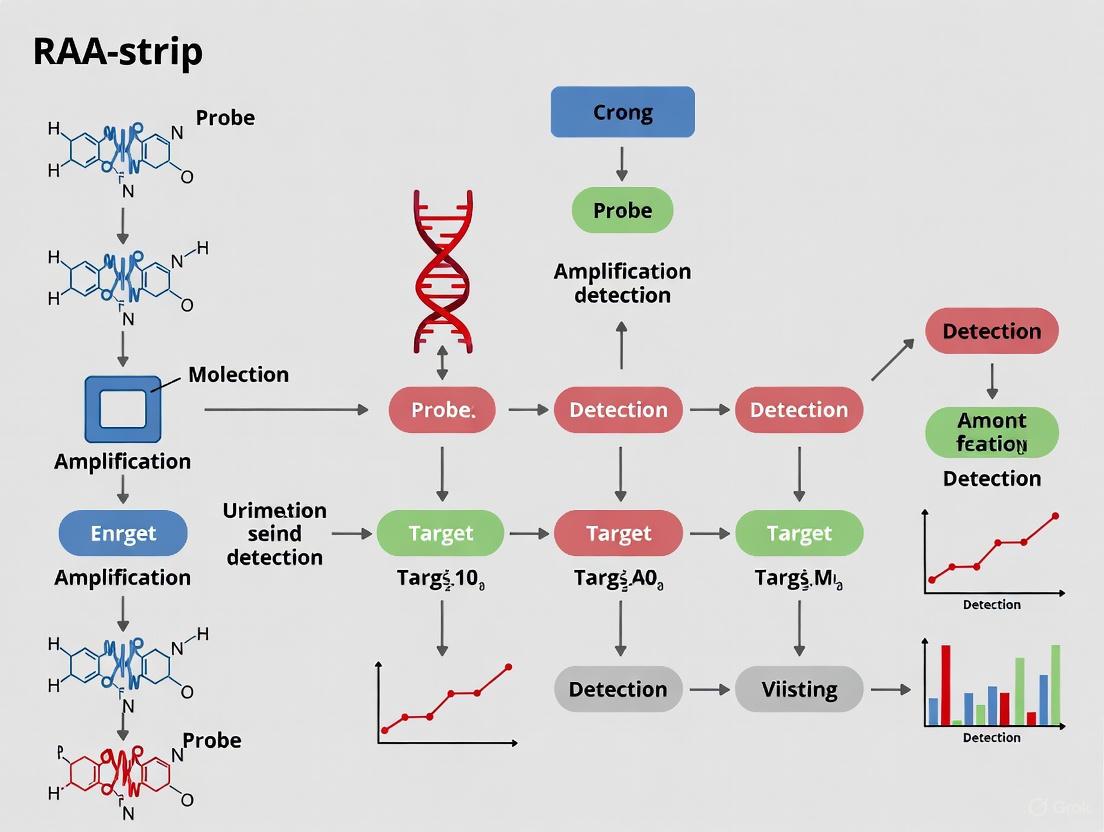
This article provides a comprehensive analysis of Recombinase Aided Amplification (RAA) coupled with lateral flow strips (LFS) for the point-of-care detection of African Swine Fever Virus (ASFV).
RAA-Strip Technology for African Swine Fever Virus: A Comprehensive Guide to Point-of-Care Molecular Detection
Abstract
This article provides a comprehensive analysis of Recombinase Aided Amplification (RAA) coupled with lateral flow strips (LFS) for the point-of-care detection of African Swine Fever Virus (ASFV). Tailored for researchers, scientists, and drug development professionals, we explore the foundational principles of this isothermal nucleic acid amplification technology, detail the methodological workflow for assay development and application, address critical troubleshooting and optimization strategies, and present a rigorous validation and comparative analysis with established diagnostic techniques. The content synthesizes current research to highlight how RAA-strip assays offer a rapid, sensitive, and field-deployable solution for ASF control, bridging the gap between laboratory-based PCR and on-site diagnostic needs.
Understanding RAA-Strip Technology: Principles and Advantages for ASFV Detection
The Urgent Need for Point-of-Care Diagnostics in African Swine Fever Control
African Swine Fever (ASF) represents one of the most significant threats to global swine production, with mortality rates approaching 100% in affected herds and no commercially available vaccine or treatment [1]. The causative agent, African swine fever virus (ASFV), is a large, complex DNA virus that manifests with clinical signs often indistinguishable from other porcine hemorrhagic diseases, particularly Classical Swine Fever (CSF) [2] [1]. In the absence of effective vaccines, control measures rely exclusively on early detection, rapid diagnosis, and implementation of strict biosecurity measures to contain outbreaks [3]. Traditional laboratory-based diagnostic methods, including enzyme-linked immunosorbent assay (ELISA) and polymerase chain reaction (PCR), require sophisticated instrumentation, trained personnel, and controlled laboratory environments, creating critical delays between sample collection and diagnostic decisions [4] [5]. These delays facilitate silent ASFV transmission, particularly in remote or resource-limited settings where laboratory infrastructure is inaccessible [5].
The development and deployment of point-of-care (POC) diagnostic tests address this critical diagnostic gap by enabling rapid detection directly in field settings. Among emerging POC technologies, recombinase-aided amplification (RAA) coupled with lateral flow test strips (RAA-strip) represents a transformative approach for ASFV detection [2] [4]. This isothermal nucleic acid amplification technique operates at constant low temperatures (37-42°C) and delivers results within 20-30 minutes, eliminating the need for thermal cyclers and complex DNA extraction procedures [4] [6]. The integration of RAA with lateral flow detection provides visual, easy-to-interpret results comparable to rapid antigen tests, but with the sensitivity and specificity of molecular methods [4] [6]. This Application Note details the implementation of RAA-strip assays for ASFV detection, providing validated protocols, performance characteristics, and practical guidance for researchers and outbreak responders.
Recombinase-aided amplification (RAA) is an isothermal nucleic acid amplification technique that utilizes three core enzymatic activities to exponentially amplify target DNA sequences: a recombinase that facilitates primer binding to homologous sequences, single-stranded DNA-binding proteins (SSB) that stabilize displaced DNA strands, and DNA polymerase that extends primers from the 3' end [4] [6]. The reaction occurs rapidly at constant temperatures of 37-42°C, making it ideal for field-deployable platforms [6]. When combined with lateral flow detection (RAA-strip), the assay provides visual confirmation of pathogen detection through immunocapture of labeled amplification products [4] [6].
The RAA-strip detection mechanism employs specially designed primers and probes labeled with complementary reporter molecules. During amplification, the RAA probe incorporates a 5'-FAM (fluorescein) label and a 3'-biotin tag, separated by a tetrahydrofuran (THF) abasic site moiety [6]. The 5' to 3' exonuclease activity of the DNA polymerase cleaves the probe at the THF site when it hybridizes to the target sequence, releasing the FAM label from the biotin tag [4]. The dual-labeled amplicons are then detected on a lateral flow strip containing two predefined zones: a test line coated with streptavidin that captures biotinylated amplicons, and a control line with anti-FAM antibodies that capture free anti-FAM antibody-gold conjugates [6]. A positive result is indicated by visible bands at both the test and control lines, while a negative sample shows only a control band [6].
Figure 1: RAA-Strip POC Workflow for ASFV Detection. The complete diagnostic process from sample to result can be completed in approximately 30 minutes with minimal equipment requirements. Key steps include simple sample processing, isothermal amplification, and lateral flow detection. RT = room temperature.
Research Reagent Solutions
The implementation of RAA-strip assays requires specific reagents and components that ensure optimal amplification and detection efficiency. The table below details essential research-grade reagents and their functions in the ASFV RAA-strip detection system.
Table 1: Essential Research Reagents for ASFV RAA-Strip Assays
| Component | Function | Specifications | Commercial Source Examples |
|---|---|---|---|
| RAA Basic Kit | Provides core amplification enzymes | Contains recombinase (UvsX), SSB protein, DNA polymerase in lyophilized form | Jiangsu Qitian Gene Biotechnology |
| RAA Fluorescence Kit | Enables real-time detection | Includes exo-probe with FAM/BHQ labels | Jiangsu Qitian Gene Biotechnology |
| RAA Lateral Flow Kit | Supports strip-based detection | Includes nfo-probe with FAM/biotin labels | Jiangsu Qitian Gene Biotechnology |
| Primer Sets | Target-specific amplification | 30-35 bp length, targeting ASFV B646L (p72) gene | Custom-designed, HPLC purified |
| Lateral Flow Strips | Visual result readout | Streptavidin test line, anti-FAM control line | Commercial test strip manufacturers |
| Magnesium Acetate | Reaction initiation | 280 mM solution added to initiate RAA | Included in RAA kits |
Performance Characteristics and Validation
Analytical Sensitivity
The ASFV RAA-strip assay demonstrates exceptional analytical sensitivity, capable of detecting remarkably low concentrations of viral nucleic acids. Multiple studies have consistently shown detection limits of approximately 10 copies/μL for recombinant plasmids containing ASFV target sequences [2] [4]. This sensitivity exceeds that of conventional PCR methods recommended by the World Organisation for Animal Health (OIE), which typically detect 100 copies/μL [4]. When testing viral DNA extracted from clinical samples, the RAA-strip assay achieves detection limits of 10-12 pg of total nucleic acid input, making it suitable for identifying early infections when viral loads are still low [2]. The exceptional sensitivity is maintained even with simplified sample preparation methods, with studies reporting consistent detection in blood samples diluted only 2-4 fold, whereas PCR requires 32-64 fold dilutions to overcome inhibitors present in blood matrices [4].
Analytical Specificity
The specificity of ASFV RAA-strip assays has been rigorously evaluated against a panel of common swine pathogens to assess cross-reactivity potential. Multiple independent studies confirm no cross-reactivity with Classical Swine Fever Virus (CSFV), Porcine Reproductive and Respiratory Syndrome Virus (PRRSV), Porcine Epidemic Diarrhea Virus (PEDV), Pseudorabies Virus (PRV), or Porcine Circovirus 2 (PCV2) [2] [4]. This discrimination is critical for differential diagnosis in field settings where these pathogens cause similar clinical presentations. The high specificity is achieved through careful primer design targeting conserved regions of ASFV genes, particularly the B646L gene encoding the major capsid protein p72, which contains both conserved regions for reliable detection and variable regions for differentiation from other pathogens [1].
Clinical Performance
Clinical validation studies demonstrate excellent concordance between RAA-strip assays and established reference methods. In evaluations using 37-42 clinical samples, RAA-strip assays showed positive concordance rates of 94.1% with conventional PCR for ASFV detection [2]. One comprehensive study reported 100% concordance with OIE-recommended PCR when testing both extracted DNA and minimally processed blood samples from clinical cases [4]. The RAA-strip format has proven particularly effective for direct detection in blood samples, where PCR inhibition often reduces sensitivity. The robust performance in complex clinical matrices without extensive nucleic acid purification makes the technology ideally suited for point-of-care applications where laboratory-grade DNA extraction is impractical.
Table 2: Performance Comparison of ASFV Detection Methods
| Parameter | RAA-Strip | Conventional PCR | Real-time PCR | Virus Isolation |
|---|---|---|---|---|
| Detection Limit | 10 copies/μL [4] | 100 copies/μL [4] | 10 copies/μL [1] | Viable virus required |
| Time to Result | 20-30 min [4] | 2-4 hours | 1-2 hours | 5-7 days |
| Equipment Needs | Simple heater/water bath | Thermal cycler | Real-time PCR instrument | BSL-3 laboratory |
| Skill Level | Low | Moderate | High | High |
| Cost per Test | Low | Moderate | High | High |
| POC Applicability | Excellent | Poor | Poor | Poor |
Detailed Experimental Protocols
Protocol 1: RAA-Strip Assay for ASFV Detection in Blood Samples
Principle: This protocol describes a simplified procedure for detecting ASFV in whole blood samples without nucleic acid extraction, optimized for point-of-care use [4].
Materials and Reagents:
- RAA nucleic acid amplification kit (Jiangsu Qitian Gene Biotechnology)
- ASFV-specific primers and probes
- Lateral flow test strips
- Heating block or water bath (37-39°C)
- Microcentrifuge tubes
- Piper and tips
- Whole blood samples (with anticoagulant)
Procedure:
- Sample Preparation:
- Transfer 100 μL of whole blood to a microcentrifuge tube
- Add 300 μL of nuclease-free water (1:4 dilution)
- Mix thoroughly by vortexing
- Heat at 95°C for 5 minutes
- Centrifuge at 12,000 × g for 2 minutes
- Transfer supernatant to a clean tube for amplification
RAA Reaction Mix Preparation:
- Prepare the following reaction mix in a 0.2 mL tube:
- 25 μL of reaction buffer
- 2.1 μL of forward primer (10 μM)
- 2.1 μL of reverse primer (10 μM)
- 0.6 μL of probe (10 μM)
- 15.2 μL of nuclease-free water
- Add the lyophilized enzyme pellet to the tube
- Mix gently by tapping
- Prepare the following reaction mix in a 0.2 mL tube:
Amplification:
- Add 5 μL of processed sample supernatant to the reaction mix
- Add 2.5 μL of magnesium acetate (280 mM) to initiate reaction
- Mix thoroughly and immediately place in 37°C heater
- Incubate for 10-20 minutes
Lateral Flow Detection:
- Dilute 5 μL of RAA product with 100 μL of assay buffer
- Insert lateral flow strip and incubate for 5-10 minutes at room temperature
- Interpret results visually
Result Interpretation:
- Positive: Both test line (T) and control line (C) appear
- Negative: Only control line (C) appears
- Invalid: No control line appears, repeat test
Protocol 2: Multiplex RAA Gel Electrophoresis for ASFV and CSFV Differentiation
Principle: This protocol enables simultaneous detection and differentiation of ASFV and CSFV in a single reaction tube, with amplification products visualized by agarose gel electrophoresis [2].
Materials and Reagents:
- RAA basic kit (Jiangsu Qitian Gene Biotechnology)
- ASFV-specific primers (targeting p72 gene)
- CSFV-specific primers (targeting NS5B gene)
- DNA extraction kit (optional)
- Agarose
- TAE buffer
- Nucleic acid staining dye
- Electrophoresis system
Procedure:
- Nucleic Acid Extraction (Optional):
- Extract DNA from blood, spleen, or lymph node samples using commercial kit
- Elute in 50-100 μL elution buffer
Multiplex RAA Reaction:
- Prepare reaction mix:
- 25 μL of reaction buffer
- 1.5 μL of ASFV forward primer (10 μM)
- 1.5 μL of ASFV reverse primer (10 μM)
- 1.5 μL of CSFV forward primer (10 μM)
- 1.5 μL of CSFV reverse primer (10 μM)
- 13.5 μL of nuclease-free water
- Add lyophilized enzyme pellet
- Add 5 μL of DNA template
- Initiate reaction with 2.5 μL magnesium acetate (280 mM)
- Incubate at 37°C for 30 minutes
- Prepare reaction mix:
Product Analysis:
- Prepare 1.5% agarose gel in TAE buffer with nucleic acid stain
- Mix 10 μL RAA product with 2 μL loading dye
- Load mixture into wells alongside DNA ladder
- Run electrophoresis at 100V for 30-40 minutes
- Visualize under UV transilluminator
Expected Results:
- ASFV amplification: 200-300 bp band (design-dependent)
- CSFV amplification: 300-400 bp band (design-dependent)
- Negative sample: No bands
Implementation Considerations for Field Deployment
The successful deployment of RAA-strip tests in field settings requires careful consideration of several practical factors beyond analytical performance. Sample collection and stabilization represent critical initial steps, with whole blood, spleen, and lymph nodes being optimal specimens for ASFV detection [5]. In remote areas with limited cold chain capacity, sample preservation alternatives such as filter paper blood drying (FTA cards) or formol-glycerosaline preservation enable extended storage and safe transport without refrigeration [5]. These approaches maintain nucleic acid integrity while reducing biohazard risks during transportation from field to testing sites.
Environmental stability of RAA reagents presents another crucial consideration for field deployment. Lyophilized RAA reagents demonstrate excellent thermal stability, maintaining efficacy for 4-6 months at 4°C and several weeks at room temperature [2] [7]. This stability profile surpasses that of conventional PCR reagents, which typically require consistent freezing. The minimal equipment requirements – essentially a simple heating device maintaining 37-39°C – further enhance field applicability, as amplification can be performed using portable water baths, battery-powered heating blocks, or even body heat in extreme resource-limited scenarios [4].
Figure 2: RAA Molecular Mechanism. The core RAA components work in concert to enable rapid isothermal amplification. Recombinase-primer complexes scan double-stranded DNA, facilitating strand invasion and D-loop formation stabilized by SSB proteins. DNA polymerase then initiates exponential amplification from the 3'-OH of the primer.
The development and validation of RAA-strip assays for ASFV detection represent a significant advancement in point-of-care diagnostics for animal health. This technology successfully addresses critical limitations of conventional laboratory-based methods by providing rapid, sensitive, and specific detection in field settings with minimal infrastructure requirements [2] [4]. The simplicity of the protocol – requiring only sample dilution, heating, amplification, and strip reading – enables deployment by personnel with minimal technical training, expanding testing capabilities to remote smallholder farms and field diagnostic teams [5]. The 30-minute turnaround time from sample to result facilitates immediate implementation of control measures, potentially containing outbreaks before widespread dissemination occurs [5] [1].
Future developments in RAA-strip technology will likely focus on multiplexing capabilities for simultaneous detection of ASFV genotypes and differentiation from other swine pathogens, particularly CSFV [2] [1]. Integration with portable electronic readers could enable quantitative interpretation and digital result recording for outbreak surveillance and reporting [1]. Additionally, ongoing research aims to further simplify sample processing and enhance stability under extreme environmental conditions, potentially enabling room-temperature storage of all assay components [5]. As ASFV continues to evolve and spread globally, accessible, reliable point-of-care diagnostics like RAA-strip assays will play an increasingly vital role in coordinated control efforts, protecting swine populations and supporting the economic stability of pork production systems worldwide.
Recombinase-aided amplification (RAA) is an innovative isothermal nucleic acid amplification technology that enables the rapid amplification of DNA or RNA at a constant low temperature, typically between 37°C to 42°C [8]. This technique serves as a powerful tool for molecular diagnostics, particularly in point-of-care settings, as it eliminates the need for sophisticated and expensive thermal cycling equipment required by conventional polymerase chain reaction (PCR) methods [9]. The entire RAA reaction is exceptionally fast, providing amplification results within 5 to 30 minutes [9] [10], making it especially suitable for field applications and rapid diagnostics for pathogens like the African swine fever virus (ASFV).
The fundamental working principle of RAA relies on the coordinated activity of three core components: a recombinase, a single-stranded DNA-binding protein (SSB), and a DNA polymerase [8]. These components work in concert to replace the thermal denaturation step of PCR, facilitating exponential amplification of target nucleic acids under isothermal conditions. Recent advancements have integrated RAA with portable detection platforms such as lateral flow assays (LFA) and fluorescent readers, creating comprehensive diagnostic solutions that can be deployed in resource-limited environments for diseases such as ASFV [10] [4].
The Molecular Mechanism of RAA
The RAA process is a meticulously orchestrated molecular dance that enables exponential DNA amplification at a single temperature. The mechanism can be broken down into several key stages, which are visually summarized in the diagram below.
Core Reaction Steps
Formation of Primer-Recombinase Complexes: The process initiates when recombinase enzymes, derived from bacteria or fungi, load onto specific primer sequences, forming stable recombinase-primer nucleoprotein filaments [8] [4]. These complexes are then capable of scanning the double-stranded DNA template.
Template Invasion and D-loop Formation: The primer-recombinase complexes actively scan the double-stranded DNA template for homologous sequences. Upon locating the target site, the complex facilitates strand invasion, leading to the displacement of the DNA strand and the formation of a characteristic D-loop structure [4]. This critical step eliminates the requirement for thermal denaturation.
Strand Separation Stabilization: The displaced DNA strand is immediately stabilized and prevented from reannealing by single-stranded DNA-binding proteins (SSB) [8]. This stabilization maintains the DNA in an open conformation, providing a stable template for the subsequent synthesis step.
DNA Synthesis Initiation: The recombinase disassembles from the primer, leaving the 3'-OH end of the primer accessible to a DNA polymerase, such as the large fragment of B. subtilis Pol I (exonuclease deficient) [11] [8]. The polymerase then initiates synthesis, extending the primer and replicating the target sequence using deoxyribonucleoside triphosphates (dNTPs) as building blocks.
Exponential Amplification Cycle: The newly synthesized double-stranded product can subsequently serve as a template for further rounds of recombination and amplification, leading to an exponential increase in the target DNA sequence. This cyclical process enables the detection of as few as 10 copies of target DNA per microliter, demonstrating the high sensitivity of the RAA method [11] [10].
Key Reagents and Equipment for RAA
The successful implementation of RAA relies on a specific set of core reagents and can be adapted to various detection formats. The table below details the essential components of a typical RAA reaction system.
Table 1: Core Components of the RAA Reaction System
| Component | Function | Typical Example |
|---|---|---|
| Recombinase | Binds to primers to form a complex that invades double-stranded DNA | Recombinase from bacteria or fungus [8] |
| Single-Stranded Binding Protein (SSB) | Stabilizes the displaced DNA strand, preventing reannealing [8] | Eukaryotic or prokaryotic SSB |
| DNA Polymerase | Synthesizes new DNA strands from the 3' end of primers | Exonuclease-deficient DNA polymerase (e.g., from B. subtilis) [11] |
| Primers | Provide specificity by binding to the target sequence | 30-35 nucleotide oligonucleotides [8] |
| Probe (for fluorescent detection) | Enables real-time detection of amplification; contains a fluorophore and quencher separated by an abasic site (THF) [11] [8] | Oligonucleotide with 5'-FAM, THF, and 3'-Blocking group |
| Deoxyribonucleoside Triphosphates (dNTPs) | Building blocks for new DNA synthesis [8] | dATP, dCTP, dGTP, dTTP |
| Reaction Buffer | Provides optimal pH and salt conditions for enzyme activity | Magnesium acetate-based buffer |
For point-of-care applications, RAA is often paired with simple detection devices. For real-time fluorescent detection, a portable fluorescent reader or a quantitative PCR machine (set to a constant temperature) can be used [11]. For endpoint detection, a lateral flow assay (LFA) is a common choice, requiring no instrumentation for visual readout [10] [4].
Table 2: Common RAA Detection Formats and Requirements
| Detection Format | Key Feature | Required Instrumentation |
|---|---|---|
| Real-time Fluorescent | Quantitative, kinetic monitoring of amplification [11] | Portable fluorescence detector or real-time PCR machine |
| Lateral Flow Assay (LFA) | Visual, yes/no result; highly portable [10] [4] | None (visual inspection) |
| Gel Electrophoresis | Confirmation of amplicon size | Electrophoresis system and gel imager |
Application Note: RAA for African Swine Fever Virus (ASFV) Detection
African Swine Fever (ASF) is a highly contagious and lethal viral disease of pigs, causing massive economic losses worldwide. As there is no effective commercial vaccine, rapid and early diagnosis is the cornerstone of control strategies [10] [1]. The following protocol details a specific application of RAA combined with a lateral flow assay (LFA) for the point-of-care detection of ASFV, targeting the highly conserved B646L (p72) gene [10] [4].
Experimental Protocol: RAA-LFA for ASFV
Sample Preparation (Viral DNA Release)
- Collect blood samples from suspected pigs.
- Subject the blood samples to a simple preparation method: dilute with nuclease-free water (e.g., 2-4 fold) and boil for 5 minutes to inactivate the virus and release viral DNA [10] [4]. This method eliminates the need for complex nucleic acid extraction kits, making it ideal for the field.
- Centrifuge briefly to pellet debris; the supernatant containing the DNA template is ready for amplification.
RAA Amplification Reaction
- Reaction Setup: Prepare a 50 μL RAA reaction mixture on ice, containing the following:
- 25 μL of rehydration buffer (from the RAA kit)
- 2.5 μL of forward primer (10 μM)
- 2.5 μL of reverse primer (10 μM)
- 5 μL of extracted DNA or 2 μL of prepared blood supernatant
- Nuclease-free water up to 49.5 μL
- 0.5 μL of magnesium acetate (280 mM) [10]
- Primer and Probe Design: Design primers to amplify a 100-200 bp fragment of the ASFV B646L gene. The reverse primer should be biotin-labeled. For LFA detection, the probe is not used in the amplification mix but is integral to the strip itself [4].
- Incubation: Transfer the reaction tube to a pre-heated block or water bath at 39°C and incubate for 15-20 minutes [10] [4]. The reaction is rapid and isothermal.
Lateral Flow Assay (LFA) Readout
- Dip the Strip: After amplification, dip the lateral flow strip into the RAA reaction product or a suitable running buffer.
- Result Interpretation: Wait for 5-10 minutes for the bands to develop [10].
- Positive Result: Two visible bands (control line and test line).
- Negative Result: One band (control line only).
The complete workflow from sample to answer is designed for maximum field-applicability, as illustrated below.
Performance Data of ASFV RAA-LFA
The developed RAA-LFA assay for ASFV demonstrates performance characteristics that are critical for a reliable point-of-care test.
Table 3: Performance Metrics of the RAA-LFA for ASFV Detection
| Parameter | Performance | Experimental Detail |
|---|---|---|
| Detection Limit (Sensitivity) | 10 copies/μL [10] | Tested with serial dilutions of a plasmid containing the B646L gene |
| Assay Time | < 30 minutes (total workflow) [10] | Includes sample prep, amplification, and LFA readout |
| Specificity | 100% (No cross-reactivity with CSFV, PRRSV, PEDV, PRV, PCV2) [10] | Tested against other common swine pathogens |
| Clinical Sensitivity | 100% concordance with OIE-recommended PCR [10] | Validation with 37 clinical blood samples |
| Robustness to Inhibitors | Superior to PCR; works with a 2-4 fold blood dilution [10] | PCR requires a 32-64 fold dilution of blood to overcome inhibition |
Recombinase-aided amplification represents a significant advancement in nucleic acid amplification technology, offering a perfect blend of speed, sensitivity, and simplicity. Its ability to operate at a constant temperature makes it inherently suitable for decentralized diagnostics, a feature that is crucial for managing devastating diseases like African swine fever. The synergy of RAA with user-friendly readout systems like lateral flow assays creates a powerful molecular point-of-care testing platform that can deliver actionable results in less than 30 minutes, directly in the field [10] [4]. This empowers veterinarians and farmers to make rapid control decisions, such as immediate culling and movement restrictions, which are vital to contain outbreaks and minimize economic damage. As molecular diagnostics continue to evolve, the core principles of RAA—bypassing thermal cycling through enzymatic machinery—ensure its enduring role as a cornerstone technology in the ongoing battle against infectious diseases in both animal and human health.
The rapid and accurate detection of the African swine fever virus (ASFV) is a critical component in managing and controlling this devastating animal disease. Within the broader research on point-of-care (POC) detection, recombinase-aided amplification combined with lateral flow dipstick (RAA-LFD) represents a significant advancement. This methodology enables the visual interpretation of complex molecular diagnostics, making sophisticated testing feasible outside central laboratories. This application note details the mechanism of the lateral flow strip, providing researchers with the protocols and visual guides necessary to implement and understand this powerful detection system.
The Core Mechanism of Lateral Flow Strip Detection
Following the isothermal amplification of the ASFV target gene (e.g., the p72/B646L gene), the product is applied to a lateral flow strip. The fundamental detection relies on an immunochromatographic assay that captures labeled amplicons on specific zones of the strip.
The typical RAA reaction incorporates a labeled probe, often a FAM-labeled nucleic acid probe, into the amplified DNA product. When this product is applied to the strip, it migrates along the membrane via capillary action. The strip contains two key zones:
- Test Line (T): Coated with anti-FAM antibodies, which capture the FAM-labeled amplicon complex.
- Control Line (C): Coated with antibodies that bind to the labeled detector particles (e.g., anti-species antibodies), confirming the strip is functioning correctly.
The formation of a visible band at the test line indicates a positive result for ASFV. The entire process of interpreting results on the strip can be completed in as little as 5 minutes at room temperature, making it exceptionally suitable for field deployment [12].
Table 1: Key Performance Metrics of Lateral Flow Strip Readouts in ASFV Detection
| Detection Method | Readout Time | Detection Limit | Coincidence with Real-time PCR | Reference |
|---|---|---|---|---|
| CRISPR/Cas13a-LFD | ~60 min (total process) | 101 copies/µL | 100% (83/83 clinical samples) | [13] |
| RAA-LFD | ~5 min (strip readout) | 200 copies/reaction | Not Specified | [12] |
| RAA-Strip (for ASFV/CSFV) | Not Specified | 103 copies/µL | 94.1% (for ASFV, 37-42 samples) | [2] |
| CORDS (Cas12a-based) | ~60 min (total process) | 1 fM (femtomolar) | No cross-reactivity with 13 other swine viruses | [14] |
Experimental Protocol: RAA-LFD for ASFV
The following protocol outlines the step-by-step procedure for detecting ASFV using the RAA-LFD method.
Sample Preparation and DNA Extraction
- Collect Samples: Obtain field samples, including blood, nasopharyngeal swabs, spleen, liver, lungs, or kidneys [13].
- Extract DNA: Use a commercial viral DNA extraction kit, such as the Quick-DNA Viral kit, based on the magnetic bead method [13] [12].
- Cleave the sample.
- Adsorb DNA onto magnetic beads.
- Wash the beads to remove impurities.
- Elute the purified DNA in 50 µL of RNase-free water or deionized water.
- Store DNA: Extracted DNA should be stored at -20 °C until use [12].
Recombinase-Aided Amplification (RAA)
The RAA reaction is performed using a commercial kit to amplify the target ASFV p72 gene.
- Prepare RAA Reaction Master Mix: Assemble the following components in a tube [13]:
- 25 µL of Buffer A
- 13.5 µL of Nuclease-free Water
- 2 µL of Forward Primer (10 µM)
- 2 µL of Reverse Primer (10 µM)
- 1 µL of RAA Polymerase
- Note: The forward primer should have a T7 promoter sequence (GAAATTAATACGACTCACTATAGGG) appended to its 5'-end for systems requiring in vitro transcription [13].
- Add Template and Initiate: Add 4 µL of the extracted DNA template and 2.5 µL of Magnesium Acetate to the master mix to initiate the reaction.
- Incubate: Place the tube in a constant temperature incubator at 37–39 °C for 10–20 minutes [13] [12].
Result Visualization via Lateral Flow Strip
- Prepare the Strip: Remove a lateral flow dipstick from its sealed pouch.
- Apply Amplicon: Place the dipstick into the tube containing the amplified RAA product. Alternatively, a small aliquot (e.g., 5 µL) of the product can be applied directly to the sample pad of the strip.
- Migrate and Develop: Allow the solution to migrate up the strip by capillary action for approximately 5 minutes [12].
- Interpret Results: Visually inspect the strip for the appearance of colored bands.
- Positive Result: A visible band appears at both the Control Line (C) and the Test Line (T).
- Negative Result: A visible band appears only at the Control Line (C).
- Invalid Result: If the control line does not appear, the test is invalid and must be repeated.
Diagram 1: Lateral flow strip detection mechanism.
The Scientist's Toolkit: Research Reagent Solutions
Successful implementation of the RAA-LFD assay relies on a suite of specific reagents and instruments.
Table 2: Essential Research Reagents and Materials for RAA-LFD
| Item | Function/Description | Example Product/Note |
|---|---|---|
| RAA Kit | Provides core enzymes (recombinase, polymerase) and buffers for isothermal amplification. | ZC Bio-Tech Co., Ltd. or Anhui Microanaly Genetech Co., Ltd. [13] [14] |
| Lateral Flow Strips | Immunochromatographic strip for visual detection of labeled amplicons. | Pre-fabricated strips specific for the label used (e.g., FAM) [13]. |
| Primers & Probes | Designed to target the conserved region of the ASFV p72 (B646L) gene. A FAM-labeled probe is often used for detection [13] [12]. | Custom synthesized by commercial vendors (e.g., Sangon Biotech). |
| DNA Extraction Kit | For purifying viral genomic DNA from complex clinical samples. | Quick-DNA Viral Kit (Magnetic Bead Method) [13] [12]. |
| Nuclease-free Water | Used to prepare reaction mixes, ensuring no enzymatic degradation of reagents. | Molecular biology grade. |
| Constant Temperature Incubator | To maintain the isothermal reaction temperature (37–39 °C) for RAA. | Essential for replacing a thermal cycler [14]. |
Advanced Integration: CRISPR-Enhanced Lateral Flow Detection
The specificity of lateral flow detection can be significantly enhanced by integrating a CRISPR-Cas step. In systems like CRISPR/Cas13a-LFD, the RAA-amplified DNA is first transcribed into RNA. This RNA then activates the Cas13a enzyme, which is pre-complexed with a target-specific crRNA. Upon activation, Cas13a exhibits collateral RNase activity, cleaving a reporter molecule (e.g., a biotin-labeled RNA probe). The cleaved and uncleaved reporters are then differentiated on the lateral flow strip, providing a second layer of specificity with single-base resolution [13] [14].
Diagram 2: CRISPR-Cas13a enhanced LFD workflow.
The diagnosis of African Swine Fever Virus (ASFV), a disease responsible for massive economic losses in the pig farming industry, is critical for disease surveillance and control [1]. While conventional polymerase chain reaction (PCR) and quantitative PCR (qPCR) are standard molecular methods, their reliance on sophisticated thermal cycling equipment limits their use in field settings [10]. Isothermal amplification techniques, which amplify nucleic acids at a constant temperature, have emerged as powerful alternatives for point-of-care testing (POCT) [15]. This application note provides a detailed comparative analysis of Recombinase-Aided Amplification (RAA), highlighting its key advantages in speed, simplicity, and stability over both PCR and Loop-Mediated Isothermal Amplification (LAMP) within the context of developing a rapid ASFV diagnostic strip test.
Technical Comparison of Amplification Techniques
The core principle of RAA, like other isothermal techniques, eliminates the need for thermal denaturation. It relies on a recombinase that forms filaments with primers and scans double-stranded DNA for homologous sequences, facilitating primer binding and strand displacement synthesis at a constant low temperature (typically 37-42°C) [10]. This fundamental difference from PCR and LAMP underpins its practical benefits for field deployment.
Table 1: Comparative Overview of PCR, LAMP, and RAA Characteristics
| Characteristic | PCR / qPCR | LAMP | RAA |
|---|---|---|---|
| Reaction Temperature | Requires thermal cycling (e.g., 95°C, 60°C, 72°C) [15] | Isothermal (60-65°C) [16] [15] | Isothermal (37-42°C) [10] |
| Reaction Time | ≥ 90 minutes [15] | < 30-60 minutes [16] [15] | ~10-20 minutes [10] |
| Equipment Needs | Thermocycler (complex, expensive) [15] | Water bath or heat block (simple) [15] | Water bath or heat block (simple, low temperature) [10] |
| Primer Design | Two primers [17] | 4-6 primers, complex design [17] [16] | Two primers, relatively simple design [10] |
| Sample Preparation | Often requires purified nucleic acids [16] | Tolerant to some inhibitors; crude samples possible [16] [15] | Highly tolerant to inhibitors; works with minimally processed blood [10] |
| Detection Limit (Sensitivity) | Nanogram levels [15] | Femtogram levels; highly sensitive [15] | Can achieve single-copy sensitivity [10] |
| Result Readout | Gel electrophoresis, fluorescence [17] | Turbidity, colorimetry, fluorescence, gel electrophoresis [17] [16] | Easily integrated with lateral flow assay (LFA) for visual readout [10] |
Core Advantages of RAA for ASFV Point-of-Care Detection
- Speed and Workflow Efficiency: The entire RAA-LFA workflow for ASFV detection, from sample to result, can be completed in approximately 30 minutes [10]. This includes a brief sample preparation (5 min), a short isothermal amplification (10 min), and a visual readout on a lateral flow strip (10-15 min). This is significantly faster than PCR and comparable to or faster than LAMP.
- Simplified Sample Preparation: RAA exhibits remarkable resistance to inhibitors present in complex biological samples like blood. For ASFV detection, blood samples can be simply diluted and boiled for 5 minutes to inactivate the virus and release nucleic acids, entirely bypassing the need for complex DNA extraction kits [10]. PCR is highly susceptible to inhibitors in blood, often requiring a 32-64 fold dilution, whereas RAA performs optimally with only a 2-4 fold dilution [10].
- Enhanced Stability and Low-Resource Operation: RAA reactions occur at low, constant temperatures (37-42°C), which can be maintained using a simple water bath or even body heat [10]. This eliminates the need for the precise high-temperature control required for LAMP (60-65°C) and the sophisticated thermocyclers essential for PCR. This makes RAA-based tests exceptionally stable, low-cost, and ideally suited for resource-limited settings.
Experimental Protocol: RAA-LFA for ASFV Detection
The following protocol is adapted from a study that established a sensitive and specific RAA-LFA for the detection of the ASFV B646L (p72) gene directly from blood samples [10].
Research Reagent Solutions
Table 2: Essential Materials and Reagents for RAA-LFA
| Item | Function / Description |
|---|---|
| RAA Basic Reaction Kit | Typically contains recombinase, single-stranded DNA-binding protein, strand-displacing DNA polymerase, and reaction buffers. |
| Primers and Probe | Sequence-specific primers and a labeled probe (e.g., FITC and biotin) targeting the ASFV B646L gene. |
| Lateral Flow Strips | Immunochromatographic strips for visual detection, often designed to capture labeled amplicons (e.g., with anti-FITC and control lines). |
| Blood Collection Tubes | For sample acquisition. |
| Nuclease-Free Water | To prevent degradation of reagents and nucleic acids. |
| Heating Block or Water Bath | To maintain a constant temperature of 37°C for the RAA reaction. |
Step-by-Step Procedure
Sample Preparation (5 minutes):
- Collect fresh whole blood into an appropriate anticoagulant tube.
- Dilute the blood sample 1:2 to 1:4 in nuclease-free water.
- Incubate the diluted sample at 95-100°C for 5 minutes to lyse cells and inactivate the virus.
- Centrifuge briefly to pellet debris. The supernatant is used directly as the template.
RAA Reaction Mix Preparation (on ice):
- In a 1.5 mL microcentrifuge tube, combine the following reagents to a final volume of 50 µl:
- 25 µl of Rehydration Buffer (from the RAA kit)
- 2.1 µl of Forward Primer (10 µM)
- 2.1 µl of Reverse Primer (10 µM)
- 0.6 µl of Probe (10 µM)
- 12.2 µl of Nuclease-Free Water
- 2 µl of the prepared sample supernatant (template)
- In a 1.5 mL microcentrifuge tube, combine the following reagents to a final volume of 50 µl:
Isothermal Amplification (10 minutes):
- Transfer the entire reaction mix to a reaction tube containing a dried enzyme pellet (from the RAA kit).
- Close the tube and incubate at 37°C in a heating block or water bath for 10 minutes.
Lateral Flow Detection (15 minutes):
- Dilute the RAA amplification product with 100-200 µl of an appropriate buffer (e.g., phosphate-buffered saline).
- Place a lateral flow strip into the diluted product.
- Incubate at room temperature for 10-15 minutes.
- Interpretation: The appearance of both a test line and a control line indicates a positive result. The appearance of only the control line indicates a negative result. The absence of a control line indicates an invalid test.
Diagram 1: RAA-LFA Workflow for ASFV Detection
Discussion
The comparative data and experimental protocol underscore RAA's superior suitability for ASFV point-of-care detection compared to PCR and LAMP. The key differentiator is RAA's unique combination of low-temperature incubation and high tolerance to inhibitors, which enables a truly sample-to-answer workflow with minimal equipment and hands-on time [10]. While LAMP is also isothermal and rapid, its requirement for a higher reaction temperature (60-65°C) and more complex primer design can be a slight disadvantage in the most resource-limited field scenarios [17] [15].
Diagram 2: Logical Pathway for Selecting RAA for ASFV POC Testing
For researchers and scientists developing point-of-care diagnostics for African Swine Fever, RAA presents a compelling technological platform. Its demonstrated advantages in speed, operational simplicity, and stability with complex samples like blood directly address the critical needs of field-based disease surveillance. By enabling a 30-minute test from raw blood sample to visual result without DNA extraction, the RAA-LFA protocol outlined herein provides a robust, sensitive, and accessible tool that can significantly enhance efforts to control and prevent the spread of ASFV.
African Swine Fever Virus (ASFV) is a large, double-stranded DNA virus and the sole member of the Asfarviridae family [18]. This complex pathogen infects domestic pigs and wild boars, causing a hemorrhagic fever with mortality rates approaching 100% in acute cases, posing a severe threat to the global swine industry [18] [19]. The ASFV genome spans approximately 170-193 kbp and encodes between 150-200 proteins, with around 50 of these identified as structural components that form the virus particle and mediate critical stages of infection [18]. These structural proteins serve not only as fundamental building blocks for the virion but also as key targets for diagnostic assay development, vaccine design, and therapeutic interventions. Among these, p72, p54, and p30 have emerged as particularly significant targets for molecular detection platforms, including Recombinase Aided Amplification (RAA) coupled with lateral flow strips, which offer promising solutions for point-of-care (POC) detection of ASFV in field settings.
Core Genomic Targets for ASFV Detection
Biological Significance of Key Structural Proteins
Table 1: Essential ASFV Structural Proteins for Diagnostic Detection
| Protein | Gene | Biological Function | Expression Kinetics | Diagnostic Utility |
|---|---|---|---|---|
| p72 | B646L | Major capsid protein; forms viral icosahedral structure; functions as pH sensor during uncoating [18] [20] | Late expression [21] | Gold standard for genotyping; highly conserved target for nucleic acid detection [21] [1] |
| p54 | E183L | Involved in virus attachment and entry; localizes to outer envelope [18] | Early expression [21] | Important antigen for early antibody detection; improves intragenotypic resolution [22] [1] |
| p30 | CP204L | Critical for virus internalization; strong immunogenicity [18] [21] | Early expression (2-4 hours post-infection) [19] [21] | Ideal for early antibody detection; induces high-titer antibodies [21] [22] |
| CD2v | EP402R | Envelope glycoprotein; mediates haemadsorption and immune evasion [21] | Not specified | Key for serological grouping; vaccine candidate [21] |
| pp62 | CP530R | Polyprotein precursor; cleaved to p35 and p15; crucial for core shell assembly [18] | Late expression [18] | Potential marker for infection staging [18] |
The p72 protein, encoded by the B646L gene, serves as the principal component of the ASFV capsid and is highly conserved across different viral isolates [21] [1]. This conservation makes it an excellent target for molecular detection assays. Recent research has revealed that p72 also functions as a sophisticated pH sensor during viral uncoating, with its trimers undergoing depolymerization in the acidic environment of late endosomes (pH ~5-6) to facilitate viral genome release [20]. This pH-sensing capability is attributed to p72's uniquely high histidine content (4.80%), which is significantly greater than that of major capsid proteins in other nucleocytoplasmic large DNA viruses (NCLDVs) [20].
The p54 protein, encoded by the E183L gene, is localized to the viral outer envelope and plays a critical role in viral attachment and entry into host cells [18]. This protein contains a transmembrane domain and a Gly-Gly-X motif, which facilitates its membrane association [18]. As an early expressed antigen with strong immunogenicity, p54 induces neutralizing antibodies, making it a valuable target for early serological diagnosis [22].
The p30 protein, encoded by the CP204L gene, represents one of the most antigenic ASFV structural proteins [19] [21]. It is expressed within 2-4 hours post-infection, with synthesis decreasing after 12 hours, and remains detectable throughout the infection period [19]. This early expression profile, combined with its ability to induce potent neutralizing antibodies, makes p30 particularly suitable for early diagnostic applications [19] [22]. Research demonstrates that p30-specific antibodies can be detected in serum and oral fluid specimens beginning 8-12 days post-infection, providing a critical window for early ASFV identification [22].
Genomic Conservation and Variability
Table 2: Genetic Conservation of Key ASFV Targets
| Gene Target | Conservation Level | Variability Considerations | Primary Detection Application |
|---|---|---|---|
| B646L (p72) | Highly conserved across isolates [1] | Basis for 24 known genotypes; point mutations in some strains (e.g., EU Genotype IX) [21] | Nucleic acid detection; genotyping [23] [1] |
| CP204L (p30) | Relatively conserved [21] | Point mutations may affect antibody binding in some strains [21] | Early antibody detection [22] |
| E183L (p54) | Conserved with some variability [1] | Used to improve intragenotypic resolution [1] | Nucleic acid and antibody detection [22] |
| EP402R (CD2v) | Variable [21] | Defines 8 serogroups [1] | Serological grouping; vaccine studies [21] |
| Multigene Families (MGFs) | Highly variable [21] | Recombination in MGF360/505 creates novel strains [21] | Differentiation of recombinant strains [21] |
The B646L gene encoding p72 demonstrates high sequence conservation across ASFV isolates, which underpins its utility as the "gold standard" for ASFV genotyping [23] [1]. To date, 24 distinct ASFV genotypes have been identified based on sequence variations in the C-terminal end of the p72 gene [21] [1]. While this gene is generally stable, recent reports indicate that point mutations in emerging strains like the EU Genotype IX and Asian recombinants may potentially affect antibody binding efficiency in serological assays, highlighting the importance of monitoring genetic drift for assay performance [21].
In contrast, multigene families (MGFs) such as MGF360 and MGF505 represent the most variable regions of the ASFV genome and serve as hotspots for genetic recombination [21]. The emergence of I/II recombinant strains in 2024, characterized by low virulence and high transmissibility, has been attributed to recombination events in these MGF regions [21]. This genetic plasticity presents challenges for molecular detection assays, potentially leading to false negatives if primer/probe binding sites are affected. Therefore, contemporary ASFV detection strategies must account for this variability through careful target selection and assay design.
Experimental Protocols for Target Detection
Nucleic Acid Detection Workflow
The detection of ASFV genomic targets typically follows a standardized workflow encompassing sample preparation, nucleic acid extraction, target amplification, and result detection [1]. This process is particularly relevant for RAA-strip platforms, which offer rapid, equipment-free detection suitable for point-of-care applications.
Protocol 1: Nucleic Acid Extraction and RAA-Strip Detection
Sample Collection and Preparation:
- Collect 100-500 µL of whole blood, oral fluid, or tissue homogenate from suspect animals [22] [1].
- For oral fluid samples, use standard rope sampling techniques where pigs chew on cotton ropes, expressing oral fluids into collection tubes [22].
- Process samples within 24 hours of collection or store at -70°C for long-term preservation.
Nucleic Acid Extraction:
- Employ silica-based membrane columns or magnetic bead methods for DNA extraction [1].
- Alternatively, for rapid POC applications, use simplified extraction protocols without purification: mix 50 µL of sample with 100 µL of lysis buffer (e.g., QIAGEN ATL buffer), incubate at 70°C for 20 minutes, then centrifuge at 12,000 × g for 2 minutes [1]. The supernatant contains crude nucleic acid for amplification.
Recombinase Aided Amplification (RAA):
- Prepare RAA reaction mix containing:
- 25 µL of 2× Reaction Buffer
- 5 µL of forward primer (10 µM concentration targeting B646L, E183L, or CP204L genes)
- 5 µL of reverse primer (10 µM concentration)
- 5 µL of DNA template
- Nuclease-free water to 50 µL total volume
- Add magnesium acetate (final concentration 280 mM) to initiate the reaction.
- Incubate at 37-42°C for 15-30 minutes for rapid isothermal amplification.
- Prepare RAA reaction mix containing:
Lateral Flow Strip Detection:
- Transfer 10-20 µL of RAA amplification product to the sample well of the lateral flow strip.
- Add 100 µL of running buffer to facilitate capillary flow.
- Wait 5-10 minutes for clear visual bands to develop.
- Interpret results: both control and test lines visible = positive; only control line visible = negative; no control line = invalid test.
Serological Detection Protocol
Protocol 2: Indirect ELISA for Antibody Detection Against p30 and p54
Coating ELISA Plates:
- Dilute recombinant p30 or p54 protein to 1-5 µg/mL in carbonate-bicarbonate coating buffer (pH 9.6) [22].
- Add 100 µL/well to 96-well microtiter plates and incubate overnight at 4°C.
- Wash plates three times with PBS containing 0.05% Tween-20 (PBST).
Sample Incubation:
- Block plates with 200 µL/well of 5% skim milk in PBST for 1 hour at 37°C.
- Dilute test sera or oral fluid samples 1:100 in sample diluent [22].
- Add 100 µL of diluted samples to duplicate wells and incubate for 30 minutes at 37°C.
- Include positive and negative control samples on each plate.
Detection and Visualization:
- Wash plates five times with PBST.
- Add 100 µL/well of species-specific anti-pig IgG conjugated to horseradish peroxidase (diluted according to manufacturer's instructions).
- Incubate for 30 minutes at 37°C, then wash plates five times with PBST.
- Add 100 µL/well of TMB substrate solution and incubate for 15 minutes at room temperature in the dark.
- Stop the reaction with 50 µL/well of 2N sulfuric acid.
- Measure absorbance at 450 nm within 30 minutes.
Result Interpretation:
- Calculate sample-to-positive (S:P) ratios: (Sample OD - Negative Control OD) / (Positive Control OD - Negative Control OD).
- Interpret S:P ratios ≥0.5 as positive for ASFV antibodies [22].
The Scientist's Toolkit: Research Reagent Solutions
Table 3: Essential Research Reagents for ASFV Detection Studies
| Reagent/Catalog Item | Specifications | Research Application | Performance Notes |
|---|---|---|---|
| Recombinant p72 Protein | N-His tag; full-length B646L gene [21] | ELISA coating antigen; immunogen development [21] | High purity; suitable for serological assays |
| Recombinant p30 Protein | N-Fc tag; CP204L gene [21] | Early antibody detection; assay development [22] | Strong immunogenicity; early expression |
| Anti-p72 Polyclonal Antibody | Rabbit or mouse host [21] | Western Blot; IHC; ELISA verification [21] | Recognizes conformational epitopes |
| Anti-p30 Monoclonal Antibody | Clone SAA2186 [21] | ELISA; rapid test development [22] | High specificity for CP204L gene product |
| qPCR Master Mix | Probe-based; internal control [19] | Nucleic acid detection standardization | High sensitivity (LOD: <10 copies/µL) |
| Magnetic Bead DNA Extraction Kit | Silica-coated beads [1] | Nucleic acid purification for POC devices | Compatible with various sample types |
The development and implementation of robust ASFV detection platforms require well-characterized reagents and controls. Recombinant proteins for p72, p54, and p30 serve as critical tools for both serological assay development and as positive controls for molecular tests [21]. Similarly, highly specific monoclonal and polyclonal antibodies against these targets enable the creation of antigen detection assays and validation of protein expression [21]. For nucleic acid-based detection, standardized primer/probe sets targeting conserved regions of the B646L (p72), E183L (p54), and CP204L (p30) genes provide the foundation for PCR, RAA, and other amplification techniques [1]. The inclusion of appropriate positive and negative controls in every assay run is essential for verifying test performance and interpreting results accurately, particularly in point-of-care settings where environmental conditions may vary.
Application in Point-of-Care RAA-Strip Development
The integration of p72, p54, and p30 genomic targets into RAA-strip platforms represents a significant advancement in ASFV point-of-care detection. The exceptional conservation of the p72 gene (B646L) across diverse ASFV isolates makes it an ideal candidate for primary detection in molecular assays [1]. Recent research on p72's structure-function relationship has revealed that its trimeric form undergoes pH-dependent depolymerization, providing insights that could inform the development of novel detection strategies targeting conformational epitopes [20].
For enhanced diagnostic sensitivity and breadth, a multiplex RAA-strip approach simultaneously targeting p72, p54, and p30 genes offers significant advantages. This multi-target strategy mitigates the risk of false negatives due to genetic variations in any single target and provides redundant detection capability for improved reliability [1]. The early expression profiles of p54 and p30 genes enable detection during the initial stages of infection, while the highly abundant p72 transcripts (particularly in later infection stages) ensure robust signal generation in amplification-based assays [21] [22].
Table 4: Target Performance in RAA-Strip Detection Platform
| Parameter | p72 (B646L) | p54 (E183L) | p30 (CP204L) |
|---|---|---|---|
| Theoretical LOD | 10-100 copies/reaction | 10-100 copies/reaction | 10-100 copies/reaction |
| Time to Result | <20 minutes | <20 minutes | <20 minutes |
| Amplification Temperature | 37-42°C | 37-42°C | 37-42°C |
| Multiplex Potential | High (primary target) | High (confirmatory target) | High (early detection target) |
| Strain Coverage | Broad (24 genotypes) | Broad with some variation | Broad with some variation |
Field validation studies of RAA-strip tests have demonstrated performance characteristics comparable to laboratory-based PCR methods, with sensitivity and specificity exceeding 95% when properly optimized [1]. The stability of these genomic targets across diverse ASFV strains ensures that RAA-strip tests maintain diagnostic accuracy across geographical regions and outbreak scenarios. Furthermore, the adaptability of the RAA-strip platform allows for rapid primer redesign in response to emerging viral variants, ensuring long-term utility in ASFV surveillance and control programs.
The strategic selection of p72, p54, and p30 as essential genomic targets provides a solid foundation for the development of robust, accurate, and field-deployable RAA-strip tests for African swine fever virus. Their complementary biological characteristics, conservation profiles, and expression patterns create an optimal multi-target approach for point-of-care diagnosis, enabling rapid detection and implementation of control measures during ASF outbreaks.
Developing and Deploying an RAA-Strip Assay: A Step-by-Step Protocol
African Swine Fever Virus (ASFV) possesses a large, double-stranded DNA genome, typically ranging from 170 to 194 kilobase pairs (kb) in length [24] [25]. The genomic architecture is organized into three distinct regions: a conserved central region (CCR) flanked by two variable regions—the left variable region (LVR) and the right variable region (RVR) [24] [26]. This structural organization is critical for diagnostic target selection, as the CCR houses genes that are essential for viral replication and structural integrity, resulting in higher sequence conservation across different ASFV genotypes [24] [26]. In contrast, the variable termini contain multigene families (MGFs) that exhibit significant sequence diversity and are subject to frequent insertions and deletions, making them poor targets for broad-spectrum assays [24] [27].
The B646L gene, which encodes the major capsid protein p72, is the most widely used target for ASFV genotyping and detection [24] [28] [25]. Its sequence is highly conserved due to its critical structural role, and it forms the basis for differentiating 25 ASFV genotypes [24] [24]. Other conserved genes used in detection assays include B438L (p49), another structural protein important for capsid assembly [25], and the CP204L (p30) gene [29]. The following diagram illustrates the general workflow for developing an RAA-based detection assay, from target selection to final readout.
Principles of Primer and Probe Design for RAA
Recombinase Aided Amplification (RAA) is an isothermal nucleic acid amplification technique that operates at a constant low temperature (typically 37–42 °C) and delivers results within 15–30 minutes [30] [31]. This makes it exceptionally suitable for point-of-care (POC) detection. The RAA reaction relies on three core enzymes: a recombinase that forms filaments with primers, a single-stranded DNA binding protein (SSB) that stabilizes the displaced DNA, and a strand-displacing DNA polymerase [30] [31].
Core Design Parameters
Designing primers and probes for RAA requires adherence to specific parameters that differ from those for conventional PCR. The following guidelines are consolidated from established RAA assays [30] [31]:
- Primer Length: 30–35 nucleotides. This extended length facilitates the formation of stable recombinase-primer complexes.
- Amplicon Length: Ideally 100–500 bp. Shorter amplicons generally lead to faster and more efficient amplification in RAA.
- Probe Length: 46–52 nucleotides for the exonuclease (exo) probe format used in real-time RAA.
- Probe Modifications:
- For real-time fluorescence detection (exo probes): The probe should contain an abasic nucleotide analogue (e.g., tetrahydrofuran, THF) flanked by a fluorophore (e.g., FAM) and a corresponding quencher. A C3-spacer (blocker) is added at the 3' end to prevent extension.
- For lateral flow strip (LFS) detection (nfo probes): The probe is a 5' FAM-labeled oligonucleotide connected via a THF spacer to a 3' biotin-labeled sequence. The reverse primer is typically 5' labeled with biotin.
- Sequence Composition: Avoid long tracts of guanine (G) bases, especially at the 5' end. A guanine and cytosine (GC) content of 30–70% is acceptable, but the 3' end should not be AT-rich.
Selecting Conserved Target Regions
The high conservation of the B646L (p72) gene makes it the primary target for most ASFV detection assays, including RAA [30] [28] [25]. For duplex assays or to enhance specificity, the B438L (p49) gene serves as an excellent secondary target [25]. When designing primers, it is crucial to perform multiple sequence alignments using sequences from the various ASFV genotypes (especially I, II, and emerging recombinants) to verify the chosen binding sites are within universally conserved stretches [24] [26] [29].
Table 1: Conserved Genomic Targets for ASFV Detection Assay Design
| Target Gene | Protein | Function | Conservation Rationale | Suitability for RAA |
|---|---|---|---|---|
| B646L | p72 | Major capsid protein | Essential for virion structure; basis for genotyping [24] [25] | Excellent, widely used [30] [28] |
| B438L | p49 | Minor capsid protein | Critical for capsid assembly and maturation [25] | Excellent for duplex assays [25] |
| CP204L | p30 | Phosphoprotein | Involved in early viral entry and host cell interaction [29] | Good, used in historical assays |
Experimental Protocol: RAA-LFS for ASFV Detection
This section provides a detailed step-by-step protocol for conducting an RAA assay combined with a lateral flow strip (LFS) for the visual detection of ASFV, targeting the conserved B646L gene.
Materials and Equipment
Table 2: Essential Reagents and Equipment for RAA-LFS
| Item | Specification/Function | Example Source/Comment |
|---|---|---|
| Nucleic Acid Extraction Kit | For DNA extraction from tissue, blood, or serum. | MagAttract HMW DNA Kit (Qiagen) or similar [29] |
| RAA Lyophilized Kit | Contains core enzymes (recombinase, SSB, polymerase) and buffer. | nfo-RT-RAA kit (Qitian Bio-Tech) [30] |
| Forward Primer | Targets conserved region of B646L, 30-35 nt. | Designed per Section 2.1 |
| Reverse Primer | Targets conserved region of B646L, 30-35 nt, 5' modified with Biotin. | Designed per Section 2.1 [31] |
| Probe | 5' labeled with FAM, internal THF site, 3' labeled with Biotin, C3-spacer blocked. | nfo probe format for LFS [31] |
| Lateral Flow Strip | Immunochromatographic strip with anti-FAM antibodies at test line. | Commercial LFS (e.g., Milenia GenLine) |
| Incubator or Heat Block | Maintains constant temperature of 39 °C. | Accurate temperature control is critical |
| Microcentrifuge Tubes | 0.2 mL or 0.5 mL reaction tubes. | Nuclease-free |
Step-by-Step Procedure
Sample Preparation and DNA Extraction: Extract genomic DNA from clinical samples (e.g., spleen, lymph nodes, whole blood) using a commercial kit according to the manufacturer's instructions. Elute the DNA in nuclease-free water or the provided elution buffer. The extracted DNA can be stored on ice or at -20 °C for long-term storage.
Reaction Master Mix Preparation: In a nuclease-free tube, prepare the master mix for each reaction as outlined below. Perform this step on ice.
- Rehydration Buffer (from kit): 25 µL
- Forward Primer (10 µM): 2.1 µL
- Reverse Primer (10 µM, 5'Biotin): 2.1 µL
- Probe (10 µM, 5'FAM/3'Biotin): 0.6 µL
- Nuclease-free Water: to a final volume of 50 µL (including template)
Reconstitution and Initiation:
- Transfer 47.5 µL of the master mix into a tube containing the lyophilized RAA pellet. Gently pipette to dissolve the pellet completely.
- Add 2.5 µL of the extracted DNA template (or negative/positive control) to the reaction tube.
- Add 2.5 µL of 280 mM Magnesium Acetate (provided in the kit) to initiate the reaction. Mix briefly and centrifuge to collect the solution at the bottom of the tube.
Isothermal Amplification:
- Immediately place the reaction tube in a heat block or incubator pre-heated to 39 °C.
- Incubate the reaction for 15–20 minutes.
Lateral Flow Strip Detection:
- Following amplification, dilute the reaction product by adding 100 µL of the provided LFS running buffer (or nuclease-free water) to the tube.
- Dip the lateral flow strip into the diluted solution, ensuring the sample pad is fully immersed.
- Allow the strip to develop for 2–5 minutes at room temperature.
Result Interpretation:
- Positive Result: The appearance of both a control line (C) and a test line (T) indicates the presence of ASFV. The FAM-labeled amplicons are captured at the test line by anti-FAM antibodies, while the biotin label interacts with streptavidin at the control line.
- Negative Result: Only the control line (C) is visible.
- Invalid: If the control line does not appear, the test is invalid and must be repeated.
The entire process, from adding the Magnesium Acetate to reading the LFS result, is summarized in the workflow below.
Performance Metrics and Validation
When validated against real-time PCR, the gold standard for ASFV detection, RAA-LFS assays demonstrate high performance. The following table compiles key performance metrics from published studies.
Table 3: Analytical and Clinical Performance of ASFV RAA and Related Isothermal Assays
| Assay Format | Target Gene | Limit of Detection (LoD) | Time-to-Result | Clinical Sensitivity | Clinical Specificity | Citation |
|---|---|---|---|---|---|---|
| RAA-Nucleic Acid Test Strip | B646L (p72) | 103 copies/µL plasmid | ~30 min | 94.1% (vs. PCR) | 100% | [30] |
| CRISPR/Cas13a-LFD | B646L (p72) | 101 copies/µL | <60 min | 100% (vs. qPCR) | 100% | [32] |
| Duplex Real-time RAA | B646L & B438L | 101 copies/µL (each) | ~30 min | Consistent with qPCR | 100% (No cross-reactivity) | [25] |
Specificity Testing
A critical step in assay validation is determining specificity. The designed RAA assay must be tested against a panel of common swine pathogens to rule out cross-reactivity. This panel should include, but not be limited to:
- Classical Swine Fever Virus (CSFV)
- Porcine Reproductive and Respiratory Syndrome Virus (PRRSV)
- Porcine Circovirus Type 2 (PCV2)
- Porcine Parvovirus (PPV) A well-designed assay targeting the conserved regions of ASFV will show no cross-reactivity with these non-target pathogens [30] [25] [32].
The Scientist's Toolkit
Table 4: Essential Research Reagent Solutions for RAA-based ASFV Detection Development
| Reagent / Material | Critical Function | Technical Notes |
|---|---|---|
| Conserved Target Plasmids | Positive controls and assay standardization. | Recombinant plasmids containing the B646L or B438L gene fragments [25]. |
| Lyophilized RAA Reagents | Core reaction components for stable, point-of-care use. | Pre-mixed, lyophilized pellets enhance stability and reduce pipetting steps [30]. |
| Biotin & FAM-Labeled Oligos | Enable lateral flow strip detection. | 5' Biotin on reverse primer; 5' FAM and 3' Biotin with internal THF and C3-spacer on probe [31]. |
| Internal Amplification Control (IAC) | Monitors reaction inhibition; prevents false negatives. | A non-interfering synthetic sequence with unique primer-binding region [31]. |
| Portable Fluorescence Detector | Quantitative, real-time reading of RAA reactions. | Essential for real-time RAA (exo probe) format; compact devices are available [30]. |
Within the broader research on Recombinase-Aided Amplification combined with a lateral flow strip (RAA-strip) for point-of-care detection of the African Swine Fever Virus (ASFV), the optimization of reaction conditions represents a critical pillar. The transition of this diagnostic technology from a laboratory technique to a reliable field tool hinges on the precise calibration of parameters such as temperature, time, and buffer composition. These factors directly govern the efficiency of the isothermal amplification and the clarity of the visual readout, ultimately determining the assay's sensitivity, specificity, and practicality for use in resource-limited settings. This application note provides a detailed protocol summarizing optimized reaction conditions and procedures for the detection of ASFV using RAA-strip technology, framed within the context of developing a robust point-of-care test.
Summarized Optimal Reaction Parameters
The following table consolidates the key optimized reaction parameters for the ASFV RAA-strip assay as established in foundational studies.
Table 1: Optimized Reaction Conditions for ASFV RAA-Strip Detection
| Parameter | Optimal Condition | Context and Notes | Primary Citation |
|---|---|---|---|
| Reaction Temperature | 37 - 42 °C | Constant temperature; can be achieved using a water bath or portable heat block. | [2] [30] |
| Amplification Time | 10 - 30 minutes | A 10-minute incubation was sufficient for some protocols, while others used up to 30 minutes. | [4] [2] |
| Sample Input Volume | 2 - 5 µL | Volume of treated sample or extracted nucleic acids added to the RAA reaction tube. | [30] [4] |
| Total Reaction Volume | 50 µL | Standard volume for the RAA reaction mixture. | [31] |
| Blood Sample Treatment | Dilution & Boiling | Simple dilution of blood (2-4 fold) followed by boiling for 5 minutes sufficed, eliminating complex nucleic acid extraction. | [4] |
| Lateral Flow Readout Time | 10 - 15 minutes | Time required for visual signal development on the strip after amplification. | [4] [6] |
Detailed Experimental Protocols
Core RAA Reaction Mixture Setup
This protocol outlines the preparation of the recombinase-aided amplification reaction.
- Reconstitution: Obtain a 0.2 mL RAA reaction tube containing lyophilized enzyme powder (a premixed blend of recombinase, single-stranded DNA binding protein, and DNA polymerase).
- Master Mix Preparation: In a separate nuclease-free microcentrifuge tube, prepare the reaction master mix on ice. The following is a typical 50 µL reaction:
- 25 µL of the provided buffer (often Buffer V or 2x rehydration buffer).
- 2.1 µL of Forward Primer (10 µM).
- 2.1 µL of Reverse Primer (10 µM).
- 0.6 µL of Probe (10 µM).
- Nuclease-free water to a final volume of 47 µL (accounting for the template volume).
- Combining Components: Pipette the entire 47 µL master mix into the RAA reaction tube containing the lyophilized enzyme pellet. Flick the tube gently to dissolve the pellet completely and then centrifuge briefly to collect the solution at the bottom.
- Initiation: Add 3 µL of Magnesium Acetate (280 mM) to the tube's cap. Carefully close the cap, ensuring the starter solution is mixed into the main reaction mix upon closure. Flick the tube to mix thoroughly and centrifuge briefly [33] [31].
Amplification and Detection Workflow
The diagram below illustrates the complete workflow from sample preparation to result interpretation.
Step-by-Step Procedure:
- Sample Preparation: For direct detection from blood, dilute the sample 2-4 fold in nuclease-free water or PBS. Transfer the diluted sample to a suitable tube and boil for 5 minutes to inactivate the virus and release nucleic acids. Centrifuge briefly, and use the supernatant as the template [4]. Alternatively, use extracted DNA.
- Amplification: Transfer the prepared reaction tube from Section 3.1 to a pre-equilibrated heating device (e.g., water bath, dry bath, portable heater) set at 39 °C. Incubate for 15-20 minutes [33] [4].
- Lateral Flow Detection: After amplification, take 10 µL of the RAA product and apply it directly onto the sample pad of the lateral flow strip. Immediately insert the strip into a tube containing 100 µL of the provided running buffer. Allow the solution to migrate by capillary action.
- Result Interpretation: Read the result within 10-15 minutes.
The Scientist's Toolkit: Research Reagent Solutions
The table below lists the essential reagents and materials required to establish the ASFV RAA-strip assay.
Table 2: Essential Research Reagents and Materials for RAA-Strip Development
| Item | Function / Role | Exemplar Notes |
|---|---|---|
| RAA Lyophilized Kit | Contains core enzymes (recombinase, SSB, polymerase) and basic reaction buffers for nucleic acid amplification. | Kits are available from commercial suppliers (e.g., Jiangsu Qitian Gene Biotechnology). Contains freeze-dried enzymes in pellet form for stability [30] [31]. |
| ASFV-specific Primers & Probe | Oligonucleotides designed to bind the target ASFV gene (e.g., B646L/p72) with high specificity. The probe enables lateral flow detection. | Primers: 30-35 bp. Probe: ~46-52 bp, modified with 5'-FAM and an internal THF site, with a 3'-blocking group (C3-spacer). Reverse primer is 5'-biotinylated [30] [31]. |
| Lateral Flow Strips | For visual detection of amplified products. Contains a test line (streptavidin) and control line (antibody). | The biotin- and FAM-labeled amplicon is captured at the test line, producing a visible signal [6] [4]. |
| Magnesium Acetate (280 mM) | Critical reaction starter; a cofactor essential for the enzymatic amplification process. | Added last to initiate the RAA reaction [31] [33]. |
| Portable Isothermal Heater | To provide a constant, optimal temperature for the RAA reaction outside a traditional lab. | Enables true point-of-care testing. Any device maintaining 37-42°C is suitable [4]. |
Discussion and Concluding Remarks
The optimized parameters detailed herein provide a foundational framework for the reliable detection of ASFV using RAA-strip technology. The isothermal nature of RAA, combined with its relatively low and constant temperature requirement (37-42 °C), removes the dependency on expensive thermal cyclers. Furthermore, the rapid turnaround time—with a total assay time from sample-to-result of under 30 minutes—and the ability to use minimally processed blood samples underscore the profound potential of this method for point-of-care diagnosis [4]. This is particularly vital for controlling the spread of ASF in field settings and remote areas where laboratory infrastructure is absent. The consistency of these optimized conditions, as demonstrated by high concordance rates with standard PCR methods, confirms that the RAA-strip assay is a mature, robust, and technically feasible solution for the frontline defense against African Swine Fever.
The accurate detection of the African Swine Fever Virus (ASFV) at the point of care (POC) hinges on the efficiency and appropriateness of the initial sample preparation steps. Nucleic acid testing (NAT), particularly when coupled with isothermal amplification methods like Recombinase-Aided Amplification (RAA), offers a powerful tool for rapid ASFV diagnosis [2] [34]. However, the complex structure of viral particles and the presence of inhibitors in clinical samples can severely compromise assay sensitivity and reliability. This application note details two primary sample preparation pathways—conventional nucleic acid extraction and direct lysis protocols—framed within the development of an RAA-immunochromatographic strip (RAA-strip) for ASFV detection. The choice between these methods involves a critical trade-off between preparation time, required infrastructure, and analytical performance, which must be optimized for POC settings where rapid results and operational simplicity are paramount.
Nucleic Acid Extraction Methods
Conventional nucleic acid extraction remains the gold standard for preparing templates for downstream molecular assays, including RAA. This process typically involves five core steps designed to release, isolate, and purify nucleic acids from complex sample matrices [35].
Core Principles and Procedural Steps
The fundamental steps of nucleic acid extraction are consistent across most chemistries and include [35]:
- Creation of Lysate: The cellular or viral structure is disrupted to release nucleic acids into solution.
- Clearing of Lysate: Cellular debris and insoluble materials are separated from the soluble nucleic acid-containing lysate.
- Binding to Purification Matrix: Nucleic acids are selectively bound to a solid-phase matrix under specific buffer conditions.
- Washing: Contaminants such as proteins, salts, and other impurities are removed while nucleic acids remain bound.
- Elution: Purified nucleic acids are released from the matrix in a low-ionic-strength elution buffer compatible with downstream applications.
Lysis Techniques
Efficient lysis is critical for obtaining high yields of nucleic acids. The methods can be categorized as follows [35]:
- Physical Methods: These involve mechanical disruption through grinding, bead beating, or sonication. They are particularly useful for structured input materials like tissues and are often employed in combination with chemical or enzymatic lysis.
- Chemical Methods: Utilizes detergents (e.g., SDS) and chaotropic agents (e.g., guanidine salts) to disrupt cell membranes and viral envelopes while denaturing proteins. Chemical lysis is rapid and effective for easy-to-lyse materials like tissue culture cells.
- Enzymatic Methods: Employs enzymes such as proteinase K to digest proteins and break down complex cellular structures. This method is often used in combination with chemical lysis, especially for challenging samples like bacteria, yeast, or tissues.
Purification Chemistries
Following lysis, various chemistries can be employed to purify nucleic acids from the lysate [35]:
- Silica-Binding Chemistry: This widely used method relies on the binding of DNA to silica surfaces under high-salt chaotropic conditions. Contaminants are washed away, and pure DNA is eluted in water or a low-salt buffer. This chemistry can be adapted to column-based formats or paramagnetic particles, the latter being amenable to automation.
- Solution-Based Chemistry: This traditional approach involves salt-induced precipitation of proteins and debris, followed by alcohol precipitation of DNA. The DNA pellet is then washed and resuspended. While effective, it is more labor-intensive and may be less consistent for low-concentration samples.
Table 1: Comparison of Nucleic Acid Purification Chemistries
| Chemistry | Principle | Format | Advantages | Limitations for POCT |
|---|---|---|---|---|
| Silica-Binding | Binding via chaotropic salts | Column, Magnetic Beads | High purity, automatable | Requires multiple steps, centrifugation/vacuum |
| Solution-Based | Alcohol precipitation | Solution in tube | Low cost, no specialized matrix | Labor-intensive, variable yield |
Direct Lysis Protocols
For POC applications, conventional extraction methods are often impractical due to their time-consuming nature and requirement for laboratory equipment. Direct lysis protocols offer a compelling alternative by simplifying sample preparation to a single-step or few-step process, bypassing purification and leveraging a lysis buffer that is compatible with downstream enzymatic amplification [36].
Rationale and Workflow
Direct lysis aims to disrupt the viral envelope and inactivate nucleases while maintaining the accessibility of the target nucleic acid for detection. The resulting crude lysate, containing the liberated nucleic acids, is used directly in the RAA reaction without further purification. This approach significantly reduces the sample-to-result time and eliminates the need for specialized equipment for extraction [36] [37].
Key Lysis Agents and Optimized Formulations
The composition of the lysis buffer is critical for the success of direct amplification. Key components and their functions include [36]:
- Chaotropic Agents: Chemicals like guanidine thiocyanate (GTC) are potent denaturants that disrupt viral particles and inactivate RNases and DNases. However, they can be inhibitory to enzymatic amplification and require careful optimization or dilution.
- Detergents: Non-ionic detergents (e.g., Igepal CA-630) solubilize lipid membranes of viruses and cells, facilitating the release of nucleic acids.
- Protein-Stabilizing Agents: Bovine Serum Albumin (BSA) has been identified as a highly effective lysis agent for small cell numbers, promoting cell lysis, enhancing RNA stability, and improving reverse transcription efficiency. A lysis buffer containing 1-4 mg/mL BSA has been shown to be superior to column-based extraction methods when analyzing samples with low biomass, making it highly relevant for detecting low viral loads [36].
- Enzymes: Proteinase K can be incorporated to digest proteins and degrade nucleases, further stabilizing the released nucleic acids.
Table 2: Key Reagents for Direct Lysis and RAA-strip Detection of ASFV
| Research Reagent | Function/Application | Key Feature |
|---|---|---|
| BSA (1-4 mg/mL) | Direct lysis agent | Efficient lysis, nucleic acid stability, enhances RT efficiency [36] |
| RAA Basic Kit | Isothermal amplification | Contains recombinase, polymerase, and proteins for core amplification [34] [38] |
| Biotin-labeled Forward Primer | RAA-strip detection | Binds to streptavidin on test line [38] |
| FITC-labeled Reverse Primer | RAA-strip detection | Binds to anti-FITC antibody conjugated to detector [38] |
| Colloidal Gold-Nanoparticle Conjugate | RAA-strip signal generation | Labeled with anti-FITC antibody for visual detection [38] |
| Nitrocellulose Membrane | RAA-strip platform | Matrix for capillary flow and immobilization of capture lines [39] |
Comparative Performance Data
The performance of direct lysis versus nucleic acid extraction has been quantitatively evaluated in diagnostic assays. In the context of coronavirus detection, a meta-analysis revealed that RT-LAMP assays performed on purified RNA had a pooled sensitivity of 0.94 (95% CI: 0.90–0.96), whereas assays using crude lysates had a substantially lower sensitivity of 0.78 (95% CI: 0.65–0.87) [37]. This highlights a universal trade-off: while direct lysis offers speed and simplicity, it can come at the cost of reduced analytical sensitivity due to the potential presence of amplification inhibitors in the crude sample.
For ASFV specifically, RAA-based assays have demonstrated high sensitivity even with simplified preparation. One study reported that an RAA-strip assay could detect recombinant plasmids containing ASFV gene fragments at levels as low as 103 copies/µL, with no cross-reactivity with other porcine viruses [2]. Another study evaluating RPA/RAA assays for ASFV reported analytical sensitivities of 93.4 and 53.6 copies per reaction, respectively, and showed excellent agreement (kappa >0.96) with OIE-recommended qPCR when testing a panel of 152 clinical samples, including various tissue types [34].
Experimental Protocols
Protocol 1: Direct Lysis of Swine Blood or Tissue Homogenate Using BSA Buffer
This protocol is adapted for the rapid preparation of samples for ASFV RAA-strip testing at the point of care [36].
- Lysis Buffer Preparation: Prepare a lysis buffer containing 1-4 mg/mL Bovine Serum Albumin (BSA) in Tris-HCl buffer (e.g., 10 mM Tris-HCl, pH 8.3). The buffer can be aliquoted and stored at -20°C.
- Sample Collection:
- Blood: Collect a small volume (e.g., 50 µL) of swine blood using a capillary tube or lancet.
- Tissue: Take a small tissue sample (e.g., spleen, lymph node) and homogenize it in phosphate-buffered saline (PBS) to create a 10-20% (w/v) homogenate.
- Lysis Reaction:
- Pipette 5 µL of the prepared lysis buffer into a 0.2 mL PCR tube or a well of a 96-well plate.
- Add 2.5 µL of the whole blood or tissue homogenate to the lysis buffer.
- Mix thoroughly by pipetting up and down or vortexing briefly.
- Incubation: The lysate can be used immediately or subjected to a short incubation. For increased lysis efficiency, incubate at room temperature for 5-10 minutes. For long-term storage, freeze the lysate at -80°C.
- Downstream Application: Use 2-5 µL of the crude lysate directly as the template in a 50 µL RAA reaction. No further purification is required.
Protocol 2: Silica-Based Column Extraction of ASFV DNA from Tissue Samples
This protocol provides a higher purity template suitable for maximizing assay sensitivity and is recommended when laboratory equipment is available [35].
- Sample Lysis:
- Place up to 25 mg of tissue in a microcentrifuge tube.
- Add 180 µL of a lysis buffer containing a chaotropic salt (e.g., from a commercial kit) and 20 µL of Proteinase K.
- Vortex vigorously and incubate at 56°C until the tissue is completely lysed (may take 1-3 hours). Brief centrifugation may be applied to pellet undigested debris.
- Binding:
- Transfer the supernatant to a silica membrane column.
- Centrifuge at high speed (e.g., ≥ 11,000 × g) for 1 minute. Discard the flow-through.
- Washing:
- Add 500 µL of a wash buffer (typically containing ethanol) to the column.
- Centrifuge at high speed for 1 minute and discard the flow-through.
- Repeat the wash step with a second buffer if provided.
- Perform an additional centrifugation with an empty column for 2-3 minutes to dry the membrane completely.
- Elution:
- Place the column in a clean 1.5 mL microcentrifuge tube.
- Apply 50-100 µL of nuclease-free water or TE buffer directly onto the center of the membrane.
- Let it stand for 3-5 minutes to allow for full hydration of the membrane.
- Centrifuge at high speed for 1 minute to elute the purified DNA.
- Downstream Application: Use 2-5 µL of the eluted DNA in a 50 µL RAA reaction.
Workflow Integration and Visualization
The following diagrams illustrate the integration of sample preparation protocols into the complete workflow for ASFV detection via RAA-strip.
Diagram 1: Complete workflow for ASFV detection, integrating both sample preparation pathways leading to RAA amplification and lateral flow strip detection.
Diagram 2: RAA-strip detection mechanism. The dual-labeled amplicon binds the gold conjugate and is captured at the test line, generating a visual signal.
African Swine Fever (ASF) is a highly contagious and lethal infectious disease affecting domestic pigs and wild boars, causing massive economic losses to the global swine industry since its outbreak in China in 2018 [2]. The causative agent, African Swine Fever Virus (ASFV), presents diagnostic challenges due to clinical symptoms similar to other porcine diseases such as Classical Swine Fever (CSF) [2]. With no effective vaccines currently available, rapid and accurate point-of-care (POC) diagnosis is essential for disease control and prevention, particularly in field settings with limited laboratory resources [4].
Recombinase-aided amplification (RAA) combined with lateral flow dipstick (LFD) detection has emerged as a powerful molecular diagnostic platform that meets the requirements for field-deployable testing. This isothermal amplification technology enables rapid detection of pathogen nucleic acids with minimal equipment, completing the entire workflow from sample to answer in under 30 minutes [4]. This Application Note details the complete protocol for ASFV detection using RAA-LFD, providing researchers with a comprehensive technical resource for implementing this rapid diagnostic platform.
Principles of RAA-LFD Technology
Molecular Mechanism of Recombinase-Aided Amplification
Recombinase-aided amplification is an isothermal nucleic acid amplification technique that operates at a constant temperature range of 37-42°C. The process involves several key molecular components: recombinase enzymes derived from E. coli, single-stranded DNA-binding proteins (SSB), and strand-displacing DNA polymerases [40] [4].
The amplification mechanism proceeds through distinct steps as visualized in Figure 1. First, recombinase proteins form complexes with specific primers and scan double-stranded DNA for homologous sequences. Upon locating target sequences, the recombinase facilitates strand invasion and displacement, forming D-loop structures stabilized by SSB proteins. The recombinase then disassembles, allowing DNA polymerase to initiate synthesis from the 3'-OH of the primer. This process cycles continuously, enabling exponential amplification of the target sequence without thermal denaturation [4].
For detection, RAA employs a specific probe labeled with 5'-FITC and containing a THF (tetrahydrofuran) cutting site, with a 3'-end blocked by a C3 spacer. When the probe hybridizes to the target DNA, the endonuclease (Nfo) cleaves at the THF site, generating a new 3'-OH that allows the polymerase to extend and produce an amplicon tagged with both FITC and biotin labels [4].
Figure 1. Schematic of RAA reaction mechanism illustrating the six key steps in the isothermal amplification process, from recombinase-primer complex formation to dual-labeled amplicon generation.
Lateral Flow Dipstick Detection Principle
The lateral flow detection system provides visual readout of RAA amplification products through immunochromatography. As shown in Figure 2, the biotin- and FITC-labeled RAA amplicons first bind with colloidal gold-conjugated anti-FITC antibodies in the conjugate pad. The complex migrates along the strip via capillary action until reaching the test line (T line), where streptavidin captures the biotin moiety, accumulating gold nanoparticles to form a visible red band. Excess complexes continue to the control line (C line), where anti-mouse antibodies capture the remaining gold-anti-FITC conjugates, validating proper strip function. A positive result displays red bands at both T and C lines, while a negative sample shows only the C line [4] [40].
Figure 2. Schematic of LFA visual readout showing the flow of immunocomplexes along the strip and the interpretation of positive and negative results.
Materials and Reagents
Research Reagent Solutions
Table 1: Essential Research Reagents for RAA-LFD ASFV Detection
| Item | Function/Description | Specifications |
|---|---|---|
| RAA Basic Assay Kit | Contains freeze-dried enzyme powder, rehydration buffer, and magnesium acetate solution [4] | Includes recombinase, SSB protein, DNA polymerase |
| Primer Pair | Targets ASFV B646L (p72) gene conserved region [4] | 30-35 bp length; designed for specificity |
| FITC/Biotin Probe | Detection probe with THF site | 5'-FITC modification, internal THF site, 3'-C3 spacer block [4] |
| Lateral Flow Dipsticks | Visual readout of results | Test line: streptavidin; Control line: anti-FITC antibody [40] |
| Nucleic Acid Extraction Kit | Optional DNA extraction | For purified DNA templates; not essential for direct blood processing [4] |
| Magnesium Acetate (280 mM) | Reaction initiator | Added last to start amplification [4] |
Experimental Protocol
Sample Preparation (5 minutes)
For blood samples, a simplified processing method eliminates the need for conventional nucleic acid extraction:
- Dilution: Mix 5 μL of whole blood with 15-20 μL of nuclease-free water (2-4 fold dilution) [4].
- Heat Treatment: Incubate the diluted blood at 95-100°C for 5 minutes to inactivate virus and release DNA [4].
- Cooling: Centrifuge briefly and use 2 μL of the supernatant as template for RAA reaction.
Note: This direct blood processing method significantly reduces inhibitory effects on RAA compared to PCR, which requires 32-64 fold dilution of blood to overcome inhibition [4].
RAA Reaction Setup and Amplification (15 minutes)
Prepare Reaction Mix:
- 25 μL of 1× rehydration buffer
- 15.2 μL nuclease-free water
- 2.1 μL forward primer (10 μM)
- 2.1 μL reverse primer (10 μM)
- 0.6 μL probe (10 μM)
- 2 μL template DNA/processed blood
- Hand flick to dissolve freeze-dried enzyme powder [4]
Initiate Amplification:
- Add 3 μL magnesium acetate (280 mM) to tube lid
- Centrifuge briefly to mix starter into reaction premix
- Incubate at 39°C for 15 minutes in water bath or heating block [4]
Lateral Flow Dipstick Detection (5-10 minutes)
Prepare Detection:
- Place 100 μL of assay buffer in a clean tube
- Vertically insert LFD strip into buffer
Apply Sample:
- Add 10 μL of RAA amplification product to the sample pad
- Wait 5-10 minutes for bands to develop [4]
Interpret Results:
- Positive: Distinct red bands at both test (T) and control (C) lines
- Negative: Red band only at control (C) line
- Invalid: No visible band at control line; repeat test with fresh strip
Performance Characteristics
Analytical Sensitivity
Table 2: Sensitivity Comparison of ASFV Detection Methods
| Method | Detection Limit | Sample Type | Reference |
|---|---|---|---|
| RAA-LFA | 10 copies/μL | Plasmid DNA | [4] |
| RAA-LFA | 10-12 pg | Viral DNA/cDNA | [2] |
| OIE PCR | 100 copies/μL | Plasmid DNA | [4] |
| qPCR | 100 copies/μL | Extracted DNA | [4] |
The RAA-LFD assay demonstrates 10-fold higher sensitivity compared to OIE-recommended PCR and qPCR methods for ASFV detection [4]. For clinical blood samples, the method can detect ASFV with only 2-4 fold dilution, whereas PCR requires 32-64 fold dilution to overcome inhibitory components in blood [4].
Analytical Specificity
The RAA-LFD assay targeting ASFV B646L gene shows no cross-reactivity with other common porcine viruses:
- Classical Swine Fever Virus (CSFV) [4]
- Porcine Reproductive and Respiratory Syndrome Virus (PRRSV) [4]
- Porcine Epidemic Diarrhea Virus (PEDV) [4]
- Pseudorabies Virus (PRV) [4]
- Porcine Circovirus 2 (PCV2) [4]
Similar RAA-LFD platforms developed for related pathogens including Foot-and-Mouth Disease Virus (FMDV) and Pantoea ananatis in rice also demonstrate excellent specificity with no cross-reactivity with genetically similar organisms [40] [41].
Clinical Performance
Evaluation with clinical samples shows high concordance with reference methods:
- 37-42 clinical samples evaluated for ASFV/CSFV detection [2]
- Positive concordance rate: 94.1% with conventional PCR for ASFV [2]
- Total concordance rate: 98.0% for Streptococcus dysgalactiae detection in channel catfish using similar RAA-LFD platform [33]
- Area Under ROC Curve (AUC): 0.950, with 100% sensitivity and 90% specificity for bacterial detection [33]
Technical Considerations
Advantages Over Traditional Methods
The complete RAA-LFD workflow offers significant advantages for point-of-care testing:
- Rapid Time-to-Result: Complete workflow in 25-30 minutes versus 2-4 hours for conventional PCR [4]
- Minimal Equipment Requirements: Only requires simple heating source (water bath/ heating block) instead of thermal cycler [4]
- Elimination of DNA Extraction: Direct use of processed blood samples reduces processing time and resources [4]
- Visual Result Interpretation: No requirement for gel electrophoresis or fluorescent detectors [40]
- Field-Deployable: Suitable for resource-limited settings and on-site testing [4]
Optimization Guidelines
For optimal assay performance:
- Temperature Optimization: Test range of 37-42°C; 39°C determined optimal for multiple targets [33] [4]
- Primer/Probe Design: Target highly conserved regions (e.g., ASFV B646L/p72 gene); ensure primers 30-35 bp in length [40]
- Blood Sample Handling: Minimal 2-4 fold dilution with water before heat treatment reduces inhibition [4]
- Reaction Time: 15 minutes amplification sufficient for sensitivity to 10 copies/μL [4]
The RAA-LFD platform represents a significant advancement in molecular point-of-care testing for African Swine Fever Virus, enabling complete detection from amplification to strip readout in under 30 minutes. This protocol provides researchers with a comprehensive guide to implement this rapid, sensitive, and specific diagnostic method that requires minimal equipment and technical expertise. The technology is particularly valuable for field deployment and resource-limited settings where traditional laboratory testing is impractical, offering a robust solution for early ASF detection and control.
This application note provides a detailed framework for the deployment of Recombinase-Aid Amplification combined with a lateral flow strip (RAA-LFS) for the point-of-care (POC) detection of the African Swine Fever Virus (ASFV). ASF is a highly contagious viral disease with a mortality rate approaching 100% in domestic pigs, causing devastating economic losses globally [42] [1]. In the absence of effective vaccines or treatments, disease control hinges on rapid, accurate on-site diagnosis to facilitate immediate control measures [43] [44]. Traditional laboratory methods like quantitative PCR (qPCR), while sensitive and specific, require sophisticated equipment, stable power, and skilled technicians, making them unsuitable for resource-limited farm settings [45] [42] [1].
Isothermal amplification techniques, such as RAA, offer a powerful alternative. RAA enables rapid nucleic acid amplification at a constant low temperature (37–42 °C), eliminating the need for thermal cyclers [46] [31]. When integrated with a user-friendly lateral flow strip for visual readout, the RAA-LFS platform meets the critical needs for a portable, rapid, cost-effective, and accurate POC test [47] [46]. This document outlines the experimental protocols, reagent requirements, and implementation strategies for using RAA-LFS to detect ASFV in field conditions.
Comparative Analysis of ASFV Nucleic Acid Detection Methods
The following table summarizes key performance metrics of RAA-LFS alongside other common and emerging ASFV detection technologies, highlighting its suitability for field application.
Table 1: Comparison of ASFV Nucleic Acid Detection Methods
| Method | Detection Limit | Assay Time | Temperature Requirement | Key Equipment | Suitability for Field Use |
|---|---|---|---|---|---|
| RAA-LFS | 150 copies/reaction [47] | ~20-30 min [47] [31] | 37-42 °C (isothermal) | Portable incubator | Excellent |
| qPCR | 6.9-20 copies/reaction [42] | ~50 min - 2 hours [42] [1] | Thermal cycling (95°C, 56°C) | Thermocycler, Fluorescence detector | Poor |
| CP-LAMP | 13 copies/µL [43] | ~40 min [43] | 62 °C (isothermal) | Heater block, 3D-printed visualizer | Good |
| ERA-CRISPR/Cas12a | 10 copies/reaction [44] | ~60 min [44] | 37-42 °C (isothermal) | Portable incubator, Blue light or LFS | Good |
| Cas12a-Gold (Paper Test) | Comparable to qPCR [45] | Includes RPA step [45] | ~37 °C (isothermal) | Portable incubator (for RPA) | Excellent |
Core Experimental Protocol: RAA-LFS for ASFV
This protocol is designed for the detection of a conserved region of the ASFV genome (e.g., the p72 gene) using the RAA-LFS platform.
The entire process, from sample to result, can be completed in less than 40 minutes. The following diagram illustrates the integrated workflow of the RAA-LFS assay, from sample preparation to final result interpretation.
Detailed Step-by-Step Procedures
Step 1: Sample Collection and Preparation
- Sample Types: Whole blood, spleen, lymph node tissue, or oropharyngeal/anal swabs can be used.
- Nucleic Acid Extraction: For optimal sensitivity, use a portable silica-column or magnetic-bead based nucleic acid extraction kit. For maximum speed and minimal equipment, a rapid lysis method is recommended:
- Add 50 µL of sample to 100 µL of nucleic acid release reagent (e.g., QIAGEN ATL buffer) or simple lysis buffer.
- Incubate at 70 °C for 10-20 minutes [1].
- Centrifuge briefly (if a centrifuge is available), and use the supernatant directly as the template for the RAA reaction. Note that this method may slightly reduce sensitivity compared to purified DNA but is adequate for most field applications.
Step 2: RAA Reaction
- Reaction Setup: Perform the following steps at room temperature.
- Prepare a master mix for the
nfo-RAA reaction (lyophilized or liquid format). A typical 50 µL reaction contains:- 25 µL of Rehydration Buffer
- 2.1 µL of Forward Primer (10 µM)
- 2.1 µL of Reverse Primer (10 µM, 5'-end labeled with Biotin)
- 0.6 µL of
nfoProbe (10 µM, 5'-end labeled with FAM, internal THF site, 3'-end blocked with C3-spacer) - 11.2 µL of Nuclease-free Water
- Finally, add 1 µL of solid magnesium acetate (280 mM) to the tube lid.
- Pipette 41 µL of the master mix into a 0.2 mL RAA reaction tube.
- Add 5 µL of the prepared DNA template (from Step 1). Close the tube tightly.
- Briefly centrifuge the tube to mix the liquid with the magnesium acetate pellet at the bottom.
- Prepare a master mix for the
- Amplification:
- Place the reaction tube in a portable, battery-operated incubator or dry block.
- Incubate at 39 °C for 20 minutes.
Step 3: Lateral Flow Strip Detection
- After amplification, dilute the RAA product with 100 µL of the supplied LFS running buffer or 1X PBS.
- Dip the lateral flow strip (e.g., Milenia HybriDetect) into the diluted solution.
- Allow the solution to migrate up the strip for 5-10 minutes at room temperature.
- Interpret the results visually.
Result Interpretation
- Positive Result: The appearance of two colored bands (control line and test line) indicates the presence of ASFV. The test line is formed by the binding of FAM-labeled amplicons and anti-FAM antibodies conjugated to gold nanoparticles, while the control line confirms the strip is functional.
- Negative Result: The appearance of only one band (control line) indicates the absence of ASFV DNA above the detection limit.
- Invalid Result: If the control line does not appear, the test is invalid and must be repeated.
The Scientist's Toolkit: Key Research Reagent Solutions
Successful implementation of the RAA-LFS assay relies on a set of core reagents and materials.
Table 2: Essential Research Reagents and Materials
| Item | Function & Description | Example/Note |
|---|---|---|
Primers & nfo Probe |
Target Specificity: Binds to and amplifies a conserved ASFV gene sequence (e.g., p72, p54). The probe is cleaved during amplification to generate the detectable signal. |
Primers: 30-35 nt. Probe: ~46-52 nt, with FAM, THF, and C3-spacer [31]. |
nfo-RAA Kit |
Core Enzymes & Buffer: Contains recombinase, single-stranded DNA binding protein (SSB), strand-displacing polymerase, and Endonuclease IV (Nfo) in a stabilized format. | Enables isothermal amplification and probe cleavage. Lyophilized formats enhance stability for field transport [46] [31]. |
| Lateral Flow Strip | Signal Readout: For visual detection of labeled amplicons. Typically uses anti-FAM gold nanoparticles at the test line and a biotin-ligand at the control line. | e.g., Milenia HybriDetect. Stable at room temperature [46]. |
| Portable Incubator | Temperature Control: Provides a constant, low heat source for the isothermal RAA reaction. | Small, battery-powered devices maintaining 37-42 °C are ideal. |
| Rapid Lysis Buffer | Sample Prep: Chemically disrupts viral particles to release nucleic acids, bypassing the need for column-based purification. | Enables quick sample preparation in under 20 minutes [1]. |
Implementation Strategy and Operational Considerations
Deploying the RAA-LFS assay in resource-limited settings requires careful planning to ensure reliability and effectiveness.
Workflow Integration and Personnel Training
- Streamlined Workflow: Establish a clean, dedicated area for the test, adhering to a strict one-way workflow to prevent amplicon contamination, which is a significant risk with highly sensitive amplification techniques [46].
- Training: Field personnel do not require advanced molecular biology skills. Training should focus on:
- Aseptic sample collection techniques.
- Accurate pipetting for reagent assembly.
- Consistent timing for amplification and strip development.
- Correct interpretation of strip results and documentation.
Challenges and Mitigation Strategies
- False Positives: Primarily caused by amplicon contamination or non-specific amplification.
- Mitigation: Use physical separation of pre- and post-amplification areas. Employ single-use, closed-tube systems where possible. The use of the
nfoprobe significantly enhances specificity compared to basic RPA [46].
- Mitigation: Use physical separation of pre- and post-amplification areas. Employ single-use, closed-tube systems where possible. The use of the
- False Negatives: Caused by sample inhibitors, reagent degradation, or user error.
- Mitigation: Include a positive control in each run. Use internal amplification controls (IAC) if available in the kit to distinguish true negatives from assay failure [31].
- Storage and Stability:
- Reagents: Lyophilized RAA pellets have superior stability and are preferred over liquid reagents for field use. They can typically be transported and stored at ambient temperature for short periods, but long-term storage should be at -20 °C if possible [46].
- On-site Management: Use a portable cooler with ice packs or cold storage for reagent transport and temporary on-farm storage.
Troubleshooting RAA-Strip Assays: Overcoming Specificity, Sensitivity, and Operational Challenges
In the development of a Recombinase-Aided Amplification combined with a lateral flow strip (RAA-strip) for the point-of-care detection of the African Swine Fever Virus (ASFV), achieving high specificity is paramount to diagnostic accuracy. False positive results undermine test reliability, potentially leading to unnecessary containment measures and significant economic losses in the swine industry. The primer-probe system is the foundation of assay specificity, dictating the binding efficiency and selectivity of the amplification reaction. This application note details a comprehensive suite of in silico and in vitro strategies for the rigorous screening of primer-probe sets and the enhancement of specificity, with a dedicated focus on ASFV RAA-strip diagnostics. By implementing these protocols, researchers can significantly mitigate the risk of false positives, thereby bolstering the reliability of point-of-care testing outcomes.
Computational Screening and Design Strategies
A robust in silico workflow is the first and most critical defense against false positives. This process ensures primer-probe sets are designed for optimal specificity and stability before costly wet-lab experiments begin.
Rational Primer and Probe Construction
The design phase must account for the genetic evolution of the target pathogen. For ASFV, this involves targeting highly conserved regions within the genome, such as the p72 gene (B646L), which demonstrates better stability than other structural proteins [2] [30]. The following principles are essential:
- Amplicon Selection: Prioritize genomic regions with comparatively lower mutability. Analysis of the relative number of single nucleotide polymorphisms (SNPs) per nucleotide across the viral genome can identify stable targets suitable for long-term diagnostic use [48].
- Handling Genetic Drift: For variable genes, designing primers and probes to bind to regions flanking a SNP, or creating SNP-specific probes, can enable the differentiation of variants. However, this must be balanced against the risk of false negatives for strains lacking that specific SNP [48].
- Sequence Homology: BLAST analysis against all available public sequence data is mandatory to ensure the primer-probe set does not bind to non-target organisms, such as other common porcine viruses (e.g., Classical Swine Fever Virus - CSFV) or host genomic DNA [49].
In silico Specificity Analysis
Once candidate sequences are designed, their specificity must be predicted computationally.
- Tool-Based Analysis: Use tools like TaqSim to perform BLAST searches and predict all sequences that would be amplified by the primer-probe combination under defined reaction conditions [49]. This simulation helps identify potential cross-reactivity.
- Specificity and Sensitivity Calculation: Compare the TaqSim-predicted hits with the sequences listed under the relevant NCBI taxonomy nodes (e.g., ASFV). This allows for the calculation of predicted sensitivity and specificity [49]:
- Sensitivity = True Positives / (True Positives + False Negables)
- Specificity = True Negatives / (True Negables + False Positives) A study analyzing 112 published signatures found that many have high specificity but unacceptably low sensitivity for clinical applications, highlighting the need for thorough evaluation [49].
The following diagram illustrates the core logical workflow for the computational screening process.
Table 1: Key In silico Tools for Primer-Probe Screening
| Tool Name | Function | Key Parameter for Specificity |
|---|---|---|
| BLAST [49] | Identifies sequence homologs in public databases | E-value, percentage identity, query coverage |
| TaqSim [49] | Predicts amplification of public sequences by a specific primer-probe set | Number of mismatches, primer-probe vs. candidate hit Tm |
| MUSCLE [48] | Multiple sequence alignment to identify conserved regions | Alignment consensus, variable sites |
| PrimerExpress [49] | Commercial software for primer-probe design; checks for secondary structures | Hairpins, self-dimers, cross-dimers |
Experimental Validation of Specificity
After in silico screening, candidate primer-probe sets must undergo rigorous laboratory testing to confirm specificity and identify any non-target amplification.
Cross-Reactivity Testing
A definitive test for false positives involves challenging the RAA-strip assay with a panel of non-target pathogens.
- Panel Composition: The panel should include genetically related viruses, clinically relevant differential diagnoses, and other common pathogens found in the host. For ASFV RAA-strip development, the panel must include Classical Swine Fever Virus (CSFV) due to the similarity in clinical presentation. The panel should also include other common porcine viruses such as Foot-and-mouth disease virus (FMDV), Pseudorabies virus (PRV), Porcine circovirus 2 (PCV2), and Porcine Reproductive and Respiratory Syndrome Virus (PPRSV) [2] [34].
- Protocol:
- Extract Nucleic Acids: Purify DNA/RNA from each pathogen in the cross-reactivity panel.
- Perform RAA Reaction: Run the established RAA protocol using the candidate primer-probe set and each non-target nucleic acid template.
- Develop Lateral Flow Strip: Apply the amplification product to the test strip according to the manufacturer's instructions.
- Interpret Results: A valid test shows a control line, and a specific test will show no test line for any of the non-target pathogens. The appearance of a test line indicates cross-reactivity and a false positive.
Research has demonstrated that well-designed RAA assays for ASFV show no cross-reaction with other porcine viruses, confirming high specificity [2].
Limit of Detection and Analytical Sensitivity
Establishing the limit of detection (LoD) helps define the assay's working range and ensures that specificity is maintained even near the detection limit.
- Method: Serially dilute a standardized target template (e.g., recombinant plasmid with ASFV insert or quantified viral DNA) to concentrations ranging from below to above the expected LoD. Test each dilution with the RAA-strip assay in multiple replicates (e.g., n=5 or n=8).
- Data Analysis: The LoD is the lowest concentration at which ≥95% of the replicates test positive. For ASFV RAA, studies have reported LoDs as low as 10^3 copies/µL for recombinant plasmid and 10-12 pg of viral DNA/cDNA [2] [30]. Another study determined an LoD of 53.6-93.4 copies per reaction for ASFV RAA/RPA assays [34].
The Scientist's Toolkit: Research Reagent Solutions
Table 2: Essential Reagents and Materials for RAA-Strip Development and Specificity Testing
| Item | Function & Application | Example/Specification |
|---|---|---|
| RAA Core Reagents | Enzymes (recombinase, polymerase, SSB), buffers, and cofactors for isothermal nucleic acid amplification. | RAA basic kit (e.g., from Qitian) [34]. |
| Lateral Flow Strips | Visual detection of labeled amplification products. Typically have a control line and one or more test lines. | HybriDetect strips or similar, capable of detecting FAM/Biotin-labeled products [50]. |
| Labeled Primers/Probes | Oligonucleotides for specific amplification and detection. Probes are often FAM-labeled, and primers may be biotinylated. | Probes ~46-52 bp; Primers ~30-35 bp [30]. |
| Nucleic Acid Extraction Kit | Purifies target DNA/RNA from clinical samples (e.g., blood, spleen) for template input. | Magnetic bead-based kits or column-based kits [51]. |
| Cross-Reactivity Panel | Genomic material from non-target pathogens to experimentally validate assay specificity. | CSFV, FMDV, PRRSV, PCV2, PRV [34]. |
| Positive Control Template | A well-characterized sample containing the target sequence to validate each assay run. | Plasmid with cloned ASFV p72 gene fragment or quantified ASFV genomic DNA [2]. |
Detailed Experimental Protocols
Protocol 1: RAA Reaction and Lateral Flow Detection
This protocol outlines the core steps for performing the recombinase-aided amplification and visualizing the results via a lateral flow strip for ASFV detection [2] [30].
- RAA Reaction Setup (25 µL total volume):
- To a 0.2 mL RAA reaction tube containing enzyme dry-pellet, add:
- 7.5 µL of Primer-Probe Mix (Solution A)
- 12.5 µL of 2x Reaction Buffer (Solution B)
- 5 µL of Template DNA (from extracted sample or control)
- Gently mix by pipetting and briefly centrifuge to collect the reaction at the bottom of the tube.
- To a 0.2 mL RAA reaction tube containing enzyme dry-pellet, add:
- Amplification:
- Incubate the reaction tube at 39°C for 20-30 minutes in a dry block incubator or water bath.
- Hybridization (if required):
- Post-amplification, add 55 µL of hybridization buffer (Solution H) to the tube. Mix gently and incubate at 50°C for 5 minutes.
- Lateral Flow Detection:
- Insert a lateral flow dipstick into the tube, ensuring the sample pad is immersed in the solution.
- Incubate at 50°C for 5-10 minutes.
- Remove the dipstick and interpret the results visually.
Result Interpretation:
- Valid Test: A control line (C-line) must be visible.
- Positive: Both the control line (C) and the test line (T) are visible.
- Negative: Only the control line (C) is visible.
- Invalid: No control line is visible, regardless of the test line. The test must be repeated.
The workflow below integrates the RAA reaction with the lateral flow detection step.
Protocol 2: Specificity Validation via Cross-Reactivity Panel
This protocol provides a detailed method for experimentally confirming the specificity of the ASFV RAA-strip assay.
- Objective: To ensure the ASFV primer-probe set does not generate false positive results with non-target pathogens.
- Materials:
- Purified nucleic acids (DNA/RNA) from: CSFV, FMDV, PRV, PCV2, PRRSV.
- Positive control: ASFV DNA.
- Negative control: Nuclease-free water.
- Validated ASFV RAA-strip kit from Protocol 1.
- Procedure:
- For each nucleic acid extract in the panel (including controls), set up the RAA reaction as described in Protocol 1.
- Perform the amplification and lateral flow detection steps identically for all samples.
- Record the results for each strip.
- Expected Outcome:
- ASFV Positive Control: Control line and test line are visible.
- Non-Target Pathogens and Negative Control: Only the control line is visible.
- Any test line development with a non-target pathogen indicates a false positive and necessitates a re-design of the primer-probe set.
Table 3: Analytical Performance of Representative RAA/RPA Assays for ASFV
| Target Pathogen | Assay Type | Detection Limit | Specificity (Cross-Reactivity) | Clinical Sensitivity vs. PCR | Source |
|---|---|---|---|---|---|
| ASFV | RAA-Strip | 10³ copies/µL (plasmid); 10-12 pg (viral DNA) | No cross-reaction with CSFV, PCV2, etc. | 94.1% (ASFV) | [2] |
| ASFV | RPA/RAA (real-time) | 53.6-93.4 copies/reaction | Specific for all 24 ASFV genotypes; no cross-reaction with CSFV, FMDV, etc. | 96.6%-97.7% | [34] |
| Cyprinid Herpesvirus 3 | PCR-LFA | 9 gene copies/µL (95% probability) | Diagnostic Specificity: 100% | Diagnostic Sensitivity: 94.81% | [50] |
Within point-of-care (POC) diagnostics for African Swine Fever Virus (ASFV), Recombinase-Aided Amplification combined with a lateral flow dipstick (RAA-strip) represents a transformative technology. It enables rapid, instrument-free nucleic acid detection critical for field deployment. A primary challenge in its application, however, is the occurrence of false-negative results, which can undermine disease control efforts. This Application Note addresses the root causes of false negatives in ASFV RAA-strip assays and provides detailed, evidence-based protocols for the systematic optimization of reaction components to enhance sensitivity and ensure reliable detection.
The RAA-strip assay is an isothermal nucleic acid amplification technique that operates at 37–42°C, typically completing within 20–30 minutes [52] [34]. Its core principle involves a recombinase enzyme that pairs with primers to form filaments, scanning double-stranded DNA for homologous sequences and facilitating strand invasion. Single-stranded DNA-binding proteins (SSBs) stabilize the displaced strand, and DNA polymerase synthesizes a new DNA strand [52]. When a probe labeled with 6-carboxy-fluorescein (FAM) and biotin is incorporated, the amplification product can be detected on a lateral flow strip. The FAM moiety binds to anti-FAM antibodies conjugated to gold nanoparticles or latex beads, and this complex is captured at the test line by streptavidin, which binds the biotin tag, producing a visible band [40] [39].
Figure 1 illustrates the workflow and core components of a typical RAA-strip assay for ASFV detection.
Figure 1: RAA-Strip Workflow and Core Components for ASFV Detection.
Potential sources of false negatives in this process include:
- Suboptimal Primer/Probe Design: Poor binding efficiency or secondary structure formation.
- Enzyme Activity Inhibition: Components in crude samples can inhibit enzymatic activity.
- Inefficient Lateral Flow Capture: Poor conjugation of labels or improper strip assembly.
- Inadequate Sample Preparation: Low viral DNA yield or incomplete lysis.
Strategies for Reaction Component Optimization
Primer and Probe Design Optimization
The design of primers and probes is the foundational element determining assay specificity and sensitivity. Optimal design parameters are summarized in Table 1.
Table 1: Key Parameters for Primer and Probe Design Optimization
| Component | Optimal Length | Key Sequence Features | Labeling | Functional Role |
|---|---|---|---|---|
| Forward/Reverse Primers | 30–35 bp [52] | High specificity to ASFV p72 gene [2]; Avoid self-complementarity & secondary structures | Unmodified | Initiate strand invasion & amplification |
| Probe | 46–52 bp [52] | Internal abasic site (e.g., dSpacer, THF) for exonuclease cleavage [34] | 5'-FAM, 3'-Biotin [40] [52] | Generates detectable signal on LFD |
Experimental Protocol: Primer and Probe Screening
- Target Selection: Identify a highly conserved region within the ASFV genome, such as the p72 (B646L) gene [52] [34].
- In Silico Design: Using software (e.g., Primer Premier 5, Beacon Designer), design 3–5 candidate primer pairs and corresponding probes based on the parameters in Table 1.
- Specificity Verification: Perform BLAST analysis against genomic databases to ensure no cross-reactivity with other common porcine viruses (e.g., CSFV, PCV2, PRRSV) [2].
- Empirical Screening: Test all candidate primer pairs using a basic RAA gel electrophoresis assay. The reaction mixture (50 µL) should contain buffer, 200 nM of each primer, and ASFV template DNA (or a 103 copies/µL plasmid standard). Incubate at 39°C for 20 minutes, then analyze products on a 1.5% agarose gel [40].
- Selection: Select the primer pair that yields a single, bright band of the expected size with no primer-dimers.
- Probe Validation: Incorporate the selected primer pair with its corresponding probe in an RAA-strip reaction against a serial dilution of the ASFV plasmid standard to determine the minimal detection limit.
Incorporating Competitive Internal Controls
Integrating an Internal Control (IC) is critical to distinguish true negative results from amplification failures, thereby eliminating a major source of false negatives [53] [54]. A competitive IC uses the same primer binding sites as the ASFV target but has a different internal sequence, allowing it to be amplified and detected differentially.
Experimental Protocol: Integration of a Competitive IC
- IC Design: Synthesize a DNA fragment containing the ASFV primer sequences flanking a randomized internal sequence of similar length to the wild-type amplicon. The probe binding site within this internal sequence must be altered.
- Probe Design: Design a second, unique lateral flow probe for the IC. This probe can be labeled with a different hapten (e.g., Digoxin) and will be captured at a separate test line on the strip.
- IC Titration: A critical optimization step is determining the optimal concentration of the IC template. Test concentrations ranging from 10 to 1000 copies per reaction against a fixed, low copy number of ASFV target (e.g., 100 copies). The goal is to find a concentration where the IC generates a reliable signal in the absence of the ASFV target but does not significantly inhibit the amplification of the target when it is present [53].
- Result Interpretation:
- ASFV Positive: Only the ASFV test line is visible.
- True Negative: Only the IC test line is visible.
- Invalid/Assay Failure: No lines appear (or only the control line), indicating reagent or enzyme failure.
Figure 2 illustrates the mechanism and result interpretation for an RAA-strip assay incorporating a competitive internal control.
Figure 2: Mechanism and Interpretation of a Competitive Internal Control in RAA-Strip.
Enhancing Sensitivity via Pre-Amplification and Signal Readout
For samples with extremely low viral load, combining RAA with a pre-amplification step or a more sensitive readout system can drastically improve detection.
A. CRISPR/Cas12a-Mediated Signal Amplification CRISPR/Cas12a technology can be integrated post-RAA to provide secondary signal amplification and enhance specificity [55]. Upon recognizing its target sequence (the RAA amplicon), the Cas12a enzyme exhibits collateral activity, cleaving nearby single-stranded DNA reporters. This cleavage can be configured for a highly visible lateral flow readout.
Experimental Protocol: RAA coupled with CRISPR/Cas12a-LFD
- First Step - RAA: Perform the standard RAA reaction as described in Section 3.1.
- Second Step - CRISPR Reaction: In a new tube, prepare a mixture containing:
- 5 µL of the RAA product.
- 200 nM LbCas12a enzyme.
- 200 nM ASFV-specific crRNA (designed to target a region within the RAA amplicon).
- 500 nM of an ssDNA reporter labeled with Digoxin and Biotin.
- Nuclease-free buffer to 20 µL.
- Incubate at 37°C for 30 minutes [55].
- Detection: Apply the reaction product to a lateral flow strip. The cleavage of the reporter molecule by activated Cas12a prevents its binding at the control line and allows binding at the test line, producing a positive result.
B. Latex Microsphere-Based Signal Enhancement Replacing traditional colloidal gold with blue (or other colored) latex microspheres can improve signal visibility and intensity due to their uniform size and high dye-loading capacity [39].
The Scientist's Toolkit: Research Reagent Solutions
Table 2: Essential Reagents and Materials for ASFV RAA-Strip Development
| Item | Specification/Recommended Source | Critical Function in Assay |
|---|---|---|
| RAA Basic Kit | Jiangsu Qitian Gene Biotechnology Co. [40] [52] | Core freeze-dried enzyme pellets (recombinase, SSB, polymerase) and reaction buffer. |
| ASFV Primers/Probe | HPLC-purified; targeting p72 (B646L) gene [2] [34] | Ensures specific amplification and detection of ASFV. |
| Lateral Flow Strip | Nitrocellulose membrane with Test Line (Streptavidin) and Control Line (anti-FAM) [40] [52] | Visual capture and display of amplification products. |
| Competitive IC Plasmid | Synthetic DNA with primer binding sites and altered probe sequence [53] | Distinguishes true negatives from amplification failures. |
| CRISPR/Cas12a System | Recombinant LbCas12a protein and target-specific crRNA [55] | Provides secondary signal amplification for ultra-sensitive detection. |
| Latex Microspheres | Blue carboxylated latex beads (e.g., 0.2 µm) [39] | Anti-FAM antibody conjugate for high-visibility signal generation. |
Performance Comparison of Optimized Methods
The optimization strategies outlined above lead to measurable improvements in key performance metrics, particularly sensitivity. Table 3 compares the detection limits of various ASFV detection configurations.
Table 3: Sensitivity Comparison of Different ASFV Detection Methods
| Detection Method | Target Gene | Limit of Detection (Copies/Reaction) | Key Features | Citation |
|---|---|---|---|---|
| Basic RAA-Strip | ASFV p72 | 1 × 10³ copies/µL (plasmid) [2] | Rapid, instrument-free, suitable for field use. | [2] |
| Real-Time RAA | ASFV p72 | 53.6 (95% probability) [34] | Quantitative, closed-tube system reduces contamination. | [34] |
| RAA + CRISPR/Cas12a-LFD | ASFV p72 | 20 [55] | Extremely high sensitivity and specificity; two-step process. | [55] |
| Conventional qPCR | ASFV p72 | Varies by kit (typically < 10) | Gold standard; requires thermocycler and trained personnel. | [34] |
The optimization of reaction components is paramount to maximizing the sensitivity and reliability of ASFV RAA-strip tests. By methodically addressing primer and probe design, incorporating competitive internal controls to flag false negatives, and leveraging advanced signal amplification technologies like CRISPR/Cas12a, researchers can significantly enhance the performance of these point-of-care diagnostics. The protocols and data presented herein provide a concrete roadmap for developing robust RAA-strip assays capable of dependable, early detection of African Swine Fever Virus, thereby contributing to more effective disease surveillance and control.
The Recombinase-Aided Amplification (RAA) test strip assay represents a significant advancement in point-of-care (POC) diagnostics for African Swine Fever Virus (ASFV), offering rapid and visual detection [2]. However, the accurate identification of ASFV in complex field samples presents substantial technical challenges, primarily due to the presence of amplification inhibitors and diagnostically significant low viral loads [1]. These factors can severely compromise assay sensitivity and specificity, leading to false-negative results that undermine disease control efforts.
This application note provides detailed protocols and strategic approaches to optimize RAA-strip performance when analyzing challenging samples. We address the complete workflow from sample preparation to result interpretation, incorporating robust controls and procedural modifications to enhance detection reliability for ASFV monitoring in resource-limited settings.
Technical Challenges in Complex Sample Analysis
Impact of Inhibitors and Low Viral Loads
Complex samples from swine—including blood, tissue homogenates, and oral fluids—contain numerous substances that can interfere with nucleic acid amplification. These inhibitors include heme compounds from blood, immunoglobulins, lipids, and cellular debris [1]. When coupled with naturally low viral loads, particularly during the early incubation period or in subclinical infections, these inhibitors can reduce assay sensitivity by orders of magnitude.
Table 1: Challenges in ASFV Detection Across Infection Stages
| Infection Stage | Viral Load Dynamics | Primary Detection Challenges | Recommended Strategy |
|---|---|---|---|
| Early Infection (Asymptomatic) | Low viral load in blood and tissues [1] | High risk of false negatives; inhibitors present in sample matrices | Sample concentration; internal controls; high-sensitivity RAA |
| Acute Phase | High viral load across tissues [1] | Sample viscosity; high concentration of inhibitors | Sample dilution; optimized extraction; inhibitor-resistant enzymes |
| Chronic/Persistent Infection | Variable, often low-level viremia [1] | Intermittent shedding; antibody competition | Repeated testing; combined antigen/antibody detection |
| Convalescent Phase | Declining viral load [1] | Differentiating active infection from clearance; inhibitor persistence | Quantitative methods; follow-up testing |
Strategic Approaches for Inhibitor Management
Sample Preparation Optimization
Effective sample preparation is critical for removing inhibitors while maximizing target nucleic acid recovery. The choice between purified DNA and direct lysates involves important trade-offs:
DNA Extraction Methods:
- Solid-Phase Extraction (SPE): Utilizing silica membranes, beads, filter papers, or polymer resins provides high-purity DNA suitable for sensitive detection [1]. This method effectively removes most inhibitors but may cause some DNA loss.
- Magnetic Bead-Based Methods: Offer efficient binding and washing capabilities, with particular utility for automated extraction systems [1].
- Direct Lysis Approaches: Methods using lysis buffers with heating (e.g., 70°C for 20 minutes) enable rapid preparation with minimal equipment [1]. While faster and avoiding DNA loss, these methods may leave inhibitory substances that reduce reaction sensitivity.
Table 2: Sample Preparation Methods for ASFV Detection
| Method | Procedure | Advantages | Limitations | Inhibitor Removal Efficiency |
|---|---|---|---|---|
| Silica-Based Column Extraction | Standardized binding-wash-elute steps [1] | High purity nucleic acids; compatible with various samples | Specialized equipment; longer processing time | High |
| Magnetic Bead Extraction | Magnetic separation with wash steps [1] | Amenable to automation; consistent yields | Higher cost; requires magnetic separation | High |
| Simple Lysis (QIAGEN ATL Buffer) | Lysis buffer incubation at 70°C for 20 min [1] | Rapid (<30 min); minimal equipment; no DNA loss | Potential residual inhibitors; reduced sensitivity | Moderate |
| Boiling Extraction | Heating at 95°C for 5-10 minutes | Extremely simple; low cost | High inhibitor carryover; variable yields | Low |
Reaction Composition Modifications
Enhancing the robustness of RAA reactions against residual inhibitors can be achieved through specific reagent modifications:
- BSA Supplementation: Adding bovine serum albumin (0.1-0.5 μg/μL) can bind inhibitors and stabilize enzyme components [34].
- Betaine Enhancement: Incorporating betaine (0.5-1.0 M) helps neutralize the effects of polysaccharides and other amplification interferents.
- Dilution Strategy: Implementing a 1:5-1:10 sample dilution in negative samples can reduce inhibitor concentration below critical interference levels while maintaining detectable ASFV DNA [1].
Enhanced Detection of Low Viral Loads
Assay Sensitivity Optimization
The standard RAA-strip assay demonstrates a detection limit of approximately 10³ copies/μL for ASFV recombinant plasmids [2]. For improved low viral load detection:
- Target Selection: Primers targeting the highly conserved p72 protein gene (B646L) ensure detection across all 24 ASFV genotypes [1] [34]. This region provides optimal conservation while maintaining assay specificity.
- Reaction Kinetics: Extending incubation time from 15-20 minutes to 25-30 minutes can improve signal generation for samples with template concentrations near the detection limit [2] [34].
- Temperature Optimization: Maintaining consistent incubation temperature at 39°C ensures optimal recombinase activity and amplification efficiency [34].
Advanced Signal Enhancement
For challenging applications requiring ultra-sensitive detection, consider these advanced approaches:
- CRISPR/Cas Integration: Combining RAA with Cas13a-based detection achieves sensitivity of 10¹ copies/μL, significantly enhancing low viral load detection [32]. The collateral cleavage activity of Cas13a upon target recognition provides additional signal amplification.
- Nested RAA Approaches: Implementing a two-step amplification with secondary primers can increase sensitivity but requires careful contamination control measures.
Comprehensive Experimental Protocols
Optimized RAA-Strip Protocol for Complex Samples
Materials:
- RAA basic reaction kit (including rehydration buffer, magnesium acetate)
- ASFV-specific primers and probes
- Nucleic acid test strips
- Heating block or water bath (39°C)
- Microcentrifuge tubes
Procedure:
- Sample Preparation:
- Transfer 100μL of sample (blood, tissue homogenate) to extraction tube
- Add 200μL lysis buffer and incubate at 70°C for 20 minutes [1]
- Centrifuge at 12,000 × g for 5 minutes
- Transfer supernatant to clean tube
RAA Reaction Assembly:
- Prepare master mix containing:
- 25μL rehydration buffer
- 2.5μL forward primer (10μM)
- 2.5μL reverse primer (10μM)
- 1μL probe (10μM)
- 5μL extracted sample DNA
- Nuclease-free water to 47.5μL
- Add 2.5μL magnesium acetate (280mM) to initiate reaction
- Prepare master mix containing:
Amplification and Detection:
- Incubate at 39°C for 25 minutes [34]
- Apply 5μL reaction product to sample pad of test strip
- Insert strip into 100μL running buffer
- Read results after 5-10 minutes
Troubleshooting:
- Faint Test Line: Extend amplification time to 30 minutes
- No Control Line: Check reagent activity and magnesium addition
- High Background: Dilute sample 1:5 before amplification
Inhibitor-Resistant RAA Protocol
For samples with known inhibition issues (e.g., hemolyzed blood, tissue samples):
Modified Extraction:
- Use magnetic bead-based purification with additional wash steps [1]
- Include inhibitor removal resin in final elution
Enhanced Reaction Mix:
- Supplement with 0.2μg/μL BSA
- Add 5% trehalose as stabilizer
- Increase primer concentration to 15μM each
Controls:
- Include internal amplification control (IPC) to detect inhibition [1]
- Use positive control with known low copy number (100 copies/μL)
Workflow Visualization
Research Reagent Solutions
Table 3: Essential Reagents for RAA-Strip ASFV Detection
| Reagent/Category | Specific Examples | Function | Optimization Notes |
|---|---|---|---|
| Recombinase Enzymes | uvsX (T4 phage) [34], E. coli recombinase [34] | Binds primers to facilitate strand invasion | E. coli recombinase may offer better stability in field conditions |
| Primer/Probe Sets | B646L (p72) target [1] [34] | Specific ASFV detection | Conserved region across 24 genotypes; minimal cross-reactivity |
| Amplification Cocktail | Basic RAA reaction buffer [2] | Provides nucleotides, cofactors, stabilizers | Supplement with BSA for inhibitor resistance |
| Detection Components | Lateral flow strips with anti-FAM gold conjugate [2] | Visual result readout | Test strip lot validation required for consistency |
| Sample Processing | Lysis buffers (e.g., QIAGEN ATL) [1], silica membranes [1] | Nucleic acid release and purification | Lysis buffer type affects inhibitor carryover and sensitivity |
| Inhibition Controls | Internal Amplification Control (IPC) [1] | Detection of reaction inhibition | Should be added prior to nucleic acid extraction |
Successfully managing inhibitors and low viral loads in ASFV RAA-strip detection requires a comprehensive strategy addressing the entire workflow from sample collection to result interpretation. The protocols and recommendations presented here enable researchers to achieve reliable detection across the spectrum of infection stages and sample types. Implementation of appropriate sample preparation methods, reaction enhancements, and robust controls ensures that the field-deployable advantages of RAA-strip technology are realized without compromising diagnostic accuracy. Continued refinement of these approaches will further enhance ASF surveillance and control programs worldwide.
The development of a robust recombinase aided amplification lateral flow strip (RAA-strip) assay for the point-of-care (POC) detection of African swine fever virus (ASFV) necessitates a thorough understanding of lyophilized reagent stability. Lyophilization, or freeze-drying, has emerged as a critical preservation method that enhances reagent shelf life and facilitates transport without cold chain dependencies [56]. For ASFV POC detection in resource-limited settings such as farms and field laboratories, ensuring the long-term stability of lyophilized RAA reagents becomes paramount to maintaining diagnostic accuracy, assay reliability, and operational feasibility. This application note examines the factors affecting lyophilized reagent stability and provides evidence-based protocols for optimizing storage conditions within the context of ASFV molecular detection research.
Fundamental Principles of Lyophilization Stability
Lyophilization preserves biological reagents by removing water through sublimation under vacuum after freezing, resulting in a dry, porous cake that significantly enhances stability by reducing molecular mobility and inhibiting degradation pathways [56]. The process transforms liquid reagents into a solid state where chemical reactions and biological activity are substantially slowed, thereby extending shelf life and reducing dependency on cold chain infrastructure.
The structural integrity and functionality of lyophilized reagents depend heavily on the presence of lyoprotective excipients that stabilize biomolecules during both the freezing and drying phases. These protectants form an amorphous glassy matrix that protects sensitive enzymes and nucleic acids from denaturation and maintains their conformational stability during storage [57]. For RAA-based ASFV detection, which relies on the activity of multiple enzymes including recombinase, polymerase, and reverse transcriptase, proper formulation is essential to preserve enzymatic activity and ensure consistent assay performance after reconstitution.
Key Factors Influencing Lyophilized Reagent Stability
Formulation Composition
The selection of appropriate stabilizers and excipients in the lyophilization formulation critically determines the long-term stability of diagnostic reagents. Extensive research has identified several effective lyoprotectants:
Sugar-Based Stabilizers: Trehalose has demonstrated exceptional stabilization properties at concentrations of 75 mM in colorimetric RT-LAMP reactions, maintaining enzymatic activity for up to 28 days at room temperature [57]. Its effectiveness stems from the formation of a stable glassy matrix and direct interaction with biomolecules via water substitution mechanisms.
Polymeric Enhancers: Polyethylene glycol (PEG), particularly at 5% concentration for PEG 8000, synergistically improves stability when combined with trehalose by enhancing the structural integrity of the lyophilized cake and providing additional protection during storage [57].
Amino Acid Additives: Arginine at 10 mM concentration contributes to protein stability by suppressing aggregation and preventing unwanted protein-protein interactions during lyophilization and storage [57].
Storage Temperature
Storage temperature represents one of the most critical variables affecting the stability of lyophilized reagents. Comparative studies on lyophilized mesenchymal stromal cell secretome (MSC-sec) have revealed dramatic differences in biomolecule preservation across temperature conditions:
Table 1: Effect of Storage Temperature on Lyophilized Reagent Stability
| Storage Temperature | Storage Duration | Preservation of Key Components | Remarks |
|---|---|---|---|
| -80°C | 30 months | >70% of all growth factors and cytokines maintained | Optimal for long-term preservation |
| -20°C | 30 months | Significant decrease in BDNF, bNGF, and VEGF-A | Moderate degradation occurred |
| 4°C | 30 months | Drastic reduction in BDNF, bNGF, VEGF-A, IL-6, and sVCAM-1 | Substantial degradation |
| Room Temperature | 30 months | Drastic reduction in BDNF, bNGF, VEGF-A, IL-6, and sVCAM-1 | Substantial degradation; unsuitable for long-term storage |
| Room Temperature | 3 months | >60% of most components maintained; decrease in BDNF, bNGF, sVCAM-1 | Acceptable for short-term storage |
Data adapted from Scientific Reports (2024) [58]
These findings demonstrate that while ultra-low temperature storage (-80°C) provides optimal preservation across extended periods, even short-term storage at elevated temperatures can initiate degradation of sensitive components, particularly neurotrophic factors and certain cytokines [58].
Storage Duration
The duration of storage directly correlates with cumulative degradation effects, particularly when suboptimal temperatures are employed. Research indicates that short-term stability (up to 3 months) can be maintained at various temperatures with acceptable preservation of most components, but long-term stability (30 months) requires ultra-low temperature storage to prevent significant degradation [58]. This temporal relationship underscores the importance of defining expiration dates based on validated stability studies under specific storage conditions.
Experimental Protocols for Stability Assessment
Lyophilization Protocol for Molecular Diagnostic Reagents
This protocol outlines the procedure for lyophilizing RAA reagents for ASFV detection, adapted from established methodologies for nucleic acid amplification tests [57].
Materials:
- RAA enzyme master mix (recombinase, polymerase, single-stranded DNA-binding protein)
- Primer/probe sets specific for ASFV targets (e.g., p72, p54)
- Lyophilization protectants: Trehalose, PEG 8000
- Reaction buffer components
- Nuclease-free water
- Glass vials (2 mL) with PTFE-lined caps
- Freeze-dryer with temperature-controlled shelf
Procedure:
- Formulation Preparation:
- Prepare the RAA reaction mixture containing all enzymatic components, primers, and probes for ASFV detection.
- Add lyoprotectants to final concentrations of 75 mM trehalose and 5% PEG 8000 [57].
- Mix thoroughly by gentle vortexing and pulse centrifugation to ensure homogeneity.
Aliquoting:
- Dispense 200 μL aliquots of the formulated mixture into sterile 2 mL glass vials.
- Partially stopper vials with PTFE-lined lyophilization stoppers to allow vapor escape during primary drying.
Freezing Phase:
- Load vials onto the pre-cooled freeze-dryer shelf at -40°C.
- Maintain at -40°C for 2 hours to ensure complete freezing.
Primary Drying:
- Apply vacuum to the system (approximately 100 mTorr).
- Ramp shelf temperature to -10°C at 0.5°C/min.
- Maintain primary drying conditions for 16 hours [59].
Secondary Drying:
- Gradually increase shelf temperature to 20°C at 0.3°C/min.
- Maintain secondary drying for 2 hours to remove bound water [59].
Sealing and Storage:
- Fully stopper vials under vacuum using the internal stoppering mechanism.
- Seal vials with aluminum crimp caps for enhanced integrity.
- Store at recommended temperatures with desiccant to maintain low moisture content.
Stability Testing Protocol
Regular stability testing is essential to establish shelf life and validate storage conditions for lyophilized RAA reagents.
Accelerated Stability Studies:
- Store identical lyophilized RAA reagent batches at multiple temperatures: -80°C, -20°C, 4°C, and room temperature (20-25°C) [58].
- At predetermined intervals (0, 1, 3, 6, 12, 18, and 24 months), remove replicates from each storage condition.
- Reconstitute reagents with nuclease-free water according to standard protocol.
- Assess functional performance using standardized ASFV RNA controls (high, medium, low concentrations).
- Evaluate physical characteristics (cake appearance, color, reconstitution time).
Real-Time Stability Studies:
- Store lyophilized reagents at recommended long-term storage temperature (-80°C or -20°C).
- Include intended transport conditions (room temperature with desiccant) if applicable.
- Test at longer intervals (every 6-12 months) throughout the proposed shelf life.
Assessment Parameters:
- Functional Performance: Amplification efficiency, time to positivity, limit of detection using ASFV RNA standards.
- Physical Characteristics: Cake integrity, color, moisture content, reconstitution time.
- Enzymatic Activity: Comparison with freshly prepared reagents using standardized substrates.
Application to ASFV RAA-Strip Detection
Stability Considerations for ASFV Detection Components
The development of a lyophilized RAA-strip assay for ASFV detection requires special attention to the stability of multiple biological components:
Enzyme Stability: The RAA reaction depends on recombinase enzymes (derived from E. coli) [40], DNA polymerase, and single-stranded DNA-binding proteins. These enzymes are particularly sensitive to conformational changes during lyophilization and storage. Proper lyoprotectant formulation is essential to maintain their activity.
Nucleic Acid Stability: Primers and probes targeting conserved regions of the ASFV genome (such as the p72 gene) must retain their structural integrity and hybridization capacity. While generally more stable than proteins, nucleic acids can still degrade through hydrolysis or oxidation if improperly stored.
Lateral Flow Component Stability: The antibodies immobilized on the lateral flow strip for detection (typically anti-FAM and streptavidin) require protection from humidity and temperature fluctuations [40]. While often stored separately from lyophilized reagents, their stability directly impacts overall assay performance.
Recommended Storage Conditions for ASFV RAA Reagents
Based on stability data from comparable systems:
Table 2: Recommended Storage Conditions for Lyophilized ASFV RAA-Strip Components
| Component | Recommended Storage Temperature | Expected Shelf Life | Key Stability Considerations |
|---|---|---|---|
| Lyophilized RAA Enzyme Pellet | -20°C or below | >18 months [59] | Maintain enzymatic activity; protect from moisture |
| Lyophilized Primer/Probe Mix | -20°C | >24 months | Prevent hydrolysis and degradation |
| Prepared Lateral Flow Strips | 4-8°C (desiccated) | 12-18 months | Preserve antibody functionality; protect from humidity |
| Fully Lyophilized Master Mix (enzymes + primers) | -20°C for long-term; 4°C for short-term | >18 months at -20°C; 1 month at 4°C | Comprehensive protection of all components |
Lyophilized Reagent Workflow for ASFV RAA-Strip Detection
The following diagram illustrates the complete workflow for employing lyophilized reagents in ASFV detection, from preparation through result interpretation:
Essential Research Reagent Solutions
Successful implementation of lyophilized reagent systems requires specific specialized products designed to enhance stability and performance:
Table 3: Essential Research Reagents for Lyophilization Optimization
| Reagent | Composition/Type | Function in Lyophilization | Application in ASFV RAA-Strip Development |
|---|---|---|---|
| Microbial Freeze Drying Buffer [59] [60] | Proprietary, animal component-free formulation | Preserves viability of biological components | Potential stabilization of enzyme mixes |
| Lyophilization Reagent (2X) Concentrate [59] [60] | Matrix former and lyoprotectant mixture | Provides cryoprotection and stabilizes proteins | Protection of RAA enzymes during freeze-drying |
| Freeze Drying Indicator [59] [60] | Colorimetric indicator solution | Monitors process completeness by color change | Validation of lyophilization cycle effectiveness |
| Trehalose [57] | Disaccharide sugar | Forms stable glassy matrix, water substitution | Primary lyoprotectant at 75 mM concentration |
| PEG 8000 [57] | Polyethylene glycol polymer | Enhances cake structure, synergistic stabilization | Used at 5% concentration with trehalose |
The stability of lyophilized reagents represents a cornerstone in the development of robust, field-deployable RAA-strip assays for African swine fever virus detection. Through careful formulation optimization with appropriate lyoprotectants like trehalose and PEG, combined with stringent temperature-controlled storage conditions, researchers can ensure the long-term stability and reliability of these critical diagnostic components. Implementation of the protocols and considerations outlined in this application note will support the advancement of POC diagnostic tools for ASFV, ultimately contributing to more effective disease management and control strategies in swine populations.
The need for rapid, sensitive, and specific point-of-care (POC) diagnostics is paramount in controlling rapidly spreading viral diseases such as African Swine Fever (ASF). African Swine Fever Virus (ASFV), a large double-stranded DNA virus, causes a highly contagious and often fatal disease in domestic pigs and wild boars, generating substantial economic losses in the global swine industry [13] [32]. The absence of effective vaccines or treatments means disease control relies heavily on strict biosecurity and the rapid identification of infected animals [13] [61]. Conventional diagnostic methods like quantitative PCR (qPCR), while sensitive and specific, require sophisticated thermal cycling equipment and trained personnel, limiting their use in field settings [13] [52].
Recombinase-Aided Amplification (RAA) presents a powerful isothermal amplification technique that operates at a constant low temperature (37–42°C), rapidly amplifying target nucleic acids without the need for complex instrumentation [52] [40]. When coupled with the precise target recognition of CRISPR/Cas systems, the resulting RAA-CRISPR platform achieves unparalleled specificity and sensitivity suitable for POC testing. This combination is particularly powerful because RAA ensures high sensitivity through rapid nucleic acid amplification, while the CRISPR/Cas system provides exceptional specificity through RNA-guided recognition and collateral cleavage activity, enabling visual detection on lateral flow strips [13] [62] [63]. This article details the application notes and protocols for configuring this advanced diagnostic system specifically for ASFV detection, providing researchers and drug development professionals with a framework for developing robust field-deployable assays.
Principles and System Components
Core Technology Foundations
The RAA-CRISPR platform synergizes two powerful biological technologies. RAA is an isothermal amplification method that uses a recombinase to facilitate primer binding to the target DNA sequence, followed by strand displacement DNA synthesis. This process efficiently amplifies target sequences within 20-30 minutes at a constant temperature of 37-42°C [52] [40]. The CRISPR/Cas13a system, derived from bacterial adaptive immunity, employs a CRISPR RNA (crRNA) to guide the Cas13a enzyme to specific RNA sequences. Upon target recognition, Cas13a exhibits collateral cleavage activity, non-specifically degrading nearby RNA molecules, including reporter RNAs labeled with fluorescent tags or haptens [13] [62] [63].
For ASFV detection, the DNA genome is first amplified by RAA using primers that incorporate a T7 promoter sequence. The amplified DNA is then transcribed into RNA, which serves as the target for the Cas13a/crRNA complex. When the crRNA binds to its complementary RNA target, it activates Cas13a's collateral cleavage activity, which degrades a reporter molecule to generate a detectable signal [13]. This signal can be quantified fluorometrically or visualized on a lateral flow strip (LFS), making the platform highly adaptable for various field settings.
Essential Research Reagent Solutions
The successful implementation of an RAA-CRISPR assay requires carefully selected reagents and components, each playing a critical role in the detection cascade. The table below summarizes the key research reagent solutions needed for configuring the ASFV detection system.
Table 1: Essential Research Reagents for RAA-CRISPR ASFV Detection
| Component | Function | Specifications/Examples |
|---|---|---|
| RAA Enzymes & Buffers | Catalyzes isothermal amplification of target DNA | Freeze-dried enzyme pellets including recombinase, single-stranded DNA-binding protein (SSB), and DNA polymerase [64] [52] |
| CRISPR/Cas13a Protein | RNA-guided ribonuclease providing detection specificity | LwCas13a protein; collateral cleavage activated upon target RNA binding [13] [62] |
| crRNA | Guides Cas13a to complementary target RNA sequence | Designed against conserved region of ASFV p72 gene; ~28 nt target-specific sequence [13] |
| Primers | Amplifies target ASFV sequence during RAA | Targets conserved region of ASFV p72 gene (B646L); forward primer includes T7 promoter sequence for subsequent transcription [13] |
| Reporter Molecule | Generates detectable signal upon Cas13a cleavage | RNA reporter with 5'-FAM and 3'-Biotin for lateral flow detection [62] [65] |
| Lateral Flow Strip (LFS) | Provides visual readout of detection result | Nitrocellulose strip with test (streptavidin) and control (anti-FAM antibody) lines [13] [40] |
| NTP Mix | Provides energy for transcription and collateral cleavage | Includes ATP, UTP, GTP, CTP for in vitro transcription [62] |
Experimental Design and Workflow
Strategic Assay Configuration
The development of a robust RAA-CRISPR assay for ASFV requires meticulous planning in several key areas. First, target selection is critical; the highly conserved p72 gene (B646L) of ASFV is the most frequently targeted region due to its stability and consistent expression across different viral genotypes [13] [52] [32]. This strategic choice ensures the assay can detect a broad range of ASFV strains. For primer design, specific sequences within the p72 gene conserved region must be selected, with the forward primer incorporating the T7 promoter sequence (5'-GAAATTAATACGACTCACTATAGGG-3') at its 5' end to enable subsequent in vitro transcription [13] [62]. The crRNA should be designed to bind to a conserved region within the RAA amplicon, typically 28 nucleotides in length, and must be screened for optimal performance and minimal off-target effects [13] [62].
The procedural workflow integrates these components into a seamless diagnostic pipeline, as visualized in the following diagram:
Diagram 1: RAA-CRISPR-LFS workflow for ASFV detection
Detailed Step-by-Step Protocol
I. Sample Preparation and RAA Amplification
- Nucleic Acid Extraction: Extract viral DNA from clinical samples (blood, serum, tissue homogenates) using a commercial viral DNA extraction kit according to the manufacturer's instructions. Elute DNA in nuclease-free water or an appropriate elution buffer [13].
- RAA Reaction Setup: Prepare a 50 μL RAA reaction mixture containing:
- 25 μL of Buffer A
- 2 μL of forward primer (10 μM)
- 2 μL of reverse primer (10 μM)
- 13.5 μL of nuclease-free water
- 4 μL of DNA template
- 1 μL of RAA polymerase
- 2.5 μL of magnesium acetate (280 mM) [13]
- RAA Amplification: Mix the reaction components thoroughly by pipetting, followed by a brief centrifugation. Incubate the reaction tube at 39°C for 20-30 minutes in a heating block or water bath [13] [52].
II. CRISPR/Cas13a Detection and Visualization
- CRISPR Reaction Assembly: Prepare the CRISPR detection mix in a total volume of 20 μL containing:
- 5 μL of RAA amplification product
- 1 μL of LwCas13a protein (25 nM)
- 2 μL of NTP Mix (2.5 mM each)
- 0.75 μL of T7 RNA polymerase
- 2 μL of RNase inhibitor
- 0.5 μL of magnesium chloride (10 mM)
- 1.5 μL of crRNA (2 μM)
- 2.5 μL of FAM/Biotin-labeled RNA reporter (2 nM)
- 4.75 μL of nuclease-free water [13] [62] [65]
- Incubation for Collateral Cleavage: Incubate the CRISPR reaction mix at 37°C for 20 minutes to allow for target recognition and subsequent reporter cleavage.
- Lateral Flow Strip Detection: Dilute the CRISPR reaction product 1:10 with phosphate-buffered saline (PBS). Apply 100 μL of the diluted solution to the sample pad of the lateral flow strip. Allow the sample to migrate for 3-5 minutes at room temperature before interpreting results [13] [64].
- Result Interpretation: A positive result is indicated by the appearance of both test (T) and control (C) lines. A negative result shows only the control line. If the control line fails to appear, the test is invalid and should be repeated [13] [40].
Performance Evaluation and Optimization
Quantitative Assessment Metrics
The performance of the RAA-CRISPR-LFS platform for ASFV detection has been rigorously evaluated against standard reference methods, with key metrics summarized in the table below.
Table 2: Performance Metrics of RAA-CRISPR ASFV Detection
| Parameter | Performance Value | Experimental Conditions |
|---|---|---|
| Detection Limit | 10¹ copies/μL (p72 gene) | Using serial dilutions of pUC57-p72 standard plasmid [13] [32] |
| Assay Time | < 60 minutes | RAA (20-30 min) + CRISPR (20 min) + LFS (5 min) [13] |
| Reaction Temperature | 37°C (isothermal) | Uniform temperature for RAA and CRISPR steps [13] [62] |
| Specificity | 100% (no cross-reactivity) | No cross-reactivity with 8 other swine viruses (CSFV, PRV, etc.) [13] [32] |
| Clinical Concordance | 100% (83/83 samples) | Compared with real-time PCR on clinical samples [13] [32] |
| Reproducibility | High consistency | Minimal batch-to-batch variation with freeze-dried reagents [62] [64] |
The exceptional sensitivity of the assay, detecting as few as 10 viral copies per microliter, enables identification of early infections when viral loads are low [13]. The 100% specificity confirms the method's reliability in distinguishing ASFV from other common swine pathogens that might cause similar clinical presentations, such as Classical Swine Fever Virus (CSFV) [13] [32]. The complete concordance with real-time PCR results from clinical validation using 83 field samples demonstrates the assay's robustness and diagnostic accuracy [13].
Critical Optimization Strategies
Several factors require careful optimization to maximize assay performance. Primer and crRNA design should focus on highly conserved regions of the ASFV genome, with multiple candidate sequences empirically tested to identify the most efficient combinations [13] [62]. The RAA reaction temperature may require fine-tuning between 37-42°C depending on the specific primer sequences and the recombinant enzyme batch used [52] [40]. The ratio of Cas13a to crRNA in the detection step significantly impacts the collateral cleavage efficiency and should be optimized through checkerboard titration [13] [65]. Additionally, the lateral flow strip development can be enhanced by ensuring proper conjugation of gold nanoparticles with anti-FAM antibodies and optimal dispensing of capture reagents on the nitrocellulose membrane [40].
The following diagram illustrates the molecular detection mechanism that underlies the assay's performance:
Diagram 2: Molecular mechanism of RAA-CRISPR detection
Applications and Implementation Notes
Field Deployment and Clinical Utility
The RAA-CRISPR-LFS platform demonstrates particular utility in several practical applications for ASF control. Its rapid turnaround time (under 60 minutes) enables same-day decision making for quarantine measures, containment protocols, and movement controls in outbreak situations [13] [32]. The minimal equipment requirements (simple heating block and lateral flow strips) make it suitable for field deployment in resource-limited settings where conventional PCR instruments are unavailable [13] [52]. The high sensitivity and specificity allow for accurate screening of pigs at various points – including farms, slaughterhouses, and border checkpoints – helping to prevent silent spread through subclinically infected animals [13]. Furthermore, the visual readout eliminates the need for sophisticated signal detection equipment and facilitates interpretation by personnel with minimal technical training [13] [40].
Troubleshooting and Technical Considerations
Successful implementation requires attention to potential technical challenges. To prevent false negatives, ensure proper storage of freeze-dried RAA reagents and avoid repeated freeze-thaw cycles of Cas13a protein and crRNA [64]. Nuclease-free techniques are essential throughout the procedure, particularly during the CRISPR reaction, to prevent degradation of RNA components [13]. For weak or ambiguous lateral flow signals, optimize the dilution factor of the CRISPR reaction product before application to the strip and ensure the strip is stored in a sealed desiccant pouch until use [64] [40]. If non-specific amplification occurs, redesign primers and crRNA to ensure target specificity and include appropriate negative controls in each run [13] [62]. Batch-to-batch quality control of critical reagents – particularly the Cas13a protein and crRNA – is essential for maintaining consistent assay performance [13].
The integration of RAA with CRISPR/Cas systems represents a significant advancement in molecular diagnostics for African Swine Fever Virus. This configuration combines the rapid, isothermal amplification capability of RAA with the exceptional specificity of CRISPR/Cas13a recognition, creating a platform that is both highly accurate and field-deployable. The provided application notes and detailed protocols offer researchers and diagnosticians a framework for implementing this technology in diverse settings. With a detection sensitivity of 10¹ copies/μL, 100% specificity, and results within 60 minutes, the RAA-CRISPR-LFS system meets the critical need for rapid, reliable ASFV detection at the point of care. This technology not only supports ongoing ASF control efforts but also provides a adaptable blueprint for developing diagnostic platforms for other economically significant animal and human diseases.
Benchmarking RAA-Strip Performance: Validation Against Gold Standards and Market Alternatives
In the development of point-of-care (POC) diagnostic tests for African swine fever virus (ASFV), the precise determination of the Limit of Detection (LOD) in copies/μL is a critical validation parameter that defines the lowest viral concentration reliably detectable by the assay [66]. For recombinant enzyme amplification (RAA)-based lateral flow strip tests, establishing a robust LOD is particularly important for ensuring early detection of ASFV during the acute phase of infection when viral loads are initially low [1]. The LOD represents the smallest concentration of an analyte that can be reliably distinguished from analytical noise with a defined confidence level, typically 95% [66]. In practical terms for ASFV detection, this translates to the minimum number of viral DNA copies per microliter that an RAA-strip assay can identify with high certainty, enabling field applications where laboratory infrastructure is unavailable [32] [44]. This protocol details the experimental and statistical approaches for determining and validating LOD for ASFV RAA-strip assays, providing researchers with standardized methodologies essential for assay validation and regulatory approval.
Theoretical Foundations of LOD Determination
Definitions and Statistical Principles
The Limit of Detection (LOD) is fundamentally defined as the lowest analyte concentration that can be reliably distinguished from the blank or background signal [66]. In clinical and analytical chemistry, this is formally expressed through statistical parameters derived from blank and low-concentration sample measurements:
Limit of Blank (LoB): The highest apparent analyte concentration expected when replicates of a blank sample are tested, calculated as: LoB = meanblank + 1.645(SDblank) This establishes the threshold where 95% of blank measurements fall below this value, with 5% representing false positives (Type I error) [66].
Limit of Detection (LOD): The lowest analyte concentration likely to be reliably distinguished from LoB, determined by: LOD = LoB + 1.645(SD_low concentration sample) This ensures that 95% of measurements at the LOD concentration will exceed the LoB, minimizing false negatives (Type II error) [66].
For nucleic acid detection methods like RAA-strip tests targeting ASFV, these statistical principles are adapted to define LOD as the minimum number of DNA copies per microliter that can be detected with 95% confidence [1] [32].
Calculation Methods for LOD
The International Conference on Harmonisation (ICH) guideline Q2(R1) describes three primary approaches for LOD determination [67]:
- Visual Evaluation: Direct assessment of the lowest concentration producing a detectable signal.
- Signal-to-Noise Ratio: Establishing LOD at a ratio of 3:1 between analyte signal and background noise.
- Standard Deviation and Slope Method: Using the calibration curve characteristics with the formula: LOD = 3.3 × σ / S where σ is the standard deviation of the response and S is the slope of the calibration curve [68] [67].
The third method is particularly valuable for RAA-strip assays as it incorporates both the precision of measurement (through σ) and the method sensitivity (through S), providing a more statistically robust LOD estimate [69] [67].
Experimental Protocol for LOD Determination in ASFV RAA-Strip Assays
Materials and Equipment
Table 1: Essential Research Reagent Solutions for ASFV RAA-Strip LOD Determination
| Reagent/Material | Function | Example Sources |
|---|---|---|
| Synthetic ASFV target genes (p72, E183L, K205R) | Positive controls for sensitivity determination | [32] [44] |
| RAA/nucleic acid amplification kit | Isothermal amplification of target sequences | [32] [44] |
| Cas12a enzyme and crRNA reagents | CRISPR-based detection system component | [32] [44] |
| Lateral flow strips | Visual detection of amplified products | [32] |
| Fluorophore-quencher labeled ssDNA probes | Reporter molecules for cleavage detection | [44] |
| Viral DNA extraction kit | Nucleic acid purification from samples | [1] |
Step-by-Step Workflow for LOD Determination
Preparation of Standardized ASFV DNA Templates
- Clone target ASFV genes (e.g., p72, E183L, K205R) into plasmid vectors such as pUC57 [32] [44].
- Transform plasmids into competent cells (e.g., DH5α) and extract using commercial kits.
- Quantify DNA concentration using spectrophotometry and calculate copy number using the formula: Copies/μL = (DNA concentration (ng/μL) × 6.022×10^23) / (plasmid length (bp) × 1×10^9 × 660)
- Verify sequence accuracy through Sanger sequencing before proceeding with sensitivity experiments.
Serial Dilution and RAA Amplification
- Prepare 10-fold serial dilutions of quantified DNA template in nuclease-free water, typically ranging from 10^7 to 10^0 copies/μL.
- For each dilution, perform RAA amplification using commercial kits:
- Prepare 48 μL premix containing: 20 μL lysate, 2.5 μL forward primer (10 μM), 2.5 μL reverse primer (10 μM), 10 μL template DNA, and 13 μL distilled water [44].
- Transfer to reaction tubes containing amplification reagent, add 2 μL activator to tube lids, seal, and centrifuge briefly.
- Incubate at 37-42°C for 20 minutes for isothermal amplification [44].
CRISPR/Cas12a Detection and Lateral Flow Visualization
- Following RAA amplification, conduct CRISPR/Cas12a cleavage assay:
- Prepare reaction mix containing: 1 μL Cas12a enzyme, 3 μL cleavage buffer (10×), 2 μL crRNA (500 nM), 6 μL labeled ssDNA probe, 10 μL RAA product, and 8 μL ddH2O [44].
- Incubate at 37°C for 30 minutes to allow collateral cleavage activity.
- Apply reaction products to lateral flow strips and develop for 5-10 minutes.
- Visually assess test and control lines, with positive results indicating successful detection.
Data Analysis and LOD Calculation
- For each dilution level, test multiple replicates (minimum n=20 for robust statistical power) [66].
- Record the proportion of positive results at each concentration.
- Use probit analysis or logistic regression to determine the concentration at which 95% of replicates test positive.
- Alternatively, employ the standard deviation and slope method using a standard curve if quantitative readouts are available [67].
- The experimentally determined LOD represents the lowest concentration where ≥95% of replicates yield positive results.
ASFV Target Selection and Recent Sensitivity Data
Strategic Gene Target Selection for ASFV Detection
Table 2: ASFV Target Genes for LOD Determination in RAA-Strip Assays
| Target Gene | Function/Characteristics | Conservation | Suitability for RAA-Strip |
|---|---|---|---|
| B646L (p72) | Major capsid protein; used for genotyping | Highly conserved; identifies all 24 genotypes | Excellent; widely used as primary target [1] |
| E183L (p54) | Structural protein involved in virus attachment | Conserved with some variability; improves intragenotypic resolution | Good; validated in CRISPR/Cas12a systems [44] |
| K205R | Immunoregulatory function | Moderate conservation | Good; used in multi-target approaches [44] |
| C962R | Function in viral replication | Moderate conservation | Good; complementary target for enhanced detection [44] |
Recent Experimental LOD Data for ASFV Detection Methods
Table 3: Experimental LOD Values for ASFV Detection Methods
| Detection Method | Target Gene(s) | Reported LOD (copies/μL) | Time to Result | Reference |
|---|---|---|---|---|
| CRISPR/Cas13a-LFD | p72 | 10^1 copies/μL | <60 minutes | [32] |
| ERA-CRISPR/Cas12a | E183L, K205R, C962R | 10^1 copies/reaction | 60 minutes | [44] |
| Real-time PCR (reference) | B646L (p72) | Varies by protocol; typically 10^1-10^2 copies/μL | 60-90 minutes | [1] |
Method Validation and Troubleshooting
LOD Verification and Validation Procedures
- Experimental Verification: After calculating the provisional LOD, prepare 20 replicates at this concentration and test blindly [66]. The method is considered validated if ≥19/20 (95%) yield positive results.
- Cross-Reactivity Testing: Validate assay specificity using related swine pathogens (classical swine fever virus, porcine circovirus, pseudorabies virus) to ensure no false positives [32] [44].
- Precision Assessment: Determine intra-assay and inter-assay coefficients of variation (CV) at concentrations near the LOD. CV should generally be <35% for qualitative methods and <20% for quantitative methods [66].
- Matrix Effects Evaluation: Test the LOD in various sample matrices (blood, tissue homogenates, oral fluids) to assess potential interference in complex biological samples [1].
Troubleshooting Common Issues in LOD Determination
- High Variability Near LOD: If results show inconsistent detection near the LOD, increase the number of replicates (n≥30) to improve statistical power and consider optimizing RAA primer design to enhance amplification efficiency.
- Higher Than Expected LOD: If the observed LOD is higher than required for clinical sensitivity, consider:
- Optimizing RAA reaction conditions (temperature, time, magnesium concentration)
- Testing different crRNA designs for improved CRISPR/Cas12a efficiency
- Incorporating nucleic acid concentration steps during sample preparation
- False Positive Results: If blank samples show positive signals, ensure proper laboratory practices to prevent amplicon contamination, implement uracil-DNA glycosylase treatment, and verify crRNA specificity to minimize off-target cleavage.
Application in ASFV Point-of-Care Detection
The determination of LOD in copies/μL for ASFV RAA-strip tests directly supports field deployment in outbreak scenarios. The experimental approaches outlined enable researchers to establish performance characteristics comparable to laboratory-based methods while maintaining the simplicity required for point-of-care applications [32] [44]. With typical LOD values of 10 copies/μL achievable through optimized RAA-CRISPR-lateral flow systems, these assays approach the sensitivity of real-time PCR while offering significant advantages in speed, cost, and technical requirements [1] [32]. The standardized LOD determination protocol ensures that developed assays meet the World Organisation for Animal Health (OIE) standards for ASFV diagnosis, facilitating their adoption in national control programs and international trade settings [1] [70].
Within the development of a Recombinase Aided Amplification combined with a nucleic acid test strip (RAA-strip) for the point-of-care (POC) detection of the African Swine Fever Virus (ASFV), confirming analytical specificity is a critical milestone. A key component of assay validation is rigorously demonstrating that the method can distinguish ASFV from other common porcine pathogens, thereby minimizing false-positive results in the field. This application note details the experimental protocols and data analysis procedures for evaluating the cross-reactivity of an ASFV RAA-strip, providing a framework for researchers and development professionals to ensure diagnostic reliability.
Experimental Design for Cross-Reactivity Testing
Selection of Cross-Reactivity Panel
A well-designed cross-reactivity panel should include pathogens that are genetically related, cause similar clinical presentations, or are highly prevalent in swine populations. The panel must encompass a range of viruses to challenge the assay's specificity thoroughly [2] [30].
Table 1: Recommended Panel of Non-Target Pathogens for ASFV RAA-Strip Cross-Reactivity Testing
| Pathogen Type | Pathogen Name | Abbreviation | Genomic Material | Rationale for Inclusion |
|---|---|---|---|---|
| Viral | Classical Swine Fever Virus | CSFV | RNA | Clinically similar hemorrhagic fever [2] [30] |
| Viral | Porcine Reproductive and Respiratory Syndrome Virus | PRRSV | RNA | Common endemic pathogen [6] [71] |
| Viral | Porcine Circovirus Type 2 | PCV2 | DNA | Widespread global prevalence [6] [71] |
| Viral | Porcine Circovirus Type 3 | PCV3 | DNA | Emerging pathogen [71] |
| Viral | Pseudorabies Virus | PRV | DNA | Common porcine herpesvirus [6] [55] |
| Viral | Foot-and-Mouth Disease Virus | FMDV | RNA | Economically significant, vesicular disease [6] |
| Viral | Porcine Parvovirus | PPV | DNA | Common reproductive pathogen [6] [71] |
| Viral | Swine Vesicular Disease Virus | SVDV | RNA | Causes similar vesicular lesions [6] |
| Viral | Senecavirus A | SVA | RNA | Causes similar vesicular lesions [6] |
| Viral | Porcine Epidemic Diarrhea Virus | PEDV | RNA | Common enteric pathogen [71] |
| Viral | Transmissible Gastroenteritis Virus | TGEV | RNA | Common enteric pathogen [71] |
| Viral | Porcine Rotavirus | PoRV | RNA | Common enteric pathogen [72] |
| Bacterial | Brachyspira hyodysenteriae | - | DNA | Common bacterial cause of diarrhea [72] |
| Bacterial | Lawsonia intracellularis | - | DNA | Common bacterial cause of diarrhea [72] |
Preparation of Test Samples
- Source of Materials: Genomic DNA, cDNA, or viral RNA from the panel pathogens can be obtained from commercially available reference strains, infected cell culture supernatants, or well-characterized clinical samples from veterinary diagnostic laboratories [6] [72].
- Sample Quantification: The nucleic acid concentration of all non-target pathogen samples should be quantified using a spectrophotometer and confirmed positive by their respective reference detection methods (e.g., PCR, qPCR) prior to inclusion in the cross-reactivity study [72]. Using high-titer samples ensures the assay is challenged with clinically relevant or even higher-than-normal concentrations.
Detailed Experimental Protocol
RAA Amplification Reaction
The following protocol is adapted from established RAA methods for ASFV and other porcine viruses [2] [6] [40].
1. Reaction Setup:
- Perform all reactions in a nuclease-free, clean environment to prevent contamination.
- Prepare a master mix for the number of reactions (samples and controls) plus 10% extra.
- For each 50 μL reaction, combine the following components in the specified order:
- 25 μL of 2x Reaction Buffer (provided in the RAA kit)
- 2.4 μL of Forward Primer (10 μM concentration)
- 2.4 μL of Reverse Primer (10 μM concentration)
- 12.2 μL of Nuclease-Free Water
- 1 μL of Probe (10 μM concentration) [6]
- 2 μL of Template ( Nucleic acid from target or non-target pathogens)
- Finally, add the entire contents of one tube of lyophilized enzyme powder (core enzyme mix) to the combined liquid components. Mix thoroughly by pipetting up and down. Note: The lyophilized enzyme powder contains recombinase, single-stranded DNA-binding protein (SSB), and DNA polymerase [30] [52].
2. Amplification Incubation:
- Incubate the reaction tubes at a constant temperature of 37-39°C for 20-30 minutes in a dry bath incubator or heating block [6] [71]. No thermal cycling is required.
Test Strip Detection
1. Preparation:
- Allow the test strips and the provided chase buffer to equilibrate to room temperature.
- Label the test strips according to the reactions.
2. Detection:
- Pipette 10-15 μL of the RAA amplification product onto the sample pad of the test strip.
- Immediately place the test strip vertically into a well of a microtiter plate containing 100-200 μL of chase buffer, ensuring the sample pad is immersed.
- Allow the buffer to migrate up the strip by capillary action.
3. Result Interpretation (within 5-15 minutes):
- Valid Test: A red band appears at the control line (C line), indicating the test is functional.
- Positive for ASFV: Red bands appear at both the test line (T line) and the control line (C line).
- Negative for ASFV: A red band appears only at the control line (C line), with no visible band at the test line (T line) [6] [40].
Figure 1: Workflow for RAA-Strip Cross-Reactivity Testing. This diagram outlines the step-by-step process from experimental setup to result interpretation.
Controls
In every run, include the following controls:
- Positive Control: A known ASFV-positive sample (e.g., plasmid with target insert or ASFV genomic DNA) to confirm the assay is working correctly.
- Negative Control: Nuclease-free water instead of template to check for contamination or non-specific amplification.
- No-Enzyme Control: A reaction without the RAA enzyme powder to confirm that the signal is amplification-dependent.
Expected Results and Data Interpretation
A specific ASFV RAA-strip will yield a positive result (T line and C line) only with the ASFV template. All non-target pathogens in the panel should yield a negative result (C line only), demonstrating no cross-reactivity. The following table summarizes expected quantitative and qualitative outcomes.
Table 2: Expected Results and Data Analysis for Cross-Reactivity Testing
| Tested Sample | Expected RAA-Strip Result (Visual) | Expected qPCR Ct Value (if performed) | Interpretation |
|---|---|---|---|
| ASFV (Positive Control) | T Line + C Line | Ct < 35 (e.g.,) | True Positive |
| Nuclease-Free Water (Negative Control) | C Line Only | Undetected | True Negative |
| CSFV | C Line Only | Undetected by ASFV primers/probe | No Cross-Reactivity |
| PRRSV | C Line Only | Undetected by ASFV primers/probe | No Cross-Reactivity |
| PCV2 | C Line Only | Undetected by ASFV primers/probe | No Cross-Reactivity |
| FMDV | C Line Only | Undetected by ASFV primers/probe | No Cross-Reactivity |
| PEDV | C Line Only | Undetected by ASFV primers/probe | No Cross-Reactivity |
| Other Panel Pathogens | C Line Only | Undetected by ASFV primers/probe | No Cross-Reactivity |
The Scientist's Toolkit: Research Reagent Solutions
Table 3: Essential Materials for RAA-Strip Cross-Reactivity Testing
| Item | Function & Specification | Example/Note |
|---|---|---|
| RAA Core Kit | Provides the freeze-dried enzyme powder (recombinase, SSB, polymerase) and reaction buffer essential for isothermal amplification. | e.g., Jiangsu Qitian Gene Biotechnology Co. [6] [40] |
| ASFV-specific Primers & Probe | Oligonucleotides designed to bind and amplify a conserved region of the ASFV genome (e.g., p72 gene B646L). Probes are dual-labeled (FAM/Biotin) for strip detection. | Primers: 30-35 bp; Probe: 46-52 bp with FAM and THF site [2] [30] [40] |
| Nucleic Acid Test Strips | Lateral flow strips for visual detection. Typically contain a streptavidin Test line (T) and an anti-FAM antibody Control line (C). | Commercial strips specific for FAM/Biotin amplicons [6] [40] |
| Dry Bath Incubator | To maintain a constant, low temperature (37-42°C) required for the RAA reaction. | Must be accurate to ± 1°C [71] |
| Cross-Reactivity Panel | Characterized genomic DNA/cDNA/RNA from a range of non-target porcine pathogens. | See Table 1 for recommended panel. Source from reference labs or ATCC. |
| Nucleic Acid Extraction Kit | For purifying template from clinical samples or cell culture if needed. | Suitable for viral DNA/RNA [72] |
Troubleshooting and Technical Notes
- False-Positive Results on Strip: If a non-target pathogen produces a faint or strong T line, verify the specificity of the primer/probe set using BLAST analysis. Consider re-designing primers from a different, highly conserved region of the ASFV genome [2] [55].
- Weak or No Control Line: This indicates an invalid test. Potential causes include improper storage of test strips, inactive enzyme mix in the RAA reaction, or errors in buffer preparation. Always run a positive control to confirm system integrity [71].
- Specificity vs. Sensitivity: While this protocol focuses on specificity (cross-reactivity), the developed assay must also be validated for analytical sensitivity (limit of detection), typically determined using serial dilutions of a standardized target [2] [6]. A well-optimized ASFV RAA-strip can achieve a sensitivity as low as 10-100 copies per reaction [6] [40].
This application note provides a detailed clinical validation of Recombinase-based Isothermal Amplification assays, specifically Recombinase Polymerase Amplification (RPA) and Recombinase-Aided Amplification (RAA), for the detection of African Swine Fever Virus (ASFV). The data presented herein demonstrates excellent concordance with OIE-recommended qPCR methods across 152 characterized clinical samples, supporting the adoption of these rapid techniques for point-of-care diagnosis. The validation includes performance metrics, detailed experimental protocols, and technical resources to facilitate implementation in field and resource-limited settings.
African Swine Fever (ASF) is a highly contagious viral disease affecting domestic pigs and wild boars, with mortality rates approaching 100% in acute cases [73]. The disease poses a significant threat to the global swine industry, necessitating rapid and accurate diagnostic methods for effective control. While quantitative PCR (qPCR) remains the gold standard for ASFV detection, its requirement for sophisticated equipment and trained personnel limits its application in field settings [73] [74].
Recombinase-based isothermal amplification assays (RPA and RAA) have emerged as promising alternatives for point-of-care testing. These techniques rapidly amplify target DNA at constant temperatures (37-42°C) without the need for thermal cycling equipment [73] [75]. This document presents comprehensive clinical validation data establishing the concordance of RAA-strip methodology with standard qPCR for ASFV detection in field samples, framed within broader research on point-of-care diagnostics for ASFV.
Results and Clinical Performance
Analytical Sensitivity and Specificity
The RPA and RAA assays evaluated in this validation demonstrated high analytical sensitivity when targeting the ASFV B646L gene (p72) [73].
Table 1: Analytical Sensitivity of Recombinase-Based Isothermal Amplification Assays for ASFV Detection
| Assay Type | Detection Limit (copies/reaction)* | Probability | Time to Detection | Amplification Temperature |
|---|---|---|---|---|
| RPA | 93.4 | 95% | 16 min | 39°C |
| RAA | 53.6 | 95% | 16 min | 39°C |
*Determined by probit analysis [73]
Both assays demonstrated universal specificity for all 24 genotypes of ASFV and showed no cross-reactivity with other common swine pathogens, including Classical swine fever virus (CSFV), Foot-and-mouth disease virus (FMDV), Pseudorabies virus, Porcine circovirus 2 (PCV2), and Porcine Reproductive and respiratory syndrome virus (PRRSV) [73].
Clinical Concordance with OIE-Recommended qPCR
The clinical performance of RPA and RAA was evaluated using a panel of 152 clinical samples previously characterized by OIE-recommended qPCR, including 20 weak positive samples (Ct value ≥ 30) [73]. The sample panel represented various matrices: EDTA-blood, spleen, lung, lymph node, kidney, tonsil, liver, and brain.
Table 2: Clinical Performance of RPA and RAA Compared to OIE-Recommended qPCR
| Assay Type | Sensitivity % (95% CI) | Specificity % (95% CI) | Kappa Value | Agreement Interpretation |
|---|---|---|---|---|
| RPA | 96.59 (90.36–99.29) | 100 (94.40–100) | 0.960 | Excellent |
| RAA | 97.73 (92.03–99.72) | 100 (94.40–100) | 0.973 | Excellent |
The high kappa values (0.960 for RPA and 0.973 for RAA) indicate almost perfect agreement between the isothermal assays and the reference qPCR method [73]. This performance consistency across various sample types supports the utility of these assays for field applications where sample matrix diversity is expected.
Experimental Protocols
RAA Reaction Setup
Figure 1: RAA-Strip ASFV Detection Workflow
Materials and Reagents
- RAA Basic Kit (Qitian, Wuxi, China)
- Primers and Probe targeting ASFV B646L (p72) gene
- Nuclease-free water
- Template DNA from clinical samples
- Lateral Flow Dipsticks (HybriDetect, Milenia Biotec, Germany)
- Magnesium acetate (280 mM)
Step-by-Step Procedure
Prepare RAA Reaction Mix (50 μL total volume):
- 29.5 μL rehydration buffer
- 2.1 μL forward primer (10 μM)
- 2.1 μL reverse primer (10 μM)
- 0.6 μL probe (10 μM) containing FAM and biotin labels
- 10.7 μL nuclease-free water
- 2.5 μL template DNA
Initiate Amplification:
- Add 2.5 μL magnesium acetate to the reaction mix
- Incubate at 39°C for 15-20 minutes
Lateral Flow Detection:
- Dilute amplification products 10-fold with running buffer
- Insert lateral flow strip vertically into the dilution
- Incubate for 5-10 minutes at room temperature
- Visualize results: Test line and control line indicate positive result
Clinical Sample Processing
DNA Extraction Methods Comparison
Table 3: Comparison of DNA Extraction Methods for ASFV Detection from Field Samples
| Extraction Method | Technology | Throughput | Sensitivity | Suitability for Field Use |
|---|---|---|---|---|
| Magnetic Bead-based (taco) | Automated magnetic beads | High | Highest | Moderate |
| Magnetic Bead-based (MagMAX) | Automated magnetic beads | High | High | Moderate |
| Column-based (PowerSoil Pro) | Silica membrane | Moderate | Moderate | Low |
| Point-of-Care (M1) | Rapid extraction | Low | Lower | High |
For field applications, magnetic bead-based extractions provide superior sensitivity, though point-of-care methods offer greater practicality [76]. The choice of extraction method should balance sensitivity requirements with operational constraints.
The Scientist's Toolkit: Research Reagent Solutions
Table 4: Essential Research Reagents for RAA-Strip ASFV Detection
| Reagent/Equipment | Function | Specifications | Example Sources |
|---|---|---|---|
| RAA Basic Kit | Isothermal amplification | Contains recombinase, polymerase, SSB proteins | Qitian (Wuxi, China) |
| Primer/Probe Set | Target recognition | Specific to ASFV B646L (p72) gene | Custom synthesis |
| Lateral Flow Dipsticks | Result visualization | Detect biotin/FAM-labeled amplicons | Milenia Biotec |
| Portable Incubator | Temperature control | Maintains 39°C isothermal condition | Various |
| Nucleic Acid Extraction Kit | DNA purification | Magnetic bead or column-based | Multiple suppliers |
Advanced Methodological Considerations
Viability Assessment Using Viability qPCR (V-qPCR)
For distinguishing viable from inactivated virions—particularly valuable for disinfection efficacy monitoring—a Viability qPCR (V-qPCR) approach can be implemented using nucleic acid intercalating dyes [77].
Protocol Overview:
- Treat samples with propidium monoazide (PMA) or ethidium monoazide (EMA)
- Incubate in dark (15 min, room temperature)
- Photoactivate using PMA-Lite device (15 min)
- Proceed with standard DNA extraction and amplification
This method selectively inhibits amplification from inactivated viruses with compromised envelopes, providing more accurate assessment of infectivity status in environmental samples [77].
CRISPR/Cas12a Enhancement System
For increased specificity, RAA can be coupled with CRISPR/Cas12a technology:
- Perform RAA pre-amplification (20 min, 39°C)
- Add Cas12a/crRNA complex targeting ASFV genes (E183L, K205R, C962R)
- Include fluorescent reporter for real-time detection
- Detect cleavage signal indicating target presence
This system achieves sensitivity of 10 copies/reaction while maintaining high specificity [44].
The validation data presented confirms that recombinase-based isothermal amplification assays (RPA/RAA) demonstrate excellent concordance with OIE-recommended qPCR methods for ASFV detection in clinical samples. The high sensitivity (96.59-97.73%) and specificity (100%) across diverse sample matrices, coupled with rapid turnaround time (16-20 minutes), position these assays as viable alternatives for point-of-care diagnosis.
The RAA-strip methodology offers particular advantages in resource-limited settings and field applications where conventional PCR equipment is unavailable. The ability to perform detection at constant temperatures without sophisticated instrumentation, while maintaining performance characteristics comparable to reference methods, addresses critical needs in ASF surveillance and outbreak management.
Future developments in lyophilized reagent formulations and integrated sample-to-answer systems will further enhance the field-deployability of these assays, strengthening global capacity for rapid ASF diagnosis and control.
Figure 2: Method Comparison and Application Contexts
African swine fever (ASF), caused by the African swine fever virus (ASFV), represents one of the most significant threats to global pork production due to its high mortality rate in domestic pigs and the absence of commercially available vaccines [78] [79]. Effective disease management relies heavily on rapid and accurate diagnostic techniques to facilitate immediate control interventions. Within this context, point-of-care (POC) testing has emerged as a critical tool for frontline defense against ASF outbreaks [1]. This application note provides a comparative analysis of four diagnostic technologies—Recombinase Aided Amplification (RAA), real-time quantitative PCR (qPCR), Loop-Mediated Isothermal Amplification (LAMP), and antigen-based immunochromatographic strips—for ASFV detection. We evaluate their technical specifications, operational requirements, and suitability for various diagnostic scenarios, with particular emphasis on the application of RAA-strip technology within POC environments.
Technical Comparison of Detection Methods
The following table summarizes the key performance characteristics and operational requirements of the four ASFV detection methods discussed in this application note.
Table 1: Comparative analysis of ASFV detection methods
| Method | Principle | Time | Sensitivity | Equipment Needs | Key Applications |
|---|---|---|---|---|---|
| RAA-Strip | Isothermal amplification with lateral flow detection | 15-20 min [12] | 200 copies/reaction [12] | Constant temperature block (37-42°C) [2] | Point-of-care testing, field deployment |
| qPCR | Thermal cycling with fluorescent detection | 1-2 hours [78] | 1.78-5.8 copies/μL [78] [80] | Thermal cycler, real-time detection system [1] | Laboratory confirmation, gold standard |
| LAMP | Isothermal amplification with visual/fluorescence readout | <30 min [81] | 1 copy/μL [81] | Water bath/block (60-70°C) [81] | Field-capable testing, resource-limited settings |
| Antigen Strip | Antigen-antibody interaction with visual detection | 5-10 min [39] | 10 ng/mL for p30 protein [39] | None | Rapid screening, pen-side testing |
Table 2: Target genes and proteins for ASFV detection
| Method | Primary Target | Additional Targets | Specificity Notes |
|---|---|---|---|
| RAA-Strip | B646L (p72) gene [12] | - | No cross-reactivity with other swine viruses [12] |
| qPCR | B646L (p72) gene [78] [1] | E183L (p54), CP204L (p30), EP402R (CD2v) [78] | Can differentiate genotypes and gene-deleted strains [78] |
| LAMP | B646L (p72) gene [81] [79] | - | Specific for genotypes I and II; no cross-reactivity with common swine pathogens [81] |
| Antigen Strip | p30 protein [39] | p72, p54 [39] | Epitope: 58VKYDIVKSARIYAGQGY74 (p30) [39] |
Experimental Protocols
RAA-Strip Assay Protocol
The RAA-strip method combines recombinase-aided amplification with lateral flow dipstick detection, providing rapid results with minimal equipment [12].
Table 3: Reagent preparation for RAA-strip assay
| Component | Volume | Notes |
|---|---|---|
| Rehydration Buffer | 25 μL | Provided with RAA kit |
| Forward Primer (10μM) | 1.0 μL | Target: B646L gene |
| Reverse Primer (10μM) | 1.0 μL | Biotin-labeled |
| Probe (10μM) | 0.5 μL | FAM-labeled |
| Magnesium Acetate (280mM) | 1.0 μL | Activation reagent |
| DNA Template | 2.0 μL | Extracted or heat-lysed sample |
| Nuclease-free Water | To 50 μL | Final volume |
Procedure:
- Sample Preparation: Extract DNA using commercial kits or simple heat lysis (95°C for 10 min in Mightyprep reagent) [80].
- Amplification Setup: Combine all components from Table 3 in a 0.2 mL tube, avoiding premature contact with magnesium acetate.
- Reaction Initiation: Add magnesium acetate to the tube, mix gently, and immediately place in a 39°C constant temperature block for 15-20 minutes [12].
- Result Visualization: Apply 5-10 μL of amplified product to the sample port of the lateral flow dipstick. Immerse the strip in 100 μL of running buffer and wait 5 minutes for visual development [12].
- Interpretation: Positive samples show both test (T) and control (C) lines. Negative samples show only the control line.
qPCR Detection Protocol
The qPCR method remains the gold standard for ASFV detection due to its exceptional sensitivity and quantification capabilities [78] [1].
Reaction Setup:
- Primer/Probe Design: Target conserved regions of B646L gene [78]
- Reaction Volume: 25 μL total volume
- Thermal Profile: 95°C for 5 min, followed by 40 cycles of 95°C for 15 sec and 60°C for 45 sec [80]
DNA Extraction Methods:
- Solid-Phase Extraction: Use silica-based columns for high-purity DNA recovery [1]
- Magnetic Bead-Based: Employ magnetic particles for automated extraction [1]
- Heat Lysis (Rapid): Incubate samples at 95°C for 10 min with lysis buffer followed by centrifugation [80]
LAMP Assay Protocol
LAMP provides highly sensitive detection with minimal equipment requirements [81] [79].
Primer Design:
- Design 4-6 primers targeting 6-8 regions of the ASFV p72 gene
- Include loop primers for accelerated amplification [81]
Reaction Composition:
- Isothermal Buffer: 20 mM Tris-HCl, 10 mM (NH4)2SO4, 50 mM KCl, 8 mM MgSO4, 0.8 M betaine
- dNTPs: 1.4 mM each
- Primer Mix: F3/B3 (0.2 μM each), FIP/BIP (1.6 μM each), LF/LB (0.8 μM each)
- Bst Polymerase: 8 units
- DNA Template: 2-5 μL
- Total Volume: 25 μL
Amplification Conditions:
- Incubate at 63-65°C for 30-45 minutes
- Terminate reaction at 80°C for 5 minutes
Detection Methods:
- Colorimetric: Add SYBR Green or hydroxynaphthol blue before or after amplification
- Turbidity: Monitor precipitate formation in real-time
- Fluorescence: Use intercalating dyes with UV light or dedicated devices
Antigen Immunochromatographic Strip Protocol
Antigen strips detect viral proteins directly, providing the fastest time-to-result among all methods [39].
Strip Configuration:
- Conjugate Pad: Coated with blue latex microspheres conjugated to p30 monoclonal antibody [39]
- Test Line: Immobilized p30 monoclonal antibody (clone 2A5) [39]
- Control Line: Goat anti-rabbit IgG [39]
Testing Procedure:
- Sample Preparation: Homogenize tissue samples in PBS (10% w/v) and centrifuge at 5,000 × g for 5 min [39]
- Assay Execution: Apply 100 μL of supernatant to the sample port of the test strip
- Result Reading: Interpret results after 5-10 minutes
- Interpretation: Positive results show both control and test lines; negative results show only control line
The Scientist's Toolkit
Table 4: Essential research reagents for ASFV detection development
| Reagent/Category | Specific Examples | Function/Application |
|---|---|---|
| Polymerases | Bst DNA Polymerase (LAMP), Recombinase (RAA), Taq Polymerase (qPCR) | DNA amplification under various conditions |
| Primers & Probes | p72 (B646L) primers, p30 (CP204L) probes, F3/B3/FIP/BIP primers (LAMP) | Target-specific sequence recognition |
| Antibodies | Anti-p30 mAb 2A5, Anti-p72 mAb, Rabbit polyclonal antibodies [39] | Antigen capture and detection |
| Signal Systems | Blue latex microspheres, FAM/BHQ systems, HRP conjugates, SYBR Green | Visualization of detection events |
| Nucleic Acid Extraction | Magnetic bead kits, Silica columns, Mightyprep reagent [80] | Sample preparation and purification |
| Lateral Flow Components | Nitrocellulose membranes, Sample pads, Conjugate pads, Absorbent pads [39] | Test strip assembly and function |
Method Selection Workflow
The following diagram illustrates the decision-making process for selecting the appropriate ASFV detection method based on testing requirements and available resources.
The comparative analysis presented in this application note demonstrates that each ASFV detection technology offers distinct advantages for specific application scenarios. RAA-strip technology emerges as a balanced solution for point-of-care testing, combining reasonable sensitivity (200 copies/reaction) with rapid results (15-20 minutes) and minimal equipment requirements [2] [12]. While qPCR remains the gold standard for laboratory confirmation due to its superior sensitivity and quantitative capabilities [78] [1], LAMP provides exceptional field-deployable sensitivity [81] [80], and antigen strips offer the fastest time-to-result for initial screening [39]. The choice of method should be guided by specific diagnostic needs, available infrastructure, and the intended application context. For comprehensive ASF surveillance programs, a layered approach utilizing multiple methods often provides the most effective strategy for rapid detection and confirmation.
Recombinase-aided amplification (RAA) is an isothermal nucleic acid amplification technique that has emerged as a powerful tool for molecular diagnostics, particularly in point-of-care (POC) settings. This technology enables rapid, specific, and sensitive detection of pathogen DNA or RNA at constant temperatures ranging from 37°C to 42°C, eliminating the need for sophisticated thermal cycling equipment. The fundamental principle of RAA involves three key enzymatic components: a recombinase that forms complexes with primers and facilitates strand invasion at homologous sequences, a single-stranded DNA-binding protein (SSB) that stabilizes the displaced DNA strands, and a DNA polymerase that initiates synthesis from the 3'-end of the primers [34]. This synergistic action allows for exponential amplification of target nucleic acids within 20-30 minutes, making it ideally suited for field-deployable diagnostic platforms.
In the context of African swine fever virus (ASFV) detection, RAA technology offers significant advantages over conventional PCR-based methods. ASF is a highly contagious viral disease affecting domestic pigs and wild boars, with mortality rates approaching 100% in acute cases. The current absence of effective vaccines or treatments makes early detection crucial for implementing control measures and preventing economic losses in the swine industry [44] [34]. Traditional laboratory-based methods such as quantitative PCR (qPCR), while sensitive and specific, require sophisticated instrumentation, stable electrical supply, and trained personnel, which are often unavailable in resource-limited settings or remote areas where ASF outbreaks frequently occur. RAA-based assays address these limitations by providing a rapid, cost-effective, and equipment-minimal alternative that can be deployed at the point of care, enabling early detection and timely intervention during ASF outbreaks.
The integration of RAA with lateral flow strips (RAA-strip) represents a particularly promising approach for ASFV detection in field conditions. This combination leverages the amplification power of RAA with the visual readout capability of lateral flow strips, allowing for result interpretation without specialized equipment. Furthermore, the recent convergence of RAA with CRISPR/Cas systems has unlocked new possibilities for developing highly specific and sensitive POC diagnostics for ASFV, with the potential to distinguish between different ASFV genotypes and even detect multiple genomic targets simultaneously [44]. This application note provides a comprehensive review of commercially available RAA reagents and platforms, with a specific focus on their application for ASFV detection, and offers detailed protocols for implementing these technologies in both laboratory and field settings.
Commercial RAA Reagents and Kits
The market for RAA reagents has expanded significantly, with several manufacturers offering specialized kits tailored to different detection formats and applications. These kits typically contain all necessary components for nucleic acid amplification, including recombinase enzymes, single-stranded DNA-binding proteins, DNA polymerases, reaction buffers, and nucleotide mixes. Most manufacturers also offer compatible primer/probe sets for specific pathogens or custom design services for novel targets. The table below summarizes the key commercially available RAA reagents and their characteristics:
Table 1: Commercial RAA Reagents and Kits for Molecular Diagnostics
| Manufacturer | Kit Name | Application Format | Reaction Temperature | Reaction Time | Detection Limit for ASFV |
|---|---|---|---|---|---|
| Qitian (Wuxi, China) | RAA Basic Kit | Fluorescence, Lateral flow, Gel electrophoresis | 37-42°C | 15-30 minutes | 53.6 copies/reaction [34] |
| TwistDx (Cambridge, UK) | RPA Basic Kit | Fluorescence, Lateral flow, Gel electrophoresis | 37-42°C | 15-30 minutes | 93.4 copies/reaction [34] |
| AmpFuture Biotechnology | RAA Basic Nucleic Acid Amplification Kit | Fluorescence, Lateral flow | 37°C | 20 minutes | Not specified |
| AmpFuture Biotechnology | RAA Basic Nucleic Acid Amplification Kit (Colloidal Gold) | Lateral flow strip | 37°C | 20 minutes | Not specified [82] |
| Suzhou GenDx Biotech | ERA Nucleic Acid Amplification Kit | Fluorescence, Lateral flow | 37-42°C | 20 minutes | 10 copies/μL [44] |
The RAA Basic Kit from Qitian and RPA Basic Kit from TwistDx represent the core reagents for recombinase-based amplification, with demonstrated efficacy for ASFV detection. The Qitian RAA kit has shown a slightly higher analytical sensitivity for ASFV detection (53.6 copies per reaction at 95% probability) compared to the TwistDx RPA kit (93.4 copies per reaction) when targeting the ASFV B646L (p72) gene [34]. Both kits support multiple detection formats, including real-time fluorescence monitoring, lateral flow strip visualization, and conventional gel electrophoresis, providing flexibility for different application scenarios and resource settings.
Specialized kits such as the RAA Basic Nucleic Acid Amplification Kit (Colloidal Gold) from AmpFuture Biotechnology are specifically designed for lateral flow strip detection, incorporating compatible probes labeled with biotin and FAM or other haptens for convenient visual readout [82]. Similarly, the ERA (Enzymatic Recombinase Amplification) Nucleic Acid Amplification Kit from Suzhao GenDx Biotech has been successfully integrated with CRISPR/Cas12a systems for highly sensitive ASFV detection, achieving detection limits as low as 10 copies per reaction when targeting multiple ASFV genes including E183L, K205R, and C962R [44]. This integration with CRISPR technology significantly enhances detection specificity through the programmability of crRNA guides, while maintaining the operational simplicity of isothermal amplification.
Integrated RAA-CRISPR/Cas12a Kits
The convergence of RAA with CRISPR/Cas systems represents the cutting edge of POC molecular diagnostics, combining rapid isothermal amplification with the exceptional specificity of RNA-guided Cas nucleases. Several manufacturers now offer integrated kits or compatible components for developing RAA-CRISPR assays. The key components of these systems include:
- RAA/ERA amplification modules - providing all enzymes and reagents for initial target amplification
- Cas12a enzymes - typically LbaCas12a or AsCas12a with strong trans-cleavage activity
- crRNA synthesis services - for target-specific guide RNA design and production
- Fluorescent or lateral flow reporters - for detecting Cas12a collateral cleavage activity
For ASFV detection, researchers have successfully developed multiplexed RAA-CRISPR/Cas12a assays capable of simultaneously targeting three different ASFV genes (E183L, K205R, and C962R) with a sensitivity of 10 copies per reaction and complete detection within 60 minutes [44]. This multi-target approach enhances detection reliability and provides a built-in control mechanism for identifying potential genetic variants or escape mutants. The CRISPR/Cas12a-specific nucleic acid detection strips from BaoYing TongHui Biotechnology have been effectively employed for visual interpretation of RAA-CRISPR assay results, providing a equipment-free readout suitable for field applications [82].
Platform Comparison and Technical Performance
Performance Metrics of RAA Platforms for ASFV Detection
The analytical and clinical performance of RAA platforms for ASFV detection has been extensively evaluated in multiple studies, with direct comparisons to OIE-recommended qPCR methods serving as the gold standard. The table below summarizes the performance characteristics of different RAA-based approaches for ASFV detection:
Table 2: Performance Comparison of RAA-Based Platforms for ASFV Detection
| Platform/Assay | Target Gene | Analytical Sensitivity | Clinical Sensitivity | Clinical Specificity | Time to Result |
|---|---|---|---|---|---|
| RAA (Qitian) | B646L (p72) | 53.6 copies/reaction | 97.73% (92.03-99.72%) | 100% (94.40-100%) | 16-30 minutes [34] |
| RPA (TwistDx) | B646L (p72) | 93.4 copies/reaction | 96.59% (90.36-99.29%) | 100% (94.40-100%) | 16-30 minutes [34] |
| ERA-CRISPR/Cas12a | E183L, K205R, C962R | 10 copies/reaction | 100% (11/11 positive samples) | 100% (no cross-reactivity) | 60 minutes [44] |
| RT-RAA (Respiratory Syncytial Virus) | M gene | 159 copies/reaction (95% CI) | 100% (265 clinical samples) | 100% (no cross-reactivity) | 30 minutes [83] |
The performance data demonstrate that RAA assays targeting the ASFV B646L (p72) gene exhibit excellent clinical sensitivity (96.59-97.73%) and perfect specificity (100%) when validated against a panel of 152 clinical samples including EDTA-blood, spleen, lung, lymph node, kidney, tonsil, liver, and brain tissues [34]. Notably, these assays maintained high sensitivity even with weak positive samples (Ct value ≥ 30), which is crucial for early detection during the initial stages of infection when viral loads may be low.
The integration of RAA with CRISPR/Cas12a technology further enhances detection sensitivity, with the ERA-CRISPR/Cas12a platform achieving a detection limit of 10 copies per reaction for ASFV [44]. This represents approximately 5-10 fold improvement in sensitivity compared to standalone RAA/RPA assays. The CRISPR-enhanced system also provides exceptional specificity due to the dual recognition mechanism requiring both successful RAA amplification and crRNA-guided target recognition by Cas12a. This dual verification system effectively minimizes false-positive results that may occur due to non-specific amplification in traditional isothermal assays.
Platform Operational Characteristics
The operational characteristics of RAA platforms significantly influence their suitability for different diagnostic settings. Key considerations include equipment requirements, reaction conditions, and result interpretation methods:
Table 3: Operational Characteristics of RAA Detection Platforms
| Platform Format | Equipment Requirements | Reaction Conditions | Result Interpretation | Suitable Setting |
|---|---|---|---|---|
| Fluorescence RAA | Portable real-time fluorometer or standard real-time PCR instrument | 39°C for 15-30 minutes | Real-time fluorescence curves, Ct values | Field laboratories with power access |
| Lateral Flow RAA | Dry bath or heating block, no reader required | 37-42°C for 15-20 minutes, then strip immersion | Visual band appearance | Resource-limited field settings |
| RAA-CRISPR/Cas12a Fluorescence | Portable fluorometer or blue light transilluminator | 37°C for 20 min RAA + 30 min Cas12a detection | Fluorescence intensity under blue light | Intermediate laboratories |
| RAA-CRISPR/Cas12a Lateral Flow | Heating block, no electricity required | 37°C for 20 min RAA + 30 min Cas12a detection, then strip immersion | Visual band appearance | Remote field settings |
Fluorescence-based RAA assays offer quantitative capabilities and higher throughput but require portable fluorometers such as the Genie II or III from OptiGene or comparable devices. In contrast, lateral flow RAA formats provide the simplest readout system, requiring only a heating block for incubation and visual interpretation of test and control lines. The RAA-CRISPR/Cas12a platforms combine the sensitivity of RAA with the specificity of CRISPR, with fluorescence detection offering higher sensitivity while lateral flow detection provides equipment-free operation [44].
Recent advances in portable detection systems have further enhanced the field applicability of RAA platforms. Studies have validated the use of RAA with portable real-time PCR cyclers such as IndiField, Liberty16, and UF-300 Genechecker, which are specifically designed for field use with minimal power requirements [84]. These systems enable full molecular testing in remote locations, with total processing times (including nucleic acid extraction and amplification) of 30-60 minutes for up to eight samples simultaneously.
Experimental Protocols
Basic RAA Protocol for ASFV Detection
This protocol describes the standard procedure for detecting ASFV using RAA reagents with lateral flow strip readout, targeting the B646L (p72) gene based on established methods [34].
Reagents and Materials
- RAA Basic Kit (Qitian or equivalent), including rehydration buffer, magnesium acetate, and reaction pellets
- Primer set targeting ASFV B646L gene:
- Forward primer: 5'- [Target-specific sequence] -3'
- Reverse primer: 5'- [Target-specific sequence] -3'
- FAM- and biotin-labeled probe: 5'-FAM-[Target-specific sequence]-THF-[Target-specific sequence]-Biotin-3'
- Nucleic acid extraction kit (compatible with field use, such as TripleE system)
- Lateral flow strips (Milenia HybriDetect or equivalent)
- Portable heating block or dry bath maintaining 39°C
- Microcentrifuge tubes (0.2 mL or 0.5 mL)
- Pipettes and tips
- Nuclease-free water
Sample Preparation and Nucleic Acid Extraction
- Collect appropriate samples (EDTA-blood, spleen, lymph node, or other tissues) from suspect cases.
- For tissue samples, homogenize approximately 0.5 g of tissue with 1 mL of phosphate-buffered saline or cell culture medium using a sterile mortar and pestle or mechanical homogenizer.
- Extract nucleic acids using a field-appropriate method:
- Manual electricity-free extraction (TripleE system): Follow manufacturer's instructions for magnetic bead-based extraction. This method can process up to 8 samples in less than 10 minutes without centrifugation [84].
- Direct sample preparation: As an alternative to extraction, dilute samples 1:40 in nuclease-free water, mix thoroughly by pipetting, and use directly as template [84].
- Store extracted nucleic acids on ice or at 4°C if not used immediately.
RAA Reaction Setup
Prepare the RAA reaction mix according to the following formulation:
- 29.4 μL rehydration buffer
- 2.5 μL forward primer (10 μM)
- 2.5 μL reverse primer (10 μM)
- 2.5 μL probe (10 μM)
- 5-10 μL template DNA (up to 100 ng)
- Nuclease-free water to 47.5 μL total volume
Transfer the mixture to a reaction tube containing the RAA pellet.
Add 2.5 μL of magnesium acetate (280 mM) to the tube lid, then close the tube tightly.
Centrifuge the tube briefly (3-5 seconds) to mix the magnesium acetate with the reaction mixture.
Immediately place the tube in a heating block or dry bath preheated to 39°C.
Incubate for 15-20 minutes at 39°C.
Result Visualization with Lateral Flow Strips
After amplification, dilute 5-10 μL of the RAA reaction product in 100 μL of lateral flow assay buffer.
Insert a lateral flow strip into the diluted product and allow capillary action to develop the strip.
Wait 5-10 minutes for bands to appear.
Interpret results:
- Positive: Both control line and test line are visible.
- Negative: Only control line is visible.
- Invalid: Control line not visible; repeat test.
The entire procedure, from sample preparation to result interpretation, can be completed within 30-40 minutes, making it suitable for rapid field testing.
Advanced Protocol: ERA-CRISPR/Cas12a for Multiplex ASFV Detection
This protocol describes an integrated ERA-CRISPR/Cas12a assay for highly specific and sensitive detection of ASFV targeting multiple genes, based on established methods [44].
Reagents and Materials
- ERA Basic Nucleic Acid Amplification Kit (AmpFuture or equivalent)
- Cas12a enzyme (commercially available from various suppliers)
- crRNAs targeting ASFV E183L, K205R, and C962R genes (designed using CRISPR-DT online tool)
- Fluorophore-quencher labeled ssDNA reporter (e.g., FAM-TTATT-BHQ1)
- CRISPR/Cas12a reaction buffer (10×)
- Portable blue light transilluminator or fluorometer
- Heating block maintaining 37°C
- Nuclease-free water
crRNA and Primer Design
Identify conserved regions within ASFV E183L, K205R, and C962R genes through sequence alignment.
Design crRNAs with the following considerations:
- Target sequences of approximately 20-23 bp immediately adjacent to TTTN PAM sites
- Avoid regions with secondary structure or high homology to non-target sequences
- Synthesize crRNAs with commercial service providers
Design ERA primers flanking the crRNA target regions:
- Primer length: 30-35 nucleotides
- Melting temperature: ~60°C
- Amplicon size: 80-200 bp
Single-Tube ERA-CRISPR/Cas12a Reaction
Prepare the ERA pre-amplification mix:
- 20 μL lysate from ERA kit
- 2.5 μL forward primer (10 μM)
- 2.5 μL reverse primer (10 μM)
- 10 μL template DNA
- 13 μL nuclease-free water
- Total volume: 48 μL
Transfer the mix to a tube containing ERA amplification pellet.
Add 2 μL of ERA activator to the tube lid, close tightly, and centrifuge briefly to mix.
Incubate at 37°C for 20 minutes for ERA amplification.
Without opening the tube, prepare the CRISPR/Cas12a detection mix:
- 1 μL Cas12a enzyme (1 μM)
- 3 μL Cas12a cleavage buffer (10×)
- 2 μL crRNA mixture (500 nM each)
- 6 μL ssDNA reporter (10 μM)
- 8 μL nuclease-free water
- Total volume: 20 μL
After ERA amplification, briefly centrifuge the tube and add the CRISPR/Cas12a detection mix directly to the same tube.
Mix by pipetting and incubate at 37°C for 30 minutes.
Visualize results under blue light (fluorescence) or using lateral flow strips.
Result Interpretation
- Fluorescence detection: Positive samples show bright green fluorescence under blue light (465-470 nm) due to reporter cleavage.
- Lateral flow detection: Positive samples show both control and test lines; negative samples show only control line.
This integrated protocol enables highly specific detection of ASFV with a sensitivity of 10 copies per reaction within 60 minutes, including both amplification and detection steps.
Visualization of RAA Workflows and Signaling Mechanisms
RAA Basic Principle and Mechanism
The following diagram illustrates the fundamental mechanism of recombinase-aided amplification:
RAA Basic Mechanism Diagram
Integrated RAA-CRISPR/Cas12a Detection Workflow
The following diagram illustrates the complete workflow for ASFV detection using the integrated RAA-CRISPR/Cas12a system:
RAA-CRISPR ASFV Detection Workflow
The Scientist's Toolkit: Essential Research Reagent Solutions
The successful implementation of RAA-based ASFV detection requires a comprehensive set of reagents, instruments, and consumables. The following table details the essential components of the research toolkit:
Table 4: Essential Research Reagent Solutions for RAA-Based ASFV Detection
| Category | Specific Item | Function/Purpose | Example Products/Suppliers |
|---|---|---|---|
| Core Amplification Reagents | RAA/RPA Basic Kit | Provides essential enzymes and buffers for isothermal amplification | Qitian RAA Kit, TwistDx RPA Kit |
| Target-specific primers | Binds to complementary ASFV sequences for specific amplification | Custom-designed, synthesized by commercial providers | |
| Labeled probes | Enables detection of amplified products in real-time or lateral flow formats | FAM/biotin-labeled probes for lateral flow | |
| CRISPR Components | Cas12a enzyme | RNA-guided nuclease with trans-cleavage activity for detection | LbaCas12a, AsCas12a from various suppliers |
| crRNAs | Guides Cas12a to specific target sequences for recognition | Custom-designed targeting ASFV E183L, K205R, C962R | |
| ssDNA reporters | Fluorescent or labeled molecules cleaved by activated Cas12a | FAM-TTATT-BHQ1, FAM-UUUUU-BHQ1 | |
| Detection Systems | Lateral flow strips | Visual detection of labeled amplicons | Milenia HybriDetect, CRISPR/Cas12a-specific strips |
| Portable fluorometers | Quantitative fluorescence detection in field settings | Genie II/III, small portable readers | |
| Blue light transilluminators | Visualization of fluorescent signals | Portable 465-470 nm LED devices | |
| Sample Preparation | Nucleic acid extraction kits | Isolation of DNA from clinical samples | Manual field kits (TripleE system), column-based kits |
| Rapid nucleic acid releaser | Direct sample preparation without extraction | AmpFuture Rapid Nucleic Acid Releaser | |
| Instrumentation | Portable heaters | Maintaining constant temperature for reactions | Dry baths, heating blocks, battery-powered incubators |
| Portable centrifuges | Brief spinning of reaction tubes | Mini centrifuges, battery-operated | |
| Controls | Positive control plasmids | Verification of assay performance | pUC57-ASFV constructs with target genes |
| Negative control samples | Monitoring contamination | Nuclease-free water, ASFV-negative pig DNA |
This comprehensive toolkit enables researchers to establish complete RAA-based detection systems for ASFV in various settings, from well-equipped laboratories to resource-limited field environments. The selection of specific components should be guided by the intended application, available resources, and required performance characteristics.
RAA technology has established itself as a robust, sensitive, and field-deployable platform for ASFV detection, addressing critical needs in disease surveillance and outbreak management. The commercial availability of standardized reagents and compatible detection platforms has democratized molecular testing, making sophisticated diagnostic capabilities accessible beyond traditional laboratory settings. The continuous evolution of RAA systems, particularly through integration with CRISPR/Cas technologies, promises even greater specificity, sensitivity, and multiplexing capabilities for future ASFV diagnostics.
The ideal RAA platform for ASFV detection must balance analytical performance with operational practicality. While basic RAA formats provide adequate sensitivity and specificity for most field applications, the emerging RAA-CRISPR/Cas12a systems offer enhanced performance through dual recognition mechanisms that minimize false positives. The future development of lyophilized, ready-to-use RAA and RAA-CRISPR formulations will further simplify field deployment, eliminating cold chain requirements and reducing procedural complexity. Additionally, the creation of multiplexed RAA panels capable of simultaneously detecting ASFV and differentiating it from other common swine pathogens (such as classical swine fever virus, porcine reproductive and respiratory syndrome virus, and porcine circovirus) would provide tremendous value for comprehensive differential diagnosis in field settings.
As RAA technology continues to mature, we anticipate increased regulatory approval of commercial RAA-based ASFV tests, wider adoption by veterinary diagnostic laboratories, and ultimately, greater integration of these point-of-care tools into national ASF control and eradication programs. The ongoing development of portable, connected devices with data capture and sharing capabilities will further enhance the utility of RAA testing by enabling real-time epidemiological surveillance and rapid coordinated responses to ASF outbreaks, ultimately contributing to global food security and sustainable swine production.
Conclusion
RAA-strip technology represents a paradigm shift in ASFV diagnostics, successfully merging the high sensitivity of nucleic acid amplification with the simplicity and speed required for point-of-care testing. The synthesis of evidence confirms that well-optimized RAA assays can achieve detection limits as low as 10^3 copies/μL with high specificity, providing results in 20-30 minutes at a constant temperature of 37-42°C—a significant advantage over lab-bound PCR. For future directions, the integration of RAA with novel detection systems like CRISPR/Cas12a promises even greater specificity and multiplexing capabilities. The primary challenge remains the management of emerging ASFV variants, necessitating ongoing surveillance and periodic reassessment of primer-probe targets. Widespread adoption of this technology will empower frontline veterinarians and farmers with rapid, accurate diagnostic tools, fundamentally enhancing outbreak containment and contributing to the global control of African swine fever.
References
- 1. Strategic nucleic acid detection approaches for diagnosing African swine fever (ASF): navigating disease dynamics | Veterinary Research | Full Text [https://veterinaryresearch.biomedcentral.com/articles/10.1186/s13567-024-01386-8]
- 2. Development and Application of RAA Nucleic Acid Test Strip Assay... [https://pubmed.ncbi.nlm.nih.gov/35174210/]
- 3. Advances in the diagnostic techniques of African swine fever - ScienceDirect [https://www.sciencedirect.com/science/article/abs/pii/S0042682224003751]
- 4. Frontiers | An Isothermal Molecular Point Testing for African... of Care [https://www.frontiersin.org/journals/cellular-and-infection-microbiology/articles/10.3389/fcimb.2021.633763/full]
- 5. African Swine Fever Diagnosis in Africa: Challenges and Opportunities - PMC [https://pmc.ncbi.nlm.nih.gov/articles/PMC11054189/]
- 6. Development of nucleic acid-based RAA test strip assay for the rapid detection of foot-and-mouth disease virus - PMC [https://pmc.ncbi.nlm.nih.gov/articles/PMC12231648/]
- 7. Development and application of a colloidal-gold dual... [https://link.springer.com/article/10.1007/s00253-021-11706-z]
- 8. Frontiers | Advances in the application of recombinase-aided amplification combined with CRISPR-Cas technology in quick detection of pathogenic microbes [https://www.frontiersin.org/journals/bioengineering-and-biotechnology/articles/10.3389/fbioe.2023.1215466/full]
- 9. Frontiers | New rapid detection by using a constant ... temperature [https://www.frontiersin.org/journals/microbiology/articles/10.3389/fmicb.2022.968559/full]
- 10. An Isothermal Molecular Point of Care Testing for African Swine Fever Virus Using Recombinase-Aided Amplification and Lateral Flow Assay Without the Need to Extract Nucleic Acids in Blood - PMC [https://www.ncbi.nlm.nih.gov/pmc/articles/PMC8010139/]
- 11. Development and application of a reverse-transcription... [https://pmc.ncbi.nlm.nih.gov/articles/PMC8889409/]
- 12. Development of a Recombinase-aided Amplification Combined With... [https://www.besjournal.com/en/article/doi/10.3967/bes2022.018]
- 13. Rapid Detection of Genotype II African Using... Swine Fever Virus [https://pmc.ncbi.nlm.nih.gov/articles/PMC8879322/]
- 14. Frontiers | Cas12a-Based On-Site and Rapid Nucleic Acid Detection of... [https://www.frontiersin.org/journals/microbiology/articles/10.3389/fmicb.2019.02830/full]
- 15. Isothermal Nucleic Acid Amplification... | Thermo Fisher Scientific - US [https://www.thermofisher.com/us/en/home/brands/thermo-scientific/molecular-biology/molecular-biology-learning-center/molecular-biology-resource-library/spotlight-articles/isothermal-nucleic-acid-amplification.html]
- 16. New Uses for Lamp (Loop-mediated Isothermal...) | AAT Bioquest [https://www.aatbio.com/resources/assaywise/2023-12-1/new-uses-for-lamp-loop-mediated-isothermal-amplification]
- 17. of Comparison with Other... | MyBioSource Learning Center PCR [https://www.mybiosource.com/learn/comparison-of-pcr-with-other-nucleic-acid-amplification-techniques/]
- 18. Roles of African Swine Fever Virus Structural in Viral... Proteins [https://pmc.ncbi.nlm.nih.gov/articles/PMC5894393/]
- 19. Diagnostic Materials and Reagent Solutions ASFV [https://www.linkedin.com/pulse/asfv-diagnostic-materials-reagent-solutions-00opc]
- 20. major capsid ASFV trimers p as a pH... | Research Square 72 function [https://www.researchsquare.com/article/rs-6368001/v1]
- 21. African Swine Fever Virus ( ASFV ): Biological Mechanisms, Detection ... [https://abinscience.com/archive/1452.html]
- 22. of African Swine Fever Virus Antibodies in... | PLOS One Detection [https://journals.plos.org/plosone/article?id=10.1371/journal.pone.0161230]
- 23. (PDF) Genotyping field strains of African swine fever virus by partial... [https://www.academia.edu/8766829/Genotyping_field_strains_of_African_swine_fever_virus_by_partial_p72_gene_characterisation]
- 24. Genetic Variations of African Swine Fever Virus: Major Challenges and... [https://pmc.ncbi.nlm.nih.gov/articles/PMC11209373/]
- 25. Development and preliminary testing of a probe-based duplex real-time PCR assay for the detection of African swine fever virus - ScienceDirect [https://www.sciencedirect.com/science/article/abs/pii/S0890850821000712]
- 26. Homologous recombination and evolutionary arms race drive the... [https://veterinaryresearch.biomedcentral.com/articles/10.1186/s13567-025-01573-1]
- 27. Analysis of Highly Virulent Georgia 2007/1 Isolate of African... Genomic [https://wwwnc.cdc.gov/eid/article/17/4/10-1283_article]
- 28. Development of a quadruple PCR-based gene microarray for detection of vaccine and wild-type classical swine fever virus, African swine fever virus and atypical porcine pestivirus | Virology Journal | Full Text [https://virologyj.biomedcentral.com/articles/10.1186/s12985-022-01933-9]
- 29. Full genome sequence analysis of African swine fever... | PLOS One [https://journals.plos.org/plosone/article?id=10.1371/journal.pone.0293049]
- 30. Development and Application of RAA Nucleic Acid Test Strip Assay and Double RAA Gel Electrophoresis Detection Methods for ASFV and CSFV - PMC [https://pmc.ncbi.nlm.nih.gov/articles/PMC8841470/]
- 31. Applicability of duplex real time and lateral flow strip ... [https://virologyj.biomedcentral.com/articles/10.1186/s12985-019-1264-z]
- 32. Rapid Detection of Genotype II African Swine Fever Virus Using CRISPR Cas13a-Based Lateral Flow Strip - PubMed [https://pubmed.ncbi.nlm.nih.gov/35215773/]
- 33. Development of a Lateral Flow Strip-Based Recombinase-Aided Amplification for Active Streptococcus dysgalactiae emerging in channel catfish (Ictalurus punctatus) | Published in Israeli Journal of Aquaculture - Bamidgeh [https://ija.scholasticahq.com/article/125006-development-of-a-lateral-flow-strip-based-recombinase-aided-amplification-for-active-_streptococcus-dysgalactiae_-emerging-in-channel-catfish-_ictalu]
- 34. Frontiers | Clinical Validation of Two Recombinase-Based Isothermal... [https://www.frontiersin.org/journals/microbiology/articles/10.3389/fmicb.2020.01696/full]
- 35. DNA Purification | DNA Extraction Methods [https://www.promega.com/resources/guides/nucleic-acid-analysis/dna-purification/]
- 36. Direct Cell Lysis for Single-Cell Gene Expression Profiling - PMC [https://pmc.ncbi.nlm.nih.gov/articles/PMC3819639/]
- 37. The diagnostic accuracy of isothermal nucleic acid point-of-care tests for human coronaviruses: A systematic review and meta-analysis | Scientific Reports [https://www.nature.com/articles/s41598-020-79237-7]
- 38. Integrated Device for Cancer Nucleic Acid Biomarker Detection at Body Temperature [https://www.mdpi.com/2072-666X/16/2/192]
- 39. Rapid detection of African by a blue latex... swine fever virus [https://amb-express.springeropen.com/articles/10.1186/s13568-025-01857-x]
- 40. Frontiers | Development of nucleic acid-based RAA test strip assay for... [https://www.frontiersin.org/journals/veterinary-science/articles/10.3389/fvets.2025.1526005/full]
- 41. Establishment and application of the Recombinase-Aided Amplification-Lateral Flow Dipstick detection method for Pantoea ananatis on rice | Australasian Plant Pathology [https://link.springer.com/article/10.1007/s13313-023-00918-8]
- 42. Frontiers | Development and validation of a fast quantitative real-time PCR assay for the detection of African swine fever virus [https://www.frontiersin.org/journals/veterinary-science/articles/10.3389/fvets.2022.1037728/full]
- 43. Development of a Cleaved Probe-Based Loop-Mediated Isothermal... [https://pubmed.ncbi.nlm.nih.gov/35719327/]
- 44. Frontiers | Point - of - care testing diagnosis of African ... swine fever [https://www.frontiersin.org/journals/cellular-and-infection-microbiology/articles/10.3389/fcimb.2024.1474825/full]
- 45. of Rapid using Cas12a-based... detection African swine fever virus [https://www.nature.com/articles/s41421-020-0151-5?error=cookies_not_supported&code=1fdc01c8-c2f6-4e27-999c-3c58629b8df5]
- 46. Recombinase Polymerase Amplification & Lateral Flow [https://www.milenia-biotec.com/en/method/recombinase-polymerase-amplification/]
- 47. Rapid and Sensitive Recombinase Polymerase Amplification Combined With Lateral Flow Strip for Detecting African Swine Fever Virus - PubMed [https://pubmed.ncbi.nlm.nih.gov/31156571/]
- 48. Rational Primer and Probe Construction in PCR-Based Assays for the Efficient Diagnosis of Drifting Variants of SARS-CoV-2 - PMC [https://pmc.ncbi.nlm.nih.gov/articles/PMC9122727/]
- 49. Predicting the sensitivity and specificity of published real-time PCR assays | Annals of Clinical Microbiology and Antimicrobials | Full Text [https://ann-clinmicrob.biomedcentral.com/articles/10.1186/1476-0711-7-18]
- 50. Diagnostic validation of a rapid and field-applicable... | PLOS One [https://journals.plos.org/plosone/article?id=10.1371/journal.pone.0241420]
- 51. A point - of - care testing device for monkeypox virus integrating... [https://biomedcentral.eu/articles/10.1186/s12916-025-04412-4]
- 52. Frontiers | Development and Application of RAA Nucleic Acid Test Strip Assay and Double RAA Gel Electrophoresis Detection Methods for ASFV and CSFV [https://www.frontiersin.org/journals/molecular-biosciences/articles/10.3389/fmolb.2021.811824/full]
- 53. Development and evaluation of recombinase-aided amplification assays incorporating competitive internal controls for detection of human adenovirus serotypes 3 and 7 | Virology Journal | Full Text [https://virologyj.biomedcentral.com/articles/10.1186/s12985-019-1178-9]
- 54. A rapid and sensitive recombinase aided amplification assay incorporating competitive internal control to detect Bordetella pertussis using the DNA obtained by boiling - ScienceDirect [https://www.sciencedirect.com/science/article/pii/S1201971219302735]
- 55. CRISPR/Cas12a technology combined with immunochromatographic... [https://www.nature.com/articles/s42003-020-0796-5?error=cookies_not_supported&code=5a519a17-d28f-4ba2-bb90-9535eef18989]
- 56. vs. Liquid Biochemical Lyophilized : Reagents and Stability Storage [https://synapse.patsnap.com/article/lyophilized-vs-liquid-biochemical-reagents-storage-and-stability]
- 57. Development and evaluation of a lyophilization protocol for colorimetric RT-LAMP diagnostic assay for COVID-19 | Scientific Reports [https://www.nature.com/articles/s41598-024-61163-7]
- 58. affect the composition of the Storage ... conditions lyophilized [https://www.nature.com/articles/s41598-024-60787-z?error=cookies_not_supported&code=a31cb39c-5e42-4083-842f-5be379891f6b]
- 59. Lyophilization Reagents Shelf Life Study [https://opsdiagnostics.com/notes/lyoshelflife.htm]
- 60. Ready-to-Use Solutions for Freeze Drying [https://opsdiagnostics.com/lyo-reagents-c70/]
- 61. The First CRISPR-Based Therapeutic (SL_1.52) for African Swine Fever Is Effective in Swine [https://www.mdpi.com/1999-4915/17/11/1504]
- 62. Implementation of RT- RAA and CRISPR / Cas 13a for an NiV... [https://pmc.ncbi.nlm.nih.gov/articles/PMC12031521/]
- 63. - RAA / CRISPR 13a-assisted lateral flow Cas for Feline... | CoLab strip [https://colab.ws/articles/10.1016%2Fj.microc.2025.113135]
- 64. RAA lateral flow-strip detection of nucleic acids [https://www.xpedite-dx.com/product/raa-lateral-flow/]
- 65. Highly sensitive and rapid point - of - care testing for HIV-1 infection... [https://bmcinfectdis.biomedcentral.com/articles/10.1186/s12879-023-08492-6]
- 66. Limit of Blank, Limit of Detection and Limit of Quantitation - PMC [https://pmc.ncbi.nlm.nih.gov/articles/PMC2556583/]
- 67. Chromatographic Measurements, Part 5: Determining LOD and LOQ ... [https://www.sepscience.com/hplc-solutions-126-chromatographic-measurements-part-5-determining-lod-and-loq-based-on-the-calibration-curve-6959]
- 68. What Is LOD and LOQ Determination in Analytical Chemistry? [https://altabrisagroup.com/lod-and-loq-determination/]
- 69. LOD and Calculate with Microsoft Excel LOQ [https://bitesizebio.com/48459/excel-lod-loq/]
- 70. African swine fever - ScienceDirect [https://www.sciencedirect.com/science/article/abs/pii/S0166354219300968]
- 71. Visual detection of porcine epidemic diarrhea virus by recombinase... [https://bmcvetres.biomedcentral.com/articles/10.1186/s12917-022-03232-5]
- 72. Frontiers | Development of a TaqMan-based multiplex real-time PCR... [https://www.frontiersin.org/journals/veterinary-science/articles/10.3389/fvets.2024.1450066/full]
- 73. of Two Recombinase-Based Isothermal... Clinical Validation [https://pmc.ncbi.nlm.nih.gov/articles/PMC7385304/]
- 74. Point-of-Care Testing for Sensitive Detection of the African Swine Fever Virus Genome - PubMed [https://pubmed.ncbi.nlm.nih.gov/36560831/]
- 75. Recombinase polymerase amplification combined with a lateral flow... [https://parasitesandvectors.biomedcentral.com/articles/10.1186/s13071-016-1745-5]
- 76. Frontiers | Comparison of DNA extraction methods for detecting African swine fever virus in feed and environmental samples [https://www.frontiersin.org/journals/veterinary-science/articles/10.3389/fvets.2025.1675115/full]
- 77. differentiation of viable and inactivated Rapid ... African swine fever [https://veterinaryresearch.biomedcentral.com/articles/10.1186/s13567-025-01641-6]
- 78. Frontiers | Current detection methods of African swine fever virus [https://www.frontiersin.org/journals/veterinary-science/articles/10.3389/fvets.2023.1289676/full]
- 79. Frontiers | Efficient detection of African Swine Fever Virus using ... [https://www.frontiersin.org/articles/10.3389/fcimb.2023.1114772/full]
- 80. Clinical Validation of DNA Extraction-Free qPCR, Visual LAMP, and Fluorescent LAMP Assays for the Rapid Detection of African Swine Fever Virus - PMC [https://pmc.ncbi.nlm.nih.gov/articles/PMC9320077/]
- 81. Efficient detection of African Swine Fever Virus using minimal equipment through a LAMP PCR method - PubMed [https://pubmed.ncbi.nlm.nih.gov/36779186/]
- 82. Frontiers | Development and application of a RAA-CRISPR/Cas12a-based detection system for the pseudorabies virus gE gene [https://www.frontiersin.org/journals/microbiology/articles/10.3389/fmicb.2025.1641525/abstract]
- 83. Frontiers | Portable, Precise, and RNA Extraction-Free: RT-RAA Technology for Rapid Early RSV Identification and Prevention [https://www.frontiersin.org/journals/cellular-and-infection-microbiology/articles/10.3389/fcimb.2025.1640503/abstract]
- 84. - Point - of Testing for Sensitive Care of the Detection ... African Swine [https://pmc.ncbi.nlm.nih.gov/articles/PMC9781289/]