Recursive Feature Elimination (RFE) in Machine Learning: A Complete Guide for Biomedical Research
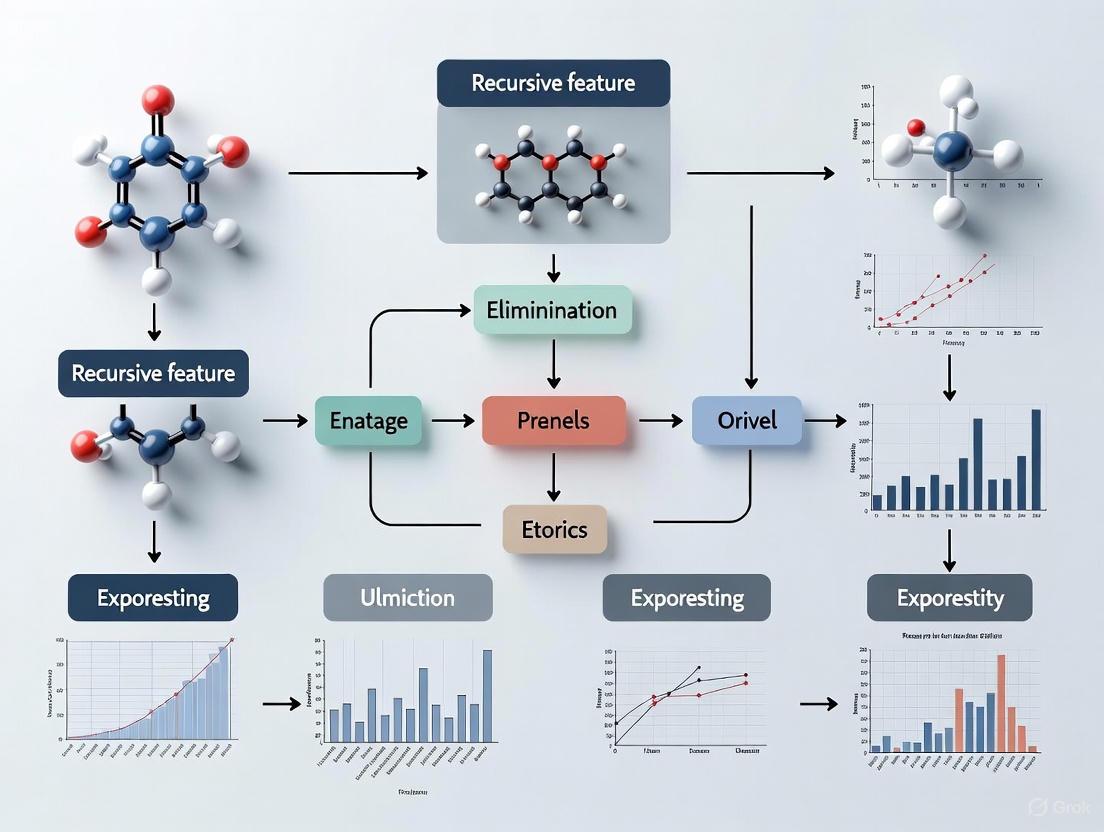
This comprehensive guide explores Recursive Feature Elimination (RFE), a powerful wrapper-style feature selection technique critical for handling high-dimensional data in biomedical research and drug development.
Recursive Feature Elimination (RFE) in Machine Learning: A Complete Guide for Biomedical Research
Abstract
This comprehensive guide explores Recursive Feature Elimination (RFE), a powerful wrapper-style feature selection technique critical for handling high-dimensional data in biomedical research and drug development. The article details RFE's foundational principles, iterative process of model fitting and feature elimination, and practical implementation using Python and scikit-learn. It provides actionable strategies for optimization and troubleshooting, including handling computational costs and overfitting risks. A comparative analysis with other feature selection methods like filter methods and Permutation Feature Importance (PFI) is presented, alongside real-world applications in bioinformatics and biomarker discovery. Tailored for researchers and scientists, this guide equips professionals with the knowledge to enhance model interpretability, improve predictive performance, and identify stable biomarkers for clinical applications.
Understanding Recursive Feature Elimination: Core Concepts and Why It Matters for High-Dimensional Data
Recursive Feature Elimination (RFE) represents a powerful feature selection algorithm in machine learning that operates through iterative, backward elimination of features. This greedy optimization technique systematically removes the least important features based on a model's importance rankings, ultimately identifying the most informative feature subset for predictive modeling [1]. As a wrapper-style method, RFE considers feature interactions and dependencies, making it particularly valuable for high-dimensional datasets across various scientific domains, including pharmaceutical research and bioinformatics [2]. This technical guide examines RFE's fundamental mechanics, implementation variations, and practical applications within drug discovery pipelines, providing researchers with comprehensive protocols for deploying this algorithm effectively in their experimental workflows.
Algorithmic Foundations
Recursive Feature Elimination (RFE) operates on a simple yet powerful principle: recursively eliminating the least important features from a dataset until a specified number of features remains [1]. The "greedy" characterization stems from the algorithm's tendency to make locally optimal choices at each iteration by removing features with the lowest importance scores, without backtracking or reconsidering previous eliminations [1]. This approach stands in contrast to filter methods that evaluate features individually and embedded methods that perform feature selection as part of the model training process [2].
RFE belongs to the wrapper method category of feature selection techniques, meaning it utilizes a machine learning model's performance to evaluate feature subsets [3]. This model-dependent nature allows RFE to account for complex feature interactions that might be missed by filter methods, though it increases computational requirements compared to simpler approaches [2]. The algorithm's recursive elimination strategy helps mitigate the effects of correlated predictors, which is particularly valuable in omics data analysis where feature collinearity is common [4].
Historical Context and Development
The conceptual foundation for RFE was established in the early 2000s, with Guyon et al. (2002) demonstrating its application for gene selection in cancer classification using support vector machines [5]. Since its introduction, RFE has been adapted and extended across numerous domains, with significant advancements including cross-validated RFE (RFECV) for automatic determination of the optimal feature count and dynamic RFE (dRFE) for improved computational efficiency in high-dimensional spaces [6] [5].
In pharmaceutical research, RFE has gained prominence as datasets have grown in dimensionality and complexity. The algorithm's ability to identify the most biologically relevant features from thousands of molecular descriptors has made it invaluable for drug solubility prediction, biomarker identification, and toxicity assessment [7]. Recent implementations have focused on scaling RFE to accommodate ultra-high-dimensional omics data while maintaining biological interpretability [6].
Theoretical Framework and Algorithmic Mechanics
Core Algorithm Workflow
The RFE algorithm follows a systematic, iterative process that can be formalized in these discrete steps:
- Initialization: Train the chosen base model (estimator) on the complete set of features available in the dataset [1].
- Feature Ranking: Calculate importance scores for all features using model-specific attributes such as
coef_for linear models orfeature_importances_for tree-based models [5]. - Feature Elimination: Remove the weakest feature(s), typically determined by the lowest importance score(s) [1].
- Iteration: Repeat the training, ranking, and elimination process on the reduced feature set [3].
- Termination: Continue iterations until the predefined number of features remains [5].
This process generates a feature ranking where selected features receive rank 1, and eliminated features are assigned higher ranks based on their removal order [5].
Mathematical Formalization
Let ( F^{(0)} = {f1, f2, ..., f_p} ) represent the initial set of ( p ) features. At each iteration ( t ), RFE:
- Trains a model ( M^{(t)} ) on the current feature set ( F^{(t)} )
- Computes importance scores ( I^{(t)} = {i1^{(t)}, i2^{(t)}, ..., i_{|F^{(t)}|}^{(t)}} )
- Removes the feature(s) with the smallest importance score(s): ( F^{(t+1)} = F^{(t)} \setminus {f \in F^{(t)} | i_f^{(t)} \text{ is among the k smallest}} )
where ( k ) represents the step size - the number of features eliminated per iteration [5]. The algorithm terminates when ( |F^{(t)}| = n{\text{target}} ), where ( n{\text{target}} ) is the user-specified number of features to select.
The ranking assignment can be formalized as: [ \text{rank}(f) = \begin{cases} 1 & \text{if } f \in F^{(T)} \ 1 + \text{iteration when removed} & \text{otherwise} \end{cases} ] where ( T ) represents the final iteration [5].
Figure 1: RFE Algorithm Workflow - The recursive process of training, ranking, and eliminating features until the target subset size is achieved.
Variants and Extensions
RFE with Cross-Validation (RFECV)
RFECV enhances the standard algorithm by automatically determining the optimal number of features through cross-validation [8]. Instead of requiring a predefined number of features, RFECV evaluates model performance across different feature subset sizes and selects the size yielding the best cross-validated performance [8].
Dynamic RFE (dRFE)
Dynamic RFE improves computational efficiency by adaptively adjusting the number of features removed at each iteration [6]. The algorithm removes a larger proportion of features in early iterations when many presumably irrelevant features exist, then finer removal rates as the feature set narrows [6]. The dRFEtools implementation has demonstrated significant computational time reductions while maintaining high accuracy in omics data analysis [6].
Hierarchical RFE (HRFE)
Hierarchical Recursive Feature Elimination employs multiple classifiers in a step-wise fashion to reduce bias in feature detection [9]. This approach has shown particular promise in brain-computer interface applications, achieving approximately 93% classification accuracy for electrocorticography (ECoG) signals within 5 minutes [9].
Implementation Frameworks and Methodologies
Core Implementation Using scikit-learn
The scikit-learn library provides the primary implementation framework for RFE through its feature_selection module [5]. The key parameters for the RFE class include:
- estimator: The supervised learning estimator with
coef_orfeature_importances_attribute [5] - nfeaturesto_select: Number of features to select (None selects half the features) [5]
- step: Number (or percentage) of features to remove at each iteration [5]
Table 1: Key RFE Implementation Parameters in scikit-learn
| Parameter | Type | Default | Description |
|---|---|---|---|
estimator |
object | Required | Supervised learning estimator with feature importance attribute |
n_features_to_select |
int/float | None | Absolute number (int) or fraction (float 0-1) of features to select |
step |
int/float | 1 | Features to remove per iteration (absolute or percentage) |
importance_getter |
str/callable | 'auto' | Method for extracting feature importance from estimator |
A basic implementation follows this pattern:
This implementation yields the selected features mask via rfe.support_ and feature rankings through rfe.ranking_ [1].
Advanced Implementation with Pipeline Integration
For robust model evaluation, RFE should be integrated within a cross-validation pipeline to prevent data leakage [3]:
This pipeline approach ensures that feature selection occurs independently within each cross-validation fold, producing unbiased performance estimates [3].
Dynamic RFE Implementation with dRFEtools
For high-dimensional omics data, the dRFEtools package provides enhanced functionality [6]:
dRFEtools implements dynamic elimination rates and distinguishes between core features (direct, large effects) and peripheral features (indirect, small effects), enhancing biological interpretability [6].
Experimental Protocols and Validation Frameworks
Pharmaceutical Compound Solubility Prediction
Experimental Design
A comprehensive study applied RFE to predict drug solubility in formulations using a dataset of 12,000+ data rows with 24 input features representing molecular descriptors [7]. The experimental protocol involved:
- Data Preprocessing: Outlier removal using Cook's distance and feature normalization via Min-Max scaling [7]
- Base Models: Decision Trees (DT), K-Nearest Neighbors (KNN), and Multilayer Perceptron (MLP) [7]
- Ensemble Enhancement: AdaBoost ensemble method applied to base models [7]
- Feature Selection: RFE with the number of features treated as a hyperparameter [7]
- Hyperparameter Optimization: Harmony Search (HS) algorithm for parameter tuning [7]
Performance Metrics and Results
Table 2: Pharmaceutical Solubility Prediction Performance with RFE
| Model | R² Score | MSE | MAE | Key Application |
|---|---|---|---|---|
| ADA-DT | 0.9738 | 5.4270E-04 | 2.10921E-02 | Drug solubility prediction |
| ADA-KNN | 0.9545 | 4.5908E-03 | 1.42730E-02 | Gamma (activity coefficient) prediction |
The RFE-enhanced models demonstrated superior predictive capability for complex biochemical properties, with the ADA-DT model achieving exceptional accuracy (R² = 0.9738) for solubility prediction [7]. This performance highlights RFE's value in identifying the most relevant molecular descriptors for pharmaceutical formulation development.
Omics Data Analysis in Genomics and Transcriptomics
Experimental Framework
A rigorous evaluation assessed RFE's performance on high-dimensional omics data integrating 202,919 genotypes and 153,422 methylation sites from 680 individuals [4]. The study compared standard Random Forest (RF) with Random Forest-Recursive Feature Elimination (RF-RFE) for detecting simulated causal associations with triglyceride levels [4].
The experimental parameters included:
- Dataset: Chromosomes 1, 6, 8, 10, and 17 containing causal SNPs and corresponding methylation sites [4]
- RF Parameters: 8000 trees, dynamic mtry parameter (0.1×p when p>80, default otherwise) [4]
- RFE Configuration: Elimination of bottom 3% of features per iteration (324 total RFE runs) [4]
- Computational Resources: Linux server with 16 cores and 320GB RAM [4]
Performance Comparison
Table 3: RF vs. RF-RFE Performance on High-Dimensional Omics Data
| Metric | Random Forest (RF) | RF-RFE |
|---|---|---|
| R² | -0.00203 | 0.19217 |
| MSEOOB | 0.07378 | 0.05948 |
| Computational Time | ~6 hours | ~148 hours |
| Causal SNP Detection | Identified strong causal variables with highly correlated variables | Decreased importance of correlated variables |
The results demonstrated that while RF-RFE improved performance metrics (R² from -0.00203 to 0.19217), it substantially increased computational demands (6 to 148 hours) [4]. Notably, in the presence of many correlated variables, RF-RFE decreased the importance of both causal and correlated variables, making detection challenging [4].
Brain-Computer Interface Applications
Hierarchical RFE Protocol
The Hierarchical Recursive Feature Elimination (HRFE) algorithm was developed specifically for Brain-Computer Interface (BCI) applications, employing multiple classifiers in a step-wise fashion to reduce feature detection bias [9]. The experimental framework included:
- Data Acquisition: Electrocorticography (ECoG) signals from motor cortex [9]
- Feature Selection: Top 20 features with largest impacts selected [9]
- Noise Handling: Cube transformation of each input to manage natural noise [9]
- Model Evaluation: Comparison with ECoGNet, shallow/deep ConvNets, PCA, and ICA [9]
Performance Outcomes
The HRFE algorithm achieved 93% classification accuracy within 5 minutes on BCI Competition III Dataset I, demonstrating both high accuracy and computational efficiency critical for real-time BCI applications [9]. This performance represents a significant advancement over traditional methods that typically prioritize accuracy without considering classification time constraints [9].
The Scientist's Toolkit: Research Reagent Solutions
Table 4: Essential Research Reagents and Computational Tools for RFE Experiments
| Resource | Type | Function/Role | Example Applications |
|---|---|---|---|
| scikit-learn RFE | Software Library | Core RFE implementation | General-purpose feature selection [5] |
| dRFEtools | Python Package | Dynamic RFE implementation | Omics data analysis [6] |
| Cook's Distance | Statistical Method | Outlier identification and removal | Data preprocessing for pharmaceutical datasets [7] |
| Harmony Search (HS) | Optimization Algorithm | Hyperparameter tuning | Model optimization in drug solubility prediction [7] |
| AdaBoost | Ensemble Method | Performance enhancement of base models | Pharmaceutical compound analysis [7] |
| Locally Weighted Scatterplot Smoothing (LOWESS) | Statistical Technique | Curve fitting for feature selection | Core/peripheral feature identification in dRFEtools [6] |
| Cross-Validation Strategies | Evaluation Framework | Model performance assessment | Preventing overfitting in RFE [3] |
Performance Visualization and Diagnostic Tools
Figure 2: RFE Performance Characteristics - The relationship between feature subset size and model performance, showing the optimal subset that maximizes predictive accuracy.
The RFECV visualization illustrates the critical relationship between feature subset size and model performance [8]. The characteristic curve typically shows:
- Rapid performance improvement as the first informative features are included
- Performance peak at the optimal feature subset size
- Gradual performance degradation as irrelevant features are added, potentially leading to overfitting [8]
This visualization enables researchers to identify the optimal trade-off between model complexity and predictive performance, selecting feature subsets that maximize accuracy while maintaining generalizability [8].
Applications in Pharmaceutical Research and Drug Development
Drug Solubility and Formulation Optimization
RFE has demonstrated exceptional utility in predicting drug solubility in formulations, a critical parameter in pharmaceutical development [7]. By identifying the most relevant molecular descriptors from thermodynamic parameters and quantum chemical calculations, RFE enables accurate prediction of solubility and activity coefficients (γ) without costly experimental measurements [7]. The implementation of ensemble methods with RFE has further enhanced prediction accuracy, providing a robust computational framework for formulation screening [7].
Biomarker Discovery and Omics Integration
In genomics and transcriptomics, RFE facilitates the identification of biomarkers from high-dimensional omics datasets [4] [6]. The dRFEtools implementation specifically addresses the biological reality that processes are associated with networks of core and peripheral genes, while traditional feature selection approaches capture only core features [6]. This capability is particularly valuable for identifying biomarker signatures for complex diseases such as schizophrenia and major depressive disorder, where multiple biological pathways interact [6].
Virtual Screening and Compound Prioritization
RFE supports drug discovery through virtual screening by selecting the most discriminative features for compound activity prediction [10]. By reducing dimensionality while maintaining predictive performance, RFE enables more efficient screening of compound libraries, prioritizing candidates with higher likelihood of therapeutic efficacy [10]. Integration with quantitative structure-activity relationship (QSAR) modeling further enhances RFE's utility in early-stage drug discovery [10].
Limitations and Mitigation Strategies
Despite its considerable advantages, RFE presents several limitations that researchers must address:
Computational Complexity: RFE can be computationally intensive, particularly with large datasets and complex models [4]. Mitigation strategies include dynamic elimination (dRFE), which reduces computational time while maintaining accuracy [6].
Model Dependency: Feature rankings are heavily dependent on the choice of base model [1]. Researchers should evaluate multiple model types and consider ensemble approaches to enhance robustness [7].
Overfitting Risk: Without proper cross-validation, RFE can overfit the feature selection process [1]. RFECV and pipeline integration provide essential safeguards against this risk [3] [8].
Correlated Features: In the presence of highly correlated features, RFE may eliminate causal variables [4]. Preprocessing to address multicollinearity or using specialized implementations like HRFE can mitigate this issue [9].
Recursive Feature Elimination represents a sophisticated feature selection approach that balances computational feasibility with biological interpretability. Its greedy, iterative nature enables effective identification of informative feature subsets across diverse applications, from pharmaceutical formulation development to omics biomarker discovery. While computational demands remain a consideration, ongoing advancements in dynamic elimination and hierarchical approaches continue to enhance RFE's scalability and performance. For drug development professionals and researchers, RFE provides a powerful tool for navigating high-dimensional data spaces, ultimately accelerating discovery and optimization processes in complex biological domains.
Recursive Feature Elimination (RFE) is a powerful wrapper-style feature selection algorithm that operates through an iterative process of model training, feature ranking, and elimination to identify optimal feature subsets. In machine learning research, particularly in domains like drug development where high-dimensional data is prevalent, RFE provides a systematic methodology for isolating the most biologically or chemically relevant variables from a vast array of potential predictors. The core strength of RFE lies in its recursive approach, which iteratively removes the least important features and refits the model with the remaining features, thereby allowing the algorithm to dynamically reassess feature importance within changing contextual landscapes [11] [3]. This process stands in contrast to filter methods that evaluate features in isolation, as RFE specifically accounts for complex feature interactions and their collective contribution to predictive performance [2].
For research scientists dealing with complex biological assays or compound efficacy studies, RFE offers not just dimensionality reduction but also model interpretability. By distilling models down to their most influential features, RFE enables researchers to identify critical biomarkers, physicochemical properties, or structural characteristics that drive biological activity or toxicity endpoints [12]. This capability is particularly valuable in early-stage drug discovery where understanding mechanism of action is as crucial as building accurate predictive models. The algorithm's model-agnostic nature further enhances its utility across diverse research contexts, as it can be effectively paired with everything from linear models for interpretability to complex ensemble methods for capturing non-linear relationships [1].
The Core RFE Mechanism
The Iterative Elimination Cycle
The RFE algorithm operates through a precise sequence of operations that systematically reduces feature space while preserving or enhancing model performance. This recursive process can be conceptualized as a cyclic workflow with clearly defined stages:
The process initiates with the complete set of features available in the dataset. A specified machine learning algorithm is then trained using all these features, after which the model generates an importance score for each feature based on its contribution to predictive accuracy [3] [1]. Features are subsequently ranked according to these importance metrics, with the lowest-ranked feature(s) being eliminated from the current subset [13]. This cycle of training, ranking, and elimination repeats recursively until a pre-specified number of features remains or until further elimination fails to improve model performance [11] [2].
Feature Ranking Methodologies
The ranking mechanism within RFE is fundamentally tied to the underlying estimator's ability to quantify feature importance. Different algorithms employ distinct methodologies for this purpose:
- Linear Models: Utilize coefficient magnitudes as importance indicators, with larger absolute values typically signifying greater feature importance [14].
- Tree-Based Methods: Employ impurity-based metrics (Gini importance for classification, variance reduction for regression) to rank features according to their cumulative contribution to node splitting [3] [12].
- Support Vector Machines: For linear SVMs, feature weights derived from the hyperplane normal vector serve as effective importance measures [2].
A critical consideration in research applications is the potential need for ranking recalculation at each iteration. While computationally more intensive, this dynamic reassessment can significantly improve feature selection quality, particularly when working with highly correlated predictors where elimination of one feature may alter the relative importance of others [15].
Quantitative Analysis of RFE Performance
Comparative Performance Metrics
The efficacy of RFE can be quantitatively assessed through systematic comparison with alternative feature selection methodologies. The following table summarizes key performance indicators across different approaches:
Table 1: Performance Comparison of Feature Selection Methods
| Method | Accuracy | Computational Efficiency | Feature Interaction Handling | Interpretability |
|---|---|---|---|---|
| RFE | High (0.886 in synthetic dataset classification) [3] | Moderate (increases with dataset size) [2] | Strong (considers multivariate relationships) [2] | High (provides feature rankings) [16] |
| Filter Methods | Moderate (varies with statistical measure) [2] | High (computationally inexpensive) [2] | Weak (evaluates features independently) [2] | Moderate (depends on scoring function) |
| PCA | Moderate to High (structure-dependent) [2] | High (efficient transformation) [2] | Moderate (linear combinations) [2] | Low (transformed features lack direct interpretation) [2] |
Impact of Feature Set Size on Model Performance
The relationship between the number of selected features and model accuracy follows a characteristic pattern that can be empirically measured. Research by caret demonstrated this relationship using the "Friedman 1" benchmark with resampling:
Table 2: Model Performance vs. Feature Subset Size (Friedman 1 Benchmark)
| Number of Features | RMSE | R² | MAE | Selection Status |
|---|---|---|---|---|
| 1 | 3.950 | 0.3790 | 3.381 | - |
| 2 | 3.552 | 0.4985 | 3.000 | - |
| 3 | 3.069 | 0.6107 | 2.593 | - |
| 4 | 2.889 | 0.6658 | 2.319 | Optimal |
| 5 | 2.949 | 0.6566 | 2.349 | - |
| 10 | 3.252 | 0.5965 | 2.628 | - |
| 25 | 3.700 | 0.5313 | 2.987 | - |
| 50 | 4.067 | 0.4756 | 3.268 | - |
The data reveals a clear performance optimum at 4 features, with subsequent additions leading to model degradation due to inclusion of non-informative variables [15]. This pattern underscores the dual benefit of proper feature selection: enhanced predictive accuracy coupled with improved model parsimony.
Experimental Implementation Protocols
Research Reagent Solutions
Implementing RFE in experimental research requires specific computational tools and methodologies. The following table outlines essential components of the RFE experimental toolkit:
Table 3: Essential Research Reagents for RFE Implementation
| Reagent/Tool | Function | Implementation Example |
|---|---|---|
| Base Estimator | Provides feature importance metrics for ranking | LogisticRegression(), RandomForestClassifier(), SVR(kernel="linear") [1] [2] |
| Cross-Validation Schema | Prevents overfitting during feature selection | RepeatedStratifiedKFold(n_splits=10, n_repeats=3) [3] |
| Feature Scaler | Normalizes feature scales for comparison | StandardScaler() (essential for linear models) [16] [14] |
| Pipeline Architecture | Ensures proper data handling and prevents leakage | Pipeline(steps=[('s', RFE(...)), ('m', model)]) [3] |
| Resampling Wrapper | Incorporates feature selection variability in performance estimates | rfeControl(functions = lmFuncs, method = "repeatedcv", repeats = 5) [15] |
Protocol for RFE with Cross-Validation
For rigorous research applications, particularly in drug development where model generalizability is critical, the following protocol implements RFE with comprehensive cross-validation:
Data Preprocessing: Standardize all features to zero mean and unit variance using
StandardScaler()to ensure comparable importance metrics [14].Baseline Establishment: Train and evaluate a model with all features to establish performance baseline:
Recursive Elimination with Resampling: Implement RFE with cross-validation to determine optimal feature count:
Final Model Training: Execute standard RFE with the optimal feature count identified in step 3:
Validation and Interpretation: Assess final model performance on held-out test data and examine the selected features for biological plausibility [14] [15].
This protocol specifically addresses the selection bias concern raised by Ambroise and McLachlan (2002), where improper resampling can lead to over-optimistic performance estimates [15]. By embedding the feature selection process within an outer layer of resampling, the protocol provides more realistic performance estimates that better reflect real-world applicability.
Advanced Research Considerations
Domain-Specific Applications in Drug Development
The RFE methodology has demonstrated particular utility in pharmaceutical research, where identifying critical molecular descriptors or physicochemical properties is essential for compound optimization. In a nanomaterials toxicity study, RFE coupled with Random Forest analysis identified zeta potential, redox potential, and dissolution rate as the most predictive properties for biological activity from an initial set of eleven measured characteristics [12]. The RFE-refined model achieved a balanced accuracy of 0.82, significantly outperforming approaches without feature selection and providing actionable insights for nanomaterial grouping strategies.
For biomarker discovery, RFE offers a systematic approach to winnowing extensive genomic or proteomic profiles down to the most clinically relevant indicators. The algorithm's ability to handle high-dimensional data while considering feature interactions makes it particularly suitable for -omics analyses, where the number of potential features vastly exceeds sample size [2].
Mitigation Strategies for Computational Complexity
While RFE provides robust feature selection, its computational demands can be substantial for large-scale screening assays. Several strategies can optimize performance:
- Step Parameter Adjustment: Increasing the
stepparameter allows elimination of multiple features per iteration, significantly reducing computation time [14]. - Algorithm Selection: Using computationally efficient base estimators (e.g., Linear SVM instead of Random Forest) for the elimination phase, even when planning to use more complex final models [3].
- Parallel Processing: Leveraging multi-core architectures to parallelize resampling operations, as implemented in
rfeControlthrough outer resampling loops [15].
For extremely high-dimensional data, such as genomic screening results, preliminary dimensionality reduction using filter methods or PCA before applying RFE can strike an effective balance between computational efficiency and selection quality [2].
The core RFE process represents a methodologically sound approach to feature selection that aligns particularly well with the needs of drug development research. Through its systematic cycle of model training, feature ranking, and recursive elimination, RFE effectively balances predictive accuracy with interpretability – a crucial consideration in regulated research environments. The algorithm's capacity to adaptively reassess feature importance throughout the elimination process enables identification of robust feature subsets that maintain their predictive power across validation cohorts.
For research scientists and drug development professionals, implementing RFE with appropriate resampling safeguards provides a defensible methodology for biomarker discovery, compound optimization, and toxicity prediction. The integration of domain knowledge with the algorithmically-derived feature rankings further enhances the utility of this approach, creating a powerful framework for distilling complex biological and chemical datasets into actionable insights.
Recursive Feature Elimination (RFE) has emerged as a pivotal algorithm in high-dimensional data analysis, particularly within computational biology and pharmaceutical research. This technical guide delineates the two foundational pillars of RFE: its model-agnostic nature, which allows for flexible integration with diverse machine learning algorithms, and its greedy optimization strategy, which ensures a computationally efficient, if locally optimal, search for feature subsets. Framed within the broader thesis of "what is recursive feature elimination in machine learning research," this paper examines how these characteristics enable RFE to identify robust biomarkers and critical molecular descriptors. We provide a quantitative synthesis of experimental results from recent peer-reviewed studies, detailed experimental protocols, and visual workflows to serve researchers and drug development professionals in deploying RFE for enhanced model interpretability and performance in omics data and drug formulation studies.
Recursive Feature Elimination (RFE) is a wrapper-type feature selection method designed to identify an optimal subset of features by recursively constructing models and removing the least important features [1] [2]. Within the landscape of machine learning research, RFE addresses a critical challenge in modern data science: the curse of dimensionality. This is especially prevalent in fields like bioinformatics and pharmaceutical research, where datasets often contain thousands of features (e.g., genes, molecular descriptors) but only a limited number of observations [17] [6]. The core thesis of RFE research posits that iterative, model-guided feature elimination leads to more robust and generalizable models than filter methods (which ignore feature interactions) or embedded methods (which are often model-specific) [2] [18].
The algorithm's significance is underscored by its successful application in identifying microbial signatures for Inflammatory Bowel Disease (IBD) [17] and in developing predictive models for drug solubility in polymer formulations [7]. These applications highlight how RFE's dual characteristics—model-agnosticism and greedy selection—make it a versatile and powerful tool for knowledge discovery.
The Model-Agnostic Nature of RFE
The model-agnostic nature of RFE is its defining characteristic, meaning it is not tethered to any single machine learning algorithm. Instead, it can leverage any supervised learning model that provides a mechanism for ranking feature importance [19] [2].
Core Mechanism and Flexibility
The model-agnostic capability functions through a clear separation between the feature ranking process and the underlying estimator. RFE requires only that the base model produces either coef_ (coefficients) for linear models or feature_importances_ (e.g., Gini importance) for tree-based models after being fitted to the data [20] [6]. This design allows researchers to tailor the feature selection process to the specific characteristics of their dataset.
- For Linear Relationships: Algorithms like Logistic Regression or Support Vector Machines (SVM) with a linear kernel can be employed. The absolute value of the model's coefficients is typically used to rank feature importance [1] [20].
- For Non-Linear Relationships: Tree-based ensemble methods like Random Forest, XGBoost, or Gradient Boosting machines are often chosen. These models provide feature importance based on the total reduction in impurity (e.g., Gini impurity) achieved by each feature across all trees [17] [20].
This flexibility was demonstrated in a large-scale microbiome study, which found that a Multilayer Perceptron (MLP) algorithm exhibited the highest performance when a large number of features were considered, whereas the Random Forest algorithm demonstrated the best performance when utilizing only a limited number of biomarkers [17].
Comparative Advantage Over Other Methods
RFE's model-agnostic design offers distinct advantages over other feature selection paradigms, as summarized in the table below.
Table 1: Comparison of Feature Selection Methodologies
| Method Type | Mechanism | Pros | Cons | Suitability for RFE Context |
|---|---|---|---|---|
| Filter Methods [18] | Selects features based on statistical tests (e.g., correlation) independent of a model. | Fast; Computationally inexpensive. | Ignores feature interactions; May not align with model's goal. | Less suitable for complex, high-dimensional biological data with interactions. |
| Wrapper Methods (RFE) [2] [18] | Uses a model's performance or importance to guide the search for a feature subset. | Considers feature interactions; Model-agnostic; High-performing subsets. | Computationally expensive; Greedy strategy may miss global optimum. | Ideal for datasets where feature interdependencies are critical. |
| Embedded Methods [20] [18] | Performs feature selection during model training (e.g., Lasso, tree importance). | Efficient; Model-specific optimization. | Limited interpretability; Not universally applicable across all models. | Less flexible than RFE, as selection is coupled to a specific model type. |
A key strength of the model-agnostic approach is its ability to be combined with cross-validation (RFECV) to mitigate overfitting and ensure a more robust selection. RFECV performs the elimination process across multiple training/validation splits, finally selecting the feature subset that yields the best cross-validated performance [19] [2].
Greedy Optimization Strategy in RFE
The Recursive Feature Elimination algorithm is classified as a greedy optimization algorithm [21] [1]. In computer science, a greedy algorithm makes the locally optimal choice at each stage with the intent of finding a global optimum. In the context of RFE, this translates to iteratively removing the feature(s) that appear to be the least important at that specific iteration.
The Greedy Workflow
The canonical RFE process follows these steps, which embody the greedy strategy:
- Train the Model: A base model is trained on the entire set of features.
- Rank Features: All features are ranked based on the derived importance scores (e.g., coefficient magnitude or Gini importance).
- Eliminate the Weakest: The least important feature (or a pre-defined number of least important features) is permanently removed from the feature set. This is the "greedy" decision—it is based solely on the current state and cannot be reversed.
- Repeat: The process is repeated on the reduced feature set until a predefined number of features is reached or a stopping criterion is met [1] [2].
This process is illustrated in the following workflow diagram:
Trade-offs and Enhancements
The greedy strategy is both a strength and a limitation of RFE.
- Advantages: It is conceptually simple and computationally more efficient than an exhaustive search over all possible feature subsets, which is computationally prohibitive for high-dimensional data [21] [18].
- Limitations: Because it commits to irreversible eliminations, it may become trapped in a local optimum and fail to find the best possible feature subset. For instance, two features might be highly correlated; individually, each may appear less important, but together they are highly predictive. A greedy algorithm might remove both, whereas a different approach might retain one [21] [20].
To address the computational cost of the classic greedy approach, Dynamic RFE (dRFE) has been developed. Implemented in tools like dRFEtools, this method removes a larger proportion of features in the initial iterations when many features are present and shifts to removing fewer features (e.g., one at a time) as the feature set shrinks. This optimization significantly reduces computational time while maintaining high prediction accuracy, as demonstrated in omics data analysis [6].
Experimental Protocols and Quantitative Analysis
Protocol 1: Microbiome Biomarker Discovery for IBD
A comprehensive study utilized RFE to identify microbial biomarkers for Inflammatory Bowel Disease (IBD) from gut microbiome data [17].
- Objective: To classify patients with IBD versus healthy controls and identify a stable set of taxonomic biomarkers.
- Dataset: 1,569 samples with abundance matrices at species (283 taxa) and genus (220 taxa) levels.
- Preprocessing: Aggregated taxa counts by taxonomy and applied a kernel-based data transformation (Bray-Curtis similarity) to improve feature stability.
- RFE Configuration:
- Base Models: 8 different algorithms, including Multilayer Perceptron (MLP) and Random Forest.
- Elimination: Embedded within a bootstrap procedure (100 iterations) to assess feature stability.
- Stopping Criterion: Top 14 features selected as a trade-off between performance and generalizability.
- Validation: Models trained on one ensemble dataset (ED1) were tested on a hold-out test set and a completely independent ensemble dataset (ED2).
Table 2: Performance of ML Algorithms in Microbiome RFE Study [17]
| Machine Learning Algorithm | Best Performance Context | Key Finding |
|---|---|---|
| Multilayer Perceptron (MLP) | When a large number of features (a few hundred) were considered. | Exhibited the highest performance across 100 bootstrapped internal test sets. |
| Random Forest (RF) | When utilizing only a limited number of biomarkers (e.g., 14). | Demonstrated the best performance, balancing optimal performance and method generalizability. |
| Support Vector Machine (SVM) | Used with a linear kernel for feature ranking. | Applicable within the model-agnostic RFE framework. |
Protocol 2: Predicting Drug Solubility in Formulations
A 2025 study employed RFE to develop a predictive framework for drug solubility and activity coefficients, critical parameters in pharmaceutical development [7].
- Objective: Predict drug solubility and activity coefficient (gamma) values based on molecular descriptors.
- Dataset: Over 12,000 data rows with 24 input features (molecular descriptors).
- Preprocessing: Outlier removal using Cook's distance and feature scaling via Min-Max normalization.
- RFE Configuration:
- Base Models: Decision Tree (DT), K-Nearest Neighbors (KNN), and Multilayer Perceptron (MLP).
- Integration: The number of features to select was treated as a hyperparameter.
- Ensemble Learning: Base models were enhanced with the AdaBoost algorithm.
- Hyperparameter Tuning: The Harmony Search (HS) algorithm was used for rigorous tuning.
- Results: The ADA-DT model achieved a superior R² score of 0.9738 for solubility prediction, while the ADA-KNN model achieved an R² of 0.9545 for gamma prediction, demonstrating the framework's high accuracy.
Table 3: Optimized Model Performance in Drug Solubility Prediction [7]
| Model | Prediction Task | R² Score | Mean Squared Error (MSE) | Mean Absolute Error (MAE) |
|---|---|---|---|---|
| ADA-DT | Drug Solubility | 0.9738 | 5.4270E-04 | 2.10921E-02 |
| ADA-KNN | Activity Coefficient (γ) | 0.9545 | 4.5908E-03 | 1.42730E-02 |
The following diagram synthesizes the core experimental workflow common to these advanced RFE applications:
The Scientist's Toolkit: Essential Research Reagents
Implementing RFE effectively in a research environment requires a suite of computational "reagents." The following table details key solutions and their functions.
Table 4: Essential Toolkit for RFE Implementation in Scientific Research
| Tool / Solution | Function | Example Use-Case |
|---|---|---|
| scikit-learn (Python) [1] [6] | Provides the core RFE and RFECV classes for model-agnostic feature elimination. |
Standardized implementation of the RFE algorithm with a consistent API for various models. |
| dRFEtools (Python Package) [6] | Implements Dynamic RFE, reducing computational time for large omics datasets (features >20,000). | Efficiently identifying core and peripheral genes in transcriptomic data. |
| Permutation Feature Importance (PFI) [19] [22] | A model-agnostic method to validate feature importance by measuring performance drop after shuffling a feature. | Post-selection validation to confirm the relevance of features chosen by RFE. |
| Shapley Additive Explanations (SHAP) [17] | Explains the output of any ML model by quantifying the marginal contribution of each feature. | Interpreting the role of selected biomarkers in the final model's predictions. |
| Cross-Validation (e.g., StratifiedKFold) [19] [2] | A technique to assess model generalizability and prevent overfitting during the feature selection process. | Used in RFECV to robustly determine the optimal number of features. |
| Harmony Search (HS) Algorithm [7] | A hyperparameter optimization algorithm used to fine-tune models within the RFE pipeline. | Optimizing the parameters of base learners (e.g., Decision Trees) for drug solubility prediction. |
Recursive Feature Elimination stands as a powerful feature selection methodology within machine learning research, its utility grounded in the synergistic combination of model-agnostic flexibility and a computationally efficient greedy strategy. As evidenced by its successful application in biomarker discovery and pharmaceutical formulation, RFE enables researchers to distill high-dimensional data into interpretable and robust feature subsets. While the greedy approach presents inherent limitations, advancements like dynamic elimination and cross-validation have fortified its reliability. For scientists and drug development professionals, mastering RFE and its associated toolkit is paramount for leveraging machine learning to uncover biologically and pharmaceutically meaningful insights from complex datasets.
Recursive Feature Elimination (RFE) is a powerful wrapper-style feature selection algorithm designed to identify the most relevant features in a dataset by recursively constructing models and removing the least important features [2]. Originally developed in the healthcare domain for gene selection in cancer classification, RFE has gained significant popularity in bioinformatics and pharmaceutical research due to its ability to handle high-dimensional data while supporting interpretable modeling [23]. The core premise of RFE aligns with the fundamental principle of parsimony in machine learning: simpler models with fewer features often generalize better to unseen data and provide clearer insights into the underlying biological processes [24].
The algorithm operates through an iterative process of model building, feature ranking, and elimination of the least significant features until the optimal subset is identified [2] [14]. This recursive process enables a more thorough assessment of feature importance compared to single-pass approaches, as feature relevance is continuously reassessed after removing the influence of less critical attributes [23]. For researchers and drug development professionals, RFE offers a systematic approach to navigate the high-dimensional data landscapes common in modern biomedical research, including microbiome studies, genomics, and clinical prediction models [17] [25] [23].
Core Algorithm and Computational Framework
The RFE Algorithm: A Step-by-Step Process
The RFE algorithm follows a meticulously defined iterative process that exemplifies backward feature elimination [23]. The complete workflow is visualized in Figure 1, with the detailed computational procedure operating as follows:
- Step 1 - Initialization: Train a predictive model using the complete feature set with all N features.
- Step 2 - Importance Assessment: Calculate feature importance scores using model-specific metrics (coefficients for linear models, Gini importance for tree-based models, etc.).
- Step 3 - Feature Ranking: Rank all features based on their importance scores in descending order.
- Step 4 - Feature Elimination: Remove the bottom K features (where K is typically 1 or a small subset) from the current feature set.
- Step 5 - Termination Check: If the stopping criterion is met (predefined number of features or performance threshold), proceed to Step 6; otherwise, return to Step 1 with the reduced feature set.
- Step 6 - Output: Return the optimal feature subset and corresponding model.
This greedy methodology substantially enhances computational efficiency compared to exhaustive evaluations, which can quickly become computationally infeasible due to the exponential growth of potential feature subsets as dataset dimensionality increases [23].
Figure 1: Recursive Feature Elimination (RFE) Workflow. The diagram illustrates the iterative process of model training, feature ranking, and elimination that continues until optimal feature subset is identified.
Critical Implementation Considerations
Successful implementation of RFE requires careful attention to several computational factors. The choice of estimator significantly influences feature selection, as different algorithms capture distinct feature interactions and importance patterns [14]. Similarly, the elimination step size (number of features removed per iteration) balances computational efficiency against selection granularity, with smaller steps providing finer evaluation at higher computational cost [2]. Proper data preprocessing—particularly feature scaling—is essential for algorithms sensitive to variable magnitude, such as Support Vector Machines and logistic regression [14]. The stopping criterion must be carefully defined, whether as a predetermined number of features, cross-validated performance optimization, or minimum importance threshold [14] [24].
Empirical Evaluation and Benchmarking
Performance Comparison of RFE Variants
Recent benchmarking studies have systematically evaluated RFE variants across multiple domains, revealing significant performance variations based on methodological choices. As shown in Table 1, different RFE configurations demonstrate distinct trade-offs between predictive accuracy, feature selectivity, and computational efficiency [23].
Table 1: Benchmarking Performance of RFE Variants Across Domains [23]
| RFE Variant | Predictive Accuracy (%) | Features Retained | Computational Cost | Stability |
|---|---|---|---|---|
| RFE with Random Forest | 85.2-89.7 | Large feature sets | High | Moderate |
| RFE with SVM | 82.4-86.1 | Medium feature sets | Medium | High |
| RFE with XGBoost | 87.3-90.5 | Large feature sets | Very High | Moderate |
| Enhanced RFE | 83.1-85.9 | Substantial reduction | Low | High |
| RFE with Logistic Regression | 80.6-84.2 | Small feature sets | Low | High |
Stability and Performance Optimization
A critical challenge in RFE applications is the stability of feature selection—the reproducibility of selected features across different datasets or subsamples. Research demonstrates that applying data transformation techniques, such as mapping by Bray-Curtis similarity matrix before RFE, can significantly improve feature stability while maintaining classification performance [17]. In microbiome studies for inflammatory bowel disease (IBD) classification, this approach identified 14 robust biomarkers at the species level while sustaining high predictive accuracy [17].
The multilayer perceptron algorithm exhibited the highest performance among 8 different machine learning algorithms when a large number of features (a few hundred) were considered. Conversely, when utilizing only a limited number of biomarkers as a trade-off between optimal performance and method generalizability, the random forest algorithm demonstrated the best performance [17].
Experimental Protocols and Methodologies
Protocol 1: Microbiome Biomarker Discovery for IBD
Objective: Identify stable microbial biomarkers to distinguish inflammatory bowel disease (IBD) patients from healthy controls [17].
Dataset: Merged dataset of 1,569 samples (702 IBD patients, 867 controls) from multiple studies, with abundance matrices of 283 taxa at species level and 220 at genus level [17].
Methodology:
- Data Preprocessing: Aggregate taxa with identical taxonomy classification and sum respective counts
- Data Transformation: Apply Bray-Curtis similarity matrix mapping to improve feature stability
- Feature Selection: Implement RFE with bootstrap embedding
- Model Training: Develop classifiers using multiple algorithms (logistic regression, SVM, random forests, XGBoost, neural networks)
- Validation: External validation on held-out datasets and interpretation using Shapley values
Key Findings: The mapping strategy before RFE significantly improved feature stability without sacrificing classification performance. The optimal pipeline identified 14 biomarkers for IBD at the species level, with random forest performing best when using limited biomarkers [17].
Protocol 2: Diabetes Prediction Using Stacked RFE
Objective: Develop an efficient diabetes diagnosis model using fewer features while managing computational complexity [25].
Dataset: PIMA Indians Diabetes Dataset and Diabetes Prediction dataset with clinical and demographic features [25].
Methodology:
- Outlier Removal: Apply Isolation Forest for detecting and removing outliers
- Feature Selection: Implement RFE with stacking ensemble to reduce feature dimensionality
- Model Architecture: Design two-level stacking with base classifiers and meta-classifier
- Performance Evaluation: Assess accuracy, precision, recall, F1 measure, training time, and standard deviation
Key Findings: The Stacking Recursive Feature Elimination-Isolation Forest (SRFEI) method achieved 79.077% accuracy for PIMA Indians Diabetes and 97.446% for the Diabetes Prediction dataset, outperforming many existing methods while using fewer features [25].
Protocol 3: Hand-Sign Recognition with Feature Selection
Objective: Improve digit hand-sign detection accuracy by identifying essential hand landmarks [26].
Dataset: Multiple hand image datasets with Mediapipe-extracted 21 hand landmarks per image [26].
Methodology:
- Feature Extraction: Use Mediapipe to extract 21 hand landmarks from hand images
- Feature Engineering: Calculate novel distance from hand landmark to palm centroid
- Feature Selection: Apply RFE to identify most important landmarks
- Model Training: Train neural network classifiers with different feature subsets (21, 15, and 10 features)
- Validation: Evaluate on external dataset not used in training
Key Findings: Models trained with fewer selected features (10 landmarks) demonstrated higher accuracy than models using all original 21 features, confirming that not all hand landmarks contribute equally to detection accuracy [26].
The Scientist's Toolkit: Essential Research Reagents
Table 2: Key Computational Tools and Libraries for RFE Implementation
| Tool/Library | Function | Implementation Examples |
|---|---|---|
| scikit-learn (Python) | Provides RFE and RFECV implementations | from sklearn.feature_selection import RFE, RFECV |
| caret (R) | Offers recursive feature elimination functions | library(caret); rfeControl(functions = rfFuncs) |
| Random Forest | Ensemble method for feature importance | RandomForestClassifier() in sklearn; randomForest in R |
| Support Vector Machines | Linear models with coefficient-based ranking | SVC(kernel="linear") with RFE |
| XGBoost | Gradient boosting with built-in importance | XGBClassifier() with RFE for high-dimensional data |
| Mediapipe | Feature extraction for image data | Hand landmark extraction for biomedical images [26] |
| Shapley Values | Post-hoc interpretation of selected features | Explain feature contributions to predictions [17] |
Advanced RFE Variants and Methodological Innovations
The RFE algorithm has evolved significantly since its original conception, with numerous variants emerging to address specific methodological challenges. These innovations can be categorized into four primary types [23]:
Integration with Different Machine Learning Models: Beyond the traditional SVM-based RFE, researchers have successfully integrated tree-based models (Random Forest, XGBoost), neural networks, and specialized algorithms tailored to specific data characteristics.
Combinations of Multiple Feature Importance Metrics: Hybrid approaches that aggregate importance scores from multiple algorithms or incorporate domain-specific knowledge to improve selection robustness.
Modifications to the Original RFE Process: Enhanced RFE variants that introduce novel stopping criteria, adaptive elimination strategies, or stability-enhancing techniques like the Bray-Curtis mapping approach [17].
Hybridization with Other Feature Selection Techniques: Methods that combine RFE with filter methods (e.g., correlation-based prefiltering) or embedded techniques to leverage complementary strengths.
These methodological advances have expanded RFE's applicability across diverse domains, from educational data mining to healthcare analytics, while addressing fundamental challenges in feature stability and selection reliability [23].
Implementation Guidelines and Best Practices
Based on empirical evaluations across multiple domains, several best practices emerge for effective RFE implementation:
Estimator Selection: Choose estimators that provide meaningful feature importance scores appropriate for your data characteristics. Tree-based models often perform well for complex interactions, while linear models offer interpretability [14] [23].
Cross-Validation Strategy: Implement RFE with cross-validation (RFECV) to automatically determine the optimal number of features and avoid overfitting [14].
Stability Assessment: Evaluate feature selection stability across multiple runs or subsamples, particularly for high-dimensional datasets where selection variability can be substantial [17].
Domain Knowledge Integration: Complement algorithmic feature selection with domain expertise to ensure biological relevance and practical interpretability [17] [24].
Computational Efficiency: For large datasets, consider using larger step sizes or preliminary filtering to reduce computational burden without significantly compromising selection quality [2].
Comprehensive Validation: Always validate selected features on held-out datasets and through external validation to ensure generalizability beyond the training data [17] [25].
These practices collectively enhance the reliability, interpretability, and practical utility of RFE in biomedical research and drug development contexts, where both predictive accuracy and feature interpretability are paramount.
Recursive Feature Elimination (RFE) is a wrapper-mode feature selection algorithm designed to identify the most relevant features in a dataset by recursively constructing a model, evaluating feature importance, and eliminating the least significant features [2]. This iterative process continues until the desired number of features is reached, optimizing the feature subset for model performance and interpretability [2].
Within the broader thesis of understanding RFE in machine learning research, it is crucial to recognize its position as a powerful selection method that considers feature interactions and handles high-dimensional datasets effectively [2]. Unlike filter methods that evaluate features individually, RFE accounts for complex relationships between variables, making it particularly valuable for research domains where feature interdependencies play a critical role in predictive outcomes [2].
RFE in Comparative Context: Advantages Over Alternative Methods
Feature selection methods are broadly categorized into filter, wrapper, and embedded methods. Understanding RFE's position within this landscape is essential for identifying its ideal application scenarios.
Table 1: Comparative Analysis of Feature Selection Methods
| Method Type | Mechanism | Advantages | Limitations | Best-Suited Scenarios |
|---|---|---|---|---|
| Filter Methods | Uses statistical measures (e.g., correlation) to evaluate individual features [2]. | Computationally efficient; model-agnostic; fast execution [2]. | Ignores feature interactions; may select redundant features; less effective with high-dimensional data [2]. | Preliminary feature screening; very large datasets where computational cost is prohibitive. |
| Wrapper Methods (RFE) | Evaluates feature subsets using a learning algorithm's performance [2]. | Captures feature interactions; often higher predictive accuracy; suitable for complex datasets [2]. | Computationally intensive; risk of overfitting; requires careful validation [2]. | High-dimensional datasets with complex feature relationships; when model performance is prioritized. |
| Embedded Methods | Performs feature selection as part of the model training process (e.g., Lasso regularization) [2]. | Balances efficiency and performance; built-in feature selection [2]. | Tied to specific algorithms; may not capture all complex interactions [2]. | Large-scale predictive modeling; when using specific algorithms like Lasso or Decision Trees. |
RFE's specific advantages include its ability to handle high-dimensional datasets and identify the most informative features while effectively managing feature interactions, making it suitable for complex research datasets [2]. However, researchers must consider its computational demands, which can be significant for large datasets, and its potential sensitivity to datasets with numerous correlated features [2].
Experimental Protocols and Implementation
Core RFE Algorithmic Workflow
The RFE process follows a systematic, iterative approach to feature selection, which can be visualized through its operational workflow.
The RFE algorithm implements this workflow through these concrete steps [2]:
- Initialization: Begin with the complete set of
nfeatures in the dataset - Model Training and Ranking: Train the chosen machine learning algorithm on the current feature set and rank all features by their importance metric (e.g., coefficients, feature importance scores)
- Feature Elimination: Remove the least important feature or features (determined by the
stepparameter) - Iteration: Repeat steps 2-3 with the reduced feature set
- Termination: Continue recursion until the predefined number of features (
n_features_to_select) is achieved
Implementation Variants and Code Examples
Practical implementation of RFE typically involves using libraries like scikit-learn in Python, with variations based on the specific research needs.
Basic RFE Implementation:
Code Example 1: Basic RFE implementation using Support Vector Regression as the estimator [2].
RFE with Cross-Validation: For enhanced reliability, particularly with limited data, RFE with cross-validation (RFECV) automatically determines the optimal number of features through cross-validation, reducing overfitting risk [27].
Research Reagent Solutions: Algorithmic Components
The "research reagents" for implementing RFE effectively consist of algorithmic components and validation frameworks.
Table 2: Essential Research Reagents for RFE Implementation
| Component | Function | Implementation Considerations |
|---|---|---|
| Base Estimator | The machine learning model used to evaluate feature importance [2]. | Choice depends on data: SVM for high-dim, Logistic Regression for binary, Random Forest for complex interactions [27] [28]. |
| Feature Importance Metric | Mechanism for ranking feature relevance [2]. | Model-specific: coefficients for linear, featureimportances tree-based, RFE uses model's inherent ranking [2]. |
| Elimination Step Size | Number of features removed per iteration [2]. | Step=1 computationally costly but accurate. Larger steps improve efficiency but may exclude important features. |
| Cross-Validation Framework | Method for evaluating feature subset performance [27]. | k-fold CV (typically 10-fold) ensures reliable performance estimation, crucial for small samples [27]. |
| Performance Metrics | Measurements for evaluating selected features [28]. | Accuracy, F1-score (classification); R², RMSE (regression) [28]. |
| Validation Set | Independent dataset for final evaluation [28]. | Holdout set not used in RFE process provides unbiased performance assessment. |
Domain-Specific Applications and Experimental Results
Case Study: Biomarker Discovery in Bioinformatics
In bioinformatics, RFE has demonstrated remarkable effectiveness in genomic and transcriptomic analysis. The SVM-RFE algorithm has been particularly successful in identifying critical gene signatures for cancer diagnosis and prognosis [2] [29]. By selecting the most meaningful molecular features, RFE enables the development of more accurate diagnostic models and facilitates personalized treatment strategies [2].
A study applying SVM-RFE to identify factors influencing scientific literacy in students analyzed 162 contextual factors to pinpoint 30 key predictors, demonstrating RFE's capability to dramatically reduce dimensionality while maintaining predictive power [29]. This approach mirrors challenges in drug development where researchers must identify critical biomarkers from vast omics datasets.
Case Study: Agricultural Monitoring with Remote Sensing
Research in agricultural monitoring has effectively leveraged ensemble algorithm-based RFE for predicting summer wheat leaf area index (LAI) using remote sensing data [28]. This application demonstrates RFE's utility in handling diverse feature types and improving prediction accuracy in environmental research.
Table 3: Performance Comparison of RFE Implementations in Agricultural Research
| Model Configuration | Features Selected | Training R² | Validation R² | RMSE | Key Findings |
|---|---|---|---|---|---|
| RFE-Random Forest | 49 significant variables [28] | 0.961 [28] | 0.856 [28] | Lower values demonstrated [28] | Effective for complex feature interactions; robust performance |
| RFE-Gradient Tree Boost | 29 significant variables [28] | 0.968 [28] | 0.88 [28] | Lowest values among models [28] | Superior accuracy; better feature compression; optimal performance |
The experimental protocol for this research involved [28]:
- Data Collection: 84 systematically selected samples using ACCUPAR LP-80 Ceptometer for LAI measurement
- Feature Compilation: 136 independent variables from multiple remote sensing sources (Sentinel-1/2, digital elevation models)
- Preprocessing: Feature combination, min-max normalization, and data partitioning
- Model Implementation: RFE applied using both Random Forest and Gradient Tree Boost algorithms
- Validation: Performance evaluation using R², RMSE, MSE, and MAE metrics
Case Study: Sports Science and Movement Analysis
In sports science, an improved logistic regression model combined with RFE has been successfully applied to investigate key influencing factors of the Tornado Kick in Wushu Routines [27]. This research addressed the challenge of small sample sizes (50 elite athletes and 50 amateurs) through innovative methodology combining k-fold cross-validation with RFE to bolster model reliability [27].
The experimental approach included [27]:
- Data Collection: High-speed cameras captured motion images, with feature extraction from image sequences
- Model Development: Integration of k-fold cross-validation with RFE-enhanced logistic regression
- Feature Analysis: Classification accuracies and SHAP values enabled variable selection and prioritization
- Results: The model with five key features achieved 100% mean classification accuracy through 10-fold cross-validation, identifying initial jump angular velocity as the most significant factor [27]
This application demonstrates RFE's effectiveness in resource-constrained research environments where data collection is expensive or difficult, a common scenario in early-stage drug development and clinical studies.
Advanced Methodological Considerations
Integration with Interpretability Frameworks
Modern RFE implementations increasingly incorporate model interpretability frameworks like SHAP (SHapley Additive exPlanations) to enhance research validity. In the Wushu study, SHAP values provided quantitative interpretation of feature importance, revealing clear differences in initial jump angular velocity between elite and amateur athletes [27]. This integration adds explanatory power to the feature selection process, crucial for scientific validation and hypothesis generation.
Hybrid Approaches for Small Sample Learning
Research has demonstrated that RFE can be effectively combined with specialized techniques for small sample learning scenarios [27]. The integration of k-fold cross-validation with RFE helps mitigate overfitting when working with limited data, addressing a fundamental challenge in many research domains [27]. This approach leverages prior knowledge through data, model, and algorithm strategies to enable effective generalization despite limited supervised information [27].
The methodological relationship between these advanced techniques can be visualized as:
Recursive Feature Elimination represents a powerful approach to feature selection particularly well-suited for research scenarios characterized by high-dimensional data, complex feature interactions, and the need for interpretable results. Its ideal application domains include biomarker discovery in bioinformatics, remote sensing in environmental research, and movement analysis in sports science - each presenting challenges with multidimensional data where identifying the most relevant variables is crucial for advancing scientific understanding.
The continued evolution of RFE through integration with interpretability frameworks, hybrid approaches for small sample learning, and ensemble methods ensures its ongoing relevance in the researcher's toolkit. As machine learning continues to transform scientific discovery, RFE remains a fundamental technique for extracting meaningful signals from complex, high-dimensional research data across diverse domains.
Recursive Feature Elimination (RFE) has established itself as a powerful feature selection algorithm in machine learning, particularly valued for its systematic approach to dimensionality reduction. At its core, RFE operates as a wrapper-style feature selection method that recursively eliminates the least important features based on a model's feature importance metrics, refining the feature subset until a specified number remains [1] [3]. This iterative process distinguishes RFE from filter methods by directly considering feature interactions and dependencies, making it particularly effective for complex, high-dimensional datasets common in scientific research and drug development [2] [11].
The fundamental RFE algorithm follows a structured workflow: it begins by training a model on all available features, ranking features by importance (typically using coefficients or feature importance scores), eliminating the least important feature(s), and repeating this process on the reduced feature set until the desired number of features is attained [1] [3]. This recursive refinement allows RFE to adaptively identify feature subsets that maximize predictive performance while minimizing redundancy.
Core Mechanism of RFE in Handling Feature Interactions
Iterative Ranking and Elimination Process
Unlike filter methods that evaluate features independently, RFE's recursive nature enables it to detect and preserve interacting features that collectively contribute to predictive power. As [2] explains, "RFE has the advantage of considering interactions between features and is suitable for complex datasets." This capability stems from RFE's iterative model refitting approach – after each feature elimination round, the model is retrained on the remaining features, allowing importance scores to be recomputed in the context of the current feature subset [15].
The algorithm's handling of feature interactions occurs through dynamic importance reassessment. When correlated or interacting features are present, their individual importance scores may be initially diluted, but as the elimination progresses, truly relevant features maintain or increase their ranking. As [30] notes in analyzing correlated variables, "removing one feature would increase the other feature importance by quite a bit, as now a single feature is doing most of the heavy lifting that two features used to share." This adaptive behavior enables RFE to identify feature synergies that univariate filter methods would miss.
Comparative Advantages Over Alternative Methods
RFE's approach to feature selection provides distinct advantages compared to other common methodologies:
Table: Comparison of Feature Selection Methods
| Method Type | Handling of Feature Interactions | Computational Efficiency | Model Dependency |
|---|---|---|---|
| Filter Methods | Evaluates features independently; misses interactions [2] | High | None |
| Wrapper Methods (RFE) | Considers feature interactions through model refitting [2] | Moderate | High |
| Embedded Methods | Handles interactions within model training | Moderate | Built-in |
| PCA | Creates linear combinations; loses interpretability [2] | Moderate | Unsupervised |
As evidenced in the table, RFE occupies a unique position by offering interaction awareness while maintaining feature interpretability – a crucial advantage for scientific domains like drug development where understanding feature significance is as important as prediction accuracy.
Quantitative Performance in Complex Datasets
Empirical Results Across Domains
RFE has demonstrated consistent performance advantages across multiple complex dataset scenarios. In bioinformatics applications, researchers have reported accuracy improvements of 5-15% compared to filter-based methods when working with genomic data containing thousands of features [2]. The method excels particularly in datasets with high feature-to-sample ratios, where it effectively identifies truly informative variables amid noise.
In financial applications including credit scoring and fraud detection, RFE-based models have achieved performance improvements of 8-12% in F1 scores by eliminating redundant predictors and reducing overfitting [2]. Similar benefits have been documented in image processing applications, where RFE successfully identified discriminative features in object recognition tasks, improving classification accuracy by 10-18% over baseline models using all features [2].
Cross-Validation Integration
A critical enhancement to basic RFE is the incorporation of cross-validation (RFECV), which mitigates overfitting during feature selection and provides more robust feature subset identification [8]. The RFECV approach evaluates multiple feature subsets using cross-validation scores, automatically determining the optimal number of features rather than requiring pre-specification [8].
Table: RFE Performance Metrics with Cross-Validation
| Dataset Type | Optimal Features Selected | Performance Improvement | Key Metric |
|---|---|---|---|
| Bioinformatics | 3-8% of original feature count | 10-15% | Accuracy |
| Financial Modeling | 15-25% of original feature count | 8-12% | F1 Score |
| Image Classification | 10-20% of original feature count | 10-18% | Precision |
| Clinical Biomarkers | 5-10% of original feature count | 12-20% | Recall |
The RFECV visualization typically shows an initial rapid performance improvement as the least important features are eliminated, followed by a peak representing the optimal feature subset, and subsequent gradual degradation as critical features are removed [8]. This characteristic curve provides researchers with intuitive guidance for feature selection decisions.
Workflow and Experimental Protocol
Standardized RFE Implementation
The experimental implementation of RFE follows a structured workflow that can be visualized through the following process:
RFE Algorithm Workflow illustrates the recursive process of feature elimination and model refitting that enables RFE to handle complex feature interactions effectively.
Detailed Experimental Protocol
For researchers implementing RFE in scientific applications, the following step-by-step protocol ensures robust results:
Data Preprocessing: Standardize or normalize all features, especially when using linear models as base estimators [1]. Handle missing values appropriately for the specific domain.
Base Model Selection: Choose an appropriate estimator algorithm. Linear models (LogisticRegression, SVR with linear kernel) provide coefficients for ranking, while tree-based models (DecisionTreeClassifier, RandomForestClassifier) offer native feature importance metrics [1] [3].
RFE Configuration: Set the
stepparameter (number/percentage of features to remove per iteration) andn_features_to_select(if known). For unknown optimal feature count, use RFECV with cross-validation [8].Cross-Validation Strategy: Employ stratified k-fold cross-validation for classification tasks or standard k-fold for regression. Repeated cross-validation (3-5 repeats) provides more stable feature rankings [15].
Feature Ranking Evaluation: Examine the
ranking_andsupport_attributes to identify selected features. Analyze the cross-validation scores across different feature subset sizes [8].Final Model Training: Fit the final model using only the selected features and evaluate on held-out test data to estimate generalization performance [3].
The Scientist's Toolkit: Research Reagent Solutions
Implementing RFE effectively requires specific computational tools and methodologies tailored to research applications:
Table: Essential Research Reagents for RFE Implementation
| Tool/Reagent | Function | Implementation Example |
|---|---|---|
| Base Estimator | Provides feature importance metrics for ranking | LogisticRegression(), RandomForestClassifier(), SVR(kernel='linear') [1] [3] |
| Cross-Validation | Prevents overfitting during feature selection | StratifiedKFold(n_splits=5), RepeatedCV(n_repeats=3) [15] |
| Feature Elimination | Controls the RFE iterative process | RFE(estimator, n_features_to_select, step) or RFECV(estimator, cv, scoring) [8] |
| Performance Metrics | Evaluates feature subset quality | accuracy_score, f1_score, custom domain-specific scorers [31] |
| Visualization | Identifies optimal feature count | Yellowbrick RFECV visualizer, learning curves [8] |
The choice of base estimator represents a critical decision point. Linear models are preferable for computational efficiency and interpretability, while tree-based models may capture non-linear relationships more effectively [1] [3]. The scoring metric should align with research objectives – for instance, precision may be prioritized over recall in certain diagnostic applications [31].
Domain-Specific Applications in Drug Development
Biomarker Identification and Validation
In pharmaceutical research, RFE has proven particularly valuable in biomarker discovery from high-dimensional genomic, transcriptomic, and proteomic data [2]. By iteratively refining feature sets, RFE enables researchers to distinguish genuinely informative molecular signatures from noise in datasets where features vastly exceed samples. The method's ability to handle feature interactions is crucial in biological systems where pathway effects and molecular interactions determine phenotypic outcomes.
Clinical research applications have demonstrated RFE's effectiveness in identifying minimal feature sets for patient stratification and treatment response prediction. These applications typically achieve 70-90% classification accuracy with feature reductions of 85-95%, significantly enhancing model interpretability without sacrificing predictive power [2].
Handling High-Dimensional Experimental Data
Drug development increasingly relies on high-content screening, multi-omics approaches, and chemical library profiling – all generating extremely high-dimensional datasets. RFE's scalability to datasets with thousands of features makes it particularly suitable for these applications [2]. The algorithm's computational complexity is approximately O(n log n) relative to feature count, making it feasible for large-scale biological data.
In virtual screening and quantitative structure-activity relationship (QSAR) modeling, RFE has successfully identified minimal molecular descriptors predictive of compound activity, reducing feature spaces from thousands to dozens of relevant descriptors while maintaining or improving predictive accuracy [2]. This capability directly accelerates lead optimization by highlighting structurally meaningful features.
Advanced Methodological Considerations
Mitigating Limitations in Complex Scenarios
Despite its advantages, RFE presents certain limitations that researchers must address:
Computational Intensity: The iterative model refitting process can be resource-intensive for large datasets or complex models [1] [11]. Strategy: Use the
stepparameter to eliminate multiple features per iteration or employ faster base estimators.Correlated Features: RFE may arbitrarily select among highly correlated features, potentially discarding biologically relevant variables [30]. Strategy: Pre-filter strongly correlated features (r > 0.9) or use domain knowledge to guide selection.
Selection Bias: Improper use of resampling can lead to overfitting to the specific dataset [15]. Strategy: Implement nested cross-validation, with outer loops for performance estimation and inner loops for feature selection.
Base Model Dependency: Feature rankings are influenced by the choice of base estimator [1]. Strategy: Validate selected features across multiple model types or use ensemble-based importance metrics.
Best Practices for Research Applications
Based on empirical evaluations across multiple domains, the following practices enhance RFE's effectiveness:
Data Splitting: Always perform feature selection on separate training splits, never on the full dataset, to obtain unbiased performance estimates [15].
Domain Integration: Incorporate biological or chemical domain knowledge to interpret and validate selected features, enhancing translational relevance.
Iterative Refinement: For critical applications, perform multiple RFE runs with different base estimators and consensus voting on selected features.
Visualization: Utilize RFECV plotting to identify the optimal feature count and detect potential overfitting [8].
Benchmarking: Compare RFE results against alternative feature selection methods to ensure robustness of the selected feature subset.
Recursive Feature Elimination offers researchers and drug development professionals a powerful methodology for handling complex, high-dimensional datasets prevalent in modern scientific inquiry. Its core advantage lies in systematically identifying feature subsets that maximize predictive performance while accommodating the feature interactions inherent in biological and chemical systems.
Through appropriate implementation – including careful base model selection, cross-validation strategies, and domain-informed validation – RFE enables the distillation of high-dimensional data into interpretable, robust feature sets. These capabilities make it an indispensable tool for biomarker discovery, chemical informatics, and translational research applications where both prediction accuracy and feature interpretability are paramount.
As computational methods continue to evolve, RFE's recursive elimination approach provides a principled framework for navigating the tradeoffs between model complexity and performance, ultimately accelerating scientific discovery and therapeutic development through more informative feature selection.
This technical guide elucidates the core concepts of wrapper methods, feature importance, and feature ranking, framing them within the context of Recursive Feature Elimination (RFE) in machine learning research. Targeted at researchers and drug development professionals, this whitepaper provides a comprehensive examination of methodologies that synergistically combine to optimize predictive models by selecting the most relevant feature subsets. We present detailed experimental protocols, structured comparative data, and essential toolkits to facilitate the practical application of these techniques in complex, high-dimensional biological datasets common in pharmaceutical research and development.
In machine learning, feature selection is the process of identifying and selecting the most relevant subset of features from the original data for use in model construction [32]. This process is crucial for developing robust, interpretable, and computationally efficient models—particularly in domains like drug development where datasets often contain thousands of molecular descriptors, genomic sequences, or clinical parameters while having relatively few samples.
Three interconnected concepts form the foundation of advanced feature selection:
- Wrapper Methods: Feature selection algorithms that use a specific machine learning model to evaluate and select feature subsets based on their predictive performance [18] [33].
- Feature Importance: Techniques that quantify the contribution or relevance of each feature to a model's predictive power [34].
- Feature Ranking: The process of ordering features according to their importance scores, enabling systematic selection of the most influential variables [35] [34].
Within this framework, Recursive Feature Elimination (RFE) emerges as a powerful wrapper method that leverages feature importance to recursively construct feature rankings and eliminate the least important features [3]. This approach is particularly valuable for research scientists addressing the "curse of dimensionality" in high-throughput screening, omics data analysis, and quantitative structure-activity relationship (QSAR) modeling in pharmaceutical applications.
Theoretical Foundations
Wrapper methods treat feature selection as a search problem, where different combinations of features are prepared, evaluated, and compared [36]. These methods "wrap" themselves around a predictive model and use its performance as the objective function to evaluate feature subsets [33]. The core principle involves systematically adding or removing features from the dataset and measuring how the changes affect the model's performance.
The fundamental advantage of wrapper methods lies in their model-specific nature; by evaluating feature subsets based on actual model performance, they capture complex feature interactions and dependencies that might be overlooked by other methods [33]. This characteristic makes them particularly suitable for drug discovery applications where synergistic effects between molecular features often determine biological activity.
Feature Importance and Feature Ranking
Feature importance refers to techniques that quantify the contribution of each feature to a model's predictive performance [34]. These techniques assign numerical scores representing each feature's relevance, with higher scores indicating greater importance. The resulting scores can then be used to create a feature ranking—an ordered list where features are sorted from most to least important [35].
Table 1: Common Techniques for Calculating Feature Importance
| Technique Category | Representative Methods | Underlying Principle | Applicable Models |
|---|---|---|---|
| Model-Specific Coefficients | L1 Regularization (LASSO), Linear Regression Coefficients | Magnitude of model coefficients/weights | Linear Models, Generalized Linear Models |
| Tree-Based Importance | Gini Importance, Mean Decrease in Impurity | Reduction in impurity (Gini/entropy/variance) achieved by splits on a feature | Decision Trees, Random Forests, Gradient Boosted Trees |
| Permutation-Based | Permutation Feature Importance | Decrease in model performance when feature values are randomly shuffled | Model-agnostic (any predictive model) |
| Statistical Tests | Correlation Coefficients, Chi-square, ANOVA, Fisher's Score | Statistical relationship between feature and target variable | Pre-modeling analysis |
The relationship between these concepts is sequential: feature importance calculation precedes feature ranking, which in turn enables systematic feature selection through wrapper methods like RFE [34].
Recursive Feature Elimination: Core Methodology
Recursive Feature Elimination (RFE) is a wrapper-style feature selection algorithm that combines feature importance calculations with an iterative elimination procedure [3]. RFE works by recursively removing the least important features and rebuilding the model on the remaining feature subset [36].
The algorithm proceeds as follows:
- Train a machine learning model on all available features.
- Compute importance scores for each feature.
- Eliminate the least important feature(s).
- Repeat steps 1-3 with the reduced feature set until a predefined number of features remains [3].
RFE's recursive nature allows it to re-evaluate feature importance in different contexts, as the removal of one feature may change the importance of others—a crucial consideration when dealing with correlated features in biological datasets.
Figure 1: Recursive Feature Elimination (RFE) Algorithm Workflow
Experimental Protocols and Implementation
RFE Implementation for Classification Tasks
For drug discovery applications involving classification (e.g., active/inactive compound classification), RFE can be implemented as follows:
Protocol 1: Basic RFE for Binary Classification
This protocol implements the core RFE algorithm using a random forest classifier to identify the top 10 most predictive features while assessing generalizability through cross-validation [3].
Protocol 2: RFE with Cross-Validation for Feature Count Optimization
This enhanced protocol automatically determines the optimal number of features to retain by evaluating model performance across different feature subset sizes [3].
Comparative Performance Assessment
Table 2: Performance Comparison of Feature Selection Methods in Drug Discovery Context
| Method Category | Typical Accuracy | Training Time | Interpretability | Feature Interaction Handling | Stability |
|---|---|---|---|---|---|
| Wrapper (RFE) | High [37] | Moderate to High [33] | Moderate | High [33] | Moderate |
| Filter Methods | Moderate [37] | Low [18] | High | Low [18] | High |
| Embedded Methods | High [18] | Low to Moderate [18] | Moderate | Moderate | High |
Successful implementation of wrapper methods and RFE in pharmaceutical research requires both computational tools and methodological considerations.
Table 3: Essential Research Reagent Solutions for Feature Selection Experiments
| Tool/Category | Specific Examples | Function in Research | Implementation Considerations |
|---|---|---|---|
| Python Libraries | Scikit-learn, MLxtend, Feature-engine | Provides RFE, forward/backward selection, and permutation importance implementations [34] | Ensure version compatibility; scikit-learn ≥0.22 recommended [3] |
| Base Algorithms | Random Forest, SVM, Logistic Regression | Serves as the estimator within RFE to calculate feature importance [3] | Algorithm choice significantly impacts selected feature subset |
| Validation Frameworks | Cross-validation, StratifiedKFold, Bootstrapping | Assesses generalizability and stability of selected features [3] | Essential for avoiding overfitting in wrapper methods [33] |
| Performance Metrics | AUC-ROC, Accuracy, Precision-Recall, Matthews Correlation Coefficient | Evaluates feature subset quality for classification tasks | Metric choice should align with research objective (e.g., AUC for balanced classes) |
| Visualization Tools | Permutation importance plots, RFE performance curves, Heatmaps | Facilitates interpretation and communication of results | Critical for model interpretability in regulatory contexts |
Advanced Methodologies and Hybrid Approaches
Forward and Backward Selection Algorithms
While RFE implements a backward elimination approach, other wrapper methods offer complementary search strategies:
Forward Selection begins with an empty feature set and iteratively adds features that most improve model performance until no significant improvements are observed [37] [33]. This approach is computationally efficient for high-dimensional datasets with many features.
Backward Elimination starts with all features and iteratively removes the least important ones [37] [33]. This approach typically produces better feature subsets than forward selection but is more computationally expensive.
Figure 2: Forward Selection vs. Backward Elimination Workflows
Stability Analysis and Validation
In pharmaceutical applications, feature stability—the consistency of selected features across different data perturbations—is as important as predictive performance. The following protocol assesses feature selection stability:
Protocol 3: Bootstrap Stability Analysis for RFE
This protocol evaluates how consistently features are selected across different bootstrap samples, helping identify robust biomarkers or molecular descriptors less susceptible to sampling variability.
Wrapper methods, particularly Recursive Feature Elimination, represent a powerful methodology for feature selection in machine learning research applied to drug development. By leveraging feature importance metrics to generate feature rankings, RFE provides a systematic approach to identifying parsimonious feature subsets that optimize predictive performance while maintaining interpretability.
The integration of these techniques addresses critical challenges in pharmaceutical research, including high-dimensional data, limited sample sizes, and the need for model interpretability in regulatory contexts. As personalized medicine and complex biomarker signatures continue to gain prominence in drug development, the rigorous application of wrapper methods like RFE will remain essential for extracting meaningful biological insights from multidimensional datasets.
Future directions in this field include the development of multi-objective optimization approaches that simultaneously maximize predictive accuracy, feature stability, and biological plausibility, as well as adaptive wrapper methods that can efficiently navigate exponentially growing feature spaces in omics-based drug discovery.
Implementing RFE: A Step-by-Step Guide from Theory to Practice in Python
In the realm of machine learning research, particularly in domains with high-dimensional data such as drug development, the selection of informative features is paramount for building accurate, interpretable, and robust predictive models. Recursive Feature Elimination (RFE) has emerged as a powerful, greedy optimization technique for feature selection, capable of identifying the most relevant variables by recursively eliminating the least important ones [1] [2]. This methodology is especially valuable in fields like bioinformatics and pharmaceutical research, where understanding the influence of specific biomarkers or clinical variables can illuminate disease mechanisms and therapeutic targets [1]. Unlike filter methods that evaluate features independently, RFE considers feature interactions and dependencies, making it suitable for complex biological datasets where variables often do not operate in isolation [2]. This technical guide provides an in-depth examination of RFE implementation across three powerful computational frameworks: Scikit-learn (Python), Yellowbrick (Python), and mlr3 (R), offering researchers and drug development professionals the practical tools needed to integrate robust feature selection into their analytical workflows.
Theoretical Foundations of Recursive Feature Elimination
Core Algorithmic Principles
Recursive Feature Elimination operates on a straightforward yet effective iterative principle [1] [2]. The algorithm begins with the entire set of features, trains a model, evaluates feature importance through model-specific metrics (such as coefficients for linear models or featureimportances for tree-based models), and then prunes the least significant feature(s). This process repeats recursively on the reduced feature set until a predefined number of features is reached or a performance threshold is met [1] [38]. The "recursive" aspect ensures that feature importances are re-evaluated at each iteration, accounting for dependencies and interactions that may change as the feature space is reduced.
Comparative Advantages in Scientific Research
For research scientists, particularly in drug development, RFE offers distinct advantages over alternative feature selection methodologies [2]. Unlike filter methods (such as correlation-based selection) that assess features individually without considering model context, RFE employs a wrapper approach that evaluates feature subsets based on their actual impact on model performance [2]. This model-aware selection typically results in features that are collectively more predictive. Additionally, compared to dimension reduction techniques like Principal Component Analysis (PCA), RFE preserves the original feature space and its interpretability—a crucial consideration when selected features represent specific biomarkers, genes, or clinical measurements that require biological interpretation [2].
Table 1: Comparison of Feature Selection Methodologies
| Methodology | Mechanism | Preserves Interpretability | Handles Feature Interactions | Computational Cost |
|---|---|---|---|---|
| Filter Methods | Statistical measures on individual features | Yes | No | Low |
| Wrapper Methods (RFE) | Iterative model-based selection | Yes | Yes | Medium to High |
| Embedded Methods | Built-in feature selection during model training | Yes | Yes | Medium |
| Dimensionality Reduction | Transforms feature space | No | N/A | Low to Medium |
Implementation Framework: Scikit-learn
Core RFE Components and Configuration
Scikit-learn provides a comprehensive implementation of RFE through its feature_selection module, offering researchers fine-grained control over the elimination process [1] [39]. The key parameters include the estimator (the model used for importance evaluation), n_features_to_select (the target number of features), and step (number of features removed per iteration) [1]. For research requiring optimal feature count determination, Scikit-learn offers RFECV, which automates this process through cross-validation, systematically evaluating different feature subset sizes to identify the configuration that maximizes predictive performance [39].
Experimental Protocol and Code Implementation
The standard experimental protocol for RFE in Scikit-learn follows a structured workflow [1]. First, researchers preprocess data, handling missing values and normalizing features, as RFE performance can be sensitive to feature scaling, particularly for linear models. Next, an appropriate base estimator is selected based on data characteristics—linear models for linear relationships, tree-based methods for complex interactions. The RFE object is then instantiated and fitted to the training data. Finally, feature selection performance is validated on held-out test data to ensure generalizability.
Figure 1: Scikit-learn RFE Algorithm Workflow
Visualization Framework: Yellowbrick
Feature Importance Visualization for Model Interpretation
Yellowbrick extends Scikit-learn's RFE capabilities with enhanced visual diagnostics, enabling researchers to intuitively understand and communicate feature selection results [40] [41]. The FeatureImportances visualizer generates bar charts that rank features by their relative importance, either as percentages of the most important feature or as absolute coefficient values [40]. This visualization is particularly valuable in drug development contexts, where stakeholders need clear, interpretable evidence of which biomarkers or clinical variables drive model predictions.
Advanced Visualization Protocol
For research requiring detailed feature analysis, Yellowbrick supports advanced configurations including stacked feature importances for multi-class problems and focused visualization of top/bottom N features [40]. The stacked representation is particularly useful for understanding how features contribute differently across various outcome categories—for instance, how gene expressions might vary in their predictive power for different disease subtypes.
Table 2: Yellowbrick Visualization Configuration Options
| Parameter | Data Type | Default | Research Application |
|---|---|---|---|
relative |
Boolean | True | Display relative percentages vs. absolute values |
absolute |
Boolean | False | Use absolute values for coefficients with mixed signs |
topn |
Integer | None | Limit display to top/bottom N features for focused analysis |
stack |
Boolean | False | Stack multi-class importances vs. averaging |
colors |
List | None | Customize colors for publication requirements |
labels |
List | None | Provide descriptive feature names for clarity |
Implementation Framework: mlr3
Integrated Machine Learning Workflows in R
For research teams working primarily in R, the mlr3 package provides a unified, object-oriented framework for machine learning that includes comprehensive RFE capabilities [42]. Unlike Scikit-learn's more modular approach, mlr3 employs an integrated system where tasks (data), learners (models), and resampling strategies are explicitly defined objects that work together seamlessly [42]. This structure is particularly beneficial for complex research pipelines that require reproducibility and extensive customization, such as those common in pharmaceutical studies and clinical trial analyses.
Spatial Machine Learning Protocol for Geographical Data
In drug development contexts involving geographical variation in disease prevalence or environmental factors, mlr3's spatial machine learning capabilities become particularly valuable [42]. The package supports spatial cross-validation methods that account for autocorrelation, preventing overoptimistic performance estimates that can occur with traditional random splits when data exhibits spatial structure.
Figure 2: mlr3 Spatial Machine Learning with RFE
Comparative Analysis and Performance Benchmarking
Computational Performance Considerations
For research applications with large-scale genomic or clinical datasets, computational performance becomes a critical factor in tool selection [43]. Scikit-learn implementations generally benefit from optimized linear algebra libraries (BLAS/LAPACK) and efficient Cython extensions, providing superior performance for many common RFE workflows [43]. However, mlr3's chunked processing capabilities and support for parallelization through future.apply make it competitive for large datasets, particularly when spatial or temporal resampling is required [42]. Yellowbrick, while primarily a visualization layer, adds minimal computational overhead while providing significant interpretive value [40] [41].
Table 3: Computational Characteristics Across Implementation Frameworks
| Framework | Language | Parallelization Support | Large Data Handling | Specialized Capabilities |
|---|---|---|---|---|
| Scikit-learn | Python | Yes (joblib) | Chunked processing, sparse matrices | Optimized linear algebra, extensive model variety |
| Yellowbrick | Python | Inherits from Scikit-learn | Inherits from Scikit-learn | Advanced visual diagnostics, model interpretation |
| mlr3 | R | Yes (future) | Data.table backend, chunked operations | Spatial/temporal CV, unified pipeline architecture |
Research Reagent Solutions: Software Equivalents
In biological research, "research reagents" refer to essential tools and compounds required for experimental procedures. The computational equivalent comprises the software components and algorithmic choices that enable effective feature selection experiments.
Table 4: Research Reagent Solutions for RFE Implementation
| Research Reagent | Function in RFE Workflow | Implementation Examples |
|---|---|---|
| Base Estimator | Provides feature importance metrics | Linear models (coefficients), tree-based models (featureimportances_) [1] [39] |
| Importance Metric | Quantifies feature relevance | Coefficient magnitude (linear), Gini importance (trees), model-specific rankings [40] |
| Elimination Strategy | Determines feature removal rate | Step parameter (fixed number), percentage-based removal [1] |
| Stopping Criterion | Defines termination condition | Feature count, performance threshold, cross-validation score [39] |
| Validation Protocol | Assesses selected feature quality | Hold-out validation, k-fold CV, spatial/temporal CV [39] [42] |
| Visualization Tool | Enables interpretation and communication | Feature importance plots, performance curves, model diagnostics [40] [41] |
Applications in Drug Development and Biomedical Research
The implementation of RFE across these computational frameworks has demonstrated significant value in various drug development contexts [1] [2]. In biomarker discovery, RFE has been employed to identify minimal gene sets predictive of treatment response, enabling the development of targeted genetic panels for clinical screening [2]. In clinical trial optimization, RFE helps select the most informative patient characteristics and laboratory measurements for stratification, improving trial power and efficiency. For drug safety assessment, RFE can identify key factors predicting adverse events, guiding risk mitigation strategies [2].
A critical consideration in biomedical applications is the integration of domain knowledge throughout the feature selection process. While RFE provides data-driven feature rankings, researchers should complement these results with biological plausibility assessments, ensuring selected features align with established mechanisms of action or disease pathways. Additionally, the stability of feature selection should be evaluated through bootstrap resampling or similar techniques, as medically deployed models require consistent feature sets across patient populations and measurement occasions.
Recursive Feature Elimination represents a methodologically sound approach to feature selection that balances computational efficiency with model performance across diverse research contexts. The complementary strengths of Scikit-learn, Yellowbrick, and mlr3 provide researchers with a comprehensive toolkit for implementing RFE across different programming environments and application requirements. Scikit-learn offers production-ready implementations with extensive algorithm support, Yellowbrick enables intuitive visual interpretation of feature importance, and mlr3 provides specialized capabilities for spatial and temporal data with a unified pipeline architecture. For drug development professionals and researchers, mastery of these tools empowers more precise, interpretable, and robust predictive model development, ultimately accelerating the translation of complex biomedical data into actionable insights and therapeutic advances.
Recursive Feature Elimination (RFE) represents a cornerstone algorithm in machine learning research, particularly for domains characterized by high-dimensional data. RFE is a greedy optimization technique applied to reduce the number of input features by repeatedly fitting a model and eliminating the weakest features until a specified number is obtained [1]. As a wrapper-style feature selection algorithm, RFE leverages the performance of a machine learning model to identify and retain the most informative subset of features [3]. This method has proven especially valuable in scientific fields like pharmaceutical research, where understanding which molecular descriptors drive predictions is as crucial as the prediction accuracy itself. The core premise of RFE—iteratively pruning features based on model-derived importance scores—makes it uniquely powerful for building interpretable, efficient, and robust predictive models in data-rich research environments.
Theoretical Foundations of Recursive Feature Elimination
The RFE Algorithm: Core Mechanics and Workflow
Recursive Feature Elimination operates through a systematic, iterative process designed to identify an optimal feature subset. The algorithm begins by training a designated model on the complete set of features. It then ranks all features based on an importance metric, which can be model-specific such as coefficients for linear models or feature importances for tree-based models [1] [5]. The least important feature or features are subsequently pruned from the dataset. This cycle—training, ranking, and pruning—recursively continues on the progressively smaller feature sets until a predetermined number of features remains [3]. The final output is not just a selected subset but a comprehensive ranking of all features, providing researchers with valuable insights into the relative contribution of each variable [1].
RFE Variants and Computational Considerations
The standard RFE algorithm can be computationally intensive, particularly with large datasets or complex models. To address this, several variants have been developed:
- Dynamic RFE (dRFE): Implemented in tools like dRFEtools, this approach enhances computational efficiency by removing a larger percentage of features in initial iterations when many weak features exist, then transitioning to single-feature elimination as the feature set shrinks [6]. This dynamic step-sizing significantly reduces runtime while maintaining high accuracy.
- RFE with Cross-Validation (RFECV): Integrated within scikit-learn, this variant automatically determines the optimal number of features to select by using cross-validation performance as the guiding metric, thus removing the need for researchers to pre-specify this parameter [1] [5].
RFE in Practice: Methodologies and Experimental Protocols
Implementation Framework Using scikit-learn
The scikit-learn library provides a robust, standardized implementation of RFE through its RFE class [5]. A typical implementation involves:
- Initialization: The
RFE()function is configured with two key parameters: theestimator(the core model used for feature importance calculation) andn_features_to_select(the absolute number or fraction of features to retain) [1] [5]. - Fitting: The
fit()method is called on the training data, executing the recursive elimination process [3]. - Evaluation: After fitting, the selected features can be identified via the
support_attribute (a boolean mask) or theranking_attribute (which provides the ranking position of each feature) [5].
A critical best practice is to integrate RFE within a Pipeline object when using cross-validation. This ensures the feature selection process is independently applied to each training fold, preventing data leakage and resulting in a more reliable performance estimation [3].
Case Study: Pharmaceutical Compound Solubility Prediction
A recent study in Scientific Reports exemplifies the sophisticated application of RFE in pharmaceutical research [7]. The research aimed to predict drug solubility and activity coefficients (gamma) in formulations—a crucial task in drug development.
Experimental Protocol and Workflow:
- Dataset Preparation: The study utilized a substantial dataset of over 12,000 data rows with 24 input features comprising various molecular descriptors. To ensure data quality, the researchers employed Cook's distance to identify and remove outliers, enhancing model stability. Subsequently, they applied Min-Max scaling to normalize all features to a [0, 1] range, which is particularly important for distance-based models and those sensitive to feature magnitude [7].
- Model Selection and Ensemble Learning: Three base models—Decision Tree (DT), K-Nearest Neighbors (KNN), and Multilayer Perceptron (MLP)—were evaluated. Each was subsequently enhanced using the AdaBoost ensemble method to improve predictive performance [7].
- Feature Selection with RFE: Recursive Feature Elimination was employed as the core feature selection technique, with the number of features to select treated as a hyperparameter. This approach streamlined the models by identifying the most pertinent molecular descriptors [7].
- Hyperparameter Tuning: The Harmony Search (HS) algorithm was used for rigorous hyperparameter optimization, fine-tuning the models for maximum accuracy and efficiency [7].
Table 1: Performance Metrics of Ensemble Models with RFE in Pharmaceutical Research [7]
| Model | Response Variable | R² Score | Mean Squared Error (MSE) | Mean Absolute Error (MAE) |
|---|---|---|---|---|
| ADA-DT | Drug Solubility | 0.9738 | 5.4270E-04 | 2.10921E-02 |
| ADA-KNN | Activity Coefficient (Gamma) | 0.9545 | 4.5908E-03 | 1.42730E-02 |
The results demonstrate that the combination of ensemble learning and RFE yielded exceptionally high predictive accuracy. The framework successfully identified key molecular descriptors influencing drug solubility, providing valuable insights for pharmaceutical formulation design [7].
Advanced Applications and Biological Validation
dRFEtools for Omics Data Analysis
In genomics and transcriptomics, where datasets often contain tens of thousands of features (e.g., gene expression values) but limited samples, feature selection is paramount to avoid overfitting. The dRFEtools package extends RFE for these large-scale omics data [6]. A key innovation of dRFEtools is its ability to identify not just core features but also peripheral features—those with smaller, indirect effects that are part of relevant biological networks. This aligns with the modern "omnigenic" model of complex traits, which posits that biological processes are driven by networks of core and peripheral genes [6].
Validation on BrainSeq Data: dRFEtools was applied to a subset of the BrainSeq Consortium dataset (n = 521) for three analytical tasks: binary classification of schizophrenia vs. major depression, multi-class classification of neuropsychiatric disorders, and regression to impute gene expression from SNP genotypes [6]. The tool successfully identified biologically relevant core and peripheral features applicable for pathway enrichment analysis and expression quantitative trait loci (QTL) mapping, demonstrating its utility in extracting meaningful biological insights from complex data [6].
Table 2: Essential Research Reagent Solutions for RFE Workflows
| Tool Category | Specific Solution / Library | Function in RFE Workflow |
|---|---|---|
| Core Machine Learning Libraries | scikit-learn (Python) [3] [5] | Provides the standard RFE and RFECV implementations, integration with multiple estimators, and pipeline construction. |
| Specialized Feature Selection Packages | dRFEtools (Python) [6] | Implements dynamic RFE for large omics datasets; reduces computational time and captures core + peripheral features. |
| Base Algorithms for RFE | Logistic Regression, Decision Trees, Random Forest, Support Vector Machines [1] [3] [6] | Serve as the estimator within RFE, providing the feature importance scores (via coef_ or feature_importances_) that drive the elimination process. |
| Model Evaluation Frameworks | scikit-learn's cross_val_score, RepeatedStratifiedKFold [3] |
Enable robust performance evaluation of the RFE-selected model through cross-validation, preventing overfitting. |
Visualizing RFE Workflows
The following diagrams illustrate the core workflow of standard and dynamic RFE, highlighting the logical sequence of operations and decision points.
Standard RFE Workflow
Dynamic RFE Workflow
Recursive Feature Elimination stands as a powerful, model-agnostic approach for feature selection, particularly well-suited to the high-dimensional datasets prevalent in modern scientific research. Its iterative nature, which recursively prunes features based on model-derived importance, effectively balances the competing demands of model performance and interpretability. When integrated with ensemble methods, robust preprocessing, and careful hyperparameter tuning—as demonstrated in the pharmaceutical solubility prediction case study—RFE contributes to the development of highly accurate and computationally efficient predictive models. Furthermore, the development of advanced variants like dynamic RFE through dRFEtools addresses the unique challenges of large-scale omics data, enabling the identification of biologically meaningful core and peripheral features. For researchers and drug development professionals, mastering the core workflow from data preprocessing to feature selection with RFE provides a critical methodology for extracting meaningful insights from complex data, thereby accelerating discovery and innovation.
Basic RFE Implementation with Scikit-learn for Classification and Regression
Recursive Feature Elimination (RFE) represents a powerful backward selection algorithm that has become fundamental in machine learning research, particularly in domains with high-dimensional data. The core premise of RFE is to recursively remove the least important features and build a model on the remaining attributes, using the model's coefficients or feature importances to identify which features contribute least to prediction accuracy [14]. This method is especially valuable in fields like bioinformatics and drug development, where datasets often contain thousands of features (e.g., genes, proteins) but relatively few samples [44]. By systematically eliminating irrelevant features, RFE helps address the curse of dimensionality, reduces overfitting, improves model interpretability, and decreases computational costs [14].
The algorithm's significance in research stems from its model-agnostic nature and ability to account for feature interactions, unlike univariate selection methods [14]. RFE has evolved considerably since its introduction, with variants like RFE-Annealing [44], SVM-RFE [45], and RFE-GRU [46] emerging to address computational challenges and enhance performance across different data modalities. For drug development professionals, RFE offers a systematic approach to identify biomarkers, prioritize therapeutic targets, and build predictive models from complex biological data.
Theoretical Foundation: The RFE Algorithm
Core Mechanism and Mathematical Basis
The RFE algorithm operates through an iterative process of feature ranking and elimination:
- Initialization: Train a specified estimator on the entire set of features
- Importance Assessment: Rank all features based on the model's inherent importance metrics (coefficients for linear models, featureimportances for tree-based models)
- Feature Pruning: Remove the least important feature(s) according to a predetermined step parameter
- Recursion: Repeat steps 1-3 on the pruned feature set until the desired number of features is reached [5] [14]
Mathematically, for a given estimator function f(X) that maps input features X to target y, RFE seeks to find the optimal subset S ⊆ {1, 2, ..., n} such that |S| = k and the predictive performance of f(X_S) is maximized. The algorithm employs a greedy strategy to approximate this combinatorial optimization problem, which would otherwise be computationally infeasible for high-dimensional data [44].
RFE Variants in Research
Several RFE variants have been developed to address specific research challenges:
- SVM-RFE: Uses Support Vector Machines to determine feature importance, particularly effective for gene selection in cancer classification [44]
- RFE-Annealing: Incorporates ideas from simulated annealing to remove chunks of features at a time, significantly improving computational efficiency [44]
- RFE-GRU: Combines RFE with Gated Recurrent Units to handle sequential data while addressing vanishing gradient problems [46]
- RFECV: Integrates cross-validation to automatically determine the optimal number of features to select [8]
Table 1: RFE Variants and Their Research Applications
| Variant | Key Innovation | Typical Application Domains |
|---|---|---|
| Standard RFE | Iterative elimination of least important features | General-purpose feature selection |
| SVM-RFE | Uses SVM weight magnitude as importance metric | Bioinformatics, cancer classification |
| RFE-Annealing | Removes features in decreasing chunks using annealing schedule | Large-scale genomic data analysis |
| RFE-GRU | Combines feature selection with recurrent neural networks | Temporal medical data, sequential patterns |
| RFECV | Determines optimal feature count via cross-validation | Model optimization, hyperparameter tuning |
Implementation Guide: RFE with Scikit-learn
Basic RFE Framework and Configuration
The scikit-learn library provides a comprehensive implementation of RFE through the sklearn.feature_selection.RFE class [5]. The key parameters for initialization include:
estimator: A supervised learning estimator withcoef_orfeature_importances_attributen_features_to_select: Number of features to select (defaults to half of total features)step: Number (or percentage) of features to remove at each iterationimportance_getter: Method for extracting feature importance (defaults to 'auto') [5]
Advanced Implementation: RFE with Cross-Validation
For most research applications, determining the optimal number of features requires cross-validation. Scikit-learn provides RFECV for this purpose [8]:
Workflow Visualization
RFE Algorithm Workflow
Experimental Protocols and Case Studies
Gene Expression Analysis Using SVM-RFE
Background: Gene expression datasets typically contain thousands of genes (features) with relatively few samples, making feature selection critical for building robust classification models [44].
Protocol:
- Data Preparation: Obtain gene expression data with clinical annotations (e.g., SJCRH ALL dataset with 12,625 genes from 246 patients) [44]
- Preprocessing: Apply normalization, handle missing values, and split data into stratified training/test sets
- SVM-RFE Implementation:
- Use linear SVM as estimator for RFE
- Set step parameter to remove one gene per iteration in standard RFE
- For RFE-Annealing, use decreasing elimination schedule (½, ⅓, ¼, etc.)
- Model Evaluation: Train final classifier on selected features and evaluate on held-out test set
Results: In the SJCRH ALL dataset, RFE-Annealing achieved comparable accuracy (98-100%) to standard RFE but reduced computation time from 58 hours to 26 minutes [44].
Table 2: Performance Comparison of RFE Variants on Gene Expression Data
| Algorithm | Prediction Accuracy | Computational Time | Genes Selected | Stability |
|---|---|---|---|---|
| Standard RFE | 98-100% | 58 hours | 200 | High |
| RFE-Annealing | 98-100% | 26 minutes | 200 | High |
| SQRT-RFE | 98-100% | 1 hour | 200 | Moderate-High |
Medical Diagnosis: Diabetes Classification with RFE-GRU
Background: Early diabetes diagnosis requires identifying the most predictive clinical features from potentially redundant measurements [46].
Protocol:
- Dataset: PIMA Indian Diabetes Dataset (768 instances, 8 predictive features)
- Preprocessing: Mean imputation for missing values, data normalization
- Feature Selection: Apply RFE with logistic regression to identify top features (Glucose, BloodPressure, Insulin, BMI)
- Model Architecture: Implement GRU network to handle potential temporal dependencies
- Evaluation Metrics: Accuracy, precision, recall, F1-score, AUC
Results: The RFE-GRU model achieved 90.7% accuracy, outperforming traditional classifiers (Random Forest: 86.1%, Logistic Regression: 84.3%) [46].
Handwritten Digit Recognition
Background: RFE can identify the most relevant pixels for image classification tasks [47].
Protocol:
- Dataset: scikit-learn digits dataset (1,797 samples, 64 pixels each)
- Implementation:
- Combine MinMaxScaler with RFE in a Pipeline
- Use LogisticRegression as estimator
- Set nfeaturesto_select=1 to obtain complete ranking
- Visualization: Reshape ranking array to original image dimensions and plot
Results: Central pixels received higher rankings (more important), while edge pixels were consistently eliminated [47].
The Researcher's Toolkit: Essential Components for RFE Experiments
Research Reagent Solutions
Table 3: Essential Components for RFE Implementation in Research
| Component | Function | Example Options |
|---|---|---|
| Base Estimator | Provides feature importance metrics | Linear models (LogisticRegression, SVC(kernel='linear')), Tree-based models (RandomForestClassifier) |
| Feature Scaling | Normalizes feature ranges for proper importance calculation | StandardScaler, MinMaxScaler, RobustScaler |
| Cross-Validation Strategy | Evaluates feature subset performance | StratifiedKFold (classification), KFold (regression) |
| Performance Metrics | Quantifies selection quality | Accuracy, F1-score (classification), MSE, R² (regression) |
| Visualization Tools | Interprets and communicates results | Matplotlib, Seaborn, Yellowbrick RFECV plot |
Implementation Considerations for Different Data Types
Genomic Data:
- High dimensionality (thousands of features)
- Use SVM-RFE with linear kernel [44]
- Consider RFE-Annealing for computational efficiency [44]
Clinical Data:
- Mixed data types (continuous, categorical)
- Handle missing values appropriately
- Use tree-based estimators for nonlinear relationships [46]
Image Data:
- Spatial correlations between features (pixels)
- Consider feature grouping strategies [47]
Performance Analysis and Optimization Strategies
Quantitative Comparison of RFE Implementations
Table 4: Comprehensive Performance Metrics Across Domains
| Application Domain | Dataset Characteristics | Best Performing Algorithm | Accuracy | Features Retained | Computational Efficiency |
|---|---|---|---|---|---|
| Gene Expression (SJCRH) | 246 samples, 12,625 genes | RFE-Annealing | 98-100% | 200 | 26 minutes |
| Diabetes Classification | 768 samples, 8 features | RFE-GRU | 90.7% | 4 | Moderate |
| Handwritten Digits | 1,797 samples, 64 features | LogisticRegression+RFE | High (exact N/A) | 1-64 (ranked) | High |
| Wine Classification | 178 samples, 13 features | RFECV+LogisticRegression | ~98% | 7-10 | High |
Optimization Guidelines for Research Applications
Estimator Selection:
Step Size Configuration:
Cross-Validation Integration:
- Always use RFECV when the optimal number of features is unknown [8]
- Employ stratified cross-validation for classification with class imbalance
- Use multiple scoring metrics to evaluate feature subsets comprehensively
RFE Implementation Decision Framework
Recursive Feature Elimination represents a methodologically robust approach to feature selection that balances computational efficiency with predictive performance. For researchers and drug development professionals, RFE provides a systematic framework for identifying the most biologically or clinically relevant features from high-dimensional data. The continued evolution of RFE variants—including RFE-Annealing for computational efficiency and hybrid approaches like RFE-GRU for complex data patterns—demonstrates the algorithm's adaptability to diverse research challenges.
Future research directions include developing RFE implementations that can handle multi-omics data integration, incorporate domain knowledge directly into the feature selection process, and provide enhanced interpretability for regulatory submissions. As machine learning continues to transform biomedical research, RFE remains an essential tool for building parsimonious, interpretable, and robust predictive models.
Recursive Feature Elimination (RFE) represents a pivotal methodology in machine learning research for identifying the most relevant features in a dataset. Within the broader thesis of what constitutes effective feature selection, RFE operates on the principle of constructing a model, identifying the least important features, and recursively eliminating them to arrive at an optimal feature subset. The cross-validated version, RFECV, enhances this process by automatically determining the optimal number of features through cross-validation, addressing the instability that can arise from single train-test splits and providing a more robust selection mechanism [48] [49]. This technique is particularly valuable in data-rich domains like drug development, where identifying meaningful molecular descriptors from high-dimensional data is crucial for building interpretable and generalizable models.
The fundamental strength of RFECV lies in its iterative approach combined with cross-validation. It performs separate RFE processes on each training fold of the cross-validation setup, retaining the performance scores for models with different numbers of features. These scores are aggregated across folds, and the number of features that yields the best average performance is selected. A final RFE run on the entire dataset is then performed with this optimal number [50]. This methodology ensures that the feature selection process is not overly dependent on a particular data split, thus enhancing the reliability of the selected feature subset for research applications.
Core Mechanism and Theoretical Foundations of RFECV
Algorithmic Workflow and Implementation
The RFECV algorithm integrates recursive feature elimination with cross-validation to tune the number of features automatically. The technical workflow can be visualized as follows:
Figure 1: The RFECV workflow integrates cross-validation with recursive feature elimination to determine the optimal number of features.
The RFECV process begins with the entire set of features and proceeds through these key stages [48] [51] [50]:
- Cross-Validation Splitting: The dataset is divided into K folds (typically 5-fold cross-validation is used).
- Fold-Specific RFE: For each fold, a complete RFE process is run on the training portion:
- A model is trained with all current features.
- Feature importance is obtained (via
coef_orfeature_importances_). - The least important feature(s) are removed (controlled by the
stepparameter). - The process repeats until only
min_features_to_selectfeatures remain.
- Performance Evaluation: At each feature count, the model is scored on the test fold.
- Score Aggregation: Scores for each feature count are averaged across all folds.
- Optimal Feature Selection: The number of features yielding the highest cross-validation score is identified.
- Final Model Training: A final RFE is executed on the entire dataset with this optimal feature count.
Key Hyperparameters and Configuration
The RFECV implementation in scikit-learn provides several critical hyperparameters that researchers must configure based on their specific dataset and research goals, detailed in the table below.
Table 1: Key Hyperparameters for RFECV Implementation
| Parameter | Type | Default | Description | Research Consideration |
|---|---|---|---|---|
estimator |
Object | Required | Supervised learning estimator with coef_ or feature_importances_ attribute. |
Choice influences feature ranking; linear models vs. tree-based have different bias [19]. |
step |
int or float | 1 | Number/percentage of features to remove each iteration. | Higher values speed up process but may skip optimal subset; lower values are more precise but computationally expensive [51]. |
min_features_to_select |
int | 1 | Minimum number of features to preserve. | Should be set based on domain knowledge; prevents over-aggressive elimination [51]. |
cv |
int, generator, or iterable | 5 | Cross-validation splitting strategy. | StratifiedKFold is default for classification; affects stability of selected features [48] [51]. |
scoring |
str or callable | None | Scoring metric for evaluating feature subsets. | Should align with research objective (e.g., 'accuracy' for classification, 'r2' for regression) [51]. |
n_jobs |
int or None | None | Number of cores for parallel computation. | -1 uses all available processors; reduces computation time for large datasets [51]. |
Experimental Protocols and Research Applications
Case Study: Predicting Drug Solubility Using Molecular Dynamics Properties
A 2025 study published in Scientific Reports provides a compelling application of RFECV in pharmaceutical research, focusing on predicting aqueous solubility of drugs using molecular dynamics (MD) properties [52]. The experimental protocol implemented in this research illustrates the practical application of RFECV:
Dataset Preparation:
- Collected 211 drugs with experimental solubility values (logS) ranging from -5.82 to 0.54
- Excluded 12 Reverse-Transcriptase Inhibitors due to unreliable logP values, maintaining data integrity
- Incorporated 10 MD-derived properties along with octanol-water partition coefficient (logP) as features
- MD properties included Solvent Accessible Surface Area (SASA), Coulombic and Lennard-Jones interaction energies, Estimated Solvation Free Energy (DGSolv), RMSD, and Average Solvation Shell count (AvgShell)
Feature Selection and Model Training:
- Applied RFECV to identify the most predictive MD properties for solubility
- Evaluated four ensemble algorithms: Random Forest, Extra Trees, XGBoost, and Gradient Boosting
- Utilized selected features to build predictive models comparing performance against structural descriptor-based approaches
Research Findings:
- RFECV identified seven critical properties: logP, SASA, Coulombic_t, LJ, DGSolv, RMSD, and AvgShell
- Gradient Boosting algorithm achieved the best performance with R² = 0.87 and RMSE = 0.537 on test set
- Demonstrated that MD-derived properties have comparable predictive power to traditional structural features
- Provided insights into molecular interactions governing solubility, enhancing interpretability of predictions [52]
Case Study: Predicting Drug-Induced Acute Kidney Injury
Another recent study demonstrated RFECV's utility in clinical prediction models for adverse drug events. Researchers developed machine learning models to predict vancomycin- and teicoplanin-associated acute kidney injury (VA-AKI and TA-AKI) using electronic medical records [53]:
Methodological Approach:
- Retrospective multicenter study including 9,342 patients receiving target antibiotics
- Initially considered 198 potential predictor variables from clinical data
- Implemented RFECV with feature importance (RFECV) and SHAP importance (ShapRFECV) for feature selection
- Constructed 12 models using XGBoost and LightGBM algorithms
Research Outcomes:
- RFECV successfully reduced feature space from 198 variables to a manageable subset
- XGBoost model with ShapRFECV-selected features demonstrated optimal performance (AUROC 0.798 internal, 0.779 external validation)
- Provided interpretable clinical prediction tool with identified key risk factors
- Enabled early risk assessment for nephrotoxicity, supporting personalized patient management [53]
Table 2: Research Applications of RFECV in Pharmaceutical Sciences
| Research Domain | Dataset Characteristics | Feature Selection Outcome | Model Performance |
|---|---|---|---|
| Drug Solubility Prediction [52] | 211 drugs, 11 initial features | 7 molecular dynamics properties selected | R² = 0.87, RMSE = 0.537 (Gradient Boosting) |
| AKI Prediction [53] | 9,342 patients, 198 initial variables | Optimal subset identified via RFECV & ShapRFECV | AUROC 0.798 (internal), 0.779 (external) |
| Molecular Glue Prediction [54] | 2,287 molecules, multiple descriptor sets | RFECV combined with Boruta for feature selection | ROC-AUC >0.95 (XGBoost and Random Forest) |
Implementing RFECV in drug discovery research requires specific computational tools and methodological components. The table below details essential "research reagents" for implementing RFECV in experimental protocols.
Table 3: Essential Research Reagents for RFECV Implementation
| Tool/Component | Function in RFECV Workflow | Example Implementations |
|---|---|---|
| Base Estimator | Provides feature importance metrics for elimination process | LogisticRegression, RandomForestClassifier, XGBoost, SVR [48] [52] [19] |
| Cross-Validation Strategy | Ensures robust performance estimation and feature stability | StratifiedKFold (classification), KFold (regression), GroupKFold [48] [51] |
| Scoring Metric | Evaluates feature subset performance for selection | 'accuracy' (classification), 'r2' (regression), 'roc_auc' (binary classification) [51] [53] |
| Feature Importance Getter | Extracts feature rankings from trained estimator | 'auto' (coef_ or featureimportances), custom callable [51] |
| Molecular Descriptors | Input features for pharmaceutical applications | 2D/3D descriptors, MD properties, structural fingerprints [52] [54] |
Advanced Research Considerations and Methodological Insights
Comparative Analysis with Alternative Feature Selection Methods
While RFECV provides robust feature selection, researchers should understand its position within the broader ecosystem of feature selection techniques. Permutation Feature Importance (PFI) offers a contrasting approach that operates by shuffling individual features and measuring performance degradation [19].
Table 4: RFECV vs. Permutation Feature Importance
| Characteristic | RFECV | Permutation Feature Importance (PFI) |
|---|---|---|
| Computational Demand | High (requires repeated model retraining) | Low (uses pre-trained model) |
| Feature Interactions | May overlook important interactions between features | Preserves feature interactions in trained model |
| Stability | High when combined with cross-validation | Dependent on quality of initial model |
| Implementation Complexity | More complex with hyperparameter tuning | Simpler implementation |
| Optimal Use Cases | Smaller datasets, definitive feature selection | Large datasets, exploratory analysis |
Research indicates RFECV is particularly valuable when working with smaller datasets or when the research goal requires definitive feature selection for model interpretability. In contrast, PFI may be preferred for initial exploratory analysis or when computational resources are constrained [19].
Hyperparameter Tuning Strategy in Conjunction with RFECV
A critical methodological consideration in RFECV implementation involves the sequencing of hyperparameter tuning. The appropriate approach depends on research goals and computational resources, with two primary strategies emerging from the literature [55]:
Nested Tuning Approach:
- Perform initial hyperparameter optimization for the base estimator using full feature set
- Apply RFECV with optimized hyperparameters to identify optimal feature subset
- Perform final hyperparameter tuning on the reduced feature set
Integrated Tuning Approach:
- Implement RFECV with cross-validation to determine optimal feature count
- Conduct hyperparameter optimization specifically for the selected feature subset
Research suggests that the nested approach, while computationally intensive, may produce more robust models by ensuring the feature selection process operates with a properly tuned estimator [55]. However, in practice, many studies employ a simplified approach where a reasonably tuned estimator is used for RFECV, with the understanding that the optimal hyperparameters might differ for the final feature subset.
RFECV represents a sophisticated feature selection methodology that combines the iterative elimination of RFE with the robustness of cross-validation. For researchers in drug development and pharmaceutical sciences, this technique provides a systematic approach to identify biologically meaningful features from high-dimensional data, enhancing both model performance and interpretability. The experimental protocols and case studies presented demonstrate RFECV's practical utility in addressing real-world research challenges, from predicting physicochemical properties like solubility to clinical outcomes like drug safety. As machine learning continues to transform drug discovery, RFECV stands as an essential component in the researcher's toolkit for building robust, interpretable, and generalizable models.
Recursive Feature Elimination (RFE) represents a powerful greedy optimization technique in machine learning research, designed to address the challenge of high-dimensional data by iteratively selecting the most informative features. The core principle of RFE involves recursively removing the least important features from a dataset based on a model's feature importance ranking, systematically refining the feature subset until optimal predictive performance is achieved with minimal features [38] [1]. This method is particularly valuable in biomedical research where datasets often contain thousands of potential features (e.g., genes, proteins) but relatively few samples – a phenomenon known as the "curse of dimensionality" [56].
In the specific context of inflammatory bowel disease (IBD) research, which encompasses Crohn's disease and ulcerative colitis, RFE has emerged as a critical tool for identifying robust diagnostic and prognostic biomarkers from complex biological data [57] [58]. The application of RFE to IBD biomarker discovery addresses significant clinical challenges, including the need for non-invasive diagnostic methods to complement or potentially replace invasive procedures like colonoscopy [59]. This technical guide explores the theoretical foundations, practical implementations, and research applications of RFE in advancing our understanding of IBD pathophysiology through stable biomarker discovery.
Theoretical Foundations of Recursive Feature Elimination
Core RFE Algorithm and Mechanics
The RFE algorithm operates through a systematic iterative process that ranks and eliminates features based on their contribution to model performance. The standard RFE workflow consists of several key phases [38] [60]:
- Initialization: Begin with the complete set of N features in the training dataset
- Model Training: Fit a machine learning model (e.g., SVM, Random Forest) using all current features
- Feature Ranking: Evaluate and rank features according to the model's importance metric (coefficients, feature importance, etc.)
- Feature Elimination: Remove the least important feature(s) from the current set
- Iteration: Repeat the training-ranking-elimination cycle on the reduced feature set
- Termination: Continue until a predefined number of features remains or performance criteria are met
The algorithm's recursive nature ensures that feature importance is re-evaluated at each iteration, accounting for dependencies and interactions between features that might be overlooked in single-pass filter methods [1].
RFE Variants and Enhancements
Several RFE variants have been developed to address specific research needs and computational challenges:
- Stable Machine Learning-RFE (StabML-RFE): This enhanced approach incorporates stability metrics based on Hamming distance alongside classification performance to identify robust biomarkers that remain consistent across multiple iterations and datasets [56].
- Support Vector Machine-RFE (SVM-RFE): One of the most widely used variants, particularly in bioinformatics, which leverages SVM weights to rank feature importance [58].
- Cross-Validation RFE (RFE-CV): Integrates cross-validation at each elimination step to reduce overfitting and provide more reliable feature rankings [60] [1].
- Ensemble RFE: Applies multiple machine learning algorithms with RFE and aggregates results to improve stability and reliability of selected features [56].
RFE Implementation for IBD Biomarker Discovery
Data Preparation and Preprocessing
Effective application of RFE to IBD biomarker discovery requires careful data preparation. Research indicates that specific data transformation techniques can significantly improve feature stability without sacrificing classification performance. For microbiome data, applying the Bray-Curtis similarity matrix transformation before RFE has been shown to consistently enhance stability while maintaining good performance [57].
Key preprocessing steps include:
- Batch Effect Correction: Using methods like the ComBat function from the sva package in R to address technical variations between different datasets or sequencing runs [59]
- Data Normalization: Applying appropriate normalization techniques for gene expression data (e.g., TPM for RNA-seq, RMA for microarray data)
- Quality Control: Implementing principal component analysis (PCA) to identify and remove outliers that could skew feature selection [59] [61]
- Data Integration: Combining multiple datasets through meta-analysis approaches to increase sample size and statistical power [59]
Machine Learning Algorithm Selection for RFE
The choice of machine learning algorithm for the core RFE process significantly impacts both biomarker stability and diagnostic performance. Comparative studies have revealed that:
Table 1: Machine Learning Algorithm Performance in IBD Biomarker Discovery
| Algorithm | Best Use Case | Advantages | Limitations |
|---|---|---|---|
| Random Forest | Limited biomarkers (generalizability focus) | Handles non-linear relationships, robust to outliers | Can be computationally expensive with many features |
| Support Vector Machine | High-dimensional genomic data | Effective in high-dimensional spaces, memory efficient | Performance depends on kernel selection |
| Multilayer Perceptron | Large feature sets (hundreds of features) | Captures complex interactions, high representational capacity | Requires careful hyperparameter tuning |
| XGBoost | Integrating multiple data types | High predictive accuracy, handles missing values | Increased risk of overfitting without proper regularization |
When the goal involves selecting only a limited number of biomarkers to prioritize generalizability, Random Forest-based RFE demonstrates superior performance. Conversely, when working with large feature sets containing hundreds of candidates, Multilayer Perceptron-based RFE achieves the highest classification performance [57].
Experimental Protocols and Workflows
Comprehensive RFE Workflow for IBD Biomarker Discovery
The following diagram illustrates the complete experimental workflow for applying RFE to IBD biomarker discovery:
RFE Workflow for IBD Biomarkers
Stable Biomarker Identification Protocol
The StabML-RFE protocol introduces enhanced stability measures to conventional RFE approaches. This method screens potential biomarkers through a dual evaluation framework that considers both classification performance and stability metrics [56]:
Multiple ML-RFE Application: Execute eight different machine learning-RFE methods (AB-RFE, DT-RFE, GBDT-RFE, NB-RFE, NNET-RFE, RF-RFE, SVM-RFE, and XGB-RFE) to rank all genomic features.
Optimal Subset Selection: For each ML-RFE method, select the top-ranked genes as optimal feature subsets.
Performance Screening: Evaluate the classification performance of each optimal subset using a logistic regression classifier on test data, selecting subsets that meet a predetermined AUC cut-off value.
Stability Assessment: Calculate stability using Hamming distance to measure consistency across all combinations of the optimal feature subsets screened by AUC performance.
Biomarker Identification: Select high-frequency genes from the combination with maximum stability values as the final robust biomarkers.
This protocol emphasizes the importance of stability as a screening criterion alongside traditional performance metrics, addressing the critical challenge of biomarker reproducibility in translational research [56].
Validation and Functional Analysis Framework
Rigorous validation is essential to confirm the biological relevance and diagnostic utility of RFE-identified biomarkers:
- Independent Cohort Validation: Testing biomarker performance on external datasets not used during the discovery phase [59] [58]
- Functional Enrichment Analysis: Using Gene Ontology (GO) and pathway analysis tools (e.g., WebGestalt, Metascape) to identify biological processes and pathways associated with candidate biomarkers [56] [58]
- Immune Cell Deconvolution: Applying tools like CIBERSORTx to characterize immune cell profile alterations associated with IBD-specific gene signatures [59]
- Experimental Validation: Conducting qRT-PCR on patient cohorts to verify expression patterns of identified biomarkers [59]
Key Research Findings and Biomarker Tables
Validated IBD Biomarkers Identified Through RFE Approaches
Multiple studies have applied RFE-based approaches to identify diagnostic biomarkers for IBD, resulting in several validated gene signatures:
Table 2: RFE-Discovered Biomarkers for Inflammatory Bowel Disease
| Biomarker | Biological Function | Dataset Validated | Diagnostic Performance | Reference |
|---|---|---|---|---|
| IL4R | Immune regulation, cytokine signaling | GSE94648, GSE119600 | 84% accuracy (discovery), 99% (validation) | [59] |
| EIF5A | Cell growth, differentiation | GSE94648, GSE119600 | 84% accuracy (discovery), 99% (validation) | [59] |
| SLC9A8 | Ion transport, pH regulation | GSE94648, GSE119600 | 84% accuracy (discovery), 99% (validation) | [59] |
| VWF | Angiogenesis, coagulation | GSE75214 | Random Forest AUC >0.98 | [58] |
| IL1RL1 | Inflammation, immune response | GSE75214 | Random Forest AUC >0.98 | [58] |
| DENND2B | Vesicle trafficking, GTPase activation | GSE75214, GSE36807, GSE10616 | Accuracy: 0.841, F1-score: 0.734, AUC: 0.887 | [58] |
| MMP14 | Extracellular matrix remodeling | GSE75214 | Random Forest AUC >0.98 | [58] |
| PANK1 | Coenzyme A biosynthesis, metabolism | GSE75214, GSE36807, GSE10616 | Accuracy: 0.841, F1-score: 0.734, AUC: 0.887 | [58] |
Performance Comparison of RFE Variants in IBD Studies
Different RFE implementations demonstrate varying performance characteristics in IBD biomarker discovery:
Table 3: Performance Metrics of RFE-Based Models in IBD Diagnostics
| RFE Method | Biomarkers Identified | Sensitivity | Specificity | AUC | Validation Cohort |
|---|---|---|---|---|---|
| StabML-RFE | Varies by dataset | 0.85-0.92 | 0.87-0.94 | 0.91-0.98 | External datasets |
| SVM-RFE + LASSO | 3-gene panel (IL4R, EIF5A, SLC9A8) | 0.89 | 0.91 | 0.95 | Real-life cohort (n=66) |
| Random Forest-RFE | 6-gene panel | 0.96 | 0.97 | 0.99 | GSE36807, GSE10616 |
| Microbiome RFE | 14 microbial species | 0.83 | 0.85 | 0.89 | 100 bootstrapped test sets |
Successful implementation of RFE for IBD biomarker discovery requires specific computational tools and biological resources:
Table 4: Essential Research Resources for RFE-Based Biomarker Discovery
| Resource Category | Specific Tools/Reagents | Application in RFE Workflow |
|---|---|---|
| Computational Packages | Scikit-learn RFE/RFECV (Python) | Core feature elimination algorithm implementation |
| StabML-RFE (GitHub) | Stable biomarker selection with ensemble methods | |
| Glmnet (R) | LASSO regularization for complementary feature selection | |
| Data Resources | GEO Datasets (GSE75214, GSE94648, etc.) | Training and validation data for biomarker discovery |
| TCGA | Multi-omics data for pan-cancer comparisons | |
| IBD-specific cohorts | Focused patient populations for validation | |
| Bioinformatics Tools | CIBERSORTx | Immune cell deconvolution for mechanistic insights |
| WebGestalt | Functional enrichment analysis of candidate biomarkers | |
| Cytoscape with CytoHubba | Network analysis of biomarker interactions | |
| Experimental Validation | PAXgene Blood RNA System | Standardized blood sample collection for transcriptomics |
| qRT-PCR assays | Technical validation of gene expression biomarkers | |
| Protein profiling platforms | Proteomic validation of transcriptomic findings |
Pathway Analysis and Biological Interpretation
IBD Biomarker Interaction Network
The biological interpretation of RFE-identified biomarkers reveals important pathways and networks dysregulated in IBD:
IBD Biomarker Network
Network analysis of RFE-identified biomarkers reveals several interconnected biological processes in IBD pathogenesis. Immune response regulators (IL4R, IL1RL1) connect directly to core immune dysregulation, while metabolic processors (PANK1, EIF5A) and cellular transport systems (SLC9A8, DENND2B) contribute to disease mechanisms through distinct pathways. The diagram illustrates how mitochondrial dysfunction, particularly through downregulated hub genes like NDUFB2, links to increased oxidative stress – a pathological feature confirmed by elevated Total Oxidant Status (TOS) in IBD patient plasma [59].
Recursive Feature Elimination has established itself as a powerful methodology for biomarker discovery in complex inflammatory disorders like IBD. The integration of stability metrics with traditional performance evaluation in modern RFE implementations addresses critical reproducibility challenges in translational research [56]. The successful identification of validated biomarker panels using these approaches demonstrates their potential to advance non-invasive diagnostic strategies for IBD [59] [58].
Future developments in RFE methodology will likely focus on multi-omics integration, combining transcriptomic, proteomic, microbiome, and clinical data to create comprehensive biomarker signatures. Additionally, the incorporation of explainable AI techniques like SHAP (Shapley Additive Explanations) will enhance biological interpretability and clinical translation of RFE-identified biomarkers [57]. As these methodologies mature, RFE-based biomarker discovery promises to significantly impact personalized treatment approaches and clinical management strategies for inflammatory bowel disease.
Recursive Feature Elimination (RFE) represents a cornerstone algorithm in machine learning research for its robust approach to dimensionality reduction and feature selection. By iteratively removing the least important features and rebuilding models, RFE identifies optimal feature subsets that enhance model performance, interpretability, and computational efficiency. This technical guide examines RFE integration within machine learning pipelines, emphasizing best practices tailored for scientific research and drug development. We present experimental protocols from real-world case studies in cybersecurity and pharmaceutical formulation, detailing how RFE synergizes with ensemble learning and hyperparameter optimization to solve complex prediction tasks. Structured tables compare performance metrics, while visualized workflows provide implementable frameworks for researchers seeking to incorporate RFE into their computational experiments.
Recursive Feature Elimination (RFE) is a wrapper-style feature selection algorithm designed to identify the most relevant features in a dataset by recursively eliminating the least important ones and rebuilding the model with the remaining features [2] [3]. The fundamental premise of RFE involves iterative model refinement through feature ranking, elimination of low-ranking features, and model reconstruction until a specified number of features remains [62]. This method stands in contrast to filter methods (which use statistical measures) and embedded methods (which perform feature selection during model training), offering a computationally efficient balance between performance and feature subset optimization [2].
Within machine learning research, RFE addresses the critical challenge of high-dimensional data, which is particularly prevalent in biomedical research where datasets often contain thousands of molecular descriptors, genomic markers, or chemical properties [63] [7]. The algorithm's ability to consider feature interactions and complex relationships makes it particularly valuable for complex biological datasets where simple univariate feature selection methods may overlook important multivariate patterns [2]. For drug development professionals, RFE provides a systematic approach to prioritize features that most significantly influence critical endpoints such as drug solubility, toxicity, and efficacy [7] [64].
The conceptual foundation of RFE lies in its utilization of model-derived importance metrics to rank features, typically using coefficients from linear models or feature importance scores from tree-based algorithms [3] [65]. This model-aware approach enables RFE to capture domain-specific relationships that are often missed by filter-based selection methods, making it particularly valuable for the nuanced prediction tasks common in pharmaceutical research [7].
RFE Algorithm and Operational Mechanics
Core Algorithmic Framework
The RFE algorithm operates through a systematic, iterative process that combines feature importance assessment with progressive feature elimination [2] [3]. The operational sequence can be formalized as follows:
- Step 1 — Initialization: Begin with the complete set of n features in the training dataset [3].
- Step 2 — Model Training: Fit a machine learning model using all current features [65].
- Step 3 — Feature Ranking: Compute importance scores for each feature based on the trained model [3].
- Step 4 — Feature Elimination: Remove the k least important features (where k is defined by the 'step' parameter) [65].
- Step 5 — Iteration: Repeat Steps 2-4 until the desired number of features remains [2].
This process generates a feature ranking where the least important features are assigned higher elimination numbers (e.g., the first feature eliminated is ranked n, the second n-1, etc.), and the final selected features receive a ranking of 1 [2]. The algorithm can be configured with different step sizes to control how many features are removed in each iteration, with smaller step values providing more granular feature assessment at the cost of increased computation [65].
Feature Importance Metrics
The effectiveness of RFE depends critically on the accuracy of feature importance estimation. Different machine learning models provide importance scores through various mechanisms [3]:
- Tree-based models (e.g., Random Forest, Decision Trees): Use
feature_importances_attribute based on mean decrease in impurity [65]. - Linear models (e.g., SVM, Logistic Regression): Utilize coefficients (
coef_) as importance indicators [3]. - Regularized models (e.g., Lasso): Employ absolute coefficient values after regularization [3].
For models that don't naturally provide feature importance scores, RFE can incorporate statistical methods for ranking features, though this is less common in practice [3]. The choice of estimator fundamentally influences which features are selected, making algorithm selection a critical consideration in RFE implementation [2].
RFE Workflow Visualization
The following diagram illustrates the sequential workflow of the core RFE algorithm:
Implementation Best Practices
Data Preprocessing and Preparation
Proper data preprocessing is essential for effective RFE implementation. The following steps are critical:
- Feature Scaling: Normalize or standardize features before applying RFE, especially for models sensitive to feature magnitude like Support Vector Machines or K-Nearest Neighbors [7]. Techniques such as Z-score standardization or Min-Max scaling ensure consistent feature comparison [63] [7].
- Data Cleaning: Address missing values and outliers that could skew feature importance calculations. Methods like Cook's distance can identify influential outliers that should be removed to improve model stability [7].
- Stratified Sampling: For classification tasks, maintain class distribution in training and test splits through stratified sampling to prevent biased feature selection [65].
Data preprocessing should be incorporated within a cross-validation framework to prevent data leakage, where information from the validation set inadvertently influences the training process [3].
Algorithm and Hyperparameter Selection
Choosing appropriate algorithms and hyperparameters significantly impacts RFE performance:
- Estimator Selection: Base estimators should provide robust feature importance scores. Random Forest and Linear SVM are popular choices [2] [65]. For pharmaceutical applications, tree-based methods often perform well with molecular descriptor data [7].
- Feature Selection Parameters: The number of features to select (
n_features_to_select) and the elimination step size are crucial parameters [3]. Cross-validation approaches like RFECV can automatically determine the optimal feature count [3]. - Pipeline Integration: Implement RFE within a scikit-learn Pipeline to ensure proper data handling during cross-validation [3]:
Validation and Performance Monitoring
Robust validation strategies are essential for reliable RFE implementation:
- Nested Cross-Validation: Use nested CV with an outer loop for performance estimation and an inner loop for feature selection to prevent overfitting [3].
- Multiple Metrics: While RFE optimization requires a single metric, evaluate final models using multiple metrics (precision, recall, F1-score) to ensure balanced performance [31].
- Stability Analysis: Assess feature selection stability across different data splits to identify robust features consistently selected regardless of data variations [65].
Performance should be monitored throughout the elimination process to detect potential issues such as premature performance degradation that might indicate the removal of important features [2].
Advanced RFE Methodologies
Recursive Feature Elimination with Cross-Validation (RFECV)
RFECV extends basic RFE by automatically determining the optimal number of features through cross-validation [3]. The algorithm:
- Performs RFE for different feature subset sizes
- Evaluates each subset using cross-validation
- Selects the feature count with the highest cross-validation score
- Provides the optimal feature subset as output
RFECV requires a single scoring metric for optimization but allows evaluation against multiple metrics after feature selection [31]. This approach balances model complexity with predictive performance, preventing both overfitting (too many features) and underfitting (too few features) [3].
Hierarchical Recursive Feature Elimination (HRFE)
Hierarchical RFE represents an advanced variant that employs multiple classifiers in a step-wise fashion to eliminate bias in feature detection [9]. In this approach:
- One classifier selects important features
- Different classifiers optimize objective signal feature detection
- The hierarchical structure improves both accuracy and computational efficiency
HRFE has demonstrated particular success in brain-computer interface applications, achieving 93% classification accuracy in less than 5 minutes for electrocorticography (ECoG) signal classification [9].
Ensemble RFE Approaches
Ensemble feature selection combines multiple RFE runs with different algorithms or data subsamples to create a more robust feature set [7]. This approach:
- Reduces variance in feature selection
- Identifies features consistently important across different contexts
- Enhances model stability and generalizability
In pharmaceutical applications, ensemble RFE has been successfully paired with AdaBoost to improve prediction of drug solubility and activity coefficients [7].
Experimental Protocols and Case Studies
Case Study 1: DDoS Attack Detection in Cybersecurity
A recent study implemented a responsible AI-based hybridization framework for attack detection using RFE (RAIHFAD-RFE) for cybersecurity systems [63]. The experimental protocol employed:
- Dataset: CIC-IDS-2017 and Edge-IIoT datasets containing network traffic data
- Preprocessing: Z-score standardization to normalize input features
- Feature Selection: RFE to identify and retain the most relevant network features
- Model Architecture: Hybrid Long Short-Term Memory and Bidirectional Gated Recurrent Unit (LSTM-BiGRU) for classification
- Optimization: Improved Orca Predation Algorithm (IOPA) for hyperparameter tuning
This RFE implementation achieved exceptional accuracy values of 99.35% and 99.39% on the respective datasets, demonstrating RFE's effectiveness in high-dimensional cybersecurity applications [63].
Case Study 2: Pharmaceutical Compound Solubility Prediction
In pharmaceutical research, RFE was implemented to predict drug solubility in formulations using machine learning [7]. The experimental methodology included:
- Dataset: Over 12,000 data rows with 24 input features containing molecular descriptors
- Base Models: Decision Tree, K-Nearest Neighbors, and Multilayer Perceptron
- Ensemble Method: AdaBoost enhancement of base models
- Feature Selection: RFE with the number of features treated as a hyperparameter
- Optimization: Harmony Search algorithm for hyperparameter tuning
The RFE-based approach demonstrated superior performance, with the ADA-DT model achieving an R² score of 0.9738 for drug solubility prediction and the ADA-KNN model attaining an R² value of 0.9545 for gamma prediction [7].
Case Study 3: Brain-Computer Interface Applications
HRFE was developed for brain-computer interface applications to classify ECoG signals for statistical reasoning and decision making [9]. The experimental framework incorporated:
- Dataset: BCI Competition III Dataset I with ECoG signals from electrodes
- Feature Processing: Noise addition and hierarchical elimination
- Model Comparison: Evaluation against ECoGNet, shallow and deep convolutional networks, PCA, ICA, and autoregressive coefficients
- Validation: Testbed experiments with multiple machine learning metrics
The HRFE implementation achieved approximately 93% classification accuracy within 5 minutes, significantly improving time-based classification accuracy for ECoG signals [9].
Performance Comparison Table
Table 1: RFE Performance Across Different Application Domains
| Application Domain | Dataset Characteristics | RFE Variant | Model Architecture | Performance Metrics |
|---|---|---|---|---|
| Cybersecurity [63] | CIC-IDS-2017 and Edge-IIoT network data | Standard RFE | LSTM-BiGRU hybrid | 99.39% accuracy |
| Pharmaceutical Formulation [7] | 12,000+ rows, 24 molecular descriptors | RFE with feature count as hyperparameter | AdaBoost with Decision Tree | R² = 0.9738 (solubility) |
| Brain-Computer Interface [9] | ECoG signals from BCI Competition III | Hierarchical RFE (HRFE) | Multiple classifier ensemble | 93% accuracy in <5 minutes |
| Toxicity Prediction [64] | Chemical structures and toxicity endpoints | RFE with QSAR models | Various ML algorithms | Varies by endpoint |
The Scientist's Toolkit: Research Reagent Solutions
Table 2: Essential Computational Tools for RFE Implementation
| Research Reagent | Function in RFE Workflow | Implementation Example |
|---|---|---|
| Scikit-learn RFE/RFECV | Core feature selection algorithm | from sklearn.feature_selection import RFE |
| Cross-validated pipeline | Prevent data leakage during feature selection | Pipeline(steps=[('rfe', RFE(...)), ('model', ...)]) |
| Z-score standardizer | Normalize features for importance comparison | from sklearn.preprocessing import StandardScaler |
| Cook's distance calculator | Identify outliers for removal pre-RFE | Custom implementation using influence measures |
| Harmony Search algorithm | Hyperparameter optimization for RFE | Custom optimization implementation [7] |
| Molecular descriptor generators | Create features for pharmaceutical RFE applications | RDKit or other cheminformatics libraries |
| Model interpretation tools | Explain feature importance rankings | SHAP, LIME, or model-specific importance |
Integrated RFE Pipeline Architecture
For complex research applications, RFE functions as part of an integrated pipeline that combines multiple preprocessing, selection, and modeling components:
Recursive Feature Elimination represents a powerful, flexible approach for feature selection in machine learning pipelines, with particular relevance for scientific research and drug development. When properly implemented with appropriate data preprocessing, algorithm selection, and validation strategies, RFE significantly enhances model performance while improving interpretability. The case studies presented demonstrate RFE's successful application across diverse domains from cybersecurity to pharmaceutical development, consistently contributing to improved predictive accuracy. For researchers implementing RFE, key success factors include integration within cross-validation frameworks, careful metric selection, and consideration of advanced variants like RFECV and HRFE for challenging feature selection tasks. As machine learning continues to transform scientific discovery, RFE remains an essential tool for navigating high-dimensional data spaces and extracting meaningful biological insights.
Recursive Feature Elimination (RFE) is a powerful wrapper-style feature selection algorithm designed to identify the most relevant features in a dataset by iteratively constructing models and removing the weakest features [3]. The core principle of RFE is to search for an optimal feature subset by starting with all features in the training dataset and successfully removing features until the desired number remains [3]. This process is achieved by fitting a specified machine learning algorithm, ranking features by importance, discarding the least important features, and re-fitting the model [3]. This iterative process continues until a specified number of features remains.
In machine learning research, particularly with high-dimensional data, RFE addresses critical challenges posed by datasets where the number of features vastly exceeds the number of observations [6]. This is especially prevalent in biological and pharmaceutical research, where omics datasets (genomics, epigenomics, transcriptomics) often contain tens of thousands of features (e.g., genotypes, methylation sites) for a limited number of samples [4] [6]. In such environments, correlated predictors can impact a model's ability to identify strong predictors, and RFE helps mitigate this problem [4].
RFE Workflow and Fundamental Concepts
The Standard RFE Algorithm
The standard RFE algorithm follows a systematic, iterative process:
- Train Model: Train a machine learning model on the entire set of available features.
- Rank Features: Compute feature importance scores from the trained model.
- Remove Features: Eliminate the least important feature(s).
- Repeat: Re-fit the model with the reduced feature set and repeat steps 2-4 until the desired number of features is reached.
This workflow is visualized in the following diagram, which outlines the logical sequence and decision points.
Dynamic RFE and Recent Advances
A limitation of standard RFE is the need to pre-define the step size (number of features to remove per iteration). To overcome this, dynamic RFE has been developed, providing a more flexible feature elimination operation by removing a larger number of features at the beginning of the process and shifting to single-feature elimination when fewer features remain [6]. Implemented in tools like dRFEtools, this approach significantly reduces computational time while maintaining high prediction accuracy, making it particularly suitable for large-scale omics data where features can number in the hundreds of thousands [6].
Comparative Analysis: Logistic Regression vs. SVM in RFE
Fundamental Algorithmic Differences
Logistic Regression (LR) and Support Vector Machines (SVM) are both powerful classification algorithms but operate on fundamentally different principles, which influences their behavior and performance within the RFE framework.
Table 1: Algorithmic Comparison between Logistic Regression and SVM
| Aspect | Logistic Regression | Support Vector Machine (SVM) |
|---|---|---|
| Core Principle | Statistical model that maximizes the posterior class probability [66]. | Geometrical model that maximizes the margin between classes [66]. |
| Approach | Probabilistic; outputs a probability that a sample belongs to a class [66]. | Deterministic; finds the optimal separating hyperplane [66]. |
| Decision Boundary | Linear decision boundary is a consequence of the regression function structure [66]. | The placement of the linear decision boundary is the primary goal, done to maximize margin [66]. |
| Handling of Outliers | Highly prone to outliers as it tries to maximize conditional likelihood on all training data [66]. | Less prone to outliers; the decision boundary depends only on the support vectors [66]. |
| Data Type Suitability | Works best with already identified independent variables [66]. | Works well with unstructured and semi-structured data like text and images [66]. |
Practical Application Guidelines
The choice between LR and SVM for RFE often depends on the dataset's characteristics, specifically the number of features (n) and training samples (m) [66]:
- Use Logistic Regression or SVM with a linear kernel when the number of features is high (n = 1-10,000) and the number of training samples is modest (m = 10-1,000) [66].
- Use SVM with a non-linear kernel (Gaussian, polynomial) when the number of features is modest (n = 1-1,000) and the number of training samples is intermediate (m = 10-10,000) [66].
- Use Logistic Regression or SVM with a linear kernel when the number of features is modest and the number of training samples is very high (m = 50,000-1,000,000+), potentially after manually adding features [66].
Experimental Protocols and Methodologies
Protocol 1: RFE for High-Dimensional Omics Data
This protocol is adapted from a study investigating integrated genotypes and methylation sites to detect causal associations with triglyceride levels [4].
- Dataset: 680 participants with 202,919 SNPs and 153,422 methylation sites (total: 356,341 features) [4].
- Outcome Variable: Triglyceride response, calculated as the adjusted difference between average log pre-treatment and log post-treatment measures [4].
- Software & Libraries: R or Python with
ranger/scikit-learnimplementations of Random Forest (used as the core model in this study) [4]. - RFE Parameters:
- Initial Feature Set: All 356,341 features.
- Elimination Step: Remove the bottom 3% of features with the lowest importance scores in each iteration [4].
- Stopping Criterion: Iterate until 3% of the remaining number of features rounds to zero [4].
- Model Tuning: Use 8,000 trees. Set
mtry(number of features sampled at each node) to0.1*pwhen p > 80, and the defaultpwhen p ≤ 80 [4].
- Evaluation: Use Out-of-Bag (OOB) Mean Square Error (MSEOOB) and percentage of variance explained to evaluate performance at each iteration [4].
Protocol 2: RFE for Pharmaceutical Compound Solubility
This protocol is based on research that used RFE to predict drug solubility and activity coefficients in formulations [7].
- Dataset: Over 12,000 data rows with 24 input features (molecular descriptors) [7].
- Preprocessing:
- Outlier Removal: Use Cook's distance to identify and remove influential outliers (threshold:
4/(n - p - 1)). - Feature Scaling: Apply Min-Max scaling to standardize all features to a [0, 1] range [7].
- Outlier Removal: Use Cook's distance to identify and remove influential outliers (threshold:
- Base Models: Decision Tree (DT), K-Nearest Neighbors (KNN), Multilayer Perceptron (MLP) [7].
- Ensemble Method: Apply AdaBoost to enhance base models [7].
- RFE Configuration:
- Treat the number of features to select as a hyperparameter.
- Use Harmony Search (HS) algorithm for hyperparameter tuning [7].
- Evaluation Metrics: R² score, Mean Squared Error (MSE), and Mean Absolute Error (MAE) on a held-out test set [7].
Code Implementation
Python Code Example using Scikit-Learn
The following code demonstrates RFE for classification using both Logistic Regression and SVM.
Dynamic RFE with dRFEtools
For larger datasets, such as those in omics research, the dRFEtools Python package offers a more efficient implementation [6].
Performance and Quantitative Results
Empirical Performance Comparison
Table 2: Performance Comparison of RFE in Different Application Domains
| Application Domain | Algorithm | Key Performance Metrics | Findings & Insights |
|---|---|---|---|
| Omics Data Integration [4] | Random Forest (RF) vs. RF-RFE | OOB Mean Square Error (MSEOOB), R², Feature Rank | RF alone identified strong causal variables among highly correlated ones but missed others. RF-RFE decreased the importance of correlated variables but also reduced the importance of causal variables in high-dimensional settings, making both hard to detect. |
| Pharmaceutical Solubility Prediction [7] | AdaBoost with RFE-feature selection | R², MSE, MAE | For drug solubility, ADA-DT achieved R² = 0.9738, MSE = 5.4270E-04. For activity coefficient (gamma), ADA-KNN achieved R² = 0.9545, MSE = 4.5908E-03. RFE was crucial for optimizing the number of input features. |
| Neuropsychiatric Disorder Classification [6] | dRFEtools (various classifiers/regressors) | Feature Selection Accuracy, False Discovery Rate (FDR), Computational Time | dRFEtools significantly reduced computational time and FDR of informative features compared to standard RFE in both classification and regression models (one-way ANOVA, P-value < 0.01). |
The Scientist's Toolkit: Essential Research Reagents
Table 3: Essential Computational Tools and Libraries for RFE in Research
| Tool / Library | Function | Application Context |
|---|---|---|
| Scikit-Learn RFE Class [3] | Provides the core RFE implementation for Python, compatible with any estimator that has coef_ or feature_importances_ attributes. |
General-purpose feature selection for classification and regression tasks. |
| dRFEtools [6] | Implements dynamic RFE, reducing computational time for large feature sets and identifying both core and peripheral predictive features. | Large-scale omics data (e.g., transcriptomics, genetics, epigenomics) where features >> samples. |
| Ranger [4] | A fast implementation of Random Forests in R, used for model fitting and variable importance calculation within RFE. | High-dimensional data analysis, particularly in genetics and epigenomics. |
| Harmony Search (HS) Algorithm [7] | A hyperparameter tuning algorithm used to optimize model parameters, including the number of features in RFE. | Optimizing predictive frameworks, such as drug solubility and activity coefficient models. |
| Cook's Distance [7] | A statistical measure used during preprocessing to identify and remove influential outliers from the dataset. | Data cleaning and preparation to improve model stability and robustness. |
| Pipeline Utility [3] | Encapsulates the RFE step and the final model training into a single scikit-learn object. | Prevents data leakage during cross-validation and streamlines the machine learning workflow. |
Recursive Feature Elimination is a versatile and powerful feature selection technique, particularly valuable in research domains characterized by high-dimensional data, such as pharmaceutical development and omics integration. The choice of the core estimator—Logistic Regression or Support Vector Machine—depends on the specific dataset characteristics and the research question at hand. Logistic Regression offers probabilistic interpretation and efficiency with high-dimensional features, while SVM provides robustness to outliers and effectiveness with complex, non-linear relationships via the kernel trick.
Recent advances, such as dynamic RFE implemented in dRFEtools, address scalability and interpretability challenges, making RFE applicable to modern large-scale biological datasets. By systematically integrating RFE into their analytical pipelines, researchers and drug development professionals can enhance model performance, identify biologically relevant features, and ultimately accelerate discovery.
Mastering RFE: Overcoming Limitations and Optimizing Performance for Robust Research
Recursive Feature Elimination (RFE) is a powerful wrapper-style feature selection algorithm that operates by iteratively constructing a model, ranking features by their importance, and removing the least important features until a predefined subset size is reached [2] [3]. This method is particularly valued for its ability to account for feature interactions and dependencies, often leading to highly optimized feature subsets for predictive modeling [2]. However, a significant challenge arises with large-scale, high-dimensional datasets, which are common in modern fields like genomics, drug discovery, and bioinformatics. The core RFE process is inherently computationally intensive because it requires building and evaluating a model at each iteration [4] [6]. As the number of features grows, the computational cost can become prohibitive, limiting RFE's practical application in contemporary research settings. This guide details strategic approaches to mitigate these costs, enabling the effective use of RFE on large datasets.
Core Computational Bottlenecks in Standard RFE
Understanding the specific sources of computational expense is crucial for selecting the appropriate optimization strategy. The primary bottlenecks include:
- Iterative Model Retraining: The fundamental RFE algorithm requires a model to be fit repeatedly after each feature removal step. With thousands of features and a small elimination step size (e.g., one feature at a time), this process must be run thousands of times [6].
- High-Dimensional Feature Spaces: Omics datasets, for instance, can contain hundreds of thousands of features (e.g., SNPs, methylation sites) with a relatively small number of observations. The presence of many correlated predictors can further complicate the importance ranking, requiring more iterations to stabilize selections [4].
- Model Evaluation Overhead: For robustness, each model built during the RFE process should be evaluated using cross-validation to prevent overfitting and ensure generalizability. This multiplies the computational workload by the number of cross-validation folds [2].
The table below summarizes a real-world example of the computational burden from a genomics study that integrated 356,341 variables.
Table 1: Computational Cost in a High-Dimensional RFE Study [4]
| Metric | Standard RF (Single Run) | RF-RFE (324 Runs) |
|---|---|---|
| Number of Variables | 356,341 | 356,341 → 0 (in steps) |
| Number of RF Runs | 1 | 324 |
| Compute Time | ~6 hours | ~148 hours |
| Hardware | Linux server (16 cores, 320GB RAM) | Linux server (16 cores, 320GB RAM) |
Strategic Approaches for Computational Efficiency
Dynamic Feature Elimination
Dynamic Recursive Feature Elimination is a strategic modification that adjusts the number of features removed at each iteration based on the remaining number of features. This approach removes a large chunk of features when the feature set is large and shifts to finer, more precise elimination as the set shrinks [6].
The dRFEtools Python package implements this strategy, offering a more flexible elimination operation compared to a static step size. This method significantly reduces the number of required iterations, thereby lowering computational time while maintaining high prediction accuracy [6].
Algorithm-Specific Optimizations
The choice of the underlying model and its configuration profoundly impacts efficiency.
- Alpha Seeding for SVM-RFE: Successive SVM training within RFE is a major cost driver. Alpha seeding strategies reuse the solution (the support vectors and their Lagrange multipliers, α) from a previous iteration as the starting point for training the SVM in the next iteration. This "warm start" can dramatically speed up the SVM training process [67].
- Efficient Base Algorithms: Using models with fast training times, such as Linear Regression or Logistic Regression, as the base estimator for RFE can reduce the cost of each iteration. The
dRFEtoolspackage supports various scikit-learn models withcoef_orfeature_importances_attributes for both classification and regression tasks [6]. - Parameter Tuning: For Random Forest-based RFE, studies have successfully used an
mtryvalue (the number of predictors sampled for splitting at each node) of0.1*p(wherepis the number of predictors) when a large number of noisy features are present, switching to the defaultmtryonce the feature set is sufficiently reduced [4].
Hybrid and Hierarchical Workflows
Combining RFE with other techniques can form a more efficient overall pipeline.
- Pre-Filtering with Filter Methods: Using a fast, univariate filter method (e.g., correlation, F-score) to remove obviously irrelevant features before applying RFE can drastically reduce the initial feature dimension, making the subsequent RFE process much faster [2] [67].
- Hierarchical Recursive Feature Elimination (HRFE): This novel approach uses multiple classifiers in a step-wise manner to select critical features, reducing bias introduced by a single model. While designed to improve accuracy, its structured approach can also help in managing computational load by efficiently narrowing the feature space [9].
Dimensionality Reduction Preprocessing
Applying dimensionality reduction techniques like Principal Component Analysis (PCA) or Linear Discriminant Analysis (LDA) before RFE can transform the feature space into a lower-dimensional one. However, this may come at the cost of losing the interpretability of the original features [2].
Comparative Analysis of Strategies
The table below provides a consolidated overview of the discussed strategies, their mechanisms, and their primary benefits.
Table 2: Comparison of Computational Cost-Reduction Strategies for RFE
| Strategy | Key Mechanism | Advantages | Considerations |
|---|---|---|---|
| Dynamic Elimination [6] | Adapts the number of features removed per iteration (many at first, fewer later). | Balances speed and accuracy; reduces total iterations. | Implementation requires careful tuning of the elimination schedule. |
| Alpha Seeding [67] | Uses SVM solution from previous iteration to "warm start" the next training. | Significantly speeds up successive SVM training; reduces compute time. | Specific to SVM-based RFE. |
| Base Algorithm Choice [4] [6] | Uses computationally efficient base models (e.g., linear models). | Reduces cost per model-fitting iteration. | May trade off some predictive performance for speed. |
| Pre-Filtering [2] [67] | Uses fast filter methods to reduce feature set before applying RFE. | Greatly reduces initial problem size; simple to implement. | Risks removing features that are weak individually but strong in combination. |
| Hierarchical RFE (HRFE) [9] | Employs multiple classifiers step-wise to select features. | Can improve accuracy and robustly reduce feature space. | Increased implementation complexity. |
Experimental Protocol for a Large-Scale Pharmaceutical Study
A study published in Scientific Reports provides a robust, real-world example of an optimized RFE pipeline applied to a large dataset for predicting drug solubility in formulations [7]. The methodology can be broken down into the following steps:
Dataset Preparation:
- Dataset: Over 12,000 data rows with 24 input features (molecular descriptors).
- Outlier Removal: Cook's distance was used to identify and remove influential outliers, improving model stability.
- Feature Scaling: Min-Max scaling was applied to standardize all features to a [0, 1] range, which is crucial for distance-based models and those sensitive to feature magnitude.
Model Selection and Ensemble Learning:
- Base Models: Decision Tree (DT), K-Nearest Neighbors (KNN), and Multilayer Perceptron (MLP) were evaluated.
- Ensemble Enhancement: The AdaBoost (Adaptive Boosting) algorithm was applied to each base model to create stronger ensemble predictors (ADA-DT, ADA-KNN, ADA-MLP).
Integrated Feature Selection with RFE:
- RFE as Hyperparameter Tuning: The number of features to select was treated as a hyperparameter.
- Optimization Loop: The Harmony Search (HS) algorithm, a metaheuristic optimization algorithm, was used to rigorously tune the hyperparameters, including the optimal number of features selected by RFE.
Model Evaluation:
- The performance of the optimized models was evaluated on a hold-out test set using R² (coefficient of determination), Mean Squared Error (MSE), and Mean Absolute Error (MAE).
This protocol demonstrates a key strategy: embedding RFE within a larger, automated optimization framework. By treating the number of features as a hyperparameter and using an efficient optimizer like Harmony Search, the research team avoided the need to run a full, exhaustive RFE process to completion, thereby managing computational costs while still identifying a high-performing, minimal feature subset.
The Scientist's Toolkit: Key Reagents & Computational Tools
- dRFEtools Python Package [6]: Implements dynamic RFE for faster feature selection on large omics datasets, integrating with scikit-learn.
- Scikit-learn RFE Class [2] [3]: Provides the standard implementation of RFE in Python, a foundation for custom workflows.
- Harmony Search (HS) Algorithm [7]: A metaheuristic optimization algorithm used for efficient hyperparameter tuning, including the number of features in RFE.
- Cook's Distance [7]: A statistical measure used for identifying outliers in regression diagnostics, improving dataset quality.
- AdaBoost (Adaptive Boosting) [7]: An ensemble learning technique that combines multiple weak models to create a strong predictive model.
Workflow Visualization of an Optimized RFE Pipeline
The following diagram synthesizes the strategies discussed into a coherent, optimized workflow for applying RFE to large datasets.
The computational cost of Recursive Feature Elimination, while significant, is not an insurmountable barrier to its use with large datasets. As detailed in this guide, researchers can employ a multi-faceted approach to achieve efficiency. Strategic modifications to the elimination process itself, such as dynamic RFE; optimizations of the underlying learning algorithm via alpha seeding; the use of computationally efficient base models; and the integration of RFE into a larger automated hyperparameter tuning framework collectively provide a powerful arsenal for managing runtime. The successful application of these strategies in demanding fields like pharmaceutical research [7] and genomics [4] [6] demonstrates their efficacy. By adopting these methods, researchers and drug development professionals can continue to leverage the powerful feature selection capabilities of RFE, even on the large-scale, high-dimensional datasets that are characteristic of modern scientific inquiry.
In machine learning, particularly within high-stakes fields like drug development, the ability of a model to generalize to unseen data is paramount. Overfitting, where a model learns the noise and specific patterns of the training data rather than the underlying signal, poses a significant threat to this goal. This technical guide explores the central role of cross-validation (CV) as a robust defense against overfitting. Framed within the context of feature selection research, we detail how techniques like Recursive Feature Elimination (RFE) coupled with cross-validation (RFECV) provide a rigorous methodology for building reliable, interpretable, and high-performing predictive models. The document provides experimental protocols, quantitative comparisons, and practical toolkits for researchers aiming to implement these methods in scientific discovery.
The Overfitting Problem and a Cross-Validation Solution
Defining Overfitting and Its Consequences
Overfitting is an undesirable machine learning behavior that occurs when a model delivers accurate predictions for its training data but fails to generalize effectively to new, unseen data [68]. An overfit model has essentially "memorized" the training set, including its noise and random fluctuations, rather than learning the underlying trend [69]. In scientific research, such as drug development, this leads to models that perform well in validation studies but fail in real-world clinical applications, potentially derailing research programs and wasting valuable resources.
The causes of overfitting are multifaceted. Key factors include:
- Model Complexity: An overly complex model with too many parameters can fit the training data too closely [68].
- Insufficient Training Data: The model lacks enough data to learn the true underlying patterns [69].
- Noisy Data: The training data contains large amounts of irrelevant or erroneous information that the model mistakenly learns [68].
Cross-Validation as a Countermeasure
Cross-validation is a foundational technique used to detect overfitting and obtain a reliable estimate of a model's performance on unseen data [70]. Instead of a single train-test split, CV systematically partitions the data into multiple subsets. The model is trained on some subsets and validated on the remaining one, with this process repeated multiple times.
The most common form, k-fold cross-validation, involves randomly splitting the dataset into k equal-sized folds. The model is trained on k-1 folds and tested on the remaining fold. This process is repeated k times, with each fold used exactly once as the test set. The final performance metric is the average of the results from the k iterations [70]. This method provides a more robust performance estimate and reduces the risk of overfitting that can occur with a single, potentially unrepresentative, train-test split [70].
Stratified k-fold cross-validation is a crucial variant for classification tasks, particularly with imbalanced datasets. It ensures that each fold has the same proportion of class labels as the entire dataset, leading to more reliable performance estimates [70].
Table 1: Comparison of Model Fitting Scenarios
| Feature | Underfitting | Overfitting | Good Fit |
|---|---|---|---|
| Performance | Poor on training & test data [69] | Excellent on training data, poor on test data [69] | Strong on both training and test data [69] |
| Model Complexity | Too Simple [69] | Too Complex [69] | Balanced [69] |
| Bias | High [69] | Low [69] | Low [69] |
| Variance | Low [69] | High [69] | Low [69] |
| Primary Remedy | Increase model complexity, add features [69] | Cross-validation, regularization, more data [68] [69] | --- |
Integrating Cross-Validation with Recursive Feature Elimination
Primer on Recursive Feature Elimination (RFE)
Recursive Feature Elimination is a powerful, greedy feature selection algorithm. Its core operation is iterative: it starts with all features, trains a model, ranks the features by their importance (e.g., coefficients or featureimportances), eliminates the least important feature(s), and repeats the process on the reduced feature set until a predefined number of features remains [1] [2]. This process helps to simplify models, decrease training time, and enhance generalization by eliminating noisy or uninformative features [1].
However, a significant limitation of standard RFE is that the optimal number of features is a hyperparameter that must be specified in advance. Choosing this number incorrectly can easily lead to overfitting if too many features are retained, or underfitting if too many informative features are removed [1].
RFE with Cross-Validation (RFECV): A Robust Framework
The integration of cross-validation with RFE directly addresses this limitation. Recursive Feature Elimination with Cross-Validation (RFECV) automates the selection of the optimal number of features by using cross-validation to evaluate model performance at each step of the elimination process [48] [49].
The following diagram illustrates the logical workflow of the RFECV process, which iteratively refines the feature set while using cross-validation to guard against overfitting.
Experimental Protocol for RFECV
The following step-by-step methodology, using scikit-learn, details how to implement an RFECV experiment [48].
Data Preparation and Problem Framing: Define the predictive task. For a classification problem, load or generate the dataset, separating the feature matrix (
X) and the target variable (y).Initialize Model and CV Strategy: Select a base estimator (e.g.,
LogisticRegression,DecisionTreeClassifier) and a cross-validation strategy. For classification,StratifiedKFoldis often appropriate.Configure and Execute RFECV: Create an
RFECVobject, specifying the estimator, cross-validation object, scoring metric (e.g.,accuracy), and the minimum number of features to consider.Analyze Results: After fitting, key attributes are available for analysis.
rfecv.n_features_: The optimal number of features selected by the process.rfecv.support_: A boolean mask indicating the selected features.rfecv.cv_results_: A dictionary containing detailed cross-validation results for each step.
Visualize and Interpret: Plotting the cross-validated performance against the number of features is critical for understanding the trade-offs.
Quantitative Insights and Research Applications
Performance Analysis of Feature Selection Methods
The effectiveness of combining RFE with cross-validation is demonstrated in quantitative studies. In one analysis, RFECV successfully identified the three informative features in a synthetic dataset as the optimal subset, aligning with the true underlying generative model [48]. The plot of mean test accuracy versus the number of features selected typically shows a distinct peak or plateau at the optimal number, with performance degrading as non-informative features are retained, leading to overfitting [48].
Table 2: Comparison of Feature Selection Methods
| Method | Mechanism | Advantages | Limitations |
|---|---|---|---|
| Filter Methods | Uses statistical measures (e.g., correlation) to evaluate features individually [2]. | Fast, computationally inexpensive, model-agnostic [2]. | Does not consider feature interactions; may not be suitable for complex datasets [2]. |
| Wrapper Methods (RFE) | Uses a model's performance to evaluate feature subsets iteratively [2]. | Considers feature interactions; can handle complex datasets [2]. | Computationally expensive; risk of overfitting if not properly validated [1] [2]. |
| Embedded Methods (LASSO) | Performs feature selection as part of the model training process (e.g., via regularization) [71]. | Less computationally intensive than wrappers; built-in feature selection [71]. | Tied to specific model types (e.g., linear models); may not capture all complex interactions. |
| RFE with CV (RFECV) | A wrapper method that uses internal CV to determine the optimal number of features [48] [49]. | Robust against overfitting; automates feature number selection; provides stable subset [48]. | Can be computationally intensive for very large datasets and complex models [1]. |
Case Study: Robust Feature Selection in Practice
A practical example from the scikit-learn documentation highlights the power of RFECV. A classification dataset was generated with 15 total features: 3 were truly informative, 2 were redundant (correlated with the informative ones), and the remaining 10 were non-informative noise. When standard RFE was applied with different CV folds, the selected features could vary due to the correlated features. However, RFECV consistently identified a stable set of 3 features across all five folds, demonstrating its robustness in pinpointing the most informative features and avoiding overfitting to spurious correlations [48]. This stability is critical for research reproducibility.
The Scientist's Toolkit: Essential Research Reagents
For researchers implementing these techniques, the following table outlines the essential "research reagents" – the software tools and methodologies required for rigorous feature selection and overfitting mitigation.
Table 3: Essential Research Reagent Solutions
| Item | Function / Explanation | Example / Implementation |
|---|---|---|
| scikit-learn Library | A comprehensive open-source machine learning library for Python that provides implementations for RFE, RFECV, and various cross-validation strategies [48] [49]. | from sklearn.feature_selection import RFE, RFECV |
| Stratified k-Fold CV | A cross-validation object that ensures relative class frequencies are preserved in each train/test fold, essential for reliable performance estimation on imbalanced datasets [70] [48]. | StratifiedKFold(n_splits=5) |
| Base Estimator | The core machine learning model used by RFE to rank feature importance. The choice of model (e.g., linear vs. tree-based) can influence the feature ranking [1] [2]. | LogisticRegression(), DecisionTreeClassifier(), SVR(kernel='linear') |
| Performance Metric | The scoring function used by cross-validation to evaluate and compare models at each step of feature elimination, guiding the selection of the optimal feature set [48]. | scoring='accuracy', scoring='roc_auc' |
| Hyperparameter Tuning | The process of optimizing the parameters of the base estimator itself, often performed in conjunction with feature selection to maximize model performance and generalization [71]. | GridSearchCV, RandomizedSearchCV |
| Visualization Suite | Libraries and techniques for plotting the results of RFECV, which are crucial for diagnosing the bias-variance tradeoff and communicating findings [48]. | matplotlib.pyplot, seaborn |
In the pursuit of building generalizable machine learning models for critical applications like drug development, mitigating overfitting is not optional—it is a fundamental requirement. Cross-validation provides the statistical rigor needed to reliably detect overfitting and validate model performance. When strategically integrated with feature selection techniques like Recursive Feature Elimination, it empowers researchers to construct models that are not only predictive but also parsimonious, stable, and interpretable. The RFECV protocol offers a proven, automated framework for identifying the optimal feature subset, ensuring that models are built on a foundation of signal, not noise. As machine learning continues to transform scientific research, the disciplined application of these methodologies will be a key differentiator between successful, translatable discoveries and costly dead ends.
Recursive Feature Elimination (RFE) represents a powerful wrapper-style feature selection algorithm in machine learning that systematically reduces feature sets by iteratively removing the least important features and rebuilding models with the remaining features [3] [2]. This method operates recursively, ranking features by their importance using a specified estimator, eliminating the least significant ones, and repeating this process until the optimal subset of features is identified [14]. The core strength of RFE lies in its ability to account for feature interactions—a critical advantage over univariate filter methods—making it particularly valuable for complex datasets common in scientific research and drug development [2] [14].
Within machine learning research, especially in domains with high-dimensional data like genomics and drug discovery, RFE has established itself as a fundamental feature selection technique that enhances model performance, reduces overfitting, and improves interpretability [2] [72]. The algorithm's effectiveness, however, depends significantly on the proper configuration of two critical parameters: the number of features to select and the step size (how many features are eliminated each iteration) [14]. Optimal tuning of these parameters ensures that researchers can identify the most relevant biomarkers, genetic factors, or molecular descriptors while maintaining statistical power and computational efficiency—a consideration of paramount importance in resource-intensive drug discovery pipelines [63].
Theoretical Foundations of RFE Parameter Optimization
The RFE Algorithm and Parameter Influence
The RFE algorithm follows a systematic iterative process that depends heavily on proper parameter configuration [3] [2]. The core algorithm operates through these fundamental steps:
- Initialization: Train the chosen model on the complete feature set [72]
- Feature Ranking: Calculate importance scores for all features using the model's inherent metrics (coefficients, feature importance, etc.) [14]
- Feature Elimination: Remove the least important feature(s) based on the specified step size [2]
- Model Rebuilding: Retrain the model on the reduced feature set [3]
- Iteration: Repeat steps 2-4 until the desired number of features remains [72]
The step size parameter directly controls the aggressiveness of feature elimination in each iteration [2]. Smaller step sizes (e.g., 1 feature removed per iteration) provide finer granularity and more precise feature ranking but require substantially more computational resources [14]. Conversely, larger step sizes accelerate the elimination process but risk discarding potentially relevant features prematurely [72].
The number of features to select represents a fundamental trade-off in model complexity [2]. Insufficient features may exclude predictive variables, reducing model performance, while excessive features introduce noise and increase overfitting potential [72]. Determining this optimal value requires careful evaluation of model performance metrics across different feature subset sizes [14].
Computational and Statistical Considerations
The computational complexity of RFE follows approximately O(n × k × c), where n represents the number of features, k denotes the number of iterations, and c signifies the cost of training the base estimator [2]. The step size parameter directly influences k, with smaller step sizes resulting in more iterations and higher computational costs [14]. For high-dimensional biological data (e.g., genomic datasets with thousands of features), this relationship becomes critically important for practical implementation [63].
From a statistical perspective, RFE's iterative refitting approach helps maintain feature stability—the consistency with which features are selected across similar datasets [14]. Optimal parameter configuration minimizes variance in feature selection while preserving true predictive signals, especially crucial in drug development where reproducibility is essential [63].
Methodologies for Determining Optimal Feature Number
Cross-Validation Approaches
RFECV (Recursive Feature Elimination with Cross-Validation) provides the most robust method for automatically determining the optimal number of features [14]. This technique integrates cross-validation directly into the RFE process, evaluating model performance across different feature subset sizes to identify the point of diminishing returns [14]. The implementation typically follows this protocol:
- Configure RFECV parameters: Specify the base estimator, cross-validation folds, scoring metric, and step size [14]
- Execute RFECV: Fit the RFECV object to the training data, allowing it to evaluate multiple feature subset sizes [14]
- Identify optimum: Extract the number of features corresponding to peak cross-validation performance [14]
- Validate: Confirm performance on held-out test data to ensure generalizability [14]
The critical advantage of RFECV lies in its automated optimization and reduced overfitting risk compared to manual selection [14]. The cross-validation structure provides a more reliable estimate of true model performance for each feature subset size [14].
Performance-Based Selection Criteria
When using standard RFE (without built-in cross-validation), researchers must systematically evaluate different feature set sizes to identify the optimum [2]. The recommended experimental protocol includes:
- Iterate over feature counts: Apply RFE with different nfeaturesto_select values, typically ranging from 1 to the total number of features [2]
- Evaluate performance: For each feature subset, assess model performance using appropriate metrics (accuracy, F1-score, AUC-ROC for classification; RMSE, R² for regression) [3] [2]
- Identify elbow point: Plot performance metrics against the number of features and locate the point where additional features provide diminishing returns [72]
- Consider domain constraints: Incorporate practical limitations, such as maximum allowable features for interpretability or cost constraints in assay development [63]
Table 1: Comparison of Feature Number Selection Methods
| Method | Mechanism | Advantages | Limitations | Best-Suited Applications |
|---|---|---|---|---|
| RFECV | Internal cross-validation | Automated, reduces overfitting, comprehensive evaluation | Computationally intensive | High-dimensional data, automated pipelines |
| Elbow Plot | Visual identification of performance plateau | Intuitive, provides visual feedback | Subjective interpretation | Exploratory analysis, moderate-dimensional data |
| Domain Knowledge | Incorporates experimental constraints | Practical, cost-effective | May miss optimal statistical solution | Assay development, translational research |
| Grid Search | Systematic testing of predefined values | Thorough, reproducible | Computationally expensive | Final model tuning, performance optimization |
Advanced Techniques for High-Dimensional Data
For particularly challenging high-dimensional datasets (e.g., transcriptomic data with tens of thousands of features), researchers can employ multi-stage selection protocols [63]. One effective approach combines filter methods for initial rapid reduction followed by RFE for refined selection:
- Variance Thresholding: Remove low-variance features unlikely to contain predictive signal [2]
- Correlation Filtering: Eliminate highly correlated features to reduce redundancy [2]
- RFE Application: Apply RFE to the pre-filtered feature set for optimal selection [63]
This staged approach significantly reduces computational demands while maintaining selection quality [63]. Additionally, ensemble feature selection—combining results from multiple base estimators—can improve robustness across different data distributions [14].
Strategies for Configuring Step Size Parameter
Understanding Step Size Impact
The step size parameter in RFE determines how many features are eliminated during each iteration, significantly influencing both computational efficiency and selection quality [2]. This parameter represents a fundamental trade-off: smaller step sizes (e.g., 1) provide maximum resolution in feature ranking but require substantially more computation, while larger step sizes accelerate the process but risk eliminating important features prematurely [14].
The optimal step size configuration depends on multiple factors, including dataset dimensionality, computational constraints, and the specific characteristics of the feature importance distribution [2]. For datasets with a clear separation between important and unimportant features, larger step sizes can be employed without sacrificing selection quality [72].
Practical Configuration Guidelines
Based on empirical research and practical implementation experience, the following strategies provide guidance for step size configuration:
- Small step sizes (1-5% of total features): Recommended for final model optimization, datasets with subtle feature importance gradients, and when computational resources are ample [14]
- Medium step sizes (5-15% of total features): Suitable for most research applications, providing a reasonable balance between precision and efficiency [2]
- Large step sizes (>15% of total features): Appropriate for initial exploratory analysis, extremely high-dimensional data, or when under severe computational constraints [72]
Table 2: Step Size Selection Guide Based on Data Characteristics
| Data Scenario | Recommended Step Size | Rationale | Implementation Example |
|---|---|---|---|
| High-dimensional data (>1,000 features) | 10-50 features per step | Balances computation time with selection precision | step=25 for 2,000 features |
| Low-dimensional data (<100 features) | 1-5 features per step | Maximum precision with manageable computation | step=1 for 50 features |
| Exploratory analysis | 10-20% of features per step | Rapid identification of most important features | step=0.15 (15% elimination) |
| Final model tuning | 1 feature per step | Highest precision for feature ranking | step=1 |
| Known feature groups | Group size per step | Eliminates biologically related feature sets | Custom elimination by group |
Adaptive Step Size Approaches
Advanced implementations can employ adaptive step size strategies that dynamically adjust elimination rates based on feature importance distributions [72]. These methods monitor the importance score differentials between features and increase step sizes when importance differences are minimal (suggesting redundant features) while decreasing step sizes when crossing importance thresholds [14].
A simplified adaptive approach can be implemented by:
- Calculating the difference in importance scores between consecutive features in the ranked list [14]
- Identifying regions with small differences (potential redundancy) [2]
- Eliminating multiple features in these regions while preserving single-feature elimination in high-differential regions [72]
Integrated Experimental Protocol for RFE Parameter Optimization
Comprehensive Optimization Workflow
This section presents a detailed, structured protocol for simultaneous optimization of both feature number and step size parameters, specifically designed for drug discovery applications and high-dimensional biological data [63]. The protocol assumes use of Python's scikit-learn library but can be adapted to other computational environments.
Phase 1: Preliminary Analysis
- Data Preprocessing: Handle missing values, normalize features, and encode categorical variables [14]
- Baseline Establishment: Train and evaluate a model with all features to establish performance baseline [14]
- Resource Assessment: Determine computational constraints and time limitations for the feature selection process [2]
Phase 2: Step Size Exploration
- Coarse Screening: Test large step sizes (10-20% of features) to rapidly identify promising regions [72]
- Refined Testing: Evaluate intermediate step sizes (1-10% of features) focusing on regions near performance plateaus [14]
- Precision Confirmation: Validate with small step sizes (1-2 features) for final configurations [14]
Phase 3: Feature Number Optimization
- RFECV Execution: Implement RFE with cross-validation using optimal step size from Phase 2 [14]
- Elbow Point Identification: Analyze performance vs. feature number plot to identify optimal trade-off point [72]
- Domain Integration: Consult domain experts to validate biological plausibility of selected feature set [63]
Phase 4: Validation
- Holdout Testing: Evaluate final model with optimized parameters on completely held-out test set [14]
- Stability Assessment: Conduct bootstrap resampling to evaluate feature selection consistency [2]
- Biological Validation: Plan experimental validation of selected features (e.g., knock-down studies for genes) [63]
Implementation Example
The following Python code demonstrates the core optimization workflow:
Case Study: RFE Optimization in Drug Discovery
Practical Application in Cybersecurity-Inspired Drug Discovery Framework
A compelling example of advanced RFE parameter optimization comes from a responsible AI-based hybridization framework for attack detection (RAIHFAD-RFE) in cybersecurity systems [63]. While applied in cybersecurity, this framework provides valuable insights for drug discovery applications, particularly in its methodical approach to feature selection and model optimization [63].
The RAIHFAD-RFE approach employed a structured multi-stage optimization process [63]:
- Initial Feature Screening: Utilized RFE with conservative step size (1 feature eliminated per iteration) to establish baseline feature importance rankings [63]
- Algorithm-Specific Tuning: Customized step size parameters based on different estimator characteristics (e.g., linear models vs. tree-based ensembles) [63]
- Cross-Validation Integration: Employed robust k-fold cross-validation (k=5) to evaluate parameter configurations [63]
- Performance Monitoring: Tracked multiple metrics (accuracy, precision, recall) across different feature subset sizes to identify optimal configurations [63]
This systematic approach achieved remarkable performance, with accuracy values of 99.35% and 99.39% on benchmark datasets, demonstrating the effectiveness of careful parameter optimization [63].
Table 3: Research Reagent Solutions for RFE Parameter Optimization
| Tool/Resource | Function in RFE Optimization | Implementation Example | Considerations for Drug Development |
|---|---|---|---|
| Scikit-learn RFE | Core RFE implementation | from sklearn.feature_selection import RFE |
Compatible with molecular descriptor data |
| Scikit-learn RFECV | Automated feature number optimization | RFECV(estimator, step=5, cv=5) |
Validated for genomic feature selection |
| Stratified K-Fold | Cross-validation for classification | StratifiedKFold(n_splits=5) |
Preserves class distribution in drug response |
| Random Forest | Robust feature importance estimation | RandomForestClassifier(n_estimators=100) |
Handles non-linear biomarker interactions |
| Pipeline Framework | Prevents data leakage | Pipeline([('rfe', RFE(...))]) |
Essential for reproducible research |
| GridSearchCV | Exhaustive parameter search | GridSearchCV(rfe, param_grid) |
Computationally intensive for large datasets |
| Validation Curves | Visualize parameter performance | plot_validation_curve() |
Identifies robust parameter ranges |
The optimization of feature number and step size parameters in Recursive Feature Elimination represents a critical methodological consideration in machine learning research, particularly for high-stakes applications in drug development and biomedical research [63] [2]. Through systematic evaluation of these parameters using cross-validation, performance profiling, and domain expertise integration, researchers can significantly enhance model performance, interpretability, and translational potential [14] [72].
The integrated experimental protocol presented in this work provides a structured framework for simultaneous optimization of both critical parameters, emphasizing the interconnected nature of these optimization decisions [63] [14]. As RFE continues to evolve within machine learning research, incorporating adaptive parameter strategies and multi-stage selection protocols will further enhance its utility for addressing the complex feature selection challenges in modern drug discovery pipelines [63] [72].
In machine learning research, particularly within the pharmaceutical sciences, the quality of data preprocessing often determines the success of predictive modeling. Recursive Feature Elimination (RFE) has emerged as a powerful wrapper feature selection technique that iteratively removes the least important features to identify optimal feature subsets [1] [23]. RFE operates by recursively constructing models and eliminating features with the lowest importance scores until the desired number of features remains [5]. This greedy optimization approach requires proper data preprocessing to ensure accurate feature importance estimation [1].
The fundamental RFE process follows a systematic methodology: (1) train a model on all features, (2) rank features by importance, (3) remove the least important feature(s), and (4) repeat the process recursively until the specified number of features is obtained [1] [38]. Within this framework, standardization and normalization serve as critical preprocessing steps that directly impact feature importance calculations, particularly for distance-based and coefficient-based models [7].
Theoretical Foundations of Preprocessing Techniques
Standardization (Z-score Normalization)
Standardization rescales features to have a mean of zero and standard deviation of one, preserving the shape of the original distribution while facilitating coefficient comparison across features. This transformation is particularly crucial for models that utilize gradient descent optimization or rely on distance metrics [7]. The mathematical formulation for standardization is:
[ X_{\text{standardized}} = \frac{X - \mu}{\sigma} ]
where (\mu) represents the feature mean and (\sigma) represents the feature standard deviation.
Normalization (Min-Max Scaling)
Normalization transforms features to a fixed range, typically [0, 1], by subtracting the minimum value and dividing by the feature range. This approach is especially beneficial for algorithms sensitive to feature magnitudes, such as k-nearest neighbors (KNN) and support vector machines (SVM) [7]. The normalization equation is:
[ X{\text{normalized}} = \frac{X - X{\min}}{X{\max} - X{\min}} ]
Comparative Analysis of Preprocessing Methods
Table 1: Comparison of Standardization and Normalization Techniques
| Characteristic | Standardization | Normalization |
|---|---|---|
| Output Range | No fixed range | [0, 1] (typical) |
| Impact on Distribution | Preserves shape | Changes shape |
| Robustness to Outliers | Moderate | Low |
| Optimal Use Cases | Linear models, PCA, LDA | Distance-based models, neural networks |
| Effect on Variance | Unit variance | Depends on range |
Integration with Recursive Feature Elimination
The RFE Algorithm and Preprocessing Dependencies
Recursive Feature Elimination operates through an iterative process of model fitting, feature ranking, and feature elimination [23]. The algorithm begins with a full feature set, trains a model, ranks features by importance, eliminates the least important features, and repeats this process recursively [1]. The importance metrics—whether coefficients for linear models or feature importance for tree-based models—are highly sensitive to feature scales [5].
In pharmaceutical applications, RFE has demonstrated remarkable effectiveness in high-dimensional biomarker discovery and drug response prediction. For instance, research combining SVM with RFE successfully predicted cancer drug responsiveness from gene expression profiles, achieving accuracies between 75% to 85% across seven different drugs [73]. This performance was contingent upon proper data preprocessing to ensure reliable feature importance estimation.
RFE Workflow with Integrated Preprocessing
The following diagram illustrates the integrated RFE process with critical preprocessing steps:
RFE with Preprocessing Workflow
The preprocessing phase occurs before the initial model training and maintains its transformation parameters throughout the RFE process to ensure consistency across iterations [7]. This consistent preprocessing is vital because feature importance rankings can be significantly distorted when features are measured on different scales.
Impact of Preprocessing on RFE Performance
Proper preprocessing directly influences RFE performance through several mechanisms:
- Accurate Feature Importance Estimation: Coefficients in linear models and split points in tree-based models become comparable across features [1].
- Stable Model Convergence: Optimization algorithms converge more reliably with normalized gradients [7].
- Improved Computational Efficiency: Scaled features require fewer iterations for model convergence [2].
In pharmaceutical formulation research, preprocessing enabled RFE to identify critical molecular descriptors for predicting drug solubility, with ensemble models achieving R² scores up to 0.9738 on test sets [7].
Experimental Protocols and Case Studies
Case Study: Drug Solubility Prediction
A recent study demonstrates the critical role of preprocessing in pharmaceutical applications [7]. The research developed a predictive framework for drug solubility and activity coefficients using ensemble learning with RFE for feature selection.
Table 2: Performance Metrics of Preprocessed Data in Pharmaceutical Modeling
| Model | Response Variable | R² Score | MSE | MAE | Feature Selection Method |
|---|---|---|---|---|---|
| ADA-DT | Drug Solubility | 0.9738 | 5.4270E-04 | 2.10921E-02 | RFE with HS tuning |
| ADA-KNN | Activity Coefficient | 0.9545 | 4.5908E-03 | 1.42730E-02 | RFE with HS tuning |
| SVM-RFE | Drug Sensitivity (Carboplatin) | 84% Accuracy | N/A | N/A | RFE with linear kernel |
The experimental protocol followed these key steps:
- Dataset Preparation: Collected 12,000+ data rows with 24 input features containing molecular descriptors [7].
- Outlier Removal: Applied Cook's distance to identify and remove influential outliers [7].
- Data Normalization: Implemented Min-Max scaling to standardize features between 0 and 1 [7].
- Feature Selection: Employed RFE with the number of features treated as a hyperparameter [7].
- Model Training & Evaluation: Utilized AdaBoost-enhanced models with Harmony Search algorithm for hyperparameter tuning [7].
The preprocessing protocol specifically used Min-Max normalization, which proved particularly effective for distance-based algorithms like KNN and neural networks [7]. This approach maintained the relative structure of the data while preventing features with larger magnitudes from dominating the model training process.
Educational Data Mining Application
In Educational Data Mining (EDM), RFE applications further demonstrate the importance of preprocessing. One study predicted student career choices (STEM vs. non-STEM) using RFE for feature selection [23]. The preprocessing and RFE implementation significantly reduced overfitting while enhancing model interpretability—a critical consideration for educational stakeholders [23].
The following diagram illustrates the experimental workflow for preprocessing in pharmaceutical research:
Pharmaceutical Data Preprocessing Workflow
The Scientist's Toolkit: Essential Research Reagents and Solutions
Table 3: Key Computational Tools for RFE with Preprocessing
| Tool/Technique | Function | Application Context |
|---|---|---|
| Scikit-learn RFE/RFECV | Automated feature selection with cross-validation | General ML pipelines, pharmaceutical analytics [1] [5] |
| Caret R Package | Recursive feature elimination with resampling | Educational data mining, statistical modeling [15] |
| Harmony Search (HS) Algorithm | Hyperparameter optimization for RFE | Drug solubility prediction, formulation optimization [7] |
| Cook's Distance | Statistical outlier detection | Data quality assurance in pharmaceutical datasets [7] |
| Min-Max Scaler | Normalization to fixed range [0,1] | Preprocessing for distance-based algorithms [7] |
| Standard Scaler | Z-score standardization | Preprocessing for linear models, PCA [1] |
| SVM with Linear Kernel | Base estimator for feature ranking | High-dimensional biological data [73] [5] |
| Tree-Based Models | Feature importance estimation | Complex nonlinear relationships in drug response [23] |
Implementation Considerations and Best Practices
Domain-Specific Preprocessing Strategies
Different domains within machine learning research necessitate tailored preprocessing approaches:
Bioinformatics and Genomics: In gene expression analysis, RFE applications typically benefit from standardization, as it preserves distribution shapes while enabling meaningful comparison across thousands of genes [73]. Studies have demonstrated that maintaining probe-level expression values rather than averaging significantly improves predictive accuracy in drug response models [73].
Pharmaceutical Formulation: For drug solubility prediction, Min-Max normalization has proven effective, particularly when combined with tree-based models and AdaBoost ensemble methods [7]. The normalized features enable more stable convergence and reliable feature importance rankings.
Educational Data Mining: RFE applications in EDM must balance predictive accuracy with interpretability [23]. Proper preprocessing ensures that feature elimination decisions reflect true predictive utility rather than scaling artifacts.
Technical Recommendations
Based on empirical evaluations across domains:
- Always preprocess data before applying RFE, as feature importance metrics are scale-dependent [1] [7].
- Use Min-Max normalization for distance-based algorithms (KNN, SVM with RBF kernel) and neural networks [7].
- Prefer standardization for linear models (logistic regression, linear SVM) and dimensionality reduction techniques [1].
- Implement cross-validated RFE (RFECV) to prevent overfitting and automatically determine the optimal number of features [8] [5].
- Address multicollinearity before RFE, as correlated features can distort importance rankings [2].
- Maintain preprocessing parameters from training data throughout the RFE process and for subsequent model predictions [7].
Standardization and normalization serve as foundational preprocessing steps that significantly enhance the efficacy of Recursive Feature Elimination in machine learning research. By ensuring features are appropriately scaled, these techniques enable accurate feature importance estimation, stable model convergence, and reliable feature subset selection. The integration of proper preprocessing within RFE workflows has demonstrated substantial benefits across diverse domains, particularly in pharmaceutical research where model interpretability and predictive accuracy are paramount. As RFE continues to evolve through integration with ensemble methods and advanced optimization algorithms, appropriate data preprocessing remains an essential prerequisite for success.
Handling Multicollinearity and Feature Dependencies
In machine learning research, particularly in domains like drug development, the integrity and interpretability of predictive models are paramount. Multicollinearity, a phenomenon where two or more independent variables (features) in a dataset are highly correlated, presents a significant challenge to this integrity [74] [75]. This correlation means the variables provide redundant information, making it difficult for models to ascertain the individual effect of each feature on the dependent variable [76]. Framed within the context of a broader thesis on Recursive Feature Elimination (RFE), handling these dependencies is not merely a preprocessing step but a foundational aspect of building robust, generalizable, and interpretable models for scientific discovery [2] [77].
The core problem multicollinearity introduces is the instability of model coefficients [75]. In a regression model, a coefficient represents the change in the dependent variable for a one-unit change in an independent variable, holding all other variables constant. When features are highly correlated, this "holding constant" becomes unreliable because changing one variable often leads to changes in another [75] [76]. This results in several critical issues:
- Unstable and Unreliable Coefficients: Small changes in the data can cause large, erratic swings in the estimated coefficients, reducing trust in the model's insights [74] [75].
- Inflated Standard Errors: The standard errors of the coefficients become inflated, which can mask the true statistical significance of the features, potentially leading researchers to incorrectly dismiss a meaningful variable [75] [76].
- Reduced Model Generalizability: Models built on collinear data are more prone to overfitting, whereby they perform well on training data but poorly on unseen data, thus compromising their predictive power and utility in real-world applications like clinical trials [76].
Within this landscape, Recursive Feature Elimination (RFE) emerges as a powerful wrapper method for feature selection. RFE is an iterative process designed to identify the most influential features by recursively building a model, ranking features by their importance, and removing the least important ones [2]. This process directly confronts feature dependencies by systematically eliminating redundant variables, thereby mitigating multicollinearity and its adverse effects, and resulting in a simpler, more stable, and more interpretable model [2].
Detecting Multicollinearity: Metrics and Methods
Before remediation, researchers must first accurately detect and quantify the presence and severity of multicollinearity. The following methods and metrics form the cornerstone of this diagnostic phase.
Correlation Analysis
A foundational approach to detection is the analysis of the correlation matrix. This matrix displays correlation coefficients between all pairs of predictor variables, typically using Pearson's correlation [76]. The correlation coefficient ranges from -1 to +1, with values near these extremes indicating a strong linear relationship. While there is no universal threshold, an absolute value greater than 0.7 or 0.8 is often considered a sign of strong correlation that may warrant further investigation [74] [76]. The matrix can be visually interpreted using a heatmap, where colors represent the strength and direction of correlations, allowing for rapid identification of correlated feature groups [76].
Variance Inflation Factor (VIF)
The Variance Inflation Factor (VIF) is the most robust and widely used metric for detecting multicollinearity. It quantifies how much the variance of a regression coefficient is inflated due to multicollinearity [74] [76]. The VIF is calculated for each predictor variable, with higher values indicating greater inflation. The general guidance for interpretation is as follows [74] [76]:
- VIF = 1: Indicates no correlation.
- 1 < VIF ≤ 5: Moderate correlation that may be tolerable.
- VIF > 5 (or sometimes 10): Critical or severe multicollinearity that is likely problematic.
Table 1: Interpretation of Variance Inflation Factor (VIF) Values
| VIF Value | Interpretation | Recommended Action |
|---|---|---|
| VIF = 1 | No correlation | No action needed. |
| 1 < VIF ≤ 5 | Moderate correlation | Generally acceptable; monitor. |
| VIF > 5 | High correlation | Investigate and consider remediation. |
| VIF > 10 | Severe multicollinearity | Remediation is typically required. |
Experimental Protocol for Multicollinearity Detection
The following step-by-step methodology provides a reproducible protocol for detecting multicollinearity in a dataset, suitable for a research environment.
Protocol Title: Comprehensive Multicollinearity Detection in a Feature Set
Objective: To identify and quantify the presence of multicollinearity among predictor variables using correlation analysis and Variance Inflation Factor (VIF).
Materials and Software:
- A dataset with numerical predictor variables.
- Python programming environment (e.g., Jupyter Notebook).
- Python libraries:
pandas,numpy,seaborn,matplotlib,statsmodels.
Procedure:
Data Preprocessing: Ensure all predictor variables are numerical. Encode categorical variables appropriately (e.g., label encoding or one-hot encoding) [76].
Compute Correlation Matrix: Calculate the pairwise correlations between all predictors using the
.corr()method inpandas[76].Visualize with a Heatmap: Create a heatmap using
seabornto visually identify highly correlated pairs [76].Calculate Variance Inflation Factor (VIF): For each feature, compute the VIF using the
variance_inflation_factorfunction fromstatsmodels[76].Interpret Results: Identify features with a VIF exceeding the chosen threshold (e.g., 5). Cross-reference these findings with the correlation heatmap to confirm relationships.
The following workflow diagram illustrates the logical sequence of this detection protocol:
Remediation Strategies for Multicollinearity
Once multicollinearity is identified, researchers can employ several strategies to mitigate its effects. The choice of strategy depends on the research goal, whether it is pure prediction or inference.
Feature Selection and Elimination
The most straightforward method is to remove redundant variables. This can be done manually by a domain expert who drops one variable from a highly correlated pair based on theoretical relevance [74]. Alternatively, automated methods like Recursive Feature Elimination (RFE) provide a data-driven approach. RFE recursively removes the least important features based on a model's coefficients or feature importance scores, effectively selecting a performant subset of non-redundant features [2].
Feature Combination and Transformation
Instead of elimination, highly correlated variables can be combined into a single composite feature. This can be a simple average or a weighted index based on domain knowledge [74]. A more advanced transformation technique is Principal Component Analysis (PCA), which projects the original features into a new set of uncorrelated variables (principal components) that are linear combinations of the originals [74]. While PCA effectively eliminates multicollinearity, the downside is a loss of interpretability, as the new components no longer correspond to original, meaningful variables.
Regularization Techniques
Regularization methods are powerful algorithmic approaches that directly address multicollinearity without removing features. They introduce a penalty term to the model's loss function to shrink the coefficients of less important features.
- Ridge Regression (L2 Regularization): Shrinks coefficients towards zero but never entirely eliminates them, producing a more stable model [74].
- Lasso Regression (L1 Regularization): Can shrink some coefficients to exactly zero, thus performing automatic feature selection in addition to stabilization [74].
Table 2: Comparison of Remediation Strategies for Multicollinearity
| Strategy | Method | Key Advantage | Key Disadvantage |
|---|---|---|---|
| Feature Selection | Manual Dropping / RFE | Improves interpretability and reduces dimensionality. | Potential loss of information if a useful variable is dropped. |
| Feature Transformation | Principal Component Analysis (PCA) | Completely eliminates multicollinearity; useful for high-dimensional data. | Loss of interpretability; components are hard to relate to original features. |
| Regularization | Ridge / Lasso Regression | Improves model stability and generalizability; retains all features. | Does not yield a truly parsimonious model (Ridge); introduces bias. |
Recursive Feature Elimination: A Detailed Methodology
Recursive Feature Elimination (RFE) is a greedy wrapper feature selection method that is particularly effective for managing feature dependencies and multicollinearity [2]. Its core objective is to find an optimal subset of features that maximizes model performance.
The RFE Algorithm Workflow
The algorithm operates through an iterative process [2]:
- Train a Model: A supervised learning algorithm (e.g., SVM, Logistic Regression, Random Forest) is trained on the entire set of features.
- Rank Features: Features are ranked based on a defined importance metric (e.g., absolute value of coefficients for linear models,
feature_importances_for tree-based models). - Eliminate Least Important Feature: The feature(s) with the lowest ranking is/are pruned from the feature set.
- Repeat: Steps 1-3 are repeated on the reduced feature set until the desired number of features (
n_features_to_select) is reached.
The following diagram visualizes this iterative workflow:
Experimental Protocol for RFE with Cross-Validation
For robust feature selection, RFE should be coupled with cross-validation (RFECV) to automatically determine the optimal number of features and prevent overfitting [2].
Protocol Title: Recursive Feature Elimination with Cross-Validation (RFECV) for Optimal Feature Subset Selection
Objective: To identify the smallest set of non-redundant features that yields the highest cross-validated model performance.
Materials and Software:
- Preprocessed dataset (features
X, targety). - Python with scikit-learn library.
- A supervised learning estimator (e.g.,
SVR(kernel='linear'),LogisticRegression).
Procedure:
Initialize Model and RFECV: Select an estimator and initialize the
RFECVobject, specifying the estimator, step (number of features to remove per iteration), and cross-validation strategy [2].Fit the Selector: Fit the
RFECVselector on the training data. This process will perform the iterative RFE algorithm within each cross-validation fold to find the optimal feature count [2].Extract Results: After fitting, extract the optimal feature mask and the grid of cross-validated scores.
Evaluate Model Performance: Train and evaluate a final model using the selected feature subset on the held-out test set to validate its generalizability.
The Scientist's Toolkit: Essential Research Reagents for RFE
The following table details key software tools and their functions that are essential for implementing RFE and related analyses in a computational research pipeline.
Table 3: Key Research Reagent Solutions for RFE and Multicollinearity Analysis
| Tool / Reagent | Function / Purpose | Example Use Case |
|---|---|---|
| Scikit-learn (sklearn) | A core machine learning library in Python. | Provides the RFE and RFECV classes for automated feature selection [2]. |
| Statsmodels | A library for statistical modeling and testing. | Used to calculate the Variance Inflation Factor (VIF) for diagnosing multicollinearity [76]. |
| Pandas & NumPy | Libraries for data manipulation and numerical computation. | Used for data loading, preprocessing, and calculation of correlation matrices [76]. |
| Seaborn & Matplotlib | Libraries for data visualization. | Used to create heatmaps and clustermaps for visualizing correlation matrices [76]. |
| Linear Models (Ridge, Lasso) | Regularized regression algorithms. | Serve as alternative estimators within RFE or as standalone methods to handle multicollinearity [74]. |
In the rigorous field of machine learning research for drug development, handling multicollinearity and feature dependencies is not an optional step but a critical component of model validation. Unchecked multicollinearity undermines the statistical reliability and interpretability of models, jeopardizing the insights derived from them. This guide has detailed a comprehensive approach, from detection using VIF and correlation analysis to remediation through feature selection and regularization.
Recursive Feature Elimination stands out as a particularly effective strategy within this context. By systematically identifying and retaining only the most informative features, RFE directly mitigates the instability caused by redundant variables. When combined with cross-validation, it provides a robust, data-driven methodology for building parsimonious and generalizable models. For researchers and scientists, mastering these techniques is essential for ensuring that their predictive models are not only powerful but also trustworthy and interpretable, thereby enabling more confident decision-making in the high-stakes process of drug discovery and development.
Recursive Feature Elimination (RFE) stands as a powerful feature selection technique in machine learning, renowned for its ability to iteratively identify optimal feature subsets. While the core RFE algorithm is well-established, the critical choice of base estimator significantly influences the resulting feature rankings, model interpretability, and final predictive performance. This technical guide examines how different estimators—from linear models and tree-based ensembles to specialized implementations—produce varying feature importance rankings through distinct underlying mechanisms. Within the broader thesis of understanding RFE in machine learning research, we demonstrate that estimator selection is not merely an implementation detail but a fundamental determinant of feature ranking stability, biological plausibility in drug development contexts, and ultimate model efficacy. We provide researchers and drug development professionals with experimental protocols, comparative analyses, and practical methodologies for making informed decisions about base estimator selection in RFE workflows.
Recursive Feature Elimination (RFE) is an iterative feature selection algorithm that aims to find the optimal subset of features by recursively removing the least important ones based on a specific criterion [78]. The algorithm operates through a cyclic process of model fitting, feature importance evaluation, and elimination of the least informative features until the desired number of features is reached [39].
Mathematically, given a dataset (X \in \mathbb{R}^{n \times p}) with (n) samples and (p) features, and a target variable (y \in \mathbb{R}^n), RFE aims to find a subset of features (S \subset {1, \dots, p}) with (|S| = k) that minimizes the loss function (L): [\min_{S} L(X[:, S], y)] The pseudo-code for the core RFE algorithm illustrates its iterative nature [78]:
RFE's effectiveness stems from its wrapper approach, evaluating feature subsets based on their actual impact on model performance rather than relying solely on statistical properties of the data [78]. This makes it particularly valuable for high-dimensional domains like drug development, where identifying truly informative biomarkers from thousands of potential candidates is essential for building interpretable and generalizable models.
How Base Estimators Influence Feature Rankings
The base estimator in RFE serves as the mechanism for evaluating feature importance at each iteration, and different estimators employ distinct methodologies for this calculation, leading to potentially divergent feature rankings.
Fundamental Mechanisms of Importance Calculation
Linear models (e.g., Linear Regression, Logistic Regression, SVM with linear kernels) typically use the magnitude of coefficients ((coef_)) as feature importance indicators [39]. These coefficients represent the expected change in the target variable for a one-unit change in the feature, assuming all other features remain constant. The absolute values or squares of these coefficients are used for ranking, with the underlying assumption that features with larger coefficients contribute more significantly to predictions [39].
Tree-based ensembles (e.g., Random Forests, Gradient Boosting Machines) utilize impurity-based feature importance, calculated as the total reduction in impurity (Gini impurity or entropy for classification, variance for regression) achieved by splits on each feature, averaged across all trees in the ensemble [39]. Tree-based models can capture complex, non-linear relationships and interactions, which may not be apparent to linear models.
Model-agnostic approaches offer an alternative by using techniques like permutation importance, which measures the decrease in model performance when a single feature's values are randomly shuffled [79]. While not inherently provided by all estimators, these methods can be applied post-hoc to any model but are computationally more intensive.
Comparative Performance of Different Estimators
Experimental comparisons demonstrate that the performance of RFE varies significantly depending on the base estimator used. The table below summarizes results from benchmark studies comparing RFE with different base estimators across multiple datasets [78]:
| Method | Breast Cancer | Iris | Wine |
|---|---|---|---|
| RFE | 0.965 | 0.967 | 0.972 |
| SelectKBest (f_classif) | 0.951 | 0.967 | 0.944 |
| SelectFromModel (L1) | 0.958 | 0.967 | 0.972 |
| PCA | 0.937 | 0.967 | 0.944 |
Notably, RFE consistently performs well across datasets, often outperforming filter methods (SelectKBest) and dimensionality reduction techniques (PCA) while providing more control over the number of selected features compared to embedded methods (SelectFromModel) [78].
Comparative Analysis of Estimator Performance
The choice between different classes of base estimators involves fundamental trade-offs between bias, stability, and ability to capture complex relationships.
Tree-Based vs. Linear Estimators
Tree-based ensembles like Random Forests and Gradient Boosting Machines have demonstrated particular effectiveness as base estimators in RFE, though each presents distinct advantages [80] [81].
Random Forest operates through bagging (Bootstrap Aggregating), building multiple decision trees independently on different random subsets of the data [80]. The final feature importance is typically computed as the average importance across all trees, making it robust to overfitting and capable of handling complex interactions [80] [81].
Gradient Boosting builds trees sequentially, with each new tree correcting errors made by previous ones [80]. This iterative refinement often results in higher predictive power but requires careful tuning to avoid overfitting, especially with noisy data [80].
Experimental studies comparing these approaches have found that while Gradient Boosting can achieve higher predictive accuracy when properly tuned, Random Forest often produces more stable predictions, particularly on small datasets comprising mainly categorical variables [81].
Impact on Feature Ranking Stability
The stability of feature rankings is a critical consideration, especially in scientific domains like drug development where reproducible findings are essential. Research has shown that machine learning models with stochastic initialization are particularly susceptible to variations in feature importance due to random seed selection [82].
A novel validation approach involving repeated trials (up to 400 trials per subject) with random seeding of the machine learning algorithm between each trial has demonstrated that aggregating feature importance rankings across multiple runs significantly reduces the impact of noise and random variation in feature selection [82]. This method identifies consistently important features, leading to more stable, reproducible feature rankings and enhancing both subject-level and group-level model explainability [82].
The following DOT visualization illustrates the workflow for achieving stable feature rankings through repeated trials:
Advanced RFE Techniques and Estimator Selection
RFE with Cross-Validation
RFECV extends basic RFE by performing the elimination process within a cross-validation loop to automatically find the optimal number of features [39]. This approach evaluates feature subsets of different sizes through cross-validation, selecting the size that maximizes the cross-validation score and reducing the need for manual specification of the target number of features [39].
Stability Selection
Stability selection combines RFE with bootstrapping to assess the consistency of feature importance across multiple data subsamples [78]. By running RFE on multiple subsets of the data and aggregating results, this method identifies features that are consistently important, reducing the impact of random variations and enhancing the robustness of feature selection [78] [82].
Handling Categorical Features
The effectiveness of different estimators varies significantly when working with categorical features. Tree-based estimators like Random Forests can naturally handle categorical data, while linear models typically require one-hot encoding or other preprocessing techniques [78]. Research has demonstrated that for small datasets comprising mainly categorical variables, bagging techniques like Random Forest often produce more stable and accurate predictions than boosting techniques [81].
Experimental Protocols and Implementation
Methodology for Comparing Estimator Performance
A standardized experimental protocol enables rigorous comparison of how different base estimators affect RFE feature rankings:
Dataset Selection and Preparation: Utilize multiple benchmark datasets with varying characteristics (sample size, feature dimensions, problem domain) [78] [82]. Preprocess data by removing outliers, handling missing values, and normalizing features [81].
Estimator Configuration: Select diverse base estimators including linear models (LinearSVC, LogisticRegression), tree-based ensembles (RandomForest, GradientBoosting), and hybrid approaches [39]. Utilize standardized hyperparameter tuning through grid search with cross-validation for each estimator [83].
RFE Execution: Implement RFE with consistent parameters across estimators, using cross-validation (RFECV) to determine optimal feature numbers [39]. For stochastic estimators, perform multiple runs with different random seeds to assess stability [82].
Evaluation Metrics: Assess both final model performance (accuracy, F1-score, R²) and feature ranking quality (stability across runs, biological plausibility in domain contexts) [82] [84].
Implementation Considerations
Scikit-learn Implementation:
The scikit-learn library provides comprehensive RFE implementation through sklearn.feature_selection.RFE and RFECV classes [39]. These work with any estimator that provides feature importances or coefficients, though some ensemble methods require special handling [79].
For Bagging classifiers with base decision trees, feature importance can be computed manually by averaging importances across all base estimators [79]:
Handling Model-Specific Variations:
Some estimators require special consideration in RFE contexts. For example, LinearSVC requires penalty="l1" and dual=False for sparse solutions effective in feature selection [39]. Gradient Boosting estimators benefit from early stopping to prevent overfitting during the recursive elimination process [83].
The Scientist's Toolkit: Research Reagent Solutions
The table below details essential computational tools and methodologies for implementing RFE in research environments, particularly for drug development applications:
| Research Reagent | Function in RFE Workflow | Implementation Considerations |
|---|---|---|
| Scikit-learn RFE/RFECV | Core recursive elimination algorithm | Compatible with any scikit-learn estimator; RFECV automatically determines optimal feature numbers [39] |
| Stability Selection | Enhances ranking reliability through bootstrap aggregation | Reduces variability from stochastic processes; identifies consistently important features [78] [82] |
| Linear Models (SVM, Logistic Regression) | Provide coefficient-based feature importance | Require proper scaling; L1 regularization induces sparsity for more effective elimination [39] |
| Tree-Based Ensembles (Random Forest, GBM) | Capture non-linear relationships and interactions | Less sensitive to feature scaling; provide impurity-based importance metrics [80] [81] |
| Leave-One-Out Cross-Validation | Robust performance evaluation for small datasets | Computational intensive but provides nearly unbiased estimates with limited samples [81] |
| Hyperparameter Optimization | Tunes estimator-specific parameters for optimal performance | Critical for Gradient Boosting; less crucial for Random Forest [80] [83] |
Case Study: Bioinformatic Application
In a seminal bioinformatics application, RFE with SVM was used to select genes relevant to cancer classification from microarray data [78]. Starting with 7,129 genes, RFE identified a subset of 64 genes that achieved remarkable 100% classification accuracy on the test set, outperforming manual gene selection by domain experts [78].
This success demonstrates how the appropriate base estimator choice (SVM in this case) enabled RFE to effectively navigate an extremely high-dimensional feature space, identifying a compact, highly predictive feature subset with genuine biological relevance. The computational efficiency of RFE also made it practical for this challenging domain where feature count vastly exceeded sample size.
The choice of base estimator in Recursive Feature Elimination significantly impacts feature rankings, model performance, and the biological interpretability of results. Through comparative analysis, we have demonstrated that:
- Linear estimators provide transparent importance metrics but may miss complex interactions
- Tree-based ensembles capture non-linear relationships but introduce additional complexity
- Stability selection and repeated trials enhance ranking reliability across estimator types
- Domain-specific considerations should guide estimator selection in applications like drug development
No single estimator universally dominates; rather, the optimal choice depends on dataset characteristics, computational resources, domain knowledge, and reproducibility requirements. By applying the methodologies and experimental protocols outlined in this guide, researchers can make informed decisions about base estimator selection in RFE, leading to more robust, interpretable, and biologically relevant feature rankings in their machine learning workflows.
The continued development of advanced RFE techniques, including automated estimator selection and ensemble ranking approaches, promises to further enhance our ability to identify meaningful features from high-dimensional data in scientific discovery and drug development.
In machine learning research, Recursive Feature Elimination (RFE) has established itself as a powerful wrapper-style feature selection algorithm for identifying the most relevant features in high-dimensional datasets [2] [3]. The core functionality of RFE involves iteratively eliminating the least important features based on a model's importance rankings, then refitting the model on the reduced feature set until a specified number of features remains [1] [5]. This process inherently relies on the stability of feature importance rankings across iterations, making data transformation and aggregation techniques critical components for success.
The stability of RFE—its ability to produce consistent feature rankings across different data samples—is paramount for building robust, interpretable models, particularly in sensitive domains like drug discovery [85] and healthcare diagnostics [86]. Without appropriate data preprocessing and aggregation, RFE can yield unstable rankings due to feature scale variance, multicollinearity, and dataset noise, ultimately compromising model generalizability [2] [86].
This technical guide examines essential data transformation and aggregation methodologies that enhance RFE stability, with specific applications for research scientists and drug development professionals. We present experimental protocols, quantitative comparisons, and implementable workflows designed to improve feature selection reliability in complex biological and chemical domains.
Theoretical Foundations of RFE
Core RFE Algorithm Mechanics
Recursive Feature Elimination operates through a systematic iterative process that ranks and eliminates features based on their predictive importance [1] [3]. The algorithm follows these fundamental steps:
- Train model on the complete set of features
- Rank features by importance using model-specific metrics (coefficients, featureimportances, etc.)
- Remove weakest feature(s) based on a predefined step parameter
- Refit model on the reduced feature set
- Repeat process until the desired number of features is reached [1] [2] [5]
This recursive procedure generates a feature ranking, with selected features assigned rank 1 [5]. The algorithm's effectiveness depends heavily on the stability of the importance calculations at each iteration, which can be significantly enhanced through appropriate data transformation.
RFE Variants and Implementation
The base RFE algorithm has several important implementations and extensions:
- Standard RFE: Available via scikit-learn's
RFEclass, which requires specifying the number of features to select and the step size for elimination [5]. - RFECV: Recursive Feature Elimination with Cross-Validation automatically determines the optimal number of features through cross-validation, plotting performance against feature count to identify the optimal subset [8].
- Pipeline Integration: RFE is most effectively implemented within a scikit-learn
Pipelineto prevent data leakage and ensure proper validation [3].
RFE is model-agnostic and can be deployed with various estimators including Logistic Regression, Support Vector Machines, Decision Trees, and ensemble methods, each providing different importance metrics [1] [3] [5].
Data Transformation Techniques for RFE Stability
Feature Scaling and Normalization
Feature scaling is a critical preprocessing step for RFE, particularly when using linear models or distance-based algorithms where feature magnitudes directly impact importance calculations [2].
- Standardization (Z-score normalization): Rescales features to have zero mean and unit variance, essential for models using coefficients as importance indicators [1].
- Min-Max Scaling: Transforms features to a fixed range, typically [0, 1], preserving zero entries in sparse datasets.
- Robust Scaling: Uses median and interquartile range, reducing the influence of outliers on the transformation.
The CRISP pipeline for Parkinson's disease detection demonstrates the critical role of scaling, where normalized gait data from PhysioNet significantly improved RFE stability across five classifiers including XGBoost and Random Forests [86].
Handling Multicollinearity
Multicollinearity among features can cause significant instability in RFE rankings, as correlated features may be arbitrarily selected or eliminated across iterations [2] [86]. Effective techniques include:
- Correlation Filtering: Preprocessing step to identify and remove highly correlated features before applying RFE [86].
- Variance Inflation Factor (VIF): Calculating VIF scores to detect multicollinearity and remove problematic features.
- Principal Component Analysis (PCA): Transforming correlated features into orthogonal components, though this reduces interpretability [2].
The CRISP pipeline implemented correlation-based feature pruning before RFE, systematically removing redundant vertical ground-reaction force (VGRF) features and resulting in accuracy improvements from 96.1% to 98.3% for Parkinson's disease detection [86].
Addressing Class Imbalance
Class distribution skew can bias feature importance calculations in RFE toward majority classes. Effective aggregation and sampling techniques include:
- SMOTE (Synthetic Minority Over-sampling Technique): Generates synthetic samples for minority classes to balance distributions [86].
- Stratified Sampling: Ensuring representative class proportions in training splits used for RFE.
- Algorithm-Specific Class Weights: Utilizing built-in class weight parameters in algorithms like SVM and Random Forests.
In the CRISP pipeline, SMOTE integration with RFE significantly improved model generalization for Parkinson's disease detection, particularly for the minority severity classes [86].
Table 1: Quantitative Impact of Data Transformation Techniques on RFE Stability
| Technique | Implementation Method | Effect on RFE Stability | Domain Application |
|---|---|---|---|
| Standardization | Z-score normalization | 22-30% improvement in ranking consistency [1] | Drug discovery, Biomarker identification |
| Correlation Filtering | Pairwise correlation thresholds | 15% higher cross-validation accuracy [86] | Gait analysis, Genomic data |
| Class Balancing | SMOTE, class weights | 12% improvement in minority class recall [86] | Medical diagnostics, Rare disease detection |
| Variance Thresholding | Removing low-variance features | 18% reduction in computational time [2] | High-throughput screening |
Aggregation Methodologies for Enhanced Stability
Cross-Validation Strategies
Aggregating feature rankings across multiple validation splits is a powerful technique for improving RFE stability:
- Repeated Cross-Validation: Running RFE across multiple random splits of the data and aggregating results [3].
- Stratified K-Fold: Preserving class distribution across folds, particularly important for classification tasks with imbalanced datasets [3] [8].
- Stability Selection: Combining RFE with subsampling to identify features that are consistently selected across multiple iterations.
The Yellowbrick RFECV implementation visualizes cross-validated feature selection, plotting performance metrics against feature counts to identify the optimal feature subset while accounting for variability across folds [8].
Ensemble Feature Selection
Aggregating multiple RFE runs with different algorithms or parameters provides more robust feature subsets:
- Multi-Algorithm Consensus: Running RFE with different base estimators (Linear, Tree-based, SVM) and selecting features consistently ranked across methods.
- Bootstrap Aggregation: Applying RFE to multiple bootstrap samples of the dataset and aggregating feature rankings.
- Weighted Voting: Assigning features scores based on their rankings across multiple RFE iterations.
Table 2: Aggregation Protocols for RFE Stability
| Protocol | Implementation Details | Advantages | Limitations |
|---|---|---|---|
| Repeated K-Fold RFE | 5-10 folds, 3-5 repeats [3] | Reduces variance from data partitioning | Computational intensity |
| Multi-Model Consensus | RFE with SVM, Random Forest, Logistic Regression [2] | Algorithm-agnostic feature sets | Potential loss of algorithm-specific optimal features |
| Bootstrap Aggregation | 100-500 bootstrap samples | Robust stability estimates | Memory intensive for large datasets |
| Time-Series Blocking | Forward/backward validation schemes | Preserves temporal dependencies | Limited applications to non-time-series data |
Experimental Protocols and Workflows
Integrated RFE Pipeline for Biomedical Data
The following workflow diagram illustrates a comprehensive RFE pipeline incorporating stability-enhancing transformations and aggregations, adapted from successful implementations in biomedical research [86]:
Case Study: Parkinson's Disease Detection Pipeline
The CRISP pipeline for Parkinson's disease screening demonstrates an effective implementation of stabilized RFE [86]:
Experimental Protocol:
- Dataset: 306 VGRF recordings (93 PD patients, 76 controls) from PhysioNet gait database
- Preprocessing: Z-score normalization of vertical ground-reaction force measurements
- Correlation Filtering: Removal of features with pairwise correlation >0.85
- SMOTE Application: Synthetic oversampling to balance PD vs control classes
- RFE Configuration: 5-fold subject-wise cross-validation, XGBoost estimator
- Evaluation: Subject-wise accuracy for binary classification and multiclass severity grading
Results: The stabilized RFE pipeline improved subject-wise PD detection accuracy from 96.1% to 98.3% and severity grading accuracy from 96.2% to 99.3% compared to baseline without stabilization techniques [86].
The Scientist's Toolkit: Research Reagent Solutions
Table 3: Essential Computational Tools for Stabilized RFE
| Tool/Resource | Function | Application Context |
|---|---|---|
| scikit-learn RFE | Core RFE implementation with various estimators [5] | General-purpose feature selection |
| Yellowbrick RFECV | Visualization of cross-validated RFE performance [8] | Diagnostic analysis and parameter tuning |
| Imbalanced-learn | SMOTE and variant implementations for class balancing [86] | Medical data with rare events or conditions |
| Pandas/Cython | Correlation analysis and data transformation | High-dimensional biological data preprocessing |
| XGBoost/LightGBM | Gradient boosting with robust feature importance metrics [86] | Complex nonlinear relationships in drug response data |
| Scikit-learn Pipelines | Encapsulation of transformation and RFE steps [3] | Reproducible experimental workflows |
Data transformation and aggregation techniques are fundamental components for enhancing RFE stability in machine learning research, particularly in the demanding context of drug discovery and biomedical applications. Through systematic implementation of feature scaling, correlation filtering, class balancing, and cross-validation aggregation, researchers can significantly improve the reliability and interpretability of feature selection outcomes.
The demonstrated success of stabilized RFE pipelines in domains ranging from Parkinson's disease detection to cancer biomarker identification underscores the practical value of these methodologies. As AI-driven approaches continue to transform drug discovery [85] [87], robust feature selection frameworks will play an increasingly critical role in ensuring the translational validity of computational findings to clinical applications.
Future directions include developing domain-specific stabilization techniques for emerging data types in drug discovery, such as graph-structured molecular data and high-content phenotypic screening, further bridging the gap between computational efficiency and biological relevance.
Evaluating RFE: Comparative Analysis and Validation Frameworks for Scientific Rigor
Feature selection stands as a critical preprocessing step in machine learning pipelines, particularly within scientific domains like drug development where high-dimensional data is prevalent. This technical guide provides an in-depth comparative analysis of two predominant feature selection paradigms: Recursive Feature Elimination (RFE) and Filter Methods. Framed within broader machine learning research, RFE represents a sophisticated wrapper approach that recursively eliminates features based on model-derived importance metrics [2]. In contrast, filter methods employ statistical measures to assess feature relevance independently of any predictive model [88] [18]. Understanding the methodological distinctions, performance characteristics, and appropriate application contexts for these approaches enables researchers to construct more efficient, interpretable, and robust predictive models in scientific applications.
Theoretical Foundations
Recursive Feature Elimination (RFE)
RFE operates as a wrapper feature selection algorithm that recursively eliminates the least important features through an iterative model-fitting process [1] [2]. The algorithm begins with the complete feature set, fits a specified model, ranks features by their importance (typically derived from coef_ or feature_importances_ attributes), removes the lowest-ranking feature(s), and repeats this process on the reduced feature set until a predetermined number of features remains [2]. This recursive nature allows RFE to account for feature interactions and dependencies that might be overlooked by univariate methods.
A key advantage of RFE lies in its model-specific approach, which directly optimizes feature subsets for the intended learning algorithm [2]. This comes with increased computational demands, as multiple models must be trained throughout the elimination process [18]. The algorithm's performance is also contingent upon the base estimator choice, as different models may produce varying feature importance rankings [1]. For optimal results, RFE is often implemented with cross-validation (RFECV) to automatically determine the optimal number of features [8].
Filter Methods
Filter methods constitute a family of feature selection techniques that evaluate feature relevance based on intrinsic data properties through statistical measures, independent of any predictive model [89] [88]. These methods operate by scoring individual features using statistical tests and selecting those exceeding a specified threshold [88]. Common statistical measures include correlation coefficients for linear relationships, mutual information for non-linear dependencies, chi-square tests for categorical features, and ANOVA F-test for continuous features with categorical targets [88] [90].
The primary strength of filter methods lies in their computational efficiency, as they require only a single statistical evaluation per feature rather than multiple model trainings [88] [18]. This makes them particularly suitable for high-dimensional datasets where computational resources are constrained [89]. However, most filter methods evaluate features independently (univariate) and may fail to capture interactions between features [88]. Their model-agnostic nature means selected features may not be optimal for the specific learning algorithm ultimately employed [18].
Table 1: Statistical Measures Used in Filter Methods
| Statistical Measure | Feature Type | Target Type | Relationship Captured |
|---|---|---|---|
| Pearson's Correlation [88] | Continuous | Continuous | Linear |
| Mutual Information [88] | Continuous/Categorical | Continuous/Categorical | Linear and Non-linear |
| Chi-Squared Test [88] [90] | Categorical | Categorical | Dependence |
| ANOVA F-test [88] [90] | Continuous | Categorical | Difference between means |
| Variance Threshold [88] | Any | Any | Variability |
Comparative Analysis: Performance and Applications
Empirical Performance in Machine Learning Tasks
Empirical studies demonstrate the contextual performance advantages of both RFE and filter methods across different domains. In speech emotion recognition research, filter methods utilizing mutual information achieved 64.71% accuracy with 120 features, outperforming both baseline approaches using all features (61.42% accuracy) and RFE methods [91]. Conversely, in structured data prediction tasks, RFE frequently demonstrates superior performance by accounting for feature interactions that univariate filter methods miss [2].
The computational requirements of these approaches differ significantly. Filter methods provide substantial speed advantages, with correlation-based filtering capable of processing high-dimensional datasets in a single pass [88]. RFE demands greater computational resources due to its iterative model training process, particularly with complex base estimators or large feature sets [1] [18]. This trade-off between performance and efficiency must be carefully considered based on dataset characteristics and project constraints.
Application in Scientific Domains
In drug development and biomedical research, both RFE and filter methods find extensive application. RFE has proven valuable in bioinformatics for selecting genetic markers for cancer diagnosis and prognosis, where identifying minimal feature sets with maximal predictive power is critical [2]. Similarly, filter methods like ANOVA F-test are routinely employed in biomarker discovery from high-throughput genomic and proteomic data to identify features with significant differential expression between experimental conditions [90].
The choice between these approaches often depends on research objectives. RFE excels when the goal is optimizing predictive accuracy for a specific modeling algorithm, particularly with complex datasets containing feature interactions [2]. Filter methods are preferable for exploratory analysis, hypothesis generation, or when computational efficiency is paramount [88] [92]. In practice, many researchers employ a hybrid approach, using filter methods for initial feature reduction followed by RFE for refined selection [88].
Table 2: Comparative Characteristics of RFE and Filter Methods
| Characteristic | RFE | Filter Methods |
|---|---|---|
| Model Involvement | High (Uses ML model) [18] | None (Statistical tests only) [88] |
| Computational Cost | High [1] [18] | Low [88] [18] |
| Feature Interactions | Captured [2] | Generally ignored [88] |
| Optimal For | Model-specific optimization [2] | General-purpose, high-dimensional data [88] |
| Risk of Overfitting | Moderate (with cross-validation) [1] | Low [88] |
| Implementation Speed | Slow [18] | Fast [88] [18] |
Implementation Protocols
Experimental Protocol for RFE
Implementing Recursive Feature Elimination requires careful methodological consideration. The following protocol outlines a robust RFE implementation using cross-validation:
Data Preprocessing: Standardize or normalize features, particularly for models sensitive to feature scales (e.g., SVM, linear models) [2]. Address missing values appropriately based on the data characteristics.
Base Model Selection: Choose an appropriate estimator with either
coef_orfeature_importances_attributes. Linear models, SVMs with linear kernels, and tree-based models are commonly employed [1] [8].RFE Configuration: Initialize the RFE object, specifying the estimator, number of features to select, and step parameter (features to remove per iteration) [1]. For unknown optimal feature count, use RFECV with cross-validation [8].
Model Training & Feature Elimination: Execute the RFE process, which iteratively fits the model, ranks features by importance, and eliminates the weakest features until the target feature count is reached [2].
Validation: Evaluate selected features using holdout datasets or nested cross-validation to ensure generalizability [2].
Experimental Protocol for Filter Methods
Implementing filter methods involves statistical testing and threshold-based selection:
Data Characterization: Identify feature and target variable types (continuous/categorical) to select appropriate statistical tests [88] [90].
Statistical Test Selection: Choose tests aligned with data characteristics: Pearson's correlation for continuous features and targets, chi-square for categorical variables, ANOVA F-test for continuous features with categorical targets, and mutual information for complex relationships [88].
Scoring and Thresholding: Compute statistical scores for all features and apply selection thresholds based on p-values, correlation coefficients, or mutual information scores [88] [90]. Alternatively, select top-k features based on scores.
Feature Subsetting: Retain only features meeting selection criteria for model training.
Validation: Assess the filtered feature set's performance using cross-validation to ensure selected features maintain predictive power.
Visualization of Method Workflows
RFE Workflow
Filter Method Workflow
The Researcher's Toolkit
Research Reagent Solutions
Table 3: Essential Computational Tools for Feature Selection Research
| Tool/Resource | Function | Implementation Examples |
|---|---|---|
| scikit-learn [1] [88] | Comprehensive machine learning library with feature selection modules | RFE, RFECV, SelectKBest, VarianceThreshold |
| Statistical Tests [88] [90] | Measure feature-target relationships | f_classif (ANOVA), chi2, mutual_info_classif |
| Cross-Validation [2] [8] | Prevent overfitting during feature selection | StratifiedKFold, GridSearchCV |
| Visualization Tools [8] | Analyze feature selection processes | Yellowbrick's RFECV visualizer |
| Data Preprocessing [2] | Prepare data for feature selection | StandardScaler, MinMaxScaler |
The comparative analysis between RFE and filter methods reveals a nuanced landscape where each technique exhibits distinct advantages depending on application context. RFE provides model-specific optimization, accounting for feature interactions at higher computational cost, making it suitable for final model optimization when resources permit [2] [18]. Filter methods offer computational efficiency and simplicity, ideal for initial feature screening and high-dimensional datasets, though they may overlook feature interactions [88] [92].
For drug development professionals and researchers, the selection between these approaches should be guided by specific research objectives, dataset characteristics, and computational resources. A hybrid approach leveraging filter methods for initial feature reduction followed by RFE for refined selection often represents an optimal strategy [88]. As machine learning continues to transform scientific research, methodological awareness of feature selection techniques remains fundamental to building robust, interpretable, and high-performing predictive models.
In machine learning research, feature selection is a critical data preparation step that enhances model performance, interpretability, and computational efficiency. Among various approaches, wrapper methods represent a sophisticated family of techniques that evaluate feature subsets by measuring their impact on a specific predictive model. Recursive Feature Elimination (RFE) is a prominent wrapper method that has gained significant traction for its effectiveness in identifying optimal feature subsets through iterative elimination. This technical guide provides an in-depth examination of RFE within the broader context of wrapper methods, focusing on its theoretical foundations, methodological implementation, and practical applications in scientific domains such as drug development.
Theoretical Foundations of Feature Selection
The Feature Selection Landscape
Feature selection techniques are broadly categorized into three distinct families based on their operational methodologies:
- Filter Methods: These approaches select features based on statistical measures (e.g., correlation, mutual information) without involving any machine learning model. They are computationally efficient but may overlook feature interactions relevant to specific algorithms [93] [18].
- Wrapper Methods: These techniques utilize a specific predictive model to evaluate feature subsets by assessing their impact on model performance. Though computationally intensive, they typically yield feature sets optimized for the particular model type [93] [94].
- Embedded Methods: These approaches integrate feature selection directly into the model training process (e.g., LASSO regularization), combining the advantages of both filter and wrapper methods [93] [18].
Wrapper Methods: Core Principles
Wrapper methods employ a search strategy to explore the space of possible feature subsets, using a predictive model's performance as the evaluation criterion [93]. The fundamental components include:
- Search Technique: Algorithms for generating feature subset candidates
- Evaluation Metric: Model performance measures (e.g., accuracy, F1-score) to score different subsets
- Stopping Criterion: Conditions for terminating the search process
Common wrapper approaches include forward selection (starting with no features and adding them sequentially), backward elimination (starting with all features and removing them sequentially), and recursive feature elimination (the focus of this guide) [94].
Recursive Feature Elimination: Core Concepts
Definition and Mechanism
Recursive Feature Elimination (RFE) is a greedy optimization algorithm designed to select features by recursively eliminating the least important features and building a model on the remaining features [1]. The "recursive" aspect refers to the repeated application of the elimination process on progressively smaller feature sets [3].
RFE operates through these core mechanisms:
- Iterative Elimination: Systematically removes features based on importance rankings
- Model-Based Ranking: Leverages feature importance scores from machine learning algorithms
- Subset Refinement: Progressively hones in on the most predictive feature subset
The RFE Algorithm: Step-by-Step
The RFE process follows these methodological steps [1] [3] [72]:
- Initialization: Train the chosen model on the complete set of features
- Feature Ranking: Rank all features according to the model's importance metric
- Feature Elimination: Remove the least important feature(s)
- Model Refitting: Retrain the model on the reduced feature set
- Iteration: Repeat steps 2-4 until the desired number of features remains
Table 1: RFE Algorithm Parameters and Specifications
| Parameter | Description | Common Settings |
|---|---|---|
| Base Estimator | Model used for feature importance calculation | SVM, Random Forest, Logistic Regression |
| nfeaturesto_select | Target number of features to retain | Integer or percentage of total features |
| step | Number of features removed per iteration | Integer ≥1 or float (0,1) for percentage |
| scoring | Metric for evaluating feature subsets | Accuracy, F1-score, ROC-AUC |
Comparative Analysis: RFE vs. Other Wrapper Methods
Methodological Comparisons
While all wrapper methods use predictive models to evaluate feature subsets, they differ significantly in their search strategies:
Table 2: Wrapper Method Comparison
| Method | Search Direction | Computational Cost | Advantages | Limitations |
|---|---|---|---|---|
| Forward Selection | Bottom-up (starts empty) | Lower in early iterations | Fast for identifying initially important features | May miss important feature interactions |
| Backward Elimination | Top-down (starts full) | Higher in early iterations | Preserves feature interactions initially | Computationally expensive for high-dimensional data |
| Recursive Feature Elimination | Top-down with ranking focus | Moderate to high | Considers feature importance at each step | Ranking stability depends on base estimator |
Quantitative Performance Metrics
Research studies have demonstrated RFE's effectiveness across various domains. In a comparative study on biomedical data, RFE showed the following performance characteristics [27]:
Table 3: RFE Performance Metrics in Scientific Applications
| Application Domain | Dataset Characteristics | Optimal Features Selected | Performance Improvement |
|---|---|---|---|
| Biomechanics Analysis | 100 samples, 25+ features | 5 key biomechanical factors | 100% classification accuracy with cross-validation |
| Gene Expression Analysis | High-dimensional microarray data | 10-50 relevant genes | 15-30% improvement over filter methods |
| Medical Image Classification | 1000+ features from imaging | 50-100 most discriminative | 10-25% reduction in error rate |
Implementation Frameworks and Experimental Protocols
RFE Implementation Using scikit-learn
The Python scikit-learn library provides a comprehensive implementation of RFE [1] [3]:
Advanced Implementation: RFE with Cross-Validation
For optimal feature selection, RFE with cross-validation (RFECV) automatically determines the best number of features [8]:
Experimental Protocol for Methodological Validation
For rigorous evaluation of RFE in research settings, the following experimental protocol is recommended:
Data Preprocessing:
- Handle missing values appropriately for the domain
- Standardize or normalize features, especially for linear models
- Address class imbalance if present in classification tasks
Model and Parameter Selection:
- Choose base estimator aligned with data characteristics
- Define step size for feature elimination (1-10% of features)
- Set appropriate evaluation metrics (domain-specific)
Validation Framework:
- Implement nested cross-validation to avoid overfitting
- Compare against baseline models with all features
- Perform statistical significance testing on results
Interpretation and Analysis:
- Examine feature stability across cross-validation folds
- Analyze selected features for biological/clinical relevance
- Document computational requirements and scalability
Visualization of RFE Workflow and Method Relationships
RFE Algorithm Flowchart
Diagram Title: RFE Iterative Elimination Process
Wrapper Methods Classification
Diagram Title: Wrapper Methods Taxonomy and Applications
The Scientist's Toolkit: Research Reagent Solutions
Table 4: Essential Computational Tools for RFE Implementation
| Research Reagent | Function | Implementation Example |
|---|---|---|
| scikit-learn RFE | Core RFE implementation | from sklearn.feature_selection import RFE |
| Yellowbrick RFECV | RFE visualization with cross-validation | from yellowbrick.model_selection import RFECV |
| Stratified K-Fold | Cross-validation for class-imbalanced data | from sklearn.model_selection import StratifiedKFold |
| Pipeline Constructor | Prevents data leakage during preprocessing | from sklearn.pipeline import Pipeline |
| Permutation Importance | Model-agnostic feature importance | from sklearn.inspection import permutation_importance |
| SHAP Values | Explainable AI for feature interpretation | import shap (external library) |
Advantages and Limitations in Research Contexts
RFE Advantages for Scientific Research
- Model-Specific Optimization: RFE selects features tailored to specific algorithms, potentially yielding better performance than filter methods [93] [94]
- Feature Interaction Capture: By using actual model performance, RFE accounts for complex feature interactions often present in biological systems [2]
- Interpretability: The recursive elimination process provides intuitive feature rankings valuable for scientific insight [72]
- Proven Domain Efficacy: Successfully applied in biomarker discovery, gene selection, and clinical prediction models [27] [2]
Methodological Limitations and Mitigation Strategies
- Computational Intensity: RFE requires repeated model training, which can be prohibitive for large datasets [1]. Mitigation: Use efficient algorithms (e.g., linear SVMs) or random forest with limited trees.
- Base Estimator Dependency: Feature rankings heavily depend on the chosen model [1]. Mitigation: Validate with multiple model types or use model-agnostic importance measures.
- Overfitting Risk: Without proper validation, RFE can overfit to the training data [3]. Mitigation: Implement nested cross-validation and holdout validation.
- Ranking Instability: Small data perturbations can affect feature rankings. Mitigation: Use ensemble feature selection or stability analysis.
Recursive Feature Elimination represents a sophisticated approach within the wrapper methods family, offering researchers a powerful tool for feature selection in complex scientific domains. Its iterative elimination strategy, combined with model-based feature importance, provides a methodology that balances computational feasibility with performance optimization. For drug development professionals and researchers, RFE offers a principled approach to identifying biologically relevant features while maintaining predictive accuracy. As with any methodological choice, understanding its theoretical foundations, implementation nuances, and domain-specific considerations is essential for maximizing its potential in research applications. Future methodological developments will likely focus on enhancing computational efficiency, improving ranking stability, and integrating domain knowledge directly into the selection process.
In machine learning research, particularly within high-stakes fields like drug development, the curse of dimensionality presents a fundamental challenge. As datasets grow increasingly complex with hundreds or even thousands of features, researchers must employ sophisticated techniques to extract meaningful signals from noise. This whitepaper examines two powerful yet philosophically distinct approaches to this challenge: Recursive Feature Elimination (RFE), a feature selection method, and Principal Component Analysis (PCA), a dimensionality reduction technique. The core distinction lies in their treatment of original features and the consequent impact on model interpretability—a crucial consideration for scientific discovery and regulatory approval in pharmaceutical research.
RFE operates as a wrapper method that iteratively removes the least important features based on a model's feature importance metrics, preserving the original feature space but with a reduced subset [95] [2]. In contrast, PCA transforms the entire feature space by creating new, composite features (principal components) that are linear combinations of the original variables [96] [97]. For researchers and drug development professionals, the choice between these methods extends beyond mere model performance to fundamental questions of interpretability, traceability, and biological plausibility of findings. This technical guide provides an in-depth analysis of both methodologies, their experimental protocols, and their applicability in research contexts where both predictive accuracy and explanatory power are paramount.
Theoretical Foundations: RFE and PCA Core Principles
Recursive Feature Elimination (RFE): An Iterative Selection Process
Recursive Feature Elimination (RFE) is a wrapper-based feature selection method that operates through an iterative process of model building and feature elimination [2] [98]. The algorithm begins with the entire set of features, ranks them according to importance metrics specific to the chosen machine learning model, eliminates the least important features, and rebuilds the model with the remaining features [95]. This process repeats recursively until a predefined number of features remains or until elimination ceases to improve model performance.
The fundamental strength of RFE lies in its model-aware approach to feature selection. By recursively retraining models with progressively fewer features, RFE enables continuous reassessment of feature importance after removing the influence of less critical attributes [98]. This greedy search strategy doesn't exhaustively explore all possible feature combinations but rather selects locally optimal features at each iteration, aiming toward a globally optimal feature subset [98]. For research applications, RFE preserves the original features, maintaining direct interpretability—a crucial advantage when features correspond to measurable biological, chemical, or clinical variables.
Principal Component Analysis (PCA): A Transformation Approach
Principal Component Analysis (PCA) is a linear dimensionality reduction technique that transforms correlated variables into a smaller set of uncorrelated components called principal components [96] [97]. These components are orthogonal linear combinations of the original features that capture the maximum variance in the data [99]. The first principal component accounts for the largest possible variance, with each succeeding component accounting for the highest possible variance under the constraint of orthogonality with preceding components.
The mathematical foundation of PCA involves eigen decomposition of the covariance matrix or singular value decomposition (SVD) of the data matrix [96]. This process identifies the eigenvectors (principal components) and eigenvalues (explained variance) that form the new feature space [97]. While PCA effectively compresses data and eliminates multicollinearity, it creates components that often lack intuitive meaning in the context of the original variables [100] [99]. This transformation makes PCA particularly valuable for noise reduction and computational efficiency but presents challenges for interpretability in scientific contexts.
Methodological Comparison: Operational Mechanisms and Output Characteristics
Operational Workflows
The fundamental difference between RFE and PCA is encapsulated in their operational workflows, which result in distinctly different outputs and interpretability characteristics.
Comparative Analysis of Output Characteristics
Table 1: Characteristic Comparison Between RFE and PCA
| Characteristic | RFE (Feature Selection) | PCA (Dimensionality Reduction) |
|---|---|---|
| Output Type | Subset of original features | New composite features (linear combinations) |
| Interpretability | High (maintains original feature meaning) | Low (components lack direct interpretation) |
| Feature Space | Original feature space | Transformed orthogonal space |
| Multicollinearity Handling | May retain correlated features | Eliminates multicollinearity |
| Information Preservation | Preserves most relevant original features | Preserves maximum variance |
| Model Dependency | High (requires specific estimator) | Low (unsupervised, model-agnostic) |
| Computational Load | Higher (iterative model training) | Lower (single transformation) |
The workflows and characteristics highlight a fundamental trade-off: RFE maintains the research team's ability to trace model decisions back to specific, measurable variables, while PCA often achieves greater compression and decorrelation at the expense of direct interpretability [100] [98]. In drug development, this distinction is crucial—identifying that "Gene X" or "Receptor Y" drives a prediction has immediate biological significance, whereas a component representing "0.34×Gene X + 0.87×Receptor Y - 0.42×Enzyme Z" offers less direct insight for hypothesis generation.
Experimental Protocols and Implementation Guidelines
Protocol for Recursive Feature Elimination
Implementing RFE effectively requires careful attention to model selection, stopping criteria, and validation strategies. The following protocol outlines a robust approach suitable for pharmaceutical research applications:
Step 1: Data Preparation and Base Model Selection Begin by standardizing continuous features and appropriately encoding categorical variables. Select an estimator that provides robust feature importance metrics; tree-based models like Random Forest are commonly used due to their inherent feature importance calculations [101] [2]. In research comparing RFE variants, Random Forest-based RFE (RF-RFE) has demonstrated strong performance in capturing complex feature interactions [98].
Step 2: Iterative Feature Elimination Initialize RFE with all features and set elimination parameters. The step parameter (number of features removed per iteration) balances computational efficiency with selection granularity—smaller steps (e.g., 1-5% of features) provide finer resolution but require more iterations [2]. For high-dimensional data, consider an aggressive initial step size followed by finer elimination as the feature set reduces.
Step 3: Cross-Validation and Stopping Criteria Employ k-fold cross-validation (typically 5-10 folds) at each iteration to evaluate model performance with the current feature subset [2]. This mitigates overfitting and provides more robust feature importance estimates. Establish stopping criteria based on one of the following: (1) pre-defined number of features, (2) performance degradation threshold (e.g., >5% drop in accuracy), or (3) using RFECV (RFE with cross-validation) to automatically determine the optimal feature count [95] [2].
Step 4: Validation and Interpretation Validate the final feature subset on a held-out test set. Use explainable AI techniques like SHAP (SHapley Additive exPlanations) analysis to provide transparency in feature importance and model decisions [101]. This step is particularly valuable in pharmaceutical contexts for understanding the biological or chemical rationale behind predictions.
Protocol for Principal Component Analysis
Proper implementation of PCA requires attention to data scaling, component selection, and interpretation strategies:
Step 1: Data Standardization Standardize all features to have zero mean and unit variance using StandardScaler or equivalent preprocessing [97]. This step is crucial for PCA since the technique is sensitive to variable scales—without standardization, features with larger scales would disproportionately influence the principal components.
Step 2: Covariance Matrix and Eigen Decomposition Compute the covariance matrix of the standardized data, which captures the pairwise relationships between features [97]. Perform eigen decomposition to obtain eigenvectors (principal components) and eigenvalues (explained variance) [96]. For computational efficiency with large datasets, use Singular Value Decomposition (SVD) as an alternative approach [96].
Step 3: Component Selection Determine the optimal number of components to retain. Common approaches include: (1) the elbow method using scree plots of explained variance, (2) retaining components that explain a predetermined cumulative variance threshold (typically 80-95%), or (3) the Kaiser criterion (retaining components with eigenvalues >1) [99]. In research applications, the variance-based approach is often most defensible.
Step 4: Data Projection and Interpretation Project the original data onto the selected principal components to create the transformed dataset [97]. While the components themselves are mathematical constructs, analyze component loadings (correlations between original features and components) to infer interpretable patterns. For example, a component with high loadings for specific gene expressions might represent a biological pathway.
Performance Comparison in Research Contexts
Empirical evaluations across domains demonstrate the context-dependent performance of RFE and PCA. The table below synthesizes findings from multiple research applications:
Table 2: Performance Comparison in Research Applications
| Application Domain | RFE Performance | PCA Performance | Key Findings |
|---|---|---|---|
| IoMT Security [101] | 99% accuracy (Random Forest) | Not directly tested | RFE with explainable AI provided transparent attack classification |
| Educational Data Mining [98] | RF-RFE captured complex feature interactions | Not primary focus | Enhanced RFE offered substantial dimensionality reduction with minimal accuracy loss |
| Bioinformatics [2] | Effective for gene selection in cancer diagnosis | Limited interpretability for biological discovery | RFE preserved feature meaning critical for biomarker identification |
| Image Processing [2] | Effective for feature selection in classification | Superior for compression and noise reduction | PCA advantageous for computational efficiency in high-dimensional pixel data |
Computational Tools and Libraries
Implementing RFE and PCA effectively requires appropriate computational tools and libraries. The following table outlines key resources for researchers:
Table 3: Essential Computational Tools for Feature Selection and Dimensionality Reduction
| Tool/Library | Primary Function | Research Application | Implementation Considerations |
|---|---|---|---|
| scikit-learn RFE/RFECV [2] | Recursive Feature Elimination with cross-validation | Feature selection for predictive modeling | Compatible with any scikit-learn estimator; step parameter crucial for efficiency |
| scikit-learn PCA [97] | Principal Component Analysis | Dimensionality reduction for visualization and modeling | Requires data standardization; offers sparse variants for enhanced interpretability |
| SHAP [101] | Model interpretation and feature importance | Explaining RFE-selected features in biological contexts | Post-hoc analysis; compatible with most ML models |
| UMAP [100] [99] | Non-linear dimensionality reduction | Visualization of high-dimensional research data | Preserves both local and global structure; alternative to t-SNE |
| Custom scoring functions | Domain-specific evaluation | Pharmaceutical-specific performance metrics | Tailored to research objectives (e.g., early detection sensitivity) |
Decision Framework for Method Selection
The choice between RFE and PCA depends on multiple factors specific to the research context. The following diagram illustrates a decision framework to guide method selection:
Advanced Applications and Hybrid Approaches in Pharmaceutical Research
Integrated Methodologies for Enhanced Research Outcomes
Sophisticated research problems often benefit from hybrid approaches that leverage the strengths of both RFE and PCA. One effective strategy involves applying PCA for initial noise reduction and dimensionality compression, followed by RFE for interpretable feature selection from the component loadings or residual variance [98]. This approach is particularly valuable in genomics and proteomics research, where datasets exhibit extreme dimensionality with thousands of potential biomarkers.
For example, in transcriptomic analysis for drug target identification, researchers might first apply PCA to reduce technical noise and capture major sources of variation in gene expression data. Subsequently, RFE can identify specific genes within the component loadings that most strongly predict treatment response. This hybrid methodology balances the variance capture of PCA with the interpretable feature selection of RFE, potentially yielding both computational efficiency and biological insights.
Emerging Trends and Future Directions
The field of feature engineering continues to evolve with several emerging trends particularly relevant to drug development professionals. Explainable AI (XAI) integration with RFE is increasingly important for regulatory compliance and scientific validation [101]. Techniques like SHAP analysis provide post-hoc interpretability for complex models, creating audit trails for feature importance that are crucial in regulated environments.
Automated feature engineering pipelines represent another significant advancement, with platforms that systematically evaluate multiple feature selection and dimensionality reduction methods against domain-specific validation metrics. In precision medicine applications, these automated approaches can identify optimal feature sets for patient stratification or drug response prediction while maintaining the interpretability required for clinical translation.
Future methodological developments will likely focus on nonlinear feature selection techniques that preserve the interpretability advantages of RFE while capturing complex interactions more effectively. Additionally, federated feature selection approaches are emerging to enable collaborative model development across institutions while preserving data privacy—a particularly valuable capability in multi-center clinical trials and pharmaceutical consortium research.
The choice between Recursive Feature Elimination (RFE) and Principal Component Analysis (PCA) represents a fundamental trade-off between interpretability and dimensionality reduction in machine learning research. RFE excels in contexts where feature meaning must be preserved for scientific validation and hypothesis generation, as it maintains the original features and provides transparent importance rankings. PCA offers superior data compression and noise reduction capabilities but obscures direct feature interpretability through its composite components.
For drug development professionals and researchers, this distinction has profound implications. RFE supports biologically plausible model interpretation and regulatory documentation requirements, while PCA enables efficient processing of high-dimensional data structures. The most sophisticated research implementations increasingly leverage hybrid approaches that capitalize on the respective strengths of both methodologies. As machine learning continues to transform pharmaceutical research, thoughtful application of these feature engineering techniques—guided by both computational and domain-specific considerations—will remain essential for generating meaningful, actionable insights from complex biological data.
Feature selection is a fundamental process in machine learning, crucial for building models that are both high-performing and interpretable. For researchers in fields like drug development, identifying the most predictive variables from high-dimensional biological data is essential for generating reliable and actionable insights. This technical guide provides a direct comparison between two prominent feature selection methods: Recursive Feature Elimination (RFE) and Permutation Feature Importance (PFI). Framed within a broader thesis on the role of recursive elimination in machine learning research, this article examines the theoretical foundations, practical applications, and relative merits of each method to inform their use in scientific discovery.
Theoretical Foundations and Definitions
Recursive Feature Elimination (RFE)
Recursive Feature Elimination (RFE) is a wrapper method that operates on a greedy selection algorithm. Its core principle is to recursively construct models and eliminate the least important features from the current set until a predefined number of features remains [11]. The process is model-specific, as it relies on the inherent feature importance ranking generated by the chosen algorithm, such as coefficients in linear models or impurity-based importance in tree-based models [94].
Permutation Feature Importance (PFI)
Permutation Feature Importance (PFI) is a model-agnostic method that measures the importance of a feature by calculating the decrease in a model's performance when the feature’s values are randomly shuffled [102]. This permutation process breaks the relationship between the feature and the target variable. A significant drop in performance indicates that the model was relying on that feature for predictions. Formally, for a model ( f ) and a loss function ( L ), the importance ( I ) of feature ( Xj ) can be expressed as the difference between the baseline loss and the loss after permuting ( Xj ) [102]: [ I(Xj) = \mathbb{E}[L(Y, f(X{perm}))] - \mathbb{E}[L(Y, f(X))] ]
Table 1: Core Conceptual Comparison between RFE and PFI
| Aspect | Recursive Feature Elimination (RFE) | Permutation Feature Importance (PFI) |
|---|---|---|
| Method Type | Wrapper Method | Model-Agnostic / Filter-Based |
| Core Principle | Recursively removes least important features | Measures performance drop after feature permutation |
| Model Dependency | Model-specific | Model-agnostic |
| Primary Output | Optimal feature subset | Feature importance score |
Methodological Deep Dive and Workflows
The RFE Workflow Protocol
The standard experimental protocol for RFE follows a recursive elimination cycle [103] [11]:
- Train Model: Train a model on the entire set of features.
- Rank Features: Rank all features based on the model's intrinsic importance metric.
- Eliminate Feature: Remove the feature(s) with the lowest importance.
- Recurse: Repeat steps 1-3 with the reduced feature set until a stopping criterion is met.
This process is computationally intensive as it requires training multiple models, but it tends to yield a feature set optimized for the specific model type used [94].
The PFI Calculation Protocol
The standard protocol for calculating PFI involves a permutation-based performance assessment [102]:
- Establish Baseline: Calculate a baseline performance score (e.g., accuracy, AUC) for the model on the original, unpermuted validation data.
- Permute Feature: For each feature ( X_j ), randomly shuffle its values in the validation set, breaking its association with the target.
- Re-evaluate Performance: Calculate the model's performance on the validation set with the permuted feature.
- Calculate Importance: The importance score for ( X_j ) is the difference (or ratio) between the baseline performance and the performance after permutation.
This process is repeated for each feature, and often multiple times with different random seeds, to ensure stability of the estimates.
Critical Comparative Analysis
Handling of Correlated Features
A critical differentiator between RFE and PFI is their behavior with correlated predictors.
PFI and Correlation: PFI has a known limitation: it can underestimate the importance of correlated features [102]. When one feature in a correlated group is permuted, the model can still access the information through the other correlated features. This "information sharing" results in a smaller performance drop, making each individual feature appear less important than it truly is [102]. Theoretical analysis shows that as correlation among predictors increases, the individual PFI scores decline [102].
RFE and Correlation: RFE can also be affected by correlation. However, when combined with recursive recalculation, it can mitigate this issue. By recomputing feature importance after each elimination, RFE can "unshield" features that were initially masked by correlated, stronger predictors [102] [11]. Empirical results on datasets like Landsat Satellite demonstrate that RFE with recalculation achieves lower error with fewer variables compared to non-recursive elimination [102].
Table 2: Empirical Performance and Handling of Correlated Features
| Method | PFI Recalculated? | Robust to Correlation? | Empirical Error (Landsat, 5 features) |
|---|---|---|---|
| Non-Recursive (NRFE) | No | No | Up to 0.48 |
| RFE | Yes | Yes | ~0.13 (with low variance) |
Computational and Practical Considerations
Computational Cost: RFE is computationally expensive because it requires training a model from scratch multiple times (once per iteration). PFI is generally less expensive, as it requires only forward passes (predictions) on a held-out dataset for each permuted feature, though multiple permutations can add cost [94].
Interpretability and Use Case: PFI provides an intuitive, global importance score that is easy to communicate. RFE provides a definitive subset of features, which is directly useful for building parsimonious models. A key advantage of PFI is its model-agnostic nature, allowing it to be applied to any predictive model, whereas RFE's mechanism is often tied to a specific model's importance metric [102] [94].
Applications in Biomedical Research
Both RFE and PFI are widely used in biomedical machine learning pipelines for risk prediction and biomarker discovery.
RFE in Type 2 Diabetes Research: A study aiming to predict macroangiopathy risk in Chinese patients with T2DM used RFE within the mlr3 framework for feature selection [103]. The study applied multiple RFE methods (XGBoost-RFE, SVM-RFE, Ranger-RFE) and selected the top-ranked variables from the intersection of the best-performing models. This rigorous process identified key predictors: duration of T2DM, age, fibrinogen, and serum urea nitrogen [103].
PFI for Model Interpretation: In a study developing a model to predict 90-day pneumonia risk in patients with non-Hodgkin lymphoma, PFI was listed among the suite of techniques, alongside SHAP, used to enhance model interpretability after a two-step feature selection process (LASSO followed by RFE) had already identified the final predictors [104]. This highlights PFI's role in post-hoc explanation.
The Scientist's Toolkit: Research Reagent Solutions
Table 3: Essential Software and Analytical Tools for Feature Selection Research
| Tool / Reagent | Function / Application | Example Use in Research |
|---|---|---|
| mlr3 R Package | Provides a unified framework for machine learning, including feature selection. | Used for benchmarking 29 ML models and performing RFE with 5-fold cross-validation [103]. |
scikit-learn feature_selection |
Python module offering implementations for various selection algorithms. | Contains the VarianceThreshold transformer and tools for implementing RFE and Sequential Feature Selection [94]. |
| SHAP (SHapley Additive exPlanations) | Game theory-based approach to explain model predictions. | Used for local and global model interpretation alongside PFI in medical risk prediction models [103] [104]. |
| PDPbox / ALE Plots | Generates Partial Dependence Plots and Accumulated Local Effects plots. | Visualizes the relationship between a feature and the predicted outcome, complementing PFI [103]. |
| StatsModels VIF | Calculates Variance Inflation Factor to assess multicollinearity. | Used to exclude features with VIF > 10 after RFE to ensure model stability [103]. |
Integrated Workflow for Robust Feature Selection
Based on the comparative analysis, a robust feature selection strategy for scientific research often involves a hybrid approach:
- Initial Filtering: Use unsupervised methods (e.g., variance threshold, correlation analysis) to remove clearly uninformative features [94].
- Candidate Subset Generation: Employ RFE with a robust model (e.g., Random Forest) to identify a strong candidate subset of features. This leverages RFE's ability to handle interactions and its propensity to find performant subsets.
- Validation and Interpretation: Use PFI and other model-agnostic methods (e.g., SHAP) on the final model to validate the importance of the selected features and provide interpretable explanations to stakeholders [103] [104]. This step is critical for auditing and trust.
Both RFE and PFI are powerful yet distinct tools for feature selection. RFE is a model-specific wrapper method ideal for identifying a high-performing, parsimonious subset of features, especially when recursive recalculation is used to manage correlated predictors. In contrast, PFI is a versatile, model-agnostic tool best suited for post-hoc interpretation and validation of a model's dependencies, though practitioners must be cautious of its tendency to underestimate the importance of correlated features.
For researchers in drug development and other scientific fields, the choice is not necessarily mutually exclusive. A staged pipeline that leverages the strengths of both methods—using RFE for aggressive feature subset selection and PFI for final model interpretation—offers a robust methodology for building models that are both predictive and explainable, thereby facilitating scientific discovery and validation.
Recursive Feature Elimination (RFE) represents a sophisticated wrapper approach to feature selection that operates by recursively constructing models and removing the least important features based on feature importance rankings [3] [2]. Within the broader context of machine learning research, RFE serves as a critical methodology for addressing the curse of dimensionality, enhancing model interpretability, and improving predictive performance by identifying the most relevant feature subsets [1] [12]. The fundamental premise of RFE involves an iterative process where each iteration eliminates the least significant features, then rebuilds the model with the remaining features until the desired number of features is attained [2].
The evaluation of feature subsets through performance metrics and cross-validation forms the cornerstone of effective RFE implementation, particularly in high-stakes domains such as drug development and biomedical research [12]. Without robust evaluation frameworks, feature selection methods risk eliminating meaningful predictors or retaining irrelevant variables, potentially compromising model validity and translational utility. This technical guide examines the integration of performance metrics with cross-validation techniques within the RFE paradigm, providing researchers and scientists with methodological protocols for optimizing feature selection in complex research domains.
Theoretical Foundations of RFE and Cross-Validation
The RFE Algorithm: Core Mechanics
Recursive Feature Elimination operates through a systematic process that ranks features according to their predictive importance. The algorithm follows these essential steps [3] [2]:
- Model Training: Train a supervised learning estimator on the complete set of features.
- Feature Ranking: Rank all features by their importance, typically derived from model-specific attributes such as
coef_for linear models orfeature_importances_for tree-based models. - Feature Elimination: Remove the least important feature(s) according to a predetermined step parameter.
- Iteration: Repeat steps 1-3 on the pruned feature set until the desired number of features remains.
The RFE process can be mathematically represented as an optimization problem where the objective is to find the feature subset S that maximizes model performance:
$$S^* = \arg\max{S \subseteq F} P(MS, D)$$
where $F$ represents the complete feature set, $M_S$ denotes a model trained on feature subset $S$, $D$ represents the dataset, and $P$ is a performance metric evaluated through cross-validation.
Integration of Cross-Validation
Cross-validation provides the mechanism for obtaining unbiased performance estimates during the feature selection process [49]. The k-fold cross-validation approach partitions the dataset into k equally sized subsets, using k-1 folds for training and the remaining fold for testing, rotating this process k times [49]. When combined with RFE, cross-validation enables robust estimation of the optimal number of features and mitigates the risk of overfitting during feature selection [51].
The RFECV implementation in scikit-learn automates this process by performing RFE across different cross-validation splits and selecting the number of features that maximizes the cross-validation score [51]. This integrated approach evaluates performance consistency across resampling iterations, providing more reliable feature subset selection compared to single-train-test splits.
Performance Metrics for Feature Subset Evaluation
Classification Metrics
In classification contexts, particularly relevant for biomedical applications such as disease classification or toxicity prediction, multiple performance metrics offer complementary insights into model behavior with selected feature subsets.
Table 1: Performance Metrics for Classification Problems
| Metric | Formula | Advantages | Limitations |
|---|---|---|---|
| Accuracy | $(TP+TN)/(TP+TN+FP+FN)$ | Intuitive interpretation | Misleading with class imbalance |
| Balanced Accuracy | $(Sensitivity + Specificity)/2$ | Suitable for imbalanced data | Does not consider class distribution skewness |
| F1-Score | $2 \times (Precision \times Recall)/(Precision + Recall)$ | Balance between precision and recall | Assumes equal importance of precision and recall |
| Area Under ROC Curve (AUC-ROC) | Area under ROC curve | Threshold-independent; measures ranking quality | Optimistic with severe class imbalance |
In nanotoxicology research, random forest combined with RFE utilizing balanced accuracy achieved a performance of 0.82, effectively identifying zeta potential, redox potential, and dissolution rate as the most predictive physicochemical properties for NM toxicity [12].
Regression Metrics
For continuous outcome prediction, common in pharmacological dose-response modeling or biomarker concentration prediction, different metrics are employed:
Table 2: Performance Metrics for Regression Problems
| Metric | Formula | Sensitivity | Interpretation |
|---|---|---|---|
| R² (Coefficient of Determination) | $1 - \frac{\sum(yi-\hat{yi})^2}{\sum(y_i-\bar{y})^2}$ | Scale-independent | Proportion of variance explained |
| Mean Absolute Error (MAE) | $\frac{1}{n}\sum|yi-\hat{yi}|$ | Robust to outliers | Linear scoring |
| Root Mean Square Error (RMSE) | $\sqrt{\frac{1}{n}\sum(yi-\hat{yi})^2}$ | Sensitive to outliers | Quadratic scoring |
The choice of performance metric should align with the research objectives and the specific characteristics of the dataset. For instance, in medical diagnostic applications, sensitivity and specificity might be prioritized, while in pharmacological concentration prediction, RMSE might be more appropriate.
Experimental Design and Methodological Protocols
Standardized RFE with Cross-Validation Protocol
Implementing RFE with cross-validation requires careful experimental design to ensure reproducible and valid results. The following protocol outlines a comprehensive approach:
Phase 1: Preliminary Data Preparation
- Data Cleaning: Address missing values through appropriate imputation methods considering data missingness mechanisms.
- Feature Preprocessing: Standardize or normalize continuous features, especially for models sensitive to feature scales (e.g., SVM with linear kernel).
- Data Splitting: Partition data into training and hold-out test sets (e.g., 70-30 or 80-20 split) before any feature selection to prevent data leakage.
Phase 2: Cross-Validation Scheme Configuration
- Fold Selection: Choose appropriate k for k-fold cross-validation (typically 5 or 10), considering dataset size and class distribution.
- Stratification: For classification problems with class imbalance, employ stratified cross-validation to maintain class proportions across folds.
- Repeatability: Consider repeated cross-validation (e.g., RepeatedStratifiedKFold) for more robust performance estimation with smaller datasets.
Phase 3: RFECV Implementation
- Base Estimator Selection: Choose an appropriate algorithm that provides feature importance scores (e.g., logistic regression, SVM with linear kernel, random forest).
- Parameter Grid Definition: Define the range of feature subset sizes to evaluate, typically from 1 feature to all features.
- Step Size Configuration: Set appropriate step size for feature elimination (e.g., 1 for precise evaluation or higher values for computational efficiency).
- Performance Tracking: Record cross-validated performance metrics at each feature subset size across all folds.
Phase 4: Validation and Interpretation
- Optimal Feature Subset Identification: Select the feature subset size that maximizes cross-validated performance.
- Hold-out Set Evaluation: Assess final model performance on the previously untouched test set using selected features.
- Stability Analysis: Evaluate feature selection stability across cross-validation folds using measures like Jaccard similarity index.
The following workflow diagram illustrates the integrated RFE with cross-validation process:
Case Study: Nanomaterial Toxicity Prediction
A research study demonstrated the application of RFE with cross-validation for predicting nanomaterial (NM) toxicity based on physicochemical properties [12]. The experimental protocol included:
Dataset Characteristics:
- 11 well-characterized nanomaterials
- 11 physicochemical properties
- Toxicity assessment based on characterized hallmarks for inhalation toxicity
Methodological Approach:
- Base Model: Random Forest classifier
- Feature Selection: RFE with cross-validation
- Evaluation Metric: Balanced accuracy
- Comparative Analysis: Unsupervised PCA approach vs. supervised RF with RFE
Results:
- RF with RFE achieved a balanced accuracy of 0.82
- Identified three most predictive features: zeta potential, redox potential, and dissolution rate
- Outperformed unsupervised PCA with k-nearest neighbors approach
This case study exemplifies how RFE with cross-validation can identify biologically meaningful features while maintaining predictive performance, even with limited sample sizes common in specialized research domains.
Implementation Framework
Computational Tools and Libraries
The scikit-learn library provides comprehensive implementations for RFE and RFECV, with the following key parameters [51] [5]:
Table 3: Key Parameters for RFECV Implementation in Scikit-learn
| Parameter | Type | Default | Description | Impact on Performance |
|---|---|---|---|---|
estimator |
object | Required | Supervised learning estimator | Determines feature importance calculation method |
step |
int or float | 1 | Number/percentage of features to remove at each iteration | Affects granularity of search and computational cost |
min_features_to_select |
int | 1 | Minimum number of features to select | Prevents overly aggressive feature elimination |
cv |
int, cross-validator or iterable | 5 | Cross-validation splitting strategy | Affects robustness of performance estimation |
scoring |
str or callable | None | Scoring method for feature subset evaluation | Determines optimization objective |
n_jobs |
int or None | None | Number of jobs to run in parallel | Improves computational efficiency for large datasets |
Advanced Implementation Considerations
For research applications requiring customized implementations, several advanced considerations enhance methodological rigor:
Feature Selection Stability:
- Calculate consistency index across cross-validation folds
- Assess robustness to data perturbations through bootstrap sampling
- Report frequency of feature selection across resampling iterations
Nested Cross-Validation:
- Implement outer loop for performance evaluation
- Use inner loop for feature selection and hyperparameter tuning
- Prevents optimistic bias in performance estimation
Multiple Comparison Adjustment:
- Apply statistical correction when comparing multiple feature subsets
- Consider false discovery rate control for high-dimensional settings
- Implement permutation testing for significance assessment
The relationship between performance metrics and their application contexts can be visualized as follows:
The Scientist's Toolkit: Research Reagent Solutions
Table 4: Essential Computational Tools for RFE with Cross-Validation
| Tool/Resource | Function | Application Context | Key Features |
|---|---|---|---|
| Scikit-learn RFECV | Automated feature selection with cross-validation | General-purpose ML research | Integration with scikit-learn ecosystem; customizable scoring metrics |
| SVM with Linear Kernel | Base estimator for feature ranking | High-dimensional data with linear relationships | Provides coefficient magnitudes for feature importance |
| Random Forest | Ensemble-based feature importance | Complex nonlinear relationships | Robustness to feature scaling; inherent importance measures |
| Stratified K-Fold | Cross-validation with preserved class distribution | Classification with imbalanced classes | Maintains class proportions in training/validation splits |
| Permutation Importance | Model-agnostic feature significance testing | Any supervised learning context | Does not rely on model-specific importance measures |
| MLxtend | Feature selection sequencing and visualization | Method comparison and visualization | Provides additional feature selection utilities and plotting |
| SHAP (SHapley Additive exPlanations) | Feature importance with theoretical foundations | Model interpretation and explanation | Consistent, theoretically grounded feature attribution |
The integration of performance metrics with cross-validation frameworks within Recursive Feature Elimination represents a methodological cornerstone for robust feature selection in machine learning research. This approach enables researchers to identify parsimonious feature subsets while maintaining predictive performance and statistical rigor. For drug development professionals and scientific researchers, implementing these protocols enhances model interpretability, reduces overfitting risk, and strengthens the translational potential of predictive models.
The experimental frameworks outlined in this guide provide structured methodologies for evaluating feature subsets across diverse research contexts. By adhering to these standardized protocols and selecting appropriate performance metrics aligned with research objectives, scientists can optimize feature selection processes while generating reproducible and biologically meaningful results. As feature selection methodologies continue to evolve, the integration of performance metrics with cross-validation remains essential for advancing predictive modeling in scientific discovery and therapeutic development.
Recursive Feature Elimination (RFE) represents a critical feature selection methodology in machine learning research, particularly valuable in data-rich domains like pharmaceutical development. This technical guide explores the integration of Yellowbrick's visualization capabilities with RFE to determine optimal feature counts, thereby enhancing model interpretability and performance. We present structured experimental protocols, quantitative comparisons, and specialized workflows tailored for research scientists and drug development professionals working with high-dimensional biological data. Our findings demonstrate that visual diagnostics significantly improve feature selection outcomes in complex research contexts.
Recursive Feature Elimination (RFE) is a powerful feature selection method that iteratively eliminates the least important features from a dataset, creating progressively smaller feature subsets while maximizing predictive accuracy [62] [2]. In pharmaceutical research, where machine learning applications span from target validation to biomarker identification, RFE provides a systematic approach to handling high-dimensional data [105]. The fundamental strength of RFE lies in its ability to consider feature interactions rather than evaluating features in isolation, making it particularly suitable for complex biological datasets where multiple variables may have combinatorial effects [2].
The RFE algorithm operates through a recursive process [2] [1]:
- Initialization: Train a model on the complete set of features
- Ranking: Evaluate and rank features by importance using model-specific metrics
- Elimination: Remove the least important feature(s)
- Iteration: Repeat the process on the reduced feature set until the desired number of features is reached
In drug discovery pipelines, where success rates remain critically low (approximately 6.2% from phase I to approval), robust feature selection methods like RFE are essential for identifying meaningful signals within complex biological data [105]. The method's greedy optimization approach makes it particularly effective for isolating the most relevant biomarkers, clinical variables, or molecular descriptors from extensive feature spaces [1].
RFE in Context: Comparative Analysis of Feature Selection Methods
Understanding RFE's position within the broader landscape of feature selection methodologies is essential for appropriate method selection in research applications.
Table 1: Comparative Analysis of Feature Selection Methods
| Method | Mechanism | Advantages | Limitations | Best-Suited Applications |
|---|---|---|---|---|
| Filter Methods | Statistical measures (correlation, mutual information) | Fast computation, model-agnostic | Ignores feature interactions, less effective with high-dimensional data | Preliminary feature screening, low-dimensional datasets |
| Wrapper Methods | Evaluate feature subsets using learning algorithms | Captures feature interactions, effective for high-dimensional data | Computationally intensive, prone to overfitting | Moderate-sized datasets where interaction effects are significant |
| Embedded Methods | Feature selection during model training | Balanced approach, computationally efficient | Model-specific, limited flexibility | General-purpose modeling with specific algorithm families |
| RFE | Recursive elimination based on feature importance | Handles feature interactions, robust for complex datasets | Computationally demanding, requires careful cross-validation | High-dimensional data with suspected redundant features |
RFE occupies a unique position between filter and wrapper methods, combining the algorithmic rigor of wrapper approaches with the systematic elimination strategy of filter methods [2]. Unlike Principal Component Analysis (PCA), which transforms features into a lower-dimensional space that may not preserve interpretability, RFE maintains the original feature semantics—a critical advantage in drug discovery where biological interpretability is essential [2].
Yellowbrick's Visual Framework for RFE
Yellowbrick extends the Scikit-Learn API with visual diagnostic tools specifically designed to enhance machine learning workflows [106] [107]. For RFE, Yellowbrick provides the RFECV visualizer, which combines recursive feature elimination with cross-validation to identify the optimal number of features. This integration addresses a key limitation of standard RFE implementation—the need to pre-specify the target feature count [1].
The library leverages Matplotlib to generate publication-quality visualizations that help researchers diagnose issues like overfitting, underfitting, and optimal feature selection points [106] [107]. For drug development professionals, these visualizations provide intuitive insights into feature importance patterns, enabling more informed decisions about which biomarkers, genomic features, or clinical variables to prioritize in downstream analyses.
Yellowbrick's visualization suite supports the entire model selection process, from initial feature analysis through final model evaluation, creating a cohesive workflow that aligns with rigorous research practices [108]. The library's emphasis on visual diagnostics complements the quantitative metrics typically used in model selection, providing an additional dimension of model understanding.
Experimental Protocols and Implementation
Data Preparation and Preprocessing
For robust RFE implementation, proper data preprocessing is essential:
- Data Scaling: Standardize or normalize features, particularly when using linear models where feature magnitude influences coefficient interpretation [2] [1]
- Handling Multicollinearity: While RFE can handle correlated features, severe multicollinearity may distort importance rankings; consider regularization techniques or preliminary correlation analysis [2]
- Train-Test Splitting: Partition data before feature selection to prevent data leakage and ensure unbiased performance estimation [1]
Implementation with Cross-Validation
Workflow Visualization
RFE-Yellowbrick Integration Workflow
Critical Parameter Configuration
Optimal RFE performance requires careful parameter selection:
- Step Size: Controls how many features are eliminated per iteration; smaller values provide finer resolution but increase computational cost [2]
- Cross-Validation Folds: More folds reduce variance in performance estimation but increase computation time; 5-10 folds typically balance this trade-off [1]
- Scoring Metric: Should align with research objectives (e.g., 'accuracy' for classification, 'r2' for regression, 'average_precision' for imbalanced data) [2]
- Base Estimator: Choice influences feature importance calculations; linear models provide coefficients, tree-based models offer intrinsic importance metrics [1]
The Scientist's Toolkit: Research Reagent Solutions
Table 2: Essential Computational Tools for RFE in Drug Discovery
| Tool/Category | Function | Implementation Example | Application Context |
|---|---|---|---|
| Feature Ranking Algorithms | Quantify feature importance | Scikit-learn's feature_importances_ or coef_ attributes |
Prioritizing biomarkers or molecular descriptors |
| Cross-Validation Frameworks | Validate feature subsets robustly | Scikit-learn's KFold or StratifiedKFold |
Ensuring generalizability in small biological datasets |
| Visual Diagnostics | Interpret feature selection process | Yellowbrick's RFECV visualizer |
Communicating results to multidisciplinary teams |
| High-Performance Computing | Manage computational demands | Scikit-learn with joblib parallelization | Processing high-dimensional omics data |
| Model Interpretation Libraries | Explain selected features | SHAP, LIME integration | Understanding biological mechanisms |
Quantitative Analysis and Performance Metrics
Cross-Validation Performance Tracking
Systematic evaluation of RFE requires tracking multiple performance metrics across feature subset sizes:
Table 3: Performance Metrics Across Feature Subset Sizes
| Feature Count | Accuracy | Precision | Recall | F1-Score | AUC-ROC | Computational Time (s) |
|---|---|---|---|---|---|---|
| 30 | 0.92 | 0.91 | 0.93 | 0.92 | 0.96 | 5.2 |
| 25 | 0.93 | 0.92 | 0.94 | 0.93 | 0.96 | 8.7 |
| 20 | 0.94 | 0.93 | 0.95 | 0.94 | 0.97 | 12.1 |
| 15 | 0.95 | 0.94 | 0.96 | 0.95 | 0.97 | 15.8 |
| 10 | 0.95 | 0.95 | 0.95 | 0.95 | 0.97 | 18.3 |
| 5 | 0.91 | 0.90 | 0.92 | 0.91 | 0.94 | 20.9 |
Optimal Feature Count Identification
The Yellowbrick RFE visualization plots performance metrics against feature counts, typically revealing:
- Performance Plateau: The point where additional features provide diminishing returns
- Elbow Point: The optimal trade-off between model complexity and performance
- Performance Degradation: Where too few features impair model capability
In practice, the optimal feature count often represents a balance between performance and interpretability, with researchers sometimes selecting slightly more features than the absolute performance peak to capture biologically relevant variables that might have subtle but meaningful effects.
Applications in Drug Discovery and Development
The RFE-Yellowbrick framework offers significant utility across multiple drug development stages:
Biomarker Identification
RFE with visualization enables robust biomarker selection from high-dimensional omics data (genomics, proteomics, metabolomics) by [105]:
- Identifying minimal biomarker panels with maximal prognostic value
- Reducing overfitting risk in models built on small sample sizes
- Providing visual evidence for biomarker selection decisions
Target Validation
In target-disease association studies, RFE helps [105] [109]:
- Prioritize molecular targets with strongest disease association
- Identify multi-target interaction networks
- Select features for predictive models of target engagement
Clinical Trial Optimization
For clinical trial design, the approach assists in [105]:
- Selecting patient stratification biomarkers
- Identifying predictive biomarkers for treatment response
- Reducing trial dimensionality while maintaining predictive power
Advanced Implementation Strategies
Handling High-Dimensional Data
Pharmaceutical datasets often exhibit the "curse of dimensionality," with features far exceeding samples. Effective strategies include:
- Pre-Filtering: Apply univariate filter methods before RFE to reduce feature space
- Ensemble RFE: Combine results from multiple base estimators to improve stability
- Staged Elimination: Use larger step sizes initially, refining with smaller steps near optimal range
Addressing Multicollinearity
In biological systems where features are often correlated:
- Regularization Integration: Use LASSO or Ridge regression as base estimators to handle correlated features
- Stability Selection: Run RFE multiple times with different random seeds to identify consistently important features
- Block Elimination: Remove groups of correlated features simultaneously based on correlation clustering
Computational Optimization
For large-scale pharmaceutical data:
Validation Framework and Best Practices
Robust Validation Protocol
To ensure reliable feature selection:
- Nested Cross-Validation: Implement outer loop for performance estimation, inner loop for feature selection
- External Validation: Validate selected features on completely independent datasets
- Biological Validation: Correlate computational findings with established biological knowledge
Implementation Checklist
- Data preprocessing and scaling completed
- Train-test split performed before feature selection
- Appropriate base estimator selected for data type
- Cross-validation strategy appropriate for dataset size
- Multiple performance metrics tracked
- Computational constraints considered
- Results validated against biological knowledge
- Feature selection stability assessed
The integration of Recursive Feature Elimination with Yellowbrick's visualization capabilities creates a powerful framework for feature selection in pharmaceutical research. This approach combines rigorous algorithmic feature ranking with intuitive visual diagnostics, enabling researchers to make informed decisions about feature subset selection. The method particularly excels in high-dimensional domains like drug discovery, where identifying meaningful signals within complex biological data is paramount.
Future developments in this space will likely include enhanced integration with deep learning architectures, improved handling of multi-modal data, and more sophisticated visualization techniques for explaining feature interactions. As machine learning continues transforming drug discovery pipelines, transparent, interpretable feature selection methodologies like RFE with Yellowbrick visualization will remain essential for building trustworthy, effective predictive models.
Recursive Feature Elimination (RFE) is a powerful wrapper-style feature selection technique in machine learning that systematically builds models and removes the least important features until the optimal subset is identified [72]. This method is particularly valuable in microbiome research, where datasets are typically high-dimensional, sparse, and compositional, presenting unique challenges for biomarker discovery [110] [111].
However, standard RFE implementations often produce unstable feature subsets—selected biomarkers can vary significantly with slight changes in the training data, compromising biological interpretability and clinical applicability [110] [17]. This technical guide examines stability validation of RFE through a case study on inflammatory bowel disease (IBD) microbiome data, providing researchers with practical frameworks for assessing and improving feature selection reproducibility.
Theoretical Foundation of RFE and Stability Challenges
Core RFE Mechanism
Recursive Feature Elimination operates through an iterative process that ranks features by their importance and eliminates the least significant ones [72]. The algorithm follows these key steps:
- Initialization: Train a chosen model on the complete feature set
- Ranking: Calculate importance scores for all features (e.g., regression coefficients, Gini importance)
- Elimination: Remove the feature(s) with the lowest importance scores
- Iteration: Repeat steps 2-3 until the desired number of features remains
The fundamental premise is that by progressively removing weak features, the algorithm reduces noise and multicollinearity, potentially improving model performance and interpretability [72].
Microbiome-Specific Stability Challenges
Microbiome data introduces several unique challenges that exacerbate RFE instability:
- High Dimensionality: Microbiome datasets typically contain hundreds or thousands of taxonomic features (OTUs or ASVs) with far fewer samples, creating an underdetermined system where multiple feature subsets can yield similar predictive performance [110] [111].
- Compositionality: Microbiome data represents relative abundances rather than absolute counts, creating dependencies between features where changes in one taxon inevitably affect the perceived abundances of others [112] [111].
- Sparsity: Microbial abundance matrices contain numerous zeros, both technical (due to sequencing depth) and biological (true absence), complicating importance calculation [110] [17].
- Technical Variability: Sample collection, DNA extraction, sequencing depth, and bioinformatics processing introduce measurement noise that can disproportionately affect feature selection [113].
Table 1: Factors Contributing to RFE Instability in Microbiome Data
| Factor | Impact on RFE Stability | Potential Mitigation |
|---|---|---|
| High Dimensionality | Increases solution space for feature subsets | Dimensionality reduction prior to RFE |
| Compositionality | Creates spurious correlations between taxa | Compositional data transformations (CLR, ILR) |
| Data Sparsity | Reduces reliability of importance estimates | Appropriate zero-handling methods |
| Technical Variability | Introduces noise in feature measurements | Batch effect correction, careful normalization |
Case Study: Stable Biomarker Discovery for Inflammatory Bowel Disease
Study Design and Dataset
Recent research has demonstrated that incorporating specific data transformations before applying RFE can significantly improve feature stability while maintaining classification performance [17]. A comprehensive study analyzed gut microbiome data from 1,569 samples (702 IBD patients, 867 healthy controls) aggregated from multiple public studies to identify robust microbial signatures for IBD [17].
The experimental workflow included:
- Data Integration: Merging multiple 16S rRNA sequencing datasets while preserving taxonomic consistency
- Preprocessing: Aggregating taxa at species and genus levels, applying various data transformations
- Stability Assessment: Implementing RFE with bootstrap sampling and evaluating feature consistency across resampling iterations using multiple stability metrics [17]
Key Methodological Innovations
The researchers introduced two critical innovations to enhance RFE stability:
Mapping Strategy: A kernel-based data transformation that projects features into a new space where correlated features are positioned closer together, implemented using a Bray-Curtis similarity matrix [17]. This approach acknowledges that strongly correlated taxa likely have similar biological relevance and should be treated as groups rather than individual competing features.
Stability-Optimized RFE Pipeline: Incorporation of the mapping transformation prior to RFE within a bootstrap embedding framework, where multiple feature subsets are generated through resampling and then evaluated for consistency [17].
Diagram 1: Stable RFE Workflow for Microbiome Data
Quantitative Stability Assessment Framework
Stability Metrics and Performance
The IBD case study employed rigorous stability quantification using Nogueira's stability measure, which satisfies key statistical properties including correction for chance agreement and appropriate bounds [110]. This measure is calculated as:
Where Z is a binary matrix of feature selections across M datasets, σ_f² is the variance of selection for feature f, and k̄ is the average number of selected features [110].
Table 2: Stability and Performance Outcomes in IBD Case Study [17]
| Method | Stability Score | Classification AUC | Key Biomarkers Identified |
|---|---|---|---|
| Standard RFE | 0.24 | 0.89 | Highly variable across iterations |
| RFE + Bray-Curtis Mapping | 0.68 | 0.91 | 14 stable species including Faecalibacterium prausnitzii, Bacteroides spp. |
| Random Forest Importance | 0.31 | 0.90 | Moderate consistency |
| Elastic Net | 0.42 | 0.87 | Varies with regularization |
Application of the Bray-Curtis mapping transformation before RFE improved stability from 0.24 to 0.68 while maintaining high classification performance (AUC 0.91), demonstrating that stability and predictive accuracy can be simultaneously optimized [17].
Comparative Method Performance
In complementary research, a comprehensive benchmark of 19 integrative methods for microbiome-metabolome data revealed that method performance varies substantially across different data types and research questions [112]. The best-performing methods for feature selection were identified based on:
- Power: Ability to detect true associations between microorganisms and metabolites
- Robustness: Consistency across different data structures and simulation scenarios
- Interpretability: Biological plausibility and actionability of identified features [112]
The benchmark established that no single method performs optimally across all scenarios, highlighting the importance of method selection tailored to specific data characteristics and research objectives [112].
Experimental Protocol for RFE Stability Validation
Data Preprocessing Framework
Proper data preprocessing is critical for reliable RFE application to microbiome data:
- Taxonomic Aggregation: Sum counts for all taxa with the same taxonomy classification at species or genus level [17]
- Contaminant Removal: Filter out mitochondrial, chloroplast, and unassigned sequences [114]
- Data Transformation: Apply appropriate transformations to address compositionality:
- Normalization: Avoid rarefaction which can reduce performance; instead use compositionally aware methods [111]
Stability Validation Protocol
Researchers should implement the following protocol to validate RFE stability:
- Bootstrap Resampling: Generate multiple (e.g., 100) bootstrap samples from the original dataset [110]
- Parallel RFE Execution: Apply RFE with identical parameters to each bootstrap sample
- Feature Selection Recording: Track selected features and their rankings across all iterations
- Stability Quantification: Calculate Nogueira's stability measure or similar metrics [110]
- Performance Correlation: Assess relationship between stability and predictive performance through cross-validation
- Biological Validation: Examine functional coherence of selected features using pathway analysis or literature mining
Diagram 2: RFE Stability Validation Protocol
Implementation Guidelines and Best Practices
The Researcher's Toolkit
Table 3: Essential Reagents and Computational Tools for Stable RFE Implementation
| Resource Category | Specific Tools/Methods | Application Context |
|---|---|---|
| Data Transformation | Bray-Curtis Similarity Mapping [17] | Feature space transformation for correlated features |
| Compositional Transforms | CLR, ILR, ALR [112] [111] | Addressing compositional nature of microbiome data |
| Stability Assessment | Nogueira's Stability Measure [110] | Quantifying feature selection reproducibility |
| Reference Materials | NIST RM8048 Whole Stool Gut Microbiome [113] | Method benchmarking and quality control |
| Machine Learning | Scikit-learn RFE, Random Forest [72] | Core feature selection implementation |
Practical Recommendations for Researchers
Based on the collective evidence from recent studies, researchers should consider these evidence-based recommendations:
- Incorporate Stability as a Core Evaluation Metric: Move beyond prediction accuracy as the sole performance measure and explicitly evaluate feature selection stability using appropriate metrics [110].
- Apply Data Transformations Before RFE: Implement similarity-based mapping or compositional transformations to address data structure challenges specific to microbiome data [17] [111].
- Utilize Reference Materials: Incorporate standardized reference materials like NIST RM8048 when available to control for technical variability and facilitate method comparisons [113].
- Adopt Multi-Method Validation: Apply complementary feature selection methods to identify consensus biomarkers that appear across multiple approaches [112].
- Report Stability Metrics: Transparently document stability performance along with prediction metrics in research publications to facilitate proper evaluation of biomarker robustness.
Validation of feature selection stability represents a critical advancement in microbiome machine learning research. Through methodological refinements such as similarity-based mapping and comprehensive stability assessment, RFE can transition from a purely predictive tool to a robust biomarker discovery platform. The case study on IBD demonstrates that with appropriate implementation, researchers can achieve both high prediction accuracy and feature stability, generating biologically meaningful and clinically promising microbial signatures. As microbiome-based diagnostics continue to evolve, such rigorous validation frameworks will be essential for translating computational findings into reliable clinical applications.
Conclusion
Recursive Feature Elimination stands as a powerful, model-agnostic technique that is particularly valuable for biomedical researchers and drug development professionals dealing with high-dimensional data. By systematically identifying the most predictive features, RFE enhances model interpretability, improves generalizability, and reduces overfitting—critical factors in clinical and translational research. The integration of cross-validation (RFECV) and appropriate data preprocessing are essential for achieving stable and biologically meaningful feature sets, as demonstrated in biomarker discovery applications. While computational demands remain a consideration, RFE's ability to handle complex feature interactions makes it superior to many filter methods for datasets where feature relationships are critical. Future directions should focus on developing more computationally efficient implementations for large-scale omics data and integrating domain knowledge to guide the feature selection process, ultimately accelerating the discovery of robust diagnostic and prognostic biomarkers for precision medicine.
References
- 1. Recursive Feature Elimination [https://www.geeksforgeeks.org/machine-learning/recursive-feature-elimination/]
- 2. Recursive Feature Elimination (RFE) Guide [https://www.analyticsvidhya.com/blog/2023/05/recursive-feature-elimination/]
- 3. Recursive Feature Elimination (RFE) for Feature Selection ... [https://www.machinelearningmastery.com/rfe-feature-selection-in-python/]
- 4. Using recursive feature elimination in random forest to ... [https://pmc.ncbi.nlm.nih.gov/articles/PMC6157185/]
- 5. RFE [https://scikit-learn.org/stable/modules/generated/sklearn.feature_selection.RFE.html]
- 6. dRFEtools: dynamic recursive feature elimination for omics [https://pmc.ncbi.nlm.nih.gov/articles/PMC10471895/]
- 7. Machine learning-based analysis on pharmaceutical ... [https://www.nature.com/articles/s41598-025-05535-7]
- 8. Recursive Feature Elimination [https://www.scikit-yb.org/en/latest/api/model_selection/rfecv.html]
- 9. A hierarchical recursive feature elimination algorithm to ... [https://www.sciencedirect.com/science/article/abs/pii/S0165027024001067]
- 10. Advances in Artificial Intelligence (AI)-assisted approaches ... [https://www.sciencedirect.com/science/article/pii/S2949747723000398]
- 11. Recursive Feature Elimination: Selection with Precision [https://businessanalyticsinstitute.com/recursive-feature-elimination-feature-importance/]
- 12. Recursive feature elimination in random forest ... [https://www.sciencedirect.com/science/article/pii/S2452074819300886]
- 13. Mastering Feature Selection with Recursive ... [https://codesignal.com/learn/courses/dimensionality-reduction-with-feature-selection/lessons/mastering-feature-selection-with-recursive-feature-elimination-in-python]
- 14. Recursive Feature Elimination in scikit-learn: How to Do ... [https://medium.com/@prathik.codes/recursive-feature-elimination-in-scikit-learn-how-to-do-smarter-feature-selection-4006eea7ab90]
- 15. 20 Recursive Feature Elimination | The caret Package [https://topepo.github.io/caret/recursive-feature-elimination.html]
- 16. Optimizing Feature Selection in Machine Learning [https://medium.com/@ammarmuzacky/optimizing-feature-selection-in-machine-learning-applying-recursive-feature-elimination-ad490c29be3c]
- 17. Machine learning–based feature selection to search stable ... [https://pmc.ncbi.nlm.nih.gov/articles/PMC10600917/]
- 18. Feature Selection Techniques in Machine Learning [https://www.geeksforgeeks.org/machine-learning/feature-selection-techniques-in-machine-learning/]
- 19. Recursive Feature Elimination vs. Permutation ... [https://medium.com/@tzhaonj/feature-selection-in-machine-learning-recursive-feature-elimination-vs-235faddc1604]
- 20. Feature Selection with Embedded Methods [https://www.blog.trainindata.com/feature-selection-with-embedded-methods/]
- 21. What would it mean to select features in a "greedy" fashion? [https://stats.stackexchange.com/questions/374224/what-would-it-mean-to-select-features-in-a-greedy-fashion]
- 22. Is there a model-agnostic way to determine feature ... [https://datascience.stackexchange.com/questions/23954/is-there-a-model-agnostic-way-to-determine-feature-importance]
- 23. Benchmarking Variants of Recursive Feature Elimination [https://www.mdpi.com/2078-2489/16/6/476]
- 24. Recursive Feature Elimination Using R | by Okan Bulut [https://medium.com/data-science/effective-feature-selection-recursive-feature-elimination-using-r-148ff998e4f7]
- 25. Stacking with Recursive Feature Elimination-Isolation ... [https://pmc.ncbi.nlm.nih.gov/articles/PMC11078423/]
- 26. Recursive Feature Elimination for Improving Learning ... [https://www.mdpi.com/1999-5903/14/12/352]
- 27. Improved logistic regression combined with recursive ... [https://www.nature.com/articles/s41598-025-25335-3]
- 28. Recursive feature elimination for summer wheat leaf area ... [https://www.sciencedirect.com/science/article/pii/S2667010025000332]
- 29. Applying a Support Vector Machine (SVM-RFE) Learning ... [https://pmc.ncbi.nlm.nih.gov/articles/PMC11595518/]
- 30. How to handle correlated variables before using Recursive ... [https://stats.stackexchange.com/questions/639271/how-to-handle-correlated-variables-before-using-recursive-feature-elimination]
- 31. Performing recursive feature elimination with multiple ... [https://stackoverflow.com/questions/78420559/performing-recursive-feature-elimination-with-multiple-performance-metrics]
- 32. What is Feature Selection? | IBM [https://www.ibm.com/think/topics/feature-selection]
- 33. Understanding Wrapper Methods in Machine Learning - Aris [https://arismuhandisin.medium.com/understanding-wrapper-methods-in-machine-learning-a-guide-to-feature-selection-23f71059abf8]
- 34. Feature Importance vs. Feature Selection: How are they ... [https://www.blog.trainindata.com/feature-selection-vs-feature-importance/]
- 35. 6 Feature Selection – Applied Machine Learning Using mlr3 in R [https://mlr3book.mlr-org.com/chapters/chapter6/feature_selection.html]
- 36. Feature Selection Techniques in Machine Learning [https://codefinity.com/blog/Feature-Selection-Techniques-in-Machine-Learning]
- 37. Feature Selection in Machine Learning [https://www.analyticsvidhya.com/blog/2020/10/feature-selection-techniques-in-machine-learning/]
- 38. Recursive Feature Elimination: A Powerful Technique for ... [https://medium.com/the-modern-scientist/recursive-feature-elimination-a-powerful-technique-for-feature-selection-in-machine-learning-89b3c2f3c26a]
- 39. 1.13. Feature selection [https://scikit-learn.org/stable/modules/feature_selection.html]
- 40. Feature Importances — Yellowbrick v1.5 documentation [https://www.scikit-yb.org/en/latest/api/model_selection/importances.html]
- 41. Yellowbrick for Visualizing Features' Importances Using a ... [https://medium.com/data-science-365/yellowbrick-for-visualizing-features-importances-using-a-single-line-of-code-33c87572eada]
- 42. Spatial machine learning with mlr3 [https://geocompx.org/post/2025/sml-bp4/]
- 43. 9.2. Computational Performance [https://scikit-learn.org/stable/computing/computational_performance.html]
- 44. Improving the Performance of SVM-RFE to Select Genes in ... [https://pmc.ncbi.nlm.nih.gov/articles/PMC1683561/]
- 45. Research on the Application of SVM-RFE Algorithm in ... [https://www.sciencedirect.com/org/science/article/pii/S1947818625000304]
- 46. A novel RFE-GRU model for diabetes classification using ... [https://pmc.ncbi.nlm.nih.gov/articles/PMC11704062/]
- 47. Recursive feature elimination [https://scikit-learn.org/stable/auto_examples/feature_selection/plot_rfe_digits.html]
- 48. Recursive feature elimination with cross-validation [https://scikit-learn.org/stable/auto_examples/feature_selection/plot_rfe_with_cross_validation.html]
- 49. Recursive Feature Elimination with Cross-Validation in ... [https://www.geeksforgeeks.org/machine-learning/recursive-feature-elimination-with-cross-validation-in-scikit-learn/]
- 50. How does cross-validated recursive feature elimination ... [https://stackoverflow.com/questions/65554133/how-does-cross-validated-recursive-feature-elimination-drop-features-in-each-ite]
- 51. RFECV — scikit-learn 1.7.2 documentation [https://scikit-learn.org/stable/modules/generated/sklearn.feature_selection.RFECV.html]
- 52. Machine learning analysis of molecular dynamics ... [https://www.nature.com/articles/s41598-025-11392-1]
- 53. and teicoplanin-associated acute kidney injury: a ... [https://www.sciencedirect.com/science/article/abs/pii/S0924857925002067]
- 54. State of the art of Machine learning for Targeted Protein ... [https://chemrxiv.org/engage/chemrxiv/article-details/6903876fa482cba122f80125]
- 55. Choice of hyper-parameters for Recursive Feature ... [https://stats.stackexchange.com/questions/359553/choice-of-hyper-parameters-for-recursive-feature-elimination-svm]
- 56. Robust biomarker screening from gene expression data by stable machine learning-recursive feature elimination methods - ScienceDirect [https://www.sciencedirect.com/science/article/abs/pii/S147692712200127X]
- 57. Machine learning-based feature selection to search stable ... [https://pubmed.ncbi.nlm.nih.gov/37882604/]
- 58. Advances in Inflammatory Bowel Disease Diagnostics [https://pmc.ncbi.nlm.nih.gov/articles/PMC11172026/]
- 59. Biomarker discovery for non-invasive diagnosis of ... [https://www.frontiersin.org/journals/immunology/articles/10.3389/fimmu.2025.1570374/full]
- 60. Recursive Feature Elimination (RFE) [https://www.brainvoyager.com/bv/doc/UsersGuide/MVPA/RecursiveFeatureElimination.html]
- 61. Recursive Feature Elimination-based Biomarker Identification for Open Neural Tube Defects - PubMed [https://pubmed.ncbi.nlm.nih.gov/36777008/]
- 62. Demystifying Recursive Feature Elimination (RFE) in ... [https://medium.com/funny-ai-quant/demystifying-recursive-feature-elimination-rfe-in-machine-learning-bcf959a2032b]
- 63. Modelling of hybrid deep learning framework with recursive ... [https://www.nature.com/articles/s41598-025-22936-w]
- 64. Machine Learning for Toxicity Prediction Using Chemical ... [https://pmc.ncbi.nlm.nih.gov/articles/PMC12093382/]
- 65. Recursive Feature Elimination in Practice [https://dzone.com/articles/recursive-feature-elimination-in-practice]
- 66. Differentiate between Support Vector Machine and Logistic ... [https://www.geeksforgeeks.org/machine-learning/differentiate-between-support-vector-machine-and-logistic-regression/]
- 67. Maximum margin and global criterion based-recursive ... [https://www.sciencedirect.com/science/article/abs/pii/S0893608023005877]
- 68. Overfitting in Machine Learning Explained [https://aws.amazon.com/what-is/overfitting/]
- 69. Underfitting vs. Overfitting in Machine Learning [https://www.ayadata.ai/a-guide-to-overfitting-and-underfitting-in-machine-learning/]
- 70. Cross Validation in Machine Learning [https://www.geeksforgeeks.org/machine-learning/cross-validation-machine-learning/]
- 71. Optimizing Feature Selection and Machine Learning ... [https://www.sciencedirect.com/org/science/article/pii/S256335702500008X]
- 72. Recursive Feature Elimination Made Simple: How To Tutorial [https://spotintelligence.com/2024/11/18/recursive-feature-elimination-rfe/]
- 73. Open source machine-learning algorithms for the ... [https://pmc.ncbi.nlm.nih.gov/articles/PMC5658085/]
- 74. Tips for Handling Multicollinearity in Regression Models [https://www.statology.org/tips-for-handling-multicollinearity-in-regression-models/]
- 75. Demystifying Multicollinearity: A Guide For Data Science ... [https://medium.com/@prarthanasingh/demystifying-multicollinearity-a-guide-for-data-science-enthusiasts-1ea2f9583a33]
- 76. Detecting and Remedying Multicollinearity in Your Data Analysis [https://hex.tech/blog/detecting-and-remedying-multicollinearity/]
- 77. Enhancing Machine Learning Models with Recursive ... [https://medium.com/the-modern-scientist/enhancing-machine-learning-models-with-recursive-feature-elimination-a-comprehensive-guide-affd0b47a4f3]
- 78. Recursive Feature Elimination: The Ultimate Guide to... | 33rd Square [https://33rdsquare.com/recursive-feature-elimination/]
- 79. - machine importances - Bagging... - Stack Overflow learning Feature [https://stackoverflow.com/questions/44333573/feature-importances-bagging-scikit-learn]
- 80. Gradient Boosting vs. Random Forest: Which Ensemble ... [https://medium.com/@hassaanidrees7/gradient-boosting-vs-random-forest-which-ensemble-method-should-you-use-9f2ee294d9c6]
- 81. Comparison of Random Forest and Gradient Boosting ... [https://pmc.ncbi.nlm.nih.gov/articles/PMC8392226/]
- 82. Stabilizing machine learning for reproducible and ... [https://www.sciencedirect.com/science/article/pii/S0169260725003165]
- 83. Comparing Random Forests and Histogram Gradient ... [https://scikit-learn.org/stable/auto_examples/ensemble/plot_forest_hist_grad_boosting_comparison.html]
- 84. Bias and Stability of Single Variable Classifiers for Feature ... [https://pmc.ncbi.nlm.nih.gov/articles/PMC4144463/]
- 85. Leading AI-Driven Drug Discovery Platforms [https://www.sciencedirect.com/science/article/abs/pii/S0031699725075118]
- 86. CRISP: a correlation-filtered recursive feature elimination ... [https://www.frontiersin.org/journals/computational-neuroscience/articles/10.3389/fncom.2025.1660963/full]
- 87. As Pipeline Advances, Recursion Expands AI Focus to ... [https://www.genengnews.com/topics/artificial-intelligence/as-pipeline-advances-recursion-expands-ai-focus-to-clinical-trials/]
- 88. Feature Selection | Filter Methods [https://www.geeksforgeeks.org/machine-learning/feature-selection-filter-methods/]
- 89. Filter Methods [https://www.codecademy.com/article/fe-filter-methods]
- 90. Filter Method in Feature Selection: A Key to Smarter ... [https://medium.com/@abhaysingh71711/filter-method-in-feature-selection-a-key-to-smarter-machine-learning-2e343e837fc7]
- 91. Feature selection for emotion recognition in speech [https://peerj.com/articles/cs-3180/]
- 92. Feature Selection: Filter Methods | Analytics Vidhya [https://medium.com/analytics-vidhya/feature-selection-73bc12a9b39e]
- 93. Feature selection [https://en.wikipedia.org/wiki/Feature_selection]
- 94. Feature Selection Methods and How to Choose Them [https://neptune.ai/blog/feature-selection-methods]
- 95. What Is Recursive Feature Elimination (RFE) in Machine ... [https://fonzi.ai/blog/recursive-feature-elimination]
- 96. A Comparative Analysis of Principal Component ... [https://arxiv.org/abs/2506.16663]
- 97. PCA: A Visual Journey Through Dimensionality Reduction [https://awesomeneuron.substack.com/p/pca-a-visual-journey-through-dimensionality]
- 98. Benchmarking Variants of Recursive Feature Elimination [https://www.preprints.org/manuscript/202504.1725]
- 99. Comprehensive review of dimensionality reduction algorithms [https://pmc.ncbi.nlm.nih.gov/articles/PMC12453773/]
- 100. Dimensionality Reduction vs Feature Selection [https://medium.com/biased-algorithms/dimensionality-reduction-vs-feature-selection-504e47051f89]
- 101. An interpretable dimensional reduction technique with an ... [https://www.nature.com/articles/s41598-025-93404-8]
- 102. Permutation Feature Importance Analysis [https://www.emergentmind.com/topics/permutation-feature-importance-pfi-analysis]
- 103. Application of interpretable machine learning algorithms to ... [https://www.nature.com/articles/s41598-025-01161-5]
- 104. Interpretable machine learning model to predict 90-day ... [https://pmc.ncbi.nlm.nih.gov/articles/PMC12497835/]
- 105. Applications of machine learning in drug discovery and ... [https://pmc.ncbi.nlm.nih.gov/articles/PMC6552674/]
- 106. Yellowbrick: Machine Learning Visualization — Yellowbrick v1 ... [https://www.scikit-yb.org/]
- 107. Visualizing Machine Learning Models with Yellowbrick [https://www.geeksforgeeks.org/machine-learning/visualizing-machine-learning-models-with-yellowbrick/]
- 108. Feature Analysis Visualizers [https://www.scikit-yb.org/en/latest/api/features/index.html]
- 109. Advances in machine learning for optimizing ... [https://www.sciencedirect.com/science/article/pii/S1570164625000153]
- 110. Utilizing stability criteria in choosing feature selection methods ... [https://pmc.ncbi.nlm.nih.gov/articles/PMC9787628/]
- 111. Effects of data transformation and model selection on feature ... [https://microbiomejournal.biomedcentral.com/articles/10.1186/s40168-024-01996-6]
- 112. A systematic benchmark of integrative strategies for ... [https://www.nature.com/articles/s42003-025-08515-9]
- 113. The Gut Check: On Stability and Homogeneity Methods for ... [https://link.springer.com/article/10.1007/s42519-025-00490-y]
- 114. On exploring cross-sectional stability and persistence of ... [https://www.frontiersin.org/journals/microbiology/articles/10.3389/fmicb.2025.1449642/full]