RFE vs. Correlation-Based Feature Selection: A Practical Guide for Molecular Data Analysis in Biomedicine
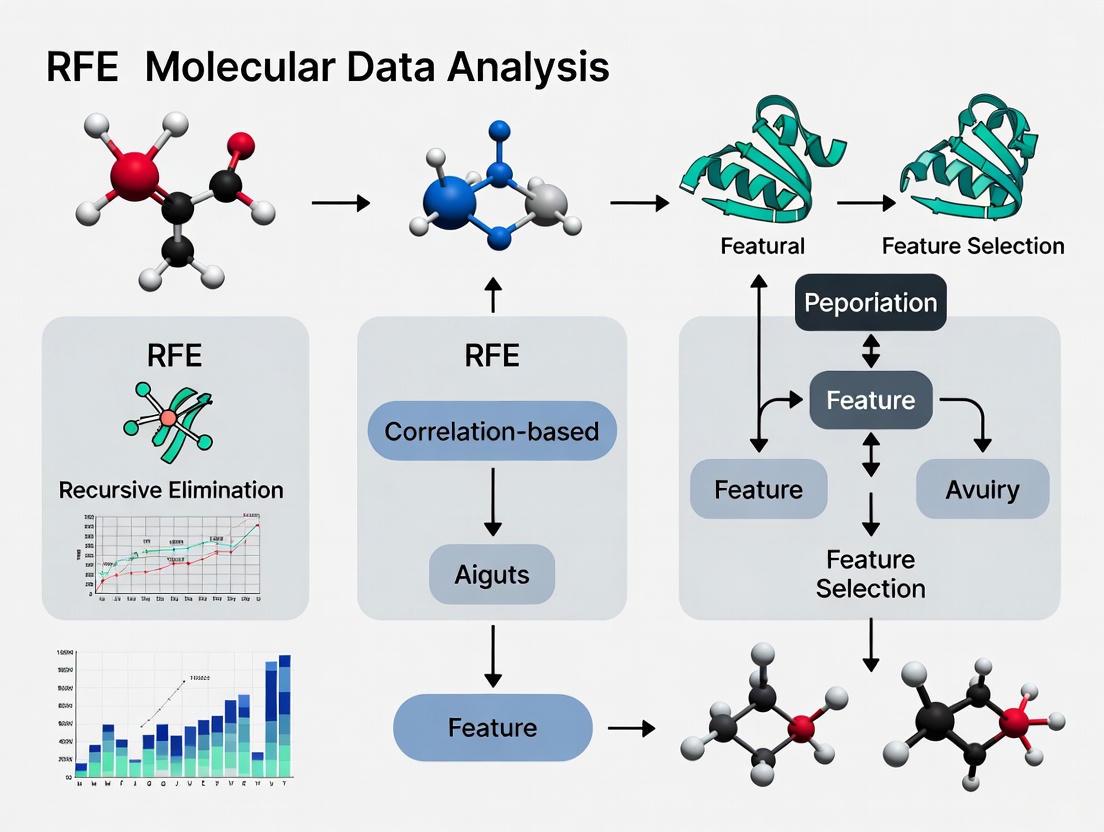
This article provides a comprehensive comparison of Recursive Feature Elimination (RFE) and correlation-based feature selection methods for high-dimensional molecular data.
RFE vs. Correlation-Based Feature Selection: A Practical Guide for Molecular Data Analysis in Biomedicine
Abstract
This article provides a comprehensive comparison of Recursive Feature Elimination (RFE) and correlation-based feature selection methods for high-dimensional molecular data. Tailored for researchers and drug development professionals, it explores the foundational principles, practical applications, and optimization strategies for both techniques. Drawing on recent research across cancer genomics, transcriptomics, and clinical diagnostics, the guide offers actionable insights for selecting the optimal feature selection approach to improve biomarker discovery, enhance classification accuracy, and ensure robust model performance in biomedical research.
Understanding Feature Selection: Core Concepts and Challenges in Molecular Data
Frequently Asked Questions (FAQs)
Q1: What makes high-dimensional omics data so problematic for standard machine learning models?
High-dimensional omics data, where the number of features (e.g., genes, proteins) vastly exceeds the number of samples, poses several critical problems. This situation, often called the "curse of dimensionality," leads to long computation times, increased risk of model overfitting, and decreased model performance as algorithms can be misled by irrelevant input features [1] [2]. Furthermore, models with too many features become difficult to interpret, which is a significant hurdle in scientific domains where understanding the underlying biology is essential [3].
Q2: How does feature selection differ from dimensionality reduction techniques like PCA?
Feature selection and dimensionality reduction are both used to simplify data but achieve this in fundamentally different ways. Feature selection chooses a subset of the original features (e.g., selecting 50 informative genes from 30,000), thereby preserving the original meaning and interpretability of the features [4] [5]. In contrast, dimensionality reduction (e.g., PCA) transforms the original features into a new, smaller set of features (components) that are linear combinations of the originals. This process makes the results harder to interpret in the context of the original biological variables [4] [3].
Q3: My model is overfitting on my transcriptomics data. How can feature selection help?
Overfitting occurs when a model learns the noise and spurious correlations in the training data instead of the underlying pattern. Feature selection directly combats this by removing irrelevant and redundant features [3]. By focusing the model on a smaller set of features that are truly related to the target variable (e.g., cell type or disease status), the model becomes less complex and less likely to overfit, leading to better performance on new, unseen data [2] [3].
Q4: When should I choose Recursive Feature Elimination (RFE) over a simpler correlation-based filter method?
The choice depends on your goal and the nature of your data. Correlation-based filter methods (e.g., selecting top features by Pearson correlation) are computationally fast and simple but evaluate each feature independently. They may miss complex interactions between features [6].
RFE is a more sophisticated wrapper method that considers feature interactions by recursively building models and removing the weakest features. It is often more effective for complex datasets where features are interdependent but is computationally more expensive [6] [2]. If interpretability and speed are paramount, a correlation filter may suffice. If maximizing predictive accuracy and capturing feature interactions is key, RFE is often the better choice.
Q5: What are the best practices for implementing RFE in Python for an omics dataset?
Best practices for using RFE include [6] [2]:
- Use a Pipeline: Always integrate RFE and your final model within a scikit-learn
Pipelineto avoid data leakage during cross-validation. - Tune the Number of Features: Do not guess the optimal number of features. Use
RFECV(RFE with cross-validation) to automatically find the best number. - Choose an Appropriate Estimator: Select a base estimator that provides feature importance scores (e.g., LinearSVC, Random Forests).
- Scale Your Data: If using a model sensitive to feature scales (like SVMs), ensure your data is standardized before applying RFE.
Troubleshooting Guides
Issue 1: Poor Classification Accuracy After Feature Selection
Problem: After applying feature selection, your model's accuracy is low or worse than using all features.
Solution Steps:
- Re-evaluate the Feature Selection Method: The chosen method or its parameters might be unsuitable. Try a different algorithm (e.g., switch from a univariate filter to RFE) or adjust key parameters like the number of features to select [5] [3].
- Check for Data Leakage: Ensure that feature selection was performed within each fold of the cross-validation loop, not on the entire dataset before splitting. Using a
Pipelineis crucial to prevent this [2]. - Verify the Estimator in RFE: If using RFE, the choice of estimator (e.g., SVM, Decision Tree) can significantly impact which features are selected. Experiment with different estimators to see if results improve [7] [2].
- Inspect the Selected Features: Perform a sanity check on the selected features. Do they include genes or proteins known from literature to be biologically relevant to your condition?
Issue 2: Inconsistent Feature Selection Across Different Datasets
Problem: When analyzing data from multiple sources (e.g., different labs or experimental protocols), the most significant features selected vary greatly between datasets [4].
Solution Steps:
- Account for Batch Effects: The significance of individual features can differ from source to source due to technical variation (batch effects). Apply appropriate batch effect correction methods before feature selection [4].
- Use a Source-Specific Selection Strategy: As proposed in research on single-cell transcriptomics, perform feature selection separately for each data source based on their intrinsic correlations, and then combine the results into a unified feature set for final modeling [4].
- Employ Robust Algorithms: Consider using feature selection algorithms designed to handle multi-source or multi-omics data that can account for these variations inherently [5].
Comparative Analysis: RFE vs. Correlation-Based Selection
The table below summarizes the core characteristics of these two prominent feature selection methods.
Table 1: Comparison between Recursive Feature Elimination and Correlation-based Feature Selection.
| Aspect | Recursive Feature Elimination (RFE) | Correlation-Based Filter |
|---|---|---|
| Core Principle | Iteratively removes the least important features based on model weights/importance [7] [6]. | Ranks features by their individual correlation with the target variable (e.g., Pearson, Mutual Information) [4] [8]. |
| Method Category | Wrapper Method [2] [3] | Filter Method [3] |
| Key Advantage | Considers feature interactions; often leads to higher predictive accuracy [6]. | Very fast and computationally efficient; simple to implement and interpret [3]. |
| Main Disadvantage | Computationally intensive; risk of overfitting to the model [6] [3]. | Ignores dependencies between features; may select redundant features [6]. |
| Interpretability | Good (retains original features) [7]. | Excellent (straightforward statistical measure) [4]. |
| Best Suited For | Complex datasets where feature interactions are suspected; when model accuracy is the primary goal [2]. | Large-scale initial screening; high-dimensional datasets where speed is critical [4] [1]. |
Experimental Protocols & Workflows
Protocol 1: Standard Workflow for Recursive Feature Elimination (RFE)
Application: Selecting a robust, non-redundant feature subset for classification/regression on omics data.
Methodology:
- Data Preprocessing: Clean, normalize, and scale the dataset (
X). - Initialize RFE: Use
sklearn.feature_selection.RFEorRFECV. - Fit the Selector: Fit the RFE object on the training data (
X_train,y_train). Crucially, this should be done inside a cross-validation loop or pipeline. - Model Training: Train your final model on the transformed training data (containing only the selected features).
- Validation: Evaluate the model on the held-out test set (
X_test).
The following diagram illustrates the iterative RFE process:
Protocol 2: Correlation-Based Feature Selection for Multi-Source Data
Application: Efficiently selecting features from transcriptomics or other omics data pooled from multiple sources (e.g., different experimental batches or labs) [4].
Methodology:
- Data Stratification: Split the dataset by its source.
- Per-Source Correlation Analysis: For each data source and each class (e.g., cell type), calculate the correlation (e.g., Pearson or Mutual Information) between every feature and the class label [4].
- Per-Source Feature Ranking: For each source, rank the features based on their correlation scores and select the top
kfeatures from each class. - Feature Set Union: Combine all features selected from every source and class into a single, unified set of significant features.
- Final Model Training: Use this unified feature set to train a final machine learning model.
This two-step workflow is depicted below:
The Scientist's Toolkit: Key Research Reagents & Solutions
Table 2: Essential computational tools and packages for feature selection in omics research.
| Tool / Solution | Function / Description | Application Context |
|---|---|---|
scikit-learn (RFE, RFECV) [7] [2] |
Provides the core implementation of the Recursive Feature Elimination algorithm in Python. | General-purpose feature selection for any omics data (genomics, proteomics). |
| MoSAIC [9] | An unsupervised, correlation-based feature selection framework specifically designed for molecular dynamics data. | Identifying key functional coordinates in biomolecular simulation data. |
| FSelector R Package [1] | Offers various algorithms for filtering attributes, including correlation, chi-squared, and information gain. | Statistical feature ranking within the R programming environment. |
| Caret R Package [1] | A comprehensive package for classification and regression training that streamlines the model building process, including feature selection. | Creating predictive models and wrapping feature selection within a unified workflow in R. |
| Mutual Information [4] [5] | A statistical measure that captures any kind of dependency (linear or non-linear) between variables, used as a powerful filtering criterion. | Feature selection when non-linear relationships between features and the target are suspected. |
| Variance Inflation Factor (VIF) [3] | A measure of multicollinearity among features in a regression model. Helps identify and remove redundant features. | Diagnosing and handling multicollinearity in linear models after an initial feature selection. |
Frequently Asked Questions (FAQs)
Q1: What is the fundamental difference between Pearson correlation and Mutual Information for feature selection?
Pearson correlation measures the strength and direction of a linear relationship between two quantitative variables. Mutual Information (MI), an information-theoretic measure, quantifies how much knowing the value of one variable reduces uncertainty about the other, and can capture non-linear and non-monotonic relationships [10]. While MI is more general, extensive benchmarking on biological data has shown that for many gene co-expression relationships, which are often linear or monotonic, a robust correlation measure like the biweight midcorrelation can outperform MI in yielding biologically meaningful results, such as co-expression modules with higher gene ontology enrichment [10].
Q2: In the context of a thesis comparing RFE and correlation-based methods, when should I prefer correlation-based filtering?
Correlation-based feature selection is often an excellent choice for a rapid and computationally efficient initial dimensionality reduction, especially with high-dimensional data. It is a filter method, independent of a classifier, which makes it fast. In contrast, Recursive Feature Elimination (RFE) is a wrapper method that uses a machine learning model's internal feature weights (like those from Random Forest or SVM) to recursively remove the least important features [11]. RFE can be more powerful but is computationally intensive and may be influenced by correlated predictors [11]. A hybrid approach, using correlation-based filtering to reduce the feature set before applying RFE, is a common and effective strategy to manage computational cost [12].
Q3: How do I handle highly correlated features when using a model like Random Forest?
Random Forest's performance can be impacted by correlated predictors, which can dilute the importance scores of individual causal variables [11]. The Random Forest-Recursive Feature Elimination (RF-RFE) algorithm was proposed to mitigate this. However, in high-dimensional data with many correlated variables, RF-RFE may also struggle to identify causal features [11]. In such cases, leveraging prior knowledge to guide selection or using a data transformation that accounts for feature similarity (like a mapping strategy with a Bray-Curtis similarity matrix) before applying RFE has been shown to improve feature stability significantly [13].
Q4: How can I ensure my selected biomarker list is stable and biologically interpretable?
Stability—the robustness of the selected features to variations in the dataset—is a key challenge. To improve stability:
- Incorporate Prior Knowledge: Use a mapping strategy that projects data into a new space using a feature similarity matrix (e.g., Bray-Curtis). This ensures that correlated and biologically similar features are treated as closer in the new space, leading to more stable selection [13].
- Employ Robust Metrics: For correlation, consider using robust measures like the biweight midcorrelation or Spearman's correlation, which are less sensitive to outliers than Pearson correlation [10].
- Validate with Biological Context: Use tools like Shapley Additive exPlanations (SHAP) to interpret the contribution of selected features in your model and validate their known biological roles [13].
Troubleshooting Guides
Problem 1: Poor Model Performance Despite a Large Number of Features
Symptoms: Your classifier (e.g., Random Forest or SVM) shows high accuracy on training data but poor performance on the test set or independent validation cohorts, indicating potential overfitting.
Diagnosis and Solutions:
| Step | Action | Rationale |
|---|---|---|
| 1 | Apply an initial correlation-based filter to reduce dimensionality. | High-dimensional data with many irrelevant features (noise) can easily lead to overfitted models. A quick pre-filtering step removes low-variance and non-informative features [4]. |
| 2 | Use a correlation coefficient threshold to select features most related to the outcome. | This creates a smaller, more relevant feature subset. For example, one study achieved a 73.3% reduction in features with a negligible performance drop by selecting tripeptides based on their Pearson correlation with the target [14]. |
| 3 | Compare the performance of your full model against the reduced model. | Use nested cross-validation for a robust evaluation. Studies have shown that a feature-selection stage prior to a final model like elastic net regression can lead to better-performing estimators than using elastic net alone [12]. |
Problem 2: Unstable Feature Selection Across Different Datasets
Symptoms: The list of top features (biomarkers) changes drastically when the analysis is run on different splits of your data or on similar datasets from different sources.
Diagnosis and Solutions:
| Step | Action | Rationale |
|---|---|---|
| 1 | Check for technical batch effects between datasets. | Features may be unstable because their relationship with the outcome is confounded by non-biological technical variation. |
| 2 | Implement a feature selection method that accounts for correlation structures. | Methods like DUBStepR use gene-gene correlations and a stepwise regression approach to identify a minimally redundant yet representative subset of features, which can improve stability [15]. |
| 3 | Apply a kernel-based data transformation before feature selection. | Research on microbiome data found that mapping features using the Bray-Curtis similarity matrix before applying Recursive Feature Elimination (RFE) significantly improved the stability of the selected biomarkers without sacrificing classification performance [13]. |
Problem 3: Choosing Between Pearson Correlation and Mutual Information
Symptoms: You are unsure which association measure to use for your biological data to find the most biologically relevant features.
Diagnosis and Solutions:
| Step | Action | Rationale |
|---|---|---|
| 1 | Start with a robust correlation measure. | For many biological relationships, a robust measure like the biweight midcorrelation (bicor) is sufficient and often leads to superior results in functional enrichment analyses compared to MI [10]. It is also computationally efficient. |
| 2 | If you suspect strong non-linear relationships, use Mutual Information or model-based alternatives. | If exploratory analysis suggests non-linearity, MI can be used. However, a powerful alternative is to use spline or polynomial regression models, which can explicitly model and test for non-linear associations while providing familiar statistical frameworks [10]. |
| 3 | Benchmark the methods for your specific goal. | Compare the functional enrichment (e.g., Gene Ontology terms) of gene modules or biomarker lists derived from correlation versus MI. The best method is the one that produces the most biologically interpretable results for your specific data and research question [10]. |
Experimental Protocols
Protocol 1: Correlation-Based Feature Pre-Filtering
This protocol details a method for reducing feature dimensionality using correlation coefficients, as applied in virus-host protein-protein interaction prediction [14].
1. Feature Extraction:
- From biological sequences (e.g., proteins), calculate the frequency of each possible tripeptide (or k-mer) based on a reduced amino acid alphabet (e.g., 7 clusters) [14].
- Normalize the frequency vectors for each sequence using min-max scaling over the range [0, 1].
- For a pair of interacting entities (e.g., virus and host proteins), concatenate their normalized feature vectors into a single, long vector.
2. Feature Selection:
- Calculate the Pearson correlation coefficient between each individual tripeptide feature and the binary outcome (e.g., interacting vs. non-interacting pairs).
- Rank all features based on the absolute value of their correlation coefficient.
- Apply a threshold (e.g., top 200 features, or a specific p-value cutoff) to select the most relevant features for downstream machine learning modeling.
Protocol 2: DUBStepR for Feature Selection in Single-Cell Data
This protocol outlines the DUBStepR (Determining the Underlying Basis using Stepwise Regression) workflow for identifying a minimally redundant feature set in single-cell transcriptomics data [15].
1. Calculate Gene-Gene Correlation Matrix:
- Compute the pairwise correlation matrix for all genes. DUBStepR leverages the fact that cell-type-specific marker genes tend to be highly correlated or anti-correlated with each other.
2. Stepwise Regression:
- Perform stepwise regression on the gene-gene correlation matrix to identify an initial set of "seed" genes.
- At each step, the gene that explains the largest amount of variance in the residual from the previous step is selected. This identifies a representative, minimally redundant subset of genes that span the major expression signatures in the dataset [15].
- Use the elbow point of the stepwise regression scree plot to determine the optimal number of seed genes.
3. Feature Set Expansion:
- Expand the seed gene set using a guilt-by-association approach. Iteratively add correlated genes from the initial candidate set to prioritize genes that strongly represent an expression signature.
- The expansion continues until an optimal number of feature genes is reached, as determined by a novel graph-based measure of cell aggregation called the Density Index (DI) [15].
Key Workflow Diagrams
Correlation vs. Mutual Information Selection Workflow
RFE vs. Correlation-Based Pre-Filtering
Research Reagent Solutions
The following table lists key computational tools and resources used in the experiments and methodologies cited in this guide.
| Item Name | Type | Function in Research |
|---|---|---|
| Bray-Curtis Similarity Matrix [13] | Computational Metric / Transformation | Used to map microbiome features into a new space where similar features are closer, significantly improving the stability of subsequent feature selection algorithms like RFE. |
| DUBStepR [15] | R Software Package | A correlation-based feature selection algorithm for single-cell RNA-seq data that uses stepwise regression and a Density Index to identify an optimal, minimally redundant set of features for clustering. |
| Biweight Midcorrelation (bicor) [10] | Robust Correlation Metric | A median-based correlation measure that is more robust to outliers than Pearson correlation. Benchmarking shows it often leads to biologically more meaningful co-expression modules than mutual information. |
| Random Forest-Recursive Feature Elimination (RF-RFE) [11] | Machine Learning Wrapper Algorithm | An algorithm that iteratively trains a Random Forest model and removes the least important features to account for correlated variables and identify a strong predictor subset. |
| SHAP (Shapley Additive exPlanations) [13] | Model Interpretation Framework | Used post-feature selection to interpret the output of machine learning models, explaining the contribution of each selected biomarker to individual predictions. |
| Reduced Amino Acid Alphabet [14] | Feature Engineering Technique | Groups the 20 standard amino acids into 7 clusters based on physicochemical properties, used to generate tripeptide composition features for sequence-based prediction tasks. |
This guide addresses common technical challenges when implementing Recursive Feature Elimination (RFE), a wrapper-style feature selection method that prioritizes predictive power by iteratively removing the least important features based on a model's internal importance metrics [6] [2]. For researchers in molecular data science, choosing between RFE and faster correlation-based filter methods (like Pearson correlation) is a critical decision. RFE often provides superior performance on complex biological datasets by accounting for feature interactions, albeit at a higher computational cost [6] [16]. The following sections provide troubleshooting and best practices for deploying RFE effectively in your research.
Troubleshooting Common RFE Implementation Issues
1. Problem: High Computational Time or Memory Usage
- Question: "My RFE process is too slow or runs out of memory, especially with high-dimensional omics data. What can I do?"
- Answer: This is a common issue with wrapper methods. Several strategies can help:
- Increase Step Size: Instead of removing one feature per iteration (
step=1), remove a percentage of features (e.g.,step=0.1to remove 10% of features each round) or a fixed numberfeature_numberto reduce the total number of model fits [17]. - Leverage Distributed Computing: For very large datasets, consider frameworks like the Synergistic Kruskal-RFE Selector and Distributed Multi-Kernel Classification Framework (SKR-DMKCF), which distributes computations across nodes, significantly improving speed and memory efficiency [18].
- Pre-Filtering: Use a fast filter method (e.g., correlation analysis) for initial dimensionality reduction before applying the more computationally intensive RFE [19].
- Increase Step Size: Instead of removing one feature per iteration (
2. Problem: Inconsistent or Suboptimal Feature Subsets
- Question: "The selected features change drastically with small changes in the dataset, or the final model performance is poor."
- Answer: Instability can arise from model overfitting or high variance in importance scores.
- Use Cross-Validation: Employ RFE with Cross-Validation (RFE-CV) to robustly estimate the optimal number of features. This runs RFE inside each cross-validation fold to find the feature set size that delivers the best and most stable performance [6] [17].
- Ensemble Methods: For high-dimensional, low-sample-size data (like microarrays), use ensemble RFE approaches. The WERFE algorithm, for example, aggregates results from multiple gene selection methods within an RFE framework, producing a more robust and compact gene subset [20]. Similarly, MCC-REFS uses an ensemble of classifiers with the Matthews Correlation Coefficient for a balanced evaluation, especially in imbalanced datasets [21].
- Check Algorithm Choice: Ensure the core estimator (e.g., SVM with linear kernel, Random Forest) is well-suited to your data. Tree-based models and linear SVMs are common, reliable choices [6] [2].
3. Problem: Handling Multicollinearity in Molecular Data
- Question: "My dataset has many correlated molecular features (e.g., genes in a pathway). How does RFE handle this compared to correlation-based selection?"
- Answer: This is a key differentiator between the methods.
- RFE Approach: RFE can handle multicollinearity to some degree, as the model-based importance score will reflect the contribution of correlated features. However, it may arbitrarily select one feature from a correlated group. Using a tree-based model can help, as it can reveal which feature in a correlated group is most consistently informative [6].
- Correlation-Based Limitation: Simple correlation analysis selects features based only on their individual relationship with the target, potentially choosing many redundant, highly correlated features that do not improve the model [19].
- Best Practice: If multicollinearity is a primary concern, consider combining RFE with a method like the Kruskal-RFE Selector, which integrates rank aggregation for more robust selection, or using Principal Component Analysis (PCA) before RFE, though this sacrifices the interpretability of original features [6] [18].
Frequently Asked Questions (FAQs)
Q1: When should I choose RFE over a faster correlation-based filter method for my molecular dataset? A: The choice involves a trade-off between predictive power and computational efficiency. Use RFE when your primary goal is maximizing predictive accuracy, your dataset has complex feature interactions, and you have sufficient computational resources. Use correlation-based filter methods for a very quick, initial pass for dimensionality reduction, when interpretability of simple univariate relationships is key, or when dealing with extremely large datasets where RFE is computationally prohibitive [6] [19] [16].
Q2: How do I determine the optimal number of features to select with RFE?
A: Manually setting the number of features (n_features_to_select) can be difficult. The best practice is to use RFE with Cross-Validation (RFE-CV), which automatically determines the number of features that yields the best cross-validated performance [6] [2] [17]. Scikit-learn provides the RFECV class for this purpose.
Q3: Can RFE be used with any machine learning algorithm? A: RFE requires the underlying estimator (algorithm) to provide a way to calculate feature importance scores. It works well with algorithms that have built-in importance measures, such as: * Support Vector Machines (with linear kernel) * Decision Trees and Random Forests * Gradient Boosting Machines (e.g., XGBoost, LightGBM) [2] [17] Algorithms without native importance support are not suitable for the standard RFE process.
Q4: How does RFE perform on highly imbalanced class data, common in medical diagnostics? A: Standard RFE can struggle with imbalanced data because the feature importance is based on the model's overall performance, which may be biased toward the majority class. For such cases, use variants designed for imbalance. The MCC-REFS method, which uses the Matthews Correlation Coefficient (MCC) as the selection criterion, is explicitly highlighted as effective for unbalanced class datasets [21].
Performance Comparison of Feature Selection Methods
The table below summarizes a benchmark study comparing RFE to other methods on multi-omics data, providing a quantitative basis for method selection [16].
Table 1: Benchmarking Feature Selection Methods on Multi-Omics Data
| Method Type | Method Name | Key Characteristics | Average AUC (RF Classifier) | Computational Cost |
|---|---|---|---|---|
| Wrapper | Recursive Feature Elimination (RFE) | Iteratively removes least important features | High | Very High |
| Filter | Minimum Redundancy Maximum Relevance (mRMR) | Selects features that are relevant to target and non-redundant | Very High | Medium |
| Embedded | Permutation Importance (RF-VI) | Uses Random Forest's internal importance scoring | Very High | Low |
| Embedded | Lasso (L1 regularization) | Performs feature selection during model fitting | High | Low |
| Filter | ReliefF | Weights features based on nearest neighbors | Low (for small feature sets) | Medium |
Experimental Protocol: Implementing RFE with Cross-Validation
This protocol outlines a robust workflow for using RFE in a molecular data classification task, such as cancer subtype identification from gene expression data.
1. Data Preprocessing:
* Scale Features: Standardize or normalize all features (e.g., using StandardScaler from scikit-learn), as model-based importance scores can be sensitive to feature scale [6].
* Address Imbalance: If present, apply techniques like SMOTE or use class weights in the underlying estimator [21].
2. Define the RFE-CV Process:
* Core Estimator: Choose an algorithm with feature importance (e.g., SVR(kernel='linear') or RandomForestClassifier()).
* RFE-CV Setup: Use RFECV in scikit-learn. Specify the estimator, cross-validation strategy (e.g., 5-fold or 10-fold), and a scoring metric appropriate for your problem (e.g., scoring='accuracy' or 'auc').
* Fit the Model: Execute the fit() method on your training data.
3. Validation and Final Model Training:
* Identify Optimal Features: After fitting, RFECV will indicate the optimal number of features and which features to select (support_ attribute).
* Train Final Model: Transform your dataset to include only the selected features. Train your final predictive model on this reduced dataset and evaluate its performance on a held-out test set.
RFE Workflow and Method Comparison
RFE Iterative Process: This diagram illustrates the core, iterative workflow of the Recursive Feature Elimination algorithm.
RFE vs. Correlation-Based Selection: A direct comparison of the fundamental characteristics of wrapper (RFE) and filter (correlation) feature selection methods.
The Scientist's Toolkit: Essential Research Reagents & Algorithms
Table 2: Key Computational Tools for RFE Experiments
| Item / Algorithm | Function / Application Context |
|---|---|
Scikit-learn (sklearn.feature_selection.RFE / RFECV) |
Primary Python library for implementing RFE and RFE with Cross-Validation [6] [2]. |
| Linear SVM | A core estimator often used with RFE; its weight coefficients provide feature importance [6] [20]. |
| Random Forest / XGBoost | Tree-based algorithms whose built-in importance metrics (Mean Decrease in Impurity) are effective for RFE [2] [17]. |
| Matthews Correlation Coefficient (MCC) | A balanced performance measure used as the selection criterion in RFE variants for imbalanced datasets [21]. |
| mRMR (Minimum Redundancy Maximum Relevance) | A high-performing filter method often used in benchmarks as a strong alternative to RFE [16]. |
| WERFE / MCC-REFS | Ensemble-based RFE algorithms designed for robustness in high-dimensional, low-sample-size bioinformatics data [21] [20]. |
Frequently Asked Questions
1. What is the core trade-off between interpretability and model performance? Interpretability is the ability to understand and explain a model's decision-making process, while performance refers to its predictive accuracy. Simpler models like linear regression are highly interpretable but may lack complexity to capture intricate patterns. Complex models like neural networks can achieve high performance but act as "black boxes," making it difficult to understand why a prediction was made [22] [23].
2. When should I prioritize an interpretable model in molecular research? Prioritize interpretability in high-stakes applications where understanding the reasoning is critical. In molecular research, this includes:
- Biomarker Discovery: Identifying specific taxa or genes responsible for classifying disease states requires clear feature importance [13].
- Drug Development: Understanding which biological features a model uses for prediction is crucial for target identification and regulatory approval [23].
- Clinical Diagnostics: Providing explanations for a diagnosis, such as which microbial signatures influenced the prediction, builds trust and accountability [24] [23].
3. When can I justify using a higher-performance, less interpretable model? A higher-performance black-box model can be justified when:
- The primary goal is pure predictive accuracy for screening or prioritization.
- The model's output can be validated and trusted through extensive testing, even if its internal workings are complex [22].
- You use post-hoc explanation tools like SHAP to provide insights into the model's predictions after the fact [23].
4. How does feature selection impact this trade-off? Feature selection itself can improve both interpretability and performance. By reducing the number of features to the most relevant ones, you create a simpler model that is easier to interpret. This also lowers the risk of overfitting and reduces computational cost, which can enhance performance on new data [13] [25].
5. What are common pitfalls when using RFE on high-dimensional molecular data?
- Correlated Predictors: RFE can be negatively impacted by many correlated variables, which may cause it to discard causally important features [11].
- Instability: The feature selection process can be unstable, meaning small changes in the data can lead to different sets of selected features [13].
- Computational Demand: Running RFE on high-dimensional data (e.g., hundreds of thousands of features) is computationally intensive and requires significant memory and processing power [26] [11].
Troubleshooting Guides
Problem: Unstable Feature Selection with RFE
Symptom: The list of top selected features changes significantly between different runs or data splits.
| Solution | Description | Key Reference |
|---|---|---|
| Apply Data Transformation | Use a kernel-based data transformation (e.g., with a Bray–Curtis similarity matrix) before RFE. This projects features into a new space where correlated features are mapped closer together, improving stability. | [13] |
| Embed Prior Knowledge | Incorporate external data or domain knowledge to compute feature similarity, which can guide the selection process toward more robust biomarkers. | [13] |
| Use Bootstrap Embedding | Perform RFE within a bootstrap resampling framework to better assess the robustness of features across multiple data subsets. | [13] |
Problem: Poor Model Performance After Feature Selection
Symptom: The model's accuracy, precision, or other performance metrics drop after feature selection is applied.
| Solution | Description | Key Reference |
|---|---|---|
| Check for Data Leakage | Ensure that no information from the test set was used during the feature selection process. Preprocessing and feature selection should be fit only on the training data. | [25] |
| Re-evaluate Feature Set Size | The number of features selected might be suboptimal. Use cross-validation to tune the number of features and find a better trade-off between simplicity and performance. | [13] |
| Try a Correlation-Based Method | If using RFE, consider switching to a correlation-based feature selection method like DUBStepR, which leverages gene-gene correlations and may perform better with certain data structures. | [15] |
Problem: Model is Accurate but Unexplainable
Symptom: Your model (e.g., a neural network) has high predictive performance, but you cannot explain its decisions to stakeholders or regulators.
| Solution | Description | Key Reference |
|---|---|---|
| Use Explainability Tools | Apply post-hoc explanation methods such as SHAP (SHapley Additive exPlanations) to attribute the model's output to its input features for each prediction. | [23] |
| Create a Composite Model | Build a pipeline that uses a high-performance model for prediction and an inherently interpretable model (like logistic regression) on a reduced feature set to provide approximate explanations. | [24] |
| Quantify Interpretability | Use a framework like the Composite Interpretability (CI) score to systematically evaluate and compare models based on simplicity, transparency, and explainability, helping to justify your choice. | [24] |
Experimental Protocols & Data
Detailed Methodology: ML-Based RFE for Microbiome Biomarker Discovery
This protocol is adapted from a study classifying inflammatory bowel disease (IBD) using gut microbiome data [13].
Data Preparation:
- Data Source: Merge multiple abundance matrices from public repositories (e.g., Qiita). The example study used 1,569 samples (702 IBD patients, 867 healthy controls).
- Preprocessing: Aggregate taxa at the species (283 taxa) or genus (220 taxa) level. Normalize the data.
Stability-Enhancing Transformation:
- Compute the Bray–Curtis similarity matrix between samples.
- Use this matrix to map the original data into a new feature space, which accounts for correlation between taxa and improves the stability of subsequent feature selection.
Recursive Feature Elimination (RFE):
- Wrapper Setup: Use a machine learning algorithm (the study found Multilayer Perceptron best for large feature sets, and Random Forest for small sets) as the estimator for RFE.
- Process: Iteratively train the model, rank features by importance, and remove the least important ones. This is often done within a bootstrap embedding (e.g., 100 bootstraps) for robustness.
- Output: A ranked list of stable biomarkers.
Validation:
- Train a final model on the selected features.
- Evaluate classification performance on a held-out test set and an external ensemble dataset to ensure generalizability.
- Use Shapley Additive exPlanations (SHAP) to interpret the role and impact of each selected biomarker.
Quantitative Comparison of Feature Selection Methods
The table below summarizes findings from benchmarking studies on high-dimensional biological data [13] [15] [11].
| Method | Core Principle | Strengths | Weaknesses | Best-Suited Data Context |
|---|---|---|---|---|
| RFE | Iteratively removes the least important features based on a model's feature importance. | Can improve performance by removing noise; works with any ML model. | Stability can be low; hindered by highly correlated features; computationally demanding. | Smaller datasets with fewer, less correlated predictors. |
| Correlation-Based (DUBStepR) | Selects features based on gene-gene correlations and a density index to optimize cluster separation. | High stability; outperforms other methods in cluster separation; robustly identifies marker genes. | Performance benchmarked mainly for clustering tasks; may be less straightforward for classification. | Large single-cell RNA-seq datasets for clustering; data with block-like correlation structures. |
| Highly Variable Genes (HVG) | Selects genes with variation across cells that exceeds a technical noise model. | Simple and fast; widely used in single-cell analysis. | Inconsistent performance across datasets; ignores correlations between genes. | A default, fast method for initial dimensionality reduction in single-cell analysis. |
The Scientist's Toolkit
Research Reagent Solutions
| Item | Function in Analysis |
|---|---|
Scikit-learn (sklearn.feature_selection.RFE) |
A Python library that provides the standard implementation of Recursive Feature Elimination, allowing integration with various estimators [7]. |
Caret R Package (rfe function) |
An R package that provides a unified interface for performing RFE with various models, including random forests, with built-in cross-validation [26]. |
| SHAP (SHapley Additive exPlanations) | A unified game theory-based framework to explain the output of any machine learning model, crucial for interpreting black-box models [13] [23]. |
| DUBStepR | An R package for correlation-based feature selection designed for single-cell data, but potentially applicable to other molecular data types [15]. |
| Bray–Curtis Similarity | A statistic used to quantify the compositional similarity between two different sites, used in microbiome studies to create a stability-enhancing mapping for RFE [13]. |
Workflow Diagrams
Diagram 1: Decision Workflow for Feature Selection Method
Diagram 2: Enhanced RFE Workflow for Stability
FAQs and Troubleshooting Guides
FAQ 1: How do RFE and correlation-based methods compare for high-dimensional molecular data?
Answer: The choice between Recursive Feature Elimination (RFE) and correlation-based feature selection involves a direct trade-off between computational cost and selection robustness. The table below summarizes their key characteristics:
| Feature | RFE | Correlation-based |
|---|---|---|
| Core Mechanism | Wrapper method; recursively removes least important features using a model [7] [2]. | Filter method; ranks features by statistical measures (e.g., Pearson, Mutual Information) with the target [4]. |
| Handling Feature Interactions | Excellent; uses a model that can capture interactions between features [2]. | Poor; typically evaluates each feature independently, missing interactions [27]. |
| Computational Cost | High; requires training a model multiple times [27] [2]. | Low; relies on fast statistical computations [27] [4]. |
| Risk of Overfitting | Moderate; can be prone to overfitting, especially with complex base models [2]. | Lower; model-agnostic approach reduces risk of learning algorithm-specific noise [28]. |
| Performance on Imbalanced Molecular Data | Good, especially with balanced metrics. MCC-REFS uses Matthews Correlation Coefficient for better performance on imbalanced data [21]. | Variable; may favor majority class unless paired with sampling techniques [27]. |
| Best For | Identifying small, highly predictive feature sets where computational resources are sufficient [21]. | Rapidly reducing feature space on very large datasets as a first step [4]. |
FAQ 2: My model performs well on training data but fails on new data. Is this overfitting, and how can feature selection help?
Answer: Yes, this is a classic sign of overfitting, where a model learns noise and spurious patterns from the training data instead of the underlying biological signal [28] [29].
Feature selection reduces overfitting by:
- Reducing Model Complexity: A model with fewer parameters is less capable of memorizing noise [28] [29].
- Eliminating Irrelevant Features: By removing non-informative genes/variables, you reduce the chance the model will find false correlations [28].
Troubleshooting Guide:
- If you suspect overfitting: Compare your model's performance on training vs. validation/hold-out test sets. A significant drop in performance on the test set indicates overfitting [29].
- Solution with RFE: Ensure you are using a simple base estimator (e.g., Linear SVM) for the RFE process, or combine RFE with strong cross-validation [7] [2].
- Solution with Correlation: Use mutual information instead of Pearson correlation to capture non-linear relationships that may be more biologically relevant [4].
FAQ 3: My dataset has severe class imbalance. How does this impact feature selection?
Answer: Class imbalance can cause both RFE and correlation-based methods to bias feature selection toward the majority class, degrading model performance for the rare class (e.g., a rare cell type or disease subtype) [27].
Troubleshooting Guide:
- For RFE: Use a feature selection method designed for imbalance. The MCC-REFS algorithm, which uses the Matthews Correlation Coefficient (MCC) as its core metric, has been shown to outperform other methods on imbalanced bioinformatics datasets [21].
- For Correlation-based Methods: Combine them with data sampling techniques. Research has shown that applying the Synthetic Minority Oversampling Technique (SMOTE) before feature selection can significantly improve the Area Under the Curve (AUC) for imbalanced datasets [27].
- General Practice: Always use evaluation metrics that are robust to imbalance (e.g., MCC, F1-score, Precision-Recall AUC) instead of accuracy when tuning the feature selection process [21] [27].
FAQ 4: The computational cost of my feature selection is too high. What can I do?
Answer: High computational cost is a common challenge with wrapper methods like RFE on large molecular datasets (e.g., 30,000+ genes) [4].
Troubleshooting Guide:
- Strategy 1: Hybrid Approach. Use a fast filter method (like correlation) for an initial, aggressive feature reduction. Then, apply a more computationally expensive method like RFE on the shortlisted features [27] [4].
- Strategy 2: Optimize RFE Parameters. Increase the
stepparameter in RFE to remove a larger percentage of features in each iteration, significantly reducing the number of model training cycles [7]. - Strategy 3: Leverage Embedded Methods. Use models with built-in feature selection, such as Lasso regression or Random Forests. The
SelectFromModelfunction in scikit-learn can use these for efficient selection [28] [27].
Experimental Protocols
Protocol 1: Implementing a Robust RFE Workflow for Molecular Data
This protocol is designed to mitigate overfitting while handling high-dimensional data.
1. Problem Formulation:
- Define your predictive target (e.g., cancer vs. normal, cell type classification).
- Prepare your data matrix where rows are samples and columns are molecular features (e.g., gene expression levels).
2. Initial Setup and Preprocessing:
- Split Data: Divide data into training, validation, and test sets. The test set should only be used for the final evaluation. [29]
- Normalize Data: Apply appropriate normalization (e.g., Z-score) to the training data and use the same parameters to transform the validation/test sets.
3. Configure and Execute RFE with Cross-Validation:
- Create a Pipeline: Combine RFE and a classifier within a
sklearn.pipeline.Pipelineto prevent data leakage [2]. - Choose Base Estimator: Select an estimator that provides feature importance (e.g.,
DecisionTreeClassifier, Linear SVM) [7] [2]. - Determine Number of Features: Use
RFECV(RFE with cross-validation) to automatically find the optimal number of features, or perform a grid search forn_features_to_select[7].
4. Validation and Final Model Training:
- Validate on Hold-out Set: Assess the performance of the model with the selected features on the validation set.
- Final Training: Once satisfied, train the final model on the entire training set (training + validation) using the selected feature subset.
- Final Evaluation: Report the final performance on the untouched test set [29].
Protocol 2: A Two-Step Correlation-Based Selection for Multi-Source Data
This protocol is particularly useful for large-scale transcriptomics data integrated from multiple sources, as it accounts for source-specific biases [4].
1. Data Preparation:
- Organize your dataset by source. For example, if combining data from GEO, 10X, and in-house platforms, keep them as separate logical groups.
2. Step 1: Intra-Source Feature Selection:
- For each data source individually:
- Calculate Correlation: For each feature, compute its correlation with the target variable. Use Pearson's correlation for linear relationships or Mutual Information for non-linear relationships [4].
- Select Top Features: Within each source and for each class (if multi-class), retain the top k most correlated features. The value of k can be a fixed number or a percentile.
3. Step 2: Inter-Source Feature Aggregation:
- Union of Features: Combine all features selected from any source in Step 1 into a final global feature set. This ensures features that are predictive in specific contexts are retained [4].
4. Model Training and Evaluation:
- Create Unified Dataset: Extract the global feature set from all samples across all sources.
- Train and Evaluate: Proceed with model training and evaluation using standard practices.
The Scientist's Toolkit: Essential Research Reagents & Computational Solutions
| Item | Function/Brief Explanation | Example/Note |
|---|---|---|
| scikit-learn Library | Provides standardized implementations of RFE, correlation-based selection, and various models for a reproducible workflow [7] [28]. | Use sklearn.feature_selection.RFE and sklearn.feature_selection.SelectKBest. |
| Matthews Correlation Coefficient (MCC) | A robust metric for feature selection and evaluation on imbalanced binary and multi-class datasets; more informative than accuracy [21]. | Core component of the MCC-REFS method [21]. |
| Synthetic Minority Oversampling Technique (SMOTE) | A sampling technique to generate synthetic samples for the minority class, used alongside feature selection to handle imbalance [27]. | Applying SMOTE before feature selection improved AUC by up to 33.7% in one study [27]. |
| Mutual Information | A filter-based feature selection metric that can capture non-linear relationships between features and the target, unlike Pearson correlation [4]. | Crucial for finding functional dependencies in gene expression data [4]. |
| Pearson's Correlation Coefficient | A fast, linear statistical measure to quantify the association between a feature and a continuous target or a binary class [4]. | Computed per feature; scale-invariant [4]. |
| Pipeline Utility | A software tool to chain data preprocessing, feature selection, and model training to prevent data leakage and ensure rigorous validation [2]. | Available in sklearn.pipeline.Pipeline. |
Practical Implementation: Applying RFE and Correlation Methods to Real-World Data
Step-by-Step Guide to Correlation-Based Feature Selection for Transcriptomics Data
Frequently Asked Questions (FAQs)
Q1: Why should I use correlation-based feature selection over Recursive Feature Elimination (RFE) for my transcriptomics data?
Correlation-based feature selection is a filter method that is generally faster and less computationally expensive than wrapper methods like RFE because it doesn't require training a model multiple times [3]. It helps minimize redundancy by selecting features that are highly correlated with the target but have low correlation with each other, which can lead to more interpretable models, a key concern in biological research [30]. RFE, while powerful, can be computationally intensive and may overfit to the specific model used during the selection process [16].
Q2: I'm working with single-cell RNA sequencing (scRNA-seq) data from multiple sources. Why does my feature selection performance vary, and how can I improve it?
The significance of individual features (genes) can differ greatly from source to source due to differences in sample processing, technical conditions, and biological variation [4]. A simple but effective strategy is to perform feature selection per source before combining results. First, select the most significant features for each data source and cell type separately using correlation coefficients or mutual information. Then, combine these source-specific features into a single set for your final model [4].
Q3: My clustering results seem to erroneously subdivide a homogeneous cell population. How can I prevent this false discovery?
This is a known challenge where some feature selection methods fail the "null-dataset" test. To address this, consider using anti-correlation-based feature selection [31]. This method identifies genes with a significant excess of negative correlations with other genes. In a truly homogeneous population, these anti-correlation patterns disappear, and the algorithm correctly identifies no valid features for sub-clustering, thus preventing false subdivisions [31].
Q4: How many features should I ultimately select for my analysis?
The optimal number depends on your dataset and biological question. For some tasks, a few hundred well-chosen features can be sufficient [32] [15]. It is good practice to evaluate the stability of your downstream results (e.g., clustering accuracy or classification performance) across a range of feature set sizes. Benchmarking studies suggest that methods like minimum Redundancy Maximum Relevance (mRMR) can achieve strong performance with relatively few features (e.g., 10-100) [16].
Troubleshooting Guides
Problem: Poor Model Performance After Feature Selection
- Potential Cause 1: High Redundancy in Selected Features. Your feature set may contain many highly correlated genes, providing duplicate information.
- Solution: Incorporate a redundancy check. Use the
findCorrelationfunction from thecaretR package with a high cutoff (e.g., 0.75) to remove features that are highly correlated with others [33].
- Solution: Incorporate a redundancy check. Use the
- Potential Cause 2: Exclusion of Weak but Informative Features.
- Solution: Avoid relying on a single metric. Combine correlation with other filter methods, such as mutual information, which can capture non-linear relationships between genes and the target variable [4].
Problem: Inconsistent Results Across Different Datasets or Batches
- Potential Cause: Batch effects or source-specific technical variation are dominating the biological signal.
- Solution: Implement a multi-source feature selection strategy. Perform feature selection individually on each batch or data source, then integrate the results by taking the union of the top features from each source. This ensures selected features are robust across different conditions [4].
Problem: Feature Selection Leads to Over-subclustering
- Potential Cause: The feature selection method is sensitive to technical noise rather than true biological variation, especially in single-cell data.
- Solution: Apply an anti-correlation-based feature selection algorithm. This method is specifically designed to prevent the false discovery of subpopulations in homogeneous data by leveraging the principle that true cell-type marker genes often exhibit mutual exclusivity [31].
Experimental Protocols & Data Presentation
Protocol: A Two-Step Correlation-Based Feature Selection for Multi-Source Transcriptomics Data This protocol is adapted from a study on single-cell transcriptomics data from multiple sources [4].
- Data Preprocessing: Normalize your transcriptomics data (e.g., counts per million for bulk RNA-seq, standard normalization for scRNA-seq) separately for each data source.
- Step 1 - Per-Source Feature Selection:
- For each data source and each cell type or phenotype of interest, calculate the correlation (e.g., Pearson for regression, mutual information for classification) between each gene and the target label.
- For each source, rank the genes based on their correlation strength and select the top k genes (e.g., top 500) from this ranked list.
- Step 2 - Feature Set Integration:
- Aggregate all the genes selected from the individual sources in Step 1 into a unified set of candidate features.
- This final set is used for downstream training of your classification or clustering model.
Protocol: Implementing Correlation-based Feature Selection with a Redundancy Check This is a general protocol for a single dataset, applicable in programming environments like R [33] [30].
- Calculate Correlation Matrix: Compute the correlation matrix for all features (genes) and the target variable.
- Rank Features: Rank the features based on the absolute value of their correlation with the target variable in descending order.
- Select Top Features: Choose a threshold (e.g., top 100 features) or a correlation coefficient cutoff.
- Remove Redundant Features: On the selected top features, apply a redundancy filter. Identify and remove features that have a correlation higher than a set cutoff (e.g., 0.75) with another, more highly-ranked feature.
Performance Comparison of Feature Selection Methods The table below summarizes findings from benchmark studies on omics data [16].
| Method | Type | Key Strength | Computational Cost | Note on Transcriptomics |
|---|---|---|---|---|
| mRMR | Filter | Selects features with high relevance and low redundancy [16]. | Medium | Often a top performer with few features [16]. |
| RF-VI (Permutation Importance) | Embedded | Model-specific, often high accuracy [16]. | Low | Leverages Random Forest; robust. |
| Lasso | Embedded | Performs feature selection as part of model fitting [34]. | Low | Tends to select more features than mRMR/RF-VI [16]. |
| RFE | Wrapper | Can yield high-performing feature sets [16]. | Very High | Prone to overfitting; computationally expensive [3] [16]. |
| Anti-correlation | Filter | Prevents false sub-clustering in single-cell data [31]. | Medium | Specifically addresses a key pain point in scRNA-seq. |
Key Reagent Solutions for Transcriptomics Feature Selection
| Item | Function in Analysis |
|---|---|
| Normalized Transcriptomics Matrix | The primary input data (e.g., gene-by-cell matrix). Normalization is critical for valid correlation calculations. |
| Correlation Metric (Pearson/Spearman) | Measures linear (Pearson) or monotonic (Spearman) relationships between a gene and the target variable. |
| Mutual Information Metric | Measures linear and non-linear dependencies between variables, useful for classification tasks [4] [30]. |
| High-Performance Computing (HPC) Cluster | Essential for processing large transcriptomics datasets with thousands of features and samples [4]. |
| DUBStepR Algorithm | A scalable, correlation-based feature selection method designed for accurately clustering single-cell data [15]. |
Methodology Visualization
Correlation-Based Feature Selection Workflow
RFE vs. Correlation-Based Feature Selection
Troubleshooting Guides and FAQs
FAQ 1: Why is my RFE process extremely slow when using tree-based models like Random Forest or XGBoost on my high-dimensional molecular dataset?
Answer: This is a common issue stemming from the inherent computational complexity of wrapper methods like RFE when combined with ensemble classifiers.
Detailed Explanation: Recursive Feature Elimination (RFE) is a greedy wrapper method that iteratively constructs models and removes the least important features [35]. When wrapped around computationally intensive models like Random Forest or XGBoost, the process can become prohibitively slow on high-dimensional data. Empirical evaluations have shown that RFE wrapped with tree-based models such as Random Forest and XGBoost, while yielding strong predictive performance, incurs high computational costs and tends to retain large feature sets [35].
Solutions:
- Implement Enhanced RFE: Consider using a variant known as Enhanced RFE, which achieves substantial feature reduction with only marginal accuracy loss, offering a favorable balance between efficiency and performance [35].
- Use a Hybrid Approach: For an initial rapid reduction of the feature space, employ a fast filter method (like correlation-based selection) before applying RFE with your chosen classifier [35].
- Leverage Computational Optimizations: Utilize hardware acceleration (GPUs) and ensure you are using optimized libraries (like scikit-learn) that can leverage parallel processing for tree-based algorithms.
FAQ 2: My RFE results are unstable between runs, selecting different feature subsets each time. How can I improve reproducibility?
Answer: Instability in feature selection, especially in the presence of highly correlated features, is a recognized challenge.
Detailed Explanation: Most standard feature selection methods focus on predictive accuracy, and their performance can degrade in the presence of correlated predictors [36]. In molecular data, features are often highly correlated (e.g., gene expressions from the same pathway). In such "tangled" feature spaces, different features can be interchangeably selected across runs, leading to instability [36].
Solutions:
- Stability Selection Framework: Implement a framework like
TangledFeatures, which identifies representative features from groups of highly correlated predictors [36]. This involves:- Clustering: Grouping features based on pairwise correlations above a defined threshold.
- Selection: Using an ensemble-based stability procedure to pick a single, robust representative feature from each cluster.
- Refinement: Applying a final RFE step to the set of cluster representatives [36].
- Ensemble Feature Selection: Use multiple algorithms to select features and take the union of the selected subsets. For example, the Union with RFE (U-RFE) framework uses LR, SVM, and RF as base estimators within RFE and then performs a union analysis of the resulting subsets to determine a final, more robust feature set [37].
FAQ 3: I have a limited sample size for my molecular study. Is RFE still a suitable feature selection method?
Answer: Yes, RFE can be effectively applied to small sample sizes, but it requires specific methodological enhancements to prevent overfitting.
Detailed Explanation: Small sample sizes are a common challenge in molecular research (e.g., patient cohort studies). Traditional RFE may overfit in such scenarios. However, an improved Logistic Regression model combined with k-fold cross-validation and RFE has been successfully applied to a small sample size (n=100) to select important features [38]. The k-fold cross-validation ensures the model makes full use of the limited data for reliable performance estimation [38].
Solutions:
- Integrate Cross-Validation: Embed k-fold cross-validation directly into the RFE process. This helps in obtaining a more reliable estimate of feature importance and model performance at each iteration [38].
- Choose Simpler Base Classifiers: For very small sample sizes, using a simpler model like Logistic Regression as the base estimator for RFE can be more stable and less prone to overfitting than complex ensemble methods [38].
FAQ 4: How do I choose the best base classifier (SVM, RF, XGBoost) for RFE in the context of molecular data?
Answer: The choice involves a trade-off between predictive performance, computational cost, and the interpretability of the final feature set.
Detailed Explanation: Different classifiers have different strengths when used within RFE. The table below summarizes empirical findings from benchmarking studies [35] [37].
Performance Comparison of Classifiers within RFE
| Classifier | Predictive Performance | Computational Cost | Feature Set Size | Key Characteristics |
|---|---|---|---|---|
| SVM | Good performance in various tasks [37]. | Moderate | Varies | Effective in high-dimensional spaces; feature importance is based on model coefficients [39]. |
| Random Forest (RF) | Strong performance, captures complex interactions [35]. | High | Tends to retain larger feature sets [35] | Robust to noise; provides intrinsic feature importance measures [39]. |
| XGBoost | Strong performance, slightly outperforms RF in some cases [37]. | High | Tends to retain larger feature sets [35] | Handles complex non-linear relationships; includes regularization to prevent overfitting [39]. |
| Logistic Regression (LR) | Good performance, especially with enhanced RFE for small samples [38]. | Low | Can achieve substantial reduction [38] | Simple, efficient, highly interpretable [38]. |
Decision Guide:
- For high interpretability and efficiency with small-to-medium datasets, consider Logistic Regression or SVM.
- For maximum predictive accuracy and you have sufficient computational resources, use Random Forest or XGBoost.
- For a balanced approach between performance and feature set size, explore Enhanced RFE variants [35].
Experimental Protocols for Key RFE Experiments
Protocol 1: Benchmarking RFE Variants on a Molecular Classification Task
This protocol outlines a comparative evaluation of RFE with different classifiers, suitable for a thesis chapter comparing feature selection methods.
1. Objective: To evaluate and compare the performance of RFE when implemented with SVM, Random Forest, and XGBoost on a high-dimensional molecular dataset (e.g., gene expression or proteomics data).
2. Materials and Dataset:
- A curated molecular dataset (e.g., from TCGA for colorectal cancer classification [37]).
- Computing environment with Python and libraries: scikit-learn, XGBoost, pandas.
3. Methodology:
- Data Preprocessing: Handle missing values, normalize or standardize features, and encode the target variable.
- Model Training & Feature Selection:
- Initialize the three classifiers (SVM, RF, XGBoost) with their recommended default or tuned hyperparameters.
- For each classifier, create an
RFEobject. Specify the number of features to select or use automatic selection based on cross-validation. - Fit the
RFEobject on the training data. This process will recursively train the model and eliminate the least important features. - Extract the final selected feature subset from each
RFEinstance.
- Performance Evaluation:
- Train a final model on the training set using only the features selected by each RFE variant.
- Evaluate the model on the held-out test set using metrics such as Accuracy, F1-score (weighted for imbalanced data), and Matthews Correlation Coefficient (MCC) [37].
- Analysis:
- Compare the classification performance of the three RFE-classifier combinations.
- Compare the size and composition of the feature subsets selected by each method.
- Record and compare the computational time for each RFE process.
Protocol 2: Implementing a Union-RFE (U-RFE) Framework for Robust Feature Selection
This protocol is for a more advanced experiment, demonstrating how to combine the strengths of multiple classifiers to achieve a more stable feature set.
1. Objective: To implement the U-RFE framework to select a union feature set that improves classification performance for multi-category outcomes on a complex dataset [37].
2. Materials and Dataset:
- A dataset with clinical and omics data, such as the TCGA dataset for colorectal cancer with multi-category causes of death [37].
3. Methodology:
- Stage 1: Parallel RFE with Multiple Estimators
- Use three different base estimators (e.g., LR, SVM, RF) to run RFE independently on the dataset.
- From each RFE run, obtain a feature subset containing the top N features (e.g., top 50).
- Stage 2: Union Analysis
- Perform a union operation on the three feature subsets obtained from Stage 1. The resulting union set may contain more than N features.
- This final union feature set combines the advantages of the different algorithms [37].
- Stage 3: Final Model Building and Evaluation
- Train various classification algorithms (LR, SVM, RF, XGBoost, Stacking) using the union feature set.
- Evaluate and compare the performance of all models to identify the best performer for your specific task [37].
Workflow and Relationship Diagrams
RFE with Single Classifier Workflow
Union RFE (U-RFE) Framework Workflow
The Scientist's Toolkit: Research Reagent Solutions
Table: Essential Computational Tools for RFE Experiments in Molecular Research
| Item | Function | Example Application in RFE |
|---|---|---|
| Scikit-learn Library | A core machine learning library in Python providing implementations for SVM, Random Forest, and the RFE class. |
Used to create the RFE wrapper around any of the supported classifiers and manage the entire recursive elimination process [35]. |
| XGBoost Library | An optimized library for gradient boosting, providing the XGBClassifier. | Serves as a powerful base estimator for RFE to capture complex, non-linear relationships in molecular data [39] [37]. |
| Pandas & NumPy | Libraries for data manipulation and numerical computations. | Used for loading, cleaning, and preprocessing the molecular dataset (e.g., handling missing values, normalization) before applying RFE. |
| SHAP (SHapley Additive exPlanations) | A game theory-based method to explain the output of any machine learning model. | Used for post-hoc interpretation of the RFE-selected model, providing consistent and reproducible feature importance scores, which is crucial for biological insight [36]. |
| Stability Selection Algorithms | Frameworks (e.g., TangledFeatures) designed to select robust features from highly correlated spaces. |
Applied to the results of RFE or in conjunction with it to improve the stability and reproducibility of the selected molecular features (e.g., genes, proteins) [36]. |
Frequently Asked Questions (FAQs)
FAQ 1: What is the key innovation of the Synergistic Kruskal-RFE Selector? The Synergistic Kruskal-RFE Selector introduces a novel feature selection method that combines the Kruskal-Wallis test with Recursive Feature Elimination (RFE). This hybrid approach efficiently handles high-dimensional medical datasets by leveraging the Kruskal-Wallis test's ability to evaluate feature importance without assuming data normality, followed by recursive elimination to select the most informative features. This synergy reduces dimensionality while preserving critical characteristics, achieving an average feature reduction ratio of 89% [18].
FAQ 2: How does the Kruskal-Wallis test improve feature selection in RFE? The Kruskal-Wallis test is a non-parametric statistical method used to determine if there are statistically significant differences between two or more groups of an independent variable. When used within RFE, it serves as a robust feature ranking criterion, especially effective for high-dimensional and low-sample size data. It does not assume a normal distribution, making it suitable for various data types, including omics data, and performs well with imbalanced datasets common in molecular research [40] [41].
FAQ 3: My model performance plateaued after feature selection. What could be wrong? Performance plateaus can often be traced to a misordering of features during the selection process. This occurs when the feature selection metric (e.g., Kruskal-Wallis) ranks a feature differently than how the final classification model (evaluated by accuracy) would. This is a known challenge when using filter methods like Kruskal-Wallis with wrapper or embedded models. Ensure that the feature importance metric aligns with your model's objective and validate selected features using the target model's performance [42].
FAQ 4: What are the computational benefits of using a distributed framework like DMKCF? The Distributed Multi-Kernel Classification Framework (DMKCF) is designed to work with feature selection methods like Kruskal-RFE in a distributed computing environment. Its primary benefits include a significant reduction in memory usage (up to 25% compared to existing methods) and a substantial improvement in processing speed. This scalability is crucial for handling large-scale molecular datasets in resource-limited environments [18].
Troubleshooting Guides
Issue 1: Handling High-Dimensional Data with Low Sample Sizes
Problem: Feature selection is unstable or produces inconsistent results when the number of features (p) is much larger than the number of samples (n), a common scenario in molecular data research.
Solution:
- Implement Ensemble Stability: Use an ensemble approach like MCC-REFS (Matthews Correlation Coefficient - Recursive Ensemble Feature Selection). This method employs multiple machine learning classifiers to rank features, improving robustness. The Matthews Correlation Coefficient (MCC) is a more reliable performance measure for imbalanced datasets than accuracy [21].
- Leverage Distributed Computing: For extremely large datasets, implement the selection process within a distributed computing framework (e.g., Apache Spark) to partition the workload and reduce memory constraints, as demonstrated in the SKR-DMKCF architecture [18].
- Protocol: The MCC-REFS protocol involves:
- Training an ensemble of eight diverse classifiers.
- Using MCC to evaluate and rank features from each classifier.
- Aggregating the rankings to select the most compact and informative feature set automatically, without pre-defining the number of features [21].
Issue 2: Managing Class Imbalance in Molecular Datasets
Problem: The selected features are biased towards the majority class, leading to poor predictive performance for minority classes (e.g., a rare disease subtype).
Solution:
- Use Balanced Metrics: Replace standard feature importance scores with the Matthews Correlation Coefficient (MCC) during the recursive elimination process. MCC provides a balanced evaluation even when class sizes are very different [21].
- Validate with Appropriate Metrics: During the evaluation phase, do not rely solely on accuracy. Monitor precision and recall, or the F1-score, to get a complete picture of model performance across all classes. The SKR-DMKCF framework, for instance, reported precision of 81.5% and recall of 84.7%, demonstrating balanced performance [18].
Issue 3: Interpreting Feature Selection Results for Biomarker Discovery
Problem: It is difficult to justify and explain why specific features (potential biomarkers) were selected for downstream drug development decisions.
Solution:
- Integrate Interpretability: Choose methods that provide transparent feature rankings. The Kruskal-Wallis test provides a clear H-statistic for ranking features based on their ability to separate sample groups. Similarly, RFE provides a
ranking_attribute that shows the relative importance of all features [7] [40]. - Visualization and Reporting: Generate feature importance plots from the RFE object. For the Kruskal-Wallis test, report the H-statistic and p-value for top-ranked features to provide statistical evidence for their selection.
Experimental Data & Performance
Table 1: Performance Comparison of Feature Selection Methods on Medical Datasets
| Method | Average Accuracy | Precision | Recall | Feature Reduction Ratio | Memory Usage Reduction |
|---|---|---|---|---|---|
| SKR-DMKCF (Proposed) | 85.3% | 81.5% | 84.7% | 89% | 25% |
| REFS | Available in source [21] | Available in source [21] | Available in source [21] | Available in source [21] | Not Reported |
| GRACES | Available in source [21] | Available in source [21] | Available in source [21] | Available in source [21] | Not Reported |
| DNP | Available in source [21] | Available in source [21] | Available in source [21] | Available in source [21] | Not Reported |
| GCNN | Available in source [21] | Available in source [21] | Available in source [21] | Available in source [21] | Not Reported |
Source: Adapted from [18] and [21].
Table 2: Key Research Reagent Solutions
| Reagent / Solution | Function in Experiment |
|---|---|
| Ensemble of Classifiers (e.g., SVM, Random Forest, etc.) | Used in MCC-REFS to provide robust, aggregated feature rankings and avoid reliance on a single model [21]. |
| Distributed Computing Framework (e.g., Spark) | Enables scalable processing of large-scale molecular datasets by distributing computational workloads across multiple nodes [18]. |
| Multi-Kernel Learning Framework | Combines different kernel functions to capture various nonlinear relationships in the data after feature selection, improving classification [18]. |
| Kruskal-Wallis H Test | Serves as a non-parametric criterion for ranking features based on their association with the target variable, without assuming data normality [40] [41]. |
| Matthews Correlation Coefficient (MCC) | Provides a balanced measure of classification performance for feature evaluation, especially critical for imbalanced molecular datasets [21]. |
Experimental Protocols
Protocol 1: Implementing the Synergistic Kruskal-RFE Selector
Objective: To reduce the dimensionality of a high-dimensional molecular dataset (e.g., mRNA expression data) using a hybrid Kruskal-RFE approach.
Workflow:
Steps:
- Initialization: Begin with the entire set of N features in your molecular dataset.
- Kruskal-Wallis Ranking: Perform the Kruskal-Wallis H-test to compare the distributions of each feature across the target classes (e.g., disease vs. control). Rank all features based on their calculated H-statistic [40].
- Feature Elimination: Remove the lowest-ranked features. The number of features to remove per iteration is defined by the
stepparameter (e.g., 1 feature or 10% of the current set) [7] [2]. - Model Fitting: Train a supervised learning estimator (e.g., a linear SVM or decision tree) on the remaining features.
- Recursion: Repeat steps 2-4 on the pruned feature set. The iterative process continues until a pre-defined number of features (
n_features_to_select) remains [7]. - Output: The algorithm outputs the final, optimal subset of features.
Protocol 2: Validating Features with MCC-REFS for Biomarker Discovery
Objective: To identify a robust and compact set of biomarkers from omics data using an ensemble-based recursive feature selection method.
Workflow:
Steps:
- Ensemble Setup: Prepare an ensemble of multiple (e.g., eight) diverse machine learning classifiers [21].
- MCC-based Feature Evaluation: For each classifier in the ensemble, rank the features based on their contribution to the model's performance as measured by the Matthews Correlation Coefficient (MCC). This is superior to accuracy for unbalanced data [21].
- Rank Aggregation: Combine the feature rankings from all classifiers in the ensemble to produce a single, robust stability ranking.
- Automatic Subset Selection: The MCC-REFS algorithm automatically determines the most informative and compact set of features without requiring the user to pre-specify the target number, reducing bias [21].
- Independent Validation: Finally, validate the robustness of the selected feature subset by testing its performance on an independent classifier not used in the ensemble [21].
Troubleshooting Guides and FAQs
This section addresses common challenges researchers face during biomarker discovery experiments, with a specific focus on issues arising from the choice of feature selection methods.
FAQ 1: My model achieves high accuracy on the training data but performs poorly on the external validation set. What could be the cause and how can I resolve this?
- Problem: This is a classic sign of overfitting, often caused by feature selection methods that are too specific to the training dataset's noise rather than the underlying biological signal. This is a significant risk with complex wrapper methods like RFE on high-dimensional genomic data.
- Solution:
- Incorporate Biological Priors: Use knowledge-driven filters to shortlist features before applying RFE or correlation-based methods. For example, one study first used differential gene expression analysis (p-value < 0.05, baseMean ≥ 10) and Gene-Set Enrichment Analysis (GSEA) against the KEGG and MSigDB databases to ensure gene relevance to prostate cancer pathways before final selection [43]. This constrains the model to biologically plausible features.
- Aggregate Feature Importance: Instead of relying on a single RFE run, use stability selection or perform RFE across multiple bootstrap samples. Features consistently selected across iterations are more robust.
- Validation Strategy: Always use a strict hold-out test set that is completely separate from the feature selection and model training process. Consider nested cross-validation to obtain unbiased performance estimates.
FAQ 2: The list of biomarkers I identify is highly unstable with small changes in the dataset. How can I improve the reliability of my findings?
- Problem: High-dimensional data with many more features than samples (the "curse of dimensionality") leads to feature instability. Different feature selection methods may yield vastly different gene lists.
- Solution:
- Method Hybridization: Combine the strengths of different methods. A robust pipeline can start with a univariate filter (like correlation-based or differential expression) to reduce dimensionality, followed by a multivariate method like RFE or LASSO to handle redundancy [44] [45]. For instance, one prostate cancer study used LASSO, SVM, and Random Forest in parallel, then took the intersection of the identified genes to find a stable core set [45].
- Leverage Ensemble Models: Models like Random Forest provide built-in, robust feature importance scores. One study on prostate cancer severity achieved 96.85% accuracy with XGBoost and used its inherent feature ranking for biomarker identification [46].
- Increase Sample Size: Use data augmentation techniques like SMOTE-Tomek links to address class imbalance, which can skew feature selection [46].
FAQ 3: My selected biomarkers are statistically significant but lack biological interpretability or clinical relevance. How can I ensure my discoveries are meaningful?
- Problem: Purely data-driven methods like correlation-based selection or RFE can identify genes with strong statistical associations but unknown or weak biological relevance to the disease.
- Solution:
- Pathway and Enrichment Analysis: After feature selection, always conduct functional enrichment analysis (e.g., GO, KEGG). This maps your candidate biomarkers to known biological processes, as demonstrated in a study that linked identified genes to the PI3K-Akt signaling pathway and ECM-receptor interactions [47].
- Incorporate Clinical Variables: Integrate clinical data (e.g., Gleason score, TNM stage) with genomic data during analysis. This helps ensure that the molecular signatures are aligned with clinically established disease severity [46] [47].
- Use Interpretable ML (XAI): Apply tools like SHAP (SHapley Additive exPlanations) and LIME to explain model predictions. One study used SHAP to clarify the contribution of individual genes, such as
EPHA10,HOXC6, andDLX1, to the classification of prostate cancer samples, thereby validating their biological role [44].
FAQ 4: How do I handle significant class imbalance (e.g., many more tumor samples than normal samples) in my dataset during feature selection?
- Problem: Class imbalance can bias feature selection algorithms toward the majority class, causing them to miss critical biomarkers associated with the rare class.
- Solution:
- Apply Resampling Techniques: Use methods like SMOTE (Synthetic Minority Over-sampling Technique) or Random Under-Sampling (RUS) on the training data only after splitting the dataset. A prostate cancer study used these techniques to rebalance the training set, which had a 9:1 cancer-to-normal ratio, before model training and feature selection [43].
- Use Algorithm-Specific Adjustments: Many algorithms allow for class weight parameters. Setting
class_weight='balanced'in scikit-learn's RFE (if using an SVM estimator) or Random Forest can help the model adjust for imbalanced distributions.
The table below summarizes key performance metrics from recent studies on prostate cancer biomarker discovery, highlighting the feature selection methods and the number of genes used.
Table 1: Performance Comparison of Biomarker Discovery Models in Prostate Cancer
| Study Reference | Feature Selection Method(s) | Number of Selected Genes | Key Model/Algorithm | Reported Accuracy / AUC |
|---|---|---|---|---|
| Alshareef et al. (2025) [48] | DGE + ROC (AUC>0.9) + MSigDB | 9 genes | Support Vector Machine (SVM) | 97% (White), 95% (Black) |
| PMC (2025) [43] | DGE + ROC + GSEA (KEGG/MSigDB) | 9 genes | Logistic Regression | 95% (White), 96.8% (Black) |
| Electronics (2025) [44] | Lasso | 30 genes | Hybrid Ensemble (KNN, RF, SVM) | 97.82% |
| Biomedicines (2025) [46] | Not Specified (XGBoost embedded) | Not Specified | XGBoost | 96.85% |
| Venkataraman et al. [44] | Decremental Feature Selection (DFS) | 105 genes | Random Forest | 97.4% |
| Santo et al. [44] | Wilcoxon signed-rank test (Filter) | Not Specified | Random Forest | 83.8% |
| Nature (2025) [47] | WGCNA + LASSO | 13 genes (Diagnostic Model) | LASSO + LDA | AUC: 0.911 (Training) |
Experimental Protocols
Protocol 1: A Race-Aware Biomarker Discovery Pipeline Using Hybrid Feature Selection
This protocol, adapted from recent high-performance studies, integrates statistical and biological filtering with machine learning to discover robust and generalizable biomarkers [43] [48].
1. Data Collection & Preprocessing
- Data Source: Download RNA-seq (counts) and clinical phenotype data from a public repository like TCGA through the UCSC Xena browser [43] [48] [44].
- Normalization: Confirm data is pre-normalized using
log2(count+1)[43] [48]. - Stratification: Separate the dataset by racial groups (e.g., White, Black) using the clinical metadata to enable race-specific analysis and validation [43].
2. Feature Selection: A Multi-Stage Approach
- Differential Gene Expression (DGE) Analysis:
- Receiver Operating Characteristic (ROC) Analysis:
- Procedure: Perform univariate ROC analysis on the DGE-filtered genes.
- Filtering: Select only genes with an Area Under the Curve (AUC) > 0.9 for high predictive strength [43].
- Biological Verification via Gene-Set Enrichment:
- Tool: Use the MSigDB (Molecular Signatures Database) or GSEA.
- Action: Convert Ensembl IDs to gene symbols and check the enriched gene list against known clinical pathways for the cancer of interest (e.g., KEGG Prostate Cancer pathway) [43]. This step ensures biological relevance.
3. Model Building & Validation
- Data Splitting: Perform a stratified train-test split (e.g., 70/30) to preserve class distribution.
- Addressing Imbalance: Apply data balancing techniques like SMOTE exclusively to the training set to handle class imbalance [43] [46].
- Training & Testing: Train a classifier (e.g., Logistic Regression [43] or SVM [48]) on the balanced training data and validate its performance on the untouched test set. Crucially, validate models trained on one racial group on the dataset from another group to test generalizability [43].
Protocol 2: An Interpretable ML Pipeline for Biomarker Identification and Validation
This protocol emphasizes model interpretability and clinical translation, using multiple ML models to converge on a stable set of biomarkers [45] [47].
1. Data Integration and Differential Expression
- Data Sourcing: Collect multiple gene expression datasets (e.g., from GEO).
- Batch Effect Correction: Use the
Combatalgorithm to correct for technical batch effects across different studies or platforms [45]. - DEG Identification: Use the
limmapackage in R to identify Differentially Expressed Genes (DEGs) with thresholds (e.g.,p < 0.05,|logFC| > 1) [45].
2. Multi-Model Feature Selection and Core Gene Intersection
- Parallel Modeling: Apply at least three distinct machine learning algorithms to the DEGs:
- LASSO Regression: Performs embedded feature selection via L1 regularization.
- Support Vector Machine (SVM-RFE): Uses Recursive Feature Elimination to rank features.
- Random Forest: Ranks features based on Gini importance or permutation importance.
- Identify Core Genes: Extract the top features from each model and find their intersection. This consensus approach yields a highly reliable, shortlist of candidate biomarkers [45].
3. Explainable AI (XAI) and Biological Validation
- SHAP Analysis: Build a final model using the core genes and apply SHapley Additive exPlanations (SHAP) analysis. This quantifies the marginal contribution of each gene to the model's predictions, providing both global and local interpretability [44] [45].
- Functional Analysis: Conduct GO and KEGG pathway enrichment analysis on the core genes to understand their biological functions and involved pathways [45] [47].
- Experimental Validation: Plan for in-vitro and in-vivo experiments (e.g., gene knockdowns in cell lines) to functionally validate the role of top candidate genes like
COMPin cancer progression [47].
The Scientist's Toolkit: Research Reagent Solutions
Table 2: Essential Resources for Biomarker Discovery Workflows
| Resource / Tool | Type | Primary Function in Research | Example/Reference |
|---|---|---|---|
| TCGA (The Cancer Genome Atlas) | Data Repository | Provides standardized, clinically annotated multi-omics data (RNA-seq, clinical phenotypes) for various cancers. | Primary data source for studies in [43] [48] [44]. |
| UCSC Xena Browser | Data Platform | Allows interactive exploration and analysis of TCGA and other genomic data; often provides pre-normalized data. | Used to obtain log2-normalized RNA-seq counts [48] [44]. |
| GEO (Gene Expression Omnibus) | Data Repository | A public functional genomics data repository supporting MIAME-compliant data submissions. | Source of multiple integrated datasets for validation [45] [47]. |
| PyDESeq2 / DESeq2 | Software Package | Performs differential gene expression analysis on RNA-seq count data, using a negative binomial model. | Used for initial DGE analysis with p-value and fold-change thresholds [43] [48]. |
| MSigDB / GSEA | Knowledgebase & Tool | A collection of annotated gene sets for performing Gene Set Enrichment Analysis to find biologically relevant pathways. | Used to verify selected genes against known cancer pathways [43] [45]. |
| Decipher GRID | Commercial Database | A large whole-transcriptome database for urologic cancers, used for biomarker development and validation. | Used in the development of the 22-gene Decipher Prostate classifier [49]. |
| SHAP (SHapley Additive exPlanations) | Python Library | An XAI method to explain the output of any ML model by quantifying each feature's contribution. | Used to interpret model predictions and rank gene importance [44] [45]. |
This technical support center provides troubleshooting guides and FAQs for researchers conducting feature selection on high-dimensional molecular data, framed within a thesis comparing Recursive Feature Elimination (RFE) and correlation-based methods.
Method Comparison & Selection Guide
The table below summarizes the core characteristics of RFE and correlation-based feature selection to guide your initial method selection.
| Feature | Recursive Feature Elimination (RFE) | Correlation-Based Methods |
|---|---|---|
| Selection Type | Wrapper/Embedded [50] | Filter [50] |
| Core Mechanism | Iteratively removes least important features based on a model's output [50] | Ranks features by statistical measure (e.g., Pearson's r, Spearman's ρ) of association with outcome [51] |
| Model Dependency | High (requires a classifier/estimator) [50] | None (univariate assessment) [50] |
| Computational Cost | High [16] | Low [16] |
| Key Strength | Accounts for feature interactions and model-specific utility [50] | Computational efficiency and simplicity [16] |
| Key Weakness | Computationally expensive; risk of overfitting to the model [16] | Ignores feature interdependencies; can miss complex patterns [52] |
| Ideal Data Scenario | Multi-omics data with complex interactions; when a specific model is chosen [16] | Initial data exploration; very high-dimensional data for fast screening [16] |
Benchmark Performance on Multi-Omics Data
A benchmark study on 15 cancer multi-omics datasets provides quantitative performance data. The following table shows the best-performing methods for predicting a binary outcome, using a Random Forest classifier [16].
| Performance Metric | Top-Performing Method | Average Number of Features Selected | Key Finding |
|---|---|---|---|
| AUC | mRMR (filter) [16] | 10 - 100 [16] | mRMR and RF-VI delivered strong performance with very few features [16]. |
| AUC | Lasso (embedded) [16] | ~190 [16] | Performance was competitive but required more features than mRMR [16]. |
| Accuracy | mRMR, RF-VI, Lasso [16] | Varies | These methods tended to outperform others like t-test and ReliefF [16]. |
| Computational Time | RF-VI, Lasso [16] | - | mRMR was found to be "considerably more computationally costly" than RF-VI [16]. |
Experimental Protocols & Implementations
Protocol 1: Recursive Feature Elimination (RFE) with Cross-Validation
This protocol uses Scikit-learn's RFECV to automatically determine the optimal number of features using cross-validation, helping to prevent overfitting [50].
Protocol 2: Correlation-Based Feature Selection withfamiliarin R
This protocol uses the familiar R package, which offers a unified framework for various feature selection methods, including Spearman's rank correlation, suitable for high-dimensional omics data [51].
Protocol 3: Advanced Hybrid Approach (MCC-REFS)
For complex, imbalanced molecular data (e.g., biomarker discovery), an advanced method like MCC-REFS may be appropriate. It uses the Matthews Correlation Coefficient (MCC) as a balanced selection criterion and operates in an ensemble manner [21].
The Scientist's Toolkit
This table details key software solutions used in the protocols and their functions.
| Tool Name | Language | Primary Function | Relevance to Molecular Data |
|---|---|---|---|
| Scikit-learn [50] | Python | Provides RFECV, SelectFromModel, SelectKBest for various FS methods. |
Core library for implementing RFE and other model-based selection. |
| familiar [51] | R | Unifies feature selection methods (correlation, mutual info, RF importance). | Simplifies benchmarking different FS methods on omics data. |
| MCC-REFS [21] | Python | Advanced REFS using Matthews Correlation Coefficient for balanced selection. | Designed for high-dimensional, low-sample-size, imbalanced omics data. |
| CORElearn [51] | R | Provides ReliefF and other filter methods accessible via the familiar package. |
Offers implementations of the ReliefF algorithm. |
| DADApy [52] | Python | Implements Differentiable Information Imbalance (DII) for automatic feature weighting. | Useful for finding low-dimensional, interpretable feature subsets. |
Troubleshooting & FAQs
Q: My RFE process is extremely slow on my genomics dataset with 20,000 features. How can I improve performance?
A: Consider the following strategies:
- Increase the
stepparameter: The default is 1, meaning RFE removes one feature per iteration. Settingstep=5orstep=10will significantly reduce the number of iterations required [50]. - Use a faster estimator: For the first rounds of elimination, use a model with faster training time (e.g.,
LinearSVCor a smallRandomForest). You can switch to a more powerful model in the final stages. - Pre-filter with a filter method: Perform a preliminary, aggressive feature reduction using a fast correlation-based method (e.g., select the top 1,000 features) before applying RFE [16].
Q: When using correlation on imbalanced clinical data, the selected features seem biased. What are my options?
A: This is a known limitation of univariate filter methods.
- Use a different metric: Instead of Pearson's correlation, use metrics that are more robust to class imbalance. The Matthews Correlation Coefficient (MCC) is a excellent choice for binary outcomes and is the core of the MCC-REFS method [21]. Spearman's rank correlation can also be less sensitive to imbalance than Pearson's.
- Switch to an embedded method: Methods like Lasso regression or Random Forest variable importance inherently handle the data distribution during model training and can provide more reliable feature rankings for imbalanced datasets [16].
Q: Should I perform feature selection on each omics data type separately or combine them all first?
A: A benchmark study on multi-omics data found that this choice did not considerably affect predictive performance. However, for some methods, concurrent selection (combining all first) took more computation time. You may choose separate selection if you wish to understand the contribution of features within each specific omics layer, or concurrent selection if you are primarily interested in overall predictive performance and are investigating interactions between data types [16].
Q: How do I decide the final number of features to select when using a filter method like correlation?
A: There is no universal rule, but here are common approaches:
- Use a priori knowledge: Select a fixed number (e.g., top 50 or 100) based on computational constraints or for model interpretability.
- Set a significance threshold: Select all features with a p-value below a certain cutoff (e.g., 0.05) after multiple-testing correction.
- Optimize with cross-validation: Use the selected feature subset as input to a model and use cross-validation (e.g., with
SelectKBestandGridSearchCVin Python) to find the 'k' that maximizes the cross-validated performance [50].
Workflow Visualizations
RFE with Cross-Validation Workflow
Correlation-Based Feature Selection Logic
Solving Real-World Challenges: Optimization Strategies for Robust Feature Selection
FAQs: Core Concepts and Problem Diagnosis
Q1: Why is class imbalance a critical problem in molecular data classification, and how does it impact traditional performance metrics?
Class imbalance occurs when one class (e.g., non-cancerous samples) is significantly over-represented compared to another (e.g., a rare cancer subtype) in a dataset. In molecular data, this is problematic because most machine learning algorithms are designed to maximize overall accuracy, which can be misleadingly high if the model simply predicts the majority class for all samples [53] [54]. This leads to a model that is biased, fails to learn the characteristics of the minority class and has poor generalization for real-world applications where the minority class is often the most critical to identify [54]. Metrics like accuracy become unreliable, as a model could achieve 98% accuracy by always predicting the "non-disease" class in a dataset where only 2% of samples have the disease [55].
Q2: What is the fundamental principle behind the SMOTE algorithm, and how does it improve upon simple oversampling?
The Synthetic Minority Over-sampling Technique (SMOTE) generates new, synthetic examples for the minority class instead of simply duplicating existing ones [55] [54]. The core principle is to operate in feature space, rather than data space. For a given minority class instance, SMOTE identifies its k-nearest neighbors. It then creates synthetic examples along the line segments connecting the original instance to its neighbors, effectively expanding the decision region for the minority class [55]. This helps the learning algorithm build larger and less specific decision regions, improving generalization and mitigating the overfitting that can occur from mere duplication [55] [54].
Q3: In the context of feature selection for molecular data, what are the key trade-offs between Recursive Feature Elimination (RFE) and correlation-based methods?
The choice between RFE and correlation-based methods involves a trade-off between model-specific performance and computational efficiency.
- Recursive Feature Elimination (RFE): This is a wrapper method that uses a machine learning model's internal feature importance metrics to recursively prune the least important features. It typically leads to higher predictive performance because the feature selection is tuned to a specific classifier [35]. However, RFE is computationally intensive as it requires retraining the model multiple times and its results can be specific to the chosen model [35].
- Correlation-based Methods: These are filter methods that select features based on their correlation with the target variable or other statistical measures. They are generally much faster and computationally less expensive than wrapper methods like RFE [15] [4]. A key advantage in bioinformatics is that they preserve the original features, maintaining interpretability—a crucial factor when the selected genes or molecules need biological validation [4]. The downside is that they may ignore feature interactions that are captured by model-based methods like RFE [15].
Q4: When should I consider using Matthews Correlation Coefficient (MCC) instead of metrics like F1-score?
Matthews Correlation Coefficient (MCC) should be your preferred metric when you need a single, robust measure of classification quality that is reliable across all class imbalance ratios. While the F1-score is a harmonic mean of precision and recall, it only considers the positive and negative classes to a limited extent and can be overly optimistic on imbalanced sets [37]. MCC, in contrast, takes into account true and false positives and negatives, producing a high score only if the prediction is good across all four categories of the confusion matrix. It is widely regarded as a balanced measure that can be used even when the classes are of very different sizes, making it ideal for evaluating models on imbalanced molecular data [37].
Troubleshooting Guides
Problem 1: Poor Minority Class Performance Despite Using SMOTE
Symptoms: After applying SMOTE, your model's overall accuracy might be high, but recall and precision for the minority class remain unacceptably low.
Diagnosis and Solutions:
- Check for Overlapping Class Distributions and Noise: The synthetic instances generated by SMOTE can amplify noise if the original minority class examples are not clean.
- Action: Use advanced variants of SMOTE like Borderline-SMOTE or SVM-SMOTE that focus on generating samples in decision regions or along the class boundary [54]. Alternatively, consider a hybrid approach like SMOTE-ENN (Edited Nearest Neighbors), which combines SMOTE with undersampling to clean the majority class and remove noisy examples from both classes [53].
- Review Your Feature Selection Strategy: The selected feature subset might not be optimal for distinguishing the minority class.
- Action: Integrate feature selection directly into your imbalance-aware pipeline. For example, first apply RFE with a robust model like Random Forest or XGBoost to select a potent feature subset, and then apply SMOTE on the reduced feature space [35] [53]. This can help the algorithm focus on the most discriminative features.
- Validate the Synthetic Data Quality: The parameter
kfor nearest neighbors in SMOTE is crucial. A very smallkcan lead to overfitting, while a very largekcan generate nonsensical samples.- Action: Treat the number of neighbors (
k) in SMOTE as a hyperparameter and tune it using a validation set, optimizing for MCC to find the value that generates the most helpful synthetic samples [55].
- Action: Treat the number of neighbors (
Problem 2: High Computational Cost and Instability in Feature Selection
Symptoms: The RFE process is taking too long, or the selected features vary significantly with small changes in the dataset.
Diagnosis and Solutions:
- The Dataset is Too High-Dimensional for a Complex Model: Using a computationally expensive model like Random Forest or SVM with RFE on thousands of features is slow.
- Action: Implement a two-stage feature selection. First, use a fast correlation-based filter method (e.g., Pearson correlation with the target) to reduce the feature set to a manageable size (e.g., top 500-1000 features). Then, apply RFE on this pre-filtered set for fine-grained selection [4]. This dramatically reduces RFE's runtime.
- Feature Selection Instability: High-dimensional data with redundant features can lead to instability in RFE.
- Action: Consider a union-based RFE approach like U-RFE [37]. This method runs RFE with multiple different base estimators (e.g., Logistic Regression, SVM, Random Forest) and takes the union of the selected feature subsets. This combines the advantages of different algorithms and can produce a more stable and robust feature set, improving classification performance for minority categories [37].
Problem 3: Misleading Model Performance from Improper Validation
Symptoms: The model performs well during training and validation but fails dramatically on a real-world test set or a hold-out validation set.
Diagnosis and Solutions:
- Data Leakage from Incorrect SMOTE Application: A common critical error is applying SMOTE before splitting the data into training and testing sets. This allows information from the test set to "leak" into the training process, creating an unrealistic performance estimate.
- Action: Always split your data into training and testing sets first. Apply SMOTE only on the training data. Then, use the untouched test set for final evaluation. This ensures the test set remains a true representative of real-world, imbalanced data [54].
- Using Inappropriate Evaluation Metrics: Relying solely on accuracy for model selection.
- Action: Use a robust, multi-faceted evaluation strategy. Primary Metric: Use Matthews Correlation Coefficient (MCC) for model selection as it provides a balanced view [37]. Secondary Metrics: Report a suite of metrics including precision, recall, and the F1-score for the minority class, and the area under the ROC curve (AUC-ROC) to get a complete picture of model performance across different thresholds [53].
Experimental Protocols and Data
SMOTE Implementation Protocol for Molecular Data
This protocol details the steps for synthetically oversampling a molecular dataset (e.g., gene expression) [55] [53].
- Input: A feature matrix
M(minority class samples x features), amount of over-samplingN(as a percentage, where 100 produces a doubled set), number of nearest neighborsk. - For each sample
x_iin the minority class matrixM:- Compute the
knearest neighbors forx_ifrom the other samples inM(using a distance metric like Euclidean). - For
j = 1toN/100:- Randomly select one of the
knearest neighbors,x_zi. - Compute the difference vector:
diff = x_zi - x_i. - Generate a random number
gapin the range (0, 1). - Create a synthetic sample:
synthetic_sample = x_i + gap * diff.
- Randomly select one of the
- Compute the
- Output: A matrix of synthetic samples, which is then combined with the original minority and majority class sets.
Empirical Performance of Hybrid Feature Selection and Balancing Models
The following table summarizes results from studies that combined feature selection with class imbalance handling, demonstrating the performance gains achievable in biomedical contexts [53] [37].
Table 1: Performance of Hybrid Models on Biomedical Datasets
| Study / Model | Dataset | Key Methodology | Key Performance Metrics |
|---|---|---|---|
| Hybrid Ensemble Model [53] | Indian Liver Patient Dataset (ILPD) | RFE for feature selection + SMOTE-ENN for balancing + Ensemble Classifier | Accuracy: 93.2%, Brier Score: 0.032 |
| Hybrid Ensemble Model [53] | BUPA Liver Disorder Dataset | RFE for feature selection + SMOTE-ENN for balancing + Ensemble Classifier | Accuracy: 95.4%, Brier Score: 0.031 |
| U-RFE with Stacking [37] | TCGA Colorectal Cancer Dataset | Union-RFE for robust feature selection + Stacking classifier | Accuracy: 86.4%, F1-weighted: 0.851, MCC: 0.717 |
The Scientist's Toolkit: Essential Research Reagents
Table 2: Key Algorithms and Metrics for Imbalanced Molecular Data
| Item / Reagent | Type | Primary Function in the Workflow |
|---|---|---|
| SMOTE [55] [54] | Algorithm | Generates synthetic samples for the minority class to balance dataset distribution. |
| SMOTE-ENN [53] | Algorithm | A hybrid method that uses SMOTE for oversampling and ENN to clean resulting noisy samples. |
| Recursive Feature Elimination (RFE) [35] | Algorithm | Selects features by recursively removing the least important ones based on a model's weights. |
| Matthews Correlation Coefficient (MCC) [37] | Evaluation Metric | Provides a single, robust measure of classification quality that is reliable for imbalanced datasets. |
| Random Forest / XGBoost [35] [53] | Algorithm | Often used as the base estimator for RFE due to their strong performance and inherent feature importance metrics. |
Workflow and Process Diagrams
SMOTE Data Generation Process
Hybrid Feature Selection and Classification Pipeline
Frequently Asked Questions (FAQs)
FAQ 1: What are the main advantages of using a Genetic Algorithm (GA) for feature selection on high-dimensional molecular data compared to traditional filter methods? Traditional filter methods, such as univariate correlation, are computationally efficient but often consider features only individually, which can lead to missing important interactions between features (epistasis) and selecting redundant features [56] [57] [58]. In contrast, GAs are wrapper methods that search for optimal feature subsets by evaluating them using a machine learning model's performance. This approach directly optimizes for classification accuracy and can effectively handle complex, non-linear relationships and interactions between genetic features [59] [60]. Furthermore, GAs are less likely to be trapped in local optima compared to sequential selection methods, providing a more robust search for a global optimal feature subset [59].
FAQ 2: My feature selection process is producing models that perform well on training data but poorly on unseen test data. What is the likely cause and how can a GA help? This is a classic sign of overfitting, often caused by performing feature selection improperly before model training, which introduces data leakage and optimism bias [58]. When feature selection is done on the entire training dataset, the process can inadvertently select features based on spurious correlations that do not generalize [58]. To mitigate this, feature selection (including when using a GA) must be embedded within a nested cross-validation scheme [56] [58]. In this setup, the feature selection process is repeated on each inner training fold, and the final model's performance is evaluated on the held-out outer test fold, providing an unbiased estimate [58]. GAs can be integrated into this rigorous workflow to ensure the selected features are genuinely predictive.
FAQ 3: When using a GA for feature selection, how can I balance the competing objectives of maximizing model accuracy and minimizing the number of selected features? This is a multi-objective optimization problem. A common and effective strategy is to design a fitness function for the GA that incorporates both goals [59]. For instance, your fitness function can be formulated to simultaneously maximize prediction accuracy (or AUC) and minimize the number of features in the subset [59]. This forces the GA to find a parsimonious set of highly predictive features, which often leads to more biologically interpretable gene signatures and models that generalize better [59] [5].
FAQ 4: In the context of a thesis comparing RFE and correlation-based methods, where does a GA-based approach fit in? Recursive Feature Elimination (RFE) is a wrapper method that uses a model's internal weights (like SVM coefficients) to recursively remove the least important features [61] [5]. Correlation-based methods are filter methods that select features based on their individual correlation with the target [62]. A GA-based approach is also a wrapper method but employs a different, population-based search strategy. It does not rely on a model's linear coefficients and can be combined with any classifier. This makes it particularly powerful for capturing complex, non-linear feature interactions that RFE might miss and that correlation-based filters are incapable of detecting [57] [60]. It can thus be positioned as a more robust, albeit computationally intensive, alternative to RFE.
Troubleshooting Guides
Problem 1: The Genetic Algorithm is Converging Too Slowly or Stagnating
Symptoms:
- The fitness score of the population shows little to no improvement over many generations.
- The algorithm fails to find a feature subset that outperforms simpler feature selection methods.
Solutions:
- Implement an Adaptive Mechanism: Instead of using fixed crossover and mutation rates, implement adaptive probabilities that change based on population diversity. Increase mutation rates when the population starts to stagnate to introduce more diversity and escape local optima [59].
- Employ an Elite Strategy: Use a (µ + λ) evolutionary strategy. This ensures that the best-performing individuals (parents) from the current generation are preserved and compete directly with the offspring for a place in the next generation, promoting a more stable and efficient convergence [59].
- Use a Two-Stage Hybrid Approach: Reduce the search space for the GA to improve its efficiency. First, use a fast filter method (like Random Forest's Variable Importance Measure) to remove clearly irrelevant features. Then, use the GA to perform a refined search on the remaining, more promising feature subset [59]. This leverages the speed of filters and the power of wrappers.
Problem 2: The Selected Feature Subset Performs Poorly on an Independent Validation Dataset
Symptoms:
- High classification accuracy during the feature selection/training phase (e.g., >90% during cross-validation).
- Significantly lower accuracy (e.g., <60%) when the model is applied to a completely held-out test set or a new external dataset [58].
Solutions:
- Verify Your Resampling Scheme: Ensure you are using a nested (or double) cross-validation setup. The entire feature selection process, including the GA's operation, must be conducted solely on the training folds of the outer cross-validation. The test fold should only be used for the final performance evaluation and must never be used to guide the feature selection [56] [58].
- Re-evaluate Fitness Function Objectives: If your fitness function only maximizes accuracy, it may select an overly complex feature subset that overfits. Modify your fitness function to also penalize a large number of features, promoting a simpler, more generalizable model [59].
- Check for Data Preprocessing Errors: Ensure that all preprocessing steps (e.g., normalization, handling missing values) are learned from the training data and applied to the validation data, preventing data leakage at this stage.
Experimental Protocols & Data
Protocol 1: Two-Stage Feature Selection using Random Forest and an Improved Genetic Algorithm
This protocol is adapted from a study that achieved high-performance feature selection on UCI datasets [59].
1. Preliminary Feature Screening with Random Forest:
- Train a Random Forest model on the entire training dataset.
- Calculate the Variable Importance Measure (VIM) score for each feature using the Gini index method [59].
- Rank all features by their normalized VIM scores.
- Remove features with VIM scores below a predefined threshold (e.g., the bottom 50%), creating a reduced feature set. This reduces the computational load for the GA [59].
2. Optimal Subset Search with Improved Genetic Algorithm:
- Encoding: Represent a feature subset as a binary chromosome of length equal to the number of features in the reduced set. A '1' indicates the feature is selected; a '0' indicates it is not [59].
- Fitness Function: Use a multi-objective function:
Fitness = α * Accuracy + (1 - α) * (1 - (Subset_Size / Total_Features)). This balances classification accuracy with subset size [59]. - Genetic Operators: Use tournament selection, adaptive crossover, and adaptive mutation rates to maintain population diversity [59].
- Stopping Criterion: Run the GA for a fixed number of generations or until the fitness score plateaus.
Table 1: Key Parameters for the Improved Genetic Algorithm [59]
| Parameter | Suggested Value/Range | Explanation |
|---|---|---|
| Population Size | 50 - 100 | Balances diversity and computational cost. |
| Crossover Rate | Adaptive (e.g., 0.6 - 0.9) | Higher rates promote convergence; adaptive control prevents local optima. |
| Mutation Rate | Adaptive (e.g., 0.001 - 0.1) | Lower rates prevent random walk; adaptive control introduces diversity when needed. |
| Fitness Weight (α) | 0.7 - 0.9 | Determines the trade-off between accuracy and the number of features. |
| Selection Method | Tournament Selection | Maintains selection pressure and diversity. |
Protocol 2: Workflow for Unbiased Performance Estimation with Nested Resampling
This protocol is critical for obtaining a reliable performance estimate for your final model when using a GA for feature selection [58].
Step-by-Step Methodology:
- Outer Loop (Performance Estimation): Split the entire dataset into K-folds (e.g., 5 or 10).
- Inner Loop (Feature Selection & Model Tuning): For each outer fold: a. Hold out one fold as the test set. b. Use the remaining K-1 folds as the training data. c. On this training data, run the entire GA-based feature selection process (e.g., the two-stage protocol from Protocol 1) to find the best feature subset. d. Train a final model on the training data using only the selected features. e. Evaluate the trained model on the held-out test fold from step 2a and record the performance metric (e.g., accuracy, AUC).
- Final Performance: Aggregate the performance metrics from all K outer test folds. This average is your unbiased performance estimate.
- Final Model: To deploy a model, rerun the GA-based feature selection on the entire dataset to select the final feature subset and train the production model.
Table 2: Performance Comparison of Feature Selection Algorithms on Multi-Omics Data (Acute Myeloid Leukemia) [5]
| Feature Selection Algorithm | Average Classification Accuracy (%) | Redundancy Rate (RR) | Representation Entropy (RE) |
|---|---|---|---|
| VWMRmR | Best for 3 of 5 datasets | Best for 3 of 5 datasets | Best for 3 of 5 datasets |
| SVM-RFE-CBR | Varies by dataset | Varies by dataset | Varies by dataset |
| mRMR | Varies by dataset | Varies by dataset | Varies by dataset |
| INMIFS | Varies by dataset | Varies by dataset | Varies by dataset |
| DFS | Varies by dataset | Varies by dataset | Varies by dataset |
Note: This comparative study highlights that the performance of feature selection methods can be dataset-specific, but the VWMRmR algorithm demonstrated superior and consistent performance across multiple evaluation criteria [5].
Table 3: Performance of a Novel NMF-ReliefF Algorithm on Genomic Data [61]
| Metric | Performance on Insect Genome Test Set | Performance on Microarray Gene Datasets |
|---|---|---|
| Accuracy | 89.1% | Demonstrated robust performance |
| AUC | 0.919 | Superior to state-of-the-art methods |
| Key Advantage | Balances robustness and discrimination | Effective for high-dimensional data |
The Scientist's Toolkit: Research Reagent Solutions
Table 4: Essential Computational Tools for Feature Selection Experiments
| Item / Software | Function in Experiment |
|---|---|
| TreeFam Database | A curated database of phylogenetic trees for identifying gene families and establishing ortholog/paralog relationships, crucial for defining features in genomic analyses [61]. |
| Random Forest | An ensemble learning algorithm used for both classification and for calculating variable importance measures (VIM) for fast, preliminary feature screening [59]. |
| MATLAB / Python (scikit-learn) | Programming environments and libraries that provide implementations of machine learning algorithms, genetic programming toolboxes, and utilities for building custom feature selection pipelines [61]. |
| Caret Package (R) | A comprehensive R package that provides a unified interface for performing various types of feature selection (filter, wrapper, embedded) including recursive feature elimination (RFE) and genetic algorithms, with built-in nested resampling [58]. |
| PLOS ONE | A peer-reviewed open access journal publishing primary research from all areas of science and medicine, a key source for validated methodologies and protocols [62]. |
Frequently Asked Questions (FAQs)
1. What is feature stability and why is it critical in multi-omics research? Feature stability refers to the consistency with which a feature selection algorithm identifies the same set of biologically relevant features (e.g., genes, proteins) across different data platforms or slightly different datasets. It is critical because a lack of stable feature selection can lead to irreproducible findings and unreliable biomarker signatures, ultimately hindering drug development efforts [5].
2. How does RFE handle highly correlated features in molecular data? Traditional Random Forest (RF) can struggle with highly correlated predictors, as it may assign similar importance scores to causal variables and their correlated neighbors. While RFE-RF aims to mitigate this by iteratively removing the least important features, studies show that in high-dimensional omics data with many correlated variables, RFE can sometimes decrease the importance scores of both causal and correlated variables, making them harder to detect [11].
3. What are the advantages of correlation-based feature selection like DUBStepR for single-cell data? DUBStepR leverages gene-gene correlations, using a stepwise regression and a guilt-by-association approach to select a minimally redundant yet maximally informative feature set. It specifically exploits the property that cell-type-specific marker genes tend to be highly correlated with each other. This method has been shown to substantially outperform other feature selection methods in accurately clustering diverse single-cell data types [15].
4. My model performance dropped after integrating data from a new platform. What should I check? This is a classic sign of feature instability. Begin by isolating the cause:
- Reproduce the issue: Verify if the performance drop is consistent when using only the data from the new platform.
- Compare platforms: Systematically compare the feature sets selected by your algorithm on the old versus the new platform. Look for features that are highly ranked in one but absent or lowly ranked in the other.
- Check for technical bias: Ensure that batch effects or platform-specific technical variations have been properly normalized before feature selection and model training [63] [5].
5. Are there specific methods for ensuring feature stability in multi-view data? Yes, methods like Multi-view Stable Feature Selection (MvSFS) are designed for this. They work by integrating multiple feature selection strategies (e.g., different metrics or algorithms) on each data view (platform) and assigning higher weights to features that are consistently ranked high across these different strategies. This prioritizes features that are robust and stable across the analytical methods themselves, which can be a proxy for stability across platforms [64].
Troubleshooting Guides
Problem 1: Poor Model Generalization Across Data Batches
Symptoms: A biomarker signature developed on one dataset (e.g., microarray data) fails to perform accurately on a new batch of data or data generated from a different platform (e.g., RNA-seq).
Diagnosis and Solution: Follow this systematic workflow to diagnose and address the issue.
Detailed Steps:
- Reproduce and Quantify the Issue: Confirm the performance drop using robust metrics like area under the curve (AUC) or accuracy. Ensure the issue is consistent and not due to random sampling [63].
- Compare Feature Rankings: Use your feature selection algorithm (e.g., RFE) independently on both the original and new datasets. A significant shift in the top-ranked features indicates instability.
- Investigate Technical Bias: Re-examine your data preprocessing. Inadequate normalization for platform-specific effects (e.g., different dynamic ranges, background noise) is a common culprit.
- Implement Stable Feature Selection: If feature instability is the cause, employ algorithms designed for robustness.
- The MvSFS framework runs multiple feature selection strategies on the same data and selects features that are consistently highly ranked, maximizing stability [64].
- Correlation-based methods like DUBStepR can identify features that represent core biological structures, which are more likely to be consistent across platforms [15].
- Re-train and Validate: Using the new, stable feature set, re-train your model. Crucially, validate its performance on a hold-out dataset or an additional, independent platform to confirm generalizability.
Problem 2: Inconsistent Results from RFE on High-Dimensional Data
Symptoms: RFE produces different feature subsets on different subsets of your data (e.g., during cross-validation), or fails to identify known causal features in a high-dimensional omics dataset (e.g., >100k features).
Diagnosis and Solution:
Detailed Steps:
- Pre-filter for Correlation: Before applying RFE, use a fast univariate correlation filter (e.g., based on Pearson correlation or mutual information) to remove clearly irrelevant features. This follows the workflow suggested for high-dimensional omics data, which can improve subsequent analysis [1]. Alternatively, a correlation matrix (CM) or Principal Component Analysis (PCA) can be used to reduce redundancy and the number of features fed into the wrapper method [1].
- Mitigate Correlation Effects with RFE-RF: Be aware that in the presence of many correlated variables, RFE with Random Forest (RF-RFE) may decrease the importance of both causal and correlated variables. In such cases, a two-stage approach (filter then wrap) or an alternative method like DUBStepR might be more effective [11].
- Optimize RFE Parameters: Avoid manually setting the
n_features_to_selectparameter. Instead, useRFECV(RFE with cross-validation), which automatically determines the optimal number of features by evaluating model performance across different subsets [7] [2]. - Change the Base Estimator: The choice of the underlying estimator (e.g., Logistic Regression, Support Vector Machine, Decision Tree) heavily influences RFE's results [2] [65]. If one estimator gives unstable results, try another. Linear models like SVM with linear kernels can sometimes provide more stable feature rankings in high-dimensional spaces [5].
Experimental Protocols & Data Presentation
Protocol: Benchmarking RFE vs. Correlation-Based Feature Selection
This protocol allows you to empirically determine which feature selection method is more stable and effective for your specific multi-platform dataset.
1. Objective: To compare the stability and classification performance of features selected by RFE and a correlation-based method (DUBStepR) across multiple data platforms or batches.
2. Materials (The Scientist's Toolkit):
| Research Reagent / Software Solution | Function in the Experiment |
|---|---|
| scikit-learn Python Library | Provides implementations for RFE and RFECV, along with various base estimators (LogisticRegression, SVM) and metrics [7] [2]. |
| R Language and Environment | Required for running correlation-based methods like DUBStepR, which is available as an R package [15]. |
| Normalized Multi-Platform Dataset | Your dataset of interest, comprising the same biological samples profiled on at least two different platforms (e.g., Microarray and RNA-seq). Must be pre-processed and normalized. |
| Stability Metric (e.g., Jaccard Index) | Measures the similarity of feature sets selected from different data platforms. A higher index indicates greater stability [5]. |
| Classification Algorithm (e.g., KNN, NaiveBayes) | A classifier, independent of the feature selection process, used to evaluate the predictive power of the selected feature subsets [5]. |
3. Methodology:
- Data Splitting: For each data platform, repeatedly split the data into training and test sets (e.g., 5 random splits).
- Feature Selection: On each training split, apply both RFE (using a chosen estimator) and DUBStepR to select the top k features (e.g., 200).
- Stability Calculation: For each method, calculate the stability of the selected feature sets across the different data splits. The Jaccard index is a common metric for this. Then, critically, compare the feature sets selected across the different platforms for each method. A stable method should yield similar feature sets from different platforms representing the same biology.
- Performance Evaluation: Train a standard classifier (e.g., KNN) using the top k features selected by each method from the training set. Evaluate the classifier's performance (e.g., Accuracy, AUC) on the corresponding test set.
- Analysis: Compare the methods based on both the stability of their selected features and the classification performance of those features.
4. Expected Outcome: You will generate quantitative data on which method provides more reproducible feature signatures and better generalization capability for your data. The results might look like this:
Table 1: Hypothetical Benchmarking Results for a Multi-Platform Gene Expression Dataset
| Feature Selection Method | Average Classification Accuracy (%) | Average Stability (Jaccard Index) | Number of Platform-Specific Features (out of 200) |
|---|---|---|---|
| RFE (Linear SVM) | 88.6 | 0.75 | 45 |
| DUBStepR | 91.2 | 0.88 | 15 |
Table 2: Comparative Analysis of Feature Selection Methods [15] [11] [5]
| Aspect | Recursive Feature Elimination (RFE) | Correlation-Based (e.g., DUBStepR) |
|---|---|---|
| Core Principle | Wrapper method that recursively removes least important features based on a model's importance scores [2]. | Filter method that selects features based on gene-gene correlations and a measure of cluster separation [15]. |
| Handling Correlated Features | Can be impacted; importance may be spread among correlated variables, though RFE aims to mitigate this [11]. | Explicitly designed to work with correlated blocks of genes, selecting a minimally redundant subset [15]. |
| Stability | Can be sensitive to data perturbations and the choice of the underlying estimator [65]. | Designed for high stability by leveraging correlation structures inherent to biology [15]. |
| Computational Cost | High, as it requires training a model multiple times [11] [65]. | Scalable to very large datasets (e.g., >1 million cells) [15]. |
| Best Suited For | Scenarios where the relationship between features and outcome is complex and can be captured by a specific model. | Accurately clustering single-cell data or identifying robust, biologically coherent gene signatures [15]. |
Frequently Asked Questions (FAQs)
Q1: What are the primary computational bottlenecks when applying RFE to high-dimensional molecular data? The primary bottlenecks are the iterative model training and feature importance evaluation. RFE requires repeatedly training a model on increasingly smaller feature subsets, which is computationally intensive, especially with complex models or large numbers of features [65]. This process can be slow on very large datasets and has a high memory footprint during the model fitting stages [66] [65].
Q2: How does correlation-based feature selection (CFS) reduce computational complexity compared to wrapper methods like RFE? CFS is a filter method that evaluates features based on data intrinsic properties (correlations) without training a predictive model [67]. It computes the merit of a feature subset based on high feature-class correlation and low feature-feature correlation [30] [67]. This avoids the computationally expensive iterative model training and validation that characterizes wrapper methods like RFE [68].
Q3: What strategies can improve the stability of RFE feature selection on large, correlated molecular datasets? Incorporating a correlation bias reduction (CBR) strategy can significantly improve stability [69]. For highly correlated features, the standard RFE ranking criterion can be biased. SVM-RFE with CBR improves the feature elimination strategy to account for this, and an ensemble method can further stabilize the results [69]. Additionally, applying a data transformation, such as mapping by a Bray–Curtis similarity matrix before RFE, has been shown to improve feature stability significantly without sacrificing classification performance [13].
Q4: When working with multi-omics data, is it more efficient to perform feature selection on each data type separately or concurrently? A large-scale benchmark study found that whether features were selected by data type or from all data types concurrently did not considerably affect predictive performance [16]. However, for some methods, concurrent selection took more time [16]. This suggests that for computational efficiency, especially with very distinct data types, separate selection can be a viable strategy.
Q5: How can distributed computing principles be applied to accelerate RFE? The core RFE process is inherently sequential. However, key components can be parallelized. Within each iteration, the calculation of feature importance can often be distributed [2]. Furthermore, the evaluation of different feature subset sizes (using RFECV) or the bootstrap embedding for stability analysis can be run in parallel across multiple cores or compute nodes [13].
Troubleshooting Guides
Issue 1: Long Training Times for RFE
Problem: The recursive feature elimination process is taking an impractically long time to complete on your molecular dataset (e.g., transcriptomics or microbiome data).
Solution: Implement a multi-faceted approach to reduce computation time.
- Step 1: Simplify the Base Estimator. Use a faster, simpler model within the RFE loop. A Linear SVM or Logistic Regression is often much faster than a Random Forest or complex non-linear model, while still providing a good ranking of features [2] [7].
- Step 2: Increase the Elimination Step. Instead of removing one feature per iteration (
step=1), set thestepparameter to a higher integer (e.g., 5, 10) or a percentage (e.g., 0.1 for 10%) to remove features in larger chunks [7]. - Step 3: Leverage Embedded Methods for Preliminary Filtering. Drastically reduce the initial feature space using a fast filter method (e.g., variance threshold, mutual information) or an embedded method like Lasso regression before applying RFE [16] [68].
- Step 4: Utilize Parallel Processing. If your implementation supports it (e.g., using
n_jobs=-1in scikit-learn), enable parallel computation to distribute the workload across available CPU cores [2].
Issue 2: Unstable Feature Selection Results
Problem: The list of selected features varies significantly between different runs or subsamples of your molecular data, making the results unreliable.
Solution: Enhance stability by addressing data structure and algorithm configuration.
- Step 1: Address Correlation Bias. If your data contains highly correlated features (common in molecular data), use an improved algorithm like SVM-RFE + CBR (Correlation Bias Reduction). This method adjusts the feature elimination process to avoid underestimating the importance of correlated features [69].
- Step 2: Incorporate a Bootstrap Embedding. Perform RFE within a bootstrap resampling framework. This involves running RFE on multiple bootstrap samples of your training data and aggregating the results (e.g., selecting features that appear consistently across bootstrap runs) [13].
- Step 3: Apply Data Transformation. As demonstrated in microbiome research, transforming the data before RFE can improve stability. Projecting data into a new space using a similarity matrix (like Bray–Curtis) can lead to more robust feature selection [13].
- Step 4: Use RFECV with Stable Metrics. Employ Recursive Feature Elimination with Cross-Validation (RFECV) and use performance metrics that are less volatile than accuracy, such as the area under the ROC curve (AUC), to determine the optimal number of features [7].
Issue 3: Memory Constraints with High-Dimensional Data
Problem: The RFE procedure runs out of memory, especially during the initial iterations when the feature set is largest.
Solution: Optimize data representation and computational workflow.
- Step 1: Use Sparse Data Structures. If your molecular data has many zero values (e.g., in single-cell RNA-seq), convert your feature matrix to a sparse format (e.g.,
scipy.sparse.csr_matrix) to reduce memory usage [7]. - Step 2: Pre-filter Aggressively. Apply a low-cost univariate filter method (e.g., variance threshold, missing value ratio) to remove a large fraction of clearly irrelevant features before RFE, creating a smaller, more manageable dataset [68].
- Step 3: Implement Data Chunking. For distributed computing environments, process the data in chunks. Load and process only a portion of the data or features at a time, rather than the entire dataset in memory.
- Step 4: Choose an Efficient Algorithm. The memory footprint depends on the base estimator. Linear models generally have a lower memory footprint than ensemble methods like Random Forests, making them more suitable for memory-constrained environments [2].
Comparative Data & Experimental Protocols
Table 1: Computational Characteristics of Feature Selection Methods
| Method | Computational Complexity | Primary Use Case | Stability on Correlated Data | Parallelization Potential |
|---|---|---|---|---|
| RFE | High (Wrapper) [65] | Identifying a small, high-performance feature subset [2] | Low (unless modified with CBR) [69] | Medium (per iteration) [2] |
| Correlation-based FS (CFS) | Low (Filter) [67] | Finding a non-redundant, predictive feature subset quickly [30] | High (based on correlation structure) | Low |
| Lasso (L1 Regression) | Medium (Embedded) [16] | Efficiently handling very high-dimensional data [16] | Medium | Low |
| Random Forest Importance | High (Embedded) [16] | Robust importance ranking with complex interactions [16] | High | High (built-in) [16] |
| mRMR | Medium (Filter) [16] | Balancing relevance and redundancy [16] | High | Low |
Table 2: Performance Benchmark on Multi-Omics Data (Average AUC)
Data adapted from a benchmark study on 15 cancer datasets from TCGA [16].
| Feature Selection Method | n_features = 10 | n_features = 100 | n_features = 1000 |
|---|---|---|---|
| mRMR | 0.85 | 0.89 | 0.91 |
| RF Permutation Importance (RF-VI) | 0.84 | 0.88 | 0.91 |
| Lasso | 0.81 | 0.87 | 0.92 |
| SVM-RFE | 0.80 | 0.86 | 0.91 |
| Information Gain | 0.75 | 0.84 | 0.90 |
| reliefF | 0.70 | 0.82 | 0.90 |
Experimental Protocol: Benchmarking Feature Selection Stability
Objective: To evaluate and compare the stability of RFE and CFS across multiple bootstrap samples of a molecular dataset.
Materials:
- A high-dimensional molecular dataset (e.g., gene expression, microbiome abundance).
- Computing environment with Python/R and necessary libraries (scikit-learn, pandas, NumPy).
Methodology:
- Preprocessing: Handle missing values, normalize the data, and pre-filter features with near-zero variance.
- Bootstrap Sampling: Generate
B(e.g., 100) bootstrap samples from the original training data. - Feature Selection: Apply both RFE (with a defined base estimator and target feature count) and CFS to each bootstrap sample. This will yield
Bfeature lists for each method. - Stability Assessment: Calculate the stability of each method using the Jaccard index or a similar measure. For each method, compute the average pairwise similarity of the
Bfeature lists. - Performance Validation: Train a final classifier (e.g., Random Forest or SVM) using the features selected by each method on the full training set and evaluate its performance on a held-out test set.
Analysis: Compare the stability metrics and classification performances of RFE and CFS to determine the trade-off between robustness and predictive power for your specific dataset.
The Scientist's Toolkit: Research Reagent Solutions
Table 3: Essential Computational Tools for Feature Selection
| Tool / Solution | Function | Application Note |
|---|---|---|
| scikit-learn (Python) | Provides unified implementations of RFE, RFECV, and various filter and embedded methods [2] [7]. | The RFE and RFECV classes are the standard for prototyping. Use Pipeline to avoid data leakage [2]. |
| Bray–Curtis Similarity Matrix | A data transformation technique used to project features into a new space to improve the stability of subsequent RFE [13]. | Particularly useful in microbiome research. Apply this transformation before feeding data into the RFE algorithm. |
| Correlation Bias Reduction (CBR) | An algorithmic strategy to correct for the underestimation of importance of correlated features in SVM-RFE [69]. | Critical for datasets from gas sensors or molecular platforms where features are inherently correlated. |
| Priority Queue Algorithm | The core data structure for efficiently implementing the best-first search in correlation-based feature selection [67]. | Necessary for a custom implementation of CFS to explore the feature subset space without brute force. |
| Permutation Importance | A model-agnostic technique for estimating feature importance by measuring the performance drop after shuffling a feature's values [16]. | Used in embedded methods; less computationally expensive than RFE and provides a robust ranking. |
Workflow and Relationship Visualizations
RFE with Correlation Bias Reduction
Correlation-based Feature Selection (CFS)
Distributed Computing Strategy for RFE
Frequently Asked Questions (FAQs)
Q1: What is the main difference between RFE and correlation-based feature selection methods? RFE (Recursive Feature Elimination) is a wrapper/embedded method that recursively removes the least important features based on a machine learning model's coefficients or importance scores [7] [2]. Correlation-based methods are filter approaches that select features based on their statistical correlation with the target variable, often while reducing redundancy among features [56] [70]. RFE models feature dependencies through iterative model refitting, while correlation methods typically evaluate features individually.
Q2: Why does my feature selection stability vary between datasets? Feature selection stability is influenced by several factors: dataset dimensionality, sample size, correlation structure between features, and the specific selection algorithm used [13] [71]. Studies have found that applying data transformation techniques before RFE, such as mapping by Bray-Curtis similarity matrix, can significantly improve stability while maintaining classification performance [13]. Ensemble methods and incorporating domain knowledge through similarity matrices have also shown stability improvements [13] [69].
Q3: How can I handle highly correlated features in RFE? When features are highly correlated, standard RFE ranking criteria can be biased [69]. The SVM-RFE-CBR (Correlation Bias Reduction) algorithm incorporates a strategy to reduce this bias by improving the feature elimination process [69] [5]. For molecular data, preprocessing with similarity matrices that project correlated features into closer spatial representation can also mitigate this issue [13].
Q4: Which feature selection method performs best for multi-omics data? Comparative studies on multi-omics cancer data have shown that the performance of feature selection methods varies by data type [5]. In one comprehensive comparison, the VWMRmR algorithm achieved the best classification accuracy for three of five omics datasets (exon expression, DNA methylation, and pathway activity), while SVM-RFE-CBR was among the five well-performing methods evaluated [5]. The optimal method depends on your specific data characteristics and research objectives.
Troubleshooting Guides
Problem: Poor Generalization of Selected Features to New Datasets
Symptoms
- Features selected from one cohort perform poorly on validation cohorts
- Significant performance drop when applying selected features to external datasets
- High variance in feature rankings across different data splits
Solutions
- Incorporate Domain Knowledge: Use biological similarity matrices (e.g., Bray-Curtis for microbiome data) to map features before selection [13]
- Ensemble Methods: Implement ensemble RFE to aggregate feature rankings across multiple bootstrap samples [13] [69]
- Stability Selection: Run feature selection on multiple data splits and select features consistently ranked highly [13]
Validation Protocol
- Split data into ensemble datasets ED1 and ED2 by mixing samples from original studies [13]
- Train models on ED1 and test on both test1 and entire ED2 [13]
- Calculate stability metrics using various similarity measures and common number of features [13]
Problem: Handling High-Dimensional Molecular Data with Many Correlated Features
Symptoms
- Algorithm underestimates importance of correlated features
- Unstable feature rankings with small data perturbations
- Biased selection due to linkage disequilibrium (genetics) or cross-sensitive sensors
Solutions
- SVM-RFE-CBR Algorithm: Implement correlation bias reduction strategy [69]
- Similarity-Based Mapping: Project features using correlation matrices before selection [13]
- Multi-Stage Selection: Combine filter (correlation-based) and wrapper (RFE) methods [62]
Experimental Workflow
Problem: Balancing Model Performance and Biological Interpretability
Symptoms
- Complex models with many features achieve high accuracy but poor interpretability
- Difficulty identifying biologically relevant signature genes
- Trade-off between optimal performance and method generalizability
Solutions
- Feature Signature Identification: Select top features consistently identified across multiple selection methods [5]
- Performance-Interpretability Trade-off: Limit the number of biomarkers as a trade-off between optimal performance and generalizability [13]
- Biological Validation: Use interpretation methods like Shapley additive explanations to analyze selected features' roles [13]
Signature Identification Protocol
- Apply multiple feature selection methods (mRMR, SVM-RFE-CBR, VWMRmR, etc.) [5]
- Identify overlapping top features across methods [5]
- Validate biological relevance through pathway analysis or literature mining [5]
Performance Comparison Tables
Table 1: Comparative Performance of Feature Selection Methods on Multi-Omics Data
| Feature Selection Method | EXP Dataset Accuracy | ExpExon Dataset Accuracy | hMethyl27 Dataset Accuracy | Gistic2 Dataset Accuracy | Paradigm IPLs Accuracy |
|---|---|---|---|---|---|
| VWMRmR | - | Best | Best | - | Best |
| SVM-RFE-CBR | Variable | Variable | Variable | Variable | Variable |
| mRMR | - | - | - | - | - |
| INMIFS | - | - | - | - | - |
| DFS | - | - | - | - | - |
Note: Based on evaluation using three evaluation criteria (classification accuracy, representation entropy, and redundancy rate) across five omics datasets. VWMRmR showed best performance for majority of datasets. Performance varies by specific data type [5].
Table 2: Stability and Performance Improvement Techniques
| Technique | Stability Improvement | Performance Maintenance | Implementation Complexity |
|---|---|---|---|
| Bray-Curtis Mapping | Significant improvement | Yes | Medium |
| Ensemble RFE | Improved | Yes | High |
| SVM-RFE-CBR | Improved | Enhanced accuracy | Medium |
| Similarity-Based Projection | Improved | Yes | Medium |
Note: Applying data transformation before RFE, such as mapping by Bray-Curtis similarity matrix, significantly improves feature stability while sustaining classification performance [13].
Experimental Protocols
Protocol 1: Stability-Enhanced RFE for Microbiome Data
Materials
- Abundance matrices of gut microbiome (283 taxa at species level, 220 at genus level) [13]
- Clinical metadata with patient phenotypes [13]
- Bray-Curtis similarity matrix calculation tools [13]
Methodology
- Data Preprocessing: Aggregate taxa with same taxonomy classification and sum respective counts [13]
- Similarity Calculation: Compute Bray-Curtis similarity matrix between features [13]
- Feature Mapping: Project features using similarity matrix to account for correlations [13]
- RFE Implementation: Apply RFE with chosen estimator (Random Forest for limited biomarkers) [13]
- Validation: Evaluate using multiple dataset splits and calculate stability metrics [13]
Protocol 2: SVM-RFE with Correlation Bias Reduction
Materials
- High-dimensional molecular dataset (gene expression, sensor data, etc.)
- Correlation calculation tools
- SVM implementation with nonlinear kernel capability [69]
Methodology
- Initial Model Fit: Train SVM on all features [69]
- Feature Importance Calculation: Compute ranking criteria from SVM coefficients [69]
- Correlation Assessment: Evaluate feature correlations and identify highly correlated groups [69]
- Bias-Reduced Elimination: Remove features considering correlation structure using CBR strategy [69]
- Iterative Refitting: Repeat process until desired number of features remains [69]
Research Reagent Solutions
Table 3: Essential Materials for Feature Selection Experiments
| Research Reagent | Function/Application |
|---|---|
| Microbiome Abundance Matrices | Input data containing taxa composition for biomarker discovery [13] |
| Bray-Curtis Similarity Matrix | Domain knowledge incorporation to account for biological correlations [13] |
| SVM with Nonlinear Kernels | Base estimator for RFE capable of capturing complex relationships [69] |
| Multiple Omics Datasets | Validation across different data types (expression, methylation, CNV) [5] |
| Shannon Diversity Index | Ecological metric that can inform feature similarity measures [13] |
| Ensemble Dataset Splits | Robust validation framework using mixed samples from original studies [13] |
Benchmarking Performance: Validation Frameworks and Comparative Analysis
In high-dimensional molecular research, such as studies utilizing gene expression data from microarrays or single-cell RNA sequencing, the risk of overfitting is exceptionally high due to the vast number of features (e.g., 30,698 genes) and limited sample sizes [4] [72]. Robust validation strategies are not merely best practices; they are essential safeguards against publishing biased, non-reproducible results. The choice between Recursive Feature Elimination (RFE) and correlation-based feature selection can significantly impact model performance, making the validation framework a critical component of the experimental design. This guide provides troubleshooting and protocols to ensure your validation strategy is rigorous and reliable.
Core Concepts & Validation Metrics
Key Performance Metrics for Feature Selection Methods
The following metrics are essential for evaluating feature selection outcomes in a robust validation scheme. The choice of metric is particularly important when dealing with imbalanced datasets, a common scenario in medical research [21] [37].
Table 1: Key Performance Metrics for Feature Selection Validation
| Metric | Primary Use Case | Interpretation | Special Advantage |
|---|---|---|---|
| Matthews Correlation Coefficient (MCC) | Binary and multi-class classification; Imbalanced data [21] [37] | Values range from -1 to 1. 1 indicates perfect prediction, 0 no better than random. | Provides a balanced measure even when classes are of very different sizes [21]. |
| Area Under the Curve (AUC) | Binary classification | Measures the model's ability to distinguish between classes across all classification thresholds. | Threshold-invariant; gives an overall performance summary. |
| Silhouette Index (SI) | Unsupervised clustering (e.g., post feature selection for clustering) [15] | Measures how similar an object is to its own cluster compared to other clusters. | Independent of clustering algorithm and ground truth labels [15]. |
| Brier Score | Probabilistic forecasting | Measures the accuracy of probabilistic predictions. Lower scores are better. | Quantifies both calibration and refinement of predictions. |
Experimental Protocols for Robust Validation
Protocol 1: Nested Cross-Validation for Hyperparameter Tuning and Feature Selection
Purpose: To perform both feature selection and model hyperparameter tuning without data leakage, ensuring a unbiased performance estimate [16].
Workflow:
- Split Data: Divide the entire dataset into K outer folds (e.g., K=5).
- Outer Loop: For each of the K folds: a. Set aside one fold as the outer test set. b. Use the remaining K-1 folds as the model development set. c. Inner Loop: Perform a second, independent cross-validation (e.g., 10-fold) on the model development set. Within this inner loop: i. Iterate over predefined hyperparameters (e.g., number of features for RFE, correlation threshold). ii. For each hyperparameter combination, perform feature selection only on the inner training folds. iii. Train a model and evaluate on the inner validation fold. d. Identify the best-performing hyperparameters from the inner loop. e. Using these best hyperparameters, perform feature selection on the entire model development set (K-1 folds). f. Train a final model and evaluate it on the held-out outer test set from step 2a.
- Final Model: The K performance estimates from the outer test sets are averaged for the final unbiased estimate. A final model can be refit on all data using the optimized parameters.
Protocol 2: Hold-Out Validation with an Independent Test Set
Purpose: To simulate a real-world scenario where a model is trained on available data and deployed to make predictions on a completely new, unseen dataset. This is considered the gold standard for final performance assessment [73].
Workflow:
- Initial Split: Randomly partition the full dataset into a training set (e.g., 70-80%) and a locked independent test set (e.g., 20-30%). The test set must never be used for any aspect of model building or feature selection.
- Model Development on Training Set: a. Perform feature selection (RFE or correlation-based) using only the training data. b. If tuning is needed, use cross-validation only on the training set (as in the inner loop of Protocol 1). c. Train the final model on the entire training set with the selected features and hyperparameters.
- Final Assessment: Use the locked independent test set exactly once, to obtain the final, unbiased performance metrics of the fully-trained model.
The Scientist's Toolkit: Research Reagent Solutions
Table 2: Essential Computational Tools for Validation and Feature Selection
| Tool / Solution | Function | Application Context |
|---|---|---|
| scikit-learn (Python) | Provides RFE, RFECV, cross-validation splitters, and a wide array of metrics [6]. | General-purpose machine learning for omics data. RFECV is ideal for automatically determining the optimal number of features. |
| DUBStepR (R) | A correlation-based feature selection method that uses a stepwise regression and a density index to optimize feature set size [15]. | Accurately clustering single-cell RNA-seq data. Outperforms HVG selection. |
| M3Drop | Feature selection method that uses a Michaelis-Menten model to identify genes with significant dropout rates [15]. | Single-cell RNA-seq data analysis, particularly for identifying highly variable genes. |
| MoSAIC | An unsupervised, correlation-based feature selection framework for identifying collective motion in Molecular Dynamics data [9]. | Feature selection for biomolecular simulation data. |
| mRMR (minimal Redundancy Maximal Relevance) | A filter method that selects features that are highly correlated with the target but uncorrelated with each other [16]. | Effective for multi-omics data; tends to outperform other filter methods in benchmarking studies [16]. |
Troubleshooting Guides & FAQs
FAQ 1: My model performs well during cross-validation but fails on the independent test set. What went wrong?
Answer: This is a classic sign of data leakage or overfitting during the feature selection process.
- Root Cause: The most likely cause is that information from the validation or test set was used during the feature selection or parameter tuning phase. For example, if you perform feature selection on the entire dataset before splitting it into training and validation folds, the model has already "seen" the test data.
- Solution:
- Implement Nested Cross-Validation: Ensure feature selection is performed independently within each training fold of the cross-validation, as outlined in Protocol 1 [16].
- Use a Strict Hold-Out Set: For your final model, strictly follow Protocol 2. The independent test set should be locked away from the start and only used for the final evaluation.
- Validate with MCC: If your test set has class imbalance, check if your cross-validation used accuracy while the test set performance is better measured by MCC, which would reveal the issue [21].
FAQ 2: How do I choose the optimal number of features in RFE?
Answer: Manually setting the number of features is error-prone. Instead, use a data-driven approach.
- Root Cause: A pre-set number of features may not be optimal for your specific dataset and can lead to including noisy features or excluding informative ones.
- Solution:
- Use RFE with Cross-Validation (RFECV): Tools like
RFECVin scikit-learn can automatically find the optimal number of features by evaluating model performance across different feature subset sizes via cross-validation [6]. - Incorporate Stability Analysis: Run RFE multiple times on different data bootstraps. Features that are consistently selected across runs are more robust. You can then select the smallest feature set that maintains high stability and performance.
- Leverage Ensemble Methods: Methods like MCC-REFS use an ensemble of classifiers within the RFE framework and exploit metrics like MCC, which does not require a fixed number of target features, allowing for automatic selection of a compact feature set [21].
- Use RFE with Cross-Validation (RFECV): Tools like
FAQ 3: I'm working with multi-omics data. Should I perform feature selection on each data type separately or combine them first?
Answer: Benchmark studies suggest that the choice may not drastically affect predictive performance, but there are efficiency trade-offs [16].
- Root Cause: Different omics data types have varying scales, distributions, and amounts of predictive information. Concurrent selection can be computationally intensive.
- Solution:
- Test Both Strategies: For your specific problem, benchmark both approaches (separate vs. concurrent) using nested cross-validation.
- Consider the Computational Cost: Concurrent feature selection from all data types at once can take significantly more time [16]. If computational resources are limited, separate selection is a viable and often similarly performing alternative.
- Prioritize Clinical Features: If your dataset includes clinical variables, consider forcing them into the model first, as they often contain strong predictive signals [16].
FAQ 4: Correlation-based feature selection works poorly for my non-linear data. How can I improve it?
Answer: The standard Pearson correlation only captures linear relationships.
- Root Cause: Pearson correlation is ineffective for identifying non-linear dependencies between features and the outcome [4].
- Solution:
- Switch to Mutual Information: Use mutual information (MI) as a non-linear correlation measure. MI can detect any functional dependency, making it far more universal than Pearson correlation [4].
- Use Advanced Correlation-Based Tools: Employ methods like DUBStepR, which uses gene-gene correlations in a stepwise framework and is specifically designed to capture complex patterns in noisy data like single-cell RNA-seq [15].
- Combine with Model-Based Selection: Use a non-linear model (e.g., Random Forest) within a wrapper method like RFE, which can inherently capture non-linear relationships during the feature importance ranking.
Frequently Asked Questions
Q1: My dataset has severe class imbalance (e.g., few active compounds). Why is Accuracy misleading and what should I use? Accuracy is misleading with imbalanced data because a model that simply predicts the majority class (e.g., "inactive") will achieve a high accuracy score while failing to identify the critical minority class [74]. For imbalanced molecular data, use a combination of metrics:
- Precision-Recall (PR) AUC: This is the most robust metric for imbalanced classification as it focuses solely on the correct prediction of the positive class (e.g., drug activity) and is not skewed by a large number of true negatives [74].
- Matthews Correlation Coefficient (MCC): This metric produces a high score only if the model performs well on both the majority and minority classes, making it a reliable single-value metric for imbalance [75].
- Area Under the Receiver Operating Characteristic Curve (AU-ROC): While useful, ROC-AUC can be overly optimistic with severe imbalance because the True Negative Rate (specificity) inflates the score [74].
Q2: How does the choice between RFE and correlation-based feature selection impact my model's performance metrics? The feature selection method directly influences which features your model learns from, which in turn affects performance on key metrics.
- Correlation-based Filters (e.g., Pearson): These are fast and effective for removing features that have no linear relationship with the target. They can quickly improve MCC and Precision by eliminating irrelevant noise. However, they may discard features that are informative only through complex, non-linear interactions.
- Recursive Feature Elimination (RFE): This wrapper method evaluates feature subsets by repeatedly building a model and removing the weakest features. It is more computationally intensive but can often lead to a better-performing feature set that captures complex relationships, resulting in a higher AUC and Recall [75] [75].
Q3: On an imbalanced dataset, my ROC-AUC is high but my Precision-Recall AUC is low. What does this mean? This is a classic signature of class imbalance. A high ROC-AUC suggests your model is better than a random guess at separating the classes. However, a low PR-AUC indicates that the model performs poorly at the specific task of correctly identifying the positive (minority) class. In this scenario, you should prioritize optimizing your model and evaluating it based on the PR-AUC and MCC metrics [74].
Q4: Which metric provides the most reliable overall picture for my molecular classification results? While all metrics provide valuable insights, Matthews Correlation Coefficient (MCC) is often considered the most reliable single metric for imbalanced datasets. It considers all four cells of the confusion matrix (True Positives, True Negatives, False Positives, False Negatives) and is only high if the prediction is good across all of them, providing a balanced summary even when classes are of very different sizes [75].
Performance Metrics Reference for Imbalanced Molecular Data
The following table summarizes the key metrics, their interpretation, and applicability in the context of molecular machine learning, such as classifying compounds as active or inactive.
| Metric | Calculation / Definition | Interpretation in Molecular Context | Best for Imbalance? |
|---|---|---|---|
| AU-ROC (Area Under the Receiver Operating Characteristic Curve) | Plots True Positive Rate (Recall) vs. False Positive Rate at various thresholds [74]. | Measures the model's ability to separate classes (e.g., active vs. inactive compounds). A value of 0.5 is random, 1.0 is perfect. | Caution: Can be overly optimistic as the large number of true negatives can inflate the score [74]. |
| PR-AUC (Precision-Recall Area Under the Curve) | Plots Precision vs. Recall at various classification thresholds [74]. | Directly evaluates performance on the positive class (e.g., active compounds). A high score indicates success where it matters most. | Yes : Robust to imbalance; focuses solely on the model's performance on the positive (minority) class [74]. |
| MCC (Matthews Correlation Coefficient) | (TP*TN - FP*FN) / sqrt((TP+FP)(TP+FN)(TN+FP)(TN+FN)) [75] |
Returns a value between -1 and +1. +1 represents a perfect prediction, 0 is no better than random, and -1 indicates total disagreement. | Yes : Considered a robust and informative single metric because it is balanced and only high if all confusion matrix categories are well predicted [75]. |
| Precision | TP / (TP + FP) [74] |
In a virtual screen, this is the fraction of predicted active compounds that are truly active. High precision means fewer false leads. | Contextual : Important when the cost of a False Positive (e.g., synthesizing an inactive compound) is high. |
| Recall (Sensitivity) | TP / (TP + FN) [74] |
The fraction of all truly active compounds that your model successfully identified. High recall means you are missing few active compounds. | Contextual : Critical when missing a True Positive (e.g., a promising drug candidate) is unacceptable. |
| F1-Score | 2 * (Precision * Recall) / (Precision + Recall) [74] |
The harmonic mean of Precision and Recall. Useful when you need a single score to balance the two. | Yes : More informative than Accuracy for imbalance, but can be misleading if either Precision or Recall is extremely low [74]. |
Experimental Protocol: Benchmarking RFE vs. Correlation-Based Feature Selection
This protocol provides a step-by-step methodology for comparing feature selection methods on a molecular dataset, using robust metrics to ensure reliable conclusions, especially with imbalanced data.
1. Problem Definition & Dataset Preparation
- Objective: Systematically compare the performance of RFE and correlation-based feature selection for predicting molecular properties (e.g., activity, toxicity).
- Dataset: Use a publicly available, curated molecular dataset to ensure reproducibility. The MoleculeNet benchmark provides several pre-processed datasets suitable for this task [76].
- Preprocessing: Handle missing values, standardize features (e.g., zero mean, unit variance), and encode categorical variables. For molecular data, this may involve featurization (e.g., using molecular fingerprints or descriptors) [76].
2. Introduce Controlled Class Imbalance
- To explicitly test the methods under realistic conditions, create an imbalanced version of your dataset. For example, you may downsample the positive class (active compounds) to create a 1:9 or 1:19 ratio with the negative class (inactive compounds).
3. Feature Selection Implementation
- Correlation-based Filtering:
- Calculate the correlation (e.g., Pearson for linear, Spearman for monotonic) between each feature and the target variable.
- Retain the top k features with the highest absolute correlation values. k can be varied (e.g., 10, 50, 100) to analyze the impact of feature set size.
- Recursive Feature Elimination (RFE):
- Use a simple, fast classifier like Logistic Regression or a Linear SVM as the base estimator.
- Specify the number of features k you want to select. RFE will recursively prune the least important features until k features remain [75].
- Hyperparameter: The choice of k is critical. It is recommended to treat this as a hyperparameter to be tuned.
4. Model Training & Validation
- Learning Algorithm: Train a standard classifier (e.g., Random Forest is a strong baseline for molecular data) on the feature subsets selected by each method.
- Validation Strategy: Use Stratified 5-Fold Cross-Validation to ensure each fold preserves the class distribution of the original dataset. This is essential for obtaining unbiased performance estimates on imbalanced data [77].
- Critical Step: The entire feature selection process (step 3) must be performed independently on each training fold within the cross-validation. Using the entire dataset for feature selection before CV will lead to data leakage and over-optimistic results.
5. Performance Evaluation & Comparison
- For each fold of the cross-validation, calculate the metrics listed in the table above: AUC-ROC, PR-AUC, MCC, Precision, and Recall.
- Aggregate the results across all folds (e.g., calculate the mean and standard deviation).
- Statistically compare the performance distributions of the two feature selection methods to determine if the observed differences are significant.
Experimental Workflow Diagram
The following diagram visualizes the core experimental protocol for a robust comparison of feature selection methods.
This table details essential "research reagents" – the key software, data, and algorithms required to conduct experiments in molecular machine learning.
| Item / Resource | Function / Purpose | Example / Note |
|---|---|---|
| Curated Molecular Datasets | Provides standardized, high-quality data for training and benchmarking models to ensure reproducibility [76]. | MoleculeNet [76]: A benchmark collection of multiple public datasets for molecular machine learning. |
| Featurization Methods | Converts raw molecular structures (e.g., SMILES) into a numerical representation (features) suitable for ML algorithms [76]. | Molecular fingerprints (ECFP), graph neural networks, physicochemical descriptors. Choice impacts model performance significantly [76]. |
| Feature Selection Algorithms | Reduces data dimensionality by selecting the most informative features, improving model generalizability and interpretation [77]. | Correlation Filters (fast, linear assumption). RFE (slower, can capture complex relationships) [75]. |
| Machine Learning Library | Provides implemented algorithms for model training, validation, and evaluation. | Scikit-learn [76]: For traditional ML (RF, SVM, Logistic Regression). DeepChem [76]: Specialized for molecular data, includes MoleculeNet. |
| Robust Evaluation Metrics | Quantifies model performance in a way that is reliable and informative, especially under challenging conditions like class imbalance [74]. | MCC, PR-AUC, and F1-score are preferred over Accuracy for imbalanced molecular classification [75] [74]. |
| Stratified Cross-Validation | A resampling procedure that preserves the percentage of samples for each class in each fold, preventing bias in performance estimation [77]. | Essential for getting a true estimate of model performance on imbalanced datasets. |
Frequently Asked Questions
Q1: My dataset has many highly correlated radiomic features. Which method is more suitable?
A1: For datasets with high multicollinearity, correlation-based methods provide a direct solution. You can calculate a correlation matrix and set a threshold (e.g., |r| > 0.8) to identify and remove redundant features [78]. While RFE can also handle correlated features, it may be less straightforward and more computationally intensive for this specific task [6].
Q2: I need to find the minimal optimal feature set for a cancer classifier. Which method should I choose?
A2: Recursive Feature Elimination (RFE) is specifically designed for this purpose. RFE works by recursively removing the least important features and rebuilding the model until a specified number of features is reached [6]. This wrapper method often yields more compact and performance-optimized feature subsets compared to filter methods like correlation [79].
Q3: How do I handle class imbalance when using these feature selection methods?
A3: For RFE, consider using the MCC-REFS variant, which employs the Matthews Correlation Coefficient as the selection criterion. This metric provides a more balanced evaluation of classification performance with imbalanced datasets [21]. For correlation-based methods, applying data balancing techniques like SMOTE before feature selection can improve results [79] [80].
Q4: Which method typically shows better stability across different data configurations?
A4: Studies comparing feature selection stability have shown that advanced graph-based methods can outperform both traditional RFE and correlation [81]. However, between RFE and correlation, RFE generally demonstrates better stability, especially when implemented with ensemble approaches or cross-validation (RFECV) [6] [21].
Q5: What computational resources should I prepare for large-scale transcriptomic data?
A5: RFE is computationally intensive, especially with large feature sets, as it requires building multiple models iteratively [6]. Correlation-based methods are generally faster for initial feature screening [78]. For very high-dimensional data (e.g., 42,334 mRNA features), consider a hybrid approach that uses correlation for initial filtering before applying RFE [34].
Performance Comparison Across Cancer Types
Table 1: Quantitative Performance Metrics of Feature Selection Methods
| Cancer Type | Feature Selection Method | Key Performance Metrics | Number of Features Selected | Reference |
|---|---|---|---|---|
| Head and Neck Squamous Cell Carcinoma | Graph-FS (Advanced Correlation Network) | Jaccard Index: 0.46, DSI: 0.62 | Most stable subset | [81] |
| Head and Neck Squamous Cell Carcinoma | Traditional RFE | Jaccard Index: 0.006 | Varies by configuration | [81] |
| Breast Cancer | Aggregated Coefficient Ranking (Hybrid) | High accuracy with fewer features | Minimal optimal set | [79] |
| Pan-Cancer (27 types) | Transcriptomic Feature Maps + Deep Learning | Classification Accuracy: 91.8% | 31 differential genes | [82] |
| Usher Syndrome (mRNA biomarkers) | Hybrid Sequential (RFE + Lasso) | Robust classification performance | 58 from 42,334 initial features | [34] |
Table 2: Method Characteristics and Computational Requirements
| Characteristic | Correlation-Based Methods | Recursive Feature Elimination (RFE) |
|---|---|---|
| Core Principle | Measures linear relationships between features [78] | Iteratively removes least important features [6] |
| Primary Advantage | Fast computation, intuitive interpretation [78] | Considers feature interactions, model-based importance [6] |
| Key Limitation | May miss non-linear relationships, ignores feature interactions [78] | Computationally intensive, risk of overfitting [6] |
| Best Use Case | Initial feature screening, removing redundant features [78] | Identifying minimal optimal feature set for specific classifier [6] |
| Stability | Moderate (varies with data distribution) [81] | Low to Moderate (improves with ensemble approaches) [21] |
| Handling Multicollinearity | Direct identification and removal of correlated features [78] | Indirect handling through iterative elimination [6] |
Experimental Protocols
Protocol 1: Correlation-Based Feature Selection for Radiomic Data
This protocol is adapted from multi-institutional radiomics studies [81]:
Data Collection and Preprocessing: Collect radiomic features from tumor volumes (e.g., 1,648 features from 752 HNSCC patients across multiple institutions). Apply varying parameter configurations to simulate real-world variability.
Correlation Matrix Calculation: Compute pairwise Pearson correlation coefficients between all features using the formula:
Threshold Application: Identify highly correlated feature pairs exceeding a predetermined threshold (typically |r| > 0.8) [78].
Feature Elimination: From each highly correlated pair, remove one feature based on domain knowledge or additional statistical measures.
Validation: Assess the stability of selected features using Jaccard Index (JI) and Dice-Sorensen Index (DSI) across different data configurations [81].
Protocol 2: RFE for mRNA Biomarker Discovery in Rare Diseases
This protocol follows hybrid sequential approaches used in Usher syndrome research [34]:
Initial Feature Reduction: Begin with high-dimensional transcriptomic data (e.g., 42,334 mRNA features) and apply variance thresholding to remove low-variance features.
Recursive Feature Elimination Setup:
- Select a classifier (e.g., SVM, Logistic Regression, or ensemble)
- Specify the step parameter (number of features to remove each iteration)
- Implement with cross-validation (RFECV) to determine optimal feature number
Iterative Elimination:
- Train the model with all features
- Rank features by importance (e.g., coefficient magnitudes)
- Remove the least important features (lowest ranking)
- Repeat until desired number of features remains
Validation Framework: Use nested cross-validation to assess selected features with multiple machine learning models (e.g., Random Forest, SVM, Logistic Regression) [34].
Biological Validation: Experimentally validate top-ranked biomarkers using methods like droplet digital PCR (ddPCR) on patient-derived cell lines [34].
Protocol 3: Hybrid Approach for Enhanced Stability
This protocol combines both methods for optimal performance [79]:
Initial Correlation Filtering: Apply correlation thresholding to remove highly redundant features.
RFE Implementation: Apply RFE on the pre-filtered feature subset.
Aggregated Ranking: Combine rankings from multiple methods (correlation, chi-square, mutual information) using rank aggregation techniques [79].
Ensemble Validation: Validate the selected features using multiple classifiers and performance metrics with emphasis on stability measures.
Workflow Visualization
Feature Selection Method Comparison
The Scientist's Toolkit
Table 3: Essential Research Reagents and Computational Tools
| Tool/Reagent | Function/Purpose | Application Context |
|---|---|---|
| scikit-learn RFE/RFECV | Implementation of Recursive Feature Elimination with cross-validation | General-purpose feature selection in Python [78] [6] |
| Seaborn & Matplotlib | Visualization of correlation matrices and heatmaps | Exploratory data analysis and correlation-based filtering [78] |
| Droplet Digital PCR (ddPCR) | Absolute quantification of mRNA biomarkers for experimental validation | Biological validation of computationally selected features [34] |
| TCGA Database | Repository of multi-cancer transcriptomic and clinical data | Pan-cancer analysis and validation across cancer types [82] |
| SMOTE (Synthetic Minority Oversampling Technique) | Addressing class imbalance in datasets | Preprocessing step before feature selection for unbalanced data [79] [80] |
| Graph-FS Package | Graph-based feature selection for enhanced stability | Advanced feature selection in radiomics [81] |
| Immortalized B-Lymphocytes | Renewable source of patient-derived mRNA for biomarker studies | Experimental validation in genetic disorder research [34] |
Frequently Asked Questions
1. What are the primary causes of low stability in feature selection? Low stability often arises from high-dimensional datasets with many features but few samples, high correlations between features, and class imbalance in the target variable. Different feature selection algorithms, with their unique evaluation criteria and search strategies, may also identify different yet equally predictive subsets of features, reducing reproducibility [21] [83] [16].
2. How does the choice between filter and wrapper methods impact reproducibility? Wrapper and embedded methods (like RFE) can be highly accurate but are often tuned to a specific classifier, which may limit the generalizability of the selected features. Filter methods (like correlation-based approaches) are generally more computationally efficient and classifier-agnostic, which can enhance reproducibility across different modeling contexts [84] [16].
3. For molecular data, should features be selected from different omics types separately or concurrently? Benchmark studies on multi-omics data suggest that whether features are selected per data type or from all types concurrently does not considerably affect predictive performance. However, concurrent selection can be more computationally intensive for some methods [16].
4. Which feature selection strategies are recommended for high-dimensional molecular data like transcriptomics? For high-dimensional data, filter methods like mRMR (Minimum Redundancy Maximum Relevance) or the permutation importance from Random Forests (RF-VI) are recommended. They provide strong predictive performance even with a small number of selected features, which aids in interpretability and stability [4] [16].
Troubleshooting Guide
| Problem | Possible Cause | Solution |
|---|---|---|
| High variance in selected features | Data with many irrelevant/ redundant features. | Use ensemble feature selection; Apply MCC-REFS, which uses multiple classifiers to improve stability [21]. |
| Poor performance on new data | Features overfitted to a single classifier. | Use a filter method like mRMR; Implement the SSC-based filter, which is classifier-agnostic [84] [16]. |
| Low stability with RFE | Sensitive to the base estimator. | Optimize the number of features via cross-validation (RFECV); Test different base estimators (e.g., SVM, Random Forest) [2] [85]. |
| Instability with correlation filters | Only considers linear relationships. | Use multivariate filters (e.g., γ-metric) or non-linear measures like Mutual Information to capture complex patterns [83] [4]. |
Quantitative Comparison of Feature Selection Methods
Table 1. Benchmarking performance of various feature selection methods on multi-omics data (adapted from [16]). Performance metrics are based on the Area Under the Curve (AUC) using a Random Forest classifier.
| Method | Type | Average Number of Features Selected | Average AUC | Key Characteristics |
|---|---|---|---|---|
| mRMR | Filter | 10 - 100 | High | Maintains high performance with very few features [16]. |
| RF-VI (Permutation Importance) | Embedded | 10 - 100 | High | Computationally efficient; model-specific [16]. |
| Lasso (L1 regularization) | Embedded | ~190 | High | Automatically performs feature selection during modeling [16]. |
| RFE | Wrapper | ~4800 | Medium | Performance depends heavily on the base estimator [16]. |
| ReliefF | Filter | 1000+ | Lower (for small n) | Requires a larger number of features to perform well [16]. |
Table 2. Stability and computational profile of different method types.
| Method Type | Stability | Computational Cost | Interpretability |
|---|---|---|---|
| Multivariate Filter (e.g., γ-metric, SSC) | Medium-High | Low | High [83] [84] |
| Embedded Methods (e.g., Lasso, RF-VI) | Medium | Low-Medium | Medium-High [16] |
| Wrapper Methods (e.g., RFE) | Can be low (varies with setup) | High | Medium (complex workflows) [2] [16] |
Experimental Protocols for Assessing Consistency
Protocol 1: Benchmarking Stability Using Real Multi-Omics Data
- Data Preparation: Obtain multi-omics datasets (e.g., from TCGA) that include multiple data types (e.g., mRNA expression, DNA methylation) for the same samples [16].
- Apply Feature Selection: Run several feature selection methods (e.g., mRMR, RF-VI, Lasso, RFE) on the dataset. For methods that output a ranking, test different thresholds for the number of features selected (nvar), such as 10, 100, and 1000 [16].
- Evaluate Predictive Performance: Use repeated 5-fold cross-validation. For each fold, apply the feature selection method to the training fold, train a classifier (e.g., Random Forest, SVM) on the selected features, and evaluate performance on the test fold using metrics like AUC, accuracy, and Brier score [16].
- Assess Stability: Measure the consistency (e.g., using Jaccard index) of the selected feature sets across the different cross-validation folds [21].
Protocol 2: Evaluating Robustness on Data with Controlled Properties
- Generate Synthetic Data: Create a synthetic binary classification problem with a known number of informative and redundant features (e.g., using
make_classificationfrom scikit-learn) [2]. - Introduute Imbalance: Modify the synthetic data to have a skewed class distribution (e.g., 80:20) to test the method's robustness to a common challenge in molecular data [21].
- Apply and Compare Methods: Run feature selection methods like MCC-REFS, standard RFE, and correlation-based filters on multiple bootstrapped samples of the synthetic data [21] [83].
- Quantify Reproducibility: Calculate the percentage overlap of the selected features across the different bootstrap samples for each method. A method that selects the same core set of informative features across samples is considered more stable and reproducible [21].
The Scientist's Toolkit
Table 3: Essential research reagents and computational tools for feature selection experiments.
| Item Name | Function / Explanation |
|---|---|
| scikit-learn | A core Python library providing implementations for RFE, RFECV, and various estimators (e.g., DecisionTreeClassifier, RandomForestClassifier) and correlation metrics [2] [7]. |
| MCC-REFS Package | A specialized Python tool available on GitHub, designed for robust feature selection on high-dimensional omics data using an ensemble of classifiers and the Matthews Correlation Coefficient [21]. |
| Canonical Correlation Analysis (CCA) | A statistical technique used to assess the relationship between two sets of variables. It serves as the foundation for the fast SSC-based feature selection algorithm [84]. |
| γ-metric | An evaluation function that represents data classes as ellipsoids in feature space, measuring the distance between them while accounting for overlap. It is useful for multivariate filter methods [83]. |
| mRMR (Minimum Redundancy Maximum Relevance) | A popular filter method that selects features that are highly correlated with the target (relevance) but minimally correlated with each other (redundancy) [4] [16]. |
| Matthews Correlation Coefficient (MCC) | A balanced performance measure especially useful for evaluating feature selection on imbalanced datasets, as it considers true and false positives and negatives [21]. |
Workflow Diagrams
The journey of a biomarker from discovery to clinical application is a long and arduous process, with less than 1% of published cancer biomarkers actually entering clinical practice [86]. Biomarker panels—defined as defined characteristics measured as indicators of normal biological processes, pathogenic processes, or biological responses to an exposure or intervention—offer significant advantages over single biomarkers by capturing the biological complexity underlying disease progression [87] [88]. These panels can include various molecular types such as cancer-associated proteins, gene mutations, deletions, rearrangements, and extra copy numbers of genes [89].
In clinical contexts, biomarker panels serve distinct functions: diagnostic biomarkers confirm the presence of a disease (e.g., elevated blood sugar levels for Type 2 diabetes); prognostic biomarkers predict future disease progression (e.g., KRAS mutations indicating poorer outcomes in colorectal cancer); and predictive biomarkers assess the likelihood of a patient responding to a specific treatment (e.g., HER2 status determining benefit from trastuzumab in gastric cancer) [87]. The translational process involves multiple critical phases from discovery and verification to validation and clinical implementation, requiring careful statistical consideration and robust experimental design to ensure clinical utility [87] [89].
Feature Selection Methodologies: RFE vs. Correlation-Based Approaches
Theoretical Foundations and Comparative Analysis
Feature selection represents an integral component to successful data mining in biomarker discovery, with Recursive Feature Elimination (RFE) and correlation-based methods representing two fundamentally different approaches [90]. The choice between these methodologies significantly impacts the performance, interpretability, and clinical applicability of resulting biomarker panels.
Table 1: Comparison of RFE and Correlation-Based Feature Selection Methods
| Aspect | RFE-Based Approaches | Correlation-Based Approaches |
|---|---|---|
| Core Principle | Recursively removes least important features using model performance [91] [90] | Selects features based on statistical relationships with target variable [91] |
| Multivariate Capability | Considers feature interactions and combinations [90] | Typically evaluates features individually [91] |
| Model Dependency | High (requires underlying model like SVM or Linear Regression) [90] | Low (uses statistical tests like Pearson correlation) [91] |
| Computational Complexity | Higher due to iterative model retraining [90] | Lower, more straightforward implementation [91] |
| Risk of Redundancy | Lower, as combinations are evaluated holistically [90] | Higher, may select correlated features [91] |
| Clinical Interpretability | Can be more complex due to multivariate nature [52] | Generally more straightforward statistical interpretation [91] |
Implementation Considerations in Molecular Data Research
The performance of feature selection methods is highly dependent on dataset characteristics and research objectives [90]. For high-dimensional molecular data with thousands of features and limited samples, RFE approaches combined with support vector machines (SVM) or random forests (RF) have demonstrated particular utility because of their resilience to high dimensionality and resistance to overfitting [90]. Correlation-based methods, while computationally efficient, may miss important biomarkers that have weak individual correlations but strong predictive power in combination with other features [91].
Recent advances include hybrid approaches and novel algorithms like the Differentiable Information Imbalance (DII), which automatically ranks information content between sets of features and optimizes feature weights through gradient descent [52]. This method simultaneously performs unit alignment and relative importance scaling while preserving interpretability, addressing key challenges in heterogeneous molecular data analysis [52].
Experimental Protocols for Biomarker Panel Development
Biomarker Discovery Workflow
The biomarker discovery process follows a systematic, multi-stage approach to identify, test, and implement biological markers for enhanced disease diagnosis, prognosis, and treatment strategies [87].
Figure 1: Biomarker Discovery and Validation Workflow
Sample Collection and Preparation
The initial step involves collecting biological samples (blood, urine, tissue) from relevant patient groups, with proper handling and storage protocols essential to maintain sample integrity [87]. Key considerations include:
- Patient Population: Specimens should directly reflect the target population and intended use [89]
- Randomization and Blinding: Assign specimens to testing plates by random assignment to control for batch effects; blind individuals who generate biomarker data from clinical outcomes to prevent bias [89]
- Sample Size: Conduct a priori power calculations to ensure sufficient statistical power for assessing candidate biomarkers [89]
High-Throughput Screening and Data Generation
Utilize omics technologies to analyze large volumes of biological data:
- Genomic Approaches: DNA sequencing and gene expression profiling to identify genetic variations linked to diseases [87]
- Proteomic Approaches: Mass spectrometry-based proteomics (top-down and bottom-up) and protein arrays for protein identification and quantification [87]
- Metabolomic Approaches: Profiling small molecules and metabolites involved in cellular processes [90]
- Integrative Multi-Omics: Combining genomics, transcriptomics, proteomics, and metabolomics for a comprehensive view of disease mechanisms [87]
Feature Selection Experimental Protocol
Recursive Feature Elimination (RFE) Implementation
RFE is a wrapper method that recursively eliminates least important features based on model performance [91] [90]. The protocol for RFE using SVM includes:
Materials and Reagents:
- Normalized molecular dataset (e.g., gene expression, protein quantification)
- Computing environment with Python/R and necessary libraries (scikit-learn, DADApy)
Methodology:
- Data Preprocessing: Normalize and scale all features to account for different units and distributions [52]
- Initial Model Training: Train an SVM classifier on the entire feature set
- Feature Ranking: Extract feature weights or importance scores from the trained model
- Recursive Elimination: Remove the lowest-ranking feature(s) and retrain the model
- Performance Evaluation: Evaluate model performance using cross-validation at each step
- Optimal Feature Selection: Identify the feature subset that maximizes performance metrics
- Validation: Confirm selected features on held-out test data
Critical Parameters:
- Number of features to eliminate per iteration
- Performance metric for evaluation (e.g., accuracy, AUC-ROC)
- Cross-validation strategy to minimize overfitting
Correlation-Based Feature Selection Protocol
Correlation-based methods use statistical tests to evaluate feature-target relationships [91]:
Methodology:
- Correlation Calculation: Compute correlation coefficients (Pearson, Spearman) between each feature and target variable
- Statistical Testing: Apply univariate statistical tests (ANOVA F-value, chi-square) to rank features
- Threshold Application: Select features exceeding predetermined significance thresholds
- Redundancy Check: Evaluate correlations between selected features to minimize redundancy
- Model Integration: Build predictive models using selected features
Critical Parameters:
- Correlation coefficient threshold
- Multiple testing correction method (e.g., False Discovery Rate)
- Redundancy threshold for feature exclusion
Validation and Clinical Translation Protocol
Analytical Validation
Rigorously test selected biomarkers to ensure accuracy, reliability, and clinical relevance [87]:
- Sensitivity and Specificity Assessment: Evaluate using Receiver Operating Characteristic (ROC) curves [89]
- Reproducibility Testing: Assess inter- and intra-assay variability
- Limit of Detection: Determine the lowest measurable concentration with acceptable precision
Clinical Validation
Establish clinical utility through well-designed studies [89]:
- Prognostic Biomarker Validation: Test association between biomarker and outcome in appropriate patient cohorts
- Predictive Biomarker Validation: Conduct interaction tests between treatment and biomarker in randomized trials
- Performance Metrics: Calculate sensitivity, specificity, positive/negative predictive values, and discrimination (AUC) [89]
Troubleshooting Guides and FAQs
Frequently Asked Questions
Q1: What is the primary reason most biomarker panels fail to translate to clinical use?
A: The predominant challenge is the translational gap between preclinical promise and clinical utility, often due to over-reliance on traditional animal models with poor human correlation, lack of robust validation frameworks, and failure to account for disease heterogeneity in human populations [86]. Less than 1% of published cancer biomarkers actually enter clinical practice, highlighting the need for improved translational strategies [86].
Q2: When should I choose RFE over correlation-based feature selection?
A: RFE is generally preferable when: (1) working with high-dimensional data where feature interactions are important; (2) model performance is the primary objective; (3) computational resources allow for iterative model training. Correlation-based methods are suitable for: (1) initial feature screening in very large datasets; (2) situations requiring high interpretability; (3) preliminary analysis to reduce feature space before applying more complex methods [91] [90].
Q3: How can I address the challenge of heterogeneous data types in biomarker integration?
A: Methods like Differentiable Information Imbalance (DII) can automatically learn feature-specific weights to correct for different units of measure and information content [52]. Additionally, strategic normalization approaches and ensemble methods that combine multiple data types can improve integration of heterogeneous biomarkers [52].
Q4: What are the key statistical considerations for validating predictive biomarkers?
A: Predictive biomarkers must be identified through interaction tests between treatment and biomarker in randomized clinical trials, not just main effect tests [89]. Control of multiple comparisons is essential when evaluating multiple biomarkers, with false discovery rate (FDR) being particularly useful for high-dimensional data [89].
Q5: How many samples are typically required for adequate biomarker discovery?
A: While requirements vary by specific application, proper power calculations should be conducted during study design to ensure sufficient samples and events [89]. For molecular studies, sample sizes in the hundreds are often necessary to achieve adequate statistical power, though this depends on effect sizes and variability in the data [89].
Troubleshooting Common Experimental Issues
Table 2: Troubleshooting Guide for Biomarker Panel Development
| Problem | Potential Causes | Solutions |
|---|---|---|
| Poor model performance on validation data | Overfitting during feature selection; batch effects; insufficient sample size | Implement cross-validation; combat batch effects through randomization; increase sample size or use regularization [90] [89] |
| High redundancy in selected features | Correlation-based method without redundancy check; insufficient penalty for correlated features | Incorporate redundancy analysis; use methods that evaluate feature combinations; apply regularization [91] |
| Inconsistent results across datasets | Population heterogeneity; technical variability; insufficient analytical validation | Use human-relevant models (PDX, organoids); standardize protocols; conduct multi-center validation [86] |
| Poor clinical translation despite good analytical performance | Preclinical models not reflecting human biology; ignoring disease heterogeneity | Integrate multi-omics technologies; use longitudinal sampling; employ functional validation assays [86] |
| Difficulty interpreting selected features | Complex multivariate interactions; black-box models | Combine RFE with interpretable models; use model-agnostic interpretation methods; validate biologically [52] [90] |
Signaling Pathways and Analytical Workflows
Biomarker Panel Development Pathway
The development of clinically applicable biomarker panels requires integration of multiple methodological approaches and validation steps.
Figure 2: Biomarker Panel Development Pathway
Advanced Feature Selection Algorithm
The Differentiable Information Imbalance (DII) represents a novel approach that addresses key limitations in traditional feature selection methods.
Figure 3: DII Feature Selection Algorithm
Research Reagent Solutions and Essential Materials
Table 3: Essential Research Reagents and Platforms for Biomarker Studies
| Reagent/Platform | Function | Application Context |
|---|---|---|
| Next-Generation Sequencing (NGS) | High-throughput DNA sequencing for genetic biomarker discovery | Identifying mutations and genetic patterns linked to disease progression and treatment responses [87] |
| Mass Spectrometry Platforms | Precise identification and quantification of proteins | Proteomic biomarker discovery in body fluids; detection of low-abundance proteins [87] |
| Protein Arrays | High-throughput protein detection and analysis | Cancer biomarker research; detailed protein profiles for diagnosis and prognosis [87] |
| Patient-Derived Xenografts (PDX) | In vivo models using human tumor tissue in immunodeficient mice | Biomarker validation in context that better recapitulates human disease [86] |
| Organoids | 3D structures recapitulating organ or tissue identity | Predictive therapeutic response modeling; biomarker identification retaining human disease characteristics [86] |
| Liquid Biopsy Platforms | Detection of circulating biomarkers (ctDNA, proteins) | Non-invasive disease monitoring; early detection; treatment response assessment [89] |
| Multiplex Immunoassays | Simultaneous measurement of multiple protein biomarkers | Validation of multi-biomarker panels; inflammatory marker profiling [88] |
| AI/ML Analytical Tools | Pattern recognition in large, complex datasets | Identification of complex biomarker signatures; predictive model development [86] [52] |
The successful clinical translation of biomarker panels requires meticulous attention to feature selection methodologies, with RFE and correlation-based approaches offering complementary strengths. While RFE provides sophisticated multivariate capability that often yields superior predictive performance, correlation-based methods offer computational efficiency and interpretability advantages. The emerging field of differentiable feature selection methods like DII represents a promising direction for addressing fundamental challenges in heterogeneous data integration and automated feature weighting [52].
Future advancements will likely focus on improved integration of multi-omics data, enhanced translational models that better recapitulate human disease, and standardized validation frameworks that accelerate clinical adoption. As biomarker panels increasingly inform personalized treatment decisions across diverse disease areas, rigorous feature selection methodologies will remain fundamental to developing clinically impactful diagnostic and prognostic tools.
Conclusion
The choice between RFE and correlation-based feature selection is context-dependent, with RFE often excelling in predictive accuracy for classification tasks and correlation methods providing superior biological interpretability. Future directions should focus on developing adaptive hybrid frameworks that dynamically adjust to data characteristics, incorporating fairness-aware selection for diverse patient populations, and enhancing computational efficiency for large-scale multi-omics integration. As molecular data complexity grows, robust feature selection will remain crucial for translating high-dimensional data into clinically actionable insights, ultimately advancing personalized medicine and biomarker discovery.
References
- 1. Accurate and fast feature selection workflow for high ... [https://pmc.ncbi.nlm.nih.gov/articles/PMC5738110/]
- 2. Recursive Feature Elimination (RFE) for Feature Selection ... [https://www.machinelearningmastery.com/rfe-feature-selection-in-python/]
- 3. Feature Selection Methods and How to Choose Them [https://neptune.ai/blog/feature-selection-methods]
- 4. Correlation-based feature selection of single cell ... [https://journalofbigdata.springeropen.com/articles/10.1186/s40537-024-01051-z]
- 5. of five supervised Comparison algorithms leading to... feature selection [https://pmc.ncbi.nlm.nih.gov/articles/PMC9052461/]
- 6. Recursive Feature Elimination (RFE) Guide [https://www.analyticsvidhya.com/blog/2023/05/recursive-feature-elimination/]
- 7. RFE [https://scikit-learn.org/stable/modules/generated/sklearn.feature_selection.RFE.html]
- 8. 1.13. Feature — scikit-learn 1.7.2 documentation selection [https://scikit-learn.org/stable/modules/feature_selection.html]
- 9. moldyn/MoSAIC: Correlation-based feature selection of ... [https://github.com/moldyn/MoSAIC]
- 10. Comparison of co-expression measures: mutual information ... [https://bmcbioinformatics.biomedcentral.com/articles/10.1186/1471-2105-13-328]
- 11. Using recursive feature elimination in random forest to ... [https://bmcgenomdata.biomedcentral.com/articles/10.1186/s12863-018-0633-8]
- 12. A comparison of feature selection methodologies and ... [https://pmc.ncbi.nlm.nih.gov/articles/PMC10152624/]
- 13. Machine learning–based feature selection to search stable ... [https://pmc.ncbi.nlm.nih.gov/articles/PMC10600917/]
- 14. A correlation coefficient-based feature selection approach ... [https://pmc.ncbi.nlm.nih.gov/articles/PMC10153705/]
- 15. DUBStepR is a scalable correlation-based feature ... [https://www.nature.com/articles/s41467-021-26085-2]
- 16. Benchmark study of feature selection strategies for multi-omics ... [https://bmcbioinformatics.biomedcentral.com/articles/10.1186/s12859-022-04962-x]
- 17. Recursive Feature Elimination on the Sonar Data Set - mlr-org [https://mlr-org.com/gallery/optimization/2023-02-07-recursive-feature-elimination/]
- 18. Synergistic feature selection and distributed classification ... [https://pmc.ncbi.nlm.nih.gov/articles/PMC11904559/]
- 19. Feature Selection Using Correlation Analysis and Principal ... [https://www.mdpi.com/2313-433X/7/11/225]
- 20. WERFE: A Gene Selection Algorithm Based on Recursive ... [https://pmc.ncbi.nlm.nih.gov/articles/PMC7270206/]
- 21. Matthews correlation coefficient-based feature ranking in ... [https://www.sciencedirect.com/science/article/pii/S2666827025001409]
- 22. Interpretability vs. Performance Trade-off [https://www.linkedin.com/pulse/interpretability-vs-performance-trade-off-balancing-model-shirsat]
- 23. ⭐ **The Ultimate 2025 Guide to Model Interpretability [https://medium.com/@dewasheesh.rana/the-ultimate-2025-guide-to-model-interpretability-29a297adf51a]
- 24. Demystifying the Accuracy-Interpretability Trade-Off [https://arxiv.org/html/2503.07914v1]
- 25. What Is Model Performance in Machine Learning? [https://www.ibm.com/think/topics/model-performance]
- 26. Unexpected Error in Running Recursive Feature ... [https://stackoverflow.com/questions/77363706/unexpected-error-in-running-recursive-feature-elimination-rfe-script]
- 27. Feature Selection for Imbalanced Data: Methods [https://blog.aiwarmleads.app/feature-selection-for-imbalanced-data-methods/]
- 28. How can Feature Selection reduce overfitting? [https://www.geeksforgeeks.org/machine-learning/how-can-feature-selection-reduce-overfitting/]
- 29. Model Complexity, Selection, Overfitting, and Underfitting [https://medium.com/@deepikagundrathi02/navigating-the-trade-offs-in-machine-learning-model-complexity-selection-overfitting-and-e4ac86227186]
- 30. Correlation-based Feature Selection in a Data Science ... [https://medium.com/@sariq16/correlation-based-feature-selection-in-a-data-science-project-3ca08d2af5c6]
- 31. Anti-correlated feature selection prevents false discovery of ... [https://www.nature.com/articles/s41467-023-43406-9]
- 32. Statistically principled feature selection for single cell ... [https://pmc.ncbi.nlm.nih.gov/articles/PMC12490061/]
- 33. Chapter 77 Feature selection in r - GitHub Pages [https://jtr13.github.io/cc21fall2/feature-selection-in-r.html]
- 34. A Hybrid Sequential Feature Selection Approach for ... [https://pmc.ncbi.nlm.nih.gov/articles/PMC12293090/]
- 35. Benchmarking Variants of Recursive Feature Elimination [https://www.mdpi.com/2078-2489/16/6/476]
- 36. Robust Feature Selection in Highly Correlated Spaces [https://arxiv.org/html/2510.15005v1]
- 37. Union With Recursive Feature Elimination: A ... [https://www.sciencedirect.com/science/article/pii/S0023683723002635]
- 38. Improved logistic regression combined with recursive ... [https://www.nature.com/articles/s41598-025-25335-3]
- 39. RF,XGBOOST,LR,SVM比较原创 [https://blog.csdn.net/zoey0_00/article/details/119452632]
- 40. Kruskal–Wallis test [https://en.wikipedia.org/wiki/Kruskal%E2%80%93Wallis_test]
- 41. The Kruskal–Wallis Test [https://www.technologynetworks.com/informatics/articles/the-kruskal-wallis-test-370025]
- 42. On the Relationship between Feature Selection Metrics ... [https://www.mdpi.com/1099-4300/25/12/1646]
- 43. Robust Logistic Regression-based Diagnosis Method of ... [https://pmc.ncbi.nlm.nih.gov/articles/PMC12577616/]
- 44. Explainable Model of Hybrid Ensemble Learning for ... [https://www.mdpi.com/2079-9292/14/20/4050]
- 45. Interpretable machine learning driven biomarker identification ... [https://tau.amegroups.org/article/view/139846/html]
- 46. Leveraging Machine Learning for Severity Level-Wise ... [https://pmc.ncbi.nlm.nih.gov/articles/PMC12562123/]
- 47. Integrative machine learning models predict prostate ... [https://www.nature.com/articles/s41746-025-01930-6]
- 48. Framework for Race-Specific Prostate Cancer Detection Using ... [https://pmc.ncbi.nlm.nih.gov/articles/PMC12314727/]
- 49. Veracyte Announces First Prospective Validation Data for ... [https://investor.veracyte.com/news-releases/news-release-details/veracyte-announces-first-prospective-validation-data-biomarker]
- 50. Feature selection in machine learning with Python [https://www.blog.trainindata.com/feature-selection-machine-learning-with-python/]
- 51. Feature selection methods - CRAN - R Project [https://cran.r-project.org/web/packages/familiar/vignettes/feature_selection_precompiled.html]
- 52. Automatic feature selection and weighting in molecular ... [https://www.nature.com/articles/s41467-024-55449-7]
- 53. Enhancing liver disease diagnosis with hybrid SMOTE ... [https://pmc.ncbi.nlm.nih.gov/articles/PMC12149218/]
- 54. A review of machine learning methods for imbalanced data ... [https://pubs.rsc.org/en/content/articlehtml/2025/sc/d5sc00270b]
- 55. SMOTE oversampling for better machine learning ... [https://domino.ai/blog/smote-oversampling-technique]
- 56. Frontiers | A Review of Feature Selection Methods for Machine Learning-Based Disease Risk Prediction [https://www.frontiersin.org/journals/bioinformatics/articles/10.3389/fbinf.2022.927312/full]
- 57. An efficient and interactive feature selection approach ... [https://www.nature.com/articles/s41598-025-15068-8]
- 58. How to perform feature selection with caret - data science [https://www.stepbystepdatascience.com/feature-selection-with-caret]
- 59. A novel two-stage feature selection method based on ... [https://www.nature.com/articles/s41598-025-01761-1]
- 60. Feature Selection Optimisation for Cancer Classification ... [https://www.sciopen.com/article/10.32604/cmes.2025.062709]
- 61. An Efficient Feature Selection Algorithm for Gene Families ... [https://pmc.ncbi.nlm.nih.gov/articles/PMC9957060/]
- 62. Accurate and fast feature selection workflow for high-dimensional omics data | PLOS ONE [https://journals.plos.org/plosone/article/figures?id=10.1371/journal.pone.0189875]
- 63. How do you troubleshoot software issues across platforms? [https://www.linkedin.com/advice/0/how-do-you-troubleshoot-software-issues-across]
- 64. Multi-view Stable Feature Selection with Adaptive ... [https://www.sciencedirect.com/science/article/abs/pii/S095070512400604X]
- 65. Recursive Feature Elimination [https://www.geeksforgeeks.org/machine-learning/recursive-feature-elimination/]
- 66. Recursive Feature Elimination: A Powerful Technique for ... [https://medium.com/the-modern-scientist/recursive-feature-elimination-a-powerful-technique-for-feature-selection-in-machine-learning-89b3c2f3c26a]
- 67. Correlation-based Feature Selection in Python from Scratch [https://johfischer.com/2021/08/06/correlation-based-feature-selection-in-python-from-scratch/]
- 68. What is Feature Selection? | IBM [https://www.ibm.com/think/topics/feature-selection]
- 69. Feature selection and analysis on correlated gas sensor ... [https://www.sciencedirect.com/science/article/abs/pii/S0925400515001872]
- 70. Robust correlation feature selection based support vector ... [https://www.sciencedirect.com/science/article/pii/S2666720725000943]
- 71. The influence of feature on accuracy, stability and... selection methods [https://pubmed.ncbi.nlm.nih.gov/22205940/]
- 72. Navigating the microarray landscape: a comprehensive ... [https://www.frontiersin.org/journals/big-data/articles/10.3389/fdata.2025.1624507/full]
- 73. An Efficient Feature Selection Strategy Based on Multiple ... [https://pmc.ncbi.nlm.nih.gov/articles/PMC6136508/]
- 74. Performance Metrics in Machine Learning [Complete Guide] [https://neptune.ai/blog/performance-metrics-in-machine-learning-complete-guide]
- 75. MH-FSF: A Unified Framework for Overcoming ... [https://arxiv.org/html/2507.10591v1]
- 76. MoleculeNet: a benchmark for molecular machine learning [https://pmc.ncbi.nlm.nih.gov/articles/PMC5868307/]
- 77. A Review of Feature Selection Methods for Machine Learning ... [https://pmc.ncbi.nlm.nih.gov/articles/PMC9580915/]
- 78. Tips for Effective Feature Selection in Machine Learning [https://machinelearningmastery.com/tips-for-effective-feature-selection-in-machine-learning/]
- 79. A novel aggregated coefficient ranking based feature ... [https://www.nature.com/articles/s41598-025-87826-7]
- 80. Clinical outcome prediction in pediatric respiratory ... [https://www.nature.com/articles/s41598-025-18258-6]
- 81. Graph feature selection for enhancing radiomic stability and ... [https://pmc.ncbi.nlm.nih.gov/articles/PMC12313853/]
- 82. Cancer type and survival prediction based on ... [https://www.sciencedirect.com/science/article/pii/S0010482525006183]
- 83. Multivariate filter methods for feature selection with the γ- ... [https://pmc.ncbi.nlm.nih.gov/articles/PMC11657396/]
- 84. Canonical-correlation-based fast feature selection for ... [https://www.sciencedirect.com/science/article/abs/pii/S0888327024007933]
- 85. Recursive Feature Elimination Made Simple: How To Tutorial [https://spotintelligence.com/2024/11/18/recursive-feature-elimination-rfe/]
- 86. Bridging the Gap: Translating Preclinical Biomarkers to ... [https://blog.crownbio.com/bridging-the-gap-translating-preclinical-biomarkers-to-clinical-success]
- 87. discovery and Biomarker : Bridging research and... | Abcam validation [https://www.abcam.com/en-us/knowledge-center/immunology-and-infectious-disease/biomarker-discovery-and-validation]
- 88. Frontiers | Predictive Prognostic Value and Early Response... [https://www.frontiersin.org/journals/oncology/articles/10.3389/fonc.2025.1686716/abstract]
- 89. Discovery and Biomarker : Statistical Considerations - PMC Validation [https://pmc.ncbi.nlm.nih.gov/articles/PMC8012218/]
- 90. Frontiers | Feature Methods for Early Predictive Biomarker... Selection [https://www.frontiersin.org/journals/molecular-biosciences/articles/10.3389/fmolb.2016.00030/full]
- 91. How to Perform Feature for Regression Selection Data [https://www.geeksforgeeks.org/machine-learning/how-to-perform-feature-selection-for-regression-data/]