Seeing the Spark of Life
How New Optical Imaging Reveals Aging's Secrets
Unveiling the hidden metabolic dynamics of cells through revolutionary imaging technology
The Invisible World of Cellular Metabolism
In the intricate dance of life, our cells are constantly bustling with metabolic activity—producing proteins, burning fats, and generating energy. When this delicate rhythm falters, the consequences can be severe, leading to aging and diseases like cancer and Alzheimer's.
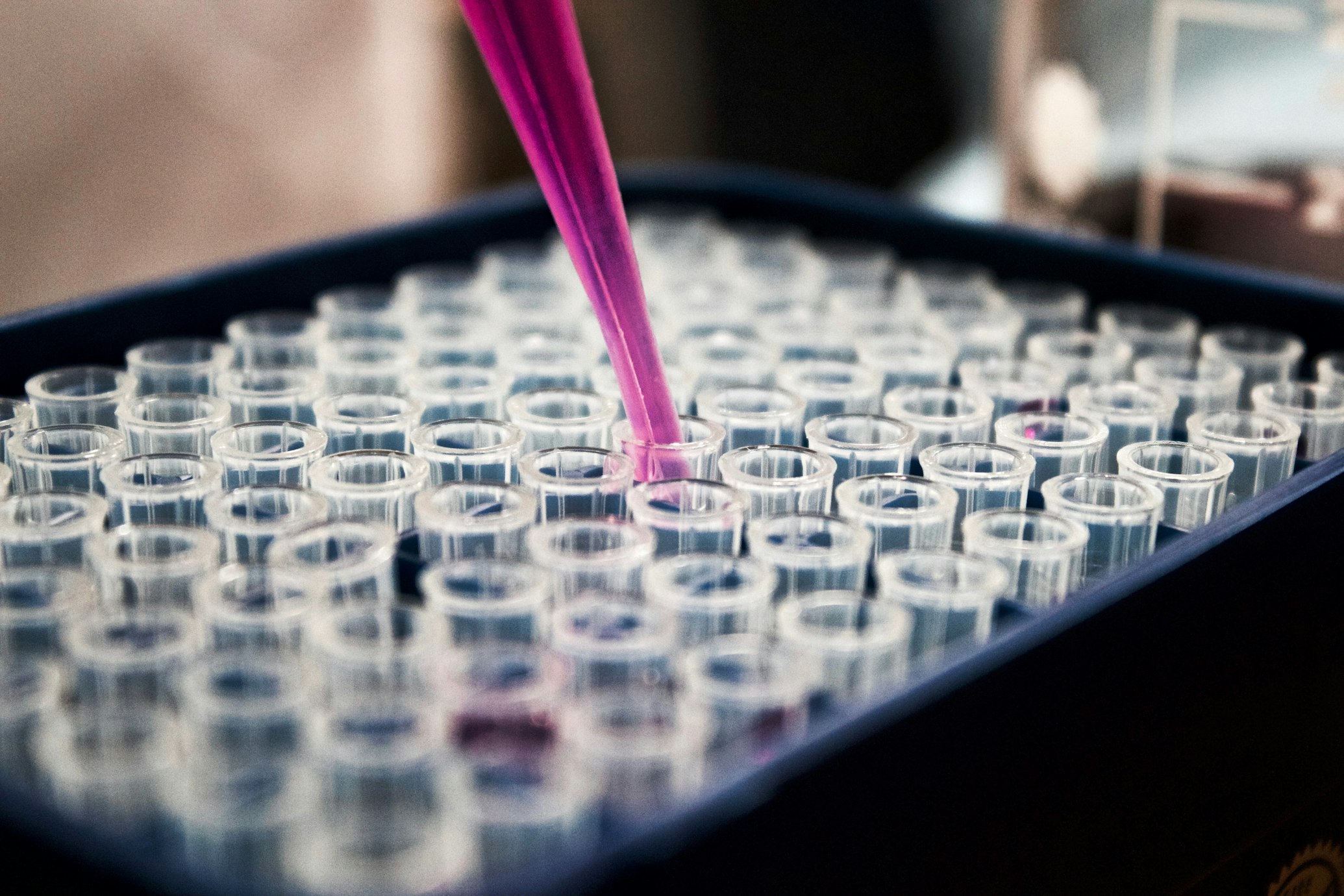
Today, a revolution in optical imaging is changing this. Advanced technologies, particularly a powerful method called stimulated Raman scattering (SRS) microscopy, are now allowing scientists to witness the metabolic dynamics of life in real-time, with unprecedented clarity and without harmful interference 1 . This is transforming our understanding of how our bodies function and fail over time, opening new avenues for early diagnosis and targeted treatments for some of humanity's most challenging diseases.
The Science of Seeing Without Labels
What is Label-Free Optical Imaging?
Imagine trying to study a butterfly's natural behavior while it's covered in brightly colored paint. Traditional microscopy often faces a similar problem; it frequently relies on fluorescent dyes or other "labels" to make specific molecules visible. These labels can be bulky, toxic to cells, and sometimes alter the very functions they are meant to illuminate 5 .
Label-free optical imaging circumvents this issue. It leverages the inherent properties of molecules—the way they vibrate or scatter light—to create contrast in an image. It's like identifying a material by its unique fingerprint, eliminating the need for external dyes and providing a more authentic view of cellular processes 5 .
Molecular Fingerprint
Each molecule has a unique vibrational signature that can be detected without labels.
Key Concepts: Raman Scattering and SRS Microscopy
How SRS Microscopy Works
Laser Illumination
Two synchronized laser beams are focused on the sample.
Molecular Vibration
Molecules vibrate at characteristic frequencies when excited by the lasers.
Signal Amplification
The SRS process amplifies the weak Raman signal for detection.
Image Formation
A high-resolution image is created based on molecular vibrations.
A Metabolic Window: The Power of Heavy Water Probing
While label-free SRS can show the total amount of molecules in a cell, it cannot distinguish between old, existing molecules and new ones being synthesized. To solve this, scientists have developed a clever strategy using vibrational probes, with one of the most powerful being heavy water (D₂O) 1 4 .
Heavy water is chemically identical to regular water, but its hydrogen atoms are replaced by a heavier isotope called deuterium (D). When an organism consumes D₂O, the deuterium is incorporated into newly synthesized lipids, proteins, and DNA, forming carbon-deuterium (C-D) bonds 1 7 .
Tracking New Biomolecules
SRS microscopy can detect C-D bonds, allowing researchers to track newly synthesized molecules as they are built.
Measuring Metabolic Rates
This technique enables measurement of metabolic turnover rates—the balance between synthesis and breakdown.
The magic of SRS microscopy is that it can see these C-D bonds, which vibrate at a unique frequency in a quiet region of the Raman spectrum where other cellular molecules are silent. This allows researchers to track new biomolecules as they are built, measure metabolic turnover rates, and simultaneously image different processes, like lipid and protein metabolism, in living cells and tissues without disruption 1 4 7 .
This combination, known as DO-SRS (D₂O-probed SRS), provides a universal and non-invasive window into the metabolic dynamics that underlie health, aging, and disease.
In-Depth Look: A Key Experiment on Aging in Fruit Flies
To understand how metabolic dynamics change during aging, researchers turned to a classic model organism: the fruit fly (Drosophila melanogaster). A pivotal study used DO-SRS imaging to directly visualize lipid and protein metabolism in the fly's fat body (an organ similar to the human liver and fat tissue) as the flies aged 4 .
Methodology: Tracking Metabolism with Deuterium
The experiment followed a clear, step-by-step process:
- Animal Model: Fruit flies of different ages (7, 25, and 35 days old) were used to represent youth, middle age, and old age.
- Heavy Water Labeling: The flies were fed standard food mixed with a small, non-toxic amount of heavy water (D₂O).
- Tissue Preparation: The fat bodies from these flies were carefully dissected and prepared for imaging.
- DO-SRS Imaging: Using SRS microscopy, researchers took images at two key frequencies to detect both C-D and C-H bonds.
- Quantitative Analysis: The ratio of the C-D signal to the C-H signal was calculated to determine metabolic turnover rates 4 .

Results and Analysis: Uncovering the Rhythm of Aging
The results from this experiment were striking, revealing a clear and progressive decline in metabolic activity with age.
| Age of Flies | Lipid Turnover Rate | Protein Turnover Rate | Key Observation |
|---|---|---|---|
| 7 Days (Young) | High | High | Active, vibrant metabolism in both lipids and proteins. |
| 25 Days (Middle-aged) | High | Significantly Decreased | Protein turnover declines first, suggesting it is an early event in aging. |
| 35 Days (Old) | Dramatically Decreased | Low | Both lipid and protein metabolism are severely impaired, indicating a systemic metabolic slowdown. |
Spatial Organization Matters
Researchers found that larger lipid droplets had significantly higher turnover rates than smaller ones, suggesting they play different roles in maintaining cellular energy balance 4 .
Early Warning Signal
The fact that protein turnover declined before lipid turnover suggests that problems in protein maintenance may be a prerequisite for broader metabolic dysfunction 4 .
This experiment was the first to directly visualize these spatiotemporal changes in lipid and protein metabolism during the aging process in a living organism, providing a new platform for understanding the fundamental links between metabolism and longevity.
The Scientist's Toolkit: Essential Reagents for Metabolic Imaging
Bringing these vivid metabolic pictures to life requires a suite of specialized reagents and tools. The following table details some of the key solutions used in the field of optical metabolic imaging.
| Reagent / Tool | Function | Example Use Case |
|---|---|---|
| Heavy Water (D₂O) | A universal metabolic probe; deuterium is incorporated into newly synthesized biomolecules 1 4 . | Tracking de novo synthesis of lipids, proteins, and DNA simultaneously in live cells and animals 7 . |
| Deuterated Amino Acids (d-AA) | Precise probes for tracking protein synthesis and turnover 1 . | Visualizing protein metabolism in specific cell types or tissues 1 . |
| Deuterated Fatty Acids (d-FA) | Direct labels for studying lipogenesis and lipid storage 1 . | Monitoring the fate of dietary fats and their storage in lipid droplets 1 . |
| Deuterated Glucose | Tracks the allocation of glucose into various anabolic pathways 1 . | Mapping how glucose is used to produce lipids, proteins, glycogen, and nucleic acids 1 . |
| Tissue Clearing Reagents | Renders thick tissues transparent by reducing light scattering 6 . | Enabling high-resolution 3D imaging of entire organs without physical sectioning 6 . |
Chemical Probes
Specialized reagents that integrate into metabolic pathways without disrupting them.
Imaging Systems
Advanced microscopy platforms capable of detecting subtle molecular vibrations.
Analysis Software
Computational tools for processing and quantifying complex metabolic data.
The Future of a Clearer Vision
The ability to watch the metabolic pulse of life at the molecular level is more than a technical achievement; it's a fundamental shift in biomedical research. DO-SRS and other label-free imaging techniques are already being applied to study a range of age-related diseases, from Alzheimer's to cancer, and are moving beyond animal models toward potential human applications 5 7 .
Researchers envision a future where low doses of heavy water could be used in clinical studies to monitor a patient's metabolic health, assess the efficacy of treatments in real-time, and diagnose diseases long before structural damage occurs 7 .
As one team of optical scientists develops even sharper, deeper-viewing technologies using synthetic wavelength imaging, we are promised a future where our view into the body's inner workings will be limited only by the imagination 8 .
By unveiling the hidden metabolic dynamics of life, scientists are not just satisfying curiosity—they are charting a new course for medicine, one where aging and disease can be understood, and ultimately managed, with unprecedented precision.

Clinical Applications
- Early disease detection
- Personalized treatment monitoring
- Drug development acceleration
- Aging intervention assessment
References
References will be added here in the proper citation format.