Setting Up PCR Pre and Post-Amplification Areas: A Complete Guide to Workflow, Optimization, and Contamination Control
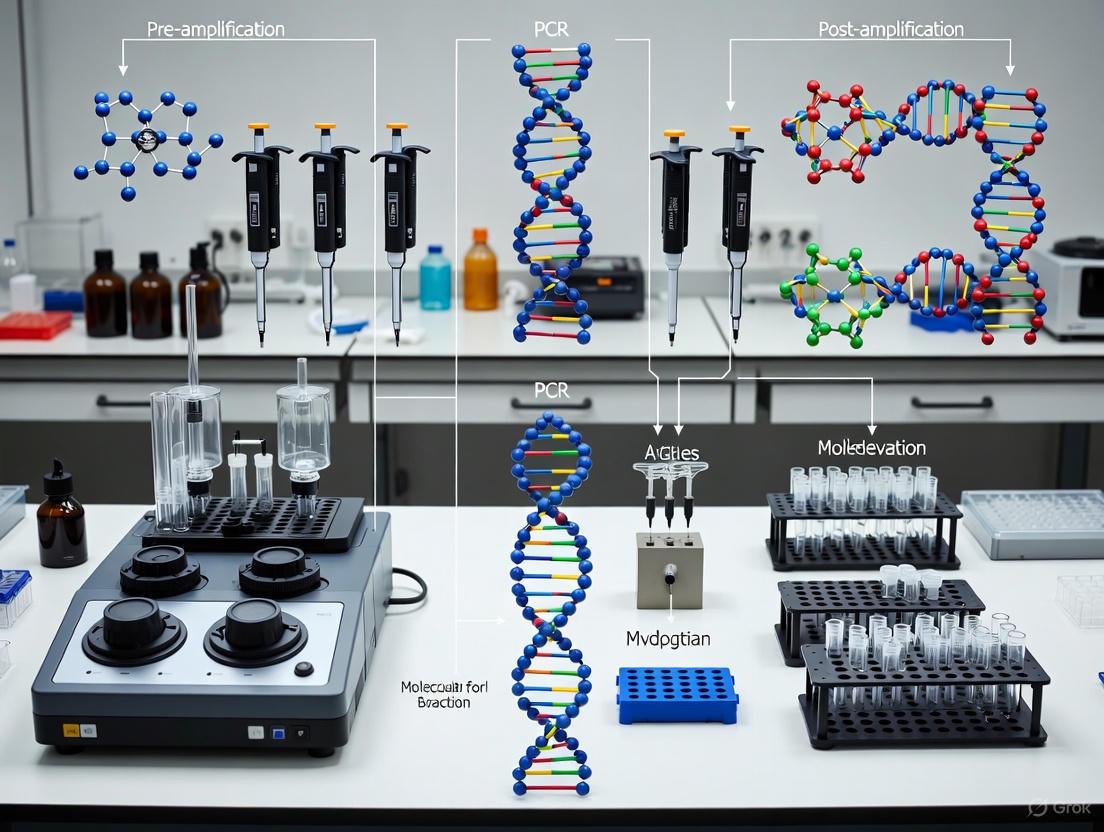
This guide provides researchers, scientists, and drug development professionals with a comprehensive framework for establishing and maintaining effective PCR pre and post-amplification areas.
Setting Up PCR Pre and Post-Amplification Areas: A Complete Guide to Workflow, Optimization, and Contamination Control
Abstract
This guide provides researchers, scientists, and drug development professionals with a comprehensive framework for establishing and maintaining effective PCR pre and post-amplification areas. It covers the foundational principles of spatial separation and unidirectional workflow to prevent amplicon contamination, detailed methodological steps for physical setup and equipment selection, systematic troubleshooting and optimization strategies for common issues, and finally, validation techniques and a comparative analysis of advanced PCR methodologies to ensure data reliability and compliance with current standards.
The Core Principles of PCR Lab Zoning: Why Separation is Non-Negotiable
Understanding the Critical Need for Spatial Separation to Prevent Amplicon Contamination
In polymerase chain reaction (PCR) workflows, the extreme sensitivity that allows for the amplification of minute amounts of DNA also creates a significant vulnerability: the risk of amplicon contamination. Amplicons, the millions to billions of DNA fragments produced during PCR amplification, become potent sources of contamination that can lead to false-positive results and compromised experimental integrity if carried over into subsequent reactions [1] [2]. This application note examines the critical role of spatial separation in preventing amplicon contamination, providing detailed protocols for establishing and maintaining effective pre- and post-amplification areas within molecular biology laboratories.
The fundamental challenge stems from the exponential amplification process itself. While creating a vast number of copies from a minimal starting material provides tremendous diagnostic power, it also means that even microscopic aerosol droplets containing amplicons can introduce sufficient template DNA to generate false positives in future experiments [2]. Once reagents or equipment become contaminated, the DNA contamination cannot be reduced or removed, making preventative measures the only reliable defense [2].
The Scientific Rationale for Spatial Separation
Comparative Sensitivity Analysis
The critical need for spatial separation is demonstrated through comparative studies of detection methodologies. Research on Human Adenoviruses (HAdV) in environmental samples revealed stark differences in detection rates between conventional PCR and quantitative PCR (qPCR), underscoring how contamination affects assay reliability.
Table 1: Detection Rates of Human Adenoviruses by PCR Methodology
| Sample Type | Conventional PCR Detection Rate | Quantitative PCR (qPCR) Detection Rate |
|---|---|---|
| Water Samples (n=55) | 47.3% | 87.3% |
| Sediment Samples (n=20) | 35.0% | 80.0% |
Data adapted from comparative analysis of PCR vs. qPCR for HAdV detection [3]
The significantly higher detection rates with qPCR highlight both the greater sensitivity of this methodology and its heightened vulnerability to contamination effects. The nearly double detection rate in sediment samples using qPCR demonstrates how lower amplification efficiency in conventional PCR may mask contamination issues that become critically important when implementing more sensitive detection systems [3].
Contamination Mechanisms and Vectors
Amplicon contamination occurs through multiple mechanisms, with aerosol formation during tube opening being a primary vector. Post-amplification handling, particularly opening reaction tubes or plates, disperses microscopic droplets containing high concentrations of amplified DNA sequences into the laboratory environment [2]. These contaminants then settle on surfaces, equipment, and consumables, creating reservoirs for future contamination events.
Additional contamination vectors include:
- Sample-to-sample carryover during processing
- Cross-contamination of reactions prepared simultaneously
- Reagent contamination with DNA templates [4]
- Personnel-mediated transfer via lab coats, gloves, or skin [2] [5]
The introduction of uracil-N-glycosylase (UNG) enzymatic control systems has provided some protection against amplicon carryover contamination; however, this method only targets uracil-containing amplification products from previous experiments and does not protect against other contamination sources [2]. Physical containment through spatial separation therefore remains the foundational strategy for comprehensive contamination control.
Laboratory Design Principles and Protocols
Ideal Spatial Configuration
For laboratories conducting regular PCR workflows, the optimal configuration involves dedicated separate rooms for pre- and post-amplification activities. This physical separation creates a containment barrier that prevents amplicon migration into sensitive pre-PCR areas [1] [4].
Table 2: Ideal PCR Laboratory Room Specifications and Functions
| Room Designation | Primary Function | Air Pressure Control | Contamination Risk Level |
|---|---|---|---|
| Reagent Preparation | Preparation and aliquoting of reagent stocks | Slight Positive Pressure | Very Low (No biological materials) |
| Sample Preparation | Nucleic acid isolation, reaction mix preparation | Slight Positive Pressure | Low ("Low copy" area) |
| Amplification (PCR) | Thermal cycling procedures | Slight Negative Pressure | High ("High copy" area) |
| Post-PCR Analysis | Gel electrophoresis, sequencing, data analysis | Slight Negative Pressure | Very High (Amplicon handling) |
Laboratory specifications compiled from molecular pathology guidelines [4]
The directional air pressure control is critical for contamination containment. Pre-PCR areas maintain slight positive pressure to prevent influx of contaminated air, while post-amplification areas maintain slight negative pressure to contain amplicons within the space [1] [4]. Ventilation systems should direct airflow from clean to dirty areas and exhaust through independent ducting to prevent cross-contamination [4].
Protocols for Limited Space Configurations
When dedicated rooms are not feasible, implement these protocols to create functional separation within a single laboratory space:
Compartmentalization Protocol
- Designate separate benches or workstations for pre- and post-PCR activities, maintaining maximum possible distance between areas [1]
- Install physical barriers such as partitions or separate biosafety cabinets between workstations
- Establish clear demarcation with colored tape or signs to visually identify clean vs. contaminated zones
- Place pre-PCR workstations farthest from room entrances to minimize foot traffic contamination [4]
Temporal Separation Protocol
- Perform pre-PCR activities during morning hours and post-PCR analysis in the afternoon [1]
- Designate specific days for reaction setup versus product analysis when possible
- Implement cleaning protocols between different workflow stages conducted in the same space
- Maintain strict unidirectional workflow even when using temporal separation
Implementation Protocols and Workflow Controls
Unidirectional Workflow Protocol
Establish and maintain a strict unidirectional workflow where materials and personnel move from clean to dirty areas without reversal:
Material Flow Control
- Dedicate all equipment (pipettes, centrifuges, vortex mixers) to specific areas [1]
- Use distinct consumables (tip boxes, tubes) for pre- and post-amplification workflows
- Never transfer materials or equipment from post-PCR to pre-PCR areas [4]
- Implement color-coding systems (e.g., blue for pre-PCR, red for post-PCR) for visual confirmation
Personnel Movement Protocol
- Change lab coats and gloves when moving from post-amplification to pre-amplification areas [1] [2]
- Wash hands thoroughly after working in post-amplification areas before entering pre-amplification spaces
- Avoid entering pre-amplification areas after working in post-amplification areas on the same day when possible [2]
- Designate separate personnel for each area in high-throughput settings [4]
Research Reagent Solutions
Table 3: Essential Materials and Reagents for Contamination Control
| Item | Function | Application Notes |
|---|---|---|
| Aerosol-Resistant Filter Tips | Prevent aerosol contamination of pipette shafts | Use for all PCR setup steps; essential for both sample and master mix handling [1] [2] |
| Uracil-N-Glycosylase (UNG) | Enzymatic degradation of carryover contamination | Effective against uracil-containing amplicons; requires dUTP in nucleotide mix [2] |
| Aliquot Tubes | Reagent storage in single-use volumes | Prevents repeated freeze-thaw cycles; limits contamination to small batches [1] |
| DNase-/RNase-Free Consumables | Ensure nuclease-free work surfaces | Certified free of DNase, RNase, and PCR inhibitors; use sterile products from qualified manufacturers [1] |
| Freshly Prepared Bleach Solution (10-15%) | Surface decontamination | Effective against DNA contamination; requires 10-15 minute contact time; prepare fresh weekly [2] |
| UV Irradiation System | Nucleic acid destruction on surfaces | Effective for workstation decontamination; less effective on dry-state DNA; requires regular maintenance [4] |
Decontamination and Cleaning Protocols
Implement rigorous decontamination procedures to maintain spatial separation integrity:
Surface Decontamination Protocol
- Wipe all work surfaces with freshly prepared 10-15% bleach solution before and after use [1] [2]
- Allow 10-15 minute contact time for effective DNA degradation
- Follow with distilled water rinse and 70% ethanol wipe
- Regularly decontaminate equipment surfaces, door handles, and refrigerator handles [1]
Equipment-Specific Cleaning
- Dedicate centrifuges and vortex mixers to specific areas [2]
- Regularly clean equipment with bleach solution followed by ethanol
- Use laminar flow biosafety cabinets for PCR setup, decontaminated with bleach before and after use [1]
- Implement UV irradiation in biosafety cabinets when available, considering limitations for dry-state DNA [4]
Quality Control and Contamination Monitoring
Control Implementation Protocol
Incorporate appropriate controls to detect contamination early and monitor workflow integrity:
No Template Controls (NTCs)
- Include in every run with all reaction components except template DNA [2]
- Interpret results based on amplification patterns:
- Uniform amplification across NTCs indicates reagent contamination
- Random amplification in NTCs suggests aerosol contamination during setup [2]
- Position NTCs throughout the plate to detect spatial contamination patterns
Comprehensive QC Measures
Personnel Training and Compliance Protocols
Ensure spatial separation effectiveness through comprehensive training:
Initial Training Protocol
- Educate all personnel on amplicon contamination mechanisms and consequences
- Demonstrate proper unidirectional workflow practices
- Train on appropriate donning and doffing of personal protective equipment
- Verify competency through practical assessment
Ongoing Compliance Monitoring
- Conduct regular audits of workflow adherence
- Review control results for early contamination detection
- Provide refresher training when contamination events occur
- Maintain documentation of all training and monitoring activities
Spatial separation remains the cornerstone of effective contamination control in PCR laboratories, providing the physical barriers necessary to prevent amplicon carryover and ensure result reliability. While methodological advancements like real-time PCR and UNG incorporation provide additional protection, they cannot replace the fundamental protection offered by physical separation of pre- and post-amplification activities [2] [4].
Implementation of the protocols outlined in this application note creates a multi-layered defense system against amplicon contamination, integrating spatial separation with workflow controls, dedicated equipment, and rigorous decontamination procedures. This comprehensive approach preserves assay integrity while accommodating practical laboratory constraints through temporal separation and compartmentalization strategies when ideal spatial configuration is not feasible. Through consistent application of these principles and protocols, laboratories can maintain the accuracy and reliability essential for molecular diagnostics and research applications.
The polymerase chain reaction (PCR) is a powerful enzymatic assay that allows for the specific amplification of minute amounts of DNA, revolutionizing biological science and clinical diagnostics [6]. However, its extreme sensitivity also makes it highly susceptible to contamination, which can lead to false-positive results and compromised data integrity [1] [7]. A cornerstone of effective contamination control is the physical separation of the PCR workflow into dedicated pre- and post-amplification areas [4]. This application note delineates the four essential PCR zones—Master Mix Prep, Sample Prep, Amplification, and Product Analysis—providing detailed protocols and design principles to support researchers in establishing a robust molecular biology laboratory.
The Criticality of Spatial Separation in PCR
In PCR, a vast number of DNA copies (amplicons) are generated from a very small amount of starting material. These amplicons are a primary source of contamination; if they are introduced into pre-amplification setups, they can be amplified in subsequent reactions, leading to erroneous results [1]. The risk of sample-to-sample or reagent contamination with DNA templates is a constant concern [4]. To mitigate this, a unidirectional workflow must be established, moving from "clean" areas (pre-PCR) to "dirty" areas (post-PCR) [1] [4]. No materials, equipment, or personnel should move from post-PCR to pre-PCR areas without thorough decontamination [1]. Furthermore, maintaining slight positive air pressure in pre-PCR rooms prevents the ingress of contaminated air, while negative air pressure in post-PCR rooms contains amplicons within the area [1] [4].
Table 1: The Four Essential PCR Zones and Their Key Characteristics
| Zone Name | Primary Function | Contamination Risk Level | Recommended Air Pressure | Essential Equipment |
|---|---|---|---|---|
| 1. Master Mix Prep | Preparation of PCR reagents and reaction mixes [8] | Very Low (Clean Area) | Positive [1] | Pipettes, microcentrifuge, aliquots of enzymes, dNTPs, buffers [4] |
| 2. Sample Prep | Nucleic acid extraction and purification [9] | Low (Clean Area) | Positive [1] | Biosafety cabinet, centrifuge, vortex, nanodrop spectrophotometer [1] |
| 3. Amplification | Thermal cycling for DNA amplification [7] | High (Dirty Area) | Negative [4] | Thermal cyclers [1] |
| 4. Product Analysis | Analysis of PCR amplicons [10] | Very High (Dirty Area) | Negative [4] | Gel electrophoresis system, UV transilluminator, sequencing instruments [1] |
Detailed Zone Specifications and Protocols
Zone 1: Master Mix Prep
This is the cleanest area in the lab, dedicated to the preparation of all PCR reagents and the master mix. A PCR master mix is a batch mixture of PCR reagents at optimal concentrations, which reduces pipetting steps, saves time, and minimizes the risk of contamination and pipetting errors [8].
- Purpose: To aliquot reagents and prepare the master mix without any template DNA or amplicons present [4].
- Protocol: Preparing a Standard PCR Master Mix [10] [11]:
- Thaw all reagents (e.g., buffer, dNTPs, MgCl2, Taq polymerase) on ice.
- Calculate the required volumes for a batch of reactions, including an excess to account for pipetting error.
- In a nuclease-free tube, combine the reagents in the following order: water, buffer, dNTPs, MgCl2, and Taq DNA polymerase.
- Gently mix the master mix by tapping the tube or pipetting slowly. Briefly centrifuge to collect the contents at the bottom of the tube.
- Aliquot the appropriate volume of master mix into individual PCR tubes or a multi-well plate.
- UV irradiation of the master mix (before adding template and primers) in a laminar flow cabinet can be used for decontamination, provided dNTPs and enzymes are protected from damage [4].
Zone 2: Sample Prep
This zone is dedicated to the extraction and handling of the nucleic acid template (DNA or RNA). While cleaner than the post-amplification zones, it handles biological samples and must be separated from the reagent preparation area [4].
- Purpose: To isolate and purify high-quality nucleic acids from various sample types (e.g., tissues, cells, blood) [9].
- Protocol: DNA Extraction and Purification [9]:
- Cell Lysis: Collect cells and resuspend in a lysis buffer (e.g., containing SDS and NaCl). For cells with walls (bacteria, yeast), include a mechanical (glass beads) or enzymatic (lysozyme) pre-lysis step.
- Precipitation: Add isopropanol to the lysate to precipitate the DNA. Incubate on ice.
- Pellet and Wash: Centrifuge at high speed to pellet the DNA. Discard the supernatant and wash the pellet with 70% ethanol to remove salts.
- Resuspension: Air-dry the pellet and dissolve the purified DNA in nuclease-free water or TE buffer.
- Quality Control: Use a spectrophotometer (e.g., Nanodrop) to assess concentration and purity. The A260/A280 ratio for pure DNA is approximately 1.8 [9].
Zone 3: Amplification
This room houses the thermal cyclers where the actual DNA amplification takes place. The high concentration of amplicons makes this a contaminated ("dirty") area.
- Purpose: To perform the thermal cycling process that denatures the template DNA, anneals the primers, and extends new DNA strands [7].
- Protocol: Standard PCR Amplification [10] [11]:
- Transfer Tubes: After adding template DNA and primers to the master mix in a clean area, transfer the sealed reaction tubes or plates to the amplification room.
- Load Thermal Cycler: Place the tubes/plates into the thermal cycler.
- Run Program: Start the pre-programmed cycling protocol. A typical protocol includes:
- Initial Denaturation: 94°C for 5 minutes (1 cycle)
- Amplification Cycles: 30-35 cycles of:
- Denaturation: 94°C for 30 seconds
- Annealing: 45 seconds at a temperature 5°C below the primer's Tm (e.g., 55-65°C)
- Extension: 72°C for 1 minute per kilobase of target DNA
- Final Extension: 72°C for 5 minutes (1 cycle) [11]
Zone 4: Product Analysis
This is the area with the highest contamination risk, as it involves handling and analyzing the final PCR amplicons. Tubes are often opened here, releasing amplicons into the environment.
- Purpose: To separate and visualize the amplified DNA fragments to confirm the success and specificity of the reaction [10] [6].
- Protocol: Agarose Gel Electrophoresis [10] [6]:
- Prepare Gel: Melt agarose in an appropriate buffer (e.g., TAE or TBE) and pour into a casting tray with a comb. Allow to solidify.
- Load Samples: Mix a portion of the PCR product with a loading dye. Load the mixture into the wells of the gel. Include a DNA molecular weight marker (ladder) in one well.
- Run Gel: Submerge the gel in the buffer and apply an electric field (e.g., 5-10 V/cm) until the dye front has migrated sufficiently.
- Visualize: Stain the gel with a DNA-binding dye such as ethidium bromide or a safer alternative. Visualize the DNA bands under ultraviolet light [10] [6].
Laboratory Design and Workflow Visualization
For an ideal setup, these four zones should be established in separate rooms [4]. If space is limited, pre-PCR activities (Master Mix and Sample Prep) can be performed in one room on separate benches, ideally within a laminar flow hood, while post-PCR activities (Amplification and Product Analysis) are conducted in another, distant room [1]. Temporal separation (performing pre- and post-PCR work at different times of the day) can also be effective when spatial separation is limited [1].
The following diagram illustrates the mandatory unidirectional workflow and the critical parameters for each zone.
The Scientist's Toolkit: Essential Research Reagent Solutions
Successful PCR relies on high-quality, specific reagents. The table below lists key solutions and their critical functions in the reaction.
Table 2: Essential Reagents for PCR Setup and Their Functions
| Reagent Solution | Function in the PCR Reaction | Key Considerations |
|---|---|---|
| DNA Polymerase (e.g., Taq) | Thermally stable enzyme that synthesizes new DNA strands by adding nucleotides [7] [12] | Thermostability, processivity, and fidelity (error rate) are key selection criteria [12]. |
| dNTP Mix (dATP, dCTP, dGTP, dTTP) | The building blocks (nucleotides) used by the DNA polymerase to synthesize new DNA [6] [12] | Typically used at 200 µM of each dNTP in a final reaction. Unbalanced concentrations can increase error rates [12]. |
| Oligonucleotide Primers | Short, single-stranded DNA sequences that define the 5' and 3' ends of the target DNA region to be amplified [6] [12] | Should be 15-30 bases long with Tm between 55-70°C. Must be specific to the target to avoid nonspecific binding [12]. |
| Magnesium Chloride (MgCl₂) | Acts as a cofactor for DNA polymerase, essential for enzyme activity and stabilizing DNA strands [8] [12] | Concentration is critical and often requires optimization (0.1-5.0 mM). It binds to dNTPs, affecting their availability [12]. |
| PCR Buffer | Provides the optimal chemical environment (pH, ionic strength) for DNA polymerase activity [10] | Often supplied with the enzyme. May contain additives like (NH4)2SO4 to enhance specificity and yield [10]. |
| PCR Master Mix | A pre-mixed, optimized solution containing buffer, dNTPs, MgCl₂, and DNA polymerase [8] | Saves time, reduces pipetting errors, and improves reproducibility. Ideal for high-throughput applications [8]. |
Establishing and rigorously maintaining the four essential PCR zones—Master Mix Prep, Sample Prep, Amplification, and Product Analysis—is a fundamental requirement for any molecular biology laboratory aiming to generate reliable and reproducible data. This physical separation, coupled with a strict unidirectional workflow and the use of dedicated equipment and reagents, forms the most effective defense against PCR contamination. By adhering to the detailed protocols and design principles outlined in this application note, researchers and drug development professionals can create a robust foundation for their molecular workflows, ensuring the integrity of their research and diagnostic outcomes.
In the context of molecular biology research, particularly for polymerase chain reaction (PCR) techniques, the exquisite sensitivity that enables the amplification of minute amounts of DNA also renders these methods extremely vulnerable to contamination [13]. Contaminating DNA sequences, especially amplification products (amplicons) from previous reactions, can lead to false-positive results, compromising experimental integrity and diagnostic accuracy [13] [14]. A single PCR reaction can generate as many as 10^9 copies of the target sequence, and even the smallest aerosolized droplet can contain up to 10^6 of these amplicons [13]. Implementing a strict unidirectional workflow is therefore not merely a recommendation but a fundamental requirement for any reliable PCR-based research or diagnostic setting. This application note details the protocols and spatial organization principles essential for establishing effective contamination control within the framework of setting up pre- and post-amplification areas for PCR.
The Principles of a Unidirectional Workflow
A unidirectional workflow mandates that materials, reagents, equipment, and personnel movement proceed in a single, linear direction—from clean pre-amplification areas to dirty post-amplification areas—with no backtracking [15] [1]. This physical and procedural barrier prevents the flow of amplification products back into areas where they could contaminate fresh reagents, samples, or master mixes.
The logical relationship between the different laboratory zones and the critical point of no return is summarized in the following workflow diagram:
Spatial Separation of Pre and Post-Amplification Areas
Ideal Laboratory Layout
The most effective contamination control is achieved through physical separation of laboratory functions into distinct rooms [15] [1].
Room 1: Pre-PCR Area (Clean Area)
- Reagent Preparation Room/Area: This dedicated space should be used exclusively for handling and aliquoting PCR reagents, master mixes, and primers. It should be maintained at a slightly positive air pressure to prevent the influx of aerosols from other parts of the laboratory [1].
- Sample Preparation Room/Area: This area is designated for the processing of specimens and extraction of nucleic acids. It must be physically separate from the reagent preparation area to prevent cross-contamination of reagent stocks with sample DNA [1].
Room 2: Post-PCR Area (Contaminated Area)
- Amplification Room/Area: This room houses the thermal cyclers where PCR amplification occurs.
- Product Analysis Room/Area: This is where amplified products are opened for downstream applications such as gel electrophoresis, sequencing, or other detection methods. The post-PCR area should be kept at a slightly negative air pressure to ensure that any aerosolized amplicons are contained within the room and do not escape [1].
Adaptations for Limited Space
For laboratories lacking the space for separate rooms, a unidirectional workflow can still be implemented within a single room with careful planning [15] [1].
- Dedicated Benches: Assign separate, distanced benches for pre-PCR and post-PCR activities [1].
- Dead Air Boxes (DABs) or Laminar Flow Cabinets: Within an open-concept lab, a Dead Air Box or a biosafety cabinet decontaminated with bleach can provide a controlled, clean environment for setting up PCR reactions [15]. These enclosures act as a physical barrier to airborne contaminants.
- Temporal Separation: If spatial separation is limited, consider separating procedures in time. For example, set up all PCR reactions in the morning and perform amplification and analysis in the afternoon. This prevents simultaneous activity in clean and dirty areas [1].
Essential Protocols for Contamination Control
Protocol for Laboratory Setup and Workflow Management
This protocol establishes the foundational physical and procedural controls.
- Objective: To create a physical layout and standard operating procedures that enforce a unidirectional workflow, minimizing the risk of amplicon contamination.
- Materials: Laboratory space, benches, dedicated equipment (pipettes, centrifuges, vortexers), laboratory coats, gloves, and consumables for each area.
- Procedure:
- Designate Areas: Clearly mark and label Pre-PCR (Reagent Prep, Sample Prep) and Post-PCR (Amplification, Analysis) zones. The recommended size prioritization suggests the Pre-PCR Sample Preparation Room should be the largest to accommodate sample processing activities [15].
- Dedicate Equipment: Provide completely independent sets of equipment (pipettes, tip boxes, centrifuges, vortexers, racks, lab coats, gloves) for Pre-PCR and Post-PCR areas. Equipment must not be shared between these zones [2] [1] [14].
- Establish Unidirectional Traffic: Personnel must move from Pre-PCR to Post-PCR areas only. If it is absolutely necessary for a person to go from a Post-PCR to a Pre-PCR area, they must change lab coat and gloves thoroughly beforehand [2] [1].
- Manage Materials: Reagents and consumables for the Pre-PCR area should be delivered directly to that area. No materials (e.g., racks, notebooks) from the Post-PCR area should be brought into the Pre-PCR area without a rigorous decontamination process [15].
Protocol for Routine Surface and Equipment Decontamination
Regular decontamination is critical for degrading any contaminating DNA.
- Objective: To routinely destroy contaminating DNA on work surfaces and equipment.
- Materials: Freshly prepared 10% (v/v) sodium hypochlorite (bleach) solution, 70% ethanol, DNase-/RNase-free water, disposable wipes, personal protective equipment (gloves, eye protection) [2] [13].
- Procedure:
- Pre-Cleaning: Before starting work, wipe all work surfaces, equipment (including pipette exteriors, centrifuge lids, vortexers), and frequently touched items (doorknobs, freezer handles) with 70% ethanol.
- Bleach Treatment: After completing work, or immediately after any spill, thoroughly wipe all surfaces with the fresh 10% bleach solution. Sodium hypochlorite causes oxidative damage to nucleic acids, rendering them unamplifiable [13].
- Contact Time: Allow the bleach to remain on the surface for 10-15 minutes to ensure effective action [2].
- Bleach Removal: After the contact time, wipe the surface with DNase-/RNase-free water or 70% ethanol to remove residual bleach, which can corrode equipment [2].
- UV Irradiation (Optional but Recommended): When available, store pipettes and other small devices in a UV light box when not in use. UV irradiation induces thymidine dimers in DNA, sterilizing exposed surfaces [13].
Protocol for Uracil-N-Glycosylase (UNG) Anti-Carryover Treatment
This chemical method provides a powerful backup to physical controls.
- Objective: To enzymatically destroy carryover contamination from previous PCR amplifications directly in the reaction tube before amplification begins.
- Principle: The enzyme UNG recognizes and excises uracil bases from DNA strands. By substituting dUTP for dTTP in the PCR master mix, all newly synthesized amplicons contain uracil. In subsequent reactions, UNG added to the master mix will degrade any uracil-containing contaminating amplicons before the PCR cycle starts [13].
- Materials: PCR master mix containing UNG enzyme, dNTP mix including dUTP, template DNA.
- Procedure:
- Prepare Master Mix: Prepare the PCR master mix containing all components, including UNG and dUTP instead of dTTP.
- Incubate: Incubate the complete reaction mix (with template added) at room temperature (20-25°C) for 10 minutes. During this time, UNG will hydrolyze any contaminating uracil-containing DNA [13].
- Amplify: Place the tubes in the thermal cycler and start the program. The initial high-temperature denaturation step (usually 95°C) will permanently inactivate the UNG enzyme, preventing degradation of the new uracil-containing products synthesized in the current reaction [13].
- Notes: UNG works best with thymine-rich targets and may have reduced efficacy for GC-rich amplicons. Optimal concentrations of UNG and dUTP should be determined for each assay [13].
The Scientist's Toolkit: Essential Research Reagent Solutions
The following table details key reagents and materials critical for implementing an effective contamination control strategy.
Table 1: Essential Materials for PCR Contamination Control
| Item | Function & Importance in Contamination Control |
|---|---|
| Aerosol-Resistant Filter Pipette Tips | Act as a physical barrier, preventing aerosols from entering and contaminating the pipette shaft, and conversely, preventing contaminants within the pipette from entering reactions [15] [14]. |
| Positive-Displacement Pipettes | Alternative to filter tips; use a piston that makes direct contact with the liquid, eliminating the air gap that can create aerosols. Recommended for high-risk applications [15]. |
| Sodium Hypochlorite (Bleach) | The primary chemical decontaminant. A 10% solution oxidizes and fragments contaminating DNA, making it unamplifiable. Must be freshly prepared weekly for maximum efficacy [2] [13]. |
| Uracil-N-Glycosylase (UNG) & dUTP | A key enzymatic anti-carryover system. Incorporating dUTP and UNG into the workflow selectively degrades PCR products from previous reactions, providing a final defense within the reaction tube itself [13]. |
| Aliquoted Reagents | Dividing bulk reagents into single-use aliquots prevents the contamination of an entire stock and reduces the number of freeze-thaw cycles, maintaining reagent integrity [1] [14]. |
| Dedicated Laboratory Coat & Gloves | Personal protective equipment (PPE) must be dedicated to each area (Pre-PCR, Post-PCR). Gloves should be changed frequently, especially when moving between zones or after a suspected contamination event [2] [1]. |
Monitoring for Contamination
Vigilant monitoring is essential to confirm the effectiveness of your contamination control measures.
- No Template Controls (NTCs): Include NTCs in every PCR run. These reactions contain all PCR components except the template DNA. Amplification in an NTC is a clear indicator of contamination [2] [14].
- Pattern Interpretation: Consistent amplification across all NTCs suggests reagent contamination. Random amplification in a few NTCs suggests aerosol contamination during plate setup [2].
- Positive Controls: Use positive controls to verify that the amplification reaction is working correctly and to monitor for a reduction in sensitivity due to contamination diluting the target [14].
- Track Positivity Rates: In diagnostic or routine testing settings, monitor the overall positivity rate. An unexpected increase may indicate a systematic contamination issue [1].
Implementing a rigorous unidirectional workflow is the cornerstone of reliable PCR-based research. By integrating spatial segregation, dedicated equipment and consumables, meticulous laboratory practices, and chemical and enzymatic safeguards, researchers can create a robust defense against contamination. This ensures the generation of accurate, reproducible data, safeguards the integrity of scientific conclusions, and is a non-negotiable standard for any laboratory engaged in nucleic acid amplification.
In the molecular biology laboratory, particularly one specializing in polymerase chain reaction (PCR) techniques, preventing contamination is paramount for obtaining accurate and reliable results. The exquisite sensitivity of PCR, which allows for the amplification of minute quantities of DNA, also makes it susceptible to false positives from amplicon contamination and false negatives from sample cross-contamination. Air pressure control is a fundamental engineering control used to manage the flow of air and airborne particles between different laboratory zones. By creating defined pressure differentials, a unidirectional workflow is enforced, safeguarding the integrity of pre-amplification processes from the high concentrations of amplified DNA products generated post-amplification. This document outlines the application of positive and negative pressure environments within the context of setting up PCR pre- and post-amplification areas, providing researchers with detailed protocols and design considerations.
Fundamental Principles of Laboratory Air Pressure
Defining Pressure Environments
- Positive Pressure: A condition where the air pressure inside a room is higher than the pressure in adjacent areas or corridors. This pressure differential causes air to flow out of the room when a door is opened or through deliberate leaks. The primary function in a PCR lab is to prevent unfiltered or contaminated external air from entering a "clean" space.
- Negative Pressure: A condition where the air pressure inside a room is lower than the pressure in surrounding areas. This pressure differential causes air to flow into the room when a door is opened. Its primary function is to contain aerosols, amplicons, or other hazardous materials within a "dirty" or contained space, preventing their escape.
The Role of Airflow in Contamination Control
The strategic use of positive and negative pressure environments directly enforces a unidirectional workflow, which is the cornerstone of contamination control in molecular biology. Airflow should always move from "clean" areas (e.g., reagent preparation) toward "dirty" areas (e.g., amplification and analysis), ensuring that amplified DNA sequences (amplicons) do not back-flow into areas where they could contaminate reagents, samples, or master mixes [1] [4]. Circulating air between pre- and post-PCR laboratories is a significant documented source of contamination, necessitating separate ventilation systems for these zones [4].
Application in PCR Laboratory Setup
Zoning and Workflow Design
An ideal PCR laboratory physically separates pre-PCR and post-PCR activities. The following table summarizes the recommended pressure regimes for each dedicated zone, which can be adapted based on spatial constraints.
Table 1: Pressure Regimes for PCR Laboratory Zones
| Laboratory Zone | Primary Activities | Recommended Pressure | Rationale |
|---|---|---|---|
| Reagent Preparation | Preparation and aliquoting of PCR master mixes, reagents, and buffers. | Positive Pressure | Prevents influx of contaminated air containing amplicons or sample DNA, protecting sensitive reagents [1] [16]. |
| Sample Preparation | Nucleic acid extraction, purification, and quantification. | Negative Pressure | Contains potentially heterogeneous sample materials and protects the broader pre-PCR area from these potential contamination sources [16]. |
| Amplification (PCR) | Thermal cycling for DNA amplification. | Negative Pressure | Contains the high concentration of amplicons generated during the PCR process, preventing their dissemination [1] [16]. |
| Post-PCR Analysis | Gel electrophoresis, sequencing, fragment analysis. | Negative Pressure | Contains amplicons, as opening reaction tubes post-amplification presents a high risk for aerosol release [4]. |
Implementing Pressure Control in Laboratory Design
The following diagram illustrates the unidirectional workflow and the corresponding air pressure requirements for a multi-room PCR laboratory setup.
HVAC System Specifications
The heating, ventilation, and air conditioning (HVAC) system is the engine for pressure control. A dedicated system providing 100% fresh air (non-recirculating) is often recommended for high-containment PCR labs [16]. Key components include:
- Air Handling Unit (AHU): Supplies HEPA-filtered air to the laboratory rooms. A typical design may involve a supply airflow of 2800 CFM for a lab suite [16].
- Supply Air: The air delivered into a room. It should be filtered through a series of pre-filters (e.g., G4) and high-efficiency particulate air (HEPA) filters to remove contaminants [16].
- Return/Exhaust Air: The air removed from a room. To maintain negative pressure, the exhaust airflow rate must be greater than the supply airflow rate. Conversely, for positive pressure, the supply airflow rate must exceed the exhaust/return airflow rate [16]. A bypass flow within the AHU may be used to fine-tune these differentials.
- Pressure Monitors: Magnehelic gauges or electronic sensors should be installed to provide continuous visual confirmation of pressure status.
Experimental Protocols for Verification
Protocol: Verification of Room Pressure Differential
Objective: To empirically confirm that a laboratory room is maintained under the designed negative or positive pressure relative to an adjacent reference area (e.g., corridor).
Materials:
- Magnehelic gauge or electronic manometer with tubing
- Laboratory tissues or smoke tubes
- Permanent marker
Method:
- Identify Measurement Points: Select a location where a small port or door undercut allows for pressure measurement between the room in question and the reference corridor.
- Instrument Setup: Connect the pressure gauge according to the manufacturer's instructions. For a negative pressure room, the "high" pressure port should be connected to the corridor (reference) and the "low" port to the room.
- Measure Pressure: Record the pressure differential. A common standard is a minimum differential of 0.01 to 0.05 inches of water column (in. w.c.).
- Qualitative Test (Alternative): While standing in the corridor, hold a thin tissue strip near the top of the closed room door. If the tissue is pulled under the door, the room is under negative pressure. If the tissue is pushed outward away from the door, the room is under positive pressure.
- Documentation: Record the date, room, measured pressure differential, and the name of the individual performing the verification.
Protocol: Environmental Monitoring for Contamination
Objective: To proactively detect PCR amplicon or other nucleic acid contamination on laboratory surfaces.
Materials:
- Sterile swabs (e.g., polyester or rayon)
- Nuclease-free water or buffer
- Microcentrifuge tubes
- Real-time PCR or digital PCR system
- Master mix and primers for a ubiquitous target (e.g., a common amplicon used in the lab)
Method:
- Surface Sampling: Moisten a sterile swab with nuclease-free water. Vigorously swab a defined area (e.g., 10 cm x 10 cm) on critical surfaces, including:
- Laminar flow hood and biosafety cabinet work surfaces
- Centrifuge lids and keypads
- Pipette exteriors
- Doorknobs and freezer handles [1]
- Elution: Place the swab tip into a microcentrifuge tube containing elution buffer, vortex thoroughly, and centrifugate to pellet debris.
- Analysis: Use a small aliquot (e.g., 2-5 µL) of the eluate as a template in a sensitive PCR reaction (e.g., a real-time PCR assay capable of detecting low copy numbers).
- Interpretation: The presence of amplification in samples from pre-PCR areas, especially the reagent preparation room, indicates a contamination breach that must be addressed through enhanced cleaning and review of workflows.
The Scientist's Toolkit: Essential Research Reagent Solutions
The following table details key materials and reagents essential for maintaining integrity in a controlled-pressure PCR laboratory environment.
Table 2: Essential Materials and Reagents for a Contamination-Controlled PCR Lab
| Item | Function/Application | Key Considerations |
|---|---|---|
| Filter Pipette Tips | Prevent aerosol contaminants from entering pipette shafts and cross-contaminating samples and reagents. | More expensive than standard tips, but critical for pre-PCR setup; use one tip per sample [1]. |
| Laminar Flow/Biosafety Cabinet (Class II) | Provides a HEPA-filtered, particle-free work surface for sensitive pre-PCR setup. | Protects the product (reagents) from environmental contamination. Must be decontaminated with bleach or UV before and after use [1] [17]. |
| Aliquoting Tubes | Small, sterile, nuclease-free vials for dividing bulk reagent stocks. | Prevents repeated freeze-thaw cycles of bulk stocks, extends shelf life, and limits potential loss from a single contamination event [1]. |
| Decontamination Reagents | Freshly made 10% Bleach Solution: For wiping down surfaces and equipment to hydrolyze DNA. 70% Ethanol: For general disinfection of surfaces and cabinets [17]. | Bleach is effective for DNA decontamination but must be rinsed with nuclease-free water to prevent equipment corrosion [17]. |
| PCR Controls | Positive Control: Template known to amplify. Negative Control (No-Template Control): Contains all reaction components except template DNA. | Essential for validating assay performance and detecting master mix contamination, respectively [1]. |
| UV Light Source | Can be installed in cabinets or ceilings to cross-link and inactivate contaminating DNA on surfaces and in master mixes. | Effectiveness depends on DNA sequence, hydration, and exposure; can damage dNTPs and enzymes if used improperly [4]. |
Temporal Separation as a Contamination Control Measure
In the context of establishing robust polymerase chain reaction (PCR) workflows, the physical separation of pre-and post-amplification areas is a well-established cornerstone of contamination control [2] [1] [4]. However, physical separation is not always feasible due to spatial or budgetary constraints in a laboratory. Temporal separation serves as a powerful and often essential complementary or alternative strategy to mitigate the risk of amplicon contamination, which can lead to false-positive results and compromised data integrity [1] [4]. This application note details the methodologies for implementing temporal separation within the broader framework of setting up PCR pre-and post-amplification areas, providing researchers and drug development professionals with validated protocols to enhance the reliability of their molecular assays.
The Principle of Temporal Separation
Temporal separation, in the context of PCR, involves the scheduling of laboratory activities such that procedures with a high risk of generating amplicon contamination (post-amplification analysis) are performed at different times from those most vulnerable to contamination (reaction setup) [1]. The core principle is to eliminate the possibility of concurrent contaminated and clean activities within the same space.
This approach directly addresses the primary contamination risk: carryover of amplification products [2] [18]. When a PCR tube is opened, the highly concentrated amplicons can become aerosolized. These aerosols, containing millions of copies of the target DNA, can settle on surfaces, equipment, and gloves, posing a significant threat to subsequent reactions [18] [19]. By separating these processes in time, the laboratory environment can be thoroughly decontaminated between procedures, thereby breaking the chain of contamination.
Table 1: Comparison of Contamination Control Separation Strategies
| Strategy | Key Principle | Ideal Implementation | Practical Compromise |
|---|---|---|---|
| Physical Separation | Spatial isolation of processes into dedicated rooms [2] [4] | Separate rooms for reagent prep, sample prep, amplification, and post-PCR analysis [4] | Designated benches or hoods within a single room [1] [4] |
| Temporal Separation | Time-based isolation of processes [1] | Pre-PCR setup in the morning; post-PCR analysis in the afternoon [1] | All pre-PCR activities completed before any post-PCR work begins on a given day [4] |
Implementing Temporal Separation: Protocols and Workflows
Core Experimental Protocol for a Temporally Separated Workflow
The following protocol is designed for a laboratory that must perform all PCR workflow steps in a single shared space.
1. Pre-Amplification Phase (Dedicated Morning Session)
- Activity: Reagent preparation, master mix assembly, and sample addition.
- Procedure:
- Decontaminate the entire work surface before beginning with a 10% bleach solution, followed by a rinse with deionized water to remove residue [2] [14].
- Use only dedicated equipment and consumables (pipettes, tip boxes, racks, lab coats) that are stored in and never leave the clean pre-PCR area [1] [14].
- Wear a dedicated lab coat and gloves. Change gloves frequently, especially after touching any surface outside the immediate work zone [19].
- Prepare all reagents and master mixes. Use aerosol-resistant filter tips to prevent pipette contamination [2] [20].
- Aliquot reagents into single-use volumes to avoid contaminating entire stock solutions [1] [14].
- Add the DNA template to the reactions last to minimize the opportunity for template contamination [19].
- Once all reaction tubes are sealed, thoroughly clean the work surface again with a 10% bleach solution [2].
2. Amplification Phase
- Activity: Thermal cycling.
- Procedure:
- Transfer the sealed plate or tubes to the thermal cycler. Note that the cycler itself is considered a potential source of contamination and should be located away from, or downstream of, the pre-PCR setup area [4].
- Initiate the PCR run. This phase does not require active researcher involvement and serves as a natural temporal buffer.
3. Post-Amplification Phase (Dedicated Afternoon Session)
- Activity: Opening reaction vessels and analyzing PCR products (e.g., by gel electrophoresis).
- Procedure:
- Enter the lab after the pre-amplification phase is complete and all equipment has been cleaned.
- Wear a separate lab coat and fresh gloves used exclusively for post-PCR work [2] [1].
- Use dedicated post-PCR equipment (pipettes, tip boxes, electrophoresis tanks) [18].
- Centrifuge tubes briefly before opening to collect condensation and minimize aerosol formation [18].
- Open tubes carefully and slowly, avoiding any rapid "flicking" motion that generates aerosols [19].
- After analysis, decontaminate all surfaces and equipment used with a 10% bleach solution [2] [18].
The logical relationship and unidirectional flow of this workflow are illustrated below.
Workflow Diagram for a Temporally Separated PCR Day
The Scientist's Toolkit: Essential Reagent Solutions
The successful implementation of temporal separation and overall contamination control is supported by the use of specific reagents and consumables.
Table 2: Key Research Reagent Solutions for Contamination Control
| Item | Function & Application |
|---|---|
| UNG Enzyme (Uracil-N-Glycosylase) | An enzymatic system incorporated into master mixes to destroy carryover contamination from previous PCRs. It requires the use of dUTP in place of dTTP in PCR reactions [2]. |
| Aerosol-Resistant Filter Tips | Act as a physical barrier preventing aerosols from contaminating the pipette shaft, thereby protecting reagents and samples [2] [1] [20]. |
| Bleach (Sodium Hypochlorite) | A chemical decontaminant used to degrade DNA on non-porous surfaces and equipment. A 10% solution is commonly recommended and should be left on surfaces for 10-15 minutes for maximum efficacy [2] [18] [19]. |
| DNase I | An enzyme used to degrade contaminating genomic DNA in RNA samples prior to reverse transcription-PCR (RT-PCR) [20]. |
| Aliquoted Reagents | Dividing bulk reagents into single-use volumes to prevent repeated freeze-thaw cycles and to limit the potential for contaminating an entire stock [1] [14] [19]. |
Validation and Quality Control
Implementing temporal separation requires validation to ensure its effectiveness. The primary tool for this is the consistent and correct use of controls.
- No Template Control (NTC): This control is essential for detecting contamination. It contains all reaction components except the DNA template, which is replaced with water or buffer [2] [14]. The NTC must be included in every experiment. A clean NTC (no amplification) indicates a contamination-free setup, while amplification in the NTC signals a failure in the control measures [2] [19].
- Monitoring Contamination Incidents: It is critical to log any instances of NTC amplification. Tracking these events can help identify if a systematic error or practice is the root cause, allowing for targeted improvements in the workflow [14].
Troubleshooting and Decontamination Protocols
Despite best efforts, contamination can occur. A clear decontamination protocol is necessary.
Protocol for Systemic Decontamination:
- Discard Contaminated Reagents: Immediately dispose of all reagents and consumables suspected of contamination, including master mixes, primers, and buffers [14].
- Decontaminate Equipment and Surfaces: Thoroughly clean all equipment (pipettes, centrifuges, vortexers), work surfaces, and common touchpoints (e.g., doorknobs, freezer handles) with a 10% bleach solution [2] [14] [19]. For pipettes, disassemble if possible and clean the interior shaft according to the manufacturer's instructions [18].
- Replace Consumables: Open new boxes of filter tips, PCR tubes, and gloves [14] [19].
- Launder Lab Coats: Clean all dedicated lab coats to eliminate any contaminating DNA [14].
- Re-test with NTCs: Before resuming experimental work, run a test PCR with fresh aliquots of all reagents and only NTCs to confirm the contamination has been eradicated [19].
A Step-by-Step Blueprint for Your PCR Lab Setup and Workflow
The spatial separation of pre-amplification and post-amplification activities is a foundational principle in polymerase chain reaction (PCR) laboratory design. This separation is critical for preventing contamination, which represents the single greatest threat to assay accuracy in molecular diagnostics and research. Amplified nucleic acid products (amplicons) can contaminate reagents, equipment, and workspace surfaces, leading to false-positive results that compromise data integrity and clinical decisions [4].
The ideal laboratory design provides physical separation of workflow stages into distinct rooms, a standard achievable in new construction or large-scale renovations. However, many research and diagnostic teams operate within existing spatial constraints that necessitate a single-room approach. This application note examines both the ideal two-room layout and the validated practical adaptations for single-room configurations, providing researchers with actionable strategies to maximize accuracy and efficiency within their available space [4].
Two-Room Laboratory Layout: The Ideal Configuration
Core Design Principles and Workflow
The two-room layout is the gold standard for PCR laboratory design, emphasizing physical containment of amplicons and a strict unidirectional workflow. This configuration physically separates pre-PCR processes (reagent preparation, sample extraction, and reaction setup) from post-PCR processes (amplification and product analysis) to prevent carryover contamination [4].
The workflow must move in a single direction from "clean" areas (pre-PCR) to "dirty" areas (post-PCR). Personnel movement from post-PCR to pre-PCR areas requires changing laboratory coats, gloves, and all protective equipment, with hand washing strictly enforced. No equipment or materials should ever be moved from the post-PCR room back to the pre-PCR room [4].
Detailed Room Specifications
Table 1: Functional Zones in an Ideal Two-Room PCR Laboratory
| Room Name | Primary Functions | Contamination Risk Level | Key Equipment | Recommended Pressure |
|---|---|---|---|---|
| Reagent Preparation | Preparation & aliquoting of master mixes; free of DNA/RNA templates | Very Low (Clean) | Microcentrifuges, pipettes, vortexers | Slight Positive |
| Sample Preparation | Nucleic acid extraction & purification; addition of sample to reaction mixes | Low (Clean) | Biosafety cabinet, microcentrifuge, nucleic acid extraction system | Slight Positive |
| Amplification | Thermal cycling for DNA/RNA amplification | High (Dirty) | Thermal cyclers, real-time PCR instruments | Slight Negative |
| Post-PCR Analysis | Analysis of amplified products (gel electrophoresis, sequencing) | Very High (Dirty) | Gel documentation systems, sequencers | Slight Negative |
In this configuration, the Reagent Preparation and Sample Preparation rooms constitute the pre-PCR "clean" area, while the Amplification and Post-PCR Analysis rooms form the post-PCR "dirty" area. When space permits four separate rooms, nucleic acid isolation and adding samples to PCR reactions should be performed in separate rooms. However, these steps are often performed in the same room but in different compartments due to space limitations [4].
Ventilation and Engineering Controls
Differential air pressure represents a critical engineering control in two-room layouts. Pre-PCR laboratories should be maintained at slight positive pressure to prevent the entrance of contaminated air from outside. Conversely, post-PCR laboratories should be maintained at slight negative pressure to contain amplicons and prevent their escape to other areas. The ventilation systems for pre-PCR and post-PCR laboratories should connect to separate air handling units and exhaust to different external locations [4].
Single-Room Laboratory Layout: Practical Adaptations
Compartmentalization and Workflow Management
When spatial constraints preclude a multi-room layout, a single-room configuration can be implemented effectively through strict compartmentalization and temporal separation. Workstations must be physically separated for different procedures, with a maintained unidirectional workflow from clean to dirty compartments [4].
Table 2: Single-Room PCR Laboratory Configuration
| Compartment/Zone | Physical Separation Method | Recommended Procedures | Contamination Control Measures |
|---|---|---|---|
| Reagent Prep Zone | Dedicated bench, preferably in low-traffic area | Master mix preparation, reagent aliquoting | Dedicated equipment, UV irradiation, regular decontamination |
| Sample Prep Zone | Laminar flow biosafety cabinet | Nucleic acid extraction, PCR reaction setup | UV-equipped cabinet, dedicated pipettes, aerosol-barrier tips |
| Amplification Zone | Designated area for instrumentation | Thermal cycling | Physical separation from prep areas, dedicated equipment |
| Analysis Zone | Enclosed area, distant from prep zones | Gel electrophoresis, product handling | Located farthest from clean areas, strict containment |
If physical separation is limited, a timetable establishing different work periods for pre-PCR and post-PCR steps must be implemented. For example, all pre-PCR activities should be completed in the morning, with amplification and analysis confined to the afternoon. This temporal separation prevents simultaneous clean and dirty activities, thereby reducing contamination risk [4].
Procedural and Administrative Controls
Enhanced personal protective equipment (PPE) protocols are essential in single-room layouts. Researchers should change gloves when moving between compartments, even within the same room. Dedicated lab coats for each zone are ideal, though often impractical; at minimum, gloves must be changed frequently, and sleeves should be kept away from surfaces [4].
All work surfaces should be decontaminated with freshly prepared 10% bleach solution followed by 70% ethanol before and after each procedure. UV irradiation can be used to sterilize the pre-PCR area when not in use, though its effectiveness is limited on dry DNA. Equipment, including pipettes and centrifuges, must be dedicated to each zone and never moved between clean and dirty areas [4].
Experimental Protocols for Contamination Control
Protocol: Laboratory Surface Decontamination
Purpose: To eliminate nucleic acid contamination from work surfaces and equipment in PCR laboratories. Principle: DNA and RNA contaminants are degraded through chemical oxidation (sodium hypochlorite) and denaturation (ethanol). Reagents: 10% (v/v) sodium hypochlorite (freshly diluted), 70% (v/v) ethanol, Nuclease-free water. Equipment: Dedicated spray bottles, disposable wipes, PPE (gloves, lab coat, safety glasses).
Procedure:
- Apply 10% sodium hypochlorite solution generously to the work surface.
- Allow the solution to stand for 1-2 minutes to ensure complete oxidation of nucleic acids.
- Wipe the surface thoroughly with disposable wipes.
- Apply 70% ethanol to remove residual hypochlorite, which can corrode equipment.
- Allow the surface to air dry completely before use.
- For equipment decontamination, use 70% ethanol only, as hypochlorite may damage sensitive instruments.
Notes: Sodium hypochlorite solutions degrade over time; prepare fresh weekly. This protocol should be performed at the beginning and end of each work shift, and after any potential contamination event [4].
Protocol: PCR Master Mix Preparation in a Single-Room Laboratory
Purpose: To prepare PCR reaction mixtures while minimizing contamination risk in spatially constrained environments. Principle: Concentrated reagents are combined in an environment protected from amplicon contamination. Reagents: PCR buffer, dNTPs, MgCl₂, primers, DNA polymerase, nuclease-free water. Equipment: Microcentrifuge, vortex mixer, dedicated pipettes with aerosol-barrier tips, chilled microcentrifuge tube rack, UV laminar flow cabinet.
Procedure:
- Perform all procedures within a UV laminar flow cabinet if available.
- Clean the cabinet surface with 70% ethanol and UV-irradiate for 15 minutes before use.
- Thaw all reagents completely on ice and centrifuge briefly before opening.
- Prepare a master mix for multiple reactions to minimize pipetting steps and variation.
- Add reagents in the following order: water, buffer, dNTPs, MgCl₂, primers, and polymerase.
- Mix by gentle pipetting or vortexing, then centrifuge briefly.
- Aliquot the master mix into individual PCR tubes.
- Add template DNA last, in a separate area if possible, using dedicated pipettes.
- Close all tubes securely before removing them from the cabinet.
Notes: Always include negative controls (without template DNA) to monitor for contamination. Use dedicated equipment and reagents for pre-PCR work only [21] [22].
Workflow Visualization and Optimization
PCR Laboratory Workflow Diagram
Space Utilization and Efficiency Metrics
Table 3: Performance Comparison of Laboratory Layouts
| Performance Metric | Ideal Two-Room Layout | Practical Single-Room Layout | Measurement Method |
|---|---|---|---|
| Contamination Risk | Very Low | Moderate to High | Frequency of false positives in negative controls |
| Hands-on Time | Optimized | May require 10-15% more time | Time-motion studies |
| Space Requirement | 120-240 sq ft per room [4] | 150-300 sq ft total | Square footage assessment |
| Implementation Cost | High | Moderate | Construction, equipment, ventilation |
| Workflow Flexibility | Limited once built | Highly adaptable | Ease of reconfiguration |
| Personnel Movement | Minimal between stages | Requires strict discipline | Spaghetti diagrams [23] |
The Scientist's Toolkit: Essential Reagent Solutions
Table 4: Essential Reagents for PCR Laboratory Operation
| Reagent/Chemical | Function | Storage Conditions | Quality Control |
|---|---|---|---|
| DNA Polymerase | Enzyme that synthesizes new DNA strands | -20°C | Verify activity with control template |
| dNTPs | Nucleotide building blocks for DNA synthesis | -20°C | Check for freeze-thaw degradation |
| Magnesium Chloride (MgCl₂) | Cofactor for polymerase activity; affects specificity | Room temperature | Titrate for each new primer set (0.5-5.0 mM) [22] |
| PCR Buffer | Maintains optimal pH and salt conditions | -20°C | Verify pH (typically 8.3-8.8) |
| Primers | Sequence-specific oligonucleotides that define amplification targets | -20°C | Check concentration by spectrophotometry |
| Agarose | Matrix for electrophoretic separation of PCR products | Room temperature | Use electrophoresis-grade purity |
The selection between an ideal two-room layout and a practical single-room configuration depends on multiple factors, including available space, testing volume, assay sensitivity requirements, and available resources. While the two-room layout provides superior contamination control, the single-room approach can yield reliable results when implemented with rigorous procedural controls [4].
For new construction or major renovations, investment in a physically separated two-room layout provides the most robust long-term solution, particularly for clinical diagnostic applications where result accuracy is paramount. For existing facilities with spatial constraints, a well-implemented single-room layout with temporal separation and strict procedural controls can support high-quality molecular research and testing [4].
Successful implementation of either approach requires meticulous attention to workflow, comprehensive staff training, and consistent adherence to contamination control protocols. Regular monitoring through negative controls and periodic environmental sampling ensures ongoing detection of potential contamination issues, allowing for timely corrective actions regardless of laboratory layout.
The extraordinary sensitivity of the Polymerase Chain Reaction (PCR), which allows for the amplification of minute amounts of DNA, is also its greatest vulnerability, making it highly prone to contamination by amplified DNA products (amplicons) or sample carryover [1] [24]. A false-positive result due to contamination can compromise research integrity and diagnostic accuracy. Therefore, the foundational principle of setting up a PCR laboratory is the physical separation of pre- and post-amplification activities [1] [15].
This application note provides a detailed checklist and protocols for equipping dedicated pre-and post-PCR areas, framed within the context of establishing a robust, contamination-free workflow. The core concept is a unidirectional workflow, where personnel and materials move from the "clean" pre-PCR areas to the "dirty" post-PCR areas, but never in reverse [1] [15]. The following diagram illustrates this workflow and the placement of essential equipment in each designated zone.
Essential Equipment by Functional Area
To operationalize the unidirectional workflow, each area must be equipped with its own dedicated instruments and consumables. Sharing equipment between areas is a primary source of contamination [1] [15].
Pre-Amplification Areas: Reagent and Sample Preparation
The Reagent Preparation and Sample Preparation areas are the "clean" zones where reaction mixes are assembled and nucleic acids are extracted from samples. The paramount concern here is protecting reagents and samples from contamination.
Table 1: Essential Equipment for Pre-Amplification Areas
| Equipment Category | Specific Item | Key Specifications & Rationale |
|---|---|---|
| Liquid Handling | Dedicated Micropipettes [1] | A full set of single-channel and multi-channel pipettes, used only in pre-PCR areas. |
| Filter Pipette Tips [1] [24] | Contain an aerosol barrier to prevent micropipette contamination. Essential for master mix and sample handling. | |
| Sample & Reagent Processing | Dedicated Centrifuge [25] | A small microcentrifuge for quick spins to collect liquid in tube bottoms. Performance: speed accuracy within ±5% [25]. |
| Vortex Mixer | For mixing reagents and resuspending pellets. | |
| Nucleic Acid Extractor [25] | Automated system for consistent nucleic acid purification. Performance: extraction efficiency >80%, A260/A280 ratio of 1.8-2.0 [25]. | |
| Containment & Storage | PCR Cabinet / Laminar Flow Hood [1] [26] [27] | Provides a HEPA-filtered, contaminant-free environment for setting up reactions. Protects the sample only, not the user [27]. |
| Refrigerator and Freezer (-20°C) | For short-term storage of enzymes, dNTPs, primers, and extracted DNA. | |
| Ultra-Low Temperature Freezer (-80°C) | For long-term storage of critical reagents and biological samples. |
Post-Amplification Area: Amplification and Product Analysis
The Post-PCR area is where the thermal cycling and analysis of the now-amplified DNA products occur. This area contains a high concentration of amplicons, and the primary concern is preventing their back-migration into clean areas.
Table 2: Essential Equipment for Post-Amplification Areas
| Equipment Category | Specific Item | Key Specifications & Rationale |
|---|---|---|
| Amplification | Thermal Cycler (PCR Machine) [25] [24] | Instruments for DNA amplification. Performance: temperature accuracy ±0.5°C, uniformity ±1°C [25]. |
| Quantitative PCR (qPCR) System [24] | For real-time, quantitative amplification monitoring. | |
| Analysis | Electrophoresis System [25] [24] | Gel tank and power supply for separating DNA fragments by size. |
| Gel Imager / Documentation System [25] | For visualizing and documenting stained gels (e.g., with ethidium bromide). | |
| General Equipment | Dedicated Centrifuge [1] | A separate centrifuge for post-PCR tubes. Never to be used in pre-PCR areas. |
| Dedicated Pipettes [1] | A separate set of pipettes, clearly marked for post-PCR use only. Filter tips are also recommended here to contain amplicons. | |
| Containment | Biosafety Cabinet (BSC) [27] | Required only if handling biohazardous samples. A Class II BSC protects the user, sample, and environment [27]. |
Research Reagent Solutions for PCR Setup
Table 3: Essential Reagents and Materials for PCR Workflows
| Item | Function in the Experiment |
|---|---|
| DNA Template | The target genetic material to be amplified [24]. |
| Primers | Short, single-stranded DNA sequences that define the start and end of the DNA segment to be amplified [24]. |
| Taq DNA Polymerase | A thermostable enzyme that synthesizes new DNA strands by adding dNTPs to the primers [24]. |
| Deoxynucleotide Triphosphates (dNTPs) | The fundamental building blocks (A, T, C, G) used by the polymerase to build new DNA strands [24]. |
| PCR Reaction Buffer | Provides the optimal chemical environment (pH, salts) for the polymerase to function, including essential Mg²⁺ ions [24]. |
| MgCl₂ | A cofactor for Taq polymerase; its concentration can critically affect reaction specificity and yield [24]. |
| Nuclease-Free Water | The solvent for master mixes; must be free of nucleases that would degrade the reaction components. |
Experimental Protocols for Equipment Validation and Use
Protocol: Performance Validation of a Thermal Cycler
Regular validation of a thermal cycler's calibration is critical for data integrity and reproducibility [28].
I. Purpose: To verify the temperature accuracy, uniformity, and ramp rates of a thermal cycler.
II. Materials:
- Thermal cycler to be validated.
- Certified, NIST-traceable temperature probe or a proprietary validation system (e.g., a thermal gradient block with integrated sensors).
- Data logging software.
III. Methodology:
- Install Probes: Place the temperature probes into multiple wells of the thermal block, including the center and corners, to assess uniformity [25].
- Run Validation Program: Execute a predefined program that covers the typical temperature range used in your lab (e.g., 4°C, 55°C, 72°C, 95°C). Include holds and ramp steps.
- Data Collection: The software will automatically record the actual temperature achieved in each well over time.
- Data Analysis: Compare the measured data against the setpoints.
- Temperature Accuracy: The deviation of the average measured temperature from the setpoint should be within ±0.5°C [25].
- Temperature Uniformity: The variation between different wells at the same setpoint should be within ±1°C [25].
- Ramp Rate: Confirm the rate of temperature change meets the manufacturer's specifications.
IV. Frequency: Perform at least every 6 months, or more frequently for heavy-use or critical diagnostic applications [28].
Protocol: Establishing a Contamination-Free Workflow in a PCR Cabinet
I. Purpose: To safely prepare PCR master mixes and load samples within a PCR cabinet, minimizing the risk of contamination.
II. Materials:
- PCR cabinet with HEPA filtration and UV light [26].
- 10% (v/v) fresh sodium hypochlorite (bleach) solution or commercial DNA decontaminant [1].
- 70% ethanol.
- Nuclease-free wipe.
- Dedicated pre-PCR pipettes and filter tips.
- PCR tubes/strips/plates and all required reagents.
III. Methodology:
- Decontaminate: Turn on the UV light and let it irradiate the interior of the empty cabinet for at least 15-20 minutes before use [26]. Wipe down all surfaces, the interior of the cabinet, and reagent tubes with a DNA decontaminant, followed by 70% ethanol [1].
- Purge: Turn off the UV light and turn on the blower. Allow it to run for at least 3 minutes to establish a stable laminar airflow [26].
- Assemble Reagents: Place all necessary, pre-aliquoted reagents inside the cabinet, being careful not to place items directly over others to avoid dripping contamination.
- Prepare Master Mix:
- Work from the cleanest component (water) to the most critical/potentially contaminated (template DNA).
- Prepare a master mix for all reactions except the template to minimize pipetting error and tube-to-tube variation.
- Use a fresh filter tip for each reagent.
- Aliquot and Add Template:
- Dispense the master mix into individual reaction tubes.
- Finally, add the template DNA to each tube using a fresh filter tip for each sample [1]. This ensures the sample, the biggest potential source of cross-contamination, is added last to a liquid-filled tube, minimizing aerosol generation.
- Close Tubes and Clean Up: Seal tubes, remove them and all waste from the cabinet. Wipe down the interior surfaces again with decontaminant and 70% ethanol. Run the UV light for a final decontamination cycle.
Compliance and Quality Control Considerations
For laboratories involved in clinical diagnostics, adherence to regulatory standards such as the Clinical Laboratory Improvement Amendments (CLIA) is mandatory. This involves using FDA-cleared/approved equipment and tests where required, maintaining a detailed equipment list, and following rigorous validation, calibration, and documentation procedures [29]. Regular calibration of equipment like thermal cyclers and pipettes is not a best practice but a requirement for compliance and ensuring the accuracy of patient results [29] [28]. Always include negative controls (no template) and positive controls (known template) in every PCR run to monitor for contamination and verify assay performance [1] [24].
The Role of Laminar Flow Hoods and Biosafety Cabinets in Pre-PCR Setup
In molecular biology research, the polymerase chain reaction (PCR) is a fundamental technique for amplifying specific DNA sequences. However, its extreme sensitivity makes it highly susceptible to contamination, which can lead to false-positive results and compromised data integrity. A critical strategy for contamination control involves the physical separation of pre-PCR and post-PCR activities. Within this framework, the pre-PCR area, dedicated to tasks such as reagent preparation and sample setup, requires a controlled, particle-free environment. This application note details the roles of two essential pieces of equipment in achieving this environment: the laminar flow hood and the biosafety cabinet. It provides a comparative analysis and detailed protocols for their use within the context of setting up robust pre- and post-amplification research areas.
Equipment Comparison and Selection Guide
The choice between a laminar flow hood and a biosafety cabinet is paramount and depends entirely on the nature of the materials being handled and the primary protection goal.
Laminar Flow Hoods (LFHs): Also referred to as PCR workstations or clean benches, LFHs are designed to protect the sample and the reaction from particulate contamination in the ambient laboratory air [30] [27] [31]. They provide a workspace flooded with HEPA-filtered air, ensuring an ISO Class 5 clean environment [32]. It is critical to note that LFHs provide no protection to the user and are therefore unsuitable for handling any infectious, pathogenic, or biohazardous materials [30] [31]. Their exhaust is typically directed back into the laboratory room.
Biosafety Cabinets (BSCs): Class II BSCs, the most common type for this application, are designed to provide three levels of protection: for the user, for the sample, and for the external environment [30] [31] [33]. This is achieved through a combination of inward airflow (user protection), downward HEPA-filtered laminar airflow (sample protection), and exhaust HEPA filtration (environmental protection) [30] [27]. BSCs are the mandatory choice when working with human-derived samples or any other potentially infectious materials.
Table 1: Comparative Analysis of Laminar Flow Hoods and Biosafety Cabinets for Pre-PCR Setup
| Feature | Laminar Flow Hood (PCR Workstation) | Biosafety Cabinet (Class II) |
|---|---|---|
| Primary Purpose | Sample protection from contamination [30] [27] | User, sample, and environmental protection from biohazards [30] [27] [31] |
| Protection Focus | Protects the work product only [31] | Protects the user, the work product, and the environment [31] |
| Airflow Pattern | Vertical or horizontal laminar flow; air is exhausted into the room [30] [31] | Combination of inward and downward flow; air is HEPA-filtered before exhaust [30] [27] |
| Filtration | HEPA filtration of incoming air only [30] | HEPA filtration of both incoming and exhaust air [30] [27] |
| UV Lamp | Often included for workspace decontamination [34] [27] [26] | May be included, but primary protection is via airflow [27] [33] |
| Ideal for Pre-PCR | Non-infectious, non-hazardous samples (e.g., plant DNA, purified plasmids) [30] [27] | Potentially infectious samples (e.g., human clinical samples, pathogens) [27] [33] |
| Key Limitation | Must not be used with biohazardous materials [30] [31] | Higher cost and more complex maintenance [30] |
The following diagram illustrates the fundamental difference in airflow and protection focus between these two types of equipment, which dictates their appropriate application.
Detailed Experimental Protocols
Protocol for Pre-PCR Setup in a Laminar Flow Hood
This protocol is designed for preparing non-hazardous PCR reactions, such as amplifying purified DNA or plasmid constructs.
Materials and Reagents:
- PCR reagents: master mix, primers, nuclease-free water, template DNA
- Sterile, DNA-free microcentrifuge tubes and PCR plates
- Filtered pipette tips
- 70% ethanol or a commercial DNA-decontaminating solution (e.g., 10% bleach)
- UV-compatible gloves and a dedicated lab coat
Procedure:
- Preparation: Turn on the laminar flow hood and allow the blower to run for at least 3-5 minutes to purge the work zone of particulates [26]. Clean all interior surfaces, including the back wall and work tray, with 70% ethanol or a DNA-decontaminating solution, followed by a wipe with nuclease-free water if required. Turn on the UV lamp and irradiate the entire work surface for a minimum of 15-30 minutes [34] [33]. Ensure all reagents are thoroughly mixed and centrifuged briefly before placement in the hood.
- Workflow Organization: Arrange your workspace logically within the hood. Place clean reagents and consumables on one side, the primary work area in the center, and a waste container for used tips and tubes on the opposite side to maintain a unidirectional workflow and minimize the risk of cross-contamination [33].
- Aseptic Technique: Wear appropriate personal protective equipment (PPE). Use only filter tips for all liquid handling to prevent aerosol contamination of pipettes [1]. When assembling the PCR master mix, work methodically. It is recommended to create a master mix containing all common components (water, buffer, dNTPs, enzymes, primers) and aliquot it into the PCR tubes/plate before adding the template DNA last, using a fresh pipette tip for each sample [1].
- Post-Procedure Decontamination: After completing the reaction setup, clean all surfaces again with a decontaminating solution. Turn on the UV lamp for a final 15-30 minute decontamination cycle [34]. Finally, cap all tubes or seal the plate before removing them from the hood for amplification.
Protocol for Pre-PCR Setup in a Biosafety Cabinet
This protocol should be followed when setting up PCR reactions with potentially infectious or human-derived samples.
Materials and Reagents:
- All materials listed for the LFH protocol, plus biohazard waste bags and containers.
- The BSC must be certified to Class II standards within the last 12 months.
Procedure:
- Preparation and Decontamination: Turn on the BSC and allow it to run for 10-15 minutes to establish proper airflow patterns. Decontaminate the interior surface with an appropriate disinfectant (e.g., 10% fresh bleach solution, followed by 70% ethanol to prevent corrosion). Activate the UV lamp for decontamination if available, but note that chemical disinfection is the primary method [33].
- Work Organization and Aseptic Technique: Load all necessary materials into the cabinet, avoiding clutter that can disrupt laminar airflow. The workflow organization is identical to that in an LFH, adhering to a clean-to-dirty flow. Use strict aseptic technique and filter tips. The key difference is the added layer of safety for the user when adding infectious template DNA to the reactions.
- Waste Management: All waste generated within the BSC, including gloves, tips, and tubes that have come into contact with biological samples, must be disposed of in a designated biohazard waste container.
- Post-Procedure Decontamination: Upon completion, decontaminate all interior surfaces of the BSC, including any equipment (e.g., pipettes, racks) that were placed inside. Allow the BSC to run for at least 5 minutes with the glass sash closed before shutting it down to purge any internal contaminants [33].
Integration into a Broader PCR Laboratory Workflow
The use of hoods or cabinets is not a standalone solution but must be integrated into a comprehensive laboratory design based on the principle of unidirectional workflow [1] [4] [15]. This means personnel, materials, and air should flow from "clean" areas (pre-PCR) to "dirty" areas (post-PCR) without ever moving backward.
Table 2: Essential Research Reagent Solutions for Pre-PCR Setup
| Reagent / Material | Function | Key Consideration |
|---|---|---|
| Filter Pipette Tips | Prevents aerosol contamination of pipette shafts and cross-contamination between samples [1]. | Essential for all pre-PCR pipetting steps. |
| Aliquoted Reagents | Dividing bulk reagents (master mix, water) into single-use aliquots prevents contamination of the entire stock [1]. | Increases reagent shelf life and limits the impact of a contamination event. |
| DNA-Decontaminating Solutions | Chemical inactivation of contaminating DNA on surfaces [32]. | Freshly prepared 10% bleach or commercial DNA degradation solutions are effective. |
| UV Light Source | Cross-links and inactivates contaminating nucleic acids on exposed surfaces within the hood/cabinet [34] [33]. | Effectiveness depends on exposure time, distance, and surface hydration. |
| Nuclease-Free Consumables | Tubes and plates certified to be free of DNases, RNases, and PCR inhibitors. | A basic requirement to avoid degradation or inhibition of the PCR reaction. |
The ideal laboratory has physically separated rooms for different stages. The pre-PCR area, where hoods and cabinets are located, should be under slight positive air pressure to prevent the ingress of contaminating amplicons from other parts of the lab. Conversely, the post-PCR analysis area should be under slight negative pressure to contain amplified DNA products [1] [4]. If separate rooms are not feasible, temporal separation (performing pre- and post-PCR work at different times) and rigorous use of dedicated equipment and PPE are critical [1] [4].
The following workflow diagram outlines the unidirectional path that should be maintained in a molecular biology laboratory to minimize contamination risks.
The meticulous setup of the pre-PCR area is a cornerstone of successful molecular biology research. Selecting the appropriate controlled environment—a laminar flow hood for sample protection or a biosafety cabinet for handling biohazards—is the first critical decision. The implementation of detailed, consistent protocols for their use, combined with integration into a unidirectional laboratory workflow, forms a comprehensive strategy for contamination control. By adhering to these application notes, researchers and drug development professionals can significantly enhance the reliability, reproducibility, and accuracy of their PCR-based data.
In molecular biology, particularly within the sensitive context of polymerase chain reaction (PCR) and quantitative PCR (qPCR), the integrity of experimental results is profoundly dependent on the conscientious selection of laboratory consumables. A cornerstone of reliable assay performance is the effective prevention of deoxyribonucleic acid (DNA) and ribonucleic acid (RNA) contamination, which can lead to misleading conclusions, false positives, and wasted resources. This application note details the critical role of DNase/RNase-free consumables and aerosol barrier filter tips in safeguarding experiments. The guidance herein is framed within the essential framework of establishing physically separated pre- and post-amplification areas, a non-negotiable practice for rigorous PCR-based research [2] [19].
The Scientific Rationale: Understanding the Contaminants
The Threat of Nucleases
- RNases: Ribonucleases are exceptionally stable enzymes that are difficult to inactivate and are ubiquitous in the environment, including on skin, in dust, and on laboratory surfaces [35]. They can rapidly degrade single-stranded RNA, which is chemically unstable and susceptible to hydrolysis. In single-cell RNA studies, where starting quantities can be as low as 10-100 picograms, even minute RNase contamination can cause complete sample degradation, leading to gene "dropout" and biased transcript quantification [35].
- DNases: Deoxyribonucleases degrade both single-stranded and double-stranded DNA. Their activity can compromise DNA templates and PCR products. It is critical to note that reagents used to eliminate genomic DNA from RNA samples, such as DNase I, must themselves be certified RNase-free to prevent the very degradation they are meant to facilitate [36].
The Peril of Carryover Contamination
The primary source of contamination in qPCR is aerosolized amplicons (PCR products) from previous amplification reactions [2] [19]. When a tube containing millions of copies of a DNA target is opened, microscopic droplets can become airborne, settling on benchtops, equipment, gloves, and into open reagents. These fragments are then amplified in subsequent reactions, potentially yielding false positive results [2]. The extreme sensitivity of qPCR, which allows for the detection of a few initial copies of a DNA sequence, makes it particularly vulnerable to this form of contamination [2].
Establishing a Contamination-Control Workflow: Pre- and Post-Amplification Separation
The most fundamental strategy for avoiding amplicon contamination is the physical separation of laboratory processes.
Workflow Design and Logical Separation
The diagram below illustrates the one-way workflow that should be enforced to prevent carryover contamination. Researchers should move from the "clean" pre-amplification area to the "dirty" post-amplification area, but not return on the same day without decontamination procedures [2].
Practical Implementation of Physical Separation
- Dedicated Spaces and Equipment: At a minimum, establish separate, dedicated areas for pre- and post-amplification processes, ideally in different rooms [2]. Each area must have its own set of pipettes, centrifuges, vortexers, lab coats, and supplies [2] [19]. These rooms should not share a ventilation system [2].
- Unidirectional Workflow: Personnel who have entered the post-amplification area must not re-enter the pre-amplification area on the same day without a complete change of personal protective equipment and decontamination of any items being moved between areas [2].
- Separate Storage: PCR reagents and amplified PCR products must be stored separately to avoid accidental contamination [19].
The Consumables Toolkit: Selection and Application
The following table details the essential consumable solutions for maintaining integrity in sensitive molecular biology workflows.
Table 1: Research Reagent Solutions for Contamination Control
| Item | Function & Importance | Key Applications |
|---|---|---|
| DNase/RNase-Free Water | Processed to eliminate nuclease contamination via filtration, chemical treatment (e.g., DEPC), or irradiation; critical for reconstituting and diluting reagents and samples without degradation [35]. | Cell lysis, RNA extraction, reverse transcription, PCR master mix preparation, and reagent storage [35]. |
| Aerosol Barrier Filter Tips | Contain an internal filter that prevents aerosols and liquids from entering the pipette barrel, thereby protecting both the sample and the instrument from cross-contamination [37] [38]. | All pipetting steps in qPCR/qRT-PCR setup, clinical diagnostics (e.g., COVID-19 testing), and handling volatile/viscous liquids [37]. |
| Certified DNase/RNase-Free Labware | Tubes and plates manufactured and certified to be free of nuclease contaminants, ensuring that the labware itself does not introduce degradative enzymes into the reaction [39]. | RNA/DNA sample storage, PCR plate setup, and any contact with sensitive samples or reagents [39]. |
| RNase-Free DNase I | A preparation of DNase I enzyme that is rigorously tested and certified to be free of RNase activity, allowing for safe removal of DNA from RNA samples without degrading the RNA [36]. | Removal of contaminating genomic DNA from RNA samples prior to reverse transcription or RNA sequencing [40] [36]. |
Decision Framework for Pipette Tip Selection
The flowchart below provides a logical guide for selecting the appropriate pipette tip based on the specific application and contamination risks.
Protocols for Validation and Best Practices
Protocol: Validating DNase I as RNase-Free
The integrity of RNA after DNase I treatment is critical. The following protocol, adapted from an RNaseAlert Kit assay, provides a methodology to verify that a DNase I preparation is free of RNase contamination [36].
Table 2: RNase Alert Validation of DNase I
| Component | Purpose | Positive Control | Experimental Test |
|---|---|---|---|
| RNaseAlert Substrate | A fluorescently-labeled RNA molecule that fluoresces upon cleavage. The readout for RNase activity. | 1.5 µL | 1.5 µL |
| RNase A (Standard) | Provides a known RNase activity to create a standard curve. | 0.5 pg, 5 pg, 50 pg | - |
| DNase I (Test Sample) | The enzyme being tested for contaminating RNase activity. | - | Up to 4.4 µg (e.g., 800 U) |
| Nuclease-Free Buffer | Provides optimal reaction conditions. | To 15 µL | To 15 µL |
| Procedure | 1. Assemble reactions on ice. 2. Transfer to a fluorometer or microplate reader. 3. Monitor fluorescence (RFU) at 37°C for 30 minutes in 5-minute intervals. 4. Interpretation: A significant increase in fluorescence in the test sample compared to the negative control indicates RNase contamination [36]. |
Protocol: Routine Laboratory Decontamination
Regular decontamination of workspaces and equipment is essential.
- Surface Decontamination: Before and after PCR setup, clean work surfaces, pipettes, centrifuges, and vortexers with a 10-15% bleach solution (sodium hypochlorite) [2] [19]. Allow the bleach to remain on the surface for 10-15 minutes before wiping with de-ionized water to inactivate any contaminating DNA [2]. Note that bleach solutions are unstable and should be prepared fresh frequently [2].
- General Best Practices:
- Wear gloves and change them frequently, especially after touching any potential contamination source [2] [19].
- Aliquot all reagents to avoid repeated freeze-thaw cycles and to prevent the contamination of an entire stock solution [2] [19].
- Use a master mix and add the DNA template last when setting up PCRs to minimize the number of times reagents are handled [19].
- Always include a No Template Control (NTC) containing nuclease-free water instead of sample to monitor for contamination in every qPCR run [2].
The selection of appropriate consumables is a critical determinant of success in molecular biology. The rigorous use of DNase/RNase-free labware and water, coupled with the strategic deployment of aerosol barrier filter tips, forms a robust first line of defense against experimental contamination. When these practices are integrated into a laboratory design that enforces the physical separation of pre- and post-amplification activities, researchers can achieve the high levels of accuracy, reproducibility, and reliability required for impactful scientific research and drug development.
Standard Operating Procedures (SOPs) for Personnel and Material Flow
Within molecular biology research and drug development, the polymerase chain reaction (PCR) is a foundational technique due to its unparalleled sensitivity for amplifying specific DNA sequences. However, this sensitivity also makes it exceptionally vulnerable to contamination from amplicons (PCR products) or foreign DNA, which can lead to false-positive or false-negative results, compromising research integrity and diagnostic accuracy [1] [41]. A cornerstone of contamination prevention is the rigorous control of personnel and material flow between pre and post-amplification areas. This SOP outlines the detailed procedures necessary to maintain the integrity of PCR-based work by enforcing a strict unidirectional workflow, thereby supporting the reliability of data generated in a research setting [7] [1].
Core Principles
The establishment of effective personnel and material flow SOPs is governed by two fundamental principles: spatial separation and unidirectional workflow.
- Spatial Separation: Pre-PCR (clean) and post-PCR (dirty) activities must be physically isolated [1] [41]. The ideal configuration involves dedicated rooms for master mix preparation, sample/nucleic acid handling, amplification, and product analysis. Where separate rooms are not feasible, physically distinct benches or cabinets should be designated for these purposes, with as much distance as possible between pre-and post-PCR zones [1].
- Unidirectional Workflow: The movement of personnel, equipment, and consumables must proceed from clean to dirty areas only. Moving backwards from a post-PCR area to a pre-PCR area introduces a high risk of amplicon contamination [1] [41]. No materials, equipment, or reagents used in post-PCR areas should ever be introduced into pre-PCR spaces without rigorous decontamination [1].
The following diagram illustrates the prescribed unidirectional flow for personnel and materials to prevent cross-contamination.
Detailed Area Specifications and Protocols
Pre-PCR Areas (Clean Zones)
Pre-PCR areas are dedicated to activities involving pre-amplification reagents and are designed to be free of PCR amplicons.
- 3.1.1 Master Mix Preparation Area: This should be the cleanest space in the laboratory, ideally a laminar flow cabinet or biosafety cabinet equipped with ultraviolet (UV) light [41]. Activities: Aliquoting reagents, preparing master mixes containing common reagents like water, dNTPs, buffer, primers, and polymerase [41]. Access: This area must never be accessed by personnel who have been in post-PCR areas on the same day without strict decontamination procedures [41].
- 3.1.2 Sample Preparation / Template Addition Area: This is a separate designated area for extracting nucleic acid and adding the DNA template to the master mix [41]. Activities: Nucleic acid extraction, pipetting of template DNA into reaction vessels. Precautions: A separate set of pipettes and consumables must be used. Gloves should be changed prior to handling positive controls to avoid contaminating other samples [41].
Post-PCR Areas (Dirty Zones)
Post-PCR areas are dedicated to processes involving amplified DNA products, which are a primary source of contamination.
- 3.2.1 Amplification Area: This room houses the thermal cyclers [41]. Activities: Loading and running PCR machines, handling amplified products for downstream applications like nested PCR. Restrictions: PCR reagents and extracted nucleic acid must not be handled here [41].
- 3.2.2 Product Analysis Area: This space contains equipment for analyzing amplified DNA, such as gel electrophoresis tanks, power packs, and gel documentation systems [41]. Activities: Gel electrophoresis, visualization of PCR products under UV light. Restrictions: Only reagents directly related to analysis (e.g., loading dye, molecular weight markers) should be present [41].
Personnel Flow Protocol
Personnel are a major vector for contamination. The following step-by-step protocol must be adhered to by all laboratory staff.
Step-by-Step Procedure
- Start of Day: Begin work in the pre-PCR areas. Do not enter any post-PCR area until all pre-PCR work is complete [41].
- Movement: Work in a unidirectional manner, moving from pre-PCR to post-PCR areas. Do not move from a post-PCR area back to a pre-PCR area on the same day. If this is unavoidable, it requires extensive decontamination [1] [41].
- Personal Protective Equipment (PPE):
- Wear a dedicated lab coat for each separate area (pre-PCR vs. post-PCR) [1] [41].
- Use powder-free gloves and change them both when moving between different designated areas and when putting hands into a laminar flow hood [41].
- Wash hands thoroughly before donning new gloves and when moving between areas [41].
- Personal Items: Lab books, paperwork, and mobile phones must not be taken from post-PCR areas into pre-PCR areas. If necessary, use duplicate print-outs of protocols [41].
Material and Reagent Flow Protocol
The control of materials and reagents is critical to maintaining a contamination-free environment.
Equipment and Consumables
- Dedicated Equipment: Each designated area (master mix prep, sample prep, amplification, analysis) must have its own set of clearly labelled equipment, including pipettes, tube racks, vortex mixers, centrifuges, and lab coats [1] [41].
- Consumables: Use filter pipette tips for all liquid handling to prevent aerosol contamination of pipettes [1] [41]. Consumables must be sterile and certified free of DNase, RNase, and PCR inhibitors [1].
- Reagent Aliquoting: Upon receipt, reagents should be aliquoted into smaller vials to minimize freeze-thaw cycles and prevent the contamination of master stocks [1] [41].
Material Transfer and Decontamination
- Unidirectional Flow: Reagents and equipment must flow from clean to dirty areas only. Moving equipment from a post-PCR to a pre-PCR area is strictly forbidden unless decontaminated [1].
- Decontamination Procedures: If equipment must be moved backwards, it must first be decontaminated. Surfaces and equipment should be cleaned with a freshly made 10% sodium hypochlorite (bleach) solution, followed by a wipe with sterile water to remove residual bleach. Alternatively, validated commercial DNA-destroying decontaminants can be used [41]. For equipment that cannot tolerate bleach (e.g., metal parts of centrifuges), use 70% ethanol followed by UV irradiation [41].
- Workspace Cleaning: All work surfaces must be decontaminated before and after use with a bleach solution or 70% ethanol. UV irradiation should be used in closed cabinets for additional decontamination [1] [41].
Research Reagent Solutions
The following table details key reagents and materials essential for implementing this SOP.
Table 1: Essential Research Reagents and Materials for PCR Workflow Control
| Item | Function in Workflow | Key Considerations |
|---|---|---|
| Filter Pipette Tips | Prevents aerosol contamination of pipette shafts, a major cross-contamination risk. | Ensure tips fit the brand of pipette used [41]. |
| 10% Sodium Hypochlorite (Bleach) | Primary surface and equipment decontaminant; degrades DNA. | Must be made fresh daily; requires a minimum 10-minute contact time [41]. |
| 70% Ethanol | Alternative decontaminant for sensitive equipment; removes contaminants but does not fully degrade DNA. | Should be followed by UV irradiation for complete decontamination [41]. |
| DNA-/RNase-free Consumables (tubes, plates) | Ensures reactions are not degraded or inhibited by contaminants on labware. | Use sterile products from certified manufacturers [1]. |
| Aliquoted Reagents (polymerase, primers, dNTPs) | Preserves reagent integrity and prevents contamination of master stocks. | Store at recommended temperatures; avoid multiple freeze-thaw cycles [1] [41]. |
| Positive & Negative Control Templates | Essential for validating reaction success and detecting contamination in master mixes or samples. | The positive control should not be so strong as to be a contamination risk itself [41]. |
Quality Control and Assurance
Robust quality control measures are essential to monitor the effectiveness of these SOPs.
- Internal Controls: Include well-characterized positive controls, negative controls, and a no-template control (NTC) in every PCR run. The NTC is critical for detecting master mix or reagent contamination [42] [41].
- Physical Monitoring: Regularly monitor adherence to the unidirectional workflow and proper use of PPE through lab audits and inspections.
- Waste Disposal: Segregate waste according to category (biohazardous, chemical, sharps). Deactivate PCR products by autoclaving, incineration, or treatment with bleach or ethanol before disposal [43].
- Record Keeping: Maintain detailed logs of reagent lots and batches, equipment calibration, and decontamination schedules [41].
Solving Common PCR Setup Problems and Enhancing Performance
Optimizing Primer Design and Annealing Temperatures for Specificity
In molecular biology research, particularly in fields like drug development, the polymerase chain reaction (PCR) is a foundational technique. Its success hinges on two critical factors: the precise design of oligonucleotide primers and the optimization of reaction conditions, especially the annealing temperature. This application note details standardized protocols for designing highly specific primers and systematically optimizing annealing temperatures to maximize amplification efficiency, specificity, and yield while minimizing artifacts. These procedures are contextualized within the essential framework of establishing dedicated pre- and post-amplification laboratory areas to prevent cross-contamination, a non-negotiable requirement for robust and reproducible results [44].
Primer Design Fundamentals
Well-designed primers are the most significant determinant of PCR specificity and efficiency. Adherence to the following thermodynamic and structural rules during the in silico design phase is crucial for robust amplification [45] [46].
Core Design Parameters
The table below summarizes the key quantitative parameters for effective primer design.
Table 1: Critical Parameters for PCR Primer Design
| Parameter | Recommended Range | Rationale |
|---|---|---|
| Primer Length | 18–30 nucleotides [47] [48] | Balances specificity (longer) with annealing efficiency (shorter). |
| Melting Temperature (Tm) | 60–75°C; primers within 1–5°C of each other [47] [48] [45] | Ensures both primers bind to the template simultaneously and efficiently. |
| GC Content | 40–60% [48] [45] [46] | Provides optimal sequence complexity and binding stability. |
| GC Clamp | 1–2 G or C bases at the 3’-end [48] | Stabilizes the binding of the 3’-end, crucial for polymerase initiation. |
| Amplicon Length | 70–150 bp for qPCR; up to 500 bp for standard PCR [47] [49] | Shorter amplicons are amplified more efficiently, especially from fragmented DNA. |
Avoiding Secondary Structures and Mispairing
Primer sequences must be analyzed computationally to avoid structures that compromise reaction efficiency:
- Self-Dimers and Cross-Dimers: Primers should not contain complementary regions, especially at their 3' ends, which can lead to primer-dimer artifacts [45] [46]. The free energy (ΔG) of any dimer formation should be weaker (more positive) than –9.0 kcal/mol [47].
- Hairpins: Intramolecular folding within a primer can sequester its sequence and prevent template binding [46].
- Runs of Single Bases or Dinucleotide Repeats: Avoid stretches of four or more identical bases (e.g., AAAA) or dinucleotide repeats (e.g., ATATAT), as they can promote mispriming [48] [45].
- Specificity Validation: Always check primer sequences for uniqueness against the host genome using tools like NCBI BLAST to ensure they are specific to the intended target [47] [49].
Optimizing Annealing Temperature
The annealing temperature (Ta) is perhaps the most critical thermal parameter in PCR, directly controlling the stringency of primer-template binding [46].
The Relationship between Tmand Ta
The annealing temperature is determined empirically based on the calculated Tm of the primers. A general guideline is to set the Ta 3–5°C below the Tm of the primers [47] [49]. The effects of suboptimal Ta are summarized below:
Table 2: Effects of Annealing Temperature on PCR Specificity
| Condition | Consequence |
|---|---|
| Ta too LOW | Permits non-specific binding and partial annealing, leading to spurious amplification products, smeared gels, and reduced target yield [50] [46]. |
| Ta too HIGH | Reduces primer binding efficiency, leading to low or failed amplification due to insufficient primer-template duplex formation [47] [46]. |
Gradient PCR Protocol
The most effective method for determining the optimal Ta is gradient PCR [46]. The following protocol provides a systematic approach.
Materials:
- Thermostable DNA polymerase with recommended reaction buffer (e.g., standard Taq or high-fidelity enzyme)
- dNTP mix
- Forward and reverse primers
- Template DNA
- Thermocycler with gradient functionality
Method:
- Prepare Master Mix: Combine all PCR components in a single tube to minimize pipetting error. For a 50 µL reaction:
- 5.0 µL: 10X Reaction Buffer
- 1.0 µL: 10 mM dNTP Mix
- 1.5 µL: Forward Primer (10 µM)
- 1.5 µL: Reverse Primer (10 µM)
- 1.0 µL: DNA Polymerase (e.g., 1 U/µL)
- X µL: Template DNA (e.g., 10–100 ng genomic DNA)
- Y µL: Nuclease-free Water to 50 µL final volume
Aliquot and Cycle: Dispense the master mix into PCR tubes and place them in the gradient thermocycler. Set a cycling program with a gradient across the annealing step. A typical program is:
- Initial Denaturation: 95°C for 2–5 minutes
- 35–40 Cycles of:
- Denaturation: 95°C for 20–30 seconds
- Annealing: GRADIENT from 50°C to 70°C for 20–40 seconds
- Extension: 72°C for 30–60 seconds per kb
- Final Extension: 72°C for 5–10 minutes
Analyze Results: Separate the PCR products by agarose gel electrophoresis. The optimal Ta is the highest temperature that produces a single, intense band of the expected size.
Advanced Strategy: Universal Annealing
To circumvent Ta optimization, novel DNA polymerases (e.g., Invitrogen Platinum enzymes) are available with specialized reaction buffers containing isostabilizing components. These buffers enable a universal annealing temperature of 60°C for most primer sets, regardless of their individual Tm, without compromising yield or specificity [50]. This innovation also allows co-cycling of different PCR targets in the same run, significantly simplifying protocols and saving time [50].
The Scientist's Toolkit: Research Reagent Solutions
The following table details key reagents and materials essential for implementing these optimized PCR protocols.
Table 3: Essential Reagents and Materials for Optimized PCR
| Item | Function/Description | Example Application |
|---|---|---|
| High-Fidelity DNA Polymerase | Enzyme with 3'→5' exonuclease (proofreading) activity for ultra-accurate amplification [46]. | Cloning, sequencing, and any application requiring minimal error rates. |
| Hot-Start DNA Polymerase | Enzyme activated only at high temperatures, preventing non-specific amplification and primer-dimer formation during reaction setup [46]. | Complex templates (e.g., genomic DNA), and assays requiring high sensitivity. |
| dNTP Mix | The building blocks (dATP, dCTP, dGTP, dTTP) for DNA synthesis by the polymerase. | All PCR applications. |
| PCR Buffer with MgCl2 | Provides the optimal chemical environment (pH, salts) for polymerase activity. Mg2+ is an essential cofactor [46]. | All PCR applications. The Mg2+ concentration may require titration. |
| Buffer Additives (DMSO, Betaine) | DMSO helps resolve secondary structures in GC-rich templates; Betaine homogenizes DNA melting temperatures [46]. | Amplification of GC-rich regions (>65% GC) or long amplicons. |
| Nuclease-Free Water | Solvent free of RNases and DNases that could degrade primers or template. | Preparing all reagent stocks and reaction mixes. |
| Agarose Gel Electrophoresis System | Standard method for size-based separation and visualization of PCR products to assess specificity and yield. | Post-PCR analysis. |
Establishing a Contamination-Free Workflow: Pre- and Post-Amplification Areas
PCR's extreme sensitivity necessitates physical separation of pre- and post-amplification areas to prevent contamination by amplified DNA products, which is a primary cause of false-positive results [44].
Key Practices for Laboratory Setup:
- Physical Separation: Ideally, pre-PCR and post-PCR activities should be conducted in dedicated, separate rooms with unidirectional workflow—always moving from the pre-PCR area to the post-PCR area, never in reverse [44].
- Dedicated Equipment and Consumables: Each area must have its own set of pipettes, tips, centrifuges, coolers, and lab coats. Equipment, especially pipettes, should be decontaminated regularly using DNA removal reagents or UV irradiation [44].
- Procedural Vigilance: Always change gloves when moving between areas. Use aerosol-barrier pipette tips during reaction setup in the pre-PCR area to further minimize contamination risk [44].
Achieving specific and efficient DNA amplification requires a meticulous, multi-faceted approach. By adhering to rigorous primer design principles, systematically optimizing the annealing temperature via gradient PCR, and utilizing specialized polymerases and reagents, researchers can dramatically improve their PCR outcomes. Furthermore, embedding these protocols within a laboratory design that strictly separates pre- and post-amplification processes is fundamental to ensuring the integrity and reproducibility of results, which is paramount in critical research and drug development endeavors.
Leveraging Hot-Start Polymerases to Reduce Non-Specific Amplification
Nonspecific amplification is a major issue that can drastically impact polymerase chain reaction (PCR) performance, leading to low target amplicon yield, reduced detection sensitivity, unreliable results, and poor efficacy in downstream applications [51]. A common source of this problem stems from DNA polymerase activity at room temperature, which can promote the extension of misprimed sequences and the formation of primer-dimers during reaction setup [51] [52]. These artifacts compete with the desired target for reaction components, significantly compromising assay sensitivity and specificity.
The implementation of hot-start DNA polymerases represents a critical advancement in molecular biology that directly addresses these challenges. Hot-start modifications effectively inhibit DNA polymerase activity at ambient temperatures, preventing the amplification of nonspecific products before thermal cycling begins [51]. When integrated with proper laboratory design and workflow optimization, hot-start technology provides a powerful solution for enhancing PCR reliability, particularly in sensitive applications such as diagnostic testing and drug development research.
Understanding Hot-Start Technology: Mechanisms and Benefits
Fundamental Principles of Hot-Start PCR
Hot-start PCR employs a simple yet powerful concept: by keeping the DNA polymerase inactive during reaction setup at room temperature, it prevents the enzyme from extending nonspecifically bound primers or primer-dimers [52]. The polymerase is only activated during the initial denaturation step of the PCR cycle (typically at 94-98°C for 1-3 minutes), which melts any nonspecific priming events before the enzyme can amplify them [53] [52]. During subsequent PCR cycles, the temperature never drops low enough during annealing of gene-specific primers for these nonspecific events to recur, resulting in amplification exclusively of the target of interest [52].
Comparative Analysis of Hot-Start Technologies
Various molecular approaches have been developed to implement the hot-start principle, each with distinct advantages and considerations for research applications [51].
Table 1: Comparison of Major Hot-Start Technologies
| Technology | Mechanism | Benefits | Considerations | Example Products |
|---|---|---|---|---|
| Antibody-Based | Polymerase bound by antibodies at active sites | Short activation time; Full enzyme activity restored; Unaltered enzyme features | Animal-origin components; Higher exogenous proteins | DreamTaq Hot Start, Platinum II Taq [51] |
| Chemical Modification | Covalently linked chemical groups block activity | Stringent inhibition; Animal-origin free; Gradual activation possible | Longer activation time; May affect long targets >3kb | AmpliTaq Gold DNA Polymerase [51] |
| Affibody Molecule | Alpha-helical peptides block active sites | Short activation time; Less protein than antibody; Animal-origin free | Potentially less stringent; Limited benchtop stability | Phire Hot Start II DNA Polymerase [51] |
| Aptamer-Based | Oligonucleotides bind at active sites | Short activation time; Animal-origin free | May be less stringent; Low activation temperature | Not specified [51] |
Key Benefits in Research and Diagnostic Applications
The implementation of hot-start technology provides multiple demonstrable benefits that are particularly valuable in regulated research environments and drug development workflows:
- Prevention of Mispriming: Hot-start polymerases prevent extension of primers binding to template sequences with low homology, significantly improving target specificity [51].
- Reduction of Primer-Dimer Formation: By inhibiting polymerase activity during setup, hot-start technology prevents extension of primers binding to each other, reducing background noise and improving sensitivity [51] [54].
- Enhanced Room Temperature Stability: Reactions remain stable at room temperature, enabling PCR setup on high-throughput or automated liquid-handling platforms without compromising specificity [51].
- Increased Target Yield and Sensitivity: With reaction components dedicated to amplifying the intended target rather than nonspecific products, hot-start protocols typically yield higher quantities of the desired amplicon with improved detection limits [51].
Laboratory Setup and Workflow Considerations
Spatial Separation for Contamination Control
Proper laboratory design is essential for maximizing the benefits of hot-start technology and maintaining PCR integrity. A well-organized lab physically separates pre-PCR and post-PCR activities to prevent amplicon contamination, which can lead to false-positive results [1] [4].
Table 2: PCR Laboratory Zoning Specifications
| Area | Function | Pressure | Contamination Control |
|---|---|---|---|
| Reagent Preparation | Preparation and aliquoting of reagent stocks | Slight positive pressure | Free of all biological materials [4] |
| Sample Preparation | Nucleic acid isolation and sample addition to reactions | Slight positive pressure | "Low copy" area; Use of biosafety cabinet [4] |
| Amplification (PCR) | Thermal cycling and target amplification | Slight negative pressure | "High copy" area; No equipment sharing [4] |
| Post-PCR Analysis | Gel electrophoresis, sequencing, product analysis | Slight negative pressure | Highly contaminated; Restricted access [4] |
For laboratories with space constraints, temporal separation provides an alternative approach where pre-PCR activities are conducted in the morning and amplification and analysis steps are performed in the afternoon [1]. While this limits flexibility, it effectively prevents contamination issues that could compromise experimental results.
Unidirectional Workflow Implementation
The workflow in a molecular pathology laboratory must be strictly unidirectional, moving exclusively from clean areas (pre-PCR) to dirty areas (post-PCR) [4]. Personnel moving between areas must change laboratory coats, gloves, and all protective equipment, and no materials should be transported from dirty rooms back to clean rooms [1] [4]. This workflow principle applies regardless of whether separate rooms or compartmentalized benches are used within a single room.
Diagram: Unidirectional PCR workflow from clean to dirty areas
Practical Contamination Control Measures
In addition to spatial separation, several practical measures enhance contamination control:
- Dedicated Equipment: Maintain separate sets of pipettes, tips, and consumables for pre-PCR and post-PCR areas [1].
- Filter Tips: Use aerosol-resistant filter tips to prevent pipette contamination, despite their higher cost [1].
- Surface Decontamination: Regularly clean work surfaces with freshly prepared bleach solutions followed by distilled water [1].
- Reagent Aliquoting: Divide bulk reagents into single-use aliquots to minimize freeze-thaw cycles and prevent widespread contamination [1].
- UV Irradiation: Install UV lights in pre-PCR areas to cross-link contaminating DNA on surfaces and equipment, though effectiveness varies with DNA hydration state [4].
Experimental Protocols and Optimization Strategies
Standardized Hot-Start PCR Protocol
The following protocol provides a standardized approach for implementing hot-start PCR in research settings. Reaction components can be scaled appropriately and combined in a master mixture when setting up multiple experiments [21].
Table 3: Reaction Setup for Hot-Start PCR (50 µL Total Volume)
| Component | Final Concentration | Volume (µL) | Notes |
|---|---|---|---|
| 10X PCR Buffer | 1X | 5.0 | Supplied with polymerase; may contain MgCl₂ [21] |
| dNTP Mix | 200 µM each | 1.0 | 10 mM stock of dATP, dCTP, dTTP, dGTP [21] |
| MgCl₂ | 1.5-4.0 mM | Variable | Add only if not in buffer; concentration requires optimization [21] |
| Forward Primer | 20-50 pmol | 1.0 | 20 µM stock; optimize concentration [21] [54] |
| Reverse Primer | 20-50 pmol | 1.0 | 20 µM stock; optimize concentration [21] [54] |
| Template DNA | 1-1000 ng | Variable | 10⁴-10⁷ molecules; amount depends on source [21] |
| Hot-Start Polymerase | 0.5-2.5 units | 0.5-1.0 | Follow manufacturer recommendations [21] |
| Sterile Water | Q.S. to 50 µL | Variable | Adjust to final volume [21] |
Procedure:
- Reaction Setup: Thaw all reagents completely and keep on ice throughout experiment. Wear gloves to avoid contamination [21].
- Component Assembly: Add reagents to 0.2 mL thin-walled PCR tubes in the following order: sterile water, 10X PCR buffer, dNTPs, MgCl₂ (if needed), primers, and template DNA [21].
- Polymerase Addition: Add hot-start DNA polymerase last. Gently mix reagents by pipetting up and down at least 20 times for complete dispersal [21].
- Controls: Include negative control (all reagents except template DNA) and positive control (known template and primers) [21].
- Thermal Cycling: Program thermal cycler with appropriate parameters based on polymerase manufacturer's recommendations and target characteristics [53].
Thermal Cycling Parameters for Hot-Start PCR
Optimal thermal cycling conditions must be established based on the specific hot-start polymerase system and target amplicon. The following parameters serve as a general guideline:
Diagram: Hot-start PCR thermal cycling profile
Key Cycling Steps:
- Initial Denaturation: 94-98°C for 1-3 minutes. This critical step activates the hot-start polymerase while simultaneously denaturing the template DNA. Longer incubation may be required for GC-rich templates or complex genomic DNA [53].
- Denaturation: 94-98°C for 0.5-2 minutes in subsequent cycles. Temperature and duration depend on template complexity and buffer composition [53].
- Annealing: Temperature determined by primer Tm, typically 3-5°C below the calculated Tm for 0.5-2 minutes. Optimal temperature requires empirical optimization to balance specificity and yield [53].
- Extension: 70-75°C for 1-2 minutes per kilobase, depending on polymerase synthesis rate. "Fast" enzymes may require shorter times than "slow" enzymes for comparable yields [53].
- Cycle Number: 25-35 cycles typically sufficient. Fewer cycles (20-25) preferred for unbiased amplification in next-generation sequencing; up to 40 cycles may be needed for low-copy targets (<10 copies) [53].
- Final Extension: 72°C for 5-15 minutes to ensure complete extension of all products, particularly important for downstream cloning applications [53].
Primer Design and Optimization Guidelines
Proper primer design is fundamental to PCR success and works synergistically with hot-start technology to minimize nonspecific amplification [21].
Primer Design Criteria:
- Length: 15-30 nucleotides optimal [21]
- GC Content: 40-60% ideal for stable priming [21]
- 3' End Stability: Include G or C at 3' end to prevent "breathing" of ends (GC clamp) [21]
- Melting Temperature (Tm): 52-58°C optimal range; both primers should have Tm within 5°C [21]
- Secondary Structures: Avoid self-complementarity, hairpin loops, di-nucleotide repeats, and single base runs >4 bases [21]
Primer Concentration Optimization:
When using pre-designed assays, standard primer concentrations of 500 nM often work well. For SYBR Green I assays or when non-specific amplification persists, test primer concentrations between 50-800 nM to identify the combination that produces the lowest Cq value, highest reproducibility, and negative no-template control (NTC) [54].
Annealing Temperature Optimization:
Utilize a thermal cycler with gradient capability to test annealing temperatures across a range (typically 55-65°C). The optimal temperature produces the lowest Cq value while maintaining a negative NTC and specific amplification as verified by melting curve analysis or gel electrophoresis [54].
Essential Research Reagents and Equipment
Successful implementation of hot-start PCR requires appropriate selection of reagents and equipment that maintain the integrity of the enzymatic system and prevent contamination.
Table 4: Essential Research Reagent Solutions for Hot-Start PCR
| Category | Specific Products | Function/Application |
|---|---|---|
| Hot-Start Polymerases | AmpliTaq Gold (Chemical), DreamTaq Hot Start (Antibody), Phire Hot Start II (Affibody) | Provides specific inhibition at room temperature; different activation requirements [51] |
| PCR Additives | DMSO (1-10%), Formamide (1.25-10%), Betaine (0.5-2.5 M), BSA (10-100 μg/mL) | Enhances amplification of difficult templates (GC-rich, secondary structure) [21] [53] |
| Nucleic Acid Purification | DNase/RNase-free kits, Silica membrane columns, Magnetic beads | Isolves high-quality template free of inhibitors [1] [4] |
| Contamination Control | UV light sources, Aerosol-resistant filter tips, Dedicated pre-PCR reagents | Prevents amplicon and environmental contamination [1] [4] |
| Specialized Buffers | Isostabilizing buffers, Magnesium-free formulations, Universal annealing buffers | Reduces optimization requirements; enables standardized annealing temperatures [53] [54] |
Critical Equipment:
- Thermal Cyclers: Instruments with precise temperature control, gradient capabilities, and "better-than-gradient" blocks for optimization [53]
- Laminar Flow/Biosafety Cabinets: Provides sterile environment for reaction setup in pre-PCR areas [1] [4]
- Aerosol-Resistant Pipettes: Prevents cross-contamination between samples; requires regular calibration [1]
- Centrifuges and Vortex Mixers: Dedicated equipment for pre-PCR and post-PCR areas [1]
- Electrophoresis Systems: For post-PCR analysis of amplification products; must remain in post-PCR areas [1] [21]
Troubleshooting and Quality Control
Common PCR Issues and Solutions
Despite using hot-start technology, researchers may encounter amplification problems that require systematic troubleshooting:
- No Amplification: Verify polymerase activation with sufficient initial denaturation time; check template quality and concentration; confirm primer binding sites are present in template [53] [52]
- Low Yield: Optimize Mg²⁺ concentration (0.5-5.0 mM); increase template amount; add PCR enhancers like DMSO or betaine for GC-rich targets; extend extension time [21] [53]
- Nonspecific Bands: Increase annealing temperature in 2-3°C increments; reduce cycle number; optimize Mg²⁺ concentration; verify primer specificity using BLAST analysis [21] [53] [54]
- Primer-Dimer Formation: Redesign primers with minimized 3' complementarity; use higher annealing temperatures; employ hot-start polymerase with stringent inhibition [51] [54]
Quality Control Measures
Implementing rigorous quality control procedures ensures consistent PCR performance in research settings:
- Negative Controls: Include no-template controls (NTC) to detect reagent contamination [1] [21]
- Positive Controls: Use known templates and primers that reliably amplify under established conditions [21]
- Internal Controls: Incorporate amplification of constitutive genes when assessing gene expression [55]
- Replication: Perform technical replicates to assess reproducibility; include biological replicates for meaningful statistical analysis [54]
- Standard Curves: Generate dilution series for quantifying amplification efficiency, ideally between 90-110% [54] [55]
Hot-start polymerases represent a fundamental advancement in PCR technology that significantly improves assay specificity and reliability by preventing nonspecific amplification during reaction setup. When integrated with proper laboratory design featuring unidirectional workflow and spatial separation of pre- and post-PCR activities, researchers can achieve robust, reproducible results essential for drug development and molecular diagnostics. The continued refinement of hot-start technologies, including antibody-based inhibition, chemical modification, and novel affinity-based systems, provides researchers with multiple options tailored to specific application requirements. By following the optimized protocols, troubleshooting guidelines, and quality control measures outlined in this application note, research scientists can leverage the full potential of hot-start PCR in their molecular biology workflows.
Addressing Primer-Dimer Formation and PCR Inhibition
Polymerase chain reaction (PCR) is a foundational technique in molecular biology, yet its effectiveness is often compromised by two significant challenges: primer-dimer formation and PCR inhibition. These issues are particularly problematic in diagnostic, forensic, and research applications where accuracy and sensitivity are paramount. Primer-dimers are short, artifactual amplification products formed by primer self-annealing, while PCR inhibitors encompass diverse substances that interfere with polymerase activity. Within the context of establishing proper PCR pre- and post-amplification areas, addressing these challenges requires an integrated approach spanning primer design, reaction optimization, laboratory workflow, and specialized reagents. This protocol provides comprehensive strategies to mitigate these issues, ensuring reliable and reproducible PCR results in research and drug development settings.
Primer Design Guidelines to Minimize Dimerization
Careful primer design represents the first and most crucial defense against primer-dimer formation. Meticulous attention to primer parameters can substantially reduce the potential for self- and cross-hybridization between primers.
Table 1: Optimal Primer Design Parameters to Prevent Dimer Formation
| Parameter | Optimal Range | Rationale | Special Considerations |
|---|---|---|---|
| Length | 18-24 nucleotides [56] | Balances specificity and hybridization efficiency. Longer primers hybridize slower and may reduce yield. | For probes, the optimal length is highly target-specific, generally 15-30 nucleotides [56]. |
| Melting Temperature (Tm) | 54°C to 65°C [56] | Ensures high specificity. The annealing temperature (Ta) is typically set 2-5°C above the Tm. | Both primers in a pair should have Tms within 2°C of each other for synchronized binding [56]. |
| GC Content | 40% - 60% [56] | Prevents overly strong (high GC) or weak (low AT) binding. GC base pairs form three hydrogen bonds versus two for AT. | If the GC content is below 40%, consider increasing primer length to maintain Tm. |
| GC Clamp | Presence of Gs or Cs in the last 5 bases at the 3' end [56] | Promotes specific binding at the site of polymerase extension. | Avoid more than 3 G or C residues at the 3' end, as this can cause non-specific binding [56]. |
| Self-Complementarity | Keep parameters for "self-complementarity" and "self 3′-complementarity" low [56] | Minimizes the chance of hairpin formation (intra-primer interaction) and primer-dimer (inter-primer interaction). | The lower the score for these parameters in design software, the better. |
Several advanced design strategies further mitigate dimerization risks. Primer sequences should be manually analyzed for complementarity, particularly at the 3' ends, as even a few complementary bases can initiate dimer formation [57]. Furthermore, employing a "tail and tag" system can suppress primer-dimer accumulation. This method uses tailed primers at low concentrations for early cycles, followed by a single primer (the tag) with the same sequence as the tail in subsequent cycles. For small products like primer-dimers, this approach favors the formation of pan-handle structures that prevent further amplification of non-specific products [58].
Reaction Optimization and Troubleshooting
Even with well-designed primers, suboptimal reaction conditions can promote primer-dimer formation and exacerbate the effects of inhibitors. The following parameters require careful optimization.
Table 2: PCR Reaction Optimization to Mitigate Dimerization and Inhibition
| Component/Condition | Recommended Optimization | Effect on Dimers/Inhibition |
|---|---|---|
| Annealing Temperature | Use a temperature gradient (ideally 53°C to 68°C) to determine the optimal Ta [57]. | A low annealing temperature facilitates non-specific primer binding and dimer extension [57]. |
| Primer Concentration | Ideal starting concentration is 10 pM; may need to be lowered for low-template DNA reactions [57]. | High primer concentration leads to unused primers that can find complementary partners and form dimers [57]. |
| Cycle Number | Limit to 30-35 cycles [57]. | Prolonged cycling can induce dimer activity once reagents are depleted [57]. |
| DNA Polymerase | Use Hot-Start enzymes [41]. Add Taq last, on ice [57]. | Hot-Start prevents polymerase activity at room temperature. Taq has residual activity at low temperatures that can synthesize dimers [57]. |
| MgCl₂ Concentration | Titrate to determine optimal concentration [59]. | Excess Mg²⁺ can boost non-specific amplification and primer-dimerization [57]. |
| PCR Enhancers | Use DMSO, KCl, or other additives judiciously [57]. | Excessive use can compromise reaction stringency and facilitate dimerization [57]. |
Detailed Protocol: Reaction Setup for Low Template DNA
This protocol is designed to minimize primer-dimer formation in challenging applications like low-copy-number DNA amplification.
- Preparation on Ice: Thaw all reagents (except template DNA) on ice. Prepare a master mix in a pre-PCR clean area to minimize tube-to-tube variation and contamination risk [41].
- Master Mix Formulation: For a 25 µL reaction, combine the following in the order listed:
- Nuclease-free water: to a final volume of 25 µL
- 10X Reaction Buffer (with MgCl₂): 2.5 µL
- dNTP Mix (10 mM each): 0.5 µL
- Forward Primer (10 µM): 0.5 µL
- Reverse Primer (10 µM): 0.5 µL
- Template DNA: 1-100 ng (volume variable)
- Polymerase Addition: Add 0.5-1.25 units of a Hot-Start DNA polymerase to the master mix [59] [41]. Vortex gently and centrifuge briefly.
- Aliquoting and Template Addition: Aliquot the master mix into individual PCR tubes. Then, add the template DNA to each tube under a dedicated laminar flow hood for template addition, if available [41].
- Immediate Amplification: Transfer the tubes directly to a pre-heated thermal cycler or start the pre-set PCR protocol immediately to prevent pre-PCR mis-priming [57].
Laboratory Setup and Workflow to Prevent Contamination
A properly organized laboratory is critical for preventing contamination with amplicons (a source of false positives) and for managing samples that may contain PCR inhibitors. A unidirectional workflow must be strictly enforced.
Diagram 1: Unidirectional laboratory workflow for PCR to prevent contamination.
Protocol: Decontamination of Workspaces
Maintaining decontaminated workspaces is essential for PCR reliability.
- Surface Decontamination: Before and after use, clean all bench spaces, tube racks, and equipment surfaces with a freshly prepared 10% sodium hypochlorite (bleach) solution. Allow a minimum contact time of 10 minutes [41].
- Residual Bleach Removal: Wipe down surfaces with sterile water to remove residual bleach, which can corrode equipment and inhibit PCR [41].
- Alternative for Sensitive Equipment: For equipment that cannot tolerate bleach (e.g., vortexes, centrifuges, pipettes), wipe surfaces thoroughly with 70% ethanol [41].
- UV Irradiation: Following chemical decontamination, expose closed working areas (e.g., laminar flow cabinets) to ultraviolet (UV) light for 30 minutes to degrade any residual nucleic acids [41]. Note: UV light is ineffective without prior chemical cleaning if ethanol alone is used [41].
- Pipette Maintenance: If manufacturer instructions permit, routinely sterilize pipettes by autoclaving. For non-autoclavable pipettes, clean with a commercial DNA-destroying decontaminant followed by UV exposure [41].
Managing PCR Inhibition
PCR inhibitors can originate from the sample matrix (e.g., humic substances in soil, hemoglobin in blood) or from reagents used during sample preparation (e.g., phenol, EDTA) [60]. Their mechanisms include interfering with DNA polymerization, binding to the template DNA, or quenching fluorescence signals [60].
Protocol: Comparison of Inhibitor Removal Methods
The following table compares four common methods for removing PCR inhibitors, based on their effectiveness against a range of challenging substances.
Table 3: Evaluation of Four PCR Inhibitor Removal Methods
| Method | Principle | Effectiveness | Advantages & Limitations |
|---|---|---|---|
| PowerClean DNA Clean-Up Kit | Silica-based purification optimized to remove inhibitors [61]. | Effectively removed all tested inhibitors (e.g., melanin, humic acid, collagen) at 1x-4x concentrations, except indigo [61]. | Advantage: High efficacy for a wide range of inhibitors. Limitation: An additional step post-DNA extraction. |
| DNA IQ System | Paramagnetic beads with silica coating that bind DNA [61]. | Effectively removed melanin, humic acid, and bile salt; partially removed hematin and calcium ions [61]. | Advantage: Combines DNA extraction and purification; convenient and amenable to automation [61]. Limitation: Variable performance with some inhibitors. |
| Phenol-Chloroform Extraction | Organic separation that partitions inhibitors into the organic phase or interface [61]. | Effectively removed melanin and humic acid; showed limited effect on collagen, hematin, and calcium ions [61]. | Advantage: Traditional, widely understood method. Limitation: Use of hazardous organic solvents; less effective for some inhibitors. |
| Chelex-100 Method | Ion-exchange resin that chelates metal ions [61]. | Showed limited removal for most inhibitors tested; was ineffective against humic acid and collagen [61]. | Advantage: Simple and rapid. Limitation: Ineffective against many common inhibitors. |
The Scientist's Toolkit: Essential Reagents and Materials
Table 4: Key Research Reagent Solutions for PCR Optimization
| Item | Function/Application |
|---|---|
| Hot-Start DNA Polymerase | A modified enzyme inactive at room temperature, preventing non-specific priming and primer-dimer formation before the initial denaturation step [41] [57]. |
| PCR Enhancers (e.g., DMSO, BSA) | Additives that can help amplify difficult templates (e.g., high GC-content) by reducing secondary structure, but must be used judiciously to avoid promoting non-specific artifacts [57]. |
| HPLC-Purified Primers | High-quality primers with minimal short sequences and impurities, reducing the risk of non-specific amplification and primer-dimer formation [57]. |
| Inhibitor-Tolerant Polymerase Blends | Specialized enzyme formulations containing polymerases and additives designed to remain active in the presence of common PCR inhibitors found in complex samples [60]. |
| Silica-Based Purification Kits (e.g., PowerClean) | Kits designed to simultaneously isolate DNA and remove a broad spectrum of PCR inhibitors from forensic and environmental samples [61]. |
Successful PCR amplification in the presence of primer-dimer challenges and PCR inhibitors requires a holistic strategy. This integrated approach begins with stringent in silico primer design, is followed by meticulous optimization of reaction components and conditions, and is fully supported by a controlled laboratory environment that enforces a strict unidirectional workflow. Furthermore, the selection of appropriate sample purification methods and specialized reagents like Hot-Start polymerases is critical for overcoming the inhibitory effects of complex sample matrices. By adhering to the detailed application notes and protocols outlined in this document, researchers and drug development professionals can significantly improve the sensitivity, specificity, and reliability of their molecular assays.
The Critical Role of Negative and Positive Controls in Contamination Monitoring
In molecular biology, particularly in polymerase chain reaction (PCR) and quantitative PCR (qPCR) diagnostics, the high sensitivity that enables detection of minute target amounts also introduces significant vulnerability to contamination, leading to inaccurate results and erroneous conclusions [62]. Contamination can originate from various sources, including sample carryover, contaminated reagents, or aerosolized amplicons from previous reactions, potentially yielding false positives or false negatives that compromise diagnostic validity and research integrity [62] [63].
The implementation of a robust contamination monitoring system through strategically designed controls is therefore non-negotiable in any quality-assured molecular laboratory. These controls serve as critical indicators for the presence of contamination and are essential for validating experimental outcomes. This application note details the specific roles of negative and positive controls within the broader context of proper PCR laboratory setup, providing detailed protocols for their use in safeguarding assay accuracy.
Understanding Controls and Their Interpretation
Controls are integrated into qPCR assays during development and routine diagnostics to identify vulnerabilities and ensure reliable results [62]. The table below summarizes the key controls used for contamination monitoring.
Table 1: Essential Controls for PCR Contamination Monitoring
| Control Type | Composition | Expected Result | Interpretation of a Positive Result | Required Action |
|---|---|---|---|---|
| No-Template Control (NTC) | All reaction components (primers, master mix, water) except the sample nucleic acid template [62]. | Negative (no amplification) [62]. | Indicates contamination from reagents, primer dimers, or environmental sources [62]. | Investigate reagent contamination; check for primer dimers via melt curve analysis [62]. |
| Positive Control | Reaction components including a known, confirmed target template [62]. | Positive (successful amplification) [62]. | Confirms the assay is functioning correctly. A negative result indicates a failed reaction [62]. | Troubleshoot reaction failure; check reagent integrity and enzyme activity [62]. |
| No Reverse Transcription Control (NRC) | For RNA targets; includes all components but omits the reverse transcriptase enzyme [62]. | Negative (no amplification) [62]. | Signals amplification of contaminating genomic DNA, not the target RNA [62]. | Redesign assays to span exon junctions or repeat RNA extraction [62]. |
| Internal Positive Control (IPC) | A control sequence added to each reaction, often multiplexed with the target assay [62]. | Positive amplification within an expected Cq range [62]. | A negative or delayed Cq indicates the presence of inhibitors in the sample [62]. | Investigate and eliminate the source of inhibition; may require sample purification [62]. |
Experimental Protocols for Contamination Monitoring
Protocol: Incorporating and Interpreting Routine Controls
This protocol describes the setup of standard controls in every qPCR run to monitor for contamination and assay failure.
Materials Needed:
- Prepared master mix (polymerase, buffer, dNTPs, MgCl₂) [21]
- Primer/probe sets for target and internal control [21]
- Nuclease-free water [62]
- Known positive template (for positive control) [62]
- Patient samples or experimental templates
- Filter barrier pipette tips [41]
- PCR tubes or plates
Procedure:
- Prepare a Master Mix: Scale up volumes to prepare a sufficient master mix for all samples and controls, plus ~10% extra to account for pipetting error. Gently mix by pipetting [21].
- Aliquot the Master Mix:
- Dispense equal volumes into separate tubes/wells for the Positive Control, No-Template Control (NTC), and Internal Positive Control (IPC) if not multiplexed [62].
- Add Specific Components:
- To the Positive Control well: Add a known, low-concentration positive template. Using a highly concentrated stock poses a significant contamination risk [41].
- To the NTC well: Add nuclease-free water equivalent to the sample volume [62].
- To the IPC well: Add the internal control template if it is not pre-incorporated in the master mix.
- To the Sample wells: Add the prepared sample nucleic acids.
- Run the qPCR: Place the plate in the thermocycler and start the optimized amplification program.
- Analyze Results: Interpret the control results as outlined in Table 1. Any run where controls do not yield their expected results must be considered invalid and investigated [62].
Protocol: Decontamination of Laboratory Surfaces and Equipment
Routine decontamination is a fundamental practice to prevent the accumulation of contaminating nucleic acids.
Materials Needed:
- Freshly prepared 10% sodium hypochlorite (bleach) solution [41]
- 70% Ethanol [63] [41]
- Nuclease-free water [41]
- DNA-decontaminating commercial products (as an alternative to bleach) [41]
- UV light lamp (installed in biosafety cabinets or workstations) [63]
Procedure:
- Daily Decontamination:
- Wipe down all work surfaces, pipettes, tube racks, and equipment with 10% sodium hypochlorite [41].
- Allow a minimum contact time of 10 minutes for the bleach to inactivate nucleic acids [41].
- After 10 minutes, wipe down the surfaces with nuclease-free water or 70% ethanol to remove corrosive bleach residue [41].
- Pre-Run Decontamination:
- Equipment Care:
Laboratory Setup for Effective Contamination Control
The physical layout and workflow of the laboratory are the first and most critical lines of defense against PCR contamination.
Physical Separation and Workflow
A unidirectional workflow from "clean" to "dirty" areas must be strictly maintained to prevent amplicon carryover into pre-amplification areas [63] [41]. The following diagram illustrates the ideal laboratory setup and workflow.
Key Characteristics of each area:
- Reagent Preparation Area (Pre-PCR): This should be the cleanest area, ideally a positive-pressure room or a UV-equipped laminar flow hood, dedicated to master mix preparation and reagent aliquoting. No samples or amplified DNA should ever be introduced here [63] [41].
- Sample Preparation Area (Pre-PCR): This is a negative-pressure room for nucleic acid extraction and addition of template to reactions. Separate pipettes, centrifuges, lab coats, and consumables are mandatory. Positive controls should be handled last in this area [63] [41].
- Amplification & Analysis Area (Post-PCR): This is a negative-pressure room housing thermocyclers and analysis equipment. All amplified products must be confined here. Nothing from this area should ever be taken back into pre-PCR areas without thorough decontamination [63] [41].
The Scientist's Toolkit: Essential Research Reagent Solutions
The following table lists key materials and reagents vital for establishing and maintaining a contamination-controlled PCR laboratory.
Table 2: Key Research Reagent Solutions for Contamination Control
| Item | Function & Importance | Key Specifications |
|---|---|---|
| Aerosol Barrier Pipette Tips | Prevent aerosolized samples from contaminating the pipette shaft and subsequent samples, a major source of cross-contamination [63]. | Must be certified aerosol-proof and fit the brand of pipettes used [41]. |
| dUTP and UNG Enzyme | A proactive biochemical method to prevent carryover contamination. dUTP is incorporated into amplicons instead of dTTP. In subsequent runs, UNG enzyme degrades any contaminating dUTP-containing amplicons before PCR starts [62]. | Most effective for T-rich amplicons. Not suitable for all assay types (e.g., less effective for GC-rich products) [62]. |
| Hot-Start DNA Polymerase | Reduces non-specific amplification and primer-dimer formation by requiring a high-temperature activation step, improving assay specificity and sensitivity [41]. | Various chemistries available (antibody-based, chemical modification). Check manufacturer's activation protocol. |
| Molecular Grade Water | Used for preparing master mixes and NTCs. Must be nuclease-free to prevent degradation of primers, templates, and enzymes [62]. | Certified nuclease-free and sterile. |
| Validated Primer/Probe Sets | Ensure high specificity and efficiency for the intended target. In-silico validation (e.g., via BLAST) is critical to avoid cross-reaction with homologous sequences [21]. | Designed to avoid self-complementarity and primer-dimer formation [21]. |
| Surface Decontamination Reagents | Inactivate contaminating DNA on surfaces and equipment. Sodium hypochlorite (bleach) is the most common and effective agent [41]. | 10% solution, made fresh daily. Commercial DNA-decontaminating products are a suitable alternative [41]. |
The integrity of PCR-based diagnostics and research is fundamentally dependent on rigorous contamination monitoring. The consistent and correct use of negative and positive controls provides the non-negotiable evidence needed to trust experimental results. When combined with a strict unidirectional workflow, dedicated equipment, and meticulous laboratory practices, these controls form a comprehensive defense system. Adhering to the protocols and principles outlined in this document ensures the generation of reliable, reproducible, and accurate data, which is the cornerstone of scientific progress and effective patient care.
Ensuring Reliability: Validation, Quality Control, and Technology Selection
Implementing a Single-Laboratory Validation Strategy for Qualitative PCR
Qualitative real-time PCR (qPCR) is a powerful molecular technique for detecting specific nucleic acid sequences, playing a critical role in diagnostics, genetic screening, and pathogen detection. However, the technique's extreme sensitivity also makes it highly susceptible to contamination and experimental variability, potentially compromising result reliability. Single-laboratory validation establishes that a qualitative PCR method produces consistently accurate, specific, and reproducible results within a specific laboratory setting before implementation for critical applications. This application note provides a comprehensive framework for implementing a robust single-laboratory validation strategy, framed within the context of establishing proper PCR pre- and post-amplification areas to ensure data integrity.
Core Validation Parameters and Acceptance Criteria
A rigorous validation strategy must demonstrate that the method meets predefined performance standards across multiple parameters. The following table summarizes the essential validation parameters and their corresponding acceptance criteria for qualitative PCR assays.
Table 1: Essential validation parameters and acceptance criteria for qualitative PCR assays
| Validation Parameter | Experimental Requirement | Acceptance Criteria |
|---|---|---|
| Analytical Specificity | Test against non-target sequences and closely related organisms [64]. | No cross-reactivity or false-positive signals observed [64]. |
| Analytical Sensitivity (LOD) | Determine the minimal number of copies detectable in ≥95% of replicates [64]. | Consistent detection at the established copy number threshold [64]. |
| Repeatability (Intra-assay Precision) | Run multiple replicates (n≥5) of positive controls near the LOD in a single run [65]. | 100% detection of positives; no false positives in negatives [65]. |
| Reproducibility (Inter-assay Precision) | Run multiple replicates of positive controls near the LOD across different days, operators, and equipment [65]. | 100% detection of positives; no false positives in negatives [65]. |
| Robustness | Deliberately introduce minor variations in protocol (e.g., annealing temperature, reagent volumes) [64]. | The method maintains its performance characteristics under varied conditions [64]. |
| System Suitability | Include well-characterized positive and negative controls, a no-template control (NTC), and an extraction control in every run [41] [64]. | Positive controls amplify; negative controls and NTCs show no amplification [66] [41]. |
Experimental Protocols for Core Validation Experiments
Protocol for Determining Analytical Sensitivity (Limit of Detection)
The Limit of Detection (LOD) is the lowest concentration of the target that can be reliably detected by the assay.
- Preparation of Standard Material: Use a standardized reference material (e.g., synthetic oligonucleotide, purified plasmid, or quantified cultured organism) with a known copy number [64].
- Sample Serial Dilution: Perform a log-scale serial dilution (e.g., 10^6 to 10^0 copies/μL) of the standard in the same matrix as the clinical or environmental sample (e.g., negative saliva, blood, or water). This controls for potential inhibitors.
- Replication and Testing: Test each dilution level in a minimum of 5-10 replicates [64].
- Data Analysis: Calculate the detection rate (%) for each dilution level. The LOD is defined as the lowest concentration at which ≥95% of the replicates test positive [64].
- Verification: Confirm the established LOD by testing an additional 20 replicates at that concentration. The assay should detect the target in at least 19 of the 20 replicates (95%) [64].
Protocol for Determining Analytical Specificity
Specificity ensures the assay detects only the intended target and does not cross-react with non-target organisms.
- Panel Assembly: Compile a panel of nucleic acid extracts from closely related species, common commensal organisms, and other pathogens likely to be encountered in the sample type.
- Testing: Run the qualitative PCR assay with this panel using standard cycling conditions.
- In Silico Checks: Perform sequence alignment of the primers and probe against public databases (e.g., BLAST) to predict potential cross-reactivity [64].
- Amplicon Confirmation (Optional but Recommended): Sequence the PCR amplicon from a positive control to confirm it matches the expected target sequence [64].
- Analysis: The assay must yield positive results only for the target organism and negative results for all non-targets in the panel.
Laboratory Design and Workflow to Support Validation
A successful validation is contingent on a laboratory design that prevents contamination, a primary cause of false-positive results. The most critical principle is the physical separation of pre- and post-amplification areas [66] [4] [41].
Spatial Separation and Workflow
Ideal laboratory design incorporates separate rooms for different stages of the PCR process. The workflow must be unidirectional, moving from "clean" pre-PCR areas to "dirty" post-PCR areas, with no retrograde movement of equipment or materials [4] [41].
Figure 1: Unidirectional workflow for a qualitative PCR laboratory, moving from clean to dirty areas.
Table 2: Functional areas and key equipment for a contamination-controlled PCR laboratory
| Laboratory Area | Primary Function | Essential Equipment and Reagents | Critical Contamination Control Measures |
|---|---|---|---|
| Reagent Preparation | Preparation & aliquoting of master mixes [4] [41]. | Pipettes, filter tips, microcentrifuge, master mix components, nuclease-free water [41]. | No DNA/RNA templates or amplified products permitted. Use dedicated equipment and lab coats. Use a laminar flow cabinet with UV light [4] [41]. |
| Sample Preparation | Nucleic acid extraction and addition of template to reactions [4]. | Pipettes, filter tips, vortex, centrifuge, biosafety cabinet, nucleic acid extraction kits [4] [41]. | Separate from reagent prep. Perform template addition in a biosafety cabinet. Change gloves before handling positive controls [41]. |
| Amplification | Housing of thermal cyclers for PCR amplification [4]. | Thermal cyclers, real-time PCR instruments, dedicated pipettes and tips [4]. | A "dirty" area. Do not bring reagents or extracted nucleic acids here. Tubes should be centrifuged before opening [41]. |
| Post-PCR Analysis | Analysis of amplified products (e.g., gel electrophoresis) [4]. | Gel electrophoresis equipment, UV transilluminator, dedicated pipettes and tips [4]. | The most contaminated area. No equipment or materials from this area should ever be returned to a pre-PCR area [4]. |
Decontamination Procedures
Rigorous decontamination of surfaces and equipment is essential. The following protocol should be implemented:
- Surface Decontamination: Clean all work surfaces before and after use with a 10% fresh bleach solution (sodium hypochlorite), allowing a minimum contact time of 10-15 minutes [66] [41]. Wipe down with sterile water or 70% ethanol to remove residual bleach, which can corrode equipment [66] [41].
- Equipment Decontamination: For equipment like centrifuges and vortexes that cannot be easily cleaned with bleach, wipe with 70% ethanol and expose to UV light in a closed cabinet [41].
- UV Irradiation: Use UV light to decontaminate closed spaces like laminar flow cabinets and PCR workstations for at least 30 minutes. Note that UV is less effective on dry DNA and should not be used when reagents, enzymes, or dNTPs are present, as it can damage them [4].
- Enzymatic Contamination Control: Incorporate Uracil-N-Glycosylase (UNG) into the master mix. UNG enzymatically degrades PCR products from previous reactions that contain uracil (incorporated using dUTP in the dNTP mix), while leaving the native thymine-containing template DNA intact. The UNG is inactivated during the first high-temperature step of PCR [66].
The Scientist's Toolkit: Essential Research Reagent Solutions
Table 3: Key reagents and materials required for robust qualitative PCR validation and testing
| Item | Function | Application Notes |
|---|---|---|
| Hot-Start DNA Polymerase | Reduces non-specific amplification and primer-dimer formation by remaining inactive until the initial denaturation step [67]. | Critical for improving assay specificity and sensitivity. Available as antibody-inactivated or chemically modified enzymes [67]. |
| Aerosol-Resistant Filter Pipette Tips | Preents aerosol-borne contaminants and biological samples from entering the pipette shaft, a common source of cross-contamination [66] [41]. | Must be used for all liquid handling steps. Confirm fit with the brand of pipette used [41]. |
| Master Mix with UNG | Provides a convenient, pre-mixed solution of enzymes, dNTPs, and buffers. Includes UNG for carryover contamination prevention [66]. | Aliquoting master mixes avoids repeated freeze-thaw cycles and contamination of stock solutions [66] [41]. |
| No-Template Control (NTC) | A critical quality control containing all reaction components except the DNA/RNA template. Monitors for reagent or environmental contamination [66]. | Amplification in the NTC indicates contamination, invalidating the entire run. Must be included in every experiment [66]. |
| Synthetic DNA Standard | A precisely quantified external standard used for determining the Limit of Detection (LOD) and establishing standard curves [64]. | More stable and reproducible than biological standards. Essential for robust validation and ongoing quality assurance [64]. |
Quality Assurance and Ongoing Verification
Validation is not a one-time event but requires continuous monitoring.
- Control Charts: Maintain control charts for positive controls, tracking Ct values to monitor assay performance drift over time.
- Reagent QC: Log the lot and batch numbers of all reagents. When a new lot is introduced, perform a parallel test with the old lot to ensure consistent performance [41] [64].
- Proficiency Testing: Participate in external quality assessment (EQA) schemes if available. If not, arrange sample exchanges with another laboratory [64].
- Documentation: Meticulously document all procedures, validation data, and QC results in a dedicated quality assurance plan [41] [64].
The following workflow diagram summarizes the complete single-laboratory validation process, from planning to implementation.
Figure 2: End-to-end workflow for implementing a single-laboratory validation strategy.
The ISO 11781:2025 standard, titled "Molecular biomarker analysis — Requirements and guidance for single-laboratory validation of qualitative real-time polymerase chain reaction (PCR) methods," establishes minimum requirements and performance criteria for validating PCR methods used in detecting specific DNA sequences in foods [68] [69]. Published in April 2025, this international standard provides a critical framework for ensuring the reliability, accuracy, and reproducibility of qualitative real-time PCR analyses in food testing laboratories [68]. The standard specifically applies to detection of genetically modified foodstuffs and species determination, including species known to produce allergenic proteins, but explicitly excludes qualitative microbiological real-time PCR methods [69].
For laboratories establishing PCR workflows, ISO 11781:2025 provides formal validation requirements that complement established good laboratory practices for physical laboratory setup. The standard's focus on method validation is particularly crucial in the context of PCR's extreme sensitivity, which while enabling detection of minute DNA quantities, also makes the technique highly susceptible to contamination that can compromise results [44]. Proper spatial separation of pre-and post-amplification areas, as emphasized in laboratory best practices, directly supports the reliable application of validated methods under this standard by minimizing false positives and maintaining analytical integrity [70] [44].
Core Principles and Scope of ISO 11781:2025
Scope and Application
ISO 11781:2025 defines specific applicability boundaries for single-laboratory validation of qualitative real-time PCR methods. The standard applies exclusively to methods detecting specific DNA sequences in food and food products, with key applications including:
- Detection of genetically modified foodstuffs
- Species determination, including species known to produce allergenic proteins
- Qualitative (binary) real-time PCR methods that provide yes/no results
The standard explicitly does not apply to single-laboratory validation of qualitative microbiological real-time PCR methods, nor does it address the evaluation of applicability and practicability with respect to the specific scope of the PCR method [68] [69]. This focused scope ensures that the validation requirements are specifically tailored to the challenges of food DNA analysis rather than attempting to address the diverse needs of microbiological detection methods.
Key Validation Parameters
While the search results do not provide exhaustive detail on all specific validation parameters mandated by ISO 11781:2025, the standard establishes minimum requirements and performance criteria across essential validation metrics. Based on the standard's description and general PCR validation principles, key parameters likely include:
Table 1: Key Validation Parameters for Qualitative Real-Time PCR Methods
| Parameter | Purpose | Importance in Food Testing |
|---|---|---|
| Specificity | Ensures method detects only target DNA sequence | Critical for accurate species identification and GMO detection |
| Sensitivity | Determines lowest detectable concentration of target DNA | Ensures detection of low-level contaminants or ingredients |
| Repeatability | Assesses precision under same operating conditions | Verifies consistent results within the same laboratory |
| Robustness | Evaluates method resistance to small procedural variations | Ensures reliability under normal laboratory fluctuations |
Implementation in PCR Laboratory Setup
Integration with Pre-and Post-Amplification Area Requirements
The implementation of ISO 11781:2025 must occur within a properly structured physical laboratory environment that prevents cross-contamination, a fundamental requirement for obtaining valid results. Establishing dedicated pre-and post-amplification areas is not explicitly mentioned in the standard's scope but represents an essential prerequisite for reliable method validation [70] [44].
The pre-amplification area serves as a "clean area" where samples are handled prior to amplification, requiring strict protection from amplified DNA contamination [44]. This area must contain dedicated equipment, including pipettes, centrifuges, and reagent aliquots that never come into contact with post-amplification materials. Conversely, the post-amplification area houses the thermal cyclers and equipment for analyzing amplified DNA, where contamination risk to ongoing experiments is managed [70]. The one-directional workflow—moving exclusively from pre-PCR to post-PCR areas—is critical for maintaining analytical integrity [44].
Practical Laboratory Design Specifications
Implementing ISO 11781:2025 requires specific laboratory design features that support the standard's validation requirements:
Table 2: Laboratory Design Specifications for PCR Workflows
| Laboratory Area | Equipment Requirements | Environmental Controls | Contamination Prevention Measures |
|---|---|---|---|
| Pre-Amplification Area | Dedicated pipettes, centrifuges, refrigerators, freezers | Slightly positive air pressure | UV irradiation, DNA decontamination solutions, dedicated protective equipment |
| Post-Amplification Area | Thermal cyclers, electrophoresis equipment, fragment analyzers | Separate ventilation system | Regular decontamination protocols, restricted access to pre-amplification areas |
| Reagent Storage | Designated freezer section near laminar flow hood | Temperature monitoring | Aliquoted reagents, sterile equipment usage |
The laboratory workflow following these specifications can be visualized in the following diagram:
Technical Protocols for Method Validation
Nucleic Acid Extraction and Purification
Proper sample preparation is foundational to successful PCR validation under ISO 11781:2025. The protocol begins with nucleic acid extraction, which must yield DNA of sufficient purity and concentration for reliable amplification. Critical steps include:
- Sample Lysis: Use appropriate buffers to disrupt cells and release nucleic acids while inhibiting nucleases.
- Contaminant Removal: Eliminate PCR inhibitors such as phenol, EDTA, ionic detergents, heparin, spermidine, and hemoglobin through purification methods [7].
- Nucleic Acid Concentration: Employ ethanol precipitation, chloroform extraction, or chromatography to concentrate nucleic acids [7].
- Quality Assessment: Measure DNA concentration and purity using spectrophotometric or fluorometric methods.
Specific purification methods mentioned in PCR literature include dialysis, ethanol precipitation, chloroform extraction, and chromatography to remove substances that negatively affect PCR, such as proteinase K (which degrades DNA polymerase), ionic detergents, and hemoglobin [7].
Real-Time PCR Amplification and Detection
The core amplification methodology follows a standardized three-step cycling process that has been optimized since PCR's introduction in 1985 [7] [71]:
- Denaturation: Heat sample to 94-95°C for 20-30 seconds to separate double-stranded DNA into single strands.
- Annealing: Cool to 55-72°C for 20-40 seconds to allow primers to bind complementary target sequences.
- Extension: Incubate at 72°C for 30-60 seconds for DNA polymerase to synthesize new DNA strands.
For real-time PCR, the process incorporates fluorescent detection systems that monitor amplicon accumulation as it occurs, eliminating the need for post-amplification processing [7]. The quantification cycle (Cq) represents the critical measurement parameter, defined as the number of cycles required for fluorescence to cross the threshold of detection [7]. Proper interpretation of Cq values requires understanding that low PCR efficiency necessitates more cycles to reach the detection threshold, resulting in higher Cq values [7].
Controls and Calibration Requirements
ISO 11781:2025 mandates appropriate control strategies to ensure method validity:
- Positive Controls: Samples with known target DNA to verify amplification efficiency.
- Negative Controls: Reaction mixtures without template DNA to detect contamination.
- Inhibition Controls: Samples spiked with known target DNA to identify matrix effects.
- Standard Curves: For quantitative applications, serial dilutions of known standards to establish amplification efficiency and linear dynamic range.
The standard emphasizes that proper efficiency correction is essential for accurate interpretation of qPCR results across biological, clinical, and diagnostic settings [7].
Essential Research Reagents and Materials
Successful implementation of ISO 11781:2025-compliant methods requires carefully selected reagents and materials that meet quality specifications:
Table 3: Essential Research Reagent Solutions for Qualitative Real-Time PCR
| Reagent/Material | Function | Quality Requirements | Storage Considerations |
|---|---|---|---|
| Taq Polymerase | Thermostable DNA polymerase for DNA synthesis | High purity, proofreading activity optional | -20°C storage in designated freezer |
| Primers | Sequence-specific oligonucleotides for target binding | 20-25 nucleotides, minimal self-complementarity | Aliquoted, avoid freeze-thaw cycles |
| dNTPs | Deoxynucleoside triphosphates for DNA synthesis | High purity, balanced concentrations | Aliquoted at -20°C |
| Fluorescent Probes/Dyes | Real-time detection of amplified products | Compatible with detection platform | Light-sensitive storage |
| Buffer Systems | Optimal reaction conditions for enzyme activity | Mg²⁺ concentration optimization | Room temperature or refrigerated |
| Nucleic Acid Purification Kits | Sample preparation and inhibitor removal | Validated for food matrices | Follow manufacturer specifications |
ISO 11781:2025 represents a significant advancement in standardizing qualitative real-time PCR methods for food analysis, providing a critical framework for single-laboratory validation. When implemented within a properly designed laboratory environment that respects the fundamental separation of pre-and post-amplification areas, this standard enhances the reliability, reproducibility, and comparability of PCR-based detection methods across the food industry.
The integration of these international standards with established good laboratory practices creates a robust foundation for accurate detection of genetically modified organisms, species identification, and allergen detection in complex food matrices. As PCR technologies continue to evolve, with emerging approaches including digital PCR, CRISPR-based detection, and advanced biosensors, the core principles embodied in ISO 11781:2025 will remain essential for maintaining analytical quality and supporting food safety systems worldwide.
In the molecular pathology laboratory, ongoing quality control (QC) is the cornerstone of reliable diagnostic and research output. The extreme sensitivity of polymerase chain reaction (PCR)-based methods, which allows for the amplification of a single DNA molecule, also makes these techniques particularly susceptible to errors from contamination or assay drift [4]. Without a robust QC system, laboratories risk reporting false-positive results due to amplicon contamination or false-negative results due to reagent degradation or equipment malfunction [64] [4]. Establishing ongoing QC, therefore, extends beyond initial validation; it involves the continuous monitoring of assay performance indicators, with the positivity rate serving as a critical metric [64] [1]. This application note, framed within the context of setting up dedicated pre- and post-amplification areas, provides detailed protocols for implementing a QC system to monitor positivity rates and ensure sustained assay performance.
The Foundation: Laboratory Design and Workflow
The physical design of the laboratory is the first and most critical factor in contamination control, which directly impacts QC metrics like positivity rates.
Spatial Separation and Workflow
A well-designed PCR lab physically separates pre-amplification (pre-PCR) and post-amplification (post-PCR) activities [1] [4]. The ideal configuration involves at least two separate rooms:
- The Pre-PCR Room ("Clean Area"): This room should be under slight positive air pressure to prevent the influx of contaminated air [1] [4]. It is dedicated to reagent preparation, nucleic acid extraction, and PCR setup [4].
- The Post-PCR Room ("Dirty Area"): This room should be under slight negative air pressure to contain amplicons and prevent their escape [1] [4]. It houses the thermal cyclers and equipment for analyzing PCR products [4].
A unidirectional workflow must be strictly enforced: personnel and materials must move from clean to dirty areas, never in reverse [1] [4]. If personnel must move from the post-PCR to the pre-PCR area, they must change lab coats and gloves [1].
Workflow Diagram
The following diagram illustrates the logical workflow and physical separation of activities essential for maintaining QC integrity:
Key Performance Indicators and Analytical Verification
A rigorous QC program relies on quantitative metrics to objectively assess assay performance.
Monitoring the Positivity Rate
The positivity rate—the proportion of tests that return a positive result—is a powerful tool for monitoring assay stability [1]. An unexpected increase in the positivity rate can be an early indicator of contamination, while a sudden decrease may suggest a loss of assay sensitivity or reagent integrity [64] [1]. Laboratories should track this rate over time and investigate any significant deviations from the established baseline [1].
Essential Controls for Ongoing QC
Including the correct controls in every run is non-negotiable for meaningful QC data.
Table 1: Essential Controls for PCR Assay Monitoring
| Control Type | Function | Interpretation of Results |
|---|---|---|
| Negative Control | Contains no template DNA. Monitors for amplicon or reagent contamination [1]. | A positive signal indicates contamination, invalidating the entire run. |
| Positive Control | Contains a known, low-copy amount of the target sequence. Verifies reagent integrity and assay sensitivity [1]. | A negative signal indicates assay failure, invalidating the run. |
| Extraction Control | Co-extracted with patient samples. Verifies the efficiency of the nucleic acid extraction process [64]. | A failed extraction control suggests issues with the extraction protocol or equipment. |
| Inhibition Control | Tests for substances in the sample that may inhibit the PCR reaction [64]. | Identifies samples that may yield false-negative results. |
Quantitative Parameters for qPCR
For quantitative PCR (qPCR), ongoing QC must verify key analytical performance characteristics.
Table 2: Key Quantitative Parameters for qPCR QC
| Parameter | Description | Target Performance | Monitoring Frequency |
|---|---|---|---|
| Amplification Efficiency (E) | The fold-increase of amplicon per cycle. Affects quantification accuracy [7]. | 90–110% (E = 1.9 to 2.1) | With each new reagent lot and monthly. |
| Quantification Cycle (Cq) | The cycle at which fluorescence crosses the threshold. Correlates with target concentration [7]. | Positive control Cq should be within a defined ± 0.5 cycle range. | Every run. |
| Linear Dynamic Range | The range of concentrations over which the assay quantifies linearly. | Typically over 5-6 logs of concentration [7]. | Annually or after major protocol changes. |
| Limit of Detection (LOD) | The lowest concentration of analyte that can be reliably detected [64]. | Should be confirmed with a dilution series near the expected LOD. | Annually. |
Experimental Protocol for Ongoing Quality Control
This protocol outlines the steps for the routine monitoring of assay performance and positivity rates.
Protocol: Monthly QC and Positivity Rate Review
Purpose: To verify that PCR assays continue to perform within established validation parameters and to investigate any deviations in the positivity rate.
Materials:
- Research Reagent Solutions: See Table 3 for a detailed list.
- Archived clinical samples or commercial reference panels with known status.
- Standard laboratory equipment: thermal cycler, real-time PCR instrument (if applicable), pipettes, and centrifuges.
Procedure:
- Assay Run: Perform the target PCR assay following the standard operating procedure (SOP). Include a negative control, a positive control (preferably at a concentration near the LOD), and a set of at least 10 characterized samples (if available) in the run.
- Data Collection:
- Record the Cq values for all samples and controls.
- For the positive control, calculate the mean and standard deviation of the Cq value across the monthly runs.
- Calculate the amplification efficiency for qPCR assays using a standard curve, if one is included.
- Positivity Rate Calculation:
- At the end of each week (or a defined testing period), calculate the assay's positivity rate:
Positivity Rate = (Number of Positive Results / Total Number of Tests) × 100% - Compare this rate to the historical baseline, typically established over the previous 3-6 months.
- At the end of each week (or a defined testing period), calculate the assay's positivity rate:
- Review and Investigation:
- In-Control Criteria: The run is valid if the negative control is negative, the positive control Cq is within the accepted range, and the calculated amplification efficiency is between 90-110%.
- Deviation Investigation: If the positivity rate shows a statistically significant increase, initiate an investigation. Potential causes include:
- Contamination: Re-inspect the unidirectional workflow and decontamination procedures. Test reagents with negative controls.
- Assay Performance: Check reagent integrity (e.g., freeze-thaw cycles), equipment calibration (e.g., thermal cycler block temperature), and operator technique.
The Scientist's Toolkit: Research Reagent Solutions
Table 3: Essential Reagents and Materials for PCR QC
| Item | Function in Quality Control | Key Considerations |
|---|---|---|
| Hot-Start DNA Polymerase | Reduces nonspecific amplification and primer-dimer formation by remaining inactive until the high-temperature denaturation step, improving assay specificity and sensitivity [67]. | Available as antibodies or aptamer-bound enzymes for automated hot-start capability. |
| UV Light Cabinet | Decontaminates work surfaces and master mixes by cross-linking any contaminating DNA, reducing the risk of false positives [4]. | Less effective on dry DNA; must not be used on mixes containing dNTPs or enzymes. |
| DNase-free Filter Pipette Tips | Prevents aerosol contamination of pipette shafts, a common source of cross-contamination between samples [1]. | Essential for all pre-PCR setup steps despite higher cost. |
| Characterized Control Panels | Provide well-defined positive and negative materials for initial assay validation and periodic verification of performance [64]. | Can be commercial or archived patient samples. Critical for establishing LOD. |
| Reverse Transcriptase (for RT-PCR) | Converts RNA to cDNA for subsequent PCR amplification. Robustness is crucial for accurately detecting low-abundance transcripts [67]. | Engineered enzymes (e.g., M-MLV variants) offer superior performance over wild-type RTs. |
Troubleshooting and Maintaining the Validated State
Quality control is a continuous process. Key parameters must be monitored, and any change necessitates re-verification.
Addressing QC Failures
- Consistently Failing Positive Controls/Negative Cq Shift: This suggests a loss of sensitivity. Check reagent integrity (avoid excessive freeze-thaw cycles), confirm polymerase activity, and verify thermal cycler calibration.
- Sudden Spike in Positivity Rate: This is a strong indicator of amplicon contamination [1]. Decontaminate workspaces and equipment with a bleach solution and UV light [1] [4]. Review workflow to ensure no back-tracking from post-PCR to pre-PCR areas. Test all reagent aliquots with a negative control.
- High Variation in Replicate Cq Values: This indicates poor precision. Check pipette calibration, ensure reagents are thoroughly mixed and free of bubbles, and verify that the thermal cycler block has uniform temperature.
Continuous Monitoring and Re-validation
The validated status of an assay must be maintained through daily vigilance [64]. Any significant change, such as the introduction of a new lot of a critical reagent (e.g., polymerase, primers), a new instrument, or a modification to the extraction protocol, requires a re-verification exercise to ensure performance specifications are still met [64]. Furthermore, for pathogen detection, continuous monitoring is vital as microbial mutation can lead to false negatives, signaling the need for primer/probe updates [64].
Determining Limits of Detection (LoD) and Specificity for Your Assays
In the molecular biology laboratory, particularly when working with polymerase chain reaction (PCR) techniques, establishing robust analytical performance characteristics for your assays is a fundamental requirement for generating reliable data. This is especially critical in contexts such as drug development, clinical diagnostics, and regulated research. Two of the most critical performance parameters are the Limit of Detection (LoD) and Specificity.
The LoD is defined as the lowest concentration of an analyte that an assay can reliably detect in at least 95% of replicates [72]. It is a probabilistic measurement, not an absolute cutoff, meaning targets at concentrations below the LoD may be detected, but with less consistency [72]. Establishing the LoD is mandatory for assays used in in vitro diagnostics (IVD) and clinical diagnostics [72].
This application note details standardized protocols for determining the LoD and specificity of PCR-based assays, framed within the essential framework of maintaining separate pre- and post-amplification areas to prevent contamination and ensure assay integrity [70].
The Criticality of Pre- and Post-Amplification Area Segregation
The extreme sensitivity of PCR is a double-edged sword; it enables detection of low-abundance targets but also makes the technique highly susceptible to contamination from amplification products (amplicons). A single contamination event can lead to false-positive results, compromising experimental outcomes and diagnostic conclusions.
To avoid cross-contamination, a strict physical separation of laboratory workflows must be established [70]:
- Pre-amplification Area: This dedicated space is used for all reagent preparation, template nucleic acid extraction, and reaction setup. No PCR amplicons should ever be introduced into this area.
- Post-amplification Area: This separate space houses the thermal cyclers and is used for analyzing PCR products. Materials and equipment from this area must not be transferred back to the pre-amplification area [70].
Personnel flow should be managed so that movement from the pre-amplification area to the post-amplification area is permissible, but the reverse requires a complete change of personal protective equipment (PPE) to prevent amplicon tracking. Adhering to this workflow is a foundational prerequisite for obtaining accurate LoD and specificity data.
The diagram below illustrates the required one-way workflow and physical segregation of areas to prevent contamination.
Determining the Limit of Detection (LoD)
Conceptual and Statistical Basis
The LoD represents the lowest quantity of a target that can be detected 95% of the time, providing a statistical confidence level for your assay's sensitivity [72]. It is determined empirically by testing a series of low-concentration samples and statistically analyzing the detection rate. The preferred statistical method for final LoD calculation is probit analysis, which defines the concentration at which 95% of the tested samples return a positive result (C95) [73] [74] [75].
Experimental Protocol for LoD Determination
This protocol is applicable to qPCR, digital PCR (dPCR), and other nucleic acid amplification assays.
Step 1: Prepare a Primary Dilution Series
- Create a serial dilution of your target analyte (e.g., a cloned amplicon, synthetic oligonucleotide, or whole pathogen nucleic acid) in a 1:10 dilution series [72].
- The range should span from a concentration that is consistently detected (e.g., 1000 copies/µL) down to a concentration expected to be near or below the detection limit (e.g., 1 copy/µL) [72].
Step 2: Initial Screening with Limited Replicates
- Test each dilution from the primary series, including a no-template control (NTC), in a limited number of replicates (e.g., 3-5) [72].
- Tabulate the detection rate (number of positive replicates / total number of replicates) at each concentration to identify the approximate range of the LoD.
Step 3: Prepare a Secondary Dilution Series
- Based on the initial screening, prepare a finer secondary dilution series (e.g., 1:2 or 1:3 dilutions) around the suspected LoD concentration [72].
Step 4: High-Replicate Testing
- Test each concentration from the secondary series in a high number of replicates. Regulatory guidelines often recommend at least 20 replicates per concentration to achieve statistical robustness, though some protocols may use 16 or 24 [72] [73] [74].
- Include NTCs in the same high-replicate format.
Step 5: Data Analysis and LoD Calculation
- Tabulate the results and calculate the detection rate for each concentration.
- The LoD can be initially estimated as the lowest concentration where the detection rate is ≥95% [72].
- For a more precise and statistically rigorous determination, perform probit regression analysis on the data from the secondary series. The LoD is the concentration corresponding to a 95% probability of detection [73] [75].
Table 1: Hypothetical Data for LoD Determination via the 95% Detection Rate Method
| Analyte Input (copies/µL) | Number of Positive Replicates | Total Number of Replicates | Detection Rate (%) |
|---|---|---|---|
| 100 | 20 | 20 | 100% |
| 50 | 20 | 20 | 100% |
| 25 | 20 | 20 | 100% |
| 12.5 | 19 | 20 | 95% |
| 6.25 | 7 | 20 | 35% |
| 3.125 | 1 | 20 | 5% |
| No Template Control | 0 | 20 | 0% |
In this example, the LoD would be determined to be 12.5 copies/µL.
Table 2: Key Statistical Terms in LoD Determination
| Term | Definition | Application in Assay Validation |
|---|---|---|
| LoD (Limit of Detection) | The lowest quantity of an analyte that can be distinguished from a blank with 95% confidence. | Primary measure of analytical sensitivity. |
| LoQ (Limit of Quantification) | The lowest concentration that can be measured with acceptable precision (e.g., CV < 25%) and accuracy [76] [75]. | Defines the lower limit of reliable quantification, which is often higher than the LoD. |
| Probit Analysis | A statistical method (probability unit) that models the relationship between concentration and detection probability [73]. | Gold-standard for calculating the LoD with a 95% endpoint (C95). |
Establishing Assay Specificity
Definition and Importance
Assay specificity refers to the ability of an assay to detect only the intended target analyte without cross-reacting with non-target organisms, closely related strains, or other components in the sample matrix. High specificity is crucial for avoiding false-positive results.
Experimental Protocol for Specificity Testing
Step 1: Assay Design for Specificity
- During the primer and probe design phase, use tools like BLAST to check for homology with non-target sequences [74].
- For multiplex assays, ensure primers and probes do not interact with each other to form primer-dimers or non-specific products.
Step 2: In Silico Specificity Analysis
- Perform a thorough bioinformatics analysis to predict potential cross-reactivity with genomic sequences from closely related species.
Step 3: Wet-Lab Testing with a Panel of Non-Targets
- Compile a panel of nucleic acids from non-target organisms. This should include:
- Close Relatives: Genetically similar species or strains (e.g., other Phytophthora species when validating a P. nicotianae assay) [75].
- Common Co-infectors: Other pathogens or microbes frequently found in the same sample type [74].
- Host Genomic DNA: The genome of the organism from which the sample is taken (e.g., human, plant, animal) [74].
- Test the panel against your assay using the standard protocol. A specific assay should yield no detection signal (e.g., no amplification in qPCR) from any non-target sample [74] [75].
Step 4: Assessment of Amplification Products
- If using non-probe-based detection (e.g., SYBR Green), perform melt curve analysis to confirm that the melting temperature (Tm) of the amplification product matches that of the positive control and is distinct from any non-specific products [77].
The Scientist's Toolkit: Key Research Reagent Solutions
The selection of appropriate reagents is critical for the success and reproducibility of LoD and specificity studies.
Table 3: Essential Reagents and Kits for Assay Validation
| Reagent / Kit | Critical Function | Application in LoD/Specificity |
|---|---|---|
| Clone Amplicon or Synthetic Standard | Provides a pure, quantifiable source of the target sequence for generating precise standard curves [72]. | Essential for creating the serial dilutions used in the LoD determination protocol. |
| High-Efficiency DNA Polymerase | Catalyzes DNA synthesis; hot-start formulations reduce nonspecific amplification [67]. | Improves assay sensitivity (lower LoD) and enhances specificity by minimizing primer-dimer and spurious amplification. |
| Nucleic Acid Extraction Kit | Isolates pure DNA/RNA from complex samples (e.g., soil, plant tissue, clinical swabs) [74] [75]. | Removes PCR inhibitors that can artificially raise the LoD; ensures target is available for amplification. |
| Preamplification Master Mix | Enables highly multiplexed pre-amplification for limited samples while minimizing bias [77]. | Useful for maximizing data from scarce samples before LoD testing; requires validation to ensure it doesn't introduce bias [77]. |
| Multiplex PCR Assay Kits | Optimized buffers and enzymes for simultaneous amplification of multiple targets in a single reaction [74]. | Critical for validating specificity in a multiplex panel format. |
| Digital PCR (dPCR) Master Mix | Facilitates absolute quantification of nucleic acids without a standard curve by partitioning reactions [75]. | Serves as a highly sensitive reference method for confirming LoD and quantifying targets at the limit of detection [75]. |
Workflow for Comprehensive LoD and Specificity Validation
The following diagram summarizes the integrated workflow for establishing both the LoD and specificity of an assay, highlighting the connection to the pre- and post-amplification areas.
The Polymerase Chain Reaction (PCR) is a fundamental technique in molecular biology that amplifies specific DNA sequences from minute amounts of starting material [67]. Its extreme sensitivity, while powerful, also makes it prone to contamination, necessitating careful laboratory design that physically separates pre- and post-amplification activities [2] [1]. This physical separation is crucial for preventing amplicon contamination, which can lead to false-positive results [1].
When establishing a PCR laboratory, a unidirectional workflow must be maintained. This means materials, equipment, and personnel should move from the pre-PCR area (dedicated to reagent preparation and sample handling) to the post-PCR area (where amplified products are analyzed), but never in reverse without thorough decontamination [1]. This guide details how to select the appropriate PCR technology—conventional, quantitative (qPCR), or digital (dPCR)—while integrating these choices into a properly structured laboratory environment to ensure both experimental integrity and operational efficiency.
Comparative Analysis of PCR Technologies
The three main PCR types—conventional, qPCR, and dPCR—serve distinct purposes based on their underlying principles and capabilities. Conventional PCR provides end-point, qualitative analysis and is ideal for simple amplification tasks. qPCR (quantitative PCR) monitors amplification in real-time, allowing for the quantification of target DNA across a wide dynamic range. dPCR (digital PCR) partitions a sample into thousands of individual reactions to provide absolute quantification without the need for a standard curve, offering the highest sensitivity and precision for detecting rare targets [78].
Quantitative Comparison of PCR Technologies
Table 1: Technical and Economic Comparison of PCR Platforms
| Feature | Conventional PCR | Quantitative PCR (qPCR) | Digital PCR (dPCR) |
|---|---|---|---|
| Primary Output | Qualitative (Yes/No) | Quantitative (Relative) | Quantitative (Absolute) |
| Detection Method | Gel Electrophoresis | Fluorescent Probes/Dyes | End-point Fluorescence [78] |
| Sensitivity | Low | High (Copy Number) | Very High (Single Molecule) [78] |
| Dynamic Range | N/A | 5-6 orders of magnitude [78] | 4-5 orders of magnitude [78] |
| Precision | Low | Moderate | High [78] |
| Throughput | Moderate | High (Automation-friendly) | Lower (Plateau at ~480 samples/day) [79] |
| Cost per Sample | Low | Moderate | High (2-3x qPCR cost) [79] |
| Best For | Genotyping, Cloning [78] | Gene Expression, Pathogen Screening [78] | Rare Mutation Detection, Liquid Biopsy, Copy Number Variation [79] [78] |
Laboratory Setup: Pre- and Post-Amplification Zones
Spatial Separation and Workflow
A properly designed PCR lab is critical for preventing contamination. The ideal setup involves two separate rooms: one for pre-PCR activities and another for amplification and product analysis [1]. The pre-PCR area should be kept at a slightly positive air pressure to prevent the influx of contaminants, while the post-amplification area should be at a slightly negative pressure to contain amplicons [1]. If separate rooms are not feasible, the pre- and post-amplification areas should be placed on separate benches as far apart as possible within the same room [1].
The following diagram illustrates the required unidirectional workflow and the key activities permitted in each designated zone to minimize cross-contamination.
Equipment and Contamination Control
Each zone must have dedicated equipment to uphold the unidirectional workflow. The pre-PCR area requires its own set of pipettes, centrifuges, vortexers, and consumables, which must never be brought into the post-amplification area [2] [1]. Personal protective equipment (PPE) is also zone-specific; lab coats and gloves used in the post-PCR area must not be worn in the pre-PCR area [1].
Key contamination control measures include:
- Routine Decontamination: Regularly clean work surfaces and equipment with a 10-15% fresh bleach solution, followed by wiping with de-ionized water [2].
- Use of Aerosol-Resistant Tips: Always use filtered pipette tips to prevent aerosol contamination of pipette shafts [1].
- UNG Treatment: For qPCR, use a master mix containing uracil-N-glycosylase (UNG). This enzyme degrades carryover contamination from previous PCRs that contain uracil instead of thymine, and is inactivated during the initial denaturation step of the new PCR cycle [2].
- Aliquoting Reagents: Divide bulk reagents into single-use aliquots to avoid repeated freeze-thaw cycles and prevent widespread contamination [1].
Application-Oriented Protocols
Protocol 1: Conventional PCR for Genotyping
This protocol is adapted for a standard 25 µL reaction and is ideal for applications like mouse genotyping or plasmid cloning [78].
Table 2: Research Reagent Solutions for Conventional PCR
| Reagent | Final Concentration/Amount | Function |
|---|---|---|
| Nuclease-free Water | To 25 µL | Solvent for the reaction |
| 10X Reaction Buffer | 1X | Provides optimal salt and pH conditions |
| MgCl₂ (25 mM) | 1.5 - 2.5 mM | Essential cofactor for DNA polymerase |
| dNTP Mix (10 mM each) | 200 µM each | Building blocks for new DNA strands |
| Forward Primer (10 µM) | 0.2 µM | Binds to one strand of the target sequence |
| Reverse Primer (10 µM) | 0.2 µM | Binds to the complementary strand |
| Template DNA | 10 - 100 ng | Contains the target sequence to be amplified |
| Taq DNA Polymerase (5 U/µL) | 1.25 U | Heat-stable enzyme that synthesizes new DNA [80] |
Procedure:
- Reaction Setup (in Pre-PCR Area):
- Thaw all reagents except the enzyme on ice. Mix and centrifuge briefly.
- Assemble the reaction on ice in the following order: water, buffer, MgCl₂, dNTPs, primers, template DNA. Gently mix.
- Add the Taq DNA polymerase last. Mix by pipetting gently and centrifuge briefly.
- If using a thermal cycler without a heated lid, add a 50 µL overlay of mineral oil to prevent evaporation [80].
Thermal Cycling (in Post-PCR Area):
- Transfer the PCR tube to the thermal cycler and run the following program:
- Initial Denaturation: 94°C for 2 minutes (1 cycle).
- Amplification: 25-35 cycles of:
- Denaturation: 94°C for 15-30 seconds.
- Annealing: 50-65°C for 15-60 seconds. Optimize temperature based on primer Tm.
- Extension: 72°C for 1 minute per kb of amplicon.
- Final Extension: 72°C for 5 minutes (1 cycle).
- Hold: 4°C forever [67] [80].
- Transfer the PCR tube to the thermal cycler and run the following program:
Product Analysis (in Post-PCR Area):
- Analyze the PCR product by agarose gel electrophoresis and ethidium bromide staining to confirm the presence and size of the amplicon [80].
Protocol 2: One-Step RT-qPCR for Gene Expression
This protocol is for a one-step RT-qPCR reaction, which combines reverse transcription and qPCR in a single tube, minimizing handling and contamination risk. It is used for quantifying target mRNA levels [78].
Procedure:
- Reaction Setup (in Pre-PCR Area using aerosol-resistant tips):
- Use a commercial one-step RT-qPCR master mix. The reaction typically includes:
- One-step RT-qPCR Master Mix (contains reverse transcriptase, hot-start DNA polymerase, dNTPs, Mg²⁺, and buffer).
- Target-specific primers and a fluorescent probe (e.g., TaqMan).
- RNA template (50-100 ng total RNA).
- Nuclease-free water to volume.
- Pipette all components into a optically clear qPCR plate or tube. Cap the tubes securely.
- Use a commercial one-step RT-qPCR master mix. The reaction typically includes:
- Thermal Cycling and Data Acquisition (in Post-PCR Area):
- Place the plate in the real-time PCR instrument.
- Program the thermal cycler with the following steps:
- Reverse Transcription: 50°C for 10-30 minutes (1 cycle).
- Initial Denaturation/Enzyme Activation: 95°C for 2-5 minutes (1 cycle).
- Amplification & Quantification: 40-45 cycles of:
- Denaturation: 95°C for 15 seconds.
- Annealing/Extension: 60°C for 1 minute (acquire fluorescence at this step).
- The instrument software will generate an amplification plot and assign a Ct (threshold cycle) value to each reaction. Relative gene expression is calculated using the ∆∆Ct method by normalizing to a housekeeping gene [67] [78].
Strategic Selection and Implementation Guide
Decision Framework for Technology Selection
The choice of PCR technology should be driven by the specific research question, throughput needs, and budget. The following decision tree provides a visual guide for selecting the most appropriate PCR method.
Instrument Selection and Validation
When selecting a thermal cycler or qPCR instrument, key technical considerations include [81]:
- Temperature Accuracy and Uniformity: The block should maintain temperature within 0.5°C of the set point across all wells to ensure reproducible results.
- Gradient and Zonal Temperature Control: Features like a verifiable temperature gradient are essential for optimizing primer annealing temperatures efficiently.
- Ramp Rates: Faster temperature transitions between steps reduce overall run time, increasing throughput.
- Throughput and Flexibility: The choice of block format (96-well, 384-well) and the availability of multiple independent modules should align with the lab's projected workflow and user base.
For clinical research, assays must undergo a "fit-for-purpose" validation to establish their analytical performance, including precision (repeatability and reproducibility), analytical sensitivity (limit of detection), and analytical specificity (ability to distinguish the target from non-targets) [82]. This level of rigorous validation bridges the gap between research-use-only (RUO) assays and certified in-vitro diagnostics (IVD) [82].
Conclusion
A meticulously planned PCR laboratory, with physically separated pre and post-amplification areas and a strict unidirectional workflow, is the cornerstone of reliable, contamination-free molecular biology research and diagnostics. By integrating the foundational principles of spatial separation with robust methodological practices, proactive troubleshooting, and rigorous validation, laboratories can achieve exceptional data quality and reproducibility. As PCR technologies continue to evolve with innovations like digital PCR and isothermal amplification, and as international standards become more stringent, the disciplined physical setup of the lab remains a critical, unchanging factor for success. Adopting this comprehensive approach ensures that research and clinical data are trustworthy, ultimately accelerating discoveries and improving patient outcomes in biomedical science.
References
- 1. Setting up a PCR lab from scratch - INTEGRA Biosciences [https://www.integra-biosciences.com/united-states/en/blog/article/setting-pcr-lab-scratch]
- 2. Avoiding Contamination | Thermo Fisher Scientific - ES [https://www.thermofisher.com/us/en/home/life-science/pcr/real-time-pcr/real-time-pcr-learning-center/real-time-pcr-basics/good-laboratory-practice-avoid-contamination-qpcr-experiments.html]
- 3. QUANTITATIVE VS. CONVENTIONAL PCR FOR ... [https://pmc.ncbi.nlm.nih.gov/articles/PMC4616914/]
- 4. How to Set Up a Molecular Pathology Lab [https://pmc.ncbi.nlm.nih.gov/articles/PMC10510618/]
- 5. Guidelines for preventing and reporting contamination in ... [https://www.nature.com/articles/s41564-025-02035-2]
- 6. Research Techniques Made Simple: Polymerase Chain ... [https://pmc.ncbi.nlm.nih.gov/articles/PMC4102308/]
- 7. Polymerase Chain Reaction (PCR) - StatPearls - NCBI [https://www.ncbi.nlm.nih.gov/books/NBK589663/]
- 8. PCR Master Mix [https://www.sigmaaldrich.com/US/en/technical-documents/technical-article/genomics/pcr/pcr-master-mix?srsltid=AfmBOoqkxU5V_hzN1tmDGzqRb0rEgkyBZk1yYUIem2RkPFcVcI3qpMJY]
- 9. PCR Sample Preparation Guide [https://www.bosterbio.com/protocol-and-troubleshooting/pcr-sample-preparation?srsltid=AfmBOoretLXkftNG5EGq4OJqsKjUTrL6HPWugytb2W9oP5yAU0oH1d2o]
- 10. Standard PCR Protocol [https://www.sigmaaldrich.com/US/en/technical-documents/protocol/genomics/pcr/standard-pcr?srsltid=AfmBOooqoOW6tPDVKGnPCqVAMpiOzr0PXx0r1ENasMbLL5pDQsbGT_s4]
- 11. PCR Protocol - PCR Steps - PCR Design Tool [https://www.genscript.com/pcr-protocol-pcr-steps.html]
- 12. PCR Setup—Six Critical Components to Consider [https://www.thermofisher.com/us/en/home/life-science/cloning/cloning-learning-center/invitrogen-school-of-molecular-biology/pcr-education/pcr-reagents-enzymes/pcr-component-considerations.html]
- 13. Preventing PCR Amplification Carryover Contamination in ... [https://www.annclinlabsci.org/content/34/4/389.long]
- 14. How to prevent PCR contamination [https://www.minipcr.com/how-to-prevent-pcr-contamination/]
- 15. Organizing and Optimizing Laboratory Space for Molecular ... [https://www.aphl.org/programs/newborn_screening/Pages/Molecular-Workflow.aspx]
- 16. PCR Lab Air Control: Positive vs Negative Pressure Design [https://www.linkedin.com/posts/akther-hossen-02413b176_ahu-schematic-analysis-positive-vs-negative-activity-7386330115196170240-IzDq]
- 17. Biosafety Cabinets & Clean Benches [https://www.unh.edu/research/research/complianceehs/environmental-health-safety/biological-safety/biosafety-cabinets-clean-benches]
- 18. PCR product contamination and how to deal with it [https://bento.bio/resources/bento-lab-advice/pcr-product-contamination-what-it-is-how-it-occurs-and-how-to-deal-with-it/]
- 19. Clean Up Your Act! How To Clean Up PCR Contamination [https://bitesizebio.com/20773/clean-up-your-act-how-to-clean-up-pcr-contamination/]
- 20. Could your PCR be affected by contamination? | IDT [https://www.idtdna.com/page/support-and-education/decoded-plus/could-your-pcr-be-affected-by-contamination/]
- 21. Polymerase Chain Reaction: Basic Protocol Plus ... [https://pmc.ncbi.nlm.nih.gov/articles/PMC4846334/]
- 22. PCR Optimization: Factors Affecting Reaction Specificity ... [https://www.mybiosource.com/learn/pcr-optimization-factors-affecting-reaction-specificity-and-efficien/]
- 23. Workflow Analysis: 3 Steps to Greater Efficiency [https://clpmag.com/lab-management/workflow-analysis-3-steps-to-greater-efficiency/]
- 24. Running PCR in the Lab: Considerations That Matter [https://pipette.com/blog/running-pcr-in-the-lab-considerations-that-matter?srsltid=AfmBOoq0FkVzmT5YRWvPAQqed4nKN23CCgi_npIpTUTJEVC1AkDSzYGh]
- 25. PCR 基因扩增检验实验室的设备及技术验收 [https://www.bioalpha2008.com/articles/pcrjyk.html]
- 26. Guide to PCR Cabinets [https://www.escolifesciences.com/resources/guide-to-pcr-cabinets]
- 27. PCR Workstation vs. Biosafety Cabinet: Understanding the ... [https://www.airscience.com/pcr-workstation-vs-biosafety-cabinet-understanding-the-differences]
- 28. How Regular Calibration Enhances PCR Machine Accuracy [https://www.marathonls.com/the-impact-of-regular-calibration-on-pcr-machine-performance/?srsltid=AfmBOorJ7ComI6n6rvmAs4lwrYywGpU5lJ0WRJR0x9oebjG1XRcBwg9E]
- 29. FDA and CLIA Compliant Lab Equipment: 2025 Updates ... [https://labequipmentdirect.com/blogs/regulatory-and-compliance/fda-clia-compliant-lab-equipment?srsltid=AfmBOorlgRMF2m1FzKjS1YbyELXD1_HHwLaMNbeYs70flzfe00avWKpT]
- 30. Biological Safety Cabinet vs Laminar Flow Hood [https://www.ossila.com/pages/biological-safety-cabinets-laminar-flow-hoods]
- 31. Laminar Flow Hoods VS. Biological Safety Cabinets [https://www.lamsys.com/articles/equipment2/laminar_flow_hoods_and_biological_safety_cabinets/]
- 32. Help Prevent PCR Contamination with Laminar Flow Hoods [https://www.sentryair.com/blog/industry-applications/laboratories/help-prevent-pcr-contamination-with-laminar-flow-hoods/]
- 33. PCR Setup in Biosafety Cabinets: Contamination Control [https://qualia-bio.com/blog/pcr-setup-in-biosafety-cabinets-contamination-control/]
- 34. PCR in Laminar Flow Hoods [https://www.ossila.com/pages/pcr-in-laminar-flow-hoods]
- 35. Preserving RNA Quality in Single-Cell Studies: Why DNase ... [https://www.iscaconsortium.org/preserving-rna-quality-in-single-cell-studies-why-dnase-rnase-free-water-matters/]
- 36. RNaseAlert procedure | Is Your DNase RNase-Free [https://www.thermofisher.com/us/en/home/references/ambion-tech-support/nuclease-enzymes/general-articles/is-your-dnase-rnase-free.html]
- 37. Filter Pipette Tips – Bringing Accuracy to Your Applications [https://www.microlit.com/filter-pipette-tips-bringing-accuracy-to-your-applications/]
- 38. How to Choose the Right Pipette Tips for your Experiment [https://bitesizebio.com/4074/the-pcr-controls-you-must-use/]
- 39. Why DNase/RNase-Free Labware Matters in RNA Workflows [https://labpro-solutions.com/insights/why-dnase-rnase-free-labware-matters-in-rna-workflows/]
- 40. DNase I (RNase-free) [https://www.neb.com/en-us/products/m0303-dnase-i-rnase-free?srsltid=AfmBOopDA9AnAYFXu2KQaFoHrNZ-pIYaIhsbT09c_nKmOFFlrIY_zH47]
- 41. Dos and don'ts for molecular testing [https://www.who.int/teams/global-malaria-programme/case-management/diagnosis/nucleic-acid-amplification-based-diagnostics/dos-and-don-ts-for-molecular-testing]
- 42. Standard Operating Procedure for Polymerase Chain ... [https://www.genfollower.com/standard-operating-procedure-for-pcr/]
- 43. How to Use PCR Lab Techniques Safely and Effectively [https://www.linkedin.com/advice/0/what-safety-precautions-should-you-take-when-xhqmc]
- 44. General guidelines and tips for good scientific practice [https://www.lexogen.com/blog/general-guidelines-and-tips-for-good-scientific-practice/]
- 45. Proven tips for PCR primer design [https://www.neb.com/en-ca/nebinspired-blog/proven-tips-for-pcr-primer-design?srsltid=AfmBOorISwGxxZtX5LEKHUgABXPyf-Yq8l04uYKEKL7CHJGoXsI6Fy1s]
- 46. Optimizing PCR Reaction Conditions for High Fidelity and ... [https://www.labx.com/resources/optimizing-pcr-reaction-conditions-for-high-fidelity-and-yield/5579]
- 47. Rules and Tips for PCR & qPCR Primer Design | IDT [https://www.idtdna.com/page/support-and-education/decoded-plus/how-to-design-primers-and-probes-for-pcr-and-qpcr/]
- 48. PCR Primer Design Tips - Behind the Bench [https://www.thermofisher.com/blog/behindthebench/pcr-primer-design-tips/]
- 49. How to Design Primers for PCR Experiments [https://www.zymoresearch.com/blogs/blog/how-to-design-primers-for-pcr-experiments?srsltid=AfmBOooj2Qols-m3X_As4VobSlPMuKLIBpO9t9YegQ2hz1nIbLA6PFOZ]
- 50. How to Simplify PCR Optimization Steps for Primer Annealing [https://www.thermofisher.com/us/en/home/brands/thermo-scientific/molecular-biology/molecular-biology-learning-center/molecular-biology-resource-library/spotlight-articles/pcr-annealing-optimization-universal-annealing.html]
- 51. How is Hot-Start Technology Beneficial For Your PCR [https://www.thermofisher.com/us/en/home/brands/thermo-scientific/molecular-biology/molecular-biology-learning-center/molecular-biology-resource-library/spotlight-articles/hot-start-technology-benefits-PCR.html]
- 52. How does HotStart PCR help minimize nonspecific ... [https://www.qiagen.com/us/resources/faq/2676]
- 53. PCR Cycling Parameters—Six Key Considerations for ... [https://www.thermofisher.com/us/en/home/life-science/cloning/cloning-learning-center/invitrogen-school-of-molecular-biology/pcr-education/pcr-reagents-enzymes/pcr-cycling-considerations.html]
- 54. PCR Assay Optimization and Validation [https://www.sigmaaldrich.com/US/en/technical-documents/technical-article/genomics/pcr/assay-optimization-and-validation?srsltid=AfmBOorytAxxIh4pTF53nPOhdcWXmi8GSIE75FTTJ7upHUXlFFY44Vk-]
- 55. Introduction to Quantitative PCR (qPCR) Gene Expression ... [https://www.thermofisher.com/us/en/home/life-science/pcr/real-time-pcr/real-time-pcr-learning-center/gene-expression-analysis-real-time-pcr-information/introduction-gene-expression.html]
- 56. Primer design guide - 5 tips for best PCR results [https://the-dna-universe.com/2022/09/05/primer-design-guide-the-top-5-factors-to-consider-for-optimum-performance/]
- 57. PCR Troubleshooting 103: How to Address Primer-Dimers [https://geneticeducation.co.in/pcr-troubleshooting-103-how-to-address-primer-dimers/]
- 58. The elimination of primer-dimer accumulation in PCR - PMC [https://pmc.ncbi.nlm.nih.gov/articles/PMC146890/]
- 59. Standard PCR Protocol [https://www.sigmaaldrich.com/US/en/technical-documents/protocol/genomics/pcr/standard-pcr?srsltid=AfmBOopxBMaviU4vBtZ-kvsvaVHw3-FflAFWgR9LAVKxbfU94KLdgRh4]
- 60. PCR inhibition in qPCR, dPCR and MPS—mechanisms and ... [https://pmc.ncbi.nlm.nih.gov/articles/PMC7072044/]
- 61. A comparison of four methods for PCR inhibitor removal [https://www.sciencedirect.com/science/article/abs/pii/S1872497314002762]
- 62. Controlling for contamination in qPCR testing - LGC [https://blog.biosearchtech.com/how-to-control-for-contamination-in-qpcr-testing]
- 63. The Devil in the Details: Contamination in a PCR Lab [https://www.rapidmicrobiology.com/news/the-devil-in-the-details-contamination-in-a-pcr-lab]
- 64. Validating Real-Time Polymerase Chain Reaction (PCR) Assays [https://pmc.ncbi.nlm.nih.gov/articles/PMC7834634/]
- 65. Guidelines for validation of qualitative real-time PCR ... [https://www.sciencedirect.com/science/article/pii/S0924224414000661]
- 66. Avoiding Contamination | Thermo Fisher Scientific - BY [https://www.thermofisher.com/by/en/home/life-science/pcr/real-time-pcr/real-time-pcr-learning-center/real-time-pcr-basics/good-laboratory-practice-avoid-contamination-qpcr-experiments.html]
- 67. PCR Amplification | An Introduction to PCR Methods [https://www.promega.com/resources/guides/nucleic-acid-analysis/pcr-amplification/]
- 68. ISO 11781:2025 - Molecular biomarker analysis [https://www.iso.org/standard/83912.html]
- 69. Molecular biomarker analysis — Requirements and ... [https://lwww.sis.se/en/produkter/food-technology/general-methods-of-tests-and-analysis-for-food-products/ss-en-iso-117812025/]
- 70. Pre- and Post-Amplification Area [https://support-docs.illumina.com/RT/IAPS/Content/RT/Tecan/IAPS/IAPS_PrePCRArea.htm]
- 71. The polymerase chain reaction: An overview and ... [https://pmc.ncbi.nlm.nih.gov/articles/PMC3327995/]
- 72. The How and Why of Limit of Detection [https://bitesizebio.com/44092/how-to-calculate-the-limit-of-detection-for-an-assay-and-why-youd-want-to/]
- 73. Determination of limit of detection (LOD) for loop-mediated ... [https://www.sciencedirect.com/science/article/abs/pii/S0732889324003924]
- 74. Development and clinical validation of a novel multiplex ... [https://www.nature.com/articles/s41598-025-16434-2]
- 75. Development and validation of a droplet digital PCR assay ... [https://www.frontiersin.org/journals/plant-science/articles/10.3389/fpls.2025.1573949/full]
- 76. Methods to determine limit of detection and ... [https://www.sciencedirect.com/science/article/pii/S2214753516300286]
- 77. Preamplification and Maximizing qPCR Data Generation [https://www.bioradiations.com/preamplification-and-how-it-can-be-used-to-maximize-qpcr-data-generation-from-limited-samples/]
- 78. Selection of the Ideal PCR Type for Research and Testing [https://www.labcompare.com/10-Featured-Articles/613004-Selection-of-the-Ideal-PCR-Type-for-Research-and-Testing/]
- 79. Digital PCR Market Size, Forecast Report [https://www.mordorintelligence.com/industry-reports/digital-pcr-market]
- 80. Standard PCR Protocol [https://www.sigmaaldrich.com/US/en/technical-documents/protocol/genomics/pcr/standard-pcr?srsltid=AfmBOoq5iZkGdvYJgm9pouX6c2BWXlHzBziX71Kj4xnQc59ysKY-GYhf]
- 81. Six Key Considerations for Selecting a PCR Thermal Cycler [https://www.thermofisher.com/us/en/home/brands/thermo-scientific/molecular-biology/molecular-biology-learning-center/molecular-biology-resource-library/spotlight-articles/six-thermal-cycler-considerations.html]
- 82. Consensus guidelines for the validation of qRT-PCR ... [https://pmc.ncbi.nlm.nih.gov/articles/PMC8792405/]