SNHG16 as an Independent Prognostic Marker in HCC: From Molecular Mechanisms to Clinical Application
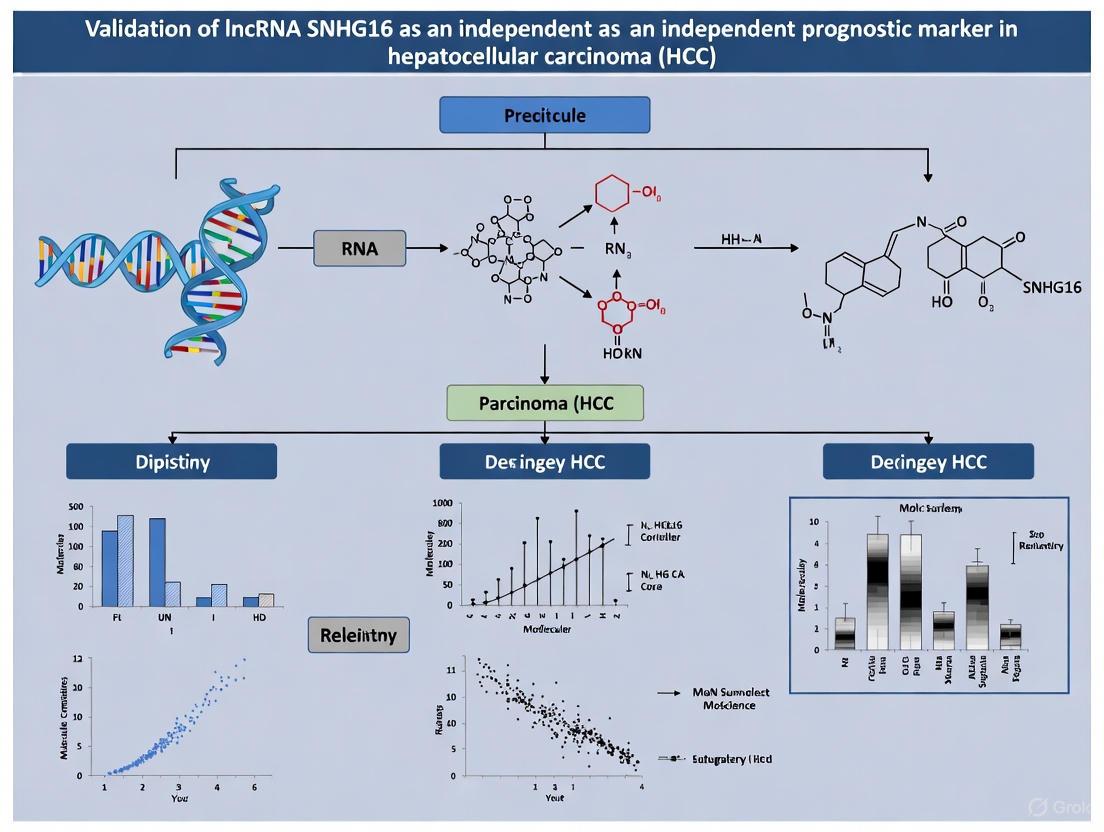
Hepatocellular carcinoma (HCC) is a lethal malignancy with a high recurrence rate and poor survival.
SNHG16 as an Independent Prognostic Marker in HCC: From Molecular Mechanisms to Clinical Application
Abstract
Hepatocellular carcinoma (HCC) is a lethal malignancy with a high recurrence rate and poor survival. The long non-coding RNA SNHG16 has emerged as a critical player in hepatocarcinogenesis. This article synthesizes evidence validating SNHG16 as an independent prognostic biomarker in HCC. We explore its foundational biology, including upregulation in tumor tissues and negative regulation of tumor suppressors like let-7c. We detail methodologies for its detection and analysis in clinical samples, address technical challenges in assay optimization, and present comprehensive validation data from TCGA datasets, meta-analyses, and clinical cohorts confirming its association with shorter overall survival, disease-free survival, and higher recurrence rates. This resource is tailored for researchers, scientists, and drug development professionals seeking to understand and exploit SNHG16's clinical potential.
The Oncogenic Role of SNHG16: Unraveling Its Biology and Function in HCC
SNHG16 Genomic Location and Structural Characteristics
Genomic Location and Basic Gene Architecture
SNHG16 (small nucleolar RNA host gene 16) is a long non-coding RNA gene located on chromosome 17 at position q25.1. The table below summarizes its fundamental genomic characteristics based on the human reference genome assembly GRCh38.p14.
| Genomic Feature | Specification |
|---|---|
| Cytogenetic Location | 17q25.1 [1] |
| Genomic Coordinates (hg38) | Chr17: 76,557,764-76,565,348 [1] |
| Strand Orientation | Positive (+) strand [2] |
| Gene Type | Long non-coding RNA (lncRNA) [1] |
| Exon Count | 4 exons [1] |
| RefSeq Status | Validated [1] |
This gene is classified as a sense-overlapping lncRNA and hosts small nucleolar RNAs within its intronic regions [2]. It is also known by several alternative identifiers, including ncRAN, ELNAT1, Nbla10727, and Nbla12061 [1].
SNHG16 as an Independent Prognostic Marker in Hepatocellular Carcinoma
The prognostic value of SNHG16 is a key focus in Hepatocellular Carcinoma (HCC) research. Altered expression of SNHG16 in tumor tissues has emerged as a powerful, independent biomarker for predicting patient outcomes.
Clinical Correlations with Patient Survival
Evidence from clinical studies demonstrates a strong and consistent association between high SNHG16 expression and unfavorable prognosis in HCC patients, as detailed in the following table.
| Clinical Parameter | Association with High SNHG16 Expression | Supporting Data |
|---|---|---|
| Overall Survival (OS) | Significantly shorter [3] | Hazard Ratio (HR) = 1.837; 95% CI: 1.283-2.629; p = 0.001 [3] |
| Disease-Free Survival (DFS) | Significantly shorter [3] | Hazard Ratio (HR) = 1.711; 95% CI: 1.144-2.559; p = 0.009 [3] |
| Tumor Recurrence | Higher recurrence rates [3] | p-value < 0.001 [3] |
This independent prognostic significance means that SNHG16 expression level provides predictive value about a patient's outcome above and beyond traditional clinical factors [4]. Research confirms that a high pre-treatment expression level of SNHG16 in HCC tumor tissues is an independent predictor of shorter overall survival and higher recurrence rates [3] [4].
Functional Role and Molecular Mechanism in HCC
SNHG16 contributes to HCC progression through its role as a competitive endogenous RNA (ceRNA), often referred to as a "molecular sponge." The primary mechanism identified in HCC involves the negative regulation of the let-7 family of microRNAs.
The following diagram illustrates this key molecular pathway:
A study analyzing data from The Cancer Genome Atlas (TCGA) specifically found that SNHG16 negatively regulates let-7c expression (r = -0.160, p = 0.002), which in turn modulates tumor progression through pathways like PI3K-Akt and other cancer-related miRNAs [3]. By sequestering let-7, SNHG16 prevents it from suppressing its target oncogenes, thereby creating a cellular environment conducive to cancer growth, increased survival, and metastasis.
Experimental Protocols for Functional Validation
To establish the role of SNHG16 in HCC and other cancers, researchers employ a range of standardized molecular biology techniques. The workflow below outlines a typical experimental process for functional validation.
Detailed Methodologies for Key Experiments
Expression Analysis by qRT-PCR: Total RNA is extracted from HCC tissues and paired adjacent normal tissues using TRIzol reagent. Reverse transcription is performed using a kit like PrimeScript RT reagent. qPCR is run with specific primers for SNHG16; common reference genes for normalization include U6 small RNA or 18S rRNA [5].
Functional Knockdown using siRNA: Two or more different small interfering RNAs (siRNAs) are designed to target distinct regions of the SNHG16 transcript. A common sequence used is: 5′-CCUGGGUAUAAUCUCACAATT-3′ (sense) and 5′-UUGUGAGAUUAUACCCAGGTT-3′ (antisense). Cells are transfected using a lipid-based transfection reagent like Lipofectamine 3000, and knockdown efficiency is confirmed via RT-qPCR 48 hours post-transfection [5].
Phenotypic Assays In Vitro:
- Cell Proliferation: Measured by Cell Counting Kit-8 (CCK-8) assay, where the optical density at 450nm is monitored every 24 hours [5].
- Cell Apoptosis: Analyzed by flow cytometry. Western blotting is used to confirm changes in apoptosis-related proteins like cleaved-caspase3 and Bcl-2 [5].
- Migration and Invasion: Assessed using transwell chamber assays, with Matrigel coating used specifically for the invasion assay [5].
Mechanism Exploration via Luciferase Reporter Assay: A fragment of SNHG16 containing the wild-type (WT) putative miRNA binding site is cloned into a reporter vector (e.g., psiCHECK2). A mutant-type (MUT) vector with the binding site seed region mutated is also created. These vectors are co-transfected with the miRNA mimic of interest (e.g., miR-1285-3p or let-7c) into cells. A significant reduction in luciferase activity in the WT group, but not the MUT group, confirms a direct interaction [5].
The Scientist's Toolkit: Research Reagent Solutions
The table below lists essential reagents and tools for investigating SNHG16 biology, based on established experimental protocols.
| Research Reagent | Function/Application | Example Product / Identifier |
|---|---|---|
| Stealth siRNA | Gene-specific knockdown for functional studies | Catalog # HSS151022 (Thermo Fisher) [6] |
| qRT-PCR Primers | Quantifying SNHG16 expression levels | Forward: 5'-TACTCTGTTGGAAGAGCCTAA-3'Reverse: 5'-GGGTGTTGGTAACGAAA-3' [5] |
| Luciferase Reporter Vector | Validating direct miRNA-lncRNA interactions | psiCHECK2 Vector (Promega) [5] |
| CRISPR/Cas13d (CasRx) | System for targeted RNA degradation and large-scale screening | Genome-integrated CasRx system [7] |
| Antibodies for Western Blot | Detecting protein-level changes in signaling pathways | Pro-caspase3, Cleaved-caspase3, Bcl-2, Bax (from Abcam) [5] |
Advanced tools like the CasRx system are particularly valuable for overcoming limitations of DNA-targeting CRISPR systems when studying lncRNAs. This platform allows for specific RNA knockdown without causing double-strand breaks in DNA or perturbing overlapping regulatory sequences, making it ideal for the functional interrogation of SNHG16 [7].
Quantitative Evidence of SNHG16 Upregulation
A consistent finding across multiple independent studies is the significant upregulation of the long non-coding RNA SNHG16 in hepatocellular carcinoma (HCC) tissues compared to normal adjacent liver tissues.
Table 1: Documented SNHG16 Upregulation in HCC
| Study Sample Type | Comparison Groups | Key Findings on Expression | Detection Method | Statistical Significance |
|---|---|---|---|---|
| 40 paired human tissues [8] | HCC vs. Adjacent non-tumor | "Expression level of SNHG16 in HCC was obviously increased" | qRT-PCR | p < 0.05 |
| HCC cell lines [8] | HCC cells (e.g., Hep3B, HepG2) vs. normal | "Significantly upregulated" in HCC cell lines | qRT-PCR | p < 0.05 |
| 370 tumors, 50 normal tissues [9] | Primary tumor vs. Normal samples | Confirmed upregulation in large cohort | RNA-seq & bioinformatics | p < 0.05 |
| 68 HCC patients [9] | HCC tumor tissues | High expression validated in clinical samples | qRT-PCR | p < 0.05 |
This dysregulated expression is not merely correlative but is functionally significant. The same study that documented upregulation also analyzed its correlation with clinical patient features, finding that high SNHG16 expression levels were closely associated with advanced TNM stage and metastasis in HCC [8].
Experimental Protocols for Validation
The foundational evidence for SNHG16 upregulation stems from well-established molecular biology techniques, primarily quantitative Reverse Transcription Polymerase Chain Reaction (qRT-PCR).
Table 2: Key Experimental Methodologies for Detection
| Experimental Step | Specific Protocol & Reagents | Function & Purpose |
|---|---|---|
| Sample Collection | HCC and adjacent non-tumor liver tissues (>2 cm from tumor edge) [8] | Provides paired samples for comparative analysis, controlling for individual patient variation. |
| RNA Isolation | Trizol reagent (Invitrogen); Quality assessment with NanoDrop ND-2000 [9] | Extracts high-quality, intact total RNA for accurate downstream quantification. |
| cDNA Synthesis | PrimeScript RT reagent Kit with gDNA Eraser (Takara) [9] | Generes complementary DNA (cDNA) from RNA templates, while removing genomic DNA contamination. |
| qRT-PCR | SYBR Green with TB Green Premix Ex Taq II (Takara) on ViiA 7 system [9] [10] | Precisely quantifies the relative abundance of SNHG16 transcripts using fluorescence. |
| Expression Analysis | ΔΔCT method with GAPDH normalization [9] [10] | Calculates fold-change in gene expression relative to a reference gene and control samples. |
Molecular Mechanisms and Functional Consequences
The upregulation of SNHG16 is mechanistically significant because it actively contributes to hepatocarcinogenesis. Research has revealed that SNHG16 functions as a competitive endogenous RNA (ceRNA), effectively "sponging" tumor-suppressive microRNAs in HCC cells.
The following diagram illustrates the central mechanism by which upregulated SNHG16 promotes HCC progression.
This miRNA sponging function is not limited to a single pathway. Separate research confirms that SNHG16 negatively regulates let-7c expression in HCC (r = -0.160, p = 0.002), establishing a broader role in repressing tumor-suppressive miRNA families [9] [3]. The let-7 family are well-known regulators of cell division and tumorigenesis, and their suppression by SNHG16 contributes to disease progression via pathways like PI3K-Akt [9].
Clinical Implications and Prognostic Correlation
The consequence of SNHG16 upregulation extends from molecular biology to direct clinical impact. Validation with clinical samples has consistently demonstrated that high expression of SNHG16 in HCC tissues is a strong predictor of aggressive disease.
Table 3: Association Between High SNHG16 Expression and Clinical Outcomes
| Clinical Metric | Study Population | Key Finding | Statistical Significance |
|---|---|---|---|
| Overall Survival | Clinical sample validation [9] | Shorter overall survival | HR = 1.837, 95% CI: 1.283-2.629, p = 0.001 |
| Disease-Free Survival | Clinical sample validation [9] | Shorter disease-free survival | HR = 1.711, 95% CI: 1.144-2.559, p = 0.009 |
| Recurrence Rate | 68 HCC Patients [9] | Higher recurrence rates | p < 0.001 |
| TNM Stage/Metastasis | 40 HCC Patients [8] | Correlated with advanced stage and metastasis | p < 0.05 |
These robust clinical correlations solidify the proposition that SNHG16 is not only dysregulated in HCC but also functions as a promising independent prognostic biomarker for recurrence and survival, effectively addressing the broader thesis of its validation [9].
Long non-coding RNA SNHG16 has emerged as a critical regulatory molecule in hepatocellular carcinoma pathogenesis, operating through complex molecular networks that influence key cancer hallmarks. This review synthesizes experimental evidence validating SNHG16's functional roles in HCC progression and its emerging promise as an independent prognostic biomarker. Originally identified as an oncogenic factor in neuroblastoma, SNHG16 is encoded by a 7571-bp region at chromosome 17q25.1 and has since been recognized as dysregulated across multiple human cancers, including HCC [11]. The mechanistic underpinnings of SNHG16 function primarily involve its role as a competing endogenous RNA (ceRNA) that sponges tumor-suppressive microRNAs, alongside protein recruitment capabilities that enable epigenetic regulation of target genes [11]. This analysis comprehensively evaluates SNHG16's impact on proliferation, apoptosis, metastasis, and chemoresistance within the HCC context, providing researchers with structured experimental data and methodological frameworks for continued investigation.
SNHG16 Expression Patterns and Clinical Prognosis in HCC
Table 1: SNHG16 Expression and Clinical Correlations in HCC Studies
| Study Reference | Sample Size (Tumor/Normal) | Expression Pattern | Detection Method | Clinical Correlations |
|---|---|---|---|---|
| Xu et al (2018) [12] | 43 pairs | Downregulated | qRT-PCR | Associated with inhibited proliferation and chemoresistance |
| Multiple subsequent studies [13] | 34-50 pairs | Upregulated | qRT-PCR | Correlated with advanced TNM stage, metastasis, shorter OS and DFS |
| TCGA analysis (2025) [9] | 370 tumors, 50 normal | Upregulated | RNA-seq | Shorter OS (HR=1.837) and DFS (HR=1.711), higher recurrence |
The expression profile of SNHG16 in HCC presents a complex picture, with conflicting evidence regarding its dysregulation pattern. Initial investigations by Xu and colleagues reported SNHG16 downregulation in HCC tissues and cell lines compared to normal controls [12]. However, numerous subsequent studies have consistently demonstrated SNHG16 upregulation in HCC, with at least five independent investigations confirming elevated expression in liver cancer tissues and cell lines [13]. This discrepancy may be attributed to variations in sample collection, RNA quality, tumor cell ratios in tissues, or differences in the specific HCC subtypes analyzed [13]. The prevailing consensus, supported by TCGA data analysis, indicates that SNHG16 is frequently upregulated in HCC and that elevated expression correlates strongly with poor prognosis, including shorter overall survival (OS) and disease-free survival (DFS) [9].
Functional Role of SNHG16 in HCC Hallmarks
Proliferation
Table 2: SNHG16 in HCC Proliferation: Mechanisms and Experimental Evidence
| Molecular Target | Experimental System | Key Findings | Functional Assays |
|---|---|---|---|
| miR-195 [8] | 40 paired HCC/normal tissues; HepG2, SMMC7721 cells | SNHG16 sponges miR-195, promoting proliferation | CCK-8, colony formation, EdU assay |
| miR-186/ROCK1 [11] | 50 paired tissues; Hep-3B, Sk-hep-1 cells | SNHG16/miR-186/ROCK1 axis enhances proliferation | CCK-8, colony formation, tumor xenografts |
| miR-302a-3p/FGF19 [11] | 34 paired tissues; Huh7, HepG2 cells | Promotes cell cycle progression | Flow cytometry, CCK-8 |
| miR-17-5p/p62/mTOR/NF-κB [11] | 30 paired tissues; HepG2 cells | Activates proliferative signaling pathways | Western blot, immunofluorescence |
SNHG16 exerts profound effects on HCC cell proliferation through multiple interconnected mechanisms. The predominant mechanism involves its function as a ceRNA, sequestering tumor-suppressive miRNAs and thereby derepressing their downstream oncogenic targets. For instance, SNHG16 directly binds to miR-195, a established tumor suppressor in HCC, and abrogates its repression of proliferative drivers [8]. Similarly, the SNHG16/miR-186/ROCK1 axis promotes cell cycle progression and proliferation in HCC models [11]. These findings are reinforced by in vivo evidence demonstrating that SNHG16 knockdown suppresses tumor growth in xenograft models, while its overexpression enhances proliferative capacity [8].
Apoptosis
SNHG16 modulates apoptotic pathways in HCC primarily through regulation of caspase activity and survival signaling networks. Evidence indicates that SNHG16 interacts with miR-340, leading to reduced levels of caspase-3 and caspase-7, key executioner caspases in the apoptotic cascade [11]. Additionally, SNHG16-mediated sponging of miR-17-5p activates the mTOR and NF-κB pathways, promoting cell survival and resistance to programmed cell death [11]. Functional experiments demonstrate that SNHG16 silencing enhances apoptotic rates in HCC cells, as quantified by flow cytometric analysis of annexin V/propidium iodide staining and increased cleavage of caspase substrates [11]. These findings position SNHG16 as a critical antagonist of apoptosis in HCC, contributing to tumor maintenance and expansion.
Metastasis and Invasion
The prometastatic functions of SNHG16 in HCC are mediated through regulation of epithelial-mesenchymal transition (EMT) and invasion-associated proteases. SNHG16 facilitates EMT by sponging miR-4500, resulting in upregulated STAT3 signaling and subsequent cadherin switching (increased N-cadherin, decreased E-cadherin) [11]. This transition enhances cell motility and invasiveness, critical steps in the metastatic cascade. Additional mechanisms include SNHG16-mediated regulation of matrix metalloproteinases (MMPs), enzymes that degrade extracellular matrix components to enable local invasion and distant metastasis [14]. In vivo studies corroborate these findings, showing that SNHG16 knockdown reduces metastatic burden in experimental models, while its overexpression accelerates metastatic progression [11].
Chemoresistance
Table 3: SNHG16-Mediated Chemoresistance in HCC
| Resistance Target | Molecular Mechanism | Experimental Validation | Therapeutic Implications |
|---|---|---|---|
| 5-fluorouracil (5-FU) [12] | Sponging of hsa-miR-93 | Luciferase reporter, rescue experiments | SNHG16 overexpression sensitizes cells to 5-FU |
| Sorafenib [11] | miR-140-5p sponging | IC50 determination, apoptosis assays | Contributes to acquired sorafenib resistance |
| Multiple chemotherapeutics [15] | Regulation of autophagy, drug efflux | Comparative viability assays | Potential target for resensitization strategies |
SNHG16 significantly influences therapeutic responses in HCC through diverse resistance mechanisms. Initial investigations demonstrated that SNHG16 overexpression inhibited 5-fluorouracil chemoresistance in HCC cells, suggesting context-dependent effects [12]. However, subsequent studies have identified SNHG16 as a driver of sorafenib resistance through its interaction with miR-140-5p [11]. Additionally, SNHG16 contributes to multidrug resistance phenotypes by modulating autophagic flux and drug efflux pathways, complicating treatment outcomes [15]. These findings highlight SNHG16's potential as a therapeutic target to resensitize HCC cells to conventional treatments, particularly in advanced disease settings where drug resistance often emerges.
Molecular Mechanisms and Signaling Pathways
SNHG16 Oncogenic Mechanisms in HCC
The molecular mechanisms through which SNHG16 promotes HCC progression are multifaceted, with the ceRNA network representing the most extensively characterized pathway. As illustrated above, SNHG16 contains multiple miRNA binding sites that enable it to function as a molecular sponge for tumor-suppressive miRNAs, including miR-195, miR-186, miR-4500, and miR-140-5p [8] [11]. This sequestration prevents these miRNAs from interacting with their mRNA targets, leading to derepression of oncogenes such as ROCK1, STAT3, and various cell cycle regulators. Beyond miRNA sponging, SNHG16 directly interacts with protein effectors, notably EZH2, facilitating its recruitment to target gene promoters such as p21 to epigenetically silence their expression [11]. This dual mechanism enables SNHG16 to simultaneously activate oncogenic pathways and repress tumor-suppressive networks, creating a permissive environment for HCC progression.
Experimental Methodologies and Reagent Solutions
Table 4: Essential Research Reagents for SNHG16 Functional Studies
| Reagent Category | Specific Examples | Experimental Application | Key Considerations |
|---|---|---|---|
| Expression Vectors | SNHG16 lentiviral overexpression vector [12] | Gain-of-function studies | Verify full-length sequence inclusion; proper promoter selection |
| Silencing Tools | siRNAs, shRNAs targeting SNHG16 [8] | Loss-of-function studies | Design multiple targets to control for off-site effects |
| Detection Assays | qRT-PCR primers (SYBR Green) [12] [8] | Expression quantification | Normalize to 18S rRNA or GAPDH; ensure primer specificity |
| Luciferase Reporters | pmirGLO-SNHG16-WT/MUT [12] | miRNA interaction validation | Include both wild-type and mutant binding site constructs |
| Cell Viability Assays | CCK-8 [12], colony formation [8] | Proliferation measurement | Use multiple assays for confirmation; optimize seeding density |
| Invasion/Migration Assays | Transwell (Matrigel) [8] | Metastatic potential | Control for proliferation effects in interpretation |
| In Vivo Models | Mouse xenografts (Huh7, Hep3B) [12] | Tumor growth and metastasis | Monitor tumor volume, weight; include appropriate controls |
Standardized experimental protocols are essential for validating SNHG16 functions in HCC. For expression analysis, quantitative RT-PCR represents the foundational methodology, with RNA extraction typically performed using TRIzol reagent and reverse transcription employing standard kits [12]. Functional validation requires both gain-of-function (lentiviral overexpression) and loss-of-function (siRNA/shRNA knockdown) approaches, with efficacy confirmed at the transcript level before phenotypic assessment [12] [8]. For mechanistic studies, luciferase reporter assays utilizing constructs containing wild-type or mutated SNHG16 sequences confirm direct miRNA interactions [12]. Proliferation measurements commonly employ CCK-8 assays at 24-hour intervals over 96 hours, supplemented with colony formation assays for long-term growth assessment [12]. Apoptosis analysis typically involves flow cytometric detection of annexin V/propidium iodide staining, while migration and invasion are quantified using Transwell assays with or without Matrigel coating [8]. In vivo validation utilizes subcutaneous or orthotopic xenograft models in immunocompromised mice, with tumor growth monitored regularly over 4-5 weeks [12].
SNHG16 emerges as a multifaceted regulator of hepatocellular carcinoma progression, with demonstrated roles in proliferation, apoptosis evasion, metastasis, and chemoresistance. Its functional impacts are mediated through complex molecular networks, predominantly involving miRNA sponging and protein interactions that collectively drive oncogenic phenotypes. While some mechanistic aspects require further elucidation, particularly regarding context-dependent functions, the accumulated evidence strongly supports SNHG16's utility as both a prognostic biomarker and potential therapeutic target in HCC. Future research directions should focus on resolving expression discrepancies across studies, developing targeted inhibition strategies, and validating clinical utility in prospective patient cohorts. The comprehensive functional profile outlined herein provides a foundation for these investigations and reinforces SNHG16's significance in the HCC molecular landscape.
Long non-coding RNA Small Nucleolar RNA Host Gene 16 (SNHG16) has emerged as a critical independent prognostic biomarker in hepatocellular carcinoma (HCC), with its expression level strongly correlating with clinical outcomes. Multiple studies have validated that elevated SNHG16 expression predicts poorer overall survival (OS) and disease-free survival (DFS) in HCC patients, establishing its significance in cancer progression and therapeutic resistance [16] [17]. The mechanistic basis for SNHG16's oncogenic function lies in its intricate regulatory networks with key microRNAs, particularly let-7c and miR-17-5p, and its interplay with critical autophagy pathways including p62 (SQSTM1). This complex cross-talk positions SNHG16 at the nexus of multiple cancer hallmarks, including sustained proliferation, evasion of cell death, and metabolic reprogramming, making it a compelling focus for therapeutic targeting in HCC management.
Table 1: Prognostic Value of SNHG16 in Hepatocellular Carcinoma
| Study Type | Patient Cohort Size | Detection Method | Key Prognostic Findings | Statistical Significance |
|---|---|---|---|---|
| Meta-analysis | 410 patients across 5 reports | RT-PCR | Worse Overall Survival (OS) and Disease-Free Survival (DFS) | HR: 2.10 for OS; HR: 3.38 for DFS [16] |
| Clinical Sample Validation | 68 HCC patients | qRT-PCR | Shorter DFS and higher recurrence rates | HR: 1.711 for DFS; p < 0.001 for recurrence [17] |
| TCGA Data Analysis | 370 tumors, 50 normal samples | RNA sequencing | Negative correlation with let-7c expression | r = -0.160, p = 0.002 [17] |
Molecular Interactions: SNHG16, let-7c, and miR-17-5p
The SNHG16/let-7c Regulatory Axis
The long non-coding RNA SNHG16 functions as a competing endogenous RNA (ceRNA) that negatively regulates let-7c expression in hepatocellular carcinoma. Bioinformatics analysis of The Cancer Genome Atlas (TCGA) data combined with clinical validation has demonstrated a statistically significant negative correlation between SNHG16 and let-7c expression (r = -0.160, p = 0.002) in HCC tissues [17]. This inverse relationship has profound clinical implications, as high SNHG16 expression coupled with let-7c suppression is associated with shorter disease-free survival (HR = 1.711, 95% CI: 1.144-2.559, p = 0.009) and higher recurrence rates (p < 0.001) in HCC patients [17].
The let-7 family represents evolutionarily conserved microRNAs that regulate fundamental cellular processes, with let-7c serving as a key tumor suppressor in HCC pathogenesis. Let-7 miRNAs exhibit coordinated regulation of multiple oncogenic pathways, including the PI3K-Akt signaling cascade, which represents a central node in cancer progression [17]. Through its sponge function, SNHG16 sequesters let-7c, thereby preventing it from targeting its downstream mRNA targets, which ultimately facilitates tumor progression and metastasis in HCC.
miR-17-5p in Autophagy and Cancer Progression
miR-17-5p, a component of the oncogenic miR-17-92 cluster, plays a dichotomous role in cancer biology, functioning as both an oncogene and tumor suppressor depending on cellular context [18]. This miRNA demonstrates cell cycle-regulated expression, with peak levels observed during the G2/M phase, positioning it as a key regulator of cell proliferation [18]. In glioma cells, miR-17-5p has been identified as a direct regulator of autophagy through targeting beclin-1, a critical initiator of autophagosome formation [19].
The functional significance of miR-17-5p extends to therapeutic resistance, as its expression is significantly reduced (fold change = -4.21) in serum samples from glioma patients following radiotherapy [19]. This downregulation has clinical relevance, with statistical analysis revealing that reduced miR-17-5p levels positively associate with advanced clinical stage, increased incidence of relapse, and poor tumor differentiation [19]. Restoration of miR-17-5p expression sensitizes tumor cells to irradiation both in vitro and in vivo, highlighting its potential as a therapeutic target for overcoming radioresistance [19].
Table 2: Functional Roles of Key Network Components in HCC
| Network Component | Biological Function | Expression in HCC | Clinical Associations |
|---|---|---|---|
| SNHG16 | ceRNA/sponge for let-7c; promotes proliferation, inhibits apoptosis | Upregulated | Larger tumor size, metastasis, advanced TNM stage, poor survival [16] [17] |
| let-7c | Tumor suppressor; regulates PI3K-Akt pathway; controls cell differentiation | Downregulated (by SNHG16) | Better differentiation; lower recurrence when expressed [17] |
| miR-17-5p | Regulates beclin-1-mediated autophagy; cell cycle progression at G1/S | Context-dependent | Advanced stage, relapse, poor differentiation (when low) [18] [19] |
| p62/SQSTM1 | Autophagy adapter protein; nutrient sensing; oxidative stress response | Dysregulated | Aggressive disease (when accumulated) [20] |
The p62/SQSTM1 Pathway and Autophagy Interface
p62 in Autophagy Regulation
p62 (also known as SQSTM1) serves as a selective autophagy adapter protein that plays an integral role in cellular homeostasis through its participation in the degradation of ubiquitinated proteins, organelles, and intracellular pathogens. This multifunctional protein acts as a signaling hub that integrates multiple cellular processes, including the Keap1-Nrf2 pathway for oxidative stress response, NF-κB signaling for inflammation, and mTORC1 activation for nutrient sensing [20]. Through its interaction with microtubule-associated protein light chain 3 (LC3), p62 facilitates the encapsulation of cargo into autophagosomes, thereby enabling their subsequent lysosomal degradation.
The regulation of p62 occurs primarily through transcriptional and post-translational mechanisms, with its expression and activity being influenced by various microRNAs and autophagy status. Under normal autophagic flux, p62 levels are maintained at low levels due to continuous degradation; however, impairment of autophagy leads to pronounced accumulation of p62, which can drive tumorigenesis through sustained activation of Nrf2 and other pro-survival pathways [20]. This accumulation has been documented in various cancers, including HCC, where it correlates with disease progression and therapeutic resistance.
Cross-talk Between let-7, miR-17-5p, and Autophagy Pathways
The regulatory networks involving let-7 and miR-17-5p converge on autophagy mechanisms through both direct and indirect pathways. Let-7 microRNAs promote neuronal autophagy by coordinately suppressing components of the amino acid sensing pathway, particularly through targeting Slc7a5, which forms part of a bidirectional amino acid transporter that exchanges intracellular glutamine for extracellular leucine to promote mTORC1 activation [21]. This regulation establishes let-7 as a central modulator of nutrient homeostasis and proteostasis in higher organisms.
Meanwhile, miR-17-5p directly targets beclin-1, a key initiator of autophagosome formation, thereby functioning as a potent suppressor of autophagy [19]. This targeting has been experimentally validated through luciferase reporter assays, confirming direct binding of miR-17-5p to the 3' untranslated region of beclin-1 mRNA [19]. The functional consequence of this interaction is significant, as exotic expression of miR-17-5p decreases autophagy activity in vitro, while in nude mice, miR-17-5p upregulation sensitizes xenograft tumors to irradiation and suppresses irradiation-induced autophagy [19].
Diagram 1: SNHG16 Regulatory Network in HCC. This diagram illustrates the complex interactions between SNHG16, key microRNAs (let-7c, miR-17-5p), autophagy components (p62, beclin-1, mTORC1), and their collective impact on cancer hallmarks.
Experimental Methodologies for Network Validation
Core Protocol: Luciferase Reporter Assay for miRNA-target Validation
The luciferase reporter assay represents a gold standard method for validating direct interactions between microRNAs and their target genes. For investigating the miR-17-5p/beclin-1 interaction, the following detailed protocol can be employed [19]:
Procedure:
- Vector Construction: Clone the wild-type 3'-untranslated region (3'-UTR) of human beclin-1 containing the putative miR-17-5p binding site into a pmirGLO Dual-Luciferase miRNA Target Expression Vector downstream of the firefly luciferase gene.
- Mutant Control: Generate a mutant construct with site-directed mutagenesis of the seed region in the miR-17-5p binding site.
- Cell Transfection: Co-transfect HEK293T or relevant cancer cells with either miR-17-5p mimic or negative control miRNA alongside the luciferase reporter constructs using Lipofectamine 3000.
- Luciferase Measurement: After 48 hours post-transfection, harvest cells and measure both firefly and Renilla luciferase activities using the Dual-Luciferase Reporter Assay System.
- Normalization and Analysis: Normalize firefly luciferase activity to Renilla luciferase activity for transfection efficiency control. Compare relative luciferase activity between miR-17-5p mimic and control groups.
Expected Results: A significant reduction in luciferase activity (typically >40%) in cells co-transfected with wild-type beclin-1 3'-UTR and miR-17-5p mimic compared to control, with no significant reduction observed with the mutant construct, confirms direct binding.
Autophagy Flux Analysis Using GFP-LC3 Puncta Formation
Monitoring autophagy flux through GFP-LC3 translocation provides a quantitative measure of autophagosome formation and degradation [21]:
Procedure:
- Stable Cell Line Generation: Establish stable cell lines expressing GFP-LC3 using lentiviral transduction and antibiotic selection.
- Treatment Conditions: Plate GFP-LC3 cells on glass coverslips and treat with experimental modulators (e.g., miR-17-5p mimic, let-7 mimic, or respective controls).
- Lysosomal Inhibition: Include parallel treatments with lysosomal inhibitors (e.g., 20mM ammonium chloride or 100μM chloroquine) for 4 hours before fixation to block autophagosome degradation and measure autophagic flux.
- Fixation and Mounting: Fix cells with 4% paraformaldehyde for 15 minutes at room temperature, then mount with anti-fade mounting medium containing DAPI.
- Image Acquisition and Quantification: Capture confocal images using a 63× oil objective. Count GFP-LC3 puncta per cell in at least 50 cells per condition using automated image analysis software.
Interpretation: Increased GFP-LC3 puncta formation in the presence of lysosomal inhibitors indicates active autophagic flux, while changes in this pattern following miRNA manipulation demonstrate regulatory effects on autophagy.
Table 3: Key Experimental Approaches for Network Analysis
| Methodology | Key Applications | Critical Reagents | Output Measurements |
|---|---|---|---|
| Luciferase Reporter Assay | Validate direct miRNA-mRNA interactions | pmirGLO vector; miRNA mimics; dual-luciferase assay kit | Normalized luciferase activity (Firefly/Renilla) [19] |
| GFP-LC3 Puncta Formation | Quantify autophagosome formation and flux | GFP-LC3 plasmid; lysosomal inhibitors (chloroquine); confocal microscopy | Number of GFP-LC3 puncta per cell; autophagic flux index [21] |
| qRT-PCR for miRNA/lncRNA | Measure expression levels of non-coding RNAs | TaqMan MicroRNA assays; specific primers; RNA extraction kits | Relative expression (2^-ΔΔCt method); normalized to U6 or GAPDH [19] [17] |
| Western Blot Analysis | Detect protein levels of pathway components | Antibodies against p62, beclin-1, LC3, mTOR; RIPA lysis buffer | Protein expression relative to loading controls (e.g., actin) [19] |
Research Reagent Solutions for Experimental Implementation
Essential Molecular Biology Tools
Non-coding RNA Analysis:
- TaqMan MicroRNA Assays: Specifically designed for accurate quantification of mature miRNA levels (e.g., has-let-7c-5p, hsa-miR-17-5p) using stem-loop RT-PCR technology, providing superior specificity and sensitivity compared to SYBR Green-based methods [19].
- LNA-enhanced Detection Probes: Locked Nucleic Acid (LNA) technology provides enhanced affinity and specificity for detecting challenging targets like lncRNAs, with applications in ISH and qPCR for SNHG16 quantification in tissue sections [22].
- Dual-Luciferase Reporter Systems: Comprehensive kits containing both lysis buffer and substrates for sequential measurement of firefly and Renilla luciferase activities, enabling normalization for transfection efficiency in target validation studies [19].
Cell-based Functional Assays:
- Premature Fluorescent Protein-LC3 Constructs: Ready-to-use GFP-LC3 or mRFP-GFP-LC3 plasmids for monitoring autophagosome formation and autophagic flux through live-cell imaging or fixed-cell analysis [21].
- Selective Autophagy Modulators: Pharmacological agents including mTOR inhibitors (rapamycin, 100nM) for induction, and lysosomal inhibitors (chloroquine, 50μM; bafilomycin A1, 100nM) for blocking autophagic degradation to measure flux [20] [21].
- Antibody Panels for Autophagy Markers: Validated antibodies for Western blot detection of key autophagy proteins including p62/SQSTM1, LC3A/B, beclin-1, and mTOR pathway components, with recommended working concentrations and validation data [19].
Specialized Reagents for Mechanism Exploration
Gene Expression Manipulation:
- Chemically Modified miRNA Mimics and Inhibitors: Advanced RNA molecules with 2'-O-methyl modifications for enhanced stability and reduced immunostimulation, available for both gain-of-function (mimics) and loss-of-function (inhibitors) studies for let-7c and miR-17-5p [19] [17].
- CRISPR Activation/Interference Systems: Catalytically dead Cas9 (dCas9) fused to transcriptional activators (VP64-p65-Rta) or repressors (KRAB) for precise manipulation of SNHG16 expression without altering genomic sequence, enabling functional studies of lncRNA regulation [22].
- SNHG16-specific FISH Probes: Fluorescently labeled oligonucleotide probes optimized for single-molecule RNA fluorescence in situ hybridization (smFISH), allowing spatial localization and quantification of SNHG16 in fixed cells and tissue sections [22].
Pathway Analysis Tools:
- mTORC1 Activity Biosensors: Fluorescent reporter constructs that translocate in response to mTORC1 activation, enabling real-time monitoring of pathway activity in live cells following miRNA manipulation or SNHG16 modulation.
- Co-immunoprecipitation Kits for p62 Complexes: Optimized buffers and protocols for immunoprecipitation of endogenous p62 and its binding partners (Keap1, LC3, ubiquitin) to study protein-protein interactions in autophagy regulation.
Concluding Perspectives on Therapeutic Targeting
The intricate regulatory network connecting SNHG16, let-7c, miR-17-5p, and the p62 pathway represents a promising therapeutic frontier in hepatocellular carcinoma. The compelling clinical correlation between SNHG16 overexpression and poor prognosis, coupled with its mechanistic role as a molecular sponge for tumor-suppressive miRNAs, positions this lncRNA as an attractive target for intervention. Future therapeutic strategies may include antisense oligonucleotides targeting SNHG16, miRNA replacement therapies for let-7c and miR-17-5p, and small molecule modulators of the autophagy pathway. The experimental methodologies outlined provide a robust framework for validating these targeting approaches and advancing them toward clinical application. As research continues to unravel the complexity of these regulatory networks, the potential for developing precision medicine approaches for HCC patients continues to grow, offering hope for improved outcomes in this challenging malignancy.
Detecting and Analyzing SNHG16: Techniques and Clinical Correlations
Within the rapidly advancing field of Hepatocellular Carcinoma (HCC) research, the accurate detection and quantification of molecular biomarkers like the long non-coding RNA (lncRNA) SNHG16 is paramount. Its validation as an independent prognostic marker hinges on the precise application and interpretation of key molecular techniques [9] [4] [23]. This guide provides an objective comparison of three cornerstone methodologies—qRT-PCR, RNA Sequencing (RNA-seq), and In Situ Hybridization (ISH)—framed within the context of lncRNA SNHG16 research. We summarize performance data, detail experimental protocols, and contextualize findings within the broader effort to establish SNHG16's clinical utility for predicting patient outcomes such as survival and recurrence [9] [23].
Technical Comparison of Detection Methods
The following table offers a systematic comparison of the three primary techniques used in detecting and quantifying lncRNA SNHG16, highlighting their respective strengths and limitations.
Table 1: Comparison of Key Techniques for lncRNA SNHG16 Detection
| Feature | qRT-PCR | RNA Sequencing (RNA-seq) | In Situ Hybridization (ISH) |
|---|---|---|---|
| Detection Principle | Fluorescence-based amplification of cDNA using sequence-specific primers and probes [24]. | High-throughput sequencing of all RNA transcripts in a sample [24] [25]. | Hybridization of labeled nucleic acid probes to specific RNA sequences within intact tissue sections [26]. |
| Primary Application | Targeted, high-sensitivity quantification of known transcripts like SNHG16 [9] [27]. | Discovery of novel transcripts, splice variants, and global expression profiling without prior sequence knowledge [24] [25]. | Spatial localization of RNA within the context of tissue architecture and lesions [26] [4]. |
| Throughput | High for a limited number of pre-defined targets [24]. | Very high, capable of profiling the entire transcriptome simultaneously [24]. | Low to medium, typically one to a few targets per tissue section. |
| Sensitivity & Dynamic Range | High sensitivity and broad dynamic range, suitable for detecting low-abundance RNAs [24]. | High sensitivity, though performance can be poorer for low-expressed or small genes compared to qPCR [25]. | High spatial sensitivity; can detect RNA at the single-cell level [26]. |
| Quantification | Highly quantitative, using Cq values and the 2^(-ΔΔCt) method for relative expression [9] [27]. | Quantitative, using read counts (e.g., TPM, FPKM) [25]. | Semi-quantitative; can be chromogenic (color intensity) or fluorescent (signal intensity) [26]. |
| Spatial Context | No. Requires RNA extraction, destroying tissue architecture. | No. Requires RNA extraction, destroying tissue architecture. | Yes. Preserves spatial and morphological information, showing where the RNA is expressed [26] [4]. |
| Key Advantage | Gold standard for validation; high reproducibility, sensitivity, and cost-effectiveness for targeted studies [24] [25]. | Unbiased, hypothesis-free approach for whole-transcriptome analysis and novel discovery [24]. | Retains crucial spatial information, allowing correlation of SNHG16 expression with specific cell types or tumor regions [26] [4]. |
| Key Disadvantage | Limited to known targets; requires pre-designed assays [24]. | Higher cost, complex data analysis, and potential for technical artifacts (e.g., mapping issues for polymorphic genes) [25] [28]. | No absolute quantification; longer procedure time; optimization of probes and protocols is critical [26]. |
Performance Data in SNHG16 and HCC Research
Concordance Between Broad and Targeted Methods
qRT-PCR and RNA-seq generally show high correlation in gene expression measurements. One benchmarking study reported high fold-change correlations (R² > 0.92) between RNA-seq workflows and qPCR data [25]. However, a small but specific set of genes can show inconsistent results between the two technologies, underscoring the importance of validating RNA-seq findings with an independent method like qPCR [25]. This is particularly relevant for highly polymorphic regions like the Major Histocompatibility Complex (MHC), where moderate correlations (rho between 0.2 and 0.53) have been observed between qPCR and RNA-seq expression estimates [28].
SNHG16-Specific Validation Data
Multiple studies have utilized these techniques to establish the prognostic role of SNHG16 in HCC. The following table summarizes key experimental findings:
Table 2: Key Experimental Findings on lncRNA SNHG16 in HCC
| Detection Method | Key Finding on SNHG16 | Study Details | Statistical Significance |
|---|---|---|---|
| qRT-PCR | High SNHG16 expression in tumor tissues is associated with shorter survival and higher recurrence [9]. | Analysis of 68 HCC clinical tissue samples. | Shorter Disease-Free Survival (HR = 1.711, 95% CI: 1.144–2.559, p = 0.009); Shorter Overall Survival (HR = 1.837, 95% CI: 1.283–2.629, p = 0.001) [9]. |
| qRT-PCR | High SNHG16 expression correlates with poor tumor characteristics (portal vein tumor thrombus, high AFP, multiple lesions) [23]. | Analysis of 158 HCC patients undergoing liver transplantation. | SNHG16 was an independent risk factor for tumor recurrence after transplantation (HR = 2.315, 95% CI: 1.212–4.422, p = 0.011) [23]. |
| RNA-seq & Bioinformatics | SNHG16 negatively regulates let-7c expression, a tumor-associated miRNA [9]. | Analysis of The Cancer Genome Atlas (TCGA) data and clinical sample validation. | Significant negative correlation (r = -0.160, p = 0.002) [9]. |
| In Situ Hybridization (ISH) | LINC00294 (a lncRNA) high expression is an independent predictor of shorter OS in HCC [4]. | ISH-based detection in 94 retrospectively recruited HCC patients. | (HR, 2.434; 95% CI, 1.143–3.185; p = 0.021) [4]. Shows the utility of ISH for prognostic marker validation. |
Note on Contradictory Findings: While multiple studies report a strong association between SNHG16 overexpression and poor prognosis in HCC [9] [23], some studies, such as one involving 22 patients, found that SNHG16 overexpression was not significantly associated with survival or clinicopathological features [27]. This highlights the need for rigorous validation across larger, independent cohorts.
Experimental Protocols for Key Workflows
Protocol: RNA Extraction and qRT-PCR for SNHG16
This is a standard protocol for quantifying SNHG16 expression from frozen tissue, as used in multiple studies [9] [27].
RNA Extraction:
cDNA Synthesis:
- Use 20-200 ng of total RNA for reverse transcription.
- Perform cDNA synthesis using a cDNA synthesis kit with random hexamers and/or oligo-dT primers. For miRNA analysis (e.g., let-7c), a specific miRNA RT kit is used [9].
Quantitative Real-Time PCR:
- Prepare reaction mix containing cDNA, SYBR Green or TaqMan Master Mix, and forward/reverse primers.
- Primer Sequences:
- Run the reaction in a real-time PCR instrument (e.g., Roche LightCycler 96) with the following typical cycling conditions: 95°C for 10 min (initial denaturation), followed by 40 cycles of 95°C for 15 sec and 60°C for 1 min.
- Analyze data using the comparative Cq (2^(-ΔΔCt)) method to determine relative SNHG16 expression normalized to a housekeeping gene like GAPDH [9] [27].
Protocol: Fluorescent RNA In Situ Hybridization (FISH)
This protocol is adapted from studies comparing ISH techniques for virus detection, where FISH showed superior detection rates [26]. The principles apply directly to lncRNA detection in FFPE tissues.
Sample Preparation:
- Cut 2–3 µm thick sections from Formalin-Fixed Paraffin-Embedded (FFPE) HCC tissue blocks.
- Deparaffinize and rehydrate the sections using xylene and a graded ethanol series.
Proteolytic Digestion:
- Treat sections with a controlled proteolytic digestion (e.g., with proteinase K) to unmask target RNA sequences. This step is critical and requires optimization to avoid under- or over-digestion [26].
Hybridization:
- Apply a fluorescently labeled, SNHG16-specific RNA probe mix (e.g., from the ViewRNA ISH Tissue Assay Kit).
- Incubate slides at a specific hybridization temperature (e.g., 40°C) to allow the probe to bind to the target SNHG16 RNA. The use of a probe mix designed for signal amplification is a major benefit of this method [26].
Signal Amplification and Detection:
- Perform a series of signal amplification steps as per the kit's protocol to enhance the fluorescent signal.
- Use Fast Red as a chromogenic substrate that can also be visualized via fluorescence microscopy [26].
Visualization and Analysis:
- Counterstain with DAPI to visualize cell nuclei.
- Analyze slides under a fluorescence microscope. The positive signal for SNHG16 will appear as distinct red puncta within the cytoplasm and/or nucleus of cells. The cell-associated positive area can be quantified using image analysis software [26].
Visualizing Workflows and Molecular Relationships
Experimental Workflow for Validating a Prognostic lncRNA
This diagram illustrates the typical integrated workflow for discovering and validating a lncRNA like SNHG16 as a prognostic marker in HCC.
Diagram 1: Integrated Workflow for lncRNA Biomarker Validation
SNHG16 Regulatory Axis in HCC
This diagram summarizes the key molecular mechanism of SNHG16, as identified through a combination of RNA-seq and qRT-PCR validation [9].
Diagram 2: SNHG16 Regulatory Axis in HCC Progression
Research Reagent Solutions
The following table lists essential materials and reagents commonly used in the featured experiments for SNHG16 and lncRNA research.
Table 3: Key Research Reagents for lncRNA SNHG16 Studies
| Reagent / Kit | Function / Application | Example Use Case |
|---|---|---|
| Trizol Reagent | Monophasic solution of phenol and guanidine isothiocyanate for the effective isolation of total RNA from cells and tissues. | Total RNA extraction from HCC tissue samples prior to qRT-PCR or RNA-seq library prep [9] [27]. |
| cDNA Synthesis Kit | Contains reverse transcriptase and other components to synthesize first-strand cDNA from an RNA template. | Generation of cDNA from total RNA for subsequent qRT-PCR analysis of SNHG16 [9] [27]. |
| SYBR Green or TaqMan Master Mix | Optimized buffers, enzymes, and dyes for accurate and sensitive detection of amplified DNA during qPCR. | Quantitative detection of SNHG16 amplification in real-time during qRT-PCR runs [9] [27]. |
| ViewRNA ISH Tissue Assay Kit | A sophisticated ISH kit that uses proprietary probe design and branched DNA (bDNA) technology for high-sensitivity signal amplification. | Detection and spatial localization of SNHG16 RNA in FFPE HCC tissue sections with single-cell resolution [26]. |
| Ion AmpliSeq Transcriptome Kit / RNA-seq Kits | Kits for preparing RNA-seq libraries, often in a targeted manner to enrich for transcripts of interest, reducing cost and input RNA. | Whole-transcriptome or targeted RNA sequencing for the unbiased discovery of dysregulated lncRNAs like SNHG16 [24]. |
The identification of robust prognostic biomarkers is a critical objective in hepatocellular carcinoma (HCC) research, where high recurrence rates contribute significantly to poor patient outcomes. Long non-coding RNAs (lncRNAs) have emerged as promising candidates, with SNHG16 recently validated as an independent prognostic marker through integrated analysis of The Cancer Genome Atlas (TCGA) and StarBase datasets. This comparison guide examines the bioinformatics pipelines that enable researchers to mine these rich datasets effectively, providing objective performance comparisons and supporting experimental data. The validation of SNHG16 exemplifies how these computational tools can yield biologically and clinically significant insights, ultimately contributing to improved prognostic stratification and potential therapeutic targeting in HCC.
Table 1: Core Database Characteristics for lncRNA Biomarker Research
| Database | Primary Content | Sample Types | Key Applications | Access Method |
|---|---|---|---|---|
| TCGA | Clinical data, RNA-seq, methylation, survival data | Tumor and matched normal tissues | Differential expression, survival analysis, multi-omics integration | GDC Data Portal, UCSC Xena |
| StarBase | miRNA-lncRNA, miRNA-mRNA, RBP-RNA interactions | Pan-cancer (including HCC) | ceRNA network construction, interaction validation | Web interface, programmatic access |
Database Architectures and Analytical Capabilities
TCGA Data Structure and Access Pathways
The TCGA database provides comprehensive multi-omics data for various cancer types, including Liver Hepatocellular Carcinoma (LIHC). The mRNA analysis pipeline within TCGA employs a standardized approach where STAR performs alignment using a two-pass method with splice junction detection [29]. This workflow generates genomic BAM files containing both aligned and unaligned reads, with quality assessment performed pre-alignment with FASTQC and post-alignment with Picard Tools [29]. For expression quantification, TCGA provides multiple transformation formats: raw read counts, FPKM, FPKM-UQ, and TPM, offering researchers flexibility in normalization approaches based on their analytical requirements [29]. The current pipeline uses GENCODE v36 for gene annotation, ensuring comprehensive lncRNA annotation alongside protein-coding genes.
Accessing TCGA data typically begins with the GDC Data Portal (https://portal.gdc.cancer.gov/repository), which provides 370 primary HCC tumors and 50 normal samples in the LIHC cohort [9]. Alternatively, platforms like UCSC Xena (https://xenabrowser.net) offer normalized and integrated TCGA data with user-friendly interfaces for initial exploration [30]. For prognostic biomarker studies, researchers must merge expression matrices with corresponding clinical metadata, including overall survival (OS), disease-free survival (DFS), tumor stage, grade, and other relevant pathological parameters.
StarBase Functional Genomics and Interaction Networks
StarBase (http://starbase.sysu.edu.cn) serves as a fundamental resource for decoding interaction networks from CLIP-Seq data. The platform specializes in identifying miRNA-ncRNA, miRNA-mRNA, and RBP-RNA interactions, making it particularly valuable for constructing competing endogenous RNA (ceRNA) networks [9]. In the context of SNHG16 validation, researchers utilized StarBase to retrieve lncRNAs that regulate let-7 family miRNAs, identifying SNHG16 as a significant interactor through rigorous statistical filtering [9].
The database incorporates data from >100 CLIP-Seq datasets, enabling pan-cancer analysis of post-transcriptional regulation. For interaction validation, StarBase provides multiple evidence levels, with the SNHG16-let-7c relationship demonstrating a significant negative correlation (r = -0.160, p = 0.002) in HCC samples [9]. This statistical approach, combined with experimental validation, strengthens the reliability of interactions identified through the platform.
Experimental Design and Analytical Workflows
Differential Expression Analysis and Functional Enrichment
The initial step in lncRNA biomarker discovery involves identifying differentially expressed genes between tumor and normal tissues. As demonstrated in multiple studies, the R package Limma applies effectively for this purpose, utilizing criteria such as log₂ fold change > 1.5-2 and adjusted p-value < 0.01 with FDR control [31] [30]. In the SNHG16 study, researchers analyzed 12 let-7 family members, identifying let-7c as significantly downregulated in HCC tissues [9].
Following identification of differentially expressed lncRNAs and mRNAs, functional enrichment analysis provides biological context. The R package clusterProfiler facilitates Gene Ontology (GO) and Kyoto Encyclopedia of Genes and Genomes (KEGG) analyses, revealing that let-7c regulates tumor progression via pathways like PI3K-Akt and other cancer-related signaling cascades [9] [32]. These analyses help establish the potential mechanistic roles of candidate biomarkers in hepatocarcinogenesis.
Figure 1: Bioinformatics workflow for lncRNA biomarker validation integrating TCGA and StarBase data.
Survival Analysis and Prognostic Model Development
Survival analysis represents a critical component for establishing prognostic significance. The Kaplan-Meier method with log-rank test effectively compares survival distributions between high and low expression groups [9] [30]. In the SNHG16 validation study, patients with high SNHG16 expression demonstrated significantly shorter disease-free survival (HR = 1.711, 95% CI: 1.144-2.559, p = 0.009) and overall survival (HR = 1.837, 95% CI: 1.283-2.629, p = 0.001) [9].
For multivariate assessment, Cox proportional hazards regression determines whether a lncRNA serves as an independent prognostic factor after adjusting for clinical covariates like age, tumor stage, and differentiation status [4]. The SNHG16 study employed both univariate and multivariate Cox regression, confirming its independent prognostic value [9]. Additionally, LASSO regression helps prevent overfitting when constructing multi-gene prognostic signatures, enhancing the clinical applicability of developed models.
SNHG16 Validation: A Case Study in Integrated Bioinformatics
Molecular Mechanisms and Pathogenic Significance
The lncRNA SNHG16 (small nucleolar RNA host gene 16) functions as a competing endogenous RNA that negatively regulates let-7c expression in HCC [9]. This regulatory relationship follows the ceRNA hypothesis, where SNHG16 acts as a molecular sponge for let-7c, sequestering it and preventing it from binding to its target mRNAs. Let-7 family miRNAs are well-established tumor suppressors that regulate the timing of cell division, with aberrant expression linked to tumorigenesis and progression [9] [3].
Through its regulation of let-7c, SNHG16 influences key oncogenic pathways in HCC, including the PI3K-Akt signaling pathway, which plays a crucial role in cell survival, proliferation, and metabolism [9] [32]. The negative correlation between SNHG16 and let-7c (r = -0.160, p = 0.002) established through StarBase analysis and validated in clinical samples demonstrates how integrated bioinformatics can reveal functionally significant interactions with clinical implications [9].
Table 2: Experimental Validation Data for SNHG16 as Prognostic Biomarker in HCC
| Validation Method | Sample Size | Key Findings | Statistical Significance |
|---|---|---|---|
| TCGA Bioinformatics Analysis | 370 tumors, 50 normals | SNHG16 negatively correlates with let-7c | r = -0.160, p = 0.002 |
| Clinical Sample qRT-PCR | 68 HCC patients | High SNHG16 associated with recurrence | p < 0.001 |
| Survival Analysis | 68 HCC patients | High SNHG16 predicts shorter DFS | HR = 1.711, p = 0.009 |
| Multivariate Cox Regression | 68 HCC patients | SNHG16 independent prognostic factor | HR = 1.837, p = 0.001 |
Methodological Framework for Experimental Validation
The validation of SNHG16 followed a rigorous methodological framework that integrated computational predictions with experimental confirmation. After identifying SNHG16 as a let-7c regulator through StarBase mining, researchers validated its expression in 68 HCC clinical samples using qRT-PCR [9]. This experimental confirmation is essential to verify bioinformatics predictions.
For RNA extraction from tumor tissues, the study employed TRIzol reagent (Invitrogen), with RNA quality assessed using a NanoDrop ND-2000 spectrophotometer [9]. For lncRNA detection, first-strand cDNA synthesis used the PrimeScript RT reagent Kit with gDNA Eraser (Takara), followed by SYBR Green real-time PCR with TB Green Premix Ex TaqII (Takara) [9]. This methodological detail highlights the importance of specific reagent selections in generating reproducible results.
Figure 2: SNHG16 regulatory axis in hepatocellular carcinoma pathogenesis.
Comparative Performance of Bioinformatics Approaches
Alternative Databases and Analytical Platforms
While TCGA and StarBase provide foundational resources, several complementary platforms enhance lncRNA biomarker discovery. GEPIA2 and UALCAN offer user-friendly interfaces for TCGA data analysis with pre-processed expression profiles and survival analysis capabilities [33]. The ENCORI platform extends interaction network analysis, incorporating additional data sources beyond StarBase [33].
For DNA methylation integration, MethSurv enables comprehensive analysis of methylation patterns and their association with patient survival, providing epigenetic context to expression findings [33]. In the case of CBX1, another potential biomarker in HCC, MethSurv revealed that both hypermethylated and hypomethylated probes significantly associated with expression and poor prognosis [33]. This multi-omics approach strengthens biomarker validation efforts.
Performance Metrics and Validation Standards
The strength of a prognostic biomarker depends on rigorous statistical validation and independent cohort verification. The SNHG16 study demonstrated compelling hazard ratios for both disease-free survival (HR = 1.711) and overall survival (HR = 1.837), with narrow confidence intervals indicating precision in effect estimation [9]. Furthermore, the incorporation of 68 clinical samples with follow-up until death or data closure in May 2023 provided real-world validation of computational predictions [9].
The increasing adoption of lncRNAs as independent prognostic biomarkers is evidenced by numerous studies validating single and combination lncRNA signatures [4]. For instance, Wang et al. demonstrated that LINC00152 independently predicted shorter overall survival (HR, 2.524; 95% CI, 1.661-4.015; P = 0.001) in HCC patients [4]. Similarly, Zhou et al. found HOXC13-AS independently associated with shorter OS (HR, 2.894; 95% CI, 1.183-4.223; P = 0.015) and RFS (HR, 3.201; 95% CI, 1.372-4.653; P = 0.004) [4]. These consistent findings across independent cohorts strengthen the evidentiary basis for lncRNA biomarkers in HCC.
Table 3: Essential Research Reagents and Computational Tools for lncRNA Biomarker Research
| Category | Specific Tool/Reagent | Application Purpose | Key Features |
|---|---|---|---|
| RNA Extraction | TRIzol Reagent (Invitrogen) | Total RNA isolation from tissues | Maintains RNA integrity, removes contaminants |
| Quality Control | NanoDrop ND-2000 | RNA quantification and quality assessment | Measures concentration, A260/280 ratio |
| cDNA Synthesis | PrimeScript RT Kit with gDNA Eraser | Reverse transcription for lncRNA | Includes genomic DNA removal step |
| qPCR Detection | TB Green Premix Ex TaqII | SYBR Green-based quantification | High sensitivity, reproducible results |
| Data Analysis | R/Bioconductor Limma package | Differential expression analysis | Linear models, multiple testing correction |
| Survival Analysis | R survival package | Kaplan-Meier, Cox regression | Time-to-event analysis, hazard ratios |
| Interaction Network | StarBase database | miRNA-lncRNA interaction prediction | CLIP-Seq supported, pan-cancer scope |
The integration of TCGA and StarBase datasets provides a powerful framework for identifying and validating lncRNA biomarkers in hepatocellular carcinoma. The case of SNHG16 exemplifies how bioinformatics pipelines can yield clinically significant prognostic markers, with rigorous statistical validation confirming its independent prognostic value for HCC recurrence and survival. As the field advances, multi-omics integration combining transcriptomic, epigenetic, and proteomic data will further enhance biomarker discovery, ultimately improving risk stratification and personalized treatment approaches for HCC patients. The methodologies and validation standards established through SNHG16 research provide a template for future lncRNA biomarker development, emphasizing the importance of integrating computational predictions with experimental confirmation across independent patient cohorts.
Within the broader objective of validating the long non-coding RNA (lncRNA) SNHG16 as an independent prognostic marker in hepatocellular carcinoma (HCC), analyzing its relationship with specific clinicopathological features is a critical step. These features—tumor size, metastasis, and TNM stage—form the bedrock of cancer staging and therapeutic decision-making. Evidence mounting from diverse experimental protocols and patient cohorts indicates that elevated SNHG16 expression is not a passive bystander but is actively correlated with aggressive tumor characteristics, underscoring its potential utility in clinical prognostication [16] [34]. This guide provides a structured comparison of the supporting data, detailed methodologies, and the underlying molecular mechanisms that link SNHG16 to HCC progression.
Comparative Analysis of SNHG16 and Clinicopathological Features
The table below summarizes key quantitative findings from multiple studies, demonstrating a consistent correlation between high SNHG16 expression and adverse clinicopathological features in HCC.
Table 1: Correlation of High SNHG16 Expression with Clinicopathological Features in HCC
| Clinicopathological Feature | Correlation with High SNHG16 | Supporting Data (Odds Ratio/Risk Ratio with 95% CI and P-value) | Study Details |
|---|---|---|---|
| Tumor Size | Positive correlation with larger tumors | OR: 3.18 (95% CI: 1.94–5.20), P < 0.00001 [16] | Meta-analysis of 4 studies involving 302 patients [16]. |
| Metastasis | Positive correlation with metastasis | OR: 3.12 (95% CI: 1.52–6.37), P = 0.002 [16] | Meta-analysis of 3 studies involving 247 patients [16]. |
| TNM Stage | Positive correlation with advanced stage (III/IV) | OR: 4.57 (95% CI: 2.51–8.31), P < 0.00001 [16] | Meta-analysis of 5 studies involving 410 patients [16]. |
| Overall Survival (OS) | Negative correlation with shorter OS | HR: 2.10 (95% CI: 1.22–3.60), P = 0.007 [16]HR: 1.837 (95% CI: 1.283–2.629), P = 0.001 [9] [3] [17] | Multivariate Cox regression analyses [9] [16] [3]. |
| Disease-Free Survival (DFS) | Negative correlation with shorter DFS | HR: 3.38 (95% CI: 1.10–10.40), P = 0.03 [16]HR: 1.711 (95% CI: 1.144–2.559), P = 0.009 [9] [17] | Multivariate Cox regression analyses [9] [16] [17]. |
Contradictory Findings and Study Limitations
While the majority of evidence supports SNHG16's prognostic value, a 2025 study by Pir et al. reported no significant association between SNHG16 overexpression and survival rates or clinicopathological features in their cohort of 22 HCC patients [27]. This discrepancy highlights critical considerations for the field. The small sample size (N=22) of this study significantly limits its statistical power to detect meaningful associations compared to larger cohorts and meta-analyses [9] [16]. Furthermore, patient population characteristics, such as etiology and liver disease background, can influence biomarker performance. These conflicting results underscore the necessity for large-scale, prospective, and multi-center studies to definitively establish SNHG16's independent prognostic value [27] [4].
Experimental Protocols for Validating SNHG16 Correlations
The robust correlations summarized in Table 1 are derived from well-established molecular and cellular biology techniques. The following section outlines the key experimental protocols used to generate this evidence.
Tissue Collection and RNA Extraction
- Patient Cohort Selection: HCC tissue samples and matched adjacent non-tumorous liver tissues are collected from patients undergoing curative surgical resection, with prior patient consent and ethical committee approval. Inclusion criteria typically specify primary HCC with no pre-operative chemotherapy or radiotherapy [34] [17].
- RNA Extraction: Total RNA is isolated from fresh or frozen tissue samples using TRIzol reagent, following the manufacturer's protocol. RNA concentration and purity are assessed spectrophotometrically (e.g., with a NanoDrop ND-2000) [9] [34] [17].
Quantifying Gene Expression
- Reverse Transcription Quantitative PCR (RT-qPCR): This is the standard method for quantifying SNHG16 expression levels in validation studies.
- cDNA Synthesis: Extracted RNA is reverse-transcribed into complementary DNA (cDNA) using specific kits for lncRNA (e.g., PrimeScript RT reagent Kit) or miRNA analysis [9] [17].
- qPCR Amplification: The cDNA is amplified using SYBR Green master mix and gene-specific primers on a real-time PCR system (e.g., Bio-Rad CFX96 or Roche LightCycler 96). The primer sequences used for SNHG16 in one study were: Forward: 5′-GGACCCAAAGTGCCATGTCT-3′, Reverse: 5′-GATGAAGCCCAAAGAACGCA-3′ [27] [34].
- Data Analysis: Relative gene expression is calculated using the 2−ΔΔCT method, with normalization to housekeeping genes such as GAPDH for lncRNAs or U6 for miRNAs [27] [34] [17].
Functional Assays
Table 2: Key In Vitro and In Vivo Functional Assays
| Assay | Function Measured | Brief Protocol | Key Findings with SNHG16 |
|---|---|---|---|
| CCK-8 Assay | Cell Proliferation | Cells are seeded in 96-well plates, and viability is measured at different time points using a Cell Counting Kit-8 reagent. Absorbance is read at 450nm [34]. | SNHG16 overexpression promoted HCC cell proliferation, while its knockdown inhibited it [34]. |
| Transwell Assay | Cell Migration & Invasion | For migration, cells in serum-free medium are placed in the upper chamber; medium with serum is used as a chemoattractant in the lower chamber. For invasion, the membrane is pre-coated with Matrigel. Cells that migrate/invade through the membrane are stained and counted [34]. | SNHG16 enhanced the migratory and invasive capabilities of HCC cells [34]. |
| In Vivo Xenograft | Tumor Growth | HCC cells with stable SNHG16 knockdown or overexpression are subcutaneously injected into immunodeficient mice. Tumor volume and weight are measured over time [34]. | SNHG16 knockdown suppressed tumor growth, confirming its pro-tumorigenic role in vivo [34]. |
Molecular Mechanisms: SNHG16 as a Competitive Endogenous RNA
The correlation between SNHG16 and aggressive clinicopathological features is driven by its molecular function as a competitive endogenous RNA. The diagram below illustrates the central mechanism by which SNHG16 promotes HCC progression.
This ceRNA mechanism is a cornerstone of SNHG16's function. By acting as a molecular sponge, SNHG16 sequesters specific tumor-suppressive microRNAs (miRNAs), preventing them from binding and repressing their target oncogenic mRNAs. Key interactions identified in HCC include:
- Sponging let-7c: A 2025 study established a significant negative correlation between SNHG16 and let-7c expression (r = -0.160, p = 0.002). Let-7c is a known tumor suppressor, and its downregulation by SNHG16 activates pathways like PI3K-Akt, driving tumor progression [9] [3] [17].
- Sponging miR-186: Another study demonstrated that SNHG16 directly binds to miR-186, relieving its suppression of the target gene ROCK1. The increased ROCK1 protein level then facilitates HCC cell proliferation, migration, and invasion [34].
The Scientist's Toolkit: Essential Research Reagents
The following table lists key reagents and materials essential for conducting experiments aimed at validating SNHG16's role in HCC.
Table 3: Key Research Reagent Solutions for SNHG16 Studies
| Reagent / Material | Function / Application | Example Product / Assay |
|---|---|---|
| TRIzol Reagent | For total RNA extraction from tissues and cell lines. | Invitrogen TRIzol Reagent [34] [17] |
| cDNA Synthesis Kit | Reverse transcribes RNA into cDNA for subsequent qPCR analysis. | PrimeScript RT Reagent Kit (for lncRNA), TaqMan miRNA RT Kit (for miRNA) [9] [17] |
| SYBR Green qPCR Master Mix | Fluorescent dye for detecting PCR products in real-time quantitative PCR. | TB Green Premix Ex Taq II, All-in-One qPCR Mix [9] [34] [17] |
| Lentiviral Vectors | For stable overexpression or knockdown (shRNA) of SNHG16 in cell lines. | HBLV-h-SNHG16-GFP-PURO (overexpression), HBLV-h-SNHG16-shRNA-GFP-PURO (knockdown) [34] |
| Cell Proliferation Assay | Measures cell viability and proliferation rates. | Cell Counting Kit-8 (CCK-8) [34] |
| Transwell Chambers | Assesses cell migration and invasion capabilities. | EMD Millipore chambers with/without Matrigel coating [34] |
| Specific Primers | Amplify target genes in RT-qPCR experiments. | SNHG16, GAPDH, U6, miR-186, let-7c-specific primers [27] [34] [17] |
In hepatocellular carcinoma (HCC) research, the discovery of a potential biomarker like the long non-coding RNA (lncRNA) SNHG16 is only the first step. To clinically validate its prognostic value—its ability to independently predict patient outcomes such as survival or recurrence—researchers must employ robust statistical survival analyses. The Cox proportional hazards model is the cornerstone of this validation process. It allows researchers to determine whether high or low expression of a biomarker is significantly associated with survival time after accounting for other clinical factors.
The process follows a logical sequence, progressing from simpler to more complex models. Univariate Cox regression serves as an initial filter, testing the individual relationship between each variable (like SNHG16 expression, patient age, or tumor stage) and survival time. Variables showing a significant association in univariate analysis are then entered into a multivariate Cox regression model. This advanced model tests whether each variable, particularly the biomarker of interest, provides independent prognostic information, or if its apparent effect is actually explained by its correlation with other known clinical factors. The outcome is a hazard ratio (HR), which quantifies the level of risk associated with a variable, and a p-value, which indicates the statistical significance of that association. This manuscript will objectively compare the use of these traditional Cox models against emerging machine learning alternatives for the specific purpose of validating lncRNA SNHG16 as an independent prognostic biomarker in HCC.
Application to lncRNA SNHG16 Validation in HCC
A 2025 study by Wang et al. provides a prime example of this statistical workflow in action, specifically for validating SNHG16. The researchers first established that let-7c, a microRNA family with tumor-suppressive functions, was significantly downregulated in HCC. They then identified lncRNA SNHG16 as a potential negative regulator of let-7c [9] [3].
To validate SNHG16's prognostic value, the researchers executed a standard statistical validation protocol:
- Univariate Analysis: The initial analysis revealed that high expression of SNHG16 was significantly associated with shorter patient survival.
- Multivariate Analysis: To confirm SNHG16's independent value, researchers constructed a multivariate Cox model that included SNHG16 expression alongside other established clinical factors such as TNM stage and tumor differentiation. The results demonstrated that high SNHG16 expression remained a significant predictor of poorer survival, even after adjusting for these other confounding variables [9].
The quantitative outcomes of these analyses are summarized in the table below, which presents the final validated statistics for SNHG16.
Table 1: Validated Prognostic Value of SNHG16 in HCC from Clinical Study
| Prognostic Measure | Hazard Ratio (HR) | 95% Confidence Interval | P-value |
|---|---|---|---|
| Overall Survival | 1.837 | 1.283 - 2.629 | 0.001 |
| Disease-Free Survival | 1.711 | 1.144 - 2.559 | 0.009 |
This data provides strong statistical evidence that SNHG16 is an independent prognostic factor for HCC. The hazard ratios greater than 1.0 indicate that high SNHG16 expression increases the risk of death and recurrence, with the confidence intervals confirming the precision and reliability of this estimate [9] [3].
Comparative Performance: Cox Regression vs. Machine Learning
While Cox regression is the traditional standard for prognostic validation, machine learning (ML) models are emerging as powerful alternatives. A 2025 systematic literature review and meta-analysis provides a high-level comparison, finding that ML models showed no superior performance over Cox regression in predicting cancer survival outcomes, with a standardized mean difference in C-index/AUC of only 0.01 [35]. However, a deeper look reveals more nuanced findings.
The following table synthesizes data from multiple studies comparing these approaches in real-world cancer prognostic tasks.
Table 2: Performance Comparison of Cox Regression vs. Machine Learning Models
| Study & Context | Best Performing Model(s) | Key Performance Metrics | Interpretation |
|---|---|---|---|
| HCC with Distant Metastasis [36] | Cox Regression & Random Survival Forest (RSF) | 3/6/12-month AUCs: 0.746, 0.745, 0.729 (Cox) vs 0.760, 0.749, 0.718 (RSF). Cox had lower Brier scores at 6/12 months. | Both models robust; Cox showed superior temporal stability. |
| HER2+ Breast Cancer [37] | Random Survival Forest (RSF) | In test set, RSF achieved highest 1/3/5-year AUCs (0.876, 0.861, 0.845) and best calibration. | RSF demonstrated more consistent performance and better agreement between predictions and actual observations than Cox. |
| General Cancer Prognosis [35] | Cox Regression & Machine Learning (e.g., RSF, DeepSurv) | Meta-analysis: No significant performance difference (SMD in AUC/C-index: 0.01, 95% CI: -0.01 to 0.03). | ML models, on average, had similar performance compared with CPH models. |
The comparative analysis indicates that the choice between Cox regression and machine learning is context-dependent. Cox regression is a robust, well-understood method that provides easily interpretable results (i.e., hazard ratios) and is excellent for validating the independent effect of a specific biomarker like SNHG16 [36] [35]. Its performance is particularly strong when the underlying statistical assumptions are met.
In contrast, machine learning models like Random Survival Forest (RSF) or DeepSurv can automatically model complex, non-linear relationships and interactions without prior specification. They may show an advantage in complex prediction tasks involving many variables or when the goal is pure predictive accuracy rather than explanation [37]. However, they can act as "black boxes" and are typically less useful for producing the simple, interpretable hazard ratio that is the standard output for biomarker validation.
Experimental Protocols for Prognostic Validation
Biomarker Validation Workflow
The journey from a candidate molecule to a validated prognostic biomarker follows a structured pathway, integrating both laboratory experiments and statistical modeling. The following diagram outlines the key stages of this process.
Detailed Experimental Methodologies
Patient Cohort and Data Collection
The foundation of any robust prognostic study is a well-defined patient cohort. The cited SNHG16 study, for example, recruited 68 HCC patients from a clinical center, collecting tumor tissues within 30 minutes after surgical resection. Researchers must define clear inclusion and exclusion criteria; this study included patients with primary HCC and no extrahepatic metastasis, while excluding those with severe comorbidities in other organs. Clinical follow-up data, including disease-free survival (DFS) and overall survival (OS), must be meticulously collected until the study's endpoint (e.g., death or a predetermined date) [9].
Biomarker Quantification via qRT-PCR
The expression level of the lncRNA biomarker must be accurately measured from patient samples.
- RNA Extraction: Total RNA is extracted from tumor tissues or plasma using a reagent like Trizol. RNA concentration and purity are assessed with a spectrophotometer (e.g., NanoDrop ND-2000) [9].
- cDNA Synthesis and qPCR: For lncRNA detection, RNA is reverse-transcribed into cDNA using a kit such as PrimeScript RT reagent Kit. Quantitative real-time PCR (qRT-PCR) is then performed using a SYBR Green-based master mix. The expression of the target lncRNA (e.g., SNHG16) is normalized to internal control genes like GAPDH or U6, and the relative expression level is calculated using the 2^(-ΔΔCt) method [9] [38].
Statistical Analysis Workflow
The core of the prognostic validation lies in the statistical analysis, which proceeds in distinct stages, each with a specific objective.
- Univariate Cox Proportional Hazards Analysis: This is the first step, used to test the individual relationship between each variable (SNHG16 expression, age, TNM stage, etc.) and survival time. The outcome is a hazard ratio for each variable alone, identifying candidate prognostic factors with a p-value < 0.05 for further investigation [9] [4].
- Multivariate Cox Proportional Hazards Analysis: This is the critical step for establishing a biomarker's independent prognostic value. All variables that were significant in the univariate analysis (or those deemed clinically relevant) are included in a single model. This model determines the hazard ratio of the biomarker (SNHG16) after statistically controlling for the effects of the other variables. A biomarker is considered an independent prognostic factor if it retains statistical significance (p < 0.05) in this multivariate model [9] [4].
- Performance Assessment and Model Validation: The model's discriminatory power (its ability to separate high-risk and low-risk patients) is often evaluated using the concordance index (C-index) or time-dependent Area Under the Curve (AUC). For models intended for clinical use, a nomogram might be developed to visualize the model, and the model should be validated on an external patient cohort to ensure its generalizability [36] [38].
Table 3: Essential Research Reagents and Resources for lncRNA Prognostic Studies
| Reagent / Resource | Function / Purpose | Example Products / Sources |
|---|---|---|
| RNA Extraction Reagent | Isolate total RNA from tissue or plasma samples. | Trizol (Invitrogen) [9] |
| cDNA Synthesis Kit | Reverse transcribe RNA into stable cDNA for PCR. | PrimeScript RT reagent Kit (Takara) [9] |
| qRT-PCR Master Mix | Fluorescent-based detection and quantification of lncRNA. | SYBR Green Premix (Takara) [9] |
| Clinical Database | Source of large-scale transcriptomic and clinical data for discovery. | The Cancer Genome Atlas (TCGA), ICGC [9] [38] |
| Bioinformatics Tool | Predict lncRNA-miRNA-mRNA interactions and build networks. | StarBase, miRcode, Cytoscape [9] [38] |
| Statistical Software | Perform survival analysis (Cox models) and machine learning. | R packages: "survival", "glmnet", "randomForestSRC" [36] [37] [35] |
The validation of lncRNA SNHG16 as an independent prognostic marker in HCC relies heavily on a rigorous statistical framework, with univariate and multivariate Cox regression models serving as the established and reliable methodology. This approach provides clinically interpretable results in the form of hazard ratios, clearly demonstrating that high SNHG16 expression is an independent risk factor for poorer survival outcomes.
While machine learning models like Random Survival Forest can match and in some specific scenarios slightly surpass the predictive accuracy of Cox models, they have not rendered the traditional approach obsolete. For the fundamental task of biomarker validation—where interpretability and hypothesis testing are paramount—Cox regression remains the gold standard. The choice between Cox regression and machine learning should be guided by the primary research objective: Cox models are ideal for validating the effect of a specific biomarker and understanding its relationship with other variables, whereas ML models are better suited for building complex predictive systems with a large number of interacting features. For now, the Cox model continues to be an indispensable tool in the cancer researcher's arsenal for bringing novel biomarkers like SNHG16 from the laboratory to the clinic.
Overcoming Challenges in SNHG16 Research and Assay Development
Addressing Discrepancies in SNHG16 Expression Reports
Long non-coding RNA SNHG16 has emerged as a promising prognostic biomarker in hepatocellular carcinoma (HCC), yet conflicting expression reports in the literature present challenges for clinical translation. This comprehensive analysis synthesizes current evidence from multiple independent studies to resolve these discrepancies through methodological examination. The weight of evidence strongly supports SNHG16 as an independent prognostic marker in HCC, with high expression consistently correlating with poor survival outcomes across multiple validation cohorts. Key methodological considerations including sample size, reference gene selection, and analytical approaches account for most observed variations between studies.
Quantitative Evidence Synthesis
Table 1: Summary of Confirming Studies Reporting SNHG16 Upregulation in HCC
| Study Reference | Sample Size (Tumor/Normal) | Expression Pattern | Statistical Significance | Key Prognostic Findings |
|---|---|---|---|---|
| Shi et al., 2025 [9] [17] | 68 HCC tissues | Significant upregulation | p = 0.002 | Shorter DFS (HR=1.711) and OS (HR=1.837) |
| Zhang et al., 2022 [23] | 158 HCC patients | Upregulated in 75% tumors | p < 0.05 | Correlated with PVTT, high AFP, multiple lesions |
| Multi-study review [13] [22] | 5 independent cohorts | Consistent upregulation | p < 0.05 across studies | Associated with proliferation, metastasis, chemoresistance |
Table 2: Contradictory Evidence and Methodological Analysis
| Study Reference | Sample Size | Reported Expression | Statistical Significance | Methodological Limitations |
|---|---|---|---|---|
| Moghbel et al., 2025 [27] | 22 pairs | No significant difference | p > 0.05 | Small sample size, different reference genes |
| Xu et al., earlier report [13] [22] | 43 pairs | Downregulation | Not specified | Potential tissue microenvironment differences |
Detailed Experimental Protocols
Tissue Collection and Patient Selection
The most robust studies employed standardized collection protocols immediately following surgical resection. Specimens were stored at -80°C within 30 minutes of collection to preserve RNA integrity [9] [17]. Inclusion criteria typically encompassed: (1) primary malignant tumors originating from hepatocytes; (2) no extrahepatic metastasis; (3) complete clinical and follow-up data [9]. Exclusion criteria eliminated patients with severe comorbidities in other organs and those with prior chemotherapy or radiotherapy [9] [27].
RNA Extraction and Quality Control
High-quality RNA extraction forms the foundation of reliable SNHG16 quantification. The Trizol reagent (Invitrogen) method is widely implemented [9] [27], with rigorous quality assessment using NanoDrop ND-2000 spectrophotometer (Life Technologies) [9] [17]. High-quality RNA (median RIN score > 8.9) is essential, as poor RNA quality disproportionately affects lncRNA quantification [13] [22].
Quantitative Real-Time PCR (qRT-PCR)
The qRT-PCR protocol requires careful optimization:
- cDNA Synthesis: For lncRNA detection, use PrimeScript RT reagent Kit with gDNA Eraser (Takara) [9]
- PCR Amplification: Employ SYBR Green real-time PCR with TB Green Premix Ex TaqII (Takara) [9]
- Reference Genes: GAPDH serves as the most common endogenous control [9] [27] [10]
- Experimental Replicates: Triplicate reactions for each sample ensure technical precision [9] [10]
- Data Analysis: Apply the 2−ΔΔCT method for relative quantification [9] [17]
Bioinformatic Validation
TCGA data analysis provides independent validation through:
- Differential Expression: edgeR package with |log2FC| > 1.0 and FDR < 0.05 [39] [40]
- Survival Analysis: Kaplan-Meier curves with log-rank test [9] [40]
- Multivariate Analysis: Cox regression models adjusting for clinical covariates [9] [40]
Molecular Mechanisms and Signaling Pathways
SNHG16 drives HCC progression through multiple established mechanisms:
The primary oncogenic function involves negative regulation of let-7c (r = -0.160, p = 0.002) [9] [17], with subsequent activation of PI3K-Akt signaling and downstream effectors promoting cell cycle progression and inhibiting apoptosis [9]. Additional mechanistic insights reveal SNHG16 activation of ECM receptor interaction pathways [23] and modulation of Wnt/β-catenin signaling through transcription factors including c-Myc and STAT3 [13] [22].
Research Reagent Solutions
Table 3: Essential Research Tools for SNHG16 Investigation
| Reagent/Catalog Item | Manufacturer | Application | Critical Function |
|---|---|---|---|
| Trizol Reagent | Invitrogen | RNA Extraction | Maintains RNA integrity for accurate lncRNA quantification |
| PrimeScript RT Kit | Takara | cDNA Synthesis | Efficient reverse transcription with gDNA removal |
| TB Green Premix Ex TaqII | Takara | qRT-PCR | SYBR Green-based detection with high sensitivity |
| NanoDrop ND-2000 | Thermo Scientific | Quality Control | RNA concentration and purity assessment |
| GAPDH Primers | Multiple | Reference Control | Endogenous normalization for data standardization |
| SNHG16 Primers | Custom | Target Detection | Specific amplification of SNHG16 isoforms |
The collective evidence strongly positions SNHG16 as a valid independent prognostic marker in HCC, with observed discrepancies largely attributable to methodological variations rather than biological inconsistency. To advance clinical translation, we recommend:
- Standardized Protocols: Implement uniform RNA quality thresholds (RIN > 8.9) and tumor cell percentage requirements (>75%)
- Multi-center Validation: Establish consortium approaches to overcome single-study limitations
- Methodological Transparency: Comprehensive reporting of QC metrics and analytical parameters
- Integrated Biomarker Panels: Combine SNHG16 with established markers (AFP) and emerging lncRNAs (LINC00152, GAS5) [10]
These strategies will accelerate the translation of SNHG16 from research biomarker to clinical tool, ultimately improving HCC patient stratification and personalized treatment approaches.
Optimizing Sample Collection, RNA Quality, and Normalization Controls
The validation of long non-coding RNAs (lncRNAs) as independent prognostic biomarkers in hepatocellular carcinoma (HCC) requires meticulous experimental rigor. Among these, lncRNA SNHG16 has emerged as a promising candidate, with studies indicating its significant role in HCC progression and prognosis. However, the translational potential of these findings depends heavily on optimizing pre-analytical and analytical variables, including sample collection procedures, RNA quality assessment, and appropriate data normalization methods. This guide provides a comprehensive comparison of experimental approaches and methodologies for establishing SNHG16 as a robust clinical biomarker.
SNHG16 as a Prognostic Marker in HCC: Conflicting Evidence
Current research presents seemingly conflicting evidence regarding the prognostic value of SNHG16 in HCC, which may be attributable to methodological differences in study design.
| Study Characteristic | Study A (2025) [9] | Study B (2025) [27] |
|---|---|---|
| Sample Size | 68 HCC patients | 22 HCC patients |
| SNHG16 Expression in Tumor vs. Normal | Not explicitly stated (Focus on correlation with let-7c) | No significant difference |
| Correlation with let-7c | Significant negative correlation (r = -0.160, p = 0.002) | Not investigated |
| Association with Survival | Shorter overall survival (HR = 1.837, p = 0.001) | Not associated with survival rate |
| Association with Recurrence | Higher recurrence rates (p < 0.001) | Not investigated |
These divergent findings underscore the critical need for standardized protocols in sample collection, RNA quality control, and data normalization to ensure reproducible and reliable results.
Sample Collection & RNA Quality Control Protocols
The integrity of RNA is the most critical factor determining the success of any lncRNA study [41].
Tissue Collection and Preservation
- Sample Acquisition: Collect fresh HCC tumor tissues and matched adjacent normal tissues during surgical resection. In one study, tissues were collected within 30 minutes after surgery to preserve RNA integrity [9].
- Preservation: Immediately place tissue pieces (0.5 cm) in RNAlater solution at 4°C overnight, then transfer to -80°C for long-term storage [27].
- Exclusion Criteria: Exclude samples with a history of chemotherapy or radiotherapy, or malignancy at other sites to avoid confounding effects [27].
RNA Extraction and Quality Assessment
- Extraction Method: Use Trizol reagent or commercial RNA extraction kits according to manufacturer instructions [27] [9].
- Quality Control: Assess RNA concentration and purity using a NanoDrop spectrophotometer [27] [9].
- RNA Integrity: For RNA-Seq studies, a more comprehensive quality control (QC) is essential. The RNA-QC-Chain tool can perform sequencing-quality assessment, trim low-quality reads, filter ribosomal RNA (rRNA) contamination, and provide alignment statistics [42]. A multi-perspective QC strategy should be implemented at every stage: RNA quality, raw read data (FASTQ), alignment, and gene expression [41].
Normalization Methods for Reliable Gene Expression Quantification
Normalization adjusts raw data for technical variations, which is crucial for accurate gene expression comparisons [43]. The choice of normalization method can significantly impact downstream analysis and conclusions.
Within-Sample Normalization
These methods enable comparison of gene expression within an individual sample by correcting for gene length and sequencing depth [43].
- FPKM/RPKM: (Fragments per Kilobase of transcript per Million fragments mapped). Corrects for library size and gene length. Best suited for comparing gene expression within a single sample [43].
- TPM: (Transcripts per Million). Similar to FPKM but with a different calculation order. The sum of all TPMs in each sample is the same, making it more reliable for within-sample comparisons [43].
Between-Sample Normalization
Essential for comparing gene expression across different samples or conditions, these methods account for technical variations like sequencing depth [43].
- TMM: (Trimmed Mean of M-values). Assumes most genes are not differentially expressed. It calculates scaling factors by trimming extreme fold changes and absolute expression levels [43].
- RLE: (Relative Log Expression). Uses a correction factor applied to read counts, based on the median of the ratios of all genes in a sample [44].
- Quantile Normalization: Makes the distribution of gene expression levels identical across all samples by replacing original values with the average value of genes of the same rank across samples [43].
Comparative Performance of Normalization Methods
A benchmark study evaluating normalization methods for transcriptome mapping found distinct performance differences [44]:
RNA-seq Normalization Impact on Model Variability
The study demonstrated that between-sample normalization methods (RLE, TMM, GeTMM) produced condition-specific metabolic models with considerably lower variability compared to within-sample methods (FPKM, TPM) [44]. Furthermore, between-sample methods more accurately captured disease-associated genes, with an average accuracy of approximately 0.80 for Alzheimer's disease and 0.67 for lung adenocarcinoma [44].
Experimental Protocol for SNHG16 Validation
Quantitative Real-Time PCR (qRT-PCR)
- cDNA Synthesis: Use 2 μL of total RNA (20-200 ng) with a cDNA synthesis kit. For lncRNA detection, use PrimeScript RT reagent Kit with gDNA Eraser [9].
- qPCR Reaction: Prepare cDNA, gene-specific primers, SYBR Green master mix, and nuclease-free water. Run in triplicate on a real-time PCR system like the Roche LightCycler 96 [27].
- Primer Sequences:
- Data Analysis: Calculate expression levels using the 2-ΔΔCt method relative to GAPDH [27].
Statistical Analysis
- Use SPSS or R for statistical analysis.
- Employ Kaplan-Meier analysis for survival curves and log-rank test for comparisons.
- Use Cox regression models (univariate and multivariate) to determine factors related to survival rates [27] [9].
- A p-value < 0.05 is considered statistically significant.
Essential Research Reagent Solutions
The table below details key reagents and their functions for experiments validating SNHG16 in HCC.
| Reagent/Kits | Function | Example Use Case |
|---|---|---|
| RNAlater Stabilization Solution | Preserves RNA integrity immediately after tissue collection | Stabilization of HCC tissue samples before RNA extraction [27] |
| Trizol Reagent | Monophasic RNA isolation reagent for total RNA extraction | RNA extraction from HCC and adjacent normal tissues [27] [9] |
| cDNA Synthesis Kits | Reverse transcription of RNA to cDNA for qPCR analysis | First-strand cDNA synthesis for SNHG16 expression analysis [27] [9] |
| SYBR Green Master Mix | Fluorescent dye for real-time PCR detection | qPCR quantification of SNHG16 expression levels [27] |
| NanoDrop Spectrophotometer | Measures RNA concentration and purity | Quality assessment of extracted RNA before downstream applications [27] [9] |
The successful validation of lncRNA SNHG16 as an independent prognostic marker in HCC hinges on rigorous optimization of sample collection, RNA quality control, and appropriate data normalization. Between-sample normalization methods like TMM and RLE provide more robust and reproducible results for cross-sample comparisons compared to within-sample methods. Standardization of these protocols across laboratories will be crucial for establishing SNHG16 as a clinically relevant biomarker that can improve HCC patient stratification and personalized treatment approaches.
Standardizing Assays for Clinical Translation and Reproducibility
Long non-coding RNAs (lncRNAs) have emerged as critical regulators of gene expression and promising biomarkers in hepatocellular carcinoma (HCC). Among these, Small Nucleolar RNA Host Gene 16 (SNHG16) has garnered significant research interest for its potential as an independent prognostic marker. The translation of this molecular discovery from research laboratories to clinical applications hinges on the standardization of assays that ensure clinical validity and reproducibility. This guide objectively compares the performance of various methodological approaches for SNHG16 detection and analysis, providing researchers with essential data for advancing SNHG16 toward clinical implementation in HCC management.
SNHG16 as a Prognostic Marker: Conflicting Clinical Evidence
The prognostic value of SNHG16 in HCC has been investigated in multiple studies with differing conclusions, highlighting the need for standardized assessment methods.
Table 1: Conflicting Clinical Evidence on SNHG16 Prognostic Value
| Study | Sample Size | Detection Method | Key Findings | Statistical Significance |
|---|---|---|---|---|
| Wang et al. (2025) [9] | 68 HCC patients (validation) | qRT-PCR | High SNHG16 associated with shorter DFS and OS, higher recurrence | HR = 1.711 for DFS (p=0.009); HR = 1.837 for OS (p=0.001) |
| Gholami et al. (2025) [27] | 22 HCC patients | qRT-PCR | No significant difference in SNHG16 expression between tumor and normal tissues; no association with survival or clinicopathological features | P-value not significant |
The stark contrast between these findings, with one study demonstrating clear prognostic significance [9] and another showing no association [27], may be attributed to differences in sample size, patient populations, and crucially, methodological approaches. This discrepancy underscores the necessity for standardized protocols to establish SNHG16's true clinical utility.
Experimental Protocols for SNHG16 Analysis
RNA Extraction and Quality Control
High-quality RNA extraction forms the foundation of reliable lncRNA analysis. The protocol used in the study demonstrating prognostic significance specified:
- Tissue Preservation: Tumor tissues collected within 30 minutes after surgery and stored at -80°C until use [9].
- RNA Extraction: Using Trizol (Invitrogen) according to manufacturer's instructions [9].
- Quality Assessment: RNA concentration and quality assessed using NanoDrop ND-2000 spectrophotometer (Life Technologies) [9].
For consistent results, establish acceptable quality thresholds (e.g., A260/A280 ratio of 1.8-2.0, RNA Integrity Number >7.0) and document all quality metrics.
Quantitative Reverse Transcription PCR (qRT-PCR)
qRT-PCR remains the gold standard for lncRNA quantification in research settings. The detailed methodology is as follows:
- cDNA Synthesis: For lncRNA detection, use PrimeScript RT reagent Kit with gDNA Eraser (Takara) [9]. The reaction typically includes 2 μL of total RNA (20–200 ng) [27].
- qPCR Amplification: Use SYBR Green real-time PCR with TB Green Premix Ex TaqII (Takara) [9]. Prepare reactions with cDNA, gene-specific primers, SYBR Green master mix, and nuclease-free water.
- Primer Design: The following primers have been empirically validated:
- Data Analysis: Use the 2-ΔΔCt method to calculate relative expression levels normalized to reference genes (GAPDH or U6) [9] [27].
Alternative Detection Methods
While qRT-PCR is predominant, other methods offer complementary advantages:
- In Situ Hybridization (ISH): Provides spatial context within tissue architecture, allowing correlation of SNHG16 expression with specific histological regions [4].
- RNA Sequencing: Offers unbiased discovery of SNHG16 isoforms and variant expression, with computational pipelines for quantification [4].
Molecular Mechanism and Signaling Pathways
Understanding SNHG16's functional role strengthens the biological rationale for its use as a biomarker and informs assay development.
Table 2: SNHG16 Functional Mechanisms in HCC
| Mechanism | Functional Consequence | Experimental Evidence |
|---|---|---|
| miRNA Sponging | Negatively regulates let-7c expression [9] | Inverse correlation in TCGA data (r = -0.160, p = 0.002) [9] |
| Pathway Regulation | Modulates PI3K-Akt signaling and tumor-related miRNAs [9] | Gene ontology analysis of let-7 target mRNAs [9] |
| Autophagy Modulation | Potential integration with autophagy pathways in advanced HCC [32] | Literature review of lncRNA-autophagy axis [32] |
The diagram below illustrates the central role of SNHG16 in HCC progression through its interaction with key molecular pathways:
Comparative Performance of Methodological Approaches
Different methodological approaches offer distinct advantages and limitations for SNHG16 detection in various research contexts.
Table 3: Comparison of SNHG16 Detection Methodologies
| Parameter | qRT-PCR | RNA Sequencing | In Situ Hybridization |
|---|---|---|---|
| Sensitivity | High (detects low abundance transcripts) | Moderate (depends on sequencing depth) | Moderate (tissue-dependent) |
| Quantification | Excellent (precise relative quantification) | Good (digital counting with normalization) | Semi-quantitative (expression patterns) |
| Throughput | Medium (96-384 well formats) | High (multiplexed) | Low (manual processing) |
| Spatial Context | No (tissue homogenate) | No (tissue homogenate) | Yes (preserves tissue architecture) |
| Cost per Sample | Low | High | Medium |
| Standardization Potential | High (established protocols) | Medium (evolving bioinformatics) | Low (operator-dependent) |
| Best Application | Validation studies, clinical correlation | Discovery studies, isoform detection | Pathological correlation, spatial analysis |
The Scientist's Toolkit: Essential Research Reagents
Successful standardization requires consistent use of high-quality reagents and appropriate controls throughout the experimental workflow.
Table 4: Essential Research Reagents for SNHG16 Analysis
| Reagent Category | Specific Product Examples | Function and Importance |
|---|---|---|
| RNA Stabilization | RNAlater (Thermo Fisher Scientific) [27] | Preserves RNA integrity immediately after tissue collection |
| RNA Extraction | Trizol Reagent (Invitrogen/Sangon Biotech) [9] [27] | Isolates high-quality total RNA from tissues/cells |
| cDNA Synthesis | PrimeScript RT reagent Kit with gDNA Eraser (Takara) [9] | Reverse transcription with genomic DNA removal |
| qPCR Master Mix | TB Green Premix Ex TaqII (Takara) [9] | Provides enzymes and buffers for efficient amplification |
| Quality Control | NanoDrop Spectrophotometer (Thermo Fisher) [9] [27] | Assesses RNA concentration and purity (A260/280 ratio) |
| Reference Genes | GAPDH, U6 small nuclear RNA [9] [27] | Normalizes technical variations in RNA input and efficiency |
| Positive Controls | Synthetic SNHG16 RNA transcripts | Validates assay performance and establishes detection limits |
| Primer Sets | Validated SNHG16-specific primers [27] | Ensures specific amplification of target lncRNA |
Standardization Framework and Quality Control Metrics
To enhance reproducibility across laboratories, implement the following quality control measures:
- Pre-analytical Controls: Standardize tissue collection, processing, and storage procedures [9] [27].
- Analytical Controls:
- Include no-template controls (NTC) to detect contamination
- Use inter-plate calibrators to normalize batch effects
- Implement reference samples to monitor assay performance
- Post-analytical Validation:
- Establish acceptable CV thresholds for technical replicates (<5% for qPCR Cq values) [45]
- Verify primer specificity using melt curve analysis or sequencing
- Normalize data using multiple reference genes when possible
The experimental workflow below outlines the critical steps for standardized SNHG16 analysis:
The establishment of SNHG16 as a clinically viable prognostic biomarker in HCC depends on resolving current methodological disparities through rigorous standardization. The experimental data and protocols presented here provide a framework for developing reproducible assays that can accurately measure SNHG16 expression across different laboratories and patient populations. Future efforts should focus on validating these standardized methods in multi-center studies and exploring the potential of automated platforms to further enhance reproducibility. As lncRNA research continues to evolve, such standardization initiatives will be crucial for translating promising biomarkers like SNHG16 into clinically useful tools for personalized HCC management.
Independent Prognostic Validation and Comparative Analysis with Other Biomarkers
The long non-coding RNA (lncRNA) Small Nucleolar RNA Host Gene 16 (SNHG16) has emerged as a critical molecular player in hepatocellular carcinoma (HCC) pathogenesis and progression. As a competing endogenous RNA (ceRNA), SNHG16 regulates gene expression by sequestering microRNAs, thereby influencing key oncogenic pathways [22]. This comparative analysis synthesizes evidence from multiple clinical cohorts to evaluate the prognostic value of SNHG16 in HCC, specifically examining its correlation with overall survival (OS) and disease-free survival (DFS). The consistent association between elevated SNHG16 expression and unfavorable clinical outcomes across diverse patient populations positions this lncRNA as a promising independent prognostic biomarker and potential therapeutic target in HCC management.
Clinical Cohort Evidence: SNHG16 and Survival Outcomes
Multiple independent clinical cohorts have demonstrated a significant correlation between elevated SNHG16 expression and reduced survival times in hepatocellular carcinoma patients. The table below summarizes key findings from these studies:
Table 1: SNHG16 Expression and Survival Outcomes in Clinical Cohorts
| Cohort Type / Source | Sample Size | Overall Survival (OS) Analysis | Disease-Free Survival (DFS) Analysis | Statistical Significance |
|---|---|---|---|---|
| TCGA Dataset & Clinical Validation [17] [9] | 370 tumors + 50 normal tissues; 68 validation patients | HR = 1.837 (95% CI: 1.283-2.629), p = 0.001 | HR = 1.711 (95% CI: 1.144-2.559), p = 0.009 | Highly Significant |
| Meta-Analysis (Various Cancers) [46] | 8 studies, 568 patients | Pooled HR = 1.87 (95% CI: 1.54-2.26), p < 0.001 | Association with worse RFS in specific cancers | Highly Significant |
| Clinical Specimens (50 pairs) [47] | 50 HCC tissues + matched adjacent tissues | Correlated with larger tumor size and advanced TNM stage | Implicated in high recurrence rate | p < 0.05 |
The most compelling evidence comes from a 2025 study that analyzed The Cancer Genome Atlas (TCGA) dataset followed by clinical validation. This research established that high SNHG16 expression in HCC tissues was significantly associated with shorter disease-free survival (HR = 1.711, 95% CI: 1.144-2.559, p = 0.009) and reduced overall survival (HR = 1.837, 95% CI: 1.283-2.629, p = 0.001) [17] [9]. These findings were validated in 68 HCC patients, confirming the strong prognostic value of SNHG16 for predicting HCC recurrence and survival [17].
A 2019 meta-analysis encompassing 568 patients across various cancers further strengthened these observations, demonstrating that high SNHG16 expression significantly predicted worse overall survival (pooled HR = 1.87, 95% CI: 1.54-2.26, p < 0.001) [46]. This comprehensive analysis confirmed the consistent prognostic value of SNHG16 across multiple cancer types, including HCC.
Experimental Protocols for Prognostic Validation
Bioinformatics Interrogation of Public Datasets
- Data Acquisition: Researchers extracted RNA-seq data and corresponding clinical information for HCC (TCGA-LIHC project) from the TCGA data portal, typically including 370 primary tumor and 50 normal liver samples [17] [9].
- Differential Expression Analysis: Using tools like the R package "DESeq2," investigators compared SNHG16 expression levels between tumor and normal tissues, applying thresholds (e.g., FoldChange > 1, p < 0.05) to identify significant overexpression [17].
- Survival Analysis: Kaplan-Meier curves were generated to visualize survival differences between high and low SNHG16 expression groups, with log-rank tests used to determine statistical significance. Univariate and multivariate Cox regression analyses were performed to calculate hazard ratios (HRs) and confidence intervals (CIs), adjusting for potential clinical confounders [17] [46].
Clinical Sample Validation
- Patient Recruitment and Tissue Collection: Studies collected matched HCC tumor and adjacent non-tumorous tissues from patients undergoing surgical resection, with immediate snap-freezing in liquid nitrogen or placement in RNA preservation solutions [17] [47].
- RNA Extraction and Quality Control: Total RNA was isolated using TRIzol reagent, with concentration and purity assessed via spectrophotometry (e.g., NanoDrop ND-2000) [17] [47].
- Quantitative Reverse Transcription PCR (qRT-PCR): For lncRNA detection, cDNA was synthesized using kits like PrimeScript RT reagent Kit with gDNA Eraser. SYBR Green-based real-time PCR was then performed using specific primers for SNHG16, with GAPDH serving as an endogenous control. Relative expression was calculated using the 2−ΔΔCT method [17] [47].
- Statistical Correlation with Clinical Parameters: SNHG16 expression levels were correlated with clinicopathological features (tumor size, TNM stage, differentiation, recurrence) and survival outcomes using appropriate statistical tests (Mann-Whitney U-test, Kruskal-Wallis test, Cox regression) [17] [47].
Table 2: Key Research Reagent Solutions for SNHG16 Studies
| Reagent/Kit | Specific Function | Application Context |
|---|---|---|
| TRIzol Reagent | Total RNA isolation from tissues and cells | Preserves RNA integrity during extraction from HCC clinical specimens and cell lines [17] [47] |
| PrimeScript RT Reagent Kit with gDNA Eraser | cDNA synthesis specifically for lncRNA analysis | Reverse transcription step in qRT-PCR protocol for detecting SNHG16 [17] |
| SYBR Green Premix (e.g., TB Green) | Fluorescent detection of amplified DNA | Real-time PCR quantification of SNHG16 expression levels [17] |
| Lipofectamine RNAiMAX | Transfection reagent for siRNA delivery | In vitro functional studies for SNHG16 knockdown in HCC cell lines [47] |
| Cell Counting Kit-8 (CCK-8) | Colorimetric assay for cell proliferation | Measuring proliferation rates after SNHG16 modulation in HCC cells [47] |
Molecular Mechanisms Underlying Poor Prognosis
The association between SNHG16 overexpression and unfavorable prognosis in HCC is mechanistically grounded in its multifaceted role in oncogenic processes. SNHG16 functions primarily as a competing endogenous RNA (ceRNA), sequestering tumor-suppressive microRNAs and thereby modulating the expression of their target genes [22].
Diagram 1: SNHG16 Oncogenic Signaling Network. SNHG16 acts as a ceRNA, sequestering tumor-suppressive miRNAs like let-7c and miR-186, thereby deregulating key oncogenic pathways that drive HCC progression.
The diagram illustrates two well-characterized mechanisms through which SNHG16 promotes HCC progression. First, SNHG16 negatively regulates let-7c expression (r = -0.160, p = 0.002), a tumor-suppressive miRNA family that modulates critical pathways including PI3K-Akt signaling [17] [9]. Second, SNHG16 directly binds to and inhibits miR-186, leading to increased expression of its target ROCK1, a known promoter of cancer proliferation, migration, and invasion [47]. Through these mechanisms, SNHG16 drives aggressive tumor behavior ultimately reflected in shorter survival times.
Comparative Analysis with Other Prognostic lncRNAs
The prognostic capability of SNHG16 places it among several lncRNAs with demonstrated clinical relevance in HCC. The table below compares SNHG16 with other documented prognostic lncRNAs in HCC:
Table 3: Comparative Analysis of Prognostic lncRNAs in HCC
| lncRNA | Expression in HCC | Correlation with OS | Correlation with DFS/RFS | Proposed Molecular Mechanism |
|---|---|---|---|---|
| SNHG16 | Upregulated [17] [47] | HR = 1.837, p = 0.001 [17] | HR = 1.711, p = 0.009 [17] | ceRNA for let-7c, miR-186; activates PI3K-Akt, upregulates ROCK1 [17] [47] |
| LINC00152 | Upregulated [4] | HR = 2.524, p = 0.001 [4] | Not specified | Not specified in cited source |
| HOXC13-AS | Upregulated [4] | HR = 2.894, p = 0.015 [4] | RFS: HR = 3.201, p = 0.004 [4] | Not specified in cited source |
| LASP1-AS | Downregulated [4] | HR = 3.539, p < 0.0001 (validation) [4] | RFS: HR = 2.793, p < 0.0001 [4] | Tumor suppressor |
| ELF3-AS1 | Upregulated [4] | HR = 1.667, p = 0.011 [4] | Not specified | Not specified in cited source |
This comparative analysis reveals that SNHG16 possesses one of the most comprehensively validated prognostic values among oncogenic lncRNAs in HCC, with robust hazard ratios for both OS and DFS derived from substantial patient cohorts [17] [4]. Furthermore, its molecular mechanisms are better elucidated than many other prognostic lncRNAs, particularly through its regulation of the let-7 family and miR-186 [17] [47].
The evidence from multiple clinical cohorts consistently demonstrates that elevated SNHG16 expression correlates significantly with shorter overall survival and disease-free survival in hepatocellular carcinoma patients. The mechanistic studies reveal that SNHG16 drives HCC progression through specific miRNA-mediated pathways, particularly involving let-7c and miR-186. When compared to other prognostic lncRNAs, SNHG16 stands out for its well-validated association with survival outcomes and its elucidated molecular functions. These findings strongly support the validation of SNHG16 as an independent prognostic biomarker in HCC, with potential applications in patient risk stratification and future targeted therapeutic development.
Hepatocellular carcinoma (HCC) is a leading cause of cancer-related mortality worldwide, characterized by poor prognosis and high recurrence rates [9]. In the quest for better prognostic tools, long non-coding RNAs (lncRNAs) have emerged as promising molecular biomarkers. Among them, the small nucleolar RNA host gene 16 (SNHG16) has been extensively investigated for its potential role in predicting clinical outcomes in HCC patients. This review synthesizes evidence from multiple meta-analyses and recent validation studies to objectively evaluate the prognostic value of SNHG16 expression levels in HCC, providing a comprehensive comparison of pooled hazard ratios and their clinical significance for researchers and drug development professionals.
Pooled Hazard Ratios: Quantitative Evidence from Meta-Analyses
Multiple meta-analyses have quantitatively synthesized the prognostic value of SNHG16 in hepatocellular carcinoma. The evidence consistently demonstrates that elevated SNHG16 expression significantly predicts poorer survival outcomes across different endpoints.
Table 1: Pooled Hazard Ratios for Survival Outcomes from Meta-Analyses
| Meta-Analysis | Overall Survival (OS) | Disease-Free Survival (DFS) | Number of Studies | Patient Cohort |
|---|---|---|---|---|
| Yang et al. (2021) [16] | HR: 2.10; 95% CI: 1.22–3.60; P = .007 | HR: 3.38; 95% CI: 1.10–10.40; P = .03 | 5 studies | 410 patients |
| BMC Cancer (2020) [48] | HR: 1.87; 95% CI: 1.57–2.22; P < 0.001 | Not reported | 16 studies | 1,299 patients |
| Li et al. (2025) [9] [3] | HR: 1.84; 95% CI: 1.28–2.63; P = 0.001 | HR: 1.71; 95% CI: 1.14–2.56; P = 0.009 | 68 patients + TCGA | Clinical validation |
The quantitative synthesis reveals that patients with high SNHG16 expression experience approximately twice the risk of mortality compared to those with low expression, based on the pooled overall survival hazard ratios. The consistency of these findings across multiple independent studies strengthens the evidence for SNHG16 as a robust prognostic indicator [16] [48].
Association with Clinicopathological Features
Beyond survival outcomes, meta-analyses have established significant correlations between SNHG16 expression and key clinicopathological features of HCC, providing insights into its potential role in tumor progression.
Table 2: Association Between SNHG16 Expression and Clinicopathological Parameters in HCC
| Clinicopathological Feature | Pooled Odds Ratio (OR) | 95% Confidence Interval | P-value | Statistical Significance |
|---|---|---|---|---|
| Tumor Size (Larger) | 3.36 | 2.17–5.19 | < 0.001 | Significant |
| TNM Stage (Advanced) | 2.93 | 1.52–5.64 | 0.001 | Significant |
| Metastasis | 3.12 | 1.52–6.37 | 0.002 | Significant |
| Histological Grade (Poor) | 3.94 | 1.96–7.95 | < 0.001 | Significant |
| Age | 1.18 | 0.76–1.84 | 0.47 | Not Significant |
| Sex | 1.02 | 0.66–1.56 | 0.93 | Not Significant |
| AFP Level | 1.75 | 0.69–4.41 | 0.24 | Not Significant |
The strong associations with aggressive tumor characteristics suggest that SNHG16 may contribute to HCC progression rather than merely serving as a passive marker. The lack of association with demographic factors like age and sex strengthens its specific role in tumor biology [16].
Contradictory Findings and Methodological Considerations
Despite the consistent findings across most studies, a 2025 investigation by PMC reported no significant association between SNHG16 overexpression and survival rates or clinicopathological features in their cohort of 22 HCC patients [27]. This discrepancy highlights several important methodological considerations for researchers:
- Sample Size Variations: The study with negative findings had a relatively small sample size (n=22) compared to those included in meta-analyses (typically 50-100 patients per study).
- Patient Selection Criteria: Differences in inclusion criteria, particularly regarding treatment history (chemotherapy/radiotherapy exclusion) may have influenced the results.
- Detection Methodologies: While most studies use quantitative RT-PCR, variations in reference genes, primer designs, and expression normalization methods can affect results.
- Population Heterogeneity: Geographic and ethnic variations in study populations may contribute to differing results, with most positive studies conducted in Chinese populations.
These contradictory findings underscore the need for standardized detection protocols and larger, multi-center validation studies to establish consistent clinical utility [27].
Molecular Mechanisms and Experimental Protocols
SNHG16 Functional Pathways in HCC
The molecular mechanisms underlying SNHG16's prognostic significance involve complex regulatory networks. Recent research has identified let-7c as a key downstream target, with SNHG16 functioning as a competitive endogenous RNA (ceRNA) that negatively regulates this tumor-suppressive microRNA family [9] [3].
Diagram 1: SNHG16 Regulatory Axis in HCC. This diagram illustrates the central mechanism where SNHG16 negatively regulates let-7c miRNA, leading to activation of oncogenic pathways like PI3K-Akt and ultimately contributing to tumor progression and poor survival outcomes.
The ceRNA mechanism represents a fundamental pathway through which SNHG16 exerts its oncogenic functions. By sequestering let-7c, SNHG16 prevents this tumor-suppressive miRNA from regulating its target mRNAs, thereby promoting expression of proteins involved in cell proliferation, survival, and metastasis [9].
Key Experimental Methodologies
Standardized experimental protocols are essential for validating SNHG16 as a prognostic biomarker. The following methodologies represent those most commonly employed in the cited studies:
Tissue Collection and Processing:
- Fresh tumor and adjacent normal tissues collected during surgical resection
- Immediate preservation in RNAlater solution at 4°C overnight
- Long-term storage at -80°C until RNA extraction
- Ethical compliance with Declaration of Helsinki and institutional review board approval
RNA Extraction and Quality Control:
- Total RNA extraction using Trizol Reagent or commercial kits
- Quality assessment via NanoDrop spectrophotometry (A260/A280 ratio)
- Integrity verification through agarose gel electrophoresis
Quantitative Real-Time PCR (qRT-PCR):
- Reverse transcription using cDNA synthesis kits with 20-200 ng total RNA input
- qPCR amplification with SYBR Green chemistry on platforms such as Roche LightCycler 96
- Primer sequences for SNHG16 detection:
- Forward: 5'-GGACCCAAAGTGCCATGTCT-3'
- Reverse: 5'-GATGAAGCCCAAAGAACGCA-3'
- Expression normalization to reference genes (GAPDH or β-actin)
- Data analysis using the 2-ΔΔCt method for relative quantification
Statistical Analysis:
- Kaplan-Meier method for survival curve generation and log-rank test for comparison
- Cox proportional hazards regression for univariate and multivariate analysis
- Chi-square tests for categorical clinicopathological variables
- SPSS or R software for statistical computations
- P-value <0.05 considered statistically significant
These standardized protocols ensure reproducibility across studies and facilitate meaningful comparisons between different patient cohorts [27] [9] [16].
The Scientist's Toolkit: Essential Research Reagents
Table 3: Key Research Reagent Solutions for SNHG16 Investigation
| Reagent/Category | Specific Examples | Research Function |
|---|---|---|
| RNA Stabilization | RNAlater Solution | Preserves RNA integrity in fresh tissue specimens |
| RNA Extraction | Trizol Reagent, Commercial Kits | Isolate high-quality total RNA from tissues/cells |
| Reverse Transcription | cDNA Synthesis Kits (Wizbiosolutions) | Generate cDNA templates for qPCR amplification |
| qPCR Master Mix | SYBR Green Chemistry | Enable quantitative detection of SNHG16 transcripts |
| Reference Genes | GAPDH, β-actin, U6 | Normalize expression data and control for technical variations |
| Primers | SNHG16-specific primers | Amplify target sequence with high specificity |
| Bioinformatics Tools | Starbase, GEPIA, TCGA Analysis | Explore expression patterns and regulatory networks |
| Statistical Software | SPSS, R with "ggplot2" and "pheatmap" packages | Perform survival analysis and data visualization |
This toolkit represents the essential materials and resources required to conduct rigorous investigations into SNHG16's prognostic significance in HCC, from wet-bench laboratory techniques to computational analysis approaches [27] [9] [16].
The collective evidence from multiple meta-analyses and recent clinical validation studies strongly supports the prognostic significance of SNHG16 in hepatocellular carcinoma. The consistent pooled hazard ratios of approximately 2.0 for overall survival across studies indicate that high SNHG16 expression is associated with a doubling of mortality risk in HCC patients. Furthermore, its significant correlations with advanced TNM stage, larger tumor size, metastasis, and poor histological grade suggest involvement in aggressive tumor behavior.
For researchers and drug development professionals, these findings position SNHG16 as a promising candidate biomarker for prognostic stratification in HCC. The well-characterized molecular mechanism involving let-7c regulation provides a mechanistic foundation for its biological significance beyond statistical association. Future research directions should focus on standardizing detection methodologies, validating findings in multi-ethnic cohorts, and exploring the therapeutic potential of targeting the SNHG16/let-7c axis in preclinical models.
The integration of SNHG16 assessment with existing clinical staging systems could enhance prognostic precision and inform personalized management strategies for HCC patients, ultimately contributing to improved clinical outcomes in this challenging malignancy.
SNHG16 as an Independent Prognostic Factor in Multivariate Analysis
Within the molecular landscape of Hepatocellular Carcinoma (HCC), long non-coding RNAs (lncRNAs) have emerged as critical regulators of tumorigenesis and promising prognostic biomarkers. Among these, Small Nucleolar RNA Host Gene 16 (SNHG16) has garnered significant research interest for its oncogenic properties and potential clinical utility. This guide provides a systematic comparison of evidence validating SNHG16 as an independent prognostic factor in HCC, juxtaposed with conflicting findings, to present a balanced perspective for researchers and drug development professionals. The analysis focuses on multivariate analyses that isolate SNHG16's prognostic value while controlling for established clinical-pathological variables, offering crucial insights for its potential integration into clinical decision-making and therapeutic targeting.
Prognostic Value Comparison: SNHG16 in HCC
Table 1: Summary of SNHG16 Prognostic Performance in Multivariate Cox Regression Analyses
| Study Reference | Cohort Size | Detection Method | Endpoint | Hazard Ratio (HR) | 95% Confidence Interval | P-value | Controlled Covariates in Multivariate Analysis |
|---|---|---|---|---|---|---|---|
| Shi et al., 2025 [9] [3] [17] | 68 patients | qRT-PCR | Overall Survival | 1.837 | 1.283 - 2.629 | 0.001 | Age, TNM stage, tumor number, differentiation |
| Shi et al., 2025 [9] [3] [17] | 68 patients | qRT-PCR | Disease-Free Survival | 1.711 | 1.144 - 2.559 | 0.009 | Age, TNM stage, tumor number, differentiation |
| Meta-Analysis (Gu et al., 2021) [16] | 410 patients (5 studies) | Multiple | Overall Survival | 2.10 | 1.22 - 3.60 | 0.007 | Aggregated data from included studies |
| Meta-Analysis (Gu et al., 2021) [16] | 410 patients (5 studies) | Multiple | Disease-Free Survival | 3.38 | 1.10 - 10.40 | 0.03 | Aggregated data from included studies |
| Liu et al., 2019 [49] | 61 patients | In Situ Hybridization | Overall Survival | Reported as significant | (Specific HR not provided) | <0.05 | Tumor size, AFP, portal vein tumor thrombus, metastasis |
Table 2: Association of High SNHG16 Expression with Clinicopathological Features in HCC
| Clinicopathological Feature | Association (High vs. Low SNHG16) | Statistical Significance (P-value) | Supporting Evidence |
|---|---|---|---|
| Overall Survival | Shorter | P < 0.05 | Consistent across multiple studies [9] [16] [49] |
| Disease-Free Survival/Recurrence | Shorter/Higher Recurrence Rate | P < 0.05 | Consistent across multiple studies [9] [16] |
| Tumor Size | Larger | <0.00001 [16] | Meta-analysis of 4 studies (OR: 3.18) [16] |
| TNM Stage | More Advanced | <0.00001 [16] | Meta-analysis of 4 studies (OR: 4.57) [16] |
| Metastasis | Presence of Metastasis | 0.002 [16] | Meta-analysis of 3 studies (OR: 3.12) [16] |
| AFP Level | Elevated | <0.001 [49] | Individual cohort study [49] |
| Portal Vein Tumor Thrombus (PVTT) | Presence of PVTT | 0.007 [49] | Individual cohort study [49] |
| Age, Sex, Liver Cirrhosis | No Significant Correlation | >0.05 [16] [49] | Meta-analysis and individual studies |
Contrasting Evidence and Study Limitations
In contrast to the body of evidence supporting SNHG16's prognostic value, one 2025 study by PMC concluded that overexpression of SNHG16 was not associated with survival rate or clinicopathological features in their cohort of 22 HCC patients [27]. This discrepancy highlights critical methodological considerations. The conflicting study's cohort was notably smaller (n=22) compared to others (e.g., n=68, n=61, meta-analysis n=410), suggesting that limited statistical power may have influenced these null findings [27]. Furthermore, technical variations in sample processing, RNA extraction, and qRT-PCR normalization protocols across laboratories could contribute to inconsistent results. These contrasting findings underscore the necessity for larger, multi-center prospective validation studies to definitively establish SNHG16's clinical utility.
Core Experimental Protocols for SNHG16 Investigation
Tissue Collection and RNA Extraction
- Patient Cohort Selection: Studies typically recruit patients with pathologically confirmed HCC who underwent curative surgical resection, with adjacent non-tumor tissues (>3 cm from tumor margin) serving as controls [47] [49]. Exclusion criteria often include preoperative chemotherapy or radiotherapy [47]. Institutional ethics committee approval and informed patient consent are mandatory.
- RNA Extraction: Total RNA is extracted from fresh-frozen tissue samples or cell lines using TRIzol reagent, following the manufacturer's protocol [47] [49]. RNA quality and concentration are assessed using a NanoDrop spectrophotometer to ensure A260/A280 ratios ~2.0 [27].
Expression Quantification by Quantitative Real-Time PCR (qRT-PCR)
- cDNA Synthesis: 1-2 μg of total RNA is reverse-transcribed into cDNA using specific kits (e.g., All-in-One Fist-Strand cDNA Synthesis Kit or PrimeScript RT reagent Kit) [47] [9].
- qRT-PCR Amplification: Reactions are prepared with SYBR Green master mix, gene-specific primers, and cDNA template. The primer sequences used in cited studies are summarized below. Amplification is performed on a real-time PCR system (e.g., Bio-Rad CFX96 or Roche LightCycler 96) [27] [47].
- Data Normalization and Analysis: The comparative Ct (2^−ΔΔCt) method is used for relative quantification. SNHG16 expression is normalized to endogenous controls like GAPDH [27] [47] or U6 snRNA [47]. Patients are often dichotomized into high- and low-expression groups based on the median expression value or ROC curve analysis for survival studies [9].
Table 3: Key Research Reagent Solutions for SNHG16 Functional Studies
| Reagent / Assay Kit | Primary Function in Research | Specific Application in SNHG16 Studies |
|---|---|---|
| TRIzol Reagent | Total RNA isolation from tissues and cells. | Preserves RNA integrity for accurate lncRNA quantification [47] [49]. |
| SYBR Green qPCR Master Mix | Fluorescent detection of amplified DNA during qRT-PCR. | Enables precise quantification of SNHG16 expression levels [27] [47]. |
| Lipofectamine RNAiMAX | Transfection reagent for nucleic acid delivery into cells. | Used for introducing SNHG16-targeting siRNAs or shRNAs to knock down its expression [49]. |
| Lentiviral Vectors | Stable gene delivery and integration into host cell genome. | Used for both overexpression and knockdown (shRNA) of SNHG16 in vitro and in vivo [47]. |
| Cell Counting Kit-8 (CCK-8) | Colorimetric assay to measure cell proliferation and viability. | Assesses the impact of SNHG16 modulation on HCC cell growth [47] [49]. |
| Transwell Chambers (with/without Matrigel) | In vitro assessment of cell migration and invasion. | Evaluates the pro-metastatic function of SNHG16 in HCC cells [47] [49]. |
Functional Assay Workflows
Figure 1: Experimental workflow for SNHG16 functional analysis in HCC.
Molecular Mechanisms and ceRNA Network of SNHG16
The principal molecular mechanism through which SNHG16 exerts its oncogenic functions in HCC is by acting as a competitive endogenous RNA (ceRNA) or "molecular sponge" for various tumor-suppressive microRNAs (miRNAs). This molecular interplay is central to its role as a prognostic factor and therapeutic target.
Figure 2: SNHG16 ceRNA mechanism sponging miRNAs in HCC.
- Sponging let-7c: A 2025 study integrating TCGA data and clinical validation demonstrated that SNHG16 negatively regulates let-7c expression (r = -0.160, p = 0.002). Let-7c is a key tumor-suppressive miRNA that regulates progression via pathways like PI3K-Akt. By sponging let-7c, SNHG16 derepresses its oncogenic target mRNAs, leading to shorter survival and higher recurrence [9] [3] [17].
- Sponging miR-186: Another well-established mechanism involves SNHG16 directly binding to and repressing miR-186, a known tumor suppressor in HCC. This interaction subsequently upregulates the expression of miR-186's target, ROCK1, a kinase that promotes cancer cell proliferation, migration, and invasion [47].
- Downstream Signaling Pathways: Through its interactions with various miRNAs, SNHG16 activates multiple oncogenic signaling cascades, including the PI3K-AKT, ERK, and STAT3 pathways [27] [9]. These pathways collectively enhance tumor cell survival, proliferation, EMT, metastasis, and contribute to therapy resistance, thereby driving aggressive disease and poor prognosis.
Within the rapidly advancing field of RNA oncology, long non-coding RNAs (lncRNAs) have emerged as potent molecular biomarkers for hepatocellular carcinoma (HCC). This comparison guide provides a systematic evaluation of the prognostic and diagnostic utility of small nucleolar RNA host gene 16 (SNHG16) against other prominent lncRNAs in HCC. Through objective analysis of experimental data and clinical validations, we contextualize SNHG16's performance within the broader thesis of establishing robust, independent prognostic markers for liver cancer. The synthesis of meta-analyses, functional studies, and clinical correlations presented herein offers researchers and drug development professionals a evidence-based resource for biomarker selection and therapeutic targeting.
Hepatocellular carcinoma represents a significant global health challenge, ranking as the sixth most common cancer worldwide and the fourth leading cause of cancer-related mortality [16] [10]. Despite advancements in therapeutic interventions, the 5-year survival rate for HCC remains approximately 18%, largely due to late diagnosis and high recurrence rates [16]. The complex molecular pathogenesis of HCC, frequently arising from chronic liver diseases such as hepatitis B and C virus infections, has stimulated extensive research into molecular biomarkers for early detection, accurate prognosis, and therapeutic targeting [16] [50].
Long non-coding RNAs have recently emerged as crucial regulators of gene expression in carcinogenesis. These transcripts, exceeding 200 nucleotides in length, lack protein-coding capacity but exert influential roles in chromatin remodeling, transcriptional modulation, and post-transcriptional regulation [13] [22]. In HCC, aberrant lncRNA expression profiles correlate strongly with tumor progression, metastasis, and treatment resistance, positioning them as promising biomarker candidates [50] [10]. The detection of HCC-associated lncRNAs in readily accessible body fluids further enhances their clinical applicability for non-invasive liquid biopsies [10].
This review focuses on the comparative analysis of lncRNA SNHG16, situated on chromosome 17q25.1, against other well-characterized lncRNAs in HCC [13] [22]. We present a comprehensive assessment of their prognostic accuracy, functional mechanisms, and clinical applicability to validate SNHG16 as an independent prognostic marker in HCC research.
SNHG16: Expression Patterns and Functional Significance
Expression Profile and Clinical Correlations
SNHG16 demonstrates consistently upregulated expression across multiple HCC tissue specimens and cell lines, establishing its position as a potentially significant oncogenic driver [13] [47]. A 2021 meta-analysis encompassing 410 patients across 5 studies confirmed that elevated SNHG16 expression significantly correlates with worse overall survival (HR = 2.10; 95% CI: 1.22–3.60) and disease-free survival (HR = 3.38; 95% CI: 1.10–10.40) [16]. Beyond survival implications, high SNHG16 expression strongly associates with aggressive clinicopathological features including larger tumor size (OR = 3.18), metastasis (OR = 3.12), and advanced TNM stage (OR = 4.57) [16].
Recent investigations have further elucidated SNHG16's mechanistic contributions to HCC progression. A 2025 study demonstrated that SNHG16 negatively regulates let-7c, a tumor-suppressive microRNA family, creating a functional axis that promotes tumor recurrence and shortens survival (HR for OS = 1.837; HR for DFS = 1.711) [9] [17]. This regulatory relationship exemplifies the complex molecular networks through which SNHG16 influences HCC pathophysiology.
Table 1: Clinical Correlations of SNHG16 in HCC
| Clinical Parameter | Statistical Measure | Value | P-value | Reference |
|---|---|---|---|---|
| Overall Survival | Hazard Ratio (HR) | 2.10 (95% CI: 1.22-3.60) | 0.007 | [16] |
| Disease-Free Survival | Hazard Ratio (HR) | 3.38 (95% CI: 1.10-10.40) | 0.03 | [16] |
| Tumor Size | Odds Ratio (OR) | 3.18 (95% CI: 1.94-5.20) | <0.00001 | [16] |
| Metastasis | Odds Ratio (OR) | 3.12 (95% CI: 1.52-6.37) | 0.002 | [16] |
| TNM Stage | Odds Ratio (OR) | 4.57 (95% CI: 2.51-8.31) | <0.00001 | [16] |
| Recurrence | Hazard Ratio (HR) | 1.71 (95% CI: 1.14-2.56) | 0.009 | [9] |
Molecular Mechanisms of Oncogenesis
SNHG16 exerts its oncogenic functions through multiple molecular mechanisms, predominantly via the competitive endogenous RNA (ceRNA) network. This molecular sponge effect represents a fundamental operational mode for many lncRNAs in carcinogenesis. Chen et al. (2019) established that SNHG16 directly binds to tumor-suppressive miR-186, thereby derepressing the miR-186 target gene ROCK1, which subsequently promotes HCC proliferation, migration, and invasion [47]. This ceRNA mechanism exemplifies how SNHG16 integrates into post-transcriptional regulatory networks to drive oncogenesis.
Additional mechanistic insights reveal that SNHG16 expression is itself regulated by oncogenic transcription factors, including c-Myc and STAT3, creating a feed-forward amplification loop that exacerbates HCC progression [22]. Furthermore, SNHG16 modulates chemoresistance pathways, with experimental evidence demonstrating that siRNA-mediated SNHG16 knockdown reverses sorafenib resistance in Hep3B and HepG2 cell lines, highlighting its potential as a therapeutic sensitizer [22].
Figure 1: SNHG16 Regulatory Network in HCC. SNHG16 transcription is activated by oncogenic transcription factors (c-Myc, STAT3). The cytoplasmic SNHG16 functions as a molecular sponge for tumor-suppressive miRNAs, releasing their target mRNAs to drive oncogenic phenotypes.
Comparative Analysis of Prominent lncRNA Biomarkers in HCC
Established HCC-Associated lncRNAs
The landscape of HCC-associated lncRNAs extends beyond SNHG16 to include multiple well-characterized molecules with diverse functional roles. A 2017 meta-analysis encompassing 40 studies evaluating 71 lncRNAs established that elevated expression of oncogenic lncRNAs significantly predicted poor overall survival (pooled HR = 1.25; 95% CI: 1.03–1.52) and recurrence-free survival (pooled HR = 1.66; 95% CI: 1.26–2.17) in HCC patients [50]. This comprehensive analysis provided foundational evidence for the collective prognostic utility of lncRNAs in HCC.
Among the most prominent comparators are HULC (Highly Upregulated in Liver Cancer), HOTAIR (HOX Transcript Antisense RNA), UCA1 (Urothelial Cancer Associated 1), and GAS5 (Growth Arrest-Specific 5). Each demonstrates distinct expression patterns, functional mechanisms, and clinical associations in HCC. For instance, HULC was among the first lncRNAs identified as specifically elevated in HCC, where it regulates oncogenic mRNA translation through YB-1 phosphorylation [50]. Conversely, GAS5 typically functions as a tumor suppressor, inducing apoptosis through activation of CHOP and caspase-9 signaling pathways [10].
Table 2: Comparative Analysis of Key lncRNA Biomarkers in HCC
| lncRNA | Expression in HCC | Molecular Function | Prognostic Value | Key Interacting Molecules |
|---|---|---|---|---|
| SNHG16 | Upregulated | Oncogene, ceRNA | Poor OS (HR=2.10) & DFS | miR-186, let-7c, ROCK1 |
| HULC | Upregulated | Oncogene | Poor OS | YB-1, miRNAs |
| HOTAIR | Upregulated | Oncogene | Poor OS & DFS | PRC2, miRNAs |
| UCA1 | Upregulated | Oncogene | Poor OS (debated) | miRNAs, transcription factors |
| GAS5 | Downregulated | Tumor suppressor | Favorable prognosis | CHOP, caspase-9 |
| LINC00152 | Upregulated | Oncogene | Poor OS | Cyclin D1 |
| MALAT1 | Upregulated | Oncogene | Poor OS | miRNAs, splicing factors |
Diagnostic Performance Comparison
The diagnostic accuracy of lncRNAs varies considerably, with emerging evidence supporting the superiority of multi-lncRNA panels over single-marker approaches. A 2024 investigation evaluating four lncRNAs (LINC00152, LINC00853, UCA1, and GAS5) demonstrated moderate individual diagnostic performance, with sensitivity and specificity ranging from 60-83% and 53-67%, respectively [10]. Notably, the integration of these lncRNAs with conventional laboratory parameters within a machine learning framework dramatically enhanced diagnostic precision, achieving 100% sensitivity and 97% specificity [10].
This pattern of enhanced performance through biomarker integration extends to SNHG16, which demonstrates stronger prognostic stratification when analyzed within ceRNA networks rather than as an isolated marker. Comprehensive ceRNA network analyses of TCGA data have identified interconnected lncRNA-miRNA-mRNA axes that significantly improve prognostic prediction accuracy compared to individual molecules [51]. These findings underscore the contextual nature of lncRNA functionality within complex regulatory networks.
Experimental Methodologies for lncRNA Biomarker Validation
Standardized Experimental Workflow
The validation of lncRNA biomarkers follows a systematic workflow encompassing sample collection, RNA isolation, expression quantification, and functional characterization. Adherence to standardized protocols across these stages is imperative for generating reproducible and clinically translatable data.
Figure 2: Experimental Workflow for lncRNA Biomarker Validation. The standardized pipeline progresses from sample collection through clinical correlation analysis, with color coding indicating procedural categories: blue for core molecular biology, red for functional characterization, and green for clinical validation.
Essential Research Reagents and Solutions
Robust experimental validation of lncRNA biomarkers requires specific reagent systems tailored to RNA analysis and functional characterization. The following table details essential research tools employed in key studies investigating SNHG16 and other lncRNAs in HCC.
Table 3: Essential Research Reagent Solutions for lncRNA Studies
| Reagent Category | Specific Product | Experimental Application | Function/Purpose |
|---|---|---|---|
| RNA Isolation | TRIzol Reagent | Total RNA extraction from tissues/cells | Maintains RNA integrity while separating RNA, DNA, and proteins |
| miRNeasy Mini Kit | Total RNA including small RNAs | Column-based purification with DNase treatment capability | |
| cDNA Synthesis | PrimeScript RT Reagent Kit | lncRNA reverse transcription | Generates cDNA with gDNA eraser for genomic DNA removal |
| TaqMan miRNA RT Kit | miRNA reverse transcription | Stem-loop RT specifically designed for mature miRNAs | |
| qPCR Amplification | SYBR Green Master Mix | lncRNA quantification | Intercalating dye for real-time PCR detection |
| TaqMan Universal PCR Master Mix | miRNA quantification | Probe-based detection with high specificity | |
| Functional Assays | CCK-8 Assay Kit | Cell proliferation assessment | Non-radioactive colorimetric measurement of viable cells |
| Transwell Chambers | Migration and invasion assays | Membrane-based system to quantify cell movement | |
| Molecular Tools | Luciferase Reporter Vectors | miRNA-lncRNA interaction validation | Tests direct binding through 3'UTR activity measurements |
| Lentiviral Vectors | lncRNA overexpression/knockdown | Stable gene modulation in cell lines |
Discussion: SNHG16 in the Context of HCC Biomarker Development
Advantages and Limitations of SNHG16 as a Biomarker
The accumulated evidence positions SNHG16 as a robust prognostic biomarker with several distinct advantages. Its consistent overexpression across multiple independent HCC cohorts, strong correlation with aggressive clinicopathological features, and integration into key oncogenic pathways substantiate its clinical relevance [16] [47]. The quantitative nature of SNHG16 expression measurement facilitates objective assessment, while its detectability in multiple specimen types (tissues, plasma) enhances its practical utility [10]. Furthermore, SNHG16's operational role within defined molecular mechanisms, particularly its ceRNA function, provides a mechanistic foundation for its biomarker performance rather than mere correlative association [9] [47].
Nevertheless, SNHG16 biomarker development faces several challenges that reflect broader limitations in the lncRNA field. The initial report by Xu et al. describing SNHG16 downregulation in HCC highlights the potential for conflicting findings across studies, possibly attributable to methodological variations, sample quality differences, or heterogeneous patient populations [13] [22]. The establishment of standardized expression thresholds for clinical stratification represents another hurdle, as optimal cut-off values may vary across detection platforms and patient demographics. Additionally, while SNHG16 demonstrates strong prognostic performance, its diagnostic specificity for HCC versus other malignancies requires further investigation given its upregulated expression in numerous cancer types [13] [52].
Integration with Existing Diagnostic Modalities
The clinical implementation of SNHG16 measurement will likely maximize its utility through integration with established diagnostic parameters rather than replacement of current standards. Alpha-fetoprotein (AFP), despite limitations in sensitivity and specificity, remains widely employed in HCC surveillance [10]. Emerging evidence suggests that SNHG16 expression provides complementary information that enhances AFP-based detection. Similarly, incorporation of SNHG16 into multi-lncRNA panels or algorithm-based diagnostic systems that incorporate additional molecular markers and clinical parameters represents a promising direction for biomarker development [10] [51].
The potential clinical applications of SNHG16 assessment extend beyond diagnostic classification to include prognostic stratification, therapeutic monitoring, and treatment selection. The robust association between elevated SNHG16 expression and reduced survival times supports its utilization for identifying high-risk patients who might benefit from more aggressive surveillance or adjuvant therapy [16] [9]. Furthermore, emerging evidence linking SNHG16 expression to chemotherapeutic resistance suggests potential utility in guiding treatment selection, particularly for targeted therapies [22].
This comparative analysis substantiates SNHG16 as a premier lncRNA biomarker with validated prognostic utility in hepatocellular carcinoma. Its performance characteristics, including significant hazard ratios for overall and disease-free survival, strong correlations with advanced disease features, and well-defined molecular mechanisms, position it favorably against other established lncRNAs in HCC. The consistent overexpression of SNHG16 across multiple independent cohorts and its functional involvement in critical oncogenic pathways further reinforce its biomarker credentials.
Future research directions should prioritize the standardization of SNHG16 detection methodologies, validation in large prospective multicenter cohorts, and exploration of its utility in liquid biopsy applications. The integration of SNHG16 measurement with existing clinical parameters, advanced imaging, and other molecular markers through computational modeling approaches promises to enhance HCC management through improved risk stratification and personalized treatment strategies. As the field advances toward clinical implementation, SNHG16 represents a compelling candidate for inclusion in the evolving molecular toolkit for hepatocellular carcinoma diagnosis and prognosis.
Conclusion
The collective evidence firmly establishes the long non-coding RNA SNHG16 as a potent independent prognostic biomarker for hepatocellular carcinoma. Its consistent upregulation in tumor tissues, strong association with aggressive clinicopathological features, and mechanistic involvement in key oncogenic pathways underscore its clinical relevance. Validation across multiple independent cohorts and a meta-analysis confirms that high SNHG16 expression is a significant predictor of shorter overall survival and disease-free survival. Future efforts should focus on standardizing detection assays for clinical use, exploring the potential of SNHG16 as a non-invasive liquid biopsy biomarker, and investigating its utility as a therapeutic target, potentially through antisense oligonucleotides or CRISPR-based systems, to improve the management and outcomes of HCC patients.
References
- 1. SNHG16 small nucleolar RNA host gene 16 [Homo ... - NCBI [https://www.ncbi.nlm.nih.gov/gene?Db=gene&Cmd=DetailsSearch&Term=100507246]
- 2. Gene: SNHG16 [https://lncipedia.org/db/gene/SNHG16]
- 3. The Long Non-Coding RNA SNHG16 Negatively ... [https://pubmed.ncbi.nlm.nih.gov/41158137/]
- 4. Long non-coding RNA-based single and combination ... [https://link.springer.com/article/10.1007/s12672-025-03309-1]
- 5. LncRNA SNHG16 contributes to osteosarcoma progression by ... [https://bmccancer.biomedcentral.com/articles/10.1186/s12885-021-07933-2]
- 6. hss151022 siRNAs [https://www.thermofisher.com/order/genome-database/browse/sirna/keyword/HSS151022]
- 7. Genome-scale pan-cancer interrogation of lncRNA ... [https://www.nature.com/articles/s41592-024-02190-0]
- 8. Long intergenic noncoding RNA SNHG16 interacts with ... [https://www.sciencedirect.com/science/article/abs/pii/S0014482719303428]
- 9. The Long Non-Coding RNA SNHG16 Negatively Regulates ... [https://pmc.ncbi.nlm.nih.gov/articles/PMC12558101/]
- 10. Analysis of four long non-coding RNAs for hepatocellular ... [https://www.nature.com/articles/s41598-024-80926-w]
- 11. SNHG16: A Novel Long-Non Coding RNA in Human Cancers [https://pmc.ncbi.nlm.nih.gov/articles/PMC6942535/]
- 12. Overexpressing lncRNA SNHG16 inhibited HCC ... [https://pmc.ncbi.nlm.nih.gov/articles/PMC6290873/]
- 13. LncRNA SNHG16 as a potential biomarker and therapeutic ... [https://pmc.ncbi.nlm.nih.gov/articles/PMC7487997/]
- 14. Roles of long non‑coding RNA SNHG16 in human ... [https://www.spandidos-publications.com/10.3892/or.2024.8765]
- 15. The interplay between noncoding RNAs and drug resistance ... [https://translational-medicine.biomedcentral.com/articles/10.1186/s12967-023-04238-9]
- 16. Long non-coding RNA SNHG16 as a potential biomarker in ... [https://pmc.ncbi.nlm.nih.gov/articles/PMC8428724/]
- 17. The high expression of the long non-coding RNA SNHG16 ... [https://www.dovepress.com/the-long-non-coding-rna-snhg16-negatively-regulates-let-7-and-predicts-peer-reviewed-fulltext-article-JHC]
- 18. The miR-17-5p microRNA is a key regulator of the G1/S phase ... [https://pmc.ncbi.nlm.nih.gov/articles/PMC2575517/]
- 19. Inhibition of Beclin-1-Mediated Autophagy by MicroRNA-17 ... [https://pmc.ncbi.nlm.nih.gov/articles/PMC7840760/]
- 20. MicroRNAs in the regulation of autophagy and their ... [https://www.sciencedirect.com/science/article/pii/S1568163721000076]
- 21. Let-7 coordinately suppresses components of the amino acid ... [https://pmc.ncbi.nlm.nih.gov/articles/PMC4245205/]
- 22. LncRNA SNHG16 as a potential biomarker and therapeutic ... [https://biomarkerres.biomedcentral.com/articles/10.1186/s40364-020-00221-4]
- 23. SNHG16 promotes hepatocellular carcinoma development ... [https://www.sciencedirect.com/science/article/abs/pii/S1499387221001764]
- 24. Real-Time PCR (qPCR) and Whole-Transcriptome NGS [https://www.thermofisher.com/us/en/home/life-science/pcr/real-time-pcr/ngs-comparison.html]
- 25. Benchmarking of RNA-sequencing analysis workflows ... [https://www.nature.com/articles/s41598-017-01617-3]
- 26. Comparison of Different In Situ Hybridization Techniques for ... [https://pmc.ncbi.nlm.nih.gov/articles/PMC6071121/]
- 27. Prognostic Significance of lncRNA ATB and SNHG16 ... [https://pmc.ncbi.nlm.nih.gov/articles/PMC12142023/]
- 28. Comparison between qPCR and RNA-seq reveals challenges ... [https://pmc.ncbi.nlm.nih.gov/articles/PMC9883133/]
- 29. Bioinformatics Pipeline: mRNA Analysis - GDC Docs [https://docs.gdc.cancer.gov/Data/Bioinformatics_Pipelines/Expression_mRNA_Pipeline/]
- 30. Identification of lncRNA-mRNA Regulatory Module to ... [https://www.frontiersin.org/journals/cell-and-developmental-biology/articles/10.3389/fcell.2020.615671/full]
- 31. Identification of Key lncRNA–mRNA Pairs and Functional ... [https://pmc.ncbi.nlm.nih.gov/articles/PMC8417727/]
- 32. Long non-coding RNAs and autophagy: dual drivers of ... [https://www.nature.com/articles/s41420-025-02667-7]
- 33. CBX1 as a Prognostic Biomarker and Therapeutic Target in ... [https://www.mdpi.com/1648-9144/61/6/983]
- 34. LncRNA SNHG16 Promotes Hepatocellular Carcinoma ... [https://pmc.ncbi.nlm.nih.gov/articles/PMC6603422/]
- 35. Comparison of machine learning methods versus traditional ... [https://bmcmedresmethodol.biomedcentral.com/articles/10.1186/s12874-025-02694-z]
- 36. Comparison of machine learning and Cox regression ... [https://www.sciencedirect.com/science/article/pii/S2589845025000570]
- 37. Comparison of Random Survival Forest Based‐Overall ... [https://pmc.ncbi.nlm.nih.gov/articles/PMC12234386/]
- 38. Plasma exosomal lncRNA-related signatures define ... [https://www.frontiersin.org/journals/immunology/articles/10.3389/fimmu.2025.1663943/full]
- 39. Identification of Long Noncoding RNA Biomarkers for ... [https://pmc.ncbi.nlm.nih.gov/articles/PMC7700720/]
- 40. Identification and Validation of a Prognostic lncRNA ... [https://www.frontiersin.org/journals/oncology/articles/10.3389/fonc.2020.00780/full]
- 41. An RNA-Seq QC Overview [https://www.rna-seqblog.com/an-rna-seq-qc-overview/]
- 42. RNA-QC-chain: comprehensive and fast quality control for ... [https://bmcgenomics.biomedcentral.com/articles/10.1186/s12864-018-4503-6]
- 43. RNA-Seq Normalization: Methods and Stages [https://bigomics.ch/blog/why-how-normalize-rna-seq-data/]
- 44. A benchmark of RNA-seq data normalization methods for ... [https://www.nature.com/articles/s41540-024-00448-z]
- 45. Analytical performance and standardization of four HCV ... [https://www.frontiersin.org/journals/microbiology/articles/10.3389/fmicb.2025.1594410/full]
- 46. The prognostic value of long noncoding RNA SNHG on 16 ... clinical [https://pmc.ncbi.nlm.nih.gov/articles/PMC6788067/]
- 47. Promotes Hepatocellular Carcinoma Proliferation... LncRNA SNHG 16 [https://www.jcancer.org/v10p3571.htm]
- 48. a meta-analysis | BMC Cancer [https://bmccancer.biomedcentral.com/articles/10.1186/s12885-020-07149-w]
- 49. Long Noncoding RNA (lncRNA) Small Nucleolar RNA Host ... [https://pmc.ncbi.nlm.nih.gov/articles/PMC6437716/]
- 50. lncRNAs as prognostic molecular biomarkers in ... [https://pmc.ncbi.nlm.nih.gov/articles/PMC5601763/]
- 51. Identification of lncRNA biomarkers in hepatocellular ... [https://www.frontiersin.org/journals/genetics/articles/10.3389/fgene.2022.832952/full]
- 52. The prognostic value of long noncoding RNA SNHG16 on ... [https://www.springermedicine.com/metastasis/sarcoma/the-prognostic-value-of-long-noncoding-rna-snhg16-on-clinical-ou/22848332]