SOX9: A Janus-Faced Regulator in Inflammation, Tissue Repair, and Therapeutic Innovation
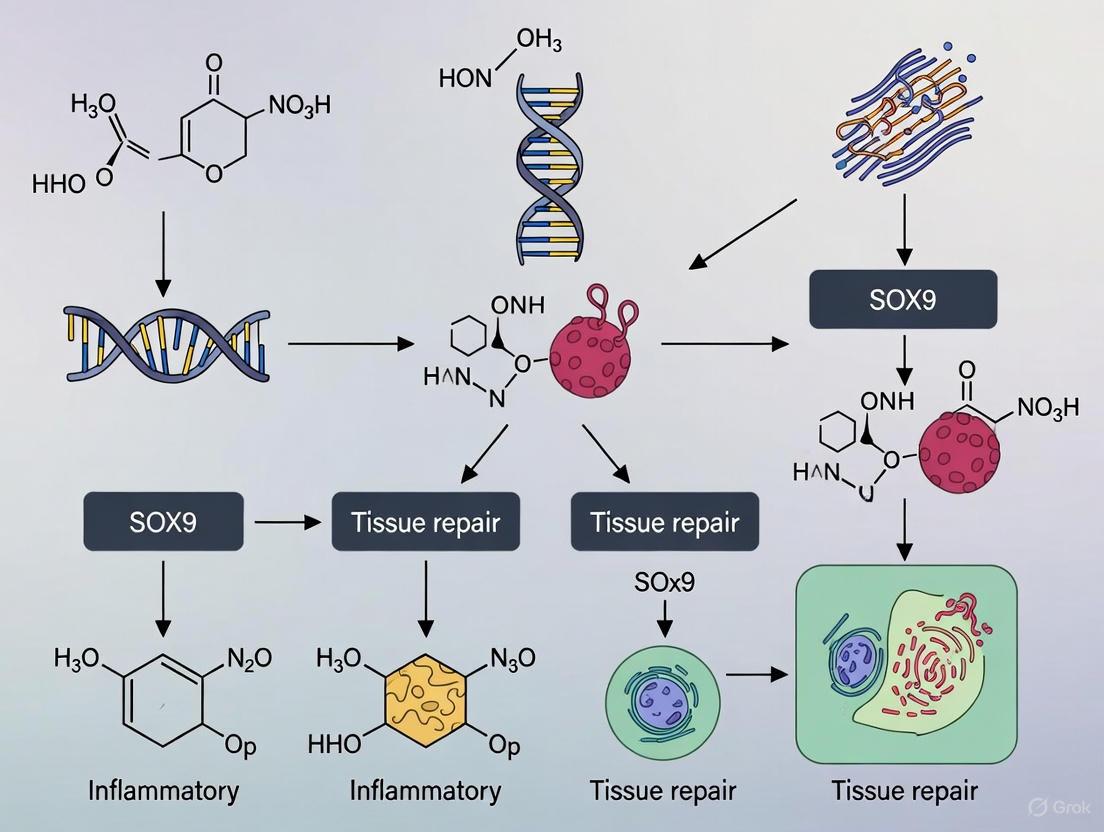
This review synthesizes current knowledge on the transcription factor SOX9, highlighting its complex, dual role in inflammatory diseases and tissue repair.
SOX9: A Janus-Faced Regulator in Inflammation, Tissue Repair, and Therapeutic Innovation
Abstract
This review synthesizes current knowledge on the transcription factor SOX9, highlighting its complex, dual role in inflammatory diseases and tissue repair. For researchers and drug development professionals, we explore SOX9's foundational biology, where it acts as a critical mediator in immune cell function, cartilage maintenance, and fibrotic responses. The article delves into methodological approaches for studying SOX9, from gene therapy to small molecule inhibition, and addresses key challenges in therapeutic targeting, including its context-dependent functions and role in drug resistance. Finally, we present a comparative analysis of SOX9's actions across disease models, validating its promise as a biomarker and therapeutic target for conditions ranging from osteoarthritis and cancer to schistosomiasis-induced liver fibrosis. This comprehensive overview aims to bridge fundamental research with translational applications, providing a roadmap for future biomedical innovation.
The Dual Nature of SOX9: Unraveling Its Structural Biology and Conflicting Roles in Immunity and Repair
SOX9 (SRY-related HMG box 9) is a transcription factor belonging to the SOXE subgroup (along with SOX8 and SOX10) that plays essential roles in numerous developmental pathways and disease processes. As a key regulatory protein, SOX9 directs cell fate specification, differentiation, and maintenance across diverse tissues and organs. Heterozygous mutations in the human SOX9 gene cause campomelic dysplasia (CMPD), a severe haploinsufficiency disorder characterized by skeletal malformations and frequently accompanied by 46, XY sex reversal [1]. The protein's functional versatility stems from its modular architecture, which enables precise regulation of gene expression through DNA binding, protein dimerization, and transcriptional activation mechanisms. Within the context of inflammatory diseases and tissue repair, SOX9 demonstrates a dual functional nature—promoting tissue regeneration and repair in some contexts (such as cartilage maintenance and biliary formation) while driving pathological processes like fibrosis and tumor progression in others [2] [3]. This whitepaper provides a comprehensive technical analysis of SOX9's protein architecture, focusing on the structure-function relationships of its core domains and their implications for research and therapeutic development.
SOX9 Domain Architecture and Structural Organization
The human SOX9 protein comprises 509 amino acids with a modular domain structure that facilitates its multifunctional capabilities [2] [1]. These domains work in concert to regulate SOX9's nuclear localization, DNA binding, dimerization capacity, and transcriptional activation potential, with each domain contributing distinct functional properties to the overall protein activity.
Table 1: Functional Domains of Human SOX9 Protein
| Domain | Position | Key Functions | Structural Features |
|---|---|---|---|
| Dimerization Domain (DIM) | N-terminal (precedes HMG box) | Facilitates homo- and heterodimerization with SOXE proteins | Promotes contacts between SOXE proteins; enables formation on non-compact DNA motifs |
| HMG Box | Central region | Sequence-specific DNA binding, DNA bending, nuclear localization | ~80 amino acids, L-shaped structure, contains NLS/NES, binds minor groove |
| Transactivation Domain Middle (TAM) | Middle region | Synergizes with TAC to enhance transcriptional activity | Interacts with transcriptional co-activators |
| Transactivation Domain C-terminal (TAC) | C-terminal region | Primary transactivation interface, interacts with co-regulators | Binds MED12, CBP/p300, TIP60, WWP2; inhibits β-catenin |
| PQA-rich domain | C-terminal region | Enhances transactivation, stabilizes SOX9 | Proline/Glutamine/Alanine-rich; no autonomous transactivation |
The HMG box represents the defining feature of SOX proteins, facilitating sequence-specific DNA binding to the consensus motif (A/T)(A/T)CAA(A/T)G, with AGAACAATGG representing the SOX9-specific binding sequence [4] [1]. This domain binds to the minor groove of DNA, inducing a characteristic bend of approximately 70-80 degrees that alters chromatin architecture and facilitates the assembly of transcriptional complexes [1]. Embedded within the HMG box are key regulatory sequences including nuclear localization signals (NLS) and a nuclear export signal (NES) that enable nucleocytoplasmic shuttling, a critical aspect of SOX9 regulation [2].
The dimerization domain (DIM), located immediately upstream of the HMG box, enables the formation of both homodimers and heterodimers with other SOXE family members [4] [1]. This domain does not mediate direct DIM-DIM interactions but instead promotes contacts between the DIM of one molecule and the HMG box of another SOXE protein, allowing for selective dimer formation on specific DNA motifs [3]. This dimerization capability is particularly important for the transcriptional regulation of cartilage-specific genes, where paired SOX9 binding sites are arranged in inverted repeat configurations within enhancer elements [4].
The transactivation domains (TAM and TAC) mediate interactions with transcriptional co-activators and components of the basal transcriptional machinery. The C-terminal TAC domain physically interacts with MED12, CBP/p300, TIP60, and WWP2, significantly enhancing SOX9's transcriptional potency [1]. The TAM domain, while lacking strong autonomous transactivation capability, functions synergistically with TAC to activate cartilage-specific genes and other downstream targets [1]. The PQA-rich domain, though unable to activate transcription independently, enhances the transactivation capability of the other domains and contributes to protein stability [2] [1].
Quantitative Analysis of SOX9 Domain Functions
The functional contributions of SOX9 domains have been quantitatively characterized through various experimental approaches, including electrophoretic mobility shift assays (EMSAs), chromatin immunoprecipitation, and transcriptional activation assays. These studies have revealed critical quantitative relationships between domain structure and functional output.
Table 2: Quantitative Functional Properties of SOX9 Domains
| Domain | DNA Binding Affinity | Dimerization Impact | Transcriptional Activation | Stability |
|---|---|---|---|---|
| HMG Box | Kd ~nM range; Specific for AGAACAATGG | Required for proper dimer positioning on DNA | Indirect via DNA bending and complex recruitment | Stable structural domain |
| DIM Domain | No direct binding | Enables dimerization; essential for chromatin remodeling | 2-5 fold enhancement on chromatin templates | Unaffected by deletion |
| TAM Domain | No DNA binding | Minimal effect | Synergistic with TAC (3-8 fold enhancement) | Reduced transactivation when deleted |
| TAC Domain | No DNA binding | Minimal effect | Strong autonomous activity (10+ fold activation) | Critical for co-activator recruitment |
| Full-length SOX9 | High affinity with sigmoidal binding curve | Forms stable dimers on paired sites | Maximum activation on chromatinized templates | Regulated by PTMs |
Experimental evidence demonstrates that while the HMG box alone can bind DNA with high affinity, the presence of the DIM domain significantly alters the DNA binding kinetics. EMSA analyses reveal that wild-type SOX9 exhibits a sigmoidal progression in DNA binding capacity with increasing protein concentrations, characteristic of cooperative binding behavior, whereas dimerization-deficient mutants show a simple linear relationship [4]. This cooperative binding is essential for SOX9's function on chromatinized templates, as dimerization-deficient mutants retain the ability to activate transcription from naked DNA templates but fail to remodel chromatin or activate transcription from nucleosome-assembled templates [4].
The functional importance of dimerization is further highlighted by studies of naturally occurring SOX9 mutations in campomelic dysplasia patients. Mutations in the DIM domain (specifically a 10-amino acid deletion at positions 66-75) result in proteins that bind DNA predominantly as monomers rather than dimers and show severely impaired activation of cartilage-specific enhancers from genes including collagen types II, IX, and XI, and CD-Rap [4]. This functional deficiency explains the skeletal manifestations observed in campomelic dysplasia patients harboring these mutations.
Experimental Methodologies for Analyzing SOX9 Function
Electrophoretic Mobility Shift Assay (EMSA) for DNA Binding and Dimerization
Purpose: To characterize SOX9 DNA-binding capacity and dimerization status using wild-type and dimerization-domain mutants.
Detailed Protocol:
- Protein Purification: Generate recombinant wild-type and mutant SOX9 proteins (e.g., Δ66-75 deletion) using a baculovirus expression system in Sf9 insect cells. Purify proteins via nickel-nitrilotriacetic acid agarose chromatography using imidazole elution (200 mM) [4].
- Probe Preparation: Design and end-label double-stranded DNA probes containing SOX9 binding sites from relevant enhancers (e.g., Col2a1 enhancer with sequence: 5′-GGCGCTTGAGAAAAGCCCCATTCATGAGAGG-3′). Include control probes with mutated binding sites (e.g., Site 1 mutant: 5′-GGCGCTTGAGATTAGCCCCATTCATGAGAGG-3′) [4].
- Binding Reaction: Combine 5 fmol of labeled probe with purified SOX9 proteins in binding buffer (20 mM HEPES pH 7.9, 50 mM KCl, 10% glycerol, 0.1% NP-40, 0.5 mM EDTA, 4 mM DTT, 1 mM PMSF) supplemented with 20 ng poly(dG-dC) as non-specific competitor. Incubate at room temperature for varying durations (15-60 minutes) [4].
- Electrophoresis: Resolve protein-DNA complexes on 5% non-denaturing polyacrylamide gels in 0.5× TGE buffer at 150V.
- Analysis: Visualize complexes by autoradiography. Wild-type SOX9 typically shows both monomeric and dimeric complexes, while dimerization mutants primarily form monomeric complexes with linear rather than sigmoidal binding kinetics.
Chromatin Assembly and Transcription Assay
Purpose: To evaluate SOX9's capacity to remodel chromatin and activate transcription from chromatinized templates.
Detailed Protocol:
- Template Preparation: Utilize reporter constructs containing SOX9-responsive promoters/enhancers (e.g., p89/4 × 48 bp Col2a1 luciferase construct) [4].
- Chromatin Assembly: Perform chromatin assembly reactions using Drosophila embryo S190 extract. Incubate 30 μl of S190 extract with 1.6 μg core histones in RO buffer (10 mM HEPES pH 7.5, 10 mM KCl, 0.5 mM EGTA, 10% glycerol, 10 mM β-glycerophosphate, 1 mM DTT, 0.2 mM PMSF) for 30 minutes at room temperature. Add ATP regeneration system (300 mM creatine phosphate, 30 mM ATP, 1 μg creatine phosphokinase, 26 mM MgCl₂) and incubate plasmid DNA (pre-incubated with SOX9) for chromatin assembly [4].
- In Vitro Transcription: Combine chromatin-assembled templates with SOX9 proteins and HeLa cell nuclear extracts in transcription buffer. Incubate at 30°C for 60 minutes.
- Analysis: Isolate RNA and analyze by primer extension or RT-PCR. Compare transcriptional activation between wild-type and dimerization-deficient SOX9 mutants, with wild-type SOX9 demonstrating significant activation of chromatinized templates while dimerization mutants show minimal activity.
Co-Immunoprecipitation and Partner Interaction Studies
Purpose: To identify and validate SOX9 interaction partners and dimerization capabilities.
Detailed Protocol:
- Cell Transfection: Transfect mammalian expression vectors encoding tagged SOX9 proteins (e.g., Flag-tagged wild-type and DIM mutants) into appropriate cell lines (e.g., chondrocytic cells or HeLa cells).
- Cell Lysis: Harvest cells and lyse in appropriate buffer (e.g., 10 mM Tris-HCl, pH 7.9, 0.5 M NaCl, 0.1% NP-40, 5 mM 2-mercaptoethanol, 1 mM PMSF).
- Immunoprecipitation: Incubate cell lysates with anti-Flag agarose beads for 2-4 hours at 4°C. Wash beads extensively with lysis buffer containing 20 mM imidazole.
- Analysis: Elute bound proteins with SDS sample buffer and analyze by Western blotting using antibodies against potential binding partners or SOX9 itself to detect homodimerization.
SOX9 in Signaling Pathways and Disease Contexts
SOX9 functions within complex regulatory networks in both development and disease. The following pathway diagram illustrates SOX9's central role in tissue repair and inflammatory disease contexts, particularly highlighting its dimerization-dependent functions:
Diagram 1: SOX9 Dimerization-Dependent Pathway in Tissue Repair and Disease. This diagram illustrates how SOX9 dimerization through its DIM domain is essential for chromatin remodeling and target gene activation following tissue injury. Mutations that prevent dimerization lead to failed repair, while dysregulated SOX9 activity can drive pathological outcomes.
In inflammatory diseases and tissue repair, SOX9 exhibits a complex "dual role" [2]. During proper tissue regeneration, SOX9 dimerization enables chromatin remodeling at key extracellular matrix genes, promoting appropriate tissue repair. However, in chronic inflammatory settings, persistent SOX9 activation contributes to pathological fibrosis through excessive extracellular matrix deposition in multiple organs including heart, liver, kidney, and lungs [3]. The dimerization capability of SOX9 appears essential for its pro-fibrotic effects, as monomeric SOX9 mutants fail to properly activate fibrotic target genes.
In cancer contexts, SOX9 is frequently overexpressed and promotes tumor progression through regulation of proliferation, angiogenesis, and invasion [5]. SOX9 expression correlates with poor prognosis in multiple carcinomas, including esophageal squamous cell carcinoma where it activates Akt signaling and regulates cell cycle proteins including cyclin D1, p21Cip1, and p27Kip1 [5]. The functional domains of SOX9 represent potential therapeutic targets for inhibiting these pathological processes while preserving its beneficial roles in tissue homeostasis.
Research Reagent Solutions for SOX9 Investigations
Table 3: Essential Research Reagents for SOX9 Domain Studies
| Reagent Category | Specific Examples | Research Applications | Technical Considerations |
|---|---|---|---|
| Expression Constructs | Wild-type SOX9-Flag; DIM mutant (Δ66-75); HMG box mutants | Domain functional analysis; transfection studies | Baculovirus system for protein production; mammalian vectors for cell studies |
| Antibodies | Anti-SOX9; Anti-Flag; Anti-HA; Phospho-specific SOX9 (S64, S181, S211) | Western blot; IHC; ChIP; immunofluorescence | Validate species reactivity; check phosphorylation status |
| DNA Probes | Col2a1 enhancer wild-type and mutant sequences; SOX9 consensus oligonucleotides | EMSA; reporter assays; ChIP | Include paired sites for dimerization studies; optimize labeling method |
| Cell Lines | Chondrocytic cells (e.g., ATDC5); HEK293; Sf9 insect cells | Protein production; functional studies; signaling analysis | Select cell type based on endogenous SOX9 expression and context |
| Assay Kits | Chromatin assembly systems; luciferase reporter kits; protein purification kits | In vitro transcription; functional validation | Use Drosophila S190 extract for chromatin assembly; optimize ATP conditions |
The modular architecture of SOX9—comprising dimerization, DNA-binding, and transactivation domains—confers remarkable functional versatility that enables its participation in diverse developmental and pathological processes. The critical requirement for dimerization through the DIM domain for chromatin remodeling and transcriptional activation on nucleosome-assembled templates represents a key regulatory mechanism with significant implications for both developmental biology and disease pathogenesis [4]. Understanding the structure-function relationships of SOX9 domains provides a foundation for developing targeted therapeutic strategies aimed at modulating SOX9 activity in disease contexts including fibrosis, cancer, and inflammatory conditions.
Future research directions should focus on elucidating the structural basis of SOX9 dimerization and its interplay with post-translational modifications, developing domain-specific inhibitors that can selectively disrupt pathological SOX9 functions while preserving its physiological roles, and exploring the therapeutic potential of targeting SOX9 dimerization in specific disease contexts. The advanced methodologies and reagents outlined in this technical guide provide researchers with essential tools for these investigations, facilitating continued progress in understanding and therapeutically targeting this master regulatory transcription factor.
The transcription factor SOX9 exemplifies functional plasticity in immunology, demonstrating context-dependent roles that critically regulate the development, function, and inflammatory outputs of T-cells, B-cells, and macrophages. This whitepaper synthesizes current evidence establishing SOX9 as a pivotal regulator of immune cell differentiation and a determinant of tissue repair versus inflammatory pathology. In T-cell biology, SOX9 influences lineage commitment between αβ and γδ T-cells and drives the expression of key effector genes like Il17a [2]. In B-cell malignancies, it acts as an oncogene, promoting proliferation and suppressing apoptosis [2]. Within the innate immune realm, SOX9 is indispensable for macrophage function in tissue repair and granuloma integrity, yet its inhibition can also promote inflammatory responses by modulating cytokine and matrix metalloproteinase production [6] [7]. This dual nature underscores SOX9's role as a "double-edged sword" in immunity [2]. Framed within inflammatory disease and tissue repair research, we detail experimental protocols for investigating SOX9, provide structured data on its immunoregulatory functions, and visualize key signaling pathways, offering a technical guide for therapeutic targeting.
The SRY-related HMG-box 9 (SOX9) protein is a transcription factor with a well-characterized role in chondrogenesis, sex determination, and stem cell development [2]. Beyond these developmental functions, SOX9 is a potent modulator of the immune system. Its gene encodes a 509-amino acid polypeptide containing several critical domains: an N-terminal dimerization domain (DIM), a central High Mobility Group (HMG) box for DNA binding and nuclear localization, and two transcriptional activation domains (TAM and TAC) at the center and C-terminus, respectively [2]. The HMG domain facilitates DNA binding and contains nuclear localization (NLS) and export (NES) signals, enabling nucleocytoplasmic shuttling, while the TAC domain interacts with cofactors like Tip60 to enhance transcriptional activity [2]. SOX9's function is highly context-dependent, allowing it to act as both an activator and repressor across diverse immune cell types and pathological conditions, from cancer to parasitic infections and osteoarthritis [2] [8] [6]. This whitepaper dissects its specific mechanisms in regulating adaptive and innate immunity, providing a framework for its study and therapeutic exploitation.
SOX9 in Adaptive Immunity: T-cell and B-cell Regulation
T-cell Development and Function
SOX9 plays a determinative role in early T-cell lineage commitment and effector function. During thymic development, SOX9 cooperates with the transcription factor c-Maf to activate Rorc and key Tγδ17 effector genes, including Il17a and Blk [2]. This activity modulates the fate decision of early thymic progenitors, potentially skewing development towards γδ T-cell differentiation over αβ T-cell pathways [2]. The subsequent production of IL-17A is a hallmark of pro-inflammatory T-cell responses, linking SOX9 activity to inflammatory pathology. Furthermore, bioinformatics analyses of human tumors reveal that SOX9 overexpression negatively correlates with genes associated with CD8+ T cell function, suggesting a role in suppressing cytotoxic T-cell activity in the tumor microenvironment [2]. In lung adenocarcinoma, SOX9-driven tumors demonstrate significantly reduced infiltration of CD8+ T cells and Natural Killer (NK) cells, functionally suppressing anti-tumor immunity [9].
B-cell Biology and Lymphomagenesis
While SOX9 does not have a major known role in normal B-cell development, it emerges as a significant oncogenic driver in certain B-cell malignancies. It is frequently overexpressed in Diffuse Large B-cell Lymphoma (DLBCL) [2]. In this context, SOX9 functions as an oncogene by promoting unchecked B-cell proliferation, inhibiting apoptosis, and thereby contributing to cancer progression and poor outcomes [2]. This positions SOX9 as a potential therapeutic target in hematological cancers.
Table 1: SOX9 Functions in Adaptive Immune Cells
| Immune Cell | Role of SOX9 | Key Target Genes/Pathways | Functional Outcome |
|---|---|---|---|
| T-cell (Progenitor) | Cooperates with c-Maf [2] | Rorc, Il17a, Blk [2] | Modulates αβ vs. γδ T-cell lineage commitment; drives IL-17 production [2] |
| CD8+ T-cell | Suppresses function & infiltration [2] [9] | Correlates with low cytotoxic gene expression [2] | Contributes to impaired anti-tumor immunity [2] [9] |
| B-cell (Malignant) | Oncogenic driver [2] | Proliferation and anti-apoptotic genes [2] | Promotes cell survival and progression in lymphomas like DLBCL [2] |
SOX9 in Innate Immunity: Macrophage Polarization and Function
Macrophages are pivotal players in inflammation and tissue homeostasis, and SOX9 is a critical regulator of their biology. Macrophages polarize into pro-inflammatory M1 or anti-inflammatory M2 phenotypes in response to different stimuli: IFN-γ or LPS typically drives M1 polarization, while IL-4/IL-13 induces M2 polarization [8]. SOX9 expression is directly induced by IL-4 in certain contexts, reprogramming cells towards a progenitor-like state [10]. This positions SOX9 within the M2-associated signaling axis.
In tissue repair, SOX9 is essential for maintaining macrophage function. During schistosomiasis, SOX9 is ectopically expressed in hepatic myofibroblasts and injured hepatocytes and is required for forming an intact, organized granuloma barrier around parasite eggs [6]. This barrier confines liver damage, and its absence in SOX9-deficient mice leads to disorganized granulomas, widespread "micro-fibrosis," and a exacerbated Type 2 inflammatory response with pronounced eosinophilia [6]. Similarly, in osteoarthritis, increased SOX9 levels help maintain macrophage function, contributing to cartilage formation and tissue repair [2].
Conversely, SOX9 can also exert anti-inflammatory effects. In dental pulp cells, its knockdown promotes inflammation by upregulating matrix metalloproteinases (MMP2, MMP13) and the potent neutrophil chemoattractant IL-8 [7]. This inhibition of SOX9 also suppresses the differentiation and functional activities (migration, attachment, phagocytosis) of THP-1-derived macrophages [7], highlighting its cell-type and context-specific roles.
SOX9 in Disease Contexts: From Cancer to Tissue Repair
The "double-edged sword" nature of SOX9 is evident across disease spectra, influencing cancer progression, infectious disease pathology, and degenerative disorders.
Cancer and Immune Evasion
SOX9 is highly expressed in numerous solid cancers (e.g., lung, liver, colon, breast) and is a marker of poor prognosis [2] [11]. It promotes tumor progression by facilitating immune evasion. In lung adenocarcinoma, SOX9-driven tumors suppress anti-tumor immunity by inhibiting the infiltration and activity of CD8+ T cells, NK cells, and dendritic cells, while simultaneously elevating collagen-related gene expression to create a physical barrier [9]. Similarly, in breast cancer, SOX9 sustains the stemness of latent cancer cells, enabling their long-term survival and helping them evade immune surveillance in metastatic sites [12].
Tissue Repair and Inflammatory Diseases
In osteoarthritis (OA), SOX9 has a protective role. Increased SOX9 levels help maintain macrophage function, contributing to cartilage formation and tissue regeneration [2]. In infective and fibrotic settings like schistosomiasis, SOX9 is critical for forming a structured granuloma that confines liver damage, with its loss leading to diffuse injury and dysregulated inflammation [6]. However, in aged or chronically injured lungs, IL-4-induced SOX9 can reprogram alveolar epithelial cells toward a progenitor-like state, leading to aberrant airway differentiation and fibrosis, illustrating its detrimental potential in maladaptive repair [10].
Table 2: SOX9 as a Prognostic Indicator and Therapeutic Target
| Disease Context | SOX9 Expression / Role | Association with Immunity | Therapeutic Implication |
|---|---|---|---|
| Pan-Cancer (15 types e.g., COAD, LIHC) | Significantly upregulated [11] | Correlates with immunosuppressive microenvironment [2] [11] | Potential oncogenic target; Cordycepin inhibits SOX9 [11] |
| Lung Adenocarcinoma | Drives progression [9] | Suppresses CD8+ T, NK, and dendritic cell infiltration [9] | Targeting SOX9 may enhance anti-tumor immunity [9] |
| Schistosomiasis (Liver) | Essential for granuloma integrity [6] | Loss causes dysregulated Type 2 response & eosinophilia [6] | Fine-tuning SOX9 may control fibrosis and contain damage [6] |
| Osteoarthritis | Protective, promotes repair [2] | Maintains pro-repair macrophage function [2] | Agonist strategies may be beneficial for tissue regeneration [2] |
Experimental Toolkit: Methodologies for Investigating SOX9 in Immunology
Key Research Reagents
Table 3: Essential Reagents for SOX9 Immunobiology Research
| Reagent / Tool | Function / Application | Example Use Case |
|---|---|---|
| SOX9 siRNA/siRNA | Knocks down SOX9 expression in vitro | Studying SOX9 loss-of-function in cell lines (e.g., HDPCs, THP-1) [7] |
| Cre-LoxP System | Enables cell-type specific SOX9 knockout in vivo | Defining SOX9 role in specific immune cells in mouse models [9] |
| Anti-SOX9 Antibody | Detects SOX9 protein (IHC, WB, ChIP) | Localizing SOX9 expression in tissue sections (e.g., liver granulomas) [6] |
| Recombinant IL-4 Cytokine | Induces SOX9 expression in vitro and in vivo | Studying SOX9 induction in macrophages and epithelial cells [10] |
| Cordycepin (CD) | Small molecule inhibitor of SOX9 expression | Testing anti-cancer effects via SOX9 inhibition in in vitro models [11] |
Detailed Protocol: Chromatin Immunoprecipitation (ChIP) for SOX9 Target Genes
Objective: To identify direct binding of SOX9 to promoters of immune-related genes (e.g., MMP13, IL8) in human dental pulp cells (HDPCs) [7].
- Cell Culture and Treatment: Culture HDPCs under standard conditions. To model inflammation, treat cells with recombinant human Tumor Necrosis Factor-alpha (rhTNF-α; e.g., 10-50 ng/mL for 24 hours), which is known to inhibit SOX9 expression.
- Cross-Linking and Lysis: Fix cells with 1% formaldehyde for 10 minutes at room temperature to cross-link DNA and associated proteins. Quench the reaction with 125mM glycine. Wash cells and lyse them in a buffer containing SDS to extract nuclei.
- Chromatin Shearing: Sonicate the cross-linked chromatin to shear DNA into fragments of 200-1000 base pairs. This is critical for achieving sufficient resolution.
- Immunoprecipitation (IP): Centrifuge the sonicated lysate to remove debris. Use a specific anti-SOX9 antibody to immunoprecipitate SOX9-DNA complexes. Include a control sample with a non-specific IgG antibody. Incubate overnight at 4°C with rotation.
- Washing and Elution: Capture the antibody-protein-DNA complexes using protein A/G beads. Wash beads extensively with low-salt, high-salt, and LiCl buffers to remove non-specifically bound material. Elute the complexes from the beads with elution buffer (1% SDS, 0.1M NaHCO3).
- Reverse Cross-Linking and DNA Purification: Reverse the cross-links by adding NaCl (final 200mM) and incubating at 65°C for 4 hours or overnight. Treat with Proteinase K, then purify the DNA using a standard phenol-chloroform extraction or a commercial PCR purification kit.
- Analysis: Analyze the purified DNA by quantitative PCR (qPCR) using primers specific for the promoters of genes of interest (e.g., MMP1, MMP13, IL8). Compare the enrichment in the SOX9-IP sample to the IgG control IP and the input DNA (a sample of sonicated chromatin before IP).
Concluding Perspectives
SOX9 emerges as a master regulator of immune function, whose pleiotropic effects are dictated by cellular context, disease state, and the local microenvironment. Its capacity to act as an immunological chameleon—promoting either tissue repair or pathological inflammation and immune evasion—makes it a compelling yet challenging therapeutic target. Future research must focus on delineating the precise molecular switches that control SOX9's functional outcomes and developing strategies to modulate its activity in a cell-type and context-specific manner. The experimental frameworks and data synthesis provided here aim to serve as a foundation for these endeavors, pushing the frontier of SOX9 research in immunology and therapeutic development.
The transcription factor SOX9 is a master regulator of chondrogenesis and a critical guardian of cartilage integrity. This whitepaper delineates the central role of SOX9 in maintaining extracellular matrix (ECM) balance, its dysregulation in degenerative joint diseases such as osteoarthritis (OA), and its emerging promise as a therapeutic target for tissue regeneration. Within the broader context of inflammatory diseases and tissue repair, SOX9 exhibits a dualistic "janus-faced" character, underscoring the need for precise therapeutic modulation. We present a synthesis of recent findings on SOX9 dynamics, quantitative data on its behavior in health and disease, detailed experimental methodologies for its study, and a forward-looking perspective on SOX9-targeted regenerative strategies.
SOX9 (SRY-Box Transcription Factor 9) is a DNA-binding protein belonging to the SOX family of transcription factors, characterized by a highly conserved high-mobility group (HMG) box domain [2] [13]. It is an indispensable factor during embryonic development, driving critical processes including skeletal formation, sex determination, and chondrogenesis—the process by which cartilage is formed [14] [15]. In cartilage homeostasis, SOX9 functions as the primary transcriptional activator of key ECM components, most notably type II collagen (encoded by COL2A1) and aggrecan (ACAN) [14] [16]. The activity of SOX9 is often coordinated with its partners, SOX5 and SOX6, forming a potent "chondrogenic SOX Trio" that regulates a suite of genes essential for the cartilage phenotype [15].
The critical nature of SOX9 is highlighted by human genetic disorders; its haploinsufficiency causes campomelic dysplasia, a severe skeletal malformation syndrome characterized by bending of long bones and other skeletal defects [14]. In adult tissues, SOX9 is integral to tissue homeostasis, and its impaired function is a hallmark of OA, a degenerative joint disease marked by ECM degradation and the failure of chondrocytes to maintain a healthy phenotype [14] [15].
Molecular Mechanisms of SOX9 in ECM Balance and Homeostasis
SOX9 maintains cartilage integrity through direct transcriptional control and integration of multiple signaling pathways. Its function is dependent on a specific protein structure and is finely tuned by complex regulatory networks.
2.1 SOX9 Protein Structure and Functional Domains The functionality of SOX9 is governed by its multi-domain structure, which facilitates DNA binding, nuclear localization, dimerization, and transcriptional activation [2]. Table 1: Functional Domains of the SOX9 Protein
| Domain | Acronym | Location | Primary Function |
|---|---|---|---|
| Dimerization Domain | DIM | N-terminus | Facilitates protein-protein interactions [2] |
| High-Mobility Group Box | HMG | Central | DNA binding, nuclear localization, and nuclear export [2] [13] |
| Central Transcriptional Activation Domain | TAM | Middle | Synergizes with TAC to enhance transcriptional potential [2] |
| C-terminal Transcriptional Activation Domain | TAC | C-terminus | Interacts with co-factors (e.g., Tip60) to activate transcription [2] |
| Proline/Glutamine/Alanine-rich domain | PQA | C-terminus | Necessary for full transcriptional activation [2] |
2.2 SOX9 Transcriptional Machinery and Signaling Pathway Integration SOX9 exerts its protective role by binding to specific DNA motifs (e.g., 5'-ACAAAG-3') in the enhancers and promoters of its target genes [16]. Its activity is not isolated but is a nexus for multiple signaling pathways that are crucial in cartilage biology and pathology, including TGFβ, BMP, WNT, IHH, NFκB, and HIF [14]. The balance between anabolic (e.g., BMP) and catabolic (e.g., WNT, IL-1β) signals directly influences SOX9's transcriptional output, thereby determining the state of ECM equilibrium.
Diagram 1: SOX9-centered regulatory network in cartilage homeostasis.
SOX9 Dysregulation in Osteoarthritis and Experimental Insights
Osteoarthritis is characterized by a marked decline in SOX9 activity, leading to the downregulation of ECM genes and an imbalance favoring catabolism. Advanced techniques like Fluorescence Recovery After Photobleaching (FRAP) have provided unprecedented insights into SOX9 dynamics in live human chondrocytes.
3.1 Quantitative Dynamics of SOX9 in Healthy vs. OA Chondrocytes Recent FRAP studies on human primary chondrocytes (hPCs) have revealed significant differences in SOX9 behavior between healthy and OA states, highlighting cellular heterogeneity and functional decline in disease [14]. Table 2: Quantitative FRAP Analysis of SOX9 Dynamics in Human Primary Chondrocytes
| Parameter | Healthy hPCs | Preserved hPCs | OA hPCs | Notes |
|---|---|---|---|---|
| SOX9-DNA Binding | Inherently elevated | Intermediate | Reduced | Measured via FRAP recovery [14] |
| Cellular Subpopulations | Two distinct populations | Two distinct populations | Two distinct populations | Populations show differential SOX9 dynamics and distribution [14] |
| Response to BMP7 | N/A | N/A | Modulated SOX9 activity | 100 ng/ml; 60 min incubation [14] |
| Response to GREM1 | N/A | N/A | Modulated SOX9 activity | 100 ng/ml; 20 min incubation [14] |
| Response to DKK1/FRZb | N/A | N/A | Modulated SOX9 activity | 10 ng/ml; 20 min incubation (catabolic inhibitors) [14] |
3.2 Detailed Experimental Protocol: FRAP Assay for SOX9 Dynamics The following methodology, adapted from recent research, allows for the direct assessment of SOX9 transcriptional activity in live cells [14].
Cell Culture and Transfection:
- Source: Human primary articular chondrocytes (hPCs) from healthy donors or OA patients undergoing joint replacement.
- Culture: Maintain in DMEM supplemented with 10% FBS, 20 mM ascorbic acid 2 phosphate, and non-essential amino acids at 37°C with 5% CO₂. Use cells within 4 passages.
- Transfection: Transiently transfect cells with a SOX9-mGFP (monomeric Green Fluorescent Protein) fusion construct using Lipofectamine LTX with Plus Reagent one day before FRAP experiments.
Treatment and Imaging Buffer:
- Buffer: Perform imaging in Tyrode's buffer (135 mM NaCl, 10 mM KCl, 0.4 mM MgCl₂, 1 mM CaCl₂, 10 mM HEPES, pH 7.2) with freshly added 20 mM glucose and 0.1% BSA.
- Treatments: Pre-incubate cells for 20 minutes (60 minutes for BMP7) in imaging buffer containing cytokines/inhibitors.
- Anabolic factors: BMP7 (100 ng/ml), GREM1 (100 ng/ml).
- Catabolic factors: IL-1β (10 ng/ml), WNT3A (10 ng/ml).
- Inhibitors: DKK1 (10 ng/ml), FRZb (10 ng/ml), IL1Ra (10 ng/ml), 1400 W (100 μM).
FRAP Measurements:
- Microscopy: Use a laser scanning confocal microscope (e.g., Nikon A1) with a 60x/1.2 NA water immersion objective.
- Procedure: Bleach a defined nuclear region of the SOX9-mGFP signal with a high-intensity 488 nm laser. Monitor the recovery of fluorescence into the bleached area over time.
- Analysis: The fluorescence recovery curve provides quantitative parameters on SOX9 mobility, binding kinetics, and transcriptional activity within the live nucleus.
Diagram 2: FRAP workflow for analyzing SOX9 dynamics.
SOX9 as a Therapeutic Target for Cartilage Regeneration
The central role of SOX9 in promoting a healthy chondrocyte phenotype and producing ECM makes it an attractive target for regenerative medicine. Strategies are evolving from simple overexpression to sophisticated, controlled systems.
4.1 Gene Therapy and Tissue Engineering Approaches Gene delivery of SOX9, alone or in combination with other factors like SOX5 and SOX6 (the SOX Trio), or anabolic growth factors, has shown promise in regenerating impaired cartilage [15]. This is often enhanced by the use of scaffolds in tissue engineering to provide mechanical stability and support cell delivery.
4.2 Advanced Cell Engineering: A Case Study in Disc Regeneration A state-of-the-art approach demonstrates the therapeutic potential of precisely engineered SOX9 expression.
- Objective: Enhance regeneration of intervertebral disc (IVD) using tonsil-derived mesenchymal stromal cells (ToMSCs) engineered to co-express SOX9 and TGFβ1 [17].
- Engineering Strategy:
- Technology: CRISPR/Cas9 was used to integrate a single cisternic gene cassette encoding both SOX9 and TGFβ1, linked by a P2A sequence, into the AAVS1 "safe harbor" locus of ToMSCs.
- Regulation: Expression was controlled by a Tetracycline-off (Tet-off) system, allowing temporal control of transgene expression by doxycycline to minimize risks of continuous overexpression.
- Results: In a rat model of IVD degeneration, ToMSCs co-expressing SOX9 and TGFβ1 showed:
- Superior chondrogenic differentiation in vitro.
- Significantly improved disc hydration and ECM synthesis (aggrecan and type II collagen) in vivo.
- Reduced inflammation and functional recovery (reduced mechanical allodynia) compared to single-factor treatments [17].
Table 3: SOX9-based Therapeutic Strategies for Cartilage and Disc Regeneration
| Therapeutic Approach | Key Components | Model System | Outcome | Reference |
|---|---|---|---|---|
| SOX Trio Gene Delivery | SOX9, SOX5, SOX6 genes + scaffolds | Cartilage repair | Efficient chondrogenesis and cartilage regeneration | [15] |
| CRISPR/Cas9-Engineered ToMSCs | SOX9 + TGFβ1 (Tet-off), AAVS1 safe harbor | Rat IVD Degeneration | Enhanced ECM, reduced inflammation, functional recovery | [17] |
The Scientist's Toolkit: Key Research Reagents
The following table compiles essential reagents and their applications for studying SOX9 in cartilage biology, based on cited experimental data. Table 4: Research Reagent Solutions for SOX9 and Cartilage Research
| Reagent / Tool | Function / Application | Example Usage (from search results) |
|---|---|---|
| SOX9-mGFP Fusion Plasmid | Live-cell imaging of SOX9 dynamics and localization via FRAP. | Transient transfection in human primary chondrocytes [14]. |
| Recombinant Human BMP7 | Anabolic factor; induces ECM gene expression and modulates SOX9 activity. | Treatment at 100 ng/ml to stimulate anabolic signaling [14]. |
| Recombinant Human IL-1β | Pro-inflammatory, catabolic cytokine; models inflammatory OA in vitro. | Treatment at 10 ng/ml to induce catabolic signaling [14]. |
| Recombinant DKK1 & FRZb | Inhibitors of WNT signaling; used to block catabolic pathways. | Treatment at 10 ng/ml to inhibit WNT and modulate SOX9 [14]. |
| CRISPR/Cas9 AAVS1 System | For precise, stable integration of transgenes into a genomic safe harbor. | Engineering ToMSCs for SOX9/TGFβ1 expression [17]. |
| Tet-Off Inducible System | Allows precise temporal control of transgene expression. | Controlling SOX9/TGFβ1 expression in engineered ToMSCs [17]. |
SOX9 stands as a cornerstone of cartilage homeostasis, its function intricately linked to the balance of anabolic and catabolic signals. The loss of its protective activity is a defining feature of osteoarthritis. The deployment of advanced single-cell dynamics studies (e.g., FRAP) and cutting-edge regenerative strategies (e.g., CRISPR/Cas9-engineered, inducible cell therapies) underscores a paradigm shift towards molecularly precise interventions. Future research must focus on refining the control of SOX9 activity, understanding its complex dual roles in inflammation and cancer [2], and translating these sophisticated therapeutic platforms from the laboratory to the clinic to ultimately achieve robust and safe cartilage and tissue regeneration.
The transcription factor SOX9 is emerging as a master regulator of pathological fibrosis in chronic liver diseases. Under persistent inflammatory conditions, such as metabolic dysfunction-associated steatohepatitis (MASH) and schistosomiasis, SOX9 undergoes ectopic expression, driving excessive extracellular matrix (ECM) deposition and disrupting normal repair processes. Functioning as a pioneer transcription factor, SOX9 possesses the unique ability to remodel chromatin and reprogram cell fate, locking cells into a pro-fibrotic state. This whitepaper details the molecular mechanisms by which SOX9 promotes hepatic fibrosis, summarizes key quantitative findings from recent studies, and outlines essential experimental methodologies. Targeting SOX9 and its downstream effectors presents a promising therapeutic strategy for mitigating fibrosis and restoring liver function in chronic inflammatory diseases.
SOX9 Biology and Mechanistic Role in Liver Fibrosis
SOX9 Structure and Function
SOX9 is a member of the SRY-related high-mobility group (HMG) box (SOX) family of transcription factors. Its protein structure includes several critical functional domains [3] [18]:
- HMG Domain: A DNA-binding region that recognizes the specific motif AGAACAATGG, bends DNA into an L-shape, and alters target gene expression.
- Dimerization Domain (DIM): Facilitates the formation of homo- and hetero-dimers with other SOXE proteins (SOX8, SOX10) on specific DNA sequences.
- Transactivation Domains (TAM and TAC): Interact with other transcription factors and co-activators to enhance gene transcription.
- PQA-rich Domain: Stabilizes the SOX9 protein and enhances its transactivation capability.
SOX9 as a Pioneer Factor in Hepatic Reprogramming
Beyond its role as a standard transcription factor, SOX9 can function as a pioneer transcription factor in endothelial and other cell types [19]. This capability allows it to bind to silent, compacted chromatin regions, initiate the opening of chromatin, and recruit factors that deposit active histone modifications. This reprogramming is instrumental in processes like Endothelial-to-Mesenchymal Transition (EndMT), which contributes to the pool of matrix-producing cells in fibrosis. Crucially, while SOX9 chromatin binding is dynamic, the changes it induces in the chromatin landscape and cell fate are persistent, cementing the pro-fibrotic cellular state.
Dysregulated SOX9 Expression in Liver Injury
In the healthy adult liver, SOX9 expression is primarily confined to cholangiocytes. However, upon injury, its expression becomes ectopically upregulated in multiple cell types [6]:
- Hepatic Stellate Cells (HSCs): SOX9 is a core factor in HSC activation, directly driving the production of multiple fibrotic ECM components.
- Hepatocytes: Injured hepatocytes surrounding fibrotic scars show induced SOX9 expression.
- Myofibroblasts within Granulomas: In schistosomiasis, SOX9 is expressed in myofibroblasts that form the granuloma barrier.
This pathological expression is regulated through various signaling pathways and epigenetic modifications, including promoter methylation and acetylation [3].
Diagram 1: SOX9 in liver fibrosis pathogenesis.
Key Experimental Evidence and Quantitative Data
SOX9 in Schistosomiasis-Induced Liver Fibrosis
A 2025 study by Su et al. investigated the functional role of SOX9 in a Schistosoma mansoni infection model [6]. The study utilized a global SOX9-deficient mouse model to analyze granuloma formation and fibrosis.
Experimental Workflow:
- Animal Model: Induced global SOX9 deficiency in mice infected with S. mansoni.
- Tissue Analysis: Livers were collected at multiple time points post-infection.
- Histology and Staining: Tissues were analyzed via:
- Immunohistochemistry (IHC) for SOX9 and α-SMA (myofibroblast marker).
- Picrosirius Red (PSR) staining for collagen deposition.
- Toluidine blue counterstaining.
- Immune Phenotyping: Hepatic immune cells were characterized using flow cytometry.
Diagram 2: Schistosomiasis fibrosis study workflow.
Key Quantitative Findings: Table 1: Histological Changes in S. mansoni-Infected Mouse Liver (vs. Naïve)
| Parameter | Naïve Liver | Infected Liver (Day 56) | Change | Function |
|---|---|---|---|---|
| SOX9 Expression | Confined to cholangiocytes | Significantly upregulated in HSCs, hepatocytes, cholangiocytes | >2-fold increase [6] | Drives pro-fibrotic gene expression |
| α-SMA+ Area | Vascular regions only | Extensive staining in granuloma myofibroblasts | Significant expansion [6] | Marker of activated myofibroblasts |
| Collagen Deposition (PSR) | Minimal | Dense fibrillar collagen in granulomas | Significant increase [6] | Core component of fibrotic scar |
Conclusion: SOX9 is essential for forming an organized, fibrotic granuloma barrier. Its absence led to disorganized "micro-fibrosis," widespread liver injury, and altered immune responses, including pronounced eosinophilia and Ly6Clo monocyte expansion [6].
SOX9-Driven Endothelial-to-Mesenchymal Transition (EndMT)
A 2022 study demonstrated that SOX9 expression alone is sufficient to reprogram human umbilical vein endothelial cells (HUVECs) toward a mesenchymal fate [19].
Experimental Workflow:
- Cell Model: HUVECs transduced with lentiviral vectors for SOX9 overexpression.
- Phenotypic Assays:
- Transwell migration assays to assess increased migratory capacity.
- Immunostaining for mesenchymal markers (VIM, POSTN) and loss of endothelial markers (PECAM1, ERG).
- Genome-Wide Mapping:
- Assay for Transposase-Accessible Chromatin with high-throughput sequencing (ATAC-seq) to measure chromatin accessibility.
- Chromatin Immunoprecipitation sequencing (ChIP-seq) for SOX9 binding and histone modifications.
- Transcriptomics: RNA sequencing (RNA-seq) to identify differentially expressed genes.
Key Quantitative Findings: Table 2: SOX9-Induced Phenotypic and Molecular Changes in HUVECs
| Assay | Control HUVECs | SOX9-Overexpressing HUVECs | Change/Effect |
|---|---|---|---|
| Migration (Transwell) | Baseline migration | Increased migratory capacity | ~2-3 fold increase in migrated cells [19] |
| Marker Expression | PECAM1 (CD31)+, ERG+ | VIM+, POSTN+ | Loss of endothelial, gain of mesenchymal markers [19] |
| Chromatin State | Closed chromatin at mesenchymal loci | Open chromatin with active histone marks | Pioneer factor activity [19] |
| Gene Expression | Endothelial gene signature | Mesenchymal gene signature | Significant transcriptional reprogramming [19] |
Conclusion: SOX9 acts as a pioneer factor to directly open chromatin and drive a persistent mesenchymal gene program, providing a mechanism for its role in fibrotic cell fate changes [19].
The Scientist's Toolkit: Research Reagent Solutions
Table 3: Essential Reagents for Investigating SOX9 in Liver Fibrosis
| Reagent / Tool | Specific Example | Function / Application |
|---|---|---|
| Animal Models | Global SOX9-deficient mice; S. mansoni-infected mice [6] | In vivo functional validation of SOX9 in disease contexts. |
| Cell Lines/Models | Primary HUVECs [19]; Primary Hepatic Stellate Cells (HSCs) | In vitro mechanistic studies on SOX9-driven reprogramming and fibrogenesis. |
| Key Antibodies | Goat anti-SOX9 (R&D Systems, AF3045) [19]; Anti-α-SMA; Anti-VIM; Anti-PECAM1 [19] | Immunohistochemistry, Immunofluorescence, and Western Blot for protein localization and quantification. |
| Molecular Biology Kits | Chromatin Immunoprecipitation (ChIP) kit; ATAC-seq kit; RNA-seq library prep kit [19] | Genome-wide analysis of SOX9 binding, chromatin accessibility, and transcriptional outputs. |
| Analysis Software | AutoDock Vina (v1.2.2) [20]; STRING database [20]; SMR software (v1.3.1) [20] | Molecular docking for drug discovery; PPI network analysis; Statistical genetics (SMR analysis). |
Therapeutic Targeting and Clinical Implications
The central role of SOX9 in fibrosis makes it an attractive therapeutic target. While direct SOX9 inhibitors are still in development, several approaches show promise:
- Targeting SOX9-Upstream Pathways: Drugs like Denifanstat, a fatty acid synthase (FASN) inhibitor, have demonstrated robust anti-fibrotic effects in a Phase 2b trial for MASH, including significant ≥2-stage fibrosis improvement. Denifanstat has received FDA Breakthrough Therapy designation [21].
- Leveraging Genetic Evidence: Mendelian randomization studies have identified multiple plasma proteins with causal relationships to liver damage biomarkers, providing a list of potential druggable targets upstream or downstream of SOX9 [20].
- Inhibiting SOX9 Activity: Future efforts may focus on disrupting SOX9's dimerization, DNA binding, or pioneer factor activity. Molecular docking studies have predicted compounds like 7,8-benzoflavone and quercetin as potential binders of key fibrotic pathway proteins [20].
Post-transcriptional regulation represents a critical layer of control in gene expression, fine-tuning cellular responses in health and disease. This whitepaper provides an in-depth technical analysis of three fundamental regulatory mechanisms—microRNA (miRNA) mediation, phosphorylation, and SUMOylation—focusing on their intricate interplay in the context of inflammatory diseases and tissue repair. The transcription factor SOX9 serves as our central model, illustrating how these mechanisms converge to regulate key processes in pathogenesis and regeneration. Understanding these interconnected pathways offers significant promise for developing targeted therapeutic strategies for complex conditions such as Crohn's disease, organ fibrosis, and cancer.
Core Regulatory Mechanisms
MicroRNA (miRNA)-Mediated Regulation
MiRNAs are short non-coding RNA molecules that typically bind to the 3' untranslated region (3' UTR) of target mRNAs through sequence complementarity, primarily via their "seed" region (nucleotides 2-7) [22]. This binding occurs within the miRNA-induced silencing complex (miRISC) and leads to decreased protein expression through translational repression and/or mRNA degradation [22]. The assembly of miRISC involves Argonaute proteins and TNRC6A (GW182), which recruits deadenylase complexes and decapping enzymes that ultimately lead to mRNA decay [22].
Table 1: Key Characteristics of miRNA Regulatory Mechanisms
| Feature | Technical Specification | Functional Impact |
|---|---|---|
| Binding Site | 3' UTR of mRNA; seed sequence (positions 2-7 of miRNA) [22] | Target recognition and complex stability |
| Core Machinery | Argonaute proteins, TNRC6A/GW182, CCR4-NOT/PAN2-PAN3 deadenylase complexes [22] | mRNA degradation and translational repression |
| Regulatory Outcome | Decreased protein expression via mRNA decay/translational blockade [22] | Fine-tuning of gene expression networks |
| Validation Evidence | Luciferase reporter assays, RNA immunoprecipitation (RIP) [22] [23] | Confirmation of direct physical interactions |
The complexity of miRNA regulation is amplified by the fact that a single mRNA can be targeted by multiple miRNAs (with some regulatory hubs controlled by >20 different miRNAs), while individual miRNAs often coordinate multiple targets within the same biological pathway [22]. This creates sophisticated regulatory networks where miRNAs exert combinatorial control over gene expression.
Phosphorylation-Dependent Regulation
Phosphorylation, the addition of phosphate groups to serine, threonine, or tyrosine residues, represents a rapid and reversible mechanism for post-translational regulation of transcription factors. For SOX9, phosphorylation at specific serine residues (S64, S181, and S211) significantly influences its function and localization [3].
Phosphorylation at S64 and S181 by protein kinase A (PKA) or ERK1/2 enhances SOX9's binding to importin-β, facilitating its nuclear localization and thus increasing its transcriptional activity [3]. This mechanism is particularly important during gonadal development and in response to sublytic C5b-9 complex signaling [3]. The dynamic interplay between phosphorylation and other modifications creates sophisticated regulatory circuits that integrate multiple signaling inputs.
SUMOylation-Dependent Regulation
SUMOylation involves the covalent attachment of Small Ubiquitin-like Modifier (SUMO) proteins to lysine residues on target proteins, particularly transcription factors [24]. This modification is catalyzed by a sequential enzymatic cascade involving E1 (SAE1/SAE2), E2 (Ubc9), and E3 ligase enzymes [24]. SUMOylation typically occurs at the consensus motif Ψ-K-x-D/E (where Ψ is a hydrophobic residue) and can be regulated by extended motifs including phosphorylation-dependent sumoylation motifs (PDSM) [24].
For transcription factors, SUMOylation most often functions as a transcriptional "off" switch through several mechanisms: (1) recruitment of histone deacetylases (HDACs) and other corepressors; (2) interference with transcription-promoting modifications like acetylation; and (3) modulation of transcription factor stability, DNA-binding capacity, or chromatin association [24] [25]. The dynamic nature of SUMOylation is maintained by SUMO proteases (SENP family) that reverse the modification [24].
Table 2: Comparative Analysis of Post-Translational Modifications Regulating SOX9
| Modification | Enzymatic Machinery | SOX9 Target Sites | Functional Consequences |
|---|---|---|---|
| Phosphorylation | PKA, ERK1/2 [3] | S64, S181, S211 [3] | Enhanced nuclear import, increased transcriptional activity [3] |
| SUMOylation | E1 (SAE1/SAE2), E2 (Ubc9), E3 ligases [24] | Specific lysine residues (consensus motifs) | Transcriptional repression; Altered protein interactions and stability [24] |
| Acetylation | CBP/p300 [24] | Lysine residues | Typically activates transcription; Competes with SUMOylation [24] |
Experimental Methodologies for Mechanistic Studies
Validating Functional miRNA-Target Interactions
Establishing direct miRNA-mRNA relationships requires a combination of computational prediction and experimental validation. Low-throughput, strong evidence approaches include:
Dual-Luciferase Reporter Assays: This gold-standard method involves cloning the wild-type 3' UTR of the target mRNA downstream of a firefly luciferase reporter gene, while a control Renilla luciferase provides normalization [22] [23]. A experimental setup typically includes:
- Cloning of both wild-type and mutant 3' UTR sequences with altered miRNA binding sites
- Co-transfection of reporter constructs with miRNA mimics or inhibitors
- Measurement of luciferase activity 24-48 hours post-transfection
- Significant reduction in firefly luciferase activity with wild-type 3' UTR indicates functional binding [22] [23]
RNA Immunoprecipitation (RIP): This approach validates physical interactions between miRNAs and their target mRNAs by immunoprecipitating Argonaute proteins (core components of miRISC) and quantifying co-precipitated mRNAs using qPCR [22]. The protocol generally includes:
- Cross-linking of cells to preserve RNA-protein interactions
- Cell lysis and immunoprecipitation with anti-Argonaute antibodies
- RNA extraction from immunoprecipitates and reverse transcription
- Quantitative PCR analysis of putative target mRNAs [22]
Analyzing Post-Translational Modifications
Chromatin Immunoprecipitation (ChIP): This technique assesses transcription factor binding to genomic targets under different modification states. The standard protocol involves:
- Cross-linking proteins to DNA with formaldehyde
- Sonication to shear chromatin to 200-500 bp fragments
- Immunoprecipitation with antibodies specific to the transcription factor or its modified forms
- Reversal of cross-links and purification of co-precipitated DNA
- Quantitative PCR analysis of putative regulatory regions [3]
SUMOylation-Specific Assays: Direct detection of SUMOylation requires specialized approaches:
- Immunoprecipitation under Denaturing Conditions: Prevents de-SUMOylation during processing
- SUMO Pulse-Chase Experiments: Track SUMO modification dynamics
- Mutagenesis of Acceptor Sites: Lysine-to-arginine mutations in consensus motifs to confirm specific SUMOylation sites [24]
The SOX9 Model: Integration of Regulatory Mechanisms in Inflammation and Repair
SOX9, a member of the SOXE transcription factor family, contains multiple functional domains including a dimerization domain (DIM), high mobility group (HMG) DNA-binding domain, and two transactivation domains (TAM and TAC) [2] [3]. This structural complexity allows integration of multiple regulatory inputs, making SOX9 an ideal model for studying post-transcriptional control mechanisms.
miRNA-Mediated Regulation of SOX9
In Crohn's disease, SOX9 expression is negatively regulated by miR-145-5p, which directly targets its transcript [23]. This pathway demonstrates sophisticated multilayer regulation:
- Epigenetic Control: Hypermethylation of the miR-145 promoter leads to reduced miR-145-5p expression in inflamed intestinal tissues from Crohn's patients [23]
- Pathway Outcome: Downregulation of miR-145-5p results in SOX9 overexpression, which subsequently represses CLDN8 (claudin-8), a critical tight junction protein [23]
- Functional Validation: In vivo studies show that miR-145-5p agomir treatment alleviates colitis in TNBS-challenged wild-type mice but not in Cldn8-/- mice, confirming the functional pathway [23]
Cross-Regulation Between Modification Systems
SOX9 activity is modulated by complex interplay between different post-translational modifications:
SUMOylation-Phosphorylation Cross-talk: SUMO modifications can inhibit nearby phosphorylation sites, as demonstrated in STAT5, where SUMOylation at K696 and K700 inhibits phosphorylation at Y694 [24]. Similar mechanisms likely regulate SOX9, given the presence of potential phosphorylation-dependent sumoylation motifs (PDSM) in its structure.
SUMOylation-Acetylation Competition: These competing modifications often target the same lysine residues, creating a molecular switch where SUMOylation typically represses while acetylation activates transcription [24]. For intracellular delta-lactoferrin, acetylation at K13 precludes sumoylation and promotes transcriptional activation [24].
Figure 1: Integrated Regulatory Network of SOX9 in Inflammatory Bowel Disease. This diagram illustrates the complex interplay between miR-145-5p-mediated regulation, phosphorylation, and SUMOylation in controlling SOX9 activity and intestinal barrier function.
Research Reagent Solutions
Table 3: Essential Research Reagents for Studying Post-Transcriptional Regulation Mechanisms
| Reagent Category | Specific Examples | Research Application | Technical Notes |
|---|---|---|---|
| miRNA Tools | miR-145-5p mimic/inhibitor [23]; miRNA agomirs [23] | Functional gain/loss-of-function studies | In vivo administration of agomirs validates therapeutic potential [23] |
| Expression Constructs | pcDNA3-Flag-SOX9 [23]; SOX9 luciferase reporters [23] | Overexpression and promoter analysis | Epitope tags enable protein tracking and immunoprecipitation [23] |
| Modification Mutants | SOX9 S64A/S181A (phospho-deficient) [3]; Lys-to-Arg SUMO mutants [24] | Site-specific functional analysis | Alanine scanning identifies critical modification sites [3] |
| Pathway Modulators | PKA activators/inhibitors [3]; SUMO E1 inhibitor (ML-792) [24] | Chemical interrogation of pathways | Specific inhibitors establish causal relationships [24] |
| Validation Antibodies | Anti-SOX9 [23] [3]; Anti-SUMO1/2/3 [24]; Phospho-specific SOX9 [3] | Protein detection and modification status | Modification-specific antibodies require rigorous validation [24] |
Therapeutic Implications and Future Perspectives
The integrated understanding of miRNA, phosphorylation, and SUMOylation networks regulating SOX9 opens promising therapeutic avenues. Targeting the miR-145-5p/SOX9/CLDN8 axis represents a novel strategy for Crohn's disease treatment, potentially achieving mucosal healing through restoration of barrier function [23]. Similarly, modulating SOX9 SUMOylation or phosphorylation states could provide precise control over its activity in fibrosis and cancer [2] [3].
Emerging technologies are advancing this field significantly:
- Advanced Computational Approaches: Partial information decomposition (PID) analysis quantitatively captures nonlinear regulatory relationships between miRNAs and RNA-binding proteins on shared mRNA targets, revealing predominant synergy over competition [26]
- Single-Cell Multi-omics: Enable mapping of post-transcriptional regulatory networks with unprecedented resolution in heterogeneous tissues
- CRISPR-Based Screening: Identifies novel components of SUMOylation and miRNA pathways in disease contexts
- SUMO-Specific Proteases: Engineered SENP variants offer potential for therapeutic intervention in SUMOylation-dependent diseases [24]
The complex interplay between these regulatory mechanisms underscores the importance of systems-level approaches for understanding SOX9 in inflammation and repair. Future research should focus on developing dual-targeting strategies that simultaneously modulate multiple regulatory layers for enhanced therapeutic efficacy.
From Bench to Bedside: Methodological Strategies for Harnessing SOX9 in Therapy
The transcription factor SOX9 (SRY-related High-Mobility Group Box 9) is a pivotal regulator of diverse biological processes, including cell fate determination, tissue development, and repair. Recent research has increasingly highlighted its significant role in the pathogenesis of inflammatory diseases and the coordination of tissue repair mechanisms [2] [3]. In the context of disease, SOX9 exhibits a dual functional role; it is essential for maintaining cartilage and promoting reparative processes, yet it also drives pathological fibrosis in organs such as the liver, kidney, and lung, and contributes to tumor progression and immune evasion [2] [6] [3]. This functional dichotomy makes it a compelling therapeutic target. Consequently, methods to precisely modulate SOX9 expression in specific tissues are a major focus of biomedical research, with viral vector-mediated gene delivery emerging as a leading strategy.
Gene therapy holds the potential to treat the root cause of diseases by delivering therapeutic genetic material to target cells. Adenoviral Vectors (AdVs) and Adeno-Associated Viral Vectors (AAVs) are among the most widely used viral delivery systems for in vivo gene transfer [27] [28]. AdVs are prized for their high transduction efficiency and large packaging capacity, whereas AAVs are lauded for their long-term transgene expression and favorable safety profile [27] [29]. This technical guide provides an in-depth analysis of the methodologies, applications, and current challenges associated with using AdV and AAV vectors for SOX9 delivery, with a specific emphasis on their application in inflammatory disease and tissue repair research for a scientific audience.
SOX9 Biology and Pathophysiological Context
Structural and Functional Basis of SOX9
The SOX9 protein, comprising 509 amino acids, contains several critical functional domains that govern its activity [2] [3]. The HMG box domain is responsible for sequence-specific DNA binding, bending the DNA to facilitate transcriptional activation of target genes. Flanking this are the dimerization domain (DIM), which enables SOX9 to form homo- and hetero-dimers on DNA, and two transcriptional activation domains—TAM (central) and TAC (C-terminal)—that recruit co-activators to enhance gene expression [2]. A proline/glutamine/alanine (PQA)-rich domain is also necessary for full transactivation potential [3]. SOX9 activity is further fine-tuned through post-translational modifications, such as phosphorylation at serine residues S64 and S181 by PKA and ERK1/2, which promote its nuclear localization and enhance its transcriptional activity [3].
The Dual Role of SOX9 in Inflammation and Tissue Repair
SOX9's function is highly context-dependent, presenting a "double-edged sword" in disease pathophysiology [2]. In osteoarthritis (OA), SOX9 is a key anabolic factor in chondrocytes, essential for cartilage matrix production and homeostasis. Its expression and function can be disrupted by inflammatory mediators like IL-1β [3]. In models of schistosomiasis-induced liver fibrosis, SOX9 is ectopically expressed in hepatic stellate cells (HSCs) and injured hepatocytes, where it is critical for forming an organized granuloma and extracellular matrix (ECM) barrier to contain parasite eggs. SOX9 deficiency leads to disorganized granulomas and more diffuse liver injury, underscoring its role in containing damage and coordinating a reparative response [6]. Conversely, in cancer, SOX9 is frequently overexpressed and promotes tumor proliferation, metastasis, and chemoresistance. It also contributes to an immunosuppressive microenvironment by negatively correlating with cytotoxic CD8+ T cells and M1 macrophages, thereby facilitating immune escape [2].
Table 1: Pathophysiological Roles of SOX9 in Different Tissues
| Tissue/Pathology | Role of SOX9 | Key Findings/Mechanisms |
|---|---|---|
| Joints (Osteoarthritis) | Cartilage homeostasis & repair | Master regulator of chondrogenesis; target for anabolic therapy. Expression can be suppressed by IL-1β [3]. |
| Liver (Schistosomiasis) | Granuloma integrity & fibrosis | Expressed in HSCs and hepatocytes; organizes ECM barrier to contain egg toxins. Loss leads to diffuse liver injury [6]. |
| Liver/Lung/Kidney (Fibrosis) | Pro-fibrotic driver | Promotes accumulation of ECM components (collagen, fibronectin) leading to organ dysfunction [3]. |
| Various Solid Tumors | Oncogene & immune modulator | Promotes proliferation, metastasis, chemoresistance. Creates an "immune desert" by impairing immune cell function [2]. |
Viral Vector Platforms for SOX9 Delivery
Adenoviral Vectors (AdVs)
Adenoviral vectors are non-enveloped viruses with a linear double-stranded DNA genome. First-generation AdVs are rendered replication-deficient by deleting the E1 region, and often the E3 region, which is replaced by the therapeutic transgene, offering a packaging capacity of up to 8 kb [27] [29]. Their primary advantage is extremely high transduction efficiency across a broad range of dividing and non-dividing cells, a characteristic driven by the ubiquitous expression of their primary receptor, the coxsackie and adenovirus receptor (CAR) [27] [29]. This results in robust transient transgene expression, as the viral genome remains episomal and is not integrated into the host genome.
However, AdVs are highly immunogenic. The viral capsid and the expressed transgene can trigger potent innate and adaptive immune responses, including cytotoxic T-cell-mediated clearance of transduced cells and the production of neutralizing antibodies that preclude re-administration [27] [29]. This strong immunogenicity, combined with the high prevalence of pre-existing immunity in human populations, has largely limited the clinical use of AdVs to applications where transient expression is sufficient, such as oncolytic therapy, vaccines, and genome editing [29].
Adeno-Associated Viral Vectors (AAVs)
Adeno-associated viruses are small, non-enveloped, single-stranded DNA viruses with a packaging capacity of approximately 4.7 kb [28]. In recombinant AAV (rAAV) vectors, all viral coding sequences are removed and replaced by the therapeutic expression cassette, flanked by the inverted terminal repeats (ITRs) essential for replication and packaging [28]. AAVs are a favored vector for gene therapy due to their low immunogenicity and their ability to establish long-term transgene expression by persisting in the host cell predominantly as episomal circular concatemers [28].
A key feature of the AAV system is its diverse serotype portfolio. Different AAV serotypes (e.g., AAV2, AAV8, AAV9, AAVDJ) exhibit distinct tissue tropisms based on their capsid proteins' interactions with specific cell surface receptors, allowing for targeted gene delivery to particular organs such as the liver, muscle, or central nervous system [30] [28]. Despite their advantages, AAVs face challenges, including a limited cargo capacity that can restrict the size of the transgene, the complexity of large-scale Good Manufacturing Practice (GMP) production, and emerging safety concerns related to high systemic doses, which have been linked to immune-mediated toxicities in clinical trials [31] [32] [28].
Table 2: Comparative Analysis of Adenovirus and AAV Vectors for Gene Delivery
| Feature | Adenoviral Vector (Ad5) | Adeno-Associated Vector (AAV) |
|---|---|---|
| Genome | Linear dsDNA | Single-stranded DNA |
| Packaging Capacity | 8-36 kb (up to 37 kb with helper-dependent vectors) [29] | ~4.7 kb [28] |
| Integration Profile | Episomal (non-integrating) | Predominantly episomal; rare integration [28] |
| Transgene Expression Kinetics | Rapid onset, transient (days to weeks) | Slower onset, long-term (months to years) [28] |
| Transduction Efficiency | Very high in a broad range of cell types [27] | High, but serotype-dependent [28] |
| Immunogenicity | High; triggers strong innate and adaptive immunity [27] [29] | Low; but pre-existing and therapy-triggered immunity are concerns [28] |
| Primary Applications | Vaccines, oncolytic therapy, transient gene expression [29] | Gene replacement for monogenic diseases, long-term expression [28] |
Experimental Workflows and Protocols
In Vivo Gene Therapy with AAV-SOX9 for Osteoarthritis
A recent preclinical study demonstrated the efficacy of AAV-mediated co-delivery of SOX9 and interleukin-1 receptor antagonist (IL-1Ra) for treating osteoarthritis (OA) in animal models [33]. The following workflow details the key experimental steps:
- 1. Vector Construction and Production: A single-stranded AAV vector was engineered to express SOX9. The SOX9 coding sequence was cloned under the control of a suitable promoter (e.g., a constitutive or chondrocyte-specific promoter) within an AAV backbone containing the necessary ITRs. The vector was then packaged into an AAV serotype with tropism for joint tissues (e.g., AAV8) via transfection of HEK293 cells and purified using chromatography or ultracentrifugation [28] [33].
- 2. Animal Model and Administration: OA was surgically induced in the knees of rat and rabbit models using methods like medial meniscal tear (MMT) and anterior cruciate ligament transection (ACLT). The purified AAV-SOX9 vector, alone or in combination with AAV-IL-1Ra, was injected intra-articularly into the injured joint. Control groups received saline or a control vector.
- 3. Functional and Structural Assessment: Animals were monitored over 8-12 weeks. Functional outcomes, such as gait analysis (measuring footprint area and pressure distribution) and weight-bearing asymmetry (an indicator of pain), were assessed. Structural improvements in the joint were evaluated using X-ray (to determine Kellgren-Lawrence scores), histopathology of harvested joint tissues (evaluating cartilage wear, synovial inflammation, and subchondral bone lesions with standardized scoring systems like OARSI), and immunohistochemistry for cartilage matrix components (e.g., collagen type II) [33].
The results demonstrated that AAV-mediated co-delivery of SOX9 and IL-1Ra was superior to either treatment alone, significantly alleviating cartilage destruction, reducing synovial inflammation, and improving functional outcomes by simultaneously promoting an anabolic response and inhibiting a key catabolic inflammatory pathway [33].
Investigating AAV-Induced Toxicity in CNS Models
The administration of high AAV doses, particularly for CNS disorders, has been associated with neurotoxicity. The following protocol, derived from a 2025 Nature Communications study, outlines a methodology to investigate the cell-intrinsic immune mechanisms underlying this toxicity [32].
- 1. In Vitro Modeling with hiPSCs: Human induced pluripotent stem cells (hiPSCs) were differentiated into relevant CNS cell types, including neurons and astrocytes, to create a human-specific experimental system. These 2D cultures and more complex 3D brain spheroids were transduced with clinical-relevant AAV serotypes (e.g., AAV9) encoding a reporter transgene like GFP.
- 2. Transcriptomic and Functional Analysis: Bulk and single-cell RNA sequencing were performed on transduced cells at various time points (e.g., 2 and 4 days post-transduction) to identify differentially expressed pathways. Key findings included the early activation of the p53-dependent DNA damage response (DDR), followed by the induction of inflammatory and type I interferon responses [32].
- 3. Mechanistic Validation and Rescue: Functional validation involved immunofluorescence staining for DNA damage markers (e.g., phosphorylated γH2AX) and cell death markers (e.g., cleaved caspase-3). To confirm causality and explore rescue strategies, researchers used pharmacological inhibitors or genetic tools to block key nodes in the identified pathways (e.g., p53, STING, or IL-1R) and assessed whether this reduced cell death and gliosis both in vitro and in vivo in mouse brain [32].
Diagram 1: AAV-triggered pro-inflammatory signaling in CNS cells. The AAV genome triggers a p53-dependent DNA damage response, while transgene expression drives a MAVS-dependent interferon response, collectively leading to inflammation and cell death [32].
Table 3: Essential Research Reagents for SOX9 Gene Therapy Studies
| Reagent / Resource | Function/Description | Example Use Case |
|---|---|---|
| hiPSC-derived Neurons/Astrocytes | Human-relevant in vitro model of the CNS. | Modeling AAV transduction mechanisms and toxicity [32]. |
| 3D Brain Spheroids | Complex in vitro model recapitulating cell-cell interactions. | Studying AAV signaling in a tissue-like microenvironment [32]. |
| AAV Serotype Library (e.g., AAV2, AAV8, AAV9, AAVDJ) | Enables tropism-specific gene delivery to target tissues. | AAV9 for CNS and muscle; AAV8 for liver; AAVDJ for broad tropism [30] [32] [28]. |
| p53/STING/IL-1R Pathway Inhibitors | Pharmacological tools to dissect mechanisms of toxicity. | Validating causal pathways and developing mitigation strategies for AAV toxicity [32]. |
| Surgical OA Models (e.g., MMT, ACLT) | Preclinical in vivo models of joint injury and degeneration. | Testing the efficacy of AAV-SOX9 and AAV-IL-1Ra in disease modification [33]. |
| Anti-SOX9 Antibodies (Phospho-specific) | Detect SOX9 expression and activation state (e.g., p-S64, p-S181). | Western blot, IHC to monitor SOX9 protein levels and activity in target tissues [3]. |
Current Challenges and Future Directions
Despite promising preclinical results, several significant challenges remain for the clinical translation of SOX9 gene therapy.
- Immunogenicity and Toxicity: The immunogenic profile of AdVs limits their use for chronic conditions [29]. For AAVs, while inherently less immunogenic, dose-dependent toxicities are a major concern. Recent research has revealed that the AAV genome itself can trigger a DNA damage response (DDR) and subsequent pro-inflammatory signaling in target cells, including neurons, leading to cell death and gliosis [32]. Furthermore, the presence of pre-existing neutralizing antibodies in a large proportion of the population can inhibit transduction efficacy, and the therapeutic transgene itself can elicit unwanted immune responses [28].
- Targeting and Specificity: Achieving cell-specific SOX9 expression is critical, given its dual and context-dependent roles. Off-target expression could exacerbate fibrosis or promote tumorigenesis. Future efforts will focus on engineering synthetic AAV capsids with enhanced tissue specificity and the use of tissue-specific promoters to restrict SOX9 expression to desired cell types [28].
- Manufacturing and Cargo Capacity: The global AAV vector market is rapidly growing, but scaling up GMP-compliant manufacturing processes to meet clinical demand remains complex and costly [31]. Furthermore, the ~4.7 kb packaging capacity of AAV can be a constraint for large genetic elements, potentially requiring the use of dual-vector systems or the exploration of larger-capacity vectors like adenoviruses for certain applications [28] [29].
Future research will need to prioritize the development of strategies to mitigate immune responses, such as the use of immune suppression regimens or the engineering of novel capsids that evade pre-existing immunity. Furthermore, combining SOX9 delivery with other therapeutic agents, such as IL-1Ra, represents a powerful combinatorial approach to simultaneously address inflammation and promote tissue repair, offering a more holistic strategy for complex diseases like osteoarthritis [33].
The therapeutic management of chronic inflammatory diseases, particularly those involving tissue degradation such as osteoarthritis (OA), represents a significant challenge in clinical medicine. Traditional approaches often target single pathological pathways, yielding limited success against multifactorial disease processes. However, emerging combination strategies that simultaneously address inflammation control and tissue regeneration have demonstrated remarkable synergistic potential. Among the most promising of these approaches is the co-delivery of the transcription factor SOX9 with potent anti-inflammatory agents such as the interleukin-1 receptor antagonist (IL-1Ra).
This combination therapy strategically targets two interconnected pathological pillars: the catabolic inflammatory environment that drives tissue destruction, and the compromised anabolic processes that impede natural repair mechanisms. IL-1Ra, a natural inhibitor of the pro-inflammatory cytokine IL-1, directly counteracts synovial inflammation and associated pain by competitively binding to interleukin-1 receptors without activating downstream signaling cascades [34]. Meanwhile, SOX9 serves as a "master regulator" of chondrogenesis, promoting the expression of critical extracellular matrix components including type II collagen and aggrecan while maintaining chondrocyte phenotype [35] [36]. The rational design of this dual-therapy approach recognizes that merely suppressing inflammation is insufficient for functional tissue restoration, while regenerative signals alone may be overwhelmed by a persistent inflammatory microenvironment.
Key Evidence and Experimental Findings
Preclinical Efficacy of SOX9 and IL-1Ra Combination Therapy
Recent preclinical investigations across multiple model systems have provided compelling evidence supporting the superior efficacy of SOX9/IL-1Ra combination therapy compared to monotherapeutic approaches.
Table 1: Summary of Key Preclinical Studies on SOX9/IL-1Ra Combination Therapy
| Disease Model | Delivery System | Key Findings | Reference |
|---|---|---|---|
| Surgically-induced OA (rat/rabbit) | AAV vector co-delivery | Superior cartilage protection, reduced pathological scores, improved gait and weight-bearing compared to single treatments | [33] |
| Inflammation-driven OA (rat) | mRNA-loaded polyplex nanomicelles | Synergistic chondroprotection, enhanced pain relief, preserved subchondral bone integrity | [37] |
| Human OA chondrocytes under inflammatory stress | rAAV-sox9 via polymeric micelles | Counteracted cytokine-induced matrix degradation, enhanced cell survival and ECM deposition | [36] |
A 2025 study utilizing adeno-associated virus (AAV) vectors for the co-delivery of IL-1Ra and SOX9 in surgically induced osteoarthritis animal models demonstrated that the combination therapy significantly alleviated subchondral bone lesions, cartilage destruction, and synovial inflammation, with demonstrably superior efficacy compared to either treatment administered alone [33]. The therapeutic effects manifested as measurable functional improvements, including normalized gait patterns (increased footprint area and pressure distribution) in rat models and restored weight-bearing symmetry (indicating pain reduction) in rabbit models.
Mechanistic insights revealed that the combination approach concurrently inhibited IL-1-mediated inflammatory signaling and promoted the maintenance of cartilage homeostasis, creating a joint microenvironment conducive to repair processes [33]. This dual modulation addresses the fundamental pathophysiology of OA, where inflammation and tissue degeneration form a self-perpetuating cycle that single-target interventions struggle to disrupt.
Alternative Engineering Approaches for Combination Therapy
Beyond direct gene delivery, innovative cell-engineering strategies have emerged to harness the synergistic potential of SOX9 enhancement and inflammatory pathway inhibition. A sophisticated approach utilizing CRISPR-dCas9 technology simultaneously activated SOX9 while inhibiting RelA (a key component of the NF-κB pathway) in mesenchymal stromal cells (MSCs) [38].
Table 2: Comparison of Delivery Platforms for Combination Therapy
| Platform | Mechanism | Advantages | Limitations |
|---|---|---|---|
| AAV Vectors | Long-term transgene expression | High transduction efficiency, proven clinical track record | Potential immunogenicity, limited cargo capacity |
| mRNA Nanomicelles | Transient protein expression | Minimal risk of genomic integration, rapid protein production | Repeated administration may be necessary |
| Engineered MSCs (CRISPR) | Cell-mediated therapy | Multifunctional "living drug", endogenous trophic factor secretion | Complex manufacturing, regulatory challenges |
This engineered cell therapy demonstrated enhanced chondrogenic and immunomodulatory potentials in vitro, and upon intra-articular injection in a surgical mouse model of OA, significantly attenuated cartilage degradation and palliated OA pain compared to control groups [38]. The modified MSCs promoted expression of factors beneficial to cartilage integrity, inhibited production of catabolic enzymes in osteoarthritic joints, and suppressed immune cell activation. Notably, a substantial number of modified cells survived in cartilaginous tissues including articular cartilage and meniscus, suggesting potential durable effects [38].
Detailed Experimental Protocols
AAV-Mediated Co-Delivery in Animal OA Models
The following protocol summarizes the methodology employed in recent investigations of AAV-mediated co-delivery of IL-1Ra and SOX9 in surgically induced osteoarthritis models [33]:
Animal Models and Surgical Induction:
- Utilize Sprague-Dawley rats (or New Zealand rabbits) at appropriate ages.
- Induce knee osteoarthritis via medial meniscal tear (MMT) with or without anterior cruciate ligament transection (ACLT) procedures.
- Allow sufficient post-surgical period (typically 1-2 weeks) for OA development before therapeutic intervention.
Vector Preparation and Administration:
- Package IL-1Ra and SOX9 transgenes in appropriate AAV serotypes (e.g., AAV2) using helper-free plasmid transfection system in 293 cells.
- Purify vectors via dialysis and titrate by real-time PCR to achieve consistent dosing (e.g., 10¹⁰-10¹¹ transgene copies/mL).
- Administer via direct intra-articular injection into the joint space using precision syringes (e.g., 30G needle).
- For combination therapy, pre-mix AAV-IL-1Ra and AAV-SOX9 at appropriate ratios before administration.
Assessment Parameters:
- Functional Outcomes: Gait analysis (footprint area, pressure distribution), weight-bearing asymmetry tests.
- Radiological Evaluation: X-ray imaging for Kellgren-Lawrence (K-L) scoring.
- Histopathological Analysis: Cartilage wear quantification, synovitis scoring, subchondral bone lesion assessment.
- Molecular Analyses: Immunohistochemistry for type II collagen, proteoglycan content (Safranin-O staining), inflammatory marker quantification.
Diagram 1: Experimental workflow for AAV-mediated combination therapy in OA models
mRNA-Based Combination Therapy Using Polyplex Nanomicelles
For researchers seeking non-viral delivery approaches, the following protocol details mRNA-based combination therapy using advanced nanocarrier systems [37]:
mRNA Synthesis and Nanomicelle Preparation:
- Synthesize RUNX1 (as a SOX9-functional analog) and IL-1Ra mRNAs using in vitro transcription (IVT) with unmodified ribonucleoside triphosphates.
- Utilize pSP73 vector with T7 promoter and 120 bp poly A/T sequence for template construction.
- Synthesize block copolymer PEG-PAsp(TET) for nanomicelle formation.
- Prepare polyplex nanomicelles by mixing mRNAs and PEG-PAsp(TET) in 10 mM HEPES buffer at N/P ratio of 3.
- Characterize nanomicelles using dynamic light scattering for particle size and polydispersity index.
In Vivo Administration in Inflammation-Driven OA Models:
- Induce knee OA in Sprague-Dawley rats via intra-articular monosodium iodoacetate (MIA) injection.
- Administer 50 μL polyplex nanomicelles containing 10 μg total mRNA (5 μg each of IL-1Ra and RUNX1 mRNA) via intra-articular injection through the patellar ligament.
- For coadministration, pre-mix mRNAs before complexation with block copolymer.
Therapeutic Assessment:
- Pain and Swelling: Static weight-bearing tests, knee diameter measurements.
- Cartilage Integrity: Histological evaluation of cartilage structure, proteoglycan content (Alcian blue staining), type II collagen immunohistochemistry.
- Bone Changes: Micro-CT analysis of subchondral bone architecture.
- Synovitis: Histopathological scoring of synovial inflammation.
Signaling Pathways and Molecular Mechanisms
The therapeutic synergy between SOX9 and IL-1Ra emerges from their complementary actions on key molecular pathways governing joint homeostasis. The diagram below illustrates the central signaling network and intervention points:
Diagram 2: Molecular pathways and therapeutic targets of SOX9/IL-1Ra combination therapy
The NF-κB-SOX9 signaling axis represents a critical intersection point in this therapeutic strategy. Research has demonstrated that NF-κB can positively regulate SOX9 expression by directly binding to its promoter region, creating a complex feedback loop [35]. Under pathological conditions, excessive NF-κB activation contributes to the catabolic processes that degrade cartilage, while simultaneously attempting to trigger compensatory anabolic responses through SOX9 upregulation. The combination therapy strategically supports this natural compensatory mechanism while dampening the excessive inflammatory drive.
IL-1Ra functions by competitively binding to interleukin-1 receptors, preventing IL-1β from initiating downstream signaling cascades that lead to NF-κB activation and subsequent production of matrix metalloproteinases (MMPs), aggrecanases, and other catabolic factors [34] [36]. By reducing this inflammatory pressure, IL-1Ra creates a microenvironment where SOX9 can more effectively execute its chondroprotective program, including transcriptional activation of cartilage-specific matrix genes and maintenance of the differentiated chondrocyte phenotype [2] [36].
The Scientist's Toolkit: Essential Research Reagents
Table 3: Key Research Reagents for SOX9/IL-1Ra Combination Therapy Investigations
| Reagent/Category | Specific Examples | Research Application | Key Considerations |
|---|---|---|---|
| Viral Delivery Systems | AAV2, AAV5, AAV8 | Long-term transgene expression | Serotype selection affects tropism; monitor immune responses |
| Non-Viral Delivery Platforms | PEG-PAsp(TET) nanomicelles, poloxamers (PF68), poloxamines (T908) | Protect vectors from neutralization, reduce inflammatory reactions | Biocompatibility, loading efficiency, release kinetics |
| Animal OA Models | MMT, ACLT, MIA-induced | Disease modeling and therapeutic testing | MIA: inflammation-focused; Surgical: structural damage-focused |
| Cell Culture Systems | Primary human OA chondrocytes, chondrogenic differentiation media | In vitro mechanism studies | Maintain differentiated phenotype; low passage numbers |
| Key Analytical Assays | Real-time PCR (SOX9, COL2A1, ACAN), immunohistochemistry (type II collagen), Alcian blue/Safranin-O staining | Outcome assessment | Combine structural and molecular endpoints |
| Inflammatory Cytokines | Recombinant IL-1β, TNF-α | In vitro disease modeling | Concentration optimization required for specific cell types |
The co-delivery of SOX9 with IL-1Ra represents a paradigm shift in the treatment of inflammatory joint disorders, moving beyond symptomatic management toward genuine disease modification. By simultaneously targeting the catabolic inflammatory environment and promoting anabolic repair processes, this combination approach addresses the fundamental pathophysiology of osteoarthritis in a manner that single-target interventions cannot achieve.
Future research directions should focus on optimizing delivery systems for clinical translation, particularly refining vector and nanocarrier designs to enhance tissue specificity and duration of expression while minimizing immune recognition. Additionally, exploration of temporal aspects of therapy—including ideal intervention timing and potential need for repeated administration—will be crucial for maximizing clinical impact. As these technologies mature, the SOX9/IL-1Ra combination paradigm may extend beyond osteoarthritis to other inflammatory conditions where tissue destruction and failed repair coexist, potentially offering new therapeutic avenues for conditions such as rheumatoid arthritis and degenerative disc disease.
The integration of advanced delivery platforms with carefully selected therapeutic targets exemplifies the next generation of regenerative medicine strategies, offering hope for effective disease-modifying treatments for millions of patients suffering from chronic inflammatory tissue disorders.
The transcription factor SOX9 plays a multifaceted role in development, tissue repair, and disease pathogenesis, functioning as a critical regulator across diverse biological contexts. This technical guide provides a comprehensive overview of in vivo model systems for evaluating SOX9 in three distinct pathological conditions: osteoarthritis, bone-tendon healing, and schistosomiasis. Within inflammatory diseases and tissue repair research, SOX9 emerges as a pivotal node connecting cellular differentiation, extracellular matrix organization, and immune regulation. Its function exhibits remarkable context dependency, acting as both a reparative and pathological driver depending on the tissue microenvironment and disease state. This review synthesizes current methodologies, quantitative outcomes, and experimental protocols to facilitate rigorous investigation of SOX9 across these research domains.
SOX9 in Osteoarthritis Models
Pathophysiological Context and Model Selection
Osteoarthritis involves progressive cartilage degradation, synovial inflammation, and subchondral bone alterations. SOX9 serves as the master transcription factor maintaining chondrocyte phenotype and cartilage homeostasis by regulating expression of key extracellular matrix components including type II collagen and aggrecan [39]. Post-translational modifications of SOX9, particularly phosphorylation and ubiquitination, critically regulate its stability and transcriptional activity in chondrocytes. Recent evidence establishes that obesity-associated lipid metabolic disturbances drive OA progression through SOX9 degradation, presenting novel mechanistic insights and therapeutic targets [39].
Table 1: In Vivo Models for Studying SOX9 in Osteoarthritis
| Model Type | Key Manipulations | SOX9-Related Measurements | Key Findings |
|---|---|---|---|
| Metabolism-Associated Post-Traumatic OA [39] | High-fat diet for 16 weeks + DMM surgery | SOX9 protein levels via Western blot; SOX9 phosphorylation status; Histological OA scoring | Excessive fatty acid oxidation reduces AMPK activity, impairs SOX9 phosphorylation, promotes ubiquitin-mediated degradation |
| Fatty Acid Arthrocentesis Model [39] | Intra-articular FFA injection in normal diet-fed mice | SOX9 transcriptional activity; Cartilage degradation scoring | Direct FFA exposure downregulates SOX9 expression and recapitulates OA pathology independent of body weight |
| Human Tissue Correlation [39] | Cartilage and synovial fluid from OA patients (stratified by BMI/KL grade) | SOX9 expression correlation with lipid levels; Lipidomic profiling | Positive correlation between synovial fluid FFA levels, OA severity, and SOX9 dysfunction; specific lipid species identified |
Detailed Experimental Protocol: Metabolism-Associated Post-Traumatic OA Model
Animal Model Generation:
- High-Fat Diet Induction: Subject 8-week-old male C57BL/6J mice to 16 weeks of high-fat diet feeding to establish obesity phenotype
- Surgical OA Model: Perform destabilization of the medial meniscus surgery following established protocols
- Control Groups: Include normal diet-fed mice with DMM surgery and HFD-fed sham surgery controls
- Tissue Collection: Harvest knee joints at predetermined endpoints for histological and molecular analyses
SOX9-Specific Assessments:
- Histological Analysis: Section joints sagittally for SOX9 immunohistochemistry and Safranin-O/Fast Green staining
- Protein Analysis: Extract cartilage proteins for SOX9 Western blotting and phosphorylation status evaluation
- Lipid Measurements: Perform lipidomic profiling of cartilage samples using LC-MS/MS
- Ubiquitination Assay: Immunoprecipitate SOX9 followed by ubiquitin detection to quantify degradation
Key Technical Considerations:
- Monitor body weight, glucose tolerance, and visceral adiposity throughout HFD regimen
- Use specialized cartilage dissection techniques to minimize subchondral bone contamination
- Employ laser capture microdissection for chondrocyte-specific RNA/protein analysis
- Validate SOX9 antibodies using conditional knockout tissues as negative controls
Figure 1: SOX9 Degradation Pathway in Obesity-Associated Osteoarthritis. Enhanced fatty acid oxidation driven by lipid stress and joint injury leads to SOX9 degradation through reduced AMPK activity and impaired phosphorylation, resulting in extracellular matrix loss and OA progression.
SOX9 in Bone-Tendon Healing Models
Pathophysiological Context and Model Selection
The tendon-bone interface consists of four transitional layers that pose significant regeneration challenges after injury. SOX9 coordinates chondrogenesis and osteogenesis during interface reconstruction, with its expression and function modulated by mechanical and biochemical cues. Leptin receptor signaling activates SOX9 transcription through STAT3 phosphorylation, creating a mechanistic link between metabolic status and healing capacity [40]. Surgical models comparing reconstruction techniques demonstrate that superior mechanical environments enhance SOX9-mediated fibrocartilage regeneration.
Table 2: In Vivo Models for Studying SOX9 in Bone-Tendon Healing
| Model Type | Surgical Approach | SOX9 Assessment | Healing Outcomes |
|---|---|---|---|
| Rotator Cuff Repair with Osteoporosis Comorbidity [40] | Ovariectomy + supraspinatus tendon transection and repair | qPCR for SOX9 expression; Histological cartilage formation | Osteoporosis-comorbid tears: excessive cartilage due to adipocyte-derived Angptl4 activating SOX9 via Lepr-Stat3 |
| Superior Fulcrum Reconstruction [41] | IMRCT creation + SFR with peroneus longus tendon autograft | SOX9 expression at 4,8,12 weeks; Collagen maturity scoring | Significantly higher SOX9 at 4/8 weeks vs SCR; improved fibrocartilage regeneration and collagen organization |
| Superior Capsule Reconstruction [41] | IMRCT creation + SCR with fascia lata autograft | SOX9 expression timeline; Histological interface evaluation | Lower early SOX9 expression; delayed fibrocartilage maturation compared to SFR |
Detailed Experimental Protocol: Rotator Cuff Tear with Osteoporosis Comorbidity
Animal Model Generation:
- Osteoporosis Induction: Perform ovariectomy on female Sprague-Dawley rats at 12 weeks of age
- Healing Period: Allow 8 weeks for bone density loss prior to tendon surgery
- Tendon Injury Model: Transect supraspinatus tendon and perform immediate repair using modified Mason-Allen technique
- Experimental Groups: Include sham-operated, RC tear only, OVX only, and OVX+RC groups
SOX9 and Healing Assessments:
- Functional Testing: Measure grip strength at 2 and 8 weeks post-repair
- Histological Analysis: Process tendons for SOX9 immunohistochemistry and Safranin-O staining for fibrocartilage
- Molecular Analysis: Extract RNA for SOX9, Runx2, and chondrogenic marker qPCR
- Protein Signaling: Analyze Lepr-Stat3-SOX9 pathway activation via Western blot and phospho-STAT3 staining
- Micro-CT: Quantify bone microarchitecture at insertion site
Key Technical Considerations:
- Standardize repair technique across all animals using custom jigs
- Implement blinded histological scoring using established tendon-to-bone healing scales
- Use angular correction during biomechanical testing to account for natural tendon curvature
- Apply quantitative PCR normalization using multiple reference genes
Figure 2: SOX9 in Tendon-Bone Healing Signaling. Mechanical environment and leptin receptor signaling converge on STAT3 phosphorylation to activate SOX9 transcription, driving chondrogenesis and interface regeneration through coordination with osteogenic pathways.
SOX9 in Schistosomiasis Models
Pathophysiological Context and Model Selection
Schistosomiasis represents a parasitic infection where liver granuloma formation serves as a protective mechanism against tissue damage from egg toxins. SOX9 coordinates extracellular matrix deposition in hepatic stellate cells and myofibroblasts to form this granuloma barrier [6] [42]. The transcription factor becomes progressively expressed during infection in multiple cell types, with distinct patterns in granuloma core versus periphery indicating specialized functional roles. SOX9 deficiency disrupts granuloma integrity, leading to diffuse liver injury despite reduced overall fibrosis.
Table 3: In Vivo Models for Studying SOX9 in Schistosomiasis
| Model Type | Infection Protocol | SOX9 Evaluation | Pathological Outcomes |
|---|---|---|---|
| Chronic S. mansoni Infection [6] [42] | Percutaneous infection with 60-80 cercariae; sacrifice at 56 days | SOX9 IHC quantification; Co-localization with cell markers | Progressive SOX9 upregulation in myofibroblasts, cholangiocytes, hepatocytes; peaks at day 56 |
| Inducible Global SOX9 Deficiency [6] [42] | Tamoxifen induction in RosaCreER; Sox9fl/fl mice pre-infection | Granuloma size measurement; ECM barrier integrity | Disorganized granulomas with diffuse micro-fibrosis; impaired ECM containment of egg toxins |
| Immune Profiling Model [42] | SOX9 deficiency with infection; flow cytometry at multiple timepoints | SOX9-dependent immune cell recruitment | Increased eosinophilia, Ly6Clo monocytes; reduced CD4+ T cells with SOX9 loss |
Detailed Experimental Protocol: Schistosomiasis with Inducible SOX9 Deficiency
Animal Model Generation:
- Genetic Model: Utilize Rosa26-CreERT2; Sox9fl/fl mice for tamoxifen-inducible global SOX9 deletion
- SOX9 Depletion: Administer tamoxifen (100mg/kg) for 5 consecutive days prior to infection
- Infection Protocol: Infect mice percutaneously with 60-80 S. mansoni cercariae
- Time Course: Sacrifice cohorts at 7, 28, 51, and 56 days post-infection for temporal analysis
SOX9 and Granuloma Assessments:
- Histological Analysis: Perform SOX9 immunohistochemistry with αSMA and picrosirius red co-staining
- Granuloma Morphometry: Quantify granuloma size, cellular organization, and collagen distribution
- Immune Profiling: Prepare liver mononuclear cells for flow cytometry of eosinophils, monocyte subsets, and T cells
- Egg Burden Quantification: Digest liver tissue and count eggs to determine infection severity
- Liver Function Tests: Measure serum ALT, AST, and alkaline phosphatase as functional correlates
Key Technical Considerations:
- Include Cre-negative littermates as critical controls for tamoxifen effects
- Standardize cercarial exposure using specialized apparatus for consistent infection
- Implement systematic random sampling for granuloma quantification to avoid selection bias
- Use multiparameter flow cytometry panels to fully characterize immune populations
- Correlate SOX9 expression patterns with specific granuloma maturation stages
The Scientist's Toolkit: Essential Research Reagents
Table 4: Key Research Reagent Solutions for SOX9 Investigations
| Reagent Category | Specific Examples | Research Application | Technical Considerations |
|---|---|---|---|
| Genetic Models | Sox9-CreERT2; R26mTmG [43], RosaCreER; Sox9fl/fl [42] | Inducible lineage tracing and conditional knockout | Tamoxifen dose optimization critical; monitor deletion efficiency |
| Antibodies | Anti-SOX9 (Millipore AB5535), Phospho-STAT3 [40], αSMA [6] | Immunohistochemistry, Western blot, flow cytometry | Validate specificity with knockout tissues; optimize antigen retrieval |
| Specialized Assays | CUT&RUN for SOX9 binding [44], ATAC-seq [44], Two-photon intravital microscopy [43] | Epigenetic profiling, chromatin accessibility, in vivo cell tracking | Requires specialized equipment and computational expertise |
| Pathway Modulators | Trimetazidine (FAO inhibitor) [39], Recombinant Leptin/Angptl4 [40] | Mechanistic studies of SOX9 regulation | Dose-response essential; monitor off-target effects |
| Analysis Tools | Picrosirius Red staining [42], Safranin-O/Fast Green [39], Micro-CT | ECM quantification, cartilage assessment, bone morphology | Standardize staining protocols; validate quantitative approaches |
The investigation of SOX9 through in vivo models reveals its complex, context-dependent functions across pathological states. In osteoarthritis, SOX9 degradation driven by metabolic disturbances accelerates disease progression, while in bone-tendon healing, its coordinated expression facilitates interface regeneration through chondrogenesis. In schistosomiasis, SOX9 organizes protective granuloma formation while constraining excessive immune activation. These diverse functions highlight SOX9 as a pivotal regulator at the intersection of tissue repair and inflammatory disease, offering promising therapeutic targets. Future research should leverage advanced genetic tools, real-time imaging, and single-cell technologies to further elucidate SOX9's multifaceted roles and translational potential.
The SRY-Box Transcription Factor 9 (SOX9) is a high-mobility group (HMG) box transcription factor that serves as a master regulator in numerous biological processes, ranging from embryonic development and cell fate determination to tissue homeostasis and repair [2] [3]. In recent years, its significant and often dualistic role in pathological contexts such as inflammatory diseases, organ fibrosis, and cancer has become increasingly apparent [2] [3] [6]. In the landscape of inflammatory diseases and tissue repair, SOX9 exhibits a "Janus-faced" character; it is indispensable for proper cartilage formation and tissue regeneration, yet its persistent activation can drive pathological fibrosis and cancer progression [2] [45]. This dichotomy underscores the critical need for precise modulation of SOX9 expression and activity. A detailed understanding of strategies to either activate or inhibit SOX9 is paramount for developing targeted therapeutic interventions aimed at promoting tissue repair while preventing fibrosis and tumorigenesis. This technical guide provides a comprehensive overview of the molecular mechanisms governing SOX9 expression and offers detailed methodologies for its targeted modulation, specifically framed within the context of inflammatory disease and tissue repair research.
SOX9 Structure, Function, and Regulatory Mechanisms
Structural Domains and Functional Motifs
The human SOX9 protein is a 509-amino acid polypeptide characterized by several key functional domains that orchestrate its transcriptional activity [2] [3]. Understanding this structure is fundamental to designing modulation strategies. The primary domains, organized from N- to C-terminus, include:
- Dimerization Domain (DIM): Located upstream of the HMG box, this domain facilitates the formation of homo- and hetero-dimers with other SOXE family members (SOX8 and SOX10), enabling complex regulatory capabilities on non-compact DNA motifs [2] [3].
- HMG Box Domain: This evolutionarily conserved, DNA-binding motif is the defining feature of the SOX family. It recognizes and binds to the specific DNA sequence (A/T)(A/T)CAA(A/T)G, bending the DNA and facilitating the assembly of transcriptional complexes [2] [3]. Embedded within this domain are nuclear localization signals (NLS) and nuclear export signals (NES), which govern the nucleocytoplasmic shuttling of the protein [2].
- Transactivation Domains (TAM and TAC): The central (TAM) and C-terminal (TAC) transactivation domains are responsible for interacting with co-activators (e.g., Tip60) and other transcription factors to enhance the transcription of target genes [2] [3]. The TAC domain is also involved in inhibiting β-catenin signaling during chondrocyte differentiation [2].
- PQA-Rich Domain: This proline, glutamine, and alanine-rich region contributes to protein stability and enhances transactivation potential, though it lacks intrinsic transactivation capability [3].
Key Signaling Pathways and Regulatory Partners in Inflammatory and Fibrotic Contexts
SOX9 does not function in isolation; its activity is integrated into a network of signaling pathways and regulatory partners that are critical in inflammation, repair, and fibrosis. The diagram below illustrates the core regulatory mechanisms that control SOX9 expression and activity.
Figure 1: Core Regulatory Mechanisms of SOX9. SOX9 expression and activity are controlled at multiple levels, including transcription, epigenetic modification, and post-translational regulation, integrating signals from key pathways involved in inflammation and repair.
As illustrated, SOX9 regulation is a multi-layered process. Key upstream signals include:
- Fibroblast Growth Factor (FGF): FGF signaling increases SOX9 mRNA expression via a MAP kinase-mediated pathway in mesenchymal cells and primary chondrocytes [3].
- Pro-inflammatory Cytokines: IL-1β can downregulate SOX9 transcription, highlighting how inflammatory mediators directly impact its expression [3].
- Transcriptional Partners: Transcription factors including FOXO4, CREB1, and CEBPB bind to the SOX9 promoter to drive its expression in various cellular contexts [3].
- Epigenetic Regulators: SOX9 is under tight epigenetic control. Its locus is associated with super-enhancers that are commissioned in chemoresistant cancer cells, driving high expression [46] [47]. Conversely, the histone methyltransferase EZH2 can repress SOX9 by depositing the repressive H3K27me3 mark at its promoter [3].
- Post-Translational Modifications (PTMs): Phosphorylation is a key PTM regulating SOX9. Phosphorylation at serines S64 and S181 by Protein Kinase A (PKA) or ERK1/2 enhances its nuclear import by strengthening its interaction with importin-β, thereby increasing its transcriptional activity [3].
Strategies for Transcriptional Activation of SOX9
In the context of tissue repair, targeted SOX9 activation holds promise for enhancing regenerative outcomes. For instance, in models of schistosomiasis-induced liver damage, SOX9 is essential for forming an organized granuloma barrier and coordinating parenchymal repair [6]. Similarly, in osteoarthritis, increased SOX9 levels contribute to cartilage maintenance [2]. The table below summarizes key quantitative data from studies reporting successful SOX9 activation.
Table 1: Experimental Strategies for SOX9 Activation
| Activation Method | Experimental Model/Cell Type | Key Findings / Quantitative Effect | Proposed Mechanism |
|---|---|---|---|
| FGF Stimulation | Mesenchymal C3H10T1/2 cell line; mouse primary chondrocytes | Increased Sox9 mRNA expression [3] | MAP kinase-mediated transcriptional upregulation [3] |
| FOXO4 Overexpression | In vitro model (specific cell type not detailed) | Transcriptionally increased SOX9 expression [3] | Direct binding to the SOX9 promoter [3] |
| PKA Activation | Gonadal development models | Enhanced SOX9 nuclear localization [3] | Phosphorylation at S64 and S181, promoting importin-β binding [3] |
| Super-enhancer Commissioning | High-grade serous ovarian cancer (HGSOC) cell lines | Epigenetic upregulation of SOX9 sufficient to induce chemoresistance [46] | Chemotherapy-induced remodeling of the epigenome at the SOX9 locus [46] [47] |
Detailed Experimental Protocol: Inducing SOX9 via FGF Signaling
This protocol is adapted from studies demonstrating FGF-mediated SOX9 upregulation in mesenchymal and chondrocytic cells [3].
Objective: To activate SOX9 transcription and protein expression in C3H10T1/2 mesenchymal stem cells using recombinant FGF ligand.
Materials:
- Recombinant Human FGF-basic (154 a.a.): The active ligand for receptor binding.
- Heparin Sodium Salt: Required to stabilize FGF and facilitate receptor binding.
- C3H10T1/2 Cell Line: A pluripotent mesenchymal cell line responsive to FGF.
- SOX9 Antibody (Polyclonal, Rabbit Anti-Human): For Western blot detection.
- qPCR Primers for Mouse Sox9: Forward: 5'-AGGAAGCTGGCAGACCAGTA-3', Reverse: 5'-TCCACGAAGGGTCTCTTCTC-3'.
- DMEM Growth Medium, supplemented with 10% FBS and 1% Penicillin/Streptomycin.
Method:
- Cell Seeding and Serum Starvation: Seed C3H10T1/2 cells at a density of 1 x 10^5 cells per well in a 12-well plate. Allow cells to adhere overnight in complete growth medium. Replace the medium with low-serum (0.5% FBS) DMEM for 24 hours to synchronize cell cycles and reduce baseline signaling.
- FGF Stimulation: Prepare a stimulation solution containing 10 ng/mL recombinant FGF-basic and 1 µg/mL heparin in low-serum DMEM. Remove the starvation medium from the cells and add the FGF solution. Include control wells with heparin-only vehicle.
- Incubation and Harvest: Incubate cells for 48 hours at 37°C and 5% CO₂.
- Downstream Analysis:
- RNA Extraction and qRT-PCR: Harvest cells in TRIzol reagent at 48 hours. Isolate total RNA and synthesize cDNA. Perform qPCR using Sox9-specific primers to quantify mRNA upregulation. Normalize data to a housekeeping gene (e.g., Gapdh).
- Protein Extraction and Western Blot: Harvest cells in RIPA buffer at 48-72 hours. Resolve 30 µg of total protein by SDS-PAGE, transfer to a PVDF membrane, and probe with anti-SOX9 antibody (1:1000 dilution). Use β-Actin as a loading control.
Expected Results: Successful FGF stimulation should yield a statistically significant increase (typically 2 to 5-fold) in Sox9 mRNA levels compared to vehicle-treated controls, as measured by qRT-PCR. A corresponding increase in SOX9 protein levels should be confirmed by Western blot.
Strategies for Transcriptional Inhibition of SOX9
In pathological scenarios such as organ fibrosis and cancer, SOX9 inhibition presents a compelling therapeutic strategy. In the kidney, persistent SOX9 activation switches the cellular program from regeneration to fibrosis [45]. In cancers like ovarian, breast, and liver cancer, SOX9 drives proliferation, chemoresistance, and stemness [46] [48] [47]. The table below summarizes key approaches for inhibiting SOX9.
Table 2: Experimental Strategies for SOX9 Inhibition
| Inhibition Method | Experimental Model/Cell Type | Key Findings / Quantitative Effect | Proposed Mechanism |
|---|---|---|---|
| CRISPR/Cas9 Knockout | High-grade serous ovarian cancer (HGSOC) cell lines (OVCAR4, Kuramochi) | Significantly increased sensitivity to carboplatin (p=0.0025); accelerated growth rate without chemo [46] | Complete ablation of SOX9 gene function [46] |
| EZH2-mediated Repression | Not specified (general mechanism) | Reduction of Sox9 expression [3] | H3K27me3 deposition at SOX9 promoter, leading to chromatin compaction [3] |
| miR-215-5p Mimics | Breast cancer cell lines | Inhibition of BC cell proliferation, migration, and invasion [48] | Direct binding to SOX9 mRNA and post-transcriptional repression [48] |
| Global SOX9 Deletion (in vivo) | Schistosoma mansoni-infected mouse liver | Diminished granuloma size; widespread "micro-fibrosis"; altered immune cell profiles [6] | Loss of SOX9's pro-fibrotic and organizational function [6] |
Detailed Experimental Protocol: SOX9 Ablation via CRISPR/Cas9
This protocol is based on methods used to study SOX9's role in chemoresistance in ovarian cancer models [46].
Objective: To generate a stable SOX9 knockout in a human HGSOC cell line (e.g., OVCAR4) using CRISPR/Cas9 to study its functional impact on chemoresistance.
Materials:
- lentiCRISPR v2 Vector: For expression of both Cas9 and the target sgRNA.
- SOX9-targeting sgRNA: Target sequence: 5'-GACCGAGAGCGAGAGCAGCG-3' (validated in study).
- HEK293T Packaging Cells: For production of lentiviral particles.
- Target HGSOC Cell Line: OVCAR4 or Kuramochi.
- Polybrene: To enhance viral transduction efficiency.
- Puromycin: For selection of successfully transduced cells.
- Carboplatin: Chemotherapy agent for functional assays.
Method:
- sgRNA Cloning and Virus Production: Clone the annealed oligonucleotides encoding the SOX9-targeting sgRNA into the BsmBI site of the lentiCRISPR v2 vector. Verify the construct by sequencing. Co-transfect the packaged lentiCRISPR v2 plasmid with psPAX2 and pMD2.G packaging plasmids into HEK293T cells using a standard calcium phosphate or PEI protocol. Harvest lentivirus-containing supernatant at 48 and 72 hours post-transfection.
- Cell Transduction and Selection: Seed target OVCAR4 cells at 50% confluence. Transduce cells with the lentiviral supernatant in the presence of 8 µg/mL Polybrene by spinoculation (centrifugation at 800 x g for 30-60 minutes at 32°C). After 24 hours, replace the virus-containing medium with fresh growth medium. Begin selection with 1-2 µg/mL Puromycin 48 hours post-transduction. Maintain selection for at least 5-7 days to establish a polyclonal knockout pool.
- Validation of Knockout:
- Western Blot: Confirm the absence of SOX9 protein in the polyclonal pool or isolated clones compared to a non-targeting sgRNA control.
- Functional Assay - Colony Formation: Treat SOX9 knockout and control cells with a range of carboplatin concentrations (e.g., 0-100 µM) for 48 hours. Then, re-seed a fixed number of cells (e.g., 1000) in drug-free medium and allow them to form colonies for 10-14 days. Stain colonies with crystal violet and count. The expected result is a significant reduction in the number of colonies in the SOX9 knockout group following carboplatin treatment, indicating increased chemosensitivity [46].
The Scientist's Toolkit: Essential Reagents for SOX9 Research
Table 3: Key Research Reagent Solutions for SOX9 Modulation Studies
| Reagent/Category | Specific Example | Function/Application |
|---|---|---|
| CRISPR/Cas9 System | lentiCRISPR v2 vector with SOX9 sgRNA | For generating stable, heritable SOX9 knockout cell lines to study loss-of-function phenotypes [46]. |
| Recombinant Growth Factors/Cytokines | Recombinant Human FGF-basic; IL-1β | To experimentally modulate SOX9 expression levels upstream; FGF for activation, IL-1β for suppression [3]. |
| Small Molecule Inhibitors/Activators | PKA Activator (e.g., Forskolin); EZH2 Inhibitor (e.g., GSK126) | To manipulate SOX9 activity indirectly; Forskolin to enhance nuclear localization via phosphorylation, GSK126 to potentially derepress SOX9 by inhibiting EZH2 [3]. |
| Validated Antibodies | Rabbit Anti-SOX9 (Polyclonal) | Essential for detecting SOX9 protein levels and localization via Western Blot (WB) and Immunohistochemistry (IHC) [6]. |
| qPCR Assays | TaqMan Gene Expression Assay for Human/Mouse SOX9 | For precise quantification of SOX9 mRNA expression changes in response to experimental treatments [46]. |
SOX9 stands as a critical node at the intersection of tissue repair, inflammation, and disease. Its dual nature necessitates highly context-specific modulation strategies. This guide has outlined core mechanisms and provided tangible protocols for both activating and inhibiting SOX9, equipping researchers with tools to probe its complex biology. The future of SOX9-targeted therapies lies in developing greater specificity—perhaps through interventions that target specific SOX9 protein-protein interactions, its specific dimerization partners, or downstream target genes in a cell-type-specific manner. As single-cell and spatial transcriptomics technologies advance, they will further illuminate the distinct roles of SOX9 in different cellular subpopulations within injured or diseased tissues [2] [45]. This refined understanding will be crucial for translating SOX9 modulation from a powerful research tool into a safe and effective therapeutic strategy for inflammatory diseases and fibrotic disorders.
The transcription factor SOX9 has emerged as a critical regulator in both pathological and physiological processes, demonstrating dual functionality in cancer progression, organ fibrosis, and tissue repair. This technical guide comprehensively examines the molecular mechanisms of SOX9 as a biomarker for disease progression and therapeutic resistance across multiple disease contexts. We detail experimental methodologies for validating SOX9's prognostic utility, present quantitative data supporting its clinical relevance, and visualize key signaling pathways through computational diagrams. The findings establish SOX9 as a promising diagnostic biomarker and therapeutic target with particular significance in inflammatory diseases and tissue repair mechanisms, offering researchers a framework for integrating SOX9 assessment into prognostic models and drug development pipelines.
SOX9 (SRY-Box Transcription Factor 9) is a transcription factor containing a highly conserved high-mobility group (HMG) DNA-binding domain that recognizes specific nucleotide sequences (CCTTGAG) to regulate gene transcription [12] [2]. Originally characterized for its crucial roles in embryonic development, chondrogenesis, and sex determination, SOX9 has more recently been identified as a significant contributor to disease pathogenesis across multiple organ systems [2] [49]. The protein structure includes several functional domains: an N-terminal dimerization domain (DIM), the central HMG box domain, two transcriptional activation domains (TAM and TAC), and a C-terminal proline/glutamine/alanine-rich domain [2].
Beyond its developmental functions, SOX9 demonstrates remarkable functional duality in disease states—acting as both an oncogene in numerous cancers and a regulator of fibrotic processes in chronic inflammatory diseases [2] [49]. This janus-faced character makes it particularly intriguing as a biomarker, as its expression and function appear context-dependent, influenced by cell type, disease stage, and microenvironmental factors. In cancer, SOX9 frequently shows overexpression that correlates with advanced disease stage, therapeutic resistance, and poor survival outcomes [12] [46] [50]. Simultaneously, in inflammatory and fibrotic conditions, SOX9 drives pathological extracellular matrix (ECM) deposition while also contributing to tissue repair processes [49] [6]. This technical guide explores the biomarker development potential of SOX9, with particular emphasis on its application in prognostic assessment and therapeutic resistance monitoring.
SOX9 in Cancer Progression and Drug Resistance
Oncogenic Roles and Mechanisms
SOX9 plays multifaceted roles in tumorigenesis, influencing critical cancer hallmarks including proliferation, metastasis, stemness, and therapy resistance. In breast cancer, SOX9 overexpression promotes tumor initiation and progression through multiple mechanisms, including regulation of cell cycle progression at the G0/G1 phase in T47D cell lines and formation of positive feedback loops with long non-coding RNAs such as linc02095 [12]. Research indicates that SOX9 accelerates AKT-dependent tumor growth by regulating SOX10, with SOX9 identified as an AKT substrate at serine 181 [12]. Additionally, SOX9 activates the polycomb group protein Bmi1 promoter, which subsequently suppresses the tumor suppressor Ink4a/Arf loci [12].
A recent mechanistic study identified that SOX9 promotes breast cancer progression via the EGFR/STAT3 signaling axis, where SOX9 activation enhances cell proliferation, migration, and invasion—oncogenic phenotypes that are attenuated upon SOX9 targeting [51]. In basal-like breast cancer, SOX9 serves as an estrogen receptor-negative luminal stem/progenitor cell determinant and driver of disease progression [12].
Table 1: SOX9 Expression and Prognostic Value Across Cancers
| Cancer Type | Expression Pattern | Prognostic Value | Key Mechanisms |
|---|---|---|---|
| Breast Cancer | Frequently overexpressed | Associated with progression and poor outcomes | Regulates cell cycle, stemness; activates EGFR/STAT3, AKT pathways [12] [51] |
| High-Grade Serous Ovarian Cancer | Chemotherapy-induced upregulation | Shorter overall survival in high expressors | Drives stem-like transcriptional state, epigenetic reprogramming [46] |
| Glioblastoma | Highly expressed | Better prognosis in lymphoid invasion subgroups | Correlates with immune infiltration and checkpoint expression [52] |
| Colorectal Cancer | Upregulated | Poor prognosis | Negative correlation with B cells, resting mast cells, monocytes [2] |
Drug Resistance Mechanisms
SOX9 has been strongly implicated in resistance to multiple chemotherapeutic agents. In high-grade serous ovarian cancer (HGSOC), SOX9 expression is significantly induced by platinum-based chemotherapy, and its epigenetic upregulation is sufficient to induce chemoresistance in multiple HGSOC cell lines [46]. Mechanistic studies demonstrate that SOX9 increases transcriptional divergence, reprogramming naive cells into a stem-like state that confers resistance. Single-cell RNA sequencing of patient tumors before and after neoadjuvant chemotherapy revealed that SOX9 is consistently upregulated following treatment, with this increase observed in 8 of 11 patients [46].
The association between SOX9 and cancer stem cells (CSCs) provides a fundamental mechanism for its role in therapeutic resistance. SOX9 expression identifies a rare cell population in primary tumors that is highly enriched for CSCs and chemoresistance-associated stress gene modules [46]. In triple-negative breast cancer, SOX9 expression is induced by lipopolysaccharide (LPS) and promotes cancer stem cell properties that regulate treatment resistance and metastasis [12].
Table 2: SOX9-Mediated Drug Resistance Mechanisms
| Resistance Mechanism | Experimental Evidence | Therapeutic Implications |
|---|---|---|
| Transcriptional reprogramming | SOX9 induces stem-like transcriptional state in ovarian cancer [46] | Targeting SOX9 may reverse stemness-associated resistance |
| Epigenetic plasticity | SOX9 upregulation induces formation of stem-like subpopulation [46] | Epigenetic modifiers may counteract SOX9 effects |
| Immune evasion | SOX9 maintains latent cancer cell dormancy and immune evasion [12] [2] | Combination with immunotherapy may overcome resistance |
| AKT pathway activation | SOX9 accelerates AKT-dependent tumor growth via SOX10 regulation [12] | AKT inhibitors may synergize with SOX9-targeting approaches |
SOX9 in Inflammatory Diseases and Tissue Repair
Pro-fibrotic Roles Across Organs
SOX9 has been identified as a key transcriptional regulator in organ fibrosis, promoting pathological extracellular matrix deposition in multiple tissues including cardiac, liver, kidney, and pulmonary systems [49]. In hepatic fibrosis models, SOX9 becomes robustly expressed in activated hepatic stellate cells (HSCs), where it drives production of multiple fibrotic ECM components [6]. Loss of SOX9 in vivo alleviates carbon tetrachloride (CCl4) and bile duct ligation-induced liver fibrosis, reducing collagen deposition and HSC activation while improving liver functionality [6].
During schistosomiasis infection, SOX9 is progressively expressed in multiple hepatic cell types, including myofibroblasts within granulomas and surrounding hepatocytes [6]. SOX9-deficient mice display significantly diminished granuloma size and fail to produce a robust ECM barrier around eggs, resulting in more diffuse liver injury and altered immune cell distribution [6]. This demonstrates SOX9's critical role in containing tissue damage during parasitic infection, while simultaneously highlighting its contribution to pathological scarring.
Dual Roles in Tissue Repair and Regeneration
Despite its pro-fibrotic effects, SOX9 also contributes beneficially to tissue maintenance and repair processes. In the context of schistosomiasis, SOX9 is required for intact hepatic granuloma formation that limits parasite-induced liver damage [6]. This demonstrates the functional duality of SOX9, where its activity can be either protective or pathological depending on context and regulation.
The transcription factor exhibits a similarly complex role in immune regulation. On one hand, SOX9 promotes cancer immune evasion by sustaining stemness in latent cancer cells, helping them avoid immune surveillance [12] [2]. Conversely, increased SOX9 levels help maintain macrophage function and contribute to cartilage formation, tissue regeneration, and repair processes [2]. This "double-edged sword" character necessitates careful contextual interpretation when evaluating SOX9 as a biomarker.
Experimental Protocols for SOX9 Biomarker Validation
Expression Analysis Methodologies
RNA Sequencing and Bioinformatics Analysis: To assess SOX9 expression patterns, RNA-seq data can be obtained from public databases (TCGA, GTEx) and analyzed using the DESeq2 R package with thresholds of |logFC| > 2 and adjusted p-value < 0.05 for identifying differentially expressed genes [52]. Functional enrichment analysis of SOX9-correlated genes should include Gene Ontology (GO), KEGG pathway analysis, and Gene Set Enrichment Analysis (GSEA) using the ClusterProfiler package in R [52]. Protein-protein interaction networks can be constructed using the STRING database with an interaction score threshold of 0.4 and visualized in Cytoscape with MCODE for identifying significant modules [52].
Single-Cell RNA Sequencing: For evaluating SOX9 expression at cellular resolution, single-cell RNA sequencing should be performed following the 10X Genomics protocol. Cell Ranger pipeline processes raw sequencing data, and Seurat R package is used for downstream analysis including normalization, clustering, and differential expression. SOX9 expression should be examined across cell types and between conditions (e.g., treatment-naive vs. post-treatment) [46].
Immunohistochemical Validation: Protein-level expression should be confirmed using immunohistochemistry on formalin-fixed paraffin-embedded tissue sections. Recommended protocol: 4µm sections, antigen retrieval with citrate buffer (pH 6.0), primary SOX9 antibody (1:200-1:500 dilution), incubation overnight at 4°C, detection with HRP-conjugated secondary antibody and DAB chromogen, counterstaining with hematoxylin [6]. Quantification should be performed using 10 images per 20x field across multiple biological replicates.
Functional Assays
SOX9 Knockout/Knockdown Models: CRISPR/Cas9-mediated SOX9 knockout using SOX9-targeting sgRNA validates functional roles. For inducible knockout systems, Sox9-floxed mice can be crossed with Rosa26-CreERT2 lines, with tamoxifen administration to induce recombination [6]. Efficiency should be confirmed via Western blot and qRT-PCR.
Drug Sensitivity Assays: To evaluate SOX9's role in chemoresistance, perform colony formation assays following platinum-based chemotherapy (e.g., carboplatin). Cells with SOX9 modulation should be treated with serial dilutions of chemotherapeutic agents for 72 hours, followed by 10-14 days of culture for colony formation. Fixed colonies should be stained with crystal violet and quantified [46].
Migration and Invasion Assays: Transwell chambers with (invasion) or without (migration) Matrigel coating assess SOX9's role in metastatic potential. Cells with SOX9 modulation should be seeded in serum-free medium in the upper chamber, with complete medium as chemoattractant in the lower chamber. After 24-48 hours, migrated/invaded cells should be fixed, stained, and counted [51].
Signaling Pathways and Molecular Mechanisms
Key Oncogenic Signaling Networks
SOX9 participates in multiple oncogenic signaling pathways that drive disease progression and therapeutic resistance. In breast cancer, SOX9 activates the EGFR/STAT3 signaling axis, promoting proliferation, migration, and invasion [51]. The transcription factor also interacts with transforming growth factor β and Wnt/β-catenin signaling pathways to mediate oncogenic transformation [12]. Through its regulation of SOX10, SOX9 enhances AKT-dependent tumor growth, with SOX9 serving as an AKT substrate at serine 181 [12].
In cancer stem cell maintenance, SOX9 cooperates with Slug (SNAI2) to promote proliferation and metastasis [12]. The histone deacetylase HDAC9 increases cell proliferation through SOX9, as HDAC9 no longer enhances proliferation when SOX9 is knocked down, identifying SOX9 as a novel HDAC9 target gene that controls mitosis in cancer cells [12].
Chromatin Regulation and Transcriptional Control
Recent advances in chromatin biology have illuminated how SOX9 expression is regulated through chromatin structure modifications. Computational frameworks linking HiC contact maps to gene transcription have demonstrated that SOX9 expression is influenced by topologically associating domain (TAD) boundaries [53]. Disruption of CTCF-mediated TAD boundaries impacts SOX9 expression, revealing that enhancers within the SOX9 TAD become accessible upon boundary disruption [53].
Polymer modeling based on HiC data has identified that all 44 enhancers associated with SOX9 are situated within the SOX9 TAD, forming dynamic clusters around the promoter region [53]. The average number of enhancers surrounding the SOX9 promoter is approximately 3.21, with continuous movement of enhancer beads in and out of contact range with the promoter [53]. This dynamic interaction creates a regulatory environment that allows for rapid transcriptional changes in SOX9 in response to cellular stressors like chemotherapy.
The Scientist's Toolkit: Research Reagent Solutions
Table 3: Essential Research Reagents for SOX9 Investigation
| Reagent/Category | Specific Examples | Application and Function |
|---|---|---|
| SOX9 Antibodies | Anti-SOX9 (IHC validated), Anti-SOX9 (ChIP-grade) | Protein detection, localization, and chromatin binding studies [6] |
| Cell Line Models | T47D (breast cancer), OVCAR4 (ovarian cancer), Kuramochi (ovarian cancer) | Functional assays for proliferation, migration, drug resistance [12] [46] |
| Animal Models | Global SOX9-deficient mice, Sox9-floxed mice with inducible Cre | In vivo validation of SOX9 function in disease progression [6] |
| CRISPR Tools | SOX9-targeting sgRNA, Cas9 expression vectors | Genetic knockout to validate SOX9 necessity in disease phenotypes [46] |
| qRT-PCR Assays | SOX9 TaqMan assays, SYBR Green primers | mRNA expression quantification [46] |
| Bioinformatics Tools | DESeq2, ClusterProfiler, STRING, Metascape | Differential expression, pathway analysis, network mapping [52] |
Clinical Applications and Prognostic Modeling
Diagnostic and Prognostic Biomarker Development
Substantial evidence supports SOX9 as both a diagnostic and prognostic biomarker across multiple cancer types. In glioblastoma, SOX9 expression is significantly elevated in tumor tissues compared to normal brain, and high SOX9 expression shows remarkable association with better prognosis in lymphoid invasion subgroups [52]. For ovarian cancer, patients in the top quartile of SOX9 expression demonstrate significantly shorter overall survival compared to those in the bottom quartile (hazard ratio = 1.33; log-rank P = 0.017) [46].
SOX9 has proven particularly valuable in prognostic modeling for specific molecular subtypes. In glioblastoma, high SOX9 expression serves as an independent prognostic factor for IDH-mutant cases in Cox regression analysis [52]. Integration of SOX9 into nomogram prognostic models with other biomarkers (e.g., OR4K2 and IDH status) enhances predictive accuracy for patient outcomes [52].
Immune Microenvironment Modulation
SOX9 expression correlates significantly with immune cell infiltration patterns in the tumor microenvironment, informing its potential as an immunotherapy response biomarker. In colorectal cancer, SOX9 expression negatively correlates with infiltration of B cells, resting mast cells, resting T cells, monocytes, plasma cells, and eosinophils, while showing positive correlation with neutrophils, macrophages, activated mast cells, and naive/activated T cells [2]. Similarly, in glioblastoma, SOX9 expression correlates with immune checkpoint expression and specific immune infiltration patterns [52].
Single-cell RNA sequencing and spatial transcriptomics analyses in prostate cancer patients reveal that SOX9 expression patterns associate with an "immune desert" microenvironment characterized by decreased effector immune cells (CD8+CXCR6+ T cells, activated neutrophils) and increased immunosuppressive cells (Tregs, M2 macrophages) [2]. This suggests SOX9 contributes to immune evasion mechanisms that may influence response to immunotherapies.
SOX9 has established itself as a multifaceted biomarker with significant utility for prognostic assessment and therapeutic resistance monitoring across diverse disease contexts. Its dual functionality in both pathological processes and tissue repair mechanisms reflects the complexity of its regulatory networks and contextual dependencies. The experimental frameworks and technical approaches outlined in this guide provide researchers with validated methodologies for incorporating SOX9 assessment into biomarker development pipelines.
Future directions for SOX9 biomarker development should focus on standardized quantification methods, establishment of validated clinical cut-off values, and integration into multi-analyte prognostic panels. Additionally, the dynamic regulation of SOX9 in response to therapy warrants investigation into its utility as a pharmacodynamic biomarker for treatment monitoring. As targeting technologies advance, SOX9 itself represents a promising therapeutic target for overcoming drug resistance in cancer and modulating fibrotic processes in inflammatory diseases. The continued elucidation of SOX9's molecular mechanisms will undoubtedly enhance its clinical translation and solidify its position as a key biomarker in personalized medicine approaches.
Navigating the Challenges: Context-Dependent Effects and Optimization of SOX9-Targeted Therapies
The transcription factor SOX9 (SRY-related HMG-box 9) stands as a pivotal regulator in developmental biology, stem cell maintenance, and tissue homeostasis. As a key member of the SOX family of transcriptional regulators, SOX9 contains a highly conserved high mobility group (HMG) domain that enables sequence-specific DNA binding and bending, facilitating the assembly of multi-protein transcriptional complexes [54] [2]. Beyond its established roles in chondrogenesis and sex determination, SOX9 has emerged as a critical node in the cellular response to injury, demonstrating a remarkable functional duality—it drives genuine tissue regeneration in some contexts while promoting pathological fibrosis in others [3] [45]. This paradoxical nature presents both challenges and opportunities for therapeutic targeting in inflammatory diseases and tissue repair research.
The balance between SOX9's pro-repair and pro-fibrotic functions hinges on precise spatiotemporal regulation, tissue-specific binding partners, and integration with diverse signaling pathways [54]. Understanding the mechanisms that govern this functional switch represents a frontier in developing effective therapies for fibrotic diseases, which account for a substantial proportion of chronic diseases worldwide [3]. This technical guide examines the molecular basis of SOX9's dual functions, explores experimental approaches for its study, and discusses emerging therapeutic strategies for manipulating SOX9 signaling in disease contexts.
Molecular Mechanisms of SOX9 Function and Regulation
Structural Domains and Functional Motifs
The human SOX9 protein comprises 509 amino acids with several functionally distinct domains that enable its diverse regulatory capabilities. The N-terminal dimerization domain (DIM), located upstream of the HMG domain, facilitates the formation of both homo- and heterodimers with other SOXE subgroup members (SOX8 and SOX10) [3] [2]. The central HMG domain serves dual functions: it mediates sequence-specific DNA binding to the consensus motif (A/TA/TCAAA/TG) and contains embedded nuclear localization and export signals that enable nucleocytoplasmic shuttling [54] [2]. The C-terminal region contains two transcriptional activation domains (TAM and TAC) that interact with various co-activators to enhance transcriptional activity, along with a proline/glutamine/alanine (PQA)-rich domain that stabilizes the protein and enhances transactivation potential [3].
Table 1: Key Functional Domains of SOX9 Protein
| Domain | Position | Primary Function | Molecular Interactions |
|---|---|---|---|
| Dimerization domain (DIM) | N-terminal | Facilitates homo- and heterodimer formation | Interfaces with SOXE proteins via DIM-HMG interactions |
| HMG domain | Central | DNA binding and bending; nucleocytoplasmic shuttling | Binds minor groove of DNA; contains NLS/NES motifs |
| TAM domain | Middle | Transcriptional activation | Recruits co-activators; synergizes with TAC domain |
| TAC domain | C-terminal | Transcriptional activation | Interacts with Tip60; inhibits β-catenin during chondrogenesis |
| PQA-rich domain | Variable | Protein stabilization | Enhances transactivation without intrinsic activation capability |
Post-Translational Modifications and Regulatory Mechanisms
SOX9 activity is extensively regulated through post-translational modifications (PTMs) that modulate its stability, intracellular localization, DNA-binding affinity, and transcriptional activity. Phosphorylation at serine residues S64, S181, and S211 by protein kinase A (PKA) enhances SOX9's DNA-binding affinity and promotes its nuclear translocation in testis cells and neural crest cells [54] [3]. Extracellular signal-regulated kinases 1 and 2 (ERK1/2) also phosphorylate S64 and S181 in response to sublytic C5b-9, influencing SOX9's pro-fibrotic functions [3].
SUMOylation represents another key regulatory mechanism, though its effects are context-dependent. While SUMO modification can enhance SOX9-dependent transcription of the Col2a1 reporter in some contexts, covalent attachment of SUMO-1 to SOX9 via gene fusion dramatically compromises its transcriptional activity [54]. In Xenopus, non-SUMOylated SOXE proteins promote neural crest development, whereas SUMOylated forms drive inner ear development, illustrating how this modification can direct cell fate decisions [54].
Additional regulatory layers include microRNA-mediated repression, which inhibits SOX9 expression during lung development, chondrogenesis, and neurogenesis, and ubiquitin-proteasome pathway degradation that represses SOX9 transcriptional activity in hypertrophic chondrocytes [54]. Epigenetic regulation through promoter methylation also modulates SOX9 expression, with complete promoter methylation observed in breast cancer and increasing methylation associated with disease progression in gastric cancer [3].
Partner Factors and Transcriptional Complexes
SOX9 generally exerts its gene regulatory functions by forming complexes with partner transcription factors, which determine its transcriptional specificity and output. These partner factors can include members of other transcription factor families, homologous SOX proteins, or heterologous SOX proteins [54]. Target genes typically have binding sites for partner proteins adjacent to functional SOX-binding sites, enabling complex formation prior to DNA recognition [54].
A prime example of SOX9-partner cooperation occurs during chondrogenesis, where a SOX9 dimer recruits SOXD (SOX5/6) dimers to activate Col2a1, essential for chondrogenic differentiation and extracellular matrix deposition [54]. Conversely, during hypertrophic chondrocyte maturation, SOX9 recruits Gli protein as a partner factor to repress Col10a1 transcription, which is required for chondrocyte maturation [54]. This partner-dependent functional switching enables SOX9 to coordinate sequential steps in developmental processes.
The SOX9 Switch: Regeneration Versus Fibrosis
Temporal Control of SOX9 Expression
Emerging evidence indicates that the duration of SOX9 expression following injury serves as a critical determinant of regenerative versus fibrotic outcomes. Recent single-cell RNA sequencing studies in mammalian kidneys have revealed that within the same microenvironment, the difference between scarless recovery and fibrosis depends on the activity dynamics of SOX9 [45]. Successful regeneration is characterized by transient SOX9 activation (SOX9on-off), where SOX9 is switched off after executing its pro-regenerative functions. In contrast, persistent SOX9 expression (SOX9on-on) is associated with progressive fibrosis and inflammation [45].
In regions of successfully regenerated kidney tissue, SOX9-positive cells enriched in genes involved in forming polarized tubular epithelia subsequently downregulated SOX9 expression and remained negative for cadherin 6 (CDH6) [45]. Conversely, in fibrotic regions, SOX9 remained activated and CDH6-positive, suggesting an ongoing but abortive attempt to regenerate epithelia that instead contributes to fibrotic matrix deposition [45]. This temporal switch mechanism represents a fundamental aspect of SOX9 regulation with significant therapeutic implications.
Tissue and Cellular Context Determinants
The functional outcome of SOX9 activation is profoundly influenced by tissue type and cellular context. In bronchopulmonary dysplasia (BPD), SOX9 plays a protective role in early stages by downregulating β-catenin expression and promoting the differentiation of type 2 alveolar epithelial cells (AEC-II) into AEC-I, thereby alleviating pathological changes [55]. The subcellular localization of SOX9 in this context is crucial—in hyperoxic culture conditions mimicking BPD, nuclear SOX9 expression decreases while cytoplasmic expression increases, correlating with impaired differentiation capacity [55].
In dental pulp, SOX9 demonstrates a clear protective role against excessive inflammation. SOX9 expression is strongly expressed in normal dental pulp tissue and human dental pulp cells but significantly reduced in inflamed pulp [56]. SOX9 knockdown inhibits type I collagen production, stimulates MMP2 and MMP13 enzymatic activities, and regulates interleukin-8 production, while also suppressing the differentiation and functional activities of THP-1 immune cells [56]. Chromatin immunoprecipitation studies confirm that SOX9 protein directly binds to MMP-1, MMP-13, and IL-8 gene promoters, with this binding reduced following TNF-α treatment [56].
Table 2: Context-Dependent Functions of SOX9 in Different Tissues
| Tissue/Organ | Pro-Regenerative Role | Pro-Fibrotic Role | Key Regulatory Factors |
|---|---|---|---|
| Kidney | Promotes tubular epithelial regeneration during acute injury | Persistent expression drives renal fibrosis | CDH6; inflammatory cytokines |
| Lung (BPD) | Promotes AEC-II to AEC-I differentiation | Contributes to aberrant repair in chronic models | Wnt/β-catenin; GAS5 lncRNA |
| Liver | Not specified in results | Activates hepatic stellate cells; ECM production | Hedgehog signaling; OPN |
| Dental Pulp | Maintains ECM balance; suppresses inflammation | Reduced expression permits inflammatory response | MMP1, MMP13, IL-8 |
| Cartilage | Essential for chondrogenesis and matrix production | Reduced in osteoarthritis; maintained in cartilage tumors | SOX5/6; PKA phosphorylation |
SOX9 in the Immune Response
SOX9 has emerged as a significant regulator of immune cell function, contributing to its dual roles in tissue repair and fibrosis. SOX9 exhibits context-dependent dual functions across diverse immune cell types, acting as both an activator and repressor of various immune processes [2]. In cancer contexts, SOX9 expression negatively correlates with genes associated with the function of CD8+ T cells, NK cells, and M1 macrophages, while showing positive correlation with memory CD4+ T cells, contributing to an immunosuppressive microenvironment [2].
Single-cell RNA sequencing and spatial transcriptomics analyses in prostate cancer patients reveal that SOX9 expression is associated with shifts in the immune landscape, including decreased effector immune cells (CD8+CXCR6+ T cells and activated neutrophils) and increased immunosuppressive cells (Tregs and M2 macrophages) [2]. This creates an "immune desert" microenvironment that promotes tumor immune escape. Interestingly, in non-malignant contexts, SOX9 helps maintain macrophage function and contributes to cartilage formation, tissue regeneration, and repair [2].
SOX9 in Organ Fibrosis: Mechanisms and Pathways
Signaling Pathways Regulating SOX9 in Fibrosis
Multiple evolutionarily conserved signaling pathways converge on SOX9 to regulate its expression and activity in fibrotic processes across different organs. The Wnt/β-catenin pathway demonstrates a particularly complex relationship with SOX9. In bronchopulmonary dysplasia, SOX9 functions as an important repressor of the Wnt/β-catenin signaling pathway, with increased SOX9 expression in early BPD stages downregulating β-catenin and promoting proper alveolar epithelial differentiation [55]. This stands in contrast to cancer contexts where SOX9 can aberrantly activate the Wnt pathway to promote tumorigenesis.
Hedgehog signaling also regulates SOX9 in fibrotic processes. Sonic hedgehog upregulates SOX9 to generate chondrogenic precursors, while Indian hedgehog upregulates SOX9 for proliferation and maturation of chondrocytes [54]. In liver fibrosis, hedgehog signaling upregulates SOX9 to modulate osteopontin (OPN) expression [54]. The NF-κB signaling pathway positively regulates SOX9 expression by directly binding to its promoter region, forming a signaling axis implicated in osteoarthritis pathogenesis [35].
Figure 1: SOX9 at the Crossroads of Pro-Fibrotic and Pro-Repair Signaling Pathways. Multiple signaling pathways activated by tissue injury converge on SOX9, which in turn regulates distinct gene programs leading to either pathological fibrosis or functional regeneration depending on context and duration of activation.
SOX9 in the Extracellular Matrix Ecosystem
SOX9's profound impact on extracellular matrix (ECM) composition represents a central mechanism in its fibrotic activities. In dental pulp, SOX9 knockdown inhibits production of type I collagen while stimulating the enzymatic activities of MMP2 and MMP13, indicating its role in maintaining ECM balance [56]. SOX9 directly regulates multiple collagen genes, including activation of Col2a1, Col9a1, and Col11a2 in proliferating chondrocytes, while directly repressing Col10a1 expression during hypertrophic chondrocyte maturation [54].
The interaction between SOX9 and hyaluronic acid (HA) illustrates the complexity of SOX9-ECM interactions in fibrosis. HA is a major component of the provisional matrix deposited post-wounding, with roles in regulating cell migration and promoting fibrotic outcomes [57]. In lens wound healing, HA synthesis is required for the emergence of αSMA+ myofibroblasts, and RHAMM (an HA receptor) complexes with both HA and vimentin in the lamellipodial protrusions of leader cells, regulating their transition to myofibroblasts [57]. This HA/RHAMM/vimentin complex represents a mechanism through which the post-wounding matrix environment interacts with cytoskeletal elements to determine regenerative versus fibrotic outcomes.
Experimental Models and Methodologies
In Vivo and In Vitro Model Systems
The study of SOX9 in fibrosis and regeneration employs diverse model systems that recapitulate specific aspects of these processes. The ex vivo post-cataract surgery explant model provides a reductionist system for investigating how provisional matrices organized to promote cell migration can lead to fibrotic disease progression [57]. These wounded lens explant cultures allow precise examination of how mesenchymal leader cells populate wound edges and transition to myofibroblasts—a key event in fibrosis.
Hyperoxia-induced bronchopulmonary dysplasia models in rats demonstrate the temporal dynamics of SOX9 expression, with increased SOX9 in early disease stages followed by decline below control levels after 7 days [55]. These models enable investigation of alveolar simplification and impaired alveolarization, with radial alveolar count (RAC) serving as an important indicator for evaluating lung maturation [55]. Kidney injury models have been instrumental in identifying the SOX9 switch mechanism at single-cell resolution, revealing distinct SOX9on-on and SOX9on-off populations with divergent fates [45].
Analytical and Manipulation Techniques
Chromatin immunoprecipitation (ChIP) has proven essential for mapping SOX9 interactions with target genes. ChIP studies in dental pulp cells demonstrated SOX9 binding to MMP-1, MMP-13, and IL-8 gene promoters, with this binding reduced following TNF-α treatment [56]. This methodology enables direct interrogation of SOX9-DNA interactions under different pathological conditions.
SOX9 manipulation approaches include siRNA-mediated knockdown, which in dental pulp cells inhibited type I collagen production, stimulated MMP activities, and regulated IL-8 secretion [56]. Conversely, exogenous SOX9 administration in BPD animal models improved alveolar development, with tracheal injection of overexpression plasmids every other day from days 5-14 increasing alveolar number and improving structure [55]. Nucleocytoplasmic fractionation combined with Western blotting has revealed dynamic changes in SOX9 localization under hyperoxic conditions, with decreased nuclear expression and increased cytoplasmic expression associated with impaired differentiation capacity [55].
Table 3: Experimental Approaches for SOX9 Functional Analysis
| Methodology | Application | Key Findings | Technical Considerations |
|---|---|---|---|
| Chromatin Immunoprecipitation (ChIP) | Identify direct SOX9 target genes | SOX9 binds promoters of MMP1, MMP13, IL-8; reduced by TNF-α | Requires high-quality antibodies and careful crosslinking optimization |
| siRNA Knockdown | Determine SOX9 loss-of-function effects | Inhibits collagen I, stimulates MMP2/13, regulates IL-8 | Efficiency validation essential; potential compensatory mechanisms |
| Exogenous Expression | Evaluate SOX9 gain-of-function | Improves alveolarization in BPD; promotes AEC-II differentiation | Delivery method critical (e.g., tracheal injection for lung) |
| Immunofluorescence & Cytoplasmic Fractionation | Assess SOX9 subcellular localization | Nuclear SOX9 decreases in hyperoxia; cytoplasmic increases | Fractionation purity critical; confocal imaging for localization |
| Single-cell RNA sequencing | Identify SOX9+ cell populations | Revealed SOX9on-on vs SOX9on-off populations in kidney | Computational analysis crucial for population identification |
The Scientist's Toolkit: Research Reagent Solutions
Table 4: Essential Research Reagents for SOX9 Investigation
| Reagent/Category | Specific Examples | Research Application | Functional Role |
|---|---|---|---|
| SOX9 Antibodies | Anti-SOX9 for IHC, WB, ChIP | Detect expression, localization, and binding | Protein visualization and interaction mapping |
| SOX9 Modulation Constructs | SOX9 siRNA, overexpression plasmids | Functional gain/loss-of-function studies | Manipulate SOX9 expression levels |
| SOX9 Reporter Systems | Col2a1, Col10a1 reporters | Assess transcriptional activity | Measure context-specific SOX9 function |
| Pathway Modulators | PKA activators/inhibitors, Wnt agonists/antagonists | Dissect regulatory networks | Identify upstream SOX9 regulators |
| Animal Models | Hyperoxia-induced BPD, kidney injury, lens wounding | In vivo functional validation | Study SOX9 in physiological contexts |
| Cell Culture Models | Primary AEC-II, HDPCs, chondrocytes | In vitro mechanism studies | Reduce system complexity |
Therapeutic Targeting and Future Directions
Strategic Approaches to SOX9 Modulation
The dual nature of SOX9 signaling presents both challenges and opportunities for therapeutic development. Several strategic approaches emerge for manipulating SOX9 in disease contexts. Temporal modulation strategies aim to harness SOX9's pro-regenerative functions during early injury responses while limiting its persistent pro-fibrotic activity. This might involve transient SOX9 activation followed by precisely-timed inhibition [45].
Context-specific inhibition represents another approach, leveraging tissue-specific partner factors or post-translational modifications to achieve selective modulation. The development of small molecules that disrupt specific SOX9-partner interactions could inhibit pro-fibrotic functions while preserving regenerative capacity [54] [3]. For instance, compounds that interfere with SOX9-Gli interactions might block repression of Col10a1 during chondrocyte maturation without affecting SOX9's matrix-producing functions [54].
Epigenetic editing technologies offer potential for direct reprogramming of SOX9 regulatory networks. Targeting SOX9 enhancers such as the Testis-specific Enhancer of Sox9 (TES) or SOM (located 70 kb upstream of mouse Sox9) could enable precise control over SOX9 expression levels [3]. DNA methylation modifiers might also be employed to modulate SOX9 promoter activity in specific cell types [3].
Integration with Advanced Technologies
Emerging technologies provide new opportunities for understanding and targeting the SOX9 switch mechanism. Single-cell multi-omics approaches enable simultaneous profiling of SOX9 expression, chromatin accessibility, and partner transcription factor expression in individual cells within injured tissues [45]. This could reveal previously unappreciated heterogeneity in SOX9+ populations and identify novel markers for distinguishing regenerative versus fibrotic subpopulations.
Spatial transcriptomics technologies map gene expression patterns within tissue architecture, allowing correlation of SOX9 expression states with specific tissue microenvironments during repair and fibrosis [2]. This could identify niche signals that promote the persistent SOX9 activation associated with fibrosis.
Advanced delivery systems including nanoparticle-based carriers and engineered viral vectors could enable cell-type-specific SOX9 modulation with precise temporal control [15]. Scaffold-assisted gene delivery approaches show promise for cartilage regeneration and might be adapted for other tissues [15].
Figure 2: Integrated Workflow for SOX9-Targeted Therapeutic Development. A multidisciplinary approach combining advanced single-cell technologies, computational modeling, and experimental validation enables identification of context-specific SOX9 modulation strategies with therapeutic potential.
The central paradox of SOX9 as both a driver of regeneration and fibrosis underscores the complexity of transcriptional regulation in tissue repair. The functional outcome of SOX9 activation depends on an intricate interplay of temporal dynamics, cellular context, partner factors, and epigenetic landscapes. Understanding the molecular mechanisms underlying the SOX9 switch represents a crucial frontier in therapeutic development for fibrotic diseases.
Future research must focus on deciphering the code that determines SOX9's functional specificity—identifying the partner factors, post-translational modifications, and epigenetic environments that direct SOX9 toward regenerative versus fibrotic transcriptional programs. The development of context-specific SOX9 modulators holds promise for treating a spectrum of conditions involving defective repair and excessive fibrosis, potentially enabling physicians to harness SOX9's regenerative capacity while constraining its fibrotic potential. As single-cell and spatial technologies continue to advance, our ability to precisely map and manipulate SOX9 networks in disease contexts will undoubtedly reveal new therapeutic opportunities for addressing the significant clinical challenge of organ fibrosis.
The transcription factor SOX9 has emerged as a critical regulator of therapeutic resistance across multiple cancer types. This whitepaper synthesizes current evidence demonstrating how SOX9 drives chemoresistance through cancer stem cell (CSC) reprogramming, epithelial-mesenchymal transition (EMT), and modulation of the tumor immune microenvironment. Within the broader context of SOX9 function in inflammatory diseases and tissue repair, its role in cancer represents a maladaptive activation of its normal regenerative functions. We present comprehensive experimental data, detailed methodologies, and therapeutic targeting strategies that position SOX9 as both a biomarker and promising therapeutic target for overcoming drug resistance in oncology. The dual nature of SOX9 as a regulator of both physiological tissue repair and pathological therapeutic escape underscores its complex biology and therapeutic promise.
SOX9 (SRY-Box Transcription Factor 9) is a high-mobility group (HMG) box transcription factor that plays essential roles in embryonic development, cell fate determination, and tissue homeostasis [2] [58]. Beyond its well-characterized functions in chondrogenesis and organ development, SOX9 has more recently been implicated in the pathogenesis of diverse human diseases, including fibrosis, inflammatory conditions, and cancer [49] [58]. This whitepaper examines the specific mechanisms through which SOX9 contributes to cancer therapy resistance, framing this understanding within the broader context of SOX9 biology in inflammatory responses and tissue repair processes.
In non-malignant contexts, SOX9 facilitates tissue regeneration and repair. During schistosomiasis-induced liver damage, SOX9 is progressively expressed in hepatic stellate cells, cholangiocytes, and injured hepatocytes, where it coordinates extracellular matrix (ECM) deposition to contain parasitic egg secretions [6]. Similarly, SOX9 contributes to maintaining macrophage function and promoting cartilage formation in osteoarthritis [2]. This reparative function becomes maladaptive in progressive fibrosis and cancer, where sustained SOX9 activity promotes pathological ECM deposition and therapy resistance [49].
In oncology, SOX9 exhibits a complex "Janus-faced" nature, functioning as either a proto-oncogene or tumor suppressor depending on cellular context [59] [2]. Its overexpression is frequently observed in diverse solid malignancies including liver, lung, breast, ovarian, and gastric cancers, where it correlates with poor prognosis [59] [2] [48]. SOX9 acquires particular significance in therapeutic resistance, where it drives multiple evasion mechanisms including CSC expansion, EMT, immune evasion, and drug tolerance [59] [60] [61].
Molecular Mechanisms of SOX9-Mediated Therapeutic Resistance
SOX9 Structure and Functional Domains
SOX9 contains several functionally specialized domains that enable its diverse regulatory activities. The N-terminal dimerization domain (DIM) facilitates protein-protein interactions, while the central HMG box domain mediates DNA binding and contains embedded nuclear localization and export signals [2]. The protein features two transcriptional activation domains—a central domain (TAM) and C-terminal domain (TAC)—that interact with various cofactors to enhance transcriptional activity [2]. The C-terminal TAC domain is particularly important for inhibiting β-catenin during differentiation processes [2]. A proline/glutamine/alanine (PQA)-rich domain completes the C-terminal region and is essential for full transcriptional activation potential.
Key Mechanisms in Chemoresistance
SOX9 drives therapeutic resistance through multiple interconnected molecular mechanisms, which are summarized in the table below and detailed in subsequent sections.
Table 1: Key Mechanisms of SOX9-Mediated Therapeutic Resistance
| Mechanism | Functional Consequences | Cancer Types Where Observed |
|---|---|---|
| Cancer Stem Cell Reprogramming | Induces stem-like transcriptional state; promotes self-renewal and tumor initiation | Ovarian cancer, medulloblastoma, breast cancer [60] [62] [61] |
| Epithelial-Mesenchymal Transition (EMT) | Enhances migratory capacity, invasiveness, and metastatic potential | Breast cancer, colorectal cancer, lung cancer [59] [48] |
| Tumor Microenvironment Modulation | Alters immune cell infiltration; promotes immunosuppressive niche | Prostate cancer, colorectal cancer, liver cancer [59] [2] |
| Drug Transport and Metabolism | Regulates expression of drug efflux pumps and detoxification enzymes | Ovarian cancer, medulloblastoma [60] [61] |
| Epigenetic Reprogramming | Mediates chromatin remodeling and transcriptional adaptation | Ovarian cancer, breast cancer [60] [62] |
Cancer Stem Cell Reprogramming
In high-grade serous ovarian cancer (HGSOC), SOX9 has been identified as a master regulator of chemoresistance through CSC reprogramming [60] [62]. Upon chemotherapy exposure, SOX9 becomes epigenetically upregulated, driving a transcriptional program that converts non-stem cancer cells into stem-like cells with enhanced self-renewal capacity and drug tolerance [60]. Single-cell RNA sequencing analyses of primary HGSOC tumors have revealed rare clusters of SOX9-expressing cells enriched for CSC markers and chemoresistance-associated gene modules [60] [62]. Experimental induction of SOX9 expression in ovarian cancer cell lines is sufficient to promote resistance to platinum-based chemotherapy, the standard of care in HGSOC [60] [62].
Similarly, in medulloblastoma, SOX9-positive cells represent a quiescent, therapy-resistant population that facilitates tumor relapse [61]. These SOX9-positive cells demonstrate a unique capacity to suppress MYC/MYCN activity temporarily, entering a dormant state that enables survival during treatment, followed by reacquisition of proliferative capacity to drive recurrence [61]. Analysis of paired primary-recurrent patient samples shows significant accumulation of SOX9-positive cells in relapsed medulloblastoma [61].
Immunomodulation and Tumor Microenvironment Remodeling
SOX9 significantly influences the tumor immune microenvironment to promote therapeutic escape. Bioinformatics analyses of colorectal cancer datasets reveal that SOX9 expression negatively correlates with infiltration of B cells, resting mast cells, resting T cells, monocytes, plasma cells, and eosinophils, while positively correlating with neutrophils, macrophages, activated mast cells, and naive/activated T cells [2]. In prostate cancer, single-cell RNA sequencing demonstrates that SOX9 expression is associated with an "immune desert" microenvironment characterized by decreased effector immune cells (CD8+CXCR6+ T cells, activated neutrophils) and increased immunosuppressive cells (Tregs, M2 macrophages) [2].
SOX9 also promotes immune evasion by impairing immune cell function. Studies have shown that SOX9 helps maintain cancer cell dormancy and enables escape from immune surveillance in metastatic sites [48]. This immunomodulatory function mirrors SOX9's role in inflammatory diseases, where it helps maintain macrophage function and contributes to tissue repair processes [2].
Signaling Pathway Integration
SOX9 interacts with multiple oncogenic signaling pathways to drive therapeutic resistance. In breast cancer, SOX9 interacts with and activates the polycomb group protein Bmi1 promoter, whose overexpression suppresses the tumor suppressor InK4a/Arf loci [48]. SOX9 also cooperates with Slug (SNAI2) to promote breast cancer cell proliferation and metastasis [48]. The transcription factor serves as a downstream effector of AKT signaling, with phosphorylation at serine 181 enhancing its transcriptional activity toward targets like SOX10, thereby promoting AKT-dependent tumor growth [48].
Experimental Evidence and Data Analysis
Quantitative Evidence Across Cancer Types
Substantial clinical and experimental evidence supports the role of SOX9 in therapeutic resistance across diverse malignancies. The following table summarizes key quantitative findings from recent studies.
Table 2: Experimental Evidence of SOX9 in Therapeutic Resistance
| Cancer Type | Experimental System | Key Findings | Reference |
|---|---|---|---|
| High-Grade Serous Ovarian Cancer | Patient-derived xenografts; primary tumor samples; CRISPR/Cas9-mediated SOX9 activation | SOX9 upregulation induced stem-like subpopulation and significant chemoresistance in vivo; rare SOX9+ cell cluster in primary tumors enriched for CSC markers | [60] [62] |
| Medulloblastoma | Inducible transgenic mouse model; paired primary-recurrent patient samples | SOX9+ cells accumulated in relapses; SOX9 essential for relapse initiation; anti-correlated with MYC expression | [61] |
| Breast Cancer | MCF-7 and T47D cell lines; patient tissue microarrays | SOX9 promotes cell cycle progression; regulates miR-215-5p; interacts with Bmi1 promoter to suppress tumor suppressor genes | [48] |
| Colorectal Cancer | TCGA data analysis; immune cell infiltration correlation | SOX9 expression negatively correlates with anti-tumor immune cells (B cells, resting T cells); positively correlates with pro-tumor immune cells (neutrophils, macrophages) | [2] |
| Multiple Solid Tumors | Literature review and meta-analysis | SOX9 overexpression in liver, lung, breast, gastric cancers; correlated with poor prognosis; regulates EMT, CSCs, and drug resistance | [59] [2] |
Detailed Experimental Protocol: Establishing SOX9-Driven Chemoresistance
The following section details key methodology from seminal studies investigating SOX9 in chemoresistance, providing researchers with technical guidance for replicating and expanding upon these findings.
Epigenetic Modulation of SOX9 Expression
Objective: To experimentally induce SOX9 overexpression and assess consequent chemoresistance.
Materials and Reagents:
- Ovarian cancer cell lines (e.g., OVCAR8, CAOV3)
- Platinum-based chemotherapeutics (cisplatin, carboplatin)
- CRISPR/Cas9 gene editing system for SOX9 activation
- Chromatin immunoprecipitation (ChIP) reagents for H3K27ac analysis
- RNA sequencing library preparation kits
- Single-cell RNA sequencing platform (10X Genomics)
Methodology:
- Epigenetic Analysis: Perform ChIP-seq for H3K27ac to identify super-enhancers regulating SOX9 expression in chemoresistant vs. chemosensitive cells [62].
- CRISPR/Cas9 Activation: Design and transfert guide RNAs targeting SOX9 promoter regions with dCas9 transcriptional activation systems [62].
- Chemotherapy Treatment: Treat SOX9-activated cells with incremental concentrations of platinum-based agents (0.1-100 μM) for 72 hours [60].
- Viability Assessment: Measure cell viability using MTT or CellTiter-Glo assays post-chemotherapy exposure [60] [62].
- Transcriptomic Profiling: Conduct bulk and single-cell RNA sequencing to characterize transcriptional changes associated with SOX9 activation [60] [62].
- Stemness Evaluation: Assess CSC enrichment through tumorsphere formation assays and flow cytometry for established stem cell markers (CD133, CD44, ALDH) [60] [62].
Expected Results: SOX9 activation should induce significant resistance to platinum agents (≥2-fold increase in IC50 values) and promote formation of stem-like subpopulations with enhanced tumorsphere-forming capacity [60] [62].
Therapeutic Targeting Strategies
Research Reagent Solutions
The table below outlines essential research tools for investigating SOX9 function and developing targeted interventions.
Table 3: Research Reagent Solutions for SOX9 Investigation
| Reagent Category | Specific Examples | Research Applications | Key Functions |
|---|---|---|---|
| Gene Editing Tools | CRISPR/Cas9 SOX9 activation/knockout; Inducible Sox9-rtTA transgenic mice | Functional validation; mechanistic studies | Enables precise manipulation of SOX9 expression in cellular and animal models [62] [61] |
| Epigenetic Modulators | HDAC inhibitors; DNMT inhibitors; BET bromodomain inhibitors | Chromatin remodeling studies; combination therapy screening | Targets SOX9 regulatory elements; reverses SOX9-mediated epigenetic reprogramming [60] [48] |
| Small Molecule Inhibitors | Experimental SOX9-DNA binding inhibitors; MGMT inhibitors (e.g., lomeguatrib) | Target validation; therapeutic efficacy assessment | Disrupts SOX9 transcriptional activity; targets SOX9-mediated DNA repair pathways [61] |
| Antibody Reagents | Anti-SOX9 ChIP-grade antibodies; phospho-specific SOX9 antibodies | Protein detection and localization; post-translational modification studies | Enables SOX9 detection in IHC, IF, Western blot; studies phosphorylation regulation [61] [6] |
| Omics Technologies | Single-cell RNA-seq; ATAC-seq; spatial transcriptomics | Microenvironment analysis; heterogeneity assessment | Identifies SOX9-expressing subpopulations; maps SOX9-mediated transcriptional networks [60] [62] |
Strategic Approaches for Targeting SOX9
Several strategic approaches show promise for therapeutic targeting of SOX9-mediated resistance:
Direct SOX9 Inhibition: Development of small molecule inhibitors that disrupt SOX9-DNA binding or protein-protein interactions represents the most direct approach. While challenging due to the nature of transcription factor targeting, preliminary studies suggest feasibility of selectively inhibiting SOX9 transcriptional activity [59].
Epigenetic Modulation: Since chemotherapy-induced SOX9 upregulation occurs through epigenetic mechanisms, targeting regulatory super-enhancers with BET bromodomain inhibitors or other epigenetic modulators may prevent SOX9 activation and subsequent resistance development [60] [62].
Downstream Pathway Targeting: Identifying and inhibiting critical downstream effectors of SOX9-mediated resistance offers an alternative approach. In medulloblastoma, SOX9-positive recurrent tumors show upregulated MGMT expression and sensitivity to MGMT inhibitors, suggesting a therapeutically actionable vulnerability [61].
Immunotherapy Combinations: Given SOX9's role in shaping an immunosuppressive microenvironment, combining SOX9-targeted approaches with immune checkpoint inhibitors may synergistically enhance anti-tumor immunity and overcome resistance [2].
SOX9 has emerged as a critical driver of therapeutic resistance across multiple cancer types, functioning through conserved mechanisms including CSC reprogramming, immunomodulation, and epigenetic adaptation. Its role in cancer resistance mirrors its physiological functions in tissue repair and inflammation, representing a maladaptive activation of normally beneficial programs.
Future research priorities should include: (1) elucidating the precise structural basis of SOX9-DNA and protein interactions to enable rational drug design; (2) developing clinically applicable SOX9 detection methods for patient stratification; (3) exploring combination therapies that simultaneously target SOX9 and complementary resistance pathways; and (4) investigating the dynamic regulation of SOX9 expression and activity in response to therapeutic pressure.
The dual nature of SOX9 as both a regulator of physiological tissue repair and pathological therapeutic escape presents unique challenges for therapeutic targeting, requiring strategies that specifically inhibit its oncogenic functions while preserving its beneficial roles. As our understanding of SOX9 biology continues to evolve, so too will opportunities to leverage this knowledge toward overcoming the formidable challenge of therapy resistance in oncology.
The transcription factor SOX9 represents a paradigm of complexity in therapeutic targeting for inflammatory diseases and tissue repair. As a master regulator of cell fate, SOX9 exhibits context-dependent dual functions—acting as both an activator and repressor across diverse immune cell types and tissue environments [2]. This biological duality creates a fundamental challenge: how to exploit SOX9's regenerative potential in cartilage formation and tissue repair while avoiding its detrimental roles in promoting immune escape and tumor progression [2] [54]. The pursuit of cell-type specific targeting strategies for SOX9 is not merely a technical obstacle but a necessary evolution in therapeutic development for complex inflammatory conditions including osteoarthritis, inflammatory tissue damage, and degenerative disc disease [17] [63].
Current approaches must account for SOX9's intricate involvement in both developmental processes and pathological mechanisms. In stem cell biology, SOX9 serves as a critical determinant of mesenchymal stem cell function, influencing proliferation, migration, and paracrine activity essential for tissue regeneration [54] [64]. Simultaneously, SOX9 operates as a pioneer factor that can access compacted chromatin regions, redirect epigenetic regulators, and fundamentally reprogram cellular identity [44]. This profound capacity for fate switching underscores the critical importance of precision targeting—misguided SOX9 modulation risks not only off-target effects but potentially oncogenic transformation [2] [44].
SOX9 Biology and Dual Roles in Target Tissues
Structural and Functional Determinants
SOX9 contains several functionally specialized domains that enable its diverse biological roles. The N-terminal dimerization domain (DIM) facilitates protein-protein interactions, while the central high mobility group (HMG) box domain mediates DNA binding and nuclear localization through embedded nuclear localization and export signals [2]. The protein contains two transcriptional activation domains—a central domain (TAM) and C-terminal domain (TAC)—that work synergistically to enhance transcriptional potential, along with a proline/glutamine/alanine (PQA)-rich domain essential for full transcriptional activity [2]. These structural features enable SOX9 to interact with diverse partner transcription factors in a context-dependent manner, forming complexes that either activate or repress target genes based on cellular environment and binding partners [54].
Dual Immunological Functions: A "Double-Edged Sword"
SOX9 exhibits fundamentally opposing roles in immune regulation, presenting both challenges and opportunities for therapeutic targeting. In tumor environments, SOX9 promotes immune escape by impairing immune cell function, making it a potential therapeutic target in cancer [2]. SOX9 overexpression negatively correlates with genes associated with the function of CD8+ T cells, NK cells, and M1 macrophages, while showing positive correlation with memory CD4+ T cells [2]. Conversely, in inflammatory disease contexts, increased SOX9 levels help maintain macrophage function and contribute to cartilage formation, tissue regeneration, and repair [2]. This immunological duality necessitates precise targeting strategies that can distinguish between pathological and regenerative environments.
SOX9 in Stem Cell Biology and Tissue Regeneration
In stem cell populations, SOX9 functions as a key regulator of maintenance and differentiation. Mesenchymal stem cells (MSCs) depend on proper SOX9 expression for their regenerative capabilities, as demonstrated in human umbilical cord mesenchymal stem cells (HUC-MSCs) where SOX9 knockdown significantly impaired proliferation, migration, and cytokine expression [64]. Specifically, SOX9 knockdown reduced expression of critical factors including IL-6, IL-8, GM-CSF, VEGF, and stemness-related genes OCT4 and SALL4, ultimately diminishing the cells' capacity to promote skin repair in burn injury models [64]. These findings highlight SOX9's fundamental role in coordinating multiple aspects of stem cell function and suggest that therapeutic modulation requires careful dose control to maintain beneficial functions while avoiding detrimental effects.
Table 1: SOX9 Expression Patterns and Functional Consequences Across Cell Types
| Cell/Tissue Type | SOX9 Expression Level | Functional Role | Therapeutic Implications |
|---|---|---|---|
| Chondrocytes | High | Cartilage development and maintenance | Target for osteoarthritis treatment [63] |
| Tumor Cells | Overexpressed in multiple cancers | Promotes immune escape and proliferation | Oncogenic risk requires controlled modulation [2] |
| MSCs | Moderate to high | Regulates proliferation, migration, paracrine signaling | Enhancement improves regenerative potential [64] |
| HFSCs | High | Hair follicle development and maintenance | Pioneer factor activity enables fate switching [44] |
| EpdSCs | Normally low | Epidermal maintenance | Induced expression triggers fate switching [44] |
| Immune Cells | Variable | Dual role in immune activation/suppression | Context-dependent targeting required [2] |
Current Targeting Approaches and Quantitative Outcomes
Genetic Engineering Strategies
Advanced genetic engineering approaches have demonstrated promising results for precise SOX9 modulation. In a groundbreaking study on intervertebral disc regeneration, researchers used CRISPR/Cas9 technology to generate tonsil-derived mesenchymal stromal cells (ToMSCs) engineered to co-overexpress SOX9 and TGFβ1 under a tetracycline-off (Tet-off) regulatory system [17]. This dual-factor approach demonstrated superior outcomes compared to single-factor treatments, with significant improvements in disc hydration confirmed by MRI, enhanced extracellular matrix synthesis (particularly aggrecan and type II collagen), and reduced inflammation in a rat tail needle puncture model of IVD degeneration [17]. The incorporation of the Tet-off system provided crucial temporal control over transgene expression, mitigating potential oncogenic risks associated with continuous SOX9 overexpression.
To address safety concerns, the researchers employed a sophisticated integration strategy by targeting the adeno-associated virus integration site 1 (AAVS1) "safe harbor" locus using the RNA-guided CRISPR/Cas9 system [17]. This approach minimized risks associated with random integration while ensuring more predictable expression patterns. The therapeutic outcomes included reduced mechanical allodynia as measured by von Frey testing, indicating functional recovery accompanying structural improvements [17].
Cell Fate Reprogramming and Competition Dynamics
Fundamental research on SOX9's pioneer factor activity has revealed critical mechanisms for fate switching with important implications for targeted therapies. When SOX9 is reactivated in adult epidermal stem cells (EpdSCs), it initiates a progressive reprogramming cascade toward hair follicle stem cell (HFSC) fate [44]. This process involves SOX9 binding to closed chromatin at HFSC enhancers, where it recruits histone and chromatin modifiers to remodel and open chromatin for transcription. Simultaneously, SOX9 redistributes co-factors away from EpdSC enhancers, effectively silencing the original epidermal gene program through indirect competition for epigenetic co-factors [44].
The temporal dynamics of this reprogramming are significantly slowed in mature tissue environments compared to embryonic development or in vitro systems, due to physiological constraints imposed by the mature tissue stem cell niche [44]. This natural slowing provides a valuable window for therapeutic intervention. Importantly, research has demonstrated that when SOX9's ability to bind DNA is abrogated, it can still function in silencing, but when it cannot bind chromatin remodellers, the switch fails altogether [44]. These findings identify distinct functional domains that could be selectively targeted for specific therapeutic outcomes.
Table 2: Quantitative Outcomes of SOX9-Targeting Approaches in Disease Models
| Therapeutic Approach | Disease Model | Key Metrics | Outcomes | Reference |
|---|---|---|---|---|
| CRISPR/Cas9-engineered ToMSCs (SOX9+TGFβ1) | Rat IVD degeneration | Disc hydration (MRI) | Significant improvement vs. single-factor | [17] |
| ECM synthesis | Enhanced aggrecan & type II collagen | [17] | ||
| Inflammation | Marked reduction | [17] | ||
| Mechanical allodynia | Significant functional improvement | [17] | ||
| SOX9 knockdown in HUC-MSCs | Rat skin burn injury | Proliferation rate | Decreased by ~40% | [64] |
| Migration capacity | Significantly inhibited | [64] | ||
| Cytokine expression | Reduced IL-6, IL-8, GM-CSF, VEGF | [64] | ||
| Stemness markers | Decreased OCT4, SALL4 | [64] | ||
| Induced SOX9 in EpdSCs | Fate switching | Chromatin accessibility | 30% of SOX9 peaks in closed chromatin | [44] |
| Transcriptional changes | Dramatic within 2 weeks | [44] | ||
| Tumor progression | BCC-like features by 6-12 weeks | [44] |
Experimental Workflows for Cell-Type Specific Targeting
CRISPR/Cas9-Mediated SOX9 Engineering Protocol
The following detailed protocol outlines the methodology for precise SOX9 integration into safe harbor loci, as demonstrated in recent successful applications for IVD regeneration [17]:
Phase 1: Vector Construction and Validation
- Clone SOX9 and TGFβ1 cDNAs into pAAVS1-puro-Tetoff-SOX9-TGFβ1-CAG-tTA-Advanced vector using P2A sequences to create a single cistronic gene cassette under Tet-off promoter control.
- Incorporate 6His tags at C-termini for antibody detection and validation.
- Validate construct sequencing and confirm proper orientation of all components.
- Prepare control constructs: SOX9-only and TGFβ1-only for comparative studies.
Phase 2: Cell Isolation and Culture
- Isolate tonsil-derived MSCs (ToMSCs) from pediatric tonsillectomy specimens with appropriate ethical approval and informed consent.
- Wash tonsil fragments twice with 1× PBS, mince into small pieces, and digest for 30 minutes at 37°C in RPMI 1640 medium containing 10 µg/mL DNase I and 210 U/mL collagenase type I.
- Filter digested tissue through wire mesh, wash with RPMI 1640 supplemented with 20% FBS, followed by additional wash with RPMI 1640 containing 10% FBS.
- Isolate mononuclear cells using Ficoll-Paque density gradient centrifugation.
- Seed cells (1×10⁸) into T-125 culture flasks containing DMEM/F12 supplemented with 10% FBS, 100 µg/mL streptomycin, and 100 U/mL penicillin.
- Replace medium after 48 hours to remove non-adherent cells.
- Characterize MSC phenotype using flow cytometry for markers including HLA-ABC, HLA-DR, CD44, CD73, CD90, CD105, and negative markers CD31, CD45, CD34, CD43, CD3.
Phase 3: CRISPR/Cas9-Mediated Integration
- Transfect ToMSCs at passage 3-4 with CRISPR/Cas9 components targeting AAVS1 safe harbor locus.
- Co-transfect with donor vector containing SOX9-TGFβ1 construct.
- Select stable transfectants using 1 µg/mL puromycin for 15 days.
- Induce transgene expression with 80 µg/mL doxycycline for Tet-off system validation.
- Confirm integration and expression via Western blot, qRT-PCR, and immunohistochemistry.
Phase 4: In Vitro and In Vivo Validation
- Assess chondrogenic differentiation using StemPro Chondrogenesis Differentiation Kit with 21-day differentiation protocol.
- Fix cells with 4% PFA for 30 minutes, stain with Alcian blue for chondrogenesis visualization.
- Evaluate in vivo efficacy using rat tail needle puncture model of IVD degeneration.
- Monitor mechanical allodynia weekly for 6 weeks using von Frey test.
- Assess therapeutic outcomes through T2-weighted MRI and histological analysis at endpoint.
Cell-Type Specific Targeting Workflow
The following diagram illustrates the complete experimental workflow for achieving cell-type specific SOX9 targeting:
The Scientist's Toolkit: Research Reagent Solutions
Table 3: Essential Research Reagents for SOX9-Targeted Approaches
| Reagent/Category | Specific Examples | Function/Application | Key Considerations |
|---|---|---|---|
| Engineering Tools | CRISPR/Cas9 system | Precise genome editing | AAVS1 safe harbor targeting reduces risks [17] |
| Tet-off/Tet-on systems | Inducible expression control | Temporal regulation essential for safety [17] [44] | |
| pAAVS1-puro vectors | Safe harbor targeting | Predictable expression patterns [17] | |
| Delivery Systems | Lentiviral vectors | Stable gene delivery | Insertional mutagenesis concerns |
| AAV vectors | In vivo delivery | Serotype determines tropism | |
| Nanoparticles | Tissue-specific targeting | Reduced immunogenicity | |
| Cell Sources | ToMSCs | High proliferation capacity | Lower immunogenicity [17] |
| HUC-MSCs | Multipotent differentiation | Ethical collection advantages [64] | |
| BM-MSCs | Osteochondral differentiation | Standardized protocols available | |
| Validation Tools | Anti-SOX9 antibodies | Protein detection and localization | Specificity validation required |
| RNA-seq/ATAC-seq | Transcriptomic/epigenomic profiling | Identifies off-target effects [44] | |
| CNR sequencing | Transcription factor binding | Maps chromatin interactions [44] | |
| Animal Models | Rat tail puncture | IVD degeneration model | Functional recovery measurable [17] |
| Mouse epidermal models | Fate switching studies | SOX9 reprogramming observable [44] | |
| OA surgical models | Joint degeneration | Translation to human disease |
SOX9 Signaling Pathways and Molecular Interactions
The intricate signaling networks governing SOX9 activity represent both challenges and opportunities for therapeutic targeting. The following diagram summarizes key pathways and their modifications in the context of inflammatory diseases and tissue repair:
Cell-type specific targeting of SOX9 in complex tissue environments represents a frontier in therapeutic development for inflammatory diseases and tissue repair. The dual nature of SOX9 as both a regenerative mediator and potential oncogene necessitates sophisticated approaches that incorporate multiple layers of specificity—temporal, spatial, and dosage-dependent. Current strategies employing inducible systems, safe harbor integration, and dual-factor approaches have demonstrated promising results in preclinical models, particularly for disc regeneration and stem cell enhancement [17] [64]. However, the field must continue to address the fundamental challenges posed by SOX9's pioneer factor activity and its capacity to redirect epigenetic resources [44].
Future developments will likely focus on synthetic biology approaches that incorporate additional regulatory circuits, such as miRNA-based feedback controls and microenvironment-sensing promoters. The integration of single-cell multi-omics data will further refine our understanding of SOX9's context-specific functions, enabling the design of increasingly precise targeting strategies. As these technologies mature, the potential to harness SOX9's regenerative capabilities while minimizing off-target effects will move closer to clinical reality, offering new hope for patients with inflammatory diseases and degenerative tissue conditions.
The precise delivery of genetic cargo to specific cell types in vivo represents a central challenge in modern therapeutic development, particularly for complex conditions such as inflammatory diseases and tissue repair. Viral vectors have emerged as powerful vehicles for gene delivery, yet their inherent tropisms often lack the specificity required for targeted interventions. This technical guide examines cutting-edge strategies to engineer viral vector tropism and specificity, with particular emphasis on applications relevant to SOX9 research—a transcription factor with demonstrated dual functionality in both promoting tissue repair and driving inflammatory pathology [2]. The ability to precisely target SOX9-positive cell populations in vivo could unlock transformative treatments for conditions ranging from osteoarthritis to degenerative disc disease.
SOX9 plays a Janus-faced role in immunobiology, functioning paradoxically as both a promoter of tissue regeneration and a facilitator of disease progression depending on cellular context [2]. In cartilage formation and intervertebral disc regeneration, SOX9 overexpression enhances extracellular matrix synthesis, particularly aggrecan and type II collagen [17]. Conversely, in tumor environments, SOX9 expression correlates with immunosuppressive landscapes characterized by impaired immune cell function and promotion of immune escape mechanisms [2]. This biological duality necessitates precise targeting approaches for therapeutic applications, making SOX9 research an ideal framework for discussing vector optimization strategies.
Viral Vector Systems: Comparative Analysis and Applications
The selection of an appropriate viral vector platform constitutes the foundational decision in any gene delivery strategy. Each vector system offers distinct advantages and limitations in payload capacity, tropism, immunogenicity, and expression kinetics, necessitating careful matching to therapeutic objectives.
Table 1: Comparative Analysis of Viral Vector Systems for In Vivo Applications
| Vector System | Payload Capacity | Integration Profile | Native Tropism | Key Advantages | Primary Limitations |
|---|---|---|---|---|---|
| Lentivirus (LV) | ~8 kb | Integrating (stable) | Broad (with VSV-G) | Transduces dividing & non-dividing cells; Suitable for long-term persistence | Insertional mutagenesis risk (mitigated by SIN designs) |
| Gamma-retrovirus (γRV) | ~8 kb | Integrating (stable) | Dividing cells | Robust transduction of activated T cells | Limited tropism for innate immune cells (e.g., NK cells) |
| Adeno-associated virus (AAV) | ~4.7 kb | Primarily non-integrating | Varies by serotype | Favorable safety profile; Low immunogenicity | Small payload capacity; Pre-existing immunity in populations |
| Adenovirus (AV) | ~8 kb | Non-integrating (transient) | Broad | High transduction efficiency; Rapid production | Pronounced immunogenicity; Limited to transient expression |
Lentiviral vectors have emerged as particularly valuable for immune cell engineering applications, with their ability to transduce both dividing and non-dividing cells and achieve stable genomic integration [65]. Their broad native tropism, enabled by pseudotyping with vesicular stomatitis virus-G (VSV-G) envelope proteins, provides an excellent foundation for further engineering approaches [65]. Gamma-retroviral vectors demonstrate particular efficacy for T-cell applications but face limitations with innate immune populations such as NK cells due to receptor incompatibility and antiviral defense mechanisms [65].
For SOX9-related applications requiring controlled, temporary expression—such as modulating inflammatory responses—non-integrating platforms like adenoviral vectors offer transient expression profiles that may enhance safety [65]. Similarly, AAV vectors provide an attractive balance of safety and efficiency for targeting delicate cell populations, though their limited payload capacity may constrain complex genetic engineering approaches [65].
Engineering Strategies for Enhanced Tropism and Specificity
Pseudotyping and Envelope Engineering
Pseudotyping represents the most established approach for modifying viral vector tropism, involving the substitution of native envelope proteins with alternatives from different viral strains or engineered variants.
VSV-G Pseudotyping: The vesicular stomatitis virus G protein remains the most widely utilized envelope for lentiviral vectors, providing broad tropism and enhanced particle stability through its recognition of ubiquitously expressed LDL receptors [65]. While valuable for achieving high transduction efficiencies across diverse cell types, this broad specificity often proves undesirable for targeted applications in vivo.
Tissue-Specific Pseudotyping: Emerging strategies employ envelope proteins with inherent tissue specificity. For neural targeting, engineered variants of the Semliki Forest Virus (SFV) envelope have demonstrated enhanced blood-brain barrier penetration [66]. Similarly, muscle-tropic envelopes derived from other viral families enable improved targeting of musculoskeletal tissues relevant to SOX9 applications in cartilage and bone regeneration.
pMHC-Targeted Pseudotyping: A groundbreaking approach for antigen-specific T cell targeting involves pseudotyping with peptide-major histocompatibility complexes (pMHC). This strategy enables precise gene delivery to T cells based on their T-cell receptor specificity, rather than surface markers alone [67]. Research has demonstrated that gammaretroviruses displaying pMHC complexes can selectively transduce and activate cognate T cells while sparing non-target populations, achieving both gene delivery and simultaneous antigen-specific expansion [67]. This approach holds particular promise for modulating SOX9-positive T cell populations in inflammatory diseases.
Molecular Engineering for Cellular Targeting
Beyond envelope substitution, molecular engineering approaches enable more precise retargeting of viral vectors to specific cellular markers.
Peptide Insertion Strategies: Rational design approaches involve inserting targeting peptides into envelope protein loops or terminal extensions. These peptides, typically identified through phage display or structural analysis, can be engineered to bind cell-type specific receptors with high affinity [66]. For SOX9-related applications, peptides targeting cartilage-specific markers or inflammation-associated adhesion molecules could enable localized delivery to diseased joints or degenerated intervertebral discs.
Affinity Ligand Display: Antibody fragments, nanobodies, or designed ankyrin repeat proteins (DARPins) can be incorporated into viral envelopes to create "targeted" vectors with refined specificity. These high-affinity binders offer advantages over peptide ligands in their specificity and affinity, though their larger size may present engineering challenges for viral packaging [66].
Transcriptional Targeting: While not modifying cellular entry, transcriptional targeting strategies enhance specificity by placing transgene expression under the control of tissue-specific promoters. For SOX9 applications, cartilage-specific promoters (e.g., COL2A1) or inflammation-responsive elements could restrict therapeutic gene expression to target cells, adding an additional layer of control beyond transduction specificity.
Biomimetic and Hybrid Systems
The integration of viral components with biomimetic materials represents an emerging frontier in vector engineering, combining the efficiency of viral transduction with the tunability of synthetic systems.
Virus-Like Particles (VLPs): Streamlined VLP systems based on positive-strand RNA viruses like Semliki Forest Virus (SFV) offer minimized viral components while maintaining efficient delivery capabilities [66]. These platforms can be engineered for programmable tropisms through rational peptide insertion or pseudotyping, creating versatile vectors with customizable targeting profiles [66]. SFV-based VLPs have demonstrated particular utility for delivering diverse cargo types, including mRNA (500 bp to 10 kb), proteins, and ribonucleoprotein complexes—all relevant for SOX9 modulation strategies [66].
Biomimetic Nanocarriers: Hybrid systems incorporating viral components into biomimetic scaffolds, such as cell membrane-coated nanoparticles or exosome-virus hybrids, leverage natural targeting mechanisms while mitigating immunogenicity concerns [68]. These platforms show particular promise for overcoming biological barriers, including endosomal entrapment and lysosomal degradation, that often limit conventional viral vector efficacy [68].
Experimental Protocols for Vector Evaluation
Protocol: pMHC-Targeted Vector Production and Validation
This protocol outlines the production and validation of pMHC-targeted gammaretroviral vectors for antigen-specific T cell transduction, based on established methodologies [67].
Materials:
- Packaging cell line (e.g., HEK293T)
- Plasmid constructs: vector genome, pMHC fusion, fusogen (e.g., ecotropic envelope)
- Transfection reagent
- Ultracentrifugation equipment
- Target T cells (cognate and non-cognate specificity)
- Flow cytometry antibodies (CD25, CD69, detection tag for transgene)
Method:
- Vector Production:
- Cotransfect packaging cells with vector genome, pMHC fusion construct, and fusogen expression plasmid at 3:2:1 mass ratio
- Harvest supernatant at 48-72 hours post-transfection
- Concentrate viral particles by ultracentrifugation (50,000 × g, 2 hours, 4°C)
- Resuspend pellet in PBS, aliquot, and titer by functional assay
Specificity Validation:
- Mix cognate and non-cognate T cells at varying ratios (1:100 to 1:10,000) to mimic physiological frequencies
- Incubate cell mixtures with pMHC-targeted vectors at multiplicity of infection (MOI) 1-10
- Analyze transduction efficiency by flow cytometry at 48-72 hours post-transduction
- Assess activation markers (CD25, CD69) on transduced and non-transduced populations
Functional Assessment:
- Measure antigen-specific expansion by tracking target cell frequency over time
- Evaluate cytotoxic function in coculture with antigen-presenting target cells
- Assess cytokine production upon antigen restimulation
Quality Control Parameters:
- Vector Copy Number (VCN) should be maintained below 5 copies per cell
- Transduction efficiency typically ranges from 30-70% for clinical applications
- Off-target transduction should be <1% of on-target levels
Protocol: Programmable VLP Engineering and Testing
This protocol details the engineering of SFV-based VLPs with customized tropisms for tissue-specific delivery [66].
Materials:
- SFV backbone plasmids (structural protein expression constructs)
- Cargo plasmid with gene of interest
- Peptide library or pseudotyping envelopes
- Negative-stain TEM equipment
- Target and non-target cell lines
- Luciferase reporter system
Method:
- Vector Engineering:
- Identify insertion sites in SFV envelope (E2 protein) via structural analysis
- Insert targeting peptides using Gibson assembly or restriction cloning
- Alternatively, pseudotype with heterologous envelope proteins
VLP Production:
- Cotransfect structural and cargo plasmids into producer cells
- Harvest supernatant at 24-48 hours post-transfection
- Purify VLPs by density gradient centrifugation
- Characterize particle size and morphology by negative-stain TEM
Tropism Evaluation:
- Apply VLPs to target and non-target cell lines at varying doses
- Quantify delivery efficiency via luciferase activity or flow cytometry
- Assess kinetics of transgene expression (2-96 hours post-delivery)
- Evaluate neutralization antibody escape capabilities if relevant
In Vivo Validation:
- Administer systemically to animal models
- Quantify biodistribution via bioluminescence imaging or qPCR
- Assess tissue-specific expression relative to control vectors
Quantitative Analysis of Vector Performance
Critical quality attributes (CQAs) must be rigorously monitored throughout vector development and manufacturing. The following parameters represent key metrics for evaluating vector performance in preclinical studies.
Table 2: Critical Quality Attributes for Optimized Viral Vectors
| Quality Attribute | Target Range | Measurement Method | Impact on Therapeutic Profile |
|---|---|---|---|
| Transduction Efficiency | 30-70% (clinical target) | Flow cytometry, qPCR | Directly correlates with therapeutic potency; values outside range indicate process instability |
| Vector Copy Number (VCN) | <5 copies/cell | Droplet digital PCR (ddPCR) | Balances transgene expression against genotoxic risks; requires precise control |
| Cell Viability Post-Transduction | >70% | Trypan blue exclusion, Annexin V/7-AAD staining | Indicator of product quality and therapeutic potential; poor viability may lead to manufacturing failure |
| Off-Target Transduction | <1% of on-target | Flow cytometry with mixed cultures | Determines therapeutic specificity and potential toxicities |
| Transgene Expression Duration | Application-dependent | Longitudinal luciferase imaging, qRT-PCR | Matched to therapeutic need: transient for safety, persistent for long-term effect |
Optimizing these parameters requires careful titration of multiplicity of infection (MOI), which balances transduction efficiency against potential toxicity from excessive viral load [65]. Process enhancements such as spinoculation (centrifugation during transduction) can enhance cell-vector contact and improve efficiency, particularly for challenging primary cell types [65].
Application to SOX9 Research and Therapeutic Development
The integration of optimized viral vectors into SOX9 research protocols enables sophisticated therapeutic strategies for inflammatory diseases and tissue regeneration.
Cartilage Regeneration: In osteoarthritis and cartilage repair models, SOX9 overexpression promotes chondrogenesis and extracellular matrix synthesis [2] [17]. Vectors engineered for cartilage-specific tropism (e.g., through collagen-binding peptides or cartilage-specific promoters) could enhance SOX9 delivery to chondrocytes while minimizing off-target effects. Research demonstrates that mesenchymal stromal cells engineered to overexpress SOX9 exhibit superior chondrogenic differentiation and enhanced repair capacity in degenerative disc disease models [17].
Inflammatory Modulation: SOX9 plays complex roles in immune regulation, with context-dependent effects on macrophage polarization and T cell function [2]. Vectors with specificity for immune cell subsets (e.g., pMHC-targeted vectors for antigen-specific T cells) could enable precise manipulation of SOX9 in inflammatory environments without broadly suppressing immunity. The development of inducible systems, such as tetracycline-regulated SOX9 expression, provides additional control over therapeutic interventions [17].
Tumor Microenvironment: In cancer applications, SOX9 inhibition represents a potential therapeutic strategy, as SOX9 promotes tumor immune escape by impairing immune cell function and creating "immune desert" microenvironments [2]. Vectors engineered for tumor-specific delivery (e.g., through protease-activated envelopes or tumor-homing peptides) could enable localized SOX9 knockdown while sparing healthy tissues where SOX9 may serve beneficial functions.
The Scientist's Toolkit: Essential Research Reagents
Table 3: Key Research Reagents for Viral Vector Development and SOX9 Research
| Reagent/Category | Specific Examples | Function/Application | Considerations for Use |
|---|---|---|---|
| Viral Backbones | SFV-VLP system, SIN Lentiviral vectors | Foundation for vector engineering; determines payload capacity and safety profile | Select based on payload size, integration needs, and immunogenicity concerns |
| Targeting Moieties | pMHC complexes, Tissue-homing peptides, Antibody fragments | Enable cell-specific transduction through receptor-ligand interactions | Affinity, specificity, and envelope incorporation efficiency must be optimized |
| Transduction Enhancers | Polybrene, Retronectin, Spinoculation protocols | Improve vector-cell interaction and transduction efficiency | Concentration and timing must be optimized for each cell type to minimize toxicity |
| Cell Type Markers | CD3/TCR (T cells), CD44/CD73 (MSCs), Aggrecan (chondrocytes) | Identification and isolation of target cell populations | Purity and viability of isolated populations critically impact transduction outcomes |
| SOX9 Modulators | CRISPR/Cas9 components, Tet-off regulatory system, SOX9 expression constructs | Experimental manipulation of SOX9 expression levels | Inducible systems provide temporal control; safe harbor integration enhances safety |
| Analytical Tools | ddPCR (VCN), Flow cytometry (efficiency), ELISA (cytokine profiling) | Quantification of vector performance and biological effects | Standardized protocols essential for cross-study comparisons and regulatory compliance |
The ongoing refinement of viral vector tropism and specificity represents a critical enabling technology for advancing SOX9 research and therapeutic development. The engineering strategies outlined in this guide—from pMHC-targeted pseudotyping to programmable VLPs—provide researchers with an expanding toolkit for precise genetic intervention in complex biological systems. As these technologies mature, their integration with complementary advances in gene editing, biomaterials, and disease biology promises to unlock novel therapeutic paradigms for inflammatory diseases and tissue repair applications.
Future developments will likely focus on enhancing control over transgene expression kinetics, further reducing immunogenic profiles, and creating modular systems that can be rapidly customized for emerging research needs. The continued convergence of viral and non-viral delivery technologies, particularly through biomimetic and hybrid approaches, will further blur traditional boundaries and create new opportunities for intervention. Through the strategic application of these optimized delivery platforms, researchers can better elucidate the dual nature of SOX9 in health and disease, ultimately translating these insights into targeted therapies for conditions ranging from osteoarthritis to cancer.
The transcription factor SOX9 is a master regulator of cellular fate, operating as a central node in the intricate networks governing development, tissue homeostasis, and disease pathogenesis. Emerging evidence underscores that its biological functions are exquisitely dose-dependent, with quantitative variations in its expression dictating divergent phenotypic outcomes across pathophysiological contexts [69] [70]. This technical guide examines the critical windows for SOX9 manipulation by synthesizing recent advances in our understanding of how precise dosage and temporal specificity intersect in both acute repair processes and chronic disease states. In inflammatory diseases and tissue repair research, framing SOX9 activity within this dosage-temporal framework is no longer optional but essential for therapeutic development. The central thesis posits that SOX9 manipulation must be calibrated to specific dosage thresholds and administered within precise temporal windows to achieve desirable outcomes, whether promoting regeneration in acute injury or suppressing pathogenesis in chronic disease.
Quantitative Foundations of SOX9 Dosage Sensitivity
Fundamental Dosage-Response Relationships
SOX9 exemplifies the broader principle that transcriptional regulation is a dose-dependent process [71]. At the mathematical level, dose-dependent relationships can be modeled using Hill-type equations, where parameters like the Hill coefficient (n) indicate binding cooperativity, and the constant K represents the activator/repressor amount producing half-maximal response [71]. However, biological systems frequently deviate from these simplified models due to competitive binding, cofactor presence, and spatiotemporal dynamics [71].
Recent work has systematically quantified SOX9 dosage effects in human craniofacial progenitor cells, revealing nonlinear relationships between SOX9 concentration and phenotypic outcomes [69]. The research demonstrated that most SOX9-dependent regulatory elements are buffered against small dosage decreases, but a subset of primarily and directly regulated elements exhibits heightened sensitivity [69]. These sensitive elements preferentially affect functional chondrogenesis and are associated with disease-like morphological variations, providing a mechanistic basis for dosage sensitivity in specific phenotypes [69].
Context-Dependent Dosage Effects
The functional consequences of SOX9 dosage variation are profoundly context-dependent, exhibiting tissue-specific and disease-stage-specific patterns:
- Intestinal Epithelium: SOX9 exhibits a clear dose-dependent effect, with high levels characterizing quiescent reserve intestinal stem cells and lower levels found in actively proliferating intestinal stem cells [70]. This dosage distribution supports distinct functional compartments within the same tissue.
- Colorectal Cancer: In stage II colorectal cancer, high SOX9 expression predicts low relapse risk, while approximately 10% of cases show heterozygous inactivating SOX9 mutations, highlighting its potential tumor-suppressive role in this specific context [70].
- Craniofacial Development: Facial morphology shows differential sensitivity, with even 10-13% reduction in SOX9 mRNA producing subtle but reproducible changes in lower jaw formation, while more severe reductions cause Pierre Robin sequence [69].
Table 1: SOX9 Dosage Effects Across Biological Contexts
| Biological Context | Low SOX9 Dosage Effect | High SOX9 Dosage Effect | Dosage Sensitivity |
|---|---|---|---|
| Intestinal Epithelium | Promotes proliferative state in stem cells | Maintains quiescence in reserve stem cells | Biphasic/dose-dependent [70] |
| Lung Cancer (PAC) | Disrupted tumor progression | Promotes papillary adenocarcinoma progression | High - essential for progression [72] |
| Squamous NSCLC | Enhanced metastasis | Suppressed metastasis | Inverse dose relationship [72] |
| Craniofacial Development | Mild morphological changes | Normal development | Extreme - 50% loss causes PRS [69] |
| Retinal Homeostasis | Photoreceptor depletion, Müller glia loss | Normal retinal integrity | High - required for maintenance [73] |
Critical Windows for SOX9 Manipulation in Acute Injury and Repair
Acute Tissue Injury and Regenerative Initiation
In acute injury phases, SOX9 operates within a tightly regulated temporal sequence that initiates with damage detection and progresses through stem cell recruitment and differentiation. The process begins when tissue damage releases Damage-Associated Molecular Patterns (DAMPs) such as HMGB1, ATP, and reactive oxygen species [74]. These molecules activate pattern recognition receptors (TLRs, RAGE) on resident cells, triggering NF-κB signaling and initiating pro-inflammatory cytokine production [74]. This inflammatory cascade creates chemotactic gradients that mobilize SOX9-positive stem cells from their niches.
The recruitment phase represents the first critical window for SOX9 manipulation in acute repair. The SDF-1/CXCR4 axis serves as a primary chemotactic signal guiding SOX9-positive stem cells to injury sites [74]. During this window, SOX9 dosage must be precisely calibrated—sufficient to maintain stem cell potency and migratory capacity but not so high as to promote aberrant differentiation. Experimental evidence from limbal stem cells indicates that RNAi-mediated SOX9 reduction decreases progenitor markers while increasing differentiation markers, disrupting the balance between quiescence, proliferation, and differentiation [73].
Differentiation and Tissue Integration Phases
Following recruitment, the differentiation phase represents a second critical window where SOX9 dosage directs lineage specification. In chondrogenesis, SOX9-sensitive regulatory elements and genes show heightened responsiveness to dosage changes and preferentially affect functional cartilage formation [69]. Similarly, in corneal repair, SOX9 is essential for limbal stem cell differentiation, with its deletion impairing their ability to regenerate the corneal epithelium [73].
The integration and tissue remodeling phase constitutes a third critical window where SOX9 facilitates functional restoration. In the retina, SOX9 is required for maintaining Müller glial cells and photoreceptor integrity, with its deletion in adult mice causing severe retinal degeneration characterized by complete depletion of the photoreceptor layer [73]. This demonstrates that SOX9 function is not limited to developmental stages but remains critical for ongoing tissue homeostasis in mature organs.
Table 2: Critical Windows for SOX9 Manipulation in Acute Injury and Repair
| Repair Phase | Key SOX9 Functions | Optimal Dosage Profile | Manipulation Opportunities |
|---|---|---|---|
| Injury Detection & Stem Cell Activation | Maintains stem cell potency, regulates niche response | Moderate levels supporting multipotency | Enhance stem cell mobilization via SDF-1/CXCR4 modulation |
| Stem Cell Recruitment & Migration | Guides homing to injury site | Levels supporting migratory capacity without premature differentiation | Fine-tune chemotactic response; maintain progenitor state |
| Proliferation & Lineage Specification | Directs chondrogenic, epithelial differentiation | Context-dependent: high for chondrogenesis, modulated for other lineages | Drive specific differentiation pathways via precise dosage control |
| Tissue Integration & Remodeling | Supports structural integration, maintains tissue architecture | Stable, sustained expression for mature tissue function | Prevent degeneration in neural/retinal tissues; promote matrix organization |
Experimental Protocols for Acute Injury Studies
Protocol: Assessing SOX9 Dosage Effects in Murine Retinal Degeneration
- Genetic Model: Utilize CAGG-CreER;Sox9flox/flox adult mice with tamoxifen-inducible deletion [73].
- Temporal Control: Administer tamoxifen at 2 months of age, analyze phenotypes at days post-administration (20-100 DATX) [73].
- Dosage Assessment: Perform SOX9/SOX8 double immunofluorescence to quantify deletion efficiency (control: ~100% SOX8+ cells co-express SOX9; mild phenotype: ~55%; extreme phenotype: ~16%) [73].
- Phenotypic Scoring: Categorize as "mild" (reduced ONL thickness) or "extreme" (complete ONL depletion) based on histological integrity [73].
- Outcome Measures: Histological analysis of retinal layers, immunofluorescence for photoreceptor markers, TUNEL assay for apoptosis.
Protocol: Evaluating SOX9 in Limbal Stem Cell Function
- Lineage Tracing: Use Sox9-CreER;R26R-confetti mice for clonal analysis of Sox9+ cell fate [73].
- Temporal Analysis: Induce recombination in adult mice, track clone formation over 2-12 months [73].
- Differentiation Assessment: Immunostaining for corneal epithelial differentiation markers (K12, K14) [73].
- Functional Test: Corneal wound healing assay following Sox9 deletion [73].
Dosage and Timing Considerations in Chronic Disease Phases
Cancer: Context-Dependent Oncogenic and Suppressive Roles
In chronic disease settings, particularly cancer, SOX9 exhibits remarkably pleiotropic functions that are histopathology-specific and dependent on persistent dysregulation. In non-small cell lung cancer (NSCLC), SOX9 plays opposing roles across different histotypes—promoting papillary adenocarcinoma progression while suppressing metastasis in squamous cell carcinoma [72]. This illustrates that the consequences of SOX9 manipulation in chronic disease are exquisitely context-dependent.
The temporal dimension of SOX9 dysregulation significantly influences cancer phenotypes. In lung adenocarcinoma, SOX9 is absent in minimally invasive and low in in situ lesions but becomes highly expressed in advanced invasive histopathology, where it correlates with poor survival [72]. This temporal progression suggests that SOX9 manipulation may be most impactful during the transition from pre-malignant to invasive stages in specific cancer subtypes.
The immune modulation capabilities of SOX9 represent another critical consideration in chronic disease manipulation. In KRAS-mutant lung cancer, SOX9 overexpression creates an "immune cold" tumor microenvironment by reducing infiltration of effector immune cells, thereby driving resistance to immunotherapy [75]. This suggests that in established cancers, SOX9 inhibition might overcome immunosuppression and restore treatment sensitivity.
Chronic Inflammation and Tissue Remodeling
In chronic inflammatory diseases such as osteoarthritis, SOX9 plays a dual role—contributing to both pathogenic processes and reparative attempts. The persistent inflammatory milieu alters SOX9 expression patterns and function, creating a maladaptive feedback cycle that disrupts tissue homeostasis. Therapeutic strategies must therefore account for both the dosage and timing of SOX9 modulation to interrupt this cycle while preserving reparative potential.
The duration of SOX9 dysregulation appears to be a critical factor in chronic disease progression. While acute SOX9 activation promotes cartilage repair, persistent overexpression in arthritic joints may drive pathological remodeling. This temporal dimension necessitates therapeutic approaches that can distinguish between transient protective expression and sustained pathogenic expression.
Experimental Approaches for SOX9 Dosage and Timing Studies
Advanced Methods for Precise SOX9 Modulation
Recent technological advances have enabled unprecedented precision in controlling transcription factor levels, allowing researchers to probe dosage effects at physiologically relevant ranges:
- dTAG System for Tunable Degradation: The degradation tag (dTAG) system enables precise modulation of SOX9 protein levels by fusing FKBP12F36V to the endogenous SOX9 locus, allowing rapid degradation upon addition of dTAGV-1 ligand [69]. This approach achieves uniform, titratable SOX9 reduction across cell populations, enabling dose-response studies at trait-relevant ranges [69].
- CRISPR-Based Epigenetic Editing: CRISPRi/a systems using dCas9 fused to activator/repressor domains enable transcriptional regulation without genetic manipulation at the locus [71]. More refined systems like CasTuner incorporate a degron domain fused to dCas9-hHDAC4, allowing quantitative control of repression levels via ligand titration [71].
- Inducible Degron Systems: Fusing degron tags directly to SOX9 enables post-translational control of protein abundance, offering rapid kinetics while maintaining endogenous expression regulation [71].
The Scientist's Toolkit: Research Reagent Solutions
Table 3: Essential Research Reagents for SOX9 Dosage and Timing Studies
| Reagent/Tool | Primary Function | Key Applications | Considerations |
|---|---|---|---|
| dTAG (FKBP12F36V) | Ligand-induced protein degradation | Precise titration of SOX9 levels; acute vs. chronic depletion studies | Requires endogenous tagging; minimal off-target effects at high concentrations [69] |
| CasTuner (degron-dCas9-hHDAC4) | Tunable transcriptional repression | Fine-tuning endogenous SOX9 expression without locus editing | Some heterogeneity in repression; single-cell resolution [71] |
| Inducible Cre/loxP Systems | Conditional gene deletion | Cell-type specific and temporal control of Sox9 ablation | Mosaic recombination may cause phenotypic variability [73] |
| SOX9flox/flox Mice | Conditional Sox9 knockout | Tissue-specific and temporal deletion studies | Basal deletion possible; developmental compensation may occur [73] [72] |
| SOX9-CreER Lineage Tracers | Fate mapping of SOX9+ cells | Tracking SOX9+ cell progeny in development, injury, disease | Does not report SOX9 dosage; marks historical rather than current expression [73] |
Signaling Pathways and Molecular Mechanisms
The molecular pathways through which SOX9 operates illustrate the complexity of its dosage-sensitive functions. The following diagram maps key SOX9-regulated processes in acute versus chronic disease contexts:
The diagram above illustrates how SOX9 dosage and temporal context determine pathway activation in acute versus chronic disease states. In acute injury, SOX9 promotes reparative processes through DAMP signaling, stem cell recruitment, and chondrogenic differentiation. In chronic disease, SOX9 exhibits pleiotropic functions, driving immune suppression and tumor progression in certain contexts while suppressing metastasis in others.
Therapeutic Implications and Future Directions
The dosage-sensitive and temporally regulated nature of SOX9 activity presents both challenges and opportunities for therapeutic development. Several key principles emerge for targeting SOX9 in clinical contexts:
- Context-Specific Modulation: Therapeutic strategies must account for the opposing roles SOX9 plays in different tissues and disease states. Inhibition may be beneficial in papillary lung adenocarcinoma but detrimental in squamous NSCLC where it suppresses metastasis [72].
- Precision Timing: Interventions must align with critical windows of SOX9 activity—promoting its function during acute regenerative phases while inhibiting its chronic dysregulation in disease states.
- Dosage Titration: Rather than complete inhibition or maximal activation, therapies should aim for fine-tuned modulation within physiological ranges to avoid catastrophic phenotypic consequences [69].
- Biomarker Development: Identifying SOX9 expression levels and activity signatures will be essential for patient stratification and treatment selection, particularly in cancer contexts where SOX9 levels may predict immunotherapy response [75].
Future research should prioritize the development of technologies capable of monitoring and manipulating SOX9 activity with spatiotemporal precision in human patients, ultimately enabling therapies that respect both dosage and timing considerations for optimal therapeutic outcomes.
Validation and Comparative Analysis: SOX9 Across Disease Models and as a Biomarker
The Sex-determining Region Y-related High-Mobility Group Box 9 (SOX9) is an evolutionarily conserved transcription factor that has emerged as a critical regulator across diverse physiological and pathological processes. Initially identified for its fundamental roles in chondrogenesis, sex determination, and embryogenesis, SOX9 is now recognized as a pivotal molecular switch with context-dependent functions in disease pathogenesis [2] [18]. This whitepaper provides a comprehensive analysis of SOX9's dualistic nature across four distinct disease states—osteoarthritis, cancer, hepatic fibrosis, and pulpitis—framed within the broader context of inflammatory diseases and tissue repair mechanisms. The complex, often contradictory behavior of SOX9 as both a promoter of tissue repair and a driver of disease progression presents both challenges and opportunities for therapeutic targeting. By examining SOX9's roles through a cross-disease lens, this review aims to identify common regulatory principles, establish validated disease mechanisms, and highlight promising translational avenues for researchers and drug development professionals working on SOX9-targeted interventions.
SOX9 Structure and Functional Domains
The human SOX9 protein comprises 509 amino acids with several functionally specialized domains that enable its diverse regulatory capabilities [2] [18]. The structural organization facilitates DNA binding, protein partnerships, and transcriptional activation essential for its multifaceted roles in development and disease.
Table 1: Functional Domains of SOX9 Protein
| Domain | Position | Key Functions | Molecular Partners |
|---|---|---|---|
| Dimerization Domain (DIM) | N-terminal | Facilitates homo- and heterodimer formation with SOXE proteins | SOX8, SOX10 [18] |
| HMG Box | Central | DNA-binding to sequence (A/AGAACAA/T), nuclear localization, DNA bending | Minor groove of DNA [2] |
| TAM Domain | Middle | Transcriptional activation, synergistic function with TAC | Transcriptional co-activators [2] |
| PQA-rich Domain | C-terminal | Protein stabilization, enhances transactivation | Structural stabilizers [18] |
| TAC Domain | C-terminal | Transcriptional activation, β-catenin inhibition during differentiation | Tip60, other cofactors [2] |
The HMG domain represents SOX9's core DNA-binding module, recognizing the specific sequence motif AGAACAATGG and inducing structural bends in target DNA to facilitate transcriptional complex assembly [18]. Post-translational modifications further modulate SOX9 activity, with phosphorylation at serine residues (S64, S181, S211) serving as key regulatory switches controlling protein stability, DNA binding affinity, and transcriptional potency [18]. These structural features enable SOX9 to interface with diverse signaling pathways and execute context-specific transcriptional programs across different tissue environments.
SOX9 in Osteoarthritis
Pathological Mechanisms
Osteoarthritis (OA) represents a complex degenerative joint disorder characterized by progressive cartilage destruction, subchondral bone sclerosis, and synovial inflammation [76]. Within this pathological framework, SOX9 exhibits a paradoxical role—serving as both a protector of cartilage homeostasis and a participant in disease progression. SOX9 is essential for maintaining chondrocyte phenotype and directing the expression of critical extracellular matrix (ECM) components including type II collagen (COL2A1) and aggrecan (ACAN) [39]. However, in OA, SOX9 function is compromised through multiple mechanisms including ubiquitination-mediated degradation and inhibitory post-translational modifications [39].
Recent research has illuminated a crucial connection between lipid metabolism and SOX9 regulation in OA. Obesity-associated OA demonstrates enhanced fatty acid oxidation (FAO) in chondrocytes, leading to acetyl-CoA accumulation that reduces AMPK activity and impairs SOX9 phosphorylation [39]. This metabolic dysregulation promotes SOX9 ubiquitination and degradation, ultimately compromising its chondroprotective functions. Simultaneously, acetyl-CoA drives epigenetic modifications that activate expression of catabolic enzymes like MMP13 and ADAMTS7, creating a destructive cycle that accelerates cartilage breakdown [39].
Experimental Analysis
The functional significance of SOX9 in OA pathogenesis has been validated through multiple experimental approaches:
Genetic Engineering Approaches: CRISPR/Cas9 technology has been employed to generate tonsil-derived mesenchymal stromal cells (ToMSCs) with inducible SOX9 and TGFβ1 co-expression capability [17]. These engineered cells demonstrated superior chondrogenic differentiation capacity and enhanced ECM synthesis both in vitro and in vivo when transplanted into a rat tail needle puncture model of IVD degeneration [17].
Metabolic Inhibition Studies: Cartilage-targeted delivery of trimetazidine, an FAO inhibitor and AMPK activator, demonstrated significant efficacy in a mouse model of metabolism-associated post-traumatic OA [39]. This intervention restored SOX9 phosphorylation status, reduced its ubiquitination, and ameliorated disease progression, highlighting the therapeutic potential of modulating SOX9 regulatory pathways.
Table 2: SOX9 in Osteoarthritis - Experimental Models and Key Findings
| Experimental System | Intervention | Key Findings | Reference |
|---|---|---|---|
| Human osteoarthritic cartilage analysis | Lipidomic profiling | Elevated fatty acids and acetyl-CoA in OA cartilage; inverse correlation with SOX9 function | [39] |
| HFD-DMM mouse model | High-fat diet + surgical OA induction | Synergistic effects of lipid stress and mechanical injury; accelerated SOX9 degradation via ubiquitination | [39] |
| CRISPR-engineered ToMSCs | SOX9/TGFβ1 co-expression | Enhanced aggrecan and type II collagen production; improved disc hydration and reduced inflammation | [17] |
| Primary mouse chondrocytes + adipo-CM | Fatty acid treatment | Dose-dependent SOX9 downregulation; increased MMP13/MMP3 expression | [39] |
SOX9 in Cancer
Oncogenic Mechanisms
SOX9 demonstrates potent oncogenic capabilities across multiple cancer types, functioning as a key regulator of tumor initiation, progression, and therapeutic resistance. Its overexpression is frequently observed in diverse malignancies including breast cancer [12], liver cancer [2], lung cancer [2], gastric cancer [2], and colorectal cancer [2]. SOX9 drives tumorigenesis through multifaceted mechanisms: promoting cell cycle progression, inhibiting apoptosis, maintaining cancer stem cell populations, and facilitating epithelial-mesenchymal transition [12].
In breast cancer, SOX9 exhibits subtype-specific functions, particularly in basal-like and triple-negative variants. It serves as a determinant of ER-negative luminal stem/progenitor cells and drives the progression of benign breast lesions to aggressive malignancies [12]. Molecular studies have identified that SOX9 interacts with and activates the polycomb group protein Bmi1 promoter, thereby suppressing the tumor suppressor Ink4a/Arf locus and enabling unchecked proliferation [12]. Additionally, SOX9 collaborates with Slug (SNAI2) to promote breast cancer cell proliferation and metastasis [12].
Immunomodulation in Tumor Microenvironment
A critical aspect of SOX9's oncogenic function involves its ability to reshape the tumor immune microenvironment. SOX9 enables tumor immune evasion by impairing immune cell function and creating an "immune desert" microenvironment [2]. Bioinformatics analyses of colorectal cancer samples reveal that SOX9 expression negatively correlates with infiltration levels of B cells, resting mast cells, resting T cells, monocytes, plasma cells, and eosinophils, while positively correlating with neutrophils, macrophages, activated mast cells, and naive/activated T cells [2]. Similarly, in prostate cancer, SOX9 contributes to an immunosuppressive landscape characterized by decreased effector immune cells (CD8+CXCR6+ T cells) and increased immunosuppressive populations (Tregs, M2 macrophages) [2].
SOX9 in Hepatic Fibrosis
Pro-fibrotic Mechanisms
SOX9 serves as a master regulator of organ fibrosis, driving pathological extracellular matrix accumulation in chronic liver diseases. During hepatic injury, SOX9 expression is upregulated in hepatic progenitor cells and ductular reactions, promoting the transition from inflammation to fibrosis through multiple signaling pathways [18]. SOX9 activates key fibrogenic mediators including collagen type I, α-smooth muscle actin (α-SMA), and matrix metalloproteinases, while simultaneously inhibiting tissue inhibitors of metalloproteinases (TIMPs), thereby creating an imbalance that favors ECM accumulation [18].
The pro-fibrotic activity of SOX9 is regulated through complex transcriptional and post-translational mechanisms. SOX9 promoter activity is modulated by various transcription factors including FOXO4, CREB1, and CEBPB, while inflammatory cytokines like IL-1β can suppress its expression [18]. Epigenetic modifications, particularly DNA methylation and histone acetylation, further fine-tune SOX9 activity in a context-dependent manner [18]. In hepatocellular carcinoma, which frequently arises from fibrotic liver backgrounds, SOX9 continues to play a role in tumor progression, creating a pathological continuum from chronic inflammation through fibrosis to malignancy.
SOX9 in Pulpitis
Protective Roles in Dental Pulp
In contrast to its pro-fibrotic and oncogenic functions in other contexts, SOX9 exhibits predominantly protective anti-inflammatory effects in dental pulp. SOX9 is strongly expressed in normal dental pulp tissue and human dental pulp cells (HDPCs), but significantly reduced in inflamed pulp [56]. Experimental knockdown of SOX9 in HDPCs demonstrated its critical role in maintaining extracellular matrix homeostasis—inhibiting type I collagen production while stimulating MMP2 and MMP13 enzymatic activities [56]. Furthermore, SOX9 depletion enhanced the secretion of pro-inflammatory cytokines including IL-8 and impaired the functional activities of immune cells such as THP-1 monocytes [56].
Chromatin immunoprecipitation assays have confirmed direct binding of SOX9 protein to matrix metalloproteinase (MMP)-1, MMP-13, and IL-8 gene promoters, suggesting that SOX9 functions as a direct transcriptional regulator of these key inflammatory mediators in dental pulp [56]. The reduction of SOX9 expression under inflammatory conditions, potentially mediated by TNF-α signaling, creates a permissive environment for ECM degradation and immune cell infiltration that characterizes pulpitis progression.
Cross-Disease Comparative Analysis
Quantitative Data Integration
Table 3: Cross-Disease Analysis of SOX9 Expression and Function
| Disease Context | SOX9 Expression Pattern | Primary Functions | Regulatory Mechanisms | Therapeutic Implications |
|---|---|---|---|---|
| Osteoarthritis | Reduced functional activity | Chondrocyte differentiation, ECM maintenance | Ubiquitin-mediated degradation, inhibited phosphorylation | SOX9 gene delivery, metabolic modulation [17] [39] |
| Cancer | Overexpression | Tumor proliferation, invasion, immune evasion | Transcriptional activation, miRNA regulation | SOX9 inhibition, combinatorial immunotherapy [2] [12] |
| Hepatic Fibrosis | Upregulated | ECM production, myofibroblast activation | TGF-β signaling, epigenetic modifications | SOX9 pathway inhibition [18] |
| Pulpitis | Downregulated in inflammation | ECM balance, inflammatory suppression | TNF-α inhibition, direct promoter binding | SOX9 enhancement, anti-inflammatory therapy [56] |
Common Regulatory Themes
Across these diverse disease contexts, several unifying principles emerge regarding SOX9 biology:
Context-Dependent Dualism: SOX9 exhibits remarkable functional plasticity, functioning as either a disease-promoting or protective factor depending on the tissue environment. In cancer and fibrosis, SOX9 primarily drives pathogenesis, while in OA and pulpitis, its loss or functional impairment contributes to disease progression.
Metabolic Regulation: SOX9 activity is intimately connected to cellular metabolic status. In OA, fatty acid oxidation directly controls SOX9 stability through acetylation pathways [39], while in cancer, SOX9 interfaces with multiple metabolic pathways to support tumor growth.
Immune Microenvironment Modulation: SOX9 consistently demonstrates immunomodulatory capabilities across disease states, promoting immunosuppressive environments in cancer [2], while maintaining immune homeostasis in normal pulp tissue [56].
Experimental Protocols
Key Methodologies for SOX9 Research
CRISPR/Cas9-Mediated SOX9 Engineering: The tetracycline-off (Tet-off) regulatory system enables precise control of SOX9 expression in therapeutic cell populations [17]. This protocol involves: (1) Designing guide RNAs targeting the AAVS1 safe harbor locus; (2) Cloning SOX9 transgene alongside Tet-off regulatory elements into donor vector; (3) Co-transfecting Cas9/gRNA ribonucleoprotein complex with donor template into target cells (e.g., ToMSCs); (4) Validating integration via Western blot and qRT-PCR; (5) Inducing SOX9 expression through tetracycline withdrawal [17].
SOX9 Functional Analysis in Inflammation Models: For pulpitis research, SOX9 knockdown combined with inflammatory challenge provides mechanistic insights [56]. Standard protocol includes: (1) Transfecting HDPCs with SOX9-specific siRNA; (2) Stimulating with TNF-α or LPS to mimic inflammation; (3) Assessing ECM changes via gelatin/collagen zymography; (4) Measuring cytokine secretion through antibody arrays; (5) Validating direct targets via chromatin immunoprecipitation (ChIP) using SOX9 antibodies [56].
Lipid Metabolism Studies in Chondrocytes: Investigating SOX9-metabolism connections in OA requires: (1) Primary chondrocyte isolation from articular cartilage; (2) Treatment with free fatty acids or adipocyte-conditioned medium; (3) Lipid droplet visualization via Bodipy 493/503 staining; (4) FAO measurement using metabolic flux assays; (5) SOX9 phosphorylation status assessment via phospho-specific antibodies [39].
The Scientist's Toolkit: Research Reagent Solutions
Table 4: Essential Research Reagents for SOX9 Investigations
| Reagent/Category | Specific Examples | Research Applications | Key Functions |
|---|---|---|---|
| SOX9 Modulation | SOX9 siRNA, CRISPR/Cas9 systems, Tet-off inducible plasmids | Functional studies, therapeutic testing | SOX9 knockdown/overexpression, controlled expression [17] [56] |
| Detection Tools | Anti-SOX9 antibodies, phospho-specific SOX9 antibodies | Expression analysis, localization, activity assessment | Western blot, IHC, ChIP, activity monitoring [39] [56] |
| Disease Modeling | Recombinant TNF-α, IL-1β, free fatty acids, adipocyte-CM | In vitro disease modeling, mechanism studies | Inflammation induction, metabolic challenge [39] [56] |
| Analysis Kits | Gelatin/collagen zymography, cytokine antibody arrays, metabolic flux kits | Phenotypic characterization, pathway analysis | MMP activity measurement, cytokine profiling, metabolic assessment [39] [56] |
Signaling Pathway Integration
Therapeutic Implications and Future Directions
The cross-disease analysis of SOX9 reveals promising therapeutic avenues while highlighting significant challenges. The context-dependent nature of SOX9 function necessitates precise, disease-specific targeting strategies. In osteoarthritis, SOX9 enhancement through gene therapy or metabolic modulation represents a viable strategy, as demonstrated by the successful application of SOX9-overexpressing ToMSCs in disc regeneration [17]. Conversely, SOX9 inhibition holds promise for cancer and fibrotic diseases, though delivery specificity remains a concern.
Emerging technologies offer new opportunities for SOX9-targeted therapies. CRISPR-based gene editing enables precise SOX9 modulation, while biomaterial-assisted delivery systems could provide tissue-specific targeting [17] [76]. The development of small molecule inhibitors targeting specific SOX9 functional domains or its partner proteins represents another promising direction. Furthermore, the integration of SOX9 modulators with existing therapies—such as combining SOX9 inhibition with immunotherapy in cancer or pairing SOX9 enhancement with anti-inflammatories in OA—may yield synergistic benefits.
For drug development professionals, key considerations include the development of disease-specific biomarkers to monitor SOX9 activity, careful assessment of potential off-target effects given SOX9's roles in normal tissue homeostasis, and strategic selection of patient populations most likely to benefit from SOX9-directed therapies. The continued elucidation of SOX9 regulatory networks across diseases will undoubtedly uncover new therapeutic opportunities in the coming years.
The transcription factor SOX9 emerges as a pivotal regulator of the immune microenvironment, demonstrating a complex, context-dependent influence on immune cell infiltration patterns. This technical guide synthesizes current evidence quantifying SOX9's correlation with specific immune cell populations across malignancies and inflammatory conditions. We provide comprehensive datasets, standardized methodological frameworks for profiling SOX9-immune interactions, and mechanistic insights into SOX9-mediated immunomodulation. Within the broader thesis context of SOX9 in inflammatory diseases and tissue repair, this review establishes its dual functionality—acting as both an immunosuppressor in tumor contexts and a regeneration-promoter in tissue repair—through discrete effects on immune microenvironment composition. The synthesized data and protocols herein provide researchers with essential tools for investigating SOX9 as a therapeutic target and prognostic biomarker.
SOX9 (SRY-related HMG-box 9) is a transcription factor belonging to the SOX family, characterized by a highly conserved high-mobility group (HMG) domain that facilitates DNA binding and nuclear localization [2]. Beyond its established roles in development, chondrogenesis, and stem cell maintenance, SOX9 has recently emerged as a critical modulator of immune responses. Its expression in various tissue contexts significantly alters immune cell composition and function, creating microenvironments that either promote pathology or facilitate repair [2].
The "Janus-faced" nature of SOX9 in immunobiology presents a fascinating paradox: in cancer, SOX9 frequently drives immune evasion by creating immunosuppressive microenvironments, while in tissue repair contexts, it supports regenerative processes through immunomodulatory mechanisms [2]. This dual functionality positions SOX9 as a crucial regulatory node at the intersection of inflammation, immunity, and tissue homeostasis. Understanding the precise patterns of SOX9 correlation with immune infiltration is thus essential for both basic science and therapeutic development.
Quantitative Analysis: SOX9 Correlation with Immune Cell Infiltration
Pan-Cancer Expression Patterns
SOX9 demonstrates significantly altered expression across multiple cancer types compared to normal tissues. Analysis of 33 cancer types revealed SOX9 upregulation in 15 malignancies (including CESC, COAD, ESCA, GBM, KIRP, LGG, LIHC, LUSC, OV, PAAD, READ, STAD, THYM, UCES, and UCS), while being significantly decreased in only two cancers (SKCM and TGCT) [11]. This pan-cancer expression pattern suggests SOX9 predominantly functions as an oncogene across most malignancies, with important implications for its role in shaping tumor immune microenvironments.
Comprehensive Immune Correlation Data
The relationship between SOX9 expression and immune cell infiltration varies substantially across cancer types, as quantified through multiple bioinformatics approaches:
Table 1: SOX9 Correlation with Immune Cell Infiltration in Solid Tumors
| Cancer Type | Positive Correlations | Negative Correlations | Clinical Implications |
|---|---|---|---|
| Colorectal Cancer | Neutrophils, Macrophages, Activated mast cells, Naive/activated T cells [2] | B cells, Resting mast cells, Resting T cells, Monocytes, Plasma cells, Eosinophils [2] | Early and late diagnostic biomarker [2] |
| Multiple Cancers (pan-cancer analysis) | Memory CD4+ T cells [2] | CD8+ T cell function, NK cell function, M1 macrophages [2] | Immunosuppressive microenvironment [2] |
| Prostate Cancer | Tregs, M2 macrophages (TAM Macro-2), Anergic neutrophils [2] | CD8+CXCR6+ T cells, Activated neutrophils [2] | "Immune desert" formation promoting immune escape [2] |
| Glioblastoma | - | - | Better prognosis in lymphoid invasion subgroups; diagnostic and prognostic biomarker [52] |
Table 2: SOX9-Associated Immune Checkpoint Expression
| Immune Checkpoint | Correlation with SOX9 | Potential Mechanism |
|---|---|---|
| B7x (B7-H4/VTCN1) | Positive [77] | SOX9 directly upregulates this immune checkpoint molecule [77] |
| PD-L1 | Context-dependent | Associated with primary immunodeficiency pathways in thymoma [11] |
| Multiple checkpoints | Mutually exclusive in lung adenocarcinoma [52] | Alternative immune evasion mechanisms |
Methodological Framework for SOX9-Immune Correlation Analysis
Bioinformatics Pipelines
Transcriptomic Data Processing
- Data Acquisition: Download RNA-seq data (HTSeq-FPKM/HTSeq-Count) from TCGA portal for tumor samples and GTEx for normal controls [52]. For glioblastoma analysis, process data from 5,540 healthy and 9,663 tumor tissues [52].
- Differential Expression Analysis: Utilize DESeq2 R package to compare SOX9 expression between tumor and normal tissues, or between high and low SOX9 expression groups with a cut-off value of 50% [52].
- Immune Cell Deconvolution: Apply ssGSEA (single-sample Gene Set Enrichment Analysis) and ESTIMATE algorithm through GSVA package (version 1.34.0) to quantify immune cell infiltration levels [52].
- Statistical Validation: Use Spearman's test for correlation analysis between SOX9 expression and immune infiltration scores. Wilcoxon rank sum test can determine significance of differences in immune checkpoint expression [52].
Functional Enrichment Analysis
- Pathway Analysis: Perform GO/KEGG enrichment using ClusterProfiler package (version 3.14.3) with threshold of |logFC| >2 and adjusted p-value <0.05 [52].
- Gene Set Enrichment Analysis (GSEA): Conduct with 1,000 permutations per analysis, considering adjusted p-value <0.05 and FDR q-value <0.25 as statistically significant [52].
- Protein-Protein Interaction Networks: Construct PPI networks using STRING database with interaction score threshold of 0.4, visualized and analyzed through Cytoscape (version 3.7.1) with MCODE (version 1.6.1) for significant module identification [52].
Experimental Validation Approaches
In Vitro Cellular Reprogramming Models
- Endothelial-to-Mesenchymal Transition (EndMT) Model: Utilize Human Umbilical Vein Endothelial Cells (HUVECs) transduced with SOX9-expressing lentivirus (>95% transduction efficiency confirmed by GFP) [19].
- Culture Conditions: Maintain HUVECs in Medium 200 supplemented with 2% low serum growth supplement, penicillin, and streptomycin [19].
- Validation Methods: Confirm SOX9 overexpression by Western blot and RT-qPCR 72 hours post-transduction. Assess functional changes through transwell migration assays (15,000 cells seeded in 5μm 24-well polycarbonate transwell inserts) with quantification of migrated cells after 24 hours [19].
Pharmacological Modulation Protocols
- Cordycepin Treatment: Treat prostate cancer cells (22RV1, PC3) and lung cancer cells (H1975) with cordycepin (0-40μM) for 24 hours [11].
- Culture Conditions: Maintain 22RV1 cells in DMEM with 15% FBS; PC3 and H1975 cells in RPMI 1640 with 10% FBS, all at 37°C with 5% CO2 [11].
- Analysis: Assess SOX9 inhibition at protein (Western blot) and mRNA (reverse transcription) levels to confirm dose-dependent effects [11].
Mechanistic Insights: SOX9 as a Pioneer Factor in Immune Reprogramming
Chromatin Remodeling Capabilities
SOX9 demonstrates pioneer factor activity by binding to cognate motifs in closed chromatin regions and initiating chromatin remodeling. Key mechanistic features include:
- Chromatin Binding: SOX9 binds rapidly to target sites within closed chromatin, with nearly 30% of SOX9 binding sites located in closed chromatin regions prior to activation [44].
- Nucleosome Displacement: SOX9 binding leads to nucleosome displacement, evidenced by decreased nucleosome occupancy at SOX9-bound sites and reduced cleavage under targets and release using nuclease (CUT&RUN) fragment lengths [44].
- Enhancer Activation: SOX9 preferentially targets distal regulatory regions, opening chromatin and depositing active histone modifications at silent chromatin regions guided by SOX dimer motifs and H2A.Z enrichment [19].
Direct Transcriptional Regulation of Immune Effectors
SOX9 directly regulates key immune modulators through specific molecular pathways:
Figure 1: SOX9-B7x Immune Evasion Pathway. SOX9 directly upregulates the immune checkpoint molecule B7x (B7-H4/VTCN1), which inhibits T cell function while simultaneously promoting tumor cell dedifferentiation, collectively driving immune escape [77].
Metabolic Reprogramming of Immune Microenvironments
SOX9 influences immune cell function through indirect metabolic mechanisms:
- Macrophage Polarization: SOX9 supports maintenance of macrophage function, contributing to tissue regeneration and repair [2].
- Metabolic Switching: In inflammatory environments, SOX9 may influence the metabolic switch between aerobic glycolysis (M1 macrophages) and oxidative phosphorylation (M2 macrophages), though the precise mechanisms require further elucidation [78].
The Scientist's Toolkit: Essential Research Reagents
Table 3: Key Research Reagents for SOX9-Immune Microenvironment Studies
| Reagent/Cell Line | Application | Key Features/Protocol Notes |
|---|---|---|
| HUVECs (C0035C, Thermo Fisher) | EndMT modeling [19] | Culture in Medium 200 + 2% LSGS; useful for studying SOX9 in endothelial reprogramming |
| 22RV1, PC3, H1975 cells | Pharmacological studies [11] | 22RV1: DMEM+15% FBS; PC3/H1975: RPMI 1640+10% FBS; cordycepin testing |
| Cordycepin (Must Bio-Tech) | SOX9 inhibition studies [11] | Dose-dependent SOX9 suppression (0-40μM, 24h treatment) |
| Anti-SOX9 (AF3045, R&D Systems) | Immunostaining [19] | 1:50 dilution for immunostaining of tissue sections and cells |
| Krt14-rtTA;TRE-Sox9 mouse model | In vivo fate switching studies [44] | Inducible SOX9 expression in epidermal stem cells; doxycycline administration |
| CUT&RUN sequencing | Chromatin binding profiling [44] | Maps SOX9 binding sites; reveals pioneer factor activity |
| ATAC-seq | Chromatin accessibility [44] | Assesses SOX9-mediated chromatin remodeling over time |
Integrated Workflow for Comprehensive Analysis
Figure 2: Integrated Analytical Workflow. Comprehensive SOX9-immune microenvironment profiling requires integrated bioinformatics, experimental validation, and mechanistic studies to identify therapeutic opportunities.
Discussion and Therapeutic Implications
The compiled evidence establishes SOX9 as a master regulator of immune microenvironments across pathological contexts. Its consistent correlation with immunosuppressive cell populations (Tregs, M2 macrophages, anergic neutrophils) and negative correlation with cytotoxic effectors (CD8+ T cells, NK cells) across multiple cancers highlights its potential as an immunotherapeutic target. The SOX9-B7x axis represents a particularly promising target for overcoming immune evasion in breast and other cancers [77].
In the context of inflammatory diseases and tissue repair, SOX9's role appears more complex. While in cancer it drives pathogenic immunosuppression, in tissue repair contexts it supports macrophage functions essential for regeneration [2]. This dichotomy presents both challenges and opportunities for therapeutic targeting—strategies must be context-specific and carefully calibrated to avoid disrupting SOX9's beneficial functions in tissue homeostasis.
The mechanistic studies revealing SOX9's pioneer factor activity provide a foundation for epigenetic therapies aimed at modulating SOX9 function rather than simply inhibiting its expression. The dynamic and persistent chromatin changes induced by SOX9 [19] suggest that transient modulation might achieve lasting therapeutic effects. Furthermore, the identification of SOX9 as a driver of chemoresistance in ovarian cancer through induction of a stem-like transcriptional state [46] expands its potential as a target in treatment-resistant disease.
Future research directions should include: (1) comprehensive mapping of SOX9-bound cis-regulatory elements across different immune microenvironments; (2) development of context-specific SOX9 modulators; and (3) clinical translation of SOX9-targeting agents in combination with existing immunotherapies. The tools, datasets, and methodologies provided in this technical guide offer a foundation for these advancements, enabling researchers to precisely characterize and target SOX9-mediated immunomodulation across disease contexts.
The transcription factor SOX9 is a critical regulator of diverse biological processes, playing a dual role in both tissue regeneration and disease pathogenesis. In the context of inflammatory diseases and cancer, SOX9 frequently mediates key pathological processes, including chemotherapeutic resistance and immune evasion. This whitepaper synthesizes pre-clinical evidence comparing strategies that directly or indirectly target SOX9. A critical analysis reveals that while direct "SOX9 monotherapy" remains a nascent concept, combination regimens that disrupt SOX9-centered signaling pathways or target SOX9-expressing cells in conjunction with other agents demonstrate superior efficacy in overcoming treatment resistance and reducing tumor burden across multiple cancer models. The findings underscore the necessity of a combination approach to effectively modulate the potent biological functions of SOX9.
SOX9 is a member of the SRY-related high-mobility group box (SOX) family of transcription factors. It is a 509-amino acid polypeptide containing several functional domains: a dimerization domain (DIM), an HMG box DNA-binding domain, and two transcriptional activation domains (TAM and TAC) [2]. Its role is complex and context-dependent, acting as a "double-edged sword" in immunobiology [2].
- In Tissue Repair and Inflammation: SOX9 is essential for developmental processes and maintaining adult tissue homeostasis. It contributes to cartilage formation and is investigated for promoting tissue regeneration, such as in intervertebral disc repair, where its overexpression can enhance extracellular matrix (ECM) synthesis [17].
- In Cancer and Inflammatory Disease: Conversely, SOX9 is frequently overexpressed in solid malignancies and is strongly linked to cancer stemness, metastasis, and therapy resistance [2] [79]. It promotes a stem cell-like program that blocks proper differentiation and drives tumor progression [79]. Furthermore, SOX9 can shape the tumor microenvironment to suppress anti-tumor immunity, facilitating immune escape [80].
This dual-faced nature makes SOX9 a compelling therapeutic target. This review evaluates pre-clinical evidence, focusing on the comparative efficacy of targeting SOX9 alone versus within combination regimens.
Direct SOX9-Targeting Approaches (Monotherapy)
A true "SOX9 monotherapy"—a therapeutic agent designed to directly inhibit SOX9 function—is not commonly reported in pre-clinical models. Instead, monotherapeutic approaches primarily rely on genetic disruption to investigate SOX9 function.
Experimental Protocols for Genetic SOX9 Inhibition
- In Vitro Knockdown/Knockout: SOX9 expression is silenced in human cancer cell lines using short hairpin RNAs (shRNAs) or the CRISPR/Cas9 system. For example, researchers generate stable SOX9-knockdown (KD) or knockout (KO) cells by infecting them with lentiviruses carrying shRNAs or sgRNAs targeting SOX9, followed by selection with puromycin (1.5-3 μg/mL) [79].
- In Vivo Conditional Knockout: Genetically engineered mouse models allow for tissue-specific SOX9 deletion. The
Krt19CreERT/Cdk1flox/floxmouse model enables tamoxifen-inducible deletion of CDK1, which subsequently suppresses SOX9 protein levels. This approach can be combined with other models, such as theTff1knockout mouse, to study gastric tumorigenesis [81].
Efficacy and Limitations of Genetic SOX9 Inhibition
Genetic disruption of SOX9 consistently demonstrates its critical role in tumor maintenance.
- Tumor Suppression: Disrupting SOX9 activity impairs primary tumor growth in colorectal cancer xenograft models by inducing intestinal differentiation, effectively breaking the differentiation block in cancer cells [79].
- Functional Role Elucidation: While not a therapeutic drug, genetic knockdown confirms that SOX9 is required for the survival and growth of human cancer cell lines and engineered neoplastic organoids [79].
These genetic studies are foundational for validating SOX9 as a high-value target but highlight a translational gap: the development of pharmacological agents for direct SOX9 inhibition remains a significant challenge.
Combination Regimens Targeting SOX9-Associated Pathways
Given the difficulty of directly targeting SOX9 with small molecules, a more promising strategy involves using combination therapies to disrupt upstream regulators or downstream effectors of SOX9. Pre-clinical data demonstrate this approach can effectively suppress SOX9-mediated pathogenicity.
CDK1 Inhibition to Sensitize Resistant Cancers
Therapeutic Axis: CDK1 —| miR-145 —| SOX9 —> BCL-xL [81]
Experimental Workflow:
- In Vitro Models: Use cisplatin-resistant gastric cancer (GC) cell lines. Transfert with siRNA targeting CDK1 or treat with the CDK1 inhibitor dinaciclib.
- Mechanistic Analysis: Perform chromatin immunoprecipitation (ChIP) to assess DNMT1 activity and methylation-dependent silencing of miR-145. Use qPCR and western blotting to quantify miR-145 and SOX9/BCL-xL levels.
- In Vivo Validation: Utilize patient-derived xenograft (PDX) models. Once tumors reach 100-150 mm³, randomize mice into groups receiving vehicle, dinaciclib (20 mg/kg, 3x/week, i.p.), cisplatin (1 mg/kg, 1x/week, i.p.), or the combination for 4 weeks. Monitor tumor volume and survival [81].
Key Findings: The combination of dinaciclib and cisplatin synergistically reduced tumor volume and extended survival in PDX models compared to either monotherapy. Mechanistically, CDK1 inhibition disrupts an epigenetic axis by suppressing DNMT1, which relieves miR-145-mediated repression of SOX9, thereby downregulating SOX9 and its anti-apoptotic target BCL-xL to restore cisplatin sensitivity [81].
Pan-EGFR Inhibition to Overcome Stemness and Metastasis
Therapeutic Axis: EGFR/ERK —| FOXA2 —| SOX9 [82]
Experimental Workflow:
- 3D Tumoroid Models: Establish tumoroids from KrasG12D/+; Pdx-1 Cre (KC) and KrasG12D/+; p53R172H/+; Pdx-1 Cre (KPC) mice, as well as from PDAC patients. Treat with gemcitabine, the pan-EGFR inhibitor afatinib, or the combination. Monitor organoid size and viability over time.
- In Vivo Metastasis Model: Perform orthotopic implantation of luciferase-tagged Capan-1 cells into mice. Randomize into treatment groups (control, afatinib, gemcitabine, combination). Monitor primary tumor burden via bioluminescent imaging and quantify metastatic incidence post-treatment [82].
Key Findings: The combination of afatinib and gemcitabine was significantly more effective than either agent alone in reducing the growth of patient-derived PDAC organoids and primary tumor burden in xenografts. Critically, the combination reduced metastatic incidence to organs like the liver and lymph nodes. Afatinib specifically targeted cancer stem cells (CSCs) by decreasing key stemness markers, including SOX9, via downregulation of FOXA2 [82].
Targeting the SOX9-ANXA1 Axis to Overcome Immunotherapy Resistance
Therapeutic Axis: SOX9 —> ANXA1 → FPR1 (on Neutrophils) [80]
Experimental Workflow:
- Model Establishment: Induce head and neck squamous cell carcinoma (HNSCC) in C57BL/6 wild-type mice using 4-nitroquinoline 1-oxide (4NQO). Treat tumor-bearing mice with anti-PD-1 + anti-LAG-3 antibodies. Separate responders (sensitive) from non-responders (resistant) based on tumor size change.
- Single-Cell RNA Sequencing (scRNA-seq): Pool and process resistant and sensitive tumor tissues for scRNA-seq. Analyze epithelial subclusters to identify resistant populations (e.g., E-resi1, E-resi2) characterized by high SOX9 and ANXA1 expression.
- Transgenic Validation: Use various transgenic mouse models to validate that SOX9 in epithelial cells mediates apoptosis of Fpr1+ neutrophils by initiating Anxa1 transcription, which impairs cytotoxic CD8+ T and γδT cell infiltration [80].
Key Findings: Resistance to anti-PD-1 + anti-LAG-3 therapy was mediated by SOX9+ tumor cells. These cells overexpress ANXA1, which binds to FPR1 on neutrophils, promoting their apoptosis and preventing accumulation in the tumor. This creates an "immune desert" microenvironment. Targeting this SOX9-ANXA1-FPR1 axis presents a combination strategy to overcome immunotherapy resistance [80].
Comparative Data Analysis of Monotherapy vs. Combination Efficacy
Table 1: Quantitative Comparison of Therapeutic Efficacy in Pre-Clinical Models
| Disease Model | Therapeutic Agent(s) | Target | Key Outcome Metric | Result (Combination vs. Monotherapy) | Source |
|---|---|---|---|---|---|
| Gastric Cancer | Dinaciclib + Cisplatin | CDK1/SOX9 | Tumor Volume (in vivo) | Synergistic reduction with combination | [81] |
| Gastric Cancer | Dinaciclib + Cisplatin | CDK1/SOX9 | Animal Survival (in vivo) | Significantly extended with combination | [81] |
| Pancreatic Cancer | Afatinib + Gemcitabine | EGFR/FOXA2/SOX9 | Tumoroid Growth (in vitro) | Significantly reduced vs. gemcitabine alone (P<0.001) | [82] |
| Pancreatic Cancer | Afatinib + Gemcitabine | EGFR/FOXA2/SOX9 | Metastatic Incidence (in vivo) | Significantly decreased vs. monotherapy | [82] |
| Colorectal Cancer | SOX9 Knockdown | SOX9 | Xenograft Tumor Growth | Reduced growth by inducing differentiation | [79] |
| HNSCC | Anti-PD-1 + Anti-LAG-3 | Immune Checkpoints | Therapy Resistance | SOX9+ cells drive resistance; suggests need for triple-combination | [80] |
Table 2: Summary of Signaling Axes and Functional Outcomes in Combination Therapy
| Core Signaling Axis | Biological Process Targeted | Demonstrated Functional Outcome of Combination Therapy |
|---|---|---|
| CDK1 / SOX9 / BCL-xL | Chemoresistance | Re-sensitized resistant models to cisplatin; restored apoptosis |
| EGFR / FOXA2 / SOX9 | Cancer Stemness & Metastasis | Eradicated pancreatic CSCs; reduced tumor metastasis |
| SOX9 / ANXA1 / FPR1 | Immunosuppression & Immune Escape | Identified mechanism of resistance to immunotherapy |
The Scientist's Toolkit: Essential Research Reagents
Table 3: Key Reagents for SOX9-Targeted Pre-Clinical Research
| Reagent / Tool | Function / Application | Example Use in Context |
|---|---|---|
| siRNA/shRNA vs. CDK1/SOX9 | Genetic knockdown to validate target function and mechanistic studies. | Validating the role of CDK1 in regulating SOX9 stability in gastric cancer cells [81]. |
| CDK1 Inhibitor (e.g., Dinaciclib) | Pharmacological inhibition of upstream SOX9 regulator. | Re-sensitizing cisplatin-resistant gastric cancer in PDX models [81]. |
| Pan-EGFR Inhibitor (e.g., Afatinib) | Targets EGFR family proteins to downregulate SOX9 expression. | Reducing cancer stemness and metastasis in pancreatic cancer models [82]. |
| Patient-Derived Organoids/Tumoroids | 3D culture system for high-fidelity drug screening. | Testing efficacy of afatinib + gemcitabine on patient-specific pancreatic cancer phenotypes [82]. |
| Conditional Knockout Mouse Model | Enables tissue-specific, inducible gene deletion for in vivo studies. | Studying cell-type-specific function of Cdk1 and its impact on Sox9 in gastric tumorigenesis [81]. |
| Single-Cell RNA Sequencing (scRNA-seq) | Deconvolutes tumor heterogeneity and identifies resistant cell subpopulations. | Identifying SOX9+ ANXA1+ epithelial subclusters in immunotherapy-resistant HNSCC [80]. |
Visualizing Key Signaling Pathways and Experimental Workflows
SOX9-Centered Signaling in Therapy Resistance
This diagram illustrates the core signaling pathways, identified in pre-clinical models, where combination therapies successfully target SOX9-mediated resistance.
Generalized Workflow for Evaluating SOX9-Targeting Regimens
This flowchart outlines a standard experimental protocol for assessing the efficacy of therapies that directly or indirectly target SOX9 in pre-clinical models.
The pre-clinical data compellingly argue that combination regimens are overwhelmingly more effective than monotherapeutic approaches for targeting SOX9-driven pathology in cancer. While genetic suppression of SOX9 validates its critical role as a therapeutic target, pharmacological combination strategies—targeting its upstream regulators (e.g., CDK1, EGFR) or the resistant cell populations it defines—demonstrate superior, and often synergistic, efficacy in overcoming chemoresistance, reducing metastasis, and countering immune evasion.
Future research should focus on:
- Developing Direct SOX9 Inhibitors: The field urgently needs small molecules or biologics that can directly and safely inhibit SOX9's transcriptional activity or its interaction with co-factors.
- Exploring Triple-Combination Therapies: Based on the mechanism of immunotherapy resistance [80], combining SOX9-axis inhibitors with dual immune checkpoint blockade represents a promising frontier.
- Leveraging Single-Cell Technologies: As highlighted in the search results, tools like scRNA-seq are critical for identifying SOX9-mediated resistance mechanisms and patient subpopulations most likely to benefit from these targeted combinations [80] [83].
In the broader context of inflammatory and tissue repair diseases, the "double-edged sword" nature of SOX9 necessitates highly precise therapeutic strategies. The lessons from oncology—that effective targeting likely requires combination approaches and careful patient stratification—provide a valuable framework for future drug development aimed at harnessing or inhibiting SOX9.
SOX9 (SRY-related HMG-box 9) is a transcription factor with a highly conserved HMG-box DNA-binding domain that recognizes the specific motif CCTTGAG [13] [84]. Initially identified for its crucial role in embryonic development, chondrogenesis, and sex determination, SOX9 has emerged as a critical regulator in both cancer biology and tissue homeostasis [54] [84]. In recent years, research has revealed its complex, context-dependent functions, acting as a "double-edged sword" in immunology and disease progression [2]. This whitepaper synthesizes current evidence on SOX9's performance as a prognostic biomarker across various cancers and inflammatory conditions, providing researchers and drug development professionals with a technical guide to its clinical applications and experimental evaluation.
SOX9 as a Prognostic Biomarker in Cancer
Prognostic Value Across Solid Tumors
Comprehensive evidence demonstrates that SOX9 overexpression is associated with poor prognosis in numerous solid tumors. A meta-analysis of 17 studies involving 3,307 patients revealed that high SOX9 expression has an unfavorable impact on both overall survival (OS) and disease-free survival (DFS) in multivariate analysis [85] [86]. The pooled hazard ratios indicated significantly worse outcomes for patients with elevated SOX9 levels.
Table 1: Prognostic Significance of SOX9 Expression in Various Cancers
| Cancer Type | Expression Pattern | Prognostic Value | HR for OS (95% CI) | Key Associations |
|---|---|---|---|---|
| Multiple Solid Tumors (Meta-analysis) | Upregulated in most | Poor prognosis | 1.66 (1.36-2.02) [85] | Large tumor size, lymph node metastasis, distant metastasis, higher clinical stage [85] |
| Glioblastoma (GBM) | Highly expressed | Better prognosis in lymphoid invasion subgroups (P<0.05) [13] | Significant in IDH-mutant cases [13] | Independent prognostic factor for IDH-mutant [13] |
| Pan-cancer Analysis (15 cancer types) | Significantly increased in 15/33 cancers [84] | Variable by cancer type | Worst OS in LGG, CESC, THYM [84] | Proto-oncogene in most contexts [84] |
| Melanoma (SKCM) | Decreased expression | Tumor suppressor role [84] | Inhibits tumorigenesis [84] | Upregulation inhibits tumor formation [84] |
| Testicular Germ Cell Tumors (TGCT) | Decreased expression | Not fully characterized [84] | Requires further study [84] | Opposite pattern to most cancers [84] |
Cancer-Type Specific Prognostic Relationships
The prognostic value of SOX9 varies significantly across cancer types, reflecting its context-dependent functions:
- Glioblastoma: SOX9 shows a complex prognostic relationship, with high expression associated with better prognosis in lymphoid invasion subgroups, and serving as an independent prognostic factor for IDH-mutant cases [13].
- Pan-cancer Patterns: A comprehensive analysis of 33 cancer types revealed SOX9 upregulation in 15 cancers (including CESC, COAD, ESCA, GBM, KIRP, LGG, LIHC, LUSC, OV, PAAD, READ, STAD, THYM, UCES, and UCS), while being significantly decreased in only two cancers (SKCM and TGCT) compared to matched healthy tissues [84].
- Dual Roles: In most malignancies, SOX9 acts as a proto-oncogene, promoting tumor growth, invasion, and metastasis [84] [87]. However, in specific contexts like melanoma, it functions as a tumor suppressor, where its upregulation inhibits tumorigenesis in both mouse models and human ex vivo systems [84].
SOX9 in Inflammatory Conditions and Tissue Repair
The Regeneration-Fibrosis Switch
Beyond oncology, SOX9 plays a critical role in tissue homeostasis, inflammation, and repair processes. Recent research has identified SOX9 as a key determinant in the balance between tissue regeneration and fibrosis [45]:
- Kidney Injury Model: Single-cell RNA sequencing revealed that within the same kidney microenvironment after injury, the differential activity of SOX9 determines whether tissues undergo scarless repair or progress to fibrosis [45].
- SOX9 Dynamics: In successfully regenerated tissue regions, SOX9 is transiently expressed and then switched off (SOX9^on-off^), while persistently active SOX9 (SOX9^on-on^) is associated with progressive fibrosis and inflammation [45].
- Mechanistic Insights: SOX9^on-on^ cells show enrichment of genes involved in forming polarized tubular epithelia, including cadherin 6 (CDH6), suggesting an attempted but abortive regeneration response that ultimately contributes to fibrotic pathways [45].
Immunomodulatory Functions
SOX9 exhibits complex immunomodulatory properties that contribute to its dual functions in cancer and inflammation [2]:
- Immune Cell Infiltration: In colorectal cancer, SOX9 expression negatively correlates with infiltration of B cells, resting mast cells, resting T cells, monocytes, plasma cells, and eosinophils, while showing positive correlation with neutrophils, macrophages, activated mast cells, and naive/activated T cells [2].
- Immunosuppressive Microenvironment: SOX9 overexpression negatively correlates with genes associated with the function of CD8+ T cells, NK cells, and M1 macrophages, while positively correlating with memory CD4+ T cells, contributing to an immunosuppressive tumor microenvironment [2].
- Therapeutic Implications: The immunomodulatory functions of SOX9 make it a promising target for immunotherapy combinations, particularly in cancers where it promotes immune escape [2].
Molecular Mechanisms and Signaling Pathways
Structural and Functional Domains
SOX9's molecular structure underlies its diverse biological functions:
- Domain Architecture: The SOX9 protein contains several functional domains: an N-terminal dimerization domain (DIM), the central HMG box DNA-binding domain, two transcriptional activation domains (TAM and TAC), and a C-terminal proline/glutamine/alanine (PQA)-rich domain [2].
- DNA Binding and Nuclear Shuttling: The HMG domain facilitates DNA binding at specific sequences and contains nuclear localization and export signals enabling nucleocytoplasmic shuttling [2].
- Transcriptional Regulation: The C-terminal transcriptional activation domain (TAC) interacts with cofactors like Tip60 to enhance SOX9's transcriptional activity, while also being essential for β-catenin inhibition during cellular differentiation processes [2].
Figure 1: SOX9 Domain Architecture and Functional Relationships
Key Signaling Pathways
SOX9 interacts with multiple signaling pathways that contextualize its roles in cancer and inflammation:
- Wnt/β-catenin Pathway: SOX9 interacts with β-catenin to inhibit its transcription, with complex cross-regulation observed in various cancers and developmental contexts [54] [87].
- Hedgehog Signaling: Sonic hedgehog (Shh) upregulates SOX9 to generate chondrogenic precursors, while Indian hedgehog (Ihh) upregulates SOX9 for proliferation and maturation of chondrocytes [54].
- TGF-β Signaling: SOX9 is regulated by and contributes to TGF-β1 signaling, particularly in fibrosis and epithelial-mesenchymal transition (EMT) processes [87].
- PI3K/AKT Pathway: In esophageal squamous cell cancer, SOX9 induces proliferation and tumorigenicity by increasing phosphorylated Akt and its downstream targets [86].
Figure 2: SOX9 Signaling Network in Cancer and Fibrosis
Experimental Methodologies and Research Tools
Standard Experimental Protocols
Research on SOX9 biomarker performance employs several standardized methodologies:
Gene Expression Analysis
- RNA Sequencing Data Processing: Utilize HTSeq-FPKM and HTSeq-Count data from TCGA repository, with differential expression analysis performed using DESeq2 R package (v1.34.0) to identify DEGs with threshold |logFC|>2 and adjusted p-value <0.05 [13].
- Immunohistochemical Validation: Perform IHC staining using validated SOX9 antibodies (Santa Cruz, Millipore, Abcam, or Abnova), with scoring based on percentage of positive cells and staining intensity (Immunoreactive Score) [86].
- Western Blot Confirmation: Validate protein-level expression in clinical samples (e.g., GBM tumor tissues vs. adjacent normal brain tissues) using standard western blot protocols [13].
Functional Enrichment Analysis
- Pathway Analysis: Conduct GO/KEGG analysis using ClusterProfiler package in R (v3.14.3), examining biological processes (BP), cellular components (CC), and molecular functions (MF) [13].
- Gene Set Enrichment Analysis (GSEA): Perform GSEA with 1,000 permutations per analysis, considering adjusted p-value <0.05 and FDR q-value <0.25 as statistically significant [13].
- Protein-Protein Interaction Networks: Construct PPI networks using STRING database with interaction score threshold of 0.4, visualized and analyzed in Cytoscape (v3.7.1) with MCODE (v1.6.1) for significant module identification [13].
Immune Infiltration Analysis
- ssGSEA Method: Use single-sample Gene Set Enrichment Analysis (ssGSEA) through GSVA package (v1.34.0) to evaluate correlation between SOX9 expression and immune cell infiltration [13] [84].
- ESTIMATE Algorithm: Apply ESTIMATE package to analyze immune and stromal components in tumor microenvironment in relation to SOX9 expression levels [13].
- Statistical Evaluation: Assess significance of differences using Spearman's test for correlations and Wilcoxon rank sum test for immune checkpoint expression analysis [13].
Research Reagent Solutions
Table 2: Essential Research Reagents for SOX9 Studies
| Reagent/Tool | Specific Examples | Function/Application | Technical Notes |
|---|---|---|---|
| SOX9 Antibodies | Santa Cruz, Millipore, Abcam, Abnova [86] | IHC, Western blot, IF | Critical for consistent scoring; source affects reproducibility [86] |
| Bioinformatics Tools | DESeq2, ClusterProfiler, GSVA [13] | Differential expression, enrichment analysis | R packages for standardized analysis pipelines |
| Databases | TCGA, GTEx, HPA, cBioPortal [13] [84] | Expression data, survival analysis | Essential for pan-cancer analysis and validation |
| Cell Lines | 22RV1, PC3, H1975 [84] | In vitro functional studies | Prostate and lung cancer models for mechanistic studies |
| Small Molecule Inhibitors | Cordycepin (adenosine analog) [84] | SOX9 inhibition studies | Dose-dependent inhibition of SOX9 mRNA and protein |
| Visualization Software | Cytoscape (v3.7.1) [13] | PPI network analysis | MCODE plugin for network module identification |
Clinical Applications and Therapeutic Targeting
Diagnostic and Prognostic Applications
SOX9 demonstrates significant utility as a clinical biomarker:
- Diagnostic Biomarker: ROC analysis supports SOX9's predictive value for GBM diagnosis, with expression significantly different between tumor and normal tissues [13].
- Prognostic Stratification: In multiple cancers, SOX9 expression level serves as an independent prognostic factor, particularly in IDH-mutant glioblastoma and various solid tumors [13] [85].
- Therapeutic Response Prediction: SOX9 expression correlates with resistance to various chemotherapeutic agents, including temozolomide, 5-fluorouracil, and platinum-based drugs, making it a potential predictor of treatment response [50] [87].
Emerging Therapeutic Strategies
Several approaches are being developed to target SOX9 therapeutically:
- Small Molecule Inhibition: Cordycepin (an adenosine analog) demonstrates dose-dependent inhibition of both SOX9 protein and mRNA expression in prostate (22RV1, PC3) and lung cancer (H1975) cell lines [84].
- Epigenetic Modulation: Targeting SOX9 through epigenetic regulators, including HDAC5 and methylation pathways, shows promise for therapeutic intervention [50] [87].
- Immunotherapy Combinations: Given SOX9's role in immune cell infiltration and checkpoint expression, combining SOX9-targeting approaches with immune checkpoint inhibitors represents a promising strategy [13] [2].
- RNA-based Therapeutics: microRNAs (e.g., miR-101, miR-30a) and lncRNAs that regulate SOX9 expression offer potential therapeutic avenues for modulating SOX9 activity [87].
SOX9 has emerged as a versatile biomarker with significant prognostic value across multiple cancer types and a critical regulator of the regeneration-fibrosis axis in inflammatory conditions. Its context-dependent functions necessitate careful interpretation in specific disease settings, with high expression generally correlating with poor prognosis in solid tumors but demonstrating more complex relationships in specific cancers like glioblastoma. The structural domains and signaling pathways of SOX9 provide multiple targeting opportunities for therapeutic development. Standardized experimental methodologies and research reagents facilitate robust investigation of SOX9 across different disease contexts. As research continues to elucidate the complex mechanisms governing SOX9's dual roles in cancer progression and tissue repair, its utility as a prognostic biomarker and therapeutic target is expected to expand, offering promising avenues for personalized medicine approaches in both oncology and inflammatory diseases.
The transcription factor SOX9 is a critical regulator of developmental processes, inflammatory responses, and tissue repair, making it a significant target for therapeutic intervention. Translating findings from rodent models to human biology remains a central challenge in drug development. This whitepaper synthesizes evidence from comparative genomic studies, disease models, and emerging human-cell-based assays to evaluate the concordance of SOX9 biology between rodent and primate systems. Analysis reveals that SOX9's role in chondrogenesis is highly conserved, whereas its functions in sex determination, immune regulation, and tissue-specific repair show notable species-specific differences. The development of advanced human in vitro models, including hESC-derived cranial neural crest cells and genetically engineered organoid systems, now provides unprecedented opportunities for assessing SOX9 biology in human-relevant contexts. This review provides a comprehensive framework for evaluating SOX9 target engagement and functional outcomes across species, offering a strategic path for translating preclinical findings into clinical applications for inflammatory diseases and tissue repair.
SOX9 (SRY-box transcription factor 9) is a high-mobility group (HMG) box transcription factor that governs essential biological processes across organ systems and developmental stages. Initially identified for its crucial roles in chondrogenesis and sex determination, SOX9 is now recognized as a pleiotropic regulator in stem cell maintenance, tissue homeostasis, and disease pathogenesis [54]. In the context of inflammatory diseases and tissue repair, SOX9 exhibits context-dependent functions—promoting regenerative responses in some tissues while driving pathological fibrosis and cancer progression in others [2] [6]. This functional duality underscores the importance of precisely understanding its regulation and activity across biological contexts.
The translation of mechanistic insights from rodent models to human applications faces significant challenges due to species-specific differences in transcriptional networks, regulatory elements, and cellular environments. For SOX9 in particular, its functions exhibit varying degrees of evolutionary conservation depending on tissue context and biological process. This technical review examines the evidence for concordance in SOX9 biology between rodent and primate systems, with particular emphasis on implications for inflammatory disease and tissue repair research. We synthesize quantitative data from comparative studies, detail experimental methodologies for cross-species validation, and provide resources to guide future translational research on SOX9-targeted therapeutics.
Comparative Analysis of SOX9 Function Across Species
Evolutionary Conservation of SOX9-Regulated Processes
Table 1: Conservation of SOX9 Functions Across Species and Tissues
| Biological Process | Species Comparison | Level of Conservation | Key Supporting Evidence |
|---|---|---|---|
| Chondrogenesis | Mouse vs. Chicken | High | Similar SOX9 binding regions (59.8% conservation in limb buds); conserved target genes (Col2a1, Col11a2) [88] [89] |
| Sex Determination | Mouse vs. Chicken | Low | Different SOX9 binding patterns in gonads (13.6% conservation); divergent temporal expression of downstream targets (e.g., Amh) [89] |
| Liver Fibrosis | Mouse vs. Human | Moderate | Conserved SOX9 upregulation in hepatic stellate cells during fibrosis; similar pro-fibrotic gene regulation [6] |
| Craniofacial Development | Human CNCC models vs. Mouse genetics | High | Consistent dosage sensitivity; similar craniofacial defects (Pierre Robin sequence) with SOX9 haploinsufficiency [69] |
| Stomach Homeostasis & Repair | Mouse models | Species-specific data | SOX9 essential for mucous neck cell differentiation and SPEM formation during gastric repair [90] |
| Immune Regulation | Mouse cancer models | Limited data | SOX9 promotes tumor immune escape; correlates with altered immune cell infiltration [2] |
The conservation of SOX9 functions varies substantially across biological processes. Genomic studies comparing SOX9 binding sites in mouse and chicken embryos revealed striking tissue-specific patterns of conservation. In developing limb buds, which give rise to chondrogenic elements, approximately 59.8% of SOX9 binding regions were conserved between species. These conserved sites were enriched for SOX palindromic repeats and predominantly located in intronic and distal regulatory regions [88] [89]. This high conservation in chondrogenic contexts extends to target gene regulation, with essential cartilage matrix genes such as COL2A1 and COL11A2 representing conserved SOX9 targets across vertebrates [89].
In contrast, SOX9 functions in gonad development show remarkable evolutionary divergence. Comparative chromatin immunoprecipitation sequencing (ChIP-seq) analyses of mouse and chicken embryonic gonads revealed only 13.6% conservation in SOX9 binding regions between these species [89]. The regulatory networks in Sertoli cells exhibited low similarity, with different temporal relationships between SOX9 and its target genes such as anti-Müllerian hormone (AMH) [89]. These findings highlight the challenges in extrapolating SOX9 functions in reproductive system development across species.
Dosage Sensitivity Across Species
SOX9 function exhibits exquisite sensitivity to gene dosage, with important implications for disease and translational research. In humans, heterozygous loss-of-function mutations in SOX9 cause campomelic dysplasia, characterized by severe skeletal abnormalities and often sex reversal [69]. The craniofacial features of this disorder, specifically Pierre Robin sequence (PRS), result from reduced SOX9 dosage during craniofacial development.
Recent studies in human embryonic stem cell-derived cranial neural crest cells (hESC-CNCCs) have precisely quantified this dosage sensitivity. Using a degradation tag (dTAG) system to titrate SOX9 levels, researchers demonstrated that even modest (10-30%) reductions in SOX9 protein levels produce measurable changes in chromatin accessibility at sensitive regulatory elements and result in PRS-like craniofacial patterns [69]. This dosage sensitivity aligns with observations in mouse models, where CNCC-specific perturbations confirmed that craniofacial development is sensitive to Sox9 dosage changes across a broad range [69].
Table 2: SOX9 Dosage Effects on Phenotypic Outcomes Across Models
| SOX9 Dosage | Human Cellular Models | Mouse Models | Clinical Correlates |
|---|---|---|---|
| ~50% reduction | Impaired chondrogenesis; altered craniofacial patterning in hESC-CNCCs [69] | PRS-like mandibular hypoplasia [69] | Campomelic dysplasia with PRS [69] |
| ~30% reduction | Significant changes at sensitive REs; altered expression of pro-chondrogenic genes [69] | Subtle mandibular shape changes [48] | Normal-range facial variation [69] |
| ~10% reduction | Minimal effects on most REs; detectable changes in highly sensitive targets [69] | Minor but reproducible jaw morphology alterations [48] | Subclinical morphological variations |
| Overexpression | Enhanced chondrogenic differentiation in MSCs [17] | Tumor progression in various cancer models [2] [48] | Associated with poor prognosis in multiple cancers [2] [48] |
Experimental Approaches for Cross-Species Validation
Genomic Methods for Comparing SOX9 Regulatory Networks
Chromatin immunoprecipitation followed by sequencing (ChIP-seq) represents the gold standard for mapping SOX9 binding sites across the genome. Comparative ChIP-seq studies between species require careful experimental design and standardization:
Protocol 1: Cross-Species ChIP-seq for SOX9 Binding Analysis
- Tissue Collection: Collect homologous tissues (e.g., limb buds, gonads) from mouse (E13) and chicken (HH32) embryos at equivalent developmental stages [89].
- Cross-linking and Cell Lysis: Fix tissues with 1% formaldehyde for 15 minutes at room temperature. Quench with 125mM glycine. Lyse cells in SDS lysis buffer (1% SDS, 10mM EDTA, 50mM Tris-HCl pH8.1) with protease inhibitors [89].
- Chromatin Shearing: Sonicate chromatin to 200-500bp fragments using a focused ultrasonicator. Optimize conditions for each tissue type.
- Immunoprecipitation: Incubate chromatin with validated SOX9 antibody (e.g., Millipore AB5535) overnight at 4°C. Use protein A/G magnetic beads for precipitation. Include species-matched input DNA as control [89].
- Library Preparation and Sequencing: Reverse crosslinks, purify DNA, and prepare sequencing libraries using compatible kits. Sequence on Illumina platforms to sufficient depth (>20 million reads per sample).
- Cross-Species Analysis: Map reads to respective reference genomes. Call peaks using MACS2 with stringent thresholds (q-value < 0.05). Identify orthologous regions using genome alignment tools (e.g., LiftOver). Assess conservation of binding sites by sequence homology and positional conservation [89].
Human Stem Cell-Based Models for Primate-Specific SOX9 Biology
Human embryonic stem cell (hESC)-derived models provide a primate-specific system for investigating SOX9 function without species extrapolation:
Protocol 2: SOX9 Dosage Titration in hESC-Derived Cranial Neural Crest Cells
- Cell Line Engineering: Introduce FKBP12-F36V–mNeonGreen–V5 tag at the SOX9 carboxy terminus in hESCs using selection-free genome editing [69].
- CNCC Differentiation: Differentiate SOX9-tagged hESCs into CNCCs using established protocols [69]:
- Culture hESCs in mTeSR1 medium until 70-80% confluent.
- Initiate neural induction using dual SMAD inhibition (LDN193189, SB431542) for 7 days.
- Transition to neural crest medium (SCM) supplemented with CHIR99021, FGF2, and BMP4 for 4 days to specify CNCC fate.
- Confirm CNCC identity by flow cytometry for CD271 and HNK-1 markers [69].
- SOX9 Dosage Modulation: Treat SOX9-tagged CNCCs with dTAGV-1 dilution series (0.5nM to 500nM) for 48 hours to achieve graded SOX9 reduction [69].
- Phenotypic Assessment:
- Quantify SOX9 levels by fluorescence intensity (mNeonGreen) and Western blot.
- Assess chromatin accessibility by ATAC-seq at multiple SOX9 dosage levels.
- Evaluate transcriptomic responses by RNA-seq.
- Measure functional outputs (e.g., chondrogenic differentiation capacity) [69].
Engineering Enhanced SOX9-Expressing Cells for Regenerative Applications
Protocol 3: CRISPR/Cas9-Mediated SOX9 Overexpression in Mesenchymal Stromal Cells
- Vector Design: Clone SOX9 and TGFβ1 cDNAs, separated by P2A sequences, into a single cisironic cassette under control of a tetracycline-off (Tet-off) regulatory system within the AAVS1 safe harbor locus [17].
- Cell Transfection: Electroporate tonsil-derived MSCs (ToMSCs) with the targeting vector and CRISPR/Cas9 components (AAVS1-specific gRNA, SpCas9) using optimized parameters [17].
- Selection and Validation: Select positive clones with puromycin. Validate integration by PCR and Southern blot. Confirm inducible expression by Western blot after doxycycline withdrawal [17].
- Functional Testing:
- Assess chondrogenic differentiation in 3D pellet culture using TGFβ3-supplemented medium for 21 days.
- Evaluate extracellular matrix production by Alcian blue staining and immunohistochemistry for aggrecan and type II collagen [17].
- Test regenerative capacity in disease models (e.g., rat tail intervertebral disc degeneration model) [17].
Figure 1: Experimental Workflow for Cross-Species SOX9 Research. This diagram illustrates the integrated approach combining rodent studies, human models, and comparative analysis to assess translational concordance.
Table 3: Key Research Reagent Solutions for SOX9 Studies
| Reagent Category | Specific Examples | Function/Application | Species Compatibility |
|---|---|---|---|
| SOX9 Antibodies | Millipore AB5535 [89]; Anti-SOX9 (Clone 2B8.8) [6] | Chromatin IP; Immunohistochemistry; Western blot | Mouse, Human, Chicken |
| Engineered Cell Lines | SOX9-FKBP12-F36V–mNeonGreen–V5 hESCs [69]; AAVS1-TetOff-SOX9-TGFβ1 MSCs [17] | Precise dosage control; Inducible overexpression | Human |
| Small Molecule Modulators | dTAGV-1 [69]; Doxycycline [17] | Targeted protein degradation; Tet-off system regulation | Human, Mouse |
| Animal Models | Global SOX9 deficient mice [6]; CNCC-specific Sox9 knockout [69] | In vivo functional validation; Disease modeling | Mouse |
| Sequencing Assays | ChIP-seq [89]; ATAC-seq [69]; scRNA-seq [90] | Genomic profiling; Epigenetic analysis; Transcriptomics | Cross-species |
Signaling Pathways and Molecular Mechanisms
SOX9 functions within complex transcriptional networks that exhibit both conserved and species-specific elements. In chondrogenesis, SOX9 partners with SOX5 and SOX6 (SOX trio) to activate cartilage-specific extracellular matrix genes through conserved enhancer elements [54]. This pathway remains remarkably consistent from rodents to humans, explaining the high phenotypic conservation in skeletal development.
In disease contexts such as liver fibrosis and cancer, SOX9 interacts with distinct partner factors depending on cellular context. During hepatic stellate cell activation in schistosomiasis-induced liver damage, SOX9 coordinates with pro-fibrotic signaling pathways to drive extracellular matrix production [6]. In breast cancer, SOX9 interacts with multiple signaling pathways including TGF-β, Wnt/β-catenin, and AKT to promote tumor progression and immune evasion [48].
Figure 2: SOX9 Signaling Networks Showing Varying Conservation. The chondrogenic pathway (green) is highly conserved, while disease-associated pathways (yellow) show more context-dependent regulation.
Discussion and Future Directions
The translational concordance of SOX9 findings from rodent to primate systems depends fundamentally on the biological context. SOX9's roles in chondrogenesis and skeletal development demonstrate high conservation, supporting the use of rodent models for investigating these processes. However, significant species differences exist in SOX9 functions in sex determination, immune regulation, and tissue-specific repair mechanisms. These discrepancies highlight the limitations of relying exclusively on rodent models for therapeutic development targeting SOX9 in these contexts.
Emerging technologies are bridging the translational gap in SOX9 research. Human stem cell-based models, particularly hESC-derived CNCCs with precisely titratable SOX9 levels, provide unprecedented opportunities to study SOX9 dosage effects in human-relevant systems [69]. Similarly, CRISPR-engineered mesenchymal stromal cells with inducible SOX9 expression enable investigation of SOX9's therapeutic potential in tissue regeneration [17]. These platforms allow direct comparison with rodent data while maintaining human genetic context.
For inflammatory disease and tissue repair research, several key considerations emerge:
- Dosage Precision: The nonlinear relationship between SOX9 dosage and phenotypic outcomes necessitates careful titration in therapeutic applications [69].
- Cell-Type Specificity: SOX9 functions differently across cell types, requiring targeted delivery strategies for therapeutic modulation.
- Temporal Dynamics: SOX9's roles shift between regenerative and fibrotic processes over time, suggesting the importance of timed interventions.
Future research should prioritize direct comparative studies using standardized methodologies across species, deeper investigation of the regulatory elements that confer species-specific SOX9 functions, and development of more sophisticated human cellular models that recapitulate tissue microenvironment interactions. The strategic integration of rodent models for initial discovery with human cellular systems for validation represents the most promising path for translating SOX9 research into clinical applications for inflammatory diseases and tissue repair.
Conclusion
SOX9 emerges as a master regulatory node with profound yet paradoxical influence over inflammatory diseases and tissue repair. Its context-dependent actions—promoting cartilage repair and granuloma integrity while driving cancer progression and fibrosis—demand a nuanced, disease-specific approach to therapeutic targeting. Future research must prioritize the development of sophisticated delivery systems that can precisely modulate SOX9 in specific cell types and pathological contexts. The successful co-delivery of SOX9 with IL-1Ra in osteoarthritis models provides a promising blueprint for combination strategies that simultaneously manage inflammation and promote regeneration. Furthermore, the validated role of SOX9 as a biomarker for cancer prognosis and drug resistance underscores its clinical utility beyond direct therapeutic application. As our understanding of SOX9's complex regulatory networks deepens, so does the potential to develop transformative treatments for a wide spectrum of diseases characterized by dysregulated inflammation and failed repair, ultimately bridging a critical gap in regenerative medicine and immunology.
References
- 1. SOX9 in organogenesis: shared and unique transcriptional ... [https://pmc.ncbi.nlm.nih.gov/articles/PMC9482574/]
- 2. SOX9: a novel janus-faced regulator in immunity and its ... [https://www.frontiersin.org/journals/molecular-biosciences/articles/10.3389/fmolb.2025.1700812/full]
- 3. SOX9: a key transcriptional regulator in organ fibrosis - PMC [https://pmc.ncbi.nlm.nih.gov/articles/PMC11835943/]
- 4. The dimerization domain of SOX9 is required for ... [https://pmc.ncbi.nlm.nih.gov/articles/PMC2952863/]
- 5. Upregulation of sex-determining region Y-box 9 (SOX9 ... [https://pmc.ncbi.nlm.nih.gov/articles/PMC4741601/]
- 6. SOX9 plays an essential role in myofibroblast driven hepatic ... [https://journals.plos.org/plospathogens/article?id=10.1371/journal.ppat.1012928]
- 7. Inhibition of SOX9 Promotes Inflammatory and Immune ... [https://www.sciencedirect.com/science/article/abs/pii/S0099239918300785]
- 8. Role of macrophage polarization in osteoarthritis (Review) [https://pmc.ncbi.nlm.nih.gov/articles/PMC9748658/]
- 9. SOX9 drives KRAS-induced lung adenocarcinoma ... - PubMed [https://pubmed.ncbi.nlm.nih.gov/37258742/]
- 10. IL-4-induced SOX9 confers lineage plasticity to aged adult ... [https://www.sciencedirect.com/science/article/pii/S2211124724008982]
- 11. Comprehensive analysis, immune, and cordycepin ... [https://pmc.ncbi.nlm.nih.gov/articles/PMC10067558/]
- 12. SOX9: an important factor in regulating breast cancer - PMC [https://pmc.ncbi.nlm.nih.gov/articles/PMC12360010/]
- 13. High expression of SOX9 is a diagnostic and prognostic ... [https://pmc.ncbi.nlm.nih.gov/articles/PMC12277172/]
- 14. Dissecting SOX9 dynamics reveals its differential regulation in ... [https://pmc.ncbi.nlm.nih.gov/articles/PMC11649970/]
- 15. Regulation and function of SOX9 during cartilage ... [https://www.sciencedirect.com/science/article/abs/pii/S1044579X20300961]
- 16. SOX9 protein expression summary [https://www.proteinatlas.org/ENSG00000125398-SOX9]
- 17. Enhanced disc regeneration through CRISPR/Cas9-mediated ... [https://pmc.ncbi.nlm.nih.gov/articles/PMC12465725/]
- 18. SOX9: a key transcriptional regulator in organ fibrosis [https://www.frontiersin.org/journals/pharmacology/articles/10.3389/fphar.2025.1507282/full]
- 19. SOX9 reprograms endothelial cells by altering the chromatin ... [https://pmc.ncbi.nlm.nih.gov/articles/PMC9410909/]
- 20. Revealing potential drug targets in liver dysfunction through ... [https://pmc.ncbi.nlm.nih.gov/articles/PMC12440426/]
- 21. News Release [https://ir.sagimet.com/news-releases/news-release-details/sagimet-biosciences-announces-upcoming-presentation-aasld-liver]
- 22. Integrated Analysis of microRNA Targets Reveals New ... - PMC [https://pmc.ncbi.nlm.nih.gov/articles/PMC11762646/]
- 23. Hypermethylation of miR-145 promoter-mediated SOX9 ... [https://pmc.ncbi.nlm.nih.gov/articles/PMC8829091/]
- 24. Regulation of transcription factors by sumoylation - PMC [https://pmc.ncbi.nlm.nih.gov/articles/PMC5574528/]
- 25. Regulation of the sumoylation system in gene expression [https://www.sciencedirect.com/science/article/abs/pii/S0955067408000410]
- 26. Utilizing partial information decomposition to evaluate the ... [https://www.nature.com/articles/s41598-025-17031-z]
- 27. Adenovirus-mediated gene delivery: Potential applications for ... [https://pmc.ncbi.nlm.nih.gov/articles/PMC5609467/]
- 28. Adeno-associated virus as a delivery vector for gene ... [https://www.nature.com/articles/s41392-024-01780-w]
- 29. Adenoviral Vectors for Gene Therapy of Hereditary Diseases [https://www.mdpi.com/2079-7737/13/12/1052]
- 30. Gene therapy for disorders of sex development [https://pmc.ncbi.nlm.nih.gov/articles/PMC12599990/]
- 31. Adeno-Associated Viral (AAV) Vector Market Research ... [https://finance.yahoo.com/news/adeno-associated-viral-aav-vector-094300442.html]
- 32. AAV vectors trigger DNA damage response-dependent pro ... [https://www.nature.com/articles/s41467-025-58778-3]
- 33. Co-delivery of IL-1Ra and SOX9 via AAV inhibits ... [https://pubmed.ncbi.nlm.nih.gov/39833570/]
- 34. Interleukin-1 Inhibition at Treatment for Rheumatoid ... [https://www.hopkinsarthritis.org/arthritis-info/rheumatoid-arthritis/ra-treatment/interleukin-1-inhibition/]
- 35. The role of NF-κB-SOX9 signalling pathway in osteoarthritis [https://www.sciencedirect.com/science/article/pii/S2405844024132227]
- 36. Therapeutic Delivery of rAAV sox9 via Polymeric Micelles ... [https://www.mdpi.com/2079-4991/10/6/1238]
- 37. mRNA-Based Combination Therapy for Inflammation-Driven ... [https://pmc.ncbi.nlm.nih.gov/articles/PMC12567188/]
- 38. CRISPR-mediated Sox9 activation and RelA inhibition ... [https://pmc.ncbi.nlm.nih.gov/articles/PMC11405173/]
- 39. Chondrocyte fatty acid oxidation drives osteoarthritis via SOX9 degradation and epigenetic regulation | Nature Communications [https://www.nature.com/articles/s41467-025-60037-4]
- 40. Leptin receptor signaling mediates the distinct tendon- ... [https://pubmed.ncbi.nlm.nih.gov/40847364/]
- 41. Superior fulcrum reconstruction improve tendon-to-bone ... [https://www.nature.com/articles/s41598-025-09329-9]
- 42. SOX9 plays an essential role in myofibroblast driven hepatic ... [https://pmc.ncbi.nlm.nih.gov/articles/PMC12148231/]
- 43. In vivo two-photon microscopy reveals the contribution of ... [https://pubmed.ncbi.nlm.nih.gov/32641493/]
- 44. The pioneer factor SOX9 competes for epigenetic factors to ... [https://www.nature.com/articles/s41556-023-01184-y]
- 45. A SOX9 switch from regeneration to fibrosis [https://www.nature.com/articles/s41580-024-00720-4]
- 46. SOX9 drives a stem-like transcriptional state and platinum ... [https://pmc.ncbi.nlm.nih.gov/articles/PMC12483608/]
- 47. Targeting SOX9 May Help Overcome Ovarian Cancer ... [https://breakthroughsforphysicians.nm.org/obgyn-research-article-transcription-factor-ovarian-cancer]
- 48. SOX9: an important factor in regulating breast cancer [https://eurjmedres.biomedcentral.com/articles/10.1186/s40001-025-02730-0]
- 49. SOX9: a key transcriptional regulator in organ fibrosis [https://pubmed.ncbi.nlm.nih.gov/39974732/]
- 50. SOX9 as an emerging target for anticancer drugs and a ... [https://www.sciencedirect.com/science/article/abs/pii/S1359644622002136]
- 51. SOX9 Promotes Breast Cancer Progression via the EGFR/ ... [https://pubmed.ncbi.nlm.nih.gov/40873174/]
- 52. High expression of SOX9 is a diagnostic and prognostic ... [https://www.frontiersin.org/journals/oncology/articles/10.3389/fonc.2025.1531937/full]
- 53. Predicting gene expression changes from chromatin ... [https://www.nature.com/articles/s41540-025-00510-4]
- 54. The versatile functions of Sox9 in development, stem cells ... [https://pmc.ncbi.nlm.nih.gov/articles/PMC4326072/]
- 55. Role of Sox9 in BPD and its effects on the Wnt/β-catenin ... [https://www.nature.com/articles/s41420-023-01795-2]
- 56. Inhibition of SOX9 Promotes Inflammatory and Immune ... [https://pubmed.ncbi.nlm.nih.gov/29571909/]
- 57. The Pro-fibrotic Response of Mesenchymal Leader Cells to ... [https://pmc.ncbi.nlm.nih.gov/articles/PMC8977891/]
- 58. The versatile functions of Sox9 in development, stem cells, ... [https://www.sciencedirect.com/science/article/pii/S2352304214000282]
- 59. SOX9: An emerging driving factor from cancer progression ... [https://pubmed.ncbi.nlm.nih.gov/33524528/]
- 60. SOX9 drives a stem-like transcriptional state and platinum ... [https://pubmed.ncbi.nlm.nih.gov/41031891/]
- 61. Dormant SOX9-Positive Cells Facilitate MYC-Driven ... [https://pmc.ncbi.nlm.nih.gov/articles/PMC9755969/]
- 62. Transcription Factor Drives Chemotherapy Resistance in ... [https://news.feinberg.northwestern.edu/2025/10/30/transcription-factor-drives-chemotherapy-resistance-in-ovarian-cancer/]
- 63. Therapeutic potential of SOX family transcription factors in ... [https://pmc.ncbi.nlm.nih.gov/articles/PMC11789227/]
- 64. Sox9 Is Crucial for Mesenchymal Stem Cells to Enhance ... [https://pmc.ncbi.nlm.nih.gov/articles/PMC8611311/]
- 65. Optimizing viral transduction in immune cell therapy ... [https://pmc.ncbi.nlm.nih.gov/articles/PMC12046913/]
- 66. Engineering a streamlined virus-like particle for ... [https://www.nature.com/articles/s41467-025-64181-9]
- 67. Peptide-MHC–targeted retroviruses enable in vivo expansion ... [https://pmc.ncbi.nlm.nih.gov/articles/PMC12594172/]
- 68. Learn from nature: Biomimetic nanocarriers for intracellular ... [https://www.sciencedirect.com/science/article/pii/S2452199X25004542]
- 69. Precise modulation of transcription factor levels identifies ... [https://www.nature.com/articles/s41588-023-01366-2]
- 70. The dose-dependent effect of SOX9 and its incidence in ... [https://www.sciencedirect.com/science/article/pii/S0959804917312728]
- 71. Transcriptional regulation as a dose-dependent process [https://pmc.ncbi.nlm.nih.gov/articles/PMC12324873/]
- 72. SOX9 has distinct roles in the formation and progression of ... [https://pmc.ncbi.nlm.nih.gov/articles/PMC11497254/]
- 73. Sox9 prevents retinal degeneration and is required for limbal ... [https://pmc.ncbi.nlm.nih.gov/articles/PMC12588606/]
- 74. The regenerative journey: exploring stem cell roles from injury ... [https://pmc.ncbi.nlm.nih.gov/articles/PMC12502613/]
- 75. Studying the Role of Sox9 in Lung Cancer [https://news.cuanschutz.edu/cancer-center/sox9-in-lung-cancer]
- 76. Microenvironmental response-based treatment of ... [https://pmc.ncbi.nlm.nih.gov/articles/PMC12590603/]
- 77. A SOX9-B7x axis safeguards dedifferentiated tumor cells ... [https://www.sciencedirect.com/science/article/pii/S1534580723005518]
- 78. The Dynamic Inflammatory Tissue Microenvironment: Signality ... [https://pmc.ncbi.nlm.nih.gov/articles/PMC7879376/]
- 79. An Enhancer-Driven Stem Cell–Like Program Mediated by ... [https://pmc.ncbi.nlm.nih.gov/articles/PMC10035046/]
- 80. Resistance to anti-LAG-3 plus anti-PD-1 therapy in head ... [https://www.nature.com/articles/s41467-025-59050-4]
- 81. CDK1 drives SOX -mediated chemotherapeutic resistance in gastric... 9 [https://jeccr.biomedcentral.com/articles/10.1186/s13046-025-03523-3]
- 82. Selective inhibition of stemness through EGFR/FOXA2/ ... [https://pmc.ncbi.nlm.nih.gov/articles/PMC7848971/]
- 83. Applications of single-cell technologies in drug discovery ... [https://www.sciencedirect.com/science/article/pii/S2589004224017115]
- 84. Frontiers | Comprehensive analysis, immune, and cordycepin regulation for SOX9 expression in pan-cancers and the matched healthy tissues [https://www.frontiersin.org/journals/immunology/articles/10.3389/fimmu.2023.1149986/full]
- 85. Upregulated SOX9 expression indicates worse prognosis in solid tumors: a systematic review and meta-analysis - PubMed [https://pubmed.ncbi.nlm.nih.gov/29348895/]
- 86. Upregulated SOX9 expression indicates worse prognosis ... [https://www.oncotarget.com/article/22635/text/]
- 87. SOX9: An emerging driving factor from cancer progression to drug resistance - ScienceDirect [https://www.sciencedirect.com/science/article/abs/pii/S0304419X21000160]
- 88. Comparative analysis demonstrates cell type ... - PubMed [https://pubmed.ncbi.nlm.nih.gov/31467356/]
- 89. Comparative analysis demonstrates cell type-specific ... [https://www.nature.com/articles/s41598-019-48979-4]
- 90. SOX9 Governs Gastric Mucous Neck Cell Identity and Is ... [https://pmc.ncbi.nlm.nih.gov/articles/PMC10444955/]