Strategies for Augmenting Limited Binding Pockets in Protein Interfaces: From AI Prediction to De Novo Design
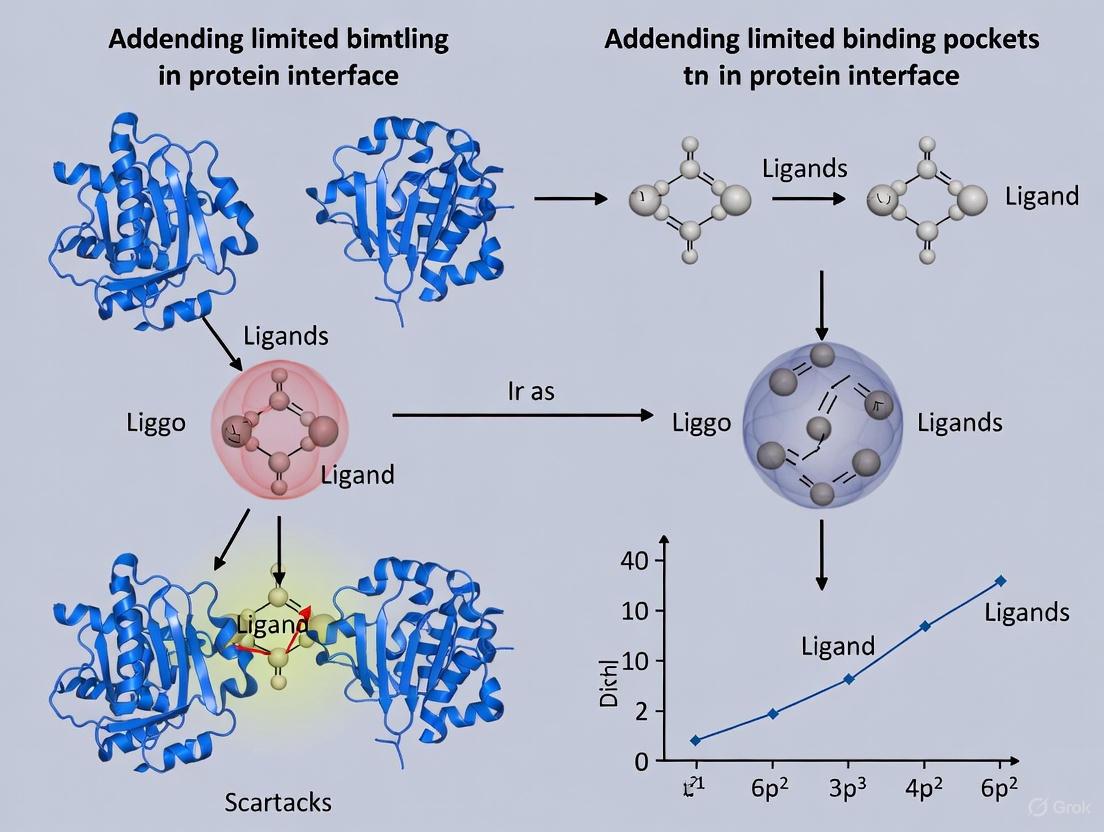
Targeting protein-protein interactions (PPIs) and designing novel protein functions often requires addressing the challenge of limited binding pockets.
Strategies for Augmenting Limited Binding Pockets in Protein Interfaces: From AI Prediction to De Novo Design
Abstract
Targeting protein-protein interactions (PPIs) and designing novel protein functions often requires addressing the challenge of limited binding pockets. This article synthesizes the latest computational and experimental strategies for identifying, expanding, and creating binding sites on protein interfaces. We explore foundational concepts like pocket frustration and druggability assessment, detail cutting-edge methodological advances including ligand-aware AI predictors and generative models for pocket creation, and provide troubleshooting guidance for stability-affinity trade-offs. The content further validates these approaches through comparative benchmarking of docking protocols and analysis of real-world applications in targeted protein degradation. This resource is tailored for researchers, scientists, and drug development professionals seeking to overcome the limitations of natural binding pockets for therapeutic and bioengineering applications.
Understanding the Challenge: The Landscape of Limited and Engineered Binding Pockets
Frequently Asked Questions
What makes a protein-protein interaction (PPI) "flat" and why is this a problem for drug discovery? PPI interfaces are often considered "flat" or "featureless" because they typically cover a large surface area (1,500–3,000 Ų) but lack the deep, well-defined cavities that are characteristic of traditional drug targets like enzymes [1]. This flatness provides few grooves or pockets for a small molecule to bind into and achieve high-affinity inhibition [1]. In contrast, the binding pockets for conventional drug targets are usually smaller (300–1,000 Ų) and more concave, making it easier to design compounds that fit snugly [2].
How do "small pockets" at a PPI interface change the approach to drug discovery? While the overall PPI interface is large, the discovery of "hotspots"—small regions that contribute the majority of the binding energy—makes drug discovery feasible [1]. These hotspots often contain small, deep pockets that can be targeted [3]. However, the average volume of the top-ranked pockets in PPIs is only about half of that in traditional binding pockets [2]. Consequently, potential drugs often need to bind multiple small pockets simultaneously, leading to molecules with higher molecular weight and greater hydrophobicity than traditional drugs [2].
My PPI target has a known structure, but computational tools predict it is "undruggable." Are there specific structural features I should look for that might make it more tractable? Yes, certain types of PPI interfaces are more amenable to targeting. Interfaces that involve a partner undergoing a disorder-to-order transition upon binding (intrinsically disordered regions) or those that bind via a continuous epitope from a surface-exposed helix or flexible loop are often more tractable [3]. These interfaces tend to offer small-volume but deep pockets or larger grooves that can be targeted by small molecules [3]. Tools like SiteMap can provide a Druggability score (Dscore); for PPIs, a Dscore greater than 0.89 may be classified as "druggable," but a PPI-specific assessment is recommended [4].
The inhibitors I am developing for a PPI have high potency but poor drug-likeness according to Lipinski's Rule of Five. Is this a cause for concern? Not necessarily. PPI inhibitors frequently violate Lipinski's Rule of Five, which defines typical drug-like properties [2] [1]. They tend to have higher molecular weight (>400), greater hydrophobicity (LogP >4), and more hydrogen bond acceptors [2]. Some researchers have proposed a "Rule of Four" as a more relevant guideline for PPI inhibitors [2]. The focus should be on achieving sufficient potency and selectivity, while optimizing for other pharmacokinetic properties as much as possible.
Troubleshooting Guides
Problem: Low Success Rate in High-Throughput Screening (HTS) for PPI Modulators
Background: HTS campaigns for PPI modulators often fail to identify quality hits because standard chemical libraries are enriched for compounds that target traditional, deep binding pockets [1].
Investigating the Cause:
- Check Library Composition: Evaluate if your screening library contains compounds with properties suited for PPIs (e.g., higher molecular weight, greater aromatic surface area).
- Analyze the Binding Site: Use computational tools (e.g., FTMap, SiteMap) to assess whether the PPI interface has any druggable sub-pockets. If the site is exceptionally flat and featureless, HTS may not be the optimal primary approach [2] [4].
Solutions:
| Solution | Protocol | Key Reagents |
|---|---|---|
| Utilize a Specialized Library | Screen libraries specifically designed for PPIs, which contain compounds with higher molecular complexity and "PPI-prone" properties [2]. | Commercially available PPI-focused compound libraries (e.g., containing fragments or lead-like molecules with MW 200-450) [2] [5]. |
| Switch to Fragment-Based Drug Discovery (FBDD) | Screen a library of low molecular weight fragments (<250 Da). Identify binders despite their low affinity, then use structural data to grow or link them into larger, potent inhibitors [1]. | Fragment library; Biophysical validation tools (SPR, NMR, X-ray crystallography). |
| Employ a Virtual Screening Approach | Use the protein's structure to computationally screen large compound databases for potential binders before committing to experimental screening [1]. | Structure-based virtual screening software; A pre-filtered virtual compound library. |
Problem: Designing Small Molecules with Sufficient Affinity for a Shallow PPI Interface
Background: Achieving nanomolar affinity is challenging when a small molecule cannot bury a large surface area in a deep pocket [3].
Investigating the Cause:
- Identify Hotspots: Determine the key energetic "hotspot" residues at the PPI interface through mutagenesis studies (e.g., alanine scanning) or analysis of structural data [1].
- Map Sub-Pockets: Characterize the small pockets that anchor these hotspot residues. For example, in the RAD51/BRCA2 interaction, a conserved phenylalanine binds in a deep "anchor" pocket, while a conserved alanine binds in a smaller hydrophobic pocket [3].
Solutions:
| Solution | Protocol | Key Reagents |
|---|---|---|
| Target Multiple Pockets | Design a single compound that can bind to several small, adjacent pockets simultaneously, effectively increasing the surface area of interaction and potency [2]. | Structure-activity relationship (SAR) data; X-ray co-crystal structures of lead compounds with the target protein. |
| Use a Peptidomimetic Approach | Develop a small molecule that mimics the secondary structure (e.g., an alpha-helix) of one protein partner that is critical for the interaction [1]. | Peptide mapping and structural data of the native PPI; Stapled peptide technologies or synthetic scaffolds to stabilize secondary structures. |
| Exploit Conformational Flexibility | If possible, use the structure of the protein in a ligand-bound state for design. Ligand binding can induce conformational changes that create or deepen pockets, increasing druggability [4]. | Ligand-bound protein crystal structures; Molecular dynamics simulations to study pocket dynamics. |
Quantitative Analysis of PPI vs. Conventional Targets
The table below summarizes key differences between PPI interfaces and traditional binding pockets, explaining the unique challenges in targeting PPIs [2] [1] [4].
| Feature | Protein-Protein Interaction (PPI) Interface | Conventional Drug Target Pocket |
|---|---|---|
| Interface/Pocket Area | ~1,500 - 3,000 Ų [1] | ~300 - 1,000 Ų [2] |
| Average Top Pocket Volume | ~261 ų [2] | ~524 ų [2] |
| Typical Shape | Planar, featureless [2] | Concave, well-defined [2] |
| Endogenous Ligands | Proteins/Peptides (large) [1] | Small molecules, substrates, co-factors [1] |
| Inhibitor Properties (Typical) | MW > 400, cLogP > 4, More HBD/HBA [2] | MW < 500, cLogP < 5, Limited HBD/HBA (per Rule of 5) [2] |
Experimental Workflow: From Target Assessment to Inhibitor Design
The following diagram outlines a logical workflow for researchers initiating a project to target a flat PPI interface.
The Scientist's Toolkit: Essential Research Reagents & Materials
| Item | Function in PPI Research |
|---|---|
| SiteMap [4] | A computational tool for predicting and scoring druggable binding sites on proteins, providing a Druggability score (Dscore) to prioritize PPI targets. |
| FTMap [2] | A computational mapping server that identifies hot spots of binding energy on protein surfaces by probing with small organic molecules. |
| Fragment Library [1] [5] | A collection of low molecular weight compounds (<250 Da) used in FBDD to identify initial, low-affinity binders to PPI sub-pockets. |
| SPR or NMR [1] | Biophysical techniques (Surface Plasmon Resonance or Nuclear Magnetic Resonance) used to validate and characterize the binding of fragments or leads to the PPI target. |
| AlphaFold2 Models [5] | Highly accurate computational protein structure prediction models, useful for studying PPIs when experimental structures are unavailable. |
Frequently Asked Questions (FAQs)
Q1: What is the fundamental "stability-function trade-off" in protein engineering? The stability-function trade-off describes a common phenomenon where mutations introduced to create a new or enhanced protein function, such as a novel binding pocket, often come at the cost of the protein's thermodynamic stability. Most function-altering mutations are destabilizing, as they can disrupt the delicate network of interactions that maintain the native folded state. For example, analyses of directed evolution experiments show that mutations conferring new enzymatic functions are almost as destabilizing as the average random mutation, placing a significant stability burden on the protein [6].
Q2: Why are engineered binding pockets particularly prone to causing instability? Engineered binding pockets are often prone to instability because they typically involve introducing mutations into the protein's core framework or existing structural elements. These mutations can disrupt optimal core packing, introduce unsatisfied polar groups, or create cavities that compromise the hydrophobic effect, a major driving force for protein folding. A study on an engineered fibronectin type III (FN3) domain showed that grafting lysozyme-binding loops onto a stable scaffold initially resulted in a variant that retained high stability but suffered from markedly reduced binding affinity, illustrating the direct conflict between the two objectives [7].
Q3: How can I tell if my protein's instability is due to a folding problem versus aggregation? Diagnosing the root cause requires specific assays. Folding problems are typically indicated by a low thermal melting temperature (Tm) or a low free energy of folding (ΔG), measured by techniques like differential scanning calorimetry (DSC) or chemical denaturation. Aggregation, often a consequence of partial unfolding, is indicated by increased light scattering, visible precipitate, or formation of insoluble material during purification or storage. A key strategy is to measure the protein's expression yield and solubility in E. coli; low yields of soluble protein often point to folding issues, as the protein may aggregate upon expression [8].
Q4: What are "compensatory mutations" and how are they identified? Compensatory mutations are "silent" or second-site mutations that exert stabilizing effects to counterbalance the destabilizing effects of primary function-altering mutations. They often appear in directed evolution variants with no obvious direct role in the new function. They can be identified through:
- Directed Evolution: Screening large libraries of random mutants for variants that retain function but exhibit improved expression or thermal stability [6].
- Computational Design: Using tools like FoldX to predict stabilizing mutations that can be introduced into the protein's framework without interfering with the engineered function [6].
- Consensus Design: Generating a highly stable scaffold by comparing homologous sequences, which provides a broader stability threshold to tolerate functional mutations [7].
Q5: Are some protein scaffolds better suited for pocket engineering than others? Yes, the choice of scaffold is critical. Ideal starting scaffolds possess high inherent thermodynamic and kinetic stability, as this provides a larger "window" of stability to absorb the destabilizing effects of functional mutations. For instance, the ultra-stable FN3con scaffold, engineered via consensus design, was able to be redesigned to bind lysozyme with picomolar affinity while maintaining a thermal melting temperature twofold higher than a functional variant built on a less stable parent scaffold [7]. Similarly, small, robust protein domains and alternative scaffolds known for high thermal stability (e.g., melting points of 70–80 °C) are often preferred [8].
Troubleshooting Guides
Problem: Low Expression or Solubility After Pocket Engineering
This is a classic symptom of the stability-function trade-off, where your engineered protein is failing to fold correctly or is aggregating.
Investigation & Resolution Protocol:
Step 1: Diagnose with Biophysical Characterization
- Method: Use Circular Dichroism (CD) Spectroscopy.
- Protocol:
- Purify the protein under denaturing conditions (e.g., 6 M Guanidine HCl).
- Refold by rapid dilution or dialysis into a suitable buffer.
- Collect a far-UV CD spectrum (190-250 nm).
- Compare the spectrum to that of the well-folded wild-type scaffold.
- Interpretation: A significant loss of secondary structure (e.g., reduced alpha-helical or beta-sheet signal) indicates a severe folding defect caused by the engineered mutations [8].
Step 2: Identify Structural Weak Points
- Method: Perform Computational Stability Analysis.
- Protocol:
- Create a structural model of your engineered variant.
- Use a force-field based computational tool like FoldX.
- Run the "AnalyseComplex" or "Stability" command to calculate the change in free energy of folding (ΔΔG) for your designed mutations.
- Interpretation: Mutations with a highly positive ΔΔG (e.g., > +1 kcal/mol) are strong candidates for being highly destabilizing. Focus your efforts on these residues [6].
Step 3: Implement a Stability Rescue Strategy
- Action: Introduce Compensatory Stabilizing Mutations.
- Protocol:
- Based on the FoldX analysis, run a "ScanSite" or similar algorithm to find stabilizing mutations at other positions in the protein.
- Prioritize mutations that are predicted to improve stability (negative ΔΔG) and are located in the protein's framework, away from the engineered pocket.
- Construct and test these mutants in combination with your functional variant.
- Example: In the FN3con-α-lys study, the initial loop-grafted variant had poor affinity. Using structural information, the framework was redesigned to restore picomolar binding while maintaining high thermodynamic stability [7].
Problem: Engineered Pocket Binds Ligand with Weak Affinity
Your protein is stable and soluble, but the designed function is poor, often because the pocket is not optimally shaped or chemically complementary to the ligand.
Investigation & Resolution Protocol:
Step 1: Analyze Pocket Geometry and Interactions
- Method: Obtain a Co-crystal Structure.
- Protocol:
- Co-crystallize your engineered protein with the target ligand.
- Solve the structure via X-ray crystallography.
- Interpretation: Analyze the structure for unanticipated framework interactions, suboptimal ligand positioning, or insufficient shape complementarity. In the FN3 example, a crystal structure revealed critical interactions from framework residues that were missing in the simple loop-grafted design [7].
Step 2: Redesign for Optimal Complementarity
- Method: Use Advanced Pocket Design Software.
- Protocol:
- Input your protein structure and ligand into a generative AI model like PocketGen.
- Allow the model to generate residue sequences and atomic structures for the pocket regions that maximize binding affinity.
- Select high-fidelity designs for experimental testing.
- Interpretation: These tools can operate ~10x faster than physics-based methods and achieve high success rates in generating pockets with higher binding affinity than reference structures [9].
Step 3: Account for Flexibility and Solvation
- Method: Perform Molecular Dynamics (MD) Simulations.
- Protocol:
- Solvate the protein-ligand complex in an explicit water box.
- Run a multi-nanosecond MD simulation.
- Analyze the trajectory for pocket flexibility, water networks, and stable hydrogen bonds.
- Interpretation: A stable binding pose and displacement of unfavorable "unhappy" waters from the pocket are indicators of a well-designed interface [3] [10].
Table 1: Quantifying the Stability-Function Trade-off in Directed Evolution
| Metric | Average Value in Function-Altering Mutations | Average Value in All Possible Mutations | Measurement Technique |
|---|---|---|---|
| Destabilization (ΔΔG) | +0.9 kcal/mol [6] | +1.3 kcal/mol [6] | Computational (FoldX) |
| Frequency of Stabilizing "Compensatory" Mutations | High (in successful variants) [6] | N/A | Library Analysis |
| Thermal Stability (Tm) Loss in Engineered Binder | >10°C (in initial design) [7] | N/A | Differential Scanning Calorimetry (DSC) |
Table 2: Performance of Pocket Generation and Optimization Methods
| Method | Type | Key Metric: AAR (Amino Acid Recovery) | Key Metric: Vina Score (Affinity) | Typical Runtime |
|---|---|---|---|---|
| PocketGen | Deep Generative AI | 63.40% [9] | -9.655 [9] | Fast (10x faster than physics-based) [9] |
| PocketOptimizer | Physics-based Modeling | N/A (Optimizes affinity) | Varies by target [9] | Slow (Hours per design) [9] |
| RFdiffusion All-Atom | Deep Learning | Lower than PocketGen [9] | Lower than PocketGen [9] | Medium [9] |
Experimental Protocols
Protocol 1: Assessing Stability via Thermal Denaturation
Objective: Determine the thermal melting temperature (Tm) of your engineered protein to quantify stability loss.
- Sample Preparation: Dialyze your purified protein into a standard phosphate buffer (e.g., PBS, pH 7.4). Concentrate to an A280 of approximately 0.2-0.5.
- Instrument Setup: Use a circular dichroism (CD) spectropolarimeter equipped with a Peltier temperature controller. Set the wavelength to 222 nm (for alpha-helical content) or 215 nm (for beta-sheet content).
- Data Acquisition: Ramp the temperature from 20°C to 90°C at a rate of 1°C per minute while continuously monitoring the CD signal.
- Data Analysis: Plot the CD signal (ellipticity) versus temperature. Fit the data to a sigmoidal curve to determine the Tm, the temperature at which 50% of the protein is unfolded. Compare the Tm of your variant to the wild-type scaffold [8].
Protocol 2: Computational Scanning for Stabilizing Mutations
Objective: Identify second-site mutations that can compensate for instability caused by pocket engineering.
- Structure Preparation: Obtain a high-resolution crystal structure or a high-quality homology model of your engineered protein. Use a tool like PDB2PQR to add hydrogens and assign protonation states.
- Stability Calculation: Use the FoldX software suite.
- Run the
RepairPDBcommand to optimize the side-chain packing and minimize the energy of the structure. - Use the
ScanSiteorBuildModelcommand to simulate all possible single-point mutations in the protein. - The output will provide a ΔΔG value for each mutation, predicting its effect on stability.
- Run the
- Variant Selection: Filter for mutations that are predicted to be stabilizing (ΔΔG < 0). Prioritize those that are distant from your engineered pocket to avoid disrupting function. Construct and test these variants combinatorially [6].
Visualization of Concepts and Workflows
The Scientist's Toolkit: Essential Research Reagents & Software
Table 3: Key Resources for Pocket Engineering and Stability Analysis
| Item / Reagent | Function / Application | Example Use Case |
|---|---|---|
| FoldX | Computational tool for predicting protein stability and protein interactions. | Quick in-silico screening of designed mutations for destabilizing effects (ΔΔG calculation) [6]. |
| PocketGen | Deep generative AI model for designing ligand-binding protein pockets. | Generating high-fidelity, high-affinity pocket sequences and structures conditioned on a target ligand [9]. |
| FN3con Scaffold | An ultra-stable fibronectin type III consensus domain. | A robust starting scaffold for engineering binding proteins, providing a wide stability margin [7]. |
| Circular Dichroism (CD) Spectrometer | Measures protein secondary structure and monitors thermal unfolding. | Determining the thermal melting temperature (Tm) to quantify stability loss after engineering [8]. |
| Disulfide Trapping Library | A library of disulfide-containing fragments for site-directed screening. | Identifying fragments that bind to and stabilize specific sub-pockets at protein-protein interfaces [11]. |
| Flexible Topology (FT) Simulations | MD method using particles that change identity to explore pocket preferences. | Mapping the geometric and chemical preferences of a binding pocket, accounting for flexibility and solvation [10]. |
Technical FAQs: Addressing Core Experimental Challenges
FAQ 1: What is "energetic frustration" in the context of a protein-ligand interface, and why is it significant for drug development?
Energetic frustration occurs when the amino acid residues at a protein-protein or protein-ligand interface adopt suboptimal, conflicting, or strained energetic configurations. Instead of forming a perfectly optimized, low-energy binding surface, the interface contains localized patches of unfavorable interactions [12] [13]. In targeted protein degradation, the degree of frustration at the target protein-E3 ligase interface has been shown to correlate with the cooperativity of PROTAC-induced ternary complexes [12]. This suggests that quantifying interface frustration can provide a rational, structure-based approach to guide the design of more effective drugs, especially for complex modalities like PROTACs.
FAQ 2: Our mutagenesis data suggests a frustrated interface, but we are unable to crystallize the complex. What are reliable computational methods to quantify and localize frustration?
When experimental structure determination is challenging, you can employ computational frustratometer analysis. This method quantifies frustration by examining the statistics of the energy changes that occur when the local environment of a residue or atom is altered, comparing the native configuration against a decoy ensemble of non-native interactions [14]. The analysis can be performed at an atomic resolution, allowing for the extension of frustration analysis to protein-ligand complexes. The output will localize highly frustrated (red) and minimally frustrated (green) interactions on a protein structure, helping to identify key biological sites relevant for function and binding [14].
FAQ 3: How can we experimentally validate that a specific residue pair is a source of energetic frustration at a binding interface?
The double mutant cycle analysis, combined with binding kinetics, is a powerful experimental method to map the energetic landscape of a binding interface [13]. This technique involves:
- Creating single mutations at two putative frustrated positions (X and Y).
- Creating a double mutant containing both X and Y mutations.
- Measuring the binding dissociation constants (Kd) for the wild-type and the three mutant complexes using a technique like stopped-flow fluorometry. A non-zero coupling free energy (ΔΔΔGc) indicates energetic cross-talk between the two positions. A negative ΔΔΔGc value is a sign of a less optimized (frustrated) wild-type complex, as the first mutation boosts the effect of the second [13].
FAQ 4: For a flat protein-protein interface with limited binding pockets, how can frustration guide the identification of potential ligand-binding sites?
Ligand-binding pockets are very frequently found adjacent to protein-protein interfaces. One analysis found that over half of all ligands in protein complexes contact at least one side of a protein interface, with a median minimum distance (Dmin) of 4.2 Å [15]. Therefore, the regions near a frustrated protein-protein interface are prime candidates for hosting small molecule binders. The intrinsic geometric packing of proteins and domains at interfaces creates pockets, and evolution often optimizes the sequences of these pockets for function [15]. Focusing computational pocket detection or fragment-based screening on these interfacial regions, particularly near patches of high frustration, can be a productive strategy.
Troubleshooting Guides
Guide 1: Interpreting and Validating Computational Frustration Analysis
Problem: The frustratometer output shows widespread frustration throughout the protein core, which contradicts the expected stable, folded structure.
- Potential Cause 1: The force field or energy function parameters may not be optimally tuned for your specific protein system.
- Solution: Validate the computational findings against experimental data. If available, compare the frustration patterns with NMR relaxation data or hydrogen-deuterium exchange (HDX) data, which can provide insights into protein flexibility and stability. The pattern of frustration should generally show a highly connected, minimally frustrated core with highly frustrated interactions clustered on the surface [14].
- Potential Cause 2: The input protein structure may be of low quality or contain steric clashes.
- Solution: Carefully curate the input structure. Use high-resolution crystal structures or refined models. Check for and resolve any steric clashes in the pre-processing stage.
Problem: The calculated frustration pattern does not correlate with known functional or allosteric sites.
- Potential Cause: The analysis might be overlooking the specific conformational state relevant to the function.
- Solution: Perform frustration analysis on multiple conformational states of the protein, if structures are available. Allosteric proteins often have patches of highly frustrated interactions that enable conformational switching [14]. Analyzing a static snapshot might miss the frustration that becomes apparent only when comparing different states.
Guide 2: Troubleshooting Double Mutant Cycle Analysis
Problem: The double mutant complex is too unstable to measure reliable binding kinetics.
- Potential Cause: The two mutations are at a critically important "hot spot" in the interface, and their combination abolishes binding beyond the detection limit of the assay.
- Solution: Consider using less disruptive mutations (e.g., Val to Ile instead of Val to Ala) to reduce the destabilization. Alternatively, use more sensitive techniques like isothermal titration calorimetry (ITC) or surface plasmon resonance (SPR) that may capture very weak binding. If no binding is detected, report the lower limit of the Kd and note that the coupling energy is likely large and negative [13].
Problem: High error in the calculated coupling free energy (ΔΔΔGc).
- Potential Cause: The error is propagated from the uncertainties in the individual Kd measurements for the four complexes in the cycle.
- Solution: Ensure high-quality, replicate measurements for each Kd. Use a sensitive assay with a strong signal-to-noise ratio (e.g., the change in Trp fluorescence was used for the ACTR/NCBD complex [13]). Perform careful curve fitting and error analysis for each kinetic measurement.
Summarized Quantitative Data
Table 1: Experimentally Determined Coupling Free Energies (ΔΔΔGc) from a Frustrated Binding Interface (ACTR/NCBD) [13]
| NCBD Mutant | ACTR Mutant | ΔΔΔGc (kcal/mol) | Error (kcal/mol) |
|---|---|---|---|
| L2070A | L1055A | -0.82 | 0.10 |
| L2070A | A1061G | -0.94 | 0.11 |
| L2074A | A1061G | -0.77 | 0.11 |
| L2067A | L1055A | -0.58 | 0.07 |
| V2086A | I1067V | -0.50 | 0.04 |
| L2074A | L1055A | -0.46 | 0.10 |
| L2070A | L1048A | -0.23 | 0.09 |
| L2070A | L1049A | 0.52 | 0.06 |
Table 2: Correlation between Interface Frustration and PROTAC Cooperativity [12]
| System | Observation | Experimental Correlation |
|---|---|---|
| SMARCA2–VHL Complexes (bound to 5 different PROTACs) | Interfacial residues adopt energetically suboptimal ('frustrated') configurations. | Molecular dynamics simulations and X-ray crystallography. |
| 11 GEN-1 based PROTACs | The degree of interfacial frustration correlates with measured positive cooperativity (α). | Higher cooperativity values (α >1) associated with a greater number of frustrated residue pairs. |
Detailed Experimental Protocols
Protocol 1: Atomistic Frustration Analysis of a Protein-Ligand Complex
Methodology: This protocol uses an atomistic frustratometer to quantify and localize frustration at high resolution [14].
Input Structure Preparation:
- Obtain a high-resolution structure of your protein-ligand complex from the PDB or molecular modeling.
- Pre-process the structure: add missing hydrogen atoms, assign protonation states, and minimize any steric clashes using molecular mechanics software.
Energy Calculation Setup:
- The algorithm uses an all-atom molecular mechanics force field. The specific implementation simplifies an earlier frustration localization algorithm for computational efficiency [14].
- The calculation examines the energy changes when the local environment of an atom is perturbed, comparing it to a decoy set of non-native interactions.
Running the Frustratometer:
- Execute the analysis on the prepared structure. The computation will evaluate the energy landscape statistics for the entire complex.
Analysis and Interpretation:
- Output: The frustratometer generates a visual map of the complex where interactions are classified as:
- Highly frustrated (red): Energetically unfavorable interactions that conflict with the native structure.
- Minimally frustrated (green): Energetically favorable interactions that stabilize the native structure.
- Neutral (gray): Interactions near the median energy of the decoy set.
- Localization: Identify clusters of highly frustrated interactions. These often correlate with key biological locations, such as flexible regions, allosteric sites, or suboptimal binding interfaces [12] [14].
- Output: The frustratometer generates a visual map of the complex where interactions are classified as:
Protocol 2: Mapping Interface Energetics via Double Mutant Cycles
Methodology: This protocol uses site-directed mutagenesis and binding kinetics to experimentally measure energetic coupling between residues [13].
Mutant Design and Generation:
- Select hydrophobic positions at the binding interface of both proteins (e.g., Protein A and Protein B) for mutation based on structural data.
- Use site-directed mutagenesis to create a series of mutants:
- Single mutants in Protein A (X) and Protein B (Y).
- The corresponding double mutant (X,Y).
Binding Kinetics Measurement:
- Use a stopped-flow fluorometer to measure the binding kinetics.
- For each protein pair (WT, single mutants, double mutant), determine the observed rate constant (kobs) at varying concentrations of the binding partner.
- Fit the data (kobs vs. concentration) to obtain the apparent association rate constant (konapp).
- Perform displacement experiments: mix a pre-formed complex with an excess of wild-type protein to determine the apparent dissociation rate constant (koffapp).
- Calculate the dissociation constant: Kd = koffapp / konapp.
Data Analysis and ΔΔΔGc Calculation:
- Calculate the change in binding free energy for each mutant: ΔΔG = RT ln( Kd-mutant / Kd-WT ).
- Calculate the coupling free energy (ΔΔΔGc) using the formula:
- ΔΔΔGc = ΔΔGXY - (ΔΔGX + ΔΔGY)
- A negative ΔΔΔGc value indicates that the wild-type interaction at these two positions is suboptimal (frustrated), as the effect of the two mutations is cooperative in destabilizing the complex [13].
Experimental Workflow and Relationship Visualization
Experimental Workflow for Frustration Analysis
Frustration Concepts and Research Application
Research Reagent Solutions
Table 3: Essential Materials for Frustration-Based Research
| Item | Function / Application |
|---|---|
| High-Quality Protein Structures (X-ray/Cryo-EM) | Essential as input for computational frustration analysis and for guiding mutant design [12] [14]. |
| Atomistic Frustratometer Software | Computational tool to quantify and localize frustration at high resolution in protein monomers and complexes [14]. |
| Molecular Dynamics (MD) Simulation Software | Used to characterize the conformational dynamics of complexes and sample the energy landscape, complementing frustration analysis [12]. |
| Stopped-Flow Fluorometer | Instrument for measuring rapid binding kinetics (kon and koff) required for double mutant cycle analysis [13]. |
| Isothermal Titration Calorimetry (ITC) | Used to determine binding thermodynamics (Kd, ΔH, ΔS) and validate Kd values obtained from kinetics [13]. |
| TR-FRET Competition Assay Kits | For measuring the cooperativity (α) of PROTAC-induced ternary complex formation in a high-throughput format [12]. |
| Site-Directed Mutagenesis Kit | For generating single and double mutants of target proteins to experimentally probe interface energetics [13]. |
FAQs: Understanding Protein-Ligand Binding Site Databases
Q1: What is the practical value of a binding pocket database for drug discovery?
Precomputed databases of binding pockets make a wealth of structural information quickly accessible to researchers. This is crucial for accelerating processes like virtual screening and drug repurposing, which rely on knowledge of where a drug may bind to a protein. These databases provide a faster, cheaper alternative to identifying pockets on-the-fly, especially given the vast number of protein structures now available from prediction tools like AlphaFold [16].
Q2: With many databases available, how are they categorized?
A 2024 review identified 53 available databases, which can be organized into subgroups based on their primary content and goals [16]. The table below summarizes the two main categories and their purposes.
Table: Categories of Protein-Ligand Binding Databases
| Database Category | Number of Databases | Primary Purpose and Content |
|---|---|---|
| Pocket Databases | 37 | Focus on the identification and characterization of binding sites on protein structures, often predicting "druggable" pockets [16]. |
| Interaction Databases | 16 | Contain detailed information on specific protein-ligand complexes, including experimental and predicted binding data [16]. |
Q3: What is the fundamental challenge in defining a "binding pocket"?
There is no single standard definition for a binding pocket across different databases and methods. A common approach for experimental complexes is to designate all residues within a cutoff distance (e.g., 5Å) from any ligand atom as the binding pocket. However, in a prediction setting where no ligand is present, the criteria change and can be based on geometry, energy, sequence conservation, or machine learning, leading to variations in how the same pocket is characterized across different resources [16].
Q4: Where can I find the primary repository for experimentally-determined protein-ligand structures?
The Protein Data Bank (PDB) is the central global archive for experimental 3D structural data of proteins and nucleic acids. The RCSB PDB portal provides access to these structures and a suite of tools for their visualization, analysis, and exploration [17].
Experimental Protocols & Troubleshooting
Protocol: A Workflow for Leveraging Databases in Binding Site Research
The following diagram outlines a general workflow for utilizing public databases in a research project aimed at finding and characterizing ligand-binding sites.
Troubleshooting Guide: Common Experimental Challenges
This guide addresses specific issues you might encounter during experimental work on protein-ligand interactions.
Table: Troubleshooting Protein-Ligand Interaction Experiments
| Problem | Possible Cause | Recommendation |
|---|---|---|
| No signal in Co-IP | Stringent lysis conditions (e.g., RIPA buffer) disrupting weak protein-protein interactions [18]. | Use a milder lysis buffer (e.g., Cell Lysis Buffer #9803) and include protease inhibitors. Sonication is crucial for protein recovery [18]. |
| Non-specific bands in Western Blot | Off-target proteins binding non-specifically to the beads or IgG antibody [18]. | Include a bead-only control and an isotype control. Pre-clearing the lysate may be necessary [18]. |
| Target signal obscured | The antibody used for detection is reacting with the denatured heavy/light chains of the IP antibody [18]. | Use antibodies from different species for the IP and western blot. Alternatively, use a biotinylated primary antibody detected with Streptavidin-HRP [18]. |
| Suspected false positive in Co-IP | The antibody itself may be recognizing the co-precipitated protein, not the bait protein [19]. | Use monoclonal antibodies. For polyclonal antibodies, pre-adsorb them to a sample devoid of the primary target. Use independently derived antibodies against different epitopes for verification [19]. |
The Scientist's Toolkit: Research Reagent Solutions
The following table details key reagents and their functions in studying protein-ligand interactions, based on the cited troubleshooting guides.
Table: Essential Reagents for Protein Interaction Studies
| Reagent / Material | Function / Application | Technical Notes |
|---|---|---|
| Cell Lysis Buffer #9803 | A non-denaturing lysis buffer suitable for co-immunoprecipitation (Co-IP) experiments. Preserves protein-protein interactions that stronger buffers might disrupt [18]. | Sonication is recommended when using this buffer to ensure nuclear rupture and optimal protein recovery [18]. |
| Protease/Phosphatase Inhibitor Cocktails | Prevents the degradation and dephosphorylation of target proteins in cell lysates, preserving protein integrity and post-translational modifications [18]. | Essential for detecting low-abundance modified proteins like phosphoproteins. Specific inhibitors (e.g., sodium orthovanadate) target different phosphatase classes [18]. |
| Protein A & Protein G Beads | Immobilized beads used to capture antibody-protein complexes during immunoprecipitation. | Protein A has higher affinity for rabbit IgG; Protein G has higher affinity for mouse IgG. Optimizing bead choice can improve binding efficiency [18]. |
| Crosslinkers (e.g., DSS, BS3) | Chemically "freeze" transient protein-protein interactions inside or outside the cell before lysis, allowing them to be captured during Co-IP [19]. | DSS is membrane-permeable (for intracellular crosslinking). Avoid amine-containing buffers like Tris, which can compete with the reaction [19]. |
| SuperSignal West Femto Substrate | A highly sensitive chemiluminescent substrate for Western blotting. Can detect low-abundance proteins that are difficult to visualize with less sensitive systems [19]. | Useful when the protein of interest is expressed at very low levels or when only small amounts of sample are available. |
Visualizing the Fundamentals of Protein-Ligand Binding
A thorough understanding of binding mechanisms is fundamental to analyzing database information and planning experiments. The following diagram illustrates the key models and thermodynamic principles of protein-ligand binding.
Toolkit for Expansion: Computational and AI-Driven Methods for Pocket Augmentation
Frequently Asked Questions
Q1: What does "ligand-aware" mean in the context of binding site prediction, and how is it different from traditional methods? A "ligand-aware" model explicitly uses information about the ligand's chemical properties during its prediction process. Unlike traditional single-ligand-oriented methods (tailored to one ligand) or multi-ligand-oriented methods that only use protein structure, ligand-aware models like LABind incorporate ligand representations (e.g., from SMILES sequences) to learn distinct binding characteristics for different ligands, including those not seen during training [20].
Q2: My research involves a novel ion for which no binding data exists. Can LABind still make a prediction? Yes. A key advantage of LABind is its demonstrated capacity to generalize to unseen ligands. By utilizing a molecular pre-trained language model (MolFormer) on ligand SMILES sequences, it learns generalizable representations of molecular properties, allowing it to predict binding sites for ligands absent from its training data [20].
Q3: I only have a protein's amino acid sequence, not its 3D structure. Can I use these AI models? Yes, but the approach differs. LABind itself is a structure-based method. However, the developers provide a sequence-based program that leverages structures predicted by ESMFold, allowing you to start from a protein sequence [20]. Another model, AI-Bind, is explicitly designed to work with protein sequences and ligand SMILES, overcoming the limitation of unavailable 3D structures [21].
Q4: How can I validate the binding sites predicted by a computational model in a wet-lab setting? A robust validation protocol involves several steps. After computational prediction, you can perform virtual saturation mutagenesis on the predicted binding residues. The top-ranked mutations are then created in the lab, and the catalytic activity of the mutant proteins is measured and compared to the wild-type. A significant change in activity upon mutating predicted sites strongly validates the computational prediction, as demonstrated with KvAP and BaP4H enzymes [22].
Q5: The model predicted a large pocket, but I am targeting a specific small molecule. How can I refine the prediction for my ligand of interest? This is precisely the strength of ligand-aware models. While pocket-detection methods like P2Rank might identify large cavities, ligand-aware models like LABind integrate specific ligand information via a cross-attention mechanism. This allows the model to pinpoint the specific sub-pocket or residues most relevant for binding your particular small molecule, significantly refining the prediction [20].
Troubleshooting Guides
Issue 1: Poor Prediction Accuracy on Novel Protein Targets
Problem: The model performs well on standard benchmarks but shows low accuracy for your novel protein, even when using a predicted structure from tools like ESMFold or AlphaFold.
Solutions:
- Check Structural Quality: The accuracy of structure-based predictions is contingent on the quality of the input protein structure. Verify the predicted local distance difference test (pLDDT) scores from your structure prediction tool, especially in the regions of interest. Low confidence in these areas can directly lead to poor binding site predictions [20].
- Leverage Multiple Models: Use an ensemble approach. Run your protein and ligand through multiple available models (e.g., LABind, DUnet, AI-Bind) and compare the results. Consensus predictions across different algorithms are generally more reliable [20] [22] [21].
- Re-evaluate Negative Data: If using a model like AI-Bind, ensure your training data includes "network-derived negatives" (carefully selected non-binding pairs) rather than random negatives. This practice has been shown to maximize inductive test performance on unseen proteins and ligands [21].
Issue 2: Inability to Distinguish Between Binding Sites for Different Ligands
Problem: The model predicts the same large binding site for all ligands, failing to identify ligand-specific binding residues.
Solutions:
- Confirm Model Architecture: Ensure you are using a truly ligand-aware model. Verify that the model you are using (e.g., LABind) incorporates a cross-attention mechanism between protein and ligand representations. This architecture is specifically designed to learn distinct binding patterns for different ligands [20].
- Inspect Ligand Representation: Check the input ligand features. Models like LABind use SMILES sequences processed by MolFormer, while AI-Bind uses Mol2vec embeddings. Incorrect ligand input formatting will lead to degraded, non-specific performance [20] [21].
- Utilize Interpretability Features: Use the model's interpretability functions. For instance, AI-Bind can mutate amino acid trigrams in the protein sequence to identify regions that most influence binding predictions for a specific ligand, helping to pinpoint the active binding site [21].
Issue 3: Failed Experimental Validation Despite High Computational Confidence
Problem: The model predicts a binding site with high confidence, but subsequent experimental assays (e.g., mutagenesis) do not show a significant impact on binding or activity.
Solutions:
- Refine with Molecular Docking: Use the predicted binding sites to guide molecular docking simulations. For example, the binding sites predicted by LABind can be used to create an optimal grid for docking tools like Smina, improving the accuracy of pose generation and providing a more detailed atomistic view of the interaction before moving to the lab [20].
- Consider Allosteric Effects: The predicted site might be an allosteric site rather than the orthosteric active site. Mutating residues in an allosteric site can still impact catalysis. Analyze the predicted site's location relative to the known active site and consult databases like the "Pocketome" for context on different pocket types [23].
- Validate with Control Ligands: If possible, test your experimental system with a ligand known to bind the protein. A failure to validate a known interaction would point to issues with the experimental setup, while a failure only for the novel ligand confirms a computational miss.
Performance Comparison of Deep Learning Models
The following table summarizes the performance of various deep learning models on independent test sets, measured by Success Rate (SR). SR-PRE is the percentage of proteins where the model's predicted binding site has a precision of at least 50%. SR-DCC is the percentage where the distance between the predicted and true binding site centers is 4 Å or less [22].
| Model | Type | SC6K (SR-PRE) | COACH420 (SR-PRE) | BU48 (SR-PRE) | SC6K (SR-DCC) | COACH420 (SR-DCC) | BU48 (SR-DCC) |
|---|---|---|---|---|---|---|---|
| DUnet [22] | 3D CNN (DenseNet + UNet) | 48.4% | 35.5% | 43.6% | 52.0% | 47.6% | 58.1% |
| PUResNet [22] | 3D CNN (ResNet-based) | 42.5% | 31.5% | 35.8% | 49.1% | 49.6% | 51.6% |
| PointSite [22] | 3D Point Cloud | 44.4% | 30.2% | 41.9% | 46.2% | 44.3% | 53.2% |
| BiRDs [22] | Sequence-based | 38.9% | 27.0% | 46.5% | 44.8% | 38.5% | 54.8% |
Ligand-Aware Prediction Workflow
Experimental Validation Protocol for Predicted Binding Sites
This protocol outlines a methodology for experimentally validating computationally predicted binding sites, based on practices used in recent studies [22].
Objective: To confirm the functional significance of AI-predicted ligand binding sites through site-directed mutagenesis and activity assays.
Materials:
- Purified wild-type protein.
- Plasmid containing the gene of interest.
- Site-directed mutagenesis kit.
- reagents for protein expression and purification.
- Substrate or ligand for the protein.
- Equipment for activity assay (e.g., spectrophotometer).
- Buffer components.
Procedure:
- Virtual Saturation Mutagenesis: Based on the AI-predicted binding site residues, perform in silico mutagenesis to rank single-point mutations expected to most significantly impact ligand binding.
- Wet-Lab Mutagenesis: Select the top 5-10 ranked mutations for experimental testing. Use site-directed mutagenesis to create these variants in your expression plasmid.
- Protein Production: Express and purify the wild-type and all mutant proteins using standardized protocols (e.g., affinity chromatography).
- Functional Assay: Measure the catalytic activity (e.g., enzyme kinetics, KM, Vmax) or binding affinity (e.g., Kd) of each mutant protein and compare it to the wild-type.
- Analysis: A significant reduction (e.g., >50%) in activity or binding affinity in a mutant, especially for multiple mutants in the predicted site, provides strong evidence that the AI-predicted residues are critical for the protein-ligand interaction.
Research Reagent Solutions
The following table lists key computational and experimental resources used in this field.
| Item | Function/Brief Explanation |
|---|---|
| LABind [20] | A deep learning model that uses a graph transformer and cross-attention to predict binding sites for small molecules and ions in a ligand-aware manner. |
| DUnet [22] | A 3D CNN model combining DenseNet, UNet, and self-attention for segmenting protein-ligand binding sites from 3D structural images. |
| AI-Bind [21] | A pipeline that uses ProtVec and Mol2vec embeddings to predict binding for novel proteins and ligands, offering high interpretability. |
| ESMFold/AlphaFold [20] | Protein structure prediction tools; used to generate 3D structures from amino acid sequences for structure-based models. |
| Smina [20] | A molecular docking tool; used for pose generation and can be guided by predicted binding sites to improve accuracy. |
| MolFormer [20] | A pre-trained molecular language model; used by LABind to generate ligand representations from SMILES sequences. |
| Site-Directed Mutagenesis Kit | Experimental reagent for creating specific amino acid changes in a protein gene to validate the function of predicted residues. |
1.1 What is generative pocket design and why is it important for drug development? Generative pocket design is a computational approach that uses deep learning to create the amino acid sequences and 3D structures of protein regions that bind to specific small molecules (ligands). This process is crucial for engineering proteins with tailored functions, such as enzymes for green chemistry, biosensors for clinical diagnostics, and therapeutic proteins. Traditional methods relied on physics-based modeling or template matching, which were often time-consuming and limited in scope. AI-driven generative models have dramatically accelerated this process while improving success rates [9] [24].
1.2 What is PocketFlow and how does its "prior-informed" approach work? PocketFlow is a generative model that uses flow matching to create protein pockets. Its "prior-informed" approach means the model is specifically trained to learn and replicate key types of protein-ligand interactions, such as hydrogen bonds and geometric constraints. During the generation process, it uses multi-granularity guidance based on overall binding affinity and interaction geometry to steer the generation toward high-affinity, structurally valid pockets. This incorporation of biochemical knowledge significantly improves the quality and success rate of the generated pockets [25].
1.3 My generated pockets have poor binding affinity. What might be wrong? Poor binding affinity often stems from inadequate modeling of specific molecular interactions. To address this:
- Verify Interaction Guidance: Ensure that the prior-informed guidance for key interactions (e.g., hydrogen bonds, hydrophobic contacts) is correctly configured during sampling.
- Check Ligand Flexibility: Confirm that your model accounts for potential flexibility and induced-fit adjustments in the ligand structure upon binding. Some models, including PocketFlow, update the ligand structure during refinement to reflect binding pose changes [9].
- Assess Multi-Granularity Constraints: Review the geometric and affinity-based constraints applied during generation to ensure they are sufficiently stringent [25].
1.4 Why are my generated pocket structures structurally invalid or unstable? Structural invalidity often indicates a failure in sequence-structure co-design. Ensure your model:
- Promotes Sequence-Structure Consistency: Use a co-design scheme that simultaneously updates the sequence and structure, avoiding post-processing sequence derivation that can create mismatches [9].
- Incorporates Evolutionary Information: Integrate a protein language model (pLM) with a structural adapter to align sequence-based predictions with structural features [9].
- Validates with Structural Metrics: Use self-consistent root mean squared deviation (scRMSD) and predicted local-distance difference test (pLDDT) to assess validity. A pocket is generally considered designable if the overall scRMSD is < 2 Å and the pocket scRMSD is < 1 Å [9].
1.5 The model performs well on small molecules but fails on peptides or RNA. How can I improve generalization? This is a common challenge. PocketFlow is highlighted for its generalized performance across multiple ligand modalities, including small molecules, peptides, and RNA. The key is its explicit modeling of fundamental protein-ligand interaction priors, which are common across these modalities. If using a different model, verify that its training data and interaction modeling encompass the diverse ligand types you are working with [25].
Performance & Benchmarking Data
The performance of generative pocket design models is evaluated using a suite of metrics that assess binding affinity, structural validity, and sequence recovery. The table below summarizes quantitative benchmarks for leading models on standard datasets like CrossDocked and Binding MOAD.
Table 1: Benchmarking Performance of Generative Pocket Design Models
| Model | Key Principle | Vina Score | AAR (%) | Success Rate (%) | Designable Pockets (%) | scRMSD (Å) |
|---|---|---|---|---|---|---|
| PocketFlow | Prior-informed flow matching | -9.655 | N/A | N/A | N/A | +0.05 improvement vs. baseline |
| PocketGen | Bilevel graph transformer + pLM integration | -9.655 | 63.40 | 97 | ~97 (def.: scRMSD<2Å, pocket<1Å) | <2 (overall), <1 (pocket) |
| RFdiffusion All-Atom (RFAA) | Denoising diffusion with ligand conditioning | Benchmark data | N/A | Benchmark data | Benchmark data | Benchmark data |
| FAIR | Full-atom iterative refinement | Benchmark data | N/A | Benchmark data | Benchmark data | Benchmark data |
Definitions of Metrics:
- Vina Score: Estimated binding affinity from AutoDock Vina; more negative values indicate stronger binding [9].
- AAR: Amino Acid Recovery; the percentage of correctly predicted pocket residue types [9].
- Success Rate: The percentage of generated pockets with higher binding affinity than the reference pockets [9].
- Designable Pockets: The percentage of generated pockets that are structurally valid (e.g., overall scRMSD < 2 Å and pocket scRMSD < 1 Å) [9].
- scRMSD: Self-consistent Root Mean Square Deviation; measures structural validity by comparing generated and predicted backbones [9].
Table 2: Key Metrics for Evaluating Generated Pockets
| Metric Category | Specific Metric | Definition and Interpretation | Ideal Value/Range |
|---|---|---|---|
| Binding Affinity | Vina Score | Estimates binding free energy; more negative is better. | < -9.0 |
| MM-GBSA | Molecular Mechanics with Generalized Born and Surface Area solvation; estimates binding free energy. | Lower (more negative) | |
| GlideSP Score | Docking-based scoring function. | Lower (more negative) | |
| Structural Validity | scRMSD | Measures backbone deviation between generated and predicted structures. | < 2 Å (overall), < 1 Å (pocket) |
| scTM | Template Modeling Score for structural similarity; range 0-1, higher is better. | Closer to 1 | |
| pLDDT | Per-residue confidence score from structure prediction; range 0-100, higher is better. | > 70 (confident) | |
| Sequence Quality | AAR | Percentage of pocket residues matching the recovered types. | Higher (e.g., >63%) |
Experimental Protocols & Workflows
3.1 Standard Protocol for Pocket Generation with Prior-Informed Models
This protocol outlines the key steps for generating protein pockets using a prior-informed model like PocketFlow. The overall workflow is visualized in the diagram below.
Step-by-Step Methodology:
Input Preparation:
- Protein Scaffold: Provide the 3D atomic structure of the protein that will host the new pocket (typically in PDB format). Define the region where the pocket will be generated.
- Target Ligand: Provide the 3D structure of the small molecule ligand (e.g., in SDF or MOL2 format). Ensure reasonable initial geometry [9] [25].
Data Featurization:
- Represent the protein-ligand complex as a geometric graph. Nodes represent atoms or residues, and edges represent spatial relationships and potential interactions.
- Common features include atom types, residue types, distances, angles, and interaction types (e.g., hydrogen bond donors/acceptors, hydrophobic patches) [9] [26].
Model Application (Generation):
- PocketFlow Specifics: Run the flow matching sampling process. The model utilizes learned priors about protein-ligand interactions to guide the generation of pocket residues (both sequence and structure) around the fixed ligand.
- Key Parameters: Configure multi-granularity guidance strengths for overall binding affinity and specific interaction geometries. The model may also update the ligand's binding pose during this process to reflect induced-fit changes [9] [25].
- Output: The model generates multiple candidate pockets (sequences and full-atom structures).
In Silico Validation:
- Affinity Assessment: Use docking scoring functions (e.g., AutoDock Vina) or fast physical scoring (e.g., MM-GBSA) to rank candidates by predicted binding affinity [9].
- Structural Validation: Use structure prediction tools (e.g., AlphaFold 2, ESMFold) to fold the generated sequence and calculate scRMSD/scTM to assess designability [9].
- Sequence Analysis: Check the AAR and the plausibility of the generated sequence.
3.2 Protocol for Benchmarking Generated Pockets
To compare the performance of different models or design parameters, a systematic benchmarking protocol is essential.
- Dataset: Use a standardized benchmark dataset such as CrossDocked or Binding MOAD. These sets contain protein-ligand complexes with high-quality structures and are split into training/validation/test sets to avoid data leakage [9].
- Generation: For each complex in the test set, task each model with generating a fixed number of candidate pockets (e.g., 100).
- Evaluation: Calculate the suite of metrics from Table 2 for each generated pocket.
- Analysis: Aggregate the results (e.g., report top-1 or top-5 performance) and compare against established baselines like RFdiffusion, RFAA, and FAIR [9].
The Scientist's Toolkit: Research Reagent Solutions
Table 3: Essential Computational Tools for Generative Pocket Design
| Tool Name | Type | Primary Function in Workflow | Key Features |
|---|---|---|---|
| PocketFlow | Generative Model | De novo pocket generation | Prior-informed flow matching; multi-ligand support (small molecules, peptides, RNA) [25] |
| PocketGen | Generative Model | De novo pocket generation | Bilevel graph transformer; integrates protein language model (pLM) for sequence-structure consistency [9] |
| RFdiffusion All-Atom (RFAA) | Generative Model | De novo pocket generation | Denoising diffusion; directly conditions on ligand molecules [9] |
| AutoDock Vina | Scoring Function | Binding affinity prediction | Fast, widely-used for docking and scoring [9] [27] |
| ProteinMPNN | Sequence Design | Inverse folding for sequence derivation | Generates sequences that fold into a given backbone structure [9] [28] |
| AlphaFold 2 / ESMFold | Structure Prediction | Structural validation | Predicts 3D structure from amino acid sequence; used for scRMSD/scTM calculation [9] |
| PocketOptimizer | Physics-Based Design | Pocket optimization | Modular pipeline for predicting affinity-enhancing mutations using force fields and scoring functions [29] [27] |
| CrossDocked Dataset | Benchmark Data | Model training and testing | Curated set of protein-ligand pairs for training and evaluating generative models [9] |
Troubleshooting Guides
Problem 1: Low Protein Stability After Introducing Binding Pockets
Issue: Your designed NTF2-like domain shows reduced thermal stability or begins to unfold after introducing mutations to create a ligand-binding pocket, as optimizing for pocket geometry often compromises the hydrophobic core [30].
Solution: Expand the hydrophobic core through the convex face of the β-sheet to counteract stability loss without blocking pocket access [30].
| Troubleshooting Step | Key Parameters to Check | Expected Outcome |
|---|---|---|
| Design C-terminal α-helical subdomains | Helix length (10–18 residues), βα loop length (1–5 residues) [30] | Increased thermal stability; Unfolding transition midpoint (Cm) increases. |
| Design homodimer interfaces | Face-to-face packing of β-sheets; Shape complementarity at interface [30] | Stable monomeric dimer; Retention of pocket conformation. |
| Validate core packing | Buried unsatisfied heavy atoms (≤3), packstat (≥0.5) [31] | Improved folding stability; Correct structure confirmed by crystallography. |
Problem 2: Poor Loop Conformation and Flexibility
Issue: Designed long loops (9–14 residues) are unstructured or too flexible, failing to form the intended binding grooves [31] [32].
Solution: Implement loop buttressing with extensive hydrogen-bond networks to rigidify loops [31].
| Troubleshooting Step | Key Parameters to Check | Expected Outcome |
|---|---|---|
| Incorporate β-turn & capping motifs | ≥2 intraloop H-bonds/unit; ≥1 interloop H-bond/neighbor [31] | Loops are structured and buttressed as designed. |
| Install bidentate H-bond networks | Use Asn, Asp, His, Gln for sidechain-backbone H-bonds [31] | Stabilized loop-loop and loop-helix interactions; Low B-factors in crystal structures. |
| Promote loop rigidity with Pro | Introduce slight compositional bias toward proline in loops [31] | Reduced loop flexibility; High solubility and monodispersity. |
Problem 3: Low Success Rate in Functional Binder Design
Issue: Despite stable scaffolds, the success rate for achieving active small-molecule binders remains low (typically below 1%) [30].
Solution: Decouple stability and function by using buttressing strategies to create preorganized, accessible pockets [30].
| Troubleshooting Step | Key Parameters to Check | Expected Outcome |
|---|---|---|
| Preserve pocket accessibility | Ensure buttressing elements (helices/dimers) pack against convex β-sheet face [30] | Solvent-accessible pocket on concave face; Ligand binding confirmed. |
| Balance core and pocket size | Place ligand deep for shape complementarity while expanding core via buttressing [30] | Enhanced preorganization of hydrophobic pockets without stability loss. |
| Experimental validation | CD (thermal stability), SEC-MALS (monodispersity), SAXS (overall fold) [31] | High stability, monomeric state, and agreement with design model. ``` |
Frequently Asked Questions (FAQs)
Q1: What is the fundamental stability-function trade-off in designing ligand-binding proteins? Creating a ligand-binding pocket with ideal geometry often requires mutations that reduce the size of the hydrophobic core, destabilizing the protein fold. This is especially pronounced in small, compact folds like NTF2-like domains, where the pocket and core are closely connected [30].
Q2: How does "loop buttressing" physically stabilize long, structured loops? Buttressing involves designing extensive networks of hydrogen bonds (both backbone-backbone and sidechain-backbone) and hydrophobic contacts between adjacent loops, and between loops and the underlying protein scaffold. This network restricts flexibility and enforces a specific, rigid conformation [31] [32].
Q3: What are the two primary strategies for buttressing the NTF2-like fold? The two main strategies are: 1) Expanding the core with computationally designed C-terminal α-helical subdomains that pack against the convex face of the β-sheet, and 2) Designing homodimer interfaces that involve face-to-face packing of the β-sheets from two monomers [30].
Q4: My designed protein is stable and folded but doesn't bind the target ligand. What should I investigate? First, verify via structural methods (e.g., SAXS or crystallography) that the binding pocket retains the designed geometry and remains solvent-accessible after stabilization. Second, ensure that the pocket is not only the right shape but also has appropriate preorganization and complementary surface chemistry for the ligand [30].
Q5: What are the key in silico metrics for validating a newly designed buttressed scaffold? Critical metrics include: low numbers of buried unsatisfied polar atoms (≤3), good packing (packstat ≥0.5), favorable total score per residue (≤-2), and strong hydrogen bonding in buttressed regions (average H-bond energy per residue ≤-1). Molecular dynamics and AlphaFold predictions can further assess rigidity and fold fidelity [31].
Q6: Why might a designed helical repeat protein with long loops aggregate or be insoluble? This often results from inadequate loop stabilization or insufficient hydrophobic core packing. Revisiting the design to incorporate more buttressing hydrogen bonds and optimizing the core packing through combinatorial sequence design can improve solubility and monodispersity [31].
Experimental Protocols
Protocol 1: Designing and Validating C-Terminal Helical Buttresses
Purpose: To stabilize an NTF2-like domain by adding a helical subdomain to the convex face of its β-sheet [30].
Methodology:
- Backbone Generation: Use Rosetta Monte Carlo fragment assembly with blueprints to append α-helical structures (1 or 2 helices, 10-18 residues each) to the C-terminal β-strand of your scaffold. Allow short βα (1-5 residues) and αα (2-4 residues) loops.
- Sequence Design: Perform combinatorial sequence design on stable backbones using Rosetta FastDesign. Use consensus sequence profiles for loops to strongly encode desired backbone geometry.
- In silico Filtering: Filter designs for minimal buried unsatisfied polar atoms, good core packing, and specific hydrogen-bonding in key regions.
- Experimental Characterization:
- Expression & Purification: Express in E. coli and purify via immobilized metal affinity chromatography (IMAC) [31].
- Thermal Stability: Use Circular Dichroism (CD) to measure melting temperature and refolding capability [31].
- Structural Validation: Validate the overall fold by Small-Angle X-Ray Scattering (SAXS) and determine atomic structure by X-ray crystallography [31] [30].
Protocol 2: Rigidifying Loops via Hydrogen Bond Buttressing
Purpose: To design tandem repeat proteins with multiple long, structured loops that form functional binding sites [31].
Methodology:
- Scaffold Generation: Generate parametric repeat protein backbones with idealized helices. Ensure the distance between helix termini is less than 18 Å to allow for long loop installation [31].
- Loop Modeling:
- Curate libraries of β-turn and helix-capping motifs from native protein fragments.
- Incorporate these motifs during loop sampling using generalized kinematic closure to connect helices.
- Buttressing Filter:
- Apply filters requiring at least two intraloop and one interloop backbone hydrogen bonds per repeat unit.
- Ensure loops have close contact (at least five residues within 8 Å) with helical residues.
- Sequence Design for Stability:
- Scan loop positions for residues (Asn, Asp, His, Gln) that can form bidentate hydrogen bonds with the backbone.
- Also scan for hydrophobic residues (Val, Leu, Ile, Met, Phe) to form loop-helix contacts.
- Perform multiple rounds of full protein sequence design with a slight proline bias in the loops.
- Experimental Characterization:
Research Reagent Solutions
Essential computational and experimental reagents for developing buttressed protein scaffolds.
| Reagent / Resource | Function in Research | Application Note |
|---|---|---|
| Rosetta Software Suite | Protein structure prediction & design | Used for backbone generation, loop modeling, and sequence design [31] [30]. |
| Parametric Repeat Generation | Creates geometrically compatible scaffolds | Generates helical repeat backbones with controlled curvature for loop installation [31]. |
| Generalized Kinematic Closure | Samples closed loop conformations | Connects helix termini with long, structured loops during modeling [31]. |
| E. coli Expression System | Produces designed proteins | Standard heterologous expression; designs often include a His-tag for purification [31]. |
| Size-Exclusion Chromatography (SEC) | Assesses oligomeric state | Used to confirm desired monomeric or dimeric state of designs [31]. |
| Multi-Angle Light Scattering (MALS) | Measures absolute molecular weight | Coupled with SEC (SEC-MALS) to confirm monodispersity and stoichiometry [31]. |
| Circular Dichroism (CD) Spectrophotometry | Determines secondary structure and thermal stability | Verifies folded, helical structure and measures melting temperature (Tm) [31]. |
| Small-Angle X-Ray Scattering (SAXS) | Low-resolution structural analysis in solution | Validates that the overall fold matches the design model [31]. |
Appendices
Workflow Diagram
Buttressing Strategies Diagram
This technical support center is designed for researchers working at the intersection of artificial intelligence and drug discovery, specifically those employing Fragment-Based 3D Generation with Deep Reinforcement Learning (RL). The primary goal of these methodologies is to address a significant challenge in modern therapeutics: the design of molecules that can effectively target the limited, shallow, and often cryptic binding pockets found at protein-protein interfaces (PPIs) [15] [33]. Traditional small-molecule drugs often struggle to bind to these surfaces, making PPIs notoriously difficult to drug. The frameworks discussed herein leverage a hierarchical approach, using molecular fragments and reinforcement learning to efficiently explore the vast chemical space and generate novel, synthetically-aware 3D molecular structures optimized for binding to these challenging targets [34].
Frequently Asked Questions (FAQs)
Q1: What is the core conceptual advantage of using a fragment-based approach over atom-based generation for designing PPI inhibitors?
A1: Atom-based generation models build molecules one atom at a time, which is a slow and inefficient process that makes exploring complex chemical spaces deeply challenging [34]. In contrast, a fragment-based approach constructs molecules by sequentially placing molecular substructures or functional groups. This is more efficient for several reasons:
- Leverages Chemical Intuition: It builds upon known chemical knowledge, much like how medicinal chemists design molecules using common fragments [34].
- Scalability: It drastically reduces the number of decisions needed to create a large molecule, enabling the generation of complex structures with over 100 atoms [34].
- Improved Optimization: By working with larger chemical units, the RL agent can more effectively explore and optimize for target properties, such as binding affinity to a specific protein pocket.
Q2: How does the reinforcement learning framework specifically steer the generation of molecules toward a target with a limited binding pocket?
A2: The RL framework integrates two neural networks: a generative model (the agent) and a predictive model (the critic) [35].
- The generative model is trained to produce chemically valid molecular structures in 3D space using fragments.
- The predictive model is trained to forecast a desired property of the generated molecule, such as its binding affinity for a target protein pocket or its computed interaction energy.
During the RL phase, every molecule generated by the agent is evaluated by the critic. The agent receives a reward signal based on how well the molecule's predicted property aligns with the goal (e.g., a higher reward for stronger binding affinity). Over many iterations, the agent learns to adjust its generation policy to maximize this reward, thereby steering the molecular creation process toward compounds that are more likely to interact with the challenging geometry of a limited PPI pocket [35] [34].
Q3: Our generated molecules are chemically valid but have poor binding energy scores. What could be the issue?
A3: This is a common challenge. The issue likely lies with the reward function in your RL framework. The reward function must precisely reflect the complex objective of stabilizing a protein-protein interface. A poorly designed reward function will steer the model in the wrong direction. Consider the following:
- Multi-component Reward: Instead of relying on a single energy score, design a reward that combines several terms. For example, include rewards for specific interactions known to be crucial at PPIs, such as hydrogen bonding, hydrophobic contact surface area, and electrostatic complementarity.
- Geometric Constraints: Incorporate terms that penalize steric clashes or reward shapes that complement the concave geometry of a target pocket [15] [36].
- Ligand Efficiency: Reward high ligand efficiency (binding energy per heavy atom) to prevent the generation of overly large, hydrophobic molecules that score well purely on non-specific interactions [37].
Q4: What are the key technical requirements for running these computational experiments?
A4: Successful implementation requires a robust computational environment:
- High-Performance Computing (HPC): Training deep RL models, especially with 3D structural data, is computationally intensive and requires powerful GPUs.
- Specialized Software Libraries: You will need access to deep learning frameworks (like PyTorch or TensorFlow), molecular dynamics simulation packages (like OpenMM [36]), and cheminformatics toolkits (like RDKit).
- Data: High-quality, curated datasets of protein-ligand and protein-protein complexes (e.g., from the PDB) are essential for training the predictive models [15].
Troubleshooting Guides
Issue 1: RL Training Instability and Failure to Converge
Problem: The reward during training fluctuates wildly or fails to show a consistent upward trend, indicating that the model is not learning effectively.
| Possible Cause | Diagnostic Steps | Solution |
|---|---|---|
| Poorly scaled rewards | Monitor the magnitude of the reward values. Check if they are extremely large or small. | Normalize the reward function to a consistent scale (e.g., -1 to 1). |
| High-variance gradient updates | Check the learning logs for large spikes in the loss function. | Use a policy gradient algorithm with a baseline (e.g., Advantage Actor-Critic) to reduce variance [35]. |
| Insufficient exploration | Check if the agent is generating a low diversity of fragments. | Introduce an entropy bonus term into the reward function to encourage exploration of novel fragments. |
Issue 2: Generated Molecules are Chemically Unrealistic or Unsynthesizable
Problem: The output molecules contain unstable functional groups, have poor drug-like properties, or would be extremely difficult to synthesize.
| Possible Cause | Diagnostic Steps | Solution |
|---|---|---|
| Inadequate training of the generative model | Validate the pre-trained generative model by having it sample molecules without RL; check if these are valid. | Ensure the generative model is thoroughly pre-trained on a large corpus of drug-like molecules (e.g., from ChEMBL) until it reliably produces valid structures [35]. |
| Violation of the "Rule of 3" | Analyze the molecular weight, ClogP, and other properties of generated fragments. | Incorporate the "Rule of 3" (MW < 300, ClogP < 3, HBD/HBA < 3) as a constraint or soft penalty in the reward function to maintain fragment-like properties [37]. |
| Lack of synthetic accessibility awareness | Run generated molecules through a retrosynthetic analysis tool. | Integrate a synthetic accessibility score directly into the RL reward function to penalize complex or inaccessible structures. |
Experimental Protocols & Workflows
Protocol 1: Preparing a Fragment Library for 3D Generation
A well-designed fragment library is the foundation of the entire process.
- Source Compounds: Obtain a diverse set of small, lead-like molecules from public databases (e.g., ZINC) or commercial sources.
- Apply "Rule of 3" Filter: Filter compounds to meet the following criteria to ensure good fragment properties [37]:
- Molecular Weight < 300 Da
- ClogP ≤ 3
- Number of Hydrogen Bond Donors ≤ 3
- Number of Hydrogen Bond Acceptors ≤ 3
- Number of Rotatable Bonds ≤ 3
- Generate 3D Conformers: For each passing fragment, generate multiple low-energy 3D conformations using a tool like OMEGA or CONFGEN. This provides a pool of realistic 3D shapes for the RL agent to use during assembly.
- Define Connection Points: For each fragment, identify atoms that can be used as connection points (e.g., atoms where a chemical bond can be broken to link to another fragment). This is crucial for the agent to understand how to combine fragments.
Protocol 2: Implementing a Reinforcement Learning Training Cycle
This protocol outlines the core RL loop, based on the ReLeaSE [35] and hierarchical frameworks [34].
- Pre-train the Generative Model (G): Train a stack-augmented RNN to generate valid molecular SMILES strings or 3D fragment placements from a training corpus of known molecules. The model should learn the underlying grammar of chemical structures.
- Pre-train the Predictive Model (P): Train a separate deep neural network to predict the target property (e.g., binding free energy, interaction energy) from the molecular structure. This can be done on a dataset of known protein-ligand complexes.
- RL Fine-Tuning Loop:
a. Generation: The agent (generative model G) produces a batch of new molecules by sequentially selecting and placing fragments in 3D space.
b. Evaluation: The critic (predictive model P) evaluates each generated molecule and calculates a reward,
r(sT) = f(P(sT)), wherefis a function that translates the predicted property into a reward [35]. c. Policy Update: The policy gradient (e.g., REINFORCE algorithm) is computed to update the parameters of the generative model G, increasing the probability of actions that lead to high rewards [35]. - Iterate: Repeat steps a-c for thousands of cycles until the model converges and consistently generates molecules with high predicted affinity.
Diagram Title: Reinforcement Learning Training Cycle for Molecular Generation
Protocol 3: Validating Generated Molecules for PPI Inhibition
Once your model has generated candidate molecules, they must be rigorously validated.
- Molecular Docking: Dock the top-generated molecules into the target protein-protein interface using a program like AutoDock Vina or Glide. This provides an initial estimate of the binding pose and affinity.
- Molecular Dynamics (MD) Simulations: Perform all-atom MD simulations on the docked complexes to assess the stability of binding, calculate more accurate binding free energies using methods like Free Energy Perturbation (FEP) [36], and confirm that the ligand does not disrupt the native protein structure.
- Charge Optimization (Optional): Use an explicit solvent alchemical free-energy method to fine-tune the partial charges of the generated ligand to further optimize electrostatic interactions with the protein target [36].
- In-vitro Assay: The most promising computational hits should be synthesized and tested in biochemical or cell-based assays to confirm their biological activity.
Diagram Title: Experimental Validation Workflow for Generated Molecules
The Scientist's Toolkit: Research Reagent Solutions
The following table details key computational tools and resources essential for implementing fragment-based 3D molecular generation with RL.
| Research Reagent / Tool | Function / Purpose | Relevance to PPI Pocket Research |
|---|---|---|
| Fragment Library (Rule of 3) | A collection of small molecules designed for high solubility and diverse chemotypes [37]. | Provides the fundamental building blocks for constructing novel PPI inhibitors. |
| Protein Data Bank (PDB) | A repository of 3D structural data of proteins and protein-ligand complexes [15]. | Source of target PPI structures and templates for training predictive models. |
| Deep Learning Framework (e.g., PyTorch) | A library for building and training deep neural networks. | Used to implement the generative and predictive models within the RL framework [35]. |
| Molecular Dynamics Engine (e.g., OpenMM) | Software for simulating the physical movements of atoms and molecules over time [36]. | Critical for calculating binding free energies (FEP) and validating the stability of generated complexes [36]. |
| Ligand Charge Optimizer | A tool for optimizing the partial charges of a ligand to maximize binding affinity in explicit solvent [36]. | Allows for fine-tuning electrostatic interactions, which are crucial for binding to shallow PPI interfaces [36]. |
Frequently Asked Questions (FAQs)
Q1: What makes the NTF2-like fold a particularly attractive scaffold for de novo design of ligand-binding proteins?
The NTF2-like fold is a compact α + β fold domain characterized by a distinctive cone-like shape with an internal pocket. Its attractiveness stems from several key features [30]:
- Architecture: The domain consists of a six-stranded curved β-sheet (β1–β6) with a concave face, topped by a lid of three α-helices (α1–α3). The curvature of the β-sheet and arrangement of the α-helices can create a diverse range of pockets with entrances at the base of the cone.
- Versatility and Simplicity: This fold is sequence-diverse and capable of performing a broad range of enzymatic and small-molecule binding functions in nature, including lipid trafficking and detoxification. Its simplicity and small size make it highly adaptable for engineering.
- Designability: The fold's parameters, such as β-sheet curvature and loop-helix-loop geometries, can be systematically explored and manipulated using computational methods to generate far greater pocket diversity than is found in naturally occurring scaffolds [30].
Q2: A major challenge in design is the trade-off between creating a functional ligand-binding pocket and maintaining overall protein stability. What strategies can be used to overcome this?
You can overcome this stability-function tradeoff by structurally buttressing the scaffold to expand its hydrophobic core without blocking the binding pocket [30]. Two primary strategies have been demonstrated successfully:
- α-Helical Subdomains: Computationally designing one or two α-helices at the C-terminus of the NTF2-like domain, allowing them to pack against the convex face of the β-sheet. The C-terminus is naturally positioned so a short loop can connect and stabilize an α-helix against this face.
- Homodimer Interfaces: Designing a homodimeric interface through face-to-face packing of the β-sheets from two monomers, a feature often seen in natural NTF2-like proteins. This approach buttresses the convex face of each monomer's β-sheet.
Q3: What are the key computational tools and metrics used for designing and validating new NTF2-based binders?
The design and validation process relies on a suite of software and rigorous biophysical and biochemical checks. The table below summarizes the core components of the computational toolkit and the key metrics used for validation [30] [38] [9].
Table 1: Key Research Reagent Solutions for Computational Design and Validation
| Item Name | Type | Primary Function in Design/Validation |
|---|---|---|
| Rosetta | Software Suite | Used for Monte Carlo fragment assembly of protein backbones and combinatorial sequence design (e.g., via FastDesign) to generate stable scaffolds and pockets [30]. |
| AlphaFold2 | AI Software | Provides high-precision structure prediction used for validating that designed sequences fold into the intended structures. It is also used in some pipelines (e.g., BindCraft) for hallucinating binder sequences [38] [39]. |
| ProteinMPNN | AI Software | A protein sequence optimization network used to (re)design sequences for a given backbone structure, improving the foldability and experimental expressibility of designs [38] [39]. |
| PocketGen | AI Software | A deep generative model that simultaneously produces the residue sequence and atomic structure of protein pockets conditioned on a target ligand, ensuring sequence-structure consistency [9]. |
| RFdiffusion | AI Software | A generative model based on denoising diffusion that creates novel protein backbones, which can be conditioned on small molecules for binder design or functional site scaffolding [39]. |
| Circular Dichroism (CD) | Biophysical Assay | Measures the secondary structure content of a protein and determines its thermostability by monitoring unfolding at increasing temperatures [30]. |
| X-ray Crystallography | Biophysical Assay | Provides atomic-resolution confirmation that the designed protein structure matches the computational model, including the intended pocket geometry and buttressing elements [30]. |
| Chemical Denaturation | Biophysical Assay | Assesses the folding stability of a protein by measuring the transition midpoint (C~m~) of unfolding in denaturants like guanidine hydrochloride (GdnHCl) [30]. |
Key Validation Metrics:
- Structural Validity: Assessed via metrics like self-consistent Root Mean Square Deviation (scRMSD), which should be <2 Å for the overall structure and <1 Å for the pocket. High predicted local-distance difference test (pLDDT) scores from AlphaFold2 also indicate a designable, well-folded structure [9] [39].
- Binding Affinity: Evaluated using docking scores like AutoDock Vina, with more negative scores indicating higher predicted affinity [9].
- Amino Acid Recovery Rate (AAR): The percentage of correctly predicted pocket residue types in re-predictions, reflecting how well the design process models sequence-structure relationships [9].
Q4: My designed protein expresses well but is insoluble or aggregates. What could be the cause and how can I address it?
Aggregation and insolubility are common challenges when the hydrophobic core is compromised during pocket design. To address this [30]:
- Revisit Your Stabilization Strategy: Ensure you have implemented one of the buttressing strategies (helical subdomain or homodimer interface) to compensate for the stability loss from pocket-creating mutations. A well-buttressed design will have an expanded hydrophobic core that maintains fold integrity.
- Optimize with ProteinMPNN: Use ProteinMPNN with its "soluble" weights for sequence redesign. This optimizes the core and surface composition of the binder, resulting in a primarily negatively charged surface that can improve solubility [38].
- Check for Buried Polar Groups: Inspect your computational model. De novo designs are typically optimized with minimal buried polar groups to enhance stability. Their presence can be a source of misfolding.
Troubleshooting Guides
Problem: Low Protein Stability or Folding Yield
Potential Cause 1: The designed ligand-binding pocket has reduced the hydrophobic core size too drastically, destabilizing the native fold [30].
- Solution:
- Implement Buttressing: Re-design your scaffold using a C-terminal α-helical subdomain or a homodimer interface to expand the hydrophobic core through the β-sheet's convex face [30].
- Verify Experimentally: Use circular dichroism (CD) to check the melting temperature (T~m~) and chemical denaturation to determine the unfolding midpoint (C~m~). Compare the stabilized design to your original unstable design and the starting scaffold (e.g., dNTF0, which has a C~m~ of 2.9 M GdnHCl) [30].
Potential Cause 2: The sequence design has suboptimal core packing or unsatisfied polar residues.
- Solution:
- Run ProteinMPNN: Subject your final designed backbone to ProteinMPNN for sequence optimization. This network is highly effective at designing well-packed, foldable sequences [38].
- Validate with AlphaFold2: Run the ProteinMPNN-generated sequence through AlphaFold2. A high-confidence prediction (high pLDDT, low pAE) that matches your design model is a strong indicator of a foldable sequence [38] [39].
Problem: Designed Pocket Lacks Preorganization or Binding Affinity
Potential Cause 1: The pocket is too flexible or has not been preorganized to complement the ligand's shape.
- Solution:
- Use Advanced Sampling: During the backbone design phase, ensure you have sufficiently sampled pocket geometries that match the ligand's contour. Tools like RFdiffusion can be conditioned on the ligand to generate complementary pockets [39].
- Employ Pocket-Centric Design: Use a dedicated pocket generation tool like PocketGen, which co-designs the pocket's sequence and structure around the ligand, improving preorganization and affinity [9].
- Biophysical Analysis: Perform crystallography on your designed protein (with or without ligand) to confirm the pocket geometry matches the computational model and exhibits low conformational flexibility [30].
Potential Cause 2: The designed protein-ligand interface lacks favorable chemical interactions.
- Solution:
- Refine the Interface: Use a physics-based design tool like Rosetta to perform focused sequence optimization on the pocket residues, explicitly modeling side-chain conformations and scoring for favorable hydrogen bonds, van der Waals interactions, and solvation effects.
- Check with Docking: Use molecular docking software (e.g., AutoDock Vina) to score your designed complex. A strongly negative Vina score is a good computational indicator of potential affinity [9].
Problem: Low Success Rate in Generating Viable Designs
Potential Cause: The design pipeline is not effectively filtering out non-viable candidates, or the sampling is insufficient.
- Solution:
- Implement Multi-Stage Filtering: Adopt a robust pipeline like BindCraft, which includes several self-consistency checks. This includes hallucinating a binder, optimizing its sequence with ProteinMPNN, and then repredicting the complex using a stringent model like AlphaFold2 monomer to ensure the interface is well-defined [38].
- Increase Sampling: For challenging targets, be prepared to generate thousands of design trajectories. Monitor success rates and adjust parameters (binder size, target input structure, hotspot residues) as needed [38].
- Leverage Experimental Structures: If using a predicted structure for your target, try different variations or an experimental structure if available. The source of the target model can significantly impact in silico success rates [38].
Experimental Protocols
Protocol: Computational Design of a Buttressed NTF2-like Domain
This protocol outlines the key steps for designing a stabilized, ligand-binding NTF2-like domain using buttressing elements [30].
Workflow Overview: The process begins with a stable NTF2 scaffold and involves computationally appending stabilizing elements, designing the sequence, and then rigorously validating the design in silico before experimental testing.
Materials:
- Software: Rosetta software suite, AlphaFold2, ProteinMPNN.
- Hardware: Linux-based high-performance computing (HPC) system with a CUDA-compatible NVIDIA GPU (e.g., V100, A100, H100) is highly recommended for efficiency [38].
Procedure:
- Initial Scaffold Selection:
- Begin with a stable, well-characterized de novo NTF2-like domain as your base scaffold (e.g.,
dcs_E_2/dNTF0from PDB ID: 5L33) [30].
- Begin with a stable, well-characterized de novo NTF2-like domain as your base scaffold (e.g.,
Backbone Generation with Buttressing:
- Strategy Selection: Decide between designing a monomeric protein with a C-terminal α-helical subdomain or a homodimer with a β-sheet interface.
- Fragment Assembly: Use Rosetta's Monte Carlo fragment assembly with "blueprints" to generate new protein backbones.
- For helical subdomains: Append α-helical secondary structures (10–18 residues) to the C-terminal β-strand, connected by short loops (1–5 residues). For two-helix designs, sample αα loop lengths of 2–4 residues.
- For homodimer interfaces: Sample symmetric backbones that allow face-to-face packing of the β-sheets from two monomers.
- Select generated backbones that correctly pack the stabilizing elements against the convex face of the β-sheet [30].
Sequence Design:
- Input the selected buttressed backbones into Rosetta's
FastDesignprotocol. - The protocol will perform combinatorial sequence design to find an optimal amino acid sequence that stabilizes the new backbone and any designed ligand-binding pocket on the concave face.
- Design the βα and αα loops using consensus sequence profiles that strongly encode for specific loop backbone geometries [30].
- Input the selected buttressed backbones into Rosetta's
In silico Validation:
- Structure Prediction: Process your final designed sequence through AlphaFold2 or ESMFold. A successful design will have a predicted structure (high pLDDT) that is very close to your design model (low RMSD).
- Sequence Optimization: Pass the designed structure through ProteinMPNN to get a potentially improved sequence. Repredict the structure of this new sequence to ensure the fold and interface are maintained [38].
- Docking (If applicable): If a specific ligand is targeted, dock it into the predicted structure of your design to check for shape complementarity and compute a predicted binding affinity (e.g., Vina score) [9].
Protocol: Experimental Validation of Stability and Binding
Workflow Overview: After obtaining a designed protein, this workflow outlines the key biophysical experiments to confirm it is stable, folded, and binds its intended ligand.
Materials:
- Proteins: Purified designed protein and positive control (e.g., dNTF0).
- Reagents: Guanidine Hydrochloride (GdnHCl), ligand of interest.
- Equipment: Circular Dichroism (CD) Spectropolarimeter, Fluorometer, X-ray Crystallography setup, Isothermal Titration Calorimetry (ITC) or Surface Plasmon Resonance (SPR) instrument.
Procedure:
- Expression and Purification:
- Express your designed protein in a suitable system (e.g., E. coli). Purify using standard chromatography methods (e.g., IMAC, size exclusion) to homogeneity.
Assessment of Secondary Structure and Thermostability (CD):
- Far-UV CD Scan: Collect a spectrum (e.g., 190-250 nm) to confirm the secondary structure content matches the designed α + β fold.
- Thermal Denaturation: Monitor the CD signal at a specific wavelength (e.g., 222 nm) while increasing temperature (e.g., 20°C to 95°C). Determine the melting temperature (T~m~). A high T~m~ indicates thermostability [30].
Assessment of Folding Stability (Chemical Denaturation):
- Incubate the protein in a range of GdnHCl concentrations (e.g., 0 M to 6 M).
- Monitor unfolding using a signal like intrinsic fluorescence or CD.
- Plot the unfolding transition and fit the data to determine the midpoint of denaturation (C~m~). Compare this value to your starting scaffold (e.g., dNTF0 has a C~m~ of 2.9 M) to confirm stability has been maintained or improved [30].
Structural Validation (X-ray Crystallography):
- Grow crystals of your designed protein, ideally with and without the bound ligand.
- Solve the crystal structure. This provides atomic-resolution confirmation that the designed buttressing elements, scaffold geometry, and ligand-binding pocket are as intended [30].
Binding Affinity Measurement:
- Use a technique like Isothermal Titration Calorimetry (ITC) or Surface Plasmon Resonance (SPR) to measure the binding affinity (K~d~) between your designed protein and the target ligand. This provides direct experimental proof of function.
Overcoming Hurdles: Strategies for Enhancing Pocket Stability and Binding Affinity
A fundamental challenge in de novo protein design is the inherent stability-function trade-off. Creating functional ligand-binding pockets often requires introducing mutations that compromise the structural integrity and folding stability of the scaffold. This is particularly problematic for small, compact folds like the NTF2-like family, where the binding pocket and hydrophobic core are closely connected. Fortunately, recent advances provide solutions through strategic buttressing—adding structural elements that reinforce stability without compromising function.
Core Buttressing Strategies: Your Technical Guide
Researchers have developed two primary computational strategies to overcome the stability-function trade-off in de novo proteins:
α-Helical Subdomain Buttressing
This approach expands the hydrophobic core by appending one or two α-helices to the C-terminus of your protein, positioning them to pack against the convex face of the β-sheet.
- Implementation: Use Rosetta's Monte Carlo fragment assembly with blueprints to generate backbones that append α-helical structures (10-18 residues) to the C-terminal β-strand, connected by short loops (1-5 residues) [30].
- Key Design Principle: The orientation of the last β-strand (β6) naturally positions the C-terminus to stabilize an α-helix against the β-sheet's convex face [30].
Homodimer Interface Buttressing
This method stabilizes the fold by designing face-to-face packing of β-sheets between two monomer units, a pattern observed in naturally occurring NTF2-like proteins.
- Implementation: Computational design of symmetric homodimeric interfaces that maximize hydrophobic packing and complementary surface interactions between β-sheets [30].
- Validation: Both biochemical analyses and X-ray crystallography confirm these designed elements maintain the intended fold while supporting well-formed hydrophobic pockets [30] [40].
Table 1: Comparison of Protein Buttressing Strategies
| Strategy | Mechanism | Best For | Key Advantages |
|---|---|---|---|
| α-Helical Subdomain | Expands hydrophobic core through appended helices [30] | Monomeric proteins requiring internal stabilization | Maintains monomeric state; preserves pocket accessibility |
| Homodimer Interface | Stabilizes through β-sheet packing between monomers [30] | Systems tolerant to oligomerization | Leverages natural protein-protein interaction motifs |
| Loop Buttressing | Stabilizes long loops with H-bond networks & helix-capping [31] | Creating diverse binding surfaces for molecular recognition | Enables formation of extended binding pockets |
Experimental Protocols & Workflows
Computational Design of α-Helical Buttressing Elements
Objective: Generate stable NTF2-like domains with C-terminal α-helical subdomains that preserve pocket geometry and accessibility [30].
Step-by-Step Protocol:
Backbone Generation:
Sequence Design:
In Silico Validation:
Loop Buttressing for Functional Sites
Objective: Design structured, buttressed loops (9-14 residues) for molecular recognition and catalysis without compromising stability [31].
Step-by-Step Protocol:
Scaffold Generation:
- Generate parametric repeat protein backbones with idealized helices (12-28 residues).
- Sample six rigid-body degrees of freedom between helices and repeat units.
- Connect helices using native-protein-based loop grafting (3-6 residue loops) [31].
Loop Installation:
- Incorporate β-turn and helix-capping motifs from clustered native fragments.
- Use generalized kinematic closure to connect loops between helices.
- Filter for models with ≥2 intraloop and ≥1 interloop backbone hydrogen bonds [31].
Sequence Design for Buttressing:
- Scan loop positions for Asn, Asp, His, or Gln to form bidentate hydrogen bonds.
- Incorporate Val, Leu, Ile, Met, or Phe for loop-helix hydrophobic contacts.
- Perform 4 rounds of combinatorial Rosetta design with ramped fa_rep weight [31].
Frequently Asked Questions (FAQs)
Q: Why do my designed ligand-binding proteins show poor expression and aggregation?
A: This typically indicates folding instability caused by pocket-design mutations. Implement helical subdomain buttressing to expand the hydrophobic core, or consider homodimer interfaces to stabilize the β-sheet. Start with the proven dcsE2 (dNTF0) scaffold and modify from this stable foundation [30].
Q: How can I validate that my buttressing elements are working before experimental testing?
A: Run molecular dynamics simulations (500ns-1μs) and analyze:
- Root mean square deviation (RMSD) and fluctuation (RMSF) for structural stability [43] [44]
- Native contacts and solvent accessible surface area (SASA) for core packing [44]
- Use covariance-based methods to identify stabilizing "handshakes" and destabilizing "shoves" at interfaces [42]
Q: What are the most common reasons for failed buttressing designs?
A: The main pitfalls include:
- Insufficient backbone sampling during the initial design phase
- Poor hydrophobic packing in the expanded core
- Inadequate hydrogen bonding networks in buttressed loops
- Overlooking charge repulsions at newly created interfaces [42]
Q: Can I use deep learning methods for buttressing design rather than Rosetta?
A: Yes, RFdiffusion enables de novo protein design with conditioning on functional motifs. However, for precise buttressing of existing scaffolds, Rosetta's fragment-based approaches currently offer more control over specific structural elements like helical subdomains [39].
Research Reagent Solutions
Table 2: Essential Research Reagents and Computational Tools
| Reagent/Tool | Function/Purpose | Key Features |
|---|---|---|
| Rosetta Software Suite | Protein structure prediction & design | FastDesign for sequence design; Fragment assembly for backbone generation [30] [45] |
| GROMACS | Molecular dynamics simulations | High-performance MD engine; Compatible with Amber, CHARMM, GROMOS force fields [46] |
| CHARMM36m Force Field | MD simulation parameters for β-peptides | Accurate reproduction of β-peptide structures; Torsional parameters matched to QM calculations [46] |
| Covariance Analysis Workflow | Identify stabilizing/destabilizing interactions | Detects correlated motions at interfaces; Efficiently filters relevant residue pairs [41] [42] |
| RFdiffusion | De novo protein backbone generation | Denoising diffusion probabilistic model; Conditions on functional motifs [39] |
| ProteinMPNN | Protein sequence design | Neural network-based sequence design for given backbones [39] |
Troubleshooting Guide
Table 3: Common Experimental Issues and Solutions
| Problem | Potential Causes | Solutions |
|---|---|---|
| Poor protein expression | Folding instability; Aggregation | Incorporate helical buttressing; Optimize hydrophobic core packing [30] |
| Loss of ligand binding | Pocket deformation; Reduced accessibility | Ensure buttressing on convex face only; Verify pocket geometry with MD [30] [43] |
| High flexibility in loops | Insufficient buttressing hydrogen bonds | Add bidentate H-bond networks; Incorporate helix-capping interactions [31] |
| Unintended oligomerization | Exposed hydrophobic surfaces | Design charged residues at surface; Use NOTAA FILVWY in resfile [45] |
Successfully resolving the stability-function trade-off in de novo proteins requires strategic implementation of buttressing elements:
- Choose the right strategy for your system: Helical subdomains for monomers, homodimer interfaces for systems tolerant to oligomerization [30].
- Validate extensively in silico: Use MD simulations and covariance analysis before moving to experimental testing [41] [43] [42].
- Maintain pocket accessibility: Ensure all buttressing occurs on the convex face while preserving the concave binding face [30].
- Leverage hydrogen bonding networks: Particularly for stabilizing long loops in binding interfaces [31].
These buttressing strategies represent a significant advancement in de novo protein design, enabling the creation of stable, functional proteins for applications in biosensing, enzyme catalysis, and therapeutic development.
Selecting the correct molecular docking protocol is critical for successful structure-based drug design, particularly when targeting limited binding pockets at protein interfaces. These pockets often represent biologically relevant sites but present unique challenges for computational prediction. This technical support guide provides a structured approach to navigating algorithm selection, helping researchers overcome common obstacles in predicting ligand binding modes and affinity in these complex environments.
Troubleshooting Guides and FAQs
Frequently Asked Questions
Q1: My target has a small, shallow binding pocket at a protein-protein interface. Which scoring function should I prioritize? Traditional energy-based scoring functions often struggle with shallow pockets due to their reliance on additive pairwise interactions. For such targets, consider a knowledge-based or network-motif approach. MotifScore, which identifies recurring interaction patterns in known complexes, successfully identified near-native docking conformations with 84% of top-scored poses having RMSD < 2.0 Å in benchmark tests, performing comparably to best energy-based functions while capturing interactions beyond simple pairwise contacts [47].
Q2: How can I validate my docking protocol before running a large-scale screen? Always establish controls prior to large-scale screening. Best practices include [48]:
- Evaluating docking parameters against known actives and decoys for your specific target
- Using benchmarking sets to assess pose prediction accuracy
- Testing enrichment capabilities to verify the scoring function can distinguish binders from non-binders
- Comparing results to experimental data (e.g., known binding modes or mutagenesis data)
Q3: For targets where conventional docking fails, what emerging approaches show promise? Deep learning-based pose selection methods address fundamental limitations of conventional scoring functions. These algorithms extract relevant information directly from protein-ligand structures and have demonstrated improved performance in selecting correct binding modes compared to classical scoring functions [49]. Graph Neural Networks (GNNs) show particular promise, as they flexibly capture interface features of any size and provide rotationally invariant representations [50].
Q4: Are binding pockets commonly found near protein-protein interfaces? Yes, structural analyses reveal that the majority of potential small molecule binding pockets are located immediately adjacent to protein-protein interfaces. Comprehensive studies show that 57% of all detected pockets reside within 6 Å of protein-protein interfaces, and in approximately half of ligand-bound protein-protein complexes, amino acids from both sides of the interface contact the ligand [15]. This makes these regions prime targets for interfacial inhibition.
Troubleshooting Common Problems
Problem: Inability to Reproduce Known Binding Poses
| Symptom | Potential Cause | Solution |
|---|---|---|
| High RMSD in pose reproduction | Poor scoring function performance | Implement consensus scoring; try motif-based (MotifScore) or deep learning approaches [47] [49] |
| Consistent misplacement of ligand | Inadequate pocket flexibility handling | Use docking programs that incorporate side-chain or backbone flexibility |
| Failure to rank native poses high | Intrinsic limitations of physics-based scoring | Supplement with knowledge-based methods that leverage structural motif databases [47] |
Problem: Poor Enrichment in Virtual Screening
| Symptom | Potential Cause | Solution |
|---|---|---|
| Known actives not prioritized | Scoring function bias toward certain chemotypes | Combine multiple scoring functions; use machine learning classifiers to reduce false positives [48] |
| High false positive rate | Inadequate desolvation penalty | Apply rapid context-dependent ligand desolvation protocols [48] |
| Inconsistent performance across target classes | Lack of target-specific optimization | Pre-validate protocols on benchmark sets for similar targets [48] |
Quantitative Comparison of Docking Approaches
Performance Metrics of Scoring Function Types
Table 1: Characteristics of major scoring function categories for interface pocket docking
| Function Type | Key Principle | Advantages | Limitations | Reported Performance |
|---|---|---|---|---|
| Physics-Based | Molecular mechanics force fields | Direct physical interpretation; transferable | Sensitive to small structural errors; computationally intensive | Varies significantly by target [47] |
| Knowledge-Based | Statistical preferences from structural databases | Fast calculation; implicit solvent effects | Dependent on database quality and size | PMF, DrugScore benchmarked on diverse sets [47] |
| Network-Motif Based | Recurring interaction patterns as templates | Captures multi-body interactions; non-additive | Limited by known motif coverage | 84% success rate (RMSD < 2.0Å) on benchmark set [47] |
| Deep Learning-Based | Pattern recognition from structural features | Flexible representations; improved pose selection | Requires extensive training data; black box nature | Outperforms classical methods in pose selection [49] |
Experimental Protocols for Key Methodologies
Protocol 1: Implementing MotifScore for Interface Pocket Docking
This protocol outlines the steps for utilizing the network-motif based scoring function MotifScore [47]:
Preparation of Training Data
- Collect high-quality protein-ligand complex structures from the PDB
- Apply filtering criteria: X-ray structures only, single ligand molecules, exclusion of covalent complexes
- Assign atom types using a standardized classification scheme (23 atom types: 14 for proteins, 20 for ligands)
Construction of Interaction Networks
- Transform 3D coordinates of complexes into atom-atom interaction networks
- Define nodes as atoms from protein and ligand
- Connect protein-ligand atom pairs with edges when within distance thresholds determined from statistical analysis
Motif Extraction and Scoring
- Decompose networks into interaction motifs representing specific protein-ligand interaction patterns
- Calculate occurrence frequencies of motifs in the training database
- Score docking poses by counting occurrences of these probability-ranked interaction templates
Validation
- Test on benchmark datasets (e.g., Wang dataset with 100 complexes)
- Compare performance against conventional scoring functions using RMSD metrics
Protocol 2: Large-Scale Docking Control Experiments
Based on established guidelines for large-scale docking [48]:
Preliminary Controls
- Generate benchmarking sets with known actives and decoys
- Optimize grid parameters for the binding site
- Test multiple conformational sampling protocols
Docking Execution
- Perform docking with varied scoring functions
- Apply consensus approaches to mitigate individual scoring function biases
- Implement hierarchical screening to conserve computational resources
Post-Docking Analysis
- Apply machine learning classifiers to reduce false positives
- Cluster results to identify diverse chemotypes
- Prioritize compounds using multiple ranking strategies
Research Workflow and Reagent Solutions
Decision Framework for Docking Protocol Selection
Diagram 1: Protocol selection workflow
Research Reagent Solutions
Table 2: Essential computational tools for protein interface docking studies
| Tool Category | Specific Software/Resource | Primary Function | Application Context |
|---|---|---|---|
| Docking Engines | DOCK3.7, AutoDock Vina, Hex | Conformational sampling and scoring | General molecular docking; HEX suitable for protein-protein docking [48] [51] |
| Scoring Functions | MotifScore, DrugScore, PMF | Pose ranking and affinity prediction | MotifScore specifically valuable for interface pockets [47] |
| Structure Databases | PDB, AlphaFold Database | Source of protein structures and complexes | AlphaFold provides models for proteins without experimental structures [52] |
| Benchmark Sets | Dockground, ZDOCK Benchmark | Method validation and comparison | Standardized testing for algorithm performance [50] |
| Analysis Tools | GNN-DOVE, Apoc | Binding site analysis and comparison | GNN-DOVE uses graph neural networks for model evaluation [50] |
Advanced Considerations for Interface Pockets
Biological Significance of Interface-Proximal Pockets
The prevalence of small molecule binding pockets near protein-protein interfaces is not random. Structural analyses demonstrate that over two-thirds of PPI interfaces contain at least one significant small molecule ligand binding pocket, and more than 75% of hot spot residues overlap with these pockets [53]. This relationship enables strategic targeting of PPIs with small molecules and suggests fundamental constraints on protein structural evolution.
Evolutionary Constraints on Pocket Formation
Large-scale analyses of "pocketomes" across multiple species reveal that binding site diversity increases sub-linearly with proteome complexity [52]. This suggests evolutionary constraints on creating novel binding sites, with nature frequently reusing similar pocket architectures in different structural contexts. This conservation enables template-based prediction approaches and rationalizes why network motif-based scoring can successfully identify native-like binding modes.
Implications for Drug Discovery
The intimate connection between protein-protein interfaces and small molecule binding pockets enables new therapeutic strategies. Small molecules that bind to these interface-associated pockets can modulate PPIs, offering opportunities for targeting previously considered "undruggable" interactions [53]. Successful implementation requires careful matching of docking algorithms to the specific characteristics of these challenging binding sites.
Frequently Asked Questions (FAQs)
Q1: Why do my docking results show poor enrichment, even when using an accurate AlphaFold2-predicted structure?
A1: AlphaFold2 (AF2) typically predicts a single, ground-state (apo) conformation and does not incorporate ligands or co-factors [54] [55]. This can lead to several issues:
- Induced Fit is Ignored: AF2 does not account for side-chain or backbone adjustments that occur upon ligand binding [54].
- Metastable States are Missing: Drug selectivity often comes from targeting rare, metastable states (e.g., the DFG-out state in kinases), which are not the primary output of AF2 [54] [55]. Docking into a single, rigid AF2 structure that lacks these conformations can result in a significant drop of the hits enrichment factor during virtual screening [54].
Q2: What is the fundamental difference between traditional docking and the newer "dynamic docking" methods?
A2: The core difference lies in the treatment of protein flexibility.
- Traditional Docking often treats the protein receptor as entirely rigid or allows only limited side-chain flexibility to manage computational cost [56] [57]. This assumes a static binding site.
- Dynamic Docking, as implemented in tools like DynamicBind, uses deep generative models to actively and simultaneously adjust the protein's conformation (including backbone and side-chains) and the ligand's pose during the docking process [57]. This allows the model to recover ligand-bound (holo) states from initial apo structures, accommodating large conformational changes.
Q3: My molecular dynamics (MD) simulation of a docked complex shows the ligand dissociating from the binding site. What could be wrong?
A3: This is a common issue in MD simulations and can have multiple causes:
- Insufficient System Equilibration: The protein-ligand complex may not have been properly relaxed before the production run, leading to high internal stresses that expel the ligand.
- Inaccurate Initial Pose: The docked pose itself might be incorrect or of low stability. It is advisable to use multiple docking tools or protocols to generate initial poses and select the most consensus or physically realistic one for simulation [58].
- Force Field Incompatibility: The chosen force field parameters for the ligand may be inaccurate. Ensure the ligand parameters have been carefully derived and validated.
Q4: What is the advantage of using AlphaFlow over standard AlphaFold2 for generating conformational ensembles?
A4: While standard AF2 is powerful, it is focused on predicting the native apo structure. AlphaFlow is one of several advanced AF2-based techniques (like rMSA AF2 and AF2-cluster) specifically designed to generate distinct decoy structures that sample conformational diversity beyond the native state [54] [55]. This provides a more realistic starting ensemble for understanding protein dynamics and docking.
Troubleshooting Common Experimental Issues
The table below outlines specific problems, their likely causes, and recommended solutions.
Table 1: Troubleshooting Guide for Conformational Ensemble and Docking Experiments
| Problem | Likely Cause | Solution |
|---|---|---|
| Docking fails to reproduce known bioactive poses for ligands targeting metastable states. | The input protein structure represents only the lowest-energy (apo) state and not the required metastable (holo-like) state [54] [55]. | Use enhanced sampling methods like AF2RAVE [54] or deep learning tools like DynamicBind [57] to generate and select for holo-like conformations. |
| Low success rate in virtual screening despite using an ensemble of structures. | The generated decoys are not properly ranked by their Boltzmann weights, leading to the use of unrealistic or low-probability conformations for docking [54]. | Implement a physics-based or machine learning ranking method, such as the reweighted autoencoded variational Bayes (RAVE) within the AF2RAVE protocol, to assign accurate statistical weights to each ensemble member [54]. |
| High computational cost of running extensive MD simulations for ensemble generation. | All-atom, unbiased MD requires significant time to sample rare but biologically relevant state transitions [57]. | Integrate MD with enhanced sampling methods (e.g., in AF2RAVE) or use efficient geometric deep learning models like DynamicBind that learn a funneled energy landscape for faster sampling [54] [57]. |
| Significant structural clashes in the final predicted protein-ligand complex. | Traditional force field-based docking (VINA, GLIDE) strictly enforces Van der Waals forces, while some deep learning models may be more clash-tolerant [57]. | Use a combination of metrics (Ligand RMSD and Clash Score) to evaluate success. Select models with RMSD < 2 Å and a clash score < 0.35 for high-quality, design-ready complexes [57]. |
| Ligand does not bind to the protein's active site during MD simulation after successful docking. | The docked pose may be unstable, or the simulation may not be fully equilibrated, causing the ligand to dissociate [58]. | Re-check the docking protocol and pose validation. Ensure thorough energy minimization and equilibration (NVT, NPT) of the system before proceeding to production MD [58]. |
Detailed Experimental Protocols
Protocol 1: The AF2RAVE-Glide Workflow for Targeting Metastable States
This protocol combines AlphaFold2, enhanced sampling, and induced fit docking to enable drug discovery against diverse protein conformations, starting from sequence alone [54].
1. Generate a Diverse Conformational Ensemble:
- Method: Use reduced Multiple Sequence Alignment (rMSA) with AlphaFold2. This technique subsamples the MSA to generate a diverse set of decoy structures, moving beyond the single native state prediction [54].
2. Re-weight the Ensemble with Boltzmann Statistics:
- Method: Apply the reweighted autoencoded variational Bayes (RAVE) method to the ensemble generated in Step 1. This machine learning approach estimates the Boltzmann weights of each structure, allowing you to identify and rank the most biologically relevant metastable states based on their statistical likelihood [54].
3. Perform Induced Fit Docking (IFD):
- Method: Using a docking tool like Glide XP with the Induced Fit Docking protocol, dock your ligands of interest into the top-ranked metastable structures from Step 2 [54].
- Purpose: This step accounts for the local induced fit effect, where side-chains and sometimes backbone atoms adjust to optimize contact with the ligand. It refines the pocket to a holo-like state and predicts the final bound structure [54].
The following diagram illustrates this integrated workflow:
Protocol 2: DynamicBind for Ligand-Specific Conformational Recovery
DynamicBind is a deep learning alternative that dynamically adjusts the protein and ligand simultaneously, requiring only an apo structure (e.g., from AF2) and a ligand SMILES string [57].
1. Input Preparation:
- Protein: Provide the protein structure in PDB format. An AlphaFold-predicted conformation is a suitable starting point [57].
- Ligand: Provide the small molecule in a standard format like SMILES or SDF. The model will use RDKit to generate an initial seed conformation [57].
2. Model Inference and "Dynamic Docking":
- The model performs 20 iterations of updates. In the first 5 steps, it adjusts only the ligand's conformation (translation, rotation, torsions) [57].
- In the subsequent 15 steps, it simultaneously updates both the ligand and the protein. The protein updates include translational and rotational adjustments of residues and modifications of side-chain chi angles, allowing for large-scale conformational changes [57].
3. Pose Selection:
- The model generates multiple predictions. Use the built-in contact-LDDT (cLDDT) scoring module to select the final complex structure. The cLDDT score correlates well with ligand RMSD and helps identify the most accurate prediction [57].
The Scientist's Toolkit: Research Reagent Solutions
Table 2: Essential Computational Tools for Conformational Ensemble Studies
| Tool / Resource | Function | Use-Case in this Context |
|---|---|---|
| AlphaFold2 [54] [55] | Protein structure prediction from sequence. | Provides the initial, high-quality apo structure as a starting point for further conformational sampling. |
| AlphaFlow / rMSA AF2 [54] [55] | Generation of diverse structural decoys from a protein sequence. | Creates a broad ensemble of conformations beyond the AF2 native state, helping to sample metastable states. |
| AF2RAVE [54] | Integration of rMSA AF2 with enhanced sampling (RAVE). | Systematically explores metastable states and ranks them with physically meaningful Boltzmann weights. |
| DynamicBind [57] | Deep generative model for dynamic docking. | Recovers ligand-specific holo conformations directly from apo structures, handling large conformational changes efficiently. |
| Glide (Schrödinger) [54] | High-accuracy molecular docking. | Used for pose prediction and virtual screening on pre-generated protein conformations, often with Induced Fit protocols. |
| GROMACS [59] [58] | All-atom molecular dynamics simulation. | Used for system equilibration, refinement of complexes, and (when combined with enhanced sampling) exploration of conformational landscapes. |
| PLIP [60] | Protein-Ligand Interaction Profiler. | Analyzes and visualizes non-covalent interactions in protein-ligand complexes, crucial for validating predicted poses. |
FAQs: Understanding Interface Frustration in PROTAC Design
Q1: What is "interface frustration" in the context of a PROTAC ternary complex? Interface frustration refers to the presence of energetically suboptimal, or "frustrated," interactions between residues at the protein-protein interface formed when a PROTAC brings a target protein and an E3 ubiquitin ligase together. These are configurations where amino acids are not in their lowest energy state, creating a degree of conformational strain or dissatisfaction within the complex [12] [61].
Q2: Why is frustration beneficial for PROTAC cooperativity, contrary to intuition? High frustration often correlates with positive cooperativity. A perfectly optimized, low-frustration interface can be too rigid, locking the complex into a single, potentially unproductive state. A frustrated interface, rich in flexible loops and suboptimal contacts, remains dynamic. This flexibility allows the ternary complex to adapt and reconfigure into a more productive arrangement, facilitating the ubiquitination process. In essence, frustration acts as an "energetic lubricant," preventing the system from getting stuck in a local energy minimum and promoting the formation of a cooperative complex [12] [61].
Q3: Which regions of the ternary complex are most likely to exhibit high frustration? Frustrated interactions are predominantly found in conformationally flexible regions, such as disordered loops at the protein-protein interface. They are less common in rigid secondary structures like alpha-helices or beta-sheets. Analyses of SMARCA2-VHL complexes have shown that amino acids like proline, glutamine, and asparagine are frequently involved in these frustrated contacts [12] [61].
Q4: My PROTAC has high affinity for both the target and E3 ligase in binary complexes, but it shows poor degradation efficacy. Could interface frustration be the issue? Yes. The affinity of the individual warheads (binary binding) does not always predict ternary complex formation or degradation efficiency. Your high-affinity PROTAC may be forming a ternary complex with a low-frustration, "too comfortable" interface that exhibits negative or neutral cooperativity. In this case, the proteins are brought together, but the interface lacks the dynamic "push" needed for high cooperativity and efficient degradation [61]. You should investigate the cooperativity (α) value and consider linker modifications to introduce productive frustration.
Q5: How can I quantitatively measure frustration in my ternary complex? There are two primary methods:
- Computational Calculation: Use molecular dynamics (MD) simulations to model the ternary complex's behavior. For each frame in the simulation trajectory, perform a mutational scanning approach that scores how energetically unfavorable each residue-residue contact is compared to plausible amino acid alternatives [12] [61].
- Experimental Cooperativity Assay: Measure cooperativity (α) experimentally using a time-resolved FRET (TR-FRET) competition assay. The degree of positive cooperativity has been shown to correlate with the level of interface frustration, providing an indirect experimental readout [12].
Q6: Are there specific E3 ligases where the frustration principle is more applicable? The relationship between frustration and cooperativity was demonstrated in PROTACs recruiting the von Hippel-Lindau (VHL) E3 ligase to degrade SMARCA2 [12]. The applicability to other E3 ligases, such as Cereblon (CRBN) or MDM2, is a subject of ongoing research. The authors suggest this approach may not be applicable to systems where degradation occurs independently of cooperativity [12].
Troubleshooting Guide: Common Issues in Achieving Productive Cooperativity
| Problem Area | Symptom | Potential Root Cause | Solution & Optimization Strategy |
|---|---|---|---|
| Linker Design | Poor degradation despite good binary binding. | Linker creates a low-frustration, overly rigid interface with negative cooperativity. | Systematically vary linker length and composition (PEG, alkyl, spirocycles). Aim to introduce conformational strain that promotes dynamic, frustrated contacts. [62] [63] |
| Warhead Selection | Inefficient ternary complex formation. | Warhead binds a rigid, structured region, limiting interface plasticity. | Consider recruiting the E3 ligase or target protein via binders that engage flexible loops or disordered regions to naturally increase interface frustration. [12] |
| Cooperativity Measurement | Inability to correlate structure with function. | Relying solely on binary binding affinity (IC₅₀) or crystal structures, which are static snapshots. | Implement a TR-FRET cooperativity assay to measure α. Use Molecular Dynamics (MD) simulations to dynamically assess interface frustration, moving beyond static structures. [12] |
| Unexpected Specificity | Off-target degradation or toxicity. | The PROTAC neosubstrate interface forms a favorably frustrated complex with non-target proteins. | Profile degradation specificity using global proteomics. Switch the E3 ligase recruiter (e.g., from VHL to CRBN) to alter the geometry and frustration landscape of the ternary complex. [64] [63] |
Experimental Protocols & Data Presentation
Protocol: Measuring Cooperativity (α) via TR-FRET Assay
This protocol is adapted from the methodology used to characterize SMARCA2-VHL PROTACs [12].
Principle: A competitive TR-FRET assay determines the half-maximal inhibitory concentration (IC₅₀) of a PROTAC in both binary (target-only) and ternary (target + E3 ligase complex) conditions. Cooperativity (α) is the ratio of these IC₅₀ values.
Key Reagents:
- Purified, tagged Target Protein (e.g., His₆-SMARCA2BD)
- Purified E3 Ligase Complex (e.g., VCB complex: VHL, Elongin-C, Elongin-B)
- Biotinylated Target Protein Binder (e.g., biotinylated SMARCA2 probe)
- TR-FRET Donor (e.g., Streptavidin-conjugated)
- TR-FRET Acceptor (e.g., anti-His antibody-conjugated)
- PROTAC compounds in a concentration series
Procedure:
- Binary Complex IC₅₀ Setup: In a plate, incubate the tagged target protein with the biotinylated binder and FRET donor/acceptor pair. Add a concentration series of the PROTAC. Measure the loss of FRET signal as the PROTAC disrupts the protein-binder interaction.
- Ternary Complex IC₅₀ Setup: Repeat step 1, but include a saturating concentration of the E3 ligase complex (VCB).
- Data Analysis: Calculate the IC₅₀ for both the binary and ternary conditions. Determine the cooperativity using the formula:
α = IC₅₀(binary) / IC₅₀(ternary)
- α > 1: Positive cooperativity (desirable)
- α = 1: Non-cooperative
- α < 1: Negative cooperativity [12]
Protocol: Calculating Interface Frustration via Molecular Dynamics
This protocol outlines the computational workflow for quantifying frustration [12].
Principle: Long-timescale MD simulations are used to sample the conformational ensemble of the ternary complex. For each snapshot, the energetic optimality of every residue-residue contact at the interface is computed.
Workflow:
Key Software/Tools:
- MD Simulation Engines: GROMACS, AMBER, NAMD.
- Frustration Analysis: Custom scripts or tools like Frustratometer, as described in the literature. The analysis involves computationally mutating each residue at the interface to all other possible amino acids and calculating the energy difference, identifying contacts that are energetically suboptimal [12] [61].
Table 1: Correlation between Interface Frustration and Cooperativity (α) Data derived from analysis of SMARCA2-VHL PROTACs [12].
| PROTAC Designator | Cooperativity (α) | Number of Highly Frustrated Residue Pairs at Interface | Key Structural Observation |
|---|---|---|---|
| P1 (High α) | High Positive | High (e.g., > X) | Interactions dominated by flexible loops; multiple proline/glutamine contacts. |
| P2 (Medium α) | Moderate Positive | Medium | Mixed rigid and flexible interface regions. |
| P3 (Low α) | Low / Negative | Low (e.g., < Y) | Interface is overly optimized and rigid, lacking dynamic potential. |
The Scientist's Toolkit: Essential Research Reagents & Materials
Table 2: Key Reagents for Studying PROTAC Interface Frustration
| Item | Function / Application | Example / Specification |
|---|---|---|
| VHL Ligand (VH101) | Recruits the VHL E3 ubiquitin ligase complex. A common "anchor" for PROTAC design. | Phenolic hydroxyl group often used as exit vector for linker [12]. |
| SMARCA2 Bromodomain Binder (GEN-1) | Binds the acetyl-lysine site of SMARCA2. A common "warhead" in the cited study [12]. | Key interactions with Leu1456 and Asn1464 of SMARCA2 [12]. |
| TR-FRET Ternary Complex Assay Kit | Measures cooperativity (α) in a live-cell or biochemical setting. | Kits are commercially available for popular E3 ligases like VHL and CRBN [62]. |
| Molecular Dynamics Software | Performs all-atom simulations to model the dynamic behavior and conformational flexibility of ternary complexes. | GROMACS, AMBER, or NAMD [12]. |
| Crystallography Reagents | For determining high-resolution structures of ternary complexes to guide design and validate simulations. | Purified ternary complex proteins, crystallization screens [12]. |
Frequently Asked Questions (FAQs)
FAQ 1: Why does my scoring function perform well during benchmarking but fails in real-world drug design projects?
This common issue is often caused by data leakage between your training and test sets. When models are trained on public databases like PDBbind and tested on common benchmarks like CASF-2016, structural similarities can artificially inflate performance metrics. Nearly half of CASF test complexes may have close analogs in the training data, allowing models to "memorize" rather than truly learn the physics of binding [65] [66]. To resolve this, implement rigorous structure-based filtering algorithms like PDBbind CleanSplit that remove training complexes with similar proteins, ligands, or binding conformations to those in your test set [66].
FAQ 2: How can I determine if my machine learning scoring function has learned genuine binding physics versus exploiting dataset biases?
Use input attribution techniques to identify which features your model considers important for specific predictions [65]. For graph neural network-based scoring functions, analyze attention mechanisms applied to network edges representing atomic interactions. Compare these identified important bonds against those found by a distance-based interaction profiler—a high correlation suggests your model is learning genuine binding interactions rather than data artifacts [65].
FAQ 3: What specific challenges should I expect when applying scoring functions to protein-protein interactions (PPIs) versus traditional protein-ligand docking?
PPIs present unique challenges due to their large, flat contact surfaces compared to traditional binding pockets [67]. Scoring functions developed for enzyme inhibitors often perform poorly on PPIs because they lack tailored parameters for interface characteristics. Additionally, limited structural data for PPIs restricts training data availability [67] [68]. For PPI targets, consider using specialized classification models like PCPIP that utilize interface properties such as buried surface area, free energy of dissociation, and hydrogen bonding patterns to distinguish native-like complexes [69].
FAQ 4: Can I trust predictions from AlphaFold2-generated structures for docking and scoring?
Yes, with important caveats. Recent benchmarking shows AF2 models perform similarly to experimentally-solved structures in docking protocols targeting PPIs [67]. However, performance varies by system. Models with ipTM+pTM scores >0.7 are generally reliable, but flexible regions (like unfolded domains) may reduce accuracy [67]. For critical applications, refine AF2 models with molecular dynamics simulations or use ensemble docking approaches to account for structural variations [67].
FAQ 5: How can I improve binding site prediction accuracy for proteins with limited binding pockets?
Implement pocket classification algorithms like PRANK that prioritize putative pockets according to their probability to bind ligands [70]. These methods analyze local physico-chemical characteristics of pocket points using machine learning classifiers rather than relying solely on geometric descriptors. For proteins with multiple structures, calculate Pocket Frequency Scores based on residue conservation across conformations to identify biologically relevant sites [71].
Troubleshooting Guides
Problem: Poor Generalization to Novel Targets
Symptoms
- High performance on benchmark datasets but inaccurate predictions for novel protein classes
- Significant performance drop when testing on targets dissimilar to training data
Diagnosis This indicates your model is likely memorizing data biases rather than learning fundamental binding principles. Test this by checking performance when protein or ligand information is intentionally omitted from inputs—if performance remains high, your model is exploiting dataset artifacts [66].
Solution
- Apply rigorous data filtering: Use structure-based clustering algorithms that assess protein similarity (TM-scores), ligand similarity (Tanimoto scores), and binding conformation similarity (pocket-aligned ligand RMSD) to ensure clean train-test splits [66].
- Reduce training set redundancy: Identify and remove similarity clusters within training data to discourage memorization and encourage generalization [66].
- Implement attention mechanisms: Use GNNs with attention layers that explicitly weight atomic interactions, enabling better interpretation and verification of learned binding physics [65].
Table: Key Metrics for Detecting Data Bias in Scoring Functions
| Metric | Acceptable Range | Problem Indicator | Assessment Method |
|---|---|---|---|
| Train-Test Similarity | TM-score <0.7, Tanimoto <0.9 | TM-score >0.7 AND Tanimoto >0.9 | Structure-based clustering analysis [66] |
| Ligand-Only Prediction | Significant performance drop | Comparable performance to full model | Ablation study removing protein information [66] |
| Cross-Target Performance | <20% performance drop | >50% performance drop | Testing on targets dissimilar to training set [65] |
Problem: Inaccurate Protein-Protein Interface Prediction
Symptoms
- Inability to distinguish native-like complexes from docking decoys
- Poor correlation between scoring function rankings and experimentally validated interfaces
Diagnosis Traditional scoring functions often fail to capture the complex feature relationships that distinguish true PPI interfaces. This is particularly challenging for interfaces with limited binding pockets.
Solution
- Compute comprehensive interface properties: Use tools like PISA to calculate structural and chemical properties including accessible surface area, free energy of dissociation, hydrogen bonds, and salt bridges [69].
- Implement machine learning classification: Train SVM models on interface properties to differentiate native from non-native complexes. Use multiple thresholds (FNAT >0.8 for native-like; FNAT ≤0.25 for non-native) for robust classification [69].
- Validate with experimental data: Test predictions against known interfaces from databases like Negatome and STRING to ensure biological relevance [69].
Diagram Title: Workflow for Native Protein Interface Identification
Problem: Limited Binding Pocket Druggability
Symptoms
- Scoring functions consistently prioritize large, deep pockets over functionally relevant but geometrically limited sites
- Difficulty identifying druggable regions in flat protein-protein interaction interfaces
Diagnosis Traditional pocket detection algorithms overweight geometric features like volume and depth while underweighting chemical complementarity and evolutionary conservation.
Solution
- Implement advanced pocket ranking: Use methods like PRANK that classify inner pocket points using local physico-chemical features and Random Forests to prioritize pockets by ligandability probability [70].
- Combine multiple information sources: Integrate geometric, evolutionary, and energy-based approaches through consensus methods like MetaPocket [70].
- Calculate Pocket Frequency Scores: For proteins with multiple structures, identify conserved binding sites by analyzing residue frequency across conformations [71].
Table: Research Reagent Solutions for Binding Pocket Analysis
| Reagent/Resource | Type | Function | Application Context |
|---|---|---|---|
| PDBbind CleanSplit | Curated Dataset | Provides bias-free training data for scoring functions | Generalizability assessment and model training [66] |
| PISA Software | Analysis Tool | Calculates structural & chemical interface properties | PPI interface characterization [69] |
| PRANK | Algorithm | Prioritizes putative pockets by ligandability probability | Binding site prediction for limited pockets [70] |
| PCPIP Web Server | Prediction Tool | Predicts whether protein-protein interface resembles known interfaces | Validation of docked complexes [69] |
| COMPASS Algorithm | Scoring System | Combines pocket frequency with traditional scores | Binding site prioritization [71] |
Experimental Protocols
Protocol 1: Creating Bias-Free Training Datasets for Machine Learning Scoring Functions
Purpose: Eliminate data leakage between training and test sets to ensure genuine generalization capability [66].
Materials
- PDBbind database
- CASF benchmark datasets
- Structure-based clustering algorithm
Procedure
- Compute complex similarities: For all training (PDBbind) and test (CASF) complexes, calculate:
- Protein similarity using TM-score
- Ligand similarity using Tanimoto coefficient
- Binding conformation similarity using pocket-aligned ligand RMSD [66]
Identify problematic pairs: Flag training complexes with:
- TM-score > threshold AND Tanimoto > threshold OR
- Pocket-aligned ligand RMSD < threshold [66]
Remove similar complexes: Delete all flagged training complexes to create a cleaned dataset.
Reduce internal redundancy: Identify similarity clusters within training data using adapted thresholds and iteratively remove complexes until clusters are resolved [66].
Validation: Verify cleaning by ensuring the most similar train-test pairs after filtering show clear structural differences.
Protocol 2: Input Attribution for Model Interpretation
Purpose: Identify which atomic interactions drive predictions in graph neural network-based scoring functions [65].
Materials
- Trained GNN with attention mechanisms
- Protein-ligand complex structures
- Distance-based interaction profiler for validation
Procedure
- Model Requirements: Implement or select a GNN with:
- Attention mechanisms applied to intermolecular edges
- E(n)-equivariant layers for proper geometric processing [65]
Generate Predictions: Run model inference on target complexes.
Extract Attention Weights: For each protein-ligand complex, retrieve attention scores assigned to edges representing atomic interactions.
Validate Important Bonds: Compare high-attention bonds against those identified by a distance-based interaction profiler.
Calculate Correlation: Quantify agreement between model attribution and physical interaction data [65].
Application: Use identified important interactions for fragment elaboration in drug discovery.
Protocol 3: Machine Learning-Based Interface Classification
Purpose: Distinguish native-like from non-native protein-protein interfaces using structural features [69].
Materials
- Non-redundant dataset of protein-protein complexes
- PISA software for interface analysis
- SVM implementation with appropriate kernels
Procedure
- Dataset Preparation:
- Collect non-redundant dimer complexes (≤40% sequence identity)
- Separate constituent monomers and redock with PatchDock
- Categorize complexes as native-like (FNAT >0.8) and non-native (FNAT ≤0.25) based on fraction of conserved native contacts [69]
Feature Calculation: For each interface, compute:
- Accessible and buried surface area
- Free energy of dissociation
- Hydrogen bond and salt bridge patterns
- Interface residue composition [69]
Model Training:
- Train separate SVM classifiers for homo and hetero complexes
- Use 5-fold cross-validation with protein-level separation
- Optimize hyperparameters via grid search
Validation:
- Test on independent validation sets (Apo-Holo, Negatome)
- Evaluate on experimentally validated complexes from STRING database [69]
Troubleshooting: Ensure cross-validation separates proteins, not just surface patches, to prevent overestimation of performance [72].
Benchmarking Success: Validating Augmented Pockets and Comparing Method Performance
Frequently Asked Questions (FAQs)
Q1: My research focuses on a protein with limited binding pocket data. Can LABind and PocketFlow still generate accurate predictions? Yes. Both tools are specifically designed to address the challenge of limited data, but they use different strategies. LABind uses a ligand-aware approach and a graph transformer to learn binding patterns from local spatial contexts, allowing it to generalize to unseen ligands, even when initial data is sparse [73]. PocketFlow leverages an expanded dataset, BindingNet v2, which contains over 689,000 modeled protein-ligand complexes. Training on this diverse data significantly improves the model's generalization for novel ligands and pockets [74].
Q2: During validation, my generated pockets have high steric clashes with the ligand. How can PocketFlow help resolve this? A high rate of steric clashes indicates a lack of geometric constraints in the generation process. PocketFlow directly addresses this by incorporating physical/chemical interaction priors during its sampling process. It uses interaction geometry guidance, applying distance and angle constraints to promote favorable protein-ligand interactions like hydrogen bonds and reduce clashes. Experimental results show PocketFlow-generated pockets have an average of only 1.21 steric clashes, a significant improvement over the test set average of 4.59 [75].
Q3: When docking against a protein-protein interface (PPI), the scoring function performs poorly. Are these tools better suited for PPI targets? This is a common challenge, as performance in PPI docking is often constrained more by scoring function limitations than by the quality of the protein model itself [76]. While LABind and PocketFlow are not docking scoring functions, they provide a superior starting point. Using high-quality structures from AlphaFold2 (which performs comparably to experimental structures in PPI docking) refined with molecular dynamics (MD) as input for tools like LABind can improve outcomes. Furthermore, PocketFlow's ability to generate pockets with high-affinity guidance makes it a powerful tool for designing binders for these difficult interfaces [75] [76].
Q4: How can I validate that the "dynamic hotspots" identified in my simulations are biologically relevant? You can validate your findings by cross-referencing the structural and dynamic parameters of your identified hotspots with known data. A 2025 study analyzing 100 protein-ligand complexes via MD simulations provided a quantitative benchmark. Key parameters for true dynamic hotspots include:
- Backbone RMSD of binding residues: Median value of 1.2 Å (IQR: 0.7-1.5 Å) [77].
- Hydrogen Bond Occupancy: A high percentage (86.5%) of critical binding residues maintain hydrogen bonds with high occupancy (71-100 ns of a 100 ns simulation) [77]. Residues meeting these stability and interaction criteria are strong candidates for functionally important dynamic hotspots.
Performance Benchmark Tables
| Benchmark Dataset | Key Performance Metric | Result | Context vs. State-of-the-Art |
|---|---|---|---|
| Multiple Benchmark Sets [73] | Prediction of binding sites for small molecules/ions | Effective & Generalizable | Outperforms single-ligand & multi-ligand oriented methods constrained by ligand encoding [73] |
| Generalization Test [73] | Ability to predict sites for unseen ligands | Demonstrated Success | Effectively integrates ligand information in a ligand-aware manner [73] |
| Extended Applications [73] | Binding site center localization, sequence-based methods, molecular docking | Successfully Applied | Shows versatility beyond core binding site prediction task [73] |
Table 2: PocketFlow Performance on Pocket Generation
| Evaluation Metric | PocketFlow Result | Comparative Improvement | Significance |
|---|---|---|---|
| Vina Score (Binding Affinity) | Better (Lower) Scores | +1.29 average improvement | Indicates generated pockets have substantially higher predicted binding affinity [75] |
| scRMSD (Sidechain Accuracy) | More Native-like | +0.05 average improvement | Shows superior accuracy in modeling sidechain conformations critical for binding [75] |
| Hydrogen Bonds | Average of 4.12 per complex | N/A | Promotes complex stability and specificity through favorable interactions [75] |
| Steric Clashes | Average of 1.21 | Reduced vs. test set (4.59) | Generates structurally valid pockets with minimal atomic overlaps [75] |
Table 3: BindingNet v2 Dataset Impact on Model Generalization
| Training Data | Model | Success Rate (Ligand RMSD < 2 Å) | Context (Novel Ligands with Tc < 0.3) |
|---|---|---|---|
| PDBbind alone [74] | Uni-Mol | 38.55% | Baseline performance on novel ligands |
| + Augmenting with BindingNet v2 [74] | Uni-Mol | 64.25% | Significant improvement in generalization |
| + Physics-based Refinement [74] | Uni-Mol | 74.07% (PB-Valid) | State-of-the-art performance, passing PoseBusters validity checks |
Experimental Protocols & Workflows
Protocol 1: Running a LABind Prediction for a Novel Ligand
Objective: Identify potential binding sites on your target protein for a ligand not present in the training data. Principle: LABind uses a cross-attention mechanism to learn distinct binding characteristics between a given protein and ligand, allowing it to handle unseen molecules [73].
Step-by-Step Guide:
- Input Preparation:
- Protein Structure: Prepare a protein structure file in PDB format. This can be an experimental structure or a high-quality predicted model (e.g., from AlphaFold2).
- Ligand Structure: Prepare a 3D molecular structure file of your ligand (e.g., in SDF or MOL2 format).
Model Execution:
- Run the LABind algorithm, providing the paths to your protein and ligand files.
- The graph transformer will capture local spatial binding patterns, while the cross-attention mechanism models protein-ligand interactions.
Output Analysis:
- LABind will return predicted binding sites on the protein, often ranked by confidence.
- The results are "ligand-aware," meaning the predicted sites are specific to the chemical features of your provided ligand [73].
Protocol 2: Generating a High-Affinity Pocket with PocketFlow
Objective: Design a protein pocket that favorably binds to a target ligand (small molecule, peptide, or RNA). Principle: PocketFlow is a prior-informed flow matching model that generates pockets by optimizing for overall binding affinity and specific interaction geometries [75].
Step-by-Step Guide:
- Input Definition:
- Ligand of Interest: Define the ligand structure you want to bind.
- Protein Scaffold (Optional): Specify any surrounding protein context if you are performing a motif-scaffolding task.
Conditional Generation:
- The flow matching model generates a pocket by iteratively denoising a random distribution of residue types, backbone frames, and sidechain torsions.
- During sampling, the model applies multi-granularity guidance:
Output and Validation:
- The output is a full-atom model of the generated protein pocket in complex with the ligand.
- Validate the output using the provided metrics (Vina score, scRMSD) and check for the presence of key interactions and low steric clashes.
Workflow and Pathway Visualizations
Diagram 1: LABind Ligand-Aware Binding Site Prediction
Diagram 2: PocketFlow Prior-Guided Pocket Generation
The Scientist's Toolkit: Research Reagent Solutions
| Resource Name | Type | Primary Function in Research | Relevance to Limited Pockets |
|---|---|---|---|
| AlphaFold2 [76] | Structure Prediction | Generates high-quality protein structural models in the absence of experimental data. | Provides reliable input structures for LABind/PocketFlow when crystal structures are unavailable. |
| BindingNet v2 [74] | Dataset | Expanded dataset of ~690k modeled protein-ligand complexes for training & benchmarking. | Mitigates data scarcity; improves model generalization for novel pockets and ligands. |
| Molecular Dynamics (MD) [77] | Simulation Software | Simulates protein-ligand dynamics to identify stable binding poses and "dynamic hotspots". | Validates predictions and provides conformational ensembles for docking. |
| Glide [76] | Docking Software | A standard tool for molecular docking and virtual screening. | Serves as a benchmark; used in local docking protocols that outperform blind docking at PPIs. |
| PLIP 2025 [60] | Analysis Tool | Analyzes molecular interactions (H-bonds, hydrophobic, etc.) in protein structures. | Systematically characterizes and validates the interaction profiles of predicted/generated complexes. |
FAQs and Troubleshooting Guides
Q1: Can AlphaFold2 models reliably replace experimental structures for docking against Protein-Protein Interaction (PPI) targets?
A: For many PPI targets, yes. Systematic benchmarking reveals that docking performance using AF2 models is comparable to using experimentally solved (native) structures for PPI targets [67] [76]. Key evidence includes:
- A study evaluating 16 PPI complexes with known modulators found that eight different docking protocols showed similar performance whether using native structures or AF2 models [76].
- The study concluded that AF2 models are suitable starting structures for molecular docking aimed at finding PPI modulators [76].
- However, performance is not universally perfect. The overall accuracy of ligand binding poses predicted by docking to AF2 models is often much lower than when docking to experimental holo structures (structures with a bound ligand) [78]. The primary constraint often lies not in the model quality itself, but in the limitations of current docking scoring functions [67] [76].
Q2: My AF2 model has high global confidence (pLDDT), but docking results are poor. Why?
A: High global pLDDT does not guarantee successful docking. The pLDDT metric reflects the confidence in the local backbone structure but is not a reliable predictor of docking performance [79] [80]. Several factors can cause this issue:
- Inaccurate Side-Chain Conformations: AF2 is trained and evaluated primarily on backbone (Cα) accuracy. Side chains are subsequently added and may not be in the correct rotameric state for ligand binding, leading to steric clashes or loss of key interactions [79] [80].
- Low-Confidence Regions in the Binding Pocket: Even if the overall model is good, a low-confidence loop or helix (low pLDDT) predicted near the binding site can physically block the ligand or distort the pocket geometry [79].
- Subtle Backbone Distortions: AF2 models can exhibit small backbone distortions compared to experimental structures. These differences, while minor, can be magnified in the precise environment of a binding pocket, preventing correct ligand placement [81].
Q3: How can I improve docking results with AF2 models for highly flexible PPI targets?
A: Integrating AF2 with methods that account for flexibility is crucial. For targets with significant conformational changes upon binding, the standalone success rate of AF2-multimer (AFm) drops considerably [82]. Effective strategies include:
- Utilize Conformational Ensembles: Instead of a single AF2 model, use an ensemble of conformations generated by tools like AlphaFlow or from Molecular Dynamics (MD) simulations [67] [76]. Docking against multiple conformations increases the chance of finding one compatible with your ligand.
- Combine with Physics-Based Docking: Pipelines like AlphaRED (AlphaFold-initiated Replica Exchange Docking) combine the strengths of AF2 (template generation) with physics-based docking (flexible sampling). This approach has been shown to significantly improve success rates for challenging antibody-antigen complexes, a known weakness for AFm [82].
- Implement Flexible Receptor Docking: If specific problematic side chains are identified, making them flexible during the docking simulation can correct local clashes and improve pose prediction [79].
Q4: What are the specific challenges when using AF2 for antibody-antigen docking?
A: Antibody-antigen docking is particularly challenging for AF2 due to the lack of strong co-evolutionary signals across the interface [82]. Antibodies are highly diverse, and their complementarity-determining regions (CDRs) evolve rapidly, making it difficult for AF2's algorithm to detect evolutionary constraints that typically guide interface prediction.
Consequently, AF2's performance on antibody-antigen targets is lower than on other complexes. While one analysis showed AFm succeeded in only about 20% of cases, the AlphaRED pipeline improved this success rate to 43%, demonstrating the value of hybrid approaches [82].
Q5: Are full-length AF2 models or truncated structures better for docking?
A: Truncated structures focusing on the structured domains of interest are generally recommended. Modeling full-length proteins with AF2 can introduce long, unstructured regions that negatively impact the quality of the predicted interface [76]. Benchmarking studies have shown that:
- AF2 models based on native, structured domains (AFnat) typically have higher interface quality scores (e.g., ipTM+pTM, pDockQ) [76].
- Models of full-length sequences (AFfull) often contain large unfolded regions that can compromise the predicted interface through steric interference or incorrect domain packing, leading to poorer docking outcomes [76].
Table 1: Docking Performance Comparison: AF2 Models vs. Experimental Structures
| System / Metric | Experimental Structures | AlphaFold2 Models | Context & Notes | Source |
|---|---|---|---|---|
| General Redocking Success Rate (RMSD < 2Å) | 41% | 17% | Benchmark on 2,474 human protein-ligand complexes from PDBbind. | [79] |
| PPI-Targeted Docking Performance | Comparable | Comparable | Benchmark on 16 PPI complexes; performance varies by docking protocol. | [67] [76] |
| AF2-multimer (AFm) Success Rate (Protein Complexes) | N/A | Up to 43% | Varies significantly with target flexibility and interface type. | [82] |
| AFm Success Rate (Antibody-Antigen) | N/A | ~20% | Noted as a challenging class for AFm. | [82] |
| AlphaRED Success Rate (Antibody-Antigen) | N/A | 43% | Hybrid pipeline (AF2 + physics-based docking) on a benchmark set. | [82] |
Table 2: AF2 Model Quality Metrics and Their Interpretation for Docking
| Metric | What It Measures | Interpretation for Docking | Recommended Threshold | Source |
|---|---|---|---|---|
| pLDDT | Per-residue local confidence. | Does not reliably predict docking success. High values can still yield poor poses. | >90 (Very High); 70-90 (Confident) | [79] [80] |
| ipTM + pTM | Combined metric for complex interface and overall accuracy (AF2-multimer). | A good indicator of global interface quality. Models with scores >0.7 are considered high-quality. | >0.7 (High-Quality) | [67] [76] |
| pDockQ / pDockQ2 | Estimates the quality of protein-protein interfaces. | Tailored for interface assessment; more specific for complex prediction quality than pLDDT. | >0.23 (Acceptable) | [67] [76] |
| Predicted Aligned Error (PAE) | Confidence in the relative position of two residues. | Crucial for identifying domain flexibility and mis-oriented domains that could affect the binding site. | Lower values indicate higher confidence. | [80] [82] |
Experimental Protocols
Protocol 1: Standardized Workflow for Docking to AF2-Generated PPI Models
This protocol provides a robust baseline for evaluating PPI modulators using AF2 models [67] [76].
1. Model Generation and Selection:
- Input: Use the amino acid sequences of the interacting protein partners.
- Prediction Tool: Run AlphaFold-Multimer (e.g., via ColabFold) to generate complex models.
- Model Selection: Do not rely solely on the top-ranked model by pLDDT. Instead, select the model with the highest interface-focused score (ipTM + pTM or pDockQ2). A score above 0.7 for ipTM+pTM is a strong indicator of a reliable interface [67] [76].
2. Model Preprocessing:
- Truncation: Remove low-confidence regions, especially those with pLDDT < 70 that are located in or near the predicted binding interface [79].
- Processing: If necessary, use tools like
phenix.process_predicted_modelto break the model into rigid domains and remove uncertain residues, preparing it for docking [83]. - Protonation: Add hydrogens and optimize protonation states using standard molecular modeling software (e.g., UCSF Chimera, OpenBabel), paying attention to the ionization states of key binding site residues.
3. Docking Execution:
- Strategy: For PPIs, local docking around the predicted interface consistently outperforms blind docking across the entire protein surface [67] [76].
- Recommended Software: Studies have identified TankBind_local and Glide as among the best-performing protocols for docking to PPI interfaces using AF2 models [67] [76].
- Flexibility: If initial docking fails, consider enabling side-chain flexibility for key binding site residues during the docking run [79].
Protocol 2: Generating and Using Conformational Ensembles from AF2
This protocol addresses the challenge of protein flexibility by creating multiple plausible structures for docking [67] [76].
1. Ensemble Generation:
- Molecular Dynamics (MD): Perform all-atom MD simulations (e.g., 500 ns) on the initial AF2 model. Cluster the resulting trajectory to obtain 10 representative conformations [76].
- Alternative Generators: Use specialized tools like AlphaFlow, a sequence-conditioned generative model, to produce a diverse set of conformations without running lengthy simulations [67].
2. Ensemble Docking:
- Dock your ligand library against each conformation in the generated ensemble.
- Analysis: Combine and analyze the results. The top-ranked pose may come from a conformation that is not the lowest-energy AF2 model. This approach increases the probability of capturing a binding-competent state [67] [76].
Protocol 3: The AlphaRED Pipeline for Challenging Complexes
For targets with large conformational changes, such as antibody-antigen complexes, this hybrid protocol is recommended [82].
1. AF2 Template Generation:
- Generate a structural model of the complex using AlphaFold-Multimer.
2. Flexibility Analysis:
- Use the AF2 output, particularly the pLDDT and PAE, to estimate protein flexibility and identify residues likely to undergo conformational changes. This information guides the subsequent docking sampling.
3. Replica Exchange Docking:
- Feed the AF2 model and flexibility metrics into the ReplicaDock 2.0 protocol.
- The physics-based replica exchange docking performs enhanced sampling, focusing backbone and side-chain moves on the flexible regions identified in the previous step. This step is computationally intensive but critical for modeling induced fit [82].
Workflow and Signaling Pathways
Troubleshooting Docking Workflow with AF2
The Scientist's Toolkit: Research Reagent Solutions
Table 3: Essential Software and Databases for AF2-Driven Docking
| Tool / Resource | Type | Primary Function in Workflow | Key Application for PPI Docking | Source |
|---|---|---|---|---|
| AlphaFold-Multimer / ColabFold | Structure Prediction | Predicts 3D structures of protein complexes from sequence. | Generates initial structural hypotheses for the PPI target. | [67] [82] |
| TankBind | Docking Software | Performs molecular docking, with a local protocol that excels at PPI interfaces. | Identifies binding modes and poses for small molecules at the AF2-predicted interface. | [67] [76] |
| Glide (Schrödinger) | Docking Software | A comprehensive docking suite with rigorous sampling and scoring. | Benchmark-proven protocol for virtual screening against PPI targets using AF2 models. | [67] [76] |
| GROMACS / AMBER | Molecular Dynamics | Simulates protein dynamics and generates conformational ensembles. | Refines AF2 models and explores flexibility to create multiple structures for ensemble docking. | [67] [76] |
| AlphaFlow | Conformation Generation | Uses a generative model to create alternative protein conformations. | Provides a fast alternative to MD for generating structural ensembles for docking. | [67] |
| AlphaRED Pipeline | Integrated Workflow | Combines AF2 with ReplicaDock2 (physics-based flexible docking). | Rescues failed AF2 docking predictions, especially for flexible targets like antibody-antigen complexes. | [82] |
| PDBbind / CASP | Benchmark Datasets | Curated sets of protein-ligand complexes and blind prediction targets. | Provides standardized data for validating and benchmarking docking protocols with AF2 models. | [79] |
The SARS-CoV-2 non-structural protein 3 (Nsp3) macrodomain (Mac1) is a critical viral domain that counters host antiviral responses by removing ADP-ribosylation marks from host proteins [84] [85]. This enzymatic activity is essential for viral pathogenesis, as catalytic mutations render viruses nonpathogenic in animal models, establishing Mac1 as a promising antiviral drug target [85]. Within the broader context of thesis research on amending limited binding pockets in protein interfaces, the Nsp3 macrodomain presents a compelling case study due to its well-defined but challenging active site. Researchers pursuing drug discovery against this target frequently employ computational prediction of binding sites to identify potential inhibitor binding locations, particularly for novel or unseen ligands [86].
Frequently Asked Questions (FAQs)
Q1: Why is the SARS-CoV-2 Nsp3 macrodomain considered a high-priority drug target? The macrodomain is not merely a structural component but plays an active role in subverting host immunity. It hydrolyzes ADP-ribose modifications that host proteins add as part of the antiviral response [84] [87]. Crucially, viruses with catalytically inactive macrodomains show significant attenuation, reduced viral loads, and are nonlethal in infection models, validating its therapeutic potential [85].
Q2: What advantages do ligand-aware binding site prediction methods offer over traditional approaches? Traditional methods often either target specific ligands (single-ligand-oriented) or ignore ligand properties altogether, limiting their applicability. Ligand-aware approaches like LABind explicitly learn representations of both the protein and ligand, enabling them to predict binding sites even for ligands not encountered during training, which is invaluable for early-stage discovery against novel compounds [86].
Q3: What are common experimental challenges when working with the Nsp3 macrodomain? Researchers frequently encounter issues with protein expression, purification, and maintaining stability. The macrodomain is sensitive to proteolytic degradation, requires specific buffer conditions, and its binding assays can yield false positives without proper controls [84] [88].
Q4: Which experimental techniques are used to validate predicted binding sites? Techniques include X-ray crystallography (often via fragment screening), Homogeneous Time-Resolved Fluorescence (HTRF) assays to measure displacement of ADP-ribose conjugates, Isothermal Titration Calorimetry (ITC), and Differential Scanning Fluorimetry (DSF) [84] [85].
Troubleshooting Guides
Low Signal in Binding/Activity Assays
| Problem Cause | Discussion | Recommendation |
|---|---|---|
| Protein Degradation | The macrodomain may be degraded by proteases, reducing active protein concentration. | Add protease inhibitors to lysis and storage buffers. Use SDS-PAGE to check integrity. Flash-freeze in aliquots [88]. |
| Improper Protein Folding | The recombinant protein may not be correctly folded, affecting activity. | Check folding via circular dichroism or NMR. Optimize expression conditions (temperature, induction). Use solubility tags [88]. |
| Suboptimal Assay Conditions | The HTRF or other assay buffer may not be ideal. | Include positive controls (e.g., known inhibitors). Titrate components like Mg²⁺. Validate with a known binding compound [84]. |
High Background/Noise in Binding Experiments
| Problem Cause | Discussion | Recommendation |
|---|---|---|
| Non-specific Binding | Proteins may bind non-specifically to beads, plates, or the resin itself. | Include bead-only and isotype controls. Pre-clear lysate with beads. Optimize wash stringency (increase salt, add mild detergent) [89]. |
| Antibody Cross-Reactivity | In immunoprecipitation-based assays, antibodies may have off-target binding. | Use monoclonal antibodies when possible. For polyclonals, pre-adsorb with non-target protein lysate. Verify antibody specificity [19]. |
| Fluorescent Compound Interference | Library compounds may be inherently fluorescent, interfering with HTRF readouts. | Test compounds alone in the assay. Use orthogonal biophysical methods (ITC, SPR) for confirmation [84]. |
Computational Prediction Yields Poor Accuracy
| Problem Cause | Discussion | Recommendation |
|---|---|---|
| Inadequate Ligand Representation | Simplified molecular representations may not capture key features for binding. | Use pre-trained molecular language models (e.g., MolFormer) on SMILES sequences for better ligand featurization [86]. |
| Poor Quality Protein Structure | Low-resolution or poorly modeled structures lead to inaccurate predictions. | Use high-resolution experimental structures when available. For homology models, verify with structure quality assessment tools [86]. |
| Ignoring Protein Flexibility | Rigid docking fails to account for side-chain or backbone movements. | Consider using molecular dynamics simulations to sample flexible states before docking [85]. |
Key Experimental Protocols
HTRF-Based Macrodomain Binding Assay
Purpose: To measure the displacement of a biotinylated ADP-ribose peptide from the macrodomain by potential inhibitors [84].
Workflow:
Detailed Methodology:
- Protein Preparation: Express and purify the SARS-CoV-2 NSP3 Mac1 (residues 206–379) with an N-terminal His6-tag using immobilized metal affinity chromatography (IMAC) and size-exclusion chromatography (SEC) in buffer (25 mM HEPES pH 7.5, 300 mM NaCl, 5% glycerol, 0.5 mM TCEP) [84].
- Assay Setup: In a low-volume plate, mix the Mac1 protein with the ARTK(Bio)QTARK(Aoa-RADP)S peptide.
- Compound Addition: Add test compounds (from libraries like MIDAS or FDA-approved drugs) and incubate.
- Detection: Add HTRF detection reagents (e.g., Streptavidin-donor and anti-His-antibody-acceptor mixes).
- Reading: Measure the time-resolved FRET signal. A decrease in signal indicates displacement of the peptide by the test compound [84].
Crystallographic Fragment Screening
Purpose: To experimentally identify small fragments that bind the macrodomain active site, providing starting points for inhibitor design [85].
Workflow:
Detailed Methodology:
- Crystallization: Reproducibly crystallize the Mac1 construct (residues 207–373) in the P43 space group using microseeding. This form has good DMSO tolerance and an accessible active site [85].
- Fragment Soaking: Transfer crystals to a solution containing mother liquor and a compound from a diverse fragment library (e.g., 2,533 compounds). Typical fragment concentrations are 50-100 mM in DMSO, with final DMSO concentrations around 5-20% during soaking [85].
- Data Collection: Flash-cool crystals and collect high-resolution X-ray diffraction data at a synchrotron source. Data to ultra-high resolution (e.g., 0.85 Å) enables detailed analysis.
- Structure Solution: Solve the crystal structure by molecular replacement using a known Mac1 structure as a search model.
- Hit Identification: Examine the electron density in the active site to identify unambiguously bound fragments. Confirm hits with solution binding techniques like DSF or ITC [85].
Data Presentation & Analysis
Performance Comparison of Binding Site Prediction Methods
The following table compares the performance of the ligand-aware LABind method against other single-ligand and multi-ligand oriented methods on benchmark datasets, using standard evaluation metrics [86].
| Method | Type | AUC (DS1) | AUPR (DS1) | MCC (DS1) | AUC (DS2) | Notes |
|---|---|---|---|---|---|---|
| LABind | Ligand-Aware | 0.906 | 0.712 | 0.621 | 0.892 | Predicts sites for unseen ligands [86]. |
| GraphBind | Single-Ligand | 0.841 | 0.583 | 0.519 | - | Limited to specific ligands seen in training [86]. |
| P2Rank | Multi-Ligand | 0.857 | 0.601 | 0.538 | 0.843 | Does not use ligand information [86]. |
| DeepPocket | Multi-Ligand | 0.869 | 0.598 | 0.541 | 0.851 | Ligand-agnostic method [86]. |
Experimental Hit Rates for Macrodomain Inhibitor Discovery
This table summarizes results from empirical and virtual screening campaigns against the SARS-CoV-2 Nsp3 macrodomain, showing the effectiveness of different discovery strategies [84] [85].
| Screening Method | Library Size | Confirmed Hits | Hit Rate | Notable Hits Identified |
|---|---|---|---|---|
| Crystallographic Fragment Screening [85] | 2,533 fragments | 214 | 8.4% | Diverse chemotypes binding to active site. |
| Virtual Docking & Crystallography [85] | >20 million | 20 | ~0.0001% | Fragments selected from ultra-large library. |
| HTRF (Experimental Small Molecules) [84] | ~125,000 | 4 scaffolds | 0.0032% | Molecules with confirmed SAR. |
| HTRF (FDA-Approved Drugs) [84] | Not specified | Several | Not specified | Antibiotic Aztreonam. |
The Scientist's Toolkit: Research Reagent Solutions
| Reagent / Resource | Function / Application | Key Details / Considerations |
|---|---|---|
| pDEST17 or pNIC28-Bsa4 Vectors | Protein expression for HTRF and crystallography, respectively. | N-terminal His6-tag for purification; TEV cleavage site in pNIC28 [84]. |
| BioAscent Compound Library | Diverse chemical library for HTRF screening. | Contains 125,000 experimental small molecules for hit discovery [84]. |
| MIDAS Library | Focused library for screening. | Provided by Cancer Research UK; contains compounds with known bioactivity [84]. |
| ADPr-peptide (ARTK(Bio)QTARK...) | Tracer for HTRF displacement assay. | Biotinylated and ADP-ribosylated; binds macrodomain active site [84]. |
| HTRF Detection Kit | Quantifying binding in HTRF assay. | Typically includes Streptavidin-donor and anti-His-acceptor reagents [84]. |
| MolFormer | Molecular language model for ligand representation. | Generates features from ligand SMILES strings for computational prediction [86]. |
| Ankh | Protein language model. | Provides sequence representations of the query protein for LABind [86]. |
FAQ: Core Concepts and Strategic Choices
Q1: What is the fundamental difference between local and blind docking?
A1: The core difference lies in the scope of the search space on the protein surface.
- Local Docking requires pre-defined knowledge of the binding site. The docking algorithm searches for ligand poses only within a specific, limited region of the protein. This is used when the binding pocket is known from experimental data or reliable predictions.
- Blind Docking (or global docking) does not require prior binding site information. The algorithm searches the entire surface of the protein to identify potential binding pockets and ligand poses simultaneously [90] [91]. This is essential for discovering novel, allosteric, or protein-protein interaction (PPI) sites.
Q2: When should I choose local docking over blind docking for studying protein interfaces?
A2: The choice depends on the available information and research goal. The following table summarizes the key decision factors:
| Factor | Local Docking | Blind Docking |
|---|---|---|
| Binding Site Knowledge | Known binding site (e.g., from a crystal structure) [76]. | Unknown or putative binding site [90]. |
| Primary Use Case | Pose prediction accuracy for a specific pocket; virtual screening [76]. | Binding site identification; discovering allosteric or PPI sites [91] [76]. |
| Computational Cost | Lower (smaller search space). | Higher (larger search space) [90]. |
| Typical Accuracy (Pose Prediction) | Generally higher when the correct site is targeted [76]. | Can be less reliable due to the large search space [90]. |
Q3: Why is docking at protein-protein interfaces (PPIs) particularly challenging?
A3: PPIs present unique challenges that differ from traditional enzyme active sites:
- Large & Flat Surfaces: PPIs often feature extensive, relatively flat interaction interfaces, lacking the deep, well-defined pockets typical for small-molecule ligands [76] [33].
- Small, Multiple Pockets: The targetable pockets at PPIs are often smaller and more numerous compared to protein-ligand interfaces. Successful modulation frequently requires engaging several of these small pockets simultaneously [33].
- Location: A majority of ligand-binding pockets are located near protein-protein interfaces, meaning successful docking must accurately model the geometry of the interface region [15].
Troubleshooting Common Experimental Issues
Q4: My blind docking results are unreliable, with high root-mean-square deviation (RMSD) from the experimental pose. How can I improve accuracy?
A4: Inaccurate blind docking is often due to the large search space. Consider these strategies:
- Use Consensus Methods: Employ consensus approaches that combine multiple docking algorithms and cavity detection tools. For example, CoBDock uses machine learning to integrate results from four docking programs (Vina, PLANTS, GalaxyDock3, ZDOCK) and two cavity detectors (P2Rank, Fpocket), significantly improving both binding site identification and pose prediction accuracy [90] [92].
- Refine with Structural Ensembles: Use molecular dynamics (MD) simulations to generate an ensemble of protein conformations for docking. This accounts for protein flexibility and can improve outcomes, though the best conformation can be challenging to predict [76].
- Switch to Local Docking Post-Identification: Use a robust blind docking or cavity detection method first to identify the most likely binding region. Then, perform high-accuracy local docking focused on that specific site to refine the pose prediction [90] [76].
Q5: For a known protein-protein interface (PPI), which docking protocols are most effective?
A5: Recent benchmarking on PPI targets provides specific guidance [76]:
- Preferred Protocols: The study found that TankBind_local and Glide were among the best-performing protocols for docking at PPIs.
- Local vs. Blind: Local docking strategies consistently outperformed blind docking when the interface region was known and targeted.
- Structure Source: AlphaFold2-generated models performed comparably to experimental PDB structures in docking protocols, validating their use when experimental structures are unavailable [76].
Q6: How do I validate my docking protocol for a PPI target?
A6: Implement a rigorous validation pipeline:
- Reproduce a Known Pose: If a crystal structure of a ligand at the PPI is available, dock that ligand and calculate the RMSD between the predicted and experimental pose. An RMSD of less than 2.0 Å is typically considered a successful prediction [76] [93].
- Virtual Screening Benchmark: If you are running virtual screens, test your protocol's ability to distinguish known active compounds from decoy molecules (inactive compounds). Use Receiver Operating Characteristic (ROC) curves and calculate the Area Under the Curve (AUC) to quantify the enrichment performance [93].
Experimental Protocols & Workflows
Protocol 1: Consensus Blind Docking with CoBDock
This protocol is designed for scenarios where the binding site is unknown [90] [92].
1. Input Preparation:
- Target Protein: Provide a
.pdbfile or list of PDB IDs. CoBDock will automatically prepare the protein by removing water, ions, and bound ligands, followed by protonation at pH 7.4 using Pdb2Pqr. - Ligand: Provide the small molecule in formats like
.mol2,.sdf, or SMILES. CoBDock prepares ligands by adding hydrogens at pH 7.4 using Open Babel.
2. Parallel Docking & Cavity Detection:
- The pipeline automatically executes blind docking using four different algorithms: AutoDock Vina, GalaxyDock3, ZDOCK, and PLANTS.
- In parallel, it runs two cavity detection tools: P2Rank and Fpocket.
3. Consensus Prediction with Machine Learning:
- The results from all six tools are aggregated by superimposing a 10 Å-resolution grid over the protein.
- A trained machine learning model scores and ranks each grid box (voxel) based on the consensus.
- The top-ranked location is selected and mapped to the closest predicted cavity.
4. Final Pose Generation:
- High-quality binding poses are generated by executing a final round of local docking with the PLANTS algorithm, focused on the top-ranked binding site.
The following diagram illustrates this integrated workflow:
Protocol 2: High-Accuracy Local Docking for a Defined PPI Pocket
Use this protocol when the binding site at the protein interface is known [76].
Structure Preparation:
- Obtain the protein structure (experimental PDB or high-quality AlphaFold2 model).
- Prepare the protein: remove non-essential molecules, add hydrogen atoms, assign partial charges, and optimize side-chain conformations.
- Prepare the ligand: generate 3D coordinates, assign correct bond orders, and minimize its geometry.
Binding Site Definition:
- Define the docking grid centered on the known binding pocket at the PPI. The grid should be large enough to accommodate ligand movement and conformational changes.
Docking Execution:
- Run the docking calculation using a protocol validated for PPIs, such as Glide or TankBind_local [76].
- Use standard-precision (SP) or high-precision (HP) modes based on your computational resources and need for accuracy.
Pose Analysis and Refinement:
- Cluster the resulting poses and analyze the top-ranked ones based on the docking score and interaction patterns (e.g., hydrogen bonds, hydrophobic contacts).
- For critical candidates, consider refining the top poses using molecular dynamics (MD) simulations to assess stability and account for full receptor flexibility.
The Scientist's Toolkit: Essential Research Reagents & Software
The following table lists key computational tools and their functions for docking at protein interfaces.
| Tool Name | Type/Function | Key Application Note |
|---|---|---|
| CoBDock | Consensus Blind Docking | Machine-learning based pipeline that integrates multiple tools for improved blind docking accuracy [90]. |
| Glide | Molecular Docking Software | Identified as a top performer for local docking at protein-protein interfaces [76] [93]. |
| AutoDock Vina | Molecular Docking Software | Widely used for both blind and local docking; often used as a component in consensus methods [90] [94]. |
| GOLD | Molecular Docking Software | Known for its genetic algorithm and high performance in pose prediction [94] [93]. |
| PLANTS | Molecular Docking Software | Used in CoBDock for the final local docking step due to its performance [90] [92]. |
| P2Rank | Cavity Detection Tool | Used for predicting potential binding pockets on the protein surface [90] [92]. |
| Fpocket | Cavity Detection Tool | An open-source tool for binding site detection, often used in consensus [90] [92]. |
| AlphaFold2 | Protein Structure Prediction | Provides reliable protein models for docking when experimental structures are unavailable, including for PPIs [76]. |
| Molecular Dynamics (MD) | Simulation & Refinement | Used to generate structural ensembles that account for protein flexibility, improving docking outcomes in some cases [76]. |
Troubleshooting Guides and FAQs
Co-immunoprecipitation (Co-IP) and Pulldown Assays
Q: My pulldown assay shows no detected interaction, even though I suspect the proteins bind. What could be wrong?
- Confirm protein integrity: The tagged bait protein may have been degraded. Ensure you include protease inhibitors in your lysis buffer. [19]
- Verify expression and cloning: Confirm that the fusion protein was properly cloned into the expression vector. [19]
- Increase sample or sensitivity: Use more lysate for the pulldown and/or employ a more sensitive detection system. [19]
- Check antibody specificity (for Co-IP): False positives can occur if the antibody directly binds the prey protein. Use monoclonal antibodies where possible. For polyclonal antibodies, pre-adsorption to extracts devoid of the target can help remove contaminating clones. [19]
- Include essential controls: A negative control (affinity support without bait protein, plus prey) identifies non-specific binding to the support. An immobilized bait control (bait protein, minus prey) verifies support functionality and identifies non-specific binding to the tag. [19]
Q: How can I confirm a protein-protein interaction is direct and not mediated by a third party?
- Use independent antibodies: Antibodies against different epitopes on the target protein can verify that the target-directed antibodies have no affinity for the prey proteins. [19]
- Employ alternative methods: Immunological and other more sophisticated methods, such as mass spectrometry, may be necessary to identify all components of a potential complex. [19]
Crystallographic Studies and Binding Site Mapping
Q: My target protein is considered "undruggable" with a flat, featureless interface. How can I find potential binding pockets?
- Probe for cryptic or transient sites: Many proteins have binding sites that are not apparent in ligand-free structures. Computational methods like mixed solvent molecular dynamics (MSMD) or FTMap can simulate the binding of small organic probes to identify these cryptic sites and binding hot spots. [95]
- Consider alternative modalities: If hot spots are shallow or discontinuous, the target may require beyond-the-rule-of-five (bRo5) compounds, macrocycles, or stapled peptides for effective inhibition. [95]
- Examine complex formation: Protein complexation can dramatically increase the number and volume of pockets near the interface. Analysis shows that over half of all ligand-binding pockets are within a 6 Å distance from protein-protein interfaces, and complexation can more than double the pocket residue density in these regions compared to isolated monomers. [15]
Q: In my crystallographic experiments, how can I distinguish a true, biologically relevant binding pocket from a structural artifact?
- Use computational validation: Machine learning approaches can validate the biological relevance of protein-protein interfaces. For example, methods like ProInterVal, which use graph-based contrastive autoencoders and graph neural networks, have demonstrated high accuracy (up to 0.91 on test sets) in distinguishing biologically relevant interfaces from non-native decoys. [96]
- Leverage consensus from multiple probes: Experimental methods like Multiple Solvent Crystal Structures (MSCS) involve determining the protein structure in solutions of various probe compounds. Consensus sites where multiple probes cluster are likely to be genuine binding hot spots. [95]
- Check conservation with predicted structures: Tools like PocketVec can generate descriptors for pockets found in both experimental and predicted structures (e.g., from AlphaFold2), enabling massive similarity searches across a proteome to identify and validate pockets based on their similarity to known functional sites. [5]
Yeast Two-Hybrid (Y2H) Screening
Q: I get no colonies after my yeast two-hybrid transformation. What are the common causes?
- Check plasmid selection: Use the correct antibiotics for selection (e.g., 10 μg/mL gentamicin for bait plasmids, 100 μg/mL ampicillin for prey plasmids). [19]
- Verify enzyme activity: Ensure the LR Clonase II enzyme mix is stored correctly and has not been freeze-thawed excessively. Test another aliquot if needed. [19]
- Plate sufficient volume: Increase the amount of E. coli transformation mixture plated. [19]
- Confirm plasmid combination: Plate co-transformations on the correct selection medium (e.g., SC-Leu-Trp plates). [19]
Q: My Y2H screen resulted in an excessive number of false positives. How can I reduce this?
- Optimize replica cleaning: Replica clean immediately after replica plating and again after 24 hours of incubation. Ensure a minimal number of cells are transferred. [19]
- Validate 3AT plates: Confirm that 3-Amino-1,2,4-triazole (3AT) stock solutions were fresh and the concentration calculation was correct. Incorrectly prepared 3AT plates are a common cause of issues. [19]
- Adhere to incubation times: Do not incubate plates longer than 60 hours (40-44 hours is often best), as colonies arising later are unlikely to be of interest. [19]
Crosslinking
Q: My crosslinking experiment failed to capture a putative transient interaction. What should I check?
- Choose the appropriate crosslinker: For intracellular interactions, use a membrane-permeable crosslinker like DSS. For cell surface interactions, a membrane-impermeable crosslinker like BS3 is suitable. [19]
- Check buffer composition: Primary amine-containing buffers (e.g., Tris, glycine) will out-compete amine-reactive crosslinkers. Also, ensure sodium azide concentration is not over 0.02%. [19]
- Use fresh reagents and proper pH: Ensure crosslinkers are fresh and the reaction is conducted at the proper pH. [19]
- Consider advanced crosslinkers: For more control, use heterobifunctional crosslinkers with a thermoreactive group and a photo-reactive group. This allows you to react the bait first, then initiate crosslinking to nearby proteins with UV light. [19]
Table 1: Distribution of Ligands in Protein Complexes Relative to Protein-Protein Interfaces [15]
| Ligand Set | Total Number (N) | Contacting ≥1 Side of Interface (n1) | Contacting Both Sides of Interface (n2) | Median Dmin |
|---|---|---|---|---|
| All Ligands | 2,255 | 1,210 (54%) | 782 (35%) | 4.2 Å |
| Closest Ligand per Complex | 741 | 528 (71%) | 383 (52%) | 3.0 Å |
Table 2: Performance Metrics of Selected Protein Interface Prediction Methods [97]
| Method / Predictor | Recall (%) | Precision (%) | Specificity (%) | Accuracy (%) | MCC |
|---|---|---|---|---|---|
| Intrinsic-based | |||||
| Method A [97] | 45.55 | 86.98 | 97.41 | 83.12 | 0.55 |
| Method B [97] | 57.9 | -- | 65 | 62.5 | 0.22 |
| Method C [97] | 83 | -- | 78 | -- | 0.76 |
| Template-based | |||||
| Method D [97] | 72.7 | -- | 61 | 75.2 | 0.47 |
| Method E [97] | 77 | -- | 63 | -- | 0.35 |
| Deep Learning (ProInterVal) [96] | -- | -- | -- | 91.0 (Test Set) | -- |
Experimental Protocols
Protocol 1: Computational Mapping of Binding Hot Spots Using FTMap
This protocol is an in silico analog of experimental MSCS for identifying binding hot spots. [95]
- Input Structure Preparation: Obtain a three-dimensional protein structure (experimental or predicted) in PDB format. Remove any bound ligands, ions, and water molecules.
- Probe Docking: The FTMap algorithm exhaustively docks a diverse library of 16 small organic probe molecules (e.g., ethanol, isopropanol, acetone, acetaldehyde) onto the entire protein surface.
- Consensus Site Identification: The algorithm superposes all the low-energy conformations of the probes and identifies "consensus sites" where clusters of different probe molecules overlap.
- Analysis: The consensus sites represent the binding hot spots. The primary hot spot (consensus site with the largest number of probe clusters) is often the most important for ligand binding. The number and strength of hot spots help assess the protein's druggability and identify potential allosteric sites.
Protocol 2: Inverse Virtual Screening for Pocket Characterization (PocketVec)
This protocol generates a numerical descriptor for a protein pocket based on its predicted ability to bind a reference set of small molecules. [5]
- Pocket Identification: Given a protein structure, use a pocket detection algorithm (e.g., from tools like LIGSITECSC) to identify potential druggable cavities.
- Small Molecule Docking: Dock a predefined, diverse set of small molecules (e.g., 1000 lead-like molecules with MW 200-450 g·mol⁻¹) into the pocket of interest using a docking program like rDock or SMINA.
- Score Ranking: For the pocket, rank all the docked molecules based on their docking scores from best (strongest predicted binder) to worst.
- Descriptor Generation: Store this ranking information in a fixed-length vector format, where each position corresponds to the rank of a specific molecule. This vector is the PocketVec descriptor for that pocket.
- Application: Use these descriptors to compare pockets across the proteome by calculating simple vector distances, enabling the discovery of similar pockets in otherwise unrelated proteins.
Experimental Workflow Visualization
The Scientist's Toolkit: Research Reagent Solutions
Table 3: Essential Reagents for Experimental Validation of Protein Pockets
| Item | Function / Application | Key Considerations |
|---|---|---|
| Protease Inhibitor Cocktails | Prevents degradation of the bait protein during co-IP or pulldown assays. [19] | Must be added fresh to the lysis buffer. |
| Membrane-Permeable Crosslinker (e.g., DSS) | "Freezes" transient protein-protein interactions inside the cell for capture. [19] | Avoid amine-containing buffers which can quench the reaction. |
| Membrane-Impermeable Crosslinker (e.g., BS3) | Crosslinks interactions on the cell surface or outside the cell. [19] | Suitable for extracellular protein interactions. |
| 3-Amino-1,2,4-triazole (3AT) | A competitive inhibitor used in yeast two-hybrid systems to suppress bait autoactivation and reduce false positives. [19] | Concentration is critical; must be freshly prepared. |
| Small Organic Probes (for MSCS) | A library of molecules (e.g., ethanol, acetone) used in crystallographic screens to map protein binding hot spots experimentally. [95] | |
| FTMap Server | A computational algorithm that performs virtual mapping by exhaustively docking small organic probes onto a protein structure to find consensus binding sites. [95] | Freely available web server. |
| Lead-like Molecule Library (for PocketVec) | A defined set of small molecules (MW 200-450 g·mol⁻¹) used in inverse virtual screening to generate a numerical descriptor for a protein pocket. [5] | Enables proteome-wide pocket comparison. |
Conclusion
The field of augmenting limited binding pockets is being revolutionized by a synergy of AI-driven prediction, generative design, and robust protein engineering principles. Foundational insights into interface frustration and stability trade-offs inform the development of powerful new methodologies, from ligand-aware binding site predictors to generative models that create pockets with pre-organized geometry. While challenges remain, particularly in scoring function accuracy and predicting optimal conformational states for docking, the validation of these tools on real-world targets like SARS-CoV-2 and in PROTAC design confirms their transformative potential. Future directions will likely involve the tighter integration of these computational pipelines with automated experimental screening, pushing the boundaries of drugging the undruggable and creating novel protein functions for biomedical and industrial applications.
References
- 1. Recent advances in the development of protein– ... [https://www.nature.com/articles/s41392-020-00315-3]
- 2. Current Challenges and Opportunities in Designing Protein ... [https://pmc.ncbi.nlm.nih.gov/articles/PMC7669531/]
- 3. Flexibility and small pockets at protein–protein interfaces [https://pmc.ncbi.nlm.nih.gov/articles/PMC4726663/]
- 4. Structure-based assessment and druggability classification ... [https://www.nature.com/articles/s41598-022-12105-8]
- 5. Comprehensive detection and characterization of human ... [https://www.nature.com/articles/s41467-024-52146-3]
- 6. How protein stability and new functions trade off [https://pubmed.ncbi.nlm.nih.gov/18463696/]
- 7. Circumventing the Stability-Function Trade-Off in an ... [https://pubmed.ncbi.nlm.nih.gov/27578887/]
- 8. Protein Stability - an overview [https://www.sciencedirect.com/topics/neuroscience/protein-stability]
- 9. Efficient generation of protein pockets with PocketGen [https://www.nature.com/articles/s42256-024-00920-9]
- 10. Undirected Exploration of Binding Pockets with Flexible ... [https://pmc.ncbi.nlm.nih.gov/articles/PMC12573749/]
- 11. Exploration of a 14-3-3 PPI Pocket by Covalent Fragments as ... [https://pmc.ncbi.nlm.nih.gov/articles/PMC8201753/]
- 12. Frustration in the protein-protein interface plays a central ... [https://www.nature.com/articles/s41467-025-63713-7]
- 13. A Frustrated Binding Interface for Intrinsically Disordered ... [https://pmc.ncbi.nlm.nih.gov/articles/PMC3937629/]
- 14. Surveying biomolecular frustration at atomic resolution - PMC [https://pmc.ncbi.nlm.nih.gov/articles/PMC7683549/]
- 15. The distribution of ligand-binding pockets around protein- ... [https://pmc.ncbi.nlm.nih.gov/articles/PMC3309739/]
- 16. Databases of ligand-binding pockets and protein-ligand ... [https://pmc.ncbi.nlm.nih.gov/articles/PMC10997877/]
- 17. RCSB PDB: Homepage [https://www.rcsb.org/]
- 18. Immunoprecipitation Troubleshooting Guide [https://www.cellsignal.com/learn-and-support/troubleshooting/ip-troubleshooting-guide?srsltid=AfmBOork1QtlPEwaf1REz2WAbQKvd57h1kuKmxA7DXPkIIS6d9z-xazd]
- 19. Protein-Protein Interactions Support—Troubleshooting [https://www.thermofisher.com/us/en/home/technical-resources/technical-reference-library/protein-assays-analysis-support-center/protein-protein-interactions-support/protein-protein-interactions-support-troubleshooting.html]
- 20. LABind: identifying protein binding ligand-aware sites via ... [https://pmc.ncbi.nlm.nih.gov/articles/PMC12365077/]
- 21. Barabasi-Lab/AI-Bind [https://github.com/Barabasi-Lab/AI-Bind]
- 22. Machine learning-assisted substrate binding pocket ... [https://pmc.ncbi.nlm.nih.gov/articles/PMC11299021/]
- 23. An Augmented Pocketome: Detection and Analysis of ... [https://www.sciencedirect.com/science/article/pii/S0969212618300418]
- 24. Opportunities and challenges in design and optimization of ... [https://pmc.ncbi.nlm.nih.gov/articles/PMC7616297/]
- 25. Generalized Protein Pocket Generation with Prior-Informed ... [https://zitniklab.hms.harvard.edu/projects/PocketFlow/]
- 26. Harnessing pre-trained models for accurate prediction of ... [https://bmcbioinformatics.biomedcentral.com/articles/10.1186/s12859-025-06064-w]
- 27. Binding Pocket Optimization by Computational Protein Design [https://journals.plos.org/plosone/article?id=10.1371/journal.pone.0052505]
- 28. 2025 Guide to AI-Driven Protein Design & Machine Learning ... [https://nanohelix.ai/blog/ai-protein-design-guide-2025]
- 29. Binding pocket optimization by computational protein design [https://pubmed.ncbi.nlm.nih.gov/23300688/]
- 30. Buttressing ligand‐binding pockets in de novo designed ... [https://pmc.ncbi.nlm.nih.gov/articles/PMC12514758/]
- 31. De novo design of buttressed loops for sculpting protein ... [https://www.nature.com/articles/s41589-024-01632-2]
- 32. De Novo Design of Buttressed Loops for Diversifying Protein ... [https://digital.lib.washington.edu/researchworks/items/932a9637-3de6-4d0d-98bf-27585baa392c]
- 33. Predicting druggable binding sites at the protein– ... [https://www.sciencedirect.com/science/article/abs/pii/S1359644608003930]
- 34. Scalable Fragment-Based 3D Molecular Design with ... [https://arxiv.org/abs/2202.00658]
- 35. Deep reinforcement learning for de novo drug design - PMC [https://pmc.ncbi.nlm.nih.gov/articles/PMC6059760/]
- 36. Optimization of Protein–Ligand Electrostatic Interactions ... [https://pmc.ncbi.nlm.nih.gov/articles/PMC7007198/]
- 37. Fragment-based lead discovery [https://en.wikipedia.org/wiki/Fragment-based_lead_discovery]
- 38. De novo binder design with BindCraft [https://github.com/martinpacesa/BindCraft/wiki/De-novo-binder-design-with-BindCraft]
- 39. De novo design of protein structure and function with ... [https://www.nature.com/articles/s41586-023-06415-8]
- 40. Buttressing ligand-binding pockets in de novo designed ... [https://pubmed.ncbi.nlm.nih.gov/41074781/]
- 41. A Practical Covariance-Based Method for Efficient ... [https://pubmed.ncbi.nlm.nih.gov/41025957/]
- 42. New computational method spots both the “handshakes” and ... [https://www.csb.pitt.edu/2025/10/20/new-computational-method-spots-both-the-handshakes-and-the-shoves-that-shape-protein-partnerships/]
- 43. The stability and dynamics of computationally designed ... [https://pmc.ncbi.nlm.nih.gov/articles/PMC9214642/]
- 44. Application of conventional molecular dynamics simulation ... [https://www.nature.com/articles/srep44651]
- 45. De novo Protein Design [https://forum.rosettacommons.org/node/10002]
- 46. Comparative Study of Molecular Mechanics Force Fields for β ... [https://pmc.ncbi.nlm.nih.gov/articles/PMC10302482/]
- 47. An interaction-motif-based scoring function for protein-ligand ... [https://pmc.ncbi.nlm.nih.gov/articles/PMC3098071/]
- 48. A practical guide to large-scale docking [https://www.nature.com/articles/s41596-021-00597-z]
- 49. Addressing docking pose selection with structure-based ... [https://www.sciencedirect.com/science/article/pii/S2001037024001727]
- 50. Protein Docking Model Evaluation by Graph Neural Networks [https://www.frontiersin.org/journals/molecular-biosciences/articles/10.3389/fmolb.2021.647915/full]
- 51. Arbitrary protein−protein docking targets biologically relevant ... [https://bmcbiophys.biomedcentral.com/articles/10.1186/2046-1682-5-7]
- 52. Protein pocketome mapped [https://www.mpg.de/25416641/protein-pocketome-mapped]
- 53. Implications of the Essential Role of Small Molecule Ligand ... [https://pmc.ncbi.nlm.nih.gov/articles/PMC9484464/]
- 54. Empowering AlphaFold2 for protein conformation selective ... [https://pmc.ncbi.nlm.nih.gov/articles/PMC11379456/]
- 55. Empowering AlphaFold2 for protein conformation selective ... [https://elifesciences.org/articles/99702]
- 56. Challenges, Applications, and Recent Advances of Protein ... [https://pmc.ncbi.nlm.nih.gov/articles/PMC6270832/]
- 57. DynamicBind: predicting ligand-specific protein ... [https://www.nature.com/articles/s41467-024-45461-2]
- 58. MD simulation for Protein-Ligand problems in dump [https://gromacs.bioexcel.eu/t/md-simulation-for-protein-ligand-problems-in-dump/5492]
- 59. Protein-Ligand Complex - GROMACS Tutorial [http://www.mdtutorials.com/gmx/complex/index.html]
- 60. PLIP 2025 : introducing protein - protein to the... interactions [https://pubmed.ncbi.nlm.nih.gov/40347107/]
- 61. Frustrated PROTACs: Exceptions or the rule? [https://www.linkedin.com/pulse/frustrated-protacs-exceptions-rule-ash-jogalekar-baeuc]
- 62. PROTACs: Just the FAQs [https://www.promegaconnections.com/protacs-just-the-faqs/]
- 63. Targeted Protein Degradation: Design Considerations for ... [https://pmc.ncbi.nlm.nih.gov/articles/PMC9729011/]
- 64. Preclinical testing of PROTACs [https://labtesting.wuxiapptec.com/2025/03/14/overcoming-the-challenges-of-preclinical-evaluations-for-protacs/]
- 65. Training a Machine Learning Scoring Function for Structure ... [https://pmc.ncbi.nlm.nih.gov/articles/PMC10207375/]
- 66. Resolving data bias improves generalization in binding ... [https://www.nature.com/articles/s42256-025-01124-5]
- 67. Evaluating ligand docking methods for drugging protein ... [https://pmc.ncbi.nlm.nih.gov/articles/PMC12465486/]
- 68. Recent progress and future challenges in structure-based ... [https://www.sciencedirect.com/science/article/pii/S1525001625002771]
- 69. Classification and prediction of protein–protein interaction ... [https://www.nature.com/articles/s41598-020-80900-2]
- 70. Improving protein-ligand binding site prediction accuracy by ... [https://jcheminf.biomedcentral.com/articles/10.1186/s13321-015-0059-5]
- 71. Novel method for prioritizing protein binding sites using ... [https://www.sciencedirect.com/science/article/pii/S2405844025014653]
- 72. Protein-Protein Interface Predictions by Data-Driven Methods [https://pmc.ncbi.nlm.nih.gov/articles/PMC4655202/]
- 73. : identifying protein binding ligand-aware sites via learning... LABind [https://pubmed.ncbi.nlm.nih.gov/40830361/]
- 74. Augmented BindingNet dataset for enhanced ligand ... [https://www.nature.com/articles/s44386-024-00003-0]
- 75. Generalized Protein Pocket Generation with Prior-Informed ... [https://arxiv.org/html/2409.19520v1]
- 76. Evaluating ligand docking methods for drugging protein ... [https://jcheminf.biomedcentral.com/articles/10.1186/s13321-025-01067-4]
- 77. Unveiling Dynamic Hotspots in Protein–Ligand Binding [https://www.mdpi.com/1422-0067/26/9/3971]
- 78. How accurately can one predict drug binding modes using ... [https://elifesciences.org/reviewed-preprints/89386]
- 79. Evaluation of AlphaFold2 structures as docking targets - PMC [https://pmc.ncbi.nlm.nih.gov/articles/PMC9794023/]
- 80. The power and pitfalls of AlphaFold2 for structure ... [https://pmc.ncbi.nlm.nih.gov/articles/PMC11956457/]
- 81. AlphaFold predictions are valuable hypotheses and ... [https://www.nature.com/articles/s41592-023-02087-4]
- 82. Reliable protein-protein docking with AlphaFold, Rosetta, ... [https://elifesciences.org/reviewed-preprints/94029]
- 83. Processing, docking and rebuilding AlphaFold2 and other ... [https://phenix-online.org/documentation/reference/dock_and_rebuild.html]
- 84. Discovery and Development Strategies for SARS-CoV-2 ... [https://pmc.ncbi.nlm.nih.gov/articles/PMC9965906/]
- 85. Fragment binding to the Nsp3 macrodomain of SARS-CoV-2 ... [https://pmc.ncbi.nlm.nih.gov/articles/PMC8046379/]
- 86. LABind: identifying protein binding ligand-aware sites via ... [https://www.nature.com/articles/s41467-025-62899-0]
- 87. Nsp3 of coronaviruses: Structures and functions of a large ... [https://pmc.ncbi.nlm.nih.gov/articles/PMC7113668/]
- 88. Troubleshooting Guide to Expressing Intrinsically ... [https://pmc.ncbi.nlm.nih.gov/articles/PMC6345686/]
- 89. Immunoprecipitation Troubleshooting Guide [https://www.cellsignal.com/learn-and-support/troubleshooting/ip-troubleshooting-guide?srsltid=AfmBOor8tEp_lk276W7Ui0Ge_GXcDbeW8mhue5sfEZV8BrmKUBTIPd0O]
- 90. Cobdock: an accurate and practical machine learning ... [https://pmc.ncbi.nlm.nih.gov/articles/PMC10785400/]
- 91. Toward prediction of functional protein pockets using blind ... [https://pmc.ncbi.nlm.nih.gov/articles/PMC3125872/]
- 92. Cobdock: an accurate and practical machine learning-based ... [https://jcheminf.biomedcentral.com/articles/10.1186/s13321-023-00793-x]
- 93. Benchmarking different docking protocols for predicting the ... [https://pmc.ncbi.nlm.nih.gov/articles/PMC10945300/]
- 94. A Comprehensive Review on the Top 10 Molecular ... [https://parssilico.com/blogs/86-top-10-molecular-docking-softwares]
- 95. Mapping the binding sites of challenging drug targets [https://www.sciencedirect.com/science/article/abs/pii/S0959440X22000756]
- 96. ProInterVal: Validation of Protein–Protein Interfaces ... [https://pmc.ncbi.nlm.nih.gov/articles/PMC11040718/]
- 97. Progress and challenges in predicting protein interfaces [https://pmc.ncbi.nlm.nih.gov/articles/PMC4719070/]