Strategies for Enhancing ddPCR Precision in Heterogeneous Cell Analysis: From Assay Design to Clinical Validation
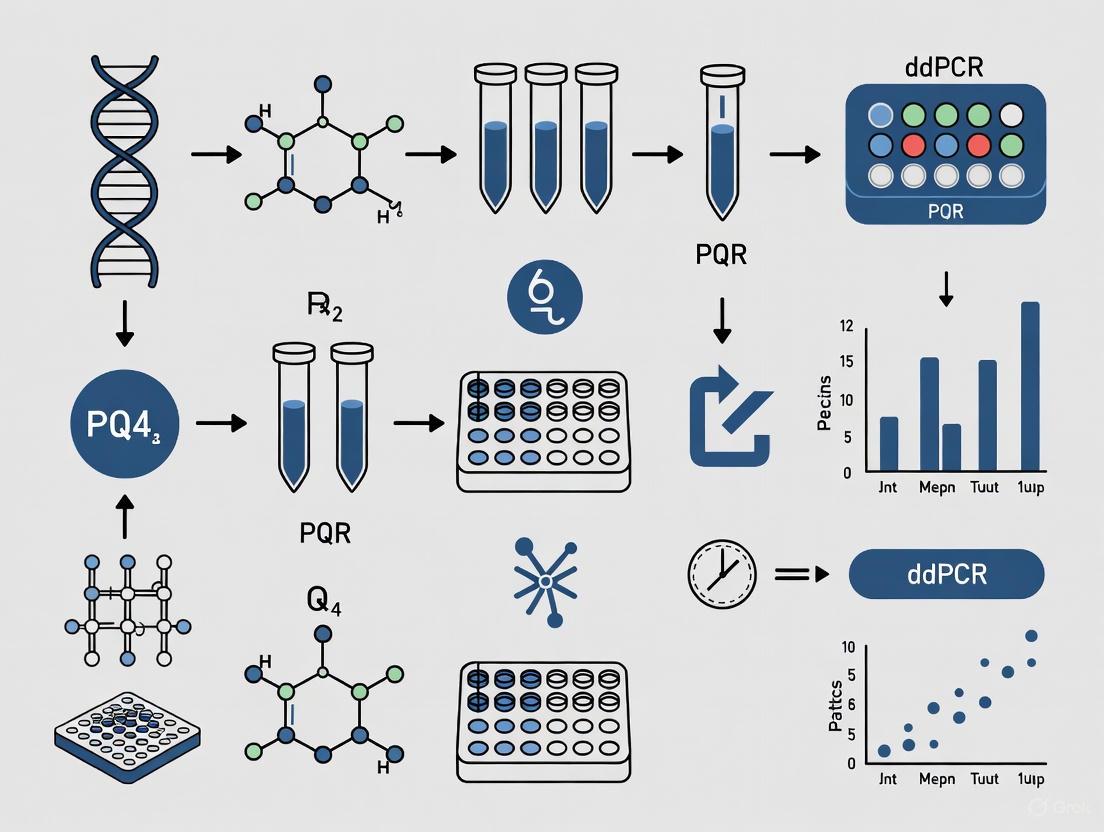
This article provides a comprehensive guide for researchers and drug development professionals seeking to optimize droplet digital PCR (ddPCR) for the analysis of heterogeneous cell populations.
Strategies for Enhancing ddPCR Precision in Heterogeneous Cell Analysis: From Assay Design to Clinical Validation
Abstract
This article provides a comprehensive guide for researchers and drug development professionals seeking to optimize droplet digital PCR (ddPCR) for the analysis of heterogeneous cell populations. Covering foundational principles, advanced methodological approaches, systematic troubleshooting, and rigorous validation strategies, we detail techniques to achieve superior precision in challenging applications such as circulating tumor DNA (ctDNA) analysis, rare mutation detection, and complex environmental samples. By synthesizing current best practices and comparative performance data, this resource aims to empower scientists to implement highly precise ddPCR assays that deliver reliable, absolute quantification for critical research and diagnostic decisions.
Understanding ddPCR Fundamentals and Its Critical Role in Heterogeneous Sample Analysis
Core Technical Principles of Digital PCR
Digital PCR (dPCR) is a method for the absolute quantification of nucleic acids by combining limiting dilution, end-point PCR, and Poisson statistics [1]. Unlike quantitative real-time PCR (qPCR), it does not rely on standard curves, making it a powerful tool for applications requiring high precision, such as heterogeneous cell analysis [2] [3].
The Principle of Partitioning
The foundational step of dPCR is the physical partitioning of a PCR reaction mixture into thousands of independent, nanoliter-sized reactions [4]. A sample containing template nucleic acids, primers, probes, nucleotides, enzymes, and buffers is divided into these microreactions [1]. The partitioning is performed such that each unit contains either zero, one, or a few target molecules [2]. This process effectively concentrates target molecules and separates them from potential inhibitors and background sequences, which is crucial for analyzing complex, heterogeneous samples [1] [2].
End-Point Detection and Digital Readout
After partitioning, the samples undergo standard PCR amplification. Each partition acts as an individual PCR microreactor [2]. Following the amplification cycles, the presence or absence of amplified target sequences in each partition is detected using fluorescent probes or intercalating dyes [1] [4]. Partitions containing the target sequence will fluoresce ("on," or positive), while those without it will not ("off," or negative) [1]. This binary readout (1 or 0) is the "digital" aspect of the technology, simplifying instrumentation and data analysis as the system only needs to distinguish between two states [1].
Absolute Quantification via Poisson Statistics
The final concentration of the target nucleic acid is calculated based on the proportion of positive partitions using Poisson statistics [1] [2]. Because the template molecules are randomly distributed across the partitions, the Poisson model accounts for the probability that a partition received zero, one, or more target molecules [1]. The formula for the Poisson distribution is applied as follows:
- λ (lambda): The average number of target molecules per partition.
- Probability of a partition being negative: ( P(0) = e^{-λ} )
If k is the number of positive partitions out of n total valid partitions, then the fraction of negative partitions is ( (1 - k/n) ). This fraction is equal to ( P(0) ), leading to: ( (1 - k/n) = e^{-λ} ) Solving for λ gives: ( λ = -\ln(1 - k/n) )
The absolute concentration of the target in copies per microliter (copies/μL) is then calculated based on λ and the known volume of each partition [1]. This statistical foundation allows dPCR to provide absolute quantification without external standards [2].
Digital PCR Workflow and Partitioning Principle
dPCR vs. qPCR: A Comparative Analysis
The key differences between dPCR and qPCR lie in their quantification strategies, precision, and resistance to inhibitors. The following table summarizes the core distinctions.
| Feature | Digital PCR (dPCR) | Quantitative PCR (qPCR) |
|---|---|---|
| Quantification Method | Absolute, via Poisson statistics [1] [2] | Relative, requires a standard curve [2] |
| Signal Detection | End-point [2] | Real-time (during exponential phase) [2] |
| Data Output | Binary (positive/negative partitions) [1] | Continuous (fluorescence accumulation over cycles) [2] |
| Precision & Sensitivity | High precision for rare targets and small fold changes [1] [3] | Can be less precise for rare targets and high copy numbers [3] |
| Tolerance to Inhibitors | Higher, due to partitioning [1] [2] | Lower, inhibitors can reduce amplification efficiency [1] |
| Dynamic Range | Limited by the number of partitions [1] | Broader dynamic range [1] |
A 2025 study in Scientific Reports directly compared ddPCR and qPCR for measuring copy number variations (CNVs) against the gold standard, pulsed field gel electrophoresis (PFGE). The results demonstrated 95% concordance between ddPCR and PFGE, whereas qPCR showed only 60% concordance, often underestimating copy numbers at higher values [3]. This underscores dPCR's superior accuracy for applications like CNV analysis in heterogeneous samples.
Troubleshooting Guide and FAQs
This section addresses common issues encountered during dPCR experiments to improve precision in heterogeneous cell analysis research.
Troubleshooting Common dPCR Issues
| Problem | Potential Causes | Solutions |
|---|---|---|
| Low or No Amplification | Poor primer/probe design [5]; Incorrect annealing temperature [5]; Poor template quality [5] | Redesign primers/probes for specificity [5]; Optimize annealing temperature using a gradient [5]; Assess template quality via gel electrophoresis or spectrophotometry and re-purify if degraded [5] |
| Incorrect or Non-Specific Product | Annealing temperature too low [5]; Too much primer [5]; Unfavorable salt conditions (e.g., Mg²⁺) [5] | Incrementally increase annealing temperature [5]; Titrate primer concentration (typical range 0.05-1 μM) [5]; Perform test reactions with different magnesium salt concentrations to find optimum [5] |
| Poor Partition Quality | Inconsistent droplet generation; Sample viscosity | Ensure sample is properly mixed and free of precipitates; Optimize droplet generation conditions for consistency [6] |
| High Background Noise | Probe degradation; Non-specific amplification | Use fresh probe aliquots; Confirm assay specificity with controls [6] |
Frequently Asked Questions (FAQs)
Q1: How does partitioning improve the detection of rare mutations in a heterogeneous sample? Partitioning effectively separates and concentrates rare target sequences from a background of wild-type sequences into individual reaction chambers [1] [2]. This reduces template competition during amplification and allows for the precise enumeration of low-abundance targets that would otherwise be masked in a bulk qPCR reaction [1].
Q2: Why is my calculated concentration inaccurate despite a successful run? Accuracy in dPCR is statistically defined and depends on the number of partitions and their occupancy [2]. The highest precision is achieved when a significant number of partitions are neither empty nor saturated. The optimal precision is typically observed when λ is around 1.6, which corresponds to approximately 20% of partitions being negative [2]. Ensure your sample is diluted to fall within the optimal dynamic range of your dPCR system.
Q3: My sample has known PCR inhibitors. Will dPCR work? Yes, dPCR generally demonstrates higher tolerance to inhibitors compared to qPCR [1] [2]. By partitioning the sample, inhibitors are diluted into the individual reactions, reducing their effective concentration in partitions that contain a target molecule, which often allows amplification to proceed [2].
Q4: What is the role of Poisson statistics, and why is it necessary? Poisson statistics is essential because the distribution of target molecules into partitions is random [1]. Some partitions will, by chance, contain more than one target molecule. The Poisson model corrects for this, allowing you to back-calculate the true average number of molecules per partition (λ) from the observed fraction of positive partitions, leading to an accurate absolute count [1] [2].
Experimental Protocol: CNV Analysis via ddPCR
This protocol is adapted from a 2025 study that validated ddPCR for accurate copy number variation (CNV) measurement [3], which is directly relevant to heterogeneous cell analysis.
Research Reagent Solutions
| Reagent/Material | Function | Example/Note |
|---|---|---|
| High-Quality Genomic DNA | Template for CNV analysis | Extract from tissue or cells of interest; avoid degradation [5] [3] |
| Sequence-Specific Primers | Amplification of the target CNV locus and a reference gene | Design for high specificity; typical length 20-25 nucleotides [5] [4] |
| Hydrolysis Probes (e.g., TaqMan) | Fluorescent detection of amplified target and reference sequences | Label with distinct fluorophores (e.g., FAM, VIC) [4] |
| ddPCR Supermix | Provides optimized buffer, dNTPs, and DNA polymerase | Use a master mix compatible with droplet generation [6] |
| Droplet Generation Oil | Creates the water-in-oil emulsion for partitioning | Platform-specific |
Step-by-Step Methodology
- Assay Design: Design primer and probe sets for both your target gene (e.g., DEFA1A3 [3]) and a stable, two-copy reference gene. Ensure they have similar amplification efficiencies.
- Reaction Setup: Combine your purified genomic DNA (1-100 ng recommended) with the ddPCR supermix, forward and reverse primers for both target and reference, and the respective probes in a total reaction volume suitable for your system (e.g., 20 μL) [5] [4].
- Droplet Generation: Transfer the reaction mix to a droplet generator. This instrument will create thousands of nanoliter-sized, water-in-oil droplets, effectively partitioning the sample [6] [4].
- PCR Amplification: Transfer the emulsified droplets to a PCR plate and run on a conventional thermal cycler. Use standard PCR cycling parameters: initial denaturation (95°C for 10 min), followed by 40 cycles of denaturation (95°C for 30 sec), and a combined annealing/extension (55-60°C for 60 sec) [4].
- Endpoint Reading and Analysis: Place the PCR-amplified plate in a droplet reader. The reader will flow droplets one-by-one past a fluorescence detector to classify each as positive or negative for the target and reference probes [6]. The instrument's software will use Poisson statistics to calculate the absolute copy number of your target gene relative to the reference gene [1] [3].
Impact of Target Concentration on dPCR Precision
Digital PCR represents a significant advancement in nucleic acid quantification by leveraging partitioning, end-point detection, and Poisson statistics to achieve absolute quantification without standard curves. Its superior precision, high tolerance to inhibitors, and ability to detect rare alleles make it an indispensable tool for improving precision in heterogeneous cell analysis research, such as quantifying copy number variations [3], rare mutations [1], and analyzing gene expression in complex backgrounds [1] [4]. By understanding the core principles and applying robust troubleshooting practices, researchers can fully harness the power of dPCR to generate highly accurate and reliable data.
Why Heterogeneous Samples Pose Unique Challenges for Molecular Quantification
The drive towards personalized medicine and single-cell biology has placed an increased focus on the analysis of heterogeneous samples, from complex environmental mixtures to cellular populations within a tumour. For researchers in drug development and cell analysis, droplet digital PCR (ddPCR) offers a powerful tool for the absolute quantification of nucleic acids without the need for a standard curve [7]. Its principle is based on partitioning a sample into thousands of nanoliter-sized droplets, which act as individual reaction chambers, and applying Poisson statistics to count target molecules [8] [7]. However, the very heterogeneity that makes these samples biologically compelling also introduces significant technical challenges for molecular quantification. Factors such as the presence of variable inhibitors, fragmented and low-abundance target material, and cellular genomic diversity can compromise precision, leading to ambiguous results and false conclusions. This technical support document outlines the core challenges and provides validated troubleshooting guides and protocols to empower researchers to improve the precision of their ddPCR assays for heterogeneous cell analysis.
Core Challenges and Quantitative Impact on ddPCR
Heterogeneous samples, such as soil, plasma-derived cell-free DNA (cfDNA), and dissociated tumour cells, introduce specific variables that disrupt the clean binary readout (positive vs. negative droplets) that ddPCR relies upon. The table below summarizes the primary challenges and their direct impact on data quality.
Table 1: Key Challenges in ddPCR with Heterogeneous Samples and Their Impacts
| Challenge | Cause in Heterogeneous Samples | Impact on ddPCR Data & Quantification |
|---|---|---|
| Inhibitor Carry-over [9] | Co-extraction of compounds like humic acids (from soil), haemoglobin (from blood), or melanin (from tissue). | Reduced amplification efficiency, leading to lower or false-negative signals and an underestimation of target concentration [9]. |
| Target Fragmentation/Low Abundance [10] | Naturally short, fragmented cfDNA in plasma; degradation of DNA from dead organisms in environmental samples. | Increased "rain" (droplets with intermediate fluorescence), making binary classification difficult and quantification less precise [10] [9]. |
| Cellular Heterogeneity [8] | A sample containing a mix of wild-type and mutant cells, or multiple cell types with different genomic backgrounds. | Difficulty detecting rare mutants (e.g., in ctDNA) against a high wild-type background; potential for false positives from polymerase errors [10]. |
| "Rain" (Indeterminate Signals) [9] | A combination of factors including inhibitors, degraded DNA, and suboptimal cycling conditions. | Imprecise threshold setting, leading to inaccurate counts of positive and negative droplets and compromised absolute quantification [9]. |
FAQs and Troubleshooting Guides
Frequently Asked Questions
Q1: Our ddPCR results from soil and root samples show significant "rain." How can we improve the separation between positive and negative droplets?
A: "Rain" is a common issue in environmentally complex samples [9]. We recommend a multi-pronged approach:
- Optimize Thermal Cycling Conditions: Systematically adjust the annealing temperature using a gradient (e.g., from 57°C to 67°C). Extending the denaturation time from 30 seconds to 1 minute can also improve efficiency for difficult templates [9].
- Validate with Multiple Controls: Always include an organismal positive control (DNA from a pure culture), an environmental negative control (sample where the target is confirmed absent), and a no-template control. This helps distinguish true "rain" from background noise or non-specific amplification [9].
- Review Primer/Probe Design: For mutation detection, using probes incorporating Locked Nucleic Acid (LNA) bases can greatly enhance allelic discrimination and reduce intermediate signals by increasing the thermal stability of the probe-target duplex [10].
Q2: We are detecting mutations in circulating tumour DNA (ctDNA) where the mutant allele fraction is very low. How can we have high confidence in our results and minimize false positives?
A: Detecting rare alleles requires extreme specificity.
- Systematic Assay Validation: Before analyzing clinical samples, determine the false positive rate of your assay. Run multiple replicates of a wild-type-only control (e.g., human genomic DNA) to establish the background level. A validated assay should have an extremely low and consistent false-positive count [10].
- Utilize Unique Dual-Labeled Probes: In multiplex assays, use distinct fluorescent probes (e.g., FAM and HEX) for mutant and wild-type alleles. Carefully optimize probe concentrations to prevent cross-talk and ensure each channel's signal is clean and discrete [10].
- Implement a DNA Spike-in Control: Spike a known quantity of synthetic, non-human DNA (e.g., a gBlock from Xenopus tropicalis) into the plasma sample prior to cfDNA extraction. By quantifying its recovery post-extraction with a dedicated ddPCR assay, you can calculate and correct for extraction efficiency, yielding a more accurate absolute count of mutant copies per volume of original plasma [10].
Q3: Why is ddPCR sometimes preferred over qPCR for complex, inhibitor-containing samples?
A: While both methods can be affected, ddPCR is generally more tolerant. In qPCR, inhibitors present throughout the reaction mixture can delay the amplification cycle threshold (Ct) value, leading to an underestimation of the starting concentration. In ddPCR, because the sample is partitioned, an inhibitor molecule is unlikely to be in every droplet. Inhibitors will only affect the droplets they are in, potentially reducing their fluorescence intensity, but the target concentration is calculated from the number of positive droplets, not the intensity of the fluorescence, making the quantification more robust [7] [9].
Troubleshooting Guide: Resolving Common Issues
Table 2: Troubleshooting Guide for ddPCR Experiments
| Problem | Possible Cause | Recommended Solution |
|---|---|---|
| Low Amplification Efficiency/High Failure Rate | PCR inhibitors carried over from the sample. | - Re-purify the DNA sample, using kits designed to remove specific inhibitors (e.g., humic acids) [11].- Increase the number of PCR cycles from 40 to 45 to help droplets with inhibitors reach the detection threshold [9].- Use a DNA polymerase known for high inhibitor tolerance [11]. |
| High False Positive Rate in Wild-type Controls | Polymerase errors during early amplification cycles; non-specific primer binding. | - Use a hot-start DNA polymerase to minimize enzyme activity during reaction setup [11].- Thoroughly optimize the annealing temperature to ensure specificity [9] [11].- For mutation detection, validate the assay's false positive rate and set a minimum threshold for positive calls (e.g., ≥ 3 positive droplets in a reaction) [10]. |
| Excessive "Rain" | Suboptimal cycling conditions; degraded DNA template; inhibitor presence. | - Perform a gradient PCR to find the optimal annealing/extension temperature [9].- Check DNA integrity by gel electrophoresis; avoid repeated freeze-thaw cycles [11].- Use a manual threshold based on the fluorescence distribution of your negative controls, rather than relying on automatic settings [9]. |
| Unclear Separation in Multiplex Assays | Spectral overlap between dyes; unequal amplification efficiency of targets. | - Perform a careful optimization of primer and probe concentrations for each target in the multiplex mix [10].- Ensure the selected fluorophores have well-resolved emission spectra for your droplet reader. |
Experimental Protocols for High-Confidence Results
Protocol 1: Optimizing a ddPCR Assay for a Novel Marker
This protocol is essential for establishing any new ddPCR assay, particularly for challenging targets.
- Primer/Probe Design: Design primers and dual-labelled probes according to best practices. For single-nucleotide variant (SNV) detection, strongly consider incorporating LNA bases into the probe to enhance discrimination [10].
- Reaction Setup: Prepare a 22 µL reaction mixture containing 11 µL of 2x ddPCR SuperMix for Probes (no dUTP), 2 µL of template DNA, and optimized concentrations of primers and probes (typically 500 nM and 250 nM, respectively, as a starting point) [10].
- Droplet Generation: Generate droplets using an Automated Droplet Generator (AutoDG) or manual DG according to the manufacturer's instructions.
- Thermal Cycling with Gradient: Perform PCR on a thermal cycler with a gradient block. Use the following steps, varying the annealing temperature across the block:
- Enzyme activation: 95°C for 10 min.
- 40-45 cycles of: Denaturation at 94°C for 30-60 sec; Annealing/Extension at a gradient (e.g., 57-67°C) for 1 min [9].
- Enzyme deactivation: 98°C for 10 min.
- Droplet Reading and Analysis: Read the plate on a droplet reader. Incubate the plate at 12°C for at least 4 hours before reading to stabilize droplets. Analyze results to select the annealing temperature that provides the best cluster separation and lowest "rain" [9].
Protocol 2: Absolute Quantification of ctDNA with a Spike-in Control
This refined protocol corrects for pre-analytical losses, providing a more accurate measure of mutation burden in liquid biopsies.
- Plasma Spike-in: Prior to cfDNA extraction, add a known quantity (e.g., 20,000 copies) of a synthetic double-stranded DNA control (e.g., a gBlock) to the plasma sample. This control should be non-homologous to the human genome [10].
- cfDNA Extraction: Extract cfDNA from the spiked plasma using a dedicated kit (e.g., Promega Maxwell RSC ccfDNA Plasma Kit or Qiagen QIAamp Circulating Nucleic Acid Kit) [10].
- Dual ddPCR Analysis:
- Set up two separate ddPCR reactions for each extracted sample.
- Reaction A: Contains assays for your target mutation (FAM) and a reference human gene (e.g., RPP30, HEX) to quantify total human cfDNA.
- Reaction B: Contains assays for the spike-in control (e.g., XenT, FAM) and the same human reference gene (HEX) to quantify spike-in recovery [10].
- Data Calculation:
- Calculate the extraction efficiency: (Recovered XenT copies / Initial XenT copies added) * 100.
- Calculate the corrected mutant copies/µL plasma: (Measured mutant copies/µL eluate) / (Extraction Efficiency).
Figure 1: Workflow for absolute quantification of ctDNA using a spike-in control to correct for extraction efficiency.
Essential Reagents and Tools for Robust ddPCR
The following toolkit is critical for developing and executing high-precision ddPCR assays, especially for heterogeneous sample analysis.
Table 3: Research Reagent Solutions for ddPCR
| Item | Function | Example Use-Case |
|---|---|---|
| ddPCR SuperMix for Probes (no dUTP) | Provides the core reagents for probe-based digital PCR. | Standard reaction setup for all ddPCR assays [10]. |
| LNA-modified Probes | Enhances hybridization affinity and specificity, improving SNP discrimination. | Critical for detecting single-base mutations in oncogenes (e.g., EGFR T790M) from ctDNA [10]. |
| Synthetic DNA Controls (gBlocks) | Provides a sequence-verified, quantifiable standard for assay development and control. | Used as a positive control or as a spike-in to calculate extraction efficiency from complex samples [10]. |
| Reference Gene Assay (e.g., RPP30) | Quantifies a conserved, single-copy genomic locus to control for total human DNA input. | Distinguishing between true low tumour DNA and poor sample quality in liquid biopsies [10]. |
| Inhibitor-Resistant DNA Polymerases | Maintains activity in the presence of common PCR inhibitors. | Improving amplification efficiency from samples rich in humic acids (soil) or haem (blood) [11]. |
| Environmental Positive & Negative Controls | Sample-specific controls that confirm assay performance in the relevant matrix. | Verifying detection specificity and sensitivity in soil, root, or water samples [9]. |
Figure 2: Logical relationship showing how properties of heterogeneous samples lead to specific ddPCR challenges and data quality issues.
Droplet Digital PCR (ddPCR) is a third-generation polymerase chain reaction technology that enables absolute quantification of nucleic acids with unmatched precision and sensitivity. This method operates by partitioning a PCR reaction into thousands of nanoliter-sized droplets, effectively creating individual micro-reactors where amplification occurs independently. The fundamental principle involves Poisson statistical analysis of the proportion of positive (target-containing) to negative droplets to determine the absolute concentration of the target nucleic acid in the original sample, eliminating the need for standard curves [12] [13]. This digital approach transforms nucleic acid quantification from an analog measurement dependent on amplification efficiency and calibration to a precise digital count, making it particularly valuable for applications requiring high precision and detection of rare targets [12].
For researchers investigating heterogeneous cell populations, such as in cancer biology or single-cell analysis, ddPCR provides the necessary analytical resolution to detect minor cell subpopulations and genetic variations that would be obscured by bulk analysis methods [8] [14]. The technology's robustness to PCR inhibitors also makes it ideal for analyzing challenging sample types, including feces, fixed tissues, and blood, where traditional PCR methods often fail [15]. This technical support center document provides comprehensive guidance on leveraging ddPCR advantages while addressing common experimental challenges.
Fundamental Advantages and Comparative Performance
Core Technological Advantages
ddPCR offers several transformative advantages over previous PCR generations, establishing it as the gold standard for precise nucleic acid quantification:
Absolute Quantification Without Standard Curves: Unlike qPCR, which requires reference standards and calibration curves for relative quantification, ddPCR provides direct absolute quantification of target nucleic acids, reporting results in copies per microliter. This eliminates errors associated with standard curve preparation and interpolation, significantly improving measurement accuracy and reproducibility between laboratories [12] [13] [16].
Superior Sensitivity for Rare Targets: The massive sample partitioning (up to 20,000 droplets) enables detection of rare mutations and low-abundance targets present at frequencies as low as 0.001% against a wild-type background. This exceptional sensitivity makes ddPCR indispensable for liquid biopsy applications, minimal residual disease monitoring, and detection of rare genetic variants in heterogeneous samples [12] [13].
Enhanced Precision and Reproducibility: Studies demonstrate that ddPCR reduces coefficients of variation by 37-86% compared to qPCR, with day-to-day reproducibility improved by a factor of seven. This high precision enables detection of smaller fold-changes in gene expression and more reliable longitudinal monitoring of biomarker levels in clinical and research settings [16].
Robustness to PCR Inhibitors: The partitioning process effectively dilutes PCR inhibitors across thousands of droplets, minimizing their impact on amplification efficiency. This makes ddPCR particularly valuable for analyzing complex sample matrices such as blood, stool, and environmental samples where inhibitors commonly compromise qPCR results [15] [13].
Quantitative Performance Comparison
Table 1: Comparative Performance Metrics of ddPCR vs. qPCR
| Performance Parameter | ddPCR | Traditional qPCR |
|---|---|---|
| Quantification Method | Absolute (copies/μL) | Relative (Cq values) |
| Precision (CV Reduction) | 37-86% improvement | Baseline reference |
| Detection Sensitivity | <0.1% mutant alleles | Typically 1-5% |
| Dynamic Range | Linear from 1 to 100,000 copies | Varies with standard curve |
| Inhibitor Tolerance | High (effective dilution) | Low (single reaction) |
| Data Analysis | End-point, binary readout | Real-time, kinetic |
Table 2: Application-Specific Advantages of ddPCR
| Application Area | Key Benefit | Example Targets |
|---|---|---|
| Liquid Biopsy | Rare allele detection | ctDNA, EGFR mutations |
| Infectious Disease | Absolute viral load | HIV, HBV, CMV |
| Gene Therapy | Vector copy number | AAV, Lentiviral vectors |
| Copy Number Variation | Precise ratio determination | HER2, FGFR1 |
| Single-Cell Analysis | Cellular heterogeneity | Tumor subpopulations |
Essential Research Reagent Solutions
Table 3: Key Reagents for ddPCR Experiments
| Reagent Category | Specific Examples | Critical Functions | Optimization Tips |
|---|---|---|---|
| Nucleic Acid Templates | gDNA, cfDNA, cDNA, RNA | Target amplification | Use restriction digestion for complex templates [17] |
| Probe Chemistry | Hydrolysis probes (TaqMan) | Sequence-specific detection | Avoid reporter-quencher emission overlap [17] |
| Detection Dyes | EvaGreen | Intercalating dye for dsDNA | Requires high PCR specificity [17] |
| Partitioning Oil | Droplet generation oil | Creates water-in-oil emulsions | Ensures uniform droplet formation [13] |
| Restriction Enzymes | Various options | Reduces template complexity | Avoid cutting within amplicon [17] |
ddPCR Experimental Workflow
Diagram 1: Complete ddPCR Experimental Workflow
Sample Preparation and Optimization
Proper sample preparation is critical for successful ddPCR experiments. Key considerations include:
Sample Purity: While ddPCR is more tolerant of inhibitors than qPCR, contaminants such as alcohols, salts, humic acids, urea, and phenolic compounds can still interfere with amplification and fluorescence detection. Use dedicated nucleic acid purification kits appropriate for your sample type (e.g., FFPE DNA, cfDNA, total RNA) to maximize purity [17].
Template Integrity and Structure: For accurate quantification, ensure random template partitioning by addressing sample viscosity and complex structures. Restriction enzyme digestion is recommended for:
- Highly viscous solutions to improve partitioning accuracy
- Linked or tandem gene copies to prevent multiple copies being counted as one
- Supercoiled plasmids to linearize and improve primer/probe accessibility
- Large DNA molecules (>30 kb) to ensure even distribution [17]
Optimal Template Concentration: Maintain the average number of copies per partition between 0.5 to 3 for optimal Poisson distribution statistics. Exceeding 5 copies/partition reduces quantification accuracy. For human genomic DNA, 10 ng contains approximately 3,000 copies of a single-copy gene [17].
Primer and Probe Design Guidelines
Effective assay design follows these principles:
Concentration Optimization: Use final primer concentrations of 0.5-0.9 μM and probe concentrations of 0.25 μM per reaction. Higher concentrations increase fluorescence intensity and improve separation between positive and negative droplets [17].
Storage Conditions: Dissolve lyophilized primers and probes in TE buffer (pH 8.0) rather than water, except for Cy5 and Cy5.5 labeled probes which require TE buffer (pH 7.0). Store in small aliquots at -20°C to avoid freeze-thaw cycles [17].
Specificity Requirements: Follow qPCR design rules including appropriate melting temperatures, absence of secondary structures, and minimal self-complementarity. For multiplex assays, prepare 20x primer-probe mixes with all components at optimized concentrations [17].
Troubleshooting Common Experimental Issues
Problem Resolution Guide
Table 4: Common ddPCR Issues and Solutions
| Problem | Potential Causes | Recommended Solutions |
|---|---|---|
| Poor Droplet Generation | Improper oil:sample ratio, contaminated lines | Check fluidics, use fresh oil, clean lines |
| Low Amplitude Separation | Suboptimal primer/probe concentrations, inhibitor presence | Optimize concentrations, purify template [17] |
| Unexpected Negative Results | Template degradation, pipetting errors | Verify template quality, use reverse pipetting |
| High Background Noise | Probe degradation, non-specific amplification | Prepare fresh probes, optimize annealing temperature [17] |
| Inaccurate Quantification | Template concentration outside optimal range | Dilute sample to 0.5-3 copies/partition [18] |
Data Analysis Troubleshooting
Threshold Setting: Manually set fluorescence thresholds in analysis software when automatic settings fail to properly distinguish positive and negative droplet populations. Use negative controls to establish baseline fluorescence levels [18].
Dilution Factor Calculation: Accurately account for all dilution factors in the software. For example, if adding 1 μL of a 1:10 diluted sample to a 16 μL reaction, the total dilution factor is 1/16 × 1/10 = 1/160. Proper dilution factor entry ensures correct copies/μL calculation in the original stock [18].
Partitioning Verification: Ensure samples are in the "digital range" by confirming both positive and negative partitions are present. Reactions with no template should show primarily negative partitions, while samples with appropriate template concentration should show a mix of positive and negative partitions [18].
Research Applications in Heterogeneous Cell Analysis
Tumor Heterogeneity Studies
ddPCR enables precise characterization of genetic heterogeneity within tumors, as demonstrated in studies of mouse mammary tumor organoids:
Copy Number Variation Analysis: Research shows ddPCR can detect varying copy numbers of cancer-relevant genes (FGFR1, ADGRA2, NSD3, PAK1) across different single organoids derived from the same primary tumor, revealing substantial intratumoral heterogeneity [14].
Subpopulation Quantification: The technology can identify and quantify minor cell subpopulations with specific genetic alterations, enabling researchers to track the dynamics of different clones during disease progression and treatment [14].
Diagram 2: Tumor Heterogeneity Analysis Workflow
Single-Cell Genetic Analysis
The combination of single-cell isolation techniques with ddPCR enables high-resolution genetic analysis:
Cellular Isolation Methods: Techniques including fluorescence-activated cell sorting (FACS), limited serial dilution, laser capture microdissection (LCM), and microfluidic separation can be paired with ddPCR for genetic analysis at single-cell resolution [8].
Genetic Heterogeneity Mapping: Single-cell ddPCR analysis allows researchers to create detailed maps of genetic heterogeneity within complex tissues, identifying rare cell populations that may have significant functional implications in development, disease, and treatment response [8].
Frequently Asked Questions (FAQ)
Q1: What is the key advantage of ddPCR over quantitative PCR (qPCR)? The primary advantage is absolute quantification without standard curves. ddPCR provides results in discrete copy numbers per volume, leading to higher precision and superior rare target detection capabilities compared to qPCR's relative quantification [12] [13].
Q2: How does ddPCR achieve superior sensitivity for rare allele detection? By partitioning samples into 20,000 nanoliter droplets, ddPCR effectively enriches rare targets and reduces background noise. This partitioning allows detection of mutant alleles present at frequencies below 0.1% by statistically analyzing thousands of individual amplification events [13].
Q3: Can ddPCR be used for Copy Number Variation (CNV) analysis? Yes, ddPCR offers exceptional resolution for CNV analysis. By absolutely quantifying both target and reference genes simultaneously, the technology can determine precise ratios and discriminate small copy number changes with high precision, making it ideal for studying heterogeneous cell populations [14] [13].
Q4: How does ddPCR tolerate PCR inhibitors better than qPCR? Inhibitors are distributed across all droplets, effectively diluting their concentration to negligible levels within most droplets. Additionally, ddPCR uses endpoint detection rather than monitoring amplification kinetics, making it less sensitive to delayed amplification caused by inhibitors [15] [13].
Q5: What is the optimal template concentration for ddPCR? The ideal concentration range is 0.5 to 3 copies per partition. Exceeding 5 copies/partition reduces quantification accuracy due to Poisson distribution limitations. For human genomic DNA, this typically means using approximately 10-50 ng per reaction depending on target abundance [17].
Q6: How do I transition my existing qPCR assay to ddPCR? Many qPCR primer sets can be adapted to ddPCR but may require optimization of annealing temperatures and potentially the addition of restriction enzymes to improve amplicon accessibility. Do not expect identical absolute values between the methods due to their fundamental differences in quantification approach [19].
FAQs: Core Principles and Technology
Q1: How does ddPCR fundamentally differ from traditional qPCR? Droplet Digital PCR (ddPCR) represents a significant evolution from quantitative PCR (qPCR) by partitioning a single PCR reaction into thousands of nanoliter-sized water-in-oil emulsion droplets. Unlike qPCR, which measures target amplification indirectly at the quantification cycle (Cq) during the exponential phase, ddPCR performs an end-point measurement after amplification, providing absolute quantification without the need for a standard curve. This partitioning allows for precise counting of target DNA molecules using Poisson statistics, making it less susceptible to inhibitors and more precise for low-abundance targets [20].
Q2: What are the key historical advantages of ddPCR for challenging samples? The transition to ddPCR technology addressed a critical limitation of qPCR: high variability when analyzing samples with low target concentrations or chemical contaminants. For sample/target combinations with low nucleic acid levels (Cq ≥ 29) and/or variable amounts of inhibitors, ddPCR produces more precise, reproducible, and statistically significant data. This is because partial inhibition of Taq polymerase in some partitions has minimal effect on the overall count of target molecules, whereas in qPCR, it would significantly alter Cq values and lead to artifactual results [20].
Q3: In which applications has ddPCR demonstrated superior performance? ddPCR has proven particularly valuable in clinical diagnostics where precision is critical. A 2025 study on hematologic malignancies and sepsis demonstrated ddPCR achieved a 49.33% positive detection rate compared to blood culture's 17.50%, with a dramatically faster turnaround time (4.06 hours versus 72.47 hours). This enhanced detection capability translated to improved patient outcomes, including lower 28-day mortality and better antimicrobial stewardship [21]. Additionally, ddPCR has shown enhanced sensitivity for SARS-CoV-2 detection and more accurate quantification of genetically modified organisms in food testing [22] [23].
Troubleshooting Guides
Experimental Design and Optimization
Issue: Inconsistent results between technical replicates
- Potential Cause: Inadequate partition numbers or improper droplet generation.
- Solution: Ensure consistent droplet generation by calibrating equipment regularly. For the QX200 system, aim for at least 10,000-15,000 droplets per sample. Verify droplet quality microscopically if possible.
- Prevention: Include a no-template control and a positive control in each run. Use the same master mix for all samples to minimize variability.
Issue: Poor separation between positive and negative droplets
- Potential Cause: Suboptimal primer/probe design or concentration, PCR inhibitors, or inappropriate thermal cycling conditions.
- Solution: Redesign primers and probes to ensure high amplification efficiency (90-110%). Optimize annealing temperature using a gradient PCR. Increase probe concentration or try different fluorophores.
- Verification: Test assay performance with a standardized control template before running valuable samples [20].
Sample Quality and Contamination
Issue: Reduced efficiency in the presence of inhibitors
- Potential Cause: Residual contaminants from sample preparation (e.g., reverse transcription reagents, heparin, hemoglobin).
- Solution: While ddPCR is more tolerant to inhibitors than qPCR, implement additional purification steps such as column-based clean-up or ethanol precipitation. Dilute samples if the target concentration is sufficiently high.
- Note: In a comparative study, ddPCR maintained accurate quantification even with variable levels of RT mix contamination that severely compromised qPCR results [20].
Issue: Unexpected positive signals in negative controls
- Potential Cause: Amplicon contamination from previous experiments.
- Solution: Implement strict physical separation of pre- and post-PCR areas. Use uracil-DNA glycosylase (UDG) treatment in reaction mixes to carryover contamination. Prepare master mixes in a UV-treated laminar flow hood.
Platform-Specific Technical Issues
Issue: Low partition count in droplet-based systems
- Potential Cause: Degraded or improperly stored droplet generation oil, worn cartridge, or inaccurate pipetting.
- Solution: Use fresh reagents and ensure proper storage conditions. Check cartridge integrity. Verify pipette calibration and technique—avoid introducing bubbles during sample loading.
Issue: High rate of intermediate (rain) droplets
- Potential Cause: Suboptimal thermal cycling conditions, poor probe quality, or target sequences with secondary structures.
- Solution: Optimize annealing/extension temperatures and times. Use high-quality, HPLC-purified probes. Consider adding DMSO or betaine to overcome secondary structures. Adjust threshold settings carefully during data analysis.
Performance Comparison: ddPCR vs. qPCR
Table 1: Technical comparison between ddPCR and qPCR for key parameters
| Parameter | ddPCR | Traditional qPCR |
|---|---|---|
| Quantification Method | Absolute counting without standards | Relative to standard curve |
| Precision with Low Targets | High precision (Cq ≥ 29) [20] | Highly variable with low targets [20] |
| Effect of Inhibitors | Minimal impact on quantification [20] | Significant Cq shifts and efficiency loss [20] |
| Dynamic Range | Linear over wide concentration range [20] | Limited by efficiency and standard curve |
| Multiplexing Capability | Suitable for multiplexing [20] | Limited by spectral overlap |
| Throughput | Lower (platform-dependent) [24] | Higher for population-scale testing [24] |
| Cost per Sample | Higher reagent costs [24] | More cost-effective for high throughput [24] |
Table 2: Clinical performance comparison in sepsis diagnosis
| Diagnostic Metric | ddPCR | Blood Culture |
|---|---|---|
| Positive Detection Rate | 49.33% [21] | 17.50% [21] |
| Turnaround Time | 4.06 hours [21] | 72.47 hours [21] |
| Sensitivity | 70.37% [21] | N/A |
| Specificity | 55.28% [21] | N/A |
| 28-Day Mortality Impact | Significant reduction [21] | N/A |
Experimental Protocols
Protocol 1: Validating ddPCR Assay Performance
Purpose: To establish optimal conditions for ddPCR assays before experimental use.
Materials:
- Target DNA or cDNA
- ddPCR supermix appropriate for probe chemistry
- Primers and probes (validated for qPCR if available)
- Droplet generator and reader appropriate for your platform
- Nuclease-free water
Methodology:
- Assay Optimization: Test a range of primer (100-900 nM) and probe (50-250 nM) concentrations to maximize amplitude separation between positive and negative droplets.
- Thermal Gradient: Establish optimal annealing temperature using a thermal gradient if possible.
- Dynamic Range Assessment: Run a 5-10 point serial dilution of target to confirm linear response (R² > 0.98).
- Limit of Detection: Determine the lowest concentration that can be reliably detected above the negative control.
- Precision Assessment: Perform at least 3-5 replicates at high, medium, and low concentrations to calculate coefficient of variation (CV).
Validation Criteria:
- Efficiency: 90-110%
- Linear dynamic range over at least 3 orders of magnitude
- CV < 10% for technical replicates
- Clear separation between positive and negative populations [23]
Protocol 2: Quantitative Analysis of Clinical Samples
Purpose: To detect and quantify pathogen DNA in patient samples for diagnostic applications.
Materials:
- Patient samples (blood, plasma, tissue)
- Nucleic acid extraction kit
- Pathogen-specific primers and probes
- ddPCR system with appropriate reagents
- Positive and negative controls
Methodology:
- Nucleic Acid Extraction: Purify DNA/RNA using validated methods. For blood samples, use at least 200 µL input volume.
- Reverse Transcription (if detecting RNA targets): Use random hexamers or gene-specific primers.
- Reaction Setup: Prepare 20-40 µL reactions according to manufacturer recommendations.
- Droplet Generation: Follow platform-specific protocols for consistent partition creation.
- PCR Amplification: Use cycling conditions optimized for your target.
- Droplet Reading: Analyze each partition for fluorescence signal.
- Data Analysis: Calculate copies/µL using Poisson statistics.
Interpretation:
- Set threshold based on negative controls
- Report concentration in copies/µL with confidence intervals
- For clinical applications, establish validated cutoffs for positive/negative calls [21]
Research Reagent Solutions
Table 3: Essential materials for ddPCR experiments
| Reagent/Kit | Function | Application Notes |
|---|---|---|
| ddPCR Supermix | Provides optimized buffer for amplification | Choose probe-based or EvaGreen chemistry based on assay needs |
| Droplet Generation Oil | Creates water-in-oil emulsions | Platform-specific; stability critical for consistent partitions |
| Primer/Probe Sets | Target-specific amplification | HPLC-purified probes recommended; validate specificity |
| Nucleic Acid Extraction Kits | Isolate DNA/RNA from samples | Magnetic bead-based systems often provide best yield/purity |
| Certified Reference Materials | Assay validation and standardization | Essential for quantitative accuracy; available from NIST, JRC |
| Microfluidic Cartridges/Chips | Reaction partitioning | Platform-specific consumables; check for manufacturing defects |
Workflow Visualization
ddPCR Experimental Workflow
Historical Evolution of Digital PCR Technologies
Digital PCR (dPCR) represents the third generation of PCR technology, enabling absolute quantification of nucleic acids without the need for a standard curve. Its core principle relies on the partitioning of a PCR mixture into a large number of parallel reactions so that each compartment contains zero, one, or a few nucleic acid targets. Following amplification, the fraction of positive partitions is used to compute the absolute target concentration via Poisson statistics [25]. The two dominant methods for creating these partitions are microfluidic chambers (solid-phase arrays) and water-in-oil droplet emulsions (liquid-phase compartments). The choice between these systems significantly impacts the sensitivity, throughput, cost, and ease of use of an experiment, especially in critical applications like analyzing heterogeneous cell populations or detecting rare mutations in liquid biopsies [25]. This guide provides troubleshooting and FAQs to help you optimize your partitioning process and improve the precision of your research.
Technology Comparison: Microfluidic Chambers vs. Droplet Emulsions
The following table summarizes the key characteristics of these two partitioning technologies to aid in selection and troubleshooting.
Table 1: Comparison of Partitioning Technologies in Digital PCR
| Characteristic | Microfluidic Chambers | Water-in-Oil Droplet Emulsions |
|---|---|---|
| Partition Type | Solid-phase arrays of microscopic wells or chambers [25] | Liquid-phase, oil-encapsulated aqueous droplets [25] |
| Typical Partition Volume | Nanoliter (nL) scale [25] | Picoliter (pL) to nanoliter (nL) scale [25] |
| Number of Partitions | Fixed number per chip/array [25] | Highly scalable; typically tens of thousands [25] |
| Primary Advantages | High reproducibility, ease of automation, reduced risk of droplet coalescence [25] | Higher partition numbers, scalability, and generally lower cost per partition [25] |
| Common Challenges | Higher chip costs, fixed format limits flexibility [25] | Risk of droplet coalescence, requires stable surfactants, potential for emulsion instability during thermal cycling [25] |
| Example Systems | QIAcuity (Qiagen), QuantStudio Absolute Q (Thermo Fisher) [25] | QX200 Droplet Digital PCR (Bio-Rad) [26] |
Troubleshooting Guides & FAQs
A. Droplet Generation and Stability
Q1: My water-in-oil emulsion is unstable, leading to droplet coalescence. What could be the cause and how can I fix it?
Droplet coalescence occurs when the stabilizing barrier between droplets fails. This is a common challenge that can be addressed by checking the following:
- Surfactant Efficacy: The surfactant is critical for stabilizing water-in-oil droplets by reducing interfacial tension and forming a protective layer [27]. Ensure you are using the correct, fresh surfactant at the recommended concentration for your oil phase. Different systems (e.g., Bio-Rad vs. RainDance) use proprietary surfactants, and they are not always interchangeable.
- Thermal Cycling Stress: The harsh temperature variations during PCR can promote coalescence [25]. Verify that your thermal cycler lid is properly heated and that your protocol includes a final droplet stabilization step if needed.
- Contamination: Ionic contaminants or residual cleaning agents can destabilize the emulsion interface. Use clean, dedicated glassware and high-purity water for all aqueous solutions.
- Droplet Generation Speed: Generating droplets at an excessively high flow rate can produce unstable emulsions. Adhere to the manufacturer's recommended flow rates for droplet generation pumps [28].
Q2: What is the role of interfacial tension in droplet formation and stability?
Interfacial tension is the force that holds the interface between two immiscible liquids together. In droplet microfluidics, it is a key parameter governing the initial droplet formation and long-term stability against coalescence [29].
- During formation, the capillary number (Ca = μU/γ, where μ is viscosity, U is velocity, and γ is interfacial tension) predicts droplet generation behavior [30].
- Lower interfacial tension, as seen in aqueous two-phase systems (ATPS), makes droplet generation more complex but can offer a more biocompatible environment [30].
- For water-in-oil systems, the surfactant dynamically lowers the interfacial tension, facilitating the creation of uniform droplets and preventing them from merging [29] [27].
B. Partitioning and Data Quality
Q3: I am observing high levels of false-positive or false-negative partitions. What are the potential sources?
Anomalous partition signals severely impact absolute quantification.
- Inadequate Partitioning: If the number of partitions is too low, the statistical power of the Poisson correction decreases, leading to inaccurate quantification. Aim to generate at least 20,000 high-quality droplets or wells per sample [25].
- Contamination: Cross-contamination between partitions or samples can cause false positives. For droplet systems, ensure the droplet generator is properly purged between runs. For chip-based systems, confirm the integrity of the microfluidic circuits [28].
- Improper Threshold Setting: The fluorescence threshold distinguishing positive from negative partitions must be set carefully. Use negative controls to define the background fluorescence level accurately. Review the amplitude plot of your data to identify and account for any intermediate population.
- Poor Probe or Primer Quality: Degraded reagents can lead to inefficient amplification, causing false negatives. Always quality-control your primers and probes and prepare fresh reaction mixes.
Q4: How does the choice of partitioning method affect the detection of rare mutations in a heterogeneous sample?
The ability to detect rare mutations is directly linked to the number of partitions analyzed.
- For rare targets, droplet-based systems (ddPCR) often have an advantage because they can routinely generate >20,000 partitions per reaction, compared to many chamber-based systems which may be limited to a fixed number (e.g., 2,000 to 20,000) [25].
- A higher number of partitions increases the probability that a rare target molecule will be isolated and detected above the background of wild-type sequences. This principle was foundational to dPCR, enabling the detection of mutated genes in a background of 160,000 wild-type sequences [25].
- Therefore, for applications like liquid biopsy or analysis of tumor heterogeneity, a droplet-based system may provide a better chance of detecting very low-frequency variants due to its higher partitioning capacity [31].
C. System and Workflow Issues
Q5: What are the key considerations for automating the ddPCR workflow?
Automation can enhance throughput and reproducibility.
- Pumping System: Precise, low-pulsation fluidic transport is essential for generating monodisperse droplets. Systems often use micro-annular gear pumps or precision syringe pumps with integrated flow sensors to maintain stable flow rates [28].
- Fluid Handling: Integrated robotic liquid handling can reduce pipetting steps by up to 90%, minimizing human error and variability [28].
- Priming and Sheathing: An automated priming protocol is crucial to purge the system of air bubbles and cross-contaminants between runs. A sheathing system that maintains an oil layer over aspiration tips can prevent droplet rupture during sample transfer [28].
Q6: Are there oil-free alternatives to traditional water-in-oil emulsions for sensitive biological applications?
Yes, Aqueous Two-Phase Systems (ATPS) are being explored as a biocompatible, oil-free alternative.
- ATPS are composed of two incompatible polymers (e.g., PEG and dextran) or a polymer and a salt in water [30].
- They provide an all-aqueous environment, which is beneficial for preserving the viability of encapsulated cells or the native function of labile biomolecules that might be denatured at an oil-water interface [30].
- A significant challenge is their ultra-low interfacial tension, which makes droplet generation and stabilization more complex than with oil-water systems [30].
Essential Reagents and Materials
Table 2: Research Reagent Solutions for Partitioning Experiments
| Reagent/Material | Function | Technical Notes |
|---|---|---|
| PCR Supermix | Provides enzymes, dNTPs, and buffer for amplification. | Must be formulated for the specific partitioning system (e.g., compatible with the oil-surfactant system for ddPCR). |
| Surfactant | Stabilizes the water-oil interface to prevent droplet coalescence [25] [27]. | Critical for emulsion stability during thermal cycling. Use manufacturer-recommended type and concentration. |
| Carrier Oil | The continuous phase that encapsulates aqueous droplets. | Often a fluorinated or mineral oil. Must be compatible with the surfactant and microfluidic chip materials. |
| Bisulfite Conversion Kit | (For methylation analysis) Converts unmethylated cytosine to uracil, allowing for methylation-specific PCR design [31]. | Essential for workflows like the development of a methylation-specific ddPCR assay for lung cancer detection [31]. |
| Chip/Microfluidic Device | The physical substrate containing micro-wells or channels for partition generation. | For chamber-based systems, this is a consumable chip. For droplet systems, it is the droplet generator chip. |
| Methylation-Specific Probes/Primers | Enable the specific detection of DNA methylation status at target CpG islands [31]. | Designed for sequences altered by bisulfite conversion. The multiplex assay in [31] used five such markers for lung cancer detection. |
Experimental Workflow and Decision Pathway
The following diagram illustrates a generalized workflow for a ddPCR experiment, highlighting key steps where partitioning-related issues commonly occur.
Diagram 1: ddPCR Workflow with Troubleshooting
Detailed Experimental Protocol: Methylation-Specific ddPCR
The protocol below is adapted from a recent study that developed a multiplex ddPCR assay for lung cancer detection, showcasing a real-world application of droplet emulsion technology [31].
Objective: To detect tumor-specific methylation markers in circulating cell-free DNA (cfDNA) from patient plasma.
Workflow Overview:
Plasma Collection and cfDNA Extraction:
- Collect whole blood in EDTA tubes and centrifuge at 2,000 g for 10 minutes within 4 hours of venipuncture to isolate plasma [31].
- Freeze plasma at -80°C. Upon thawing, centrifuge at 10,000 g for 10 minutes to remove debris.
- Add an exogenous spike-in DNA (e.g., ~9000 copies/ml of CPP1) to monitor extraction efficiency.
- Extract cfDNA using a commercially available kit (e.g., DSP Circulating DNA Kit on QIAsymphony SP). Elute in 60 µL of elution buffer [31].
Concentration and Bisulfite Conversion:
- Concentrate the extracted cfDNA to 20 µL using a centrifugal filter unit (e.g., Amicon Ultra-0.5).
- Perform bisulfite conversion using a dedicated lightning kit (e.g., EZ DNA Methylation-Lightning Kit). This step deaminates unmethylated cytosine to uracil, while methylated cytosine remains unchanged. Elute the converted DNA in 15 µL of elution buffer [31].
Droplet Digital PCR Setup and Run:
- Prepare the PCR reaction mix containing bisulfite-converted DNA, ddPCR Supermix for Probes, and assays for the five target methylation markers (e.g., HOXA9 and others identified via bioinformatics analysis) [31].
- Generate droplets using an automated droplet generator (e.g., QX200 Droplet Generator). Transfer the emulsified sample to a 96-well PCR plate.
- Seal the plate and perform PCR amplification on a standard thermal cycler using the following profile:
- Enzyme Activation: 95°C for 10 minutes.
- 40-50 Cycles: Denature at 95°C for 30 seconds; Anneal/Extend at a primer-specific temperature (e.g., 56-60°C) for 1 minute.
- Enzyme Deactivation: 98°C for 10 minutes.
- Hold: 4°C [31].
Droplet Readout and Data Analysis:
- Read the plate on a droplet reader (e.g., QX200 Droplet Reader) which measures the fluorescence in each droplet.
- Analyze the data using associated software (e.g., QuantaSoft). Set thresholds to classify droplets as positive or negative for each fluorescence channel based on no-template and negative controls.
- The concentration of the original methylated target (copies/µL) is calculated by the software using Poisson statistics based on the fraction of positive droplets and the total number of droplets analyzed [31].
Advanced ddPCR Assay Development for Complex Biological Samples
This technical support center provides targeted troubleshooting guides and FAQs to help researchers overcome common challenges in sample preparation for droplet digital PCR (ddPCR), with a specific focus on heterogeneous template analysis.
Fundamental Concepts and Troubleshooting
What are the most critical factors in sample preparation that affect ddPCR accuracy for heterogeneous cellular samples?
The precision of ddPCR for heterogeneous cell analysis depends heavily on three pillars: sample purity, sample integrity, and optimal template input amount. Contaminants or poorly intact nucleic acids can inhibit amplification, while incorrect template concentration directly impacts the reliability of Poisson statistics for absolute quantification [17].
How does sample heterogeneity specifically challenge ddPCR analysis, and what strategies can mitigate these issues?
Heterogeneous samples, such as single-cell suspensions or mixtures of wild-type and mutant sequences, pose a challenge because the random distribution of targets into partitions must accurately reflect the original population composition. In single-cell work, maintaining an appropriate cell-to-droplet ratio is essential to ensure single-cell encapsulation and prevent multiple cells within a single droplet, which would confound results [32]. For genetic heterogeneity, ensuring that linked gene copies or complex DNA structures are evenly partitioned is critical [17].
Troubleshooting Common Sample Preparation Issues
FAQ 1: My positive and negative droplet clusters are poorly separated. What sample-related issues could be the cause?
Poor cluster separation often indicates reduced PCR amplification efficiency, frequently due to sample impurities or suboptimal template quality [17].
Potential Cause 1: Presence of PCR Inhibitors
- Explanation: Residual substances from the sample extraction process, such as salts, alcohols, proteins, heparin, or acidic polysaccharides, can interfere with the polymerase activity.
- Solution:
- Use high-quality nucleic acid extraction kits validated for your sample type (e.g., FFPE, plasma, cells).
- Perform an additional purification step, such as ethanol precipitation or column-based clean-up.
- Ensure proper washing during extraction to remove alcohols and salts.
- Dilute the sample to reduce the concentration of inhibitors, but ensure the target remains above the limit of detection.
Potential Cause 2: Suboptimal Template Integrity or Structure
- Explanation: Degraded nucleic acids (common in FFPE or cell-free DNA) or complex structures like supercoiled plasmids can lead to inefficient amplification.
- Solution:
- For degraded DNA, design shorter amplicons (<100 bp) to maximize the chance of amplifying an intact target region.
- For high-molecular-weight genomic DNA or supercoiled plasmids, use restriction digestion to linearize and fragment the DNA. This reduces viscosity, prevents over-quantification from uneven partitioning, and ensures linked gene copies are physically separated. Critical: The restriction enzyme must not cut within your amplicon sequence. [17]
FAQ 2: I am detecting false-positive signals in my single-cell ddPCR experiment. How can I resolve this?
In single-cell assays, false positives can arise from cell-free nucleic acids in the suspension supernatant, which are co-encapsulated into droplets [32].
- Potential Cause: Cell-Free Nucleic Acid Contamination
- Explanation: During cell handling and suspension preparation, some cells may rupture, releasing genomic DNA or target sequences (e.g., viral DNA) into the supernatant. These molecules can be encapsulated into droplets without a cell, leading to β-actin- & target+ droplets that are misinterpreted as infected cells.
- Solution: Treat the single-cell suspension with DNase I prior to partitioning to digest extracellular nucleic acids. Follow this with a gentle laminar flow washing step to remove the enzyme and cell debris without causing further cell damage [32].
FAQ 3: My calculated target concentration is inconsistent. How can I optimize template input?
Inconsistent quantification often stems from template input that falls outside the optimal "digital range" for ddPCR [18] [17].
- Potential Cause: Incorrect Template Concentration
- Explanation: If the average number of target copies per partition is too high (>5), multiple targets will co-localize in partitions, violating the Poisson assumption for single-molecule detection. If it is too low, the number of positive events is insufficient for precise statistics.
- Solution: Dilute or concentrate your sample to achieve an ideal average copy per partition (λ) between 0.5 and 3 [17]. Use the formula below to calculate the required concentration for your specific reaction setup.
Protocols and Best Practices
Experimental Protocol: Restriction Digestion for Complex Templates
This protocol is recommended for high-molecular-weight gDNA, supercoiled plasmids, or samples with linked gene copies to ensure uniform partitioning [17].
- Digestion Setup: Combine 1 µg of template DNA, 1X restriction enzyme buffer, and 5-10 units of a restriction enzyme that does not cut within your target amplicon.
- Incubation: Incubate at the enzyme's optimal temperature (usually 37°C) for 30-60 minutes.
- Enzyme Inactivation: Heat-inactivate the enzyme (e.g., 20 minutes at 65°C for many enzymes) or purify the digested DNA using a column-based clean-up kit.
- Quantification: Measure the DNA concentration and proceed with ddPCR reaction setup.
Quantitative Guidance for Template Input
The following table provides the copy number equivalent for 10 ng of genomic DNA from various organisms, which is crucial for calculating the appropriate dilution to achieve the optimal copies/partition [17].
Table 1: Gene Copy Number Equivalents in 10 ng Genomic DNA
| Organism | Genome Size (bp) | Gene Copies (for single-copy gene) in 10 ng gDNA |
|---|---|---|
| Homo sapiens | 3.3 x 10⁹ | 3,000 |
| Zebrafish | 1.7 x 10⁹ | 5,400 |
| Saccharomyces cerevisiae | 1.2 x 10⁷ | 760,500 |
| Escherichia coli | 4.6 x 10⁶ | 2,000,000 |
| Standard plasmid DNA | 3.5 x 10³ | 2,600,000,000 |
Calculation example for human gDNA: Genome size (3.3 x 10⁹ bp) x weight per bp (1.096 x 10⁻²¹ g/bp) = 3.3 x 10⁻¹² g (3.3 pg) per haploid genome. Therefore, 10 ng contains 10,000 pg / 3.3 pg/copy ≈ 3,000 copies [17].
Workflow Visualization
The following diagram illustrates the core decision-making pathway for optimizing sample preparation in ddPCR, integrating the key strategies discussed above.
The Scientist's Toolkit: Essential Research Reagent Solutions
Table 2: Key Reagents for ddPCR Sample Preparation
| Item | Function | Application Note |
|---|---|---|
| High-Purity NA Extraction Kits | Isolate DNA/RNA with minimal inhibitors (salts, alcohols, proteins). | Choose kits specific to sample type (e.g., FFPE, viral RNA, cfDNA). |
| Restriction Enzymes | Linearize plasmids and fragment large DNA for even partitioning. | Must not cut within the target amplicon sequence [17]. |
| DNase I Enzyme | Digest extracellular nucleic acids in single-cell suspensions. | Prevents false positives from cell-free DNA; requires a washing step post-treatment [32]. |
| PCR Enhancers | Mitigate amplification inhibition from complex matrices like cell lysate. | Can improve signal-to-noise ratio in challenging samples [32]. |
| Fluorophore-Specific Probes | Enable specific target detection and multiplexing. | Use TE buffer (pH 7.0 for Cy5/Cy5.5) for storage; avoid freeze-thaw cycles [17]. |
Frequently Asked Questions (FAQs)
Q1: What is the primary advantage of incorporating LNA into dPCR probes?
LNA (Locked Nucleic Acid) incorporation into hydrolysis probes significantly increases their melting temperature (Tm) and enhances target specificity [33]. This is crucial for applications like rare mutation detection in oncology, where a probe must perfectly distinguish a single-nucleotide variant from the wild-type sequence. The improved binding strength and discrimination power make LNA-modified probes ideal for drop-off assays and other techniques requiring high precision.
Q2: In which specific dPCR applications is LNA technology most critical?
LNA is particularly valuable in the following scenarios:
- Rare Mutation Detection: Identifying low-frequency oncogenic mutations (e.g., in KRAS, NRAS, BRAF) within a vast background of wild-type DNA, as used in liquid biopsy for cancer monitoring [33].
- Drop-off Assays: Designing a single wild-type probe that can detect the absence of binding caused by multiple different mutations within a short genomic hotspot, thereby maximizing data output from a single assay [33].
- Analyzing Challenging Samples: When working with fragmented DNA from formalin-fixed, paraffin-embedded (FFPE) tissue or circulating tumor DNA (ctDNA), where optimal probe design is essential for robust performance [33].
Q3: My dPCR results show poor separation between positive and negative clusters ("rain"). How can LNA probes help?
"Rain" or intermediate fluorescent droplets can result from suboptimal PCR amplification, including non-specific probe binding or biased amplification [34]. The enhanced specificity of LNA probes reduces non-specific binding and promotes more uniform, efficient amplification across partitions. This leads to tighter, more distinct positive and negative droplet clusters, improving the accuracy of binary calling and subsequent absolute quantification [34] [33].
Q4: Besides probe design, what other factors are critical for a precise drop-off assay?
A successful drop-off assay relies on multiple factors. The table below summarizes key considerations and solutions.
Table: Troubleshooting Guide for Drop-off dPCR Assays
| Issue | Potential Cause | Recommended Solution |
|---|---|---|
| High background false positives | Non-specific probe binding; polymerase errors | Use LNA-modified WT probe; optimize annealing temperature and thermal cycling conditions [34] [33]. |
| Poor population separability | Large amplicon size; fragmented DNA template | Design amplicons <120 bp; fragment high-quality DNA using restriction enzymes or sonication [33]. |
| Inaccurate mutant concentration | Co-encapsulation of mutant and WT DNA in same partition | Apply Poisson correction to calculations to account for this random co-localization [33]. |
| Low amplification efficiency | PCR inhibitors in sample; suboptimal reagent concentrations | Use dPCR master mixes resistant to inhibitors; optimize primer and probe concentrations [34]. |
Q5: How do I validate the performance of a new LNA-enhanced dPCR assay?
Key validation steps include:
- Determining the Limit of Blank (LOB): Perform ≥30 replicate experiments with only wild-type DNA to establish the highest apparent mutant concentration expected from a blank sample. A mutant is reliably detected only when observed events exceed the LOB [33].
- Assessing Sensitivity and Dynamic Range: Test serial dilutions of mutant DNA in a wild-type background to determine the lowest Mutant Allelic Fraction (MAF) your assay can robustly detect [33] [35]. For instance, well-characterized dPCR assays can detect one mutant molecule in over 4 million wild-type molecules [35].
- Quality Control of Partitions: Ensure a high number of analyzed partitions (e.g., >20,000) to reduce measurement uncertainty and verify that target distribution follows a Poisson distribution [33].
The Scientist's Toolkit: Research Reagent Solutions
The following table details essential materials and their functions for setting up and running a LNA-enhanced dPCR assay, based on proven experimental protocols.
Table: Essential Reagents for LNA-enhanced dPCR Experiments
| Item | Function in the Experiment | Example/Note |
|---|---|---|
| dPCR System | Partitions samples, performs thermal cycling, and provides endpoint fluorescence reading. | Systems must detect at least two fluorescence channels. 3-color systems (e.g., Naica, QIAcuity) offer greater multiplexing flexibility [25] [33]. |
| LNA-enhanced Probe | Confidently hybridizes to and detects the specific target sequence. | WT probe in a drop-off assay is typically LNA-modified. Often used with a Minor Groove Binder (MGB) for further Tm increase [33]. |
| Reference Probe | Binds to a stable, non-mutated region for normalization and sample quality control. | In a drop-off assay, this probe binds adjacent to the WT probe and is labeled with a different fluorophore (e.g., FAM) [33]. |
| PCR MasterMix | Provides core components for amplification: DNA polymerase, dNTPs, and reaction buffer. | Use a mastermix validated for dPCR. Some are formulated to be more resistant to inhibitors found in complex samples [34]. |
| Restriction Enzyme | Fragments high molecular weight DNA to ensure optimal partitioning and amplification. | Essential for unfragmented DNA. Verify the enzyme does not cut within your amplicon (e.g., Tru1L was used in a KRAS assay) [33]. |
| Reference Gene Assay | Duplexed with the target to normalize for the actual amount of amplifiable nucleic acid input. | Corrects for variability in sample prep and pipetting, enabling more accurate copy number calculations and inter-assay comparisons [34]. |
Experimental Protocol: Implementing a KRAS G12 Drop-off Assay with LNA
This protocol provides a detailed methodology for detecting multiple KRAS mutations on Exon 12, a common application in colorectal cancer research [33].
The following diagram illustrates the logical workflow and key decision points in a drop-off dPCR experiment.
Step-by-Step Procedure
Assay and Primer/Probe Design:
- Primers: Design primers to amplify a region spanning the KRAS G12 hotspot. Amplicon size should be <120 bp for optimal performance with fragmented DNA from clinical samples [33].
- Probes:
- Wild-Type (Drop-off) Probe: Design a probe that is perfectly complementary to the wild-type sequence over the G12 codon. Incorporate LNA and/or MGB modifications to increase its Tm and specificity. Label this probe with Cy5 (or equivalent red-channel dye).
- Reference Probe: Design a probe that binds to a stable, adjacent region in the amplicon, devoid of known mutations. Label this probe with FAM (blue channel) [33].
DNA Sample Preparation:
- Purify and quantify DNA from your sample source (e.g., cell lines, tissue, liquid biopsy).
- If using high molecular weight DNA, fragment it using a restriction enzyme like Tru1L. Critical: Verify in silico that the enzyme does not cut within your amplicon. Alternatively, sonicate DNA to an average size of ~200 bp [33].
PCR Reaction Mix Preparation:
- Prepare a master mix on ice as shown in the table below. Always prepare a master mix for n+1 samples to account for pipetting error [33].
- Gently mix and briefly centrifuge.
Table: PCR Reaction Mix Setup per Sample
| Component | Volume per Reaction (µl) | Final Concentration/Amount |
|---|---|---|
| 2X ddPCR Supermix for Probes | 10.0 µl | 1X |
| Forward Primer (18 µM) | 0.5 µl | 900 nM |
| Reverse Primer (18 µM) | 0.5 µl | 900 nM |
| FAM-labeled Reference Probe (5 µM) | 1.0 µl | 250 nM |
| Cy5-labeled LNA WT Probe (5 µM) | 1.0 µl | 250 nM |
| Nuclease-free Water | 4.0 µl | - |
| Template DNA | 2.0 µl | Variable (e.g., 10-100 ng) |
| Total Volume | 20.0 µl |
Partitioning and Thermal Cycling:
- Load the reaction mix into your dPCR system's cartridge or plate according to the manufacturer's instructions to generate partitions (droplets or microchambers) [25].
- Seal the plate and perform PCR amplification on a thermal cycler. An example cycling profile is:
- 1 cycle: 10 min at 95°C (enzyme activation)
- 40 cycles: 30 sec at 94°C, 1 min at 59°C (annealing/extension; optimize this temperature)
- 1 cycle: 10 min at 98°C (enzyme deactivation)
- Hold at 4°C [33].
Data Acquisition and Analysis:
- Transfer the plate to the droplet reader for endpoint fluorescence measurement in each channel.
- Analyze the data using the instrument's software (e.g., Crystal Miner, QuantaSoft). The software should automatically set thresholds to distinguish three populations [33]:
- Double Positive (FAM+/Cy5+): Partitions containing only wild-type DNA.
- FAM Positive Only (FAM+/Cy5-): Partitions containing mutant DNA (the "drop-off" population).
- Double Negative (FAM-/Cy5-): Partitions with no target DNA.
Data Analysis and Interpretation
The following diagram visualizes the gating strategy and the principle behind the drop-off assay.
Calculating Mutant Allelic Fraction (MAF): Use Poisson statistics to calculate the concentration of mutant and wild-type DNA, then determine the MAF [33].
- Cmut = – (1/v) * ln(1 – (P10 / (P10 + P00)))
- CWT = – (1/v) * ln(1 – (P11 / (P11 + P00 + P10)))
- MAFdrop-off = (Cmut) / (CWT + Cmut)
- Where
vis the partition volume,P11is the double-positive count,P10is the mutant count, andP00is the double-negative count.
Key Quality Control Metrics:
Multiplex assays are indispensable in modern molecular biology, enabling the simultaneous detection of multiple targets in a single reaction. This capability is particularly crucial in fields like oncology and infectious disease diagnostics, where analyzing complex, heterogeneous samples is the norm. However, developing robust multiplex assays, especially within digital PCR (dPCR) and droplet digital PCR (ddPCR) frameworks, presents significant technical challenges. This guide addresses common obstacles researchers face and provides targeted troubleshooting advice to enhance precision for heterogeneous cell analysis.
Key Challenges in Multiplex dPCR
The primary hurdles in multiplex dPCR development revolve around assay design, biochemical optimization, and data interpretation. The table below summarizes these core challenges.
Table 1: Core Challenges in Multiplex dPCR Assay Development
| Challenge Category | Specific Issue | Impact on Assay Performance |
|---|---|---|
| Assay Design & Biochemistry | Primer/Probe Cross-Reactivity | Generation of false-positive signals and inaccurate quantification [36]. |
| Spectral Overlap of Fluorophores | Reduced ability to distinguish between different targets in a single reaction [36]. | |
| Variable Primer Efficiency | Skewed amplification efficiencies between targets, compromising quantification accuracy [36]. | |
| Sample & Reaction Setup | Inhibitors in Complex Samples | Suppression of amplification, leading to underestimation of target concentration [37]. |
| Suboptimal Partitioning | High numbers of partitions with multiple targets, violating Poisson statistics and reducing precision [37] [25]. | |
| Data Analysis | Low Amplification Efficiency | Decreased sensitivity and a higher limit of detection [36]. |
| Cluster Identification & Calling | Misclassification of droplet clusters, resulting in erroneous concentration calculations [38]. |
Troubleshooting FAQs and Guides
This section provides practical solutions to frequently encountered problems.
FAQ 1: How can I overcome limited fluorescent channels when multiplexing?
Challenge: Standard dPCR instruments have a limited number of optical detection channels (e.g., FAM, HEX/VIC, Cy5), restricting the number of targets that can be detected simultaneously using probe-based assays [36].
Solutions:
- Amplification Curve Analysis (ACA): Leverage data-driven multiplexing (DDM) strategies like ACA. This method uses machine learning to differentiate targets based on their unique amplification curve kinetics, allowing for multiplexing in a single fluorescent channel [36].
- Concentration Tuning: For methods relying on final fluorescent intensity (FFI), carefully tune probe concentrations to generate amplification curves with separable plateaus for each target [36].
- Assay Design Software: Utilize advanced computational tools like Smart-Plexer 2.0. This framework uses in-silico simulation with enhanced kinetic features and clustering-based distance measurements to identify optimal primer/probe combinations that maximize differences between targets for more reliable ACA [36].
FAQ 2: What are the best practices for optimizing primer and probe concentrations?
Challenge: Unoptimized concentrations of primers and probes lead to non-specific amplification, probe degradation, and unequal amplification efficiencies between targets.
Solutions:
- Systematic Titration: Perform a matrix of experiments titrating primer and probe concentrations against each other. A typical starting range is 50-900 nM for primers and 50-250 nM for probes.
- Validate with Singleplex Reactions: First, ensure each primer-probe set works efficiently in a singleplex reaction before combining them. Compare the amplification efficiency (E) and cycle threshold (Ct) between singleplex and multiplex formats; a significant shift indicates interference.
- Prioritize Specificity: Use tools like BLAST to check all primer and probe sequences for specificity against the intended genome. Incorporate hot-start DNA polymerases to minimize primer-dimer formation during reaction setup.
FAQ 3: How do I achieve precise quantification in samples with widely varying target concentrations?
Challenge: In heterogeneous samples (e.g., liquid biopsies), a rare mutant target may be present at a fraction of the abundant wild-type sequence, making its accurate quantification difficult.
Solutions:
- Utilize dPCR's Native Sensitivity: dPCR is inherently more tolerant of sample inhibitors and is superior for detecting rare sequence variants due to the partitioning effect, which concentrates the rare target in isolated partitions [37] [25] [6].
- Optimize Partitioning: Ensure an optimal number of partitions are analyzed. Precision is highest when the average number of target molecules per partition (λ) is approximately 1.6, which corresponds to about 20% positive partitions [37]. Adjust sample loading or use platforms that generate a high number of partitions (20,000+).
- Digital Poisson Plus: For rare event detection, use software algorithms that account for "Poisson Plus" distributions, which can more accurately model situations where partitions contain more than one target molecule.
FAQ 4: My positive and negative droplet clusters are not well separated. What should I do?
Challenge: Poor cluster separation in the 1D or 2D plot makes it difficult to accurately assign droplets as positive or negative, leading to quantification errors.
Solutions:
- Check Probe Quality and Specificity: Degraded or impure probes can cause high background fluorescence. Re-synthesize or re-purify probes.
- Optimize Thermal Cycling Conditions: Increase the annealing temperature in a gradient to find the stringency that minimizes non-specific amplification. Ensure the final extension is long enough for complete probe cleavage.
- Verify Droplet Integrity: If droplets are unstable and coalesce during thermal cycling, it can distort results. Ensure the droplet stabilizer surfactant in the oil is fresh and effective [25].
Experimental Protocols for Key Procedures
Protocol 1: Designing a Single-Channel Multiplex Assay Using Amplification Curve Analysis
This protocol leverages computational tools to design a multiplex assay that discriminates targets based on amplification kinetics [36].
Materials:
- Candidate primer/probe sets for all targets.
- Template DNA for each target.
- dPCR or qPCR instrument.
- Smart-Plexer 2.0 software or equivalent computational framework.
Method:
- Singleplex Data Collection: Run singleplex real-time PCR (qPCR or dPCR) reactions for each candidate assay against its specific target. Collect the amplification curve data.
- In-silico Simulation: Input the singleplex amplification curves into Smart-Plexer 2.0. The software will simulate multiplex reactions by combining the kinetic data.
- Feature Extraction: The software will extract multiple kinetic features (e.g., slope, plateau, curvature) from the amplification curves that are stable across different template concentrations.
- Assay Ranking: Smart-Plexer 2.0 will calculate intertarget distances using clustering-based metrics and rank the candidate assay combinations based on their potential for accurate classification.
- Empirical Validation: Test the top-ranked primer/probe mixes empirically in a single-well, single-channel multiplex reaction to confirm classification accuracy.
The following diagram illustrates the core workflow and decision logic of the Smart-Plexer framework for assay design.
Protocol 2: Absolute Quantification of a Rare Mutant in a Wild-Type Background
This protocol is critical for applications like liquid biopsy in oncology [25] [6].
Materials:
- ddPCR Supermix for Probes.
- Mutation-specific and wild-type-specific FAM/HEX probes.
- Droplet generator and reader.
- DNA from heterogeneous sample.
Method:
- Reaction Setup: Prepare a 20 µL PCR mix containing ddPCR supermix, primers, both mutant-specific (FAM) and reference/wild-type-specific (HEX) probes, and the DNA sample.
- Droplet Generation: Generate droplets according to the manufacturer's instructions. Typically, this yields ~20,000 droplets per sample.
- PCR Amplification: Transfer the droplets to a 96-well plate and run the PCR with optimized thermal cycling conditions.
- Droplet Reading: Read the plate in the droplet reader. The software will generate a 2D plot (FAM vs. HEX) showing four clusters: double-negative, FAM-only (mutant), HEX-only (wild-type), and double-positive.
- Concentration Calculation: The software uses Poisson statistics on the count of mutant-positive (FAM-only) and total partitions to provide an absolute concentration of the mutant allele in the sample. The fraction of mutant DNA can be calculated as (mutant concentration) / (wild-type concentration).
The workflow for this absolute quantification process is outlined below.
The Scientist's Toolkit: Essential Research Reagent Solutions
Table 2: Key Reagents for Multiplex dPCR Assay Development
| Reagent / Material | Function in Multiplex Assay | Critical Considerations |
|---|---|---|
| Sequence-Specific Probes (e.g., TaqMan) | Provide target-specific fluorescence signal for detection and quantification. | Label with spectrally distinct fluorophores (FAM, HEX/VIC, Cy5). Ensure minimal spectral overlap [36]. |
| Hot-Start DNA Polymerase | Amplifies target DNA; "hot-start" minimizes non-specific amplification during setup. | Essential for preventing primer-dimer formation in complex primer mixes. |
| Droplet Generation Oil & Surfactant | Creates a stable water-in-oil emulsion for partitioning the reaction. | Critical for droplet stability during thermal cycling. Use fresh, validated reagents to prevent coalescence [25]. |
| Nuclease-Free Water | Solvent for all reaction components. | Prevents degradation of primers, probes, and template. |
| Optical dPCR Plate/Cartridge | Holds the partitioned sample for thermal cycling and fluorescence reading. | Must be compatible with the specific dPCR instrument platform. |
| Positive Control Templates | Validates the functionality of each primer-probe set in the multiplex. | Should be known copies of pure target sequences for each channel. |
FAQ: Critical Reagent Management
What are critical reagents and why is their management vital for ddPCR? Critical reagents are essential assay components whose unique characteristics are crucial to assay performance and therefore require thorough characterization and documentation [39]. In the context of ddPCR, this typically includes primers, probes, and the master mix. Because they are often produced via biological processes, they are inherently prone to lot-to-lot variability [40]. Even slight production changes can significantly impact key performance parameters like the fluorescence separation between positive and negative droplet populations and the amount of intermediate fluorescence "rain," ultimately affecting the precision of absolute quantification [41] [42]. A well-defined critical reagent management strategy is therefore necessary to ensure reagents are characterized, and that their structural integrity and stability are appropriately upheld through the stages of development [40].
How should I manage critical reagent lot-to-lot changes? It is recommended to have a documented procedure for critical reagent lot changes [39]. When a new lot of a critical reagent is introduced, its performance should be bridged to the previous lot. This involves running parallel assays with both the old and new reagent lots to demonstrate continuity in assay performance. Key characteristics to document for reagents include source, concentration, purity, and binding affinity or functionality [39]. Proactive inventory management that tracks assay performance trends can help identify reagent deterioration and plan for resupply cycles well in advance [40].
What is the recommended strategy for optimizing primer and probe concentrations in ddPCR? Optimizing oligonucleotide concentrations is a primary strategy for enhancing ddPCR performance [41]. While many validated qPCR methods use "normal" concentrations, research shows that increasing these concentrations can be beneficial in ddPCR. The table below summarizes concentration strategies based on optimization studies:
Table 1: Oligonucleotide Concentration Strategies for ddPCR Optimization
| Concentration Strategy | Primer Concentration | Probe Concentration | Effect and Application |
|---|---|---|---|
| Standard (qPCR-validated) | As per official method protocols [41] | As per official method protocols [41] | Baseline starting point; may require further optimization for ddPCR. |
| "High" Concentration | 900 nM [41] | 250 nM [41] | Can increase fluorescence signal intensity and improve separation between positive and negative droplet clusters [41]. |
| Assay-Specific Optimization | Variable (e.g., tested in duplex BCR-ABL assay) [42] | Variable (e.g., tested in duplex BCR-ABL assay) [42] | Step-wise optimization can significantly enhance target signals (e.g., 5-fold increase for BCR-ABL) and resolution [42]. |
Troubleshooting Guides
Issue 1: Excessive Rain in ddPCR Plots
Problem: A high number of droplets show fluorescence intensity between the explicit positive and negative populations, making threshold setting difficult and potentially biasing copy number calculation [41].
Solutions:
- Optimize Annealing/Extension Temperature: Use a thermal cycler with a gradient function to test a range of annealing/extension temperatures. The optimal temperature can maximize fluorescence signal and minimize rain [41].
- Adjust Oligonucleotide Concentrations: As shown in Table 1, increasing primer and probe concentrations from standard levels to 900 nM and 250 nM, respectively, can enhance fluorescence signals and improve droplet separation [41].
- Evaluate Probe Manufacturer and Quencher: Fluorescence signals and background can be influenced by the probe manufacturer and the quencher chemistry (e.g., non-fluorescent quenchers vs. TAMRA) [41]. Testing probes from different vendors may improve results.
Issue 2: Poor Fluorescence Signal Separation
Problem: The clusters of positive and negative droplets are too close together on the 1D or 2D plot, increasing the risk of misclassification.
Solutions:
- Employ a Duplexing Strategy: For assays requiring quantification of a transgene and a reference gene (e.g., in GMO analysis or BCR-ABL monitoring), a well-optimized duplex reaction is crucial [41] [42]. This ensures both targets can be accurately quantified in a single well.
- Systematic Assay Optimization: Follow a step-by-step optimization procedure. One study on BCR-ABL achieved a fivefold increase in the target signal and a twofold increase in the reference gene signal through primer-probe set testing and condition optimization, which dramatically enhanced resolution [42].
- Utilize Objective Evaluation Metrics: Implement a droplet separation value, which is an algorithm that considers both the absolute fluorescence signal distance between populations and their internal variation. This objective metric, potentially visualized in an "experience matrix," helps rate different assay parameters and select the best-performing set-up [41].
Issue 3: Low Sensitivity for Rare Targets in Heterogeneous Samples
Problem: The assay fails to reliably detect low-abundance targets (e.g., at a 0.1% level or for minimal residual disease monitoring), which is critical for heterogeneous cell analysis.
Solutions:
- Verify Master Mix Compatibility: Use a master mix specifically formulated for ddPCR, such as 'ddPCR Supermix for Probes' [41].
- Increase Input of Replicate Reactions: To achieve reliable detection at very low concentrations (e.g., 1 in 100,000), analyze multiple replicates. One study showed that increasing from duplicate to quadruplicate analysis raised the detection rate at the MR4.5 sensitivity level from 92% to 100% [42].
- Ensure Optimal Reaction Volume: Maintain a consistent total reaction volume (e.g., 20-22 μL) as this is a parameter that can affect droplet generation and PCR efficiency [41].
Experimental Protocols
Detailed Methodology: ddPCR Assay Optimization
This protocol is adapted from published optimization work for GMO and BCR-ABL detection [41] [42].
1. Reagent Preparation:
- Master Mix: Use 'ddPCR Supermix for Probes' (Bio-Rad) [41].
- Oligonucleotides: Resolve primers and hydrolysis probes in nuclease-free water to create concentrated stocks. Synthesize probes from reputable vendors with labels like FAM, HEX, or VIC, and prefer non-fluorescent quenchers [41].
- DNA Template: Use certified reference materials or quantified plasmids. Genomic DNA can be extracted using standard kits (e.g., Maxwell 16 instrument) and does not necessarily require enzymatic digestion prior to ddPCR [41].
2. Reaction Setup:
- Assemble reactions in a total volume of 20-22 µL, containing 1X master mix, optimized concentrations of primers and probes, and 5 µL of sample DNA [41].
- For initial optimization, test a range of primer (e.g., up to 900 nM) and probe (e.g., up to 250 nM) concentrations against a standard concentration [41].
- Include no-template controls (NTC) with water to monitor for contamination.
3. Droplet Generation:
- Following manufacturer's instructions, load the 20 µL reaction mixture into a droplet generator cartridge (e.g., Bio-Rad's eight-channel disposable cartridges) to generate thousands of nanoliter-sized droplets [41].
4. Thermal Cycling:
- Transfer the emulsified samples to a PCR plate, seal, and run on a thermal cycler.
- Critical Step: Perform an annealing temperature gradient. For example, using a T100 or CFX96 thermocycler with a gradient function, test a range of temperatures (e.g., 55–60°C) to identify the temperature that yields the best droplet separation and minimal rain [41].
- A standard cycling protocol might include: an enzyme activation step at 95°C for 10 minutes, followed by 40 cycles of denaturation at 94°C for 30 seconds and a combined annealing/extension step at the optimized gradient temperature for 1 minute, with a final enzyme deactivation step at 98°C for 10 minutes [41].
5. Droplet Reading and Analysis:
- Read the plate on a droplet reader (e.g., Bio-Rad's QX system).
- Use the instrument's software to initially set thresholds between positive and negative droplet populations.
- For a more objective analysis, apply or develop an algorithm that calculates a droplet separation value based on the absolute fluorescence signal distance and the variation within the positive and negative populations [41].
- Document results, including the separation value and the amount of rain, in an "experience matrix" that records all parameters (e.g., singleplex/duplex, oligonucleotide concentrations, annealing temperature, cycler, probe vendor) for future reference and decision-making [41].
Workflow Visualization
The Scientist's Toolkit: Research Reagent Solutions
Table 2: Essential Materials for ddPCR Critical Reagent Optimization
| Item | Function / Description | Example / Specification |
|---|---|---|
| ddPCR Master Mix | A specialized supermix for probe-based assays that is compatible with droplet generation and provides robust amplification. | "ddPCR Supermix for Probes" (Bio-Rad, Cat. No. 186-3010) [41]. |
| Hydrolysis Probes | Analyte-specific oligonucleotides labelled with a fluorophore and quencher for target detection. | Probes from vendors like TIB Molbiol or Biosearch Technologies, labelled with FAM, HEX, or VIC, and quenched with non-fluorescent quenchers or TAMRA [41]. |
| Oligonucleotide Primers | Forward and reverse primers designed to amplify the specific target of interest. | Sequences can be obtained from official method collections; synthesized by vendors in HPLC-grade purity [41]. |
| Certified Reference Materials | Provide a known quantity of the target analyte for use in assay optimization, calibration, and validation. | Certified reference materials for GM events from IRMM or AOCS; multi-target plasmids for specific events [41]. |
| Droplet Generator Cartridges | Microfluidic cartridges used to partition the reaction mix into thousands of nanoliter-sized droplets. | Eight-channel disposable cartridges (e.g., Bio-Rad Cat. No. 186-4008) with corresponding gaskets [41]. |
| Gradient Thermal Cycler | A PCR machine that allows for testing a range of annealing/extension temperatures simultaneously in a single run. | Instruments like the Bio-Rad CFX96 or T100 with gradient function [41]. |
| Experience Matrix | A documentation tool (e.g., Excel-based) that consolidates data on assay performance parameters to guide optimization decisions. | Tracks singleplex/duplex, volumes, cycler, probe vendor, oligonucleotide concentrations, temperature, and separation value [41]. |
Troubleshooting Guides
Circulating Tumor DNA (ctDNA) Mutation Detection
Common Issue: Inconsistent mutation detection between tissue and liquid biopsy.
- Potential Cause: Low abundance of circulating tumor DNA (ctDNA) in a high background of wild-type DNA, especially in early-stage cancer or when tumor shedding is low [10] [43].
- Solutions:
- Increase Input Plasma Volume: Process a higher volume of plasma (e.g., 2 mL instead of 200 µL) to isolate more total cfDNA and increase the absolute number of mutant DNA fragments for detection [43].
- Optimize Assay Specificity: Use hydrolysis probes (TaqMan) incorporating locked nucleic acid (LNA) bases to enhance discrimination between wild-type and mutant sequences, thereby reducing false positives and improving the signal-to-noise ratio [10].
- Spike-In Control for Extraction Efficiency: Spike a known quantity of synthetic DNA (e.g., a gBlock from a non-human species) into the plasma before cfDNA extraction. Quantifying its recovery post-extraction allows for accurate calculation of extraction efficiency and correction of the final mutant copy number [10].
- Validate with Dilution Series: Perform a dilution series of a known mutant control to determine the actual limit of detection (LOD) for your specific assay and ensure it meets the required sensitivity [10].
Common Issue: High false-positive rate in no-template controls (NTCs).
- Potential Cause: Contamination during reagent preparation or sample handling, or non-specific amplification due to suboptimal primer/probe design [17] [10].
- Solutions:
- Dedicated Pre-PCR Workspace: Perform all reaction mix preparation and sample loading in a dedicated, decontaminated hood or room physically separated from post-PCR analysis areas [17] [10].
- Use of UDG/dUTP System: Incorporate dUTP and uracil-DNA glycosylase (UDG) into the reaction mix to degrade PCR products from previous amplification experiments, preventing carryover contamination. Note that the "no dUTP" supermix is also available for specific applications [10] [44].
- Re-optimize Primer/Probe Concentrations: Test and implement higher primer (0.5–0.9 µM) and probe (0.25 µM) concentrations to increase fluorescence amplitude and improve cluster separation in data analysis [17].
Pathogen Identification
Common Issue: Low sensitivity for detecting bacterial DNA in whole blood.
- Potential Cause: The bacterial DNA load is below the detection limit of the assay, or inefficient DNA extraction from the pathogen [44].
- Solutions:
- Determine Exact Limit of Detection (LOD): Perform a spiked experiment with serial dilutions of the target pathogen (e.g., E. coli) in healthy human blood. Extract DNA and run ddPCR to establish the minimum number of copies per mL that can be reliably detected, often defined as three positive droplets [44].
- Optimize DNA Extraction from Whole Blood: Use automated, validated pathogen DNA extraction kits designed for whole blood to maximize yield and consistency [44].
- Validate Primer/Probe Specificity: Ensure the designed primers and probes are highly specific for the target pathogen and do not cross-react with human DNA or other common flora. Using a panel of negative controls (pathogens other than the target) is crucial for confirming specificity [44].
Common Issue: Non-specific amplification in pathogen detection assays.
- Potential Cause: Suboptimal annealing temperature or reaction components leading to primer-dimer formation or mis-priming.
- Solutions:
- Annealing Temperature Gradient: Use a thermal cycler capable of running an annealing temperature gradient to determine the optimal temperature that maximizes specific signal and minimizes background [5] [45].
- Hot-Start Polymerase: Utilize a hot-start PCR enzyme that remains inactive until a high-temperature step, thereby preventing non-specific amplification during reaction setup [45].
- Optimize Mg²⁺ Concentration: Titrate the concentration of magnesium chloride in the reaction, as it is a critical cofactor that can significantly impact primer specificity and amplification efficiency [5].
Copy Number Variation (CNV) Analysis
Common Issue: Low confidence values for copy number calls.
- Potential Cause: Large variability in the quantification of the target or reference gene across replicate wells [46].
- Solutions:
- Increase Replication: Run a minimum of four technical replicates per sample to reduce the impact of pipetting error and partition variation, thereby improving the precision of the concentration estimate [46].
- Accurate Sample Normalization: Precisely normalize the concentration of all sample DNAs to ensure an equal mass is loaded into each well. Check pipette calibration for accuracy [46].
- Validate Reference Assay Performance: Ensure the reference gene assay is robust and performs consistently across all test samples. The reference gene should be located on a chromosome that is not disrupted (e.g., by large-scale aneuploidy) in your sample set [46].
- Optimal Template Input: For ddPCR, maintain the average number of target copies per partition between 0.5 and 3 to ensure Poisson distribution accuracy and avoid saturation [17].
Common Issue: Software fails to analyze or open data files.
- Potential Cause: Incorrect data file format or a software process that has stalled.
- Solutions:
- Check Data Column Order: For analysis in software like CopyCaller, ensure exported data from the instrument software has columns in the exact order: Well, Sample Name, Target Name, Task, Reporter, Quencher, CT [46].
- Restart Software Process: If the software fails to launch, use the task manager (Control+Alt+Delete) to end the "javaw.exe" process and then relaunch the application [46].
- Confirm Data from Duplex Reactions: The software typically requires that the copy number assay and the reference assay are run together in the same well (duplex). Data from assays run in separate wells may not be compatible [46].
Frequently Asked Questions (FAQs)
Q1: What are the key advantages of using ddPCR over qPCR for ctDNA analysis? ddPCR provides absolute quantification without a standard curve, which is ideal for rare allele detection in ctDNA. It is also less susceptible to PCR inhibition variations and offers superior sensitivity and precision for detecting mutations at very low frequencies (<0.1%) [10] [43].
Q2: How much template DNA should I use in a single ddPCR reaction? The optimal template amount depends on the application, but the key is to avoid saturation. The average number of target copies per partition should ideally be between 0.5 and 3. For a human genomic DNA target, this translates to roughly 1-100 ng of DNA per 20-22 µL reaction, but the exact amount should be calculated based on the expected copy number [17].
Q3: My assay shows poor separation between positive and negative clusters. How can I improve this? This can be due to several factors. First, check for impurities in your template, such as salts or alcohols, which can inhibit the reaction and reduce fluorescence. Second, optimize your primer and probe concentrations; higher concentrations (e.g., 0.5-0.9 µM for primers, 0.25 µM for probes) can increase fluorescence amplitude. Finally, ensure there is no spectral overlap between your chosen fluorophore and quencher [17].
Q4: Why is a restriction digestion step sometimes recommended before dPCR? Restriction digestion is crucial for complex or large DNA templates to achieve truly random partitioning. It reduces viscosity, prevents over-quantification of linked gene copies (by physically separating them), and linearizes plasmid DNA to improve primer/probe accessibility. This is especially important for high-molecular-weight gDNA (>30 kb) and supercoiled plasmids [17].
Q5: What is the best way to store primers and probes for dPCR? Resuspend lyophilized oligonucleotides in nuclease-free TE buffer (pH 8.0, or pH 7.0 for Cy5/Cy5.5 probes to prevent degradation). Aliquot and store at -20 °C. Avoid repeated freeze-thaw cycles. Primers are stable for about a year, while fluorescently labeled probes are stable for 6-9 months under these conditions [17].
Table 1: Recommended Digital PCR Reaction Components and Conditions [17] [10] [44]
| Component / Condition | Typical Recommended Concentration or Value | Notes / Range |
|---|---|---|
| Primers (each) | 0.5 - 0.9 µM | Higher than qPCR to increase fluorescence amplitude. |
| Hydrolysis Probe | 0.25 µM | |
| Template DNA (per 20-22 µL rxn) | 1 - 100 ng (gDNA) | Aim for 0.5 - 3 copies/partition. Varies by application. |
| ddPCR Supermix | 1X | "No dUTP" or with dUTP/UDG available. |
| Thermal Cycling | 95°C for 5-10 min, then 40 cycles of 94°C for 30 s and 55-60°C for 60 s. | Annealing temperature must be optimized for each assay. |
Table 2: Key Performance Metrics from Application Spotlights [10] [43] [44]
| Application | Specific Target | Reported Performance | Key Experimental Parameter |
|---|---|---|---|
| ctDNA Mutation Detection | KRAS mutations in mCRC | 89% concordance with tissue biopsy (ddPCR) | Plasma volume: 2 mL; Used mutation-specific ddPCR assays. |
| Pathogen Identification | E. coli in Bloodstream Infection | 82.7% Sensitivity, 100% Specificity (vs. Blood Culture) | Whole blood volume: 400 µL; Target: E. coli specific SWG-9 gene. |
| Methodology Optimization | Multiplex ddPCR Assays | Extremely low false-positive rate achieved | Use of LNA probes; Systematic assay validation with NTCs. |
Experimental Workflows
Workflow for Detecting KRAS Mutations in ctDNA via ddPCR
Workflow for Pathogen Identification in Whole Blood via ddPCR
The Scientist's Toolkit: Research Reagent Solutions
Table 3: Essential Reagents and Kits for Featured ddPCR Applications [17] [10] [43]
| Item | Function | Example Application |
|---|---|---|
| ddPCR Supermix for Probes (no dUTP) | Provides optimized buffer, dNTPs, and polymerase for probe-based assays. | Fundamental component of all ddPCR reactions using hydrolysis probes. |
| cfDNA Extraction Kit | Isletes and purifies cell-free DNA from plasma or serum samples. | Critical first step for ctDNA analysis to obtain high-quality, protein-free DNA. |
| Hydrolysis Probes (TaqMan) | Sequence-specific probes for target detection, enabling multiplexing. | Standard for specific mutation detection (e.g., KRAS) and pathogen identification. |
| LNA (Locked Nucleic Acid) Probes | Enhances probe binding affinity and melting temperature (Tm), improving allele discrimination. | Essential for robust detection of single-base mutations in ctDNA. |
| gBlock Gene Fragments | Synthetic, sequence-verified double-stranded DNA fragments. | Used as spike-in controls for extraction efficiency and as positive controls for assay validation. |
| Reference Assay (e.g., RPP30, B2M) | Quantifies a reference gene for normalization in CNV studies or total DNA input. | Essential for copy number variation analysis to control for DNA input amount. |
Systematic Troubleshooting and Precision Optimization in ddPCR Workflows
Troubleshooting Guides
Fragmented DNA
Challenge: DNA fragmentation reduces target sequence integrity, lowering quantification accuracy and detection sensitivity, particularly for longer amplicons. [47]
Solutions:
- Implement Multi-Length Target Analysis: Develop a triplex ddPCR system that simultaneously quantifies three target sequences of different lengths (e.g., 75 bp, 145 bp, and 235 bp). Calculate a degradation ratio (DR) based on the differential quantification of these targets to precisely assess the level of DNA degradation. [47]
- Optimize Amplicon Size: Design assays with short amplicons (<100 bp) to maximize the probability of amplifying intact target sequences from fragmented DNA, such as circulating tumor DNA (ctDNA) or forensic samples. [47] [31]
- Validate with a Tiered Classification System: Use DR values to classify samples into categories (e.g., mildly, highly, or extremely degraded) to guide subsequent analytical workflows and data interpretation. [47]
Experimental Protocol: DNA Degradation Assessment via Triplex ddPCR This protocol is adapted from a novel forensic method for assessing DNA quantity and quality. [47]
- Assay Design: Design and validate primer/probe sets for three single-copy genomic targets that generate amplicons of 75 bp, 145 bp, and 235 bp. Use different fluorescent dyes (e.g., FAM, HEX, Cy5) for each probe.
- Triplex ddPCR Reaction: Prepare a 20 µL reaction mixture containing:
- 10 µL of 2x ddPCR Supermix for Probes
- Primer and probe mixes for all three targets at optimized concentrations
- 2-5 µL of template DNA
- Nuclease-free water to volume.
- Droplet Generation and PCR: Generate droplets using a droplet generator. Perform PCR amplification with the following cycling conditions:
- 95°C for 10 minutes (enzyme activation)
- 45 cycles of:
- 94°C for 30 seconds (denaturation)
- [Optimal Annealing Temperature] for 1 minute (annealing/extension)
- 98°C for 10 minutes (enzyme deactivation)
- 4°C hold.
- Droplet Reading and Analysis: Read the droplets on a droplet reader. Use analysis software to determine the absolute copy numbers for each of the three targets.
- Calculate Degradation Ratio (DR): Compute the DR using the formula: DR = (Copy Number of Long Amplicon) / (Copy Number of Short Amplicon). A lower DR indicates a higher degree of degradation.
Diagram 1: Workflow for assessing DNA degradation levels using a multi-length amplicon approach in ddPCR.
PCR Inhibitors
Challenge: Substances co-extracted from complex samples (e.g., soil, plant tissue) can inhibit polymerase activity, leading to false negatives or inaccurate quantification in qPCR. ddPCR demonstrates superior tolerance. [48] [49]
Solutions:
- Leverage ddPCR's Partitioning Technology: The partitioning of the reaction into thousands of droplets effectively dilutes inhibitors, reducing their concentration in individual reaction partitions and mitigating their impact. [49]
- Direct Detection from Crude Lysates: For samples with limited cell numbers, use a crude lysate preparation method that bypasses formal DNA extraction and purification, minimizing target loss. Incorporate a viscosity breakdown step to ensure reliable droplet generation. [50]
- Validate with Spiked Samples: Confirm your assay's robustness by spiking a known quantity of target DNA into a difficult sample matrix (e.g., soil extracts, root tissue) and comparing the measured concentration to the expected value. [49]
Experimental Protocol: Direct ddPCR from Crude Lysates for Inhibitor-Rich Samples This protocol is adapted from a method developed for quantifying rare genes from limited clinical samples, which removes the need for DNA extraction. [50]
- Cell Lysis:
- Collect a pellet of approximately 200 to 10,000 cells.
- Lyse cells by resuspending in 20 µL of lysis buffer (e.g., Buffer from the SuperScript IV CellsDirect cDNA Synthesis Kit).
- Incubate at room temperature for 5 minutes.
- Viscosity Breakdown (Critical Step):
- Add 20 µL of a viscosity breakdown solution (e.g., 2x ddPCR Supermix) to the lysate.
- Vortex thoroughly for 20-30 seconds. This step is essential to reduce sample viscosity for proper droplet formation.
- ddPCR Setup:
- Use the entire 40 µL mixture from the previous step as the template for the ddPCR reaction. Adjust the master mix volume accordingly to maintain correct reagent concentrations.
- Proceed with droplet generation, PCR amplification, and droplet reading according to standard ddPCR protocols for your assay.
Sample Viscosity
Challenge: High sample viscosity, often from crude lysates or high molecular weight genomic DNA, impedes the formation of uniform droplets, leading to failed or unreliable ddPCR results. [50]
Solutions:
- Implement a Viscosity Breakdown (VB) Protocol: Dilute viscous samples directly in the ddPCR master mix and vortex thoroughly. This significantly improves droplet generation quality and data reliability. [50]
- Verify Droplet Volume and Uniformity: Use microscopy to check that the average volume of droplets generated from crude lysates is consistent with those from purified DNA (approximately 0.70 nL for the QX200 system). Using the correct droplet volume in calculations is critical for absolute quantification. [50]
- Avoid Target Overestimation: Without a VB step, samples can show an unexpected spread of droplets in the 2D plot and yield artificially high copy numbers. The VB protocol restores accuracy. [50]
Experimental Protocol: Viscosity Breakdown for Crude Lysates This protocol is based on optimizations for preparing DNA from limited cell numbers. [50]
- Prepare Lysate: Generate a cellular lysate using your preferred lysis buffer.
- Combine with Master Mix: Mix the lysate with an equal volume of 2x ddPCR Supermix. The total volume should match what is required for droplet generation.
- Vortex Thoroughly: Vortex the mixture vigorously for 20-30 seconds. This mechanical agitation is key to breaking down viscosity.
- Generate Droplets: Immediately proceed to generate droplets using a droplet generator. The droplet count and uniformity should be comparable to samples using purified DNA.
- Microscopy Check (Optional but Recommended): For new sample types, examine droplets under a microscope within 30 minutes of generation to confirm consistent size and shape.
Diagram 2: Troubleshooting workflow for managing high-viscosity samples in ddPCR.
Frequently Asked Questions (FAQs)
Q1: How does ddPCR compare to qPCR for analyzing samples with PCR inhibitors? A1: ddPCR is significantly more tolerant of PCR inhibitors than qPCR. The partitioning process in ddPCR effectively dilutes inhibitors across thousands of droplets, reducing their concentration in any single reaction to a level that may no longer be impactful. Studies on plant pathogens in complex matrices like grapevine roots have shown that while qPCR can be inhibited, ddPCR performance remains unaffected, providing superior detection rates. [49]
Q2: My DNA samples are highly fragmented. Can ddPCR still provide accurate data? A2: Yes, but the assay must be optimized for fragmentation. By designing short amplicons and implementing a multi-target system that quantifies degradation ratios, ddPCR can not only provide accurate copy number data but also precisely quantify the level of degradation itself. This is particularly useful for forensic and ctDNA applications where fragmentation is expected. [47]
Q3: What is the simplest way to handle low-copy-number targets in limited cell samples? A3: A crude lysate protocol is recommended. This method avoids DNA extraction and purification, which can lead to significant target loss when working with few cells. Coupled with a viscosity breakdown step, this approach allows for accurate absolute quantification of rare targets from as few as 200 cells, as demonstrated for TREC gene analysis. [50]
Q4: We observe poor droplet generation with our sample types. What is the most common cause and solution? A4: High sample viscosity is the most common cause. This is frequently encountered when using crude lysates or high-concentration DNA. The solution is to implement a viscosity breakdown protocol by diluting the sample in the ddPCR master mix and vortexing thoroughly. This simple step restores normal droplet formation and ensures data accuracy. [50]
Table 1: Performance Comparison of ddPCR vs. qPCR Across Challenging Sample Types
| Sample Challenge | Metric | ddPCR Performance | qPCR Performance | Reference |
|---|---|---|---|---|
| PCR Inhibitors (Grapevine roots) | Detection Rate in Symptomatic Roots | 75% | 41.6% | [49] |
| PCR Inhibitors (Soil samples) | Positive Detection Rate | 96.4% | 83.9% | [48] |
| Fragmented DNA (Copy Number Variation) | Concordance with Gold Standard (PFGE) | 95% | 60% | [3] |
| Fragmented DNA (Copy Number Variation) | Correlation with Gold Standard (PFGE) | r = 0.90 | r = 0.57 | [3] |
| Low Target Concentration (Phytoplasma sensitivity) | Limit of Detection (LoD) | 10x more sensitive | Baseline | [49] |
Table 2: Key Reagent Solutions for Addressing Sample-Specific Challenges
| Reagent / Kit | Function | Application Context |
|---|---|---|
| SuperScript IV CellsDirect cDNA Synthesis Kit Lysis Buffer | Cell lysis buffer for generating crude lysates | Preparation of DNA from limited cell samples without extraction; superior accuracy and linearity. [50] |
| QX200 Droplet Digital PCR System | Instrument platform for partitioning and analysis | Essential for all applications; enables absolute quantification, inhibitor tolerance, and high sensitivity. [50] [51] [49] |
| DSP Circulating DNA Kit (Qiagen) | Efficient extraction of cell-free DNA (cfDNA) | Optimal for obtaining cfDNA from liquid biopsies for cancer detection studies. [31] |
| EZ DNA Methylation-Lightning Kit | Bisulfite conversion of DNA | Critical for methylation-specific ddPCR assays used in liquid biopsy applications. [31] |
| Amicon Ultra-0.5 Centrifugal Filter | Concentration of DNA samples | Used to concentrate extracted DNA prior to bisulfite conversion, improving downstream assay sensitivity. [31] |
Optimizing Thermal Cycling Conditions and Partitioning Efficiency
Troubleshooting Guides
FAQ 1: How do I optimize my thermal cycling conditions to improve partition fluorescence and reduce "rain"?
Issue: Unclear separation between positive and negative droplet clusters, exhibiting high "rain" (droplets with intermediate fluorescence).
Solution: A systematic approach to optimize annealing temperature and reagent concentrations is required.
- Optimize Annealing Temperature: Perform a thermal gradient experiment. Test a range of annealing temperatures (e.g., 55°C to 65°C) to find the temperature that provides the greatest fluorescence amplitude difference between positive and negative populations and minimizes rain [41].
- Adjust Oligonucleotide Concentrations: Using higher than standard primer and probe concentrations can increase fluorescence intensity. A final concentration of 0.9 µM for primers and 0.25 µM for probes has been shown to be effective in improving signal amplitude and cluster separation [41] [10].
- Validate with Controls: Always include positive template controls (PTCs) with known mutations and negative template controls (NTCs) to monitor for false positives and ensure assay specificity under the new conditions [10].
Experimental Protocol:
- Prepare your ddPCR reaction mix as usual.
- Aliquot the mix into multiple tubes.
- For each tube, use a different annealing temperature during PCR amplification on a thermal cycler with a gradient function.
- After amplification and reading, analyze the results to select the temperature that yields the best droplet separation and lowest rain [41].
FAQ 2: How can I improve partitioning efficiency for accurate absolute quantification?
Issue: Inaccurate quantification due to uneven distribution of DNA templates across partitions.
Solution: Ensure random template distribution by addressing sample integrity and input amount.
- Handle High-Molecular-Weight DNA: For large DNA molecules (>30 kb), linked gene copies, or supercoiled plasmids, use restriction digestion prior to the ddPCR assay. This fragments the DNA, ensuring molecules segregate independently into partitions and preventing over-quantification. Ensure the restriction enzyme does not cut within your amplicon sequence [17].
- Optimize Sample Input Amount: The average number of target copies per partition (λ) is critical. For accurate Poisson correction, λ should ideally be between 0.5 and 3, and must not exceed 5. Overloading partitions leads to underestimation of concentration [17].
- Calculate Correct DNA Input: Use the formula below to calculate the copy number in your genomic DNA sample to determine the appropriate mass to add to your reaction [17].
Calculation Guide: For a single-copy gene, the mass of one gene copy can be calculated as: Genome size (bp) × 1.096 × 10⁻²¹ g/bp
For example, for the human genome (3.3 × 10⁹ bp): 3.3 × 10⁹ bp × 1.096 × 10⁻²¹ g/bp = 3.3 pg
The table below shows copy numbers from 10 ng of gDNA for various organisms [17]:
| Organism | Genome Size (bp) | Gene Copies in 10 ng gDNA |
|---|---|---|
| Homo sapiens | 3.3 x 10⁹ | 3,000 |
| Zebrafish | 1.7 x 10⁹ | 5,400 |
| Saccharomyces cerevisiae | 1.2 x 10⁷ | 760,500 |
| Escherichia coli | 4.6 x 10⁶ | 2,000,000 |
FAQ 3: What are the best practices for assay design to enhance precision in heterogeneous sample analysis?
Issue: Low sensitivity and high false-positive rates when detecting rare mutations in a background of wild-type sequences (e.g., in ctDNA).
Solution: Meticulous assay design and validation are critical for high-confidence detection.
- Use Locked Nucleic Acid (LNA) Probes: Incorporate LNA bases into your hydrolysis (TaqMan) probes. LNA probes increase the thermal stability of the probe-target duplex, improving the discrimination between wild-type and mutant sequences (e.g., single-nucleotide variants) and enhancing assay sensitivity and specificity [10].
- Systematic Assay Validation: Thoroughly test your assay's false-positive rate. Use wild-type DNA as a negative control and run a high number of replicates to establish a baseline. This defines the limit of blank (LoB) and ensures that low-abundance mutant signals are genuine [10].
- Precision Multiplexing: When developing multiplex assays, optimize each assay in singleplex format first. Be aware that primer and probe performance can change when combined in a multiplex reaction due to varying efficiencies and potential for oligonucleotide cross-dimerization [10].
Experimental Workflow: ddPCR Assay Optimization
This diagram illustrates the systematic workflow for developing and optimizing a robust ddPCR assay.
Research Reagent Solutions
The following table details key reagents and materials essential for setting up and optimizing ddPCR experiments.
| Item | Function & Application Notes |
|---|---|
| ddPCR Supermix for Probes | Provides optimized buffer, enzymes, and dNTPs for probe-based reactions. Essential for generating stable droplets and efficient amplification [41] [10]. |
| LNA-containing Probes | Hydrolysis probes with Locked Nucleic Acid bases enhance binding affinity and specificity, crucial for discriminating single-base mutations in heterogeneous samples [10]. |
| Restriction Enzymes | Used to digest high-molecular-weight DNA, plasmids, or linked gene copies to ensure random and independent template partitioning for accurate quantification [17]. |
| gBlock Gene Fragments | Synthetic, sequence-verified double-stranded DNA fragments. Used as positive controls, for assay development, and as spike-in controls to calculate extraction efficiency [10]. |
| Certified Reference Materials | Genomic DNA or tissue samples with known, certified target concentrations. Critical for validating assay accuracy and quantifying GMO content or mutation load [41]. |
Strategies for False-Positive Reduction and Background Signal Minimization
FAQ: Addressing Common ddPCR Challenges
What are the most common sources of false positives in ddPCR? False positives in ddPCR can arise from several technical sources. A significant concern is polymerase-induced false-positive events (PIFs), which are artifacts created during the amplification process [52]. Sample preparation can also introduce errors; for example, using high temperatures to fragment genomic DNA can cause cytosine deamination, leading to false mutation calls [53]. Furthermore, general PCR contamination from aerosols, contaminated reagents, labware, or carry-over amplicons from previous reactions is a common culprit [54].
How can "rain" be minimized in ddPCR analysis?
"Rain" refers to droplets with intermediate fluorescence that fall between the clearly positive and negative populations, complicating data interpretation [41]. This can be minimized through careful assay optimization. Key parameters to optimize include annealing/extension temperature and oligonucleotide concentrations (both primers and probes) [41]. Utilizing bioinformatic tools like definetherain or "adaptive limit of blank and PIFs: an automated correction algorithm" (ALPACA) can also objectively classify these ambiguous droplets and improve the accuracy of analysis [52] [55].
Why is a duplex ddPCR assay sometimes more difficult to optimize, and how can it be improved? Duplex assays, which simultaneously detect a target and a reference gene, require clear separation of four distinct droplet populations (double-negative, two types of single-positive, and double-positive). This can be challenging because optimization conditions must work well for both assays simultaneously [41]. Successful optimization, as demonstrated for BCR-ABL, can significantly enhance fluorescence signals and the resolution between positive and negative droplets. This often involves meticulous testing of primer-probe combinations and a step-wise optimization of ddPCR conditions [42].
Does my ddPCR workflow require DNA fragmentation, and what are the risks? The need for DNA fragmentation depends on your ddPCR platform. Droplet-based systems often require DNA fragmentation to ensure uniform droplet size and accurate quantification [53]. However, this heating step can introduce false-positive mutations via cytosine deamination [53]. Chip-based digital PCR systems with fixed partition sizes do not require DNA fragmentation, thereby avoiding this specific risk [53]. If fragmentation is necessary, using restriction enzymes instead of heat is a safer alternative.
Troubleshooting Guide: False Positives and Background Signals
Problem: High Background or Excessive Rain
Potential Cause 1: Suboptimal Thermal Cycling Conditions. Incorrect annealing temperature is a primary cause of non-specific amplification and rain [41].
- Solution: Perform a temperature gradient experiment to determine the optimal annealing/extension temperature for your specific assay. The goal is to find the temperature that provides the greatest fluorescence signal and the clearest separation between positive and negative droplet clusters [41].
Potential Cause 2: Inadequate Assay Chemistry or Reagents. The choice of reagents and their concentrations directly impacts assay specificity.
- Solution: Implement a "hot-start" polymerase to prevent non-specific amplification during reaction setup [54]. Consider using uracil-DNA-glycosylase (UNG) to degrade carry-over contamination from previous PCR amplifications [54]. Ensure all reagents are fresh and of high quality.
Potential Cause 3: Poorly Resolved Droplet Populations. The inherent design of the assay may not provide sufficient separation between positive and negative signals.
- Solution: Use objective metrics, like the droplet separation value, to evaluate and rank different assay parameters. This value considers both the absolute distance and the variation between positive and negative droplet populations, helping to select the best-performing assay conditions [41].
Problem: Polymerase-Induced False Positives (PIFs)
Potential Cause: Assay-specific error rates and technical artifacts. PIFs are a known technical artifact that can lead to false calls, especially in applications detecting rare mutations [52].
- Solution: Implement the ALPACA algorithm. This data interpretation method combines corrections for assay-specific error rates and automatically applies an adaptive limit of blank (LoB) to each sample, effectively identifying and removing PIFs [52]. This has been shown to increase specificity from 88% to 98% in healthy volunteer samples [52].
Problem: Contamination
Potential Cause: Carry-over from samples, amplicons, or the environment. Contamination is a pervasive risk in highly sensitive PCR methods [54].
- Solution: Adhere to strict laboratory hygiene. Use separate physical areas for pre- and post-PCR work [54]. Use dedicated equipment and lab coats for each area. Regularly decontaminate surfaces with reagents like 10% sodium hypochlorite or UV light [54]. Always include a no-template control (NTC) in every run to monitor for contamination.
Experimental Optimization Protocols
Protocol 1: Systematic Assay Optimization Using an Experience Matrix
This protocol is designed to objectively find the best assay conditions for a new ddPCR assay, minimizing rain and improving precision [41].
- Define Variables: Identify key parameters to test. The most influential are:
- Annealing/extension temperature (use a gradient cycler)
- Primer and probe concentrations (e.g., compare "normal" vs. "high" concentrations)
- Probe manufacturer and fluorescent dye [41]
- Run Experiments: Perform the ddPCR assay using a standardized template and a matrix of the different variable combinations.
- Calculate Droplet Separation Value: For each condition, analyze the results to calculate an objective droplet separation value. This value is based on the absolute fluorescence signal distance between positive and negative droplet populations and their internal variation [41].
- Populate the Experience Matrix: Create a table (e.g., in Excel) that records all tested parameters and their corresponding separation values.
- Select Optimal Conditions: Use the matrix to identify the parameter set that yields the highest droplet separation value, indicating the most robust and well-resolved assay [41].
Protocol 2: Data Re-analysis with thedefinetherainAlgorithm
This protocol is for improving data analysis, particularly for experiments with low target copy numbers where rain can significantly impact accuracy [55].
- Export Data: From your ddPCR system's software, export the raw fluorescence amplitude data for each droplet.
- Access Tool: Navigate to the freely available web tool at
http://www.definetherain.org.uk[55]. - Define Clusters: Use a control well with a known input copy number to allow the tool's k-nearest neighbour algorithm (with k=2) to define the positive and negative fluorescence clusters [55].
- Apply Cut-offs: The software will establish thresholds based on the mean and standard deviation of the control clusters. Droplets with amplitudes between these cut-offs are classified as "rain" and excluded from quantification [55].
- Calculate Concentration: The final concentration is calculated using Poisson statistics based on the count of valid positive and negative droplets [55].
Table 1: Impact of Optimization Strategies on Assay Performance
| Optimization Strategy | Key Parameter | Performance Outcome | Source |
|---|---|---|---|
| ALPACA Algorithm | Adaptive Limit of Blank (LoB) & PIF Correction | Increased specificity from 88% to 98% in healthy volunteers; 99% specificity in NSCLC patients | [52] |
| Duplex ddPCR Optimization | Primer/Probe Combination & Reaction Conditions | 5-fold increase in BCR-ABL signal; Background false-positive rate of 0.05% | [42] |
| Experience Matrix & Droplet Separation Value | Annealing Temperature & Oligo Concentration | Objective rating of assay parameters for best droplet separation | [41] |
definetherain Tool |
k-nearest neighbour clustering | Improved accuracy for low copy number target detection | [55] |
Table 2: Essential Research Reagent Solutions for ddPCR Optimization
| Reagent / Material | Function in Optimization | Considerations |
|---|---|---|
| Hot-Start Polymerase | Reduces non-specific amplification during reaction setup by inhibiting polymerase activity until high temperatures are reached. | A common component of modern ddPCR supermixes [54]. |
| Uracil-DNA-Glycosylase (UNG) | Prevents carry-over contamination by degrading PCR products from previous reactions that contain uracil. | Often included in commercial PCR master mixes [54]. |
| HPLC-grade Probes & Primers | Ensures high purity of oligonucleotides, which is critical for assay specificity and efficiency. | Synthesized by specialized manufacturers (e.g., TIB Molbiol, Biosearch Technologies) [41]. |
| Non-Fluorescent Quenchers (NFQs) | Quenches reporter dye fluorescence more efficiently than fluorescent quenchers (e.g., TAMRA), leading to lower background and higher signal-to-noise ratios. | Used in the majority of modern hydrolysis probes [41]. |
| Bovine Serum Albumin (BSA) | Can bind to and neutralize certain PCR inhibitors present in sample DNA, preventing false negatives. | Effective against inhibitors like phenolic compounds; use at 200-400 ng/µL [54]. |
Workflow Visualization
Frequently Asked Questions (FAQs)
FAQ 1: Why is accurate threshold setting between positive and negative droplet clusters critical in ddPCR? Accurate threshold setting is fundamental because it directly impacts the count of positive and negative partitions, which is used with Poisson statistics to compute the absolute concentration of the target nucleic acid. Incorrect placement can lead to over- or under-estimation of copy number, reducing the accuracy and precision for which ddPCR is valued [56] [25]. This is especially crucial in applications like copy number variation (CNV) analysis and rare mutation detection.
FAQ 2: How can tumor heterogeneity affect my ddPCR results for CNV analysis? Tumor heterogeneity means your DNA sample contains a mixture of cells with normal and aberrant copy numbers. This dilutes the signal, making it harder to distinguish a true deletion or amplification from a normal state. Standard methods like MLPA can produce ambiguous results when tumor purity falls below 50% [57]. ddPCR's sensitivity allows for better resolution in these heterogeneous samples, but it requires robust statistical methods and optimized cutoff values to accurately classify samples.
FAQ 3: What are the main methods for setting the threshold between clusters? The two primary approaches are:
- Manual Thresholding: The researcher visually inspects the 1D or 2D amplitude plot and sets a threshold line to separate clusters. This method is flexible but introduces subjectivity.
- Automated Thresholding: The instrument's software uses algorithms to define the cluster boundaries. This ensures consistency but may require manual verification or adjustment for suboptimal runs. The choice between methods depends on the cluster separation quality and the required reproducibility.
FAQ 4: My positive and negative clusters are too close together. What could be the cause? Poor cluster separation can stem from several factors:
- Assay Design: Non-optimal primers or probes.
- Sample Quality: Degraded DNA or the presence of inhibitors.
- Template Concentration: Very high target concentration can lead to a high number of double-positive droplets, compressing the dynamic range.
- PCR Efficiency: Suboptimal amplification efficiency in some partitions.
Troubleshooting Guides
Issue 1: Ambiguous CNV Classification in Heterogeneous Samples
Problem: When analyzing DNA from heterogeneous tumor samples, the results are ambiguous and do not clearly classify into "normal" or "deletion" groups, making clinical interpretation difficult.
Background: This is a known challenge with traditional methods. For example, in advanced prostate cancer, MLPA can yield ambiguous final ratio values (e.g., 0.65-0.8 for BRCA1), often due to low tumor purity [57].
Solution: Use ddPCR with statistically derived cutoff values.
- Establish a Reference Set: Run the ddPCR assay using control samples with known, validated normal and deleted CNV status [57].
- Calculate CNV Ratio: For each sample, determine the ratio of the target gene concentration to the reference gene concentration. The reference gene should be a stable, two-copy diploid gene.
- Perform ROC Analysis: Use the data from your reference set to perform Receiver Operating Characteristic (ROC) curve analysis.
- Determine Optimal Cutoff: Apply the Youden Index to the ROC analysis to find the cutoff value that maximizes both sensitivity and specificity [57]. A study on BRCA1/2 CNVs established optimal thresholds of 1.35 for BRCA1 and 1.55 for BRCA2 to reclassify ambiguous MLPA cases [57].
Table 1: Established ddPCR Cutoff Values for BRCA CNV Classification
| Gene | Optimal Cutoff Value | Method of Determination | Clinical Utility |
|---|---|---|---|
| BRCA1 | 1.35 | Youden Index from ROC analysis | Classifies ambiguous MLPA results in advanced prostate cancer [57] |
| BRCA2 | 1.55 | Youden Index from ROC analysis | Classifies ambiguous MLPA results in advanced prostate cancer [57] |
Issue 2: High Variance and Uncertainty in Copy Number Estimation
Problem: Replicate measurements show high variance, leading to wide confidence intervals in absolute quantification and copy number estimation.
Background: Variance in ddPCR can arise from multiple sources, including the Poisson distribution of molecules, pipetting errors, and partition volume variability. Classical methods for estimating standard error rely on the binomial distribution, which can be inaccurate when underlying assumptions are violated [58].
Solution: Implement flexible statistical methods for variance estimation.
- Identify the Analysis Type: Determine if your calculation is a simple ratio (e.g., concentration) or a more complex function like Copy Number Variation (CNV), fractional abundance, or DNA integrity.
- Select a Robust Method: For complex analyses, use flexible methods like NonPVar (Non-Parametric Variance) or BinomVar (Binomial Variance), which are designed to handle common sources of variability in dPCR data better than classical methods [58].
- Utilize Available Tools: Use the freely provided R Shiny app mentioned in the literature to analyze your dPCR data with a graphical interface, which facilitates the selection and implementation of these improved variance estimation methods [58].
Table 2: Comparison of Variance Estimation Methods for dPCR
| Method | Principle | Best For | Advantages |
|---|---|---|---|
| Classical Binomial | Assumes a binomial distribution of positive/negative partitions | Simple, well-separated data with no major assumption violations | Simple to compute |
| NonPVar (Non-Parametric) | A generic, resampling-based approach | Complex functions (CNV, fractional abundance), when distribution assumptions are violated | High flexibility, applicable to various data types [58] |
| BinomVar (Binomial) | Adapts the binomial framework for complex calculations | CNV analysis and other derived measurements | Improved accuracy for standard error and confidence intervals [58] |
Experimental Protocols
Protocol: Validating CNV Enumeration using ddPCR against a Gold Standard
This protocol outlines how to validate a ddPCR assay for CNV measurement by comparing it to a gold standard method like Pulsed-Field Gel Electrophoresis (PFGE) [3].
1. Sample Preparation:
- Select a cohort of genomic DNA samples (e.g., 40 samples from a clinical cohort) [3].
- Include samples with a wide range of expected copy numbers for the target locus (e.g., DEFA1A3, which ranges from 2 to 12 copies per diploid genome) [3].
2. Reference Method Testing (PFGE):
- Perform PFGE-Southern blot analysis on all samples according to established laboratory protocols. PFGE is considered a gold standard here as it infers absolute copy number based on physical fragment size [3].
- Record the PFGE-determined copy number for each sample.
3. ddPCR Assay Setup:
- Assay Design: Design a primer/probe set for the target gene (e.g., DEFA1A3) and for a stable, two-copy reference gene.
- Reaction Mix: Prepare the ddPCR reaction mixture containing the sample DNA, primers, probes, and ddPCR supermix.
- Droplet Generation: Generate water-in-oil droplets using a droplet generator.
- PCR Amplification: Run the PCR amplification protocol in a thermal cycler.
- Droplet Reading: Read the droplets on a droplet reader to count the positive and negative droplets for both target and reference.
4. Data Analysis:
- Calculate the target concentration (copies/μL) and reference concentration (copies/μL) using the instrument's software.
- Determine the CNV ratio for each sample as: CNV Ratio = (Target Concentration / Reference Concentration) × 2 [3].
- The calculated ratio corresponds to the copy number per diploid genome.
5. Validation and Concordance Assessment:
- Compare the ddPCR-determined copy numbers to the PFGE-determined copy numbers.
- Consider results within ±1 copy as concordant [3].
- Perform statistical analysis (e.g., Spearman correlation, Wilcoxon matched-pairs signed rank test) to validate the high concordance between the two methods. A successful validation should show >95% concordance with the gold standard [3].
Workflow and Data Analysis Diagrams
The Scientist's Toolkit: Research Reagent Solutions
Table 3: Essential Reagents and Materials for ddPCR Experiments
| Item | Function / Explanation | Example / Note |
|---|---|---|
| Strain-Specific Primers/Probes | Enable selective enumeration and differentiation of specific strains in a sample, crucial for complex mixtures. | Used with single-copy genetic deletions to differentiate Bifidobacterium animalis subsp. lactis Bl-04 from other strains [59]. |
| Viability Dyes (e.g., PMA, EMA) | Allow differentiation between viable and non-viable cells in viability ddPCR (v-ddPCR) by inhibiting DNA amplification from dead cells. | A combination dye (PE51: 50 μM PMA + 10 μM EMA) measures membrane integrity and metabolic activity [59]. Concentration must be optimized by genera and assay target. |
| Droplet Generation Oil & Surfactants | Create a stable water-in-oil emulsion to form the partitions for the reaction; prevent droplet coalescence during thermal cycling. | Essential for ddPCR workflow; droplet stability is of "prime importance" especially during temperature variations [56] [25]. |
| Reference Gene Assay | Provides a stable, known-copy-number internal control for normalizing data, essential for CNV calculations. | A stable two-copy diploid gene is used to calculate the CNV ratio: (Target Concentration / Reference Concentration) × 2 [3]. |
| Control DNA Samples | Samples with known CNV status (normal and deleted) are required to establish baselines and validate assay performance. | Used to build a reference set for ROC analysis and determine classification cutoffs [57]. |
In heterogeneous cell analysis, such as single-cell studies aimed at uncovering cellular diversity, the precision of your digital PCR (dPCR) results is paramount. Cellular heterogeneity means that measurements across a cell population can vary significantly; without robust controls, it is impossible to distinguish true biological variation from technical artifacts. Robust internal and process controls are not merely optional—they are fundamental to generating reliable, interpretable, and reproducible data. This guide details the implementation of three critical controls: No Template Controls (NTCs) to detect contamination, Positive Template Controls (PTCs) to verify assay performance, and Extraction Efficiency Spikes to monitor the sample preparation workflow. Proper use of these controls is especially critical when applying ddPCR to challenging applications like copy number variation (CNV) analysis or biodistribution studies, where it has been demonstrated to provide accurate and precise quantification even at high copy numbers [3] [60].
The Control Toolkit: Definitions and Purpose
- No Template Control (NTC): A reaction that contains all PCR reagents—master mix, primers, probes, and water—but no template DNA/cRNA. Its purpose is to detect contamination in reagents or the environment and the formation of primer-dimers [61] [17].
- Positive Template Control (PTC): A reaction that contains a known, quantified amount of the target sequence. It is used to verify that the assay reagents and conditions are functioning correctly, ensuring that a negative result in a test sample is a true negative and not due to assay failure [17].
- Extraction Efficiency Spike (Spike-In Control): A known quantity of exogenous nucleic acid (non-native to the sample) that is added to the sample lysis buffer at the very beginning of the extraction process. This control monitors the efficiency of the entire nucleic acid extraction and purification process, accounting for variable losses [17].
The following workflow illustrates how these controls are integrated into a typical ddPCR experiment for single-cell analysis:
Troubleshooting Guide: FAQs on Control Implementation
No Template Control (NTC) FAQs
FAQ 1: What does amplification in my NTC indicate? Amplification in your NTC indicates contamination or a primer-specific artifact. You must first determine the pattern to diagnose the source [61].
- Random Contamination: If amplification occurs in some, but not all NTC replicates and at varying quantification cycle (Cq) or threshold values, the contamination is likely random, introduced during plate loading or reagent pipetting [61].
- Systematic Reagent Contamination: If all NTC replicates show amplification with similar Cq or threshold values, one or more of your PCR reagents (water, master mix, primers, or probes) are contaminated with the target nucleic acid [61].
- Primer-Dimer Formation: When using DNA-binding dyes like EvaGreen, nonspecific amplification products like primer-dimers can generate a signal. This is identified by generating a dissociation curve, which will show an additional peak at a lower melting temperature (Tm) than your specific amplicon [61] [17].
FAQ 2: How do I resolve NTC contamination?
- For DNA Contamination: Meticulous laboratory practice is required. Use separate, dedicated areas for pre-PCR (reaction setup) and post-PCR (product analysis) work. Use fresh, filtered pipette tips and clean lab coats. Incorporate uracil-N-glycosylase (UNG) into your master mix to degrade PCR products from previous reactions [61].
- For Primer-Dimer Formation: Optimize your primer concentrations. Test a matrix of forward and primer concentrations (e.g., from 100 nM to 400 nM each) to find the combination that eliminates dimer formation while maintaining efficient target amplification [61]. For ddPCR, evidence suggests that final primer concentrations between 0.5 µM and 0.9 µM can increase fluorescence intensity and improve cluster separation [17].
Positive Template Control (PTC) & Extraction Spike FAQs
FAQ 3: My PTC is failing (no amplification). What should I check? A failed PTC indicates a fundamental problem with the assay chemistry or components.
- Reagent Integrity: Check that all reagents are fresh and have been stored properly. Avoid multiple freeze-thaw cycles for primers and probes; store them in aliquots at -20°C in TE buffer (not water) for maximum stability [17].
- PTC Template Integrity: Verify the quality and concentration of the DNA used for your PTC. Degraded template or inaccurate quantification will lead to failure.
- Inhibition: While dPCR is more resistant to inhibitors than qPCR, high levels of contaminants like salts, EDTA, or alcohols can still reduce amplification efficiency, leading to a weak or absent signal [17].
FAQ 4: Why should I use an extraction spike, and what should I use? The extraction spike controls for the variable and often significant losses that occur during nucleic acid purification, especially from complex or low-input samples like single cells or tissues. Without it, you cannot know if a low yield is due to poor sample quality or an inefficient extraction.
- Ideal Spike Characteristics: The spike should be a non-biological synthetic nucleic acid or a sequence not found in your sample organism. This ensures it only measures the extraction process and does not cross-react with your target.
- Calculation of Extraction Efficiency: Efficiency is calculated by comparing the measured copies/µL of the spike to the known amount added. A table of expected performance is below.
Table: Interpreting Extraction Efficiency Results
| Extraction Efficiency | Interpretation | Recommended Action |
|---|---|---|
| >70% | Good efficiency | Proceed with data analysis. |
| 50% - 70% | Moderate efficiency | Note the moderate recovery; proceed with caution. |
| <50% | Poor efficiency | Investigate extraction protocol; results are unreliable. |
Quantitative Data from Controlled Experiments
The following table summarizes key performance metrics from studies that utilized controlled ddPCR experiments, demonstrating the technique's accuracy and precision when properly validated [3] [60].
Table: Performance Metrics of ddPCR in Validation Studies
| Study Application | Comparison Method | Accuracy (Avg. Error vs. PFGE) | Precision (Coefficient of Variation) | Key Finding |
|---|---|---|---|---|
| CNV of DEFA1A3 Gene [3] | Pulsed-Field Gel Electrophoresis (PFGE) | 5% difference | Highly precise (Strong correlation, r=0.90) | ddPCR showed 95% concordance with the gold standard PFGE. |
| Biodistribution of hMSCs [60] | qPCR | Accuracy within ±50% | Precision generally <50% CV | Both qPCR and ddPCR showed similar tissue distribution profiles, validating the method. |
Research Reagent Solutions
A successful and controlled ddPCR experiment relies on high-quality reagents and proper handling.
Table: Essential Reagents for Robust ddPCR Controls
| Reagent / Tool | Function | Key Considerations for Controls |
|---|---|---|
| UNG / UDG Enzyme [61] | Degrades dUTP-containing PCR amplicons from previous runs to prevent carryover contamination in NTCs. | Essential for maintaining clean NTCs. Must be incorporated into the master mix. |
| Hydrolysis Probes (TaqMan) [17] | Sequence-specific probes that increase assay specificity, reducing false positives in NTCs and improving precision for PTCs. | Avoid reporter/quencher combinations with spectral overlap to minimize background noise. |
| Passive Reference Dye [62] | Normalizes fluorescence signals for variations in droplet volume, improving the precision of quantification for both test samples and controls. | Corrects for pipetting inaccuracies and optical anomalies. |
| TE Buffer (pH 8.0) [17] | Preferred storage buffer for primers and probes. Maintains stability and prevents degradation. | Critical: Do not resuspend or store primers/probes in nuclease-free water, as it lowers stability. |
| Restriction Enzymes [17] | Digest high-molecular-weight DNA to ensure uniform partitioning in droplets/chambers, critical for accurate quantification of PTCs and genomic targets. | Do not use enzymes that cut within your amplicon sequence. |
Implementing the triad of NTCs, PTCs, and extraction efficiency spikes creates a quality control framework that is non-negotiable for rigorous ddPCR research, particularly in the context of heterogeneous cell analysis. These controls empower you to trust your data, distinguish biological truth from technical noise, and generate findings that are both precise and reproducible. By integrating these practices into your standard operating procedures, you elevate the quality and impact of your research.
Validation Frameworks and Comparative Performance Analysis of ddPCR
Droplet Digital PCR (ddPCR) is a refined method of the conventional polymerase chain reaction that enables absolute quantification of target nucleic acids without the need for a standard calibration curve [7]. In this technique, a sample reaction mixture is partitioned into thousands to millions of nanoliter-sized droplets, and PCR amplification occurs within each individual droplet [63]. After amplification, droplets are analyzed for fluorescence, and the fraction of positive droplets is used to calculate the absolute copy number of the target DNA or RNA molecule based on Poisson statistics [64] [7].
The exceptional performance of ddPCR for absolute quantification, its resistance to inhibitors, and its sensitivity for detecting low levels of DNA make it particularly valuable for applications requiring high precision [63]. These applications include viral load quantification, detection of rare genetic variants, gene expression analysis, and quality control in food microbiology [65] [63] [64]. Establishing robust analytical validation criteria—specifically sensitivity, specificity, and limit of detection (LOD)—is therefore paramount for generating reliable, reproducible data in heterogeneous cell analysis research and drug development.
Key Performance Parameters in ddPCR Validation
Sensitivity and Specificity
Sensitivity in ddPCR refers to the method's ability to correctly identify true positive samples, which is crucial for detecting low-abundance targets in a heterogeneous background. A validated ddPCR assay for Salmonella spp. demonstrated that the technique could achieve 100% sensitivity for the target organisms when tested against a panel of 16 serotypes [64].
Specificity defines the assay's ability to exclusively detect the intended target without cross-reacting with non-target sequences. This is determined through both in silico analysis of primer/probe sequences and empirical testing against closely related non-target strains [17]. In the validation of a ddPCR assay for Lacticaseibacillus casei, researchers achieved 100% specificity by targeting a unique genetic marker identified through pangenome analysis, successfully distinguishing it from phylogenetically close species like L. paracasei and L. rhamnosus [63].
The diagram below illustrates the core workflow of ddPCR and the points where sensitivity and specificity are critical.
Limit of Detection (LOD) and Limit of Quantification (LOQ)
The Limit of Detection (LOD) is the lowest concentration of the target that can be detected with a defined probability. The Limit of Quantification (LOQ) is the lowest concentration that can be reliably quantified with acceptable precision and accuracy [64]. A well-validated ddPCR assay for Salmonella spp. reported an LOD of 0.5 copies/μL in the ddPCR reaction, demonstrating the technique's power for detecting very low target concentrations [64].
The table below summarizes the performance characteristics of ddPCR assays from recent studies.
Table 1: Analytical Validation Parameters from ddPCR Assays
| Target | Sensitivity | Specificity | LOD | LOQ | Dynamic Range | Reference |
|---|---|---|---|---|---|---|
| Salmonella spp. | 100% for target serotypes | 100% against non-target strains | 0.5 copies/μL | Not specified | 8 - 8,000 cp/μL | [64] |
| Bovine Leukemia Virus (BLV) | Significantly higher than ELISA, qPCR, and nested PCR | 100% (no cross-reactivity reported) | 3.3 copies/μL | Not specified | Not specified | [65] |
| Lacticaseibacillus casei | Higher than qPCR in milk matrix | 100% against other Lacticaseibacillus species | 1.8 × 10² CFU/mL in milk | Not specified | 1.8 × 10² to 1.8 × 10⁶ CFU/mL | [63] |
Troubleshooting Guides and FAQs
Frequently Asked Questions
Q1: Our ddPCR assay shows poor separation between positive and negative droplets. What could be the cause? A: This issue can stem from several factors. First, check the purity of your DNA template, as contaminants like salts, EDTA, or alcohols can impair primer/probe annealing and reduce fluorescence amplitude [17]. Second, optimize your primer and probe concentrations; evidence suggests that final primer concentrations between 0.5–0.9 µM and probe concentrations around 0.25 µM per reaction often yield optimal results with high fluorescence intensity [17]. Finally, verify that the combination of reporter dye and quencher on your probes is optimal, as certain combinations can create background noise that blurs the distinction between clusters [17].
Q2: Why is the calculated copy number in my ddPCR experiment lower than expected? A: Discrepancies in expected copy number are frequently linked to sample integrity. Strongly degraded template DNA or RNA can cause an overestimation of the input DNA amount when measured by spectrophotometry (OD), leading to a lower-than-expected calculated copy number post-ddPCR [17]. For accurate quantification, it is advisable to keep amplicons as short as possible, especially when working with compromised samples like FFPE DNA or cfDNA [17]. Furthermore, for complex templates like high-molecular-weight genomic DNA or supercoiled plasmids, restriction digestion prior to ddPCR is recommended to ensure even partitioning and accurate quantification [17].
Q3: How can I improve the detection of low-abundance targets in a heterogeneous sample? A: To enhance sensitivity for rare targets, ensure you input an adequate amount of template DNA into the reaction. The average number of copies per partition should ideally be in the range of 0.5 to 3, but not exceed 5, to maximize the efficiency of detection [17]. Furthermore, analyze samples in at least duplicate or triplicate to mitigate pipetting errors and increase the number of measured events, which enhances the precision and reliability of the quantification [17].
Q4: Our no-template controls (NTCs) are showing false-positive signals. How should we address this? A: False positives in NTCs typically indicate contamination. Decontaminate your workspace, labware, and equipment thoroughly [17]. Use fresh reagents and prepare reactions in a dedicated, clean area to prevent cross-contamination from previous PCR products or sample DNA [5] [17]. Also, ensure all primers and probes are stored correctly in TE buffer (pH 8.0, or pH 7.0 for Cy5-labeled probes) to prevent degradation, and avoid repeated freeze-thaw cycles by preparing small aliquots [17].
Troubleshooting Common Issues
Table 2: Troubleshooting Common ddPCR Issues
| Problem | Potential Causes | Recommended Solutions |
|---|---|---|
| Low or No Amplification | • Poor template quality or integrity• PCR inhibitors present• Reagents omitted or compromised• Incorrect thermal cycling conditions | • Re-assess template quality (A260/280, gel electrophoresis)• Re-purify template DNA to remove inhibitors• Check that all reaction components were added; avoid multiple freeze-thaw cycles• Verify annealing temperature and extension times [5] [17] |
| Incorrect or Non-specific Product | • Suboptimal primer design• Annealing temperature too low• Excessive primer concentration• Contamination | • Redesign primers for better specificity; check for secondary structures• Incrementally increase the annealing temperature• Titrate primer concentration (typical range 0.05-1 μM) [5]• Use a hot-start polymerase; work in a dedicated pre-PCR area [5] [17] |
| Poor Droplet Separation or Rain | • Fluorescent contaminants in sample• Suboptimal probe chemistry• Impurities in template DNA• Low PCR efficiency | • Check for contaminants in oil or buffers• Optimize probe design and concentration; avoid poor dye/quencher pairs• Ensure high template purity; consider ethanol/salt precipitation if needed [17]• Optimize reaction conditions (e.g., Mg²⁺ concentration, annealing temperature) [5] |
Essential Research Reagent Solutions
The success of a ddPCR assay depends critically on the quality and appropriateness of the reagents used. The following table details key materials and their functions in a typical ddPCR workflow.
Table 3: Key Research Reagents for ddPCR Assay Development
| Reagent / Material | Function | Key Considerations |
|---|---|---|
| High-Purity DNA Template | The target nucleic acid for amplification and quantification. | Purity is critical; contaminants like salts, EDTA, proteins, or alcohols can inhibit amplification and reduce fluorescence [17]. |
| Sequence-Specific Primers & Probes | Oligonucleotides that define the target sequence for amplification. | Design follows qPCR rules (target matching, Tm, absence of secondary structures). Use higher concentrations (0.5-0.9 μM for primers, 0.25 μM for probes) for better fluorescence [17]. Store in TE buffer to prevent degradation. |
| ddPCR Supermix | The core reaction buffer containing DNA polymerase, dNTPs, and stabilizers. | Use a supermix formulated for ddPCR. It is optimized for encapsulation and amplification within droplets [64]. |
| Droplet Generation Oil | The continuous phase immiscible with the aqueous reaction mix, used to generate droplets. | Specific oil is required for stable droplet formation and to prevent coalescence during thermal cycling [64]. |
| Restriction Enzymes | Enzymes that cut DNA at specific sequences. | Used to digest large DNA templates (>30 kb), supercoiled plasmids, or linked gene copies to ensure uniform partitioning and accurate quantification [17]. Must not cut within the amplicon. |
| Positive Control (e.g., Plasmid, gBlock) | A known quantity of the target sequence. | Essential for validating assay performance, determining efficiency, and troubleshooting. The expected copy number is calculated from molecular weight and concentration [65] [17]. |
| Negative Control (NTC) | A reaction containing all components except the template DNA. | Critical for monitoring contamination which can lead to false-positive results [65] [17]. |
Detailed Experimental Protocol for ddPCR Assay Validation
The following workflow outlines the key steps for establishing and validating a ddPCR assay, from initial preparation to data analysis.
Step 1: Assay Design and Optimization
- Primer and Probe Design: Design primers and hydrolysis probes (TaqMan) following established qPCR principles, focusing on target matching, base composition, amplicon length (shorter amplicons are more efficient, especially for degraded samples), melting temperature, and the absence of secondary structures or self-complementarity [17]. For specificity, in silico analysis using BLAST is recommended.
- Initial Optimization: Optimize the annealing temperature using a gradient PCR (e.g., 55–63°C) and test primer concentrations (e.g., 300–900 nM) to establish conditions that yield strong fluorescence amplitude and clear cluster separation [64]. A ramp rate of 2°C/s is often used [64].
Step 2: Sample Preparation and Quality Control
- Nucleic Acid Extraction: Use appropriate extraction methods (e.g., phenol-chloroform for blood samples [65] or commercial kits for bacteria [64]) to obtain high-purity DNA/RNA. The extraction protocol should be efficient for the specific sample type (e.g., Gram-negative vs. Gram-positive bacteria) [64].
- Quality Assessment: Quantify DNA using UV spectrophotometry (NanoDrop) and assess quality via A260/280 and A260/230 ratios. Evaluate integrity by agarose gel electrophoresis [65] [64]. For complex templates (e.g., high-molecular-weight gDNA, supercoiled plasmids), perform restriction digestion to ensure even partitioning, being careful not to cut within the amplicon [17].
Step 3: Reaction Assembly and Droplet Generation
- Master Mix Preparation: Prepare a master mix containing 1X ddPCR Supermix, optimized concentrations of primers and probes, and nuclease-free water. A final reaction volume of 20-22 μL is common for systems like the QX200 [64].
- Partitioning: Combine the master mix with the DNA template. Load the mixture along with droplet generation oil into an appropriate cartridge to generate thousands of nanoliter-sized droplets. This step should be performed carefully to minimize pipetting errors [64].
Step 4: Endpoint PCR Amplification
- Transfer the generated droplets to a 96-well PCR plate and seal it firmly [64].
- Perform PCR amplification in a thermal cycler. A standard protocol includes an initial denaturation at 95°C for 10 minutes, followed by 40 cycles of denaturation at 95°C for 30 seconds and a combined annealing/extension at the optimized temperature (e.g., 60°C) for 1 minute, with a ramp rate of 2°C/s. A final enzyme deactivation step may be included [64].
Step 5: Droplet Reading and Data Analysis
- Read the PCR-amplified droplets using a droplet reader, which measures the fluorescence in each droplet [64].
- Use the instrument's software (e.g., QuantaSoft) to classify droplets as positive or negative based on fluorescence thresholds. The software then applies Poisson statistics to calculate the absolute concentration of the target in copies per microliter (cp/μL) of the reaction mix, accounting for the fact that some droplets may contain more than one copy of the target [64] [7].
Digital PCR (dPCR) and Quantitative Real-Time PCR (qPCR) are fundamental tools for nucleic acid quantification, but they operate on different principles. Understanding their core workflows is essential for selecting the appropriate method.
The diagram below illustrates the key procedural differences between the two techniques.
Direct Technical Comparison: Performance Data
The choice between ddPCR and qPCR involves trade-offs across several performance metrics. The following table summarizes a direct comparison based on recent experimental studies.
| Performance Metric | qPCR | ddPCR | Experimental Evidence |
|---|---|---|---|
| Quantification Method | Relative (ΔΔCq); requires standard curve [66] [67] | Absolute (copies/μL); no standard curve [66] [67] | Fundamental methodological difference [56] [66]. |
| Precision & Sensitivity | Good for moderate-to-high abundance targets; struggles with rare targets and subtle fold-changes (<2x) [66]. | Higher precision; reliably detects <2x changes; superior for low-abundance targets [66] [68]. | Detected 2.07-fold BCL2 change (ddPCR) vs. non-significant (qPCR) [66]. 5-fold higher A. actinomycetemcomitans prevalence in plaque [68]. |
| Dynamic Range | Wide (6-7 orders of magnitude) [67]. | Narrower [67]; can saturate at high concentrations. | Both methods showed similar performance for high/medium viral loads in wastewater [69]. |
| Tolerance to Inhibitors | Sensitive; inhibitors affect amplification efficiency and Cq values [67]. | More resilient; partitioning dilutes inhibitors, end-point analysis less affected [69] [48] [67]. | ddPCR provided better quantification in inhibitor-rich soil samples [48]. RT-ddPCR with RNA extraction showed improved performance against wastewater inhibitors [69]. |
| Limit of Detection (LOD) | ~10 copies/μL (FHV-1 detection) [70]. | ~0.18-0.39 copies/μL (FHV-1 detection) [70]; ~0.17 copies/μL (synthetic oligos) [71]. | 27.4% positive rate (ddPCR) vs. 14.8% (qPCR) in clinical FHV-1 samples [70]. |
| Throughput & Cost | High throughput; lower cost per sample; faster run times [66] [67]. | Lower throughput; higher instrument and reagent costs; longer processing [69] [67]. | Practical consideration for experimental design and budgeting. |
Essential Reagent Solutions for ddPCR Experiments
Successful ddPCR experiments rely on a set of key reagents and instruments. The following table outlines essential components and their functions.
| Item | Function/Description | Example Application |
|---|---|---|
| ddPCR Supermix | Optimized reaction mix for droplet formation and PCR amplification. | Core reagent for all ddPCR assays (e.g., Bio-Rad ddPCR Supermix for Probes) [48] [70]. |
| Droplet Generation Oil | Immiscible oil used to generate stable, water-in-oil droplets. | Essential for droplet-based partitioning (e.g., QX200 Droplet Generator Oil) [70]. |
| TaqMan Probes | Hydrolysis probes (e.g., FAM/BHQ-labeled) for specific target detection. | Target-specific detection in probe-based ddPCR assays [48] [68] [70]. |
| Restriction Enzymes | Enzymes that digest DNA to improve access to target sequences. | Enhanced precision, especially for targets in tandem repeats (e.g., HaeIII, EcoRI) [71]. |
| DNase I | Enzyme that digests cell-free DNA in single-cell suspensions to reduce background. | Critical for single-cell ddPCR (sc-ddPCR) to minimize false positives [32]. |
| RNA Extraction Kit | For purifying RNA from complex samples prior to reverse transcription. | Essential for RT-ddPCR to mitigate the impact of sample inhibitors [69]. |
| QX200 System (Bio-Rad) | A common droplet-based digital PCR system. | Used for pathogen detection and single-cell analysis [48] [32]. |
| QIAcuity (QIAGEN) | A nanoplate-based digital PCR system. | Used for multiplex detection of oral pathogens [68]. |
Troubleshooting Guides and FAQs
Troubleshooting Common ddPCR Issues
Problem: Poor Precision and High Variation in Replicate Samples
- Potential Cause #1: Inefficient partitioning or droplet degradation.
- Solution: Ensure the droplet generator is clean and functioning properly. Check the oil-to-sample ratio. Analyze droplets immediately after PCR or store them at 4°C for a short period before reading.
- Potential Cause #2: Target concentration is too low (near the Limit of Quantification) or too high (saturating the partitions).
- Solution: Optimize template DNA concentration. For low targets, increase the sample input volume if possible. For high targets, dilute the template and re-run [68].
Problem: Low Signal or Failed Detection (Rain Effect)
- Potential Cause #1: PCR inhibition is still present, or reaction conditions are suboptimal.
- Solution: While ddPCR is more tolerant, extreme inhibition can cause "rain" (droplets with intermediate fluorescence). Dilute the template or use a specialized supermix. Optimize primer/probe concentrations and annealing temperature [48] [32].
- Potential Cause #2: Inefficient cell lysis or release of nucleic acids in single-cell assays.
- Solution: Incorporate a pre-lysis step and use PCR enhancers (e.g., KAPA Enhancer 1) to improve amplification efficiency from single cells [32].
Problem: Low Positive Detection Rate in Heterogeneous Samples
- Potential Cause: The number of target molecules is too low for reliable statistical analysis.
- Solution: Increase the number of cells or total DNA input per reaction to raise the probability of encapsulating rare targets. For single-cell studies, ensure the cell-to-droplet ratio is optimized for Poisson distribution [32].
Frequently Asked Questions (FAQs)
Q1: When should I definitely choose ddPCR over qPCR for my research?
- A: Choose ddPCR when your project requires:
- Absolute quantification without a standard curve.
- Detection of rare targets or subtle (less than two-fold) changes in gene expression [66].
- Working with complex samples that contain PCR inhibitors (e.g., soil, plant tissue, clinical swabs) [48] [67].
- Analyzing heterogeneous cell populations where precise quantification of a subpopulation is needed [32].
Q2: Can I use the same primer and probe sets for both qPCR and ddPCR?
- A: In most cases, yes. Assays designed for qPCR, including pre-optimized PrimePCR assays, can typically be transferred directly to ddPCR platforms with minimal re-validation, which streamlines workflow integration [66].
Q3: How does ddPCR achieve better tolerance to PCR inhibitors?
- A: The partitioning step effectively dilutes the inhibitors across thousands of individual reactions. This means that in a partition containing a target molecule, the local concentration of the inhibitor may be too low to significantly affect amplification. Furthermore, ddPCR uses end-point analysis, so it does not rely on amplification efficiency remaining constant across all cycles, unlike qPCR [48] [67].
Q4: What is the major workflow disadvantage of ddPCR?
- A: The primary disadvantages are higher cost per sample, lower throughput, and a longer, more complex workflow that often involves multiple instruments (droplet generator, thermocycler, droplet reader) compared to qPCR [69] [67] [72]. However, integrated dPCR systems are improving this.
Experimental Protocol: Evaluating ddPCR Precision for Heterogeneous Cell Analysis
This protocol is tailored for quantifying rare viral DNA-positive cells within a larger population of uninfected cells, directly supporting research on infection heterogeneity.
Objective:
To absolutely quantify the proportion of HBV DNA-positive cells in a mixed cell population using a single-cell droplet digital PCR (sc-ddPCR) method [32].
Workflow Diagram:
Step-by-Step Methodology:
Sample Preparation and DNase Treatment:
- Create a single-cell suspension from your heterogeneous sample (e.g., liver biopsy tissue, cultured cells).
- Critical Step: Treat the suspension with DNase I to digest cell-free DNA released from damaged cells. This step is crucial to reduce background signal and false positives [32].
- Wash the cells to remove the DNase I and resuspend in an appropriate buffer. Determine cell concentration.
Reaction Setup and Droplet Generation:
- Prepare the ddPCR reaction mix on ice:
- 3 μL 5× ddPCR Mix
- 1.35 μL each forward and reverse primer (10 μM)
- 0.375 μL probe (10 μM)
- PCR enhancer (e.g., KAPA Enhancer 1, optional but recommended for cell lysates)
- 5 μL of template (cell suspension, aiming for 2,000-4,000 cells)
- Nuclease-free water to 15 μL [32].
- Generate droplets using a droplet generator (e.g., Bio-Rad QX200) according to the manufacturer's instructions. The optimal input is 2,000-4,000 cells per 20μL reaction to maximize single-cell encapsulation while minimizing multi-cell droplets [32].
- Prepare the ddPCR reaction mix on ice:
PCR Amplification:
- Transfer the droplets to a 96-well PCR plate and seal.
- Perform PCR amplification using the following profile:
- Note: The increased number of cycles (compared to standard protocols) helps ensure efficient amplification from single cells [32].
Droplet Reading and Data Analysis:
- Load the PCR plate into a droplet reader (e.g., QX200 Droplet Reader).
- Use the instrument's software (e.g., QuantaSoft) to count the droplets positive for the reference gene (β-actin) and the target gene (HBV DNA).
- Calculation: The proportion of HBV-positive cells is calculated based on the number of droplets positive for both β-actin and HBV DNA, using Poisson distribution statistics applied to the optimized cell loading concentration [32].
In the field of heterogeneous cell analysis research, precise mutation detection and monitoring are paramount. Droplet Digital PCR (ddPCR) and Next-Generation Sequencing (NGS) represent two powerful but fundamentally different technologies for this task. Rather than being competing methods, they serve complementary roles within the research workflow. This technical support center guides you on how to leverage the unique strengths of each technology—ddPCR for its supreme sensitivity in tracking known targets and NGS for its broad, hypothesis-generating scope—to improve the precision and efficiency of your research.
Technology Comparison: Core Principles and Applications
The following table summarizes the fundamental characteristics of ddPCR and NGS to help you select the appropriate technology for your experimental aims.
Table 1: Key Characteristics of ddPCR vs. NGS
| Feature | ddPCR | NGS |
|---|---|---|
| Primary Principle | End-point, absolute quantification via sample partitioning and Poisson statistics [56] [12] | Massively parallel sequencing of DNA fragments [73] |
| Quantification Method | Absolute (copies/μL), no standard curve needed [12] | Relative, requires calibration [74] |
| Limit of Detection | Very high sensitivity; can detect variants as low as 0.001% VAF [73] [56] | Moderate sensitivity; typically down to 0.1% - 2% VAF [75] [73] |
| Multiplexing Capability | Low; typically 1-4 targets per assay [73] | High; can interrogate hundreds to thousands of genes simultaneously [73] |
| Throughput | Medium to High for known targets [73] | Very High for multiple targets or samples [73] |
| Turnaround Time | Short (hours to a day) [73] | Long (days to weeks) due to library prep and bioinformatics [73] |
| Cost per Sample | Low, especially for a small number of targets [75] [73] | High, but cost-effective for many targets [73] |
| Ideal Application | Serial monitoring of known mutations, validation of NGS findings, rare allele detection [75] [12] | Discovery of novel mutations, comprehensive profiling, screening for targeted therapy [73] |
Decision Workflow: Choosing Between ddPCR and NGS
The diagram below outlines a logical workflow to help you decide whether ddPCR, NGS, or a combined approach is best for your research question.
Frequently Asked Questions (FAQs)
1. In a head-to-head comparison, can ddPCR really be more sensitive than a large NGS panel? Yes, direct comparisons in clinical studies confirm this. In a study of localized rectal cancer, a tumor-informed ddPCR assay detected ctDNA in 58.5% of baseline plasma samples, significantly outperforming a cancer hotspot NGS panel, which detected ctDNA in only 36.6% of the same samples [75]. This makes ddPCR the superior tool for tracking minimal residual disease (MRD) or response monitoring when the mutation is known.
2. When should I consider using both technologies together? An integrated approach is highly powerful. A common strategy is to use NGS for broad, initial discovery—such as identifying all somatic mutations in a primary tumor biopsy. Then, you can design a custom ddPCR assay to monitor one or two of the most prominent mutations over time in liquid biopsy samples (e.g., patient plasma) for a highly sensitive and cost-effective longitudinal study [75] [73]. This leverages the breadth of NGS with the sensitivity and quantitative precision of ddPCR.
3. My NGS library yield is low and variable. How can ddPCR help with my NGS workflow? Accurate quantification of NGS libraries is critical for optimal sequencing performance. ddPCR provides absolute quantification of functional sequencing libraries without the need for a standard curve, something fluorometry-based methods cannot do. Using ddPCR for library titration ensures you load the correct amount onto the flow cell, preventing under-clustering (which yields low data) or over-clustering (which causes high duplicate reads and poor quality). This leads to more efficient sequencer use and higher-quality data [73] [74].
4. My sample has PCR inhibitors. Will this affect my ddPCR results? ddPCR is notably less sensitive to the presence of PCR inhibitors compared to quantitative PCR (qPCR). Because the reaction mixture is partitioned into thousands of droplets, inhibitors are similarly diluted and isolated. A droplet containing an inhibitor may fail to amplify, but this does not affect the amplification in other, inhibitor-free droplets. The final quantification, based on counting positive and negative droplets, remains robust despite the presence of minor inhibitors [12].
Troubleshooting Guides
Issue 1: Poor Sensitivity in Detecting Rare Mutations
- Problem: You are unable to consistently detect low-frequency mutations (e.g., <0.1% VAF) in a background of wild-type DNA.
- Potential Causes & Solutions:
- Cause: Suboptimal partitioning. Low droplet numbers reduce the statistical power to find rare targets.
- Solution: Ensure your droplet generator is functioning correctly and producing a high number (e.g., >10,000) of uniform droplets per sample. Verify droplet integrity post-PCR [56].
- Cause: Inefficient probe or primer design.
- Solution: Carefully design and validate assays. Use tumor-informed assays where the specific mutation from the patient's tumor is used to design the most specific ddPCR probe [75]. Test assay efficiency with control templates.
- Cause: Input DNA quality and quantity are low.
- Solution: Use high-quality, minimally fragmented DNA. Increase the amount of input DNA for the reaction to increase the number of target molecules partitioned, thereby improving the chance of detecting rare alleles [74].
- Cause: Suboptimal partitioning. Low droplet numbers reduce the statistical power to find rare targets.
Issue 2: Inconsistent Results Between Technical Replicates
- Problem: High variability between replicate ddPCR reactions.
- Potential Causes & Solutions:
- Cause: Pipetting inaccuracies during droplet generation or sample partitioning.
- Solution: Use calibrated pipettes and perform regular maintenance. Utilize a multi-channel electronic pipette for high-throughput work to improve reproducibility. Ensure the reaction mix is homogeneous before partitioning [12].
- Cause: Droplet coalescence or evaporation.
- Solution: Use a stable droplet-generating oil and surfactant. Ensure the plate seal is secure and without punctures before thermal cycling. Handle plates carefully to prevent droplet disruption [56].
- Cause: Pipetting inaccuracies during droplet generation or sample partitioning.
Issue 3: Integrating ddPCR and NGS Data
- Problem: Difficulty in correlating findings from a targeted ddPCR assay with a broader NGS panel.
- Potential Causes & Solutions:
- Cause: Differences in the genomic coordinates or regions covered.
- Solution: When designing a ddPCR assay for NGS follow-up, ensure the probe covers the exact nucleotide position and variant called by the NGS pipeline. Cross-verify with the primary tumor NGS data [75].
- Cause: Discrepancies in quantification (absolute vs. relative).
- Solution: Remember that ddPCR provides an absolute count (copies/μL), while NGS gives a relative frequency (VAF). To compare, convert the ddPCR concentration to a VAF by also quantifying the wild-type allele concentration or the total DNA concentration in the sample [75].
- Cause: Differences in the genomic coordinates or regions covered.
Essential Research Reagent Solutions
The following table lists key materials and their functions essential for setting up and executing robust ddPCR and NGS experiments.
Table 2: Key Reagents for Mutation Detection Workflows
| Reagent / Material | Function | Application Notes |
|---|---|---|
| Cell-Free DNA BCT Tubes | Stabilizes blood samples and prevents white blood cell lysis, preserving the true profile of cell-free DNA. | Critical for reliable liquid biopsy studies. Example: Streck tubes [75]. |
| ddPCR Supermix | A PCR mix optimized for droplet formation and stability, containing DNA polymerase, dNTPs, and buffer. | Essential for robust droplet-based digital PCR. Must be compatible with your droplet generator [56]. |
| Mutation-Specific Probes & Primers | Fluorescently-labeled probes (e.g., FAM/HEX) and primers designed to specifically detect a known mutant or wild-type sequence. | The core of a tumor-informed ddPCR assay. Specificity is paramount [75]. |
| NGS Library Prep Kit | A kit to fragment DNA, ligate platform-specific adapters, and amplify the final library for sequencing. | Choose kits based on input DNA type (e.g., cfDNA), required insert size, and compatibility with your sequencer [74]. |
| Universal Probe Library | A set of short, hydrolyzable probes that can be used with a "tailed" primer strategy for flexible and cost-effective quantification. | Useful for quantifying NGS libraries or targets where designing a custom TaqMan probe is not feasible [74]. |
Experimental Protocol: A Combined NGS-ddPCR Workflow for Monitoring
This protocol outlines a standard method for using NGS and ddPCR in tandem to monitor tumor dynamics in a longitudinal study, such as in rectal cancer [75].
Workflow Diagram
Step-by-Step Methodology
Initial Tumor Genotyping with NGS:
- Sample: Obtain a formalin-fixed paraffin-embedded (FFPE) tumor biopsy or a fresh-frozen tissue sample from the primary tumor.
- DNA Extraction: Isolate tumor DNA using a standard kit, ensuring high quality and minimal fragmentation.
- Library Prep & Sequencing: Prepare a sequencing library using a targeted cancer hotspot panel (e.g., Ion AmpliSeq Cancer Hotspot Panel v2 covering genes like KRAS, BRAF, APC). Sequence on an appropriate NGS platform [75].
- Bioinformatic Analysis: Analyze the sequencing data to identify somatic mutations with high variant allele frequency (VAF). Select 1-2 dominant, clonal mutations for downstream monitoring.
Tumor-Informed ddPCR Assay Design:
- Based on the NGS findings, design and order custom ddPCR assays (probes and primers) specific to the identified mutations. A wild-type probe is also included in the assay.
Longitudinal Plasma Monitoring with ddPCR:
- Blood Collection: Collect peripheral blood from the patient at multiple time points (e.g., pre-therapy, during treatment, post-surgery) into cell-free DNA blood collection tubes. Process plasma within the recommended time frame by centrifugation [75].
- cfDNA Extraction: Isulate cell-free DNA (cfDNA) from 2-4 mL of plasma using a commercial cfDNA extraction kit. Elute in a low volume (e.g., 20-50 μL).
- ddPCR Reaction Setup:
- Prepare a 20-22 μL reaction mix containing: ~8 μL of cfDNA eluate, ddPCR Supermix, mutation-specific probe (e.g., FAM-labeled), and wild-type probe (e.g., HEX-labeled).
- Droplet Generation: Transfer the reaction mix to a DG8 cartridge and generate droplets using a droplet generator. Carefully transfer the emulsified sample to a 96-well PCR plate and seal.
- PCR Amplification: Run the endpoint PCR on a thermal cycler using the optimized cycling conditions for your assay.
- Droplet Reading and Analysis: Place the plate in a droplet reader. The reader will flow droplets one-by-one and measure fluorescence. Use the associated software to analyze the data, applying Poisson statistics to determine the absolute concentration (copies/μL) of mutant and wild-type DNA in the original sample [75] [56].
Data Interpretation:
- Plot the concentration of mutant DNA over time to monitor treatment response or disease recurrence. A falling trend indicates a positive response, while a rising trend may indicate resistance or relapse. The high sensitivity of ddPCR allows for detection before clinical or radiological signs appear.
What is the principle behind using ddPCR for detecting rare mutations in ctDNA?
Droplet Digital PCR (ddPCR) is a powerful method for the absolute quantification of nucleic acids, enabling the detection of rare genetic mutations in circulating tumor DNA (ctDNA) with high sensitivity and precision. The technique works by partitioning a PCR reaction mixture into thousands to millions of nanoliter-sized water-in-oil droplets [25]. Following PCR amplification, each droplet is analyzed as an individual reaction vessel. The fraction of positive droplets (those containing the mutant allele) is counted, and the original concentration of the target molecule in the sample is calculated using Poisson statistics. This partitioning allows for the detection of mutant alleles at frequencies as low as 0.001% in a background of wild-type DNA, making it exceptionally suited for monitoring tumor dynamics and minimal residual disease through liquid biopsy [25] [76].
Why is ctDNA a good biomarker for cancer monitoring?
ctDNA are short DNA fragments (typically 160–200 base pairs) released by tumor cells into the bloodstream. A key advantage of ctDNA is its short half-life, which ranges from 15 minutes to 2.5 hours. This is much shorter than traditional blood protein biomarkers, which can persist for weeks. Consequently, ctDNA levels provide a near real-time snapshot of tumor burden and dynamics, making it an excellent biomarker for monitoring treatment response and detecting emergent resistance [77]. The ctDNA tumor fraction (TF), representing the proportion of ctDNA in a total cell-free DNA (cfDNA) sample, has been shown to enhance diagnostic accuracy and improve treatment precision [77].
Experimental Protocol: Detecting a Rare Mutation in Breast Cancer ctDNA
The following workflow provides a detailed methodology for detecting a PIK3CA mutation in the ctDNA of a patient with HR+/HER2- metastatic breast cancer, a common clinical application [77].
Step-by-Step Protocol:
Sample Collection and Processing:
- Blood Collection: Collect 10-20 mL of peripheral blood into blood collection tubes containing stabilizers, such as Streck cell-free DNA BCT tubes, to prevent genomic DNA contamination from white blood cell lysis.
- Plasma Separation: Process the blood sample within 2-6 hours of collection. Perform a first centrifugation step at 800-1600 x g for 10 minutes at room temperature to separate plasma from blood cells. Transfer the supernatant (plasma) to a new tube and perform a second, higher-speed centrifugation at 16,000 x g for 10 minutes to remove any remaining cellular debris.
- cfDNA Extraction: Extract cell-free DNA (cfDNA) from the clarified plasma using a commercial kit (e.g., QIAamp Circulating Nucleic Acid Kit from Qiagen or the MagMAX Cell-Free DNA Isolation Kit from Thermo Fisher Scientific). Elute the cfDNA in a small volume (e.g., 30-50 µL) of elution buffer. Quantify the total cfDNA yield using a fluorescence-based assay suitable for low-concentration DNA (e.g., Qubit dsDNA HS Assay).
Assay Design:
- Design and validate TaqMan-based hydrolysis probes for the specific mutation of interest (e.g., PIK3CA H1047R) and a reference gene (e.g., wild-type PIK3CA or a different reference locus). The mutant and wild-type probes must be labeled with different fluorophores (e.g., FAM for mutant, HEX/VIC for wild-type).
ddPCR Reaction Setup and Partitioning:
- Prepare the PCR reaction mix on ice. A typical 20-22 µL reaction volume may contain:
- 10 µL of ddPCR Supermix for Probes (No dUTP)
- 1.8 µL of each primer (final concentration 900 nM)
- 0.5 µL of each probe (final concentration 250 nM)
- X µL of template cfDNA (up to 8 µL, typically representing 5-20 ng of total cfDNA)
- Nuclease-free water to the final volume.
- Load the reaction mixture into a droplet generator cartridge along with droplet generation oil. Generate droplets according to the manufacturer's instructions (e.g., using a QX200 Droplet Generator from Bio-Rad). This step typically creates ~20,000 nanoliter-sized droplets per sample.
- Prepare the PCR reaction mix on ice. A typical 20-22 µL reaction volume may contain:
PCR Amplification:
- Carefully transfer the emulsified droplets to a 96-well PCR plate and seal the plate with a foil heat seal.
- Perform PCR amplification in a thermal cycler using a standard protocol, for example:
- Enzyme activation: 95°C for 10 minutes
- 40-45 cycles of:
- Denaturation: 94°C for 30 seconds
- Annealing/Extension: 55-60°C for 60 seconds (optimize temperature based on assay)
- Enzyme deactivation: 98°C for 10 minutes
- Hold at 4°C or 12°C.
Droplet Reading and Data Analysis:
- Place the PCR plate in a droplet reader (e.g., QX200 Droplet Reader) which aspirates droplets from each well and streams them single-file past a two-color optical detection system.
- Analyze the data using the manufacturer's software (e.g., QuantaSoft from Bio-Rad). The software classifies each droplet as mutant-positive (FAM+), wild-type-positive (HEX+/VIC+), double-positive (both FAM+ and HEX+), or negative based on fluorescence thresholds.
- The software uses Poisson statistics to calculate the absolute concentration (copies/µL) of mutant and wild-type DNA in the original reaction. The Variant Allele Frequency (VAF) is calculated as:
[Mutant concentration / (Mutant concentration + Wild-type concentration)] * 100%.
Technical Specifications and Performance Data
What are the key quantitative performance metrics of ddPCR for ctDNA analysis?
The following table summarizes the core performance characteristics that make ddPCR superior for rare mutation detection.
| Performance Metric | Typical ddPCR Performance | Notes and Clinical Relevance |
|---|---|---|
| Detection Sensitivity | Can detect mutant alleles at 0.001% - 0.01% VAF [25]. | Essential for Molecular Residual Disease (MRD) detection and early relapse monitoring, where tumor DNA is minimal. |
| Precision and Accuracy | Absolute quantification without standard curves; high reproducibility [25] [8]. | Reduces inter-lab variability, crucial for longitudinal monitoring of patient response. |
| Dynamic Range | Linear over a wide range of concentrations, from <1 to >100,000 copies per input reaction. | Suitable for monitoring disease from low-burden (MRD) to high-burden (metastatic) states. |
| Input Requirement | Requires only 1-50 ng of total cfDNA per reaction [77]. | Minimally invasive, as patient blood samples often yield limited cfDNA. |
| Turnaround Time | From sample to result in 6-8 hours [25]. | Enables rapid clinical decision-making compared to more complex NGS workflows. |
Frequently Asked Questions (FAQ) & Troubleshooting
Q1: My ddPCR experiment shows low or no amplification in the droplets. What could be the cause? A: This is a common issue with several potential causes and solutions, as outlined in the table below.
| Problem Category | Possible Cause | Recommended Solution |
|---|---|---|
| Reaction Components | Omitted or degraded reagents. | Check all components were added. Aliquot enzymes and dNTPs to avoid multiple freeze-thaw cycles. Check reagent expiration dates [5]. |
| Assay Design | Poor primer/probe design or insufficient concentration. | Redesign primers for better specificity and length. Titrate primer concentration (typical range 0.05-1 µM) and optimize annealing temperature [5]. |
| Template Quality | Poor cfDNA quality or insufficient amount. | Re-quantify cfDNA with a fluorescence assay. Ensure proper blood processing to prevent background gDNA contamination. |
| Instrument/Protocol | Incorrect PCR program or droplet generation failure. | Verify thermocycler block calibration and program settings. Ensure proper droplet generation by checking droplet integrity under a microscope. |
Q2: I am observing a high number of double-positive (FAM+ and HEX+) droplets. How can I resolve this? A: A high rate of double-positive droplets often indicates non-specific amplification or probe cross-talk.
- Optimize Annealing Temperature: Incrementally increase the annealing temperature in a gradient thermal cycler to enhance specificity [5].
- Check Probe Specificity and Concentration: Ensure probes are specific and do not bind to non-target sequences. Titrate probe concentrations to find the optimal level that minimizes cross-talk.
- Use a Hot-Start Polymerase: Prepare reactions on ice and use a hot-start polymerase to prevent primer-dimer formation and non-specific amplification during reaction setup [5].
Q3: How does ddPCR compare to Next-Generation Sequencing (NGS) for ctDNA analysis? A: ddPCR and NGS are complementary technologies. The table below highlights their key differences.
| Feature | ddPCR | NGS (e.g., Guardant360, FoundationOne Liquid CDx) |
|---|---|---|
| Primary Strength | Ultra-sensitive quantification of known mutations. | Comprehensive profiling for discovery of novel/unknown mutations and biomarkers [77]. |
| Throughput | Lower throughput; ideal for tracking 1-5 specific mutations over time. | High throughput; can interrogate hundreds of genes simultaneously. |
| Quantification | Absolute, calibration-free quantification. | Relative quantification; requires complex bioinformatic analysis. |
| Cost & Speed | Lower cost per sample and faster turnaround for targeted queries. | Higher cost and longer turnaround time due to library prep and sequencing. |
| Best Use Case | Longitudinal monitoring of a known actionable mutation (e.g., PIK3CA, EGFR) for treatment response and resistance. | Initial genomic profiling at diagnosis to identify all actionable alterations and guide initial therapy [77]. |
Q4: What advanced techniques can further improve ddPCR precision for heterogeneous cell analysis? A: Integrating ddPCR with single-cell isolation techniques and advanced computational analysis is a frontier in heterogeneous cell research.
- Single-Cell ddPCR: Microfluidic devices can be used to isolate individual cells (e.g., Circulating Tumor Cells - CTCs) followed by cell lysis and ddPCR analysis of the genetic material. This allows for the direct analysis of genetic heterogeneity at the single-cell level, providing unprecedented resolution [8].
- AI-Enhanced Image Analysis: For microchamber-based dPCR systems, new lightweight deep learning algorithms (like improved YOLOv5 models) can achieve >99.5% precision and recall in classifying positive and negative chambers, even in the presence of image noise, reagent residue, or uneven lighting [78]. This reduces counting errors and improves quantification accuracy.
The Scientist's Toolkit: Essential Research Reagents and Materials
The following table lists key reagents and materials required for a successful ddPCR experiment for ctDNA analysis.
| Item | Function | Example Product/Brand |
|---|---|---|
| cfDNA Extraction Kit | Isolves high-quality, high-molecular-weight cfDNA from blood plasma. | QIAamp Circulating Nucleic Acid Kit (Qiagen), MagMAX Cell-Free DNA Isolation Kit (Thermo Fisher) |
| ddPCR Supermix | Provides optimized buffer, dNTPs, and a hot-start DNA polymerase for robust amplification in droplets. | ddPCR Supermix for Probes (Bio-Rad) |
| Mutation-Specific Assay | Primer and probe set designed to specifically amplify and detect a single-nucleotide variant (SNV). | Custom TaqMan SNP Genotyping Assays (Thermo Fisher) |
| Droplet Generation Oil & Cartridges | Creates a stable water-in-oil emulsion for partitioning the PCR reaction. | DG32 Cartridges & DG Oil (Bio-Rad) |
| Droplet Reader Oil | Specific oil for stable droplet flow during fluorescence reading. | Droplet Reader Oil (Bio-Rad) |
| Positive/Negative Controls | Synthetic oligonucleotides or characterized reference DNA for assay validation and run QC. | gBlocks (IDT), Horizon Discovery Multiplex I cfDNA Reference Standard |
Inter-laboratory Reproducibility and Standardization Approaches for Clinical Translation
FAQ: Addressing Common Challenges in ddPCR
What are the primary advantages of using ddPCR over qPCR for analyzing heterogeneous samples? ddPCR offers several key benefits for heterogeneous cell analysis, such as detecting rare variants and providing absolute quantification without a standard curve. It is less susceptible to PCR inhibitors and provides high precision for low-concentration targets, which is critical for detecting minor subpopulations in a heterogeneous sample [79]. A 2021 study comparing RT-qPCR and RT-ddPCR for SARS-CoV-2 detection in wastewater found that RT-ddPCR had a significantly lower Limit of Detection (LOD) at 0.066 copies/μL, compared to 12.0 copies/μL for RT-qPCR [80].
How can we improve inter-laboratory reproducibility of ddPCR results? Adhering to standardized protocols and participating in proficiency testing (PT) programs are fundamental. A PT survey of 12 laboratories using the Hybrid Capture 2 (HC2) assay demonstrated that systematic monitoring and retesting of samples with defined thresholds (like RLU values between 0.5 and 5) can identify and help manage the probability of discrepant results, thereby improving inter-laboratory concordance [81]. Furthermore, following established standards for interlaboratory studies, such as ASTM E691, provides a framework for determining the precision of a test method across different laboratories [82].
Our ddPCR results show high variance. What are the key sample preparation factors we should check? Sample purity and integrity are paramount. Contaminants like salts, alcohols, urea, and proteins can inhibit polymerase activity or quench fluorescence, leading to reduced amplification efficiency and poor partition classification [17]. Furthermore, for complex sample structures like high-molecular-weight DNA, linked gene copies, or supercoiled plasmids, restriction digestion is recommended prior to ddPCR to ensure random template partitioning and accurate quantification [17].
What is the optimal template concentration range for a ddPCR reaction? To ensure accurate quantification via Poisson statistics, the average number of target copies per partition should ideally be between 0.5 and 3, and must not exceed 5 [17]. The table below provides examples of gene copy numbers in a common input mass of genomic DNA to help with this calculation [17].
Table 1: Gene Copy Number Calculation for 10 ng of Genomic DNA
| Organism | Genome Size (base pairs) | Gene Copies (in 10 ng gDNA) |
|---|---|---|
| Homo sapiens | 3.3 x 10⁹ | 3,000 |
| Zebrafish | 1.7 x 10⁹ | 5,400 |
| Saccharomyces cerevisiae | 1.2 x 10⁷ | 760,500 |
| Escherichia coli | 4.6 x 10⁶ | 2,000,000 |
How do we design and store primers and probes for robust multiplex ddPCR assays? Effective design follows qPCR principles but often uses higher primer (0.5–0.9 µM) and probe (0.25 µM) concentrations to increase fluorescence amplitude [17]. For storage, lyophilized oligonucleotides should be dissolved in TE buffer (pH 8.0, or pH 7.0 for Cy5/Cy5.5 probes to prevent degradation) and stored in small aliquots at -20°C to avoid repeated freeze-thaw cycles [17].
Troubleshooting Guide: ddPCR for Heterogeneous Cell Analysis
Issue: Inconsistent Results Across Replicates or Laboratories
Potential Causes and Solutions:
- Cause: Inadequate Sample Purity.
- Solution: Use dedicated nucleic acid extraction kits suitable for your sample type (e.g., FFPE DNA, cfDNA). Monitor for inhibitors like humic acids, salts, or alcohols that can reduce PCR efficiency and fluorescence [17].
- Cause: Suboptimal Template Distribution.
- Solution: For highly viscous samples, linked gene copies, or large DNA molecules (>30 kb), perform restriction digestion to fragment the DNA. This ensures even partitioning and prevents over-quantification [17].
- Cause: Poorly Characterized Limit of Detection (LOD).
Issue: Poor Separation Between Positive and Negative Droplet Clusters
Potential Causes and Solutions:
- Cause: Low Fluorescence Amplitude.
- Solution: Optimize primer and probe concentrations. Increasing concentrations within the recommended range (e.g., primers to 0.9 µM) can enhance signal intensity. Ensure probes are not degraded and that the fluorophore and quencher are a compatible pair to minimize background noise [17].
- Cause: Non-specific Amplification.
- Solution: When using DNA-binding dyes like EvaGreen, high PCR specificity is essential to prevent primer-dimers and non-specific products from contributing to the fluorescent signal. Re-optimize thermal cycling conditions or redesign primers/probes [17].
Experimental Protocol: Assessing Inter-laboratory Reproducibility
This protocol outlines a framework for conducting an interlaboratory study to determine the precision of a ddPCR assay, based on standardized practices [82].
Objective: To determine the repeatability (within-lab precision) and reproducibility (between-lab precision) of a ddPCR assay for a specific target in a heterogeneous cell sample.
Materials:
- Homogenized Sample Material: A large, homogeneous batch of the target sample (e.g., genomic DNA from a heterogeneous cell line, synthetic control material) aliquoted for distribution [82].
- Validated ddPCR Assay: Primers, probes, and a detailed, standardized protocol for the target.
- Participating Laboratories: A minimum of 6-8 laboratories with comparable ddPCR instrumentation and expertise [82].
- Data Collection Sheet: A standardized form for reporting raw data (copies/μL, total partitions, positive partitions) and any relevant run metrics.
Methodology:
Study Design and Protocol Finalization:
- Form a task group to design the study and write a detailed, unambiguous protocol. The protocol should cover every step from sample reconstitution (if frozen) to data analysis, including all reaction mix compositions and thermal cycler conditions [82].
- Pilot the study internally to ruggedness-test the protocol.
Sample Distribution:
- Distribute identical sets of test samples to each participating laboratory. The set should include a range of target concentrations, including some near the expected LOD [81].
- Include a balanced design, for example, providing samples with different predefined RLU ratios or copy numbers to uniformly assess performance across the dynamic range [81].
Testing Phase:
- Each laboratory performs the ddPCR assay on their assigned samples according to the shared protocol. It is recommended that each sample be tested in duplicate or triplicate to account for pipetting variability [17].
- Laboratories return the raw quantification data and a description of any deviations from the protocol.
Data Analysis:
- Consistency Check: Use statistical diagnostics (e.g., consistency statistics like h and k) to flag potential outliers within the dataset for investigation [82].
- Statistical Summarization: For each sample, calculate the average and standard deviation of the results from all laboratories. Compute the repeatability standard deviation (within-lab variance) and reproducibility standard deviation (between-lab variance) [82].
- Agreement Assessment: Use correlation analysis (e.g., non-parametric Spearman's ρ) and metrics like Cohen's kappa for categorical agreement (e.g., positive/negative calls) to quantify interlaboratory concordance [80] [81].
Interlaboratory Study Workflow
The Scientist's Toolkit: Key Research Reagent Solutions
Table 2: Essential Materials for ddPCR Assay Development
| Item | Function | Key Considerations |
|---|---|---|
| Nucleic Acid Extraction Kits | Isolate pure DNA/RNA from complex biological samples (e.g., cell lines, tissues). | Select kits designed for your sample type (e.g., FFPE, cfDNA) to minimize inhibitors like polysaccharides or nucleases [17]. |
| Restriction Enzymes | Fragment large or complex DNA to ensure random partitioning. | Critical for high-molecular-weight DNA, linked copies, or plasmids. Must not cut within the amplicon sequence [17]. |
| Hydrolysis Probes (TaqMan) | Provide sequence-specific detection in multiplex assays. | Ensure fluorophore and quencher are a compatible pair to avoid background fluorescence. Store in TE buffer, pH 7.0 for Cy5 dyes [17]. |
| DNA-binding Dyes (e.g., EvaGreen) | Bind double-stranded DNA for target detection without needing a specific probe. | Require highly specific amplification to avoid signal from non-specific products like primer-dimers [17]. |
| Digital PCR Supermix | Optimized reaction buffer for efficient amplification in partitioned droplets or wells. | Use a supermix compatible with your ddPCR system and detection chemistry (probe-based or dye-based). |
| Reference Materials | Act as positive controls and for instrument/assay calibration. | Characterized cell line DNA or synthetic standards are essential for quantifying assay precision and accuracy [83]. |
Conclusion
Enhancing ddPCR precision for heterogeneous cell analysis requires an integrated approach spanning meticulous assay design, rigorous sample preparation, systematic troubleshooting, and comprehensive validation. The exceptional sensitivity and absolute quantification capabilities of ddPCR make it uniquely suited for detecting rare variants in complex backgrounds, from oncogenic mutations in liquid biopsies to low-abundance pathogens in clinical specimens. As the technology continues to evolve, future directions should focus on standardizing multiplex assays, expanding automated workflows, and establishing universal reference materials. The implementation of these optimized ddPCR strategies will significantly advance precision medicine initiatives, enabling more accurate disease monitoring, treatment response assessment, and ultimately improving patient outcomes in clinical practice.
References
- 1. Fundamentals of digital PCR [https://www.qiagen.com/us/knowledge-and-support/knowledge-hub/bench-guide/pcr/digital-pcr/what-is-digital-pcr]
- 2. dPCR: A Technology Review - PMC - PubMed Central [https://pmc.ncbi.nlm.nih.gov/articles/PMC5948698/]
- 3. Digital droplet PCR is an accurate and precise method to ... [https://www.nature.com/articles/s41598-025-20944-4]
- 4. | IDT Digital PCR [https://www.idtdna.com/pages/technology/qpcr-and-pcr/digital-pcr]
- 5. PCR Basic Troubleshooting Guide [https://www.creative-biogene.com/blog/pcr-basic-troubleshooting-guide]
- 6. Leveraging ddPCR for Accurate Quantification of ... [https://sg.idtdna.com/page/support-and-education/decoded-plus/leveraging-digital-droplet-pcr-ddpcr-for-accurate-quantification-of-amplifiable-dna/]
- 7. Droplet digital PCR of viral DNA/RNA, current progress ... [https://pmc.ncbi.nlm.nih.gov/articles/PMC8013307/]
- 8. Digital PCR for Single-Cell Analysis - PMC - PubMed Central [https://pmc.ncbi.nlm.nih.gov/articles/PMC10886679/]
- 9. Challenges Using Droplet Digital PCR for Environmental ... [https://www.mdpi.com/2673-8007/1/1/7]
- 10. Optimisation of robust singleplex and multiplex droplet ... [https://www.nature.com/articles/s41598-019-49043-x]
- 11. PCR Troubleshooting Guide | Thermo Fisher Scientific - US [https://www.thermofisher.com/us/en/home/life-science/cloning/cloning-learning-center/invitrogen-school-of-molecular-biology/pcr-education/pcr-reagents-enzymes/pcr-troubleshooting.html]
- 12. What Are the Advantages of ddPCR Over Other PCR ... [https://mogene.com/what-are-the-advantages-of-ddpcr-over-other-pcr-variants/]
- 13. Droplet Digital PCR: Advantages and Applications in ... [https://www.labx.com/resources/droplet-digital-pcr-advantages-and-applications-in-molecular-diagnostics/5581]
- 14. Digital droplet PCR analysis of organoids generated from ... [https://www.frontiersin.org/journals/cell-and-developmental-biology/articles/10.3389/fcell.2024.1358583/full]
- 15. Droplet Digital PCR Provides Highly Sensitive and ... [https://pmc.ncbi.nlm.nih.gov/articles/PMC11814474/]
- 16. Absolute quantification by droplet digital PCR versus analog ... [https://pmc.ncbi.nlm.nih.gov/articles/PMC4118677/]
- 17. dPCR assay development | Digital PCR troubleshooting [https://www.qiagen.com/us/applications/digital-pcr/beginners/dpcr-guide/setup-and-troubleshooting]
- 18. Digital PCR Support—Troubleshooting [https://www.thermofisher.com/us/en/home/technical-resources/technical-reference-library/real-time-digital-PCR-applications-support-center/digital-pcr-support/digital-pcr-support-troubleshooting.html]
- 19. The advantages of using droplet digital PCR technology [https://www.regmednet.com/the-advantages-of-using-droplet-digital-pcr-technology-an-interview-with-mark-white/]
- 20. Droplet Digital PCR versus qPCR for gene expression ... [https://www.nature.com/articles/s41598-017-02217-x]
- 21. Optimizing Clinical Indicators in Hematologic Malignancies ... [https://link.springer.com/article/10.1007/s40121-025-01207-1]
- 22. Comparison of Digital PCR and Quantitative PCR with ... [https://pmc.ncbi.nlm.nih.gov/articles/PMC9705847/]
- 23. Comparison of two digital PCR platforms for quantification ... [https://pmc.ncbi.nlm.nih.gov/articles/PMC12622311/]
- 24. Digital PCR Market Size, Forecast Report [https://www.mordorintelligence.com/industry-reports/digital-pcr-market]
- 25. Digital PCR: from early developments to its future application ... [https://pubs.rsc.org/en/content/articlehtml/2025/lc/d5lc00055f]
- 26. Learn about Droplet Digital PCR with our FAQ page [https://www.linkedin.com/posts/bio-rad_ddpcr-101-activity-7362498469720199169-BReo]
- 27. Water-in-Oil Emulsions: Mechanisms, Applications, and ... [https://elveflow.com/microfluidic-reviews/water-in-oil-emulsions-mechanisms-applications-innovations/]
- 28. Microfluidic droplet-based PCR instrumentation for high ... [https://pmc.ncbi.nlm.nih.gov/articles/PMC4822205/]
- 29. A review on interfacial tension and stability to coalescence [https://www.sciencedirect.com/science/article/pii/S0001868621001822]
- 30. Water-in-water droplet microfluidics: A design manual - PMC [https://pmc.ncbi.nlm.nih.gov/articles/PMC9674389/]
- 31. Development and validation of a methylation-specific ... [https://www.nature.com/articles/s41598-025-15228-w]
- 32. A single-cell digital PCR method tailored for quantification of ... [https://translational-medicine.biomedcentral.com/articles/10.1186/s12967-025-07131-9]
- 33. Detection of Mutations using Drop-off Assay Design [https://www.stillatechnologies.com/digital-pcr/primer-design/drop-off-assay-design/]
- 34. Mitigation of the effect of variability in digital PCR assays ... [https://pmc.ncbi.nlm.nih.gov/articles/PMC6424105/]
- 35. Determining lower limits of detection of digital PCR assays ... [https://www.sciencedirect.com/science/article/pii/S2214753514000047]
- 36. Smart-Plexer 2.0: Leveraging New Features of Amplification ... [https://pmc.ncbi.nlm.nih.gov/articles/PMC12268814/]
- 37. dPCR: A Technology Review [https://www.mdpi.com/1424-8220/18/4/1271]
- 38. Bioconductor 3.7 Released [https://bioconductor.org/news/bioc_3_7_release/]
- 39. Ligand Binding Assay Critical Reagents and Their Stability [https://pmc.ncbi.nlm.nih.gov/articles/PMC4012044/]
- 40. Critical Reagents [https://www.bioagilytix.com/techniques/quality-systems/critical-reagents/]
- 41. Optimization of digital droplet polymerase chain reaction for ... [https://pmc.ncbi.nlm.nih.gov/articles/PMC4827695/]
- 42. Optimized Digital Droplet PCR for BCR-ABL [https://www.sciencedirect.com/science/article/pii/S1525157818300710]
- 43. Measuring KRAS Mutations in Circulating Tumor DNA by ... [https://pmc.ncbi.nlm.nih.gov/articles/PMC6085225/]
- 44. Clinical diagnostic performance of droplet digital PCR for ... [https://pmc.ncbi.nlm.nih.gov/articles/PMC11702014/]
- 45. Troubleshooting qPCR: Common Issues and Solutions for ... [https://www.visiblegenetics.com/troubleshooting-qpcr-common-issues-and-solutions-for-accurate-pathogen-detection/]
- 46. Copy Number Variation (CNV) Support—Troubleshooting [https://www.thermofisher.com/us/en/home/technical-resources/technical-reference-library/real-time-digital-PCR-applications-support-center/copy-number-variation-support/copy-number-variation-support-troubleshooting.html]
- 47. A novel droplet digital PCR method for assessing ... [https://pubmed.ncbi.nlm.nih.gov/41237531/]
- 48. Development and validation of a droplet digital PCR assay ... [https://www.frontiersin.org/journals/plant-science/articles/10.3389/fpls.2025.1573949/full]
- 49. Droplet Digital PCR Assay for Detection and Quantification ... [https://pmc.ncbi.nlm.nih.gov/articles/PMC12467802/]
- 50. Absolute quantification of rare gene targets in limited ... [https://pmc.ncbi.nlm.nih.gov/articles/PMC11928631/]
- 51. Rapid and Sensitive Digital Droplet PCR Assays for ... [https://pmc.ncbi.nlm.nih.gov/articles/PMC11683180/]
- 52. Algorithm May Help Reduce Droplet Digital False Positives ... [https://myadlm.org/cln/articles/2021/june/algorithm-may-help-reduce-droplet-digital-false-positives-in-some-lung-cancer-patients]
- 53. Reducing False Positive Mutation Detection in Digital PCR ... [https://www.thermofisher.com/blog/behindthebench/reducing-false-positive-mutation-detection-in-digital-pcr-with-a-chip-based-workflow/]
- 54. Preventing False Positive and False Negative PCR Results [https://www.clinicallab.com/preventing-false-positive-and-false-negative-pcr-results-26261]
- 55. Low copy target detection by Droplet Digital PCR through ... [https://pmc.ncbi.nlm.nih.gov/articles/PMC4003534/]
- 56. Digital PCR: from early developments to its future application ... [https://pmc.ncbi.nlm.nih.gov/articles/PMC12278255/]
- 57. Droplet Digital PCR Improves Detection of BRCA1/2 Copy ... [https://pmc.ncbi.nlm.nih.gov/articles/PMC12295428/]
- 58. Flexible methods for uncertainty estimation of digital PCR ... [https://www.sciencedirect.com/science/article/pii/S2589004225000318]
- 59. Optimization of Viability Treatment Essential for Accurate ... [https://pmc.ncbi.nlm.nih.gov/articles/PMC7399075/]
- 60. Using qPCR and ddPCR to study biodistribution of cell ... [https://www.sciencedirect.com/science/article/pii/S1465324924008648]
- 61. Amplification of the No Template Control (NTC) [https://www.thermofisher.com/us/en/home/life-science/pcr/real-time-pcr/real-time-pcr-learning-center/real-time-pcr-basics/real-time-pcr-troubleshooting-tool/gene-expression-quantitation-troubleshooting/amplification-no-template-control.html]
- 62. Quantitative PCR (qPCR) Data Analysis [https://www.thermofisher.com/us/en/home/life-science/pcr/real-time-pcr/real-time-pcr-learning-center/gene-expression-analysis-real-time-pcr-information/precision-qpcr.html]
- 63. Droplet digital PCR method for the absolute quantitative ... [https://www.sciencedirect.com/science/article/pii/S0740002023000527]
- 64. Validation of Droplet Digital Polymerase Chain Reaction ... [https://www.frontiersin.org/journals/microbiology/articles/10.3389/fmicb.2020.01512/full]
- 65. Development of a droplet digital PCR assay for quantification ... [https://pmc.ncbi.nlm.nih.gov/articles/PMC9254064/]
- 66. qPCR vs. ddPCR: Which Is Best for You? [https://www.bioradiations.com/qpcr-vs-ddpcr-assays-select-the-best-gene-expression-analysis-method-for-your-application1125/]
- 67. Digital PCR vs. Real-Time PCR: Understanding the Key ... [https://www.labmanager.com/digital-pcr-vs-real-time-pcr-understanding-the-key-differences-33665]
- 68. Digital PCR outperforms quantitative real-time PCR for the ... [https://pmc.ncbi.nlm.nih.gov/articles/PMC12288185/]
- 69. Comparison of RT-qPCR and RT-ddPCR on Assessing ... [https://pubmed.ncbi.nlm.nih.gov/40673468/]
- 70. Development and Validation of a Droplet Digital PCR ... [https://www.mdpi.com/2306-7381/12/11/1107]
- 71. Comparing the precision of two digital PCR applications for ... [https://www.nature.com/articles/s41598-025-13143-8]
- 72. dPCR vs. ddPCR: Why Precision Matters in Cell and Gene ... [https://www.roslinct.com/insights/dpcr-vs-ddpcr/]
- 73. dPCR and NGS: Better Together? [https://www.qiagen.com/us/knowledge-and-support/knowledge-hub/science-matters/pcr-solutions/dpcr-and-ngs]
- 74. Comparison of DNA Quantification Methods for Next ... [https://www.nature.com/articles/srep24067]
- 75. Performance Comparison of Droplet Digital PCR and Next ... [https://pmc.ncbi.nlm.nih.gov/articles/PMC12062871/]
- 76. Enhancing detection and monitoring of circulating tumor cells [https://www.sciencedirect.com/science/article/pii/S295019542500013X]
- 77. Advances in CTC and ctDNA detection techniques [https://breast-cancer-research.biomedcentral.com/articles/10.1186/s13058-025-02024-7]
- 78. Lightweight target detection for large-field ddPCR images ... [https://pubs.rsc.org/en/content/articlehtml/2025/dd/d5dd00006h]
- 79. Droplet-based digital PCR (ddPCR) and its applications [https://www.sciencedirect.com/science/article/abs/pii/S0165993622003806]
- 80. Assessing sensitivity and reproducibility of RT-ddPCR and RT ... [https://pmc.ncbi.nlm.nih.gov/articles/PMC8267102/]
- 81. Interlaboratory Reproducibility and Proficiency Testing within ... [https://pmc.ncbi.nlm.nih.gov/articles/PMC3993685/]
- 82. Standard Practice for Conducting an Interlaboratory Study ... [https://www.astm.org/e0691-22.html]
- 83. A quality control revolution for droplet digital PCR [https://www.nature.com/articles/d42473-020-00123-x]