Systematic Reagent Testing: A Complete Guide to Identifying and Eliminating Contamination Sources
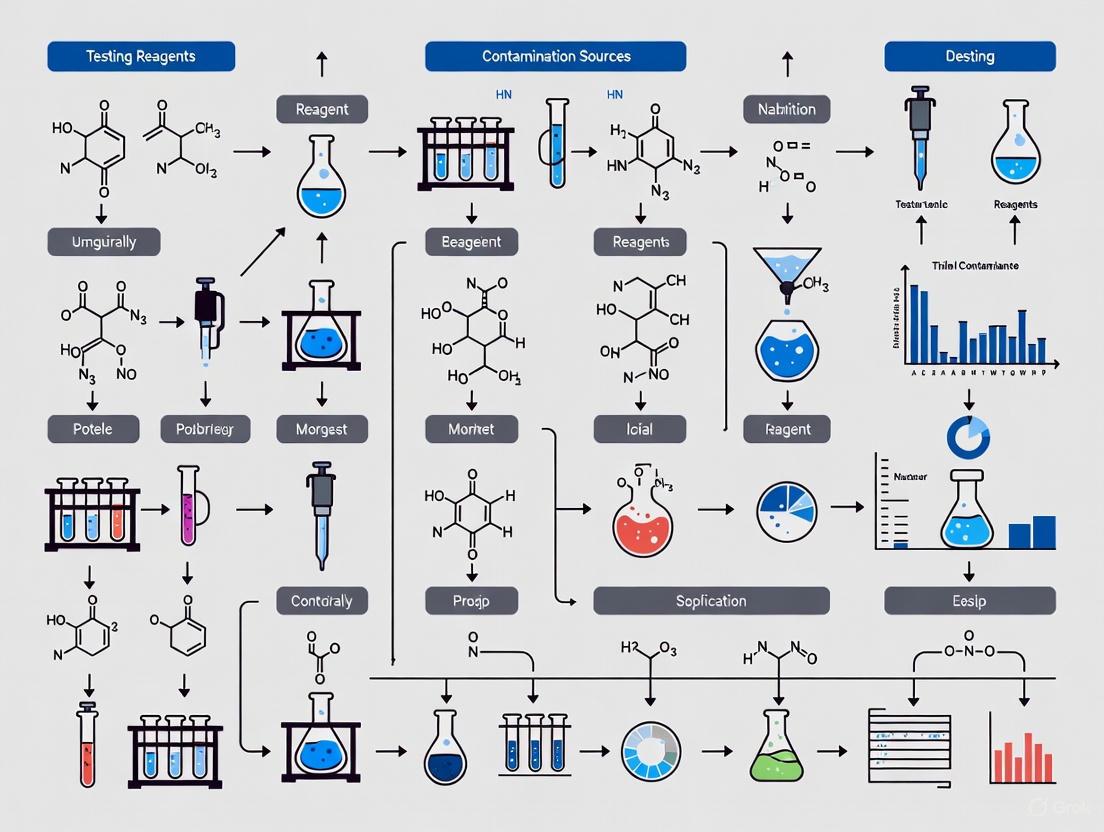
This guide provides researchers, scientists, and drug development professionals with a comprehensive framework for systematic reagent contamination testing.
Systematic Reagent Testing: A Complete Guide to Identifying and Eliminating Contamination Sources
Abstract
This guide provides researchers, scientists, and drug development professionals with a comprehensive framework for systematic reagent contamination testing. It covers foundational concepts of contamination sources, practical methodologies for detection and control, advanced troubleshooting techniques, and validation protocols to ensure data integrity and regulatory compliance in biomedical research and diagnostics.
Understanding Contamination: Sources, Risks, and Impact on Data Integrity
Contamination represents a critical and pervasive challenge in scientific research and drug development, with implications ranging from compromised product quality to erroneous biological conclusions. This article defines two primary contamination categories: physical particulate matter and biological microbial DNA. Effective management of these contaminants is essential for research integrity, particularly in sensitive fields like microbiome studies and pharmaceutical manufacturing.
Physical particulate contamination involves foreign inorganic or organic particles introduced during manufacturing or handling. Meanwhile, low-biomass microbiome studies are exceptionally vulnerable to microbial DNA contamination from laboratory reagents and environments, which can drastically alter results and interpretations [1] [2]. This application note establishes systematic protocols for detecting, characterizing, and mitigating both contamination types within a comprehensive reagent quality assurance framework.
Quantitative Contamination Profiles
Data from recent studies quantifying microbial DNA contamination in common laboratory reagents are summarized in the tables below.
Table 1: Microbial DNA Contamination in Commercial PCR Enzymes [3]
| Analytical Method | Number of Enzymes Tested | Number Contaminated | Contamination Rate | Key Contaminants Identified |
|---|---|---|---|---|
| Endpoint PCR & Sanger Sequencing | 9 | 7 | 78% | Multiple bacterial species |
Table 2: Background Microbiota in DNA Extraction Kits via mNGS [4]
| Reagent Brand | Input Material | Key Findings | Clinical Implications |
|---|---|---|---|
| Brand M | Molecular-grade water | Distinct contamination profiles across brands and lots. | Detection of common pathogenic species affecting diagnosis. |
| Brand Q | Molecular-grade water | Significant batch-to-batch variability. | Highlights need for lot-specific profiling and negative controls. |
| Brand R | Molecular-grade water | Site-specific environmental contaminants identified. | Confirms healthy blood may lack consistent microbiome. |
| Brand Z | ZymoBIOMICS Spike-in Control |
Experimental Protocols
Protocol 1: Particulate Matter Analysis and Characterization
This protocol outlines a systematic approach for isolating and identifying unknown particulate contaminants using microscopy and spectroscopy techniques [5].
Materials
- Light microscope (with polarized capability)
- Scanning Electron Microscope (SEM) with Energy-Dispersive X-Ray Spectroscopy (EDX)
- Fourier-transform infrared (ATR-FTIR) microscope
- Sterile forceps, sample vials, and appropriate packaging for transport
Procedure
- Sample Collection: Using sterile forceps, collect particulate matter under controlled conditions to avoid cross-contamination. For particles embedded in a product, carefully excise a portion containing the contaminant.
- Visual Examination: Examine particles under a light microscope to document morphology, size, shape, and color using photomicrography.
- Elemental Analysis (SEM/EDX): Transfer isolated particles to SEM for high-resolution imaging. Use EDX to determine elemental composition.
- Molecular Identification (ATR-FTIR): Analyze particles via ATR-FTIR spectroscopy to identify functional groups and organic compounds by matching spectral data to reference libraries.
- Data Integration and Reporting: Correlate data from all techniques to identify the contaminant and perform root cause analysis.
Protocol 2: Testing Reagents for Microbial DNA Contamination
This protocol describes a method to screen commercial PCR enzymes for bacterial DNA contamination using endpoint PCR and Sanger sequencing [3].
Materials
- Test commercial PCR enzymes and their respective buffers
- Primers targeting the V3-V4 hypervariable region of the 16S rRNA gene
- Molecular biology-grade water
- dNTP mix
- Positive control DNA (e.g., from E. coli)
- Agarose gel electrophoresis equipment
- Sanger sequencing services
Procedure
- Reaction Setup: For each PCR enzyme, set up two reactions in parallel under a laminar flow hood using aseptic technique.
- Test Reaction: 25 µL total volume containing PCR mix, primers, and molecular biology-grade water (no template DNA).
- Positive Control: 25 µL total volume containing PCR mix, primers, and E. coli DNA.
- PCR Amplification: Run reactions per manufacturer's recommended cycling conditions.
- Gel Electrophoresis: Separate 5 µL of PCR product on a 1% agarose gel. A band at ~500 bp in the test reaction indicates bacterial DNA contamination.
- Sequence and Identify Contaminants: Excise bands from the gel, purify, and submit for Sanger sequencing. Analyze sequences using BLAST against the NCBI database.
Workflow Visualization
The following diagram illustrates the logical workflow for a systematic contamination investigation, integrating both particulate and microbial analysis paths.
The Scientist's Toolkit
Essential materials and solutions for implementing the contamination analysis protocols are listed below.
Table 3: Research Reagent Solutions for Contamination Analysis
| Item | Function | Application Example |
|---|---|---|
| Molecular Biology-Grade Water | DNA-free water for preparing negative controls. | Used as input in DNA extraction kits to test for reagent-derived contamination [4]. |
| ZymoBIOMICS Spike-in Control | Defined microbial community as an internal positive control. | Spiked into samples to monitor extraction efficiency and identify contaminants in mNGS workflows [4]. |
| 16S rRNA Gene Primers | Primers for amplifying the bacterial 16S rRNA gene. | Used in endpoint PCR to screen for bacterial DNA in reagents [3]. |
| DNA Removal Reagents (e.g., Bleach) | Degrades contaminating DNA on surfaces and equipment. | Decontaminate sampling equipment, tools, and work surfaces between samples [1]. |
| Personal Protective Equipment (PPE) | Clean suits, gloves, masks to limit sample exposure. | Reduces contamination from human operators during sampling of low-biomass specimens [1]. |
Contamination constitutes one of the most persistent and costly challenges in biological and biomedical research, potentially compromising experimental integrity, leading to erroneous conclusions, and wasting valuable resources. In the context of systematic reagent testing for contamination sources research, identifying and mitigating these contaminants becomes paramount for generating reliable, reproducible data. This is particularly critical in studies involving low microbial biomass samples, where the target DNA "signal" can be easily overwhelmed by contaminant "noise" [1] [2]. This application note details the primary sources of contamination stemming from reagents, equipment, and the laboratory environment, and provides structured protocols for their identification and control within a systematic quality assurance framework.
A systematic approach to contamination control begins with recognizing its principal sources. The following table summarizes key contaminants, their origins, and their potential impact on research outcomes.
Table 1: Common Contamination Sources and Their Impact on Research
| Source Category | Specific Source | Common Contaminants | Potential Impact on Experiments |
|---|---|---|---|
| Reagents & Kits | DNA Extraction Kits [2] [6] | Bacterial DNA (e.g., Cutibacterium) | False positives in microbiome studies; alters host molecular landscapes [6]. |
| Water & Buffers [7] | Bacteria, Fungi, Endotoxins | Supports microbial growth; interferes with cell cultures and molecular assays. | |
| Commercial Media [7] | Microbial spores, Chemical impurities | Compromises cell culture purity; introduces unintended variables. | |
| Laboratory Equipment | Improperly Cleaned Tools [8] | Residual analytes, cross-sample carryover | Skews sensitive assays (e.g., PCR, trace element analysis) [9] [8]. |
| Automated Instruments [10] | Aerosolized DNA, sample carryover | Causes well-to-well cross-contamination in PCR and sequencing [1] [10]. | |
| Laminar Flow Hoods [7] | Settled airborne contaminants | Contaminates sterile supplies and open culture vessels. | |
| Laboratory Environment | Personnel [11] [7] | Skin cells, hair, respiratory droplets | Introduces human microbiota, a prevalent contaminant in low-biomass studies [6]. |
| Airborne Particles [11] | Dust, fungal spores, microbial cells | Settles on surfaces and into open samples during processing. | |
| Surfaces [12] | Chemical residues, dust, DNA | Transfers contaminants via direct contact with samples or equipment. |
The quantitative impact of contamination is especially severe in low-biomass research. Studies estimate that 1,000 to 100,000 contaminating microbial reads can be detected per million host reads sequenced by RNA-seq [6]. In low-biomass samples, contaminants can rapidly dominate the profile; experiments with serial dilutions of a bacterial culture showed contaminants representing the majority of the microbial biomass after just a few dilutions [2]. Furthermore, contamination is often confounded with experimental variables, such as being associated with different batches of the same extraction kit, which can lead to misleading biological conclusions [2].
Experimental Protocols for Contamination Detection
Protocol: Systematic Monitoring of Reagent and Kit Contamination
Principle: Even certified molecular-grade reagents and commercial kits can contain trace amounts of microbial DNA. This protocol uses sensitive negative controls to detect these contaminants [2] [13].
Workflow:
Procedure:
- Preparation of Negative Controls:
- Process Control (Kit Blank): Use sterile, DNA-free water (e.g., PCR-grade) as a mock sample. Subject it to the entire analytical procedure alongside your experimental samples, starting from the DNA extraction step [2] [13].
- Template Control (PCR Blank): Include a well containing only PCR-grade water in your amplification reaction to control for contamination in master mix components [2].
- Sample Processing:
- Downstream Analysis and Sequencing:
- Data Interpretation:
- Identification: Taxa or sequences found in the negative controls are considered potential contaminants.
- Frequency-Based Filtering: Contaminants present at higher levels in controls than in samples can be removed bioinformatically [6].
- Threshold Setting: For qPCR assays, use the results from negative controls to establish a limit of detection/quantitation above which sample results are considered reliable [13].
Protocol: Environmental Monitoring via Surface and Air Sampling
Principle: Regular monitoring of the laboratory environment is essential for identifying persistent contamination reservoirs and verifying the efficacy of cleaning protocols [11].
Workflow:
Procedure:
- Define a Monitoring Plan:
- Identify critical control points: biosafety cabinet/workbench surfaces, door handles, centrifuge keypads, shared equipment, and reagent storage areas.
- Establish a regular sampling schedule (e.g., weekly, monthly).
- Surface Sampling:
- Swab Sampling: Use sterile swabs moistened with a sterile buffer or saline. Swab a defined surface area (e.g., 10 cm²) using a consistent technique.
- Contact Plates: Use RODAC plates or other contact plates filled with appropriate culture media. Press the agar surface directly onto the flat surface to be tested [11].
- Air Sampling:
- Use an air monitoring device (air sampler) that draws a known volume of air over a nutrient agar plate or a liquid collection medium [11].
- Place samplers in key locations, such as inside laminar flow hoods, near incubators, and in general lab areas.
- Sample Analysis:
- Microbial Culture: Transfer swabs to liquid media or directly streak onto agar plates. Incubate contact plates and air sampler plates. Count colony-forming units (CFUs) and identify predominant morphologies.
- Molecular Analysis: Extract DNA directly from swabs and analyze via qPCR or sequencing to profile the microbial community of the lab environment [6].
- Corrective Action:
- Compare results against established internal alert and action limits.
- If limits are exceeded, perform enhanced cleaning and disinfection of the affected area and investigate the source.
The Researcher's Toolkit for Contamination Control
A proactive approach to contamination involves utilizing specific reagents, equipment, and protocols designed for prevention and detection.
Table 2: Essential Research Reagent Solutions and Materials for Contamination Control
| Item Category | Specific Product/Technique | Primary Function in Contamination Control |
|---|---|---|
| Decontamination Reagents | Sodium Hypochlorite (Bleach) [1] | Degrades nucleic acids and inactivates microbes on surfaces and equipment. |
| 80% Ethanol [1] | Effective for surface disinfection and killing contaminating organisms. | |
| DNA Away [10] [8] | Commercially available solution designed to remove contaminating DNA from lab surfaces and equipment. | |
| Specialized Kits & Reagents | Certified DNA-Free Water [7] | Serves as a critical negative control and as a base for reagents to prevent introduction of aquatic contaminants. |
| Microbiome-Tested Extraction Kits [2] | Kits validated for low microbial biomass content reduce introduction of contaminating DNA. | |
| Pre-sterilized, Single-Use Consumables [11] [10] | Eliminates variability and potential contamination from in-house cleaning and sterilization of reusable items. | |
| Laboratory Equipment | Laminar Flow Hoods/Biosafety Cabinets [11] [10] | Provides a HEPA-filtered, sterile workspace for handling sensitive samples and cultures. |
| Automated Liquid Handling Systems [10] | Minimizes technician error and reduces the risk of sample-to-sample cross-contamination. | |
| HEPA Filtration Systems [11] [10] | Removes airborne particulates and microbes from the laboratory environment. |
Within a systematic reagent testing framework, acknowledging and actively managing contamination from reagents, equipment, and the environment is not optional but fundamental. The protocols and tools outlined herein provide a foundation for establishing a rigorous contamination control plan. By integrating systematic negative controls, routine environmental monitoring, and robust decontamination practices, researchers can significantly mitigate contamination risks, thereby safeguarding the integrity of their scientific data and the validity of their conclusions.
Contamination represents a fundamental challenge in scientific research and diagnostic testing, with consequences that extend far beyond the laboratory. The inadvertent introduction of contaminants during analytical processes can compromise data integrity, generate false results, and ultimately erode confidence in scientific institutions and systems. In low-biomass microbiome studies, the inevitability of contamination from external sources becomes a critical concern when working near the limits of detection, as lower-biomass samples can be disproportionately impacted by practices suitable for handling higher-biomass samples [1]. Similarly, in clinical diagnostics, contamination and methodological variations can produce false positive results that carry profound real-world consequences, including the wrongful denial of parole for incarcerated individuals based on erroneous drug tests [14] [15]. This article examines the multifaceted costs of contamination through recent case studies and provides systematic protocols for reagent testing and contamination control applicable across research and diagnostic settings.
Quantifying the Impact: Case Studies in Contamination Consequences
The Quest Diagnostics False Positive Crisis
In 2024, a contamination-related incident involving Quest Diagnostics' urine drug screening revealed how methodological changes can generate widespread false positives. Between April and July 2024, the company utilized an "alternative reagent" while facing a backorder of its usual chemical, resulting in a dramatic spike in presumptive positive tests for opiates [15]. The quantitative impact was substantial, as shown in Table 1.
Table 1: Impact of Alternative Reagent on Opiate Test Positivity Rates in California Prisons
| Time Period | Reagent Type | Monthly Positive Opiate Rate | Statistical Change |
|---|---|---|---|
| Jan-Apr 2024 | Standard | 6.6%-6.8% | Baseline |
| May 2024 | Alternative | 17.1% | ~160% increase |
| June 2024 | Alternative | 20.5% | ~200% increase |
| July 2024 | Alternative | 17.1% | ~160% increase |
| August 2024 | Standard | 6.8% | Return to baseline |
This contamination of the testing process affected approximately 5,000-6,000 tests across California prisons, with profound human consequences [15] [16]. The false results were cited in parole denials, where the Board of Parole Hearings wrote that positive tests "reflect continued substance abuse" and "demonstrate continuing struggles with criminal thinking" [15]. One individual in his 60s, eligible for parole after decades of incarceration, had his case delayed until 2026 based largely on these erroneous results [15].
Contamination in Low-Biomass Microbiome Research
In research contexts, contamination presents equally significant challenges, particularly in low-biomass studies where the target DNA signal may be minimal compared to contaminant noise [1]. Contaminants can be introduced from various sources—including human operators, sampling equipment, reagents/kits, and laboratory environments—at multiple stages such as sampling, storage, DNA extraction, and sequencing [1]. The proportional nature of sequence-based datasets means even small amounts of contaminant DNA can strongly influence results and interpretation, potentially distorting ecological patterns and evolutionary signatures [1].
Systematic Reagent Testing Protocol for Contamination Control
Reagent Qualification Workflow
The following experimental protocol provides a systematic approach for reagent testing and validation to prevent contamination-related errors. This workflow is particularly crucial when reagents are substituted or sourced from alternative suppliers.
Diagram 1: Systematic reagent testing workflow for contamination control.
Experimental Protocol: Reagent Contamination Assessment
Objective: To systematically evaluate new reagent lots or alternative reagents for potential contamination and performance variance before implementation in diagnostic or research workflows.
Materials:
- Reference standard reagent (current validated lot)
- Test reagent (new lot or alternative)
- Positive controls
- Negative controls
- Relevant sample matrices
- Standard laboratory equipment for analysis
Procedure:
- Documentation Review
- Examine Certificate of Analysis for manufacturing details
- Verify purity specifications and potential interferents
- Confirm storage and stability requirements
Contaminant Screening
- Perform endotoxin testing (LAL assay)
- Conduct microbial bioburden assessment
- Test for particulate contamination
- Analyze for cross-reactive compounds in assay systems
Bench Performance Testing
- Run parallel analyses using reference and test reagents
- Utilize standardized positive and negative controls
- Include known negative samples (n≥20)
- Include known positive samples across dynamic range (n≥20)
- Perform inter-day precision testing (3 separate days)
Statistical Analysis
- Compare positivity rates between reference and test reagents
- Calculate sensitivity, specificity, and accuracy
- Perform regression analysis for quantitative assays
- Assess variance using F-test or ANOVA
Acceptance Criteria:
- Positivity rate variance ≤15% from reference standard
- No statistically significant difference in sensitivity/specificity (p>0.05)
- Contaminant levels within manufacturer specifications
- Precision (CV) ≤20% for qualitative tests, ≤15% for quantitative
Comprehensive Contamination Control Framework
Contamination can occur at multiple points in analytical processes, requiring a systematic approach to identification and control. The following diagram illustrates major contamination sources and corresponding control measures across the workflow.
Diagram 2: Major contamination sources and control measures across analytical workflow.
Essential Research Reagent Solutions for Contamination Control
Table 2: Key Research Reagent Solutions for Contamination Prevention and Detection
| Reagent Category | Specific Examples | Function in Contamination Control | Application Notes |
|---|---|---|---|
| Nucleic Acid Degrading Agents | DNase, RNase, sodium hypochlorite | Removes contaminating nucleic acids from surfaces and reagents | Critical for low-biomass microbiome studies; use prior to sample processing [1] |
| Endotoxin Testing Kits | LAL assays, recombinant factor C tests | Detects bacterial endotoxin contamination in reagents | Essential for cell culture and diagnostic reagents; sensitivity to 0.001 EU/mL |
| PCR Inhibition Tests | Internal amplification controls, spike-in DNA | Identifies reaction inhibitors in sample preparation | Required for molecular diagnostic validation; confirms result reliability |
| Sterilization Reagents | Ethanol (80%), hydrogen peroxide, ethylene oxide gas | Eliminates viable microorganisms from equipment and surfaces | Ethanol kills organisms but may not remove DNA; combine with nucleic acid degradation [1] |
| Antimicrobial Agents | Antibiotic cocktails, azides | Prevents microbial growth in stored reagents | Particularly important for liquid reagents stored long-term |
| Analytical Grade Solvents | LC-MS grade water, high purity acids | Minimizes chemical interference in analytical systems | Reduces background noise in sensitive detection methods |
| Quality Control Materials | Certified reference materials, positive/negative controls | Verifies reagent performance and detects lot variations | Must be included in each analytical run; establishes baseline performance |
Advanced Contamination Mitigation Strategies
Systematic Approach to Reagent Validation
The Quest Diagnostics case highlights the critical importance of rigorous reagent validation protocols. When the company substituted an "alternative reagent" that had "passed all quality-control metrics," the resulting threefold increase in positive opiate tests demonstrates that standard QC measures may be insufficient [15]. A more robust validation protocol should include:
Parallel Testing: Run prospective reagent comparisons alongside current standards for sufficient duration (minimum 30 days) to establish baseline performance metrics.
Confirmatory Testing Protocols: As emphasized by forensic toxicologists, presumptive results must be confirmed with definitive testing using mass spectrometry-based platforms like GC/MS or LC/MS [14]. This is particularly crucial when results trigger significant consequences.
Threshold Establishment: Determine acceptable variance limits for positivity rates between reagent lots and implement automatic review triggers when thresholds are exceeded.
Personnel Training: Ensure all staff understand potential to recognize contamination sources and follow decontamination protocols. As emphasized in microbiome research, personnel should be trained to cover exposed body parts with personal protective equipment and maintain awareness of contamination sources [1].
Environmental Monitoring and Control
For low-biomass studies particularly, environmental monitoring represents a crucial component of contamination control. Recommendations include:
Comprehensive Sampling Controls: Collect and process samples from potential contamination sources, including empty collection vessels, air exposure samples, swabs of PPE, and aliquots of preservation solutions [1].
Process Blanks: Include extraction blanks, PCR blanks, and sequencing blanks to identify contaminants introduced during laboratory processing.
Cross-Contamination Prevention: Implement physical separation of pre-and post-amplification activities, use dedicated equipment for different processing stages, and employ UV irradiation of workstations and reagents.
Facility Design: Establish unidirectional workflow from clean to dirty areas, implement HEPA filtration where appropriate, and maintain positive air pressure in clean areas.
The high cost of contamination—in false results, wasted resources, and eroded confidence—demands systematic approaches to reagent testing and contamination control. The Quest Diagnostics case illustrates how seemingly minor methodological changes can create far-reaching consequences, while microbiome research demonstrates the fundamental challenges of working near detection limits. By implementing robust reagent validation protocols, comprehensive environmental monitoring, and systematic contamination control measures, researchers and diagnostic professionals can enhance result reliability and maintain confidence in scientific and diagnostic systems. Ultimately, reducing contamination requires consistent vigilance at every stage, from initial sample collection through final data interpretation, along with transparent reporting of contamination control methods and any potential limitations.
The investigation of low-biomass microbial environments represents one of the most methodologically challenging frontiers in microbiome science. These environments—which include human tissues like placenta, tumors, and blood; built environments like cleanrooms; and extreme natural environments like deep subsurface and hyper-arid soils—harbor microbial biomass at or near the limits of detection for standard DNA-based sequencing approaches [1]. In these contexts, the inevitability of contamination from external sources becomes a critical concern that can fundamentally compromise research outcomes [1].
The core challenge is proportional: in high-biomass samples like human stool or surface soil, the target DNA "signal" vastly exceeds contaminant "noise." In contrast, low-biomass samples can be disproportionately impacted by even trace contamination, with contaminant DNA potentially outnumbering or dwarfing authentic signal from the sample itself [1]. This problem is not merely theoretical—it has fueled major scientific controversies, including debates about the existence of a placental microbiome and the retraction of high-profile tumor microbiome studies [17]. When contamination distorts results, it can lead to false ecological patterns, incorrect evolutionary signatures, and misguided clinical applications [1].
This Application Note establishes why rigorous contamination control is non-negotiable for credible low-biomass research and provides a structured framework for its implementation within a broader thesis on systematic reagent testing. By adopting the practices outlined herein, researchers can significantly reduce the risk of generating misleading results and enhance the reproducibility of their findings.
Effective contamination control begins with recognizing its diverse origins and transmission pathways. Contamination can be introduced at virtually every stage of the research workflow, from sample collection through data analysis [1] [17]. The research community broadly recognizes several key categories of contamination, each requiring specific mitigation strategies.
Table 1: Primary Contamination Sources in Low-Biomass Studies
| Contamination Source | Description | Common Vectors |
|---|---|---|
| External Contamination | Introduction of DNA from sources other than the sample of interest [17]. | Laboratory reagents, kits, sampling equipment, laboratory environments, and personnel [1] [17]. |
| Cross-Contamination (Well-to-Well Leakage) | Transfer of DNA or sequence reads between samples processed concurrently [1] [17]. | Adjacent wells on sample plates during PCR or sequencing library preparation [1]. |
| Host DNA Misclassification | Misidentification of host DNA sequences as microbial in origin [17]. | Inadequate bioinformatic separation of host and microbial signals, especially problematic in metagenomic studies of host-associated samples [17]. |
| Batch Effects & Processing Bias | Technical variation introduced when samples are processed in different batches or with different reagent lots [17]. | Differences in protocols, personnel, reagent batches, or ambient conditions that correlate with experimental groups [17]. |
A critical insight is that contamination is not uniform. Different contamination sources have distinct "fingerprints," and their proportional impact varies based on experimental context [17]. For example, reagent contamination may dominate in ultra-clean DNA extractions, while personnel contamination may prevail during field sampling. Furthermore, the impact of contamination is not always limited to adding noise; when contamination is confounded with a phenotype or batch, it can generate entirely artifactual signals that lead to spurious conclusions [17].
Figure 1: Contamination Introduction Pathways. Contaminants (red ovals) can be introduced at every stage of the experimental workflow (blue rectangles), from sampling through data analysis. A systematic approach must address all potential vectors.
A Systematic Framework for Contamination Control
Adopting a systematic, proactive framework is essential for effective contamination control. This involves implementing specific procedures before, during, and after wet-lab experiments to minimize and monitor contaminant introduction.
Pre-Analytical Phase: Strategic Planning and Sample Collection
The pre-analytical phase offers the greatest opportunity to prevent contamination. Careful planning and rigorous sampling protocols can reduce contaminant introduction at the source.
Strategic Experimental Design
- Avoid Batch Confounding: A critical step is ensuring that phenotypes or covariates of interest are not confounded with batch structure (e.g., all cases processed in one batch and controls in another). Active approaches like BalanceIT should be used to generate unconfounded batches rather than relying on randomization alone [17].
- Incorporate Controls from the Outset: The types and numbers of control samples must be determined during experimental design, not as an afterthought. These should represent all potential contamination sources [17].
Rigorous Sample Collection Protocols
- Decontaminate Equipment and Surfaces: All sampling equipment, tools, vessels, and gloves should be decontaminated. Single-use DNA-free items are ideal. For re-usable equipment, decontamination with 80% ethanol (to kill organisms) followed by a nucleic acid degrading solution (e.g., sodium hypochlorite, UV-C exposure) is recommended to remove both viable cells and cell-free DNA [1].
- Use Appropriate Personal Protective Equipment (PPE): Personnel should cover exposed body parts with gloves, goggles, coveralls or cleansuits, and shoe covers. This protects samples from human aerosol droplets and cells shed from skin, hair, and clothing [1].
- Minimize Handling: Samples should not be handled more than necessary, and contact with potential contamination sources should be limited through physical barriers and aseptic technique [1].
Analytical Phase: Laboratory Processing and Contamination Monitoring
During laboratory processing, consistent adherence to contamination control protocols is essential to maintain sample integrity.
Laboratory Processing Controls
- Process Controls: Include control samples that pass through the entire experimental workflow alongside actual samples. These should include extraction blanks (no sample added), no-template PCR controls, and library preparation controls [17].
- Source-Specific Controls: To complement process controls, also profile specific contamination sources separately using controls like empty collection kits, swabs of sampling surfaces, or aliquots of preservation solutions [17].
- Minimize Cross-Contamination: Physical barriers, dedicated workspace, and careful plate setup can reduce well-to-well leakage. When planning plate layouts, distribute sample types across the plate rather than grouping them [1] [17].
Reagent and Environmental Management
- Validate Reagent Sterility: Systematically test reagent lots for microbial DNA contamination before implementing them in studies. Maintain a database of validated lots.
- Control Laboratory Environment: Implement regular cleaning schedules for workspaces and equipment using DNA-degrading solutions. Consider using dedicated rooms or clean benches for low-biomass work [1].
Post-Analytical Phase: Bioinformatic Decontamination
Even with optimal wet-lab practices, some contamination is inevitable. Computational methods provide a final layer of protection against contaminant-driven conclusions.
Bioinformatic Decontamination Strategies
- Control-Based Decontamination: Tools like Decontam (frequency or prevalence methods) use control samples to identify and remove contaminant sequences from feature tables [17].
- Source-Tracker and Similar Methods: These approaches use control profiles to estimate the proportion of contamination in each sample [17].
- Limitations and Considerations: Bioinformatic decontamination struggles when contamination is extensive or when controls are not representative. These methods also cannot recover authentic signals mistakenly identified as contamination [1] [17].
Table 2: Essential Control Samples for Low-Biomass Studies
| Control Type | Purpose | Collection/Processing | Minimum Recommended |
|---|---|---|---|
| Field/Collection Blank | Identifies contamination from sampling equipment, containers, and ambient environment during collection. | Expose sterile collection container/swab to sampling environment without collecting actual sample. | Per sampling batch/environment |
| Extraction Blank | Identifies contamination introduced during DNA extraction. | Process without sample, using same reagents and protocol. | Per extraction batch (1-2 per plate) |
| No-Template Control (NTC) | Identifies contamination introduced during PCR/library amplification. | Perform amplification without adding DNA template. | Per amplification batch (1-2 per plate) |
| Positive Control | Verifies that experimental protocols work as intended. | Use well-characterized, low-biomass mock community. | Per experimental batch |
Experimental Protocols for Contamination Assessment
Protocol: Systematic Reagent Testing for Contaminating DNA
Purpose: To identify and quantify microbial DNA contamination in reagents prior to use in low-biomass studies.
Materials:
- Reagents to be tested (extraction kits, PCR master mix, water, etc.)
- DNA-free plasticware (tubes, tips)
- Equipment: PCR workstation, centrifuge, thermal cycler, sequencer
- Quantification reagents (Qubit, qPCR reagents)
Procedure:
- Prepare Reagent Aliquots: Under DNA-free conditions, aliquot reagents into sterile tubes.
- Extraction Kit Testing: For DNA extraction kits, process an extraction blank (no sample) using the standard protocol. Include an increased water volume if testing silica columns.
- PCR Reagent Testing: Set up no-template controls with the PCR master mix, primers, and water.
- Amplification and Sequencing: Amplify and sequence the resulting products using the same marker gene (16S rRNA) or shotgun approach planned for actual samples.
- Analysis: Sequence and process data through standard bioinformatic pipeline. Compare contaminant profiles across reagent lots.
Interpretation: Identify reagent lots with unacceptably high DNA contamination or problematic contaminant profiles (e.g., containing taxa of interest to the study). Establish study-specific thresholds for acceptable contamination levels.
Protocol: Collection and Processing of Negative Controls
Purpose: To monitor contamination introduced throughout the entire experimental workflow.
Materials:
- Sterile collection containers/swabs identical to those used for actual samples
- DNA preservation solution (if used)
- All standard laboratory processing reagents and equipment
Procedure:
- Field/Collection Blanks: During sampling, open and expose a sterile collection container to the sampling environment for a duration similar to actual sampling, then seal and preserve identically to actual samples.
- Extraction Blanks: Include at least one extraction blank per extraction batch (typically 1-2 per 96-well plate) consisting of all reagents but no sample.
- No-Template Controls (NTCs): Include NTCs in each PCR or library preparation batch.
- Processing: Process all controls alongside actual samples through every step—DNA extraction, quantification, amplification, and sequencing.
- Documentation: Meticulously track which controls correspond to which sample batches.
Interpretation: Controls should be sequenced to sufficient depth to detect low-abundance contaminants. The contaminant profiles from controls inform bioinformatic decontamination and help identify specific contamination sources when problems arise.
The Scientist's Toolkit: Essential Research Reagent Solutions
Implementing robust contamination control requires specific materials and reagents selected for their minimal contamination profile and appropriate application.
Table 3: Essential Research Reagent Solutions for Contamination Control
| Item Category | Specific Examples | Function & Importance | Contamination Control Considerations |
|---|---|---|---|
| Nucleic Acid Degrading Solutions | Sodium hypochlorite (bleach), DNA-ExitusPlus, DNA-Zap | Destroys contaminating DNA on surfaces and equipment. Critical because sterility (absence of viable cells) does not equal DNA-free [1]. | Use fresh dilutions; validate concentration and contact time for effectiveness; rinse thoroughly if used on equipment contacting samples directly. |
| DNA-Free Reagents and Kits | Certified DNA-free water, extraction kits, PCR components | Reduces introduction of contaminating DNA from reagents themselves, a major source of contamination [1] [17]. | Systematically test multiple lots; purchase from manufacturers offering DNA-free certification; aliquot to prevent cross-contamination. |
| Personal Protective Equipment (PPE) | Gloves, face masks, cleanroom suits, hair nets | Creates a barrier between personnel and samples, reducing contamination from skin cells, aerosols, and clothing [1]. | Change gloves frequently; decontaminate gloves with ethanol or DNA-degrading solution before sampling; use appropriate PPE for sampling environment. |
| Sterile Collection Materials | DNA-free swabs, sterile containers, DNA-free preservatives | Prevents introduction of contaminants during sample acquisition and stabilization. | Verify sterility certifications; test blank samples from each lot; avoid materials that may leach contaminants. |
| Surface Decontamination Supplies | 70-80% ethanol, isopropanol, hydrogen peroxide | Removes and/or inactivates microbial cells and other contaminants from work surfaces and equipment [1]. | Use before and after procedures; allow adequate contact time; follow with DNA-degrading solution for comprehensive decontamination. |
Figure 2: Systematic Contamination Control Workflow. Each research phase (green rectangles) requires specific contamination control actions (yellow notes). This systematic approach minimizes and monitors contamination throughout the entire research pipeline.
Contamination control in low-biomass microbiome studies is not merely a technical consideration but a fundamental requirement for scientific validity. The non-negotiable nature of these practices stems from the profound impact that even minimal contamination can have on data interpretation and conclusions. As the field continues to explore increasingly low-biomass environments, the implementation of systematic, multi-layered contamination control strategies—from experimental design through bioinformatic analysis—becomes essential.
Researchers must adopt a mindset of proactive contamination prevention rather than reactive correction. This involves committing to rigorous experimental design, comprehensive control strategies, standardized decontamination protocols, and appropriate computational cleaning. By integrating these practices into a cohesive framework and documenting them thoroughly in publications, the research community can enhance the reliability and reproducibility of low-biomass studies, ensuring that reported findings reflect biological truth rather than methodological artifact.
The integrity of microbiome research, particularly in low-biomass environments, is critically threatened by the pervasive presence of microbial DNA contaminants in laboratory reagents and kits. These ubiquitous contaminants can originate from various sources including DNA extraction kits, polymerase preparations, and other molecular biology reagents, potentially compromising experimental results and leading to erroneous biological interpretations [18] [19]. In low-biomass samples where target DNA is limited, contaminating DNA can constitute a significant proportion of the final sequencing data, effectively swamping the true biological signal and generating misleading conclusions [1] [18]. This application note provides a comprehensive overview of common contaminant genera, detailed protocols for their identification, and practical strategies to mitigate their impact within the broader context of systematic reagent testing for contamination sources research.
Contaminant Genera in Reagents and Kits
Contamination in molecular biology reagents is not random but involves predictable bacterial genera commonly associated with water, soil, and human skin. These contaminants can be introduced at multiple stages of reagent manufacturing and sample processing [18].
Table 1: Common Contaminant Genera in Laboratory Reagents
| Phylum | Common Contaminant Genera |
|---|---|
| Proteobacteria | Acinetobacter, Bradyrhizobium, Brevundimonas, Burkholderia, Caulobacter, Cupriavidus, Herbaspirillum, Methylobacterium, Novosphingobium, Pseudomonas, Ralstonia, Rhizobium, Sphingomonas, Stenotrophomonas [18] |
| Actinobacteria | Arthrobacter, Corynebacterium, Kocuria, Microbacterium, Propionibacterium, Rhodococcus [18] |
| Firmicutes | Bacillus, Paenibacillus, Streptococcus [18] |
| Bacteroidetes | Chryseobacterium, Flavobacterium, Pedobacter [18] |
The order Burkholderiales has been identified as particularly problematic, often dominating very low biomass samples and negative controls due to its ubiquity and potential for overamplification with common 16S rRNA gene protocols [20]. Beyond bacterial contaminants, plasmid DNA from expression vectors used in enzyme production represents another significant contamination source. These plasmids often contain antibiotic resistance genes (e.g., BlaTem-1, CmR) and even viral sequences, such as the Equine Infectious Anemia Virus (EIAV) pol gene, which have been detected in commercial reverse transcriptase kits [21].
Experimental Protocols for Contamination Assessment
Systematic Negative Control Strategy
Implementing a rigorous negative control strategy is fundamental for identifying reagent-derived contaminants.
- Control Types: Include DNA extraction blanks (using molecular grade water instead of sample), PCR blanks, and sampling controls (e.g., swabs of air, gloves, or empty collection vessels) [1] [20].
- Processing: Process negative controls alongside actual samples through all stages—DNA extraction, amplification, and sequencing—to account for contaminants introduced at any step [1].
- Replication: Include multiple negative controls to accurately quantify the nature and extent of contamination [1].
Biomass Serial Dilution Assay
This protocol evaluates the impact of contaminating DNA across a range of microbial biomass.
- Prepare Dilution Series: Culture a target bacterium not typically found as a contaminant (e.g., Salmonella bongori). Perform serial ten-fold dilutions to create a biomass series from approximately 10^8 cells down to 10^3 cells [18].
- DNA Extraction and Amplification: Extract DNA from each dilution using the test kits. Perform 16S rRNA gene amplification with both standard (e.g., 20) and high (e.g., 40) PCR cycles [18].
- Sequencing and Analysis: Sequence the amplicons and analyze the resulting profiles. In low-biomass dilutions, contaminating genera will dominate the sequence data, revealing the kit-specific contaminant profile [18].
Computational Contaminant Identification with Squeegee
For datasets lacking negative controls, the Squeegee tool provides a de novo computational method for contaminant detection [19].
- Input Preparation: Compile metagenomic sequencing data from multiple samples collected from distinct ecological niches or body sites [19].
- Taxonomic Classification: Squeegee performs taxonomic classification to identify candidate contaminant species shared across the different sample types [19].
- Similarity Estimation & Filtering: The tool estimates pairwise similarity between samples for each candidate species and calculates genome coverage breadth and depth to filter out taxonomic classification errors and accurately predict true contaminants [19].
The Scientist's Toolkit
Table 2: Essential Reagents and Resources for Contamination Management
| Item | Function/Purpose | Considerations |
|---|---|---|
| DNA-Free Water | Solvent for molecular reactions; rehydration of reagents. | A common source of bacterial DNA; should be certified DNA-free [18]. |
| DNA Extraction Kits | Isolation of nucleic acids from samples. | Silica membranes and solutions are frequent contamination sources; test multiple kit batches [18] [22]. |
| Polymerase Enzymes | Amplification of DNA in PCR. | Often produced recombinantly; can contain residual bacterial DNA or plasmid fragments from expression vectors [21] [18]. |
| Personal Protective Equipment (PPE) | Barrier against contamination from handlers (e.g., skin, hair, aerosol droplets). | Gloves, masks, and lab coats are essential. Gloves should be decontaminated with ethanol/DNA removal solutions before use [1]. |
| Fluorescent Tracers (e.g., microspheres) | Quantifying drilling fluid contamination in subsurface samples (e.g., IODP expeditions). | Injected directly into drilling fluids; concentration measured on external and internal core samples [20]. |
| Custom Kraken 2 Database | Bioinformatics tool for identifying cross-domain contamination in genome assemblies. | Effective for screening and decontaminating fungal or other eukaryotic genomes [23]. |
| Squeegee Software | De novo computational detection of contaminants in metagenomic data without negative controls. | Identifies contaminants as species shared across samples from distinct ecological niches processed in the same lab/with same kits [19]. |
Vigilance against reagent contamination is not optional but mandatory for generating reliable data, especially in low-biomass studies. Adopting a systematic approach to reagent testing—incorporating rigorous negative controls, utilizing computational tools like Squeegee for contaminant identification, and maintaining a critical awareness of common contaminant genera—is essential for upholding research integrity. By implementing the protocols and guidelines outlined in this document, researchers can significantly mitigate the risk of contamination-driven artifacts and ensure the accuracy of their findings in drug development and broader microbiological research.
Building Your Defense: Proactive Strategies and Systematic Testing Workflows
In modern laboratories, particularly those involved in sensitive areas like drug development and low-biomass microbiome research, the systematic control of contamination is not merely a best practice but a fundamental component of scientific integrity. A proactive contamination-control mindset is essential for ensuring data reliability and product safety. This approach moves beyond reactive measures, embedding contamination consideration into every stage of the research workflow, from initial sample collection to final data analysis [1]. This document outlines practical protocols and strategies, framed within the context of systematic reagent testing, to establish and maintain this critical mindset within any research setting.
Foundational Concepts of Contamination Control
Contamination in the laboratory can arise from a multitude of sources, which can be broadly categorized as follows:
- Human Operators: Skin cells, hair, microbiota, and aerosols from breathing or talking can introduce microbial and chemical contaminants [1] [9].
- Reagents and Kits: Commercial reagents, enzymes, and water can contain trace amounts of microbial DNA or chemical analytes, which become significant in high-sensitivity analyses [1].
- Laboratory Environment: Airborne particles, dust, and surfaces are persistent sources of contamination [9].
- Sampling Equipment & Consumables: Vessels, pipettes, and tools can shed particles or leach chemicals if not properly decontaminated [1] [9].
- Cross-Contamination: The transfer of material between samples during processing, such as through well-to-well leakage in a plate, is a common and often overlooked issue [1].
A Contamination Control Strategy (CCS) provides a holistic framework to address these risks. A robust CCS is a proactive system grounded in Quality Risk Management (QRM), mandated in pharmaceutical manufacturing by EU and US regulations, and is equally applicable to research laboratories [24] [25]. It involves a thorough evaluation of the entire workflow to identify potential contamination sources and the implementation of targeted controls.
The reliability of any experiment is contingent on the purity of its reagents. Systematic testing forms the backbone of a contamination-control strategy, providing the data needed to validate materials and processes.
Experimental Protocol: Reagent Contamination Screening
Principle: This protocol uses sensitive molecular and cultural methods to detect microbial and chemical contaminants in laboratory reagents, including water, buffers, enzymes, and chemical stocks.
Materials:
- Sterile, DNA-free consumables (tubes, pipette tips, filters)
- Culture media (e.g., Tryptic Soy Broth, Sabouraud Dextrose Broth for fungal detection)
- Reagents for DNA extraction and PCR (e.g., 16S rRNA gene primers for bacteria, ITS primers for fungi)
- Agarose gel electrophoresis system or qPCR instrument
- Sterile filtration apparatus (0.2 µm pore size)
Method:
- Sample Collection: Aseptically aliquot the reagent to be tested using sterile techniques.
- Microbial Culturing:
- Inoculate 1 mL of the reagent into 10 mL of culture media, in triplicate.
- Incubate aerobically at 30-35°C, anaerobically, and at 20-25°C for up to 14 days.
- Observe tubes daily for turbidity, indicating microbial growth.
- Molecular Analysis (for Microbial DNA):
- Negative Control Processing: Process a sterile, DNA-free water sample alongside the test reagent through all subsequent steps.
- DNA Extraction: Concentrate microbial cells from a large volume (e.g., 50-100 mL) of reagent by sterile filtration. Extract DNA directly from the filter. Simultaneously, perform a "kit-only" negative control by adding sterile water directly to the DNA extraction kit [1].
- Amplification and Detection: Perform PCR amplification using broad-range 16S rRNA (for bacteria) and ITS (for fungi) gene primers.
- Analyze PCR products by gel electrophoresis. Sanger sequencing of any amplified bands can identify contaminating species.
- Data Interpretation:
- Compare results from the test reagent against the negative controls.
- Growth in culture media or PCR amplification in the test sample that is absent in the negative controls indicates contamination of the reagent.
- Persistent contamination across multiple reagent lots suggests a systemic issue in the supply or storage process.
Data Presentation: Reagent Contamination Survey
Table 1: Summary of potential contamination sources and their respective controls during reagent handling.
| Contamination Source | Potential Impact | Recommended Control Measures |
|---|---|---|
| Laboratory Water | Microbial growth, chemical impurities, nucleases | Use pharmaceutical-grade water (e.g., USP); regular microbial and endotoxin testing; proper loop maintenance [24]. |
| Process Gases | Introduction of airborne contaminants | Use sterile filters (0.2 µm) for gases in direct contact with products; regular integrity testing [24]. |
| Raw Materials & Consumables | Microbial bioburden, endotoxins, leachables | Supplier qualification and audits; risk-based incoming inspection; testing certificates of analysis [24] [25]. |
| Personnel | Introduction of skin flora, aerosols | Comprehensive training in aseptic techniques; proper gowning (e.g., protective suits, masks, gloves) [1] [25]. |
Table 2: Key research reagents and materials essential for contamination control, with their primary functions.
| Research Reagent / Material | Primary Function in Contamination Control |
|---|---|
| DNA Degrading Solution (e.g., Bleach) | Destroys contaminating trace DNA on surfaces and equipment; critical for molecular work [1]. |
| Sterile, DNA-Free Consumables | Prevents introduction of contaminants during sample and reagent handling; single-use items are preferred [1]. |
| HEPA-Filtered Laminar Flow Hood | Provides an ISO 5 clean air workspace for aseptic procedures, protecting samples from environmental contaminants [24]. |
| Environmental Monitoring Plates | Used for routine monitoring of microbial contamination on surfaces and in the air of critical zones [25]. |
Implementing a Holistic Contamination Control Strategy
A comprehensive CCS extends beyond reagent testing to encompass the entire operational environment and workflow. Key elements, as highlighted in pharmaceutical guidelines, include [24] [25]:
- Facility and Process Design: Utilizing cleanrooms with cascading pressurization, closed processing systems, and unidirectional material flows to minimize contamination risk.
- Validation Controls: Qualifying and re-qualifying equipment, processes (e.g., sterilization, cleaning), and analytical methods to ensure consistent performance.
- Monitoring Controls: Implementing robust programs for environmental, personnel, and in-process monitoring to promptly identify and correct deviations.
- Quality Culture: Fostering a mindset where all personnel are empowered, trained, and responsible for maintaining contamination standards.
Workflow Visualization: A Proactive Contamination Control Strategy
The following diagram synthesizes the core principles of this document into a logical workflow for establishing and maintaining a contamination-control mindset, emphasizing proactive risk assessment and systematic testing.
Adopting a contamination-control mindset is a strategic imperative for generating reliable and defensible data. By integrating systematic reagent testing within a broader, holistic Contamination Control Strategy, laboratories can proactively mitigate risks. This involves a commitment to rigorous practices, continuous training, and a culture of quality that empowers every researcher to be a guardian of data integrity. The protocols and frameworks outlined here provide a concrete path for researchers and drug development professionals to embed this essential mindset into their daily operations, thereby safeguarding their science and its applications.
The polymerase chain reaction (PCR) is a cornerstone of modern molecular biology, enabling the amplification of minute amounts of DNA into measurable quantities. However, this extreme sensitivity also represents its primary vulnerability, as the slightest trace of contaminating DNA can lead to false-positive results and compromised data integrity. Spatial separation of laboratory functions provides the most effective defense against such contamination, forming a critical component of systematic reagent testing and contamination source research.
Implementing a spatially separated workflow is fundamental to any robust contamination control strategy. The core principle involves physically separating the stages where reagents and samples are prepared from areas where amplified PCR products are handled and analyzed. This physical segregation prevents the transfer of amplicons—the amplified DNA fragments that are potent sources of contamination—back into new reactions. Without such separation, laboratories risk systematic contamination that can invalidate experimental results and necessitate extensive decontamination procedures. The design considerations outlined in this protocol are therefore essential for maintaining the integrity of molecular biology research, pharmaceutical development, and diagnostic applications.
Laboratory Design Principles and Area Specifications
Core Design Concepts for Contamination Control
An optimally designed PCR laboratory implements a unidirectional workflow that moves from clean pre-PCR areas to potentially contaminated post-PCR areas, with no reverse flow of materials or equipment. This workflow is foundational to preventing amplicon carryover into sensitive reagent preparation and sample setup areas. Two primary design models are recommended, depending on available space and resources.
The ideal configuration involves two separate rooms: one dedicated exclusively to pre-PCR activities (maintained with slightly positive air pressure to prevent aerosol inflow), and a second room for DNA amplification and product analysis (maintained with slightly negative air pressure to contain amplicon aerosols). When spatial or budget constraints prevent a two-room setup, a single-room configuration can be implemented where pre-PCR and post-PCR areas are positioned as far apart as possible, with clear physical demarcations and dedicated equipment for each zone. In both designs, personnel movement must follow the unidirectional flow; staff moving from post-PCR to pre-PCR areas must change personal protective equipment to prevent carrying over contaminants.
Detailed Area Specifications
The table below summarizes the key specifications for each designated area within a spatially separated PCR laboratory:
Table 1: Functional Area Specifications in a PCR Laboratory
| Laboratory Area | Primary Function | Environmental Controls | Contamination Control Measures |
|---|---|---|---|
| Reagent Preparation | Preparation of PCR master mixes without DNA templates [26] | Positive air pressure; UV-equipped PCR hood or laminar flow cabinet [26] | Dedicated equipment; single-use aliquots; DNase-free consumables [26] |
| Sample Preparation | Addition of DNA template to master mixes [26] | Positive air pressure; physical separation from reagent area [26] | Dedicated pipettes with filter tips; surface decontamination with bleach [27] [26] |
| Amplification Area | Thermal cycling for DNA amplification [26] | Negative air pressure [26] | Restricted access; no return of materials to pre-PCR areas [26] |
| Product Analysis | Gel electrophoresis, sequencing, or other analysis [26] | Negative air pressure [26] | Designated equipment; thorough decontamination protocols [27] [26] |
Equipment and Reagent Management
Essential Laboratory Equipment
Proper equipment selection and assignment are crucial for maintaining spatial separation. Each designated area must have its own dedicated equipment, particularly pipettes, which should never be shared between pre- and post-PCR zones. Aerosol-resistant filter tips are mandatory for all liquid handling in pre-PCR areas to prevent pipette contamination. A laminar flow hood or biosafety cabinet within the pre-PCR space provides a controlled, clean environment for setting up PCR reactions and should be decontaminated with a bleach solution before and after each use.
Thermal cyclers for DNA amplification should be located within the post-PCR area. Other essential equipment includes centrifuges, vortex mixers, and refrigeration units for reagent storage. A key practice is the aliquoting of reagents into single-use vials upon receipt to increase shelf life, minimize freeze-thaw cycles, and preserve bulk stocks in case a working aliquot becomes contaminated.
The Scientist's Toolkit: Key Research Reagent Solutions
Table 2: Essential Materials and Reagents for Contamination-Controlled PCR
| Item | Function | Contamination Control Feature |
|---|---|---|
| PCR-Grade Water | Solvent for master mixes; negative control [27] | Certified DNA-free; aliquoted for single use [27] |
| Aerosol-Resistant Filter Tips | Liquid handling for samples and reagents [26] | Prevents aerosols from contaminating pipette shafts and samples [26] |
| UDG/UNG Enzyme System | Enzymatic decontamination of PCR mixes [27] | Degrades uracil-containing carryover amplicons from previous reactions [27] |
| DNase-Free Tubes & Consumables | Reaction vessels and storage [26] | Manufactured to be free of DNase, RNase, and PCR inhibitors [26] |
| Sodium Hypochlorite (Bleach) | Surface and equipment decontaminant [27] [1] | Degrades DNA on non-labware surfaces; used as 10% solution [27] |
| UV-C Light Source | Nucleic acid cross-linking on surfaces and in hoods [27] [1] | Renders surface DNA non-amplifiable [27] |
Experimental Protocols for Contamination Monitoring
Systematic Reagent Testing Protocol
A critical component of contamination source research is the systematic testing of all reagents. This protocol must be performed whenever contamination is suspected or as a routine quality control measure.
- Prepare a series of PCR reactions using a standard protocol relevant to your workflow.
- For each reagent (water, buffer, dNTPs, primers, polymerase), create a test reaction where that specific component is replaced with a fresh, never-opened aliquot from a different lot, if possible.
- Include a negative control containing all reagents except the DNA template (No-Template Control or NTC) and a positive control with a known, clean template.
- Run the PCR amplification and analyze the results via gel electrophoresis.
- Interpretation: The contaminated reagent is identified when its replacement results in a clear NTC, while other reactions with the original reagents remain contaminated.
Contamination Troubleshooting Workflow
The following logic pathway provides a systematic method for identifying and eliminating contamination sources, aligning with the broader thesis on systematic reagent testing.
Workflow Visualization and Standard Operating Procedures
Physical Workflow and Material Flow Diagram
The successful implementation of spatial separation relies on a strict unidirectional workflow for both personnel and materials. The following diagram illustrates the physical layout and movement protocols that minimize cross-contamination risk.
Standard Decontamination Protocol
Rigorous and routine decontamination of all work surfaces and equipment is non-negotiable. This protocol should be performed before and after each work session.
- Prepare a fresh 10% sodium hypochlorite (bleach) solution in DNA-free water [27].
- Thoroughly wipe all work surfaces, including the interior of laminar flow hoods, with the bleach solution. Allow surfaces to remain wet for a 2-5 minute contact time to ensure nucleic acid degradation.
- Wipe down equipment such as pipette exteriors, centrifuge rotors, vortex mixers, and refrigerator handles with the bleach solution, followed by a rinse with DNA-free water or ethanol to prevent corrosion [27].
- For persistent contamination or as a periodic preventative measure, use UV-C irradiation in hoods and on surfaces overnight to cross-link any residual DNA [1].
- Decontaminate plasticware and glassware via autoclaving. Note that autoclaving kills viable cells but does not remove DNA; therefore, chemical decontamination with bleach or commercial DNA removal solutions is still required for thorough cleaning [1].
The implementation of rigorous spatial separation, as detailed in this application note, is a fundamental prerequisite for reliable PCR-based research and diagnostics. By physically segregating pre-PCR, post-PCR, and reagent preparation areas, enforcing a unidirectional workflow, and adhering to systematic decontamination and reagent testing protocols, laboratories can significantly reduce the risk of contamination. These practices form the bedrock of quality assurance in molecular biology and are indispensable for generating credible, reproducible data in the context of systematic reagent testing and contamination source research. The protocols and guidelines provided herein offer a actionable framework for establishing a contamination-aware laboratory culture, ultimately safeguarding the integrity of scientific outcomes.
In the rigorous field of systematic reagent testing, the implementation of no-template controls (NTCs) and negative controls forms the foundational strategy for identifying contamination sources. These controls are essential for distinguishing true experimental signals from background noise introduced through reagents, laboratory environments, or handling processes. The critical importance of these controls is magnified in low-biomass studies and highly sensitive molecular assays, where even minimal contamination can compromise data integrity and lead to erroneous conclusions [1] [28]. The research community has recognized significant deficiencies in current practices, with one systematic review revealing that approximately two-thirds of insect microbiota studies failed to include necessary blanks, and only 13.6% both sequenced these controls and appropriately controlled for contamination in their datasets [28]. This protocol establishes comprehensive guidelines for the consistent implementation and interpretation of NTCs and negative controls to uphold experimental validity in contamination source research.
Conceptual Foundations and Definitions
Fundamental Control Types
No-Template Controls (NTCs): These reactions contain all PCR components—including primers, polymerase, nucleotides, and buffer—but completely lack any DNA template. Instead, nuclease-free water or a similar inert substance is added in place of the sample. NTCs are specifically designed to detect reagent contamination or amplification carryover from previous reactions [28].
Negative Controls: This broader category encompasses samples that undergo the entire experimental workflow while representing a matrix known or expected to lack the target analyte. Examples include sterile swabs, empty collection vessels, clean sampling buffers, or specimens from sterile environments. Negative controls effectively identify contamination introduced during sample collection, handling, or processing stages [1] [29].
Theoretical Framework and Purpose
Both control types operate on the same fundamental principle: they provide a baseline measurement of contaminating nucleic acids or other interfering substances present in reagents, equipment, or the laboratory environment. When properly implemented, they enable researchers to determine the limit of detection (LoD) for their analytical system. The average abundance of signal in negative controls establishes this LoD, serving as a critical threshold below which biological samples cannot reliably be distinguished from background contamination [28]. The consistent application of these controls across experimental runs is paramount, as contamination levels can vary significantly between reagent lots and processing batches [1] [28].
Table 1: Core Characteristics of Experimental Controls
| Control Type | Primary Function | Expected Result | Failure Implications |
|---|---|---|---|
| No-Template Control (NTC) | Detect contamination in PCR reagents and amplification process | No amplification signal | Reagent contamination present; false positives likely |
| Process Negative Control | Identify contamination introduced during sample collection/handling | No target signal detected | Sampling or handling procedures introduce contaminants |
| Positive Control | Verify assay sensitivity and functionality | Known positive result obtained | Assay insufficiency; potential false negatives |
| Experimental Group | Answer research question | Variable result based on hypothesis | N/A |
Experimental Protocols and Implementation
Control Inclusion Strategy
For robust contamination monitoring, implement a stratified control approach throughout the experimental workflow:
Sample Collection: Include field blanks or environmental controls that mirror sampling conditions without collecting actual material. For surface sampling, include sterile swabs exposed only to the air in the sampling environment [1].
DNA Extraction: Process one NTC per extraction batch (typically 8-24 samples) using nuclease-free water instead of sample. This controls for kitome contamination—contaminating DNA present in extraction kits and reagents [28].
PCR Amplification: Include at least one NTC per PCR plate to detect amplification contaminants or cross-contamination between wells [28].
Sequencing: Incorporate NTCs in the sequencing library preparation to identify contaminants introduced during library construction [1].
Comprehensive Workflow Integration
The following diagram illustrates the integrated placement of controls throughout a standard molecular biology workflow:
Experimental Workflow with Integrated Controls
Detailed Methodological Protocols
Preparation of No-Template Controls
- Materials Required: Nuclease-free water, sterile microcentrifuge tubes, dedicated pipettes for control setup.
- Procedure:
- For extraction NTCs, add 100-200 μL of nuclease-free water to a clean tube instead of sample.
- Process the NTC through the entire DNA extraction protocol alongside experimental samples.
- For PCR NTCs, prepare a master mix containing all PCR components, then aliquot into a clean reaction tube.
- Add nuclease-free water equivalent to the volume of DNA template used in experimental reactions.
- Process NTCs through all subsequent steps (amplification, sequencing) identically to test samples.
- Quality Threshold: Establish a predetermined threshold for acceptable contamination levels (e.g., cycle threshold [Ct] value >35 in qPCR, or <0.1% of total sequences in NGS) [28].
Preparation of Process Negative Controls
- Materials Required: Sterile collection supplies (swabs, containers), DNA-free preservation solutions, personal protective equipment.
- Procedure:
- Equipment Control: Open a sterile collection container in the sampling environment and close it without collecting a sample.
- Environmental Control: Expose a sterile swab to the air in the sampling environment for the duration of typical sampling.
- Reagent Control: Include an aliquot of preservation or transport solution that never contacts any sample.
- Process all negative controls through the entire analytical workflow alongside experimental samples [1].
- Documentation: Record the specific type, location, and processing batch for each negative control to enable traceback if contamination is detected.
Data Analysis and Interpretation Framework
Quantitative Assessment of Control Results
The following table summarizes the key analytical approaches for interpreting control data across different methodological platforms:
Table 2: Analytical Approaches for Control Data Interpretation
| Method Platform | Primary Metrics | Interpretation Guidelines | Corrective Actions |
|---|---|---|---|
| qPCR/dPCR | Cycle threshold (Ct), absolute quantification | Ct >35 often indicates acceptable background; establish run-specific LoD | Reject run if NTC amplifies before experimental samples; replace suspect reagent lots |
| 16S rRNA Sequencing | ASV prevalence, relative abundance in controls | Remove taxa with higher prevalence in controls than samples | Apply decontamination algorithms (e.g., Decontam); increase reagent decontamination |
| Metagenomic Sequencing | Read counts, taxonomic distribution | Compare proportional representation of contaminants | Bioinformatic subtraction of control-identified contaminants; process improvement |
| Microbial Culture | Colony formation, morphological identification | No growth expected in true negatives | Enhance sterilization protocols; review aseptic technique |
Statistical Decontamination Protocols
For sequencing-based approaches, implement a multi-step bioinformatic process to identify and remove contaminants identified through controls:
Sequence Processing: Process control and experimental samples through identical bioinformatic pipelines (quality filtering, denoising, ASV/inOTU calling).
Contaminant Identification: Use prevalence-based methods to identify taxa that appear more frequently in controls than in experimental samples, or frequency-based methods to identify taxa with higher abundance in low-concentration samples [28].
Threshold Application: Apply the Limit of Detection (LoD) calculated from negative controls. Discard any sample where the absolute abundance of target sequences (measured via qPCR) falls below the average abundance in negative controls [28].
Data Filtering: Remove identified contaminant sequences from all samples in the dataset using reproducible scripts and document the proportion of sequences removed.
The following diagram illustrates the decision pathway for contamination assessment and data remediation:
Contamination Assessment Decision Pathway
Essential Research Reagent Solutions
The following toolkit comprises critical materials and resources for implementing effective contamination control protocols:
Table 3: Research Reagent Solutions for Contamination Control
| Reagent/Resource | Function | Application Notes |
|---|---|---|
| DNA Degradation Solutions | Eliminate contaminating nucleic acids from surfaces | Sodium hypochlorite (bleach), DNA-ExitusPlus, DNA-Zap |
| Nuclease-Free Water | Inert substitute for sample in NTCs | Confirm nuclease-free status; aliquot to prevent contamination |
| Sterile Collection Supplies | Minimize introduction of contaminants during sampling | DNA-free swabs, containers; pre-treat with UV irradiation |
| DNA Extraction Kits | Isolate nucleic acids from samples | Monitor kitome contamination between lots; include extraction NTCs |
| PCR Master Mixes | Amplify target sequences | Quality control each new lot; include PCR NTCs |
| Decontamination Software | Bioinformatic identification of contaminants | Decontam (R package), SourceTracker |
| Positive Control Materials | Verify assay functionality | Synthetic oligonucleotides, characterized reference DNA |
The rigorous implementation of no-template controls and negative controls represents a non-negotiable standard in systematic reagent testing for contamination sources. These controls enable researchers to distinguish true biological signals from technical artifacts, thereby protecting research validity and reproducibility. The current evidence suggests that these practices remain underutilized, with one systematic review finding that only 13.6% of insect microbiota studies appropriately controlled for contamination [28]. By adopting the comprehensive protocols outlined in this document—including stratified control placement, quantitative assessment of control results, and appropriate bioinformatic remediation—researchers can significantly enhance the reliability of their findings. Future directions in contamination control will likely involve increased automation of control monitoring, development of improved statistical methods for contaminant identification, and establishment of field-specific standards for control implementation and reporting.
In life sciences and drug development, the integrity of research reagents is paramount. Contamination of these biological and chemical components represents a significant threat to experimental validity, data reproducibility, and ultimately, the development of safe therapeutics. This document provides a detailed, systematic protocol for isolating and identifying contaminated reagents, framed within a broader thesis on comprehensive contamination source management. The procedures are designed for researchers, scientists, and drug development professionals who require robust methodologies to safeguard their work against spurious results caused by undetected contaminants. The principles outlined are particularly critical when working with sensitive applications such as low-biomass microbiome studies, next-generation sequencing (NGS), and cell culture, where contaminants can disproportionately influence results and lead to incorrect conclusions [1] [30].
Background and Significance
Contaminants can be introduced at any stage of research, from sample collection and processing to analysis and storage. In low-biomass systems, the challenge is especially acute; the target DNA signal can be easily overwhelmed by contaminant noise, leading to false positives and erroneous ecological interpretations [1]. For instance, debates surrounding the 'placental microbiome' highlighted how contamination issues could fuel entire field-wide controversies [1]. Similarly, computational analyses of NGS data estimate that between 1,000 to 100,000 contaminating microbial reads can be detected per million host reads sequenced by RNA-seq, with common laboratory contaminants like Cutibacterium frequently identified [30]. Beyond research integrity, contamination carries practical consequences in therapeutic development, affecting product safety, regulatory compliance, and patient outcomes, particularly in sensitive areas like platelet transfusion where bacterial contamination remains a persistent challenge [31].
The Scientist's Toolkit: Essential Reagent Solutions
The following table details key reagents, tools, and equipment essential for implementing a systematic contamination testing protocol.
Table 1: Essential Research Reagent Solutions for Contamination Testing
| Item | Primary Function | Application Notes |
|---|---|---|
| DNA Decontamination Solutions (e.g., sodium hypochlorite, DNA removal kits) | Degrades contaminating DNA on surfaces and equipment. | Critical for sample processing areas and equipment used in low-biomass studies. Note that autoclaving and ethanol remove viable cells but not cell-free DNA [1]. |
| Personal Protective Equipment (PPE) (gloves, masks, cleanroom suits) | Creates a barrier between the operator and the sample to prevent human-derived contamination. | Reduces introduction of contaminants from aerosol droplets, skin, and hair [1]. |
| Sterile, DNA-Free Collection Vessels | Sample collection and storage. | Pre-trained collection vessels are essential; single-use, DNA-free containers are ideal [1]. |
| Aerobic and Anaerobic Culture Media (e.g., BacT/ALERT bottles) | Detects viable bacterial and fungal contaminants in biological products. | Used in multi-step strategies for platelet safety, with specific minimum volumes (e.g., ≥8 mL per bottle) and incubation times mandated [31]. |
| Pathogen Reduction Technology | Inactivates pathogens and white blood cells in platelet concentrates. | A single-step strategy to enhance safety; performed within 24 hours of collection [31]. |
| Computational Contamination Screening Tools (e.g., custom pipelines, PathSeq, FastQ Screen) | Identifies microbial contaminants within NGS data by analyzing host-unmapped reads. | Handles the challenge of intra- and interspecies sequence similarities; requires careful parameter tuning [30]. |
| Inorganic & Chelating Reagents (e.g., HCl, HNO₃, EDTA) | Extracts heavy metal contaminants from soil or other solid matrices in environmental testing. | Effective but can damage soil structure; concentration and environmental impact must be considered [32]. |
Systematic Testing Protocol
This protocol outlines a step-by-step approach to isolate and identify contaminated components, integrating methodologies from molecular biology, microbiology, and computational analysis.
Phase I: Pre-Testing Preparation and Contamination Risk Mitigation
Before testing begins, proactive measures are essential to minimize contamination introduction.
- Decontaminate Equipment and Surfaces: Treat all sampling equipment, tools, and work surfaces with 80% ethanol to kill contaminating organisms, followed by a nucleic acid degrading solution (e.g., dilute sodium hypochlorite) to remove residual DNA. Note that sterility is not equivalent to being DNA-free [1].
- Utilize Appropriate Personal Protective Equipment (PPE): Personnel should wear gloves, masks, and cleansuits or lab coats to limit contact between samples and contamination sources from human operators [1].
- Employ Negative Controls: Include various negative controls during sample collection and processing. These are critical for identifying contaminant sources and include:
- Reagent Blanks: Aliquots of sterile water or preservation solution processed alongside samples.
- Equipment Blanks: Swabs of collection vessels or instruments exposed to the sampling environment.
- Processing Blanks: Reagents from DNA extraction kits that are carried through the entire extraction and sequencing process [1].
Phase II: Experimental Workflow for Contaminant Detection
The following diagram illustrates the core workflow for systematic testing, from sample preparation to data analysis and interpretation.
Step-by-Step Wet-Lab Protocol
Sample Lysis and Nucleic Acid Extraction:
- Methodology: Use a commercial DNA/RNA extraction kit suitable for your sample type (e.g., soil, tissue, water).
- Technical Details: Include kit-negative controls (reagents without sample) in every extraction batch. If working with low-biomass samples, consider using kits designed for this purpose that often incorporate additional steps to minimize reagent-derived contamination [1].
- Critical Parameters: Record batch numbers for all kits and reagents. Consistency in reagents allows for better tracking of contamination sources across experiments.
Library Preparation and Sequencing:
- Methodology: Prepare sequencing libraries (e.g., for 16S rRNA amplicon sequencing, metagenomic shotgun sequencing, or RNA-seq) following standard protocols for your platform (e.g., Illumina).
- Technical Details: Include a positive control (e.g., a mock community with known microbial composition) and negative controls (reagent blanks from the extraction step) in the library preparation process. This verifies the functionality of the wet-lab and bioinformatics pipelines and identifies contaminants introduced during library prep [30].
- Critical Parameters: The volume of sample used for primary culture in microbiological assays (e.g., platelet testing) is critical; for example, testing ≥16 mL (split between aerobic and anaerobic bottles) is a recognized strategy to improve detection sensitivity [31].
Phase III: Computational Analysis for Contaminant Identification
For sequence-based data, a rigorous computational workflow is essential to distinguish true signal from contamination.
Computational Protocol
Raw Read Processing and Host Sequence Removal:
- Tool: FastQ Screen, Bowtie2, BWA.
- Methodology: Quality trim raw sequencing reads using tools like Fastp or Trimmomatic. Subsequently, align reads to a host reference genome (e.g., human, mouse) and discard all aligned reads to obtain host-unmapped reads for downstream analysis [30].
- Command Example (Conceptual):
Alignment to Contaminant Databases:
- Tool: Bowtie2, BWA, PathSeq.
- Methodology: Map the host-unmapped reads to a comprehensive microbial genome database (e.g., NCBI RefSeq). Categorize reads as either "uniq-species-hit" (uniquely mapped to one species) or "multi-species-hit" (mapped to multiple species/genera) [30].
- Critical Parameters: Parameter tuning for the aligner is crucial. Use stringent settings to minimize false alignments, but be aware that high sequence similarity among related species can lead to ambiguous multi-species-hits [30].
Statistical Scoring and Contaminant Quantification:
- Tool: Custom scripts, DecontaMiner.
- Methodology: Implement a scoring scheme that weights reads based on their mapping uniqueness. Abundance is often reported as Reads Per Million Host-mapped reads (RPMH). Perform statistical significance testing (e.g., comparing observed unique hits to an ensemble of hits from random read sets) to confirm contaminants are not detected by chance [30].
- Output: A list of putative contaminant species/genus and their abundance (RPMH) in each sample and control.
Data Analysis and Interpretation
Differentiating Signal from Noise
The core challenge in contamination analysis is distinguishing true contaminants from background noise and true positive signals.
- Compare with Controls: Any microbe or signal present in both the experimental samples and the negative controls is a strong candidate for contamination. The abundance in the experimental sample should be substantially higher than in the control to be considered potentially genuine.
- Statistical Significance: Use the statistical tests from the computational pipeline to filter out contaminants with low confidence [30].
- Known Contaminants: Be aware of common laboratory contaminants (e.g., Cutibacterium acnes, Bacillus spp.) and reagent-derived microbes, which are frequently identified in contamination catalogs [30].
Quantitative Contamination Metrics
The table below summarizes quantitative data related to contamination rates and detection sensitivities from published studies.
Table 2: Quantitative Data on Contamination and Detection
| Metric | Reported Value / Range | Context and Notes | Source |
|---|---|---|---|
| Microbial Reads in RNA-seq | 1,000 - 100,000 RPMH* | Estimated number of contaminating microbial reads per million host reads sequenced. | [30] |
| Platelet Contamination Rate (Primary Culture) | ~230 per million components | Mean contamination rate for apheresis platelets detected by primary culture. | [31] |
| Septic Transfusion Reaction Incidence | 2.3 - 82 per million transfusions | Highlights significant under-reporting and variability in clinical recognition. | [31] |
| Effective Platelet Culture Volume | ≥16 mL total (≥8 mL aerobic + ≥8 mL anaerobic) | Minimum sample volume for primary culture to ensure detection sensitivity. | [31] |
| FDR in Species-Level Mapping | >5% for 17% of species | With default Bowtie2 parameters, 17% of tested species had over 5% multi-species-hits (false positives). | [30] |
| ICP Staffing Recommendation | 0.8 - 1.0 per 100 beds | Recommended infection control professional-to-bed ratio for effective surveillance. | [33] |
*RPMH: Reads Per Million Host-mapped reads.
Isolating and identifying contaminated components requires a vigilant, multi-faceted approach that spans from physical sample collection to computational biology. The systematic protocol outlined here—emphasizing rigorous controls, both in the lab and in silico, and careful interpretation of results against these controls—provides a robust framework for researchers. Adherence to such detailed procedures is not merely a technical exercise but a fundamental component of research integrity, ensuring that scientific findings and drug development efforts are built upon a reliable and uncontaminated foundation.
Effective decontamination is a critical pillar of credible research, particularly in studies involving low-biomass microbiomes, sensitive molecular assays, and drug development. Inadequate decontamination can lead to contaminating DNA, microorganisms, or chemical residues that compromise experimental integrity, produce spurious results, and misdirect scientific conclusions [1] [34]. Ultraviolet (UV) radiation, sodium hypochlorite (bleach), and enzymatic treatments represent three cornerstone strategies for addressing distinct contamination challenges. This application note synthesizes current evidence and provides standardized protocols for implementing these decontamination methods within a systematic reagent testing framework. The guidance is designed to help researchers, scientists, and drug development professionals select and apply the optimal strategy for their specific experimental context.
Comparative Efficacy of Decontamination Strategies
Selecting an appropriate decontamination method requires a clear understanding of the relative efficacy of different agents against specific contaminants. The following tables summarize key quantitative findings from controlled studies, providing a basis for evidence-based decision-making.
Table 1: Efficacy of UV Light Devices for Pathogen Reduction on Surfaces (4-minute exposure) [35]
| UV Device Type | Pathogen Reduction (Log₁₀ CFU) | Primary UV Spectrum |
|---|---|---|
| Standard Low-Pressure Mercury (Vertical Tower) | VRE & MRSA: ≥2 log₁₀; C. difficile spores: ~1 log₁₀ | Primarily UV-C |
| Pulsed-Xenon Device | Significantly less reduction than standard LP mercury devices (P<0.001) | Primarily UV-A and UV-B |
| Enhanced Low-Pressure Mercury Devices | Equal or greater reduction than standard vertical towers | Primarily UV-C |
Table 2: Efficacy of Chemical Agents for DNA and Drug Residue Decontamination [36] [34]
| Cleaning Agent | Application Context | Decontamination Efficacy |
|---|---|---|
| Sodium Hypochlorite (2%) | Cyclophosphamide on BSC workbench | ~98% removal after 1st cleaning; 100% after repeated sessions [36] |
| Sodium Hypochlorite (0.02%) | Cyclophosphamide on BSC workbench | ~97% removal after 1st cleaning; 99.997% after 5 sessions [36] |
| Quaternary Ammonium | Cyclophosphamide on BSC workbench | ~98.7% removal after 1st cleaning; 99.997% after 5 sessions [36] |
| Sodium Hypochlorite (0.54%) | Cell-free DNA on plastic, metal, and wood | >99.7% DNA removal on all surfaces [34] |
| Trigene | Cell-free DNA on plastic, metal, and wood | >99.7% DNA removal on all surfaces [34] |
| Virkon | Blood on plastic, metal, and wood | >99.2% DNA removal on all surfaces [34] |
| Ethanol (70%) | Cell-free DNA on plastic, metal, and wood | Variable efficacy; recovered DNA ranged from 3.3% (metal) to 29.5% (wood) [34] |
Table 3: Efficacy of Enhanced vs. Manual Cleaning for Laparoscopes [37]
| Cleaning Method | Qualified Rate vs. Manual Cleaning (Risk Ratio) | Key Assessment Method |
|---|---|---|
| Alkaline Multi-Enzyme + Ultrasonic Cleaning | RR = 1.07 (95% CI: 1.02–1.13) | Visual Inspection |
| Alkaline Multi-Enzyme + Ultrasonic Cleaning | RR = 1.12 (95% CI: 1.02–1.23) | Occult Blood Test |
| Automatic Reprocessing Machines | RR = 1.08 (95% CI: 1.01–1.16) | Visual Inspection |
Detailed Experimental Protocols
Protocol: UV-C Cabinet Decontamination for Non-Sterilizable Objects
This protocol is adapted from a study demonstrating complete eradication of E. coli on dental materials [38]. It is suitable for decontaminating heat-sensitive items.
3.1.1 Materials and Equipment
- UV-C light cabinet (wavelength: 253.7 nm)
- UV-C flux sensor (e.g., Model SDL470)
- Items for decontamination (e.g., plastic, rubber, or painted surfaces)
- Personal protective equipment (PPE): safety glasses/goggles, lab coat, nitrile gloves
3.1.2 Procedure
- Cabinet Preparation: Ensure the interior of the UV cabinet is clean and the mirror walls are free of debris to maximize reflection.
- Intensity Verification (Optional but Recommended): Use a UV-C flux sensor to confirm the irradiance intensity within the cabinet. The referenced study achieved full disinfection at an intensity of 1024 μW/cm² [38].
- Loading: Place the items to be decontaminated inside the cabinet, ensuring they are arranged so that all critical surfaces are likely to be exposed to direct or reflected UV-C light.
- Exposure: Close the cabinet door securely and initiate a 2.5-minute exposure cycle. The cabinet must have safety interlocks to prevent door opening during operation.
- Unloading: After the cycle is complete and the UV lamps are off, open the cabinet and remove the decontaminated items.
3.1.3 Notes
- Safety Warning: Never look directly at UV-C lights or expose skin to UV-C radiation. Use cabinets with interlocking safety features.
- Limitations: UV-C light is a surface decontamination method and may not reach shadowed or recessed areas. Its efficacy decreases with distance from the source [38].
Protocol: Chemical Decontamination of Surfaces Contaminated with Drug Residues
This protocol, derived from cyclophosphamide decontamination research, is critical for oncology pharmacy and drug preparation areas [36].
3.2.1 Materials and Reagents
- Cleaning solution: Sodium hypochlorite (0.02% or 2%), Quaternary ammonium, or Virkon [36] [34] [39]
- Disposable microfiber mops or wipes
- Personal protective equipment (PPE): N95 mask, gown, double nitrile gloves, shoe covers, head cap
- 50 mL polypropylene tubes for sample collection (if performing verification)
3.2.2 Procedure
- Preparation: Don appropriate PPE. Prepare the chosen cleaning solution fresh daily for optimal efficacy, especially for sodium hypochlorite, which degrades over time [34] [39].
- Application: Soak a disposable mop in the cleaning solution for at least 3 minutes. Wring out excess solution to avoid dripping.
- Cleaning: Wipe the contaminated surface (e.g., Biological Safety Cabinet workbench) using the wetted mop. Use a systematic, overlapping pattern to ensure full coverage.
- Contact Time: Allow the surface to remain wet with the disinfectant for a minimum of 10 minutes to ensure effective decontamination [39].
- Residue Removal (if required): If using a corrosive agent like sodium hypochlorite on sensitive equipment, a wipe-down with 70% ethanol or sterile water may be needed to remove residues [39].
- Validation (Verification Sampling): To validate efficacy, perform wipe sampling of the cleaned area using a swab moistened with 0.9% sodium chloride or a suitable solvent. Analyze the swab for residual contaminant using techniques like UPLC tandem mass spectrometry [36].
3.2.3 Notes
- Repeated Applications: Stubborn contamination, particularly with hazardous drugs, often requires multiple cleaning sessions (3-5) to achieve complete removal [36].
- Surface Compatibility: Sodium hypochlorite is corrosive to metals; consider alternatives like quaternary ammonium compounds for metal surfaces where corrosion is a concern [39].
Protocol: Multi-Enzymatic Detergent and Ultrasonic Cleaning for Instruments
This protocol combines enzymatic action and ultrasonic energy for effective removal of organic bioburden from complex instruments, as validated in dental and medical settings [37] [40] [41].
3.3.1 Materials and Reagents
- Multi-enzymatic detergent (e.g., containing proteases, lipases, amylases)
- Ultrasonic cleaner with temperature control
- Suitable immersion basket
- Sterile distilled water
3.3.2 Procedure
- Solution Preparation: Prepare the enzymatic solution by diluting the multi-enzymatic detergent in sterile distilled water per manufacturer's instructions. Typical dilutions range from 6 mL to 20 mL per liter of water [41].
- Pre-rinse: Rinse the soiled instruments under running water to remove gross debris.
- Immersion and Ultrasonic Cleaning: Fully submerge the instruments in the enzymatic solution within the ultrasonic cleaner. Ensure the solution freely circulates around all items.
- Activation: Set the ultrasonic cleaner to 40°C and run for 10 minutes. The combination of warm temperature and ultrasonic agitation significantly enhances cleaning efficacy [41].
- Rinsing and Drying: After the cycle, remove the instruments and rinse thoroughly with sterile water to eliminate any detergent residue. Allow to air dry or dry with a lint-free cloth.
- Final Processing: Perform subsequent disinfection or sterilization as required, as cleaning alone is not sufficient for sterilization [37].
3.3.3 Notes
- Timeliness: Clean instruments as soon as possible after use to prevent soil from drying and hardening.
- Validation: Verify cleaning efficacy periodically using protein residue tests, ATP bioluminescence, or other verification tools [37].
Decontamination Strategy Workflow
The following diagram illustrates the logical decision-making process for selecting and applying an appropriate decontamination strategy based on the nature of the contaminant and the object being treated.
Decontamination Strategy Selection Workflow
The Scientist's Toolkit: Essential Research Reagent Solutions
The following table lists key reagents and materials essential for implementing the decontamination protocols described in this note.
Table 4: Essential Reagents and Materials for Decontamination
| Item | Function/Application | Key Considerations |
|---|---|---|
| Sodium Hypochlorite (Bleach) | Broad-spectrum chemical decontamination of surfaces against drug residues, DNA, and microbes [36] [34] [39]. | Concentration is critical (0.02% to 2%). Prepare fresh solutions. Corrosive to metals [39]. |
| Multi-Enzymatic Detergents | Breakdown of complex organic soils (proteins, lipids, carbohydrates) on surgical instruments and labware [37] [40] [41]. | Contains proteases, lipases, amylases. Use with ultrasonic cleaners at 40°C for optimal results [41]. |
| UV-C Light Cabinet | Surface disinfection of non-sterilizable, heat-sensitive objects (e.g., plastics, certain electronics) [38]. | Must emit at 253.7 nm wavelength. Interior mirrors enhance efficacy. Safety interlocks are mandatory [38]. |
| Quaternary Ammonium Compounds | Disinfection of environmental surfaces (floors, benches); effective against vegetative bacteria and fungi [36] [39]. | Less corrosive than bleach. Not effective against all viruses and spores. Contains detergents [39]. |
| Virkon | Disinfectant for surface decontamination, shown effective for removing DNA from blood [34]. | Prepared as a 1% solution. Follow manufacturer's instructions for contact time. |
| Ultrasonic Cleaner | Used with enzymatic detergents to remove soil from intricate instruments via cavitation [37] [41]. | Temperature control (40°C) significantly improves efficacy. Regular maintenance is required. |
| ATP Bioluminescence Test Kit | Rapid verification of cleaning efficacy by measuring residual organic matter on surfaces [37]. | Provides immediate results. A pass/fail threshold (e.g., <200 RLU) should be established. |
| Wipe Sampling Kits | For validation testing, collecting residues from surfaces for quantitative analysis (e.g., UPLC-MS) [36]. | Includes swabs and transport tubes. Method must be validated for the target analyte. |
In modern laboratories, particularly those engaged in sensitive molecular techniques such as PCR, microbiome studies, and trace element analysis, the integrity of reagents is paramount for obtaining accurate and reproducible results. Contamination constitutes one of the most significant threats to this integrity, potentially leading to systematic errors, false positives, inconclusive results, and ultimately, wasted resources [9] [8]. The process of aliquoting reagents—dividing bulk reagent stocks into smaller, single-use volumes—represents a fundamental yet powerful strategy within a broader framework of systematic reagent testing for contamination containment.
This practice is especially critical when working with low-biomass samples, where the target signal is minimal and easily overwhelmed by contaminating nucleic acids or other analytes introduced from reagents or the laboratory environment [1] [2]. By minimizing repeated freeze-thaw cycles and exposure to potential contaminants, aliquoting serves as a primary barrier against the introduction of spurious signals, thereby safeguarding the validity of experimental data and the conclusions drawn from it [42] [43].
The Scientific Rationale for Aliquoting
Reagents, even those of high purity, can be sources of contamination. Impurities can originate during manufacturing or be introduced through laboratory handling. The sensitivity of modern analytical techniques amplifies this problem; for instance, in quantitative PCR (qPCR), millions of copies of a specific DNA sequence can be generated from just a few initial copies, meaning even trace contamination can yield misleading results [42].
In microbiome research, studies have demonstrated that DNA extraction kits and other laboratory reagents are considerable sources of contamination, which becomes particularly problematic for low-biomass samples [2]. The proportional nature of sequence-based datasets means that even small amounts of contaminant DNA can strongly influence study results and their interpretation, potentially distorting ecological patterns and causing false attribution of biological signals [1].
Table 1: Common Sources of Reagent Contamination and Their Consequences
| Contamination Source | Description | Potential Impact on Experiments |
|---|---|---|
| Reagent Impurities | Trace contaminants present in manufacturing or introduced during distribution [9]. | Altered results, false positives, reduced sensitivity in trace element analysis [9] [8]. |
| Carryover Contamination | Aerosolized amplification products (amplicons) from previous PCR experiments [42]. | False positives in PCR and qPCR assays, leading to incorrect conclusions [42] [43]. |
| Cross-Contamination | Transfer of DNA or analytes between samples during processing, e.g., through well-to-well leakage [1]. | Skewed data, difficulties in reproducing results, compromised dataset integrity [1] [8]. |
| Environmental Contaminants | Airborne particles, microbial cells, or cell-free DNA settling into reagents [1]. | Critical concern in low-biomass microbiome studies and sensitive molecular assays [1] [2]. |
| Reagent Degradation | Loss of reagent efficacy or introduction of contaminants through repeated freeze-thaw cycles [43]. | Reduced assay performance, increased variability, and potential false negatives [42]. |
The Mechanism of Aliquoting
Aliquoting functions as a containment strategy through several key mechanisms. First, it limits exposure by ensuring the master stock of a reagent is opened minimally, if at all, after the initial aliquoting process. This drastically reduces opportunities for airborne contaminants, aerosols, or human error to introduce contaminants into the bulk material [43]. Second, it preserves stability. Many enzymes, antibodies, and other labile biological reagents are sensitive to repeated freeze-thaw cycles, which can degrade their activity. Single-use aliquots prevent this repetitive stress, maintaining reagent potency and performance [42]. Finally, it contains breaches. If a single aliquot becomes contaminated, the problem is isolated, preventing a laboratory-wide crisis and preserving the integrity of the remaining stock [8].
Protocols for Effective Aliquoting and Contamination Control
Comprehensive Aliquoting Procedure
This protocol provides a detailed workflow for aliquoting reagents to minimize contamination, tailored for molecular biology applications.
Materials and Equipment
- Bulk Reagent Stock: The reagent to be aliquoted (e.g., PCR master mix, enzymes, primers, buffers).
- Sterile, Nuclease-Free Microcentrifuge Tubes: Of appropriate volume for the aliquot size.
- Pipettes and Aerosol-Resistant Filtered Tips [42] [43].
- Personal Protective Equipment (PPE): Lab coat and gloves (powder-free recommended).
- Cold Block or Ice: For temperature-sensitive reagents.
- Permanent Marker or Printed Labels: For clear identification.
- Decontamination Solutions: 70% ethanol, commercial DNA/RNA decontamination solutions, or fresh 10% sodium hypochlorite (bleach) [43].
- UV Lamp (Optional): For irradiating workstations in closed cabinets [43].
Step-by-Step Workflow
- Workspace Preparation: Perform all aliquoting steps in a dedicated, clean area, ideally a pre-PCR laminar flow cabinet equipped with UV light. No samples, extracted nucleic acids, or amplified PCR products should be present in this area [43].
- Surface Decontamination: Before beginning, wipe down all surfaces, pipettes, tube racks, and other equipment within the workspace with 70% ethanol or a validated DNA-destroying decontaminant. If using a closed cabinet, expose the hood to UV light for 30 minutes. Do not expose the reagents themselves to UV light [43].
- Reagent Preparation: Briefly centrifuge the bulk reagent stock tube to collect all liquid at the bottom, minimizing the risk of aerosol generation upon opening [43].
- Aliquot Preparation: Label sterile, nuclease-free microcent tubes with the reagent name, aliquot size, date, preparation date, and reagent lot number.
- Aseptic Transfer: Using aseptic technique and aerosol-resistant filtered tips, quickly and carefully transfer the predetermined volume from the bulk stock into each labeled tube. Avoid unnecessary exposure of the stock to the environment. Close all aliquot tubes immediately after filling.
- Storage: Store the aliquots at the manufacturer-recommended temperature (e.g., -20°C or -80°C).
- Documentation: Maintain a detailed log of the aliquoting process, including the reagent lot number, date of aliquoting, storage location, and your initials. This is critical for traceability in systematic reagent testing [43].
Integrating Aliquoting into a Broader Contamination Control Strategy
Aliquoting is most effective when integrated into a comprehensive contamination containment plan. Key complementary practices include:
Physical Separation of Work Areas
Establish unidirectional workflow from "clean" pre-amplification areas to "dirty" post-amplification areas. Have separate, dedicated rooms or physically separated areas for:
- Master mix preparation and reagent aliquoting.
- Nucleic acid extraction and template addition.
- Amplification (thermocyclers).
- Analysis of amplified products (e.g., gel electrophoresis) [42] [43]. Each area must have dedicated equipment (pipettes, centrifuges, lab coats, gloves) that never moves from a dirty to a clean area [43].
Systematic Use of Controls
Incorporate controls into every experiment to monitor for contamination.
- No-Template Controls (NTCs): Contain all reaction components except the DNA template. Amplification in NTCs indicates contamination of reagents or primers [42].
- Positive Controls: Used to verify assay performance, but should be sufficiently weak to not pose a significant contamination risk themselves [43].
- Negative Extraction Controls: Include a blank sample taken through the nucleic acid extraction process to identify contamination introduced by extraction kits [1] [2].
Table 2: Experimental Controls for Monitoring Contamination
| Control Type | Composition | Purpose | Interpretation of a Positive Signal |
|---|---|---|---|
| No-Template Control (NTC) | All qPCR/PCR reagents + nuclease-free water instead of DNA template [42]. | Detects contamination in master mix, primers, or water. | Contamination is present in one of the reaction reagents or components [42]. |
| Negative Extraction Control | A blank sample (e.g., water) processed through the nucleic acid extraction alongside actual samples [1]. | Identifies contaminants introduced by the DNA/RNA extraction kit or process. | The extraction kit or reagents are a source of contamination [2]. |
| Positive Control | A well-characterized sample known to contain the target sequence. | Confirms the entire experimental process is functioning correctly. | If positive control fails, the assay itself is compromised, not necessarily due to contamination. |
| Sampling Control (for low-biomass studies) | An empty collection vessel or a swab exposed to the sampling environment [1]. | Identifies contaminants introduced during the sample collection process. | Contamination occurred during the initial sampling stage [1]. |
Experimental Validation and Data Presentation
Systematic reagent testing requires validating the effectiveness of aliquoting protocols. One powerful approach, demonstrated in microbiome research, involves the use of negative controls and dilution series to characterize contaminating backgrounds.
Experimental Design for Contamination Assessment
A seminal study by Salter et al. (cited in [2]) employed a dilution series of a pure bacterial culture (Salmonella bongori) to assess the effect of background contamination. As the biomass of the target bacteria decreased through serial dilutions, contaminating organisms from DNA extraction kits and other reagents became increasingly dominant in the sequencing results, eventually representing the majority of the detected microbial biomass [2]. This experiment highlights how low-biomass samples are disproportionately affected by reagent-derived contamination and underscores the necessity of controls.
Key Findings from Contamination Studies
Data from such validation experiments provide quantitative evidence for the pervasiveness of reagent contamination. The following table summarizes critical findings:
Table 3: Quantitative Evidence of Reagent Contamination from Scientific Literature
| Experimental Finding | Quantitative/Qualitative Result | Research Implication |
|---|---|---|
| Contamination in low-biomass samples | Contaminating organisms became the majority of sequenced biomass in high-dilution samples [2]. | Standard high-throughput approaches used for high-biomass samples (e.g., stool) are insufficient for low-biomass systems (e.g., plasma, airway) [2]. |
| DNA extraction kits as a contamination source | Analysis of diluted samples versus a PCR blank control identified 63 taxa unique to the diluted samples, implicating the DNA extraction kit [2]. | The choice of DNA extraction kit significantly impacts contamination levels and should be reported and considered in study design [1] [2]. |
| Impact on biological conclusions | Re-analysis of a nasopharyngeal microbiome dataset showed that contaminant operational taxonomic units (OTUs) from different extraction kit batches drove false clustering patterns by age [2]. | Contamination can lead to spurious biological conclusions if not properly accounted for, emphasizing the need for batch randomization and contaminant removal [2]. |
| Pre-analytical errors | Up to 75% of laboratory errors occur during the pre-analytical phase, often due to improper handling or contamination [8]. | Rigorous protocols during sample collection, storage, and reagent preparation are critical for data integrity. |
The Scientist's Toolkit: Essential Reagent Solutions
Implementing a robust aliquoting and contamination containment strategy requires specific materials and reagents. The following toolkit details essential items.
Table 4: Essential Research Reagent Solutions for Contamination Containment
| Item | Function and Importance | Key Considerations |
|---|---|---|
| Aerosol-Resistant Filtered Pipette Tips | Prevent aerosolized contaminants from entering the pipette shaft and contaminating subsequent samples and reagents [42] [43]. | Confirm with the manufacturer that the filter tips fit the brand of pipette to be used [43]. |
| Sterile, Nuclease-Free Microcentrifuge Tubes | Provide DNA/RNA-free containment for aliquoted reagents and samples. | Ensure tubes are certified free of nucleases and human DNA for sensitive molecular applications. |
| Uracil-N-Glycosylase (UNG) | An enzyme used in qPCR master mixes to destroy carryover contamination from previous uracil-containing amplification products [42]. | Incubated with the reaction mix prior to thermocycling; effective for thymine-rich products but less so for GC-rich ones [42]. |
| DNA/RNA Decontamination Solutions | Chemical agents used to destroy nucleic acids on surfaces and equipment. Includes fresh 10% sodium hypochlorite (bleach) and commercial products [43]. | Sodium hypochlorite requires a minimum contact time of 10 minutes and must be made fresh daily. It can damage some metals and plastics [43]. |
| Ethanol (70%) | Used for routine decontamination of surfaces and equipment. Kills microorganisms but does not effectively remove DNA/RNA [43]. | For nucleic acid removal, must be followed by UV irradiation or by a dedicated DNA-degrading solution [43]. |
| Ultraviolet (UV-C) Lamps | Installed in safety cabinets or work areas to irradiate and degrade nucleic acids on surfaces after cleaning [43]. | Use is restricted to closed working areas to limit staff UV exposure. Requires regular maintenance for effectiveness [43]. |
| Hot-Start Enzymes | Polymerases that require heat activation, reducing non-specific amplification and primer-dimer formation at low temperatures during reaction setup [43]. | Improves assay specificity and sensitivity, reducing the generation of spurious amplification products that could become contaminants. |
Aliquoting reagents is a deceptively simple practice that delivers profound benefits for contamination containment. It is a foundational component of a systematic approach to reagent testing and quality assurance, directly addressing major sources of pre-analytical error. When integrated with other best practices—such as physical separation of workspaces, rigorous use of controls, and thorough surface decontamination—aliquoting forms a critical defense line protecting the integrity of scientific data. For researchers and drug development professionals, especially those working near the limits of detection, adopting and standardizing this protocol is not merely a suggestion but a necessity for ensuring the reliability, reproducibility, and credibility of their findings.
Solving Contamination Problems: A Step-by-Step Diagnostic and Remediation Guide
Introducción
En la investigación farmacéutica y el desarrollo de medicamentos, la contaminación de reactivos representa una fuente crítica de error sistemático que puede comprometer la integridad de los datos preclínicos y clínicos. La confirmación sistemática de la contaminación requiere protocolos estandarizados para interpretar resultados de control y reconocer indicadores de compromiso experimental. La precisión analítica en el análisis de trazas depende fundamentalmente de minimizar estos errores, que se vuelven progresivamente más significativos a medida que disminuyen las concentraciones de analito [9]. Este documento proporciona notas de aplicación y protocolos detallados para integrar la evaluación de contaminación dentro de un marco de trabajo de investigación sistemática sobre fuentes de contaminación de reactivos.
Las prácticas regulatorias actuales enfatizan un enfoque basado en riesgo para la validación de limpieza y control de contaminación. La FDA, EMA y otras agencias exigen ahora protocolos de validación científicamente justificados que aborden escenarios de contaminación en el peor de los casos, especialmente en instalaciones con equipos compartidos o procedimientos de limpieza manual [44]. La implementación de controles adecuados no solo es esencial para el cumplimiento normativo, sino que también protege la seguridad del paciente al prevenir la contaminación cruzada que podría derivar en efectos adversos.
Fundamento Teórico
Jerarquía de Control de Contaminación
El control efectivo de la contaminación sigue una jerarquía que prioriza la prevención sobre la detección. Esta jerarquía comienza con el diseño de procesos para minimizar la introducción de contaminantes, seguido por la implementación de barreras físicas y controles operativos, y finalmente culmina con la verificación a través de programas de muestreo y análisis [44] [1]. En entornos de baja biomasa microbiana, donde la señal de ADN diana puede ser superada por el ruido de contaminación, las consideraciones de contaminación deben integrarse en cada etapa del estudio, desde la recolección de muestras y manipulación hasta el análisis de datos y la presentación de informes [1].
Mecanismos de Contaminación en Procesos Analíticos
Las fuentes de contaminación durante el proceso analítico incluyen materiales a partir de los cuales se fabrican herramientas y recipientes, reactivos y aire de laboratorio [9]. Las pérdidas de elementos pueden ocurrir por volatilización, reacciones químicas o por adsorción a las superficies de los recipientes. Los sistemas cerrados pueden prevenir la volatilización, mientras que la selección adecuada de materiales de los recipientes puede minimizar la adsorción [9]. La siguiente tabla resume las fuentes primarias y los mecanismos de contaminación en entornos de investigación:
Tabla 1: Fuentes y Mecanismos de Contaminación en Procesos Analíticos
| Fuente de Contaminación | Mecanismo | Ejemplos Comunes | Estrategias de Mitigación |
|---|---|---|---|
| Recipientes y herramientas | Abrasión mecánica, lixiviación de superficies | Iones metálicos de vidrio o plástico, silicatos | Uso de materiales de alta pureza (PTFE, PFA), limpieza ácida exhaustiva [9] |
| Reactivos de laboratorio | Impurezas en ácidos, disolventes, agua | Contaminantes metálicos en ácidos de grado inferior, enzimas con ADN residual | Uso de reactivos de grado ultra alto, análisis de blancos de reactivos, purificación adicional [1] [9] |
| Entorno de laboratorio | Partículas en aire, aerosoles humanos | ADN microbiano transportado por aire, células de la piel, pelo | Uso de campanas de flujo laminar, equipo de protección personal (EPP), prácticas de limpieza riguroosas [1] |
| Personal de investigación | Aerosoles al hablar/toser, células exfoliadas | ADN humano, microbiota de la piel | Uso de EPP completo (batas, guantes, cubrezapatos, protección facial) [1] |
| Controles de muestreo inadecuados | Falta de trazabilidad de contaminación introducida | Sin blancos de proceso, controles ambientales insuficientes | Inclusión de controles negativos en cada lote (recipientes vacíos, hisopos de aire, reactivos de procesamiento) [1] |
Protocolo: Evaluación Sistemática de la Contaminación de Reactivos
Diseño Experimental y Controles
Un diseño de estudio sólido para la investigación de fuentes de contaminación de reactivos debe incorporar controles que capturen todas las fuentes potenciales de contaminación introducidas durante el proceso experimental [1]:
- Controles negativos de proceso: Incluya recipientes de recolección vacíos, hisopos expuestos al aire del entorno de muestreo y alícuotas de soluciones de preservación o fluidos de muestreo procesados de manera idéntica a las muestras reales.
- Controles de reactivos: Reserve alícuotas de todos los reactivos utilizados (amortiguadores, enzimas, soluciones de extracción) para procesamiento paralelo como controles.
- Controles de equipo: Incluya hisopos de superficies del equipo que contacten con muestras (pinzas, superficies de campanas) para identificar fuentes de contaminación por equipos.
- Réplicas técnicas procesadas por separado: Procese divididas de la misma muestra en diferentes lotes o por diferentes técnicos para identificar contaminación introducida durante el procesamiento.
Protocolo Experimental Detallado: Evaluación de Contaminación por Metales Traza en Reactivos Acuosos
Materiales y Reactivos:
- Reactivos de grado ultra alto para análisis de trazas (ácidos nítrico y clorhídrico)
- Agua ultrapura (resistividad >18 MΩ·cm)
- Recipientes de PTFE o PFA prerremojados en ácido
- Estándares de calibración multielemental de alta pureza
- Equipo de ICP-MS con configuración para análisis de trazas
Procedimiento:
- Preparación de recipientes: Someter todos los recipientes a remojo en baño de ácido nítrico al 10% (v/v) durante 24 horas, enjuagar tres veces con agua ultrapura y secar en cabina de flujo laminar clase 100.
- Preparación de blancos de reactivos: Transferir 10 mL de cada reactivo acuoso a probetas previamente limpiadas en triplicado.
- Digestion de blancos: Añadir 100 µL de ácido nítrico ultrapuro a cada blanco y tratar con digestión por microondas usando rampa de temperatura (10 min hasta 180°C, mantener 15 min).
- Análisis por ICP-MS: Analizar muestras usando ICP-MS con modo de colisión/reacción para eliminar interferencias.
- Adquisición de datos: Adquirir datos para panel de 25 elementos traza con tres réplicas de lectura por muestra.
- Análisis estadístico: Calcular límites de detección (LOD) y límites de cuantificación (LOQ) basados en blancos de método.
Cálculos:
- LOD = 3 × DE_blanco / pendiente de calibración
- LOQ = 10 × DE_blanco / pendiente de calibración
- Porcentaje de recuperación = (concentración medida / concentración esperada) × 100
Flujo de trabajo de investigación de contaminación
El siguiente diagrama ilustra el flujo de trabajo sistemático para investigar y confirmar la contaminación en reactivos de laboratorio:
Interpretación de Resultados y Reconocimiento de Señales de Alerta
Indicadores Clave de Compromiso Experimental
El reconocimiento temprano de señales de alerta en los datos analíticos permite la intervención correctiva antes del compromiso completo del estudio. Los indicadores clave incluyen:
- Valores en blanco inestables o elevados: Los blancos que exceden consistentemente el 10% de la señal de la muestra o que muestran variabilidad significativa entre lotes indican contaminación de reactivos o procesamiento inconsistente [9].
- Recuperaciones inconsistentes del estándar de referencia: Las recuperaciones fuera del rango 85-115% para la mayoría de los analitos sugieren interferencia de matriz o pérdida de analito.
- Tendencias temporales en datos de control: El aumento gradual de señales en blancos de proceso a lo largo del tiempo puede indicar acumulación de contaminación en sistemas de tuberías o desgaste de componentes del equipo.
- Perfiles espectrales anómalos: Proporciones de isótopos inesperadas o señales en masas no objetivo en ICP-MS sugieren contaminación con sales o reactivos.
Criterios de Aceptación para Estudios de Validación de Contaminación
Tabla 2: Criterios de Aceptación para Estudios de Validación de Contaminación
| Parámetro | Criterio de Aceptación | Acción Correctiva si Fallo | Base Científica |
|---|---|---|---|
| Blancos de método | < LOD para analitos objetivo | Investigar fuentes de contaminación de reactivos, repetir limpieza de recipientes | Elimina contribución de fondo del sistema [9] |
| Controles negativos de proceso | Sin detección de analitos objetivo o < LOQ | Revisar procedimientos de muestreo, evaluar EPP y controles ambientales | Confirma que la contaminación no se introduce durante el muestreo [1] |
| Recuperación de estándar de referencia | 85-115% para mayoría de analitos | Verificar preparación de estándares, calibrar equipo, evaluar interferencias | Confirma precisión y ausencia de interferencias significativas [9] |
| Desviación estándar relativa (DER) | < 15% para réplicicas técnicas | Evaluar homogeneidad de muestra, técnica de pipeteo, estabilidad instrumental | Confirma precisión y repetibilidad del método [44] |
| Señal de control interno | 70-130% del valor esperado | Investigar supresión o mejora de matriz, verificar adición de control interno | Evalúa consistencia del rendimiento instrumental [9] |
Árbol de Decisión para Confirmación de Contaminación
El siguiente diagrama presenta un árbol de decisión sistemático para interpretar resultados de control y confirmar contaminación:
Soluciones para la Investigación de Reactivos
Equipo Esencial para el Control de Contaminación
Tabla 3: Soluciones para la Investigación de Reactivos: Equipo Esencial para el Control de Contaminación
| Categoría | Producto/Equipo | Función/Propósito | Consideraciones Clave |
|---|---|---|---|
| Recipientes de Muestreo | Tubos de PFA/PTFE prerremojados en ácido | Recolección y almacenamiento de muestras para análisis de metales traza | Minimiza adsorción superficial y lixiviación de contaminantes [9] |
| Sistemas de Purificación de Agua | Sistemas de purificación de agua con resistividad >18 MΩ·cm | Producción de agua ultrapura para preparación de reactivos | Elimina iones, partículas y contaminantes orgánicos que interfieren con análisis [9] |
| Equipo de Protección Personal (EPP) | Batas de cuerpo completo, guantes sin polvo, cubrezapatos, protección facial | Minimiza contaminación de muestras por el personal investigador | Barrera crítica contra contaminación con ADN humano y microbiota en estudios de baja biomasa [1] |
| Estaciones de Trabajo Limpias | Campanas de flujo laminar clase 100 o mejor | Proporciona entorno de aire filtrado para manipulación de muestras | Reduce contaminación por partículas en aire durante procesamiento de muestras [1] |
| Reactivos de Grado Ultra Alto | Ácidos de grado traza, disolventes de alta pureza HPLC | Minimiza contribución de fondo de impurezas en reactivos | Esencial para análisis de elementos traza a niveles de μg/kg o ng/kg [9] |
| Sistemas de Digestión Cerrados | Digestores por microondas con recipientes sellados | Digestión de muestras para análisis elemental sin pérdida por volatilización | Previene pérdidas de elementos volátiles (Hg, As, Se) y contaminación [9] |
Estrategias para Validación de Limpieza de Reactivos
Basado en las directrices regulatorias actuales, las instalaciones deben implementar estrategias de validación de limpieza que incluyan [44]:
- Límites de aceptación basados en evaluación toxicológica: Establecer límites de residuos basados en Límites de Exposición Basados en la Salud (HBEL) en lugar de criterios arbitrarios.
- Protocolos de muestreo validados: Utilizar una combinación de muestreo por hisopo y análisis TOC para verificar la eliminación de residuos.
- Enfoque basado en riesgo: Centrarse en condiciones de peor caso, especialmente en instalaciones con equipos compartidos o procedimientos de limpieza manual.
- Verificación continua posterior a la validación: Monitorear la limpieza a través de registros de rutina, datos de tendencias y registros digitales para garantizar el control continuo.
Conclusión
La confirmación sistemática de la contaminación mediante la interpretación rigurosa de los resultados de control y el reconocimiento de señales de alerta es un componente fundamental de la investigación farmacéutica moderna. La implementación de los protocolos y marcos de decisión descritos en este documento proporciona un enfoque estructurado para identificar y controlar las fuentes de contaminación de reactivos. A medida que los análisis avanzan hacia límites de detección más bajos, estos procedimientos se vuelven progresivamente más críticos para garantizar la integridad de los datos y el cumplimiento de los requisitos regulatorios cada vez más estrictos. La integración de estas prácticas en un sistema de gestión de calidad más amplio, con departamentos de calidad independientes y una cultura de calidad en toda la organización, proporciona la defensa más sólida contra los errores analíticos relacionados con la contaminación que podrían comprometer los programas de desarrollo de fármacos.
In systematic reagent testing, the inadvertent introduction of contaminants compromises experimental validity, leads to costly resource waste, and can cause false conclusions [45]. The Diagnostic Funnel provides a structured, multi-stage methodology to efficiently isolate the source of contamination. This progressive approach narrows the investigation from system-wide checks to highly specific identification of the contaminant and its precise origin [46]. By moving from broad to targeted analyses, the funnel minimizes false positives and negatives, ensuring that corrective actions are effective and rooted in definitive evidence [45] [1].
Background: The Criticality of Contamination Control
The high sensitivity of techniques like qPCR, while a significant advantage, makes them particularly vulnerable to contamination, as even minute amounts of foreign nucleic acid can lead to inaccurate results [45]. In low-biomass microbiome studies, the target DNA "signal" can be dwarfed by contaminant "noise," which disproportionately impacts results and can lead to spurious interpretations [1]. The consequences are serious, ranging from false test results affecting patient diagnosis to reduced confidence in testing methods and misinformed research applications [45] [1].
The Diagnostic Funnel Protocol
The following protocol outlines a phased approach to isolate contamination sources, applicable to both reagent quality control and analytical assay validation.
Phase 1: System-Wide Confirmation
The first phase aims to confirm the presence of contamination and rule out systematic experimental failure.
- Objective: To verify a contamination event and exclude assay component failure.
- Methodology:
- Run Control Reactions: Set up a series of qPCR reactions including a No Template Control (NTC), a positive control with a known, artificial template, and if applicable, a no reverse transcription control for RNA targets [45].
- Analyze Results:
- Interpretation & Decision: Confirmation of contamination in the NTC warrants progression to Phase 2. A failed positive control suggests troubleshooting assay components, not a contamination hunt.
Phase 2: Component-Specific Screening
This phase tests individual reagent components to identify which one is contaminated.
- Objective: To identify the specific contaminated reagent(s) within the experimental setup.
- Methodology:
- Prepare Test Reactions: Create a master mix containing all core reaction components (e.g., water, buffer, enzymes, dNTPs). Aliquot this master mix into separate tubes.
- Spike-In Test: To each aliquot, add a single, different reagent from the set under investigation (e.g., primers, probes, or specific additives). Include one aliquot with no spike-in as an additional negative control.
- Run and Analyze: Perform the analytical reaction (e.g., qPCR) on all aliquots. The sample that yields a positive signal pinpoints the contaminated reagent.
- Interpretation & Decision: Identification of a single contaminated reagent may allow for its replacement and progression to Phase 4 for verification. If multiple components are suspect, proceed to Phase 3.
Phase 3: Contaminant Identification and Source Attribution
This phase characterizes the nature of the contaminant to trace its source.
- Objective: To identify the contaminating nucleic acid and determine its origin.
- Methodology:
- Sequence Analysis: If the contaminant produces a specific amplification product (e.g., a discrete band on a gel or a clear peak in a melt curve analysis), purify and sequence the amplicon [45].
- BLAST Analysis: Compare the obtained sequence against genomic databases (e.g., NCBI BLAST) to identify the species or the specific synthetic template from which it originates.
- Source Investigation:
- Human DNA: Suggests contamination during manual handling or from the manufacturer [45] [1].
- Bacterial DNA from Production Systems: For example, enzymes produced in recombinant bacteria may contain trace bacterial sequences, indicating contaminated assay components from the manufacturer [45].
- Previous PCR Amplicons: Points to amplicon carryover from earlier experiments, a classic source of contamination in the laboratory environment [45].
- Synthetic Oligonucleotide Template: Indicates cross-contamination from a highly concentrated stock, potentially occurring during oligonucleotide synthesis or subsequent handling in the lab [45].
- Interpretation & Decision: The identified source dictates the corrective action, such as implementing stricter handling protocols, replacing a specific reagent batch, or, in severe cases of environmental contamination, redesigning the assay [45].
Phase 4: Decontamination and Process Verification
The final phase involves eliminating the contamination and validating the success of the intervention.
- Objective: To implement a decontamination strategy and verify that the system is clean.
- Methodology:
- Decontamination:
- Environmental: Perform thorough cleaning of workspaces and equipment with a bleach solution (sodium hypochlorite) followed by ethanol to remove DNA [45] [1].
- Enzymatic: Use a master mix containing dUTP and incorporate a pre-PCR uracil-N-glycosylase (UNG) digestion step to degrade contaminating amplicons from previous reactions [45].
- Reagent Replacement: Discard contaminated reagent batches and source new ones.
- Verification: Repeat the Phase 1 protocol using the new reagents and cleaned environment. Successful decontamination is confirmed by a negative NTC and a robust positive control.
- Decontamination:
- Interpretation & Decision: A clean verification run confirms the contamination has been resolved. The process should be documented, and any updated standard operating procedures (SOPs) should be implemented to prevent recurrence.
Experimental Workflow and Visual Guide
The following diagram illustrates the logical flow and decision points of the Diagnostic Funnel protocol.
Key Research Reagent Solutions
The table below details essential materials and controls used within the Diagnostic Funnel for contamination identification and prevention.
| Reagent / Control | Function & Application | Key Considerations |
|---|---|---|
| No Template Control (NTC) [45] | Contains all qPCR components except the nucleic acid template. Amplification indicates contamination of reagents or environmental carryover. | The cornerstone control for any contamination study. Must be included in every run. |
| Positive Control [45] | Verifies assay functionality using a known, artificial template. A negative result suggests assay failure, not contamination. | Use an artificial control sequence distinct from any natural samples processed in the lab to avoid confusion. |
| Uracil-N-Glycosylase (UNG) [45] | An enzymatic system to prevent carryover contamination. dUTP is incorporated into amplicons; pre-PCR UNG treatment degrades them. | Effective against contaminating amplicons but not original template or oligonucleotide contamination. |
| No Reverse Transcription Control [45] | For RNA targets, controls for amplification of contaminating genomic DNA. Contains all components but the reverse transcriptase enzyme. | A positive signal indicates DNA contamination in the RNA sample or from reagents. |
| Sampling & Process Controls [1] | Includes blank collection vessels, swabs of air/lab surfaces, and aliquots of preservation solutions. Identifies contaminants introduced during sampling and processing. | Critical for low-biomass studies to distinguish environmental "noise" from true sample "signal." |
| Sodium Hypochlorite (Bleach) [1] | A chemical decontaminant that degrades DNA on surfaces and equipment, removing cell-free DNA that autoclaving or ethanol may not. | Essential for decontaminating workspaces and non-disposable equipment. Must be followed by ethanol to remove residue. |
Data Presentation: Contamination Control Analysis
The following table summarizes common contamination sources, results, and recommended actions based on control outcomes, serving as a quick-reference guide for researchers.
| Contamination Source | Example | Resulting Artifact | Recommended Action |
|---|---|---|---|
| Sample Carryover [45] | Cross-contamination during sample handling. | False positive in a sample; may not be detected unless a dedicated negative control is also affected. | Implement strict workflow separation (pre- and post-amplification); use dedicated equipment. |
| Contaminated Reagents [45] | Bacterial DNA in enzyme preps; contaminated solvents. | All reactions show a positive signal or a lower-than-expected Cq; false positives in NTC. | Replace reagent batch; source from manufacturers who control for bacterial nucleic acids. |
| Amplicon Carryover [45] | PCR product leakage from previous reactions. | False positive in NTC and samples. | Implement UNG system; use physical separation and dedicated PPE for post-amplification areas [45] [1]. |
| Synthetic Template [45] | Cross-contamination from concentrated positive control stocks. | False positive in NTC. | Handle concentrated stocks with extreme care in a dedicated space; consider re-designing the assay with new oligos. |
| Inhibitory Materials [45] | Inhibitors carried over from sample preparation. | False negative; delayed Cq or reaction failure. | Detect using an internal positive control (IPC); purify sample or dilute to reduce inhibitor concentration. |
In molecular biology and microbiome research, contamination poses a significant threat to data integrity, especially in low-biomass studies where the target signal can be easily overwhelmed by contaminating noise [1]. Effective contamination control requires a systematic approach spanning every stage of the experimental workflow, from study design and sample collection to data analysis and reporting. This application note provides detailed protocols for identifying, troubleshooting, and preventing three primary contamination sources: reagent, environmental, and cross-contamination, framed within the context of systematic reagent testing for contamination sources research.
Reagent Contamination
Reagent contamination introduces microbial DNA or other impurities from laboratory supplies, kits, and chemicals used during experimental procedures, disproportionately impacting low-biomass samples [1].
| Contamination Source | Typical Contaminant Signatures | Impact on Data |
|---|---|---|
| DNA Extraction Kits | Burkholderia, Pseudomonas, Methylobacterium [1] | False positive signals in marker gene and metagenomic analyses |
| Polymerase Chain Reaction (PCR) Water | Reagent-grade water microbiota | Amplification of non-target DNA, reduced assay sensitivity |
| Preservation Solutions | Microbial DNA from non-sterile solutions [1] | Skewed microbial community profiles in sample collection |
Protocol 1.1: Reagent Contamination Testing
Objective: To identify and quantify microbial DNA contamination present in laboratory reagents.
Materials:
- Batch of reagent to be tested (e.g., extraction kit elution buffer, PCR water)
- Sterile, DNA-free plasticware (tubes, tips)
- Thermal cycler and PCR reagents
- Equipment for metagenomic sequencing (optional)
Methodology:
- Preparation: Handle all materials using strict aseptic techniques. Wear appropriate personal protective equipment (PPE) including gloves and a lab coat [47] [48].
- Process Control Setup: For each reagent batch, prepare a minimum of three "process control" samples. These consist of the reagent substituted for the biological sample in the entire downstream workflow (e.g., DNA extraction, library preparation, sequencing) [1].
- Analysis:
- Marker Gene Analysis: Subject process controls to 16S rRNA gene amplification and sequencing. Compare the resulting microbial profiles to those of experimental samples.
- Metagenomic Analysis: Sequence process controls and map reads to reference genomes of known contaminants (e.g., Burkholderia, Pseudomonas).
- Interpretation: Contaminants identified in process controls that also appear in experimental samples, particularly in low-biomass ones, are highly likely to be reagent-derived.
Protocol 1.2: Mitigation through Reagent Handling and Storage
Objective: To establish guidelines for reagent storage and handling that minimize contamination risk and preserve integrity.
Materials:
- Reagents (e.g., antibodies, enzymes, chemicals)
- Low-binding microcentrifuge tubes
- Amber vials or aluminum foil
- Appropriate environmental storage (-20°C, -80°C, 2-8°C)
Methodology:
- Storage Verification: Upon receipt, immediately store reagents according to the manufacturer's datasheet. Note that conjugated antibodies often require refrigeration (2-8°C) and protection from light, unlike their unconjugated counterparts [49].
- Aliquoting: Aliquot reagents into single-use volumes upon first use to minimize freeze-thaw cycles and prevent widespread contamination [49].
- Contamination Prevention: Never "double-dip" a used pipette tip back into a reagent aliquot. Always use a fresh, sterile tip [49].
- Environmental Monitoring: Use temperature loggers in storage units to monitor for fluctuations that could degrade reagents and increase contamination susceptibility [49].
Environmental Contamination
Environmental contamination originates from the laboratory setting itself, including air, surfaces, and personnel [1].
Table 2: Environmental Contamination Vectors and Controls
| Contamination Vector | Description | Recommended Control |
|---|---|---|
| Personnel | Skin cells, hair, aerosol droplets from breathing [1] | Use of full PPE (gloves, masks, coveralls) [1] |
| Laboratory Air | Airborne microbial particles and dust | Air swabs or exposed agar plates; use of HEPA-filtration or clean benches |
| Laboratory Surfaces | Bench tops, equipment, and instrumentation | Surface swabs of work areas before and after cleaning |
Protocol 2.1: Monitoring Laboratory Environment
Objective: To identify microbial background present in the laboratory environment.
Materials:
- Sterile swabs
- DNA-free water or preservation solution
- Sterile, DNA-free collection tubes
Methodology:
- Sample Collection:
- Surface Sampling: Moisten a sterile swab with DNA-free water. Swab a defined area (e.g., 10 cm x 10 cm) of key work surfaces (e.g., inside biosafety cabinets, bench tops, centrifuge keypads). Place the swab in a sterile tube [1].
- Air Sampling: Leave an open, DNA-free water tube exposed to the lab air for the duration of a typical sample processing step. This serves as an "air exposure control" [1].
- Processing: Process these environmental controls through the same DNA extraction and sequencing pipeline as experimental samples.
- Data Analysis: Compare sequenced environmental controls to experimental samples. Microbes detected in both are potential environmental contaminants.
Cross-Contamination
Cross-contamination involves the transfer of DNA or biological material between samples during processing, often due to well-to-well leakage in plates or improper pipetting [1].
Protocol 3.1: Tracking Cross-Contamination
Objective: To detect and quantify sample-to-sample contamination within a sequencing run.
Methodology:
- Unique Molecular Barcodes: Use dual-indexed primers during library preparation. This allows each sample to be tagged with a unique combination of sequences, ensuring that sequences can be traced back to their sample of origin after multiplexing.
- Bioinformatic Detection: Employ tools like
decontam(R package) which uses two primary methods:- Prevalence Method: Identifies contaminants as sequences more prevalent in negative control samples than in true samples.
- Frequency Method: Identifies contaminants as sequences with a higher ratio in low-DNA concentration samples, as contaminants make up a larger proportion of reads in these samples [1].
- Physical Separation: When processing low-biomass samples, physically separate them from high-biomass samples in the workflow (e.g., different extraction batches, different sequencing runs) to reduce the risk of cross-contamination [1].
The Scientist's Toolkit: Essential Research Reagent Solutions
The following table details key materials and their functions for implementing the protocols described and maintaining a contamination-aware workflow.
Table 3: Key Research Reagent Solutions for Contamination Control
| Item | Function | Application Example |
|---|---|---|
| DNA-Free Water | Serves as a negative process control to identify reagent-derived contamination [1]. | Used in Protocol 1.1 as a critical process control. |
| DNA Degradation Solution (e.g., Bleach, UV-C) | Destroys contaminating DNA on surfaces and equipment. Critical for creating a DNA-free work area [1]. | Used for decontaminating work surfaces and non-disposable equipment before starting procedures. |
| Low-Binding Tubes | Minimizes adhesion of biomolecules (like DNA) to tube walls, reducing carryover between samples [49]. | Used during reagent aliquoting (Protocol 1.2) and sample preparation to prevent cross-contamination. |
| Unique Dual Indexes (UDIs) | Molecular barcodes that uniquely tag each sample during library prep, allowing precise identification of cross-contaminated sequences post-sequencing [1]. | Essential for tracking cross-contamination as per Protocol 3.1. |
| Personal Protective Equipment (PPE) | Acts as a barrier between personnel and samples, reducing the introduction of human-associated microbiota and environmental contaminants [1] [47]. | Mandatory for all protocols; includes gloves, lab coats, masks, and safety glasses [47] [48]. |
Visual Workflows for Contamination Troubleshooting
Experimental Workflow for Contamination Control
Systematic Contamination Source Identification
In the context of systematic reagent testing for contamination sources, rigorous decontamination protocols form the foundational barrier against experimental compromise. Effective management of laboratory contamination is critical for ensuring the integrity of research, particularly in sensitive fields like drug development where reagent purity is paramount. Contaminants, which include particulate matter, chemical residues, and biological agents, can originate from various sources including personnel, equipment, incoming materials, and the laboratory environment itself [50]. These contaminants can significantly skew results in reagent testing studies, leading to false conclusions and compromised research outcomes. Advanced decontamination strategies, when systematically applied to lab equipment and workspaces, create a controlled environment essential for tracing and validating contamination sources throughout the research lifecycle. This document establishes detailed application notes and protocols designed to meet the stringent requirements of research scientists and drug development professionals engaged in contamination source identification and management.
Core Principles of Laboratory Decontamination
Defining the Decontamination Spectrum
A fundamental understanding of the decontamination hierarchy is essential for selecting appropriate methods:
- Cleaning: The initial process of physically removing dirt, organic material, and visible residues from equipment using water, detergents, or mechanical action. This is always a necessary first step before applying disinfectants or sterilants, as residual dirt can shield microorganisms from subsequent treatments [51].
- Disinfection: A process that eliminates many or all pathogenic microorganisms on inanimate objects, except bacterial spores. This is typically achieved using chemical agents like 70% isopropyl alcohol, sodium hypochlorite (bleach), or hydrogen peroxide [51].
- Sterilization: The complete elimination or destruction of all forms of microbial life, including bacterial spores and viruses. This is achieved through methods such as autoclaving (steam sterilization), dry heat, ethylene oxide gas, or vaporized hydrogen peroxide [51].
Special Considerations for Low-Biomass Research Environments
Research involving low-biomass samples (e.g., certain reagents, human tissues, or environmental samples with minimal microbial presence) requires exceptional decontamination rigor. In these contexts, contamination from external sources can disproportionately impact results, as the target DNA "signal" may be minimal compared to contaminant "noise" [1]. For such studies, implementing stringent controls and specialized decontamination protocols becomes critical to avoid misleading results. Recommendations include using DNA-free reagents, decontaminating equipment with both ethanol (to kill organisms) and nucleic acid degrading solutions (to remove traces of DNA), and employing extensive personal protective equipment to minimize human-derived contamination [1].
Comprehensive Decontamination Protocols
General Laboratory Equipment Decontamination Workflow
The following step-by-step protocol provides a systematic approach to laboratory equipment decontamination:
Initial Cleaning: Removing Visible Contaminants
Begin by thoroughly cleaning equipment to remove visible residues, organic materials, and surface debris. Use lint-free wipes, soft brushes, or non-abrasive sponges with appropriate laboratory detergents. For difficult-to-reach areas, ultrasonic cleaners can effectively dislodge contaminants. Always rinse thoroughly with distilled or deionized water to remove detergent residues, and allow items to air-dry completely in a clean, dust-free environment before proceeding to disinfection or sterilization [51].
Chemical Decontamination Methods
After cleaning, apply appropriate chemical disinfectants based on the target microorganisms and material compatibility:
- 70% Isopropyl Alcohol: Effective for quick disinfection of surfaces between experiments. Note that it evaporates quickly, which may limit contact time.
- Sodium Hypochlorite (Bleach): Effective broad-spectrum disinfectant at appropriate concentrations (typically 0.5-1.0% for surface decontamination). Requires careful attention to contact time (usually 10-30 minutes) and may corrode some metals.
- Hydrogen Peroxide: Effective against a wide range of microorganisms. Vaporized hydrogen peroxide (VHP) systems are particularly useful for sterilizing biosafety cabinets, incubators, and cleanrooms in BSL-2 and BSL-3 labs [51].
Always adhere to manufacturer-recommended contact times to ensure effectiveness, and be aware that residual disinfectants might interfere with sensitive assays in reagent testing.
Sterilization Methods
For situations requiring complete microbial elimination, consider these sterilization methods:
- Autoclaving (Steam Sterilization): Effective for heat-resistant materials like glassware and stainless steel. Typical conditions are 121°C at 15 psi for 20-60 minutes, depending on load characteristics.
- Dry Heat Sterilization: Suitable for materials that cannot be exposed to moisture, such as certain glass and metal components. Requires higher temperatures (160-170°C) for longer periods (1-2 hours).
- Vaporized Hydrogen Peroxide (VHP): Effective for temperature-sensitive equipment and larger spaces. The vapor breaks down into water and oxygen, leaving minimal residue [51].
- Ethylene Oxide (EtO) Gas: Effective for complex or heat-sensitive instruments but requires specialized equipment and careful handling due to toxicity concerns [51].
Workspace Decontamination Protocol
Cleanroom and Critical Area Management
For controlled workspace environments, implement these enhanced protocols:
- Air Filtration and Ventilation: Utilize HEPA (High-Efficiency Particulate Air) or ULPA (Ultra-Low Penetration Air) filters to remove airborne particles. HEPA filters can capture 99.97% of particles as small as 0.3 microns [50].
- Pressure Differential Control: Maintain positive air pressure in cleanrooms relative to adjacent spaces to prevent contaminant ingress. Conversely, maintain negative pressure in areas handling hazardous materials to contain them within the environment [50].
- Air Change Rates: Implement appropriate air change rates per hour (ACH) to dilute and remove contaminants. Depending on the cleanroom class, ACH can range from 30 to over 600 changes per hour [50].
- Surface Decontamination: Follow a top-to-bottom cleaning approach, starting with high surfaces like air vents and light fixtures, then moving to work surfaces. Use color-coded microfiber cloths for different areas to prevent cross-contamination [52].
Personnel Contamination Control
Since personnel represent the most significant contamination source in clean environments [50], implement these protocols:
- Proper Gowning Procedures: Don sterile suits, gloves, face masks, shoe covers, and sometimes full-face respirators in a step-by-step manner using non-linting materials.
- Hand Hygiene: Thoroughly wash and sanitize hands before entering controlled environments.
- Behavioral Training: Minimize movement, avoid touching surfaces unnecessarily, and restrict conversation in critical areas.
Quantitative Comparison of Decontamination Methods
Method Efficacy and Application Parameters
Table 1: Comparison of Primary Decontamination and Sterilization Methods
| Method | Mechanism | Spectrum of Activity | Typical Cycle Parameters | Material Compatibility | Primary Applications |
|---|---|---|---|---|---|
| Autoclaving | High-pressure saturated steam | Eliminates all microorganisms including spores | 121°C, 15-30 psi, 15-60 minutes | Heat-stable materials (glass, stainless steel, some thermostable plastics) | Glassware, surgical instruments, media solutions, biohazard waste |
| Dry Heat | Oxidative destruction | Eliminates all microorganisms including spores | 160-170°C, 1-2 hours | Materials sensitive to moisture (glass, metal, powders, oils) | Glassware, metal instruments, anhydrous materials |
| Vaporized Hydrogen Peroxide | Chemical oxidation | Broad-spectrum including spores, mycobacteria, viruses | Concentration 1-10 mg/L, 1-4 hours | Compatible with most materials including electronics | Biosafety cabinets, incubators, cleanrooms, sensitive equipment |
| Ethylene Oxide | Alkylation of proteins | Broad-spectrum including spores | 450-1200 mg/L, 29-65°C, 2-5 hours | Most materials including plastics | Heat-sensitive devices, complex instruments |
| 70% Isopropyl Alcohol | Protein denaturation | Bactericidal, tuberculocidal, fungicidal, virucidal (not sporicidal) | Surface contact for 1-5 minutes | Most surfaces; may damage some plastics | Work surfaces, rubber stoppers, thermometers |
| Sodium Hypochlorite | Oxidative destruction | Broad-spectrum including spores at higher concentrations | 0.5-1.0% for 10-30 minutes | Corrosive to metals, discolors surfaces | Spill cleanup, surface disinfection, water treatment |
| UV-C Radiation | DNA/RNA damage | Variable efficacy based on exposure and shading | 254 nm wavelength, 15-60 minutes | Surface treatment only | Biosafety cabinets, air handling systems, surfaces |
Biosafety Level Considerations
Table 2: Decontamination Requirements by Biosafety Level
| Biosafety Level | Containment Emphasis | Air Handling Requirements | Primary Decontamination Methods | Workspace Features |
|---|---|---|---|---|
| BSL-1 | Basic containment | Standard ventilation | Surface disinfection, routine cleaning | Basic laboratory, open bench tops |
| BSL-2 | Enhanced containment | Class I or II BSCs required | Autoclaving, chemical disinfection, handwashing sinks | Limited access, biohazard signs, autoclave available |
| BSL-3 | High containment | 6-12 air changes/hour, negative pressure, HEPA filtered exhaust | Rigorous autoclaving protocols, vaporized hydrogen peroxide, formaldehyde gas | Double-door entry, sealed penetrations, directional airflow [53] |
| BSL-4 | Maximum containment | Separate building, dedicated air, double-HEPA filtration | Double-door autoclaves, fumigation chambers, effluent treatment | Class III BSCs, positive pressure suits, shower exit |
The Scientist's Toolkit: Essential Research Reagent Solutions
Table 3: Key Reagents and Materials for Decontamination Procedures
| Item | Function/Application | Key Considerations |
|---|---|---|
| Neutral pH Detergents (e.g., Alconox, Decon90) | Removal of organic and inorganic residues from laboratory equipment | Effective without causing corrosion; compatible with various materials [51] |
| 70% Isopropyl Alcohol | Rapid disinfection of surfaces, instruments, and gloves | Optimal concentration for antimicrobial efficacy; evaporates quickly limiting contact time [51] |
| Sodium Hypochlorite Solutions | Broad-spectrum disinfection including sporicidal activity at appropriate concentrations | Concentration-dependent efficacy; corrosive to metals; requires fresh preparation [1] [51] |
| Hydrogen Peroxide | Chemical sterilization and disinfection; available as liquid or vapor | Vaporized form (VHP) penetrates complex surfaces; breaks down to water and oxygen [51] |
| High-Efficiency Particulate Air (HEPA) Filters | Removal of airborne particles and microorganisms from ventilation systems | Captures 99.97% of particles ≥0.3 μm; required for BSL-3 and higher facilities [53] [50] |
| Autoclave Indicator Systems | Verification of sterilization efficacy through chemical or biological means | Biological indicators (e.g., Geobacillus stearothermophilus) provide definitive verification |
| DNA Decontamination Solutions | Removal of nucleic acid contaminants from surfaces and reagents | Critical for molecular biology and low-biomass microbiome studies [1] |
| Ultrasonic Cleaners | Removal of stubborn contaminants from complex equipment geometries | Cavitation effect dislodges contaminants from hard-to-reach areas [51] |
| Non-Abrasive Cleaning Tools | Physical removal of residues without damaging equipment surfaces | Lint-free wipes, soft brushes, and foam-tipped applicators prevent surface damage [51] |
| Personal Protective Equipment | Barrier protection against chemical and biological hazards | Includes gloves, goggles, face shields, and dedicated cleanroom garments [1] [50] |
Advanced Contamination Control Strategies
Systematic Approach to Contamination Source Identification
For research focused on tracing contamination sources, implement a comprehensive monitoring strategy:
- Environmental Monitoring: Utilize particle counters to measure airborne particle concentrations, and employ settling plates, swabs, and contact plates to assess microbial contamination on surfaces [50].
- Process Controls: Include appropriate negative controls throughout procedures to identify contamination sources. In low-biomass studies, these may include empty collection vessels, swabs exposed to the air in the sampling environment, or aliquots of preservation solutions [1].
- Material Qualification: Regularly test reagents, culture media, and water sources for microbial and chemical contaminants that could compromise experiments.
Quality Assurance and Documentation
Maintain rigorous documentation practices to support contamination control efforts:
- Decontamination Logs: Record dates, methods, equipment used, personnel involved, and verification results for all decontamination activities [51].
- Validation Protocols: Regularly validate decontamination efficacy using biological indicators (e.g., spore tests for autoclaves) and chemical indicators.
- Incident Response Plans: Establish documented procedures for addressing contamination events, including containment, investigation, corrective actions, and preventive measures [50].
Experimental Workflow for Contamination Source Tracing
The following diagram illustrates a systematic approach to identifying and controlling contamination sources in research settings:
In modern biomedical research and drug development, the integrity of experimental data is paramount. Carryover, the transfer of analyte from a high-concentration sample to subsequent samples, and interference from microbial or reagent contamination constitute significant threats to data validity, potentially leading to erroneous conclusions and costly delays [2] [54]. These issues are particularly acute in studies involving low-biomass samples and highly sensitive analytical techniques like liquid chromatography-tandem mass spectrometry (LC/MS/MS) and next-generation sequencing (NGS) [2] [6]. This application note provides a structured framework of protocols and solutions designed to help researchers systematically identify, quantify, and mitigate the risks posed by carryover and interference, thereby enhancing the reliability of their experimental outcomes.
Experimental Protocols for Identification and Quantification
Protocol 1: Systematic Assessment of Analytical Carryover in LC/MS/MS
This protocol outlines a procedure for evaluating and monitoring carryover in bioanalytical methods that goes beyond a simple pass/fail approach [54].
- I. Experimental Design: Integrate blank solvent injections (e.g., acetonitrile) or extracted matrix blanks at strategic points within the analytical sequence. Crucially, these should be placed immediately following injections of high-concentration samples, such as the Upper Limit of Quantitation (ULOQ), and also after low-concentration samples to assess the full range of potential carryover effects [54].
- II. Data Collection: For each analytical run, record the peak responses from the blank injections that follow the ULOQ and other samples.
- III. Data Analysis and Calculation:
- Traditional Metric: Calculate carryover as a percentage of the Lower Limit of Quantitation (LLOQ):
(Peak Response in Blank / LLOQ Peak Response) * 100[54]. - Advanced Slope Method: Plot the peak responses of all blank injections against the peak responses of their immediately preceding samples. Perform a linear regression analysis. The slope of this line provides a robust estimate of the carryover ratio for the entire analytical run. The upper 95% confidence limit of the slope can be used to define a worst-case scenario for carryover impact [54].
- Traditional Metric: Calculate carryover as a percentage of the Lower Limit of Quantitation (LLOQ):
- IV. Risk-Based Rating: Instead of a single pass/fail criterion, assign a risk rating to each injection based on the calculated carryover and its potential impact on the integrity of adjacent sample data. This allows for informed decision-making about data usability, even when some level of carryover is present [54].
Protocol 2: NGS-Based Profiling of Microbial Contaminants
This protocol utilizes next-generation sequencing to detect and quantify microbial contamination in eukaryotic cell cultures and reagents [6].
- I. Sequencing and Preprocessing: Generate NGS data (e.g., RNA-seq or DNA-seq) from the sample of interest. Begin computational analysis by performing an initial alignment of all sequenced reads against the host genome (e.g., human) to identify and remove host-derived sequences [6].
- II. Microbial Alignment: Map the remaining, host-unmapped reads against a comprehensive database of microbial genomes. Categorize each read based on its mapping status [6]:
- Uniq-genus-hit: Read maps uniquely to a single microbial genus.
- Multi-genera-hit: Read maps to multiple genera, indicating high sequence similarity.
- III. Statistical Validation: To confirm the significance of detected microbes, compare the number of unique hits for a given microbe against an ensemble of unique hits obtained from mapping random read sets. A significant deviation (e.g., p < 0.05) indicates a non-random, likely genuine, contaminant [6].
- IV. Quantification: Calculate microbial abundance using Reads per Million Host-mapped reads (RPMH). For robust quantification, apply a scoring scheme that weights the contributions of multi-genera-hit reads based on the prevalence of unique hits for the genera involved [6].
The following workflow diagram illustrates the core computational steps for detecting microbial contamination from NGS data.
The Scientist's Toolkit: Key Research Reagent Solutions
The following table details essential reagents and materials critical for implementing effective contamination and carryover control protocols.
Table 1: Essential Research Reagent Solutions for Contamination and Carryover Control
| Item | Function/Application | Key Considerations |
|---|---|---|
| DNA/RNA Extraction Kits | Isolation of nucleic acids from sample matrices. | A significant source of microbial DNA contamination; performance varies by manufacturer and batch [2]. |
| Ultrapure Water | Use in reagent preparation and as a negative control. | Must be confirmed sterile and nuclease-free to serve as a reliable blank [2]. |
| Matrix Blanks | Processed biological matrix (e.g., plasma) without analyte. | Critical for identifying carryover and contamination introduced during sample preparation [54]. |
| Autosampler Wash Solvents | Rinsing the autosampler needle and injection port between samples. | Composition and volume are key to minimizing analytical carryover; optimization is required for "sticky" compounds [54]. |
| Positive Control Cultures | Defined microbial cultures (e.g., Salmonella bongori). | Used in dilution series to establish limits of detection and quantify background contamination [2]. |
Performance Metrics and Data Analysis
Systematic testing yields quantitative data that must be clearly summarized to guide method optimization. The tables below provide examples of data presentation.
Table 2: Quantitative Summary of Microbial Contamination in NGS Samples
| Sample Type | Typical Contamination Load (RPMH) | Prevalent Contaminants Identified |
|---|---|---|
| Synthetic NGS Samples | 1,000 - 100,000 RPMH | Varies by laboratory environment [6]. |
| Public NGS Datasets | Variable | Cutibacterium spp. (common lab environment contaminant) [6]. |
Table 3: Case Study Data for LC/MS/MS Carryover Evaluation
| Compound | Traditional Metric (% of LLOQ) | Slope-Based Carryover Ratio | Conclusion |
|---|---|---|---|
| Compound A | > 20% | 0.00113 | "Sticky" compound; carryover present but quantifiable and manageable with injection sequencing [54]. |
| Compound B | 31.2% | 0.000941 | Variable carryover; requires frequent instrument maintenance [54]. |
| Compound C | 96.4% | 0.00113 | Undetected during validation; slope method confirmed low, consistent carryover [54]. |
| Compound D | 21.3% | 0.000674 | Range reduced to minimize carryover; traditional metric fails the run, but slope shows low risk [54]. |
The logical relationship between contamination sources, detection methods, and mitigation strategies is summarized in the following diagram.
Proactive management of carryover and interference is not merely a troubleshooting exercise but a fundamental component of robust scientific practice. The protocols and tools detailed herein—ranging from advanced computational profiling of microbial contaminants to a risk-based, quantitative approach for assessing analytical carryover—provide a actionable roadmap for researchers. By integrating these systematic testing and optimization strategies into routine workflows, scientists can significantly enhance data quality and reliability, thereby strengthening the foundation of biomedical research and drug development.
In culture-independent microbiological research, the accuracy of microbial community surveys based on marker-gene and metagenomic sequencing (MGS) suffers significantly from the presence of contaminants—DNA sequences not truly present in the sample [55]. Contaminants originate from various sources, including laboratory reagents, DNA extraction kits, molecular biology grade water, and PCR reagents [18]. The presence of contaminating DNA represents a particular challenge for researchers working with samples containing low microbial biomass, where the minimal amount of endogenous sample DNA can be effectively overwhelmed by contaminating DNA, generating misleading and inaccurate results [18] [55].
The systematic identification and control of reagent contamination is not merely a quality control step but a fundamental prerequisite for generating scientifically valid data, particularly in drug development and clinical research contexts. Failure to account for DNA contamination can lead to inaccurate data interpretation by falsely inflating within-sample diversity, obscuring differences between sample groups, and interfering with cross-study comparisons [55]. This document provides application notes and detailed protocols for detecting, managing, and deciding when to completely replace reagent supplies to mitigate these critical risks.
Common Contaminant Genera
Contaminating DNA is ubiquitous in commonly used DNA extraction kits and other laboratory reagents, and its composition varies greatly between different kits and kit batches [18]. The table below summarizes frequently reported contaminant genera identified through sequenced negative controls processed alongside human-derived samples:
Table 1: Common Contaminant Genera Found in Laboratory Reagents and Kits
| Phylum | Example Genera |
|---|---|
| Proteobacteria | Acinetobacter, Bradyrhizobium, Burkholderia, Caulobacter, Methylobacterium, Pseudomonas, Ralstonia, Rhizobium, Sphingomonas, Stenotrophomonas [18] |
| Actinobacteria | Corynebacterium, Microbacterium, Propionibacterium, Rhodococcus [18] |
| Firmicutes | Bacillus, Paenibacillus, Streptococcus [18] |
| Bacteroidetes | Chryseobacterium, Flavobacterium, Pedobacter [18] |
Many of these contaminating operational taxonomic units (OTUs) represent bacterial genera normally found in soil and water (e.g., Arthrobacter, Burkholderia, Pseudomonas), while others, such as Corynebacterium, Propionibacterium and Streptococcus, are common human skin-associated organisms [18].
Impact of Sample Biomass and Experimental Conditions
The impact of contaminating DNA is inversely related to the biomass of the sample under investigation. Contamination critically impacts results obtained from samples containing low microbial biomass, such as tissue, blood, or sterile fluids, but has minimal effect on high-biomass samples like feces [18].
Experimental data from a dilution series of a pure Salmonella bongori culture demonstrates this relationship vividly. When the input biomass was high (approximately 10^8 cells), S. bongori was the sole organism identified. However, with successive serial ten-fold dilutions (down to roughly 10^3 cells), contaminating bacterial groups increased in relative abundance while the proportion of S. bongori reads decreased concurrently. In the most diluted samples, contamination became the dominant feature of the sequencing results [18]. This pattern was most pronounced with higher numbers of PCR cycles (40 cycles), though contamination was still predominant in low-input biomass samples even with only 20 PCR cycles [18].
Detection and Diagnostic Protocols
Essential Controls and Experimental Design
Concurrent sequencing of negative control samples is strongly advised for every batch of sample processing [18]. These controls are critical for identifying contaminant sequences introduced from reagents and the laboratory environment.
- Negative Control Preparation: Process reagent-only negative controls (e.g., blank samples with no template) alongside biological samples at both the DNA extraction and PCR amplification steps [55]. The volume of reagents used in these controls should match that used for biological samples.
- Sample Replication: Include replicate samples, if feasible, to help distinguish consistent contaminants from stochastic contamination events.
- DNA Concentration Quantitation: Use fluorometric methods (e.g., Qubit) to determine the DNA concentration of all samples and negative controls prior to library preparation. This quantitative data is essential for frequency-based contaminant identification [55].
In Silico Contaminant Identification withdecontam
The decontam R package provides a statistical classification procedure that identifies contaminants in MGS data based on two widely reproduced patterns: contaminants appear at higher frequencies in low-concentration samples and are often found in negative controls [55].
Table 2: Summary of decontam Identification Methods
| Method | Principle | Required Data | Best Use Cases |
|---|---|---|---|
| Prevalence Method | Contaminants have higher prevalence in negative controls than in true samples due to the absence of competing DNA [55]. | (1) Sequence feature table (ASV/OTU). (2) Negative control samples. | All studies, especially low-biomass studies where DNA concentration is unreliable. |
| Frequency Method | Contaminant frequency is inversely proportional to total DNA concentration, while true sample DNA frequency is independent of it [55]. | (1) Sequence feature table. (2) Quantitative DNA concentration for each sample. | Studies with a wide range of sample DNA concentrations; not for very low-biomass samples (where C ~ S). |
Protocol: Prevalence-Based Contaminant Identification with decontam
Data Input Preparation:
- Feature Table: Load your sequence feature table (e.g., ASV or OTU table) into R as a
phyloseqobject or a simple matrix. - Metadata: Create a vector indicating which samples are true samples (
FALSE) and which are negative controls (TRUE).
- Feature Table: Load your sequence feature table (e.g., ASV or OTU table) into R as a
Execute
decontam:Result Interpretation:
- The function returns a data frame where the
$contaminantcolumn is a logical vector indicating whether the feature was classified as a contaminant (TRUE) or not (FALSE). - The score statistic
$pranges from 0 to 1, with smaller values indicating the sequence is more likely a contaminant.
- The function returns a data frame where the
Protocol: Frequency-Based Contaminant Identification with decontam
Data Input Preparation:
- Feature Table: Load your sequence feature table as above.
- DNA Concentration: Create a vector containing the quantitative DNA concentration for each sample, in the same order as the columns in the feature table.
Execute
decontam:Result Interpretation:
- Interpret the
$contaminantand$pvalues as in the prevalence method. A good fit to the contaminant model (low p-value) indicates the sequence's frequency pattern is consistent with contamination.
- Interpret the
Decision Framework for Reagent Replacement
The decision to decontaminate data in silico versus replacing reagents physically involves consideration of the contamination burden, the sample type, and the requirements of the downstream analysis. The following workflow provides a logical pathway for making this critical decision.
Decision Workflow for Reagent Replacement
Interpretation of Decision Nodes:
- Full Reagent Replacement is Necessary when contamination dominates low-biomass samples, making biological inference impossible even after in-silico correction [18] [55]. Replacement is also critical when specific kit batches are identified as the contamination source in high-impact studies like drug development, where result validity is paramount.
- Targeted Batch Replacement is advised when contaminant identification confirms that a specific reagent batch is the source, but the overall impact on data is manageable. This is a cost-effective containment strategy.
- In-Silico Removal is Sufficient for high-biomass samples where contaminants constitute a small, identifiable fraction of the total sequences, or in low-biomass studies where contaminants do not dominate the profile and can be reliably statistically identified and removed [55].
- Enhanced Monitoring is the minimal response when detected contaminants are known, ubiquitous, and low in abundance, and the study goals are exploratory. This involves increasing the number and type of negative controls.
The Scientist's Toolkit
Table 3: Essential Research Reagent Solutions for Contamination Control
| Item or Solution | Function in Contamination Control |
|---|---|
| Multiple DNA Extraction Kits | Allows for batch testing and identification of kit-specific contaminants. Having alternatives is crucial if a batch fails quality control [18]. |
| High-Purity Laboratory Reagents | Molecular biology grade water, UV-irradiated buffers, and DNase-treated reagents help minimize the initial contaminant DNA load [55]. |
| Quantitative DNA Assay | Fluorometric quantification (e.g., Qubit) is essential for measuring sample DNA concentration, a key input for frequency-based contaminant identification [55]. |
| decontam R Package | A statistical tool that uses prevalence in negative controls and/or inverse correlation with DNA concentration to identify contaminant sequences in feature tables [55]. |
| Dedicated Negative Control Samples | Reagent-only blanks processed in parallel with biological samples to capture the "background" contaminant profile of reagents and the laboratory workflow [18] [55]. |
| Standardized Sample Collection Kits | For human or environmental sampling, using sterile, DNA-free collection instruments is vital to prevent introducing contaminants at the point of collection [56]. |
Ensuring Reliability: Verification, Quality Standards, and Performance Metrics
In the rigorous field of scientific research, particularly in systematic reagent testing for contamination sources, the reliability of analytical methods is paramount. Two processes are cornerstone to this reliability: method validation and method verification. Though sometimes used interchangeably, they represent distinct, critical activities in a laboratory's quality assurance framework. Understanding the difference is not merely academic; it is essential for regulatory compliance, data integrity, and ultimately, the safety of patients and consumers [57] [58].
This article delineates the critical differences between validation and verification, providing concrete examples, detailed protocols, and structured data to guide researchers, scientists, and drug development professionals in applying these processes correctly within contamination source research.
Core Conceptual Framework
Definition and Purpose
Method Validation is the comprehensive, documented process of proving that an analytical method is acceptable for its intended purpose. It is performed to establish the performance characteristics of a new method, typically during its development, or when an existing method is applied to a new matrix or analyte. Validation answers the question: "Have we developed a suitable method?" [57] [58].
Method Verification is the process of confirming that a previously validated method performs as expected in a specific laboratory setting. It is conducted when a laboratory adopts a standard, compendial, or previously validated method. Verification answers the question: "Can we execute this validated method correctly in our lab?" [57] [58].
When to Validate vs. When to Verify
The choice between validation and verification is strategic and context-dependent [57]:
Method Validation is required when:
- Developing a new analytical method from scratch.
- Transferring a method between labs or instruments where performance characteristics have not been established.
- Modifying an existing validated method (e.g., for a new sample type or analyte).
- The method is an in-house developed test (a "lab-developed test") [58].
Method Verification is applicable when:
- Implementing a commercial, FDA-cleared, or CE-marked in vitro diagnostic (IVD) device in the lab for the first time [58].
- Adopting a standard method from a regulatory compendium (e.g., USP, EP, AOAC, EPA) [57].
- The method has been fully validated elsewhere, and the lab needs to confirm it can reproduce the claimed performance.
The following workflow diagram illustrates the decision-making process for implementing a new analytical method:
Comparative Analysis: Validation vs. Verification
The distinction between validation and verification extends beyond definition into scope, regulatory requirements, and practical application. The table below provides a structured comparison.
Table 1: Comprehensive Comparison of Method Validation and Method Verification
| Comparison Factor | Method Validation | Method Verification |
|---|---|---|
| Primary Objective | To establish performance characteristics and prove fitness for intended use [57]. | To confirm that established performance can be met in a specific lab [57] [58]. |
| Scope | Comprehensive and extensive [58]. | Limited and confirmatory [57]. |
| Typical Use Case | New method development; in-house tests; method modification [58]. | Adopting a commercial IVD or standard compendial method [57] [58]. |
| Key Parameters Assessed | Accuracy, Precision, Specificity, LOD, LOQ, Linearity, Range, Robustness [57]. | A subset of validation parameters, typically accuracy, precision, and LOD/LOQ as applicable [57]. |
| Regulatory Driver | Required for novel methods in regulatory submissions (e.g., FDA, ICH) [57]. | Required by ISO 15189 and IVDR for commercial tests; ISO/IEC 17025 for standard methods [57] [58]. |
| Resource Intensity | High (time, cost, expertise) [57]. | Moderate to low [57]. |
| Output | A complete profile of method performance. | Evidence that the lab can reproduce the validated performance. |
Advantages and Challenges
- Advantages of Validation: Provides high confidence in data quality, ensures regulatory compliance for novel methods, supports method transfer, and offers comprehensive risk mitigation [57].
- Challenges of Validation: Can be time-consuming, resource-intensive, and costly, potentially overkill for simple assays [57].
- Advantages of Verification: More time and cost-efficient, ideal for compendial methods, and focuses on real-world lab conditions [57].
- Challenges of Verification: Limited scope might overlook subtle method weaknesses and cannot replace validation where required by regulators [57].
Research into contamination sources, such as identifying fecal pollution in water or monitoring surface contamination in hospitals, provides concrete examples of these concepts in action.
Case Study: Validating a Method for Detecting Fecal Contamination
A study aimed to validate a high-throughput quantitative PCR (HT-qPCR) method for the simultaneous detection of multiple microbial source tracking (MST) markers in water samples. The validation involved assessing 10 host-specific markers using 26 known fecal-source samples. The study documented the sensitivity and accuracy of each marker, with one marker (Dog-mtDNA) showing 100% accuracy. Following successful validation, the method was applied to identify fecal contamination in 79 environmental water samples, demonstrating its practical applicability [59].
Case Study: Validating a Surface Contamination Monitoring Method
In a workplace safety context, a study developed and validated a quantitative wipe sampling method to determine platinum contamination from antineoplastic drugs on hospital surfaces. The validation process included testing the method's limit of detection (LOD), which was established at 0.1 pg Pt/cm², and investigating sample stability. This validated method was then used to successfully monitor surface contaminations across four Swedish hospital workplaces, finding Pt in 67% of samples [60].
Experimental Protocols
Protocol: Method Validation for a Quantitative Analytical Method
This protocol outlines the key steps for validating a quantitative method, such as the wipe sampling method for platinum detection [60] or the HT-qPCR for MST markers [59].
1. Define Intended Use and Validation Parameters:
- Clearly state the method's purpose (e.g., quantification of platinum surface contamination).
- Define the parameters for validation: Accuracy, Precision (Repeatability and Intermediate Precision), Specificity, Limit of Detection (LOD), Limit of Quantification (LOQ), Linearity, and Range [57].
2. Design and Execute Validation Experiments:
- Accuracy: Spike known concentrations of the analyte into a blank matrix and calculate the percentage recovery.
- Precision:
- Repeatability: Analyze at least 6 replicates of a sample at 100% of the test concentration on the same day by the same analyst.
- Intermediate Precision: Repeat the precision study on a different day, with a different analyst or instrument.
- Specificity: Ensure the method can unequivocally assess the analyte in the presence of other potentially interfering components.
- LOD and LOQ: Determine via signal-to-noise ratio or by analyzing samples with decreasing levels of the analyte. LOD is generally 3:1 signal-to-noise, and LOQ is 10:1.
- Linearity and Range: Prepare and analyze a series of standard solutions across the claimed range of the method (e.g., 50-150% of the target concentration). Plot the response versus concentration and calculate the correlation coefficient and linear regression.
3. Document and Report:
- Compile all experimental data.
- Prepare a validation report concluding whether the method is fit for its intended purpose based on pre-defined acceptance criteria.
Protocol: Method Verification for a Commercial Test Kit
This protocol is applicable when introducing a commercially available, validated test into the laboratory [57] [58].
1. Gather Manufacturer's Claims:
- Obtain the manufacturer's instructions for use (IFU) which detail the validated performance characteristics (e.g., precision, accuracy, reportable range).
2. Design Verification Experiments:
- The laboratory must confirm a subset of the manufacturer's claims. Typically, this includes:
- Accuracy: Compare results from the new method to a reference method or by testing certified reference materials.
- Precision: Perform at least 20 replicates of two levels of controls (normal and abnormal) over multiple days.
- Reportable Range: Verify that the method provides linear results across the stated range by testing serially diluted samples.
3. Establish Laboratory Reference Range (if applicable):
- If the test is for a clinical biomarker, the lab may need to verify the normal reference interval using a set of samples from healthy individuals.
4. Document and Report:
- Prepare a verification report demonstrating that the manufacturer's claims were met under the laboratory's specific conditions (equipment, reagents, personnel).
The Scientist's Toolkit: Key Reagent Solutions
The following table details essential reagents and materials used in the featured experiments for contamination source research.
Table 2: Key Research Reagent Solutions for Contamination Source Tracking
| Reagent / Material | Function / Application | Example from Case Studies |
|---|---|---|
| Host-Specific MST Markers | Primers and probes targeting host-associated genetic markers to identify fecal pollution sources (e.g., human, ruminant, canine) [59]. | Bacteroidales (BacHum, BacR), mitochondrial DNA (Dog-mtDNA), and viral markers (adenovirus) [59]. |
| Wipe Sampling Kits | Standardized materials for reproducible surface sampling to monitor contamination from hazardous agents like antineoplastic drugs [60]. | Wipes used for collecting platinum-containing drug residues from hospital surfaces [60]. |
| Certified Reference Materials | Substances with one or more specified properties that are sufficiently homogeneous and established for calibration or method validation [60]. | Used for calibrating the ICP-MS and establishing the calibration curve for platinum quantification [60]. |
| High-Fidelity PCR Reagents | Enzymes and buffers for accurate amplification of target DNA sequences in qPCR and HT-qPCR applications [59]. | Used in the validation of the HT-qPCR method for detecting multiple MST markers simultaneously [59]. |
| Selective Culture Media | Media formulated to support the growth of specific microorganisms while inhibiting others, used in bacterial biobank construction [61]. | Various media used in 96-well plates to isolate diverse bacterial strains from fermented foods and infant feces [61]. |
In the rigorous field of systematic reagent testing for contamination sources research, the validity of experimental conclusions is entirely dependent on the demonstrated performance of the analytical methods employed. The presence of contaminating analytes, often at the limits of detection, poses a significant risk to data integrity, particularly in low-biomass or trace-level studies[CITATION:1][CITATION:5]. Method validation provides documented evidence that an analytical procedure is suitable for its intended purpose, ensuring that results are both reliable and reproducible[CITATION:2][CITATION:6]. For researchers and drug development professionals, this process is not merely a regulatory formality but a fundamental scientific imperative. This application note details the core principles and practical protocols for assessing precision, trueness (accuracy), and detection limits, framed within the critical context of contamination research. The guidelines established by the International Conference on Harmonisation (ICH)[CITATION:7] and other regulatory bodies form the foundation of this approach, ensuring that methods are built on firm scientific principles and capable of generating dependable data[CITATION:2].
Theoretical Foundations of Key Performance Parameters
The evaluation of an analytical method's performance is characterized by specific, well-defined parameters. Understanding these concepts is essential for both designing validation protocols and interpreting their results.
Trueness and Accuracy: Trueness refers to the closeness of agreement between the average value obtained from a large series of test results and an accepted reference or true value[CITATION:6]. It is typically expressed as bias. Accuracy, while sometimes used interchangeably with trueness, more comprehensively encompasses the combination of both trueness and precision. It represents the closeness of agreement between a test result and the true value[CITATION:6]. In practice, accuracy is measured as the percent recovery of a known, spiked amount of analyte from a sample matrix.
Precision: The precision of an analytical method is the degree of agreement among individual test results when the procedure is applied repeatedly to multiple samplings of a homogeneous sample[CITATION:6]. It is a measure of method scatter and is usually expressed as standard deviation or relative standard deviation (%RSD). Precision is investigated at three levels:
- Repeatability (intra-assay precision): Precision under the same operating conditions over a short time interval.
- Intermediate Precision: Within-laboratory variations, such as different days, different analysts, or different equipment.
- Reproducibility: Precision between different laboratories[CITATION:6].
Limit of Detection (LOD) and Limit of Quantitation (LOQ): The LOD is the lowest concentration of an analyte in a sample that can be detected, but not necessarily quantified, under the stated conditions of the test. It is a limit test. The LOQ is the lowest concentration of an analyte that can be quantitatively determined with acceptable levels of precision and accuracy[CITATION:6]. These parameters are paramount in contamination studies where target analytes may be present at ultra-trace levels[CITATION:1].
Specificity and Robustness: Specificity is the ability to measure the analyte unequivocally in the presence of other components that may be expected to be present, such as impurities, degradation products, or matrix components[CITATION:6]. Robustness, on the other hand, is a measure of the method's capacity to remain unaffected by small, deliberate variations in procedural parameters, indicating its reliability during normal usage[CITATION:6].
The relationship between trueness and precision in determining overall accuracy is visualized in the following diagram.
Experimental Protocols for Assessing Performance Characteristics
Protocol for Determining Trueness (Accuracy)
The following protocol outlines the procedure for establishing the accuracy of an analytical method, critical for ensuring that contamination levels are correctly quantified.
1. Principle: Accuracy is evaluated by comparing the measured value of a known sample to its true value. This is typically achieved through the analysis of samples spiked with known quantities of the target analyte(s) into the relevant matrix[CITATION:6].
2. Materials and Reagents:
- Analytical instrument (e.g., HPLC, GC, ICP-MS) with qualified performance.
- Certified reference standards of the target analyte(s).
- Blank matrix (e.g., solvent, reagent, or sample material confirmed to be free of the target analyte).
- Appropriate solvents and reagents of high purity.
3. Experimental Procedure: 1. Prepare a stock solution of the certified reference standard at a concentration significantly above the expected working range. 2. Spike the blank matrix with the stock solution to create samples at a minimum of three concentration levels covering the specified range of the procedure (e.g., low, medium, and high)[CITATION:6]. 3. For each concentration level, prepare and analyze a minimum of three replicates (resulting in at least nine determinations total)[CITATION:6]. 4. Analyze the spiked samples using the validated analytical procedure. 5. For drug substances, accuracy may also be demonstrated by comparison to a standard reference material or a second, well-characterized method[CITATION:6].
4. Data Analysis: Calculate the percent recovery for each spiked sample using the formula: % Recovery = (Measured Concentration / Spiked Concentration) × 100 Report the mean % recovery and confidence intervals (e.g., ±1 standard deviation) for each concentration level[CITATION:6].
Protocol for Determining Precision
This protocol assesses the precision of the method at the repeatability level, which is essential for understanding the inherent variability of the measurement.
1. Principle: Repeatability is determined by performing multiple analyses of a homogeneous sample under identical conditions within a short period[CITATION:6].
2. Materials and Reagents:
- A homogeneous sample (e.g., a quality control material or a spiked sample at a target concentration).
- All standard reagents, solvents, and equipment as defined in the analytical method.
3. Experimental Procedure: 1. Prepare the homogeneous sample according to the standard method procedure. 2. Analyze a minimum of six determinations at 100% of the test concentration[CITATION:6]. 3. Alternatively, if covering a range, analyze a minimum of nine determinations across three concentrations (three replicates each)[CITATION:6]. 4. All analyses must be performed by the same analyst, using the same instrument and reagents, over a short time frame (intra-assay).
4. Data Analysis: Calculate the mean, standard deviation (SD), and relative standard deviation (%RSD) for the results. %RSD = (Standard Deviation / Mean) × 100 The %RSD is the primary metric for repeatability precision.
Protocol for Determining LOD and LOQ
Accurate determination of detection and quantitation limits is critical in contamination research to define the method's sensitivity and the lowest level at which an analyte can be reliably reported[CITATION:1].
1. Principle: The LOD and LOQ can be determined based on the standard deviation of the response and the slope of the calibration curve, or via signal-to-noise ratio (S/N)[CITATION:6].
2. Method A: Based on Signal-to-Noise Ratio (S/N) 1. Prepare and analyze samples with known low concentrations of the analyte. 2. Compare the measured signals from these samples with those of blank samples. 3. Establish the LOD at a concentration for which the S/N ratio is 3:1. 4. Establish the LOQ at a concentration for which the S/N ratio is 10:1[CITATION:6].
3. Method B: Based on Standard Deviation and Slope 1. Use the formula: LOD or LOQ = κ × (SD / S) - κ: A constant (use 3 for LOD and 10 for LOQ). - SD: The standard deviation of the response (e.g., from multiple measurements of a blank or a low-concentration sample). - S: The slope of the calibration curve[CITATION:6]. 2. The standard deviation (SD) can be determined from one of the following: - The standard deviation of the blank. - The residual standard deviation of the regression line. - The standard deviation of the y-intercepts of regression lines.
4. Data Analysis: Once the LOD and LOQ are estimated, an appropriate number of samples at these concentrations must be analyzed to validate that the method performs acceptably at these limits[CITATION:6].
Data Presentation and Analysis
The data generated from the validation protocols should be summarized systematically to provide a clear overview of the method's performance. The following tables present examples of how results for accuracy and precision can be structured, along with the key performance characteristics and their generally accepted criteria.
Table 1: Example of Accuracy (Trueness) Data for a Contaminant Assay
| Spiked Concentration (ng/mL) | Mean Measured Concentration (ng/mL) | Standard Deviation (ng/mL) | % Recovery | Acceptance Criteria |
|---|---|---|---|---|
| 5.0 | 4.8 | 0.25 | 96.0% | 85-115% |
| 50.0 | 49.1 | 2.1 | 98.2% | 90-110% |
| 100.0 | 102.5 | 3.8 | 102.5% | 95-105% |
Table 2: Example of Precision Data for an Analytical Method
| Precision Level | Experimental Design | Result (%RSD) | Acceptance Criteria (%RSD) |
|---|---|---|---|
| Repeatability | Six replicates of a single sample, one analyst, one day | 1.8% | ≤ 2.0% |
| Intermediate Precision | Six replicates analyzed by a second analyst on a different day | 2.5% | ≤ 3.0% |
Table 3: Summary of Key Performance Characteristics for Method Validation
| Performance Characteristic | Definition | Typical Validation Requirement |
|---|---|---|
| Accuracy (Trueness) | Closeness of agreement between the measured value and the true value. | Minimum of 9 determinations across 3 concentration levels (e.g., 3 replicates each)[CITATION:6]. |
| Precision (Repeatability) | Closeness of agreement between a series of measurements under identical conditions. | Minimum of 6 determinations at 100% of test concentration[CITATION:6]. |
| LOD | The lowest concentration that can be detected. | Typically determined by a signal-to-noise ratio of 3:1[CITATION:6]. |
| LOQ | The lowest concentration that can be quantified with acceptable precision/accuracy. | Typically determined by a signal-to-noise ratio of 10:1[CITATION:6]. |
| Specificity | Ability to measure the analyte in the presence of other potential components. | Resolution from the nearest eluting peak; peak purity assessment[CITATION:6]. |
| Linearity | The ability to obtain results directly proportional to analyte concentration. | Minimum of 5 concentration levels[CITATION:6]. |
| Robustness | Capacity to remain unaffected by small, deliberate variations in method parameters. | Evaluation of parameters like flow rate, temperature, mobile phase pH, etc.[CITATION:6]. |
The overall workflow for a comprehensive method validation study, integrating all the parameters discussed, is outlined below.
Essential Research Reagent Solutions for Contamination Control
The reliability of any method performance assessment is fundamentally linked to the quality and consistency of the reagents and materials used. This is especially critical in contamination studies where background interference can compromise results[CITATION:1][CITATION:5]. The following table details key reagents and their functions in ensuring data integrity.
Table 4: Key Research Reagent Solutions for Robust Method Validation
| Reagent / Material | Critical Function in Validation & Contamination Control |
|---|---|
| Certified Reference Standards | Provide the known "true value" for establishing method accuracy (trueness) and for calibrating instruments. Essential for quantifying bias. |
| High-Purity Solvents | Act as the base for preparing mobile phases, standards, and samples. Low UV absorbance and minimal elemental impurities are crucial for low LOD/LOQ. |
| DNA/RNA Degradation Solutions | Critical for molecular biology and low-biomass microbiome studies. Used to decontaminate surfaces and equipment to remove contaminating nucleic acids[CITATION:1]. |
| Ultra-Pure Acids & Digestion Reagents | Used in sample preparation for trace metal analysis. High purity is necessary to avoid introducing elemental contaminants that skew accuracy[CITATION:5]. |
| Blank Matrix Materials | A confirmed analyte-free sample (e.g., solvent, sterile swab) used to prepare calibration standards and negative controls to assess background noise and specificity[CITATION:1]. |
| Third-Party Quality Control (QC) Materials | Independent controls, not supplied by the reagent/instrument manufacturer, used to verify the ongoing validity of examination results and detect reagent lot-to-lot variation[CITATION:4]. |
The rigorous assessment of precision, trueness, and detection limits forms the cornerstone of any reliable analytical method, a requirement that becomes non-negotiable in the context of systematic reagent testing and contamination source research. The experimental protocols and frameworks outlined in this document provide a practical pathway for researchers and drug development professionals to establish and document the performance of their methods. By adhering to these structured validation principles—encompassing thorough planning, execution with high-quality reagents, and comprehensive data analysis—scientists can generate data with a high degree of confidence. This diligence ensures that conclusions regarding the presence and quantity of contaminants are not only scientifically defensible but also robust enough to inform critical decisions in pharmaceutical development, diagnostic applications, and fundamental research.
In scientific research, particularly in fields involving analytical chemistry and diagnostic testing, the reliability of results is paramount. All measurements are subject to analytical errors, which can be categorized as either random error or systematic error. Understanding, quantifying, and controlling these errors is essential for producing valid, reproducible data, especially in systematic reagent testing for contamination sources research. Total Allowable Error (TEa) represents the maximum amount of error that can be tolerated in a measurement without invalidating the medical or scientific usefulness of the result [62]. It establishes a quality standard that combines both random and systematic error components, serving as a critical benchmark for assessing the analytical performance of laboratory methods and reagents.
The management of analytical processes requires defining quality requirements based on scientific usefulness, selecting appropriate measurement procedures, and designing quality control protocols based on both the quality requirements and the observed analytical performance [63]. In contamination research, where the accurate detection of trace components is often critical, proper error quantification becomes even more significant, as small inaccuracies can lead to substantial misinterpretations of data.
Theoretical Foundations of Error Types
Random Error
Random error, also known as imprecision, represents the unpredictable fluctuations in measurements that occur due to chance. These errors vary in both magnitude and direction, creating a scatter of data points around the true value. Random error arises from unpredictable variations in the analytical process and can be attributed to factors such as electronic noise in instrumentation, environmental fluctuations, and sample heterogeneity.
In statistical terms, random error is quantified through measures of dispersion, most commonly the standard deviation (SD) and coefficient of variation (CV%). The CV% is particularly useful as it expresses the standard deviation as a percentage of the mean, allowing for comparison between methods with different measurement scales: CV% = (Standard Deviation / Mean) × 100 [63]. Random error cannot be completely eliminated, but its impact can be reduced through replication, improved instrumentation, and standardized procedures.
Systematic Error
Systematic error, or bias, represents a consistent deviation from the true value in the same direction. Unlike random error, systematic error is predictable and reproducible, often resulting from inherent flaws in the measurement system. Sources of systematic error in reagent testing may include improperly calibrated instruments, imperfect reference materials, reagent lot variations, or methodological shortcomings.
Bias is typically expressed as a percentage difference between the measured value and the true value or reference method result: Bias% = (Measured Value - True Value) × 100 / True Value [62]. In practice, true values are often unknown, so bias is estimated through comparison with reference methods or by analyzing certified reference materials. Systematic error can be corrected through calibration, method validation, and adjustment of experimental procedures once identified and quantified.
Total Allowable Error (TEa)
Total Allowable Error (TEa) represents the maximum amount of error—combining both random and systematic components—that can be tolerated in a measurement without compromising its scientific utility [62]. TEa establishes the analytical quality specifications for a given test and serves as a benchmark for evaluating method performance. The concept is particularly important in contamination research, where stringent error limits are often necessary to ensure accurate detection and quantification of contaminants.
Various organizations and regulatory bodies provide recommended TEa goals for different analytes, including Clinical Laboratory Improvement Amendments (CLIA), the German Medical Association (RiliBÄK), the Royal College of Pathologists of Australasia (RCPA), and specifications based on biological variation [63]. The appropriate selection of TEa sources is critical, as different applications may require different levels of analytical performance.
Quantifying Method Performance: The Sigma Metric
The Sigma Metric Equation
The Sigma metric provides a standardized approach to evaluate analytical method performance by integrating random error (impression), systematic error (bias), and the quality requirement (TEa) into a single value. The Sigma metric is calculated using the formula:
Σ = (TEa - |Bias%|) / CV% [62] [63]
Where:
- TEa = Total Allowable Error (%)
- |Bias%| = Absolute value of the percentage bias
- CV% = Percentage coefficient of variation
This metric quantifies process performance as a rate of defects per million opportunities, with a higher Sigma value indicating better performance. The Sigma scale typically ranges from 0 to 6, with 6 representing world-class quality (approximately 3.4 defects per million opportunities) [62]. A method achieving a Sigma value of 6 or higher is considered excellent, while values below 3 generally indicate unacceptable performance requiring substantial improvement.
Impact of TEa Selection on Sigma Metric
The selection of an appropriate TEa value significantly impacts the calculated Sigma metric and the subsequent evaluation of method performance. This dependence highlights the importance of judicious TEa selection based on medically or scientifically relevant criteria rather than convenience.
Table 1: Impact of TEa Selection on Sigma Metric Calculation for Antiepileptic Drugs
| Drug Analyte | Bias (%) | CV (%) | TEa = 15 | TEa = 25 | Performance Assessment with TEa=15 | Performance Assessment with TEa=25 |
|---|---|---|---|---|---|---|
| Carbamazepine | 3.2 | 4.1 | 2.9 | 5.3 | Unacceptable | Good |
| Phenytoin | 2.8 | 3.9 | 3.1 | 5.7 | Marginal | Excellent |
| Valproate | 1.9 | 2.5 | 5.2 | 9.2 | Good | Excellent |
Data adapted from sigma metric evaluation studies [62].
As demonstrated in Table 1, the same analytical method can yield dramatically different Sigma metrics depending on the TEa selected. Liberal TEa choices may mask performance issues, while overly stringent values may generate false outliers and unnecessary process adjustments [62]. Laboratories should therefore select TEa goals based on established hierarchies of analytical specifications, prioritizing those derived from clinical outcomes or biological variation when available [63].
Experimental Protocols for Error Quantification
Protocol 1: Sigma Metric Evaluation for Analytical Methods
Purpose: To evaluate the analytical performance of a method using the Sigma metric model by quantifying random error (impression), systematic error (bias), and comparing them to the Total Allowable Error (TEa).
Materials and Reagents:
- Quality control materials (commercial assayed controls)
- Calibrators traceable to reference methods
- Test samples
- Analytical instrument with established measurement procedure
Procedure:
- Imprecision Estimation (CV%):
- Analyze quality control materials at least once daily for 20-30 days.
- Calculate the mean and standard deviation (SD) for the control values.
- Compute the coefficient of variation: CV% = (SD / Mean) × 100.
- For multiple control levels, calculate a pooled CV% using the formula: Pooled CV% = √[(SD₁² + SD₂² + ... + SDₙ²) / n] / Overall Mean × 100.
Bias Estimation:
- Participate in an External Quality Assessment Scheme (EQAS) or proficiency testing program.
- Analyze EQAS samples and compare results to the target value (peer group mean or reference method value).
- Calculate percentage bias: Bias% = (Laboratory Result - Target Value) × 100 / Target Value.
- Use at least 5-6 external quality assessments to calculate root mean square偏差: RMS Bias% = √[Σ(Bias%²) / n].
TEa Selection:
- Select appropriate TEa goals based on established sources such as CLIA, RiliBÄK, RCPA, or biological variation databases.
- Ensure consistency in TEa source selection for comparable tests.
Sigma Metric Calculation:
- Apply the Sigma metric formula: Σ = (TEa - |Bias%|) / CV%.
- Classify method performance: Σ < 3 (unacceptable), 3 ≤ Σ < 4 (marginal), 4 ≤ Σ < 5 (good), 5 ≤ Σ < 6 (very good), Σ ≥ 6 (excellent).
Corrective Actions:
- For methods with Sigma < 3, implement root cause analysis and process improvement.
- For methods with Sigma between 3-4, consider multirule quality control procedures.
- For methods with Sigma > 6, consider reducing quality control frequency while maintaining surveillance.
Troubleshooting Notes:
- If high imprecision is identified, check instrument maintenance, reagent stability, and operator technique.
- If significant bias is detected, verify calibration, method comparison, and reagent lot changes.
- Re-evaluate Sigma metrics after any major change to the analytical system [62] [63].
Protocol 2: Contamination Control in Low-Biomass Reagent Studies
Purpose: To minimize and monitor contamination during reagent testing and low-biomass sample processing, ensuring the accurate detection of target analytes without interference from external contaminants.
Materials and Reagents:
- DNA-free consumables (tips, tubes, collection vessels)
- Nucleic acid degrading solution (e.g., 10% bleach, DNA-ExitusPlus)
- Personal protective equipment (PPE): gloves, lab coat, face masks, hair covers
- UV-C light source or cabinet
- Sterile swabs for environmental monitoring
- Negative control reagents (preservation solutions, sampling fluids)
Procedure:
- Pre-Sampling Preparation:
- Decontaminate all work surfaces and equipment with 80% ethanol followed by a DNA degrading solution.
- UV-irradiate plasticware and glassware for at least 30 minutes before use.
- Use single-use, DNA-free consumables whenever possible.
- Prepare negative controls including empty collection vessels, swabs of PPE, and aliquots of preservation solutions.
Sample Collection with Contamination Controls:
- Wear appropriate PPE including gloves, masks, and clean lab coats to minimize operator-derived contamination.
- Decontaminate sampling equipment with ethanol and DNA degrading solution between samples if reuse is necessary.
- Include procedural controls: field blanks (reagents exposed to sampling environment), equipment blanks (swabs of sampling tools), and process blanks (complete analytical process without sample).
- Document all potential contamination sources encountered during sampling.
Laboratory Processing:
- Process samples in a dedicated clean area or laminar flow hood.
- Include extraction blanks (no sample added during DNA extraction) and PCR blanks (no template added during amplification) for molecular studies.
- Process control samples alongside test samples through all analytical steps.
Contamination Monitoring and Data Analysis:
- Sequence all control samples to identify potential contaminants.
- Compare contaminant profiles across samples and controls.
- Apply computational decontamination tools if appropriate (e.g., frequency-based contaminant removal, prevalence-based methods).
- Report all contamination control measures and results in experimental documentation.
Troubleshooting Notes:
- If contamination is detected in multiple samples, identify common reagents or equipment and replace/decontaminate.
- If negative controls show significant contamination, review laboratory practices and improve decontamination protocols.
- Maintain a contamination database to track recurring contaminants and their potential sources [1].
The Scientist's Toolkit: Research Reagent Solutions
Table 2: Essential Materials for Error Quantification and Contamination Control
| Tool/Reagent | Function | Application Context |
|---|---|---|
| Certified Reference Materials | Provide traceable values for calibration and bias estimation | Method validation, calibration verification, establishing measurement traceability |
| Quality Control Materials | Monitor analytical imprecision and stability over time | Internal quality control, trend analysis, measurement uncertainty estimation |
| DNA Degrading Solutions | Eliminate contaminating nucleic acids from surfaces and equipment | Low-biomass studies, molecular reagent testing, microbiome research |
| External Quality Assessment Schemes | Provide external benchmarks for bias estimation | Method comparison, proficiency testing, analytical performance evaluation |
| Reagent Test Kits (RTK) | Colorimetric analysis to confirm drug compound identity | Pharmaceutical quality control, adulterant screening, forensic analysis |
| Fentanyl Test Strips (FTS) | Immunoassay detection of fentanyl contamination | Drug safety testing, contamination screening, harm reduction programs |
| Sterile DNA-Free Consumables | Prevent introduction of contaminants during experiments | Low-biomass studies, sensitive molecular assays, contamination-prone applications |
| Personal Protective Equipment | Minimize operator-derived contamination | Sample collection, reagent preparation, cleanroom procedures |
Information compiled from multiple sources [1] [64] [65].
Visualizing Error Quantification and Contamination Control
Relationship Between Error Types and TEa
Contamination Control Workflow
The systematic quantification of random error, systematic error, and Total Allowable Error provides a critical framework for ensuring analytical quality in reagent testing and contamination research. The Sigma metric serves as a powerful tool for integrating these error components into a single performance measure, enabling evidence-based decisions regarding method suitability and quality control design. The implementation of rigorous contamination control protocols is equally essential, particularly in low-biomass applications where contaminant signals can easily obscure true results. By adopting these standardized approaches to error quantification and contamination prevention, researchers can significantly enhance the reliability, reproducibility, and scientific validity of their analytical data, ultimately advancing the field of systematic reagent testing for contamination sources research.
In the field of pharmaceutical development and medical laboratory science, ensuring the integrity of research reagents is a critical frontline defense against compromised data, erroneous conclusions, and potential patient harm. A systematic approach to identifying and controlling contamination sources is not merely a best practice but a fundamental requirement under various regulatory and accreditation frameworks. This document aligns the core principles of Good Manufacturing Practice (GMP), ISO standards (particularly ISO 15189 for medical laboratories), and the Clinical Laboratory Improvement Amendments (CLIA) to provide a robust, cross-functional strategy for contamination control in reagent management. Adherence to these standards provides a systematic framework for contamination control, ensuring the reliability and reproducibility of scientific data throughout the drug development pipeline.
Regulatory and Accreditation Frameworks
Navigating the landscape of quality standards is essential for establishing a compliant and effective contamination control program. While GMP, ISO, and CLIA share the common goal of ensuring quality, their focus, application, and legal status differ.
Good Manufacturing Practice (GMP)
GMP is a mandatory regulatory requirement for the pharmaceutical, medical device, and food industries, enforced by agencies like the FDA and EMA [66] [67]. Its primary focus is on patient safety by ensuring that products are consistently produced and controlled to the quality standards appropriate for their intended use [66]. Key characteristics include:
- Product-Centric Focus: GMP provides deep, prescriptive controls over the manufacturing process, validation, and real-time documentation to ensure product safety, identity, strength, quality, and purity [67] [68].
- Documentation and Traceability: Requires rigorous, real-time documentation of every production step, providing full traceability for investigation and batch recall if necessary [66].
A related concept is cGMP, or "current" GMP, which emphasizes the adoption of modern technologies and systems to comply with regulations [66].
ISO Standards
ISO standards are voluntary, internationally recognized guidelines developed by the International Organization for Standardization [66]. They focus on establishing effective Quality Management Systems (QMS).
- Process-Centric Focus: ISO 9001, for example, provides a framework for quality management principles like top management commitment, customer focus, and continual improvement across all organizational processes [66] [68].
- Broader Business Application: While GMP focuses heavily on production and quality control, ISO standards address the entire organization, driving operational efficiency and customer satisfaction [68].
For medical laboratories specifically, ISO 15189 outlines requirements for quality and competence. The updated ISO 15189:2022 standard, which must be implemented by December 2025, enhances requirements for risk management and integrates point-of-care testing (POCT) requirements [69].
Clinical Laboratory Improvement Amendments (CLIA)
CLIA is a federal US regulatory standard that applies to all clinical laboratory testing performed on humans [70] [71]. Its primary objective is to ensure the analytical validity of test results.
- Complexity-Based Categorization: The FDA categorizes clinical laboratory tests as waived, moderate complexity, or high complexity based on a scorecard evaluating seven criteria, including knowledge, training, and test system troubleshooting [71].
- Personnel and Quality Control: CLIA sets specific qualifications for laboratory personnel (e.g., directors, supervisors, testing personnel) and mandates quality control, proficiency testing, and quality assurance procedures [70]. New CLIA regulations enacted in March 2025 updated personnel qualifications and definitions to ensure proper training [70].
Table 1: Key Characteristics of GMP, ISO, and CLIA Frameworks
| Feature | GMP | ISO (e.g., 9001/15189) | CLIA |
|---|---|---|---|
| Nature | Mandatory regulation | Voluntary certification | Mandatory regulation |
| Primary Focus | Product safety & quality; Patient safety | Quality Management System (QMS); Customer satisfaction | Analytical test validity; Laboratory quality |
| Key Application | Pharmaceutical & medical device manufacturing | All industries (ISO 9001); Medical labs (ISO 15189) | Clinical laboratory testing in the US |
| Enforcement | Regulatory inspections (e.g., FDA, EMA) | Third-party audits | CMS & State Agencies |
| Documentation Approach | Rigorous, real-time, product-focused | Flexible, process-focused, for improvement | Defined for quality assurance & personnel |
Synergies and Integrated Implementation
Successful integration of these frameworks creates a comprehensive quality ecosystem. GMP provides the non-negotiable product-quality foundation, while ISO standards offer a structured QMS that promotes continuous improvement and operational efficiency [67]. CLIA ensures the reliability of clinical data generated from laboratory testing. For instance, a pharmaceutical development lab can use:
- GMP principles to define reagent qualification and handling procedures.
- ISO 15189's risk management approach to proactively identify contamination risks in the testing workflow [69].
- CLIA requirements to ensure personnel competency and implement quality control checks for all clinical testing phases [70] [72].
Contamination in research reagents can critically impact experimental results, leading to false conclusions and invalidating research hypotheses [18]. Common contaminants include microbial DNA and amplicons from nucleic acid amplification tests, which are ubiquitous in laboratory reagents and environments [18] [72].
A systematic understanding of contamination sources is the first step in developing effective controls.
Table 2: Common Reagent Contamination Sources and Examples
| Source Category | Specific Examples | Potential Impact |
|---|---|---|
| Intrinsic Reagent Contamination | Contaminated DNA extraction kits, molecular grade water [18] | False positive signals in sensitive assays (e.g., PCR, metagenomics) |
| Amplicon Contamination | PCR amplification products (amplicons) from previous runs [72] | Cross-contamination of samples, invalidating entire batches |
| Environmental & Personnel | Airborne microbes, skin flora (e.g., Corynebacterium, Propionibacterium), improper technician technique [18] [72] | Introduction of exogenous biological material |
| Compromised Sterility | Improperly sterilized labware, expired reagents | Microbial overgrowth, degradation of reagent integrity |
A Risk-Based Monitoring and Control Framework
A multi-pronged approach, aligned with regulatory expectations, is essential for effective contamination control.
1. Contamination Monitoring Toolbox [72]
- Environmental Swabbing ("Wipe Testing"): Regular monitoring of work surfaces, equipment, and reagent storage areas.
- Positivity Rate Monitoring: Tracking the positivity rates of assays over time; a significant, unexplained increase can be an indicator of contamination.
- Process Controls: Consistent use of negative controls (e.g., no-template controls in PCR) and positive controls with each run.
- Complaint Monitoring: Systematically investigating and trending complaints or discrepancies related to reagent or assay performance.
2. Molecular Biology Best Practices [72]
- Physical Separation of Processes: Establish distinct, physically separated areas for pre-amplification (reagent preparation, sample extraction) and post-amplification (product analysis) activities.
- Unidirectional Workflow: Enforce a strict one-way workflow from "clean" pre-amplification areas to "potentially contaminated" post-amplification areas, with no backtracking.
- Use of Closed Systems: Prefer closed-system, automated platforms where possible to minimize the risk of amplicon release.
- Robust Technician Training: Ensure personnel are thoroughly trained in aseptic technique and contamination prevention protocols, as required by both GMP and CLIA [67] [70].
Experimental Protocol: Systematic Reagent Contamination Screening
The following protocol provides a detailed methodology for screening reagent lots for microbial nucleic acid contamination, which is critical for low-biomass microbiomial studies.
Objective: To identify and quantify microbial DNA contamination in a new lot of molecular biology grade water and DNA extraction kits prior to use in sensitive assays.
Principle: This protocol uses broad-range 16S rRNA gene PCR amplification followed by sequencing to detect bacterial contamination. The process is designed to mirror the experimental conditions of low-biomass sample processing.
Materials and Reagents
- Test reagents: Molecular biology grade water, DNA extraction kit components (lysis buffer, proteinase K, elution buffer)
- Positive control: Genomic DNA from a known bacterial strain (e.g., Salmonella bongori [18])
- Negative control: Sterile, certified DNA-free water
- PCR reagents: Master mix, primers targeting the 16S rRNA gene (e.g., 27F/1492R)
- Equipment: Thermal cycler, Qubit fluorometer, agarose gel electrophoresis system, sequencing platform
Procedure Part A: Sample Processing
- Label sterile, nuclease-free microcentrifuge tubes for each test reagent and controls.
- Process test reagents and controls through the DNA extraction procedure as if they were patient samples [18]. Perform all steps in a pre-amplification, clean-area hood.
- For liquid reagents, use a 200 µL aliquot.
- Include a negative process control (substitute reagent with sterile water during extraction).
- Include a positive process control (a low-biomass Salmonella bongori culture) [18].
- Elute all samples in the same volume of elution buffer (e.g., 50 µL).
Part B: Nucleic Acid Amplification and Analysis
- Quantify the extracted DNA using a fluorometric method (e.g., Qubit).
- Perform 16S rRNA Gene PCR:
- Prepare a master mix sufficient for all test samples and controls.
- Use both a standard (e.g., 25-30) and a high (e.g., 40) cycle number PCR to account for differences in contamination load [18].
- Run the amplification protocol according to primer specifications.
- Analyze Amplicons:
- Resolve PCR products by agarose gel electrophoresis.
- Document the presence, intensity, and size of amplification bands.
- Downstream Analysis (if amplification is detected):
- Purify PCR products and submit for next-generation sequencing of the 16S rRNA gene.
- Analyze sequence data to identify contaminating microbial genera.
Data Interpretation and Acceptance Criteria
- Acceptable Reagent Lot: Negative process control and test reagents show no amplification, or show negligible amplification only at high cycle numbers with a significantly lower yield than the positive control.
- Unacceptable Reagent Lot: Test reagents show clear amplification bands comparable to or greater than the low-biomass positive control. Identification of contaminating genera previously reported (e.g., Acinetobacter, Pseudomonas, Ralstonia) indicates a high-risk reagent [18].
Investigative Actions If contamination is confirmed, the reagent lot should be quarantined and the manufacturer notified. A root cause investigation should be initiated, following a CAPA framework as required by GMP and ISO [66] [72].
Visualizing Workflows and Systems
The following diagrams illustrate the integrated reagent testing workflow and the synergistic relationship between quality management systems.
Integrated Reagent Contamination Screening Workflow
Interaction of GMP, ISO, and CLIA in a Quality System
The Scientist's Toolkit: Essential Reagent Contamination Control Solutions
Implementing a robust contamination control strategy requires specific tools and materials. The following table details key solutions for researchers.
Table 3: Key Research Reagent Solutions for Contamination Control
| Tool/Solution | Function | Application Example |
|---|---|---|
| Certified Nuclease-Free Water | Provides a sterile, nucleic acid-free solvent for preparing reagents and reactions. | Used as a negative control in PCR and as a diluent for sensitive molecular biology reagents. |
| UV-Irradiated Labware | Consumables (tips, tubes) treated with UV light to degrade contaminating nucleic acids. | Used in pre-amplification areas to set up PCR reactions to minimize background contamination. |
| DNA Decontamination Reagents | Chemical agents (e.g., DNase, bleach) that degrade contaminating nucleic acids on surfaces and equipment. | Used for routine decontamination of work surfaces, pipettes, and equipment. |
| Aerosol-Resistant Filter Pipette Tips | Prevent aerosol-borne contaminants and amplicons from entering pipette shafts and cross-contaminating samples. | Used during all liquid handling steps, particularly when working with post-amplification products. |
| Environmental Swabbing Kits | Sterile swabs and transport media for routine monitoring of laboratory surfaces for contaminating nucleic acids. | Used for scheduled wipe-testing of biosafety cabinets, reagent storage areas, and instrumentation. |
| Process Control Reagents | Known negative and positive control materials processed alongside test samples. | Included in every batch of DNA extraction and amplification to monitor for contamination and assay performance [72]. |
A proactive, systematic approach to reagent testing, grounded in the complementary principles of GMP, ISO, and CLIA, is indispensable for modern pharmaceutical research and development. By integrating the mandatory, product-focused controls of GMP, the process-oriented, continuous improvement framework of ISO, and the analytical validity requirements of CLIA, laboratories can construct a formidable defense against contamination. The protocols and tools outlined in this document provide a actionable roadmap for researchers to safeguard their reagents, ensure the integrity of their data, and maintain compliance in an evolving regulatory landscape. As technologies advance and regulations like ISO 15189:2022 are implemented, the commitment to rigorous contamination control will continue to be a cornerstone of reliable science and patient safety.
Systematic monitoring of reagent performance is fundamental to ensuring the integrity and reproducibility of data in contamination sources research. In drug development, inconsistencies in reagent quality can introduce significant variability, potentially obscuring critical findings or leading to erroneous conclusions. This document provides detailed application notes and protocols for establishing a robust, quantitative framework to monitor reagent performance over time, thereby strengthening the reliability of research outcomes.
Quantitative Monitoring of Reagent Performance
Effective monitoring relies on quantitative data analysis to transition from subjective assessment to objective, data-driven decision-making. The following table summarizes the core quantitative approaches applicable to reagent performance monitoring [73] [74].
Table 1: Quantitative Data Analysis Methods for Reagent Monitoring
| Analysis Type | Core Function | Key Metrics & Methods | Application in Reagent Monitoring |
|---|---|---|---|
| Descriptive Analysis [73] [74] | Summarizes what the data shows. | Measures of Central Tendency: Mean, MedianMeasures of Dispersion: Range, Standard Deviation, VarianceGraphical Representations: Histograms, Box Plots | Characterizes baseline performance and typical variability of a reagent's positive control signal (e.g., average assay response, normal range of fluctuation). |
| Diagnostic Analysis [73] | Discovers why a deviation occurred. | Correlation Analysis, Root Cause Analysis, Hypothesis Testing (e.g., T-tests) [74] | Identifies correlations between reagent performance drift and variables like storage conditions, operator changes, or raw material lot differences. |
| Predictive Analysis [75] [73] [74] | Forecasts future performance and failures. | Predictive Quality Modeling, Machine Learning, Regression Analysis [74] | Uses historical data to build models that anticipate when a reagent batch is likely to fall outside specified quality limits, enabling proactive replacement. |
| Prescriptive Analysis [73] | Recommends actions to optimize outcomes. | Advanced Machine Learning, Optimization Algorithms | Suggests specific adjustments to experimental protocols or acceptance criteria based on the predicted performance of a reagent batch. |
Experimental Protocols for Reagent Qualification & Monitoring
The following protocols provide a standardized methodology for establishing a reagent's performance baseline and conducting ongoing monitoring.
Protocol: Initial Reagent Qualification and Baseline Establishment
Objective: To comprehensively characterize the performance of a new reagent batch against a reference standard before use in critical experiments.
Materials:
- Reagent batch for qualification
- Reference reagent batch (pre-qualified)
- Relevant positive and negative controls
- Standardized assay kits (e.g., ELISA, qPCR)
- Analytical instruments (spectrophotometer, plate reader)
- Data recording system (Electronic Lab Notebook)
Methodology:
- Experimental Design: Plan a series of experiments to test the reagent across its intended operational range. Include at least n=6 independent replicates for each condition to ensure statistical power.
- Performance Metric Measurement: For each replicate, measure and record the following:
- Assay Response: The primary signal output (e.g., fluorescence intensity, optical density).
- Background Signal: The signal from negative controls.
- Dynamic Range: The reagent's performance across a dilution series of the analyte.
- Signal-to-Noise Ratio (SNR): Calculate as (Mean Assay Response - Mean Background) / Standard Deviation of Background.
- Data Analysis:
- Calculate descriptive statistics (Mean, Standard Deviation) for all performance metrics of the new batch and the reference batch.
- Perform a T-test (or similar hypothesis test) to compare the mean assay response of the new batch with the reference batch. A p-value > 0.05 typically indicates no statistically significant difference.
- Establish acceptance criteria for the batch (e.g., "SNR must be ≥ 10," "Mean assay response must be within ±15% of the reference batch").
- Documentation: Create a qualification report documenting the experimental setup, raw data, statistical analysis, and a pass/fail determination based on the acceptance criteria.
Objective: To continuously verify the consistency of a reagent batch throughout its usable lifespan.
Materials:
- Reagent batch in use
- Stable positive control material
- Standardized QC assay
Methodology:
- QC Schedule: Test the reagent with the positive control according to a predefined schedule (e.g., upon every thaw, weekly, or at the start of each experimental run).
- Control Testing: Run the positive control in the standardized assay using the monitored reagent. Record the assay response.
- Real-Time Analysis:
- Plot the results on a Control Chart with time on the x-axis and the assay response (e.g., SNR) on the y-axis.
- The control chart should include the established mean (center line) and upper/lower control limits (typically ±3 standard deviations from the mean based on qualification data).
- Anomaly Detection: Implement rules to flag deviations [75]. For example:
- A single point falling outside the control limits.
- Six consecutive points showing a steady increase or decrease.
- Corrective Action: Define and trigger actions for out-of-specification results, such as repeating the QC test, quarantining the reagent, and initiating an investigation.
Workflow Visualization
The following diagram illustrates the logical workflow for the systematic monitoring of reagent batches, integrating both the initial qualification and ongoing monitoring protocols.
Reagent Batch Management Workflow
The Scientist's Toolkit: Essential Research Reagent Solutions
A robust monitoring system requires specific tools and materials. The following table details key solutions for implementing the protocols outlined in this document [75] [76].
Table 2: Essential Materials for Reagent Performance Monitoring
| Item | Function & Importance |
|---|---|
| Stable Control Materials | Serves as a consistent benchmark across tests. A well-characterized, stable positive control is non-negotiable for detecting reagent-driven variability [76]. |
| Standardized QC Assays | Provides a consistent method for generating performance data. The assay must be robust and reproducible to ensure that signal changes are due to the reagent and not the assay itself. |
| Predictive Quality Software | Employs AI and machine learning to analyze historical monitoring data, anticipate reagent performance decay, and provide early warnings before a batch fails [75]. |
| Electronic Lab Notebook (ELN) | Critical for maintaining complete data traceability. It records all qualification data, monitoring results, and deviations, creating an auditable chain of custody for each reagent batch. |
| Control Charting Software | A tool for real-time visualization of QC data. It automatically calculates control limits and applies Western Electric rules or similar to objectively flag statistical deviations [75] [74]. |
In the realm of systematic reagent testing for contamination sources, documentation and traceability form the foundational framework that ensures data integrity, reproducibility, and regulatory compliance. As research into contamination sources grows increasingly complex, particularly with sensitive techniques like 16S rRNA gene sequencing and metagenomics, a robust Quality Management System (QMS) becomes non-negotiable for credible scientific outcomes. This framework is especially critical when working with low microbial biomass samples where contaminating DNA from laboratory reagents can critically confound results [18]. The delicate nature of modern research demands meticulous tracking of reagent lots, storage conditions, and handling procedures to distinguish true biological signals from procedural artifacts. Within a broader thesis on contamination source research, this article establishes detailed protocols and application notes to institutionalize documentation and traceability as core principles of the experimental process.
The Critical Role of Documentation in Contamination Control
Effective documentation practices serve as the first line of defense against reagent contamination compromising research outcomes. Contaminating DNA is ubiquitous in commonly used DNA extraction kits and other laboratory reagents, with composition varying greatly between different kits and kit batches [18]. This contamination critically impacts results obtained from samples containing low microbial biomass, potentially leading to false conclusions about core microbiota members.
Documentation creates an unbroken chain of custody for reagents, enabling researchers to:
- Identify contamination sources when they occur by tracing back through reagent lots and handling procedures
- Establish baseline contamination profiles for different reagent batches through consistent negative control tracking
- Ensure reagent integrity from manufacturer to application through standardized storage and handling records
- Meet evolving regulatory requirements for Laboratory Developed Tests (LDTs), including FDA mandates for detailed recordkeeping [77]
Without comprehensive documentation, distinguishing true low-abundance biological signals from introduced contaminants becomes virtually impossible, potentially invalidating entire research streams.
Application Note: Documenting Reagent Lifecycle for Contamination Research
Background and Principles
Managing the reagent lifecycle requires systematic documentation at each transition point from acquisition to disposal. This application note outlines a standardized framework for tracking critical parameters that influence reagent purity and performance, with special emphasis on contamination control for sensitive molecular studies.
Implementation Framework
The documentation system should capture the following critical control points:
- Reagent Qualification: Document manufacturer certifications, purity specifications, and lot-specific contamination testing results prior to integration into sensitive workflows
- Storage Conditions: Maintain continuous monitoring records for storage equipment, with particular attention to temperature stability and expiration dating
- Handling Procedures: Record aliquoting histories, freeze-thaw cycles, and exposure conditions that might introduce contaminants or degrade reagent quality
- Usage Tracking: Log applications to specific experiments, enabling cross-referencing when contamination issues arise
Quantitative Data on Reagent Contamination
Research has identified specific contaminant genera commonly found in laboratory reagents, with their prevalence varying by reagent type and batch. The table below summarizes key contaminating organisms identified in sequencing negative controls processed alongside human-derived samples across multiple laboratories [18]:
Table 1: Documented Contaminant Genera in Laboratory Reagents
| Phylum | Representative Genera | Frequency of Detection | Potential Sources |
|---|---|---|---|
| Proteobacteria | Acinetobacter, Pseudomonas, Ralstonia, Sphingomonas, Burkholderia | High across multiple studies | Water, soil, manufacturing environment |
| Actinobacteria | Corynebacterium, Microbacterium, Propionibacterium, Rhodococcus | Moderate to high | Human skin, environment |
| Firmicutes | Bacillus, Streptococcus, Paenibacillus | Variable | Soil, human microbiota |
| Bacteroidetes | Chryseobacterium, Flavobacterium, Pedobacter | Moderate | Water, soil |
The critical impact of these contaminants is demonstrated in experiments with pure cultures, where contaminating DNA became the dominant feature in sequencing results when input biomass was low (approximately 10³ cells) [18]. This effect was exacerbated by higher PCR cycle numbers, highlighting how reagent-derived contamination disproportionately affects low-biomass studies.
Experimental Protocols for Systematic Reagent Testing
Protocol: Quality Assessment Through Duplicate Sample Analysis
5.1.1 Purpose: To determine the precision of an analysis and identify inconsistencies potentially resulting from reagent contamination or degradation [78].
5.1.2 Scope: Applicable to quantitative analytical procedures where reagents are suspected as potential sources of variability.
5.1.3 Methodology:
- Obtain duplicate samples by dividing a single gross sample into two parts
- Process duplicates through identical procedures including DNA extraction (if applicable)
- Analyze samples and record results for both measurements
- Calculate the difference (d) or relative difference ((d)r) between duplicates:
- (d = X1 - X2)
- ((d)r = \frac{d}{(X1 + X_2)/2} \times 100)
- Compare results to accepted values for the specific analyte and matrix
- Alternatively, estimate standard deviation using results for a set of n duplicates:
- (s = \sqrt{\frac{\sum{i=1}^n di^2}{2n}})
5.1.4 Acceptance Criteria: Establish predetermined limits for duplicate agreement based on analyte concentration and methodological precision, with deviations triggering reagent performance investigation.
Protocol: Comprehensive Reagent Contamination Screening
5.2.1 Purpose: To establish baseline contamination profiles for reagent batches and monitor for introduced contaminants over time [18].
5.2.2 Scope: Essential for reagents used in sensitive molecular applications, especially those involving low-biomass samples.
5.2.3 Methodology:
- With each new reagent lot, process "blank" samples containing no template material
- For DNA extraction kits, include extraction blanks with molecular grade water instead of sample
- Subject blanks to the same analytical procedures as test samples (including amplification if applicable)
- Sequence negative controls concurrently with experimental samples
- Analyze resulting data for contaminant signatures
- Maintain database of contaminant profiles for each reagent lot
5.2.4 Documentation Requirements:
- Record all reagent lot numbers and expiration dates
- Document storage conditions prior to use
- Track personnel performing the procedures
- Record all equipment and instruments used
- Archive raw data and analysis parameters
Visualizing the Documentation and Traceability Workflow
The following diagram illustrates the integrated workflow for systematic reagent documentation and contamination tracking within a quality management system:
Diagram 1: Reagent Quality Tracking Workflow
The Scientist's Toolkit: Essential Research Reagent Solutions
The following table details key reagents and materials essential for implementing rigorous contamination control and documentation protocols:
Table 2: Essential Research Reagent Solutions for Contamination Studies
| Item | Function | Documentation Requirements |
|---|---|---|
| DNA Extraction Kits | Nucleic acid purification from samples; known source of contaminating DNA [18] | Lot number, storage temperature, expiration date, blank test results |
| Molecular Grade Water | Solvent for molecular biology reactions; potential contamination source [18] | Source, purification method, storage conditions, QC testing data |
| PCR Reagents | Enzymes and buffers for nucleic acid amplification; common contamination vectors [18] | Lot numbers, aliquoting history, freeze-thaw cycles, performance validation |
| Antibodies | Target detection in immunoassays; require proper storage to maintain function [79] | Conjugation status, storage temperature, light exposure history, validation data |
| Negative Controls | Reagent contamination monitoring; essential for low-biomass studies [18] | Identity, preparation date, storage conditions, usage history |
| Low-Binding Tubes | Sample and reagent storage; minimize adsorption and cross-contamination [79] | Manufacturer, lot number, quality certifications |
| Temperature Monitoring Systems | Document storage condition compliance; critical for reagent stability [79] | Calibration records, monitoring frequency, excursion documentation |
| Digital Inventory System | Reagent traceability and lot tracking; enables rapid contamination investigations [79] [77] | User access logs, change history, backup procedures |
Documentation and traceability are not merely administrative exercises but fundamental scientific practices that directly determine the validity of contamination source research. As the field moves toward increasingly sensitive detection methods, the implementation rigor of these practices will increasingly separate reliable findings from artifactual results. The protocols and frameworks outlined here provide a roadmap for integrating robust documentation into daily practice, creating a QMS capable of supporting the exacting demands of modern reagent contamination research. Through consistent application of these principles, researchers can build a foundation of trust in their data and confidence in their conclusions about the true sources and impacts of reagent contamination.
Conclusion
Systematic reagent testing for contamination is not merely a technical procedure but a fundamental component of scientific rigor. By integrating foundational knowledge, methodological precision, proactive troubleshooting, and rigorous validation, laboratories can safeguard data integrity, ensure regulatory compliance, and maintain confidence in research and diagnostic outcomes. Future directions will likely involve the development of even more sensitive detection methods, standardized universal protocols, and enhanced quality control metrics to address emerging challenges in sensitive applications like microbiome research and molecular diagnostics.
References
- 1. Guidelines for preventing and reporting contamination in ... [https://www.nature.com/articles/s41564-025-02035-2]
- 2. Tracking down the sources of experimental contamination in ... [https://pmc.ncbi.nlm.nih.gov/articles/PMC4311479/]
- 3. Bacterial DNA Contamination of Commercial PCR Enzymes [https://www.mdpi.com/2076-2607/13/4/732]
- 4. Deciphering the impact of contaminating microbiota in DNA ... [https://pmc.ncbi.nlm.nih.gov/articles/PMC12502690/]
- 5. Analysis Particulate Matter Contamination [https://www.intertek.com/chemicals/contamination/particulate-analysis/]
- 6. A systematic sequencing-based approach for microbial ... [https://bmcbiol.biomedcentral.com/articles/10.1186/s12915-019-0690-0]
- 7. The 5 Most Common Causes of Contamination in Tissue ... [https://plantcelltechnology.com/blogs/blog/the-5-most-common-causes-of-contamination-in-tissue-culture-labs?srsltid=AfmBOopeniuhQrfoF1v6y6GJEud7sQwUChrF5vxpqy2WtVfKnqiG2wcz]
- 8. How to Reduce Sample Contamination [https://blog.omni-inc.com/blog/how-to-reduce-sample-contamination]
- 9. Sources of analyte contamination and loss during the ... [https://www.sciencedirect.com/science/article/abs/pii/S0166526X03410027]
- 10. How Contamination Happens in Labs (and How to Prevent It) [https://www.msesupplies.com/blogs/news/how-contamination-happens-in-labs-and-how-to-prevent-it?srsltid=AfmBOooK97jJw2UbzTPIIiiNOkvsrkC2disGJujAh3wQX5NhIjIEl_p6]
- 11. Laboratory Contamination: Identifying and Mitigating Sources [https://www.kewaunee.in/blog/laboratory-contamination-identifying-and-mitigating-sources/]
- 12. Contaminants in your lab? What you should look for [https://www.biotage.com/blog/contaminants-in-your-lab-what-you-should-look-for]
- 13. Contamination in Aquatic Environmental DNA Studies [https://www.frontiersin.org/journals/ecology-and-evolution/articles/10.3389/fevo.2020.609973/full]
- 14. False Positives, Real Consequences: What the Quest ... [https://forensicresources.org/2025/false-positives-real-consequences-what-the-quest-diagnostics-issue-reveals-about-drug-testing-failures/]
- 15. Revealed: drug tests in California prisons yielded false ... [https://www.theguardian.com/us-news/2025/apr/09/california-prison-drug-tests]
- 16. Did slew of false positive drug tests cost some inmates their ... [https://www.latimes.com/california/story/2025-04-29/thousands-of-california-prisoners-falsely-tested-positive-for-opioids-did-it-cost-them-their-freedom]
- 17. Planning and analyzing a low-biomass microbiome study [https://pmc.ncbi.nlm.nih.gov/articles/PMC12445924/]
- 18. Reagent and laboratory contamination can critically impact ... [https://pmc.ncbi.nlm.nih.gov/articles/PMC4228153/]
- 19. De novo identification of microbial contaminants in low ... [https://www.nature.com/articles/s41467-022-34409-z]
- 20. Ubiquitous microbial contaminants associated with ... [https://pmc.ncbi.nlm.nih.gov/articles/PMC11936376/]
- 21. Plasmid DNA contaminant in molecular reagents [https://www.nature.com/articles/s41598-019-38733-1]
- 22. Laboratory reagent contamination threatens accuracy of ... [https://www.news-medical.net/news/20250818/Laboratory-reagent-contamination-threatens-accuracy-of-infectious-disease-research.aspx]
- 23. Contamination of fungal genomes of Onygenaceae (Phylum ... [https://bmcgenomics.biomedcentral.com/articles/10.1186/s12864-025-12223-3]
- 24. USP publishes Draft Chapter on Contamination Control ... [https://microbiology.gmp-compliance.org/news/news-detail/usp-publishes-draft-chapter-on-contamination-control-strategy.html]
- 25. Effectively Using Contamination Control Strategies [https://www.pharmtech.com/view/effectively-using-contamination-control-strategies]
- 26. Setting up a PCR lab from scratch - INTEGRA Biosciences [https://www.integra-biosciences.com/united-states/en/blog/article/setting-pcr-lab-scratch]
- 27. Your Ultimate Guide to PCR Contamination Troubleshooting [https://www.clyte.tech/post/guide-to-pcr-contamination-troubleshooting?srsltid=AfmBOooh9mrt5O4PQ7omTGaTQ6Ydlewk95vE9rVlTMb5yfLpGqVi-7CN]
- 28. Blanking on blanks: few insect microbiota studies control ... [https://pmc.ncbi.nlm.nih.gov/articles/PMC11980574/]
- 29. Positive Control vs Negative Control: Differences & Examples [https://helpfulprofessor.com/positive-control-vs-negative-control/]
- 30. A systematic sequencing-based approach for microbial ... [https://pmc.ncbi.nlm.nih.gov/articles/PMC6743104/]
- 31. FDA guidance on bacterial contamination risk control ... [https://aob.amegroups.org/article/view/6293/html]
- 32. Washing Reagents for Remediating Heavy-Metal ... [https://www.frontiersin.org/journals/earth-science/articles/10.3389/feart.2022.901570/full]
- 33. II. Fundamental Elements Needed to Prevent Transmission ... [https://www.cdc.gov/infection-control/hcp/isolation-precautions/prevention.html]
- 34. Evaluation of Different Cleaning Strategies for Removal ... [https://pmc.ncbi.nlm.nih.gov/articles/PMC8775027/]
- 35. A comparison of the efficacy of multiple ultraviolet light ... [https://pubmed.ncbi.nlm.nih.gov/30698135/]
- 36. Comparison of Decontamination Efficacy of Cleaning ... [https://pmc.ncbi.nlm.nih.gov/articles/PMC5737182/]
- 37. Comparative efficacy of decontamination methods for ... [https://www.frontiersin.org/articles/10.3389/fcimb.2025.1591478/full]
- 38. Efficacy and design requirements of UV light cabinets for ... [https://www.nature.com/articles/s41598-023-45481-w]
- 39. Comparing Different Disinfectants [https://ehs.stanford.edu/reference/comparing-different-disinfectants]
- 40. Long-Term Efficacy of Chlorine-Based Disinfectants Vs ... [https://pmc.ncbi.nlm.nih.gov/articles/PMC12184706/]
- 41. Efficacy of Ultrasonic Cleaning Products With Various ... [https://www.sciencedirect.com/science/article/pii/S0020653925000504]
- 42. Avoiding Contamination | Thermo Fisher Scientific - ES [https://www.thermofisher.com/us/en/home/life-science/pcr/real-time-pcr/real-time-pcr-learning-center/real-time-pcr-basics/good-laboratory-practice-avoid-contamination-qpcr-experiments.html]
- 43. Dos and don'ts for molecular testing [https://www.who.int/teams/global-malaria-programme/case-management/diagnosis/nucleic-acid-amplification-based-diagnostics/dos-and-don-ts-for-molecular-testing]
- 44. Cleaning Validation Guidelines 2025 [https://www.leucine.io/cleaning-validation-blogs/cleaning-validation-guidelines]
- 45. Controlling for contamination in qPCR testing - LGC [https://blog.biosearchtech.com/how-to-control-for-contamination-in-qpcr-testing]
- 46. Development of a Testing Funnel for Identification of Small ... [https://pmc.ncbi.nlm.nih.gov/articles/PMC8278649/]
- 47. 52 Laboratory Safety Symbols: Signs, Meanings, Examples [https://microbenotes.com/laboratory-safety-symbols/]
- 48. Lab Safety Symbols [https://www.onepointesolutions.com/blog/lab-safety-symbols/]
- 49. Proper Reagent Storage and Handling | Updated 2025 [https://www.stressmarq.com/blog/proper-reagent-storage-and-handling/?srsltid=AfmBOorlMzPx1mrkn_4D4KFypAQQ7fwOjCo53INQes9Mpfh9G2XlvuEt]
- 50. Managing Cleanroom Contamination: Best Practices [https://www.14644.dk/managing-cleanroom-contamination-best-practices]
- 51. Guide to Effective Lab Equipment Decontamination [https://rdlaboratoryequipment.com/blogs/all/guide-to-lab-equipment-decontamination-and-sterilization?srsltid=AfmBOorOufNXjttMRHiCcSBjdyzyYgiTORbMWy-_3DMjt-I9HAOjISNt]
- 52. Deep Cleaning Offices Guide: Achieve Spotless Workspaces [https://bestcleaningbusiness.org/2025/11/14/deep-cleaning-offices-guide-spotless-workspaces/]
- 53. BSL-3 Lab Construction: 2025 Safety Guidelines - QUALIA [https://qualia-bio.com/blog/bsl-3-lab-construction-2025-safety-guidelines/]
- 54. Beyond pass/fail: A procedure for evaluating the effect of ... [https://www.sciencedirect.com/science/article/abs/pii/S0731708507007777]
- 55. Simple statistical identification and removal of contaminant ... [https://microbiomejournal.biomedcentral.com/articles/10.1186/s40168-018-0605-2]
- 56. Using a combination of quantitative culture, molecular, and ... [https://pubmed.ncbi.nlm.nih.gov/38640136/]
- 57. Method Validation vs Method Verification: Which is Better ... [https://www.labmanager.com/method-validation-vs-method-verification-which-is-better-for-use-in-laboratories-33982]
- 58. Verification vs. Validation: When do I need which in the lab? [https://platomics.com/verification-vs-validation-when-do-i-need-which-in-the-lab/]
- 59. Validation and application of high-throughput quantitative ... [https://www.sciencedirect.com/science/article/pii/S0048969724037513]
- 60. Development and validation of a quantitative wipe ... [https://pubmed.ncbi.nlm.nih.gov/38835271/]
- 61. High throughput construction of species characterized ... [https://www.frontiersin.org/journals/microbiology/articles/10.3389/fmicb.2025.1545877/full]
- 62. Sigma Metric Evaluation of Drugs in a Clinical Laboratory [https://jlabphy.org/sigma-metric-evaluation-of-drugs-in-a-clinical-laboratory-importance-of-choosing-appropriate-total-allowable-error-and-a-troubleshooting-roadmap/]
- 63. Comprehensive evaluation of the internal and external ... [https://www.biochemia-medica.com/en/journal/28/2/10.11613/BM.2018.020710/fullArticle]
- 64. Contamination Trends & Proposed Solutions [https://ispe.org/pharmaceutical-engineering/march-april-2023/contamination-trends-proposed-solutions]
- 65. Use of reagent test kits and fentanyl test strips among ... [https://harmreductionjournal.biomedcentral.com/articles/10.1186/s12954-025-01181-4]
- 66. GMP vs ISO: What's the Difference? | Bachem [https://www.bachem.com/articles/blog/gmp-vs-iso-whats-the-difference/]
- 67. GMP vs. ISO: Key Differences Pharma Teams Must Know - Pharmuni [https://pharmuni.com/2025/08/05/gmp-vs-iso-key-differences-pharma/]
- 68. ISO 9001 versus GMP - Part 2 - Inspired Pharma [https://www.inspiredpharma.com/2022/10/08/iso-9001-versus-gmp-part-2/]
- 69. ISO 15189 Quality Requirements by December 2025 [https://theproficientlab.com/navigating-the-transition-iso-15189-quality-requirements-by-december-2025/]
- 70. CMS Enacts New CLIA Regulations Effective January 2025 [https://www.bakerdonelson.com/cms-enacts-new-clia-regulations-effective-january-2025]
- 71. CLIA Categorizations [https://www.fda.gov/medical-devices/ivd-regulatory-assistance/clia-categorizations]
- 72. Best practices for molecular microbiology testing [https://www.sciencedirect.com/science/article/abs/pii/S0196439924000278]
- 73. A Practical Guide to Quantitative Data Analysis Methods ... [https://www.looppanel.com/blog/quantitative-data-analysis-methods]
- 74. Quantitative Data Analysis. A Complete Guide [2025] [https://www.6sigma.us/six-sigma-in-focus/quantitative-data-analysis/]
- 75. 7 AI Strategies That Improve Batch-to-Batch Consistency [https://imubit.com/article/batch-to-batch-consistency/]
- 76. Quality Assurance Techniques for Batch-to- ... [https://tristarintermediates.org/blog/quality-assurance-batch-consistency/]
- 77. Laboratory Developed Tests | Areas of Focus [https://clsi.org/standards-development/specialty-areas/laboratory-developed-tests/]
- 78. 15.3: Quality Assessment - Analytical Chemistry [https://chem.libretexts.org/Bookshelves/Analytical_Chemistry/Analytical_Chemistry_2.1_(Harvey)/15%3A_Quality_Assurance/15.03%3A_Quality_Assessment]
- 79. Proper Reagent Storage and Handling | Updated 2025 [https://www.stressmarq.com/blog/proper-reagent-storage-and-handling/?srsltid=AfmBOorvmzbz3cD9pcpTmAmDFAwX0zJ6wlMhS1qaFcY5F2dFSzgxh5mX]